


Figure 4.
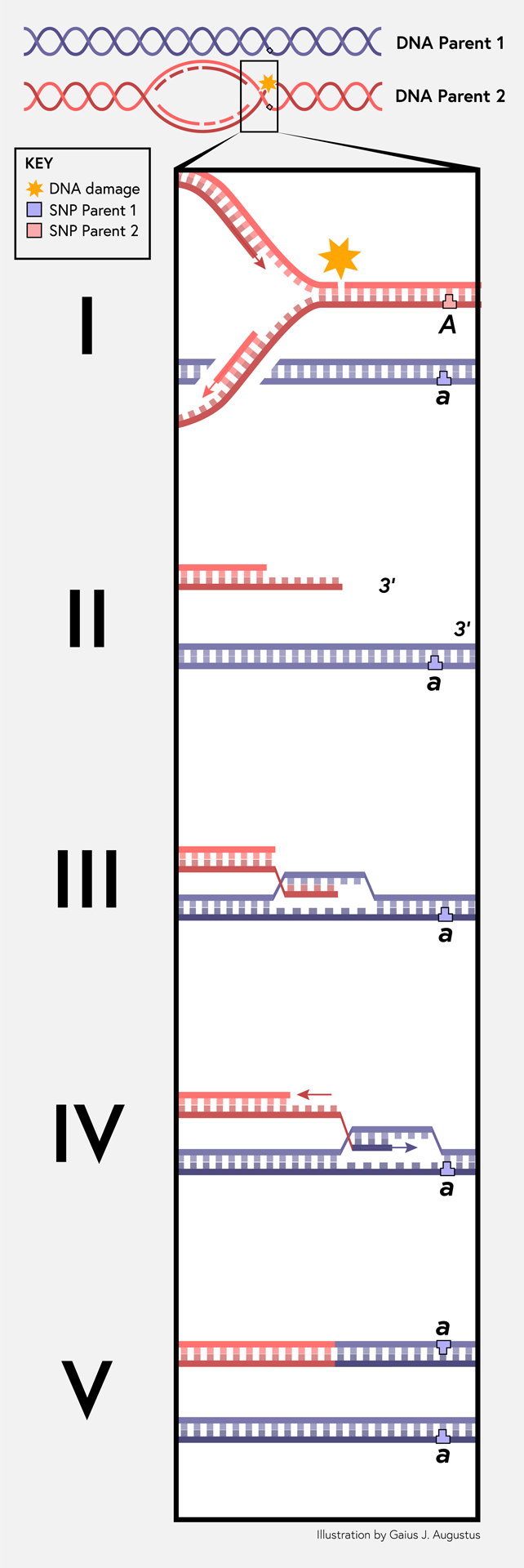
Break-induced DNA replication model for the generation of small-interstitial, copy-neutral loss of heterozygosity (si-cnLOH). (I) DNA replication encounters DNA damage that leads to a replication-associated, single-ended DNA break. The letters variants A and a represent a DNA polymorphism at a locus that is different between the homologous chromosomes. (II) Normally, repair of the replication-associated break is carried out by homologous recombination using the closely apposite sister chromatid; however, on rare occasions, repair is carried out using the homologous chromosome instead (represented by the blue lines). (III) The homologous recombination protein RAD51 catalyzes invasion of the single-stranded DNA with a 3’ end, pairing with the homologous sequence and forming a displacement loop. (IV) The 3’ hydroxyl from the invading DNA strand is available for incorporation by DNA polymerase delta. At the same time as polymerase is extending the invading strand, a DNA helicase displaces the nascent DNA behind polymerase. This generates a moving bubble. As the nascent DNA is displaced, the nascent DNA is replicated by lagging strand synthesis. (V) The break-induced replication mechanism copies variants from the homologous chromosome onto the chromosome that suffered the replication-associated DNA break by conservative DNA synthesis. This copy mechanism maintains copy number and reduces variants to homozygosity. The copy mechanism ends at some point when the invading strand is fully displaced, is recaptured by the sister chromatid, and meets a replication fork that converges upon it from the opposite direction.