


Figure 3.
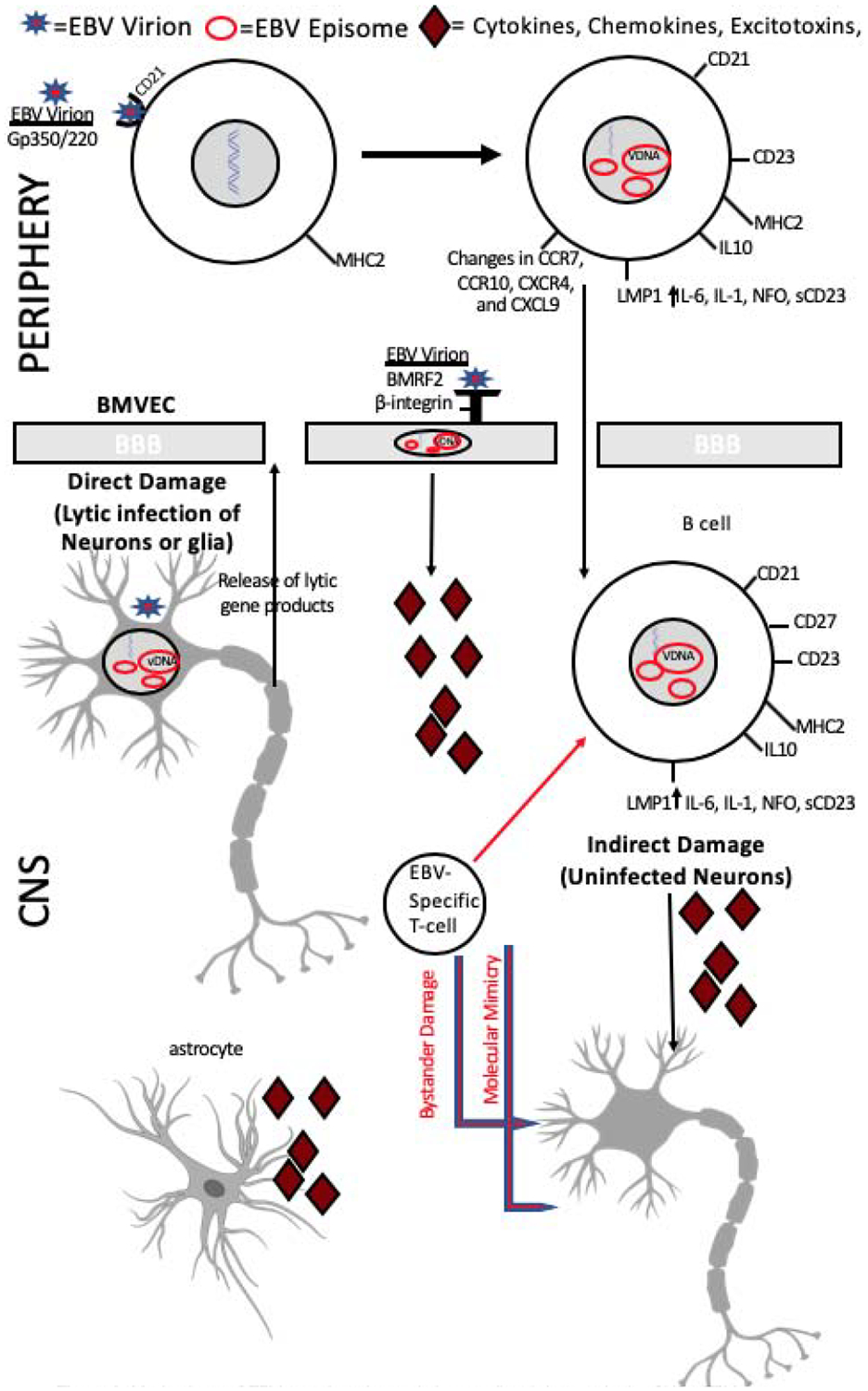
Mechanisms of EBV neuroinvasion and virus mediated damage in the CNS. EBV may enter the brain via normal B cell trafficking or through infection of brain microvasculature endothelial cells (BMVEC). Either endothelial cells of the neurovasculature or infected B cells may be the source of neurotoxicity through the release of inflammatory cytokines and viral proteins. In addition, T-cell mediated responses to infected cells in the brain may lead to bystander damage. Alternatively, molecular mimicry, where similarities between EBV and host-peptides results in the cross-activation of autoreactive T or B cells may be involved in the neuropathogenesis of EBV-associated disorders of the CNS.A less favored hypothesis suggests that EBV infection of neurons and lytic gene expression leads to neuronal damage.