


Abstract
Background
Postoperative nausea and vomiting (PONV) is a common adverse effect of anaesthesia and surgery. Up to 80% of patients may be affected. These outcomes are a major cause of patient dissatisfaction and may lead to prolonged hospital stay and higher costs of care along with more severe complications. Many antiemetic drugs are available for prophylaxis. They have various mechanisms of action and side effects, but there is still uncertainty about which drugs are most effective with the fewest side effects.
Objectives
• To compare the efficacy and safety of different prophylactic pharmacologic interventions (antiemetic drugs) against no treatment, against placebo, or against each other (as monotherapy or combination prophylaxis) for prevention of postoperative nausea and vomiting in adults undergoing any type of surgery under general anaesthesia
• To generate a clinically useful ranking of antiemetic drugs (monotherapy and combination prophylaxis) based on efficacy and safety
• To identify the best dose or dose range of antiemetic drugs in terms of efficacy and safety
Search methods
We searched the Cochrane Central Register of Controlled Trials (CENTRAL), MEDLINE, Embase, the Cumulative Index to Nursing and Allied Health Literature (CINAHL), the World Health Organization International Clinical Trials Registry Platform (WHO ICTRP), ClinicalTrials.gov, and reference lists of relevant systematic reviews. The first search was performed in November 2017 and was updated in April 2020. In the update of the search, 39 eligible studies were found that were not included in the analysis (listed as awaiting classification).
Selection criteria
Randomized controlled trials (RCTs) comparing effectiveness or side effects of single antiemetic drugs in any dose or combination against each other or against an inactive control in adults undergoing any type of surgery under general anaesthesia. All antiemetic drugs belonged to one of the following substance classes: 5‐HT₃ receptor antagonists, D₂ receptor antagonists, NK₁ receptor antagonists, corticosteroids, antihistamines, and anticholinergics. No language restrictions were applied. Abstract publications were excluded.
Data collection and analysis
A review team of 11 authors independently assessed trials for inclusion and risk of bias and subsequently extracted data. We performed pair‐wise meta‐analyses for drugs of direct interest (amisulpride, aprepitant, casopitant, dexamethasone, dimenhydrinate, dolasetron, droperidol, fosaprepitant, granisetron, haloperidol, meclizine, methylprednisolone, metoclopramide, ondansetron, palonosetron, perphenazine, promethazine, ramosetron, rolapitant, scopolamine, and tropisetron) compared to placebo (inactive control). We performed network meta‐analyses (NMAs) to estimate the relative effects and ranking (with placebo as reference) of all available single drugs and combinations. Primary outcomes were vomiting within 24 hours postoperatively, serious adverse events (SAEs), and any adverse event (AE). Secondary outcomes were drug class‐specific side effects (e.g. headache), mortality, early and late vomiting, nausea, and complete response. We performed subgroup network meta‐analysis with dose of drugs as a moderator variable using dose ranges based on previous consensus recommendations. We assessed certainty of evidence of NMA treatment effects for all primary outcomes and drug class‐specific side effects according to GRADE (CINeMA, Confidence in Network Meta‐Analysis). We restricted GRADE assessment to single drugs of direct interest compared to placebo.
Main results
We included 585 studies (97,516 randomized participants). Most of these studies were small (median sample size of 100); they were published between 1965 and 2017 and were primarily conducted in Asia (51%), Europe (25%), and North America (16%). Mean age of the overall population was 42 years. Most participants were women (83%), had American Society of Anesthesiologists (ASA) physical status I and II (70%), received perioperative opioids (88%), and underwent gynaecologic (32%) or gastrointestinal surgery (19%) under general anaesthesia using volatile anaesthetics (88%).
In this review, 44 single drugs and 51 drug combinations were compared. Most studies investigated only single drugs (72%) and included an inactive control arm (66%). The three most investigated single drugs in this review were ondansetron (246 studies), dexamethasone (120 studies), and droperidol (97 studies).
Almost all studies (89%) reported at least one efficacy outcome relevant for this review. However, only 56% reported at least one relevant safety outcome.
Altogether, 157 studies (27%) were assessed as having overall low risk of bias, 101 studies (17%) overall high risk of bias, and 327 studies (56%) overall unclear risk of bias.
Vomiting within 24 hours postoperatively
Relative effects from NMA for vomiting within 24 hours (282 RCTs, 50,812 participants, 28 single drugs, and 36 drug combinations) suggest that 29 out of 36 drug combinations and 10 out of 28 single drugs showed a clinically important benefit (defined as the upper end of the 95% confidence interval (CI) below a risk ratio (RR) of 0.8) compared to placebo. Combinations of drugs were generally more effective than single drugs in preventing vomiting. However, single NK₁ receptor antagonists showed treatment effects similar to most of the drug combinations. High‐certainty evidence suggests that the following single drugs reduce vomiting (ordered by decreasing efficacy): aprepitant (RR 0.26, 95% CI 0.18 to 0.38, high certainty, rank 3/28 of single drugs); ramosetron (RR 0.44, 95% CI 0.32 to 0.59, high certainty, rank 5/28); granisetron (RR 0.45, 95% CI 0.38 to 0.54, high certainty, rank 6/28); dexamethasone (RR 0.51, 95% CI 0.44 to 0.57, high certainty, rank 8/28); and ondansetron (RR 0.55, 95% CI 0.51 to 0.60, high certainty, rank 13/28). Moderate‐certainty evidence suggests that the following single drugs probably reduce vomiting: fosaprepitant (RR 0.06, 95% CI 0.02 to 0.21, moderate certainty, rank 1/28) and droperidol (RR 0.61, 95% CI 0.54 to 0.69, moderate certainty, rank 20/28).
Recommended and high doses of granisetron, dexamethasone, ondansetron, and droperidol showed clinically important benefit, but low doses showed no clinically important benefit. Aprepitant was used mainly at high doses, ramosetron at recommended doses, and fosaprepitant at doses of 150 mg (with no dose recommendation available).
Frequency of SAEs
Twenty‐eight RCTs were included in the NMA for SAEs (10,766 participants, 13 single drugs, and eight drug combinations). The certainty of evidence for SAEs when using one of the best and most reliable anti‐vomiting drugs (aprepitant, ramosetron, granisetron, dexamethasone, ondansetron, and droperidol compared to placebo) ranged from very low to low. Droperidol (RR 0.88, 95% CI 0.08 to 9.71, low certainty, rank 6/13) may reduce SAEs. We are uncertain about the effects of aprepitant (RR 1.39, 95% CI 0.26 to 7.36, very low certainty, rank 11/13), ramosetron (RR 0.89, 95% CI 0.05 to 15.74, very low certainty, rank 7/13), granisetron (RR 1.21, 95% CI 0.11 to 13.15, very low certainty, rank 10/13), dexamethasone (RR 1.16, 95% CI 0.28 to 4.85, very low certainty, rank 9/13), and ondansetron (RR 1.62, 95% CI 0.32 to 8.10, very low certainty, rank 12/13). No studies reporting SAEs were available for fosaprepitant.
Frequency of any AE
Sixty‐one RCTs were included in the NMA for any AE (19,423 participants, 15 single drugs, and 11 drug combinations). The certainty of evidence for any AE when using one of the best and most reliable anti‐vomiting drugs (aprepitant, ramosetron, granisetron, dexamethasone, ondansetron, and droperidol compared to placebo) ranged from very low to moderate. Granisetron (RR 0.92, 95% CI 0.80 to 1.05, moderate certainty, rank 7/15) probably has no or little effect on any AE. Dexamethasone (RR 0.77, 95% CI 0.55 to 1.08, low certainty, rank 2/15) and droperidol (RR 0.89, 95% CI 0.81 to 0.98, low certainty, rank 6/15) may reduce any AE. Ondansetron (RR 0.95, 95% CI 0.88 to 1.01, low certainty, rank 9/15) may have little or no effect on any AE. We are uncertain about the effects of aprepitant (RR 0.87, 95% CI 0.78 to 0.97, very low certainty, rank 3/15) and ramosetron (RR 1.00, 95% CI 0.65 to 1.54, very low certainty, rank 11/15) on any AE. No studies reporting any AE were available for fosaprepitant.
Class‐specific side effects
For class‐specific side effects (headache, constipation, wound infection, extrapyramidal symptoms, sedation, arrhythmia, and QT prolongation) of relevant substances, the certainty of evidence for the best and most reliable anti‐vomiting drugs mostly ranged from very low to low. Exceptions were that ondansetron probably increases headache (RR 1.16, 95% CI 1.06 to 1.28, moderate certainty, rank 18/23) and probably reduces sedation (RR 0.87, 95% CI 0.79 to 0.96, moderate certainty, rank 5/24) compared to placebo. The latter effect is limited to recommended and high doses of ondansetron. Droperidol probably reduces headache (RR 0.76, 95% CI 0.67 to 0.86, moderate certainty, rank 5/23) compared to placebo. We have high‐certainty evidence that dexamethasone (RR 1.00, 95% CI 0.91 to 1.09, high certainty, rank 16/24) has no effect on sedation compared to placebo. No studies assessed substance class‐specific side effects for fosaprepitant.
Direction and magnitude of network effect estimates together with level of evidence certainty are graphically summarized for all pre‐defined GRADE‐relevant outcomes and all drugs of direct interest compared to placebo in http://doi.org/10.5281/zenodo.4066353.
Authors' conclusions
We found high‐certainty evidence that five single drugs (aprepitant, ramosetron, granisetron, dexamethasone, and ondansetron) reduce vomiting, and moderate‐certainty evidence that two other single drugs (fosaprepitant and droperidol) probably reduce vomiting, compared to placebo. Four of the six substance classes (5‐HT₃ receptor antagonists, D₂ receptor antagonists, NK₁ receptor antagonists, and corticosteroids) were thus represented by at least one drug with important benefit for prevention of vomiting. Combinations of drugs were generally more effective than the corresponding single drugs in preventing vomiting. NK₁ receptor antagonists were the most effective drug class and had comparable efficacy to most of the drug combinations. 5‐HT₃ receptor antagonists were the best studied substance class. For most of the single drugs of direct interest, we found only very low to low certainty evidence for safety outcomes such as occurrence of SAEs, any AE, and substance class‐specific side effects.
Recommended and high doses of granisetron, dexamethasone, ondansetron, and droperidol were more effective than low doses for prevention of vomiting. Dose dependency of side effects was rarely found due to the limited number of studies, except for the less sedating effect of recommended and high doses of ondansetron.
The results of the review are transferable mainly to patients at higher risk of nausea and vomiting (i.e. healthy women undergoing inhalational anaesthesia and receiving perioperative opioids). Overall study quality was limited, but certainty assessments of effect estimates consider this limitation. No further efficacy studies are needed as there is evidence of moderate to high certainty for seven single drugs with relevant benefit for prevention of vomiting. However, additional studies are needed to investigate potential side effects of these drugs and to examine higher‐risk patient populations (e.g. individuals with diabetes and heart disease).
Plain language summary
Which medicines work best to prevent people from being sick (vomiting) after an operation?
Why are people sick after an operation?
Feeling sick (nausea) or being sick (vomiting) is a common unwanted effect of general anaesthesia—medicine that makes people unconscious and unresponsive so they don't move or feel pain during an operation.
Most unwanted effects of general anaesthesia, including feeling or being sick, happen immediately and stop after a few hours, although some people may continue to feel sick for up to a day. If people carry on feeling or being sick, they might have to stay in hospital longer than expected and may experience other unwanted effects or complications.
Women are more likely to be sick after an operation, as are people taking opioid painkillers, those who have had motion sickness, and those who have been sick after previous operations.
Medicines to prevent people from being sick
Medicines called antiemetics are given to prevent people from feeling or being sick. These medicines may be given before or during anaesthesia.
Antiemetic medicines are grouped into six main classes based on how they act. Combining medicines from different classes sometimes makes them work better.
Why we did this Cochrane Review
We wanted to find out which medicines work best to prevent people from being sick after an operation and cause the fewest unwanted effects. Some unwanted effects of antiemetic medicines include headache, constipation, movement disorders such as tremors, sleepiness, irregular heartbeat, and wound infection.
What did we do?
We searched for studies that looked at the use of antiemetic medicines in adults having general anaesthesia to prevent people from being sick afterwards.
We looked for randomized controlled studies, in which the treatments people received were decided at random. This type of study usually gives the most reliable evidence about the effects of a treatment.
Search date
We included evidence published up to November 2017; in April 2020, we found another 39 studies, which are not yet included in the analysis.
What we found
We found 585 studies in 97,516 people who were given antiemetic medicines before or during general anaesthesia. People included in the studies were more likely to be sick after anaesthesia, as 83% were women and 88% were taking opioid painkillers. Most studies were conducted in Asia, Europe, or North America.
These studies either measured how many people were sick in the first 24 hours after their operation or how many unwanted effects were reported, or both of these outcomes. Most studies compared medicines (given alone or in combination) with a dummy (placebo) treatment.
We compared all antiemetic medicines with each other using a mathematical method called network meta‐analysis.
What were our main results and how reliable are these results?
Compared with placebo treatment, 10 out of 28 single medicines and 29 out of 36 combinations of medicines prevented people from being sick in the first 24 hours after their operation (282 studies). Combinations of antiemetic medicines generally worked better than single medicines given alone. However, aprepitant, casopitant, and fosaprepitant worked as well alone as most combinations of antiemetics. The single medicine that worked best in the ranking of all medicines was fosaprepitant, followed by casopitant, aprepitant, ramosetron, granisetron, dexamethasone, tropisetron, ondansetron, dolasetron, and droperidol.
We are confident that aprepitant, ramosetron, granisetron, dexamethasone, and ondansetron prevent people from being sick. We are moderately confident about how well fosaprepitant and droperidol work, but this finding may change when further evidence becomes available. We are uncertain about how well casopitant, tropisetron, and dolasetron work.
Not all studies looked at serious, life‐threatening unwanted effects. We are uncertain how many of these effects were reported when taking an antiemetic medicine and whether serious, life‐threatening unwanted effects occur at a similar rate or are reduced compared to placebo (28 studies).
Of the best medicines with most reliable evidence for preventing being sick, granisetron and ondansetron probably made little to no difference in the occurrence of unwanted effects compared to placebo, whereas dexamethasone and droperidol may cause fewer unwanted effects than placebo. We are uncertain about unwanted effects with aprepitant and ramosetron (61 studies). We found no studies looking at unwanted effects for fosaprepitant.
We are less confident about unwanted effects of other antiemetic medicines because we found little reliable evidence about this. Our results for unwanted effects are likely to change when further evidence is available.
Conclusions
For people at higher risk, we found that some antiemetic medicines work well to prevent them from being sick after general anaesthesia. The best antiemetic medicines with reliable evidence were aprepitant, ramosetron, granisetron, dexamethasone, and ondansetron, followed by fosaprepitant and droperidol.
However, we did not find enough reliable evidence about potential unwanted effects to rank these medicines reliably according to how well they are tolerated.
Summary of findings
Summary of findings 1. Primary summary of findings.
|
Primary summary of findings' Estimates of effects and certainty of the evidence of antiemetic drugs for prevention of postoperative nausea and vomiting in adults after general anaesthesia | ||||||||||||||
|
Patient or population: adults undergoing any type of surgery under general anaesthesia Interventions: antiemetic drugs (single drugs and drug combinations)* Comparator (reference): placebo (or no treatment) Outcomes: all primary outcomes and drug class‐specific adverse effects** Setting: inpatient and outpatient | ||||||||||||||
| Outcomes | Effects and confidence in the estimate of effects (network meta‐analysis) | |||||||||||||
| Aprepitant* | Ramosetron* | Granisetron* | Dexamethasone* | Ondansetron* | Fosaprepitant* | Droperidol* | ||||||||
| Vomiting (or dry retching) within 24 hours postoperatively | ||||||||||||||
| Total studies: 282; total participants: 50,812; number of treatments: 65 (36 drug combinations, 28 single drugs, placebo) | ||||||||||||||
|
Placebo (comparator) 300 per 1000a (30%) |
RR 0.26 (0.18 to 0.38) Network estimate |
222 fewer per 1000 (246 fewer to 186 fewer) |
RR 0.44 (0.32 to 0.59) Network estimate |
168 fewer per 1000 (204 fewer to 123 fewer) |
RR 0.45 (0.38 to 0.54) Network estimate |
165 fewer per 1000 (186 fewer to 138 fewer) |
RR 0.51 (0.44 to 0.57) Network estimate |
147 fewer per 1000 (168 fewer to 471 fewer) |
RR 0.55 (0.51 to 0.60) Network estimate |
135 fewer per 1000 (147 fewer to 120 fewer) |
RR 0.06 (0.02 to 0.21) Network estimate |
282 fewer per 1000 (294 fewer to 237 fewer) |
RR 0.61 (0.54 to 0.69) Network estimate |
117 fewer per 1000 (138 fewer to 93 fewer) |
| ⊕⊕⊕⊕ High Confidence in network estimate |
⊕⊕⊕⊕ High Confidence in network estimate |
⊕⊕⊕⊕ High Confidence in network estimate1 |
⊕⊕⊕⊕ High Confidence in network estimate1 |
⊕⊕⊕⊕ High Confidence in network estimate1 |
⊕⊕⊕⊖ Moderate Confidence in network estimate due to incoherence |
⊕⊕⊕⊖ Moderate Confidence in network estimate due to publication bias and heterogeneity1,2 |
||||||||
|
Rank 65 (0.0607) |
Rank 20 (0.6760) rank 3 of 28 single drugs |
Rank 36 (0.4361) rank 5 of 28 single drugs |
Rank 38 (0.4234) rank 6 of 28 single drugs |
Rank 41 (0.3588) rank 8 of 28 single drugs |
Rank 48 (0.2974) rank 13 of 28 single drugs |
Rank 4 (0.9189) rank 1 of 28 single drugs |
Rank 55 (0.2320) rank 20 of 28 single drugs |
|||||||
| Based on 94 participants (1 RCT) and indirect evidence (84%) | Based on 618 participants (6 RCTs) and indirect evidence (32%) | Based on 2270 participants (16 RCTs) and indirect evidence (18%) | Based on 4804 participants (43 RCTs) and indirect evidence (27%) | Based on 14,435 participants (77 RCTs) and indirect evidence (21%) | Based on indirect evidence only | Based on 6156 participants (41 RCTs) and indirect evidence (22%) | ||||||||
| Serious adverse events (SAEs) within 7 days postoperatively | ||||||||||||||
| Total studies: 28; total participants: 10,766; number of treatments: 22 (8 drug combinations, 13 single drugs, placebo) | ||||||||||||||
|
Placebo (comparator) 14 per 1000b (1.43%) |
RR 1.39 (0.26 to 7.36) Network estimate |
5 more per 1000 (10 fewer to 89 more) |
RR 0.89 (0.05 to 15.74) Network estimate |
2 fewer per 1000 (13 fewer to 206 more) |
RR 1.21 (0.11 to 13.15) Network estimate |
3 more per 1000 (12 fewer to 170 more) |
RR 1.16 (0.28 to 4.85) Network estimate |
2 more per 1000 (10 fewer to 54 more) |
RR 1.62 (0.32 to 8.10) Network estimate |
9 more per 1000 (10 fewer to 99 more) |
No studies were found that looked at SAEs |
RR 0.88 (0.08 to 9.71) Network estimate |
2 fewer per 1000 (13 fewer to 122 more) |
|
| ⊖⊖⊖⊖ Very low Confidence in network estimate due to study limitations, imprecision, incoherence3 |
⊕⊖⊖⊖ Very low Confidence in network estimate due to study limitations and imprecision4 |
⊕⊖⊖⊖ Very low Confidence in network estimate due to study limitations and imprecision5 |
⊕⊖⊖⊖ Very low Confidence in network estimate due to study limitations and imprecision5 |
⊕⊖⊖⊖ Very low Confidence in network estimate due to study limitations and imprecision5 |
⊕⊕⊖⊖ Low Confidence in network estimate due to imprecision6 |
|||||||||
|
Rank 14 (0.5020) |
Rank 17 (0.4421) rank 11 of 13 single drugs |
Rank 8 (0.5366) rank 7 of 13 single drugs |
Rank 16 (0.4612) rank 10 of 13 single drugs |
Rank 15 (0.4632) rank 9 of 13 single drugs |
Rank 20 (0.3708) rank 12 of 13 single drugs |
Rank 7 (0.5430) rank 6 of 13 single drugs |
||||||||
| Based on indirect evidence only | Based on 236 participants (1 RCT) and indirect evidence (46%) | Based on 401 participants (2 RCTs) and indirect evidence (7%) | Based on 376 participants (3 RCTs) and indirect evidence (4%) | Based on 833 participants (3 RCTs) and indirect evidence (34%) | Based on 304 participants (2 RCTs) and indirect evidence (24%) | |||||||||
| Any adverse events (any AEs) within 7 days postoperatively | ||||||||||||||
| Total studies: 61; total participants: 19,423; number of treatments: 27 (11 drug combinations, 15 single drugs, placebo) | ||||||||||||||
|
Placebo (comparator) 377 per 1000b (37.68%) |
RR 0.87 (0.78 to 0.97) Network estimate |
49 fewer per 1000 (83 fewer to 11 fewer) |
RR 1.00 (0.65 to 1.54) Network estimate |
0 fewer/more per 1000 (132 fewer to 204 more) |
RR 0.92 (0.80 to 1.05) Network estimate |
30 fewer per 1000 (75 fewer to 19 more) |
RR 0.77 (0.55 to 1.08) Network estimate |
87 fewer per 1000 (170 fewer to 30 more) |
RR 0.95 (0.88 to 1.01) Network estimate |
19 fewer per 1000 (45 fewer to 4 more) |
No studies were found that looked at any AE |
RR 0.89 (0.81 to 0.98) Network estimate |
41 fewer per 1000 (72 fewer to 8 fewer) |
|
| ⊕⊖⊖⊖ Very low Confidence in network estimate due to study limitations, imprecision, incoherence |
⊕⊖⊖⊖ Very low Confidence in network estimate due to study limitations and imprecision5 |
⊕⊕⊕⊖ Moderate Confidence in network estimate due to imprecision |
⊕⊕⊖⊖ Low Confidence in network estimate due to study limitations and imprecision |
⊕⊕⊖⊖ Low Confidence in network estimate due to study limitations and imprecision |
⊕⊕⊖⊖ Low Confidence in network estimate due to study limitations and imprecision |
|||||||||
|
Rank 23 (0.3129) |
Rank 6 (0.6589) rank 3 of 15 single drugs |
Rank 18 (0.4159) rank 11 of 15 single drugs |
Rank 11 (0.5436) rank 7 of 15 single drugs |
Rank 4 (0.7526) rank 2 of 15 single drugs |
Rank 16 (0.4655) rank 9 of 15 single drugs |
Rank 10 (0.6164) rank 6 of 15 single drugs |
||||||||
| Based on indirect evidence only | Based on 173 participants (2 RCTs) and indirect evidence (43%) | Based on 699 participants (6 RCTs) and indirect evidence (3%) | Based on 1152 participants (6 RCTs) and indirect evidence (82%) | Based on 4892 participants (12 RCTs) and indirect evidence (4%) | Based on 1622 participants (2 RCTs) and indirect evidence (21%) | |||||||||
| Headache within 7 days postoperatively | ||||||||||||||
| Total studies: 208; total participants: 42,445; number of treatments: 53 (29 drug combinations, 23 single drugs, placebo) | ||||||||||||||
|
Placebo (comparator) 96 per 1000b (9.56%) |
RR 0.86 (0.35 to 2.11) Network estimate |
13 fewer per 1000 (62 fewer to 107 more) |
RR 1.13 (0.93 to 1.37) Network estimate |
12 more per 1000 (7 fewer to 36 more) |
RR 1.20 (1.01 to 1.42) Network estimate |
19 more per 1000 (1 more to 40 more) |
RR 0.85 (0.63 to 1.13) Network estimate |
14 fewer per 1000 (36 fewer to 12 more) |
RR 1.16 (1.06 to 1.28) Network estimate |
15 more per 1000 (6 more to 27 more) |
No studies were found that looked at headache |
RR 0.76 (0.67 to 0.86) Network estimate |
23 fewer per 1000 (32 fewer to 13 fewer) |
|
| ⊕⊕⊖⊖ Low Confidence in network estimate due to imprecision6 |
⊕⊕⊖⊖ Low Confidence in network estimate due to study limitations and imprecision |
⊕⊖⊖⊖ Very low Confidence in network estimate due to study limitations, imprecision, incoherence |
⊕⊕⊖⊖ Low Confidence in network estimate due to imprecision6 |
⊕⊕⊕⊖ Moderate Confidence in network estimate due to imprecision |
⊕⊕⊕⊖ Moderate Confidence in network estimate due to study limitations |
|||||||||
|
Rank 31 (0.4543 |
Rank 24 (0.5349) rank 10 of 23 single drugs |
Rank 40 (0.3416) rank 16 of 23 single drugs |
Rank 45 (0.2914) rank 19 of 23 single drugs |
Rank 19 (0.5806) rank 8 of 23 single drugs |
Rank 44 (0.3082) rank 18 of 23 single drugs |
Rank 13 (0.6563) rank 5 of 23 single drugs |
||||||||
| Based on 120 participants (1 RCT) and indirect evidence (73%) | Based on 1529 participants (14 RCTs) and indirect evidence (38%) | Based on 1639 participants (15 RCTs) and indirect evidence (43%) | Based on 1678 participants (13 RCTs) and indirect evidence (52%) | Based on 12,260 participants (57 RCTs) and indirect evidence (22%) | Based on 3679 participants (22 RCT) and indirect evidence (26%) | |||||||||
| Constipation within 7 days postoperatively | ||||||||||||||
| Total studies: 43; total participants: 11,481; number of treatments: 23 (10 drug combinations, 12 single drugs, placebo) | ||||||||||||||
|
Placebo (comparator) 74 per 1000b (7.39%) |
RR 1.03 (0.59 to 1.80) Network estimate |
2 more per 1000 (30 fewer to 129 more) |
RR 0.74 (0.39 to 1.40) Network estimate |
19 fewer per 1000 (45 fewer to 30 more) |
RR 0.59 (0.21 to 1.63) Network estimate |
30 fewer per 1000 (58 fewer to 47 more) |
RR 0.83 (0.21 to 3.25) Network estimate |
13 fewer per 1000 (58 fewer to 167 more) |
RR 1.02 (0.71 to 1.46) Network estimate |
1 more per 1000 (21 fewer to 34 more) |
No studies were found that looked at constipation | No studies were found that looked at constipation | ||
| ⊖⊖⊖⊖ Very low Confidence in network estimate due to study limitations, imprecision, incoherence3 |
⊕⊖⊖⊖ Very low Confidence in network estimate due to study limitations and imprecision5 |
⊕⊖⊖⊖ Very low Confidence in network estimate due to study limitations and imprecision5 |
⊕⊕⊖⊖ Low Confidence in network estimate due to imprecision6 |
⊕⊖⊖⊖ Very low Confidence in network estimate due to study limitations and imprecision5 |
||||||||||
|
Rank 12 ( 0.4889) |
Rank 14 (0.4638) rank 7 of 12 single drugs |
Rank 5 (0.6692) rank 3 of 12 single drugs |
Rank 2 (0.7350) rank 1 of 12 single drugs |
Rank 7 (0.5802) rank 5 of 12 single drugs |
Rank 13 (0.4677) rank 6 of 12 single drugs |
|||||||||
| Based on indirect evidence only | Based on 280 participants (2 RCTs) and indirect evidence (84%) | Based on 230 participants (3 RCTs) and indirect evidence (13%) | Based on 327 participants (3 RCTs) and indirect evidence (19%) | Based on 1475 participants (8 RCTs) and indirect evidence (12%) | ||||||||||
| Wound infection within 7 days postoperatively | ||||||||||||||
| Total studies: 32; total participants: 4369; number of treatments: 10 (3 drug combinations, 6 single drugs, placebo) | ||||||||||||||
|
Placebo (comparator) 4 per 1000b (0.44%) |
No studies were found that looked at wound infection | No studies were found that looked at wound infection | No studies were found that looked at wound infection |
RR 0.91 (0.45 to 1.87) Network estimate |
0 fewer/more per 1000 (2 fewer to 3 more) |
RR 1.28 (0.01 to 115.24) Network estimate |
1 more per 1000 (4 fewer to 457 more) |
No studies were found that looked at wound infection | No studies were found that looked at wound infection | |||||
| ⊕⊖⊖⊖ Very low Confidence in network estimate due to study limitations and imprecision5 |
⊕⊖⊖⊖ Very low Confidence in network estimate due to imprecision and incoherence7 |
|||||||||||||
|
Rank 10 (0.3885) |
Rank 8 (0.4272) Rank 5 of 6 single drugs |
Rank 9 (0.3974) rank 6 of 6 single drugs |
||||||||||||
| Based on 3199 participants (24 RCTs) and indirect evidence (1%) | Based on indirect evidence only | |||||||||||||
| Extrapyramidal symptoms within 7 days postoperatively | ||||||||||||||
| Total studies: 64; total participants: 10,724; number of treatments: 30 (13 drug combinations, 16 single drugs, placebo) | ||||||||||||||
|
Placebo (comparator) 8 per 1000b (0.79%) |
No studies were found that looked at extrapyramidal symptoms |
RR 0.73 (0.01 to 37.44) Network estimate |
2 fewer per 1000 (8 fewer to 292 more) |
RR 0.90 (0.23 to 3.57) Network estimate |
1 fewer per 1000 (6 fewer to 21 more) |
RR 0.70 (0.17 to 2.80) Network estimate |
2 fewer per 1000 (7 fewer to 14 more) |
RR 0.73 (0.39 to 1.38) Network estimate |
2 fewer per 1000 (5 fewer to 3 more) |
No studies were found that looked at extrapyramidal symptoms |
RR 1.36 (0.89 to 2.08) Network estimate |
3 more per 1000 (1 fewer to 9 more) |
||
| ⊕⊖⊖⊖ Very low Confidence in network estimate due to study limitations, imprecision, incoherence3 |
⊕⊖⊖⊖ Very low Confidence in network estimate due to study limitations and imprecision5 |
⊕⊕⊖⊖ Low Confidence in network estimate due to imprecision6 |
⊕⊖⊖⊖ Very low Confidence in network estimate due to study limitations and imprecision5 |
⊕⊕⊖⊖ Low Confidence in network estimate due to imprecision6 |
||||||||||
|
Rank 22 (0.4778) |
Rank 8 (0.5409) Rank 5 of 16 single drugs |
Rank 12 (0.5109) Rank 6 of 16 single drugs |
Rank 4 (0.5865) Rank 2 of 16 single drugs |
Rank 3 (0.6026) Rank 1 of 16 single drugs |
Rank 29 (0.3456) Rank 15 of 16 single drugs |
|||||||||
| Based on indirect evidence only | Based on 330 participants (5 RCTs) and indirect evidence (37%) | Based on 1031 participants (4 RCTs) and indirect evidence (49%) | Based on 751 participants (7 RCTs) and indirect evidence (53%) | Based on 3270 participants (22 RCTs) and indirect evidence (11%) | ||||||||||
| Sedation within 7 days postoperatively | ||||||||||||||
| Total studies: 117; total participants: 21,440; number of treatments: 44 (19 drug combinations, 24 single drugs, placebo) | ||||||||||||||
|
Placebo (comparator) 130 per 1000b (13%) |
RR 0.43 (0.01 to 21.65) Network estimate |
74 fewer per 1000 (129 fewer to 870 more) |
RR 0.89 (0.72 to 1.10) Network estimate |
14 fewer per 1000 (36 fewer to 13 more) |
RR 1.00 (0.86 to 1.17) Network estimate |
0 fewer/more per 1000 (18 fewer to 22 more) |
RR 1.00 (0.91 to 1.09) Network estimate |
0 fewer/more per 1000 (12 fewer to 12 more) |
RR 0.87 (0.79 to 0.96) Network estimate |
17 fewer per 1000 (41 fewer to 5 fewer) |
No studies were found that looked at sedation |
RR 0.99 (0.96 to 1.01) Network estimate |
1 fewer per 1000 (5 fewer to 1 more) |
|
| ⊕⊖⊖⊖ Very low Confidence in network estimate due to imprecision and incoherence7 |
⊕⊕⊖⊖ Low Confidence in network estimate due to study limitations and imprecision |
⊕⊖⊖⊖ Very low Confidence in network estimate due to study limitations and imprecision5 |
⊕⊕⊕⊕ High Confidence in network estimate |
⊕⊕⊕⊖ Moderate Confidence in network estimate due to imprecision1 |
⊕⊕⊖⊖ Low Confidence in network estimate due study limitations8 |
|||||||||
|
Rank 26 ( 0.4880) |
Rank 10 (0.6518) Rank 6 of 24 single drugs |
Rank 13 (0.6263) Rank 8 of 24 single drugs |
Rank 24 (0.4996) Rank 15 of 24 single drugs |
Rank 25 (0.4982) Rank 16 of 24 single drugs |
Rank 9 (0.6623) Rank 5 of 24 single drugs |
Rank 18 (0.5152) Rank 11 of 24 single drugs |
||||||||
| Based on indirect evidence only | Based on 581 participants (5 RCTs) and indirect evidence (85%) | Based on 850 participants (9 RCTs) and indirect evidence (33%) | Based on 1290 participants (9 RCTs) and indirect evidence (2%) | Based on 6092 participants (36 RCTs) and indirect evidence (39%) | Based on 3739 participants (21 RCTs) and indirect evidence (1%) | |||||||||
| Arrhythmia within 7 days postoperatively | ||||||||||||||
| Total studies: 25; total participants: 5067; number of treatments: 18 (5 drug combinations, 12 single drugs, placebo) | ||||||||||||||
|
Placebo (comparator) 43 per 1000b (4.25%) |
No studies were found that looked at arrhythmia |
RR 1.30 (0.80 to 2.10) Network estimate |
13 more per 1000 (9 fewer to 47 more) |
RR 0.95 (0.04 to 21.59) Network estimate |
2 fewer per 1000 (41 fewer to 885 more) |
RR 0.81 (0.44 to 1.51) Network estimate |
8 fewer per 1000 (24 fewer to 22 more) |
RR 1.27 (0.47 to 3.43) Network estimate |
12 more per 1000 (23 fewer to 104 more) |
No studies were found that looked at arrhythmia |
RR 0.88 (0.31 to 2.48) Network estimate |
4 fewer per 1000 (20 fewer to 64 more) |
||
| ⊕⊕⊖⊖ Low Confidence in network estimate due to imprecision6,9 |
⊕⊖⊖⊖ Very low Confidence in network estimate due to study limitations and imprecision5 |
⊕⊕⊖⊖ Low Confidence in network estimate due to imprecision6 |
⊕⊖⊖⊖ Very low Confidence in network estimate due to study limitations and imprecision5 |
⊕⊖⊖⊖ Very low Confidence in network estimate due to study limitations and imprecision5 |
||||||||||
|
Rank 13 (0.4400) |
Rank 18 (0.3138) Rank 12 of 12 single drugs |
Rank 8 (0.4688) Rank 5 of 12 single drugs |
Rank 6 (0.5380) Rank 3 of 12 single drugs |
Rank 17 (0.3492) Rank 11 of 12 single drugs |
Rank 7 (0.4981) Rank 4 of 12 single drugs |
|||||||||
| Based on 140 participants (1 RCT), no indirect evidence available | Based on 50 participants (1 RCT) and indirect evidence (35%) | Based on 189 participants (3 RCTs) and indirect evidence (2%) | Based on 1643 participants (4 RCTs) and indirect evidence (16%) | Based on 659 participants (7 RCTs) and indirect evidence (22%) | ||||||||||
| QT prolongation within 7 days postoperatively | ||||||||||||||
| Total studies: 18; total participants: 4440; number of treatments: 13 (4 drug combinations, 8 single drugs, placebo) | ||||||||||||||
|
Placebo (comparator) 21 per 1000b (2.12%) |
RR 0.96 (0.19 to 4.92) Network estimate |
1 fewer per 1000 (17 fewer to 82 more) |
RR 0.62 (0.08 to 4.76) Network estimate |
8 fewer per 1000 (19 fewer to 79 more) |
No studies were found that looked at QT prolongation |
RR 0.75 (0.05 to 12.06) Network estimate |
5 fewer per 1000 (20 fewer to 232 more) |
RR 0.93 (0.18 to 4.76) Network estimate |
1 fewer per 1000 (17 fewer to 79 more) |
No studies were found that looked at QT prolongation |
RR 1.29 (0.71 to 2.34) Network estimate |
6 more per 1000 (6 fewer to 28 more) |
||
| ⊕⊖⊖⊖ Very low Confidence in network estimate due to imprecision and incoherence7 |
⊖⊖⊖⊖ Very low Confidence in network estimate due to study limitations, imprecision, incoherence3 |
⊕⊖⊖⊖ Very low Confidence in network estimate due to study limitations and imprecision5 |
⊕⊕⊖⊖ Low Confidence in network estimate due imprecision6 |
⊕⊕⊖⊖ Low Confidence in network estimate due imprecision6 |
||||||||||
|
Rank 6 (0.4552) |
Rank 9 (0.4264) Rank 6 of 8 single drugs |
Rank 3 (0.6133) Rank 2 of 8 single drugs |
Rank 4 (0.5370) Rank 3 of 8 single drugs |
Rank 5 (0.4773) Rank 4 of 8 single drugs |
Rank 11 (0.3348) Rank 8 of 8 single drugs |
|||||||||
| Based on indirect evidence only | Based on indirect evidence only | Based on 149 participants (1 RCT) and indirect evidence (49%) | Based on 60 participants (1 RCT) and indirect evidence (82%) | Based on 303 participants (3 RCTs) and indirect evidence (1%) | ||||||||||
NMA‐SoF table definitions:
| ||||||||||||||
| * Selection criteria for presentation of interventions in this primary ‘Summary of findings table’: single antiemetic drugs of direct interest with important beneficial effect and with high or moderate certainty of evidence for the primary outcome (vomiting) were selected for presentation. These were aprepitant, ramosetron, granisetron, dexamethasone, ondansetron, fosaprepitant, and droperidol. ** Relevant adverse effects were selected according to the substance class: NK1 receptor antagonists (aprepitant, fosaprepitant): headache; 5‐HT3 receptor antagonists (ramosetron, granisetron, ondansetron): headache, constipation; corticosteroids (dexamethasone): wound infection; D2 receptor antagonists (droperidol): extrapyramidal symptoms, sedation, arrhythmia, QT prolongation | ||||||||||||||
|
GRADE Working Group grades of evidence (certainty of evidence). Highcertainty: we are very confident that the true effect lies close to that of the estimate of the effect. Moderate certainty: we are moderately confident in the effect estimate. the true effect is likely to be close to the estimate of the effect, but there is a possibility that it is substantially different. Low certainty: our confidence in the effect estimate is limited. The true effect may be substantially different from the estimate of effect. Very low certainty: we have very little confidence in the effect estimate. The true effect is likely to be substantially different from the estimate of effect. | ||||||||||||||
|
Explanatory footnotes to baseline risks (assumed control risks): a Baseline risk (assumed control risk) for vomiting within 24 hours was obtained from the consensus guideline on postoperative nausea and vomiting (Gan‐2014). The general incidence of vomiting after surgery is about 30%. b The baseline risk is based on the total events of all placebo groups included in the relevant outcome of the current network meta‐analysis (mean control group risk across studies). Explanatory footnotes to the ratings of the confidence in the network estimates: 1 Evidence only for recommended and high doses because low doses showed no clinically important effect. 2 Serious concerns for publication bias and heterogeneity. Publication bias and heterogeneity are overlapping domains for which we downgraded only once. 3 Serious concerns for study limitations and incoherence, and very serious concerns for imprecision. 4 Very serious concerns for study limitations and imprecision. 5 Serious concerns for study limitations and very serious concerns for imprecision. 6 Very serious concerns for imprecision. 7 Very serious concerns for imprecision and serious concerns for incoherence. 8 Very serious concerns for study limitations. 9 Poorly connected to the network. Only direct evidence is available. | ||||||||||||||
Summary of findings 2. Summary of findings (vomiting within 24 hours postoperatively).
| BENEFIT | |||||||
|
Patient or population: adults undergoing any type of surgery under general anaesthesia Interventions: antiemetic drugs (monoprophylaxis and combination prophylaxis)* Comparator (reference): placebo (or no treatment) Outcome: vomiting (or dry retching) within 24 hours postoperatively Setting: inpatient and outpatient | |||||||
|
Total studies: 282 RCTs Total participants: 50,812 Number of treatments: 65 Geometry of the network** |
Relative effect*** (95% CI) |
Anticipated absolute effect **** (95% CI) | Certainty of evidence |
Ranking ***** (P score) |
Interpretation of findings | ||
| Without intervention | With intervention | Difference | |||||
| 5‐HT3 receptor antagonists | |||||||
|
Dolasetron (5 RCTs; 400 participants) |
0.56 (0.43 to 0.74) |
300 per 10001 | 168 per 1000 | 132 fewer per 1000 (171 fewer to 78 fewer) |
⊕⊕⊖⊖ Low Due to study limitations, heterogeneity, incoherence2 |
Rank 49 (0.2897) Rank 14 of 28 single drugs |
Dolasetron may reduce vomiting |
|
Granisetron (16 RCTs; 2270 participants) |
0.45 (0.38 to 0.54) |
300 per 10001 | 135 per 1000 | 165 fewer per 1000 (186 fewer to 138 fewer) |
⊕⊕⊕⊕ High3 |
Rank 38 (0.4234) Rank 6 of 28 single drugs |
Granisetron reduces vomiting |
|
Ondansetron (77 RCTs; 14,435 participants) |
0.55 (0.51 to 0.60) |
300 per 10001 | 165 per 1000 | 135 fewer per 1000 (147 fewer to 120 fewer) |
⊕⊕⊕⊕ High3 |
Rank 48 (0.2974) Rank 13 of 28 single drugs |
Ondansetron reduces vomiting |
|
Palonosetron (6 RCTs; 1111 participants) |
0.62 (0.48 to 0.80) |
300 per 10001 | 186 per 1000 | 114 fewer per 1000 (156 fewer to 60 fewer) |
⊕⊕⊖⊖ Low Due to study limitations, imprecision |
Rank 56 (0.2275) Rank 21 of 28 single drugs |
Palonosetron may reduce vomiting |
|
Ramosetron (6 RCTs; 618 participants) |
0.44 (0.32 to 0.59) |
300 per 10001 | 132 per 1000 | 168 fewer per 1000 (204 fewer to 123 fewer) |
⊕⊕⊕⊕ High |
Rank 36 (0.4361) Rank 5 of 28 single drugs |
Ramosetron reduces vomiting |
|
Tropisetron (13 RCTs; 1275 participants) |
0.52 (0.43 to 0.63) |
300 per 10001 | 156 per 1000 | 144 fewer per 1000 (171 fewer to 111 fewer) |
⊕⊕⊖⊖ Low Due to study limitations4 |
Rank 42 (0.3334) Rank 9 of 28 single drugs |
Tropisetron may reduce vomiting |
| D2 receptor antagonists | |||||||
|
Amisulpride (2 RCTs; 841 participants) |
0.71 (0.46 to 1.09) |
300 per 10001 | 213 per 1000 | 87 fewer per 1000 (162 fewer to 27 more) |
⊕⊕⊕⊖ Moderate Due to imprecision, heterogeneity5,6 |
Rank 59 (0.1769) Rank 23 of 28 single drugs |
Amisulpride probably reduces vomiting |
|
Droperidol (41 RCTs; 6156 participants) |
0.61 (0.54 to 0.69) |
300 per 10001 | 183 per 1000 | 117 fewer per 1000 (138 fewer to 93 fewer) |
⊕⊕⊕⊖ Moderate Due to publication bias, heterogeneity3,7 |
Rank 55 (0.2320) Rank 20 of 28 single drugs |
Droperidol probably reduces vomiting |
|
Haloperidol (4 RCTs; 327 participants) |
0.61 (0.43 to 0.87) |
300 per 10001 | 183 per 1000 | 117 fewer per 1000 (171 fewer to 39 fewer) |
⊕⊕⊖⊖ Low Due to imprecision, incoherence |
Rank 53 (0.2449) Rank 18 of 28 single drugs |
Haloperidol may reduce vomiting |
|
Metoclopramide (21 RCTs; 2134 participants) |
0.73 (0.63 to 0.86) |
300 per 10001 | 219 per 1000 | 81 fewer per 1000 (111 fewer to 42 fewer) |
⊕⊖⊖⊖ Very low Due to study limitations, imprecision, incoherence |
Rank 62 (0.1445) Rank 26 of 28 single drugs |
We are uncertain whether metoclopramide reduces vomiting |
|
Perphenazine (0 RCTs; 0 participants) |
NA | NA | NA | NA | NA | NA | No studies were found that looked at vomiting |
| NK1 receptor antagonists | |||||||
|
Aprepitant (1 RCT; 94 participants) |
0.26 (0.18 to 0.38) |
300 per 10001 | 78 per 1000 | 222 fewer per 1000 (246 fewer to 186 fewer) |
⊕⊕⊕⊕ High |
Rank 20 (0.6760) Rank 3 of 28 single drugs |
Aprepitant reduces vomiting |
|
Casopitant (no direct evidence, indirect evidence only) |
0.16 (0.07 to 0.35) |
300 per 10001 | 48 per 1000 | 252 fewer per 1000 (279 fewer to 195 fewer) |
⊕⊕⊖⊖ Low Due to study limitations, incoherence |
Rank 10 (0.8037) Rank 2 of 28 single drugs |
Casopitant may reduce vomiting |
|
Fosaprepitant (No direct evidence, indirect evidence only) |
0.06 (0.02 to 0.21) |
300 per 10001 | 18 per 1000 | 282 fewer per 1000 (294 fewer to 237 fewer) |
⊕⊕⊕⊖ Moderate8 Due to incoherence |
Rank 4 (0.9189) Rank 1 of 28 single drugs |
Fosaprepitant probably reduces vomiting |
|
Rolapitant (1 RCT; 515 participants) |
0.56 (0.34 to 0.92) |
300 per 10001 | 168 per 1000 | 132 fewer per 1000 (198 fewer to 24 fewer) |
⊕⊖⊖⊖ Very low Due to study limitations, imprecision9 |
Rank 47 (0.2999) Rank 12 of 28 single drugs |
We are uncertain whether rolapitant reduces vomiting |
| Corticosteroids | |||||||
|
Dexamethasone (43 RCTs; 4804 participants) |
0.51 (0.44 to 0.57) |
300 per 10001 | 153 per 1000 | 147 fewer per 1000 (168 fewer to 471 fewer) |
⊕⊕⊕⊕ High3 |
Rank 41 (0.3588) Rank 8 of 28 single drugs |
Dexamethasone reduces vomiting |
|
Methylprednisolone (0 RCTs; 0 participants) |
NA | NA | NA | NA | NA | NA | No studies were found that looked at vomiting |
| Antihistamines | |||||||
|
Dimenhydrinate (1 RCT; 56 participants) |
0.55 (0.20 to 1.52) |
300 per 10001 | 165 per 1000 | 135 fewer per 1000 (240 fewer to 156 more) |
⊕⊖⊖⊖ Very low Due to study limitations, imprecision, incoherence10 |
Rank 43 (0.3225) Rank 10 of 28 single drugs |
We are uncertain whether dimenhydrinate reduces vomiting |
|
Meclizine (0 RCTs; 0 participants) |
NA | NA | NA | NA | NA | NA | No studies were found that looked at vomiting |
|
Promethazine (3 RCTs; 210 participants) |
0.53 (0.33 to 0.86) |
300 per 10001 | 159 per 1000 | 141 fewer per 1000 (201 fewer to 42 fewer) |
⊕⊕⊕⊖ Moderate Due to imprecision |
Rank 44 (0.3196) Rank 11 of 28 single drugs |
Promethazine probably reduces vomiting |
| Anticholinergics | |||||||
|
Scopolamine (6 RCTs; 549 participants) |
0.61 (0.44 to 0.84) |
300 per 10001 | 183 per 1000 | 117 fewer per 1000 (168 fewer to 48 fewer) |
⊕⊕⊖⊖ Low Due to study limitations, imprecision |
Rank 54 (0.2443) Rank 19 of 28 single drugs |
Scopolamine may reduce vomiting |
| Comparator | |||||||
| Placebo | Reference comparator | Not estimable | Not estimable | Not estimable | Reference comparator |
Rank 65 (0.0607) |
Reference comparator |
|
NMA‐SoF table definitions: * Certainty of evidence was assessed only for single antiemetic drugs of direct interest. ** Geometry of the network is presented in Figure 8 (netgraph). *** Network estimates are reported as risk ratio (RR) with confidence interval (CI). **** Anticipated absolute effects. The anticipated absolute effect compares two risks by calculating the difference between risk of the intervention group and risk of the control group. ***** Ranking of treatments includes all single drugs and combinations of drugs and is based on the P score (a value on a continuous 0 to 1 scale), which measures the extent of certainty that a treatment is better than another treatment, averaged over all competing treatments (Supplementary Files‐1‐vomiting 24). Larger P scores indicate better treatments. In addition, the rank of the treatment out of all single drugs is indicated. | |||||||
|
GRADE working group grades of evidence (or certainty of the evidence). High certainty: we are very confident that the true effect lies close to that of the estimate of the effect. Moderate certainty: we are moderately confident in the effect estimate. The true effect is likely to be close to the estimate of the effect, but there is a possibility that it is substantially different. Low certainty: our confidence in the effect estimate is limited. The true effect may be substantially different from the estimate of effect. Very low certainty: we have very little confidence in the effect estimate. The true effect is likely to be substantially different from the estimate of effect. | |||||||
|
Explanatory footnotes: 1 Baseline risks (assumed control risk) obtained from the consensus guideline on postoperative nausea and vomiting (Gan‐2014). The general incidence of vomiting after surgery is about 30%. 2 Serious concerns for study limitations, heterogeneity, and incoherence. Heterogeneity and incoherence are overlapping domains for which we downgraded only once. 3 Evidence only for recommended and high doses because low doses showed no clinically important effect. 4 Very serious concerns for study limitations. 5 Serious concerns for imprecision and heterogeneity. Imprecision and heterogeneity are overlapping domains for which we downgraded only once. 6 Poorly connected to the network. Only direct evidence available. 7 Serious concerns for publication bias and heterogeneity. Publication bias and heterogeneity are overlapping domains for which we downgraded only once. 8 Poorly connected to the network. Fosaprepitant was directly compared only to ondansetron. 9 Very serious concerns for study limitations, serious concerns for imprecision. 10 Very serious concerns for imprecision, serious concerns for study limitations and incoherence. | |||||||
Summary of findings 3. Summary of findings (serious adverse events).
| HARM | |||||||
|
Patient or population: adults undergoing any type of surgery under general anaesthesia Interventions: antiemetic drugs (monoprophylaxis and combination prophylaxis)* Comparator (reference): placebo (or no treatment) Outcome: serious adverse events (SAEs) Setting: inpatient and outpatient | |||||||
|
Total studies: 28 RCTs Total participants: 10,766 Number of treatments: 22 Geometry of the network** |
Relative effect*** (95% CI) |
Anticipated absolute effect **** (95% CI) | Certainty of evidence |
Ranking ***** (P score) |
Interpretation of findings | ||
| Without intervention | With intervention | Difference | |||||
| 5‐HT3 receptor antagonists | |||||||
|
Dolasetron (3 RCTs; 1448 participants) |
0.31 (0.10 to 1.00) |
14 per 10001 | 4 per 1000 | 10 fewer per 1000 (13 fewer to 0 fewer) |
⊕⊕⊖⊖ Low Due to study limitations, imprecision2 |
Rank 1 (0.8229) Rank 14 of 13 single drugs |
Dolasetron may reduce SAEs |
|
Granisetron (2 RCTs; 401 participants) |
1.21 (0.11 to 13.15) |
14 per 10001 | 17 per 1000 | 3 more per 1000 (12 fewer to 170 more) |
⊕⊖⊖⊖ Very low Due to study limitations, imprecision3 |
Rank 16 (0.4612) Rank 10 of 13 single drugs |
We are uncertain whether granisetron increases SAEs |
|
Ondansetron (3 RCTs; 833 participants) |
1.62 (0.32 to 8.10) |
14 per 10001 | 23 per 1000 | 9 more per 1000 (10 fewer to 99 more) |
⊕⊖⊖⊖ Very low Due to study limitations, imprecision3 |
Rank 20 (0.3708) Rank 12 of 13 single drugs |
We are uncertain whether ondansetron increases SAEs |
|
Palonosetron (3 RCTs; 1319 participants) |
0.71 (0.33 to 1.53) |
14 per 10001 | 10 per 1000 | 4 fewer per 1000 (9 fewer to 7 more) |
⊕⊖⊖⊖ Very low Due to study limitations, imprecision2,3 |
Rank 3 (0.6255) Rank 3 of 13 single drugs |
We are uncertain whether palonosetron reduces SAEs |
|
Ramosetron (1 RCT; 236 participants) |
0.89 (0.05 to 15.74) |
14 per 10001 | 12 per 1000 | 2 fewer per 1000 (13 fewer to 206 more) |
⊕⊖⊖⊖ Very low Due to study limitations, imprecision4 |
Rank 8 (0.5366) Rank 7 of 13 single drugs |
We are uncertain whether ramosetron reduces SAEs |
|
Tropisetron (2 RCTs; 727 participants) |
0.58 (0.10 to 3.24) |
14 per 10001 | 8 per 1000 | 6 fewer per 1000 (13 fewer to 31 more) |
⊕⊖⊖⊖ Very low Due to study limitations, imprecision3 |
Rank 2 (0.6905) Rank 2 of 13 single drugs |
We are uncertain whether tropisetron reduces SAE |
| D2 receptor antagonists | |||||||
|
Amisulpride (2 RCTs; 904 participants) |
0.86 (0.38 to 1.94) |
14 per 10001 | 12 per 1000 | 2 fewer per 1000 (9 fewer to 13 more) |
⊕⊕⊖⊖ Low Due to imprecision2,5 |
Rank 6 (0.5579) Rank 5 of 13 single drugs |
Amisulpride may reduce SAEs |
|
Droperidol (2 RCTs; 304 participants) |
0.88 (0.08 to 9.71) |
14 per 10001 | 12 per 1000 | 2 fewer per 1000 (13 fewer to 122 more) |
⊕⊕⊖⊖ Low Due to imprecision5 |
Rank 7 (0.5430) Rank 6 of 13 single drugs |
Droperidol may reduce SAEs |
|
Haloperidol (0 RCTs; 0 participants) |
NA | NA | NA | NA | NA | NA | No studies were found that looked at SAEs |
|
Metoclopramide (0 RCTs; 0 participants) |
NA | NA | NA | NA | NA | NA | No studies were found that looked at SAEs |
|
Perphenazine (0 RCTs; 0 participants) |
NA | NA | NA | NA | NA | NA | No studies were found that looked at SAEs |
| NK1 receptor antagonists | |||||||
|
Aprepitant (no direct evidence, indirect evidence only) |
1.39 (0.26 to 7.36) |
14 per 10001 | 19 per 1000 | 5 more per 1000 (10 fewer to 89 more) |
⊕⊖⊖⊖ Very low Due to study limitations, imprecision, incoherence6,7 |
Rank 17 (0.4421) Rank 11 of 13 single drugs |
We are uncertain whether aprepitant increases SAEs |
|
Casopitant (No direct evidence, indirect evidence only) |
3.64 (0.57 to 23.11) |
14 per 10001 | 51 per 1000 | 37 more per 1000 (6 fewer to 310 more) |
⊕⊖⊖⊖ Very low Due to study limitations, imprecision, incoherence6 |
Rank 22 (0.1498) Rank 13 of 13 single drugs |
We are uncertain whether casopitant increases SAEs |
|
Fosaprepitant (0 RCTs; 0 participants) |
NA | NA | NA | NA | NA | NA | No studies were found that looked at SAEs |
|
Rolapitant (0 RCTs; 0 participants) |
NA | NA | NA | NA | NA | NA | No studies were found that looked at SAEs |
| Corticosteroids | |||||||
|
Dexamethasone (3 RCTs; 376 participants) |
1.16 (0.28 to 4.85) |
14 per 10001 | 16 per 1000 | 2 more per 1000 (10 fewer to 54 more) |
⊕⊖⊖⊖ Very low Due to study limitations, imprecision3 |
Rank 15 (0.4632) Rank 9 of 13 single drugs |
We are uncertain whether dexamethasone increases SAEs |
|
Methylprednisolone (0 RCTs; 0 participants) |
NA | NA | NA | NA | NA | NA | No studies were found that looked at SAEs |
| Antihistamines | |||||||
|
Dimenhydrinate (0 RCTs; 0 participants) |
NA | NA | NA | NA | NA | NA | No studies were found that looked at SAEs |
|
Meclizine (0 RCTs; 0 participants) |
NA | NA | NA | NA | NA | NA | No studies were found that looked at SAEs |
|
Promethazine (0 RCTs; 0 participants) |
NA | NA | NA | NA | NA | NA | No studies were found that looked at SAEs |
| Anticholinergics | |||||||
|
Scopolamine (1 RCT; 174 participants) |
0.98 (0.02 to 48.71) |
14 per 10001 | 14 per 1000 | 0 fewer per 1000 (14 fewer to 668 more) |
⊕⊖⊖⊖ Very low Due to study limitations, imprecision4 |
Rank 12 (0.5101) Rank 8 of 13 single drugs |
We are uncertain whether scopolamine has no or minimal effect on SAEs |
| Comparator | |||||||
| Placebo | Reference comparator | Not estimable | Not estimable | Not estimable | Reference comparator |
Rank 14 (0.5020) |
Reference comparator |
|
NMA‐SoF table definitions: * Certainty of evidence was assessed only for single antiemetic drugs of direct interest. ** Geometry of the network is presented in Figure 10 (netgraph). *** Network estimates are reported as risk ratio (RR) with confidence interval (CI). **** Anticipated absolute effects. The anticipated absolute effect compares two risks by calculating the difference between risk of the intervention group and risk of the control group. ***** Ranking of treatments includes all single drugs and combinations of drugs and is based on the P score (a value on a continuous 0 to 1 scale), which measures the extent of certainty that a treatment is better than another treatment, averaged over all competing treatments (Supplementary Files‐2‐SAE). Larger P scores indicate better treatments. In addition, the rank of the treatment out of all single drugs is indicated. | |||||||
|
GRADE working group grades of evidence (or certainty of the evidence). High certainty: we are very confident that the true effect lies close to that of the estimate of the effect. Moderate certainty: we are moderately confident in the effect estimate. The true effect is likely to be close to the estimate of the effect, but there is a possibility that it is substantially different. Low certainty: our confidence in the effect estimate is limited. The true effect may be substantially different from the estimate of effect. Very low certainty: we have very little confidence in the effect estimate. The true effect is likely to be substantially different from the estimate of effect. | |||||||
|
Explanatory footnotes: 1 Baseline risks (assumed control risk) are based on the total events of all placebo groups included in the outcome SAEs. The general incidence of SAEs after surgery with placebo is about 1.43%. 2 Poorly connected to the network. Only direct evidence available. 3 Serious concerns for study limitations and very serious concerns for imprecision. 4 Very serious concerns for study limitations and imprecision. 5 Very serious concerns for imprecision. 6 Serious concerns for study limitations and incoherence, and very serious concerns for imprecision. 7 Poorly connected to the network. Aprepitant was directly compared only to ondansetron. | |||||||
Summary of findings 4. Summary of findings (any adverse event).
| HARM | |||||||
|
Patient or population: adults undergoing any type of surgery under general anaesthesia Interventions: antiemetic drugs (monoprophylaxis and combination prophylaxis)* Comparator (reference): placebo (or no treatment) Outcome: any adverse event (AE) Setting: inpatient and outpatient | |||||||
|
Total studies: 61 RCTs Total participants: 19,423 Number of treatments: 27 Geometry of the network** |
Relative effect*** (95% CI) |
Anticipated absolute effect **** (95% CI) | Certainty of evidence |
Ranking ***** (P score) |
Interpretation of findings | ||
| Without intervention | With intervention | Difference | |||||
| 5‐HT3 receptor antagonists | |||||||
|
Dolasetron (1 RCT; 203 participants) |
0.86 (0.66 to 1.11) |
377 per 10001 | 324 per 1000 | 53 fewer per 1000 (128 fewer to 41 more) |
⊕⊖⊖⊖ Very low Due to study limitations, imprecision, heterogeneity2,3 |
Rank 8 (0.6383) Rank 4 of 15 single drugs |
We are uncertain whether dolasetron reduces any AE |
|
Granisetron (6 RCTs; 699 participants) |
0.92 (0.80 to 1.05) |
377 per 10001 | 347 per 1000 | 30 fewer per 1000 (75 fewer to 19 more) |
⊕⊕⊕⊖ Moderate Due to imprecision |
Rank 11 (0.5436) Rank 7 of 15 single drugs |
Granisetron probably has little or no effect on any AE |
|
Ondansetron (12 RCTs; 4892 participants) |
0.95 (0.88 to 1.01) |
377 per 10001 | 358 per 1000 | 19 fewer per 1000 (45 fewer to 4 more) |
⊕⊕⊖⊖ Low Due to study limitations, imprecision |
Rank 16 (0.4655) Rank 9 of 15 single drugs |
Ondansetron may have little or no effect on any AE |
|
Palonosetron (2 RCTs; 946 participants) |
0.95 (0.87 to 1.03) |
377 per 10001 | 358 per 1000 | 19 fewer per 1000 (49 fewer to 11 more) |
⊕⊕⊖⊖ Low Due to study limitations, imprecision |
Rank 17 (0.4608) Rank 10 of 15 single drugs |
Palonosetron may have little or no effect on any AE |
|
Ramosetron (2 RCTs; 173 participants) |
1.00 (0.65 to 1.54) |
377 per 10001 | 377 per 1000 | 0 fewer/more per 1000 (132 fewer to 204 more) |
⊕⊖⊖⊖ Very low Due to study limitations, imprecision4 |
Rank 18 (0.4159) Rank 11 of 15 single drugs |
We are uncertain whether ramosetron has little or no effect on any AE |
|
Tropisetron (3 RCTs; 1007 participants) |
1.00 (0.84 to 1.19) |
377 per 10001 | 377 per 1000 | 0 fewer/more per 1000 (60 fewer to 72 more) |
⊕⊕⊖⊖ Low Due to imprecision5 |
Rank 22 (0.3561) Rank 13 of 15 single drugs |
Tropisetron may have little or no effect on any AE |
| D2 receptor antagonists | |||||||
|
Amisulpride (2 RCTs; 904 participants) |
0.97 (0.90 to 1.06) |
377 per 10001 | 366 per 1000 | 11 fewer per 1000 (38 fewer to 23 more) |
⊕⊕⊕⊖ Moderate Due to imprecision3 |
Rank 20 (0.3917) Rank 12 of 15 single drugs |
Amisulpride probably has little or no effect on any AE |
|
Droperidol (2 RCTs; 1622 participants) |
0.89 (0.81 to 0.98) |
377 per 10001 | 336 per 1000 | 41 fewer per 1000 (72 fewer to 8 fewer) |
⊕⊕⊖⊖ Low Due to study limitations, imprecision |
Rank 10 (0.6164) Rank 6 of 15 single drugs |
Droperidol may reduce any AE |
|
Haloperidol (0 RCTs; 0 participants) |
NA | NA | NA | NA | NA | NA | No studies were found that looked at any AE |
|
Metoclopramide (3 RCTs; 853 participants) |
0.92 (0.83 to 1.03) |
377 per 10001 | 347 per 1000 | 30 fewer per 1000 (64 fewer to 11 more) |
⊕⊕⊖⊖ Low Due to study limitations, imprecision |
Rank 12 (0.5302) Rank 8 of 15 single drugs |
Metoclopramide may have little or no effect on any AE |
|
Perphenazine (0 RCTs; 0 participants) |
NA | NA | NA | NA | NA | NA | No studies were found that looked at any AE |
| NK1 receptor antagonists | |||||||
|
Aprepitant (no direct evidence, indirect evidence only) |
0.87 (0.78 to 0.97) |
377 per 10001 | 328 per 1000 | 49 fewer per 1000 (83 fewer to 11 fewer) |
⊕⊖⊖⊖ Very low Due to study limitations, imprecision, incoherence6 |
Rank 6 (0.6589) Rank 3 of 15 single drugs |
We are uncertain whether aprepitant reduces any AE |
|
Casopitant (no direct evidence, indirect evidence only) |
0.88 (0.74 to 1.05) |
377 per 10001 | 332 per 1000 | 45 fewer per 1000 (98 fewer to 19 more) |
⊕⊖⊖⊖ Very low Due to study limitations, imprecision, incoherence |
Rank 9 (0.6170) Rank 5 of 15 single drugs |
We are uncertain whether casopitant reduces any AE |
|
Fosaprepitant (0 RCTs; 0 participants) |
NA | NA | NA | NA | NA | NA | No studies were found that looked at any AE |
|
Rolapitant (0 RCTs; 0 participants) |
NA | NA | NA | NA | NA | NA | No studies were found that looked at any AE |
| Corticosteroids | |||||||
|
Dexamethasone (6 RCTs; 1152 participants) |
0.77 (0.55 to 1.08) |
377 per 10001 | 290 per 1000 | 87 fewer per 1000 (170 fewer to 30 more) |
⊕⊕⊖⊖ Low Due to study limitations, imprecision |
Rank 4 (0.7526) Rank 2 of 15 single drugs |
Dexamethasone may reduce any AE |
|
Methylprednisolone (0 RCTs; 0 participants) |
NA | NA | NA | NA | NA | NA | No studies were found that looked at any AE |
| Antihistamines | |||||||
|
Dimenhydrinate (no direct evidence, indirect evidence only) |
5.70 (1.36 to 23.93) |
377 per 10001 | 1000 per 1000 | 1000 per 1000 (136 more to 623 more) |
⊕⊕⊖⊖ Low Due to study limitations, incoherence7 |
Rank 27 (0.0140) Rank 15 of 15 single drugs |
Dimenhydrinate may incease any AE |
|
Meclizine (0 RCTs; 0 participants) |
NA | NA | NA | NA | NA | NA | No studies were found that looked at any AE |
|
Promethazine (0 RCTs; 0 participants) |
NA | NA | NA | NA | NA | NA | No studies were found that looked at any AE |
| Anticholinergics | |||||||
|
Scopolamine (3 RCTs; 273 participants) |
2.12 (1.71 to 2.64) |
377 per 10001 | 799 per 1000 | 422 more per 1000 (268 more to 618 more) |
⊕⊕⊖⊖ Low Due to study limitations3,8 |
Rank 26 (0.0500) Rank 14 of 15 single drugs |
Scopolamine may increase any AE |
| Comparator | |||||||
| Placebo | Reference comparator | Not estimable | Not estimable | Not estimable | Reference comparator |
Rank 23 (0.3129) |
Reference comparator |
|
NMA‐SoF table definitions: * Certainty of evidence was only assessed for single antiemetic drugs of direct interest. ** Geometry of the network is presented in Figure 12 (netgraph). *** Network estimates are reported as risk ratio (RR) with confidence interval (CI). **** Anticipated absolute effects. The anticipated absolute effect compares two risks by calculating the difference between risk of the intervention group and risk of the control group. ***** Ranking of treatments includes all single drugs and combinations of drugs and is based on the P score (a value on a continuous 0 to 1 scale), which measures the extent of certainty that a treatment is better than another treatment, averaged over all competing treatments (Supplementary Files‐3‐any AE). Larger P scores indicate better treatments. In addition, the rank of the treatment out of all single drugs is indicated. | |||||||
|
GRADE working group grades of evidence (or certainty of the evidence). High certainty: we are very confident that the true effect lies close to that of the estimate of the effect. Moderate certainty: we are moderately confident in the effect estimate. The true effect is likely to be close to the estimate of the effect, but there is a possibility that it is substantially different. Low certainty: our confidence in the effect estimate is limited. The true effect may be substantially different from the estimate of effect. Very low certainty: we have very little confidence in the effect estimate. The true effect is likely to be substantially different from the estimate of effect. | |||||||
|
Explanatory footnotes: 1 Baseline risks (assumed control risk) are based on the total events of all placebo groups included in the outcome any AE. The general incidence of any AE after surgery with placebo is about 37.68%. 2 Very serious concern for study limitations and serious concerns for imprecision and heterogeneity. Imprecision and heterogeneity are overlapping domains for which we downgraded only once. 3 Poorly connected to the network. Only direct evidence available. 4 Serious concerns for study limitations and very serious concerns for imprecision. 5 Very serious concerns for imprecision. 6 Poorly connected to the network. Aprepitant was directly compared only to ondansetron. 7 Poorly connected to the network. Dimenhydrinate was directly compared only to ondansetron. 8 Very serious concerns for study limitations. | |||||||
Summary of findings 5. Summary of findings (headache).
| HARM | |||||||
|
Patient or population: adults undergoing any type of surgery under general anaesthesia Interventions: antiemetic drugs (monoprophylaxis and combination prophylaxis)* Comparator (reference): placebo (or no treatment) Outcome: headache within 7 days postoperatively Setting: inpatient and outpatient | |||||||
|
Total studies: 208 RCTs Total participants: 42,445 Number of treatments: 53 Geometry of the network** |
Relative effect*** (95% CI) |
Anticipated absolute effect **** (95% CI) | Certainty of evidence |
Ranking ***** (P score) |
Interpretation of findings | ||
| Without intervention | With intervention | Difference | |||||
| 5‐HT3 receptor antagonists | |||||||
|
Dolasetron (10 RCTs; 3990 participants) |
1.13 (0.93 to 1.36) |
96 per 10001 | 108 per 1000 | 12 more per 1000 (7 fewer to 35 more) |
⊕⊕⊖⊖ Low Due to study limitations, imprecision |
Rank 39 (0.3426) Rank 15 of 23 single drugs |
Dolasetron may increase headache |
|
Granisetron (15 RCTs; 1639 participants) |
1.20 (1.01 to 1.42) |
96 per 10001 | 115 per 1000 | 19 more per 1000 (1 more to 40 more) |
⊕⊖⊖⊖ Very low Due to study limitations, imprecision, incoherence |
Rank 45 (0.2914) Rank 19 of 23 single drugs |
We are uncertain whether granisetron increases headache |
|
Ondansetron (57 RCTs; 12260 participants) |
1.16 (1.06 to 1.28) |
96 per 10001 | 111 per 1000 | 15 more per 1000 (6 more to 27 more) |
⊕⊕⊕⊖ Moderate Due to imprecision |
Rank 44 (0.3082) Rank 18 of 23 single drugs |
Ondansetron probably increases headache |
|
Palonosetron (7 RCTs; 1259 participants) |
1.15 (0.89 to 1.49) |
96 per 10001 | 110 per 1000 | 14 more per 1000 (11 fewer to 47 more) |
⊕⊖⊖⊖ Very low Due to study limitations, imprecision2 |
Rank 42 (0.3310) Rank 17 of 23 single drugs |
We are uncertain whether palonosetron increases headache |
|
Ramosetron (14 RCTs; 1529 participants) |
1.13 (0.93 to 1.37) |
96 per 10001 | 108 per 1000 | 12 more per 1000 (7 fewer to 36 more) |
⊕⊕⊖⊖ Low Due to study limitations, imprecision |
Rank 40 (0.3416) Rank 16 of 23 single drugs |
Ramosetron may increase headache |
|
Tropisetron (10 RCTs; 1656 participants) |
1.09 (0.91 to 1.32) |
96 per 10001 | 104 per 1000 | 8 more per 1000 (9 fewer to 31 more) |
⊕⊕⊖⊖ Low Due to study limitations, imprecision |
Rank 38 (0.3699) Rank 14 of 23 single drugs |
Tropisetron may have little or no effect on headache |
| D2 receptor antagonists | |||||||
|
Amisulpride (2 RCTs; 904 participants) |
1.59 (0.80 to 3.19) |
96 per 10001 | 153 per 1000 | 57 more per 1000 (19 fewer to 210 more) |
⊕⊕⊖⊖ Low Due to imprecision3,4 |
Rank 51 (0.2027) Rank 22 of 23 single drugs |
Amisulpride may increase headache |
|
Droperidol (22 RCTs; 3679 participants) |
0.76 (0.67 to 0.86) |
96 per 10001 | 73 per 1000 | 23 fewer per 1000 (32 fewer to 13 fewer) |
⊕⊕⊕⊖ Moderate Due to study limitations |
Rank 13 (0.6563) Rank 5 of 23 single drugs |
Droperidol probably reduces headache |
|
Haloperidol (2 RCTs; 99 participants) |
0.54 (0.27 to 1.06) |
96 per 10001 | 52 per 1000 | 44 fewer per 1000 (70 fewer to 6 more) |
⊕⊕⊖⊖ Low Due to study limitations, imprecision |
Rank 4 (0.7742) Rank 2 of 23 single drugs |
Haloperidol may reduce headache |
|
Metoclopramide (11 RCTs; 1313 participants) |
0.93 (0.76 to 1.13) |
96 per 10001 | 89 per 1000 | 7 fewer per 1000 (23 fewer to 12 more) |
⊕⊖⊖⊖ Very low Due to study limitations, imprecision2 |
Rank 28 (0.5149) Rank 11 of 23 single drugs |
We are uncertain whether metoclopramide has little or no effect on headache |
|
Perphenazine (0 RCTs; 0 participants) |
NA | NA | NA | NA | NA | NA | No studies were found that looked at headache |
| NK1 receptor antagonists | |||||||
|
Aprepitant (1 RCT; 120 participants) |
0.86 (0.35 to 2.11) |
96 per 10001 | 83 per 1000 | 13 fewer per 1000 (62 fewer to 107 more) |
⊕⊕⊖⊖ Low Due to imprecision3 |
Rank 24 (0.5349) Rank 10 of 23 single drugs |
Aprepitant may reduce headache |
|
Casopitant (no direct evidence, indirect evidence only) |
0.81 (0.49 to 1.34) |
96 per 10001 | 78 per 1000 | 18 fewer per 1000 (49 fewer to 33 more) |
⊕⊖⊖⊖ Very low Due to imprecision, incoherence5 |
Rank 18 (0.5927) Rank 7 of 23 single drugs |
We are uncertain whether casopitant reduces headache |
|
Fosaprepitant (0 RCTs; 0 participants) |
NA | NA | NA | NA | NA | NA | No studies were found that looked at headache |
|
Rolapitant (0 RCTs; 0 participants) |
NA | NA | NA | NA | NA | NA | No studies were found that looked at headache |
| Corticosteroids | |||||||
|
Dexamethasone (13 RCTs; 1678 participants) |
0.85 (0.63 to 1.13) |
96 per 10001 | 82 per 1000 | 14 fewer per 1000 (36 fewer to 12 more) |
⊕⊕⊖⊖ Low Due to imprecision3 |
Rank 19 (0.5806) Rank 8 of 23 single drugs |
Dexamethasone may reduce headache |
|
Methylprednisolone (0 RCTs; 0 participants) |
NA | NA | NA | NA | NA | NA | No studies were found that looked at headache |
| Antihistamines | |||||||
|
Dimenhydrinate (1 RCT; 50 participants) |
1.23 (0.33 to 4.55) |
96 per 10001 | 118 per 1000 | 22 more per 1000 (64 fewer to 341 more) |
⊕⊖⊖⊖ Very low Due to study limitations, imprecision2 |
Rank 37 (0.3709) Rank 13 of 23 single drugs |
We are uncertain whether dimenhydrinate increases headache |
|
Meclizine (0 RCTs; 0 participants) |
NA | NA | NA | NA | NA | NA | No studies were found that looked at headache |
|
Promethazine (1 RCT; 50 participants) |
0.27 (0.01 to 4.83) |
96 per 10001 | 26 per 1000 | 70 fewer per 1000 (95 fewer to 368) |
⊕⊖⊖⊖ Very low Due to study limitations, imprecision2 |
Rank 5 (0.7644) Rank 3 of 23 single drugs |
We are uncertain whether promethazine reduces headache |
| Anticholinergics | |||||||
|
Scopolamine (4 RCTs; 447 participants) |
1.03 (0.55 to 1.94) |
96 per 10001 | 99 per 1000 | 3 more per 1000 (43 fewer to 90 more) |
⊕⊖⊖⊖ Very low Due to study limitations, imprecision4,6 |
Rank 33 (0.4285) Rank 12 of 23 single drugs |
We are uncertain whether scopolamine has little or no effect on headache |
| Comparator | |||||||
| Placebo | Reference comparator | Not estimable | Not estimable | Not estimable | Reference comparator |
Rank 31 (0.4543) |
Reference comparator |
|
NMA‐SoF table definitions: * Certainty of evidence was assessed only for single antiemetic drugs of direct interest. ** Geometry of the network is presented in Figure 14 (netgraph). *** Network estimates are reported as risk ratio (RR) with confidence interval (CI). **** Anticipated absolute effects. The anticipated absolute effect compares two risks by calculating the difference between risk of the intervention group and risk of the control group. ***** Ranking of treatments includes all single drugs and combinations of drugs and is based on the P score (a value on a continuous 0 to 1 scale), which measures the extent of certainty that a treatment is better than another treatment, averaged over all competing treatments (Supplementary Files‐4‐headache). Larger P scores indicate better treatments. In addition, the rank of the treatment out of all single drugs is indicated. | |||||||
|
GRADE working group grades of evidence (or certainty of the evidence). High certainty: we are very confident that the true effect lies close to that of the estimate of the effect. Moderate certainty: we are moderately confident in the effect estimate. The true effect is likely to be close to the estimate of the effect, but there is a possibility that it is substantially different. Low certainty: our confidence in the effect estimate is limited. The true effect may be substantially different from the estimate of effect. Very low certainty: we have very little confidence in the effect estimate. The true effect is likely to be substantially different from the estimate of effect. | |||||||
|
Explanatory footnotes: 1 Baseline risks (assumed control risk) are based on the total events of all placebo groups included in the outcome headache. The general incidence of headache after surgery with placebo is about 9.56%. 2 Serious concerns for study limitations and very serious concerns for imprecision. 3 Very serious concerns for imprecision. 4 Poorly connected to the network. Only direct evidence available. 5 Very serious concerns for imprecision, serious concerns for incoherence. 6 Very serious concerns for study limitations and imprecision. | |||||||
Summary of findings 6. Summary of findings (sedation).
| HARM | |||||||
|
Patient or population: adults undergoing any type of surgery under general anaesthesia Interventions: antiemetic drugs (monoprophylaxis and combination prophylaxis)* Comparator (reference): placebo (or no treatment) Outcome: sedation within 7 days postoperatively Setting: inpatient and outpatient | |||||||
|
Total studies: 117 RCTs Total participants: 21,440 Number of treatments: 44 Geometry of the network** |
Relative effect*** (95% CI) |
Anticipated absolute effect **** (95% CI) | Certainty of evidence |
Ranking ***** (P score) |
Interpretation of findings | ||
| Without intervention | With intervention | Difference | |||||
| 5‐HT3 receptor antagonists | |||||||
|
Dolasetron (5 RCTs; 2402 participants) |
1.00 (0.88 to 1.13) |
130 per 10001 | 130 per 1000 | 0 fewer/more per 1000 (16 fewer to 17 more) |
⊕⊕⊖⊖ Low Due to imprecision2 |
Rank 23 (0.5028) Rank 14 of 24 single drugs |
Dolasetron may have little or no effect on sedation |
|
Granisetron (9 RCTs; 850 participants) |
1.00 (0.86 to 1.17) |
130 per 10001 | 130 per 1000 | 0 fewer/more per 1000 (18 fewer to 22 more) |
⊕⊖⊖⊖ Very low Due to study limitations, imprecision3 |
Rank 24 (0.4996) Rank 15 of 24 single drugs |
We are uncertain whether granisetron has little or no effect on sedation |
|
Ondansetron (36 RCTs; 6092 participants) |
0.87 (0.79 to 0.96) |
130 per 10001 | 113 per 1000 | 17 fewer per 1000 (41 fewer to 5 fewer) |
⊕⊕⊕⊖ Moderate Due to imprecision4 |
Rank 9 (0.6623) Rank 5 of 24 single drugs |
Ondansetron probably reduces sedation |
|
Palonosetron (2 RCTs; 278 participants) |
1.16 (0.89 to 1.51) |
130 per 10001 | 151 per 1000 | 21 more per 1000 (14 fewer to 66 more) |
⊕⊖⊖⊖ Very low Due to study limitations, imprecision3 |
Rank 34 (0.3743) Rank 15 of 24 single drugs |
We are uncertain whether palonosetron increases sedation |
|
Ramosetron (5 RCTs; 581 participants) |
0.89 (0.72 to 1.10) |
130 per 10001 | 116 per 1000 | 14 fewer per 1000 (36 fewer to 13 more) |
⊕⊕⊖⊖ Low Due to study limitations, imprecision |
Rank 13 (0.6263) Rank 8 of 24 single drugs |
Ramosetron may reduce sedation |
|
Tropisetron (2 RCTs; 98 participants) |
0.74 (0.54 to 1.00) |
130 per 10001 | 96 per 1000 | 34 fewer per 1000 (60 fewer to 0 fewer) |
⊕⊕⊖⊖ Low Due to study limitations, imprecision |
Rank 7 (0.7327) Rank 4 of 24 single drugs |
Tropisetron may reduce sedation |
| D2 receptor antagonists | |||||||
|
Amisulpride (1 RCT; 689 participants) |
1.00 (0.02 to 50.11) |
130 per 10001 | 130 per 1000 | 0 fewer/more per 1000 (127 fewer to 870 more) |
⊕⊕⊖⊖ Low Due to imprecision2,5 |
Rank 21 (0.5105) Rank 13 of 24 single drugs |
Amisulpride may have little or no effect on sedation |
|
Droperidol (21 RCTs; 3739 participants) |
0.99 (0.96 to 1.01) |
130 per 10001 | 129 per 1000 | 1 fewer per 1000 (5 fewer to 1 more) |
⊕⊕⊖⊖ Low Due to study limitations6 |
Rank 18 (0.5152) Rank 11 of 24 single drugs |
Droperidol may have little or no effect on sedation |
|
Haloperidol (no direct evidence, indirect evidence only) |
0.95 (0.67 to 1.35) |
130 per 10001 | 124 per 1000 | 6 fewer per 1000 (43 fewer to 46 more) |
⊕⊖⊖⊖ Very low Due to study limitations, imprecision, incoherence7 |
Rank 15 (0.5487) Rank 9 of 24 single drugs |
We are uncertain whether haloperidol has little or no effect on sedation |
|
Metoclopramide (15 RCTs; 1178 participants) |
0.97 (0.82 to 1.13) |
130 per 10001 | 126 per 1000 | 4 fewer per 1000 (23 fewer to 17 more) |
⊕⊖⊖⊖ Very low Due to study limitations, imprecision, incoherence7 |
Rank 17 (0.5412) Rank 10 of 24 single drugs |
We are uncertain whether metoclopramide has little or no effect on sedation |
|
Perphenazine (1 RCT; 115 participants) |
0.23 (0.03 to 1.73) |
130 per 10001 | 30 per 1000 | 100 fewer per 1000 (126 fewer to 95 more) |
⊕⊖⊖⊖ Very low Due to study limitations, imprecision3 |
Rank 3 (0.8469) Rank 1 of 24 single drugs |
We are uncertain whether perphenazine reduces sedation |
| NK1 receptor antagonists | |||||||
|
Aprepitant (no direct evidence, indirect evidence only) |
0.43 (0.01 to 21.65) |
130 per 10001 | 56 per 1000 | 74 fewer per 1000 (129 fewer to 870 more) |
⊕⊖⊖⊖ Very low Due to imprecision, incoherence8 |
Rank 10 (0.6518) Rank 6 of 24 single drugs |
We are uncertain whether aprepitant reduces sedation |
|
Casopitant (0 RCTs; 0 participants) |
NA | NA | NA | NA | NA | NA | No studies were found that looked at sedation |
|
Fosaprepitant (0 RCTs; 0 participants) |
NA | NA | NA | NA | NA | NA | No studies were found that looked at sedation |
|
Rolapitant (0 RCTs; 0 participants) |
NA | NA | NA | NA | NA | NA | No studies were found that looked at sedation |
| Corticosteroids | |||||||
|
Dexamethasone (9 RCTs; 1290 participants) |
1.00 (0.91 to 1.09) |
130 per 10001 | 130 per 1000 | 0 fewer/more per 1000 (12 fewer to 12 more) |
⊕⊕⊕⊕ High |
Rank 25 (0.4982) Rank 16 of 24 single drugs |
Dexamethasone has no effect on sedation |
|
Methylprednisolone (1 RCT; 112 participants) |
4.83 (0.24 to 98.29) |
130 per 10001 | 628 per 1000 | 498 more per 1000 (99 fewer to 870 more) |
⊕⊕⊖⊖ Low Due to imprecision2,5 |
Rank 40 (0.2156) Rank 21 of 24 single drugs |
Methylprednisolone may increase sedation |
| Antihistamines | |||||||
|
Dimenhydrinate (1 RCT; 50 participants) |
7.66 (3.10 to 18.94) |
130 per 10001 | 996 per 1000 | 866 more per 1000 (273 more to 870 more) |
⊕⊕⊕⊖ Moderate Due to study limitations |
Rank 42 (0.0774) Rank 22 of 24 single drugs |
Dimenhydrinate probably increases sedation |
|
Meclizine (0 RCTs; 0 participants) |
NA | NA | NA | NA | NA | NA | No studies were found that looked at sedation |
|
Promethazine (3 RCTs; 162 participants) |
1.06 (0.59 to 1.92) |
130 per 10001 | 138 per 1000 | 8 more per 1000 (53 fewer to 120 more) |
⊕⊖⊖⊖ Very low Due to study limitations, imprecision3 |
Rank 29 (0.4695) Rank 17 of 24 single drugs |
We are uncertain whether promethazine has no or minimal effect on sedation |
| Anticholinergics | |||||||
|
Scopolamine (4 RCTs; 204 participants) |
1.47 (0.79 to 2.72) |
130 per 10001 | 191 per 1000 | 61 more per 1000 (27 fewer to 224 more) |
⊕⊖⊖⊖ Very low Due to study limitations, imprecision3 |
Rank 38 (0.3011) Rank 20 of 24 single drugs |
We are uncertain whether scopolamine increase sedation |
| Comparator | |||||||
| Placebo | Reference comparator | Not estimable | Not estimable | Not estimable | Reference comparator |
Rank 26 (0.4880) |
Reference comparator |
|
NMA‐SoF table definitions: * Certainty of evidence was assessed only for single antiemetic drugs of direct interest. ** Geometry of the network is presented in Figure 16 (netgraph). *** Network estimates are reported as risk ratio (RR) with confidence interval (CI). **** Anticipated absolute effects. The anticipated absolute effect compares two risks by calculating the difference between risk of the intervention group and risk of the control group. ***** Ranking of treatments includes all single drugs and combinations of drugs and is based on the P score (a value on a continuous 0 to 1 scale), which measures the extent of certainty that a treatment is better than another treatment, averaged over all competing treatments (Supplementary Files‐5‐sedation). Larger P scores indicate better treatments. In addition, the rank of the treatment out of all single drugs is indicated. | |||||||
|
GRADE working group grades of evidence (or certainty of the evidence). High certainty: we are very confident that the true effect lies close to that of the estimate of the effect. Moderate certainty: we are moderately confident in the effect estimate. The true effect is likely to be close to the estimate of the effect, but there is a possibility that it is substantially different. Low certainty: our confidence in the effect estimate is limited. The true effect may be substantially different from the estimate of effect. Very low certainty: we have very little confidence in the effect estimate. The true effect is likely to be substantially different from the estimate of effect. | |||||||
|
Explanatory footnotes: 1 Baseline risks (assumed control risk) are based on the total events of all placebo groups included in the outcome sedation. The general incidence of sedation after surgery with placebo is about 13%. 2 Very serious concerns for imprecision. 3 Serious concerns for study limitations and very serious concerns for imprecision. 4 Evidence only for recommended and high doses. 5 Poorly connected to the network. Only direct evidence available. 6 Very serious concerns for study limitations. 7 Serious concerns for study limitations and incoherence, and very serious concerns for imprecision. 8 Serious concerns for incoherence and very serious concerns for imprecision. | |||||||
Summary of findings 7. Summary of findings (extrapyramidal symptoms).
| HARM | |||||||
|
Patient or population: adults undergoing any type of surgery under general anaesthesia Interventions: antiemetic drugs (monoprophylaxis and combination prophylaxis)* Comparator (reference): placebo (or no treatment) Outcome: extrapyramidal symptoms within 7 days postoperatively Setting: inpatient and outpatient | |||||||
|
Total studies: 64 RCTs Total participants: 10,724 Number of treatments: 30 Geometry of the network** |
Relative effect*** (95% CI) |
Anticipated absolute effect **** (95% CI) | Certainty of evidence |
Ranking ***** (P score) |
Interpretation of findings | ||
| Without intervention | With intervention | Difference | |||||
| 5‐HT3 receptor antagonists | |||||||
|
Dolasetron (3 RCTs; 288 participants) |
0.67 (0.10 to 4.38) |
8 per 10001 | 5 per 1000 | 3 fewer per 1000 (7 fewer to 27 more) |
⊕⊕⊖⊖ Low Due to imprecision2 |
Rank 5 (0.5860) Rank 3 of 16 single drugs |
Dolasetron may reduce extrapyramidal symptoms |
|
Granisetron (5 RCTs; 330 participants) |
0.90 (0.23 to 3.57) |
8 per 10001 | 7 per 1000 | 1 fewer per 1000 (6 fewer to 21 more) |
⊕⊖⊖⊖ Very low Due to study limitations, imprecision3 |
Rank 12 (0.5109) Rank 6 of 16 single drugs |
We are uncertain whether granisetron reduces extrapyramidal symptoms |
|
Ondansetron (7 RCTs; 751 participants) |
0.73 (0.39 to 1.38) |
8 per 10001 | 6 per 1000 | 2 fewer per 1000 (5 fewer to 3 more) |
⊕⊖⊖⊖ Very low Due to study limitations, imprecision3 |
Rank 3 (0.6026) Rank 1 of 16 single drugs |
We are uncertain whether ondansetron reduces extrapyramidal symptoms |
|
Palonosetron (1 RCT; 60 participants) |
1.00 (0.02 to 48.80) |
8 per 10001 | 8 per 1000 | 0 fewer/more per 1000 (8 fewer to 382 more) |
⊕⊖⊖⊖ Very low Due to study limitations, imprecision3,4 |
Rank 18 (0.4885) Rank 8 of 16 single drugs |
We are uncertain whether palonosetron has no or minimal effect on extrapyramidal symptoms |
|
Ramosetron (no direct evidence, indirect evidence only) |
0.73 (0.01 to 37.44) |
8 per 10001 | 6 per 1000 | 2 fewer per 1000 (8 fewer to 292 more) |
⊕⊖⊖⊖ Very low Due to study limitations, imprecision, incoherence5 |
Rank 8 (0.5409) Rank 5 of 16 single drugs |
We are uncertain whether ramosetron reduces extrapyramidal symptoms |
|
Tropisetron (3 RCTs; 187 participants) |
0.82 (0.43 to 1.58) |
8 per 10001 | 7 per 1000 | 1 fewer per 1000 (5 fewer to 5 more) |
⊕⊖⊖⊖ Very low Due to study limitations, imprecision6 |
Rank 7 (0.5553) Rank 4 of 16 single drugs |
We are uncertain whether tropisetron reduces extrapyramidal symptoms |
| D2 receptor antagonists | |||||||
|
Amisulpride (1 RCT; 689 participants) |
1.00 (0.02 to 50.11) |
8 per 10001 | 8 per 1000 | 0 fewer/more per 1000 (8 fewer to 393 more) |
⊕⊕⊖⊖ Low Due to imprecision2,4 |
Rank 19 (0.4872) Rank 9 of 16 single drugs |
Amisulpride may have little or no effect on extrapyramidal symptoms |
|
Droperidol (22 RCTs; 3270 participants) |
1.36 (0.89 to 2.08) |
8 per 10001 | 11 per 1000 | 3 more per 1000 (1 fewer to 9 more) |
⊕⊕⊖⊖ Low Due to imprecision2 |
Rank 29 (0.3456) Rank 15 of 16 single drugs |
Droperidol may increase extrapyramidal symptoms |
|
Haloperidol (5 RCTs; 437 participants) |
1.18 (0.37 to 3.73) |
8 per 10001 | 9 per 1000 | 1 more per 1000 (5 fewer to 22 more) |
⊕⊕⊖⊖ Low Due to imprecision2 |
Rank 27 (0.4202) Rank 14 of 16 single drugs |
Haloperidol may increase extrapyramidal symptoms |
|
Metoclopramide (12 RCTs; 855 participants) |
1.14 (0.59 to 2.20) |
8 per 10001 | 9 per 1000 | 1 fewer per 1000 (3 fewer to 10 more) |
⊕⊕⊖⊖ Low Due to imprecision2 |
Rank 26 (0.4257) Rank 13 of 16 single drugs |
Metoclopramide may increase extrapyramidal symptoms |
|
Perphenazine (1 RCT; 115 participants) |
1.03 (0.05 to 23.02) |
8 per 10001 | 8 per 1000 | 0 fewer/more per 1000 (8 fewer to 176 more) |
⊕⊖⊖⊖ Very low Due to study limitations, imprecision3 |
Rank 23 (0.4774) Rank 12 of 16 single drugs |
We are uncertain whether perphenazine has no or minimal effect on extrapyramidal symptoms |
| NK1 receptor antagonists | |||||||
|
Aprepitant (0 RCTs; 0 participants) |
NA | NA | NA | NA | NA | NA | No studies were found that looked at extrapyramidal symptoms |
|
Casopitant (0 RCTs; 0 participants) |
NA | NA | NA | NA | NA | NA | No studies were found that looked at extrapyramidal symptoms |
|
Fosaprepitant (0 RCTs; 0 participants) |
NA | NA | NA | NA | NA | NA | No studies were found that looked at extrapyramidal symptoms |
|
Rolapitant (0 RCTs; 0 participants) |
NA | NA | NA | NA | NA | NA | No studies were found that looked at extrapyramidal symptoms |
| Corticosteroids | |||||||
|
Dexamethasone (4 RCTs; 1031 participants) |
0.70 (0.17 to 2.80) |
8 per 10001 | 6 per 1000 | 2 fewer per 1000 (7 fewer to 14 more) |
⊕⊕⊖⊖ Low Due to imprecision2 |
Rank 4 (0.5865) Rank 2 of 16 single drugs |
Dexamethasone may reduce extrapyramidal symptoms |
|
Methylprednisolone (0 RCTs; 0 participants) |
NA | NA | NA | NA | NA | NA | No studies were found that looked at extrapyramidal symptoms |
| Antihistamines | |||||||
|
Dimenhydrinate (0 RCTs; 0 participants) |
NA | NA | NA | NA | NA | NA | No studies were found that looked at extrapyramidal symptoms |
|
Meclizine (0 RCTs; 0 participants) |
NA | NA | NA | NA | NA | NA | No studies were found that looked at extrapyramidal symptoms |
|
Promethazine (0 RCTs; 0 participants) |
NA | NA | NA | NA | NA | NA | No studies were found that looked at extrapyramidal symptoms |
| Anticholinergics | |||||||
|
Scopolamine (0 RCTs; 0 participants) |
NA | NA | NA | NA | NA | NA | No studies were found that looked at extrapyramidal symptoms |
| Comparator | |||||||
| Placebo | Reference comparator | Not estimable | Not estimable | Not estimable | Reference comparator |
Rank 22 (0.4778) |
Reference comparator |
|
NMA‐SoF table definitions: * Certainty of evidence was assessed only for single antiemetic drugs of direct interest. ** Geometry of the network is presented in Figure 18 (netgraph). *** Network estimates are reported as risk ratio (RR) with confidence interval (CI). **** Anticipated absolute effects. The anticipated absolute effect compares two risks by calculating the difference between risk of the intervention group and risk of the control group. ***** Ranking of treatments includes all single drugs and combinations of drugs and is based on the P score (a value on a continuous 0 to 1 scale), which measures the extent of certainty that a treatment is better than another treatment, averaged over all competing treatments (Supplementary Files‐6‐extrapyramidal symptoms). Larger P scores indicate better treatments. In addition, the rank of the treatment out of all single drugs is indicated. | |||||||
|
GRADE working group grades of evidence (or certainty of the evidence). High certainty: we are very confident that the true effect lies close to that of the estimate of the effect. Moderate certainty: we are moderately confident in the effect estimate. The true effect is likely to be close to the estimate of the effect, but there is a possibility that it is substantially different. Low certainty: our confidence in the effect estimate is limited. The true effect may be substantially different from the estimate of effect. Very low certainty: we have very little confidence in the effect estimate. The true effect is likely to be substantially different from the estimate of effect. | |||||||
|
Explanatory footnotes: 1 Baseline risks (assumed control risk) are based on the total events of all placebo groups included in the outcome extrapyramidal symptoms. The general incidence of extrapyramidal symptoms after surgery with placebo is about 0.79%. 2 Very serious concerns for imprecision. 3 Serious concerns for study limitations and very serious concerns for imprecision. 4 Poorly connected to the network. Only direct evidence available. 5 Serious concerns for study limitations and incoherence, and very serious concerns for imprecision. 6 Very serious concerns for study limitations and imprecision. | |||||||
Summary of findings 8. Summary of findings (constipation).
| HARM | |||||||
|
Patient or population: adults undergoing any type of surgery under general anaesthesia Interventions: antiemetic drugs (monoprophylaxis and combination prophylaxis)* Comparator (reference): placebo (or no treatment) Outcome: constipation within 7 days postoperatively Setting: inpatient and outpatient | |||||||
|
Total studies: 43 RCTs Total participants: 11,481 Number of treatments: 23 Geometry of the network** |
Relative effect*** (95% CI) |
Anticipated absolute effect **** (95% CI) | Certainty of evidence |
Ranking ***** (P score) |
Interpretation of findings | ||
| Without intervention | With intervention | Difference | |||||
| 5‐HT3 receptor antagonists | |||||||
|
Dolasetron (0 RCTs; 0 participants) |
NA | NA | NA | NA | NA | NA | No studies were found that looked at constipation |
|
Granisetron (3 RCTs; 230 participants) |
0.59 (0.21 to 1.63 ) |
74 per 10001 | 44 per 1000 | 30 fewer per 1000 (58 fewer to 47 more) |
⊕⊖⊖⊖ Very low Due to study limitations, imprecision2 |
Rank 2 (0.7350) Rank 1 of 12 single drugs |
We are uncertain whether granisetron reduces constipation |
|
Ondansetron (8 RCTs; 1475 participants) |
1.02 (0.71 to 1.46) |
74 per 10001 | 75 per 1000 | 1 more per 1000 (21 fewer to 34 more) |
⊕⊖⊖⊖ Very low Due to study limitations, imprecision2 |
Rank 13 (0.4677) Rank 6 of 12 single drugs |
We are uncertain whether ondansetron has no or minimal effect on constipation |
|
Palonosetron (3 RCTs; 1437 participants) |
1.06 (0.80 to 1.40) |
74 per 10001 | 78 per 1000 | 4 more per 1000 (15 fewer to 30 more) |
⊕⊖⊖⊖ Very low Due to study limitations, imprecision2 |
Rank 15 (0.4406) Rank 8 of 12 single drugs |
We are uncertain whether palonosetron has no or minimal effect on constipation |
|
Ramosetron (2 RCTs; 280 participants) |
0.74 (0.39 to 1.40) |
74 per 10001 | 55 per 1000 | 19 fewer per 1000 (45 fewer to 30 more) |
⊕⊖⊖⊖ Very low Due to study limitations, imprecision2 |
Rank 5 (0.6692) Rank 3 of 12 single drugs |
We are uncertain whether ramosetron reduces constipation |
|
Tropisetron (2 RCTs; 226 participants) |
1.25 (0.28 to 5.59) |
74 per 10001 | 93 per 1000 | 19 more per 1000 (53 fewer to 340 more) |
⊕⊖⊖⊖ Very low Due to study limitations, imprecision2 |
Rank 17 (0.4130) Rank 10 of 12 single drugs |
We are uncertain whether tropisetron increases constipation |
| D2 receptor antagonists | |||||||
|
Amisulpride (2 RCTs; 904 participants) |
1.12 (0.71 to 1.75) |
74 per 10001 | 83 per 1000 | 9 more per 1000 (21 fewer to 56 more) |
⊕⊖⊖⊖ Very low Due to study limitations, imprecision2,3 |
Rank 18 (0.4124) Rank 11 of 12 single drugs |
We are uncertain whether amisulpride increases constipation |
|
Droperidol (0 RCTs; 0 participants) |
NA | NA | NA | NA | NA | NA | No studies were found that looked at constipation |
|
Haloperidol (0 RCTs; 0 participants) |
NA | NA | NA | NA | NA | NA | No studies were found that looked at constipation |
|
Metoclopramide (1 RCT; 80 participants) |
1.90 (0.34 to 10.68) |
74 per 10001 | 141 per 1000 | 67 fewer per 1000 (49 fewer to 716 more) |
⊕⊕⊖⊖ Low Due to imprecision5 |
Rank 21 (0.2869) Rank 12 of 12 single drugs |
Metoclopramide may increase constipation |
|
Perphenazine (0 RCTs; 0 participants) |
NA | NA | NA | NA | NA | NA | No studies were found that looked at constipation |
| NK1 receptor antagonists | |||||||
|
Aprepitant (no direct evidence, indirect evidence only) |
1.03 (0.59 to 1.80) |
74 per 10001 | 76 per 1000 | 2 more per 1000 (30 fewer to 129 more) |
⊕⊖⊖⊖ Very low Due to study limitations, imprecision, incoherence4 |
Rank 14 (0.4638) Rank 7 of 12 single drugs |
We are uncertain whether aprepitant has no or minimal effect on constipation |
|
Casopitant (no direct evidence, indirect evidence only) |
0.82 (0.42 to 1.62) |
74 per 10001 | 61 per 1000 | 13 fewer per 1000 (43 fewer to 46 more) |
⊕⊖⊖⊖ Very low Due to study limitations, imprecision, incoherence4 |
Rank 6 (0.6111) Rank 4 of 12 single drugs |
We are uncertain whether casopitant reduces constipation |
|
Fosaprepitant (0 RCTs; 0 participants) |
NA | NA | NA | NA | NA | NA | No studies were found that looked at constipation |
|
Rolapitant (0 RCTs; 0 participants) |
NA | NA | NA | NA | NA | NA | No studies were found that looked at constipation |
| Corticosteroids | |||||||
|
Dexamethasone (3 RCTs; 327 participants) |
0.83 (0.21 to 3.25) |
74 per 10001 | 61 per 1000 | 13 fewer per 1000 (58 fewer to 167 more) |
⊕⊕⊖⊖ Low Due to imprecision5 |
Rank 7 (0.5802) Rank 5 of 12 single drugs |
Dexamethasone may reduce constipation |
|
Methylprednisolone (0 RCTs; 0 participants) |
NA | NA | NA | NA | NA | NA | No studies were found that looked at constipation |
| Antihistamines | |||||||
|
Dimenhydrinate (0 RCTs; 0 participants) |
NA | NA | NA | NA | NA | NA | No studies were found that looked at constipation |
|
Meclizine (0 RCTs; 0 participants) |
NA | NA | NA | NA | NA | NA | No studies were found that looked at constipation |
|
Promethazine (0 RCTs; 0 participants) |
NA | NA | NA | NA | NA | NA | No studies were found that looked at constipation |
| Anticholinergics | |||||||
|
Scopolamine (0 RCTs; 0 participants) |
NA | NA | NA | NA | NA | NA | No studies were found that looked at constipation |
| Comparator | |||||||
| Placebo | Reference comparator | Not estimable | Not estimable | Not estimable | Reference comparator |
Rank 12 (0.4889) |
Reference comparator |
|
NMA‐SoF table definitions: * Certainty of evidence was assessed only for single antiemetic drugs of direct interest. ** Geometry of the network is presented in Figure 20 (netgraph). *** Network estimates are reported as risk ratio (RR) with confidence interval (CI). **** Anticipated absolute effects. The anticipated absolute effect compares two risks by calculating the difference between risk of the intervention group and risk of the control group. ***** Ranking of treatments includes all single drugs and combinations of drugs and is based on the P score (a value on a continuous 0 to 1 scale), which measures the extent of certainty that a treatment is better than another treatment, averaged over all competing treatments (Supplementary Files‐7‐constipation). Larger P scores indicate better treatments. In addition, the rank of the treatment out of all single drugs is indicated. | |||||||
|
GRADE working group grades of evidence (or certainty of the evidence). High certainty: we are very confident that the true effect lies close to that of the estimate of the effect. Moderate certainty: we are moderately confident in the effect estimate. The true effect is likely to be close to the estimate of the effect, but there is a possibility that it is substantially different. Low certainty: our confidence in the effect estimate is limited. The true effect may be substantially different from the estimate of effect. Very low certainty: we have very little confidence in the effect estimate. The true effect is likely to be substantially different from the estimate of effect. | |||||||
|
Explanatory footnotes: 1 Baseline risks (assumed control risk) are based on the total events of all placebo groups included in the outcome constipation. The general incidence of constipation after surgery with placebo is about 7.39%. 2 Serious concerns for study limitations and very serious concerns for imprecision. 3 Poorly connected to the network. Only direct evidence available. 4 Serious concerns for study limitations and incoherence, and very serious concerns for imprecision. 5 Very serious concerns for imprecision. | |||||||
Summary of findings 9. Summary of findings (postoperative wound infection).
| HARM | |||||||
|
Patient or population: adults undergoing any type of surgery under general anaesthesia Interventions: antiemetic drugs (monoprophylaxis and combination prophylaxis)* Comparator (reference): placebo (or no treatment) Outcome: wound infection within 7 days postoperatively Setting: inpatient and outpatient | |||||||
|
Total studies: 32 RCTs Total participants: 4369 Number of treatments: 10 Geometry of the network** |
Relative effect*** (95% CI) |
Anticipated absolute effect **** (95% CI) | Certainty of evidence |
Ranking ***** (P score) |
Interpretation of findings | ||
| Without intervention | With intervention | Difference | |||||
| 5‐HT3 receptor antagonists | |||||||
|
Dolasetron (0 RCTs; 0 participants) |
NA | NA | NA | NA | NA | NA | No studies were found that looked at wound infection |
|
Granisetron (0 RCTs; 0 participants) |
NA | NA | NA | NA | NA | NA | No studies were found that looked at wound infection |
|
Ondansetron (no direct evidence, indirect evidence only) |
1.28 (0.01 to 115.24) |
4 per 10001 | 5 per 1000 | 1 more per 1000 (4 fewer to 457 more) |
⊕⊖⊖⊖ Very low Due to imprecision, incoherence2 |
Rank 9 (0.3974) Rank 6 of 6 single drugs |
We are uncertain whether ondansetron increases wound infection |
|
Palonosetron (0 RCTs; 0 participants) |
NA | NA | NA | NA | NA | NA | No studies were found that looked at wound infection |
|
Ramosetron (0 RCTs; 0 participants) |
NA | NA | NA | NA | NA | NA | No studies were found that looked at wound infection |
|
Tropisetron (1 RCT; 156 participants) |
0.42 (0.04 to 4.55) |
4 per 10001 | 2 per 1000 | 2 fewer per 1000 (4 fewer to 14 more) |
⊕⊕⊖⊖ Low Due to imprecision2 |
Rank 2 (0.6171) Rank 2 of 6 single drugs |
Tropisetron may reduce wound infection |
| D2 receptor antagonists | |||||||
|
Amisulpride (0 RCTs; 0 participants) |
NA | NA | NA | NA | NA | NA | No studies were found that looked at wound infection |
|
Droperidol (0 RCTs; 0 participants) |
NA | NA | NA | NA | NA | NA | No studies were found that looked at wound infection |
|
Haloperidol (0 RCTs; 0 participants) |
NA | NA | NA | NA | NA | NA | No studies were found that looked at wound infection |
|
Metoclopramide (1 RCT; 104 participants) |
0.96 (0.04 to 21.33) |
4 per 10001 | 4 per 1000 | 0 fewer/more per 1000 (4 fewer to 81 more) |
⊕⊖⊖⊖ Very low Due to study limitations, imprecision3 |
Rank 5 (0.4360) Rank 3 of 6 single drugs |
We are uncertain whether metoclopramide has little or no effect on wound infection |
|
Perphenazine (0 RCT; 0 participants) |
NA | NA | NA | NA | NA | NA | No studies were found that looked at wound infection |
| NK1 receptor antagonists | |||||||
|
Aprepitant (0 RCTs; 0 participants) |
NA | NA | NA | NA | NA | NA | No studies were found that looked at wound infection |
|
Casopitant (0 RCTs; 0 participants) |
NA | NA | NA | NA | NA | NA | No studies were found that looked at wound infection |
|
Fosaprepitant (0 RCTs; 0 participants) |
NA | NA | NA | NA | NA | NA | No studies were found that looked at wound infection |
|
Rolapitant (0 RCTs; 0 participants) |
NA | NA | NA | NA | NA | NA | No studies were found that looked at wound infection |
| Corticosteroids | |||||||
|
Dexamethasone (24 RCTs; 3199 participants) |
0.91 (0.45 to 1.87) |
4 per 10001 | 4 per 1000 | 0 fewer/more per 1000 (2 fewer to 3 more) |
⊕⊖⊖⊖ Very low Due to study limitations, imprecision3 |
Rank 8 (0.4272) Rank 5 of 6 single drugs |
We are uncertain whether dexamethasone has little or no effect on wound infection |
|
Methylprednisolone (1 RCT; 40 participants) |
1.00 (0.02 to 48.03) |
4 per 10001 | 4 per 1000 | 0 fewer/more per 1000 (4 fewer to 188 more) |
⊕⊖⊖⊖ Very low Due to study limitations, imprecision3,4 |
Rank 5 (0.4360) Rank 3 of 6 single drugs |
We are uncertain whether methylprednisolone has little or no effect on wound infection |
| Antihistamines | |||||||
|
Dimenhydrinate (0 RCTs; 0 participants) |
NA | NA | NA | NA | NA | NA | No studies were found that looked at wound infection |
|
Meclizine (0 RCTs; 0 participants) |
NA | NA | NA | NA | NA | NA | No studies were found that looked at wound infection |
|
Promethazine (0 RCTs; 0 participants) |
NA | NA | NA | NA | NA | NA | No studies were found that looked at wound infection |
| Anticholinergics | |||||||
|
Scopolamine (0 RCTs; 0 participants) |
NA | NA | NA | NA | NA | NA | No studies were found that looked at wound infection |
| Comparator | |||||||
| Placebo | Reference comparator | Not estimable | Not estimable | Not estimable | Reference comparator |
Rank 10 (0.3885) |
Reference comparator |
|
NMA‐SoF table definitions: * Certainty of evidence was assessed only for single antiemetic drugs of direct interest. ** Geometry of the network is presented in Figure 22 (netgraph). *** Network estimates are reported as risk ratio (RR) with confidence interval (CI). **** Anticipated absolute effects. The anticipated absolute effect compares two risks by calculating the difference between risk of the intervention group and risk of the control group. ***** Ranking of treatments includes all single drugs and combinations of drugs and is based on the P score (a value on a continuous 0 to 1 scale), which measures the extent of certainty that a treatment is better than another treatment, averaged over all competing treatments (Supplementary Files‐8‐wound infection). Larger P scores indicate better treatments. In addition, the rank of the treatment out of all single drugs is indicated. | |||||||
|
GRADE working group grades of evidence (or certainty of the evidence). High certainty: we are very confident that the true effect lies close to that of the estimate of the effect. Moderate certainty: we are moderately confident in the effect estimate. The true effect is likely to be close to the estimate of the effect, but there is a possibility that it is substantially different. Low certainty: our confidence in the effect estimate is limited. The true effect may be substantially different from the estimate of effect. Very low certainty: we have very little confidence in the effect estimate. The true effect is likely to be substantially different from the estimate of effect. | |||||||
|
Explanatory footnotes: 1 Baseline risks (assumed control risk) are based on the total events of all placebo groups included in the outcome wound infection. The general incidence of wound infection after surgery with placebo is about 0.44%. 2 Very serious concerns for imprecision and serious concerns for incoherence. 3 Serious concerns for study limitations and very serious concerns for imprecision. 4 Poorly connected to the network. Only direct evidence available. | |||||||
Summary of findings 10. Summary of findings (arrhythmia).
| HARM | |||||||
|
Patient or population: adults undergoing any type of surgery under general anaesthesia Interventions: antiemetic drugs (monoprophylaxis and combination prophylaxis)* Comparator (reference): placebo (or no treatment) Outcome: arrhythmia within 7 days postoperatively Setting: inpatient and outpatient | |||||||
|
Total studies: 25 RCTs Total participants: 5067 Number of treatments: 18 Geometry of the network** |
Relative effect*** (95% CI) |
Anticipated absolute effect **** (95% CI) | Certainty of evidence |
Ranking ***** (P score) |
Interpretation of findings | ||
| Without intervention | With intervention | Difference | |||||
| 5‐HT3 receptor antagonists | |||||||
|
Dolasetron (2 RCTs; 1184 participants) |
0.72 (0.39 to 1.34) |
43 per 10001 | 31 per 1000 | 12 fewer per 1000 (26 fewer to 15 more) |
⊕⊕⊖⊖ Low Due to imprecision2 |
Rank 4 (0.5944) Rank 1 of 12 single drugs |
Dolasetron may reduce arrhythmia |
|
Granisetron (1 RCT; 50 participants) |
0.95 (0.04 to 21.59) |
43 per 10001 | 41 per 1000 | 2 fewer per 1000 (41 fewer to 885 more) |
⊕⊖⊖⊖ Very low Due to study limitations, imprecision3 |
Rank 8 (0.4688) Rank 5 of 12 single drugs |
We are uncertain whether granisetron has little or no effect on arrhythmia |
|
Ondansetron (4 RCTs; 1643 participants) |
1.27 (0.47 to 3.43) |
43 per 10001 | 55 per 1000 | 12 more per 1000 (23 fewer to 104 more) |
⊕⊖⊖⊖ Very low Due to study limitations, imprecision3 |
Rank 17 (0.3492) Rank 11 of 12 single drugs |
We are uncertain whether ondansetron increases arrhythmia |
|
Palonosetron (0 RCTs; 0 participants) |
NA | NA | NA | NA | NA | NA | No studies were found that looked at arrhythmia |
|
Ramosetron (1 RCT; 140 participants) |
1.30 (0.80 to 2.10) |
43 per 10001 | 56 per 1000 | 13 more per 1000 (9 fewer to 47 more) |
⊕⊕⊖⊖ Low Due to imprecision2,4 |
Rank 18 (0.0.3138) Rank 12 of 12 single drugs |
Ramosetron may increase arrhythmia |
|
Tropisetron (1 RCT; 50 participants) |
0.95 (0.04 to 21.59) |
43 per 10001 | 41 per 1000 | 2 fewer per 1000 (41 fewer to 885 more) |
⊕⊖⊖⊖ Very low Due to study limitations, imprecision3 |
Rank 9 (0.4688) Rank 6 of 12 single drugs |
We are uncertain whether tropisetron has little or no effect on arrhythmia |
| D2 receptor antagonists | |||||||
|
Amisulpride (0 RCTs; 0 participants) |
NA | NA | NA | NA | NA | NA | No studies were found that looked at arrhythmia |
|
Droperidol (7 RCTs; 659 participants) |
0.88 (0.31 to 2.48) |
43 per 10001 | 39 per 1000 | 4 fewer per 1000 (20 fewer to 64 more) |
⊕⊖⊖⊖ Very low Due to study limitations, imprecision3 |
Rank 7 (0.4981) Rank 4 of 12 single drugs |
We are uncertain whether droperidol reduces arrhythmia |
|
Haloperidol (2 RCTs; 99 participants) |
1.14 (0.13 to 10.14) |
43 per 10001 | 49 per 1000 | 6 more per 1000 (37 fewer to 393 more) |
⊕⊖⊖⊖ Very low Due to study limitations, imprecision3 |
Rank 14 (0.4170) Rank 9 of 12 single drugs |
We are uncertain whether haloperidol increases arrhythmia |
|
Metoclopramide (3 RCTs; 150 participants) |
1.13 (0.17 to 7.57) |
43 per 10001 | 49 per 1000 | 6 more per 1000 (36 fewer to 283 more) |
⊕⊖⊖⊖ Very low Due to study limitations, imprecision3 |
Rank 16 (0.4070) Rank 10 of 12 single drugs |
We are uncertain whether metoclopramide increases arrhythmia |
|
Perphenazine (0 RCTs 0 participants) |
NA | NA | NA | NA | NA | NA | No studies were found that looked at arrhythmia |
| NK1 receptor antagonists | |||||||
|
Aprepitant (0 RCTs; 0 participants) |
NA | NA | NA | NA | NA | NA | No studies were found that looked at arrhythmia |
|
Casopitant (0 RCTs; 0 participants) |
NA | NA | NA | NA | NA | NA | No studies were found that looked at arrhythmia |
|
Fosaprepitant (0 RCTs; 0 participants) |
NA | NA | NA | NA | NA | NA | No studies were found that looked at arrhythmia |
|
Rolapitant (0 RCTs; 0 participants) |
NA | NA | NA | NA | NA | NA | No studies were found that looked at arrhythmia |
| Corticosteroids | |||||||
|
Dexamethasone (3 RCTs; 189 participants) |
0.81 (0.44 to 1.51) |
43 per 10001 | 35 per 1000 | 8 fewer per 1000 (24 fewer to 22 more) |
⊕⊕⊖⊖ Low Due to imprecision2 |
Rank 6 (0.5380) Rank 3 of 12 single drugs |
Dexamethasone may reduce arrhythmia |
|
Methylprednisolone (1 RCT; 96 participants) |
0.96 (0.06 to 14.90) |
43 per 10001 | 41 per 1000 | 2 fewer per 1000 (40 fewer to 598 more) |
⊕⊖⊖⊖ Very low Due to study limitations, imprecision4,5 |
Rank 10 (0.4655) Rank 7 of 12 single drugs |
We are uncertain whether methylprednisolone has little or no effect on arrhythmia |
| Antihistamines | |||||||
|
Dimenhydrinate (0 RCTs; 0 participants) |
NA | NA | NA | NA | NA | NA | No studies were found that looked at arrhythmia |
|
Meclizine (0 RCTs; 0 participants) |
NA | NA | NA | NA | NA | NA | No studies were found that looked at arrhythmia |
|
Promethazine (0 RCTs; 0 participants) |
NA | NA | NA | NA | NA | NA | No studies were found that looked at arrhythmia |
| Anticholinergics | |||||||
|
Scopolamine (0 RCTs; 0 participants) |
NA | NA | NA | NA | NA | NA | No studies were found that looked at arrhythmia |
| Comparator | |||||||
| Placebo | Reference comparator | Not estimable | Not estimable | Not estimable | Reference comparator |
Rank 13 (0.4400) |
Reference comparator |
|
NMA‐SoF table definitions: * Certainty of evidence was assessed only for single antiemetic drugs of direct interest. ** Geometry of the network is presented in Figure 24 (netgraph). *** Network estimates are reported as risk ratio (RR) with confidence interval (CI). **** Anticipated absolute effects. The anticipated absolute effect compares two risks by calculating the difference between risk of the intervention group and risk of the control group. ***** Ranking of treatments includes all single drugs and combinations of drugs and is based on the P score (a value on a continuous 0 to 1 scale), which measures the extent of certainty that a treatment is better than another treatment, averaged over all competing treatments (Supplementary Files‐9‐arrhythmia). Larger P scores indicate better treatments. In addition, the rank of the treatment out of all single drugs is indicated. | |||||||
|
GRADE working group grades of evidence (or certainty of the evidence). High certainty: we are very confident that the true effect lies close to that of the estimate of the effect. Moderate certainty: we are moderately confident in the effect estimate. The true effect is likely to be close to the estimate of the effect, but there is a possibility that it is substantially different. Low certainty: our confidence in the effect estimate is limited. The true effect may be substantially different from the estimate of effect. Very low certainty: we have very little confidence in the effect estimate. The true effect is likely to be substantially different from the estimate of effect. | |||||||
|
Explanatory footnotes: 1 Baseline risks (assumed control risk) are based on the total events of all placebo groups included in the outcome arrhythmia. The general incidence of arrhythmia after surgery with placebo is about 4.25%. 2 Very serious concerns for imprecision. 3 Serious concerns for study limitations and very serious concerns for imprecision. 4 Poorly connected to the network. Only direct evidence available. 5 Very serious concerns for study limitations and imprecision. | |||||||
Summary of findings 11. Summary of findings (visual disturbances).
| HARM | |||||||
|
Patient or population: adults undergoing any type of surgery under general anaesthesia Interventions: antiemetic drugs (monoprophylaxis and combination prophylaxis)* Comparator (reference): placebo (or no treatment) Outcome: visual disturbances within 7 days postoperatively Setting: inpatient and outpatient | |||||||
|
Total studies: 21 RCTs Total participants: 3634 Number of treatments: 12 Geometry of the network** |
Relative effect*** (95% CI) |
Anticipated absolute effect **** (95% CI) | Certainty of evidence |
Ranking ***** (P score) |
Interpretation of findings | ||
| Without intervention | With intervention | Difference | |||||
| 5‐HT3 receptor antagonists | |||||||
|
Dolasetron (0 RCTs; 0 participants) |
NA | NA | NA | NA | NA | NA | No studies were found that looked at visual disturbances |
|
Granisetron (0 RCTs; 0 participants) |
NA | NA | NA | NA | NA | NA | No studies were found that looked at visual disturbances |
|
Ondansetron (3 RCTs; 506 participants) |
1.29 (0.73 to 2.27) |
75 per 10001 | 97 per 1000 | 22 more per 1000 (20 fewer to 95 more) |
⊕⊕⊖⊖ Low Due to imprecision2 |
Rank 10 (0.3694) Rank 9 of 10 single drugs |
Ondansetron may increase visual disturbances |
|
Palonosetron (0 RCTs; 0 participants) |
NA | NA | NA | NA | NA | NA | No studies were found that looked at visual disturbances |
|
Ramosetron (0 RCTs; 0 participants) |
NA | NA | NA | NA | NA | NA | No studies were found that looked at visual disturbances |
|
Tropisetron (1 RCT; 97 participants) |
0.90 (0.35 to 2.29) |
75 per 10001 | 68 per 1000 | 8 fewer per 1000 (49 fewer to 97 more) |
⊕⊖⊖⊖ Very low Due to study limitations, imprecision3 |
Rank 6 (0.5558) Rank 6 of 10 single drugs |
We are uncertain whether tropisetron reduces visual disturbances |
| D2 receptor antagonists | |||||||
|
Amisulpride (0 RCTs; 0 participants) |
NA | NA | NA | NA | NA | NA | No studies were found that looked at visual disturbances |
|
Droperidol (5 RCTs; 682 participants) |
0.66 (0.36 to 1.22) |
75 per 10001 | 50 per 1000 | 25 fewer per 1000 (48 fewer to 17 more) |
⊕⊖⊖⊖ Very low Due to study limitations, imprecision4 |
Rank 3 (0.7073) Rank 3 of 10 single drugs |
We are uncertain whether droperidol reduces visual disturbances |
|
Haloperidol (0 RCTs; 0 participants) |
NA | NA | NA | NA | NA | NA | No studies were found that looked at visual disturbances |
|
Metoclopramide (1 RCT; 100 participants) |
1.29 (0.58 to 2.88) |
75 per 10001 | 97 per 1000 | 22 more per 1000 (32 fewer to 141 more) |
⊕⊕⊖⊖ Low Due to imprecision2 |
Rank 9 (0.3759) Rank 8 of 10 single drugs |
Metoclopramide may increase visual disturbances |
|
Perphenazine (0 RCTs; 0 participants) |
NA | NA | NA | NA | NA | NA | No studies were found that looked at visual disturbances |
| NK1 receptor antagonists | |||||||
|
Aprepitant (0 RCTs; 0 participants) |
NA | NA | NA | NA | NA | NA | No studies were found that looked at visual disturbances |
|
Casopitant (0 RCTs; 0 participants) |
NA | NA | NA | NA | NA | NA | No studies were found that looked at visual disturbances |
|
Fosaprepitant (0 RCTs; 0 participants) |
NA | NA | NA | NA | NA | NA | No studies were found that looked at visual disturbances |
|
Rolapitant (0 RCTs; 0 participants) |
NA | NA | NA | NA | NA | NA | No studies were found that looked at visual disturbances |
| Corticosteroids | |||||||
|
Dexamethasone (1 RCT; 40 participants) |
0.83 (0.27 to 2.54) |
75 per 10001 | 62 per 1000 | 13 fewer per 1000 (55 fewer to 116 more) |
⊕⊕⊖⊖ Low Due to imprecision2,5 |
Rank 5 (0.5737) Rank 5 of 10 single drugs |
Dexamethasone may reduce visual disturbances |
|
Methylprednisolone (1 RCT; 96 participants) |
0.32 (0.01 to 7.92) |
75 per 10001 | 24 per 1000 | 51 fewer per 1000 (74 fewer to 519 more) |
⊕⊖⊖⊖ Very low Due to study limitations, imprecision3,5 |
Rank 2 (0.7236) Rank 2 of 10 single drugs |
We are uncertain whether methylprednisolone reduces visual disturbances |
| Antihistamines | |||||||
|
Dimenhydrinate (0 RCTs; 0 participants) |
NA | NA | NA | NA | NA | NA | No studies were found that looked at visual disturbances |
|
Meclizine (0 RCTs; 0 participants) |
NA | NA | NA | NA | NA | NA | No studies were found that looked at visual disturbances |
|
Promethazine (0 RCTs; 0 participants) |
NA | NA | NA | NA | NA | NA | No studies were found that looked at visual disturbances |
| Anticholinergics | |||||||
|
Scopolamine (8 RCTs; 683 participants) |
2.01 (1.28 to 3.17) |
75 per 10001 | 151 per 1000 | 76 more per 1000 (21 more to 163 more) |
⊕⊕⊖⊖ Low Due to study limitations, heterogeneity |
Rank 11 (0.1890) Rank 10 of 10 single drugs |
Scopolamine may increase visual disturbances |
| Comparator | |||||||
| Placebo | Reference comparator | Not estimable | Not estimable | Not estimable | Reference comparator |
Rank 7 (0.5098) |
Reference comparator |
|
NMA‐SoF table definitions: * Certainty of evidence was assessed only for single antiemetic drugs of direct interest. ** Geometry of the network is presented in Figure 26 (netgraph). *** Network estimates are reported as risk ratio (RR) with confidence interval (CI). **** Anticipated absolute effects. The anticipated absolute effect compares two risks by calculating the difference between the risk of the intervention group and the risk of the control group. ***** Ranking of treatments includes all single drugs and combinations of drugs and is based on the P score (a value on a continuous 0 to 1 scale), which measures the extent of certainty that a treatment is better than another treatment, averaged over all competing treatments (Supplementary Files‐10‐visual disturbances). Larger P scores indicate better treatments. In addition, the rank of the treatment out of all single drugs is indicated. | |||||||
|
GRADE working group grades of evidence (or certainty of the evidence). High certainty: we are very confident that the true effect lies close to that of the estimate of the effect. Moderate certainty: we are moderately confident in the effect estimate. The true effect is likely to be close to the estimate of the effect, but there is a possibility that it is substantially different. Low certainty: our confidence in the effect estimate is limited. The true effect may be substantially different from the estimate of effect. Very low certainty: we have very little confidence in the effect estimate. The true effect is likely to be substantially different from the estimate of effect. | |||||||
|
Explanatory footnotes: 1 Baseline risks (assumed control risk) are based on the total events of all placebo groups included in the outcome visual disturbances. The general incidence of visual disturbances after surgery with placebo is about 7.46%. 2 Very serious concerns for imprecision. 3 Very serious concerns for study limitations and imprecision. 4 Serious concerns for study limitations and very serious concerns for imprecision. 5 Poorly connected to the network. Only direct evidence available. | |||||||
Summary of findings 12. Summary of findings (QT prolongation).
| HARM | |||||||
|
Patient or population: adults undergoing any type of surgery under general anaesthesia Interventions: antiemetic drugs (monoprophylaxis and combination prophylaxis)* Comparator (reference): placebo (or no treatment) Outcome: QT prolongation within 7 days postoperatively Setting: inpatient and outpatient | |||||||
|
Total studies: 18 RCTs Total participants: 4440 Number of treatments: 13 Geometry of the network** |
Relative effect*** (95% CI) |
Anticipated absolute effect **** (95% CI) | Certainty of evidence |
Ranking ***** (P score) |
Interpretation of findings | ||
| Without intervention | With intervention | Difference | |||||
| 5‐HT3 receptor antagonists | |||||||
|
Dolasetron (0 RCTs; 0 participants) |
NA | NA | NA | NA | NA | NA | No studies were found that looked at QT prolongation |
|
Granisetron (0 RCTs; 0 participants) |
NA | NA | NA | NA | NA | NA | No studies were found that looked at QT prolongation |
|
Ondansetron (1 RCT; 60 participants) |
0.93 (0.18 to 4.76) |
21 per 10001 | 20 per 1000 | 1 fewer per 1000 (17 fewer to 79 more) |
⊕⊕⊖⊖ Low Due to imprecision2 |
Rank 5 (0.4773) Rank 4 of 8 single drugs |
Ondansetron may have no or minimal effect on QT prolongation |
|
Palonosetron (1 RCT; 546 participants) |
0.16 (0.02 to 1.39) |
21 per 10001 | 3 per 1000 | 18 fewer per 1000 (21 fewer to 8 more) |
⊕⊖⊖⊖ Very low Due to study limitations, imprecision3 |
Rank 1 (0.8896) Rank 1 of 8 single drugs |
We are uncertain whether palonosetron reduces QT prolongation |
|
Ramosetron (no direct evidence, indirect evidence only) |
0.62 (0.08 to 4.76) |
21 per 10001 | 13 per 1000 | 8 fewer per 1000 (19 fewer to 79 more) |
⊕⊖⊖⊖ Very low Due to study limitations, imprecision, incoherence4 |
Rank 3 (0.6133) Rank 2 of 8 single drugs |
We are uncertain whether ramosetron reduces QT prolongation |
|
Tropisetron (1 RCT; 385 participants) |
1.01 (0.04 to 24.68) |
21 per 10001 | 21 per 1000 | 0 fewer/more per 1000 (20 fewer to 497 more) |
⊕⊖⊖⊖ Very low Due to study limitations, imprecision3,5 |
Rank 8 (0.4548) Rank 5 of 8 single drugs |
We are uncertain whether tropisetron has no or minimal effect on QT prolongation |
| D2 receptor antagonists | |||||||
|
Amisulpride (0 RCTs; 0 participants) |
NA | NA | NA | NA | NA | NA | No studies were found that looked at QT prolongation |
|
Droperidol (3 RCTs; 303 participants) |
1.29 (0.71 to 2.34) |
21 per 10001 | 27 per 1000 | 6 more per 1000 (6 fewer to 28 more) |
⊕⊕⊖⊖ Low Due to imprecision2 |
Rank 12 (0.3348) Rank 8 of 8 single drugs |
Droperidol may increase QT prolongation |
|
Haloperidol (4 RCTs; 338 participants) |
0.98 (0.20 to 4.87) |
21 per 10001 | 21 per 1000 | 0 fewer/more per 1000 (17 fewer to 81 more) |
⊕⊕⊖⊖ Low Due to imprecision2 |
Rank 11 (0.4261) Rank 7 of 8 single drugs |
Haloperidol may have no or minimal effect on QT prolongation |
|
Metoclopramide (0 RCTs; 0 participants) |
NA | NA | NA | NA | NA | NA | No studies were found that looked at QT prolongation |
|
Perphenazine (0 RCTs; 0 participants) |
NA | NA | NA | NA | NA | NA | No studies were found that looked at QT prolongation |
| NK1 receptor antagonists | |||||||
|
Aprepitant (nNo direct evidence, indirect evidence only) |
0.96 (0.19 to 4.92) |
21 per 10001 | 20 per 1000 | 1 fewer per 1000 (17 fewer to 82 more) |
⊕⊖⊖⊖ Very low Due to imprecision, incoherence6 |
Rank 10 (0.4264) Rank 6 of 8 single drugs |
We are uncertain whether aprepitant have no or minimal effect on QT prolongation |
|
Casopitant (0 RCTs; 0 participants) |
NA | NA | NA | NA | NA | NA | No studies were found that looked at QT prolongation |
|
Fosaprepitant (0 RCTs; 0 participants) |
NA | NA | NA | NA | NA | NA | No studies were found that looked at QT prolongation |
|
Rolapitant (0 RCTs; 0 participants) |
NA | NA | NA | NA | NA | NA | No studies were found that looked at QT prolongation |
| Corticosteroids | |||||||
|
Dexamethasone (1 RCT; 149 participants) |
0.75 (0.05 to 12.06) |
21 per 10001 | 16 per 1000 | 5 fewer per 1000 (20 fewer to 232 more) |
⊕⊖⊖⊖ Very low Due to study limitations, imprecision3 |
Rank 4 (0.5370) Rank 3 of 8 single drugs |
We are uncertain whether dexamethasone reduces QT prolongation |
|
Methylprednisolone (0 RCTs; 0 participants) |
NA | NA | NA | NA | NA | NA | No studies were found that looked at QT prolongation |
| Antihistamines | |||||||
|
Dimenhydrinate (0 RCTs; 0 participants) |
NA | NA | NA | NA | NA | NA | No studies were found that looked at QT prolongation |
|
Meclizine (0 RCTs; 0 participants) |
NA | NA | NA | NA | NA | NA | No studies were found that looked at QT prolongation |
|
Promethazine (0 RCTs; 0 participants) |
NA | NA | NA | NA | NA | NA | No studies were found that looked at QT prolongation |
| Anticholinergics | |||||||
|
Scopolamine (0 RCTs; 0 participants) |
NA | NA | NA | NA | NA | NA | No studies were found that looked at QT prolongation |
| Comparator | |||||||
| Placebo | Reference comparator | Not estimable | Not estimable | Not estimable | Reference comparator |
Rank 7 (0.4552) |
Reference comparator |
|
NMA‐SoF table definitions: * Certainty of evidence was assessed only for single antiemetic drugs of direct interest. ** Geometry of the network is presented in Figure 28 (netgraph). *** Network estimates are reported as risk ratio (RR) with confidence interval (CI). **** Anticipated absolute effects. The anticipated absolute effect compares two risks by calculating the difference between the risk of the intervention group and the risk of the control group. ***** Ranking of treatments includes all single drugs and combinations of drugs and is based on the P score (a value on a continuous 0 to 1 scale), which measures the extent of certainty that a treatment is better than another treatment, averaged over all competing treatments (Supplementary Files‐11‐QT prolongation). Larger P scores indicate better treatments. In addition, the rank of the treatment out of all single drugs is indicated. | |||||||
|
GRADE working group grades of evidence (or certainty of the evidence). High certainty: we are very confident that the true effect lies close to that of the estimate of the effect. Moderate certainty: we are moderately confident in the effect estimate. The true effect is likely to be close to the estimate of the effect, but there is a possibility that it is substantially different. Low certainty: our confidence in the effect estimate is limited. The true effect may be substantially different from the estimate of effect. Very low certainty: we have very little confidence in the effect estimate. The true effect is likely to be substantially different from the estimate of effect. | |||||||
|
Explanatory footnotes: 1 Baseline risks (assumed control risk) are based on the total events of all placebo groups included in the outcome QT prolongation. The general incidence of QT prolongation after surgery with placebo is about 2.12%. 2 Very serious concerns for imprecision. 3 Serious concerns for study limitations and very serious concerns for imprecision. 4 Serious concerns for study limitations and incoherence, and very serious concerns for imprecision. 5 Poorly connected to the network. Only direct evidence available. 6 Very serious concerns for imprecision and serious concerns for incoherence. | |||||||
Background
Description of the condition
Postoperative nausea and vomiting (PONV) is one of the major and most frequently observed problems anaesthetists and patients have to face after surgical procedures. In the majority of cases, PONV occurs during the first 24 hours postoperatively with a peak in the immediate postoperative hours (Apfel 2002). About 30% of all patients undergoing anaesthesia using volatile anaesthetics without prior prophylaxis are affected by PONV after surgery (Apfel 1999). In 1998, Apfel and colleagues developed a simplified score that helps to predict individual risk for the occurrence of PONV in adults. The four risk factors included are female gender, non‐smoker status, history of PONV or motion sickness, and expected postoperative opioid use (Doleman 2018). Apfel suggests that the likelihood of PONV ranges from 10% (no risk factors present) to 79% (all four risk factors present) (Apfel 1999). The incidence of PONV varies with a number of other factors,including hydration status (Jewer 2019), type of anaesthetic (intravenous versus inhalational (Miller 2018)) and possibly depth of anaesthesia (Lewis 2019). The use of opioids can be avoided or minimised through the use of regional anaesthetic techniques (Weinstein 2018) or systemic, non‐opioid analgesics such as lidocaine (Weibel 2018).
Rarely described but serious consequences of PONV that are usually secondary to vomiting include aspiration pneumonia, Boerhaave's syndrome, and severe subcutaneous emphysema (Attalah 2004; Baric 2000; Kranke 2011; Reddy 2008; Schumann 1999). However, PONV is itself an unpleasant and uncomfortable feeling and a burdensome side effect for patients receiving anaesthesia (Kranke 2011). It is subjectively rated to be as serious as postoperative pain and has an important influence on the quality of recovery (Hocking 2013; Kranke 2011). Moreover, PONV can lead to a prolonged or unexpected hospital stay, or even to re‐admission. It also interferes with early postoperative recovery (Kranke 2011).
Description of the intervention
A large variety of antiemetic drugs—grouped into six different drug classes—are available for prevention of PONV (Gan 2007a; Gan 2014; Horn 2014; Wiesmann 2015): 5‐HT₃ receptor antagonists (e.g. ondansetron, dolasetron, granisetron, tropisetron, ramosetron, palonosetron); D₂ receptor antagonists (e.g. droperidol, haloperidol, metoclopramide, perphenazine, amisulpride, alizapride, chlorpromazine, domperidone, prochlorperazine, sulpiride, trimethobenzamide); NK₁ receptor antagonists (e.g. aprepitant, casopitant, rolapitant, fosaprepitant, CP‐122,721, vestipitant); corticosteroids (e.g. dexamethasone, methylprednisolone, betamethasone); antihistamines (e.g. dimenhydrinate, meclizine, promethazine, cyclizine); and anticholinergics (i.e. scopolamine).
The six different substance classes are characterized by varying adverse effects: 5‐HT₃ receptor antagonists (e.g. headache, constipation), D₂ receptor antagonists (e.g. extrapyramidal symptoms, sedation, arrhythmia, QT prolongation), corticosteroids (e.g. hyperglycaemia, immunosuppression, wound healing deficits), antihistamines (e.g. drowsiness, xerostomia, urinary tract difficulties), and anticholinergics (e.g. dry mouth, visual disturbances) (Gan 2014; Horn 2014; Wiesmann 2015). Currently limited evidence is available on adverse effects arising from NK₁ receptor antagonists. However, increased dizziness or headache was described by individual studies (Diemunsch 2009).
Drugs with different mechanisms of action should be used in combination to optimize efficacy (Gan 2007b). For example, the 5‐HT₃ antagonists, which have better anti‐vomiting than anti‐nausea efficacy (although associated with headache), can be used in combination with droperidol, which has greater anti‐nausea efficacy and a protective effect against headache (Gan 2007b).
In addition to drugs with direct antiemetic action, several other strategies for PONV prophylaxis are available such as use of drugs with indirect opioid‐sparing effects (e.g. gabapentin; Grant 2016), or strategies such as reducing the emetic potency of the anaesthesia itself (e.g. by using propofol; Apfel 2004), or non‐pharmacologic prophylaxis strategies (e.g. stimulation of the wrist acupuncture point PC6; Lee 2015). These strategies are not within the focus of the current review.
Gan 2014 in its 'Consensus guidelines for the management of postoperative nausea and vomiting' provides information about current options for prevention and treatment of PONV including both pharmacologic and non‐pharmacologic regimens comprising the most commonly used antiemetic drugs, doses, and timing of application. With adequate prophylaxis, one antiemetic agent can reduce the likelihood (relative reduction) of PONV by 25% (Gan 2014). This evidence‐based guideline currently recommends one to two interventions for PONV prophylaxis for patients at moderate risk (Gan 2014).
It is important to provide adequate prophylaxis with regard to the type and time of application. Intravenous or parenteral application of antiemetics in accordance with their pharmacokinetic profile may be appropriate for mitigating the risk of the varying duration of surgery and the need for a reasonably effective drug level at the 'time of risk' in the postoperative setting. A large majority of antiemetic drugs are usually administered by a slow intravenous push or as an infusion administered over a short time. Although some 'alternative' therapies are available (e.g. aromatherapy (Hines 2018)), this review does not include such substances.
How the intervention might work
Five of the six substance classes with direct antiemetic effects differ mostly in their antagonistic action against different emetogenic substances at specific receptors, for example, in the area postrema or on the free nerve endings of the vagus nerve (Gan 2007a; Gan 2014; Horn 2014; Wiesmann 2015).
5‐HT₃ receptor antagonists: high levels of the neurotransmitter serotonin (5‐hydroxytryptamine, 5‐HT) induce nausea and vomiting by activating specific receptors in the gut and central nervous system. Drugs belonging to this substance class inhibit serotonin receptors centrally and peripherally.
D₂ receptor antagonists: dopamine antagonists work as antiemetics in small dosages by blocking central dopamine receptors.
NK₁ receptor antagonists: the neurotransmitter substance P binds to the neurokinin 1‐receptor in the area postrema and thereby induces nausea and vomiting. NK₁ receptor antagonists block these receptors and inhibit this pathway.
Antihistamines (histamine 1 receptor antagonists): the tissue hormone histamine induces nausea and vomiting by activating central H₁‐receptors. Antihistamines for PONV prevention predominantly block these receptors but also have anticholinergic effects.
Anticholinergics: anticholinergic agents have a parasympatholytic effect by inhibiting binding between the neurotransmitter acetylcholine and the muscarinic receptor centrally.
A sixth group of antiemetics with direct antiemetic effects consists of corticosteroids. It is not known with any certainty how corticosteroids exert their antiemetic effects. Some theories assume that the anti‐inflammatory impact and the decrease in arachidonic acid release reduce the occurrence of PONV.
Why it is important to do this review
Preventing PONV is important for the well‐being of patients and is a major factor influencing patients’ satisfaction with anaesthesia. It is therefore important for patients to be provided with sufficient antiemetic prophylaxis. PONV is also a major contributor to direct and indirect healthcare costs (Eberhart 2014; Hirsch 1994). Amongst others, these include costs for prolonged stays in recovery rooms and costs of extra nursing time (Hirsch 1994; Smith 2012). In times when healthcare resources are scarce and the healthcare workforce is decreasing, the correct prophylaxis offers an advantage. Many antiemetics have proven efficacy for clinical use. Unfortunately, the use of prophylactic antiemetics for patients at risk is not part of the daily routine of all anaesthetists due to inadequate implementation of the risk‐adapted approach in some clinical departments (Franck 2010). Moreover, risk‒benefit issues remain a topic of debate in the anaesthesia community, and the fear of possible adverse effects (Weibel 2018) may be another reason for restraint (Kranke 2011).
Many studies have investigated not only monotherapies but also combinations of antiemetics to reduce the likelihood of developing PONV. Trials examining different doses or dose ranges of one or more drugs administered in various ways (intravenous, intramuscular, oral, or transdermal) create a wide spectrum of information that is difficult to assess by simple direct comparisons.
In 2006, Carlisle and Stevenson performed a systematic review that assessed all available drugs with antiemetic action for preventing PONV in adults and children in terms of efficacy and side effects. This review included more than 700 studies with over 100,000 participants (Carlisle 2006a). All trials reporting PONV as an outcome and comparing a drug with placebo, no treatment, or another drug, or comparing different dosing or timing of administration, were included. This review contained a large number of direct comparisons, as no restrictions regarding study population or type of intervention were defined.
Tricco and colleagues published a systematic review with network meta‐analysis (NMA) of the efficacy and safety of serotonin receptor antagonists compared to each other, compared to placebo, and in combination with other antiemetic agents for PONV prevention (Tricco 2015a; Tricco 2015b). However, these review authors examined no other substance classes.
Despite the continuing flow of clinical trials on PONV prophylaxis, there is still no current overview of all relevant substance classes. There is a shortage of direct comparisons of frequently used antiemetics, and a clinically useful ranking of all antiemetic drugs with respect to both efficacy and safety is lacking. The Carlisle review of PONV needs to be updated (Carlisle 2006a). However, the original review was withdrawn in 2017, in part because several studies that had been included were retracted since publication (Carlisle 2017). Another reason for withdrawal was that the literature is now so large and complex that a very large series of direct comparisons—as performed in the Carlisle review of PONV—would create an overwhelmingly burdensome task and would be very difficult to comprehend. Therefore, a new and more efficient approach was needed to allow readers to appreciate readily the best‐quality evidence available. For the current review, we performed an NMA that allows comparison of antiemetic drugs in a direct and indirect manner (see Methods). The aim of this review is to generate a clinically useful ranking of antiemetic drugs (monotherapy and combination prophylaxis). This review also seeks to provide clear information for patients and physicians to guide clinical decisions that enhance treatment efficacy and reduce the occurrence of side effects. To enhance the feasibility, we made a pre hoc decision to focus on the six clinically relevant drug classes with direct antiemetic action currently used or under investigation. Drugs such as gabapentin, which exert an antiemetic effect in an indirect way via an opioid‐sparing effect (Grant 2016), as well as non‐pharmacologic interventions (Lee 2015), are not within the scope of this review. This systematic review is deliberately designed to address some of the questions raised by the current PONV guideline (Gan 2014), with the aim of providing an evidence‐based basis for future updates to this guideline.
Objectives
To compare the efficacy and safety of different prophylactic pharmacologic interventions (antiemetic drugs) against no treatment, against placebo, or against each other (as monotherapy or combination prophylaxis) for prevention of postoperative nausea and vomiting in adults undergoing any type of surgery under general anaesthesia
To generate a clinically useful ranking of antiemetic drugs (monotherapy and combination prophylaxis) based on efficacy and safety
To identify the best dose or dose range of antiemetic drugs in terms of efficacy and safety
Methods
Criteria for considering studies for this review
Types of studies
In this review, we included randomized controlled trials (RCTs) that compare one or more antiemetics for prevention of PONV against no treatment, placebo, or another antiemetic drug. We excluded quasi‐randomized trials (i.e. trials in which treatment allocation is achieved by date of birth, alternation, or similar predictable methods), cluster‐randomized trials, and cross‐over studies.
We included trials in which allocation to treatment may not have been adequately concealed, but we considered trial methodological quality in data analyses and interpretation.
We did not restrict inclusion of studies based on language of publication.
Retracted studies and studies authored by Fujii and colleagues were not included in the review (Kranke 2000; Tramer 2013).
Eligible studies must have been reported as full‐text journal publications or comprehensive study reports. Because we expected to identify more than 1000 full‐text studies, we excluded studies published in abstract form only to reduce the workload and to enhance the feasibility of completing the review in a reasonable time frame.
Types of participants
We included only trials that analysed adult participants (i.e. the majority of participants over 18 years of age) undergoing any type of surgery under general anaesthesia. We did not include studies using regional or sedative anaesthetic techniques.
Types of interventions
We included studies that compared any pharmacologic intervention(s) with antiemetic action belonging to one of the following drug classes versus each other or versus no treatment, or versus placebo.
5‐HT₃ receptor antagonists.
D₂ receptor antagonists.
NK₁ receptor antagonists.
Corticosteroids.
Antihistamines (histamine 1 receptor antagonists).
Anticholinergics.
For future updates, we may include emerging drugs from other drug classes if it has been demonstrated that they exert a direct antiemetic action.
We also included trials that analysed combinations of antiemetic drugs, whereby each combination represents a separate intervention of interest and therefore a separate node in the NMA (splitting). In the run‐up to the NMA, we assessed the geometry of the network (all interventions (monotherapy and combination prophylaxis) versus monoprophylaxis alone). We aimed to examine all possible combination prophylaxis treatments in cases where the geometry of the network allowed this holistic approach. All networks in the current review were well connected.
Different doses of drugs were combined into one node (lumping). Dose effects were analysed in subgroup analyses, especially in cases of heterogeneity or inconsistency.
Not all eligible interventions from the various drug classes were of direct (primary) interest. All drugs of direct interest for the review with highest clinical relevance are listed in the section "Interventions of direct interest". Eligible interventions not of direct interest were included in the network to increase the amount of available (indirect) information in the analysis (see "Inclusion of additional interventions to supplement the analysis") (Ades 2013; Protocol Template 2014).
For inclusion, the antiemetic drug(s) had to have been administered before the onset of PONV. These drug(s) could have been given preoperatively, at induction of anaesthesia, or during anaesthesia.
Participants in all treatment arms within a study must have been subject to the same anaesthesia regimen with comparable dosing because the anaesthesia management itself may have an influence on the incidence of PONV. For studies that reported results separately for varying baseline anaesthesia regimens, the different regimens were not combined but were considered as sub‐studies.
We assumed that, in principle, any participant meeting the inclusion criteria could be selected at random for one of the eligible interventions.
Interventions of direct interest
Antiemetic drugs of direct interest in the current review include those recommended in the "Consensus guidelines for the management of postoperative nausea and vomiting" (Gan 2014), as well as promising and emerging substances such as fosaprepitant and amisulpride. We planned to consider any other drug as an ‘intervention of direct interest’ if it was investigated in more than two studies with more than 400 participants and was published in the last five years before the search date (2017). In the current review, none of the antiemetics not currently listed in the "Interventions of direct interest" section fulfilled these criteria. Therefore, all other drugs were analysed as ‘additional interventions to supplement the analysis’. The current review includes the following ’interventions of direct interest’.
5‐HT₃ receptor antagonists: dolasetron (dola), granisetron (gran), ondansetron (onda), palonosetron (palo), ramosetron (ramo), and tropisetron (trop).
D₂ receptor antagonists: amisulpride (amis), droperidol (drop), haloperidol (halo), metoclopramide (meto), and perphenazine (perp).
NK₁ receptor antagonists: aprepitant (apre), casopitant (caso), fosaprepitant (fosa), and rolapitant (rola).
Corticosteroids: dexamethasone (dexa) and methylprednisolone (meth).
Antihistamines (histamine 1 receptor antagonists): dimenhydrinate (dime), meclizine (mecl), and promethazine (prom).
Anticholinergics: scopolamine (scop).
We restricted all exploratory analyses and assessment of the certainty of evidence to the ‘interventions of direct interest’ and reported the findings in detail in this review.
Additional interventions to supplement the analysis
Eligible interventions not of direct interest were included in the network to increase the amount of available information included in the analysis. The following antiemetic drugs were considered as ‘additional interventions to supplement the analysis’.
5‐HT₃ receptor antagonists: azasetron (aza).
D₂ receptor antagonists: alizapride (aliz), buspirone (busp), chlorpromazine (chlo), domperidone (domp), levomepromazine (levo), olanzapine (olan), prochlorperazine (proc), sulpiride (sulp), thiethylperazine (thie), and trimethobenzamide (trim).
NK₁ receptor antagonists: CP‐122,721 (cp12) and vestipitant (vest).
Corticosteroids: betamethasone (beta) and prednisolone (pred).
Antihistamines (histamine 1 receptor antagonists): benzquinamide (benz), cetrizine (cetr), cyclizine (cycl), dixyrazine (dixy), and doxylamine/diclectin (doxy).
Anticholinergics: diphenidol (diph), oxybutynin (oxyb), and penehyclidine (pene).
Types of outcome measures
Studies must have reported at least one of the following primary or secondary outcomes to be fully eligible for and to be included in the review. Reporting of outcomes of interest was an essential eligibility criterion to enhance the feasibility of the review workload.
Primary outcomes
We estimated the relative effects of competing interventions according to the following primary outcomes.
Vomiting (or dry retching) within 24 hours: number of participants with events within 0 to 24 hours (± 6 hours) postoperatively.
Serious adverse events (SAEs): number of participants with at least one SAE (as defined in the study) in the observation period (up to seven days).
Any adverse event (AE): number of participants with at least one AE (as defined in the study) in the observation period (up to seven days).
Secondary outcomes
We estimated the relative effects of competing interventions according to the following secondary outcomes.
Substance class‐specific side effects
Headache: number of participants with headache in the observation period (up to seven days)
Sedation/drowsiness: number of participants with sedation/drowsiness in the observation period (up to seven days)
Extrapyramidal symptoms: number of participants with extrapyramidal symptoms (e.g. dystonia, dyskinesia, akathisia, bradykinesia, tremor) in the observation period (up to seven days)
Constipation: number of participants with constipation in the observation period (up to seven days)
Postoperative wound infection: number of participants with postoperative wound infection in the observation period (up to seven days)
Arrhythmia: number of participants with an arrhythmia (as defined by triallists) in the observation period (up to seven days)
Visual disturbances: number of participants with visual disturbances (e.g. blurred vision) in the observation period (up to seven days)
QT prolongation: number of participants with a QT prolongation (as defined by triallists) in the observation period (up to seven days)
Other secondary outcomes
Mortality: number of participants who have died in the observation period (up to seven days)
Early postoperative vomiting (or dry retching): number of participants with events within an observation period starting immediately after anaesthesia and ending two to six hours later (or defined as occurring in the postanaesthesia care unit (PACU))
Late postoperative vomiting (or dry retching): number of participants with events within an observation period within the range of two to 24 hours postoperatively. If studies have recorded the outcome during different periods of the two to 24 hour postoperative period but have not reported the risk for the complete observation period (two to 24 hours), we reported the risk of the outcome once for each study using the risk for the period in which the outcome was most common (all groups combined)
Nausea within 24 hours postoperatively (0 to 24 hours ± 6 hours): studies that have reported the combined endpoint PONV only (and not nausea separately) were considered as nausea. We did not include in the analysis continuous data on nausea (such as grades of nausea measured on appropriate scales)
Complete response: number of participants without vomiting, nausea, or any need for rescue treatment within 24 hours postoperatively
Search methods for identification of studies
We searched for all kinds of comparisons involving the research question.
Electronic searches
We identified RCTs through literature searching designed to identify relevant trials, as outlined in Chapter 4 of the Cochrane Handbook for Systematic Reviews of Interventions (Lefebvre 2019). We did not apply language restrictions.
We searched the following databases for relevant trials (first search 2017 November 6, update search 2020 April 23).
Cochrane Central Register of Controlled Trials (CENTRAL; 2020, Issue 4).
MEDLINE (Ovid SP, 1946 to 2020 April 20).
Embase (Ovid SP, 1974 to 2020 April 20).
Cumulative Index to Nursing and Allied Health Literature (CINAHL) via EBSCO host (1982 to 2020 April 20).
We developed a draft search strategy for MEDLINE, which we used as the basis for the search strategies applied in the other databases listed. These search strategies can be found in Appendix 1. We scanned the following trials registries for study reports and protocols, and for ongoing and unpublished trials.
ClinicalTrials.gov (2 November 2017).
World Health Organization International Clinical Trials Registry Platform (WHO ICTRP) (3 November 2017).
In the updated search in 2020, the study registries were not searched. Records of the ClinicalTrial.gov and WHO ICTRP databases were systematically added to CENTRAL, starting in August 2017 and April 2019. These records are therefore covered in the updated CENTRAL search. The WHO ICTRP trial register was closed at the date of the update search because of COVID‐19. Therefore, the WHO ICTRP search is currently not complete.
All included trials have been checked against the Retraction Watch database (November 2018).
Searching other resources
We scanned the reference lists of relevant systematic reviews for additional trials (Carlisle 2006a; De Oliveira 2013; Liu 2015; Tricco 2015a; Tricco 2015b).
Data collection and analysis
Selection of studies
We used Covidence, a web‐based software platform (Covidence), for the process of study selection. All records identified by the search strategy described above were imported into Covidence. The following review authors participated in the screening of records: SW, DM, MR, HH, AH, PKr, IB, DR, LE, MS, and TS. In each case, two of them independently screened the title and abstract of an individual record for eligibility using a pre‐defined eligibility checklist (Appendix 2). For all potentially relevant records, we retrieved the full texts before making the final decision about which studies satisfied the inclusion criteria. When necessary, we contacted trial authors for missing information (18 requests sent to authors; none answered). All full texts were reviewed by two independent review authors. We resolved any discrepancies in judgement by discussion with a third review author (SW, PKr).
Data extraction and management
Two independent review authors extracted the data using a pre‐defined data extraction form in the Covidence environment (Appendix 3; Covidence). Extracted data included data on outcomes and potential effect modifiers, along with other data. The following review authors participated in data extraction: SW, DM, MR, HH, AH, PKr, IB, DR, LE, and MS. A third review author (SW) checked all data extraction forms and resolved any discrepancies. When necessary, we contacted trial authors to request missing information (17 requests sent to authors; seven provided data). We exported data from Covidence into Review Manager software and Excel spreadsheets, and we checked them for accuracy (SW, OJ) (Review Manager 2014).
Basic study characteristics
We extracted from each included study data on the following additional information.
Identification (year of publication; journal; first author (with contact information); location of study conduct; number of centres; duration of study; and trial registry number).
Methods (study design and groups).
Population details (inclusion and exclusion criteria with group differences; and participant flow (number of participants assessed for eligibility, number randomized, number that received treatment, and number analysed)).
Prognostic variables (population and baseline characteristics, risk factors for PONV: gender; smoking status; history of PONV/motion sickness; type of surgery; type of anaesthesia; duration of anaesthesia; and use of perioperative opioids).
Outcome data
We extracted from each included study all data relevant to the primary and secondary outcomes listed in the section Types of outcome measures.
We extracted the following characteristics associated with monitoring and reporting of (severe) adverse events in each primary study.
Type of monitoring for SAEs/AEs (active or passive).
Types of AEs (defined AEs or any AEs).
Use of an accepted international classification for SAEs (e.g. according to the International Council for Harmonisation of Technical Requirements for Pharmaceuticals for Human Use (ICH) guidelines).
Number of SAEs reported (yes or no).
Data on potential effect modifiers
From each included study, we extracted data on the following potential effect modifiers.
Intervention (dose; time point of administration (early versus late (after incision)); and route of administration).
Risk of bias (sequence generation; blinding of participant, personnel, and outcome assessors; and incomplete outcome data).
Funding source (sponsorship source and involvement).
Assessment of risk of bias in included studies
We assessed the risk of bias for each included study by using the Cochrane 'Risk of bias' assessment tool 1.0 (Higgins 2011). Standard items include random sequence generation, allocation concealment, blinding of participants and personnel, blinding of outcome assessors, incomplete outcome data, selective reporting, and any other bias. We judged each item as being at 'low risk of bias', 'high risk of bias', or 'unclear risk of bias'. We included a ‘Risk of bias’ table as part of the Characteristics of included studies table and the ‘Risk of bias summary’/‘Risk of bias graph’ figures, which detailed all of the judgements made for all studies included in the review.
We also assessed the characteristics associated with monitoring and reporting of severe and any adverse events in each primary study and reported this information in an additional table—"Assessment of adverse event monitoring"—along with a judgement on the risk of bias as described by Tramacere and colleagues (Tramacere 2015).
Two review authors independently performed study quality assessment using a pre‐defined critical appraisal form in the Covidence environment (Appendix 4). We resolved any disagreements by discussion with a third review author (SW).
Random sequence generation
We considered sequence generation as adequate if it was generated by a random system (i.e. a computer, a random number table algorithm, or tossing of a coin). We considered sequence generation inadequate if a non‐random system was used (i.e. names or dates). We excluded quasi‐randomized trials. We assessed the study as having ‘unclear risk of bias’ if the only information on randomization was a statement that the study was randomized.
Allocation concealment
We considered concealment adequate if an acceptable method was used to ensure that group assignment was not revealed to patient recruiters, investigators, or participants before final allocation into the respective group. Acceptable methods included a central allocation system, sequentially numbered sealed opaque envelopes (SNOSEs), or an on‐site locked computer. We considered concealment to be inadequate if it allowed patient recruiters, investigators, or participants to know the treatment allocation in advance. We assessed the study as having ‘unclear risk of bias’ if the concealment procedure was not reported or was not sufficiently reported.
Blinding of participants and personnel outcome assessors
We considered blinding adequate if all participants and personnel (e.g. anaesthetists) were blinded to the intervention. We considered blinding inadequate if participants and personnel were not blinded to the intervention. We assessed the study as having ‘unclear risk of bias’ if study authors stated only that the study was blinded and if it remained unclear who was blinded.
Blinding of outcome assessors
We considered blinding adequate if all outcome assessors were blinded to the intervention. We considered blinding inadequate if outcome assessors were not blinded to the intervention. We assessed the study as having ‘unclear risk of bias’ if study authors stated only that the study was blinded and if it remained unclear who was blinded.
Incomplete outcome data
We considered the domain ‘incomplete outcome data’ as adequate if the number of dropouts was 15% or less and was balanced between arms, and if the reasons for dropout were reported and appeared to be unrelated to the studied outcomes. We considered outcome data as incomplete if the number of dropouts was greater than 15% or was significantly imbalanced between groups, or if the reasons for dropout were not reported or appeared to be related to outcomes of interest in the study. We assessed the study as having ‘unclear risk of bias’ if details on the number of dropouts and reasons for dropout were not sufficiently reported.
Selective outcome reporting
We assessed selective outcome reporting by comparing the type and order of outcomes (primary versus secondary) reported in the study protocol, along with the published outcomes. We considered outcome reporting as adequate if a prospectively registered study protocol was available, and if all primary and secondary outcomes were also reported in the published study as prespecified in the protocol. We judged selective outcome reporting as having 'high risk of bias' if the pre‐defined primary outcomes in the registered protocol differed from those in the published study report. If no prospectively registered study protocol was available, we assessed selective outcome reporting as having 'unclear risk of bias'.
Other sources of bias
Other potential risks of bias included baseline imbalance in population characteristics and risk factors for PONV (prognostic variables) within studies that are strongly related to outcome measures and therefore may cause bias in the intervention effect estimate. An imbalance was defined as either a 20% difference between groups or P < 0.05 for a difference between two groups, if reported in the study. We assessed the study as having ‘unclear risk of other bias’ if details on baseline characteristics or risk factors for PONV were not sufficiently reported.
Overall risk of bias summary
We summarized the risk of bias for each study by referring to judgements for the most important domains 'sequence generation', 'blinding of participant, personnel, and outcome assessors', and 'incomplete outcome data'. We did not include in the overall risk of bias summary the domains 'allocation concealment' (for explanation, see Differences between protocol and review), 'selective outcome reporting', and 'other sources of bias'. The review included studies published over a time span of 50 years, and judgements on the domains 'selective outcome reporting' and 'other sources of bias' strongly depend on the year the study was conducted. Older studies (before 2000) were not registered in trial registries, and risk factors for PONV were not specified at older dates. We performed sensitivity analyses with information from the domain 'other sources of bias'.
We classified each study as having 'low risk of overall bias' when we judged all relevant domains as having 'low risk of bias'. If we judged at least one domain as having 'high risk of bias' or all domains as having 'unclear risk of bias', we classified overall risk of bias for the study as 'high risk of overall bias'. In the remaining cases, we classified the study as having 'unclear risk of overall bias'. We used information from the 'overall risk of bias summary' when performing sensitivity analyses.
Assessment of adverse event monitoring
The way of monitoring adverse events may introduce bias to the relevant adverse outcomes. Therefore, we assessed the risk of bias associated with monitoring for adverse events. We evaluated the methods of monitoring for adverse events in each primary study on the basis of the following questions as described by Tramacere and colleagues with some modifications (Tramacere 2015).
-
Any AE.
Did the authors pro‐actively monitor for any AE?
Did the authors simply provide spontaneous reporting (passively) of AEs by participants?
Did the authors report all relevant (class‐specific) AEs?
-
SAEs.
Did the authors define SAEs according to an accepted international classification?
We did not include this information in the ‘Risk of bias’ table. We reported this information in an additional table ‘Monitoring and reporting of any (severe) adverse events’, along with a judgement of the risk of bias (Tramacere 2015).
We used information from the assessment of adverse event monitoring to test the robustness of effect estimates for the primary outcomes ‘SAEs’ and ‘any AE’ by sensitivity analyses (exclusion of 'high and unclear risk of bias' studies for adverse event monitoring).
Review of network geometry
We graphically evaluated the geometry of the whole network including interventions of direct interest (monotherapy and combination prophylaxis) and any other intervention in which we were not directly interested (see ‘Additional interventions to supplement the analysis') using the function netgraph of the R package netmeta (Rücker 2016; netmeta). We used the information from the network geometry to determine whether a network meta‐analysis was feasible for all interventions or only for sub‐networks (e.g. monoprophylaxis). The network is laid out in the plane as a circle, where the nodes in the graph layout correspond to the treatments and edges display the observed (direct) treatment comparisons. The thickness of the edges is proportionate to the number of included studies comparing two treatments.
Measures of treatment effect
Relative treatment effects
We estimated the pair‐wise relative treatment effects of competing interventions using the risk ratio (RR) with 95% confidence intervals (95% CIs) for each outcome.
Results from network meta‐analyses were presented as summary relative effects (RR) for each possible pair of treatments.
Relative treatment ranking
We ranked competing treatments by P scores (Rücker 2015), using the function netrank of the R package netmeta (netmeta). We used this method to measure the extent of certainty that a treatment is better than another treatment, averaged over all competing treatments (Rücker 2015). P scores should not be confused with P values. P scores are the frequentist analogue and are numerically similar to Bayesian surface under the cumulative ranking curve (SUCRA) values (Rücker 2015). P scores are ranking numbers between 0 and 1 that are derived from the P values of all pair‐wise comparisons. Treatments are ranked from best to worst according to decreasing P scores for all outcomes with the exception of complete response (increasing P scores).
We looked at comparative efficacies between antiemetic drugs and expressed this finding using placebo as the reference intervention and presented the results in forest plots. We ranked treatment effects in forest plots according to P scores in decreasing order (the most effective intervention is presented at the top).
Size of effects
We used clinically relevant size of effects rather than statistical significance to describe network meta‐analysis estimates (Nikolakopoulou 2019Wasserstein 2019). For efficacy outcomes such as prevention of vomiting or nausea, we defined the clinically important size of benefit as RR of 0.80 and the reciprocal as clinically important harm (RR 1.25). Effects lower than 0.80 and larger than 1.25 were considered to be clinically important. The range between 0.8 and 1.25 was termed the ‘range of equivalence’, which included unimportant treatment effects (Nikolakopoulou 2019). The relative position of the point estimates indicated the direction of the effect as ‘benefit’, ‘no or minimal effect’, or ‘harm’ (Figure). The extent of the 95% CI indicated the certainty of the estimated effect as ‘important’ or as ‘associated with uncertainty’ (Figure).
1.
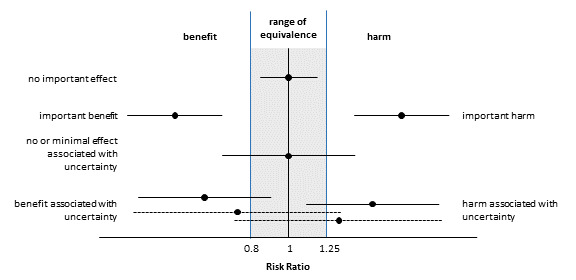
Magnitude‐based inferences to describe effect estimates, CIs, and clinical relevance for efficacy outcomes. The range of equivalence is defined as a risk ratio of 0.8 to 1.25.
For safety outcomes such as any SAE, any AE, and all class‐specific side effects, we defined the clinically important size of benefit as RR of 0.90 and the reciprocal as clinically important harm (RR 1.11) with a ‘range of equivalence’ of 0.9 to 1.11 (Figure). Effects lower than 0.90 and larger than 1.11 were considered to be clinically important.
2.
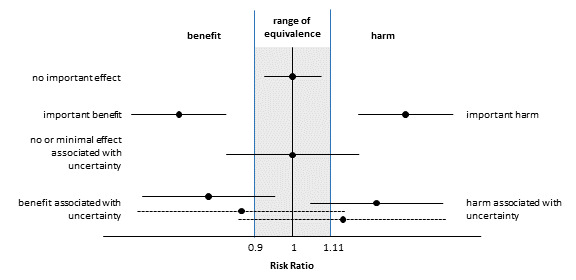
Magnitude‐based inferences to describe effect estimates, CIs, and clinical relevance for safety outcomes. The range of equivalence is defined as a risk ratio of 0.9 to 1.11.
The ‘range of equivalence’ is presented in all forest plots and is indicated by blue border lines crossing RR 0.8/0.9 and RR 1.25/1.11 (efficacy/safety outcomes). We used the function forest of the R package netmeta version 1.0‐1 for analysis and for visualization of the 'range of equivalence' (netmeta; Rücker 2019).
Unit of analysis issues
Cluster‐randomized trials
We did not include cluster‐randomized trials.
Cross‐over trials
We did not include trials with cross‐over design.
Studies with multiple treatment groups
We included multi‐arm studies in the data set as a series of two‐arm comparisons. To reflect the fact that comparisons within multi‐arm studies are correlated, we adjusted the standard error of each two‐arm comparison from a multi‐arm study. We used the method proposed by Rücker and Schwarzer, which uses back‐calculated standard errors in the weighted least‐square estimator to reflect the within‐study correlation (Rücker 2012; Rücker 2014; Rücker 2015).
Studies with zero events
We included in the analysis studies with zero events in one or more arms. We applied the constant continuity correction approach (continuity correction 0.5) as described by Sweeting 2004, using the R package netmeta version 1.0‐1 for analysis (netmeta).
Dealing with missing data
We noted levels of attrition for included studies in the ‘Risk of bias’ table as part of the Characteristics of included studies. We did not request from trial authors missing participant outcome data to reduce the workload and to enhance the feasibility of the review being completed in a reasonable time frame.
We carried out analyses for efficacy outcomes, as far as possible, on an intention‐to‐treat (ITT) basis. For the analysis of safety, we carried out as‐treated analysis as far as possible (and we were ready to accept if the randomization was broken).
In cases of missing data, we used an 'available‐case analysis' by excluding from the analysis all participants for whom the outcome is missing.
Assessment of heterogeneity
Assessment of clinical and methodological heterogeneity within treatment comparisons
We planned to use descriptive statistics of parameters reported in the Characteristics of included studies table to assess whether the studies within each pair‐wise comparison are homogenous enough with respect to potential effect modifiers (such as risk of bias, intervention details, and funding source), so that the assumption of homogeneity might be plausible. For the effect modifiers ‘risk of bias’ and ‘dose of intervention’, we accepted heterogeneity (see inclusion criteria of this review) and assessed the impact of these effect modifiers via sensitivity analysis for ‘risk of bias’ and subgroup analysis for ‘dose of intervention’. Due to the quantity of data and the lack of information for the effect modifier ‘funding source’ in many studies, an objective and reliable assessment of the distribution of this effect modifier within all comparisons was not possible. In general, we assumed that for all included studies, the study populations, interventions, outcomes, and study settings matched the inclusion criteria of the current systematic review.
Assessment of transitivity across treatment comparisons
We planned to assess the assumption of transitivity by comparing the distribution of potential effect modifiers (see Appendix 3: ‘Potential effect modifiers’) across the different pair‐wise comparisons. In the case of intransitivity (e.g. substantially imbalanced distribution of effect modifiers among comparisons), we planned to not perform NMA. For the effect modifiers ‘risk of bias’ and ‘dose of intervention’, we accepted differences in the distribution of these effect modifiers across treatment comparisons (see inclusion criteria of this review) and assessed the impact of these effect modifiers via sensitivity analysis for ‘risk of bias’ and subgroup analysis for ‘dose of intervention’. Due to the quantity of data and the lack of information for the effect modifier ‘funding source’ in many studies, an objective and reliable assessment of the distribution of this effect modifier within all comparisons was not possible. In general, we assumed that for all included studies, the study populations, interventions, outcomes, and study settings matched the inclusion criteria of the current systematic review.
Assessment of reporting biases
When we identified 10 or more relevant studies, we investigated risk of bias across studies (such as publication bias) in pair‐wise meta‐analyses ('Interventions of direct interest', primary outcomes) using funnel plots. If funnel plot asymmetry was suggested by a visual assessment, we performed exploratory analyses (e.g. Rücker’s arcsine test for dichotomous data, contour‐enhanced funnel plots, trim and fill sensitivity analyses) to further investigate funnel plot asymmetry. We analysed reporting bias using the R package meta version 4.9‐7 (meta).
Data synthesis
We used standard pair‐wise meta‐analysis and NMA for synthesizing information from numerous studies addressing the same outcomes but involving different interventions.
Methods for pair‐wise meta‐analyses and network meta‐analyses
We performed standard pair‐wise meta‐analyses for all primary outcomes and substance class‐specific side effects using a random‐effects model (inverse variance weighting) in RevMan for each treatment comparison (drugs of primary interest versus placebo) with at least two studies. We reported the results in the Data and analyses section. We did not report the results in the Effects of interventions section to reduce the amount of information presented.
For NMAs, we used a frequentist approach based on the graph‐theoretical method of Rücker et al (Rücker 2012). We performed random‐effects NMAs for all outcomes in R using the package netmeta version 1.0‐1 (netmeta; Rücker 2014). We separated mixed treatment evidence into direct and indirect evidence using the function netsplit from this package.
We reported all NMA, direct, and indirect estimates of all outcomes in supplementary files to reduce the amount of information provided in the text. In the Effects of interventions section, we presented only the following selection of NMA estimates of the primary analyses on the outcome level. First, we summarized the range of NMA effects for both drug combinations and single drugs with important clinical effects. Second, we summarized the range of NMA effects of all drug combinations and all single drugs (independent of the direction of effects). In the range of effects, we specified the most effective and the least effective drug or drug combination.
Methods for analysing additive effects of drug combinations
The primary NMA treated all single drugs and all combination prophylaxes as different nodes in the network. We performed a second analysis based on the assumption that the effects of combined treatments (e.g. A + B, A + B + C, B + C) are additive sums of their components. This assumption, together with the network structure, leads to a statistical model that allows decomposing the observed relative effects into the single components and estimating the effects of the components. The hypothesis of additivity can be tested by comparing estimates from this model with those from the primary analysis (Mills 2012). We used the function netcomb of the R package netmeta version 1.0‐1 for analysis (netmeta; Rücker 2019).
Subgroup analysis and investigation of heterogeneity
Assessment of statistical heterogeneity
Assumptions when estimating the heterogeneity
In NMA, we assumed the same heterogeneity across the different comparisons. In standard pair‐wise meta‐analyses, we assumed the common heterogeneity variance estimated from the NMA for each pair‐wise comparison.
Measures and tests for heterogeneity
We assessed heterogeneity by the common between‐trial variance measure (tau²), the Q‐statistics, the I² statistic, and the 95% prediction interval (95% PI). The 95% PI shows where the true effect of a new study similar to the existing studies is expected to lie (Riley 2011). For interpretation of heterogeneity, we compared the 95% PI and the 95% CI of the NMA treatment estimate with respect to the range of clinically relevant effect sizes and the range of equivalence.
Assessment of statistical inconsistency (incoherence)
Inconsistency (incoherence) is the statistical manifestation of intransitivity that occurs when the direct and indirect estimates in a network of treatments do not agree. The distinction between intransitivity and inconsistency (incoherence) is analogous to the distinction between clinical (or methodological) heterogeneity and statistical heterogeneity in standard pair‐wise meta‐analysis (Cipriani 2013).
At a global level, we assessed heterogeneity and inconsistency (incoherence) of the whole network by decomposing the Q‐statistic into variation of the effect estimates within designs (heterogeneity) and between designs (inconsistency) (Higgins 2012; Krahn 2013). A design is each combination of treatments within a study in a network meta‐analysis (e.g. for treatments A, B, and C, possible designs are A:B, A:C, B:C, and A:B:C). In addition, we used the full random‐effects design‐by‐treatment interaction model to assess whether all interventions behave similarly in all comparisons. We used the R package netmeta for Q decomposition and for calculation of the full random‐effects design‐by‐treatment interaction model (netmeta).
At a local level, we assessed differences between direct and indirect effect estimates of specific comparisons (incoherence) using descriptive Z‐tests and clinical relevance of the effect estimates. However, only clinically relevant incoherence based on different clinical conclusions of the 95% CI of direct and indirect treatment effect estimates with respect to the range of equivalence was used for interpretation of incoherence.
Investigation of heterogeneity
In cases of statistical heterogeneity (Q‐test with P < 0.05, 95% PI compared to 95% CI) within treatment comparisons, we explored possible sources (Higgins 2019). We restricted these explorative analyses to primary and GRADE‐relevant secondary outcomes and to the effect modifier 'dose of the intervention' as potential sources of heterogeneity. For pair‐wise comparisons (drugs of direct interest versus placebo), we performed subgroup analyses in RevMan. For the network, we used the R package netmeta to carry out separate analyses for the subgroups (netmeta).
Different treatment regimens—subgroup analysis of doses
Because it is of interest for clinicians and patients to know the optimal dose of antiemetic drugs with respect to efficacy and safety, we performed subgroup analyses.
We excluded combinations of drugs from the subgroup analysis because we cannot be sure whether some combinations can affect the dose effects. We performed the subgroup analysis of doses in the network with single drugs only (see 'Sensitivity analysis—Single drugs only') if the effect estimates remained robust compared to the primary analysis.
We separated different doses of the same drug into low, recommended, and high doses (Table). We restricted splitting of doses to single drugs of direct interest. The recommended doses or dose ranges for drugs are based on those reported in the ‘consensus guidelines for the management of postoperative nausea and vomiting’ (Gan 2014). For emerging substances, we used doses or dose ranges based on dose‐finding studies (e.g. for amisulpride, see Kranke 2013; no data are available for fosaprepritant).
1. Recommended, low, and high doses of antiemetic drugs.
| Drug | Dose* | Cut‐off (lower, upper limit)** | Low dose | Recommended dose | High dose |
| Amisulpride | 5 mg to 10 mg IV | NR | < 5 mg | 5 mg to 10 mg | > 10 mg |
| Aprepitant | 40 mg per os | NR | < 40 mg | 40 mg | > 40 mg |
| Casopitant | 150 mg per os | NR | < 150 mg | 150 mg | > 150 mg |
| Dexamethasone | 4 mg to 5 mg IV | NR | < 4 mg | 4 mg to 5 mg | > 5 mg |
| Dimenhydrinate | 1 mg/kg IV | NR | < 1 mg/kg | 1 mg/kg | > 1 mg/kg |
| Dolasetron | 12.5 mg IV | NR | < 12.5 mg | 12.5 mg | > 12.5 mg |
| Droperidol | 0.625 mg to 1.25 mg IV | See FDA(1) 2.5 mg IV |
< 0.625 mg | 0.625 mg to 1.25 mg | > 1.25 mg |
| Fosaprepitant | NR | NR | NR | NR | NR |
| Granisetron | 0.35 mg to 3 mg IV | NR | < 0.35 mg | 0.35 mg to 3 mg | > 3 mg |
| Haloperidol | 0.5 mg to < 2 mg IM/IV | See FDA < 2 mg |
< 0.5 mg | 0.5 mg to < 2 mg | 2 mg (cut‐off) |
| Meclizine | 50 mg per os | NR | < 50 mg | 50 mg | > 50 mg |
| Methylprednisolone | 40 mg IV | NR | < 40 mg | 40 mg | > 40 mg |
| Metoclopramide | 25 mg to 50 mg IV | 10 mg(2) | < 25 mg (10 mg cut‐off) | 25 mg to 50 mg | > 50 mg |
| Ondansetron | 4 mg IV, 8 mg ODT | NR for PONV (32 mg for other(3)) |
< 4 mg IV, < 8 mg ODT | 4 mg IV, 8 mg ODT | > 4 mg IV, > 8 mg ODT, (32 mg cut‐off) |
| Palonosetron | 0.075 mg IV | NR | < 0.075 mg | 0.075 mg | > 0.075 mg |
| Perphenazine | 5 mg IV | NR | < 5 mg | 5 mg | > 5 mg |
| Promethazine | 6.25 mg to 12.5 mg IV | NR | < 6.25 mg | 6.25 mg to 12.5 mg | > 12.5 mg |
| Ramosetron | 0.3 mg IV | NR | < 0.3 mg | 0.3 mg | > 0.3 mg |
| Rolapitant | 70 mg to 200 mg per os | NR | < 70 mg | 70 mg to 200 mg | > 200 mg |
| Scopolamine | Transdermal patch | NR | NA | NA | NA |
| Tropisetron | 2 mg IV | NR | < 2 mg | 2 mg | > 2 mg |
* Recommended doses are based on Gan 2014; for amisulpride, we used data from a dose‐finding study (Kranke 2013).
** Cut‐off limits are based on those reported in Gan 2014.
(1) FDA black box warning.
(2) Metoclopramide at a dose of 10 mg is not effective in reducing the incidence of PONV.
(3) 32 mg single IV dose for chemotherapy‐induced nausea (FDA warning).
Abbreviations: IM = intramuscular; IV = intravenous; NA = not applicable; NR = not reported; ODT = orally disintegration tablets; per os = per oral.
We categorized the spectrum of available fixed doses into low, recommended, and high doses according to the following algorithm.
If a single dose X is recommended (Gan 2014), we defined X as the ‘recommended dose’; ‘low dose’ as < X; ‘high dose’ as > X (lower and upper limits are defined only if reported in Gan 2014).
If a dose range X to Y is recommended (Gan 2014), we defined X to Y as ‘recommended dose range’; ‘low dose’ as < X; ‘high dose’ as > Y (lower and upper limits are defined only if reported in Gan 2014).
If flexible doses (e.g. mg/kg) were reported, we transformed flexible doses into fixed doses by multiplying the flexible dose by the mean/median weight of participants reported in the published study (if the weight was not reported, we assumed 70 kg).
Drugs without any dose recommendation according to Table (fosaprepitant, scopolamine) and drugs not of direct interest were included in the analysis. In these cases, all doses of the same drug were lumped together in a dose category 'NA'.
If there were studies that used drugs of direct interest that were not attributable to any dose category in Gan 2014 (e.g. using different application routes), we excluded these studies from the subgroup analysis. Exclusion of these studies was necessary for subsequent analyses of additive dose effects (see 'Methods for analysing additive dose effects') because additional categories that could not assigned to the additive concept may interfere with the analysis.
We used the R package netmeta to carry out network meta‐analyses with subgroups (netmeta). Network effect estimates were used for interpretation of subgroup analyses in this review. In addition, studies were divided into subgroups in pair‐wise meta‐analyses of primary and GRADE‐relevant secondary outcomes, and these were reported in the Data and analyses section. We did not report these pair‐wise subgroup analyses in the Effects of interventions section to reduce the amount of information provided in review text.
We performed this explorative analysis for all primary and for all secondary outcomes while considering side effects to answer this specific question about effects of the 'dose of the intervention' on effect estimates (Higgins 2019).
We summarized the most commonly used dosages, routes, and time points of administration of single drugs of direct interest for the primary outcome vomiting and reported this information in the Effects of interventions section.
Methods for analysing additive dose effects
We used the subgroup analysis of dose with splitting of drugs into the dose categories low, recommended, and high doses (see 'Different treatment regimens—subgroup analysis dose') as primary NMA. We performed a second analysis based on the assumption that the effects of combined categories (e.g. low + recommended, low + recommended + high, recommended + high) are additive sums of their individual categories. This assumption, together with the network structure, leads to a statistical model that allows decomposing of observed relative effects into single dose categories and estimating the effects of the dose categories. The hypothesis of additivity can be tested by comparing estimates from this model with those from the primary analysis (subgroup analysis dose) (Mills 2012). We used the function netcomb of the R package netmeta version 1.0‐1 for analysis (netmeta; Rücker 2019).
Sensitivity analysis
We analysed the robustness of the effect estimates by performing the following sensitivity analyses.
Risk of bias: including only trials at low risk of bias in the overall risk of bias summary (see 'overall risk of bias summary') and excluding all trials with high or unclear risk of bias in the overall risk of bias summary.
Imbalance in baseline details: Including only trials with a balanced distribution of baseline details in the study arms and excluding all studies with imbalance in baseline details in the study arms.
Primary PONV‐related outcome: including only trials with a primary PONV‐related outcome and excluding trials that analysed the outcomes vomiting and nausea not as primary endpoints.
Funding source 'industry': including only trials funded by industry and excluding all other studies.
Funding source 'non‐industry': including only trials funded by non‐industry resources and excluding all other studies.
Single drugs only: including only study arms investigating single drugs and excluding study arms investigating combinations of drugs. This analysis compared the robustness of network effect estimates of the primary network meta‐analysis and the sensitivity analysis including single drugs only (which is the basic analysis for the subgroup analysis dose).
Comparability of drug doses within studies: there is a possibility that some trials compare one drug at the upper limit of its therapeutic range (e.g. high dose) with another drug at the lower limit of its therapeutic range (e.g. low dose) within the same study. This can lead to an overestimation of the drug used in higher doses. We captured this study characteristic by adding a dichotomous variable indicating whether the dosages are comparable (yes = 1) or not (no = 2) and used this information for sensitivity analysis (Cipriani 2009). Comparable dose categories were low‐low, recommended‐recommended, and high‐high (for definitions of dose categories of individual drugs, see Table). In the sensitivity analysis, we included only studies that investigated comparable dose categories of different drugs. This sensitivity analysis was restricted to single drugs only.
Adverse event monitoring: we used the information on adverse event monitoring of studies to test the robustness of effect estimates for the primary outcomes 'SAE' and 'any AE' by sensitivity analyses. We included only studies with low risk of bias for adverse event monitoring and excluded high and unclear risk of bias studies for adverse event monitoring.
We restricted sensitivity analyses to primary outcomes with the exceptions of 'Risk of bias' and 'Comparability of drug doses within studies', which were relevant for all side effects (GRADE‐relevant secondary outcomes).
We reported effect estimates of the sensitivity analyses of drugs of direct interest in the section Effects of interventions if the effect estimates differed from the primary analysis regarding clinical interpretation of the effect (non‐robust effect estimates).
Summary of findings and assessment of the certainty of the evidence
We presented the main results of the review in ‘Summary of findings' (SoF) tables including a rating of the certainty of evidence as suggested for network meta‐analysis by Yepes‐Nuñez 2019. The certainty rating was based on the principles of the GRADE Working Group and was assessed by an alternative system developed by Salanti et al (termed CINeMA, Confidence in Network Meta‐Analysis, Salanti 2014).
We created one primary and eleven secondary SoF tables. In the primary SoF table, single antiemetic drugs of direct interest (see 'Interventions of direct interest') with important beneficial effect and with high or moderate certainty of evidence for the primary outcome (vomiting) were presented together with all relevant substance class‐specific adverse events. For the secondary SoF tables, one table for each outcome (primary outcomes and drug‐class important adverse effects) was created, comparing all single drugs of direct interest to placebo.
In the SoF tables we presented NMA relative treatment effects, anticipated absolute effects, ranking of treatments using P scores, and the certainty of evidence.
The quality of the body of the NMA evidence was assessed by two independent reviewers (SW, OJ) and reflects within‐study risk of bias (study limitations), across‐studies bias (publication bias), indirectness, imprecision, heterogeneity (variability between studies within each comparison), and incoherence (variability between direct and indirect evidence). We have only appraised the certainty of evidence for relative treatment effects and not for treatment rankings.
The clinically important size of effect and not the statistical significance of NMA relative treatment effects was relevant for assessing the certainty of evidence. We defined for efficacy and safety outcomes, a range of relative treatment effects around the line of no effect that do not indicate important clinical difference between the interventions, which is termed the ‘range of equivalence’.
Efficacy outcomes (vomiting 0 to 24 hours): a relevant effect is defined as RR 0.8 (range of equivalence: 0.8 to 1.25)
Safety outcomes (SAE, any AE, headache, sedation, extrapyramidal symptoms, constipation, postoperative wound infection, arrhythmia, visual disturbances, and QT prolongation): a relevant effect is defined as RR 0.9 (range of equivalence: 0.9 to 1.11)
We GRADEd each network estimate according to the following criteria (details are described in the Appendix 5):
Within‐study risk of bias (study limitations)
Across‐studies bias (publication bias)
Indirectness
Imprecision
Heterogeneity
Incoherence
The GRADE assessment resulted in one of four levels of certainty and these express our confidence in the estimate of effect (Balshem 2011).
High certainty: we are very confident that the true effect lies close to that of the estimate of the effect.
Moderate certainty: we are moderately confident in the effect estimate: the true effect is likely to be close to the estimate of the effect, but there is a possibility that it is substantially different.
Low certainty: our confidence in the effect estimate is limited: the true effect may be substantially different from the estimate of the effect.
Very low certainty: we have very little confidence in the effect estimate: the true effect is likely to be substantially different from the estimate of effect.
Certainty of evidence for effect estimates can vary greatly across comparisons within a network, and can range from high to very low certainty. In making inferences regarding the choice of an intervention recognizing the certainty of each comparison is far more valuable than ranking efficacy alone (Puhan 2014).
Reporting guidelines
This review is reported based on the PRISMA Extension Statement for NMA (Hutton 2015) and on the ‘Protocol template for a Cochrane Intervention review that compares multiple interventions’ from the Cochrane Comparing Multiple Interventions Methods Group (Protocol Template 2014).
Results
Description of studies
Results of the search
The results of our search are displayed in a PRISMA flow chart (Figure). The first search was performed in November 2017. The search was updated in April 2020.
3.
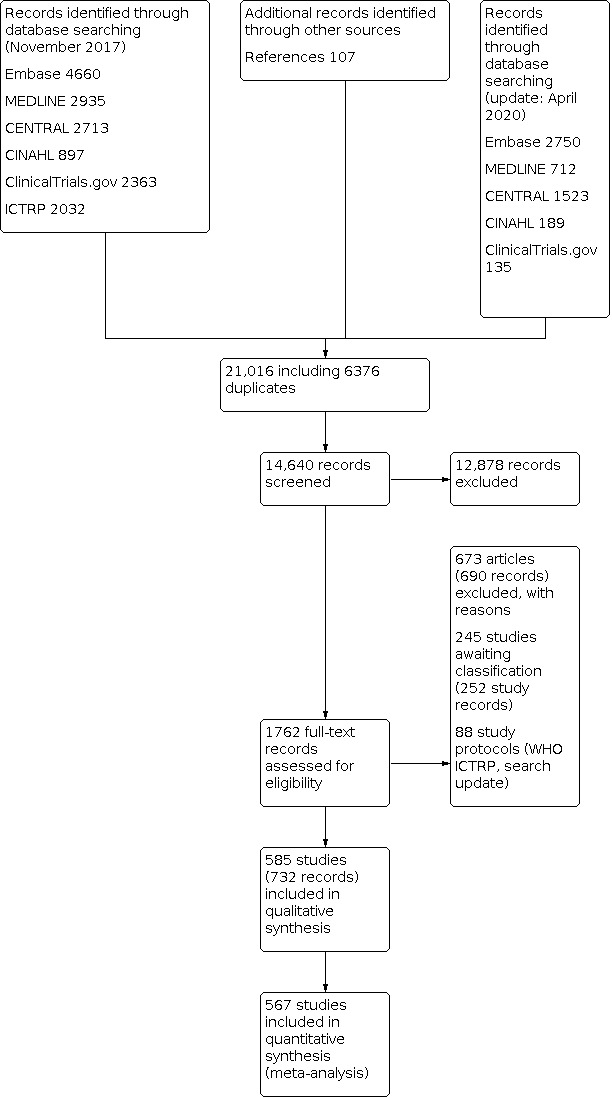
Study flow diagram.
In the first search, we identified 15,600 records through database searching and another 107 by handsearching of reference lists of meta‐analyses in the field. In the search update, we identified another 5309 records. In total, 14,640 records remained after duplicates had been removed. These were screened independently by 11 review authors (SW, DM, MR, HMS, AH, DR, ILB, MSS, LHJE, PKr, TS) regarding title and abstract. A total of 1762 remaining records were selected and assessed for eligibility by reviewing the full texts and protocols; 690 records did not fulfil the eligibility criteria and had to be excluded. A total of 245 studies (252 records) were awaiting classification. Of these, 206 studies were awaiting classification due to missing information in the study reports or study protocols, and 39 were identified as potentially eligible studies after the first search date (these studies will be fully included in the next review update). An additional 88 study protocols of the World Health Organization International Clinical Trials Registry Platform (WHO ICTRP) database identified in the search update were awaiting classification (until the next review update) because the database was closed at the time of the search update. All protocols were listed in a supplementary file (Supplementary File_ICTRP‐protocols). Finally, 732 records (full‐text primary and secondary study reports, abstracts, and protocols), which could be allocated to 585 studies, were included in the qualitative synthesis, and 567 of these studies were used to perform the pair‐wise and network meta‐analyses. Eighteen studies could not be used for analysis, although they reported outcomes of interest for this review. These studies did not report data in a way that could be used for analysis.
Eighty‐three of 585 studies (14%) were not published in English. Twenty‐seven studies were published in Korean (Ahn 2002; Choi 1999; Choi 2008; Joe 2009; Kil 1999; Kim 1992; Kim 1999; Kim 2000; Kim 2001; Kim 2005a; Kim 2005b; Kim 2007; Kim 2012; Kim JE 2005; Koo 2001; Lee 2008b; Lee HS 2004; Lee SY 2001; Lee YC 2009; Moon 2010; Park 2006; Rho 2001‐1; Ryu 2007; Seo 2003; Suh 2007; Yoon 2009; Yoon 2016), 14 in German (Alon 1982; Biedler 1998; Eberhart 1999b; Heinke 1996‐1; Lutz 1969; Morin 1999; Muller 2003; Piper 2003; Ploner 1997; Rusch 1999; Rusch 2002; Schuh 1987; Tolksdorf 1986; Triem 1999), 11 in Turkish (Akin 2005; Akkaya 2001; Altunkaya 2003; Cekmen 2003; Cubukcu 2007; Guldogus 1994; Karabayirli 2003; Kaya 2000; Ozdamar 2006; Ozunlu 2005; Tezcan 1993), eight in Spanish (Agamez Medina 2015; Alonso Damian 2012; Cabrera 1997; Delas Ramirez 2001; Perez Ascencio 1992; Perez Garcia 2000; Pertusa 1996; Sanduende 2007), seven in Chinese (Jin 2013; Li 2015‐1; Liu 2011; Quan 2007; Quan 2011; Wang 1995; Zhu 2010), three in Italian (Pascucci 1996; Rettori 2011; Stefani 1995), three in Persian (Heidari 2015b; Hemmati 2014; Safae 2011), two in French (Badaoui 1998; Badaoui 1999), two in Russian (Gallinger 2007; Ionescu 2007), and one each in Bulgarian (Dimov 2004), Danish (Jespersen 1989), Dutch (Gijzels 2006), Greek (Kanakoudis 1985), Japanese (Seki 2005), and Portuguese (Martins 1995).
We did not include in our systematic review any abstracts lacking a published full‐text study report. We included six studies that were not published in a journal but were presented as publicly available study reports with results (NCT00888329; NKO101287; NKT102245; NKT102260; NKT102552; PALO‐04‐07).
Included studies
We included 585 studies (733 records) in this systematic review. Three publications included two different studies (Gesztesi 2000‐1; Gesztesi 2000‐2; White 2005‐1; White 2005‐2; White 2007‐1; White 2007‐2). Six studies included two different anaesthesia regimens (inhalational and propofol anaesthesia), and we divided the participant population into several sub‐studies for analysis only (Apfel 2004‐1; Apfel 2004‐2; Heinke 1996‐1; Heinke 1996‐2; Li 2015‐1; Li 2015‐2; Rho 2001‐1; Rho 2001‐2; Voigt 2011‐1; Voigt 2011‐2; Zhang 2013‐1; Zhang 2013‐2). We could allocate 83 study protocols to 75 included studies. Forty‐five studies were published more than once. A total of 64 records were multiple publications of clinical studies in abstract format or as a journal publication.
The included studies were published between 1965 (Khanna 1965) and 2017 (Bang 2017; Bjerregaard 2018; Corcoran 2017; Cortes Flores 2018; Gan 2017; Hu 2017; Kizilcik 2017; Koyuncu 2017; Monohar 2017; Mujoo 2017; Satomoto 2017; Song 2017; Yang 2017). A majority of included studies (71%) were published in the last two decades between 2000 and 2017. The number of RCTs increased over time, reaching a peak of publications in 2007 with 36 (36/585; 6%) published trials (Figure). From 1996 to 2016, more than 15 trials were published annually (Figure).
4.
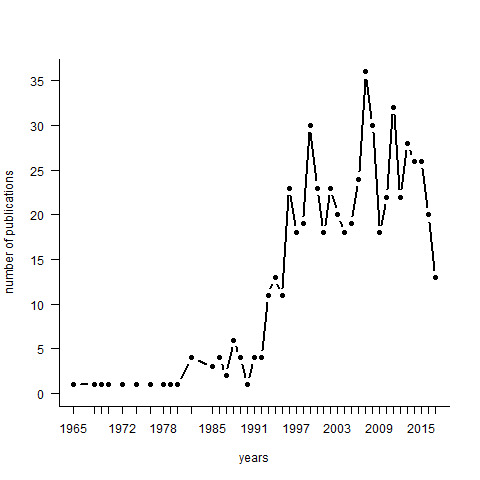
Number of annual publications (included studies, n = 585) from 1965 to 2017 (first search).
The included studies provide data on 97,516 randomized participants, of which data on 93,211 were analysed. A detailed description of the trials can be found under Characteristics of included studies.
Comparators
This review compared 21 single interventions of direct interest and 23 additional single interventions to supplement the analysis. All interventions are listed in Types of interventions. Of 585 included studies, 541 studies (93%) investigated drugs of direct interest, 19 studies investigated drugs not of direct interest, and 25 studies investigated both types of interventions.
A total of 384 studies (66%) included an inactive control arm (placebo or no treatment) in the study design. Active interventions only were compared in 201 studies (34%). The number of eligible study arms in included trials ranged between two and 16. In summary, 310 studies (53%) investigated two groups, 160 studies (27%) three groups, 77 studies (13%) four groups, 23 studies (4%) five groups, 11 studies (2%) six groups, two studies (0.3%) seven groups, and two studies more than seven groups (Apfel 2004‐1; Apfel 2004‐2; Beattie 1993).
A total of 423 studies (72%) investigated only single drugs, 31 studies (5%) compared only combinations of drugs, and 131 studies (23%) compared both single drugs and combinations of drugs.
The top 10 of the most investigated antiemetic drugs administered as single prophylaxis for prevention of PONV in this review were ondansetron (246 studies), dexamethasone (120 studies), droperidol (97 studies), metoclopramide (76 studies), granisetron (51 studies), ramosetron (38 studies), palonosetron (35 studies), tropisetron (32 studies), dolasetron (20 studies), and scopolamine (18 studies). Thus, the 5‐HT₃ receptor antagonists are the most widely studied substance class in this review. Other drugs of direct interest administered as single interventions were much less studied, with 10 studies for haloperidol, seven studies for aprepitant and promethazine, five studies for dimenhydrinate and methylprednisolone, three studies for fosaprepitant, two studies for amisulpride, casopitant, and perphenazine, and one study for rolapitant. No eligible study was found that investigated meclizine as a single intervention.
Among the combinations of drugs, two‐fold combinations were investigated in 159 studies, three‐fold combinations in eight studies (Apfel 2004‐1; Benevides 2013; Bergese 2016; DeOliveira 2011; Gallinger 2007; Liu 2011; Long 2014; Tang 2003), and one four‐fold combination in one study (Hammas 2002). Forty‐three different two‐fold combinations were used in the included studies. Four of these two‐fold drug combinations were used in 10 or more studies (54 times: dexamethasone‐ondansetron, 20 times: dexamethasone‐granisetron, 15 times: droperidol‐ondansetron, 10 times: dexamethasone‐metoclopramide). A total of seven different three‐fold drug combinations were investigated, of which dexamethasone‐droperidol‐ondansetron was used most often in four of eight studies (Apfel 2004‐1; Gallinger 2007; Liu 2011; Tang 2003). The other six three‐fold combinations were investigated once each (aprepitant‐dexamethasone‐ondansetron, aprepitant‐dexamethasone‐promethazine, dexamethasone‐dolasetron‐droperidol, dexamethasone‐haloperidol‐ondansetron, dexamethasone‐metoclopramide‐ondansetron, dexamethasone‐ondansetron‐promethazine). The only investigated four‐fold drug combination was dexamethasone‐droperidol‐metoclopramide‐ondansetron.
Details of interventions
We recorded doses, administration time points, and application routes for all interventions administered as single drugs. We categorized doses of drugs that are of direct interest into low, recommended, and high doses according to Table. We categorized time points of administration into before anaesthesia, at induction of anaesthesia, during surgery, and at end of surgery. We differentiated between intravenous, oral, intramuscular, and other routes of administration (e.g. epidural, intranasal).
Eighty studies (14%) investigated different doses of the same antiemetic drug, 12 studies (2%) different administration time points, and nine studies (2%) different routes of application.
5‐HT₃ receptor antagonists
Dolasetron (20 studies) was administered intravenously or per oral at doses of 12.5 to 100 mg (recommended to high) and 25 to 200 mg (no dose recommendation available), respectively. Most of the study arms (56%) investigating intravenous dolasetron used high doses (> 12.5 mg). Intravenously administered dolasetron was given at induction of anaesthesia (22%) or at end of surgery (78%). Oral dolasetron was administered before anaesthesia.
Granisetron (51 studies) was mainly administered via the intravenous route at doses of 0.1 to 4 mg (low to high). Most of the study arms (84%) investigating intravenous granisetron used recommended doses (0.35 to 3 mg). Intravenous granisetron was given at all different time points ranging from before anaesthesia to end of surgery. Granisetron was administered orally before anaesthesia at doses of 2 mg in one study (Bhatnagar 2007).
Ondansetron (246 studies) was administered via the intravenous or oral route at doses of 1 to 16 mg (low to high) and 4 to 16 mg (low to high), respectively. In most of the study arms (71%) investigating intravenous ondansetron, recommended doses were used. Low and high doses of intravenous ondansetron were used in 9% and 25% of study arms, respectively. Intravenous ondansetron was administered most often at induction of anaesthesia (69%) and at end of surgery (26%). Oral ondansetron given before anaesthesia was investigated in 32% of study arms at low doses, in 47% at recommended doses, and in 21% at high doses.
Palonosetron (35 studies) was administered only via the intravenous route at doses of 0.007 to 2.169 mg (low to high). In most of the study arms, palonosetron was used at recommended doses (69%), followed by study arms using low doses (21%). Administration at induction of anaesthesia was used most often (69%), followed by administration at end of surgery (28%).
Ramosetron (38 studies) was administered intravenously or per oral at doses of 0.1 to 0.45 mg (low to high) and 0.1 mg (no dose recommendation available), respectively. Most study arms (89%) investigating intravenous ramosetron used recommended doses. Administration of intravenous ramosetron at end of surgery was used most often (67%), followed by administration at induction of anaesthesia (28%). Oral ramosetron (three studies) was administered before anaesthesia.
Tropisetron (32 studies) was administered intravenously or per oral at doses of 0.5 to 7.25 mg (low to high) and 5 mg (no dose recommendation available), respectively. Most study arms investigating intravenous tropisetron used high doses (69%), followed by recommended doses (25%). Administration of intravenous tropisetron at induction of anaesthesia was used most often (75%), followed by administration at end of surgery (19%). Oral tropisetron (three studies) was administered before anaesthesia.
D₂ receptor antagonists
Amisulpride (two studies) was administered only via the intravenous route at induction of anaesthesia at doses of 1 to 20 mg (low to high).
Droperidol (97 studies) was administered mainly intravenously at doses of 0.25 to 7.5 mg (low to high). In addition, intramuscular (Rothenberg 1991; Tezcan 1993; Verhasselt 1988), epidural (Lee 2000; Lee IH 2007), and acupoint injection—Jin 2013; Zhu 2010—were tested at doses of 2.5 to 5 mg (no dose recommendation available). Patton 1974 injected droperidol via intravenous (1.25 mg) and intramuscular routes (3.75 mg) shortly after the start of surgery. Two studies did not report the route of administration (Nesek Adam 2004; Prescott 1976). Most study arms investigating intravenous droperidol used recommended doses (57%), followed by high doses (37%). Intravenous low‐dose droperidol was investigated in 6% of study arms. Intravenous droperidol was given at all different time points ranging from before anaesthesia to end of surgery. However, administration at induction of anaesthesia of intravenous droperidol was used most often (73%), followed by administration at end of surgery (18%). Intramuscular droperidol was administered before anaesthesia or at end of surgery. Epidural droperidol was administered at end of surgery. Droperidol injected into the acupoint was administered before or at induction of anaesthesia.
Haloperidol (10 studies) was administered mainly intravenously at doses of 1 to 2 mg (recommended to high). In addition, one study investigated intramuscular injection of 2 mg haloperidol at end of surgery (Feng 2009), and another study did not report the route and time point of administration (Judkins 1982). Most study arms investigating intravenous haloperidol used high doses (63%), followed by recommended doses (37%). Administration of intravenous haloperidol at induction of anaesthesia was used most often (75%), followed by administration at end of surgery (25%).
Metoclopramide (76 studies) was administered mainly intravenously at doses of 7 to 38.4 mg (low to recommended). In most study arms, intravenous metoclopramide was used at low doses (97%). Two studies used intravenous metoclopramide at recommended doses (Derbent 2005; Talesh 2011). In addition, intramuscular—Huseyinoglu 2016—and intranasal injections—Wagner 1996—were tested at doses of 10 and 20 mg (no dose recommendation available), respectively. One study did not report the route of administration (Nesek Adam 2004). Administration of intravenous metoclopramide at induction of anaesthesia was used most often (60%), followed by administration at end of surgery (35%). Oral metoclopramide was given before anaesthesia.
Perphenazine (two studies) was administered only via the intravenous route at induction of anaesthesia at the recommended dose of 5 mg (Desilva 1995; Steinbrook 1998).
NK₁ receptor antagonists
Aprepitant (seven studies) was administered only via the oral route before surgery at doses of 40 to 125 mg (recommended to high). In most of the study arms (66%), aprepitant was used at high doses, followed by study arms using recommended doses (33%).
Casopitant (two studies) was administered only via the oral route before surgery at the recommended dose of 150 mg.
Fosaprepitant (three studies) was administered only via the intravenous route at induction of anaesthesia at doses of 150 mg (no dose recommendation available).
Rolapitant (one study) was administered only via the oral route before surgery at doses of 5 to 200 mg (low to recommended).
Corticosteroids
Dexamethasone (120 studies) was administered mainly intravenously at doses of 1.25 to 35 mg (low to high). In addition, oral administration (Eberhart 2006; Ozdamar 2006), epidural injection (Hefni 2014; Khafagy 2010), and perineural injection—Tomar 2017—were tested at doses of 4 to 8 mg (no dose recommendation available). One study did not report the route of administration (Heidari 2015b). Most study arms investigating intravenous dexamethasone used high doses (69%), followed by recommended doses (27%). Intravenous low‐dose dexamethasone was investigated in 4% of study arms. Intravenous dexamethasone was given at all different time points ranging from before anaesthesia to end of surgery. However, administration at induction of anaesthesia was used most often (77%), followed by administration before anaesthesia (13%) and at end of surgery (8%). Epidural and perineural dexamethasone were administered at induction of anaesthesia; oral dexamethasone was given before anaesthesia.
Methylprednisolone (five studies) was administered intravenously at doses of 40 to 125 mg (recommended to high), intramuscularly at doses of 40 mg (no dose recommendation available), and interarticularly at doses of 40 mg (no dose recommendation available). Intravenous injection was administered at induction of anaesthesia, intramuscular injection was administered at induction of anaesthesia or at end of surgery, and intra‐articular injection occurred during surgery.
Antihistamines
Dimenhydrinate (five studies) was administered intravenously at doses of 50 mg (low), intramuscularly at doses of 50 mg (no dose recommendation available), and per oral at doses of 75 mg (no dose recommendation available). Intravenous injection was administered at induction of anaesthesia; intramuscular injection and oral application were performed before anaesthesia.
Promethazine (seven studies) was administered intravenously at doses of 5.6 to 56.5 mg (low and high), intramuscularly at doses of 25 mg (no dose recommendation available), and per oral at doses of 20 mg (no dose recommendation available). Intravenous injection was administered at induction of anaesthesia or at end of surgery, intramuscular promethazine was administered at end of surgery, and oral application was performed before anaesthesia.
No eligible study was found that investigated meclizine as a single intervention.
Anticholinergics
Scopolamine (18 studies) was administered mainly via a transdermal patch before anaesthesia at doses of 0.5 to 1.5 mg (recommended to high). Five studies did not report the dose of transdermally administered scopolamine (Schuh 1987; Semple 1992; Stromberg 1991; Tolksdorf 1986; Wilkinson 1989). In addition, one study investigated an intramuscular injection of 0.46 mg scopolamine before anaesthesia (Larsson 1988), and two studies investigated the oral route of scopolamine at doses of 0.3 to 0.6 mg (Baxendale 1993; Simpson 1988). Two studies did not report the route of administration (Heidari 2015b; Shah 1972).
Anaesthesia and surgical procedures
In 515 studies (88%), participants were anaesthetized through inhalational anaesthesia techniques based on volatiles alone (sevoflurane, isoflurane, desflurane, etc.), a balanced anaesthesia regimen (volatile with opioid), or a combined regimen (volatile with propofol). Total intravenous anaesthesia (TIVA) was used in 56 studies (10%). Six studies used both inhalational anaesthesia and TIVA in the study design, and we divided participant populations into sub‐studies for analysis according to the anaesthesia regimen used (Apfel 2004‐1; Apfel 2004‐2; Heinke 1996‐1; Heinke 1996‐2; Li 2015‐1; Li 2015‐2; Rho 2001‐1; Rho 2001‐2; Voigt 2011‐1; Voigt 2011‐2; Zhang 2013‐1; Zhang 2013‐2). Eight studies did not specify which type of anaesthesia was used, but it was reported that anaesthesia was standardized for all participants within the individual studies (Alia 2015; Backes 2013; Barrow 1994; Gesztesi 2000‐1; Gesztesi 2000‐2; Khan 2006; Kumar 2013; NCT00888329; Thimmasettaiah 2012). The overall mean duration of anaesthesia for all studies was 108 minutes. The overall median duration of anaesthesia was 101 minutes with an interquartile range of 68 to 140 minutes. The shortest mean duration of anaesthesia reported in a study was 1.72 minutes (Ali Melkkila 1996), and the longest mean duration of anaesthesia was 486 minutes (Tsutsumi 2014).
In 189 studies (32%), gynaecological procedures were most common, followed by gastrointestinal (19%) and miscellaneous procedures (18%). The latter included unspecified abdominal surgery, unspecified plastic surgery, and multiple surgery types within individual studies. Participants were undergoing otolaryngological procedures in 36 studies (6%), endocrine surgery including thyroidectomy in 35 studies (6%), breast surgery including plastic breast surgery in 24 studies (4%), any unspecified laparoscopic procedure in 19 studies (3%), ocular surgery in 13 studies (2%), neurological procedures including spine surgery in 13 studies (2%), orthopaedic surgery in 11 studies (2%), dental procedures in nine studies (2%), cardiovascular and thoracic procedures in four studies (1%), and urological surgery in three studies (1%). In 10 studies (2%), the surgical procedure was not specified.
Population baseline details
The overall mean age of populations in all included studies in this review was 42.4 years, and the median age was 42.5 years. Thirty‐four studies (6%) reported a low mean age between 18 and 29 years, and 15 studies (3%) reported a high mean age of more than 60 years. Thirty studies (5%) did not report the mean age of the study population. Most of the included participants were women (83%). In 412 studies (70%), included participants were healthy individuals (American Society of Anesthesiologists (ASA) 1 and 2). In 100 studies (17%), participants were eligible with substantial physical and functional limitations (ASA > 2). In 73 studies (12%), ASA physical health status was not reported.
We collected study population data on the four risk factors for PONV according to Apfel (female gender, non‐smoker status, history of PONV or motion sickness, postoperative opioid use). Females only were included in 292 studies (50%), whereas four studies (< 1%) included only males. In 93 studies (16%), a balanced gender distribution with 40% to 60% females was reported. Twenty‐seven studies (5%) did not report the gender distribution. A non‐smoking status of 100% in the study population was reported in 55 studies (9%). Only active smoking participants were included in one study (Jo 2012). In 399 studies (68%), the smoking status of the study population was not reported. A history of PONV or motion sickness in 100% of the study population was reported in five—Altorjay 2011; Dagtekin 2009; Kim SH 2013; Koivuranta 1999; Pan 2008—and four studies—Altorjay 2011; Dagtekin 2009; Kim SH 2013; Pan 2008—respectively. Exclusion of participants with history of PONV or motion sickness was reported in 100 (17%) and 104 (18%) studies, respectively. In 266 (45%) and 299 studies (51%), respectively, no details on participant history of PONV and motion sickness were reported. In 514 studies (88%), participants received perioperative opioids. In 15 studies (3%), no perioperative opioids were used. For 153 studies (26%), data were provided for all four risk factors. High‐risk populations with participants having three and four risk factors at 100% (inclusion criteria) were studied in five—Altorjay 2011; Dagtekin 2009; Kim SH 2013; NKT102552; Pan 2008—and 31 studies, respectively—a total of 6% of all studies. Two risk factors at 100% (inclusion criteria) were reported in 242 studies (41%).
Study conduct (location, setting, funding)
A total of 298 studies (51%) were conducted in Asia, followed by Europe with 148 studies (25%) and North America with 96 studies (16%). Eleven studies (2%) were conducted in South America, nine studies (2%) in Africa, and seven studies (1%) in Australia/Oceania. Sixteen studies (3%) were carried out in several countries.
A total of 489 studies (84%) were conducted at a single centre, and 60 studies (10%) were conducted at multi‐centres. The largest multi‐centre study (with 58 study centres) was Morris 1998. In 36 studies (6%), the number of involved studies centres was not reported.
Inpatient participants were included in 409 studies (70%), and outpatient participants were included in 103 studies (18%). Twenty‐one studies included both inpatient and outpatient participants, and 52 studies (9%) did not report this study setting.
A total of 97 studies (17%) have reported that they were funded by industry, and 104 studies (18%) have reported that they were funded by non‐industrial resources. A majority of studies with a total of 384 studies (66%) have not declared any details on funding of the study.
Sample size
The mean sample size of all studies was 167 participants, and the median sample size was 100, with an interquartile range of 70 to 160 participants. The smallest sample size reported in a study was 20 participants with two study groups (Seki 2005), and the largest randomized sample size was 5199 participants with 16 study arms (Apfel 2004‐1; Apfel 2004‐2). A total of seven studies included more than 1000 participants (Apfel 2004‐1; Fortney 1998; Hechler 2001; Morris 1998; Pearman 1994; Philip 2000; Scuderi 2001).
Study focus and reported outcomes
The titles of the studies indicated that 516 studies (88%) had a focus on PONV research. The titles of 69 studies (12%) did suggest a focus other than PONV research. Most of these studies (33%) investigated dexamethasone on postoperative recovery.
A total of 309 studies (53%) explicitly specified a primary study outcome(s) or provided a sample size calculation for one specific outcome. A total of 86% of these primary outcomes were PONV, nausea, or vomiting, and 14% were not PONV‐related. A total of 276 studies (47%) have not specified which reported outcome was the primary outcome and did not provide any sample calculation.
A total of 522 studies (89%) investigated relevant efficacy outcomes for this review. In 327 studies (56%), relevant safety outcomes were reported. Eighteen studies (3%) did not report numerical data that can be used in meta‐analyses for this review (Aasboe 1998; Altunkaya 2003; Asadollah 2014; Barros 2013; Barrow 1994; Cubukcu 2007; Derbent 2005; Forrester 2007; Gupta 2011; Judkins 1982; Khanna 1965; Kim WJ 2013; Mohammadi 2007; Ozdamar 2006; Ploner 1997; Sniadach 1997; Turner 2004; Vale 2011). These studies provided general statements on relevant safety outcomes.
Excluded studies
We excluded 673 articles (690 records) after reviewing the full texts. Reasons for exclusion are listed under Characteristics of excluded studies. The most common reason for exclusion was a wrong administration time point of the interventions (after the occurrence of PONV, therapeutic not prophylactic intention) with a total of 136 studies (19%), followed by abstracts with 89 studies (13), non‐clinical study reports (editorials, commentaries, narrative reviews) with 80 studies (12%), wrong outcomes with 76 studies (11%), paediatric or mixed populations (adults and children) with 68 studies (10%), regional or sedative anaesthesia with 57 studies (8%), wrong study design with 48 studies (7%), wrong or no eligible comparator with 42 studies (6%), different baseline anaesthesia regimens in study arms with 31 studies (5%), wrong intervention with 29 studies (4%), wrong population with seven studies (1%), retracted studies (e.g. authored by Fujii) or notes to retracted studies with six studies (1%), and meta‐analysis with four studies (1%).
Studies awaiting classification
A total of 245 studies (252 records) are awaiting classification. Of these, 185 studies were identified during the first search in 2017, with 86 studies reported as full‐text journal publications and 99 as study protocols posted on either ClinicalTrials.gov or WHO ICTRP. The other 60 studies were identified after the first search or during the search update in 2020. Thirty‐nine of these 60 studies will be fully included in the next review update, and 21 studies are awaiting classification due to missing study information. Details on studies awaiting classification are listed in the Characteristics of studies awaiting classification tables.
Of the 86 studies identified in the first search and reported as journal publications, no full text was available for 29 studies. Amongst the missing information of studies with full text were lack of population age (19 studies), details on the anaesthesia regimen (11 studies), randomization details (eight studies), study design (eight studies), outcome details (six studies), and time point of drug administration (one study). Two studies from an author for whom several publications were currently retracted or listed in the retraction watch database are awaiting classification until resolution of concerns (Schietroma 2010; Schietroma 2013). Two other studies seem to share identical study arms without co‐referencing each other (Isazadehfar 2016; Isazadehfar 2017). Requests for missing information were sent to all authors who reported contact email addresses in the journal publication. Requests regarding 18 studies remained unanswered.
Of the 99 study protocols retrieved in the first search, three protocols posted results on ClinicalTrials.gov (NCT00231777; NCT01149616; NCT01612702). Due to missing contact email addresses, missing information on the anaesthesia regimen or the time point of administration could not be clarified. The status of 25 studies was 'not yet recruiting' or 'recruitment' at the time of the search. The status of 71 studies was 'closed', 'completed', 'terminated', or 'unknown', and none of the protocols could be allocated to one of the included or excluded studies of the current review. Missing information for individual studies that are allocated to awaiting classification is provided under Characteristics of studies awaiting classification.
Risk of bias in included studies
The risk of bias of each included study was rated, and details on judgements are described in the Characteristics of included studies section. All judgements about each risk of bias item for each included study are graphically presented in Figure (higher‐resolution image is available online: Supplementary File_Summary of Risk of bias). Judgements about each risk of bias item presented as percentages across all included studies are graphically presented in Figure. About half of all studies were rated as low risk of bias for random sequence generation (48%), blinding of participants and personnel (46%), and blinding of outcome assessors (61%). Incomplete reporting of outcome data was a minor problem in this review, as 90% of studies have been assessed as having low risk of attrition bias. Major problems were unclear risk of selection bias due to insufficient information on allocation concealment and unclear risk of reporting bias due to lack of registered study protocols. Only 12% of all studies were assessed as having low risk of allocation concealment, and only 2% of all studies were assessed as having low risk of selective outcome reporting. The item 'other bias' captures the risk of baseline imbalance, and 12% of all studies were assessed as having low risk due to reporting on all relevant population details and prognostic variables, without any imbalance in these data.
5.

Risk of bias summary: review authors' judgements about each risk of bias item for each included study. Higher‐resolution image is available online (Supplementary File_Summary of Risk of bias).
6.
Risk of bias graph: review authors' judgements about each risk of bias item presented as percentages across all included studies.
Three studies were assessed as having low risk of bias for all seven risk of bias items (NKT102245; NKT102552; Tolver 2012).
We assessed the overall risk of bias by summarizing risk of bias for the items 'sequence generation', 'blinding of participant, personnel, and outcome assessors', and 'incomplete outcome data'. A total of 157 studies (27%) were assessed as having overall low risk of bias, 101 studies (17%) as having overall high risk of bias, and 327 studies (56%) as having overall unclear risk of bias.
Allocation
Random sequence generation
A total of 282 studies (48%) have reported adequate methods for sequence generation such as random number tables or computer‐generated random numbers. These 282 studies were assessed as having low risk of bias. One randomized study was assessed as having high risk of selection bias according to a statement on the potential threat due to selection bias reported in the results section without further description of the study protocol (NCT00888329). All of the other 302 studies (52%) have not reported sufficient information on the method used for random sequence generation. Most often, these studies have stated only that the study was randomized without describing the method; therefore we assessed them as having unclear risk of bias.
Allocation concealment
Sixty‐nine studies (12%) were judged to have low risk of bias because allocation concealment was achieved by using central allocation or sequentially numbered opaque sealed envelopes (SNOSE). Two studies were assessed as having high risk of bias (NCT00888329; Olajumoke 2013). NCT00888329 reported the risk of selection bias as a limitation in the study protocol. Olajumoke 2013 was judged as having high risk because there was a high possibility that assignments could be foreseen by using an open random allocation schedule. A total of 514 studies (88%) did not describe any method used for allocation concealment, or it was not clear from the description whether SNOSE was correctly applied to cover allocation. These studies were assessed as having unclear risk of bias.
Blinding
Blinding of participants and personnel
In 271 studies (46%), it was reported that participants and personnel were blinded. Sixty‐seven studies (12%) had an unblinded study design. Most often, anaesthesiologists responsible for intraoperative management were not blinded to the treatment. In 247 studies (42%), there was no or insufficient information on blinding of participants or personnel, and statements such as 'blinded study' or 'double‐blind study' were used. These studies were assessed as having unclear risk of bias.
Blinding of outcome assessment
In 355 studies (61%), it was reported that outcome assessors were blinded. Four studies (< 1%) had an unblinded study design (Dsouza 2011; Laha 2013; Lee WS 2015; Wattwil 2003). In 226 studies (39%), there was no or insufficient information on blinding of outcome assessors, and statements such as 'blinded study' or 'double‐blind study' were used. These studies were assessed as having unclear risk of bias.
Incomplete outcome data
A total of 528 studies (90%) were judged as having low risk of attrition bias, 27 studies (5%) high risk, and 30 studies (5%) unclear risk.
Selective reporting
The risk of selective outcome reporting bias can be reliably assessed only if a study protocol was prospectively registered. A total of 510 studies (87%) have not published a study protocol available on the ClinicalTrials.gov or WHO ICTRP database. All of these studies were at unclear risk of reporting bias. Of the other 75 studies with registered study protocols, 58 studies have referenced the study protocol in the journal publication, six studies without a full‐text journal publication have reported study results in the study protocol or the study report (NCT00888329; NKO101287; NKT102245; NKT102260; NKT102552; PALO‐04‐07), and 11 studies have not referenced their registered study protocols in the published journal report, and vice versa (Agarkar 2015; Alghanem 2010; Bang 2017; Blitz 2012; Choi 2016; Jung 2013; Kakuta 2011; Kim SH 2013; Kizilcik 2017; Ryoo 2015; Sanchez Rodriguez 2010). The 11 corresponding study protocols were retrieved in our search of the ClinicalTrials.gov or WHO ICTRP database, and we could allocate the protocols to the published journal reports based on corresponding study details.
Of the 75 studies (13%) with registered study protocols, 27 studies (5% of all 585 studies) were prospectively registered, 47 (8%) were retrospectively registered, and one could not be assessed due to different study dates in the protocol and in the report (Kim 2015). Of the 27 studies with prospectively registered protocols, 11 studies (2% of all 585 studies) were assessed as having low risk of selective outcme reporting bias (Altorjay 2011; Bjerregaard 2018; Gan 2011; Kranke 2012; Kranke 2013; NKO101287; NKT102245; NKT102552; PALO‐04‐07; Tarantino 2015; Tolver 2012), 10 studies (2%) were assessed as having high risk of selective outcome reporting bias (DeOliveira 2011; Fahlenkamp 2016; Green 2012; Hu 2017; Kim SH 2013; Sinha 2014; Soga 2015; Vallejo 2012; Yang 2017; Zhou 2012), and six studies were assessed as having unclear risk of selective outcome reporting bias (Corcoran 2017; Dewinter 2016; Kakuta 2011; Kakuta 2015; Segelman 2016; Tsutsumi 2014). All retrospectively registered studies were assessed as having unclear risk of reporting bias.
Other potential sources of bias
A total of 71 studies (12%) have had no baseline imbalance in population characteristics or risk factors for PONV between study arms and were judged as having low risk of other bias. Ninety‐seven studies (17%) showed an imbalance and were judged as having high risk of other bias. In 417 studies (71%), information on relevant population characteristics or risk factors for PONV was missing, and we judged these studies as having unclear risk of other bias.
Assessment of adverse events monitoring
Sixty‐one studies (10%) reported data on the outcome 'any AE'. We assessed the ways of definition and monitoring of any AE (Table). Eleven studies were judged as having low risk of bias because any adverse events were actively monitored (active survey) and all relevant substance class‐specific AEs were included and reported (Ahn 2002; Bailey 1990; Diemunsch 2007; Gan 2007; Green 2012; Helmers 1993; Lee SY 2002; Murphy 2011a; NKT102245; NKT102260; NKT102552). Twenty‐seven studies were judged as having high risk of bias because substance class‐specific adverse events were not included or reported under the composite outcome AE, and there were no details on monitoring of AEs reported, or AEs were not actively monitored. Twenty‐three studies provided no details on monitoring of AEs reported nor on all relevant substance class‐specific AEs included and reported. These studies were judged as having unclear risk of bias.
2. Monitoring and reporting of any (severe) adverse events.
| Study ID | Any AE | SAE | Ris of bias | |||||
| 1. Did the study report “any AE”? | 1.1 Did the authors proactively monitor for any AE? | 1.2 Did the authors simply provide spontaneous reporting (passively) of AEs by participants? | 1.3 Did the authors report all relevant (class‐specific) AEs? | 2. Did the study report “SAEs”? | 2.1 Did the authors define SAEs according to an accepted international classification? | RoB (any AE) | RoB (SAE) | |
| Y/N (if Y, 1.1 ‐> 1.3; if N, go to 2) | Y/N | Y/N | Y/N | Y/N (if Y, 2.1; if N, go to 3) | Y/N | |||
| Ahn 2002 | Y | Y | N | Y | N | low | NA | |
| Altorjay 2011 | Y | unclear | unclear | Y | N | unclear | NA | |
| Ansari 2010 | Y | unclear | unclear | N | N | high | NA | |
| Bailey 1990 | Y | Y | N | Y | Y | N | low | high |
| Bang 2016 | N | Y | N | NA | high | |||
| Bhatnagar 2007 | Y | unclear | unclear | Y | N | unclear | NA | |
| Bianchin 2007 | Y | unclear | unclear | Y | Y | N | unclear | high |
| Biedler 1998 | Y | unclear | unclear | Y | N | unclear | NA | |
| Biswas 2003 | Y | unclear | unclear | N | N | high | NA | |
| Candiotti 2008 | Y | unclear | unclear | Y | Y | N | unclear | high |
| Capouet 1996 | Y | Y | N | N | N | unclear | NA | |
| Chen 2006 | Y | unclear | unclear | Y | N | unclear | NA | |
| DAngelo 2005 | Y | unclear | unclear | N | N | high | NA | |
| Diemunsch 1997 | N | Y | N | NA | high | |||
| Diemunsch 1998 | N | Y | N | NA | high | |||
| Diemunsch 2007 | Y | Y | N | Y | Y | N | low | high |
| Dua 2004 | Y | unclear | unclear | N | N | high | NA | |
| Dua 2014 | Y | unclear | unclear | N | N | high | NA | |
| Eberhart 2006 | N | Y | N | NA | high | |||
| Fortney 1998 | Y | N | Y | N | N | high | NA | |
| Gan 2005 | Y | unclear | unclear | N | Y | N | high | high |
| Gan 2007 | Y | Y | N | Y | Y | N | low | high |
| Gan 2009 | Y | unclear | unclear | N | N | high | NA | |
| Gan 2017 | Y | Y | N | N | Y | N | unclear | high |
| Green 2012 | Y | Y | N | N | N | low | NA | |
| Gugale 2016 | Y | unclear | unclear | N | N | high | NA | |
| Hanaoka 2004 | Y | Y | N | N | Y | Y | unclear | low |
| Helmers 1993 | Y | Y | N | Y | N | low | NA | |
| Hessami 2012 | Y | unclear | unclear | N | N | high | NA | |
| Ibrahim 2013 | N | Y | N | NA | high | |||
| Joe 2009 | Y | unclear | unclear | N | N | high | NA | |
| Jones 2006 | Y | unclear | unclear | N | N | high | NA | |
| Kaja 2014 | N | Y | N | NA | high | |||
| Kim 1992 | Y | unclear | unclear | N | N | high | NA | |
| Kocamanoglu 2005 | N | Y | N | NA | high | |||
| Koivuranta 1997 | N | Y | N | NA | high | |||
| Koivuranta 1999 | N | Y | N | NA | high | |||
| Kothari 2000 | Y | unclear | unclear | N | N | high | NA | |
| Kovac 1992 | Y | unclear | unclear | N | N | high | NA | |
| Koyuncu 2017 | Y | Y | N | N | N | unclear | NA | |
| Kranke 2013 | Y | unclear | unclear | unclear | Y | N | unclear | high |
| Krobbuaban 2008 | Y | unclear | unclear | N | N | high | NA | |
| Kyokong 1999 | Y | unclear | unclear | N | N | high | NA | |
| Laha 2013 | Y | Y | N | N | N | unclear | NA | |
| Lee 2008a | N | Y | N | NA | high | |||
| Lee 2008b | Y | unclear | unclear | N | N | high | NA | |
| Lee SY 2001 | Y | unclear | unclear | N | N | high | NA | |
| Lee SY 2002 | Y | Y | N | Y | N | low | NA | |
| Morris 1998 | Y | unclear | unclear | N | N | high | NA | |
| Moussa 2007 | Y | Y | N | N | N | unclear | NA | |
| Murphy 2011a | Y | Y | N | Y | N | low | NA | |
| NKO101287 | Y | unclear | unclear | Y | Y | N | unclear | high |
| NKT102245 | Y | Y | N | Y | Y | Y | low | low |
| NKT102260 | Y | Y | N | Y | Y | Y | low | low |
| NKT102552 | Y | Y | N | Y | Y | Y | low | low |
| Ozmen 2002 | Y | unclear | unclear | N | N | high | NA | |
| PALO‐04‐07 | Y | Y | N | N | Y | N | unclear | high |
| Papadima 2013 | N | Y | N | NA | high | |||
| Papadimitriou 2001 | Y | Y | N | N | Y | N | unclear | high |
| Park 2006 | Y | Y | N | N | N | unclear | NA | |
| Scholz 1998 | Y | unclear | unclear | N | Y | N | high | high |
| Segelman 2016 | Y | N | Y | N | N | high | NA | |
| Shah 1972 | Y | Y | N | N | N | unclear | NA | |
| Singla 2010 | Y | unclear | unclear | Y | N | unclear | NA | |
| Sung 1993 | Y | N | Y | N | N | high | NA | |
| Tarantino 2015 | Y | unclear | unclear | Y | Y | Y | unclear | low |
| Tzeng 2000 | Y | Y | N | N | N | unclear | NA | |
| Wadood 2014 | Y | unclear | unclear | N | N | high | NA | |
| Wagner 1996 | Y | Y | N | N | N | unclear | NA | |
| Warriner 1997 | N | Y | N | NA | high | |||
| Wattwil 2003 | Y | Y | N | N | N | unclear | NA | |
| Yuksek 2003 | Y | unclear | unclear | N | N | high | NA | |
| Zhou 2012 | Y | unclear | unclear | N | N | high | NA | |
Abbreviations: N = no; NA = not applicable; Y = yes.
Twenty‐nine studies (5%) reported data on the outcome 'SAE'. We assessed whether SAEs were defined according to an internationally accepted classification system (Table). Five studies defined SAEs according to the ICH guideline for good clinical practice and were assessed as having low risk of bias (Hanaoka 2004; NKT102245; NKT102260; NKT102552; Tarantino 2015). All of the other 24 studies did not define SAEs in the study report and were assessed as having high risk of bias.
Effects of interventions
See: Summary of findings 1 Primary summary of findings; Summary of findings 2 Summary of findings (vomiting within 24 hours postoperatively); Summary of findings 3 Summary of findings (serious adverse events); Summary of findings 4 Summary of findings (any adverse event); Summary of findings 5 Summary of findings (headache); Summary of findings 6 Summary of findings (sedation); Summary of findings 7 Summary of findings (extrapyramidal symptoms); Summary of findings 8 Summary of findings (constipation); Summary of findings 9 Summary of findings (postoperative wound infection); Summary of findings 10 Summary of findings (arrhythmia); Summary of findings 11 Summary of findings (visual disturbances); Summary of findings 12 Summary of findings (QT prolongation)
Summary of findings tables
Summaries of findings are presented in one primary Summary of findings (SoF) table and 11 secondary SoF tables.
The primary SoF table includes a selection of interventions according to the following criteria: single antiemetic drugs of direct interest (compared to placebo) with important beneficial effect and with high or moderate certainty of evidence for the primary outcome (vomiting) along with all relevant side effects.
Primary SoF (Table)
Secondary SoF tables are outcome‐specific and include all single drugs of direct interest compared to placebo.
Vomiting (or dry retching) within 24 hours postoperatively (Table).
Serious adverse events (SAEs) (Table).
Any adverse event (any AE) (Table).
Headache (Table).
Sedation/drowsiness (Table).
Extrapyramidal symptoms (Table).
Constipation (Table).
Postoperative wound infection (Table).
Arrhythmia (Table).
Visual disturbances (Table).
QT prolongation (Table).
To get an overview about all GRADE‐relevant outcomes and all single drugs of direct interest (compared to placebo), we summarized the direction of network effect estimates and the level of certainty of evidence in Figure (Supplementary File_Summary of results).
7.
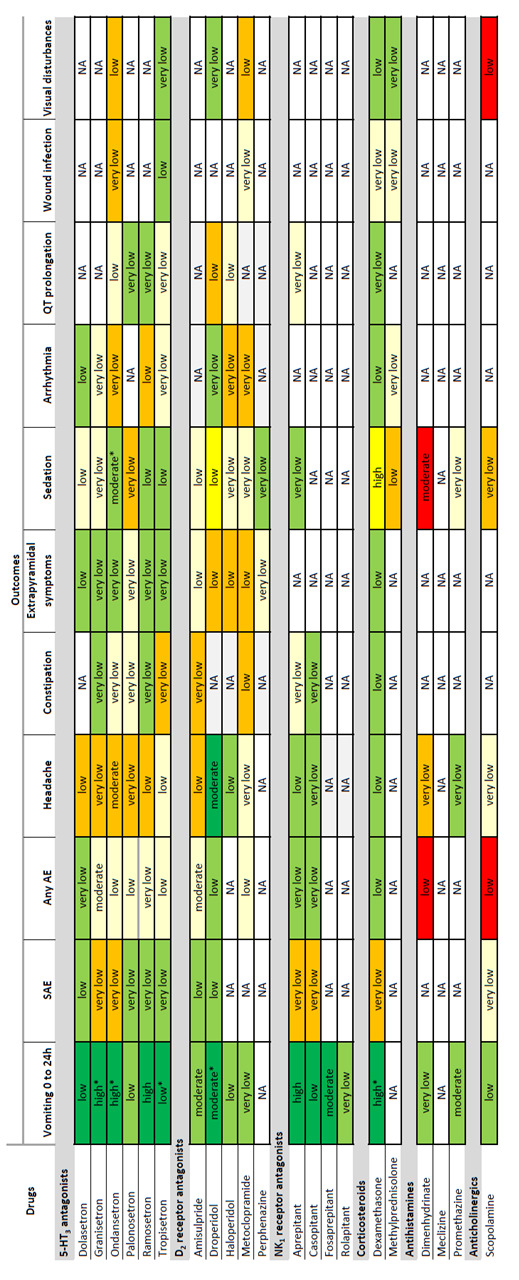
Direction of network effect estimates (colour code) of single drugs of direct interest compared to placebo with certainty levels of evidence (high, moderate, low, very low) for all GRADE‐relevant, pre‐defined outcomes. Colour code: important benefit (green), uncertain benefit (light green), no important effect (yellow), uncertain minimal (or no) effect (light yellow), uncertain harm (orange), important harm (red), no studies available (NA).
Primary outcomes
Vomiting within 24 hours postoperatively
Pairwise meta‐analyses (single drugs of direct interest versus placebo) of vomiting
Pairwise meta‐analyses for vomiting comparing single drugs of direct interest versus placebo are presented in the Data and analyses section and were available for amisulpride (Analysis 1.1), aprepitant (Analysis 2.1), dexamethasone (Analysis 3.1), dimenhydrinate (Analysis 4.1), dolasetron (Analysis 5.1), droperidol (Analysis 6.1), granisetron (Analysis 7.1), haloperidol (Analysis 8.1), metoclopramide (Analysis 10.1), ondansetron (Analysis 11.1), palonosetron (Analysis 12.1), promethazine (Analysis 14.1), ramosetron (Analysis 15.1), rolapitant (Analysis 16.1), scopolamine (Analysis 17.1), and tropisetron (Analysis 18.1). Studies or study arms were separated according to dose categories of single drugs (low, recommended, high, not applicable (NA)).
1.1. Analysis.
Comparison 1: Amisulpride versus placebo, Outcome 1: Vomiting within 0 to 24 hours
2.1. Analysis.
Comparison 2: Aprepitant versus placebo, Outcome 1: Vomiting within 0 to 24 hours
3.1. Analysis.
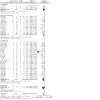
Comparison 3: Dexamethasone versus placebo, Outcome 1: Vomiting within 0 to 24 hours
4.1. Analysis.
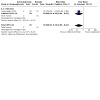
Comparison 4: Dimenhydrinate versus placebo, Outcome 1: Vomiting within 0 to 24 hours
5.1. Analysis.
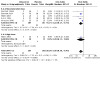
Comparison 5: Dolasetron versus placebo, Outcome 1: Vomiting within 0 to 24 hours
6.1. Analysis.
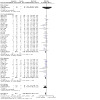
Comparison 6: Droperidol versus placebo, Outcome 1: Vomiting within 0 to 24 hours
7.1. Analysis.
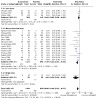
Comparison 7: Granisetron versus placebo, Outcome 1: Vomiting within 0 to 24 hours
8.1. Analysis.
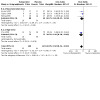
Comparison 8: Haloperidol versus placebo, Outcome 1: Vomiting within 0 to 24 hours
10.1. Analysis.
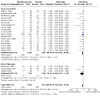
Comparison 10: Metoclopramide versus placebo, Outcome 1: Vomiting within 0 to 24 hours
11.1. Analysis.
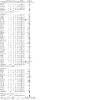
Comparison 11: Ondansetron versus placebo, Outcome 1: Vomiting within 0 to 24 hours
12.1. Analysis.
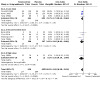
Comparison 12: Palonosetron versus placebo, Outcome 1: Vomiting within 0 to 24 hours
14.1. Analysis.
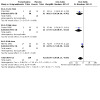
Comparison 14: Promethazine versus placebo, Outcome 1: Vomiting within 0 to 24 hours
15.1. Analysis.
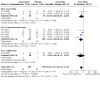
Comparison 15: Ramosetron versus placebo, Outcome 1: Vomiting within 0 to 24 hours
16.1. Analysis.
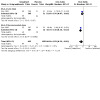
Comparison 16: Rolapitant versus placebo, Outcome 1: Vomiting within 0 to 24 hours
17.1. Analysis.
Comparison 17: Scopalamine versus placebo, Outcome 1: Vomiting within 0 to 24 hours
18.1. Analysis.
Comparison 18: Tropisetron versus placebo, Outcome 1: Vomiting within 0 to 24 hours
Primary analysis of vomiting: network meta‐analysis with all single drugs and drug combinations
Raw data of individual studies and all analyses for the outcome vomiting (24 hours) are available in an online repository (Supplementary Files‐1‐vomiting 24; including direct and indirect effect estimates to the primary NMA, network graphs, and forest plots to all sensitivity and subgroup analyses, explorative analyses of reporting bias, and funnel plots).
In total, 283 RCTs including 50,907 participants were eligible for the network meta‐analysis of vomiting within 24 hours postoperatively. Three studies (1%) have reported zero events in all study arms. One study was not connected to the network and was excluded from the following analyses: Bergese 2016—comparison: aprepitant‐dexamethasone‐promethazine versus ondansetron‐dexamethasone‐promethazine. The network geometry of the remaining 282 studies including 50,812 participants with 572 pair‐wise comparisons due to multi‐arm studies included 65 different treatments (nodes) (Figure). Of the 65 treatments, 36 were drug combinations (32 times: a two‐fold combination; three times: three‐fold; once: four‐fold), 28 were single drugs, and one was placebo or no treatment. The most commonly studied comparisons included ondansetron (k = 77, with k = number of studies), dexamethasone (k = 43), droperidol (k = 41), metoclopramide (k = 21), and granisetron (k = 16), all compared to placebo. Of all single drugs of direct interest included in the network of vomiting, two drugs, namely, fosaprepitant (k = 3) and amisulpride (k = 2), were connected only to ondansetron and placebo, respectively.
8.
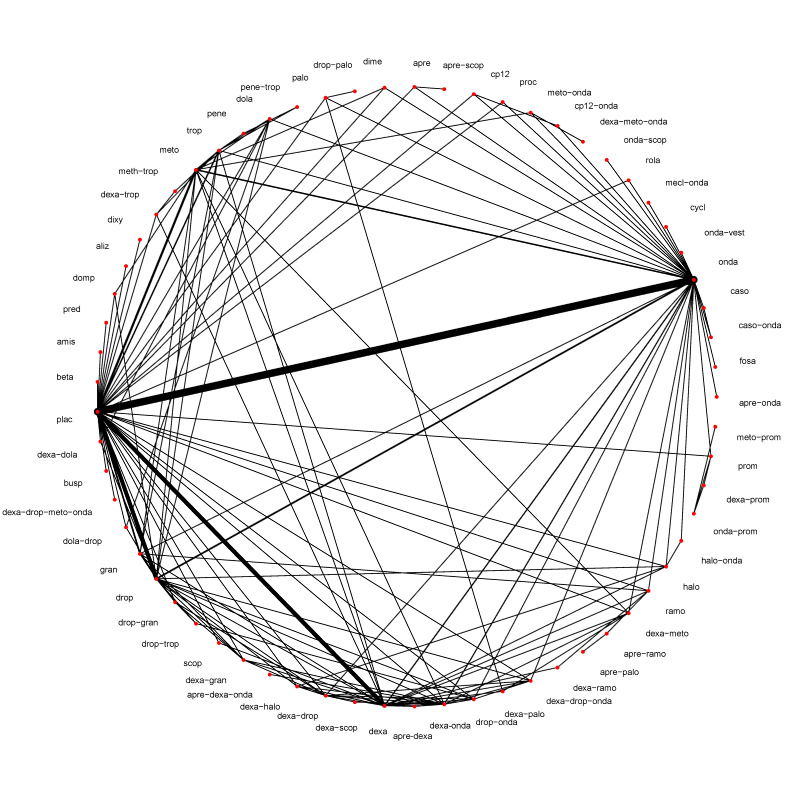
Network geometry of eligible comparisons for postoperative vomiting within 24 hours after surgery. The thickness of the edges is proportionate to the number of included studies comparing two treatments. Abbreviations for treatments correspond to the first four letters of the drug name and are listed in the Methods and in Appendix 6.
For 65 different treatments, 2080 comparisons are possible, and the results of all network estimates are available in the online repository. For 130 of 2080 comparisons, direct and indirect evidence was available, whereas for 27 comparisons, only direct evidence was available, and for 1923 comparisons, only indirect evidence was available.
The relative efficacy presented as summary relative effects (risk ratio (RR) with 95% confidence interval (CI)) of all drugs or drug combinations compared to placebo (reference compound) ranked according to P scores is shown in Figure. In terms of preventing vomiting within 24 hours, 10 out of 28 single drugs showed important benefit (95% CI upper boundary < 0.8) compared to placebo, with RRs ranging between 0.06 (95% CI 0.02 to 0.21) for fosaprepitant and 0.61 (95% CI 0.54 to 0.69) for droperidol. Amongst the most effective single drugs of direct interest with important benefit for preventing vomiting compared to placebo in decreasing order according to P scores were fosaprepitant, casopitant, aprepitant, ramosetron, granisetron, dexamethasone, tropisetron, ondansetron, dolasetron, and droperidol. Fosaprepitant, the most effective drug in the network meta‐analysis, was poorly connected to the network, with only three studies comparing fosaprepitant to ondansetron. Fourteen single drugs (CP‐122,721, alizapride, dimenhydrinate, promethazine, rolapitant, prednisolone, prochlorperazine, dixyrazine, haloperidol, scopolamine, palonosetron, amisulpride, penehyclidine, metoclopramide) showed benefit, and four drugs (cyclizine, betamethasone, domperidone, buspirone) showed no or minimal effect; all treatment effects were associated with uncertainty (95% CI crossing the range of equivalence). Treatment effects of all single drugs compared to placebo ranged between RR 0.06 (95% CI 0.02 to 0.21) for fosaprepitant and RR 1.08 (95% CI 0.54 to 2.15) for buspirone. Of the drug combinations, 29 out of 36 drug combinations showed important benefit compared to placebo (95% CI upper boundary < 0.8), with RRs ranging between 0.01 (95% CI 0.00 to 0.19) for aprepitant‐palonosetron and 0.47 (95% CI 0.28 to 0.78) for ondansetron‐scopolamine. Six drug combinations showed benefit associated with uncertainty compared to placebo, and one combination (metoclopramide‐promethazine) showed no or minimal effect associated with uncertainty. Treatment effects of drug combinations compared to placebo ranged between RR 0.01 (95% CI 0.00 to 0.19) for aprepitant‐palonosetron and RR 1.04 (95% CI 0.17 to 6.45) for metoclopramide‐promethazine.
9.
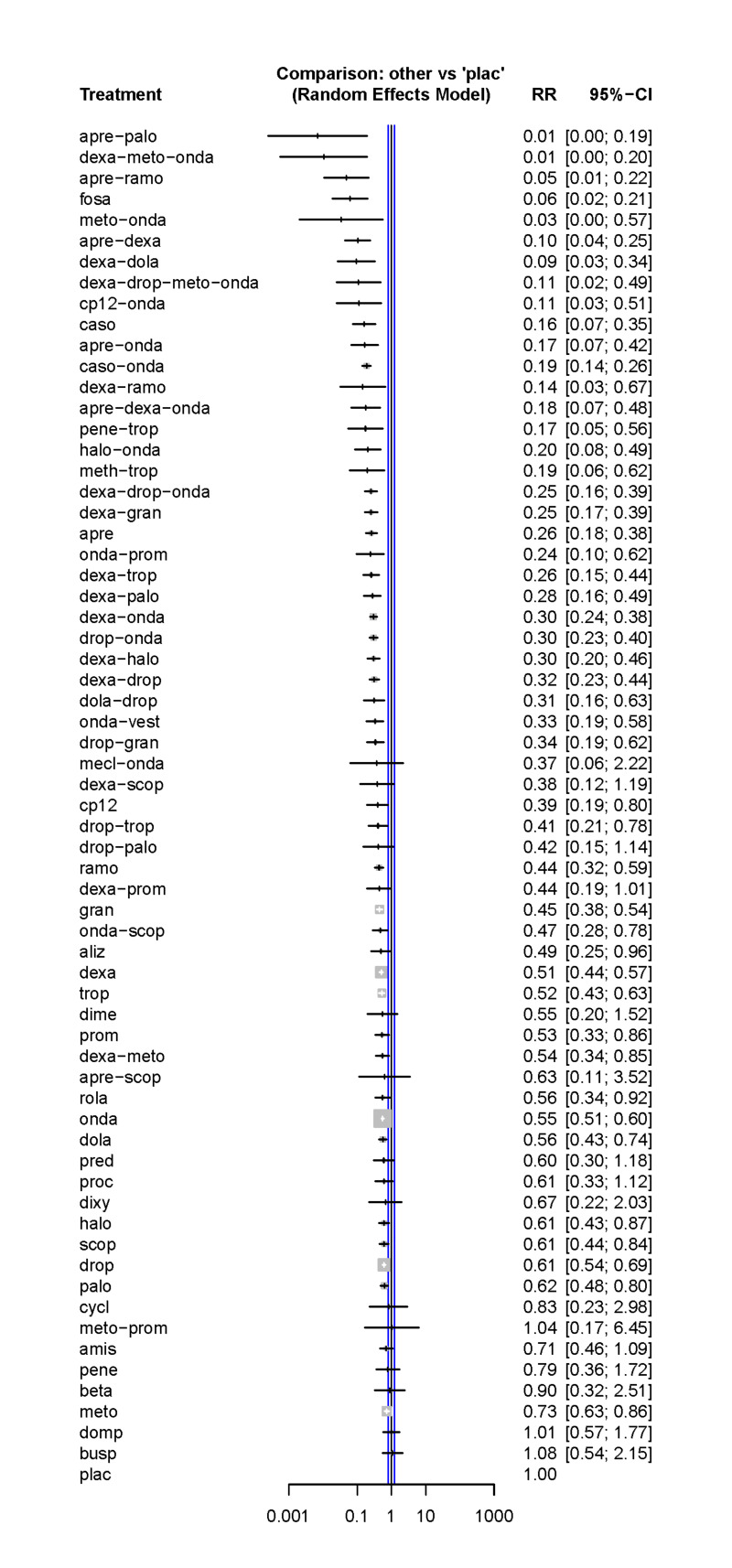
Forest plot of network meta‐analysis of all trials for postoperative vomiting within 24 hours after surgery. Single drugs and combinations were compared with placebo (reference compound). RR = risk ratio, 95% CI = 95% confidence interval. RR < 1 favours the intervention, RR > 1 favours placebo. The blue lines indicate the range of equivalence (RR = 0.8 to 1.25). Treatments are ranked according to efficacy based on P scores. Abbreviations for treatments correspond to the first four letters of the drug name and are listed in the Methods and in Appendix 6.
The estimated value of between‐study variance for the network meta‐analysis of vomiting was 0.061 (tau²) (I² = 45.3%). For the random‐effects model, there was both large heterogeneity within designs (Q = 347.44, 179 degrees of freedom (df), P < 0.0001) and inconsistency between designs (Q = 262.98, df = 155, P < 0.0001). When the full random‐effects design‐by‐treatment interaction model was used, there was no evidence of residual statistical inconsistency, which means that differences in treatment effects between designs are sufficient to explain all inconsistency (Q = 162.45, df = 155, P = 0.33). Clinically relevant heterogeneity for relevant comparisons (single drugs of direct interest compared to placebo) was detected for ondansetron, tropisetron, dolasetron, droperidol, amisulpride, and dexamethasone. In these cases, 95% prediction intervals (PIs) of treatment estimates included different clinical implications compared to 95% CIs. Splitting direct and indirect evidence in the network meta‐analysis and testing for local inconsistency revealed disagreement (direct versus indirect) for two out of 130 comparisons, namely, dexamethasone versus ondansetron (P = 0.044) and dexamethasone‐ondansetron versus placebo (P = 0.02). Clinically relevant incoherence for direct and indirect treatment estimates of single drugs of direct interest compared to placebo was found for dolasetron, haloperidol, metoclopramide, and dimenhydrinate.
Sensitivity analyses of vomiting
Sensitivity analyses included all single drugs and drug combinations, but results are described only for single drugs of direct interest compared to placebo.
Sensitivity analysis of vomiting: risk of bias
For vomiting 0 to 24 hours, 44 (16%) of 282 studies were rated as high risk of overall bias, 153 (54%) studies as unclear, and 85 (30%) as low. The sensitivity network meta‐analysis including only studies at low risk of bias revealed a connected network with 83 studies, excluding Dabbous 1998 (ondansetron‐promethazine versus metoclopramide‐promethazine) and DeOliveira 2011 (metoclopramide‐ondansetron versus dexamethasone‐metoclopramide‐ondansetron) due to lack of connection, with a total of 39 treatments including placebo. Eighteen out of 39 treatments were single drugs, with seven showing important benefit compared to placebo, including the following drugs in decreasing order according to P scores: fosaprepitant (RR 0.07, 95% CI 0.02 to 0.26); and aprepitant, ramosetron, dexamethasone, granisetron, droperidol, and ondansetron (RR 0.58, 95% CI 0.47 to 0.73). Of the single drugs of direct interest included in the primary network meta‐analysis, casopitant, rolapitant, dimenhydrinate, and scopolamine were not included in the sensitivity network meta‐analysis due to lack of studies with low risk of bias. In contrast to the treatment effects in the primary network meta‐analysis, the benefit of tropisetron (RR 0.73, 95% CI 0.38 to 1.40) and dolasetron (RR 0.46, 95% CI 0.26 to 0.82) was uncertain, and uncertainty of the benefit of palonosetron (RR 0.84, 95% CI 0.38 to 1.88) and metoclopramide (RR 0.87, 95% CI 0.58 to 1.30) was increased further. The estimated value of between‐study variance for the sensitivity network meta‐analysis of vomiting was 0.089 (tau²) (I² = 40.3%).
Sensitivity analysis of vomiting: imbalance in baseline details and/or risk factors for PONV in study participants
We assessed studies with imbalance in baseline details and/or risk factors for PONV between study arms as having high risk of other bias. For vomiting 0 to 24 hours, 38 (13%) of 282 studies were rated as high risk of other bias, 200 (71%) studies as unclear risk of other bias, and 44 (16%) as low risk of other bias. The network graph and the forest plot of the sensitivity meta‐analysis including studies at low risk of other bias are shown in the online repository with 29 treatments, including placebo. Thirteen treatments were single drugs, with five showing important benefit compared to placebo: fosaprepitant (RR 0.06, 95% CI 0.01 to 0.25); and granisetron, ramosetron, tropisetron, and ondansetron (RR 0.52, 95% CI 0.35 to 0.76). In contrast to the treatment effects of the primary network meta‐analysis, the benefit of dolasetron (RR 0.44, 95% CI 0.24 to 0.83), droperidol (RR 0.56, 95% CI 0.32 to 0.97), and dexamethasone (RR 0.64, 95% CI 0.45 to 0.90) was uncertain, and uncertainty of the benefit of palonosetron (RR 0.67, 95% CI 0.31 to 1.45), metoclopramide (RR 0.53, 95% CI 0.22 to 1.28), and haloperidol (RR 0.68, 95% CI 0.28 to 1.65) was increased further. Amisulpride, aprepitant, casopitant, dimenhydrinate, promethazine, and scopolamine were not included in the sensitivity network meta‐analysis due to lack of studies with low risk of other bias. The estimated value of between‐study variance for this sensitivity network meta‐analysis of vomiting was 0.113 (tau²) (I² = 44.1%).
Sensitivity analysis of vomiting: studies with PONV‐related primary outcome(s)
In total, 150 (54%) of 282 studies have defined a PONV‐related primary outcome in their published study report. The network of this sensitivity analysis consisted of 53 treatments including placebo, with 23 single‐drug treatments. Ten single drugs compared to placebo showed important benefits in this sensitivity analysis, which were robust compared to those of the primary analysis. Promethazine was not included in the sensitivity analysis. The estimated value of between‐study variance for this sensitivity network meta‐analysis of vomiting was 0.0295 (tau²) (I² = 36.8%).
Sensitivity analysis of vomiting: funding source
Fifty‐five (20%) of 282 studies were reported to be funded by industry sources, 46 (16%) studies were funded by non‐industrial resources, and 181 (64%) studies provided no information on funding source. Two sensitivity analyses—one for industry‐funded and one for non‐industry‐funded studies—were performed. The network of the sensitivity analysis including only industry‐funded studies consisted of 32 treatments including 17 single drugs and placebo. Compared to the primary analysis, treatment effects for five out of 17 single drugs (granisetron, droperidol, dolasetron, dexamethasone, metoclopramide) were not robust. Granisetron (RR 0.57, 95% CI 0.34 to 0.94), droperidol (RR 0.64, 95% CI 0.48 to 0.86), dolasetron (RR 0.66, 95% CI 0.38 to 1.13), and dexamethasone (RR 0.73, 95% CI 0.53 to 0.99) showed benefit associated with uncertainty compared to placebo. Metoclopramide (RR 1.06, 95% CI 0.62 to 1.81) showed no or minimal effect associated with uncertainty compared to placebo. The network of the sensitivity analysis including only non‐industry‐funded studies consisted of 25 treatments including 13 single drugs and placebo. Compared to the primary analysis, treatment effects of eight out of 13 single drugs (promethazine, palonosetron, tropisetron, dolasetron, granisetron, aprepitant, droperidol, ramosetron) in the sensitivity analysis were not robust. Promethazine (RR 0.26, 95% CI 0.09 to 0.78) and palonosetron (RR 0.37, 95% CI 0.19 to 0.72) showed important benefit compared to placebo. Tropisetron (RR 0.52, 95% CI 0.21 to 1.29), dolasetron (RR 0.54, 95% CI 0.32 to 0.88), granisetron (RR 0.56, 95% CI 0.34 to 0.93), aprepitant (RR 0.59, 95% CI 0.23 to 1.55) and droperidol (RR 0.66, 95% CI 0.51 to 0.85) showed benefit associated with uncertainty compared to placebo. Ramosetron (RR 0.81, 95% CI 0.36 to 1.83) showed no or minimal effect associated with uncertainty compared to placebo.
Casopitant, scopolamine, rolapitant, and amisulpride were represented only in the sensitivity analysis including industry‐funded studies, and fosaprepitant, promethazine, haloperidol, and ramosetron only in the sensitivity analysis including non‐industry‐funded studies, respectively. Nine single drugs were included in both sensitivity analyses, with no differences in treatment effects for granisetron, ondansetron, dolasetron, and droperidol; more favourable results for aprepitant and tropisetron in industry‐funded studies; and more favourable results for dexamethasone, palonosetron, and metoclopramide in non‐industry‐funded studies. For studies investigating dimenhydrinate, the funding source was not specified.
Reporting bias (vomiting)
Ten direct pair‐wise comparisons included 10 or more studies for which small‐study effects such as reporting or publication bias were investigated: ondansetron, dexamethasone, droperidol, metoclopramide, granisetron, and tropisetron were compared to placebo; and droperidol, metoclopramide, dexamethasone, and dexamethasone‐ondansetron were compared to ondansetron. For all comparisons, funnel plots with interpretation, results of the arcsine test for funnel plot asymmetry, and the trim and fill sensitivity analysis are presented in the online repository. According to explorative analyses, we suspected publication bias for the comparisons droperidol versus placebo (P = 0.005) and metoclopramide versus ondansetron (P = 0.01). Small P values when the arcsine test was used to detect funnel plot asymmetry were also found for ondansetron versus placebo (P = 0.01), dexamethasone versus placebo (P =0.0164), and dexamethasone versus ondansetron (P = 0.06). Contour‐enhanced funnel plots suggested asymmetry for dexamethasone, granisetron, and ondansetron versus placebo. However, we did not suspect relevant publication bias for these comparisons because trim and fill sensitivity analysis did not change the conclusion with respect to the range of equivalence. Asymmetry may have been due to other factors such as heterogeneity (see “Certainty of evidence: vomiting”).
Subgroup analysis of vomiting: dose effects
To account for the treatment effect modifier dose, we performed a subgroup network meta‐analysis splitting drugs into the categories low, recommended, and high doses according to Table. We restricted splitting of doses to single drugs.
First, we conducted a network meta‐analysis including single drugs only (and excluding combination treatments) with 230 RCTs and 29 treatments including placebo. The network was well connected, and effect estimates as well as the ranking order of drugs with placebo as comparator were comparable to the primary analysis, including combination prophylaxis. The estimated value of between‐study variance for the network meta‐analysis of single drugs for vomiting was 0.061 (tau²) (I² = 48.3%).
Second, we conducted the subgroup analysis on dose for the network of single drugs only. We split the following drugs into dose categories: amisulpride, aprepitant, dexamethasone, dolasetron, droperidol, granisetron, haloperidol, ondansetron, palonosetron, promethazine, ramosetron, rolapitant, and tropisetron. For casopitant, dimenhydrinate, and metoclopramide, only one dose category (low, recommended, or high) was available for the subgroup analysis. Drugs without any dose recommendation according to Table (fosaprepitant, scopolamine) and drugs not of direct interest (alizapride, betamethasone, buspirone, CP‐122,721, cyclizine, dixyrazine, domperidone, penehyclidine, prednisolone, prochlorperazine) were included in the analysis and were lumped together, irrespective of the doses being analysed, in a category labelled 'NA'. We excluded six studies from the subgroup analysis because they were not attributable to one of the three dose categories (Eberhart 2006; Heidari 2015b; Huseyinoglu 2016; Jakobsson 1999; Phillips 1993; Verhasselt 1988). We split the subgroup network meta‐analysis with 224 studies and 29 treatments including placebo into 50 nodes with dose categories, and this is presented in the online repository. In ranking of drugs according to efficacy with placebo as the comparator for higher or recommended doses of drugs ranked higher than lower doses, however, most of the 95% CIs were overlapping between different dose categories of the same drug. For dexamethasone, droperidol, granisetron, ondansetron, rolapitant, and tropisetron, the 95% CIs of the low doses showed uncertain benefit in contrast to recommended and/or high doses of the same drug.
We have summarized the most commonly used dosages, routes, and time points of administration of single drugs of direct interest for the primary outcome vomiting in Table.
3. Most common dosages, routes, and time points of administration of single drugs of direct interest (primary outcome: vomiting).
| Drug | Dose | Dose category | Route | Timing |
| Amisulpride | 5 to 10 mg | rec | IV | at induction of AN |
| Aprepitant | 40 mg | rec | PO | before surgery |
| Casopitant | 150 mg | rec | PO | before surgery |
| Dexamethasone* | 4 to 5 mg | rec | IV | at induction of AN |
| Dimenhydrinate | < 1 mg/kg | low | IV/IM | at induction of AN/before surgery |
| Dolasetron | 12.5 mg | rec | IV | end of surgery |
| Droperidol | 0.625 to 1.25 mg | rec | IV | at induction of AN |
| Fosaprepitant | 150 mg | NA | IV | at induction of AN |
| Granisetron | 0.35 to 3 mg | rec | IV | all time points |
| Haloperidol | 0.5 to < 2 mg | rec | IV | at induction of AN |
| Metoclopramide | 25 to 50 mg | low | IV | at induction of AN |
| Ondansetron (IV) | 4 mg | rec | IV | at induction of AN |
| Ondansetron (PO) | 8 mg | rec | PO | before surgery |
| Palonosetron | 0.075 mg | rec | IV | at induction of AN |
| Promethazine** | < 6.25 mg | low | IV | at induction of AN |
| Ramosetron (IV) | 0.3 mg | rec | IV | end of surgery |
| Rolapitant | 70 to 200 mg | rec | PO | before surgery |
| Scopolamine | 1.5 mg | NA | TD | before surgery |
| Tropisetron (IV)* | 2 mg | rec | IV | at induction of AN |
The table reported the most commonly used doses, routes, and time points of administration of drugs of direct interest for vomiting.
*Most of the studies investigated high doses, but recommended were also effective.
**Not used in any of the included studies with recommended dose.
Abbreviations: AN = anaesthesia; IM = intramuscular; IV = intravenous; NA = not applicable; PO = per oral; rec = recommended; TD = transdermal.
Additivity of dose categories (vomiting)
A network meta‐analysis with the assumption of additivity of dose categories revealed similar results as the standard network meta‐analysis model when point estimates and 95% CIs were compared, suggesting additive dose effects. However, the Q‐statistic of the difference between standard and additive network meta‐analyses for vomiting suggests that the standard model explained the data better than the additive model (P = 0.03). This may be due to the fact that, for all drugs, the categories high and recommended for the same drug showed similar effect estimates, which generally were more effective than the corresponding low dose categories.
Sensitivity analysis of vomiting: comparability of doses between study arms
In 137 (60%) of 230 studies investigating single drugs, comparable doses of antiemetic drugs were analysed (comparable dose categories). The analysis included only studies investigating drugs of direct interest for which dose recommendations were described and were assigned to one of the dose categories according to Table. The network of this sensitivity analysis consisted of 15 treatments including placebo. Rolapitant and dimenhydrinate were not included in the sensitivity analysis due to lack of studies with comparable doses between intervention and control arms. Eight single drugs showed important benefit compared to placebo, including casopitant (RR 0.14, 95% CI 0.06 to 0.32); and promethazine, dexamethasone, ramosetron, tropisetron, granisetron, ondansetron, and droperidol (RR 0.60, 95% CI 0.52 to 0.70). Treatment effects were comparable to the primary network meta‐analysis with all single drugs, except for promethazine, which showed important benefit in the sensitivity analysis; and for two drugs, aprepitant (RR 0.59, 95% CI 0.23 to 1.55) and dolasetron (RR 0.63, 95% CI 0.45 to 0.87), which showed uncertain benefit compared to placebo. The estimated value of between‐study variance for this sensitivity network meta‐analysis of vomiting was 0.060 (tau²) (I² = 54.7%).
Additive effects of combinations of treatments (vomiting)
We tested the hypothesis of additivity of the components in combination prophylaxis by comparing the primary standard analysis (k = 282) with a second analysis, which assumes that the effects of combined treatments are additive sums of their components. This assumption is very strong and general, as the analysis assumes additive effects for all components included in the analysis. The Q‐statistic of the difference between standard and additive network meta‐analyses for vomiting suggests that the standard model explained the data better than the additive model (P = 0.006). On the level of individual comparisons, the additive model shrunk the effects compared to the standard model for aprepitant‐palonosetron, aprepitant‐ramosetron, dexamethasone‐dolasetron, dexamethasone‐metoclopramide‐ondansetron, dexamethasone‐ramosetron, haloperidol‐ondansetron, metoclopramide‐ondansetron, and penehyclidine‐tropisetron. In these cases, effects in the standard model are larger (smaller RR) than expected under the additivity assumption, which may indicate positive interaction of the components. In contrast, the additive model enlarged effects compared to the standard model for aprepitant‐dexamethasone‐ondansetron, aprepitant‐scopolamine, dexamethasone‐metoclopramide, dexamethasone‐promethazine, and metoclopramide‐promethazine. In these cases, effects in the standard model are smaller (larger RR) than expected under the additivity assumption, which may indicate negative interaction of the components. For all other combinations of treatments, especially the combinations used most frequently (dexamethasone‐ondansetron, droperidol‐ondansetron, dexamethasone‐granisetron), effects of standard and additive models were comparable, suggesting additive effects of the single components.
Certainty of evidence: vomiting
The certainty of evidence of treatment estimates for vomiting evaluated with CINeMA is summarized in the 'Summary of findings' table for drugs of direct interest compared to placebo (Table).
For relevant 5‐HT₃ receptor antagonists (compared to placebo), the certainty of evidence of network effect estimates for vomiting 0 to 24 hours ranged from low to high (Table). Ramosetron (RR 0.44, 95% CI 0.32 to 0.59) reduces vomiting compared to placebo with high‐certainty evidence. The certainty of evidence for ondansetron (RR 0.55, 95% CI 0.51 to 0.60) and granisetron (RR 0.45, 95% CI 0.38 to 0.54), which also reduce vomiting compared to placebo, was also rated as high. However, high certainty of evidence applies to recommended and high doses of ondansetron and granisetron because low doses showed no clinically important benefit. Tropisetron (RR 0.52, 95% CI 0.43 to 0.63) and dolasetron (RR 0.56, 95% CI 0.43 to 0.74) may reduce vomiting compared to placebo, with low‐certainty evidence for tropisetron (serious concerns for study limitation) and dolasetron (study limitation, heterogeneity‐incoherence). Low certainty of evidence for tropisetron is restricted to recommended and high doses. Palonosetron (RR 0.62, 95% CI 0.48 to 0.80) may reduce vomiting, for which the certainty of evidence is low (study limitation, imprecision).
For relevant D₂ receptor antagonists (compared to placebo), the certainty of evidence of network effect estimates for vomiting 0 to 24 hours ranged from very low to moderate (Table). Droperidol (RR 0.61, 95% CI 0.54 to 0.69) probably reduces vomiting, with moderate‐certainty evidence (publication bias‐heterogeneity). However, moderate certainty of evidence applies to recommended and high doses of droperidol. Amisulpride (RR 0.71, 95% CI 0.46 to 1.09), with direct evidence only, probably reduces vomiting, with moderate‐certainty evidence (imprecision‐heterogeneity). Haloperidol (RR 0.61, 95% CI 0.43 to 0.87) may reduce vomiting, with low‐certainty evidence (imprecision, incoherence). We are uncertain whether metoclopramide (RR 0.73, 95% CI 0.63 to 0.86) reduces vomiting due to very low‐certainty evidence (study limitation, imprecision, incoherence). No studies reporting vomiting were available for perphenazine.
For relevant NK₁ receptor antagonists (compared to placebo), the certainty of evidence of network effect estimates for vomiting 0 to 24 hours ranged from very low to high (Table). Fosaprepitant (RR 0.06, 95% CI 0.02 to 0.21), casopitant (RR 0.16, 95% CI 0.07 to 0.35), and aprepitant (RR 0.26, 95% CI 0.18 to 0.38) were the most effective drugs for vomiting compared to placebo in the current network meta‐analysis. Aprepitant reduces vomiting, with high‐certainty evidence. Fosaprepitant, with indirect evidence only, probably reduces vomiting, with moderate‐certainty evidence (incoherence). Casopitant, also with indirect evidence only, may reduce vomiting, with low‐certainty evidence (study limitation, incoherence). We are uncertain whether rolapitant (RR 0.56, 95% CI 0.34 to 0.92) reduces vomiting, as the certainty of evidence was very low (serious concerns for study limitation, imprecision).
The only reported corticosteroid was dexamethasone (RR 0.51, 95% CI 0.44 to 0.57), which reduces vomiting, with high‐certainty evidence (Table). However, high certainty of evidence applies to recommended and high doses of dexamethasone. No studies reporting vomiting were available for methylprednisolone.
For relevant antihistamines (compared to placebo), the certainty of evidence of network effect estimates for vomiting 0 to 24 hours was moderate and very low (Table). Promethazine (RR 0.53, 95% CI 0.33 to 0.86) probably reduces vomiting, with moderate‐certainty evidence (imprecision). We are uncertain whether dimenhydrinate (RR 0.55, 95% CI 0.20 to 1.52) reduces vomiting, as certainty of evidence was very low (study limitation, incoherence, very serious concerns for imprecision). No studies reporting vomiting were available for meclizine.
The anticholinergic scopolamine (RR 0.61, 95% CI 0.44 to 0.84) may reduce vomiting, with low‐certainty evidence (study limitation, imprecision) (Table).
SAEs within seven days postoperatively
Pairwise meta‐analyses (single drugs of direct interest versus placebo) of SAEs
Pairwise meta‐analyses for SAEs comparing single drugs of direct interest versus placebo are presented in the Data and analyses section and were available for amisulpride (Analysis 1.2), dexamethasone (Analysis 3.2), dolasetron (Analysis 5.2), droperidol (Analysis 6.2), granisetron (Analysis 7.2), ondansetron (Analysis 11.2), palonosetron (Analysis 12.2), ramosetron (Analysis 15.2), scopolamine (Analysis 17.2), and tropisetron (Analysis 18.2). Studies or study arms were separated according to dose categories of single drugs (low, recommended, high, NA).
1.2. Analysis.
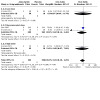
Comparison 1: Amisulpride versus placebo, Outcome 2: Serious adverse events
3.2. Analysis.
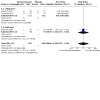
Comparison 3: Dexamethasone versus placebo, Outcome 2: Serious adverse events
5.2. Analysis.
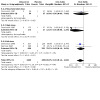
Comparison 5: Dolasetron versus placebo, Outcome 2: Serious adverse events
6.2. Analysis.

Comparison 6: Droperidol versus placebo, Outcome 2: Serious adverse events
7.2. Analysis.
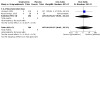
Comparison 7: Granisetron versus placebo, Outcome 2: Serious adverse events
11.2. Analysis.
Comparison 11: Ondansetron versus placebo, Outcome 2: Serious adverse events
12.2. Analysis.
Comparison 12: Palonosetron versus placebo, Outcome 2: Serious adverse events
15.2. Analysis.

Comparison 15: Ramosetron versus placebo, Outcome 2: Serious adverse events
17.2. Analysis.

Comparison 17: Scopalamine versus placebo, Outcome 2: Serious adverse events
18.2. Analysis.
Comparison 18: Tropisetron versus placebo, Outcome 2: Serious adverse events
Primary analysis of SAEs: network meta‐analysis with all single drugs and drug combinations
Raw data of individual studies and all analyses for the outcome SAEs are available in an online repository (Supplementary Files‐2‐SAE; including direct and indirect effect estimates to the primary NMA, network graphs, and forest plots to all sensitivity and subgroup analyses, explorative analyses of reporting bias, and funnel plots).
Twenty‐nine studies with 10,886 participants were eligible for the network meta‐analysis of SAEs. Twelve studies (41%) have reported zero events in all study arms. One study was not connected to the network and was excluded from the following analysis: Papadimitriou 2001; comparison: metoclopramide‐tropisetron versus metoclopramide. The network of the remaining 28 studies with 52 pair‐wise comparisons due to multi‐arm studies included 22 treatments (nodes), of which placebo (k = 26) and ondansetron (k = 14) were the most frequent comparators (Figure). Of the 22 treatments, eight were two‐fold drug combinations, 13 were single drugs, and one was placebo or no treatment. The most common comparisons with three studies each were between ondansetron versus placebo, dexamethasone versus placebo, dolasetron versus placebo, palonosetron versus placebo, and casopitant‐ondansetron versus ondansetron. Of all single drugs of direct interest included in the network of SAEs, amisulpride, dolasetron, palonosetron, and scopolamine were connected only to placebo, and aprepitant was connected only to ondansetron.
10.
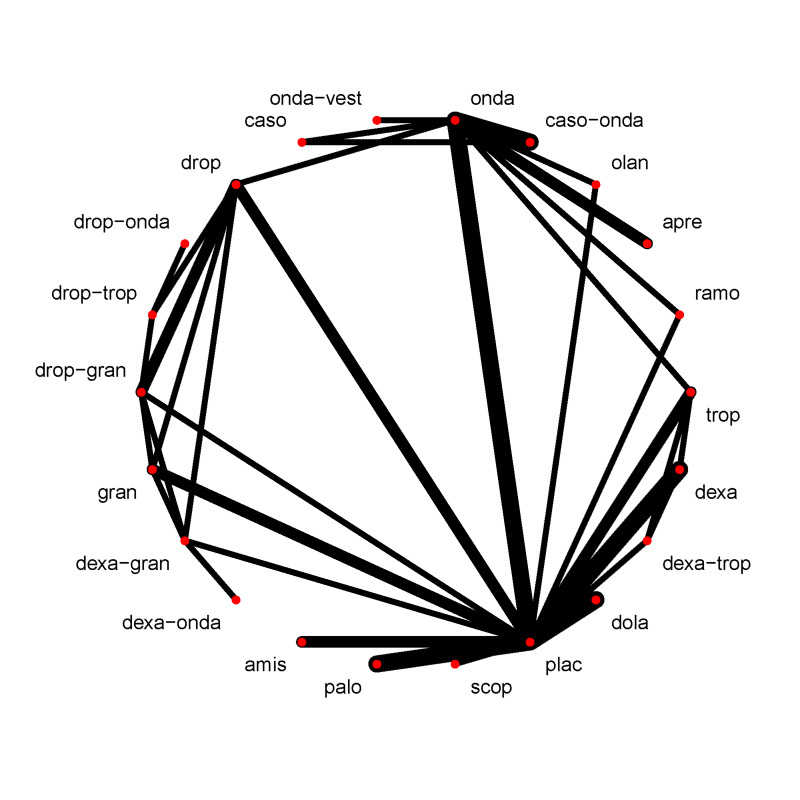
Network geometry of eligible comparisons for serious adverse events (SAE) within 7 days postoperatively. The thickness of the edges is proportionate to the number of included studies comparing two treatments. Abbreviations for treatments correspond to the first four letters of the drug name and are listed in the Methods and in Appendix 6.
For 22 different treatments, 231 pair‐wise comparisons are possible, and the results of all network estimates are available in the online repository. For 27 of 231 comparisons, direct and indirect evidence was available, whereas for nine comparisons, only direct evidence was available, and for 195 comparisons, only indirect evidence was available.
The relative efficacy presented as summary relative effects (RR with 95% CIs) of all drugs or drug combinations compared to placebo (reference compound) ranked according to P scores is shown in Figure. In terms of reducing the number of participants with SAEs, none of the 21 treatments showed important benefit (95% CI upper boundary < 0.9) or important harm (95% CI lower boundary > 1.11) compared to placebo. Of the 13 single drugs compared to placebo, seven showed benefit (dolasetron, tropisetron, palonosetron, olanzapine, amisulpride, droperidol, ramosetron), one showed no or minimal effect (scopolamine), five showed harm (dexamethasone, granisetron, aprepitant, ondansetron, casopitant), and all 13 treatment effects were associated with uncertainty (95% CI crossing the range of equivalence). Treatment effects of all single drugs compared to placebo ranged between RR 0.31 (95% CI 0.10 to 1.00) for dolasetron and 3.64 (95% CI 0.57 to 23.11) for casopitant. Of the eight combination treatments, one showed benefit (dexamethasone‐tropisetron), four showed no or minimal effect (droperidol‐granisetron, dexamethasone‐granisetron, droperidol‐ondansetron, droperidol‐tropisetron), three showed harm (dexamethasone‐ondansetron, ondansetron‐vestipitant, casopitant‐ondansetron), and all eight treatment effects were associated with uncertainty. Treatment effects of drug combinations compared to placebo ranged between RR 0.68 (95% CI 0.10 to 4.59) for dexamethasone‐tropisetron and RR 2.00 (95% CI 0.35 to 11.42) for casopitant‐ondansetron.
11.
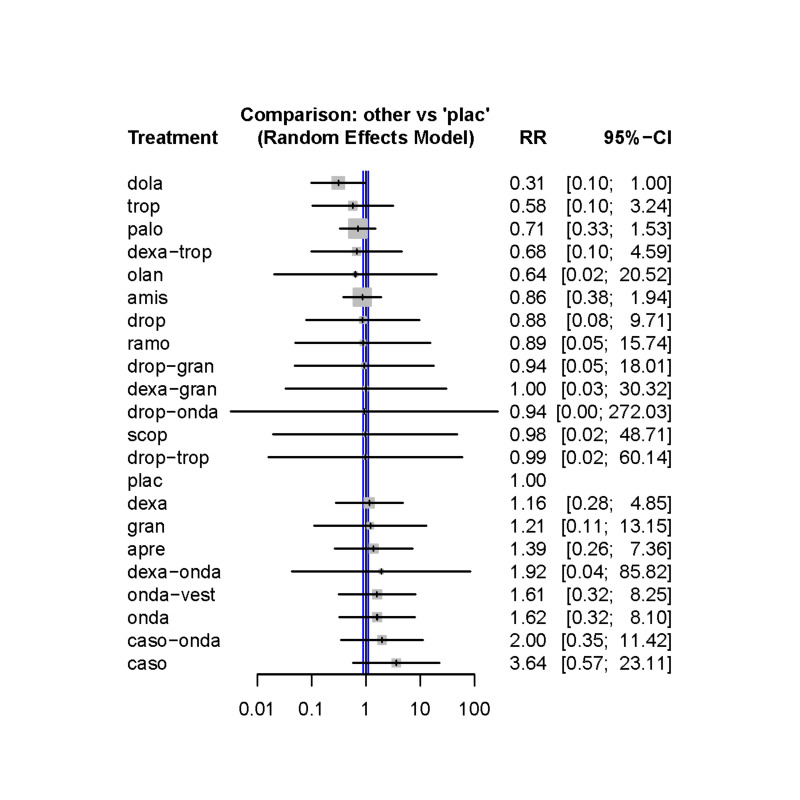
Forest plot of network meta‐analysis of all trials for serious adverse events (SAE) within 7 days postoperatively. Single drugs and combinations were compared with placebo (reference compound). RR = risk ratio, 95% CI = 95% confidence interval. RR < 1 favours the intervention, RR > 1 favours placebo. The blue lines indicate the range of equivalence (RR = 0.9 to 1.11). Treatments are ranked according to safety based on P scores. Abbreviations for treatments correspond to the first four letters of the drug name and are listed in the Methods and in Appendix 6.
The estimated value of between‐study variance for the network meta‐analysis of SAEs was 0 (tau²) (I² = 0%). For the random‐effects model, there was no heterogeneity within designs (Q = 3.66, df = 8, P = 0.89) and no inconsistency between designs (Q = 4.49, df = 9, P = 0.88). No clinically relevant heterogeneity for relevant comparisons (single drugs of direct interest compared to placebo) was detectable because 95% CIs and 95% PIs were compatible with respect to the range of equivalence. Splitting of direct and indirect evidence in the network meta‐analysis and testing for local inconsistency revealed no relevant disagreement (direct versus indirect) for any of the 27 comparisons. There was no clinically relevant incoherence of direct and indirect treatment estimates for single drugs of direct interest compared to placebo.
Sensitivity analyses of SAEs
Sensitivity analyses included all single drugs and drug combinations, but results are described only for single drugs of direct interest compared to placebo.
Sensitivity analysis of SAEs: risk of bias
Three (11%) of 28 studies were rated as having high risk of overall bias, 14 (50%) as unclear, and 11 (39%) as low. The sensitivity network meta‐analysis including only studies at low risk of bias revealed a poorly connected network, with 11 treatments and 11 studies. Three treatments were two‐fold combinations of antiemetic drugs, seven treatments were single drugs, and one was placebo or no treatment. Of the single drugs of direct interest, granisetron, tropisetron, ramosetron, dolasetron, and scopolamine were not included in the sensitivity network meta‐analysis due to lack of studies with low risk of bias. Effect estimates of five single drugs (aprepitant, ondansetron, casopitant, dexamethasone, palonosetron) compared to placebo in this sensitivity analysis were not robust when compared to the primary network meta‐analysis. Aprepitant, ondansetron, and casopitant with RR 0.23 (95% CI 0.00 to 11.55), RR 0.26 (95% CI 0.01 to 13.12), and RR 0.59 (95% CI 0.01 to 32.74), respectively, showed benefit associated with uncertainty. Dexamethasone and palonosetron showed no or minimal effects, with RR 1.00 (95% CI 0.02 to 49.75) and RR 1.00 (95% CI 0.02 to 49.43), respectively—both associated with uncertainty. The estimated value of between‐study variance for the sensitivity network meta‐analysis of SAEs was 0 (tau²) (I² = 0%).
Sensitivity analysis of SAEs: risk of bias for monitoring and reporting of SAEs
In a sensitivity network meta‐analysis for monitoring and reporting of SAEs, we included only studies that have defined SAEs in the study report according to an accepted international classification system. Only five (18%) of 28 studies were assessed as having low risk of bias for monitoring and reporting of SAEs. The five studies were not connected. Two studies compared either granisetron—Hanaoka 2004—or dexamethasone—Tarantino 2015—to placebo, and three studies from GlaxoSmithKline compared casopitant‐ondansetron or casopitant to ondansetron (NKT102245; NKT102260; NKT102552). Compared to the primary analysis, the treatment effect for dexamethasone versus placebo was not robust and showed no or minimal effect associated with uncertainty (RR 1.00, 95% CI 0.02 to 49.75). Casopitant showed harm associated with uncertainty compared to ondansetron (RR 2.25, 95% CI 0.91 to 5.58).
Sensitivity analysis of SAEs: imbalance in baseline details and/or risk factors for PONV in study participants
We assessed studies with an imbalance in baseline details and/or risk factors for PONV between the study arms as having high risk of other bias. For SAEs, three (11%) of 28 studies were rated as high risk of other bias, 18 (64%) as unclear, and seven (25%) as low. The seven studies with low risk of other bias were not connected in one network. Four of these studies with 10 treatments including placebo as comparator were connected in one sub‐network. Three other studies from GlaxoSmithKline with ondansetron as comparator were included in the other sub‐network (NKT102245; NKT102260; NKT102552). Of the single drugs, dolasetron, aprepitant, scopolamine, and amisulpride were not included in the sensitivity network meta‐analysis due to lack of studies with low risk of bias. Compared to the primary analysis, treatment effects for palonosetron, granisetron, droperidol, dexamethasone, all compared to placebo, were not robust and showed no or minimal effect associated with uncertainty.
Sensitivity analysis of SAEs: studies with PONV‐related primary outcome(s)
Twenty‐two (79%) of 28 studies have defined a PONV‐related primary outcome in their published study report. The network of this sensitivity analysis consisted of 18 treatments including placebo (six combination and 11 single drug treatments). Of the single drugs, ramosetron and scopolamine were not included in the sensitivity network meta‐analysis due to lack of studies with low risk of bias. The relative treatment effects of all single drugs compared to placebo were comparable to the primary analysis, with RRs ranging between 0.31 (95% CI 0.10 to 1.00) for dolasetron and 4.07 (95% CI 0.60 to 27.64) for casopitant. The estimated value of between‐study variance for this sensitivity network meta‐analysis of SAE was 0 (tau²) (I² = 0%).
Sensitivity analysis of SAEs: funding source
Seventeen (61%) of 28 studies were funded by industry, six (21%) were funded by non‐industrial resources, and for another five studies (18%), information on funding source was not provided. Two sensitivity analyses—one for industry‐funded and one for non‐industry‐funded studies—were performed. The network of the sensitivity analysis including only industry‐funded studies consisted of 16 studies with 12 treatments, including nine single drugs and placebo. One study was not connected to the network and was excluded from the analyses (Gan 2005; comparison: dexamethasone‐granisetron versus dexamethasone‐ondansetron). Compared to the primary analysis, of the nine single drugs, treatment effects of casopitant and tropisetron compared to placebo were not robust. Casopitant (RR 38.81, 95% CI 1.95 to 770.47) showed important harm compared to placebo. However, only indirect evidence was available because casopitant was connected only to ondansetron. Tropisetron (RR 6.50, 95% CI 0.34 to 125.35) showed harm associated with uncertainty compared to placebo. The network of the sensitivity analysis including only studies funded by non‐industrial resources consisted of six studies with three combinations, six single drugs, and placebo. Compared to the primary analysis, of the six single drugs, treatment effects of ondansetron, granisetron, dexamethasone, and palonosetron were not robust. Ondansetron (RR 0.38, 0.01 to 14.33) and granisetron (RR 0.70, 0.02 to 26.19) compared to placebo showed benefit, and both dexamethasone (RR 1.00, 95% CI 0.02 to 49.75) and palonosetron (RR 1.00, 95% CI 0.02 to 49.43) showed no or minimal effect compared to placebo; all effects were associated with uncertainty.
Six single drugs were funded only by industry (dolasetron, amisulpride, scopolamine, tropisetron, aprepitant, casopitant), and three solely by non‐industrial resources (ramosetron, droperidol, dexamethasone). Three single drugs (ondansetron, granisetron, and palonosetron) were investigated in studies funded by either of the sources, and treatment effects were not robust in either analysis. Ondansetron and granisetron showed results that were more favourable in non‐industry‐funded studies than in industry‐funded studies. Palonosetron showed results that were more favourable in industry‐funded studies than in non‐industry‐funded studies. The comparison of results from both sensitivity analyses is associated with high uncertainty and should be viewed with caution due to the small number of included studies.
Reporting bias (SAE)
None of the direct pair‐wise comparisons included 10 or more studies. Therefore, analyses investigating reporting or publication bias were not performed.
Subgroup analysis of SAEs: dose effects
The treatment effect modifier dose was investigated in a subgroup network meta‐analysis splitting drugs into the categories low, recommended, and high doses according to Table. Splitting of doses was restricted to single drugs.
First, a network meta‐analysis including single drugs only (and excluding combination treatments) with 22 studies and 14 treatments including placebo was conducted. Network geometry, effect estimates, and the ranking order of drugs with placebo as comparator were comparable to the primary analysis, including combination prophylaxis. The estimated value of between‐study variance for the network meta‐analysis of single drugs for SAEs was 0 (tau²) (I² = 0%).
Second, the subgroup analysis of dose was conducted for the network of single drugs only. The following drugs were split into dose categories: amisulpride, aprepitant, dolasetron, ondansetron, palonosetron, and ramosetron. For casopitant, dexamethasone, droperidol, granisetron, and tropisetron, only one dose category was available for subgroup analysis. Drugs without any dose recommendation according to Table (scopolamine) and drugs not of direct interest (olanzapine) were included in the analysis and were lumped together, irrespective of the doses being analysed, in the category 'NA'. Three studies—Diemunsch 1998; Eberhart 2006; Warriner 1997—and one arm of Lee 2008a (0.1 mg oral ramosetron) were excluded from the subgroup analysis because they were not associated with one of the three dose categories. The network was poorly connected, with 19 studies and 14 treatments split into 21 nodes with dose categories. Ranking of drugs according to safety with placebo as comparator is presented in the online repository. All available dose categories for dolasetron and palonosetron compared to placebo showed benefit associated with uncertainty. For aprepitant, all dose categories compared to placebo showed harm associated with uncertainty. Amisulpride used as recommended or low doses showed benefit, high doses showed harm, and all treatment effects were associated with uncertainty. Low doses of ramosetron showed no or minimal effect and recommended doses showed harm, and both treatment effects were associated with uncertainty. Recommended doses of ondansetron showed harm, high doses showed benefit, and both treatment effects were associated with high uncertainty. Recommended doses of casopitant (RR 42.47, 95% CI 1.98 to 910.14) showed important harm. However, evidence for these results was restricted to only one study directly comparing recommended doses of casopitant and ondansetron. Casopitant was not otherwise connected in the network.
Additivity of dose categories (SAEs)
A network meta‐analysis with the assumption of additivity of the dose categories revealed no difference between standard and additive models (P = 0.34), suggesting additive dose effects. The analysis was based on a few studies that currently make reliable statements on additive effects of drug doses impossible.
Sensitivity analysis of SAEs: comparability of doses
In 13 (46%) of 28 studies investigating single drugs, comparable doses of the antiemetic drugs were analysed (comparable dose categories). The analysis included only studies investigating drugs of direct interest for which dose recommendations were described and that could be assigned to one of the dose categories according to Table. The network of this sensitivity analysis was poorly connected, consisting of 11 treatments including placebo, which limited evidence. Aprepitant and scopolamine were not included in the sensitivity analysis due to lack of studies with comparable doses. Effect estimates of five single drugs (casopitant, droperidol, tropisetron, ramosetron, dexamethasone) compared to placebo in this sensitivity analysis were not robust when compared to the network meta‐analysis including single drugs only. Casopitant (RR 42.47, 95% CI 1.98 to 910.14) showed important harm. Droperidol, tropisetron, and ramosetron, with RR 1.14 (95% CI 0.03 to 41.28), RR 6.50 (95% CI 0.34 to 125.35), and RR 17.25 (95% CI 0.14 to 2135.86), respectively, showed harm associated with high uncertainty. Dexamethasone showed no or minimal effect, with RR 1.01 (95% CI 0.06 to 15.98) associated with uncertainty. The estimated value of between‐study variance for this sensitivity network meta‐analysis of SAEs was 0 (tau²) (I² = 0%).
Additive effects of combinations of treatments (SAEs)
We tested the hypothesis of additivity of the components in combination prophylaxis by comparing the primary standard analysis (k = 28) with a second analysis, which assumes that the effects of combined treatments are additive sums of their components. We detected no differences between standard and additive models (P = 0.89), suggesting additive dose effects. However, the analysis was based on only a few studies that currently make reliable statements on additive effects of drug combinations impossible.
Certainty of evidence: SAEs
Certainty of evidence of treatment estimates for the outcome SAEs evaluated with CINeMA is summarized in the 'Summary of findings' table for drugs of direct interest compared to placebo (Table).
For relevant 5‐HT₃ receptor antagonists (compared to placebo), the certainty of evidence of network effect estimates for the outcome SAEs ranged from very low to low (Table). Dolasetron (RR 0.31, 95% CI 0.10 to 1.00), with direct evidence only, may reduce the number of participants with SAEs compared to placebo, with low‐certainty evidence (study limitations, imprecision). The certainty of evidence for all other 5‐HT₃ receptor antagonists was assessed as very low. We are uncertain whether ondansetron (RR 1.62, 95% CI 0.32 to 8.10) and granisetron (RR 1.21, 95% CI 0.11 to 13.15) compared to placebo increase the number of participants with SAEs, with very low‐certainty evidence (study limitations, very serious concerns for imprecision). We are uncertain whether tropisetron (RR 0.58, 95% CI 0.10 to 3.24) and palonosetron (RR 0.71, 95% CI 0.33 to 1.53) compared to placebo decrease the number of participants with SAEs, with very low‐certainty evidence (study limitations, very serious concerns for imprecision). We are uncertain whether ramosetron (RR 0.89, 95% CI 0.05 to 15.74) compared to placebo decreases the number of participants with SAEs, with very low‐certainty evidence (very serious concerns for study limitations and imprecision). For palonosetron, only direct evidence was available.
For relevant D₂ receptor antagonists (compared to placebo), the certainty of evidence of network effect estimates for SAEs was assessed as low (Table). Droperidol (RR 0.88, 95% CI 0.08 to 9.71) and amisulpride (RR 0.86, 95% CI 0.38 to 1.94) may reduce the number of participants with SAEs compared to placebo, with low‐certainty evidence (very serious concerns for imprecision). For amisulpride, only direct evidence was available. No studies reporting SAEs were available for metoclopramide, haloperidol, or perphenazine.
For relevant NK₁ receptor antagonists (compared to placebo), the certainty of evidence of network effect estimates for SAEs was assessed as very low (Table). We are uncertain whether casopitant (RR 3.64, 95% CI 0.57 to 23.11) and aprepitant (RR 1.39, 95% CI 0.26 to 7.36), both with indirect evidence only, increase the number of participants with SAEs compared to placebo, with very low‐certainty evidence (study limitation, incoherence, very serious concerns for imprecision). No studies reporting SAEs were available for fosaprepitant and rolapitant.
The only corticosteroid that was included in the network meta‐analysis for SAEs was dexamethasone, with very low‐certainty evidence. We are uncertain whether dexamethasone (RR 1.16, 95% CI 0.28 to 4.85) increases the number of participants with SAEs compared to placebo (study limitations, very serious concerns for imprecision) (Table). No studies reporting SAEs were available for methylprednisolone.
No studies reporting SAEs were available for relevant antihistamines (compared to placebo) (Table).
For the anticholinergic scopolamine, with only direct evidence, the certainty of evidence was considered as very low (very serious concerns for study limitations and imprecision) (Table). We are uncertain whether scopolamine (RR 0.98, 95% CI 0.02 to 48.71) compared to placebo has no or minimal effects on SAEs.
Any AE within seven days postoperatively
Pairwise meta‐analyses (single drugs of direct interest versus placebo) of any AE
Pairwise meta‐analyses of any AE comparing single drugs of direct interest versus placebo are presented in the Data and analyses section and were available for amisulpride (Analysis 1.3), dexamethasone (Analysis 3.3), dolasetron (Analysis 5.3), droperidol (Analysis 6.3), granisetron (Analysis 7.3), metoclopramide (Analysis 10.2), ondansetron (Analysis 11.3), palonosetron (Analysis 12.3), ramosetron (Analysis 15.3), scopolamine (Analysis 17.3), and tropisetron (Analysis 18.3). Studies or study arms were separated according to dose categories of single drugs (low, recommended, high, NA).
1.3. Analysis.
Comparison 1: Amisulpride versus placebo, Outcome 3: Any adverse event
3.3. Analysis.
Comparison 3: Dexamethasone versus placebo, Outcome 3: Any adverse event
5.3. Analysis.
Comparison 5: Dolasetron versus placebo, Outcome 3: Any adverse event
6.3. Analysis.
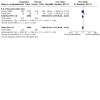
Comparison 6: Droperidol versus placebo, Outcome 3: Any adverse event
7.3. Analysis.
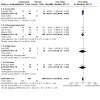
Comparison 7: Granisetron versus placebo, Outcome 3: Any adverse event
10.2. Analysis.
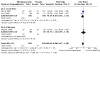
Comparison 10: Metoclopramide versus placebo, Outcome 2: Any adverse event
11.3. Analysis.
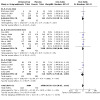
Comparison 11: Ondansetron versus placebo, Outcome 3: Any adverse event
12.3. Analysis.
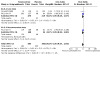
Comparison 12: Palonosetron versus placebo, Outcome 3: Any adverse event
15.3. Analysis.
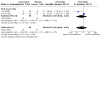
Comparison 15: Ramosetron versus placebo, Outcome 3: Any adverse event
17.3. Analysis.
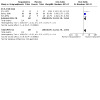
Comparison 17: Scopalamine versus placebo, Outcome 3: Any adverse event
18.3. Analysis.
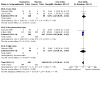
Comparison 18: Tropisetron versus placebo, Outcome 3: Any adverse event
Primary analysis of any AE: network meta‐analysis with all single drugs and drug combinations
Raw data of individual studies and all analyses for the outcome any AE are available in an online repository (Supplementary Files‐3‐any AE; including direct and indirect effect estimates to the primary NMA, network graphs, and forest plots to all sensitivity and subgroup analyses, explorative analyses of reporting bias, and funnel plots).
Sixty‐one studies with 93 pair‐wise comparisons due to multi‐arm studies and 19,423 participants were eligible for the network meta‐analysis of any AE. Four studies (7%) have reported zero events in all study arms. The network included 27 treatments (nodes), of which placebo (k = 47) and ondansetron (k = 39) were the most frequent comparators (Figure). Of the 27 treatments, 11 were two‐fold drug combinations, 15 were single drugs, and one was placebo or no treatment. The most common comparisons were ondansetron (k = 12 studies), dexamethasone (k = 6), granisetron (k = 6), metoclopramide (k = 3), scopolamine (k = 3), and tropisetron (k = 3), all compared to placebo, and casopitant‐ondansetron (k = 5) and granisetron (k = 3) compared to ondansetron. Of the single drugs of direct interest, amisulpride, dolasetron, and scopolamine were connected only to placebo, and aprepitant and dimenhydrinate were connected only to ondansetron.
12.
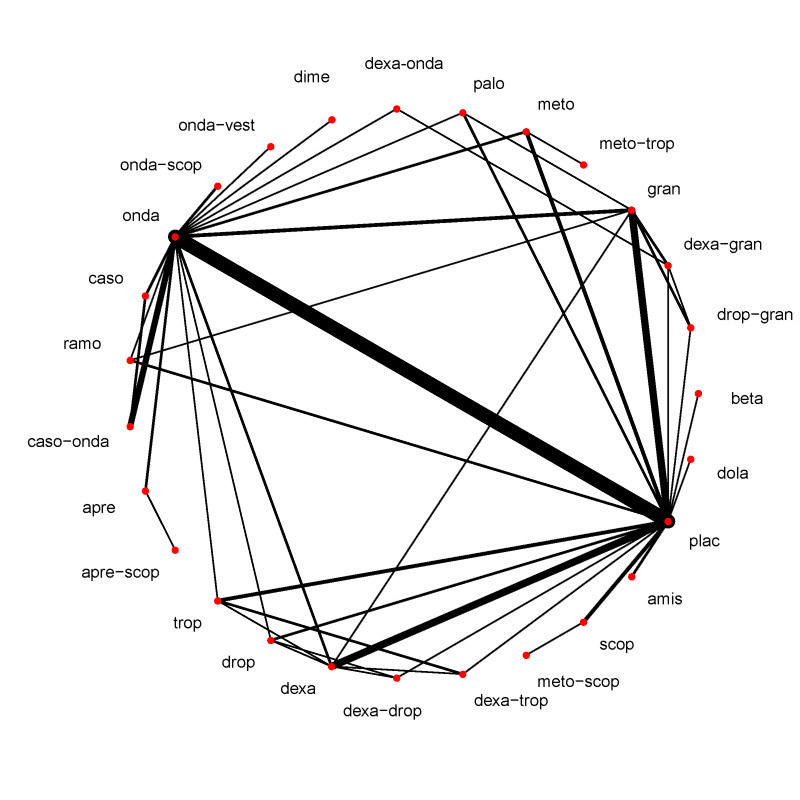
Network geometry of eligible comparisons for any adverse event (any AE) within 7 days postoperatively. The thickness of the edges is proportionate to the number of included studies comparing two treatments. Abbreviations for treatments correspond to the first four letters of the drug name and are listed in the Methods and in Appendix 6.
For 27 treatments, 351 comparisons are possible, and the results of all network estimates are available in the online repository. For 35 of 351 comparisons, direct and indirect evidence was available, whereas for 12 comparisons, only direct evidence was available, and for 304 comparisons, only indirect evidence was available.
Relative efficacy presented as summary relative effects (risk ratio, RR) of all drugs or drug combinations compared to placebo (reference compound) ranked according to P scores is shown in Figure. Of the 15 single drugs, scopolamine and dimenhydrinate showed important harm (95% CI lower boundary > 1.11) compared to placebo, with RRs of 2.12 (95% CI 1.71 to 2.64) and 5.70 (95% CI 1.36 to 23.93), respectively. Amisulpride (RR 0.97, 95% CI 0.90 to 1.06) showed no or minimal effect on any AE compared to placebo. Six single treatments showed benefit (betamethasone, dexamethasone, aprepitant, dolasetron, casopitant, droperidol), another six treatments showed no or minimal effect (granisetron, metoclopramide, ondansetron, palonosetron, ramosetron, tropisetron), and all 12 of these treatment effects were associated with uncertainty (95% CI crossing the range of equivalence). Treatment effects of all single drugs compared to placebo ranged between RR 0.09 (95% CI 0.01 to 1.55) for betamethasone and RR 5.70 (95% CI 1.36 to 23.93) for dimenhydrinate. The only combination treatment showing important benefit compared to placebo (95% CI upper boundary < 0.9) was ondansetron‐scopolamine with RR of 0.70 (95% CI 0.57 to 0.85). Of the other combination treatments compared to placebo, three combinations showed benefit (metoclopramide‐tropisetron, droperidol‐granisetron, dexamethasone‐granisetron), five showed no or minimal effect (dexamethasone‐ondansetron, dexamethasone‐droperidol, ondansetron‐vestipitant, casopitant‐ondansetron, aprepitant‐scopolamine), two showed harm (dexamethasone‐tropisetron, metoclopramide‐scopolamine), and all treatment effects were associated with uncertainty. Treatment effects of drug combinations compared to placebo ranged between RR 0.70 (95% CI 0.57 to 0.85) for ondansetron‐scopolamine and RR 1.65 (95% CI 0.66 to 4.12) for metoclopramide‐scopolamine.
13.
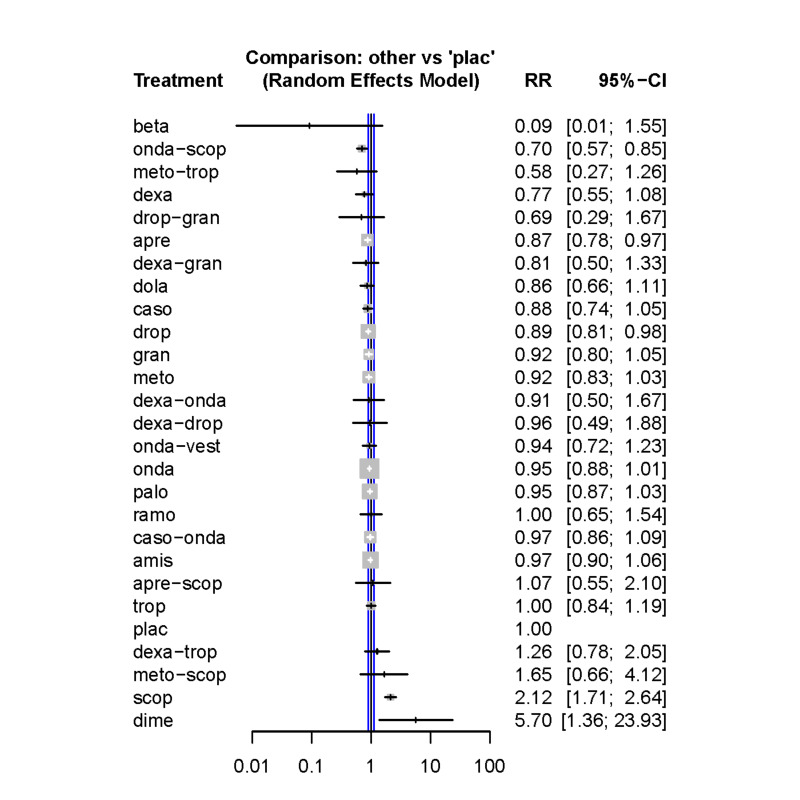
Forest plot of network meta‐analysis of all trials for any adverse events (any AE) within 7 days postoperatively. Single drugs and combinations were compared with placebo (reference compound). RR = risk ratio, 95% CI = 95% confidence interval. RR < 1 favours the intervention, RR > 1 favours placebo. The blue lines indicate the range of equivalence (RR = 0.9 to 1.11). Treatments are ranked according to safety based on P scores. Abbreviations for treatments correspond to the first four letters of the drug name and are listed in the Methods and in Appendix 6.
The estimated value of between‐study variance for the network meta‐analysis of any AE was 0 (tau²) (I² = 0%). For the random‐effects model, there was no heterogeneity within designs (Q = 25.27, df = 22, P = 0.28) and no inconsistency between designs (Q = 19.59, df = 28, P = 0.88). Clinically relevant heterogeneity for relevant comparisons (single drugs of direct interest compared to placebo) was detected only for dolasetron because the 95% PI included a different clinical implication compared to the 95% CI. Splitting of direct and indirect evidence in the network meta‐analysis and testing for local inconsistency revealed no significant disagreement (direct versus indirect) for any of the 35 comparisons. There was no clinically relevant incoherence of direct and indirect treatment estimates for single drugs of direct interest compared to placebo.
Sensitivity analyses of any AE
Sensitivity analyses included all single drugs and drug combinations, but results are described only for single drugs of direct interest compared to placebo.
Sensitivity analysis of any AE: risk of bias
Nine (15%) of 61 studies were rated as having high risk of overall bias, 31 (51%) as unclear, and 21 (34%) as low. The sensitivity network meta‐analysis including only studies at low risk of bias revealed a poorly connected network, including 18 treatments. Six treatments were two‐fold combinations of antiemetic drugs, 11 were single drugs, and one was placebo. Of the single drugs of direct interest included in the primary network meta‐analysis of any AE, dolasetron, palonosetron, dimenhydrinate, and scopolamine were not included in the sensitivity network meta‐analysis due to lack of studies with low risk of bias. Of the 11 single drugs, four drugs showed important benefit compared to placebo (aprepitant, casopitant, ondansetron, metoclopramide), with RRs ranging between 0.50 (95% CI 0.30 to 0.82) for aprepitant and 0.54 (95% CI 0.33 to 0.89) for metoclopramide. None of the four drugs showed important benefit compared to placebo in the primary network meta‐analysis. Proof of data revealed one small outlier study comparing ondansetron versus placebo with extreme positive effects for ondansetron (Koyuncu 2017). Excluding Koyuncu 2017 and redoing the sensitivity analysis for risk of bias revealed that none of the treatments maintained important benefit compared to placebo. Thus, favourable effects for aprepitant, casopitant, ondansetron, and metoclopramide in the first sensitivity analysis for risk of bias may be due to strong effects reported by Koyuncu 2017.
Comparison of treatment effects of the sensitivity analysis for risk of bias without Koyuncu 2017, and the primary network meta‐analysis for any AE revealed seven drugs compared to placebo with non‐robust treatment effects (ramosetron, aprepitant, casopitant, droperidol, dexamethasone, ondansetron, metoclopramide). Ramosetron compared to placebo with RR 0.79 (95% CI 0.26 to 2.41) showed benefit with uncertainty. Aprepitant and casopitant compared to placebo, with RR 1.00 (95% CI 0.48 to 2.09) and RR 1.02 (95% CI 0.47 to 2.19), respectively, showed no or minimal effect associated with uncertainty. Droperidol compared to placebo, with RR 1.32 (95% CI 0.64 to 2.72), showed harm associated with uncertainty. For dexamethasone, ondansetron, and metoclopramide, the uncertainty of effect estimates was increased further in the sensitivity analysis compared to the primary network meta‐analysis. The estimated value of between‐study variance for the sensitivity network meta‐analysis of any AE was 0 (tau²) (I² = 0%).
Sensitivity analysis of any AE: risk of bias for monitoring and reporting of any AE
In a sensitivity network meta‐analysis for monitoring and reporting of any AE, we included only studies that were assessed as low risk of bias with respect to monitoring and reporting for any AE. We assessed 11 (18%) of 61 studies as having low risk of bias for monitoring and reporting of any AE. The network including only studies at low risk of bias was poorly connected, with two sub‐networks that were connected only via the route ondansetron to placebo. Of the single drugs of direct interest, dolasetron, droperidol, metoclopramide, palonosetron, amisulpride, tropisetron, and dimenhydrinate were not included in the sensitivity network meta‐analysis due to lack of studies assessed as low risk. Treatment effects of three drugs compared to placebo were not robust in this sensitivity analysis (aprepitant, casopitant, ramosetron). Aprepitant (RR 0.97, 95% CI 0.82 to 1.16) and casopitant (RR 0.99, 95% CI 0.76 to 1.29) showed no or minimal effect on any AE associated with uncertainty. Ramosetron with RR 1.31 (95% CI 0.73 to 2.38) showed harm associated with uncertainty. The estimated value of between‐study variance for the sensitivity network meta‐analysis of any AE was 0 (tau²) (I² = 0%).
Sensitivity analysis of any AE: imbalance in baseline details and/or risk factors for PONV in study participants
We assessed studies with an imbalance in baseline details and/or risk factors for PONV between the study arms as having high risk of other bias. For any AE, five (8%) of 61 studies were rated as having high risk of other bias, 48 (77%) as unclear, and eight (13%) as low. One study was not connected to the network (Chen 2006; comparison: dexamethasone versus placebo). The remaining seven studies with low risk of other bias with six treatments were poorly connected in one network in which placebo was not used as a comparator. We could not perform a network meta‐analysis with placebo as reference compound.
Sensitivity analysis of any AE: studies with PONV‐related primary outcome(s)
Thirty‐four (56%) of 61 studies have defined a PONV‐related primary outcome in their published study report. The network of this sensitivity analysis consisted of 21 treatments including placebo with 11 single drug treatments. Of the single drugs of direct interest, dolasetron, scopolamine, and dimenhydrinate were not included in this network due to lack of studies reporting a PONV‐related primary outcome. Treatment effects of four drugs compared to placebo were not robust in this sensitivity analysis (ramosetron, droperidol, aprepitant, casopitant). Ramosetron with RR 0.74 (95% CI 0.32 to 1.73) showed benefit associated with uncertainty. Droperidol (RR 0.93, 95% CI 0.84 to 1.02), aprepitant (RR 0.94, 95% CI 0.83 to 1.07), and casopitant (RR 0.95, 95% CI 0.79 to 1.14) showed no or minimal effect on any AE associated with uncertainty. The estimated value of between‐study variance for the sensitivity network meta‐analysis of any AE was 0 (tau²) (I² = 0%).
Sensitivity analysis of any AE: funding source
Twenty‐seven (44%) of 61 studies were funded by industry, nine (15%) were funded by non‐industrial resources, and for another 25 studies (41%), information on funding source was not provided. Two sensitivity analyses—one for industry‐funded and one for non‐industry‐funded studies—were performed. The network of the sensitivity analysis including only industry‐funded studies consisted of 26 studies with 16 treatments, including 10 single drugs. One study was not connected to the network and was excluded from the analyses (Gan 2005; comparison: dexamethasone‐granisetron versus dexamethasone‐ondansetron). Compared to the primary analysis, of the 10 single drugs, treatment effects of four drugs compared to placebo were not robust (droperidol, aprepitant, casopitant, metoclopramide). Droperidol (RR 0.91, 95% CI 0.83 to 1.00), aprepitant (RR 0.92, 95% CI 0.82 to 1.04), and casopitant (RR 0.93, 95% CI 0.78 to 1.11) showed no or minimal effect with uncertainty compared to placebo. Metoclopramide showed harm associated with uncertainty (RR 1.13, 95% CI 0.59 to 2.16). The network of the sensitivity analysis including only studies funded by non‐industrial resources consisted of nine studies with nine treatments, including seven single drugs and placebo. Treatment effects for five of the nine drugs compared to placebo were not robust (ramosetron, palonosetron, metoclopramide, granisetron, ondansetron). Ramosetron (RR 0.16, 95% CI 0.01 to 3.13), palonosetron (RR 0.24, 95% CI 0.01 to 4.04), metoclopramide (RR 0.48, 95% CI 0.02 to 9.27), granisetron (RR 0.49, 95% CI 0.03 to 9.38), and ondansetron (RR 0.48, 95% CI 0.06 to 3.75) showed benefit associated with uncertainty compared to placebo.
Six single drugs were funded only by industry (droperidol, aprepitant, casopitant, amisulpride, tropisetron, scopolamine), and three solely by non‐industrial resources (betamethasone, ramosetron, dexamethasone). Four single drugs (ondansetron, granisetron, metoclopramide, palonosetron) were investigated in studies funded by either of the sources and treatment effects were not robust, with treatment effects being more favourable in non‐industry‐funded studies. For two drugs (dimenhydrinate, dolasetron), the funding source was not specified.
Reporting bias (any AE)
The only pair‐wise comparison including 10 or more studies was ondansetron versus placebo, for which small‐study effects such as reporting or publication bias were investigated. Results of the funnel plot, the arcsine test for funnel plot asymmetry, and the trim and fill sensitivity analysis are presented in the online repository. According to the explorative analyses, we did not suspect publication bias for ondansetron versus placebo (P = 0.19).
Subgroup analysis of any AE: dose effects
The treatment effect modifier dose was investigated in a subgroup network meta‐analysis splitting drugs into the categories low, recommended, and high doses according to Table. Splitting of doses was restricted to single drugs.
First, a network meta‐analysis including single drugs only (and excluding combination treatments) with 48 studies and 16 treatments including placebo was conducted. Network geometry, effect estimates, and the ranking order of drugs with placebo as comparator were comparable to the primary analysis, including combination prophylaxis. The estimated value of between‐study variance for the network meta‐analysis of single drugs for any AE was 0 (tau²) (I² = 0%).
Second, the subgroup analysis of dose was conducted for the network of single drugs only. The following drugs were split into dose categories: amisulpride, aprepitant, dexamethasone, granisetron, ondansetron, palonosetron, ramosetron, and tropisetron. For casopitant, dimenhydrinate, dolasetron, droperidol, and metoclopramide, only one dose category was available for subgroup analysis. Drugs without any dose recommendation according to Table (scopolamine) and drugs not of direct interest (betamethasone) were included in the analysis and were lumped together, irrespective of the doses being analysed, in the category 'NA'. Wagner 1996 and one arm of Bhatnagar 2007 (granisetron NA) were excluded from the subgroup analysis because they were not associated with one of the three dose categories. The network consisted of 47 studies with 16 treatments split into 29 nodes with dose categories and is presented in the online repository. In the ranking of treatments according to safety with placebo as comparator, high or recommended doses of dexamethasone, ondansetron, palonosetron, ramosetron, and granisetron ranked higher compared to recommended or low doses, respectively. All 95% CIs between different doses of the same drug were overlapping. Tropisetron used as recommended ranked over high and low doses, but 95% CIs included both benefit and harm. High and recommended doses of aprepitant compared to placebo had similar treatment effects.
Additivity of dose categories (any AE)
A network meta‐analysis with the assumption of additivity of dose categories revealed no differences between standard and additive models (P = 0.96), suggesting additive dose effects.
Sensitivity analysis of any AE: comparability of doses
In 31 (51%) of 61 studies investigating single drugs, comparable doses of antiemetic drugs were analysed (comparable dose categories). The analysis included only studies investigating drugs of direct interest for which dose recommendations were described and that were assigned to one of the dose categories according to Table. The network of this sensitivity analysis was poorly connected, consisting of 12 treatments including placebo, which limited available evidence. Of single drugs of direct interest included in the primary network meta‐analysis, aprepitant, dimenhydrinate, and scopolamine were not included in the sensitivity analysis due to lack of studies with comparable doses. Treatment effects of ramosetron and metoclopramide compared to placebo were not robust in the sensitivity analysis. Ramosetron (RR 0.54, 95% CI 0.24 to 1.20) and metoclopramide (RR 0.61, 95% CI 0.31 to 1.20) showed benefit associated with uncertainty. The estimated value of between‐study variance for this sensitivity network meta‐analysis of any AE was 0.0069 (tau²) (I² = 24.5%).
Additive effects of combinations of treatments (any AE)
We tested the hypothesis of additivity of the components in combination prophylaxis by comparing the primary standard network meta‐analysis (k = 61) with a second analysis, which assumes that the effects of combined treatments are additive sums of their components. Standard and additive models were different (P < 0.0001), suggesting no additive effects of components.
Certainty of evidence: any AE
The certainty of evidence of treatment estimates for any AE evaluated with CINeMA is summarized in the 'Summary of findings' table for drugs of direct interest compared to placebo (Table).
For relevant 5‐HT₃ receptor antagonists (compared to placebo), the certainty of evidence of network effect estimates for any AE ranged from very low to moderate (Table). Granisetron (RR 0.92, 95% CI 0.80 to 1.05) probably has little or no effect on any AE compared to placebo, with moderate‐certainty evidence (imprecision). Ondansetron (RR 0.95, 95% CI 0.88 to 1.01) and palonosetron (RR 0.95, 95% CI 0.87 to 1.03) may have little or no effect on any AE compared to placebo, with low‐certainty evidence (study limitations, imprecision). Tropisetron (RR 1.00, 95% CI 0.84 to 1.19) may also have little or no effect on any AE compared to placebo, as certainty of evidence has been assessed as low (very serious concerns for imprecision). We are uncertain whether ramosetron (RR 1.00, 95% CI 0.65 to 1.54) has little or no effect on any AE compared to placebo, with very low‐certainty evidence (study limitations, very serious concerns for imprecision). We are uncertain whether dolasetron (RR 0.86, 95% CI 0.66 to 1.11), with direct evidence only, reduces any AE compared to placebo, with very low‐certainty evidence (very serious concern for study limitations, imprecision‐heterogeneity).
For relevant D₂ receptor antagonists (compared to placebo), the certainty of evidence of network effect estimates for any AE was assessed as low to moderate (Table). Amisulpride (RR 0.97, 95% CI 0.90 to 1.06), with direct evidence only, probably has little or no effect on any AE compared to placebo, with moderate‐certainty evidence (imprecision). Droperidol (RR 0.89, 95% CI 0.81 to 0.98) may reduce any AE compared to placebo, with low‐certainty evidence (study limitations, imprecision). Metoclopramide (RR 0.92, 95% CI 0.83 to 1.03) may have little or no effect on any AE, with low‐certainty evidence (study limitations, imprecision). No studies reporting any AE were available for haloperidol or perphenazine.
For relevant NK₁ receptor antagonists (compared to placebo), the certainty of evidence of network effect estimates for any AE was assessed as very low (Table). We are uncertain whether casopitant (RR 0.88, 95% CI 0.74 to 1.05) and aprepitant (RR 0.87, 95% CI 0.78 to 0.97), with indirect evidence only, reduce any AE compared to placebo (study limitations, imprecision, incoherence). No studies reporting any AE were available for fosaprepitant and rolapitant.
The only corticosteroid that was included in the network meta‐analysis for any AE was dexamethasone (RR 0.77, 95% CI 0.55 to 1.08), which may reduce any AE compared to placebo, with low‐certainty evidence (study limitations, imprecision) (Table). No studies reporting any AE were available for methylprednisolone.
The only antihistamine that was included in the network meta‐analysis for any AE was dimenhydrinate (RR 5.70, 95% CI 1.36 to 23.93), which may increase any AE compared to placebo, with direct evidence only and low certainty (study limitations, incoherence) (Table). No studies reporting any AE were available for promethazine or meclizine.
The anticholinergic scopolamine (RR 2.12, 95% CI 1.71 to 2.64) may increase any AE compared to placebo, with only direct evidence of low certainty (very serious concerns for study limitations) (Table).
Secondary outcomes (GRADE‐relevant)
Headache within seven days postoperatively
Pairwise meta‐analyses (single drugs of direct interest versus placebo) of headache
Pairwise meta‐analyses of headache comparing single drugs of direct interest versus placebo are presented in the Data and analyses section and were available for amisulpride (Analysis 1.4), aprepitant (Analysis 2.2), dexamethasone (Analysis 3.4), dimenhydrinate (Analysis 4.2), dolasetron (Analysis 5.4), droperidol (Analysis 6.4), granisetron (Analysis 7.4), haloperidol (Analysis 8.2), metoclopramide (Analysis 10.3), ondansetron (Analysis 11.4), palonosetron (Analysis 12.4), promethazine (Analysis 14.2), ramosetron (Analysis 15.4), scopolamine (Analysis 17.4), and tropisetron (Analysis 18.4). Studies or study arms were separated according to dose categories of single drugs (low, recommended, high, NA).
1.4. Analysis.
Comparison 1: Amisulpride versus placebo, Outcome 4: Headache
2.2. Analysis.
Comparison 2: Aprepitant versus placebo, Outcome 2: Headache
3.4. Analysis.
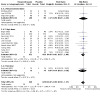
Comparison 3: Dexamethasone versus placebo, Outcome 4: Headache
4.2. Analysis.
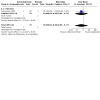
Comparison 4: Dimenhydrinate versus placebo, Outcome 2: Headache
5.4. Analysis.
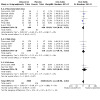
Comparison 5: Dolasetron versus placebo, Outcome 4: Headache
6.4. Analysis.
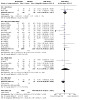
Comparison 6: Droperidol versus placebo, Outcome 4: Headache
7.4. Analysis.
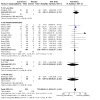
Comparison 7: Granisetron versus placebo, Outcome 4: Headache
8.2. Analysis.
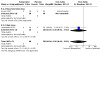
Comparison 8: Haloperidol versus placebo, Outcome 2: Headache
10.3. Analysis.
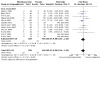
Comparison 10: Metoclopramide versus placebo, Outcome 3: Headache
11.4. Analysis.
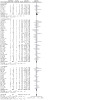
Comparison 11: Ondansetron versus placebo, Outcome 4: Headache
12.4. Analysis.
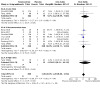
Comparison 12: Palonosetron versus placebo, Outcome 4: Headache
14.2. Analysis.
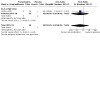
Comparison 14: Promethazine versus placebo, Outcome 2: Headache
15.4. Analysis.
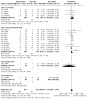
Comparison 15: Ramosetron versus placebo, Outcome 4: Headache
17.4. Analysis.
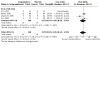
Comparison 17: Scopalamine versus placebo, Outcome 4: Headache
18.4. Analysis.
Comparison 18: Tropisetron versus placebo, Outcome 4: Headache
Primary analysis of headache: network meta‐analysis with all single drugs and drug combinations
Raw data of individual studies and all analyses for the outcome headache are available in an online repository (Supplementary Files‐4‐headache; including direct and indirect effect estimates to the primary NMA, network graphs, and forest plots to all sensitivity and subgroup analyses, explorative analyses of reporting bias, and funnel plots).
In total, 208 studies with 426 pair‐wise comparisons due to multi‐arm studies and 42,445 participants were eligible for the network meta‐analysis of headache. Twenty studies (10%) have reported zero events in all study arms. The network included 53 treatments (nodes) (Figure), with 29 drug combinations, 23 single drugs, and placebo or no treatment. The most common comparisons involved ondansetron (k = 57 studies), droperidol (k = 22), granisetron (k = 15), ramosetron (k = 14), and dexamethasone (k = 13), all compared to placebo. Of the single drugs of direct interest, amisulpride and scopolamine were poorly connected to the network, with placebo as the only comparator.
14.
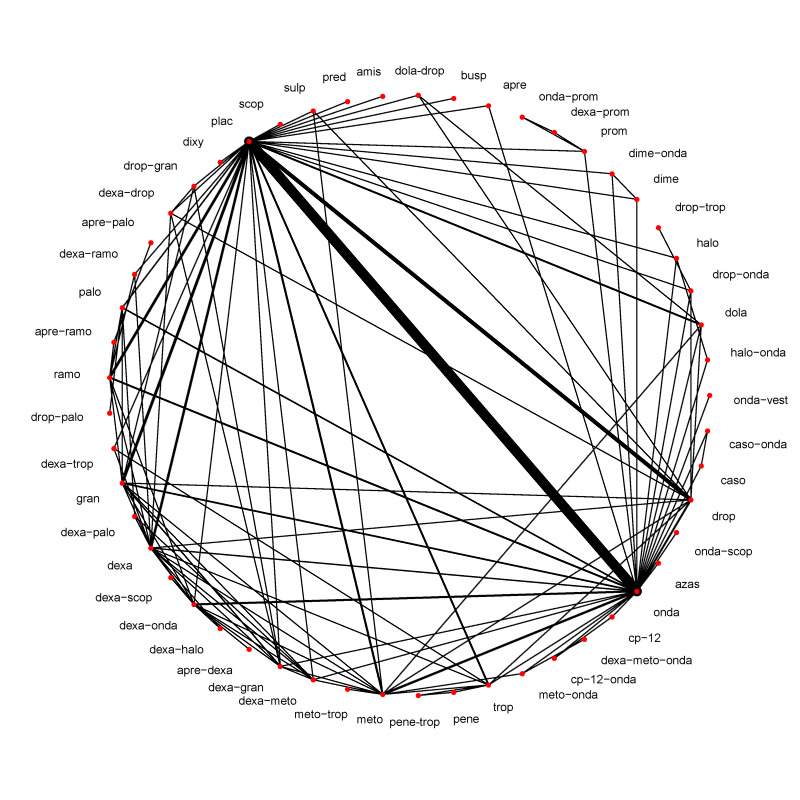
Network geometry of eligible comparisons for postoperative headache. The thickness of the edges is proportionate to the number of included studies comparing two treatments. Abbreviations for treatments correspond to the first four letters of the drug name and are listed in the Methods and in Appendix 6.
For 53 different treatments, 1378 pair‐wise comparisons are possible, and the results of all network estimates are available in the online repository. For 96 of 1378 comparisons, direct and indirect evidence was available, whereas for 26 comparisons, only direct evidence was available, and for 1256 comparisons, only indirect evidence was available.
The relative efficacy presented as summary relative effects (risk ratio, RR) of all drugs or drug combinations compared to placebo (reference compound) ranked according to P scores is shown in Figure. Of the 23 single drugs, sulpiride and droperidol showed important benefit (95% CI upper boundary < 0.9) in terms of headache compared to placebo, with RRs of 0.10 (95% CI 0.01 to 0.71) and 0.76 (95% CI 0.67 to 0.86), respectively. Eight single treatments showed benefit (haloperidol, promethazine, prednisolone, penehyclidine, casopitant, dexamethasone, azasetron, aprepitant), three showed no or minimal effect (metoclopramide, scopolamine, tropisetron), 10 showed harm (dimenhydrinate, dolasetron, ramosetron, palonosetron, ondansetron, granisetron, dixyrazine, buspirone, amisulpride, CP‐122,721), and all 21 of these treatment effects were associated with uncertainty (95% CI crossing the range of equivalence). Treatment effects of all single drugs ranged between RR 0.10 (95% CI 0.01 to 0.71) for amisulpride and RR 5.82 (95% CI 0.70 to 48.25) for CP‐122,721. Of all combination treatments, the only combination treatment showing important benefit compared to placebo was droperidol‐tropisetron, with RR of 0.20 (95% CI 0.05 to 0.84). Of the other combination treatments, 15 combinations showed benefit, seven showed no or minimal effect, six showed harm, and all treatment effects were associated with uncertainty. Treatment effects of drug combinations compared to placebo ranged between RR 0.20 (95% CI 0.05 to 0.84) for droperidol‐tropisetron and RR 3.43 (95% CI 0.37 to 31.96) for CP‐122,721‐ondansetron.
15.
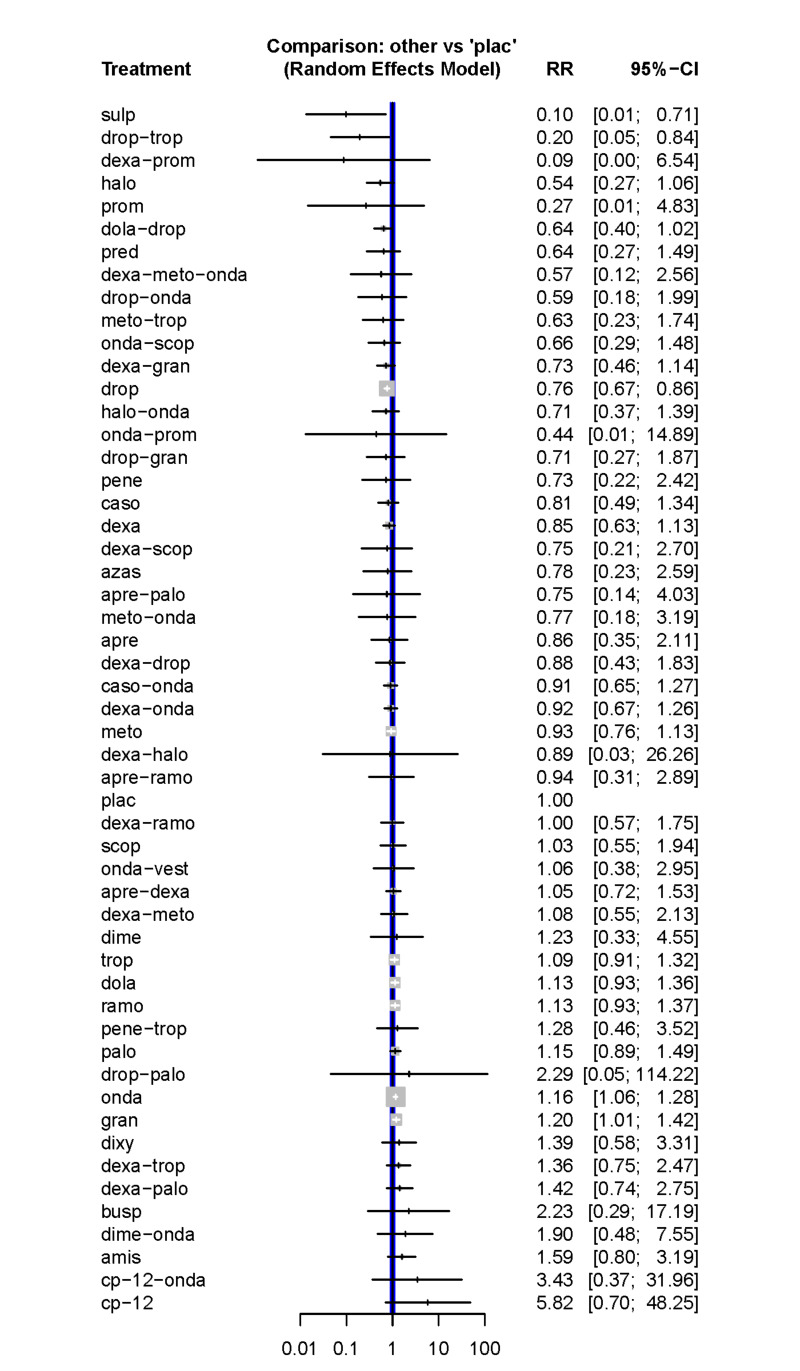
Forest plot of network meta‐analysis of all trials for postoperative headache. Single drugs and combinations were compared with placebo (reference compound). RR = risk ratio, 95% CI = 95% confidence interval. RR < 1 favours the intervention, RR > 1 favours placebo. The blue lines indicate the range of equivalence (RR = 0.9 to 1.11). Treatments are ranked according to safety based on P scores. Abbreviations for treatments correspond to the first four letters of the drug name and are listed in the Methods and in Appendix 6.
The estimated value of between‐study variance for the network meta‐analysis of headache was 0 (tau²) (I² = 0%). For the random‐effects model, there was no heterogeneity within designs (Q = 82.42, df = 126, P = 1.00) and no inconsistency between designs (Q = 86.57, df = 126, P = 1.00). No clinically relevant heterogeneity for relevant comparisons (single drugs of direct interest compared to placebo) was detectable because 95% CIs and 95% PIs were compatible with respect to the range of equivalence. Splitting of direct and indirect evidence in the network meta‐analysis and testing for local inconsistency revealed disagreement (direct versus indirect) for five out of 96 comparisons, namely, dexamethasone‐granisetron versus dexamethasone (P = 0.045), dolasetron‐droperidol versus droperidol (P = 0.01), droperidol versus amisulpride (P = 0.04), ondansetron versus palonosetron (P = 0.005), and amisulpride versus placebo (P = 0.01). Clinically relevant incoherence of direct and indirect treatment estimates for single drugs of direct interest compared to placebo was found only for granisetron (95% CI direct estimate: 1.03 to 1.61; 95% CI indirect estimate: 0.83 to 1.41).
Sensitivity analyses of headache
Sensitivity analyses included all single drugs and drug combinations, but results are described only for single drugs of direct interest compared to placebo.
Sensitivity analysis of headache: risk of bias
Twenty‐five (12%) of 208 studies were rated as high risk of overall bias, 121 (58%) as unclear, and 62 (30%) as low. One study with low risk of bias was not connected to the network of low risk of bias studies and was excluded from the sensitivity analyses (DeOliveira 2011; comparison: dexamethasone‐metoclopramide‐ondansetron versus metoclopramide‐ondansetron). The network geometry of the remaining 61 studies at low risk of bias included 32 treatments. Thirteen treatments were two‐fold combinations of antiemetic drugs, 18 were single drugs, and one was placebo. Of the single drugs of direct interest included in the primary network meta‐analysis of headache, promethazine, scopolamine, and dimenhydrinate were not included in the sensitivity network meta‐analysis due to lack of studies with low risk of bias. Comparison of treatment effects of the sensitivity analysis for risk of bias and the primary network meta‐analysis for headache with placebo as common comparator revealed eight single drugs of direct interest with non‐robust treatment effects (droperidol, tropisetron, dolasetron, ramosetron, palonosetron, metoclopramide, granisetron, haloperidol). Droperidol and tropisetron, with RR 0.79 (95% CI 0.58 to 1.07) and RR 0.82 (95% CI 0.25 to 2.69), respectively, showed benefit with uncertainty compared to placebo. Dolasetron, ramosetron, and palonosetron, with RR 1.02 (95% CI 0.65 to 1.60), RR 1.08 (95% CI 0.82 to 1.41), and RR 1.09 (95% CI 0.75 to 1.60), respectively, showed no or minimal effect associated with uncertainty compared to placebo. Metoclopramide compared to placebo, with RR 1.23 (95% CI 0.51 to 2.96), showed harm associated with uncertainty. For granisetron with RR 1.12 (95% CI 0.63 to 1.97) and haloperidol with RR 0.40 (95% CI 0.04 to 4.13), the uncertainty of effect estimates was increased further in the sensitivity analysis compared to the primary network meta‐analysis. The estimated value of between‐study variance for the sensitivity network meta‐analysis of headache was 0 (tau²) (I² = 0%).
Reporting bias (headache)
Twelve direct pair‐wise comparisons included 10 of more studies for which small‐study effects such as reporting or publication bias were investigated: dexamethasone, dolasetron, droperidol, granisetron, metoclopramide, ondansetron, ramosetron, and tropisetron, all compared to placebo; and dexamethasone‐ondansetron, droperidol, metoclopramide, and ramosetron, all compared to ondansetron. Results of the funnel plots, the arcsine test for funnel plot asymmetry, and the trim and fill sensitivity analysis are presented in the online repository. We did not suspect relevant publication bias for any of the comparisons mentioned above. The only P value < 0.1 was revealed for droperidol versus ondansetron (P = 0.047). However, we did not suspect relevant publication bias because trim and fill sensitivity analysis did not change the conclusion with respect to the range of equivalence.
Subgroup analysis of headache: dose effects
The treatment effect modifier dose was investigated in a subgroup network meta‐analysis splitting drugs into the categories low, recommended, and high doses according to Table. Splitting of doses was restricted to single drugs.
First, a network meta‐analysis including single drugs only (and excluding combination treatments) with 176 studies and 24 treatments including placebo was conducted. Network geometry, effect estimates, and the ranking order of drugs were robust compared to the primary analysis, including combination prophylaxis, except for dexamethasone compared to placebo, with RR 0.91 (95% CI 0.67 to 1.23) showing no or minimal effect with uncertainty. The estimated value of between‐study variance for the network meta‐analysis of single drugs for headache was 0 (tau²) (I² = 0%).
Second, the subgroup analysis of dose was conducted for the network of single drugs only. The following drugs were split into dose categories: amisulpride, aprepitant, dexamethasone, dolasetron, droperidol, granisetron, haloperidol, ondansetron, palonosetron, ramosetron, and tropisetron. For casopitant, dimenhydrinate, metoclopramide, and promethazine, only one dose category was available for subgroup analysis. Drugs without any dose recommendation according to Table (scopolamine) and drugs not of direct interest (azasetron, buspirone, CP‐122,721, dixyrazine, penehyclidine, prednisolone, amisulpride) were included in the analysis and were lumped together, irrespective of the doses being analysed, in the category 'NA'. Five studies—Diemunsch 1998; Eberhart 2006; Jokela 2002; Prescott 1976; Warriner 1997—and one arm each of Bhatnagar 2007 (granisetron NA), Lee D 2009 (ramosetron NA), and Turhanoglu 1999 (dimenhydrinate NA) were excluded from the subgroup analysis because they were not associated with one of the three dose categories. The network consisted of 171 studies with 24 treatments split into 42 nodes with dose categories and is presented in the online repository. In the treatment ranking according to safety, with placebo as the reference compound, high and recommended doses of ramosetron, droperidol, granisetron, dexamethasone, tropisetron, and ondansetron ranked higher than low doses. However, all 95% CIs between different doses of the same drug overlapped, and the uncertainty of treatment effects was considerable. All doses of amisulpride and palonosetron compared to placebo showed harm with uncertainty. Both recommended and high doses of haloperidol compared to placebo showed benefit with uncertainty, and both recommended and high doses of dolasetron compared to placebo showed no or minimal effect associated with uncertainty. Recommended doses of aprepitant ranked higher than high doses compared to placebo. However, treatment effects were associated with uncertainty.
Sensitivity analysis of headache: comparability of doses
In 102 (51%) of 176 studies investigating single drugs, comparable doses of antiemetic drugs were analysed (comparable dose categories). The analysis included only studies investigating drugs of direct interest for which dose recommendations were described and that were assigned to one of the dose categories according to Table. The network of this sensitivity analysis consisted of 15 treatments including placebo. Of single drugs of direct interest included in the primary network meta‐analysis, dimenhydrinate and scopolamine were not included in the sensitivity analysis due to lack of studies with comparable doses. The favourable treatment effect of droperidol compared to placebo remained robust (RR 0.74, 95% CI 0.63 to 0.87). Treatment effects of three drugs (ramosetron, dexamethasone, tropisetron) compared to placebo were not robust in the sensitivity analysis. Ramosetron compared to placebo (RR 0.98, 95% CI 0.76 to 1.26) showed no or minimal effect associated with uncertainty. Dexamethasone (RR 1.25, 95% CI 0.72 to 2.16) and tropisetron (RR 1.48, 95% CI 0.82 to 2.67), compared to placebo, showed harm associated with uncertainty. The estimated value of between‐study variance for this sensitivity network meta‐analysis of headache was 0 (tau²) (I² = 0%).
Certainty of evidence: headache
The certainty of evidence of treatment estimates for headache evaluated with CINeMA is summarized in the 'Summary of findings' table for drugs of direct interest compared to placebo (Table).
For relevant 5‐HT₃ receptor antagonists (compared to placebo), the certainty of evidence of network effect estimates for headache ranged from very low to moderate (Table). Ondansetron (RR 1.16, 95% CI 1.06 to 1.28) probably increases headache compared to placebo, with moderate‐certainty evidence (imprecision). Ramosetron (RR 1.13, 95% CI 0.93 to 1.37) and dolasetron (RR 1.13, 95% CI 0.93 to 1.36) may increase headache compared to placebo, with low‐certainty evidence (study limitations, imprecision). Tropisetron (RR 1.09, 95% CI 0.91 to 1.32) may have little or no effect on headache compared to placebo, with low‐certainty evidence (study limitations, imprecision). We are uncertain whether granisetron (RR 1.20, 95% CI 1.01 to 1.42) and palonosetron (RR 1.15, 95% CI 0.89 to 1.49) increase headache compared to placebo, with very low‐certainty evidence (granisetron: study limitation, imprecision, incoherence; palonosetron: study limitation, very serious concerns for imprecision).
For relevant D₂ receptor antagonists (compared to placebo), the certainty of evidence of network effect estimates for headache was assessed as very low to moderate (Table). Droperidol (RR 0.76, 95% CI 0.67 to 0.86) probably reduces headache compared to placebo, with moderate‐certainty evidence (study limitations). Haloperidol (RR 0.54, 95% CI 0.27 to 1.06) may reduce headache compared to placebo, with low‐certainty evidence (study limitation, imprecision). Amisulpride (RR 1.59, 95% CI 0.80 to 3.19), with direct evidence only, may increase headache compared to placebo, with low‐certainty evidence (very serious concerns for imprecision). We are uncertain whether metoclopramide (RR 0.93, 95% CI 0.76 to 1.13) has little or no effect on headache compared to placebo, with very low‐certainty evidence (study limitations, very serious concerns for imprecision). No studies reporting headache were available for perphenazine.
For relevant NK₁ receptor antagonists (compared to placebo), the certainty of evidence of network effect estimates for headache was assessed as very low to low (Table). Aprepitant (RR 0.86, 95% CI 0.35 to 2.11) may reduce headache compared to placebo, with low‐certainty evidence (very serious concerns for imprecision). We are uncertain whether casopitant (RR 0.81, 95% CI 0.49 to 1.34), with indirect evidence only, reduces headache, with very low‐certainty evidence (incoherence, very serious concerns for imprecision). No studies reporting headache were available for fosaprepitant or rolapitant.
The only corticosteroid that was included in the network meta‐analysis for headache was dexamethasone (RR 0.85, 95% CI 0.63 to 1.13), which may reduce headache compared to placebo, with low‐certainty evidence (very serious concerns for imprecision) (Table). No studies reporting headache were available for methylprednisolone.
For relevant antihistamines (compared to placebo), the certainty of evidence of network effect estimates for headache was assessed as very low (Table). We are uncertain whether dimenhydrinate (RR 1.23, 95% CI 0.33 to 4.55) increases or promethazine (RR 0.27, 95% CI 0.01 to 4.83) reduces headache compared to placebo (study limitations, very serious concerns for imprecision). No studies reporting headache were available for meclizine.
We are uncertain whether the anticholinergic scopolamine (RR 1.03, 95% CI 0.55 to 1.94) has little or no effect on headache compared to placebo, with only direct evidence of very low certainty (very serious concerns for study limitations and imprecision) (Table).
Sedation within seven days postoperatively
Pairwise meta‐analyses (single drugs of direct interest versus placebo) of sedation
Pairwise meta‐analyses of sedation comparing single drugs of direct interest versus placebo are presented in the Data and analyses section and were available for amisulpride (Analysis 1.5), dexamethasone (Analysis 3.5), dimenhydrinate (Analysis 4.3), dolasetron (Analysis 5.5), droperidol (Analysis 6.5), granisetron (Analysis 7.5), methylprednisolone (Analysis 9.1), metoclopramide (Analysis 10.4), ondansetron (Analysis 11.5), palonosetron (Analysis 12.5), perphenazine (Analysis 13.1), promethazine (Analysis 14.3), ramosetron (Analysis 15.5), scopolamine (Analysis 17.5), and tropisetron (Analysis 18.5). Studies or study arms were separated according to dose categories of single drugs (low, recommended, high, NA).
1.5. Analysis.

Comparison 1: Amisulpride versus placebo, Outcome 5: Sedation/drowsiness
3.5. Analysis.
Comparison 3: Dexamethasone versus placebo, Outcome 5: Sedation/drowsiness
4.3. Analysis.
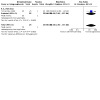
Comparison 4: Dimenhydrinate versus placebo, Outcome 3: Sedation/drowsiness
5.5. Analysis.
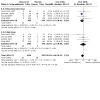
Comparison 5: Dolasetron versus placebo, Outcome 5: Sedation/drowsiness
6.5. Analysis.
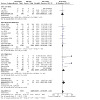
Comparison 6: Droperidol versus placebo, Outcome 5: Sedation/drowsiness
7.5. Analysis.
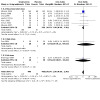
Comparison 7: Granisetron versus placebo, Outcome 5: Sedation/drowsiness
9.1. Analysis.
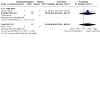
Comparison 9: Methylprednisolone versus placebo, Outcome 1: Sedation/drowsiness
10.4. Analysis.
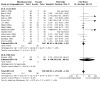
Comparison 10: Metoclopramide versus placebo, Outcome 4: Sedation/drowsiness
11.5. Analysis.
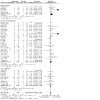
Comparison 11: Ondansetron versus placebo, Outcome 5: Sedation/drowsiness
12.5. Analysis.
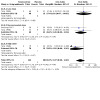
Comparison 12: Palonosetron versus placebo, Outcome 5: Sedation/drowsiness
13.1. Analysis.
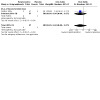
Comparison 13: Perphenazine versus placebo, Outcome 1: Sedation/drowsiness
14.3. Analysis.
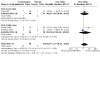
Comparison 14: Promethazine versus placebo, Outcome 3: Sedation/drowsiness
15.5. Analysis.
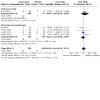
Comparison 15: Ramosetron versus placebo, Outcome 5: Sedation/drowsiness
17.5. Analysis.
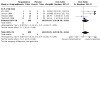
Comparison 17: Scopalamine versus placebo, Outcome 5: Sedation/drowsiness
18.5. Analysis.
Comparison 18: Tropisetron versus placebo, Outcome 5: Sedation/drowsiness
Primary analysis of sedation: network meta‐analysis with all single drugs and drug combinations
Raw data of individual studies and all analyses for the outcome sedation are available in an online repository (Supplementary Files‐5‐sedation; including direct and indirect effect estimates to the primary NMA, network graphs, and forest plots to all sensitivity and subgroup analyses, explorative analyses of reporting bias, and funnel plots).
In total, 117 studies with 280 pair‐wise comparisons due to multi‐arm studies and 21,440 participants were eligible for the network meta‐analysis of sedation. Nineteen studies (16%) have reported zero events in all study arms. The network included 44 treatments (nodes) (Figure), with 19 drug combinations, 24 single drugs, and 1 placebo or no treatment. The most common comparisons were ondansetron (k = 36 studies), droperidol (k = 21), and metoclopramide (k = 15), all compared to placebo, and droperidol, compared to ondansetron (k = 10). Of the single drugs of direct interest, amisulpride and methylprednisolone were poorly connected to the network, with placebo as the only comparator.
16.
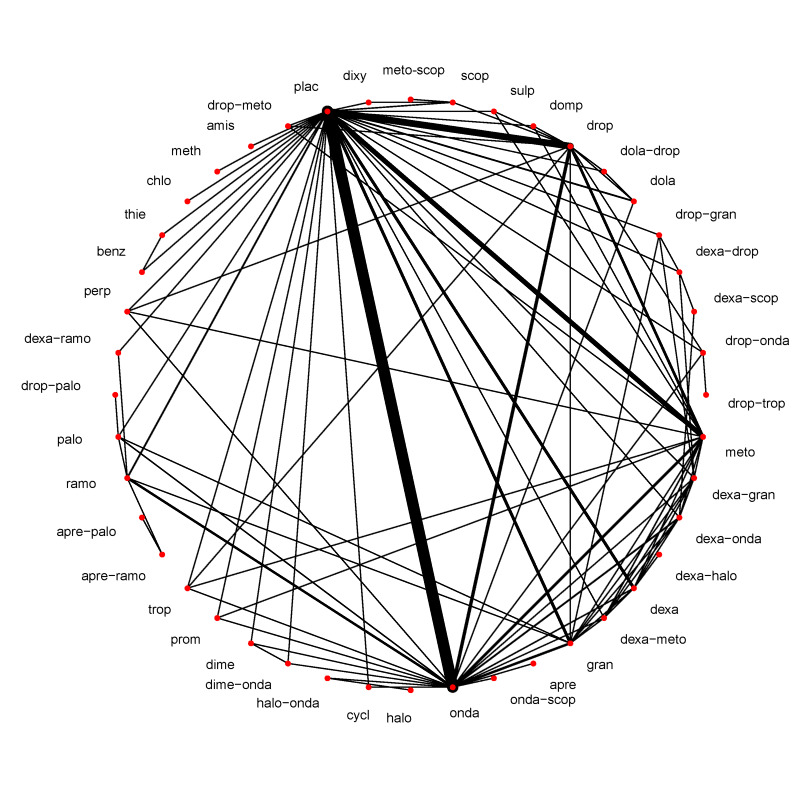
Network geometry of eligible comparisons for postoperative sedation. The thickness of the edges is proportionate to the number of included studies comparing two treatments. Abbreviations for treatments correspond to the first four letters of the drug name and are listed in the Methods and in Appendix 6.
For 44 different treatments, 946 pair‐wise comparisons are possible, and the results of all network estimates are available in the online repository. For 89 of 946 comparisons, direct and indirect evidence was available, whereas for 16 comparisons, only direct evidence was available, and for 841 comparisons, only indirect evidence was available.
The relative efficacy presented as summary relative effects (risk ratio, RR) of all drugs or drug combinations compared to placebo (reference compound) ranked according to P scores is shown in Figure. In terms of sedation, only amisulpride out of the 24 single drugs showed important benefit (95% CI upper boundary < 0.9) compared to placebo, with RR of 0.03 (95% CI 0.00 to 0.50), and three drugs showed important harm (95% CI lower boundary > 1.11), namely,dimenhydrinate (RR 7.66, 95% CI 3.10 to 18.94), benzquinamide (RR 36.78, 95% CI 2.26 to 599.50), and thiethylperazine (RR 51.38, 95% CI 3.18 to 830.62). Seven single treatments showed benefit (dixyrazine, perphenazine, tropisetron, ondansetron, aprepitant, domperidone, ramosetron), nine showed no or minimal effect (haloperidol, metoclopramide, droperidol, chlorpromazine, amisulpride, dolasetron, granisetron, dexamethasone, promethazine), four showed harm (cyclizine, palonosetron, scopolamine, methylprednisolone), and all 20 of these treatment effects were associated with uncertainty (95% CI crossing the range of equivalence). Treatment effects of all single drugs ranged between RR 0.03 (95% CI 0.00 to 0.50) for amisulpride and RR 51.38 (95% CI 3.18 to 830.62) for thiethylperazine. Of the 19 drug combinations, the only combination showing important benefit compared to placebo was dexamethasone‐metoclopramide (RR 0.41, 95% CI 0.24 to 0.71) and the only combination treatment with important harm compared to placebo was dimenhydrinate‐ondansetron (RR 6.90, 95% CI 2.74 to 17.32). Of the other combination treatments, five combinations showed benefit, another five showed no or minimal effect, eight showed harm, and all treatment effects were associated with uncertainty. Treatment effects of drug combinations compared to placebo ranged between RR 0.41 (95% CI 0.24 to 0.71) for dexamethasone‐metoclopramide and RR 6.90 (95% CI 2.74 to 17.32) for dimenhydrinate‐ondansetron.
17.
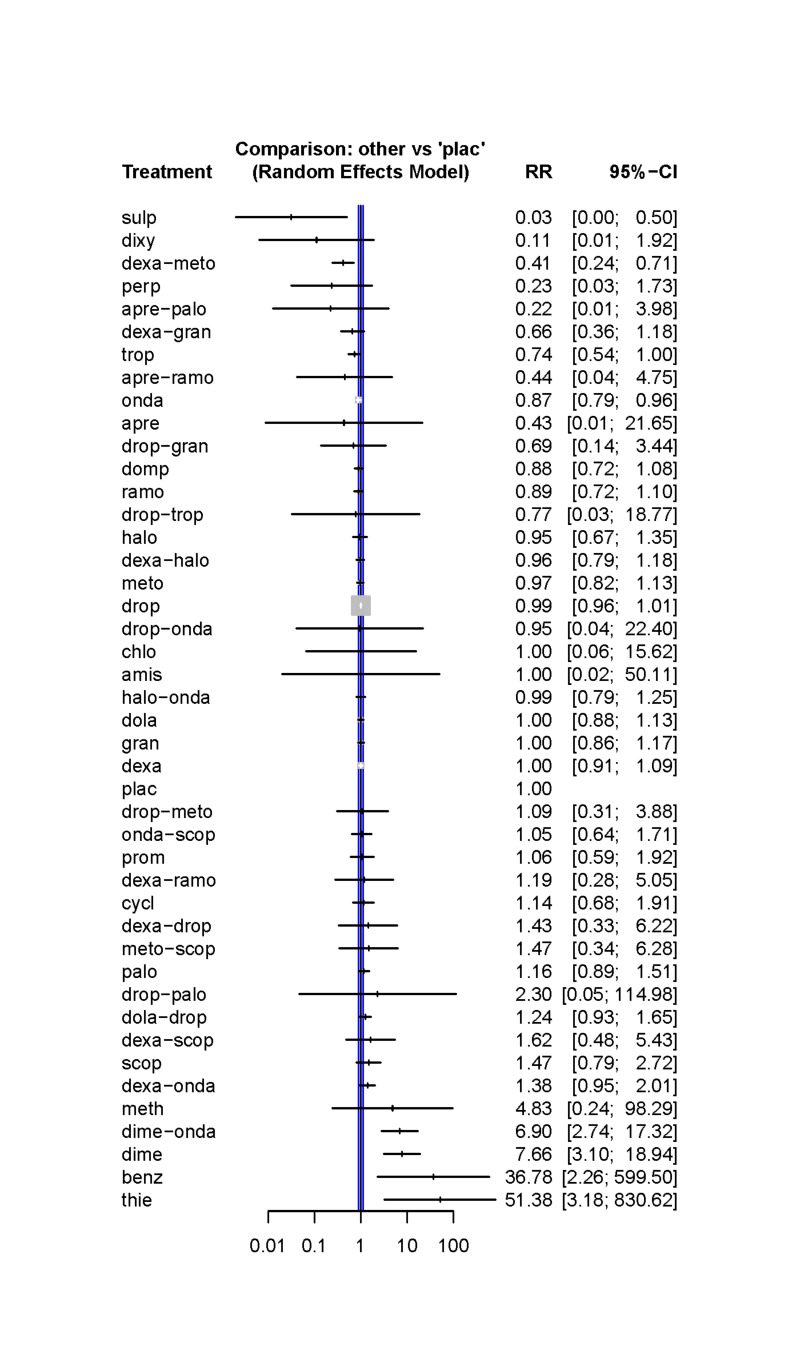
Forest plot of network meta‐analysis of all trials for postoperative sedation. Single drugs and combinations were compared with placebo (reference compound). RR = risk ratio, 95% CI = 95% confidence interval. RR < 1 favours the intervention, RR > 1 favours placebo. The blue lines indicate the range of equivalence (RR = 0.9 to 1.11). Treatments are ranked according to safety based on P scores. Abbreviations for treatments correspond to the first four letters of the drug name and are listed in the Methods and in Appendix 6.
The estimated value of between‐study variance for the network meta‐analysis of sedation was 0 (tau²) (I² = 0%). For the random‐effects model, there was no heterogeneity within designs (Q = 30.85, df = 48, P = 0.98) and no inconsistency between designs (Q = 108.63, df = 93, P = 0.13). No clinically relevant heterogeneity for relevant comparisons (single drugs of direct interest compared to placebo) was detectable because 95% CIs and 95% PIs were compatible with respect to the range of equivalence. Splitting of direct and indirect evidence in the network meta‐analysis and testing for local inconsistency revealed disagreement (direct versus indirect) for 14 out of 89 comparisons. Three out of 14 comparisons with local inconsistency were of direct interest, namely, dexamethasone versus placebo (P = 0.02), droperidol versus placebo (P = 0.0002), and metoclopramide versus placebo (P = 0.04). For both dexamethasone and droperidol versus placebo, there was a contribution of direct evidence greater than 90%; thus there is no concern for incoherence. Clinically relevant incoherence of direct and indirect treatment estimates for single drugs of direct interest compared to placebo was found only for metoclopramide versus placebo (95% CI direct estimate: 0.90 to 1.35; 95% CI indirect estimate: 0.59 to 1.00).
Sensitivity analyses of sedation
Sensitivity analyses included all single drugs and drug combinations, but results are described only for single drugs of direct interest compared to placebo.
Sensitivity analysis of sedation: risk of bias
Fourteen (12%) of 117 studies were rated as having high risk of overall bias, 75 (64%) as unclear, and 28 (24%) as low. The network geometry of the 28 studies at low risk of bias included 23 treatments. Eight treatments were two‐fold combinations of antiemetic drugs, 14 were single drugs, and one was placebo. Of the single drugs of direct interest included in the primary network meta‐analysis for sedation, haloperidol, perphenazine, scopolamine, and dimenhydrinate were not included in the sensitivity network meta‐analysis due to lack of studies with low risk of bias. Comparison of treatment effects of the sensitivity analysis for risk of bias and the primary network meta‐analysis of sedation with placebo as a common comparator revealed seven single drugs of direct interest with non‐robust treatment effects (ramosetron, granisetron, palonosetron, droperidol, promethazine, tropisetron, metoclopramide). Granisetron and palonosetron, with RR 0.80 (95% CI 0.21 to 3.07) and RR 0.80 (95% CI 0.04 to 16.76), respectively, showed benefit with uncertainty compared to placebo. Promethazine, tropisetron, and metoclopramide, with RR 1.84 (95% CI 0.41 to 8.33), RR 2.52 (95% CI 0.21 to 30.54) and RR 2.36 (95% CI 0.42 to 13.14), respectively, showed harm associated with uncertainty compared to placebo. For ramosetron versus placebo, with RR 0.79 (95% CI 0.43 to 1.46), and for droperidol versus placebo, with RR 1.05 (95% CI 0.86 to 1.28), the uncertainty of the effect estimates was increased further in the sensitivity analysis compared to the primary network meta‐analysis. The estimated value of between‐study variance for the sensitivity network meta‐analysis of sedation was 0 (tau²) (I² = 0%).
Reporting bias (sedation)
Four direct pair‐wise comparisons included 10 or more studies for which small‐study effects such as reporting or publication bias were investigated: droperidol, metoclopramide, and ondansetron, all compared to placebo; and droperidol compared to ondansetron. Results of the funnel plots, the arcsine test for funnel plot asymmetry, and the trim and fill sensitivity analysis are presented in the online repository. We did not suspect relevant publication bias for any of the comparisons mentioned above. For all comparisons, P values of the arcsine test were > 0.1, and trim and fill sensitivity analyses did not change the conclusions with respect to the range of equivalence.
Subgroup analysis of sedation: dose effects
The treatment effect modifier dose was investigated in a subgroup network meta‐analysis splitting drugs into the categories low, recommended, and high doses according to Table. Splitting of doses was restricted to single drugs.
First, a network meta‐analysis of sedation including single drugs only (and excluding combination treatments) with 99 studies and 24 treatments including placebo was conducted. Haloperidol was not included in the network meta‐analysis of single drugs for sedation because no other single drug or placebo was a suitable comparator in the corresponding trials. Network geometry, effect estimates, and the ranking order of drugs were similar compared to the primary analysis, including combination prophylaxis. However, ondansetron (RR 0.91, 95% CI 0.81 to 1.01), domperidone (RR 0.92, 95% CI 0.74 to 1.14), and ramosetron (RR 0.92, 95% CI 0.74 to 1.15), each compared to placebo, showed slightly changed treatment effects, changing clinical interpretation of treatment effects from benefit to no or minimal effect with uncertainty. The estimated value of between‐study variance for the network meta‐analysis of single drugs for sedation was 0.0025 (tau²) (I² = 4.9%).
Second, the subgroup analysis of dose was conducted for the network of single drugs only. The following drugs were split into dose categories: aprepitant, dexamethasone, dolasetron, droperidol, granisetron, ondansetron, palonosetron, promethazine, and ramosetron. For amisulpride, dimenhydrinate, methylprednisolone, metoclopramide, perphenazine, and tropisetron, only one dose category was available for subgroup analysis. Drugs without any dose recommendation according to Table (scopolamine) and drugs not of direct interest (benzquinamide, chlorpromazine, cyclizine, dixyrazine, domperidone, amisulpride, thiethylperazine) were included in the analysis and were lumped together, irrespective of the doses being analysed, in the category 'NA'. Rothenberg 1991 and Wagner 1996 and one arm each of Bhatnagar 2007 (granisetron NA) and Turhanoglu 1999 (dimenhydrinate NA) were excluded from the subgroup analysis because they were not associated with one of the three dose categories. The network consisted of 97 studies with 24 treatments split into 36 nodes with dose categories and is presented in the online repository. In the ranking of treatments according to safety, with placebo as the reference compound, high and recommended doses of ondansetron showed benefit with uncertainty, and low doses of ondansetron showed important harm with non‐overlapping 95% CIs. In the case of palonosetron, promethazine, or ramosetron, high and recommended doses, respectively, ranked higher than low doses when compared to placebo. However, all 95% CIs between different doses of the same drug overlapped, and the uncertainty of treatment effects was considerable. In the case of dolasetron, droperidol, or granisetron, low and recommended doses, respectively, ranked higher than high doses when compared to placebo. However, all 95% CIs between different doses of the same drug overlapped, and the uncertainty of treatment effects was considerable. Recommended and high doses of aprepitant compared to placebo showed benefit associated with uncertainty. Both recommended and high doses of dexamethasone compared to placebo showed no or minimal effect. For recommended doses of dexamethasone, uncertainty was high.
Sensitivity analysis of sedation: comparability of doses
In 47 (48%) of 97 studies investigating single drugs, comparable doses of antiemetic drugs were analysed (comparable dose categories). The analysis included only studies investigating drugs of direct interest for which dose recommendations were described and that were assigned to one of the dose categories according to Table. The network of this sensitivity analysis consisted of 12 treatments including placebo. Of the single drugs of direct interest included in the primary network meta‐analysis, aprepitant, dimenhydrinate, perphenazine, scopolamine, and tropisetron were not included in the sensitivity analysis due to lack of studies with comparable doses. Treatment effects of three drugs (dolasetron, droperidol, promethazine) were not robust in the sensitivity analysis with placebo as common comparator. Dolasetron (RR 0.68, 95% CI 0.44 to 1.05) compared to placebo showed benefit associated with uncertainty. Droperidol (RR 0.98, 95% CI 0.95 to 1.00) showed no effect, and promethazine (RR 3.76, 95% CI 1.32 to 10.73) showed important harm, both compared to placebo. The estimated value of between‐study variance for this sensitivity network meta‐analysis of sedation was 0 (tau²) (I² = 0%).
Certainty of evidence: sedation
The certainty of evidence of treatment estimates for sedation evaluated with CINeMA is summarized in the 'Summary of findings' table for drugs of direct interest compared to placebo (Table).
For relevant 5‐HT₃ receptor antagonists (compared to placebo), the certainty of evidence of network effect estimates for sedation ranged from very low to moderate (Table). Ondansetron (RR 0.87, 95% CI 0.79 to 0.96) probably reduces sedation compared to placebo, with moderate‐certainty evidence (imprecision). However, moderate certainty of evidence for ondansetron is restricted to recommended and high doses. Ramosetron (RR 0.89, 95% CI 0.72 to 1.10) and tropisetron (RR 0.74, 95% CI 0.54 to 1.00) may reduce sedation compared to placebo, with low‐certainty evidence (study limitations, imprecision). Dolasetron (RR 1.00, 95% CI 0.88 to 1.13) may have little or no effect on sedation compared to placebo, with low‐certainty evidence (very serious concerns for imprecision). We are uncertain whether granisetron (RR 1.00, 95% CI 0.86 to 1.17) has little or no effect compared to placebo, with very low‐certainty evidence (study limitation, very serious concerns for imprecision). We are uncertain whether palonosetron (RR 1.16, 95% CI 0.89 to 1.51) increases sedation compared to placebo, with very low‐certainty evidence (study limitation, very serious concerns for imprecision).
For relevant D₂ receptor antagonists (compared to placebo), the certainty of evidence of network effect estimates for sedation was assessed as very low to low (Table). Droperidol (RR 0.99, 95% CI 0.96 to 1.01) may have little or no effect on sedation compared to placebo, with low‐certainty evidence (very serious concerns for study limitations). Amisulpride (RR 1.00, 95% CI 0.02 to 50.11), with direct evidence only, may have little or no effect on sedation compared to placebo, with low‐certainty evidence (very serious concerns for imprecision). We are uncertain whether haloperidol (RR 0.95, 95% CI 0.67 to 1.35), with indirect evidence only, and metoclopramide (RR 0.97, 95% CI 0.82 to 1.13), both compared to placebo, have little or no effect on sedation, with very low‐certainty evidence (haloperidol: study limitations, incoherence, very serious concerns for imprecision; metoclopramide: study limitations, very serious concerns for imprecision, incoherence). We are uncertain whether perphenazine (RR 0.23, 95% CI 0.03 to 1.73) compared to placebo reduces sedation, with very low‐certainty evidence (study limitations, very serious concerns for imprecision).
For relevant NK₁ receptor antagonists (compared to placebo), the certainty of evidence of network effect estimates for sedation was assessed as very low (Table). We are uncertain whether aprepitant (RR 0.43, 95% CI 0.01 to 21.65), with indirect evidence only, reduces sedation compared to placebo, with very low‐certainty evidence (incoherence, very serious concerns for imprecision). No studies reporting sedation were available for casopitant, fosaprepitant, and rolapitant.
For relevant corticosteroids (compared to placebo), the certainty of evidence of network effect estimates for sedation was assessed as high to low (Table). Dexamethasone (RR 1.00, 95% CI 0.91 to 1.09) has no effect on sedation compared to placebo, with high‐certainty evidence. Methylprednisolone (RR 4.83, 95% CI 0.24 to 98.29), with direct evidence only, may increase sedation compared to placebo, with low‐certainty evidence (very serious concerns for imprecision).
For relevant antihistamines (compared to placebo), the certainty of evidence of network effect estimates for sedation was assessed as moderate to very low (Table). Dimenhydrinate (RR 7.66, 95% CI 3.10 to 18.94) probably increases sedation compared to placebo, with moderate‐certainty evidence (study limitations). We are uncertain whether promethazine (RR 1.06, 95% CI 0.59 to 1.92) has no or minimal effect on sedation compared to placebo, with very low‐certainty evidence (study limitations, very serious concerns for imprecision). No studies reporting sedation were available for meclizine.
We are uncertain whether the anticholinergic scopolamine (RR 1.47, 95% CI 0.79 to 2.72) increases sedation compared to placebo, with very low‐certainty evidence (study limitations, very serious concerns for imprecision) (Table).
Extrapyramidal symptoms within seven days postoperatively
Pairwise meta‐analyses (single drugs of direct interest versus placebo) of extrapyramidal symptoms
Pairwise meta‐analyses for extrapyramidal symptoms comparing single drugs of direct interest versus placebo are presented in the Data and analyses section and were available for amisulpride (Analysis 1.6), dexamethasone (Analysis 3.6), dolasetron (Analysis 5.6), droperidol (Analysis 6.6), granisetron (Analysis 7.6), haloperidol (Analysis 8.3), metoclopramide (Analysis 10.5), ondansetron (Analysis 11.6), palonosetron (Analysis 12.6), perphenazine (Analysis 13.2), and tropisetron (Analysis 18.6). Studies or study arms were separated according to dose categories of single drugs (low, recommended, high, NA).
1.6. Analysis.

Comparison 1: Amisulpride versus placebo, Outcome 6: Extrapyramidal symptoms
3.6. Analysis.

Comparison 3: Dexamethasone versus placebo, Outcome 6: Extrapyramidal symptoms
5.6. Analysis.

Comparison 5: Dolasetron versus placebo, Outcome 6: Extrapyramidal symptoms
6.6. Analysis.
Comparison 6: Droperidol versus placebo, Outcome 6: Extrapyramidal symptoms
7.6. Analysis.

Comparison 7: Granisetron versus placebo, Outcome 6: Extrapyramidal symptoms
8.3. Analysis.
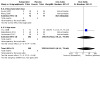
Comparison 8: Haloperidol versus placebo, Outcome 3: Extrapyramidal symptoms
10.5. Analysis.
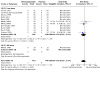
Comparison 10: Metoclopramide versus placebo, Outcome 5: Extrapyramidal symptoms
11.6. Analysis.
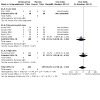
Comparison 11: Ondansetron versus placebo, Outcome 6: Extrapyramidal symptoms
12.6. Analysis.

Comparison 12: Palonosetron versus placebo, Outcome 6: Extrapyramidal symptoms
13.2. Analysis.

Comparison 13: Perphenazine versus placebo, Outcome 2: Extrapyramidal symptoms
18.6. Analysis.
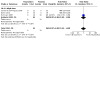
Comparison 18: Tropisetron versus placebo, Outcome 6: Extrapyramidal symptoms
Primary analysis of extrapyramidal symptoms: network meta‐analysis with all single drugs and drug combinations
Raw data of individual studies and all analyses for the outcome extrapyramidal symptoms are available in an online repository (Supplementary Files‐6‐extrapyramidal symptoms; including direct and indirect effect estimates to the primary NMA, network graphs, and forest plots to all sensitivity and subgroup analyses, explorative analyses of reporting bias, and funnel plots).
In total, 64 studies with 172 pair‐wise comparisons due to multi‐arm studies and 10,724 participants were eligible for the network meta‐analysis of extrapyramidal symptoms. Forty‐eight studies (75%) have reported zero events in all study arms. The network included 30 treatments (nodes), with 13 drug combinations, 16 single drugs, and 1 placebo or no treatment (Figure). The most common comparisons were droperidol (k = 22 studies) and metoclopramide (k = 12) compared to placebo. Of the single drugs of direct interest, amisulpride and palonosetron were poorly connected to the network, with placebo as the only comparator.
18.
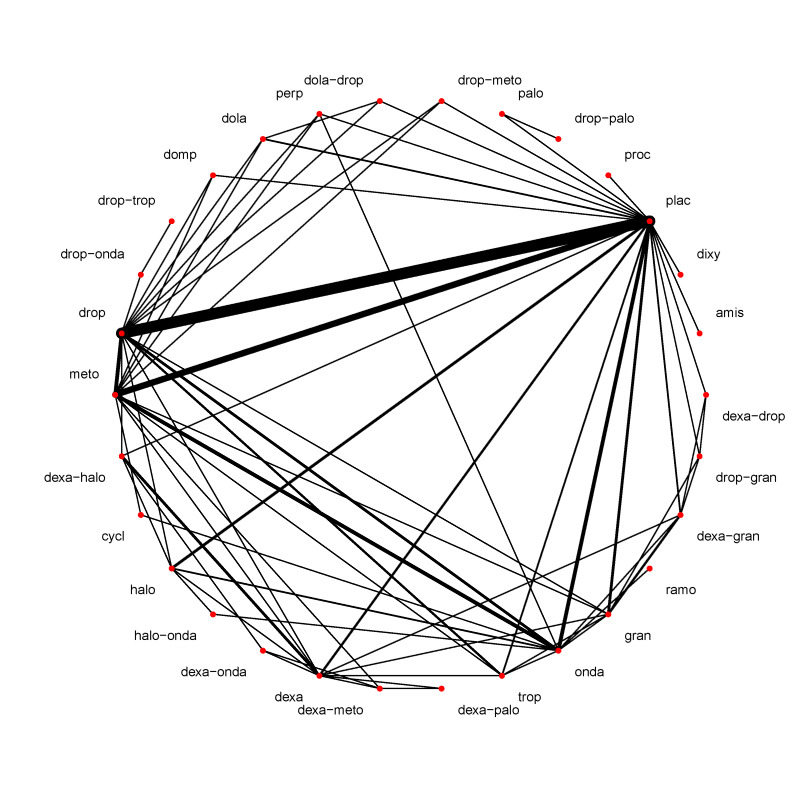
Network geometry of eligible comparisons for postoperative extrapyramidal symptoms. The thickness of the edges is proportionate to the number of included studies comparing two treatments. Abbreviations for treatments correspond to the first four letters of the drug name and are listed in the Methods and in Appendix 6.
For 30 different treatments, 435 pair‐wise comparisons are possible, and the results of all network estimates are available in the online repository. For 65 of 435 comparisons, direct and indirect evidence was available, whereas for eight comparisons, only direct evidence was available, and for 362 comparisons, only indirect evidence was available.
The relative efficacy presented as summary relative effects (risk ratio, RR) of all drugs or drug combinations compared to placebo (reference compound) ranked according to P scores is shown in Figure. In terms of extrapyramidal symptoms, none of the 16 single drugs showed important benefit (95% CI upper boundary < 0.9) or important harm (95% CI lower boundary > 1.11) compared to placebo. Six single treatments showed benefit (ondansetron, dexamethasone, dolasetron, tropisetron, ramosetron, granisetron), another six treatments showed no or minimal effect (cyclizine, palonosetron, amisulpride, prochlorperazine, dixyrazine, perphenazine), four treatments showed harm (metoclopramide, haloperidol, droperidol, domperidone), and all treatment effects were associated with uncertainty (95% CI crossing the range of equivalence). Treatment effects of all single drugs ranged between RR 0.73 (95% CI 0.39 to 1.38) for ondansetron and RR 2.05 (95% CI 0.79 to 5.31) for domperidone. None of the combination treatments showed important benefit or important harm compared to placebo. Six combination treatments showed benefit, five showed no or minimal effect, two showed harm, and all treatment effects were associated with uncertainty. Treatment effects of combination treatments ranged between RR 0.42 (95% CI 0.07 to 2.68) for dexamethasone‐haloperidol and RR 1.99 (95% CI 0.01 to 490.88) for droperidol‐palonosetron.
19.
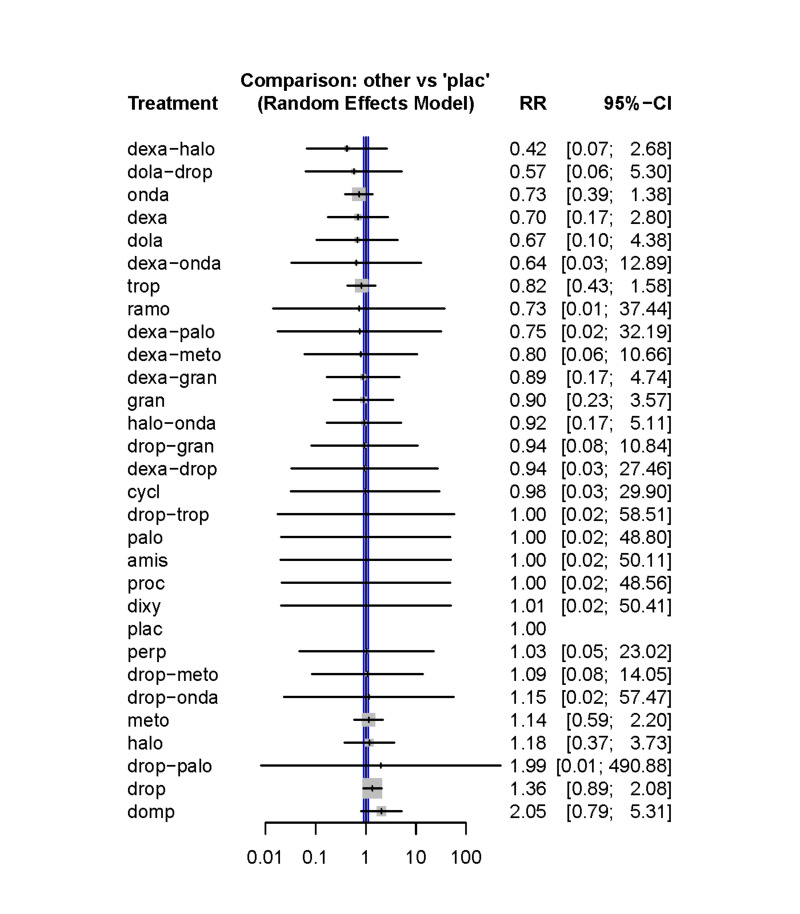
Forest plot of network meta‐analysis of all trials for postoperative extrapyramidal symptoms. Single drugs and combinations were compared with placebo (reference compound). RR = risk ratio, 95% CI = 95% confidence interval. RR < 1 favours the intervention, RR > 1 favours placebo. The blue lines indicate the range of equivalence (RR = 0.9 to 1.11). Treatments are ranked according to safety based on P scores. Abbreviations for treatments correspond to the first four letters of the drug name and are listed in the Methods and in Appendix 6.
The estimated value of between‐study variance for the network meta‐analysis of extrapyramidal symptoms was 0 (tau²) (I² = 0%). For the random‐effects model, there was no heterogeneity within designs (Q = 6.86, df = 20, P = 1.00) and no inconsistency between designs (Q = 9.34, df = 58, P = 1.00). No clinically relevant heterogeneity for relevant comparisons (single drugs of direct interest compared to placebo) was detectable because 95% CIs and 95% PIs were compatible with respect to the range of equivalence. Splitting of direct and indirect evidence in the network meta‐analysis and testing for local inconsistency revealed no disagreement (direct versus indirect) for all 65 comparisons. There was no clinically relevant incoherence of direct and indirect treatment estimates for single drugs of direct interest compared to placebo.
Sensitivity analyses of extrapyramidal symptoms
Sensitivity analyses included all single drugs and drug combinations, but results are described only for single drugs of direct interest compared to placebo.
Sensitivity analysis of extrapyramidal symptoms: risk of bias
Fifteen (23%) of 64 studies were rated as having high risk of overall bias, 33 (52%) as unclear, and 16 (25%) as low. One study with low risk of bias was not connected to the network of low risk of bias studies and was excluded from the sensitivity analysis (Hu 2017; comparison: droperidol‐palonosetron versus palonosetron). The network geometry of the remaining 15 studies at low risk of bias included 15 treatments. Five treatments were two‐fold combinations of antiemetic drugs, nine were single drugs, and one was placebo. Of the single drugs of direct interest included in the primary network meta‐analysis for extrapyramidal symptoms, palonosetron, perphenazine, ramosetron, and tropisetron were not included in the sensitivity network meta‐analysis due to lack of studies with low risk of bias. Comparison of treatment effects of the sensitivity analysis for risk of bias and the primary network meta‐analysis for extrapyramidal symptoms with placebo as common comparator revealed robust treatment effects for all single drugs of direct interest except for ondansetron and granisetron. Ondansetron compared to placebo, with RR 1.10 (95% CI 0.32 to 3.79), and granisetron compared to placebo, with RR 1.00 (95% CI 0.02 to 48.80), showed no or minimal effect associated with uncertainty. The estimated value of between‐study variance for the sensitivity network meta‐analysis of extrapyramidal symptoms was 0 (tau²) (I² = 0%).
Reporting bias (extrapyramidal symptoms)
Two direct pair‐wise comparisons included 10 or more studies for which small‐study effects such as reporting or publication bias were investigated (droperidol and metoclopramide compared to placebo). Results of the funnel plots, the arcsine test for funnel plot asymmetry, and the trim and fill sensitivity analysis are presented in the online repository. We did not suspect relevant publication bias for any of the comparisons mentioned above. For all comparisons, P values of the arcsine test were > 0.1, and trim and fill sensitivity analyses did not change the conclusions with respect to the range of equivalence.
Subgroup analysis of extrapyramidal symptoms: dose effects
The treatment effect modifier dose was investigated in a subgroup network meta‐analysis splitting drugs into the categories low, recommended, and high doses according to Table. Splitting of doses was restricted to single drugs.
First, a network meta‐analysis for extrapyramidal symptoms including single drugs only (and excluding combination treatments) with 50 studies and 17 treatments including placebo was conducted. Network geometry, effect estimates, and the ranking order of drugs, with placebo as the reference compound, were robust compared to the primary analysis including combination prophylaxis. The estimated value of between‐study variance for the network meta‐analysis of single drugs for extrapyramidal symptoms was 0 (tau²) (I² = 0%).
Second, the subgroup analysis of dose was conducted for the network of single drugs only. The following drugs were split into dose categories: dexamethasone, droperidol, haloperidol, and ondansetron. For amisulpride, dolasetron, granisetron, metoclopramide, palonosetron, perphenazine, ramosetron, and tropisetron, only one dose category was available for subgroup analysis. Drugs not of direct interest were included in the analysis and were lumped together, irrespective of the doses being analysed, in the category 'NA' (cyclizine, dixyrazine, domperidone, prochlorperazine). Mathia 1988 was excluded from the subgroup analysis because the intervention was not associated with one of the three dose categories (metoclopramide 'NA'). The network consisted of 49 studies with 17 treatments including placebo split into 23 nodes with dose categories and is presented in the online repository. In the ranking of treatments according to safety with placebo as the reference compound, all 95% CIs between different doses of the same drug overlapped, and the uncertainty of treatment effects was considerable. High and recommended doses of ondansetron compared to placebo ranked higher than low doses. Low and recommended doses of droperidol compared to placebo showed harm associated with uncertainty, and high doses showed benefit associated with uncertainty. For both dexamethasone and haloperidol, recommended doses ranked higher than high doses. All treatment effects were associated with uncertainty.
Sensitivity analysis of extrapyramidal symptoms: comparability of doses
In 24 (48%) of 50 studies investigating single drugs, comparable doses of antiemetic drugs were analysed (comparable dose categories). The analysis included only studies investigating drugs of direct interest for which dose recommendations were described and that were assigned to one of the dose categories according to Table. The network of this sensitivity analysis consisted of 11 treatments including placebo. Of the single drugs of direct interest included in the primary network meta‐analysis, perphenazine and tropisetron were not included in the sensitivity analysis due to lack of studies with comparable doses. Treatment effects of six single drugs of direct interest (dolasetron, granisetron, metoclopramide, ondansetron, ramosetron, droperidol) were not robust in the sensitivity analysis with placebo as the reference compound. Dolasetron (RR 0.94, 95% CI 0.09 to 9.52), granisetron (RR 1.01, 95% CI 0.13 to 7.97), metoclopramide (RR 1.00, 95% CI 0.02 to 47.28), ondansetron (RR 1.04, 95% CI 0.07 to 16.44), and ramosetron (RR 1.04, 95% CI 0.01 to 122.62), all compared to placebo, showed no or minimal effects associated with uncertainty. Droperidol compared to placebo showed important harm, with RR 2.78 (95% CI 1.15 to 6.73). The estimated value of between‐study variance for this sensitivity network meta‐analysis of extrapyramidal symptoms was 0 (tau²) (I² = 0%).
Certainty of evidence: extrapyramidal symptoms
The certainty of evidence of treatment estimates for extrapyramidal symptoms evaluated with CINeMA is summarized in the 'Summary of findings' table for drugs of direct interest compared to placebo (Table).
For relevant 5‐HT₃ receptor antagonists (compared to placebo), the certainty of evidence of network effect estimates for extrapyramidal symptoms ranged from very low to low (Table). Dolasetron (RR 0.67; 95% CI 0.10 to 4.38) may reduce extrapyramidal symptoms compared to placebo, with low‐certainty evidence (very serious concerns for imprecision). We are uncertain whether ondansetron (RR 0.73, 95% CI 0.39 to 1.38) and granisetron (RR 0.90, 95% CI 0.23 to 3.57) reduce extrapyramidal symptoms compared to placebo, with very low‐certainty evidence (study limitation, very serious concerns for imprecision). We are uncertain whether ramosetron (RR 0.73, 95% CI 0.01 to 37.44), with indirect evidence only, reduces extrapyramidal symptoms compared to placebo, with very low‐certainty evidence (study limitation, incoherence, very serious concerns for imprecision). We are also uncertain whether tropisetron (RR 0.82, 95% CI 0.43 to 1.58) reduces extrapyramidal symptoms compared to placebo, with very low‐certainty evidence (very serious concerns for study limitations and imprecision). We are uncertain whether palonosetron (RR 1.00, 95% CI 0.02 to 48.80), with direct evidence only, has little or no effect on extrapyramidal symptoms compared to placebo, with very low‐certainty evidence (study limitation, very serious concerns for imprecision).
For relevant D₂ receptor antagonists (compared to placebo), the certainty of evidence of network effect estimates for extrapyramidal symptoms was assessed as very low and low (Table). Droperidol (RR 1.36, 95% CI 0.89 to 2.08), haloperidol (RR 1.18, 95% CI 0.37 to 3.73), and metoclopramide (RR 1.14, 95% CI 0.59 to 2.20) may increase extrapyramidal symptoms compared to placebo, with low‐certainty evidence (very serious concerns for imprecision). Amisulpride (RR 1.00, 95% CI 0.02 to 50.11), with direct evidence only, may have little or no effect on extrapyramidal symptoms compared to placebo, with low‐certainty evidence (very serious concerns for imprecision). We are uncertain whether perphenazine (RR 1.03, 95% CI 0.05 to 23.02) compared to placebo has little or no effect on extrapyramidal symptoms, with very low‐certainty evidence (study limitations, very serious concerns for imprecision).
No studies reporting extrapyramidal symptoms were available for relevant NK₁ receptor antagonists (compared to placebo) (Table).
For relevant corticosteroids (compared to placebo), the certainty of evidence of network effect estimates for extrapyramidal symptoms was assessed as low for dexamethasone (Table). Dexamethasone (RR 0.70, 95% CI 0.17 to 2.80) may reduce extrapyramidal symptoms compared to placebo, with low‐certainty evidence (very serious concerns for imprecision). No studies reporting extrapyramidal symptoms were available for methylprednisolone.
No studies reporting extrapyramidal symptoms were available for relevant antihistamines (compared to placebo) (Table).
No studies reporting extrapyramidal symptoms were available for the anticholinergic scopolamine (Table).
Constipation within seven days postoperatively
Pairwise meta‐analyses (single drugs of direct interest versus placebo) of constipation
Pairwise meta‐analyses of constipation comparing single drugs of direct interest versus placebo are presented in the Data and analyses section and were available for amisulpride (Analysis 1.7), dexamethasone (Analysis 3.7), granisetron (Analysis 7.7), metoclopramide (Analysis 10.6), ondansetron (Analysis 11.7), palonosetron (Analysis 12.7), ramosetron (Analysis 15.6), and tropisetron (Analysis 18.7). Studies or study arms were separated according to dose categories of single drugs (low, recommended, high, NA).
1.7. Analysis.
Comparison 1: Amisulpride versus placebo, Outcome 7: Constipation
3.7. Analysis.
Comparison 3: Dexamethasone versus placebo, Outcome 7: Constipation
7.7. Analysis.
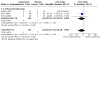
Comparison 7: Granisetron versus placebo, Outcome 7: Constipation
10.6. Analysis.
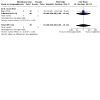
Comparison 10: Metoclopramide versus placebo, Outcome 6: Constipation
11.7. Analysis.
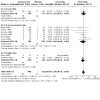
Comparison 11: Ondansetron versus placebo, Outcome 7: Constipation
12.7. Analysis.
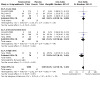
Comparison 12: Palonosetron versus placebo, Outcome 7: Constipation
15.6. Analysis.
Comparison 15: Ramosetron versus placebo, Outcome 6: Constipation
18.7. Analysis.
Comparison 18: Tropisetron versus placebo, Outcome 7: Constipation
Primary analysis of constipation: network meta‐analysis with all single drugs and drug combinations
Raw data of individual studies and all analyses for the outcome constipation are available in an online repository (Supplementary Files‐7‐constipation; including direct and indirect effect estimates to the primary NMA, network graphs, and forest plots to all sensitivity and subgroup analyses, explorative analyses of reporting bias, and funnel plots).
In total, 44 RCTs including 11,540 participants were eligible for the network meta‐analysis of constipation. Six studies (14%) have reported zero events in all study arms. One study was not connected to the network and was excluded from the following analysis: Awad 2002; comparison: droperidol‐ondansetron versus droperidol. The network geometry of the remaining 43 studies with 74 pair‐wise comparisons due to multi‐arm studies included 23 different treatments (nodes) (Figure). The 23 treatments included 10 drug combinations, 12 single drugs, and placebo or no treatment. The most common comparisons were ondansetron (k = 8 studies), dexamethasone (k = 3), dexamethasone‐granisetron (k = 3), granisetron (k = 3), and palonosetron (k = 3), all compared to placebo; casopitant‐ondansetron (k = 4) and aprepitant (k = 3) compared to ondansetron; and ondansetron compared to palonosetron (k = 3). Of the single drugs of direct interest, amisulpride was poorly connected to the network, with placebo as the only comparator.
20.
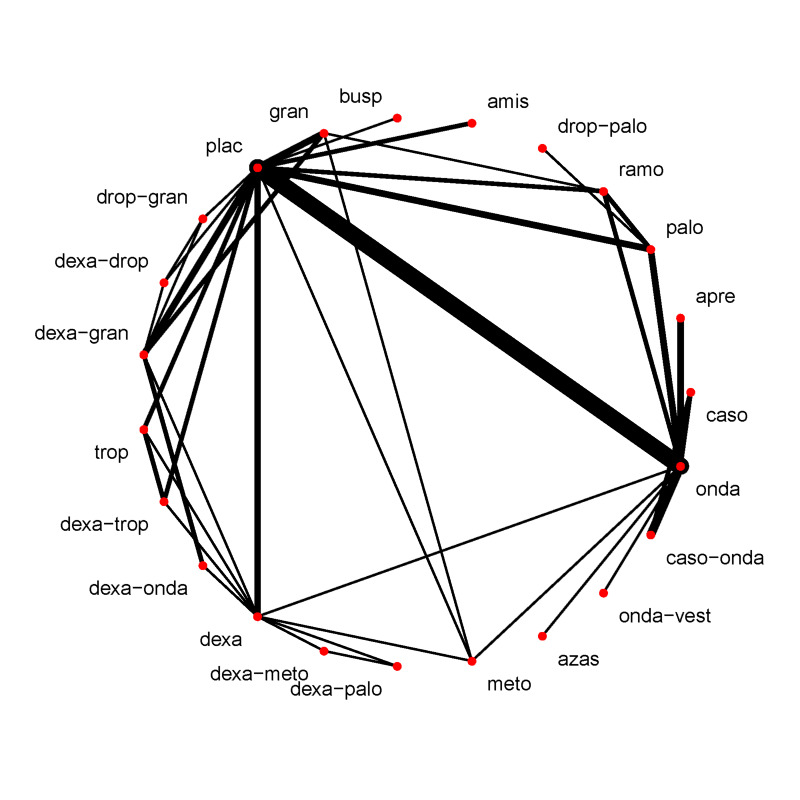
Network geometry of eligible comparisons for postoperative constipation. The thickness of the edges is proportionate to the number of included studies comparing two treatments. Abbreviations for treatments correspond to the first four letters of the drug name and are listed in the Methods and in Appendix 6.
For 253 different treatments, 253 pair‐wise comparisons are possible, and the results of all network estimates are available in the online repository. For 30 of 253 comparisons, direct and indirect evidence was available, whereas for 11 comparisons, only direct evidence was available, and for 212 comparisons, only indirect evidence was available.
The relative efficacy presented as summary relative effects (risk ratio, RR) of all drugs or drug combinations compared to placebo (reference compound) ranked according to P scores is shown in Figure. In terms of constipation, none of the 12 single drugs showed important benefit (95% CI upper boundary < 0.9) or important harm (95% CI lower boundary > 1.11) compared to placebo. Five single treatments showed benefit (granisetron, azasetron, ramosetron, casopitant, dexamethasone), three treatments showed no or minimal effect (ondansetron, aprepitant, palonosetron), four treatments showed harm (buspirone, tropisetron, amisulpride, metoclopramide), and all treatment effects were associated with uncertainty (95% CI crossing the range of equivalence). Treatment effects of all single drugs ranged between RR 0.59 (95% CI 0.21 to 1.63) for granisetron and RR 1.90 (95% CI 0.34 to 10.68) for metoclopramide. None of the combination treatments showed important benefit or important harm compared to placebo. Six combination treatments showed benefit, four showed harm, and all treatment effects were associated with uncertainty. Treatment effects of combination treatments ranged between RR 0.41 (95% CI 0.04 to 3.74) for droperidol‐granisetron and RR 4.14 (95% CI 0.15 to 113.01) for dexamethasone‐metoclopramide.
21.
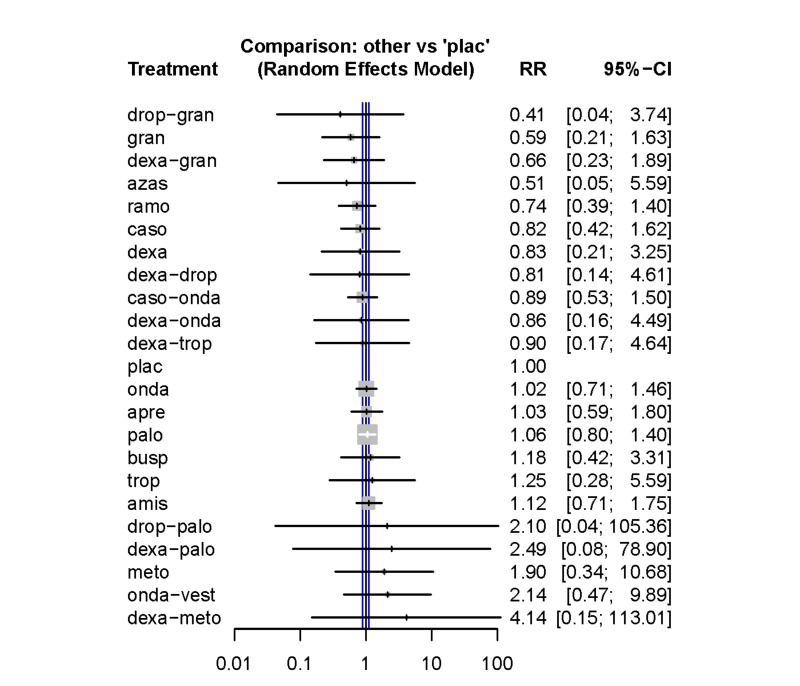
Forest plot of network meta‐analysis of all trials for postoperative constipation. Single drugs and combinations were compared with placebo (reference compound). RR = risk ratio, 95% CI = 95% confidence interval. RR < 1 favours the intervention, RR > 1 favours placebo. The blue lines indicate the range of equivalence (RR = 0.9 to 1.11). Treatments are ranked according to safety based on P scores. Abbreviations for treatments correspond to the first four letters of the drug name and are listed in the Methods and in Appendix 6.
The estimated value of between‐study variance for the network meta‐analysis of constipation was 0 (tau²) (I² = 0%). For the random‐effects model, there was no heterogeneity within designs (Q = 7.68, df = 20, P = 0.99) and no inconsistency between designs (Q = 14.43, df = 15, P = 0.49). No clinically relevant heterogeneity for relevant comparisons (single drugs of direct interest compared to placebo) was detectable because 95% CIs and 95% PIs were compatible with respect to the range of equivalence. Splitting of direct and indirect evidence in the network meta‐analysis and testing for local inconsistency revealed disagreement (direct versus indirect) for two out of 30 comparisons, namely, casopitant versus ondansetron (P = 0.0006) and casopitant‐ondansetron versus casopitant (P = 0.0006). There was no clinically relevant incoherence of direct and indirect treatment estimates for single drugs of direct interest compared to placebo.
Sensitivity analyses of constipation
Sensitivity analyses included all single drugs and drug combinations, but results are described only for single drugs of direct interest compared to placebo.
Sensitivity analysis of constipation: risk of bias
Five (12%) of 43 studies were rated as having high risk of overall bias, 23 (53%) as unclear, and 15 (35%) as low. Two studies with low risk of bias were not connected to the network of low risk of bias studies and were excluded from the sensitivity analysis (Hu 2017, comparison: droperidol‐palonosetron versus palonosetron; Park 2013, comparison: ramosetron versus palonosetron). The network geometry of the remaining 13 studies at low risk of bias included 13 treatments. Three treatments were two‐fold combinations of antiemetic drugs, nine were single drugs, and one was placebo. Of the single drugs of direct interest included in the primary network meta‐analysis for constipation, palonosetron, ramosetron, and tropisetron were not included in the sensitivity network meta‐analysis due to lack of studies with low risk of bias. Comparison of treatment effects of the sensitivity analysis for risk of bias and the primary network meta‐analysis for constipation with placebo as the reference compound revealed non‐robust treatment effects for five single drugs of direct interest (granisetron, casopitant, amisulpride, aprepitant, ondansetron). Granisetron, casopitant, and amisulpride, with RR 1.00 (95% CI 0.02 to 49.06), RR 1.09 (95% CI 0.18 to 6.52), and RR 1.11 (95% CI 0.60 to 2.02), respectively, showed no or minimal effect associated with uncertainty. Aprepitant and ondansetron, with RR 1.34 (95% CI 0.26 to 6.79) and RR 1.37 (95% CI 0.30 to 6.19), respectively, showed harm associated with uncertainty. The estimated value of between‐study variance for the sensitivity network meta‐analysis of constipation was 0.0743 (tau²) (I² = 22.2%).
Reporting bias (constipation)
None of the direct pair‐wise comparisons included 10 or more studies. Therefore, analyses investigating reporting or publication bias were not performed.
Subgroup analysis of constipation: dose effects
The treatment effect modifier dose was investigated in a subgroup network meta‐analysis splitting drugs into the categories low, recommended, and high doses according to Table. Splitting of doses was restricted to single drugs.
First, a network meta‐analysis for constipation including single drugs only (and excluding combination treatments) with 35 studies and 13 treatments including placebo was conducted. Network geometry, effect estimates, and the ranking order of drugs with placebo as reference compound were robust compared to the primary analysis including combination prophylaxis. The estimated value of between‐study variance for the network meta‐analysis of single drugs for constipation was 0 (tau²) (I² = 0%).
Second, the subgroup analysis of dose was conducted for the network of single drugs only. The following drugs were split into dose categories: amisulpride, aprepitant, dexamethasone, ondansetron, palonosetron, and ramosetron. For casopitant, granisetron, metoclopramide, and tropisetron, only one dose category was available for subgroup analysis. Drugs not of direct interest were included in the analysis and were lumped together, irrespective of the doses being analysed, in the category 'NA' (azasetron, buspirone). Eberhart 2006 was excluded from the subgroup analysis because the interventions were not associated with one of the three dose categories (dexamethasone 'NA', droperidol 'NA'). The network consisted of 34 studies with 13 treatments including placebo split into 23 nodes with dose categories and is presented in the online repository. In the ranking of treatments according to safety with placebo as reference compound, all 95% CIs between different doses of the same drug overlapped, and the uncertainty of treatment effects was considerable. High doses of aprepitant, dexamethasone, and palonosetron compared to placebo ranked higher than recommended and low doses of the same drug. High and recommended doses of ondansetron compared to placebo ranked higher than low doses. High and low doses of amisulpride compared to placebo ranked higher than recommended doses. Recommended doses of ramosetron compared to placebo ranked higher than high and low doses. All of the above mentioned treatment effects were associated with uncertainty.
Sensitivity analysis of constipation: comparability of doses
In 24 (69%) of 35 studies investigating single drugs, comparable doses of antiemetic drugs were analysed (comparable dose categories). The analysis included only studies investigating drugs of direct interest for which dose recommendations were described and that were assigned to one of the dose categories according to Table. The network of this sensitivity analysis consisted of nine treatments including placebo. Of the single drugs of direct interest included in the primary network meta‐analysis, aprepitant and metoclopramide were not included in the sensitivity analysis due to lack of studies with comparable doses. Treatment effects of two single drugs of direct interest (dexamethasone, tropisetron) were not robust in the sensitivity analysis with placebo as reference compound. Dexamethasone (RR 1.00, 95% CI 0.02 to 49.39) and tropisetron (RR 1.00, 95% CI 0.02 to 49.02) compared to placebo showed no or minimal effect associated with uncertainty. The estimated value of between‐study variance for this sensitivity network meta‐analysis of constipation was 0 (tau²) (I² = 0%).
Certainty of evidence: constipation
The certainty of evidence of treatment estimates for constipation evaluated with CINeMA is summarized in the 'Summary of findings' table for drugs of direct interest compared to placebo (Table).
For relevant 5‐HT₃ receptor antagonists (compared to placebo), the certainty of evidence of network effect estimates for constipation was assessed as very low (Table). The certainty of evidence of network effect estimates was downgraded due to study limitations and very serious concerns for imprecision. We are uncertain whether granisetron (RR 0.59, 95% CI 0.21 to 1.63) and ramosetron (RR 0.74, 95% CI 0.39 to 1.40) compared to placebo reduce constipation. We are uncertain whether ondansetron (RR 1.02, 95% CI 0.71 to 1.46) and palonosetron (RR 1.06, 95% CI 0.80 to 1.40) compared to placebo have little or no effect on constipation. We are also uncertain whether tropisetron (RR 1.25, 95% CI 0.28 to 5.59) compared to placebo increases constipation. No studies reporting constipation were available for dolasetron.
For relevant D₂ receptor antagonists (compared to placebo), the certainty of evidence of network effect estimates for constipation was assessed as very low and low (Table). Metoclopramide (RR 1.90, 95% CI 0.34 to 10.68) compared to placebo may increase constipation, with low‐certainty evidence (very serious concerns for imprecision). We are uncertain whether amisulpride (RR 1.12, 95% CI 0.71 to 1.75) compared to placebo, with direct evidence only, increases constipation, with very low‐certainty evidence (study limitations, very serious concerns for imprecision). No studies reporting constipation were available for droperidol, haloperidol, and perphenazine.
For relevant NK₁ receptor antagonists (compared to placebo), the certainty of evidence of network effect estimates for constipation was assessed as very low (Table). We are uncertain whether casopitant (RR 0.82, 95% CI 0.42 to 1.62) compared to placebo reduces constipation, with very low‐certainty evidence (study limitations, incoherence, very serious concerns for imprecision). We are uncertain whether aprepitant (RR 1.03, 95% CI 0.59 to 1.80) compared to placebo has little or no effect on constipation, with very low‐certainty evidence (study limitations, incoherence, very serious concerns for imprecision). For both aprepitant and casopitant, only indirect evidence was available. No studies reporting constipation were available for fosaprepitant and rolapitant.
For relevant corticosteroids (compared to placebo), the certainty of evidence of network effect estimates for constipation was assessed as low for dexamethasone (Table). Dexamethasone (RR 0.83, 95% CI 0.21 to 3.25) compared to placebo may reduce constipation, with low‐certainty evidence (very serious concerns for imprecision). No studies reporting constipation were available for methylprednisolone.
No studies reporting constipation were available for relevant antihistamines (compared to placebo) (Table).
No studies reporting constipation were available for the anticholinergic scopolamine (Table).
Wound infection within seven days postoperatively
Pairwise meta‐analyses (single drugs of direct interest versus placebo) of wound infection
Pairwise meta‐analyses for wound infection comparing single drugs of direct interest versus placebo are presented in the Data and analyses section and were available for dexamethasone (Analysis 3.8), methylprednisolone (Analysis 9.2), metoclopramide (Analysis 10.7), and tropisetron (Analysis 18.8). Studies or study arms were separated according to dose categories of single drugs (low, recommended, high, NA).
3.8. Analysis.
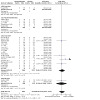
Comparison 3: Dexamethasone versus placebo, Outcome 8: Postoperative wound infection
9.2. Analysis.

Comparison 9: Methylprednisolone versus placebo, Outcome 2: Postoperative wound infection
10.7. Analysis.

Comparison 10: Metoclopramide versus placebo, Outcome 7: Postoperative wound infection
18.8. Analysis.
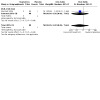
Comparison 18: Tropisetron versus placebo, Outcome 8: Postoperative wound infection
Primary analysis of wound infection: network meta‐analysis with all single drugs and drug combinations
Raw data of individual studies and all analyses for the outcome wound infection are available in an online repository (Supplementary Files‐8‐wound infection; including direct and indirect effect estimates to the primary NMA, network graphs, and forest plots to all sensitivity and subgroup analyses, explorative analyses of reporting bias, and funnel plots).
In total, 35 RCTs including 4531 participants were eligible for the network meta‐analysis of wound infection. Twenty‐eight studies (80%) have reported zero events in all study arms. Three studies were not connected to the network and were excluded from the following analyses: Baxendale 1993, comparison: dexamethasone‐scopolamine versus scopolamine; Corcoran 2017, comparison: dexamethasone‐granisetron versus granisetron; Eberhart 2011, comparison: dexamethasone‐dolasetron versus dolasetron. The network geometry of the remaining 32 studies with 44 pair‐wise comparisons due to multi‐arm studies included 10 different treatments (nodes) (Figure). The 10 treatments included three drug combinations, six single drugs, and placebo or no treatment. The most common comparison was dexamethasone versus placebo (k = 24). Of the single drugs of direct interest, methylprednisolone was poorly connected to the network, with placebo as the only comparator.
22.
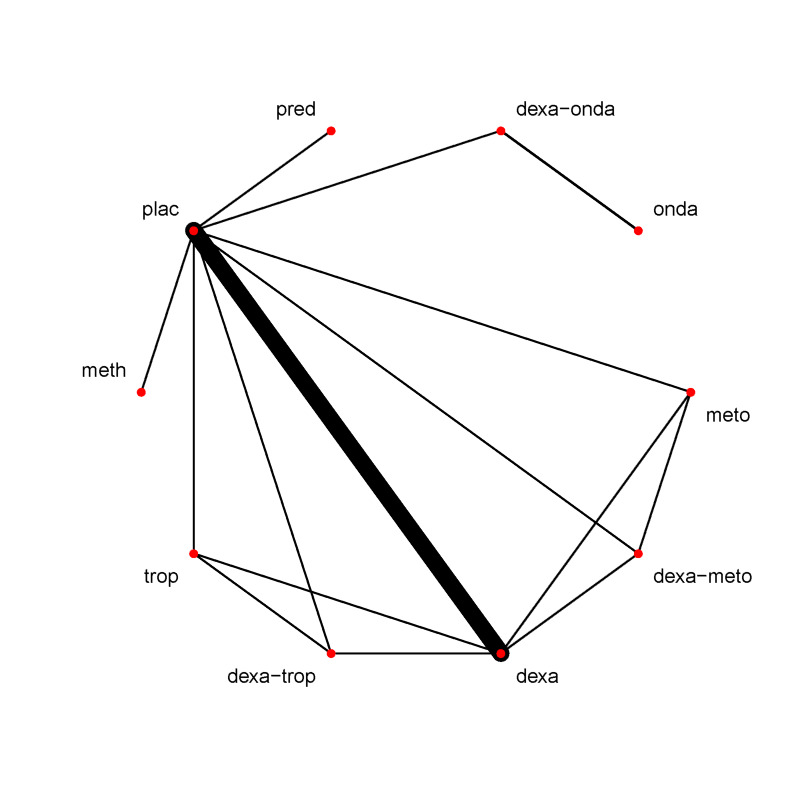
Network geometry of eligible comparisons for wound infection within 7 days postoperatively. The thickness of the edges is proportionate to the number of included studies comparing two treatments. Abbreviations for treatments correspond to the first four letters of the drug name and are listed in the Methods and in Appendix 6.
For 10 different treatments, 45 pair‐wise comparisons are possible, and the results of all network estimates are available in the online repository. For nine of 45 comparisons, direct and indirect evidence was available, whereas for six comparisons, only direct evidence was available, and for 30 comparisons, only indirect evidence was available.
The relative efficacy presented as summary relative effects (risk ratio, RR) of all drugs or drug combinations compared to placebo (reference compound) ranked according to P scores is shown in Figure. In terms of wound infection, none of the six single drugs showed important benefit (95% CI upper boundary < 0.9) or important harm (95% CI lower boundary > 1.11) compared to placebo. Two single treatments showed benefit (prednisolone, tropisetron), three treatments showed no or minimal effect (methylprednisolone, metoclopramide, dexamethasone), one treatment showed harm (ondansetron), and all treatment effects were associated with uncertainty (95% CI crossing the range of equivalence). Treatment effects of all single drugs ranged between RR 0.14 (95% CI 0.01 to 2.61) for prednisolone and RR 1.28 (95% CI 0.01 to 115.24) for ondansetron. None of the combination treatments showed important benefit or important harm compared to placebo. One combination treatment showed benefit, two showed no or minimal effect, and all treatment effects were associated with uncertainty. Treatment effects of combination treatments ranged between RR 0.43 (95% CI 0.04 to 4.58) for dexamethasone‐tropisetron and RR 0.96 (95% CI 0.04 to 21.33) for dexamethasone‐metoclopramide.
23.
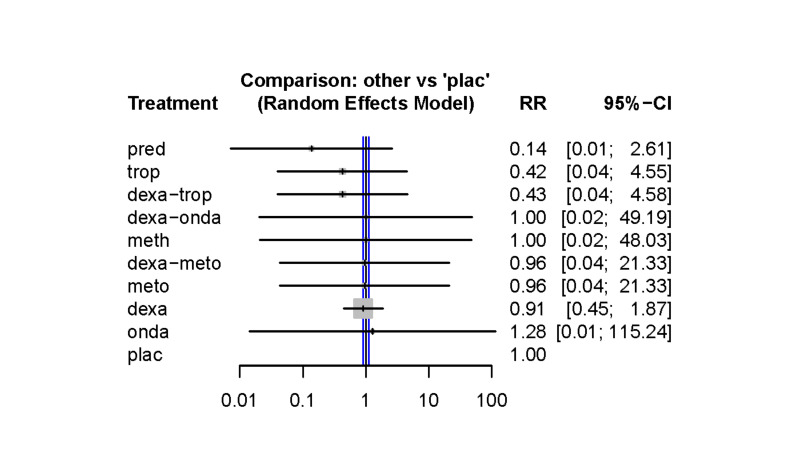
Forest plot of network meta‐analysis of all trials for wound infection within 7 days postoperatively. Single drugs and combinations were compared with placebo (reference compound). RR = risk ratio, 95% CI = 95% confidence interval. RR < 1 favours the intervention, RR > 1 favours placebo. The blue lines indicate the range of equivalence (RR = 0.9 to 1.11). Treatments are ranked according to safety based on P scores. Abbreviations for treatments correspond to the first four letters of the drug name and are listed in the Methods and in Appendix 6.
The estimated value of between‐study variance for the network meta‐analysis of wound infection was 0 (tau²) (I² = 0%). For the random‐effects model, there was no heterogeneity within designs (Q = 3.5, df = 23, P = 1.00) and no inconsistency between designs (Q = 0.29, df = 5, P = 1.00). No clinically relevant heterogeneity for relevant comparisons (single drugs of direct interest compared to placebo) was detectable because 95% CIs and 95% PIs were compatible with respect to the range of equivalence. Splitting of direct and indirect evidence in the network meta‐analysis and testing for local inconsistency revealed no disagreement (direct versus indirect) for any of the nine comparisons. There was no clinically relevant incoherence of direct and indirect treatment estimates for single drugs of direct interest compared to placebo.
Sensitivity analyses of wound infection
Sensitivity analyses included all single drugs and drug combinations, but results are described only for single drugs of direct interest compared to placebo.
Sensitivity analysis of wound infection: risk of bias
Two (6%) of 32 studies were rated as having high risk of overall bias, 12 (38%) as unclear, and 18 (56%) as low. One study with low risk of bias was not connected to the network of low risk of bias studies and was excluded from the sensitivity analysis (Ko Iam 2015, comparison: dexamethasone‐metoclopramide versus metoclopramide). The network geometry of the remaining 17 studies at low risk of bias included seven treatments. Two treatments were two‐fold combinations of antiemetic drugs, four were single drugs, and one was placebo. Of the single drugs of direct interest included in the primary network meta‐analysis for wound infection, methylprednisolone and metoclopramide were not included in the sensitivity network meta‐analysis due to lack of studies with low risk of bias. Comparison of treatment effects of the sensitivity analysis for risk of bias and the primary network meta‐analysis for wound infection with placebo as the reference compound revealed a non‐robust treatment effect for dexamethasone. Dexamethasone compared to placebo, with RR 0.69 (95% CI 0.26 to 1.84), showed benefit associated with uncertainty. The estimated value of between‐study variance for the sensitivity network meta‐analysis of wound infection was 0 (tau²) (I² = 0%).
Reporting bias (wound infection)
One direct pair‐wise comparison included 10 or more studies for which small‐study effects such as reporting or publication bias were investigated (dexamethasone versus placebo). Results of the funnel plot, the arcsine test for funnel plot asymmetry, and the trim and fill sensitivity analysis are presented in the online repository. We did not suspect relevant publication bias for this comparison (P = 0.22).
Subgroup analysis of wound infection: dose effects
The treatment effect modifier dose was investigated in a subgroup network meta‐analysis splitting drugs into the categories low, recommended, and high doses according to Table. Splitting of doses was restricted to single drugs.
First, a network meta‐analysis for wound infection including single drugs only (and excluding combination treatments), with 27 studies and 6 treatments including placebo, was conducted. Ondansetron was not included in the network meta‐analysis of single drugs for wound infection because no other single drug or placebo was a suitable comparator in the corresponding trials. Network geometry, effect estimates, and the ranking order of the remaining drugs were similar compared to the primary analysis including combination prophylaxis. The estimated value of between‐study variance for the network meta‐analysis of single drugs for wound infection was 0 (tau²) (I² = 0%).
Second, the subgroup analysis of dose was conducted for the network of single drugs only. The only drug that was split into dose categories was dexamethasone. For metoclopramide and tropisetron, only one dose category was available for subgroup analysis. Drugs not of direct interest were included in the analysis and were lumped together, irrespective of the doses being analysed, in the category 'NA' (prednisolone). Methylprednisolone, reported in only one study (Kizilkaya 2004), was attributed to dose category 'NA' due to an unusual route of application (intraarticular). Two studies were excluded from the subgroup analysis because the interventions were not associated with one of the three dose categories (dexamethasone 'NA', tropisetron 'NA') (Eberhart 2006; Hefni 2014). The network consisted of 25 studies with six treatments including placebo split into eight nodes with dose categories and is presented in the online repository. Low doses of dexamethasone compared to placebo ranked higher than recommended and high doses. However, all 95% CIs between different doses of dexamethasone overlapped, and the uncertainty of treatment effects was considerable.
Sensitivity analysis of wound infection: comparability of doses
In 22 (88%) of 25 studies investigating single drugs, comparable doses of antiemetic drugs were analysed (comparable dose categories). The analysis included only studies investigating drugs of direct interest for which dose recommendations were described and that were assigned to one of the dose categories according to Table. The network of this sensitivity analysis consisted of dexamethasone, tropisetron, and placebo. Of the single drugs of direct interest included in the primary network meta‐analysis, metoclopramide and methylprednisolone were not included in the sensitivity analysis due to lack of studies with comparable doses. The treatment estimate for dexamethasone was robust in the sensitivity analysis with placebo as reference compound, and the estimate for tropisetron was not robust. Tropisetron (RR 0.96, 95% CI 0.02 to 51.15) compared to placebo showed no or minimal effect associated with uncertainty. The estimated value of between‐study variance for this sensitivity network meta‐analysis of wound infection was 0 (tau²) (I² = 0%).
Certainty of evidence: wound infection
The certainty of evidence of treatment estimates for wound infection evaluated with CINeMA is summarized in the 'Summary of findings' table for drugs of direct interest compared to placebo (Table).
For relevant 5‐HT₃ receptor antagonists (compared to placebo), the certainty of evidence of network effect estimates for wound infection was assessed as very low to low (Table). Tropisetron (RR 0.42, 95% CI 0.04 to 4.55) compared to placebo may reduce wound infection, with low‐certainty evidence (very serious concerns for imprecision). We are uncertain whether ondansetron (RR 1.28, 95% CI 0.01 to 115.24) increases wound infection compared to placebo, with indirect evidence only and very low‐certainty evidence (incoherence, very serious concerns for imprecision). No studies reporting wound infection were available for dolasetron, granisetron, palonosetron, and ramosetron.
For relevant D₂ receptor antagonists (compared to placebo), the certainty of evidence of network effect estimates for wound infection was assessed as very low (Table). We are uncertain whether metoclopramide (RR 0.96, 95% CI 0.04 to 21.33) compared to placebo has little or no effect on wound infection, with very low‐certainty evidence (study limitations, very serious concerns for imprecision). No studies reporting wound infection were available for amisulpride, droperidol, haloperidol, and perphenazine.
No studies reporting wound infection were available for relevant NK₁ receptor antagonists (Table).
For relevant corticosteroids (compared to placebo), the certainty of evidence of network effect estimates for wound infection was assessed as very low (Table). We are uncertain whether dexamethasone (RR 0.91, 95% CI 0.45 to 1.87) compared to placebo has little or no effect on wound infection, with very low‐certainty evidence (study limitations, very serious concerns for imprecision). We are uncertain whether methylprednisolone (RR 1.00, 95% CI 0.02 to 48.03) compared to placebo, with direct evidence only, has little or no effect on wound infection, with very low‐certainty evidence (very serious concerns for study limitations and imprecision).
No studies reporting wound infection were available for relevant antihistamines (Table).
No studies reporting wound infection were available for the anticholinergic scopolamine (Table).
Arrhythmia within seven days postoperatively
Pairwise meta‐analyses (single drugs of direct interest versus placebo) of arrhythmia
Pairwise meta‐analyses for arrhythmia comparing single drugs of direct interest versus placebo are presented in the Data and analyses section and were available for dexamethasone Analysis 3.9), dolasetron (Analysis 5.7), droperidol (Analysis 6.7), granisetron (Analysis 7.8), haloperidol (Analysis 8.4), methylprednisolone (Analysis 9.3), metoclopramide (Analysis 10.8), ondansetron (Analysis 11.8), ramosetron (Analysis 15.7), and tropisetron (Analysis 18.9). Studies or study arms were separated according to dose categories of single drugs (low, recommended, high, NA).
3.9. Analysis.
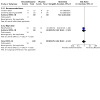
Comparison 3: Dexamethasone versus placebo, Outcome 9: Arrhythmia
5.7. Analysis.
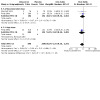
Comparison 5: Dolasetron versus placebo, Outcome 7: Arrhythmia
6.7. Analysis.
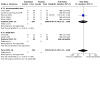
Comparison 6: Droperidol versus placebo, Outcome 7: Arrhythmia
7.8. Analysis.

Comparison 7: Granisetron versus placebo, Outcome 8: Arrhythmia
8.4. Analysis.

Comparison 8: Haloperidol versus placebo, Outcome 4: Arrhythmia
9.3. Analysis.
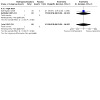
Comparison 9: Methylprednisolone versus placebo, Outcome 3: Arrhythmia
10.8. Analysis.

Comparison 10: Metoclopramide versus placebo, Outcome 8: Arrhythmia
11.8. Analysis.
Comparison 11: Ondansetron versus placebo, Outcome 8: Arrhythmia
15.7. Analysis.
Comparison 15: Ramosetron versus placebo, Outcome 7: Arrhythmia
18.9. Analysis.

Comparison 18: Tropisetron versus placebo, Outcome 9: Arrhythmia
Primary analysis of arrhythmia: network meta‐analysis with all single drugs and drug combinations
Raw data of individual studies and all analyses for the outcome arrhythmia are available in an online repository (Supplementary Files‐9‐arrhythmia; including direct and indirect effect estimates to the primary NMA, network graphs, and forest plots to all sensitivity and subgroup analyses, explorative analyses of reporting bias, and funnel plots).
In total, 25 RCTs including 5067 participants were eligible for the network meta‐analysis of arrhythmia. Eighteen studies (72%) have reported zero events in all study arms. The network included 18 different treatments (nodes) and consisted of 59 pair‐wise comparisons due to multi‐arm studies (Figure). The 18 treatments included five two‐fold drug combinations, 12 single drugs, and placebo or no treatment. The most common comparisons were droperidol (k = 7), ondansetron (k = 4), dexamethasone (k = 3), metoclopramide (k = 3), all compared to placebo, and droperidol compared to ondansetron (k = 3). Of the single drugs of direct interest, methylprednisolone and ramosetron were poorly connected to the network, with placebo as the only comparator.
24.
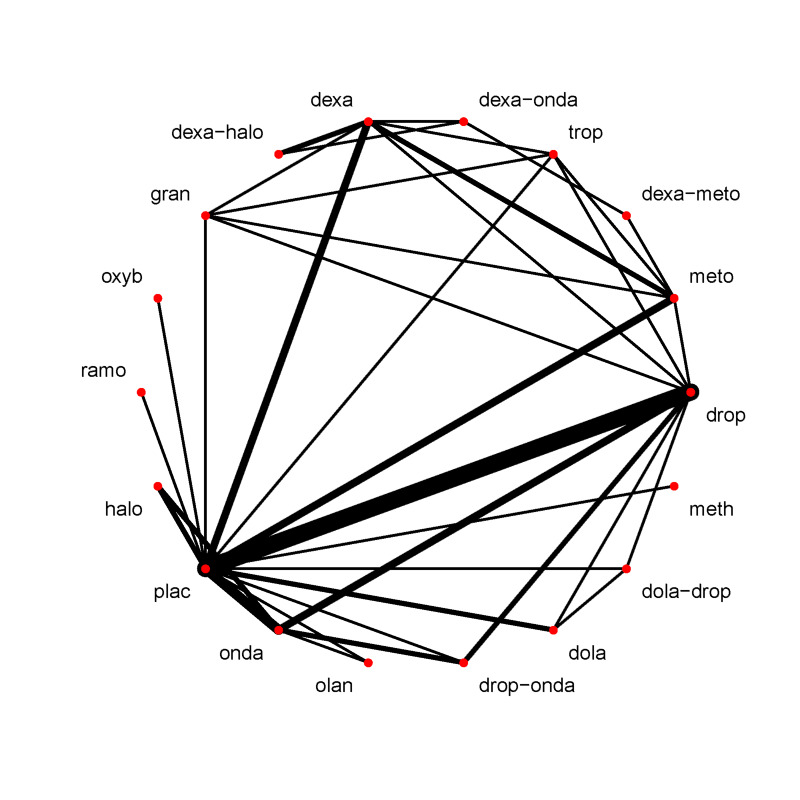
Network geometry of eligible comparisons for postoperative arrhythmia. The thickness of the edges is proportionate to the number of included studies comparing two treatments. Abbreviations for treatments correspond to the first four letters of the drug name and are listed in the Methods and in Appendix 6.
For 18 different treatments, 153 pair‐wise comparisons are possible, and the results of all network estimates are available in the online repository. For 33 of 153 comparisons, direct and indirect evidence was available, whereas for four comparisons, only direct evidence was available, and for 116 comparisons, only indirect evidence was available.
The relative efficacy presented as summary relative effects (risk ratio, RR) of all drugs or drug combinations compared to placebo (reference compound) ranked according to P scores is shown in Figure. In terms of arrhythmia, none of the 12 single drugs showed important benefit (95% CI upper boundary < 0.9) or important harm (95% CI lower boundary > 1.11) compared to placebo. Four single treatments showed benefit (dolasetron, olanzapine dexamethasone, droperidol), four showed no or minimal effect (granisetron, tropisetron, methylprednisolone, oxybutynin), four showed harm (haloperidol, metoclopramide, ondansetron, ramosetron), and all treatment effects were associated with uncertainty (95% CI crossing the range of equivalence). Treatment effects of all single drugs ranged between RR 0.72 (95% CI 0.39 to 1.34) for dolasetron and RR 1.30 (95% CI 0.80 to 2.10) for ramosetron. None of the five combination treatments showed important benefit or important harm compared to placebo. Three combination treatments showed benefit, one showed little or no effect, and one showed harm, and all treatment effects were associated with uncertainty. Treatment effects of combination treatments ranged between RR 0.16 (95% CI 0.01 to 2.98) for dexamethasone‐metoclopramide and RR 1.11 (95% CI 0.28 to 4.38) for dolasetron‐droperidol.
25.
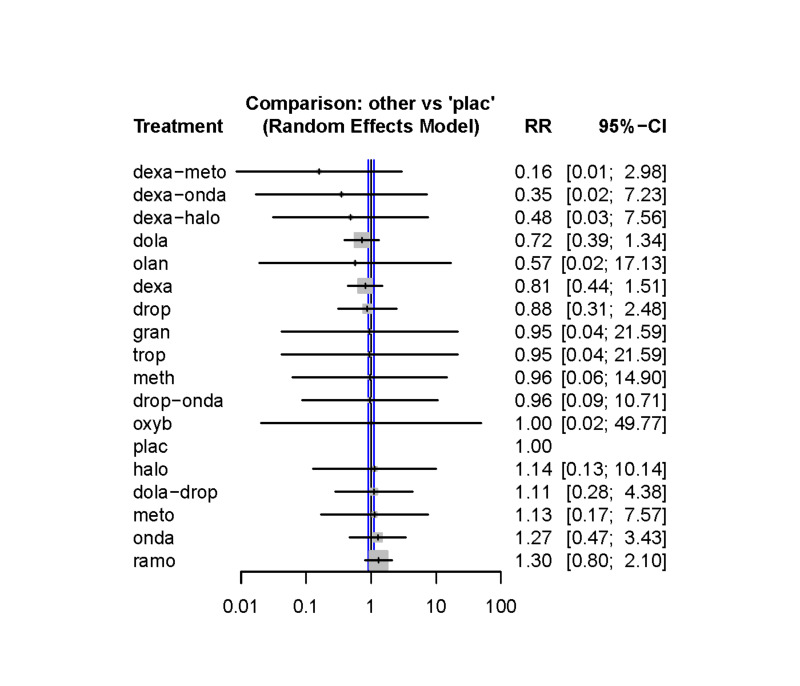
Forest plot of network meta‐analysis of all trials for postoperative arrhythmia. Single drugs and combinations were compared with placebo (reference compound). RR = risk ratio, 95% CI = 95% confidence interval. RR < 1 favours the intervention, RR > 1 favours placebo. The blue lines indicate the range of equivalence (RR = 0.9 to 1.11). Treatments are ranked according to safety based on P scores. Abbreviations for treatments correspond to the first four letters of the drug name and are listed in the Methods and in Appendix 6.
The estimated value of between‐study variance for the network meta‐analysis of arrhythmia was 0 (tau²) (I² = 0%). For the random‐effects model, there was no heterogeneity within designs (Q = 0.10, df = 3, P = 0.99) and no inconsistency between designs (Q = 0.78, df = 18, P = 1.00). No clinically relevant heterogeneity for relevant comparisons (single drugs of direct interest compared to placebo) was detectable because 95% CIs and 95% PIs were compatible with respect to the range of equivalence. Splitting of direct and indirect evidence in the network meta‐analysis and testing for local inconsistency revealed no disagreement (direct versus indirect) for any of the 33 comparisons There was no clinically relevant incoherence of direct and indirect treatment estimates for single drugs of direct interest compared to placebo.
Sensitivity analyses of arrhythmia
Sensitivity analyses included all single drugs and drug combinations, but results are described only for single drugs of direct interest compared to placebo.
Sensitivity analysis of arrhythmia: risk of bias
Three (12%) of 25 studies were rated as having high risk of overall bias, eight (25%) as unclear, and 14 (56%) as low. One study with low risk of bias was not connected to the network of low risk of bias studies and was excluded from the sensitivity analysis (Ko Iam 2015, comparison: dexamethasone‐metoclopramide versus metoclopramide). The network geometry of the remaining 13 studies at low risk of bias included 11 treatments. Three treatments were two‐fold combinations of antiemetic drugs, seven were single drugs, and one was placebo. Of the single drugs of direct interest included in the primary network meta‐analysis for arrhythmia, granisetron, methylprednisolone, metoclopramide, and tropisetron were not included in the sensitivity network meta‐analysis due to lack of studies with low risk of bias. Comparison of treatment effects of the sensitivity analysis for risk of bias and the primary network meta‐analysis for arrhythmia with placebo as reference compound revealed non‐robust treatment effects for two drugs of direct interest (ondansetron, haloperidol). Haloperidol and ondansetron compared to placebo with RR 0.95 (95% CI 0.05 to 18.64) and RR 0.90 (95% CI 0.10 to 7.88), respectively, showed no or minimal effect associated with uncertainty. The estimated value of between‐study variance for the sensitivity network meta‐analysis of arrhythmia was 0 (tau²) (I² = 0%).
Reporting bias (arrhythmia)
None of the direct pair‐wise comparisons included 10 or more studies. Therefore, analyses investigating reporting or publication bias were not performed.
Subgroup analysis of arrhythmia: dose effects
The treatment effect modifier dose was investigated in a subgroup network meta‐analysis splitting drugs into the categories low, recommended, and high doses according to Table. Splitting of doses was restricted to single drugs.
First, a network meta‐analysis for arrhythmia including single drugs only (and excluding combination treatments) with 21 studies and 13 treatments including placebo was conducted. Network geometry, effect estimates, and the ranking order of drugs were similar compared to the primary analysis including combination prophylaxis. However, the comparison metoclopramide versus placebo (RR 0.93, 95% CI 0.13 to 6.80) showed a slightly changed treatment effect, changing clinical interpretation from harm to no or minimal effect, both associated with uncertainty. The estimated value of between‐study variance for the network meta‐analysis of single drugs for arrhythmia was 0 (tau²) (I² = 0%).
Second, the subgroup analysis of dose was conducted for the network of single drugs only. The following drugs were split into dose categories: dexamethasone, dolasetron, droperidol, haloperidol, and ondansetron. For granisetron, methylprednisolone, metoclopramide, ramosetron, and tropisetron only one dose category was available for subgroup analysis. Drugs not of direct interest were lumped together, irrespective of the doses being analysed, in the category 'NA' (olanzapine, oxybutynin). The network consisted of 21 studies with 13 treatments including placebo split into 19 nodes with dose categories. In the ranking of treatments according to safety with placebo as the reference compound, recommended doses of ondansetron showed harm associated with uncertainty, with RR 2.88 (95% CI 1.09 to 7.61). Low (RR 0.11, 95% CI 0.01 to 1.99) and high doses (RR 0.23, 95% CI 0.02 to 2.37) of ondansetron showed benefit associated with uncertainty. High doses of dexamethasone ranked higher than recommended doses. All doses of dolasetron showed benefit, all doses of haloperidol showed harm, and all estimates were associated with uncertainty. Overall, the 95% CIs between different doses of all single drugs overlapped, and the uncertainty of treatment effects was considerable, limiting reliable conclusions.
Sensitivity analysis of arrhythmia: comparability of doses
In 15 (71%) of 21 studies investigating single drugs, comparable doses of antiemetic drugs were analysed (comparable dose categories). The analysis included only studies investigating drugs of direct interest for which dose recommendations were described and that were assigned to one of the dose categories according to Table. The network of this sensitivity analysis consisted of eight treatments including placebo. Of the single drugs of direct interest included in the primary network meta‐analysis, granisetron, metoclopramide, and tropisetron were not included in the sensitivity analysis due to lack of studies with comparable doses. Estimated treatment effects for other single drugs of direct interest were robust in the sensitivity analysis with placebo as reference compound, except for haloperidol, with no or little effect associated with uncertainty (RR 1.09, 95% CI 0.08 to 14.13). The estimated value of between‐study variance for this sensitivity network meta‐analysis of arrhythmia was 0 (tau²) (I² = 0%).
Certainty of evidence: arrhythmia
The certainty of evidence of treatment estimates for arrhythmia evaluated with CINeMA is summarized in the 'Summary of findings' table for drugs of direct interest compared to placebo (Table).
For relevant 5‐HT₃ receptor antagonists (compared to placebo), the certainty of evidence of network effect estimates for arrhythmia ranged from very low to low (Table). Ramosetron (RR 1.30, 95% CI 0.80 to 2.10), with direct evidence only, may increase and dolasetron (RR 0.72, 95% CI 0.39 to 1.34) may reduce arrhythmia compared to placebo, both with low‐certainty evidence (very serious concerns for imprecision). We are uncertain whether ondansetron (RR 1.27, 95% CI 0.47 to 3.43) compared to placebo increases arrhythmia, with very low‐certainty evidence (study limitations, very serious concerns for imprecision). We are uncertain whether granisetron (RR 0.95, 95% CI 0.04 to 21.59) and tropisetron (RR 0.95, 95% CI 0.04 to 21.59) compared to placebo have little or no effect on arrhythmia, with very low‐certainty evidence (study limitations, very serious concerns for imprecision). No studies reporting arrhythmia were available for palonosetron.
For relevant D₂ receptor antagonists (compared to placebo), the certainty of evidence of network effect estimates for arrhythmia was assessed as very low (Table) (study limitations and very serious concerns for imprecision). We are uncertain whether droperidol (RR 0.88, 95% CI 0.31 to 2.48) compared to placebo reduces arrhythmia. We are uncertain whether metoclopramide (RR 1.13, 95% CI 0.17 to 7.57) and haloperidol (RR 1.14, 95% CI 0.13 to 10.14) compared to placebo increase arrhythmia. No studies reporting arrhythmia were available for amisulpride and perphenazine.
No studies reporting arrhythmia were available for relevant NK₁ receptor antagonists (Table).
For relevant corticosteroids (compared to placebo), the certainty of evidence of network effect estimates for arrhythmia was assessed as low and very low (Table). Dexamethasone (RR 0.81, 95% CI 0.44 to 1.51) may reduce arrhythmia compared to placebo, with low‐certainty evidence (very serious concerns for imprecision). We are uncertain whether methylprednisolone (RR 0.96, 95% CI 0.06 to 14.90) compared to placebo, with direct evidence only, has little or no effect on arrhythmia, with very low‐certainty evidence (very serious concerns for study limitations and imprecision).
No studies reporting arrhythmia were available for relevant antihistamines (Table).
No studies reporting arrhythmia were available for the anticholinergic scopolamine (Table).
Visual disturbances within seven days postoperatively
Pairwise meta‐analyses (single drugs of direct interest versus placebo) of visual disturbances
Pairwise meta‐analyses of visual disturbances comparing single drugs of direct interest versus placebo are presented in the Data and analyses section and were available for dexamethasone (Analysis 3.10), droperidol (Analysis 6.8), methylprednisolone (Analysis 9.4), metoclopramide (Analysis 10.9), ondansetron (Analysis 11.9), scopolamine (Analysis 17.6), and tropisetron (Analysis 18.10). Studies or study arms were separated according to dose categories of single drugs (low, recommended, high, NA).
3.10. Analysis.
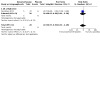
Comparison 3: Dexamethasone versus placebo, Outcome 10: Visual disturbances
6.8. Analysis.
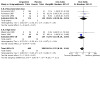
Comparison 6: Droperidol versus placebo, Outcome 8: Visual disturbances
9.4. Analysis.
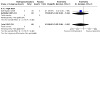
Comparison 9: Methylprednisolone versus placebo, Outcome 4: Visual disturbances
10.9. Analysis.

Comparison 10: Metoclopramide versus placebo, Outcome 9: Visual disturbances
11.9. Analysis.
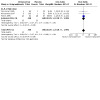
Comparison 11: Ondansetron versus placebo, Outcome 9: Visual disturbances
17.6. Analysis.
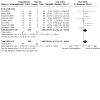
Comparison 17: Scopalamine versus placebo, Outcome 6: Visual disturbances
18.10. Analysis.
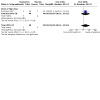
Comparison 18: Tropisetron versus placebo, Outcome 10: Visual disturbances
Primary analysis of visual disturbances: network meta‐analysis with all single drugs and drug combinations
Raw data of individual studies and all analyses for the outcome visual disturbances are available in an online repository (Supplementary Files‐10‐visual disturbances; including direct and indirect effect estimates to the primary NMA, network graphs, and forest plots to all sensitivity and subgroup analyses, explorative analyses of reporting bias, and funnel plots).
In total, 23 RCTs including 3815 participants were eligible for the network meta‐analysis of visual disturbances. All studies have reported events in at least one study arm. Two studies were not connected to the network and were excluded from two analyses (Green 2012, comparison: aprepitant‐scopolamine versus aprepitant; White 2007‐1, comparison: dexamethasone‐droperidol versus dexamethasone‐scopolamine). The network of the remaining 21 studies included 12 different treatments (nodes) with 36 pair‐wise comparisons due to multi‐arm studies (Figure). The 12 treatments included one two‐fold drug combination, 10 single drugs, and placebo or no treatment. The most common comparisons were scopolamine (k = 8), droperidol (k = 5), and ondansetron (k = 3), all compared to placebo. Of the single drugs of direct interest, dexamethasone and methylprednisolone were poorly connected to the network, with placebo as the only comparator.
26.
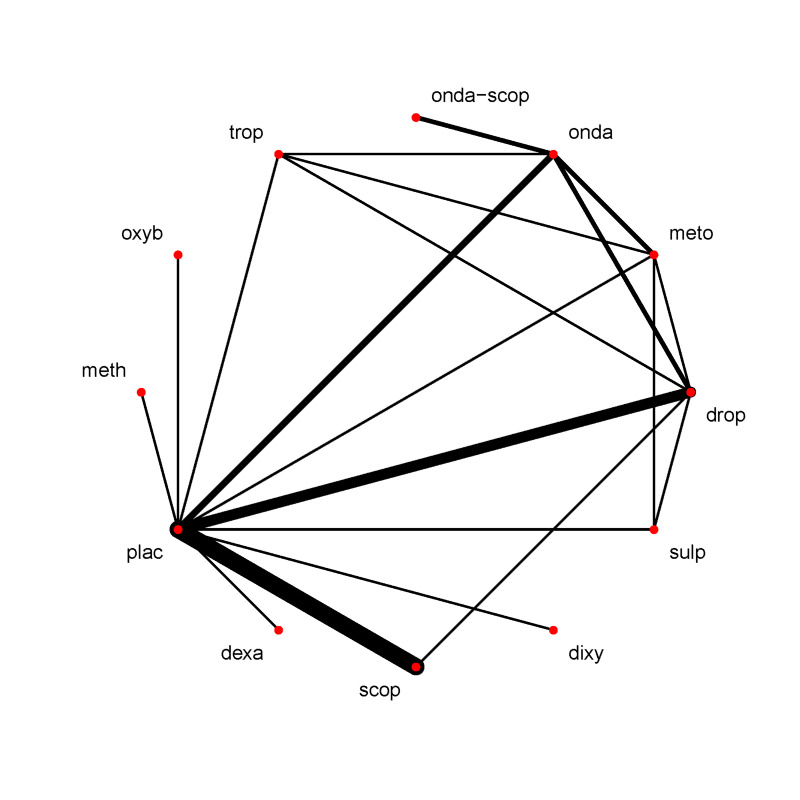
Network geometry of eligible comparisons for postoperative visual disturbances. The thickness of the edges is proportionate to the number of included studies comparing two treatments. Abbreviations for treatments correspond to the first four letters of the drug name and are listed in the Methods and in Appendix 6.
For 12 different treatments, 66 pair‐wise comparisons are possible, and the results of all network estimates are available in the online repository. For 15 of 66 comparisons, direct and indirect evidence was available, whereas for five comparisons, only direct evidence was available, and for 46 comparisons, only indirect evidence was available.
The relative efficacy presented as summary relative effects (risk ratio, RR) of all drugs or drug combinations compared to placebo (reference compound) ranked according to P scores is shown in Figure. Of the 10 single drugs, scopolamine with RR 2.01 (95% CI 1.28 to 3.17) showed important harm (95% CI lower boundary > 1.11) compared to placebo for visual disturbances. Two single treatments showed harm (ondansetron, metoclopramide), one showed no or minimal effect (dixyrazine), six showed benefit (oxybutynin, methylprednisolone, droperidol, amisulpride, dexamethasone, tropisetron), and all treatment effects were associated with uncertainty (95% CI crossing the range of equivalence). Treatment effects for all single drugs ranged between RR 0.20 (95% CI 0.01 to 4.25) for oxybutynin and RR 1.29 (95% CI 0.73 to 2.27) for ondansetron. Ondansetron‐scopolamine, the only combination treatment, showed important harm compared to placebo, with RR 8.13 (95% CI 2.24 to 29.47).
27.
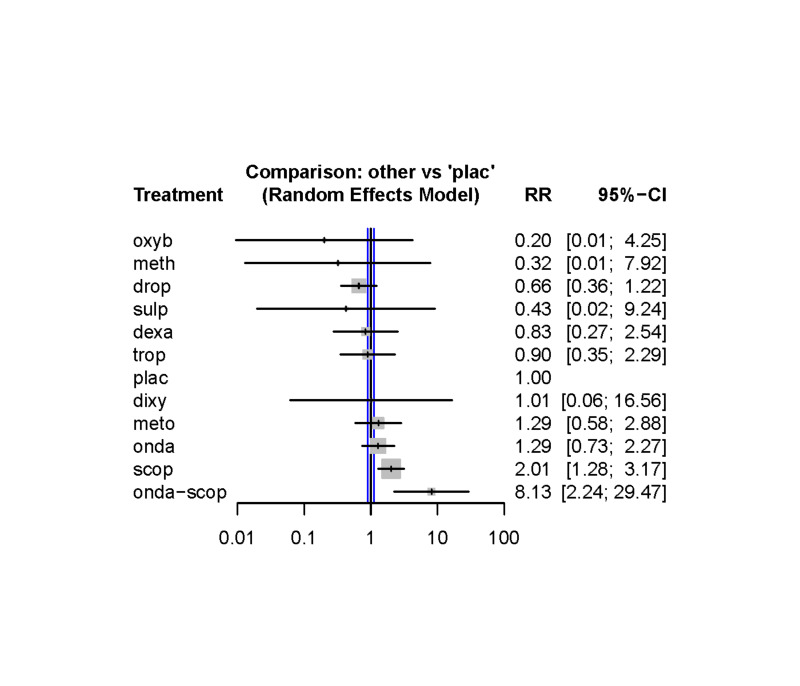
Forest plot of network meta‐analysis of all trials for postoperative visual disturbances. Single drugs and combinations were compared with placebo (reference compound). RR = risk ratio, 95% CI = 95% confidence interval. RR < 1 favours the intervention, RR > 1 favours placebo. The blue lines indicate the range of equivalence (RR = 0.9 to 1.11). Treatments are ranked according to safety based on P scores. Abbreviations for treatments correspond to the first four letters of the drug name and are listed in the Methods and in Appendix 6.
The estimated value of between‐study variance for the network meta‐analysis of visual disturbances was 0.0567 (tau²) (I² = 11.9%). For the random‐effects model, there was no heterogeneity within designs (Q = 11.23, df = 9, P = 0.26) and no inconsistency between designs (Q = 8.06, df = 8, P = 0.43). Clinically relevant heterogeneity for comparisons of direct interest (single drugs of direct interest compared to placebo) was detected only for scopolamine because the 95% PI included a different clinical implication compared to the 95% CI. Splitting of direct and indirect evidence in the network meta‐analysis and testing for local inconsistency revealed no disagreement (direct versus indirect) for any of the 15 comparisons. There was no clinically relevant incoherence of direct and indirect treatment estimates for single drugs of direct interest compared to placebo.
Sensitivity analyses of visual disturbances
Sensitivity analyses included all single drugs and drug combinations, but results are described only for single drugs of direct interest compared to placebo.
Sensitivity analysis of visual disturbances: risk of bias
Seven (33%) of 21 studies were rated as having high risk of overall bias, nine (43%) as unclear, and five (24%) as low. The network geometry of the five studies with low risk of bias included seven treatments. Six treatments were single drugs, and one was placebo. Of the single drugs of direct interest included in the primary network meta‐analysis for visual disturbances, methylprednisolone, scopolamine, and tropisetron were not included in the sensitivity network meta‐analysis due to lack of studies with low risk of bias. Comparison of treatment effects of the sensitivity analysis for risk of bias and the primary network meta‐analysis for visual disturbances with placebo as reference compound revealed a non‐robust treatment effect for droperidol. Droperidol compared to placebo with RR 1.06 (95% CI 0.12 to 9.25) showed no or minimal effect associated with uncertainty. No between‐study variance for this sensitivity network meta‐analysis of visual disturbances was estimable because each comparison was represented by only one study.
Reporting bias (visual disturbances)
None of the direct pair‐wise comparisons included 10 or more studies. Therefore, analyses investigating reporting or publication bias were not performed.
Subgroup analysis of visual disturbances: dose effects
The treatment effect modifier dose was investigated in a subgroup network meta‐analysis splitting drugs into the categories low, recommended, and high doses according to Table. Splitting of doses was restricted to single drugs.
First, a network meta‐analysis for visual disturbances including single drugs only (and excluding combination treatments) with 19 studies and 11 treatments including placebo was conducted. Network geometry, effect estimates, and the ranking order of drugs were robust compared to the primary analysis, including combination prophylaxis. The estimated value of between‐study variance for the network meta‐analysis of single drugs for visual disturbances was 0.0787 (tau²) (I² = 16.3%).
Second, the subgroup analysis of dose was conducted for the network of single drugs only. Droperidol and ondansetron were split into high and recommended dose categories. For dexamethasone, methylprednisolone, metoclopramide, and tropisetron, only one dose category was available for subgroup analysis. Drugs without any dose recommendation according to Table (scopolamine) and drugs not of direct interest (dixyrazine, oxybutynin, sulpiride) were lumped together, irrespective of the doses being analysed, in the category 'NA'. Jokela 2002 was excluded from the subgroup analysis because the interventions were not associated with one of the three dose categories (metoclopramide 'NA', tropisetron 'NA'). The network consisted of 18 studies, with 11 treatments including placebo split into 13 nodes with dose categories. In the ranking of treatments according to safety with placebo as the reference compound, recommended doses of ondansetron ranked higher than high doses. High doses of droperidol ranked higher than recommended doses. Overall, the 95% CIs between different doses of all single drugs overlapped, and the uncertainty of treatment effects was considerable, limiting reliable conclusions. The estimated value of between‐study variance for this subgroup network meta‐analysis of single drugs for visual disturbances was 0.1842 (tau²) (I² = 28.6%).
Sensitivity analysis of visual disturbances: comparability of doses
In four (21%) of 19 studies investigating single drugs, comparable doses of antiemetic drugs were analysed (comparable dose categories). The analysis included only studies investigating drugs of direct interest for which dose recommendations were described and that were assigned to one of the dose categories according to Table. The network of this sensitivity analysis consisted of five treatments including placebo. Of the single drugs of direct interest included in the primary network meta‐analysis for visual disturbances, metoclopramide, scopolamine, and tropisetron were not included in the sensitivity analysis due to lack of studies with comparable doses. Estimated treatment effects for all other single drugs of direct interest were robust in the sensitivity analysis with placebo as the reference compound. The estimated value of between‐study variance for this sensitivity network meta‐analysis of visual disturbances was 0 (tau²) (I² = 0%).
Certainty of evidence: visual disturbances
The certainty of evidence of treatment estimates for visual disturbances evaluated with CINeMA is summarized in the 'Summary of findings' table for drugs of direct interest compared to placebo (Table).
For relevant 5‐HT₃ receptor antagonists (compared to placebo), the certainty of evidence of network effect estimates for visual disturbances ranged from very low to low (Table). Ondansetron (RR 1.29, 95% CI 0.73 to 2.27) compared to placebo may increase visual disturbances, with low‐certainty evidence (very serious concerns for imprecision). We are uncertain whether tropisetron (RR 0.90, 95% CI 0.35 to 2.29) compared to placebo reduces visual disturbances, with very low‐certainty evidence (very serious concerns for study limitations and imprecision). No studies reporting visual disturbances were available for dolasetron, granisetron, palonosetron, and ramosetron.
For relevant D₂ receptor antagonists (compared to placebo), the certainty of evidence of network effect estimates for visual disturbances ranged from very low to low (Table). Metoclopramide (RR 1.29, 95% CI 0.58 to 2.88) compared to placebo may increase visual disturbances, with low‐certainty evidence (very serious concerns for imprecision). We are uncertain whether droperidol (RR 0.66, 95% CI 0.36 to 1.22) compared to placebo reduces visual disturbances, with very low‐certainty evidence (study limitations, very serious concerns for imprecision). No studies reporting visual disturbances were available for amisulpride, haloperidol, and perphenazine.
No studies reporting visual disturbances were available for relevant NK₁ receptor antagonists (Table).
For relevant corticosteroids (compared to placebo), the certainty of evidence of network effect estimates for visual disturbances was assessed as low and very low (Table). Dexamethasone (RR 0.83, 95% CI 0.27 to 2.54) may reduce visual disturbances compared to placebo, with low‐certainty evidence (very serious concerns for imprecision). We are uncertain whether methylprednisolone (RR 0.32, 95% CI 0.01 to 7.92) compared to placebo reduces visual disturbances, with very low‐certainty evidence (very serious concerns for study limitations and imprecision). For both comparisons, only direct evidence was available.
No studies reporting visual disturbances were available for relevant antihistamines (Table).
The anticholinergic scopolamine (RR 2.01, 95% CI 1.28 to 3.17) may increase visual disturbances compared to placebo, with low‐certainty evidence (Table). The certainty of evidence was limited due to study limitations and heterogeneity.
QT prolongation within seven days postoperatively
Pairwise meta‐analyses (single drugs of direct interest versus placebo) of QT prolongation
Pairwise meta‐analyses for QT prolongation comparing single drugs of direct interest versus placebo are presented in the Data and analyses section and were available for dexamethasone (Analysis 3.11), droperidol (Analysis 6.9), haloperidol (Analysis 8.5), ondansetron (Analysis 11.10), palonosetron (Analysis 12.8), and tropisetron (Analysis 18.11). Studies or study arms were separated according to dose categories of single drugs (low, recommended, high, NA).
3.11. Analysis.

Comparison 3: Dexamethasone versus placebo, Outcome 11: QT prolongation
6.9. Analysis.
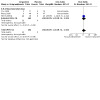
Comparison 6: Droperidol versus placebo, Outcome 9: QT prolongation
8.5. Analysis.

Comparison 8: Haloperidol versus placebo, Outcome 5: QT prolongation
11.10. Analysis.

Comparison 11: Ondansetron versus placebo, Outcome 10: QT prolongation
12.8. Analysis.
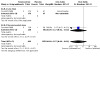
Comparison 12: Palonosetron versus placebo, Outcome 8: QT prolongation
18.11. Analysis.
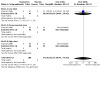
Comparison 18: Tropisetron versus placebo, Outcome 11: QT prolongation
Primary analysis of QT prolongation: network meta‐analysis with all single drugs and drug combinations
Raw data of individual studies and all analyses for the outcome QT prolongation are available in an online repository (Supplementary Files‐11‐QT prolongation; including direct and indirect effect estimates to the primary NMA, network graphs, and forest plots to all sensitivity and subgroup analyses, explorative analyses of reporting bias, and funnel plots).
In total, 18 RCTs with 37 pair‐wise comparisons due to multi‐arm studies including 4440 participants were eligible for the network meta‐analysis of QT prolongation. Eight studies (44%) have reported zero events in all study arms. The network consisted of 13 different treatments (nodes), including four two‐fold drug combinations, eight single drugs, and placebo or no treatment (Figure). The most common comparisons were haloperidol (k = 4) and droperidol (k = 3) compared to placebo, aprepitant (k = 3), and haloperidol (k = 3) compared to ondansetron, and dexamethasone‐haloperidol compared to dexamethasone (k = 3). Of the single drugs of direct interest, aprepitant and tropisetron were poorly connected to the network, with ondansetron and placebo, respectively, as the only comparators.
28.
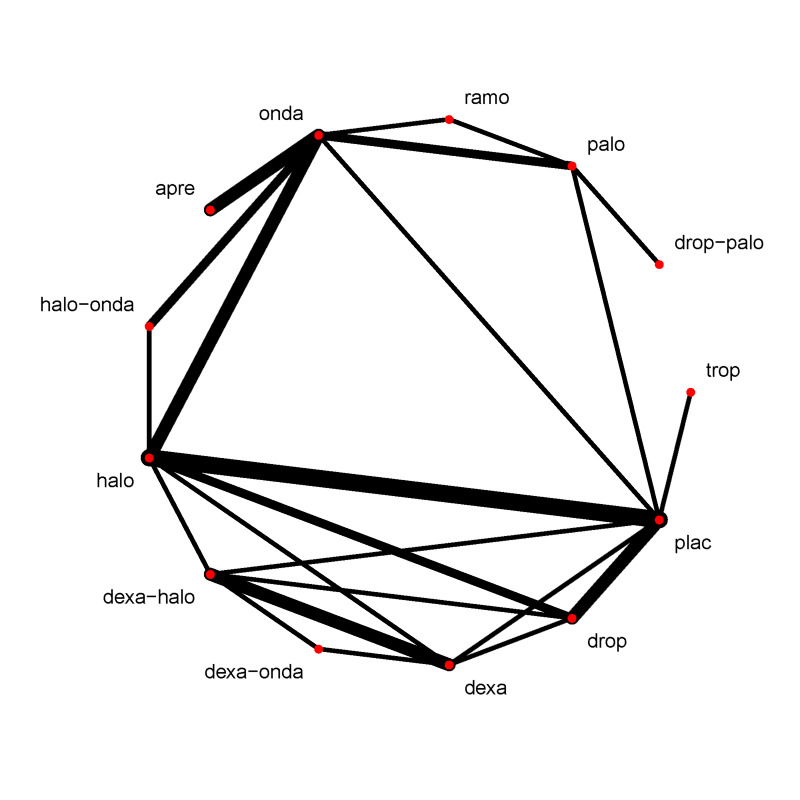
Network geometry of eligible comparisons for postoperative QT prolongation. The thickness of the edges is proportionate to the number of included studies comparing two treatments. Abbreviations for treatments correspond to the first four letters of the drug name and are listed in the Methods and in Appendix 6.
For 13 different treatments, 78 pair‐wise comparisons are possible, and the results of all network estimates are available in the online repository. For 19 of 78 comparisons, direct and indirect evidence was available, whereas for four comparisons, only direct evidence was available, and for 55 comparisons, only indirect evidence was available.
The relative efficacy presented as summary relative effects (risk ratio, RR) of all drugs or drug combinations compared to placebo (reference compound) ranked according to P scores is shown in Figure. In terms of QT prolongation, none of the eight single drugs showed important benefit (95% CI upper boundary < 0.9) or important harm (95% CI lower boundary > 1.11) compared to placebo. Three single treatments showed benefit (palonosetron, ramosetron, dexamethasone), four showed no or minimal effect (ondansetron, tropisetron, aprepitant, haloperidol), one showed harm (droperidol), and all treatment effects were associated with uncertainty (95% CI crossing the range of equivalence). Treatment effects of all single drugs ranged between RR 0.16 (95% CI 0.02 to 1.39) for palonosetron and RR 1.29 (95% CI 0.71 to 2.34) for droperidol. None of the combination treatments showed important benefit or important harm compared to placebo. One combination treatment showed benefit, two showed no or minimal effect, one showed harm, and all treatment effects were associated with uncertainty. Treatment effects of combination treatments ranged between RR 0.32 (95% CI 0.00 to 27.70) for droperidol‐palonosetron and RR 1.59 (95% CI 0.10 to 25.72) for dexamethasone‐haloperidol.
29.
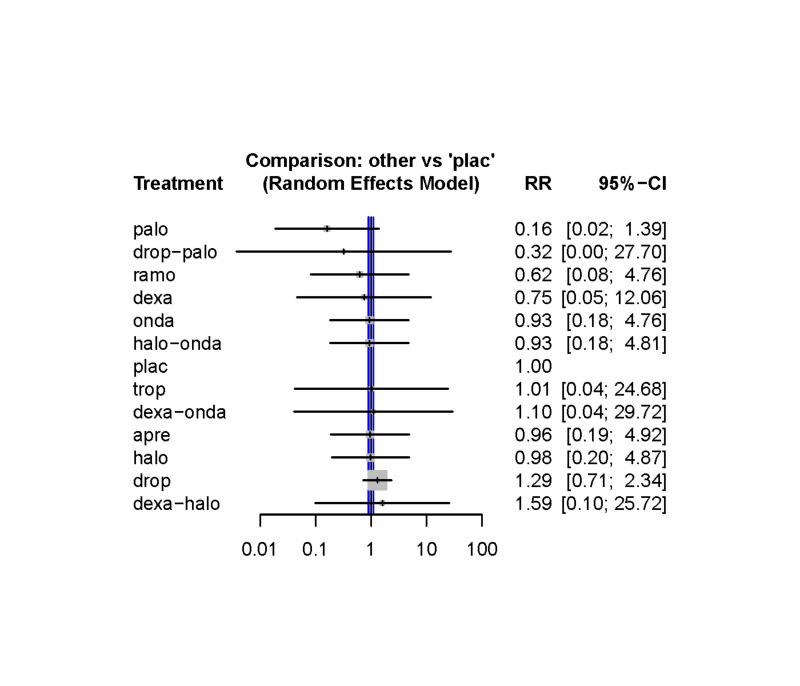
Forest plot of network meta‐analysis of all trials for postoperative QT prolongation. Single drugs and combinations were compared with placebo (reference compound). RR = risk ratio, 95% CI = 95% confidence interval. RR < 1 favours the intervention, RR > 1 favours placebo. The blue lines indicate the range of equivalence (RR = 0.9 to 1.11). Treatments are ranked according to safety based on P scores. Abbreviations for treatments correspond to the first four letters of the drug name and are listed in the Methods and in Appendix 6.
The estimated value of between‐study variance for the network meta‐analysis of QT prolongation was 0 (tau²) (I² = 0%). For the random‐effects model, there was no heterogeneity within designs (Q = 3.32, df = 2, P = 0.19) and no inconsistency between designs (Q = 1.78, df = 12, P = 1.00). No clinically relevant heterogeneity for comparisons of direct interest (single drugs of direct interest compared to placebo) was noted because 95% CIs and 95% PIs were compatible with respect to the range of equivalence. Splitting of direct and indirect evidence in the network meta‐analysis and testing for local inconsistency revealed no disagreement (direct versus indirect) for any of the 19 comparisons. There was no clinically relevant incoherence of direct and indirect treatment estimates for single drugs of direct interest compared to placebo.
Sensitivity analyses of QT prolongation
Sensitivity analyses included all single drugs and drug combinations, but results are described only for single drugs of direct interest compared to placebo.
Sensitivity analysis of QT prolongation: risk of bias
For QT prolongation, five (28%) of 18 studies were rated as having high risk of overall bias, six (33%) as unclear, and seven (39%) as low. One study with low risk of bias was not connected to the network for low risk of bias studies and was excluded from the sensitivity analysis (Hu 2017, comparison: droperidol‐palonosetron versus palonosetron). The network geometry of the six remaining studies with low risk of bias included five treatments, of which four were single drugs and one was placebo. Of the single drugs of direct interest included in the primary network meta‐analysis for QT prolongation, dexamethasone, palonosetron, ramosetron, and tropisetron were not included in the sensitivity network meta‐analysis due to lack of studies with low risk of bias. Comparison of treatment effects of the sensitivity analysis for risk of bias and the primary network meta‐analysis for QT prolongation with placebo as the reference compound revealed robust treatment effects for all included single drugs of direct interest. The estimated value of between‐study variance for the sensitivity network meta‐analysis of QT prolongation was 0 (tau²) (I² = 0%).
Reporting bias (QT prolongation)
None of the direct pair‐wise comparisons included 10 or more studies. Therefore, analyses investigating reporting or publication bias were not performed.
Subgroup analysis of QT prolongation: dose effects
The treatment effect modifier dose was investigated in a subgroup network meta‐analysis splitting drugs into the categories low, recommended, and high doses according to Table. Splitting of doses was restricted to single drugs.
First, a network meta‐analysis for QT prolongation including single drugs only (and excluding combination treatments) with 14 studies and nine treatments including placebo was conducted. Network geometry, effect estimates, and the ranking order of drugs were similar compared to the primary analysis, including combination prophylaxis. However, the comparison dexamethasone versus placebo (RR 1.09, 95% CI 0.04 to 27.88) showed a slightly changed treatment effect, changing clinical interpretation from benefit to no or minimal effect, both associated with uncertainty. The estimated value of between‐study variance for the network meta‐analysis of single drugs for QT prolongation was 0 (tau²) (I² = 0%).
Second, the subgroup analysis of dose was conducted for the network of single drugs only. The following drugs were split into dose categories: aprepitant, haloperidol, palonosetron, and tropisetron. For dexamethasone, droperidol, ondansetron, and ramosetron, only one dose category was available for subgroup analysis. The network consisted of 14 studies with eight treatments including placebo split into 14 nodes with dose categories. In the ranking of treatments according to safety with placebo as the reference compound, high and recommended doses of tropisetron ranked higher than low doses. Low and recommended doses of palonosetron showed benefit associated with uncertainty, and recommended and high doses of haloperidol showed harm associated with uncertainty. Recommended and high doses of aprepitant showed harm, which is in contrast to the primary network meta‐analysis of QT prolongation. Overall, the 95% CIs between different doses of all single drugs overlapped, and the uncertainty of treatment effects was considerable, limiting reliable conclusions. The estimated value of between‐study variance for this subgroup network meta‐analysis of single drugs for QT prolongation was 0 (tau²) (I² = 0%).
Sensitivity analysis of QT prolongation: comparability of doses
In eight (57%) of 14 studies investigating single drugs, comparable doses of antiemetic drugs were analysed (comparable dose categories). The analysis included only studies investigating drugs of direct interest for which dose recommendations were described and that were assigned to one of the dose categories according to Table. The network of this sensitivity analysis consisted of seven treatments including placebo. Of the single drugs of direct interest included in the primary network meta‐analysis for QT prolongation, aprepitant and dexamethasone were not included in the sensitivity analysis due to lack of studies with comparable doses. Estimated treatment effects for the other single drugs of direct interest were robust in the sensitivity analysis with placebo as the reference compound, except for ondansetron. Ondansetron (RR 0.75, 95% CI 0.05 to 10.48) showed benefit associated with uncertainty compared to placebo. The estimated value of between‐study variance for this sensitivity network meta‐analysis of QT prolongation was 0 (tau²) (I² = 0%).
Certainty of evidence: QT prolongation
The certainty of evidence of treatment estimates for QT prolongation evaluated with CINeMA is summarized in the 'Summary of findings' table for drugs of direct interest compared to placebo (Table).
For relevant 5‐HT₃ receptor antagonists (compared to placebo), the certainty of evidence of network effect estimates for QT prolongation ranged from very low to low (Table). Ondansetron (RR 0.93, 95% CI 0.18 to 4.76) compared to placebo may have little or no effect on QT prolongation, with low‐certainty evidence (very serious concerns for imprecision). We are uncertain whether palonosetron (RR 0.16, 95% CI 0.02 to 1.39) reduces QT prolongation compared to placebo, with very low‐certainty evidence (study limitations, very serious concerns for imprecision). We are uncertain whether tropisetron (RR 1.01, 95% CI 0.04 to 24.68) compared to placebo has little or no effect on QT prolongation, with very low‐certainty evidence (very serious concerns for study limitations and imprecision) and direct evidence only. We are uncertain whether ramosetron (RR 0.62, 95% CI 0.08 to 4.76) reduces QT prolongation, with only indirect evidence and very low‐certainty evidence (study limitations, incoherence, very serious concerns for imprecision). No studies reporting QT prolongation were available for dolasetron and granisetron.
For relevant D₂ receptor antagonists (compared to placebo), the certainty of evidence of network effect estimates for QT prolongation was assessed as low (Table). Droperidol (RR 1.29, 95% CI 0.71 to 2.34) may increase QT prolongation, and haloperidol (RR 0.98, 95% CI 0.20 to 4.87) may have little or no effect on QT prolongation, compared to placebo, both with low‐certainty evidence (very serious concerns for imprecision). No studies reporting QT prolongation were available for amisulpride, metoclopramide, and perphenazine.
For the relevant NK₁ receptor antagonists (compared to placebo), the certainty of evidence of network effect estimates for QT prolongation was assessed as very low (Table). We are uncertain whether aprepitant (RR 0.96, 95% CI 0.19 to 4.92) may have little or no effect on QT prolongation, with very low‐certainty evidence (incoherence, very serious concerns for imprecision) and indirect evidence only. No studies reporting QT prolongation were available for casopitant, fosaprepitant, and rolapitant.
For relevant corticosteroids (compared to placebo), the certainty of evidence of network effect estimates for QT prolongation was assessed as very low (Table). We are uncertain whether dexamethasone (RR 0.75, 95% CI 0.05 to 12.06) reduces QT prolongation compared to placebo, with very low‐certainty evidence (study limitations, very serious concerns for imprecision). No studies reporting QT prolongation were available for methylprednisolone.
No studies reporting QT prolongation were available for relevant antihistamines (Table).
No studies reporting QT prolongation were available for the anticholinergic scopolamine (Table).
Secondary outcomes (not GRADE‐relevant)
Assessment of the certainty of evidence was not performed for the following secondary outcomes.
Mortality within seven days postoperatively
Primary analysis of mortality: network meta‐analyses with all single drugs and drug combinations
In total, 17 RCTs including 6840 participants have reported mortality in the published study report. Only one participant with ondansetron died due to pulmonary embolism during the observation period in the study of Morris 1998 comparing metoclopramide, ondansetron, and placebo. Study authors reported that the participant’s death was not drug‐related. All other studies have reported zero events in all study arms. Due to the low event rate, we did not perform a network meta‐analysis. In total, data on mortality were reported for five drug combinations (casopitant‐ondansetron, dexamethasone‐granisetron, dexamethasone‐ondansetron, dexamethasone‐palonosetron, ondansetron‐vestipitant) and seven single drugs (amisulpride, casopitant, dexamethasone, dolasetron, metoclopramide, ondansetron, palonosetron).
Early vomiting within 0 to 2 to 6 hours postoperatively or in PACU
Primary analysis of early vomiting: network meta‐analysis with all single drugs and drug combinations
Raw data of individual studies and all analyses for the outcome early vomiting are available in an online repository (Supplementary Files‐12‐early vomiting; including direct and indirect effect estimates to the primary NMA, explorative analyses of reporting bias, and funnel plots).
In total, 264 RCTs including 37,928 participants were eligible for the network meta‐analysis of early vomiting. Twenty‐one studies (8%) have reported zero events in all study arms. One study was not connected to the network and was excluded from the following analysis: Rennemo 1982, comparison: droperidol‐scopolamine versus levomepromazine‐scopolamine. The network of the remaining 263 studies included 69 different treatments (nodes), with 564 pair‐wise comparisons due to multi‐arm studies (Figure). The 69 treatments included 34 drug combinations (28 times: two‐fold, five times: three‐fold, once: four‐fold), 34 single drugs, and placebo or no treatment. The most common comparisons were ondansetron (k = 60 studies), dexamethasone (k = 39), droperidol (k = 28), metoclopramide (k = 21), and granisetron (k = 13), all compared to placebo, and dexamethasone‐ondansetron (k = 19), as well as dexamethasone (k = 16), compared to ondansetron. Of the single drugs of direct interest, aprepitant and fosaprepitant were poorly connected to the network, with placebo and ondansetron as the only comparators, respectively.
30.
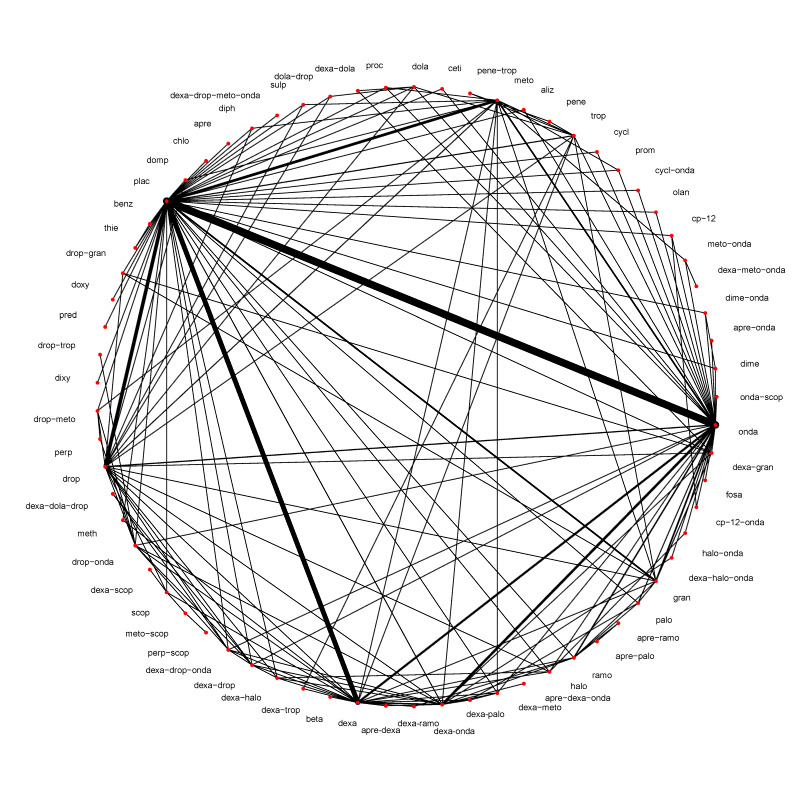
Network geometry of eligible comparisons for early postoperative vomiting. The thickness of the edges is proportionate to the number of included studies comparing two treatments. Abbreviations for treatments correspond to the first four letters of the drug name and are listed in the Methods and in Appendix 6.
For 69 different treatments, 2346 pair‐wise comparisons are possible, and the results of all network estimates are available in the online repository. For 149 of 1378 comparisons, direct and indirect evidence was available, whereas for 24 comparisons, only direct evidence was available, and for 2173 comparisons, only indirect evidence was available.
The relative efficacy presented as summary relative effects (RR with 95% CI) of all drugs or drug combinations compared to placebo (reference compound) ranked according to P scores is shown in Figure. In terms of preventing early vomiting, 14 of all 34 single drugs showed important benefit (95% CI upper boundary < 0.8) compared to placebo, with RRs ranging between 0.10 (95% CI 0.03 to 0.34) for fosaprepitant and 0.50 (95% CI 0.43 to 0.59) for dexamethasone. Amongst the most effective single drugs of direct interest with important benefit for early vomiting prophylaxis compared to placebo in decreasing order according to P scores were fosaprepitant, promethazine, haloperidol, granisetron, dolasetron, ramosetron, droperidol, ondansetron, tropisetron, palonosetron, and dexamethasone. Fosaprepitant, the most effective drug in the network meta‐analysis, was poorly connected to the network, with only three studies comparing fosaprepitant to ondansetron. Fifteen single drugs—four of direct interest (perphenazine, aprepitant, methylprednisolone, dimenhydrinate)—showed benefit associated with uncertainty (95% CI crossing the range of equivalence). Five single drugs—two of direct interest (metoclopramide, scopolamine)—showed little or no effect associated with uncertainty. Treatment effects of all single drugs compared to placebo ranged between RR 0.10 (95% CI 0.03 to 0.34) for fosaprepitant and RR 0.89 (95% CI 0.55 to 1.44) for alizapride. Of all drug combinations, 23 out of 34 combinations showed important benefit compared to placebo, with RRs ranging between 0.01 (95% CI 0.00 to 0.31) for aprepitant‐palonosetron and 0.38 (95% CI 0.23 to 0.64) for dexamethasone‐metoclopramide. Ten drug combinations showed benefit associated with uncertainty (95% CI crossing the range of equivalence) compared to placebo, and one combination (perphenazine‐scopolamine) showed harm associated with uncertainty. Treatment effects of drug combinations compared to placebo ranged between RR 0.01 (95% CI 0.00 to 0.31) for aprepitant‐palonosetron and RR 1.50 (95% CI 0.41 to 5.46) for perphenazine‐scopolamine.
31.
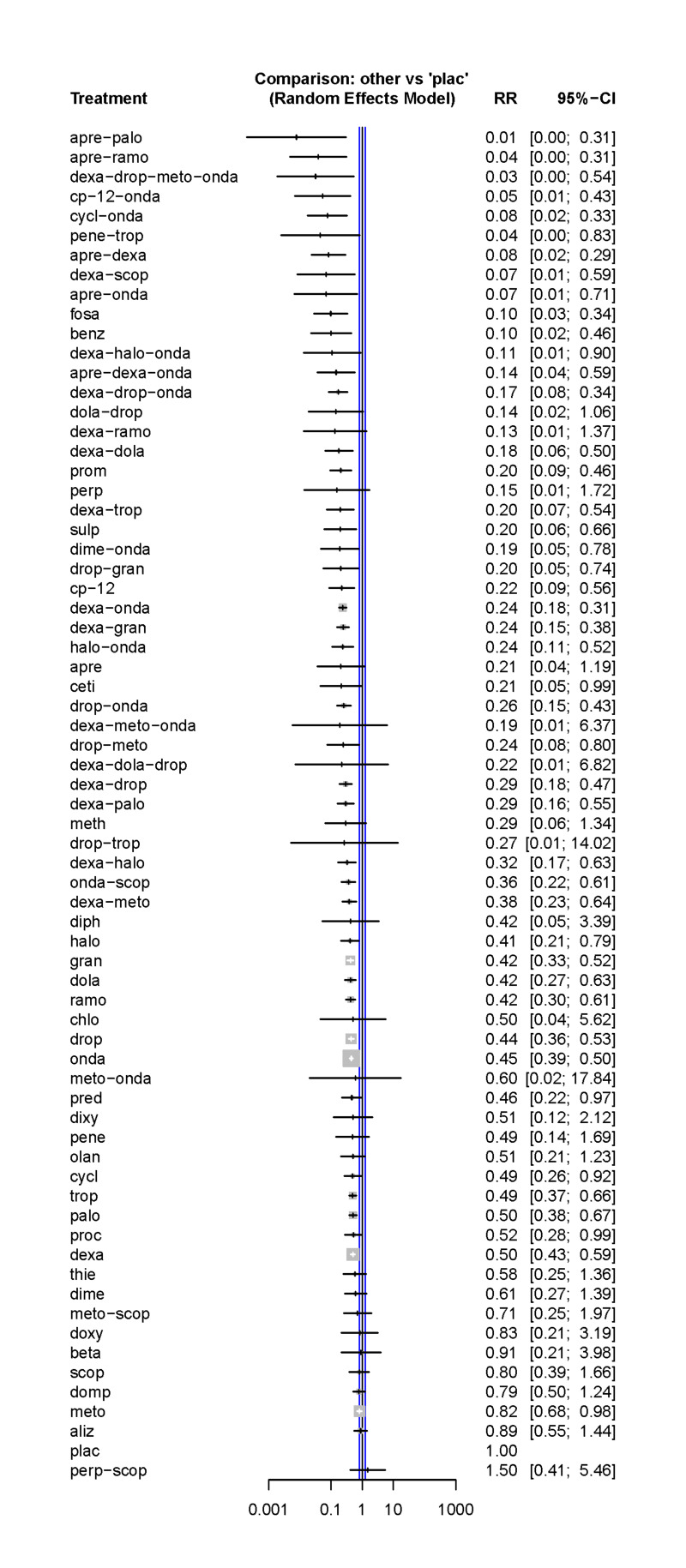
Forest plot of network meta‐analysis of all trials for early postoperative vomiting. Single drugs and combinations were compared with placebo (reference compound). RR = risk ratio, 95% CI = 95% confidence interval. RR < 1 favours the intervention, RR > 1 favours placebo. The blue lines indicate the range of equivalence (RR = 0.8 to 1.25). Treatments are ranked according to efficacy based on P scores. Abbreviations for treatments correspond to the first four letters of the drug name and are listed in the Methods and in Appendix 6.
The estimated value of between‐study variance for the network meta‐analysis of early vomiting was 0.0574 (tau²) (I² = 17.4%). For the random‐effects model, there was no heterogeneity within designs (Q = 150.33, df = 153, P = 0.55) but inconsistency between designs (Q = 232.32, df = 163, P = 0.0003). When the full random‐effects design‐by‐treatment interaction model was used, there was evidence of residual statistical inconsistency (Q = 232.32, df = 163, P = 0.0003). Clinically relevant heterogeneity for comparisons of direct interest (single drugs of direct interest compared to placebo) was detected for dexamethasone, haloperidol, metoclopramide, palonosetron, and tropisetron. In these cases, 95% PIs of treatment estimates included different clinical implications compared to the 95% CIs. Splitting of direct and indirect evidence in the network meta‐analysis and testing for local inconsistency revealed disagreement (direct versus indirect) for nine out of 149 comparisons (dexamethasone versus ondansetron (P = 0.004), dexamethasone versus placebo (P = 0.02), dexamethasone‐droperidol versus placebo (P = 0.04), dexamethasone‐ondansetron versus dexamethasone‐palonosetron (P = 0.02), dexamethasone‐ondansetron versus ramosetron (P = 0.01), domperidone versus metoclopramide (P = 0.03), granisetron versus palonosetron (P = 0.01), palonosetron versus placebo (P = 0.005), palonosetron versus ramosetron (P = 0.045)). Clinically relevant incoherence of direct and indirect treatment estimates for single drugs of direct interest compared to placebo was found for dolasetron, haloperidol, metoclopramide, palonosetron, and tropisetron.
Reporting bias (early vomiting)
Eleven direct pair‐wise comparisons included 10 or more studies for which small‐study effects such as reporting or publication bias were investigated: dexamethasone, droperidol, granisetron, metoclopramide, and ondansetron, all compared to placebo; dexamethasone, dexamethasone‐ondansetron, granisetron, metoclopramide, and ramosetron, all compared to ondansetron; and dexamethasone‐ondansetron compared to dexamethasone. Results of the funnel plots, the arcsine test for funnel plot asymmetry, and the trim and fill sensitivity analysis are presented in the online repository. According to the explorative analyses, we did not suspect publication bias for any of the above mentioned comparisons. Small P values when the arcsine test was used to detect funnel plot asymmetry were found for ondansetron versus placebo (P = 0.09), dexamethasone versus placebo (P =0.003), dexamethasone versus ondansetron (P = 0.04), and droperidol versus placebo (P = 0.06). The contour‐enhanced funnel plots suggested asymmetry for granisetron versus placebo and ondansetron versus placebo. However, we did not suspect relevant publication bias for these comparisons because trim and fill sensitivity analysis did not change the conclusion with respect to the range of equivalence.
Late vomiting (or dry retching) within 2 to 24 hours postoperatively
Primary analysis of late vomiting: network meta‐analysis with all single drugs and drug combinations
Raw data of individual studies and all analyses for the outcome late vomiting are available in an online repository (Supplementary Files‐13‐late vomiting; including direct and indirect effect estimates to the primary NMA, explorative analyses of reporting bias, and funnel plots).
In total, 206 RCTs including 28,547 participants were eligible for the network meta‐analysis of late vomiting. Ten studies (5%) have reported zero events in all study arms. The network of the 206 studies included 51 different treatments (nodes), with 438 pair‐wise comparisons due to multi‐arm studies (Figure). The 51 treatments included 26 drug combinations (21 times: two‐fold, four times: three‐fold, once: four‐fold), 24 single drugs, and placebo or no treatment. The most common comparisons were ondansetron (k = 46 studies), dexamethasone (k = 30), and droperidol (k = 21), all compared to placebo, and dexamethasone‐ondansetron (k = 15), as well as dexamethasone (k = 14), compared to ondansetron. Of the single drugs of direct interest, aprepitant was poorly connected to the network, with placebo as the only comparator.
32.
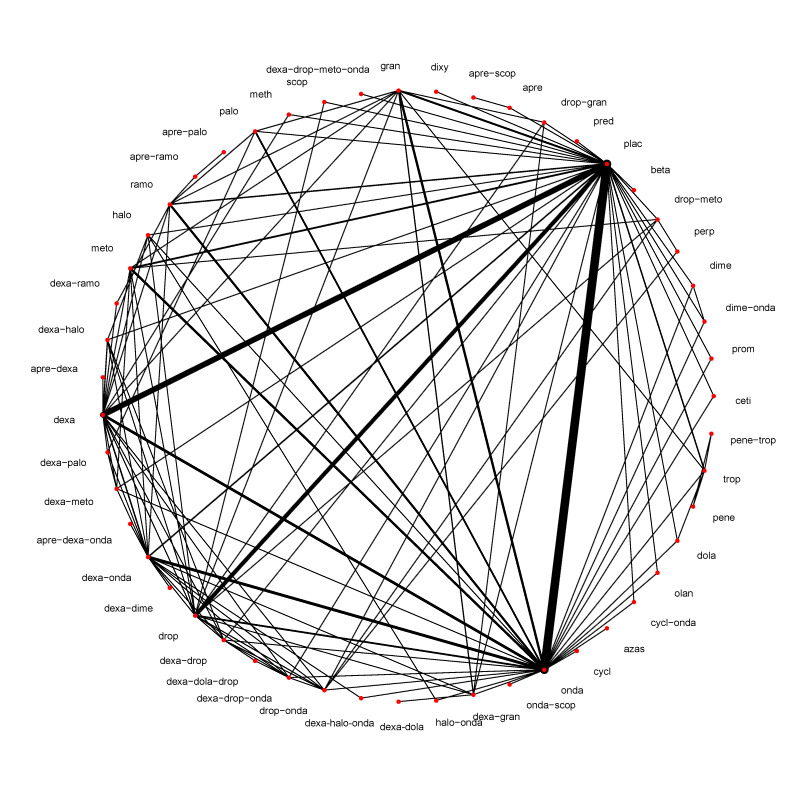
Network geometry of eligible comparisons for late postoperative vomiting. The thickness of the edges is proportionate to the number of included studies comparing two treatments. Abbreviations for treatments correspond to the first four letters of the drug name and are listed in the Methods and in Appendix 6.
For 51 different treatments, 1275 pair‐wise comparisons are possible, and the results of all network estimates are available in the online repository. For 112 of 1275 comparisons, direct and indirect evidence was available, whereas for 18 comparisons, only direct evidence was available, and for 1145 comparisons, only indirect evidence was available.
The relative efficacy presented as summary relative effects (RR with 95% CI) of all drugs or drug combinations compared to placebo (reference compound) ranked according to P scores is shown in Figure. Of the 24 single drugs, eight drugs showed important benefit (95% CI upper boundary < 0.8) compared to placebo, with RRs ranging between 0.06 (95% CI 0.01 to 0.48) for azasetron and 0.57 (95% CI 0.51 to 0.63) for ondansetron. Amongst the most effective single drugs of direct interest with important benefit for late vomiting prophylaxis compared to placebo in decreasing order according to P scores were aprepitant, granisetron, ramosetron, palonosetron, tropisetron, dexamethasone, and ondansetron. Eleven single drugs, eight of direct interest (promethazine, methylprednisolone, perphenazine, dimenhydrinate, dolasetron, haloperidol, scopolamine, droperidol), showed benefit associated with uncertainty (95% CI crossing the range of equivalence). Three single drugs, one of direct interest (metoclopramide), showed little or no effect associated with uncertainty. Penehyclidine and prednisolone, both not of direct interest, showed harm associated with uncertainty. Treatment effects of all single drugs compared to placebo ranged between RR 0.06 (95% CI 0.01 to 0.48) for azasetron and RR 1.44 (95% CI 0.68 to 3.03) for prednisolone. Of all 26 drug combinations, 18 combinations showed important benefit compared to placebo, with RRs ranging between 0.01 (95% CI 0.00 to 0.22) for aprepitant‐palonosetron and 0.47 (95% CI 0.36 to 0.61) for ondansetron‐scopolamine. Eight drug combinations showed benefit associated with uncertainty compared to placebo. Treatment effects of drug combinations compared to placebo ranged between RR 0.01 (95% CI 0.00 to 0.22) for aprepitant‐palonosetron and RR 0.57 (95% CI 0.22 to 1.43) for droperidol‐metoclopramide.
33.
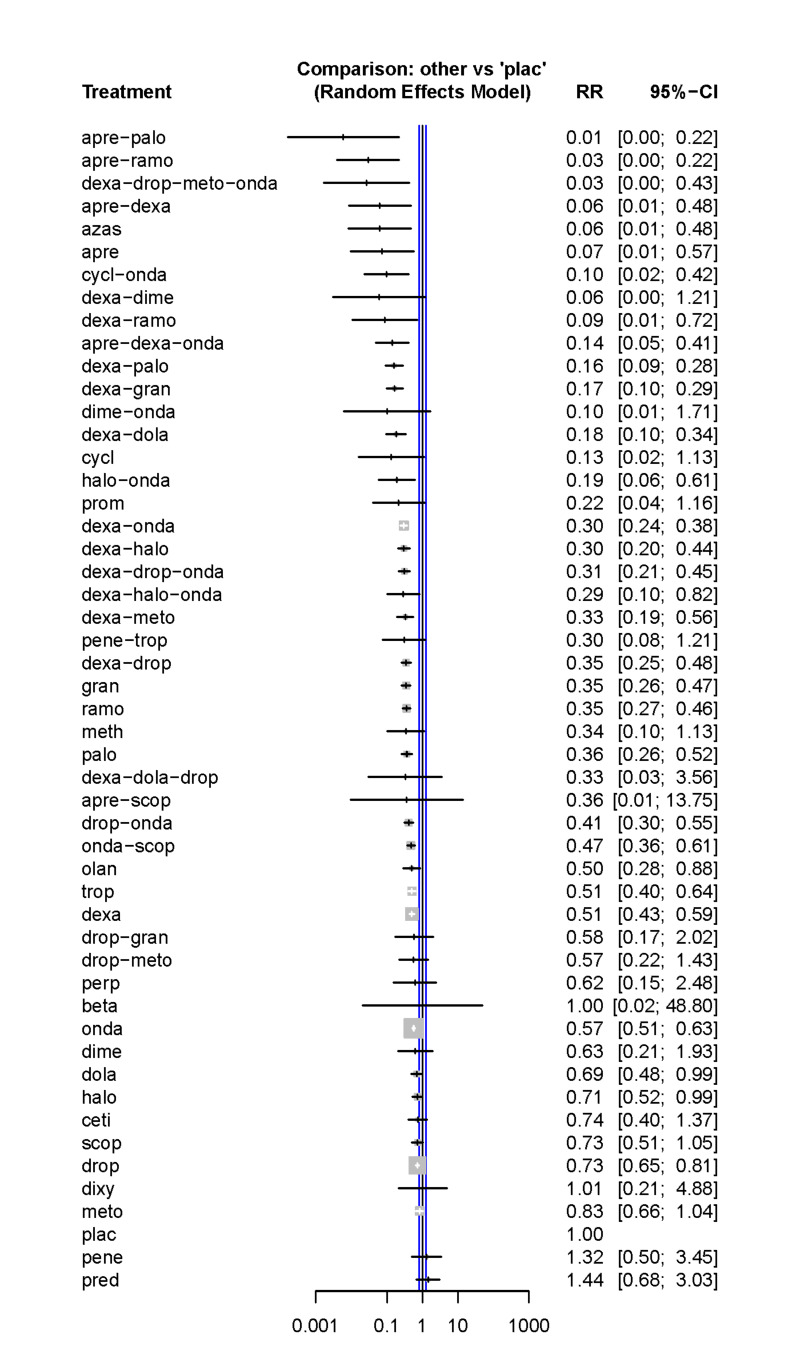
Forest plot of network meta‐analysis of all trials for late postoperative vomiting. Single drugs and combinations were compared with placebo (reference compound). RR = risk ratio, 95% CI = 95% confidence interval. RR < 1 favours the intervention, RR > 1 favours placebo. The blue lines indicate the range of equivalence (RR = 0.8 to 1.25). Treatments are ranked according to efficacy based on P scores. Abbreviations for treatments correspond to the first four letters of the drug name and are listed in the Methods and in Appendix 6.
The estimated value of between‐study variance for the network meta‐analysis of late vomiting was 0 (tau²) (I² = 0%). For the random‐effects model, there was no heterogeneity within designs (Q = 100.69, df = 114, P = 0.81) and no inconsistency between designs (Q = 145.54, df = 133, P = 0.22). No clinically relevant heterogeneity for comparisons of direct interest (single drugs of direct interest compared to placebo) was detectable because 95% CIs and 95% PIs were compatible with respect to the range of equivalence. Splitting of direct and indirect evidence in the network meta‐analysis and testing for local inconsistency revealed disagreement (direct versus indirect) for 10 out of 112 comparisons (dexamethasone versus ondansetron (P = 0.03), dexamethasone‐droperidol versus dexamethasone‐droperidol‐ondansetron (P = 0.02), dexamethasone‐droperidol versus droperidol (P = 0.03), dexamethasone‐droperidol‐ondansetron versus dexamethasone‐ondansetron (P = 0.002), dexamethasone‐ondansetron versus droperidol (P = 0.003), dexamethasone‐ondansetron versus droperidol‐ondansetron (P = 0.03), dexamethasone‐ondansetron versus placebo (P = 0.02), dolasetron versus ondansetron (P = 0.003), dolasetron versus placebo (P = 0.006), droperidol versus placebo (P = 0.001)). Clinically relevant incoherence of direct and indirect treatment estimates for single drugs of direct interest compared to placebo was found for dolasetron and metoclopramide.
Reporting bias (late vomiting)
Nine direct pair‐wise comparisons included 10 or more studies for which small‐study effects such as reporting or publication bias were investigated: dexamethasone, droperidol, granisetron, and ondansetron, all compared to placebo; and dexamethasone, dexamethasone‐ondansetron, granisetron, metoclopramide, and ramosetron, all compared to ondansetron. Results of the funnel plots, the arcsine test for funnel plot asymmetry, and the trim and fill sensitivity analysis are presented in the online repository. According to the explorative analyses, we did not suspect publication bias for any of the above mentioned comparisons. A small P value when the arcsine test was used to detect funnel plot asymmetry was found for ondansetron versus placebo (P = 0.002). The contour‐enhanced funnel plots suggested asymmetry for dexamethasone versus placebo. However, we did not suspect relevant publication bias for these comparisons because trim and fill sensitivity analysis did not change the conclusion with respect to the range of equivalence.
Nausea (or PONV) within 24 hours postoperatively
Primary analysis of nausea: network meta‐analysis with all single drugs and drug combinations
Raw data of individual studies and all analyses for the outcome nausea are available in an online repository (Supplementary Files‐14‐nausea; including direct and indirect effect estimates to the primary NMA, explorative analyses of reporting bias, and funnel plots).
In total, 325 RCTs including 55,208 participants were eligible for the network meta‐analysis of nausea. All studies have reported events in at least one study arm. One study was not connected to the network and was excluded from the following analysis: Bergese 2016, comparison: aprepitant‐dexamethasone‐promethazine versus dexamethasone‐ondansetron‐promethazine. The network of the remaining 324 studies included 65 different treatments (nodes), with 670 pair‐wise comparisons due to multi‐arm studies (Figure). The 65 treatments included 35 drug combinations (30 times: two‐fold, four times: three‐fold, once: four‐fold), 29 single drugs, and placebo or no treatment. The most common comparisons were ondansetron (k = 87 studies), dexamethasone (k = 53), droperidol (k = 50), metoclopramide (k = 30), granisetron (k = 20), and tropisetron (k = 15), all compared to placebo, and metoclopramide (k = 17), dexamethasone‐ondansetron (k = 16), droperidol (k = 16), and dexamethasone (k = 14), all compared to ondansetron. Three single drugs of direct interest were poorly connected to the network. Amisulpride was connected only to placebo; aprepitant and fosaprepitant were connected only to ondansetron.
34.
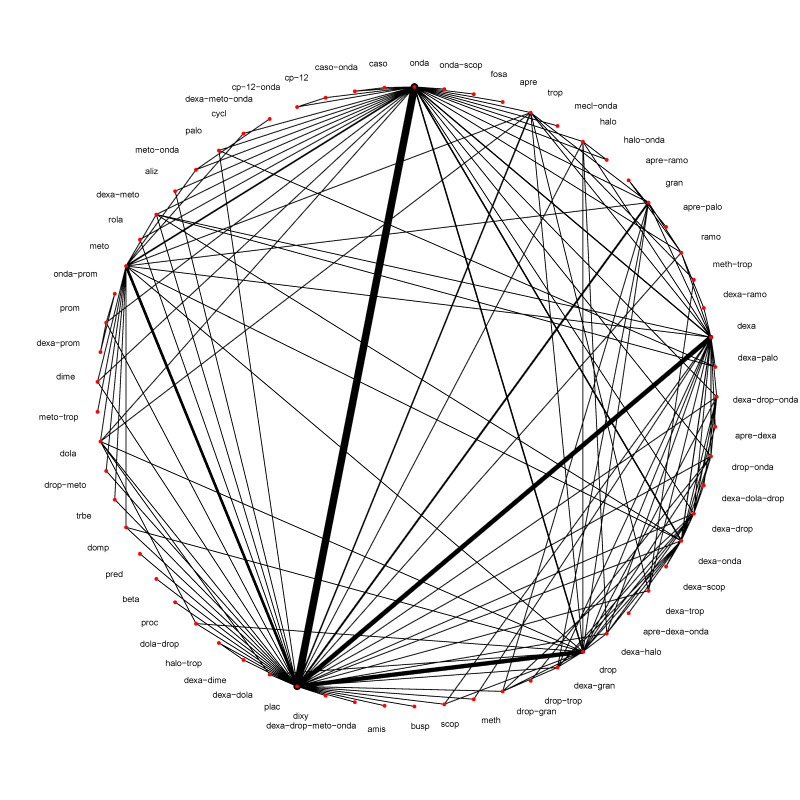
Network geometry of eligible comparisons for postoperative nausea within 24 hours postoperatively. The thickness of the edges is proportionate to the number of included studies comparing two treatments. Abbreviations for treatments correspond to the first four letters of the drug name and are listed in the Methods and in Appendix 6.
For 65 different treatments, 2080 pair‐wise comparisons are possible, and the results of all network estimates are available in the online repository. For 135 of 2080 comparisons, direct and indirect evidence was available, whereas for 24 comparisons, only direct evidence was available, and for 1921 comparisons, only indirect evidence was available.
The relative efficacy presented as summary relative effects (RR with 95% CI) of all drugs or drug combinations compared to placebo (reference compound) ranked according to P scores is shown in Figure. In terms of preventing nausea, of the 29 single drugs, nine showed important benefit (95% CI upper boundary < 0.8) compared to placebo, with RRs ranging between 0.31 (95% CI 0.13 to 0.74) for dixyrazine and 0.69 (95% CI 0.65 to 0.74) for ondansetron. Amongst the most effective single drugs of direct interest with important benefit for nausea prophylaxis compared to placebo in decreasing order according to P scores were methylprednisolone, ramosetron, droperidol, palonosetron, granisetron, dexamethasone, tropisetron, and ondansetron. Eleven single drugs, nine of direct interest (dimenhydrinate, aprepitant, promethazine, scopolamine, haloperidol, fosaprepitant, casopitant, amisulpride, dolasetron), showed benefit associated with uncertainty (95% CI crossing the range of equivalence). Nine single drugs, two of direct interest (rolapitant, metoclopramide), showed little or no effect associated with uncertainty. Treatment effects of all single drugs compared to placebo ranged between RR 0.31 (95% CI 0.13 to 0.74) for dixyrazine and RR 1.14 (95% CI 0.74 to 1.74) for cyclizine. Of the 35 drug combinations, 27 combinations showed important benefit compared to placebo, with RRs ranging between 0.05 (95% CI 0.01 to 0.41) for dexamethasone‐metoclopramide‐ondansetron and 0.53 (95% CI 0.39 to 0.71) for dexamethasone‐metoclopramide. Eight drug combinations showed benefit associated with uncertainty compared to placebo. Treatment effects of drug combinations compared to placebo ranged between RR 0.05 (95% CI 0.01 to 0.41) for dexamethasone‐metoclopramide‐ondansetron and RR 0.72 (95% CI 0.38 to 1.34) for droperidol‐metoclopramide.
35.
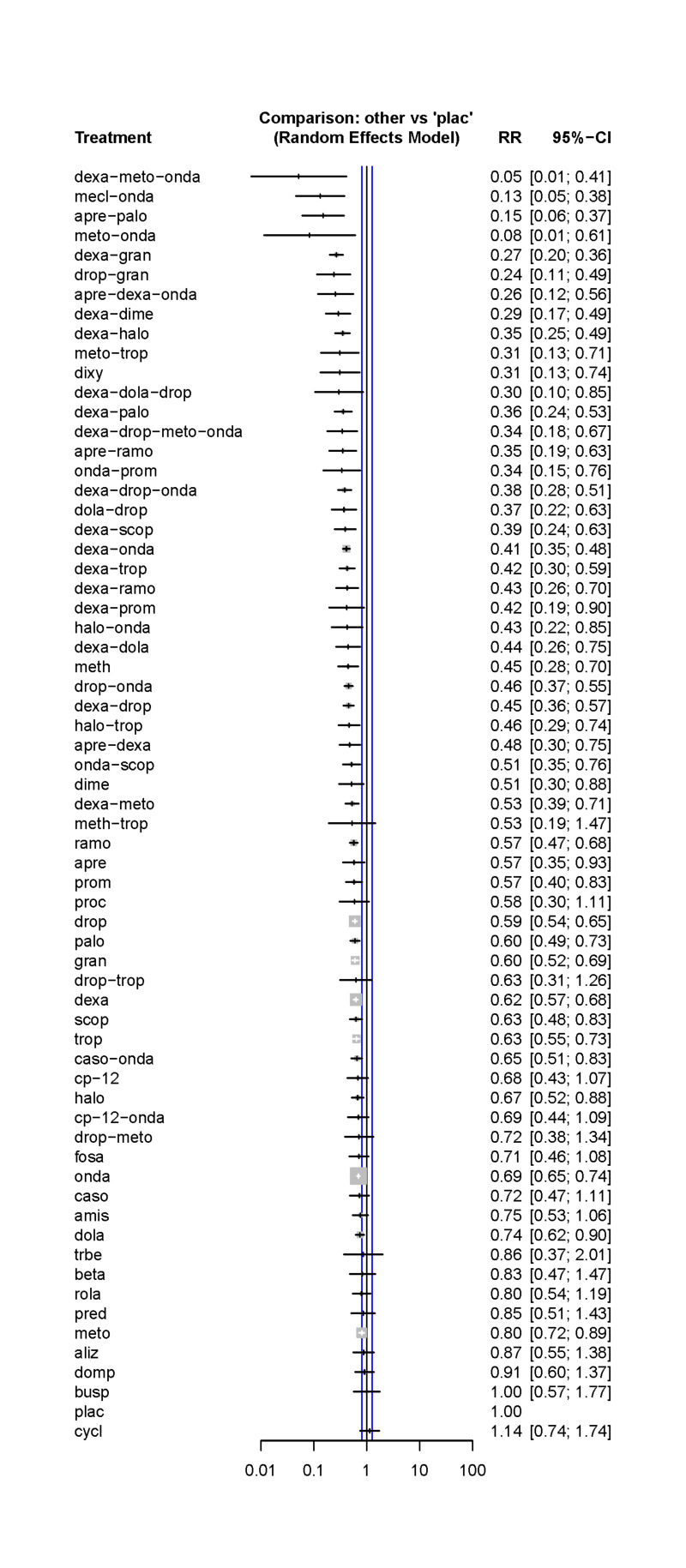
Forest plot of network meta‐analysis of all trials for postoperative nausea within 24 hours postoperatively. Single drugs and combinations were compared with placebo (reference compound). RR = risk ratio, 95% CI = 95% confidence interval. RR < 1 favours the intervention, RR > 1 favours placebo. The blue lines indicate the range of equivalence (RR = 0.8 to 1.25). Treatments are ranked according to efficacy based on P scores. Abbreviations for treatments correspond to the first four letters of the drug name and are listed in the Methods and in Appendix 6.
The estimated value of between‐study variance for the network meta‐analysis of nausea was 0.0524 (tau²) (I² = 55.5%). For the random‐effects model, there was heterogeneity within designs (Q = 546.86, df = 234, P < 0.0001) and inconsistency between designs (Q = 356.60, df = 168, P < 0.0001). When the full random‐effects design‐by‐treatment interaction model was used, there was no evidence of residual statistical inconsistency (Q = 180.00, df = 168, P = 0.25). Clinically relevant heterogeneity for comparisons of direct interest (single drugs of direct interest compared to placebo) was detected for amisulpride, casopitant, dexamethasone, droperidol, fosaprepitant, granisetron, methylprednisolone, metoclopramide, ondansetron, palonosetron, ramosetron, rolapitant, and tropisetron. In these cases, 95% PIs of treatment estimates included different clinical implications compared to the 95% CIs. Splitting of direct and indirect evidence in the network meta‐analysis and testing for local inconsistency revealed disagreement (direct versus indirect) for five out of 135 comparisons (dexamethasone versus dexamethasone‐granisetron (P = 0.01), dexamethasone‐granisetron versus dexamethasone‐ondansetron (P = 0.02), dexamethasone‐metoclopramide versus metoclopramide (P = 0.01), droperidol‐granisetron versus granisetron (P = 0.02), ondansetron versus palonosetron (P = 0.02)). Clinically relevant incoherence of direct and indirect treatment estimates for single drugs of direct interest compared to placebo was found for haloperidol, palonosetron, promethazine, and rolapitant.
Reporting bias (nausea)
Eleven direct pair‐wise comparisons included 10 or more studies for which small‐study effects such as reporting or publication bias were investigated: dexamethasone, droperidol, granisetron, metoclopramide, ondansetron, and tropisetron, all compared to placebo; dexamethasone, dexamethasone‐ondansetron, droperidol, and metoclopramide, all compared to ondansetron; and dexamethasone‐ondansetron compared to dexamethasone. Results of the funnel plots, the arcsine test for funnel plot asymmetry, and the trim and fill sensitivity analysis are presented in the online repository. According to the explorative analyses, we suspected publication bias for the comparisons tropisetron versus placebo (P = 0.08), dexamethasone‐ondansetron versus dexamethasone (P = 0.04), and dexamethasone‐ondansetron versus ondansetron (P = 0.37). Small P values when the arcsine test was used to detect funnel plot asymmetry were also found for droperidol versus placebo (P = 0.047) and metoclopramide versus placebo (P = 0.07). The contour‐enhanced funnel plots suggested asymmetry for dexamethasone, granisetron, and droperidol versus placebo. However, we did not suspect relevant publication bias for these comparisons because trim and fill sensitivity analysis did not change the conclusion with respect to the range of equivalence. Asymmetry may have been caused by other factors such as heterogeneity.
Complete response (no nausea or vomiting or need for rescue antiemetics) within 24 hours postoperatively
Primary analysis of complete response: network meta‐analysis with all single drugs and drug combinations
Raw data of individual studies and all analyses for the outcome complete response are available in an online repository (Supplementary Files‐15‐complete response; including direct and indirect effect estimates to the primary NMA, explorative analyses of reporting bias, and funnel plots).
In total, 137 RCTs including 30,254 participants were eligible for the network meta‐analysis of complete response. All studies have reported events in at least one study arm. One three‐arm study was not connected to the network and was excluded from the following analysis: Gandhi 2009, comparison: promethazine versus dexamethasone‐promethazine versus ondansetron‐promethazine). The network of the remaining 136 studies included 38 different treatments (nodes), with 278 pair‐wise comparisons due to multi‐arm studies (Figure). The 38 treatments included 20 drug combinations (19 times: two‐fold, once: three‐fold), 17 single drugs, and placebo or no treatment. The most common comparisons were ondansetron (k = 35 studies), droperidol (k = 19), and dexamethasone (k = 17), all compared to placebo. Four single drugs of direct interest were poorly connected to the network. Amisulpride and scopolamine were connected only to placebo, and aprepitant and fosaprepitant were connected only to ondansetron.
36.
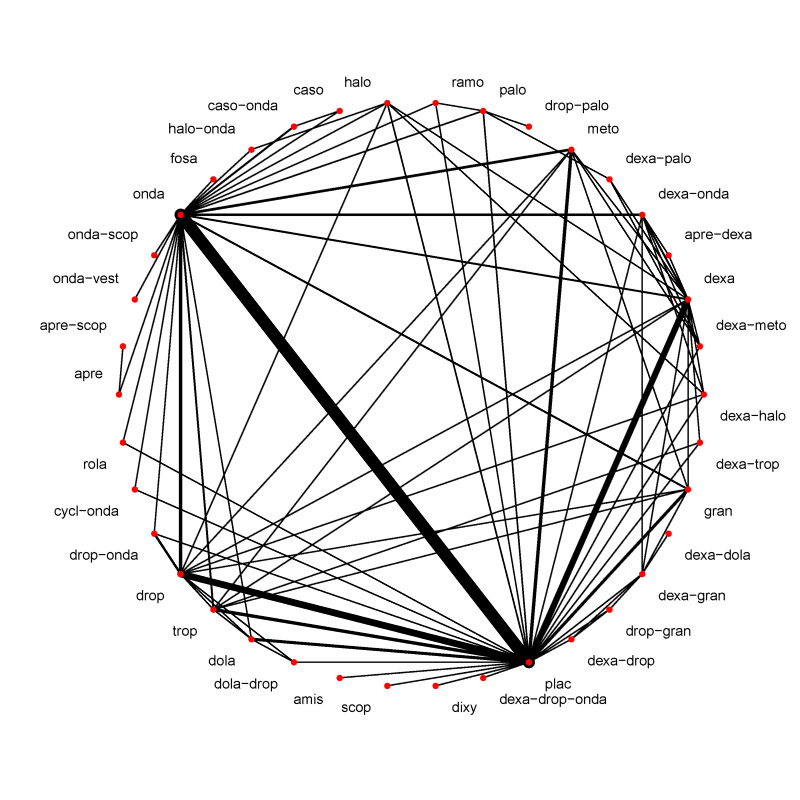
Network geometry of eligible comparisons for complete response within 24 hours postoperatively. The thickness of the edges is proportionate to the number of included studies comparing two treatments. Abbreviations for treatments correspond to the first four letters of the drug name and are listed in the Methods and in Appendix 6.
For 38 different treatments, 703 pair‐wise comparisons are possible, and the results of all network estimates are available in the online repository. For 76 of 703 comparisons, direct and indirect evidence was available, whereas for 13 comparisons, only direct evidence was available, and for 614 comparisons, only indirect evidence was available.
The relative efficacy presented as summary relative effects (RR with 95% CI) of all drugs or drug combinations compared to placebo (reference compound) ranked according to P scores is shown in Figure. In terms of complete response, of the 17 single drugs, 11 showed important benefit (95% CI lower boundary > 1.25) compared to placebo, with RRs ranging between 2.23 (95% CI 1.68 to 2.96) for ramosetron and 1.45 (95% CI 1.29 to 1.64) for dolasetron. Amongst the most effective single drugs of direct interest with important benefit for complete response compared to placebo in increasing order according to P scores were ramosetron, granisetron, fosaprepitant, aprepitant, palonosetron, dexamethasone, haloperidol, tropisetron, droperidol, ondansetron, and dolasetron. Five single drugs, four of direct interest (scopolamine, casopitant, rolapitant, amisulpride), showed benefit associated with uncertainty (95% CI crossing the range of equivalence). One single drug of direct interest (metoclopramide) showed little or no effect associated with uncertainty (95% CI crossing the range of equivalence). Treatment effects of all single drugs compared to placebo ranged between RR 11.00 (95% CI 0.64 to 188.18) for scopolamine and RR 1.23 (95% CI 1.06 to 1.43) for metoclopramide. Of the 20 drug combinations, 16 combinations showed important benefit compared to placebo, with RRs ranging between 2.81 (95% CI 1.59 to 4.96) for cyclizine‐ondansetron and 1.61 (95% CI 1.31 to 1.97) for dexamethasone‐metoclopramide. Four drug combinations showed benefit associated with uncertainty compared to placebo. Treatment effects of drug combinations compared to placebo ranged between RR 2.81 (95% CI 1.59 to 4.96) for cyclizine‐ondansetron and RR 1.49 (95% CI 0.93 to 2.37) for aprepitant‐scopolamine.
37.
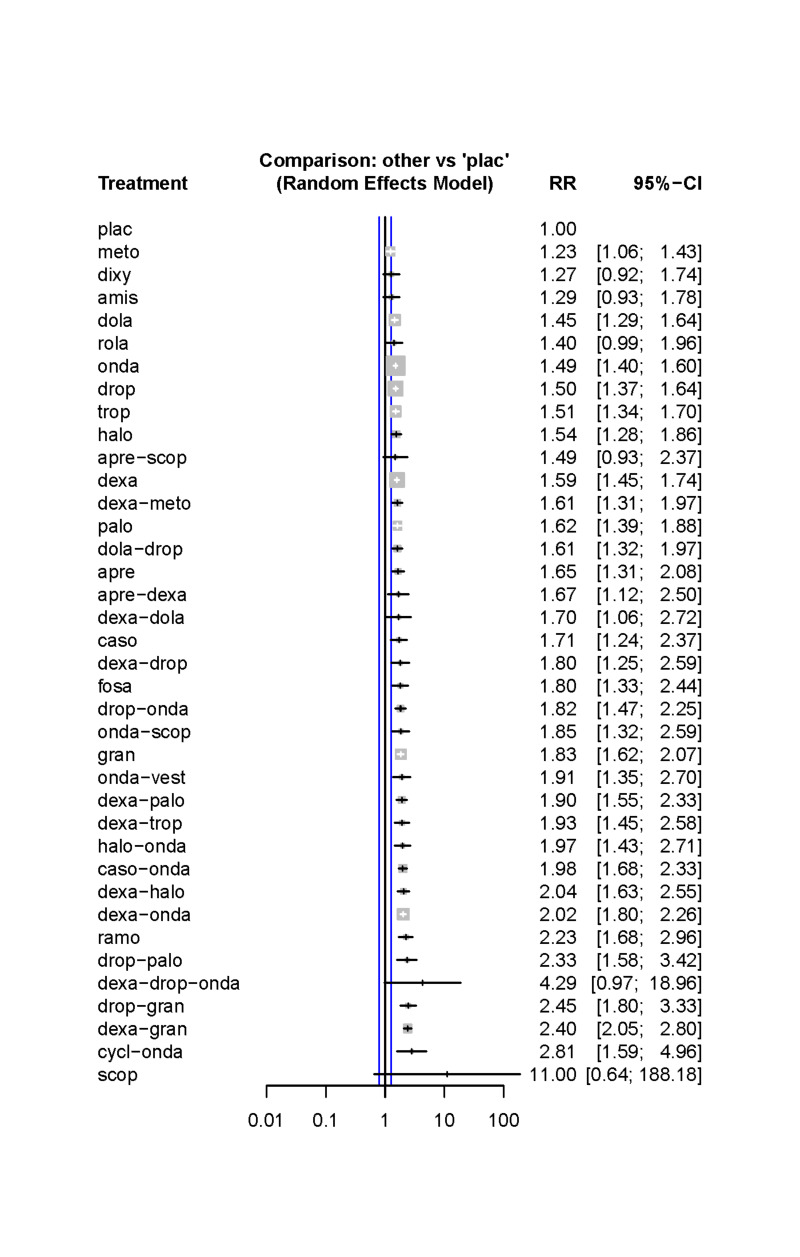
Forest plot of network meta‐analysis of all trials for complete response within 24 hours postoperatively. Single drugs and combinations were compared with placebo (reference compound). RR = risk ratio, 95% CI = 95% confidence interval. RR > 1 favours the intervention, RR < 1 favours placebo. The blue lines indicate the range of equivalence (RR = 0.8 to 1.25). Treatments are ranked according to efficacy based on P scores. Abbreviations for treatments correspond to the first four letters of the drug name and are listed in the Methods and in Appendix 6.
The estimated value of between‐study variance for the network meta‐analysis of complete response was 0.0196 (tau²) (I² = 47.8%). For the random‐effects model, there was heterogeneity within designs (Q = 146.39, df = 76, P < 0.0001) and inconsistency between designs (Q = 163.83, df = 86, P < 0.0001). When the full random‐effects design‐by‐treatment interaction model was used, there was no evidence of residual statistical inconsistency (Q = 84.96, df = 86, P = 0.51). Clinically relevant heterogeneity for comparisons of direct interest (single drugs of direct interest compared to placebo) was detected for aprepitant, dexamethasone, dolasetron, droperidol, fosaprepitant, haloperidol, ondansetron, palonosetron, and tropisetron. In these cases, 95% PIs of treatment estimates included different clinical implications compared to the 95% CIs. Splitting of direct and indirect evidence in the network meta‐analysis and testing for local inconsistency revealed disagreement (direct versus indirect) for four out of 76 comparisons (dexamethasone versus dexamethasone‐palonosetron (P = 0.04), dexamethasone versus placebo (P = 0.008), dexamethasone‐palonosetron versus palonosetron (P = 0.03), palonosetron versus placebo (P = 0.04)). Clinically relevant incoherence of direct and indirect treatment estimates for single drugs of direct interest compared to placebo was found for dexamethasone, ondansetron, palonosetron, and tropisetron.
Reporting bias (complete response)
Three direct pair‐wise comparisons included 10 or more studies for which small‐study effects such as reporting or publication bias were investigated: dexamethasone, droperidol, and ondansetron, all compared to placebo. Results of the funnel plots, the arcsine test for funnel plot asymmetry, and the trim and fill sensitivity analysis are presented in the online repository. According to the explorative analyses, we suspected publication bias for the comparisons droperidol versus placebo (P = 0.10) and ondansetron versus placebo (P = 0.01). The contour‐enhanced funnel plots also suggested asymmetry for dexamethasone versus placebo. However, we did not suspect relevant publication bias for this comparison because trim and fill sensitivity analysis did not change the conclusion with respect to the range of equivalence. Asymmetry may have been caused by other factors such as heterogeneity.
Discussion
Summary of main results
This systematic review with network meta‐analyses investigated the efficacy and safety of drugs for prevention of postoperative nausea and vomiting (PONV) with focus on postoperative vomiting in adults after general anaesthesia. It included 585 randomized controlled trials (RCTs) with 97,516 participants. A total of 44 single antiemetic drugs belonging to six different substance classes (5‐HT₃ receptor antagonists, D₂ receptor antagonists, NK₁ receptor antagonists, corticosteroids, antihistamines, and anticholinergics) and 51 drug combinations were investigated. An overview of the direction and magnitude of effects along with the certainty of evidence for all GRADE‐relevant outcomes and all single drugs of direct interest, according to Gan 2014, compared to placebo is summarized in Figure.
Primary outcomes
The network meta‐analysis (NMA) of the primary efficacy outcome ‘vomiting within 24 hours postoperatively’ included 282 RCTs, 50,812 participants, and 65 interventions. The certainty of evidence for single drugs of direct interest compared to placebo ranged from very low to high. High‐certainty evidence showed that five drugs (aprepitant, ramosetron, granisetron, dexamethasone, and ondansetron) reduced vomiting, and moderate‐certainty evidence indicated that another two single drugs (fosaprepitant and droperidol) probably reduced vomiting compared to placebo (Table; Table). These are the seven most reliable and most effective drugs identified in this review for ‘vomiting within 24 hours postoperatively’. All other single drugs of direct interest involved evidence of very low to low certainty (casopitant, tropisetron, and dolasetron), or they were less effective (amisulpride and promethazine), or both (palonosetron, haloperidol, metoclopramide, rolapitant, dimenhydrinate, and scopolamine). In the ranking of treatments with placebo as comparator, single drugs of direct interest with decreasing order according to efficacy were fosaprepitant, casopitant, aprepitant, ramosetron, granisetron, dexamethasone, tropisetron, dimenhydrinate, promethazine, rolapitant, ondansetron, dolasetron, haloperidol, scopolamine, droperidol, palonosetron, amisulpride, and metoclopramide. Drug combinations were generally more effective than most of the single drugs. However, treatment effects of the top three ranked single drugs, which belong to the NK₁ receptor antagonist class (fosaprepitant, casopitant, and aprepitant), were comparable to most of the included drug combinations.
The certainty of evidence for single drugs of direct interest in preventing postoperative vomiting applies to recommended and high doses of granisetron, ondansetron, dexamethasone, droperidol, and tropisetron because low doses showed no clinically important effect. Recommended and high doses of these drugs showed similar treatment effects. Thus, recommended doses should be sufficient to prevent postoperative vomiting (Table). For all other single drugs of direct interest, there was no clinically relevant difference between the analysed dose categories. Therefore we are best advised to use the most investigated dose, route, and timing of individual drugs as the most reliable current guide (Table).
The NMA of the primary safety outcome ‘number of participants with SAEs within seven days postoperatively’ included 28 RCTs, 10,766 participants, and 22 interventions. A large number of trials (41%) have reported zero events in all study arms, and the baseline risk for serious adverse events (SAEs) with placebo was 1.43%. Only three single drugs of direct interest (aprepitant, dolasetron, and palonosetron) were investigated in large RCTs (> 500 participants/treatment). Thus, the chance to detect rare SAEs was highest for aprepitant, dolasetron, and palonosetron. The certainty of evidence for single drugs of direct interest compared to placebo ranged from very low to low (Table; Table). In terms of treatment effects, none of the active treatments showed important harm or benefit compared to placebo, and all were associated with uncertainty. In the ranking of treatments with placebo as comparator, single drugs of direct interest in increasing order according to the risk of SAEs were dolasetron, tropisetron, palonosetron, amisulpride, droperidol, ramosetron, scopolamine, dexamethasone, granisetron, aprepitant, ondansetron, and casopitant. Treatment effects of different doses of single drugs did not differ in a clinically relevant manner and were associated with uncertainty.
The NMA of the primary safety outcome ‘number of participants with any AE [adverse event] within seven days postoperatively’ included 61 RCTs, 19,423 participants, and 27 interventions. The certainty of evidence for single drugs of direct interest compared to placebo ranged from very low to moderate (Table; Table). Moderate‐certainty evidence shows that granisetron and amisulpride probably had no or little effect on any AE compared to placebo. Two of the 14 single drugs of direct interest, namely, dimenhydrinate and scopolamine, have low‐certainty evidence and may increase the number of participants with any AE compared to placebo. None of the other single drugs of direct interest showed important harm. All showed benefit or no effect, but all were associated with only low‐ or very low‐certainty evidence. In the ranking of treatments with placebo as comparator, single drugs of direct interest in increasing order according to the risk of any AE were dexamethasone, aprepitant, dolasetron, casopitant, droperidol, granisetron, metoclopramide, ondansetron, palonosetron, ramosetron, amisulpride, tropisetron, scopolamine, and dimenhydrinate. Of all drug combinations, only ondansetron‐scopolamine showed important benefit for any AE compared to placebo. No combinations showed important harm. However, caution is advised, as we have not assessed the certainty of evidence for any of the drug combinations. Treatment effects of different doses of single drugs did not differ in a clinically relevant manner and were associated with uncertainty. However, in the ranking of treatments, high and recommended doses generally ranked higher than lower doses of the individual drugs in terms of favourable effects on any AE. Thus, contrary to the intuitive assumption that lower doses of drugs produce fewer side effects than higher doses, the opposite seems to be the case here. These findings could be explained by the fact that prevention of PONV generally lowers the risk of other adverse effects (Kranke 2018). Some molecules directly prevent adverse effects, such as headache when droperidol is used, or act as co‐analgesics (e.g. valid for dexamethasone).
Secondary outcomes
Substance class‐specific side effects
The most investigated secondary safety outcome was headache, with 208 RCTs, 42,445 participants, and 53 interventions. The certainty of evidence for single drugs of direct interest compared to placebo ranged from very low to moderate (Table; Table). Moderate‐certainty evidence shows that droperidol probably reduces and ondansetron probably increases headache—both compared to placebo. None of the other single drugs of direct interest showed important benefit or harm, and all treatment effects were associated with uncertainty, resulting in only low or very low certainty of evidence. However, a tendency toward the well‐known substance class‐specific increase in headache for 5‐HT₃ receptor antagonists showed up in the NMA (https://en.wikipedia.org/wiki/5-HT3_antagonist). In the ranking of treatments with placebo as comparator, single drugs of direct interest in increasing order according to the risk of headache were haloperidol, promethazine, droperidol, casopitant, dexamethasone, aprepitant, metoclopramide, scopolamine, dimenhydrinate, tropisetron, dolasetron, ramosetron, palonosetron, ondansetron, granisetron, and amisulpride. Of all drug combinations, only droperidol‐tropisetron showed important benefit for headache compared to placebo. None showed important harm. However, caution is advised because we have not assessed the certainty of evidence for any of the drug combinations. Treatment effects of different doses of single drugs did not differ in a clinically relevant manner and were associated with uncertainty. However, in the ranking of treatments at different doses, a similar tendency of drug doses was detectable as was found for any AE. Higher doses of drugs produce fewer headache than lower doses.
The secondary safety outcome sedation included 117 RCTs, 21,440 participants, and 44 interventions. The certainty of evidence for single drugs of direct interest compared to placebo ranged from very low to high (Table; Table). High‐certainty evidence shows that dexamethasone has no or little effect on sedation compared to placebo. Moderate‐certainty evidence indicates that dimenhydrinate probably increases sedation and ondansetron probably reduces sedation—both compared to placebo. None of the other single drugs of direct interest showed important benefit or harm, and all were assessed with only low‐ or very low‐certainty evidence. In the ranking of treatments with placebo as comparator, single drugs of direct interest in increasing order according to the risk of sedation were perphenazine, tropisetron, ondansetron, aprepitant, ramosetron, haloperidol, metoclopramide, droperidol, amisulpride, dolasetron, granisetron, dexamethasone, promethazine, palonosetron, scopolamine, methylprednisolone, and dimenhydrinate. Of all drug combinations, only dexamethasone‐metoclopramide showed an important reduction in sedation, and dimenhydrinate‐ondansetron showed an important increase in sedation—both compared to placebo. However, caution is advised because we have not assessed the certainty of evidence for any of the drug combinations. According to dose, a clinically relevant difference between doses was found only for high and recommended doses of ondansetron compared to low doses. High and recommended doses probably reduced sedation, and low doses increased sedation. All other treatment effects of different doses of single drugs did not differ in a clinically relevant manner and were associated with uncertainty.
The secondary safety outcome extrapyramidal symptoms included 64 RCTs, 10,724 participants, and 30 interventions. A large number of trials (75%) have reported zero events in all study arms, and the baseline risk for extrapyramidal symptoms with placebo was 0.79%. Only droperidol was investigated in a large RCT (> 500 participants/treatment). Thus, the chance to detect rare extrapyramidal symptoms was highest for droperidol. The certainty of evidence for single drugs of direct interest compared to placebo ranged from very low to low (Table; Table). In terms of treatment effects, none of the active treatments showed important harm or benefit compared to placebo, and all were associated with uncertainty. However, a tendency of the well‐known substance class‐specific increase in extrapyramidal symptoms for D₂ receptor antagonists showed up in the NMA (https://en.wikipedia.org/wiki/Dopamine_antagonist). The currently best D₂ receptor antagonist with no or minimal effect seems to be amisulpride. In the ranking of treatments with placebo as comparator, single drugs of direct interest in increasing order according to the risk of extrapyramidal symptoms were ondansetron, dexamethasone, dolasetron, tropisetron, ramosetron, granisetron, palonosetron, amisulpride, perphenazine, metoclopramide, haloperidol, and droperidol. Treatment effects of different doses of single drugs did not differ in a clinically relevant manner and were associated with uncertainty.
The secondary safety outcome constipation included 43 RCTs, 11,481 participants, and 23 interventions. The certainty of evidence for single drugs of direct interest compared to placebo ranged from very low to low (Table; Table). In terms of treatment effects, none of the active treatments showed important harm or benefit compared to placebo, and all were associated with uncertainty. In the ranking of treatments with placebo as comparator, single drugs of direct interest in increasing order according to the risk of constipation were granisetron, ramosetron, casopitant, dexamethasone, ondansetron, aprepitant, palonosetron, tropisetron, amisulpride, and metoclopramide. Treatment effects of different doses of single drugs did not differ in a clinically relevant manner and were associated with uncertainty.
The secondary safety outcome postoperative wound infection included 32 RCTs, 4369 participants, and 10 interventions. A large number of trials (80%) have reported zero events in all study arms, and the baseline risk for postoperative wound infection with placebo was 0.44%. Most information was available for dexamethasone, but none of the studies investigating dexamethasone or any other drug was of sufficient size (> 500 participants/treatment). Thus, the chance to detect rare postoperative wound infections was strongly limited with this NMA. The certainty of evidence for single drugs of direct interest compared to placebo ranged from very low to low (Table; Table). In terms of treatment effects, none of the active treatments showed important harm or benefit compared to placebo, and all were associated with uncertainty. In the ranking of treatments with placebo as comparator, single drugs of direct interest in increasing order according to the risk of postoperative wound infection were tropisetron, methylprednisolone, metoclopramide, dexamethasone, and ondansetron. Treatment effects of different doses of single drugs did not differ in a clinically relevant manner and were associated with uncertainty.
The secondary safety outcome arrhythmia included 25 RCTs, 5067 participants, and 18 interventions. A large number of trials (72%) have reported zero events in all study arms, and the baseline risk for arrhythmia with placebo was 4.25%. Only dolasetron and ondansetron were investigated in large RCTs (> 500 participants/treatment). Thus, the chance to detect rare postoperative arrhythmias was highest for dolasetron and ondansetron. The certainty of evidence for single drugs of direct interest compared to placebo ranged from very low to low (Table; Table). In terms of treatment effects, none of the active treatments showed important harm or benefit compared to placebo, and all were associated with uncertainty. In the ranking of treatments with placebo as comparator, single drugs of direct interest in increasing order according to the risk of arrhythmia were dolasetron, dexamethasone, droperidol, granisetron, tropisetron, methylprednisolone, haloperidol, metoclopramide, ondansetron, and ramosetron. All treatment effects of different doses of single drugs did not differ in a clinically relevant manner and were associated with uncertainty.
The secondary safety outcome visual disturbances included 21 RCTs, 3634 participants, and 12 interventions. The certainty of evidence for single drugs of direct interest compared to placebo ranged from very low to low (Table). In terms of treatment effects, scopolamine and the combination of ondansetron and scopolamine showed important harm compared to placebo. None of the other active treatments showed important harm or benefit compared to placebo, and all were associated with uncertainty. In the ranking of treatments with placebo as comparator, single drugs of direct interest in increasing order according to the risk of visual disturbances were methylprednisolone, droperidol, dexamethasone, tropisetron, metoclopramide, ondansetron, and scopolamine. Treatment effects of different doses of single drugs did not differ in a clinically relevant manner and were associated with uncertainty.
The secondary safety outcome QT prolongation included 18 RCTs, 4440 participants, and 13 interventions. A large number of trials (44%) have reported zero events in all study arms, and the baseline risk for QT prolongation with placebo was 2.12%. Only aprepitant was investigated in a large RCT (> 500 participants/treatment). Thus, the chance to detect rare postoperative QT prolongations was highest for aprepitant. The certainty of evidence for single drugs of direct interest compared to placebo ranged from very low to low (Table; Table). In terms of treatment effects, none of the active treatments showed important harm or benefit compared to placebo, and all were associated with uncertainty. In the ranking of treatments with placebo as comparator, single drugs of direct interest in increasing order according to the risk of QT prolongation were palonosetron, ramosetron, dexamethasone, ondansetron, tropisetron, aprepitant, haloperidol, and droperidol. Treatment effects of different doses of single drugs did not differ in a clinically relevant manner and were associated with uncertainty.
Other secondary outcomes
We have investigated five other secondary outcomes, including mortality within seven days, along with the efficacy outcomes of early and late vomiting, nausea, and complete response within 24 hours. We have not assessed the certainty of evidence for drugs included in the NMAs of these outcomes.
Mortality was reported in only 17 RCTs including 6840 participants. Only one participant with ondansetron died during the study period, and study authors reported that the participant´s death was not drug‐related.
The efficacy profile of the seven most effective and most reliable single drugs for the primary outcome 'vomiting within 24 hours' (fosaprepitant, aprepitant, ramosetron, granisetron, dexamethasone, ondansetron, and droperidol) showed a slightly different efficacy profile for other efficacy outcomes such as vomiting (early and late), nausea, and complete response compared to the primary outcome. For early vomiting, the benefit of aprepitant was associated with uncertainty, and the treatment effect of droperidol was slightly better for vomiting within 24 hours, which was comparable to the other 5‐HT₃ receptor antagonists. Treatment effects of fosaprepitant, granisetron, ramosetron, ondansetron, and dexamethasone were comparable for early vomiting and vomiting within 24 hours. For late vomiting, no studies investigated fosaprepitant. Aprepitant was the most effective drug for late vomiting. Aprepitant, granisetron, and ramosetron were more effective compared to early vomiting and vomiting within 24 hours. The treatment effect of droperidol was associated with uncertainty and was slightly worse for early vomiting and vomiting within 24 hours. Dexamethasone and ondansetron showed similar treatment effects at all time points investigated for vomiting. For nausea within 24 hours, treatment effects of the NK₁ receptor antagonists, fosaprepitant and aprepitant, were associated with uncertainty and showed less benefit than for vomiting. Ramosetron, droperidol, granisetron, dexamethasone, and ondansetron all showed similarly important benefit for nausea, and their anti‐nausea efficacy was comparable to antiemetic efficacy. For the composite outcome ‘complete response’, all seven drugs showed important benefit and were ranked in decreasing order according to efficacy as ramosetron, granisetron, fosaprepitant, aprepitant, dexamethasone, droperidol, and ondansetron.
Overall completeness and applicability of evidence
Types of participants
Most of the studies in the current review included participants at moderate to high risk for PONV based on patient‐specific, anaesthesia‐ and surgery‐related risk factors. Most participants were women (83%), received perioperative opioids (88%), were undergoing general anaesthesia using volatile anaesthetics (88%), and were subject to gynaecological or gastrointestinal surgery (53%). The results of the review have limited external validity with respect to the broad population of adults undergoing any surgery with general anaesthesia but are directly transferable to patients at risk for PONV (i.e. women undergoing gynaecological/gastrointestinal surgery with volatile anaesthesia and with the use of perioperative opioids). External validity is further limited in that a majority of trials were conducted in inpatient settings and included healthy participants classified as American Society of Anesthesiologists status ASA I and II (70%). There was at least some geographic variation in study locations, but most of the studies were conducted in Asia (51%), Europe (25%), and North America (16%).
Outcomes
We have chosen vomiting instead of nausea as the primary outcome for this review because vomiting is an objectively measurable outcome and may be associated with higher risk of complications for the postoperative patient compared to nausea. Nevertheless, several other PONV outcomes such as nausea and complete response were also examined as secondary outcomes in this review. However, depending on the outcome of interest, there should be an altered risk/benefit assessment of some antiemetics due to different effect profiles. For example, NK₁ receptor antagonists have a better effect against vomiting than against nausea and therefore do better in this review with a focus on vomiting. In general, the main focus of this review should be on the side effects of antiemetics, as the benefits of antiemetics have been reported much better in the community than their side effects.
Efficacy
With this review, we found sufficient available information to address the review questions on efficacy of antiemetic drugs for prevention of vomiting within 24 hours postoperatively. We found high‐certainty evidence showing that five single drugs (aprepitant, ramosetron, granisetron, dexamethasone, and ondansetron) reduce vomiting, and moderate‐certainty evidence indicating that two other single drugs (fosaprepitant and droperidol) probably reduce vomiting compared to placebo. Consequently, four of the six substance classes (5‐HT₃ receptor antagonists, D₂ receptor antagonists, NK₁ receptor antagonists, and corticosteroids) were represented by at least one single drug with high or moderate certainty of evidence and important benefit for prevention of vomiting. In absolute numbers, for 1000 patients, of whom 300 would vomit after surgery if given placebo, 282 would benefit from fosaprepitant (the most effective drug of the seven most reliable single drugs) and 18 would not, or 117 would benefit from droperidol (the least effective drug of the seven most reliable single drugs) and 183 would not.
Safety and adverse events
In contrast to the large number of studies (89%) reporting relevant efficacy outcomes for this review, just over half of all studies (56%) reported at least one relevant safety outcome. Thus, relevant safety outcomes were highly underrepresented in the included studies. Furthermore, we could not exclude a certain risk of bias, as side effects may be prone to selective outcome reporting and may have been reported more frequently when the findings were generally positive. In this NMA, the risk of selective outcome reporting was difficult to assess, as we found few studies with a prospectively registered protocol. In addition, most of the investigated side effects occurred at a lower rate compared to the rate of PONV (with the exception of the composite safety outcome ‘any AE’, which has a similar incidence (38%) in placebo‐treated participants after surgery under general anaesthesia as postoperative vomiting in the current review). In general, the lower the event rate, the higher the need for a larger number of study participants to overcome the imprecision of meta‐analytic results and to increase the chance of detecting rare events. The most investigated specific side effects in this review were headache (with 208 studies) and sedation (with 117 studies), both with incidences of about 10% in the placebo group. Other side effects were investigated to a much lesser extent and with a much lower baseline risk with placebo. Besides, most of the studies included in NMAs of rare outcomes were small and, therefore, have been unable to detect rare events. Finally, most of the NMA treatment effects were imprecise, which was reflected by only very low‐ to low‐certainty evidence. However, rare adverse effects may be observed only in non‐randomized studies such as large cohort studies or case‐control studies (Higgins 2019). Therefore, future studies or systematic reviews on adverse events of antiemetic drugs should be or should include non‐randomized studies, respectively.
There were two additional issues with adverse events. First, a detailed definition of adverse outcomes such as QT prolongation by study authors often was not available, was difficult to assess, or was different between studies. In addition, the composite outcome ‘any AE’ was most often given as the total number of participants with any adverse events. However, a detailed definition of which outcomes were finally included often was not provided. Therefore, the separated individual side effects such as headache were more specific and informative. Second, study authors reporting the composite outcome ‘any AE’ often gave insufficient information on the method of monitoring adverse events. In most studies, it is unclear whether researchers have actively surveyed participants and have asked for the occurrence of any adverse event, or whether they have used only information derived from routinely assessed patient records or have focused only on specific adverse events, lacking relevant side effects.
Interventions
This review compared 44 single drugs belonging to six different substance classes. Twenty‐one of the 44 drugs were of direct interest, all of which are listed in the consensus guidelines for management of postoperative nausea and vomiting (Gan 2014), with exception of the two newer drugs, fosaprepitant and amisulpride. An additional 23 drugs were not of direct interest and were used only to supplement the analysis. Drugs not of direct interest were investigated in only 7% of all included studies, limiting the gain of additional information and reflecting the lack of importance of these drugs in clinical practice. The current review is clearly dominated by three single drugs of direct interest: ondansetron (with 246 studies), dexamethasone (with 120 studies), and droperidol (with 97 studies). Of the 21 single drugs of direct interest, only meclizine was not investigated as a single drug for any of the outcomes of interest. It was investigated only in combination with ondansetron. Methylprednisolone and perphenazine, used as single drugs, were not investigated for the primary outcome of vomiting. Fosaprepitant and rolapitant were not investigated for any of the relevant safety outcomes. Dexamethasone, ondansetron, and tropisetron were present in all outcomes investigated in this review. Finally, on the level of substance classes, the 5‐HT₃ receptor antagonists were the largest and the best investigated substance class in this review.
Included studies were published between 1965 and 2017. However, most included studies (71%) were published in the last two decades between 2000 and 2017. Despite the large amount of information reported from clinical trials on this topic, the flood of clinical trials was increasing over time, reaching a peak in 2007 with 36 published trials. Since 1996, more than 15 study reports per year were published (Figure). On the one hand, there were new substances, such as amisulpride and fosaprepitant, which have been investigated only in recent trials. On the other hand, there were several old and well‐known drugs, such as ondansetron, dexamethasone, and droperidol, that have been used extensively in previous studies. However, they have also been studied in recent studies. The use of ondansetron, the gold standard in PONV clinical trials, has its justification in newer studies as an active comparator. However, other recent studies—Zhang 2013‐1; Zhang 2013‐2—compared ondansetron against placebo and provided no new or additional valuable findings compared to the large IMPACT trial published in 2004 (Apfel 2004‐1; Apfel 2004‐2). Studies that investigate what we already know and do not add any clinically relevant information are not useful and should be avoided (Ioannidis 2016).
Combination therapy
Combination therapy for PONV prophylaxis is preferable to use of single drugs alone in patients at moderate risk (Gan 2014). Ondansetron, dexamethasone, and droperidol, for example, have similar efficacy for PONV prophylaxis and, when used in combination, they showed additive effects due to independent mechanisms of action (Apfel 2004‐1; Apfel 2004‐2). In this review, in addition to single drugs, any drug combination was included, and this resulted in the inclusion of 51 different drug combinations. In total, 28% of studies included drug combinations and 72% of all studies investigated single drugs only. Thus, evidence for the effectiveness of drug combinations in this review was based on substantially fewer studies than for single drugs alone. Nevertheless, 29 (81%) of 36 drug combinations investigating the prevention of vomiting within 24 hours showed important treatment effects based on NMA. Dexamethasone‐ondansetron (in 54 studies), dexamethasone‐granisetron (in 20 studies), and droperidol‐ondansetron (in 15 studies) are the only drug combinations included in this review that were investigated in more than 10 studies. Testing the additivity assumption for prevention of vomiting within 24 hours revealed additive effects of single drugs for these three combinations. Altogether, all three combinations were equally effective in preventing vomiting within 24 hours, with comparable effectiveness to aprepitant administered as a single drug.
Combination treatments should include drugs of different substance classes with different mechanisms of action (Gan 2014). This recommendation is based on a strong biological rationale without proof in clinical studies, as combinations of drugs from the same substance class were not investigated in practice. Besides this biological rationale, several findings on NMA treatment effects for other efficacy outcomes (e.g. nausea) and adverse effects of single drugs supported the use of combinations of drugs from different substance classes. First, the NK₁ receptor antagonists showed promising antiemetic efficacy, whereas anti‐nausea efficacy was less prominent and was associated with uncertainty. In contrast, the 5‐HT₃ receptor antagonists ramosetron and granisetron and the D₂ receptor antagonist droperidol effectively reduced nausea. Therefore, ramosetron, granisetron, and droperidol might compensate for the reduced anti‐nausea effects of NK₁ receptor antagonists. Second, 5‐HT₃ receptor antagonists increased the incidence of headache, whereas the D₂ receptor antagonist droperidol reduced the incidence of headache. A combination of droperidol and ondansetron had an additive effect in reducing postoperative vomiting and might also have reduced the incidence of headache. However, caution is advised because the certainty of evidence was not assessed for other efficacy outcomes nor for combinations of drugs.
Applicability of doses, administration routes, and application time points
For the primary network meta‐analyses, different doses, administration routes, and application time points of individual drugs were pooled together. Administration routes and application time points were recorded in the Characteristics of included studies section but were not analysed in detail in this review. Dose effects were investigated in a subgroup analysis for vomiting, splitting doses of drugs into dose categories in accordance with current recommendations (Gan 2014). This review shows that low doses of granisetron, ondansetron, dexamethasone, droperidol, and tropisetron were less effective compared to recommended and high doses. Because recommended and high doses of these drugs were similarly effective, we assume recommended doses to be sufficient to prevent vomiting. No dose effects were detectable for the other drugs, and we are best advised to use the most investigated doses of drugs as the most reliable current guide. With respect to recommendations of the current guideline, casopitant, palonosetron, ramosetron, rolapitant, and tropisetron were most often used at recommended doses according to Gan 2014 in this systematic review. However, most of the studies investigating aprepitant, dolasetron, haloperidol, and promethazine used high doses, and most of the studies investigating dimenhydrinate and metoclopramide used low doses. In these cases, dose recommendations should be reconsidered, or additional studies should investigate dose effects of these drugs. Ongoing debate focuses on the topic of whether metoclopramide is effective for prevention of PONV and whether its limited effectiveness may be caused by low dosing schemes (DeOliveira 2012; Wallenborn 2006). For amisulpride, fosaprepitant, and scopolamine, the current guidelines did not give any dose recommendations (Gan 2014). In the current systematic review, amisulpride was most often used at a dose of 5 mg (IV, at induction of anaesthesia), fosaprepitant at 150 mg (IV, at induction of anaesthesia), and scopolamine at 1.5 mg (TD, at induction of anaesthesia).
Interventions in current practice
The seven most effective single drugs for prevention of postoperative vomiting with at least moderate‐certainty evidence found in this review vary by the level of establishment and use in current practice. Ondansetron is the most used gold standard antiemetic drug worldwide developed in the 1980s and approved by the US FDA since January 1991. Dexamethasone was developed in 1957 and was approved for medical use in 1961. It is listed together with ondansetron and metoclopramide as an antiemetic medicine in the World Health Organization List of Essential Medicines reporting the most effective and safe medicines needed in a health system (WHO Model List of Essential Medicines 2019). Droperidol was developed in the 1950s as an antipsychotic and was first approved in Denmark in 1963 for use in anaesthesia, PONV, and psychiatry. In the United States, droperidol was withdrawn from clinical use in 2001 (FDA black box warning) due to accumulating evidence of QT prolongation and concerns about the risk of torsades de pointes (Sneyd 2009). Recently it has been re‐licensed in Europe for prevention and treatment of PONV at lower doses of 0.625 to 1.25 mg in adults, and for prevention of nausea and vomiting during postoperative patient‐controlled analgesia (PCA) in adults. Granisetron was developed in 1988 and was approved in the UK in 1991 and in the United States in 1994 by the FDA. Ramosetron is approved for use only in Japan and in certain Southeast Asian countries for treatment of nausea and vomiting and diarrhoea‐predominant irritable bowel syndrome in males (https://www.drugbank.ca/drugs/DB09290). Aprepitant was approved for medical use in Europe and the United States in 2003. It is listed on the complementary list of antiemetic medicines in the World Health Organization List of Essential Medicines (WHO Model List of Essential Medicines 2019). Fosaprepitant was approved in 2008 by the FDA for use in combination with other antiemetics for prevention of nausea and vomiting caused by chemotherapy. Unlike aprepitant, fosaprepitant is approved by the FDA for prevention of PONV.
Quality of the evidence
Certainty of evidence
This review includes a large number of studies (585 RCTs and 97,516 participants) with a large number of interventions (44 single drugs and 51 drug combinations). Grading the certainty of evidence for all possible combinations of interventions would be difficult to conduct in a reasonable time frame and would be challenging to present in an accessible manner. As an example, for vomiting within 24 hours with 65 different treatments, a total of 2080 pair‐wise combinations of treatments were possible. This would equate to 2080 evaluations of the certainty of evidence, which would be an almost unmanageable task and would yield an overload of information. Therefore, we decided to limit the assessment of the certainty of evidence to single drugs of direct interest compared to placebo. As a limitation of this review, an assessment of the certainty of evidence for all drug combinations and all active comparisons is not available.
Study quality based on risk of bias assessments
The overall methodological quality of the primary studies assessed by the Cochrane risk of bias assessment tool 1.0 was limited (Higgins 2011). Only 27% of the studies were assessed as having overall low risk of bias. Most of the studies completely reported their outcome data, which was feasible due to the short follow‐up intervals of the study. Major quality concerns were related to selection bias, performance and detection bias, reporting bias, and the other bias domain. About half of all studies did not report the method used for randomization, and 88% of the studies did not specify how allocation of participants was concealed to recruiters. Blinding of participants, personnel, and outcome assessors was not sufficiently described in about 40% of all studies, and about 10% had a non‐blinded study design. Selective outcome reporting could be assessed only for studies that had published a prospectively registered study protocol. In total, only 5% of all included studies had a prospectively registered study protocol, and only 2% were judged to have low risk of selective outcome reporting. In the end, we used information from the risk of bias assessment for sensitivity analyses and interpretation of the certainty of evidence for all relevant outcomes. For vomiting within 24 hours, sufficient studies at low risk of bias were available to yield a robust NMA treatment effect estimate for at least seven effective single drugs, with high‐ or moderate‐certainty evidence (aprepitant, ramosetron, granisetron, dexamethasone, ondansetron, fosaprepitant, and droperidol). For other safety outcomes, limited study quality was a frequent reason for downgrading the certainty of evidence.
Imprecision
For the primary efficacy outcome postoperative vomiting within 24 hours, high‐certainty evidence shows that five single drugs (aprepitant, ramosetron, granisetron, dexamethasone, and ondansetron) reduce vomiting, and moderate‐certainty evidence indicates that two other single drugs (fosaprepitant and droperidol) probably reduce vomiting compared to placebo. For most of the primary (SAE, any AE) and secondary safety outcomes (headache, sedation, extrapyramidal symptoms, constipation, wound infection, arrhythmia, QT prolongation, and visual disturbances), we found only very low‐ to low‐certainty evidence for the effects of single drugs of direct interest compared to placebo. Only a few exceptions are listed under Summary of main results. One of the main reasons for the different certainty of evidence levels for drugs in terms of efficacy and safety outcomes was the different amount of underlying information in the NMAs (studies and participants) combined with the lower baseline risks of most safety outcomes. Therefore, the certainty of evidence for safety outcomes is limited for most single drugs of direct interest as a result of imprecision.
We used a clinically relevant size of effects—not statistical significance—to describe and interpret network meta‐analysis estimates (Nikolakopoulou 2019; Wasserstein 2019). A risk ratio (RR) of 0.8, which is equivalent to a relative risk reduction (RRR) of 20%, was assumed as a clinically relevant effect for vomiting, and an RR of 0.9 (RRR 10%) was assumed as a clinically relevant effect for all side effects. It is an advantage that precise effect estimates, which are small (and clinically not relevant) but statistically significant in a traditional sense, were not necessarily classified as having a relevant effect. If such small and precise effect estimates were located in the range of equivalence (RR 0.8 to 1.25 for vomiting), they were classified as clinically not important. Only effect estimates that were completely below an RR of 0.8 (benefit) or above an RR of 1.25 (harm) were considered clinically relevant. Moreover, intermediate stages of effect estimates might allow an interpretation of imprecision reflecting the uncertainty associated with effect estimates when 95% confidence intervals (CIs) are broad and include different ranges. Furthermore, retiring statistical significance and focusing on clinically relevant effect sizes helps to solve issues associated with multiple testing in NMA (Efthimiou 2019).
Indirectness
All studies included in this review were relevant for the research question in terms of our defined population, interventions, comparisons, outcomes, and settings of interest. Our PICO criteria are very specific, and all of the conclusions that we have drawn in this review have been directly related to our research question. Consequently, there were no concerns of indirectness in this review, and the certainty of evidence was not downgraded for this item. However, the CINeMA (Confidence in Network Meta‐Analysis) approach further considers an imbalance in the distribution of effect‐modifying variables among different comparisons for the assessment of indirectness (Nikolakopoulou 2019; Salanti 2014). Effect modifiers are characteristics that impact the relative treatment effect. Comparisons in NMAs will provide direct evidence only if effect modifiers are equally distributed across studies and comparisons. In this case, the assumption of transitivity holds in the NMA. In the protocol, we defined differences in sources of funding, differences in risk of bias, and differences in details of the interventions as effect‐modifying variables relevant for this review. In contrast, risk factors for PONV are prognostic variables that directly affect the outcome but not the relative treatment effect on the outcome. In the final review, we accepted heterogeneity (see inclusion criteria of this review) for the effect modifiers ‘risk of bias’ and ‘dose of intervention’. We have, however, assessed the impact of these effect modifiers in sensitivity analyses (risk of bias) and subgroup analyses (dose). Due to the quantity of data and the lack of information for the effect modifier ‘funding source’ in many studies, an objective and reliable assessment of the distribution of this effect modifier within all comparisons was not possible. In general, we assumed that for all included studies, the study populations, interventions, outcomes, and study settings matched the inclusion criteria of the current systematic review and were sufficiently similar. We have, however, accepted heterogeneity for risk of bias and for intervention details. Thus, we concluded that there was no relevant clinical and methodological heterogeneity within and across treatment comparisons (intransitivity) in the current review.
Heterogeneity and inconsistency/incoherence
In the entire network, there was heterogeneity within designs for the primary efficacy outcome of vomiting. For all other safety outcomes, no heterogeneity between studies of individual comparisons was detectable. At the level of individual comparisons of direct interest (single drugs of direct interest compared to placebo), we assessed heterogeneity using the 95% prediction interval (PI) and considered the impact on clinical conclusions (Nikolakopoulou 2019). In the case of heterogeneity, we investigated the effect‐modifier dose in a subgroup analysis and accepted a clinically relevant difference between doses as an explanation for heterogeneity. If there was no explanation by different doses of the intervention, we downgraded due to heterogeneity. In the case of vomiting, heterogeneity was detectable for comparisons of ondansetron, tropisetron, dolasetron, droperidol, amisulpride, and dexamethasone—all compared to placebo. Recommended and high doses of ondansetron, droperidol, and dexamethasone were more favourable compared to low doses. Thus, the certainty of evidence for these comparisons could be applied only to recommended and high doses. Most of the comparisons included in safety outcomes appeared not heterogeneous, as the imprecision of effect estimates was already large.
In the entire network, there was inconsistency between designs for the primary efficacy outcome of vomiting. However, the full random‐effects design‐by‐treatment interaction model revealed that there was no evidence of residual statistical inconsistency, which means that all interventions behave similarly in all comparisons. Other safety outcomes showed no inconsistency between designs. At the level of individual comparisons of direct interest (single drugs of direct interest compared to placebo), we assessed incoherence by comparing direct and indirect effect estimates with respect to impact on the clinical conclusion (Nikolakopoulou 2019). In cases where both estimates have resulted in different conclusions, we downgraded this comparison for incoherence. Additionally, we performed a local test using a descriptive Z‐statistic for incoherence. Results were reported in the Effects of interventions section, but results were not used for interpretation of incoherence due to the low power of the test.
Publication bias
Publication bias was investigated by explorative analyses for direct comparisons when 10 or more studies were included. Results of the explorative analyses were difficult to interpret because assessment of funnel plots is in general highly subjective, tests for funnel plot asymmetry have low power, and several factors other than publication bias may cause asymmetry in funnel plots. With respect to these limitations, we decided to assume a clinically relevant publication bias if the trim and fill sensitivity analysis changed the clinical conclusion. The trim and fill sensitivity analysis hypothetically estimates the effect based on missing information of the asymmetrical studies. For the primary outcome of vomiting, publication bias was suspected only for droperidol for all single drugs of direct interest compared to placebo. In the cases of dexamethasone, granisetron, and ondansetron (all compared to placebo), the contour‐enhanced funnel plots also showed asymmetry. However, trim and fill did not change the conclusion. In cases of granisetron and ondansetron, although estimated effects were overestimated, they were still robust in terms of the range of equivalence. Other primary and secondary safety outcomes included too few studies to test for publication bias, and in cases with enough studies, no publication bias was suspected.
Ranking of treatments
We have reported ranking of treatments in terms of efficacy and safety. The ranking of treatments is based on P scores that measure the extent of certainty that a treatment is better than another treatment, averaged over all competing treatments (Rücker 2015). However, this statistical certainty should not be confused with certainty of evidence. In this review, we have not assessed the certainty of evidence for treatment rankings. In cases where a large number of parameters were independently estimated, the probability increases for finding some extreme results that do not reflect reality (Efthimiou 2019). Thus, the ranking of treatments should be interpreted with caution, and we want to avoid overstated claims. However, comparing the extent of an overlap of 95% CIs of different treatment comparisons may enable us to get a better idea of clinically relevant differences between interventions. In the case of vomiting with placebo as the reference compound, the NK₁ receptor antagonists (fosaprepitant, casopitant, and aprepitant) were the top three ranked single drugs of direct interest. They were comparably effective to most of the drug combinations, and their 95% CIs did not overlap with most of the other single drugs of direct interest. This is a strong indicator that NK₁ receptor antagonists are the most effective single drugs for prevention of vomiting. Differences between all other drugs are of minor importance. In case of most safety outcomes, the ranking of drugs is highly unreliable due to excessive uncertainty in the relative effects.
Potential biases in the review process
The feasibility of conducting an NMA including all available interventions to prevent PONV in adults after surgery strongly correlates with the number of included studies. At the protocol stage, we expected to include more than 1000 studies. Therefore, we carefully planned the best way to narrow down the inclusion criteria of this review to restrict the number of eligible studies in advance. We restricted the review to the population of adults undergoing general anaesthesia only, to pharmacological interventions with direct antiemetic action, and to randomized controlled trials published as full text. Thus we excluded all abstracts and conference proceedings (a total of 84 studies) from the current review. In a currently ongoing project, we used these excluded studies as well as further studies found in an additional search for abstract publications published in conference proceedings to assess the potential for the loss of this information (Hackenbroich (manuscript in preparation)). However, preliminary results indicated that eligibility of most of these abstracts (about 85%) cannot be classified due to missing information. Thus, poor reporting in abstract publications in the field of clinical PONV research seems to be a general limitation preventing inclusion into systematic reviews with narrow inclusion criteria. In contrast to the exclusion of abstract publications, we wanted to include all RCTs independent of their published language. In total, 83 (14%) of all included studies were not published in English. As a strength of this review, we included many local studies that were internationally conducted in non‐English‐speaking countries. Furthermore, we included full study reports that were not presented as a journal publication. Eligible studies were found in clinical trial registries, and full study reports were either directly linked or found on the companies’ websites (e.g. GSK study register). Full study reports are highly valuable and contain detailed information on study details, especially safety assessments.
Several studies had duplicate publications in different journals and were listed in trial registries under different first authors; this complicated the process of data synthesis. By making the dataset fully and freely available, we welcome perusal by outside researchers to identify mistakes in our dataset, our analysis or our interpretation.
A total of 185 studies identified in the first search were listed as awaiting classification; these were either full‐text publications (86 studies) or study protocols (99 studies). No full texts for screening and eligibility assessment could be retrieved for 29 studies. Insufficient reporting or lack of reporting of study details relevant for the inclusion/exclusion decision was the main reason for the inability to classify studies. Requests to study authors remained unanswered in these cases. In a worst‐case scenario, if we assume that all 86 studies (awaiting classification) published as full text would have been eligible for this review, then we have currently lost about 10% of all available information to date due to poor reporting. However, about half of the studies published as full text and listed as awaiting classification were of older dates (date of publication before 2000). Therefore, we assume that inclusion of these studies would not have substantially altered the conclusions of this review. In contrast, the multitude of studies published only as study protocols and with pending classification were of later publication dates. Future inclusion of these studies could alter the conclusions of the review.
The review team conducting abstract and full‐text screening, data extraction, and critical appraisal consisted of 11 persons with different background knowledge in conducting systematic reviews. We held several meetings and training sessions with review authors to ensure a comparable level of knowledge. All new Cochrane Review authors had to complete the Cochrane online training (https://training.cochrane.org/interactivelearning). To reduce the risk of errors in data extraction and to reduce the risk of subjective differences in the critical appraisal, data extraction and critical appraisal of all included studies were further checked by one review author (SW, acting as a third author).
Agreements and disagreements with other studies or reviews
A MEDLINE search for ‘postoperative nausea and vomiting’ AND ‘systematic review OR meta‐analysis’ revealed more than 500 records (November 2019). This snapshot of the literature showed not only that a large number of clinical trials have focused on PONV research but also that a relatively large number of systematic reviews have focused on this topic. In the following discussion, we limit the critical comparison of our most important findings to two large and well‐known systematic reviews—the Carlisle Review at Carlisle 2006a, and the Tricco Review at Tricco 2015a and Tricco 2015b.
The previous Cochrane Review on drugs for prevention of PONV by Carlisle and Stevenson included RCTs investigating any drug for prevention of PONV in participants of any age undergoing general anaesthesia, regional anaesthesia, or sedation (Carlisle 2006a). This review searched several databases and included 737 studies involving 103,237 participants. Data were analysed using pair‐wise meta‐analyses for PONV‐related outcomes and side effects comparing a drug with placebo or with another drug. Risk of bias in studies was assessed. However, the certainty of evidence was not evaluated. This review found eight drugs that effectively prevent postoperative nausea and vomiting compared to placebo: droperidol, metoclopramide, ondansetron, tropisetron, dolasetron, dexamethasone, cyclizine, and granisetron. The risk ratio (RR) versus placebo varied between 0.60 and 0.80, depending upon the drug and the outcome. This review concluded that publication bias made the evidence for differences among these drugs unreliable. Evidence for side effects was sparse: droperidol was a sedative (RR 1.32), and headache was more common after ondansetron (RR 1.16). The Carlisle Review on PONV was withdrawn in 2017, in part because this review included several studies that were retracted since publication (Carlisle 2017). Our review on prevention of PONV can be considered, to some extent, as an update to the Carlisle Review. However, to enhance the feasibility and conclusiveness of our review, we narrowed down the inclusion criteria when compared to the Carlisle review and included only adult participants undergoing general anaesthesia who received an antiemetic intervention belonging to one of the six relevant pharmacological substance classes for prevention of PONV. This enabled us to focus the research question and to limit the number of eligible RCTs. In addition, we used NMA to compare all available drugs and combinations against each other, thereby enabling us to generate a ranking of treatment efficacy. Our review included some newer drugs compared to the Carlisle Review, which are drugs of the NK₁ receptor antagonist class (aprepitant, casopitant, fosaprepitant, and rolapitant), and some of the D₂ receptor antagonists (amisulpride and haloperidol). The current review selected the best drugs based on both an important benefit for prevention of vomiting and moderate to high certainty evidence. In contrast, the Carlisle Review selected drugs that had an effect (95% CI < 1) on all four efficacy outcomes (vomiting, nausea, nausea or vomiting, and rescue antiemetic) without knowledge of the certainty of evidence. Four of the eight drugs found to be preventive for PONV in the Carlisle Review were also effective in preventing vomiting (with moderate‐ to high‐certainty evidence) in the current review—dexamethasone, droperidol, granisetron, and ondansetron. We found three more effective drugs with moderate‐ to high‐certainty evidence—aprepitant, fosaprepitant, and ramosetron. However, the other four effective drugs found in the Carlisle Review were not included in our review (cyclizine), were of only low‐certainty evidence (dolasetron and tropisetron), or were less effective and of very low‐certainty evidence (metoclopramide). The Carlisle Review emphasized that publication bias makes evidence on these drugs unreliable, especially for droperidol, ondansetron, and granisetron. In contrast to the Carlisle Review, we excluded all fraudulent studies and used an alternative strategy to assess publication bias. In our review, we also suggested publication bias for droperidol compared to placebo for vomiting. For granisetron and ondansetron compared to placebo, although estimated NMA treatment effects seem to be overestimated, the estimates were still robust in terms of the clinical conclusion. Thus, we assume that estimated treatment effects for granisetron and ondansetron were overestimated due to publication bias; however, this does not alter the conclusion. The Carlisle Review found sparse evidence for side effects, and we thoroughly underscore this statement more than 10 years later. Evidence for side effects remains limited. We also found an increase in headache for ondansetron compared to placebo with moderate‐certainty evidence. We did not, however, find a sedative effect of droperidol compared to placebo found by the Carlisle Review.
A large NMA on the comparative efficacy and safety of 5‐HT₃ receptor antagonists compared to each other or placebo and/or combined with other antiemetics for patients undergoing surgical procedures was published in 2015 (Tricco 2015a; Tricco 2015b). Tricco´s review had broader inclusion criteria than our review in terms of the population of interest and the study design. The Tricco Review included RCTs and non‐randomized trials investigating participants of any age undergoing any surgery with any type of anaesthesia. However, the interventions of interest were focused on 5‐HT₃ receptor antagonists as single interventions and in combination with other antiemetics. Tricco and colleagues searched several databases and included 450 studies with 80,410 participants for efficacy analyses (Tricco 2015a), along with 120 studies with 27,787 participants for safety analyses (Tricco 2015b). The Tricco Review was restricted to trials published in English. Risk of bias was assessed, but certainty of evidence was not evaluated. Significantly fewer patients experienced vomiting with any investigated drug relative to placebo, except for palonosetron plus dexamethasone. Tricco and associates concluded that granisetron plus dexamethasone was the most effective antiemetic. In contrast, our review included many more combinations of 5‐HT₃ receptor antagonists with other antiemetics for the outcome of vomiting that were not included in the Tricco Review (aprepitant‐palonosetron, aprepitant‐ramosetron, CP122,721‐ondansetron, aprepitant‐ondansetron, casopitant‐ondansetron, dexamethasone‐ramosetron, haloperidol‐ondansetron, ondansetron‐promethazine, dexamethasone‐tropisetron, droperidol‐tropisetron, droperidol‐palonosetron, and ondansetron‐scopolamine). Estimated NMA treatment effects of single 5‐HT₃ receptor antagonists compared to placebo from the Tricco Review were in agreement with our estimates of effects when transformed into odds ratios. However, the negative effect of the combination treatment dexamethasone‐palonosetron was not detected in our review. Tricco and coworkers investigated arrhythmia, QT prolongation, delirium, and mortality as relevant safety outcomes; headache and constipation as specific side effects of 5‐HT₃ receptor antagonists were not included in the Tricco Review. In contrast to our review, trials with zero events in all study arms were excluded from analysis. In the Tricco Review, granisetron plus dexamethasone increased the risk of arrhythmia. This combination, however, was not included in our review, as the two relevant studies investigating this combination were not eligible for our review (El‐Deeb 2011: spinal anaesthesia; Riad 2009: children). For QT prolongation, Tricco and colleagues found only two relevant trials with events investigating ondansetron versus placebo and granisetron versus placebo. Tricco and associates found three additional trials with zero events in all arms. As a limitation of the Tricco Review, the review author did not grade the certainty of evidence for the main drugs compared to placebo.
Authors' conclusions
Implications for practice.
We found high‐certainty evidence showing that compared to placebo, five single drugs (aprepitant, ramosetron, granisetron, dexamethasone, and ondansetron) reduce vomiting, and moderate‐certainty evidence indicating that another two single drugs (fosaprepitant and droperidol) probably reduce vomiting. These were the seven most reliable and most effective drugs identified in this review. Therefore, four of the six substance classes (5‐HT₃ receptor antagonists, D₂‐receptor antagonists, NK₁‐receptor antagonists, and corticosteroids) with different mechanisms of action are represented by at least one drug that shows benefit in terms of preventing vomiting.
In absolute numbers, for every 1000 patients, of whom 300 would vomit after surgery if given placebo, 282 would benefit from fosaprepitant (the most effective drug of the seven most reliable single drugs) and 18 would not. If droperidol were given (the least effective drug of the seven most reliable single drugs), 117 patients would benefit and 183 would not. Aprepitant, ramosetron, granisetron, dexamethasone, and ondansetron were ranked between fosaprepitant and droperidol in terms of their efficacy for prevention of vomiting.
Recommended and high doses of granisetron, dexamethasone, ondansetron, and droperidol were similarly effective but were more effective than low doses for prevention of vomiting. So far, no dose effects are detectable for aprepitant, ramosetron, and fosaprepitant.
Ranking of treatments shows that combinations of drugs were generally more effective than the corresponding single drugs in preventing vomiting. However, NK₁ receptor antagonists were the most effective drug class, and single NK₁ receptor antagonists (fosaprepitant, casopitant, aprepitant) were as effective as most of the drug combinations.
Other single drugs of direct interest for prevention of postoperative vomiting were of uncertain effect due to very low‐ to low‐certainty evidence (casopitant, tropisetron, dolasetron), were less effective (amisulpride, promethazine), or both (palonosetron, haloperidol, metoclopramide, rolapitant, dimenhydrinate, scopolamine), compared to placebo.
For most of the single drugs of direct interest, we found only very low‐ to low‐certainty evidence for safety assessed by the occurrence of SAEs and any AE. We found only moderate‐certainty evidence for granisetron and amisulpride indicating that the drugs probably have little or no effect on any AE compared to placebo, and low‐certainty evidence suggesting that dimenhydrinate and scopolamine may increase the number of patients with any AE.
The certainty of evidence for most of the single drugs of direct interest ranged between very low and low for drug class‐specific side effects (headache, constipation, wound infection, extrapyramidal symptoms, sedation, arrhythmia, QT prolongation, visual disturbances). An exception was moderate‐certainty evidence showing that ondansetron probably increases headache and probably reduces sedation compared to placebo. The latter effect was limited to recommended and high doses of ondansetron. Droperidol probably reduces headache compared to placebo. Dexamethasone has no effect on sedation compared to placebo. Dimenhydrinate probably increases sedation and scopolamine may increase the risk for visual disturbances, both compared to placebo. No studies considered substance class‐specific side effects for fosaprepitant, the most effective drug for prevention of vomiting.
Results of the review have limited external validity for the broad population of adults undergoing any surgery with general anaesthesia, but they are directly applicable to patients at risk for PONV (i.e. women undergoing gynaecological/gastrointestinal surgery with volatile anaesthesia and patients using perioperative opioids).
Implications for research.
We no longer need these types of studies.
Aprepitant, ramosetron, granisetron, dexamethasone, ondansetron, and droperidol compared with placebo and with different other active comparators in several studies included in the NMA for vomiting. We do not need further RCTs investigating inactive or active comparisons of these six drugs in the investigated population.
Currently, we have no need for further RCTs comparing other single drugs versus placebo for prevention of postoperative vomiting in the investigated population. Head‐to‐head comparisons should be the way forward for new drugs.
Here we describe future research needs.
Fosaprepitant was compared only to ondansetron for prevention of vomiting in three studies. There is limited connectivity within the network of vomiting. Fosaprepitant should be compared to other active drugs such as granisetron, ramosetron, dexamethasone, or aprepitant to further investigate its leading position as the most effective single drug for prevention of vomiting as reported in this review. In addition, no dose‐response studies nor safety studies are available for fosaprepitant in this context.
Data on the NK₁ receptor antagonists casopitant and rolapitant are limited, although this substance class shows promising anti‐vomiting effects.
The conclusions of this review are restricted to patients at risk (women, patients undergoing gynaecological/gastrointestinal surgery, patients given inhalational anaesthesia, and patients using perioperative opioids), most of whom are healthy patients (American Society of Anesthesiologists status (ASA) I and II) investigated in inpatient settings. To what extent patients with more severe disease or patients in outpatient settings derive benefit or harm from antiemetic prophylaxis is still unclear.
Most patients in the general surgical population exposed to prophylactic antiemetics will not benefit because about 70% would not suffer from vomiting. Therefore, we need to understand the risk of side effects. To increase the chances of detecting even rare side effects (e.g. QT prolongation, arrhythmia, extrapyramidal symptoms), non‐randomized cohort studies or systematic reviews including non‐randomized studies would be useful, in addition to RCTs.
We do not understand whether higher doses of drugs increase the chances of suffering from certain side effects. Dose‐response studies on side effects or observational studies on dose effects would be useful in this regard.
Future studies should report exact outcome definitions (e.g. QT prolongation, arrhythmia, extrapyramidal symptoms) and should fully report all investigated safety outcomes. Study authors should use online repositories and supplementary material to store detailed information.
All new studies should prospectively publish a study protocol in an official trial registry. All outcomes of interest including outcome definition, method to measure, and time points should be listed.
New studies should provide a detailed description of baseline characteristics and the distribution of classical risk factors for PONV in the study population (e.g. in a supplementary table).
New RCTs should use and clearly describe methods for allocation concealment.
All studies should declare their funding resources and potential conflicts of interest.
Negative and non‐significant results are also important. We call on all investigators who conducted studies on PONV in the past to please publish their studies, even if time has passed since the study was conducted. Only in this way can we obtain an unbiased picture of the benefits and harms of all relevant drugs.
What's new
| Date | Event | Description |
|---|---|---|
| 17 November 2020 | Amended | Sources of support updated. |
History
Protocol first published: Issue 11, 2017 Review first published: Issue 10, 2020
Acknowledgements
We would like to thank Anna Lee (Content Editor); Olivia Wu and Neil Hawkins (NIHR Complex Reviews Support Unit); Kyle Kirkham, Pierre Disemunsch, and Sina Grape (Peer Reviewers); Janet Wale (Consumer Referee); Sharon Lewis (Network Support Fellow); Liz Bickerdike (Network Associate Editor); Janne Vendt (Information Specialist); Teo Quay (Managing Editor); and Andrew Smith (Co‐ordinating Editor) for their help and editorial advice during preparation of this systematic review.
We would like to thank Elisabeth Friedrich‐Würstlein (University Library, Würzburg) for searching and organizing full texts of articles.
We would like to thank Yvonne Jelting for her support during screening and data extraction and for sending requests to study authors for additional information.
We would like to thank Freddy Shami and Aiste Aleksaite for support provided during literature screening, translation of non‐English articles, and data extraction.
We would like to thank the following people for translation of non‐English articles: Woocheol Sim (Korean), Emine Yesil (Turkish), Hong Sun (Chinese), Jiechu Chen (Chinese), Shasha Chen (Chinese), Alice Mannocci (Italian), Arash Afshari (Persian, Danish), Amir Farahani (Persian), Simone Schneider (Japanese), Kota Amamoto (Japanese), Ottar Gadeholt (Danish), Alena Rudenko (Russian), Kiril Penov (Bulgarian), Argyro Fassoulaki (Greek), Oleksii Ukrainskyi (Ukranian), Arnold Weibel (Hungarian), Yvonne Jelting (Dutch), Jan Schreiber (Dutch), and Michal Chmiel (Polish).
We would like to thank Eva Kranke and Ines Guzman for secretarial support.
We received a one‐time independent research grant for this review from B. BRAUN‐STIFTUNG, Melsungen.
Appendices
Appendix 1. Search strategies
Ovid MEDLINE(R) ALL <1946 to 23 April 2020>
1 nausea/
2 vomiting/
3 "postoperative nausea and vomiting"/
4 (nausea* or nauseous* or inappeten* or PONV or emet* or vomit* or emesis or retch*).ti,ab,kf,hw.
5 1 or 2 or 3 or 4
6 Postoperative Care/
7 exp Postoperative Period/
8 exp Anesthesia/
9 "postoperative nausea and vomiting"/
10 exp Postoperative Complications/
11 Anesthesia Recovery Period/
12 (an?esth* or postoperat* or post operat* or postsurg* or post surg* or PONV or ((after or following) adj2 (surg* or operat*))).ti,ab,kf,hw.
13 6 or 7 or 8 or 9 or 10 or 11 or 12
14 exp Antiemetics/
15 exp Serotonin 5‐HT3 Receptor Antagonists/
16 exp Dopamine D2 Receptor Antagonists/
17 exp Adrenal Cortex Hormones/
18 exp Histamine H1 Antagonists/
19 exp Cholinergic Antagonists/
20 Amisulpride/
21 Aprepitant/
22 exp Dexamethasone/
23 Dimenhydrinate/
24 Droperidol/
25 Granisetron/
26 Haloperidol/
27 Meclizine/
28 exp Methylprednisolone/
29 Metoclopramide/
30 Ondansetron/
31 Palonosetron/
32 Perphenazine/
33 Promethazine/
34 Scopolamine/
35 Tropisetron/
36 (antiemesis or anti emesis or antiemetic* or anti emetic* or antiemetogenic or anti emetogenic or (ALIZAPRIDE or AMISULPRIDE or APREPITANT or BETAMETHASONE or BROMOPRIDE or CASOPITANT or CHLORPROMAZINE or CP‐122,721 or CYCLIZINE or DEHYDROBENZPERIDOL or DEXAMETHASONE or DIMENHYDRINATE or DOLASETRON or DOMPERIDONE or DROPERIDOL or FOSAPREPITANT or GRANISETRON or HALOPERIDOL or MECLIZINE or MECLOZINE or METHYLPREDNISOLONE or METOCLOPRAMIDE or NETUPITANT or ONDANSETRON or PALONOSETRON or PERPHENAZINE or PREDNISOLONE or PROCHLORPERAZINE or PROMETHAZINE or RAMOSETRON or ROLAPITANT or SULPIRIDE or TANDOSPIRONE or TIAPRIDE or TRANSDERMAL SCOPOLAMINE or TRIMEPRAZINE or TRIMETHOBENZAMIDE or TROPISETRON or VESTIPITANT)).ti,ab,kf,hw.
37 (serotonin 5 HT3 receptor antagonist* or 5 HT3 antagonist* or corticosteroid* or antihistamine* or antihistaminic* or H1 receptor blockader* or anticholinergic* or anti‐cholinergic* or cholinergic antagonist* or cholinergic blocking agent* or Barhemsys or APD421 or Emend or MK‐0517 or MK‐0869 or L‐754030 or GSK‐525060 or methylfluorprednisolone or hexadecadrol or Decaject or Decameth or Dexasone or Dexpak or Millicorten or Oradexon or Hexadrol or DMH or Dramanate or Dramamine or Gravol or Anzemet or Anemet or MDL‐73147EF or dehidrobenzperidol or dehydrobenzperidol or DHB or Inapsine or Droleptan or emend for injection or MK‐0517 or L‐785,298 or Kytril or BRL‐43694 or Haldol or Antivert or Metipred or Urbason or Maxolon or Reglan or Zofran or ODT or Zuplenz or GR‐38032F or RS‐25259 or RS‐25233 or Aloxi or Decentan or Trilafon or promethazin* or proazamine or Phenergan or Diprazin or Nasea or YM‐060 or Varubi or scopolamine or hyoscine or Transderm Scop or Scopoderm TTS or Navoban or ICS‐205‐930 or azasetron or benzquinamide or buspirone or cetirizine or diclectin or diphenol or dixyrazine or doxylamine or levomepromazine or olanzapine or oxybutynin or penehyclidine or thiethylperazine).ti,ab,kf,hw.
38 14 or 15 or 16 or 17 or 18 or 19 or 20 or 21 or 22 or 23 or 24 or 25 or 26 or 27 or 28 or 29 or 30 or 31 or 32 or 33 or 34 or 35 or 36 or 37
39 ((randomized controlled trial or controlled clinical trial).pt. or randomi?ed.ab. or placebo.ab. or drug therapy.fs. or randomly.ab. or trial.ab. or groups.ab.) not (exp animals/ not humans.sh.)
40 5 and 13 and 38 and 39
Ovid Embase <1974 to 23 April 2020>
1 nausea/
2 vomiting/
3 "nausea and vomiting"/
4 exp "postoperative nausea and vomiting"/
5 (nausea* or nauseous* or inappeten* or PONV or emet* or vomit* or emesis or retch*).ti,ab,kw.
6 1 or 2 or 3 or 4 or 5
7 postoperative care/
8 postanesthesia care/
9 postoperative analgesia/
10 postoperative period/
11 exp anesthesia/
12 exp "postoperative nausea and vomiting"/
13 exp postoperative complication/
14 anesthetic recovery/
15 (an?esth* or postoperat* or post operat* or postsurg* or post surg* or PONV or ((after or following) adj2 (surg* or operat*))).ti,ab,kw.
16 7 or 8 or 9 or 10 or 11 or 12 or 13 or 14 or 15
17 exp antiemetic agent/
18 serotonin 3 antagonist/
19 dopamine 2 receptor blocking agent/
20 exp corticosteroid/
21 exp histamine H1 receptor antagonist/
22 exp cholinergic receptor blocking agent/
23 amisulpride/
24 aprepitant/
25 exp dexamethasone/
26 dimenhydrinate/
27 droperidol/
28 granisetron/
29 haloperidol/
30 meclozine/
31 methylprednisolone/
32 metoclopramide/
33 ondansetron/
34 palonosetron/
35 perphenazine/
36 promethazine/
37 scopolamine/
38 tropisetron/
39 (antiemesis or anti emesis or antiemetic* or anti emetic* or antiemetogenic or anti emetogenic or (ALIZAPRIDE or AMISULPRIDE or APREPITANT or BETAMETHASONE or BROMOPRIDE or CASOPITANT or CHLORPROMAZINE or CP‐122,721 or CYCLIZINE or DEHYDROBENZPERIDOL or DEXAMETHASONE or DIMENHYDRINATE or DOLASETRON or DOMPERIDONE or DROPERIDOL or FOSAPREPITANT or GRANISETRON or HALOPERIDOL or MECLIZINE or MECLOZINE or METHYLPREDNISOLONE or METOCLOPRAMIDE or NETUPITANT or ONDANSETRON or PALONOSETRON or PERPHENAZINE or PREDNISOLONE or PROCHLORPERAZINE or PROMETHAZINE or RAMOSETRON or ROLAPITANT or SULPIRIDE or TANDOSPIRONE or TIAPRIDE or TRANSDERMAL SCOPOLAMINE or TRIMEPRAZINE or TRIMETHOBENZAMIDE or TROPISETRON or VESTIPITANT)).ti,ab,kw.
40 (serotonin 5 HT3 receptor antagonist* or 5 HT3 antagonist* or corticosteroid* or antihistamine* or antihistaminic* or H1 receptor blockader* or anticholinergic* or anti‐cholinergic* or cholinergic antagonist* or cholinergic blocking agent* or Barhemsys or APD421 or Emend or MK‐0517 or MK‐0869 or L‐754030 or GSK‐525060 or methylfluorprednisolone or hexadecadrol or Decaject or Decameth or Dexasone or Dexpak or Millicorten or Oradexon or Hexadrol or DMH or Dramanate or Dramamine or Gravol or Anzemet or Anemet or MDL‐73147EF or dehidrobenzperidol or dehydrobenzperidol or DHB or Inapsine or Droleptan or emend for injection or MK‐0517 or L‐785,298 or Kytril or BRL‐43694 or Haldol or Antivert or Metipred or Urbason or Maxolon or Reglan or Zofran or ODT or Zuplenz or GR‐38032F or RS‐25259 or RS‐25233 or Aloxi or Decentan or Trilafon or promethazin* or proazamine or Phenergan or Diprazin or Nasea or YM‐060 or Varubi or scopolamine or hyoscine or Transderm Scop or Scopoderm TTS or Navoban or ICS‐205‐930 or azasetron or benzquinamide or buspirone or cetirizine or diclectin or diphenol or dixyrazine or doxylamine or levomepromazine or olanzapine or oxybutynin or penehyclidine or thiethylperazine).ti,ab,kw.
41 17 or 18 or 19 or 20 or 21 or 22 or 23 or 24 or 25 or 26 or 27 or 28 or 29 or 30 or 31 or 32 or 33 or 34 or 35 or 36 or 37 or 38 or 39 or 40
42 ((crossover procedure or double blind procedure or single blind procedure).sh. or (crossover* or cross over*).ti,ab. or placebo*.ti,ab,sh. or (doubl* adj blind*).ti,ab. or (controlled adj3 (study or design or trial)).ti,ab. or allocat*.ti,ab. or trial*.ti,ab. or randomized controlled trial.sh. or random*.ti,ab.) not ((exp animal/ or animal.hw. or nonhuman/) not (exp human/ or human cell/ or (human or humans).ti.))
43 6 and 16 and 41 and 42 Cochrane Central Register of Controlled Trials: Issue 4 of 12, April 2020 #1 MeSH descriptor: [Nausea] explode all trees #2 MeSH descriptor: [Vomiting] explode all trees #3 MeSH descriptor: [Postoperative Nausea and Vomiting] explode all trees #4 (nausea* or nauseous* or inappeten or PONV or emet* or vomit* or emesis):ti,ab,kw #5 #1 or #2 or #3 or #4 #6 MeSH descriptor: [Postoperative Care] explode all trees #7 MeSH descriptor: [Postoperative Period] explode all trees #8 MeSH descriptor: [Anesthesia] explode all trees #9 MeSH descriptor: [Postoperative Nausea and Vomiting] explode all trees #10 MeSH descriptor: [Postoperative Complications] explode all trees #11 MeSH descriptor: [Anesthesia Recovery Period] explode all trees #12 ((anesth* or anaesth* or postoperat* or post next operat* or postsurg* or post next surg* or PONV) or ((after or following) NEAR/2 (surg* or operat*))):ti,ab,kw #13 #6 or #7 or #8 or #9 or #10 or #11 or #12 #14 MeSH descriptor: [Antiemetics] explode all trees #15 MeSH descriptor: [Serotonin 5‐HT3 Receptor Antagonists] explode all trees #16 MeSH descriptor: [Dopamine D2 Receptor Antagonists] explode all trees #17 MeSH descriptor: [Adrenal Cortex Hormones] explode all trees #18 MeSH descriptor: [Histamine H1 Antagonists] explode all trees #19 MeSH descriptor: [Cholinergic Antagonists] explode all trees #20 MeSH descriptor: [Amisulpride] explode all trees #21 MeSH descriptor: [Aprepitant] explode all trees #22 MeSH descriptor: [Dexamethasone] explode all trees #23 MeSH descriptor: [Dimenhydrinate] explode all trees #24 MeSH descriptor: [Droperidol] explode all trees #25 MeSH descriptor: [Granisetron] explode all trees #26 MeSH descriptor: [Haloperidol] explode all trees #27 MeSH descriptor: [Meclizine] explode all trees #28 MeSH descriptor: [Methylprednisolone] explode all trees #29 MeSH descriptor: [Metoclopramide] explode all trees #30 MeSH descriptor: [Ondansetron] explode all trees #31 MeSH descriptor: [Palonosetron] explode all trees #32 MeSH descriptor: [Perphenazine] explode all trees #33 MeSH descriptor: [Promethazine] explode all trees #34 MeSH descriptor: [Scopolamine] explode all trees #35 MeSH descriptor: [Tropisetron] explode all trees #36 (antiemesis or anti next emesis or antiemetic* or antiemetogenic or anti next emetic* or ALIZAPRIDE or AMISULPRIDE or APREPITANT or BETAMETHASONE or BROMOPRIDE or CASOPITANT or CHLORPROMAZINE or CP‐122,721 or CYCLIZINE or DEHYDROBENZPERIDOL or DEXAMETHASONE or DIMENHYDRINATE or DOLASETRON or DOMPERIDONE or DROPERIDOL or FOSAPREPITANT or GRANISETRON or HALOPERIDOL or MECLIZINE or MECLOZINE or METHYLPREDNISOLONE or METOCLOPRAMIDE or NETUPITANT or ONDANSETRON or PALONOSETRON or PERPHENAZINE or PREDNISOLONE or PROCHLORPERAZINE or PROMETHAZINE or RAMOSETRON or ROLAPITANT or SULPIRIDE or TANDOSPIRONE or TIAPRIDE or TRANSDERMAL next SCOPOLAMINE or TRIMEPRAZINE or TRIMETHOBENZAMIDE or TROPISETRON or VESTIPITANT):ti,ab,kw #37 (serotonin next 5 next HT3 next receptor next antagonist* or 5 next HT3 next antagonist* or corticosteroid* or antihistamine* or antihistaminic* or H1 next receptor next blockader* or anticholinergic* or anti next cholinergic* or cholinergic next antagonist* or cholinergic next blocking next agent* or Barhemsys or APD421 or Emend or MK 0517 or MK 0869 or L 754030 or GSK 525060 or methylfluorprednisolone or hexadecadrol or Decaject or Decameth or Dexasone or Dexpak or Millicorten or Oradexon or Hexadrol or DMH or Dramanate or Dramamine or Gravol or Anzemet or Anemet or MDL 73147EF or dehidrobenzperidol or dehydrobenzperidol or DHB or Inapsine or Droleptan or emend for injection or MK 0517 or L 785,298 or Kytril or BRL 43694 or Haldol or Antivert or Metipred or Urbason or Maxolon or Reglan or Zofran or ODT or Zuplenz or GR 38032F or RS 25259 or RS 25233 or Aloxi or Decentan or Trilafon or promethazin* or proazamine or Phenergan or Diprazin or Nasea or YM 060 or Varubi or scopolamine or hyoscine or Transderm next Scop or Scopoderm next TTS or Navoban or ICS 205 930 or azasetron or benzquinamide or buspirone or cetirizine or diclectin or diphenol or dixyrazine or doxylamine or levomepromazine or olanzapine or oxybutynin or penehyclidine or thiethylperazine):ti,ab,kw #38 #14 or #15 or #16 or #17 or #18 or #19 or #20 or #21 or #22 or #23 or #24 or #25 or #26 or #27 or #28 or #29 or #30 or #31 or #32 or #33 or #34 or #35 or #36 or #37 #39 #5 and #13 and #38 in Trials
CINAHL Ebsco <1981 to 23 April 2020> S1 (MH "Nausea and Vomiting+") S2 TX (nausea* or nauseous* or inappeten* or PONV or emet* or vomit* or emesis or retch*) S3 S1 OR S2 S4 (MH "Postoperative Care+") S5 (MH "Postoperative Period") S6 (MH "Anesthesia+") S7 (MH "Postoperative Complications+") S8 (MH "Anesthesia Recovery") S9 TX (anesth* or anaesth* or postoperat* or post operat* or postsurg* or post surg* or PONV or ((after or following) N2 (surg* or operat*))) S10 S4 OR S5 OR S6 OR S7 OR S8 OR S9 S11 (MH "Antiemetics+") S12 (MH "Serotonin Antagonists+") S13 (MH "Dopamine Antagonists+") S14 (MH "Adrenal Cortex Hormones+") S15 (MH "Histamine H1 Antagonists+") S16 (MH "Cholinergic Antagonists+") S17 (MH "Dexamethasone") S18 (MH "Dimenhydrinate") S19 (MH "Droperidol") S20 (MH "Granisetron") S21 (MH "Haloperidol") S22 (MH "Meclizine") S23 (MH "Methylprednisolone") S24 (MH "Metoclopramide") S25 (MH "Ondansetron") S26 (MH "Perphenazine Hydrochloride") S27 (MH "Promethazine") S28 (MH "Scopolamine") S29 TX (antiemesis or anti emesis or antiemetic* or anti emetic* or antiemetogenic or anti emetogenic or (ALIZAPRIDE or AMISULPRIDE or APREPITANT or BETAMETHASONE or BROMOPRIDE or CASOPITANT or CHLORPROMAZINE or CP‐122,721 or CYCLIZINE or DEHYDROBENZPERIDOL or DEXAMETHASONE or DIMENHYDRINATE or DOLASETRON or DOMPERIDONE or DROPERIDOL or FOSAPREPITANT or GRANISETRON or HALOPERIDOL or MECLIZINE or MECLOZINE or METHYLPREDNISOLONE or METOCLOPRAMIDE or NETUPITANT or ONDANSETRON or PALONOSETRON or PERPHENAZINE or PREDNISOLONE or PROCHLORPERAZINE or PROMETHAZINE or RAMOSETRON or ROLAPITANT or SULPIRIDE or TANDOSPIRONE or TIAPRIDE or TRANSDERMAL SCOPOLAMINE or TRIMEPRAZINE or TRIMETHOBENZAMIDE or TROPISETRON or VESTIPITANT)) S30 TX (serotonin 5 HT3 receptor antagonist* or 5 HT3 antagonist* or corticosteroid* or antihistamine* or antihistaminic* or H1 receptor blockader* or anticholinergic* or anti‐cholinergic* or cholinergic antagonist* or cholinergic blocking agent* or Barhemsys or APD421 or Emend or MK‐0517 or MK‐0869 or L‐754030 or GSK‐525060 or methylfluorprednisolone or hexadecadrol or Decaject or Decameth or Dexasone or Dexpak or Millicorten or Oradexon or Hexadrol or DMH or Dramanate or Dramamine or Gravol or Anzemet or Anemet or MDL‐73147EF or dehidrobenzperidol or dehydrobenzperidol or DHB or Inapsine or Droleptan or emend for injection or MK‐0517 or L‐785,298 or Kytril or BRL‐43694 or Haldol or Antivert or Metipred or Urbason or Maxolon or Reglan or Zofran or ODT or Zuplenz or GR‐38032F or RS‐25259 or RS‐25233 or Aloxi or Decentan or Trilafon or promethazin* or proazamine or Phenergan or Diprazin or Nasea or YM‐060 or Varubi or scopolamine or hyoscine or Transderm Scop or Scopoderm TTS or Navoban or ICS‐205‐930 or azasetron or benzquinamide or buspirone or cetirizine or diclectin or diphenol or dixyrazine or doxylamine or levomepromazine or olanzapine or oxybutynin or penehyclidine or thiethylperazine) S31 S11 OR S12 OR S13 OR S14 OR S15 OR S16 OR S17 OR S18 OR S19 OR S20 OR S21 OR S22 OR S23 OR S24 OR S25 OR S26 OR S27 OR S28 OR S29 OR S30 S32 S3 AND S10 AND S31 S33 ((MM "Randomized Controlled Trials") OR (MM "Random Assignment") OR (MM "Prospective Studies+") OR (MM "Clinical Trial Registry") OR (MM "Double‐Blind Studies") OR (MM "Single‐Blind Studies") OR (MM "Triple‐Blind Studies") OR (MM "Multicenter Studies") OR (MM "Placebos")) OR (random* or placebo* or trial*) S34 S32 AND S33
Appendix 2. Eligibility checklist
| Author (Year) | ||||
| Journal | ||||
| Title | ||||
| Is the study eligible? | Yes | No | Maybe | Note |
| Type of study | ||||
| RCT? | ||||
| Not quasi‐RCT? | ||||
| Not cross‐over study? | ||||
| Not retracted study (see clinicaltrials.gov) or authored by Fujii and colleagues? | ||||
| Not abstract only? | ||||
| Types of participants | ||||
| Adults (≥ 18 years)? | ||||
| General anaesthesia? | ||||
| Types of intervention | ||||
| Monotherapy, or | ||||
| augmentation study (different class), or | ||||
| combination study (same class)? | ||||
| Substance class(es): | Name of drug(s):__________________________________________ | |||
| ‐ 5‐HT₃ receptor antagonists | ||||
| ‐ D₂ receptor antagonists | ||||
| ‐ NK₁ receptor antagonists | ||||
| ‐ Corticosteroids | ||||
| ‐ Antihistamines | ||||
| ‐ Anticholinergics | ||||
| Drug allocated before onset of PONV? | ||||
| Similar baseline anaesthesia regimen in study's arms? | ||||
| Outcomes of interest | ||||
| Outcomes of interest reported? | ||||
Appendix 3. Data extraction form
| RCT data extraction | Notes | ||||||||
| Identification | |||||||||
| Study details: | |||||||||
| First author | |||||||||
| Year of publication | |||||||||
| Journal | |||||||||
| Country (location of study conduct) | |||||||||
| Number of centres | |||||||||
| Duration of study (date) | |||||||||
| Trial registry number | |||||||||
| Author’s contact details (corresponding author): | |||||||||
| Author’s name | |||||||||
| e‐mail address | |||||||||
| Methods | |||||||||
| Study design | |||||||||
| Groups | |||||||||
| Population | |||||||||
| Inclusion criteria | |||||||||
| Exclusion criteria | |||||||||
| Significant group differences (baseline imbalance)? (Y/N) | |||||||||
| Participant flow: | |||||||||
| # assessed for eligibility (n) | |||||||||
| # enrolled (n) | |||||||||
| # randomized (n/n) | |||||||||
| # received treatment (n/n) | |||||||||
| # analysed (n/n) | |||||||||
| Prognostic variables and potential effect modifiers | |||||||||
| Population and baseline characteristics: | |||||||||
| Gender | |||||||||
| Non‐smoker | |||||||||
| History of PONV/motion sickness | |||||||||
| Type of general anaesthesia | |||||||||
| Duration of anaesthesia | |||||||||
| Use of perioperative opioids (if yes, which?) | |||||||||
| Type of surgery | |||||||||
| Significant imbalance between groups? (Y/N) If yes, please define. | |||||||||
| Intervention | |||||||||
| Dose | |||||||||
| Time point of administration | |||||||||
| Route of administration | |||||||||
| Risk of bias (see Appendix 4: critical appraisal form) | |||||||||
| Allocation concealment | |||||||||
| Blinding of participants and personnel | |||||||||
| Blinding of outcome assessors | |||||||||
| Incomplete outcome data | |||||||||
| Funding source | |||||||||
| Sponsorship source | |||||||||
| Sponsorship involvement | |||||||||
| Outcome data | |||||||||
| Type of outcome | Definition of outcome | Observation time period | Intervention (events) | Intervention (n) |
Control (events) |
Control (n) | |||
| Vomiting (0 to 24 hours) | |||||||||
| Vomiting (0 to 6 hours) | |||||||||
| Vomiting (2 to 24 hours) | |||||||||
| Nausea | |||||||||
| Complete response | |||||||||
| Subjects with SAE | |||||||||
| Subjects with any AE | |||||||||
| Mortality | |||||||||
| Arrhythmia | |||||||||
| QT prolongation | |||||||||
| Extrapyramidal symptoms | |||||||||
| Postoperative wound infection | |||||||||
| Headache | |||||||||
| Constipation | |||||||||
| Sedation/drowsiness | |||||||||
| Visual disturbances (e.g. blurred vision) | |||||||||
| Monitoring and reporting of (severe) adverse events: | |||||||||
| Yes | No | Unclear | Risk of bias | Note | |||||
| Did the authors actively monitor for AEs (any AE)? | |||||||||
| Did the authors simply provide spontaneous reporting of AEs that arose? | |||||||||
| Did the authors actively monitor only for defined AEs and other relevant AEs were not monitored? | |||||||||
| Did the authors define SAEs according to an accepted international classification and report the number of SAEs? | |||||||||
Appendix 4. Critical appraisal form
| Author (year) | ||||
| Journal | ||||
| Title | ||||
| Risk of bias assessment (with quotes and/or statement) | High risk of bias | Low risk of bias | Unclear risk of bias | |
| Random sequence generation (selection bias) | ||||
| State here the method used to generate the sequence | ||||
| Allocation concealment (selection bias) | ||||
| State here the method used to conceal allocation | ||||
| Blinding of participants and personnel (performance bias) | ||||
| Persons responsible for participants' care | ||||
| Participants | ||||
| Blinding of outcome assessment (detection bias) | ||||
| Outcome assessor | ||||
| Incomplete outcome data (attrition bias) | ||||
| Adequate, if dropout rate ≤ 15% and balanced between arms and reasons for missing values reported, and unrelated to the analysed outcome (data analysis described and imputation methods correct) | ||||
| Selective reporting (reporting bias) | ||||
| Adequate, if a prospectively registered study protocol is available and all pre‐defined primary and secondary outcomes are also reported in the published study | ||||
| Other bias | ||||
| Other sources of bias (e.g. imbalance in baseline characteristics between study's arms) | ||||
Appendix 5. Criteria for GRADEing the quality of evidence
The certainty of the evidence was assessed by two independent reviewers for the following domains and according to the following criteria:
Within‐study risk of bias (study limitations): the contribution matrix was used to approximate the contribution of each piece of study to the NMA of relative treatment effects (Papakonstantinou 2018; Salanti 2014). A combination of study contributions with study risk of bias assessments (high, unclear, and low risk of bias) was used to evaluate study limitations for each NMA of relative treatment effect. We have assessed the quality level that contributed most to the NMA of treatment effect (majority RoB). In addition, we have compared the results of the NMA including all studies (primary analysis) with those obtained when only low risk of bias studies were included (sensitivity analysis). If the clinical impact between the primary and the sensitivity NMA of treatment effect with respect to the range of equivalence does not differ (location of point estimate and 95% CI), no concern due to study limitations has been assumed.
Across‐studies bias (publication bias): the risk of across‐studies bias was investigated on the comparison level and only when a sufficient number of studies per direct comparison was available. For pair‐wise comparisons with 10 or more relevant studies, we investigated risk of bias across studies using funnel plots and contour‐enhanced funnel plots. In addition, we performed exploratory analyses (e.g. Rücker’s arcsine test for dichotomous data, trim and fill sensitivity meta‐analysis) to further investigate funnel plot asymmetry. Based on these empirical examinations, we assumed two possible descriptions for across‐studies bias: undetected or suspected.
Indirectness: the domain indirectness refers to the relevance of the included studies to the research question. Among all reported studies, study populations, interventions, outcomes, and study settings matched the inclusion criteria of the current systematic review. Thus, we concluded that there is no indirectness in any of the studies included in the current review.
Imprecision: the 95% confidence interval expressed the uncertainty of the relative NMA treatment effects. Imprecise treatment effects with a wide confidence interval may be associated with high uncertainty regarding the clinical decision. We considered the range of treatment effects included in the confidence interval and compared it with the respective range of equivalence. The inclusion of different clinical implications in the confidence interval indicates an imprecise NMA treatment effect, and down‐rating for imprecision was required (Nikolakopoulou 2019).
Heterogeneity: we measured heterogeneity using the 95% prediction interval, which indicates where the true effect of a future study is expected to lie (Riley 2011). Similarly to imprecision, of highest importance for assessing NMA treatment effects with respect to heterogeneity is whether a clinical decision is substantially influenced (Nikolakopoulou 2019). We evaluated compatibility between confidence and prediction intervals in terms of the range of equivalence for the assessment of heterogeneity.
If heterogeneity was present, we investigated "dose of the intervention" as a potential effect modifier in a subgroup network meta‐analysis. Different clinical decisions between NMA treatment effects of low, recommended, and high doses with respect to the range of equivalence were included in the final judgement on heterogeneity.
Incoherence: disagreement between direct and indirect evidence is termed incoherence. It cannot be tested in cases where only direct or indirect evidence exists. However, if only indirect evidence is present, there is always some concern, and we downgraded the comparison for incoherence (Nikolakopoulou 2019). In cases where more than 90% of the information comes from direct evidence, we assumed that incoherence was not a concern (Salanti 2017).
In other cases, we used two ways of judging incoherence. First, we used a local test (ratio of risk ratios (direct versus indirect), test for disagreement) to measure inconsistency. Because we recognized the low power of this test for inconsistency, as already described by others, we considered the implication of incoherence for clinical decisions as an alternative (Nikolakopoulou 2019). Thus, we compared the clinical interpretation of confidence intervals of direct and indirect effect estimates with respect to the range of equivalence (Nikolakopoulou 2019). If direct and indirect estimates (95% CIs) were incoherent, we assessed whether both estimates contribute importantly to the NMA treatment effect (Brignardello‐Petersen 2019). The proportions of direct and indirect contributions to the NMA treatment effect were calculated using König’s method provided by the R command netsplit in the R package netmeta. If direct and indirect estimates contributed in a way comparable to 30% to 70% contribution to the NMA treatment effect, and if 95% CIs of both estimates were different (incoherent) with respect to the range of equivalence, down‐rating for incoherence was required. If there was a dominant estimate (> 70% contribution) and the 95% CI was similar to the 95% CI of the NMA estimate, no down‐rating for incoherence was performed.
Summarizing judgements across the six domains: we considered our judgements on separate domains in conjunction rather than in isolation. We paid particular attention not to downgrade twice for the same aspect (Nikolakopoulou 2019). Salanti et al described the following overlapping domains: indirectness – incoherence, heterogeneity – incoherence, heterogeneity – imprecision, and heterogeneity – publication bias (Nikolakopoulou 2019). For overlapping domains, we downgraded only once.
Appendix 6. Code (abbreviations) of interventions
Code (abbreviations) of interventions
5‐HT3 receptor antagonists:
azas = azasetron
dola = dolasetron
gran = granisetron
onda = ondansetron
palo = palonosetron (rs‐25259)
ramo = ramosetron
trop = tropisetron
D2 receptor antagonists :
aliz = alizapride
amis = amisulpride (APD421)
busp = buspirone
chlo = chlorpromazine
domp = domperidone
drop = droperidol
halo = haloperidol
levo = levomepromazine
meto = metoclopramide
olan = olanzapine
perp = perphenazine
proc = prochlorperazine
sulp = l‐sulpiride
thie = thiethylperazine
trbe = trimethobenzamide
NK1 receptor antagonists:
apre = aprepitant
caso = casopitant
cp12 = cp‐122,721
fosa = fosaprepitant
rola = rolapitant
vest = vestipitant
Corticosteroids:
dexa = dexamethasone
beta = betamethasone
meth = methylprednisolone
pred = prednisolone
Antihistamines (H1 receptor antagonists):
benz = benzquinamide
ceti = cetirizine
cycl = cylizine
dime = dimenhydrinate/ diphenhydramine
dixy = dixyrazine
doxy = doxylamin/ diclectin
mecl = meclizine
prom = promethazine
Anticholinergics:
diph = diphenidol
oxyb = oxybutynin
pene = penehyclidine
scop = scopalamine (transdermal scopolamine, hyoscine)
Data and analyses
Comparison 1. Amisulpride versus placebo.
| Outcome or subgroup title | No. of studies | No. of participants | Statistical method | Effect size |
|---|---|---|---|---|
| 1.1 Vomiting within 0 to 24 hours | 2 | 841 | Risk Ratio (IV, Random, 95% CI) | 0.71 [0.52, 0.98] |
| 1.1.1 Low dose | 1 | 76 | Risk Ratio (IV, Random, 95% CI) | 0.83 [0.38, 1.80] |
| 1.1.2 Recommended dose | 2 | 694 | Risk Ratio (IV, Random, 95% CI) | 0.69 [0.38, 1.25] |
| 1.1.3 High dose | 1 | 71 | Risk Ratio (IV, Random, 95% CI) | 0.44 [0.19, 1.00] |
| 1.2 Serious adverse events | 2 | 904 | Risk Ratio (IV, Random, 95% CI) | 0.83 [0.38, 1.85] |
| 1.2.1 Low dose | 1 | 76 | Risk Ratio (IV, Random, 95% CI) | 0.97 [0.04, 22.74] |
| 1.2.2 Recommended dose | 2 | 757 | Risk Ratio (IV, Random, 95% CI) | 0.62 [0.11, 3.43] |
| 1.2.3 High dose | 1 | 71 | Risk Ratio (IV, Random, 95% CI) | 0.68 [0.07, 7.05] |
| 1.3 Any adverse event | 2 | 904 | Risk Ratio (IV, Random, 95% CI) | 0.97 [0.90, 1.06] |
| 1.3.1 Low dose | 1 | 76 | Risk Ratio (IV, Random, 95% CI) | 0.95 [0.75, 1.22] |
| 1.3.2 Recommended dose | 2 | 757 | Risk Ratio (IV, Random, 95% CI) | 0.98 [0.90, 1.08] |
| 1.3.3 High dose | 1 | 71 | Risk Ratio (IV, Random, 95% CI) | 0.93 [0.72, 1.20] |
| 1.4 Headache | 2 | 904 | Risk Ratio (IV, Random, 95% CI) | 1.56 [0.80, 3.08] |
| 1.4.1 Low dose | 1 | 76 | Risk Ratio (IV, Random, 95% CI) | 2.90 [0.16, 51.41] |
| 1.4.2 Recommended dose | 2 | 757 | Risk Ratio (IV, Random, 95% CI) | 1.50 [0.73, 3.06] |
| 1.4.3 High dose | 1 | 71 | Risk Ratio (IV, Random, 95% CI) | 1.76 [0.09, 35.02] |
| 1.5 Sedation/drowsiness | 1 | 689 | Risk Ratio (IV, Random, 95% CI) | Not estimable |
| 1.5.1 Recommended dose | 1 | 689 | Risk Ratio (IV, Random, 95% CI) | Not estimable |
| 1.6 Extrapyramidal symptoms | 1 | 689 | Risk Ratio (IV, Random, 95% CI) | Not estimable |
| 1.6.1 Recommended dose | 1 | 689 | Risk Ratio (IV, Random, 95% CI) | Not estimable |
| 1.7 Constipation | 2 | 904 | Risk Ratio (IV, Random, 95% CI) | 1.12 [0.71, 1.75] |
| 1.7.1 Low dose | 1 | 76 | Risk Ratio (IV, Random, 95% CI) | 0.93 [0.21, 4.22] |
| 1.7.2 Recommended dose | 2 | 757 | Risk Ratio (IV, Random, 95% CI) | 1.15 [0.70, 1.89] |
| 1.7.3 High dose | 1 | 71 | Risk Ratio (IV, Random, 95% CI) | 1.02 [0.23, 4.60] |
Comparison 2. Aprepitant versus placebo.
| Outcome or subgroup title | No. of studies | No. of participants | Statistical method | Effect size |
|---|---|---|---|---|
| 2.1 Vomiting within 0 to 24 hours | 1 | 94 | Risk Ratio (IV, Random, 95% CI) | 0.59 [0.26, 1.37] |
| 2.1.1 Recommended dose | 1 | 94 | Risk Ratio (IV, Random, 95% CI) | 0.59 [0.26, 1.37] |
| 2.2 Headache | 1 | 120 | Risk Ratio (IV, Random, 95% CI) | 0.33 [0.06, 1.92] |
| 2.2.1 High dose | 1 | 120 | Risk Ratio (IV, Random, 95% CI) | 0.33 [0.06, 1.92] |
Comparison 3. Dexamethasone versus placebo.
| Outcome or subgroup title | No. of studies | No. of participants | Statistical method | Effect size |
|---|---|---|---|---|
| 3.1 Vomiting within 0 to 24 hours | 43 | 4804 | Risk Ratio (IV, Random, 95% CI) | 0.50 [0.44, 0.56] |
| 3.1.1 Low dose | 3 | 220 | Risk Ratio (IV, Random, 95% CI) | 0.65 [0.41, 1.04] |
| 3.1.2 Recommended dose | 15 | 2051 | Risk Ratio (IV, Random, 95% CI) | 0.55 [0.44, 0.67] |
| 3.1.3 High dose | 31 | 2382 | Risk Ratio (IV, Random, 95% CI) | 0.43 [0.36, 0.51] |
| 3.1.4 NA dose | 1 | 151 | Risk Ratio (IV, Random, 95% CI) | 0.42 [0.22, 0.82] |
| 3.2 Serious adverse events | 3 | 376 | Risk Ratio (IV, Random, 95% CI) | 1.01 [0.15, 7.01] |
| 3.2.1 High dose | 2 | 225 | Risk Ratio (IV, Random, 95% CI) | Not estimable |
| 3.2.2 NA dose | 1 | 151 | Risk Ratio (IV, Random, 95% CI) | 1.01 [0.15, 7.01] |
| 3.3 Any adverse event | 6 | 1152 | Risk Ratio (IV, Random, 95% CI) | 0.78 [0.53, 1.16] |
| 3.3.1 High dose | 6 | 1152 | Risk Ratio (IV, Random, 95% CI) | 0.78 [0.53, 1.16] |
| 3.4 Headache | 13 | 1678 | Risk Ratio (IV, Random, 95% CI) | 0.90 [0.59, 1.37] |
| 3.4.1 Recommended dose | 3 | 193 | Risk Ratio (IV, Random, 95% CI) | 0.96 [0.20, 4.53] |
| 3.4.2 High dose | 10 | 1334 | Risk Ratio (IV, Random, 95% CI) | 0.91 [0.57, 1.44] |
| 3.4.3 NA dose | 1 | 151 | Risk Ratio (IV, Random, 95% CI) | 0.76 [0.18, 3.28] |
| 3.5 Sedation/drowsiness | 9 | 1290 | Risk Ratio (IV, Random, 95% CI) | 1.01 [0.92, 1.11] |
| 3.5.1 Recommended dose | 1 | 96 | Risk Ratio (IV, Random, 95% CI) | Not estimable |
| 3.5.2 High dose | 8 | 1194 | Risk Ratio (IV, Random, 95% CI) | 1.01 [0.92, 1.11] |
| 3.6 Extrapyramidal symptoms | 4 | 1031 | Risk Ratio (IV, Random, 95% CI) | Not estimable |
| 3.6.1 Recommended dose | 3 | 266 | Risk Ratio (IV, Random, 95% CI) | Not estimable |
| 3.6.2 High dose | 2 | 765 | Risk Ratio (IV, Random, 95% CI) | Not estimable |
| 3.7 Constipation | 3 | 327 | Risk Ratio (IV, Random, 95% CI) | 0.75 [0.14, 3.91] |
| 3.7.1 Recommended dose | 1 | 96 | Risk Ratio (IV, Random, 95% CI) | Not estimable |
| 3.7.2 High dose | 1 | 80 | Risk Ratio (IV, Random, 95% CI) | 0.33 [0.01, 7.95] |
| 3.7.3 NA dose | 1 | 151 | Risk Ratio (IV, Random, 95% CI) | 1.01 [0.15, 7.01] |
| 3.8 Postoperative wound infection | 24 | 3199 | Risk Ratio (IV, Random, 95% CI) | 1.21 [0.34, 4.30] |
| 3.8.1 Low dose | 1 | 102 | Risk Ratio (IV, Random, 95% CI) | Not estimable |
| 3.8.2 Recommended dose | 5 | 253 | Risk Ratio (IV, Random, 95% CI) | Not estimable |
| 3.8.3 High dose | 20 | 2533 | Risk Ratio (IV, Random, 95% CI) | 1.27 [0.30, 5.29] |
| 3.8.4 NA dose | 2 | 311 | Risk Ratio (IV, Random, 95% CI) | 1.01 [0.06, 15.91] |
| 3.9 Arrhythmia | 3 | 189 | Risk Ratio (IV, Random, 95% CI) | 0.82 [0.43, 1.54] |
| 3.9.1 Recommended dose | 2 | 80 | Risk Ratio (IV, Random, 95% CI) | Not estimable |
| 3.9.2 High dose | 1 | 109 | Risk Ratio (IV, Random, 95% CI) | 0.82 [0.43, 1.54] |
| 3.10 Visual disturbances | 1 | 40 | Risk Ratio (IV, Random, 95% CI) | 0.83 [0.30, 2.29] |
| 3.10.1 High dose | 1 | 40 | Risk Ratio (IV, Random, 95% CI) | 0.83 [0.30, 2.29] |
| 3.11 QT prolongation | 1 | 149 | Risk Ratio (IV, Random, 95% CI) | Not estimable |
| 3.11.1 Recommended dose | 1 | 149 | Risk Ratio (IV, Random, 95% CI) | Not estimable |
Comparison 4. Dimenhydrinate versus placebo.
| Outcome or subgroup title | No. of studies | No. of participants | Statistical method | Effect size |
|---|---|---|---|---|
| 4.1 Vomiting within 0 to 24 hours | 1 | 56 | Risk Ratio (IV, Random, 95% CI) | 0.20 [0.05, 0.83] |
| 4.1.1 NA dose | 1 | 56 | Risk Ratio (IV, Random, 95% CI) | 0.20 [0.05, 0.83] |
| 4.2 Headache | 1 | 50 | Risk Ratio (IV, Random, 95% CI) | 0.50 [0.05, 5.17] |
| 4.2.1 NA dose | 1 | 50 | Risk Ratio (IV, Random, 95% CI) | 0.50 [0.05, 5.17] |
| 4.3 Sedation/drowsiness | 1 | 50 | Risk Ratio (IV, Random, 95% CI) | 20.00 [2.90, 137.84] |
| 4.3.1 NA dose | 1 | 50 | Risk Ratio (IV, Random, 95% CI) | 20.00 [2.90, 137.84] |
Comparison 5. Dolasetron versus placebo.
| Outcome or subgroup title | No. of studies | No. of participants | Statistical method | Effect size |
|---|---|---|---|---|
| 5.1 Vomiting within 0 to 24 hours | 5 | 400 | Risk Ratio (IV, Random, 95% CI) | 0.46 [0.30, 0.70] |
| 5.1.1 Recommended dose | 5 | 368 | Risk Ratio (IV, Random, 95% CI) | 0.44 [0.27, 0.73] |
| 5.1.2 High dose | 1 | 32 | Risk Ratio (IV, Random, 95% CI) | 0.45 [0.12, 1.68] |
| 5.2 Serious adverse events | 3 | 1448 | Risk Ratio (IV, Random, 95% CI) | 0.34 [0.11, 1.04] |
| 5.2.1 Recommended dose | 1 | 81 | Risk Ratio (IV, Random, 95% CI) | 0.50 [0.03, 7.69] |
| 5.2.2 High dose | 1 | 200 | Risk Ratio (IV, Random, 95% CI) | 0.05 [0.00, 1.28] |
| 5.2.3 NA dose | 2 | 1167 | Risk Ratio (IV, Random, 95% CI) | 0.43 [0.11, 1.61] |
| 5.3 Any adverse event | 1 | 203 | Risk Ratio (IV, Random, 95% CI) | 0.86 [0.66, 1.11] |
| 5.3.1 Recommended dose | 1 | 203 | Risk Ratio (IV, Random, 95% CI) | 0.86 [0.66, 1.11] |
| 5.4 Headache | 10 | 3990 | Risk Ratio (IV, Random, 95% CI) | 1.11 [0.90, 1.36] |
| 5.4.1 Recommended dose | 7 | 1120 | Risk Ratio (IV, Random, 95% CI) | 1.04 [0.81, 1.33] |
| 5.4.2 High dose | 4 | 1703 | Risk Ratio (IV, Random, 95% CI) | 1.17 [0.75, 1.82] |
| 5.4.3 NA dose | 2 | 1167 | Risk Ratio (IV, Random, 95% CI) | 1.62 [0.82, 3.23] |
| 5.5 Sedation/drowsiness | 5 | 2402 | Risk Ratio (IV, Random, 95% CI) | 0.80 [0.51, 1.25] |
| 5.5.1 Recommended dose | 4 | 699 | Risk Ratio (IV, Random, 95% CI) | 0.71 [0.42, 1.19] |
| 5.5.2 High dose | 4 | 1703 | Risk Ratio (IV, Random, 95% CI) | 1.14 [0.46, 2.80] |
| 5.6 Extrapyramidal symptoms | 3 | 288 | Risk Ratio (IV, Random, 95% CI) | Not estimable |
| 5.6.1 Recommended dose | 3 | 288 | Risk Ratio (IV, Random, 95% CI) | Not estimable |
| 5.7 Arrhythmia | 2 | 1184 | Risk Ratio (IV, Random, 95% CI) | 0.72 [0.38, 1.35] |
| 5.7.1 Recommended dose | 2 | 464 | Risk Ratio (IV, Random, 95% CI) | 0.84 [0.34, 2.10] |
| 5.7.2 High dose | 1 | 720 | Risk Ratio (IV, Random, 95% CI) | 0.62 [0.26, 1.49] |
Comparison 6. Droperidol versus placebo.
| Outcome or subgroup title | No. of studies | No. of participants | Statistical method | Effect size |
|---|---|---|---|---|
| 6.1 Vomiting within 0 to 24 hours | 41 | 6156 | Risk Ratio (IV, Random, 95% CI) | 0.61 [0.53, 0.70] |
| 6.1.1 Low dose | 1 | 54 | Risk Ratio (IV, Random, 95% CI) | 1.67 [0.07, 39.03] |
| 6.1.2 Recommended dose | 28 | 3579 | Risk Ratio (IV, Random, 95% CI) | 0.64 [0.54, 0.75] |
| 6.1.3 High dose | 14 | 2331 | Risk Ratio (IV, Random, 95% CI) | 0.56 [0.43, 0.73] |
| 6.1.4 NA dose | 1 | 192 | Risk Ratio (IV, Random, 95% CI) | 0.47 [0.16, 1.33] |
| 6.2 Serious adverse events | 2 | 304 | Risk Ratio (IV, Random, 95% CI) | Not estimable |
| 6.2.1 Recommended dose | 2 | 304 | Risk Ratio (IV, Random, 95% CI) | Not estimable |
| 6.3 Any adverse event | 2 | 1622 | Risk Ratio (IV, Random, 95% CI) | 0.93 [0.84, 1.03] |
| 6.3.1 Recommended dose | 2 | 1622 | Risk Ratio (IV, Random, 95% CI) | 0.93 [0.84, 1.03] |
| 6.4 Headache | 22 | 3679 | Risk Ratio (IV, Random, 95% CI) | 0.76 [0.61, 0.95] |
| 6.4.1 Low dose | 2 | 148 | Risk Ratio (IV, Random, 95% CI) | 1.05 [0.55, 2.01] |
| 6.4.2 Recommended dose | 14 | 2953 | Risk Ratio (IV, Random, 95% CI) | 0.78 [0.63, 0.95] |
| 6.4.3 High dose | 5 | 475 | Risk Ratio (IV, Random, 95% CI) | 1.09 [0.17, 6.98] |
| 6.4.4 NA dose | 1 | 103 | Risk Ratio (IV, Random, 95% CI) | 0.46 [0.23, 0.93] |
| 6.5 Sedation/drowsiness | 21 | 3739 | Risk Ratio (IV, Random, 95% CI) | 1.07 [0.99, 1.16] |
| 6.5.1 Low dose | 3 | 258 | Risk Ratio (IV, Random, 95% CI) | 0.85 [0.51, 1.39] |
| 6.5.2 Recommended dose | 12 | 2766 | Risk Ratio (IV, Random, 95% CI) | 1.01 [0.96, 1.06] |
| 6.5.3 High dose | 8 | 650 | Risk Ratio (IV, Random, 95% CI) | 1.45 [1.02, 2.06] |
| 6.5.4 NA dose | 1 | 65 | Risk Ratio (IV, Random, 95% CI) | 1.80 [1.08, 3.02] |
| 6.6 Extrapyramidal symptoms | 22 | 3270 | Risk Ratio (IV, Random, 95% CI) | 1.43 [0.87, 2.35] |
| 6.6.1 Low dose | 1 | 54 | Risk Ratio (IV, Random, 95% CI) | 4.34 [0.59, 32.17] |
| 6.6.2 Recommended dose | 9 | 1040 | Risk Ratio (IV, Random, 95% CI) | 1.40 [0.74, 2.66] |
| 6.6.3 High dose | 13 | 2176 | Risk Ratio (IV, Random, 95% CI) | 1.35 [0.47, 3.86] |
| 6.7 Arrhythmia | 7 | 659 | Risk Ratio (IV, Random, 95% CI) | 0.70 [0.12, 4.09] |
| 6.7.1 Recommended dose | 5 | 517 | Risk Ratio (IV, Random, 95% CI) | 0.70 [0.12, 4.09] |
| 6.7.2 High dose | 2 | 142 | Risk Ratio (IV, Random, 95% CI) | Not estimable |
| 6.8 Visual disturbances | 5 | 682 | Risk Ratio (IV, Random, 95% CI) | 0.70 [0.39, 1.24] |
| 6.8.1 Recommended dose | 3 | 406 | Risk Ratio (IV, Random, 95% CI) | 1.36 [0.46, 4.02] |
| 6.8.2 High dose | 2 | 276 | Risk Ratio (IV, Random, 95% CI) | 0.61 [0.19, 1.93] |
| 6.9 QT prolongation | 3 | 303 | Risk Ratio (IV, Random, 95% CI) | 1.31 [0.71, 2.42] |
| 6.9.1 Recommended dose | 3 | 303 | Risk Ratio (IV, Random, 95% CI) | 1.31 [0.71, 2.42] |
Comparison 7. Granisetron versus placebo.
| Outcome or subgroup title | No. of studies | No. of participants | Statistical method | Effect size |
|---|---|---|---|---|
| 7.1 Vomiting within 0 to 24 hours | 16 | 2270 | Risk Ratio (IV, Random, 95% CI) | 0.49 [0.39, 0.62] |
| 7.1.1 Low dose | 3 | 419 | Risk Ratio (IV, Random, 95% CI) | 0.82 [0.68, 0.99] |
| 7.1.2 Recommended dose | 14 | 1811 | Risk Ratio (IV, Random, 95% CI) | 0.44 [0.34, 0.56] |
| 7.1.3 High dose | 1 | 40 | Risk Ratio (IV, Random, 95% CI) | 0.24 [0.10, 0.58] |
| 7.2 Serious adverse events | 2 | 401 | Risk Ratio (IV, Random, 95% CI) | 1.57 [0.06, 38.32] |
| 7.2.1 Recommended dose | 2 | 401 | Risk Ratio (IV, Random, 95% CI) | 1.57 [0.06, 38.32] |
| 7.3 Any adverse event | 6 | 699 | Risk Ratio (IV, Random, 95% CI) | 0.92 [0.81, 1.06] |
| 7.3.1 Low dose | 1 | 121 | Risk Ratio (IV, Random, 95% CI) | 0.93 [0.80, 1.08] |
| 7.3.2 Recommended dose | 3 | 478 | Risk Ratio (IV, Random, 95% CI) | 0.92 [0.66, 1.29] |
| 7.3.3 High dose | 1 | 40 | Risk Ratio (IV, Random, 95% CI) | 0.80 [0.25, 2.55] |
| 7.3.4 NA dose | 1 | 60 | Risk Ratio (IV, Random, 95% CI) | 0.83 [0.28, 2.44] |
| 7.4 Headache | 15 | 1639 | Risk Ratio (IV, Random, 95% CI) | 1.28 [1.03, 1.61] |
| 7.4.1 Low dose | 1 | 121 | Risk Ratio (IV, Random, 95% CI) | 1.98 [0.63, 6.25] |
| 7.4.2 Recommended dose | 12 | 1418 | Risk Ratio (IV, Random, 95% CI) | 1.23 [0.95, 1.60] |
| 7.4.3 High dose | 1 | 40 | Risk Ratio (IV, Random, 95% CI) | 0.50 [0.05, 5.08] |
| 7.4.4 NA dose | 1 | 60 | Risk Ratio (IV, Random, 95% CI) | 0.50 [0.05, 5.22] |
| 7.5 Sedation/drowsiness | 9 | 850 | Risk Ratio (IV, Random, 95% CI) | 1.08 [0.89, 1.30] |
| 7.5.1 Recommended dose | 7 | 750 | Risk Ratio (IV, Random, 95% CI) | 1.08 [0.89, 1.30] |
| 7.5.2 High dose | 1 | 40 | Risk Ratio (IV, Random, 95% CI) | 3.00 [0.13, 69.52] |
| 7.5.3 NA dose | 1 | 60 | Risk Ratio (IV, Random, 95% CI) | 1.00 [0.07, 15.26] |
| 7.6 Extrapyramidal symptoms | 5 | 330 | Risk Ratio (IV, Random, 95% CI) | Not estimable |
| 7.6.1 Recommended dose | 5 | 330 | Risk Ratio (IV, Random, 95% CI) | Not estimable |
| 7.7 Constipation | 3 | 230 | Risk Ratio (IV, Random, 95% CI) | 0.61 [0.20, 1.90] |
| 7.7.1 Recommended dose | 3 | 230 | Risk Ratio (IV, Random, 95% CI) | 0.61 [0.20, 1.90] |
| 7.8 Arrhythmia | 1 | 50 | Risk Ratio (IV, Random, 95% CI) | Not estimable |
| 7.8.1 Recommended dose | 1 | 50 | Risk Ratio (IV, Random, 95% CI) | Not estimable |
Comparison 8. Haloperidol versus placebo.
| Outcome or subgroup title | No. of studies | No. of participants | Statistical method | Effect size |
|---|---|---|---|---|
| 8.1 Vomiting within 0 to 24 hours | 4 | 327 | Risk Ratio (IV, Random, 95% CI) | 0.58 [0.41, 0.82] |
| 8.1.1 Recommended dose | 3 | 180 | Risk Ratio (IV, Random, 95% CI) | 0.65 [0.42, 1.01] |
| 8.1.2 High dose | 1 | 147 | Risk Ratio (IV, Random, 95% CI) | 0.49 [0.28, 0.84] |
| 8.2 Headache | 2 | 99 | Risk Ratio (IV, Random, 95% CI) | 0.20 [0.01, 3.92] |
| 8.2.1 Recommended dose | 1 | 59 | Risk Ratio (IV, Random, 95% CI) | Not estimable |
| 8.2.2 High dose | 1 | 40 | Risk Ratio (IV, Random, 95% CI) | 0.20 [0.01, 3.92] |
| 8.3 Extrapyramidal symptoms | 5 | 437 | Risk Ratio (IV, Random, 95% CI) | 3.12 [0.13, 75.44] |
| 8.3.1 Recommended dose | 2 | 151 | Risk Ratio (IV, Random, 95% CI) | Not estimable |
| 8.3.2 High dose | 3 | 286 | Risk Ratio (IV, Random, 95% CI) | 3.12 [0.13, 75.44] |
| 8.4 Arrhythmia | 2 | 99 | Risk Ratio (IV, Random, 95% CI) | Not estimable |
| 8.4.1 Recommended dose | 1 | 59 | Risk Ratio (IV, Random, 95% CI) | Not estimable |
| 8.4.2 High dose | 1 | 40 | Risk Ratio (IV, Random, 95% CI) | Not estimable |
| 8.5 QT prolongation | 4 | 338 | Risk Ratio (IV, Random, 95% CI) | Not estimable |
| 8.5.1 Recommended dose | 2 | 151 | Risk Ratio (IV, Random, 95% CI) | Not estimable |
| 8.5.2 High dose | 2 | 187 | Risk Ratio (IV, Random, 95% CI) | Not estimable |
Comparison 9. Methylprednisolone versus placebo.
| Outcome or subgroup title | No. of studies | No. of participants | Statistical method | Effect size |
|---|---|---|---|---|
| 9.1 Sedation/drowsiness | 1 | 112 | Risk Ratio (IV, Random, 95% CI) | 4.83 [0.24, 98.34] |
| 9.1.1 High dose | 1 | 112 | Risk Ratio (IV, Random, 95% CI) | 4.83 [0.24, 98.34] |
| 9.2 Postoperative wound infection | 1 | 40 | Risk Ratio (IV, Random, 95% CI) | Not estimable |
| 9.2.1 NA dose | 1 | 40 | Risk Ratio (IV, Random, 95% CI) | Not estimable |
| 9.3 Arrhythmia | 1 | 96 | Risk Ratio (IV, Random, 95% CI) | 0.96 [0.06, 14.90] |
| 9.3.1 High dose | 1 | 96 | Risk Ratio (IV, Random, 95% CI) | 0.96 [0.06, 14.90] |
| 9.4 Visual disturbances | 1 | 96 | Risk Ratio (IV, Random, 95% CI) | 0.32 [0.01, 7.66] |
| 9.4.1 High dose | 1 | 96 | Risk Ratio (IV, Random, 95% CI) | 0.32 [0.01, 7.66] |
Comparison 10. Metoclopramide versus placebo.
| Outcome or subgroup title | No. of studies | No. of participants | Statistical method | Effect size |
|---|---|---|---|---|
| 10.1 Vomiting within 0 to 24 hours | 21 | 2134 | Risk Ratio (IV, Random, 95% CI) | 0.73 [0.64, 0.83] |
| 10.1.1 Low dose | 18 | 1916 | Risk Ratio (IV, Random, 95% CI) | 0.74 [0.65, 0.84] |
| 10.1.2 NA dose | 3 | 218 | Risk Ratio (IV, Random, 95% CI) | 0.64 [0.35, 1.16] |
| 10.2 Any adverse event | 3 | 853 | Risk Ratio (IV, Random, 95% CI) | 0.90 [0.67, 1.20] |
| 10.2.1 Low dose | 2 | 744 | Risk Ratio (IV, Random, 95% CI) | 0.82 [0.55, 1.23] |
| 10.2.2 NA dose | 1 | 109 | Risk Ratio (IV, Random, 95% CI) | 1.13 [0.59, 2.16] |
| 10.3 Headache | 12 | 1313 | Risk Ratio (IV, Random, 95% CI) | 0.96 [0.56, 1.65] |
| 10.3.1 Low dose | 12 | 1313 | Risk Ratio (IV, Random, 95% CI) | 0.96 [0.56, 1.65] |
| 10.4 Sedation/drowsiness | 15 | 1178 | Risk Ratio (IV, Random, 95% CI) | 1.17 [0.91, 1.51] |
| 10.4.1 Low dose | 14 | 1069 | Risk Ratio (IV, Random, 95% CI) | 1.16 [0.90, 1.51] |
| 10.4.2 NA dose | 1 | 109 | Risk Ratio (IV, Random, 95% CI) | 4.25 [0.21, 86.51] |
| 10.5 Extrapyramidal symptoms | 12 | 855 | Risk Ratio (IV, Random, 95% CI) | 0.78 [0.29, 2.07] |
| 10.5.1 Low dose | 11 | 822 | Risk Ratio (IV, Random, 95% CI) | 0.78 [0.29, 2.07] |
| 10.5.2 NA dose | 1 | 33 | Risk Ratio (IV, Random, 95% CI) | Not estimable |
| 10.6 Constipation | 1 | 80 | Risk Ratio (IV, Random, 95% CI) | 1.00 [0.06, 15.44] |
| 10.6.1 Low dose | 1 | 80 | Risk Ratio (IV, Random, 95% CI) | 1.00 [0.06, 15.44] |
| 10.7 Postoperative wound infection | 1 | 104 | Risk Ratio (IV, Random, 95% CI) | Not estimable |
| 10.7.1 Low dose | 1 | 104 | Risk Ratio (IV, Random, 95% CI) | Not estimable |
| 10.8 Arrhythmia | 3 | 150 | Risk Ratio (IV, Random, 95% CI) | Not estimable |
| 10.8.1 Low dose | 3 | 150 | Risk Ratio (IV, Random, 95% CI) | Not estimable |
| 10.9 Visual disturbances | 1 | 100 | Risk Ratio (IV, Random, 95% CI) | Not estimable |
| 10.9.1 Low dose | 1 | 100 | Risk Ratio (IV, Random, 95% CI) | Not estimable |
Comparison 11. Ondansetron versus placebo.
| Outcome or subgroup title | No. of studies | No. of participants | Statistical method | Effect size |
|---|---|---|---|---|
| 11.1 Vomiting within 0 to 24 hours | 77 | 14435 | Risk Ratio (IV, Random, 95% CI) | 0.58 [0.53, 0.63] |
| 11.1.1 Low dose | 7 | 1843 | Risk Ratio (IV, Random, 95% CI) | 0.82 [0.75, 0.90] |
| 11.1.2 Recommended dose | 60 | 8288 | Risk Ratio (IV, Random, 95% CI) | 0.53 [0.46, 0.59] |
| 11.1.3 High dose | 27 | 4304 | Risk Ratio (IV, Random, 95% CI) | 0.59 [0.51, 0.68] |
| 11.2 Serious adverse events | 3 | 833 | Risk Ratio (IV, Random, 95% CI) | 17.25 [1.00, 297.39] |
| 11.2.1 Recommended dose | 1 | 546 | Risk Ratio (IV, Random, 95% CI) | 17.25 [1.00, 297.39] |
| 11.2.2 High dose | 2 | 287 | Risk Ratio (IV, Random, 95% CI) | Not estimable |
| 11.3 Any adverse event | 12 | 4892 | Risk Ratio (IV, Random, 95% CI) | 0.91 [0.82, 1.01] |
| 11.3.1 Low dose | 3 | 594 | Risk Ratio (IV, Random, 95% CI) | 0.94 [0.73, 1.20] |
| 11.3.2 Recommended dose | 7 | 2851 | Risk Ratio (IV, Random, 95% CI) | 0.98 [0.90, 1.08] |
| 11.3.3 High dose | 5 | 1447 | Risk Ratio (IV, Random, 95% CI) | 0.76 [0.58, 1.00] |
| 11.4 Headache | 57 | 12260 | Risk Ratio (IV, Random, 95% CI) | 1.14 [1.02, 1.27] |
| 11.4.1 Low dose | 9 | 1991 | Risk Ratio (IV, Random, 95% CI) | 1.41 [1.02, 1.95] |
| 11.4.2 Recommended dose | 41 | 6360 | Risk Ratio (IV, Random, 95% CI) | 1.14 [0.97, 1.34] |
| 11.4.3 High dose | 22 | 3909 | Risk Ratio (IV, Random, 95% CI) | 1.06 [0.89, 1.26] |
| 11.5 Sedation/drowsiness | 36 | 6092 | Risk Ratio (IV, Random, 95% CI) | 0.93 [0.82, 1.06] |
| 11.5.1 Low dose | 5 | 863 | Risk Ratio (IV, Random, 95% CI) | 1.80 [1.08, 2.99] |
| 11.5.2 Recommended dose | 28 | 3703 | Risk Ratio (IV, Random, 95% CI) | 1.00 [0.84, 1.19] |
| 11.5.3 High dose | 11 | 1526 | Risk Ratio (IV, Random, 95% CI) | 0.78 [0.64, 0.94] |
| 11.6 Extrapyramidal symptoms | 7 | 751 | Risk Ratio (IV, Random, 95% CI) | 0.72 [0.24, 2.18] |
| 11.6.1 Low dose | 1 | 40 | Risk Ratio (IV, Random, 95% CI) | Not estimable |
| 11.6.2 Recommended dose | 5 | 465 | Risk Ratio (IV, Random, 95% CI) | 0.48 [0.10, 2.38] |
| 11.6.3 High dose | 1 | 246 | Risk Ratio (IV, Random, 95% CI) | 1.05 [0.23, 4.78] |
| 11.7 Constipation | 8 | 1475 | Risk Ratio (IV, Random, 95% CI) | 1.08 [0.73, 1.59] |
| 11.7.1 Low dose | 1 | 348 | Risk Ratio (IV, Random, 95% CI) | 1.27 [0.67, 2.38] |
| 11.7.2 Recommended dose | 6 | 507 | Risk Ratio (IV, Random, 95% CI) | 1.04 [0.45, 2.40] |
| 11.7.3 High dose | 2 | 620 | Risk Ratio (IV, Random, 95% CI) | 0.95 [0.52, 1.73] |
| 11.8 Arrhythmia | 4 | 1643 | Risk Ratio (IV, Random, 95% CI) | 0.48 [0.03, 7.37] |
| 11.8.1 Low dose | 1 | 446 | Risk Ratio (IV, Random, 95% CI) | 0.11 [0.00, 2.64] |
| 11.8.2 Recommended dose | 3 | 704 | Risk Ratio (IV, Random, 95% CI) | 4.51 [0.60, 33.94] |
| 11.8.3 High dose | 2 | 493 | Risk Ratio (IV, Random, 95% CI) | 0.11 [0.00, 2.60] |
| 11.9 Visual disturbances | 3 | 506 | Risk Ratio (IV, Random, 95% CI) | 1.24 [0.77, 1.99] |
| 11.9.1 High dose | 3 | 506 | Risk Ratio (IV, Random, 95% CI) | 1.24 [0.77, 1.99] |
| 11.10 QT prolongation | 1 | 60 | Risk Ratio (IV, Random, 95% CI) | Not estimable |
| 11.10.1 Recommended dose | 1 | 60 | Risk Ratio (IV, Random, 95% CI) | Not estimable |
Comparison 12. Palonosetron versus placebo.
| Outcome or subgroup title | No. of studies | No. of participants | Statistical method | Effect size |
|---|---|---|---|---|
| 12.1 Vomiting within 0 to 24 hours | 6 | 1111 | Risk Ratio (IV, Random, 95% CI) | 0.69 [0.58, 0.81] |
| 12.1.1 Low dose | 3 | 624 | Risk Ratio (IV, Random, 95% CI) | 0.71 [0.59, 0.86] |
| 12.1.2 Recommended dose | 4 | 396 | Risk Ratio (IV, Random, 95% CI) | 0.64 [0.41, 0.99] |
| 12.1.3 High dose | 1 | 91 | Risk Ratio (IV, Random, 95% CI) | 0.56 [0.29, 1.09] |
| 12.2 Serious adverse events | 3 | 1319 | Risk Ratio (IV, Random, 95% CI) | 0.67 [0.29, 1.51] |
| 12.2.1 Low dose | 2 | 761 | Risk Ratio (IV, Random, 95% CI) | 0.93 [0.32, 2.74] |
| 12.2.2 Recommended dose | 3 | 558 | Risk Ratio (IV, Random, 95% CI) | 0.42 [0.12, 1.47] |
| 12.3 Any adverse event | 2 | 946 | Risk Ratio (IV, Random, 95% CI) | 0.95 [0.87, 1.04] |
| 12.3.1 Low dose | 2 | 694 | Risk Ratio (IV, Random, 95% CI) | 0.95 [0.85, 1.07] |
| 12.3.2 Recommended dose | 1 | 252 | Risk Ratio (IV, Random, 95% CI) | 0.95 [0.83, 1.08] |
| 12.4 Headache | 7 | 1259 | Risk Ratio (IV, Random, 95% CI) | 1.28 [0.86, 1.91] |
| 12.4.1 Low dose | 2 | 420 | Risk Ratio (IV, Random, 95% CI) | 2.12 [0.59, 7.68] |
| 12.4.2 Recommended dose | 7 | 748 | Risk Ratio (IV, Random, 95% CI) | 1.18 [0.77, 1.82] |
| 12.4.3 High dose | 1 | 91 | Risk Ratio (IV, Random, 95% CI) | 2.13 [0.31, 14.74] |
| 12.5 Sedation/drowsiness | 2 | 278 | Risk Ratio (IV, Random, 95% CI) | 0.37 [0.08, 1.68] |
| 12.5.1 Low dose | 1 | 80 | Risk Ratio (IV, Random, 95% CI) | 1.32 [0.07, 24.05] |
| 12.5.2 Recommended dose | 2 | 107 | Risk Ratio (IV, Random, 95% CI) | 0.45 [0.05, 3.91] |
| 12.5.3 High dose | 1 | 91 | Risk Ratio (IV, Random, 95% CI) | 0.05 [0.00, 1.26] |
| 12.6 Extrapyramidal symptoms | 1 | 60 | Risk Ratio (IV, Random, 95% CI) | Not estimable |
| 12.6.1 Recommended dose | 1 | 60 | Risk Ratio (IV, Random, 95% CI) | Not estimable |
| 12.7 Constipation | 3 | 1437 | Risk Ratio (IV, Random, 95% CI) | 1.02 [0.76, 1.38] |
| 12.7.1 Low dose | 3 | 841 | Risk Ratio (IV, Random, 95% CI) | 1.20 [0.76, 1.89] |
| 12.7.2 Recommended dose | 3 | 505 | Risk Ratio (IV, Random, 95% CI) | 1.02 [0.64, 1.62] |
| 12.7.3 High dose | 1 | 91 | Risk Ratio (IV, Random, 95% CI) | 0.67 [0.31, 1.43] |
| 12.8 QT prolongation | 1 | 546 | Risk Ratio (IV, Random, 95% CI) | 0.17 [0.01, 4.01] |
| 12.8.1 Low dose | 1 | 340 | Risk Ratio (IV, Random, 95% CI) | Not estimable |
| 12.8.2 Recommended dose | 1 | 206 | Risk Ratio (IV, Random, 95% CI) | 0.17 [0.01, 4.01] |
Comparison 13. Perphenazine versus placebo.
| Outcome or subgroup title | No. of studies | No. of participants | Statistical method | Effect size |
|---|---|---|---|---|
| 13.1 Sedation/drowsiness | 1 | 115 | Risk Ratio (IV, Random, 95% CI) | 0.34 [0.04, 3.17] |
| 13.1.1 Recommended dose | 1 | 115 | Risk Ratio (IV, Random, 95% CI) | 0.34 [0.04, 3.17] |
| 13.2 Extrapyramidal symptoms | 1 | 115 | Risk Ratio (IV, Random, 95% CI) | Not estimable |
| 13.2.1 Recommended dose | 1 | 115 | Risk Ratio (IV, Random, 95% CI) | Not estimable |
Comparison 14. Promethazine versus placebo.
| Outcome or subgroup title | No. of studies | No. of participants | Statistical method | Effect size |
|---|---|---|---|---|
| 14.1 Vomiting within 0 to 24 hours | 3 | 210 | Risk Ratio (IV, Random, 95% CI) | 0.38 [0.15, 0.93] |
| 14.1.1 Low dose | 1 | 90 | Risk Ratio (IV, Random, 95% CI) | 0.26 [0.10, 0.70] |
| 14.1.2 High dose | 1 | 50 | Risk Ratio (IV, Random, 95% CI) | 0.20 [0.07, 0.61] |
| 14.1.3 NA dose | 1 | 70 | Risk Ratio (IV, Random, 95% CI) | 0.74 [0.49, 1.12] |
| 14.2 Headache | 1 | 50 | Risk Ratio (IV, Random, 95% CI) | 0.33 [0.01, 7.81] |
| 14.2.1 High dose | 1 | 50 | Risk Ratio (IV, Random, 95% CI) | 0.33 [0.01, 7.81] |
| 14.3 Sedation/drowsiness | 3 | 162 | Risk Ratio (IV, Random, 95% CI) | 1.77 [0.53, 5.86] |
| 14.3.1 Low dose | 1 | 90 | Risk Ratio (IV, Random, 95% CI) | 1.84 [0.41, 8.33] |
| 14.3.2 High dose | 2 | 72 | Risk Ratio (IV, Random, 95% CI) | 2.13 [0.24, 18.98] |
Comparison 15. Ramosetron versus placebo.
| Outcome or subgroup title | No. of studies | No. of participants | Statistical method | Effect size |
|---|---|---|---|---|
| 15.1 Vomiting within 0 to 24 hours | 6 | 618 | Risk Ratio (IV, Random, 95% CI) | 0.51 [0.36, 0.72] |
| 15.1.1 Low dose | 2 | 143 | Risk Ratio (IV, Random, 95% CI) | 0.58 [0.27, 1.26] |
| 15.1.2 Recommended dose | 4 | 408 | Risk Ratio (IV, Random, 95% CI) | 0.45 [0.24, 0.84] |
| 15.1.3 High dose | 1 | 67 | Risk Ratio (IV, Random, 95% CI) | 0.45 [0.11, 1.82] |
| 15.2 Serious adverse events | 1 | 236 | Risk Ratio (IV, Random, 95% CI) | Not estimable |
| 15.2.1 NA dose | 1 | 236 | Risk Ratio (IV, Random, 95% CI) | Not estimable |
| 15.3 Any adverse event | 2 | 173 | Risk Ratio (IV, Random, 95% CI) | 0.59 [0.08, 4.36] |
| 15.3.1 Low dose | 2 | 173 | Risk Ratio (IV, Random, 95% CI) | 0.59 [0.08, 4.36] |
| 15.4 Headache | 14 | 1529 | Risk Ratio (IV, Random, 95% CI) | 1.14 [0.89, 1.46] |
| 15.4.1 Low dose | 4 | 475 | Risk Ratio (IV, Random, 95% CI) | 1.40 [0.78, 2.52] |
| 15.4.2 Recommended dose | 11 | 927 | Risk Ratio (IV, Random, 95% CI) | 1.10 [0.83, 1.45] |
| 15.4.3 High dose | 1 | 67 | Risk Ratio (IV, Random, 95% CI) | 0.34 [0.02, 5.14] |
| 15.4.4 NA dose | 1 | 60 | Risk Ratio (IV, Random, 95% CI) | Not estimable |
| 15.5 Sedation/drowsiness | 5 | 581 | Risk Ratio (IV, Random, 95% CI) | 1.24 [0.70, 2.17] |
| 15.5.1 Low dose | 1 | 236 | Risk Ratio (IV, Random, 95% CI) | 1.94 [0.56, 6.66] |
| 15.5.2 Recommended dose | 4 | 345 | Risk Ratio (IV, Random, 95% CI) | 1.10 [0.58, 2.07] |
| 15.6 Constipation | 2 | 280 | Risk Ratio (IV, Random, 95% CI) | 0.67 [0.13, 3.49] |
| 15.6.1 Low dose | 1 | 66 | Risk Ratio (IV, Random, 95% CI) | 1.00 [0.04, 23.41] |
| 15.6.2 Recommended dose | 2 | 147 | Risk Ratio (IV, Random, 95% CI) | 1.00 [0.06, 15.44] |
| 15.6.3 High dose | 1 | 67 | Risk Ratio (IV, Random, 95% CI) | 0.34 [0.02, 5.14] |
| 15.7 Arrhythmia | 1 | 140 | Risk Ratio (IV, Random, 95% CI) | 1.30 [0.80, 2.10] |
| 15.7.1 Recommended dose | 1 | 140 | Risk Ratio (IV, Random, 95% CI) | 1.30 [0.80, 2.10] |
Comparison 16. Rolapitant versus placebo.
| Outcome or subgroup title | No. of studies | No. of participants | Statistical method | Effect size |
|---|---|---|---|---|
| 16.1 Vomiting within 0 to 24 hours | 1 | 515 | Risk Ratio (IV, Random, 95% CI) | 0.53 [0.31, 0.92] |
| 16.1.1 Low dose | 1 | 256 | Risk Ratio (IV, Random, 95% CI) | 0.70 [0.47, 1.03] |
| 16.1.2 Recommended dose | 1 | 259 | Risk Ratio (IV, Random, 95% CI) | 0.40 [0.26, 0.62] |
Comparison 17. Scopalamine versus placebo.
| Outcome or subgroup title | No. of studies | No. of participants | Statistical method | Effect size |
|---|---|---|---|---|
| 17.1 Vomiting within 0 to 24 hours | 6 | 549 | Risk Ratio (IV, Random, 95% CI) | 0.61 [0.44, 0.84] |
| 17.1.1 NA dose | 6 | 549 | Risk Ratio (IV, Random, 95% CI) | 0.61 [0.44, 0.84] |
| 17.2 Serious adverse events | 1 | 174 | Risk Ratio (IV, Random, 95% CI) | Not estimable |
| 17.2.1 NA dose | 1 | 174 | Risk Ratio (IV, Random, 95% CI) | Not estimable |
| 17.3 Any adverse event | 3 | 273 | Risk Ratio (IV, Random, 95% CI) | 2.12 [1.70, 2.65] |
| 17.3.1 NA dose | 3 | 273 | Risk Ratio (IV, Random, 95% CI) | 2.12 [1.70, 2.65] |
| 17.4 Headache | 4 | 447 | Risk Ratio (IV, Random, 95% CI) | 0.95 [0.33, 2.78] |
| 17.4.1 NA dose | 4 | 447 | Risk Ratio (IV, Random, 95% CI) | 0.95 [0.33, 2.78] |
| 17.5 Sedation/drowsiness | 4 | 204 | Risk Ratio (IV, Random, 95% CI) | 2.20 [0.70, 6.91] |
| 17.5.1 NA dose | 4 | 204 | Risk Ratio (IV, Random, 95% CI) | 2.20 [0.70, 6.91] |
| 17.6 Visual disturbances | 8 | 683 | Risk Ratio (IV, Random, 95% CI) | 2.12 [1.12, 4.01] |
| 17.6.1 NA dose | 8 | 683 | Risk Ratio (IV, Random, 95% CI) | 2.12 [1.12, 4.01] |
Comparison 18. Tropisetron versus placebo.
| Outcome or subgroup title | No. of studies | No. of participants | Statistical method | Effect size |
|---|---|---|---|---|
| 18.1 Vomiting within 0 to 24 hours | 13 | 1275 | Risk Ratio (IV, Random, 95% CI) | 0.61 [0.51, 0.72] |
| 18.1.1 Low dose | 2 | 180 | Risk Ratio (IV, Random, 95% CI) | 0.80 [0.53, 1.21] |
| 18.1.2 Recommended dose | 3 | 281 | Risk Ratio (IV, Random, 95% CI) | 0.63 [0.42, 0.94] |
| 18.1.3 High dose | 8 | 590 | Risk Ratio (IV, Random, 95% CI) | 0.53 [0.41, 0.68] |
| 18.1.4 NA dose | 2 | 224 | Risk Ratio (IV, Random, 95% CI) | 0.70 [0.42, 1.16] |
| 18.2 Serious adverse events | 2 | 727 | Risk Ratio (IV, Random, 95% CI) | 1.13 [0.04, 35.93] |
| 18.2.1 Recommended dose | 1 | 571 | Risk Ratio (IV, Random, 95% CI) | 6.51 [0.34, 125.37] |
| 18.2.2 NA dose | 1 | 156 | Risk Ratio (IV, Random, 95% CI) | 0.19 [0.01, 3.90] |
| 18.3 Any adverse event | 3 | 1007 | Risk Ratio (IV, Random, 95% CI) | 1.01 [0.83, 1.22] |
| 18.3.1 Low dose | 2 | 180 | Risk Ratio (IV, Random, 95% CI) | 1.32 [0.69, 2.54] |
| 18.3.2 Recommended dose | 2 | 698 | Risk Ratio (IV, Random, 95% CI) | 0.98 [0.80, 1.20] |
| 18.3.3 High dose | 1 | 129 | Risk Ratio (IV, Random, 95% CI) | 1.03 [0.36, 2.98] |
| 18.4 Headache | 10 | 1656 | Risk Ratio (IV, Random, 95% CI) | 1.12 [0.83, 1.52] |
| 18.4.1 Low dose | 2 | 180 | Risk Ratio (IV, Random, 95% CI) | 3.13 [0.82, 12.00] |
| 18.4.2 Recommended dose | 3 | 772 | Risk Ratio (IV, Random, 95% CI) | 1.44 [0.57, 3.62] |
| 18.4.3 High dose | 7 | 548 | Risk Ratio (IV, Random, 95% CI) | 1.01 [0.71, 1.42] |
| 18.4.4 NA dose | 1 | 156 | Risk Ratio (IV, Random, 95% CI) | 1.19 [0.33, 4.26] |
| 18.5 Sedation/drowsiness | 2 | 98 | Risk Ratio (IV, Random, 95% CI) | 5.81 [0.71, 47.88] |
| 18.5.1 High dose | 2 | 98 | Risk Ratio (IV, Random, 95% CI) | 5.81 [0.71, 47.88] |
| 18.6 Extrapyramidal symptoms | 3 | 187 | Risk Ratio (IV, Random, 95% CI) | 0.82 [0.35, 1.89] |
| 18.6.1 High dose | 3 | 187 | Risk Ratio (IV, Random, 95% CI) | 0.82 [0.35, 1.89] |
| 18.7 Constipation | 2 | 226 | Risk Ratio (IV, Random, 95% CI) | 1.42 [0.24, 8.29] |
| 18.7.1 High dose | 1 | 70 | Risk Ratio (IV, Random, 95% CI) | Not estimable |
| 18.7.2 NA dose | 1 | 156 | Risk Ratio (IV, Random, 95% CI) | 1.42 [0.24, 8.29] |
| 18.8 Postoperative wound infection | 1 | 156 | Risk Ratio (IV, Random, 95% CI) | 0.32 [0.01, 7.66] |
| 18.8.1 NA dose | 1 | 156 | Risk Ratio (IV, Random, 95% CI) | 0.32 [0.01, 7.66] |
| 18.9 Arrhythmia | 1 | 50 | Risk Ratio (IV, Random, 95% CI) | Not estimable |
| 18.9.1 High dose | 1 | 50 | Risk Ratio (IV, Random, 95% CI) | Not estimable |
| 18.10 Visual disturbances | 1 | 97 | Risk Ratio (IV, Random, 95% CI) | 2.55 [0.52, 12.52] |
| 18.10.1 High dose | 1 | 97 | Risk Ratio (IV, Random, 95% CI) | 2.55 [0.52, 12.52] |
| 18.11 QT prolongation | 1 | 385 | Risk Ratio (IV, Random, 95% CI) | 1.01 [0.04, 24.20] |
| 18.11.1 Low dose | 1 | 129 | Risk Ratio (IV, Random, 95% CI) | 1.01 [0.04, 24.20] |
| 18.11.2 Recommended dose | 1 | 127 | Risk Ratio (IV, Random, 95% CI) | Not estimable |
| 18.11.3 High dose | 1 | 129 | Risk Ratio (IV, Random, 95% CI) | Not estimable |
Characteristics of studies
Characteristics of included studies [ordered by study ID]
Aasboe 1998.
| Study characteristics | ||
| Methods |
Study design: randomized controlled trial Study grouping: 2 groups, monoprophylaxis |
|
| Participants |
Baseline characteristics Placebo
Betamethasone
Included criteria: age over 18 years, ASA I to III, no corticosteroids during last week or NSAIDs during the 2 days before operation, scheduled for ambulatory surgery (hallux valgus (Mitchell’s operation) or haemorrhoids (Milligan’s operation)) Excluded criteria: known allergy or contraindications to any of the test drugs, pregnancy Pretreatment: baseline characteristics (age, weight): no; (ASA): unclear. Potential effect modifiers (gender, duration of anaesthesia): no; (history of PONV/motion sickness, non‐smoker, perioperative opioids): unclear |
|
| Interventions |
Intervention characteristics Placebo
Betamethasone
|
|
| Outcomes |
Adverse events (general notes in the publication, 4 hours' observation)
|
|
| Identification |
Sponsorship source: financial support was provided as a research grant before study start from Shering‐Plough, Norway, the distributor of Celeston Chronodose (betamethasone) Country: Norway Setting: outpatient, single‐centre Author's name: Vidar Aasboe Institution: Departments of Anesthesia and Surgery, Ullevaal University Hospital, Oslo, Norway Email: NA Address: Department of Anesthesia, Oestfold Central Hospital, N‐1603 Fredrikstad, Norway Duration of study: NA Language: English Study's primary outcome: postoperative pain Trial registry number: NA |
|
| Notes | None | |
| Risk of bias | ||
| Bias | Authors' judgement | Support for judgement |
| Random sequence generation (selection bias) | Unclear risk | Quote: "the patients were randomly assigned to double‐blind administration from coded ampoules of 2 mL of the test drug IM 30 min before the start of surgery" Judgement comment: no further information on sequence generation provided |
| Allocation concealment (selection bias) | Unclear risk | Judgement comment: no statement |
| Blinding of participants and personnel (performance bias) All outcomes | Unclear risk | Judgement comment: insufficient information on blinding ("double‐blind") |
| Blinding of outcome assessment (detection bias) All outcomes | Unclear risk | Quote: "the day after surgery, the patients were contacted by telephone and asked to evaluate their pain using the verbal score during rest, ambulation, sitting in a chair (for hemorrhoid patients), and leg movement (for hallux valgus patients). They were also asked about analgesic consumption and the occurrence of PONV. The patients were asked to evaluate their overall experience during the postoperative period as unacceptable, adequate, or good. A similar telephone interview was performed 7 days after the surgery" Judgement comment: insufficient information on blinding ("double‐blind") |
| Incomplete outcome data (attrition bias) All outcomes | Low risk | Quote: "eighty patients were included in the study. Two patients were excluded because the surgical procedure was changed after inclusion" |
| Selective reporting (reporting bias) | Unclear risk | Judgement comment: no reference to a study protocol or trial registry number reported |
| Other bias | Unclear risk | Quote: "there were no significant differences between the two groups in demographic data (Table 1) or vital signs in the perioperative period" Judgement comment: baseline characteristics (age, weight): no; (ASA): unclear. Potential effect modifiers (gender, duration of anaesthesia): no; (history of PONV/motion sickness, non‐smoker, perioperative opioids): unclear |
Abreu 2006.
| Study characteristics | ||
| Methods |
Study design: randomized controlled trial Study grouping: 5 groups, monoprophylaxis |
|
| Participants |
Baseline characteristics Ondansetron
Metoclopramide
Droperidol
Dexamethasone
Control
Included criteria: patients aged 22 to 62 years, physical status ASA I and II, submitted to diagnostic or surgical gynaecological laparoscopy under general intravenous and inhalational anaesthesia Excluded criteria: patients with previous history of postoperative nausea and vomiting, those with gastric disorders Pretreatment: baseline characteristics (age, weight, ASA): no. Potential effect modifiers (gender, history of PONV, perioperative opioids): no; (non‐smoker, history of motion sickness): unclear; (duration of anaesthesia): yes |
|
| Interventions |
Intervention characteristics Ondansetron
Metoclopramide
Droperidol
Dexamethasone
Control
|
|
| Outcomes |
Vomiting (PACU or PACU + 4 hours (discharge))
|
|
| Identification |
Sponsorship source: NA Country: Brazil Setting: outpatient, single‐centre Author's name: Múcio Paranhos de Abreu Institution: Hospital Centro Médico de Campinas e Instituto Penido Burnier, Campinas, SP Email: mpabreu2@gmail.com Address: Av. Nossa Senhora de Fátima, 805/J‐131 Taquaral13090‐000 Campinas, SP Language: English/Portuguese Duration of study: NA Trial registry number: NA Study's primary outcome: NA |
|
| Notes | Data on incidence of vomiting not plausible when 20 participants per group assumed | |
| Risk of bias | ||
| Bias | Authors' judgement | Support for judgement |
| Random sequence generation (selection bias) | Unclear risk | Quote: "patients were randomly distributed in five groups according to the antiemetic drug, administered immediately after anesthetic induction: group GO: ondansetron (4 mg); group GM: metoclopramide (10 mg); group GD: droperidol (1.25 mg); group GX: dexamethasone (8 mg) and group GC (control) not medicated" Judgement comment: no information on randomization method provided |
| Allocation concealment (selection bias) | Unclear risk | Judgement comment: no statement |
| Blinding of participants and personnel (performance bias) All outcomes | Unclear risk | Judgement comment: no statement |
| Blinding of outcome assessment (detection bias) All outcomes | Unclear risk | Quote: "during PACU stay, the presence of nausea and/or vomiting was periodically evaluated and recorded by an anaesthesiologist" Judgement comment: no statement on blinding |
| Incomplete outcome data (attrition bias) All outcomes | Low risk | Judgement comment: missing information on number of analysed participants in different groups (incidence of vomiting). Table 1 (demographic data) for all participants We assumed no missing outcome data for incidence of vomiting |
| Selective reporting (reporting bias) | Unclear risk | Judgement comment: no reference to a study protocol or trial registry number reported |
| Other bias | High risk | Judgement comment: baseline characteristics (age, weight, ASA): no. Potential effect modifiers (gender, history of PONV, perioperative opioids): no; (non‐smoker, history of motion sickness): unclear; (duration of anaesthesia): yes |
Adducci 2002.
| Study characteristics | ||
| Methods |
Study design: randomized controlled trial Study grouping: 5 groups, monoprophylaxis and combination prophylaxis |
|
| Participants |
Baseline characteristics Ondansetron
Metoclopramide
Ondansetron + dexamethasone
Metoclopramide + dexamethasone
Placebo
Included criteria: 18 to 75 years of age, ASA physical status I and II, undergoing general anaesthesia for laparoscopic cholecystectomy Excluded criteria: history of gastrointestinal or neuromuscular disease, known narcotic use or alcohol abuse, patients under 18 or over 75 years of age, patients with nausea and vomiting within 72 hours of surgery or who had received antiemetic therapy Pretreatment: baseline characteristics (age, weight, ASA): no. Potential effect modifiers (gender, duration of anaesthesia, perioperative opioids): no; (history of PONV/motion sickness, non‐smoker): unclear |
|
| Interventions |
Intervention characteristics Ondansetron
Metoclopramide
Ondansetron + dexamethasone
Metoclopramide + dexamethasone
Placebo
|
|
| Outcomes |
Vomiting (0 to 24 hours)
Vomiting (0 to 6 hours)
Vomiting (6 to 24 hours)
Nausea (0 to 24 hours)
Headache (0 to 24 hours)
Sedation/drowsiness (0 to 24 hours)
Adverse events (general notes in the publication, 24 hours' observation)
|
|
| Identification |
Sponsorship source: NA Country: Italy Setting: inpatient, single‐centre Author's name: E. Adducci Institution: Istituto di Anestrsiologia e Rianimazioiie, Universita Callolica del Sacro Cxiore ‐ Roma Email: NA Address: Largo Francesco Vito, 1, 00168 Roma RM, Italy Duration of study: NA Language: English Study's primary outcome: NA Trial registry number: NA |
|
| Notes | None | |
| Risk of bias | ||
| Bias | Authors' judgement | Support for judgement |
| Random sequence generation (selection bias) | Low risk | Judgement comment: quote: "using tables of random numbers" |
| Allocation concealment (selection bias) | Unclear risk | Judgement comment: quote: "sealed envelope assignment" Not stated: sequentially numbered, opaque sealed envelopes (SNOSE) |
| Blinding of participants and personnel (performance bias) All outcomes | Unclear risk | Judgement comment: insufficient information on blinding ("double‐blind") |
| Blinding of outcome assessment (detection bias) All outcomes | Low risk | Judgement comment: quote: "assessment was made by an anaesthesia resident who was blinded" |
| Incomplete outcome data (attrition bias) All outcomes | Low risk | Judgement comment: no missing outcome data |
| Selective reporting (reporting bias) | Unclear risk | Judgement comment: no reference to a study protocol or trial registry number reported |
| Other bias | Unclear risk | Judgement comment: baseline characteristics (age, weight, ASA): no. Potential effect modifiers (gender, duration of anaesthesia, perioperative opioids): no; (history of PONV/motion sickness, non‐smoker): unclear |
Agamez Medina 2015.
| Study characteristics | ||
| Methods |
Study design: randomized controlled trial Study grouping: 2 groups, monoprophylaxis |
|
| Participants |
Baseline characteristics Ondansetron
Droperidol
Included criteria: age over 18 years, ASA I or II programmed to undergo general, gynaecological, urological, or orthopaedic surgery at the centre, for which informed written consent was requested Excluded criteria: presence of cardiac pathology, any abnormal finding on ECG or heart rate < 60 beats per minute, concomitant medication with known involvement of QT interval duration, family history of sudden death, arrhythmias or long QT syndrome (SQTL), electrolyte disturbances Pretreatment: baseline characteristics (age, weight, ASA): no. Potential effect modifiers (gender): no; (history of PONV/motion sickness, duration of anaesthesia, non‐smoker, perioperative opioids): unclear |
|
| Interventions |
Intervention characteristics Ondansetron
Droperidol
|
|
| Outcomes |
Arrhythmia (during surgery to immediate postoperative phase)
|
|
| Identification |
Sponsorship source: this work was financed with funds from the Department of Anesthesia and Reanimation of the University Hospital Foundation‐Alcorcón Country: Spain Setting: inpatient, single‐centre Author's name: Agámez Medina Institution: Department of Anaesthesiology and Resuscitation, University Hospital Foundation Alcorcón, Alcorcón, Madrid, Spain Email: agamezgabriela@gmail.com Address: Calle Budapest, 1, 28922 Alcorcón, Madrid, Spain Duration of study: October to December 2011 Language: Spanish (Google Translator) Study's primary outcome: QT prolongation Trial registry number: NA |
|
| Notes | None | |
| Risk of bias | ||
| Bias | Authors' judgement | Support for judgement |
| Random sequence generation (selection bias) | Low risk | Judgement comment: quote (translated): "the assignment was made using a table of random numbers generated by computer'' |
| Allocation concealment (selection bias) | Unclear risk | Judgement comment: no statement |
| Blinding of participants and personnel (performance bias) All outcomes | Low risk | Judgement comment: quote (translated): "all the investigators were unaware of the group to which the patient belonged until the end of the analysis'' |
| Blinding of outcome assessment (detection bias) All outcomes | Low risk | Judgement comment: quote (translated): "EKG analyses were independently performed by two cardiologists blinded to the state of the traces or group allocation" |
| Incomplete outcome data (attrition bias) All outcomes | Low risk | Judgement comment: quote (translated): "68 patients were included. Five patients were excluded after the start of the study: four because their surgery was cancelled or postponed (two from each group) and one from the droperidol group due to the use of phenylephrine after induction" |
| Selective reporting (reporting bias) | Unclear risk | Judgement comment: no reference to a study protocol or trial registry number reported |
| Other bias | Unclear risk | Judgement comment: quote (translated): "the mean age was 50.8 years (SD 15.1), there were no differences between the groups (table 1)" Baseline characteristics (age, weight, ASA): no. Potential effect modifiers (gender): no; (history of PONV/motion sickness, duration of anaesthesia, non‐smoker, perioperative opioids): unclear |
Agarkar 2015.
| Study characteristics | ||
| Methods |
Study design: randomized controlled trial Study grouping: 2 groups, monoprophylaxis |
|
| Participants |
Baseline characteristics Ramosetron
Ondansetron
Included criteria: ASA I and II patients scheduled to undergo breast, parotid, thyroid, or gynaecological surgeries, with at least 2 of the established risk factors: female sex, non‑smoking status, history of PONV or motion sickness, perioperative use of opioids Excluded criteria: pregnant or menstruating patients, those with a history of gastroesophageal reflux, those who had received antiemetic or suffered from nausea or vomiting in the 24 hours preceding the scheduled operation, those undergoing major intra‐abdominal, intrathoracic, pelvic, and reconstructive surgeries Pretreatment: baseline characteristics (age, ASA): no; (weight, BMI): unclear. Potential effect modifiers (gender, duration of anaesthesia, non‐smoker, history of PONV/motion sickness, perioperative opioids): no |
|
| Interventions |
Intervention characteristics Ramosetron
Ondansetron
|
|
| Outcomes |
Vomiting (0 to 6 hours)
Vomiting (6 to 24 hours)
Nausea (0 to 24 hours)
Adverse events (general notes in the publication, 24 hours' observation)
|
|
| Identification |
Sponsorship source: ramosetron vials were provided by the company (Cadila Healthcare Ltd.) Country: India Setting: inpatient, NA Author's name: Aparna S Chatterjee Institution: Department of Anesthesia, Critical Care and Pain, Tata Memorial Hospital, Parel, Mumbai, Maharashtra, India Email: aparnasanjay@hotmail.con Address: Department of Anesthesia, Critical Care and Pain, 2nd Floor, Main Building, Tata Memorial Hospital, Dr. E. Borges Marg, Parel, Mumbai‑400012, Maharashtra, India Duration of study: April to September 2012 Language: English Study's primary outcome: incidence of PONV during the first 24 hours Trial registry number: CTRI/2013/02003357 |
|
| Notes | None | |
| Risk of bias | ||
| Bias | Authors' judgement | Support for judgement |
| Random sequence generation (selection bias) | Low risk | Quote: "according to a computer‐generated random number table" |
| Allocation concealment (selection bias) | Unclear risk | Judgement comment: no statement |
| Blinding of participants and personnel (performance bias) All outcomes | Low risk | Quote: "the study drugs were drawn in identical syringes with 4ml volume each, labelled ‘antiemetic’(ramosetron was diluted to 4 ml in normal saline) by a nurse who was not a part of the study and handed to the respective OT anaesthesiologist. The patient and investigators were blinded to the study medication" |
| Blinding of outcome assessment (detection bias) All outcomes | Low risk | Quote: "anaesthesiologist. The patient and investigators were blinded to the study medication" |
| Incomplete outcome data (attrition bias) All outcomes | Low risk | Judgement comment: no missing outcome data |
| Selective reporting (reporting bias) | Unclear risk | Judgement comment: CTRI/2013/02003357 (retrospective registration) |
| Other bias | Unclear risk | Quote: "the mean duration of surgery and anaesthesia and the intraoperative dose of fentanyl in both the groups were comparable" Judgement comment: baseline characteristics (age, ASA): no; (weight, BMI): unclear. Potential effect modifiers (gender, duration of anaesthesia, non‐smoker, history of PONV/motion sickness, perioperative opioids): no |
Agarwal 2002.
| Study characteristics | ||
| Methods |
Study design: randomized controlled trial Study grouping: 2 groups, monoprophylaxis |
|
| Participants |
Baseline characteristics Placebo (group I)
Ondansetron (group II)
Included criteria: patients of either sex, between 18 and 60 years of age, ASA grade I and II, undergoing laparoscopic cholecystectomy Excluded criteria: patient’s refusal to participate in the study, previous history of PONV and travel sickness, impaired renal function with increased urea and creatinine concentrations, diabetes mellitus, obesity, patients receiving antiemetic medication or a histamine H2‐receptor antagonist within 72 hours of surgery Pretreatment: baseline characteristics (age, weight, ASA): no. Potential effect modifiers (gender, duration of anaesthesia, history of PONV/motion sickness, perioperative opioids): no; (non‐smoker): unclear |
|
| Interventions |
Intervention characteristics Placebo
Ondansetron
|
|
| Outcomes |
Vomiting (0 to 6 hours)
Vomiting (6 to 24 hours)
|
|
| Identification |
Sponsorship source: NA Country: India Setting: inpatient, single‐centre Author's name: Anil Agarwal Institution: Department of Anesthesia, and Biostatistics, Sanjay Gandhi Postgraduate Institute of Medical Sciences, Lucknow, India Email: aagarwal@sgpgi.ac.in Address: Department of Anesthesia, and Biostatistics, Sanjay Gandhi Postgraduate Institute of Medical Sciences, Type IV / 48, S.G.P.G.I.M.S., Lucknow, 226 014, India Duration of study: NA Language: English Study's primary outcome: NA Trial registry number: NA |
|
| Notes | 2 out of 3 groups relevant | |
| Risk of bias | ||
| Bias | Authors' judgement | Support for judgement |
| Random sequence generation (selection bias) | Low risk | Quote: "using a table of random numbers" |
| Allocation concealment (selection bias) | Unclear risk | Judgement comment: no statement |
| Blinding of participants and personnel (performance bias) All outcomes | Unclear risk | Quote: "groups I and III patients received normal saline 1 mL iv just before induction of anesthesia to maintain blinding" Judgement comment: no further information about blinding of anaesthetists |
| Blinding of outcome assessment (detection bias) All outcomes | Low risk | Quote: "blinded observer" |
| Incomplete outcome data (attrition bias) All outcomes | Low risk | Judgement comment: no missing outcome data |
| Selective reporting (reporting bias) | Unclear risk | Judgement comment: no reference to a study protocol or trial registry number reported |
| Other bias | Unclear risk | Quote: "patients were comparable in all three groups with regard to age, sex, height, weight and duration of surgery (Table I)" Judgement comment: baseline characteristics (age, weight, ASA): no. Potential effect modifiers (gender, duration of anaesthesia, history of PONV/motion sickness, perioperative opioids): no; (non‐smoker): unclear |
Agarwal 2006.
| Study characteristics | ||
| Methods |
Study design: randomized controlled trial Study grouping: 2 groups, monoprophylaxis |
|
| Participants |
Baseline characteristics Placebo (group C)
Oxybutynin (group O)
Included criteria: 18 to 60 years of age, ASA I or II, of either sex, undergoing elective percutaneous nephrolithotomy for renal and upper ureteric stone requiring catheterization of urinary bladder Excluded criteria: patients with a history of overactive bladder (frequency over 3 times in the night or over 8 times in 24 hours) and/or at end‐stage renal disease (urine output 500 mL/24 h) Pretreatment: baseline characteristics (age, weight, ASA): no. Potential effect modifiers (gender): no; (duration of anaesthesia, non‐smoker, history of PONV/motion sickness, perioperative opioids): unclear |
|
| Interventions |
Intervention characteristics Placebo (group C)
Oxybutynin (group O)
|
|
| Outcomes |
Arrhythmia (0 to 6 hours (clinically relevant dysrhythmias)
Visual disturbances (e.g. blurred vision) (at 0, 1, 2, 6 hours)
Adverse events (general notes in the publication, 6 hours observation)
|
|
| Identification |
Sponsorship source: NA Country: India Setting: inpatient, single‐centre Author's name: A. Agarwal Institution: Department of Anaesthesia and, Sanjay Gandhi Post Graduate Institute of Medical Sciences, Lucknow, India Email: aagarwal@sgpgi.ac.in Address: Department of Anaesthesia and Department of Surgical Urology, Sanjay Gandhi Post Graduate Institute of Medical Sciences, Type IV/48, SGPGIMS, Lucknow 226 014, India Duration of study: NA Language: English Study's primary outcome: incidence of urinary catheter‐related bladder discomfort Trial registry number: NA |
|
| Notes | 2 out of 3 groups relevant | |
| Risk of bias | ||
| Bias | Authors' judgement | Support for judgement |
| Random sequence generation (selection bias) | Low risk | Quote: "patients were randomized with the help of a computer generated table of random numbers into three groups" |
| Allocation concealment (selection bias) | Unclear risk | Judgement comment: no statement |
| Blinding of participants and personnel (performance bias) All outcomes | Low risk | Quote: "this nurse was not aware of the medication contained in these bottles and administered these to patients depending upon the results of the randomization" Quote: "tablets were peeled off from their packing and placed in identical bottles marked 1, 2 and 3, and were handed over to a nursing staff in the preoperative area. This nurse was not aware of the medication contained in these bottles and administered these to patients depending upon the results of the randomization" |
| Blinding of outcome assessment (detection bias) All outcomes | Low risk | Quote: "(region) was carried out by one of the investigators (V.S.), who was unaware of the group allocation" |
| Incomplete outcome data (attrition bias) All outcomes | Low risk | Judgement comment: no missing outcome data |
| Selective reporting (reporting bias) | Unclear risk | Judgement comment: no reference to a study protocol or trial registry number reported |
| Other bias | Unclear risk | Quote: "there were no significant differences in the patient characteristics including age, gender and weight between the groups (Table 1)" Judgement comment: baseline characteristics (age, weight, ASA): no. Potential effect modifiers (gender): no; (duration of anaesthesia, non‐smoker, history of PONV/motion sickness, perioperative opioids): unclear |
Aghadavoudi 2008.
| Study characteristics | ||
| Methods |
Study design: randomized controlled trial Study grouping: 3 groups, monoprophylaxis |
|
| Participants |
Baseline characteristics Metoclopramide (group M)
Granisetron (group G)
Placebo (group P)
Included criteria: consecutive patients undergoing elective cardiac surgery with cardiopulmonary bypass: underwent coronary artery bypass grafting, valve‐related and combined procedures; adult patients between 18 and 70 years of age with American Society of Anesthesiologists (ASA) physical status of II or III Excluded criteria: past history of hiatus hernia, heartburn, or previous gastric surgery; those with morbid obesity, mental retardation, or psychiatric illness; patients taking antiemetic medication, H2‐receptor antagonist, or proton pump inhibitor; not tracheally extubated within 12 hours after end of surgery; intra‐aortic balloon pump (IABP) requirement during surgery, emergency resternotomy Pretreatment: baseline characteristics (age, BMI, ASA): no. Potential effect modifiers (gender, non‐smoker, history of PONV, anaesthesia, use of perioperative opioids): no; (history of motion sickness, use of intraoperative opioids): unclear |
|
| Interventions |
Intervention characteristics Metoclopramide (group M)
Granisetron (group G)
Placebo (group P)
|
|
| Outcomes |
Vomiting (0 to 24 hours)
Nausea (0 to 24 hours)
Adverse events (general notes in the publication, 24 hours' observation)
|
|
| Identification |
Sponsorship source: NA Country: Iran Setting: inpatient, single‐centre Author's name: Omid Aghadavoudi Institution: Cardiac Anesthesia Department, Chamran Heart Hospital, Isfahan University of Medical Sciences, Isfahan, Iran Email: aghadavoudi@med.mui.ac.ir Address: NA Duration of study: 2‐month period Language: English Study's primary outcome: NA Trial registry number: NA |
|
| Notes | 3 out of 4 groups relevant | |
| Risk of bias | ||
| Bias | Authors' judgement | Support for judgement |
| Random sequence generation (selection bias) | Low risk | Quote: "based on a computer‐generated randomization table 20" |
| Allocation concealment (selection bias) | Unclear risk | Quote: "the participants were allocated by the anesthesiologist to one of the four groups of antiemetic prophylaxis" Judgement comment: no statement on allocation concealment |
| Blinding of participants and personnel (performance bias) All outcomes | High risk | Quote: "study drug was prepared and administered by an anesthesiologist at the investigative site who was not involved in data collection" Judgement comment: anaesthetists not blinded. No information on blinding of participants |
| Blinding of outcome assessment (detection bias) All outcomes | Low risk | Quote: "the incidence and severity of nausea and vomiting were recorded by a blinded investigator, who was not involved in anesthetic and ICU care" |
| Incomplete outcome data (attrition bias) All outcomes | Low risk | Quote: "128 met inclusion criteria, provided informed consent, and were qualified for the study. Eight patients were excluded from the data; two because of protocol violation, three for prolonged ventilation after the end of surgery, one required intraoperative IABP and two required resternotomy for bleeding. Finally, 120 patients were eligible for the statistical analysis" |
| Selective reporting (reporting bias) | Unclear risk | Judgement comment: no reference to a study protocol or trial registry number reported |
| Other bias | Unclear risk | Quote: "patients’ characteristics, including demographic data and baseline characteristics are described in table 1. There were no significant differences among the four groups in factors that could modify the incidence of PONV as background factors, factors related to the operation or anesthesia. Average risk of PONV, according to simplified risk score by Apfel and colleagues, 23 was not statistically different among the four groups. There were no significant differences in pain intensity and total dose of postoperative opioids among groups in the ICU" Judgement comment: baseline characteristics (age, BMI, ASA): no difference. Potential effect modifiers (gender, non‐smoker, history of PONV, anaesthesia, use of perioperative opioids): no difference; (history of motion sickness, use of intraoperative opioids): unclear |
Ahmed 2000.
| Study characteristics | ||
| Methods |
Study design: randomized controlled trial Study grouping: 3 groups, monoprophylaxis and combination prophylaxis |
|
| Participants |
Baseline characteristics Ondansetron
Ondansetron + cyclizine
Placebo
Included criteria: 18 years of age and over, undergoing day‐case gynaecological laparoscopy Excluded criteria: history of gastro‐oesophageal reflux, taking medications with known antiemetic activity, pregnant or breastfeeding Pretreatment: baseline characteristics (age, BMI): no; (ASA): unclear. Potential effect modifiers (gender, history of PONV/motion sickness, perioperative opioids): no; (duration of anaesthesia, non‐smoker): unclear |
|
| Interventions |
Intervention characteristics Ondansetron
Ondansetron + cyclizine
Placebo
|
|
| Outcomes |
Vomiting (0 to 4 hours)
Vomiting (4 to 24 hours)
Complete response (no PONV) in 0 to 24 hours
Adverse events (general notes in the publication, 24 hours' observation)
|
|
| Identification |
Sponsorship source: NA Country: UK Setting: outpatient, single‐centre Author's name: G. J. Hobbs Institution: University Department of Anaesthesia and Intensive Care, Queen's Medical Centre Email: NA Address: University Department of Anaesthesia and Intensive Care, Queen's Medical Centre, Nottingham NG72UH, UK Duration of study: NA Language: English Study's primary outcome: incidence of vomiting Trial registry number: NA |
|
| Notes | None | |
| Risk of bias | ||
| Bias | Authors' judgement | Support for judgement |
| Random sequence generation (selection bias) | Low risk | Quote: "patients were allocated randomly, using a closed envelope technique, in blocks of 50 to three groups in a 2:2:1 ratio" |
| Allocation concealment (selection bias) | Unclear risk | Quote: "using a closed envelope technique" Judgement comment: not stated: "sequentially numbered and opaque" envelopes |
| Blinding of participants and personnel (performance bias) All outcomes | Unclear risk | Quote: "each treatment was given as two 10 ml i.v. injections. These were prepared by a single investigator who took no part in data collection" Judgement comment: insufficient information on blinding of anaesthetists |
| Blinding of outcome assessment (detection bias) All outcomes | Low risk | Quote: "all data were recorded by a single research nurse who remained blinded to the treatment groups throughout the study" |
| Incomplete outcome data (attrition bias) All outcomes | Low risk | Quote: "one patient who underwent laparotomy (control group) was withdrawn from the study. Data before discharge from 139 patients were analysed" |
| Selective reporting (reporting bias) | Unclear risk | Judgement comment: no reference to a study protocol or trial registry number reported |
| Other bias | Unclear risk | Quote: "all groups were comparable for patient characteristics, pain and analgesic requirement. No patient required the administration of atropine or glycopyrrolate for intra‐operative bradycardia" Judgement comment: baseline characteristics (age, BMI): no; (ASA): unclear. Potential effect modifiers (gender, history of PONV/motion sickness, perioperative opioids): no; (duration of anaesthesia, non‐smoker): unclear |
Ahn 2002.
| Study characteristics | ||
| Methods |
Study design: randomized controlled trial Study grouping: 2 groups, monoprophylaxis |
|
| Participants |
Baseline characteristics Scopolamine
Placebo
Included criteria: conization due to cervical intraepithelial neoplasm, ASA I and II Excluded criteria: pregnancy, lactating patients, glaucoma, gastrointestinal obstruction, ureter obstruction; patients taking antiemetic, anticholinergic, antihistamine drugs Pretreatment: baseline characteristics (age, weight, ASA): no. Potential effect modifiers (gender, perioperative opioids, history of PONV/motion sickness): no; (non‐smoker): unclear; (duration of anaesthesia): yes |
|
| Interventions |
Intervention characteristics Scopolamine
Placebo
|
|
| Outcomes |
Vomiting (PACU)
Subjects with any AE (0 to 24 hours (total side effects))
Headache (0 to 24 hours)
Sedation/drowsiness (0 to 24 hours)
Visual disturbances (e.g. blurred vision) (0 to 24 hours)
|
|
| Identification |
Sponsorship source: NA Country: South Korea Setting: outpatient, single‐centre Author's name: Hyun Joo Ahn Institution: Department of Anesthesiology, Samsung Medical Center. Surgkymkwan University Scholl of Modecine, Seoul, Korea Email: mallang@hanmir.com Address: (06351) 81 Irwon‐Ro Gangnam‐gu. Seoul, Korea Duration of study: NA Language: Korean (translated by Woocheol Sim) Study's primary outcome: NA Trial registry number: NA |
|
| Notes | None | |
| Risk of bias | ||
| Bias | Authors' judgement | Support for judgement |
| Random sequence generation (selection bias) | Unclear risk | Judgement comment: insufficient information on sequence generation ("randomly divided") |
| Allocation concealment (selection bias) | Unclear risk | Judgement comment: no statement |
| Blinding of participants and personnel (performance bias) All outcomes | Unclear risk | Judgement comment: insufficient information on sequence generation ("double‐blind") |
| Blinding of outcome assessment (detection bias) All outcomes | Unclear risk | Judgement comment: insufficient information on sequence generation ("double‐blind") |
| Incomplete outcome data (attrition bias) All outcomes | Low risk | Judgement comment: no missing outcome data |
| Selective reporting (reporting bias) | Unclear risk | Judgement comment: no reference to a study protocol or trial registry number reported |
| Other bias | High risk | Judgement comment: baseline characteristics (age, weight, ASA): no. Potential effect modifiers (gender, perioperative opioids, history of PONV/motion sickness): no; (non‐smoker): unclear; (duration of anaesthesia): yes |
Ahsan 2014.
| Study characteristics | ||
| Methods |
Study design: randomized controlled trial Study grouping: 2 groups, monoprophylaxis and combination prophylaxis |
|
| Participants |
Baseline characteristics Ondansetron
Ondansetron + dexamethasone
Included criteria: ASA I and II, 20 to 70 years of age, laparoscopic cholecystectomy Excluded criteria: ASA III and IV; preoperative emesis or pregnant or taking sedatives, anxiolytics, antihistamines, and antiemetics or with known history of drug allergy, hypersensitivity to antiemetics, or with ear disease and vertigo or menstruation at the time of surgery (because menstruation can provoke nausea and vomiting, which could affect the outcome of the study) or history of postoperative emesis; history of motion sickness Pretreatment: baseline characteristics (age, weight, ASA): no. Potential effect modifiers (gender, history of PONV/motion sickness): no; (perioperative opioids, duration of anaesthesia, non‐smoker): unclear |
|
| Interventions |
Intervention characteristics Ondansetron
Ondansetron + dexamethasone
|
|
| Outcomes |
Vomiting (0 to 6 hours)
|
|
| Identification |
Sponsorship source: NA Country: Pakistan Setting: single centre, no other information provided Author's name: Ahsan Khalid Institution: Department of Anesthesiology, Aga Khan University Email: khalid.ahsan@aku.edu Address: Liaquat National Hospital, Karachi Language: English Duration of study: 23 April 2009 to 22 August 2009 Trial registry number: NA Study's primary outcome: NA |
|
| Notes | None | |
| Risk of bias | ||
| Bias | Authors' judgement | Support for judgement |
| Random sequence generation (selection bias) | Low risk | Quote: "they were randomly divided into Group A and Group B with sealed envelope technique of 50 patients in each group" |
| Allocation concealment (selection bias) | Unclear risk | Quote: "with sealed envelope technique of 50 patients in each group" Judgement comment: not mentioned SNOSE |
| Blinding of participants and personnel (performance bias) All outcomes | Unclear risk | Judgement comment: no statement |
| Blinding of outcome assessment (detection bias) All outcomes | Unclear risk | Judgement comment: no statement |
| Incomplete outcome data (attrition bias) All outcomes | Low risk | Judgement comment: no missing outcome data. |
| Selective reporting (reporting bias) | Unclear risk | Judgement comment: no reference to a study protocol or trial registry number reported |
| Other bias | Unclear risk | Judgement comment: baseline characteristics (age, weight, ASA): no. Potential effect modifiers (gender, history of PONV/motion sickness): no; (perioperative opioids, duration of anaesthesia, non‐smoker): unclear |
Akcabay 1997.
| Study characteristics | ||
| Methods |
Study design: randomized controlled trial Study grouping: 3 groups, monoprophylaxis |
|
| Participants |
Baseline characteristics Ondansetron
Placebo
Control
Included criteria: ASA I and II, undergoing elective thyroidectomy due to nodular goitre Excluded criteria: history of central or peripheral emetic stimulation and laboratory results (full blood chemistry, renal and liver function tests) out of normal range Pretreatment: baseline characteristics (age, weight, ASA): no. Potential effect modifiers (duration of anaesthesia): no; (gender, history of PONV/motion sickness, non‐smoker, perioperative opioids): unclear |
|
| Interventions |
Intervention characteristics Ondansetron
Placebo
Control
|
|
| Outcomes |
Vomiting (0 to 24 hours)
Nausea (0 to 24 hours)
Headache (0 to 24 hours)
Sedation/drowsiness (0 to 24 hours)
|
|
| Identification |
Sponsorship source: NA Country: Turkey Setting: inpatient, single‐centre Author's name: Mehmet Akcabay Institution: Gazi University, Faculty of Medicine, Department of Anastesiology and Reanimation, Ankara, Turkey Email: NA Address: Gazi Universitesi Tip Fakältesi, Anesteziyoloji ve Ranimasyon, Anabilim Dali, Besevler, 06500 Ankara, Tukiye Duration of study: NA Language: English Study's primary outcome: NA Trial registry number: NA |
|
| Notes | None | |
| Risk of bias | ||
| Bias | Authors' judgement | Support for judgement |
| Random sequence generation (selection bias) | Unclear risk | Judgement comment: quote: "were randomly allocated into 3 equal groups" No further information on sequence generation provided |
| Allocation concealment (selection bias) | Unclear risk | Judgement comment: no statement |
| Blinding of participants and personnel (performance bias) All outcomes | Unclear risk | Judgement comment: quote: "neither the patients nor the anaesthesiologists who were responsible for the follow‐up of the patients were aware of which patients belonged to which groups" No information on anaesthesiologists who are responsible for anaesthesia |
| Blinding of outcome assessment (detection bias) All outcomes | Low risk | Judgement comment: quote: "neither the patients nor the anaesthesiologists who were responsible for the follow‐up of the patients were aware of which patients belonged to which groups" |
| Incomplete outcome data (attrition bias) All outcomes | Low risk | Judgement comment: "no missing outcome data" |
| Selective reporting (reporting bias) | Unclear risk | Judgement comment: no reference to a study protocol or trial registry number reported |
| Other bias | Unclear risk | Judgement comment: baseline characteristics (age, weight, ASA): no. Potential effect modifiers (duration of anaesthesia): no; (gender, history of PONV/motion sickness, non‐smoker, perioperative opioids): unclear |
Akin 2005.
| Study characteristics | ||
| Methods |
Study design: randomized controlled trial Study grouping: 3 groups, monoprophylaxis and combination prophylaxis |
|
| Participants |
Baseline characteristics Tropisetron
Tropisetron + dexamethasone
Placebo
Included criteria: ASA I and II, 18 to 65 years of age, scheduled for elective tympanomastoid surgery Excluded criteria: gastrointestinal disorders, intake of antiemetics or centrally acting medication within 24 hours before surgery, menstruation, body weight exceeding optimal weight > 50%, therapy with corticosteroids or immunosuppressives Pretreatment: baseline characteristics (age, weight, ASA): no. Potential effect modifiers (gender, duration of anaesthesia, perioperative opioids): no; (history of PONV/motion sickness, non‐smoker): unclear |
|
| Interventions |
Intervention characteristics Tropisetron
Tropisetron + dexamethasone
placebo
|
|
| Outcomes |
PONV (0 to 24 hours)
Headache (0 to 24 hours)
Constipation (0 to 24 hours)
|
|
| Identification |
Sponsorship source: NA Country: Turkey Setting: inpatient, single‐centre Author's name: Aynur Akin Institution: Erciycs Universitcsi Tip Fakultesi Anesteziyoloji ve Reanimasyon Anabilim Dah, Kayseri Email: aaynur@erciyes.edu.tr Address: Alpaslan Mah. Kandil Sok. Bezciler Sitesi 3. Blok No:6 K:6 D:11.38030‐Melikgazi‐Kayseri Duration of study: NA Language: Turkish (translated by Emine Yesil) Study's primary outcome: NA Trial registry number: NA |
|
| Notes | None | |
| Risk of bias | ||
| Bias | Authors' judgement | Support for judgement |
| Random sequence generation (selection bias) | Unclear risk | Judgement comment: no information on sequence generation provided ("randomized") |
| Allocation concealment (selection bias) | Unclear risk | Judgement comment: no statement |
| Blinding of participants and personnel (performance bias) All outcomes | Unclear risk | Judgement comment: insufficient information on blinding provided ("double‐blinded manner") |
| Blinding of outcome assessment (detection bias) All outcomes | Unclear risk | Judgement comment: insufficient information on blinding provided ("double‐blinded manner") |
| Incomplete outcome data (attrition bias) All outcomes | Low risk | Judgement comment: no missing outcome data |
| Selective reporting (reporting bias) | Unclear risk | Judgement comment: no reference to a study protocol or trial registry number reported |
| Other bias | Unclear risk | Judgement comment: baseline characteristics (age, weight, ASA): no. Potential effect modifiers (gender, duration of anaesthesia, perioperative opioids): no; (history of PONV/motion sickness, non‐smoker): unclear |
Akin 2006.
| Study characteristics | ||
| Methods |
Study design: randomized controlled trial Study grouping: 2 groups, monoprophylaxis |
|
| Participants |
Baseline characteristics Tropisetron (group T)
Placebo (group P)
Included criteria: NA Excluded criteria: gastrointestinal problems, had used a central‐acting drug or an antiemetic in the previous 24 hours, having menstruationl or history of nausea and vomiting Pretreatment: baseline characteristics (age, weight): no; (ASA): unclear. Potential effect modifiers (gender, duration of anaesthesia, history of PONV/motion sickness, perioperative opioids): no; (non‐smoker): unclear |
|
| Interventions |
Intervention characteristics Tropisetron (group T)
Placebo (group P)
|
|
| Outcomes |
Vomiting or retching (0 to 24 hours)
Nausea (0 to 24 hours)
Complete response (no PONV) in 24 hours
|
|
| Identification |
Sponsorship source: NA Country: Turkey Setting: inpatient, single‐centre Author's name: Aynur Akin Institution: Erciyes University Medical Faculty, Department of Anesthesiology and Intensive Care, Kayseri, Turkey Email: aaynur@erciyes.edu.tr Address: Erciyes University Medical Faculty, Department of Anesthesiology and Intensive Care, Alpaslan Mah. Kandilli Sok. Bezciler sitesi 3.blok No. 6/11, 38030 Kayseri, Turkey Duration of study: NA Language: English Study's primary outcome: NA Trial registry number: NA |
|
| Notes | 2 out of 3 groups relevant | |
| Risk of bias | ||
| Bias | Authors' judgement | Support for judgement |
| Random sequence generation (selection bias) | Low risk | Judgement comment: quote: "using a computer‐generated random number table" |
| Allocation concealment (selection bias) | Unclear risk | Judgement comment: no statement |
| Blinding of participants and personnel (performance bias) All outcomes | Unclear risk | Judgement comment: insufficient information on blinding ("double‐blind") |
| Blinding of outcome assessment (detection bias) All outcomes | Unclear risk | Judgement comment: insufficient information on blinding ("double‐blind") |
| Incomplete outcome data (attrition bias) All outcomes | Low risk | Judgement comment: no missing outcome data |
| Selective reporting (reporting bias) | Unclear risk | Judgement comment: no reference to a study protocol or trial registry number reported |
| Other bias | Unclear risk | Judgement comment: baseline characteristics (age, weight): no; (ASA): unclear. Potential effect modifiers (gender, duration of anaesthesia, history of PONV/motion sickness, perioperative opioids): no; (non‐smoker): unclear |
Akkaya 2001.
| Study characteristics | ||
| Methods |
Study design: randomized controlled trial Study grouping: 3 groups, monoprophylaxis and combination prophylaxis |
|
| Participants |
Baseline characteristics Granisetron
Granisetron + dexamethasone
Placebo
Included criteria: ASA I or II, mastoidectomy Excluded criteria: antiemetics within 24 hours before surgery, history of PONV, reflux, pregnancy, menstruation Pretreatment: baseline characteristics (age, weight, ASA): no. Potential effect modifiers (gender, duration of anaesthesia, history of PONV): no; (history of motion sickness, non‐smoker): unclear; (perioperative opioids): yes |
|
| Interventions |
Intervention characteristics Granisetron
Granisetron + dexamethasone
Placebo
|
|
| Outcomes |
Vomiting (0 to 24 hours)
Nausea (0 to 24 hours)
Headache (0 to 24 hours)
Constipation (0 to 24 hours)
Adverse events (general notes in the publication, 24 hours' observation)
|
|
| Identification |
Sponsorship source: NA Country: Turkey Setting: inpatient, single‐centre Author's name: Taylan Akkaya Institution: Ankara Egitim Hastanesi Anesteziyoloji ve Reanimasyon Klinigi Email: NA Address: NA Duration of study: NA Language: Turkish (translated by Emine Yesil) Study's primary outcome: NA Trial registry number: NA |
|
| Notes | None | |
| Risk of bias | ||
| Bias | Authors' judgement | Support for judgement |
| Random sequence generation (selection bias) | Low risk | Judgement comment: quote: "computer‐generated random sequence" (translated) |
| Allocation concealment (selection bias) | Unclear risk | Judgement comment: quote: "random sequence was generated by an independent investigator" (translation) Insufficient information on allocation concealment |
| Blinding of participants and personnel (performance bias) All outcomes | Low risk | Judgement comment: quote: "anaesthestists and nurses injecting the study drugs were blinded" (translated) |
| Blinding of outcome assessment (detection bias) All outcomes | Low risk | Judgement comment: quote: "outcome assessors were blinded" (translated) |
| Incomplete outcome data (attrition bias) All outcomes | Low risk | Judgement comment: no missing outcome data |
| Selective reporting (reporting bias) | Unclear risk | Judgement comment: no reference to a study protocol or trial registry number reported |
| Other bias | High risk | Judgement comment: baseline characteristics (age, weight, ASA): no. Potential effect modifiers (gender, duration of anaesthesia, history of PONV): no; (history of motion sickness, non‐smoker): unclear; (perioperative opioids): yes |
Alam 2016.
| Study characteristics | ||
| Methods |
Study design: randomized controlled trial Study grouping: 2 groups, monoprophylaxis |
|
| Participants |
Baseline characteristics Dexamethasone
Metoclopramide
Included criteria: chronic cholecystitis secondary to gallstones, advised laparoscopic cholecystectomy Excluded criteria: head injuries, history of motion sickness, preexisting medical illness that can precipitate vomiting Pretreatment: baseline characteristics (age): no; (weight, BMI, ASA): unclear. Potential effect modifiers (gender, history of motion sickness): no; (history of PONV, duration of anaesthesia, non‐smoker, perioperative opioids): unclear |
|
| Interventions |
Intervention characteristics Dexamethasone
Metoclopramide
|
|
| Outcomes |
Vomiting (0 to 24 hours)
|
|
| Identification |
Sponsorship source: NA Country: Saudi Arabia Setting: inpatient, single‐centre Author's name: Umar Farooq Dar Institution: Community Family Medicine, Aljouf University College of Medicine, Kingdom of Saudi Arabia Email: umardar84@gmail.com Address: NA Duration of study: NA Language: English Study's primary outcome: NA Trial registry number: NA |
|
| Notes | None | |
| Risk of bias | ||
| Bias | Authors' judgement | Support for judgement |
| Random sequence generation (selection bias) | Unclear risk | Quote: "randomized" Judgement comment: no further information on sequence generation provided |
| Allocation concealment (selection bias) | Unclear risk | Judgement comment: no statement |
| Blinding of participants and personnel (performance bias) All outcomes | Unclear risk | Judgement comment: no statement |
| Blinding of outcome assessment (detection bias) All outcomes | Unclear risk | Judgement comment: no statement |
| Incomplete outcome data (attrition bias) All outcomes | Low risk | Judgement comment: no missing outcome data |
| Selective reporting (reporting bias) | Unclear risk | Judgement comment: no reference to a study protocol or trial registry number reported |
| Other bias | Unclear risk | Judgement comment: baseline characteristics (age): no; (weight, BMI, ASA): unclear. Potential effect modifiers (gender, history of motion sickness): no; (history of PONV, duration of anaesthesia, non‐smoker, perioperative opioids): unclear |
Alexander 1997.
| Study characteristics | ||
| Methods |
Study design: randomized controlled trial Study grouping: 3 groups, monoprophylaxis |
|
| Participants |
Baseline characteristics Placebo
Metoclopramide (group M)
Ondansetron (group O)
Included criteria: ASA I and II, 16 to 80 years of age, scheduled to undergo major lower limb orthopaedic surgery Excluded criteria: had taken antiemetic, antidopaminergic, or dopaminergic medication in previous 24 hours; had history of chronic alcohol ingestion or renal failure or sensitivity to study drugs Pretreatment: baseline characteristics (age, weight, ASA): no. Potential effect modifiers (gender, duration of anaesthesia, history of PONV, perioperative opioids): no; (history of motion sickness, non‐smoker): unclear |
|
| Interventions |
Intervention characteristics Placebo
Metoclopramide (group M)
Ondansetron (group O)
|
|
| Outcomes |
Vomiting (0 to 24 hours)
Nausea (0 to 24 hours)
Complete response (no PONV) in 24 hours
|
|
| Identification |
Sponsorship source: NA Country: UK Setting: inpatient, single‐centre Author's name: R. Alexander Institution: Shackleton Department of Anaesthetics, Southampton General Hospital Email: NA Address: Southampton General Hospital, Tremona Road, Southampton SO9 4XY, UK Duration of study: NA Language: English Study's primary outcome: PONV Trial registry number: NA |
|
| Notes | None | |
| Risk of bias | ||
| Bias | Authors' judgement | Support for judgement |
| Random sequence generation (selection bias) | Low risk | Quote: "patients were randomly allocated using a computer generated table" |
| Allocation concealment (selection bias) | Unclear risk | Quote: "the study drugs were supplied by the hospital pharmacy in coded dark identical bottles" Judgement comment: insufficient information on allocation concealment |
| Blinding of participants and personnel (performance bias) All outcomes | Low risk | Quote: "the anaesthetists, nurses and patients were unaware as to which group the patients were allocated" |
| Blinding of outcome assessment (detection bias) All outcomes | Low risk | Quote: "the recovery room staff, ward nursing staff and the patient were unaware of the identity of the study drug" |
| Incomplete outcome data (attrition bias) All outcomes | Low risk | Quote: "forty‐two patients received ondansetron, 42 metoclopramide and 40 placebo. Fourteen patients were removed from the study because they declined further participation in the trial or due to the premature termination of the epidural infusion" |
| Selective reporting (reporting bias) | Unclear risk | Judgement comment: no reference to a study protocol or trial registry number reported |
| Other bias | Unclear risk | Judgement comment: baseline characteristics (age, weight, ASA): no. Potential effect modifiers (gender, duration of anaesthesia, history of PONV, perioperative opioids): no; (history of motion sickness, non‐smoker): unclear |
Alghanem 2010.
| Study characteristics | ||
| Methods |
Study design: randomized controlled trial Study grouping: 3 groups, monoprophylaxis |
|
| Participants |
Baseline characteristics Ondansetron (group O)
Dexamethasone (group D)
Placebo (group P)
Included criteria: ASA I and II, 18 to 70 years of age, scheduled for elective laparoscopic cholecystectomy under general anaesthesia Excluded criteria: had received antiemetics or cortisone within 48 hours before surgery; required opioids before and after surgery; pregnant or breastfeeding; BMI > 34 kg/m²; gastrointestinal, hepatic, renal, mental, or psychiatric illness; history of motion sickness; if postoperatively, VAS persisted at > 4; subsequent 2 mg dose of morphine given Pretreatment: baseline characteristics (age, weight, ASA): no. Potential effect modifiers (gender, duration of anaesthesia, non‐smoker, history of PONV/motion sickness, perioperative opioids): no |
|
| Interventions |
Intervention characteristics Ondansetron (group O)
Dexamethasone (group D)
Placebo (group P)
|
|
| Outcomes |
Vomiting (0 to 24 hours)
Nausea (0 to 24 hours)
Adverse events (general notes in the publication, 24 hours observation)
|
|
| Identification |
Sponsorship source: NA Country: Jordan Setting: inpatient, single‐centre Author's name: Subhi M. Alghanem Institution: Department of Anesthesia and Intensive Care, Jordan University Hospital, Jordan Email: alghanem@ju.edu.jo Address: Department of Anesthesia and Intensive Care, Jordan University Hospital, P.O. Box 13046, Amman 11492, Jordan Duration of study: November 2007 to March 2008 Language: English Study's primary outcome: incidence of PONV Trial registry number: NCT00825071 |
|
| Notes | None | |
| Risk of bias | ||
| Bias | Authors' judgement | Support for judgement |
| Random sequence generation (selection bias) | Low risk | Quote: "table of randomized numbers" Quote: "patients were randomly assigned to one of three groups" |
| Allocation concealment (selection bias) | Unclear risk | Judgement comment: no statement |
| Blinding of participants and personnel (performance bias) All outcomes | Low risk | Quote: "a table of randomized numbers. The anesthetists, surgeons, and nurses managing these patients were blinded to the study drugs. The same anesthetics and techniques" |
| Blinding of outcome assessment (detection bias) All outcomes | Low risk | Quote: "the postoperative data collection was performed by an anesthesia resident blinded to the study groups" |
| Incomplete outcome data (attrition bias) All outcomes | Low risk | Quote: "of the 196 patients who consented to participate in the study, 180 (60 in each group; 147 females and 33 males) completed the study, and 16 who received morphine for postoperative analgesia were excluded. Data from the 180 study patients were analyzed" |
| Selective reporting (reporting bias) | Unclear risk | Judgement comment: NCT00825071 (retrospective registration) |
| Other bias | Low risk | Quote: "there were no significant statistical differences in demographic data among the groups (Table 1). The patient‐related risk factors, Apfel score, and surgically related risk factors (duration of surgery and gas insufflation) for PONV were similar between the groups (Table 1)" Judgement comment: baseline characteristics (age, weight, ASA): no. Potential effect modifiers (gender, duration of anaesthesia, non‐smoker, history of PONV/motion sickness, perioperative opioids): no |
Alia 2015.
| Study characteristics | ||
| Methods |
Study design: randomized controlled trial Study grouping: 2 groups, monoprophylaxis and combination prophylaxis |
|
| Participants |
Baseline characteristics Ondansetron + dexamethasone (group A)
Ondansetron (group B)
Included criteria: patients of either sex and age ranging from 20 to 60 years, undergoing laparoscopic cholecystectomy Excluded criteria: NA Pretreatment: baseline characteristics (ASA): no; (weight, BMI, age): unclear. Potential effect modifiers (gender, duration of anaesthesia, non‐smoker, history of PONV/motion sickness, perioperative opioids): unclear |
|
| Interventions |
Intervention characteristics Ondansetron + dexamethasone (group A)
Ondansetron (group B)
|
|
| Outcomes |
PONV (0 to 24 hours)
|
|
| Identification |
Sponsorship source: NA Country: Pakistan Setting: inpatient, single‐centre Author's name: Umar Farooq Dar Institution: Community Medicine, Gujranwala Medical College, Gujranwala Email: umardar84@gmail.com Address: NA Duration of study: 1st February 2015 to 30th September 2015 Language: English Study's primary outcome: NA Trial registry number: NA |
|
| Notes | None | |
| Risk of bias | ||
| Bias | Authors' judgement | Support for judgement |
| Random sequence generation (selection bias) | Unclear risk | Quote: "using lottery method" Judgement comment: insufficient information on sequence generation provided |
| Allocation concealment (selection bias) | Unclear risk | Judgement comment: no statement |
| Blinding of participants and personnel (performance bias) All outcomes | Unclear risk | Judgement comment: no statement |
| Blinding of outcome assessment (detection bias) All outcomes | Unclear risk | Judgement comment: no statement |
| Incomplete outcome data (attrition bias) All outcomes | Low risk | Judgement comment: no missing outcome data |
| Selective reporting (reporting bias) | Unclear risk | Judgement comment: no reference to a study protocol or trial registry number reported |
| Other bias | Unclear risk | Judgement comment: baseline characteristics (ASA): no; (weight, BMI, age): unclear. Potential effect modifiers (gender, duration of anaesthesia, non‐smoker, history of PONV/motion sickness, perioperative opioids): unclear |
Ali Melkkila 1996.
| Study characteristics | ||
| Methods |
Study design: randomized controlled trial Study grouping: 3 groups, monoprophylaxis |
|
| Participants |
Baseline characteristics Tropisetron
Metoclopramide
Placebo
Included criteria: between 18 and 75 years of age, scheduled for elective ophthalmic surgery under general anaesthesia and studied over a period of 12 months Excluded criteria: childbearing potential or lactation, taking concomitant medication that could influence gastrointestinal motility or vomiting, coexisting conditions that could interfere with evaluation of study drugs, or putting the patient at risk (e.g. congestive heart failure, liver disease, renal failure, hypersensitivity to study drugs, history of drug/alcohol abuse) Pretreatment: baseline characteristics (age, weight, ASA): no. Potential effect modifiers (gender, duration of anaesthesia, history of PONV): no; (history of motion sickness, non‐smoker, perioperative opioids): unclear |
|
| Interventions |
Intervention characteristics Tropisetron
Metoclopramide
Placebo
|
|
| Outcomes |
Vomiting (0 to 24 hours)
Nausea (0 to 24 hours)
Adverse events (general notes in the publication, 24 hours' observation)
|
|
| Identification |
Sponsorship source: NA Country: Finland Setting: inpatient, single‐centre Author's name: T. Ali‐Melkkilä Institution: Department of Anaesthesia, Paijat‐Hame Central Hospital, Lahti, Finland Email: NA Address: Department of Anaesthesia, Paijat‐Hame Central Hospital, ST‐15850 Lahti, Finland Duration of study: NA Language: English Study's primary outcome: the primary endpoints were the number of emetic episodes (nausea or vomiting/retching) during the first 24 hours after surgery Trial registry number: NA |
|
| Notes | None | |
| Risk of bias | ||
| Bias | Authors' judgement | Support for judgement |
| Random sequence generation (selection bias) | Unclear risk | Quote: "the patients were randomly allocated" Judgement comment: no information on sequence generation provided |
| Allocation concealment (selection bias) | Unclear risk | Judgement comment: no statement |
| Blinding of participants and personnel (performance bias) All outcomes | Low risk | Quote: "anaesthesia; the investigators and the observers were blinded as to the agent given" |
| Blinding of outcome assessment (detection bias) All outcomes | Low risk | Quote: "anaesthesia; the investigators and the observers were blinded as to the agent given" |
| Incomplete outcome data (attrition bias) All outcomes | Low risk | Judgement comment: no missing outcome data |
| Selective reporting (reporting bias) | Unclear risk | Judgement comment: no reference to a study protocol or trial registry number reported |
| Other bias | Unclear risk | Quote: "the three groups were comparable with regard to age, weight, height, gender distribution and ASA physical status. The number of patients who had been anaesthetised previously was higher in the placebo group, but there was no statistically significant difference between the three groups on the occurrence of PONV after previous general anaesthesia" Judgement comment: baseline characteristics (age, weight, ASA): no. Potential effect modifiers (gender, duration of anaesthesia, history of PONV): no; (history of motion sickness, non‐smoker, perioperative opioids): unclear |
Alkaissi 2004.
| Study characteristics | ||
| Methods |
Study design: randomized controlled trial Study grouping: 3 groups, monoprophylaxis |
|
| Participants |
Baseline characteristics Droperidol
Granisetron
Control
Included criteria: women undergoing gynaecological surgery, such as abortion, dilatation curettage, conization, hysterectomy, prolapse, or laparoscopic surgery; risk > 30% for postoperative vomiting (PV) according to a score based on gender, age, smoking, history of motion sickness or PONV, and duration of anaesthesia Excluded criteria: nausea and vomiting during last 24 hours before surgery, had taken antiemetics within 24 hours before surgery or were breastfeeding Pretreatment: baseline characteristics (age, BMI): no; (ASA): unclear. Potential effect modifiers (gender, duration of anaesthesia, non‐smoker, history of PONV/motion sickness, perioperative opioids): no |
|
| Interventions |
Intervention characteristics Droperidol
Granisetron
Control
|
|
| Outcomes |
Vomiting (0 to 24 hours)
Nausea (0 to 24 hours)
Complete response (no PONV) in 24 hours
Headache (0 to 24 hours)
Sedation/drowsiness (0 to 24 hours)
|
|
| Identification |
Sponsorship source: financial support was provided by the Health Research Council in the South‐East of Sweden (project F2000‐222) Country: Sweden Setting: NA, multi‐centre Author's name: Aidah Alkaissi Institution: Departments of Anesthesiology and Intensive Care, University Hospital in Linköping, Sweden Email: aidah.alkaissi@lio.se Address: Department of Anesthesiology and Intensive Care, University Hospital in Linköping S‐581 85 Linköping, Sweden Duration of study: May 2000 to January 2001 Language: English Study's primary outcome: incidence of PONV Trial registry number: NA |
|
| Notes | None | |
| Risk of bias | ||
| Bias | Authors' judgement | Support for judgement |
| Random sequence generation (selection bias) | Low risk | Quote: "the study, the patients were randomised according to a randomisation list, generated by the pharmacy. Block randomization was used for nine patients in each group. Twelve patients were lost to..." |
| Allocation concealment (selection bias) | Low risk | Judgement comment: central allocation Replacement of 12 participants who were lost to follow‐up by sealed envelopes (minority of study population; 2%) |
| Blinding of participants and personnel (performance bias) All outcomes | High risk | Quote: "the two groups treated with antiemetic were blinded to all involved in administration and anaesthesia. The control group was not blinded to the anaesthetist but to all other personnel" Judgement comment: high risk of bias for the 2 groups treated with antiemetics vs control Low risk of bias for the droperidol vs granisetron |
| Blinding of outcome assessment (detection bias) All outcomes | Low risk | Quote: "during analysis the treatment groups were concealed and only the labels provided by the pharmacy identified which group the patient belonged to" Quote: "the two groups treated with antiemetic were blinded to all involved in administration and anaesthesia. The control group was not blinded to the anaesthetist but to all other personnel" |
| Incomplete outcome data (attrition bias) All outcomes | Low risk | Quote: "out of the 495 patients were lost to follow‐up. Another 12 patients were added at the end of the study. Response rate was 98%" |
| Selective reporting (reporting bias) | Unclear risk | Judgement comment: no reference to a study protocol or trial registry number reported |
| Other bias | Unclear risk | Judgement comment: baseline characteristics (age, BMI): no; (ASA): unclear. Potential effect modifiers (gender, duration of anaesthesia, non‐smoker, history of PONV/motion sickness, perioperative opioids): no |
Alon 1982.
| Study characteristics | ||
| Methods |
Study design: randomized controlled trial Study grouping: 2 groups, monoprophylaxis |
|
| Participants |
Baseline characteristics Domperidone
Control
Included criteria: NA Excluded criteria: liver or renal disease, diabetes mellitus Pretreatment: baseline characteristics (age, weight, ASA): unclear. Potential effect modifiers (gender): no; (history of PONV/motion sickness, duration of anaesthesia, non‐smoker, perioperative opioids): unclear |
|
| Interventions |
Intervention characteristics Domperidone
Control
|
|
| Outcomes |
Vomiting (0 to 4 hours)
Adverse events (general notes in the publication, 24 hours' observation)
|
|
| Identification |
Sponsorship source: NA Country: Switzerland Setting: NA, single‐centre Author's name: E. Alon Institution: Institut für Anaesthesiologie, Universitätsspital, Zürich Email: NA Address: Institut für Anaesthesiologie, Universitätsspital, CH‐8091 Zürich Duration of study: NA Language: German Study's primary outcome: NA Trial registry number: NA |
|
| Notes | None | |
| Risk of bias | ||
| Bias | Authors' judgement | Support for judgement |
| Random sequence generation (selection bias) | Unclear risk | Quote: "während die nach randomisierter Liste gewählte Kontrollgruppe prophylaktisch keine antiemetische Medikation erhielt" Judgement comment: no further information on sequence generation provided |
| Allocation concealment (selection bias) | Unclear risk | Judgement comment: no statement |
| Blinding of participants and personnel (performance bias) All outcomes | High risk | Judgement comment: no statement. Anesthesiologists were not blinded because no placebo treatment in control group |
| Blinding of outcome assessment (detection bias) All outcomes | Unclear risk | Judgement comment: no statement |
| Incomplete outcome data (attrition bias) All outcomes | Low risk | Judgement comment: no missing outcome data |
| Selective reporting (reporting bias) | Unclear risk | Judgement comment: no reference to a study protocol or trial registry number reported |
| Other bias | Unclear risk | Judgement comment: baseline characteristics (age, weight, ASA): unclear. Potential effect modifiers (gender): no; (history of PONV/motion sickness, duration of anaesthesia, non‐smoker, perioperative opioids): unclear |
Alon 1996.
| Study characteristics | ||
| Methods |
Study design: randomized controlled trial Study grouping: 2 groups, monoprophylaxis |
|
| Participants |
Baseline characteristics Tropisetron
Placebo
Included criteria: ASA I and II, 17 to 72 years of age, scheduled to undergo general anaesthesia for gynaecological surgery Excluded criteria: clinical or laboratory evidence of severe renal, haematologic, or hepatic abnormalities, metabolic disorders accompanied by increased incidence of nausea and vomiting such as diabetes mellitus; history of drug abuse; previous allergic reactions to serotonin antagonists; any antiemetic therapy within 24 hours before surgery Pretreatment: baseline characteristics (age, weight, ASA): no. Potential effect modifiers (gender, duration of anaesthesia, history of PONV): no; (history of motion sickness, non‐smoker, perioperative opioids): unclear |
|
| Interventions |
Intervention characteristics Tropisetron
Placebo
|
|
| Outcomes |
Vomiting (0 to 24 hours)
Vomiting (0 to 4 hours)
Vomiting (4 to 24 hours)
Nausea (0 to 24 hours)
Complete response (no PONV) in 24 hours
Headache (0 to 24 hours)
Adverse events (general notes in the publication, 24 hours observation)
|
|
| Identification |
Sponsorship source: NA Country: Switzerland Setting: NA, single‐centre Author's name: Eli Alon Institution: Departments of Anesthesiology and Gynecology, Zurich University Hospital, Zurich, and Sandoz‐Wander Pharma Ltd., Berne, Switzerland Email: NA Address: Department of Anesthesiology, Zurich University Hospital, Raemistrasse 100, 8091 Zurich Switzerland Duration of study: NA Language: English Study's primary outcome: NA Trial registry number: NA |
|
| Notes | None | |
| Risk of bias | ||
| Bias | Authors' judgement | Support for judgement |
| Random sequence generation (selection bias) | Unclear risk | Quote: "were randomized" Judgement comment: no further information on sequence generation provided |
| Allocation concealment (selection bias) | Unclear risk | Judgement comment: no statement |
| Blinding of participants and personnel (performance bias) All outcomes | Unclear risk | Quote: "double‐blind manner" Judgement comment: insufficient information on blinding |
| Blinding of outcome assessment (detection bias) All outcomes | Low risk | Quote: "an investigator, a physician blind to the study group" |
| Incomplete outcome data (attrition bias) All outcomes | Low risk | Quote: "0.05 was considered significant. Results of the 84 patients in the study, four (two per group) had to be excluded from efficacy analysis. One woman erroneously received metoclopramide during induction of general anesthesia after the study medication; one woman was excluded because of postoperative communication problems. In one patient the medication vial was accidentally broken, and the case report form of one patient was lost. Among the 80 analyzable patients..." |
| Selective reporting (reporting bias) | Unclear risk | Judgement comment: no reference to a study protocol or trial registry number reported |
| Other bias | Unclear risk | Quote: "and 40 the matching placebo. The two groups were similar with respect to demographic variables‐age, weight and height, history of previous PONV‐as well as duration of study medication injection, duration of operation, duration of anesthesia, total anesthetics, additional analgesics during and after surgery, and the type of surgical procedures (Table 1). The IV injection of tropisetron" Judgement comment: baseline characteristics (age, weight, ASA): no. Potential effect modifiers (gender, duration of anaesthesia, history of PONV): no; (history of motion sickness, non‐smoker, perioperative opioids): unclear |
Alonso Damian 2012.
| Study characteristics | ||
| Methods |
Study design: randomized controlled trial Study grouping: 2 groups, monoprophylaxis |
|
| Participants |
Baseline characteristics Aprepitant (group A)
Ondansetron (group B)
Included criteria: ASA I or II, older than 18 years of age, weighing more than 40 kg and less than 100 kg, undergoing open cholecystectomy on a scheduled basis under general anaesthesia, with surgery lasting longer than 30 minutes and anaesthesia longer than 40 minutes Excluded criteria: surgical techniques other than open; pregnant or lactating; regional or combined anaesthetic technique; ASA III or higher; emergency department patients; full stomach; episode of nausea, vomiting, or receiving antiemetics in the 24 hours before the surgical event; use of drugs capable of inducing the CYP3A4 isoenzyme; known hypersensitivity to aprepitant or ondansetron; alanine aminotransferase (ALT) and/or aspartate aminotransferase (AST) values 2.5 times above normal; total bilirubin values 1.5 times higher than normal; serum creatinine values greater than 1 above normal; transoperative bleeding > 500 mL, use of drugs different from those established for induction and maintenance of anaesthesia; refusal to participate in the study; discharge of patient to intensive care unit or to any other specialized care unit; use of opioid antagonists or benzodiazepines; presence of postoperative mechanical ventilatory support; death Pretreatment: baseline characteristics (age, weight, ASA): no. Potential effect modifiers (duration of anaesthesia): no; (history of PONV/motion sickness, non‐smoker, perioperative opioids): unclear; (gender = 20% more females in the ondansetron group): yes |
|
| Interventions |
Intervention characteristics Aprepitant (group A)
Ondansetron (group B)
|
|
| Outcomes |
QT prolongation (0 to 24 hours)
Constipation (0 to 24 hours)
|
|
| Identification |
Sponsorship source: NA Country: Mexico Setting: inpatient, single‐centre Author's name: Edmundo Román Alonso‐Damián Institution: Department of Anesthesiology of the General Hospital of Ticomán of the Secretary of Health of the Federal District Email: dextroerad@hotmail.com Address: Cerrada de José Loreto Fabela Núm. 6 BIS,Colonia San Juan de Aragón,Delegación Gustavo A. Madero, Distrito Federal, 07950 Duration of study: March to June 2011 Language: Spanish (Google Translator) Study's primary outcome: NA Trial registry number: NA |
|
| Notes | None | |
| Risk of bias | ||
| Bias | Authors' judgement | Support for judgement |
| Random sequence generation (selection bias) | Unclear risk | Judgement comment: quote: "patients were randomly assigned in 2 groups" No further information on sequence generation provided |
| Allocation concealment (selection bias) | Unclear risk | Judgement comment: no statement |
| Blinding of participants and personnel (performance bias) All outcomes | High risk | Judgement comment: blinding of personnel and participants not possible because of different ways and times of administration without sham treatment |
| Blinding of outcome assessment (detection bias) All outcomes | Unclear risk | Judgement comment: no statement |
| Incomplete outcome data (attrition bias) All outcomes | Low risk | Judgement comment: no missing outcome data |
| Selective reporting (reporting bias) | Unclear risk | Judgement comment: no reference to a study protocol or trial registry number reported |
| Other bias | High risk | Judgement comment: baseline characteristics (age, weight, ASA): no. Potential effect modifiers (duration of anaesthesia): no; (history of PONV/motion sickness, non‐smoker, perioperative opioids): unclear; (gender = 20% more females in the ondansetron group): yes |
Altorjay 2011.
| Study characteristics | ||
| Methods |
Study design: randomized controlled trial Study grouping: 2 groups, monoprophylaxis and combination prophylaxis |
|
| Participants |
Baseline characteristics Ondansetron (cohort A)
Ondansetron + casopitant (cohort B)
Included criteria: 18 years of age or older; ASA I and II; 4 Apfel risk factors for PONV (female sex, history of PONV and/or motion sickness, non‐smoker status, and anticipated to receive opioids postoperatively); scheduled to undergo one of the following surgical procedures: breast surgery, orthopaedic shoulder surgery, or thyroid surgery; laparoscopic or laparotomy procedures for cholecystectomy, hysterectomy, or other gynaecological surgery; anticipated to involve general anaesthesia of at least 1 hour; anaesthetic regimens not specified but investigators required to adhere to a balanced general anaesthetic regimen (propofol was permitted for induction of anaesthesia, TIVA was not allowed in this study) Excluded criteria: anticipated to require a nasogastric or oral gastric tube with intermittent or continuous suctioning postoperatively; had received medication with potential antiemetic activity in the 24‐hour period before surgery; scheduled to receive antiemetics not included in the study dosing scheme during the evaluation period Pretreatment: baseline characteristics (age, weight, ASA): no. Potential effect modifiers (gender, duration of anaesthesia, non‐smoker, history of PONV/motion sickness, perioperative opioids): no |
|
| Interventions |
Intervention characteristics Ondansetron (cohort A)
Ondansetron + casopitant (cohort B)
|
|
| Outcomes |
Vomiting (0 to 24 hours)
Complete response (no PONV) in 24 hours
Subjects with any AE (0 to 48 hours)
Mortality (0 to 48 hours)
Headache (0 to 48 hours)
Constipation (0 to 48 hours)
Adverse events (general notes in the publication, 48 hours observation)
|
|
| Identification |
Sponsorship source: funding for this study was provided by GlaxoSmithKline, Sponsor's Protocol Code Number: NKT102553 Country: international Setting: multi‐centre (43) Author's name: Joseph Pergolizzi Jr Institution: Department of Medicine, The Johns Hopkins University School of Medicine, Baltimore, Maryland, and Department of Anesthesiology and Pain Medicine, Georgetown University School of Medicine, Washington, DC, USA Email: jpjmd@msn.com Address: Department of Medicine, The Johns Hopkins University, 1830 E Monument St, Ninth Fl, Baltimore, MD 21205 Duration of study: 20 March to 31 August 2006 Language: English Study's primary outcome: proportion of patients who achieved a complete response, defined as no vomiting, retching, or rescue therapy Trial registry number: NCT00326248, EUCTR2005‐005856‐42 |
|
| Notes | None | |
| Risk of bias | ||
| Bias | Authors' judgement | Support for judgement |
| Random sequence generation (selection bias) | Unclear risk | Quote: "patients were randomized to 1 of 2 treatment arms" Judgement comment: no further information on sequence generation provided |
| Allocation concealment (selection bias) | Unclear risk | Judgement comment: no statement |
| Blinding of participants and personnel (performance bias) All outcomes | Unclear risk | Judgement comment: insufficient information on blinding ("double‐blind") |
| Blinding of outcome assessment (detection bias) All outcomes | Unclear risk | Judgement comment: insufficient information on blinding ("double‐blind") |
| Incomplete outcome data (attrition bias) All outcomes | Low risk | Quote: "in total, 456 patients (94.2%) completed the study: 229 (94.6%) in cohort A and 227 (93.8%) in cohort B. The reasons for the premature withdrawal of the 28 patients were as follows: 7 were lost to follow‐up (3 [1.3%] in cohort A and 4 [1.8%] in cohort B), 3 had protocol violations (2 [0.9%] in cohort A and 1 [0.4%] in cohort B), 5 decided to withdraw (1 [0.4%] in cohort A and 4 [1.8%] in cohort B), and 13 withdrew because of other reasons (7 [3.1%] in cohort A and 6 [2.6%] in cohort B), including cancelled surgery (4 in cohort A and 3 in cohort B), closed to recruitment (1 in each group), and treatment failure (1 in cohort A)" |
| Selective reporting (reporting bias) | Low risk | Judgement comment: NCT00326248 (retrospective registration), EUCTR2005‐005856‐42 (prospective registration). The prospectively registered primary outcome (complete response) was reported in the prespecified way in the final study report |
| Other bias | Low risk | Quote: "demographic characteristics were well balanced among the treatment groups" Judgement comment: baseline characteristics (age, weight, ASA): no. Potential effect modifiers (gender, duration of anaesthesia, non‐smoker, history of PONV/motion sickness, perioperative opioids): no |
Altunkaya 2003.
| Study characteristics | ||
| Methods |
Study design: randomized controlled trial Study grouping: 2 groups, monoprophylaxis |
|
| Participants |
Baseline characteristics Dexamethasone (group D)
Placebo (group S)
Included criteria: ASA I or II, 18 to 60 years of age, elective hemi‐thyroidectomy or total thyroidectomy Excluded criteria: intrathoracic goiter, gastrointestinal disease, travel sickness, taking antiemetics 48 hours before surgery Pretreatment: baseline characteristics (age, weight, ASA): no. Potential effect modifiers (gender, duration of anaesthesia, history of motion sickness, perioperative opioids): no; (history of PONV, non‐smoker): unclear |
|
| Interventions |
Intervention characteristics Dexamethasone (group D)
Placebo (group S)
|
|
| Outcomes |
Adverse events (general notes in the publication, 24 hours' observation)
|
|
| Identification |
Sponsorship source: NA Country: Turkey Setting: inpatient, single‐centre Author's name: Hanife Altunkaya Institution: NA Email: haltunkaya@hotmail.com Address: Fatih Sitesi Ev.Ko Konutlan F:66 No:8, Kozlu, Zonguldak, Turkey Duration of study: NA Language: Turkish (translated by Emine Yesil) Study's primary outcome: NA Trial registry number: NA |
|
| Notes | None | |
| Risk of bias | ||
| Bias | Authors' judgement | Support for judgement |
| Random sequence generation (selection bias) | Unclear risk | Judgement comment: quote: "patients were randomly divided" No further information on sequence generation provided |
| Allocation concealment (selection bias) | Unclear risk | Judgement comment: no statement |
| Blinding of participants and personnel (performance bias) All outcomes | Low risk | Judgement comment: quote (translated): "the study drugs were numbered and prepared by an independent investigator" |
| Blinding of outcome assessment (detection bias) All outcomes | Low risk | Judgement comment: quote (translated): "nausea, vomiting, and postoperative pain were reported by an independent staff member during the 48 h postoperative period" |
| Incomplete outcome data (attrition bias) All outcomes | Low risk | Judgement comment: no missing outcome data |
| Selective reporting (reporting bias) | Unclear risk | Judgement comment: no reference to a study protocol or trial registry number reported |
| Other bias | Unclear risk | Judgement comment: baseline characteristics (age, weight, ASA): no. Potential effect modifiers (gender, duration of anaesthesia, history of motion sickness, perioperative opioids): no; (history of PONV, non‐smoker): unclear |
Amer 2012.
| Study characteristics | ||
| Methods |
Study design: randomized controlled trial Study grouping: 2 groups, monoprophylaxis and combination prophylaxis |
|
| Participants |
Baseline characteristics Metoclopramide (group A)
Metoclopramide + dexamethasone (group B)
Included criteria: 25 to 40 years of age, ASA physical status I, scheduled for laparoscopic cholecystectomy Excluded criteria: received antiemetic or steroid; history of allergy to metoclopramide or dexamethasone Pretreatment: baseline characteristics (age, ASA): no; (weight, BMI): unclear. Potential effect modifiers (gender): no; (history of PONV/motion sickness, duration of anaesthesia, non‐smoker, perioperative opioids): unclear |
|
| Interventions |
Intervention characteristics Metoclopramide (group A)
Metoclopramide + dexamethasone (group B)
|
|
| Outcomes |
PONV (0 to 24 hours)
|
|
| Identification |
Sponsorship source: NA Country: Pakistan Setting: inpatient, single‐centre Author's name: Muhammad Amer Institution: Department of Anaesthesia, Quaid‐e‐Azam Medical College, B. V. Hospital, Bahawalpur Email: amir_anas@hotmail.com Address: NA Duration of study: May 2010 to May 2011 Language: English Study's primary outcome: NA Trial registry number: NA |
|
| Notes | None | |
| Risk of bias | ||
| Bias | Authors' judgement | Support for judgement |
| Random sequence generation (selection bias) | Low risk | Quote: "randomization was done by envelope draw method" |
| Allocation concealment (selection bias) | Unclear risk | Judgement comment: not stated: "sequentially numbered, opaque and sealed" envelopes |
| Blinding of participants and personnel (performance bias) All outcomes | Unclear risk | Quote: "the patients were divided randomly into two groups to receive metoclopramide 10mg alone or dexamethasone 4mg plus metoclopramide 5 mg in a double blind fashion from coded syringes of 3 ml IV" Judgement comment: insufficient information on blinding |
| Blinding of outcome assessment (detection bias) All outcomes | Low risk | Quote: "patients were visited 1, 2, 4, 6, 12, 18 and 24 hours after operation by one of the investigators blinded for the type of intervention for data collection" |
| Incomplete outcome data (attrition bias) All outcomes | Low risk | Judgement comment: no missing outcome data |
| Selective reporting (reporting bias) | Unclear risk | Judgement comment: no reference to a study protocol or trial registry number reported |
| Other bias | Unclear risk | Quote: "0.05 regarded as significant. RESULTS: there were no significant differences between the two groups with respect to age and gender distribution. (Table 1) In the first 6 hours" Judgement comment: baseline characteristics (age, ASA): no; (weight, BMI): unclear. Potential effect modifiers (gender): no; (history of PONV/motion sickness, duration of anaesthesia, non‐smoker, perioperative opioids): unclear |
Ansari 2010.
| Study characteristics | ||
| Methods |
Study design: randomized controlled trial Study grouping: 2 groups, monoprophylaxis |
|
| Participants |
Baseline characteristics Ondansetron
Ramosetron
Included criteria: women between 30 and 50 years of age (ASA I and II) undergoing elective standard 4‐port laparoscopic cholecystectomy at J.N. Medical College Hospital, A.M.U., Aligarh Excluded criteria: history of motion sickness, gastrointestinal disease; receiving antiemetics within 24 hours before surgery; receiving long‐term steroid therapy; diabetes mellitus or cardiovascular disease Pretreatment: baseline characteristics (age, weight, ASA): no. Potential effect modifiers (gender, duration of anaesthesia, history of motion sickness): no; (history of PONV, non‐smoker, perioperative opioids): unclear |
|
| Interventions |
Intervention characteristics Ondansetron
Ramosetron
|
|
| Outcomes |
Vomiting (0 to 24 hours)
Nausea (0 to 24 hours)
Complete response (no PONV) in 24 hours
Subjects with any AE (0 to 48 hours)
Headache (0 to 48 hours)
Adverse events (general notes in the publication, 48 hours' observation)
|
|
| Identification |
Sponsorship source: NA Country: India Setting: inpatient, single‐centre Author's name: Maulana M. Ansari Institution: Departments of Surgery and Anaesthesiology, J. N. Medical college, Aligarh Muslim University, Uttar Pradesh, India Email: mma_amu@yahoo.com Address: B‐27, Silver Oak Avenue, Street No. 4, Dhorra Mafi, Aligarh ‐ 202 002, UP, India Duration of study: January 2010 to March 2011 Language: English Study's primary outcome: complete response Trial registry number: NA |
|
| Notes | None | |
| Risk of bias | ||
| Bias | Authors' judgement | Support for judgement |
| Random sequence generation (selection bias) | Low risk | Quote: "computer generated randomization list" |
| Allocation concealment (selection bias) | Unclear risk | Judgement comment: no statement |
| Blinding of participants and personnel (performance bias) All outcomes | Low risk | Quote: "medications were prepared by a blinded paramedic not involved in the study in identical 5‐ml syringes and were administered according to the randomization list" |
| Blinding of outcome assessment (detection bias) All outcomes | Low risk | Quote: "by an independent observer (usually a Resident Officer) who was blinded to the study" |
| Incomplete outcome data (attrition bias) All outcomes | Low risk | Judgement comment: no missing outcome data |
| Selective reporting (reporting bias) | Unclear risk | Judgement comment: no reference to a study protocol or trial registry number reported |
| Other bias | Unclear risk | Quote: "the control group (Ondansetron) and the study group (Ramosetron) were comparable (P >0.05) with respect to the patients’ demographic data and the durations of anesthesia, CO 2 insufflation, and surgery [Table 1]" Judgement comment: baseline characteristics (age, weight, ASA): no. Potential effect modifiers (gender, duration of anaesthesia, history of motion sickness): no; (history of PONV, non‐smoker, perioperative opioids): unclear |
Aouad 2007.
| Study characteristics | ||
| Methods |
Study design: randomized controlled trial Study grouping: 3 groups, monoprophylaxis |
|
| Participants |
Baseline characteristics Haloperidol
Ondansetron
Placebo
Included criteria: ASA I and II, women 23 to 64 years of age, scheduled for gynaecological surgery under general anaesthesia Excluded criteria: pregnancy, breastfeeding, psychiatric illness, previous intolerance to ondansetron or haloperidol, preexisting nausea or intake of antiemetics 24 hours before the study, morbid obesity, major organ disease Pretreatment: baseline characteristics (age, weight, ASA): no. Potential effect modifiers (gender, duration of anaesthesia, non‐smoker, history of motion sickness): no; (perioperative opioids, history of PONV > 20%): yes |
|
| Interventions |
Intervention characteristics Haloperidol
Ondansetron
Placebo
|
|
| Outcomes |
Vomiting (0 to 24 hours)
Vomiting (0 to 2 hours)
Vomiting (2 to 24 hours)
Nausea (0 to 24 hours)
Complete response (no PONV) in 24 hours
Arrhythmia (0 to 2 hours (dysrhythmias))
QT prolongation (0 to 2 hours (> 470 ms))
Extrapyramidal symptoms (0 to 2 hours)
Headache (0 to 2 hours)
Adverse events (general notes in the publication, PACU)
|
|
| Identification |
Sponsorship source: this project was funded by the Department Country: Lebanon Setting: inpatient and outpatient, NA Author's name: Marie T. Aouad Institution: American University of Beirut, Department of Anesthesiology, Medical Center, Beirut, Lebanon Email: mm01@aub.edu.lb Address: Department of Anesthesiology, American University of Beirut Medical Center, P.O. Box 11 0236, Beirut, Lebanon Duration of study: NA Language: English Study's primary outcome: complete absence of nausea and vomiting Trial registry number: NA |
|
| Notes | None | |
| Risk of bias | ||
| Bias | Authors' judgement | Support for judgement |
| Random sequence generation (selection bias) | Low risk | Quote: "using a computer generated table of random numbers" |
| Allocation concealment (selection bias) | Unclear risk | Judgement comment: no statement |
| Blinding of participants and personnel (performance bias) All outcomes | Low risk | Quote: "study drugs were mixed with 0.9% saline to a final volume of 5 ml by personnel not involved in the study and were administered in a double‐blind fashion" |
| Blinding of outcome assessment (detection bias) All outcomes | Low risk | Quote: "in the postanaesthesia care unit, patients were observed by the same nurse who was blinded to study group assignment" |
| Incomplete outcome data (attrition bias) All outcomes | Low risk | Quote: "of 93 patients enrolled, four were excluded (3 loss to follow‐up, 1 protocol violation). Therefore, data from 89 patients were analyzed in the postanaesthesia care unit: 29 haloperidol, 30 ondansetron and 30 controls (see Fig. 1). In addition, two patients in the haloperidol group and three patients each in the ondansetron and the placebo group were lost to longterm follow‐up. Thus, 27 patients in each group were analyzed for 24 h following discharge from the postanaesthesia care unit. There were no differences among" |
| Selective reporting (reporting bias) | Unclear risk | Judgement comment: no reference to a study protocol or trial registry number reported |
| Other bias | High risk | Quote: "there were no differences among the groups with respect to patients’ characteristics, type of surgery, duration of anaesthesia, emergence time, average fentanyl consumption and average Lactated Ringer received (Table 1). No difference among the groups was noted with respect to risk factors predisposing to PONV (Table 2)" Judgement comment: baseline characteristics (age, weight, ASA): no. Potential effect modifiers (gender, duration of anaesthesia, non‐smoker, history of motion sickness): no; (perioperative opioids, history of PONV > 20%): yes |
Apfel 2004‐1.
| Study characteristics | ||
| Methods |
Study design: randomized controlled trial Study grouping: 8 groups, monoprophylaxis and combination prophylaxis |
|
| Participants |
Baseline characteristics Control
Droperidol
Dexamethasone
Ondansetron
Dexamethasone + droperidol
Ondansetron + droperidol
Ondansetron + dexamethasone
Ondansetron + dexamethasone + droperidol
Included criteria: elective surgery during general anaesthesia that was expected to last at least 1 hour, risk of postoperative nausea and vomiting that exceeded 40% (presence of at least 2 of the following risk factors: female sex, non‐smoker status, previous history of postoperative nausea and vomiting or motion sickness, anticipated use of postoperative opioids) Excluded criteria: contraindication to any of the study drugs, had taken emetogenic or antiemetic drugs within the 24 hours before surgery, expected to require postoperative mechanical ventilation, pregnant or lactating Pretreatment: baseline characteristics (age): no; (weight, BMI, ASA): unclear. Potential effect modifiers (gender, duration of anaesthesia, non‐smoker, history of PONV/motion sickness, perioperative opioids): no |
|
| Interventions |
Intervention characteristics Control
Droperidol
Dexamethasone
Ondansetron
Dexamethasone + droperidol
Ondansetron + droperidol
Ondansetron + dexamethasone
Ondansetron + dexamethasone + droperidol
|
|
| Outcomes |
Vomiting (0 to 24 hours)
Vomiting (0 to 2)
Vomiting (2 to 24 hours)
Nausea (0 to 24 hours)
|
|
| Identification |
Sponsorship source: this study was supported by the Department of Anaesthesiology, University of Würzburg, Grant 1518 TG 72, Josef‐Schneider Str. 2, D‐97080 Würzburg, Germany; Helsinki University Hospital, HUS‐EVO Grants TYH0324, TKK 2120, and TKK 3120; University of Helsinki, Helsinki, Finland; Biomedicum Helsinki Foundation, Haartmaninkatu 8, FIN‐00029 HUCH, Finland; Finnish Medical Foundation, Kalevankatu 11 A, FIN‐00100, Helsinki, Finland; Maud Kuistila Foundation, Manner‐heimintie 12 B, FIN‐00101, Helsinki, Finland; Paulo Foundation, Tiistinniityntie 4, FIN‐02231, Espoo, Finland; Research Foundation of Orion Corporation, Orionintie 1, FIN‐02200, Espoo, Finland; NIH Grant GM 061655 (Bethesda, MD, USA); Gheens Foundation (Louisville, KY, USA); Joseph Drown Foundation (Los Angeles, CA, USA); Commonwealth of Kentucky Research Challenge Trust Fund (Louisville, KY, USA) Country: Germany, Finland, England, Turkey, Slovakia, Spain, UK, Austria Setting: multi‐centre (28) Author's name: Christian C. Apfel Institution: Julius‐Maximilians Universität, Würzburg, Germany Email: apfel@ponv.org Address: Outcomes Research Institute, 501 East Broadway, Suite 210, Louisville, KY 40202, USA Duration of study: 2 February 2000 to 30 July 2002 Language: English, German Study's primary outcome: incidence of any nausea, vomiting, or both during first 24 hours after surgery. Trial registry number: Controlled Clinical Trials 24 (2003), 736‐751 |
|
| Notes | Factorial trial design. Used as 2 sub‐studies (propofol, inhalational anaesthesia), each with 8 groups | |
| Risk of bias | ||
| Bias | Authors' judgement | Support for judgement |
| Random sequence generation (selection bias) | Low risk | Quote: "therefore, permuted blocks of 96 (2 3 ¬3¬2 2 ) patients were generated. Each center received four blocks with a unique computerized randomization" |
| Allocation concealment (selection bias) | Low risk | Quote: "stored in sequentially numbered, sealed, opaque envelopes" Quote: "the envelopes were opened after consent was obtained, just before the induction of general anesthesia" |
| Blinding of participants and personnel (performance bias) All outcomes | High risk | Quote: "the anesthesiologists responsible for intraoperative management were not blinded to the treatment, but they were not involved in the postoperative assessment" |
| Blinding of outcome assessment (detection bias) All outcomes | Low risk | Quote: "after the 2nd and 24th postoperative hours, trained investigators who were fully blinded to the intraoperative management and random treatment assignments recorded the number of emetic episodes and the time each one occurred" |
| Incomplete outcome data (attrition bias) All outcomes | Low risk | Quote: "outcome data were incomplete for 38 patients, leaving 5161 patients (99 percent) for whom complete outcome data were available. One center each did not randomize with respect to carrier gas (424 patients), use of remifentanil or fentanyl (191 patients), or both of these factors (181 patients). Three centers randomly assigned a total of 280 patients to 80 percent oxygen in nitrogen (as a third alternative to 30 percent oxygen in nitrogen or in nitrous oxide). A total of 4123 patients were thus randomly assigned with respect to all six primary factors, and outcome data were incomplete in 37 of them (1 patient with incomplete data was among those not randomly assigned with respect to carrier gas), leaving 4086 patients (99 percent) for whom complete outcome data could be analyzed (Fig. 1)" |
| Selective reporting (reporting bias) | Unclear risk | Judgement comment: study protocol published in Controlled Clinical Trials 24 (2003) 736‐751 (retrospective registration) |
| Other bias | Unclear risk | Judgement comment: baseline characteristics (age): no; (weight, BMI, ASA): unclear. Potential effect modifiers (gender, duration of anaesthesia, non‐smoker, history of PONV/motion sickness, perioperative opioids): no |
Apfel 2004‐2.
| Study characteristics | ||
| Methods |
Study design: randomized controlled trial Study grouping: 8 groups, monoprophylaxis and combination prophylaxis |
|
| Participants |
Baseline characteristics Control
Droperidol
Dexamethasone
Ondansetron
Dexamethasone + droperidol
Ondansetron + droperidol
Ondansetron + dexamethasone
Ondansetron + dexamethasone + droperidol
Included criteria: elective surgery during general anaesthesia that was expected to last at least 1 hour, risk of postoperative nausea and vomiting that exceeded 40% (presence of at least 2 of the following risk factors: female sex, non‐smoker status, previous history of postoperative nausea and vomiting or motion sickness, anticipated use of postoperative opioids) Excluded criteria: contraindication to any of the study drugs, those who had taken emetogenic or antiemetic drugs within the 24 hours before surgery, those who were expected to require postoperative mechanical ventilation, those who were pregnant or lactating Pretreatment: baseline characteristics (age): no; (weight, BMI, ASA): unclear. Potential effect modifiers (gender, duration of anaesthesia, non‐smoker, history of PONV/motion sickness, perioperative opioids): no |
|
| Interventions |
Intervention characteristics Control
Droperidol
Dexamethasone
Ondansetron
Dexamethasone + droperidol
Ondansetron + droperidol
Ondansetron + dexamethasone
Ondansetron + dexamethasone + droperidol
|
|
| Outcomes |
Vomiting (0 to 24 hours)
Vomiting (0 to 2)
Vomiting (2 to 24 hours)
Nausea (0 to 24 hours)
|
|
| Identification |
Sponsorship source: this study was supported by the Department of Anaesthesiology, University of Würzburg, Grant 1518 TG 72, Josef‐Schneider Str. 2, D‐97080, Würzburg, Germany; Helsinki University Hospital, HUS‐EVO Grants TYH0324, TKK 2120, and TKK 3120, University of Helsinki, Helsinki, Finland; Biomedicum Helsinki Foundation, Haartmaninkatu 8, FIN‐00029, HUCH, Finland; Finnish Medical Foundation, Kalevankatu 11 A, FIN‐00100, Helsinki, Finland; Maud Kuistila Foundation, Manner‐heimintie 12 B, FIN‐00101, Helsinki, Finland; Paulo Foundation, Tiistinniityntie 4, FIN‐02231, Espoo, Finland; Research Foundation of Orion Corporation, Orionintie 1, FIN‐02200, Espoo, Finland; NIH Grant GM 061655 (Bethesda, MD, USA), Gheens Foundation (Louisville, KY, USA), Joseph Drown Foundation (Los Angeles, CA, USA), Commonwealth of Kentucky Research Challenge Trust Fund (Louisville, KY, USA) Country: Germany, Finland, England, Turkey, Slovakia, Spain, UK, Austria Setting: multi‐centre (28) Author's name: Christian C. Apfel Institution: Julius‐Maximilians Universität, Würzburg, Germany Email: apfel@ponv.org Address: Outcomes Research Institute, 501 East Broadway, Suite 210, Louisville, KY 40202, USA Duration of study: 2 February 2000 to 30 July 2002 Language: English, German Study's primary outcome: incidence of any nausea, vomiting, or both during first 24 hours after surgery Trial registry number: Controlled Clinical Trials 24 (2003), 736‐751 |
|
| Notes | Factorial trial design. Used as 2 sub‐studies (propofol, inhalational anaesthesia), each with 8 groups | |
| Risk of bias | ||
| Bias | Authors' judgement | Support for judgement |
| Random sequence generation (selection bias) | Low risk | Quote: "therefore, permuted blocks of 96 (2 3 ¬3¬2 2 ) patients were generated. Each center received four blocks with a unique computerized randomization" |
| Allocation concealment (selection bias) | Low risk | Quote: "stored in sequentially numbered, sealed, opaque envelopes" Quote: "the envelopes were opened after consent was obtained, just before the induction of general anesthesia" |
| Blinding of participants and personnel (performance bias) All outcomes | High risk | Quote: "the anesthesiologists responsible for intraoperative management were not blinded to the treatment, but they were not involved in the postoperative assessment" |
| Blinding of outcome assessment (detection bias) All outcomes | Low risk | Quote: "after the 2nd and 24th postoperative hours, trained investigators who were fully blinded to the intraoperative management and random treatment assignments recorded the number of emetic episodes and the time each one occurred" |
| Incomplete outcome data (attrition bias) All outcomes | Low risk | Quote: "outcome data were incomplete for 38 patients, leaving 5161 patients (99 percent) for whom complete outcome data were available. One center each did not randomize with respect to carrier gas (424 patients), use of remifentanil or fentanyl (191 patients), or both of these factors (181 patients). Three centers randomly assigned a total of 280 patients to 80 percent oxygen in nitrogen (as a third alternative to 30 percent oxygen in nitrogen or in nitrous oxide). A total of 4123 patients were thus randomly assigned with respect to all six primary factors, and outcome data were incomplete in 37 of them (1 patient with incomplete data was among those not randomly assigned with respect to carrier gas), leaving 4086 patients (99 percent) for whom complete outcome data could be analyzed (Fig. 1)" |
| Selective reporting (reporting bias) | Unclear risk | Judgement comment: study protocol published in Controlled Clinical Trials 24 (2003) 736‐751 (retrospective registration) |
| Other bias | Unclear risk | Judgement comment: baseline characteristics (age): no; (weight, BMI, ASA): unclear. Potential effect modifiers (gender, duration of anaesthesia, non‐smoker, history of PONV/motion sickness, perioperative opioids): no |
Areeruk 2016.
| Study characteristics | ||
| Methods |
Study design: randomized controlled trial Study grouping: 2 groups, monoprophylaxis |
|
| Participants |
Baseline characteristics Dexamethasone (group D)
Placebo (group P)
Included criteria: ASA I or II, 18 to 65 years of age, undergoing elective gynaecological laparotomy surgery with Pfannenstiel incision under general anaesthesia consented to participate in the study Excluded criteria: patients with diabetic mellitus, treatment with steroids, obesity, use of opioid or analgesic drug within 1 month before the study, history of alcohol or drug abuse, pregnancy, undergoing surgical staging surgery, history of chronic pain, history of peptic ulcer or gastritis, those who refused the study Pretreatment: baseline characteristics (age, weight, ASA): no. Potential effect modifiers (gender): no; (history of PONV/motion sickness, non‐smoker): unclear; (perioperative opioids, duration of anaesthesia ‐> significant P values): yes |
|
| Interventions |
Intervention characteristics Dexamethasone (group D)
Placebo (group P)
|
|
| Outcomes |
Postoperative wound infection (0 to 7 days)
|
|
| Identification |
Sponsorship source: NA Country: Thailand Setting: inpatient, single‐centre Author's name: Pornpatra Areeruk Institution: Department of Anesthesiology, Faculty of Medicine, Ramathibodi Hospital, Mahidol University, Bangkok, Thailand Email: pornpatra.are@mahidol.ac.th Address: Department of Anesthesiology, Faculty of Medicine, Ramathibodi Hospital, Mahidol University, Bangkok 10400, Thailand Duration of study: NA Language: English Study's primary outcome: total morphine consumption at six hours and 24 hours postoperatively Trial registry number: TCTR20151116001 |
|
| Notes | None | |
| Risk of bias | ||
| Bias | Authors' judgement | Support for judgement |
| Random sequence generation (selection bias) | Low risk | Quote: "based on computer generated random number list (nQuery program)" |
| Allocation concealment (selection bias) | Unclear risk | Quote: "the study solution was prepared by a nurse not involved in the perioperative and postoperative care of the patient three hours before surgery. Then it was given to the patient in a sealed envelope, which was handed over to the anesthesiologist who was not involved in the study" Judgement comment: not mentioned: opaque, sequentially numbered envelopes (SNOSE) |
| Blinding of participants and personnel (performance bias) All outcomes | Low risk | Quote: "patients, anesthesiologists, and the follow‐up team were blinded to the administered drugs" |
| Blinding of outcome assessment (detection bias) All outcomes | Low risk | Quote: "all patients, anesthesiologists, and the follow‐up team were blinded to the administered drugs" |
| Incomplete outcome data (attrition bias) All outcomes | Low risk | Quote: "fifty‐two patients undergoing gynecological laparotomy surgery were recruited. Three patients were excluded due to receiving succinylcholine for induction, operative time more than three hours, and having paracoxib for pain relief in the postanesthesia care unit" |
| Selective reporting (reporting bias) | Unclear risk | Judgement comment: TCTR20151116001 (retrospective registration) |
| Other bias | High risk | Judgement comment: baseline characteristics (age, weight, ASA): no. Potential effect modifiers (gender): no; (history of PONV/motion sickness, non‐smoker): unclear; (perioperative opioids, duration of anaesthesia ‐> significant P values): yes |
Argiriadou 2002.
| Study characteristics | ||
| Methods |
Study design: randomized controlled trial Study grouping: 3 groups, monoprophylaxis |
|
| Participants |
Baseline characteristics Ondansetron (group A)
Tropisetron (group B)
Placebo (group C)
Included criteria: ASA I and II patients scheduled for elective laparoscopic cholecystectomy Excluded criteria: patients who had a history of PONV, motion sickness, gastrointestinal disorders, or receipt of antiemetic within 24 hours before surgery Pretreatment: baseline characteristics (age, weight, ASA): no. Potential effect modifiers (gender, duration of anaesthesia, history of PONV/motion sickness): no; (non‐smoker, perioperative opioids): unclear |
|
| Interventions |
Intervention characteristics Ondansetron (group A)
Tropisetron (group B)
Placebo (group C)
|
|
| Outcomes |
Headache (0 to 12 hours)
Sedation/ drowsiness (0 to 12 hours)
|
|
| Identification |
Sponsorship source: NA Country: Greece Setting: inpatient, single‐centre Author's name: B. Papaziogas Institution: 2nd Surgical Clinic of the Aristotle University of Thessaloniki, G. Gennimatas Hospital, Ethnikis Aminis 41, 546 35 Thessaloniki, Greece Email: NA Address: Bl. Gabriilidis str. 29, 546 55 Thessaloniki, Greece Duration of study: NA Language: English Study's primary outcome: NA Trial registry number: NA |
|
| Notes | None | |
| Risk of bias | ||
| Bias | Authors' judgement | Support for judgement |
| Random sequence generation (selection bias) | Low risk | Quote: "using a computer‐generated randomized list" |
| Allocation concealment (selection bias) | Unclear risk | Judgement comment: no statement |
| Blinding of participants and personnel (performance bias) All outcomes | Low risk | Quote: "the syringes containing each drug were identical and were prepared by personnel not involved in the study" |
| Blinding of outcome assessment (detection bias) All outcomes | Low risk | Quote: "these parameters were measured immediately after surgery (0 h), and at 3 h, 6 h, and 12 h postoperatively by anesthesia residents blinded to which antiemetic the patient had received" |
| Incomplete outcome data (attrition bias) All outcomes | Low risk | Judgement comment: no missing outcome data |
| Selective reporting (reporting bias) | Unclear risk | Judgement comment: no reference to a study protocol or trial registry number reported |
| Other bias | Unclear risk | Quote: "were enrolled in the study. Patients' demographics were similar in all study groups (Table 1). Both groups A" Judgement comment: baseline characteristics (age, weight, ASA): no. Potential effect modifiers (gender, duration of anaesthesia, history of PONV/motion sickness): no; (non‐smoker, perioperative opioids): unclear |
Arslan 2011.
| Study characteristics | ||
| Methods |
Study design: randomized controlled trial Study grouping: 2 groups, monoprophylaxis |
|
| Participants |
Baseline characteristics Dexamethasone
Metoclopramide
Included criteria: patients scheduled for laparoscopic cholecystectomy (25 to 55 years of age; 48 women) with an American Society of Anesthesiologists (ASA) physical status classification system risk of I or II Excluded criteria: history of hepatic, renal, or cardiovascular disease; chronic obstructive pulmonary disease; haematological or gastrointestinal disorders, or both; hypersensitivity to propofol or to any other drug; history of vertigo or motion sickness; previous postoperative emesis; pregnant or breastfeeding or menstruating women; use of an antiemetic agent within 24 hours before surgery; laparoscopy replaced by laparotomy Pretreatment: baseline characteristics (age, weight, ASA): no. Potential effect modifiers (gender, duration of anaesthesia, non‐smoker, history of PONV/motion sickness): no; (perioperative opioids): unclear |
|
| Interventions |
Intervention characteristics Dexamethasone
Metoclopramide
|
|
| Outcomes |
Vomiting (0 to 4 hours)
Vomiting (4 to 12 hours))
PONV (0 to 24 hours)
Adverse events (general notes in the publication, 24 hours' observation)
|
|
| Identification |
Sponsorship source: NA Country: Turkey Setting: inpatient, single‐centre Author's name: Mustafa Arslan Institution: Gazi University Faculty of Dentistry, Anesthesiology and Reanimation Specialist, Department of Oral and Maxillofacial Surgery Email: mustarslan@gmail.com Address: Gazi University Faculty of Dentistry, Anesthesiology and Reanimation Specialist, Department of Oral and Maxillofacial Surgery, Emek 06510 Ankara, Turkey Duration of study: NA Language: English Study's primary outcome: primary end point of this study was total PONV rate up to 24 hours post anaesthesia Trial registry number: NA |
|
| Notes | None&& | |
| Risk of bias | ||
| Bias | Authors' judgement | Support for judgement |
| Random sequence generation (selection bias) | Low risk | Quote: "using a computer‐generated random number table" |
| Allocation concealment (selection bias) | Unclear risk | Judgement comment: no statement |
| Blinding of participants and personnel (performance bias) All outcomes | Low risk | Quote: "patients, the anesthesiologist attending during surgery, and the anesthesiologist who collected postoperative data were all blinded to the randomization process and the identity of the study drugs" |
| Blinding of outcome assessment (detection bias) All outcomes | Low risk | Quote: "patients, the anesthesiologist attending during surgery, and the anesthesiologist who collected postoperative data were all blinded to the randomization process and the identity of the study drugs" |
| Incomplete outcome data (attrition bias) All outcomes | Low risk | Quote: "a total of 64 patients were approached for study inclusion, 4 of whom were excluded based on criteria described previously" |
| Selective reporting (reporting bias) | Unclear risk | Judgement comment: no reference to a study protocol or trial registry number reported |
| Other bias | Unclear risk | Quote: "no statistically significant between‐group differences were found in the patients’ demographic and clinical characteristics" Judgement comment: baseline characteristics (age, weight, ASA): no. Potential effect modifiers (gender, duration of anaesthesia, non‐smoker, history of PONV/motion sickness): no; (perioperative opioids): unclear |
Asadollah 2014.
| Study characteristics | ||
| Methods |
Study design: randomized controlled trial Study grouping: 2 groups, monoprophylaxis |
|
| Participants |
Baseline characteristics Dexamethasone
Metoclopramide
Included criteria: women classified as American Society of Anesthesiology (ASA) physical status I or II, lack of allergy to metoclopramide, no use of antidepressants or antiemetics in 24 hours before surgery Excluded criteria: pregnant or lactating women; weight over 90 kg; conditions such as malignant hypertension, hepatic dysfunction, pheochromocytoma, and seizure; symptoms of extrapyramidal mechanical ileus; need for post‐operation ventilator or NG tube Pretreatment: baseline characteristics (age, weight, ASA): no. Potential effect modifiers (gender, duration of anaesthesia): no; (history of PONV/motion sickness, non‐smoker, perioperative opioids): unclear |
|
| Interventions |
Intervention characteristics Dexamethasone
Metoclopramide
|
|
| Outcomes |
Adverse events (general notes in the publication, 24 hours' observation)
|
|
| Identification |
Sponsorship source: NA Country: Iran Setting: inpatient, single‐centre Author's name: Sara Asadollah Institution: Tehran University of Medical Sciences Rasool‐E‐Akram Hospital, Clinic of Obstetrics and Gynecology, Tehran, Iran Email: sara_asadolla@yahoo.com Address: Tehran Province, Tehran, District 6, Tehran, Iran Duration of study: December 2012 to January 2014 Language: English Study's primary outcome: primary outcome variable of this study was the incidence of PONV Trial registry number: NA |
|
| Notes | None | |
| Risk of bias | ||
| Bias | Authors' judgement | Support for judgement |
| Random sequence generation (selection bias) | Unclear risk | Quote: "were randomized" Judgement comment: no further information on sequence generation provided |
| Allocation concealment (selection bias) | Unclear risk | Judgement comment: no statement |
| Blinding of participants and personnel (performance bias) All outcomes | Low risk | Quote: "patients and anesthesiologist were blinded to the study groups" |
| Blinding of outcome assessment (detection bias) All outcomes | Unclear risk | Judgement comment: no statement |
| Incomplete outcome data (attrition bias) All outcomes | Low risk | Quote: "postoperative nausea and vomiting results: from 91 patients who entered the study, 3 individuals underwent laparotomy due to adhesions; so 88 patients were analyzed (Figure 1). Mean age..." |
| Selective reporting (reporting bias) | Unclear risk | Judgement comment: no reference to a study protocol or trial registry number reported |
| Other bias | Unclear risk | Quote: "mean age of these patients was 31.7 (±3.8) years. There was no significant difference in age, weight, BMI, operation duration, type of surgery and duration of anesthesia between two groups of our study (P value > 0.05)" Judgement comment: baseline characteristics (age, weight, ASA): no. Potential effect modifiers (gender, duration of anaesthesia): no; (history of PONV/motion sickness, non‐smoker, perioperative opioids): unclear |
Ascaso 1997.
| Study characteristics | ||
| Methods |
Study design: randomized controlled trial Study grouping: 3 groups, monoprophylaxis |
|
| Participants |
Baseline characteristics Placebo
Metoclopramide
Ondansetron
Included criteria: ASA physical status I or II; 5 to 89 years of age; scheduled to undergo extracapsular cataract surgery under general anaesthesia Excluded criteria: predisposed to nausea and vomiting secondary to gastrointestinal reflux, gastroparesis, motion sickness, inner ear disorders, or CNS disorders; use of antiemetics in the 24 hours preceding administration of study drug; use of intragastric tubes after operation Pretreatment: baseline characteristics (age, weight, ASA): no. Potential effect modifiers (gender, duration of anaesthesia, history of motion sickness): no; (history of PONV, non‐smoker, perioperative opioids): unclear |
|
| Interventions |
Intervention characteristics Placebo
Metoclopramide
Ondansetron
|
|
| Outcomes |
Vomiting (0 to 24 hours)
Nausea (0 to 24 hours)
Extrapyramidal symptoms (0 to 24 hours)
Adverse events (general notes in the publication)
|
|
| Identification |
Sponsorship source: NA Country: Spain Setting: NA, single‐centre Author's name: F.J. Ascaso Institution: Department of Ophthalmology, University Clinic Hospital, Zaragoza, Spain Email: NA Address: Department of Ophthalmology, University Clinic Hospital, San Juan Bosco 15, E‐50009, Zaragoza, Spain Duration of study: NA Language: English Study's primary outcome: number of patients who did not report nausea or vomiting during the first 24 hours after recovery from anaesthesia compared with those who did Trial registry number: NA |
|
| Notes | None | |
| Risk of bias | ||
| Bias | Authors' judgement | Support for judgement |
| Random sequence generation (selection bias) | Unclear risk | Judgement comment: quote: "randomly assigned". No further information on sequence generation provided |
| Allocation concealment (selection bias) | Unclear risk | Judgement comment: no statement |
| Blinding of participants and personnel (performance bias) All outcomes | Unclear risk | Judgement comment: no statement |
| Blinding of outcome assessment (detection bias) All outcomes | Low risk | Judgement comment: quote: "data concerning nausea and vomiting were collected by trained nursing staff. All observations were made without knowledge of which treatment the patient had received" |
| Incomplete outcome data (attrition bias) All outcomes | Unclear risk | Judgement comment: group imbalances in number of participants per group (84/51/116). Reasons not described |
| Selective reporting (reporting bias) | Unclear risk | Judgement comment: no reference to a study protocol or trial registry number reported |
| Other bias | Unclear risk | Judgement comment: baseline characteristics (age, weight, ASA): no. Potential effect modifiers (gender, duration of anaesthesia, history of motion sickness): no; (history of PONV, non‐smoker, perioperative opioids): unclear |
Awad 2002.
| Study characteristics | ||
| Methods |
Study design: randomized controlled trial Study grouping: 2 groups, monoprophylaxis and combination prophylaxis |
|
| Participants |
Baseline characteristics Droperidol
Droperidol + ondansetron
Included criteria: ASA physical status I or II, 18 to 80 years of age, scheduled for elective laparoscopic cholecystectomy Excluded criteria: history of PONV or motion sickness, antiemetic therapy within 24 hours of surgery, concurrent steroid therapy, gastrointestinal disease Pretreatment: baseline characteristics (age, weight, ASA): no. Potential effect modifiers (gender, duration of anaesthesia, perioperative opioids, history of PONV/motion sickness): no; (non‐smoker): unclear |
|
| Interventions |
Intervention characteristics Droperidol
Droperidol + ondansetron
|
|
| Outcomes |
Vomiting (0 to 24 hours)
Vomiting (3 to 24 hours)
Nausea (0 to 24 hours)
Complete response (no PONV) in 24 hours
Extrapyramidal symptoms (0 to 24 hours)
Headache (0 to 24 hours)
Constipation (0 to 24 hours)
Adverse events (general notes in the publication, 24 hours' observation)
|
|
| Identification |
Sponsorship source: NA Country: Ireland Setting: inpatient, single‐centre Author's name: George D. Shorten Institution: Cork University Hospital Email: shorteng@shb.ie Address: Department of Anesthesia and Intensive Care Medicine, Cork University Hospital, Cork, Republic of Ireland Duration of study: NA Language: English Study's primary outcome: no nausea or vomiting Trial registry number: NA |
|
| Notes | None | |
| Risk of bias | ||
| Bias | Authors' judgement | Support for judgement |
| Random sequence generation (selection bias) | Unclear risk | Quote: "according to random allocation" Judgement comment: no statement on sequence generation provided |
| Allocation concealment (selection bias) | Unclear risk | Judgement comment: no statement |
| Blinding of participants and personnel (performance bias) All outcomes | Unclear risk | Judgement comment: insufficient information on blinding ("double‐blind") |
| Blinding of outcome assessment (detection bias) All outcomes | Low risk | Quote: "an investigator who was unaware of the group to which each patient belonged interviewed the patients at 1, 3, and 24 hours after arrival at the recovery room" |
| Incomplete outcome data (attrition bias) All outcomes | Low risk | Quote: "of the 64 patients recruited, 59 patients completed the study. In five patients, the procedure was converted to open cholecystectomy and data obtained from these patients were eliminated from final analysis" |
| Selective reporting (reporting bias) | Unclear risk | Judgement comment: no reference to a study protocol or trial registry number reported |
| Other bias | Unclear risk | Quote: "demographic data were similar in the two groups (Table 1)" Judgement comment: baseline characteristics (age, weight, ASA): no. Potential effect modifiers (gender, duration of anaesthesia, perioperative opioids, history of PONV/motion sickness): no; (non‐smoker): unclear |
Bacic 1998.
| Study characteristics | ||
| Methods |
Study design: randomized controlled trial Study grouping: 2 groups, monoprophylaxis |
|
| Participants |
Baseline characteristics Ondansetron
Placebo
Included criteria: female patients, 18 to 45 years of age, regular menstrual periods, scheduled for elective unilateral thyroid surgery Excluded criteria: patients with irregular cycles, those using oestrogen or progestogen drugs, persons with a positive history of earlier postoperative nausea and vomiting or motion sickness Pretreatment: baseline characteristics (age, weight, ASA): no. Potential effect modifiers (gender, history of PONV/motion sickness): no; (duration of anaesthesia, non‐smoker, perioperative opioids): unclear |
|
| Interventions |
Intervention characteristics Ondansetron
Placebo
|
|
| Outcomes |
PONV (0 to 24 hours)
Headache (0 to 24 hours)
Constipation (0 to 24 hours)
Adverse events (general notes in the publication, 24 hours' observation)
|
|
| Identification |
Sponsorship source: NA Country: Croatia Setting: inpatient, single‐centre Author's name: Zvonko Rumboldt Institution: Department of Medicine, University of Split School of Medicine, Croatia Email: NA Address: Department of Medicine, University of Split School of Medicine, 21000 Split, Spinciceva 1, Croatia Duration of study: NA Language: English Study's primary outcome: NA Trial registry number: NA |
|
| Notes | Two studies. Only 1 study was randomized. Secondary publication available (data inconsistent with the primary report) | |
| Risk of bias | ||
| Bias | Authors' judgement | Support for judgement |
| Random sequence generation (selection bias) | Unclear risk | Judgement comment: quote: "these women received randomly" No information on sequence generation provided |
| Allocation concealment (selection bias) | Unclear risk | Judgement comment: quote: "...following instructions in sealed envelopes" Not stated sequentially numbered, opaque, sealed envelopes (SNOSE) |
| Blinding of participants and personnel (performance bias) All outcomes | Unclear risk | Judgement comment: no statement on blinding of participants and personnel |
| Blinding of outcome assessment (detection bias) All outcomes | Unclear risk | Judgement comment: no statement on blinding of outcome assessors |
| Incomplete outcome data (attrition bias) All outcomes | Unclear risk | Judgement comment: 5 dropouts (1 in the ondansetron group and 4 in the placebo group; refused to gauge postoperative nausea and vomiting intensity). Data from the secondary publication were used because data are consistent but are different from the primary reference (Bacic 2000) |
| Selective reporting (reporting bias) | Unclear risk | Judgement comment: no reference to a study protocol or trial registry number reported |
| Other bias | Unclear risk | Judgement comment: baseline characteristics (age, weight, ASA): no. Potential effect modifiers (gender, history of PONV/motion sickness): no; (duration of anaesthesia, non‐smoker, perioperative opioids): unclear |
Backes 2013.
| Study characteristics | ||
| Methods |
Study design: randomized controlled trial Study grouping: 3 groups, monoprophylaxis and combination prophylaxis |
|
| Participants |
Baseline characteristics Ondansetron
Dexamethasone + ondansetron
Dexamethasone + ondansetron (+ dexamethasone 24 hours postoperatively)
Included criteria: patients undergoing elective unilateral total hip or knee arthroplasty Excluded criteria: patients with a history of poorly controlled diabetes (HgbA1c > 7.5 on pre‐admission testing); steroid or immunosuppressive drug use within 6 months of surgery; renal failure, hepatic failure, or previous adverse effects from medications utilized in this study Pretreatment: baseline characteristics (age, BMI): no; (ASA): unclear. Potential effect modifiers (gender, duration of anaesthesia, non‐smoker, history of PONV/motion sickness): no; (perioperative opioids): yes |
|
| Interventions |
Intervention characteristics Ondansetron
Dexamethasone + ondansetron
Dexamethasone + ondansetron (+ dexamethasone 24 hours postoperatively)
|
|
| Outcomes |
Postoperative wound infection (6‐month follow‐up)
Adverse events (general notes in the publication, at a minimum of 6‐month follow‐up)
|
|
| Identification |
Sponsorship source: NA Country: USA Setting: inpatient, single‐centre Author's name: Joel R. Politi Institution: Cardinal Orthopedic Institute, Columbus, OH, USA Email: NA Address: Cardinal Orthopedic Institute, 170 Taylor Station Road, Columbus, OH 43213, USA Duration of study: September 2011 to February 2012 Language: English Study's primary outcome: primary outcome measures included (1) length of hospital stay (measured as number of calendar days patient was hospitalized), (2) duration of ambulation, (3) knee ROM, (4) cumulative hydromorphone PCA use, (5) daily hydrocodone consumption, (6) patient pain scores, (7) daily rescue antiemetic consumption, (8) patient nausea/vomiting scores Trial registry number: NA |
|
| Notes | Repetitive dose of dexamethasone in 1 group after 24 hours. Data for adverse effects not eligible for the third group | |
| Risk of bias | ||
| Bias | Authors' judgement | Support for judgement |
| Random sequence generation (selection bias) | Low risk | Quote: "using a computer based random integer generator" |
| Allocation concealment (selection bias) | Unclear risk | Quote: "patients were randomized into one of three study groups by a research assistant who was not involved with outcome assessment" Judgement comment: insufficient information on allocation concealment |
| Blinding of participants and personnel (performance bias) All outcomes | High risk | Quote: "patients, physical therapists, and orthopedic surgeons were blinded to study group allocation. The anesthesiologists responsible for intra‐operative management were not blinded to treatment, but were not involved in any outcome assessment" |
| Blinding of outcome assessment (detection bias) All outcomes | Low risk | Quote: "patients, physical therapists, and orthopedic surgeons were blinded to study group allocation. The anesthesiologists responsible for intra‐operative management were not blinded to treatment, but were not involved in any outcome assessment. Nurses that administered the IV dexamethasone push at 24 hours to patients in group 3 were also not blinded, but no other study group identifiers were present to nursing staff thereafter" |
| Incomplete outcome data (attrition bias) All outcomes | Low risk | Quote: "ten patients had incomplete data available, leaving 120 patients for final analysis" |
| Selective reporting (reporting bias) | Unclear risk | Judgement comment: no reference to a study protocol or trial registry number reported |
| Other bias | High risk | Quote: "the amount of milligram equivalents of hydrocodone consumed for breakthrough analgesia was significantly more in the control group; those receiving dexamethasone at the time of operation received less than half that of controls on PODs 0, 1, and 2 (15.9 vs 4.2 P = 0.003, 47.4 vs 20.2 P = 0.000, 59.9 vs 18.7 P = 0.003, respectively). Furthermore, a continued effect was seen with administering dexamethasone at 24 hours, as group 3 consumed less total mg equivalents of hydrocodone on POD 2 than group 2 (24.4 vs 15.1 P = 0.015)" Judgement comment: baseline characteristics (age, BMI): no; (ASA): unclear. Potential effect modifiers (gender, duration of anaesthesia, non‐smoker, history of PONV/motion sickness): no; (perioperative opioids): yes |
Badaoui 1998.
| Study characteristics | ||
| Methods |
Study design: randomized controlled trial Study grouping: 3 groups, monoprophylaxis |
|
| Participants |
Baseline characteristics Placebo
Droperidol
Ondansetron
Included criteria: age over 18 years, laparoscopic cholecystectomy, ASA I to III Excluded criteria: NA Pretreatment: baseline characteristics (age, weight, ASA): no. Potential effect modifiers (gender, duration of anaesthesia): no; (history of PONV/motion sickness, perioperative opioids, non‐smoker): unclear |
|
| Interventions |
Intervention characteristics Placebo
Droperidol
Ondansetron
|
|
| Outcomes |
Vomiting (0 to 24 hours)
Nausea (0 to 24 hours)
|
|
| Identification |
Sponsorship source: NA Country: France Setting: inpatient, single‐centre Author's name: R. Badaoui Institution: Department of Anesthesia Resuscitation B, CHU Nord Email: NA Address: Département d'Anesthésie‐Réanimation B, CHU Nord, Place Victor‐Pauchet, 80054, Amiens Cedex 01 Duration of study: NA Language: French (2 reviewers: MSS, AA) Study's primary outcome: NA Trial registry number: NA |
|
| Notes | None | |
| Risk of bias | ||
| Bias | Authors' judgement | Support for judgement |
| Random sequence generation (selection bias) | Unclear risk | Judgement comment: quote "randomized" No further information on sequence generation provided |
| Allocation concealment (selection bias) | Unclear risk | Judgement comment: no statement |
| Blinding of participants and personnel (performance bias) All outcomes | Unclear risk | Judgement comment: quote: "double‐blind" Insufficient information on blinding |
| Blinding of outcome assessment (detection bias) All outcomes | Unclear risk | Judgement comment: quote: "double‐blind" Insufficient information on blinding |
| Incomplete outcome data (attrition bias) All outcomes | Low risk | Judgement comment: no missing outcome data |
| Selective reporting (reporting bias) | Unclear risk | Judgement comment: no reference to a study protocol or trial registry number reported |
| Other bias | Unclear risk | Judgement comment: baseline characteristics (age, weight, ASA): no. Potential effect modifiers (gender, duration of anaesthesia): no; (history of PONV/motion sickness, perioperative opioids, non‐smoker): unclear |
Badaoui 1999.
| Study characteristics | ||
| Methods |
Study design: randomized controlled trial Study grouping: 3 groups, monoprophylaxis |
|
| Participants |
Baseline characteristics Placebo
Droperidol
Ondansetron
Included criteria: age over 18 years, elective surgery that "was considered emetogenic", ASA I to III Excluded criteria: NA Pretreatment: baseline characteristics (age, weight, ASA): no. Potential effect modifiers (gender, duration of anaesthesia): no; (history of PONV/motion sickness, non‐smoker, perioperative opioids): unclear |
|
| Interventions |
Intervention characteristics Placebo
Droperidol
Ondansetron
|
|
| Outcomes |
Vomiting (0 to 24 hours)
PONV (0 to 24 hours)
|
|
| Identification |
Sponsorship source: NA Country: France Setting: inpatient, single‐centre Author's name: D.R. Badaoui Institution: Department of Anesthesia Resuscitation B, Chu Nord Email: NA Address: Départment d'Anesthésie‐Réanimation B, CHU Nord, place Victor‐Pauchet, 80054 Amiens Cedex 01 Duration of study: February to July 1997 Language: French (2 reviewers: MSS, AA) Study's primary outcome: NA Trial registry number: NA |
|
| Notes | None | |
| Risk of bias | ||
| Bias | Authors' judgement | Support for judgement |
| Random sequence generation (selection bias) | Unclear risk | Judgement comment: quote: "randomized" (translated). No further information on sequence generation provided |
| Allocation concealment (selection bias) | Unclear risk | Judgement comment: no statement |
| Blinding of participants and personnel (performance bias) All outcomes | Unclear risk | Judgement comment: quote: "double‐blind" (translated) Insufficient information on blinding |
| Blinding of outcome assessment (detection bias) All outcomes | Unclear risk | Judgement comment: quote: "double‐blind" (translated) Insufficient information on blinding |
| Incomplete outcome data (attrition bias) All outcomes | Unclear risk | Judgement comment: it is stated that 150 participants have been included and 145 CRFs were analysable. No reasons/further information for exclusion of the 5 participants, which apparently have been all in the ondansetron arm, are provided |
| Selective reporting (reporting bias) | Unclear risk | Judgement comment: no reference to a study protocol or trial registry number reported |
| Other bias | Unclear risk | Judgement comment: baseline characteristics (age, weight, ASA): no. Potential effect modifiers (gender, duration of anaesthesia): no; (history of PONV/motion sickness, non‐smoker, perioperative opioids): unclear |
Bailey 1990.
| Study characteristics | ||
| Methods |
Study design: randomized controlled trial Study grouping: 2 groups, monoprophylaxis |
|
| Participants |
Baseline characteristics Placebo
Scopolamine
Included criteria: ASA physical status I or II, women scheduled for outpatient laparoscopy under general anaesthesia Excluded criteria: participants who were pregnant or nursing; medical history of narrow‐angle glaucoma, gastrointestinal obstruction, urinary tract obstruction; using antiemetics, anticholinergics, or antihistamines Pretreatment: baseline characteristics (age, ASA): no; (weight, BMI): unclear. Potential effect modifiers (gender, duration of anaesthesia): no; (history of PONV/motion sickness, non‐smoker, perioperative opioids): unclear |
|
| Interventions |
Intervention characteristics Placebo
Scopolamine
|
|
| Outcomes |
Subjects with any SAE (0 to 48 hours)
Subjects with any AE (0 to 48 hours)
Headache (0 to 48 hours)
Visual disturbances (e.g. blurred vision) (0 to 48 hours)
Adverse events (general notes in the publication, 24 hours' observation)
|
|
| Identification |
Sponsorship source: supported in part by the Stanley Research Foundation and Ciba‐Geigy Pharmaceuticals Country: USA Setting: outpatient, single‐centre Author's name: P.L. Bailey Institution: Department of Anesthesiology, University of Utah School of Medicine, Salt Lake City, UT, USA Email: NA Address: Department of Anesthesiology, University of Utah School of Medicine, 50 North Medical Drive, Salt Lake City, UT 84132, USA Duration of study: NA Language: English Study's primary outcome: NA Trial registry number: NA |
|
| Notes | Transdermal scopolamine for 3 days | |
| Risk of bias | ||
| Bias | Authors' judgement | Support for judgement |
| Random sequence generation (selection bias) | Unclear risk | Judgement comment: quote: "randomized fashion" No further information on sequence generation provided |
| Allocation concealment (selection bias) | Unclear risk | Judgement comment: no statement |
| Blinding of participants and personnel (performance bias) All outcomes | Unclear risk | Judgement comment: insufficient information on blinding provided ("double‐blind") |
| Blinding of outcome assessment (detection bias) All outcomes | Unclear risk | Judgement comment: insufficient information on blinding provided ("double‐blind") |
| Incomplete outcome data (attrition bias) All outcomes | Unclear risk | Judgement comment: quote: "one hundred ninety‐one patients were enrolled into the study; 53 patients were excluded from analysis because of a breach in the study protocol. Reasons for the removal of these subjects from evaluation included failure to apply the patch (n=17), patch removal either before surgery (n=5) or within 6 h after surgery (n=2), drugs with potential antiemetic effect given intraoperatively (n= 21), epidural instead of general anesthesia (n=1), non‐abdominal surgery (n=3), and cancellation of surgery (n=3). In addition, one patient received no fentanyl. There was no difference between active (n=27) and placebo (n=26) groups with respect to subject removal from analysis. When appropriate, data from these patients were included in the analysis of side effects" Dropouts 27.74% (> 15%), but reasons reported. Participants seem to have problems applying the patch |
| Selective reporting (reporting bias) | Unclear risk | Judgement comment: no reference to a study protocol or trial registry number reported |
| Other bias | Unclear risk | Judgement comment: baseline characteristics (age, ASA): no; (weight, BMI): unclear. Potential effect modifiers (gender, duration of anaesthesia): no; (history of PONV/motion sickness, non‐smoker, perioperative opioids): unclear |
Bajwa 2011.
| Study characteristics | ||
| Methods |
Study design: randomized controlled trial Study grouping: 2 groups, monoprophylaxis |
|
| Participants |
Baseline characteristics Ondansetron (group 1)
Palonosetron (group 2)
Included criteria: ASA I or II; patients between the ages of 25 and 40 years who underwent bilateral laparoscopic tubal ligation surgery, lived in the vicinity of 10 to 15 km radii from the institute, and had communication (mobile and land line phones) and personal transportation modes Excluded criteria: ASA III or IV; psychiatric disease, diabetes, history of drug abuse, duration of surgery longer than 1 hour, chronic obstructive pulmonary disease, previous history of motion sickness and PONV; patients in premenstrual phase and with body mass index > 35 kg/m² Pretreatment: baseline characteristics (age, weight, ASA): no. Potential effect modifiers (gender, duration of anaesthesia, history of PONV/motion sickness, perioperative opioid): no; (non‐smoker): unclear |
|
| Interventions |
Intervention characteristics Ondansetron (group 1)
Palonosetron (group 2)
|
|
| Outcomes |
Vomiting (6 to 12 hours)
Headache (0 to 72 hours)
Constipation (0 to 72 hours)
Sedation/drowsiness (0 to 72 hours)
Adverse events (general notes in the publication, 72 hours' observation)
|
|
| Identification |
Sponsorship source: nil Country: India Setting: outpatient, single‐centre Author's name: Sukhminderjit Singh Bajwa Institution: Gian Sagar Medical College Hospital Email: sukhminder_bajwa2001@yahoo.com Address: Department of Anaesthesiology and Intensive Care, Gian Sagar Medical College Hospital, Ram Nagar, Banur, Punjab, India Duration of study: January 2010 to May 2010 Language: English Study's primary outcome: NA Trial registry number: NA |
|
| Notes | None | |
| Risk of bias | ||
| Bias | Authors' judgement | Support for judgement |
| Random sequence generation (selection bias) | Low risk | Quote: "computer‐generated codes" |
| Allocation concealment (selection bias) | Unclear risk | Judgement comment: no statement |
| Blinding of participants and personnel (performance bias) All outcomes | Low risk | Quote: "these syringes were prepared by an anesthesia technician who was given a written set of instructions and was unaware of the procedure in the operation room" |
| Blinding of outcome assessment (detection bias) All outcomes | Unclear risk | Judgement comment: no statement |
| Incomplete outcome data (attrition bias) All outcomes | Low risk | Judgement comment: no missing outcome data |
| Selective reporting (reporting bias) | Unclear risk | Judgement comment: no reference to a study protocol or trial registry number reported |
| Other bias | Unclear risk | Judgement comment: baseline characteristics (age, weight, ASA): no. Potential effect modifiers (gender, duration of anaesthesia, history of PONV/motion sickness, perioperative opioid): no; (non‐smoker): unclear |
Bala 2014.
| Study characteristics | ||
| Methods |
Study design: randomized controlled trial Study grouping: 2 groups, monoprophylaxis and combination prophylaxis |
|
| Participants |
Baseline characteristics Palonosetron (group P)
Palonosetron + dexamethasone (group DP)
Included criteria: ASA physical status I or II, between 19 and 60 years of age, scheduled to undergo elective laparoscopic cholecystectomy Excluded criteria: patients with gastrointestinal disease, BMI > 30 kg/m², smokers, history of PONV or motion sickness, those who had allergy to the study drugs or received antiemetics within 24 hours before surgery Pretreatment: baseline characteristics (age, weight, ASA): no. Potential effect modifiers (gender, duration of anaesthesia, non‐smoker, history of PONV/motion sickness, perioperative opioids): no |
|
| Interventions |
Intervention characteristics Palonosetron (group P)
Palonosetron + dexamethasone (group DP)
|
|
| Outcomes |
Vomiting (0 to 24 hours)
Vomiting (0 to 2 hours)
Vomiting (2 to 24 hours)
Nausea (0 to 24 hours)
Complete response (no PONV) in 24 hours
Headache (0 to 48 hours)
Adverse events (general notes in the publication, 48 hours' observation)
|
|
| Identification |
Sponsorship source: study authors certify that there is no conflict of interest with any financial organization regarding the material discussed in the manuscript Country: India Setting: inpatient, single‐centre Author's name: N. Bharti Institution: Department of Anesthesia and Intensive Care, PGIMER, 160012, Chandigarh, India Email: bhartineerja@yahoo.com Address: Department of Anesthesia and Intensive Care, PGIMER, 160012, Chandigarh, India Duration of study: NA Language: English Study's primary outcome: postoperative vomiting Trial registry number: NA |
|
| Notes | None | |
| Risk of bias | ||
| Bias | Authors' judgement | Support for judgement |
| Random sequence generation (selection bias) | Low risk | Quote: "computer generated random number table" |
| Allocation concealment (selection bias) | Unclear risk | Quote: "the person who enrolled the patient in groups and prepared the study drugs was not involved in the patient management or data collection" Judgement comment: insufficient information on allocation concealment |
| Blinding of participants and personnel (performance bias) All outcomes | Low risk | Quote: "the person who enrolled the patients in groups and prepared the study drugs was not involved in the patient management or data collection" |
| Blinding of outcome assessment (detection bias) All outcomes | Low risk | Quote: "blinded observer" |
| Incomplete outcome data (attrition bias) All outcomes | Low risk | Judgement comment: no missing outcome data |
| Selective reporting (reporting bias) | Unclear risk | Judgement comment: no reference to a study protocol or trial registry number reported |
| Other bias | Low risk | Quote: "the groups were well matched with respect to age, height, weight, PONV risk factors and ASA status. There was no significant difference in duration of surgery and CO 2 insufflations time among groups (Table I). The intraoperative hemodynamic parameters and fluid requirements were also comparable" Judgement comment: baseline characteristics (age, weight, ASA): no. Potential effect modifiers (gender, duration of anaesthesia, non‐smoker, history of PONV/motion sickness, perioperative opioids): no |
Bang 2016.
| Study characteristics | ||
| Methods |
Study design: randomized controlled trial Study grouping: 2 groups, monoprophylaxis |
|
| Participants |
Baseline characteristics Placebo
Palonosetron
Included criteria: women 20 to 60 years of age with American Society of Anesthesiologists physical status I or II Excluded criteria: patients who experienced vomiting or retching in the 24‐hour period before surgery; patients who underwent emetogenic radiotherapy within 8 weeks or cancer chemotherapy within 4 weeks before study entry; patients who had received steroids, antiemetics, or psychoactive medications 24 hours before study initiation Pretreatment: baseline characteristics (age, weight, ASA): no. Potential effect modifiers (gender, duration of anaesthesia, non‐smoker, history of PONV/motion sickness, perioperative opioids): no |
|
| Interventions |
Intervention characteristics Placebo
Palonosetron
|
|
| Outcomes |
Vomiting (0 to 24 hours)
Vomiting (0 to 2 hours)
Vomiting (2 to 6 hours)
Nausea (0 to 24 hours)
Complete response (no PONV) in 24 hours
Subjects with any SAE (0 to 24 hours)
Headache (0 to 24 hours)
Adverse events (general notes in the publication, 24 hours' observation)
|
|
| Identification |
Sponsorship source: there are no financial or other relationships to disclose that might lead to a conflict of interest regarding this article Country: Korea Setting: inpatient, single‐centre Author's name: Soo Kyoung Park Institution: Department of Anesthesiology and Pain Medicine, Dongtan Sacred Heart Hospital, Hallym University College of Medicine, Hwaseong, Gyeonggi, Korea Email: hardmong@naver.com Address: Department of Anesthesiology and Pain Medicine, Dongtan Sacred Heart Hospital, Hallym University College of Medicine, 7 Keun Jaebong Road, Hwaseong, Gyeonggi, Korea Duration of study: June to October 2015 Language: English Study's primary outcome: the primary outcome was the overall incidence of nausea and vomiting during the first 24 hours after anaesthesia Trial registry number: NCT01478165 |
|
| Notes | None | |
| Risk of bias | ||
| Bias | Authors' judgement | Support for judgement |
| Random sequence generation (selection bias) | Low risk | Quote: "using a computer‐generated number table" |
| Allocation concealment (selection bias) | Unclear risk | Quote: "trained nurses, who were not involved in the study, prepared the study drugs before induction of anesthesia, according to directions in an envelope containing the allocation groups" Judgement comment: not stated sequentially numbered, opaque, and sealed envelopes (SNOSE) |
| Blinding of participants and personnel (performance bias) All outcomes | Low risk | Quote: "trained nurses, who were not involved in the study, prepared the study drugs before induction of anesthesia, according to directions in an envelope containing the allocation groups" |
| Blinding of outcome assessment (detection bias) All outcomes | Low risk | Quote: "every assessment and interview was performed by doctors blinded to treatment group enrolment" |
| Incomplete outcome data (attrition bias) All outcomes | Low risk | Quote: "one hundred patients were enrolled (50 per group) and all completed the study" |
| Selective reporting (reporting bias) | Unclear risk | Judgement comment: NCT01478165 (retrospective registration) |
| Other bias | Low risk | Quote: "patient demographic data, risk factors and operative data were comparable between the two groups (Table 1)" Judgement comment: baseline characteristics (age, weight, ASA): no. Potential effect modifiers (gender, duration of anaesthesia, non‐smoker, history of PONV/motion sickness, perioperative opioids): no |
Bang 2017.
| Study characteristics | ||
| Methods |
Study design: randomized controlled trial Study grouping: 3 groups, monoprophylaxis |
|
| Participants |
Baseline characteristics Palonosetron (group A)
Ramosetron (group B)
Placebo (group C)
Included criteria: ASA I or II, women 20 to 49 years of age, non‐smoker, requested intravenous patient‐controlled analgesia (PCA) for pain control after gynaecological laparoscopic surgery Excluded criteria: patients who had an allergy reaction or hypersensitivity to selective serotonin receptor antagonists, smokers, patients who did not want PCA, those of ASA III or higher Pretreatment: baseline characteristics (age, weight, ASA): no. Potential effect modifiers (gender, duration of anaesthesia, non‐smoker): no; (history of PONV/motion sickness, perioperative opioids): unclear |
|
| Interventions |
Intervention characteristics Palonosetron (group A)
Ramosetron (group B)
Placebo (group C)
|
|
| Outcomes |
Headache (0 to 48 hours)
Adverse events (general notes in the publication, 48 hours' observation)
|
|
| Identification |
Sponsorship source: CJ Healthcare Country: Korea Setting: NA Author's name: Jae‐Wook Jung Institution: Departments of Anesthesiology and Pain Medicine and Obstetrics and Gynecolocy, Seoul Pail Hospital and Haeundae Paik Hospital of InjeUniversity, Seoul, Korea Email: jjwooks@naver.com Address: Departments of Anesthesiology and Pain Medicine and Obstetrics and Gynecolocy, Seoul Pail Hospital and Haeundae Paik Hospital of InjeUniversity, Seoul, Korea Duration of study: NA Language: English Study's primary outcome: incidence of PONV Trial registry number: KCT0001930 |
|
| Notes | None | |
| Risk of bias | ||
| Bias | Authors' judgement | Support for judgement |
| Random sequence generation (selection bias) | Unclear risk | Judgement comment: quote: "randomized study" No further information on sequence generation provided |
| Allocation concealment (selection bias) | Unclear risk | Judgement comment: no statement |
| Blinding of participants and personnel (performance bias) All outcomes | Low risk | Judgement comment: quote: "medications were prepared by a nurse who was not involved in this study" |
| Blinding of outcome assessment (detection bias) All outcomes | Low risk | Judgement comment: quote: "all assessments were done by anaesthesiologists who were blinded to the study assignment" |
| Incomplete outcome data (attrition bias) All outcomes | Low risk | Judgement comment: no missing outcome data |
| Selective reporting (reporting bias) | Unclear risk | Judgement comment: KCT0001930 (retrospective registration) |
| Other bias | Unclear risk | Judgement comment: baseline characteristics (age, weight, ASA): no. Potential effect modifiers (gender, duration of anaesthesia, non‐smoker): no; (history of PONV/motion sickness, perioperative opioids): unclear |
Bano 2008.
| Study characteristics | ||
| Methods |
Study design: randomized controlled trial Study grouping: 2 groups, monoprophylaxis and combination prophylaxis |
|
| Participants |
Baseline characteristics Dexamethasone + ondansetron
Dexamethasone
Included criteria: male or female, 20 to 50 years of age, ASA physical status I and II, scheduled for elective laparoscopic cholecystectomy under general anaesthesia Excluded criteria: ASA physical status III and IV, ASA I or II with history of hypertension or diabetes, history of allergic reaction to any drug or food, body mass index > 25 kg/m², history of motion sickness, history of previous nausea and vomiting, history of alcohol or drug abuse, history of taking any antiemetic agent within 24 hours, history of smoking, conversion to open cholecystectomy, associated pregnancy and chronic cough Pretreatment: baseline characteristics (age, ASA, weight): no. Potential effect modifiers (gender, duration of anaesthesia, non‐smoker, history of PONV, perioperative opioids): no, (history of motion sickness): unclear |
|
| Interventions |
Intervention characteristics Dexamethasone + ondansetron
Dexamethasone
|
|
| Outcomes |
Vomiting (0 to 24 hours)
Nausea (0 to 24 hours)
Complete response (no PONV) in 24 hours
Headache (0 to 24 hours)
Adverse events (general notes in the publication, 24 hours' observation)
|
|
| Identification |
Sponsorship source: NA Country: Pakistan Setting: inpatient, single‐centre Author's name: Fauzia Bano Institution: Department of Anaesthesiology, Surgical Intensive Care Unit Pain Management, Dow University of Health Sciences, Karachi Email: sanganifauzia@yahoo.com Address: 353 Navan Road, Dublin 7, Republic of Ireland Duration of study: March 2007 to September 2007 Language: English Study's primary outcome: NA Trial registry number: NA |
|
| Notes | None | |
| Risk of bias | ||
| Bias | Authors' judgement | Support for judgement |
| Random sequence generation (selection bias) | Low risk | Quote: "randomly allocated into two groups (50 patients in each) by ballotting" |
| Allocation concealment (selection bias) | Unclear risk | Judgement comment: no statement |
| Blinding of participants and personnel (performance bias) All outcomes | Unclear risk | Quote: "double‐blind" Judgement comment: insufficient information on blinding ("double‐blind") |
| Blinding of outcome assessment (detection bias) All outcomes | Low risk | Quote: "assessed by anaesthetist, who had no knowledge of drug given to patient; similarly, patients were also blind to drug given to them" |
| Incomplete outcome data (attrition bias) All outcomes | Low risk | Quote: "one hundred patients, 50 in each group, were initially selected for this study. However, one patient in group A and 2 patients in group B were not included in statistical analysis because of conversion to open cholecystectomy, leaving the study sample to 97 patients" |
| Selective reporting (reporting bias) | Unclear risk | Judgement comment: no reference to a study protocol or trial registry number reported |
| Other bias | Unclear risk | Quote: "both groups were comparable with regards to age (p=0.240), gender (p=0.553), ASA physical status (0.530) and weight (p=0.548), duration of surgeries (p=0.544), and duration of anaesthesia (p=0.872)" Judgement comment: baseline characteristics (age, ASA, weight): no. Potential effect modifiers (gender, duration of anaesthesia, non‐smoker, history of PONV, perioperative opioids): no, (history of motion sickness): unclear |
Barbone 2004.
| Study characteristics | ||
| Methods |
Study design: randomized controlled trial Study grouping: 6 groups, dose‐finding study, monoprophylaxis |
|
| Participants |
Baseline characteristics Dolasetron (group MD2)
Dolasetron (group MD3)
Ondansetron (group MO)
Dolasetron (group TKD2)
Dolasetron (group TKD3)
Ondansetron (group TKO)
Included criteria: ASA I to III, scheduled for elective surgical procedures (general, plastic‐reconstructive and vertebral surgery), age from 17 to 78 years, weight 50 to 120 kg Excluded criteria: NA Pretreatment: baseline characteristics (age, weight, BMI, ASA): unclear. Potential effect modifiers (perioperative opioids): no; (gender, duration of anaesthesia, non‐smoker, history of PONV/motion sickness): unclear |
|
| Interventions |
Intervention characteristics Dolasetron (group MD2)
Dolasetron (group MD3)
Ondansetron (group MO)
Dolasetron (group TKD2)
Dolasetron (group TKD3)
Ondansetron (group TKO)
|
|
| Outcomes |
Vomiting (early vomiting, after awakening from anaesthesia)
Vomiting (late vomiting, next 24 hours)
Adverse events (general notes in the publication, 24 hours' observation)
|
|
| Identification |
Sponsorship source: NA Country: Italy Setting: inpatient, NA Author's name: Giuseppe Barbone Institution: U.O. Anestesia e Rianimazione Azienda Ospedaliera Policlinico Bari Email: g.barbone@libero.it Address: Centro di Rianimazione, Policlinico di Bari‐Piazza Giulio Cesare, 11‐70124 Bari Duration of study: NA Language: English Study's primary outcome: NA Trial registry number: NA |
|
| Notes | Postoperative analgesia: 3 arms with tramadol plus ketorolac as postoperative analgesia (TKO, TKD2, TKD3), 3 arms with morphine as postoperative analgesia (MO, MD2, MD3). TKO and MO, TKD2 and MD2, TKD3 and MD3 were pooled for analysis | |
| Risk of bias | ||
| Bias | Authors' judgement | Support for judgement |
| Random sequence generation (selection bias) | Unclear risk | Judgement comment: quote: "were randomly allocated" No further information on sequence generation provided |
| Allocation concealment (selection bias) | Unclear risk | Judgement comment: no statement |
| Blinding of participants and personnel (performance bias) All outcomes | Unclear risk | Judgement comment: no statement |
| Blinding of outcome assessment (detection bias) All outcomes | Low risk | Judgement comment: quote: "registered by an operator (nurse or anaesthesiologist) who did not know which anti‐emetic the patients had received" |
| Incomplete outcome data (attrition bias) All outcomes | Low risk | Judgement comment: no missing outcome data |
| Selective reporting (reporting bias) | Unclear risk | Judgement comment: no reference to a study protocol or trial registry number reported |
| Other bias | Unclear risk | Judgement comment: baseline characteristics (age, weight, BMI, ASA): unclear. Potential effect modifiers (perioperative opioids): no; (gender, duration of anaesthesia, non‐smoker, history of PONV/motion sickness): unclear |
Barros 2013.
| Study characteristics | ||
| Methods |
Study design: randomized controlled trial Study grouping: 2 groups, monoprophylaxis |
|
| Participants |
Baseline characteristics Dexamethasone
Placebo
Included criteria: female patients between 18 and 75 years of age, ASA (American Society of Anesthesiologists) physical status I to III, undergoing thyroidectomy under general balanced anaesthesia and postoperative analgesia by PCA for 22 hours Excluded criteria: allergy to tramadol, dexamethasone, or other glucocorticoids; pregnant and lactating women; current systemic infection; inability to use or understand PCA; history of epilepsy, renal or hepatic severe impairment, diabetes mellitus, gastric or duodenal ulcer, inflammatory bowel disease, glaucoma, tuberculosis, myasthenia gravis, or glucocorticoid‐induced myopathy; history of alcohol or drug abuse in use of analgesic, antidepressant, antipsychotic, antiepileptic, antifungal, antineoplastic or antiviral drugs, or in use of rifampicin, barbiturates, methotrexate, ephedrine, or antiemetic medications; history of PONV or motion sickness Pretreatment: baseline characteristics (age, weight, ASA): no. Potential effect modifiers (gender, duration of anaesthesia, history of PONV/motion sickness, postoperative opioids): no; (non‐smoker, intraoperative opioids): unclear |
|
| Interventions |
Intervention characteristics Dexamethasone
Placebo
|
|
| Outcomes |
Adverse events (general notes in the publication, 22 hours' observation)
|
|
| Identification |
Sponsorship source: this work had neither financial support nor sponsorship Country: Portugal Setting: inpatient, single‐centre Author's name: Frederico C. Pereira Institution: Laboratory of Pharmacology and Experimental Therapeutics/Biomedical Institute for Research on Light and Image (IBILI), Faculty of Medicine, University of Coimbra, Coimbra, Portugal Email: fredcp@ci.uc.pt Address: Laboratory of Pharmacology and Experimental Therapeutics/Biomedical Institute for Research on Light and Image (IBILI) Faculty of Medicine, University of Coimbra, PT–3000‐354 Coimbra, Portugal Duration of study: NA Language: English Study's primary outcome: tramadol consumption Trial registry number: NA |
|
| Notes | None | |
| Risk of bias | ||
| Bias | Authors' judgement | Support for judgement |
| Random sequence generation (selection bias) | Low risk | Quote: "using a computer‐generated randomization list" |
| Allocation concealment (selection bias) | Unclear risk | Judgement comment: no statement |
| Blinding of participants and personnel (performance bias) All outcomes | Low risk | Quote: "both solutions were prepared in a 2‐ml syringe, according to the randomization plan, by a nurse not involved in patient care" |
| Blinding of outcome assessment (detection bias) All outcomes | Low risk | Quote: "staff members involved in patient care, as well as investigators and patients, were blinded to patient assignment" |
| Incomplete outcome data (attrition bias) All outcomes | Low risk | Quote: "six of these 40 patients were excluded for incorrect data registration. Therefore, 34 women were analyzed" |
| Selective reporting (reporting bias) | Unclear risk | Judgement comment: no reference to a study protocol or trial registry number reported |
| Other bias | Unclear risk | Quote: "34 women were analyzed and presented similar demographic and anesthetic‐surgical data (Table 2). Tramadol consumption (primary outcome) and postoperative" Judgement comment: baseline characteristics (age, weight, ASA): no. Potential effect modifiers (gender, duration of anaesthesia, history of PONV/motion sickness, postoperative opioids): no; (non‐smoker, intraoperative opioids): unclear |
Barrow 1994.
| Study characteristics | ||
| Methods |
Study design: randomized controlled trial Study grouping: 2 groups, monoprophylaxis |
|
| Participants |
Baseline characteristics Placebo
Droperidol
Included criteria: ASA I to II, undergoing abdominal hysterectomy under general anaesthesia Excluded criteria: NA Pretreatment: baseline characteristics (age, weight, ASA): no. Potential effect modifiers (gender, duration of anaesthesia, perioperative opioids): no; (history of PONV/motion sickness, non‐smoker): unclear |
|
| Interventions |
Intervention characteristics Placebo
Droperidol
|
|
| Outcomes |
Adverse events (general notes in the publication, 24 hours' observation)
|
|
| Identification |
Sponsorship source: NA Country: England Setting: inpatient, single‐centre Author's name: P.M. Barrow Institution: Department of Anaesthesia, Newcastle General Hospital, Newcastle upon Tyne Email: NA Address: Department of Anaesthesia, Newcastle General Hospital, Westgate Road, Newcastle upon Tyne NE4 6BE Duration of study: NA Language: English Study's primary outcome: NA Trial registry number: NA |
|
| Notes | Two out of 3 groups relevant (1 group with continuous postoperative infusion of antiemetic) | |
| Risk of bias | ||
| Bias | Authors' judgement | Support for judgement |
| Random sequence generation (selection bias) | Unclear risk | Quote: "were allocated randomly to one of the following three groups: group 1" Judgement comment: no further information on sequence generation provided |
| Allocation concealment (selection bias) | Unclear risk | Quote: "the hospital pharmacy department prepared the study drugs and patients were allocated randomly to one of the following three groups" Judgement comment: insufficient information on allocation concealment |
| Blinding of participants and personnel (performance bias) All outcomes | Unclear risk | Judgement comment: no statement |
| Blinding of outcome assessment (detection bias) All outcomes | Unclear risk | Judgement comment: no statement |
| Incomplete outcome data (attrition bias) All outcomes | Unclear risk | Judgement comment: 3 of 60 patients were not analysed No information on reason for missing outcome data provided |
| Selective reporting (reporting bias) | Unclear risk | Judgement comment: no reference to a study protocol or trial registry number reported |
| Other bias | Unclear risk | Quote: "the groups were similar in age, weight, duration of surgery and consumption of morphine" Judgement comment: baseline characteristics (age, weight, ASA): no. Potential effect modifiers (gender, duration of anaesthesia, perioperative opioids): no; (history of PONV/motion sickness, non‐smoker): unclear |
Basu 2011.
| Study characteristics | ||
| Methods |
Study design: randomized controlled trial Study grouping: 3 groups, monoprophylaxis |
|
| Participants |
Baseline characteristics Palonosetron
Granisetron
Ondansetron
Included criteria: ASA I and II, scheduled for middle ear surgery, 30 to 45 years of age Excluded criteria: patients with gastrointestinal disorders, pregnant or menstruating females Pretreatment: baseline characteristics (age, weight, ASA): no. Potential effect modifiers (gender, duration of anaesthesia, history of PONV/motion sickness, perioperative opioids): no; (non‐smoker): unclear |
|
| Interventions |
Intervention characteristics Palonosetron
Granisetron
Ondansetron
|
|
| Outcomes |
Vomiting (0 to 6 hours)
Vomiting (6 to 24 hours)
Adverse events (general notes in the publication, 24 hours' observation)
|
|
| Identification |
Sponsorship source: NA Country: India Setting: inpatient, single‐centre Author's name: Anjana Basu Institution: Department of Anaesthesiology, RG Kar Medical College, Kolkata 700004, India Email: NA Address: Department of Anaesthesiology, RG Kar Medical College, Kolkata 700004, India Duration of study: September 2007 to February 2009 Language: English Study's primary outcome: NA Trial registry number: NA |
|
| Notes | None | |
| Risk of bias | ||
| Bias | Authors' judgement | Support for judgement |
| Random sequence generation (selection bias) | Unclear risk | Judgement comment: quote: "patients were randomly allocated" No further information on sequence generation provided |
| Allocation concealment (selection bias) | Unclear risk | Judgement comment: no statement |
| Blinding of participants and personnel (performance bias) All outcomes | Unclear risk | Judgement comment: no statement |
| Blinding of outcome assessment (detection bias) All outcomes | Low risk | Judgement comment: quote: "recorded postoperatively by the nursing staff without knowledge of which group of anti‐emetic was administered to the patients" |
| Incomplete outcome data (attrition bias) All outcomes | Low risk | Judgement comment: no missing outcome data |
| Selective reporting (reporting bias) | Unclear risk | Judgement comment: no reference to a study protocol or trial registry number reported |
| Other bias | Unclear risk | Judgement comment: baseline characteristics (age, weight, ASA): no. Potential effect modifiers (gender, duration of anaesthesia, history of PONV/motion sickness, perioperative opioids): no; (non‐smoker): unclear |
Bataille 2016.
| Study characteristics | ||
| Methods |
Study design: randomized controlled trial Study grouping: 2 groups, combination prophylaxis |
|
| Participants |
Baseline characteristics Dexamethasone + ondansetron (group DO)
Placebo
Included criteria: obese patients scheduled for elective laparoscopic sleeve gastrectomy, between 18 and 75 years of age, American Society of Anesthesiologists’ physical status I to III, had at least 2 of the following risk factors for developing PONV according to the simplified risk score from Apfel et al: female sex, non‐smoker, prior history of PONV or motion sickness, expected to receive postoperative opioid analgesia Excluded criteria: pregnant or breastfeeding women; psychiatric illness (limiting use of BIS); supraspinal neurological disorders; patients fitted with a pacemaker; symptomatic gastro‐oesophageal reflux; contraindication to use of dexamethasone, ondansetron, propofol, remifentanil, or morphine; patients with expected difficult airway management or with planned awake fibreoptic intubation Pretreatment: baseline characteristics (age, weight, BMI, ASA): no. Potential effect modifiers (gender, duration of anaesthesia, non‐smoker, history of PONV/motion sickness, perioperative opioids): no |
|
| Interventions |
Intervention characteristics Dexamethasone + ondansetron (group DO)
Placebo
|
|
| Outcomes |
Vomiting (0 to 24 hours)
Nausea (0 to 24 hours)
|
|
| Identification |
Sponsorship source: supported by the Department of Anaesthesiology (Hôpital Foch, Suresnes, France), Vaincre la Mucoviscidose (Paris, France), and Alaris Medical (Hampshire, UK), who loaned the Asena GH infusion pumps for the study Country: France Setting: inpatient, single‐centre Author's name: Marc Fischler Institution: Department of Anaesthesiology, Hôpital Foch, Suresnes, France Email: m.fischler@hospital‐foch.org Address: Department of Anaesthesiology, Hôpital Foch, 40 rue Worth, 92151 Suresnes, France Duration of study: June 2013 to January 2014 Language: English Study's primary outcome: overall incidence of PONV during first 24 hours, defined as any episode of vomiting or nausea Trial registry number: NCT01876290 |
|
| Notes | None | |
| Risk of bias | ||
| Bias | Authors' judgement | Support for judgement |
| Random sequence generation (selection bias) | Low risk | Quote: "the sequence of treatment with dexamethasone and ondansetron (DO group) or placebo (Placebo group) was determined in blocks of 10 (five DO and five Placebo group) using an internet‐based randomisation system in a 1:1 ratio" |
| Allocation concealment (selection bias) | Low risk | Quote: "the sequence of treatment with dexamethasone and ondansetron (DO group) or placebo (Placebo group) was determined in blocks of 10 (five DO and five Placebo group) using an internet‐based randomisation system in a 1:1 ratio. The randomisation system gave the assignment to the pharmacy 1 h prior to induction of anaesthesia" Quote: "written informed consent was obtained during the preoperative visit performed by the investigators" |
| Blinding of participants and personnel (performance bias) All outcomes | Low risk | Quote: "the drugs or placebo [was] prepared in the pharmacy in a volume of 10 ml and [was] colourless and indistinguishable" |
| Blinding of outcome assessment (detection bias) All outcomes | Low risk | Judgement comment: no statement on outcome assessors Blinding of outcome assessors assumed due to the central allocation system and indistinguishable appearance of syringes |
| Incomplete outcome data (attrition bias) All outcomes | Low risk | Quote: "among 130 obese patients who were approached, 122 were recruited between June 2013 and January 2014. Usable data were obtained from 58 patients in the DO group and 59 patients in the Placebo group (Fig. 1)" Judgement comment: reasons for missing outcome data described and unrelated to outcomes of interest |
| Selective reporting (reporting bias) | Unclear risk | Judgement comment: NCT01876290 (retrospective registration) |
| Other bias | Low risk | Quote: "baseline characteristics and risk factors for PONV were similar between the two groups; median of BMI was greater than 40 kg/m² in both the groups (Table 1)" Judgement comment: baseline characteristics (age, weight, BMI, ASA): no. Potential effect modifiers (gender, duration of anaesthesia, non‐smoker, history of PONV/motion sickness, perioperative opioids): no |
Baxendale 1993.
| Study characteristics | ||
| Methods |
Study design: randomized controlled trial Study grouping: 2 groups, combination prophylaxis |
|
| Participants |
Baseline characteristics Dexamethasone + hyoscine
Placebo + hyoscine
Included criteria: adult patients, grade ASA I or II, scheduled for extraction of 3 or 4 impacted third molar teeth under general anaesthesia Excluded criteria: NA Pretreatment: baseline characteristics (age, weight, ASA): no. Potential effect modifiers (gender, duration of anaesthesia): no; (history of PONV/motion sickness, non‐smoker): unclear; (perioperative opioids): yes |
|
| Interventions |
Intervention characteristics Dexamethasone + hyoscine
Placebo + hyoscine
|
|
| Outcomes |
Vomiting (immediate postoperative period)
Postoperative wound infection (after one week)
Adverse events (general notes in the publication, 24 hours' observation)
|
|
| Identification |
Sponsorship source: NA Country: UK Setting: inpatient, single‐centre Author's name: B.R. Baxendale Institution: Queen's Medical Centre, Nottingham Email: NA Address: University Department of Anaesthesia, Queen's Medical Centre, Nottingham NG7 2UH Duration of study: NA Language: English Study's primary outcome: NA Trial registry number: NA |
|
| Notes | None | |
| Risk of bias | ||
| Bias | Authors' judgement | Support for judgement |
| Random sequence generation (selection bias) | Unclear risk | Quote: "randomisation and preparation of dexamethasone or placebo powders were undertaken by the Pharmacy Department" Judgement comment: no information on sequence generation provided |
| Allocation concealment (selection bias) | Low risk | Judgement comment: central randomisation and allocation |
| Blinding of participants and personnel (performance bias) All outcomes | Low risk | Quote: "patient randomisation and preparation of dexamethasone or placebo powders were undertaken by the Pharmacy Department" Judgement comment: blinding ensured (central randomisation, allocation, preparation of drugs) |
| Blinding of outcome assessment (detection bias) All outcomes | Low risk | Judgement comment: blinding ensured (central randomisation, allocation, preparation of drugs) |
| Incomplete outcome data (attrition bias) All outcomes | Low risk | Quote: "one patient in the dexamethasone group was omitted from the study as only two teeth were removed" |
| Selective reporting (reporting bias) | Unclear risk | Judgement comment: no reference to a study protocol or trial registry number reported |
| Other bias | High risk | Quote: "there were no differences between the groups in respect of gender, age, weight, or duration of surgery (Table I)" Judgement comment: baseline characteristics (age, weight, ASA): no. Potential effect modifiers (gender, duration of anaesthesia): no; (history of PONV/motion sickness, non‐smoker): unclear; (perioperative opioids): yes |
Beattie 1993.
| Study characteristics | ||
| Methods |
Study design: randomized controlled trial Study grouping: 8 groups, dose‐finding study, monoprophylaxis |
|
| Participants |
Baseline characteristics Placebo (menstrual group)
Droperidol (10 µg/kg, menstrual group)
Droperidol (20 µg/kg, menstrual group)
Droperidol (30 µg/kg, menstrual group)
Placebo (non‐menstrual group)
Droperidol (10 µg/kg, non‐menstrual group)
Droperidol (20 µg/kg, non‐menstrual group)
Droperidol (30 µg/kg, non‐menstrual group)
Included criteria: female, ASA I or II, scheduled for elective laparoscopic tubal ligation Excluded criteria: patients who were taking contraceptive or antiemetic medication, patients not sure of the date of their last menstruation, patients who had given birth recently but had not yet had normal menstruation Pretreatment: baseline characteristics (age, weight, ASA): no. Potential effect modifiers (gender, duration of anaesthesia, history of PONV): no; (history of motion sickness, non‐smoker, perioperative opioids): unclear |
|
| Interventions |
Intervention characteristics Placebo (menstrual group)
Droperidol (10 µg/kg, menstrual group)
Droperidol (20 µg/kg, menstrual group)
Droperidol (30 µg/kg, menstrual group)
Placebo (non‐menstrual group)
Droperidol (10 µg/kg, non‐menstrual group)
Droperidol (20 µg/kg, non‐menstrual group)
Droperidol (30 µg/kg, non‐menstrual group)
|
|
| Outcomes |
Vomiting (0 to 24 hours)
Vomiting (0 to 6 hours)
Nausea (0 to 24 hours)
Complete response (no PONV) in 24 hours
|
|
| Identification |
Sponsorship source: NA Country: Canada Setting: outpatient, single‐centre Author's name: W.S. Beattie Institution: McMaster University, Hamilton, Ontario, Canada Email: NA Address: Department of Anaesthesia, Room HSC‐2U, McMaster University, 1200 Main Street West, Hamilton, Ontario, Canada L8N 3Z5 Duration of study: NA Language: English Study's primary outcome: NA Trial registry number: NA |
|
| Notes | Eight groups were pooled into 4 groups (menstrual and non‐menstrual groups with same doses pooled for analysis) | |
| Risk of bias | ||
| Bias | Authors' judgement | Support for judgement |
| Random sequence generation (selection bias) | Unclear risk | Judgement comment: quote: "randomized study drug" No information on sequence generation provided |
| Allocation concealment (selection bias) | Unclear risk | Judgement comment: no statement |
| Blinding of participants and personnel (performance bias) All outcomes | Unclear risk | Judgement comment: insufficient information on blinding provided ("double‐blind") |
| Blinding of outcome assessment (detection bias) All outcomes | Low risk | Judgement comment: quote: "nausea or vomiting was recorded in a blinded manner" |
| Incomplete outcome data (attrition bias) All outcomes | Low risk | Judgement comment: no missing outcome data |
| Selective reporting (reporting bias) | Unclear risk | Judgement comment: no reference to a study protocol or trial registry number reported |
| Other bias | Unclear risk | Judgement comment: baseline characteristics (age, weight, ASA): no. Potential effect modifiers (gender, duration of anaesthesia, history of PONV): no; (history of motion sickness, non‐smoker, perioperative opioids): unclear |
Benevides 2013.
| Study characteristics | ||
| Methods |
Study design: randomized controlled trial Study grouping: 3 groups, monoprophylaxis and combination prophylaxis |
|
| Participants |
Baseline characteristics Ondansetron (Group O)
Dexamethasone + ondansetron (Group DO)
Haloperidol + dexamethasone + ondansetron (Group HDO)
Included criteria: patients over 18 years of age, ASA status I to III, body mass index (BMI) ≥ 35 kg/m², scheduled to undergo laparoscopic sleeve gastrectomy Excluded criteria: patients with hypersensitivity or contraindication to haloperidol, dexamethasone, or ondansetron; any serious complications in the perioperative period (such as shock, cardiac arrest, haemorrhage needing transfusion); psychiatric disorder; history of migraine; use of opoid, hormonal anti‐inflammatory, and antiemetic medication 24 hours before surgery Pretreatment: baseline characteristics (age, weight, ASA): no. Potential effect modifiers (gender, duration of anaesthesia): no; (history of PONV/motion sickness, non‐smoker ‐> no difference in the distribution of Apfel risk factors between the groups): unclear; (perioperative opioids): yes |
|
| Interventions |
Intervention characteristics Ondansetron (Group O)
Dexamethasone + ondansetron (Group DO)
Haloperidol + dexamethasone + ondansetron (Group HDO)
|
|
| Outcomes |
Vomiting (0 to 2 hours, PACU)
Vomiting (2 to 12 hours)
Adverse events (general notes in the publication, 36 hours' observation)
|
|
| Identification |
Sponsorship source: NA Country: Brazil Setting: inpatient, single‐centre Author's name: M.L. Benevides Institution: Department of Surgery, Medical School, Federal University of Mato Grosso, Cuiabá, Mato Grosso, Brazil Email: mmmmb@terra.com.br Address: Department of Surgery, Medical School, Federal University of Mato Grosso, Cuiabá, Mato Grosso, Brazil Duration of study: January to October 2011 Language: English Study's primary outcome: primary endpoints of the study were occurrence of PONV, time to first administration of rescue antiemetic drug, and number of rescues Trial registry number: RBR‐4bxdhb |
|
| Notes | None | |
| Risk of bias | ||
| Bias | Authors' judgement | Support for judgement |
| Random sequence generation (selection bias) | Low risk | Quote: "randomization lists were computer‐generated. In the operating room, sealed envelopes containing the groups were opened" |
| Allocation concealment (selection bias) | Unclear risk | Judgement comment: it is not clear who performed randomization and allocation Not stated sequentially numbered, opaque, sealed envelopes (SNOSE) |
| Blinding of participants and personnel (performance bias) All outcomes | Low risk | Quote: "the patients, anesthesiologists, and surgeons were unaware of the randomization process and the types of drugs used" |
| Blinding of outcome assessment (detection bias) All outcomes | Low risk | Quote: "data collection was done by blinded personnel" |
| Incomplete outcome data (attrition bias) All outcomes | Low risk | Quote: "one hundred three patients were recruited for the study. Ninety‐six patients were randomized to the study. One patient was excluded due to conversion to laparotomy and another patient was excluded due to cancelation of the operation. Three patients were excluded due to loss of follow‐up, and two patients were excluded due to postoperative complications (one case for upper digestive hemmorage and another for dehiscence of the suture line requiring reoperation). Another patient was excluded for having allergy to dipyrone (angioedema). One patient was excluded from analysis for having received droperidol (protocol violation). Of these 90 patients, three patients in group O and four in group HDO were discharged prior to completing the postoperative follow‐up at 36 h" |
| Selective reporting (reporting bias) | Unclear risk | Judgement comment: RBR‐4bxdhb (retrospective registration) |
| Other bias | High risk | Quote: "there were no significant differences between groups regarding patient demographics, ASA physical status, Apfel score, duration of preoperative fasting, anesthesia time, volume of fluids infused during surgery, and duration of PACU stay (Table 1)" Judgement comment: baseline characteristics (age, weight, ASA): no. Potential effect modifiers (gender, duration of anaesthesia): no; (history of PONV/motion sickness, non‐smoker ‐> no difference in the distribution of Apfel risk factors between the groups): unclear; (perioperative opioids): yes |
Bergese 2016.
| Study characteristics | ||
| Methods |
Study design: randomized controlled trial Study grouping: 2 groups, combination prophylaxis |
|
| Participants |
Baseline characteristics Aprepitant + promethazine + dexamethasone
Ondansetron + promethazine + dexamethasone
Included criteria: neurosurgical patients whose ages ranged from 18 to 85 years, American Society of Anesthesiologist (ASA) physical status of I to III, scheduled to undergo elective craniotomy (opening of the cranium and dura mater) requiring at least 1 hour of general anaesthesia, moderate to severe risk for PONV as assessed by having 2 or more risk factors on the simplified Apfel score Excluded criteria: prisoners or mentally ill people, past medical history of alcohol or drug abuse, history of allergy reaction or intolerance to any study medications, pregnant or breastfeeding women, history of nausea and/or vomiting within 24 hours of procedure, history of treatment with antiemetic medication for nausea or vomiting within 24 hours of procedure, history of chemotherapy treatment within 4 weeks before surgery. Only patients having craniotomy procedures and requiring admission were included. Patients who had received any medication with antiemetic properties before surgery Pretreatment: baseline characteristics (age, weight, ASA): no. Potential effect modifiers (gender, duration of anaesthesia, non‐smoker, history of PONV/motion sickness, perioperative opioids): no |
|
| Interventions |
Intervention characteristics Aprepitant + promethazine + dexamethasone
Ondansetron + promethazine + dexamethasone
|
|
| Outcomes |
Vomiting (0 to 24 hours)
Nausea (0 to 24 hours)
Adverse events (general notes in the publication, 5‐day follow‐up)
|
|
| Identification |
Sponsorship source: this research pilot study was funded by The Ohio State University Medical Center, Department of Anesthesiology Country: USA Setting: inpatient, single‐centre Author's name: Alberto A. Uribe Institution: Department of Anesthesiology, The Ohio State University Wexner Medical Center, Columbus, OH, USA Email: alberto.uribe@osumc.edu Address: Department of Anesthesiology, The Ohio State University Wexner Medical Center, Columbus, OH, USA Duration of study: January 2009 to April 2012 Language: English Study's primary outcome: incidence of PONV Trial registry number: NCT01474915 |
|
| Notes | None | |
| Risk of bias | ||
| Bias | Authors' judgement | Support for judgement |
| Random sequence generation (selection bias) | Low risk | Quote: "the method used for randomization was simple randomization using a random list generator" |
| Allocation concealment (selection bias) | Unclear risk | Judgement comment: no statement |
| Blinding of participants and personnel (performance bias) All outcomes | Low risk | Quote: "the health‐care providers and researchers were blinded throughout the study, the only unblinded personnel was the pharmacist who prepared the study drug based on the randomization list" |
| Blinding of outcome assessment (detection bias) All outcomes | Low risk | Quote: "the health‐care providers and researchers were blinded throughout the study, the only unblinded personnel was the pharmacist who prepared the study drug based on the randomization list" |
| Incomplete outcome data (attrition bias) All outcomes | Low risk | Quote: "total of 121 subjects were screened and enrolled to participate in this study. However, 6 subjects were considered screen failures due to failure to meet inclusion criteria or meeting exclusion criteria, and 20 subjects were removed from the study due to protocol deviations that could affect our data analysis. Deviations from the protocol included anesthesia care staff not administrating the triple therapy as directed, prolonged intubation after surgery, and/or loss of follow‐up. Ninety‐five subjects completed the study: 48 in the aprepitant group and 47 in the ondansetron group" |
| Selective reporting (reporting bias) | Unclear risk | Judgement comment: NCT01474915 (retrospective registration) |
| Other bias | Low risk | Quote: "there were no statistically significant differences among subjects’ demographics, risk factors for PONV, duration of anaesthesia, and postoperative opioid consumption between the two groups (Table 1)" Judgement comment: baseline characteristics (age, weight, ASA): no. Potential effect modifiers (gender, duration of anaesthesia, non‐smoker, history of PONV/motion sickness, perioperative opioids): no |
Bestas 2007.
| Study characteristics | ||
| Methods |
Study design: randomized controlled trial Study grouping: 3 groups, monoprophylaxis |
|
| Participants |
Baseline characteristics Ondansetron
Granisetron
Placebo
Included criteria: consecutive adult patients of both sexes classified as American Society of Anesthesiologists physical status I or II, scheduled for elective laparoscopic cholecystectomy Excluded criteria: patients with history of PONV and/or motion sickness; patients who were pregnant, lactating, or menstruating; those with clinically notable gastrointestinal, cardiovascular, neurological, renal, hepatic, or endocrinological disease (e.g. obesity, diabetes mellitus); those receiving drugs with known antiemetic effects Pretreatment: baseline characteristics (age, weight, ASA): no. Potential effect modifiers (gender, duration of anaesthesia, history of PONV/motion sickness, perioperative opioids): no; (non‐smoker): unclear |
|
| Interventions |
Intervention characteristics Ondansetron
Granisetron
Placebo
|
|
| Outcomes |
Complete response (no PONV) in 24 hours
Headache (0 to 24 hours)
Adverse events (general notes in the publication, 24 hours' observation)
|
|
| Identification |
Sponsorship source: NA Country: Turkey Setting: inpatient, single‐centre Author's name: Azize Bestas Institution: Firat University School of Medicine, Elazig, Turkey Email: abestas@firat.edu.tr Address: Flrat Üniversitesi Tip Fakfiltesi, Anesteziyoloji ve Reanimasyon AD, 23119 Elazlg, Turkey Duration of study: NA Language: English Study's primary outcome: NA Trial registry number: NA |
|
| Notes | None | |
| Risk of bias | ||
| Bias | Authors' judgement | Support for judgement |
| Random sequence generation (selection bias) | Unclear risk | Quote: "patients were randomized" Judgement comment: no further information on sequence generation provided |
| Allocation concealment (selection bias) | Unclear risk | Judgement comment: no statement |
| Blinding of participants and personnel (performance bias) All outcomes | Low risk | Quote: "all study drugs (ondansetron 100 µg/kg, granisetron 40 µg/kg, and normal saline) were diluted by a nurse anesthetist to a fixed volume of 100 ml and marked with a coded label to ensure the double‐blind nature of the study" |
| Blinding of outcome assessment (detection bias) All outcomes | Low risk | Quote: "all patients were observed in the recovery room during the first post‐operative hour and then in the ward by the same investigator (A.Y.) who was blinded to the treatment groups" |
| Incomplete outcome data (attrition bias) All outcomes | Low risk | Quote: "ninety patients (69 women, 21 men) were included in the study. There were 30 patients in each group, and all of the patients completed the study" |
| Selective reporting (reporting bias) | Unclear risk | Judgement comment: no reference to a study protocol or trial registry number reported |
| Other bias | Unclear risk | Quote: "there were no significant differences between the 3 groups in regard to demographic characteristics, mean duration of surgery, mean duration of anesthesia, or intraoperative total fentanyl consumption (Table I)" Judgement comment: baseline characteristics (age, weight, ASA): no. Potential effect modifiers (gender, duration of anaesthesia, history of PONV/motion sickness, perioperative opioids): no; (non‐smoker): unclear |
Bhalla 2015.
| Study characteristics | ||
| Methods |
Study design: randomized controlled trial Study grouping: 2 groups, monoprophylaxis |
|
| Participants |
Baseline characteristics Ondansetron (group A)
Palonosetron (group B)
Included criteria: 18 to 60 years of age, ASA grade I and II and Apfel score ≥ 2, undergoing elective laparoscopic cholecystectomy under general anaesthesia Excluded criteria: history of allergy to any drug being used in the study, history of vomiting/retching/nausea/antiemetics in 24 hours preceding administration of anaesthesia, taking chronic steroids/prokinetics/antiemetics/antacids, menstruating/lactating or pregnant females, alcohol or substance abuse, significant disease of major organs like liver, kidneys, heart, lungs, and bone marrow Pretreatment: baseline characteristics (age, weight, ASA): no. Potential effect modifiers (gender, duration of anaesthesia, perioperative opioids): no; (history of PONV/motion sickness, non‐smoker): unclear |
|
| Interventions |
Intervention characteristics Ondansetron (group A)
Palonosetron (group B)
|
|
| Outcomes |
Vomiting or retching (0 to 24 hours)
Nausea (0 to 24 hours)
Headache (0 to 24 hours)
Adverse events (general notes in the publication, 24 hours' observation)
|
|
| Identification |
Sponsorship source: nil Country: India Setting: inpatient, single‐centre Author's name: Dr. Neha Baduni Institution: tertiary care hospital of New Delhi Email: moc.liamg@ahen.inudaB Address: GH 12/183, Paschim Vihar, New Delhi ‐ 110 087, India Duration of study: NA Language: English Study's primary outcome: NA Trial registry number: NA |
|
| Notes | None | |
| Risk of bias | ||
| Bias | Authors' judgement | Support for judgement |
| Random sequence generation (selection bias) | Low risk | Quote: "these patients were divided (chit in the box)" |
| Allocation concealment (selection bias) | Unclear risk | Judgement comment: no statement |
| Blinding of participants and personnel (performance bias) All outcomes | Low risk | Quote: "(palonosetron 0.075 mg fixed dose). The syringes containing the study drug (10 ml) were prepared by an anaesthesiologist who was blinded to randomization schedule and not involved in the study. A written informed consent form" |
| Blinding of outcome assessment (detection bias) All outcomes | Unclear risk | Judgement comment: no statement |
| Incomplete outcome data (attrition bias) All outcomes | Low risk | Judgement comment: no missing outcome data |
| Selective reporting (reporting bias) | Unclear risk | Judgement comment: no reference to a study protocol or trial registry number reported |
| Other bias | Unclear risk | Quote: "accepted as statistically significant. The two groups were comparable with respect to age, gender, weight and ASA grading [Table 1]. The mean duration of anesthesia and the mean amount of intraoperative fentanyl used were comparable in the two groups [Table 2]. The incidence of nausea was..." Judgement comment: baseline characteristics (age, weight, ASA): no. Potential effect modifiers (gender, duration of anaesthesia, perioperative opioids): no; (history of PONV/motion sickness, non‐smoker): unclear |
Bhatia 2008.
| Study characteristics | ||
| Methods |
Study design: randomized controlled trial Study grouping: 4 groups, monoprophylaxis |
|
| Participants |
Baseline characteristics Placebo (group I)
Metoclopramide (group II)
Ondansetron (group III)
Granisetron (group IV)
Included criteria: female patients, ASA grade I and II, 18 to 40 years of age, scheduled to undergo diagnostic or therapeutic gynaecological laparoscopic surgery Excluded criteria: NA Pretreatment: baseline characteristics (age, BMI, ASA ‐> no data provided): no. Potential effect modifiers (gender, duration of anaesthesia ‐> no data provided): no; (non‐smoker, history of PONV/motion sickness, perioperative opioids): unclear |
|
| Interventions |
Intervention characteristics Placebo (group I)
Metoclopramide (group II)
Ondansetron (group III)
Granisetron (group IV)
|
|
| Outcomes |
Sedation/drowsiness (0 hours to discharge)
Adverse events (general notes in the publication, 24 hours' observation)
|
|
| Identification |
Sponsorship source: NA Country: India Setting: outpatient, single‐centre Author's name: Nidhi Bhatia Institution: Dept. of Anaesthesiology, Govt. Medical College Hospital Email: bhatia.nidhi@yahoo.co.in Address: 32B, Sector 32, Chandigarh, 160030, India Duration of study: NA Language: English Study's primary outcome: NA Trial registry number: NA |
|
| Notes | None | |
| Risk of bias | ||
| Bias | Authors' judgement | Support for judgement |
| Random sequence generation (selection bias) | Unclear risk | Quote: "were randomly divided into four groups of 30 patients" Judgement comment: no information on sequence generation provided |
| Allocation concealment (selection bias) | Unclear risk | Judgement comment: no statement |
| Blinding of participants and personnel (performance bias) All outcomes | Unclear risk | Judgement comment: insufficient information on blinding ("double‐blind design") |
| Blinding of outcome assessment (detection bias) All outcomes | Unclear risk | Judgement comment: insufficient information on blinding ("double‐blind design") |
| Incomplete outcome data (attrition bias) All outcomes | Low risk | Judgement comment: no missing outcome data (no statement, but data in tables (%) support the assumption of no missing data) |
| Selective reporting (reporting bias) | Unclear risk | Judgement comment: no reference to a study protocol or trial registry number reported |
| Other bias | Unclear risk | Quote: "patients in all the groups were statistically comparable as regards to age, body mass index (BMI) and duration of anaesthesia (DOA)" Judgement comment: baseline characteristics (age, BMI, ASA ‐> no data provided): no. Potential effect modifiers (gender, duration of anaesthesia ‐> no data provided): no; (non‐smoker, history of PONV/motion sickness, perioperative opioids): unclear |
Bhatnagar 2007.
| Study characteristics | ||
| Methods |
Study design: randomized controlled trial Study grouping: 3 groups, monoprophylaxis |
|
| Participants |
Baseline characteristics Placebo
Granisetron
Ondansetron
Included criteria: ASA physical status I and II, hospitalised female patients, 18 to 65 years of age, scheduled for modified radical mastectomy Excluded criteria: patients with gastrointestinal (GI) disease (e.g. hiatal hernia, gastro‐oesophageal regurgitation disorder, non‐ulcerative dyspepsia, peptic ulcer disease, and autonomic dysfunction disorder); those who were menstruating; those who had received any antiemetic medication within 24 hours of surgery Pretreatment: baseline characteristics (age, weight, ASA): no. Potential effect modifiers (gender, duration of anaesthesia, history of PONV/motion sickness, perioperative opioids): no; (non‐smoker): unclear |
|
| Interventions |
Intervention characteristics Placebo
Granisetron
Ondansetron
|
|
| Outcomes |
Vomiting (0 to 2 hours)
Vomiting (2 to 6 hours)
Subjects with any AE (0 to 2, 2 to 6, 6 to 12, 12 to 24 hours)
Headache (0 to 2, 2 to 6, 6 to 12, 12 to 24 hours)
Sedation/drowsiness (0 to 2, 2 to 6, 6 to 12, 12 to 24 hours)
Adverse events (general notes in the publication, 24 hours' observation)
|
|
| Identification |
Sponsorship source: NA Country: India Setting: inpatient, single‐centre Author's name: Sushma Bhatnagar Institution: Department of Anesthesiology, Institute Rotary Cancer Hospital (IRCH), All India Institute of Medical Sciences (AIIMS) Email: shumob@yahoo.com Address: Department of Anesthesiology, Institute Rotary Cancer Hospital (IRCH), All India Institute of Medical Sciences (AIIMS), Ansari Nagar, New Delhi 110029, India Duration of study: NA Language: English Study's primary outcome: complete response Trial registry number: NA |
|
| Notes | None | |
| Risk of bias | ||
| Bias | Authors' judgement | Support for judgement |
| Random sequence generation (selection bias) | Low risk | Quote: "generated by a random number function in a computer spreadsheet" |
| Allocation concealment (selection bias) | Unclear risk | Judgement comment: no statement |
| Blinding of participants and personnel (performance bias) All outcomes | Low risk | Quote: "patients and data collectors were both blinded to treatment" Quote: "all three study drugs were provided as identical, blue, cylindrical capsules and administered according to a randomization list" |
| Blinding of outcome assessment (detection bias) All outcomes | Low risk | Quote: "patients and data collectors were both blinded to treatment" |
| Incomplete outcome data (attrition bias) All outcomes | Low risk | Quote: "no patient was withdrawn from the study" Judgement comment: no missing outcome data |
| Selective reporting (reporting bias) | Unclear risk | Judgement comment: no reference to a study protocol or trial registry number reported |
| Other bias | Unclear risk | Quote: "in our study, the groups were similar with respect to age, weight, preoperative chemotherapy, history of motion sickness or previous PONV, last menstrual period, duration of anesthesia and surgery, and postoperative analgesia" Judgement comment: baseline characteristics (age, weight, ASA): no. Potential effect modifiers (gender, duration of anaesthesia, history of PONV/motion sickness, perioperative opioids): no; (non‐smoker): unclear |
Bhattacharjee 2010.
| Study characteristics | ||
| Methods |
Study design: randomized controlled trial Study grouping: 2 groups, monoprophylaxis |
|
| Participants |
Baseline characteristics Granisetron (group G)
Palonosetron (group P)
Included criteria: ASA I and II female patients, 18 to 65 years of age, undergoing elective laparoscopic cholecystectomy Excluded criteria: gastrointestinal disease; history of smoking, motion sickness, and/or PONV; pregnant or menstruating; taking antiemetic medication within last 24 hours Pretreatment: baseline characteristics (age, weight, ASA): no. Potential effect modifiers (gender, duration of anaesthesia, non‐smoker, history of PONV/motion sickness): no; (perioperative opioids): unclear |
|
| Interventions |
Intervention characteristics Granisetron (group G)
Palonosetron (group P)
|
|
| Outcomes |
Vomiting (0 to 3 hours)
Vomiting (3 to 24 hours)
Headache (0 to 3, 3 to 24, 24 to 48 hours)
Sedation/drowsiness (0 to 3, 3 to 24, 24 to 48 hours)
Adverse events (general notes in the publication, 24 hours' observation)
|
|
| Identification |
Sponsorship source: NA Country: India Setting: inpatient, single‐centre Author's name: Dhurjoti Prosad Bhattacharjee Institution: Department of Anaesthesiology, Calcutta National Medical College, Kolkata Email: dhurjotib@yahoo.com Address: 32 Gorachand Road, Beniapukur, Kolkata, West Bengal 700014, India Duration of study: NA Language: English Study's primary outcome: NA Trial registry number: NA |
|
| Notes | None | |
| Risk of bias | ||
| Bias | Authors' judgement | Support for judgement |
| Random sequence generation (selection bias) | Low risk | Quote: "computer generated randomization schedule" |
| Allocation concealment (selection bias) | Unclear risk | Judgement comment: no statement |
| Blinding of participants and personnel (performance bias) All outcomes | Low risk | Quote: "identical syringes containing study medications (2.5 ml) were prepared by the [personnel] who were blinded to the computer generated randomization" |
| Blinding of outcome assessment (detection bias) All outcomes | Low risk | Quote: "all patients were observed postoperatively by resident doctors who were unaware of the study drug" |
| Incomplete outcome data (attrition bias) All outcomes | Low risk | Judgement comment: no missing outcome data |
| Selective reporting (reporting bias) | Unclear risk | Judgement comment: no reference to a study protocol or trial registry number reported |
| Other bias | Unclear risk | Judgement comment: baseline characteristics (age, weight, ASA): no. Potential effect modifiers (gender, duration of anaesthesia, non‐smoker, history of PONV/motion sickness): no; (perioperative opioids): unclear |
Bhattacharya 2003.
| Study characteristics | ||
| Methods |
Study design: randomized controlled trial Study grouping: 3 groups, monoprophylaxis |
|
| Participants |
Baseline characteristics Ondansetron (group A)
Granisetron (group B)
Placebo (group C)
Included criteria: ASA grade I and II, in the postmenstrual phase (first half of menstrual cycle), undergoing laparoscopic tubal ligation under general anaesthesia, admitted for day case surgery following an overnight fast of 8 to 10 hours Excluded criteria: lactating, body weight > 80 kg, taking any medications Pretreatment: baseline characteristics (age, weight, ASA): no. Potential effect modifiers (gender, duration of anaesthesia): no; (history of PONV/motion sickness, non‐smoker, perioperative opioids): unclear |
|
| Interventions |
Intervention characteristics Ondansetron (group A)
Granisetron (group B)
Placebo (group C)
|
|
| Outcomes |
Vomiting (0 to 6 hours)
|
|
| Identification |
Sponsorship source: NA Country: India Setting: outpatient, single‐centre Author's name: Dipasri Bhattacharya Institution: Dept. of Anaesthesiology, R.G.Kar Medical College, Kolkata Email: dbhattacharya1@rediffmail.com Address: B/26/10, Abhyudoy Cooperative; E.C.T.P. Phase IV, P.O. ECT. Kolkata ‐ 700107 Language: English Duration of study: NA Trial registry number: NA Study's primary outcome: NA |
|
| Notes | None | |
| Risk of bias | ||
| Bias | Authors' judgement | Support for judgement |
| Random sequence generation (selection bias) | Unclear risk | Quote: "90 patients were allocated into three equal groups in a double blind randomized placebo controlled manner" Judgement comment: no further Information on sequence generation provided |
| Allocation concealment (selection bias) | Unclear risk | Judgement comment: no statement |
| Blinding of participants and personnel (performance bias) All outcomes | Unclear risk | Quote: "study medications (2 ml) were prepared by one of the investigators and were administered using double blind design. Group A (n=30) received 2" Judgement comment: insufficient information on blinding ("double‐blind design") |
| Blinding of outcome assessment (detection bias) All outcomes | Unclear risk | Quote: "emetic episodes were assessed immediately after operation and at one hour interval for six hours" Judgement comment: insufficient information on blinding ("double‐blind design") |
| Incomplete outcome data (attrition bias) All outcomes | Low risk | Judgement comment: no missing outcome data |
| Selective reporting (reporting bias) | Unclear risk | Judgement comment: no reference to a study protocol or trial registry number reported |
| Other bias | Unclear risk | Judgement comment: baseline characteristics (age, weight, ASA): no. Potential effect modifiers (gender, duration of anaesthesia): no; (history of PONV/motion sickness, non‐smoker, perioperative opioids): unclear |
Bhattarai 2011.
| Study characteristics | ||
| Methods |
Study design: randomized controlled trial Study grouping: 2 groups, monoprophylaxis and combination prophylaxis |
|
| Participants |
Baseline characteristics Ondansetron (group I)
Ondansetron + dexamethasone (group II)
Included criteria: ASA I and II, undergoing laparoscopic surgery, between 18 and 55 years of age, weighing between 30 and 75 kg Excluded criteria: ASA III and IV; had received opioids, non‐steroidal anti‐inflammatory drugs, steroids, and antiemetic agents during the previous 24 hours; history of PONV/ motion sickness, previous PONV Pretreatment: baseline characteristics (age, weight, ASA): no. Potential effect modifiers (gender, duration of anaesthesia, history of PONV/motion sickness): no; (non‐smoker, perioperative opioids): unclear |
|
| Interventions |
Intervention characteristics Ondansetron (group I)
Ondansetron + dexamethasone (group II)
|
|
| Outcomes |
PONV (0 to 24 hours)
Complete response (no PONV) in 24 hours
Headache (study period)
Adverse events (general notes in the publication, 24 hours' observation)
|
|
| Identification |
Sponsorship source: nil Country: Nepal Setting: single‐centre, NA Author's name: Basant Bhattarai Institution: Department of Anesthesiology, Dhulikhel Hospital Email: moc.oohay@iarattahbtnasab Address: Dhulikhel 45200, Nepal Language: English Duration of study: NA Trial registry number: NA Study's primary outcome: NA |
|
| Notes | None | |
| Risk of bias | ||
| Bias | Authors' judgement | Support for judgement |
| Random sequence generation (selection bias) | Low risk | Quote: "2 patients undergoing laparoscopic surgery. They were then randomly divided into Group I and Group II with sealed envelope technique of 50 patients in each" |
| Allocation concealment (selection bias) | Unclear risk | Quote: "with sealed envelope technique of 50 patients in each group" Judgement comment: not stated; "sequentially numbered, opaque" envelopes (SNOSE) |
| Blinding of participants and personnel (performance bias) All outcomes | Unclear risk | Judgement comment: no statement |
| Blinding of outcome assessment (detection bias) All outcomes | Unclear risk | Judgement comment: no statement |
| Incomplete outcome data (attrition bias) All outcomes | Low risk | Judgement comment: no missing outcome data |
| Selective reporting (reporting bias) | Unclear risk | Judgement comment: no reference to a study protocol or trial registry number reported |
| Other bias | Unclear risk | Quote: "use of opioids, and pain. In our study, the majority of these factors (age, gender, weight, duration of the procedure, anesthetic technique, and medication) were not significant among both the study groups. The selection of drug dosages..." Judgement comment: baseline characteristics (age, weight, ASA): no. Potential effect modifiers (gender, duration of anaesthesia, history of PONV/motion sickness): no; (non‐smoker, perioperative opioids): unclear |
Bianchin 2007.
| Study characteristics | ||
| Methods |
Study design: randomized controlled trial Study grouping: 2 groups, monoprophylaxis |
|
| Participants |
Baseline Characteristics Dexamethasone (group DESA)
Placebo
Included criteria: scheduled for laparoscopic cholecystectomy Excluded criteria: ASA status III and IV, over 80 years or under 20 years of age, endoscopic retrograde cholangiopancreatography within 1 month before operation, chronic pain disorder; history of alcohol abuse, uncontrolled metabolic disease (diabetes mellitus, hypertension), previous PONV for general anaesthesia Pretreatment: baseline characteristics (age, weight, ASA): no. Potential effect modifiers (gender, duration of anaesthesia, history of PONV): no; (history of motion sickness, non‐smoker, perioperative opioids): unclear |
|
| Interventions |
Intervention characteristics Dexamethasone (group DESA)
Placebo
|
|
| Outcomes |
Vomiting (0 to 24 hours)
Nausea (0 to 24 hours)
Subjects with any SAE (postoperatively)
Subjects with any AE (postoperatively)
Postoperative wound infection (postoperatively)
Adverse events (general notes in the publication, 24 hours' observation)
|
|
| Identification |
Sponsorship source: NA Country: Italy Setting: inpatient, single‐centre Author's name: A. Bianchin Institution: Anesthesia Department, ASL 8 Asolo, G. Carretta City Hospital, Montebelluna, Treviso, Italy Email: andbia@libero.it Address: Via Marco Polo 25/7, 31031 Caerano S. Marco (TV), Italy Language: English Duration of study: NA Trial registry number: NA Study's primary outcome: NA |
|
| Notes | None | |
| Risk of bias | ||
| Bias | Authors' judgement | Support for judgement |
| Random sequence generation (selection bias) | Low risk | Quote: "each patient was allocated randomly to one of the two groups using a computer‐generated random number table" |
| Allocation concealment (selection bias) | Unclear risk | Judgement comment: no statement |
| Blinding of participants and personnel (performance bias) All outcomes | Low risk | Quote: "patient, anaesthesiologist, surgeon and nurses were all blinded with respect to the study group" |
| Blinding of outcome assessment (detection bias) All outcomes | Unclear risk | Quote: "nurses were all blinded with respect to the study group" Judgement comment: no information on outcome assessors |
| Incomplete outcome data (attrition bias) All outcomes | Low risk | Quote: "eighty patients were enrolled. Seven were excluded: 4 laparotomic conversions, 2 for anaesthesiological reasons (droperidol, fentanyl over 3 µg/kg), 1 laparoscopic [cholecystectomy and hernioplasty]. Seventy‐three patients have completed the study" |
| Selective reporting (reporting bias) | Unclear risk | Judgement comment: no reference to a study protocol or trial registry number reported |
| Other bias | Unclear risk | Judgement comment: baseline characteristics (age, weight, ASA): no. Potential effect modifiers (gender, duration of anaesthesia, history of PONV): no; (history of motion sickness, non‐smoker, perioperative opioids): unclear |
Biedler 1998.
| Study characteristics | ||
| Methods |
Study design: randomized controlled trial Study grouping: 2 groups, monoprophylaxis |
|
| Participants |
Baseline characteristics Ondansetron
Placebo
Included criteria: women scheduled for major gynaecological surgery under general anaesthesia Excluded criteria: younger than 18 years of age; weight > 100 kg; ASA IV or V, nausea; vomiting or antiemetic therapy during the last 24 hours before application of study drug; contraindications against ondansetron; history of drug or alcohol abuse; pregnancy or breastfeeding Pretreatment: baseline characteristics (age, weight): no; (ASA): unclear. Potential effect modifiers (gender, duration of anaesthesia, history of PONV): no; (history of motion sickness, non‐smoker, perioperative opioids): unclear |
|
| Interventions |
Intervention characteristics Ondansetron
Placebo
|
|
| Outcomes |
Vomiting (0 to 24 hours)
Nausea (0 to 24 hours)
Subjects with any AE (0 to 24 hours)
Headache (0 to 24 hours)
Adverse events (general notes in the publication, 24 hours' observation)
|
|
| Identification |
Sponsorship source: supported by Glaxo Wellcome, Bad Oldesloe Country: Germany Setting: inpatient, multi‐centre (14) Author's name: A. Biedler Institution: Department of Anaesthesiology, Intensive Care and Pain Therapy, Saarland University Medical Center and Saarland University Faculty of Medicine Email: NA Address: Department of Anaesthesiology, Intensive Care and Pain Therapy, Saarland University Medical Center and Saarland University Faculty of Medicine, D‐66421 Homburg/Saar. Duration of study: NA Language: German (reviewers were native speakers) Study's primary outcome: NA Trial registry number: NA |
|
| Notes | All patients who have received ondansetron as prophylaxis or as rescue medication (from the placebo group) were combined for analysis of adverse events | |
| Risk of bias | ||
| Bias | Authors' judgement | Support for judgement |
| Random sequence generation (selection bias) | Unclear risk | Quote: "menge physiologische Kochsalzlösung als Plazebo) erfolgte i.v. doppelblind und randomisiert unmittelbar vor Narkosebeginn. Prämedikation, Narkoseeinleitung und ‐führung" Judgement comment: no information on sequence generation provided |
| Allocation concealment (selection bias) | Unclear risk | Judgement comment: no statement |
| Blinding of participants and personnel (performance bias) All outcomes | Unclear risk | Quote: "doppelblind" Judgement comment: insufficient information on blinding provided ("doppelblind") |
| Blinding of outcome assessment (detection bias) All outcomes | Unclear risk | Judgement comment: insufficient information on blinding provided ("doppelblind") |
| Incomplete outcome data (attrition bias) All outcomes | Low risk | Quote: "insgesamt konnten die Studienprotokolle von 387 Patientinnen ausgewertet werden. Drei der 390 randomisierten Patientinnen erhielten keine Studienmedikation" |
| Selective reporting (reporting bias) | Unclear risk | Judgement comment: no reference at a study protocol or trial registry number reported |
| Other bias | Unclear risk | Quote: "die demographischen, anamnestischen und operativen Daten zeigt Tabelle 1. Zwischen beiden Gruppen bestand kein signifikanter Unterschied. Der Anteil von Patientinnen mit Übelkeit oder Erbrechen nach früheren Operationen war in der Ondansetrongruppe mit 39% tendenziell höher (p=0,06) als in der Plazebogruppe (29%)" Judgement comment: baseline characteristics (age, weight): no; (ASA): unclear. Potential effect modifiers (gender, duration of anaesthesia, history of PONV): no; (history of motion sickness, non‐smoker, perioperative opioids): unclear |
Bilgin 2010.
| Study characteristics | ||
| Methods |
Study design: randomized controlled trial Study grouping: 4 groups, monoprophylaxis |
|
| Participants |
Baseline characteristics Dexamethasone
Ondansetron
Metoclopramide
Placebo
Included criteria: female, ASA class I and II, 20 to 60 years of age, scheduled for elective total abdominal hysterectomy with bilateral salpingo‐oophorectomy under general anaesthesia Excluded criteria: history of motion sickness; previous postoperative vomiting, gastroesophageal reflux, or gastrointestinal disorders; taking medications with known antiemetic activity; pregnant or breastfeeding; previous adverse reaction to dexamethasone, ondansetron, metoclopramide, any other antiemetic; long‐term opioid use; body weight > 100% over ideal; history of alcohol or drug abuse; receipt of an antiemetic agent within 24 hours; significant hepatic impairment; difficult endotracheal intubation Pretreatment: baseline characteristics (age, weight, ASA): no. Potential effect modifiers (gender, duration of anaesthesia, history of PONV/motion sickness, perioperative opioids): no; (non‐smoker): unclear |
|
| Interventions |
Intervention characteristics Dexamethasone
Ondansetron
Metoclopramide
Placebo
|
|
| Outcomes |
Vomiting (0 to 2 hours)
Vomiting (2 to 12 hours)
Headache (0 to 24 hours)
Constipation (0 to 24 hours)
Sedation/drowsiness (0 to 24 hours)
Adverse events (general notes in the publication, 24 hours' observation)
|
|
| Identification |
Sponsorship source: departmental sources Country: Turkey Setting: inpatient, single‐centre Author's name: Tugsan Egemen Bilgin Institution: Department of Anesthesiology and Reanimation, Mersin University School of Medicine, Mersin, Turkey Email: tugsanb@yahoo.com Address: Mersin University School of Medicine, Department of Anesthesiology and Reanimation, 33079 Mersin, Turkey Language: English Duration of study: NA Trial registry number: NA Study's primary outcome: reduction in the incidence of PONV at 24 hours |
|
| Notes | None | |
| Risk of bias | ||
| Bias | Authors' judgement | Support for judgement |
| Random sequence generation (selection bias) | Low risk | Quote: "randomly to receive 1 of 4 study drugs. Randomization was done by random number table generated by a computer program. The drugs were prepared by an anesthetist who..." |
| Allocation concealment (selection bias) | Unclear risk | Judgement comment: no statement |
| Blinding of participants and personnel (performance bias) All outcomes | Low risk | Quote: "program. The drugs were prepared by an anesthetist, who was not one of the observers, in three 2 ml syringes, which contained either 8 mg dexamethasone, 4 mg ondansetron, 10 mg metoclopramide, or 0.9% saline per syringe. They were marked only with a coded label to maintain the double‐blind nature of the study. Thus, before induction of an..." |
| Blinding of outcome assessment (detection bias) All outcomes | Low risk | Quote: "12–24 hours on the ward. This anesthetist, blinded to the study group, performed continuous observation of the patients in the recovery room. Nausea was defined as..." |
| Incomplete outcome data (attrition bias) All outcomes | Low risk | Judgement comment: no missing outcome data |
| Selective reporting (reporting bias) | Unclear risk | Judgement comment: no reference to a study protocol or trial registry number reported |
| Other bias | Unclear risk | Quote: "Kruskal‐Wallis test, followed by Mann‐Whitney sum rank test for intergroup differences. Values for P less than.05 were considered significant. Data are shown as mean ± SD or n (%). There was no difference between groups in demographic data, duration of surgery, and anesthesia (Table 1). There was no statistically significant difference between groups in hemodynamic variables or SPO2" Judgement comment: baseline characteristics (age, weight, ASA): no. Potential effect modifiers (gender, duration of anaesthesia, history of PONV/motion sickness, perioperative opioids): no; (non‐smoker): unclear |
Bisgaard 2003.
| Study characteristics | ||
| Methods |
Study design: randomized controlled trial Study grouping: 2 groups, monoprophylaxis |
|
| Participants |
Baseline characteristics Dexamethasone
Placebo
Included criteria: NA Excluded criteria: ASA III or IV; over 75 years of age; pregnancy; having papillotomy by endoscopic retrograde cholangiopancreatography (ERCP) within 1 month before and during first month after operation; chronic pain disease other than gallstone disease; any signs of endocrine, renal, hepatic, or immunological disease; or received opioids or tranquillizers (treatment of over 1 week before LC); foreign language or mental disorder; history of alcohol or drug abuse; operation converted from LC to open procedure or additional fifth trocar needed to complete the operation. Finally, because development of surgical complications might influence chosen outcome parameters, we decided before study start to exclude these patients from the study and we analysed results by protocol Pretreatment: baseline characteristics (age, BMI, ASA): no. Potential effect modifiers (gender, duration of anaesthesia, non‐smoker, history of PONV/motion sickness): no; (perioperative opioids): yes |
|
| Interventions |
Intervention characteristics Dexamethasone
Placebo
|
|
| Outcomes |
Vomiting (0 to 24 hours)
Vomiting (0 to 6 hours)
Vomiting (6 to 24 hours)
Nausea (0 to 24 hours)
Postoperative wound infection (0 to 7 days)
Adverse events (general notes in the publication, 30 days' follow‐up)
|
|
| Identification |
Sponsorship source: grants from University of Copenhagen and The Danish Medical Research Council (journal no. 9902757) supported this study Country: Denmark Setting: inpatient and outpatient, single‐centre Author's name: Thue Bisgaard Institution: Department of Surgical Gastroenterology, University of Copenhagen, Hvidovre Hospital Email: huebisgaard@tdcadsl.dk Address: Department of Surgical Gastroenterology 435, University of Copenhagen, Hvidovre Hospital, DK‐2650 Hvidovre, Denmark Duration of study: February 1999 to November 2000 Language: English Study's primary outcome: primary endpoints were fatigue and pain Trial registry number: NA |
|
| Notes | None | |
| Risk of bias | ||
| Bias | Authors' judgement | Support for judgement |
| Random sequence generation (selection bias) | Low risk | Quote: "patients were randomized by the sealed envelope method (on the basis of a block‐randomized computer‐generated list)" |
| Allocation concealment (selection bias) | Unclear risk | Quote: "patients were randomized by the sealed envelope method (on the basis of a block‐randomized computer‐generated list), and the randomization code was kept separate and not known to any of the investigators until the study was finished" Judgement comment: not stated; "sequentially numbered, opaque, sealed envelopes" (SNOSE) |
| Blinding of participants and personnel (performance bias) All outcomes | Low risk | Quote: "the drug/placebo solution was drawn into a syringe by a nurse not participating in the study and was delivered to the investigator (TB) who was outside the medicine room and unaware of the content. The saline and dexamethasone solutions appeared transparent and completely identical at the time syringes were given to the investigator. Thus, the patient, the anesthesiologist, the surgeon, and the study observer were all blinded with respect to the study group" |
| Blinding of outcome assessment (detection bias) All outcomes | Low risk | Quote: "thus, the patient, the anesthesiologist, the surgeon, and the study observer were all blinded with respect to the study group" |
| Incomplete outcome data (attrition bias) All outcomes | Low risk | Quote: "the study drugs were observed. Four patients in each study group were excluded from the study. In the dexamethasone group, 2 patients had cholecystectomy performed using an additional trocar (5‐port cholecystectomy), since a laparoscopic paddle retractor was used to lift the liver to avoid conversion to open procedure. In 1 patient, preoperative cholangiography revealed a retained stone in the common bile duct, and endoscopic retrograde cholangiography (ERCP) with stone extraction was performed the next day. One patient developed an infection in the umbilical incision (skin opened 5 days after operation). In the placebo group, the operation was converted to open procedure in 2 patients (due to dense abdominal adhesions), 1 patient withdrew from the study postoperatively, and 1 patient developed an infection in the umbilical incision (skin opened 6 days after)" |
| Selective reporting (reporting bias) | Unclear risk | Judgement comment: no reference to a study protocol or trial registry number reported |
| Other bias | High risk | Quote: "with a significantly lower total dose of morphine in the dexamethasone group" Judgement comment: baseline characteristics (age, BMI, ASA): no. Potential effect modifiers (gender, duration of anaesthesia, non‐smoker, history of PONV/motion sickness): no; (perioperative opioids): yes |
Bisgaard 2008.
| Study characteristics | ||
| Methods |
Study design: randomized controlled trial Study grouping: 2 groups, monoprophylaxis |
|
| Participants |
Baseline characteristics Prednisolone
Placebo
Included criteria: undergoing elective laparoscopic cholecystectomy, incorrect timing of tablet intake not considered a protocol violation. Patients with postoperative complications were also included in the analysis Excluded criteria: ASA physical class IV, younger than 18 and over 75 years of age, pregnancy. Patients were not included if they had chronic pain disease other than gallstone disease; history of or any signs of endocrine, renal, hepatic, or immunological disease; received opioids or tranquilizers (treatment for 1 week before laparoscopic cholecystectomy); foreign language or mental disorder; history of alcohol or drug abuse. Patients were excluded from the study (and study data were not collected) if the operation was converted from a laparoscopic to an open procedure. Patients were also excluded in the case of protocol violation (ingestion of none or only 1 study drug tablet), whereby incorrect timing of tablet intake (see below) was not considered a protocol violation Pretreatment: baseline characteristics (age, BMI, ASA): no. Potential effect modifiers (gender, duration of anaesthesia, perioperative opioids): no; (history of PONV/motion sickness, non‐smoker): unclear |
|
| Interventions |
Intervention characteristics Prednisolone
Placebo
|
|
| Outcomes |
Vomiting (0 to 24 hours)
Vomiting (0 to 6 hours)
Vomiting (6 to 24 hours)
Nausea (0 to 24 hours)
Postoperative wound infection (1 week)
Headache (one week)
Adverse events (general notes in the publication, 1 week of observation)
|
|
| Identification |
Sponsorship source: study authors would like to thank Nycomed Danmark A/S, Denmark, for providing randomized concealed containers of study drugs for the trial Country: Denmark Setting: inpatient and outpatient, single‐centre Author's name: T. Bisgaard Institution: Department of Surgical Gastroenterology, Glostrup University Hospital, Glostrup, Denmark Email: thuebisgaard@tdcadsl.dk Address: Department of Surgical Gastroenterology, Glostrup University Hospital, Glostrup, Denmark Duration of study: September 2003 to March 2005 Language: English Study's primary outcome: primary outcome was pain 24 hours after operation Trial registry number: NA |
|
| Notes | None | |
| Risk of bias | ||
| Bias | Authors' judgement | Support for judgement |
| Random sequence generation (selection bias) | Low risk | Quote: "patients were consecutively enrolled in the trial by the medical staff in the ambulatory unit and block‐randomized by the manufacturer (Nycomed Danmark A/S)" Judgement comment: previous study (Bisgaard‐2008) described the same study design and used a computer‐generated list. We assumed the same procedure here |
| Allocation concealment (selection bias) | Low risk | Quote: "the study drugs were delivered in sealed indistinguishable containers bearing random numbers" Judgement comment: central allocation |
| Blinding of participants and personnel (performance bias) All outcomes | Low risk | Quote: "boxes contained either two tablets of prednisone (25 mg each, total of 50 mg) or two placebo tablets of identical appearances. Patients were instructed to ingest the two tablets 2 h before the scheduled operation time. The randomization code was kept separate from the investigators by the manufacturer" |
| Blinding of outcome assessment (detection bias) All outcomes | Low risk | Quote: "the randomization code was kept separate from the investigators by the manufacturer. The sequence was concealed until data analysis was completed more than 1 month after ending the study" |
| Incomplete outcome data (attrition bias) All outcomes | Low risk | Quote: "in total, 184 patients were available for analysis and 16 patients (6 and 10 in the prednisone and placebo groups, respectively) were excluded from the study analysis (Fig. 1). Patient data were not available in nine patients due to the loss of the patient diary, four patients were converted to open procedure, one patient refused to participate after ingestion of the study tablets, one patient violated the study protocol, and one patient had the operation cancelled after the ingestion of the study tablets" |
| Selective reporting (reporting bias) | Unclear risk | Judgement comment: no reference to a study protocol or trial registry number reported |
| Other bias | Unclear risk | Quote: "there were no significant differences between the study groups except for the time interval between intake of tablets and operation [170 min (prednisone) versus 163 min (placebo)" Judgement comment: baseline characteristics (age, BMI, ASA): no. Potential effect modifiers (gender, duration of anaesthesia, perioperative opioids): no; (history of PONV/motion sickness, non‐smoker): unclear |
Biswas 2003.
| Study characteristics | ||
| Methods |
Study design: randomized controlled trial Study grouping: 2 groups, monoprophylaxis and combination prophylaxis |
|
| Participants |
Baseline characteristics Granisetron
Granisetron + dexamethasone
Included criteria: ASA physical status I or II, 21 to 55 years of age, patients of both sexes scheduled for laparoscopic cholecystectomy Excluded criteria: gastrointestinal disease, history of motion sickness and/or previous history of PONV, pregnant or menstruating, smokers, diabetes mellitus, neuromuscular disorders, had taken antiemetic drugs within 3 days Pretreatment: baseline characteristics (age, weight, ASA): no. Potential effect modifiers (gender, duration of anaesthesia, non‐smoker, history of PONV/motion sickness, perioperative opioids): no |
|
| Interventions |
Intervention characteristics Granisetron
Granisetron + dexamethasone
|
|
| Outcomes |
Vomiting (0 to 4 hours)
Vomiting (4 to 24 hours)
PONV (0 to 24 hours)
Complete response (no PONV) in 24 hours
Subjects with any AE (0 to 4, 4 to 24 hours)
Headache (0 to 4, 4 to 24 hours)
Adverse events (general notes in the publication)
|
|
| Identification |
Sponsorship source: NA Country: India Setting: inpatient, single‐centre Author's name: Biswanath Biswas Institution: Department of Anesthesiology, Calcutta National Medical College and Hospital, Calcutta, India Email: mita‐tota@yahoo.co.in Address: HA 327, Flat no. 8, Salt Lake, Sector III, Calcutta 700097, India Language: English Duration of study: NA Trial registry number: NA Study's primary outcome: complete response |
|
| Notes | None | |
| Risk of bias | ||
| Bias | Authors' judgement | Support for judgement |
| Random sequence generation (selection bias) | Low risk | Quote: "using a random number table" |
| Allocation concealment (selection bias) | Unclear risk | Judgement comment: no statement |
| Blinding of participants and personnel (performance bias) All outcomes | Low risk | Quote: "study medications were prepared by personnel not involved in this study in identical 5 ml syringes to ensure blinding of the anesthetists" |
| Blinding of outcome assessment (detection bias) All outcomes | Low risk | Quote: "patients and investigators who collected postoperative data were blinded to the study drug administered" |
| Incomplete outcome data (attrition bias) All outcomes | Low risk | Judgement comment: no missing outcome data |
| Selective reporting (reporting bias) | Unclear risk | Judgement comment: no reference to study protocol or trial registry number reported |
| Other bias | Low risk | Quote: "the treatment groups were comparable with regard to patient demographics and types of operation" Judgement comment: baseline characteristics (age, weight, ASA): no. Potential effect modifiers (gender, duration of anaesthesia, non‐smoker, history of PONV/motion sickness, perioperative opioids): no |
Bjerregaard 2018.
| Study characteristics | ||
| Methods |
Study design: randomized controlled trial Study grouping: 2 groups, monoprophylaxis |
|
| Participants |
Baseline characteristics Methylprednisolone
Placebo
Included criteria: consenting patients over 18 years of age who underwent elective VATS lobectomy at the Department of Cardiothoracic Surgery, Rigshospitalet, Copenhagen University Hospital, Denmark Excluded criteria: inability to cooperate; inability to speak or understand Danish; no planned follow‐up at Rigshospitalet; allergies to any used medicines; symptomatic gastric ulceration; New York Heart Association functional classification of III or more; preoperative increased plasma creatinine; pharmacologically treated diabetes mellitus; abuse of medicine or alcohol (over 5 units/d); use of psychopharmacological agents, systemic steroids (except inhalations), and/or opioid agonists; neurological deficits affecting pain perception; previous ipsilateral pulmonary resection; pregnant and/or breastfeeding. Included patients were withdrawn if they were re‐operated on within 72 hours, had massive intrathoracic adherences, deviated from the standard postoperative analgesia, converted to thoracotomy, and/or breached protocol rules Pretreatment: baseline characteristics (age, BMI, ASA): no. Potential effect modifiers (gender, duration of anaesthesia, non‐smoker, perioperative opioids): no; (history of PONV/motion sickness): unclear |
|
| Interventions |
Intervention characteristics Methylprednisolone
Placebo
|
|
| Outcomes |
Arrhythmia (during study period)
Visual disturbances (e.g. blurred vision) (during study period)
Adverse events (general notes in the publication, study period)
|
|
| Identification |
Sponsorship source: supported by the ‘Doctor Fritz Karner and wife Edith Karner’s Foundation’ and the ‘Doctor Edgar Schnohr and wife Gilberte Schnohr’s Foundation’ Country: Denmark Setting: inpatient, single‐centre Author's name: Lars S. Bjerregaard Institution: Rigshospitalet, Copenhagen University, Copenhagen East, Denmark Email: lars.stryhn.bjerregaard@regionh.dk Address: Section for Surgical Pathophysiology, Rigshospitalet, Copenhagen University, Blegdamsvej 9, Section 7621, 2100 Copenhagen, Denmark Language: English Duration of study: 21 March 2013 to 23 September 2015 Trial registry number: EUCTR2012‐004451‐37 Study's primary outcome: pain in the first 48 hours postoperatively |
|
| Notes | None | |
| Risk of bias | ||
| Bias | Authors' judgement | Support for judgement |
| Random sequence generation (selection bias) | Low risk | Quote: "computer‐generated randomization sequence" |
| Allocation concealment (selection bias) | Low risk | Quote: "before the start of the study, 100 sealed opaque envelopes were prepared by persons with no relation to the study" Judgement comment: quote: "opened the next envelope" |
| Blinding of participants and personnel (performance bias) All outcomes | Low risk | Quote: "patients, caregivers and investigators were blinded to group assignment" Quote: "...depending on the enclosed information. The syringe was blinded by a plaster bandage and brought to the investigator who administered the medicine to the patient after induction of anaesthesia..." |
| Blinding of outcome assessment (detection bias) All outcomes | Low risk | Quote: "patients, caregivers and investigators were blinded to group assignment" Quote: "postoperative pain, nausea and sedation were scored by trained nurses every 3rd hour from arrival in the PACU until midnight on the day of surgery" |
| Incomplete outcome data (attrition bias) All outcomes | High risk | Quote: "one (1%) patient withdrew informed consent and 23 (19%) patients were withdrawn by the investigators, leaving 96 (80%) patients for the final analysis" Judgement comment: high rate of missing data. Participants withdrawn by investigators > 15%, but reasons described and unrelated to outcomes of interest |
| Selective reporting (reporting bias) | Low risk | Judgement comment: EUCTR2012‐004451‐37 (prospective registration). The prospectively registered primary outcome (pain) was reported in the pre‐specified way in the final study report. The primary outcome was not PONV‐related |
| Other bias | Unclear risk | Quote: "baseline characteristics and perioperative data are presented in Tables 2 and 3, and with the exception of gender, these showed an acceptable balance between the groups" Judgement comment: baseline characteristics (age, BMI, ASA): no. Potential effect modifiers (gender, duration of anaesthesia, non‐smoker, perioperative opioids): no; (history of PONV/motion sickness): unclear |
Blitz 2012.
| Study characteristics | ||
| Methods |
Study design: randomized controlled trial Study grouping: 2 groups, monoprophylaxis and combination prophylaxis |
|
| Participants |
Baseline characteristics Palonosetron + dexamethasone
Palonosetron
Included criteria: ASA I and II, 3 or more risk factors for PONV, scheduled to undergo elective outpatient laparoscopic abdominal or gynaecological surgery under general anaesthesia Excluded criteria: pregnant or nursing mothers, received antiemetics within 24 hours of surgery, experienced retching or vomiting within 24 hours before surgery, on long‐term steroid therapy, were immunocompromised, documented allergy to 5‐HT3 receptor antagonists or dexamethasone Pretreatment: baseline characteristics (age, BMI, ASA): no. Potential effect modifiers (gender): no; (history of PONV/motion sickness, duration of anaesthesia, non‐smoker, perioperative opioids): unclear |
|
| Interventions |
Intervention characteristics Palonosetron + dexamethasone
Palonosetron
|
|
| Outcomes |
Vomiting (0 to 2 hours)
|
|
| Identification |
Sponsorship source: funding provided by Eisai Inc. Country: USA Setting: outpatient, single‐centre Author's name: Jeanna D. Blitz Institution: Department of Anesthesiology, New York University Langone Medical Centre, New York Email: jeanna.viola@nyumc.org Address: Department of Anesthesiology, New York University Langone Medical Centre, 550 1st Avenue RR 605, New York, NY 10016 Duration of study: NA Language: English Study's primary outcome: complete response Trial registry number: NCT00952133 |
|
| Notes | None | |
| Risk of bias | ||
| Bias | Authors' judgement | Support for judgement |
| Random sequence generation (selection bias) | Unclear risk | Judgement comment: quote: "were randomized". No further information on sequence generation provided |
| Allocation concealment (selection bias) | Unclear risk | Judgement comment: no statement |
| Blinding of participants and personnel (performance bias) All outcomes | Unclear risk | Judgement comment: insufficient information on blinding ("double‐blind") |
| Blinding of outcome assessment (detection bias) All outcomes | Unclear risk | Judgement comment: insufficient information on blinding ("double‐blind") |
| Incomplete outcome data (attrition bias) All outcomes | Low risk | Judgement comment: no missing outcome data |
| Selective reporting (reporting bias) | Unclear risk | Judgement comment: NCT00952133 (retrospective registration) |
| Other bias | Unclear risk | Judgement comment: baseline characteristics (age, BMI, ASA): no. Potential effect modifiers (gender): no; (history of PONV/motion sickness, duration of anaesthesia, non‐smoker, perioperative opioids): unclear |
Booij 1988.
| Study characteristics | ||
| Methods |
Study design: randomized controlled trial Study grouping: 4 groups, dose‐finding study, monoprophylaxis |
|
| Participants |
Baseline characteristics Placebo (group 1)
Alizapride (group 2)
Alizapride (group 3)
Alizapride (group 4)
Included criteria: female patients, ASA I and II, admitted for gynaecological laparoscopic procedures Excluded criteria: NA Pretreatment: baseline characteristics (age, weight, ASA): no. Potential effect modifiers (gender, duration of anaesthesia): no; (history of PONV/motion sickness, non‐smoker): unclear; (perioperative opioids > 20%): yes |
|
| Interventions |
Intervention characteristics Placebo (group 1)
Alizapride (group 2)
Alizapride (group 3)
Alizapride (group 4)
|
|
| Outcomes |
Vomiting (0 to 4 hours)
|
|
| Identification |
Sponsorship source: NA Country: Netherlands Setting: outpatient, single‐centre Author's name: L.H.D.J. Booij Institution: Department of Anaesthesiology, Free University Hospital, Amsterdam, The Netherlands Email: NA Address: Free University Hospital, P.O. Box 7057, 1007 MB Amsterdam Duration of study: NA Language: English Study's primary outcome: NA Trial registry number: NA |
|
| Notes | None | |
| Risk of bias | ||
| Bias | Authors' judgement | Support for judgement |
| Random sequence generation (selection bias) | Unclear risk | Quote: "according to a randomly as signed treatment schedule" Judgement comment: no information on sequence generation provided |
| Allocation concealment (selection bias) | Unclear risk | Judgement comment: no statement |
| Blinding of participants and personnel (performance bias) All outcomes | Unclear risk | Judgement comment: insufficient information on blinding ("double‐blind") |
| Blinding of outcome assessment (detection bias) All outcomes | Unclear risk | Judgement comment: quote: "all observations were made by the same two observers" Insufficient information on blinding ("double‐blind") |
| Incomplete outcome data (attrition bias) All outcomes | Low risk | Judgement comment: no missing outcome data |
| Selective reporting (reporting bias) | Unclear risk | Judgement comment: no reference to a study protocol or trial registry number reported |
| Other bias | High risk | Judgement comment: baseline characteristics (age, weight, ASA): no. Potential effect modifiers (gender, duration of anaesthesia): no; (history of PONV/motion sickness, non‐smoker): unclear; (perioperative opioids > 20%): yes |
Bopp 2010.
| Study characteristics | ||
| Methods |
Study design: randomized controlled trial Study grouping: 2 groups, combination prophylaxis |
|
| Participants |
Baseline characteristics Meclizine + ondansetron
Ondansetron
Included criteria: having at least 3 of 5 risk factors for PONV (general anaesthesia scheduled for longer than 1 hour, female, history of motion sickness, non‐smoker, history of PONV), scheduled to undergo elective surgery with a likelihood of general anaesthesia, older than 18 years of age, ASA I to III Excluded criteria: sensitivity to ondansetron or meclizine, had taken an antiemetic within 24 hours of surgery, body mass index (BMI) greater than 35 kg/m², pregnant women Pretreatment: baseline characteristics (age, weight): no; (ASA): unclear. Potential effect modifiers (gender, duration of anaesthesia, non‐smoker, history of PONV/motion sickness): no; (perioperative opioids): unclear |
|
| Interventions |
Intervention characteristics Meclizine + ondansetron
Ondansetron
|
|
| Outcomes |
Vomiting and retching (0 to 24 hours)
Nausea (0 to 24 hours)
Adverse events (general notes in the publication, 24 hours' observation)
|
|
| Identification |
Sponsorship source: NA Country: USA Setting: outpatient and inpatient, single‐centre Author's name: Eric J. Bopp Institution: Naval Medical Center San Diego in California Email: NA Address: 34800 Bob Wilson Dr., San Diego, CA 92134, USA Language: English Duration of study: NA Trial registry number: NA Study's primary outcome: postdischarge incidence of nausea |
|
| Notes | None | |
| Risk of bias | ||
| Bias | Authors' judgement | Support for judgement |
| Random sequence generation (selection bias) | Low risk | Quote: "randomization was performed by the pharmacy using a computer‐generated randomization process" |
| Allocation concealment (selection bias) | Low risk | Quote: "these bubble packs were specifically designed by the pharmacy to ensure that each capsule looked alike and to ensure that both investigators and subjects were blind to the actual contents until the conclusion of the study. The pharmacy maintained a master list as to the actual contents of the capsules" Quote: "the study medication was prepared before initiation of this study by the pharmacy, which created 88 “bubble packs,” each containing 2 capsules of either 50 mg of meclizine or placebo. These bubble packs were specifically designed by the pharmacy to ensure that each capsule looked alike" Judgement comment: central allocation |
| Blinding of participants and personnel (performance bias) All outcomes | Low risk | Quote: "individual group assignment was not divulged to the subjects or investigators until conclusion of the study" |
| Blinding of outcome assessment (detection bias) All outcomes | Low risk | Quote: "individual group assignment was not divulged to the subjects or investigators until conclusion of the study" |
| Incomplete outcome data (attrition bias) All outcomes | High risk | Judgement comment: high dropout rates (> 15%) |
| Selective reporting (reporting bias) | Unclear risk | Judgement comment: no reference to a study protocol or trial registry number reported |
| Other bias | Unclear risk | Quote: "no significant differences were demonstrated between the meclizine and control groups with regard to demographic variables (gender, age, height, and weight), risk factors for PONV, anesthesia and surgical times, and preoperative and postoperative sleepiness scale scores (Table) or in the number of laparoscopic procedures performed" Judgement comment: baseline characteristics (age, weight): no; (ASA): unclear. Potential effect modifiers (gender, duration of anaesthesia, non‐smoker, history of PONV/motion sickness): no; (perioperative opioids): unclear |
Broome 1999.
| Study characteristics | ||
| Methods |
Study design: randomized controlled trial Study grouping: 4 groups, monoprophylaxis |
|
| Participants |
Baseline characteristics Metoclopramide (fentanyl group)
Metoclopramide (tramadol group)
Ondansetron (fentanyl group)
Ondansetron (tramadol group)
Included criteria: 18 to 60 years of age, ASA I or II, scheduled to undergo elective multiple third molar tooth extractions as day cases Excluded criteria: inability or unwillingness to give written consent, contraindications to the use of NSAIDs, parkinsonism or history of extrapyramidal reaction to metoclopramide or other drugs, use of other analgesics in the 12 hours before surgery, contraindications to tramadol, hypersensitivity, monoamine oxidase inhibitor therapy, severe renal or hepatic disease, epilepsy Pretreatment: baseline characteristics (age, weight, ASA): no. Potential effect modifiers (gender, perioperative opioids): no; (history of PONV/motion sickness, duration of anaesthesia, non‐smoker): unclear |
|
| Interventions |
Intervention characteristics Metoclopramide (fentanyl group)
Metoclopramide (tramadol group)
Ondansetron (fentanyl group)
Ondansetron (tramadol group)
|
|
| Outcomes |
Vomiting (0 to 2 hours)
Vomiting (2 to 24 hours)
Adverse events (general notes in the publication, 24 hours' observation)
|
|
| Identification |
Sponsorship source: NA Country: UK Setting: outpatient, single‐centre Author's name: G.J. Wardall Institution: Department of Anaesthetics, Falkirk and District Royal Infirmary, Major’s Loan, Falkirk FK1 5QE, UK Email: NA Address: Department of Anaesthetics, Falkirk and District Royal Infirmary, Major’s Loan, Falkirk FK1 5QE, UK Duration of study: NA Language: English Study's primary outcome: pain or nausea score Trial registry number: NA |
|
| Notes | Four groups were pooled into 2 groups (with same antiemetic medication) for analysis | |
| Risk of bias | ||
| Bias | Authors' judgement | Support for judgement |
| Random sequence generation (selection bias) | Unclear risk | Quote: "patients were randomly allocated into four treatment groups" Judgement comment: no further information on sequence generation provided |
| Allocation concealment (selection bias) | Unclear risk | Judgement comment: no statement |
| Blinding of participants and personnel (performance bias) All outcomes | Unclear risk | Judgement comment: insufficient information on blinding ("double‐blind") |
| Blinding of outcome assessment (detection bias) All outcomes | Low risk | Quote: "to ensure blinding, these were performed by an assessor who had not anaesthetised the patient and who was unaware which study drugs had been given intraoperatively" |
| Incomplete outcome data (attrition bias) All outcomes | Low risk | Quote: "in all, 109 patients were recruited; 83 were female. Eleven patients were withdrawn from the study, six because of the need for more extensive surgery and five due to failure to return postdischarge questionnaires" |
| Selective reporting (reporting bias) | Unclear risk | Judgement comment: no reference to a study protocol or trial registry number reported |
| Other bias | Unclear risk | Quote: "there were no significant differences between the four groups with regard to age, sex or weight (Table 1)" Judgement comment: baseline characteristics (age, weight, ASA): no. Potential effect modifiers (gender, perioperative opioids): no; (history of PONV/motion sickness, duration of anaesthesia, non‐smoker): unclear |
Bugedo 1999.
| Study characteristics | ||
| Methods |
Study design: randomized controlled trial Study grouping: 4 groups, monoprophylaxis and combination prophylaxis |
|
| Participants |
Baseline characteristics Placebo (group 1)
Droperidol (group 2)
Ondansetron (group 3)
Droperidol + ondansetron (group 4)
Included criteria: ASA I or II, 18 to 60 years of age, undergoing elective gynaecological or biliary surgical procedures by laparotomy or laparoscopy Excluded criteria: NA Pretreatment: baseline characteristics (age, weight, ASA): no. Potential effect modifiers (gender, perioperative opioids): no; (history of PONV/motion sickness, duration of anaesthesia, non‐smoker): unclear |
|
| Interventions |
Intervention characteristics Placebo (group 1)
Droperidol (group 2)
Ondansetron (group 3)
Droperidol + ondansetron (group 4)
|
|
| Outcomes |
Vomiting (0 to 24 hours)
Vomiting (0 to 6 hours)
Nausea (0 to 24 hours)
Adverse events (general notes in the publication, 24 hours' observation)
|
|
| Identification |
Sponsorship source: NA Country: Chile Setting: inpatient, NA Author's name: G. Bugedo Institution: Departamento de Anestesiologı ´a, Hospital Clı ´nico Pontificia Universidad Cato ´lica de Chile Email: NA Address: Departamento de Anestesiologı ´a, Hospital Clı ´nico Pontificia Universidad Cato ´lica de Chile, PO Box 114‐D, Santiago, Chile Language: English Duration of study: NA Trial registry number: NA Study's primary outcome: NA |
|
| Notes | None | |
| Risk of bias | ||
| Bias | Authors' judgement | Support for judgement |
| Random sequence generation (selection bias) | Low risk | Judgement comment: quote: "patients were allocated by random numbers" |
| Allocation concealment (selection bias) | Unclear risk | Judgement comment: no statement |
| Blinding of participants and personnel (performance bias) All outcomes | Low risk | Quote: "the anaesthetist and investigator were blinded to..." |
| Blinding of outcome assessment (detection bias) All outcomes | Unclear risk | Judgement comment: no statement |
| Incomplete outcome data (attrition bias) All outcomes | Low risk | Judgement comment: no missing outcome data |
| Selective reporting (reporting bias) | Unclear risk | Judgement comment: no reference to a study protocol or trial registry number reported |
| Other bias | Unclear risk | Judgement comment: baseline characteristics (age, weight, ASA): no. Potential effect modifiers (gender, perioperative opioids): no; (history of PONV/motion sickness, duration of anaesthesia, non‐smoker): unclear |
Cabrera 1997.
| Study characteristics | ||
| Methods |
Study design: randomized controlled trial Study grouping: 2 groups, monoprophylaxis |
|
| Participants |
Baseline characteristics Ondansetron
Placebo
Included criteria: women over 18 years of age who were scheduled for non‐urgent laparoscopic cholecystectomy under general anaesthesia Excluded criteria: NA Pretreatment: baseline characteristics (age, weight, ASA): no. Potential effect modifiers (gender, duration of anaesthesia, history of PONV/motion sickness): no; (non‐smoker, perioperative opioids): unclear |
|
| Interventions |
Intervention characteristics Ondansetron
Placebo
|
|
| Outcomes |
Vomiting (0 to 24 hours)
Nausea (0 to 24 hours)
Complete response (no PONV) in 24 hours
|
|
| Identification |
Sponsorship source: NA Country: Spain Setting: inpatient, single‐centre Author's name: J.C. Cabrera Institution: Servicio de Anestesiologia y Reanimación, Hospital de la Esperanza, Sant Josep de la Muntanya, Barcelona Email: NA Address: Servicio de Anestesiologia y Reanimación, Hospital de la Esperanza, Sant Josep de la Muntanya 12, 08024 Barcelona Duration of study: NA Language: Spanish (translated by Insa Backhaus) Study's primary outcome: NA Trial registry number: NA |
|
| Notes | None | |
| Risk of bias | ||
| Bias | Authors' judgement | Support for judgement |
| Random sequence generation (selection bias) | Low risk | Judgement comment: quote: "patients were divided according to a sequence of random computer‐generated numbers" (translated) |
| Allocation concealment (selection bias) | Unclear risk | Judgement comment: no statement |
| Blinding of participants and personnel (performance bias) All outcomes | Unclear risk | Judgement comment: insufficient information on blinding provided ("double‐blind") |
| Blinding of outcome assessment (detection bias) All outcomes | Unclear risk | Judgement comment: insufficient information on blinding provided ("double‐blind") |
| Incomplete outcome data (attrition bias) All outcomes | Unclear risk | Judgement comment: quote: "the number of cases initially included in the study was 44"; "One patient from the ondansetron group and two from the control group were excluded. Another patient from the control group was excluded due to reintervention due to hemoperitoneum" (translated) Reasons for exclusion not reported for all participants |
| Selective reporting (reporting bias) | Unclear risk | Judgement comment: no reference to a study protocol or trial registry number reported |
| Other bias | Unclear risk | Judgement comment: baseline characteristics (age, weight, ASA): no. Potential effect modifiers (gender, duration of anaesthesia, history of PONV/motion sickness): no; (non‐smoker, perioperative opioids): unclear |
Campbell 1995.
| Study characteristics | ||
| Methods |
Study design: randomized controlled trial Study grouping: 2 groups, monoprophylaxis |
|
| Participants |
Baseline characteristics Ondansetron
Placebo
Included criteria: ASA I or II, male or nonpregnant female, elective outpatient surgery, 18 to 70 years of age Excluded criteria: laboratory or clinical evidence of renal, haematological, or hepatic dysfunction; morbid obesity; history of substance abuse or recent use (within 24 hours) of an antiemetic, histamine H2‐antagonist, corticosteroid, or psychotropic drug; emesis or retching within 24 hours before surgery; expected to require continuous intraoperative or postoperative gastric suctioning; undergoing liver biopsy or surgery Pretreatment: baseline characteristics (age, weight, ASA): no. Potential effect modifiers (gender, duration of anaesthesia, history of PONV/motion sickness, perioperative opioids): no; (non‐smoker): unclear |
|
| Interventions |
Intervention characteristics Ondansetron
Placebo
|
|
| Outcomes |
Vomiting (0 to 24 hours)
Nausea (0 to 24 hours)
Complete response (no PONV) in 24 hours
Adverse events (general notes in the publication)
|
|
| Identification |
Sponsorship source: Glaxo Inc., Research Triangle Park, North Carolina Country: USA Setting: outpatient, single‐centre Author's name: Christina Campbell Institution: Department of Anesthesia, Indiana University School of Medicine, Indianapolis, Indiana Email: NA Address: NA Language: English Duration of study: NA Trial registry number: NA Study's primary outcome: complete response (no nausea, retching, or vomiting) |
|
| Notes | None | |
| Risk of bias | ||
| Bias | Authors' judgement | Support for judgement |
| Random sequence generation (selection bias) | Unclear risk | Judgement comment: quote: "were randomly assigned" No further information on sequence generation provided |
| Allocation concealment (selection bias) | Unclear risk | Judgement comment: no statement |
| Blinding of participants and personnel (performance bias) All outcomes | Unclear risk | Judgement comment: quote: "were dissolved in a similar sterile, isotonic solution of the same volume to maintain the study's blindness" Insufficient information on blinding provided (who was blinded) |
| Blinding of outcome assessment (detection bias) All outcomes | Low risk | Judgement comment: quote: "in addition, a single, independent, blinded observer assessed nausea and emesis for 2 hours" |
| Incomplete outcome data (attrition bias) All outcomes | Low risk | Judgement comment: no missing outcome data |
| Selective reporting (reporting bias) | Unclear risk | Judgement comment: no reference to a study protocol or trial registry number reported |
| Other bias | Unclear risk | Judgement comment: baseline characteristics (age, weight, ASA): no. Potential effect modifiers (gender, duration of anaesthesia, history of PONV/motion sickness, perioperative opioids): no; (non‐smoker): unclear |
Candiotti 2008.
| Study characteristics | ||
| Methods |
Study design: randomized controlled trial Study grouping: 4 groups, monoprophylaxis, dose‐finding study |
|
| Participants |
Baseline characteristics Placebo
Palonosetron (0.025 mg group)
Palonosetron (0.050 mg group)
Palonosetron (0.075 mg group)
Included criteria: at least 18 years of age, ASA physical status I to III, scheduled to undergo elective laparoscopic abdominal or gynaecological surgery of at least 1 hour duration. All patients had at least 2 risk factors for PONV: female gender, history of PONV and/or motion sickness, non‐smoking status (never smoked or quit over 12 months ago). All patients were expected to go home on the same day that they underwent surgery Excluded criteria: received cancer chemotherapy within 4 weeks or emetogenic radiotherapy within 8 weeks before study entry Pretreatment: baseline characteristics (age, BMI, ASA): no. Potential effect modifiers (gender, history of PONV, non‐smoker): no; (duration of anaesthesia, history of motion sickness, perioperative opioid): unclear |
|
| Interventions |
Intervention characteristics Placebo
Palonosetron (0.025 mg group)
Palonosetron (0.050 mg group)
Palonosetron (0.075 mg group)
|
|
| Outcomes |
Vomiting (0 to 24 hours)
Vomiting (0 to 6 hours)
PONV (0 to 24 hours)
Complete response (no PONV) in 24 hours
Subjects with any SAE (0 to 72 hours)
Subjects with any AE (0 to 72 hours)
QT prolongation (0 to 72 hours)
Headache (0 to 72 hours)
Constipation (0 to 72 hours)
Adverse events (general notes in the publication, in the study)
|
|
| Identification |
Sponsorship source: sponsored by Helsinn Healthcare SA and MGIPHARMA INC. Country: USA, Romania Setting: outpatient, multi‐centre (36 USA and 7 Romania) Author's name: Giuseppina Clerici Institution: Research and Development Department, Helsinn Healthcare SA, Lugano, Switzerland Email: gcl@helsinn.com Address: P.O. Box 357–6915 Pambio‐Noranco (Lugano), Switzerland Duration of study: NA Language: English Study's primary outcome: complete response Trial registry number: NA |
|
| Notes | None | |
| Risk of bias | ||
| Bias | Authors' judgement | Support for judgement |
| Random sequence generation (selection bias) | Low risk | Quote: "randomization to treatment was stratified by gender, history of PONV and/or motion sickness, and smoking status. A dynamic adaptive stratification type of randomization method was used to balance the four groups across the entire study and not within each individual site" |
| Allocation concealment (selection bias) | Low risk | Judgement comment: central allocation |
| Blinding of participants and personnel (performance bias) All outcomes | Low risk | Quote: "at each study site, palonosetron and placebo were prepared for administration to patients by an unblinded research pharmacist or designee who was otherwise not involved in the conduct of the study" Quote: "...(minutes) before induction of anesthesia. The assigned randomization number was associated with sealed cartons containing the study drug which were provided to the unblinded research pharmacist at each site" |
| Blinding of outcome assessment (detection bias) All outcomes | Unclear risk | Judgement comment: no statement |
| Incomplete outcome data (attrition bias) All outcomes | Low risk | Quote: "six hundred thirty‐nine patients were screened for this study, of which 65 were screening failures. Of the 574 remaining patients, 489 were randomized at 36 centers in the United States, and 85 were randomized at seven centers in Romania. Five hundred forty‐seven patients were treated: palonosetron 0.025 mg (n 136), 0.050 mg (n 137), 0.075 mg (n 138), and placebo (n 136); 27 patients were not treated. The 48 patients who were randomized but did not complete the study were distributed across the three treatment groups and placebo group as follows: placebo (n 7), palonosetron 0.025 mg (n 18), palonoestron 0.050 mg (n 9), and palonosetron 0.075 mg (n 14). There were no statistically significant..." |
| Selective reporting (reporting bias) | Unclear risk | Judgement comment: no reference to a study protocol or trial registry number reported |
| Other bias | Unclear risk | Quote: "there were no statistically significant differences in age, height, weight, body mass index, PONV risk factors, type of surgery or ASA status in patients across all treatment groups" Judgement comment: baseline characteristics (age, BMI, ASA): no. Potential effect modifiers (gender, history of PONV, non‐smoker): no; (duration of anaesthesia, history of motion sickness, perioperative opioid): unclear |
Capouet 1996.
| Study characteristics | ||
| Methods |
Study design: randomized controlled trial Study grouping: 4 groups, monoprophylaxis, dose‐finding study |
|
| Participants |
Baseline characteristics Placebo
Tropisetron (0.5 mg group)
Tropisetron (2 mg group)
Tropisetron (5 mg group)
Included criteria: ASA grade I and II women; between 18 and 75 years of age; undergoing abdominal or vaginal gynaecological surgery, including laparoscopy, under general anaesthesia; expected to remain in hospital for at least 6 hours after surgery Excluded criteria: had vomited during 24 hours before surgery or had received antiemetics during the same period; were expected to have a nasogastric tube after surgery; history of alcohol or drug abuse; known to have hypersensitivity reactions; pregnant or lactating with the exception of those undergoing termination of early pregnancy combined with laparoscopic tubal ligation Pretreatment: baseline characteristics (age, weight, ASA): no. Potential effect modifiers (gender, duration of anaesthesia, history of PONV/motion sickness, perioperative opioids): no; (non‐smoker): unclear |
|
| Interventions |
Intervention characteristics Placebo
Tropisetron 0.5 mg
Tropisetron 2 mg
Tropisetron 5 mg
|
|
| Outcomes |
Vomiting (0 to 24 hours)
Nausea (0 to 24 hours)
Subjects with any AE (0 to 24 hours)
QT prolongation (0 to 24 hours)
Extrapyramidal symptoms (0 to 24 hours)
Headache (0 to 24 hours)
Adverse events (general notes in the publication)
|
|
| Identification |
Sponsorship source: study was funded by Sandoz Pharma Ltd. Country: Belgium Setting: inpatient and outpatient, multi‐centre (8) Author's name: V. Capouet Institution: Centre Hospitalier Universitaire Vésale, Montigny‐le‐Tilleul Email: NA Address: Department of Anaesthesiology, CHU Vésale, Route de Gozée 706, B‐6110 Montigny‐le‐Tilleul, Belgium Duration of study: NA Language: English Study's primary outcome: primary efficacy variable was the proportion of patients defined by the presence or absence of any emetic episodes over the 24‐hour period regardless of rescue treatment given Trial registry number: NA |
|
| Notes | None | |
| Risk of bias | ||
| Bias | Authors' judgement | Support for judgement |
| Random sequence generation (selection bias) | Unclear risk | Quote: "allocated randomly" Judgement comment: no further information on sequence generation provided |
| Allocation concealment (selection bias) | Low risk | Quote: "the study medication consisted of 5 ml ampoules containing 5 mg of tropisetron or perfectly matching placebo ampoules and was supplied to the centres in a sealed box containing a leaflet with instructions for preparation. The randomization number was printed on the box. A 5 ml syringe was prepared by the local pharmacist (in four centres) or a physician or nurse not participating in the study in any other way" Judgement comment: central allocation |
| Blinding of participants and personnel (performance bias) All outcomes | Low risk | Quote: "a 5 ml syringe was prepared by the local pharmacist (in four centres) or a physician or nurse not participating in the study in any other way" |
| Blinding of outcome assessment (detection bias) All outcomes | Unclear risk | Judgement comment: no statement |
| Incomplete outcome data (attrition bias) All outcomes | Low risk | Quote: "informed consent was obtained and study medication was prepared for a total of 391 sequential patients. The number of patients enrolled per centre varied between 33 and 70. Three patients withdrew their consent before administration of the study drug. Three ineligible patients were withdrawn from the study before administration of study medication because of a history of angioneurotic oedema, an ovarian carcinoma with metastases and a positive pregnancy test. The study medication was administered to a total of 385 patients in the 1 hour period before the start of induction. In a single patient, induction followed 125 min after study drug administration because of unexpected delay in the surgery schedule. All 385 female patients were included in the analysis" |
| Selective reporting (reporting bias) | Unclear risk | Judgement comment: no reference to a study protocol or trial registry number reported |
| Other bias | Unclear risk | Quote: "in this study 381 of 385 patients (99%) were white. The groups were comparable in age, weight, height, days since last menstrual cycle and proportion of patients with a history of general anaesthesia and PONV or motion sickness (table 1)" Judgement comment: baseline characteristics (age, weight, ASA): no. Potential effect modifiers (gender, duration of anaesthesia, history of PONV/motion sickness, perioperative opioids): no; (non‐smoker): unclear |
Cekmen 2003.
| Study characteristics | ||
| Methods |
Study design: randomized controlled trial Study grouping: 3 groups, monoprophylaxis |
|
| Participants |
Baseline characteristics Control (group K)
Metoclopramide (group M)
Dexamethasone (group D)
Included criteria: ASA I and II, undergoing laparoscopic cholecystectomy Excluded criteria: pregnancy; narrow‐angle glaucoma; gastrointestinal system obstruction; POBK; peptic ulcer and carriage history; antiemetic, anticholinergic, or antihistaminic treatment Pretreatment: baseline characteristics (age, weight, ASA): no. Potential effect modifiers (gender, duration of anaesthesia, perioperative opioids): no; (history of PONV/motion sickness, non‐smoker): unclear |
|
| Interventions |
Intervention characteristics Control (group K)
Metoclopramide (group M)
Dexamethasone (group D)
|
|
| Outcomes |
Vomiting (0 to 24 hours)
Nausea (0 to 24 hours)
Complete response (no PONV) in 24 hours
Arrhythmia (0 to 24 hours)
Adverse events (general notes in the publication, 24 hours' observation)
|
|
| Identification |
Sponsorship source: NA Country: Turkey Setting: inpatient, single‐centre Author's name: Nedim ÇEKMEN Institution: Gazi Üniversitesi Tip Fakültesi Ankara Email: NA Address: NA Duration of study: NA Language: Turkish (Google Translator) Study's primary outcome: NA Trial registry number: NA |
|
| Notes | None | |
| Risk of bias | ||
| Bias | Authors' judgement | Support for judgement |
| Random sequence generation (selection bias) | Unclear risk | Judgement comment: quote: "randomly divided" No further information on sequence generation provided |
| Allocation concealment (selection bias) | Unclear risk | Judgement comment: no statement |
| Blinding of participants and personnel (performance bias) All outcomes | Unclear risk | Judgement comment: no statement |
| Blinding of outcome assessment (detection bias) All outcomes | Unclear risk | Judgement comment: no statement |
| Incomplete outcome data (attrition bias) All outcomes | Low risk | Judgement comment: no missing outcome data |
| Selective reporting (reporting bias) | Unclear risk | Judgement comment: no reference to a study protocol or trial registry number reported |
| Other bias | Unclear risk | Judgement comment: baseline characteristics (age, weight, ASA): no. Potential effect modifiers (gender, duration of anaesthesia, perioperative opioids): no; (history of PONV/motion sickness, non‐smoker): unclear |
Chakravarty 2013.
| Study characteristics | ||
| Methods |
Study design: randomized controlled trial Study grouping: 2 groups, monoprophylaxis |
|
| Participants |
Baseline characteristics Ondansetron (group O)
Palonosetron (group P)
Included criteria: ASA I or II, 20 to 50 years of age, BMI 30 kg/m²; scheduled for elective tympanomastoid surgery under general anaesthesia Excluded criteria: history of allergy or hypersensitivity to 5‐HT3 antagonists; history of/or prolonged cardiac conduction/QTc interval on preoperative ECG; gastrointestinal liver or renal disease; menstruating; pregnant or lactating mothers; smokers; history of motion sickness and/ or PONV; had received antiemetic premedication in the past 24 hours Pretreatment: baseline characteristics (age, weight, ASA): no. Potential effect modifiers (gender, duration of anaesthesia, non‐smoker, history of PONV/motion sickness, perioperative opioids): no |
|
| Interventions |
Intervention characteristics Ondansetron (group O)
Palonosetron (group P)
|
|
| Outcomes |
Vomiting (0 to 6 hours)
Vomiting (6 to 24 hours)
Adverse events (general notes in the publication, 24 hours' observation)
|
|
| Identification |
Sponsorship source: NA Country: India Setting: inpatient, single‐centre Author's name: Nupur Chakravarty Institution: L.N. Medical College and J.K.Hospital, Bhopal Email: NA Address: 71, Sai Hills, Kolar Road Bhopal M.P. Duration of study: NA Language: English Study's primary outcome: NA Trial registry number: NA |
|
| Notes | None | |
| Risk of bias | ||
| Bias | Authors' judgement | Support for judgement |
| Random sequence generation (selection bias) | Low risk | Quote: "patients were assigned by closed envelope randomization schedule to one of two groups" |
| Allocation concealment (selection bias) | Unclear risk | Quote: "closed envelope randomization" Judgement comment: not mentioned: "sequentially numbered, opaque, sealed envelopes (SNOSE)" |
| Blinding of participants and personnel (performance bias) All outcomes | Low risk | Quote: "before surgery, drugs were prepared in identical 2.5 ml syringes and coded by an anaesthesia assistant not involved in the surgery. Patients were fasted 6 hours preoperatively and after securing an intravenous line, were premedicated with intravenous ranitidine 50 mg and intravenous Midazolam 2 mg, and study drugs were administered by a blinded anaesthetist just prior to induction" |
| Blinding of outcome assessment (detection bias) All outcomes | Low risk | Quote: "patients were evaluated in the recovery room by an assistant who was ignorant about the coding and identity of the antiemetic drug given. When awake (judged by spontaneous" |
| Incomplete outcome data (attrition bias) All outcomes | Low risk | Judgement comment: no missing outcome data |
| Selective reporting (reporting bias) | Unclear risk | Judgement comment: no reference to a study protocol or trial registry number reported |
| Other bias | Low risk | Quote: "value < 0.05 was considered significant. Both groups were comparable in terms of age, weight, ASA physical status and duration of surgery (table 1). The type and amount of drugs used in anaesthesia, and any intraoperative and postoperative haemodynamics which may have had an impact on PONV in these patients were also not significantly different. In the early recovery period" Judgement comment: baseline characteristics (age, weight, ASA): no. Potential effect modifiers (gender, duration of anaesthesia, non‐smoker, history of PONV/motion sickness, perioperative opioids): no |
Chan 1998.
| Study characteristics | ||
| Methods |
Study design: randomized controlled trial Study grouping: 3 groups, monoprophylaxis, dose‐finding study |
|
| Participants |
Baseline characteristics Placebo
Tropisetron (2 mg group)
Tropisetron (5 mg group)
Included criteria: female patients with breast cancer undergoing modified radical mastectomy or lumpectomy with axillary dissection, ASA I or II, 18 to 75 years of age Excluded criteria: patients who had preexisting nausea or vomiting or had received opioids or drugs with known antiemetic properties in the 24 hours before surgery; pregnant patients; history of oesophageal reflux or opioid or alcohol abuse Pretreatment: baseline characteristics (age, weight, ASA): no. Potential effect modifiers (gender, duration of anaesthesia, history of PONV/motion sickness, perioperative opioids): no; (non‐smoker): unclear |
|
| Interventions |
Intervention characteristics Placebo
Tropisetron (2 mg group)
Tropisetron (5 mg group)
|
|
| Outcomes |
Vomiting (0 to 2 hours)
Vomiting (2 to 6 hours)
Complete response (no PONV) in 24 hours
Headache (early postoperative period)
Adverse events (general notes in the publication, 24 hours' observation)
|
|
| Identification |
Sponsorship source: tropisetron was kindly supplied by Novartis Pharmaceutical, Hong Kong Country: China Setting: inpatient, single‐centre Author's name: Matthew Chan Institution: Department of Anaesthesia and Intensive Care, Chinese University of Hong Kong, Prince of Wales Hospital, Shatin, New Territories, Hong Kong Email: mtvchan@cuhk.edu.hk Address: Department of Anaesthesia and Intensive Care, Chinese University of Hong Kong, Prince of Wales Hospital, Shatin, New Territories, Hong Kong Duration of study: NA Language: English Study's primary outcome: incidence of PONV Trial registry number: NA |
|
| Notes | None | |
| Risk of bias | ||
| Bias | Authors' judgement | Support for judgement |
| Random sequence generation (selection bias) | Low risk | Quote: "computer‐generated random number" |
| Allocation concealment (selection bias) | Unclear risk | Quote: "concealed in an envelope" Judgement comment: not mentioned: "sequentially numbered, opaque, sealed envelopes (SNOSE)" |
| Blinding of participants and personnel (performance bias) All outcomes | Low risk | Quote: "study drugs were prepared by an anaesthesiologist not otherwise involved in the study..." |
| Blinding of outcome assessment (detection bias) All outcomes | Low risk | Quote: "patient interviews were conducted in a standardized fashion by trained nurses who were blinded to the study drug" |
| Incomplete outcome data (attrition bias) All outcomes | Low risk | Quote: "forty‐eight patients completed the study (placebo, n = 50; tropisetron 2 mg, y1 = 49; tropisetron 5 mg, n = 49). One patient who received tropisetron 5 mg was excluded because of missing data. Another patient who received tropisetron 2 mg was erroneously given metoclopramide just before the end of surgery and was excluded from the study. This patient continued to suffer" |
| Selective reporting (reporting bias) | Unclear risk | Judgement comment: no reference to a study protocol or trial registry number reported |
| Other bias | Unclear risk | Quote: "age, weight, height, and variables that may influence PONV did not differ among the groups (Table 1)" Judgement comment: baseline characteristics (age, weight, ASA): no. Potential effect modifiers (gender, duration of anaesthesia, history of PONV/motion sickness, perioperative opioids): no; (non‐smoker): unclear |
Chan 2006.
| Study characteristics | ||
| Methods |
Study design: randomized controlled trial Study grouping: 4 groups, monocombination and combination prophylaxis |
|
| Participants |
Baseline characteristics Placebo
Ondansetron
Droperidol
Ondansetron + droperidol
Included criteria: ASA I or II, between 18 and 45 years of age; scheduled for laparoscopic gynaecological surgery Excluded criteria: preexisting nausea or vomiting; had received opioids or drugs with known antiemetic properties in the 24 hours before surgery; pregnant patients; history of oesophageal reflux, opioid or alcohol abuse Pretreatment: baseline characteristics (age, weight, ASA): no. Potential effect modifiers (gender, duration of anaesthesia, non‐smoker, history of PONV/motion sickness, perioperative opioids): no |
|
| Interventions |
Intervention characteristics Placebo
Ondansetron
Droperidol
Ondansetron + droperidol
|
|
| Outcomes |
Arrhythmia (PACU)
Adverse events (general notes in the publication, 24 hours' observation)
|
|
| Identification |
Sponsorship source: NA Country: China Setting: inpatient, single‐centre Author's name: Matthew Chan Institution: Department of Anaesthesia and Intensive Care, Chinese University of Hong Kong, Prince of Wales Hospital, Hong Kong Email: mtvchan@cuhk.edu.hk Address: Department of Anaesthesia and Intensive Care, Chinese University of Hong Kong, Prince of Wales Hospital, Shatin, New Territories, Hong Kong Special Administrative Region Duration of study: September 2002 and June 2004 Language: English Study's primary outcome: primary endpoint was complete response to treatment. This was defined as no nausea or episodes of emesis; receiving rescue antiemetic during the entire 48 hours' observation Trial registry number: NA |
|
| Notes | None | |
| Risk of bias | ||
| Bias | Authors' judgement | Support for judgement |
| Random sequence generation (selection bias) | Low risk | Quote: "computer‐generated random number concealed in an opaque envelope" |
| Allocation concealment (selection bias) | Unclear risk | Quote: "concealed in an opaque envelope" Judgement comment: not stated; "sequentially numbered, opaque, and sealed envelope (SNOSE)" |
| Blinding of participants and personnel (performance bias) All outcomes | Low risk | Quote: "study drugs, up to 10 ml with normal saline, were prepared by an anesthesiologist independent of the study and were injected IV over 30 s" |
| Blinding of outcome assessment (detection bias) All outcomes | Low risk | Quote: "patient interviews were conducted in a standardized fashion by trained nurses who were blinded to the study drug" |
| Incomplete outcome data (attrition bias) All outcomes | Low risk | Quote: "among 518 eligible patients, 400 were enrolled into the study. Six patients were withdrawn after randomization because of cancellation of surgery (three in the control group; two in the droperidol group and one in the ondansetron and droperidol group). None of these patients received the assigned study drug. Therefore, the final dataset consisted of 394 patients (Fig. 1). One patient in the control group mistakenly received metoclopramide before the end of surgery. This patient was included in the allocated group for all analyses" |
| Selective reporting (reporting bias) | Unclear risk | Judgement comment: no reference to a study protocol or trial registry number reported |
| Other bias | Low risk | Quote: "at baseline, patient characteristics and operative details were similar among groups (Table 1). Overall, 285 patients (72%) reported three or more of the common risk factors for PONV, namely female gender, history of PONV or motion sickness, nonsmoker or use of postoperative opioids. The incidence of risk factors was evenly distributed among groups" Judgement comment: baseline characteristics (age, weight, ASA): no. Potential effect modifiers (gender, duration of anaesthesia, non‐smoker, history of PONV/motion sickness, perioperative opioids): no |
Chaparro 2010.
| Study characteristics | ||
| Methods |
Study design: randomized controlled trial Study grouping: 2 groups, monoprophylaxis and combination prophylaxis |
|
| Participants |
Baseline characteristics Dexamethasone
Dexamethasone + haloperidol
Included criteria: non‐smoking women, between 18 and 50 years of age, ASA I or II, scheduled for ambulatory surgery (plastic and otorhinolaryngologic procedures), under general anaesthesia Excluded criteria: allergies to metoclopramide, non‐steroidal anti‐inflammatory drugs (NSAIDs), morphine, or haloperidol; history of extrapyramidal syndrome or akathisia; had used antiemetics within 24 hours preceding surgery or steroids anytime during the previous 3 months Pretreatment: baseline characteristics (age, weight, ASA): no. Potential effect modifiers (gender, duration of anaesthesia, non‐smoker, history of PONV/motion sickness, perioperative opioids): no |
|
| Interventions |
Intervention characteristics Dexamethasone
Dexamethasone + haloperidol
|
|
| Outcomes |
Vomiting (0 to 24 hours)
Vomiting (2 to 6 hours)
Nausea (0 to 24 hours)
Extrapyramidal symptoms (0 to 24 hours)
Sedation/drowsiness (0.5 hours, 0.5 to 2 hours, 2 to 6 hours )
Adverse events (general notes in the publication)
|
|
| Identification |
Sponsorship source: supported by a grant from the Department of Anesthesia, University of Antioquia Country: Colombia Setting: outpatient, single‐centre Author's name: Luis E. Chaparro Institution: Toronto Western Hospital, Canada Email: luisdr74@yahoo.com Address: Toronto Western Hospital, Comprehensive Pain Program, Rm 811‐4 Fell Pavilion, 399 Bathurst Street, Toronto, ON M5T 2S8, Canada Duration of study: April to December 2005 Language: English Study's primary outcome: postoperative nausea and vomiting Trial registry number: NA |
|
| Notes | None | |
| Risk of bias | ||
| Bias | Authors' judgement | Support for judgement |
| Random sequence generation (selection bias) | Low risk | Quote: "which randomized these two treatment groups according to a computer‐generated list using" |
| Allocation concealment (selection bias) | Low risk | Quote: "at study onset, the hospital pharmacist prepared a concealed treatment allocation schedule" Judgement comment: central allocation |
| Blinding of participants and personnel (performance bias) All outcomes | Low risk | Quote: "staff members involved in patient care were blinded to the patients’ assignment" |
| Blinding of outcome assessment (detection bias) All outcomes | Low risk | Quote: "[8]. All data were collected by an anaesthesiologist (L.E.C.) or resident (N.J.G., M.F.R., and T.G.) who [was] blinded to the patient group assignment" |
| Incomplete outcome data (attrition bias) All outcomes | Low risk | Quote: "a total of 192 consecutive patients were screened (Fig. 1). Twenty‐two did not meet inclusion criteria, seven did not accept to participate and three preferred a 5‐HT3 antagonist as antiemetic. One hundred and sixty nonsmoker women were recruited and randomized" Judgement comment: no missing outcome data |
| Selective reporting (reporting bias) | Unclear risk | Judgement comment: no reference to a study protocol or trial registry number reported |
| Other bias | Low risk | Quote: "there were no differences in the various demographic variables between the two groups" Judgement comment: baseline characteristics (age, weight, ASA): no. Potential effect modifiers (gender, duration of anaesthesia, non‐smoker, history of PONV/motion sickness, perioperative opioids): no |
Chen 1996.
| Study characteristics | ||
| Methods |
Study design: randomized controlled trial Study grouping: 2 groups, monoprophylaxis |
|
| Participants |
Baseline characteristics Metoclopramide
Ondansetron
Included criteria: ASA I or II, 18 to 60 years of age, scheduled for abdominal hysterectomy or ovarian surgery Excluded criteria: preexisting nausea or vomiting, antiemetics or opioids given in the 24 hours before surgery, pregnancy, gastro‐oesophageal reflux, alcohol or drug abuse Pretreatment: baseline characteristics (age, weight, ASA): no. Potential effect modifiers (gender, duration of anaesthesia, history of PONV/motion sickness, perioperative opioids): no; (non‐smoker): unclear |
|
| Interventions |
Intervention characteristics Metoclopramide
Ondansetron
|
|
| Outcomes |
Vomiting (0 to 24 hours)
Vomiting (0 to 4 hours)
Vomiting (12 to 24 hours)
Nausea (0 to 24 hours)
Complete response (no PONV) in 24 hours
Adverse events (general notes in the publication, 24 hours' observation)
|
|
| Identification |
Sponsorship source: NA Country: China Setting: inpatient, single‐centre Author's name: P.P. Chen Institution: Department of Anaesthesia and Intensive Care, The Chinese University of Hong Kong, Prince of Wales Hospital, Shatin, NT, Hong Kong Email: NA Address: NA Language: English Duration of study: NA Trial registry number: NA Study's primary outcome: incidence of PONV |
|
| Notes | None | |
| Risk of bias | ||
| Bias | Authors' judgement | Support for judgement |
| Random sequence generation (selection bias) | Unclear risk | Judgement comment: quote: "allocated randomly to receive either ondasetron 4 mg or metoclopramide 10 mg using a series of sealed envelopes" Insufficient information on the sequence generation process |
| Allocation concealment (selection bias) | Unclear risk | Judgement comment: quote: "allocated randomly to receive either ondasetron 4 mg or metoclopramide 10 mg using a series of sealed envelopes" Detailed information on envelopes is missing (SNOSE) |
| Blinding of participants and personnel (performance bias) All outcomes | Unclear risk | Judgement comment: quote: "double‐blinded" Insufficient information on blinding |
| Blinding of outcome assessment (detection bias) All outcomes | Low risk | Judgement comment: quote: "sedation, nausea and vomiting were assessed by an investigator blinded to the study drug" |
| Incomplete outcome data (attrition bias) All outcomes | Low risk | Judgement comment: quote: "twenty‐five patients were initially recruited into each Group. One Patient in the metoclopramide group was excluded after she developed post‐operative respiratory depression" Reasons for missing data from 1 patient were described and are unlikely related to outcomes of interest |
| Selective reporting (reporting bias) | Unclear risk | Judgement comment: no reference to a study protocol or trial registry number reported |
| Other bias | Unclear risk | Judgement comment: baseline characteristics (age, weight, ASA): no. Potential effect modifiers (gender, duration of anaesthesia, history of PONV/motion sickness, perioperative opioids): no; (non‐smoker): unclear |
Chen 2006.
| Study characteristics | ||
| Methods |
Study design: randomized controlled trial Study grouping: 2 groups, monoprophylaxis |
|
| Participants |
Baseline characteristics Placebo (group P)
Dexamethasone (group D)
Included criteria: ASA I or II, surgical patients about to undergo surgery under general anaesthesia Excluded criteria: significant medical disease; had received antiemetics within 24 hours before surgery; history of immunosuppression, significant oesophageal‐gastric reflux, Cushing’s syndrome, or liver/renal disease; presented difficult intubation during induction of anaesthesia Pretreatment: baseline characteristics (age, weight, ASA): no. Potential effect modifiers (gender, duration of anaesthesia, non‐smoker, history of PONV/motion sickness, perioperative opioids): no |
|
| Interventions |
Intervention characteristics Placebo (group P)
Dexamethasone (group D)
|
|
| Outcomes |
Vomiting (PACU)
Vomiting (8 to 24 hours)
Subjects with any AE (during hospital stay)
Extrapyramidal symptoms (during hospital stay)
Postoperative wound infection (during hospital stay)
Headache (during hospital stay)
Sedation/drowsiness (during hospital stay)
Adverse events (general notes in the publication, 24 hours' observation)
|
|
| Identification |
Sponsorship source: NA Country: Taiwan Setting: inpatient, single‐centre Author's name: Chung‐Hang Wong Institution: Department of Anaesthesiology, Chang Gung Memorial Hospital Email: wong@adm.cgmh.org.tw Address: Department of Anesthesiology, Chang Gung Memorial Hospital. 6, Section West, Chia‐Pu Rd., Puzih City, Chiayi, Taiwan 613 Duration of study: NA Language: English Study's primary outcome: NA Trial registry number: NA |
|
| Notes | None | |
| Risk of bias | ||
| Bias | Authors' judgement | Support for judgement |
| Random sequence generation (selection bias) | Low risk | Quote: "the randomization was achieved using the envelope method (700 envelopes, 350 stated as control group and 350 stated as study group were polled together. The researcher picked one of these envelopes after the patient agreed to enroll into the study)" |
| Allocation concealment (selection bias) | Unclear risk | Judgement comment: not stated: "sequentially numbered, opaque, sealed envelopes (SNOSE)" |
| Blinding of participants and personnel (performance bias) All outcomes | Unclear risk | Quote: "double‐blinded" Judgement comment: insufficient information on blinding ("double‐blinded") |
| Blinding of outcome assessment (detection bias) All outcomes | Unclear risk | Judgement comment: insufficient information on blinding ("double‐blinded") |
| Incomplete outcome data (attrition bias) All outcomes | Low risk | Quote: "data obtained from the 700 patients (350 in each group) were analyzed" Judgement comment: no missing outcome data |
| Selective reporting (reporting bias) | Unclear risk | Judgement comment: no reference to a study protocol or trial registry number reported |
| Other bias | Low risk | Quote: "the incidence of background factors and factors related to operation and anesthesia, which may modify PONV, did not differ between the two groups (Table 1)" Judgement comment: baseline characteristics (age, weight, ASA): no. Potential effect modifiers (gender, duration of anaesthesia, non‐smoker, history of PONV/motion sickness, perioperative opioids): no |
Chen 2014.
| Study characteristics | ||
| Methods |
Study design: randomized controlled trial Study grouping: 2 groups, monoprophylaxis |
|
| Participants |
Baseline characteristics Saline (group A)
Ondansetron (group C)
Included criteria: patients of either sex, over 18 years of age, scheduled to undergo a laparoscopic procedure (e.g. gynaecological laparoscopic surgery or laparoscopic cholecystectomy) Excluded criteria: had vomited or retched within 24 hours before surgery; had taken an antiemetic, glucocorticosteroid, or psychoactive drug within 24 hours before surgery; implanted cardiac pacemaker or defibrillator; had surgical technique changed; any infectious disease within 2 weeks before surgery; local infection near acupuncture points; pregnant or with menstrual symptoms; allergic to vitamin B1 Pretreatment: baseline characteristics (age, weight, ASA): no. Potential effect modifiers (gender, duration of anaesthesia, perioperative opioids): no; (history of PONV/motion sickness, non‐smoker): unclear (data not shown, but no difference in risk scores between groups) |
|
| Interventions |
Intervention characteristics Saline (group A)
Ondansetron (group C)
|
|
| Outcomes |
Vomiting (0 to 24 hours)
Vomiting (0 to 2 hours)
Vomiting (6 to 24 hours)
Adverse events (general notes in the publication, 24 hours' observation)
|
|
| Identification |
Sponsorship source: NA Country: China Setting: inpatient, single‐centre Author's name: Qu L. Guo Institution: Department of Anesthesiology, Xiangya Hospital, Central South University, Changsha, Hunan 410008, PR China Email: qulianguo2@hotmail.com Address: Department of Anesthesiology, Xiangya Hospital, Central South University, Changsha, Hunan 410008, PR China Duration of study: November 2009 to January 2010 Language: English Study's primary outcome: the incidence of POV Trial registry number: NA |
|
| Notes | Two out of 4 groups relevant (vitamin B1 acupuncture point injection) | |
| Risk of bias | ||
| Bias | Authors' judgement | Support for judgement |
| Random sequence generation (selection bias) | Low risk | Quote: "simple randomisation, using computer‐generated random numbers" |
| Allocation concealment (selection bias) | Unclear risk | Quote: "concealed until the patient entered the postanaesthesia care unit" Judgement comment: no details on allocation concealment provided |
| Blinding of participants and personnel (performance bias) All outcomes | Low risk | Quote: "...injection[s] were also recorded carefully. Patients, anaesthetists, surgical, nursing staff and our follow‐up investigators were all blinded to the group allocation. The investigator [was] responsible for collecting" |
| Blinding of outcome assessment (detection bias) All outcomes | Low risk | Quote: "by an observer who was blinded to the research design" Quote: "the investigator responsible for collecting data was also unaware of the treatments assigned" |
| Incomplete outcome data (attrition bias) All outcomes | Low risk | Quote: "(Figure 2)" |
| Selective reporting (reporting bias) | Unclear risk | Judgement comment: no reference to a study protocol or trial registry number reported |
| Other bias | Low risk | Quote: "demographic characteristics, the risk score for POV and all the perioperative variables in the four groups were not significantly different (table 1)" Judgement comment: baseline characteristics (age, weight, ASA): no. Potential effect modifiers (gender, duration of anaesthesia, perioperative opioids): no; (history of PONV/motion sickness, non‐smoker): unclear (data not shown, but no difference in risk scores between groups) |
Chia 2004.
| Study characteristics | ||
| Methods |
Study design: randomized controlled trial Study grouping: 3 groups, monoprophylaxis, different timing of administration |
|
| Participants |
Baseline characteristics Promethazine (pre group)
Promethazine (post group)
Placebo
Included criteria: ASA I or II, female patients, undergoing abdominal total hysterectomy Excluded criteria: history of severe heart, pulmonary, hepatic, renal, or psychological disease; allergy to narcotics Pretreatment: baseline characteristics (age, weight, ASA): no. Potential effect modifiers (gender, duration of anaesthesia): no; (history of PONV/motion sickness, non‐smoker): unclear; (perioperative opioids): yes |
|
| Interventions |
Intervention characteristics Promethazine (pre group)
Promethazine (post group)
Placebo
|
|
| Outcomes |
Vomiting (0 to 24 hours)
Vomiting (0 to 6 hours)
Nausea (0 to 24 hours)
Sedation/drowsiness (after 48 hours with sedation score > 2)
Adverse events (general notes in the publication, 24 hours' observation)
|
|
| Identification |
Sponsorship source: the study was supported in part by grants from Tsou’s Medical Research Foundation and Kaohsiung Veterans General Hospital (VGHKS92‐04) Country: Taiwan Setting: inpatient, single‐centre Author's name: Yuan‐Yi Chia Institution: Department of Anaesthesiology Kaohsiung Veterans General Hospital Kaohsiung Taiwan Email: yychia@isca.vghks.gov.tw Address: 386 Ta‐Chung 1st Road Kaohsiung 813,Kaohsiung Veterans General Hospital Kaohsiung, Taiwan Duration of study: NA Language: English Study's primary outcome: primary endpoint was pain intensity and morphine consumption Trial registry number: NA |
|
| Notes | None | |
| Risk of bias | ||
| Bias | Authors' judgement | Support for judgement |
| Random sequence generation (selection bias) | Low risk | Quote: "patients were randomly and equally divided into three groups, using a computer‐generated table of random numbers" |
| Allocation concealment (selection bias) | Low risk | Quote: "the pharmacy personnel who were not involved in patient care or evaluation was allowed to undertake group‐assignment and randomization, which was achieved using a sequence of random numbers from a computer‐generated sequence. The group‐assignment code indicating group assign was retained by the pharmacy until the conclusion of the study. To ensure patient safety, however, a sealed opaque envelope containing the randomized treatment assignment was kept with the patient in the operating room and intensive care unit (ICU) to permit immediate unmasking if necessary" |
| Blinding of participants and personnel (performance bias) All outcomes | Low risk | Quote: "double blinding was achieved by having our hospital pharmacy personnel prepare the infusion bags with promethazine or not for each group of patients and label them with the subject’s identification number only" Quote: "an anaesthesiologist, blinded to group membership and not involved in postoperative evaluation or patient contact, conducted the anaesthesia" |
| Blinding of outcome assessment (detection bias) All outcomes | Low risk | Quote: "an anaesthesiologist blinded to group allocation evaluated the patients when they were sufficiently awake and alert post surgery, and recorded the data" |
| Incomplete outcome data (attrition bias) All outcomes | Low risk | Quote: "a total of 102 patients were evaluated. Of these, six were excluded due to surgical complications such as massive perioperative bleeding and wound infection. In addition, six patients did not complete the experiment due to transfer for chemotherapy or addition of non‐steroidal anti‐inflammatory drugs to their treatment regimen for pain management. This left a sample population of 90 patients in the three groups" |
| Selective reporting (reporting bias) | Unclear risk | Judgement comment: no reference to a study protocol or trial registry number reported |
| Other bias | High risk | Judgement comment: baseline characteristics (age, weight, ASA): no. Potential effect modifiers (gender, duration of anaesthesia): no; (history of PONV/motion sickness, non‐smoker): unclear; (perioperative opioids): yes |
Choi 1999.
| Study characteristics | ||
| Methods |
Study design: randomized controlled trial Study grouping: 5 groups, monoprophylaxis, dose‐finding study |
|
| Participants |
Baseline characteristics Placebo (group 1)
Ondansetron (group 2)
Ondansetron (group 3)
Granisetron (group 4)
Granisetron (group 5)
Included criteria: total abdominal hysterectomy or myomectomy or ovarian ectomy, ASA I or II Excluded criteria: NA Pretreatment: baseline characteristics (age, weight, ASA): no. Potential effect modifiers (gender): no; (history of PONV/motion sickness, duration of anaesthesia, non‐smoker, perioperative opioids): unclear |
|
| Interventions |
Intervention characteristics Placebo (group 1)
Ondansetron (group 2)
Ondansetron (group 3)
Granisetron (group 4)
Granisetron (group 5)
|
|
| Outcomes |
Vomiting (0 to 24 hours)
Nausea (0 to 24 hours)
Headache (0 to 24 hours)
Sedation/drowsiness (0 to 24 hours)
|
|
| Identification |
Sponsorship source: NA Country: Sounth Korea Setting: inpatient, single‐centre Author's name: Sang Hwan Do Institution: Department of Anaesthesiology, College of Medicine, Seoul National University, Seoul, Korea Email: shdo@snu.ac.kr Address: 101 Daehak‐ro, Ihwa‐dong, Jongno‐gu, Seoul, Sounth Korea Duration of study: NA Language: Korean (translated by Woocheol Sim) Study's primary outcome: NA Trial registry number: NA |
|
| Notes | None | |
| Risk of bias | ||
| Bias | Authors' judgement | Support for judgement |
| Random sequence generation (selection bias) | Unclear risk | Judgement comment: insufficient information on randomization provided ("randomized") |
| Allocation concealment (selection bias) | Unclear risk | Judgement comment: no statement |
| Blinding of participants and personnel (performance bias) All outcomes | Unclear risk | Judgement comment: no statement |
| Blinding of outcome assessment (detection bias) All outcomes | Low risk | Judgement comment: study authors stated that a blinded investigator assessed PONV, retching, and pain after 24 hours |
| Incomplete outcome data (attrition bias) All outcomes | Low risk | Judgement comment: no missing outcome data |
| Selective reporting (reporting bias) | Unclear risk | Judgement comment: no reference to a study protocol or trial registry number reported |
| Other bias | Unclear risk | Judgement comment: baseline characteristics (age, weight, ASA): no. Potential effect modifiers (gender): no; (history of PONV/motion sickness, duration of anaesthesia, non‐smoker, perioperative opioids): unclear |
Choi 2008.
| Study characteristics | ||
| Methods |
Study design: randomized controlled trial Study grouping: 4 groups, monoprophylaxis, dose‐finding study |
|
| Participants |
Baseline characteristics Placebo (group P)
Ramosetron (group R15)
Ramosetron (group R30)
Ramosetron (group R45)
Included criteria: 25 to 60 years of age, ASA corresponding to body class I or II, undergoing general anaesthesia, non‐smoking status, had undergone surgery longer than 1 hour and less than 4 hours Excluded criteria: gastrointestinal disorders such as gastritis and gastric ulcers, pregnant women, lactating women, had taken antiviral agent within 24 hours before the operation Pretreatment: baseline characteristics (age, weight, ASA): no. Potential effect modifiers (gender, duration of anaesthesia, history of PONV/motion sickness, non‐smoker): no; (perioperative opioids): unclear |
|
| Interventions |
Intervention characteristics Placebo (group P)
Ramosetron (group R15)
Ramosetron (group R30)
Ramosetron (group R45)
|
|
| Outcomes |
Vomiting (0 to 24 hours)
Nausea (0 to 24 hours)
Headache (0 to 48 hours)
Constipation (0 to 48 hours)
|
|
| Identification |
Sponsorship source: NA Country: South Korea Setting: inpatient, single‐centre Author's name: Young‐Kyoo Choi Institution: Department of Anesthesiology and Pain Medicine, College of Medicine, Kyung Hee University, Seoul, Korea Email: cykyko@unitel.co.kr Address: NA Duration of study: NA Language: Korean (Google Translator) Study's primary outcome: NA Trial registry number: NA |
|
| Notes | None | |
| Risk of bias | ||
| Bias | Authors' judgement | Support for judgement |
| Random sequence generation (selection bias) | Unclear risk | Judgement comment: quote: "was randomized" No further information on sequence generation provided |
| Allocation concealment (selection bias) | Unclear risk | Judgement comment: no statement |
| Blinding of participants and personnel (performance bias) All outcomes | Low risk | Judgement comment: quote: "the drug was prepared according to the arm by an anesthesiologist who does not know what type of medication is being administered" (translated) |
| Blinding of outcome assessment (detection bias) All outcomes | Low risk | Judgement comment: quote: "a designated anesthesiologist who does not know the grouping of patients" |
| Incomplete outcome data (attrition bias) All outcomes | Low risk | Judgement comment: no missing outcome data |
| Selective reporting (reporting bias) | Unclear risk | Judgement comment: no reference to a study protocol or trial registry number reported |
| Other bias | Unclear risk | Judgement comment: baseline characteristics (age, weight, ASA): no. Potential effect modifiers (gender, duration of anaesthesia, history of PONV/motion sickness, non‐smoker): no; (perioperative opioids): unclear |
Choi 2010.
| Study characteristics | ||
| Methods |
Study design: randomized controlled trial Study grouping: 2 groups, monoprophylaxis |
|
| Participants |
Baseline characteristics Placebo (group P)
Ramosetron (group R1)
Included criteria: adult patients scheduled for elective cardiac surgery Excluded criteria: abnormal hepatic or renal function, gastrointestinal disease, older than 80 years, undergoing emergency surgery, underwent reoperation for postoperative bleeding, were intubated over 48 hours after surgery Pretreatment: baseline characteristics (age, weight): no; (ASA): unclear. Potential effect modifiers (gender, duration of anaesthesia, non‐smoker, perioperative opioids, history of PONV/motion sickness): no |
|
| Interventions |
Intervention characteristics Placebo (group P)
Ramosetron (group R1)
|
|
| Outcomes |
Vomiting (0 to 24 hours)
Nausea (0 to 24 hours)
Arrhythmia (0 to 48 hours)
Adverse events (general notes in the publication, 24 hours' observation)
|
|
| Identification |
Sponsorship source: this article was supported solely by institutional and/or departmental sources (Asan Medical Center) Country: Korea Setting: inpatient, single‐centre Author's name: In‐Cheol Choi Institution: Department of Anesthesiology and Pain Medicine Email: icchoi@amc.seoul.kr Address: Asan Medical Center College of Medicine University of Ulsan 388‐1 Pungnap 2‐dong Songpa‐gu, Seoul 138‐736, Korea Duration of study: September 2008 to February 2009 Language: English Study's primary outcome: incidence of PONV Trial registry number: NA |
|
| Notes | Two out of 4 groups relevant (continuous infusion of antiemetics in 2 groups). Originally a dose‐finding study | |
| Risk of bias | ||
| Bias | Authors' judgement | Support for judgement |
| Random sequence generation (selection bias) | Low risk | Quote: "patients were randomly assigned to one of four groups using a computer‐generated randomization table" |
| Allocation concealment (selection bias) | Unclear risk | Judgement comment: no statement |
| Blinding of participants and personnel (performance bias) All outcomes | Low risk | Quote: "all the study drugs were prepared in identical syringes by personnel who were not involved in the study. The PCA pump (AutoMed 3200 s, Ace Medical Co., Seoul, Korea) held the same volume of solution and was blinded to data collection personnel" |
| Blinding of outcome assessment (detection bias) All outcomes | Low risk | Quote: "in addition, we monitored the severity of nausea and the use of rescue antiemetic medications. Rescue antiemetic medication (10 mg i.v. metoclopramide) was given in response to severe nausea, two or more episodes of vomiting, or patient’s requests at the discretion of the attending physicians, who were blinded to the study groups" |
| Incomplete outcome data (attrition bias) All outcomes | Low risk | Quote: "a total of 320 patients were enrolled. Of these, 41 patients were excluded from the study due to reoperation for post‐operative bleeding (n 5 27) and prolonged intubation (448 h) in the ICU (n 5 14). The final analysis involved 279 patients: 70 in group P, 71 in group O, 70 in group R1, and 68 in group R2" |
| Selective reporting (reporting bias) | Unclear risk | Judgement comment: no reference to a study protocol or trial registry number reported |
| Other bias | Unclear risk | Judgement comment: baseline characteristics (age, weight): no; (ASA): unclear. Potential effect modifiers (gender, duration of anaesthesia, non‐smoker, perioperative opioids, history of PONV/motion sickness): no |
Choi 2016.
| Study characteristics | ||
| Methods |
Study design: randomized controlled trial Study grouping: 2 groups, combination prophylaxis |
|
| Participants |
Baseline characteristics Aprepitant + palonosetron
Aprepitant + ramosetron
Included criteria: ASA physical status of I or II, non‐smoking, female, 18 to 65 years of age, scheduled for laparoscopic cholecystectomy Excluded criteria: gastrointestinal disorder; allergy to any study medication; had received any sedative, opioid, steroid, or antiemetic within 24 hours before surgery Pretreatment: baseline characteristics (age, weight, ASA): no. Potential effect modifiers (gender, duration of anaesthesia, non‐smoker, history of PONV/motion sickness): no; (perioperative opioids): unclear |
|
| Interventions |
Intervention characteristics Aprepitant + palonosetron
Aprepitant + ramosetron
|
|
| Outcomes |
Vomiting (0 to 24 hours)
Vomiting (0 to 2 hours)
Vomiting (2 to 24 hours)
Nausea (0 to 24 hours)
Headache (overall, exact time point unknown)
Sedation/drowsiness (overall, exact time point unknown)
Adverse events (general notes in the publication, overall, exact time point unknown)
|
|
| Identification |
Sponsorship source: NA Country: Korea Setting: inpatient, single‐centre Author's name: Younghoon Jeon Institution: Department of Anesthesiology and Pain Medicine, School of Dentistry, Kyungpook National University, Daegu, Republic of Korea Email: jeon68@knu.ac.kr Address: Department of Anesthesiology and Pain Medicine, School of Dentistry, Kyungpook National University, 188‐1 Samdeok‐Dong 2 Ga, Jung‐gu, Daegue 700‐421 Republic of Korea Language: English Duration of study: NA Trial registry number: NCT02597907 Study's primary outcome: incidence of PONV |
|
| Notes | None | |
| Risk of bias | ||
| Bias | Authors' judgement | Support for judgement |
| Random sequence generation (selection bias) | Low risk | Quote: "patients were randomly allocated to one of 2 groups (n = 44 in each) using a computer‐generated random number table" |
| Allocation concealment (selection bias) | Unclear risk | Judgement comment: no statement |
| Blinding of participants and personnel (performance bias) All outcomes | Unclear risk | Judgement comment: no statement on blinding of participants and personnel |
| Blinding of outcome assessment (detection bias) All outcomes | Low risk | Quote: "all data were assessed by another anesthesiologist blinded to the group assignments during the first 24 hours after surgery in 2 time periods (0 to 2 and 2 to 24 h after anesthesia),,," |
| Incomplete outcome data (attrition bias) All outcomes | Low risk | Quote: "a total of 88 patients completed the study" |
| Selective reporting (reporting bias) | Unclear risk | Judgement comment: NCT02597907 (retrospective registration) |
| Other bias | Unclear risk | Judgement comment: baseline characteristics (age, weight, ASA): no. Potential effect modifiers (gender, duration of anaesthesia, non‐smoker, history of PONV/motion sickness): no; (perioperative opioids): unclear |
Cholwill 1999.
| Study characteristics | ||
| Methods |
Study design: randomized controlled trial Study grouping: 3 groups, monoprophylaxis |
|
| Participants |
Baseline Characteristics Ondansetron
Cyclizine
Placebo
Included criteria: ASA I or II, women undergoing day‐case gynaecological laparoscopy Excluded criteria: antiemetic drugs, pregnant or breastfeeding, body mass index (BMI) > 30 kg/m² Pretreatment: baseline characteristics (age, weight, ASA): no. Potential effect modifiers (gender, (history of PONV/motion sickness, perioperative opioids): no; duration of anaesthesia, non‐smoker): unclear |
|
| Interventions |
Intervention characteristics Ondansetron
Cyclizine
Placebo
|
|
| Outcomes |
Vomiting (0 to 6 hours)
Sedation/drowsiness (0 to 6 hours)
Adverse events (general notes in the publication, 24 hours' observation)
|
|
| Identification |
Sponsorship source: NA Country: UK Setting: outpatient, single‐centre Author's name: J.M. Cholwill Institution: Department of Anaesthesia, Nottingham City Hospital, Nottingham, UK Email: NA Address: Department of Anaesthesia, Nottingham City Hospital, Hucknall Road, Nottingham NG5 1PB, UK Duration of study: NA Language: English Study's primary outcome: primary outcome measures were incidence of moderate or severe nausea or vomiting and number of patients receiving escape antiemetic Trial registry number: NA |
|
| Notes | None | |
| Risk of bias | ||
| Bias | Authors' judgement | Support for judgement |
| Random sequence generation (selection bias) | Unclear risk | Quote: "patients were allocated randomly, with stratification for past history of PONV" Judgement comment: no further information on sequence generation provided |
| Allocation concealment (selection bias) | Unclear risk | Judgement comment: no statement |
| Blinding of participants and personnel (performance bias) All outcomes | Low risk | Quote: "the drugs were blinded to patients, investigators and recovery room staff" |
| Blinding of outcome assessment (detection bias) All outcomes | Low risk | Quote: "the drugs were blinded to patients, investigators and recovery room staff" |
| Incomplete outcome data (attrition bias) All outcomes | Low risk | Judgement comment: 5 patients were withdrawn (1 required a mini‐laparotomy, and data collection was incomplete in 4). All outcomes of the remaining 175 participants were analysed before discharge. Thirteen patients were admitted after surgery: 7 with PONV (2 from the ondansetron group and 4 from the saline group) and 6 for surgical reasons. Data from these patients and from the 53 patients who received rescue antiemetics were excluded from further analysis (after discharge) |
| Selective reporting (reporting bias) | Unclear risk | Judgement comment: no reference to a study protocol or trial registry number reported |
| Other bias | Unclear risk | Quote: "patient data were comparable in all groups (Table 1)" Judgement comment: baseline characteristics (age, weight, ASA): no. Potential effect modifiers (gender, (history of PONV/motion sickness, perioperative opioids): no; duration of anaesthesia, non‐smoker): unclear |
Chu 2008.
| Study characteristics | ||
| Methods |
Study design: randomized controlled trial Study grouping: 5 groups, monoprophylaxis and combination prophylaxis |
|
| Participants |
Baseline characteristics Placebo
Droperidol
Haloperidol
Dexamethasone
Haloperidol + dexamethasone
Included criteria: ASA class I or II, women scheduled for laparoscopic assisted vaginal hysterectomy Excluded criteria: clinical evidence of a difficult airway, obesity (body mass index 35 kg/m²), pregnancy, psychiatric illness, clinically significant major organ disease, consumption of a drug with antiemetic properties within 24 hours before the study Pretreatment: baseline characteristics (age, weight, ASA): no. Potential effect modifiers (gender, duration of anaesthesia, history of PONV/motion sickness, perioperative opioids): no; (non‐smoker): unclear |
|
| Interventions |
Intervention characteristics Placebo
Droperidol
Haloperidol
Dexamethasone
Haloperidol + dexamethasone
|
|
| Outcomes |
Vomiting (0 to 24 hours)
Vomiting (0 to 2 hours)
Vomiting (2 to 24 hours)
Nausea (0 to 24 hours)
Complete response (no PONV) in 24 hours
QT prolongation (0 to 24 hours)
Extrapyramidal symptoms (0 to 24 hours)
Adverse events (general notes in the publication, 24 hours' observation)
|
|
| Identification |
Sponsorship source: NA Country: Taiwan Setting: inpatient, single‐centre Author's name: Jhi‐Joung Wang Institution: Department of Anesthesiology, Chi‐Mei Medical Center, Tainan, Taiwan Email: 40002@mail.chimei.org.tw Address: Department of Anesthesiology, Chi‐Mei Medical Center, Tainan, Taiwan Duration of study: NA Language: English Study's primary outcome: a complete response was defined as no PONV during the 0 to 24 hour postoperative period Trial registry number: NA |
|
| Notes | None | |
| Risk of bias | ||
| Bias | Authors' judgement | Support for judgement |
| Random sequence generation (selection bias) | Low risk | Quote: "assigned by use of a computer generated random number table into one of five groups" |
| Allocation concealment (selection bias) | Low risk | Judgement comment: no statement |
| Blinding of participants and personnel (performance bias) All outcomes | Unclear risk | Quote: "study medications were prepared by a nurse anesthetist in identical syringes with a total volume of 2 ml (dilution with saline), and given IV 15 min after the induction of anesthesia. Patients and the investigators who collected the postoperative data were blinded to the randomization" Judgement comment: no information on blinding of anaesthesiologist |
| Blinding of outcome assessment (detection bias) All outcomes | Low risk | Quote: "patients and the investigators who collected the postoperative data were blinded to the randomization" |
| Incomplete outcome data (attrition bias) All outcomes | Low risk | Quote: "twenty‐eight of the 400 patients enrolled in the study were excluded from the analysis; 16 patients required an abdominal hysterectomy, and, in 12 patients, we were unable to collect complete data. The data obtained from the remaining 372 patients were analyzed" |
| Selective reporting (reporting bias) | Unclear risk | Judgement comment: no reference to a study protocol or trial registry number reported |
| Other bias | Unclear risk | Quote: "patient characteristics such as age, weight, height, histories of PONV and motion sickness, and durations of surgery and anesthesia were not different among the five groups" Judgement comment: baseline characteristics (age, weight, ASA): no. Potential effect modifiers (gender, duration of anaesthesia, history of PONV/motion sickness, perioperative opioids): no; (non‐smoker): unclear |
Chun 2014.
| Study characteristics | ||
| Methods |
Study design: randomized controlled trial Study grouping: 2 groups, monoprophylaxis |
|
| Participants |
Baseline characteristics Placebo
Palonosetron
Included criteria: healthy inpatients; ASA I or II; 20 to 70 years of age; were undergoing elective surgery; underwent laparoscopic cholecystectomy or herniorrhaphy, minor orthopaedic surgery, plastic surgery, mastoidectomy and/or tympanoplasty, thyroidectomy, or tonsillectomy Excluded criteria: pregnancy, body weight > 30% above ideal body weight, vomiting or retching within 24 hours before the operation, administration of antiemetics or steroids or psychoactive medications within 24 hours before the operation, had electively requested IV patient‐controlled analgesia (IV PCA) using fentanyl for postoperative pain control or received IV PCA using fentanyl after operation Pretreatment: baseline characteristics (age, weight, ASA): no. Potential effect modifiers (gender, duration of anaesthesia, perioperative opioids): no; (history of PONV/motion sickness, non‐smoker): unclear. However, Apfel risk scores of participants were equally distributed among the groups |
|
| Interventions |
Intervention characteristics Placebo
Palonosetron
|
|
| Outcomes |
Vomiting (0 to 24 hours)
Nausea (0 to 24 hours)
Headache (0 to 72 hours)
Adverse events (general notes in the publication, 24 hours' observation)
|
|
| Identification |
Sponsorship source: NA Country: Korea Setting: inpatient, single‐centre Author's name: S.I. Kim Institution: Department of Anesthesiology and Pain Medicine, Soonchunhyang University Hospital Seoul Email: soonnim@schmc.ac.kr Address: Soonchunhyang University Hospital Seoul, 657, Hannam‐dong, Yongsan‐gu, Seoul,Republic of Korea Duration of study: NA Language: English Study's primary outcome: incidence of PONV 0 to 24 hours after operation Trial registry number: KCT0000537 |
|
| Notes | None | |
| Risk of bias | ||
| Bias | Authors' judgement | Support for judgement |
| Random sequence generation (selection bias) | Low risk | Quote: "randomization was performed before surgery using a computer‐generated randomized number table" |
| Allocation concealment (selection bias) | Unclear risk | Quote: "the envelopes were opened before induction of anaesthesia by a trained nurse not involved in the study" Judgement comment: not mentioned: "sequentially numbered, opaque, and sealed envelopes" (SNOSE) |
| Blinding of participants and personnel (performance bias) All outcomes | Low risk | Quote: "the nurse then prepared the appropriate study medication as an injectable solution (1.5 ml) placed in identical syringes, for i.v. administration after the induction of anaesthesia" |
| Blinding of outcome assessment (detection bias) All outcomes | Low risk | Quote: "all patients and investigators collecting the postoperative data were blinded to the randomization" |
| Incomplete outcome data (attrition bias) All outcomes | Low risk | Quote: "among the 204 patients enrolled in this study, 15 patients were withdrawn from the study due to receiving i.v. PCA using fentanyl for pain control after being transferred to the ward. Therefore, only data obtained from the remaining 189 patients were analysed: 94 patients in the palonosetron group and 95 in the placebo group" |
| Selective reporting (reporting bias) | Unclear risk | Judgement comment: KCT0000537 (retrospective registration) |
| Other bias | Low risk | Judgement comment: baseline characteristics (age, weight, ASA): no. Potential effect modifiers (gender, duration of anaesthesia, perioperative opioids): no; (history of PONV/motion sickness, non‐smoker): unclear. However, Apfel risk scores of participants were equally distributed among the groups |
Contreras Dominguez 2008.
| Study characteristics | ||
| Methods |
Study design: randomized controlled trial Study grouping: 6 groups, monoprophylaxis |
|
| Participants |
Baseline characteristics Placebo (group 1)
Droperidol (group 2)
Metoclopramide (group 3)
Tropisetron (group 4)
Granisetron (group 5)
Dexamethasone (group 6)
Included criteria: adult patients, ASA I or II, stable, between 18 and 65 years of age, body mass index (BMI) < 30, undergoing appendectomy at the Emergency Service of the Hospital Clínico Regional de Concepción, Chile Excluded criteria: NA Pretreatment: baseline characteristics (age, BMI, ASA): no. Potential effect modifiers (gender, duration of anaesthesia, non‐smoker, history of PONV, perioperative opioids): no; (history of motion sickness): unclear |
|
| Interventions |
Intervention characteristics Placebo (group 1)
Droperidol (group 2)
Metoclopramide (group 3)
Tropisetron (group 4)
Granisetron (group 5)
Dexamethasone (group 6)
|
|
| Outcomes |
Arrhythmia (0 to 48 hours)
Extrapyramidal symptoms (0 to 48 hours)
Adverse events (general notes in the publication, 24 hours' observation)
|
|
| Identification |
Sponsorship source: NA Country: Chile Setting: inpatient, single‐centre Author's name: Víctor Contreras‐Domínguez Institution: Hospital Clínico Regional de Concepción Email: viccontredom@yahoo.com Address: Hospital Clínico Regional de Concepción, Calle San Martín, 1436, Concepción, Chile Duration of study: December 2003 to February 2006 Language: English Study's primary outcome: incidence in PONV Trial registry number: NA |
|
| Notes | None | |
| Risk of bias | ||
| Bias | Authors' judgement | Support for judgement |
| Random sequence generation (selection bias) | Unclear risk | Quote: "randomly assigned to one of six groups" Judgement comment: no further information on sequence generation provided |
| Allocation concealment (selection bias) | Unclear risk | Judgement comment: no statement |
| Blinding of participants and personnel (performance bias) All outcomes | Unclear risk | Quote: "double‐blind" Judgement comment: insufficient information on blinding |
| Blinding of outcome assessment (detection bias) All outcomes | Low risk | Quote: "postoperative follow‐up was done by another anesthesiologist, who did not know which drug was given to the patient. The presence or absence (incidence)..." |
| Incomplete outcome data (attrition bias) All outcomes | Low risk | Judgement comment: no missing outcome data |
| Selective reporting (reporting bias) | Unclear risk | Judgement comment: no reference to a study protocol or trial registry number reported |
| Other bias | Unclear risk | Quote: "there were no statistically significant differences regarding gender, BMI, duration of anesthesia and postoperative morphine consumption among the study groups (Table I)" Judgement comment: baseline characteristics (age, BMI, ASA): no. Potential effect modifiers (gender, duration of anaesthesia, non‐smoker, history of PONV, perioperative opioids): no; (history of motion sickness): unclear |
Corcoran 2017.
| Study characteristics | ||
| Methods |
Study design: randomized controlled trial Study grouping: 2 groups, monoprophylaxis and combination prophylaxis |
|
| Participants |
Baseline characteristics Granisetron
Dexamethasone + granisetron
Included criteria: adult females, ASA I or II, 18 to 60 years of age, undergoing elective major laparoscopic gynaecological surgery expected to require at least 90 minutes of operative time, requiring a hospital stay to include at least the first postoperative night Excluded criteria: currently or recently taking immunosuppressive agents; had known or suspected malignancy, hypertension, or diabetes mellitus; history of peptic ulceration, chronic pain syndrome requiring regular opioid consumption, a predicted requirement for IV patient‐controlled analgesia, or known hypersensitivity to dexamethasone or granisetron Pretreatment: history of PONV/motion sickness |
|
| Interventions |
Intervention characteristics Granisetron
Dexamethasone + granisetron
|
|
| Outcomes |
Vomiting (PACU)
Postoperative wound infection (day two)
Adverse events (general notes in the publication, 24 hours' observation)
|
|
| Identification |
Sponsorship source: Royal Perth Hospital (departmental funds); Health Department of Western Australia (Raine Foundation Clinical Practitioner Fellowship to T.C.); University of Western Australia (T.C.). Country: Australia Setting: inpatient, single‐centre Author's name: Tomas Corcoran Institution: Department of Anaesthesia and Pain Medicine, Royal Perth Hospital Email: tomas.corcoran@health.wa.gov.au Address: Royal Perth Hospital, Box X2213 GPO Perth 6847, Western Australia, Australia Duration of study: February 2010 to March 2013 Language: English Study's primary outcome: NA Trial registry number: ACTRN12608000340336 |
|
| Notes | None | |
| Risk of bias | ||
| Bias | Authors' judgement | Support for judgement |
| Random sequence generation (selection bias) | Low risk | Quote: "patients were randomized before surgery, in a 1:1 ratio, using a computer‐generated random number sequence" |
| Allocation concealment (selection bias) | Unclear risk | Quote: "and allocated to one of two groups using sealed opaque envelopes" Judgement comment: not stated; "sequentially numbered, opaque, and sealed envelopes" (SNOSE) |
| Blinding of participants and personnel (performance bias) All outcomes | Low risk | Quote: "the study drug was prepared by an observer who was not connected to the study and diluted to a total volume of 4 ml with 0.9% sodium chloride in an unmarked syringe" |
| Blinding of outcome assessment (detection bias) All outcomes | Low risk | Quote: "the patient, the patient’s anaesthetist, and all investigators were blinded to the study drug identity" |
| Incomplete outcome data (attrition bias) All outcomes | Low risk | Quote: "of failure to comply with the study protocol, leaving data on 31 patients to be analysed. Two patients in each group did not complete cell count testing at 48 h, and five patients in the Control group and four in the Dexamethasone group did not complete cell count testing at 6 weeks after surgery" |
| Selective reporting (reporting bias) | Unclear risk | Judgement comment: ACTRN12608000340336 (prospective registration). The prospectively registered primary outcome (T‐ and B‐cell population) was reported in the protocol without any timing of assessment. The study paper included time measurements for the primary outcome at 24 hours, 7 days, and 6 weeks from baseline values. The focus of the study was not PONV, and primary and secondary outcomes were not defined in the study report |
| Other bias | High risk | Judgement comment: baseline characteristics (age, weight, ASA): no. Potential effect modifiers (gender, duration of anaesthesia, perioperative opioids, history of PONV/motion sickness): no; (non‐smoker): yes |
Cortes Flores 2018.
| Study characteristics | ||
| Methods |
Study design: randomized controlled trial Study grouping: 2 groups, monoprophylaxis and combination prophylaxis |
|
| Participants |
Baseline characteristics Dexamethasone + ondansetron
Ondansetron
Included criteria: women scheduled to receive an elective partial mastectomy with or without axillary gland removal, confirmed diagnosis of breast carcinoma Excluded criteria: ASA III or IV disease; over 70 years of age; pregnancy; previous steroid therapy; uncontrolled diabetes mellitus (serum glycated haemoglobin level > 8%); use of opioids, sedatives, or analgesics within a week before surgery; any history of alcohol or drug abuse, inner ear disease, and/or uncontrollable severe PONV after any surgical procedure Pretreatment: baseline characteristics (age, BMI, ASA): no. Potential effect modifiers (gender, duration of anaesthesia, non‐smoker): no; (history of PONV/motion sickness): unclear; (perioperative opioids): yes |
|
| Interventions |
Intervention characteristics Dexamethasone + ondansetron
Ondansetron
|
|
| Outcomes |
Vomiting (6 to 12 hours)
Mortality (during study, 24 hours)
Postoperative wound infection (during study, 24 hours)
Adverse events (general notes in the publication, 24 hours' observation)
|
|
| Identification |
Sponsorship source: NA Country: Mexico Setting: inpatient, single‐centre Author's name: Alejandro González‐Ojeda Institution: Biomedical Research Unit 02, Specialities Hospital of the Western National Medical Center,Mexican Institute of Social Security, Guadalajara, Mexico Email: avygail5@yahoo.com.mx ; avygail5@gmail.com Address: Biomedical Research Unit 02, Specialties Hospital of the Western Medical Center, Mexican Institute of Social Security, Guadalajara, Mexico Duration of study: June 2013 to October 2014 Language: English Study's primary outcome: NA Trial registry number: NCT02305173 |
|
| Notes | None | |
| Risk of bias | ||
| Bias | Authors' judgement | Support for judgement |
| Random sequence generation (selection bias) | Low risk | Quote: "patients were randomly allocated by sealed envelope assignment" |
| Allocation concealment (selection bias) | Unclear risk | Quote: "sealed envelope assignment" Judgement comment: not stated; "sequentially numbered, opaque, sealed envelopes" (SNOSE) |
| Blinding of participants and personnel (performance bias) All outcomes | Unclear risk | Judgement comment: insufficient information on blinding ("double‐blind") |
| Blinding of outcome assessment (detection bias) All outcomes | Unclear risk | Judgement comment: insufficient information on blinding ("double‐blind") |
| Incomplete outcome data (attrition bias) All outcomes | Low risk | Judgement comment: no missing outcome data |
| Selective reporting (reporting bias) | Unclear risk | Judgement comment: NCT02305173 (retrospective registration) |
| Other bias | High risk | Quote: "the selection of patients is described in Figure 1. Age and anthropometric measures did not differ significantly between groups (Table 1). The most frequent comorbid conditions observed were type 2 diabetes and hypertension. Tobacco was used by 23% of patients in the treatment group and 20% in the control group. The anaesthesia and mask removal times and details about intraoperative blood loss for both groups are shown in Table 1. These variables did not differ significantly between the two groups. Analysis of the post operative..." Quote: "the frequency of use of morphine was significantly different between groups at 1 (p = .01), 6 (p = .02), and 12 (p = .04) hr" Judgement comment: baseline characteristics (age, BMI, ASA): no. Potential effect modifiers (gender, duration of anaesthesia, non‐smoker): no; (history of PONV/motion sickness): unclear; (perioperative opioids): yes |
Cubukcu 2007.
| Study characteristics | ||
| Methods |
Study design: randomized controlled trial Study grouping: 4 groups, monoprophylaxis |
|
| Participants |
Baseline characteristics Placebo (tramadol group)
Ondansetron (tramadol group)
Placebo (morphine group)
Ondansetron (morphine group)
Included criteria: ASA I or II, elective lower extremity surgery Excluded criteria: severe CHD; renal or liver disease; motion sickness; history of PONV; over 18 years of age; lack of understanding in using PCA pump; allergy to morphine, ondansetron, or tramadol Pretreatment: baseline characteristics (age, weight, ASA): no. Potential effect modifiers (gender, history of PONV/motion sickness, duration of anaesthesia): no; (non‐smoker): unclear; (perioperative opioids): yes |
|
| Interventions |
Intervention characteristics Placebo (tramadol group)
Ondansetron (tramadol group)
Placebo (morphine group)
Ondansetron (morphine group)
|
|
| Outcomes |
Adverse events (general notes in the publication, 24 hours' observation)
|
|
| Identification |
Sponsorship source: NA Country: Turkey Setting: inpatient, single‐centre Author's name: Yasemin Günes Institution: Cukurova University Faculty Of Medicine Department Of Anesthesiology, Adana, Turkey Email: ygunes8cu.edu.tr Address: Cukurova University Faculty of Medicine, Department of Anesthesiology, 01330, Adana, Turkey Duration of study: NA Language: Turkish (translated by Emine Yesil) Study's primary outcome: NA Trial registry number: NA |
|
| Notes | Four groups (2 × tramadol, 2 × morphine). Same interventions (placebo, ondansetron) pooled for analysis | |
| Risk of bias | ||
| Bias | Authors' judgement | Support for judgement |
| Random sequence generation (selection bias) | Unclear risk | Judgement comment: quote: "randomly divided" No further information on sequence generation provided |
| Allocation concealment (selection bias) | Unclear risk | Judgement comment: no statement |
| Blinding of participants and personnel (performance bias) All outcomes | Unclear risk | Judgement comment: insufficient information on blinding ("double‐blind") |
| Blinding of outcome assessment (detection bias) All outcomes | Low risk | Judgement comment: quote (translated): "outcome assessor was a blinded nurse" |
| Incomplete outcome data (attrition bias) All outcomes | Low risk | Judgement comment: no missing outcome data |
| Selective reporting (reporting bias) | Unclear risk | Judgement comment: no reference to a study protocol or trial registry number reported |
| Other bias | High risk | Judgement comment: baseline characteristics (age, weight, ASA): no. Potential effect modifiers (gender, history of PONV/motion sickness, duration of anaesthesia): no; (non‐smoker): unclear; (perioperative opioids): yes |
Daabiss 2008.
| Study characteristics | ||
| Methods |
Study design: randomized controlled trial Study grouping: 2 groups, monoprophylaxis |
|
| Participants |
Baseline characteristics Saline (group S)
Dexamethasone (group D)
Included criteria: non‐smoker, adult patients, ASA I, undergoing elective laparoscopic cholecystectomy with general anaesthesia Excluded criteria: history of gastro‐oesophageal reflux or taking medications with known antiemetic activity Pretreatment: baseline characteristics (age, weight, ASA): no. Potential effect modifiers (duration of anaesthesia, non‐smoker, perioperative opioids): no; (gender, history of PONV/motion sickness): unclear |
|
| Interventions |
Intervention characteristics Saline (group S)
Dexamethasone (group D)
|
|
| Outcomes |
Vomiting (0 to 24 hours)
Nausea (0 to 24 hours)
Complete response (no PONV) in 24 hours
Postoperative wound infection (after 1 week)
Adverse events (general notes in the publication, 24 hours' observation)
|
|
| Identification |
Sponsorship source: NA Country: Saudi‐Arabia Setting: outpatient, single‐centre Author's name: Mohamed A. Daabiss Institution: Riyadh Armed Forces Hospital Email: NA Address: Riad 12233, Saudi‐Arabia Duration of study: NA Language: English Study's primary outcome: NA Trial registry number: NA |
|
| Notes | Two out of 3 groups relevant (ephedrine group not relevant) | |
| Risk of bias | ||
| Bias | Authors' judgement | Support for judgement |
| Random sequence generation (selection bias) | Unclear risk | Quote: "randomized into three groups" Judgement comment: no further information on sequence generation provided |
| Allocation concealment (selection bias) | Unclear risk | Judgement comment: no statement |
| Blinding of participants and personnel (performance bias) All outcomes | Low risk | Quote: "these drugs were prepared and given ten minutes before the end of the procedure by a single anesthetist who took no part in data collection" |
| Blinding of outcome assessment (detection bias) All outcomes | Low risk | Quote: "for severe nausea or vomiting by trained nurse without knowledge of which drugs the patients had received. Emesis score < 2..." |
| Incomplete outcome data (attrition bias) All outcomes | Low risk | Judgement comment: no missing outcome data |
| Selective reporting (reporting bias) | Unclear risk | Judgement comment: no reference to a study protocol or trial registry number reported |
| Other bias | Unclear risk | Quote: "patient characteristics such as age, weight, duration of anesthesia and surgery, recovery time, and intraoperative fluid requirement were comparable in the 3 groups (Table 1)" Judgement comment: baseline characteristics (age, weight, ASA): no. Potential effect modifiers (duration of anaesthesia, non‐smoker, perioperative opioids): no; (gender, history of PONV/motion sickness): unclear |
Dabbous 1998.
| Study characteristics | ||
| Methods |
Study design: randomized controlled trial Study grouping: 4 groups, combination prophylaxis |
|
| Participants |
Baseline characteristics Promethazine + ondansetron (females)
Promethazine + metoclopramide (females)
Promethazine + ondansetron (males)
Promethazine + metoclopramide (males)
Included criteria: ASA I and II, scheduled for laparoscopic cholecystectomy Excluded criteria: NA Pretreatment: baseline characteristics (age, weight, ASA): no. Potential effect modifiers (gender, duration of anaesthesia, history of PONV/motion sickness, perioperative opioids): no; (non‐smoker): unclear |
|
| Interventions |
Intervention characteristics Promethazine + ondansetron (females)
Promethazine + metoclopramide (females)
Promethazine + ondansetron (males)
Promethazine + metoclopramide (males)
|
|
| Outcomes |
Vomiting (0 to 24 hours)
|
|
| Identification |
Sponsorship source: NA Country: Lebanon Setting: inpatient, single‐centre Author's name: Gattas Khoury Institution: Department of Surgery, American University of Beirut Medical Center, Beirut, Lebanon Email: NA Address: Department of Surgery, American University of Beirut Medical Center, Box B‐37, P.O. Box 113‐6044, Beirut, Lebanon Duration of study: NA Language: English Study's primary outcome: NA Trial registry number: NA |
|
| Notes | Four groups pooled into 2 groups with same interventions for analysis | |
| Risk of bias | ||
| Bias | Authors' judgement | Support for judgement |
| Random sequence generation (selection bias) | Low risk | Quote: "a random number was used to assign prospectively each patient to receive after induction of anesthesia either ondansetron 4 mg (A), or metoclopramide 10 mg (B)" |
| Allocation concealment (selection bias) | Unclear risk | Judgement comment: no statement |
| Blinding of participants and personnel (performance bias) All outcomes | Low risk | Quote: "the staff caring for these patients were blinded to the study drug received" |
| Blinding of outcome assessment (detection bias) All outcomes | Low risk | Quote: "an independent blinded observer recorded emetic episodes" Quote: "after two hours, patients were discharged to the floor, where they were followed up to 24 hours by another independent observer; the number of patients who vomited was recorded in each group" Quote: "the staff caring for these patients were blinded to the study drug received" |
| Incomplete outcome data (attrition bias) All outcomes | Low risk | Judgement comment: no missing outcome data |
| Selective reporting (reporting bias) | Unclear risk | Judgement comment: no reference to a study protocol or trial registry number reported |
| Other bias | Unclear risk | Quote: "there were no differences between study groups with respect to age, anaesthetic technique, duration of operation, diabetes, days since the last menstrual period in females, or history of previous postoperative nausea and vomiting as well as the need for postoperative analgesics (Table 1)" Judgement comment: baseline characteristics (age, weight, ASA): no. Potential effect modifiers (gender, duration of anaesthesia, history of PONV/motion sickness, perioperative opioids): no; (non‐smoker): unclear |
Dabbous 2010.
| Study characteristics | ||
| Methods |
Study design: randomized controlled trial Study grouping: 2 groups, combination prophylaxis |
|
| Participants |
Baseline characteristics Granisetron + dexamethasone
Ondansetron + dexamethasone
Included criteria: ASA I or II, scheduled for laparoscopic cholecystectomy or herniorrhaphy Excluded criteria: known allergies or hypersensitivity to study drugs, history of chronic nausea and vomiting or experienced nausea and vomiting in the past 24 hours before anaesthesia, had received any antiemetics or any drug with antiemetic properties during the 24 hours before anaesthesia, BMI ≥ 35 kg/m², over 70 years of age, pregnant or breastfeeding, had a condition requiring long‐term opioid use Pretreatment: baseline characteristics (age, weight, ASA): no. Potential effect modifiers (gender, duration of anaesthesia, non‐smoker, history of PONV/motion sickness): no; (perioperative opioids): unclear |
|
| Interventions |
Intervention characteristics Granisetron + dexamethasone
Ondansetron + dexamethasone
|
|
| Outcomes |
Vomiting (6 to 24 hours)
Headache (PACU)
Sedation/drowsiness (PACU)
Adverse events (general notes in the publication, 24 hours' observation)
|
|
| Identification |
Sponsorship source: NA Country: Lebanon Setting: inpatient, single‐centre Author's name: Alia Dabbous Institution: Department of Anesthesiology, American University of Beirut Medical Center, Beirut, Lebanon Email: ad00@aub.edu.lb Address: Department of Anesthesiology, American University of Beirut. P.O. Box 11‐0236, Beirut 1107‐2020, Lebanon Duration of study: NA Language: English Study's primary outcome: NA Trial registry number: NA |
|
| Notes | None | |
| Risk of bias | ||
| Bias | Authors' judgement | Support for judgement |
| Random sequence generation (selection bias) | Low risk | Quote: "using a computer generated randomization method" |
| Allocation concealment (selection bias) | Unclear risk | Judgement comment: no statement |
| Blinding of participants and personnel (performance bias) All outcomes | Low risk | Quote: "were presented to blinded investigators as identical 2 ml filled syringes" Quote: "the study medications were prepared by a resident, who was not involved in any other part of the study, and were presented to blinded investigators..." |
| Blinding of outcome assessment (detection bias) All outcomes | Low risk | Quote: "adverse events were evaluated and recorded by a resident who was blinded to the study drugs used" |
| Incomplete outcome data (attrition bias) All outcomes | High risk | Quote: "of the 100 patients initially signing the informed consent, 84 patients (42 in group I, 42 in group II) completed the study" Judgement comment: missing data > 15%. No reasons mentioned for loss of participants |
| Selective reporting (reporting bias) | Unclear risk | Judgement comment: no reference to a study protocol or trial registry number reported |
| Other bias | Unclear risk | Quote: "there was no statistically significant difference between the two groups in regards to gender, history of PONV and history of motion sickness, age, weight, type of surgery (laparoscopic cholecystectomy or laparoscopic herniorraphy), duration of surgery, history of prolonged gastric emptying, and smoking history (Table 1)" Judgement comment: baseline characteristics (age, weight, ASA): no. Potential effect modifiers (gender, duration of anaesthesia, non‐smoker, history of PONV/motion sickness): no; (perioperative opioids): unclear |
Dagtekin 2009.
| Study characteristics | ||
| Methods |
Study design: randomized controlled trial Study grouping: 2 groups, monoprophylaxis and combination prophylaxis |
|
| Participants |
Baseline characteristics Haloperidol (group H)
Haloperidol + ondansetron (group H/O)
Included criteria: female patients older than 18 years; non‐smoking and with history of PONV or motion sickness; scheduled for strabismus or retinal operation with the use of postoperative opioids; ability to speak and write German required Excluded criteria: severe psychiatric or neurological diseases or drug abuse Pretreatment: baseline characteristics (age, weight, ASA): no. Potential effect modifiers (gender, history of PONV/motion sickness, non‐smoker): no; (duration of anaesthesia, perioperative opioids): unclear |
|
| Interventions |
Intervention characteristics Haloperidol (group H)
Haloperidol + ondansetron (group H/O)
|
|
| Outcomes |
Vomiting (0 to 24 hours)
Nausea (0 to 24 hours)
Extrapyramidal symptoms (0 to 24 hours)
Sedation/drowsiness (0 to 24 hours)
Adverse events (general notes in the publication, 24 hours' observation)
|
|
| Identification |
Sponsorship source: this study is supported by internal sources of the Department of Anaesthesiology, University of Cologne, Cologne, Germany. Financial relationships between any of the study authors and any commercial interest with a vested interest in the outcome of the study are disclosed Country: Germany Setting: inpatient, single‐centre Author's name: Oguzhan Dagtekin Institution: Department of Anaesthesiology, University of Cologne, Cologne, Germany Email: oguzhan.dagtekin@uk‐koeln.de Address: Klinik für Anästhesiologie und Operative Intensivmedizin Klinikum der Universität zu Köln, Kerpener Strasse 62 DE–50937 Cologne (Germany) Duration of study: NA Language: English Study's primary outcome: NA Trial registry number: NA |
|
| Notes | None | |
| Risk of bias | ||
| Bias | Authors' judgement | Support for judgement |
| Random sequence generation (selection bias) | Low risk | Quote: "excluded. Randomization was based on a computer‐generated code" |
| Allocation concealment (selection bias) | Low risk | Quote: "prepared at a remote site and sealed in sequentially numbered, opaque envelopes" |
| Blinding of participants and personnel (performance bias) All outcomes | Low risk | Quote: "the investigators involved [in] the operation and the postoperative care (P.W., M.M.H., and J.H.‐L) were blinded regarding the content of the study medication" |
| Blinding of outcome assessment (detection bias) All outcomes | Unclear risk | Judgement comment: no statement on blinding of outcome assessors |
| Incomplete outcome data (attrition bias) All outcomes | Low risk | Quote: "60 female patients were enrolled in our study, 30 for each group. The data of all patients were eligible for statistical analyses. The H‐Group and the H/O‐Group were comparable regarding demographic data (table 1). All patients completed the study protocol" |
| Selective reporting (reporting bias) | Unclear risk | Judgement comment: no reference to a study protocol or trial registry number reported |
| Other bias | Unclear risk | Judgement comment: baseline characteristics (age, weight, ASA): no. Potential effect modifiers (gender, history of PONV/motion sickness, non‐smoker): no; (duration of anaesthesia, perioperative opioids): unclear |
DAngelo 2005.
| Study characteristics | ||
| Methods |
Study design: randomized controlled trial Study grouping: 4 groups, monoprophylaxis, dose‐finding study |
|
| Participants |
Baseline characteristics Granisetron (0.1 mg group)
Granisetron (0.2 mg group)
Granisetron (0.3 mg group)
Placebo
Included criteria: female patients 18 to 64 years of age were eligible for enrolment if they were scheduled to undergo elective open abdominal hysterectomy requiring general anaesthesia and had ASA status of I to III. Concomitant procedures were limited to salpingectomy, oophorectomy, and lysis of adhesions Excluded criteria: scheduled to receive propofol for induction and/or maintenance of anaesthesia; had known hypersensitivity to granisetron, or any agent that was part of the anaesthesia regimen, or other medications to be administered relative to surgery; were pregnant or breastfeeding; had experienced retching/vomiting or moderate or severe nausea in the 24 hours before anaesthesia; had chronic nausea and/or vomiting; had received an antiemetic drug or a drug with antiemetic properties within the 24 hours before anaesthesia or were scheduled to receive such medications during surgery or within the 24 hours following surgery; had body mass index ≥ 34; had a condition that required long‐term opioid use Pretreatment: baseline characteristics (age, weight): no; (ASA): unclear. Potential effect modifiers (gender, duration of anaesthesia): no; (perioperative opioids): unclear; (non‐smoker, history of PONV/motion sickness): yes |
|
| Interventions |
Intervention characteristics Granisetron (0.1 mg group)
Granisetron (0.3 mg group)
Granisetron (0.3 mg group)
Placebo
|
|
| Outcomes |
Vomiting (0 to 24 hours)
Vomiting (0 to 6 hours)
Nausea (0 to 24 hours)
Subjects with any AE (24 hours)
Headache (24 hours)
Adverse events (general notes in the publication, 24 hours' observation)
|
|
| Identification |
Sponsorship source: this research was supported by Roche Laboratories Inc., Nutley, New Jersey Country: USA Setting: inpatient, multi‐centre (11) Author's name: Robert D’Angelo Institution: Wake Forest University School of Medicine, Winston‐Salem, NC, USA Email: rdangelo@wfubmc.edu Address: Wake Forest University School of Medicine, Forsyth Medical Center, 333 Silas Street Parkway, Winston‐Salem, NC 27013, USA Language: English Duration of study: 12 March to 16 August 2002 Trial registry number: NA Study's primary outcome: no vomiting in 0 to 6 hours |
|
| Notes | None | |
| Risk of bias | ||
| Bias | Authors' judgement | Support for judgement |
| Random sequence generation (selection bias) | Low risk | Quote: "treatment assignment was based on computer‐generated randomization lists prepared by the study sponsor prior to the study. Separate randomization lists were generated for each study site using a prespecified block size" |
| Allocation concealment (selection bias) | Low risk | Quote: "patient randomization numbers were assigned sequentially at each site in the order in which patients were enrolled. The randomization list at each site was provided only to the unblinded pharmacist who prepared the injection. The pharmacist was not involved in any other part of the study. To maintain blinding, study medications were presented by the pharmacist to the investigator as identical 5 ml solutions for injection in 10 ml syringes" Judgement comment: allocation was adequately concealed |
| Blinding of participants and personnel (performance bias) All outcomes | Low risk | Quote: "in which patients were enrolled. The randomization list at each site was provided only to the unblinded pharmacist who prepared the injection. The pharmacist was not involved in any other part of the study. To maintain blinding, study medications were presented by the pharmacist to the investigator as identical 5 ml solutions for injection in 10 ml syringes. On the day of the scheduled surgery, a baseline physical examination..." |
| Blinding of outcome assessment (detection bias) All outcomes | Low risk | Judgement comment: it is clear from the description of the the domains "sequence generation", "allocation concealment", and "blinding of participants and personnel" whether the only person who knew the group allocation was the unblinded pharmacist, who was not involved in any other part of the study. Therefore, all other study staff had to be blind to group allocation |
| Incomplete outcome data (attrition bias) All outcomes | Low risk | Quote: "in all, 140 patients scheduled for abdominal hysterectomy were enrolled in the study between 12 March and 16 August 2002 at 11 study centres in the USA. Of these, 121 patients were randomized, treated with study medication and included in efficacy and safety analyses. One patient in the granisetron 0.1 mg treatment group was withdrawn from the study prematurely due to additional surgery requiring repeat anaesthesia approximately 2 hours after the original surgery was completed" Judgement comment: no missing outcome data |
| Selective reporting (reporting bias) | Unclear risk | Judgement comment: no reference to a study protocol or trial registry number reported |
| Other bias | High risk | Quote: "patient characteristics and other baseline characteristics are summarized in Table 1. For some variables such as history of motion sickness or smoking, randomization did not result in equal distributions across treatment groups" Judgement comment: baseline characteristics (age, weight): no; (ASA): unclear. Potential effect modifiers (gender, duration of anaesthesia): no; (perioperative opioids): unclear; (non‐smoker, history of PONV/motion sickness): yes |
Daria 2012.
| Study characteristics | ||
| Methods |
Study design: randomized controlled trial Study grouping: 6 groups, monoprophylaxis and combination prophylaxis |
|
| Participants |
Baseline characteristics Metoclopramide (group A)
Ondansetron (group B)
Granisetron (group C)
Metoclopramide + dexamethasone (group D)
Ondansetron + dexamethasone (group E)
Granisetron + dexamethasone (group F)
Included criteria: adult female patients, ASA I or II, BMI 30 kg/m², 18 to 55 years of age, undergoing laparoscopic gynaecological surgery under general anaesthesia Excluded criteria: gastrointestinal disease (i.e. patients with hiatus hernia, acid peptic disease, reflux oesophagitis, or cirrhosis liver), history of motion sickness, past history of PONV, menstruating, taking hormonal therapy, had taken antiemetic within 24 hours before surgery Pretreatment: baseline characteristics (age, weight, ASA): no. Potential effect modifiers (gender, duration of anaesthesia, history of PONV/motion sickness): no; (non‐smoker, perioperative opioids): unclear |
|
| Interventions |
Intervention characteristics Metoclopramide (group A)
Ondansetron (group B)
Granisetron (group C)
Metoclopramide + dexamethasone (group D)
Ondansetron + dexamethasone (group E)
Granisetron + dexamethasone (group F)
|
|
| Outcomes |
Headache (0 to 6 hours)
Sedation/drowsiness (0 to 6 hours)
Adverse events (general notes in the publication, 0 to 6 hours)
|
|
| Identification |
Sponsorship source: NA Country: India Setting: outpatient, single‐centre Author's name: Usha Daria Institution: Department of Anaesthesia, Jhalawar Medical College, Jhalawar (Rajasthan), 326001 Email: drvinodusha@gmail.com Address: Department of Anaesthesia, Jhalawar Medical College, Jhalawar (Rajasthan), 326001 Duration of study: NA Language: English Study's primary outcome: NA Trial registry number: NA |
|
| Notes | None | |
| Risk of bias | ||
| Bias | Authors' judgement | Support for judgement |
| Random sequence generation (selection bias) | Unclear risk | Quote: "randomly selected" Judgement comment: no further information on sequence generation provided |
| Allocation concealment (selection bias) | Unclear risk | Judgement comment: no statement |
| Blinding of participants and personnel (performance bias) All outcomes | Unclear risk | Judgement comment: no statement |
| Blinding of outcome assessment (detection bias) All outcomes | Unclear risk | Judgement comment: no statement |
| Incomplete outcome data (attrition bias) All outcomes | Low risk | Judgement comment: no missing outcome data |
| Selective reporting (reporting bias) | Unclear risk | Judgement comment: no reference to a study protocol or trial registry number reported |
| Other bias | Unclear risk | Judgement comment: baseline characteristics (age, weight, ASA): no. Potential effect modifiers (gender, duration of anaesthesia, history of PONV/motion sickness): no; (non‐smoker, perioperative opioids): unclear |
Delas Ramirez 2001.
| Study characteristics | ||
| Methods |
Study design: randomized controlled trial Study grouping: 3 groups, monoprophylaxis |
|
| Participants |
Baseline characteristics Droperidol
Metoclopramide
Placebo
Included criteria: women ASA I to II, 18 to 65 years of age, weight 50 kg to 90 kg, scheduled to undergo major gynaecological surgery under general anaesthesia Excluded criteria: BMI > 40 kg/m²; history of cardiovascular, pulmonary, renal, hepatic or neurological disease; history of PONV; motion sickness; predisposing intestinal pathologies; symptoms of nausea, vomiting, and retching; use of antiemetics in the 24 hours before surgery Pretreatment: baseline characteristics (age, weight, ASA): no. Potential effect modifiers (gender, duration of anaesthesia, history of PONV/motion sickness, perioperative opioids): no; (non‐smoker): unclear |
|
| Interventions |
Intervention characteristics Droperidol
Metoclopramide
Placebo
|
|
| Outcomes |
Vomiting (0 to 6 hours)
Adverse events (general notes in the publication, 24 hours' observation)
|
|
| Identification |
Sponsorship source: NA Country: Spain Setting: inpatient, single‐centre Author's name: F.J. Delás Ramírez Institution: Servicio de Anestesiología, Reanimación y Terapéutica del Dolor, Hospital Universitarío de Girona Doctor Josep Trueta Email: anestesia@htrueta.ses.es Address: Hospital Universitario de Girona Doctor Josep Trueta, Avda. de Francia, s/n 17007 Girona Duration of study: NA Language: Spanish (2 reviewers with Spanish language skills) Study's primary outcome: NA Trial registry number: NA |
|
| Notes | None | |
| Risk of bias | ||
| Bias | Authors' judgement | Support for judgement |
| Random sequence generation (selection bias) | Unclear risk | Judgement comment: quote: "randomly to one of the following three groups" No further information on sequence generation provided |
| Allocation concealment (selection bias) | Unclear risk | Judgement comment: no statement |
| Blinding of participants and personnel (performance bias) All outcomes | Unclear risk | Judgement comment: insufficient information on blinding ("double‐blind") |
| Blinding of outcome assessment (detection bias) All outcomes | Unclear risk | Judgement comment: insufficient information on blinding ("double‐blind") |
| Incomplete outcome data (attrition bias) All outcomes | Low risk | Judgement comment: no missing outcome data |
| Selective reporting (reporting bias) | Unclear risk | Judgement comment: no reference to a study protocol or trial registry number reported |
| Other bias | Unclear risk | Judgement comment: baseline characteristics (age, weight, ASA): no. Potential effect modifiers (gender, duration of anaesthesia, history of PONV/motion sickness, perioperative opioids): no; (non‐smoker): unclear |
Demiraran 2005.
| Study characteristics | ||
| Methods |
Study design: randomized controlled trial Study grouping: 3 groups, monoprophylaxis, different routes of administration |
|
| Participants |
Baseline characteristics Placebo
Ondansetron (group O)
Ondansetron (group DT)
Included criteria: female inpatients, ASA I to III, scheduled to undergo gynaecological operations under general anaesthesia Excluded criteria: had experienced nausea or vomiting 24 hours before the study, were taking antiemetic medication Pretreatment: baseline characteristics (age, weight): no; (ASA): unclear. Potential effect modifiers (gender, duration of anaesthesia): no; (history of PONV/motion sickness, non‐smoker, perioperative opioids): unclear |
|
| Interventions |
Intervention characteristics Placebo
Ondansetron (group O)
Ondansetron (group DT)
|
|
| Outcomes |
Vomiting (2 to 6 hours)
Headache (0 to 6 hours)
Visual disturbances (e.g. blurred vision) (0 to 6 hours)
Adverse events (general notes in the publication, 24 hours' observation)
|
|
| Identification |
Sponsorship source: NA Country: Turkey Setting: inpatient, single‐centre Author's name: Ismail Özdemir Institution: Department Obstetrics and Gynecology, Abant Izzet Baysal University Düzce School of Medicine, Düzce, Turkey Email: drismailozdemir@yahoo.com Address: AIBÜ Düzce Tip Fakültesi, Kadin Hastaliklari ve Dogum AD, 81620 Konuralp, Düzce, Türkiye Duration of study: January 2003 to December 2004 Language: English Study's primary outcome: NA Trial registry number: NA |
|
| Notes | None | |
| Risk of bias | ||
| Bias | Authors' judgement | Support for judgement |
| Random sequence generation (selection bias) | Unclear risk | Quote: "the patients were prospectively randomized" Judgement comment: no further information on sequence generation provided |
| Allocation concealment (selection bias) | Unclear risk | Judgement comment: no statement |
| Blinding of participants and personnel (performance bias) All outcomes | High risk | Judgement comment: no blinding of participants or personnel (different routes of administration, no sham treatment) |
| Blinding of outcome assessment (detection bias) All outcomes | Unclear risk | Quote: "the staff evaluating the patients during postoperative period was blinded for postoperative nausea and vomiting" Judgement comment: insufficient information on blinding of outcome assessors |
| Incomplete outcome data (attrition bias) All outcomes | Low risk | Quote: "two patients in group O (because of missing data), one patient in group DT and one patient in the placebo group discontinued and all were excluded. Data from the remaining 90 patients included in the study were analyzed (30 patients in each group)" |
| Selective reporting (reporting bias) | Unclear risk | Judgement comment: no reference to a study protocol or trial registry number reported |
| Other bias | Unclear risk | Quote: "there were no statistically significant differences between the group members in weight, height, age, bleeding and duration of general anesthesia (Table 2)" Judgement comment: baseline characteristics (age, weight): no; (ASA I to III): unclear. Potential effect modifiers (gender, anaesthesia): no; (non‐smoker, history of PONV/motion sickness, use of perioperative opioids): unclear |
Demirhan 2013.
| Study characteristics | ||
| Methods |
Study design: randomized controlled trial Study grouping: 2 groups, monoprophylaxis |
|
| Participants |
Baseline characteristics Placebo (group P)
Dexamethasone (group PD)
Included criteria: ASA I and II, 18 to 75 years of age, waiting for elective rhinoplasty Excluded criteria: insufficient cooperation (e.g. psychiatric disorder, dementia); regular use of drugs (benzodiazepines, corticosteroids, tricyclic antidepressants, NSAIDs, or other analgesic drugs); preoperative current use of pregabalin or gabapentin; history of allergy to any of the study medications; pregnancy; obesity (body mass index > 35 kg/m²); significant cardiac, pulmonary, hepatic, or renal disease Pretreatment: baseline characteristics (age, BMI, ASA): no. Potential effect modifiers (gender, duration of anaesthesia): no; (history of PONV/motion sickness, non‐smoker): unclear; (perioperative opioids): yes |
|
| Interventions |
Intervention characteristics Placebo (group P)
Dexamethasone (group PD)
|
|
| Outcomes |
Vomiting (0 to 24 hours)
Vomiting (0 to 2 hours)
Nausea (0 to 24 hours)
Headache (0 to 24 hours)
Visual disturbances (e.g. blurred vision) (0 to 24 hours)
Adverse events (general notes in the publication, 24 hours' observation)
|
|
| Identification |
Sponsorship source: NA Country: Turkey Setting: inpatient, single‐centre Author's name: Abdullah Demirhan Institution: Department of Anesthesiology and Reanimation, Abant Izzet Baysal University Medical School, Golkoy, Bolu, Turkey Email: dr_demirhan1@hotmail.com Address: Department of Anesthesiology and Reanimation, Abant Izzet Baysal University Medical School, Golkoy, 14280 Bolu, Turkey Duration of study: NA Language: English Study's primary outcome: NA Trial registry number: NA |
|
| Notes | Two out of 3 groups relevant (co‐administration of pregabalin in both groups) | |
| Risk of bias | ||
| Bias | Authors' judgement | Support for judgement |
| Random sequence generation (selection bias) | Low risk | Quote: "computer‐generated list of random numbers" |
| Allocation concealment (selection bias) | Unclear risk | Judgement comment: no statement |
| Blinding of participants and personnel (performance bias) All outcomes | Low risk | Quote: "by the same researcher who was not involved in the intraoperative or postoperative treatment and data collection" Quote: "...P and PD, and a similar‐looking placebo capsule was given to the controls (Group C) by the same researcher who was not involved in the intraoperative or postoperative treatment and data collection. The exact same packaging was used for the placebo capsules as the active capsules. In the operating room, intravenous..." |
| Blinding of outcome assessment (detection bias) All outcomes | Low risk | Quote: "the NRS values were recorded at 30 min and 1 h in the PACU and at 2, 4, 8, 12, and 24 h in the inpatient unit by the same researcher who was totally unaware of the patient groups" |
| Incomplete outcome data (attrition bias) All outcomes | Low risk | Judgement comment: no missing outcome data |
| Selective reporting (reporting bias) | Unclear risk | Judgement comment: no reference to a study protocol or trial registry number reported |
| Other bias | High risk | Quote: "Group P and Group PD exhibited statistically significant lower tramadol consumption compared to Group C within the 0–24‐h postoperative period (p \ 0.01 for all). There was a statistically significant difference between Group P and Group PD with respect to tramadol consumption (p = 0.016) only in the first 1‐h period. Table 2 and Fig. 1 give the mean tramadol consumption (mg) of the groups within the first 24‐h period" Judgement comment: baseline characteristics (age, BMI, ASA): no. Potential effect modifiers (gender, duration of anaesthesia): no; (history of PONV/motion sickness, non‐smoker): unclear; (perioperative opioids): yes |
DeOliveira 2011.
| Study characteristics | ||
| Methods |
Study design: randomized controlled trial Study grouping: 3 groups, combination prophylaxis, dose‐finding study |
|
| Participants |
Baseline characteristics Ondansetron + metoclopramide
Dexamethasone (0.05 mg/kg) + ondansetron + metoclopramide
Dexamethasone (0.1 mg/kg) + ondansetron + metoclopramide
Included criteria: ASA I and II females undergoing outpatient gynaecological laparoscopy Excluded criteria: history of recent respiratory tract infection (1 month), current use of an opioid analgesic or corticosteroid, pregnancy, anticipated difficult airway. Reasons for exclusion from the study after study drug administration included difficult airway defined by more than 2 laryngoscopic attempts by the attending anaesthesiologist and conversion from a laparoscopic to an open laparotomy Pretreatment: baseline characteristics (age, BMI, ASA): no. Potential effect modifiers (gender, duration of anaesthesia): no; (history of PONV/motion sickness, non‐smoker): unclear; (perioperative opioids): yes |
|
| Interventions |
Intervention characteristics Ondansetron + metoclopramide
Dexamethasone (0.05 mg/kg) + ondansetron + metoclopramide
Dexamethasone (0.1 mg/kg) + ondansetron + metoclopramide
|
|
| Outcomes |
Vomiting (0 to 24 hours)
Vomiting (0 to 3 hours)
Nausea (0 to 24 hours)
Headache (0 to 24 hours)
Adverse events (general notes in the publication, 24 hours' observation)
|
|
| Identification |
Sponsorship source: support was provided solely by institutional and/or departmental sources Country: USA Setting: outpatient, single‐centre Author's name: R.J. McCarthy Institution: Department of Anesthesiology, Northwestern University Feinberg School of Medicine, Chicago, USA Email: r‐mccarthy@northwestern.edu Address: Department of Anesthesiology, Northwestern University Feinberg School of Medicine, 251 E. Huron St., Feinberg 5‐704, Chicago, IL 60611, USA Duration of study: January 2010 to September 2010 Language: English Study's primary outcome: primary outcome was global QoR‐40 at 24 hours Trial registry number: NCT01052038 |
|
| Notes | None | |
| Risk of bias | ||
| Bias | Authors' judgement | Support for judgement |
| Random sequence generation (selection bias) | Low risk | Quote: "computer‐generated table into three groups" |
| Allocation concealment (selection bias) | Low risk | Quote: "group assignments were sealed in sequentially numbered opaque envelopes that were opened by a research nurse not involved with the subjects’ care" |
| Blinding of participants and personnel (performance bias) All outcomes | Low risk | Quote: "the anaesthesia care team was blinded to group allocation" |
| Blinding of outcome assessment (detection bias) All outcomes | Low risk | Quote: "subjects were contacted 24 h after the procedure by an investigator unaware of group allocation and were asked about analgesic consumption and the QoR‐40 questionnaire was administered" Quote: "the anaesthesia care team was blinded to group allocation" |
| Incomplete outcome data (attrition bias) All outcomes | Low risk | Quote: "one hundred and twenty subjects were randomized and 106 completed the study" Judgement comment: reasons for missing outcome data described and unrelated to outcomes of interest |
| Selective reporting (reporting bias) | High risk | Judgement comment: NCT01052038 (prospective registration). Primary outcome as defined in the protocol was changed in the study report from "sore throat pain" to "QoR‐40 aggregate score" (which was one of the secondary outcomes in the protocol). Primary outcome was not PONV‐related |
| Other bias | High risk | Quote: "patient’s baseline characteristics and surgical factors were not different among groups (Table 2)" Judgement comment: baseline characteristics (age, BMI, ASA): no. Potential effect modifiers (gender, duration of anaesthesia): no; (history of PONV/motion sickness, non‐smoker): unclear; (perioperative opioids): yes |
DeOliveira 2016.
| Study characteristics | ||
| Methods |
Study design: randomized controlled trial Study grouping: 3 groups, monoprophylaxis and combination prophylaxis, dose‐finding study |
|
| Participants |
Baseline characteristics Ondansetron
Diphenhydramine (25 mg group) + ondansetron
Diphenhydramine (50 mg group) + ondansetron
Included criteria: healthy women undergoing outpatient gynaecological laparoscopy Excluded criteria: history of allergy to diphenhydramine, long‐term use of an opioid analgesic or corticosteroid, pregnant subjects, conversion from a laparoscopic to an open incision Pretreatment: baseline characteristics (age, BMI, ASA): no. Potential effect modifiers (gender, duration of anaesthesia, perioperative opioids): no; (history of PONV/motion sickness, non‐smoker): unclear |
|
| Interventions |
Intervention characteristics Ondansetron
Diphenhydramine (25 mg group) + ondansetron
Diphenhydramine (50 mg group) + ondansetron
|
|
| Outcomes |
Vomiting (PACU)
|
|
| Identification |
Sponsorship source: Department of Anesthesiology, Northwestern University Country: USA Setting: outpatient, single‐centre Author's name: Gildasio S. De Oliveira Institution: Department of Anesthesiology, Feinberg School of Medicine, Northwestern University, Chicago, IL, USA Email: g‐jr@northwestern.edu Address: Department of Anesthesiology, Feinberg School of Medicine, Northwestern University, 241 E Huron St F5‐704, Chicago, IL 60611, USA Duration of study: September 2011 to September 2012 Language: English Study's primary outcome: Global Quality of Recovery–40 score at 24 hours Trial registry number: NCT01451762 |
|
| Notes | None | |
| Risk of bias | ||
| Bias | Authors' judgement | Support for judgement |
| Random sequence generation (selection bias) | Low risk | Quote: "using a computer‐generated table of random numbers" |
| Allocation concealment (selection bias) | Low risk | Quote: "group assignments were sealed in sequentially numbered, opaque envelopes that were opened by a research nurse not involved with patient care or data collection after the subject provided written informed consent" |
| Blinding of participants and personnel (performance bias) All outcomes | Low risk | Quote: "subject provided written informed consent. The same nurse prepared syringes labeled with study drug to blind the anesthesia personnel and the investigators collecting..." |
| Blinding of outcome assessment (detection bias) All outcomes | Low risk | Quote: "subject provided written informed consent. The same nurse prepared syringes labeled with study drug to blind the anesthesia personnel and the investigators collecting the data. All subjects were premedicated..." |
| Incomplete outcome data (attrition bias) All outcomes | Unclear risk | Quote: "the details of the conduct of the study are shown in Fig. 1. Ninety subjects were randomized, and 75 completed the study. Patients were enrolled consecutively from September 2011 through September 2012" Judgement comment: number of dropouts > 15%. Reasons described |
| Selective reporting (reporting bias) | Unclear risk | Judgement comment: NCT01451762 (retrospective registration) |
| Other bias | Unclear risk | Quote: "patient's baseline characteristics and surgical factors were not different between groups (Table 1)" Judgement comment: baseline characteristics (age, BMI, ASA): no. Potential effect modifiers (gender, duration of anaesthesia, perioperative opioids): no; (history of PONV/motion sickness, non‐smoker): unclear |
Derbent 2005.
| Study characteristics | ||
| Methods |
Study design: randomized controlled trial Study grouping: 3 groups, monoprophylaxis |
|
| Participants |
Baseline characteristics Metoclopramide (group M)
Ondansetron (group O)
Placebo (group C)
Included criteria: 18 to 60 years of age; required a laminectomy at 1 or 2 levels of the lumbar spine; met criteria of the American Society of Anesthesiologists for class I or class II anaesthesia Excluded criteria: history of hypersensitivity to antiemetic drug; cardiac, hepatic, haematological, or renal disorder; extrapyramidal symptoms Pretreatment: baseline characteristics (age, weight, ASA): no. Potential effect modifiers (gender, duration of anaesthesia, perioperative opioids): no; (history of PONV/motion sickness, non‐smoker): unclear |
|
| Interventions |
Intervention characteristics Metoclopramide (group M)
Ondansetron (group O)
Placebo (group C)
|
|
| Outcomes |
Adverse events (general notes in the publication, 24 hours' observation)
|
|
| Identification |
Sponsorship source: NA Country: Turkey Setting: inpatient, single‐centre Author's name: Dr. Abdurrahim Derbent Institution: Department of Anesthesiology and Reanimation and of Algology*University Hospital, Izmir, Turkey Email: NA Address: 1833/1 SOK No:2 D:9 35510 Karsiyaka, Izmir, Turkey Duration of study: NA Language: English Study's primary outcome: NA Trial registry number: NA |
|
| Notes | None | |
| Risk of bias | ||
| Bias | Authors' judgement | Support for judgement |
| Random sequence generation (selection bias) | Unclear risk | Quote: "patients were randomized" Judgement comment: no further information on sequence generation provided |
| Allocation concealment (selection bias) | Unclear risk | Judgement comment: no statement |
| Blinding of participants and personnel (performance bias) All outcomes | Unclear risk | Judgement comment: no statement |
| Blinding of outcome assessment (detection bias) All outcomes | Unclear risk | Judgement comment:no statement |
| Incomplete outcome data (attrition bias) All outcomes | Low risk | Judgement comment: no missing outcome data |
| Selective reporting (reporting bias) | Unclear risk | Judgement comment: no reference to a study protocol or trial registry number reported |
| Other bias | Unclear risk | Judgement comment: baseline characteristics (age, weight, ASA): no. Potential effect modifiers (gender, duration of anaesthesia, perioperative opioids): no; (history of PONV/motion sickness, non‐smoker): unclear |
Desai 2013.
| Study characteristics | ||
| Methods |
Study design: randomized controlled trial Study grouping: 2 groups, monoprophylaxis and combination prophylaxis |
|
| Participants |
Baseline characteristics Dexamethasone + ondansetron
Ramosetron
Included criteria: 16 to 65 years of age, ASA I or II, undergoing middle ear surgery Excluded criteria: received other antiemetic medication or perioperative steroids as anti‐oedema therapy for facial nerve damage Pretreatment: baseline characteristics (age, weight, ASA): no. Potential effect modifiers (gender, duration of anaesthesia, non‐smoker, history of PONV/motion sickness): no; (perioperative opioids): unclear |
|
| Interventions |
Intervention characteristics Dexamethasone + ondansetron
Ramosetron
|
|
| Outcomes |
Vomiting (0 to 2 hours)
Vomiting (2 to 24 hours)
Headache (0 to 48 hours)
Adverse events (general notes in the publication, overall observation)
|
|
| Identification |
Sponsorship source: NA Country: India Setting: inpatient, single‐centre Author's name: Dr. Sameer Desai Institution: Department of Anaesthesiology, SDM College of Medical Sciences and Hospital, Dharwar, Karnataka, India Email: sameeranaes@gmail.com Address: NA Language: English Duration of study: NA Trial registry number: NA Study's primary outcome: incidence of PONV |
|
| Notes | None | |
| Risk of bias | ||
| Bias | Authors' judgement | Support for judgement |
| Random sequence generation (selection bias) | Low risk | Quote: "by a computer‐generated randomization table" |
| Allocation concealment (selection bias) | Unclear risk | Judgement comment: no statement |
| Blinding of participants and personnel (performance bias) All outcomes | Unclear risk | Quote: "double‐blind study" Judgement comment: insufficient information on blinding |
| Blinding of outcome assessment (detection bias) All outcomes | Low risk | Quote: "pain intensity, and medication‐associated complications. These variables were assessed by an investigator who was blinded to the treatment group. Evaluations were performed..." |
| Incomplete outcome data (attrition bias) All outcomes | Low risk | Quote: "all the 120 patients completed the study protocol (no dropouts) and were analyzed for primary efficacy" |
| Selective reporting (reporting bias) | Unclear risk | Judgement comment: no reference to a study protocol or trial registry number reported |
| Other bias | Unclear risk | Judgement comment: baseline characteristics (age, weight, ASA): no. Potential effect modifiers (gender, duration of anaesthesia, non‐smoker, history of PONV/motion sickness): no; (perioperative opioids): unclear |
Desilva 1995.
| Study characteristics | ||
| Methods |
Study design: randomized controlled trial Study grouping: 5 groups, monoprophylaxis |
|
| Participants |
Baseline characteristics Ondansetron (group O)
Droperidol (group D)
Perphenazine (group P)
Metoclopramide (group M)
Placebo
Included criteria: ASA I to III, scheduled for total abdominal hysterectomy (TAH) Excluded criteria: morbidly obese patients; history of liver disease or allergy to any of the study drugs: (1) opioid and/or antiemetic premedication; (2) deviation from the anaesthetic protocol; (3) performance of a lesser surgical procedure; (4) aggressive mask ventilation due to difficult airway management; (5) placement of a nasal or oral gastric tube; and (6) presence of an endotracheal tube or oral airway on arrival to the postanaesthesia care unit (PACU) Pretreatment: baseline characteristics (age, weight): no; (ASA): unclear. Potential effect modifiers (gender, duration of anaesthesia, history of PONV/motion sickness, perioperative opioids): no; (non‐smoker): unclear |
|
| Interventions |
Intervention characteristics Ondansetron (group O)
Droperidol (group D)
Perphenazine (group P)
Metoclopramide (group M)
Placebo
|
|
| Outcomes |
Extrapyramidal symptoms (PACU, 4 hours of observation)
Sedation/drowsiness (PACU, 4 hours of observation)
Adverse events (general notes in the publication, 24 hours' observation)
|
|
| Identification |
Sponsorship source: supported by the Beth Israel Anesthesia Foundation Country: USA Setting: inpatient, single‐centre Author's name: P.H.D.P. Desilva Institution: Department of Anaesthesia, Beth Israel Hospital, Harvard Medical School, Boston, MA, USA Email: NA Address: Department of. Anesthesia, Suite ST308, Beth Israel Hospital, Harvard Medical School, 330 Brookline Ave., Boston, MA, USA Duration of study: NA Language: English Study's primary outcome: NA Trial registry number: NA |
|
| Notes | None | |
| Risk of bias | ||
| Bias | Authors' judgement | Support for judgement |
| Random sequence generation (selection bias) | Unclear risk | Quote: "subjects were randomized" Judgement comment: no further information on sequence generation provided |
| Allocation concealment (selection bias) | Unclear risk | Judgement comment: no statement |
| Blinding of participants and personnel (performance bias) All outcomes | Low risk | Quote: "pulse oximetry and electrocardiography, the study drug was administered IV in 50 ml normal saline over 3‐5 min by an investigator blinded to the identity of the infusion. Subjects were observed for sedation" |
| Blinding of outcome assessment (detection bias) All outcomes | Low risk | Quote: "a PACU nurse, blinded to the study drugs, observed the subjects for signs of retching and/or vomiting" |
| Incomplete outcome data (attrition bias) All outcomes | Unclear risk | Quote: "was considered statistically significant. Of the 360 patients entered in the study, 74 were excluded from the analysis. The reasons for the exclusion rate of 20% were: deviation from the anesthetic protocol, 27; performance of a lesser surgical procedure, 28; opioid/antiemetic premeditation, 8; the placement of a gastric tube, 8; and difficult airway management, 3. Demographic data, duration of..." Judgement comment: high exclusion rate (20%). Reasons described and assumed not related to outcomes of interest |
| Selective reporting (reporting bias) | Unclear risk | Judgement comment: no reference to a study protocol or trial registry number reported |
| Other bias | Unclear risk | Judgement comment: baseline characteristics (age, weight): no; (ASA): unclear. Potential effect modifiers (gender, duration of anaesthesia, history of PONV/motion sickness, perioperative opioids): no; (non‐smoker): unclear |
Dewinter 2016.
| Study characteristics | ||
| Methods |
Study design: randomized controlled trial Study grouping: 3 groups, monoprophylaxis |
|
| Participants |
Baseline characteristics Ondansetron
Alizapride
Placebo
Included criteria: ASA I or II, women older than 18 years of age, scheduled for laparoscopic gynaecological surgery Excluded criteria: hypersensitivity to any of the study medications, ASA III to V, pregnancy, parkinsonism, mental disorders, psychiatric illness, consumption of antiemetic drugs within 24 hours before initiation of the study Pretreatment: baseline characteristics (age, weight, ASA): no. Potential effect modifiers (gender, duration of anaesthesia, non‐smoker, history of PONV, perioperative opioids): no; (history of motion sickness): unclear |
|
| Interventions |
Intervention characteristics Ondansetron
Alizapride
Placebo
|
|
| Outcomes |
Vomiting (PACU)
PONV (0 to 24 hours)
Adverse events (general notes in the publication, 24 hours' observation)
|
|
| Identification |
Sponsorship source: none Country: Belgium Setting: inpatient and outpatient, single‐centre Author's name: Geertrui Dewinter Institution: Department of Anesthesiology, University Hospitals of the KU Leuven, Leuven, Belgium (SF) Email: geertrui.dewinter@uzleuven.be Address: Herestraat 49, Leuven 3000, Belgium Duration of study: November 2008 to July 2011 Language: English Study's primary outcome: incidences of PON (VAS score ≥ 1) and POV in PACU Trial registry number: EUCTR2008‐004789‐20 |
|
| Notes | None | |
| Risk of bias | ||
| Bias | Authors' judgement | Support for judgement |
| Random sequence generation (selection bias) | Low risk | Quote: "randomisation was performed using a computer‐generated randomisation code (Microsoft Excel)" |
| Allocation concealment (selection bias) | Low risk | Quote: "allocation concealment was ensured by enclosing assignments in sealed, opaque, sequentially numbered envelopes that were opened only after arrival of the patient in the operation room" |
| Blinding of participants and personnel (performance bias) All outcomes | Low risk | Quote: "patients, anaesthetists and the study nurse who collected the trial data were blinded to group allocation" |
| Blinding of outcome assessment (detection bias) All outcomes | Low risk | Quote: "patients, anaesthetists and the study nurse who collected the trial data were blinded to group allocation" |
| Incomplete outcome data (attrition bias) All outcomes | Low risk | Judgement comment: reasons for exclusions were described and were unrelated to outcomes of interest |
| Selective reporting (reporting bias) | Unclear risk | Judgement comment: EUCTR2008‐004789‐20 (prospective registration). Timing of assessment of the primary outcome (PONV) was not defined in the protocol |
| Other bias | Unclear risk | Quote: "patients did not differ in respect of demographic/biometric data, risk factors for PONV, or durations of anaesthesia and surgery (Table 1). All patients received opioids perioperatively with no difference in opioid doses among the three groups" Judgement comment: baseline characteristics (age, weight, ASA): no. Potential effect modifiers (gender, duration of anaesthesia, non‐smoker, history of PONV, perioperative opioids): no; (history of motion sickness): unclear |
DeWitte 2001.
| Study characteristics | ||
| Methods |
Study design: randomized controlled trial Study grouping: 2 groups, monoprophylaxis |
|
| Participants |
Baseline characteristics Ondansetron
Placebo
Included criteria: adult patients undergoing lumbar laminectomy Excluded criteria: history of alcohol or drug abuse or seizures, older than 70 years of age, intake of monoamine oxidase inhibitors Pretreatment: baseline characteristics (age, weight, ASA): no. Potential effect modifiers (gender, duration of anaesthesia): no; (history of PONV/motion sickness, non‐smoker): unclear; (perioperative opioids): yes |
|
| Interventions |
Intervention characteristics Ondansetron
Placebo
|
|
| Outcomes |
PONV (0 to 24 hours)
Adverse events (general notes in the publication, 24 hours' observation)
|
|
| Identification |
Sponsorship source: tramadol (Contramal) was kindly provided by Searle Continental Pharma (Brussels, Belgium). The study authors also thank Glaxo Wellcome (Brussels, Belgium) for providing ondansetron (Zofran) Country: Belgium Setting: inpatient, single‐centre Author's name: Jan De Witte Institution: Department of Anesthesia and Intensive Care, OLV‐Hospital, Aalst, Belgium Email: jan.de.witte@olvz‐aalst.be Address: Department of Anesthesia and Intensive Care, OLV‐Hospital, Aalst, Belgium Duration of study: NA Language: English Study's primary outcome: NA Trial registry number: NA |
|
| Notes | None | |
| Risk of bias | ||
| Bias | Authors' judgement | Support for judgement |
| Random sequence generation (selection bias) | Unclear risk | Quote: "patients were randomly assigned to receive..." Judgement comment: no further information on sequence generation provided |
| Allocation concealment (selection bias) | Unclear risk | Judgement comment: no statement |
| Blinding of participants and personnel (performance bias) All outcomes | Unclear risk | Quote: "patients and investigators were blinded to the study drug" Judgement comment: no information on blinding of anaesthesiologists |
| Blinding of outcome assessment (detection bias) All outcomes | Low risk | Quote: "patients and investigators were blinded to the study drug" |
| Incomplete outcome data (attrition bias) All outcomes | Low risk | Judgement comment: no missing outcome data |
| Selective reporting (reporting bias) | Unclear risk | Judgement comment: no reference to a study protocol or trial registry number reported |
| Other bias | High risk | Quote: "...was considered statistically significant. The patient groups were comparable with respect to age, weight, height, ASA physical status, and duration of surgery (Table 1). Cumulative tramadol consumption was larger in the Ondansetron group than in the Control group during the first 24 h (Fig. 1). From 1 to 4 h..." Judgement comment: baseline characteristics (age, weight, ASA): no. Potential effect modifiers (gender, duration of anaesthesia): no; (history of PONV/motion sickness, non‐smoker): unclear; (perioperative opioids): yes |
Diamond 1980.
| Study characteristics | ||
| Methods |
Study design: randomized controlled trial Study grouping: 2 groups, monoprophylaxis |
|
| Participants |
Baseline characteristics Control
Metoclopramide
Included criteria: undergoing orthopaedic procedures on the knee or abdominal hysterectomy, avoidance of narcotics for premedication and anaesthetic Excluded criteria: NA Pretreatment: baseline characteristics (age, weight, ASA): unclear. Potential effect modifiers (gender): no; (history of PONV/motion sickness, duration of anaesthesia, non‐smoker, perioperative opioids): unclear |
|
| Interventions |
Intervention characteristics Control
Metoclopramide
|
|
| Outcomes |
Vomiting (0 to 6 hours, only hysterectomy patients)
|
|
| Identification |
Sponsorship source: financial support and supply of metoclopramide (Maxeran) and placebo from Nordic Pharmaceuticals Country: Canada Setting: inpatient, single‐centre Author's name: M.J. Diamond Institution: University of Western Ontario, Department of Anaesthesia at Victoria Hospital Email: NA Address: NA Duration of study: NA Language: English Study's primary outcome: NA Trial registry number: NA |
|
| Notes | Two studies. Only a subgroup of study II (hysterectomies) was eligible for this review (outcome reporting) | |
| Risk of bias | ||
| Bias | Authors' judgement | Support for judgement |
| Random sequence generation (selection bias) | Unclear risk | Judgement comment: quote: "randomized within the two subgroups" No further information on sequence generation provided |
| Allocation concealment (selection bias) | Unclear risk | Judgement comment: no statement |
| Blinding of participants and personnel (performance bias) All outcomes | Unclear risk | Judgement comment: insufficient information on blinding ("double‐blind") |
| Blinding of outcome assessment (detection bias) All outcomes | Unclear risk | Judgement comment: insufficient information on blinding ("double‐blind") |
| Incomplete outcome data (attrition bias) All outcomes | Low risk | Judgement comment: no missing outcome data |
| Selective reporting (reporting bias) | Unclear risk | Judgement comment: no reference to a study protocol or trial registry number reported |
| Other bias | Unclear risk | Judgement comment: baseline characteristics (age, weight, ASA): unclear. Potential effect modifiers (gender): no; (history of PONV/motion sickness, duration of anaesthesia, non‐smoker, perioperative opioids): unclear |
Didehvar 2013.
| Study characteristics | ||
| Methods |
Study design: randomized controlled trial Study grouping: 2 groups, monoprophylaxis and combination prophylaxis |
|
| Participants |
Baseline characteristics Palonosetron
Palonosetron + dexamethasone
Included criteria: ASA I or II, patients with 3 or more risk factors for PONV scheduled to undergo elective laparoscopic gastric banding surgery under general anaesthesia (risk factors included female gender, history of motion sickness (MS) or PONV, non‐smoking history, and use of postoperative opioids) Excluded criteria: pregnant, had received antiemetics within 24 hours of surgery, experienced retching or vomiting before surgery, were on long‐term steroid therapy, were immunocompromised, had a documented allergy to either 5‐HT3 receptor antagonists or dexamethasone Pretreatment: baseline characteristics (age, BMI, ASA): no. Potential effect modifiers (gender): no; (duration of anaesthesia, history of PONV/motion sickness, non‐smoker, perioperative opioids): unclear. All participants must have at least three PONV risk factors (Apfel) |
|
| Interventions |
Intervention characteristics Palonosetron
Palonosetron + dexamethasone
|
|
| Outcomes |
Vomiting (0 to 2 hours)
Vomiting (2 to 6 hours)
|
|
| Identification |
Sponsorship source: Eisai Inc. Country: USA Setting: outpatient, single‐centre Author's name: S. Didehvar Institution: Department of Anesthesiology, NYU Langone Medical Center, New York, NY, USA Email: Sorosch.Didehvar@nyumc.org Address: Department of Anesthesiology, NYU Langone Medical Center, 550 1st Ave. RR 605, New York, NY 10016 Duration of study: NA Language: English Study's primary outcome: complete response Trial registry number: NA |
|
| Notes | None | |
| Risk of bias | ||
| Bias | Authors' judgement | Support for judgement |
| Random sequence generation (selection bias) | Unclear risk | Quote: "were randomized to receive..." Judgement comment: no further information on sequence generation provided |
| Allocation concealment (selection bias) | Unclear risk | Judgement comment: no statement |
| Blinding of participants and personnel (performance bias) All outcomes | Unclear risk | Judgement comment: insufficient information on blinding ("double‐blind") |
| Blinding of outcome assessment (detection bias) All outcomes | Unclear risk | Judgement comment: insufficient information on blinding ("double‐blind") |
| Incomplete outcome data (attrition bias) All outcomes | Low risk | Judgement comment: no missing outcome data |
| Selective reporting (reporting bias) | Unclear risk | Judgement comment: no reference to a study protocol or trial registry number reported |
| Other bias | Unclear risk | Judgement comment: baseline characteristics (age, BMI, ASA): no. Potential effect modifiers (gender): no; (duration of anaesthesia, history of PONV/motion sickness, non‐smoker, perioperative opioids): unclear. All participants must have at least 3 PONV risk factors (Apfel) |
Diemunsch 1997.
| Study characteristics | ||
| Methods |
Study design: randomized controlled trial Study grouping: 5 groups, monoprophylaxis, dose‐finding study |
|
| Participants |
Baseline characteristics Placebo
Dolasetron (12.5 mg group)
Dolasetron (25 mg group)
Dolasetron (50 mg group)
Dolasetron (100 mg group)
Included criteria: females between 18 and 55 years of age, ASA I or II, scheduled to undergo laparoscopy or other gynaecological surgery (laparotomy or vaginal hysterectomy) with general anaesthesia as inpatients Excluded criteria: pregnant or lactating; surgical procedure scheduled during menstruation; significant history of hepatic, renal, cardiovascular, or metabolic disease; significant abnormalities in pre‐study laboratory tests; treatment with antiarrhythmic drugs; vomiting from organic etiologies (i.e. bowel obstruction); vomiting or administration of a potential antiemetic drug within 24 hours before study drug administration; scheduled to receive an intragastric tube postoperatively; had taken an investigational drug within 21 days of study initiation; addicted to alcohol or other abusive substance Pretreatment: baseline characteristics (age, weight, ASA): no. Potential effect modifiers (gender): no; (history of motion sickness, duration of anaesthesia, non‐smoker): unclear; (history of PONV, perioperative opioids): yes. |
|
| Interventions |
Intervention characteristics Placebo
Dolasetron (12.5 mg group)
Dolasetron (25 mg group)
Dolasetron (50 mg group)
Dolasetron (100 mg group)
|
|
| Outcomes |
Complete response (no PONV) in 24 hours
Subjects with any SAE (0 to 24 hours)
Headache (0 to 24 hours)
Sedation/drowsiness (0 to 24 hours)
Adverse events (general notes in the publication, 24 hours' observation)
|
|
| Identification |
Sponsorship source: supported by a grant from Hoechst Marion Roussel, Inc., Strasbourg, France Country: France Setting: inpatient, multi‐centre (10) Author's name: Pierre Diemunsch Institution: Department of Anesthesiology, Les Hopitaux Universitaires de Strasbourg, Strasbourg, France Email: NA Address: Hopitaux Universitaires, 1, place de l’Hopital, 67000 Strasbourg, France Duration of study: NA Language: English Study's primary outcome: complete response over 24 hours Trial registry number: NA |
|
| Notes | None | |
| Risk of bias | ||
| Bias | Authors' judgement | Support for judgement |
| Random sequence generation (selection bias) | Unclear risk | Quote: "followed cessation of N,O. Patients were stratified and randomly assigned via sealed envelope assignment from..." Judgement comment: no further information on sequence generation provided |
| Allocation concealment (selection bias) | Unclear risk | Quote: "...via sealed envelope assignment" Judgement comment: not stated; "sequentially numbered, opaque, sealed envelopes" (SNOSE) |
| Blinding of participants and personnel (performance bias) All outcomes | Unclear risk | Quote: "...or 100 mg dolasetron mesilate. Ampules containing 10 ml of placebo (sterile saline) or dolasetron mesilate in concentrations of 2.5 mg/ml, 5 mg/ml, 10 mg/ml, or 20 mg/ml were provided by Hoechst Marion Roussel, Inc. To achieve the required dose for each patient, 5 ml of solution was withdrawn from the appropriate ampule, diluted to 50 ml with sterile saline for injection, and administered IV..." Judgement comment: no detailed information on blinding of anaesthesiologists; syringes not stated identical; not clear who is preparing the study drugs |
| Blinding of outcome assessment (detection bias) All outcomes | Unclear risk | Judgement comment: insufficient information on blinding ("double‐blind") |
| Incomplete outcome data (attrition bias) All outcomes | Low risk | Judgement comment: no missing outcome data |
| Selective reporting (reporting bias) | Unclear risk | Judgement comment: no reference to a study protocol or trial registry number reported |
| Other bias | High risk | Quote: "study at 10 investigative sites. There were no statistically significant differences among the five treatment groups with respect to age, weight, height, ASA physical status, and posttreatment administration of morphine (Table I). The difference in the proportion of patients with and without a history of PONV approached statistical significance ($I = 0.053); the 50 mg dolasetron mesilate treatment group had the lowest percentage of patients with a history of PONV (15%), and the placebo group had the highest percentage (36%). As shown in Table 2" Judgement comment: baseline characteristics (age, weight, ASA): no. Potential effect modifiers (gender): no; (history of motion sickness, duration of anaesthesia, non‐smoker): unclear; (history of PONV, perioperative opioids): yes |
Diemunsch 1998.
| Study characteristics | ||
| Methods |
Study design: randomized controlled trial Study grouping: 5 groups, monoprophylaxis, dose‐finding study |
|
| Participants |
Baseline characteristics Placebo
Dolasetron (25 mg group)
Dolasetron (50 mg group)
Dolasetron (100 mg group)
Dolasetron (200 mg group)
Included criteria: ASA I, II, and III; females between 18 and 60 years of age; weighing between 45 and 100 kg; scheduled for major gynaecological surgery (including abdominal hysterectomy, gynaecological laparotomy, or vaginal hysterectomy) with general anaesthesia Excluded criteria: pregnancy; evidence of significant hepatic, renal, or endocrine dysfunction; cardiac dysfunction, such as greater than first‐degree atrioventricular block or an arrhythmia requiring medication, if vomiting experienced due to any organic aetiology; received any investigational drug within 30 days before surgery; had previously received dolasetron mesylate; received a drug with antiemetic activity within 24 hours of surgery; received an intragastric tube or nasogastric suctioning intraoperatively or postoperatively Pretreatment: baseline characteristics (age, weight, ASA): no. Potential effect modifiers (gender, duration of anaesthesia, history of PONV/motion sickness, perioperative opioids): no; (non‐smoker): unclear |
|
| Interventions |
Intervention characteristics Placebo
Dolasetron (25 mg group)
Dolasetron (50 mg group)
Dolasetron (100 mg group)
Dolasetron (200 mg group)
|
|
| Outcomes |
Complete response (no PONV) in 24 hours
Subjects with any SAE (0 to 24 hours)
Headache (0 to 24 hours)
Adverse events (general notes in the publication, 24 hours' observation)
|
|
| Identification |
Sponsorship source: supported by a research grant from Hoechst Marion Roussel, Strasbourg, France Country: France Setting: multi‐centre (32) Author's name: Pierre Diemunsch Institution: Department of Anesthesiology, Les Hoˆpitaux Universitaires de Strasbourg, Strasbourg, France Email: NA Address: Experimental Anesthesiology Unit,Hoˆpitaux Universitaires, 1 Place de l’Hoˆpital, 67091 Strasbourg Cedex, France Duration of study: NA Language: English Study's primary outcome: number of emetic episodes during 24‐hour study period Trial registry number: NA |
|
| Notes | None | |
| Risk of bias | ||
| Bias | Authors' judgement | Support for judgement |
| Random sequence generation (selection bias) | Unclear risk | Quote: "randomized" Judgement comment: no further information on sequence generation provided |
| Allocation concealment (selection bias) | Unclear risk | Judgement comment: no statement |
| Blinding of participants and personnel (performance bias) All outcomes | Unclear risk | Quote: "because dolasetron tablets vary in size according to dose, each patient received a total of four tablets: one containing either 25, 50, 100, or 200 mg dolasetron, plus three placebo tablets identical to the other sizes, or four placebo tablets" Judgement comment: insufficient information on blinding of anaesthesiologists |
| Blinding of outcome assessment (detection bias) All outcomes | Unclear risk | Judgement comment: no statement |
| Incomplete outcome data (attrition bias) All outcomes | Low risk | Quote: "of the 793 patients enrolled in the study, four did not undergo surgery (for reasons unrelated to study drug) and were excluded from the intent‐to‐treat efficacy data set" |
| Selective reporting (reporting bias) | Unclear risk | Judgement comment: no reference to a study protocol or trial registry number reported |
| Other bias | Unclear risk | Quote: "baseline characteristics were well balanced among treatment groups (Table 1). The study population was predominately Caucasian (96%) and of ASA physical status I (75%). Patients’ mean age was 43 years, mean weight was 68 kg, and mean height was 163 cm. History of PONV was reported in 32% and history of motion sickness in 18% of patients. There were no statistically significant imbalances among treatment groups in duration of anesthesia. Additionally, there were no statistically significant imbalances among treatment groups in use of concomitant medications, use of postoperative opioids or NSAIDs, or in type or dose of medications used for premedication, induction, maintenance, and reversal of anesthesia" Judgement comment: baseline characteristics (age, weight, ASA): no. Potential effect modifiers (gender, duration of anaesthesia, history of PONV/motion sickness, perioperative opioids): no; (non‐smoker): unclear |
Diemunsch 2007.
| Study characteristics | ||
| Methods |
Study design: randomized controlled trial Study grouping: 3 groups, monoprophylaxis, dose‐finding study |
|
| Participants |
Baseline characteristics Aprepitant (40 mg group)
Aprepitant (125 mg group)
Ondansetron
Included criteria: over 18 years old, ASA I to III, undergoing open abdominal surgery requiring at least 1 overnight hospital stay, receiving volatile agent‐based general anaesthesia including nitrous oxide Excluded criteria: pregnancy/breastfeeding; need for nasogastric or oral‐gastric tube; use of neuro axial‐ or propofol‐maintained anaesthesia; vomiting within 24 hours before surgery or of any organic aetiology; allergy to any medications to be used before operation or intraoperatively; pre‐established need for intensive care or step‐down unit care after operation; evidence of disease or history of illness that according to the investigator rendered the patient inappropriate for the study; abnormal preoperative laboratory values (aspartate aminotransferase 2.5 > upper limit of normal, alanine aminotransferase 2.5 > upper limit of normal, bilirubin 1.5 > upper limit of normal, or creatinine 1.5 > upper limit of normal); need for opioid antagonists or benzodiazepine antagonists. Medications known to induce CYP3A4, such as phenytoin, carbamazepine, barbiturates, rifampicin, or rifabutin, were prohibited within 30 days of study start; those known to be CYP3A4 substrates (terfenadine, pimozide, cisapride, or astemizole) or CYP3A4 inhibitors (clarithromycin, ketoconazole, or itraconazole) were prohibited within 7 days of study start Pretreatment: baseline characteristics (age, ASA): no; (weight): unclear. Potential effect modifiers (gender, duration of anaesthesia, non‐smoker, history of PONV/motion sickness, perioperative opioids): no |
|
| Interventions |
Intervention characteristics Aprepitant (40 mg group)
Aprepitant (125 mg group)
Ondansetron 4 mg
|
|
| Outcomes |
Vomiting (0 to 24 hours)
Nausea (0 to 24 hours)
Complete response (no PONV) in 24 hours
Subjects with any SAE (0 to 48 hours)
Subjects with any AE (0 to 48 hours)
QT prolongation < 30 ms + 30 ms to 60 ms + > 60 ms (0 to 24 hours)
Headache (0 to 48 hours)
Constipation (0 to 48 hours)
Adverse events (general notes in the publication, 24 hours' observation)
|
|
| Identification |
Sponsorship source: this study was funded by Merck and Co., Inc. (Sponsor), West Point, PA 19486, USA. Drs. Diemunsch, Gan, Philip, Girao, Eberhart, Irwin, Pueyo, and Chelly received funding from Merck to perform the study. Drs. Carides, Reiss, Evans, and Lawson are employees of Merck and hold stock options or stock in Merck Country: USA/non‐US sites in North America, South America, Europe, Australia, and Asia Setting: inpatient, multi‐centre (42: 8 US and 34 non‐US centres) Author's name: Pierre Diemunsch Institution: Services d’Anesthesiologie‐Reanimation Chirurgicale, CHU, Hoˆpitale de Hautepierre Email: pierre.diemunsch@chru‐strasbourg.fr Address: 1 Avenue de Moliere, Strasbourg 67000, France Duration of study: 28 May 2004 to 20 April 2005 Language: English Study's primary outcome: primary endpoints for the efficacy analysis were (1) complete response (no vomiting and no use of rescue therapy) over 0 to 24 hours after surgery, to be analysed first for non‐inferiority of aprepitant, followed by superiority of aprepitant if non‐inferiority was demonstrated, and (2) no vomiting over 0 to 24 hours after surgery, to be tested for superiority of aprepitant Trial registry number: NCT00090246 |
|
| Notes | None | |
| Risk of bias | ||
| Bias | Authors' judgement | Support for judgement |
| Random sequence generation (selection bias) | Low risk | Quote: "the gender‐stratified randomization schedule was computer‐generated by the sponsor" |
| Allocation concealment (selection bias) | Low risk | Quote: "the sponsor provided supplies of aprepitant, placebo matching aprepitant, and blinded allocation schedules" Quote: "each site designated an unblinded pharmacist otherwise not involved with the study to receive, store, and prepare the ondansetron and saline placebo" Quote: "in order to ensure in‐house blinding, the schedule was created by an assistant statistician who was otherwise not involved with the study" |
| Blinding of participants and personnel (performance bias) All outcomes | Low risk | Quote: "patient and investigator blinding was maintained with matching placebos" |
| Blinding of outcome assessment (detection bias) All outcomes | Low risk | Quote: "...investigator. In addition, to detect possible drug interactions, serious AEs of excessive sedation and respiratory depression were adjudicated in blinded fashion by two physicians not involved with the study" |
| Incomplete outcome data (attrition bias) All outcomes | Low risk | Quote: "among 1004 patients screened, a total of 922 patients were randomized. Of these, 30 patients were excluded from the tolerability and efficacy analyses because they either did not receive any study drug (n 25) or received partial study drug that was found after unblinding to have been the inactive (placebo) portion of the regimen (n 5). In addition to these 30 patients, 26 other patients were excluded from the efficacy analyses for various reasons, as shown in the figure. Reasons for discontinuation were similar among treatment groups" |
| Selective reporting (reporting bias) | Unclear risk | Judgement comment: NCT00090246 (retrospective registration) |
| Other bias | Unclear risk | Judgement comment: baseline characteristics (age, ASA): no; (weight): unclear. Potential effect modifiers (gender, duration of anaesthesia, non‐smoker, history of PONV/motion sickness, perioperative opioids): no |
Dimov 2004.
| Study characteristics | ||
| Methods |
Study design: randomized controlled trial Study grouping: 2 groups, monoprophylaxis |
|
| Participants |
Baseline characteristics Dexamethasone
Placebo
Included criteria: patients undergoing total abdominal hysterectomy Excluded criteria: ASA over III, any discrepancy from standard anaesthetic technique, severe endocrinological disease, preoperative corticosteroid therapy Pretreatment: baseline characteristics (age, weight, ASA): unclear. Potential effect modifiers (gender, history of PONV): no; (history of motion sickness, duration of anaesthesia, non‐smoker, perioperative opioids): unclear |
|
| Interventions |
Intervention characteristics Dexamethasone
Placebo
|
|
| Outcomes |
Postoperative wound infection (0 to 24 hours)
|
|
| Identification |
Sponsorship source: NA Country: Bulgaria Setting: inpatient, single‐centre Author's name: E. Dimov Institution: Department of Anaesthesiology, Reanimation and Intensive Care Email: NA Address: NA Duration of study: January to December 2003 Language: Bulgarian (translated by Kiril Penov) Study's primary outcome: NA Trial registry number: NA |
|
| Notes | None | |
| Risk of bias | ||
| Bias | Authors' judgement | Support for judgement |
| Random sequence generation (selection bias) | Unclear risk | Judgement comment: quote: "randomized" No further information on sequence generation provided |
| Allocation concealment (selection bias) | Unclear risk | Judgement comment: no statement |
| Blinding of participants and personnel (performance bias) All outcomes | Unclear risk | Judgement comment: no statement |
| Blinding of outcome assessment (detection bias) All outcomes | Unclear risk | Judgement comment: no statement |
| Incomplete outcome data (attrition bias) All outcomes | Low risk | Judgement comment: no missing outcome data |
| Selective reporting (reporting bias) | Unclear risk | Judgement comment: no reference to a study protocol or trial registry number reported |
| Other bias | Unclear risk | Judgement comment: baseline characteristics (age, weight, ASA): unclear. Potential effect modifiers (gender, history of PONV): no; (history of motion sickness, duration of anaesthesia, non‐smoker, perioperative opioids): unclear |
Dobkin 1968.
| Study characteristics | ||
| Methods |
Study design: randomized controlled trial Study grouping: 3 groups, monoprophylaxis |
|
| Participants |
Baseline characteristics Placebo
Metoclopramide
Trimethobenzamide
Included criteria: adult patients, elective cases scheduled for major upper abdominal operations Excluded criteria: NA Pretreatment: baseline characteristics (age): no; (weight, ASA): unclear. Potential effect modifiers (gender, duration of anaesthesia): no; (history of PONV/motion sickness, non‐smoker, perioperative opioids): unclear |
|
| Interventions |
Intervention characteristics Placebo
Metoclopramide
Trimethobenzamide
|
|
| Outcomes |
Nausea (0 to 24 hours)
|
|
| Identification |
Sponsorship source: this project was supported by a grant‐in‐aid from Merck Sharp Dohme Research Laboratories Country: USA Setting: inpatient, single‐centre Author's name: Allen B. Dobkin Institution: Department of Anesthesiology, State University Hospital, State University of New York, Upstate Medical Center, Syracuse, New York, NY, USA Email: NA Address: NA Duration of study: NA Language: English Study's primary outcome: NA Trial registry number: NA |
|
| Notes | None | |
| Risk of bias | ||
| Bias | Authors' judgement | Support for judgement |
| Random sequence generation (selection bias) | Low risk | Quote: "the order of assignment of the drugs followed a random number code" |
| Allocation concealment (selection bias) | Unclear risk | Quote: "the order of assignment of the drugs followed a random number code. The identity of the substance was not known to the anaesthetist, who merely recorded the code number of the drug on his anaesthetic record after he administered the material" Judgement comment: no details on allocation provided |
| Blinding of participants and personnel (performance bias) All outcomes | Low risk | Quote: "the identity of the substance was not known to the anaesthetist" |
| Blinding of outcome assessment (detection bias) All outcomes | Low risk | Quote: "the patient's chart was reviewed 24 hours postoperatively to record the incidence of nausea and vomiting and related information. The identity of the compounds administered was not revealed to the principals involved in the study until the study was completed and all the data were tabulated" |
| Incomplete outcome data (attrition bias) All outcomes | Low risk | Quote: "each patient's record was reviewed 24 hours after the operation to obtain follow‐up data" Judgement comment: no missing outcome data |
| Selective reporting (reporting bias) | Unclear risk | Judgement comment: no reference to a study protocol or trial registry number reported |
| Other bias | Unclear risk | Judgement comment: baseline characteristics (age): no; (weight, ASA): unclear. Potential effect modifiers (gender, duration of anaesthesia): no; (history of PONV/motion sickness, non‐smoker, perioperative opioids): unclear |
Doe 1998.
| Study characteristics | ||
| Methods |
Study design: randomized controlled trial Study grouping: 2 groups, monoprophylaxis |
|
| Participants |
Baseline characteristics Droperidol
Ondansetron
Included criteria: 15 to 65 years of age (adult), ASA I to III, scheduled to undergo various strabismus surgeries Excluded criteria: morbid obesity (BSA > 35 kg/m²), history of liver disease or seizures, adverse reaction to any of the study drugs, suspected difficult airway, deviation from the anaesthetic protocol, opioid or antiemetic premedication Pretreatment: baseline characteristics (age): no; (weight, ASA): unclear. Potential effect modifiers (gender): no; (history of PONV/motion sickness, duration of anaesthesia, non‐smoker, perioperative opioids): unclear |
|
| Interventions |
Intervention characteristics Droperidol
Ondansetron
|
|
| Outcomes |
Vomiting (0 to 24 hours)
Vomiting (PACU)
Vomiting ("overnight")
Headache (0 to 24 hours)
Sedation/drowsiness (PACU, same day surgery)
|
|
| Identification |
Sponsorship source: NA Country: USA Setting: inpatient, single‐centre Author's name: Perry Jones Institution: Brooke Army Medical Center, Department of Surgery, Fort Sam Houston, TX 78234‐6200, USA Email: NA Address: Brooke Army Medical Center, Department of Surgery, 3851 Roger Brooke Drive, Fort Sam Houston, TX 78234‐6200, USA Duration of study: NA Language: English Study's primary outcome: NA Trial registry number: NA |
|
| Notes | None | |
| Risk of bias | ||
| Bias | Authors' judgement | Support for judgement |
| Random sequence generation (selection bias) | Unclear risk | Judgement comment: quote: "randomized" No further information on sequence generation provided |
| Allocation concealment (selection bias) | Unclear risk | Judgement comment: no statement |
| Blinding of participants and personnel (performance bias) All outcomes | High risk | Judgement comment: quote: "only the anaesthetist knew which drug was given. The patient, ophthalmologist, and nurse observers were blinded to study drug" |
| Blinding of outcome assessment (detection bias) All outcomes | Low risk | Judgement comment: quote: "only the anaesthetist knew which drug was given. The patient, ophthalmologist, and nurse observers were blinded to study drug" |
| Incomplete outcome data (attrition bias) All outcomes | Low risk | Judgement comment: no missing outcome data |
| Selective reporting (reporting bias) | Unclear risk | Judgement comment: no reference to a study protocol or trial registry number reported |
| Other bias | Unclear risk | Judgement comment: baseline characteristics (age): no; (weight, ASA): unclear. Potential effect modifiers (gender): no; (history of PONV/motion sickness, duration of anaesthesia, non‐smoker, perioperative opioids): unclear |
Doo 2016.
| Study characteristics | ||
| Methods |
Study design: randomized controlled trial Study grouping: 2 groups, monoprophylaxis |
|
| Participants |
Baseline characteristics Placebo (group 1)
Ramosetron (group 2)
Included criteria: females with ASA I or II, 20 to 65 years of age, undergoing thyroidectomy; the basic inclusion criteria for patients were female gender, non‐smoking, and anticipated use of opioids postoperatively; thus, patients with 3 risk factors for PONV were selected Excluded criteria: diabetes mellitus, gastrointestinal disease, or history of motion sickness or PONV; smokers; menstruating or had taken an antiemetic medication or steroids within 72 hours before surgery Pretreatment: baseline characteristics (age, weight, ASA): no. Potential effect modifiers (gender, duration of anaesthesia, perioperative opioids, non‐smoker, history of PONV/motion sickness): no |
|
| Interventions |
Intervention characteristics Placebo (group 1)
Ramosetron (group 2)
|
|
| Outcomes |
Vomiting (0 to 24 hours)
Vomiting (0 to 2 hours)
Vomiting (2 to 6 hours)
Nausea (0 to 24 hours)
Complete response (no PONV) in 24 hours
Headache (0 to 24 hours)
|
|
| Identification |
Sponsorship source: NA Country: Korea Setting: inpatient, single‐centre Author's name: Seonghoon Ko Institution: Department of Anesthesiology and Pain Medicine, Chonbuk National University Medical School and Hospital, Jeonju, Korea Email: shko@jbnu.ac.kr Address: Department of Anesthesiology and Pain Medicine, Chonbuk National University Medical School and Hospital, 20, Gunji‐ro, Deokjin‐gu, Jeonju 54907, Korea Duration of study: NA Language: English Study's primary outcome: Incidence of no PONV Trial registry number: NA |
|
| Notes | Two out of 3 groups relevant (continuous administration of antiemetic via PCA) | |
| Risk of bias | ||
| Bias | Authors' judgement | Support for judgement |
| Random sequence generation (selection bias) | Low risk | Quote: "using computer‐generated random numbers" |
| Allocation concealment (selection bias) | Unclear risk | Judgement comment: no statement |
| Blinding of participants and personnel (performance bias) All outcomes | Low risk | Quote: "the study medications were prepared in identical 2 ml syringes. In a double‐blind manner, the placebo (saline), 0.3 mg, or 0.15 mg of ramosetron in 2 ml preparations were given by a group‐blinded anesthesiologist in Group 1, 2, and 3 after removal of the thyroid, respectively" |
| Blinding of outcome assessment (detection bias) All outcomes | Low risk | Quote: "PONV during the periods 0 to 2 h, 2 to 6 h, and 6 to 24 h after anesthesia was evaluated by an anesthesiologist blinded to the study group or by spontaneous complaints by the patients" |
| Incomplete outcome data (attrition bias) All outcomes | Low risk | Quote: "of the 150 patients enrolled in this study, 1 patient in Group 1 was excluded because of protocol violation. In this case, the violation did not affect patient safety and was considered a minor violation. Consequently, 149 patients were included in the study. The final patients comprised 48 in Group 1, 53 in Group 2, and 48 in Group 3" |
| Selective reporting (reporting bias) | Unclear risk | Judgement comment: no reference to a study protocol or trial registry number reported |
| Other bias | Low risk | Quote: "...and 48 in Group 3. The 3 groups were comparable in terms of patient characteristics and anesthesia time (Table 1). There were no differences in the consumption of analgesic solution in PCA among the 3 groups during the postoperative 24 h (Group 1; 35 ± 14)" Judgement comment: baseline characteristics (age, weight, ASA): no. Potential effect modifiers (gender, duration of anaesthesia, perioperative opioids, non‐smoker, history of PONV/motion sickness): no |
Dsouza 2011.
| Study characteristics | ||
| Methods |
Study design: randomized controlled trial Study grouping: 3 groups, monoprophylaxis, dose‐finding study |
|
| Participants |
Baseline characteristics Dexamethasone (4 mg group)
Dexamethasone (8 mg group)
Ondansetron
Included criteria: women aged 20 to 60 years with ASA grade I or II, scheduled for gynaecological laparoscopic surgery (e.g. laparoscopic ovarian cystectomy, adhesiolysis, Burch suspension, ovarian drilling, myomectomy, tubal reanastomosis, tubal patency test) under general anaesthesia with endotracheal intubation Excluded criteria: physical status ASA III or above; lactating or menstruating; taking any medication, including corticosteroids (except oral contraceptive pills); history of motion sickness; had not complied with 6 hours of preoperative fasting; gastrointestinal disorders; had received opioids, antiemetics, or steroids in the previous month; had previous hypersensitivity to these drugs Pretreatment: baseline characteristics (ASA): no; (age, weight): unclear. Potential effect modifiers (gender, history of motion sickness): no; (history of PONV, duration of anaesthesia, non‐smoker, perioperative opioids): unclear |
|
| Interventions |
Intervention characteristics Dexamethasone (4 mg group)
Dexamethasone (8 mg group)
Ondansetron 4 mg
|
|
| Outcomes |
Vomiting (0 to 24 hours)
Vomiting (0 to 3 hours)
Vomiting (3 to 6 hours)
Nausea (0 to 24 hours)
Complete response (no PONV) in 24 hours
Headache (overall, exact time point unknown)
Adverse events (general notes in the publication, 24 hours' observation)
|
|
| Identification |
Sponsorship source: NA Country: India Setting: inpatient, single‐centre Author's name: Nita D'souza Institution: Department of Anesthesia and Intensive care, All India Institute of Medical Sciences, New Delhi, India Email: drnita610@yahoo.com Address: Doctor's Hostel, Room No. 2, JPNA Trauma Centre, AIIMS, New Delhi‐110029, India. Tel.: +91 9953008488 Language: English Duration of study: NA Trial registry number: NA Study's primary outcome: NA |
|
| Notes | None | |
| Risk of bias | ||
| Bias | Authors' judgement | Support for judgement |
| Random sequence generation (selection bias) | Unclear risk | Quote: "the participants underwent simple randomization into 3 groups" Judgement comment: no further information on sequence generation provided |
| Allocation concealment (selection bias) | Unclear risk | Judgement comment: no statement on allocation concealment |
| Blinding of participants and personnel (performance bias) All outcomes | High risk | Quote: "open‐label" Judgement comment: study was not blinded |
| Blinding of outcome assessment (detection bias) All outcomes | High risk | Judgement comment: study was not blinded |
| Incomplete outcome data (attrition bias) All outcomes | Low risk | Quote: "among the 93 patients enrolled, 1 patient from the Dexa 8 group was excluded because she failed to comply with the nil‐per‐mouth criterion" |
| Selective reporting (reporting bias) | Unclear risk | Judgement comment: no reference to a study protocol or trial registry number reported |
| Other bias | Unclear risk | Judgement comment: baseline characteristics (ASA): no; (age, weight): unclear. Potential effect modifiers (gender, history of motion sickness): no; (history of PONV, duration of anaesthesia, non‐smoker, perioperative opioids): unclear |
Dua 2004.
| Study characteristics | ||
| Methods |
Study design: randomized controlled trial Study grouping: 3 groups, monoprophylaxis |
|
| Participants |
Baseline characteristics Ondansetron
Granisetron
Placebo
Included criteria: ASA physical status I or II, between 21 and 75 years of age, undergoing general anaesthesia for modified radical mastectomy Excluded criteria: known stomach disorders; history of heart burn, motion sickness, previous PONV, lower oesophageal sphincter disorders; menstruation; uncontrolled hypertension; poorly controlled diabetes; preoperative emesis < 12 hours before surgery Pretreatment: baseline characteristics (age, weight, ASA): no. Potential effect modifiers (gender, duration of anaesthesia, history of PONV, perioperative opioids): no; (history of motion sickness, non‐smoker): unclear |
|
| Interventions |
Intervention characteristics Ondansetron
Granisetron
Placebo
|
|
| Outcomes |
Vomiting (0 to 24 hours, PONV score 2 + 3)
Nausea (0 to 24 hours)
Subjects with any AE (during 24 hours)
Headache (overall, exact time point unknown)
Sedation/drowsiness (overall, exact time point unknown)
Adverse events (general notes in the publication, overall, exact time point unknown)
|
|
| Identification |
Sponsorship source: NA Country: India Setting: inpatient, single‐centre Author's name: Dr S. Bhatnagar Institution: Department of Anesthesiology, Institute Rotary Cancer Hospital, All India Institute of Medical Sciences, New Delhi, India Email: NA Address: 2, North Avenue, I.I.T., New Delhi Language: English Duration of study: NA Trial registry number: NA Study's primary outcome: NA |
|
| Notes | None | |
| Risk of bias | ||
| Bias | Authors' judgement | Support for judgement |
| Random sequence generation (selection bias) | Low risk | Quote: "generated random number list to assign patients into three equal groups (n=20)" |
| Allocation concealment (selection bias) | Unclear risk | Judgement comment: no statement |
| Blinding of participants and personnel (performance bias) All outcomes | Unclear risk | Quote: "anaesthetists were blinded to the group to which the patients had been assigned" Judgement comment: no statement on blinding of participants |
| Blinding of outcome assessment (detection bias) All outcomes | Unclear risk | Quote: "postoperatively, all episodes of PONV were recorded for the first 24 hours (0‐2, 2‐6, 6‐24 hours) by direct questioning by the attending anaesthetist or by spontaneous complaint by the patients" Judgement comment: no statement on blinding of outcome assessors |
| Incomplete outcome data (attrition bias) All outcomes | Low risk | Judgement comment: no missing outcome data |
| Selective reporting (reporting bias) | Unclear risk | Judgement comment: no reference to a study protocol or trial registry number reported |
| Other bias | Unclear risk | Judgement comment: baseline characteristics (age, weight, ASA): no. Potential effect modifiers (gender, duration of anaesthesia, history of PONV, perioperative opioids): no; (history of motion sickness, non‐smoker): unclear |
Dua 2014.
| Study characteristics | ||
| Methods |
Study design: randomized controlled trial Study grouping: 2 groups, monoprophylaxis |
|
| Participants |
Baseline characteristics Ondansetron
Granisetron
Included criteria: ASA I or II, 18 to 65 years of age, undergoing middle ear surgery (tympanoplasty and mastoidectomy) under general anaesthesia Excluded criteria: history of smoking, gastritis, heartburn, motion sickness; previous PONV; lower oesophageal sphincter disorders; Ellison‐Zollinger syndrome; uncontrolled hypertension; poorly controlled diabetes; preoperative emesis < 6 hours before surgery Pretreatment: baseline characteristics (age, weight, ASA): no. Potential effect modifiers (gender, duration of anaesthesia, non‐smoker, history of PONV/motion sickness, perioperative opioids): no |
|
| Interventions |
Intervention characteristics Ondansetron
Granisetron
|
|
| Outcomes |
Vomiting (0 to 24 hours, PONV score 2 +3)
Vomiting (6 to 24 hours)
Nausea (0 to 24 hours, PONV score 1)
Subjects with any AE (0 to 24 hours)
Headache (0 to 24 hours)
Sedation/drowsiness (0 to 24 hours)
Adverse events (general notes in the publication, 24 hours' observation)
|
|
| Identification |
Sponsorship source: NA Country: India Setting: inpatient, single‐centre Author's name: Naresh Dua Institution: Department of Anaesthesiology, Pain and Perioperative Medicine, Sir Ganga Ram Hospital, Old Rajinder Nagar, New Delhi, India Email: ndua14@yahoo.com Address: Department of Anaesthesiology, Pain and Perioperative Medicine, Sir Ganga Ram Hospital, Old Rajinder Nagar, New Delhi 110060, India Duration of study: NA Language: English Study's primary outcome: NA Trial registry number: NA |
|
| Notes | None | |
| Risk of bias | ||
| Bias | Authors' judgement | Support for judgement |
| Random sequence generation (selection bias) | Low risk | Quote: "randomization list was prepared by a random number function in a computer spreadsheet" |
| Allocation concealment (selection bias) | Unclear risk | Quote: "a randomization list was prepared by a random number function in a computer spreadsheet and identical syringes containing each drug were prepared by personnel not involved in this study" Judgement comment: insufficient information on allocation concealment |
| Blinding of participants and personnel (performance bias) All outcomes | Low risk | Quote: "a randomization list was prepared by a random number function in a computer spreadsheet and identical syringes containing each drug were prepared by personnel not involved in this study" |
| Blinding of outcome assessment (detection bias) All outcomes | Low risk | Quote: "by direct questioning by the attending anaesthesiologist without knowledge of which antiemetic the patient had received" |
| Incomplete outcome data (attrition bias) All outcomes | Low risk | Judgement comment: no missing outcome data |
| Selective reporting (reporting bias) | Unclear risk | Judgement comment: no reference to a study protocol or trial registry number reported |
| Other bias | Low risk | Quote: "there were no significant differences between the groups with regard to age, sex, weight, height, sex, ASA physical status, duration of anaesthesia and surgery, type of surgery (tympanoplasty, mastoidectomy), preoperative PONV, intraoperative analgesic requirements, and time to first feeding" Judgement comment: baseline characteristics (age, weight, ASA): no. Potential effect modifiers (gender, duration of anaesthesia, non‐smoker, history of PONV/motion sickness, perioperative opioids): no |
Dubey 2003.
| Study characteristics | ||
| Methods |
Study design: randomized controlled trial Study grouping: 2 groups, monoprophylaxis |
|
| Participants |
Baseline characteristics Placebo
Granisetron
Included criteria: adult patients, ASA I and II, undergoing day‐case laparoscopic procedures under general anaesthesia Excluded criteria: known sensitivity to lidocaine, propofol, or granisetron; concomitant analgesic or sedative medication; presence of infection on the dorsum of the left hand; indications for rapid sequence intubation; presence of cardiac conduction defects; epilepsy; use of antiarrhythmic medications Pretreatment: baseline characteristics (age, weight, ASA): no. Potential effect modifiers (gender): no; (history of PONV/motion sickness, duration of anaesthesia, non‐smoker, perioperative opioids): unclear |
|
| Interventions |
Intervention characteristics Placebo
Granisetron
|
|
| Outcomes |
Headache (immediate postoperative period)
|
|
| Identification |
Sponsorship source: NA Country: India Setting: outpatient, single‐centre Author's name: Prakash K. Dubey Institution: Departments of Anesthesiology and Surgical Gastroenterology, Indira Gandhi Institute of Medical Sciences, Patna, India Email: xscactus@indiatimes.com Address: 305, Janpriya Apartments, North S.K. Puri, Patna 800 013, India Duration of study: NA Language: English Study's primary outcome: NA Trial registry number: NA |
|
| Notes | Two out of 3 groups relevant (lidocaine group) | |
| Risk of bias | ||
| Bias | Authors' judgement | Support for judgement |
| Random sequence generation (selection bias) | Unclear risk | Quote: "by use of sealed envelopes, patients were allocated randomly to one of three groups" Judgement comment: insufficient information on random sequence generation provided |
| Allocation concealment (selection bias) | Unclear risk | Quote: "by use of sealed envelopes, patients were allocated randomly to one of three groups" Judgement comment: not stated; "sequentially numbered, opaque, and sealed envelopes (SNOSE)" |
| Blinding of participants and personnel (performance bias) All outcomes | Low risk | Quote: "an independent anesthetist prepared the solutions, and the investigator did not know the contents of the solutions" |
| Blinding of outcome assessment (detection bias) All outcomes | Low risk | Quote: "another independent clinician, unaware of the group to which the patients had been allocated, assessed the level of pain on injection of propofol. The patients were asked a standard question" |
| Incomplete outcome data (attrition bias) All outcomes | Low risk | Quote: "the study included 150 patients" Judgement comment: no missing outcome data |
| Selective reporting (reporting bias) | Unclear risk | Judgement comment: no reference to a study protocol or trial registry number reported |
| Other bias | Unclear risk | Quote: "the demographic data were comparable among the three groups (Table 1)" Judgement comment: baseline characteristics (age, weight, ASA): no. Potential effect modifiers (gender): no; (history of PONV/motion sickness, duration of anaesthesia, non‐smoker, perioperative opioids): unclear |
Eberhart 1999a.
| Study characteristics | ||
| Methods |
Study design: randomized controlled trial Study grouping: 2 groups, monoprophylaxis |
|
| Participants |
Baseline characteristics Placebo
Droperidol
Included criteria: ASA I or II, males undergoing nasal surgery (septoplasty, rhinoplasty, septorhinoplasty) Excluded criteria: receiving antiemetics, having nausea or vomiting in the 2 weeks before surgery Pretreatment: baseline characteristics (age, weight, ASA): no. Potential effect modifiers (gender, duration of anaesthesia, non‐smoker, history of PONV/motion sickness, perioperative opioids): no |
|
| Interventions |
Intervention characteristics Placebo
Droperidol
|
|
| Outcomes |
Vomiting (0 to 24 hours)
Nausea (0 to 24 hours)
Complete response (no PONV) in 24 hours
Extrapyramidal symptoms (0 to 24 hours)
Adverse events (general notes in the publication, 24 hours' observation)
|
|
| Identification |
Sponsorship source: NA Country: Germany Setting: inpatient, single‐centre Author's name: L.H.J. Eberhart Institution: Department of Anaesthesiology, University of Ulm, Germany Email: NA Address: Department of Anaesthesiology, University of Ulm, D‐89070 Ulm, Germany Duration of study: NA Language: English Study's primary outcome: incidence of PONV Trial registry number: NA |
|
| Notes | Two out of 4 groups relevant (repeated dose of dimenhydrinate). | |
| Risk of bias | ||
| Bias | Authors' judgement | Support for judgement |
| Random sequence generation (selection bias) | Low risk | Judgement comment: quote: "a computer‐generated randomization plan was used" |
| Allocation concealment (selection bias) | Unclear risk | Judgement comment: no statement |
| Blinding of participants and personnel (performance bias) All outcomes | Low risk | Judgement comment: quote: "study medication was prepared by a colleague not involved in the study to preserve the double blind aspect of the study" |
| Blinding of outcome assessment (detection bias) All outcomes | Unclear risk | Judgement comment: insufficient information on blinding ("double‐blind") |
| Incomplete outcome data (attrition bias) All outcomes | Low risk | Judgement comment: no missing outcome data |
| Selective reporting (reporting bias) | Unclear risk | Judgement comment: no reference to a study protocol or trial registry number reported |
| Other bias | Low risk | Judgement comment: baseline characteristics (age, weight, ASA): no. Potential effect modifiers (gender, duration of anaesthesia, non‐smoker, history of PONV/motion sickness, perioperative opioids): no |
Eberhart 1999b.
| Study characteristics | ||
| Methods |
Study design: randomized controlled trial Study grouping: 4 groups, monoprophylaxis and combination prophylaxis |
|
| Participants |
Baseline characteristics Placebo
Droperidol
Dolasetron
Droperidol + dolasetron
Included criteria: scheduled for cataract surgery under general anaesthesia Excluded criteria: ASA III or IV, senile dementia, psychiatric disease, cerebral circulation disturbances, received antiemetics during the last 2 weeks, adipositas (BMI > 35 kg/m²), intolerance to or contraindications against 1 of the study medications (e.g. M. Parkinson) Pretreatment: baseline characteristics (age, weight): no; (ASA): yes. Potential effect modifiers (gender, non‐smoker, history of PONV/motion sickness, perioperative opioids): no; (duration of anaesthesia): unclear |
|
| Interventions |
Intervention characteristics Placebo
Droperidol
Dolasetron
Droperidol + dolasetron
|
|
| Outcomes |
Vomiting (0 to 24 hours)
Nausea (0 to 24 hours)
Complete response (no PONV) in 24 hours
Extrapyramidal symptoms, restlessness (0 to 24 hours)
Headache (examination room)
Sedation/drowsiness (at 2 hours, 5 hours, 8 hours)
Adverse events (general notes in the publication, 24 hours' observation)
|
|
| Identification |
Sponsorship source: NA Country: Germany Setting: inpatient, single‐centre Author's name: Leopold Eberhart Institution: Klinik für Anästhesiologie Universität Ulm Email: leopold.eberhart@medizin.uni‐ulm.de Address: Klinik für Anästhesiologie Universität Ulm, Steinhövelstraße 9; 89075 Ulm Duration of study: NA Language: German Study's primary outcome: complete response in 24 hours Trial registry number: NA |
|
| Notes | None | |
| Risk of bias | ||
| Bias | Authors' judgement | Support for judgement |
| Random sequence generation (selection bias) | Low risk | Quote: "eines computergenerierten Randomisierungsplans" Judgement comment: quote (translated): "computer‐generated randomization" |
| Allocation concealment (selection bias) | Unclear risk | Judgement comment: no statement |
| Blinding of participants and personnel (performance bias) All outcomes | Low risk | Quote: "droperidol in 10 ml NaCl. Die Studienmedikation wurde von einem Mitarbeiter vorbereitet, der nicht in die Studie involviert war. Am Abend vor, und am" Judgement comment: quote (translated): "the study medication was prepared by an employee who was not involved in the study" |
| Blinding of outcome assessment (detection bias) All outcomes | Unclear risk | Judgement comment: no statement |
| Incomplete outcome data (attrition bias) All outcomes | Low risk | Quote: "insgesamt konnten die Daten von sieben Patienten nicht ausgewertet werden. Die Gründe dafür waren: Absage oder Terminverschiebung der Operation (n = 5) oder die Nichteinhaltung des vorgesehenen Narkoseverfahrens (n = 2)" Judgement comment: missing outcome data were described and were unrelated to outcomes of interest |
| Selective reporting (reporting bias) | Unclear risk | Judgement comment: no reference to a study protocol or trial registry number reported |
| Other bias | High risk | Judgement comment: baseline characteristics (age, weight): no; (ASA): yes. Potential effect modifiers (gender, non‐smoker, history of PONV/motion sickness, perioperative opioids): no; (duration of anaesthesia): unclear |
Eberhart 2004.
| Study characteristics | ||
| Methods |
Study design: randomized controlled trial Study grouping: 4 groups, monoprophylaxis and combination prophylaxis |
|
| Participants |
Baseline characteristics Placebo
Droperidol
Dolasetron
Droperidol + dolasetron
Included criteria: ASA I to III patients undergoing vitreoretinal surgery Excluded criteria: receiving antiemetics or long‐term corticoid treatment, having nausea or vomiting during the 2 weeks before surgery Pretreatment: baseline characteristics (age, weight, ASA): no. Potential effect modifiers (gender, duration of anaesthesia, non‐smoker, history of PONV/motion sickness, perioperative opioids): no |
|
| Interventions |
Intervention characteristics Placebo
Droperidol
Dolasetron
Droperidol + dolasetron
|
|
| Outcomes |
Vomiting (0 to 24 hours)
Nausea (0 to 24 hours)
Complete response (no PONV) in 24 hours
Arrhythmia (0 to 24 hours)
Extrapyramidal symptoms (0 to 24 hours)
Headache (0 to 24 hours)
Adverse events (general notes in the publication, 24 hours' observation)
|
|
| Identification |
Sponsorship source: none of the study authors had any financial interests in drugs or methods used in this trial Country: Germany Setting: inpatient, single‐centre Author's name: Leopold Eberhart Institution: Philipps‐University of Marburg Email: eberhart@mailer.uni‐marburg.de Address: Department of Anesthesia and Intensive Care, Philipps‐University of Marburg, D‐35033 Marburg, Germany Language: English Duration of study: NA Trial registry number: NA Study's primary outcome: severity of PONV (rated by a standardized scoring algorithm) was analysed as the main endpoint of the study via the Kruskal–Wallis test |
|
| Notes | None | |
| Risk of bias | ||
| Bias | Authors' judgement | Support for judgement |
| Random sequence generation (selection bias) | Low risk | Quote: "two sets of sealed envelopes were used for females and males, respectively, to ensure a homogenous gender distribution between the groups" Quote: "the patients were stratified according to gender to receive 1 of 4 prophylactic antiemetic treatments in a double‐blind manner 15 minutes before the end of surgery" Judgement comment: randomized using sealed envelopes |
| Allocation concealment (selection bias) | Unclear risk | Judgement comment: no statement on opaque, sequentially numbered envelopes (SNOSE) |
| Blinding of participants and personnel (performance bias) All outcomes | Low risk | Quote: "the syringes were prepared by a third, neutral person not involved in the perioperative care of the patient, immediately before the start of anesthesia" |
| Blinding of outcome assessment (detection bias) All outcomes | Low risk | Quote: "the patients were visited on the ward 2, 5, 8, and 24 hours postoperatively by a blinded observer" |
| Incomplete outcome data (attrition bias) All outcomes | Low risk | Judgement comment: dropouts < 15%, balanced between arms, reasons unrelated to outcomes of interest |
| Selective reporting (reporting bias) | Unclear risk | Judgement comment: no reference to a study protocol or trial registry number reported |
| Other bias | Low risk | Quote: "the biometric data (Table 2) and anesthetic and surgical parameters (Table 1) of the remaining 151 patients showed no relevant difference among the groups" Judgement comment: baseline characteristics (age, weight, ASA): no. Potential effect modifiers (gender, duration of anaesthesia, non‐smoker, history of PONV/motion sickness, perioperative opioids): no |
Eberhart 2006.
| Study characteristics | ||
| Methods |
Study design: randomized controlled trial Study grouping: 4 groups, monoprophylaxis and combination prophylaxis |
|
| Participants |
Baseline characteristics Placebo
Tropisetron
Dexamethasone
Dexamethasone + tropisetron
Included criteria: ASA I to III, undergoing various gynaecological and ENT procedures enrolled into the study if (a) surgery was expected to be ≥ 60 minutes, and (b) the patient had risk for PONV ≥ 40% according to 2 validated risk scores for PONV using the following established risk factors for PONV: female gender, positive history of previous PONV or motion sickness, postoperative opioid administration or non‐smoking status (the latter was defined as complete abstinence from tobacco during the previous 3 months) Excluded criteria: receiving antiemetics or having nausea or vomiting during the 2 weeks before surgery, receiving long‐term corticoid treatment, diabetes mellitus, allergies against one of the intended drug regimens Pretreatment: baseline characteristics (age, weight, ASA): no. Potential effect modifiers (gender, duration of anaesthesia, non‐smoker, perioperative opioids, history of PONV/motion sickness): no |
|
| Interventions |
Intervention characteristics Placebo
Tropisetron
Dexamethasone
Dexamethasone + tropisetron
|
|
| Outcomes |
Vomiting (0 to 24 hours)
Nausea (0 to 24 hours)
Complete response (no PONV) in 24 hours
Subjects with any SAE (0 to 24 hours)
Postoperative wound infection (wound infection requiring antibiotic > 3 days)
Headache (0 to 24 hours)
Constipation (0 to 24 hours)
Adverse events (general notes in the publication, 24 hours' observation)
|
|
| Identification |
Sponsorship source: NA Country: Germany Setting: inpatient, single‐centre Author's name: Leopord Eberhart Institution: Department of Anaesthesia and Intensive Care, University Hospital Giessen‐Marburg, Marburg, Germany Email: eberhart@mailer.uni‐marburg.de Address: Department of Anaesthesia and Intensive Care, University Hospital Giessen‐Marburg, D‐35033 Marburg, Germany Duration of study: NA Language: English Study's primary outcome: main outcome measures were severity of PONV within first 24 hours (rated by a standardized scoring algorithm) Trial registry number: NA |
|
| Notes | None | |
| Risk of bias | ||
| Bias | Authors' judgement | Support for judgement |
| Random sequence generation (selection bias) | Unclear risk | Quote: "the CONSORT Statement (http:// www.consort‐statement.org). The patients were randomly selected and given sealed envelopes with one of four interventions 1–2 h before surgery together" Judgement comment: no further information on sequence generation provided |
| Allocation concealment (selection bias) | Unclear risk | Quote: "patients were randomly selected and given sealed envelopes with one of four interventions 1–2 h before surgery together" Judgement comment: not stated; "sequentially numbered, opaque, and sealed envelopes (SNOSE)" |
| Blinding of participants and personnel (performance bias) All outcomes | Low risk | Quote: "to ensure double‐blind conditions the original medication was coated with indistinguishable cellulose capsules and were prepared by a neutral person not involved in the perioperative care of the patient" |
| Blinding of outcome assessment (detection bias) All outcomes | Low risk | Quote: "the patients were visited on the ward at 2 h and 24 h postoperatively by an observer blinded to the study medication" |
| Incomplete outcome data (attrition bias) All outcomes | Low risk | Quote: "...are shown in Fig. 1. No patient was excluded from the analysis as a result of side‐effects or treatment failure. For this reason and because of the low number of drop‐outs (n = 10, 3%) no retreatment analysis was performed. The biometric data (Table 1)..." |
| Selective reporting (reporting bias) | Unclear risk | Judgement comment: no reference to a study protocol or trial registry number reported |
| Other bias | Low risk | Judgement comment: baseline characteristics (age, weight, ASA): no.Potential effect modifiers (gender, duration of anaesthesia, non‐smoker, perioperative opioids, history of PONV/motion sickness): no |
Eberhart 2011.
| Study characteristics | ||
| Methods |
Study design: randomized controlled trial Study grouping: 2 groups, monoprophylaxis and combination prophylaxis |
|
| Participants |
Baseline characteristics Dexamethasone + dolasetron
Dolasetron
Included criteria: non‐diabetic ASA I and II women undergoing elective non‐cancer abdominal hysterectomy Excluded criteria: blood glucose > 5.5 mmol/L after a 6‐hour fasting period; previous pathological glucose tolerance test; intake of oral antidiabetics, insulin, or beta‐blockers; arbitrarily chosen level of BMI > 35 kg/m² Pretreatment: baseline characteristics (age, weight, ASA): no. Potential effect modifiers (gender, duration of anaesthesia): no; (history of PONV/motion sickness, non‐smoker, perioperative opioids): unclear |
|
| Interventions |
Intervention characteristics Dexamethasone + dolasetron
Dolasetron
|
|
| Outcomes |
PONV (0 to 24 hours)
Postoperative wound infection (0 to 48 hours)
Adverse events (general notes in the publication, 48 hours' observation)
|
|
| Identification |
Sponsorship source: institutional funding Country: Germany Setting: inpatient, single‐centre Author's name: Leopold H.J. Eberhart Institution: Department of Anaesthesiology and Intensive Care Medicine, Philipps University of Marburg, Germany Email: eberhart@staff.uni‐marburg.de Address: Department of Anaesthesiology and Intensive Care Medicine, Philipps University of Marburg, Baldingerstraße, D‐35033 Marburg, Germany Duration of study: NA Language: English Study's primary outcome: blood glucose concentration after surgery Trial registry number: NA |
|
| Notes | None | |
| Risk of bias | ||
| Bias | Authors' judgement | Support for judgement |
| Random sequence generation (selection bias) | Low risk | Quote: "according to a computer‐generated random list" |
| Allocation concealment (selection bias) | Low risk | Quote: "the latter was stored in a sealed box prepared by the hospital pharmacy prior to the beginning of the study according to a computer‐generated random list in order to ensure allocation concealment" Judgement comment: central allocation |
| Blinding of participants and personnel (performance bias) All outcomes | Low risk | Quote: "the latter was stored in a sealed box prepared by the hospital pharmacy prior to the beginning of the study according to a computer‐generated random list in order to ensure allocation concealment. The box contained a tablet with 8 mg dexamethasone or an undistinguishable placebo tablet" |
| Blinding of outcome assessment (detection bias) All outcomes | Low risk | Judgement comment: blinding ensured due to central allocation and indistinguishable placebo treatment |
| Incomplete outcome data (attrition bias) All outcomes | Low risk | Judgement comment: reasons for missing outcome data (< 15%) were described and were unrelated to outcomes of interest |
| Selective reporting (reporting bias) | Unclear risk | Judgement comment: no reference to a study protocol or trial registry number reported |
| Other bias | Unclear risk | Quote: "the biometric data of all patients (‘intention to treat sample’) are shown in Table 1. There were no statistically significant or clinically relevant differences between the two groups" Judgement comment: baseline characteristics (age, weight, ASA): no. Potential effect modifiers (gender, duration of anaesthesia): no; (history of PONV/motion sickness, non‐smoker, perioperative opioids): unclear |
Ebneshahidi 2013.
| Study characteristics | ||
| Methods |
Study design: randomized controlled trial Study grouping: 2 groups, monoprophylaxis |
|
| Participants |
Baseline characteristics Haloperidol
Placebo
Included criteria: ASA I or II; 21 to 65 years of age; undergoing elective general, gynaecological, or orthopaedic surgery under general anaesthesia Excluded criteria: known electrolyte imbalance (particularly hypokalaemia and hypomagnesaemia); underlying cardiac abnormalities; significant hepatic or renal dysfunction; hypothyroidism; drug abuse; familial long QT syndrome; taking drugs known to prolong the QT interval Pretreatment: baseline characteristics (age, ASA): no; (weight): unclear. Potential effect modifiers (gender, duration of anaesthesia): no; (history of PONV/motion sickness, non‐smoker, perioperative opioids): unclear |
|
| Interventions |
Intervention characteristics Haloperidol
Placebo
|
|
| Outcomes |
Extrapyramidal symptoms (NA)
|
|
| Identification |
Sponsorship source: departmental sources only Country: Iran Setting: NA Author's name: Masood Mohseni Institution: Department of Anesthesiology, Tehran University of Medical Sciences, Tehran, Iran Email: Masood.mohseni@gmail.com Address: Department of Anesthesiology, Rasoul Akram Medical Center Affiliated to Tehran University of Medical Sciences, Niayesh Ave, Sattarkhan St, Tehran, Iran Language: English Duration of study: NA Trial registry number: NA Study's primary outcome: pain |
|
| Notes | None | |
| Risk of bias | ||
| Bias | Authors' judgement | Support for judgement |
| Random sequence generation (selection bias) | Low risk | Quote: "the randomization was performed by the hospital pharmacy using a table of random numbers" |
| Allocation concealment (selection bias) | Unclear risk | Judgement comment: no statement |
| Blinding of participants and personnel (performance bias) All outcomes | Low risk | Quote: "patients, anesthetist, and anesthetic technician who were involved in the patients’ care and data recording were blinded to the nature of the assignment" |
| Blinding of outcome assessment (detection bias) All outcomes | Low risk | Quote: "...anesthetic technician who were involved in the patients’ care and data recording were blinded to the nature of the assignment" |
| Incomplete outcome data (attrition bias) All outcomes | Unclear risk | Judgement comment: no statement 98 participants enrolled, but baseline characteristics were presented for 99 participants (49/50) |
| Selective reporting (reporting bias) | Unclear risk | Judgement comment: no reference to a study protocol or trial registry number reported |
| Other bias | Unclear risk | Quote: "baseline characteristics and covariates of surgery in the haloperidol and placebo groups were comparable [Table 2]" Judgement comment: baseline characteristics (age, ASA): no; (weight): unclear. Potential effect modifiers (gender, duration of anaesthesia): no; (history of PONV/motion sickness, non‐smoker, perioperative opioids): unclear |
Eidi 2012.
| Study characteristics | ||
| Methods |
Study design: randomized controlled trial Study grouping: 3 groups, monoprophylaxis |
|
| Participants |
Baseline characteristics Ondansetron
Dexamethasone
Placebo
Included criteria: ASA I or II undergoing tympanoplasty type I (no simultaneous ossiculoplasties or mastoid surgeries) Excluded criteria: digestive problems, history of treatment with antiemetics, nausea in the preceding 24 hours, obesity (BMI > 40) Pretreatment: baseline characteristics (age, ASA): no; (weight, BMI): unclear. Potential effect modifiers (gender, duration of anaesthesia): no; (history of PONV/motion sickness, non‐smoker, perioperative opioids): unclear |
|
| Interventions |
Intervention characteristics Ondansetron
Dexamethasone
Placebo
|
|
| Outcomes |
Vomiting (0 to 2 hours)
Vomiting (2 to 24 hours)
PONV (0 to 24 hours)
Adverse events (general notes in the publication, 24 hours' observation)
|
|
| Identification |
Sponsorship source: NA Country: Iran Setting: inpatient, single‐centre Author's name: Khosro Kolahdouzan Institution: Department of Anesthesiology, Faculty of ParaMedicine, Tabriz University of Medical Sciences, Tabriz, Iran Email: kkolahdouzan@yahoo.com Address: Department of Anesthesiology, Faculty of ParaMedicine, Tabriz University of Medical Sciences, Daneshghah Street, Postal Code: 51656, Tabriz, Iran Duration of study: NA Language: English Study's primary outcome: NA Trial registry number: IRCT201106154005N4 |
|
| Notes | None | |
| Risk of bias | ||
| Bias | Authors' judgement | Support for judgement |
| Random sequence generation (selection bias) | Low risk | Quote: "simple randomized sampling procedure was carried out on the basis of study criteria using the “Random Allocation Software” program (practical solution for randomization in clinical trial with different types of formatted output platform windows, version: 1.0, file size: 6.33 MB)" |
| Allocation concealment (selection bias) | Unclear risk | Judgement comment: no statement |
| Blinding of participants and personnel (performance bias) All outcomes | Low risk | Quote: "the patients, those administering the drug, and those registering the signs and symptoms of the patients were unaware of the medicine used in each group" |
| Blinding of outcome assessment (detection bias) All outcomes | Low risk | Quote: "...and those registering the signs and symptoms of the patients were unaware of the medicine used in each group" |
| Incomplete outcome data (attrition bias) All outcomes | Low risk | Judgement comment: study flow diagram: 216 out of 219 enrolled participants were analysed. Dropouts were described and were unrelated to outcomes of interest |
| Selective reporting (reporting bias) | Unclear risk | Judgement comment: IRCT201106154005N4 (retrospective registration) |
| Other bias | Unclear risk | Quote: "was considered statistically significant. There was no significant difference between the three groups in terms of demographic data or physical condition of ASA (table 1). Moreover, there were no statistically significant differences between the three groups in terms of systolic and diastolic pressure, duration of operation, duration of recovery, SPO 2 before induction or SPO 2 at emergence from recovery (%) (table 2). The average systolic or diastolic..." Judgement comment: baseline characteristics (age, ASA): no; (weight, BMI): unclear. Potential effect modifiers (gender, duration of anaesthesia): no; (history of PONV/motion sickness, non‐smoker, perioperative opioids): unclear |
Ekinci 2011.
| Study characteristics | ||
| Methods |
Study design: randomized controlled trial Study grouping: 5 groups, monoprophylaxis |
|
| Participants |
Baseline characteristics Droperidol
Metoclopramide
Tropisetron
Ondansetron
Placebo
Included criteria: female, 20 to 72 years of age, scheduled for gynaecological operations where total abdominal hysterectomy was planned, ASA I to III Excluded criteria: ASA IV or V; antiemetic or glucocorticosteroid use within 24 hours of surgery; intake of opioid drugs; allergy to droperidol, metoclopramide, tropisetron, or ondansetron; pregnancy; current menstrual period; breastfeeding; obesity (body mass index > 34); mental retardation; psychiatric illness; cardiac, renal, neurological, or liver disease; operation anticipated to exceed 2 hours Pretreatment: baseline characteristics (age, weight, ASA): no. Potential effect modifiers (gender, duration of anaesthesia, perioperative opioids): no; (history of PONV/motion sickness, non‐smoker): unclear |
|
| Interventions |
Intervention characteristics Droperidol
Metoclopramide
Tropisetron
Ondansetron
Placebo
|
|
| Outcomes |
Vomiting (0 to 24 hours)
Extrapyramidal symptoms (0 to 24 hours)
Headache (overall, exact time point unknown)
Sedation/drowsiness (overall, exact time point unknown)
|
|
| Identification |
Sponsorship source: NA Country: Turkey Setting: inpatient, single‐centre Author's name: Osman Ekinci Institution: Department of Anesthesiology, Haydarpaşa Numune Hospital for Research and Training, Istanbul, Turkey Email: droekinci@mynet.com Address: Department of Anesthesiology, Haydarpaşa Numune Hospital for Research and Training, TR–34668 Istanbul (Turkey) Language: English Duration of study: 1 February 2007 to 31 March 2008 Trial registry number: NA Study's primary outcome: postoperative vomiting |
|
| Notes | None | |
| Risk of bias | ||
| Bias | Authors' judgement | Support for judgement |
| Random sequence generation (selection bias) | Low risk | Quote: "we randomized patients by using a computerized randomization table" |
| Allocation concealment (selection bias) | Unclear risk | Judgement comment: no statement |
| Blinding of participants and personnel (performance bias) All outcomes | Low risk | Quote: "given to reverse neuromuscular blockade. The injector with the drug was prepared by the study coordinator according to software which was carefully designed to prevent duplicate injections. The injectors were numbered and given to the staff who did not know the content. Also, patients did not know which agent they were given. The study was designed to..." |
| Blinding of outcome assessment (detection bias) All outcomes | Unclear risk | Judgement comment: no statement on blinding of outcome assessors |
| Incomplete outcome data (attrition bias) All outcomes | Low risk | Judgement comment: no missing outcome data |
| Selective reporting (reporting bias) | Unclear risk | Judgement comment: no reference to a study protocol or trial registry number reported |
| Other bias | Unclear risk | Quote: "demographic characteristics of 100 female patients who were ASA I to II physical status are shown in table 1. There were no statistically significant differences in age and weight (p 1 0.05)" Judgement comment: baseline characteristics (age, weight, ASA): no. Potential effect modifiers (gender, duration of anaesthesia, perioperative opioids): no; (history of PONV/motion sickness, non‐smoker): unclear |
El Deeb 2011.
| Study characteristics | ||
| Methods |
Study design: randomized controlled trial Study grouping: 2 groups, combination prophylaxis |
|
| Participants |
Baseline characteristics Placebo (group I)
Ondansetron + dexamethasone (group II)
Included criteria: ASA I or II, undergoing general anaesthesia for elective thyroidectomy, 3 or more risk factors for PONV (adult female gender, previous history of PONV, history of motion sickness, non‐smoking status, duration of surgery longer than 1 hour) Excluded criteria: younger than 17 years or older than 60 years of age, smoking, surgery lasting less than 1 hour, and known allergy or previous adverse reaction to any of the study drugs Pretreatment: baseline characteristics (age, BMI, ASA): no. Potential effect modifiers (duration of anaesthesia, non‐smoker, perioperative opioids): no; (gender, history of PONV/motion sickness): unclear, but inclusion criteria was three or more risk factors) |
|
| Interventions |
Intervention characteristics Placebo (group I)
Ondansetron + dexamethasone (group II)
|
|
| Outcomes |
Vomiting (0 to 6 hours)
Vomiting (6 to 12 hours)
Postoperative wound infection (0 to 24 hours)
Headache (0 to 24 hours)
Adverse events (general notes in the publication, 24 hours' observation)
|
|
| Identification |
Sponsorship source: NA Country: Egypt Setting: inpatient, single‐centre Author's name: Alaa El‐Deeb Institution: Department of Anesthesia, Faculty of Medicine, Mansoura University, Egypt Email: alaaeldeep9@hotmail.com Address: NA Duration of study: NA Language: English Study's primary outcome: incidence of PONV Trial registry number: NA |
|
| Notes | Two out of 3 groups relevant (comparator midazolam) | |
| Risk of bias | ||
| Bias | Authors' judgement | Support for judgement |
| Random sequence generation (selection bias) | Low risk | Quote: "patients were randomly allocated using computer‐generated code to receive" |
| Allocation concealment (selection bias) | Unclear risk | Judgement comment: no statement |
| Blinding of participants and personnel (performance bias) All outcomes | Low risk | Quote: "all solutions were 5 ml volume, looked identical, prepared by personnel blinded to the study and were given immediately after the induction of anesthesia. After the placement of standard" |
| Blinding of outcome assessment (detection bias) All outcomes | Low risk | Quote: "postoperatively, nausea and vomiting were evaluated every 3 h for 6 h then every 6 h up to 24 h by an observer who is blinded to group assignment" |
| Incomplete outcome data (attrition bias) All outcomes | Low risk | Judgement comment: no missing outcome data |
| Selective reporting (reporting bias) | Unclear risk | Judgement comment: no reference to a study protocol or trial registry number reported |
| Other bias | Unclear risk | Quote: "the three groups showed no significant differences regarding patient characteristics such as age, body mass index and duration of anesthesia (Table 1)" Judgement comment: baseline characteristics (age, BMI, ASA): no. Potential effect modifiers (duration of anaesthesia, non‐smoker, perioperative opioids): no; (gender, history of PONV/motion sickness): unclear, but inclusion criterion was 3 or more risk factors) |
Elhakim 1995.
| Study characteristics | ||
| Methods |
Study design: randomized controlled trial Study grouping: 2 groups, monoprophylaxis |
|
| Participants |
Baseline characteristics Placebo (group 1)
Ondansetron (group 2)
Included criteria: scheduled for laparoscopic cholecystectomy Excluded criteria: symptoms of gastrointestinal reflux Pretreatment: baseline characteristics (age, weight, ASA): no. Potential effect modifiers (gender, duration of anaesthesia, history of PONV): no; (history of motion sickness, non‐smoker): unclear; (perioperative opioids): yes |
|
| Interventions |
Intervention characteristics Placebo (group 1)
Ondansetron (group 2)
|
|
| Outcomes |
Vomiting (0 to 24 hours)
Nausea (0 to 24 hours)
|
|
| Identification |
Sponsorship source: NA Country: Egypt Setting: inpatient, single‐centre Author's name: M. Elhakim Institution: Departments of Anaesthesia end Surgery, Faculty of Medicine, Ain‐Sbams and Cairo Universities, Cairo, Egypt Email: NA Address: NA Duration of study: NA Language: English Study's primary outcome: NA Trial registry number: NA |
|
| Notes | Two out of 3 groups relevant (group 3 with additional tenoxicam not included) | |
| Risk of bias | ||
| Bias | Authors' judgement | Support for judgement |
| Random sequence generation (selection bias) | Unclear risk | Judgement comment: quote: "randomly allocated" No further information on sequence generation provided |
| Allocation concealment (selection bias) | Unclear risk | Judgement comment: quote: "prepared preciously by the hospital pharmacy department" No further information on allocation concealment |
| Blinding of participants and personnel (performance bias) All outcomes | Low risk | Judgement comment: administration of study drugs was done by an independent operator who was blinded to the solution given |
| Blinding of outcome assessment (detection bias) All outcomes | Low risk | Judgement comment: outcomes were recorded by nursing staff who were unaware of the antiemetic medication |
| Incomplete outcome data (attrition bias) All outcomes | Low risk | Judgement comment: no missing outcome data |
| Selective reporting (reporting bias) | Unclear risk | Judgement comment: no reference to a study protocol or trial registry number reported |
| Other bias | High risk | Judgement comment: baseline characteristics (age, weight, ASA): no. Potential effect modifiers (gender, duration of anaesthesia, history of PONV): no; (history of motion sickness, non‐smoker): unclear; (perioperative opioids): yes |
Elhakim 2002.
| Study characteristics | ||
| Methods |
Study design: randomized controlled trial Study grouping: 6 groups, monoprophylaxis and combination prophylaxis |
|
| Participants |
Baseline characteristics Placebo
Ondansetron
Ondansetron + dexamethasone (2 mg group)
Ondansetron + dexamethasone (4 mg group)
Ondansetron + dexamethasone (8 mg group)
Ondansetron + dexamethasone (16 mg group)
Included criteria: undergoing general anaesthesia for elective laparoscopic cholecystectomy Excluded criteria: received opioid, non‐steroidal anti‐inflammatory drugs, steroids, or antiemetic agents during the week before surgery Pretreatment: baseline characteristics (age, weight, ASA): no. Potential effect modifiers (gender, duration of anaesthesia, non‐smoker, history of PONV/motion sickness): no; (perioperative opioids): yes (use of nalbuphine was stated as similar among groups, but Group P 39.4 mg vs Group OD16 20.1 mg at 24 hours ‐> difference of about 50%) |
|
| Interventions |
Intervention characteristics Placebo
Ondansetron
Ondansetron + dexamethasone (2 mg group)
Ondansetron + dexamethasone (4 mg group)
Ondansetron + dexamethasone (8 mg group)
Ondansetron + dexamethasone (16 mg group)
|
|
| Outcomes |
Vomiting (0 to 6 hours)
Vomiting (12 to 24 hours)
Headache (0 to 24 hours)
Adverse events (general notes in the publication, 24 hours' observation)
|
|
| Identification |
Sponsorship source: NA Country: Egypt Setting: inpatient, single‐centre Author's name: Mokhtar Elhakim Institution: Department of Anaesthesia, Faculty of Medicine, Ain‐Shams University, Cairo, Egypt Email: mokhtare_h@hotmail.com Address: Al Horreya Heliopolis, Code No: 11361, P.O. Box: 2361, Cairo, Egypt Duration of study: NA Language: English Study's primary outcome: incidence of vomiting Trial registry number: NA |
|
| Notes | None | |
| Risk of bias | ||
| Bias | Authors' judgement | Support for judgement |
| Random sequence generation (selection bias) | Low risk | Quote: "allocated randomly to one of six groups (n = 30 each) using a computer‐generated random number table" |
| Allocation concealment (selection bias) | Unclear risk | Judgement comment: no statement |
| Blinding of participants and personnel (performance bias) All outcomes | Low risk | Quote: "study medications were prepared by a single nurse anesthetist in two identical syringes with 2 mL of solution to ensure blinding" |
| Blinding of outcome assessment (detection bias) All outcomes | Low risk | Quote: "all nurses were blinded to the study groups" |
| Incomplete outcome data (attrition bias) All outcomes | Low risk | Judgement comment: no missing outcome data |
| Selective reporting (reporting bias) | Unclear risk | Judgement comment: no reference to a study protocol or trial registry number reported |
| Other bias | High risk | Quote: "patients’ characteristics, factors related to operation and anesthesia, and simplified Apfel score, 12 did not differ between groups (Table I)" Judgement comment: baseline characteristics (age, weight, ASA): no. Potential effect modifiers (gender, duration of anaesthesia, non‐smoker, history of PONV/motion sickness): no; (perioperative opioids): yes |
Entezariasl 2010.
| Study characteristics | ||
| Methods |
Study design: randomized controlled trial Study grouping: 4 groups, monoprophylaxis and combination prophylaxis |
|
| Participants |
Baseline characteristics Placebo
Metoclopramide
Dexamethasone
Metoclopramide + dexamethasone
Included criteria: cataract surgery under general anaesthesia, ASA I or II Excluded criteria: diabetes mellitus or other underlying disorders, use of antiemetics during past 24 hours, positive history of motion sickness or PONV Pretreatment: baseline characteristics (age, ASA): no; (weight): unclear. Potential effect modifiers (gender, duration of anaesthesia, non‐smoker, history of PONV/motion sickness, perioperative opioids): no |
|
| Interventions |
Intervention characteristics Placebo
Metoclopramide
Dexamethasone
Metoclopramide + dexamethasone
|
|
| Outcomes |
Vomiting (0 to 24 hours)
Vomiting (recovery room)
Nausea (0 to 24 hours)
|
|
| Identification |
Sponsorship source: NA Country: Iran Setting: inpatient, single‐centre Author's name: M. Khoshbaten Institution: Drug Applied Research Centre, Tabriz, Islamic Republic of Iran Email: mkhoshbaten@yahoo.com Address: NA Duration of study: NA Language: English Study's primary outcome: PONV Trial registry number: NA |
|
| Notes | None | |
| Risk of bias | ||
| Bias | Authors' judgement | Support for judgement |
| Random sequence generation (selection bias) | Unclear risk | Quote: "the patients were randomly assigned by block randomization to one of 4 groups of 25 patients: placebo..." Judgement comment: no further information on sequence generation provided |
| Allocation concealment (selection bias) | Unclear risk | Judgement comment: no statement |
| Blinding of participants and personnel (performance bias) All outcomes | Low risk | Quote: "...kg) and atracurium (0.5 mg/kg). They were given by the anaesthetist who was unaware of the drug allocation" |
| Blinding of outcome assessment (detection bias) All outcomes | Low risk | Quote: "...of those needing treatment for PONV were evaluated by nurses, who were blind to the patient’s group as the drug administered was not recorded on the patient’s anaesthesia chart. The occurrence of PONV was also recorded 24 hours following..." |
| Incomplete outcome data (attrition bias) All outcomes | Low risk | Judgement comment: no missing outcome data |
| Selective reporting (reporting bias) | Unclear risk | Judgement comment: no reference to a study protocol or trial registry number reported |
| Other bias | Unclear risk | Quote: "in the final analysis. There were no significant differences between the background characteristics of patients in the 4 groups in terms of age, sex, duration of surgery or history of smoking (Table 1)" Judgement comment: baseline characteristics (age, ASA): no; (weight): unclear. Potential effect modifiers (gender, duration of anaesthesia, non‐smoker, history of PONV/motion sickness, perioperative opioids): no |
Erhan 2008.
| Study characteristics | ||
| Methods |
Study design: randomized controlled trial Study grouping: 4 groups, monoprophylaxis |
|
| Participants |
Baseline characteristics Placebo (group 1)
Ondansetron (group 2)
Granisetron (group 3)
Dexamethasone (group 4)
Included criteria: scheduled for laparoscopic cholecystectomy with general anaesthesia, between 21 and 75 years of age (mean 51.5 years) Excluded criteria: ASA III or IV; over 75 years of age; body mass index > 30; pregnancy; smoking; signs of gastrointestinal, endocrine, renal, hepatic, or immunological disease; use of opioids or tranquillizers less than 1 week before the operation; treatment with steroids; history of alcohol or drug abuse; history of motion sickness; preoperative diagnosis of gallbladder empyema and previous endoscopic sphincterotomy for common bile duct stones; conversion to open cholecystectomy Pretreatment: baseline characteristics (age, weight, ASA): no. Potential effect modifiers (gender, duration of anaesthesia, non‐smoker, history of motion sickness, perioperative opioids): no; (history of PONV): unclear |
|
| Interventions |
Intervention characteristics Placebo (group 1)
Ondansetron (group 2)
Granisetron (group 3)
Dexamethasone (group 4)
|
|
| Outcomes |
Vomiting (0 to 24 hours)
Vomiting (0 to 6 hours)
Vomiting (6 to 12 hours)
Nausea (0 to 24 hours)
Complete response (no PONV) in 24 hours
Adverse events (general notes in the publication, 24 hours' observation)
|
|
| Identification |
Sponsorship source: NA Country: Turkey Setting: inpatient, single‐centre Author's name: Yamac Erhan Institution: Department of Surgery, Faculty of Medicine, Celal Bayar University, Manisa 45040, Turkey Email: yamacerhan@yahoo.com Address: Department of Anesthesiology, Faculty of Medicine, Ege University, 35100 Izmir, Turkey Duration of study: NA Language: English Study's primary outcome: NA Trial registry number: NA |
|
| Notes | None | |
| Risk of bias | ||
| Bias | Authors' judgement | Support for judgement |
| Random sequence generation (selection bias) | Unclear risk | Quote: "patients were randomly divided into four groups" Judgement comment: no further information on sequence generation provided |
| Allocation concealment (selection bias) | Unclear risk | Judgement comment: no statement |
| Blinding of participants and personnel (performance bias) All outcomes | Low risk | Quote: "study medications were prepared by a technician anesthetist in identical 5 ml syringes and administered in a double‐blind fashion" |
| Blinding of outcome assessment (detection bias) All outcomes | Low risk | Quote: "the incidence of nausea and vomiting was recorded during three assessment periods, 0–6 h, 6–12 h, and 12–24 h, by nursing staff without knowledge of which antiemetic the patients had received. Both..." |
| Incomplete outcome data (attrition bias) All outcomes | Low risk | Quote: "all 80 patients enrolled in the study had their surgical procedures completed" |
| Selective reporting (reporting bias) | Unclear risk | Judgement comment: no reference to a study protocol or trial registry number reported |
| Other bias | Unclear risk | Quote: "the mean values for age, weight, height, time of surgery, and time of anesthesia are given in Table 1. Groups were comparable with respect to demographic data, time of surgery, and time of anesthesia" Judgement comment: baseline characteristics (age, weight, ASA): no. Potential effect modifiers (gender, duration of anaesthesia, non‐smoker, history of motion sickness, perioperative opioids): no; (history of PONV): unclear |
Eriksson 1996.
| Study characteristics | ||
| Methods |
Study design: randomized controlled trial Study grouping: 2 groups, monoprophylaxis |
|
| Participants |
Baseline characteristics Placebo (group DS)
Ondansestron (group DO)
Included criteria: non‐pregnant women undergoing diagnostic or operative gynaecological laparoscopy (tubal ligations excluded), 18 to 50 years of age, ASA I or II Excluded criteria: 30% normal weight (Metropolitan Life Insurance, 1983), with contraindications to the anaesthetics used; had taken drugs with known antiemetic potency during 24 hours before anaesthesia; tubal ligation Pretreatment: baseline characteristics (age, weight, ASA): no. Potential effect modifiers (gender, duration of anaesthesia, perioperative opioids): no; (history of PONV/motion sickness, non‐smoker): unclear |
|
| Interventions |
Intervention characteristics Placebo (group DS)
Ondansestron (group DO)
|
|
| Outcomes |
Vomiting (PACU)
Vomiting (discharge to 24 hours)
Adverse events (general notes in the publication, 24 hours' observation)
|
|
| Identification |
Sponsorship source: study was supported by Pharmacia Pharmaceuticals, Sweden Country: Finland Setting: outpatient, single‐centre Author's name: Heidi Eriksson Institution: Anaesthesia Research, Departments I and II of Obstetrics and Gynaecology, Helsinki University Central Hospital, Helsinki, Finland Email: NA Address: Anaesthesia Research, Departments I and II of Obstetrics and Gynaecology, Helsinki University Central Hospital, Haartmaninkatu 2, FIN‐00290 Helsinki, Finland Language: English Duration of study: NA Trial registry number: NA Study's primary outcome: NA |
|
| Notes | Two out of 3 groups relevant (propofol group) | |
| Risk of bias | ||
| Bias | Authors' judgement | Support for judgement |
| Random sequence generation (selection bias) | Unclear risk | Quote: "according to randomization, the patients were allocated to three groups" Judgement comment: no further information on sequence generation provided |
| Allocation concealment (selection bias) | Unclear risk | Judgement comment: no statement |
| Blinding of participants and personnel (performance bias) All outcomes | Unclear risk | Quote: "in a double‐blind fashion" Judgement comment: insufficient information on blinding ("double‐blind") |
| Blinding of outcome assessment (detection bias) All outcomes | Unclear risk | Quote: "the anesthetic technique used). However, all recovery variables were assessed by the same research nurse to avoid person‐to‐person variation in assessments. No preanesthetic medication was used" Judgement comment: no information on blinding |
| Incomplete outcome data (attrition bias) All outcomes | Low risk | Quote: "three patients were excluded from the study (two from Group DO and one from Group PROP) due to surgical complications" |
| Selective reporting (reporting bias) | Unclear risk | Judgement comment: no reference to a study protocol or trial registry number reported |
| Other bias | Unclear risk | Judgement comment: baseline characteristics (age, weight, ASA): no. Potential effect modifiers (gender, duration of anaesthesia, perioperative opioids): no; (history of PONV/motion sickness, non‐smoker): unclear |
Ersayli 2006.
| Study characteristics | ||
| Methods |
Study design: randomized controlled trial Study grouping: 4 groups, monoprophylaxis, different time points of administration |
|
| Participants |
Baseline characteristics Methylprednisolone (group I)
Control (group II)
Methylprednisolone (group III)
Control (group IV)
Included criteria: scheduled for surgery under general anaesthesia for unilateral lumbar disc herniation; first lumbar disc surgery; 17 to 70 years of age; ASA I or II; no benefit from a 4‐week course of conservative treatment Excluded criteria: spinal stenosis, known allergy to local anaesthetics and pregnancy, use of systemic steroids Pretreatment: baseline characteristics (age, weight, ASA): no. Potential effect modifiers (duration of anaesthesia): no; (history of PONV/motion sickness, non‐smoker, perioperative opioids): unclear; (gender): yes |
|
| Interventions |
Intervention characteristics Methylprednisolone (group I)
Control (group II)
Methylprednisolone (group III)
Control (group II)
|
|
| Outcomes |
Nausea (0 to 24 hours)
Adverse events (general notes in the publication, 24 hours' observation)
|
|
| Identification |
Sponsorship source: no funds were received in support of this work. Country: Turkey Setting: NA, single‐centre Author's name: Alp Gurbet Institution: Department of Anesthesiology and Reanimation, Uludag University Medical Faculty, Bursa, Turkey Email: agurbet@uludag.edu.tr Address: Uludag University Medical Faculty, Department of Anesthesiology and Reanimation, Gorukle, Bursa, Turkey Duration of study: September 2004 to March 2005 Language: English Study's primary outcome: pain intensity in VAS score Trial registry number: NA |
|
| Notes | Four out of 5 groups relevant (group C without bupivacaine infiltration), control groups II and IV combined, experimental groups I and III combined for analysis | |
| Risk of bias | ||
| Bias | Authors' judgement | Support for judgement |
| Random sequence generation (selection bias) | Unclear risk | Quote: "each individual was randomly assigned to one of five groups by envelopes" Judgement comment: no further information on sequence generation provided |
| Allocation concealment (selection bias) | Unclear risk | Quote: "by envelopes that identified the treatment to be received" Judgement comment: not stated; "sequentially numbered, opaque, and sealed envelopes" (SNOSE) |
| Blinding of participants and personnel (performance bias) All outcomes | Unclear risk | Judgement comment: insufficient information on blinding ("double‐blind") |
| Blinding of outcome assessment (detection bias) All outcomes | Unclear risk | Quote: "the parameters were recorded at 1, 4, 8, 16, 20, and 24 hours after surgery by a pain clinic nurse who visited each patient" Judgement comment: insufficient information on blinding ("double‐blind") |
| Incomplete outcome data (attrition bias) All outcomes | Low risk | Judgement comment: no missing outcome data |
| Selective reporting (reporting bias) | Unclear risk | Judgement comment: no reference to a study protocol or trial registry number reported |
| Other bias | High risk | Quote: "there were no significant differences among the five study groups with respect to mean age, sex distribution, mean weight, proportions of ASA classifications, mean operating time, or mean amount of fentanyl used during the operation (Table 1)" Judgement comment: baseline characteristics (age, weight, ASA): no. Potential effect modifiers (duration of anaesthesia): no; (history of PONV/motion sickness, non‐smoker, perioperative opioids): unclear; (gender): yes |
Esmaili 2004.
| Study characteristics | ||
| Methods |
Study design: randomized controlled trial Study grouping: 2 groups, monoprophylaxis |
|
| Participants |
Baseline characteristics Betamethasone
Control
Included criteria: over 20 years of age, ASA I or II, undergoing elective gynaecological surgeries Excluded criteria: corticosteroids long term or within a week before the operation; use of analgesics of any type the week before the operation; having pain, nausea, or vomiting before induction of anaesthesia; history of active gastric ulcer or presence of allergy to any kind of drug Pretreatment: baseline characteristics (ASA): no; (age, weight): unclear. Potential effect modifiers (perioperative opioids): no; (gender, duration of anaesthesia, non‐smoker, history of PONV/motion sickness): unclear |
|
| Interventions |
Intervention characteristics Betamethasone
Control
|
|
| Outcomes |
Vomiting (12 to 24 hours)
|
|
| Identification |
Sponsorship source: NA Country: Iran Setting: NA Author's name: Mohammad‐Hasan Esmaili Institution: Department of Anesthesiology, Shiraz University of Medical Sciences, Shiraz, Iran Email: mhesm@yahoo.com Address: Department of Anesthesiology, Nemazee Hospital, Shiraz, Iran Language: English Duration of study: February to May 2000 Trial registry number: NA Study's primary outcome: NA |
|
| Notes | None | |
| Risk of bias | ||
| Bias | Authors' judgement | Support for judgement |
| Random sequence generation (selection bias) | Unclear risk | Quote: "the patients were randomly assigned into 2 equal control and study groups of 30 members each" Judgement comment: no further information on sequence generation provided |
| Allocation concealment (selection bias) | Unclear risk | Judgement comment: no statement |
| Blinding of participants and personnel (performance bias) All outcomes | High risk | Judgement comment: no placebo intervention in the control group. Anaesthesiologists unblinded |
| Blinding of outcome assessment (detection bias) All outcomes | Unclear risk | Quote: "members of both groups were questioned with regard to the intensity of pain, nausea, and vomiting they experienced" Judgement comment: no information on blinding of outcome assessors |
| Incomplete outcome data (attrition bias) All outcomes | Low risk | Judgement comment: no missing outcome data |
| Selective reporting (reporting bias) | Unclear risk | Judgement comment: no reference to a study protocol or trial registry number reported |
| Other bias | Unclear risk | Judgement comment: baseline characteristics (ASA): no; (age, weight): unclear. Potential effect modifiers (perioperative opioids): no; (gender, duration of anaesthesia, non‐smoker, history of PONV/motion sickness): unclear |
Fabling 2000.
| Study characteristics | ||
| Methods |
Study design: randomized controlled trial Study grouping: 3 groups, monoprophylaxis and combination prophylaxis |
|
| Participants |
Baseline characteristics Ondansetron + dexamethasone
Droperidol + dexamethasone
Dexamethasone
Included criteria: 18 to 75 years of age, scheduled for elective supratentorial craniotomy for mass lesion Excluded criteria: ASA IV or V, antiemetic use preoperatively or intraoperatively, allergy to ondansetron or droperidol, pregnancy, breastfeeding, morbid obesity, mental retardation, psychiatric illness Pretreatment: baseline characteristics (age, weight): no; (ASA): unclear. Potential effect modifiers (gender, duration of anaesthesia, perioperative opioids): no; (history of PONV/motion sickness, non‐smoker): unclear |
|
| Interventions |
Intervention characteristics Ondansetron + dexamethasone
Droperidol + dexamethasone
Dexamethasone
|
|
| Outcomes |
Vomiting (0 to 24 hours)
Nausea (0 to 24 hours) or PONV
Adverse events (general notes in the publication, 24 hours' observation)
|
|
| Identification |
Sponsorship source: NA Country: USA Setting: inpatient, single‐centre Author's name: Cecil O. Borel Institution: Department of Anesthesiology, Duke University Medical Center, Durham, North Carolina, USA Email: borel001@mc.duke.edu Address: Department of Anesthesiology, DUMC Box 3094, Duke University, Durham, NC 27710, USA Language: English Duration of study: NA Trial registry number: NA Study's primary outcome: incidence of PONV |
|
| Notes | Dexamethasone given perioperatively; dose unknown but stated "was not different between groups" | |
| Risk of bias | ||
| Bias | Authors' judgement | Support for judgement |
| Random sequence generation (selection bias) | Unclear risk | Quote: "patients were randomly assigned to one of three groups" Judgement comment: no further information on sequence generation provided |
| Allocation concealment (selection bias) | Unclear risk | Judgement comment: no statement |
| Blinding of participants and personnel (performance bias) All outcomes | Unclear risk | Quote: "study drugs were prepared by a pharmacist and administered by the anesthesia staff not involved in data collection. Study..." Judgement comment: no information on blinding of anaesthesiologists |
| Blinding of outcome assessment (detection bias) All outcomes | Unclear risk | Judgement comment: insufficient information on blinding ("double‐blind") |
| Incomplete outcome data (attrition bias) All outcomes | Low risk | Judgement comment: no missing outcome data |
| Selective reporting (reporting bias) | Unclear risk | Judgement comment: no reference to a study protocol or trial registry number reported |
| Other bias | Unclear risk | Quote: "all groups were demographically similar, and there was no difference in duration of anesthesia or total fentanyl dose administered (Table 1)" Judgement comment: baseline characteristics (age, weight): no; (ASA): unclear. Potential effect modifiers (gender, duration of anaesthesia, perioperative opioids): no; (history of PONV/motion sickness, non‐smoker): unclear |
Fabling 2002.
| Study characteristics | ||
| Methods |
Study design: randomized controlled trial Study grouping: 2 groups, monoprophylaxis and combination prophylaxis |
|
| Participants |
Baseline characteristics Dexamethasone
Dexamethasone + ondansetron
Included criteria: 18 to 75 years of age, scheduled for elective infratentorial craniotomy Excluded criteria: ASA IV or V, antiemetic use preoperatively or intraoperatively, allergy to ondansetron, pregnancy, breastfeeding, morbid obesity, mental retardation, psychiatric illness Pretreatment: baseline characteristics (age, weight): no; (ASA): unclear. Potential effect modifiers (gender, duration of anaesthesia): no; (history of PONV/motion sickness, non‐smoker): unclear; (perioperative opioids): yes |
|
| Interventions |
Intervention characteristics Dexamethasone
Dexamethasone + ondansetron
|
|
| Outcomes |
Vomiting (0 to 24 hours)
Vomiting (0 to 4 hours)
Nausea (0 to 24 hours) or PONV
|
|
| Identification |
Sponsorship source: supported in part by a grant from Glaxo Smith Kline, Research Triangle Park, North Carolina Country: USA Setting: inpatient, NA Author's name: Jennifer M. Fabling Institution: Department of Anesthesia, Sir Charles Gairdner Hospital, Nedlands, Australia Email: NA Address: Department of Anesthesia, Sir Charles Gairdner Hospital, Nedlands, WA 6009, Australia Language: English Duration of study: NA Trial registry number: NA Study's primary outcome: incidence of postoperative nausea |
|
| Notes | None | |
| Risk of bias | ||
| Bias | Authors' judgement | Support for judgement |
| Random sequence generation (selection bias) | Unclear risk | Quote: "patients were randomized to one of two groups" Judgement comment: no further information on sequence generation provided |
| Allocation concealment (selection bias) | Unclear risk | Judgement comment: no statement |
| Blinding of participants and personnel (performance bias) All outcomes | Low risk | Quote: "study drugs were prepared by a pharmacist in a syringe labeled by number only and administered by anesthesia staff not involved in data collection" |
| Blinding of outcome assessment (detection bias) All outcomes | Low risk | Quote: "emetic episodes and analgesic requirements were documented by nursing staff who were blinded to group assignment" |
| Incomplete outcome data (attrition bias) All outcomes | Low risk | Quote: "fifty patients were enrolled. Four patients were excluded because of protocol violations, leaving 46 patients for analysis (n 23 ondansetron, n 23 placebo group)" |
| Selective reporting (reporting bias) | Unclear risk | Judgement comment: no reference to a study protocol or trial registry number reported |
| Other bias | High risk | Quote: "both groups were similar demographically and there was no difference in duration of anesthesia, total fentanyl dose, and postoperative codeine administered (Table 1)" Judgement comment: baseline characteristics (age, weight): no; (ASA): unclear. Potential effect modifiers (gender, duration of anaesthesia): no; (history of PONV/motion sickness, non‐smoker): unclear; (perioperative opioids): yes |
Fahlenkamp 2016.
| Study characteristics | ||
| Methods |
Study design: randomized controlled trial Study grouping: 4 groups, monoprophylaxis |
|
| Participants |
Baseline characteristics Dexamethasone (xenon group)
Placebo (xenon group)
Dexamethasone (sevoflurane group)
Placebo (sevoflurane group)
Included criteria: scheduled for elective abdominal surgery (i.e. gynaecological, urological, or abdominal surgery through open or laparoscopic approach) with planned duration of at least 60 minutes and planned admission to the ward after postanaesthesia care unit (PACU) stay, 18 to 75 years of age, ASA I or II, Apfel’s simplified PONV predicting score of 2 to 4 (i.e. a PONV likelihood of about 40% to 80%) Excluded criteria: severe cardiac, respiratory, liver, or kidney function disorders; known or suspected allergic reaction to one of the study medications; suspicion of malignant hyperthermia; pregnancy/lactation period; legal incapacity to give informed consent; refusal to participate Pretreatment: no data on baseline characteristics nor potential effect modifiers for subgroups (antiemetic prophylaxis) provided |
|
| Interventions |
Intervention characteristics Dexamethasone (xenon group)
Placebo (xenon group)
Dexamethasone (sevoflurane group)
Placebo (sevoflurane group)
|
|
| Outcomes |
Vomiting (0 to 2 hours)
Vomiting (2 to 6 hours)
|
|
| Identification |
Sponsorship source: work was supported by a project grant (financial support, drug supply) from Air Liquide Santé International to MC. The funder had no role in study design, data collection and analysis, decision to publish, or preparation of the manuscript Country: Germany Setting: inpatient, single‐centre Author's name: Mark Coburn Institution: Department of Anesthesiology, University Hospital Aachen, Aachen, Germany Email: mcoburn@ukaachen.de Address: Department of Anesthesiology, University Hospital Aachen, Aachen, Germany Language: English Duration of study: November 2008 to March 2011 Trial registry number: EUCTR2008‐004132‐20, NCT00793663 Study's primary outcome: Nausea during PACU stay |
|
| Notes | Four groups, factorial design (different anaesthesia regimen with or without prophylaxis). Groups with same interventions pooled for analysis | |
| Risk of bias | ||
| Bias | Authors' judgement | Support for judgement |
| Random sequence generation (selection bias) | Low risk | Quote: "...size 10; allocation ratio 1:1). The randomization lists were generated by computer allocation using a randomization‐software (RandList version 1.2, DatInf) by a member of the clinic staff independent from the study team and sealed in an opaque..." |
| Allocation concealment (selection bias) | Low risk | Quote: "to a serious adverse event. Randomization codes for the type of anesthesia were sealed in opaque envelopes parameterized with the corresponding study number on the outside, and were opened by the study physician on the day of surgery shortly before the start of intervention. Anesthesia technique was blinded to..." |
| Blinding of participants and personnel (performance bias) All outcomes | Low risk | Quote: "...with the individual study number. Participants, study physicians, and outcome assessors were blinded to the type of prophylactic treatment. Trial Procedure A sketch of..." |
| Blinding of outcome assessment (detection bias) All outcomes | Low risk | Quote: "...with the individual study number. Participants, study physicians, and outcome assessors were blinded to the type of prophylactic treatment. Trial Procedure A sketch of..." |
| Incomplete outcome data (attrition bias) All outcomes | High risk | Quote: "occurred in seven cases (Ұ): One patient withdrew his consent; two were excluded after randomization for safety reasons. Two patients did not receive the scheduled surgery; two did not receive the allocated intervention for administrative reasons. Post interventional drop‐out in the sevoflurane group occurred in nine cases (&): One patient dropped out due to a serious adverse event not associated with the study intervention. Eight patients of the sevoflurane group were excluded from data analysis because of violation of the study protocol. 94 patients in the sevoflurane group received the allocated intervention and data analysis, with 44 cases of dexamethasone as randomized prophylactic treatment and 50 placebo. Two patients (#) did not complete the 24h‐follow‐up because of withdrawal due to severe nausea. Their data until the time of dropout was included into the final analysis. doi:10.1371/journal.pone.0153807.g002 Nausea and Vomiting following" Judgement comment: dropout rate at 24 hours > 15%. Seven participants withdrew due to severe nausea, and data only until the time of dropout were recorded |
| Selective reporting (reporting bias) | High risk | Judgement comment: EUCTR2008‐004132‐20 (prospective registration), NCT00793663 (prospective registration). One of the prospectively registered primary outcomes (1. hypnosis, 2. nausea, 3. reduction of VRS nausea) was omitted in the final study report (hypnosis). Assessment of timing differs between protocol and study report |
| Other bias | Unclear risk | Quote: "...completed the 24h follow‐up. The groups were not different with respect to patient age, height, body mass index, gender, ASA status, PONV history and Apfel Score (Table 1). The mean Apfel Score was lower than expected (Table 1). The study groups did not differ with respect to type of surgery, anesthesia duration, additional epidural, and ongoing and post anesthesia piritramide doses (Table 2). Relevant differences were observed in the total dose of propofol administered for induction, and the use of oxygen and remifentanil during maintenance of anesthesia (Table 2). The PACU stay..." Judgement comment: no data on baseline characteristics nor potential effect modifiers for subgroups (antiemetic prophylaxis) provided |
Feng 2009.
| Study characteristics | ||
| Methods |
Study design: randomized controlled trial Study grouping: 3 groups, monoprophylaxis and combination prophylaxis |
|
| Participants |
Baseline characteristics Haloperidol (group H)
Ondansetron (group O)
Haloperidol + ondansetron (group HO)
Included criteria: ASA I or II, undergoing elective laparoscopic cholecystectomy Excluded criteria: clinical evidence of a difficult airway, obesity (body mass index > 35 kg/m²), pregnancy, psychiatric illness, clinically significant major organic disease, preoperative QTc interval > 440 ms, consumption of a drug with antiemetic properties within 24 hours of the study Pretreatment: baseline characteristics (age, weight, ASA): no. Potential effect modifiers (gender, duration of anaesthesia, non‐smoker, history of PONV/motion sickness, perioperative opioids): no |
|
| Interventions |
Intervention characteristics Haloperidol (group H)
Ondansetron (group O)
Haloperidol + ondansetron (group HO)
|
|
| Outcomes |
Vomiting (0 to 24 hours)
Vomiting (0 to 2 hours)
Vomiting (2 to 24 hours)
Nausea (0 to 24 hours)
QT prolongation, QTc > 470 ms (PACU)
Extrapyramidal symptoms (0 to 24 hours)
Headache (0 to 24 hours)
Adverse events (general notes in the publication, 24 hours' observation)
|
|
| Identification |
Sponsorship source: NA Country: Taiwan (ROC) Setting: inpatient, single‐centre Author's name: Chin‐Chen Chu Institution: Department of Anesthesiology, Chi‐Mei Medical Center, Tainan, Taiwan, R.O.C. Email: mikechu62@seed.net.tw Address: Department of Anesthesiology, Chi‐Mei Medical Center, Tainan, Taiwan, R.O.C. Duration of study: NA Language: English Study's primary outcome: complete response and patient satisfaction scores Trial registry number: NA |
|
| Notes | None | |
| Risk of bias | ||
| Bias | Authors' judgement | Support for judgement |
| Random sequence generation (selection bias) | Low risk | Quote: "using a computer‐generated random number table (n = 70 in each)" |
| Allocation concealment (selection bias) | Unclear risk | Judgement comment: no statement |
| Blinding of participants and personnel (performance bias) All outcomes | Unclear risk | Quote: "the study medications diluted with 2 mL saline were prepared by a nurse anesthetist in two syringes labeled “i.m.” or “i.v.”. Each patient was given the test drug i.v. after in‐ duction of general anesthesia and another dose of test drug at the completion of gallbladder resection, about 30 minutes before the conclusion of surgery. Patients and the investigators who collected the postoperative data were blinded to the drugs given" Judgement comment: blinding of anaesthesiologists unclear |
| Blinding of outcome assessment (detection bias) All outcomes | Low risk | Quote: "the investigators who collected the postoperative data were blinded to the drugs given" |
| Incomplete outcome data (attrition bias) All outcomes | Low risk | Quote: "eighteen of the 210 patients enrolled in the study were excluded from the analysis, of whom 10 required an exploratory laparotomy, and eight had incomplete data collected. The data obtained from the remaining 192 patients were analyzed" |
| Selective reporting (reporting bias) | Unclear risk | Judgement comment: no reference to a study protocol or trial registry number reported |
| Other bias | Low risk | Quote: "patients’ characteristics such as age, weight, height, history of PONV and motion sickness, durations of surgery and anesthesia were not different between the three groups (Table 1)" Judgement comment: baseline characteristics (age, weight, ASA): no. Potential effect modifiers (gender, duration of anaesthesia, non‐smoker, history of PONV/motion sickness, perioperative opioids): no |
Feo 2006.
| Study characteristics | ||
| Methods |
Study design: randomized controlled trial Study grouping: 2 groups, monoprophylaxis |
|
| Participants |
Baseline characteristics Dexamethasone
Placebo
Included criteria: patients undergoing elective laparoscopic cholecystectomy Excluded criteria: ASA IV; age over 75 years; body mass index > 30; pregnancy; signs of endocrine, renal, hepatic, or immunological disease; use of opioids or tranquillizers less than 1 week before the operation; treatment with steroids; history of alcohol or drug abuse; preoperative diagnosis of gallbladder empyema; previous endoscopic sphincterotomy for common bile duct stones Pretreatment: baseline characteristics (age, weight, ASA): unclear (data not shown). Potential effect modifiers (gender, duration of anaesthesia, non‐smoker, history of PONV/motion sickness, perioperative opioids): unclear (data not shown) |
|
| Interventions |
Intervention characteristics Dexamethasone
Placebo group
|
|
| Outcomes |
Vomiting (0 to 24 hours)
Nausea (0 to 24 hours) or PONV
Postoperative wound infection (0 to 24 hours)
Adverse events (general notes in the publication, 24 hours' observation)
|
|
| Identification |
Sponsorship source: NA Country: Italy Setting: single‐centre Author's name: C.V. Feo Institution: Sezione di Chirurgia Generale, Azienda Ospedaliera Universitaria di Ferrara, Italy Email: cvfeo@unife.it Address: Sezione di Chirurgia Generale, Azienda Ospedaliera Universitaria di Ferrara, Corso Giovecca 203, 44100 Ferrara, Italy Duration of study: March to December 2004 Language: English Study's primary outcome: degree of postoperative nausea and vomiting Trial registry number: NA |
|
| Notes | None | |
| Risk of bias | ||
| Bias | Authors' judgement | Support for judgement |
| Random sequence generation (selection bias) | Unclear risk | Quote: "were randomized to receive..." Judgement comment: no further information on sequence generation provided |
| Allocation concealment (selection bias) | Unclear risk | Judgement comment: no statement |
| Blinding of participants and personnel (performance bias) All outcomes | Unclear risk | Quote: "both the patients and the data collector were blinded with respect to the study group" Judgement comment: no information about blinding of anaesthesiologists provided |
| Blinding of outcome assessment (detection bias) All outcomes | Low risk | Quote: "both the patients and the data collector were blinded with respect to the study group" |
| Incomplete outcome data (attrition bias) All outcomes | Low risk | Quote: "six patients (6 per cent) were excluded from the study because of preoperative treatment with steroids (two patients) and previous endoscopic sphincterotomy (four patients)" |
| Selective reporting (reporting bias) | Unclear risk | Judgement comment: no reference to a study protocol or trial registry number reported |
| Other bias | Unclear risk | Quote: "there was no difference in sex distribution, age, body mass index, ASA score, pathology, or median operation and anaesthesia times between the dexamethasone and placebo groups" Judgement comment: baseline characteristics (age, weight, ASA): unclear (data not shown). Potential effect modifiers (gender, duration of anaesthesia, non‐smoker, history of PONV/motion sickness, perioperative opioids): unclear (data not shown) |
Feroci 2011.
| Study characteristics | ||
| Methods |
Study design: randomized controlled trial Study grouping: 2 groups, monoprophylaxis |
|
| Participants |
Baseline characteristics Dexamethasone
Placebo
Included criteria: underwent thyroid surgery for benign disease categorized as ASA I and II, weighed 50 kg to 100 kg Excluded criteria: younger than 18 years of age, previous malignant disease, previous thyroid surgery or neck surgery, had received antiemetic therapy within 48 hours before surgery, chronic pain disorder, insulin‐dependent diabetes mellitus, history of severe and/or repeated PONV after previous minor surgery, pregnancy Pretreatment: baseline characteristics (age, ASA): no; (weight): unclear. Potential effect modifiers (gender, duration of anaesthesia): no; (history of PONV/motion sickness, non‐smoker, perioperative opioids): unclear |
|
| Interventions |
Intervention characteristics Dexamethasone
Placebo
|
|
| Outcomes |
Mortality (0 to 48 hours)
Postoperative wound infection (0 to 30 days)
|
|
| Identification |
Sponsorship source: NA Country: Italy Setting: inpatient, single‐centre Author's name: Francesco Feroci Institution: General Surgery Unit, Misericordia and Dolce Hospital, Prato, Italy Email: fferoci@yahoo.it Address: NA Language: English Duration of study: January to December 2009 Trial registry number: NCT00888303 Study's primary outcome: primary outcome measure was PONV |
|
| Notes | None | |
| Risk of bias | ||
| Bias | Authors' judgement | Support for judgement |
| Random sequence generation (selection bias) | Low risk | Quote: "randomization was performed by a computer‐generated list of random numbers" |
| Allocation concealment (selection bias) | Unclear risk | Judgement comment: no statement |
| Blinding of participants and personnel (performance bias) All outcomes | Low risk | Quote: "identical syringes were prepared by staff who were not involved in the study according to the random number list. The patients, anesthetists, and investigators who collected the postoperative data were blinded to the randomization process and to the types of drugs administered" |
| Blinding of outcome assessment (detection bias) All outcomes | Low risk | Quote: "investigators who collected the postoperative data were blinded to the randomization process and to the types of drugs administered" |
| Incomplete outcome data (attrition bias) All outcomes | Low risk | Quote: "between January 2009 and December 2009, 114 patients underwent surgery for thyroid disease at our institution. Ten patients were excluded from the randomization according to the following exclusion criteria: 2 patients who had a previous malignant disease, 2 patients who had undergone previous thyroid surgery, 4 patients who had insulin‐dependent diabetes mellitus, and 2 patients because of the lack of any comprehension of the Italian language. Two patients in the control arm were excluded from all analyses due to a postoperative hemorrhage requiring an urgent reparative operation. Therefore, data from 102 patients (51 for each group) were available for the analysis per protocol. One other patient in the dexamethasone group was excluded from subjective voice function analysis due to a verified lesion on the recurrent laryngeal nerve" |
| Selective reporting (reporting bias) | Unclear risk | Judgement comment: NCT00888303 (retrospective registration) |
| Other bias | Unclear risk | Quote: "there were no statistically significant differences between the 2 groups with regard to patient demographics, operation type, postoperative morbidity, and length of stay (Table 1)" Judgement comment: baseline characteristics (age, ASA): no; (weight): unclear. Potential effect modifiers (gender, duration of anaesthesia): no; (history of PONV/motion sickness, non‐smoker, perioperative opioids): unclear |
Forrester 2007.
| Study characteristics | ||
| Methods |
Study design: randomized controlled trial Study grouping: 2 groups, monoprophylaxis and combination prophylaxis |
|
| Participants |
Baseline characteristics Meclizine + ondansetron
Ondansetron
Included criteria: consented for surgery under general anaesthesia scheduled for 60 minutes or longer, ASA I or II, 18 to 65 years of age, English language proficiency, presence of 4 of 5 risk factors for PONV (general anaesthesia, female gender, non‐smoker, history of motion sickness, history of PONV) Excluded criteria: contraindications to receiving general anaesthesia, history of sensitivity to ondansetron or meclizine, antiemetic use within 24 hours of surgery, pregnancy, gastro‐oesophageal reflux disease, obesity with a body mass index > 35 Pretreatment: baseline characteristics (age, ASA): no; (weight): yes. Potential effect modifiers (gender, duration of anaesthesia, non‐smoker, history of PONV/motion sickness): no; (perioperative opioids): unclear |
|
| Interventions |
Intervention characteristics Meclizine + ondansetron
Ondansetron
|
|
| Outcomes |
Adverse events (general notes in the publication, 24 hours' observation)
|
|
| Identification |
Sponsorship source: NA Country: USA Setting: inpatient and outpatient, single‐centre Author's name: Carry M. Forrester Institution: Naval Medical Center, Portsmouth, Virginia Email: NA Address: NA Language: English Duration of study: NA Trial registry number: NA Study's primary outcome: incidence of nausea |
|
| Notes | None | |
| Risk of bias | ||
| Bias | Authors' judgement | Support for judgement |
| Random sequence generation (selection bias) | Low risk | Quote: "the enrolled subjects then were randomly assigned by the pharmacy to 1 of 2 groups using a computer‐generated random numbers process" |
| Allocation concealment (selection bias) | Low risk | Quote: "group 2 (placebo and ondansetron). The pharmacist placed two 25 mg meclizine tablets (50 mg total) or 2 placebo tablets in an opaque brown plastic bag. The bag labeled 'meclizine study'..." |
| Blinding of participants and personnel (performance bias) All outcomes | Unclear risk | Quote: "the opaque bag was used to ensure that the investigators were blinded to the study drug because a placebo with an appearance identical to that of meclizine was unavailable. Negative pregnancy test results were verified for all female subjects before study enrollment. Within 15 to 30 minutes before surgery, patients were given the “study drug” with no more than 2 ounces of water by a staff member. When taking the study drug, patients were asked to close their eyes so they would remain blinded to the physical characteristics of the pills. The staff member who administered the study medication preoperatively was not allowed to participate in the care of the patient postoperatively to maintain the integrity of the double‐blind study" Judgement comment: participants may be able to recognize their allocation (different physical appearance of the pills) |
| Blinding of outcome assessment (detection bias) All outcomes | Low risk | Quote: "on arrival in the PACU, the data collection tools were delivered to the PACU personnel, who were also blinded to the treatment group" |
| Incomplete outcome data (attrition bias) All outcomes | Low risk | Quote: "a total of 84 subjects were enrolled, but 7 were removed from the study because of breaches in protocol or a change in anesthetic management, leaving a total of 77 subjects (group 1, 39; group 2, 38) for the study" |
| Selective reporting (reporting bias) | Unclear risk | Judgement comment: no reference to a study protocol or trial registry number reported |
| Other bias | Unclear risk | Quote: "with the exception of patient weight, there were no significant differences in relation to demographic variables, including surgical time, anesthesia time, smoking history, or history of motion sickness or PONV between groups (Table)" Judgement comment: baseline characteristics (age, ASA): no; (weight): yes. Potential effect modifiers (gender, duration of anaesthesia, non‐smoker, history of PONV/motion sickness): no; (perioperative opioids): unclear |
Fortney 1998.
| Study characteristics | ||
| Methods |
Study design: randomized controlled trial Study grouping: 4 groups, monoprophylaxis |
|
| Participants |
Baseline characteristics Placebo
Droperidol (0.625 mg group)
Droperidol (1.25 mg group)
Ondansetron
Included criteria: ASA I or II, between 18 and 65 years of age, history of motion sickness or PONV after general anaesthesia, scheduled for general anaesthesia for outpatient procedures planned to last no longer than 2 hours. Additionally, study patients were limited to those undergoing procedures considered to have high emetogenic potential (laparoscopic, genitourinary, lower extremity orthopaedics, umbilical or ventral herniorrhaphies, partial mastectomies, or lumpectomies) Excluded criteria: major organ disease, ASA II or greater, weight > 100% over ideal, pregnancy or breastfeeding, history of alcohol or drug abuse, receipt of an investigational drug within 30 days of the study, receipt of an agent with antiemetic properties within 24 hours of the study, known hypersensitivity to 5‐HT3 antagonists Pretreatment: baseline characteristics (age, weight, ASA): no. Potential effect modifiers (gender, duration of anaesthesia, history of PONV/motion sickness): no; (non‐smoker): unclear; (perioperative opioids): yes |
|
| Interventions |
Intervention characteristics Placebo
Droperidol (0.625 mg group)
Droperidol (1.25 mg group)
Ondansetron
|
|
| Outcomes |
Complete response (no PONV) in 24 hours
Subjects with any AE (overall, exact time point unknown)
Headache (overall, exact time point unknown)
Sedation/drowsiness (overall, exact time point unknown)
|
|
| Identification |
Sponsorship source: this work was supported by a grant from Glaxo Wellcome Inc. Country: USA Setting: outpatient, multi‐centre (50) Author's name: Jennifer T. Fortney Institution: Department of Anesthesiology, Duke University, Durham, North Carolina, USA Email: NA Address: Box 3094, Duke University Medical Center, Durham, NC 27710, USA Language: English Duration of study: NA Trial registry number: NA Study's primary outcome: complete response (no emetic episodes, no requirement for rescue antiemetic medications) |
|
| Notes | Data from 2 identical studies at 50 centres were merged (combined data were extracted) | |
| Risk of bias | ||
| Bias | Authors' judgement | Support for judgement |
| Random sequence generation (selection bias) | Unclear risk | Quote: "each patient was then randomized to one of four treatments" Judgement comment: no further information on sequence generation provided |
| Allocation concealment (selection bias) | Unclear risk | Judgement comment: no statement |
| Blinding of participants and personnel (performance bias) All outcomes | Unclear risk | Quote: "...or ondansetron 4 mg. All drugs were mixed with 0.9% saline to a final volume of 10 mL and administered in a double‐blind fashion no more than 20 min before the induction of anesthesia. After study drug administration..." Judgement comment: insufficient information on blinding |
| Blinding of outcome assessment (detection bias) All outcomes | Unclear risk | Quote: "study personnel recorded episodes of nausea or vomiting and adverse events during the study period" Judgement comment: insufficient information on blinding of outcome assessors |
| Incomplete outcome data (attrition bias) All outcomes | Low risk | Quote: "...than in the placebo group. Follow‐up data after discharge from the ambulatory surgery unit were available for 2025 patients. Of those patients who returned the evaluation, not all completed the nausea assessment. The results in Table 3..." Judgement comment: missing data were balanced across all treatment groups and reasons for missing data were reported |
| Selective reporting (reporting bias) | Unclear risk | Judgement comment: no reference to a study protocol or trial registry number reported |
| Other bias | High risk | Quote: "were therefore combined and reanalyzed. The treatment groups were similar with respect to age, weight, gender, history of susceptibility to motion sickness, history of nausea with general anesthetics, duration of anesthesia, and emergence times (Table 1). There was also no significant difference among the treatment groups in the type of surgery performed (Table 2), with most patients undergoing gynecological..." Quote: "group (69%, P < 0.05). In an u posteriori analysis of postoperative analgesic use, the proportion of patients to whom opioid analgesics were administered was significantly less in the droperidol 1.25 mg group (65%, P < 0.001) compared with the ondansetron group (73%) and the placebo group (75%). The proportion of patients to whom opioid analgesics were administered was also significantly less in the droperido10.625 mg group (69%, P < 0.05) compared with that in the placebo group. Follow‐up data after discharge from..." Judgement comment: baseline characteristics (age, weight, ASA): no. Potential effect modifiers (gender, duration of anaesthesia, history of PONV/motion sickness): no; (non‐smoker): unclear; (perioperative opioids): yes |
Foster 1996.
| Study characteristics | ||
| Methods |
Study design: randomized controlled trial Study grouping: 3 groups, monoprophylaxis, dose‐finding study |
|
| Participants |
Baseline characteristics Placebo
Droperidol (0.5 mg group)
Droperidol (1 mg group)
Included criteria: ASA I or II, undergoing minor gynaecological surgery as day cases Excluded criteria: women with a history of psychotic illness or taking psychotropic medication, as well as those requiring intubation or overnight stay Pretreatment: baseline characteristics (age, weight, ASA): no. Potential effect modifiers (gender, duration of anaesthesia, perioperative opioids): no; (history of PONV/motion sickness, non‐smoker): unclear |
|
| Interventions |
Intervention characteristics Placebo
Droperidol (0.5 mg group)
Droperidol (1 mg group)
|
|
| Outcomes |
Vomiting (0 to 24 hours)
Nausea (0 to 24 hours) or PONV
Extrapyramidal symptoms, restlessness (0 to 24 hours)
Adverse events (general notes in the publication, 24 hours' observation)
|
|
| Identification |
Sponsorship source: NA Country: UK Setting: outpatient, single‐centre Author's name: P.N. Foster Institution: Department of Anaesthetics, Royal Preston Hospital, Preston PR2 4HT Email: NA Address: NA Duration of study: NA Language: English Study's primary outcome: NA Trial registry number: NA |
|
| Notes | None | |
| Risk of bias | ||
| Bias | Authors' judgement | Support for judgement |
| Random sequence generation (selection bias) | Unclear risk | Quote: "the patients were randomly allocated by a sealed envelope system" Judgement comment: no further information on sequence generation provided |
| Allocation concealment (selection bias) | Unclear risk | Quote: "...by a sealed envelope system" Judgement comment: not stated; "sequentially numbered, opaque, and sealed envelopes" (SNOSE) |
| Blinding of participants and personnel (performance bias) All outcomes | Unclear risk | Quote: "both the patient and the investigators were blind to the patient’s study group" Judgement comment: no information on blinding of the anaesthesiologist. No details on preparation and identical appearance of study drugs |
| Blinding of outcome assessment (detection bias) All outcomes | Low risk | Quote: "the investigators were blind to the patient’s study group" Judgement comment: outcome assessment was made by the investigators |
| Incomplete outcome data (attrition bias) All outcomes | Low risk | Quote: "seven patients, two controls and five from the droperidol 0.5 mg group, could not be contacted after discharge; the presented data therefore relates to 113 women" |
| Selective reporting (reporting bias) | Unclear risk | Judgement comment: no reference to a study protocol or trial registry number reported |
| Other bias | Unclear risk | Quote: "the three groups were comparable for age, weight, type and duration of procedure and the administration of syntocinon (Table I)" Judgement comment: baseline characteristics (age, weight, ASA): no. Potential effect modifiers (gender, duration of anaesthesia, perioperative opioids): no; (history of PONV/motion sickness, non‐smoker): unclear |
Fukami 2009.
| Study characteristics | ||
| Methods |
Study design: randomized controlled trial Study grouping: 2 groups, monoprophylaxis |
|
| Participants |
Baseline characteristics Dexamethasone
Placebo
Included criteria: undergoing laparoscopic cholecystectomy Excluded criteria: ASA IV, older than 80 years of age, pregnancy, treatment with steroids, severe diabetes mellitus (HbA1c > 8.5%), use of opioids or tranquilizers less than 1 week before LC, history of alcohol or drug abuse, preoperative diagnosis of gallbladder carcinoma, acute pancreatitis, emergency operation, conversion from LC to an open procedure Pretreatment: baseline characteristics (age, BMI, ASA): no. Potential effect modifiers (gender, duration of anaesthesia, perioperative opioids): no; (history of PONV/motion sickness, non‐smoker): unclear |
|
| Interventions |
Intervention characteristics Dexamethasone
Placebo
|
|
| Outcomes |
Postoperative wound infection (postoperative complications were recorded during hospitalization, and patients were followed up at least once after discharge)
Adverse events (general notes in the publication, 24 hours' observation)
|
|
| Identification |
Sponsorship source: NA Country: Japan Setting: inpatient, single‐centre Author's name: Y. Fukami Institution: Department of Surgery, Shizuoka Saiseikai General Hospital, Shizuoka 422‐8527, Japan Email: yasuyuki490225@yahoo.co.jp Address: Department of Surgery, Shizuoka Saiseikai General Hospital, Shizuoka 422‐8527, Japan Duration of study: January 2006 to May 2008 Language: English Study's primary outcome: incidence of nausea and vomiting Trial registry number: NA |
|
| Notes | None | |
| Risk of bias | ||
| Bias | Authors' judgement | Support for judgement |
| Random sequence generation (selection bias) | Unclear risk | Quote: "...using an equal number of blind envelopes" Judgement comment: insufficient information on sequence generation provided |
| Allocation concealment (selection bias) | Unclear risk | Quote: "...using an equal number of blind envelopes" Judgement comment: not stated; "sequentially numbered, opaque, sealed envelopes" (SNOSE) |
| Blinding of participants and personnel (performance bias) All outcomes | Unclear risk | Judgement comment: insufficient information on blinding ("double‐blind") |
| Blinding of outcome assessment (detection bias) All outcomes | Unclear risk | Judgement comment: insufficient information on blinding ("double‐blind") |
| Incomplete outcome data (attrition bias) All outcomes | Low risk | Quote: "eighteen patients were excluded from the study, because of age more than 80 years (n = 8), lack of consent (n = 2), bile duct injury (n = 1), acute pancreatitis (n = 1) and conversion from LC to an open procedure (n = 6; 6%). A total of 80 LC patients were enrolled (Fig. 1), 40 being randomized to intravenous dexamethasone (8 mg) and 40 to placebo" |
| Selective reporting (reporting bias) | Unclear risk | Judgement comment: no reference to a study protocol or trial registry number reported |
| Other bias | Unclear risk | Quote: "...the hospital for 3 days. There were no significant differences between the two groups with regard to mean age, gender, BMI, preoperative CRP level, ASA score, or anesthesia and operation times (Tables 1, 2). Seven patients..." Judgement comment: baseline characteristics (age, BMI, ASA): no. Potential effect modifiers (gender, duration of anaesthesia, perioperative opioids): no; (history of PONV/motion sickness, non‐smoker): unclear |
Gallinger 2007.
| Study characteristics | ||
| Methods |
Study design: randomized controlled trial Study grouping: 3 groups, combination prophylaxis |
|
| Participants |
Baseline characteristics Ondansetron + droperidol
Ondansetron + dexamethasone
Ondansetron + dexamethasone + droperidol
Included criteria: laparoscopic surgery under general anaesthesia Excluded criteria: NA Pretreatment: baseline characteristics (age): no; (weight, ASA): unclear. Potential effect modifiers (duration of anaesthesia): no; (gender, history of PONV/motion sickness, non‐smoker, perioperative opioids): unclear |
|
| Interventions |
Intervention characteristics Ondansetron + droperidol
Ondansetron + dexamethasone
Ondansetron + dexamethasone + droperidol
|
|
| Outcomes |
Vomiting (0 to 6 hours)
|
|
| Identification |
Sponsorship source: NA Country: Russia Setting: inpatient, single‐centre Author's name: E. Gallinger Institution: NA Email: NA Address: NA Duration of study: NA Language: Russian (translated by Alena Rudenko) Study's primary outcome: NA Trial registry number: NA |
|
| Notes | Number of participants per group unclear; no information on missing data. No author contact information available | |
| Risk of bias | ||
| Bias | Authors' judgement | Support for judgement |
| Random sequence generation (selection bias) | Unclear risk | Judgement comment: quote: "randomized" (Translation). No further information on sequence generation provided |
| Allocation concealment (selection bias) | Unclear risk | Judgement comment: no statement |
| Blinding of participants and personnel (performance bias) All outcomes | Unclear risk | Judgement comment: no statement on blinding of participants and personnel |
| Blinding of outcome assessment (detection bias) All outcomes | Unclear risk | Judgement comment: no statement on blinding of outcome assessor |
| Incomplete outcome data (attrition bias) All outcomes | Unclear risk | Judgement comment: number of participants per group unclear, no information on missing data |
| Selective reporting (reporting bias) | Unclear risk | Judgement comment: no reference to a study protocol or trial registry number reported |
| Other bias | Unclear risk | Judgement comment: baseline characteristics (age): no; (weight, ASA): unclear. Potential effect modifiers (duration of anaesthesia): no; (gender, history of PONV/motion sickness, non‐smoker, perioperative opioids): unclear |
Gan 1994.
| Study characteristics | ||
| Methods |
Study design: randomized controlled trial Study grouping: 3 groups, monoprophylaxis |
|
| Participants |
Baseline characteristics Placebo
Droperidol
Ondansetron
Included criteria: ASA I or II, undergoing total hip or knee replacement or femoral resection Excluded criteria: NA Pretreatment: baseline characteristics (age, weight, ASA): no. Potential effect modifiers (gender, duration of anaesthesia, perioperative opioids): no; (history of PONV/motion sickness, non‐smoker): unclear |
|
| Interventions |
Intervention characteristics Placebo
Droperidol
Ondansetron
|
|
| Outcomes |
Vomiting (0 to 24 hours)
Nausea (0 to 24 hours)
Complete response (no PONV) in 24 hours
Adverse events (general notes in the publication, 24 hours' observation)
|
|
| Identification |
Sponsorship source: Glaxo provided ondansetron Country: UK Setting: inpatient, single‐centre Author's name: T.J. Gan Institution: Department of Anaesthesia, Royal National Orthopaedic Hospital Trust, Brockley Hill, Stanmore, Middlesex, UK Email: tong.gan@stonybrookmedicine.edu Address: Department of Anaesthesia, Royal National Orthopaedic Hospital Trust, Brockley Hill, Stanmore, Middlesex, UK Duration of study: NA Language: English Study's primary outcome: NA Trial registry number: NA |
|
| Notes | None | |
| Risk of bias | ||
| Bias | Authors' judgement | Support for judgement |
| Random sequence generation (selection bias) | Unclear risk | Quote: "to the recovery suite where they were allocated randomly to receive i.v. a 25‐ml..." Quote: "randomized" Judgement comment: no further information on sequence generation provided |
| Allocation concealment (selection bias) | Unclear risk | Judgement comment: no statement |
| Blinding of participants and personnel (performance bias) All outcomes | Low risk | Quote: "1.25 mg or saline only. This was administered over a period of 10 min by the recovery staff who were blinded to the solution given. A continuous infusion of 0.5..." Quote: "double‐blind comparison" |
| Blinding of outcome assessment (detection bias) All outcomes | Unclear risk | Quote: "nausea and vomiting were recorded hourly for 24 h by the nursing staff, commencing from the time of arrival in the post‐operative recovery room" Quote: "double‐blind" Judgement comment: insufficient information on blinding |
| Incomplete outcome data (attrition bias) All outcomes | Low risk | Judgement comment: no missing outcome data |
| Selective reporting (reporting bias) | Unclear risk | Judgement comment: no reference to a study protocol or trial registry number reported |
| Other bias | Unclear risk | Quote: "there were no significant differences in patient characteristics (table I)" Judgement comment: baseline characteristics (age, weight, ASA): no. Potential effect modifiers (gender, duration of anaesthesia, perioperative opioids): no; (history of PONV/motion sickness, non‐smoker): unclear |
Gan 2004.
| Study characteristics | ||
| Methods |
Study design: randomized controlled trial Study grouping: 2 groups, monoprophylaxis |
|
| Participants |
Baseline characteristics Ondansetron
Placebo
Included criteria: undergoing major breast surgery Excluded criteria: pregnant, experiencing menstrual symptoms, using a permanent cardiac pacemaker, had previous experience with acupuncture therapies, had received any antiemetic medication or had experienced nausea, vomiting, or retching within 24 hours of surgery Pretreatment: baseline characteristics (age, weight, ASA): no. Potential effect modifiers (gender, duration of anaesthesia, history of PONV/motion sickness, perioperative opioids): no; (non‐smoker): unclear |
|
| Interventions |
Intervention characteristics Ondansetron
Placebo
|
|
| Outcomes |
Vomiting (0 to 2 hours)
Vomiting (2 to 24 hours)
Adverse events (general notes in the publication, 24 hours' observation)
|
|
| Identification |
Sponsorship source: NA Country: USA Setting: outpatient, single‐centre Author's name: Tong J. Gan Institution: Departments of Anesthesiology and Plastic Surgery, Duke University Medical Center, Durham, North Carolina, USA Email: gan00001@mc.duke.edu Address: Department of Anesthesiology, Duke University Medical Center, Box 3094, Durham, NC 2771, USA Duration of study: NA Language: English Study's primary outcome: incidence of nausea Trial registry number: NA |
|
| Notes | Two out of 3 groups relevant (electro‐acupoint stimulation) | |
| Risk of bias | ||
| Bias | Authors' judgement | Support for judgement |
| Random sequence generation (selection bias) | Low risk | Quote: "randomization was achieved using a random number generator" |
| Allocation concealment (selection bias) | Unclear risk | Quote: "in a sealed envelope technique..." Judgement comment: not stated; "sequentially numbered, opaque, and sealed envelopes" (SNOSE) |
| Blinding of participants and personnel (performance bias) All outcomes | Low risk | Quote: "the anesthesiologists and care providers were blinded to the study" |
| Blinding of outcome assessment (detection bias) All outcomes | Low risk | Quote: "postoperative data were collected by a separate research nurse not involved in the preoperative or intraoperative management of patients" |
| Incomplete outcome data (attrition bias) All outcomes | Low risk | Quote: "seventy‐seven patients were enrolled in the study. One patient from the O group did not have her scheduled surgery and one patient from the P group withdrew from participation before the administration of study procedure. Seventy‐five patients completed the study" |
| Selective reporting (reporting bias) | Unclear risk | Judgement comment: no reference to a study protocol or trial registry number reported |
| Other bias | Unclear risk | Quote: "there was no difference in patient demographics among the groups..." Judgement comment: baseline characteristics (age, weight, ASA): no. Potential effect modifiers (gender, duration of anaesthesia, history of PONV/motion sickness, perioperative opioids): no; (non‐smoker): unclear |
Gan 2005.
| Study characteristics | ||
| Methods |
Study design: randomized controlled trial Study grouping: 2 groups, combination prophylaxis |
|
| Participants |
Baseline characteristics Granisetron + dexamethasone
Ondansetron + dexamethasone
Included criteria: females over 18 years of age, ASA I to III, scheduled to undergo abdominal hysterectomy requiring general anaesthesia Excluded criteria: known hypersensitivity or contraindication to study medications; chronic nausea and vomiting or experienced retching, vomiting, or moderate or severe nausea in the 24 hours before anaesthesia; had received an antiemetic drug or a drug with antiemetic properties during the 24 hours before anaesthesia; body mass index > 36, pregnant or breastfeeding, condition requiring long‐term opioid use Pretreatment: baseline characteristics (age, weight): no; (ASA): unclear. Potential effect modifiers (gender, duration of anaesthesia, non‐smoker, history of PONV/motion sickness): no; (perioperative opioids): unclear |
|
| Interventions |
Intervention characteristics Granisetron + dexamethasone
Ondansetron + dexamethasone
|
|
| Outcomes |
Vomiting (0 to 24 hours)
Vomiting (0 to 2 hours, 0 to 6 hours)
Nausea (0 to 24 hours) or PONV
Complete response (no PONV) in 24 hours
Subjects with any SAE (0 to 24 hours)
Subjects with any AE (0 to 24 hours)
Mortality (0 to 24 hours)
Headache (0 to 24 hours)
Adverse events (general notes in the publication, 24 hours' observation)
|
|
| Identification |
Sponsorship source: this research was sponsored by Roche Laboratories Inc., Nutley, NJ Country: USA Setting: inpatient, multi‐centre (19 centres in the USA) Author's name: Tong J. Gan Institution: Duke University Medical Center, Durham, North Carolina, USA Email: gan00001@mc.duke.edu Address: Box 3094, Department of Anesthesiology, Duke University Medical Center, Durham, NC, USA Language: English Duration of study: 30 October 2003 to 27 April 2004 Trial registry number: NA Study's primary outcome: primary efficacy endpoint was proportion of patients with no vomiting during 0 to 2 hours after tracheal extubation |
|
| Notes | None | |
| Risk of bias | ||
| Bias | Authors' judgement | Support for judgement |
| Random sequence generation (selection bias) | Low risk | Quote: "the randomization lists were computer‐generated, centrally determined..." |
| Allocation concealment (selection bias) | Low risk | Quote: "the randomization lists were computer‐generated, centrally determined, and the randomization numbers were allocated sequentially in the order in which patients were enrolled" |
| Blinding of participants and personnel (performance bias) All outcomes | Low risk | Quote: "study medications were prepared by the site pharmacist, who was not involved in any other part of the study, and presented to blinded investigators as identical 2‐mL filled syringes" |
| Blinding of outcome assessment (detection bias) All outcomes | Low risk | Judgement comment: outcome assessors were blinded due to study design |
| Incomplete outcome data (attrition bias) All outcomes | High risk | Quote: "...considered evaluable for efficacy. The 34 patients excluded from efficacy analyses either did not receive at least 1 dose of study medication (GD, n6; OD, n10), received D but not either G or O (GD, n6; OD, n10), or had no 2‐h nausea/vomiting assessment (GD, n2); no patient was excluded for reasons related to nausea or vomiting. Treatment groups were generally similar..." Judgement comment: rate of missing outcome data > 15%. Reasons described and unrelated to outcomes of interest |
| Selective reporting (reporting bias) | Unclear risk | Judgement comment: no reference to a study protocol or trial registry number reported |
| Other bias | Unclear risk | Quote: "treatment groups were generally similar with regard to baseline characteristics (Table 1)" Judgement comment: baseline characteristics (age, weight): no; (ASA): unclear. Potential effect modifiers (gender, duration of anaesthesia, non‐smoker, history of PONV/motion sickness): no; (perioperative opioids): unclear |
Gan 2007.
| Study characteristics | ||
| Methods |
Study design: randomized controlled trial Study grouping: 3 groups, monoprophylaxis, dose‐finding study |
|
| Participants |
Baseline characteristics Aprepitant (40 mg group)
Aprepitant (125 mg group)
Ondansetron
Included criteria: 18 years of age or older, scheduled to undergo open abdominal surgery requiring an overnight hospital stay, ASA I to III, scheduled to receive general anaesthesia including nitrous oxide with volatile anaesthetics Excluded criteria: pregnant or breastfeeding, undergoing surgery requiring routine placement of a nasogastric or oral‐gastric tube, receiving spinal regional or propofol‐maintained anaesthesia, vomiting of any organic aetiology, vomiting for any reason within 24 hours of surgery, abnormal laboratory values as specified by the protocol (alanine aminotransferase or aspartate aminotransferase > 2.5× upper limit of normal, bilirubin > 1.5× upper limit of normal, creatinine > 1.5× upper limit of normal), medications metabolized by CYP3A4 and known to have a narrow therapeutic index were prohibited, people taking such medications and unable to discontinue them for the duration of the study were excluded Pretreatment: baseline characteristics (age, ASA): no; (weight): unclear. Potential effect modifiers (gender, duration of anaesthesia, non‐smoker, history of PONV/motion sickness, perioperative opioids): no |
|
| Interventions |
Intervention characteristics Aprepitant (40 mg group)
Aprepitant (125 mg group)
Ondansetron
|
|
| Outcomes |
Vomiting (0 to 24 hours)
Complete response (no PONV) in 24 hours
Subjects with any SAE (0 to 14 days)
Subjects with any AE (0 to 14 days)
QT prolongation (at 24 hours)
Constipation (0 to 14 days)
Sedation/drowsiness (0 to 14 days)
Adverse events (general notes in the publication, 14 days' observation)
|
|
| Identification |
Sponsorship source: this study was funded by Merck and Co., Inc. Country: USA Setting: inpatient, multi‐centre (29) Author's name: Tong J. Gan Institution: Department of Anesthesiology, Duke University Medical Centre, Durham, North Carolina, USA Email: gan00001@mc.duke.edu Address: Department of Anesthesiology, Duke University Medical Centre, Durham, NC 27710, USA Language: English Duration of study: 26 September 2003 to 24 November 2004 Trial registry number: NCT00090155 Study's primary outcome: primary efficacy endpoint was proportion of patients with complete response, defined as no vomiting and no use of rescue therapy, in the 24 hours after surgery, to be tested for superiority of aprepitant |
|
| Notes | None | |
| Risk of bias | ||
| Bias | Authors' judgement | Support for judgement |
| Random sequence generation (selection bias) | Low risk | Quote: "...using a computer‐generated random allocation schedule stratified according to gender" |
| Allocation concealment (selection bias) | Low risk | Quote: "to ensure blinding among staff employed by the sponsor who were involved with the study, the randomization schedule was generated by a statistician who was otherwise uninvolved with the study. On the day of surgery, patients were randomized to one of three preoperative treatments: oral aprepitant 40 mg, oral aprepitant 125 mg, or IV ondansetron 4 mg. Matching placebos were used to maintain blinding. Blinded allocation schedules and supplies of aprepitant were provided by the sponsor, and each study site designated an unblinded pharmacist to receive, store, and prepare the ondansetron and saline placebo" |
| Blinding of participants and personnel (performance bias) All outcomes | Low risk | Quote: "each study site designated an unblinded pharmacist to receive, store, and prepare the ondansetron and saline placebo" |
| Blinding of outcome assessment (detection bias) All outcomes | Low risk | Judgement comment: outcome assessors were blinded due to study design |
| Incomplete outcome data (attrition bias) All outcomes | Low risk | Quote: "disposition of the 805 patients randomized into the study is shown in Figure 1. All randomized patients who received study drug (n 766) were included in the tolerability assessments; data were excluded from 39 patients who either did not receive any study drug (n 34) or who, due to incorrect preparation of the vial for IV administration at the study site, received either placebo for aprepitant and placebo for ondansetron, or active aprepitant and active ondansetron (n 5). The efficacy analyses excluded these 39 patients plus another 14 patients who either did not undergo surgery but did receive drug (n 1), did not have posttreatment efficacy assessments (n 2), or did not receive Vial B but received active drug in Bottle A (n 11). An additional 19 patients, for whom significant violations of study conduct and data collection occurred at one site, were also excluded from the efficacy analyses before unblinding occurred, although safety data from these 19 patients were included in the safety assessments" |
| Selective reporting (reporting bias) | Unclear risk | Judgement comment: NCT00090155 (retrospective registration) |
| Other bias | Unclear risk | Quote: "the treatment groups also did not differ in terms of patient baseline characteristics, including risk factors for PONV (Table 1)" Judgement comment: baseline characteristics (age, ASA): no; (weight): unclear. Potential effect modifiers (gender, duration of anaesthesia, non‐smoker, history of PONV/motion sickness, perioperative opioids): no |
Gan 2009.
| Study characteristics | ||
| Methods |
Study design: randomized controlled trial Study grouping: 2 groups, monoprophylaxis and combination prophylaxis |
|
| Participants |
Baseline characteristics Transdermal scopolamine + ondansetron
Ondansetron
Included criteria: ASA I to III; adult females undergoing outpatient gynaecological laparoscopy, laparoscopic cholecystectomy, or breast augmentation surgery with anticipated duration of 1 to 3 hours; based on Apfel 4‐point risk scoring system for identifying high‐risk patients, female patients were recruited to participate in the study if they had at least 2 of 3 high‐risk factors associated with PONV: (1) history of PONV and/or motion sickness, (2) non‐smoker, and (3) expectation to receive intraoperative and postoperative opioids Excluded criteria: symptoms of nausea and vomiting, received an antiemetic within 48 hours of surgery, closed angle‐glaucoma, allergic to study drugs Pretreatment: baseline characteristics (age, weight, ASA): no. Potential effect modifiers (gender, duration of anaesthesia, history of PONV/motion sickness, perioperative opioids): no; (non‐smoker): unclear |
|
| Interventions |
Intervention characteristics Transdermal scopolamine + ondansetron
Ondansetron
|
|
| Outcomes |
Vomiting (0 to 24 hours)
Vomiting (PACU)
Vomiting (postdischarge to 24 hours)
Nausea (0 to 24 hours)
Complete response (no PONV) in 24 hours
Subjects with any AE (0 to 24 hours)
Headache (0 to 24 hours)
Visual disturbances (e.g. blurred vision) (0 to 24 hours)
Adverse events (general notes in the publication, 24 hours' observation)
|
|
| Identification |
Sponsorship source: supported by Baxter Healthcare Corporation Country: USA Setting: outpatient, multi‐centre (24) Author's name: Tong J. Gan Institution: Department of Anesthesiology, Duke University Medical Center, Durham, North Carolina, USA Email: GAN00001@mc.duke.edu Address: Department of Anesthesiology, Duke University Medical Center, PO Box 3094, Durham, NC 27710, USA Language: English Duration of study: NA Trial registry number: NA Study's primary outcome: primary efficacy endpoint was complete antiemetic response through 24 hours after end of surgery |
|
| Notes | None | |
| Risk of bias | ||
| Bias | Authors' judgement | Support for judgement |
| Random sequence generation (selection bias) | Low risk | Quote: "independent research personnel not associated with the study used a random number generator in a sealed envelope technique to randomly assign patients to one of two treatment groups" |
| Allocation concealment (selection bias) | Low risk | Quote: "...in a sealed envelope technique to randomly assign patients to one of two treatment groups" Judgement comment: not stated; "sequentially numbered, opaque, and sealed envelopes" (SNOSE), but randomization was performed by research personnel not associated with the study |
| Blinding of participants and personnel (performance bias) All outcomes | Unclear risk | Quote: "patients received either an active TDS patch or a similar appearing sham over the mastoid area 2 h before entering the operating room" Judgement comment: no information on blinding of personnel. TDS patches and sham patches only called "similar" ‐ not identical |
| Blinding of outcome assessment (detection bias) All outcomes | Unclear risk | Judgement comment: no statement |
| Incomplete outcome data (attrition bias) All outcomes | Low risk | Quote: "of the 620 patients who were randomly assigned to treatment, 618 were treated (two patients were withdrawn by the investigator and did not receive study medication). Figure 1 illustrates the patient screening and random assignment process. The treatment groups were comparable with respect to demographic data and clinical characteristics (Table 1)" |
| Selective reporting (reporting bias) | Unclear risk | Judgement comment: no reference to a study protocol or trial registry number reported |
| Other bias | Unclear risk | Quote: "the treatment groups were comparable with respect to demographic data and clinical characteristics (Table 1)" Judgement comment: baseline characteristics (age, weight, ASA): no. Potential effect modifiers (gender, duration of anaesthesia, history of PONV/motion sickness, perioperative opioids): no; (non‐smoker): unclear |
Gan 2011.
| Study characteristics | ||
| Methods |
Study design: randomized controlled trial Study grouping: 6 groups, monoprophylaxis, dose‐finding study |
|
| Participants |
Baseline characteristics Placebo
Rolapitant (5 mg group)
Rolapitant (20 mg group)
Rolapitant (70 mg group)
Rolapitant (200 mg group)
Ondansetron
Included criteria: adult women with ASA I to III scheduled to undergo elective open abdominal surgery under general anaesthesia who were expected to be hospitalized for at least 24 hours and to require postoperative IV patient‐controlled analgesia (PCA) Excluded criteria: clinically significant or unstable cardiac, respiratory, hepatic, or renal disease; allergies to study medications; retching/vomiting or moderate to severe nausea 24 hours before anaesthesia; chronic nausea or vomiting; antiemetic treatment within previous 5 days; need for opioid adjuncts during study period; body mass index > 40; any condition requiring daily opioid use within 7 days before surgery; expected need for placement of a nasogastric tube for gastric suction (a nasogastric tube could be inserted at end of surgery for decompression only) Pretreatment: baseline characteristics (age, weight): no; (ASA): unclear. Potential effect modifiers (gender, duration of anaesthesia, non‐smoker, perioperative opioids, history of PONV/motion sickness): no |
|
| Interventions |
Intervention characteristics Placebo
Rolapitant (5 mg group)
Rolapitant (20 mg group)
Rolapitant (70 mg group)
Rolapitant (200 mg group)
Ondansetron
|
|
| Outcomes |
Vomiting (0 to 24 hours)
Nausea (0 to 24 hours)
Complete response (no PONV) in 24 hours
Adverse events (general notes in the publication, 0 to 30 to 60 days' observation)
|
|
| Identification |
Sponsorship source: study was funded by Schering Plough, Inc. (now acquired by Merck, Inc.) Country: USA, Canada Setting: inpatient, multi‐centre (45 in USA and Canada, 37 of these enrolled patients) Author's name: Tong J. Gan Institution: Department of Anesthesiology, Duke University Medical Center, Durham, North Carolina, USA Email: tjgan@duke.edu Address: Department of Anesthesiology, Duke University Medical Center, CB 3094, Durham, NC 27710, USA Language: English Duration of study: NA Trial registry number: NCT00539721 Study's primary outcome: primary endpoint was response rate of subjects who did not experience any emetic episodes (regardless of rescue medication use) for 0 to 24 hours |
|
| Notes | None | |
| Risk of bias | ||
| Bias | Authors' judgement | Support for judgement |
| Random sequence generation (selection bias) | Low risk | Quote: "randomization was performed before surgery according to a computer‐generated randomization schedule" |
| Allocation concealment (selection bias) | Unclear risk | Judgement comment: no statement |
| Blinding of participants and personnel (performance bias) All outcomes | Low risk | Quote: "...of PONV or motion sickness. Blinding was ensured with matching placebo capsules. Intravenous ondansetron (2 mL) and saline placebo (2 mL) were prepared by the pharmacists in a blinded 3‐mL syringe. Oral rolapitant or placebo..." |
| Blinding of outcome assessment (detection bias) All outcomes | Unclear risk | Judgement comment: no statement on outcome assessors |
| Incomplete outcome data (attrition bias) All outcomes | High risk | Quote: "six hundred nineteen subjects were randomized from 37 centers; of these, 532 subjects completed the trial through 30‐ to 60‐day follow‐up (Fig. 1). Of the 87 patients who did not complete the study, 30 were lost to follow‐up, 26 withdrew for reasons unrelated to study medication, 12 discontinued the study because of protocol ineligibility, 11 were discontinued because of noncompliance with the protocol, 4 were discontinued because of administrative reasons, 3 were discontinued because of AEs, and 1 was discontinued because of incisional pain" Judgement comment: rate of missing outcome data > 15%. Three participants discontinued due to AEs |
| Selective reporting (reporting bias) | Low risk | Judgement comment: NCT00539721 (prospective registration). The prospectively registered primary outcome was reported in the pre‐specified way in the final study report |
| Other bias | Low risk | Quote: "there were no differences in the distribution of the discontinued patients among the groups. Demographic data and patient characteristics were no different among groups (Table 1)" Judgement comment: baseline characteristics (age, weight): no; (ASA): unclear. Potential effect modifiers (gender, duration of anaesthesia, non‐smoker, perioperative opioids, history of PONV/motion sickness): no |
Gan 2017.
| Study characteristics | ||
| Methods |
Study design: randomized controlled trial Study grouping: 2 groups, monoprophylaxis |
|
| Participants |
Baseline characteristics Amisulpride
Placebo
Included criteria: 18 years of age or older; had given written, informed consent; had at least 2 of the 4 Apfel risk factors for PONV (history of PONV or motion sickness, habitual non‐smoking status, female sex, and expectation of receiving postoperative opioids for analgesia); scheduled to undergo any elective surgery during general anaesthesia; expected to last at least 1 hour from induction of anaesthesia to wound closure; requiring overnight hospitalization Excluded criteria: scheduled for outpatient/ambulatory, intrathoracic, transplant, or central nervous system surgery; expected to remain ventilated or to need a nasogastric or orogastric tube in situ for a period after surgery; pre‐existing vestibular disorder or history of dizziness or preexisting nausea or vomiting in the 24 hours before surgery; being treated with regular antiemetic therapy including systemic corticosteroids Pretreatment: baseline characteristics (age, BMI): no; (ASA): unclear. Potential effect modifiers (gender, duration of anaesthesia, non‐smoker, history of PONV/motion sickness, perioperative opioids): no |
|
| Interventions |
Intervention characteristics Amisulpride
Placebo
|
|
| Outcomes |
Vomiting (0 to 24 hours)
Nausea (0 to 24 hours)
Complete response (no PONV) in 24 hours
Subjects with any SAE (0 to 7 days)
Subjects with any AE (0 to 7 days)
Mortality (0 to 7 days)
Extrapyramidal symptoms (0 to 7 days)
Headache (0 to 7 days)
Constipation (0 to 7 days)
Sedation/drowsiness (0 to 7 days)
Adverse events (general notes in the publication, 0 to 7 days' observation)
|
|
| Identification |
Sponsorship source: supported by Acacia Pharma Ltd, Cambridge, United Kingdom Country: France, Germany, United States Setting: inpatient, multi‐centre (4 sites in France, 6 in Germany, 9 in the USA) Author's name: Tong J. Gan Institution: Department of Anesthesiology, Stony Brook University Medical Center, Stony Brook, New York, USA Email: tong.gan@stonybrookmedicine.edu Address: Department of Anesthesiology, Stony Brook University, HSC Level 4, Rm 060, Stony Brook, New York 11794, USA Language: English Duration of study: July 2013 to January 2014 Trial registry number: NCT01991821, NCT01991860 Study's primary outcome: primary endpoint was complete response, defined as no vomiting/retching and no use of antiemetic rescue medication in the 24 hour postoperative period |
|
| Notes | Two essentially identical studies (EU, USA): pooled results were used for this systematic review | |
| Risk of bias | ||
| Bias | Authors' judgement | Support for judgement |
| Random sequence generation (selection bias) | Low risk | Quote: "patients were randomly allocated on a 1:1 basis to receive a single iv dose of either 5 mg amisulpride or an identical placebo via a web‐based randomization service, which automatically provided the next patient number from a predetermined randomization list created by an independent statistician. The list was stratified according to whether the patient had two, three, or four risk factors" |
| Allocation concealment (selection bias) | Low risk | Quote: "each subject number provided by the system matched a vial of study drug held at the study site, the identity of which was blinded to everyone except the contract manufacturer responsible for clinical packaging" |
| Blinding of participants and personnel (performance bias) All outcomes | Low risk | Quote: "...the identity of which was blinded to everyone except the contract manufacturer responsible for clinical packaging. The study drug was given by slow iv administration during 1 to 2 min at induction of anesthesia" |
| Blinding of outcome assessment (detection bias) All outcomes | Low risk | Quote: "each subject number provided by the system matched a vial of study drug held at the study site, the identity of which was blinded to everyone except the contract manufacturer responsible for clinical packaging..." |
| Incomplete outcome data (attrition bias) All outcomes | Low risk | Quote: "in total, 689 subjects were randomized in the two studies and received active or placebo study treatment, 342 in the United States and 347 in Europe, of whom 626 were evaluable per protocol. Of the 63 subjects excluded from the pp population, all but one had either inadvertently received an antiemetic before, during, or after their operation, but before any event of PONV, or had a very short operation of 20 min or less" |
| Selective reporting (reporting bias) | Unclear risk | Judgement comment: NCT01991821, NCT01991860 (retrospective registration) |
| Other bias | Unclear risk | Quote: "the study arms were well balanced in terms of risk of PONV as estimated by prospectively ascertained risk factors" Judgement comment: baseline characteristics (age, BMI): no; (ASA): unclear. Potential effect modifiers (gender, duration of anaesthesia, non‐smoker, history of PONV/motion sickness, perioperative opioids): no |
Gandhi 2009.
| Study characteristics | ||
| Methods |
Study design: randomized controlled trial Study grouping: 3 groups, monoprophylaxis and combination prophylaxis |
|
| Participants |
Baseline characteristics Promethazine (group P)
Promethazine + ondansetron (group O)
Promethazine + dexamethasone (group D)
Included criteria: ASA I and II; adult patients of either gender; between 18 and 60 years of age; undergoing elective gynaecological, laparoscopic, or middle ear surgery under general anaesthesia Excluded criteria: history of motion sickness, or gastrointestinal, hepatic, or renal disease, or cardiovascular, metabolic, or endocrine dysfunction; any antiemetic medication 24 hours before surgery; preoperative nausea or vomiting; pregnancy or lactation; scheduled to have a nasogastric tube in situ after surgery Pretreatment: baseline characteristics (age, weight, ASA): no. Potential effect modifiers (gender, duration of anaesthesia, non‐smoker, history of motion sickness): no; (history of PONV, perioperative opioids): unclear |
|
| Interventions |
Intervention characteristics Promethazine (group P)
Promethazine + ondansetron (group O)
Promethazine + dexamethasone (group D)
|
|
| Outcomes |
Vomiting (0 to 24 hours)
Nausea (0 to 24 hours)
Complete response (no PONV) in 24 hours
Headache (0 to 24 hours)
Adverse events (general notes in the publication, 24 hours' observation)
|
|
| Identification |
Sponsorship source: NA Country: India Setting: NA Author's name: Ranju Gandhi Institution: Department of Anaesthesiology and intensive care, Lady Hardinge Medical College, New Delhi, India Email: icu_era@.yahoo.co.in Address: Department of Anaesthesiology and intensive care, Lady Hardinge Medical College, New Delhi, India 110001 Language: English Duration of study: NA Trial registry number: NA Study's primary outcome: NA |
|
| Notes | None | |
| Risk of bias | ||
| Bias | Authors' judgement | Support for judgement |
| Random sequence generation (selection bias) | Unclear risk | Quote: "patients were randomly assigned to three groups of 50 patients each" Judgement comment: no further information on randomization method provided |
| Allocation concealment (selection bias) | Unclear risk | Judgement comment: no statement |
| Blinding of participants and personnel (performance bias) All outcomes | Low risk | Quote: "personnel not involved in the study prepared identical syringes containing the study drugs" |
| Blinding of outcome assessment (detection bias) All outcomes | Low risk | Quote: "all observations were made by an observer who was unaware of the treatment regimen each patient had received" |
| Incomplete outcome data (attrition bias) All outcomes | Low risk | Judgement comment: no missing outcome data |
| Selective reporting (reporting bias) | Unclear risk | Judgement comment: no reference to a study protocol or trial registry number reported |
| Other bias | Unclear risk | Quote: "there was no significant difference between the three groups with respect to demographic data (mean age, height, weight and BMI), the distribution of pre‐operative risk factors (gender, type of surgery, personal habits, phase of menstrual cycle and previous exposure to anaesthesia) and mean duration of surgery and anaesthesia (Table 1, 2 and 3)" Judgement comment: baseline characteristics (age, weight, ASA): no. Potential effect modifiers (gender, duration of anaesthesia, non‐smoker, history of motion sickness): no; (history of PONV, perioperative opioids): unclear |
Ganem 2001.
| Study characteristics | ||
| Methods |
Study design: randomized controlled trial Study grouping: 2 groups, monoprophylaxis |
|
| Participants |
Baseline characteristics Ondansetron
Alizapride
Included criteria: female, 21 to 50 years of age, ASA I or II, BMI < 30, submitted to diagnostic or surgical gynaecological laparoscopy Excluded criteria: current or previous gastric complaints, history of nausea and vomiting with previous anaesthesia, movement kinetosis, psychiatric disease, menstruating, alcohol and drug abusers Pretreatment: baseline characteristics (age, weight, ASA): no. Potential effect modifiers (gender, duration of anaesthesia, history of PONV): no; (history of motion sickness, non‐smoker, perioperative opioids): unclear |
|
| Interventions |
Intervention characteristics Ondansetron
Alizapride
|
|
| Outcomes |
Vomiting (0 to 1 hour, PACU)
|
|
| Identification |
Sponsorship source: NA Country: Brazil Setting: inpatient Author's name: Eliana Marisa Ganem Institution: Departamento de Anestesiologiada FMB ‐ UNESP Email: NA Address: Deptº de Anestesiologia da FMB ‐ UNESP, Distrito de Rubião Júnior, 18618‐970 ‐ Botucatu, SP Language: English Duration of study: NA Trial registry number: NA Study's primary outcome: NA |
|
| Notes | None | |
| Risk of bias | ||
| Bias | Authors' judgement | Support for judgement |
| Random sequence generation (selection bias) | Unclear risk | Quote: "patients were randomly distributed in two groups according to the antiemetic drug, that is, group 1, ondansetron (4 mg) and group 2 alizapride (50 mg)" Judgement comment: no information on randomization method provided |
| Allocation concealment (selection bias) | Unclear risk | Judgement comment: no statement |
| Blinding of participants and personnel (performance bias) All outcomes | Unclear risk | Judgement comment: no statement |
| Blinding of outcome assessment (detection bias) All outcomes | Unclear risk | Judgement comment: no statement |
| Incomplete outcome data (attrition bias) All outcomes | Low risk | Judgement comment: no missing outcome data |
| Selective reporting (reporting bias) | Unclear risk | Judgement comment: no reference to a study protocol or trial registry number reported |
| Other bias | Unclear risk | Quote: "groups were homogeneous as to age, weight, height and surgery and anesthesia duration (Table I)" Judgement comment: baseline characteristics (age, weight, ASA): no. Potential effect modifiers (gender, duration of anaesthesia, history of PONV): no; (history of motion sickness, non‐smoker, perioperative opioids): unclear |
Ganem 2002.
| Study characteristics | ||
| Methods |
Study design: randomized controlled trial Study grouping: 2 groups, monoprophylaxis |
|
| Participants |
Baseline characteristics Placebo (group 1)
Dexamethasone (group 2)
Included criteria: women, 18 to 46 years of age, ASA I or II, body mass index < 30, undergoing diagnostic or surgical gynaecological laparoscopy Excluded criteria: current or previous gastric complaints, history of nausea and vomiting with previous anaesthesia, motion sickness, psychiatric disease, menstruating, alcohol or drug users Pretreatment: baseline characteristics (age, weight, ASA): no. Potential effect modifiers (gender, history of PONV/motion sickness, duration of anaesthesia): no; (non‐smoker, perioperative opioids): unclear |
|
| Interventions |
Intervention characteristics Placebo (group 1)
Dexamethasone (group 2)
|
|
| Outcomes |
Vomiting (PACU, 0 to 1 hour)
|
|
| Identification |
Sponsorship source: NA Country: Brazil Setting: NA Author's name: Eliana Marisa Ganem Institution: Departamento de Anestesiologia da Faculdade de Medicina de Botucatu (FMB ‐ UNESP), Botucatu, SP Email: NA Address: Deptº de Anestesiologia da FMB ‐ UNESP, Distrito de Rubião Júnior, 18618‐970 Botucatu, SP Duration of study: NA Language: English Study's primary outcome: NA Trial registry number: NA |
|
| Notes | None | |
| Risk of bias | ||
| Bias | Authors' judgement | Support for judgement |
| Random sequence generation (selection bias) | Unclear risk | Quote: "patients were randomly distributed in two groups according to the antiemetic scheme" Judgement comment: no further information on sequence generation provided |
| Allocation concealment (selection bias) | Unclear risk | Judgement comment: no statement |
| Blinding of participants and personnel (performance bias) All outcomes | Unclear risk | Judgement comment: no statement |
| Blinding of outcome assessment (detection bias) All outcomes | Unclear risk | Judgement comment: no statement |
| Incomplete outcome data (attrition bias) All outcomes | Low risk | Judgement comment: no missing outcome data |
| Selective reporting (reporting bias) | Unclear risk | Judgement comment: no reference to a study protocol or trial registry number reported |
| Other bias | Unclear risk | Quote: "...for nausea and vomiting. Both groups were homogeneous in age, weight and height, as well as anesthesia and surgery duration (Table I)" Judgement comment: baseline characteristics (age, weight, ASA): no. Potential effect modifiers (gender, history of PONV/motion sickness, duration of anaesthesia): no; (non‐smoker, perioperative opioids): unclear |
Gauchan 2014.
| Study characteristics | ||
| Methods |
Study design: randomized controlled trial Study grouping: 2 groups, monoprophylaxis |
|
| Participants |
Baseline characteristics Ondansetron
Granisetron
Included criteria: ASA I, female, 20 to 45 years of age, weighing 40 kg to 65 kg, undergoing elective laparoscopic cholecystectomy Excluded criteria: history of drug allergy, gastrointestinal disease, smoking, motion sickness, and/ or PONV; pregnant or menstruating; had taken antiemetic medication within last 24 hours Pretreatment: baseline characteristics (age, weight, ASA): no. Potential effect modifiers (gender, duration of anaesthesia, non‐smoker, history of PONV/motion sickness, perioperative opioids): no |
|
| Interventions |
Intervention characteristics Ondansetron
Granisetron
|
|
| Outcomes |
Vomiting (0 to 3 hours)
Vomiting (4 to 12 hours)
Adverse events (general notes in the publication, 24 hours' observation)
|
|
| Identification |
Sponsorship source: NA Country: Nepal Setting: inpatient, single‐centre Author's name: Sabin Gauchan Institution: Department of Anesthesia, Nepal Medical College and Teaching Hospital, Jorpati, Kathmandu, Nepal Email: sabingauchan@gmail.com Address: Department of Anesthesia, Nepal Medical College and Teaching Hospital, Jorpati, Kathmandu, Nepal, : +977‐9851058474 Language: English Duration of study: NA Trial registry number: NA Study's primary outcome: NA |
|
| Notes | None | |
| Risk of bias | ||
| Bias | Authors' judgement | Support for judgement |
| Random sequence generation (selection bias) | Unclear risk | Quote: "...were randomly divided" Judgement comment: no further information on sequence generation provided |
| Allocation concealment (selection bias) | Unclear risk | Judgement comment: no statement |
| Blinding of participants and personnel (performance bias) All outcomes | Unclear risk | Quote: "double‐blind study" Judgement comment: insufficient information on blinding |
| Blinding of outcome assessment (detection bias) All outcomes | Low risk | Quote: "all patients were observed postoperatively by doctors who were unaware of the study drug" |
| Incomplete outcome data (attrition bias) All outcomes | Low risk | Quote: "total 90 patients were included in the study" Judgement comment: no missing outcome data |
| Selective reporting (reporting bias) | Unclear risk | Judgement comment: no reference to a study protocol or trial registry number reported |
| Other bias | Low risk | Quote: "there was no significant difference in age, weight and duration of surgery in two groups" Judgement comment: baseline characteristics (age, weight, ASA): no. Potential effect modifiers (gender, duration of anaesthesia, non‐smoker, history of PONV/motion sickness, perioperative opioids): no |
Gautam 2008.
| Study characteristics | ||
| Methods |
Study design: randomized controlled trial Study grouping: 3 groups, monoprophylaxis and combination prophylaxis |
|
| Participants |
Baseline characteristics Ondansetron
Dexamethasone
Ondansetron + dexamethasone
Included criteria: ASA I and II, between 23 and 65 years of age, undergoing general anaesthesia for elective laparoscopic cholecystectomy Excluded criteria: nausea and/or vomiting, had taken any antiemetic medication within 48 hours before surgery, history of allergy to any of the study drugs. Patients who received any investigational drug within 30 days before surgery and those who required conversion from laparoscopic technique to open approach were excluded retrospectively Pretreatment: baseline characteristics (age, weight, ASA): no. Potential effect modifiers (gender, duration of anaesthesia, non‐smoker, history of PONV/motion sickness, perioperative opioids): no |
|
| Interventions |
Intervention characteristics Ondansetron
Dexamethasone
Ondansetron + dexamethasone
|
|
| Outcomes |
Vomiting (0 to 24 hours)
Vomiting (0 to 2 to 6 hours)
Vomiting (2 to 24 hours)
Nausea (0 to 24 hours)
Complete response (no PONV) in 24 hours
Headache (overall, during hospital stay)
Sedation/drowsiness (overall, during hospital stay)
Adverse events (general notes in the publication, 24 hours' observation)
|
|
| Identification |
Sponsorship source: NA Country: Nepal Setting: inpatient, single‐centre Author's name: Binod Gautam Institution: Department of Anaesthesiology and Intensive Care, Kathmandu Medical College, Sinamangal, Nepal Email: gautambinod2060@hotmail.com Address: Dept. of Anaesthesiology and Intensive Care, Kathmandu Medical College, Sinamangal, PO Box 23760, Nepal Language: English Duration of study: NA Trial registry number: NA Study's primary outcome: complete response in 24 hours (no episode of PONV) |
|
| Notes | None | |
| Risk of bias | ||
| Bias | Authors' judgement | Support for judgement |
| Random sequence generation (selection bias) | Low risk | Quote: "randomization list was prepared before anaesthesia using a computer‐generated random number table" |
| Allocation concealment (selection bias) | Unclear risk | Judgement comment: no statement |
| Blinding of participants and personnel (performance bias) All outcomes | Low risk | Quote: "identical syringes containing each treatment regimen were diluted with normal saline to make a volume of 5 ml by a personnel not involved in the study. Drug preparations were administered IV just before induction of anaesthesia" |
| Blinding of outcome assessment (detection bias) All outcomes | Low risk | Quote: "all observations were recorded by direct questioning (with only two possible answers of yes/no) by trained on‐duty doctors blinded to the group assignment, or based on spontaneous complaint by the patients" |
| Incomplete outcome data (attrition bias) All outcomes | Low risk | Quote: "out of 150 patients enrolled, eight patients required conversion to open cholecystectomy because of surgical reasons and were excluded from the study. Data obtained from the remaining 142 patients were analyzed for interpretation" |
| Selective reporting (reporting bias) | Unclear risk | Judgement comment: no reference to a study protocol or trial registry number reported |
| Other bias | Low risk | Quote: "patient characteristics and the factors related to surgery and anaesthesia did not differ between the groups (Table 1). Time to first meperidine demand, VAS pain scores and meperidine consumption during 24 hour period were similar among all groups (Table 2)" Judgement comment: baseline characteristics (age, weight, ASA): no. Potential effect modifiers (gender, duration of anaesthesia, non‐smoker, history of PONV/motion sickness, perioperative opioids): no |
Gautam 2014.
| Study characteristics | ||
| Methods |
Study design: randomized controlled trial Study grouping: 4 groups, monoprophylaxis |
|
| Participants |
Baseline characteristics Methylprednisolone
Placebo + etoricoxib
Methylprednisolone + etoricoxib
Placebo
Included criteria: adults, 20 to 65 years of age, either sex, ASA I or II, scheduled for laparoscopic cholecystectomy under general anaesthesia Excluded criteria: impaired kidney or liver functions, history of drug or alcohol abuse, history of chronic pain or daily intake of analgesics, uncontrolled medical disease (diabetes mellitus and hypertension), history of intake of NSAIDs within 24 hours before surgery, inability to operate a patient‐controlled analgesia device Pretreatment: baseline characteristics (age, weight, ASA): no. Potential effect modifiers (gender, duration of anaesthesia): no; (history of PONV/motion sickness, non‐smoker): unclear; (perioperative opioids): yes |
|
| Interventions |
Intervention characteristics Methylprednisolone
Placebo + etoricoxib
Methylprednisolone + etoricoxib
Placebo
|
|
| Outcomes |
PONV (probably 0 to 24 hours)
Sedation/drowsiness (probably 0 to 24 hours)
|
|
| Identification |
Sponsorship source: NA Country: India Setting: NA Author's name: Sujeet Gautam Institution: Department of Anesthesiology, Sanjay Gandhi Post Graduate Institute of Medical Sciences Email: docsksg@gmail.com Address: Department of Anaesthesiology, Sanjay Gandhi Post Graduate Institute of Medical Sciences, Raebareli Road, Lucknow 226 014, India Duration of study: October 2012 to September 2013 Language: English Study's primary outcome: severity of postoperative pain both at rest (static pain) and while coughing (dynamic pain), apostoperative fentanyl consumption Trial registry number: NA |
|
| Notes | Groups with methylprednisolone ± etoricoxib were pooled as experimental group for analysis. Groups with placebo ± etoricoxib were pooled as control group for analysis | |
| Risk of bias | ||
| Bias | Authors' judgement | Support for judgement |
| Random sequence generation (selection bias) | Low risk | Quote: "patients meeting the inclusion criteria during the pre‐anesthetic checkup were randomly assigned into four equal groups of 30 each with the help of a computer‐generated table of random numbers. A random allocation sequence concealed in 120 consecutively numbered, sealed envelopes..." |
| Allocation concealment (selection bias) | Unclear risk | Quote: "random allocation sequence concealed in 120 consecutively numbered, sealed envelopes, determining group distribution, was computer‐generated by a project nurse not otherwise involved in the trial" Judgement comment: not stated' "sequentially numbered, opaque, and sealed envelopes" (SNOSE) |
| Blinding of participants and personnel (performance bias) All outcomes | Low risk | Quote: "all study personnel and participants were blind to the group allocation for the duration of the study" |
| Blinding of outcome assessment (detection bias) All outcomes | Low risk | Quote: "all of these measures were assessed by an anesthesia registrar blind to group allocation" |
| Incomplete outcome data (attrition bias) All outcomes | Low risk | Quote: "the reasons for patients not being randomized were refusal to participate in the study (18 patients), chronic analgesic consumption (2 patients) and an inability to operate the patient‐controlled analgesia device (3 patients). Eight patients were excluded from the study following the initial randomization process and were therefore not subjected to further analysis (7 underwent a conversion to open cholecystectomy and 1 needed re‐exploration on account of postoperative bleeding)" |
| Selective reporting (reporting bias) | Unclear risk | Judgement comment: no reference to a study protocol or trial registry number reported |
| Other bias | High risk | Quote: "postoperative pain (static and dynamic) and fentanyl consumption were significantly reduced by methylprednisolone, etoricoxib and the combination groups as compared with the placebo ( P < 0.05) (Table 2). The methylprednisolone + etoricoxib combination caused a significant reduction in postoperative pain and fentanyl consumption as compared to methylprednisolone or etoricoxib alone (P < 0.05) (Table 2)" Quote: "there were no differences amongst the groups with regard to age, sex, weight distribution, the duration of anesthesia, the duration of surgery or the level of intra‐operative fentanyl consumption (P > 0.05) (Table 1)" Judgement comment: baseline characteristics (age, weight, ASA): no. Potential effect modifiers (gender, duration of anaesthesia): no; (history of PONV/motion sickness, non‐smoker): unclear; (perioperative opioids): yes |
Gesztesi 2000‐1.
| Study characteristics | ||
| Methods |
Study design: randomized controlled trial Study grouping: 4 groups, dose‐finding study, monoprophylaxis |
|
| Participants |
Baseline characteristics Placebo (to 100 mg)
CP‐122,721 (100 mg group)
Placebo (to 200 mg)
CP‐122,721 (200 mg group)
Included criteria: healthy, ASA I or II, nonpregnant women presenting for total abdominal hysterectomy procedures Excluded criteria: had received any antiemetic medications within 24 hours before induction of anaesthesia, had received an investigational drug within the past 30 days, had vomited or retched within the preceding 24 hours, more than 60% above their ideal body weight Pretreatment: baseline characteristics (age, weight, ASA): no. Potential effect modifiers (gender, duration of anaesthesia): no; (history of PONV/motion sickness, non‐smoker, perioperative opioids): unclear |
|
| Interventions |
Intervention characteristics Placebo (to 100 mg)
CP‐122,721 (100 mg group)
Placebo (to 200 mg)
CP‐122,721 (200 mg group)
|
|
| Outcomes |
Vomiting (0 to 24 hours)
Vomiting (0 to 2 hours)
Adverse events (general notes in the publication, 72 hours' observation)
|
|
| Identification |
Sponsorship source: supported by Pfizer Central Research, Groton, Connecticut, USA Country: USA Setting: inpatient, multi‐centre Author's name: Paul F. White Institution: Departments of Anaesthesiology, Departments of Anesthesiology and Pain Management, University of Texas Southwestern Medical Center at Dallas, USA Email: pwhite@mednet.swmed.edu Address: Department of Anesthesiology and Pain Management, University of Texas Southwestern Medical Center at Dallas, 5363 Harry Hines Boulevard, F 2.208, Dallas, Texas, USA Duration of study: NA Language: English Study's primary outcome: incidence of postoperative emesis Trial registry number: NA |
|
| Notes | Two studies: dose‐ranging study (study I), interaction study (study II) Groups with same interventions pooled for analysis |
|
| Risk of bias | ||
| Bias | Authors' judgement | Support for judgement |
| Random sequence generation (selection bias) | Low risk | Quote: "in the interaction study, patients were randomly assigned to one of three treatment groups using a computer‐generated random number table" Judgement comment: "low risk of bias" for the interaction study. Missing information for the dose‐ranging study, but we assume similar performance |
| Allocation concealment (selection bias) | Unclear risk | Quote: "all study medications were prepared by the manufacturer (Pfizer, Inc., Groton, CT) in identical capsules" Quote: "the oral study drug was supplied by Pfizer Inc., in blinded containers, whereas the parenteral (intravenous) solution was prepared by a local pharmacist who was not otherwise involved in the conduct of the study" Judgement comment: insufficient information on allocation concealment |
| Blinding of participants and personnel (performance bias) All outcomes | Low risk | Quote: "the patients, anesthesiologists, and observers were all blinded to the study medications being administered" |
| Blinding of outcome assessment (detection bias) All outcomes | Low risk | Quote: "the patients, anesthesiologists, and observers were all blinded to the study medications being administered" |
| Incomplete outcome data (attrition bias) All outcomes | Low risk | Quote: "of the 277 patients enrolled in the two studies, 34 were withdrawn because of protocol violations (e.g., inadvertent administration of a drug with antiemetic properties during surgery), failure to receive the study medication at the appropriate time, or cancellation of the surgical procedure" |
| Selective reporting (reporting bias) | Unclear risk | Judgement comment: no reference to a study protocol or trial registry number reported |
| Other bias | Unclear risk | Quote: "the treatment groups were comparable with respect to age, weight, height, history of PONV and motion sickness, day of menstrual cycle, duration of surgery, and PCA morphine usage during the first 72 h postoperatively (tables 1 and 2)" Judgement comment: baseline characteristics (age, weight, ASA): no. Potential effect modifiers (gender, duration of anaesthesia): no; (history of PONV/motion sickness, non‐smoker, perioperative opioids): unclear |
Gesztesi 2000‐2.
| Study characteristics | ||
| Methods |
Study design: randomized controlled trial Study grouping: 3 groups, monoprophylaxis and combination prophylaxis |
|
| Participants |
Baseline characteristics Ondansetron
CP‐122,721
CP‐122,721 + ondansetron
Included criteria: healthy, ASA I or II, non‐pregnant women presenting for total abdominal hysterectomy procedures Excluded criteria: had received any antiemetic medication within 24 hours before induction of anaesthesia, had received an investigational drug within the past 30 days, had vomited or retched within the preceding 24 hours, more than 60% above ideal body weight Pretreatment: baseline characteristics (age, weight, ASA): no. Potential effect modifiers (gender, duration of anaesthesia): no; (history of PONV/motion sickness, non‐smoker, perioperative opioids): unclear |
|
| Interventions |
Intervention characteristics Ondansetron
CP‐122,721
CP‐122,721 + ondansetron
|
|
| Outcomes |
Vomiting (0 to 24 hours)
Vomiting (0 to 2 hours)
Nausea (0 to 24 hours)
Headache (0 to 72 hours)
Adverse events (general notes in the publication, 72 hours' observation)
|
|
| Identification |
Sponsorship source: supported by Pfizer Central Research, Groton, Connecticut, USA Country: USA Setting: inpatient, multi‐centre Author's name: Paul F. White Institution: Departments of Anaesthesiology, Departments of Anesthesiology and Pain Management, University of Texas Southwestern Medical Center at Dallas, USA Email: pwhite@mednet.swmed.edu Address: Department of Anesthesiology and Pain Management, University of Texas Southwestern Medical Center at Dallas, 5363 Harry Hines Boulevard, F 2.208, Dallas, Texas, USA Duration of study: NA Language: English Study's primary outcome: incidence of postoperative emesis Trial registry number: NA |
|
| Notes | Two studies: dose‐ranging study (study I), interaction study (study II) | |
| Risk of bias | ||
| Bias | Authors' judgement | Support for judgement |
| Random sequence generation (selection bias) | Low risk | Quote: "in the interaction study, patients were randomly assigned to one of three treatment groups using a computer‐generated random number table" Judgement comment: "low risk of bias" for the interaction study. Missing information for the dose‐ranging study, but we assume similar performance |
| Allocation concealment (selection bias) | Unclear risk | Quote: "all study medications were prepared by the manufacturer (Pfizer, Inc., Groton, CT) in identical capsules" Quote: "the oral study drug was supplied by Pfizer Inc., in blinded containers, whereas the parenteral (intravenous) solution was prepared by a local pharmacist who was not otherwise involved in the conduct of the study" Judgement comment: insufficient information on allocation concealment |
| Blinding of participants and personnel (performance bias) All outcomes | Low risk | Quote: "the patients, anesthesiologists, and observers were all blinded to the study medications being administered" |
| Blinding of outcome assessment (detection bias) All outcomes | Low risk | Quote: "the patients, anesthesiologists, and observers were all blinded to the study medications being administered" |
| Incomplete outcome data (attrition bias) All outcomes | Low risk | Quote: "of the 277 patients enrolled in the two studies, 34 were withdrawn because of protocol violations (e.g., inadvertent administration of a drug with antiemetic properties during surgery), failure to receive the study medication at the appropriate time, or cancellation of the surgical procedure" |
| Selective reporting (reporting bias) | Unclear risk | Judgement comment: no reference to a study protocol or trial registry number reported |
| Other bias | Unclear risk | Quote: "the treatment groups were comparable with respect to age, weight, height, history of PONV and motion sickness, day of menstrual cycle, duration of surgery, and PCA morphine usage during the first 72 h postoperatively (tables 1 and 2)" Judgement comment: baseline characteristics (age, weight, ASA): no. Potential effect modifiers (gender, duration of anaesthesia): no; (history of PONV/motion sickness, non‐smoker, perioperative opioids): unclear |
Ghosh 2011.
| Study characteristics | ||
| Methods |
Study design: randomized controlled trial Study grouping: 2 groups, monoprophylaxis and combination prophylaxis |
|
| Participants |
Baseline characteristics Palonosetron
Palonosetron + dexamethasone
Included criteria: ASA I and II, 18 to 60 years of age, weighing 40 to 70 kg, scheduled for elective laparoscopic surgery under general anaesthesia Excluded criteria: pregnant or menstruating, gastrointestinal or renal disease, received cancer chemotherapy within past 4 weeks, emetogenic radiotherapy within past 8 weeks, had experienced nausea or vomiting, had taken antiemetic medication within 24 hours before surgery Pretreatment: baseline characteristics (age, weight, ASA): no. Potential effect modifiers (gender, duration of anaesthesia, perioperative opioids): no; (history of PONV/motion sickness, non‐smoker): unclear |
|
| Interventions |
Intervention characteristics Palonosetron
Palonosetron + dexamethasone
|
|
| Outcomes |
Vomiting (0 to 24 hours)
Vomiting (0 to 2 hours)
Vomiting (2 to 24 hours)
Complete response (no PONV) in 24 hours
Adverse events (general notes in the publication, 24 hours' observation)
|
|
| Identification |
Sponsorship source: departmental funding only Country: India Setting: Inpatient, single‐centre Author's name: Dr. Anirban Pal Institution: Department of Anesthesiology, Calcutta National Medical College (CNMC), Kolkata, India Email: pal.anirban1@gmail.com Address: 43/6/5 Jheel Road, Kolkata ‐ 700 031, West Bengal, India Language: English Duration of study: NA Trial registry number: NA Study's primary outcome: NA |
|
| Notes | None | |
| Risk of bias | ||
| Bias | Authors' judgement | Support for judgement |
| Random sequence generation (selection bias) | Low risk | Quote: "the patients were randomly (computer‐generated numbers inserted into opaque envelope) allocated to two groups P and PD" |
| Allocation concealment (selection bias) | Unclear risk | Quote: "the patients were randomly (computer‐generated numbers inserted into opaque envelope) allocated to two groups P and PD..." Judgement comment: not stated if envelopes were sequentially numbered and sealed (SNOSE) |
| Blinding of participants and personnel (performance bias) All outcomes | Low risk | Quote: "a consultant anesthesiologist who performed general anesthesia and used the study drug, was unaware of the type of study drug used and did not participate in the study" |
| Blinding of outcome assessment (detection bias) All outcomes | Low risk | Quote: "...paracetamol 1 g (100 ml). Patients were asked about nausea, vomiting, retching and any side‐effects, at 2, 6, 24, 48 h by an investigator. The investigator and the patients were blinded to the study drug used. The severity of PONV..." |
| Incomplete outcome data (attrition bias) All outcomes | Low risk | Judgement comment: no missing outcome data |
| Selective reporting (reporting bias) | Unclear risk | Judgement comment: no reference to a study protocol or trial registry number reported |
| Other bias | Unclear risk | Judgement comment: baseline characteristics (age, weight, ASA): no. Potential effect modifiers (gender, duration of anaesthesia, perioperative opioids): no; (history of PONV/motion sickness, non‐smoker): unclear |
Gijzels 2006.
| Study characteristics | ||
| Methods |
Study design: randomized controlled trial Study grouping: 2 groups, monoprophylaxis |
|
| Participants |
Baseline characteristics Haloperidol
Placebo
Included criteria: women undergoing surgery with general inhalational anaesthesia, between 18 and 55 years of age, at least 3 risk factors for PONV according to Apfel score, written informed consent Excluded criteria: pregnancy or breastfeeding, liver insufficiency, extrapyramidal disorders, postoperative use of PCA with morphine derivatives Pretreatment: baseline characteristics (age): no; (weight, ASA): unclear. Potential effect modifiers (gender): no; (history of PONV/motion sickness, duration of anaesthesia, non‐smoker): unclear; (perioperative opioids): yes |
|
| Interventions |
Intervention characteristics Haloperidol
Placebo
|
|
| Outcomes |
Vomiting (0 to 24 hours)
Vomiting (0 to 2 hours)
Vomiting (2 to 24 hours)
Nausea (0 to 24 hours)
|
|
| Identification |
Sponsorship source: NA Country: Netherlands Setting: NA, single‐centre Author's name: M.J. Gijzels Institution: Deventer Ziekenhuis, Deventer, Netherlands Email: miekegijzels@hotmail.com Address: NA Duration of study: NA Language: Dutch Study's primary outcome: PONV Trial registry number: NA |
|
| Notes | Study was reported as an interim analysis (for 39 patients out of 170) | |
| Risk of bias | ||
| Bias | Authors' judgement | Support for judgement |
| Random sequence generation (selection bias) | Unclear risk | Judgement comment: quote: "randomised". No other statement on random sequence generation provided |
| Allocation concealment (selection bias) | Unclear risk | Judgement comment: no statement |
| Blinding of participants and personnel (performance bias) All outcomes | Unclear risk | Judgement comment: insufficient information on blinding ("double‐blinded") |
| Blinding of outcome assessment (detection bias) All outcomes | Unclear risk | Judgement comment: insufficient information on blinding ("double‐blinded") |
| Incomplete outcome data (attrition bias) All outcomes | Low risk | Judgement comment: in this interim analysis, 39 patients were included. In 5 cases, propofol/TIVA was given instead of inhalational anaesthesia. Results for these 5 women were not included |
| Selective reporting (reporting bias) | Unclear risk | Judgement comment: no reference to a trial registry and no published study protocol |
| Other bias | High risk | Judgement comment: baseline characteristics (age): no; (weight, ASA): unclear. Potential effect modifiers (gender): no; (history of PONV/motion sickness, duration of anaesthesia, non‐smoker): unclear; (perioperative opioids): yes |
Glaser 2004.
| Study characteristics | ||
| Methods |
Study design: randomized controlled trial Study grouping: 2 groups, monoprophylaxis |
|
| Participants |
Baseline characteristics Placebo
Dixyrazine
Included criteria: undergoing elective laparoscopic cholecystectomy, ASA I to III, 18 to 85 years old Excluded criteria: pregnancy, intolerance to neuroleptics, akinetic disorders, morbid obesity (twice the ideal body weight or > 130 kg), susceptibility to vomiting or retching even before surgery, ongoing antiemetic or psychotropic medication Pretreatment: baseline characteristics (age, weight): no; (ASA): unclear. Potential effect modifiers (gender, duration of anaesthesia, non‐smoker, history of PONV/motion sickness): no; (perioperative opioids): yes |
|
| Interventions |
Intervention characteristics Placebo
Dixyrazine
|
|
| Outcomes |
Vomiting (0 to 24 hours)
Vomiting (0 to 2 hours)
Vomiting (2 to 24 hours)
Nausea (0 to 24 hours)
Complete response (no PONV) in 24 hours
Extrapyramidal symptoms (0 to 24 hours)
Headache (0 to 24 hours)
Visual disturbances (e.g. blurred vision) (0 to 24 hours)
Adverse events (general notes in the publication, 24 hours' observation)
|
|
| Identification |
Sponsorship source: NA Country: Austria Setting: outpatient, single‐centre Author's name: Christian Glaser Institution: Division of Anesthesiology and Intensive Care, Vienna City Hospital, Floridsdorf Email: NA Address: KH Floridsdorf, Division of Anesthesiology and Intensive Care, Hinaysgasse 1, A‐1210 Vienna, Austria Duration of study: NA Language: English Study's primary outcome: incidence of nausea Trial registry number: NA |
|
| Notes | None | |
| Risk of bias | ||
| Bias | Authors' judgement | Support for judgement |
| Random sequence generation (selection bias) | Low risk | Quote: "the participants were randomly allocated to receive 100 ml of saline (0.9% NaCl) i.v. with or without dixyrazine 10 mg (Esucos 1, UCB, Brussels, Belgium) in accordance with a computer‐generated randomization table using sealed envelopes" |
| Allocation concealment (selection bias) | Unclear risk | Quote: "...using sealed envelopes" Judgement comment: not stated; "sequentially numbered, opaque, and sealed envelopes" (SNOSE) |
| Blinding of participants and personnel (performance bias) All outcomes | Low risk | Quote: "the dixyrazine was diluted by a research nurse and handed over to an anesthesiologist not otherwise involved in the study" |
| Blinding of outcome assessment (detection bias) All outcomes | Low risk | Quote: "all postoperative episodes of nausea, retching and vomiting as well as adverse events occurring within the first 24 h were recorded every 15 min in the PACU and every 2‐4 h in the ward by specially trained nurses who were unaware of which treatment each patient had received" |
| Incomplete outcome data (attrition bias) All outcomes | Low risk | Quote: "excluded after the laparoscopic approach had to be switched to laparotomy because of surgical problems. One patient in the placebo group was excluded due to postoperative bleeding" |
| Selective reporting (reporting bias) | Unclear risk | Judgement comment: no reference to a study protocol or trial registry number reported |
| Other bias | High risk | Quote: "besides a small difference in patients’ height, which might have been caused by a 20% higher number of males in the placebo group (36 vs. 29), there were no significant differences in demographics and in data related to surgery and anesthesia (Table 1)" Judgement comment: baseline characteristics (age, weight): no; (ASA): unclear. Potential effect modifiers (gender, duration of anaesthesia, non‐smoker, history of PONV/motion sickness): no; (perioperative opioids): yes |
Goksu 2002.
| Study characteristics | ||
| Methods |
Study design: randomized controlled trial Study grouping: 3 groups, monoprophylaxis and combination prophylaxis |
|
| Participants |
Baseline characteristics Granisetron
Droperidol
Granisetron + dexamethasone
Included criteria: ASA I and II, 20 to 60 years of age, underwent surgery for chronic otitis media Excluded criteria: history of motion sickness and antiemetic drug use in the last 24 hours, gastrointestinal disorder, menstruation Pretreatment: baseline characteristics (age, weight, ASA): no. Potential effect modifiers (gender, duration of anaesthesia, history of motion sickness, perioperative opioids): no; (non‐smoker, history of PONV): unclear |
|
| Interventions |
Intervention characteristics Granisetron
Droperidol
Granisetron + dexamethasone
|
|
| Outcomes |
Vomiting (0 to 3 hours)
Vomiting (3 to 24 hours)
Adverse events (general notes in the publication, 24 hours' observation)
|
|
| Identification |
Sponsorship source: NA Country: Turkey Setting: inpatient, single‐centre Author's name: Sitki Goksu Institution: University of Gaziantep, Turkey Email: sitkigoksu@turk.net Address: Department of Anesthesiology and Reanimation, Faculty of Medicine, University of Gaziantep, 27310 Gaziantep, Turkey Language: English Duration of study: NA Trial registry number: NA Study's primary outcome: NA |
|
| Notes | None | |
| Risk of bias | ||
| Bias | Authors' judgement | Support for judgement |
| Random sequence generation (selection bias) | Unclear risk | Quote: "the patients were divided into three equal groups" Judgement comment: no information on randomization method |
| Allocation concealment (selection bias) | Unclear risk | Judgement comment: no statement |
| Blinding of participants and personnel (performance bias) All outcomes | Unclear risk | Judgement comment: stated "double‐blind"; no further description provided |
| Blinding of outcome assessment (detection bias) All outcomes | Unclear risk | Judgement comment: no information on blinding of outcome assessors provided |
| Incomplete outcome data (attrition bias) All outcomes | Low risk | Judgement comment: no missing outcome data |
| Selective reporting (reporting bias) | Unclear risk | Judgement comment: no reference to a study protocol or trial registry number reported |
| Other bias | Unclear risk | Quote: "the demographic and operative data of the patients were similar and are summarized in Table 1" Judgement comment: baseline characteristics (age, weight, ASA): no. Potential effect modifiers (gender, duration of anaesthesia, history of motion sickness, perioperative opioids): no; (non‐smoker, history of PONV): unclear |
Goll 2001.
| Study characteristics | ||
| Methods |
Study design: randomized controlled trial Study grouping: 2 out of 3 groups relevant, monoprophylaxis |
|
| Participants |
Baseline characteristics Control
Ondansetron
Included criteria: 19 to 70 years of age, ASA I to III, undergoing gynaecological laparoscopy with expected surgical duration exceeding 1 hour and anticipated overnight hospitalization Excluded criteria: pregnancy, breastfeeding, menopausal status, obesity (> 150% normal weight), eating disorder, renal or liver malfunction, central nervous system injury, vertebrobasilar artery insufficiency, vestibular disease, cytostatic therapy, preoperative vomiting or antiemetic therapy Pretreatment: baseline characteristics (age, weight, ASA): no. Potential effect modifiers (gender, duration of anaesthesia, non‐smoker, history of PONV/motion sickness, perioperative opioids): no |
|
| Interventions |
Intervention characteristics Control
Ondansetron
|
|
| Outcomes |
Vomiting (0 to 24 hours)
Vomiting (0 to 6 hours)
Vomiting (6 to 24 hours)
Nausea (0 to 24 hours)
|
|
| Identification |
Sponsorship source: supported by National Institutes of Health Grant GM58273, the Bürgermeister Fond der Stadt Wien (Vienna, Austria), the Austrian National Bank Fund (Vienna, Austria), and the Joseph Drown Foundation (Los Angeles, California, USA) Country: Austria Setting: inpatient, NA Author's name: Daniel I. Sessler Institution: Institute and Department of Anesthesiology, University of Louisville, Kentucky, USA Email: sessler@louisville.edu Address: University of Louisville, Abell Administration Center, Room 217, 323 East Chestnut Street, Louisville, KY 40202‐3866, USA Language: English Duration of study: NA Trial registry number: NA Study's primary outcome: incidence of nausea and/or vomiting over first 24 postoperative hours |
|
| Notes | None | |
| Risk of bias | ||
| Bias | Authors' judgement | Support for judgement |
| Random sequence generation (selection bias) | Low risk | Quote: "the computer‐generated assignments..." |
| Allocation concealment (selection bias) | Unclear risk | Quote: "the computer‐generated assignments were kept in sealed envelopes until used" Judgement comment: not stated; "sequentially numbered, opaque" envelopes (SNOSE) |
| Blinding of participants and personnel (performance bias) All outcomes | High risk | Quote: "the anesthesiologists were not blinded as to group assignment" Judgement comment: "patients were not informed of their group assignments" |
| Blinding of outcome assessment (detection bias) All outcomes | Low risk | Quote: "however, patients, surgeons, and the nurses reporting PONV were blinded as to group assignments and intraoperative management" |
| Incomplete outcome data (attrition bias) All outcomes | Low risk | Judgement comment: no missing outcome data |
| Selective reporting (reporting bias) | Unclear risk | Judgement comment: no reference to a study protocol or trial registry number reported |
| Other bias | Low risk | Quote: "morphometric and demographic factors, hemodynamic responses, and anesthetic management, including intraoperative fluid regimen and duration of anesthesia, were comparable in all three groups (Table 1). Potential confounding factors, including smoking history, alcohol intake, history of motion sickness and PONV, were also comparable in the three treatment groups" Judgement comment: baseline characteristics (age, weight, ASA): no. Potential effect modifiers (gender, duration of anaesthesia, non‐smoker, history of PONV/motion sickness, perioperative opioids): no |
Gomez Hernandez 2010.
| Study characteristics | ||
| Methods |
Study design: randomized controlled trial Study grouping: 2 groups, monoprophylaxis |
|
| Participants |
Baseline characteristics Placebo
Dexamethasone
Included criteria: undergoing mastectomy with axillary dissection Excluded criteria: ASA III or IV; older than 80 years of age; pregnancy; active menstruation; treatment with steroids; severe diabetes mellitus (serum HbA1c > 8%); use of opioids, sedatives, or any kind of analgesics less than 1 week before mastectomy; history of alcohol or drug abuse, motion sickness, and/or PONV after any surgical procedure Pretreatment: baseline characteristics (age, weight, ASA): no. Potential effect modifiers (gender, duration of anaesthesia, non‐smoker, history of PONV/motion sickness): no; (perioperative opioids): yes |
|
| Interventions |
Intervention characteristics Placebo
Dexamethasone
|
|
| Outcomes |
Mortality (0 to 7 days)
Adverse events (general notes in the publication, observation period unclear)
|
|
| Identification |
Sponsorship source: this work was supported with financial resources of the participant institutions and in part by a grant of the Health Research Found of the Mexican Institute of Social Security (IMSS, Mexico, D.F.) Country: Mexico Setting: inpatient, single‐centre Author's name: Alejandro González‐Ojeda Institution: Research Unit in Clinical Epidemiology, Specialties Hospital, Western Medical Center, Mexican Institute of Social Security, Guadalajara, Jalisco, México Email: avygail5@yahoo.com.mx Address: Research Unit in Clinical Epidemiology, Specialties Hospital, Western Medical Center. Mexican Institute of Social Security, Avenida Belisario Domínguez 1000, Colonia Independencia, Postal code 44340, Guadalajara, Jalisco, México Duration of study: June to August 2009 Language: English Study's primary outcome: incidence of nausea and vomiting Trial registry number: NCT01116713 |
|
| Notes | None | |
| Risk of bias | ||
| Bias | Authors' judgement | Support for judgement |
| Random sequence generation (selection bias) | Unclear risk | Quote: "patients were randomized" Judgement comment: no further information on sequence generation provided |
| Allocation concealment (selection bias) | Unclear risk | Quote: "...using an equal number of blinded envelopes" Judgement comment: not stated; "sequentially numbered, opaque, and sealed envelopes" (SNOSE) |
| Blinding of participants and personnel (performance bias) All outcomes | Unclear risk | Judgement comment: insufficient information on blinding ("double‐blind") |
| Blinding of outcome assessment (detection bias) All outcomes | Unclear risk | Judgement comment: insufficient information on blinding ("double‐blind") |
| Incomplete outcome data (attrition bias) All outcomes | Low risk | Judgement comment: no missing outcome data |
| Selective reporting (reporting bias) | Unclear risk | Judgement comment: NCT01116713 (retrospective registration) |
| Other bias | High risk | Quote: "analgesics were required in more patients of the control group than in the dexamethasone group (21 vs. 10; p = 0.008). The mean dose of intravenous tramadol was lower in the study group (36.01 ± 12.62 vs. 55.74 ± 27.36; p = 0.03)" Quote: "...inclusion in the study. There were no significant differences between the two groups with regard to mean age, weight, height, BMI, neoadjuvant chemotherapy, type of surgical procedure, length of surgical procedures, length of anesthesia or operative bleeding (Table 1). Figure 1 shows the median..." Judgement comment: baseline characteristics (age, weight, ASA): no. Potential effect modifiers (gender, duration of anaesthesia, non‐smoker, history of PONV/motion sickness): no; (perioperative opioids): yes |
Graczyk 1997.
| Study characteristics | ||
| Methods |
Study design: randomized controlled trial Study grouping: 4 groups, monoprophylaxis, dose‐finding study |
|
| Participants |
Baseline characteristics Placebo
Dolasetron (12.5 mg group)
Dolasetron (25 mg group)
Dolasetron (50 mg group)
Included criteria: females scheduled for outpatient laparoscopic gynaecologic surgery with general anaesthesia, 18 years of age and older, not pregnant, ASA I or II Excluded criteria: experienced preoperative nausea and/or vomiting within 24 hours of surgery or had taken any drug with antiemetic activity within that time; had taken an investigational drug within 30 days; significant cardiac conduction abnormalities; major organ dysfunction; exceeded ideal body weight by > 75%. No surgical procedures other than the primary gynaecologic procedure were allowed in patients who took part in the study Pretreatment: baseline characteristics (age, weight, ASA): no. Potential effect modifiers (gender, duration of anaesthesia, history of PONV, perioperative opioids): no; (history of motion sickness, non‐smoker): unclear |
|
| Interventions |
Intervention characteristics Placebo
Dolasetron (12.5 mg group)
Dolasetron (25 mg group)
Dolasetron (50 mg group)
|
|
| Outcomes |
Complete response (no PONV) in 24 hours
Headache (0 to 24 hours)
Sedation/drowsiness (0 to 24 hours)
Adverse events (general notes in the publication, 24 hours' observation)
|
|
| Identification |
Sponsorship source: NA Country: USA Setting: outpatient, multi‐centre (25) Author's name: Sarena G. Graczyk Institution: Anesthesiologists of Columbia, PA, Columbia, South Carolina, tMagee‐Womens Hospital, Pittsburgh, Pennsylvania, USA Email: NA Address: Anaesthesiologists of Columbia, PA, Columbia, SC 29220, USA Language: English Duration of study: NA Trial registry number: NA Study's primary outcome: complete response in 24 hours (no emetic episodes, no rescue medication) |
|
| Notes | None | |
| Risk of bias | ||
| Bias | Authors' judgement | Support for judgement |
| Random sequence generation (selection bias) | Unclear risk | Quote: "randomized" Judgement comment: no further information on sequence generation provided |
| Allocation concealment (selection bias) | Unclear risk | Judgement comment: no statement |
| Blinding of participants and personnel (performance bias) All outcomes | Unclear risk | Quote: "double‐blind" Judgement comment: insufficient information on blinding method |
| Blinding of outcome assessment (detection bias) All outcomes | Unclear risk | Judgement comment: insufficient information on blinding method ("double‐blind") |
| Incomplete outcome data (attrition bias) All outcomes | Low risk | Quote: "...intent‐to‐treat population), 612 (96%) had no major protocol deviations and were evaluable for efficacy" |
| Selective reporting (reporting bias) | Unclear risk | Judgement comment: no reference to a trial registry and no published study protocol available |
| Other bias | Unclear risk | Quote: "...and were evaluable for efficacy. No statistically significant differences among the treatment groups were observed at baseline for any patient characteristic (Table 1). Overall, the study population was 70% Caucasian and had a mean age of 32 yr. Approximately 25% of the patients had a previous history of PONV. The anesthesia procedures, including use of muscle relaxants, induction, and reversal drugs were statistically comparable among the treatment groups (Table 2). In addition, there were no differences among the groups in concomitant medications or use of postoperative analgesics that would be expected to influence efficacy or safety data. Adverse event data were summarized" Judgement comment: baseline characteristics (age, weight, ASA): no. Potential effect modifiers (gender, duration of anaesthesia, history of PONV, perioperative opioids): no; (history of motion sickness, non‐smoker): unclear |
Grecu 2008.
| Study characteristics | ||
| Methods |
Study design: randomized controlled trial Study grouping: 2 groups, monoprophylaxis and combination prophylaxis |
|
| Participants |
Baseline characteristics Ondansetron
Haloperidol + ondansetron
Included criteria: 18 years of age or older; ASA I to III; scheduled for general or combined epidural‐general anaesthesia; unlike our first trial, those at high risk for PONV were included Excluded criteria: adverse reactions to haloperidol or ondansetron, cardiac dysrhythmias, seizure disorder, Parkinson’s disease, long‐term treatment with dopamine antagonists or dexamethasone. At the request of the study sponsor, a screening electrocardiogram was obtained, and those with a QTc interval > 450 ms were excluded Pretreatment: baseline characteristics (age, weight): no; (ASA): unclear. Potential effect modifiers (gender, duration of anaesthesia, non‐smoker, history of PONV, perioperative opioids): no; (history of motion sickness): unclear |
|
| Interventions |
Intervention characteristics Ondansetron
Haloperidol + ondansetron
|
|
| Outcomes |
Vomiting (PACU)
QT prolongation (PACU)
Extrapyramidal symptoms (PACU)
Sedation/drowsiness (PACU)
Adverse events (general notes in the publication, PACU)
|
|
| Identification |
Sponsorship source: supported, in part, by a grant from Glaxo Smith Kline Pharmaceuticals Country: USA Setting: inpatient and outpatient Author's name: Carl Rosow Institution: Department of Anesthesia and Critical Care, Massachusetts General Hospital, Boston, USA Email: crosow@partners.org Address: Department of Anesthesia and Critical Care, Massachusetts General Hospital, 55 Fruit St., Boston, MA 02114, USA Language: English Duration of study: NA Trial registry number: NA Study's primary outcome: complete responders |
|
| Notes | None | |
| Risk of bias | ||
| Bias | Authors' judgement | Support for judgement |
| Random sequence generation (selection bias) | Unclear risk | Quote: "this randomized..." Judgement comment: no further information on randomization method provided |
| Allocation concealment (selection bias) | Unclear risk | Judgement comment: no statement |
| Blinding of participants and personnel (performance bias) All outcomes | Unclear risk | Quote: "each patient received 4 mg of ondansetron plus the contents of a coded syringe containing either 1 mg haloperidol (5 mg/mL, Ben Venue Laboratories, Inc.) or 0.2 mL saline" Judgement comment: no information on blinding of personnel and whether or not coded syringes are identical |
| Blinding of outcome assessment (detection bias) All outcomes | Unclear risk | Judgement comment: no statement |
| Incomplete outcome data (attrition bias) All outcomes | Unclear risk | Quote: "two‐hundred and sixty‐eight subjects were enrolled, and 263 could be evaluated for efficacy" Judgement comment: no information on reasons for missing outcome data provided |
| Selective reporting (reporting bias) | Unclear risk | Judgement comment: no reference to a study protocol or trial registry number reported |
| Other bias | Unclear risk | Quote: "there were no significant differences between the groups for any demographic variable (Table 1). The difference in smokers (fewer for the combination) nearly reached significance (P 0.07)" Judgement comment: baseline characteristics (age, weight): no; (ASA): unclear. Potential effect modifiers (gender, duration of anaesthesia, non‐smoker, history of PONV, perioperative opioids): no; (history of motion sickness): unclear |
Green 2012.
| Study characteristics | ||
| Methods |
Study design: randomized controlled trial Study grouping: 2 groups, monoprophylaxis and combination prophylaxis |
|
| Participants |
Baseline characteristics Aprepitant
Aprepitant + scopolamine
Included criteria: age at least 18 years, ASA I to III, elective high‐risk PONV surgery expected to last at least 60 minutes requiring general anaesthesia, 2 or more Apfel 4‐point risk factors for PONV Excluded criteria: pregnant or breastfeeding patients, those treated with antiemetic medication within 24 hours of their procedure, history of vomiting from identified non‐surgical causes, possession of an allergy or other contraindication to study medications Pretreatment: baseline characteristics (age, weight, ASA): no. Potential effect modifiers (gender, non‐smoker, history of PONV/motion sickness): no; (duration of anaesthesia, perioperative opioids): unclear |
|
| Interventions |
Intervention characteristics Aprepitant
Aprepitant + scopolamine
|
|
| Outcomes |
Vomiting (0 to 24 hours)
Vomiting (home vomiting)
Complete response (no PONV) in 24 hours
Subjects with any AE (0 to 24 hours)
Visual disturbances (e.g. blurred vision) (0 to 24 hours)
Adverse events (general notes in the publication, 24 hours' observation)
|
|
| Identification |
Sponsorship source: a small project grant from Merck Co. (M.S.G.): "The concept of the project was originated by M.S.G., DO, who served as the Principal Investigator. Merck Co. reviewed the protocol before issuing any funding. Funds received paid for medications administered, research personnel, pharmacy administrative fees, Western IRB fees, and statistical analysis. Merck Co. had no involvement in the analysis of the data or the preparation of the manuscript. The manuscript was reviewed and approved by Merck Co. before submission with no changes made. M.S.G. has received a small project grant from Merck Co. for the completion of this research project. P.G.’s husband has received a small Project grant from Merck Co. for the completion of this Research project" Country: USA Setting: inpatient and outpatient surgery, single‐centre Author's name: M.S. Green Institution: Department of Anesthesiology, Drexel University College of Medicine, Hahnemann University Hospital, Philadelphia, PA, USA Email: michael.green@drexelmed.edu Address: Department of Anesthesiology and Perioperative Medicine, 245 North 15th Street, Mail Stop 310, Philadelphia, PA 19102, USA Language: English Duration of study: NA Trial registry number: NCT00717054, NCT00659737 Study's primary outcome: complete response (no emesis, no rescue therapy in 24 hours) |
|
| Notes | None | |
| Risk of bias | ||
| Bias | Authors' judgement | Support for judgement |
| Random sequence generation (selection bias) | Low risk | Quote: "computer‐generated process randomly assigned subjects" |
| Allocation concealment (selection bias) | Unclear risk | Quote: "using a sealed envelope technique" Judgement comment: not stated; "sequentially numbered, opaque, and sealed envelopes" (SNOSE) |
| Blinding of participants and personnel (performance bias) All outcomes | Low risk | Quote: "depending on the assigned group, the transdermal patch was either a placebo or active medication. All clinicians were blinded to the assigned group" |
| Blinding of outcome assessment (detection bias) All outcomes | Low risk | Quote: "trained investigators blinded to the treatment group collected nausea and vomiting information at PACU admission and every 15 min for 1 h, at 2 h, and again at 24 h after operation" |
| Incomplete outcome data (attrition bias) All outcomes | Low risk | Quote: "of 120 patients randomized, 119 received study medications and 115 completed the trial. Figure 1 illustrates the patient..." Quote: "prior participation in the study excluded one randomized subject before medication administration. The use of a neuraxial anaesthesia technique after medication administration excluded three patients. One patient had surgery postponed due to an upper respiratory tract infection after medication administration" |
| Selective reporting (reporting bias) | High risk | Judgement comment: NCT00717054 (prospective registration), NCT00659737 (prospective registration). The prospectively registered primary outcome (PONV within 0 to 24 hours) was changed in the published article (complete response in 0 to 24 hours) |
| Other bias | Unclear risk | Quote: "the two treatment groups did not differ with regard to patient characteristic variables, including number and type of risk factors, and clinical characteristics (Table 1). The type of surgical procedures did not differ between groups" Judgement comment: baseline characteristics (age, weight, ASA): no. Potential effect modifiers (gender, non‐smoker, history of PONV/motion sickness): no; (duration of anaesthesia, perioperative opioids): unclear |
Grimsehl 2002.
| Study characteristics | ||
| Methods |
Study design: randomized controlled trial Study grouping: 2 groups, monoprophylaxis |
|
| Participants |
Baseline characteristics Cyclizine
Ondansetron
Included criteria: ASA I and II, written informed consent, scheduled to undergo diagnostic laparoscopy or laparoscopic sterilization Excluded criteria: NA Pretreatment: baseline characteristics (age, weight, ASA): no. Potential effect modifiers (gender, duration of anaesthesia, history of PONV, perioperative opioids): no; (history of motion sickness, non‐smoker): unclear |
|
| Interventions |
Intervention characteristics Cyclizine
Ondansetron
|
|
| Outcomes |
Vomiting (0 to 24 hours)
Vomiting (0 to time to discharge)
Vomiting (discharge to 24 hours)
Nausea (0 to 24 hours)
|
|
| Identification |
Sponsorship source: NA Country: UK Setting: outpatient, single‐centre Author's name: K. Grimsehl Institution: Ninewells Hospital, Dundee DD1 9SY, UK Email: NA Address: Ninewells Hospital, Dundee DD1 9SY, UK Duration of study: NA Language: English Study's primary outcome: incidence of nausea Trial registry number: NA |
|
| Notes | None | |
| Risk of bias | ||
| Bias | Authors' judgement | Support for judgement |
| Random sequence generation (selection bias) | Unclear risk | Quote: "randomly assigned by closed envelope technique" Judgement comment: insufficient information on random sequence generation |
| Allocation concealment (selection bias) | Unclear risk | Judgement comment: not stated; "sequentially numbered, opaque, and sealed envelopes" (SNOSE) |
| Blinding of participants and personnel (performance bias) All outcomes | Unclear risk | Judgement comment: insufficient information on blinding ("double‐blind") |
| Blinding of outcome assessment (detection bias) All outcomes | Low risk | Quote: "...mg diclofenac suppository was inserted. All assessments were carried out by a blinded investigator, who was unaware of the anti‐emetic given. Anaesthetic time was recorded as..." |
| Incomplete outcome data (attrition bias) All outcomes | Low risk | Quote: "(Research Solutions Ltd, UK). Seventy‐four patients were recruited to the study and peri‐operative data were obtained for all subjects. Both groups were comparable for..." Judgement comment: at 24‐hour follow‐up: 12 patients were omitted (did not return questionnaire, required escape antiemetic, inadequate analgesia) |
| Selective reporting (reporting bias) | Unclear risk | Judgement comment: no reference to a study protocol or trial registry number reported |
| Other bias | Unclear risk | Quote: "...obtained for all subjects. Both groups were comparable for patient characteristics, menstrual cycle, previous PONV and type of operation (Table 1). Anaesthetic times were similar in both groups, but mean (SD) time to..." Judgement comment: baseline characteristics (age, weight, ASA): no. Potential effect modifiers (gender, duration of anaesthesia, history of PONV, perioperative opioids): no; (history of motion sickness, non‐smoker): unclear |
Grond 1995.
| Study characteristics | ||
| Methods |
Study design: randomized controlled trial Study grouping: 2 groups, monoprophylaxis |
|
| Participants |
Baseline characteristics Ondansetron
Droperidol
Included criteria: ASA I and II, 18 to 65 years of age, presenting for elective diagnostic procedures of the uterus or adnexa Excluded criteria: pregnancy, drug dependence, psychiatric illness, intolerance to ondansetron or droperidol, pre‐existing nausea, intake of antiemetics 24 hours before the study, as well as respiratory, cardiovascular, hepatic, renal, or metabolic disorders Pretreatment: baseline characteristics (age, weight, ASA): no. Potential effect modifiers (gender, duration of anaesthesia, history of PONV/motion sickness, perioperative opioids): no; (non‐smoker): unclear |
|
| Interventions |
Intervention characteristics Ondansetron
Droperidol
|
|
| Outcomes |
Vomiting (0 to 24 hours)
Nausea (0 to 24 hours)
Complete response (no PONV) in 24 hours
Sedation/drowsiness (0 to 24 hours)
Adverse events (general notes in the publication, 24 hours' observation)
|
|
| Identification |
Sponsorship source: NA Country: Germany Setting: inpatient, single‐centre Author's name: Stefan Grond Institution: Department of Anesthesiology and Operative Intensive Care, University of Cologne, Cologne, Germany Email: NA Address: Klinik für Anaesthesiologie und Operative Intensivmedizin, Universität zu Köln, D‐50924 Köln, Germany Language: English Duration of study: NA Trial registry number: NA Study's primary outcome: NA |
|
| Notes | None | |
| Risk of bias | ||
| Bias | Authors' judgement | Support for judgement |
| Random sequence generation (selection bias) | Unclear risk | Quote: "were prospectively randomized to receive either ondansetron or droperidol in a double‐blind..." Judgement comment: no further information on randomization method provided |
| Allocation concealment (selection bias) | Unclear risk | Judgement comment: no statement |
| Blinding of participants and personnel (performance bias) All outcomes | Unclear risk | Quote: "the syringes containing the study medication were prepared by a nurse otherwise not participating in the study" Judgement comment: no further information on blinding of personnel and identical appearance of syringes provided |
| Blinding of outcome assessment (detection bias) All outcomes | Unclear risk | Quote: "all patients were observed by the same recovery room nurse, who did not otherwise participate in the study. During the following 22 h, the patients were monitored on the general ward by nurses who were familiar with the study" Judgement comment: insufficient information on blinding of outcome assessors |
| Incomplete outcome data (attrition bias) All outcomes | Low risk | Quote: "forty patients received ondansetron and 40 received droperidol. All of them completed the study" |
| Selective reporting (reporting bias) | Unclear risk | Judgement comment: no reference to a study protocol or trial registry number reported |
| Other bias | Unclear risk | Quote: "there were no significant differences between the groups with respect to patient characteristics, type of surgery, duration of anesthesia, and doses of anesthetics (Table 1)" Judgement comment: baseline characteristics (age, weight, ASA): no. Potential effect modifiers (gender, duration of anaesthesia, history of PONV/motion sickness, perioperative opioids): no; (non‐smoker): unclear |
Grover 2009.
| Study characteristics | ||
| Methods |
Study design: randomized controlled trial Study grouping: 3 groups, monoprophylaxis, different route of administration |
|
| Participants |
Baseline characteristics Placebo
Ondansetron (IV group)
Ondansetron (PO group)
Included criteria: ASA I or II, individuals of either sex, 18 to 65 years of age, scheduled for elective laparoscopic cholecystectomy under general anaesthesia Excluded criteria: previous history of PONV, motion sickness, antiemetic therapy within 24 hours preoperatively, receiving opioid treatment, pregnancy Pretreatment: baseline characteristics (age, weight, ASA): no. Potential effect modifiers (gender, duration of anaesthesia, history of PONV/motion sickness, perioperative opioids): no; (non‐smoker): unclear |
|
| Interventions |
Intervention characteristics Placebo
Ondansetron (IV group)
Ondansetron (PO group)
|
|
| Outcomes |
Vomiting (0 to 24 hours)
Vomiting (0 to 6 hours)
Vomiting (6 to 24 hours)
Nausea (0 to 24 hours)
Complete response (no PONV) in 24 hours
|
|
| Identification |
Sponsorship source: NA Country: India Setting: outpatient, single‐centre Author's name: Preethy J. Mathew Institution: Department of Anaesthesia and Intensive Care, Postgraduate Institute of Medical Education and Research, Chandigarh, India Email: tjpreethy@rediffmail.com Address: NA Duration of study: NA Language: English Study's primary outcome: incidence of PONV Trial registry number: NA |
|
| Notes | None | |
| Risk of bias | ||
| Bias | Authors' judgement | Support for judgement |
| Random sequence generation (selection bias) | Low risk | Quote: "patients were randomised into three groups: placebo, intravenous ondansetron and oral ondansetron groups, using computer generated random numbers" |
| Allocation concealment (selection bias) | Low risk | Quote: "serially numbered, opaque, sealed envelopes" |
| Blinding of participants and personnel (performance bias) All outcomes | Low risk | Quote: "...were administered the placebo tablet 30 min before surgery by one of the investigators not involved in intra‐operative and postoperative outcome assessments" Quote: "...the placebo, orally disintegrating tablets were prepared by the hospital pharmacy" |
| Blinding of outcome assessment (detection bias) All outcomes | Low risk | Quote: "the patient requested pain relief. In the postoperative period, nausea and vomiting were assessed in two epochs of 0–6 and 6–24 h by an anaesthetist who was unaware of the group allocations. The patients were asked to..." |
| Incomplete outcome data (attrition bias) All outcomes | Low risk | Quote: "...randomisation and was excluded. Since surgery was converted to an open cholecystectomy in six patients, data of 103 patients were analysed (Fig. 1)" |
| Selective reporting (reporting bias) | Unclear risk | Judgement comment: no reference to a study protocol or trial registry number reported |
| Other bias | Unclear risk | Quote: "patients were analysed (Fig. 1). Demographic data were comparable among the groups (Table 2). Duration of surgery, duration of anaesthesia and time to recovery were also comparable. Time to oral intake was..." Judgement comment: baseline characteristics (age, weight, ASA): no. Potential effect modifiers (gender, duration of anaesthesia, history of PONV/motion sickness, perioperative opioids): no; (non‐smoker): unclear |
Gugale 2016.
| Study characteristics | ||
| Methods |
Study design: randomized controlled trial Study grouping: 2 groups, monoprophylaxis |
|
| Participants |
Baseline characteristics Granisetron
Palonosetron
Included criteria: 60 patients (18 to 65 years of age), ASA I and II, undergoing elective laparoscopic surgeries, either appendectomy or cholecystectomy Excluded criteria: gynaecological laparoscopic surgeries Pretreatment: baseline characteristics (age, weight, ASA): no. Potential effect modifiers (gender, perioperative opioids): no; (history of PONV/motion sickness, duration of anaesthesia, non‐smoker): unclear |
|
| Interventions |
Intervention characteristics Granisetron
Palonosetron
|
|
| Outcomes |
Subjects with any AE (0 to 72 hours)
Adverse events (general notes in the publication, overall, exact time point unknown)
|
|
| Identification |
Sponsorship source: nil Country: India Setting: inpatient, single‐centre Author's name: Pradnya Milind Bhalerao Institution: Department of Anaesthesiology and Critical Care, B.J. Government Medical College and Sassoon General Hospital, Pune, Maharashtra, India Email: dr.pradnyabhalerao@gmail.com Address: D‐15/10‐11, Saritanagari‐2, Off, Sinhagad Road, Pune ‐ 411 030, Maharashtra, India Language: English Duration of study: NA Trial registry number: NA Study's primary outcome: complete response at 24 to 72 hours |
|
| Notes | None | |
| Risk of bias | ||
| Bias | Authors' judgement | Support for judgement |
| Random sequence generation (selection bias) | Low risk | Quote: "...were enrolled in each group. Patients were randomly assigned to one of the two prophylactic interventions by a computer‐generated number table. This prospective, randomized, double‐blinded, comparative study..." |
| Allocation concealment (selection bias) | Unclear risk | Judgement comment: no statement |
| Blinding of participants and personnel (performance bias) All outcomes | Unclear risk | Quote: "this prospective, randomized, double‐blinded, comparative study was..." Judgement comment: insufficient information on blinding |
| Blinding of outcome assessment (detection bias) All outcomes | Unclear risk | Judgement comment: insufficient information on blinding ("double‐blinded") |
| Incomplete outcome data (attrition bias) All outcomes | Low risk | Judgement comment: no missing outcome data |
| Selective reporting (reporting bias) | Unclear risk | Judgement comment: no reference to a study protocol or trial registry number reported |
| Other bias | Unclear risk | Judgement comment: baseline characteristics (age, weight, ASA): no. Potential effect modifiers (gender, perioperative opioids): no; (history of PONV/motion sickness, duration of anaesthesia, non‐smoker): unclear |
Guldogus 1994.
| Study characteristics | ||
| Methods |
Study design: randomized controlled trial Study grouping: 4 groups, monoprophylaxis and combination prophylaxis |
|
| Participants |
Baseline characteristics Ondansetron
Droperidol
Ondansetron + droperidol
Placebo
Included criteria: ASA I or II, women undergoing major gynaecological surgery Excluded criteria: NA Pretreatment: baseline characteristics (age, weight, ASA): no. Potential effect modifiers (gender, duration of anaesthesia): no; (history of PONV/motion sickness, non‐smoker, perioperative opioids): unclear |
|
| Interventions |
Intervention characteristics Ondansetron
Droperidol
Ondansetron + droperidol
Placebo
|
|
| Outcomes |
Vomiting (0 to 24 hours)
Vomiting (6 to 24 hours)
Nausea (0 to 24 hours)
|
|
| Identification |
Sponsorship source: NA Country: Turkey Setting: inpatient, single‐centre Author's name: Fuat Güldogus Institution: NA Email: NA Address: NA Duration of study: NA Language: Turkish (translated by Emine Yesil) Study's primary outcome: NA Trial registry number: NA |
|
| Notes | None | |
| Risk of bias | ||
| Bias | Authors' judgement | Support for judgement |
| Random sequence generation (selection bias) | Unclear risk | Judgement comment: quote: "randomized" (translated). No further information on sequence generation provided |
| Allocation concealment (selection bias) | Unclear risk | Judgement comment: no statement |
| Blinding of participants and personnel (performance bias) All outcomes | Unclear risk | Judgement comment: quote: "double‐blind" (translated). Insufficient information on blinding |
| Blinding of outcome assessment (detection bias) All outcomes | Unclear risk | Judgement comment: quote: "double‐blind" (translated). Insufficient information on blinding |
| Incomplete outcome data (attrition bias) All outcomes | Low risk | Judgement comment: no statement on missing outcome data; no missing outcome data assumed |
| Selective reporting (reporting bias) | Unclear risk | Judgement comment: no reference to a study protocol or trial registry number reported |
| Other bias | Unclear risk | Judgement comment: baseline characteristics (age, weight, ASA): no. Potential effect modifiers (gender, duration of anaesthesia): no; (history of PONV/motion sickness, non‐smoker, perioperative opioids): unclear |
Gupta 2007.
| Study characteristics | ||
| Methods |
Study design: randomized controlled trial Study grouping: 3 groups, monoprophylaxis |
|
| Participants |
Baseline characteristics Granisetron
Ondansetron
Metoclopramide
Included criteria: female, between 20 and 60 years of age, ASA grade I and II, informed consent Excluded criteria: history of previous exposure to general anaesthesia, gastrointestinal disease, motion sickness, PONV; pregnancy and menstruation; had taken antiemetic drugs within 24 hours of operation Pretreatment: baseline characteristics (age, weight, ASA): no. Potential effect modifiers (gender, history of PONV/motion sickness, perioperative opioids): no; (duration of anaesthesia, non‐smoker): unclear |
|
| Interventions |
Intervention characteristics Granisetron
Ondansetron
Metoclopramide
|
|
| Outcomes |
Vomiting (0 to 6 hours)
Vomiting (6 to 12 hours)
Complete response (no PONV) in 24 hours
|
|
| Identification |
Sponsorship source: NA Country: India Setting: inpatient, single‐centre Author's name: Renu Wakhloo Institution: Department of Anaesthesiology and ICU, Government Medical College, Jammu, J India Email: NA Address: Department of Anaesthesiology, Govt. Medical College‐Jammu, J India Language: English Duration of study: NA Trial registry number: NA Study's primary outcome: NA |
|
| Notes | None | |
| Risk of bias | ||
| Bias | Authors' judgement | Support for judgement |
| Random sequence generation (selection bias) | Unclear risk | Quote: "...using double blind randomization technique..." Judgement comment: no further information on sequence generation provided |
| Allocation concealment (selection bias) | Unclear risk | Judgement comment: no statement |
| Blinding of participants and personnel (performance bias) All outcomes | Unclear risk | Quote: "using double blind randomization technique, these patients were given either Group A (granisetron 3mg), Group B (ondansetron 4mg) or Group C (metoclopramide 10mg). All the drugs were diluted in 50ml normal saline and given slowly 10 minutes before induction" Judgement comment: insufficient information on blinding |
| Blinding of outcome assessment (detection bias) All outcomes | Low risk | Quote: "investigator who collected post‐operative data was blinded to study drug administered while in the recovery ward" |
| Incomplete outcome data (attrition bias) All outcomes | High risk | Judgement comment: for the outcome "emesis" at the second, third, and fourth time points, patients are missing without reasons stated (> 15%) |
| Selective reporting (reporting bias) | Unclear risk | Judgement comment: no study protocol or trial registry number reported |
| Other bias | Unclear risk | Quote: "the treatment groups were comparable with regards to patient demographics (Table I)" Judgement comment: baseline characteristics (age, weight, ASA): no. Potential effect modifiers (gender, history of PONV/motion sickness, perioperative opioids): no; (duration of anaesthesia, non‐smoker): unclear |
Gupta 2011.
| Study characteristics | ||
| Methods |
Study design: randomized controlled trial Study grouping: 4 groups, monoprophylaxis, dose‐finding study |
|
| Participants |
Baseline characteristics Ondansetron (group O1)
Ondansetron (group O4)
Ondansetron (group O8)
Placebo (group P)
Included criteria: adults of both sexes, ASA I and II, taking no prescription or over‐the‐counter medication, normal baseline electrocardiograms, posted for breast surgery, vaginal hysterectomy, skin grafting surgery, and reconstructive limb surgery Excluded criteria: known to have history of gastrointestinal disease; hormonal therapy; evidence of uncontrolled clinically important neurological, renal, hepatic, cardiovascular, metabolic, or endocrine dysfunction or clinically important abnormalities in laboratory screening tests; vomiting during the 24‐hour period before surgery; VAS > 4 at extubation if not extubated after 30 minutes following study medication; not responding to verbal commands after extubation; reaction to study drug; nasogastric tube in situ postoperatively; weighing 45 kg or > 90 kg; pregnant or lactating women Pretreatment: baseline characteristics (age, BMI, ASA): no. Potential effect modifiers (gender, duration of anaesthesia): no; (history of PONV/motion sickness, non‐smoker): unclear; (perioperative opioids): yes |
|
| Interventions |
Intervention characteristics Ondansetron (group O1)
Ondansetron (group O4)
Ondansetron (group O8)
Placebo (group P)
|
|
| Outcomes |
Adverse events (general notes in the publication, 24 hours' observation)
|
|
| Identification |
Sponsorship source: nil Country: India Setting: single‐centre Author's name: Ranabir Pal Institution: Department of Community Medicine, Sikkim Manipal Institute of Medical Sciences and Central Referral Hospital, Gangtok, Sikkim Email: ranabirmon@yahoo.co.in Address: Department of Community Medicine, Sikkim Manipal Institute of Medical Sciences and Central Referral Hospital, 5th Mile, Tadong, Gangtok, Sikkim ‐ 737 102, India Language: English Duration of study: October 2008 to April 2009 Trial registry number: NA Study's primary outcome: incidence of PONV |
|
| Notes | None | |
| Risk of bias | ||
| Bias | Authors' judgement | Support for judgement |
| Random sequence generation (selection bias) | Low risk | Quote: "the participants were randomly allocated into four groups with 34 participants in each group through a computer‐generated random number" |
| Allocation concealment (selection bias) | Unclear risk | Judgement comment: no statement |
| Blinding of participants and personnel (performance bias) All outcomes | Low risk | Quote: "the anesthesiologist who administered the study drugs was blinded about the nature of treatment" |
| Blinding of outcome assessment (detection bias) All outcomes | Low risk | Quote: "intra‐operatively all the data were recorded by an independent observer blinded to the study drugs" |
| Incomplete outcome data (attrition bias) All outcomes | Low risk | Judgement comment: no missing outcome data |
| Selective reporting (reporting bias) | Unclear risk | Judgement comment: no reference to a study protocol or trial registry number reported |
| Other bias | High risk | Quote: "one hundred and thirty‐six adult participants of both sexes were comparable in terms of mean age, sex, Body Mass Index (BMI), and duration of anesthesia. There were no significant differences among the groups with respect to type of surgery performed (Chi square 0.5371, df 9, P=1.00) [Table 1]" Judgement comment: baseline characteristics (age, BMI, ASA): no. Potential effect modifiers (gender, duration of anaesthesia): no; (history of PONV/motion sickness, non‐smoker): unclear; (perioperative opioids): yes |
Gupta K 2014.
| Study characteristics | ||
| Methods |
Study design: randomized controlled trial Study grouping: 3 groups, monoprophylaxis |
|
| Participants |
Baseline characteristics Ondansetron
Palonosetron
Granisetron
Included criteria: adults, ASA I and II, 18 to 58 years of age, of either gender, scheduled for elective laparoscopic cholecystectomy under general anaesthesia Excluded criteria: history of systemic hypertension, endocrine or metabolic disorders, hepatic or renal disease, cardiopulmonary dysfunction; gastrointestinal disorders; psychiatric disease; morbid obesity; pregnant and menstruating females; history of motion sickness; had taken antiemetic drugs within 24 hours before surgical procedures Pretreatment: baseline characteristics (age, weight, ASA) no. Potential effect modifiers (gender, history of motion sickness, duration of anaesthesia): no; (history of PONV, non‐smoker, perioperative opioids): unclear |
|
| Interventions |
Intervention characteristics Ondansetron
Palonosetron
Granisetron
|
|
| Outcomes |
Vomiting (0 to 4 hours)
Vomiting (4 to 12 hours)
Headache (0 to 12 hours)
Adverse events (general notes in the publication, 12 hours' observation)
|
|
| Identification |
Sponsorship source: NA Country: India Setting: inpatient, single‐centre Author's name: Kumkum Gupta Institution: Departments of Anesthesiology and Critical Care, N.S.C.B. Subharti Medical College, Swami Vivekananda Subharti University, Subhartipuram, NH ‑ 58, Meerut, Uttar Pradesh, India Email: kumkumprashant75@gmail.com Address: 108, Chanakyapuri, Shastri Nagar, Meerut ‑ 250004, Uttar Pradesh, India Duration of study: NA Language: English Study's primary outcome: NA Trial registry number: NA |
|
| Notes | None | |
| Risk of bias | ||
| Bias | Authors' judgement | Support for judgement |
| Random sequence generation (selection bias) | Low risk | Quote: "computer‐generated random table" |
| Allocation concealment (selection bias) | Unclear risk | Judgement comment: no statement |
| Blinding of participants and personnel (performance bias) All outcomes | Low risk | Quote: "the study drug preparation was done by an assistant who was unaware to the study protocol and was not involved in the study for any further evaluation of patients" Judgement comment: insufficient information on blinding of anaesthetists |
| Blinding of outcome assessment (detection bias) All outcomes | Low risk | Quote: "postoperatively, nausea or emetic episode were recorded by the nursing staff without knowledge of which group of anti‐emetic drug was given to the patients" |
| Incomplete outcome data (attrition bias) All outcomes | Low risk | Quote: "the study was successfully conducted on 120 adult consented patients for their postoperative assessment of PONV" Judgement comment: no missing outcome data |
| Selective reporting (reporting bias) | Unclear risk | Judgement comment: no reference to a study protocol or trial registry number reported |
| Other bias | Unclear risk | Quote: "all the three groups were comparable for their demographic profiles with respect to age, sex, BMI and ASA physical status and duration of laparoscopic cholecystectomy [Table 1]" Judgement comment: baseline characteristics (age, weight, ASA) no. Potential effect modifiers (gender, history of motion sickness, duration of anaesthesia): no; (history of PONV, non‐smoke, perioperative opioids): unclear |
Gupta Priyanka 2014.
| Study characteristics | ||
| Methods |
Study design: randomized controlled trial Study grouping: 3 groups, monoprophylaxis and combination prophylaxis |
|
| Participants |
Baseline characteristics Dexamethasone + granisetron (group G)
Dexamethasone + ondansetron (group O)
Dexamethasone (group D)
Included criteria: ASA I to III, adult patients of either sex, scheduled for elective craniotomy for brain tumour Excluded criteria: Glasgow coma scale 14, not extubated at end of surgery, on preoperative antiemetic therapy, previous history of PONV/motion sickness/gastro‐oesophageal reflux disease, history of allergy to 5‐HT3 antagonists Pretreatment: baseline characteristics (age, weight): no; (ASA): unclear. Potential effect modifiers (gender, duration of anaesthesia, non‐smoker, history of PONV/motion sickness, perioperative opioids): no |
|
| Interventions |
Intervention characteristics Dexamethasone + granisetron (group G)
Dexamethasone + ondansetron (group O)
Dexamethasone (group D)
|
|
| Outcomes |
PONV (0 to 24 hours)
Headache (0 to 48 hours)
Constipation (0 to 48 hours)
Sedation/drowsiness (0 to 48 hours)
|
|
| Identification |
Sponsorship source: NA Country: India Setting: inpatient Author's name: Mayank Gupta Institution: Department of Anaesthesia and Intensive Care, Vardhaman Mahavir Medical College and Safdarjung Hospital, Saket, New Delhi, India Email: drm_gupta@yahoo.co.in Address: 14, Himvihar Apartments, I.P. Extension, New Delhi ‐ 110 092, India Language: English Duration of study: NA Trial registry number: NA Study's primary outcome: NA |
|
| Notes | None | |
| Risk of bias | ||
| Bias | Authors' judgement | Support for judgement |
| Random sequence generation (selection bias) | Unclear risk | Quote: "at the time of dura closure, patients were randomly assigned to one of the three groups using envelope method to receive" Judgement comment: no further information on randomization method provided |
| Allocation concealment (selection bias) | Unclear risk | Quote: "using envelope method to receive" Judgement comment: not stated that envelopes were sequentially numbered, opaque, and sealed (SNOSE) |
| Blinding of participants and personnel (performance bias) All outcomes | Unclear risk | Quote: "...the time of dural closure. Study medications were prepared by an anesthetist not involved in PONV monitoring in identical 2 ml syringes. Neuromuscular blockade was reversed with..." Judgement comment: anaesthesiologist was not blinded but only received information about group allocation at dural closure. Impact on anaesthesia unknown |
| Blinding of outcome assessment (detection bias) All outcomes | Low risk | Quote: "anesthetists who were blinded to group allocation recorded each episode of nausea, retching and vomiting" |
| Incomplete outcome data (attrition bias) All outcomes | Low risk | Judgement comment: no missing outcome data |
| Selective reporting (reporting bias) | Unclear risk | Judgement comment: no reference to a study protocol or trial registry number reported |
| Other bias | Unclear risk | Quote: "...the study, 25 in each group. There were no significant differences in demographic profile [Table 1], intra‐operational characteristics [Table 2], type and anatomical location of intracranial tumors among the three groups [Table 3]. A complete response (no PONV..." Judgement comment: baseline characteristics (age, weight): no; (ASA): unclear. Potential effect modifiers (gender, duration of anaesthesia, non‐smoker, history of PONV/motion sickness, perioperative opioids): no |
Gupta Pushplata 2014.
| Study characteristics | ||
| Methods |
Study design: randomized controlled trial Study grouping: 3 groups, monoprophylaxis and combination prophylaxis |
|
| Participants |
Baseline characteristics Ondansetron
Granisetron
Granisetron + dexamethasone
Included criteria: females, ASA I and II, carcinoma breast stages 1 to 3, going for elective modified radical mastectomy with or without chemotherapy Excluded criteria: history of motion sickness and previous history of PONV; history of smoking; full stomach; gastro‐oesophageal disease; pregnant and menstruating women; had taken antiemetic medication within 24 hours Pretreatment: baseline characteristics (age, weight, ASA): no. Potential effect modifiers (gender, history of PONV/motion sickness, non‐smoker): no; (duration of anaesthesia, perioperative opioids): unclear |
|
| Interventions |
Intervention characteristics Ondansetron
Granisetron
Granisetron + dexamethasone
|
|
| Outcomes |
Vomiting (0 to 3 hours)
Vomiting (3 to 6 hours)
Extrapyramidal symptoms (0 to 24 hours)
Headache (0 to 24 hours)
|
|
| Identification |
Sponsorship source: nil Country: India Setting: inpatient, single‐centre Author's name: Dr. Shilpi Jain Institution: MBS Hospital, Nayapura, Kota, Rajasthan, India Email: singhalshilpidr@gmail.com Address: NA Language: English Duration of study: NA Trial registry number: NA Study's primary outcome: incidence of PONV |
|
| Notes | None | |
| Risk of bias | ||
| Bias | Authors' judgement | Support for judgement |
| Random sequence generation (selection bias) | Unclear risk | Quote: "in a double‐blind manner, patients were randomly divided into three groups (25 patients each), received either..." |
| Allocation concealment (selection bias) | Unclear risk | Judgement comment: no statement |
| Blinding of participants and personnel (performance bias) All outcomes | Low risk | Quote: "the anesthesiologist who anesthetized the patient and all involved nurses were unaware of the content of the syringe" |
| Blinding of outcome assessment (detection bias) All outcomes | Unclear risk | Judgement comment: no statement on blinding of outcome assessors |
| Incomplete outcome data (attrition bias) All outcomes | Low risk | Judgement comment: no missing outcome data |
| Selective reporting (reporting bias) | Unclear risk | Judgement comment: no reference to a study protocol or trial registry number reported |
| Other bias | Unclear risk | Quote: "...was taken by every patient. Seventy‐five female patients of American Society of Anesthesiologists (ASA) Grade 1 and 2 with carcinoma breast Stages 1‐3 going for elective MRM with or without chemotherapy were included in the study. Patients with history of motion..." Judgement comment: baseline characteristics (age, weight, ASA): no. Potential effect modifiers (gender, history of PONV/motion sickness, non‐smoker): no; (duration of anaesthesia, perioperative opioids): unclear |
Ha 2015.
| Study characteristics | ||
| Methods |
Study design: randomized controlled trial Study grouping: 2 groups, monoprophylaxis |
|
| Participants |
Baseline characteristics Ondansetron (group O)
Ramosetron (group R)
Included criteria: 20 to 75 years of age, ASA I or II, scheduled for microvascular decompression (MVD) with retromastoid craniotomy (RMC) Excluded criteria: pregnancy; having undergone chemotherapy or ventriculoperitoneal shunt insertion; allergy to ondansetron or ramosetron; having undergone antiemetic therapy within 24 hours before the operation; having systemic steroid therapy within 24 hours before the operation or up to 48 hours during the postoperative period; having had an emergency operation; with cardiovascular disease, respiratory disease, renal disease, or hepatic disease; Glasgow Coma Scale Score < 13 points Pretreatment: baseline characteristics (age, weight, ASA): no. Potential effect modifiers (gender, non‐smoker, history of PONV/motion sickness, perioperative opioids): no; (duration of anaesthesia): yes |
|
| Interventions |
Intervention characteristics Ondansetron (group O)
Ramosetron (group R)
|
|
| Outcomes |
Vomiting (PACU, 0 to 1 hour)
Vomiting (6 to 24 hours)
Sedation/drowsiness (PACU, 1 to 6 hours, 6 to 24 hours, 24 to 48 hours)
|
|
| Identification |
Sponsorship source: NA Country: Korea Setting: inpatient, single‐centre Author's name: Kyeong Tae Min Institution: Yonsei University College of Medicine, Anesthesia and Pain Research Institute, Seoul, Korea Email: ktmin501@yuhs.ac Address: Department of Anesthesiology and Pain Medicine, Yonsei University College of Medicine, Anesthesia and Pain Research Institute, 50, Yonsei‐ro, Seodaemun‐gu, Seoul 120‐752, Korea Duration of study: NA Language: English Study's primary outcome: NA Trial registry number: NA |
|
| Notes | None | |
| Risk of bias | ||
| Bias | Authors' judgement | Support for judgement |
| Random sequence generation (selection bias) | Low risk | Quote: "patients were randomly allocated to receive ondansetron (group O) or ramosetron (group R) according to a computer grouping program" |
| Allocation concealment (selection bias) | Unclear risk | Judgement comment: no statement |
| Blinding of participants and personnel (performance bias) All outcomes | Low risk | Quote: "the study medication was prepared by one of the investigators (Ha, SH) in identical 5 ml syringes and administered at an equal volume of 4 ml (ramosetron was prepared with 2 ml of normal saline). The other investigators were unaware of which drug was being administered to the patients" |
| Blinding of outcome assessment (detection bias) All outcomes | Low risk | Quote: "investigators who were unaware of the patient treatment group evaluated the occurrence and severity of nausea, the occurrence of vomiting, pain intensity levels, and the requirements of rescue antiemetics or analgesics at the PACU at intervals of 1–6 hours, 6–24 hours and 24–48 hours after surgery" |
| Incomplete outcome data (attrition bias) All outcomes | Low risk | Quote: "sixty‐two patients (31 patients in each group) among the 64 patients enrolled in the study were analyzed because two patients (1 in group O and 1 in group R) violated the experimental protocol" |
| Selective reporting (reporting bias) | Unclear risk | Judgement comment: no reference to a study protocol or trial registry number reported |
| Other bias | High risk | Quote: "demographic data showed no statistical significance" Quote: "but the anesthetic duration in group R was longer than that in group O (231 ± 41 minutes vs. 261 ± 53 minutes, P = 0.01, Table 1). The overall incidence rates of..." Judgement comment: baseline characteristics (age, weight, ASA): no. Potential effect modifiers (gender, non‐smoker, history of PONV/motion sickness, perioperative opioids): no; (duration of anaesthesia): yes |
Habib 2004.
| Study characteristics | ||
| Methods |
Study design: randomized controlled trial Study grouping: 2 groups, monoprophylaxis and combination prophylaxis |
|
| Participants |
Baseline characteristics Droperidol + ondansetron (group 1)
Control (group 3)
Included criteria: adults scheduled for laparoscopic cholecystectomy Excluded criteria: ASA IV or V; antiemetic or glucocorticosteroid use within 24 hours of surgery; allergy to ondansetron, droperidol, or propofol; pregnancy; breastfeeding; obesity (BMI > 34 kg/m²); mental retardation; psychiatric illness. For women of childbearing potential, a negative serum beta‐human chorionic gonadotropin test was confirmed before enrolment Pretreatment: baseline characteristics (age, weight ASA): no. Potential effect modifiers (gender, duration of anaesthesia, history of PONV/motion sickness, perioperative opioids): no; (non‐smoker): unclear |
|
| Interventions |
Intervention characteristics Droperidol + ondansetron (group 1)
Control (group 3)
|
|
| Outcomes |
Vomiting (0 to 24 hours)
Vomiting (0 to 2 hours)
Nausea (0 to 24 hours)
Complete response (no PONV) in 24 hours
Adverse events (general notes in the publication, 0 to 2 hours' observation)
|
|
| Identification |
Sponsorship source: NA Country: USA Setting: NA Author's name: Tong J. Gan Institution: Departments of Anesthesiology, Duke University Medical Center, Durham, North Carolina, USA Email: Gan00001@mc.duke.edu Address: Department of Anesthesiology, Box 3094, Duke University Medical Center, Durham, NC 27710, USA Language: English Duration of study: NA Trial registry number: NA Study's primary outcome: incidence of PONV |
|
| Notes | Two out of 3 groups relevant | |
| Risk of bias | ||
| Bias | Authors' judgement | Support for judgement |
| Random sequence generation (selection bias) | Low risk | Quote: "patients were randomly assigned to one of three treatment groups. Randomization was achieved by using a sealed envelope technique and was prepared by independent personnel not associated with the study" |
| Allocation concealment (selection bias) | Unclear risk | Quote: "randomization was achieved by using a sealed envelope technique and was prepared by independent personnel not associated with the study" Judgement comment: not stated; "sequentially numbered, opaque" envelopes (SNOSE) |
| Blinding of participants and personnel (performance bias) All outcomes | High risk | Judgement comment: no blinding of anaesthesiologist (no sham intervention) |
| Blinding of outcome assessment (detection bias) All outcomes | Low risk | Quote: "data were collected by an independent research nurse who was unaware of the patients’ randomization" |
| Incomplete outcome data (attrition bias) All outcomes | Low risk | Judgement comment: no missing outcome data |
| Selective reporting (reporting bias) | Unclear risk | Judgement comment: no reference to a study protocol or trial registry number reported |
| Other bias | Unclear risk | Quote: "the three groups were similar with respect to age, weight, height, sex, ASA status, race, history of PONV or motion sickness, duration of surgery, the amount of preoperative midazolam used, and the amount of fentanyl used during surgery and in the PACU (Table 1)" Judgement comment: baseline characteristics (age, weight ASA): no. Potential effect modifiers (gender, duration of anaesthesia, history of PONV/motion sickness, perioperative opioids): no; (non‐smoker): unclear |
Habib 2011.
| Study characteristics | ||
| Methods |
Study design: randomized controlled trial Study grouping: 2 groups, combination prophylaxis |
|
| Participants |
Baseline characteristics Aprepitant + dexamethasone
Ondansetron + dexamethasone
Included criteria: English‐speaking, adults, ASA I to III, undergoing elective craniotomy under general anaesthesia Excluded criteria: hypersensitivity to either of the 2 study medications (ondansetron and aprepitant), taking medications with known antiemetic properties preoperatively within 12 hours before the scheduled surgical procedure (with the exception of dexamethasone, which is used routinely in this patient population to reduce cerebral edema), pregnant or lactating, with substance abuse or significant psychiatric disease, with a nausea verbal rating score (VRS) > 3 (scale 0 to 10) in the preoperative holding area before treatment with study medications, expected need for placement of a nasogastric tube for gastric suction Pretreatment: baseline characteristics (age, weight, ASA): no. Potential effect modifiers (gender, duration of anaesthesia, non‐smoker, history of PONV/motion sickness, perioperative opioids): no |
|
| Interventions |
Intervention characteristics Aprepitant + dexamethasone
Ondansetron + dexamethasone
|
|
| Outcomes |
Vomiting (0 to 24 hours)
Vomiting (0 to 2 hours)
Nausea (0 to 24 hours)
Complete response (no PONV) in 24 hours
Headache (at 24 hours, at 48 hours)
Adverse events (general notes in the publication, 24 hours' observation)
|
|
| Identification |
Sponsorship source: funding was provided by Merck Co.; Ashraf S. Habib received honoraria from Merck Co. Country: USA Setting: single‐centre, inpatient Author's name: Ashraf S. Habib Institution: Duke University Medical Center, Durham, North Carolina, USA Email: habib001@mc.duke.edu Address: Duke University Medical Center, Box 3094, Durham, NC 27710, USA Language: English Duration of study: October 2007 to June 2009 Trial registry number: NCT00734929 Study's primary outcome: cumulative incidence of vomiting from 0 to 48 hours |
|
| Notes | None | |
| Risk of bias | ||
| Bias | Authors' judgement | Support for judgement |
| Random sequence generation (selection bias) | Low risk | Quote: "according to a computer‐generated random sequence. The randomization assignment was prepared using NQuery Advisor TM version 6.0. A 1:1 assignment ratio was used for treatments, with 65% and 35% assignment to supratentorial and infratentorial strata, respectively. Assignments were balanced using the randomly mixed block size provided by the software" |
| Allocation concealment (selection bias) | Low risk | Quote: "after patient consent, study personnel faxed a request form to the investigational drug service with the patient study number and site of craniotomy. The randomization sequence was only held by the statistician and the investigational drug service" |
| Blinding of participants and personnel (performance bias) All outcomes | Low risk | Quote: "study drugs were prepared by the investigational drug service and supplied in identical blinded form according to a computer‐generated random sequence" |
| Blinding of outcome assessment (detection bias) All outcomes | Low risk | Quote: "an independent research nurse unaware of the patients’ randomization collected the data" |
| Incomplete outcome data (attrition bias) All outcomes | Low risk | Quote: "two hundred three subjects were screened for eligibility; of those, 126 consented to participate in the study. One hundred four patients completed the study: 51 in the aprepitant group and 53 in the ondansetron group (Fig. 1)" Judgement comment: missing data < 15 % and balanced between arms. Reasons described and unrelated to outcomes of interest |
| Selective reporting (reporting bias) | Unclear risk | Judgement comment: NCT00734929 (retrospective registration) |
| Other bias | Low risk | Quote: "there was no difference in patient demographics, risk factors for PONV, duration of surgery, intraoperative opioids, and postoperative analgesic consumption between the 2 groups (Table 1)" Judgement comment: baseline characteristics (age, weight, ASA): no. Potential effect modifiers (gender, duration of anaesthesia, non‐smoker, history of PONV/motion sickness, perioperative opioids): no |
Hammas 2002.
| Study characteristics | ||
| Methods |
Study design: randomized controlled trial Study grouping: 2 groups, monoprophylaxis and combination prophylaxis |
|
| Participants |
Baseline characteristics Dexamethasone + ondansetron + droperidol + metoclopramide
Control
Included criteria: ASA I or II, scheduled for breast surgery or abdominal surgery (cholecystectomies and inguinal hernia repairs) Excluded criteria: NA Pretreatment: baseline characteristics (age, weight, ASA): no. Potential effect modifiers (gender, duration of anaesthesia, non‐smoker, perioperative opioids): no; (history of PONV/motion sickness): unclear |
|
| Interventions |
Intervention characteristics Dexamethasone + ondansetron + droperidol + metoclopramide
Control
|
|
| Outcomes |
Vomiting (0 to 24 hours)
Vomiting (0 to 4 hours)
Vomiting (5 to 8 hours)
Nausea (0 to 24 hours)
Adverse events (general notes in the publication, 24 hours' observation)
|
|
| Identification |
Sponsorship source: NA Country: Sweden Setting: inpatient and outpatient, single‐centre Author's name: Magnus Wattwill Institution: Department of Anesthesia and Intensive Care, Örebro Medical Center Hospital, Örebro, Sweden Email: magnus.wattwil@orebroll.se Address: Department of Anesthesia and Intensive Care, Örebro Medical Center Hospital, SE‐701 85 Örebro, Sweden Language: English Duration of study: NA Trial registry number: NA Study's primary outcome: NA |
|
| Notes | Two out of 3 groups relevant (propofol) | |
| Risk of bias | ||
| Bias | Authors' judgement | Support for judgement |
| Random sequence generation (selection bias) | Unclear risk | Judgement comment: quote: "through a stratified randomization". No further information on sequence generation provided |
| Allocation concealment (selection bias) | Unclear risk | Judgement comment: quote: "using random numbers concealed in envelopes". Not stated; "sequentially numbered, opaque, and sealed envelopes" (SNOSE) |
| Blinding of participants and personnel (performance bias) All outcomes | High risk | Judgement comment: no blinding of anaesthesiologists possible (no placebo treatment) |
| Blinding of outcome assessment (detection bias) All outcomes | Unclear risk | Judgement comment: no statement |
| Incomplete outcome data (attrition bias) All outcomes | Low risk | Judgement comment: quote: "one hundred and eighty patients were scheduled for the study, but eight were excluded due to violation of the study protocol (incorrect premedication, anesthesia or postoperative pain relief)" |
| Selective reporting (reporting bias) | Unclear risk | Judgement comment: no reference to a study protocol or trial registry number reported |
| Other bias | Unclear risk | Judgement comment: baseline characteristics (age, weight, ASA): no. Potential effect modifiers (gender, duration of anaesthesia, non‐smoker, perioperative opioids): no; (history of PONV/motion sickness): unclear |
Hanaoka 2004.
| Study characteristics | ||
| Methods |
Study design: randomized controlled trial Study grouping: 3 groups, monoprophylaxis, dose‐finding study |
|
| Participants |
Baseline characteristics Placebo
Granisetron (1 mg group)
Granisetron (3 mg group)
Included criteria: between 20 and 65 years of age; scheduled to undergo gynaecological surgery (hystero‐myoma, ovarian cyst, or other benign gynaecological disease; enucleation of benign tumour; laparoscopic surgery); gynaecological diagnostic laparoscopy; cholecystectomy under inhalation anaesthesia, alone or in combination with epidural anaesthesia; ASA I to III, preoperative physical status Excluded criteria: severe hepatic, renal, cardiac, or pulmonary dysfunction or haemopoietic organ disorder; history of drug allergy or anaphylactic symptoms; gastrointestinal transit disorder or active peptic ulcer; brain tumour or epilepsy or receiving a psychotropic agent with an antiemetic effect; had experienced nausea and/or vomiting during the 24 hour period before administration of the study medication; had received another study drug within 3 months of starting the study; were due to use another investigational drug concurrently; had undergone radiotherapy or chemotherapy within the 24 hour period before dosing with the study medication; were due to undergo radiotherapy or chemotherapy during the observation period; were pregnant or nursing; might be, or wished to be, pregnant within 30 days of receiving the study medication Pretreatment: baseline characteristics (age, weight): no; (ASA): unclear. Potential effect modifiers (gender, duration of anaesthesia, history of motion sickness): no; (history of PONV, non‐smoker, perioperative opioids): unclear |
|
| Interventions |
Intervention characteristics Placebo
Granisetron (1 mg group)
Granisetron (3 mg group)
|
|
| Outcomes |
Vomiting (0 to 24 hours)
Vomiting (0 to 6 hours)
Vomiting (6 to 12 hours)
Nausea (0 to 24 hours)
Subjects with any SAE (0 to 24 hours)
Subjects with any AE (0 to 24 hours)
Headache (0 to 24 hours)
Adverse events (general notes in the publication, advents occurring within 30 days)
|
|
| Identification |
Sponsorship source: this multicentre trial was sponsored by SmithKline Beecham Seiyaku K.K., Tokyo, Japan Country: Japan Setting: multi‐centre (26), inpatient Author's name: Kazuo Hanaoka Institution: Department of Anesthesiology, Faculty of Medicine, University of Tokyo, Japan Email: NA Address: Department of Anesthesiology, Faculty of Medicine, University of Tokyo, 7‐3‐1 Hongo, Bunkyo‐ku, Tokyo 113‐8655, Japan Duration of study: NA Language: English Study's primary outcome: no vomiting rate (defined as the proportion of patients who did not experience vomiting during the 24 hour period after the end of inhalation anaesthesia) Trial registry number: NA |
|
| Notes | None | |
| Risk of bias | ||
| Bias | Authors' judgement | Support for judgement |
| Random sequence generation (selection bias) | Unclear risk | Quote: "central randomization and minimization" Judgement comment: insufficient information on sequence generation |
| Allocation concealment (selection bias) | Low risk | Quote: "patients were allocated to intravenous granisetron 3 mg, granisetron 1 mg, or placebo, by central randomization and minimization" |
| Blinding of participants and personnel (performance bias) All outcomes | Low risk | Quote: "granisetron was provided as a colorless clear injection, each tube containing 1 mg of granisetron (1.12 mg as granisetron hydrochloride). Placebo injection containing 1 ml of physiological saline appeared identical, to maintain the integrity of the study blinding" |
| Blinding of outcome assessment (detection bias) All outcomes | Unclear risk | Judgement comment: no statement |
| Incomplete outcome data (attrition bias) All outcomes | Low risk | Quote: "of the 365 patients who entered the trial, 341 patients received the study medication and were included in population 2: 117 patients in the placebo group, 110 in the granisetron 1‐mg group, and 114 in the granisetron 3‐mg group. Twenty‐six patients were excluded from population 1 due to withdrawal for protocol violations (n 25) or adverse events (n 1; ventricular fibrillation), resulting in a total of 315 patients: 107 patients in the placebo group, 104 in the granisetron 1‐mg group, and 104 in the granisetron 3‐mg group" |
| Selective reporting (reporting bias) | Unclear risk | Judgement comment: no reference to a study protocol or trial registry number reported |
| Other bias | Unclear risk | Judgement comment: baseline characteristics (age, weight): no; (ASA): unclear. Potential effect modifiers (gender, duration of anaesthesia, history of motion sickness): no; (history of PONV, non‐smoker, perioperative opioids): unclear |
Hechler 2001.
| Study characteristics | ||
| Methods |
Study design: randomized controlled trial Study grouping: 2 groups, monoprophylaxis |
|
| Participants |
Baseline characteristics Placebo
Droperidol
Included criteria: scheduled for elective surgery (general surgery, traumatological, gynaecological, or plastic surgery) requiring general anaesthesia of at least 30 minutes' duration Excluded criteria: younger than 18 years or over 75 years of age Pretreatment: baseline characteristics (age, weight): no; (ASA): unclear. Potential effect modifiers (gender, duration of anaesthesia): no; (history of PONV/motion sickness, non‐smoker, perioperative opioids): unclear |
|
| Interventions |
Intervention characteristics Placebo
Droperidol
|
|
| Outcomes |
Vomiting (0 to 24 hours)
Nausea (0 to 24 hours)
Extrapyramidal symptoms (0 to 24 hours)
Adverse events (general notes in the publication, 24 hours' observation)
|
|
| Identification |
Sponsorship source: NA Country: Germany Setting: inpatient, single‐centre Author's name: H. B. Hopf Institution: Department of Anaesthesia and Intensive Care Medicine, Kreisklinik Langen, Langen, Germany Email: H‐B.Hopf@t‐online.de Address: Abteilung für Anästhesie u. Intensivmedizin, Kreisklinik Langen, Röntgenstrasse 20, 63225 Langen, Germany Language: English Duration of study: 1 July 1997 to 30 June 1998 Trial registry number: NA Study's primary outcome: incidence of PONV |
|
| Notes | None | |
| Risk of bias | ||
| Bias | Authors' judgement | Support for judgement |
| Random sequence generation (selection bias) | Low risk | Quote: "patients were randomised (according to a computer generated list in the order of their first appearance in the anaesthesia pre‐evaluation ambulance) to one of two groups" |
| Allocation concealment (selection bias) | Unclear risk | Judgement comment: no statement |
| Blinding of participants and personnel (performance bias) All outcomes | Unclear risk | Quote: "received the same volume of normal saline (NaCl 0.9%) 20 min before the end of anaesthesia in a single‐blinded manner" Judgement comment: insufficient information on blinding of personnel |
| Blinding of outcome assessment (detection bias) All outcomes | Unclear risk | Quote: "after discharge to the ward, every patient was visited once or twice within and 24 h after anaesthesia by one of the authors and interviewed personally" Judgement comment: insufficient information on blinding of outcome assessors |
| Incomplete outcome data (attrition bias) All outcomes | Low risk | Quote: "altogether 1348 patients were randomised. Fourteen patients (12 women, 2 men) were dropped from evaluation: 12 because the operative procedure did not achieve the 30 min minimum duration of anaesthesia, and two because the study drug inadvertently had not been injected. Thus, 1334 patients remained for analysis" Judgement comment: reasons for missing outcome data were described and were unrelated to outcomes of interest |
| Selective reporting (reporting bias) | Unclear risk | Judgement comment: no reference to a study protocol or trial registry number reported |
| Other bias | Unclear risk | Quote: "the demographic data of the two groups were well matched, as shown in Table 1. In addition, distribution of surgical procedures was not different between the groups (PΩ0.664)" Judgement comment: baseline characteristics (age, weight): no; (ASA): unclear. Potential effect modifiers (gender, duration of anaesthesia): no; (history of PONV/motion sickness, non‐smoker, perioperative opioids): unclear |
Hefni 2014.
| Study characteristics | ||
| Methods |
Study design: randomized controlled trial Study grouping: 4 groups, monoprophylaxis |
|
| Participants |
Baseline characteristics Control
Dexamethasone (4 mg group)
Dexamethasone (6 mg group)
Dexamethasone (8 mg group)
Included criteria: females 45 to 60 years of age, ASA II to III, scheduled for total abdominal hysterectomy (TAH) for perimenopausal bleeding Excluded criteria: history of peptic ulcer disease, contraindication to epidural anaesthesia (back fusion, coagulopathy, local infection) or failure to achieve epidural analgesia, obese, diabetic, had received corticosteroids or immunosuppressive drugs in the last 6 months, had contraindication to corticosteroids Pretreatment: baseline characteristics (age, weight, ASA): no. Potential effect modifiers (gender, duration of anaesthesia): no; (history of PONV/motion sickness, non‐smoker): unclear; (perioperative opioids): yes |
|
| Interventions |
Intervention characteristics Control
Dexamethasone (4 mg group)
Dexamethasone (6 mg group)
Dexamethasone (8 mg group)
|
|
| Outcomes |
Nausea (0 to 24 hours)
Postoperative wound infection (0 to 7 days)
|
|
| Identification |
Sponsorship source: nil Country: Egypt Setting: inpatient, single‐centre Author's name: Amira Fathy Hefni Institution: Department of Anesthesia and Intensive Care Medicine, Ain Shams University Hospitals, Cairo, Egypt Email: amirafsoliman@hotmail.com Address: Department of Anesthesia and Intensive Care Medicine, Ain Shams University Hospitals, Cairo, Egypt Duration of study: NA Language: English Study's primary outcome: pain Trial registry number: NA |
|
| Notes | None | |
| Risk of bias | ||
| Bias | Authors' judgement | Support for judgement |
| Random sequence generation (selection bias) | Low risk | Quote: "groups (40 patients per group) using computer‐generated random numbers. Patients received a single‐shot of..." |
| Allocation concealment (selection bias) | Unclear risk | Judgement comment: no statement |
| Blinding of participants and personnel (performance bias) All outcomes | Low risk | Quote: "all study drugs were prepared by the pharmacy and given in equal volumes of 10 ml so that the patient, anesthesiologist and..." |
| Blinding of outcome assessment (detection bias) All outcomes | Low risk | Quote: "all study drugs were prepared by the pharmacy and given in equal volumes of 10 ml so that the patient, anesthesiologist and observers collecting data were blinded to the drug and dose" |
| Incomplete outcome data (attrition bias) All outcomes | Low risk | Quote: "...groups and intergroup differences. From 164 patients [who] were enrolled in the study, one patient each in Groups D0 and D4 was lost to follow‐up, also epidural procedure cannot be established in one patient each in Groups D6 and D8. So finally 160 patients were involved and divided into four groups, 40 each in Group D0, D4, D6 and D8. Among the 160 patients randomized..." |
| Selective reporting (reporting bias) | Unclear risk | Judgement comment: no reference to a study protocol or trial registry number reported |
| Other bias | High risk | Quote: "there was a significant reduction of meperidine consumption in the D8 Group (75%), in the D6 Group (50%) and in the D4 (50%) Group during the first 24 h compared with Group D0, with a P < 0.01. All patients of Group D0 required analgesia, but only 10% in Group D8, 50% in Group D6 and Group D4 were in need [Table 2]" Quote: "...D0, D4, D6 and D8. Among the 160 patients randomized for the study, there were no significant differences between groups in patient characteristics such as age, weight, ASA physical status and duration of surgery [Table 1]. The cumulative intraoperative fentanyl requirements given by the I.V. route were comparable among the four groups [Table 2]. The time to first analgesic..." Judgement comment: baseline characteristics (age, weight, ASA): no. Potential effect modifiers (gender, duration of anaesthesia): no; (history of PONV/motion sickness, non‐smoker): unclear; (perioperative opioids): yes |
Hegde 2014.
| Study characteristics | ||
| Methods |
Study design: randomized controlled trial Study grouping: 4 groups, monoprophylaxis, dose‐finding study, different routes of administration |
|
| Participants |
Baseline characteristics Placebo
Ondansetron (IV group)
Ondansetron (4 mg PO group)
Ondansetron (8 mg PO group)
Included criteria: ASA I or II, women 18 to 65 years of age, scheduled for elective gynaecological laparoscopic procedure under general anaesthesia Excluded criteria: previous history of PONV or motion sickness, had received antiemetic therapy within 24 hours preoperatively, pregnant (except those undergoing medical termination of pregnancy with laparoscopic tubal ligation), receiving opioid and steroid treatment, with body mass index > 30 Pretreatment: baseline characteristics (age, weight, ASA): no. Potential effect modifiers (gender, duration of anaesthesia, history of PONV/motion sickness, perioperative opioids): no; (non‐smoker): unclear |
|
| Interventions |
Intervention characteristics Placebo
Ondansetron (IV group)
Ondansetron (4 mg PO group)
Ondansetron (8 mg PO group)
|
|
| Outcomes |
Vomiting (0 to 24 hours)
Vomiting (0 to 6 hours)
Vomiting (7 to 24 hours)
Nausea (0 to 24 hours)
Headache (0 to 24 hours)
Adverse events (general notes in the publication, 24 hours' observation)
|
|
| Identification |
Sponsorship source: Delvin Formulations Pvt. Limited, Chennai, India, supplied free placebo ODFs for this study Country: India Setting: inpatient, single‐centre Author's name: Harihar V. Hegde Institution: Department of Anaesthesiology, SDM College of Medical Sciences and Hospital, Sattur, Dharwad, Karnataka, India Email: drharryhegde@yahoo.co.in Address: Department of Anaesthesiology, SDM College of Medical Sciences and Hospital, Dharwad ‐ 580 009, Karnataka, India Duration of study: March to September 2012 Language: English Study's primary outcome: incidence of PONV Trial registry number: NA |
|
| Notes | None | |
| Risk of bias | ||
| Bias | Authors' judgement | Support for judgement |
| Random sequence generation (selection bias) | Low risk | Quote: "using a block randomisation technique with varying block sizes and serially numbered, sealed envelopes" |
| Allocation concealment (selection bias) | Unclear risk | Judgement comment: not stated; "sequentially numbered, opaque, and sealed envelopes" (SNOSE) |
| Blinding of participants and personnel (performance bias) All outcomes | Low risk | Quote: "...and serially numbered, sealed envelopes. The envelopes were opened in the preoperative area just before administration of the study drug. All the patients were administered two ODFs in the preoperative area by one of the investigators just before shifting to the operating room. Patients in the ODF4 group received one ODF of ondansetron (containing ondansetron 4 mg) plus one placebo ODF, ODF8 group received two ODFs of ondansetron, whereas patients in the placebo and IV groups received two placebo ODFs. The placebo ODFs were formulated by the manufacturer of the ODF of ondansetron to have an identical appearance and flavour. In the operating room, after..." |
| Blinding of outcome assessment (detection bias) All outcomes | Low risk | Quote: "patient to tolerate oral intake. PONV was assessed in two epochs of 0‐6 and 7‐24 h by an anaesthesiologist who was not involved in administration of the study drugs, intraoperative management, and blinded to the group allocations. An 11‐point numerical rating scale..." |
| Incomplete outcome data (attrition bias) All outcomes | Low risk | Quote: "...was considered as significant. One hundred and eighty women were randomised into four groups. Since there was postoperative protocol violation in six patients and one patient received intraoperative methyl ergometrine, they were withdrawn from the study [Figure 1]. Data of 173 patients were analyzed. The patient characteristics, types of..." |
| Selective reporting (reporting bias) | Unclear risk | Judgement comment: no reference to a study protocol or trial registry number reported |
| Other bias | Unclear risk | Quote: "...of 173 patients were analyzed. The patient characteristics, types of surgical procedure, duration of surgery, duration of anaesthesia, duration of pneumoperitoneum, intraoperative consumption of fentanyl and airway (ETT/PLMA) usage were similar in all the four groups [Table 1]. Postoperative consumption of morphine, time to oral intake, time to first vomit, patient satisfaction score and the incidence of adverse effects were also comparable between the groups [Table 2]. One patient each in the IV and ODF4 groups who complained of a headache postoperatively had headache preoperatively as well. All except two patients described ODF as ‘pleasant’. One patient described ODF to be excessively sweet and the other described it as sweet to begin with and bitter later on. The incidence of postoperative nausea..." Judgement comment: baseline characteristics (age, weight, ASA): no. Potential effect modifiers (gender, duration of anaesthesia, history of PONV/motion sickness, perioperative opioids): no; (non‐smoker): unclear |
Heidari 2015a.
| Study characteristics | ||
| Methods |
Study design: randomized controlled trial Study grouping: 2 groups, monoprophylaxis |
|
| Participants |
Baseline characteristics Granisetron
Placebo
Included criteria: ASA I and II, between 18 and 60 years of age, non‐pregnant or lactating females, not in menstruation period, without history of addiction or using antivomiting drugs, motion sickness, obesity (body mass index > 30), central nervous system disorders especially cerebellar problems, candidate for middle ear surgery Excluded criteria: technique of anaesthesia was changed, uncontrolled bleeding during surgery Pretreatment: baseline characteristics (age, weight, ASA): no. Potential effect modifiers (gender, history of motion sickness, duration of anaesthesia): no; (history of PONV, perioperative opioids, non‐smoker): unclear |
|
| Interventions |
Intervention characteristics Granisetron
Placebo
|
|
| Outcomes |
Vomiting (8 to 16 hours)
Extrapyramidal symptoms (0 to 24 hours)
Headache (0 to 24 hours)
Sedation/ drowsiness (0 to 24 hours)
Adverse events (general notes in the publication, 24 hours' observation)
|
|
| Identification |
Sponsorship source: source of support was Anesthesiology and Critical Care Research Center, Isfahan University of Medical Sciences, Isfahan, Iran Country: Iran Setting: inpatient, single‐centre Author's name: Azim Honarmand Institution: Department of Anesthesia, Anesthesiology and Critical Care Research Center, Isfahan University of Medical Sciences, Isfahan, Iran Email: honarmand@med.mui.ac.ir Address: Department of Anesthesia, Anesthesiology and Critical Care Research Center, Isfahan University of Medical Sciences, Isfahan, Iran Duration of study: November 2008 to November 2010 Language: English Study's primary outcome: NA Trial registry number: NA |
|
| Notes | Two out of 3 groups relevant (gabapentin) | |
| Risk of bias | ||
| Bias | Authors' judgement | Support for judgement |
| Random sequence generation (selection bias) | Low risk | Quote: "using a computer generated randomization method" |
| Allocation concealment (selection bias) | Unclear risk | Judgement comment: no statement |
| Blinding of participants and personnel (performance bias) All outcomes | High risk | Quote: "...a computer generated randomization method. Group I received 3 mg iv in a volume of 3 ml 2 minutes before induction of anesthesia; Group II received oral gabapentin 300 mg 1 hour before induction of anesthesia; Group III received placebo. The study drugs were administered by a physician who was not involved in data recording. Data gathering was performed by..." Judgement comment: participants may be aware of group allocation |
| Blinding of outcome assessment (detection bias) All outcomes | Low risk | Quote: "...not involved in data recording. Data gathering was performed by a nurse who was not informed from the study group allocation. The standard monitoring included EKG" |
| Incomplete outcome data (attrition bias) All outcomes | Low risk | Judgement comment: no missing outcome data |
| Selective reporting (reporting bias) | Unclear risk | Judgement comment: no reference to a study protocol or trial registry number reported |
| Other bias | Unclear risk | Quote: "the demographic and clinical data including sex, age, BMI, duration of surgery, duration of recovery stay and duration of anesthesia was not significantly different among three groups (P > 0.05) [Table 1]" Judgement comment: baseline characteristics (age, weight, ASA): no. Potential effect modifiers (gender, history of motion sickness, duration of anaesthesia): no; (history of PONV, perioperative opioids, non‐smoker): unclear |
Heidari 2015b.
| Study characteristics | ||
| Methods |
Study design: randomized controlled trial Study grouping: 2 groups, monoprophylaxis |
|
| Participants |
Baseline characteristics Dexamethasone
Scopalamine (hyoscine)
Included criteria: 18 to 65 years old, ASA I and II, laparoscopic cholecystectomy Excluded criteria: allergy, cardiac disease Pretreatment: baseline characteristics (ASA): no; (age, weight): unclear. Potential effect modifiers (gender, duration of anaesthesia, non‐smoker, history of PONV/motion sickness, perioperative opioids): unclear (no information) |
|
| Interventions |
Intervention characteristics Dexamethasone
Scopalamine (hyoscine)
|
|
| Outcomes |
Vomiting (0 to 24 hours)
Vomiting (at recovery)
Nausea (0 to 24 hours)
|
|
| Identification |
Sponsorship source: NA Country: Iran Setting: inpatient, single‐centre Author's name: Gholamreza Khalili Institution: Anesthesiology and Critical Care Research Center, Isfahan University of Medical Sciences, Isfahan, Iran Email: khalili@med.mui.ac.ir Address: NA Duration of study: NA Language: Persian (translated by Arash Afshari) Study's primary outcome: postoperative shivering Trial registry number: NA |
|
| Notes | Two out of 3 groups relevant (pethidine) | |
| Risk of bias | ||
| Bias | Authors' judgement | Support for judgement |
| Random sequence generation (selection bias) | Unclear risk | Judgement comment: quote: "were randomly divided". No further information on sequence generation provided |
| Allocation concealment (selection bias) | Unclear risk | Judgement comment: no statement |
| Blinding of participants and personnel (performance bias) All outcomes | Unclear risk | Judgement comment: no statement |
| Blinding of outcome assessment (detection bias) All outcomes | Unclear risk | Judgement comment: no statement |
| Incomplete outcome data (attrition bias) All outcomes | Low risk | Judgement comment: no missing outcome data |
| Selective reporting (reporting bias) | Unclear risk | Judgement comment: no reference to a study protocol or trial registry number reported |
| Other bias | Unclear risk | Judgement comment: baseline characteristics (ASA): no; (age, weight): unclear. Potential effect modifiers (gender, duration of anaesthesia, non‐smoker, history of PONV/motion sickness, perioperative opioids): unclear (no information) |
Heinke 1996‐1.
| Study characteristics | ||
| Methods |
Study design: randomized controlled trial Study grouping: 2 groups, monoprophylaxis |
|
| Participants |
Baseline characteristics Control
Droperidol
Included criteria: adults, ASA I to III, scheduled for pars plana vitrectomy Excluded criteria: adipositas per magna, history of PONV Pretreatment: baseline characteristics (age, weight): no; (ASA): unclear. Potential effect modifiers (gender, duration of anaesthesia, ): no; (history of PONV/motion sickness, non‐smoker, perioperative opioids): unclear |
|
| Interventions |
Intervention characteristics Control
Droperidol
|
|
| Outcomes |
PONV (0 to 24 hours)
Extrapyramidal symptoms (0 to 24 hours)
|
|
| Identification |
Sponsorship source: NA Country: Germany Setting: inpatient, single‐centre Author's name: W. Heinke Institution: Klinik und Poliklinik für Anästhesiologie und Intensivtherapie der medizinischen Fakultät der Universität Leipzig Email: NA Address: Klinik und Poliklinik für Anästhesiologie und Intensivtherapie der medizinischen Fakultät der Universität Leipzig, Liebigstraße 20 a, D‐04103 Leipzig Duration of study: February 1994 to March 1995 Language: German (2 German reviewers) Study's primary outcome: NA Trial registry number: NA |
|
| Notes | Two sub‐studies (TIVA + balanced anaesthesia) | |
| Risk of bias | ||
| Bias | Authors' judgement | Support for judgement |
| Random sequence generation (selection bias) | Unclear risk | Judgement comment: quote: "nach dem Zufallsprinzip" (translated: randomly). No further information on sequence generation provided |
| Allocation concealment (selection bias) | Unclear risk | Judgement comment: no statement |
| Blinding of participants and personnel (performance bias) All outcomes | High risk | Judgement comment: no blinding (different anaesthetic techniques, no placebo intervention in control group) |
| Blinding of outcome assessment (detection bias) All outcomes | Low risk | Judgement comment: outcome assessment was made by physicians and nurses who were unaware of the applied anaesthetic technique |
| Incomplete outcome data (attrition bias) All outcomes | Low risk | Judgement comment: no missing outcome data |
| Selective reporting (reporting bias) | Unclear risk | Judgement comment: no reference to a study protocol or trial registry number reported |
| Other bias | Unclear risk | Judgement comment: baseline characteristics (age, weight): no; (ASA): unclear. Potential effect modifiers (gender, duration of anaesthesia, ): no; (history of PONV/motion sickness, non‐smoker, perioperative opioids): unclear |
Heinke 1996‐2.
| Study characteristics | ||
| Methods |
Study design: randomized controlled trial Study grouping: 2 groups, monoprophylaxis |
|
| Participants |
Baseline characteristics Control
Droperidol
Included criteria: adults, ASA I to III, scheduled for a pars plana vitrectomy Excluded criteria: adipositas per magna, history of PONV Pretreatment: baseline characteristics (age, weight): no; (ASA): unclear. Potential effect modifiers (gender, duration of anaesthesia, ): no; (history of PONV/motion sickness, non‐smoker, perioperative opioids): unclear |
|
| Interventions |
Intervention characteristics Control
Droperidol
|
|
| Outcomes |
PONV (0 to 24 hours)
Extrapyramidal symptoms (0 to 24 hours)
|
|
| Identification |
Sponsorship source: NA Country: Germany Setting: inpatient, single‐centre Author's name: W. Heinke Institution: Klinik und Poliklinik für Anästhesiologie und Intensivtherapie der medizinischen Fakultät der Universität Leipzig Email: NA Address: Klinik und Poliklinik für Anästhesiologie und Intensivtherapie der medizinischen Fakultät der Universität Leipzig, Liebigstraße 20 a, D‐04103 Leipzig Duration of study: February 1994 to March 1995 Language: German (2 German reviewers) Study's primary outcome: NA Trial registry number: NA |
|
| Notes | Two sub‐studies (TIVA + balanced anaesthesia) | |
| Risk of bias | ||
| Bias | Authors' judgement | Support for judgement |
| Random sequence generation (selection bias) | Unclear risk | Judgement comment: quote: "nach dem Zufallsprinzip" (translated: randomly). No further information on sequence generation provided |
| Allocation concealment (selection bias) | Unclear risk | Judgement comment: no statement |
| Blinding of participants and personnel (performance bias) All outcomes | High risk | Judgement comment: no blinding (different anaesthetic techniques, no placebo intervention in control group) |
| Blinding of outcome assessment (detection bias) All outcomes | Low risk | Judgement comment: outcome assessment was made by physicians and nurses who were unaware of the applied anaesthetic technique |
| Incomplete outcome data (attrition bias) All outcomes | Low risk | Judgement comment: no missing outcome data |
| Selective reporting (reporting bias) | Unclear risk | Judgement comment: no reference to a study protocol or trial registry number reported |
| Other bias | Unclear risk | Judgement comment: baseline characteristics (age, weight): no; (ASA): unclear. Potential effect modifiers (gender, duration of anaesthesia, ): no; (history of PONV/motion sickness, non‐smoker, perioperative opioids): unclear |
Helmers 1993.
| Study characteristics | ||
| Methods |
Study design: randomized controlled trial Study grouping: 4 groups, monoprophylaxis, dose‐finding study |
|
| Participants |
Baseline characteristics Placebo
Ondansetron (1 mg group)
Ondansetron (8 mg group)
Ondansetron (16 mg group)
Included criteria: women, ASA I or II; 18 to 65 years of age; scheduled to undergo gynaecological laparotomy, vaginal hysterectomy, or major vaginal surgery under general anaesthesia Excluded criteria: evidence of uncontrolled clinically important neurological, renal, hepatic, cardiovascular, metabolic, or endocrine dysfunction or clinically important abnormalities in laboratory screening tests; experienced vomiting or had received an antiemetic 24 hours before administration of the study medication; participated in a clinical study with an unregistered compound within a month of taking part in the study; scheduled to have a nasogastric tube in situ postoperatively; weighed < 45 kg or > 90 kg, pregnant or breastfeeding Pretreatment: baseline characteristics (age, weight): no; (ASA): unclear. Potential effect modifiers (gender, duration of anaesthesia, perioperative opioids): no; (history of PONV/motion sickness, non‐smoker): unclear |
|
| Interventions |
Intervention characteristics Placebo
Ondansetron (1 mg group)
Ondansetron (8 mg group)
Ondansetron (16 mg group)
|
|
| Outcomes |
Vomiting (0 to 24 hours)
Nausea (0 to 24 hours)
Subjects with any AE (0 to 24 hours)
Headache (0 to 7 days)
Constipation (0 to 7 days)
Adverse events (general notes in the publication, 0 to 7 days)
|
|
| Identification |
Sponsorship source: this study was supported by Glaxo Group Research Limited, Greenford, Middlesex, United Kingdom Country: Netherlands, Irland, Sweden, United Kingdom, Republic of South Africa, France Setting: inpatient, multi‐centre Author's name: Henk Helmers Institution: Eemland Hospital‐ De Lichtenberg, Utrechtseweg 160, 3818 ES Amersfoort, The Netherlands Email: NA Address: 1 Maria Montessorilaan, 3818 LR Amersfoort, The Netherlands Language: English Duration of study: NA Trial registry number: NA Study's primary outcome: NA |
|
| Notes | None | |
| Risk of bias | ||
| Bias | Authors' judgement | Support for judgement |
| Random sequence generation (selection bias) | Unclear risk | Judgement comment: no detailed information on randomization method provided ('randomized') |
| Allocation concealment (selection bias) | Unclear risk | Judgement comment: no statement |
| Blinding of participants and personnel (performance bias) All outcomes | Unclear risk | Judgement comment: no detailed information on blinding provided ("double‐blind") |
| Blinding of outcome assessment (detection bias) All outcomes | Unclear risk | Judgement comment: no detailed information on blinding provided ("double‐blind") |
| Incomplete outcome data (attrition bias) All outcomes | Low risk | Judgement comment: 7 out of 923 patients were excluded with reasons: protocol violations, incorrect surgery, a gastric tube, other prophylactic antiemetics |
| Selective reporting (reporting bias) | Unclear risk | Judgement comment: no information on a study protocol or trial registry number reported |
| Other bias | Unclear risk | Judgement comment: baseline characteristics (age, weight): no; (ASA): unclear. Potential effect modifiers (gender, duration of anaesthesia, perioperative opioids): no; (history of PONV/motion sickness, non‐smoker): unclear |
Helmy 1999.
| Study characteristics | ||
| Methods |
Study design: randomized controlled trial Study grouping: 4 groups, monoprophylaxis |
|
| Participants |
Baseline characteristics Ondansetron
Droperidol
Metoclopramide
Placebo
Included criteria: either sex, ASA I or II, scheduled for laparoscopic cholecystectomy under TIVA Excluded criteria: history of drug abuse; previous allergic reactions to serotonin antagonists; had vomited or retched or had received any antiemetic therapy within 24 hours before surgery; clinical or laboratory evidence of renal, haematological, hepatic, cardiovascular, pulmonary, neurological, or endocrine disorder Pretreatment: baseline characteristics (age, weight, ASA): no. Potential effect modifiers (gender, duration of anaesthesia, perioperative opioids, history of PONV/motion sickness): no; (non‐smoker): unclear |
|
| Interventions |
Intervention characteristics Ondansetron
Droperidol
Metoclopramide
Placebo
|
|
| Outcomes |
Vomiting (0 to 24 hours)
Vomiting (4 to 24 hours)
Nausea (0 to 24 hours)
Adverse events (general notes in the publication, 24 hours' observation)
|
|
| Identification |
Sponsorship source: NA Country: Egypt Setting: inpatient, single‐centre Author's name: S.A.K. Helmy Institution: Department of Anaesthesia, Faculty of Medicine, Cairo University, Cairo, Egypt Email: NA Address: 2 Abdel‐Wahab Saleim St., Maadi, Cairo, Egypt Duration of study: NA Language: English Study's primary outcome: NA Trial registry number: NA |
|
| Notes | None | |
| Risk of bias | ||
| Bias | Authors' judgement | Support for judgement |
| Random sequence generation (selection bias) | Unclear risk | Quote: "randomly allocated to receive..." Judgement comment: no further information on sequence generation provided |
| Allocation concealment (selection bias) | Unclear risk | Judgement comment: no statement |
| Blinding of participants and personnel (performance bias) All outcomes | Low risk | Quote: "the anaesthetists, nurses and surgeons caring for these patients were blinded to the study drugs" |
| Blinding of outcome assessment (detection bias) All outcomes | Low risk | Quote: "anaesthetists, nurses and surgeons caring for these patients were blinded to the study drugs" |
| Incomplete outcome data (attrition bias) All outcomes | Low risk | Quote: "a total of 160 patients were entered into the study (40 patients in each group). All patients underwent laparoscopic cholecystectomy under TIVA" Judgement comment: no missing outcome data |
| Selective reporting (reporting bias) | Unclear risk | Judgement comment: no reference to a study protocol or trial registry number reported |
| Other bias | Unclear risk | Quote: "there were no significant differences between the four study groups with regard to the demographic data, ASA grade, duration of anaesthesia, recovery time, administration of postoperative analgesic drugs or duration of hospital stay (Table 1). Analysis of pre‐operative questioning did not show any significant differences with regard to the history of PONV, motion sickness or the incidence of drug allergies" Judgement comment: baseline characteristics (age, weight, ASA): no. Potential effect modifiers (gender, duration of anaesthesia, perioperative opioids, history of PONV/motion sickness): no; (non‐smoker): unclear |
Hemmati 2014.
| Study characteristics | ||
| Methods |
Study design: randomized controlled trial Study grouping: 2 groups, monoprophylaxis |
|
| Participants |
Baseline characteristics Dexamethasone
Placebo
Included criteria: undergoing laparoscopic cholecystectomy Excluded criteria: NA Pretreatment: baseline characteristics (age): no; (weight, ASA): unclear (no information). Potential effect modifiers (gender): no; (duration of anaesthesia, non‐smoker, history of PONV/motion sickness, perioperative opioids): unclear (no information) |
|
| Interventions |
Intervention characteristics Dexamethasone
Placebo
|
|
| Outcomes |
Vomiting (0 to 24 hours)
Nausea (0 to 24 hours)
|
|
| Identification |
Sponsorship source: NA Country: Iran Setting: inpatient, single‐centre Author's name: R. Ghorbani Institution: Research Center for Social Determinants of Health, Department of Community Medicine, Semnan University of Medical Sciences, Semnan, I.R. Iran Email: r_ghorbani@semums.ac.ir Address: Training Community of Semnan University of Medical Sciences, Damghan, Semnan, I.R. Iran Duration of study: NA Language: Persian (translated by Amir Farahani) Study's primary outcome: NA Trial registry number: IRCT2014062118168N1 |
|
| Notes | None | |
| Risk of bias | ||
| Bias | Authors' judgement | Support for judgement |
| Random sequence generation (selection bias) | Unclear risk | Judgement comment: quote: "divided the patients into two groups randomly". No further information on sequence generation provided |
| Allocation concealment (selection bias) | Unclear risk | Judgement comment: no statement |
| Blinding of participants and personnel (performance bias) All outcomes | Unclear risk | Judgement comment: no statement |
| Blinding of outcome assessment (detection bias) All outcomes | Unclear risk | Judgement comment: no statement |
| Incomplete outcome data (attrition bias) All outcomes | High risk | Judgement comment: exclusion of 2 patients in the saline group. Reason for exclusion was severe vomiting and nausea |
| Selective reporting (reporting bias) | Unclear risk | Judgement comment: IRCT2014062118168N1 (retrospective registration) |
| Other bias | Unclear risk | Judgement comment: baseline characteristics (age): no; (weight, ASA): unclear (no information). Potential effect modifiers (gender): no; (duration of anaesthesia, non‐smoker, history of PONV/motion sickness, perioperative opioids): unclear (no information) |
Hessami 2012.
| Study characteristics | ||
| Methods |
Study design: randomized controlled trial Study grouping: 2 groups, monoprophylaxis |
|
| Participants |
Baseline characteristics Dexamethasone
Granisetron
Included criteria: ASA I or II, 20 to 60 years or age, laparoscopic cholecystectomy Excluded criteria: pregnancy, BMI > 30, history of previous abdominal surgery, existence of underlying disease, opium or steroid consumption during the week before the operation Pretreatment: baseline characteristics (age, BMI): no; (ASA): unclear. Potential effect modifiers (gender, duration of anaesthesia, perioperative opioids): no; (history of PONV/motion sickness, non‐smoker): unclear |
|
| Interventions |
Intervention characteristics Dexamethasone
Granisetron
|
|
| Outcomes |
Vomiting (0 to 24 hours)
Nausea (0 to 24 hours)
Subjects with any AE (0 to 24 hours)
Headache (0 to 24 hours)
|
|
| Identification |
Sponsorship source: none declared Country: Iran Setting: NA Author's name: Mitra Yari Institution: Department of Surgery, Kermanshah University of Medical Sciences, Kermanshah, IR Iran Email: myari@kums.ac.ir Address: Department of Anaesthesiology, Kermanshah University of Medical Sciences, Imam Reza Hospital, Parastar Blvd, Kermanshah, IR Iran Language: English Duration of study: NA Trial registry number: IRCT138903033939N1 Study's primary outcome: NA |
|
| Notes | None | |
| Risk of bias | ||
| Bias | Authors' judgement | Support for judgement |
| Random sequence generation (selection bias) | Low risk | Judgement comment: "the patients were allocated, by computer‐generated random numbers, into tow groups" |
| Allocation concealment (selection bias) | Unclear risk | Judgement comment: "concealed in sealed opaque envelopes until a group was assigned." Not stated as "sequentially numbered" envelopes (SNOSE) |
| Blinding of participants and personnel (performance bias) All outcomes | Unclear risk | Judgement comment: no statement |
| Blinding of outcome assessment (detection bias) All outcomes | Unclear risk | Judgement comment: no statement |
| Incomplete outcome data (attrition bias) All outcomes | Low risk | Judgement comment: no missing outcome data |
| Selective reporting (reporting bias) | Unclear risk | Judgement comment: IRCT138903033939N1 (retrospective registration) |
| Other bias | Unclear risk | Judgement comment: baseline characteristics (age, BMI): no; (ASA): unclear. Potential effect modifiers (gender, duration of anaesthesia, perioperative opioids): no; (history of PONV/motion sickness, non‐smoker): unclear |
Ho 1990.
| Study characteristics | ||
| Methods |
Study design: randomized controlled trial Study grouping: 2 groups, monoprophylaxis |
|
| Participants |
Baseline characteristics Control (group I)
Prochlorperazine (group IV)
Included criteria: female, ASA I or II, between 18 and 50 years of age, 42 to 79 kg in weight, underwent outpatient laparoscopy Excluded criteria: NA Pretreatment: baseline characteristics (age, weight, ASA): no. Potential effect modifiers (gender, duration of anaesthesia, perioperative opioids): no; (history of PONV/motion sickness, non‐smoker): unclear |
|
| Interventions |
Intervention characteristics Control (group I)
Prochlorperazine (group IV)
|
|
| Outcomes |
Vomiting (0 to 3 hours)
|
|
| Identification |
Sponsorship source: NA Country: Taiwan Setting: outpatient, single‐centre Author's name: R.T. Ho Institution: Department of Anesthesiology, Chang Gung Memorial Hospital, 123, Ta‐Pei Road, Niao Sung Hsiang, Kaohsiung Hsein, Taiwan, R.O.C. Email: NA Address: Department of Anesthesiology, Chang Gung Memorial Hospital, 123, Ta‐Pei Road, Niao Sung Hsiang, Kaohsiung Hsein, Taiwan, R.O.C. Duration of study: NA Language: English Study's primary outcome: NA Trial registry number: NA |
|
| Notes | Two out of 4 groups relevant (electro‐acupuncture) | |
| Risk of bias | ||
| Bias | Authors' judgement | Support for judgement |
| Random sequence generation (selection bias) | Unclear risk | Quote: "...the end of the procedure. The patients were allocated randomly to one of four groups, each consisting of 25 persons" Judgement comment: no further information on sequence generation provided |
| Allocation concealment (selection bias) | Unclear risk | Judgement comment: no statement |
| Blinding of participants and personnel (performance bias) All outcomes | High risk | Judgement comment: no blinding (different interventions, no treatment in control group) |
| Blinding of outcome assessment (detection bias) All outcomes | Unclear risk | Judgement comment: no statement |
| Incomplete outcome data (attrition bias) All outcomes | Low risk | Judgement comment: no missing outcome data |
| Selective reporting (reporting bias) | Unclear risk | Judgement comment: no reference to a study protocol or trial registry number reported |
| Other bias | Unclear risk | Quote: "the age, weight, and duration of anaesthesia did not differ significantly among the groups (Table 1)" Judgement comment: baseline characteristics (age, weight, ASA): no. Potential effect modifiers (gender, duration of anaesthesia, perioperative opioids): no; (history of PONV/motion sickness, non‐smoker): unclear |
Honarmand 2012.
| Study characteristics | ||
| Methods |
Study design: randomized controlled trial Study grouping: 2 groups, monoprophylaxis |
|
| Participants |
Baseline characteristics Haloperidol (group H)
Placebo (group C)
Included criteria: ASA I or II, 18 to 60 years old, scheduled for middle ear surgery (tympanoplasty or mastoidectomy) Excluded criteria: gastrointestinal tract disease; diabetes mellitus; difficult airway; psychiatric disorder; seizure disorder; Parkinson's disease; previous intolerance to haloperidol administration; nausea and vomiting; obesity (BMI > 35 kg/m²); QTc interval > 450 ms; received any antiemetics within 24 hours before surgery; allergy to metoclopramide, meperidine, or haloperidol; history of extrapyramidal syndrome or akathisia; pregnancy Pretreatment: baseline characteristics (age, weight, ASA): no. Potential effect modifiers (gender, duration of anaesthesia, non‐smoker, perioperative opioids, history of PONV/motion sickness): no |
|
| Interventions |
Intervention characteristics Haloperidol (group H)
Placebo (group C)
|
|
| Outcomes |
PONV (0 to 24 hours)
Complete response (no PONV) in 24 hours
Arrhythmia (0 to 24 hours)
QT prolongation (0 to 24 hours)
Extrapyramidal symptoms (0 to 24 hours)
Headache (0 to 24 hours)
Adverse events (general notes in the publication, 24 hours' observation)
|
|
| Identification |
Sponsorship source: Anesthesiology and Critical Care Research Center, Isfahan University of Medical Sciences, Isfahan, Iran Country: Iran Setting: inpatient, single‐centre Author's name: Mohammadreza Safavi Institution: Departments of Anesthesiology and Critical Care, Anesthesiology and Critical Care Research Center, Isfahan University of Medical Sciences, Isfahan, Iran Email: safavi@med.mui.ac.ir Address: Department of Anesthesiology and Critical Care, Anesthesiology and Critical Care Research Center, Isfahan University of Medical Sciences, Isfahan, Iran Duration of study: NA Language: English Study's primary outcome: incidence of PONV Trial registry number: NA |
|
| Notes | Two out of 4 groups relevant (midazolam) | |
| Risk of bias | ||
| Bias | Authors' judgement | Support for judgement |
| Random sequence generation (selection bias) | Low risk | Quote: "by using a computer‐generated random number table" |
| Allocation concealment (selection bias) | Unclear risk | Judgement comment: no statement |
| Blinding of participants and personnel (performance bias) All outcomes | Unclear risk | Quote: "...i.v.. A nurse anesthetist prepared identical syringes containing either normal saline or the study medications for each subject" Judgement comment: no information on blinding of anaesthesiologists |
| Blinding of outcome assessment (detection bias) All outcomes | Low risk | Quote: "the patients and investigator who collected all data were blinded to the group randomization" |
| Incomplete outcome data (attrition bias) All outcomes | Low risk | Quote: "80 patients were enrolled in the study. No patient was excluded from the study due to any problem" |
| Selective reporting (reporting bias) | Unclear risk | Judgement comment: no reference to a study protocol or trial registry number reported |
| Other bias | Low risk | Quote: "...study due to any problem. There was no difference in patient characteristics such as sex, ASA, age, weight, types of operation performed, history of PONV, motion sickness, smoking, phase of menstrual cycle, time to tracheal extubation, duration of PACU stay, durations of surgery and anesthesia among the 4 groups [Table 1]" Judgement comment: baseline characteristics (age, weight, ASA): no. Potential effect modifiers (gender, duration of anaesthesia, non‐smoker, perioperative opioids, history of PONV/motion sickness): no |
Honarmand 2016.
| Study characteristics | ||
| Methods |
Study design: randomized controlled trial Study grouping: 2 groups, monoprophylaxis |
|
| Participants |
Baseline characteristics Ondansetron (group O)
Placebo (group S)
Included criteria: ASA I or II; 18 to 62 years of age; scheduled for elective middle ear surgery, mastoidectomy, or tympanoplasty Excluded criteria: history of motion sickness, antiemetic therapy within 24 hours preoperatively, receiving opioid treatment, smoking, pregnancy, with anaesthetic technique changed Pretreatment: baseline characteristics (age, weight, ASA): no. Potential effect modifiers (gender, duration of anaesthesia, non‐smoker, history of motion sickness): no; (history of PONV, perioperative opioids): unclear |
|
| Interventions |
Intervention characteristics Ondansetron (group O)
Placebo (group S)
|
|
| Outcomes |
Vomiting (0 to 2 hours, score 2 + 3)
Vomiting (2 to 24 hours, score 2 + 3)
Headache (time point unknown)
Adverse events (general notes in the publication, 24 hours' observation)
|
|
| Identification |
Sponsorship source: Anesthesiology and Critical Care Research Center, Isfahan University of Medical Sciences, Isfahan, Iran Country: Iran Setting: NA Author's name: Mohammadreza Safavi Institution: Anesthesiology and Critical Care Research Center, Isfahan University of Medical Sciences Isfahan, Iran Email: safavi@med.mui.ac.ir Address: NA Language: English Duration of study: NA Trial registry number: NA Study's primary outcome: incidence of PONV |
|
| Notes | Two out of 4 groups relevant (midazolam) | |
| Risk of bias | ||
| Bias | Authors' judgement | Support for judgement |
| Random sequence generation (selection bias) | Low risk | Quote: "the randomization was done by using random allocation software" |
| Allocation concealment (selection bias) | Unclear risk | Judgement comment: no statement |
| Blinding of participants and personnel (performance bias) All outcomes | Low risk | Quote: "the study drugs were administered by an anesthesiologist blinded to data collection" |
| Blinding of outcome assessment (detection bias) All outcomes | Unclear risk | Judgement comment: no statement |
| Incomplete outcome data (attrition bias) All outcomes | Low risk | Quote: "no patient was excluded" |
| Selective reporting (reporting bias) | Unclear risk | Judgement comment: no reference to a study protocol or trial registry number reported |
| Other bias | Unclear risk | Judgement comment: baseline characteristics (age, weight, ASA): no. Potential effect modifiers (gender, duration of anaesthesia, non‐smoker, history of motion sickness): no; (history of PONV, perioperative opioids): unclear |
Honkavaara 1996.
| Study characteristics | ||
| Methods |
Study design: randomized controlled trial Study grouping: 3 groups, monoprophylaxis, dose‐finding study |
|
| Participants |
Baseline characteristics Placebo
Ondansetron (4 mg group)
Ondansetron (8 mg group)
Included criteria: undergoing middle ear surgery, ASA I or II, 15 to 62 years of age Excluded criteria: regular or temporary use of antiemetic drugs, vomiting or retching within 24 hours before operation Pretreatment: baseline characteristics (age, weight, ASA): no (no data provided). Potential effect modifiers (gender, duration of anaesthesia, perioperative opioids): no (no data provided); (history of PONV/motion sickness, non‐smoker): unclear |
|
| Interventions |
Intervention characteristics Placebo
Ondansetron (4 mg group)
Ondansetron (8 mg group)
|
|
| Outcomes |
Vomiting (0 to 24 hours)
Nausea (0 to 24 hours)
Adverse events (general notes in the publication, 24 hours' observation)
|
|
| Identification |
Sponsorship source: NA Country: Finland Setting: inpatient, single‐centre Author's name: Pekka Honkavaara Institution: Department of Anaesthesia, Otolaryngological Hospital, University of Helsinki, Haartmaninkatu, Helsinki, Finland Email: NA Address: Department of Anaesthesia, Otolaryngological Hospital, University of Helsinki, Haartmaninkatu 4E, FIN‐00290 Helsinki, Finland Duration of study: NA Language: English Study's primary outcome: NA Trial registry number: NA |
|
| Notes | None | |
| Risk of bias | ||
| Bias | Authors' judgement | Support for judgement |
| Random sequence generation (selection bias) | Unclear risk | Quote: "twenty‐five patients were allocated randomly to one of three groups" Judgement comment: no further information on sequence generation provided |
| Allocation concealment (selection bias) | Unclear risk | Judgement comment: no statement |
| Blinding of participants and personnel (performance bias) All outcomes | Unclear risk | Quote: "...in a double‐blind manner" Judgement comment: insufficient information on blinding |
| Blinding of outcome assessment (detection bias) All outcomes | Low risk | Quote: "a trained nurse, who was unaware of the nature of the study drug, assessed the incidence of nausea, retching and vomiting" |
| Incomplete outcome data (attrition bias) All outcomes | Low risk | Judgement comment: no missing outcome data |
| Selective reporting (reporting bias) | Unclear risk | Judgement comment: no reference to a study protocol or trial registry number reported |
| Other bias | Unclear risk | Quote: "PONV and ear surgery 317 patients in the placebo and ondansetron groups did not differ significantly in age, weight, sex, phases of the menstrual cycle, details of anaesthesia, duration of anaesthesia or operation, mean concentration of inspired isoflurane, total dose of fentanyl given, dose of lignocaine given topically during surgery or need for oxycodone after operation. There were no side effects" Judgement comment: baseline characteristics (age, weight, ASA): no (no data provided). Potential effect modifiers (gender, duration of anaesthesia, perioperative opioids): no (no data provided); (history of PONV/motion sickness, non‐smoker): unclear |
Hu 2017.
| Study characteristics | ||
| Methods |
Study design: randomized controlled trial Study grouping: 3 groups, monoprophylaxis and combination prophylaxis |
|
| Participants |
Baseline characteristics Palonosetron (group P 2.5)
Palonosetron (group P 7.5)
Palonosetron + droperidol (group P + D)
Included criteria: 18 to 70 years of age, ASA I and II, scheduled for elective eye enucleation and orbital hydroxyapatite implant surgery Excluded criteria: history of gastrointestinal, liver, and kidney disease, allergy to 5‐HT3 receptor antagonists and droperidol, intake of antiemetics 24 hours preoperatively Pretreatment: baseline characteristics (age, weight, ASA): no. Potential effect modifiers (gender, duration of anaesthesia): no; (history of PONV/motion sickness, perioperative opioids, non‐smoker): unclear |
|
| Interventions |
Intervention characteristics Palonosetron (group P 2.5)
Palonosetron (group P 7.5)
Palonosetron + droperidol (group P + D)
|
|
| Outcomes |
Vomiting (0 to 24 hours)
Complete response (no PONV) in 24 hours
QT prolongation (0 to 72 hours)
Extrapyramidal symptoms (0 to 72 hours)
Headache (0 to 72 hours)
Constipation (0 to 72 hours)
Sedation/drowsiness (0 to 72 hours)
Adverse events (general notes in the publication, 24 hours' observation)
|
|
| Identification |
Sponsorship source: study authors report no conflicts of interest in this work Country: China Setting: inpatient, single‐centre Author's name: Fang Tan Institution: Department of Anesthesiology, Eye, Ear, Nose and Throat Hospital of Fudan University, Shanghai Medical College of Fudan University, Shanghai, China Email: tanfang@eentanesthesia.com Address: Department of Anesthesiology, Eye, Ear, Nose and Throat Hospital of Fudan University, Shanghai Medical College of Fudan University, 83 Fenyang Road, Xuhui, Shanghai, China Language: English Duration of study: 20 January 2015 to 30 June 2015 Trial registry number: ChiCTR‐IPR‐15005852 Study's primary outcome: complete response (CR) rates at 4, 24, 48, and 72 hours after surgery |
|
| Notes | None | |
| Risk of bias | ||
| Bias | Authors' judgement | Support for judgement |
| Random sequence generation (selection bias) | Low risk | Quote: "using a computer‐generated random number list in a block of three" |
| Allocation concealment (selection bias) | Unclear risk | Quote: "kept in sealed envelopes" Judgement comment: not stated; "sequentially numbered, opaque" envelopes (SNOSE) |
| Blinding of participants and personnel (performance bias) All outcomes | Low risk | Quote: "the current study used a randomized, double‐blind, positive‐controlled method for patients, researchers, and staff in charge of data collection" Quote: "the envelope was opened by a nurse anaesthetist not involved in the study, who also prepared the palonosetron (Ousai [palonosetron hydrochloride injection]; specification: 5 mL, 0.25 mg; Qilu Pharmaceutical Co., Ltd., Hainan, China) and droperidol treatments (droperidol injection; specification: 2 mL, 5 mg..." |
| Blinding of outcome assessment (detection bias) All outcomes | Low risk | Quote: "the data were assessed by the researchers when they were unaware of treatment allocation" Judgement comment: the study was blinded 'for patients, researchers, and staff in charge of data collection |
| Incomplete outcome data (attrition bias) All outcomes | Low risk | Quote: "a total of 129 patients were enrolled in the study, and all patients completed this clinical trial (Figure 1)" Judgement comment: no missing outcome data |
| Selective reporting (reporting bias) | High risk | Judgement comment: ChiCTR‐IPR‐15005852 (prospective registration). One primary outcome (time to treatment failure) was not reported in the final study report and another primary outcome (severity of nausea and vomiting) changed to a secondary endpoint in the final study report. Three pre‐specified study arms were not reported in the final study report (granisetron, palonosetron 5 µg/kg, palonosetron with dexamethasone) |
| Other bias | Low risk | Quote: "the baseline characteristics, such as age, height, body weight, anaesthesia time, and Apfel’s simplified risk score for PONV (female gender, nonsmoking status, prior history of motion sickness or PONV, postoperative opioids), 14 of the patients were balanced among all the three groups (P.0.05; Table 1)" Judgement comment: baseline characteristics (age, weight, ASA): no. Potential effect modifiers (gender, duration of anaesthesia): no; (history of PONV/motion sickness, perioperative opioids, non‐smoker): unclear |
Huang 2001.
| Study characteristics | ||
| Methods |
Study design: randomized controlled trial Study grouping: 3 groups, monoprophylaxis |
|
| Participants |
Baseline characteristics Dexamethasone
Metoclopramide
Placebo
Included criteria: women, ASA I or II, scheduled for outpatient laparoscopic tubal ligation Excluded criteria: breastfeeding, weighing > 90 kg, history of PONV, motion sickness, had received an antiemetic within 24 hours before surgery Pretreatment: baseline characteristics (age, weight, ASA): no. Potential effect modifiers (gender, duration of anaesthesia, history of PONV/motion sickness, perioperative opioids): no; (non‐smoker): unclear |
|
| Interventions |
Intervention characteristics Dexamethasone
Metoclopramide
Placebo
|
|
| Outcomes |
Vomiting (0 to 24 hours)
Vomiting (0 to 4 hours, PACU)
Vomiting (4 to 24 hours)
Nausea (0 to 24 hours)
Complete response (no PONV) in 24 hours
Adverse events (general notes in the publication, 24 hours' observation)
|
|
| Identification |
Sponsorship source: NA Country: Taiwan Setting: outpatient, single‐centre Author's name: Jhi‐Joung Wang Institution: Department of Medical Research and Anesthesiology, Chi‐Mei Medical Center, Tainan; and the Department of Anesthesiology, Kaohsiung Medical University, Kaohsiung, Taiwan Email: 400003@mail.chimei.org.tw Address: Department of Anesthesiology, Chi‐Mei Medical Center, Tainan, Taiwan. Phone: 886‐6‐2517844; Fax: 886‐6‐2832639 Duration of study: NA Language: English Study's primary outcome: incidence of PONV Trial registry number: NA |
|
| Notes | None | |
| Risk of bias | ||
| Bias | Authors' judgement | Support for judgement |
| Random sequence generation (selection bias) | Low risk | Quote: "using a computer generated random number table" |
| Allocation concealment (selection bias) | Unclear risk | Judgement comment: no statement |
| Blinding of participants and personnel (performance bias) All outcomes | Low risk | Quote: "study medications totaled 2 mL, were prepared by one of the investigators and were administered in a double‐blind fashion" |
| Blinding of outcome assessment (detection bias) All outcomes | Low risk | Quote: "...protection. The patients and the investigator who collected the data were blinded to the patient’s group" |
| Incomplete outcome data (attrition bias) All outcomes | Low risk | Quote: "of the 120 patients enrolled in this study, three patients who did not complete the surgical procedure (laparoscopic tubal ligation) due to intra‐abdominal adhesions and two patients who could not be contacted by telephone after hospital discharge were eliminated from the study. The data obtained from the remaining 115 patients were analyzed" |
| Selective reporting (reporting bias) | Unclear risk | Judgement comment: no reference to a study protocol or trial registry number reported |
| Other bias | Unclear risk | Quote: "the patients’ characteristics (e.g., age, weight, and height), interval since the last menstrual period and the durations of anesthesia and surgery were similar among the groups (Table I)" Judgement comment: baseline characteristics (age, weight, ASA): no. Potential effect modifiers (gender, duration of anaesthesia, history of PONV/motion sickness, perioperative opioids): no; (non‐smoker): unclear |
Huang 2016.
| Study characteristics | ||
| Methods |
Study design: randomized controlled trial Study grouping: 2 groups, monoprophylaxis and combination prophylaxis |
|
| Participants |
Baseline characteristics Ondansetron (group 2)
Ondansetron + dexamethasone (group 3)
Included criteria: ASA I and II, had undergone laparoscopic cholecystectomy Excluded criteria: systemic cardiovascular or endocrine disease, coagulopathy, needle puncture site infection, BMI > 30, history of chronic pain, hypersensitive or allergic to any medicine Pretreatment: baseline characteristics (age, BMI, ASA): no. Potential effect modifiers (duration of anaesthesia): no; (gender, history of PONV/motion sickness, non‐smoker, perioperative opioids): unclear |
|
| Interventions |
Intervention characteristics Ondansetron (group 2)
Ondansetron + dexamethasone (group 3)
|
|
| Outcomes |
Vomiting (0 to 24 hours)
Nausea (0 to 24 hours)
Sedation/drowsiness (0 to 24 hours)
|
|
| Identification |
Sponsorship source: none Country: China Setting: inpatient, single‐centre Author's name: Shuan‐Ke Wang Institution: Department of Anesthesiology and Department of Orthopedics, Second Hospital of Lanzhou University, Lanzhou 730030, China Email: wsk2zzy@126.com Address: Department of Orthopedics, Second Hospital of Lanzhou University, Lanzhou 730030, China Duration of study: November 2013 to April 2014 Language: English Study's primary outcome: effect of intervention on time of first request for additional analgesics Trial registry number: NA |
|
| Notes | Two out of 3 groups relevant (without TAP block) | |
| Risk of bias | ||
| Bias | Authors' judgement | Support for judgement |
| Random sequence generation (selection bias) | Unclear risk | Quote: "were randomly divided" Judgement comment: no further information on sequence generation provided |
| Allocation concealment (selection bias) | Unclear risk | Judgement comment: no statement |
| Blinding of participants and personnel (performance bias) All outcomes | High risk | Quote: "patients and postoperative assessors were blinded to the intervention protocol, while members of anesthesia and operation groups were not blinded" |
| Blinding of outcome assessment (detection bias) All outcomes | Low risk | Quote: "postoperative assessors were blinded to the intervention protocol" |
| Incomplete outcome data (attrition bias) All outcomes | Low risk | Quote: "...was considered statistically significant. In 65 patients initially enrolled, 5 were excluded: 2 patients in group I and 1 patient in group III were converted to open cholecystectomy" |
| Selective reporting (reporting bias) | Unclear risk | Judgement comment: no reference to a study protocol or trial registry number reported |
| Other bias | Unclear risk | Quote: "the patients in all groups were comparable in age, BMI and operative time (Table 1)" Judgement comment: baseline characteristics (age, BMI, ASA): no. Potential effect modifiers (duration of anaesthesia): no; (gender, history of PONV/motion sickness, non‐smoker, perioperative opioids): unclear |
Huseyinoglu 2016.
| Study characteristics | ||
| Methods |
Study design: randomized controlled trial Study grouping: 3 groups, monoprophylaxis |
|
| Participants |
Baseline characteristics Placebo
Metoclopramide
Dimenhydrinate
Included criteria: pregnant women scheduled for elective caesarean births, singleton pregnancies at 39 or more gestational weeks Excluded criteria: women with rupture of membranes, placental insertion anomalies, active labor; history of nausea and vomiting; maternal (hypertensive pregnancy disorder, gestational or pre‐gestational diabetes, maternal vascular disease, urinary tract infection, any known chronic illness) or foetal (rupture of membranes, congenital malformations, intrauterine growth restriction, abnormal non‐stress test or biophysics profile) complications Pretreatment: baseline characteristics (age, weight): no; (ASA): unclear. Potential effect modifiers (gender, history of PONV, duration of anaesthesia, perioperative opioids): no; (history of motion sickness, non‐smoker): unclear |
|
| Interventions |
Intervention characteristics Placebo
Metoclopramide
Dimenhydrinate
|
|
| Outcomes |
Vomiting (0 to 24 hours)
Nausea (0 to 24 hours)
|
|
| Identification |
Sponsorship source: NA Country: Turkey Setting: inpatient, single‐centre Author's name: Kahraman Ü̈lker Institution: Istanbul Memorial Hospital Email: kahramanulker@hotmail.com Address: Istanbul Memorial Hospital, Okmeydanı, S ¸is ¸li, 3483 Istanbul, Turkey Duration of study: December 2010 to June 2011 Language: English Study's primary outcome: PONV rate Trial registry number: NA |
|
| Notes | None | |
| Risk of bias | ||
| Bias | Authors' judgement | Support for judgement |
| Random sequence generation (selection bias) | Low risk | Quote: "using a computer‐generated randomization table" |
| Allocation concealment (selection bias) | Unclear risk | Quote: "on the morning of the surgery, the women were admitted to the obstetrics and gynecology department and assigned into one of the groups by the nurse responsible for the follow‐up. In case where a woman changed her mind to participate or receive regional anesthesia, the next woman was assigned into the same group in the same order and received the same protocol number" Judgement comment: insufficient information on allocation concealment |
| Blinding of participants and personnel (performance bias) All outcomes | Unclear risk | Quote: "patients were blinded to the medication they received" Judgement comment: no further information on blinding of anaesthesiologists |
| Blinding of outcome assessment (detection bias) All outcomes | Unclear risk | Judgement comment: no information on blinding of outcome assessors |
| Incomplete outcome data (attrition bias) All outcomes | Low risk | Quote: "of the 95 women invited to participate, 11 did not participate in the study. Three of them did not want to participate in the study and eight of them changed their mind in the operative theatre and received regional anesthesia" |
| Selective reporting (reporting bias) | Unclear risk | Judgement comment: no reference to a study protocol or trial registry number reported |
| Other bias | Unclear risk | Quote: "demographic data including maternal age, height, weight, body mass index, gravidity, parity, miscarriage, induced abortion, the number of offspring, and the medical history did not show significant differences among the three groups (p [ 0.05). Table 1 summarizes the comparison of the demographic data of the groups" Judgement comment: baseline characteristics (age, weight): no; (ASA): unclear. Potential effect modifiers (gender, history of PONV, duration of anaesthesia, perioperative opioids): no; (history of motion sickness, non‐smoker): unclear |
Hval 2007.
| Study characteristics | ||
| Methods |
Study design: randomized controlled trial Study grouping: 2 groups, monoprophylaxis |
|
| Participants |
Baseline characteristics Dexamethasone (group D)
Placebo (group P)
Included criteria: females, admitted for ambulatory breast cancer surgery expected to last 1 to 2 hours, between 18 and 60 years of age, ASA I or II Excluded criteria: psychiatric, neurological, or liver disease; diabetes; used regular medication with known or suspected sedative or analgesic effects; excessive alcohol drinkers or drug abusers; any contraindication to NSAIDs, glucocorticoids, or other drugs planned for anaesthesia; intake of any sedatives or analgesics for the last 24 hours Pretreatment: baseline characteristics (age, weight): no; (ASA): unclear. Potential effect modifiers (gender, duration of anaesthesia): no; (history of PONV/motion sickness, non‐smoker, perioperative opioids ‐> no difference in risk factors reported): unclear |
|
| Interventions |
Intervention characteristics Dexamethasone (group D)
Placebo (group P)
|
|
| Outcomes |
Vomiting (0 to 4 hours)
Vomiting (4 to 24 hours)
Adverse events (general notes in the publication, 24 hours' observation)
|
|
| Identification |
Sponsorship source: Intramural Departmental Funding Country: Norway Setting: outpatient Author's name: Johan Raeder Institution: Departments of Anaesthesia and Surgery, Ullevaal University Hospital, Oslo, Norway Email: johan.rader@medisin.uio.no Address: Department of Anaesthesia, Ullevaal University Hospital, N‐0407 Oslo, Norway Language: English Duration of study: NA Trial registry number: NA Study's primary outcome: pain (VAS > 0 on a 0 to 10 scale) during first 24 hours after discharge |
|
| Notes | None | |
| Risk of bias | ||
| Bias | Authors' judgement | Support for judgement |
| Random sequence generation (selection bias) | Low risk | Quote: "computer‐generated list of random numbers" |
| Allocation concealment (selection bias) | Unclear risk | Quote: "the syringes were drawn up by a nurse not participating in any other aspect of the study, and labeled with the patient number" Judgement comment: insufficient information to judge whether the investigator could have foreseen allocation of participants to groups |
| Blinding of participants and personnel (performance bias) All outcomes | Low risk | Quote: "the syringes were drawn up by a nurse not participating in any other aspect of the study, and labeled with the patient number" Judgement comment: because the nurse who prepared the medication was not participating in any other aspect of the study, we assume blinding of participants and anaesthetists |
| Blinding of outcome assessment (detection bias) All outcomes | Unclear risk | Judgement comment: no statement |
| Incomplete outcome data (attrition bias) All outcomes | Low risk | Quote: "there were no drop‐outs" |
| Selective reporting (reporting bias) | Unclear risk | Judgement comment: no reference to a study protocol or trial registry number reported |
| Other bias | Unclear risk | Quote: "there were no significant differences between the groups in preoperative risk factors for nausea (i.e., nonsmoking status, previous travel sickness or post‐ operative nausea and vomiting) or pain (i.e., preoperative pain, pain or analgesics last week), or in pre‐ or perioperative medication (data not shown)" Judgement comment: baseline characteristics (age, weight): no; (ASA): unclear. Potential effect modifiers (gender, duration of anaesthesia): no; (history of PONV/motion sickness, non‐smoker, perioperative opioids ‐> no difference in risk factors reported): unclear |
Ibrahim 2013.
| Study characteristics | ||
| Methods |
Study design: randomized controlled trial Study grouping: 4 groups, monoprophylaxis, dose‐finding study |
|
| Participants |
Baseline characteristics Placebo
Olanzapine (5 mg group)
Olanzapine (10 mg group)
Ondansetron
Included criteria: females scheduled for breast surgery (mastectomy, tumour biopsy, reductive mastoplasty, other plastic surgery), ASA I or II Excluded criteria: pre‐existing nausea, vomiting, or motion sickness; receiving opioids or drugs with known antiemetic properties in the 24 hours before surgery; history of oesophageal reflux or opioid or alcohol abuse; serum creatinine > 2.0 mg/dL; serum alanine aminotransferase (ALT) or aspartate transaminase (AST) > 2 times the upper limit of normal; body weight twice the ideal body weight Pretreatment: baseline characteristics (age, BMI, ASA): no. Potential effect modifiers (gender, duration of anaesthesia, non‐smoker, history of motion sickness): no; (history of PONV): unclear |
|
| Interventions |
Intervention characteristics Placebo
Olanzapine (5 mg group)
Olanzapine (10 mg group)
Ondansetron
|
|
| Outcomes |
Vomiting (0 to 2 hours)
Vomiting (2 to 24 hours)
Subjects with any SAE (0 to 24 hours)
Arrhythmia (0 to 24 hours)
Adverse events (general notes in the publication, 24 hours' observation)
|
|
| Identification |
Sponsorship source: NA Country: Egypt Setting: inpatient, single‐centre Author's name: Mohamed Ibrahim Institution: Department of Anaesthesia, Zagazig University, Egypt Email: mibrahim72@windowslive.com Address: Palestine Madina Road, P.O. Box 7692, Jeddah 21472, Saudi Arabia Duration of study: NA Language: English Study's primary outcome: emetic episodes and occurrence of nausea Trial registry number: NA |
|
| Notes | None | |
| Risk of bias | ||
| Bias | Authors' judgement | Support for judgement |
| Random sequence generation (selection bias) | Unclear risk | Quote: "patients were randomly allocated to one of four groups" Judgement comment: no further information on sequence generation provided |
| Allocation concealment (selection bias) | Unclear risk | Quote: "after a patient was assigned to a treatment group, the assignment was recorded and placed in a sealed envelope by a person not involved in the study. A pharmacist, who was also not involved in the study, prepared the study medications and sealed it in an envelope" Judgement comment: it is unclear how the allocation was done |
| Blinding of participants and personnel (performance bias) All outcomes | Low risk | Quote: "to ensure blindness, placebo drug was given in OL5 and OL10 groups 1 h before induction and 4 h before induction in ON16. Placebo group of patients received sugar pills 4 and 1 h before induction" Quote: "a nurse or a physician, who was blinded to the patient treatment groups, gave the study drugs and recorded preoperative and postoperative data" Quote: "a pharmacist, who was also not involved in the study, prepared the study medication and sealed it in an envelope" Quote: "the trial arms in the study were blinded in spite of different olanzapine and ondansetron pharmacokinetics that affect time of drug administration" |
| Blinding of outcome assessment (detection bias) All outcomes | Low risk | Quote: "a nurse or a physician, who was blinded to the patient treatment groups, gave the study drugs and recorded preoperative and postoperative data" |
| Incomplete outcome data (attrition bias) All outcomes | Low risk | Quote: "eighty‐two patients were included in the study" Judgement comment: no missing outcome data |
| Selective reporting (reporting bias) | Unclear risk | Judgement comment: no reference to a study protocol or trial registry number reported |
| Other bias | Unclear risk | Quote: "there were no significant differences in patients’ characteristics between treatment groups, including relation of surgery time with stage of menstrual cycle. The mean duration of anesthesia and duration of operation were not different. Also, no significant differences were noted among groups with respect to surgery type (Table 1)" Judgement comment: baseline characteristics (age, BMI, ASA): no. Potential effect modifiers (gender, duration of anaesthesia, non‐smoker, history of motion sickness): no; (history of PONV): unclear |
Ionescu 2007.
| Study characteristics | ||
| Methods |
Study design: randomized controlled trial Study grouping: 2 groups, monoprophylaxis |
|
| Participants |
Baseline characteristics Dexamethasone
Ondansetron
Included criteria: laparoscopic cholecystectomy under general anaesthesia, ASA I or II Excluded criteria: NA Pretreatment: baseline characteristics (age, weight, ASA): no. Potential effect modifiers (gender, duration of anaesthesia, perioperative opioids): no; (history of PONV/motion sickness, non‐smoker): unclear |
|
| Interventions |
Intervention characteristics Dexamethasone
Ondansetron
|
|
| Outcomes |
Vomiting (0 to 24 hours)
Nausea (0 to 24 hours)
|
|
| Identification |
Sponsorship source: NA Country: Russia Setting: inpatient, single‐centre Author's name: D. Ionesku Institution: NA Email: NA Address: NA Duration of study: NA Language: Russian (translated by Alena Rudenko) Study's primary outcome: NA Trial registry number: NA |
|
| Notes | None | |
| Risk of bias | ||
| Bias | Authors' judgement | Support for judgement |
| Random sequence generation (selection bias) | Unclear risk | Judgement comment: quote: "randomized". No further information on sequence generation provided |
| Allocation concealment (selection bias) | Unclear risk | Judgement comment: quote: "sealed envelope method" (Translation). Insufficient information on allocation concealment. Not stated SNOSE |
| Blinding of participants and personnel (performance bias) All outcomes | Low risk | Judgement comment: quote: "a nurse not involved in the study prepared and applied the study drugs in identical syringes" (translation) |
| Blinding of outcome assessment (detection bias) All outcomes | Unclear risk | Judgement comment: no statement on blinding of outcome assessors |
| Incomplete outcome data (attrition bias) All outcomes | Low risk | Judgement comment: no missing outcome data |
| Selective reporting (reporting bias) | Unclear risk | Judgement comment: no reference to a study protocol or trial registry number reported |
| Other bias | Unclear risk | Judgement comment: baseline characteristics (age, weight, ASA): no. Potential effect modifiers (gender, duration of anaesthesia, perioperative opioids): no; (history of PONV/motion sickness, non‐smoker): unclear |
Ionescu 2014.
| Study characteristics | ||
| Methods |
Study design: randomized controlled trial Study grouping: 2 groups, monoprophylaxis |
|
| Participants |
Baseline characteristics Dexamethasone
Placebo
Included criteria: ASA I or II, scheduled for laparoscopic cholecystectomy under general anaesthesia Excluded criteria: immune system disorders, known inflammatory disease (including acute cholecystitis), abnormal white cell count, asthma, obesity (BMI ≥ 30 kg/m²), diabetes, gastric ulcer, allergies, history of PONV, current steroid or anti‐inflammatory medication Pretreatment: baseline characteristics (age, weight, ASA): no. Potential effect modifiers (gender, history of PONV, duration of anaesthesia): no; (history of motion sickness, non‐smoker, perioperative opioids): unclear |
|
| Interventions |
Intervention characteristics Dexamethasone
Placebo
|
|
| Outcomes |
PONV (0 to 24 hours)
Postoperative wound infection (0 to 24 hours)
Adverse events (general notes in the publication, 24 hours' observation)
|
|
| Identification |
Sponsorship source: the study was supported by research grant no. 41025 funded by the National Centre for the Management of Projects (CNMP), Romania Country: Romania Setting: inpatient, single‐centre Author's name: Daniela C. Ionescu Institution: Department of Anesthesia and Intensive Care, Iuliu Hatieganu University of Medicine and Pharmacy, Cluj‐Napoca, Romania Email: daniela_ionescu@umfcluj.ro Address: DEAA, Sectia ATI, Clinica Chirurgie III, Str. Croitorilor, nr 19 ‐ 21, 400162 Cluj‐Napoca, Romania Duration of study: January 2008 and August 2009 Language: English Study's primary outcome: IL‐6 concentration Trial registry number: NA |
|
| Notes | None | |
| Risk of bias | ||
| Bias | Authors' judgement | Support for judgement |
| Random sequence generation (selection bias) | Low risk | Quote: "using a computer‐generated sequence" |
| Allocation concealment (selection bias) | Unclear risk | Judgement comment: no statement |
| Blinding of participants and personnel (performance bias) All outcomes | Unclear risk | Quote: "before induction of anaesthesia, dexamethasone 4 mg (1 ml clear solution) was given to patients in the dexamethasone group, and isotonic saline 1 ml was administered to patients in the control group" Judgement comment: no statement on blinding of participants and personnel |
| Blinding of outcome assessment (detection bias) All outcomes | Unclear risk | Quote: "the interleukin assays were performed in one laboratory by the same team for all patients; the laboratory staff were not aware of the study group and were not involved in the patients’ anaesthesia" Judgement comment: no information about PONV assessment |
| Incomplete outcome data (attrition bias) All outcomes | Low risk | Quote: "of the 46 enrolled patients, 42 completed the study. One patient was excluded from the dexamethasone group because of acute inflammation of the gall bladder discovered intraoperatively despite meeting the inclusion criteria, and three patients were excluded" Judgement comment: "...from the control group due to technical problems. We present the data from the remaining 42 patients who completed the study" |
| Selective reporting (reporting bias) | Unclear risk | Judgement comment: no reference to a study protocol or trial registry number reported |
| Other bias | Unclear risk | Quote: "demographic and clinical data were similar in both groups (Table 1)" Judgement comment: baseline characteristics (age, weight, ASA): no. Potential effect modifiers (gender, history of PONV, duration of anaesthesia): no; (history of motion sickness, non‐smoker, perioperative opioids): unclear |
Isik 2006.
| Study characteristics | ||
| Methods |
Study design: randomized controlled trial Study grouping: 2 groups, monoprophylaxis |
|
| Participants |
Baseline characteristics Ondansetron (group O)
Dexamethasone (group D)
Included criteria: 25 to 55 years of age, undergoing mastoidectomy under general anaesthesia, ASA I or II Excluded criteria: used any antiemetic drugs in the last 24 hours, history of vertigo in motor vehicles, smokers Pretreatment: baseline characteristics (age, weight, ASA): no. Potential effect modifiers (gender, duration of anaesthesia, non‐smoker, perioperative opioids, history of motion sickness): no; (history of PONV): unclear |
|
| Interventions |
Intervention characteristics Ondansetron (group O)
Dexamethasone (group D)
|
|
| Outcomes |
Vomiting (0 to 4 hours)
Vomiting (4 to 12 hours)
Adverse events (general notes in the publication, 24 hours' observation)
|
|
| Identification |
Sponsorship source: NA Country: Turkey Setting: inpatient, single‐centre Author's name: Mustafa Arslan Institution: Department of Anesthesiology and Reanimation, Faculty of Medicine, Gazi University, Bsevler, Ankara, Turkey Email: marslan36@yahoo.com, marslan36@hotmail.com Address: 48. Sokak, Seda Apartmanı, 24/17, Yenimahalle‐Kirikkale, Turkey Duration of study: January to December 2004 Language: English Study's primary outcome: NA Trial registry number: NA |
|
| Notes | None | |
| Risk of bias | ||
| Bias | Authors' judgement | Support for judgement |
| Random sequence generation (selection bias) | Unclear risk | Quote: "patients were randomized into 2 groups" Judgement comment: no further information on sequence generation provided |
| Allocation concealment (selection bias) | Unclear risk | Judgement comment: no statement |
| Blinding of participants and personnel (performance bias) All outcomes | Unclear risk | Quote: "the administration of the drugs previously labeled was carried out by an investigator other than the one who collected the data and the patients were not informed of the group they belonged to in order to meet the criteria of a double blind study" Judgement comment: no information on blinding of anaesthesiologists |
| Blinding of outcome assessment (detection bias) All outcomes | Low risk | Quote: "the one who collected the data and the patients were not informed of the group they belonged to in order to meet the criteria of a double blind study" |
| Incomplete outcome data (attrition bias) All outcomes | Low risk | Judgement comment: no missing outcome data |
| Selective reporting (reporting bias) | Unclear risk | Judgement comment: no reference to a study protocol or trial registry number reported |
| Other bias | Unclear risk | Quote: "in the statistical comparison between groups in terms of age, body weight, length, ASA group, gender, duration of operation and anesthesia (Table 2) and the MABP and HR values (Figure 1) during operation, no statistically significant difference" Judgement comment: baseline characteristics (age, weight, ASA): no. Potential effect modifiers (gender, duration of anaesthesia, non‐smoker, perioperative opioids, history of motion sickness): no; (history of PONV): unclear |
Iwamoto 1978.
| Study characteristics | ||
| Methods |
Study design: randomized controlled trial Study grouping: 4 groups, monoprophylaxis |
|
| Participants |
Baseline characteristics Control (male group)
Control (female group)
Droperidol (male group)
Droperidol (female group)
Included criteria: ASA I to III, 15 to 87 years of age Excluded criteria: NA Pretreatment: baseline characteristics (age): no; (weight, ASA): unclear. Potential effect modifiers (gender, duration of anaesthesia): no; (history of PONV/motion sickness, non‐smoker, perioperative opioids): unclear |
|
| Interventions |
Intervention characteristics Control (male group)
Control (female group)
Droperidol (male group)
Droperidol (female group)
|
|
| Outcomes |
PONV (0 to 24 hours)
Adverse events (general notes in the publication, 24 hours' observation)
|
|
| Identification |
Sponsorship source: NA Country: USA Setting: inpatient, single‐centre Author's name: Kumiko Iwamoto Institution: Department of Anesthesiology and the Jules Stein Eye Institute, UCLA School of Medicine, Los Angeles, CA, USA Email: NA Address: UCLA School of Medicine, Los Angeles, CA 90024, USA Duration of study: NA Language: English Study's primary outcome: NA Trial registry number: NA |
|
| Notes | Four groups with same gender pooled into 2 groups for analysis | |
| Risk of bias | ||
| Bias | Authors' judgement | Support for judgement |
| Random sequence generation (selection bias) | Unclear risk | Judgement comment: quote: "were randomly assigned". No further information on sequence generation provided |
| Allocation concealment (selection bias) | Unclear risk | Judgement comment: no statement |
| Blinding of participants and personnel (performance bias) All outcomes | High risk | Judgement comment: no placebo treatment in the control group. Anaesthesiologists were not blinded |
| Blinding of outcome assessment (detection bias) All outcomes | Low risk | Quote: "patients were observed for 24 hours postoperatively by nurses who had not been informed of the study groups, and nausea, retching, or emesis was noted" |
| Incomplete outcome data (attrition bias) All outcomes | Low risk | Judgement comment: no missing outcome data |
| Selective reporting (reporting bias) | Unclear risk | Judgement comment: no reference to a study protocol or trial registry number reported |
| Other bias | Unclear risk | Judgement comment: baseline characteristics (age): no; (weight, ASA): unclear. Potential effect modifiers (gender, duration of anaesthesia): no; (history of PONV/motion sickness, non‐smoker, perioperative opioids): unclear |
Jakobsson 1999.
| Study characteristics | ||
| Methods |
Study design: randomized controlled trial Study grouping: 2 groups, monoprophylaxis |
|
| Participants |
Baseline characteristics Tropisetron
Control
Included criteria: ASA I or II, women aged 18 to 50 years scheduled for laparoscopic surgery for elective sterilization, cyst resection, or diagnostic procedures for infertility or pain Excluded criteria: NA Pretreatment: baseline characteristics (age, weight, ASA): no. Potential effect modifiers (gender, duration of anaesthesia): no; (history of PONV/motion sickness, non‐smoker, perioperative opioids): unclear |
|
| Interventions |
Intervention characteristics Tropisetron
control
|
|
| Outcomes |
Vomiting (0 to 24 hours)
Vomiting (PACU)
Vomiting (PACU discharge to 24 hours)
Nausea (0 to 24 hours)
Complete response (no PONV) in 24 hours
|
|
| Identification |
Sponsorship source: NA Country: Sweden Setting: inpatient, single‐centre Author's name: Jan Jakobsson Institution: Department of Anaesthesia, Sabbatsberg Närsjukhuset, Stockholm, Sweden Email: NA Address: Department of Anaesthesia, Sabbatsberg Närsjukhuset, M M Medical Inc., Olivercronas väg 1, 11324 Stockholm, Sweden Language: English Duration of study: NA Trial registry number: NA Study's primary outcome: NA |
|
| Notes | Secondary publication. | |
| Risk of bias | ||
| Bias | Authors' judgement | Support for judgement |
| Random sequence generation (selection bias) | Unclear risk | Quote: "randomly assigned" Judgement comment: no further information on sequence generation provided |
| Allocation concealment (selection bias) | Unclear risk | Judgement comment: no statement |
| Blinding of participants and personnel (performance bias) All outcomes | High risk | Judgement comment: no placebo intervention in the control group |
| Blinding of outcome assessment (detection bias) All outcomes | Unclear risk | Judgement comment: no statement |
| Incomplete outcome data (attrition bias) All outcomes | Low risk | Judgement comment: no missing outcome data |
| Selective reporting (reporting bias) | Unclear risk | Judgement comment: no reference to a study protocol or trial registry number reported |
| Other bias | Unclear risk | Quote: "the two groups of patients—tropisetron and control group—were comparable with respect to age and weight, duration of anesthesia/surgery, and surgical procedures. Demographic data and perioperative observations are presented in Table 1" Judgement comment: baseline characteristics (age, weight, ASA): no. Potential effect modifiers (gender, duration of anaesthesia): no; (history of PONV/motion sickness, non‐smoker, perioperative opioids): unclear |
Jalali 2014.
| Study characteristics | ||
| Methods |
Study design: randomized controlled trial Study grouping: 3 groups, monoprophylaxis |
|
| Participants |
Baseline characteristics Granisetron (generic)
Metoclopramide
Granisetron (brand name Kytril)
Included criteria: male or female, 15 to 87 years of age, undergoing eye surgery under general anaesthesia Excluded criteria: pregnant or breastfeeding, at risk of QT prolongation, history of motion sickness or other movement disorders, previous postoperative vomiting, gastrointestinal disorders, received an antiemetic within 24 hours before surgery Pretreatment: baseline characteristics (age): no; (weight, BMI, ASA): unclear. Potential effect modifiers (gender, history of PONV/motion sickness): no; (non‐smoker, perioperative opioids): unclear; (duration of anaesthesia): yes |
|
| Interventions |
Intervention characteristics Granisetron (generic)
Metoclopramide
Granisetron (brand‐name Kytril)
|
|
| Outcomes |
Vomiting (0 to 6 hours)
Vomiting (6 to 24 hours)
Headache (0 to 6 hours and 6 to 24 hours)
Constipation (0 to 6 hours and 6 to 24 hours)
Adverse events (general notes in the publication, 0 to 24 hours)
|
|
| Identification |
Sponsorship source: this study was conducted with financial support that was provided by the Clinical Trial Research Center, Tehran, Iran Country: Iran Setting: inpatient, single‐centre Author's name: Yunes Panahi Institution: Chemical Injuries Research Center, Baqiyatallah University of Medical Sciences, Tehran, Iran Email: yunespanahi@yahoo.com Address: Chemical Injuries Research Center, Baqiyatallah University of Medical Sciences, Molla‐Sadra Ave., Vanak Sq., Tehran 19945/581, Iran Duration of study: NA Language: English Study's primary outcome: NA Trial registry number: NA |
|
| Notes | None | |
| Risk of bias | ||
| Bias | Authors' judgement | Support for judgement |
| Random sequence generation (selection bias) | Low risk | Quote: "subjects were randomly (using random number table) allocated to receive generic granisetron (n = 51; 40 μg/kg), kytril (n = 50; 40 μg/kg) or metoclopramide (n = 50; 0.2 mg/kg), intravenously 2‐5 min after induction of anaesthesia (prior to the start of surgery)" |
| Allocation concealment (selection bias) | Unclear risk | Judgement comment: no statement |
| Blinding of participants and personnel (performance bias) All outcomes | Unclear risk | Judgement comment: no statement |
| Blinding of outcome assessment (detection bias) All outcomes | Unclear risk | Judgement comment: no information on blinding of outcome assessors |
| Incomplete outcome data (attrition bias) All outcomes | Low risk | Judgement comment: no missing outcome data |
| Selective reporting (reporting bias) | Unclear risk | Judgement comment: no reference to a study protocol or trial registry number reported |
| Other bias | High risk | Quote: "patients' demographic profile is summarized in Table 1. There was no statistically significant difference between the groups regarding most of their baseline characteristics in the study. The mean age of all patients in this study was 53.93 ± 20.24 years. Of the 151 patients who entered the study, 68 (45%) were male and 83 (55%) were female. The mean duration of anaesthesia in the kytril group was significantly higher than those of biogeneric granisetron and metoclopramide groups (p<0.01)" Judgement comment: baseline characteristics (age): no; (weight, BMI, ASA): unclear. Potential effect modifiers (gender, history of PONV/motion sickness): no; (non‐smoker, perioperative opioids): unclear; (duration of anaesthesia): yes |
Jamil 2005.
| Study characteristics | ||
| Methods |
Study design: randomized controlled trial Study grouping: 3 groups, monoprophylaxis |
|
| Participants |
Baseline characteristics Metoclopramide (group A)
Prochlorperazine (group B)
Placebo (group C)
Included criteria: 16 to 30 years of age, ASA I, both sexes Excluded criteria: with preoperative emesis; taking anxiolytics or sedatives; history of drug allergy, clotting disorders, vertigo, or ear disease; airway difficulty or pregnancy Pretreatment: baseline characteristics (age, weight, ASA): no. Potential effect modifiers (gender, duration of anaesthesia, history of motion sickness): no; (history of PONV, non‐smoker, perioperative opioids): unclear |
|
| Interventions |
Intervention characteristics Metoclopramide (group A)
Prochlorperazine (group B)
Placebo (group C)
|
|
| Outcomes |
Vomiting (0 to 4 hours)
Adverse events (general notes in the publication, 24 hours' observation)
|
|
| Identification |
Sponsorship source: NA Country: Pakistan Setting: single‐centre Author's name: Muhammad Jamil Institution: Department of Anaesthesiology, Ayub Medical College Teaching Hospital, Abbottabad Email: NA Address: Department of Anaesthesia, Ayub Medical College Teaching Hospital, Abbottabad Duration of study: NA Language: English Study's primary outcome: NA Trial registry number: NA |
|
| Notes | None | |
| Risk of bias | ||
| Bias | Authors' judgement | Support for judgement |
| Random sequence generation (selection bias) | Unclear risk | Quote: "patients randomly received in a double blind fashion either..." Judgement comment: no further information on sequence generation provided |
| Allocation concealment (selection bias) | Unclear risk | Judgement comment: no statement |
| Blinding of participants and personnel (performance bias) All outcomes | Unclear risk | Quote: "double blind fashion either..." Judgement comment: insufficient information on blinding |
| Blinding of outcome assessment (detection bias) All outcomes | Low risk | Quote: "a trained nurse unaware of the nature of the study drugs observed and nursed the patients in the recovery room and wards" |
| Incomplete outcome data (attrition bias) All outcomes | Low risk | Judgement comment: no missing outcome data |
| Selective reporting (reporting bias) | Unclear risk | Judgement comment: no reference to a study protocol or trial registry number reported |
| Other bias | Unclear risk | Quote: "patients in all the three groups were similar with no statistically significant difference regarding age (P=0.192), weight (P=0.4803). There was also similarity amongst the groups with respect to ASA physical status, the history of previous anaesthetic exposure, history of motion sickness, type and duration of surgical procedure. (Table 1)" Judgement comment: baseline characteristics (age, weight, ASA): no. Potential effect modifiers (gender, duration of anaesthesia, history of motion sickness): no; (history of PONV, non‐smoker, perioperative opioids): unclear |
Jamwal 2016.
| Study characteristics | ||
| Methods |
Study design: randomized controlled trial Study grouping: 3 groups, monoprophylaxis |
|
| Participants |
Baseline characteristics Ondanstron (group O)
Ramosetron (group R)
Palonosetron (group P)
Included criteria: female, 25 to 55 years of age, ASA I and II, undergoing laparoscopic cholecystectomy Excluded criteria: received antiemetic 24 hours before surgery, concomitant administration of steroids and psychotropic drugs, pregnant or lactating, known prolonged QTc interval or bundle branch block, chemotherapy and allergy to the drugs used in the study Pretreatment: baseline characteristics (age, weight, ASA): no. Potential effect modifiers (gender, duration of anaesthesia): no; (history of PONV/motion sickness, non‐smoker, perioperative opioids): unclear |
|
| Interventions |
Intervention characteristics Ondanstron (group O)
Ramosetron (group R)
Palonosetron (group P)
|
|
| Outcomes |
Vomiting (0 to 2 hours)
Vomiting (12 to 24 hours)
QT prolongation (0 to 2 hours, 2 to 6 hours, 6 to 12 hours, 12 to 24 hours, 24 to 48 hours)
Headache (0 to 48 hours)
Sedation/drowsiness (0 to 48 hours)
|
|
| Identification |
Sponsorship source: NA Country: India Setting: single‐centre Author's name: Anju Jamwal Institution: Department of Anaesthesia, Govt Medical College Jammu J India 180001 Email: NA Address: Department of Anaesthesia, Govt. Medical College Jammu J India 180001 Language: English Duration of study: NA Trial registry number: NA Study's primary outcome: NA |
|
| Notes | None | |
| Risk of bias | ||
| Bias | Authors' judgement | Support for judgement |
| Random sequence generation (selection bias) | Unclear risk | Quote: "...were randomly divided into 3 groups with 50 patients each" Judgement comment: no statement on the randomization method |
| Allocation concealment (selection bias) | Unclear risk | Judgement comment: no statement |
| Blinding of participants and personnel (performance bias) All outcomes | Unclear risk | Judgement comment: no statement |
| Blinding of outcome assessment (detection bias) All outcomes | Unclear risk | Judgement comment: no statement |
| Incomplete outcome data (attrition bias) All outcomes | Low risk | Judgement comment: no missing outcome data |
| Selective reporting (reporting bias) | Unclear risk | Judgement comment: no reference to study protocol or trial registry number reported |
| Other bias | Unclear risk | Quote: "there was no statistically significant difference in all three groups with respect to age, weight and duration of surgery" Judgement comment: baseline characteristics (age, weight, ASA): no. Potential effect modifiers (gender, duration of anaesthesia): no; (history of PONV/motion sickness, non‐smoker, perioperative opioids): unclear |
Janicki 2006.
| Study characteristics | ||
| Methods |
Study design: randomized controlled trial Study grouping: 2 groups, combination prophylaxis |
|
| Participants |
Baseline characteristics Dexamethasone + dolasetron
Dexamethasone + granisetron
Included criteria: adults, ASA I to III, moderate to high risk for PONV (Apfel PONV score ≥ 2), scheduled for elective surgery under general anaesthesia Excluded criteria: pregnancy or breastfeeding, use of propofol for maintenance of anaesthesia, allergy to study medication, neuroaxial anaesthesia, history of vomiting within 24 hours before anaesthesia, history of cardiac arrhythmia and/or history of antiarrhythmic therapy, history of vomiting from any organic aetiology Pretreatment: baseline characteristics (age, weight, ASA): no. Potential effect modifiers (gender, duration of anaesthesia, non‐smoker, perioperative opioids): no; (history of PONV/motion sickness ‐> no imbalance in preoperative Apfel score): unclear |
|
| Interventions |
Intervention characteristics Dexamethasone + dolasetron
Dexamethasone + granisetron
|
|
| Outcomes |
Vomiting (in the PACU)
Vomiting (PACU to 24 hours)
Complete response (no PONV) in 24 hours
Adverse events (general notes in the publication, 24 hours' observation)
|
|
| Identification |
Sponsorship source: supported by an Independent Investigator Grant for PKJ from Roche Pharmaceuticals Country: USA Setting: single‐centre Author's name: Piotr K. Janicki Institution: Department of Anesthesiology, Pennsylvania State University College of Medicine, Milton S. Hershey Medical Center, Hershey, PA, USA Email: pjanicki@psu.edu Address: Department of Anesthesiology, Hershey Medical Center, H 187, 500 University Drive, Hershey, PA 17033‐0850, USA Language: English Duration of study: NA Trial registry number: NA Study's primary outcome: incidence of complete response to PONV prophylaxis between 2 study groups |
|
| Notes | None | |
| Risk of bias | ||
| Bias | Authors' judgement | Support for judgement |
| Random sequence generation (selection bias) | Low risk | Quote: "according to computer‐generated random numbers" |
| Allocation concealment (selection bias) | Unclear risk | Judgement comment: no statement |
| Blinding of participants and personnel (performance bias) All outcomes | High risk | Quote: "all other study personnel and subjects were blinded to treatment assignment" Judgement comment: anaesthetists were aware of the study drug |
| Blinding of outcome assessment (detection bias) All outcomes | Low risk | Quote: "the blinded investigator made the assessments at 30 min intervals after the end of anesthesia until the time of discharge. Patients were contacted again at 24 hours after the operation by an investigator who was unaware of the treatment group" |
| Incomplete outcome data (attrition bias) All outcomes | Low risk | Quote: "a total of 159 subjects signed the informed consent. Nine patients who were enrolled were not included in the analysis: three patients who were lost to follow‐up for the data collection, one patient enrolled despite the presence of exclusion criteria, one patient withdrawn because of change in anesthetic plan, and four patients withdrawn because of protocol violations in the treatment" Judgement comment: reasons for missing outcome data were described and were unrelated to outcomes of interest |
| Selective reporting (reporting bias) | Unclear risk | Judgement comment: no information on study protocol or trial registry number reported |
| Other bias | Low risk | Quote: "the demographic characteristics of the remaining 150 patients are shown in Table 1. There were no statistical differences in any of the demographic characteristics. Likewise, there were no differences between groups in relation to the use and dosage of intraoperative analgesics (e.g., fentanyl, morphine, and ketorolac) or neuromuscular reversal drugs. During the course of the study, no adverse effects were recorded in any of the study subjects" Judgement comment: baseline characteristics (age, weight, ASA): no. Potential effect modifiers (gender, duration of anaesthesia, non‐smoker, perioperative opioids): no; (history of PONV/motion sickness ‐> no imbalance in preoperative Apfel score): unclear |
Jee 2010.
| Study characteristics | ||
| Methods |
Study design: randomized controlled trial Study grouping: 2 groups, combination prophylaxis |
|
| Participants |
Baseline characteristics Dexamethasone + ondansetron (group O)
Dexamethasone + metoclopramide (group M)
Included criteria: female, adult, ASA I and II, undergoing gynaecological operation with IV‐PCA Excluded criteria: hypersensitivity to metoclopramide, ondansetron or dexamethasone, use of antiemetic drugs, presence of extrapyramidal motor disease, current steroid medication, liver or renal disease, peptic ulcer Pretreatment: baseline characteristics (age, weight, ASA): no. Potential effect modifiers (gender, duration of anaesthesia, non‐smoker, history of PONV/motion sickness): no; (perioperative opioids): unclear |
|
| Interventions |
Intervention characteristics Dexamethasone + ondansetron (group O)
Dexamethasone + metoclopramide (group M)
|
|
| Outcomes |
Vomiting (6 to 12 hours)
Arrhythmia (0 to 36 hours)
Extrapyramidal symptoms (0 to 36 hours)
Adverse events (general notes in the publication, 24 hours' observation)
|
|
| Identification |
Sponsorship source: NA Country: Korea Setting: single‐centre, inpatient Author's name: Hea‐Jo Yoon Institution: Department of Anesthesiology and Pain Medicine, Cheil General Hospital and Women Healthcare Center, Kwandong University College of Medicine, Seoul, Korea Email: heajo7890@hanmail.net Address: Cheil General Hospital and Women Healthcare Center, Kwandong University College of Medicine, 1‐19, Mukjeong‐dong, Jung‐gu, Seoul 100‐380, Korea Duration of study: NA Language: English Study's primary outcome: NA Trial registry number: NA |
|
| Notes | None | |
| Risk of bias | ||
| Bias | Authors' judgement | Support for judgement |
| Random sequence generation (selection bias) | Low risk | Quote: "using computer generated random numbers" |
| Allocation concealment (selection bias) | Unclear risk | Judgement comment: no statement |
| Blinding of participants and personnel (performance bias) All outcomes | Unclear risk | Judgement comment: no statement |
| Blinding of outcome assessment (detection bias) All outcomes | Unclear risk | Judgement comment: no statement |
| Incomplete outcome data (attrition bias) All outcomes | Low risk | Judgement comment: no missing outcome data |
| Selective reporting (reporting bias) | Unclear risk | Judgement comment: no reference to a study protocol or trial registry number reported |
| Other bias | Unclear risk | Quote: "there were no significant differences in age, body weight, height, ASA, or PONV risk factors between groups (Table 1)" Judgement comment: baseline characteristics (age, weight, ASA): no. Potential effect modifiers (gender, duration of anaesthesia, non‐smoker, history of PONV/motion sickness): no; (perioperative opioids): unclear |
Jellish 1995.
| Study characteristics | ||
| Methods |
Study design: randomized controlled trial Study grouping: 2 groups, monoprophylaxis |
|
| Participants |
Baseline characteristics Control
Droperidol
Included criteria: 18 to 65 years of age, scheduled for elective middle ear procedures: tympanoplasty, stapedectomy, and/or ossiculoplasty Excluded criteria: delayed gastric emptying secondary to diabetes, chronic cholecystitis, neuropathy, neuromuscular disorders, obesity (i.e. weighed > 150% of ideal body weight) Pretreatment: baseline characteristics (age, weight, ASA): no. Potential effect modifiers (gender, duration of anaesthesia): no; (history of PONV/motion sickness, non‐smoker, perioperative opioids): unclear |
|
| Interventions |
Intervention characteristics Control
Droperidol
|
|
| Outcomes |
Vomiting (0 to 24 hours)
Vomiting (PACU)
Nausea (0 to 24 hours)
|
|
| Identification |
Sponsorship source: NA Country: USA Setting: inpatient, single‐centre Author's name: W. Scott Jellish Institution: Department of Anesthesiology, Loyola University Medical Center, Maywood, IL, USA Email: NA Address: 2160 South First Avenue, Maywood, IL 60153, USA Duration of study: NA Language: English Study's primary outcome: NA Trial registry number: NA |
|
| Notes | Two out of 3 groups relevant (propofol) | |
| Risk of bias | ||
| Bias | Authors' judgement | Support for judgement |
| Random sequence generation (selection bias) | Unclear risk | Judgement comment: quote: "randomized study". No further information on sequence generation provided |
| Allocation concealment (selection bias) | Unclear risk | Judgement comment: no statement |
| Blinding of participants and personnel (performance bias) All outcomes | High risk | Judgement comment: quote: "open (non blinded) study design" |
| Blinding of outcome assessment (detection bias) All outcomes | Low risk | Judgement comment: quote: "all recovery characteristics were assessed by a research nurse, who was blinded to the anesthetic" |
| Incomplete outcome data (attrition bias) All outcomes | Low risk | Judgement comment: no missing outcome data |
| Selective reporting (reporting bias) | Unclear risk | Judgement comment: no reference to a study protocol or trial registry reported |
| Other bias | Unclear risk | Judgement comment: baseline characteristics (age, weight, ASA): no. Potential effect modifiers (gender, duration of anaesthesia): no; (history of PONV/motion sickness, non‐smoker, perioperative opioids): unclear |
Jellish 1997.
| Study characteristics | ||
| Methods |
Study design: randomized controlled trial Study grouping: 3 groups, monoprophylaxis |
|
| Participants |
Baseline characteristics Ondansetron (group 2)
Droperidol (group 3)
Placebo (group 1)
Included criteria: healthy, ASA I and II, scheduled for elective middle ear procedures (tympanoplasty, stapedectomy, ossiculoplasty, or mastoidectomy) Excluded criteria: delayed gastric emptying secondary to diabetes, chronic cholecystitis, neuropathy, neuromuscular disorders, pregnancy, obesity (> 150% of ideal body weight) Pretreatment: baseline characteristics (age, weight, ASA): no. Potential effect modifiers (perioperative opioids, duration of anaesthesia): no; (history of PONV/motion sickness, non‐smoker): unclear; (gender): yes |
|
| Interventions |
Intervention characteristics Ondansetron (group 2)
Droperidol (group 3)
Placebo (group 1)
|
|
| Outcomes |
Vomiting (PACU)
Vomiting (PACU to 24 hours after PACU)
|
|
| Identification |
Sponsorship source: supported in part by a grant from Glaxo Wellcome, Inc., Research Triangle Park, NC, USA Country: USA Setting: inpatient, single‐centre Author's name: W. Scott Jellish Institution: Department of Anesthesiology, Loyola University Medical Center, Maywood, IL, USA Email: NA Address: Department of Anesthesiology, Loyola University Medical Center, 2160 South First Avenue, Maywood, IL 60153, USA Duration of study: NA Language: English Study's primary outcome: NA Trial registry number: NA |
|
| Notes | Secondary publication. | |
| Risk of bias | ||
| Bias | Authors' judgement | Support for judgement |
| Random sequence generation (selection bias) | Low risk | Quote: "they were then randomly assigned by a computer generated lottery" |
| Allocation concealment (selection bias) | Unclear risk | Quote: "given droperidol 25 mcg/kg IV. All study medications were diluted in equal volumes (2 ml) and placed in a numbered envelope to which the attending anesthesiologist..." Judgement comment: not stated: "sequentially numbered, opaque, and sealed envelope" (SNOSE) |
| Blinding of participants and personnel (performance bias) All outcomes | Low risk | Quote: "to which the attending anesthesiologist and the trained individual who was collecting recovery data in the post‐anesthesia care unit (PACU) were blinded" |
| Blinding of outcome assessment (detection bias) All outcomes | Low risk | Quote: "trained individual who was collecting recovery data in the post‐anesthesia care unit (PACU) were blinded" |
| Incomplete outcome data (attrition bias) All outcomes | Low risk | Judgement comment: no missing outcome data |
| Selective reporting (reporting bias) | Unclear risk | Judgement comment: no reference to a study protocol or trial registry number reported |
| Other bias | High risk | Quote: "demographically, all three groups were similar except for gender ratio" Judgement comment: baseline characteristics (age, weight, ASA): no. Potential effect modifiers (perioperative opioids, duration of anaesthesia): no; (history of PONV/motion sickness, non‐smoker): unclear; (gender): yes |
Jeon 2010.
| Study characteristics | ||
| Methods |
Study design: randomized controlled trial Study grouping: 3 groups, monoprophylaxis and combination prophylaxis |
|
| Participants |
Baseline characteristics Ramosetron
Dexamethasone
Ramosetron + dexamethasone
Included criteria: adult, female, ASA I and II, scheduled to undergo thyroidectomy under general anaesthesia Excluded criteria: known hypersensitivity or contraindication to study medication; use of antiemetics within 24 hours before surgery; presence of gastrointestinal, renal, or liver disease; smoking; history of motion sickness and/or previous postoperative emesis; pregnancy; breastfeeding Pretreatment: baseline characteristics (age, weight, ASA): no. Potential effect modifiers (gender, duration of anaesthesia, non‐smoker, history of PONV/motion sickness, perioperative opioids): no |
|
| Interventions |
Intervention characteristics Ramosetron
Dexamethasone
Ramosetron + dexamethasone
|
|
| Outcomes |
Vomiting (0 to 24 hours)
Nausea (0 to 24 hours)
Headache (0 to 24 hours)
Adverse events (general notes in the publication, 24 hours' observation)
|
|
| Identification |
Sponsorship source: NA Country: Korea Setting: inpatient, single‐centre Author's name: Kyung‐Hwa Kwak Institution: Department of Anesthesiology and Pain Medicine, Kyungpook National University Hospital, Jung gu, Daegu, Korea Email: kwakkh@knu.ac.kr Address: Department of Anesthesiology and Pain Medicine, Kyungpook National University Hospital, 200 Dongduk‐ro, Jung gu, Daegu 700‐721, Korea Language: English Duration of study: NA Trial registry number: NA Study's primary outcome: incidence of PONV in 24 hours |
|
| Notes | None | |
| Risk of bias | ||
| Bias | Authors' judgement | Support for judgement |
| Random sequence generation (selection bias) | Low risk | Quote: "using a computer‐generated random number table" |
| Allocation concealment (selection bias) | Unclear risk | Quote: "the group assignment was prepared by the enrolling anesthesiologist in sealed opaque envelopes" Judgement comment: not mentioned that envelopes were sequentially numbered (SNOSE) |
| Blinding of participants and personnel (performance bias) All outcomes | Low risk | Quote: "the enrolling anesthesiologist was not the same person as the treating anesthesiologist. A total of 180 sealed envelopes containing the names of the groups (60 for each) were prepared before initiation of the study. The envelopes were opened before induction of anesthesia, and the drugs were prepared by an independent nurse who was not participating in any other part of the study" |
| Blinding of outcome assessment (detection bias) All outcomes | Low risk | Quote: "the patients, the anesthesiologist present during surgery, and the anesthesiologist who collected the postoperative data were all blinded with respect to the randomization process and the identity of the study drugs" |
| Incomplete outcome data (attrition bias) All outcomes | Low risk | Judgement comment: no missing outcome data |
| Selective reporting (reporting bias) | Unclear risk | Judgement comment: no reference to a study protocol or trial registry number reported |
| Other bias | Low risk | Judgement comment: baseline characteristics (age, weight, ASA): no. Potential effect modifiers (gender, duration of anaesthesia, non‐smoker, history of PONV/motion sickness, perioperative opioids): no |
Jespersen 1989.
| Study characteristics | ||
| Methods |
Study design: randomized controlled trial Study grouping: 2 groups, monoprophylaxis |
|
| Participants |
Baseline characteristics Scopolamine (group A)
Placebo (group P)
Included criteria: female outpatients, undergoing abrasion/abortion Excluded criteria: not understanding oral or written information, hypersensitivity to scopolamine, intake of antidepressive or neuroleptic drugs, breastfeeding, intake of steroids, glaucoma, denying participation Pretreatment: baseline characteristics (age, weight): no; (ASA): unclear. Potential effect modifiers (gender): no; (history of PONV/motion sickness, duration of anaesthesia, non‐smoker, perioperative opioids): unclear |
|
| Interventions |
Intervention characteristics Scopolamine (group A)
Placebo (group P)
|
|
| Outcomes |
Vomiting (on awakening)
Headache (0 to 24 hours)
Visual disturbances (e.g. blurred vision) (0 to 24 hours)
|
|
| Identification |
Sponsorship source: NA Country: Denmark Setting: outpatient, single‐centre Author's name: Torben Worsoe Jespersen Institution: NA Email: NA Address: Johannes Ewaldsvej 88, DK ‐ 8230, Åbyhøj Duration of study: NA Language: Danish (translated by Ottar Gadeholt) Study's primary outcome: NA Trial registry number: NA |
|
| Notes | None | |
| Risk of bias | ||
| Bias | Authors' judgement | Support for judgement |
| Random sequence generation (selection bias) | Unclear risk | Judgement comment: quote: "randomized" (translated). No further information on sequence generation provided |
| Allocation concealment (selection bias) | Unclear risk | Judgement comment: no statement |
| Blinding of participants and personnel (performance bias) All outcomes | Unclear risk | Judgement comment: no information on blinding provided |
| Blinding of outcome assessment (detection bias) All outcomes | Unclear risk | Judgement comment: no information on blinding provided |
| Incomplete outcome data (attrition bias) All outcomes | Low risk | Judgement comment: missing outcome data < 15%. Reasons described and unrelated to outcomes of interest |
| Selective reporting (reporting bias) | Unclear risk | Judgement comment: no reference to a study protocol or trial registry number reported |
| Other bias | Unclear risk | Judgement comment: baseline characteristics (age, weight): no; (ASA): unclear. Potential effect modifiers (gender): no; (history of PONV/motion sickness, duration of anaesthesia, non‐smoker, perioperative opioids): unclear |
Jin 2013.
| Study characteristics | ||
| Methods |
Study design: randomized controlled trial Study grouping: 2 groups, monoprophylaxis |
|
| Participants |
Baseline characteristics Placebo
Droperidol (IV group)
Droperidol (acupoint injection)
Included criteria: thyroid cancer operation, ASA I to II, female, 20 to 25 years of age, operation duration 120 minutes, no previous smoking, syncope history, signed operation agreement Excluded criteria: BMI > 25 kg/m², pregnancy or breastfeeding, previous PONV, cervical nerve disease, gastritis or ulcus history Pretreatment: baseline characteristics (age, BMI, ASA): no. Potential effect modifiers (gender, duration of anaesthesia, non‐smoker, history of PONV): no; (history of motion sickness, perioperative opioids): unclear |
|
| Interventions |
Intervention characteristics Placebo
Droperidol (IV group)
Droperidol (acupoint injection)
|
|
| Outcomes |
Extrapyramidal symptoms (0 to 24 hours)
Headache (0 to 24 hours)
Adverse events (general notes in the publication, 24 hours' observation)
|
|
| Identification |
Sponsorship source: NA Country: China Setting: inpatient, single‐centre Author's name: Jun‐lu Wang Institution: Department of Anesthesiology, First Affiliated Hospital of Wenzhou Medical College, Zhejiang, China Email: wangjunlu973@163.com Address: Department of Anesthesiology, First Affiliated Hospital of Wenzhou Medical College, Zhejiang (325000), China Duration of study: NA Language: Chinese (translated by Chiung‐Wen Chang) Study's primary outcome: NA Trial registry number: NA |
|
| Notes | Three out of 4 groups relevant (acupoint stimulation) | |
| Risk of bias | ||
| Bias | Authors' judgement | Support for judgement |
| Random sequence generation (selection bias) | Unclear risk | Judgement comment: quote: "...randomly assigned to the control group,...". No further information on sequence generation provided |
| Allocation concealment (selection bias) | Unclear risk | Judgement comment: no statement |
| Blinding of participants and personnel (performance bias) All outcomes | High risk | Judgement comment: quote: "...single‐blinded..."; "...the procedure was conducted by personnel not knowing the experiment" (translated). Participants were not blinded |
| Blinding of outcome assessment (detection bias) All outcomes | Unclear risk | Judgement comment: quote: "...single‐blinded..."; "...the procedure was conducted by personnel not knowing the experiment" (translated). Participants were not blinded Unclear whether outcome assessors were blinded |
| Incomplete outcome data (attrition bias) All outcomes | Low risk | Judgement comment: no missing outcome data |
| Selective reporting (reporting bias) | Unclear risk | Judgement comment: no reference to a study protocol or trial registry number reported |
| Other bias | Unclear risk | Judgement comment: baseline characteristics (age, BMI, ASA): no. Potential effect modifiers (gender, duration of anaesthesia, non‐smoker, history of PONV): no; (history of motion sickness, perioperative opioids): unclear |
Jo 2012.
| Study characteristics | ||
| Methods |
Study design: randomized controlled trial Study grouping: 3 groups, monoprophylaxis and combination prophylaxis |
|
| Participants |
Baseline characteristics Ramosetron (group R)
Dexamethasone (group D)
Ramosetron + dexamethasone (group RD)
Included criteria: female, scheduled for elective laparoscopic cholecystectomy under general anaesthesia Excluded criteria: ASA III or IV; smoking status; antiemetic medication within 24 hours before surgery; administration of steroids within 24 hours before surgery or during the 24 hours after surgery; gastrointestinal, renal, or hepatic disease; insulin‐dependent diabetes mellitus; obesity (body mass index > 35 kg/m²); conversion to open cholecystectomy Pretreatment: baseline characteristics (age, weight, ASA): no. Potential effect modifiers (gender, duration of anaesthesia, non‐smoker, history of PONV/motion sickness): no; (perioperative opioids): unclear |
|
| Interventions |
Intervention characteristics Ramosetron (group R)
Dexamethasone (group D)
Ramosetron + dexamethasone (group RD)
|
|
| Outcomes |
Vomiting (0 to 6 hours)
Vomiting (6 to 12 hours)
PONV (0 to 24 hours)
Headache (0 to 24 hours)
Adverse events (general notes in the publication, 24 hours' observation)
|
|
| Identification |
Sponsorship source: NA Country: Republic of Korea Setting: inpatient, single‐centre Author's name: Yong Seon Choi Institution: Department of Anesthesiology and Pain Medicine, Yonsei University College of Medicine, Seoul, Republic of Korea Email: yschoi@yuhs.ac Address: Department of Anesthesiology and Pain Medicine, Yonsei University College of Medicine, 50 Yonsei‐ro, Seodaemun‐gu, Seoul 120‐752, Republic of Korea Duration of study: NA Language: English Study's primary outcome: complete response during 24 hours Trial registry number: NA |
|
| Notes | None | |
| Risk of bias | ||
| Bias | Authors' judgement | Support for judgement |
| Random sequence generation (selection bias) | Low risk | Quote: "using a computer‐generated randomization list" |
| Allocation concealment (selection bias) | Unclear risk | Judgement comment: not stated: "sequentially numbered, opaque, and sealed envelopes" (SNOSE) |
| Blinding of participants and personnel (performance bias) All outcomes | Low risk | Quote: "the envelopes were opened before anesthetic induction by a physician not involved in the study. The physician then prepared the appropriate study medication" |
| Blinding of outcome assessment (detection bias) All outcomes | Unclear risk | Judgement comment: no statement |
| Incomplete outcome data (attrition bias) All outcomes | Low risk | Quote: "total of 146 patients were assessed for eligibility; 120 of these patients were enrolled in the study and completed surgical procedures (Fig. 1)" |
| Selective reporting (reporting bias) | Unclear risk | Judgement comment: no reference to a study protocol or trial registry number reported |
| Other bias | Unclear risk | Quote: "patients’ characteristics and operative data were all similar among the three groups (Table 1)" Judgement comment: baseline characteristics (age, weight, ASA): no. Potential effect modifiers (gender, duration of anaesthesia, non‐smoker, history of PONV/motion sickness): no; (perioperative opioids): unclear |
Joe 2009.
| Study characteristics | ||
| Methods |
Study design: randomized controlled trial Study grouping: 4 groups, monoprophylaxis |
|
| Participants |
Baseline characteristics Control (group C)
Control (group P)
Dolasetron (group D)
Dolasetron (group D+P)
Included criteria: healthy, ASA I or II, 20 to 60 years of age, underwent thyroidectomy under general anaesthesia at Ajou University Hospital Excluded criteria: history of drug addiction; pregnancy; postoperative PCA; history of drug addiction; respiratory, endocrine, neurological disorders; > 20% of normal body weight Pretreatment: baseline characteristics (age, weight, ASA): no. Potential effect modifiers (gender, duration of anaesthesia, history of PONV/motion sickness, perioperative opioids): no; (non‐smoker): unclear |
|
| Interventions |
Intervention characteristics Control (group C)
Control (group P)
Dolasetron (group D)
Dolasetron (group D+P)
|
|
| Outcomes |
Nausea (0 to 24 hours)
Subjects with any AE (0 to 24 hours)
Headache (0 to 24 hours)
|
|
| Identification |
Sponsorship source: NA Country: Korea Setting: inpatient, single‐centre Author's name: Sook Young Lee Institution: Department of Anesthesiology and Pain Medicine, School of Medicine Email: anesylee@ajou.ac.kr Address: Ajou University, San 5,Woncheondong, Yeongtong‐gu, Suwon 443‐721, Korea Duration of study: NA Language: Korean (Google Translator) Study's primary outcome: NA Trial registry number: NA |
|
| Notes | Group C and P, group D, D + P pooled for analysis Group C + D with thiopental for induction Group P, D + P with propofol for induction |
|
| Risk of bias | ||
| Bias | Authors' judgement | Support for judgement |
| Random sequence generation (selection bias) | Unclear risk | Judgement comment: quote: "randomly allocated". No further information on sequence generation provided |
| Allocation concealment (selection bias) | Unclear risk | Judgement comment: no statement |
| Blinding of participants and personnel (performance bias) All outcomes | High risk | Judgement comment: no placebo treatment in control groups. Anaesthesiologists were not blinded |
| Blinding of outcome assessment (detection bias) All outcomes | Low risk | Judgement comment: quote: "nurses who did not know the patient's group" (translated) |
| Incomplete outcome data (attrition bias) All outcomes | Low risk | Judgement comment: no missing outcome data |
| Selective reporting (reporting bias) | Unclear risk | Judgement comment: no reference to a study protocol or trial registry number reported |
| Other bias | Unclear risk | Judgement comment: baseline characteristics (age, weight, ASA): no. Potential effect modifiers (gender, duration of anaesthesia, history of PONV/motion sickness, perioperative opioids): no; (non‐smoker): unclear |
Jokela 1999.
| Study characteristics | ||
| Methods |
Study design: randomized controlled trial Study grouping: 2 groups, monoprophylaxis |
|
| Participants |
Baseline characteristics Tropisetron
Droperidol
Included criteria: female inpatients scheduled to undergo elective laparoscopic cholecystectomy, over 18 years of age, ASA I to III Excluded criteria: pregnant or breastfeeding, evidence of metabolic disorders, Parkinson's disease, taking medication with antiemetic activity Pretreatment: baseline characteristics (age, BMI, ASA): no. Potential effect modifiers (gender, duration of anaesthesia, non‐smoker, history of PONV/motion sickness, perioperative opioids): no |
|
| Interventions |
Intervention characteristics Tropisetron
Droperidol
|
|
| Outcomes |
Vomiting (0 to 24 hours)
Vomiting (0 to 2 hours)
Nausea (0 to 24 hours)
Complete response (no PONV) in 24 hours
Extrapyramidal symptoms (0 to 24 hours)
Headache (0 to 24 hours)
Sedation/drowsiness (after 2 hours)
Adverse events (general notes in the publication, 24 hours' observation)
|
|
| Identification |
Sponsorship source: NA Country: Finland Setting: inpatient, multi‐centre (2) Author's name: Ritva Jokela Institution: Department of Anaesthesiology, Lapland Central Hospital, Rovaniemi, Finland Email: NA Address: Department of Anaesthesiology, Lapland Central Hospital, PB 8041, FIN‐96101 Rovaniemi, Finland Duration of study: October 1997 to May 1998 Language: English Study's primary outcome: incidence of nausea or vomiting Trial registry number: NA |
|
| Notes | None | |
| Risk of bias | ||
| Bias | Authors' judgement | Support for judgement |
| Random sequence generation (selection bias) | Unclear risk | Quote: "the study patients were randomly assigned, at an equal ratio" Judgement comment: no further information on sequence generation provided |
| Allocation concealment (selection bias) | Low risk | Quote: "the treatment allocation codes were contained in sealed opaque envelopes, and for each consecutive enrolled patient the assisting nurses opened the next envelope in order and prepared the study drug as outlined, but did not participate in the postoperative assessment" |
| Blinding of participants and personnel (performance bias) All outcomes | Low risk | Quote: "the treatment allocation codes were contained in sealed opaque envelopes, and for each consecutive enrolled patient the assisting nurses opened the next envelope in order and prepared the study drug as outlined, but did not participate in the postoperative assessment" |
| Blinding of outcome assessment (detection bias) All outcomes | Unclear risk | Quote: "all patients were interviewed on the ward by the authors on the first postoperative day up to 24 hours after surgery" Quote: "the treatment allocation codes were contained in sealed opaque envelopes, and for each consecutive enrolled patient the assisting nurses opened the next envelope in order and prepared the study drug as outlined, but did not participate in the postoperative assessment" Judgement comment: insufficient information on blinding of outcome assessors |
| Incomplete outcome data (attrition bias) All outcomes | Low risk | Quote: "a total of 120 patients participated in the study: 60 patients received tropisetron 5 mg and 60 received droperidol 1.25 mg. One hundred and fifteen patients underwent scheduled laparoscopic cholecystectomy. Five laparoscopies (4%) were finally converted into laparotomy because of technical difficulties (two in the tropisetron group and three in the droperidol group); however, all these patients were included in the analysis. Forty‐six patients were studied in Lapland Central Hospital and 74 patients in Oulu University Hospital" |
| Selective reporting (reporting bias) | Unclear risk | Judgement comment: no reference to a study protocol or trial registry number reported |
| Other bias | Low risk | Quote: "there were no significant differences between the groups in the demographic data (Table 1). The duration of anaesthesia and surgery were also similar, as well as the doses of intraoperative fentanyl administered" Judgement comment: baseline characteristics (age, BMI, ASA): no. Potential effect modifiers (gender, duration of anaesthesia, non‐smoker, history of PONV/motion sickness, perioperative opioids): no |
Jokela 2000.
| Study characteristics | ||
| Methods |
Study design: randomized controlled trial Study grouping: 2 groups, monoprophylaxis |
|
| Participants |
Baseline characteristics Control
Ondansetron
Included criteria: adult, female, ASA I to III, scheduled for breast surgery Excluded criteria: NA Pretreatment: baseline characteristics (age, BMI, ASA): no. Potential effect modifiers (gender, duration of anaesthesia, non‐smoker, history of PONV/motion sickness, perioperative opioids): no |
|
| Interventions |
Intervention characteristics Control
Ondansetron
|
|
| Outcomes |
Nausea (0 to 24 hours)
Complete response (no PONV) in 24 hours
Adverse events (general notes in the publication, 24 hours' observation)
|
|
| Identification |
Sponsorship source: NA Country: Finland Setting: inpatient, multi‐centre (2) Author's name: Ritva Jokela Institution: Department of Anesthesia and Intensive Care,Women’s Hospital, University of Helsinki, Helsinki Email: Ritva.M.Jokela@hus.fi Address: Department of Anesthesia and Intensive Care, Women’s Hospital, University of Helsinki, PO Box 140 (Haartmaninkatu 2), FIN‐00029 HUS, Finland Language: English Duration of study: NA Trial registry number: NA Study's primary outcome: incidence of nausea |
|
| Notes | Two out of 3 groups relevant (propofol) | |
| Risk of bias | ||
| Bias | Authors' judgement | Support for judgement |
| Random sequence generation (selection bias) | Unclear risk | Quote: "patients were randomly assigned to one of three anesthetic treatment groups" Judgement comment: no information on sequence generation provided |
| Allocation concealment (selection bias) | Unclear risk | Judgement comment: no statement |
| Blinding of participants and personnel (performance bias) All outcomes | High risk | Judgement comment: no statement on blinding. Due to study design, blinding of anaesthesiologists impossible |
| Blinding of outcome assessment (detection bias) All outcomes | Low risk | Quote: "after 2 hours and 24 hours, the patients were interviewed by a nurse or one of the authors, who were blinded as to the method of anesthesia used" |
| Incomplete outcome data (attrition bias) All outcomes | Low risk | Judgement comment: no missing outcome data |
| Selective reporting (reporting bias) | Unclear risk | Judgement comment: no reference to a study protocol or trial registry number reported |
| Other bias | Low risk | Quote: "the treatment groups were also similar demographically" Judgement comment: baseline characteristics (age, BMI, ASA): no. Potential effect modifiers (gender, duration of anaesthesia, non‐smoker, history of PONV/motion sickness, perioperative opioids): no |
Jokela 2002.
| Study characteristics | ||
| Methods |
Study design: randomized controlled trial Study grouping: 3 groups, monoprophylaxis |
|
| Participants |
Baseline Characteristics Ondansetron
Tropisetron
Metoclopramide
Included criteria: adult, ASA I to III, female, scheduled for thyroid or parathyroid surgery Excluded criteria: NA Pretreatment: baseline characteristics (age, BMI, ASA): no. Potential effect modifiers (gender, duration of anaesthesia, non‐smoker, history of PONV/motion sickness, perioperative opioids): no |
|
| Interventions |
Intervention characteristics Ondansetron
Tropisetron
Metoclopramide
|
|
| Outcomes |
Nausea (0 to 24 hours)
Complete response (no PONV) in 24 hours
Headache (0 to 24 hours)
Visual disturbances (e.g. blurred vision) (0 to 24 hours)
|
|
| Identification |
Sponsorship source: NA Country: Finland Setting: inpatient, multi‐centre (3) Author's name: Ritva Jokela Institution: Department of Anaesthesia and Intensive Care, Helsinki University Email: ritva.m.jokela@hus.fi Address: Department of Anaesthesia and Intensive Care, Helsinki University, PB 140 (Haartmaninkatu 2), FIN‐00029 HUCH, Finland Duration of study: NA Language: English Study's primary outcome: PONV Trial registry number: NA |
|
| Notes | None | |
| Risk of bias | ||
| Bias | Authors' judgement | Support for judgement |
| Random sequence generation (selection bias) | Unclear risk | Quote: "the patients were randomly assigned (sealed envelope technique)" Judgement comment: no further information on sequence generation provided |
| Allocation concealment (selection bias) | Unclear risk | Judgement comment: stated: "sequentially numbered, opaque, and sealed envelopes" (SNOSE) |
| Blinding of participants and personnel (performance bias) All outcomes | Unclear risk | Judgement comment: no statement |
| Blinding of outcome assessment (detection bias) All outcomes | Unclear risk | Quote: "a study nurse or one of the investigators interviewed the patients after 2 hours in the PACU and after 24 hours on the ward" Judgement comment: no statement on blinding |
| Incomplete outcome data (attrition bias) All outcomes | Low risk | Quote: "we enrolled 200 patients in the study. Six patients were excluded as a result of a reoperation during the study period and 15 patients because of protocol violations. In the final analysis we had 179 patients: 60 in the ondansetron (Group O) and tropisetron (Group T) groups, and 59 in the metoclopramide (Group M) group. One hundred and sixteen patients were studied at Oulu University Hospital, 37 at Lapland Central Hospital, and 26 at Kuopio University Hospital" |
| Selective reporting (reporting bias) | Unclear risk | Judgement comment: no reference to a study protocol or trial registry number reported |
| Other bias | Low risk | Judgement comment: baseline characteristics (age, BMI, ASA): no. Potential effect modifiers (gender, duration of anaesthesia, non‐smoker, history of PONV/motion sickness, perioperative opioids): no |
Jones 2006.
| Study characteristics | ||
| Methods |
Study design: randomized controlled trial Study grouping: 2 groups, monoprophylaxis and combination prophylaxis |
|
| Participants |
Baseline characteristics Ondansetron
Scopolamine + ondansetron
Included criteria: ASA I and II, 18 years of age or older, reported at least 3 of the 5 risk factors Excluded criteria: recent upper respiratory tract infection; recent use of serotonin antagonists, scopolamine, antiemetic drugs, or psychoactive drugs; hypersensitivity to serotonin antagonists or scopolamine; pregnant Pretreatment: baseline characteristics (weight): no; (age, ASA): unclear. Potential effect modifiers (gender): no; (history of PONV/motion sickness, duration of anaesthesia, non‐smoker, perioperative opioids no imbalance in risk factors reported): unclear. "No difference was noted in gender, age, weight, height, ethnic background, or number of risk factors present between groups (Table 1)" |
|
| Interventions |
Intervention characteristics Ondansetron
Scopolamine + ondansetron
|
|
| Outcomes |
Nausea (0 to 24 hours)
Subjects with any AE (0 to 72 hours)
Headache (0 to 72 hours)
Adverse events (general notes in the publication, 72 hours' observation)
|
|
| Identification |
Sponsorship source: Chief, Bureau of Medicine and Surgery, Navy Department, Washington, DC, USA. Clinical Investigation Program sponsored this report # S‐02‐099, as required by NSHSBETHINST 6000.41A Country: USA Setting: inpatient and outpatient Author's name: Shari Jones Institution: Naval Medical Center San Diego, California, USA Email: NA Address: NA Language: English Duration of study: NA Trial registry number: NA Study's primary outcome: PONV |
|
| Notes | None | |
| Risk of bias | ||
| Bias | Authors' judgement | Support for judgement |
| Random sequence generation (selection bias) | Low risk | Quote: "via a computer‐generated randomization process" |
| Allocation concealment (selection bias) | Low risk | Quote: "they were identical in appearance to the TD scopolamine patches that were purchased for this study and were not in the hospital formulary. The scopolamine patches were designed to deliver 1.5 mg of scopolamine in a time‐release manner during 72 hours. The pharmacy generated a random number table and placed the patches in dark plastic bags numbered 1 to 60. All of the patches then were maintained in a secure location by the investigators until subjects were consented and enrolled in the study. The patches were numbered individually before being placed on subjects by the investigators" Judgement comment: central allocation |
| Blinding of participants and personnel (performance bias) All outcomes | Low risk | Quote: "subjects and investigators were unaware of which patch was being placed until the completion of data collection" |
| Blinding of outcome assessment (detection bias) All outcomes | Low risk | Quote: "neither the investigators nor the subjects were informed of group assignment until the conclusion of data collection" |
| Incomplete outcome data (attrition bias) All outcomes | High risk | Quote: "we enrolled 60 subjects in this double‐blind, randomized, placebo‐controlled study. A total of 4 subjects were disenrolled, 1 for inadvertent removal of the patch, 1 for incomplete data collection, and 2 for intentional removal of patches secondary to headaches (ondansetron only group). This left a total of 56 subjects with data for analysis (28 in each group)" Judgement comment: exclusion of 2 patients after occurrence of headache (headache as outcome of interest) |
| Selective reporting (reporting bias) | Unclear risk | Judgement comment: no reference to a study protocol or trial registry number reported |
| Other bias | Low risk | Quote: "no difference was noted in gender, age, weight, height, ethnic background, or number of risk factors present between groups (Table 1). No significant differences in preoperative, intraoperative, or postoperative analgesic or anxiolytic requirements; volatile agent requirements; or need for reversal from neuromuscular blockade were noted between groups" Judgement comment: baseline characteristics (weight): no; (age, ASA): unclear. Potential effect modifiers (gender): no; (history of PONV/motion sickness, duration of anaesthesia, non‐smoker, perioperative opioids no imbalance in risk factors reported): unclear |
Joo 2015.
| Study characteristics | ||
| Methods |
Study design: randomized controlled trial Study grouping: 3 groups, monoprophylaxis and combination prophylaxis |
|
| Participants |
Baseline characteristics Dexamethasone
Haloperidol 1 mg + dexamethasone
Haloperidol 2 mg + dexamethasone
Included criteria: ASA I or II, female, 20 to 65 years of age, scheduled for gynaecologic laparoscopic surgery and intravenous (IV) PCA for postoperative pain control. Based on Apfel’s simplified risk score, patients in this study had the following 3 standard PONV risk factors: female, non‐smoker, and use of opioid analgesics after surgery Excluded criteria: known allergy or intolerance to study drug; history of cardiac arrhythmia; psychiatric illness; long‐term treatment with a dopamine antagonist; use of opioids or steroids within 1 week of surgery; use of antiemetic in the 24 hours before the study; inability to use the PCA device; gastrointestinal, renal, or hepatic disease; insulin‐dependent diabetes or obesity, body mass index > 35 kg/m² Pretreatment: baseline characteristics (age, weight, ASA): no. Potential effect modifiers (gender, duration of anaesthesia, non‐smoker, history of PONV/motion sickness, perioperative opioids): no |
|
| Interventions |
Intervention characteristics Dexamethasone
Haloperidol 1 mg + dexamethasone
Haloperidol 2 mg + dexamethasone
|
|
| Outcomes |
Vomiting (0 to 2 hours)
Vomiting (2 to 24 hours)
PONV (0 to 24 hours)
Arrhythmia (PACU)
Extrapyramidal symptoms (0 to 24 hours)
|
|
| Identification |
Sponsorship source: departmental resources only. No sponsor involvement Country: Korea Setting: inpatient, single‐centre Author's name: Young Eun Moon Institution: Department of Anesthesiology and Pain Medicine, Seoul St.Mary´s Hospital, College of Medicine, The Catholic University of Korea Email: anemoon@naver.com Address: 222 Banpo‐daero, Seocho‐gu, Seoul 137‐701, Republic of Korea Language: English Duration of study: NA Trial registry number: NCT01639599 Study's primary outcome: incidence of PONV in 24 hours |
|
| Notes | None | |
| Risk of bias | ||
| Bias | Authors' judgement | Support for judgement |
| Random sequence generation (selection bias) | Low risk | Quote: "computer‐generated codes" |
| Allocation concealment (selection bias) | Unclear risk | Quote: "using computer‐generated codes placed in sequentially numbered, opaque envelopes, the enrolled patients were assigned randomly to one of three groups" Judgement comment: not stated; "sealed" envelopes (SNOSE) |
| Blinding of participants and personnel (performance bias) All outcomes | Low risk | Quote: "a nurse anesthetist not involved in the treatment opened the envelopes and prepared the study drugs in identical syringes with a total volume of 2 mL (diluted with saline). The patients and attending anesthesiologists were blinded to the group assignments" |
| Blinding of outcome assessment (detection bias) All outcomes | Low risk | Quote: "staff who remained blind to the group assignment made the postoperative evaluations" |
| Incomplete outcome data (attrition bias) All outcomes | Low risk | Quote: "of the 150 patients registered for the study, one was excluded due to an intra‐operative conversion to laparotomy (Fig. 1). The remaining 149 patients, consisting of 50, 49, and 50 patients in groups H0, H1, and H2, respectively, completed the study" |
| Selective reporting (reporting bias) | Unclear risk | Judgement comment: NCT01639599 (retrospective registration) |
| Other bias | Low risk | Judgement comment: baseline characteristics (age, weight, ASA): no. Potential effect modifiers (gender, duration of anaesthesia, non‐smoker, history of PONV/motion sickness, perioperative opioids): no |
Joo 2016.
| Study characteristics | ||
| Methods |
Study design: randomized controlled trial Study grouping: 3 groups, monoprophylaxis |
|
| Participants |
Baseline Characteristics Placebo
Ondansetron
Ramosetron
Included criteria: between 18 and 60 years of age, ASA I and II, scheduled for strabismus surgery under general anaesthesia Excluded criteria: had taken any analgesics, steroids, or antiemetics 24 hours before surgery; had gastrointestinal disease Pretreatment: baseline characteristics (age, weight, ASA): no. Potential effect modifiers (gender, duration of anaesthesia, non‐smoker, history of PONV/motion sickness, perioperative opioids): no |
|
| Interventions |
Intervention characteristics Placebo
Ondansetron
Ramosetron
|
|
| Outcomes |
PONV (0 to 24 hours)
Headache (at 2 hours, 24 hours, and 48 hours)
Sedation/drowsiness (at 2 hours, 24 hours, and 48 hours)
Adverse events (general notes in the publication, 24 hours' observation)
|
|
| Identification |
Sponsorship source: none Country: Korea Setting: outpatient, single‐centre Author's name: Jin Joo Institution: Department of Ophthalmology, Seoul St. Mary’s Hospital, College of Medicine Email: eyeshin@catholic.ac.kr Address: Seoul St. Mary’s Hospital,College of Medicine, The Catholic University of Korea, Seoul, Korea Duration of study: April 2011 to April 2012 Language: English Study's primary outcome: incidence of PONV Trial registry number: KCT0000688 |
|
| Notes | None | |
| Risk of bias | ||
| Bias | Authors' judgement | Support for judgement |
| Random sequence generation (selection bias) | Low risk | Quote: "a computerized randomization list was generated, and identical syringes..." |
| Allocation concealment (selection bias) | Unclear risk | Judgement comment: no statement |
| Blinding of participants and personnel (performance bias) All outcomes | Low risk | Quote: "by personnel not involved in the study, according to the list" |
| Blinding of outcome assessment (detection bias) All outcomes | Low risk | Quote: "every episode of nausea or vomiting was recorded during the first 2 hours after surgery, and the presence of nausea at 2 hours after surgery was asked by a member of the nursing staff who was blinded to the study drug used" |
| Incomplete outcome data (attrition bias) All outcomes | Low risk | Quote: "among 120 patients recruited, 12 patients were excluded because they did not meet inclusion criteria; they showed ASA physical status >2. Another three patients were excluded because they did not agree to participate. Hence, 105 were randomly allocated to three groups. Among 16 follow‐up loss patients, three patients and 13 patients did not respond to 24 hours and 48 hours telephone call, respectively (Fig. 1)" |
| Selective reporting (reporting bias) | Unclear risk | Judgement comment: KCT0000688 (retrospective registration) |
| Other bias | Low risk | Quote: "there were no significant differences in patients’ characteristics, Apfel’s four risk factors for PONV (female gender, nonsmoking, prior history of motion sickness or PONV, and the use of intraoperative opioids) [14], and the duration of surgery and anesthesia among the groups (Table 1)..." Judgement comment: baseline characteristics (age, weight, ASA): no. Potential effect modifiers (gender, duration of anaesthesia, non‐smoker, history of PONV/motion sickness, perioperative opioids): no |
Joris 2003.
| Study characteristics | ||
| Methods |
Study design: randomized controlled trial Study grouping: 3 groups, monoprophylaxis |
|
| Participants |
Baseline characteristics Control (30% oxygen group)
Control (80% oxygen, group)
Droperidol (30% oxygen)
Included criteria: scheduled for elective thyroid surgery, 19 to 70 years of age, ASA I to III Excluded criteria: obesity (> 150% ideal body weight), gastro‐oesophageal reflux, history of motion sickness, previous PONV, preoperative vomiting, antiemetic therapy, any pulmonary disease Pretreatment: baseline characteristics (age, weight): no; (ASA): unclear. Potential effect modifiers (gender, duration of anaesthesia, non‐smoker, history of PONV/motion sickness, perioperative opioids): no |
|
| Interventions |
Intervention characteristics Control (30% oxygen group)
Control (80% oxygen group)
Droperidol (30% oxygen)
|
|
| Outcomes |
Vomiting (0 to 24 hours)
Vomiting (0 to 2 hours)
Vomiting (2 to 6 hours)
Nausea (0 to 24 hours)
|
|
| Identification |
Sponsorship source: supported in part by NIH Grants GM 58273 and GM 061655 (Bethesda, MD) and the Commonwealth of Kentucky Research Challenge Trust Fund (Louisville, KY). None of the authors has any personal financial interest related to this research Country: Belgium Setting: NA Author's name: Jean L. Joris Institution: Department of Anaesthesia and Intensive Care Medicine, Belgium Email: Jean.Joris@chu.ulg.ac.be Address: Department of Anaesthesia and Intensive Care Medicine, CHU de Liège, Domaine du Sart‐Tilman, B‐4000 Liège, Belgium Language: English Duration of study: NA Trial registry number: NA Study's primary outcome: NA |
|
| Notes | Two control groups without antiemetic pooled for analysis (different oxygen concentration) | |
| Risk of bias | ||
| Bias | Authors' judgement | Support for judgement |
| Random sequence generation (selection bias) | Unclear risk | Quote: "after induction of anaesthesia, patients were randomly assigned to the following three groups" Judgement comment: no information on randomization method provided |
| Allocation concealment (selection bias) | Unclear risk | Judgement comment: no statement |
| Blinding of participants and personnel (performance bias) All outcomes | High risk | Quote: "patients and surgeons were blinded as to group assignment" Judgement comment: anaesthetists were not blinded |
| Blinding of outcome assessment (detection bias) All outcomes | Low risk | Quote: "blinded observers recorded the incidence and the severity of nausea and vomiting" |
| Incomplete outcome data (attrition bias) All outcomes | Low risk | Judgement comment: no missing outcome data |
| Selective reporting (reporting bias) | Unclear risk | Judgement comment: no reference to a study protocol or trial registry number reported |
| Other bias | Unclear risk | Quote: "morphometric and demographic characteristics of the participating patients were recorded. Details of anaesthetic and surgical management were similarly recorded. Postoperative pain scores were evaluated" Quote: "morphometric and demographic characteristics of the patients in all groups were similar except for age; the patients in the 30% O₂ group were younger than those in the other groups" Judgement comment: baseline characteristics (age, weight): no; (ASA): unclear. Potential effect modifiers (gender, duration of anaesthesia, non‐smoker, history of PONV/motion sickness, perioperative opioids): no |
Joshi 2014.
| Study characteristics | ||
| Methods |
Study design: randomized controlled trial Study grouping: 2 groups, monoprophylaxis |
|
| Participants |
Baseline characteristics Ondansetron (group O)
Palonosetron (group P)
Included criteria: either sex, 18 to 60 years of age, ASA I and II, undergoing general anaesthesia for various laparoscopic surgical procedures Excluded criteria: history of motion sickness, history of PONV, pregnant and menstruating women, received any anaesthetic in past 24 hours, body mass index > 35 Pretreatment: baseline characteristics (age, weight, ASA): no. Potential effect modifiers (gender, duration of anaesthesia, history of PONV/motion sickness): no; (non‐smoker, perioperative opioids): unclear |
|
| Interventions |
Intervention characteristics Ondansetron (group O)
Palonosetron (group P)
|
|
| Outcomes |
Vomiting (6 to 12 hours)
Adverse events (general notes in the publication, 24 hours' observation)
|
|
| Identification |
Sponsorship source: NA Country: India Setting: inpatient, single‐centre Author's name: Harshil Joshi Institution: BJ Medical College, Civil Hospital, Ahmedabad, Gujarat, India Email: NA Address: Civil Hospital, Haripura, Asarwa, Haripura, Asarwa, Ahmedabad, Gujarat 380016, Indien Duration of study: NA Language: English Study's primary outcome: NA Trial registry number: NA |
|
| Notes | None | |
| Risk of bias | ||
| Bias | Authors' judgement | Support for judgement |
| Random sequence generation (selection bias) | Unclear risk | Quote: "were randomly divided into two groups" Judgement comment: no further information on sequence generation provided |
| Allocation concealment (selection bias) | Unclear risk | Judgement comment: no statement |
| Blinding of participants and personnel (performance bias) All outcomes | Unclear risk | Quote: "randomized double blinded study" Judgement comment: insufficient information on blinding provided ("double‐blinded") |
| Blinding of outcome assessment (detection bias) All outcomes | Unclear risk | Judgement comment: insufficient information on blinding provided ("double‐blinded") |
| Incomplete outcome data (attrition bias) All outcomes | Low risk | Judgement comment: no missing outcome data |
| Selective reporting (reporting bias) | Unclear risk | Judgement comment: no reference to a study protocol or trial registry number reported |
| Other bias | Unclear risk | Quote: "our study, both the groups were comparable with regards to age, sex, weight, duration of anesthesia and type of surgery" Judgement comment: baseline characteristics (age, weight, ASA): no. Potential effect modifiers (gender, duration of anaesthesia, history of PONV/motion sickness): no; (non‐smoker, perioperative opioids): unclear |
Judkins 1982.
| Study characteristics | ||
| Methods |
Study design: randomized controlled trial Study grouping: 3 groups, monoprophylaxis, dose‐finding study |
|
| Participants |
Baseline characteristics Haloperidol (10 mg group)
Haloperidol (5 mg group)
Placebo
Included criteria: between 18 and 70 years of age, scheduled for elective major upper abdominal surgery but otherwise fit Excluded criteria: NA Pretreatment: baseline characteristics (ASA, weight): unclear; (age): yes. Potential effect modifiers (perioperative opioids): no; (history of PONV/motion sickness, duration of anaesthesia, non‐smoker): unclear; (gender): yes |
|
| Interventions |
Intervention characteristics Haloperidol (10 mg group)
Haloperidol (5 mg group)
Placebo
|
|
| Outcomes |
Adverse events (general notes in the publication, 24 hours' observation)
|
|
| Identification |
Sponsorship source: the study authors would like to thank G.D. Searle and Co., for supplies of haloperidol and placebo and for financial and technical support Country: UK Setting: NA Author's name: K.C. Judkins Institution: Royal Gwent Hospital, Newport. Gwent NPT 2UB Email: NA Address: NA Language: English Duration of study: NA Trial registry number: NA Study's primary outcome: NA |
|
| Notes | None | |
| Risk of bias | ||
| Bias | Authors' judgement | Support for judgement |
| Random sequence generation (selection bias) | Unclear risk | Judgement comment: quote: "randomised". No further information on sequence generation provided |
| Allocation concealment (selection bias) | Unclear risk | Judgement comment: no statement |
| Blinding of participants and personnel (performance bias) All outcomes | Unclear risk | Judgement comment: insufficient information on blinding ("double‐blind study") |
| Blinding of outcome assessment (detection bias) All outcomes | Unclear risk | Judgement comment: insufficient information on blinding ("double‐blind study") |
| Incomplete outcome data (attrition bias) All outcomes | Low risk | Judgement comment: no missing outcome data |
| Selective reporting (reporting bias) | Unclear risk | Judgement comment: no reference to a study protocol or trial registry number reported |
| Other bias | High risk | Quote: "...and surgery for duodenal ulcer. More females were recruited to the placebo and to the 10 mg haloperidol study groups than to the 5 mg haloperidol group. This latter group tended to be older with a median age of 57.0 years as compared with 47.0 and 47.5 years respectively for the placebo. Weights ranged from 47.5 to 87.0 kg. Dosage of pethidine (mean and range) taken by patients is given in Table 1 and graphically presented in Fig. 1. It can be seen firstly that there was wide individual variation in dosage required; secondly that the dose of analgesic needed was greatest in the first 6 postoperative hours and thereafter fell dramatically; and finally that differences in analgesic requirements between treatment groups were not statistically significant" Judgement comment: baseline characteristics (ASA, weight): unclear; (age): yes. Potential effect modifiers (perioperative opioids): no; (history of PONV/motion sickness, duration of anaesthesia, non‐smoker): unclear; (gender): yes |
Jung 2013.
| Study characteristics | ||
| Methods |
Study design: randomized controlled trial Study grouping: 3 groups, monoprophylaxis, dose‐finding study |
|
| Participants |
Baseline characteristics Aprepitant (A80 group)
Aprepitant (A125 group)
Placebo
Included criteria: ASA I or II, 21 to 60 years of age, scheduled for elective laparoscopic total hysterectomy Excluded criteria: liver, neurological, and active pulmonary disease; cardiac arrhythmia; allergy to any perioperative medication used in this study Pretreatment: baseline characteristics (age, weight, ASA): no. Potential effect modifiers (gender, duration of anaesthesia, non‐smoker, history of PONV/motion sickness, perioperative opioids): no |
|
| Interventions |
Intervention characteristics Aprepitant (A80 group)
Aprepitant (A125 group)
Placebo
|
|
| Outcomes |
Vomiting (0 to 2 hours)
Vomiting (2 to 24 hours)
Headache (0 to 48 hours)
Adverse events (general notes in the publication, 24 hours' observation)
|
|
| Identification |
Sponsorship source: NA Country: South Korea Setting: inpatient, single‐centre Author's name: Hong Seuk Yang Institution: Department of Anesthesiology and Pain Medicine, Asan Medical Center, College of Medicine University of Ulsan, South Korea Email: hsyang@amc.seoul.kr Address: Department of Anesthesiology and Pain Medicine, Asan Medical Center, College of Medicine University of Ulsan, 388‐1 Pungnap‐dong Songpa‐gu, Seoul 138‐736, South Korea Duration of study: NA Language: English Study's primary outcome: incidence of PONV Trial registry number: NCT01440673 |
|
| Notes | None | |
| Risk of bias | ||
| Bias | Authors' judgement | Support for judgement |
| Random sequence generation (selection bias) | Low risk | Quote: "a randomization list was generated using Microsoft Excel’s random function" |
| Allocation concealment (selection bias) | Unclear risk | Judgement comment: no statement |
| Blinding of participants and personnel (performance bias) All outcomes | Low risk | Quote: "to achieve blinding, an independent researcher prepared the study solutions, which consisted of a drinking cup wrapped in foil containing 10 ml saline in the control group and a cup containing dissolved aprepitant tablets in the treatment groups" |
| Blinding of outcome assessment (detection bias) All outcomes | Low risk | Quote: "recorded throughout the hospital stay by specially trained personnel blinded to all patient treatments" |
| Incomplete outcome data (attrition bias) All outcomes | Low risk | Judgement comment: no missing outcome data |
| Selective reporting (reporting bias) | Unclear risk | Judgement comment: NCT01440673 (retrospective registration) |
| Other bias | Low risk | Quote: "the three groups of patients did not differ in characteristics, surgery or anesthesia duration, or and Apfel’s simplified risk score (Table 1)" Judgement comment: baseline characteristics (age, weight, ASA): no. Potential effect modifiers (gender, duration of anaesthesia, non‐smoker, history of PONV/motion sickness, perioperative opioids): no |
Kaja 2014.
| Study characteristics | ||
| Methods |
Study design: randomized controlled trial Study grouping: 2 groups, monoprophylaxis |
|
| Participants |
Baseline characteristics Ramosetron (group I)
Ondansetron (group II)
Included criteria: ASA I and II, hospitalized, 18 to 60 years of age; scheduled for major abdominal surgery under general anaesthesia Excluded criteria: gastrointestinal (GI) disease, such as hiatus hernia, gastro‐oesophageal regurgitation disorder, peptic ulcer disease, and autonomic dysfunction disorder, pregnant and lactating women; renal, hepatic, or neurological impairment; any antiemetic medication within 24 hours before surgery; history of motion sickness, PONV in previous surgery or vomiting; Ryle's tube in situ in the last 24 hours Pretreatment: baseline characteristics (age, weight, ASA): no. Potential effect modifiers (duration of anaesthesia, history of PONV/motion sickness, perioperative opioids): no; (gender, non‐smoker): unclear |
|
| Interventions |
Intervention characteristics Ramosetron (group I)
Ondansetron (group II)
|
|
| Outcomes |
Vomiting (0 to 24 hours)
Vomiting (2 to 6 hours)
Complete response (no PONV) in 24 hours
Subjects with any SAE (0 to 24 hours)
Extrapyramidal symptoms (0 to 1 hour, 1 to 2 hours, 2 to 6 hours, 6 to 24 hours)
Headache (0 to 1 hour, 1 to 2 hours, 2 to 6 hours, 6 to 24 hours)
Sedation/drowsiness (0 to 1 hour, 1 to 2 hours, 2 to 6 hours, 6 to 24 hours)
Adverse events (general notes in the publication, 24 hours' observation)
|
|
| Identification |
Sponsorship source: NA Country: India Setting: inpatient, single‐centre Author's name: Dr. Mukarram Iqbal Institution: Department of Anesthesia, Mahadevappa Rampure Medical College, Gulbarga, Karnataka, India Email: mdmukarramiqbal@yahoo.com Address: H‐No: 11, MIG II phase, KHB Vakkalgera Colony, Gulbarga – 585 104, Karnataka, India Duration of study: January 2011 to June 2012. Language: English Study's primary outcome: NA Trial registry number: NA |
|
| Notes | None | |
| Risk of bias | ||
| Bias | Authors' judgement | Support for judgement |
| Random sequence generation (selection bias) | Low risk | Quote: "randomized to the two groups by using random number tables" |
| Allocation concealment (selection bias) | Unclear risk | Judgement comment: no statement |
| Blinding of participants and personnel (performance bias) All outcomes | Unclear risk | Judgement comment: insufficient information on blinding ("double‐blind study") |
| Blinding of outcome assessment (detection bias) All outcomes | Unclear risk | Judgement comment: insufficient information on blinding ("double‐blind study") |
| Incomplete outcome data (attrition bias) All outcomes | Low risk | Judgement comment: no missing outcome data |
| Selective reporting (reporting bias) | Unclear risk | Judgement comment: no reference to a study protocol or trial registry number reported |
| Other bias | Unclear risk | Judgement comment: baseline characteristics (age, weight, ASA): no. Potential effect modifiers (duration of anaesthesia, history of PONV/motion sickness, perioperative opioids): no; (gender, non‐smoker): unclear |
Kaki 2008.
| Study characteristics | ||
| Methods |
Study design: randomized controlled trial Study grouping: 3 groups, monoprophylaxis |
|
| Participants |
Baseline characteristics Placebo (group P)
Metoclopramide (group M)
Ondansetron (group O)
Included criteria: adults, ASA I or II, 18 to 50 years old Excluded criteria: ASA III and IV, emergency surgery, pregnancy, morbid obesity, susceptibility to vomiting or retching, allergy to study medicine, ongoing antiemetic or psychotropic medications use, mental retardation, psychiatric illness Pretreatment: baseline characteristics (age, ASA): no; (weight): unclear. Potential effect modifiers (gender): no; (history of PONV/motion sickness, duration of anaesthesia, non‐smoker, perioperative opioids): unclear |
|
| Interventions |
Intervention characteristics Placebo (group P)
Metoclopramide (group M)
Ondansetron (group O)
|
|
| Outcomes |
PONV (0 to 24 hours)
Complete response (no PONV) in 24 hours
|
|
| Identification |
Sponsorship source: NA Country: Saudi Arabia Setting: single‐centre, inpatient Author's name: Abdullah M. Kaki Institution: Department of Anesthesia, Faculty of Medicine, King Abdulaziz University Hospital, Jeddah, Kingdom of Saudi Arabia Email: amkaki@yahoo.com Address: Department of Anesthesia, King Abdulaziz University Hospital, PO Box 2907, Jeddah 21461, Kingdom of Saudi Arabia Language: English Duration of study: NA Trial registry number: NA Study's primary outcome: NA |
|
| Notes | None | |
| Risk of bias | ||
| Bias | Authors' judgement | Support for judgement |
| Random sequence generation (selection bias) | Unclear risk | Quote: "randomization was achieved by using a sealed envelope technique prepared by an independent personnel" Judgement comment: insufficient information on sequence generation |
| Allocation concealment (selection bias) | Unclear risk | Quote: "ten minutes prior to the end of anesthesia, randomization was achieved by using a sealed envelope technique prepared by an independent personnel" Judgement comment: not stated; "sequentially numbered, opaque, and sealed envelopes" (SNOSE) |
| Blinding of participants and personnel (performance bias) All outcomes | High risk | Quote: "the anesthesia was performed by an anesthesiologist not involved in the before or after operation patient care" Judgement comment: anaesthesiologist was not blinded |
| Blinding of outcome assessment (detection bias) All outcomes | Low risk | Quote: "an independent research assistant who was unaware of the patients’ randomization collected all data" |
| Incomplete outcome data (attrition bias) All outcomes | Low risk | Quote: "a total of 78 patients were enrolled in the study. Three patients were excluded from the study, one patient in group M, after the laparoscopic approach was changed to laparotomy for surgical reasons, and 2 patients; one in placebo group for after surgery complications (surgical), and one in group O, due to improper selection" |
| Selective reporting (reporting bias) | Unclear risk | Judgement comment: no reference to a study protocol or trial registry number reported |
| Other bias | Unclear risk | Quote: "there was no significant intergroup difference in the patient demographic data, ASA classification, or surgical time" Judgement comment: baseline characteristics (age, ASA): no; (weight): unclear. Potential effect modifiers (gender): no; (history of PONV/motion sickness, duration of anaesthesia, non‐smoker, perioperative opioids): unclear |
Kakuta 2011.
| Study characteristics | ||
| Methods |
Study design: randomized controlled trial Study grouping: 2 groups, monoprophylaxis |
|
| Participants |
Baseline characteristics Control
Aprepitant
Included criteria: female, 20 to 70 years of age, ASA I or II, undergoing elective laparoscopic gynaecological surgical procedures with general anaesthesia Excluded criteria: obesity (BMI > 33), pregnancy, steroid use, abnormal liver or renal function, neuronal disease Pretreatment: baseline characteristics (age, weight, ASA): no. Potential effect modifiers (gender, duration of anaesthesia, non‐smoker, history of PONV/motion sickness): no; (perioperative opioids): yes |
|
| Interventions |
Intervention characteristics Control
Aprepitant
|
|
| Outcomes |
Vomiting (0 to 2 hours)
Vomiting (2 to 24 hours)
Adverse events (general notes in the publication, 24 hours' observation)
|
|
| Identification |
Sponsorship source: Grant‐in‐Aid for Young Scientists from Japan Society for the Promotion of Science, Tokyo Country: Japan Setting: single‐centre Author's name: Yasuo M. Tsutsumi Institution: Department of Anesthesiology, Institute of Health Bioscience, University of Tokushima Graduate School, Tokushima, Japan Email: NA Address: Department of Anesthesiology, Institute of Health Bioscience, University of Tokushima Graduate School, 3‐18‐15 Kuramoto, Tokushima 770‐8503, Japan, Fax: +81‐88‐633‐7182 Language: English Duration of study: NA Trial registry number: JPRN‐UMIN000003850 (not referenced in the study report) Study's primary outcome: NA |
|
| Notes | None | |
| Risk of bias | ||
| Bias | Authors' judgement | Support for judgement |
| Random sequence generation (selection bias) | Unclear risk | Quote: "patients were randomized into two groups" Judgement comment: no further information on sequence generation provided |
| Allocation concealment (selection bias) | Unclear risk | Judgement comment: no statement |
| Blinding of participants and personnel (performance bias) All outcomes | High risk | Judgement comment: control group without placebo treatment. Anaesthesiologists and participants were not blinded |
| Blinding of outcome assessment (detection bias) All outcomes | Unclear risk | Judgement comment: no statement |
| Incomplete outcome data (attrition bias) All outcomes | Low risk | Quote: "sixty four total patients were enrolled, but only 60 patients participated in the study. Four patients withdrew due to either changes in the surgical procedure from laparoscopic to laparotomy, changes in anaesthesia to propofol, and one patient decided not to receive aprepitant after enrolling" |
| Selective reporting (reporting bias) | Unclear risk | Judgement comment: JPRN‐UMIN000003850 (prospective registration). Frequency of PONV was prespecified as primary outcome in the protocol. The definition of primary and secondary outcomes in the final study report remained unclear |
| Other bias | High risk | Quote: "to receive aprepitant after enrolling. Thirty patients were in each group and the mean ages for the control group and NK1 group were insignificant at 38 and 35 years, respectively. There were no significance between patient height or weight and both groups had relatively similar ASA physical states and risk factors for PONV (Table 1). Furthermore, patients in both groups had similar menstrual cycle phases. All patients tolerated aprepitant without any adverse effects. Surgical/anesthetic values throughout the procedure also remained insignificant between control and NK1 groups (Table 2). Duration of anesthesia, length of procedure, patient blood loss, and infused fluid volume were all similar. Additionally, similar doses of remifentanil and rocuronium were used in both groups. PONV incidence at acute phase" Judgement comment: baseline characteristics (age, weight, ASA): no. Potential effect modifiers (gender, duration of anaesthesia, non‐smoker, history of PONV/motion sickness): no; (perioperative opioids): yes |
Kakuta 2015.
| Study characteristics | ||
| Methods |
Study design: randomized controlled trial Study grouping: 2 groups, monoprophylaxis |
|
| Participants |
Baseline characteristics Fosaprepitant (NK1 group)
Ondansetron (ONS group)
Included criteria: ASA I and II, scheduled to undergo lower limb surgery (total hip arthroplasty, total knee arthroplasty, rotational acetabular osteotomy) under general anaesthesia Excluded criteria: ASA III or IV, abnormal liver and/or renal function, use of other antiemetics Pretreatment: baseline characteristics (age, weight, ASA): no. Potential effect modifiers (gender, duration of anaesthesia, non‐smoker, history of PONV/motion sickness, perioperative opioids): no |
|
| Interventions |
Intervention characteristics Fosaprepitant (NK1 group)
Ondansetron (ONS group)
|
|
| Outcomes |
Vomiting (0 to 24 hours)
Vomiting (0 to 2 hours)
PONV (0 to 24 hours)
Complete response (no PONV) in 24 hours
Adverse events (general notes in the publication, 48 hours' observation)
|
|
| Identification |
Sponsorship source: this study was supported entirely by JSPS KAKENHI (Grant Number 24791598) Country: Japan Setting: inpatient, single‐centre Author's name: Yasuo M. Tsutsumi Institution: Department of Anesthesiology, Tokushima University, Kuramoto, Tokushima, Japan Email: tsutsumi@tokushima‐u.ac.jp Address: Department of Anesthesiology, Tokushima University, 3‐18‐15 Kuramoto, Tokushima770‐8503, Japan Duration of study: 31 January 2014 to 8 May 2015 Language: English Study's primary outcome: incidence of vomiting (power analysis) Trial registry number: UMIN000012999 |
|
| Notes | None | |
| Risk of bias | ||
| Bias | Authors' judgement | Support for judgement |
| Random sequence generation (selection bias) | Low risk | Quote: "the patients were subjected to randomized, computer‐generated allocation (QuickCalcs, GraphPad Inc., La Jolla, CA, USA)" |
| Allocation concealment (selection bias) | Unclear risk | Judgement comment: no statement |
| Blinding of participants and personnel (performance bias) All outcomes | Low risk | Quote: "patients, anaesthesiologists, and observers were all 'blinded' to the study medication" |
| Blinding of outcome assessment (detection bias) All outcomes | Low risk | Quote: "patients, anaesthesiologists, and observers were all 'blinded' to the study medication" |
| Incomplete outcome data (attrition bias) All outcomes | Low risk | Quote: "of 48 patients considered eligible for the study, 5 refused and 43 agreed to participate. One patient in ONS group was excluded due to the operation being called off, and 2 patients in each group were converted to intravenous patient‐controlled analgesia for pain relief because of dislodgement or occlusion of the epidural catheter" |
| Selective reporting (reporting bias) | Unclear risk | Judgement comment: UMIN000012999 (prospective registration). Frequency of PONV without any time specification was prespecified as a primary outcome in the protocol. The definition of primary and secondary outcomes in the final study report remained unclear. A power analysis was performed for incidence of vomiting |
| Other bias | Low risk | Quote: "there were no significant differences in patient demographics, risk factors for PONV, duration of surgery and anaesthesia, intraoperative and postoperative opioid use, and postoperative analgesic intake between the 2 groups" Judgement comment: baseline characteristics (age, weight, ASA): no. Potential effect modifiers (gender, duration of anaesthesia, non‐smoker, history of PONV/motion sickness, perioperative opioids): no |
Kanakoudis 1985.
| Study characteristics | ||
| Methods |
Study design: randomized controlled trial Study grouping: 3 groups, monoprophylaxis |
|
| Participants |
Baseline characteristics Placebo
Domperidone
Droperidol
Included criteria: male; ASA I or II; scheduled for breast, thyroid, neck, or upper and lower limb surgery Excluded criteria: NA Pretreatment: baseline characteristics (age, weight): no; (ASA): unclear. Potential effect modifiers (gender): no; (history of PONV/motion sickness, perioperative opioids, non‐smoker): unclear; (duration of anaesthesia): yes |
|
| Interventions |
Intervention characteristics Placebo
Domperidone
Droperidol
|
|
| Outcomes |
Vomiting (0 to 6 hours)
|
|
| Identification |
Sponsorship source: NA Country: Greece Setting: NA Author's name: Ph. Kanakoudis Institution: NA Email: NA Address: NA Duration of study: NA Language: Greek (translated by Argyro Fassoulaki) Study's primary outcome: NA Trial registry number: NA |
|
| Notes | None | |
| Risk of bias | ||
| Bias | Authors' judgement | Support for judgement |
| Random sequence generation (selection bias) | Unclear risk | Judgement comment: quote: "randomly" (translated). No further information on sequence generation provided |
| Allocation concealment (selection bias) | Unclear risk | Judgement comment: no statement |
| Blinding of participants and personnel (performance bias) All outcomes | Unclear risk | Judgement comment: quote: "double blind fashion" (translated). Insufficient information on blinding provided |
| Blinding of outcome assessment (detection bias) All outcomes | Unclear risk | Judgement comment: quote: "double blind fashion" (translated). Insufficient information on blinding provided |
| Incomplete outcome data (attrition bias) All outcomes | Unclear risk | Judgement comment: no missing outcome data |
| Selective reporting (reporting bias) | Unclear risk | Judgement comment: no reference to a study protocol or trial registry number reported |
| Other bias | High risk | Judgement comment: baseline characteristics (age, weight): no; (ASA): unclear. Potential effect modifiers (gender): no; (history of PONV/motion sickness, perioperative opioids, non‐smoker): unclear; (duration of anaesthesia): yes |
Karabayirli 2003.
| Study characteristics | ||
| Methods |
Study design: randomized controlled trial Study grouping: 3 groups, monoprophylaxis |
|
| Participants |
Baseline characteristics Control (group K)
Ondansetron (group O)
Dexamethasone (group D)
Included criteria: ASA I or II, 18 to 60 years of age, elective middle ear surgery Excluded criteria: history of gastrointestinal disease, renal disease, liver disease, cerebral disease, vestibular apparatus, insufficiency of the vertebra‐basilar flow area, intake of antiemetics Pretreatment: baseline characteristics (age, weight, ASA): no. Potential effect modifiers (gender, history of PONV/motion sickness, non‐smoker): no; (perioperative opioids): unclear; (duration of anaesthesia): yes |
|
| Interventions |
Intervention characteristics Control (group K)
Ondansetron (group O)
Dexamethasone (group D)
|
|
| Outcomes |
Vomiting (0 to 6 hours)
Adverse events (general notes in the publication, 24 hours' observation)
|
|
| Identification |
Sponsorship source: NA Country: Turkey Setting: NA Author's name: Sallnaz Karabayirli Institution: Ankara Univcrsitesi Tip Fakiiltesi ibn‐t Sina Hastanesi Anestcziyoloji ve Reaniroasyon Anabilim Dali Email: drsarinaz@yahou.com Address: Samanpazan‐Aiikara, Turkey Duration of study: NA Language: Turkish (translated by Emine Yesil) Study's primary outcome: NA Trial registry number: NA |
|
| Notes | Three out of 4 groups relevant (supplemental oxygen) | |
| Risk of bias | ||
| Bias | Authors' judgement | Support for judgement |
| Random sequence generation (selection bias) | Unclear risk | Judgement comment: quote: "were randomly assigned". No further information on sequence generation provided |
| Allocation concealment (selection bias) | Unclear risk | Judgement comment: no statement |
| Blinding of participants and personnel (performance bias) All outcomes | Unclear risk | Judgement comment: no statement |
| Blinding of outcome assessment (detection bias) All outcomes | Unclear risk | Judgement comment: no statement |
| Incomplete outcome data (attrition bias) All outcomes | Low risk | Judgement comment: no missing outcome data |
| Selective reporting (reporting bias) | Unclear risk | Judgement comment: no reference to a study protocol or trial registry number reported |
| Other bias | High risk | Judgement comment: baseline characteristics (age, weight, ASA): no. Potential effect modifiers (gender, history of PONV/motion sickness, non‐smoker): no; (perioperative opioids): unclear; (duration of anaesthesia): yes |
Kaul 1996.
| Study characteristics | ||
| Methods |
Study design: randomized controlled trial Study grouping: 3 groups, monoprophylaxis |
|
| Participants |
Baseline characteristics Placebo (group A)
Ondansetron (group B)
Metoclopramide (group C)
Included criteria: ASA I or II, adults younger than 65 years of age, undergoing an elective surgical procedure under general anaesthesia Excluded criteria: liver disease, renal impairment, pregnancy or lactation, known allergy to test drugs, neurological or endocrine abnormalities, history of emesis in the last 24 hours, requiring a nasogastric tube in the postoperative period Pretreatment: baseline characteristics (age, weight, ASA): no. Potential effect modifiers (gender, duration of anaesthesia, perioperative opioids): no; (history of PONV/motion sickness, non‐smoker): unclear |
|
| Interventions |
Intervention characteristics Placebo (group A)
Ondansetron (group B)
Metoclopramide (group C)
|
|
| Outcomes |
Nausea (0 to 24 hours)
PONV (0 to 24 hours)
Complete response (no PONV) in 24 hours
Adverse events (general notes in the publication, 24 hours' observation)
|
|
| Identification |
Sponsorship source: NATCO Pharma Laboratories supplied the drugs (ondansetron, metoclopramide, and placebo) for the study and help in conduct of the study Country: India Setting: NA Author's name: H.L. Kaul Institution: Department of Anaestesiology, India Institute of Medical Sciences, New Delhi Email: NA Address: Department of Anaesthesiology, all India Institute of Medical Sciences, New Delhi 110029 Language: English Duration of study: NA Trial registry number: NA Study's primary outcome: NA |
|
| Notes | None | |
| Risk of bias | ||
| Bias | Authors' judgement | Support for judgement |
| Random sequence generation (selection bias) | Unclear risk | Judgement comment: quote: "randomized". No further information on sequence generation provided |
| Allocation concealment (selection bias) | Unclear risk | Judgement comment: quote: "the drugs were enclosed in sealed identical envelopes marked A, B or C and administered to the patient by a nurse (who was not aware of the identity of the tablet) one hour before induction of anaesthesia" Not stated: "sequentially numbered, opaque, and sealed envelopes" (SNOSE) |
| Blinding of participants and personnel (performance bias) All outcomes | Unclear risk | Judgement comment: no information on blinding of anaesthetists |
| Blinding of outcome assessment (detection bias) All outcomes | Unclear risk | Judgement comment: no information on blinding of outcome assessors |
| Incomplete outcome data (attrition bias) All outcomes | Low risk | Judgement comment: no missing outcome data |
| Selective reporting (reporting bias) | Unclear risk | Judgement comment: no reference to a study protocol or trial registry number reported |
| Other bias | Unclear risk | Judgement comment: baseline characteristics (age, weight, ASA): no. Potential effect modifiers (gender, duration of anaesthesia, perioperative opioids): no; (history of PONV/motion sickness, non‐smoker): unclear |
Kawano 2015.
| Study characteristics | ||
| Methods |
Study design: randomized controlled trial Study grouping: 2 groups, monoprophylaxis and combination prophylaxis |
|
| Participants |
Baseline characteristics Dexamethasone
Aprepitant + dexamethasone
Included criteria: non‐smoking adult females scheduled for elective knee osteoarthritis surgery (high tibial osteotomy or total knee arthroplasty) under general anaesthesia plus epidural anaesthesia with ASA I or II Excluded criteria: obesity (BMI > 33 kg/m²); neurological, renal, or liver disease; allergy to one of the study drugs; current use of drugs with antiemetic properties, including corticosteroids Pretreatment: baseline characteristics (age, weight, ASA): no. Potential effect modifiers (gender, duration of anaesthesia, non‐smoker, history of PONV/motion sickness, perioperative opioids): no |
|
| Interventions |
Intervention characteristics Dexamethasone
Aprepitant + dexamethasone
|
|
| Outcomes |
Vomiting (0 to 24 hours)
Vomiting (0 to 2 hours)
Vomiting (2 to 24 hours)
Nausea (0 to 24 hours)
Complete response (no PONV) in 24 hours
Adverse events (general notes in the publication, 24 hours' observation)
|
|
| Identification |
Sponsorship source: NA Country: Japan Setting: inpatient, single‐centre Author's name: H. Kawano Institution: Department of Anesthesiology and Clinical Research, National Hospital Organization Zentsuji Hospital, Zentsuji, Japan; Department of Anesthesiology, Tokushima Prefectural Central Hospital, Tokushima, Japan Email: hir.kawano@gmail.com Address: Department of Anesthesiology, Tokushima Prefectural Central Hospital, 1‐10‐3 Kuramoto, Tokushima 770‐8539, Japan Duration of study: NA Language: English Study's primary outcome: incidence of PONV Trial registry number: NA |
|
| Notes | None | |
| Risk of bias | ||
| Bias | Authors' judgement | Support for judgement |
| Random sequence generation (selection bias) | Unclear risk | Quote: "using the sealed envelope method" Quote: "patients were randomly assigned to either the aprepitant + dexamethasone group or dexamethasone group" Judgement comment: insufficient information on sequence generation provided |
| Allocation concealment (selection bias) | Unclear risk | Quote: "using the sealed envelope method" Judgement comment: not stated; "sequentially numbered, opaque, and sealed envelopes" (SNOSE) |
| Blinding of participants and personnel (performance bias) All outcomes | High risk | Quote: "aprepitant 80 mg was orally administered 2 hours before the induction of anesthesia. In both groups, intravenous dexamethasone 8 mg was administered immediately before the induction of anesthesia" Judgement comment: no placebo treatment in the control group |
| Blinding of outcome assessment (detection bias) All outcomes | Low risk | Quote: "the incidence and severity of PONV were assessed by observers blinded to group assignment at 2 and 24 hours after surgery" |
| Incomplete outcome data (attrition bias) All outcomes | Low risk | Quote: "...was set at P<0.05. All patients completed the study (30 in the aprepitant + dexamethasone group and 30 in the dexamethasone group). There were no significant..." |
| Selective reporting (reporting bias) | Unclear risk | Judgement comment: no reference to a study protocol or trial registry number reported |
| Other bias | Low risk | Quote: "differences in mean age, height, weight, BMI, ASA physical status, history of motion sickness and/or PONV, and menstrual cycle phase between treatment groups (Table I), although more patients in the aprepitant + dexamethasone group had a history of motion sickness and/or PONV. Similarly, there were no significant differences in intraoperative variables, including duration of anesthesia and surgery; total doses of remifentanil, rocuronium, and 0.375% ropivacaine; surgery type, body temperature, mean blood loss, and mean intravascular fluid volume (Table II)" Judgement comment: baseline characteristics (age, weight, ASA): no. Potential effect modifiers (gender, duration of anaesthesia, non‐smoker, history of PONV/motion sickness, perioperative opioids): no |
Kaya 2000.
| Study characteristics | ||
| Methods |
Study design: randomized controlled trial Study grouping: 2 groups, monoprophylaxis |
|
| Participants |
Baseline characteristics Metoclopramide (group M)
Placebo (group S)
Included criteria: ASA I and II, 18 to 65 years or age, presenting for elective surgery Excluded criteria: NA Pretreatment: baseline characteristics (age, weight, ASA): no. Potential effect modifiers (gender, duration of anaesthesia): no; (history of PONV/motion sickness, non‐smoker, perioperative opioids): unclear |
|
| Interventions |
Intervention characteristics Metoclopramide (group M)
Placebo (group S)
|
|
| Outcomes |
Vomiting (in recovery room)
Extrapyramidal symptoms (time point unknown)
Adverse events (general notes in the publication, PACU)
|
|
| Identification |
Sponsorship source: NA Country: Turkey Setting: inpatient, single‐centre Author's name: F. Nur Kaya Institution: Uludag Univ. Tip Tak. Anestieziyoloji Anabilim Dali Email: NA Address: NA Duration of study: NA Language: Turkish (translated by Emine Yesil) Study's primary outcome: NA Trial registry number: NA |
|
| Notes | Two out of 10 groups relevant (e.g. different opioids, local anaesthetics). | |
| Risk of bias | ||
| Bias | Authors' judgement | Support for judgement |
| Random sequence generation (selection bias) | Unclear risk | Judgement comment: quote: "randomly divided". No further information on sequence generation provided |
| Allocation concealment (selection bias) | Unclear risk | Judgement comment: no statement |
| Blinding of participants and personnel (performance bias) All outcomes | Unclear risk | Judgement comment: insufficient information on blinding ("double‐blind") |
| Blinding of outcome assessment (detection bias) All outcomes | Unclear risk | Judgement comment: insufficient information on blinding ("double‐blind") |
| Incomplete outcome data (attrition bias) All outcomes | Unclear risk | Judgement comment: no missing outcome data |
| Selective reporting (reporting bias) | Unclear risk | Judgement comment: no reference to a study protocol or trial registry number reported |
| Other bias | Unclear risk | Judgement comment: baseline characteristics (age, weight, ASA): no. Potential effect modifiers (gender, duration of anaesthesia): no; (history of PONV/motion sickness, non‐smoker, perioperative opioids): unclear |
Khafagy 2010.
| Study characteristics | ||
| Methods |
Study design: randomized controlled trial Study grouping: 2 groups, monoprophylaxis |
|
| Participants |
Baseline characteristics Dexamethasone
Placebo
Included criteria: 25 to 65 years of age, either sex, ASA I or II, scheduled for various lower abdominal/urological surgeries (e.g. bladder stone, varicocelectomy, orchiectomy, herniorrhaphy) Excluded criteria: history of peptic ulcer disease, contraindication to epidural anaesthesia (back fusion, coagulopathy, local infection), failure to achieve epidural analgesia, obese, diabetic, had received corticosteroids or immunosuppressive drugs in the last 6 months, contraindication to corticosteroids Pretreatment: baseline characteristics (age, weight, ASA): no. Potential effect modifiers (gender, duration of anaesthesia): no; (history of PONV/motion sickness, non‐smoker): unclear; (perioperative opioids): yes |
|
| Interventions |
Intervention characteristics Dexamethasone
Placebo
|
|
| Outcomes |
Nausea (0 to 24 hours)
Headache (0 to 24 hours)
Adverse events (general notes in the publication, 24 hours' observation)
|
|
| Identification |
Sponsorship source: NA Country: Egypt Setting: inpatient, single‐centre Author's name: H.F. Khafagy Institution: Department of Anesthesiology, Theodor Bilharz Research Institute, Ministry of High Education and Scientific Research, Egypt Email: hananfkhafagy993@hotmail.com Address: Warak El‐Hadar, Kornish El‐Nile, P.O. Box 30 Imbaba, Giza 12411, Egypt Language: English Duration of study: NA Trial registry number: NA Study's primary outcome: meperidine consumption |
|
| Notes | Two out of 3 groups relevant (fentanyl) | |
| Risk of bias | ||
| Bias | Authors' judgement | Support for judgement |
| Random sequence generation (selection bias) | Low risk | Quote: "using computer‐generated random numbers" |
| Allocation concealment (selection bias) | Unclear risk | Judgement comment: no statement |
| Blinding of participants and personnel (performance bias) All outcomes | Low risk | Quote: "the patient, anesthesiologist, and observers collecting data were blinded to the patient’s study group allocation" |
| Blinding of outcome assessment (detection bias) All outcomes | Low risk | Quote: "the patient, anesthesiologist, and observers collecting data were blinded to the patient’s study group allocation" |
| Incomplete outcome data (attrition bias) All outcomes | Unclear risk | Quote: "two patients were excluded from the study after randomization because of epidural analgesia failure" Judgement comment: 2 patients were excluded after randomization according to study authors, but data for all patients (n = 90) are reported |
| Selective reporting (reporting bias) | Unclear risk | Judgement comment: no reference to a study protocol or trial registry number reported |
| Other bias | High risk | Judgement comment: baseline characteristics (age, weight, ASA): no. Potential effect modifiers (gender, duration of anaesthesia): no; (history of PONV/motion sickness, non‐smoker): unclear; (perioperative opioids): yes |
Khalil 1994.
| Study characteristics | ||
| Methods |
Study design: randomized controlled trial Study grouping: 4 groups, monoprophylaxis, dose‐finding study |
|
| Participants |
Baseline characteristics Placebo
Ondansetron (1 mg group)
Ondansetron (4 mg group)
Ondansetron (8 mg group)
Included criteria: healthy women, 18 to 70 years or age, ASA I or II, scheduled for elective outpatient surgical procedure Excluded criteria: pregnant; more than 100% over ideal body weight; had received a tricyclic antidepressant, phenothiazine, antiemetic, H2 antagonist, or corticosteroid within 24 hours of the study; pre‐study serum alanine aminotransferase (ALT) concentrations greater than twice the upper limit of normal, serum creatinine concentration > 2.0 mg/mL; scheduled for liver surgery or biopsy; required gastric suction via intragastric tube intraoperatively or postoperatively; history of emesis or retching within 24 hours before receiving the study drug Pretreatment: potential effect modifiers (gender, duration of anaesthesia, history of PONV): no; (history of motion sickness, non‐smoker, perioperative opioids): unclear |
|
| Interventions |
Intervention characteristics Placebo
Ondansetron (1 mg group)
Ondansetron (4 mg group)
Ondansetron (8 mg group)
|
|
| Outcomes |
Vomiting (0 to 24 hours)
Vomiting (0 to 2 hours)
Headache (0 to 24 hours)
Sedation/drowsiness (0 to 24 hours)
Adverse events (general notes in the publication, 24 hours' observation)
|
|
| Identification |
Sponsorship source: this study was supported by a grant from Glaxo Research Institute (Research Triangle Park, NC, USA) Country: USA Setting: outpatient, multi‐centre (10) Author's name: Samia N. Khalil Institution: University of Texas Medical School, Houston, Texas, USA Email: NA Address: Anesthesia Department, University of Texas Medical School, 6431 Fannin MSMB 5.020, Houston,TX 77030, USA Language: English Duration of study: NA Trial registry number: NA Study's primary outcome: primary efficacy variable was the number of emetic episodes |
|
| Notes | None | |
| Risk of bias | ||
| Bias | Authors' judgement | Support for judgement |
| Random sequence generation (selection bias) | Unclear risk | Judgement comment: quote: "patients were randomized". No further information on sequence generation provided |
| Allocation concealment (selection bias) | Unclear risk | Judgement comment: no statement |
| Blinding of participants and personnel (performance bias) All outcomes | Low risk | Judgement comment: quote: "all ondansetron doses were diluted with placebo to a volume of 8 ml and then further diluted with normal saline (0.9% NaCl) to a total volume of 20 ml to maintain the blinded design of the study"; "the study drug was then administered IV in a double‐blind fashion" |
| Blinding of outcome assessment (detection bias) All outcomes | Low risk | Judgement comment: quote: "in the PACU an independent blinded observer recorded..." |
| Incomplete outcome data (attrition bias) All outcomes | Low risk | Judgement comment: quote: "a total of 589 patients were enrolled in the trial. An efficacy subgroup was created by excluding patients with protocol violations which may have affected efficacy results. Forty patients were excluded from the efficacy analysis of the initial 2‐h study period, and an additional 10 patients were dropped from the 24‐h analysis" |
| Selective reporting (reporting bias) | Unclear risk | Judgement comment: no reference to a study protocol or trial registry number reported |
| Other bias | Unclear risk | Judgement comment: quote: "there was no difference between treatment groups in ethnic origin, weight, age, height, days since last menstrual period, or previous anaesthetic experience" Baseline characteristics (age, weight, ASA): no. Potential effect modifiers (gender, duration of anaesthesia, history of PONV): no; (history of motion sickness, non‐smoker, perioperative opioids): unclear |
Khan 2005.
| Study characteristics | ||
| Methods |
Study design: randomized controlled trial Study grouping: 3 groups, monoprophylaxis |
|
| Participants |
Baseline characteristics Granisetron (group I)
Ondansetron (group II)
Control (group VI)
Included criteria: adult, non‐pregnant females, 18 to 40 years of age, ASA I or Il, scheduled for diagnostic gynaecological laparoscopy Excluded criteria: severe systemic or endocrine disease with predisposing factors for delayed gastric emptying, such as diabetes; chronic cholecystitis; neuromuscular disorders; history of postoperative nausea and vomiting (PONV) or had received an antiemetic drug or narcotic medication within the last 24 hours Pretreatment: baseline characteristics (age, weight, ASA): no. Potential effect modifiers (gender, duration of anaesthesia): no; (history of PONV/motion sickness, non‐smoker, perioperative opioids): unclear |
|
| Interventions |
Intervention characteristics Granisetron (group I)
Ondansetron (group II)
Control (group VI)
|
|
| Outcomes |
Vomiting (0 to 2 hours)
Vomiting (2 to 4 hours)
Extrapyramidal symptoms (0 to 12 hours)
Headache (0 to 12 hours)
Sedation/drowsiness (0 to 12 hours)
|
|
| Identification |
Sponsorship source: NA Country: Saudi Arabia Setting: NA, multi‐centre (2) Author's name: Parhaizgar Khan Institution: Department of Anaesthesia Alquwayiyah General Hospital, Saudi Arabia Email: NA Address: Department of Anaesthesia, Khyber Teaching Hospital, Peshawar Language: English Duration of study: January 2004 to June 2004 Trial registry number: NA Study's primary outcome: NA |
|
| Notes | Three out of 6 groups relevant (propofol) | |
| Risk of bias | ||
| Bias | Authors' judgement | Support for judgement |
| Random sequence generation (selection bias) | Unclear risk | Quote: "will be randomly allocated to receive" Judgement comment: no information on sequence generation provided |
| Allocation concealment (selection bias) | Unclear risk | Judgement comment: no statement |
| Blinding of participants and personnel (performance bias) All outcomes | High risk | Judgement comment: anaesthesiologist was not blinded (different treatments for groups) |
| Blinding of outcome assessment (detection bias) All outcomes | Unclear risk | Judgement comment: no statement |
| Incomplete outcome data (attrition bias) All outcomes | Low risk | Judgement comment: no missing outcome data |
| Selective reporting (reporting bias) | Unclear risk | Judgement comment: no reference to a study protocol or trial registry number reported |
| Other bias | Unclear risk | Quote: "there was no significant differences between significant difference in the 4 groups (III, IV, V, the groups regarding age, weight, and duration of VI). Table (3), Fig (4)" Judgement comment: baseline characteristics (age, weight, ASA): no. Potential effect modifiers (gender, duration of anaesthesia): no; (history of PONV/motion sickness, non‐smoker, perioperative opioids): unclear |
Khan 2006.
| Study characteristics | ||
| Methods |
Study design: randomized controlled trial Study grouping: 3 groups, monoprophylaxis and combination prophylaxis |
|
| Participants |
Baseline characteristics Placebo (group P)
Granisetron (group G)
Granisetron + dexamethasone (group G + D)
Included criteria: both sexes, 20 to 65 years of age, ASA I or II, scheduled for laparoscopic cholecystectomy Excluded criteria: gastrointestinal disease, history of motion sickness, history of PONV, smoker, had received antiemetic or steroid preparations within 24 hours of surgery, pregnant or menstruating Pretreatment: baseline characteristics (age, weight, ASA): no. Potential effect modifiers (duration of anaesthesia, non‐smoker, history of PONV/motion sickness): no; (gender, perioperative opioids): unclear |
|
| Interventions |
Intervention characteristics Placebo (group P)
Granisetron (group G)
Granisetron + dexamethasone (group G + D)
|
|
| Outcomes |
PONV (0 to 24 hours)
Complete response (no PONV) in 24 hours
Extrapyramidal symptoms (0 to 24 hours)
Headache (0 to 24 hours)
Constipation (0 to 24 hours)
Adverse events (general notes in the publication, 24 hours' observation)
|
|
| Identification |
Sponsorship source: NA Country: India Setting: inpatient, single‐centre Authors name: Mohd. Parvez Khan Institution: Department of Anaesthesiology, King George’s Medical University, India Email: NA Address: Department of Anaesthesiology, King George’s Medical University, Lucknow‐226003 U.P. India Duration of study: NA Language: English Study's primary outcome: complete response in 24 hours Trial registry number: NA |
|
| Notes | None | |
| Risk of bias | ||
| Bias | Authors' judgement | Support for judgement |
| Random sequence generation (selection bias) | Low risk | Quote: "using a computer generated random number table" |
| Allocation concealment (selection bias) | Unclear risk | Judgement comment: no statement |
| Blinding of participants and personnel (performance bias) All outcomes | Unclear risk | Quote: "double blind" Judgement comment: insufficient information on blinding |
| Blinding of outcome assessment (detection bias) All outcomes | Unclear risk | Judgement comment: insufficient information on blinding ("double‐blind") |
| Incomplete outcome data (attrition bias) All outcomes | Low risk | Judgement comment: no missing outcome data |
| Selective reporting (reporting bias) | Unclear risk | Judgement comment: no reference to a study protocol or trial registry number reported |
| Other bias | Unclear risk | Quote: "in this clinical study, the treatment groups were similar with respect to patient’s age, sex, weight, duration of anaesthesia, surgical procedure, carbon dioxide insufflation, premedication and drugs given for general anaesthesia and postoperative analgesia" Judgement comment: baseline characteristics (age, weight, ASA): no. Potential effect modifiers (duration of anaesthesia, non‐smoker, history of PONV/motion sickness): no; (gender, perioperative opioids): unclear |
Khan 2008.
| Study characteristics | ||
| Methods |
Study design: randomized controlled trial Study grouping: 4 groups, combination prophylaxis |
|
| Participants |
Baseline characteristics Placebo (group P)
Granisetron + droperidol (group GDr)
Granisetron + dexamethasone (group GDx)
Dexamethasone + droperidol (group DxDr)
Included criteria: either sex, ASA I or II, 20 to 60 years of age, scheduled for laparoscopic abdominal surgery Excluded criteria: gastrointestinal disease; history of postoperative nausea and vomiting (PONV); history of motion sickness; had received opioids, antiemetics, steroids, or NSAIDs; had hypersensitivity to any of the 3 drugs Pretreatment: baseline characteristics (weight, ASA): no; (age): yes. Potential effect modifiers (gender, duration of anaesthesia, history of PONV/motion sickness, perioperative opioids): no; (non‐smoker): unclear |
|
| Interventions |
Intervention characteristics Placebo (group P)
Granisetron + droperidol (group GDr)
Granisetron + dexamethasone (group GDx)
Dexamethasone + droperidol (group DxDr)
|
|
| Outcomes |
Vomiting (0 to 24 hours)
Nausea (0 to 24 hours)
Complete response (no PONV) in 24 hours
Extrapyramidal symptoms (0 to 24 hours)
Headache (0 to 24 hours)
Constipation (0 to 24 hours)
Sedation/drowsiness (0 to 24 hours)
|
|
| Identification |
Sponsorship source: NA Country: India Setting: NA Author's name: M. Khan Institution: Department of Anesthesiology, CSM Medical University Email: NA Address: NA Language: English Duration of study: NA Trial registry number: NA Study's primary outcome: NA |
|
| Notes | None | |
| Risk of bias | ||
| Bias | Authors' judgement | Support for judgement |
| Random sequence generation (selection bias) | Low risk | Quote: "orally on the night before surgery. Patients were randomly allocated to one of the four groups using a computer generated table of random numbers. Group P: Patients received 5ml" |
| Allocation concealment (selection bias) | Unclear risk | Judgement comment: no statement |
| Blinding of participants and personnel (performance bias) All outcomes | High risk | Quote: "combination with droperidol 1.25 mg. The study medications were prepared by the technician in identical syringes and in equal volume to make the study double blind. Neither the patient nor the observer was aware of the medication received by the patient. A standard protocol for general anesthesia" Judgement comment: anaesthetists were not blinded |
| Blinding of outcome assessment (detection bias) All outcomes | Low risk | Quote: "neither the patient nor the observer was aware of the medication received by the patient" |
| Incomplete outcome data (attrition bias) All outcomes | Low risk | Judgement comment: no missing outcome data |
| Selective reporting (reporting bias) | Unclear risk | Judgement comment: no reference to a study protocol or trial registry number reported |
| Other bias | High risk | Quote: "the treatment groups were comparable with regards to patient demographics and types of operation. A complete response was observed" Judgement comment: baseline characteristics (weight, ASA): no; (age): yes. Potential effect modifiers (gender, duration of anaesthesia, history of PONV/motion sickness, perioperative opioids): no; (non‐smoker): unclear |
Khanna 1965.
| Study characteristics | ||
| Methods |
Study design: randomized controlled trial Study grouping: 2 groups, monoprophylaxis |
|
| Participants |
Baseline characteristics Placebo
Thiethylperazine
Included criteria: NA Excluded criteria: younger than 5 years, undergoing intracranial and open heart surgery, operations under local or spinal anaesthesia, given any drugs that have an antiemetic action Pretreatment: baseline characteristics (age): no; (weight, ASA): unclear. Potential effect modifiers (gender): no; (history of PONV/motion sickness, duration of anaesthesia, non‐smoker, perioperative opioids): unclear |
|
| Interventions |
Intervention characteristics Placebo
Thiethylperazine
|
|
| Outcomes |
Adverse events (general notes in the publication, 24 hours' observation)
|
|
| Identification |
Sponsorship source: Sandoz Pharmacenticals (India) Limited for furnishing Torecan brand thiethylperazine used in the present trial Country: India Setting: inpatient, single‐centre Author's name: S.K. Khanna Institution: Institute of Postgraduate Medical Education Research, Chandigarh Email: NA Address: NA Duration of study: NA Language: English Study's primary outcome: NA Trial registry number: NA |
|
| Notes | None | |
| Risk of bias | ||
| Bias | Authors' judgement | Support for judgement |
| Random sequence generation (selection bias) | Unclear risk | Judgement comment: quote: "made by randomisation". No further information on sequence generation provided |
| Allocation concealment (selection bias) | Unclear risk | Judgement comment: quote: "ampoules which were coded A and B"; "the codes were not broken till completion of the study" Insufficient information on allocation |
| Blinding of participants and personnel (performance bias) All outcomes | Low risk | Judgement comment: stated as "double‐blind". Neither the individual administering the drug nor the observer knew what agent had been given |
| Blinding of outcome assessment (detection bias) All outcomes | Low risk | Judgement comment: stated as "double‐blind". Neither the individual administering the drug nor the observer knew what agent had been given |
| Incomplete outcome data (attrition bias) All outcomes | Low risk | Judgement comment: no missing outcome data |
| Selective reporting (reporting bias) | Unclear risk | Judgement comment: no reference to a study protocol or trial registry number reported |
| Other bias | Unclear risk | Judgement comment: baseline characteristics (age): no; (weight, ASA): unclear. Potential effect modifiers (gender): no; (history of PONV/motion sickness, duration of anaesthesia, non‐smoker, perioperative opioids): unclear |
Kil 1999.
| Study characteristics | ||
| Methods |
Study design: randomized controlled trial Study grouping: 4 groups, monoprophylaxis and combination prophylaxis |
|
| Participants |
Baseline characteristics Placebo (group C)
Ondansetron (group O)
Droperidol (group D)
Ondansetron + droperidol (group O+D)
Included criteria: thyroidectomy, 18 to 65 years of age, ASA I or II Excluded criteria: more than 50% of standard weight, received antiemetic therapy within 24 hours before surgery Pretreatment: baseline characteristics (age, weight, ASA): no. Potential effect modifiers (gender, history of motion sickness): no; (non‐smoker, perioperative opioids): unclear; (history of PONV, duration of anaesthesia): yes |
|
| Interventions |
Intervention characteristics Placebo (group C)
Ondansetron (group O)
Droperidol (group D)
Ondansetron + droperidol (group O+D)
|
|
| Outcomes |
Complete response (no PONV) in 24 hours
Headache (0 to 24 hours)
Sedation/drowsiness (0 to 24 hours)
|
|
| Identification |
Sponsorship source: NA Country: Korea, R.O.C. Setting: inpatient, single‐centre Author's name: Sook Young Lee Institution: Ajou University School of Medicine, Suwon, Korea Email: NA Address: 206 Woldeukeom‐ro, Woncheon‐dong, Yeongtong‐gu,Suwon, Gyeonggi‐do, Korea Duration of study: June 1998 to October 1998 Language: Korean (translated by Woocheol Sim) Study's primary outcome: NA Trial registry number: NA |
|
| Notes | None | |
| Risk of bias | ||
| Bias | Authors' judgement | Support for judgement |
| Random sequence generation (selection bias) | Unclear risk | Judgement comment: quote: "were randomized". No further information on sequence generation provided |
| Allocation concealment (selection bias) | Unclear risk | Judgement comment: no statement |
| Blinding of participants and personnel (performance bias) All outcomes | Unclear risk | Judgement comment: no statement |
| Blinding of outcome assessment (detection bias) All outcomes | Unclear risk | Judgement comment: no statement |
| Incomplete outcome data (attrition bias) All outcomes | Low risk | Judgement comment: no missing outcome data |
| Selective reporting (reporting bias) | Unclear risk | Judgement comment: no reference to a study protocol or trial registry number reported |
| Other bias | High risk | Judgement comment: baseline characteristics (age, weight, ASA): no. Potential effect modifiers (gender, history of motion sickness): no; (non‐smoker, perioperative opioids): unclear; (history of PONV, duration of anaesthesia): yes |
Kim 1992.
| Study characteristics | ||
| Methods |
Study design: randomized controlled trial Study grouping: 2 groups, monoprophylaxis |
|
| Participants |
Baseline characteristics Control
Scopolamine (TDS Group)
Included criteria: exploratory laparoscopy, 25 to 43 years of age, ASA I and II Excluded criteria: glaucoma, intestinal obstruction, renal obstruction Pretreatment: baseline characteristics (age, weight, ASA): no. Potential effect modifiers (duration of anaesthesia): no; (gender, history of PONV/motion sickness, non‐smoker, perioperative opioids): unclear |
|
| Interventions |
Intervention characteristics Control
Scopolamine (TDS Group)
|
|
| Outcomes |
Vomiting (0 to 24 hours)
Nausea (0 to 24 hours)
Subjects with any AE (0 to 24 hours)
Headache (0 to 24 hours)
Adverse events (general notes in the publication, 24 hours' observation)
|
|
| Identification |
Sponsorship source: NA Country: Korea, R.O.C. Setting: outpatient, single‐centre Author's name: Jong Hak Kim Institution: Department of Anaesthesia, College of Medicine, Ewha Womans University Email: NA Address: 52 Ewhayeodae‐gil, Sinchon‐dong, Seodaemun‐gu, Seoul, South Korea Duration of study: NA Language: Korean Study's primary outcome: NA Trial registry number: NA |
|
| Notes | None | |
| Risk of bias | ||
| Bias | Authors' judgement | Support for judgement |
| Random sequence generation (selection bias) | Unclear risk | Judgement comment: participants were randomly divided into 2 groups without any details on sequence generation |
| Allocation concealment (selection bias) | Unclear risk | Judgement comment: no statement |
| Blinding of participants and personnel (performance bias) All outcomes | High risk | Judgement comment: no placebo patch in the control group |
| Blinding of outcome assessment (detection bias) All outcomes | Unclear risk | Judgement comment: no statement |
| Incomplete outcome data (attrition bias) All outcomes | Low risk | Judgement comment: no missing outcome data |
| Selective reporting (reporting bias) | Unclear risk | Judgement comment: no reference to a study protocol or trial registry number reported |
| Other bias | Unclear risk | Judgement comment: baseline characteristics (age, weight, ASA): no. Potential effect modifiers (duration of anaesthesia): no; (gender, history of PONV/motion sickness, non‐smoker, perioperative opioids): unclear |
Kim 1999.
| Study characteristics | ||
| Methods |
Study design: randomized controlled trial Study grouping: 2 groups, monoprophylaxis |
|
| Participants |
Baseline characteristics Placebo
Ondansetron
Included criteria: ASA I or II, receiving postoperative PCA for pain, written consent Excluded criteria: renal disease, cardiovascular disease, liver disease, nausea or vomiting within 24 hours before surgery or receiving antiemetic drugs, obesity Pretreatment: baseline characteristics (age, weight, ASA): no. Potential effect modifiers (gender, duration of anaesthesia, perioperative opioids): no; (history of PONV/motion sickness, non‐smoker): unclear |
|
| Interventions |
Intervention characteristics Placebo
Ondansetron
|
|
| Outcomes |
Vomiting (0 to 24 hours)
Nausea (0 to 24 hours)
Complete response (no PONV) in 24 hours
Headache (0 to 24 hours)
Sedation/drowsiness (at 6 hours, at 24 hours)
|
|
| Identification |
Sponsorship source: NA Country: Korea, R.O.C Setting: inpatient, single‐centre Author's name: Soon Im Kim Institution: Department of Anaesthesiology, Soonchunhyang University Hospital, Seoul, Korea Email: soonnim@hosp.sch.ac.kr Address: 59 Daesagwan‐ro, Hannam‐dong, Yongsan‐gu, Seoul, South Korea Duration of study: NA Language: Korean (translated by Woocheol Sim) Study's primary outcome: NA Trial registry number: NA |
|
| Notes | None | |
| Risk of bias | ||
| Bias | Authors' judgement | Support for judgement |
| Random sequence generation (selection bias) | Unclear risk | Judgement comment: quote: "randomized". No further information on sequence generation provided |
| Allocation concealment (selection bias) | Unclear risk | Judgement comment: no statement |
| Blinding of participants and personnel (performance bias) All outcomes | Unclear risk | Judgement comment: no statement |
| Blinding of outcome assessment (detection bias) All outcomes | Low risk | Judgement comment: an investigator blinded to group assignment observed participants at 6 and 24 hours after surgery for PONV, sedation, and adverse events |
| Incomplete outcome data (attrition bias) All outcomes | Low risk | Judgement comment: no missing outcome data |
| Selective reporting (reporting bias) | Unclear risk | Judgement comment: no reference to a study protocol or trial registry number reported |
| Other bias | Unclear risk | Judgement comment: baseline characteristics (age, weight, ASA): no. Potential effect modifiers (gender, duration of anaesthesia, perioperative opioids): no; (history of PONV/motion sickness, non‐smoker): unclear |
Kim 2000.
| Study characteristics | ||
| Methods |
Study design: randomized controlled trial Study grouping: 4 groups, monoprophylaxis, dose‐finding study |
|
| Participants |
Baseline characteristics Placebo
Droperidol
Ondansetron (4 mg group)
Ondansetron (8 mg group)
Included criteria: fibroadenoma, undergoing breast resection, ASA I or II Excluded criteria: receiving tranquilizing/sedative or antiemetic drugs within 24 hours before surgery; respiratory disease; hepatologic disease; pregnancy; need or demand PCA Pretreatment: baseline characteristics (age, weight, ASA): no. Potential effect modifiers (gender, duration of anaesthesia, history of motion sickness): no; (history of PONV, non‐smoker, perioperative opioids): unclear |
|
| Interventions |
Intervention characteristics Placebo
Droperidol
Ondansetron (4 mg group)
Ondansetron (8 mg group)
|
|
| Outcomes |
Vomiting (0 to 24 hours)
Nausea (0 to 24 hours)
Complete response (no PONV) in 24 hours
Headache (0 to 24 hours)
Sedation/drowsiness (0 to 24 hours)
Adverse events (general notes in the publication, 24 hours' observation)
|
|
| Identification |
Sponsorship source: NA Country: Korea, R.O.C. Setting: inpatient, single‐centre Author's name: Chong Soo Kim Institution: Department of Anaesthesiology, College of Medicine, Seoul, National University Email: NA Address: SMG‐SNU Boramae Medical Center. 39, Boramae‐Gil, Dongjak‐gu, Seoul 156‐707, Korea Duration of study: NA Language: Korean (translated by Woocheol Sim) Study's primary outcome: NA Trial registry number: NA |
|
| Notes | None | |
| Risk of bias | ||
| Bias | Authors' judgement | Support for judgement |
| Random sequence generation (selection bias) | Unclear risk | Judgement comment: quote: "were randomly divided". No further information on sequence generation provided |
| Allocation concealment (selection bias) | Unclear risk | Judgement comment: no statement |
| Blinding of participants and personnel (performance bias) All outcomes | Unclear risk | Judgement comment: no statement |
| Blinding of outcome assessment (detection bias) All outcomes | Low risk | Judgement comment: outcome assessors were blinded |
| Incomplete outcome data (attrition bias) All outcomes | Low risk | Judgement comment: no missing outcome data |
| Selective reporting (reporting bias) | Unclear risk | Judgement comment: no reference to a study protocol or trial registry number reported |
| Other bias | Unclear risk | Judgement comment: baseline characteristics (age, weight, ASA): no. Potential effect modifiers (gender, duration of anaesthesia, history of motion sickness): no; (history of PONV, non‐smoker, perioperative opioids): unclear |
Kim 2001.
| Study characteristics | ||
| Methods |
Study design: randomized controlled trial Study grouping: 4 groups, monoprophylaxis, dose‐finding and different time points of administration |
|
| Participants |
Baseline characteristics Placebo
Ondansetron (2 x 2 mg group)
Ondansetron (4 mg pre group)
Ondansetron (4 mg post group)
Included criteria: ASA I or II, 30 to 60 years of age, undergoing total abdominal hysterectomy (TAH) under general anaesthesia Excluded criteria: drug abuse, gigantic or hypersensitive response to drugs Pretreatment: baseline characteristics (age, weight, ASA): no. Potential effect modifiers (gender, duration of anaesthesia, perioperative opioids): no; (history of PONV/motion sickness, non‐smoker): unclear |
|
| Interventions |
Intervention characteristics Placebo
Ondansetron (2 × 2 mg group)
Ondansetron (4 mg pre group)
Ondansetron (4 mg post group)
|
|
| Outcomes |
Headache (0 to 48 hours)
Sedation/drowsiness (0 to 48 hours)
Adverse events (general notes in the publication, 24 hours' observation)
|
|
| Identification |
Sponsorship source: NA Country: South Korea Setting: inpatient, single‐centre Author's name: Dong Hee Kim Institution: Departments of Anesthesiology, Obstetrics, and Gynecology, College of Medicine, Dankook University, Cheonan, Korea Email: ybs 90@unitel.co.kr Address: 16‐5, Anseong‐dong, Cheonan, Chungcheongnam‐do, Department of Anesthesiology, Dankook University Hospital, Postal Code: 330‐715 Duration of study: NA Language: Korean (Google Translator) Study's primary outcome: NA Trial registry number: NA |
|
| Notes | None | |
| Risk of bias | ||
| Bias | Authors' judgement | Support for judgement |
| Random sequence generation (selection bias) | Unclear risk | Judgement comment: quote: "randomly divided". No further information on sequence generation provided |
| Allocation concealment (selection bias) | Unclear risk | Judgement comment: no statement |
| Blinding of participants and personnel (performance bias) All outcomes | Unclear risk | Judgement comment: no statement |
| Blinding of outcome assessment (detection bias) All outcomes | Low risk | Judgement comment: quote (translated): "the same observer, who did not know the patient's group observed pain, nausea, vomiting, sedation, and other adverse events immediately after the patient's awakening and at 1, 2, 6, 12, 24, 36 and 48 hours after awakening" |
| Incomplete outcome data (attrition bias) All outcomes | Low risk | Judgement comment: no missing outcome data |
| Selective reporting (reporting bias) | Unclear risk | Judgement comment: no reference to a study protocol or trial registry number reported |
| Other bias | Unclear risk | Judgement comment: baseline characteristics (age, weight, ASA): no. Potential effect modifiers (gender, duration of anaesthesia, perioperative opioids): no; (history of PONV/motion sickness, non‐smoker): unclear |
Kim 2005a.
| Study characteristics | ||
| Methods |
Study design: randomized controlled trial Study grouping: 2 groups, monoprophylaxis |
|
| Participants |
Baseline characteristics Placebo (group C)
Ondansetron (group O)
Included criteria: healthy adults, ASA I or II, underwent abdominal surgery under general anaesthesia Excluded criteria: history of PONV, frequent experiences of motion sickness, had taken antiemetics within 48 hours before surgery Pretreatment: baseline characteristics (age, weight, ASA): no. Potential effect modifiers (gender, duration of anaesthesia, history of PONV/motion sickness, perioperative opioids): no; (non‐smoker): unclear |
|
| Interventions |
Intervention characteristics Placebo (group C)
Ondansetron (group O)
|
|
| Outcomes |
Vomiting (0 to 24 hours)
Vomiting (0 to 6 hours)
Vomiting (6 to 24 hours)
Nausea (0 to 24 hours)
Complete response (no PONV) in 24 hours
Headache (0 to 24 hours)
Sedation/drowsiness (0 to 24 hours)
Adverse events (general notes in the publication, 24 hours' observation)
|
|
| Identification |
Sponsorship source: NA Country: South Korea Setting: inpatient, single‐centre Author's name: Kim Cheon Sook Institution: Department of Anesthesiology and Pain Medicine, Soonchunhyang University Cheonan Hospital Email: kchsook@msn.com Address: 23‐20 Bongyeong‐dong, Cheonan, Chungnam Duration of study: November 2002 to August 2003 Language: Korean (Google Translator) Study's primary outcome: NA Trial registry number: NA |
|
| Notes | None | |
| Risk of bias | ||
| Bias | Authors' judgement | Support for judgement |
| Random sequence generation (selection bias) | Unclear risk | Quote: "were randomly divided" Judgement comment: no further information on sequence generation provided |
| Allocation concealment (selection bias) | Unclear risk | Judgement comment: no statement |
| Blinding of participants and personnel (performance bias) All outcomes | Unclear risk | Judgement comment: no statement |
| Blinding of outcome assessment (detection bias) All outcomes | Low risk | Judgement comment: quote: "anesthesiologists who did not have information about the experimental drug visited the patient 6 hours and 24hours after the operation" (translated) |
| Incomplete outcome data (attrition bias) All outcomes | Low risk | Judgement comment: no missing outcome data |
| Selective reporting (reporting bias) | Unclear risk | Judgement comment: no reference to a study protocol or trial registry number reported |
| Other bias | Unclear risk | Judgement comment: baseline characteristics (age, weight, ASA): no. Potential effect modifiers (gender, duration of anaesthesia, history of PONV/motion sickness, perioperative opioids): no; (non‐smoker): unclear |
Kim 2005b.
| Study characteristics | ||
| Methods |
Study design: randomized controlled trial Study grouping: 2 groups, monoprophylaxis |
|
| Participants |
Baseline characteristics Placebo
Ondansetron
Included criteria: healthy women undergoing laparoscopic cholecystectomy under general anaesthesia, ASA corresponding to body class I to II Excluded criteria: respiratory, cardiovascular, brain disease; renal or liver abnormalities; vomiting or hepatotoxicity within the liver; obstetric and severe obesity patients Pretreatment: baseline characteristics (age, weight, ASA): no. Potential effect modifiers (gender, duration of anaesthesia, history of PONV, perioperative opioids): no; (history of motion sickness, non‐smoker): unclear |
|
| Interventions |
Intervention characteristics Placebo
Ondansetron
|
|
| Outcomes |
Vomiting (0 to 24 hours)
Vomiting (0 to 6 hours)
Vomiting (6 to 24 hours)
Nausea (0 to 24 hours)
Headache (0 to 24 hours)
|
|
| Identification |
Sponsorship source: NA Country: South Korea Setting: inpatient, single‐centre Author's name: Soon Im Kim Institution: Department of Anesthesiology, Soonchunhyang University Hospital Email: soonnim@hosp.sch.ac.kr Address: 657 Hannam‐dong, Yongsan‐gu, Seoul, Postal Code: 140‐743 Duration of study: NA Language: Korean (Google Translator) Study's primary outcome: NA Trial registry number: NA |
|
| Notes | None | |
| Risk of bias | ||
| Bias | Authors' judgement | Support for judgement |
| Random sequence generation (selection bias) | Unclear risk | Quote: "in this prospective, randomized, double‐blind, placebo‐controlled study" Judgement comment: no further information on sequence generation provided |
| Allocation concealment (selection bias) | Unclear risk | Judgement comment: no statement |
| Blinding of participants and personnel (performance bias) All outcomes | Unclear risk | Judgement comment: insufficient information on blinding ("double‐blind") |
| Blinding of outcome assessment (detection bias) All outcomes | Low risk | Judgement comment: quote: "a designated anesthesiologist who does not know the patient's group visited and interviewed the patient..." (translated) |
| Incomplete outcome data (attrition bias) All outcomes | Low risk | Judgement comment: no missing outcome data |
| Selective reporting (reporting bias) | Unclear risk | Judgement comment: no reference to a study protocol or trial registry number reported |
| Other bias | Unclear risk | Judgement comment: baseline characteristics (age, weight, ASA): no. Potential effect modifiers (gender, duration of anaesthesia, history of PONV, perioperative opioids): no; (history of motion sickness, non‐smoker): unclear |
Kim 2007.
| Study characteristics | ||
| Methods |
Study design: randomized controlled trial Study grouping: 3 groups, monoprophylaxis |
|
| Participants |
Baseline characteristics Placebo (group C)
Dexamethasone (group D)
Ramosetron (group R)
Included criteria: female, ASA I or II, underwent thyroidectomy under general anaesthesia Excluded criteria: body mass index > 30; pregnancy; gastrointestinal disorders such as heart disease, respiratory disease, brain disease, kidney or liver abnormality, gastritis, gastric ulcer; history of PONV; smoking history; received antiemetics within 24 hours before surgery Pretreatment: baseline characteristics (age, weight, ASA): no. Potential effect modifiers (gender, duration of anaesthesia, non‐smoker, history of PONV/motion sickness, perioperative opioids): no |
|
| Interventions |
Intervention characteristics Placebo (group C)
Dexamethasone (group D)
Ramosetron (group R)
|
|
| Outcomes |
Vomiting (0 to 24 hours)
Nausea (0 to 24 hours)
Headache (0 to 48 hours)
Adverse events (general notes in the publication, 48 hours' observation)
|
|
| Identification |
Sponsorship source: NA Country: South Korea Setting: inpatient, single‐centre Author's name: Kyung Hwa Kwak Institution: Department of Anesthesiology and Pain Medicine, Kyungpook National University Email: hwakkh@hotmail.com Address: 50, Samdeok‐dong, Jung‐gu, Daegu, Postal Code: 700‐721 Duration of study: NA Language: Korean (Google Translator) Study's primary outcome: NA Trial registry number: NA |
|
| Notes | None | |
| Risk of bias | ||
| Bias | Authors' judgement | Support for judgement |
| Random sequence generation (selection bias) | Unclear risk | Judgement comment: quote: "randomized". No further information on sequence generation provided |
| Allocation concealment (selection bias) | Unclear risk | Judgement comment: no statement |
| Blinding of participants and personnel (performance bias) All outcomes | Low risk | Judgement comment: quote: "in order to prevent the anaesthesiologist from knowing what type of medication will be administered" (translated) |
| Blinding of outcome assessment (detection bias) All outcomes | Low risk | Judgement comment: quote: "an anaesthesiologist who does not know the patient group investigated the occurrence of nausea and vomiting" (translated) |
| Incomplete outcome data (attrition bias) All outcomes | Low risk | Judgement comment: no missing outcome data |
| Selective reporting (reporting bias) | Unclear risk | Judgement comment: no reference to a study protocol or trial registry number reported |
| Other bias | Low risk | Judgement comment: baseline characteristics (age, weight, ASA): no. Potential effect modifiers (gender, duration of anaesthesia, non‐smoker, history of PONV/motion sickness, perioperative opioids): no |
Kim 2009.
| Study characteristics | ||
| Methods |
Study design: randomized controlled trial Study grouping: 3 groups, monoprophylaxis |
|
| Participants |
Baseline characteristics Ramosetron
Ondansetron
Placebo
Included criteria: female, 21 to 71 years of age, undergoing elective gynaecological surgery (hysterectomy, ovarian cystectomy, salpingo‐oophorectomy), duration of surgery 35 to 190 minutes Excluded criteria: pregnancy; body weight > 30% above ideal body weight; vomiting or retching within 24 hours before the operation; administration of antiemetics or steroids or psychoactive medications within 24 hours before the operation; respiratory, cardiovascular, renal, hepatic, endocrine, gastrointestinal, or neurological disease Pretreatment: baseline characteristics (age, weight): no; (ASA): unclear, but stated "healthy patients". Potential effect modifiers (gender, duration of anaesthesia, non‐smoker, history of PONV/motion sickness): no; (perioperative opioids): yes |
|
| Interventions |
Intervention characteristics Ramosetron
Ondansetron
Placebo
|
|
| Outcomes |
Vomiting (0 to 24 hours)
Vomiting (0 to 6 hours)
Vomiting (6 to 24 hours)
Nausea (0 to 24 hours)
Headache (0 to 24 hours)
Adverse events (general notes in the publication, 24 hours' observation)
|
|
| Identification |
Sponsorship source: NA Country: Korea Setting: inpatient, single‐centre Author's name: S.I. Kim Institution: Department of Anesthesiology and Pain Medicine, Soonchunhyang University Hospital Email: soonnim@hosp.sch.ac.kr Address: Department of Anesthesiology and Pain Medicine, Soonchunhyang University Hospital, 657 Hannam‐dong, Yongsan‐gu, Seoul 140‐743, Republic of Korea Duration of study: NA Language: English Study's primary outcome: incidence of nausea and vomiting during the first 24 hours after operation Trial registry number: NA |
|
| Notes | None | |
| Risk of bias | ||
| Bias | Authors' judgement | Support for judgement |
| Random sequence generation (selection bias) | Low risk | Quote: "patients were randomly allocated to receive one of the three study medications according to a computer‐generated randomized number table" |
| Allocation concealment (selection bias) | Unclear risk | Quote: "the envelopes were opened before induction of anaesthesia by a trained nurse not involved in the study. The nurse then prepared..." Judgement comment: not stated; "sequentially numbered, opaque, and sealed envelopes" (SNOSE) |
| Blinding of participants and personnel (performance bias) All outcomes | Low risk | Quote: "the envelopes were opened before induction of anaesthesia by a trained nurse not involved in the study. The nurse then prepared the appropriate study medication diluted..." |
| Blinding of outcome assessment (detection bias) All outcomes | Low risk | Quote: "all patients, investigators collecting the post‐operative data, and nurses involved in the postoperative care of patients were blinded to the randomization" |
| Incomplete outcome data (attrition bias) All outcomes | Low risk | Quote: "no study patient was withdrawn from the study" |
| Selective reporting (reporting bias) | Unclear risk | Judgement comment: no reference to a study protocol or trial registry number reported |
| Other bias | High risk | Quote: "there were no significant differences among the three groups with respect to patient characteristics, type of surgery, duration of surgery or anaesthesia, motion sickness, smoking status, or previous PONV history (Table 1)" Judgement comment: baseline characteristics (age, weight): no; (ASA): unclear, but stated "healthy patients". Potential effect modifiers (gender, duration of anaesthesia, non‐smoker, history of PONV/motion sickness): no; (perioperative opioids): yes |
Kim 2012.
| Study characteristics | ||
| Methods |
Study design: randomized controlled trial Study grouping: 2 groups, monoprophylaxis |
|
| Participants |
Baseline characteristics Ondansetron
Palonosetron
Included criteria: non‐smoking female, healthy, over 18 years of age, undergoing thyroidectomy with general anaesthesia; ASA I and II Excluded criteria: patients with pregnancy, severe obesity, smoker, history of PONV or motion sickness, nausea or vomiting within 24 hours before surgery, had received antiemetics Pretreatment: baseline characteristics (age, weight, ASA): no. Potential effect modifiers (gender, duration of anaesthesia, non‐smoker, history of PONV/motion sickness): no; (perioperative opioids): unclear |
|
| Interventions |
Intervention characteristics Ondansetron
Palonosetron
|
|
| Outcomes |
Vomiting (0 to 24 hours)
Vomiting (0 to 2 hours)
Vomiting (2 to 24 hours)
Nausea (0 to 24 hours)
Headache (0 to 48 hours)
Sedation/drowsiness (0 to 48 hours)
Adverse events (general notes in the publication, 24 hours' observation)
|
|
| Identification |
Sponsorship source: NA Country: South Korea Setting: inpatient, single‐centre Author's name: Yu Yil Kim Institution: Department of Anesthesiology and Pain Medicine, Presbyterian Medical Center Email: zion_yuyil@yahoo.co.kr Address: Presbyterian Medical Center, 300, Junghwasandong,1‐ga, Wansan‐gu, Jeonju 560‐750, Korea Duration of study: NA Language: Korean (Google Translator) Study's primary outcome: NA Trial registry number: NA |
|
| Notes | None | |
| Risk of bias | ||
| Bias | Authors' judgement | Support for judgement |
| Random sequence generation (selection bias) | Unclear risk | Quote: "were randomly assigned to" Judgement comment: no further information on sequence generation provided |
| Allocation concealment (selection bias) | Unclear risk | Judgement comment: no statement |
| Blinding of participants and personnel (performance bias) All outcomes | Unclear risk | Judgement comment: no statement |
| Blinding of outcome assessment (detection bias) All outcomes | Low risk | Judgement comment: quote: "a designated anesthesiologist who does not know the patient's group observed patients after 2 hours (recovery room), 24 hours and 48 hours..." (translated) |
| Incomplete outcome data (attrition bias) All outcomes | Low risk | Judgement comment: no missing outcome data |
| Selective reporting (reporting bias) | Unclear risk | Judgement comment: no reference to a study protocol or trial registry number reported |
| Other bias | Unclear risk | Judgement comment: baseline characteristics (age, weight, ASA): no. Potential effect modifiers (gender, duration of anaesthesia, non‐smoker, history of PONV/motion sickness): no; (perioperative opioids): unclear |
Kim 2015.
| Study characteristics | ||
| Methods |
Study design: randomized controlled trial Study grouping: 3 groups, monoprophylaxis |
|
| Participants |
Baseline characteristics Placebo
Palonosetron
Ramosetron
Included criteria: patients requesting IV PCA for pain control after gynaecological laparoscopic surgery Excluded criteria: urgent or emergent case, re‐operation case, allergy to egg or soybean oil, QT prolongation on preoperative electrocardiography, history of drug abuse, any current medication, other concurrent surgery, surgery within 1 hour and discharge within 72 hours Pretreatment: baseline characteristics (age, weight): no; (ASA): unclear. Potential effect modifiers (gender, duration of anaesthesia, history of PONV/motion sickness, perioperative opioids): no; (non‐smoker): unclear |
|
| Interventions |
Intervention characteristics Placebo
Palonosetron
Ramosetron
|
|
| Outcomes |
Headache (0 to 72 hours)
|
|
| Identification |
Sponsorship source: this research was supported by the Basic Science Research Programme through the National Research Foundation of Korea (NRF), funded by the Ministry of Education, Science and Technology (grant number: 2012R1A1A1001819) Country: Korea Setting: inpatient, single‐centre Author's name: Seong‑Hyop Kim Institution: Department ofAnesthesiology and Pain Medicine, Konkuk University Medical Center, Konkuk University School of Medicin, Seoul, Korea Email: yshkim75@daum.net Address: Department of Anesthesiology and Pain Medicine, Konkuk University Medical Center, Konkuk University School of Medicine, 120‐1, Neungdong‐ro (Hwayang‐dong), Gwangjin‐gu, Seoul 143‐729, Korea Duration of study: September 2011 to February 2013 Language: English Study's primary outcome: PONV incidence and Rhodes index from T2 to T3 Trial registry number: KCT0000183 |
|
| Notes | Three out of 4 groups relevant (PCA) | |
| Risk of bias | ||
| Bias | Authors' judgement | Support for judgement |
| Random sequence generation (selection bias) | Unclear risk | Quote: "randomly allocated using a sealed envelope method" Judgement comment: no further information on sequence generation provided |
| Allocation concealment (selection bias) | Unclear risk | Quote: "were randomly allocated using a sealed envelope method" Judgement comment: not stated; "sequentially numbered, opaque, and sealed envelope" (SNOSE) |
| Blinding of participants and personnel (performance bias) All outcomes | Low risk | Quote: "all anesthesiologists, surgeons and nurses involved in the study were blinded to the allocation of groups" |
| Blinding of outcome assessment (detection bias) All outcomes | Low risk | Quote: "all data were collected by trained observers who were blinded to the study and did not participate in patient care" |
| Incomplete outcome data (attrition bias) All outcomes | Low risk | Quote: "of the two hundred and seven patients who were eligible for the study, 31 were excluded for the following reasons—7 patients refused to participate in the study, 10 patients were converted to open laparotomy (4 patients in P group, 2 patients in R0.3 group and 4 patients in R PCA group), 12 patients were discharged early (6 patients in C group, 3 patients in P group, 1 patient in R0.3 group, and 2 patients in R PCA group), and 2 patients had a malfunctioning PCA (1 patient in R0.3 group and 1 patient in R PCA group). Thus, 176 patients were included in the final analysis (Fig. 2)" |
| Selective reporting (reporting bias) | Unclear risk | Judgement comment: KCT0000183. Date of study start given in the protocol differs from that given in the study report. Unclear whether prospective or retrospective registration |
| Other bias | Unclear risk | Quote: "the demographic profiles of the patients were similar among the groups (Table 1)" Quote: "there were no significant differences in the number of additional doses of PCA on demand among the groups" Judgement comment: baseline characteristics (age, weight): no; (ASA): unclear. Potential effect modifiers (gender, duration of anaesthesia, history of PONV/motion sickness, perioperative opioids): no; (non‐smoker): unclear |
Kim JE 2005.
| Study characteristics | ||
| Methods |
Study design: randomized controlled trial Study grouping: 3 groups, monoprophylaxis |
|
| Participants |
Baseline characteristics Placebo (group P)
Granisetron (group G)
Ramosetron (group R)
Included criteria: healthy female patients with ASA body class I or II who underwent general anaesthesia for breast tumour resection Excluded criteria: cardiovascular, respiratory, brain disease; kidney or liver abnormalities; gastritis, stomach ulcers, etc.; intestinal disease or frequent nausea; severe obesity; pregnancy; history of PONV; had received intravenous antibiotics within 24 hours before surgery Pretreatment: baseline characteristics (age, weight, ASA): no. Potential effect modifiers (gender, duration of anaesthesia, history of PONV, perioperative opioids): no; (history of motion sickness, non‐smoker): unclear |
|
| Interventions |
Intervention characteristics Placebo (group P)
Granisetron (group G)
Ramosetron (group R)
|
|
| Outcomes |
Vomiting (0 to 6 hours)
Vomiting (6 to 24 hours)
Headache (0 to 48 hours)
Constipation (0 to 48 hours)
Sedation/drowsiness (0 to 48 hours)
|
|
| Identification |
Sponsorship source: NA Country: Korea Setting: inpatient, single‐centre Author's name: Oxy‐Young Institution: Department of Anesthesiology and Pain Medicine, Soonchunhyang University Hospital Email: syok2377@hanmail.net Address: Department of Anesthesiology and Pain Medicine, Soonchunhyang University Hospital, 657 Hannam‐dong, Yongsan‐gu, Seoul, Korea Duration of study: NA Language: Korean (Google Translator) Study's primary outcome: NA Trial registry number: NA |
|
| Notes | None | |
| Risk of bias | ||
| Bias | Authors' judgement | Support for judgement |
| Random sequence generation (selection bias) | Unclear risk | Judgement comment: quote: "randomized". No further information on sequence generation provided |
| Allocation concealment (selection bias) | Unclear risk | Judgement comment: no statement |
| Blinding of participants and personnel (performance bias) All outcomes | Low risk | Judgement comment: anaesthesiologists unaware of group allocation administered the drugs |
| Blinding of outcome assessment (detection bias) All outcomes | Low risk | Judgement comment: anaesthesiologists unaware of group allocation performed outcome assessment |
| Incomplete outcome data (attrition bias) All outcomes | Low risk | Judgement comment: quote: "among the 145 patients who underwent breast tumor resection, 15 patients had gastrointestinal diseases such as gastritis and gastric ulcer, 7 patients had frequent nausea, 2 patients had severe obesity, patients with a history of PONV (1 patient) were excluded from the study (total 25 patients) and 120 patients were enrolled". Reasons for exclusions reported |
| Selective reporting (reporting bias) | Unclear risk | Judgement comment: no reference to a study protocol or trial registry number reported |
| Other bias | Unclear risk | Judgement comment: baseline characteristics (age, weight, ASA): no. Potential effect modifiers (gender, duration of anaesthesia, history of PONV, perioperative opioids): no; (history of motion sickness, non‐smoker): unclear |
Kim SH 2013.
| Study characteristics | ||
| Methods |
Study design: randomized controlled trial Study grouping: 3 groups, monoprophylaxis |
|
| Participants |
Baseline characteristics Ondansetron
Ramosetron
Palonosetron
Included criteria: ASA I or II, female, 20 to 65 years of age, non‐smoker, history of motion sickness or previous PONV, elective laparoscopic surgery, use of postoperative intravenous patient‐controlled analgesia (IV‐PCA) with fentanyl Excluded criteria: impairment of bowel motility, diabetes, pregnancy or lactation, administration of an antiemetic medication or steroids within 24 hours before surgery, presence of a cardiovascular or respiratory disease, obesity (body mass index > 35 kg/m²), renal or hepatic dysfunction Pretreatment: baseline characteristics (age, weight, ASA): no. Potential effect modifiers (gender, duration of anaesthesia, non‐smoker, history of PONV/motion sickness, perioperative opioids): no |
|
| Interventions |
Intervention characteristics Ondansetron
Ramosetron
Palonosetron
|
|
| Outcomes |
Headache (0 to 48 hours)
Adverse events (general notes in the publication, 24 hours' observation)
|
|
| Identification |
Sponsorship source: NA Country: Korea Setting: inpatient, single‐centre Author's name: Hae Keum Kil Institution: Department of Anesthesiology and Pain Medicine, Anesthesia and Pain Research Institute, Yonsei University College of Medicine, Seoul, Korea Email: hkkil@yuhs.ac Address: Department of Anesthesiology and Pain Medicine, Anesthesia and Pain Research Institute, Severance Hospital, Yonsei University College of Medicine, 134, Sinchon‐dong, Seodaemun‐gu, Seoul 120‐752, Korea Duration of study: July 2010 to June 2011 Language: English Study's primary outcome: PONV (nausea, vomiting, need for rescue medication) Trial registry number: NCT01169805 (not referenced in the published study report) |
|
| Notes | None | |
| Risk of bias | ||
| Bias | Authors' judgement | Support for judgement |
| Random sequence generation (selection bias) | Low risk | Quote: "using computer‐generated random numbers" |
| Allocation concealment (selection bias) | Low risk | Quote: "the hospital pharmacy that prepared the study drugs assigned patients into one of 3 active treatment groups on the morning of the day of surgery" |
| Blinding of participants and personnel (performance bias) All outcomes | Low risk | Quote: "all patients, surgeons, anaesthesiologists, and nurses involved in the study were blinded to group allocation and every precaution was taken to maintain the double‐blind conditions" |
| Blinding of outcome assessment (detection bias) All outcomes | Low risk | Quote: "postoperative nausea and emetic episodes were assessed for 48 hours after surgery by 2 independent investigators blinded to patient group" |
| Incomplete outcome data (attrition bias) All outcomes | Low risk | Quote: "no patient withdrew from the study" |
| Selective reporting (reporting bias) | High risk | Judgement comment: NCT01169805 (prospective registration). One additional new primary outcome was added to the final study report (need to use a rescue medication). The assessment period was shortened in the study report |
| Other bias | Low risk | Quote: "neither patient characteristics nor intraoperative data differed among the 3 groups (Table 1)" Judgement comment: baseline characteristics (age, weight, ASA): no. Potential effect modifiers (gender, duration of anaesthesia, non‐smoker, history of PONV/motion sickness, perioperative opioids): no |
Kim WJ 2013.
| Study characteristics | ||
| Methods |
Study design: randomized controlled trial Study grouping: 2 groups, monoprophylaxis |
|
| Participants |
Baseline characteristics Midazolam (group M)
Ramosetron + midazolam (group RM)
Included criteria: non‐smoking females, 20 to 65 years of age, ASA I or II, anticipated need for opioids for postoperative pain management, 3 or 4 risk factors for PONV Excluded criteria: diabetes mellitus or gastrointestinal disease, smoker, menstruating or had taken an antiemetic medication 72 hours before surgery Pretreatment: baseline characteristics (age, weight, ASA): no. Potential effect modifiers (gender, duration of anaesthesia, non‐smoker, perioperative opioids): no; (history of PONV/motion sickness): unclear |
|
| Interventions |
Intervention characteristics Midazolam (group M)
Ramosetron + midazolam (group RM)
|
|
| Outcomes |
Adverse events (general notes in the publication, 24 hours' observation)
|
|
| Identification |
Sponsorship source: supported by Basic Science Research Program through the National Research Foundation of Korea (NRF) funded by the Ministry of Education, Science and Technology (2012R1A1A1003700) Country: Korea Setting: inpatient, single‐centre Author's name: Hyun Kang Institution: Department of Anaesthesiology and Pain Medicine, College of Medicine, Chung‐Ang University, Seoul, Republic of Korea Email: roman00@cau.ac.kr Address: Department of Anaesthesiology and Pain Medicine, Chung‐Ang University College of Medicine, 224‐1 Heukseok‐dong, Dongjak‐gu, Seoul 156‐755, Republic of Korea Language: English Duration of study: January to September 2012 Trial registry number: ACTRN12612000757819 Study's primary outcome: primary endpoint of this study was severity of PONV |
|
| Notes | Two out of 3 groups relevant (midazolam) | |
| Risk of bias | ||
| Bias | Authors' judgement | Support for judgement |
| Random sequence generation (selection bias) | Low risk | Quote: "the randomization was based on a random table, generated using the R Project for Statistical Computing (http://www. r‐project.org/) Block randomization with a block size of four and equal allocation was employed to prevent imbalances in treatment assignments. The randomization sequence was generated by a statistician who was not involved with the study" |
| Allocation concealment (selection bias) | Unclear risk | Quote: "the randomization sequence was generated by a statistician who was not involved with the study. Patient group allocation was revealed to the anaesthetist immediately prior to induction of anaesthesia, by means of numbered and sealed envelopes" Quote: "participate in conducting the study and data collection" Quote: "decisions to enrol or exclude patients were made by an investigator at the preoperative anaesthetic evaluation who did not otherwise..." Judgement comment: not stated; "sequentially numbered, opaque, and sealed envelopes" (SNOSE) |
| Blinding of participants and personnel (performance bias) All outcomes | High risk | Quote: "patient group allocation was revealed to the anaesthetist immediately prior to induction of anaesthesia" Judgement comment: anaesthesiologists were not blinded |
| Blinding of outcome assessment (detection bias) All outcomes | Low risk | Quote: "patients were questioned by an anaesthetic nurse, who was unaware of the group identities, as to the severity of nausea and incidence of retching and vomiting" |
| Incomplete outcome data (attrition bias) All outcomes | Low risk | Quote: "a total of 100 patients were enrolled in the study; four patients were excluded because of incomplete data collection and two patients were excluded because of withdrawal of consent" |
| Selective reporting (reporting bias) | Unclear risk | Judgement comment: ACTRN12612000757819 (retrospective registration). Date of study start given in the protocol differs from that given in the study report |
| Other bias | Unclear risk | Quote: "patient characteristics and operative data were similar in the three groups (Table 1)" Judgement comment: baseline characteristics (age, weight, ASA): no. Potential effect modifiers (gender, duration of anaesthesia, non‐smoker, perioperative opioids): no; (history of PONV/motion sickness): unclear |
Kiran 2013.
| Study characteristics | ||
| Methods |
Study design: randomized controlled trial Study grouping: 2 groups, monoprophylaxis and combination prophylaxis |
|
| Participants |
Baseline characteristics Ondansetron
Ondansetron + dexamethasone
Included criteria: ASA I and ASA II, 20 to 60 years of age, no history of PONV in previous surgery, motion sickness, Ryle’s tube in situ in the past 24 hours, undergoing elective surgery under general anaesthesia Excluded criteria: renal impairment and hepatic disease, neurological and endocrinal abnormalities, pregnant and lactating Pretreatment: baseline characteristics (age, ASA): no; (weight): unclear. Potential effect modifiers (gender, history of PONV/motion sickness, duration of anaesthesia, perioperative opioids): no; (non‐smoker): unclear |
|
| Interventions |
Intervention characteristics Ondansetron
Ondansetron + dexamethasone
|
|
| Outcomes |
Vomiting (0 to 4 hours)
Vomiting (4 to 24 hours)
Nausea (0 to 4 hours, 4 to 24 hours)
Headache (0 to 7 days)
Adverse events (general notes in the publication, 24 hours' observation)
|
|
| Identification |
Sponsorship source: NA Country: India Setting: NA Author's name: Kiran A.V. Institution: Department of Anesthesiology, Sapthagiri Institute of Medical Science Research Center, Bangalore Email: NA Address: NA Language: English Duration of study: NA Trial registry number: NA Study's primary outcome: NA |
|
| Notes | None | |
| Risk of bias | ||
| Bias | Authors' judgement | Support for judgement |
| Random sequence generation (selection bias) | Low risk | Quote: "a randomisation list was prepared using a mechanical randomisation device" |
| Allocation concealment (selection bias) | Unclear risk | Judgement comment: no statement |
| Blinding of participants and personnel (performance bias) All outcomes | Unclear risk | Judgement comment: no statement |
| Blinding of outcome assessment (detection bias) All outcomes | Unclear risk | Judgement comment: no statement |
| Incomplete outcome data (attrition bias) All outcomes | Low risk | Judgement comment: no missing outcome data |
| Selective reporting (reporting bias) | Unclear risk | Judgement comment: no reference to a study protocol or trial registry number reported |
| Other bias | Unclear risk | Judgement comment: baseline characteristics (age, ASA): no; (weight): unclear. Potential effect modifiers (gender, history of PONV/motion sickness, duration of anaesthesia, perioperative opioids): no; (non‐smoker): unclear |
Kizilcik 2017.
| Study characteristics | ||
| Methods |
Study design: randomized controlled trial Study grouping: 2 groups, combination prophylaxis |
|
| Participants |
Baseline characteristics Dexamethasone + ondansetron
Dexamethasone + dimenhydrinate
Included criteria: ASA I and II, 18 to 65 years of age, women scheduled for elective rhinoplasty Excluded criteria: hypersensitivity or contraindication to study drugs; receiving an antiemetic drug or steroid within 24 hours before anaesthesia; history of diabetes, motion sickness, or PONV; pregnant or breastfeeding Pretreatment: baseline characteristics (age, weight, ASA): no. Potential effect modifiers (gender, history of PONV/motion sickness, non‐smoker): no; (duration of anaesthesia, perioperative opioids): yes |
|
| Interventions |
Intervention characteristics Dexamethasone + ondansetron
Dexamethasone + dimenhydrinate
|
|
| Outcomes |
Vomiting (12 to 24 hours)
|
|
| Identification |
Sponsorship source: NA Country: Turkey Setting: inpatients, single‐centre Author's name: Nurcan Kizilcik Institution: Department of Anesthesiology and Reanimation, Yeditepe University School of Medicine, Istanbul, Turkey Email: nurcankizilcik@gmail.com Address: NA Duration of study: NA Language: English Study's primary outcome: prevalence of nausea, vomiting, and retching at any time in the postoperative period Trial registry number: NCT02382146 |
|
| Notes | None | |
| Risk of bias | ||
| Bias | Authors' judgement | Support for judgement |
| Random sequence generation (selection bias) | Unclear risk | Quote: "sixty patients were randomly assigned to two equal study groups" Judgement comment: no further information on sequence generation provided |
| Allocation concealment (selection bias) | Unclear risk | Judgement comment: no statement |
| Blinding of participants and personnel (performance bias) All outcomes | Unclear risk | Quote: "ondansetron 4 mg and dimenhydrinate 1 mg/kg were diluted with 0.09% NaCl to a volume of 5 ml by the pharmacy department and given to the blinded investigators. The patients, anesthesiologists (except for the primary author), statistician, and observers were all blinded to the study groups" Judgement comment: the role of the primary author (not blinded) in study conduct is unclear |
| Blinding of outcome assessment (detection bias) All outcomes | Low risk | Quote: "the patients, anesthesiologists (except for the primary author), statistician, and observers were all blinded to the study groups" |
| Incomplete outcome data (attrition bias) All outcomes | Low risk | Judgement comment: no missing outcome data |
| Selective reporting (reporting bias) | Unclear risk | Judgement comment: NCT02382146 (retrospective registration) |
| Other bias | High risk | Quote: "(p = 0.002; Table 2). The duration of surgery was longer in the DD group (mean 110.67 min) than in the DO group (mean 89.30 min; p = 0.038; Table 1). Total remifentanil consumption was higher in the DD group (p = 0.006). Baseline and 60‐min VAS scores were significantly higher in the DO group compared with the DD group (p = 0.003 and p = 0.039, respectively; Tables 2, Table 3). 206 Aesth Plast Surg (2017)" Quote: "there was no difference in patient demographics or Apfel risk factors for PONV between the two groups (p > 0.05; Table 1)" Judgement comment: baseline characteristics (age, weight, ASA): no. Potential effect modifiers (gender, history of PONV/motion sickness, non‐smoker): no; (duration of anaesthesia, perioperative opioids): yes |
Kizilkaya 2004.
| Study characteristics | ||
| Methods |
Study design: randomized controlled trial Study grouping: 2 groups, monoprophylaxis |
|
| Participants |
Baseline characteristics Placebo (group B)
Methylprednisolone (group C)
Included criteria: ASA I to II, scheduled for knee arthroscopic meniscectomy Excluded criteria: daily intake of steroids, non‐steroidal antiinflammatory drugs (NSAIDs), or opioids; relevant drug allergy; need for postoperative intra‐articular drainage Pretreatment: baseline characteristics (age, weight, ASA): no. Potential effect modifiers (gender, duration of anaesthesia, perioperative opioids): no; (history of PONV/motion sickness, non‐smoker): unclear |
|
| Interventions |
Intervention characteristics Placebo (group B)
Methylprednisolone (group C)
|
|
| Outcomes |
Postoperative wound infection (time point unknown)
Adverse events (general notes in the publication, 24 hours' observation)
|
|
| Identification |
Sponsorship source: NA Country: Turkey Setting: inpatient, single‐centre Author's name: Mehmet Kizilkaya Institution: Departments of Anesthesiology and Reanimation and Orthopaedic Surgery, The School of Medicine, Ataturk University, Erzurum, Turkey Email: mkizilkaya65@hotmail.com Address: Universite Lojmanlari No:46/4, Erzurum 25240, Turkey Duration of study: NA Language: English Study's primary outcome: NA Trial registry number: NA |
|
| Notes | Two out of 3 groups eligible (sufentanil) | |
| Risk of bias | ||
| Bias | Authors' judgement | Support for judgement |
| Random sequence generation (selection bias) | Unclear risk | Quote: "randomly assigned to 3 groups" Judgement comment: no further information on sequence generation provided |
| Allocation concealment (selection bias) | Unclear risk | Judgement comment: no statement |
| Blinding of participants and personnel (performance bias) All outcomes | Unclear risk | Quote: "the test drug was given to the surgeon who performed the injection through the arthroscope at the end of the procedure (without knowing the contents) to ensure that the drug would be delivered into the joint" Judgement comment: insufficient information on blinding |
| Blinding of outcome assessment (detection bias) All outcomes | Unclear risk | Judgement comment: no information on blinding of outcome assessors |
| Incomplete outcome data (attrition bias) All outcomes | Unclear risk | Judgement comment: 60 participants were included. No information on number of analysed participants |
| Selective reporting (reporting bias) | Unclear risk | Judgement comment: no reference to a study protocol or trial registry number reported |
| Other bias | Unclear risk | Quote: "demographic data, duration of anesthesia, and tourniquet time are summarized in Table 1. With regard to demographic data, duration of anesthesia and tourniquet time, significant differences were not observed among Groups A, B, and C" Judgement comment: baseline characteristics (age, weight, ASA): no. Potential effect modifiers (gender, duration of anaesthesia, perioperative opioids): no; (history of PONV/motion sickness, non‐smoker): unclear |
Kocamanoglu 2005.
| Study characteristics | ||
| Methods |
Study design: randomized controlled trial Study grouping: 5 groups, monoprophylaxis and combination prophylaxis |
|
| Participants |
Baseline characteristics Placebo (group A)
Granisetron + dexamethasone (group B)
Granisetron + droperidol (group C)
Droperidol (group D)
Granisetron (group E)
Included criteria: ASA I or II, scheduled for caesarean section Excluded criteria: underlying pro‐emetic disease and/or taking antiemetic drugs Pretreatment: baseline characteristics (age, weight, ASA): no. Potential effect modifiers (gender, duration of anaesthesia, non‐smoker, history of PONV/motion sickness, perioperative opioids): no |
|
| Interventions |
Intervention characteristics Placebo (group A)
Granisetron + dexamethasone (group B)
Granisetron + droperidol (group C)
Droperidol (group D)
Granisetron (group E)
|
|
| Outcomes |
Vomiting (0 to 24 hours)
Vomiting (0 to 3 hours)
Vomiting (3 to 24 hours)
PONV (0 to 24 hours)
Subjects with any SAE (0 to 24 hours)
Adverse events (general notes in the publication, 24 hours' observation)
|
|
| Identification |
Sponsorship source: departmental sources Country: Turkey Setting: inpatient, single‐centre Author's name: Ismail Serhat Kocamanoglu Institution: Department of Anesthesiology, Onkoduz Mayis University, Samsun, Turkey Email: serhatk@omu.edu.tr Address: Department of Anesthesiology, Onkoduz Mayis University, Samsun, Turkey Duration of study: NA Language: English Study's primary outcome: incidence of PONV Trial registry number: NA |
|
| Notes | None | |
| Risk of bias | ||
| Bias | Authors' judgement | Support for judgement |
| Random sequence generation (selection bias) | Unclear risk | Judgement comment: quote: "prospectively and randomly assigned to one of five groups". No further information on sequence generation provided |
| Allocation concealment (selection bias) | Unclear risk | Judgement comment: no statement |
| Blinding of participants and personnel (performance bias) All outcomes | Low risk | Judgement comment: quote: "total volume of antiemetic solutions were 5 ml with the saline added, and thus maintaining the anesthesiologist blinding to the study drug" |
| Blinding of outcome assessment (detection bias) All outcomes | Low risk | Judgement comment: quote: "one of the investigators, who were blinded to the treatment group, recorded all the variables observed" |
| Incomplete outcome data (attrition bias) All outcomes | Low risk | Judgement comment: no missing outcome data |
| Selective reporting (reporting bias) | Unclear risk | Judgement comment: no reference to a study protocol or trial registry number reported |
| Other bias | Low risk | Judgement comment: baseline characteristics (age, weight, ASA): no. Potential effect modifiers (gender, duration of anaesthesia, non‐smoker, history of PONV/motion sickness, perioperative opioids): no |
Ko Iam 2015.
| Study characteristics | ||
| Methods |
Study design: randomized controlled trial Study grouping: 2 groups, monoprophylaxis and combination prophylaxis |
|
| Participants |
Baseline characteristics Metoclopramide + dexamethasone
Metoclopramide
Included criteria: ASA I and II, 18 to 75 years of age, required elective laparoscopic cholecystectomy Excluded criteria: pregnancy; breastfeeding; > 100 kg in weight; history of motion sickness; nausea/vomiting with the use of antiemetic drugs within 24 hours before surgery; insulin‐dependent diabetes mellitus; allergy to any protocol medication; contraindication for metoclopramide such as epilepsy, pheochromocytoma, and antipsychotic (haloperidol, chlorpromazine) treated patients; contraindication for dexamethasone such as tuberculosis and herpes simplex virus ophthalmic; procedure conversion to open cholecystectomy Pretreatment: baseline characteristics (age, BMI, ASA): no. Potential effect modifiers (gender, duration of anaesthesia, history of PONV/motion sickness): no; (non‐smoker, perioperative opioids): unclear |
|
| Interventions |
Intervention characteristics Metoclopramide + dexamethasone
Metoclopramide
|
|
| Outcomes |
Arrhythmia (until discharge)
Extrapyramidal symptoms (until discharge)
Postoperative wound infection (until discharge)
Sedation/drowsiness (until discharge)
Adverse events (general notes in the publication, 24 hours' observation)
|
|
| Identification |
Sponsorship source: Research Fund for Royal College of Surgeons of Thailand Country: Thailand Setting: inpatient, single‐centre Author's name: Wasana Ko‐iam Institution: Department of Surgery, Faculty of Medicine, Chiang Mai Email: waskoiam@hotmail.com Address: Department of Surgery, Faculty of Medicine, Chiang Mai University, Chiang Mai 50200, Thailand Language: English Duration of study: January 2012 to January 2014 Trial registry number: TCTR20140128001 Study's primary outcome: incidence of PONV |
|
| Notes | None | |
| Risk of bias | ||
| Bias | Authors' judgement | Support for judgement |
| Random sequence generation (selection bias) | Low risk | Quote: "sampling technique was done by permuted block randomization. Ratio between treatment group (combination of metoclopramide and dexamethasone) and control group (metoclopramide) was 1:1. ‘A’ represented treatment group, and ‘B’ represented control group. Then ‘Block of four’ randomization was performed by a hospital pharmacist who prepared the drugs. This pharmacist was not involved in patient care or data collection. Accordingly, the ‘Block of four’ could be distributed into six blocks including 1) AABB, 2) ABAB, 3) ABBA, 4) BBAA, 5) BABA, and 6) BAAB, respectively. The labeled numbers 1 to 6 were chosen at random until the full amount of the sample size. The orders in each number represented the orders of treatment that the patient received. The chosen numbers were converted into codes A and B, as defined in each block" |
| Allocation concealment (selection bias) | Low risk | Quote: "concealment was performed by putting the card of assignment in an opaque envelope, and open[ing] it before the end of surgery" Judgement comment: central allocation |
| Blinding of participants and personnel (performance bias) All outcomes | Low risk | Quote: "the pharmacist assigned patients to interventions and supplied syringes in a blinded fashion, so that the investigators, anesthetists, patients, care providers, and outcome assessor were unaware of which of the two drugs was being administered" |
| Blinding of outcome assessment (detection bias) All outcomes | Low risk | Quote: "outcome assessor were unaware of which of the two drugs was being administered" |
| Incomplete outcome data (attrition bias) All outcomes | Low risk | Quote: "with no patients being excluded after randomization" |
| Selective reporting (reporting bias) | Unclear risk | Judgement comment: TCTR20140128001 (retrospective registration) |
| Other bias | Unclear risk | Judgement comment: baseline characteristics (age, BMI, ASA): no. Potential effect modifiers (gender, duration of anaesthesia, history of PONV/motion sickness): no; (non‐smoker, perioperative opioids): unclear |
Koivuranta 1996.
| Study characteristics | ||
| Methods |
Study design: randomized controlled trial Study grouping: 2 groups, monoprophylaxis |
|
| Participants |
Baseline characteristics Ondansetron
Placebo
Included criteria: scheduled to have laparoscopic cholecystectomy, over 18 years of age, ASA I or II Excluded criteria: pregnant or breastfeeding, evidence of hepatic dysfunction, currently receiving any antiemetic medication Pretreatment: baseline characteristics (age, BMI, ASA): no. Potential effect modifiers (gender, duration of anaesthesia, history of PONV): no; (non‐smoker, perioperative opioids): unclear; (history of motion sickness): yes |
|
| Interventions |
Intervention characteristics Ondansetron
Placebo
|
|
| Outcomes |
Vomiting (0 to 24 hours)
Nausea (0 to 24 hours)
Headache (0 to 24 hours)
Adverse events (general notes in the publication, 24 hours' observation)
|
|
| Identification |
Sponsorship source: NA Country: Finland Setting: NA Author's name: M.K. Koivuranta Institution: Department of Anaesthesiology, Oulu University Central Hospital, Finland Email: NA Address: Department of Anaesthesiology, Oulu University Central Hospital, Kajaanintie 50, SF‐90220 Oulu 22, Finland Language: English Duration of study: NA Trial registry number: NA Study's primary outcome: main outcome measure of the study was the need to give rescue medication during the first 24 hours after surgery |
|
| Notes | None | |
| Risk of bias | ||
| Bias | Authors' judgement | Support for judgement |
| Random sequence generation (selection bias) | Low risk | Quote: "the treatment allocation codes, produced from a table of random digits" |
| Allocation concealment (selection bias) | Low risk | Quote: "the treatment allocation codes, produced from a table of random digits, were contained in numbered sealed opaque envelopes" |
| Blinding of participants and personnel (performance bias) All outcomes | Low risk | Quote: "for each new patient, the assisting nurse opened the next envelope in numerical order and prepared the study drug as outlined but did not take part in the anaesthetic or in the postoperative assessment. The randomised process and the identity of the study drugs were blinded from the anaesthetist throughout the study" |
| Blinding of outcome assessment (detection bias) All outcomes | Low risk | Quote: "all observations were recorded without knowledge of the treatment given" |
| Incomplete outcome data (attrition bias) All outcomes | Low risk | Quote: "a total of 63 patients participated in the study and underwent scheduled laparoscopic cholecystectomy. Thirty‐one patients received ondansetron and 32 placebo" Judgement comment: no missing outcome data |
| Selective reporting (reporting bias) | Unclear risk | Judgement comment: no reference to a study protocol or trial registry number reported |
| Other bias | High risk | Quote: "there were no essential differences between the groups in age, body mass index, previous history of PONV and history of migraine (Table 1). There were, however, more male patients in the placebo group than in the ondansetron group and a history of motion sickness was more common in the ondansetron group. The duration of anaesthesia and surgery were similar in both groups" Judgement comment: baseline characteristics (age, BMI, ASA): no. Potential effect modifiers (gender, duration of anaesthesia, history of PONV): no; (non‐smoker, perioperative opioids): unclear; (history of motion sickness): yes |
Koivuranta 1997.
| Study characteristics | ||
| Methods |
Study design: randomized controlled trial Study grouping: 3 groups, monoprophylaxis |
|
| Participants |
Baseline characteristics Ondansetron
Droperidol
Placebo
Included criteria: female inpatients scheduled for general surgical or gynaecological laparoscopy, over 15 years of age, ASA I to III Excluded criteria: pregnant or breastfeeding, evidence of hepatic dysfunction, Parkinson's disease, currently received opioids or drugs with antiemetic properties Pretreatment: baseline characteristics (age, BMI, ASA): no. Potential effect modifiers (gender, duration of anaesthesia, non‐smoker, history of PONV (10% difference)/motion sickness): no; (perioperative opioids): unclear |
|
| Interventions |
Intervention characteristics Ondansetron
Droperidol
Placebo
|
|
| Outcomes |
Vomiting (0 to 24 hours)
Vomiting (0 to 2 hours)
Nausea (0 to 24 hours)
Subjects with any SAE (0 to 24 hours)
Extrapyramidal symptoms (0 to 24 hours)
Headache (0 to 24 hours)
Sedation/drowsiness (0 to 2 hours)
Visual disturbances (e.g. blurred vision) (0 to 24 hours)
Adverse events (general notes in the publication, 24 hours' observation)
|
|
| Identification |
Sponsorship source: the work was financially supported by the Emil Aaltonen Foundation of Finland Country: Finland Setting: inpatient, multi‐centre (2) Author's name: M. Koivuranta Institution: Departments of Anaesthesiology, Oulu University Hospital and Lappi Central Hospital, Finland Email: NA Address: Department of Anaesthesiology, Oulu University Hospital, Kajaanintie 50, FIN‐90220 Oulu, Finland Duration of study: NA Language: English Study's primary outcome: incidence of nausea Trial registry number: NA |
|
| Notes | None | |
| Risk of bias | ||
| Bias | Authors' judgement | Support for judgement |
| Random sequence generation (selection bias) | Low risk | Quote: "the patients were randomised by a research nurse using a table of random permuted blocks of 20 numbers (13)" |
| Allocation concealment (selection bias) | Unclear risk | Quote: "...of 20 numbers (13) with the treatment codes put into sealed envelopes. For each consecutive recruited patient, the assisting nurses opened the next envelope in order, prepared the study drug but did not participate in the postoperative assessment. The drugs were masked from the participating physicians by dilution to the same volume of saline. Anaesthesia was standardised" Judgement comment: not stated; "sequentially numbered, opaque, and sealed envelopes" (SNOSE) |
| Blinding of participants and personnel (performance bias) All outcomes | Low risk | Quote: "put into sealed envelopes. For each consecutive recruited patient, the assisting nurses opened the next envelope in order, prepared the study drug but did not participate in the postoperative assessment. The drugs were masked..." |
| Blinding of outcome assessment (detection bias) All outcomes | Low risk | Quote: "all observations were made without the interviewer being aware of the study treatment..." |
| Incomplete outcome data (attrition bias) All outcomes | Low risk | Quote: "a total of 439 patients entered and all of them completed the study on planned schedule: 195 patients received ondansetron, 193 droperidol and 51 placebo" |
| Selective reporting (reporting bias) | Unclear risk | Judgement comment: no reference to a study protocol or trial registry number reported |
| Other bias | Unclear risk | Quote: "193 droperidol and 51 placebo. The treatment groups were fairly comparable as to some demographic and clinical characteristics (Table 1). However, some disparity appeared in the prognostic factors for PONV. There were more patients in the ondansetron group with a history of migraine and with a history of previous postoperative sickness than in the other groups. The duration of anaesthesia and surgery were similar in all groups. The treatment groups were also comparable with regard to the type of surgery performed (Table 1). Overall, 203 of the patients..." Judgement comment: baseline characteristics (age, BMI, ASA): no. Potential effect modifiers (gender, duration of anaesthesia, non‐smoker, history of PONV (10% difference)/motion sickness): no; (perioperative opioids): unclear |
Koivuranta 1999.
| Study characteristics | ||
| Methods |
Study design: randomized controlled trial Study grouping: 2 groups, combination prophylaxis |
|
| Participants |
Baseline characteristics Droperidol + ondansetron
Droperidol + tropisetron
Included criteria: female, history of previous PONV, scheduled to have elective gynaecological laparoscopic surgery, over 18 years of age, ASA I to III Excluded criteria: pregnant, breastfeeding, evidence of hepatic or other metabolic dysfunction, Parkinson's disease, currently received opioids or medication with antiemetic activity Pretreatment: baseline characteristics (age, BMI, ASA): no. Potential effect modifiers (gender, perioperative opioids, non‐smoker, history of PONV/motion sickness): no; (duration of anaesthesia): yes |
|
| Interventions |
Intervention characteristics Droperidol + ondansetron
Droperidol + tropisetron
|
|
| Outcomes |
Vomiting (0 to 24 hours)
Vomiting (0 to 2 hours)
Nausea (0 to 24 hours)
Subjects with any SAE (0 to 24 hours)
Extrapyramidal symptoms (0 to 24 hours)
Headache (0 to 24 hours)
Sedation/drowsiness (0 to 2 hours)
Adverse events (general notes in the publication, 24 hours' observation)
|
|
| Identification |
Sponsorship source: NA Country: Finland Setting: inpatients, multi‐centre (2) Author's name: M. Koivuranta Institution: Department of Anaesthesiology, Oulu University Hospital, Ouluandt Department of Anaesthesiology, Lappland Central Hospital, Rovaniemi, Finland Email: NA Address: Department of Anaesthesiology, Oulu University Hospital, Kajaanintie 50,FIN‐90220 Oulu, Finland Language: English Duration of study: NA Trial registry number: NA Study's primary outcome: NA |
|
| Notes | None | |
| Risk of bias | ||
| Bias | Authors' judgement | Support for judgement |
| Random sequence generation (selection bias) | Unclear risk | Judgement comment: quote: "randomized". No further information on sequence generation provided |
| Allocation concealment (selection bias) | Low risk | Judgement comment: quote: "the treatment allocation codes were contained in sealed opaque envelopes and for each consecutive patient recruited the assisting nurses opened the next envelope in order and administered the study drug but did not participate in the post‐operative assessment" |
| Blinding of participants and personnel (performance bias) All outcomes | Low risk | Judgement comment: quote: "in a random double‐blind fashion to receive intravenously (i.v.) (...) either a slow injection of ondansetron 8 mg or tropisetron 5 mg, diluted to the same volume of saline"; "the assisting nurses opened the next envelope in order and administered the study drug but did not participate in the post‐operative assessment" |
| Blinding of outcome assessment (detection bias) All outcomes | Low risk | Judgement comment: quote: "all observations were made without the interviewer being aware of the study treatment"; "all observations were made without the interviewer being aware of the study treatment" |
| Incomplete outcome data (attrition bias) All outcomes | Low risk | Judgement comment: quote: "two patients were excluded from the final analysis because of a protocol violation" |
| Selective reporting (reporting bias) | Unclear risk | Judgement comment: no reference to a study protocol or trial registry number reported |
| Other bias | High risk | Judgement comment: quote: "furthermore, this was in spite of the fact that the patients in the ondansetron group had a higher incidence of motion sickness, received a longer anaesthetic and larger dose of fentanyl" Baseline characteristics (age, BMI, ASA): no. Potential effect modifiers (gender, perioperative opioids, non‐smoker, history of PONV/motion sickness): no; (duration of anaesthesia): yes |
Koo 2001.
| Study characteristics | ||
| Methods |
Study design: randomized controlled trial Study grouping: 2 groups, monoprophylaxis |
|
| Participants |
Baseline characteristics Control
Dexamethasone
Included criteria: patients with gastric cancer undergoing gastric resection, ASA I or II Excluded criteria: NA Pretreatment: baseline characteristics (age, weight, ASA): no. Potential effect modifiers (gender, duration of anaesthesia): no; (history of PONV/motion sickness, non‐smoker, perioperative opioids): unclear |
|
| Interventions |
Intervention characteristics Control
Dexamethasone
|
|
| Outcomes |
Vomiting (0 to 24 hours)
PONV (0 to 24 hours)
|
|
| Identification |
Sponsorship source: NA Country: South Korea Setting: inpatient, single‐centre Author's name: Duck Mi Yoon Institution: Department of Anaesthesiology, Yonsei University College of Medicine, Seoul, Korea, 50 Yonsei‐ro, Sinchon‐dong, Seodaemun‐gu, South Korea Email: dmyoon@yumc.yonsei.ac.kr Address: Department of Anaesthesiology, Yonsei University College of Medicine, Seoul, Korea, 50 Yonsei‐ro, Sinchon‐dong, Seodaemun‐gu, Seoul, Korea Duration of study: NA Language: Korean (translated by Woocheol Sim) Study's primary outcome: NA Trial registry number: NA |
|
| Notes | None | |
| Risk of bias | ||
| Bias | Authors' judgement | Support for judgement |
| Random sequence generation (selection bias) | Low risk | Judgement comment: quote: "drawing lots" (translated) |
| Allocation concealment (selection bias) | Unclear risk | Judgement comment: no statement |
| Blinding of participants and personnel (performance bias) All outcomes | Low risk | Judgement comment: an anaesthetist not further involved in the study prepared and injected the syringes |
| Blinding of outcome assessment (detection bias) All outcomes | Low risk | Judgement comment: outcome assessors were blinded |
| Incomplete outcome data (attrition bias) All outcomes | Low risk | Judgement comment: no missing outcome data |
| Selective reporting (reporting bias) | Unclear risk | Judgement comment: no reference to a study protocol or trial registry number reported |
| Other bias | Unclear risk | Judgement comment: baseline characteristics (age, weight, ASA): no. Potential effect modifiers (gender, duration of anaesthesia): no; (history of PONV/motion sickness, non‐smoker, perioperative opioids): unclear |
Korttila 1979.
| Study characteristics | ||
| Methods |
Study design: randomized controlled trial Study grouping: 5 groups, monoprophylaxis, dose‐finding study |
|
| Participants |
Baseline characteristics Domperidone (5 mg group)
Domperidone (10 mg group)
Droperidol
Metoclopramide
Placebo
Included criteria: women undergoing elective orthopaedic surgery, ASA I or II, during the 2 weeks before the operation had not taken any drugs with an antiemetic action Excluded criteria: NA Pretreatment: baseline characteristics (age, weight, ASA): no. Potential effect modifiers (gender): no; (history of PONV/motion sickness, non‐smoker): unclear; (duration of anaesthesia,perioperative opioids): yes |
|
| Interventions |
Intervention characteristics Domperidone (5 mg group)
Domperidone (10 mg group)
Droperidol
Metoclopramide
Placebo
|
|
| Outcomes |
Vomiting (0 to 24 hours)
Nausea (0 to 24 hours)
Adverse events (general notes in the publication, 24 hours' observation)
|
|
| Identification |
Sponsorship source: Orion Pharmaceutical Company provided the drugs Country: Finland Setting: inpatient, single‐centre Author's name: K. Korttila Institution: Department of Anesthesia, Helsinki University Central Hospital Email: NA Address: Department of Anesthesia, University of Iowa Hospitals and Clinics, Iowa City, IA 52242 Duration of study: NA Language: English Study's primary outcome: NA Trial registry number: NA |
|
| Notes | None | |
| Risk of bias | ||
| Bias | Authors' judgement | Support for judgement |
| Random sequence generation (selection bias) | Unclear risk | Quote: "a double‐blind randomized fashion" Judgement comment: no further information on sequence generation provided |
| Allocation concealment (selection bias) | Unclear risk | Judgement comment: no statement |
| Blinding of participants and personnel (performance bias) All outcomes | Unclear risk | Judgement comment: insufficient information on blinding ("double‐blind") |
| Blinding of outcome assessment (detection bias) All outcomes | Unclear risk | Judgement comment: insufficient information on blinding ("double‐blind") |
| Incomplete outcome data (attrition bias) All outcomes | Low risk | Judgement comment: no missing outcome data |
| Selective reporting (reporting bias) | Unclear risk | Judgement comment: no reference to a study protocol or trial registry number reported |
| Other bias | High risk | Quote: "the slightly longer duration of anesthesia, as well as the slightly greater amount of fentanyl, in patients given droperidol should have contributed to a higher incidence of emetic sequelae than that associated with shorter duration of anesthesia and a smaller amount of fentanyI.2*3" Judgement comment: baseline characteristics (age, weight, ASA): no. Potential effect modifiers (gender): no; (history of PONV/motion sickness, non‐smoker): unclear; (duration of anaesthesia, perioperative opioids): yes |
Korttila 1997.
| Study characteristics | ||
| Methods |
Study design: randomized controlled trial Study grouping: 4 groups, monoprophylaxis, dose‐finding study |
|
| Participants |
Baseline characteristics Placebo
Dolasetron (25 mg group)
Dolasetron (50 mg group)
Ondansetron
Included criteria: male and non‐pregnant female, 18 to 65 years of age, ASA I to III, undergoing surgical procedure with general anaesthesia Excluded criteria: scheduled for postoperative gastric suctioning or ingested any drug with antiemetic efficacy within 24 hours before surgery, clinically significant cardiac or liver disease, abnormal pre‐study serum potassium levels, obesity (> 40% above ideal body weight), nausea and vomiting within 24 hours before surgery, previous treatment with dolasetron, use of any investigational drug within 30 days of dolasetron administration, known alcohol abuse Pretreatment: baseline characteristics (age, weight, ASA): no. Potential effect modifiers (gender, history of PONV/motion sickness): no; (non‐smoker, duration of anaesthesia, perioperative opioids): unclear |
|
| Interventions |
Intervention characteristics Placebo
Dolasetron (25 mg group)
Dolasetron (50 mg group)
Ondansetron
|
|
| Outcomes |
Complete response (no PONV) in 24 hours
Headache (0 to 24 hours)
Sedation/drowsiness (0 to 24 hours)
Adverse events (general notes in the publication, 24 hours' observation)
|
|
| Identification |
Sponsorship source: supported by a research grant from Hoechst Marion Roussel Country: Finland Setting: inpatient, multi‐centre (24) Author's name: Kari Korttila Institution: Department of Obstetrics and Gynaecology, University of Helsinki, Finland Email: kari.korttila@)helsinki.fi Address: Department of Obstetrics and Gynaecology, University of Helsinki, Haartmaninkatu‐2, Fin‐00290, Helsinki, Finland Duration of study: NA Language: English Study's primary outcome: complete response Trial registry number: NA |
|
| Notes | None | |
| Risk of bias | ||
| Bias | Authors' judgement | Support for judgement |
| Random sequence generation (selection bias) | Unclear risk | Quote: "patients were stratified by gender and randomized to receive one of four treatments" Judgement comment: no further information on sequence generation provided |
| Allocation concealment (selection bias) | Unclear risk | Judgement comment: no statement |
| Blinding of participants and personnel (performance bias) All outcomes | Unclear risk | Judgement comment: insufficient information on blinding ("double‐blind") |
| Blinding of outcome assessment (detection bias) All outcomes | Unclear risk | Judgement comment: insufficient information on blinding ("double‐blind") |
| Incomplete outcome data (attrition bias) All outcomes | Low risk | Quote: "gender and investigative site. Of 518 patients enrolled, 517 were included in safety analyses (one patient withdrew from the study after randomization but before receiving study drug), and 514 were included in the intent‐to‐treat data set for efficacy analyses (3 patients were withdrawn from the study before cessation of anesthesia: two experienced serious adverse events not related to study drug during surgery and one patient required nasogastric suction during and after surgery). There were no statistically..." |
| Selective reporting (reporting bias) | Unclear risk | Judgement comment: no reference to a study protocol or trial registry number reported |
| Other bias | Unclear risk | Quote: "there were no statistically significant imbalances across treatment groups with respect to gender, race, age, previous surgery, ASA physical status, history of POW, or history of motion sickness. There was a statistically but not clinically significant imbalance in weight among treat‐ ment groups (P=0.004), with patients in the ondansetron group weighing less on average than patients in the other treatment groups (Table 1)" Judgement comment: baseline characteristics (age, weight, ASA): no. Potential effect modifiers (gender, history of PONV/motion sickness): no; (non‐smoker, duration of anaesthesia, perioperative opioids): unclear |
Kothari 2000.
| Study characteristics | ||
| Methods |
Study design: randomized controlled trial Study grouping: 2 groups, monoprophylaxis |
|
| Participants |
Baseline characteristics Ondansetron
Dimenhydrinate
Included criteria: ASA I to III, undergoing elective laparoscopic cholecystectomy Excluded criteria: NA Pretreatment: baseline characteristics (age, weight, ASA): no. Potential effect modifiers (gender, duration of anaesthesia, history of motion sickness): no; (history of PONV, non‐smoker, perioperative opioids): unclear |
|
| Interventions |
Intervention characteristics Ondansetron
Dimenhydrinate
|
|
| Outcomes |
Vomiting (0 to 24 hours)
Nausea (0 to 24 hours)
Subjects with any AE (0 to 24 hours)
Headache (0 to 24 hours)
Sedation/drowsiness (0 to 24 hours)
Adverse events (general notes in the publication, 24 hours' observation)
|
|
| Identification |
Sponsorship source: NA Country: USA Setting: inpatient, single‐centre Author's name: W.C. Boyd Institution: Departments of Surgery and Anesthesiology, Gundersen Lutheran, La Crosse, WI 54601, USA Email: AN Address: Departments of Surgery and Anesthesiology, Gundersen Lutheran, 1836 South Avenue, La Crosse, WI 54601, USA Duration of study: 1 November 1998 to 1 June 1999 Language: English Study's primary outcome: NA Trial registry number: NA |
|
| Notes | None | |
| Risk of bias | ||
| Bias | Authors' judgement | Support for judgement |
| Random sequence generation (selection bias) | Low risk | Judgement comment: quote: "randomization was performed using a computer‐generated randomized list'' |
| Allocation concealment (selection bias) | Unclear risk | Judgement comment: no statement |
| Blinding of participants and personnel (performance bias) All outcomes | Unclear risk | Judgement comment: insufficient information on blinding ("double‐blind") |
| Blinding of outcome assessment (detection bias) All outcomes | Low risk | Judgement comment: quote: "nurses blinded to which antiemetic the patients had received recorded all episodes of nausea, vomiting, and retching in the recovery room by direct questioning, spontaneous complaint of the patient, or side effects'' |
| Incomplete outcome data (attrition bias) All outcomes | Low risk | Judgement comment: quote: "of the 20 patient excluded, 15 had received an additional antiemetic preoperatively 4 were converted to open cholecystectomy, and the case of 1 was aborted because of the intraoperative finding of carcinomatosis. Of the 108 remaining patients available for analysis, 50 [of] whom were randomized to receive ondansetron (group 1) and 58 to receive dimenhydrinate (group 2)'' |
| Selective reporting (reporting bias) | Unclear risk | Judgement comment: no reference to a study protocol or trial registry number reported |
| Other bias | Unclear risk | Judgement comment: quote: "patient demographics were similar in both treatment groups" Baseline characteristics (age, weight, ASA): no. Potential effect modifiers (gender, duration of anaesthesia, history of motion sickness): no; (history of PONV, non‐smoker, perioperative opioids): unclear |
Kovac 1992.
| Study characteristics | ||
| Methods |
Study design: randomized controlled trial Study grouping: 4 groups, monoprophylaxis, dose‐finding study |
|
| Participants |
Baseline characteristics Placebo
Ondansetron (1 mg group)
Ondansetron (4 mg group)
Ondansetron (8 mg group)
Included criteria: ASA I or II; non‐pregnant female; between 18 and 70 years of age; scheduled for diagnostic laparoscopy, laparoscopy for tubal sterilization, or laparoscopy including laser surgery; intubated with an endotracheal tube and received a balanced anaesthetic Excluded criteria: > 100% over ideal body weight, scheduled to undergo liver or peritoneal biopsy during the laparoscopy, to undergo continuous gastric suction via an intragastric tube during the surgical procedure, received any antiemetic medication within the 24 hours before surgery, had received an investigational drug within 30 days of the study Pretreatment: baseline characteristics (age, weight, ASA): no. Potential effect modifiers (gender, duration of anaesthesia, history of PONV): no; (history of motion sickness, non‐smoker, perioperative opioids): unclear |
|
| Interventions |
Intervention characteristics Placebo
Ondansetron (1 mg group)
Ondansetron (4 mg group)
Ondansetron (8 mg group)
|
|
| Outcomes |
Complete response (no PONV) in 24 hours
Subjects with any AE (0 to 24 hours)
Headache (0 to 24 hours)
Sedation/drowsiness (0 to 24 hours)
Adverse events (general notes in the publication, 24 hours' observation)
|
|
| Identification |
Sponsorship source: NA Country: USA Setting: outpatients, multi‐centre (8) Author's name: A.L. Kovac Institution: University of Kansas Medical Center, Kansas City, Kansas, USA Email: NA Address: Department of Anesthesiology, University of Kansas Medical Center, 3901 Rainbow Boulevard, Kansas City, KS 66160‐7415, USA Language: English Duration of study: NA Trial registry number: NA Study's primary outcome: NA |
|
| Notes | None | |
| Risk of bias | ||
| Bias | Authors' judgement | Support for judgement |
| Random sequence generation (selection bias) | Unclear risk | Judgement comment: quote: "randomized". No further information on sequence generation provided |
| Allocation concealment (selection bias) | Unclear risk | Judgement comment: no statement |
| Blinding of participants and personnel (performance bias) All outcomes | Unclear risk | Judgement comment: insufficient information on blinding ("double‐blind") |
| Blinding of outcome assessment (detection bias) All outcomes | Unclear risk | Judgement comment: insufficient information on blinding ("double‐blind") |
| Incomplete outcome data (attrition bias) All outcomes | Low risk | Judgement comment: quote: "of the 580 patients, 36 had protocol deviations which caused them to be excluded from the efficacy analysis. Efficacy analysis was performed on the remaining population. The safety of ondansetron was evaluated in all patients" |
| Selective reporting (reporting bias) | Unclear risk | Judgement comment: no reference to a study protocol or trial registry number reported |
| Other bias | Unclear risk | Judgement comment: baseline characteristics (age, weight, ASA): no. Potential effect modifiers (gender, duration of anaesthesia, history of PONV): no; (history of motion sickness, non‐smoker, perioperative opioids): unclear |
Kovac 2008.
| Study characteristics | ||
| Methods |
Study design: randomized controlled trial Study grouping: 4 groups, monoprophylaxis, dose‐finding study |
|
| Participants |
Baseline characteristics Placebo
Palonosetron (0.025 mg group)
Palonosetron (0.05 mg group)
Palonosetron (0.075 mg group)
Included criteria: women, ASA I to III, at least 18 years of age, scheduled to undergo elective inpatient gynaecological surgery (e.g. abdominal hysterectomy, vaginal hysterectomy) or breast surgery (except aesthetic/cosmetic plastic surgery), surgery expected to last a minimum of 1 hour, scheduled to be hospitalized for at least 72 hours after surgery, at least 1 of the 2 following risk factors for PONV: (1) history of PONV and/or currently prone to motion sickness, and (2) non‐smoking status (never smoked or quit at least 12 months ago) Excluded criteria: had received cancer chemotherapy within 4 weeks or emetogenic radiotherapy within 8 weeks before study entry Pretreatment: baseline characteristics (age, weight, ASA): no. Potential effect modifiers (gender, non‐smoker, history of PONV/motion sickness, perioperative opioids): no; (duration of anaesthesia): unclear |
|
| Interventions |
Intervention characteristics Placebo
Palonosetron (0.025 mg group)
Palonosetron (0.05 mg group)
Palonosetron (0.075 mg group)
|
|
| Outcomes |
Vomiting (0 to 24 hours)
Vomiting (0 to 6 hours)
Nausea (0 to 24 hours)
Complete response (no PONV) in 24 hours
Adverse events (general notes in the publication, 24 hours' observation)
|
|
| Identification |
Sponsorship source: sponsored by Helsinn Healthcare SA and supported by MGI PHARMA Country: Germany, Poland, Czech Republic Setting: inpatient, multi‐centre (28 centres in Europe: 13 in Germany, 10 in Poland, and 5 in the Czech Republic) Author's name: Giuseppina Clerici Institution: Research and Development Department, Helsinn Healthcare SA, Lugano, Switzerland Email: gcl@helsinn.com Address: P.O. Box 357, 6915 Pambio‐Noranco (Lugano), Switzerland Language: English Duration of study: NA Trial registry number: NA Study's primary outcome: complete response (CR: no emesis and no use of rescue medications) evaluated at 0 to 24 and 24 to 72 hours after surgery |
|
| Notes | None | |
| Risk of bias | ||
| Bias | Authors' judgement | Support for judgement |
| Random sequence generation (selection bias) | Low risk | Quote: "treatment randomization was stratified by type of surgery, history of PONV, and smoking status. A dynamic adaptive stratification type of randomization method was used to balance the four treatment groups across the entire study and not within each individual site" |
| Allocation concealment (selection bias) | Unclear risk | Judgement comment: no statement |
| Blinding of participants and personnel (performance bias) All outcomes | Low risk | Quote: "at each study site, palonosetron and placebo were prepared for administration to patients by an unblinded research pharmacist or designee who was otherwise not involved in the conduct of the study" |
| Blinding of outcome assessment (detection bias) All outcomes | Unclear risk | Judgement comment: emetic episodes and nausea were assessed with patient's reported diary cards. No statement on assessment of adverse events |
| Incomplete outcome data (attrition bias) All outcomes | Low risk | Quote: "significance level of 0.05. The incidence rates for adverse events were summarized; formal statistical comparisons were not performed. After the first 130 patients were enrolled in this study, a potential unblinding event with the clinical supplies label was discovered by a representative of the sponsor. If the labels were closely examined, there was a remote possibility that unblinding information of palonosetron versus placebo could have been revealed to the pharmacist. However, neither patient nor investigator was likely unblinded and the dose of palonosetron could not have been revealed. The decision was made to exclude these 130 patients and enroll an additional 130 patients to replace them. For this reason, the first 130 patients were included in the safety analysis (n 673) but excluded from the efficacy analysis (n 544)" |
| Selective reporting (reporting bias) | Unclear risk | Judgement comment: no reference to a study protocol or trial registry number reported |
| Other bias | Unclear risk | Judgement comment: baseline characteristics (age, weight, ASA): no. Potential effect modifiers (gender, non‐smoker, history of PONV/motion sickness, perioperative opioids): no; (duration of anaesthesia): unclear |
Koyuncu 2017.
| Study characteristics | ||
| Methods |
Study design: randomized controlled trial Study grouping: 2 groups, monoprophylaxis |
|
| Participants |
Baseline characteristics Ondansetron
Placebo
Included criteria: ASA I or II, women, 18 to 80 years of age, scheduled for hysterectomy with general anaesthesia. The study was restricted to hysterectomies with horizontal abdominal skin incision, and to patients who were able to operate a patient‐controlled analgesia (PCA) device Excluded criteria: emergency procedures; pre‐existing chronic pain at any site requiring opioid analgesia; history of significant Axis I psychiatric disease (major depressive disorder, bipolar disorder, schizophrenia, etc.); significant hepatic (ALT or AST 2 times normal) or renal (serum creatinine 2 mg/dL) impairment; reporting allergy to acetaminophen or ondansetron Pretreatment: baseline characteristics (age, BMI, ASA): no. Potential effect modifiers (gender, perioperative opioids): no; (history of PONV/motion sickness, non‐smoker): unclear; (duration of anaesthesia): yes |
|
| Interventions |
Intervention characteristics Ondansetron
Placebo
|
|
| Outcomes |
PONV (0 to 24 hours)
Complete response (no PONV) in 24 hours
Subjects with any AE (0 to 24 hours)
Adverse events (general notes in the publication, 24 hours' observation)
|
|
| Identification |
Sponsorship source: supported by internal funds only. The Department of Outcomes Research receives research support from Mallinckrodt unrelated to this project. None of the authors has a personal financial interest in this research Country: Turkey Setting: inpatient, single‐centre Author's name: Onur Koyuncu Institution: Department of Anesthesiology, Department of Outcomes Research, Anesthesiology Institute, Mustafa Kemal University Tayfur Ata Sokmen Medicine Faculty, Hatay, Turkey Email: okoyuncu@mku.edu.tr Address: Department of Anesthesiology, Mustafa Kemal UniversityTayfur Ata Sokmen Medicine Faculty, Serinyol, Hatay, Turkey Language: English Duration of study: May to December 2014 Trial registry number: NCT02296333 Study's primary outcome: postoperative pain scores |
|
| Notes | None | |
| Risk of bias | ||
| Bias | Authors' judgement | Support for judgement |
| Random sequence generation (selection bias) | Low risk | Quote: "randomization 1:1 without stratification was web‐based using computer‐generated codes" |
| Allocation concealment (selection bias) | Low risk | Quote: "the system was accessed shortly before induction of anesthesia to mask allocation until the last practical moment. Drugs were covered by opaque plastic to keep the surgical team and anesthesiologists blinded" |
| Blinding of participants and personnel (performance bias) All outcomes | Low risk | Quote: "the system was accessed shortly before induction of anesthesia to mask allocation until the last practical moment. Drugs were covered by opaque plastic to keep the surgical team and anesthesiologists blinded to treatment" |
| Blinding of outcome assessment (detection bias) All outcomes | Low risk | Quote: "all postoperative measurements were conducted by a research assistant who was blinded to group allocation" |
| Incomplete outcome data (attrition bias) All outcomes | Low risk | Judgement comment: no missing outcome data |
| Selective reporting (reporting bias) | Unclear risk | Judgement comment: NCT02296333 (retrospective registration) |
| Other bias | High risk | Quote: "the two randomized groups were poorly balanced on duration of anesthesia and duration of surgery, with absolute standardized differences of 0.66 and 0.70, respectively (Table 1). We thus adjusted for each when comparing the two groups on outcomes" Judgement comment: baseline characteristics (age, BMI, ASA): no. Potential effect modifiers (gender, perioperative opioids): no; (history of PONV/motion sickness, non‐smoker): unclear; (duration of anaesthesia): yes |
Kranke 2012.
| Study characteristics | ||
| Methods |
Study design: randomized controlled trial Study grouping: 5 groups, monoprophylaxis, dose‐finding study |
|
| Participants |
Baseline characteristics Placebo
Buspirone (0.3 mg group)
Buspirone (1 mg group)
Buspirone (2 mg group)
Buspirone (3 mg group)
Included criteria: adults; due to have an inpatient operation under general anaesthesia (other than intrathoracic, transplant, or central nerve system surgery) that was expected to last at least 1 hour and during which inhalational anaesthetics were to be used as maintenance agents; had at least 2 of 4 prespecified risk factors for developing PONV: female sex, non‐smoking status, history of PONV or motion sickness, expectation of receiving opioids for postoperative analgesia; adequate haematological, renal, and hepatic function (alanine aminotransferase and aspartate aminotransferase levels 2.5× upper limit of normal (ULN); bilirubin and creatinine levels 1.5× ULN; haemoglobin ≥ 9.5 g/dL; white cell count range 4.0 to 11.0 × 10⁹/L; platelet count range 150 to 400 × 10⁹/L) Excluded criteria: expected to require postoperative ventilation, Parkinson’s disease, clinically significant cardiac arrhythmia, epilepsy Pretreatment: baseline characteristics (age, BMI): no; (ASA): unclear. Potential effect modifiers (gender): no; (history of PONV/motion sickness, duration of anaesthesia, non‐smoker, perioperative opioids): unclear |
|
| Interventions |
Intervention characteristics Placebo
Buspirone (0.3 mg group)
Buspirone (1 mg group)
Buspirone (2 mg group)
Buspirone (3 mg group)
|
|
| Outcomes |
Vomiting (0 to 24 hours)
Nausea (0 to 24 hours) or PONV
Headache (0 to 24 hours)
Constipation (0 to 24 hours)
Adverse events (general notes in the publication, 24 hours' observation)
|
|
| Identification |
Sponsorship source: the study was funded by Acacia Pharma Ltd., the manufacturer of the study drug. The study design was developed by a steering committee (CCA, PD, TJG, PK, MRT) in collaboration with Acacia Pharma Ltd. Acacia Pharma Ltd. edited the study protocol in collaboration with steering committee members, organized meetings for steering committee members and investigators, supplied study drugs, and was responsible for data analysis Country: France, Germany, Switzerland, USA Setting: inpatient, multi‐centre (17) Author's name: Martin R. Tramèr Institution: Division of Anaesthesiology, Geneva University Hospitals, Geneva, Switzerland Email: martin.tramer@hcuge.ch Address: Division of Anaesthesiology, Geneva University Hospitals, Rue Gabrielle‐Perret‐Gentil 4,1211 Geneva 14, Switzerland Duration of study: NA Language: English Study's primary outcome: cumulative incidence of PONV (i.e. vomiting or significant nausea) in the 24‐hour period after end of surgery Trial registry number: NCT00895830 |
|
| Notes | None | |
| Risk of bias | ||
| Bias | Authors' judgement | Support for judgement |
| Random sequence generation (selection bias) | Low risk | Quote: "by means of an interactive telephone‐ and internet‐based randomisation service, the site obtained a randomised treatment allocation for each subject to one of five groups" |
| Allocation concealment (selection bias) | Low risk | Quote: "the site obtained a randomised treatment allocation for each subject to one of five groups: 0.3, 1, 2 or 3 mg of buspirone or placebo" Quote: "the randomisation was stratified by country and by number of risk factors (2 vs. 3 or 4). An unblinded pharmacist at each site, with no other study involvement, made up a treatment syringe of equal volume (28 ml) containing placebo or the appropriate dose of buspirone for each subject. Syringes were matching and were labelled with the randomisation number only to ensure that allocation was concealed" Judgement comment: central allocation |
| Blinding of participants and personnel (performance bias) All outcomes | Low risk | Quote: "...and that the investigators, other study personnel, and subjects were all blinded as to treatment group" Quote: "syringes were matching and were labelled with the randomisation number only to ensure that allocation was concealed and that the investigators, other study personnel and subjects were all blinded as to treatment group" |
| Blinding of outcome assessment (detection bias) All outcomes | Low risk | Quote: "patients were asked prospectively by blinded dedicated research assistants about nausea every 30 min after surgery up to and including the 1‐h mark and then again at 6 and 24 h" |
| Incomplete outcome data (attrition bias) All outcomes | Low risk | Quote: "in total, 298 patients were screened and 281 were randomised into the study (Fig. 1). Twenty‐four patients did not receive the study drug, mostly because their operation was cancelled or postponed (11 cases), the study drug was unavailable (5 cases) or they withdrew consent prior to surgery (5 cases). This left 257 patients" |
| Selective reporting (reporting bias) | Low risk | Judgement comment: NCT00895830 (prospective registration). The prospectively registered primary outcome (PONV) was reported in the prespecified way in the final study report |
| Other bias | Unclear risk | Quote: "primary safety and efficacy analyses. Study arms were well balanced for age, sex, body mass index and race (Table 1). The mean age of patients at enrolment was 50.6 years, and 89.9% were female. There were no significant differences between study arms in terms of past medical history, baseline physical examination, vital signs and type of operation. Hysterectomy occurred in 22.6% of patients, laparoscopic surgery other than hysterectomy or cholecystectomy in 19.8%, and breast surgery in 14.4%. There were no significant differences between study arms in terms of anaesthetic technique. All patients except one received opioids, and 93% received a volatile anaesthetic (desflurane, isoflurane or sevoflurane). Among the few who did..." Judgement comment: baseline characteristics (age, BMI): no; (ASA): unclear. Potential effect modifiers (gender): no; (history of PONV/motion sickness, duration of anaesthesia, non‐smoker, perioperative opioids): unclear |
Kranke 2013.
| Study characteristics | ||
| Methods |
Study design: randomized controlled trial Study grouping: 4 groups, monoprophylaxis, dose‐finding study |
|
| Participants |
Baseline characteristics Placebo
APD421 (1 mg group)
APD421 (5 mg group)
APD421 (20 mg group)
Included criteria: adults who had given written informed consent; inpatient operation (other than intrathoracic, transplant, or central nervous system (CNS) surgery) expected to last at least 1 hour under general anaesthesia; had at least 2 of the following risk factors for developing PONV: (1) female sex; (2) non‐smoking status; (3) prior history of PONV or motion sickness; and (4) expected to receive postoperative opioid analgesia; adequate haematological, renal, and hepatic function (haemoglobin ≥ 9 g/dL, white cells ≥ 3 × 10⁹/L, platelets ≥ 100 × 10⁹/L, creatinine 2 × upper limit of normal (ULN), bilirubin 3 × ULN, alanine aminotransferase (ALT) and aspartate aminotransferase (AST) both 5× ULN) Excluded criteria: expected to require postoperative ventilation or to need a nasogastric or orogastric tube in situ after surgery, Parkinson’s disease, pre‐existing vestibular disorder or history of dizziness, history of alcohol abuse, clinically significant cardiac arrhythmia, epilepsy Pretreatment: baseline characteristics (age, BMI): no; (ASA): unclear. Potential effect modifiers (gender, non‐smoker, history of PONV/motion sickness, perioperative opioids): no; (duration of anaesthesia): unclear |
|
| Interventions |
Intervention characteristics placebo
APD421 (1 mg group)
APD421 (5 mg group)
APD421 (20 mg group)
|
|
| Outcomes |
Vomiting (0 to 24 hours)
Nausea (0 to 24 hours)
Subjects with any SAE (0 to 24 hours)
Subjects with any AE (0 to 24 hours)
Extrapyramidal symptoms (0 to 24 hours)
Headache (0 to 24 hours)
Constipation (0 to 24 hours)
Adverse events (general notes in the publication, 24 hours' observation)
|
|
| Identification |
Sponsorship source: the study was funded by Acacia Pharma Ltd., Cambridge, UK, the manufacturer of the study drug. Country: Germany, France, USA Setting: inpatient, multi‐centre (10) Author's name: Peter Kranke Institution: Department of Anaesthesia and Critical Care, University Hospital of Würzburg Email: kranke_p@klinik.uni‐wuerzburg.de Address: Department of Anaesthesia and Critical Care, University Hospital of Würzburg, Oberdürrbacher Str. 6, Würzburg 97080, Germany Duration of study: January to April 2012 Language: English Study's primary outcome: PONV (vomiting/retching or antiemetic rescue) in the 24 hour period after surgery. Trial registry number: NCT01510704, EUCTR2011‐004267‐71 |
|
| Notes | None | |
| Risk of bias | ||
| Bias | Authors' judgement | Support for judgement |
| Random sequence generation (selection bias) | Low risk | Quote: "an internet‐based randomization system provided sites on demand with a subject number for each patient randomized" |
| Allocation concealment (selection bias) | Low risk | Quote: "an internet‐based randomization system provided sites on demand with a subject number for each patient randomized, which could then be matched to the subject number on the appropriate vial of study medication held at the site" Judgement comment: central allocation (web‐based) |
| Blinding of participants and personnel (performance bias) All outcomes | Low risk | Quote: "all vials were identically labelled except for an individual subject number derived from a master randomization list available to the contract manufacturer of the study medication, but not to the sponsor, any site research personnel, or study participants" |
| Blinding of outcome assessment (detection bias) All outcomes | Low risk | Quote: "the final constitution of study analysis populations was determined on a fully blinded basis before database closure" |
| Incomplete outcome data (attrition bias) All outcomes | Low risk | Quote: "two hundred and twenty‐three subjects were randomized into the study (Fig. 1), eight not receiving study drug, mostly because of withdrawal of consent, cancellation of surgery, or a preoperative episode of nausea and vomiting. The ITT and safety analysis populations, therefore, comprised 215 individuals" |
| Selective reporting (reporting bias) | Low risk | Judgement comment: NCT01510704 (prospective registration), EUCTR2011‐004267‐71 (prospective registration). The prospectively registered primary outcome (PONV) was reported in the pre‐specified way in the final study report |
| Other bias | Unclear risk | Quote: "therefore, comprised 215 individuals. Study arms were generally well balanced for age, body mass index, and PONV risk factor profile (Table 1). Most patients were female (92%) and non‐smokers (77%), including ex‐smokers who had ceased 2 yr previously. Two‐thirds of the population had three or four risk factors. There were no significant differences" Judgement comment: baseline characteristics (age, BMI): no; (ASA): unclear. Potential effect modifiers (gender, non‐smoker, history of PONV/motion sickness, perioperative opioids): no; (duration of anaesthesia): unclear |
Krobbuaban 2008.
| Study characteristics | ||
| Methods |
Study design: randomized controlled trial Study grouping: 2 groups, monoprophylaxis |
|
| Participants |
Baseline characteristics Ondansetron
Metoclopramide
Included criteria: female, 20 to 65 years of age Excluded criteria: laboratory or clinical evidence of cardiovascular, haematological, pulmonary, renal, hepatic, neurological, or endocrine abnormalities; gastrointestinal disease; pregnancy; morbid obesity; history of substance abuse; antiemetic antipsychoactive medication within 24 hours before surgery; need for a nasogastric tube postoperatively Pretreatment: baseline characteristics (age, weight, ASA): no. Potential effect modifiers (gender, duration of anaesthesia, history of PONV/motion sickness, perioperative opioids): no; (non‐smoker): unclear |
|
| Interventions |
Intervention characteristics Ondansetron
Metoclopramide
|
|
| Outcomes |
Vomiting (0 to 24 hours)
Vomiting (6 to 24 hours)
PONV (0 to 24 hours)
Subjects with any AE (0 to 1 hour, 1 to 6 hours, 6 to 24 hours)
Extrapyramidal symptoms (0 to 1 hour, 1 to 6 hours, 6 to 24 hours)
Headache (0 to 1 hour, 1 to 6 hours, 6 to 24 hours)
Visual disturbances (e.g. blurred vision) (0 to 1 hour, 1 to 6 hours, 6 to 24 hours)
Adverse events (general notes in the publication, 24 hours' observation)
|
|
| Identification |
Sponsorship source: the present study is not supported by any funds of drug commercials Country: Thailand Setting: inpatient, single‐centre Author's name: Banjong Krobbuaban Institution: Department of Anesthesiology, Chaiyaphum Hospital Email: albkb@diamond.mahidol.ac.th Address: Department of Anesthesiology, Chaiyaphum Hospital, Bannakan Rd, Maung, Chaiyaphum 36000, Thailand Language: English Duration of study: NA Trial registry number: NA Study's primary outcome: incidence of PONV |
|
| Notes | (Erratum appears in Journal of the Medical Association of Thailand 2008 Jul;91(7):1154. Note: dosage error in text) | |
| Risk of bias | ||
| Bias | Authors' judgement | Support for judgement |
| Random sequence generation (selection bias) | Low risk | Judgement comment: quote: "a randomization list and sealed envelopes were prepared before anaesthesia according to a list of randomized numbers generated by the method of block randomization, with block size varying from 2 to 6" |
| Allocation concealment (selection bias) | Unclear risk | Judgement comment: not stated; "sequentially numbered, opaque, and sealed envelopes" (SNOSE) |
| Blinding of participants and personnel (performance bias) All outcomes | Low risk | Judgement comment: quote: "according to the list, identical syringes containing each antiemetic were prepared by a nurse anaesthetist not involved in the study. In this way, the anaesthesiologist, anaesthetist, patients, and PACU nurses were all blinded to the identity of the prophylactic treatment" |
| Blinding of outcome assessment (detection bias) All outcomes | Low risk | Judgement comment: quote: "according to the list, identical syringes containing each antiemetic were prepared by a nurse anaesthetist not involved in the study. In this way, the anaesthesiologist, anaesthetist, patients, and PACU nurses were all blinded to the identity of the prophylactic treatment"; "the details of any other adverse effects were recorded by a nurse anesthetist, not apprised of which drug had been administered" |
| Incomplete outcome data (attrition bias) All outcomes | Low risk | Judgement comment: quote: "two patients in the ondansetron group were excluded from the trial due to complications in surgery (final operations were bowel surgery)" |
| Selective reporting (reporting bias) | Unclear risk | Judgement comment: no reference to a study protocol or trial registry number reported |
| Other bias | Unclear risk | Judgement comment: baseline characteristics (age, weight, ASA): no. Potential effect modifiers (gender, duration of anaesthesia, history of PONV/motion sickness, perioperative opioids): no; (non‐smoker): unclear |
Kumar 1996.
| Study characteristics | ||
| Methods |
Study design: randomized controlled trial Study grouping: 2 groups, monoprophylaxis |
|
| Participants |
Baseline characteristics Ondansetron
Metoclopramide
Included criteria: female, ASA I or II, scheduled for elective gynaecological surgery under general anaesthesia Excluded criteria: NA Pretreatment: baseline characteristics (age, weight, ASA): no. Potential effect modifiers (gender, duration of anaesthesia): no; (history of PONV/motion sickness, non‐smoker, perioperative opioids): unclear |
|
| Interventions |
Intervention characteristics Ondansetron
Metoclopramide
|
|
| Outcomes |
Adverse events (general notes in the publication, 24 hours' observation)
|
|
| Identification |
Sponsorship source: CIPLA Limited supplied ondansetron ampoules Country: India Setting: inpatient, single‐centre Author's name: A. Kumar Institution: Department of Anaesthesiology Critical Care, UCMS GTB Hospital, Delhi Email: NA Address: Department of Anaesthesiology Critical Care, UCMS GTB Hospital, Delhi‐110095 Duration of study: NA Language: English Study's primary outcome: NA Trial registry number: NA |
|
| Notes | None | |
| Risk of bias | ||
| Bias | Authors' judgement | Support for judgement |
| Random sequence generation (selection bias) | Unclear risk | Judgement comment: quote "randomly distributed into two groups". No further information on sequence generation provided |
| Allocation concealment (selection bias) | Unclear risk | Judgement comment: no statement |
| Blinding of participants and personnel (performance bias) All outcomes | Unclear risk | Judgement comment: no statement |
| Blinding of outcome assessment (detection bias) All outcomes | Low risk | Judgement comment: quote: "patients were studied by an independent observer who was blinded as to which group the patient belonged" |
| Incomplete outcome data (attrition bias) All outcomes | Unclear risk | Judgement comment: no information on number of analysed participants |
| Selective reporting (reporting bias) | Unclear risk | Judgement comment: no reference to a study protocol or trial registry number reported |
| Other bias | Unclear risk | Judgement comment: baseline characteristics (age, weight, ASA): no. Potential effect modifiers (gender, duration of anaesthesia): no; (history of PONV/motion sickness, non‐smoker, perioperative opioids): unclear |
Kumar 2013.
| Study characteristics | ||
| Methods |
Study design: randomized controlled trial Study grouping: 4 groups, monoprophylaxis and combination prophylaxis |
|
| Participants |
Baseline characteristics Placebo (group I)
Ondansetron (group II)
Dexamethasone (group III)
Ondansetron + dexamethasone (group IV)
Included criteria: both sexes, scheduled for elective laparoscopic cholecystectomy Excluded criteria: older than 60 years and younger than 18 years, smoker, alcoholics, history of hypersensitivity to any drug, impaired liver and kidney functions, history of previous PONV, receiving antidepressants or calcium channel blockers, converted to open cholecystectomy Pretreatment: baseline characteristics (age, weight, ASA): unclear. Potential effect modifiers (non‐smoker, history of PONV): no; (gender, duration of anaesthesia, history of motion sickness, perioperative opioids): unclear |
|
| Interventions |
Intervention characteristics Placebo (group I)
Ondansetron (group II)
Dexamethasone (group III)
Ondansetron + dexamethasone (group IV)
|
|
| Outcomes |
PONV (0 to 24 hours)
Complete response (no PONV) in 24 hours
|
|
| Identification |
Sponsorship source: NA Country: India Setting: NA Author's name: Ashwani Kumar Institution: Department of Surgery, Rajindra Hospital, Patiala, Punjab, India Email: ashwanicmc@hotmail.com Address: Medical College Campus, Near Senior Boys Hostel, Government Medical College, Patiala‐147001. Punjab, India Language: English Duration of study: July 2007 to June 2010 Trial registry number: NA Study's primary outcome: NA |
|
| Notes | None | |
| Risk of bias | ||
| Bias | Authors' judgement | Support for judgement |
| Random sequence generation (selection bias) | Unclear risk | Quote: "randomly allocated to four groups of 80 patients each" Judgement comment: no further information on sequence generation provided |
| Allocation concealment (selection bias) | Unclear risk | Judgement comment: no statement |
| Blinding of participants and personnel (performance bias) All outcomes | Unclear risk | Judgement comment: no statement |
| Blinding of outcome assessment (detection bias) All outcomes | Unclear risk | Judgement comment: no statement |
| Incomplete outcome data (attrition bias) All outcomes | Low risk | Judgement comment: no missing outcome data |
| Selective reporting (reporting bias) | Unclear risk | Judgement comment: no reference to a study protocol or trial registry number reported |
| Other bias | Unclear risk | Judgement comment: baseline characteristics (age, weight, ASA): unclear. Potential effect modifiers (non‐smoker, history of PONV): no; (gender, duration of anaesthesia, history of motion sickness, perioperative opioids): unclear |
Kurz 2015.
| Study characteristics | ||
| Methods |
Study design: randomized controlled trial Study grouping: 2 groups, monoprophylaxis |
|
| Participants |
Baseline characteristics Dexamethasone
Placebo
Included criteria: adults younger than 80 years of age, scheduled for elective colorectal resection expected to last 2 to 6 hours Excluded criteria: chemotherapy within 6 months, anticipated secondary wound closure, fever (≥ 38°C) or infection at admission, severe chronic obstructive pulmonary disease (forced expiratory volume in the first second (FEV1)/forced vital capacity (FVC) 70%; FEV1 150% predicted, with or without chronic symptoms), unstable angina pectoris, hypertensive cardiomyopathy, congestive heart failure (according to the Modified Framingham criteria), myocardial infarction within 6 months, bowel obstruction (confirmed or suspected by the primary surgeon), ASA ≥ 4 Pretreatment: baseline characteristics (age, weight, ASA): no. Potential effect modifiers (gender, duration of anaesthesia): no; (history of PONV/motion sickness): unclear; (perioperative opioids, non‐smoker): yes |
|
| Interventions |
Intervention characteristics Dexamethasone
Placebo
|
|
| Outcomes |
Vomiting (PACU)
|
|
| Identification |
Sponsorship source: this study was supported in part by the Gheens Foundation (Louisville, KY, USA) and the Mater College for Postgraduate Research (Ireland). Viasys Healthcare (Wheeling, IL, USA) provided the Hi‐Ox oxygen masks Country: USA, Austria, Ireland, Switzerland Setting: inpatient, multi‐centre (5) Authors name: D.I. Sessler Institution: Department of Outcomes Research, Cleveland Clinic, Cleveland, OH, USA Email: ds@or.org Address: NA Language: English Duration of study: 2002 to 2007 Trial registry number: NCT00273377 Study's primary outcome: incidence of surgical site infection within 30 days |
|
| Notes | Factorial trial design (normocapnia and hypercapnia) | |
| Risk of bias | ||
| Bias | Authors' judgement | Support for judgement |
| Random sequence generation (selection bias) | Low risk | Quote: "all assignments were based on computer‐generated randomizations" |
| Allocation concealment (selection bias) | Low risk | Quote: "all assignments were based on computer‐generated randomizations that were kept in opaque, sealed, sequentially numbered envelopes until shortly before surgery" |
| Blinding of participants and personnel (performance bias) All outcomes | High risk | Quote: "anaesthesiologists were not blinded to group assignments, but flow meters and gas monitors were shielded to prevent surgeons from determining randomisation" |
| Blinding of outcome assessment (detection bias) All outcomes | Low risk | Quote: "after giving the handoff report to the post‐anaesthesia care unit, the anaesthesia record was sealed in an envelope as part of the blinding process until discharge" Quote: "wounds were evaluated daily throughout hospitalisation by an investigator blinded to treatment. Subsequently subjects were called on the 15th and 30th day and a scripted interview was used to enquire about SSI. When answers suggested that infection was likely, efforts were made to obtain relevant records. An investigator blinded to treatment adjudicated infections and complications using all available data" |
| Incomplete outcome data (attrition bias) All outcomes | Low risk | Quote: "≤ 0.05 were retained. We enrolled 586 subjects in five centres (Bern, 29; Cleveland, 295; Dublin, 29; Louisville, 102; Vienna, 131); data from 555 subjects were analysable (Fig. 1)..." |
| Selective reporting (reporting bias) | Unclear risk | Judgement comment: NCT00273377 (retrospective registration) |
| Other bias | High risk | Quote: "clinical characteristics, diagnoses, surgical procedures, duration of surgery, haemodynamic values, and anaesthetic management were generally similar in subjects randomized to each intervention. However, an open surgical approach was used slightly more often in subjects assigned to 80% rather than 30% inspired oxygen, and subjects assigned to dexamethasone were given slightly more fentanyl and volatile anaesthesia (Table 1)" Judgement comment: baseline characteristics (age, weight, ASA): no. Potential effect modifiers (gender, duration of anaesthesia): no; (history of PONV/motion sickness): unclear; (perioperative opioids, non‐smoker): yes |
Kyokong 1999.
| Study characteristics | ||
| Methods |
Study design: randomized controlled trial Study grouping: 2 groups, monoprophylaxis |
|
| Participants |
Baseline characteristics Ondansetron
Placebo
Included criteria: 18 to 75 years of age, ASA I or II, scheduled for gastrointestinal and biliary tract surgery under general anaesthesia Excluded criteria: received any other antiemetic agent within 24 hours before the study began, had vomited or retched within 24 hours, pregnant or breastfeeding, > 100 kg in weight, scheduled for inguinal hernia repair, recent history of drug or alcohol abuse, any other contraindications to ondansetron Pretreatment: baseline characteristics (age, weight, ASA): no. Potential effect modifiers (gender): no; (history of PONV/motion sickness, duration of anaesthesia, non‐smoker, perioperative opioids): unclear |
|
| Interventions |
Intervention characteristics Ondansetron
Placebo
|
|
| Outcomes |
Vomiting (0 to 24 hours)
Nausea (0 to 24 hours)
Subjects with any AE (0 to 24 hours)
Headache (0 to 24 hours)
Adverse events (general notes in the publication, 24 hours' observation)
|
|
| Identification |
Sponsorship source: supported by Glaxo Wellcome (Thailand) Country: Thailand Setting: NA, multi‐centre (5) Author's name: Oranuch Kyokong Institution: Department of Anesthesiology, Faculty of Medicine, Chulalongkorn University, Bangkok, 10330 Email: NA Address: NA Language: English Duration of study: NA Trial registry number: NA Study's primary outcome: NA |
|
| Notes | None | |
| Risk of bias | ||
| Bias | Authors' judgement | Support for judgement |
| Random sequence generation (selection bias) | Unclear risk | Judgement comment: quote: "patients were randomized within each center...". No further information on sequence generation provided |
| Allocation concealment (selection bias) | Unclear risk | Judgement comment: no statement |
| Blinding of participants and personnel (performance bias) All outcomes | Low risk | Judgement comment: quote: "each medication was coded and contained in identical ampoules so that the patient and investigator were unaware of the nature of the drug being administered" |
| Blinding of outcome assessment (detection bias) All outcomes | Unclear risk | Judgement comment: no statement |
| Incomplete outcome data (attrition bias) All outcomes | Low risk | Judgement comment: quote: "six of the 207 patients who received ondansetron and 2 of the 201 patients who received the placebo were not included in the analysis of efficacy because of major protocol violations that may have altered the interpretation of results. These protocol violations included receipt of other antiemetics in addition to ondansetron or surgery was cancelled after study drug administration" |
| Selective reporting (reporting bias) | Unclear risk | Judgement comment: no reference to a study protocol or trial registry number reported |
| Other bias | Unclear risk | Judgement comment: baseline characteristics (age, weight, ASA): no. Potential effect modifiers (gender): no; (history of PONV/motion sickness, duration of anaesthesia, non‐smoker, perioperative opioids): unclear |
Laha 2013.
| Study characteristics | ||
| Methods |
Study design: randomized controlled trial Study grouping: 2 groups, monoprophylaxis |
|
| Participants |
Baseline characteristics Palonosetron
Ondansetron
Included criteria: over 18 years age, either sex, undergoing elective laparoscopic cholecystectomy at a tertiary care hospital Excluded criteria: pregnancy; body weight > 30% of ideal body weight; distinct spells of nausea, vomiting, or retching within 24 hours before surgery; use of corticosteroids, psychoactive drugs, or any other medication with known emetic or antiemetic effect within 24 hours before surgery; significant disease of major organs like liver, kidneys, heart, lungs, and bone marrow; known hypersensitivity to study medication; history of alcohol or substance abuse; participation in any other clinical trial within the last month Pretreatment: baseline characteristics (age, weight): no; (ASA): unclear. Potential effect modifiers (gender, duration of anaesthesia, perioperative opioids): no; (history of PONV/motion sickness, non‐smoker): unclear |
|
| Interventions |
Intervention characteristics Palonosetron
Ondansetron
|
|
| Outcomes |
Complete response (no PONV) in 24 hours
Subjects with any AE (0 to 24 hours)
Constipation (time point unknown)
Adverse events (general notes in the publication, 24 hours' observation)
|
|
| Identification |
Sponsorship source: nil Country: India Setting: inpatient, single‐centre Author's name: Avijit Hazra Institution: NA Email: ni.oc.oohay@snafwolb Address: NA Language: English Duration of study: NA Trial registry number: NA Study's primary outcome: PONV |
|
| Notes | None | |
| Risk of bias | ||
| Bias | Authors' judgement | Support for judgement |
| Random sequence generation (selection bias) | Low risk | Quote: "simple randomization was done in 1:1 ratio on the basis of a computer generated random number list" |
| Allocation concealment (selection bias) | Low risk | Quote: "generated random number list and allocation was concealed till the point of drug administration using serially numbered opaque sealed envelopes. The medication was administered..." |
| Blinding of participants and personnel (performance bias) All outcomes | High risk | Quote: "single blind manner, taking care to ensure that the patient was not aware of the exact identity of the antiemetic drug" Judgement comment: personnel was aware of the study drug |
| Blinding of outcome assessment (detection bias) All outcomes | High risk | Judgement comment: personnel was aware of the study drug |
| Incomplete outcome data (attrition bias) All outcomes | Low risk | Quote: "the study was completed by all recruited subjects" |
| Selective reporting (reporting bias) | Unclear risk | Judgement comment: no reference to a study protocol or trial registry number reported |
| Other bias | Unclear risk | Judgement comment: baseline characteristics (age, weight): no; (ASA): unclear. Potential effect modifiers (gender, duration of anaesthesia, perioperative opioids): no; (history of PONV/motion sickness, non‐smoker): unclear |
Lahsaei 2012.
| Study characteristics | ||
| Methods |
Study design: randomized controlled trial Study grouping: 3 groups, monoprophylaxis |
|
| Participants |
Baseline characteristics Placebo
Cetirizine
Ondansetron
Included criteria: 18 to 65 years of age, ASA I or II Excluded criteria: history of diabetes mellitus, motion sickness, ischaemic cardiomyopathy, nausea and vomiting in previous operations, asthma, pregnancy Pretreatment: baseline characteristics (ASA): no; (age, weight): unclear. Potential effect modifiers (history of PONV/motion sickness): no; (gender, non‐smoker, duration of anaesthesia, perioperative opioids): unclear |
|
| Interventions |
Intervention characteristics Placebo
Cetirizine
Ondansetron
|
|
| Outcomes |
Vomiting (0 to 2 hours)
Vomiting (2 to 12 hours)
|
|
| Identification |
Sponsorship source: nil Country: Iran Setting: single‐centre Author's name: Afshin Amini Institution: Department of Anesthesiology, Anesthesiology Research Center, Shiraz Email: ri.ca.smus@inimaa Address: Shiraz Medical Science University Managing Building, Fars Province, Shiraz, Zand, Iran Language: English Duration of study: NA Trial registry number: NA Study's primary outcome: NA |
|
| Notes | None | |
| Risk of bias | ||
| Bias | Authors' judgement | Support for judgement |
| Random sequence generation (selection bias) | Unclear risk | Quote: "simple random sampling method" Judgement comment: insufficient information on randomization provided |
| Allocation concealment (selection bias) | Unclear risk | Judgement comment: no statement |
| Blinding of participants and personnel (performance bias) All outcomes | High risk | Quote: "only the anesthetist was aware of the content" |
| Blinding of outcome assessment (detection bias) All outcomes | Low risk | Quote: "neither the interviewer nor the patient was aware of the capsule content" |
| Incomplete outcome data (attrition bias) All outcomes | Low risk | Judgement comment: no missing outcome data |
| Selective reporting (reporting bias) | Unclear risk | Judgement comment: no reference to a study protocol or trial registry number reported |
| Other bias | Unclear risk | Judgement comment: baseline characteristics (ASA): no; (age, weight): unclear. Potential effect modifiers (history of PONV/motion sickness): no; (gender, non‐smoker, duration of anaesthesia, perioperative opioids): unclear |
Laiq 2005.
| Study characteristics | ||
| Methods |
Study design: randomized controlled trial Study grouping: 2 groups, monoprophylaxis |
|
| Participants |
Baseline characteristics Dexamethasone
Placebo
Included criteria: ASA I and II, undergoing gynaecological laparoscopic surgery Excluded criteria: severe systemic or endocrine disorder with predisposing factors for delayed gastric emptying such as diabetes, chronic cholecystitis, or neuromuscular disorders; had postoperative nausea and vomiting; had received an antiemetic drug or narcotic medications within the last 24 hours Pretreatment: baseline characteristics (age, weight, ASA): no. Potential effect modifiers (gender, duration of anaesthesia, history of PONV): no; (history of motion sickness, non‐smoker, perioperative opioids): unclear |
|
| Interventions |
Intervention characteristics Dexamethasone
Placebo
|
|
| Outcomes |
Vomiting (0 to 4 hours)
Vomiting (4 to 10 hours)
Adverse events (general notes in the publication, 24 hours' observation)
|
|
| Identification |
Sponsorship source: NA Country: Pakistan Setting: single‐centre Author's name: Dr. Nasreen Laiq Institution: Hayatabad Medical Complex, Peshawar Email: nasreennaeem@hotmail.com Address: H.No: 156.Street No.3. SectorN‐2, Phase 4, Hayatabad, Peshawar. N.W.F.P, Pakistan Duration of study: December 2001 to June 2002 Language: English Study's primary outcome: NA Trial registry number: NA |
|
| Notes | None | |
| Risk of bias | ||
| Bias | Authors' judgement | Support for judgement |
| Random sequence generation (selection bias) | Low risk | Judgement comment: quote: "using a computer generated random number table" |
| Allocation concealment (selection bias) | Unclear risk | Judgement comment: no statement |
| Blinding of participants and personnel (performance bias) All outcomes | Unclear risk | Judgement comment: quote: "study medications were prepared by one of the investigators and were admitted, using a double blind design". Insufficient information on blinding. Unclear whether anaesthetists were blinded |
| Blinding of outcome assessment (detection bias) All outcomes | Unclear risk | Judgement comment: no statement |
| Incomplete outcome data (attrition bias) All outcomes | Low risk | Judgement comment: no missing outcome data |
| Selective reporting (reporting bias) | Unclear risk | Judgement comment: no reference to a study protocol or trial registry number reported |
| Other bias | Unclear risk | Judgement comment: baseline characteristics (age, weight, ASA): no. Potential effect modifiers (gender, duration of anaesthesia, history of PONV): no; (history of motion sickness, non‐smoker, perioperative opioids): unclear |
Larsson 1988.
| Study characteristics | ||
| Methods |
Study design: randomized controlled trial Study grouping: 3 groups, monoprophylaxis |
|
| Participants |
Baseline characteristics Dixyrazine
Scopolamine
Placebo
Included criteria: 20 to 60 years of age; ASA I or II; scheduled for abdominal, minor orthopaedic, thyroid, or mammary surgery expected to last at least 1 hour; no patient was on continuous sedative or analgesic medication Excluded criteria: NA Pretreatment: baseline characteristics (age, weight, ASA): no. Potential effect modifiers (gender, duration of anaesthesia): no; (history of PONV/motion sickness, non‐smoker): unclear; (perioperative opioids): yes |
|
| Interventions |
Intervention characteristics Dixyrazine
Scopolamine
Placebo
|
|
| Outcomes |
Sedation/drowsiness (at 24 hours)
Adverse events (general notes in the publication, 6 hours' observation)
|
|
| Identification |
Sponsorship source: NA Country: Sweden Setting: NA, single‐centre Author's name: Sylvia Larsson Institution: Department of Anesthesiology, University Hospital, Lund, Sweden Email: NA Address: NA Duration of study: NA Language: English Study's primary outcome: NA Trial registry number: NA |
|
| Notes | None | |
| Risk of bias | ||
| Bias | Authors' judgement | Support for judgement |
| Random sequence generation (selection bias) | Unclear risk | Quote: "patients were randomly divided into three groups with 30 patients each" Judgement comment: no further information on sequence generation provided |
| Allocation concealment (selection bias) | Unclear risk | Judgement comment: no statement |
| Blinding of participants and personnel (performance bias) All outcomes | Unclear risk | Quote: "in equal volume and in a double‐blind fashion" Judgement comment: insufficient information on blinding |
| Blinding of outcome assessment (detection bias) All outcomes | Unclear risk | Judgement comment: insufficient information on blinding ("double‐blind") |
| Incomplete outcome data (attrition bias) All outcomes | Low risk | Judgement comment: quote: "two patients excluded because of thyrotoxic symptoms before induction of anaesthesia. 8 patients were later excluded because of following reasons: delays in operating room schedule, major surgical bleeding, anaesthesia >1 h, reoperation" |
| Selective reporting (reporting bias) | Unclear risk | Judgement comment: no reference to a study protocol or trial registry number reported |
| Other bias | High risk | Judgement comment: baseline characteristics (age, weight, ASA): no. Potential effect modifiers (gender, duration of anaesthesia): no; (history of PONV/motion sickness, non‐smoker): unclear; (perioperative opioids): yes |
Lee 2000.
| Study characteristics | ||
| Methods |
Study design: randomized controlled trial Study grouping: 4 groups, monoprophylaxis, dose‐finding study |
|
| Participants |
Baseline characteristics Placebo
Ondansetron (4 mg group)
Ondansetron (8 mg group)
Prochlorperazine
Included criteria: women, ASA I, scheduled to undergo ambulatory gynaecological laparoscopy Excluded criteria: antiemetic or psychoactive medication within 24 hours before surgery; pregnancy; obesity (50% above ideal body weight), history of smoking Pretreatment: baseline characteristics (age, weight, ASA): no. Potential effect modifiers (gender, duration of anaesthesia, non‐smoker): no; (history of PONV/motion sickness, perioperative opioids): unclear |
|
| Interventions |
Intervention characteristics Placebo
Ondansetron (4 mg group)
Ondansetron (8 mg group)
Prochlorperazine
|
|
| Outcomes |
Vomiting (0 to 24 hours)
Adverse events (general notes in the publication, 24 hours' observation)
|
|
| Identification |
Sponsorship source: NA Country: Taiwan Setting: outpatient, single‐centre Author's name: Lin‐Cheng Yang Institution: Department of Anesthesiology, Chang Gung Memorial Hospital, Taiwan Email: LCYANG@ons13.hinet.net Address: Department of Anesthesiology, Chang Gung Memorial Hospital, 123Ta‐Pei Road, Niao Shung Hsiang, Kaobsiung Hsien 833, Taiwan Duration of study: NA Language: English Study's primary outcome: NA Trial registry number: NA |
|
| Notes | None | |
| Risk of bias | ||
| Bias | Authors' judgement | Support for judgement |
| Random sequence generation (selection bias) | Low risk | Judgement comment: quote: "computer generated random number table" |
| Allocation concealment (selection bias) | Unclear risk | Judgement comment: no statement |
| Blinding of participants and personnel (performance bias) All outcomes | Unclear risk | Judgement comment: no statement |
| Blinding of outcome assessment (detection bias) All outcomes | Low risk | Judgement comment: quote: "POV assessments were made throughout this period by an observer who was unaware of the type of prophylactic antiemetic drug administrated" |
| Incomplete outcome data (attrition bias) All outcomes | Low risk | Judgement comment: 15 participants were excluded due to protocol violations |
| Selective reporting (reporting bias) | Unclear risk | Judgement comment: no reference to a sturdy protocol or trial registry number reported |
| Other bias | Unclear risk | Judgement comment: baseline characteristics (age, weight, ASA): no. Potential effect modifiers (gender, duration of anaesthesia, non‐smoker): no; (history of PONV/motion sickness, perioperative opioids): unclear |
Lee 2003.
| Study characteristics | ||
| Methods |
Study design: randomized controlled trial Study grouping: 4 groups, monoprophylaxis |
|
| Participants |
Baseline characteristics Dexamethasone (group MS+)
Placebo (group MS+)
Dexamethasone (group MS‐)
Placebo (group MS‐)
Included criteria: female; ASA I or II; 28 to 58 years of age; with (n = 84) or without (n = 84) history of motion sickness; undergoing gynaecological laparoscopic procedures including salpingo‐oophorectomy, oophorectomy, salpingostomy, myomectomy, tubal ligation, and diagnostic laparoscopy Excluded criteria: pregnant; obese (body mass index > 30 kg/m²); current smoker; needing long‐term steroid therapy; diagnosed with gastrointestinal, liver, or renal dysfunction; vestibular disease; preoperative vomiting; currently receiving antiemetic therapy Pretreatment: baseline characteristics (age, weight, ASA): no. Potential effect modifiers (gender, duration of anaesthesia, non‐smoker, history of motion sickness, perioperative opioids): no; (history of PONV): unclear |
|
| Interventions |
Intervention characteristics Dexamethasone (group MS+)
Placebo (group MS+)
Dexamethasone (group MS‐)
Placebo (group MS‐)
|
|
| Outcomes |
Vomiting (0 to 24 hours)
Vomiting (0 to 2 hours, 0 to 6 hours)
Vomiting (6 to 12 hours)
Nausea (0 to 24 hours)
Complete response (no PONV) in 24 hours
Adverse events (general notes in the publication, 24 hours' observation)
|
|
| Identification |
Sponsorship source: NA Country: Taiwan Setting: inpatient, single‐centre Author's name: Yi Lee Institution: Department of Anesthesiology, Tzu‐Chi Medical Center, Hualien, Taiwan, R.O.C Email: drleeyi@sinamail.com Address: Department of Anesthesiology, Tzu‐Chi Medical Center, No. 707, Sec. 3, Chung‐Yang Road, Hualien, Taiwan, R.O.C. Duration of study: NA Language: English Study's primary outcome: incidence of PONV Trial registry number: NA |
|
| Notes | Four groups (participants with or without history of motion sickness) pooled into 2 groups for analysis | |
| Risk of bias | ||
| Bias | Authors' judgement | Support for judgement |
| Random sequence generation (selection bias) | Unclear risk | Quote: "patients with or without motion sickness history (designated MS+ and MS‐ groups, respectively) were randomly assigned to one of two treatment regimens" Judgement comment: no further information on sequence generation provided |
| Allocation concealment (selection bias) | Unclear risk | Judgement comment: no statement |
| Blinding of participants and personnel (performance bias) All outcomes | Low risk | Quote: "the study medications (2 mL) were prepared by personnel blinded to the study protocols, and were administered intravenously immediately prior to the induction of anesthesia" |
| Blinding of outcome assessment (detection bias) All outcomes | Low risk | Quote: "all data were collected by a team of trained nurse anesthetists blinded to the type of treatment received" |
| Incomplete outcome data (attrition bias) All outcomes | Low risk | Quote: "of the 168 patients enrolled, four were excluded from the analysis: two required further surgery (laparotomy) during the procedure and two were lost to follow‐up" |
| Selective reporting (reporting bias) | Unclear risk | Judgement comment: no reference to a study protocol or trial registry number reported |
| Other bias | Unclear risk | Quote: "no additional opioid drugs were administered during the operation" Quote: "except for history of motion sickness, no significant differences were demonstrated between patient groups when comparing demographic data, duration of surgery, CO2 insufflation and anesthesia (Table I)" Judgement comment: baseline characteristics (age, weight, ASA): no. Potential effect modifiers (gender, duration of anaesthesia, non‐smoker, history of motion sickness, perioperative opioids): no; (history of PONV): unclear |
Lee 2006.
| Study characteristics | ||
| Methods |
Study design: randomized controlled trial Study grouping: 2 groups, monoprophylaxis |
|
| Participants |
Baseline characteristics Placebo
Droperidol
Included criteria: ASA I or II, diagnosed with cancer of the stomach, undergoing elective subtotal gastrectomy Excluded criteria: recent use of opioids; any cutaneous pathology with pruritus; administration of antiemetic medication within 24 hours before surgery; history of motion sickness, convulsion, parkinsonism, or psychiatric problems; inability to answer questions Pretreatment: baseline characteristics (age, weight, ASA): no. Potential effect modifiers (gender, duration of anaesthesia, history of motion sickness): no; (history of PONV, non‐smoker, perioperative opioids): unclear |
|
| Interventions |
Intervention characteristics Placebo
Droperidol
|
|
| Outcomes |
Arrhythmia (0 to 48 hours)
Adverse events (general notes in the publication, 48 hours' observation)
|
|
| Identification |
Sponsorship source: NA Country: South Korea Setting: inpatient, single‐centre Author's name: Il Ok Lee Institution: Korea University College of Medicine, Guro Hospital, Department of Anesthesiology, Seoul, South Korea Email: iloklee@korea.ac.kr Address: Department of Anesthesiology, Guro Hospital, Guro ku Gurodong gil 97 Korea University College of Medicine, Seoul, South Korea 152‐703 Duration of study: March 2000 to October 2001 Language: English Study's primary outcome: incidence of PONV and pruritus Trial registry number: NA |
|
| Notes | Two out of 3 groups relevant (continuous infusion of droperidol) | |
| Risk of bias | ||
| Bias | Authors' judgement | Support for judgement |
| Random sequence generation (selection bias) | Low risk | Quote: "patients were randomly allocated to one of the following three groups (n 40 each) according to a random‐number table" |
| Allocation concealment (selection bias) | Unclear risk | Quote: "an independent pharmacist prepared three sets of 10 mL syringe and infusions (Infusor LV5; Baxter Healthcare Corp., USA) according to the Group A, B and C and these sets were kept concealed in numbered envelopes and all study personnel and participants were blinded to treatment assignment for the duration of the study" Judgement comment: not stated; "sequentially numbered, opaque, and sealed envelopes" (SNOSE) |
| Blinding of participants and personnel (performance bias) All outcomes | Low risk | Quote: "all study personnel and participants were blinded to treatment assignment for the duration of the study" |
| Blinding of outcome assessment (detection bias) All outcomes | Low risk | Quote: "the severity of pruritus, PONV, pain and sedation were evaluated by an anaesthesiologist who was blinded to the study treatments at 1, 6, 24 and 48 h postoperatively" |
| Incomplete outcome data (attrition bias) All outcomes | Low risk | Quote: "twelve patients were excluded. An epidural catheter could not be placed in seven patients for technical reasons and patient discomfort preoperatively, therefore epidural analgesia was placed postoperatively. In three patients who have shown far advanced gastric cancer during operation, gastrojejunostomy was performed instead of a gastrectomy. There were missing data from two patients. Data from the remaining 108 patients were analysed" |
| Selective reporting (reporting bias) | Unclear risk | Judgement comment: no reference to a study protocol or trial registry number reported |
| Other bias | Unclear risk | Quote: "all groups were demographically similar, and there were no differences in epidural levels or surgery duration (Table 1)" Judgement comment: baseline characteristics (age, weight, ASA): no. Potential effect modifiers (gender, duration of anaesthesia, history of motion sickness): no; (history of PONV, non‐smoker, perioperative opioids): unclear |
Lee 2008a.
| Study characteristics | ||
| Methods |
Study design: randomized controlled trial Study grouping: 3 groups, monoprophylaxis, different routes of administration |
|
| Participants |
Baseline characteristics Placebo
Ramosetron (0.1 mg IV group)
Ramosetron (0.1 mg oral group)
Included criteria: women 24 to 60 years of age, ASA I or II, scheduled for elective breast cancer surgery Excluded criteria: history of smoking, PONV, motion sickness, gastrointestinal disease, an antiemetic medication within 48 hours before surgery, pregnant Pretreatment: baseline characteristics (age, BMI, ASA): no. Potential effect modifiers (gender, duration of anaesthesia, non‐smoker, perioperative opioids, history of PONV/motion sickness): no |
|
| Interventions |
Intervention characteristics Placebo
Ramosetron (0.1 mg IV group)
Ramosetron (0.1 mg oral group)
|
|
| Outcomes |
Vomiting (12 to 24 hours)
PONV (0 to 24 hours)
Subjects with any SAE (0 to 24 hours)
Headache (0 to 24 hours)
Sedation/drowsiness (0 to 24 hours)
Adverse events (general notes in the publication, 24 hours' observation)
|
|
| Identification |
Sponsorship source: grant from Medical Research Institute, Pusan National University, Busan, Korea Country: Korea Setting: inpatient, single‐centre Author's name: Jae‐Young Kwon Institution: Department of Anesthesia and Pain Medicine, School of Medicine, Pusan National University Email: lhjksk@pusan.ac.kr Address: Pusan National University, 1‐10, Ami‐dong, Seo‐gu, Busan, 602‐739, Republic of Korea Language: English Duration of study: NA Trial registry number: NA Study's primary outcome: NA |
|
| Notes | None | |
| Risk of bias | ||
| Bias | Authors' judgement | Support for judgement |
| Random sequence generation (selection bias) | Low risk | Quote: "patients were assigned to three groups using computer‐generated random numbers" |
| Allocation concealment (selection bias) | Unclear risk | Quote: "patients were assigned to three groups using computer‐generated random numbers inserted into sealed envelopes" Judgement comment: not stated; "sequentially numbered, opaque, and sealed envelopes" (SNOSE) |
| Blinding of participants and personnel (performance bias) All outcomes | High risk | Judgement comment: different routes of administration without sham treatment |
| Blinding of outcome assessment (detection bias) All outcomes | Low risk | Quote: "all episodes of nausea and vomiting were recorded by nurses who were blinded to the treatment assignment" |
| Incomplete outcome data (attrition bias) All outcomes | High risk | Quote: "two hundred and forty patients were enrolled. Four patients were excluded from the study because of the onset of intolerable dizziness (n 5 3) and headache (n 5 1)" Judgement comment: reasons for exclusion related to outcomes of interest (adverse events ‐> headache) |
| Selective reporting (reporting bias) | Unclear risk | Judgement comment: no reference to a study protocol or trial registry number reported |
| Other bias | Low risk | Judgement comment: baseline characteristics (age, BMI, ASA): no. Potential effect modifiers (gender, duration of anaesthesia, non‐smoker, perioperative opioids, history of PONV/motion sickness): no |
Lee 2008b.
| Study characteristics | ||
| Methods |
Study design: randomised controlled trial Study grouping: 2 groups, monoprophylaxis |
|
| Participants |
Baseline characteristics Control (group C)
Ramosetron (group N)
Included criteria: ASA I or II, 18 to 65 years of age, undergoing elective surgery Excluded criteria: smoker, over 65 years of age, history of nausea and vomiting, experience of motion sickness Pretreatment: baseline characteristics (age, weight, ASA): no. Potential effect modifiers (history of PONV/motion sickness, duration of anaesthesia, non‐smoker, perioperative opioids): no; (gender): unclear |
|
| Interventions |
Intervention characteristics Control (group C)
Ramosetron (group N)
|
|
| Outcomes |
Vomiting (6 to 12 hours)
Subjects with any AE (0 to 24 hours)
Headache (0 to 24 hours)
Adverse events (general notes in the publication, 24 hours' observation)
|
|
| Identification |
Sponsorship source: supported by a grant from the Pusan National University Hospital Country: South Korea Setting: inpatient, single‐centre Author's name: Kim Hae‐gyu Institution: Department of Anesthesiology and Pain Medicine, Pusan National University Hospital Email: hakykim@pusan.ac.kr Address: Amidong 1‐ga, Seo‐gu, Busan, Korea, Postal Code: 602‐739 Duration of study: NA Language: Korean (Google Translator) Study's primary outcome: NA Trial registry number: NA |
|
| Notes | Two out of 3 groups relevant (continuous infusion of ondansetron) | |
| Risk of bias | ||
| Bias | Authors' judgement | Support for judgement |
| Random sequence generation (selection bias) | Unclear risk | Judgement comment: quote: "randomly assigned". No further information on sequence generation provided |
| Allocation concealment (selection bias) | Unclear risk | Judgement comment: no statement |
| Blinding of participants and personnel (performance bias) All outcomes | High risk | Judgement comment: no placebo intervention in the control group. No blinding of personnel |
| Blinding of outcome assessment (detection bias) All outcomes | Low risk | Judgement comment: quote: "the evaluation is performed by the same observer, who does not know the patient's group" (translated) |
| Incomplete outcome data (attrition bias) All outcomes | High risk | Judgement comment: quote: "three patients in group C and one patient in group N were excluded from the analysis because of severe nausea and vomiting and dissatisfaction with PCA during the study period" (translated). There is still 1 participant missing. The reason for exclusion is related to the outcome of interest (nausea and vomiting) |
| Selective reporting (reporting bias) | Unclear risk | Judgement comment: no reference to a study protocol or trial registry number reported |
| Other bias | Unclear risk | Judgement comment: quote: "there were no significant differences in the age, weight, height, type of surgery, VAS count, and PCA dose for 48 hours after surgery (Table 1)" (translated) Baseline characteristics (age, weight, ASA): no. Potential effect modifiers (history of PONV/motion sickness, duration of anaesthesia, non‐smoker, perioperative opioids): no; (gender): unclear |
Lee 2012.
| Study characteristics | ||
| Methods |
Study design: randomized controlled trial Study grouping: 2 groups, monoprophylaxis and combination prophylaxis |
|
| Participants |
Baseline characteristics Ramosetron
Aprepitant + ramosetron
Included criteria: women between 20 and 70 years of age, ASA I or II, scheduled to undergo gynaecological surgery with general anaesthesia and received IV PCA Excluded criteria: refusal to participate in the research, history of drug abuse, hypersensitivity reaction, nausea, received antiemetics before surgery within 24 hours, pregnancy, breastfeeding, cancer, inadequate participation in clinical trials for other reasons Pretreatment: baseline characteristics (age, weight, ASA): no. Potential effect modifiers (gender, duration of anaesthesia, non‐smoker, history of PONV/motion sickness): no; (perioperative opioids): yes |
|
| Interventions |
Intervention characteristics Ramosetron
Aprepitant + ramosetron
|
|
| Outcomes |
Vomiting (0 to 24 hours)
Vomiting (0 to 6 hours)
Vomiting (6 to 24 hours)
Nausea (0 to 24 hours)
Headache (0 to 24 hours)
Sedation/drowsiness (0 to 24 hours)
|
|
| Identification |
Sponsorship source: NA Country: Korea Setting: inpatient, single‐centre Author's name: Soon Im Kim Institution: Department of Anesthesiology and Pain Medicine, Soonchunhyang University Seoul Hospital, Seoul, Korea Email: soonnim@schmc.ac.kr Address: Department of Anesthesiology and Pain Medicine, Soonchunhyang University Seoul Hospital, 22, Daesagwan‐gil, Yongsan‐gu, Seoul 140‐887, Korea. Tel: 82‐2‐705‐9294, Fax: 82‐2‐790‐0394 Duration of study: 10 April to 30 November 2011 Language: English Study's primary outcome: PONV incidence Trial registry number: NA |
|
| Notes | None | |
| Risk of bias | ||
| Bias | Authors' judgement | Support for judgement |
| Random sequence generation (selection bias) | Low risk | Quote: "according to computer‐based random number generation, patients were divided into an aprepitant group (n = 42) and a control group (n = 42)" |
| Allocation concealment (selection bias) | Unclear risk | Judgement comment: no statement |
| Blinding of participants and personnel (performance bias) All outcomes | High risk | Judgement comment: open‐label trial; no placebo intervention in the control group |
| Blinding of outcome assessment (detection bias) All outcomes | Low risk | Quote: "in the recovery room, the anesthesiologist visited with each patient, being blinded to the conditions" |
| Incomplete outcome data (attrition bias) All outcomes | Low risk | Judgement comment: no missing outcome data |
| Selective reporting (reporting bias) | Unclear risk | Judgement comment: no reference to a study protocol or trial registry number reported |
| Other bias | High risk | Quote: "the patient's age, weight, surgery time, anesthesia time, past history of nausea, past history of PONV, smoking and amount of usage of remifentanil was recorded. There was no statistically significant difference between the two groups (Table 1)" Judgement comment: baseline characteristics (age, weight, ASA): no. Potential effect modifiers (gender, duration of anaesthesia, non‐smoker, history of PONV/motion sickness): no; (perioperative opioids): yes |
Lee 2014.
| Study characteristics | ||
| Methods |
Study design: randomized controlled trial Study grouping: 2 groups, monoprophylaxis |
|
| Participants |
Baseline characteristics Placebo (group S)
Palonosetron (group P)
Included criteria: women aged 20 to 65 years, scheduled to undergo general anaesthesia for breast and thyroid cancer surgery, ASA I or II Excluded criteria: history of severe cardiovascular or respiratory distress, morbid obesity, drug or alcohol abuse, history of adverse medication reactions and chronic pain, had received any antiemetics, sedatives, or analgesics within 24 hours before surgery, if we could not get intravenous access to the desired vein on the dorsum of the hand apart from the surgical field Pretreatment: baseline characteristics (age, weight, ASA): no. Potential effect modifiers (gender, duration of anaesthesia, non‐smoker, history of PONV/motion sickness): no; (perioperative opioids): unclear |
|
| Interventions |
Intervention characteristics Placebo (group S)
Palonosetron (group P)
|
|
| Outcomes |
Extrapyramidal symptoms (0 to 24 hours)
Adverse events (general notes in the publication, 24 hours' observation)
|
|
| Identification |
Sponsorship source: NA Country: Korea Setting: inpatient, single‐centre Author's name: Ji Heui Lee Institution: Department of Anesthesiology and Pain Medicine, Korean Cancer Center Hospital, Seoul, Korea Email: jiheui0255@naver.com Address: Department of Anesthesiology and Pain Medicine, Korean Cancer Center Hospital, 75, Nowon‐ro, Nowon‐gu, Seoul 139‐240, Korea Duration of study: NA Language: English Study's primary outcome: reduction in pain scores Trial registry number: NA |
|
| Notes | None | |
| Risk of bias | ||
| Bias | Authors' judgement | Support for judgement |
| Random sequence generation (selection bias) | Unclear risk | Quote: "patients were randomly allocated to one of two groups by the investigator using a sealed envelope system" Judgement comment: no further information on sequence generation provided |
| Allocation concealment (selection bias) | Unclear risk | Quote: "using a sealed envelope system" Judgement comment: not stated; "sequentially numbered, opaque, and sealed envelopes" (SNOSE) |
| Blinding of participants and personnel (performance bias) All outcomes | Unclear risk | Quote: "all syringes of the pretreatment drugs were prepared by an anesthetic nurse under the supervision of the investigator" Judgement comment: no information on blinding of participants and anaesthesiologists |
| Blinding of outcome assessment (detection bias) All outcomes | Low risk | Quote: "12 and 24 hours after surgery, a blinded researcher assessed allergic reactions, edema, pain at the injection site, PONV, shivering, VAS, and the use of rescue antiemetics and analgesics" Quote: "a blinded nurse assessed the patients in the PACU" |
| Incomplete outcome data (attrition bias) All outcomes | Low risk | Quote: "all 60 patients completed the study" |
| Selective reporting (reporting bias) | Unclear risk | Judgement comment: no reference to a study protocol or trial registry number reported |
| Other bias | Unclear risk | Quote: "there were no significant differences between the two groups with regard to age, body" Quote: "2014 palonosetron and injection pain weight, height, duration of surgery, and risk factors including history of PONV, motion sickness, non‐smoking, and type of surgery (Table 1). The overall incidence of pain..." Judgement comment: baseline characteristics (age, weight, ASA): no. Potential effect modifiers (gender, duration of anaesthesia, non‐smoker, history of PONV/motion sickness): no; (perioperative opioids): unclear |
Lee D 2009.
| Study characteristics | ||
| Methods |
Study design: randomized controlled trial Study grouping: 3 groups, monoprophylaxis, different routes of administration |
|
| Participants |
Baseline characteristics Control
Ramosetron (IV group)
Ramosetron (PO group)
Included criteria: women, ASA I or II, 18 to 60 years of age, undergoing general anaesthesia for gynaecological laparoscopy Excluded criteria: gastrointestinal disease, history of motion sickness, previous episode of PONV, menstruating, had taken an antiemetic medication within 24 hours before surgery Pretreatment: baseline characteristics (age, weight, ASA): no. Potential effect modifiers (gender, duration of anaesthesia, history of PONV/motion sickness): no; (non‐smoker, perioperative opioids): unclear |
|
| Interventions |
Intervention characteristics Control
Ramosetron (IV group)
Ramosetron (PO group)
|
|
| Outcomes |
Headache (0 to 24 hours)
Adverse events (general notes in the publication, 24 hours' observation)
|
|
| Identification |
Sponsorship source: this study was supported by Gil Medical Center, Incheon, Korea Country: Korea Setting: inpatient, single‐centre Author's name: H.J. Kwak Institution: Department of Anesthesiology and Pain Medicine, Gil Medical Center Email: NA Address: Gachon University of Medicine and Science, 1198 Guwol‐dong, Namdong‐gu, Incheon 405‐760, Korea Duration of study: NA Language: English Study's primary outcome: incidence of complete response (no nausea, no retching, no vomiting) Trial registry number: NA |
|
| Notes | None | |
| Risk of bias | ||
| Bias | Authors' judgement | Support for judgement |
| Random sequence generation (selection bias) | Unclear risk | Quote: "effects on postoperative nausea 47 0.3 mg IV ramosetron (IV group), or 0.1 mg oral ramosetron (PO group), using a sealed envelope system. An independent researcher prepared..." Quote: "patients were allocated randomly to one of three groups (n = 40 in each), to receive saline (control group)" Judgement comment: insufficient information on random sequence generation (shuffling envelopes?) |
| Allocation concealment (selection bias) | Unclear risk | Quote: "...using a sealed envelope system. An independent researcher prepared the study solutions, which consisted of a drinking cup containing 10 ml saline and a syringe with 2 ml normal saline in the control group, a cup containing 10 ml saline and a syringe with 0.3 mg ramosetron in the IV group, and a cup containing completely dissolved ramosetron tablets in 10 ml saline and a syringe with 2 ml saline in the PO group. The oral test drug..." Judgement comment: not stated; "sequentially numbered, opaque, and sealed envelopes" (SNOSE) |
| Blinding of participants and personnel (performance bias) All outcomes | Low risk | Quote: "the oral test drug was administered 1 hour before surgery and the IV test drug was injected immediately after the induction of anaesthesia by an investigator who was blinded to the study" |
| Blinding of outcome assessment (detection bias) All outcomes | Low risk | Quote: "all episodes of PONV (nausea, retching, and vomiting) during the periods 0 to 1 hour and 1 to 24 hours after anaesthesia were recorded by nursing staff who were unaware of which treatment each patient had been given" |
| Incomplete outcome data (attrition bias) All outcomes | Low risk | Judgement comment: no missing outcome data |
| Selective reporting (reporting bias) | Unclear risk | Judgement comment: no reference to a study protocol or trial registry number reported |
| Other bias | Unclear risk | Quote: "there were no differences in patient characteristics among the three groups (Table 2)" Judgement comment: baseline characteristics (age, weight, ASA): no. Potential effect modifiers (gender, duration of anaesthesia, history of PONV/motion sickness): no; (non‐smoker, perioperative opioids): unclear |
Lee DC 2011.
| Study characteristics | ||
| Methods |
Study design: randomized controlled trial Study grouping: 2 groups, monoprophylaxis |
|
| Participants |
Baseline characteristics Control (group C)
Ramosetron (group R)
Included criteria: female, 18 to 65 years of age, scheduled for total thyroidectomy, non‐smoking status, anticipated to require postoperative opioids Excluded criteria: severe bowel motility impairment, insulin‐dependent diabetes mellitus, pregnancy, breastfeeding, administration of an antiemetic before surgery, systemic treatment with steroids before surgery, history of cardiovascular or respiratory disease, impaired renal and/or hepatic function Pretreatment: baseline characteristics (age, weight): no; (ASA): unclear. Potential effect modifiers (gender, duration of anaesthesia, non‐smoker, history of PONV/motion sickness): no; (perioperative opioids): unclear |
|
| Interventions |
Intervention characteristics Control (group C)
Ramosetron (group R)
|
|
| Outcomes |
Vomiting (0 to 6 hours)
Vomiting (6 to 24 hours)
Headache (0 to 48 hours)
Sedation/drowsiness (0 to 48 hours)
Adverse events (general notes in the publication, 24 hours' observation)
|
|
| Identification |
Sponsorship source: NA Country: Korea Setting: inpatient, single‐centre Author's name: Ji Yeon Lee Institution: Department of Anesthesiology and Pain Medicine, Gachon University of Medicine and Science, Incheon, Korea Email: easy95@gilhospital.com Address: Department of Anesthesiology and Pain Medicine, Gachon University of Medicine and Science, 1198, Guwol‐dong, Namdong‐gu, Incheon 405‐220, Korea Duration of study: NA Language: English Study's primary outcome: incidence of complete response (no nausea, no retching, no vomiting) Trial registry number: NA |
|
| Notes | None | |
| Risk of bias | ||
| Bias | Authors' judgement | Support for judgement |
| Random sequence generation (selection bias) | Low risk | Quote: "patients were randomly allocated to either a control group (n = 65) or a ramosetron group (n = 65) using a computerized generated randomization table" |
| Allocation concealment (selection bias) | Unclear risk | Judgement comment: no statement |
| Blinding of participants and personnel (performance bias) All outcomes | Low risk | Quote: "injected drugs were prepared in identical syringes by personnel not otherwise involved in this study" |
| Blinding of outcome assessment (detection bias) All outcomes | Low risk | Quote: "these variables were assessed by investigators unaware of the group identities" |
| Incomplete outcome data (attrition bias) All outcomes | Low risk | Judgement comment: no missing outcome data |
| Selective reporting (reporting bias) | Unclear risk | Judgement comment: no reference to a study protocol or trial registry number reported |
| Other bias | Unclear risk | Quote: "patients’ characteristics, including a history of PONV and/or motion sickness, and operative data were similar in both groups (Table 1), as were the expected risks for PONV using the Apfel scoring system [13]" Judgement comment: baseline characteristics (age, weight): no; (ASA): unclear. Potential effect modifiers (gender, duration of anaesthesia, non‐smoker, history of PONV/motion sickness): no; (perioperative opioids): unclear |
Lee HS 2004.
| Study characteristics | ||
| Methods |
Study design: randomized controlled trial Study grouping: 6 groups, monoprophylaxis and combination prophylaxis, dose‐finding study |
|
| Participants |
Baseline characteristics Control
Dexamethasone (D4 group)
Dexamethasone (D8 group)
Ondansetron (O4 group)
Ondansetron (O8 group)
Dexamethasone + ondansetron (D4O4 group)
Included criteria: 45 to 81 kg, 19 to 62 years of age, ASA I and II, scheduled for gynaecological surgery and pain management after surgery Excluded criteria: history of substance abuse, hypersensitivity to any drug used in this study, vomiting within 24 hours before surgery, taking medication, pregnant women, patients with renal or liver disease Pretreatment: baseline characteristics (age, weight, ASA): no. Potential effect modifiers (gender, perioperative opioids, non‐smoker, history of PONV/motion sickness): no; (duration of anaesthesia): yes |
|
| Interventions |
Intervention characteristics Control
Dexamethasone (D4 group)
Dexamethasone (D8 group)
Ondansetron (O4 group)
Ondansetron (O8 group)
Dexamethasone + ondansetron (D4O4 group)
|
|
| Outcomes |
Vomiting (0 to 2 hours)
Vomiting (2 to 12 hours)
Headache (0 to 48 hours)
Adverse events (general notes in the publication, 24 hours' observation)
|
|
| Identification |
Sponsorship source: NA Country: South Korea Setting: inpatient, single‐centre Author's name: Hye Jin Park Institution: Department of Anesthesiology and Pain Medicine, College of Medicine, Inha University, Incheon, Korea Email: anesthjin@hanmail.net Address: 7‐206 Shinheung‐dong, Jung‐gu, Incheon, Korea Department of Anesthesiology, Inha University Hospital, Postal Code: 400‐711 Duration of study: NA Language: Korean (Google Translator) Study's primary outcome: NA Trial registry number: NA |
|
| Notes | None | |
| Risk of bias | ||
| Bias | Authors' judgement | Support for judgement |
| Random sequence generation (selection bias) | Unclear risk | Judgement comment: quote: "randomly divided". No further information on sequence generation provided |
| Allocation concealment (selection bias) | Unclear risk | Judgement comment: no statement |
| Blinding of participants and personnel (performance bias) All outcomes | Unclear risk | Judgement comment: no statement |
| Blinding of outcome assessment (detection bias) All outcomes | Low risk | Judgement comment: quote: "one designated anaesthesiologist who does not know the patient's group observed 2 hours, 2‐12 hours, 12‐24, 24‐48 hours after surgery..." (translated) |
| Incomplete outcome data (attrition bias) All outcomes | Low risk | Judgement comment: no missing outcome data |
| Selective reporting (reporting bias) | Unclear risk | Judgement comment: no reference to a study protocol or trial registry number reported |
| Other bias | High risk | Judgement comment: baseline characteristics (age, weight, ASA): no. Potential effect modifiers (gender, perioperative opioids, non‐smoker, history of PONV/motion sickness): no; (duration of anaesthesia): yes |
Lee IH 2007.
| Study characteristics | ||
| Methods |
Study design: randomized controlled trial Study grouping: 2 groups, monoprophylaxis |
|
| Participants |
Baseline characteristics Control
Droperidol
Included criteria: ASA I and II, underwent surgical resection for colorectal cancer under general anaesthesia combined with epidural anaesthesia Excluded criteria: recent use of opioids; any cutaneous pathology with pruritus; administration of antiemetic medication within 24 hours before surgery; history of motion sickness, convulsion, parkinsonism, or psychiatric problems; inability to answer questions; could not tolerate the preoperative epidural procedure because of pain or discomfort; epidural failure; dural puncture Pretreatment: baseline characteristics (age, weight, ASA): no. Potential effect modifiers (gender, duration of anaesthesia, history of motion sickness): no; (history of PONV, non‐smoker, perioperative opioids): unclear |
|
| Interventions |
Intervention characteristics Control
Droperidol
|
|
| Outcomes |
Arrhythmia (0 to 48 hours)
Extrapyramidal symptoms (0 to 24 hours)
Adverse events (general notes in the publication, 24 hours' observation)
|
|
| Identification |
Sponsorship source: NA Country: Korea Setting: inpatient, single‐centre Author's name: Il Ok Lee Institution: Department of Anesthesiology, Cheil General Hospital, and Women’s Healthcare Center, Kwandong University College of Medicine, Seoul, Korea; and Department of Anesthesiology, Korea University College of Medicine, Seoul, Korea. Email: iloklee@korea.ac.kr Address: Department of Anesthesiology, Guro Hospital, Guro gu Gurodonggil 97, Korea University College of Medicine, Seoul, South Korea Duration of study: June 2000 to October 2001 Language: English Study's primary outcome: incidence of pruritus Trial registry number: NA |
|
| Notes | Two out of 4 groups relevant (continuous infusion of droperidol) | |
| Risk of bias | ||
| Bias | Authors' judgement | Support for judgement |
| Random sequence generation (selection bias) | Low risk | Quote: "according to a random‐number table" |
| Allocation concealment (selection bias) | Unclear risk | Quote: "an independent pharmacist prepared four sets of 10 mL syringes and infusions (Infusor LV5; Baxter Healthcare, USA) for Groups A, B, C, and D. These sets were kept concealed in numbered envelopes" Judgement comment: not stated; "sequentially numbered, opaque. and sealed envelopes" (SNOSE). Syringes and infusions are not stated as identical |
| Blinding of participants and personnel (performance bias) All outcomes | Low risk | Quote: "the participants and researchers were blinded as to group assignment" |
| Blinding of outcome assessment (detection bias) All outcomes | Low risk | Quote: "the severity of pruritus, PONV, pain, and sedation were evaluated at 1, 6, 24,and 48 hours postoperatively by an anaesthesiologist who was blinded to the study treatments" |
| Incomplete outcome data (attrition bias) All outcomes | Low risk | Quote: "eighteen patients were excluded from the study. An epidural catheter could not be placed in eight patients because of technical reasons and preoperative patient discomfort; therefore, an epidural catheter was placed postoperatively. Five patients were excluded because of epidural failure (catheter dislocation in two patients and dural puncture in three patients). There were missing data from five patients. The data from the remaining 142 patients were analyzed" |
| Selective reporting (reporting bias) | Unclear risk | Judgement comment: no reference to a study protocol or trial registry number reported |
| Other bias | Unclear risk | Quote: "all the groups were demographically similar, and there were no differences in the epidural levels or the duration of surgery (Table 1)" Judgement comment: baseline characteristics (age, weight, ASA): no. Potential effect modifiers (gender, duration of anaesthesia, history of motion sickness): no; (history of PONV, non‐smoker, perioperative opioids): unclear |
Lee JW 2011.
| Study characteristics | ||
| Methods |
Study design: randomized controlled trial Study grouping: 2 groups, monoprophylaxis |
|
| Participants |
Baseline characteristics Ramosetron
Ondansetron
Included criteria: healthy women, ASA I or II, undergoing abdominal hysterectomy, 18 to 60 years of age, PONV risk factors (i.e. non‐smokers, use of opioid‐based PCA) Excluded criteria: history of allergy to any study medication, gastrointestinal disease, Insulin dependent diabetes mellitus, administration of antiemetics or steroids 24 hours before surgery, active pregnancy, major cardiac or neurological disease, impaired hepatic/renal function Pretreatment: baseline characteristics (age, weight, ASA): no. Potential effect modifiers (gender, duration of anaesthesia, non‐smoke, history of PONV/motion sickness): no; (perioperative opioids): unclear |
|
| Interventions |
Intervention characteristics Ramosetron
Ondansetron
|
|
| Outcomes |
Vomiting (0 to 2 hours)
Vomiting (2 to 24 hours)
Headache (0 to 2 hours, 2 to 24 hours, 24 to 48 hours)
Adverse events (general notes in the publication, 24 hours' observation)
|
|
| Identification |
Sponsorship source: NA Country: Korea Setting: inpatient, single‐centre Author's name: HyeJin Park Institution: Department of Anesthesiology and Pain Medicine, Eulji General Hospital, College of Medicine Eulji University, Seoul, Korea Email: anesthjin@hanmail.net Address: Department of Anesthesiology and Pain Medicine, Eulji General Hospital, College of Medicine Eulji University, Hagye‐dong, Nowon‐gu, Seoul 139‐711, Korea Language: English Duration of study: NA Trial registry number: NA Study's primary outcome: complete response (no PONV and no requirement for another rescue medication) |
|
| Notes | None | |
| Risk of bias | ||
| Bias | Authors' judgement | Support for judgement |
| Random sequence generation (selection bias) | Low risk | Quote: "by a computerized randomization table" |
| Allocation concealment (selection bias) | Unclear risk | Judgement comment: no statement |
| Blinding of participants and personnel (performance bias) All outcomes | Low risk | Quote: "injected drugs were prepared in identically shaped syringes by personnel not involved in the study" |
| Blinding of outcome assessment (detection bias) All outcomes | Low risk | Quote: "all episodes of PONV were recorded through direct questioning by one anaesthesiologist blinded to the study group or by complaints from patients during the 3 interval study periods within the first 48 hours after anaesthesia: 0‐2 h, 2‐24 h and 24‐48 h" |
| Incomplete outcome data (attrition bias) All outcomes | Low risk | Judgement comment: no missing outcome data |
| Selective reporting (reporting bias) | Unclear risk | Judgement comment: no reference to a study protocol or trial registry number reported |
| Other bias | Unclear risk | Quote: "there were no significant differences in the demographic data (Table 1). Additional inclusion criteria included patients aged 18 to 60 years having PONV risk factors (i.e. non‐smokers, use of opioid‐based PCA)" Judgement comment: baseline characteristics (age, weight, ASA): no. Potential effect modifiers (gender, duration of anaesthesia, non‐smoke, history of PONV/motion sickness): no; (perioperative opioids): unclear |
Lee MJ 2015.
| Study characteristics | ||
| Methods |
Study design: randomized controlled trial Study grouping: 3 groups, monoprophylaxis and combination prophylaxis |
|
| Participants |
Baseline characteristics Control (group C)
Ramosetron (group R)
Ramosetron + dexamethasone (group RD)
Included criteria: elective thyroid surgery, between 20 and 65 years of age, ASA I or II Excluded criteria: history of allergy to any drugs used in the study, gastrointestinal disease, motion sickness, diabetes mellitus, obesity (body mass index ≥ 35 kg/m²), renal or hepatic functional impairment, pregnancy, menstruation, use of antiemetic drugs or a systemic steroid 24 hours before surgery, chronic pain disorder Pretreatment: baseline characteristics (age, weight, ASA): no. Potential effect modifiers (gender, duration of anaesthesia, non‐smoker, history of PONV): no; (history of motion sickness, perioperative opioids): unclear |
|
| Interventions |
Intervention characteristics Control (group C)
Ramosetron (group R)
Ramosetron + dexamethasone (group RD)
|
|
| Outcomes |
Headache (0 to 48 hours)
Sedation/drowsiness (0 to 48 hours)
Adverse events (general notes in the publication, 48 hours' observation)
|
|
| Identification |
Sponsorship source: NA Country: Korea Setting: inpatient, NA Author's name: Cheol Lee Institution: Department of Anesthesiology and Pain Medicine, Wonkwang University College of Medicine, Iksan, Korea Email: ironyii@wku.ac.kr Address: Department of Anesthesiology and Pain Medicine, Wonkwang University College of Medicine, 344‐2, Sinyong‐dong, Iksan 570‐711, Korea Duration of study: NA Language: English Study's primary outcome: incidence of nausea, vomiting, and rescue antiemetic drug use within 48 hours postoperatively Trial registry number: NA |
|
| Notes | None | |
| Risk of bias | ||
| Bias | Authors' judgement | Support for judgement |
| Random sequence generation (selection bias) | Unclear risk | Quote: "were randomly (envelope randomization) allocated to three groups" Judgement comment: no further information on sequence generation provided |
| Allocation concealment (selection bias) | Unclear risk | Quote: "(envelope randomization)" Judgement comment: not stated; "sequentially numbered, opaque, and sealed envelopes" (SNOSE) |
| Blinding of participants and personnel (performance bias) All outcomes | Unclear risk | Quote: "all patients, investigators collecting the postoperative data, and nurses involved in the post‐operative care of patients were blinded to the randomization" Judgement comment: no information on blinding of anaesthesiologists provided |
| Blinding of outcome assessment (detection bias) All outcomes | Low risk | Quote: "investigators collecting the postoperative data, and nurses involved in the post‐operative care of patients were blinded to the randomization" |
| Incomplete outcome data (attrition bias) All outcomes | Low risk | Judgement comment: no missing outcome data |
| Selective reporting (reporting bias) | Unclear risk | Judgement comment: no reference to a study protocol or trial registry number reported |
| Other bias | Unclear risk | Quote: "patient characteristics including the history of PONV, tympanic temperature, as well as operative data were similar among the groups (Table 1)" Judgement comment: baseline characteristics (age, weight, ASA): no. Potential effect modifiers (gender, duration of anaesthesia, non‐smoker, history of PONV): no; (history of motion sickness, perioperative opioids): unclear |
Lee SY 2001.
| Study characteristics | ||
| Methods |
Study design: randomized controlled trial Study grouping: 3 groups, monoprophylaxis and combination prophylaxis |
|
| Participants |
Baseline characteristics Control
Tropisetron
Tropisetron + dexamethasone
Included criteria: ASA I or II, 18 to 65 years of age, undergoing thyroidectomy Excluded criteria: abdominal organ disease, more than 50% of normal body weight, vomiting within 24 hours before surgery, taking antiemetics, and non‐normal thyroid function are excluded Pretreatment: baseline characteristics (weight): no; (ASA): unclear; (age): yes > 20% difference. Potential effect modifiers (gender, duration of anaesthesia): no; (non‐smoker, perioperative opioids): unclear; (history of PONV/motion sickness): yes > 20% difference |
|
| Interventions |
Intervention characteristics Control
Tropisetron
Tropisetron + dexamethasone
|
|
| Outcomes |
Vomiting or retching (0 to 24 hours)
Nausea (0 to 24 hours)
Subjects with any AE (0 to 24 hours)
Headache (0 to 24 hours)
Adverse events (general notes in the publication, 24 hours' observation)
|
|
| Identification |
Sponsorship source: NA Country: Korea Setting: inpatient, single‐centre Author's name: Sook‐Young Lee Institution: Department of Anesthesiology, Ajou University School of Medicine, Suwon, Korea Email: anesylee@madang.ajou.ac.kr Address: Department of Anesthesiology, Ajou University School of Medicine, Suwon, Korea 5, Woncheon‐dong, Paldal‐gu, Gyeonggi‐do, Korea, Postal Code: 442‐721 Duration of study: June 1998 to February 2000 Language: Korean (Google translated) Study's primary outcome: NA Trial registry number: NA |
|
| Notes | None | |
| Risk of bias | ||
| Bias | Authors' judgement | Support for judgement |
| Random sequence generation (selection bias) | Unclear risk | Judgement comment: quote: "randomly divided". Insufficient information on randomization method provided |
| Allocation concealment (selection bias) | Unclear risk | Judgement comment: no statement |
| Blinding of participants and personnel (performance bias) All outcomes | Unclear risk | Judgement comment: no statement |
| Blinding of outcome assessment (detection bias) All outcomes | Unclear risk | Judgement comment: no statement |
| Incomplete outcome data (attrition bias) All outcomes | Low risk | Judgement comment: no missing outcome data |
| Selective reporting (reporting bias) | Unclear risk | Judgement comment: no reference to a study protocol or trial registry number reported |
| Other bias | High risk | Judgement comment: baseline characteristics (weight, ASA): no; (age): yes > 20% difference. Potential effect modifiers (gender, duration of anaesthesia): no; (non‐smoker, perioperative opioids): unclear; (history of PONV/motion sickness): yes > 20% difference |
Lee SY 2002.
| Study characteristics | ||
| Methods |
Study design: randomized controlled trial Study grouping: 3 groups, monoprophylaxis |
|
| Participants |
Baseline characteristics Placebo
Granisetron
Ramosetron
Included criteria: ASA I or II, 18 to 65 years of age, undergoing general anaesthesia for elective thyroidectomy Excluded criteria: > 50% over ideal body weight, gastrointestinal disease, had taken antiemetics within 24 hours before surgery Pretreatment: baseline characteristics (age, weight, ASA): no. Potential effect modifiers (gender, duration of anaesthesia, history of PONV/motion sickness, perioperative opioids): no; (non‐smoker): unclear |
|
| Interventions |
Intervention characteristics Placebo
Granisetron
Ramosetron
|
|
| Outcomes |
Vomiting (0 to 24 hours)
Nausea (0 to 24 hours)
Subjects with any AE (0 to 24 hours)
Headache (0 to 24 hours)
Adverse events (general notes in the publication, 24 hours' observation)
|
|
| Identification |
Sponsorship source: NA Country: Korea Setting: inpatient, single‐centre Author's name: Sook‐Young Lee Institution: Ajou UniversitySchool of Medicine, 5 Wonchon Dong, Paldal Gu,Suwon, Korea Email: anesylee@hotmail.com Address: Department of Anesthesiology, Ajou UniversitySchool of Medicine, 5 Wonchon Dong, Paldal Gu,Suwon, Korea Language: English Duration of study: NA Trial registry number: NA Study's primary outcome: NA |
|
| Notes | None | |
| Risk of bias | ||
| Bias | Authors' judgement | Support for judgement |
| Random sequence generation (selection bias) | Unclear risk | Quote: "patients were randomly allocated to receive placebo (0.9% NaCl), granisetron 20 µg/kg or ramosetron 4 µg/kg i.v." Judgement comment: no further information on sequence generation provided |
| Allocation concealment (selection bias) | Unclear risk | Judgement comment: no statement |
| Blinding of participants and personnel (performance bias) All outcomes | Unclear risk | Judgement comment: no statement |
| Blinding of outcome assessment (detection bias) All outcomes | Low risk | Quote: "specially trained nurses performed the questioning, and they were blinded to study groups" |
| Incomplete outcome data (attrition bias) All outcomes | Low risk | Judgement comment: no missing outcome data |
| Selective reporting (reporting bias) | Unclear risk | Judgement comment: no reference to a study protocol or trial registry number reported |
| Other bias | Unclear risk | Judgement comment: baseline characteristics (age, weight, ASA): no. Potential effect modifiers (gender, duration of anaesthesia, history of PONV/motion sickness, perioperative opioids): no; (non‐smoker): unclear |
Lee WS 2015.
| Study characteristics | ||
| Methods |
Study design: randomized controlled trial Study grouping: 3 groups, monoprophylaxis |
|
| Participants |
Baseline characteristics Palonosetron
Granisetron
Ramosetron
Included criteria: healthy female undergoing laparoscopic hysterectomy under general anaesthesia Excluded criteria: allergy to any of the experimental drugs, opioid dependence, history of PONV and motion sickness, use of antiemetic medication within 24 hours before surgery, pregnancy, inability to use patient‐controlled analgesia (PCA) IV device or to comprehend 10 cm visual analogue scale (VAS; 0, none; 10, maximum) for pain and nausea assessment, unwillingness to be enrolled in the study Pretreatment: baseline characteristics (age, weight, ASA): no. Potential effect modifiers (gender, duration of anaesthesia, history of PONV/motion sickness): no; (non‐smoker, perioperative opioids): unclear |
|
| Interventions |
Intervention characteristics Palonosetron
Granisetron
Ramosetron
|
|
| Outcomes |
Vomiting (0 to 6 hours)
Vomiting (6 to 24 hours)
Adverse events (general notes in the publication, 48 hours' observation)
|
|
| Identification |
Sponsorship source: CKDpharm Country: South Korea Setting: inpatient, single‐centre Author's name: Won‐Suk Lee Institution: Department of Anesthesiology Surgery, Gil Medical Center, Gachon University, School of Medicine, Incheon, South Korea Email: gachonlws@gmail.com Address: Department of Anesthesiology Surgery, Gil Medical Center, Gachon University, School of Medicine, Incheon, South Korea Duration of study: November 2011 to June 2013 Language: English Study's primary outcome: incidence of complete responders during the study period Trial registry number: NCT01752374 |
|
| Notes | None | |
| Risk of bias | ||
| Bias | Authors' judgement | Support for judgement |
| Random sequence generation (selection bias) | Low risk | Quote: "using a random number table" |
| Allocation concealment (selection bias) | Unclear risk | Judgement comment: no statement |
| Blinding of participants and personnel (performance bias) All outcomes | High risk | Quote: "this investigator‐initiated, prospective, non‐blinded, randomized controlled trial" |
| Blinding of outcome assessment (detection bias) All outcomes | High risk | Quote: "the incidence of nausea and vomiting was recorded during the assessment periods by ward nursing staff not blinded to the treatment drugs" |
| Incomplete outcome data (attrition bias) All outcomes | Low risk | Quote: "all patients completed the study" |
| Selective reporting (reporting bias) | Unclear risk | Judgement comment: NCT01752374 (retrospective registration) |
| Other bias | Unclear risk | Quote: "the groups were comparable with respect to age, weight, duration of surgery, and ASA score" Judgement comment: baseline characteristics (age, weight, ASA): no. Potential effect modifiers (gender, duration of anaesthesia, history of PONV/motion sickness): no; (non‐smoker, perioperative opioids): unclear |
Lee Y 2001.
| Study characteristics | ||
| Methods |
Study design: randomized controlled trial Study grouping: 3 groups, monoprophylaxis, dose‐finding study |
|
| Participants |
Baseline characteristics Placebo (group S)
Dexamethasone (group D5)
Dexamethasone (group D8)
Included criteria: women, ASA I or II, scheduled for thyroidectomy Excluded criteria: history of gastrointestinal disease, motion sickness, received antiemetic medication within 24 hours before surgery, obese BMI > 25 kg/m², smoking ≥ 5 cigarettes per day, previously sustained difficult intubation during induction of anaesthesia Pretreatment: baseline characteristics (age, weight, ASA): no. Potential effect modifiers (gender, duration of anaesthesia, history of motion sickness, perioperative opioids): no; (history of PONV, non‐smoker): unclear |
|
| Interventions |
Intervention characteristics Placebo (group S)
Dexamethasone (group D5)
Dexamethasone (group D8)
|
|
| Outcomes |
Vomiting (0 to 24 hours)
Vomiting (0 to 2 hours)
Vomiting (2 to 24 hours)
Nausea (0 to 24 hours)
Complete response (no PONV) in 24 hours
Extrapyramidal symptoms (during stay in hospital)
Postoperative wound infection (during stay in hospital)
Adverse events (general notes in the publication, 24 hours' observation)
|
|
| Identification |
Sponsorship source: NA Country: Taiwan Setting: inpatient, single‐centre Author's name: Yi Lee Institution: Department of Anesthesiology, Buddhist Tzu Chi General Hospital, Taiwan Email: drleeyi@sinamail.com Address: Department of Anesthesiology. Buddhist Tzu Chi General Hospital. No 707. Section 3, Chung Yang Road. Hualien. Taiwan. R.O.C. Duration of study: NA Language: English Study's primary outcome: NA Trial registry number: NA |
|
| Notes | None | |
| Risk of bias | ||
| Bias | Authors' judgement | Support for judgement |
| Random sequence generation (selection bias) | Low risk | Judgement comment: quote: "computer generated random number table" |
| Allocation concealment (selection bias) | Unclear risk | Judgement comment: no statement |
| Blinding of participants and personnel (performance bias) All outcomes | Low risk | Judgement comment: quote: "the study drugs (4 ml) prepared by personnel blinded to the study were administered intervenously right before induction of anaesthesia" |
| Blinding of outcome assessment (detection bias) All outcomes | Low risk | Judgement comment: quote: "were recorded by a nurse anaesthetist or one of the investigators without the knowledge of which treatment the patients had received" |
| Incomplete outcome data (attrition bias) All outcomes | Low risk | Judgement comment: quote: "two patients in group D8 suffered from difficult intubation and were deleted from the study. One patient in Group S sustained re‐operation because of postoperative bleeding" |
| Selective reporting (reporting bias) | Unclear risk | Judgement comment: no reference to a study protocol or trial registry number reported |
| Other bias | Unclear risk | Judgement comment: baseline characteristics (age, weight, ASA): no. Potential effect modifiers (gender, duration of anaesthesia, history of motion sickness, perioperative opioids): no; (history of PONV, non‐smoker): unclear |
Lee Y 2002.
| Study characteristics | ||
| Methods |
Study design: randomized controlled trial Study grouping: 2 groups, monoprophylaxis |
|
| Participants |
Baseline characteristics Dexamethasone
Placebo
Included criteria: female, ASA I or II, 28 to 69 years of age, major orthopaedic procedures Excluded criteria: history of gastrointestinal, liver, or renal disease; received any antiemetic medication in the 24 hours before surgery or complained of preoperative nausea or vomiting; obesity (body mass index > 30 kg/m²); smoked ≥ 5 cigarettes per day; difficult intubation during induction of anaesthesia Pretreatment: baseline characteristics (age, weight, ASA): no. Potential effect modifiers (gender, duration of anaesthesia, perioperative opioids): no; (history of PONV/motion sickness, non‐smoker): unclear |
|
| Interventions |
Intervention characteristics Dexamethasone
Placebo
|
|
| Outcomes |
Vomiting (0 to 24 hours)
Vomiting (0 to 6 hours)
Vomiting (12 to 24 hours)
Nausea (0 to 24 hours)
Complete response (no PONV) in 24 hours
Adverse events (general notes in the publication, 24 hours' observation)
|
|
| Identification |
Sponsorship source: NA Country: Taiwan Setting: inpatient, single‐centre Author's name: Y. Lee Institution: Tzu‐Chi Medical Center Email: drleeyi@sinamail.com Address: Tzu‐Chi Medical Center, Tzu‐Chi University School of Medicine, no. 707, Sec 3, Chung‐Yang Road, Hualien, Taiwan, ROC Language: English Duration of study: NA Trial registry number: NA Study's primary outcome: incidence of PONV |
|
| Notes | None | |
| Risk of bias | ||
| Bias | Authors' judgement | Support for judgement |
| Random sequence generation (selection bias) | Low risk | Quote: "patients were randomly allocated by means of computer‐generated numbers to one of two treatment regimens" |
| Allocation concealment (selection bias) | Unclear risk | Judgement comment: no statement |
| Blinding of participants and personnel (performance bias) All outcomes | Low risk | Quote: "the study medications (2 ml), prepared by personnel blinded to the study, were administered intravenously immediately before induction of anaesthesia" |
| Blinding of outcome assessment (detection bias) All outcomes | Low risk | Quote: "for the first 24 hours after anaesthesia, the presence or absence of nausea and vomiting was recorded by a trained nurse anaesthetist blinded to which treatment the patients had received" |
| Incomplete outcome data (attrition bias) All outcomes | Low risk | Judgement comment: quote: "of the 90 patients enrolled in the study, three were excluded from analysis, one required a further operation 24 hours after spinal surgery because of continuous postoperative bleeding and two were not followed up adequately. Therefore, 87 recruited patients completed the study" |
| Selective reporting (reporting bias) | Unclear risk | Judgement comment: no reference to a study protocol or trial registry number reported |
| Other bias | Unclear risk | Judgement comment: baseline characteristics (age, weight, ASA): no. Potential effect modifiers (gender, duration of anaesthesia, perioperative opioids): no; (history of PONV/motion sickness, non‐smoker): unclear |
Lee Y 2004.
| Study characteristics | ||
| Methods |
Study design: randomized controlled trial Study grouping: 5 groups, monoprophylaxis, dose‐finding study |
|
| Participants |
Baseline characteristics Dexamethasone (12 mg group)
Dexamethasone (8 mg group)
Dexamethasone (4 mg group)
Dexamethasone (2 mg group)
Placebo
Included criteria: ASA I or II; female; scheduled for major orthopaedic (total hip or knee replacement or corrective spinal procedures), general (laparotomy), or gynaecological surgery (abdominal total hysterectomy, myomectomy) under general anaesthesia Excluded criteria: had received any antiemetic medications in the 24 hours before surgery, complained of preoperative nausea or vomiting, history of immunosuppression, significant gastric reflux, peptic ulcer disease, diabetes mellitus, recent tuberculosis, Cushing’s syndrome, liver/renal disease, intubation during induction of anaesthesia was difficult Pretreatment: baseline characteristics (age, weight, ASA): no. Potential effect modifiers (gender, duration of anaesthesia, non‐smoker, history of PONV/motion sickness, perioperative opioids): no |
|
| Interventions |
Intervention characteristics Dexamethasone (12 mg group)
Dexamethasone (8 mg group)
Dexamethasone (4 mg group)
Dexamethasone (2 mg group)
Placebo
|
|
| Outcomes |
Vomiting (0 to 24 hours)
Vomiting (0 to 2 hours)
Vomiting (2 to 12 hours)
Nausea (0 to 24 hours)
Complete response (no PONV) in 24 hours
Adverse events (general notes in the publication, 24 hours' observation)
|
|
| Identification |
Sponsorship source: NA Country: Taiwan Setting: inpatient, single‐centre Author's name: Yi Lee Institution: Department of Anesthesiology, Tzu‐Chi Medical Cen‐ ter, Tzu‐Chi University School of Medicine, no. 707, Sec 3, Chung‐Yang Road, Hualien, Taiwan, ROC Email: drleeyi@sinamail.com Address: Department of Anesthesiology, Tzu‐Chi Medical Center, Tzu‐Chi University School of Medicine, no. 707, Sec 3, Chung‐Yang Road, Hualien, Taiwan, ROC Duration of study: NA Language: English Study's primary outcome: incidence of PONV Trial registry number: NA |
|
| Notes | Five out of 6 groups relevant (continuous infusion of droperidol via PCA) | |
| Risk of bias | ||
| Bias | Authors' judgement | Support for judgement |
| Random sequence generation (selection bias) | Low risk | Quote: "using a computer‐generated random number table" |
| Allocation concealment (selection bias) | Unclear risk | Judgement comment: no statement |
| Blinding of participants and personnel (performance bias) All outcomes | Low risk | Quote: "all patients were blinded to the nature of the drug administered. The study medication preparations were performed by a specially trained nurse‐anaesthetist who was not involved in any subsequent assessments" |
| Blinding of outcome assessment (detection bias) All outcomes | Low risk | Quote: "...recorded by specially trained nurse anaesthetists who were blinded as to the treatment groups" |
| Incomplete outcome data (attrition bias) All outcomes | Low risk | Quote: "a total of 240 patients were recruited. Among these patients, 20 were later withdrawn for comparisons for the following reasons: 2 patients in the droperidol group experienced excessive drowsiness and PCA had to be discontinued; 2 patients underwent further surgery within 24 h; 6 patients had difficult intubation; and 10 patients had inadequate follow‐up. The remaining 220 patients completed this study" |
| Selective reporting (reporting bias) | Unclear risk | Judgement comment: no reference to a study protocol or trial registry number reported |
| Other bias | Low risk | Quote: "patient characteristics, surgical types, duration of anaesthesia, and numbers of risk factors for PONV (12), including prior PONV, motion sickness, and nonsmokers, were similar in the 6 groups (Table 1)" Judgement comment: baseline characteristics (age, weight, ASA): no. Potential effect modifiers (gender, duration of anaesthesia, non‐smoker, history of PONV/motion sickness, perioperative opioids): no |
Lee Y 2007.
| Study characteristics | ||
| Methods |
Study design: randomized controlled trial Study grouping: 2 groups, monoprophylaxis |
|
| Participants |
Baseline characteristics Haloperidol
Ondansetron
Included criteria: ASA I and II; non‐smoking female scheduled for gynaecological, urologic, thyroid, breast, or plastic surgery Excluded criteria: obvious airway problems; obesity (body mass index > 25 kg/m²); pregnant; had a chronic cough, psychiatric illness, or clinically significant major organ disease; had consumed an antiemetic medication within 24 hours before commencement of the study Pretreatment: baseline characteristics (age, weight, ASA): no. Potential effect modifiers (gender, duration of anaesthesia, non‐smoker, history of PONV/motion sickness, perioperative opioids): no |
|
| Interventions |
Intervention characteristics Haloperidol
Ondansetron
|
|
| Outcomes |
Vomiting (0 to 24 hours)
Vomiting (0 to 2 hours)
Vomiting (2 to 24 hours)
Nausea (0 to 24 hours)
Arrhythmia (10 minutes after administration of study medication)
QT prolongation (10 minutes after administration of study medication)
Extrapyramidal symptoms (0 to 24 hours)
Headache (0 to 24 hours)
Adverse events (general notes in the publication, 24 hours' observation)
|
|
| Identification |
Sponsorship source: NA Country: Taiwan Setting: inpatient, single‐centre Author's name: Jhi‐Joung Wang Institution: Department of Anesthesiology and Department of Medical Research, Chi‐ Mei Medical Center, Tainan County, Taiwan Email: jjw400002@hotmail.com Address: Chi‐ Mei Medical Center, Tainan County, Taiwan, No. 901, Chung‐ Hwa Road, Yung‐ Kang City, Tainan county, Taiwan Duration of study: NA Language: English Study's primary outcome: incidence of PONV Trial registry number: NA |
|
| Notes | None | |
| Risk of bias | ||
| Bias | Authors' judgement | Support for judgement |
| Random sequence generation (selection bias) | Low risk | Quote: "using a computer‐generated random number table" |
| Allocation concealment (selection bias) | Unclear risk | Judgement comment: no statement |
| Blinding of participants and personnel (performance bias) All outcomes | Low risk | Quote: "syringes by personnel blinded to the study protocol, and were administered in a double‐blind fashion" |
| Blinding of outcome assessment (detection bias) All outcomes | Low risk | Quote: "were recorded by a trained investigator without knowledge of which treatment the patients had received" |
| Incomplete outcome data (attrition bias) All outcomes | Low risk | Quote: "ninety patients were screened, and of the 90 patients enrolled in the study, four were later withdrawn for incomplete data collection. The remaining 86 completed the protocol" |
| Selective reporting (reporting bias) | Unclear risk | Judgement comment: no reference to a study protocol or trial registry number reported |
| Other bias | Low risk | Quote: "patient characteristics, duration of anaesthesia, surgical types, the risk factors for PONV, 11 estimated risk of PONV 12 and postoperative pain scores (VAS) at the three different time intervals were similar in the two groups (Table I)" Judgement comment: baseline characteristics (age, weight, ASA): no. Potential effect modifiers (gender, duration of anaesthesia, non‐smoker, history of PONV/motion sickness, perioperative opioids): no |
Lee YC 2009.
| Study characteristics | ||
| Methods |
Study design: randomized controlled trial Study grouping: 2 groups, monoprophylaxis |
|
| Participants |
Baseline characteristics Hartmann's solution (group 1)
Ondansetron (group 3)
Included criteria: ASA I or II, presented for laparoscopic cholecystectomy, 19 to 60 years of age Excluded criteria: previous cardiopulmonary disease, endocrine disease, obesity, renal disease, received intravenous antibiotics within 1 week of operation, history of nausea and vomiting or motion sickness, were operated on for longer than 80 minutes, switched laparoscopic surgery for laparotomy Pretreatment: baseline characteristics (age, weight, ASA): no. Potential effect modifiers (gender, duration of anaesthesia, non‐smoker, history of PONV/motion sickness): no; (perioperative opioids): unclear |
|
| Interventions |
Intervention characteristics Hartmann's solution (group 1)
Ondansetron (group 3)
|
|
| Outcomes |
PONV (0 to 24 hours)
|
|
| Identification |
Sponsorship source: NA Country: South Korea Setting: inpatient, single‐centre Author's name: Yong Cheol Lee Institution: Department of Anesthesiology and Pain Medicine, School of Medicine, Keimyung University Email: yclee@dsmc.or.kr Address: 194, Dongsan‐dong, Jung‐gu, Daegu 700‐712, Korea Duration of study: NA Language: Korean (Google Translator) Study's primary outcome: NA Trial registry number: NA |
|
| Notes | Two out of 3 groups relevant (large fluid volume) | |
| Risk of bias | ||
| Bias | Authors' judgement | Support for judgement |
| Random sequence generation (selection bias) | Unclear risk | Judgement comment: quote: "were randomized". No further information on sequence generation provided |
| Allocation concealment (selection bias) | Unclear risk | Judgement comment: no statement |
| Blinding of participants and personnel (performance bias) All outcomes | Unclear risk | Judgement comment: no statement |
| Blinding of outcome assessment (detection bias) All outcomes | Low risk | Judgement comment: quote: "one of the recovery anaesthesiologists who did not know the group of the study subjects observed the condition of the patient or interviewed the patient at 1 hour in the recovery room, and 12 hours and 24 hours after the operation" (translated) |
| Incomplete outcome data (attrition bias) All outcomes | Low risk | Judgement comment: no missing outcome data |
| Selective reporting (reporting bias) | Unclear risk | Judgement comment: no reference to a study protocol or trial registry number reported |
| Other bias | Unclear risk | Judgement comment: baseline characteristics (age, weight, ASA): no. Potential effect modifiers (gender, duration of anaesthesia, non‐smoker, history of PONV/motion sickness): no; (perioperative opioids): unclear |
Lekprasert 1996.
| Study characteristics | ||
| Methods |
Study design: randomized controlled trial Study grouping: 2 groups, monoprophylaxis |
|
| Participants |
Baseline characteristics Ondansetron
Placebo
Included criteria: Thai male and female patients, ASA I or II, 12 to 75 years of age, scheduled for gastrointestinal surgery (cholecystectomy, appendectomy, etc.) Excluded criteria: female patients weighing over 100 kg and male patients weighing over 120 kg; ASA III, IV, V; experienced emesis in the 24 hours before administration of study medication; received an antiemetic drug in the 24 hours before administration of study drug; pregnant; breastfeeding; recent history of drug or alcohol abuse; hypersensitivity to any component of the preparation Pretreatment: baseline characteristics (age, weight, ASA): no. Potential effect modifiers (gender, duration of anaesthesia): no; (history of PONV/motion sickness, non‐smoker): unclear; (perioperative opioids): yes |
|
| Interventions |
Intervention characteristics Ondansetron
Placebo
|
|
| Outcomes |
Vomiting (0 to 24 hours)
Nausea (0 to 24 hours)
Headache (0 to 24 hours)
Sedation/drowsiness (0 to 24 hours)
Adverse events (general notes in the publication, 24 hours' observation)
|
|
| Identification |
Sponsorship source: NA Country: Thailand Setting: inpatient, single‐centre Author's name: Varinee Lekprasert Institution: Department of Anesthesia, Faculty of Medicine, Ramathibodi Hospital, Mahidol University, Bangkok, Thailand Email: NA Address: Department of Anesthesia, Faculty of Medicine, Ramathibodi Hospital, Mahidol University, Bangkok 10400, Thailand Duration of study: NA Language: English Study's primary outcome: NA Trial registry number: NA |
|
| Notes | None | |
| Risk of bias | ||
| Bias | Authors' judgement | Support for judgement |
| Random sequence generation (selection bias) | Unclear risk | Judgement comment: quote: "we randomized the patients ...". No further information on sequence generation provided |
| Allocation concealment (selection bias) | Unclear risk | Judgement comment: no statement |
| Blinding of participants and personnel (performance bias) All outcomes | Unclear risk | Judgement comment: insufficient information on blinding ("double‐blind") |
| Blinding of outcome assessment (detection bias) All outcomes | Unclear risk | Judgement comment: insufficient information on blinding ("double‐blind") |
| Incomplete outcome data (attrition bias) All outcomes | Low risk | Judgement comment: no missing outcome data |
| Selective reporting (reporting bias) | Unclear risk | Judgement comment: no reference to a study protocol or trial registry number reported |
| Other bias | High risk | Judgement comment: baseline characteristics (age, weight, ASA): no. Potential effect modifiers (gender, duration of anaesthesia): no; (history of PONV/motion sickness, non‐smoker): unclear; (perioperative opioids): yes |
Li 2015‐1.
| Study characteristics | ||
| Methods |
Study design: randomized controlled trial Study grouping: 2 groups, monoprophylaxis and combination prophylaxis |
|
| Participants |
Baseline characteristics Ondansetron (CP group)
Dexamethasone + ondansetron (DP group)
Included criteria: female, breast cancer, undergoing modified radical mastectomy with neoadjuvant chemotherapy, 18 to 60 years of age Excluded criteria: neurological disease, severe cardiac disease, severe respiratory impairment, chronic disease of the digestive tract, long‐term preoperative use of analgesics, use of antiemetics, smoker Pretreatment: baseline characteristics (age, weight, ASA): no. Potential effect modifiers (gender, duration of anaesthesia, non‐smoker, history of PONV/motion sickness, perioperative opioids): no |
|
| Interventions |
Intervention characteristics Ondansetron (CP group)
Dexamethasone + ondansetron (DP group)
|
|
| Outcomes |
PONV (0 to 24 hours)
|
|
| Identification |
Sponsorship source: NA Country: China Setting: inpatient, single‐centre Author's name: Zhi‐yi Fan Institution: Key Laboratory of Carcinogenesis and Translational Research (Ministry of Education), Department of Anesthesiology, Peking University Cancer Hospital Institute, Beijing, China Email: 13911114196@163.com Address: Key Laboratory of Carcinogenesis and Translational Research (Ministry of Education), Department of Anesthesiology, Peking University Cancer Hospital Institute, Beijing 100142, China Duration of study: NA Language: Chinese (Google Translator) Study's primary outcome: NA Trial registry number: NA |
|
| Notes | Four groups divided into 2 sub‐studies (2 different anaesthesia regimens: TIVA, inhalational anaesthesia): Li 2015‐1 and Li 2015‐2 | |
| Risk of bias | ||
| Bias | Authors' judgement | Support for judgement |
| Random sequence generation (selection bias) | Unclear risk | Judgement comment: quote: "randomized". No further information on sequence generation provided |
| Allocation concealment (selection bias) | Unclear risk | Judgement comment: no statement |
| Blinding of participants and personnel (performance bias) All outcomes | Unclear risk | Judgement comment: no statement |
| Blinding of outcome assessment (detection bias) All outcomes | Unclear risk | Judgement comment: no statement |
| Incomplete outcome data (attrition bias) All outcomes | Low risk | Judgement comment: no missing outcome data |
| Selective reporting (reporting bias) | Unclear risk | Judgement comment: no reference to a study protocol or trial registry number reported |
| Other bias | Low risk | Judgement comment: baseline characteristics (age, weight, ASA): no. Potential effect modifiers (gender, duration of anaesthesia, non‐smoker, history of PONV/motion sickness, perioperative opioids): no |
Li 2015‐2.
| Study characteristics | ||
| Methods |
Study design: randomized controlled trial Study grouping: 2 groups, monoprophylaxis and combination prophylaxis |
|
| Participants |
Baseline characteristics Ondansetron (CS group)
Dexamethasone + ondansetron (DS group)
Included criteria: female, breast cancer, undergoing modified radical mastectomy with neoadjuvant chemotherapy, 18 to 60 years of age Excluded criteria: neurological disease, severe cardiac disease, severe respiratory impairment, chronic disease of the digestive tract, long‐term preoperative use of analgesics, use of antiemetics, smoker Pretreatment: baseline characteristics (age, weight, ASA): no. Potential effect modifiers (gender, duration of anaesthesia, non‐smoker, history of PONV/motion sickness, perioperative opioids): no |
|
| Interventions |
Intervention characteristics Ondansetron (CS group)
Dexamethasone + ondansetron (DS group)
|
|
| Outcomes |
PONV (0 to 24 hours)
|
|
| Identification |
Sponsorship source: NA Country: China Setting: inpatient, single‐centre Author's name: Zhi‐yi Fan Institution: Key Laboratory of Carcinogenesis and Translational Research (Ministry of Education), Department of Anesthesiology, Peking University Cancer Hospital Institute, Beijing, China Email: 13911114196@163.com Address: Key Laboratory of Carcinogenesis and Translational Research (Ministry of Education), Department of Anesthesiology, Peking University Cancer Hospital Institute, Beijing 100142, China Duration of study: NA Language: Chinese (Google Translator) Study's primary outcome: NA Trial registry number: NA |
|
| Notes | Four groups divided into 2 sub‐studies (2 different anaesthesia regimens: TIVA, inhalational anaesthesia): Li 2015‐1 and Li 2015‐2 | |
| Risk of bias | ||
| Bias | Authors' judgement | Support for judgement |
| Random sequence generation (selection bias) | Unclear risk | Judgement comment: quote: "randomized". No further information on sequence generation provided |
| Allocation concealment (selection bias) | Unclear risk | Judgement comment: no statement |
| Blinding of participants and personnel (performance bias) All outcomes | Unclear risk | Judgement comment: no statement |
| Blinding of outcome assessment (detection bias) All outcomes | Unclear risk | Judgement comment: no statement |
| Incomplete outcome data (attrition bias) All outcomes | Low risk | Judgement comment: no missing outcome data |
| Selective reporting (reporting bias) | Unclear risk | Judgement comment: no reference to a study protocol or trial registry number reported |
| Other bias | Low risk | Judgement comment: baseline characteristics (age, weight, ASA): no. Potential effect modifiers (gender, duration of anaesthesia, non‐smoker, history of PONV/motion sickness, perioperative opioids): no |
Lim 1991.
| Study characteristics | ||
| Methods |
Study design: randomized controlled trial Study grouping: 5 groups, monoprophylaxis, dose‐finding study |
|
| Participants |
Baseline characteristics Droperidol (2.5 mg group)
Droperidol (1.25 mg group)
Droperidol (0.25 mg group)
Metoclopramide
Placebo
Included criteria: women, ASA I or II, undergoing termination of pregnancy as day‐cases Excluded criteria: received medication with antiemetic properties or ergometrine during the procedure, pre‐existing nausea and vomiting Pretreatment: baseline characteristics (age, weight, ASA): no. Potential effect modifiers (gender): no; (history of PONV/motion sickness, duration of anaesthesia, non‐smoker, perioperative opioids): unclear |
|
| Interventions |
Intervention characteristics Droperidol (2.5 mg group)
Droperidol (1.25 mg group)
Droperidol (0.25 mg group)
Metoclopramide
Placebo
|
|
| Outcomes |
Sedation/drowsiness (0 to 2 hours)
Adverse events (general notes in the publication, 24 hours' observation)
|
|
| Identification |
Sponsorship source: NA Country: Singapore Setting: outpatient, single‐centre Author's name: K.S. Lim Institution: Department of Anaesthesia, Alexandra Hospital, Singapore Email: NA Address: Alexandra Road, Singapore 0314 Duration of study: NA Language: English Study's primary outcome: NA Trial registry number: NA |
|
| Notes | None | |
| Risk of bias | ||
| Bias | Authors' judgement | Support for judgement |
| Random sequence generation (selection bias) | Unclear risk | Quote: "immediately before the induction of anaesthesia, each patient received intravenously in random one of the studied drugs" Judgement comment: no further information on sequence generation provided |
| Allocation concealment (selection bias) | Unclear risk | Judgement comment: no statement |
| Blinding of participants and personnel (performance bias) All outcomes | Unclear risk | Judgement comment: no statement |
| Blinding of outcome assessment (detection bias) All outcomes | Unclear risk | Judgement comment: no statement |
| Incomplete outcome data (attrition bias) All outcomes | High risk | Judgement comment: high rate of exclusions (23%). Reasons described (preoperative nausea or vomiting, Syntometrine given) |
| Selective reporting (reporting bias) | Unclear risk | Judgement comment: no reference to a study protocol or trial registry number reported |
| Other bias | Unclear risk | Judgement comment: baseline characteristics (age, weight, ASA): no. Potential effect modifiers (gender): no; (history of PONV/motion sickness, duration of anaesthesia, non‐smoker, perioperative opioids): unclear |
Lim 2013.
| Study characteristics | ||
| Methods |
Study design: randomized controlled trial Study grouping: 3 groups, monoprophylaxis and combination prophylaxis, dose‐finding study |
|
| Participants |
Baseline characteristics Ondansetron
Ondansetron + aprepitant (AP80 group)
Ondansetron + aprepitant (AP125 group)
Included criteria: 18 to 65 years of age, ASA I or II, scheduled for rhinolaryngological surgery Excluded criteria: pregnant; administered perioperative antiemetics, steroids, antihistamine, or psychiatric drugs Pretreatment: baseline characteristics (age, weight, ASA): no. Potential effect modifiers (gender, history of PONV, non‐smoker): no; (history of motion sickness, perioperative opioids): unclear; (duration of anaesthesia): yes |
|
| Interventions |
Intervention characteristics Ondansetron
Ondansetron + aprepitant (AP80 group)
Ondansetron + aprepitant (AP125 group)
|
|
| Outcomes |
Vomiting (0 to 6 hours)
Adverse events (general notes in the publication, 24 hours' observation)
|
|
| Identification |
Sponsorship source: this work was supported by research fund of Chungnam National University Country: South Korea Setting: inpatient, single‐centre Author's name: Young‐Kwon Ko Institution: Department of Anesthesiology and Pain Medicine, College of Medicine, Chungnam National University, Daejeon, Korea Email: ane84@cnu.ac.kr Address: Department of Anesthesiology and Pain Medicine, College of Medicine, Chungnam National University, Deasa‐dong, Jung‐gu, Daejeon 301‐721, Korea Duration of study: NA Language: English Study's primary outcome: PONV Trial registry number: NA |
|
| Notes | None | |
| Risk of bias | ||
| Bias | Authors' judgement | Support for judgement |
| Random sequence generation (selection bias) | Low risk | Quote: "computer‐generated random allocation was utilized for the random allocation..." |
| Allocation concealment (selection bias) | Unclear risk | Judgement comment: no statement |
| Blinding of participants and personnel (performance bias) All outcomes | Unclear risk | Judgement comment: no statement |
| Blinding of outcome assessment (detection bias) All outcomes | Unclear risk | Judgement comment: no statement |
| Incomplete outcome data (attrition bias) All outcomes | Low risk | Quote: "a total of 78 (Control: Ap80: Ap125 = 24: 28: 26) out of the 90 subject patients, excluding 12 patients who were administered with a steroid during or after the operations, were the final subjects of comparison. Data on the patients..." |
| Selective reporting (reporting bias) | Unclear risk | Judgement comment: no reference to a study protocol or trial registry number reported |
| Other bias | High risk | Quote: "were the final subjects of comparison. The data on the patients and the operative information is shown on Table 3. There was no significant statistical difference in the comparison of the groups. One patient in the Ap125 group had symptoms" Judgement comment: baseline characteristics (age, weight, ASA): no. Potential effect modifiers (gender, history of PONV, non‐smoker): no; (history of motion sickness, perioperative opioids): unclear; (duration of anaesthesia): yes |
Lind 1970.
| Study characteristics | ||
| Methods |
Study design: randomized controlled trial Study grouping: 2 groups, combination prophylaxis |
|
| Participants |
Baseline characteristics Hyoscine (scopolamine) + metoclopramide
Hyoscine (scopolamine) + perphenazine
Included criteria: healthy women admitted for planned gynaecological laparotomy Excluded criteria: NA Pretreatment: baseline characteristics (age): no; (weight, ASA): unclear. Potential effect modifiers (gender): no; (history of PONV/motion sickness, duration of anaesthesia, non‐smoker): unclear; (perioperative opioids): yes |
|
| Interventions |
Intervention characteristics Hyoscine (scopolamine) + metoclopramide
Hyoscine (scopolamine) + perphenazine
|
|
| Outcomes |
Retching and vomiting (0 to 6 hours)
Adverse events (general notes in the publication, 24 hours' observation)
|
|
| Identification |
Sponsorship source: NA Country: Norway Setting: inpatient, single‐centre Author's name: Bjorn Lind Institution: Department of Anaesthetics, University of Oslo, Akershus Central Hospital, Nordbyhagen, Norway Email: NA Address: Department of Anaesthetics, University of Oslo, Akershus Central Hospital, 1474 Nordbyhagen, Norway Duration of study: NA Language: English Study's primary outcome: NA Trial registry number: NA |
|
| Notes | None | |
| Risk of bias | ||
| Bias | Authors' judgement | Support for judgement |
| Random sequence generation (selection bias) | Low risk | Quote: "the ampoules had been code‐numbered according to a list of random numbers" |
| Allocation concealment (selection bias) | Unclear risk | Quote: "controlled throughout the entire procedure. Either perphenazine 5 mg or metoclopramide 10 mg from coded ampoules was given intramuscularly at the end of the operation. The ampoules had been code‐numbered according to a list of random numbers. For 6 hours..." Judgement comment: not stated that the ampoules were identical |
| Blinding of participants and personnel (performance bias) All outcomes | Unclear risk | Judgement comment: insufficient information on blinding ("double‐blind") |
| Blinding of outcome assessment (detection bias) All outcomes | Unclear risk | Judgement comment: insufficient information on blinding ("double‐blind") |
| Incomplete outcome data (attrition bias) All outcomes | Low risk | Judgement comment: no missing outcome data |
| Selective reporting (reporting bias) | Unclear risk | Judgement comment: no reference to a study protocol or trial registry number reported |
| Other bias | High risk | Quote: "significance tests were used. There was no difference between the two groups as to age, distribution or type of operation performed (table I)" Judgement comment: baseline characteristics (age): no; (weight, ASA): unclear. Potential effect modifiers (gender): no; (history of PONV/motion sickness, duration of anaesthesia, non‐smoker): unclear; (perioperative opioids): yes |
Liu 1998.
| Study characteristics | ||
| Methods |
Study design: randomized controlled trial Study grouping: 2 groups, monoprophylaxis |
|
| Participants |
Baseline characteristics Dexamethasone
Placebo
Included criteria: ASA I or II, undergoing major gynaecological procedure Excluded criteria: NA Pretreatment: baseline characteristics (age, weight, ASA): no. Potential effect modifiers (gender, perioperative opioids, duration of anaesthesia): no; (history of PONV/motion sickness, non‐smoker): unclear |
|
| Interventions |
Intervention characteristics Dexamethasone
Placebo
|
|
| Outcomes |
Vomiting (0 to 24 hours)
Adverse events (general notes in the publication, 24 hours' observation)
|
|
| Identification |
Sponsorship source: NA Country: Taiwan, ROC Setting: inpatient, single‐centre Author's name: K. Liu Institution: Department of Anaesthesiology, Veteran General Hospital‐Kaohsiung, Taiwan, ROC Email: NA Address: Department of Anaesthesiology, Veteran General Hospital‐Kaohsiung, Kaohsiung, 386, Ta‐Chung 1st Rd, Kaohsiung 813, Taiwan, ROC Duration of study: NA Language: English Study's primary outcome: morphine requirement Trial registry number: NA |
|
| Notes | None | |
| Risk of bias | ||
| Bias | Authors' judgement | Support for judgement |
| Random sequence generation (selection bias) | Unclear risk | Judgement comment: insufficient information on sequence generation provided ("randomized") |
| Allocation concealment (selection bias) | Unclear risk | Judgement comment: no statement |
| Blinding of participants and personnel (performance bias) All outcomes | Unclear risk | Quote: "in a double‐blind manner during induction of anaesthesia" Judgement comment: insufficient information on blinding |
| Blinding of outcome assessment (detection bias) All outcomes | Unclear risk | Judgement comment: no statement |
| Incomplete outcome data (attrition bias) All outcomes | Low risk | Judgement comment: no missing outcome data |
| Selective reporting (reporting bias) | Unclear risk | Judgement comment: no reference to a study protocol or trial registry number reported |
| Other bias | Unclear risk | Judgment comment: baseline characteristics (age, weight, ASA): no. Potential effect modifiers (gender, perioperative opioids, duration of anaesthesia): no; (history of PONV/motion sickness, non‐smoker): unclear |
Liu 1999.
| Study characteristics | ||
| Methods |
Study design: randomized controlled trial Study grouping: 5 groups, monoprophylaxis, dose‐finding study |
|
| Participants |
Baseline characteristics Placebo
Dexamethasone (1.25 mg group)
Dexamethasone (2.5 mg group)
Dexamethasone (5 mg group)
Dexamethasone (10 group)
Included criteria: ASA I or II, undergoing general anaesthesia for elective major gynaecological procedure Excluded criteria: history of motion sickness, gastrointestinal disturbances, postoperative nausea and vomiting (PONV) after general anaesthesia, menstruating or under hormonal therapy Pretreatment: baseline characteristics (age, weight, ASA): no. Potential effect modifiers (gender, history of PONV/motion sickness): no; (non‐smoker): unclear; (duration of anaesthesia, perioperative opioids): yes |
|
| Interventions |
Intervention characteristics Placebo
Dexamethasone (1.25 mg group)
Dexamethasone (2.5 mg group)
Dexamethasone (5 mg group)
Dexamethasone (10 mg group)
|
|
| Outcomes |
Vomiting (0 to 24 hours)
Adverse events (general notes in the publication, 24 hours' observation)
|
|
| Identification |
Sponsorship source: this study was supported by the Veterans General Hospital‐Kaohsiung (VGHKS88‐02) Country: China Setting: inpatient, single‐centre Author's name: Yuan‐Yi Chia Institution: Department of Anesthesia, Veterans General Hospital‐Kaohsiung, Taiwan, Republic of China Email: NA Address: Department of Anesthesia, Veterans General Hospital‐Kaohsiung, Taiwan, Republic of China Duration of study: NA Language: English Study's primary outcome: incidence of vomiting Trial registry number: NA |
|
| Notes | None | |
| Risk of bias | ||
| Bias | Authors' judgement | Support for judgement |
| Random sequence generation (selection bias) | Unclear risk | Quote: "anesthesia, patients were randomly assigned to 5 groups..." Judgement comment: no further information on sequence generation provided |
| Allocation concealment (selection bias) | Unclear risk | Quote: "which was prepared as 2 mL of clear solution in an identical syringe" Judgement comment: no statement |
| Blinding of participants and personnel (performance bias) All outcomes | Unclear risk | Judgement comment: insufficient information on blinding ("double‐blind," "identical syringes") |
| Blinding of outcome assessment (detection bias) All outcomes | Unclear risk | Judgement comment: insufficient information on blinding ("double‐blind," "identical syringes") |
| Incomplete outcome data (attrition bias) All outcomes | Low risk | Judgement comment: no missing outcome data |
| Selective reporting (reporting bias) | Unclear risk | Judgement comment: no reference to a study protocol or trial registry number reported |
| Other bias | High risk | Quote: "there was no significant difference among groups with respect to age, weight, height, ASA status, surgery time, and duration of hospital stay (Table 1)" Judgement comment: baseline characteristics (age, weight, ASA): no. Potential effect modifiers (gender, history of PONV/motion sickness): no; (non‐smoker): unclear; (duration of anaesthesia, perioperative opioids): yes |
Liu 2001.
| Study characteristics | ||
| Methods |
Study design: randomized controlled trial Study grouping: 2 groups, monoprophylaxis |
|
| Participants |
Baseline characteristics Dexamethasone (group 1)
Placebo (group 2)
Included criteria: adult, ASA I or II, undergoing general anaesthesia for elective tympanomastoid surgery Excluded criteria: gastrointestinal disorders or previous history of PONV, had received antiemetic within 48 hours before surgery Pretreatment: baseline characteristics (age, weight, ASA): no. Potential effect modifiers (gender, duration of anaesthesia, history of PONV. perioperative opioids): no; (history of motion sickness, non‐smoker): unclear |
|
| Interventions |
Intervention characteristics Dexamethasone (group 1)
Placebo (group 2)
|
|
| Outcomes |
Nausea (0 to 24 hours)
Complete response (no PONV) in 24 hours
Postoperative wound infection (during hospital stay)
Adverse events (general notes in the publication, 24 hours' observation)
|
|
| Identification |
Sponsorship source: NA Country: Taiwan Setting: inpatient, single‐centre Author's name: Jhi‐Joung Wang Institution: Department of Anesthesiology, Chi‐Mei Medical Center Email: 400003@mail.chimei.org.tw Address: Chi‐Mei Medical Center,Tainan,Taiwan Duration of study: NA Language: English Study's primary outcome: complete response was defined as no vomiting and no antiemetic medication during a 24‐hour postoperative period Trial registry number: NA |
|
| Notes | None | |
| Risk of bias | ||
| Bias | Authors' judgement | Support for judgement |
| Random sequence generation (selection bias) | Low risk | Quote: "...study, a randomization table was used to assign patients into one of the two groups" |
| Allocation concealment (selection bias) | Unclear risk | Quote: "the randomized process and the identity of the study drugs were blinded from the patients" Judgement comment: no statement on who performed the randomization |
| Blinding of participants and personnel (performance bias) All outcomes | Low risk | Quote: "the randomized process and the identity of the study drugs were blinded from the patients, the surgeon, the anesthetists during surgery" |
| Blinding of outcome assessment (detection bias) All outcomes | Low risk | Quote: "...and the investigators who collected the postoperative data" |
| Incomplete outcome data (attrition bias) All outcomes | Low risk | Quote: "all 80 patients completed the study" |
| Selective reporting (reporting bias) | Unclear risk | Judgement comment: no reference to a study protocol or trial registry number reported |
| Other bias | Unclear risk | Quote: "the subject’s characteristics (e.g., age, weight, and gender), duration of anesthesia and surgery, and the total doses of perioperative fentanyl were similar between the two groups (Table I)" Judgement comment: baseline characteristics (age, weight, ASA): no. Potential effect modifiers (gender, duration of anaesthesia, history of PONV. perioperative opioids): no; (history of motion sickness, non‐smoker): unclear |
Liu 2011.
| Study characteristics | ||
| Methods |
Study design: randomized controlled trial Study grouping: 2 groups, combination prophylaxis |
|
| Participants |
Baseline characteristics Control
Ondansetron + droperidol + dexamethasone
Included criteria: underwent gynaecological laparoscopic surgery (laparoscopic lower uterus, oviduct, uterus, or ovarian benign tumour resection surgery); 18 to 65 years of age; no significant organ function disorder Excluded criteria: ASA ≥ III, obesity (body mass index > 27), taking antiemetic drugs within 24 hours, gastrointestinal disease, liver and kidney dysfunction, abnormal coagulation, history of drug allergy or drug abuse, pregnant women, breastfeeding women Pretreatment: baseline characteristics (age, weight, ASA): no. Potential effect modifiers (gender, duration of anaesthesia): no; (history of PONV/motion sickness, non‐smoker, perioperative opioids): unclear |
|
| Interventions |
Intervention characteristics Control
Ondansetron + droperidol + dexamethasone
|
|
| Outcomes |
Complete response (no PONV) in 24 hours
|
|
| Identification |
Sponsorship source: NA Country: China Setting: inpatient, single‐centre Author's name: Z.Q. Liu Institution: First Maternal and Infant Health Hospital, Tongji University, Tongji Email: drliuzhq@hotmail.com Address: NA Duration of study: NA Language: Chinese (translated by Hong Sun) Study's primary outcome: NA Trial registry number: NA |
|
| Notes | Two out of 3 groups relevant (different anaesthesia regimen) | |
| Risk of bias | ||
| Bias | Authors' judgement | Support for judgement |
| Random sequence generation (selection bias) | Unclear risk | Judgement comment: quote: "were randomly divided". (translated) No further information on sequence generation provided |
| Allocation concealment (selection bias) | Unclear risk | Judgement comment: no statement |
| Blinding of participants and personnel (performance bias) All outcomes | High risk | Judgement comment: blinding of anaesthetists impossible due to different interventions |
| Blinding of outcome assessment (detection bias) All outcomes | Low risk | Judgement comment: quote: "preoperative and postoperative visits were performed by a blinded anesthesiologist who did not know the group allocation" (translated) |
| Incomplete outcome data (attrition bias) All outcomes | Low risk | Judgement comment: quote: "a total of 88 statistically valid cases, 2 patients in group B were changed to open surgery due to surgical factors, and were excluded from the results" (translated) |
| Selective reporting (reporting bias) | Unclear risk | Judgement comment: no reference to a study protocol or trial registry number reported |
| Other bias | Unclear risk | Judgement comment: baseline characteristics (age, weight, ASA): no. Potential effect modifiers (gender, duration of anaesthesia): no; (history of PONV/motion sickness, non‐smoker, perioperative opioids): unclear |
Loewen 2003.
| Study characteristics | ||
| Methods |
Study design: randomized controlled trial Study grouping: 2 groups, monoprophylaxis |
|
| Participants |
Baseline characteristics Droperidol
Ondansetron
Included criteria: women scheduled to undergo TRAM flap breast reconstruction surgery Excluded criteria: absolute contraindication to either of the study drugs (tardive dyskinesia, parkinsonism, hypersensitivity or previous adverse reaction to droperidol or dolasetron, significant hepatic or renal dysfunction, history of cardiac arrhythmia, history of seizures), contraindication to the standardized anaesthetic regimen, organic causes of nausea or vomiting (e.g. gastrointestinal obstruction, metastatic cancer), actual or possible pregnancy, language or cognitive barriers to understanding the screening questions, current or recent drug or alcohol abuse, receipt of an antiemetic within 24 hours before the scheduled procedure Pretreatment: baseline characteristics (age): no; (weight, BMI, ASA): unclear. Potential effect modifiers (gender, duration of anaesthesia, non‐smoker, history of motion sickness, perioperative opioids): no; (history of PONV): yes |
|
| Interventions |
Intervention characteristics Droperidol
Ondansetron
|
|
| Outcomes |
Vomiting (0 to 24 hours)
PONV (0 to 24 hours)
Headache (0 to 24 hours)
Sedation/drowsiness (0 to 24 hours)
Adverse events (general notes in the publication, 24 hours' observation)
|
|
| Identification |
Sponsorship source: this study was funded by a grant from the Vancouver Hospital Health Sciences Center Breast Cancer Research Fund Country: Canada Setting: inpatient, single‐centre Author's name: Peter Loewen Institution: Vancouver Hospital Health Sciences Centre and the University ofBritish Columbia, Vancouver, British Columbia, Canada Email: ploewen@interchange.ubc.ca Address: Pharmaceutical Sciences Clinical Service Unit, Vancouver Coastal Health Authority, 2211 Wesbrook Mall, Vancouver, BC V6T 2B5 Duration of study: May 2000 to December 2001 Language: English Study's primary outcome: incidence of PONV within 24 hours after surgery Trial registry number: NA |
|
| Notes | None | |
| Risk of bias | ||
| Bias | Authors' judgement | Support for judgement |
| Random sequence generation (selection bias) | Low risk | Quote: "patients were randomized using a computer‐generated balanced‐block randomization scheme on the day of surgery to receive either droperidol 1 mg or dolasetron 50 mg" |
| Allocation concealment (selection bias) | Unclear risk | Judgement comment: no statement |
| Blinding of participants and personnel (performance bias) All outcomes | Low risk | Quote: "the drug‐containing syringes were prepared identically, including the volume of solution administered. The investigators, patients, and anesthesiologists were therefore blinded to treatment allocation throughout the study period" |
| Blinding of outcome assessment (detection bias) All outcomes | Low risk | Quote: "all assessors were blinded to treatment allocation" Quote: "the investigators, patients, and anesthesiologists were therefore blinded to treatment allocation throughout the study period" |
| Incomplete outcome data (attrition bias) All outcomes | Low risk | Quote: "...in the study was halted. Two patients were not included in the intention‐ to‐treat analysis because they did not undergo surgery as scheduled, resulting in an intention‐to‐treat population of 71. Five of these patients did not receive study drug because of transportation errors (n 1), received non‐study antiemetics inadvertently (n 3), or returned to the operating room within 24 hours (n 1). Therefore, the on‐treatment population included 66 patients. Baseline characteristics and demographics..." |
| Selective reporting (reporting bias) | Unclear risk | Judgement comment: no reference to a study protocol or trial registry number reported |
| Other bias | High risk | Quote: "baseline characteristics and demographics of the study population are described in Table 1" Judgement comment: baseline characteristics (age): no; (weight, BMI, ASA): unclear. Potential effect modifiers (gender, duration of anaesthesia, non‐smoker, history of motion sickness, perioperative opioids): no; (history of PONV): yes |
Logie 2010.
| Study characteristics | ||
| Methods |
Study design: randomized controlled trial Study grouping: 2 groups, monoprophylaxis |
|
| Participants |
Baseline characteristics Alizapride
Placebo
Included criteria: adult women scheduled for elective laparoscopic gynaecological surgery Excluded criteria: NA Pretreatment: baseline characteristics (age, weight): no; (ASA): unclear. Potential effect modifiers (gender, duration of anaesthesia): no; (history of PONV/motion sickness, non‐smoker, perioperative opioids): unclear |
|
| Interventions |
Intervention characteristics Alizapride
Placebo
|
|
| Outcomes |
Vomiting (0 to 24 hours)
|
|
| Identification |
Sponsorship source: NA Country: Belgium Setting: NA Author's name: Nathalie Logie Institution: NA Email: NA Address: NA Duration of study: NA Language: English Study's primary outcome: NA Trial registry number: NA |
|
| Notes | None | |
| Risk of bias | ||
| Bias | Authors' judgement | Support for judgement |
| Random sequence generation (selection bias) | Unclear risk | Judgement comment: quote: "randomised". No further information on sequence generation provided |
| Allocation concealment (selection bias) | Unclear risk | Judgement comment: no statement |
| Blinding of participants and personnel (performance bias) All outcomes | Unclear risk | Judgement comment: insufficient information on blinding ("double‐blind") |
| Blinding of outcome assessment (detection bias) All outcomes | Unclear risk | Judgement comment: insufficient information on blinding ("double‐blind") |
| Incomplete outcome data (attrition bias) All outcomes | Low risk | Judgement comment: no missing outcome data |
| Selective reporting (reporting bias) | Unclear risk | Judgement comment: no reference to a study protocol or trial registry number reported |
| Other bias | Unclear risk | Judgement comment: baseline characteristics (age, weight): no; (ASA): unclear. Potential effect modifiers (gender, duration of anaesthesia): no; (history of PONV/motion sickness, non‐smoker, perioperative opioids): unclear |
Long 2014.
| Study characteristics | ||
| Methods |
Study design: randomized controlled trial Study grouping: 2 groups, combination prophylaxis |
|
| Participants |
Baseline characteristics Aprepitant + dexamethasone + ondansetron
Placebo + dexamethasone + ondansetron
Included criteria: female; older than 18 years of age; fluent in English language; scheduled for inpatient elective hysterectomy requiring general anaesthesia of at least 30 minutes' duration; ASA I, II, or III Excluded criteria: positive urine or serum pregnancy test done within 7 days of the study; currently breastfeeding; undergoing concomitant bowel surgery other than appendectomy; known hypersensitivity to the study medication (aprepitant) or to any of the antiemetic rescue medications (ondansetron, hydroxyzine, or promethazine), level of preoperative nausea > 4 on the visual rating scale (VRS); severe hepatic insufficiency as determined by a Child‐Pugh score > 9 or any condition that impaired the patient’s ability to complete study assessments; currently taking rifampin, carbamazepine, and phenytoin and other drugs that strongly induce CYP3A4 activity; had used antiemetics within 12 hours before surgery; history of clinically significant abuse of substances (alcohol, illicit, or prescribed medications) such that the patient was unable to provide informed consent or to reliably complete any of the study assessments; history of a psychiatric illness that may impair the patient’s ability to provide informed consent or to complete any of the study assessments Pretreatment: baseline characteristics (age not for all participants, weight, ASA): unclear. Potential effect modifiers (gender): no; (history of PONV/motion sickness, duration of anaesthesia, non‐smoker, perioperative opioids): unclear |
|
| Interventions |
Intervention characteristics Aprepitant + dexamethasone + ondansetron
Placebo + dexamethasone + ondansetron
|
|
| Outcomes |
Vomiting (0 to 24 hours)
Vomiting (PACU)
Vomiting (PACU to 24 hours)
Nausea (0 to 24 hours)
Adverse events (general notes in the publication, 24 hours' observation)
|
|
| Identification |
Sponsorship source: NA Country: USA Setting: inpatient, single‐centre Author's name: Jaime B. Long Institution: Department of Obstetrics and Gynecology at Reading Health System, West Reading, USA Email: Jaime.Long@readinghealth.org Address: NA Duration of study: July 2007 to October 2011 Language: English Study's primary outcome: incidence of vomiting Trial registry number: NA |
|
| Notes | None | |
| Risk of bias | ||
| Bias | Authors' judgement | Support for judgement |
| Random sequence generation (selection bias) | Low risk | Quote: "computerized random number generator was used to create the treatment allocation schedule, which was stored by the pharmacy" |
| Allocation concealment (selection bias) | Unclear risk | Quote: "which was stored by the pharmacy" Judgement comment: schedule was stored by the pharmacy, but no information on whether it remained concealed or who was aware of this schedule, and how study medication was prepared |
| Blinding of participants and personnel (performance bias) All outcomes | Unclear risk | Quote: "subjects received either oral aprepitant 40 mg or oral placebo approximately 30 minutes prior to induction of standardized anesthesia" Judgement comment: insufficient information on blinding ("double‐blind") |
| Blinding of outcome assessment (detection bias) All outcomes | Unclear risk | Judgement comment: insufficient information on blinding ("double‐blind") |
| Incomplete outcome data (attrition bias) All outcomes | High risk | Quote: "there were 125 women allocated to receive aprepitant treatment and 131 allocated to receive placebo treatment (Table 1). The number of women who were excluded during screening and the number who declined consent to participate were not recorded. Six women allocated to aprepitant and 9 women allocated to placebo were excluded during surgery. The primary outcome measure was recorded for 35 women in the Aprepitant group and 59 women in the Placebo group. Adverse events within 6 weeks after surgery were recorded for 34 women in the Aprepitant group and 37 women in the Placebo group" Judgement comment: large dropout rate. Reasons for missing outcome data unclear |
| Selective reporting (reporting bias) | Unclear risk | Judgement comment: no reference to a study protocol or trial registry number reported |
| Other bias | Unclear risk | Quote: "baseline characteristics are summarized in Table 2. Mean age was 56 years, and the mean duration of surgery was 160 minutes" Judgement comment: baseline characteristics (age not for all participants, weight, ASA): unclear. Potential effect modifiers (gender): no; (history of PONV/motion sickness, duration of anaesthesia, non‐smoker, perioperative opioids): unclear |
Loo 1997.
| Study characteristics | ||
| Methods |
Study design: randomized controlled trial Study grouping: 2 groups, monoprophylaxis and combination prophylaxis |
|
| Participants |
Baseline characteristics Droperidol
Droperidol + metoclopramide
Included criteria: Chinese, female, ASA I, undergoing first trimester termination of pregnancy in day surgery Excluded criteria: complained of nausea/vomiting preoperatively, received prostaglandin pessary Pretreatment: baseline characteristics (age, weight, ASA): no. Potential effect modifiers (gender, duration of anaesthesia, perioperative opioids)): no; (history of PONV/motion sickness, non‐smoker): unclear |
|
| Interventions |
Intervention characteristics Droperidol
Droperidol + metoclopramide
|
|
| Outcomes |
Vomiting (0 to 2 hours)
Extrapyramidal symptoms (0 to 2 hours)
Adverse events (general notes in the publication, 2 hours' observation)
|
|
| Identification |
Sponsorship source: NA Country: Singapore Setting: outpatient, single‐centre Author's name: C.C. Loo Institution: KK Women's and Children's Hospital, Singapore Email: NA Address: KK Women's and Children's Hospital, 100 Bukit Timah Road, Singapore 229899 Duration of study: NA Language: English Study's primary outcome: NA Trial registry number: NA |
|
| Notes | None | |
| Risk of bias | ||
| Bias | Authors' judgement | Support for judgement |
| Random sequence generation (selection bias) | Low risk | Quote: "using sealed envelope technique" |
| Allocation concealment (selection bias) | Unclear risk | Quote: "the patients were divided randomly into 2 groups using sealed envelope technique" Judgement comment: not stated; "sequentially numbered, opaque" envelopes |
| Blinding of participants and personnel (performance bias) All outcomes | High risk | Judgement comment: no sham intervention; therefore no blinding of anaesthetists |
| Blinding of outcome assessment (detection bias) All outcomes | Low risk | Quote: "patients were assessed for nausea vomiting, sedation and pain at 1 and 2 hours postoperatively and upon discharge by the same nurse blinded to the study" |
| Incomplete outcome data (attrition bias) All outcomes | Low risk | Judgement comment: no missing outcome data |
| Selective reporting (reporting bias) | Unclear risk | Judgement comment: no reference to a study protocol or trial registry number reported |
| Other bias | Unclear risk | Quote: "the 2 groups were comparable with regard to age, weight, gestational age and duration of operation" Judgement comment: baseline characteristics (age, weight, ASA): no. Potential effect modifiers (gender, duration of anaesthesia, perioperative opioids)): no; (history of PONV/motion sickness, non‐smoker): unclear |
Lopez Olaondo 1996.
| Study characteristics | ||
| Methods |
Study design: randomized controlled trial Study grouping: 4 groups, monoprophylaxis and combination prophylaxis |
|
| Participants |
Baseline characteristics Placebo
Ondansetron
Dexamethasone
Ondansetron + dexamethasone
Included criteria: ASA I or II, women 18 to 65 years of age, weighing 45 to 90 kg, undergoing major elective gynaecological surgery Excluded criteria: had received opioids, NSAIDs, steroids, or antiemetic agents during the previous month; had hypersensitivity to either ondansetron or steroids Pretreatment: baseline characteristics (age, weight, ASA): no. Potential effect modifiers (gender, duration of anaesthesia, history of PONV/motion sickness, perioperative opioids): no; (non‐smoker): unclear |
|
| Interventions |
Intervention characteristics Placebo
Ondansetron
Dexamethasone
Ondansetron + dexamethasone
|
|
| Outcomes |
Vomiting (0 to 24 hours)
Vomiting (0 to 2 hours)
Nausea (0 to 24 hours)
Headache (0 to 48 hours)
Sedation/drowsiness (0 to 2 hours, 12 hours, 24 hours, 48 hours)
Adverse events (general notes in the publication, 48 hours' observation)
|
|
| Identification |
Sponsorship source: NA Country: Spain Setting: inpatient, single‐centre Author's name: L. López‐Olaondo Institution: Department of Anaesthesiology and Critical Care, University Clinic, School of Medicine, University of Navarra, Pamplona, Spain Email: NA Address: Departamento de Anestesiología, Clínica Universitaria, Apartado 192, 31080 Pamplona, Spain Language: English Duration of study: NA Trial registry number: NA Study's primary outcome: complete response, as defined by no nausea or emetic episodes during the 48‐hour postoperative period |
|
| Notes | None | |
| Risk of bias | ||
| Bias | Authors' judgement | Support for judgement |
| Random sequence generation (selection bias) | Unclear risk | Quote: "the study was prospective, conducted in a double‐blind manner, with a stratified randomization to ensure an equal number of patients of the same age and weight undergoing the same type of surgery in each group..." Judgement comment: no further information on sequence generation provided |
| Allocation concealment (selection bias) | Unclear risk | Judgement comment: no statement |
| Blinding of participants and personnel (performance bias) All outcomes | Unclear risk | Judgement comment: insufficient information on blinding ("double‐blind") |
| Blinding of outcome assessment (detection bias) All outcomes | Low risk | Quote: "both the nurses and the anaesthetist were unaware of which antiemetic the patient had received" |
| Incomplete outcome data (attrition bias) All outcomes | Low risk | Judgement comment: no missing outcome data |
| Selective reporting (reporting bias) | Unclear risk | Judgement comment: no reference to a study protocol or trial registry number reported |
| Other bias | Unclear risk | Judgement comment: baseline characteristics (age, weight, ASA): no. Potential effect modifiers (gender, duration of anaesthesia, history of PONV/motion sickness, perioperative opioids): no; (non‐smoker): unclear |
Lutz 1969.
| Study characteristics | ||
| Methods |
Study design: randomized controlled trial Study grouping: 3 groups, monoprophylaxis |
|
| Participants |
Baseline characteristics Benzquinamid
Thiethylperazine
Control
Included criteria: male and female, scheduled for surgery under general anaesthesia Excluded criteria: NA Pretreatment: baseline characteristics (age): no; (weight, ASA): unclear. Potential effect modifiers (gender, duration of anaesthesia, non‐smoker, history of PONV/motion sickness, perioperative opioids): unclear |
|
| Interventions |
Intervention characteristics Benzquinamid
Thiethylperazine
Control
|
|
| Outcomes |
Vomiting (0 to 6 hours)
Sedation/drowsiness (0 to 24 hours)
|
|
| Identification |
Sponsorship source: NA Country: Germany Setting: inpatient, single‐centre Author's name: H. Lutz Institution: Anaesthesieabteilung Klinikum Mannheim der Universität Heidelberg, Mannheim, Theodor‐Kurzer‐Ufer, Deutschland Email: NA Address: Anaesthesieabteilung Klinikum Mannheim der Universität Heidelberg, BRD‐6800 Mannheim, Theodor‐Kurzer‐Ufer, Deutschland Duration of study: NA Language: German (2 German reviewers), English (secondary publication) Study's primary outcome: NA Trial registry number: NA |
|
| Notes | None | |
| Risk of bias | ||
| Bias | Authors' judgement | Support for judgement |
| Random sequence generation (selection bias) | Unclear risk | Judgement comment: quote: "randomly assigned" (translated). No further information on sequence generation provided |
| Allocation concealment (selection bias) | Unclear risk | Judgement comment: no statement |
| Blinding of participants and personnel (performance bias) All outcomes | Unclear risk | Judgement comment: insufficient information on blinding ("double‐blind manner"). The control group received no placebo treatment |
| Blinding of outcome assessment (detection bias) All outcomes | Unclear risk | Judgement comment: insufficient information on blinding ("double‐blind manner") |
| Incomplete outcome data (attrition bias) All outcomes | Unclear risk | Judgement comment: no missing outcome data |
| Selective reporting (reporting bias) | Unclear risk | Judgement comment: no reference to a study protocol or trial registry number reported |
| Other bias | Unclear risk | Judgement comment: baseline characteristics (age): no; (weight, ASA): unclear. Potential effect modifiers (gender, duration of anaesthesia, non‐smoker, history of PONV/motion sickness, perioperative opioids): unclear |
Maddali 2003.
| Study characteristics | ||
| Methods |
Study design: randomized controlled trial Study grouping: 3 groups, combination prophylaxis |
|
| Participants |
Baseline characteristics Placebo
Dexamethasone + metoclopramide
Dexamethasone + ondansetron
Included criteria: women posted for diagnostic gynaecological laparoscopic procedure Excluded criteria: women over 60 years of age, ASA higher than II, significant medical disease, received antiemetics 24 hours before surgery, history of motion sickness or PONV Pretreatment: baseline characteristics (age, weight, ASA): no. Potential effect modifiers (gender, duration of anaesthesia, non‐smoker, history of PONV/motion sickness, perioperative opioids): no |
|
| Interventions |
Intervention characteristics Placebo
Dexamethasone + metoclopramide
Dexamethasone + ondansetron
|
|
| Outcomes |
Vomiting (0 to 24 hours)
Vomiting (6 to 24 hours)
Nausea (0 to 24 hours)
Complete response (no PONV) in 24 hours
Adverse events (general notes in the publication, 24 hours' observation)
|
|
| Identification |
Sponsorship source: NA Country: Oman Setting: inpatient, single‐centre Author's name: Madan Mohan Maddali Institution: Department of Anaesthesia, Royal Hospital, Muscat, Oman Email: madan@omantel.net.om Address: Department of Anaesthesia, Royal Hospital, PB 1331, PC 111, Seeb, Muscat, Sultanate of Oman Duration of study: NA Language: English Study's primary outcome: incidence of PONV in the first 24 hours and its amelioration with the 2‐drug combination. Trial registry number: NA |
|
| Notes | None | |
| Risk of bias | ||
| Bias | Authors' judgement | Support for judgement |
| Random sequence generation (selection bias) | Low risk | Quote: "were randomised into 3 groups using the table of random sampling numbers. Those administering the interventions..." |
| Allocation concealment (selection bias) | Unclear risk | Judgement comment: no statement |
| Blinding of participants and personnel (performance bias) All outcomes | Low risk | Quote: "...containing the drugs were coded. The anaesthetist and the investigator were blinded to the drugs administered. All 120 women were premedicated" |
| Blinding of outcome assessment (detection bias) All outcomes | Low risk | Quote: "those assessing the outcomes were blinded to group assignment for the duration of the study" |
| Incomplete outcome data (attrition bias) All outcomes | Low risk | Judgement comment: no missing outcome data |
| Selective reporting (reporting bias) | Unclear risk | Judgement comment: no reference to a study protocol or trial registry number reported |
| Other bias | Low risk | Judgement comment: baseline characteristics (age, weight, ASA): no. Potential effect modifiers (gender, duration of anaesthesia, non‐smoker, history of PONV/motion sickness, perioperative opioids): no |
Madej 1986a.
| Study characteristics | ||
| Methods |
Study design: randomized controlled trial Study grouping: 4 groups, monoprophylaxis |
|
| Participants |
Baseline characteristics Placebo
Domperidone
Droperidol
Metoclopramide
Included criteria: women, ASA grade I or II, 16 to 70 years of age, undergoing minor gynaecological surgery as day‐cases in the same unit Excluded criteria: already receiving medication with antiemetic properties, would receive ergometrine during the procedure Pretreatment: baseline characteristics (age, ASA, weight): no. Potential effect modifiers (gender, perioperative opioids): no; (history of PONV/motion sickness, duration of anaesthesia, non‐smoker): unclear |
|
| Interventions |
Intervention characteristics Placebo
Domperidone
Droperidol
Metoclopramide
|
|
| Outcomes |
Vomiting (0 to 4 hours)
Extrapyramidal symptoms (0 to 4 hours)
Sedation/drowsiness (0 to 4 hours)
Adverse events (general notes in the publication, 4 hours' observation)
|
|
| Identification |
Sponsorship source: NA Country: England Setting: outpatient, single‐centre Author's name: T.H. Madej Institution: University Department of Anaesthesia, St James' s University Hospital Email: NA Address: University Department of Anaesthesia, St James's University Hospital, Beckett Street, Leeds LS9 7TF Duration of study: NA Language: English Study's primary outcome: NA Trial registry number: NA |
|
| Notes | None | |
| Risk of bias | ||
| Bias | Authors' judgement | Support for judgement |
| Random sequence generation (selection bias) | Unclear risk | Quote: "immediately before the induction of anaesthesia, each patient received one of the study drugs, chosen in a double‐blind, randomized fashion, i.v." Judgement comment: no further information on randomization method provided |
| Allocation concealment (selection bias) | Unclear risk | Judgement comment: no statement |
| Blinding of participants and personnel (performance bias) All outcomes | Unclear risk | Quote: "the drugs were presented in numbered, identical 4‐ml ampoules containing one of the following: domperidone 20 mg, droperidol 2.5 mg, metoclopramide 10 mg or placebo (saline)" Judgement comment: insufficient information on blinding ("double‐blind") |
| Blinding of outcome assessment (detection bias) All outcomes | Unclear risk | Quote: "...of etomidate i.v., as necessary. After operation the patients were assessed by trained members of the nursing staff. They were observed..." Judgement comment: insufficient information on blinding ("double‐blind") |
| Incomplete outcome data (attrition bias) All outcomes | Low risk | Quote: "two hundred and one patients were involved in the study initially; two were excluded from the droperidol group because ergometrine was given" |
| Selective reporting (reporting bias) | Unclear risk | Judgement comment: no reference to a study protocol or trial registry number reported |
| Other bias | Unclear risk | Judgement comment: baseline characteristics (age, ASA, weight): no. Potential effect modifiers (gender, perioperative opioids): no; (history of PONV/motion sickness, duration of anaesthesia, non‐smoker): unclear |
Madej 1986b.
| Study characteristics | ||
| Methods |
Study design: randomized controlled trial Study grouping: 4 groups, monoprophylaxis |
|
| Participants |
Baseline characteristics Placebo
Domperidone
Droperidol
Metoclopramide
Included criteria: 200 women undergoing major gynaecological surgery, ASA class I or II, between 16 and 70 years of age Excluded criteria: taking drugs with antiemetic effects Pretreatment: baseline characteristics (age, weight, ASA): no. Potential effect modifiers (gender): no; (history of PONV/motion sickness, duration of anaesthesia, non‐smoker): unclear; (perioperative opioids): yes |
|
| Interventions |
Intervention characteristics Placebo
Domperidone
Droperidol
Metoclopramide
|
|
| Outcomes |
Extrapyramidal symptoms (0 to 6 hours)
Sedation/drowsiness (0 to 6 hours)
Adverse events (general notes in the publication, 24 hours' observation)
|
|
| Identification |
Sponsorship source: NA Country: UK Setting: inpatient, single‐centre Author's name: T.H. Madej Institution: Department of Anaesthesia, St. James´s University Hospital, Bradford Email: NA Address: Beckett Street, Leeds LS9 7TF Duration of study: NA Language: English Study's primary outcome: NA Trial registry number: NA |
|
| Notes | None | |
| Risk of bias | ||
| Bias | Authors' judgement | Support for judgement |
| Random sequence generation (selection bias) | Unclear risk | Quote: "the appropriate drug was chosen in a double‐blind, randomized fashion" Judgement comment: no further information on sequence generation provided |
| Allocation concealment (selection bias) | Unclear risk | Quote: "...i.v. The appropriate drug was chosen in a double‐blind, randomized fashion, the drugs being presented in numbered, identical 4‐ml ampoules containing one of the following..." Judgement comment: time point of randomization unclear |
| Blinding of participants and personnel (performance bias) All outcomes | Unclear risk | Judgement comment: insufficient information on blinding ("double‐blind") |
| Blinding of outcome assessment (detection bias) All outcomes | Unclear risk | Judgement comment: insufficient information on blinding ("double‐blind") |
| Incomplete outcome data (attrition bias) All outcomes | Low risk | Quote: "two hundred patients were involved in the study initially; one patient in the droperidol group and two patients in the metoclopramide group were excluded, because supplementary doses of atropine were given in the recovery room" |
| Selective reporting (reporting bias) | Unclear risk | Judgement comment: no reference to a study protocol or trial registry reported |
| Other bias | High risk | Judgement comment: baseline characteristics (age, weight, ASA): no. Potential effect modifiers (gender): no; (history of PONV/motion sickness, duration of anaesthesia, non‐smoker): unclear; (perioperative opioids): yes |
Manaa 2012.
| Study characteristics | ||
| Methods |
Study design: randomized controlled trial Study grouping: 4 groups, monoprophylaxis and combination prophylaxis |
|
| Participants |
Baseline characteristics Dexamethasone + metoclopramide
Dexamethasone
Metoclopramide
Placebo
Included criteria: written informed consent, scheduled electively for maxillofacial surgical procedure (e.g. impacted tooth extraction, jaw reconstruction, removal of cyst or tumour), willing to be enrolled in this randomized clinical, double‐blind, placebo‐controlled trial Excluded criteria: had received any antiemetic medication, had experienced emesis or nausea during a period of 24 hours before surgery, pregnant, had consumed psychoactive substances for 24 hours before surgery, had received steroids over a period of 6 months before surgery, known allergy to study drugs, ASA class III or higher, any condition that contraindicated steroid administration: hypertension, heart disease, renal failure, peptic ulcer disease, diabetes, Cushing disease, adrenal insufficiency, immunosuppression, recent tuberculosis, and cataracts Pretreatment: baseline characteristics (age, BMI, ASA): no. Potential effect modifiers (gender, duration of anaesthesia, non‐smoker, history of PONV): no; (history of motion sickness, perioperative opioids): unclear |
|
| Interventions |
Intervention characteristics Dexamethasone + metoclopramide
Dexamethasone
Metoclopramide
Placebo
|
|
| Outcomes |
Vomiting (PACU)
Postoperative wound infection (0 to 24 hours)
Adverse events (general notes in the publication, 24 hours' observation)
|
|
| Identification |
Sponsorship source: NA Country: Saudi Arabia Setting: outpatient, single‐centre Author's name: Essam M. Manaa Institution: Anesthesia Department, Faculty of Medicine, King Khalid University Hospital, King Saud University, Riyadh, Saudi Arabia Email: e_manaa@yahoo.com Address: Anesthesia Department, Faculty of Medicine, King Khalid University Hospital, King Saud University, PO Box 7805, Riyadh 11472, Saudi Arabia. Language: English Duration of study: NA Trial registry number: NA Study's primary outcome: complete response to antiemetic prophylaxis |
|
| Notes | None | |
| Risk of bias | ||
| Bias | Authors' judgement | Support for judgement |
| Random sequence generation (selection bias) | Low risk | Quote: "clinical, double‐blind, placebo controlled trial. Patients between the ages of 20 and 52 years were randomly assigned to one of four treatment groups using a table of computer‐generated random numbers: (A) dexamethasone–metoclopramide group who received..." |
| Allocation concealment (selection bias) | Unclear risk | Judgement comment: no statement |
| Blinding of participants and personnel (performance bias) All outcomes | Unclear risk | Quote: "the medications were prepared to the study by the head nurse of operating room in two numbered 5 ml syringes, which were identical in appearance" Judgement comment: no statement on blinding of anaesthesiologists and participants. No statement on further involvement in the study of the head nurse who prepared the medication |
| Blinding of outcome assessment (detection bias) All outcomes | Low risk | Quote: "one of the investigators blinded to the antiemetic treatment group recorded all intraoperative and recovery variables, including the incidence of PONV and the need for rescue antiemetic medication" |
| Incomplete outcome data (attrition bias) All outcomes | Low risk | Judgement comment: no missing outcome data (outcome of interest: vomiting in PACU) |
| Selective reporting (reporting bias) | Unclear risk | Judgement comment: no reference to a study protocol or trial registry number reported |
| Other bias | Unclear risk | Quote: "the four treatment groups were comparable with respect to sex, age, BMI, menstrual cycle period, prior use of cigarettes" Judgement comment: baseline characteristics (age, BMI, ASA): no. Potential effect modifiers (gender, duration of anaesthesia, non‐smoker, history of PONV): no; (history of motion sickness, perioperative opioids): unclear |
Mansour 2013.
| Study characteristics | ||
| Methods |
Study design: randomized controlled trial Study grouping: 3 groups, monoprophylaxis and combination prophylaxis |
|
| Participants |
Baseline characteristics Dexamethasone
Dexamethasone + metoclopramide
Dexamethasone + palonosetron
Included criteria: 20 to 55 years of age, ASA I or II, scheduled for elective laparoscopic surgical procedure with known high risk of PONV. Risk factors were female gender, non‐smoking status, history of PONV or motion sickness, and postoperative opioids. Each risk factor was given a score of 1. Only patients who had at least 2 risk factors (risk score 2 to 4) were enrolled Excluded criteria: over 60 years of age, ASA > III, body mass index (BMI) > 35 kg/m², received a prophylactic antiemetic within 24 hours of surgery, concomitant administration of steroids or psychotropic drugs, contraindication to the use of corticosteroids (glaucoma, severe hypertension, heart disease, renal failure, peptic ulcer disease, diabetes mellitus, adrenal insufficiency, immunosuppression, recent tuberculosis), pregnant or lactating women, a condition requiring long‐term opioid use, allergic to any of the study drugs (excluded and replaced by other patients) Pretreatment: baseline characteristics (age, BMI, ASA): no. Potential effect modifiers (gender, duration of anaesthesia, non‐smoker, history of PONV/motion sickness, perioperative opioids): no |
|
| Interventions |
Intervention characteristics Dexamethasone
Dexamethasone + metoclopramide
Dexamethasone + palonosetron
|
|
| Outcomes |
Vomiting (0 to 24 hours)
Vomiting (0 to 6 hours)
Vomiting (12 to 24 hours)
Nausea (0 to 24 hours)
Complete response (no PONV) in 24 hours
Extrapyramidal symptoms (0 to 24 hours)
Headache (0 to 24 hours)
Constipation (0 to 24 hours)
Adverse events (general notes in the publication, 24 hours' observation)
|
|
| Identification |
Sponsorship source: NA Country: Saudi Arabia Setting: inpatient, single‐centre Author's name: Emad E. Mansour Institution: Department of Anesthesia, Ain Shams University, Egypt Email: emad.mansour@gmail.com Address: King Fahd Military Medical Complex, PO Box 946, Dhahran 31932, Saudi Arabia Language: English Duration of study: April 2012 to August 2012 Trial registry number: NA Study's primary outcome: incidence of PONV 24 hours after surgery |
|
| Notes | None | |
| Risk of bias | ||
| Bias | Authors' judgement | Support for judgement |
| Random sequence generation (selection bias) | Low risk | Quote: "patients were randomly allocated into three equal groups (randomization was performed with the use of sealed envelopes) to receive one of three prophylactic regimens" |
| Allocation concealment (selection bias) | Unclear risk | Quote: "patients were randomly allocated into three equal groups (randomization was performed with the use of sealed envelopes) to receive one of three prophylactic regimens" Judgement comment: SNOSE not explicitly stated (sequentially numbered and opaque?) |
| Blinding of participants and personnel (performance bias) All outcomes | Low risk | Quote: "for proper blinding, the study drugs were prepared by the operating room (OR) pharmacy in the morning of operation. They were prepared in two identical 5 ml syringes and labeled; study drug 1 and 2. Study drug 1 was given immediately before induction of anesthesia (dexamethasone in groups D + S and D + M, and combination of dexamethasone and palonosetron in group D + P) and study drug 2 was given 30 min before the expected end of surgery (metoclopramide in group D + M, and normal saline in groups D + S and D + P) by the attending anesthesiologist who was blinded to the study" |
| Blinding of outcome assessment (detection bias) All outcomes | Unclear risk | Quote: "the total opioid analgesic consumption was recorded by the acute pain service nurse in charge who was blinded to the study" Judgement comment: no statement on blinding of personnel for assessment of other outcomes |
| Incomplete outcome data (attrition bias) All outcomes | Low risk | Quote: "all patients completed the study" |
| Selective reporting (reporting bias) | Unclear risk | Judgement comment: no reference to a study protocol or trial registry number reported |
| Other bias | Low risk | Quote: "groups were comparable with regard to demographic data (age, gender, BMI, ASA physical status), risk factors for PONV, and times of anesthesia; recovery; and PACU stay (Table 1)" Judgement comment: baseline characteristics (age, BMI, ASA): no. Potential effect modifiers (gender, duration of anaesthesia, non‐smoker, history of PONV/motion sickness, perioperative opioids): no |
Martins 1995.
| Study characteristics | ||
| Methods |
Study design: randomized controlled trial Study grouping: 3 groups, monoprophylaxis |
|
| Participants |
Baseline characteristics Control
Promethazine
Ondansetron
Included criteria: both sexes, 18 to 65 years of age, ASA I to III, underwent urological or gynaecological surgery under general anaesthesia Excluded criteria: kidney, hepatic, or endocrine‐metabolic disorder; used antiemetic medication in the 24 hours before surgery Pretreatment: baseline characteristics (age, weight): no; (ASA): unclear. Potential effect modifiers (gender, duration of anaesthesia): no; (history of PONV/motion sickness, non‐smoker, perioperative opioids): unclear |
|
| Interventions |
Intervention characteristics Control
Promethazine
Ondansetron
|
|
| Outcomes |
Vomiting (0 to 24 hours)
Nausea (0 to 24 hours)
|
|
| Identification |
Sponsorship source: NA Country: Brazil Setting: inpatient, single‐centre Author's name: Carmen Regina Bortolozzo Institution: Hospital de Clinicas de Porto Alegre Email: NA Address: Rua Joao Alfredo 683/401, 90050‐230 Porto Alegre ‐ RS Duration of study: NA Language: Portuguese (Google Translator) Study's primary outcome: NA Trial registry number: NA |
|
| Notes | None | |
| Risk of bias | ||
| Bias | Authors' judgement | Support for judgement |
| Random sequence generation (selection bias) | Unclear risk | Judgement comment: quote: "randomly divided" (translated). No further information on sequence generation provided |
| Allocation concealment (selection bias) | Unclear risk | Judgement comment: no statement |
| Blinding of participants and personnel (performance bias) All outcomes | High risk | Judgement comment: no statement but different interventions make blinding of the anaesthetist impossible |
| Blinding of outcome assessment (detection bias) All outcomes | Unclear risk | Judgement comment: no statement |
| Incomplete outcome data (attrition bias) All outcomes | Low risk | Judgement comment: no missing outcome data |
| Selective reporting (reporting bias) | Unclear risk | Judgement comment: no reference to a study protocol or trial registry number reported |
| Other bias | Unclear risk | Judgement comment: baseline characteristics (age, weight): no; (ASA): unclear. Potential effect modifiers (gender, duration of anaesthesia): no; (history of PONV/motion sickness, non‐smoker, perioperative opioids): unclear |
Mathia 1988.
| Study characteristics | ||
| Methods |
Study design: randomized controlled trial Study grouping: 3 groups, monoprophylaxis and combination prophylaxis |
|
| Participants |
Baseline characteristics Placebo
Metoclopramide
Metoclopramide + droperidol
Included criteria: female, 19 to 45 years of age, free of disease or with asymptomatic disease, ASA I or II, minor obstetrical/gynaecological procedure Excluded criteria: NA Pretreatment: baseline characteristics (age, weight, ASA): no. Potential effect modifiers (gender, duration of anaesthesia, perioperative opioids): no; (history of PONV/motion sickness, non‐smoker): unclear |
|
| Interventions |
Intervention characteristics Placebo
Metoclopramide
Metoclopramide + droperidol
|
|
| Outcomes |
Vomiting (4 to 24 hours)
PONV (0 to 24 hours)
Extrapyramidal symptoms (0 to 24 hours)
|
|
| Identification |
Sponsorship source: NA Country: USA Setting: outpatient, NA Author's name: Maj. William J. Mathia Institution: Darnell Army Hospital in Fort Hood, Texas Email: NA Address: NA Duration of study: NA Language: English Study's primary outcome: NA Trial registry number: NA |
|
| Notes | None | |
| Risk of bias | ||
| Bias | Authors' judgement | Support for judgement |
| Random sequence generation (selection bias) | Unclear risk | Judgement comment: quote: "randomized into...". No further information on sequence generation provided |
| Allocation concealment (selection bias) | Unclear risk | Judgement comment: no statement |
| Blinding of participants and personnel (performance bias) All outcomes | Unclear risk | Judgement comment: different treatment procedures in the groups. Unclear whether anaesthesiologists were blinded |
| Blinding of outcome assessment (detection bias) All outcomes | Unclear risk | Judgement comment: no statement |
| Incomplete outcome data (attrition bias) All outcomes | Low risk | Judgement comment: no missing outcome data |
| Selective reporting (reporting bias) | Unclear risk | Judgement comment: no reference to a study protocol or trial registry number reported |
| Other bias | Unclear risk | Judgement comment: baseline characteristics (age, weight, ASA): no. Potential effect modifiers (gender, duration of anaesthesia, perioperative opioids): no; (history of PONV/motion sickness, non‐smoker): unclear |
Mathiesen 2009.
| Study characteristics | ||
| Methods |
Study design: randomized controlled trial Study grouping: 2 groups, monoprophylaxis |
|
| Participants |
Baseline characteristics Placebo (group B)
Dexamethasone (group C)
Included criteria: scheduled for abdominal hysterectomy (salpingo‐oophorectomy), 18 to 75 years of age, BMI 18 to 32, ASA I or II Excluded criteria: inability to cooperate, allergy to any drugs in the study, diagnosis of ovarian cancer, alcohol and/or drug abuse, treatment with antacids or antidepressants, history of diabetes or epilepsy, daily intake of analgesics or intake of any analgesic within 24 hours before surgery, treatment with systemic glucocorticoids within 4 weeks before surgery, known impaired kidney function Pretreatment: baseline characteristics (age, ASA, weight): no. Potential effect modifiers (gender, duration of anaesthesia, perioperative opioids): no; (history of PONV/motion sickness, non‐smoker): unclear |
|
| Interventions |
Intervention characteristics Placebo (group B)
Dexamethasone (group C)
|
|
| Outcomes |
Vomiting (0 to 24 hours)
Sedation/drowsiness (0 to 2 hours, 2 to 4 hours, 4 to 24 hours)
Adverse events (general notes in the publication, 24 hours' observation)
|
|
| Identification |
Sponsorship source: Astra Tech, Taastrup, Denmark: Supplier of CADD‐Legacy PCA devices. Conflict of interest: Dr Dahl has received an unrestricted research grant from Pfizer, Denmark Country: Denmark Setting: inpatient, multi‐centre (2) Author's name: Ole Mathiesen Institution: Department of Anaesthesia, Copenhagen University Hospital, Glostrup, Denmark Email: olemat@dadlnet.dk Address: Department of Anaesthesia, Copenhagen University Hospital, Ndr. Ringvej, DK‐2600 Glostrup, Denmark Duration of study: June 2005 to November 2007 Language: English Study's primary outcome: patient‐controlled morphine consumption from 0 to 4 to 0 to 24 hours after operation Trial registry number: NCT00209495 |
|
| Notes | Two out of 3 groups relevant | |
| Risk of bias | ||
| Bias | Authors' judgement | Support for judgement |
| Random sequence generation (selection bias) | Low risk | Quote: "according to a computer‐generated block randomization schedule prepared by the hospital pharmacy" |
| Allocation concealment (selection bias) | Low risk | Quote: "study medication was prepared by the hospital pharmacy into identical capsules of either 300 mg pregabalin or placebo. A separate package containing either dexamethasone or isotonic sodium chloride was opened and prepared into a neutral syringe by a nurse, who was not part..." Quote: "...of the study or any handling of the patient. All medications were given to the patient by one of the investigators. Study medication was marked with the name of the project, the investigator’s name and consecutive numbers according to a computer‐generated block randomization schedule prepared by the hospital pharmacy..." |
| Blinding of participants and personnel (performance bias) All outcomes | Low risk | Quote: "no person was aware of group assignment until all patients had been included and assessments were completed" |
| Blinding of outcome assessment (detection bias) All outcomes | Low risk | Quote: "no person was aware of group assignment until all patients had been included and assessments were completed" |
| Incomplete outcome data (attrition bias) All outcomes | Low risk | Quote: "...for inclusion in the study. One hundred and twenty‐eight patients, aged 30 to 70 years, were included (Regional Hospital Herning: n 5 80, and Glostrup Hospital: n 5 48) and randomly assigned to their treatment group. However, 12 of these patients were subsequently excluded, resulting in data from 116 patients in the final analyses (Fig. 1). For seven of these patients, we only have data for the first 4 h postoperatively: four patients were re‐operated and were excluded from further analyses, two patients wanted to drop out and have different analgesic medication (NSAID) and one patient’s 24‐h data were not obtained because of logistic problems. There were no significant differences..." |
| Selective reporting (reporting bias) | Unclear risk | Judgement comment: NCT00209495 (retrospective registration) |
| Other bias | Unclear risk | Judgement comment: baseline characteristics (age, ASA, weight): no. Potential effect modifiers (gender, duration of anaesthesia, perioperative opioids): no; (history of PONV/motion sickness, non‐smoker): unclear |
Mathiesen 2011.
| Study characteristics | ||
| Methods |
Study design: randomized controlled trial Study grouping: 2 groups, monoprophylaxis |
|
| Participants |
Baseline characteristics Placebo (group B)
Dexamethasone (group C)
Included criteria: scheduled for bilateral tonsillectomy a.m. Boyle‐Davis, 18 to 50 years of age, ASA I or II, standardized surgical technique using cold dissection and bipolar diathermia for haemostasis Excluded criteria: inability to cooperate or speak Danish; allergy to drugs in the study; alcohol or drug abuse; treatment with antidepressant‐, antiepileptic‐, or antidiabetic medication or with glucocorticoids within 4 weeks before the operation, pregnant or breastfeeding, tonsillar malignancy, impaired kidney function, daily intake of analgesics or intake of any analgesic within 24 hours before surgery Pretreatment: baseline characteristics (age, weight, ASA): no. Potential effect modifiers (gender, duration of anaesthesia, perioperative opioids): no; (history of PONV/motion sickness, non‐smoker): unclear |
|
| Interventions |
Intervention characteristics Placebo (group B)
Dexamethasone (group C)
|
|
| Outcomes |
Vomiting (0 to 24 hours)
Sedation/drowsiness (0 to 2 hours, 2 to 4 hours, 4 to 24 hours)
|
|
| Identification |
Sponsorship source: NA Country: Denmark Setting: outpatient, single‐centre Author's name: Ole Mathiesen Institution: Section of Acute Pain Management and Palliative Medicine 4114, Copenhagen University Hospital, Rigshospitalet, Copenhagen, Denmark Email: olemat@dadlnet.dk Address: Section of Acute Pain Management and Palliative Medicine 4114, Department of Anaesthesia Centre of Head and Orthopaedics, Blegdamsvej 9, 2100 Copenhagen, Denmark Duration of study: January 2006 to December 2009 Language: English Study's primary outcome: pain during swallowing at 2 hours postoperatively Trial registry number: NCT00378547 |
|
| Notes | Two out of 3 groups relevant (paracetamol) | |
| Risk of bias | ||
| Bias | Authors' judgement | Support for judgement |
| Random sequence generation (selection bias) | Low risk | Quote: "study medication was marked with the name of the project, the investigator’s name and consecutive numbers according to a computer‐generated block randomization schedule prepared by the hospital pharmacy" |
| Allocation concealment (selection bias) | Low risk | Quote: "a separate package containing either dexamethasone or isotonic sodium chloride was opened and prepared in a neutral syringe by a nurse, who was not a part of the study or involved in any handling of the patient. Two project nurses involved in research at the Department of Day Case Surgery were in charge of all medications given to the patient. Study medication was marked with the name of the project, the investigator’s name and consecutive numbers according to a computer‐generated block randomization schedule prepared by the hospital pharmacy. Each block contained nine numbers and the patients were assigned consecutively to their group according to their number" |
| Blinding of participants and personnel (performance bias) All outcomes | Low risk | Quote: "no person was aware of group assignment until all patients had been included and assessments were completed" |
| Blinding of outcome assessment (detection bias) All outcomes | Low risk | Quote: "the project nurses conducted all assessments. No person was aware of group assignment until all patients had been included and assessments were completed" |
| Incomplete outcome data (attrition bias) All outcomes | Low risk | Quote: "one hundred and forty‐seven patients were included and randomly assigned to their treatment group. Sixteen patients were later excluded and consequently 131 patients were included in the final analyses..." Judgement comment: reasons for missing outcome data described and unrelated to outcomes of interest |
| Selective reporting (reporting bias) | Unclear risk | Judgement comment: NCT00378547 (retrospective registration) |
| Other bias | Unclear risk | Quote: "there were no significant differences between groups for patient characteristics and perioperative data" Judgement comment: baseline characteristics (age, weight, ASA): no. Potential effect modifiers (gender, duration of anaesthesia, perioperative opioids): no; (history of PONV/motion sickness, non‐smoker): unclear |
Matsota 2015.
| Study characteristics | ||
| Methods |
Study design: randomized controlled trial Study grouping: 3 groups, monoprophylaxis and combination prophylaxis |
|
| Participants |
Baseline characteristics Droperidol (group D)
Ondansetron (group O)
Droperidol + ondansetron (group D + O)
Included criteria: ASA I or II, over 18 years of age, weighing less than 95 kg, undergoing elective laparoscopic cholecystectomy Excluded criteria: obesity class III (body mass index ≥ 40 kg/m²), medical history of motion sickness, diabetes mellitus, intake of opioids and antiemetics during the previous month, episodes of emesis 24 hours preoperatively Pretreatment: baseline characteristics (age, weight, ASA): no. Potential effect modifiers (gender, duration of anaesthesia, history of motion sickness): no; (history of PONV, non‐smoker): unclear; (perioperative opioids): yes |
|
| Interventions |
Intervention characteristics Droperidol (group D)
Ondansetron (group O)
Droperidol + ondansetron (group D + O)
|
|
| Outcomes |
Vomiting (0 to 24 hours)
Vomiting (3 to 6 hours)
Complete response (no PONV) in 24 hours
Arrhythmia (0 to 24 hours)
Headache (0 to 24 hours)
Adverse events (general notes in the publication, 24 hours' observation)
|
|
| Identification |
Sponsorship source: NA Country: Greece Setting: inpatient, single‐centre Author's name: Paraskevi Matsota Institution: 2nd Department of Anesthesiology, University Hospital “Attikon”, Athens, Greece Email: matsota@yahoo.gr Address: University Hospital, 1 Rimini St, Chaidari 12462, Greece Duration of study: August 2007 to August 2010 Language: English Study's primary outcome: number of patients experiencing PONV, percentage of patients with a complete response (no nausea and no vomiting) during the 24‐hour postoperative period, number of patients who required rescue antiemetic medication Trial registry number: NA |
|
| Notes | None | |
| Risk of bias | ||
| Bias | Authors' judgement | Support for judgement |
| Random sequence generation (selection bias) | Unclear risk | Quote: "participants were randomized with the closed envelope method to one of the following three study groups" Judgement comment: no further information on sequence generation provided |
| Allocation concealment (selection bias) | Unclear risk | Quote: "closed envelope method" Judgement comment: not stated; "sequentially numbered, opaque, and sealed envelopes" (SNOSE) |
| Blinding of participants and personnel (performance bias) All outcomes | Unclear risk | Judgement comment: no statement |
| Blinding of outcome assessment (detection bias) All outcomes | Low risk | Quote: "patients at the PACU and ward were attended and interviewed by a different team of investigators unaware of the study protocol" |
| Incomplete outcome data (attrition bias) All outcomes | High risk | Quote: "patients, with an ASA physical status I or II, aged over 18 years, weighing less than 95 kg, were initially enrolled in the study. In 10 cases a protocol deviation was recorded during their stay in the PACU (in 6 patients morphine was administered instead of meperidine and in 4 patients clonidine for the treatment of hypertension), in 8 individuals the operation was cancelled, and in 5 the procedure was converted to open cholecystectomy, and therefore all were excluded from the study; thus, 127 patients completed the protocol and were finally included: 40 in group D..." Judgement comment: rate of missing outcome data > 15%. However, reasons described and unrelated to outcomes of interest |
| Selective reporting (reporting bias) | Unclear risk | Judgement comment: no reference to a study protocol or trial registry number reported |
| Other bias | High risk | Quote: "groups were similar and no statistically significant differences were detected regarding age, gender, weight, smoking status, duration of operation, intraoperative fluid administration and intraoperative meperidine dose (Table I)" Judgement comment: baseline characteristics (age, weight, ASA): no. Potential effect modifiers (gender, duration of anaesthesia, history of motion sickness): no; (history of PONV, non‐smoker): unclear; (perioperative opioids): yes |
Mazzarella 1988.
| Study characteristics | ||
| Methods |
Study design: randomized controlled trial Study grouping: 7 groups, monoprophylaxis, dose‐finding study |
|
| Participants |
Baseline characteristics L‐sulpiride (group A)
L‐sulpiride (group B)
Droperidol (group C)
Droperidol (group D)
Metoclopramide (group E)
Metoclopramide (group F)
Placebo (group G)
Included criteria: ASA class I or II, undergoing diagnostic curettage or spontaneous or voluntary abortion Excluded criteria: NA Pretreatment: baseline characteristics (age, weight, ASA): no. Potential effect modifiers (gender): no; (history of PONV/motion sickness, duration of anaesthesia, non‐smoker, perioperative opioids): unclear |
|
| Interventions |
Intervention characteristics L‐sulpiride(group A)
L‐sulpiride (group B)
Droperidol (group C)
Droperidol (group D)
Metoclopramide (group E)
Metoclopramide (group F)
Placebo (group G)
|
|
| Outcomes |
Vomiting (0 to 3 hours)
Headache (time point unknown)
Sedation/drowsiness (time point unknown)
Visual disturbances (e.g. blurred vision) (time point unknown)
Adverse events (general notes in the publication, 24 hours' observation)
|
|
| Identification |
Sponsorship source: NA Country: Italy Setting: single‐centre Author's name: Angelo Forgione Institution: Department of Research Development, RAZIZZA S.P.A. Email: NA Address: Ravizza S.P.A., Via Europa 35, 20053 Muggio (Milan) Italy Duration of study: NA Language: English Study's primary outcome: NA Trial registry number: NA |
|
| Notes | None | |
| Risk of bias | ||
| Bias | Authors' judgement | Support for judgement |
| Random sequence generation (selection bias) | Unclear risk | Judgement comment: quote: "were randomly given". No further information on sequence generation provided |
| Allocation concealment (selection bias) | Unclear risk | Judgement comment: no statement |
| Blinding of participants and personnel (performance bias) All outcomes | Unclear risk | Judgement comment: insufficient information on blinding ("double‐blind fashion") |
| Blinding of outcome assessment (detection bias) All outcomes | Unclear risk | Judgement comment: insufficient information on blinding ("double‐blind fashion") |
| Incomplete outcome data (attrition bias) All outcomes | Low risk | Judgement comment: no missing outcome data |
| Selective reporting (reporting bias) | Unclear risk | Judgement comment: no reference to a study protocol or trial registry number reported |
| Other bias | Unclear risk | Judgement comment: baseline characteristics (age, weight, ASA): no. Potential effect modifiers (gender): no; (history of PONV/motion sickness, duration of anaesthesia, non‐smoker, perioperative opioids): unclear |
McKay 2009.
| Study characteristics | ||
| Methods |
Study design: randomized controlled trial Study grouping: 2 groups, monoprophylaxis |
|
| Participants |
Baseline characteristics Chlorpromazine
Placebo
Included criteria: 18 years and over, requiring general anaesthesia for elective laparoscopic abdominal procedures Excluded criteria: pregnant; liver or renal dysfunction; vestibular disease; cardiac arrhythmias; prolonged QTc (> 440 ms); seizure disorder; Parkinson’s disease; hyperthyroidism; dyskinesia, nausea, or vomiting within 24 hours; currently (within 24 hours of admission) receiving antiemetic therapy or long‐term steroid therapy or lithium, or drugs for depression; allergic to chlorpromazine or any of the anaesthetic or analgesic drugs; obese (BMI > 35); used an investigational drug within 30 days before surgery; unwilling or unable to give informed consent Pretreatment: baseline characteristics (age, weight): no; (ASA): unclear. Potential effect modifiers (gender, non‐smoker, history of PONV): no; (duration of anaesthesia, history of motion sickness, perioperative opioids): unclear |
|
| Interventions |
Intervention characteristics Chlorpromazine
Placebo
|
|
| Outcomes |
Vomiting (PACU)
Sedation/drowsiness (PACU)
Adverse events (general notes in the publication, 24 hours' observation)
|
|
| Identification |
Sponsorship source: The Royal University Hospital Foundation. No author has any commercial or other affiliation that might constitute a conflict of interest Country: Canada Setting: inpatients and outpatients, single‐centre Author's name: William P McKay Institution: Dept of Anesthesia, University of Saskatchewan Email: NA Address: NA Language: English Duration of study: October 2003 to October 2006 Trial registry number: NA Study's primary outcome: incidence of PONV during the first 24 hours after surgery |
|
| Notes | None | |
| Risk of bias | ||
| Bias | Authors' judgement | Support for judgement |
| Random sequence generation (selection bias) | Low risk | Quote: "subjects were randomised with a computer‐generated random number table" |
| Allocation concealment (selection bias) | Low risk | Quote: "October, 2006. Randomisation and blinding. Subjects were randomised with a computer‐generated random number table using opaque sealed triple‐folded cards containing the study assignment. These were opened in a closed..." Judgement comment: "all investigators, the patient, and all personnel involved in patient care were blinded as to treatment, with concealment of allocation" Statement on concealed allocation included |
| Blinding of participants and personnel (performance bias) All outcomes | Low risk | Quote: "...containing the study assignment. These were opened in a closed room by a nurse not involved in the subject's clinical care, and with no knowledge of the subject, and only after inclusion of the patient in the study. The nurse prepared the study drug. The study drug was diluted to 10mg/ml and 1ml of study drug or saline was provided. All investigators, the patient, and all personnel involved in patient care were blinded as to treatment, with concealment of allocation. Electrocardiograph (ECG) strips were de‐identified and randomised. ECG measurement and data entry was blinded. Procedures. Patients were randomly assigned..." |
| Blinding of outcome assessment (detection bias) All outcomes | Low risk | Quote: "...drug or saline was provided. All investigators, the patient, and all personnel involved in patient care were blinded as to treatment, with concealment of allocation. Electrocardiograph (ECG) strips were de‐identified and randomised. ECG measurement and data entry was blinded. Procedures. Patients were randomly assigned to..." |
| Incomplete outcome data (attrition bias) All outcomes | Low risk | Quote: "...is presented in Table 1. Sixty subjects were recruited to each group. All but one subject, who had an unplanned admission to the intensive care unit (placebo group) completed the study until leaving PACU, with no protocol violations. One subject in the placebo group could not be contacted subsequently. She had no nausea or vomiting up to discharge from PACU and was analysed in the placebo group as intent‐to‐treat. Significantly more subjects smoked than..." |
| Selective reporting (reporting bias) | Unclear risk | Judgement comment: no reference to a study protocol or trial registry number reported |
| Other bias | Unclear risk | Judgement comment: baseline characteristics (age, weight): no; (ASA): unclear. Potential effect modifiers (gender, non‐smoker, history of PONV): no; (duration of anaesthesia, history of motion sickness, perioperative opioids): unclear |
McKean 2006.
| Study characteristics | ||
| Methods |
Study design: randomized controlled trial Study grouping: 2 groups, monoprophylaxis and combination prophylaxis |
|
| Participants |
Baseline characteristics Ondansetron
Dexamethasone + ondansetron
Included criteria: scheduled to undergo elective tonsillectomy, 16 to 70 years of age, ASA I, weight 50 to 100 kg Excluded criteria: suspected diagnosis of malignancy, unilateral tonsillectomy, contraindications to the use of non‐steroidal anti‐inflammatory drugs Pretreatment: baseline characteristics (age, ASA): no; (weight): unclear. Potential effect modifiers (gender): no; (duration of anaesthesia, non‐smoker, history of PONV/motion sickness, perioperative opioids): unclear |
|
| Interventions |
Intervention characteristics Ondansetron
Dexamethasone + ondansetron
|
|
| Outcomes |
Adverse events (general notes in the publication, 7 days' observation)
|
|
| Identification |
Sponsorship source: NA Country: Scotland Setting: inpatient, single‐centre Author's name: S. McKean Institution: Departments of Otorhinolaryngology and Anaesthetics, Victoria Hospital, Kirkcaldy, Scotland Email: simon@jazzle.co.uk Address: 46 Wilson Street, Perth, PH2 0EY, Scotland, UK Duration of study: NA Language: English Study's primary outcome: pain scores Trial registry number: NA |
|
| Notes | None | |
| Risk of bias | ||
| Bias | Authors' judgement | Support for judgement |
| Random sequence generation (selection bias) | Unclear risk | Quote: "randomly generated number sequence" Judgement comment: no information on how this number sequence was generated |
| Allocation concealment (selection bias) | Unclear risk | Quote: "use of non‐steroidal anti‐inflammatory drugs. Randomization Patients were allocated according to a randomly generated number sequence to the control group who received 2 mL of normal saline intravenously at induction of anaesthesia and the trial group who received 10 mg (2 mL) of dexamethasone intravenously at induction of anaesthesia. The instructions regarding each patient..." Quote: "...at induction of anaesthesia. The instructions regarding each patient were placed in a sealed opaque envelope, which was opened by the anaesthetist once the patient was in the anaesthetic room. Neither patient, nor surgeon, nor..." Judgement comment: it is unclear which person placed the instructions in the envelopes. It is unclear whether the person who decided on enrolment of patients was aware of the allocation |
| Blinding of participants and personnel (performance bias) All outcomes | High risk | Quote: "...at induction of anaesthesia. The instructions regarding each patient were placed in a sealed opaque envelope, which was opened by the anaesthetist once the patient was in the anaesthetic room. Neither patient, nor surgeon, nor researcher knew whether the patient had received dexamethasone. Anaesthetic and operative technique..." Judgement comment: anaesthetists were aware of group assignment |
| Blinding of outcome assessment (detection bias) All outcomes | Low risk | Quote: "...was in the anaesthetic room. Neither patient, nor surgeon, nor researcher knew whether the patient had received dexamethasone. Anaesthetic and operative technique..." |
| Incomplete outcome data (attrition bias) All outcomes | High risk | Quote: "seventy‐two patients were enrolled in the study. Two patients were excluded because the anaesthetist was compelled to deviate from the anaesthetic protocol in the interest of patient care. A further 24 patients dropped out of the study. Of these 16 were not contactable, six had forgotten to fill in the form and two had lost their form. The non‐responders were equally divided between the two groups. Therefore, from a possible 72 patients, 46 (64%) returned their symptom sheets" Judgement comment: large dropout rate (> 15%) |
| Selective reporting (reporting bias) | Unclear risk | Judgement comment: no reference to a study protocol or trial registry number reported |
| Other bias | Unclear risk | Judgement comment: baseline characteristics (age, ASA): no; (weight): unclear. Potential effect modifiers (gender): no; (duration of anaesthesia, non‐smoker, history of PONV/motion sickness, perioperative opioids): unclear |
McKenzie 1993.
| Study characteristics | ||
| Methods |
Study design: randomized controlled trial Study grouping: 4 groups, monoprophylaxis, dose‐finding study |
|
| Participants |
Baseline characteristics Placebo
Ondansetron (1 mg group)
Ondansetron (4 mg group)
Ondansetron (8 mg group)
Included criteria: non‐pregnant, ASA I to II, women between 18 and 70 years of age, scheduled for gynaecological laparoscopy Excluded criteria: any prophylactic antiemetics preceding surgery, > 75% over ideal body weight, scheduled to have gastric suction during or after surgery, abnormalities in clinical laboratory tests of liver function, scheduled to undergo a liver biopsy during surgery, pregnancy Pretreatment: baseline characteristics (age, weight, ASA): no. Potential effect modifiers (gender, duration of anaesthesia, history of PONV, perioperative opioids): no; (history of motion sickness, non‐smoker): unclear |
|
| Interventions |
Intervention characteristics Placebo
Ondansetron (1 mg group)
Ondansetron (4 mg group)
Ondansetron (8 mg group)
|
|
| Outcomes |
Vomiting (0 to 24 hours)
Nausea (0 to 24 hours)
Subjects with any AE (0 to 24 hours)
Headache (0 to 24 hours)
Sedation/drowsiness (0 to 24 hours)
Adverse events (general notes in the publication, 24 hours' observation)
|
|
| Identification |
Sponsorship source: NA Country: USA Setting: outpatient, multi‐centre (8) Author's name: Ray McKenzie Institution: Department of Anesthesiology, Magee‐Women's Hospital, Pittsburgh, Pennsylvania, USA Email: NA Address: Department of Anesthesiology, Magee‐Women's Hospital, 300 Halket Street, Pittsburgh, Pennsylvania 15213‐3180, USA Language: English Duration of study: NA Trial registry number: NA Study's primary outcome: NA |
|
| Notes | None | |
| Risk of bias | ||
| Bias | Authors' judgement | Support for judgement |
| Random sequence generation (selection bias) | Unclear risk | Judgement comment: quote: "... patients were randomized...". No further information on sequence generation provided |
| Allocation concealment (selection bias) | Unclear risk | Judgement comment: no statement |
| Blinding of participants and personnel (performance bias) All outcomes | Unclear risk | Judgement comment: quote: "placebo (8 ml) or the appropriate volume of ondansetron (2 mg/ml) was admixed with normal saline to a final volume of 20 ml [...] in a double‐blind fashion" It is not clear from the description if blinding was adequate (identical appearance of syringes, sequentially numbered) |
| Blinding of outcome assessment (detection bias) All outcomes | Unclear risk | Judgement comment: no statement |
| Incomplete outcome data (attrition bias) All outcomes | Low risk | Judgement comment: quote: "a total of 580 patients were enrolled in this study. Table 1 lists those patients in each treatment group who were not included in the analysis of efficacy because of protocol violations [...]. A total of 36 patients in the study had protocol violations [...] [which] affect either the incidence of [PONV] or the effectiveness of ondansetron" |
| Selective reporting (reporting bias) | Unclear risk | Judgement comment: no reference to a study protocol or trial registry number reported |
| Other bias | Unclear risk | Judgement comment: baseline characteristics (age, weight, ASA): no. Potential effect modifiers (gender, duration of anaesthesia, history of PONV, perioperative opioids): no; (history of motion sickness, non‐smoker): unclear |
McKenzie 1994.
| Study characteristics | ||
| Methods |
Study design: randomized controlled trial Study grouping: 2 groups, monoprophylaxis and combination prophylaxis |
|
| Participants |
Baseline characteristics Ondansetron
Ondansetron + dexamethasone
Included criteria: after approval of our institutional review board, 180 women, ASA I or II, 18 to 70 years of age, scheduled for major gynaecological surgery gave written informed consent Excluded criteria: recent (within 24 hours) or chronic ingestion of any other medicine with potential antiemetic properties, hypersensitivity to ondansetron or corticoids, if continuous gastric suction was ordered during the 24‐hour postoperative period Pretreatment: baseline characteristics (ASA): no; (age, weight): unclear. Potential effect modifiers (gender): no; (history of PONV/motion sickness, duration of anaesthesia, non‐smoker, perioperative opioids; data not provided): unclear |
|
| Interventions |
Intervention characteristics Ondansetron
Ondansetron + dexamethasone
|
|
| Outcomes |
Vomiting (0 to 24 hours)
Complete response (no PONV) in 24 hours
|
|
| Identification |
Sponsorship source: NA Country: USA Setting: inpatient, single‐centre Author's name: Ray McKenzie Institution: Department of Anesthesiology and Critical Care Medicine, Magee‐Womens Hospital and University of Pittsburgh School of Medicine, Pittsburgh, Pennsylvania, USA Email: NA Address: 300 Halket Street, Pittsburgh, PA 15213‐3180, USA Language: English Duration of study: NA Trial registry number: NA Study's primary outcome: complete response, defined as no emesis and no administration of rescue antiemetic medication during the 24‐hour postoperative period |
|
| Notes | None | |
| Risk of bias | ||
| Bias | Authors' judgement | Support for judgement |
| Random sequence generation (selection bias) | Unclear risk | Quote: "pump for self‐administration of morphine. After induction of anesthesia, patients were randomized in a double‐blind fashion to receive either IV ondansetron, 4 mg, plus saline (Group l), or IV ondansetron 4 mg, plus dexamethasone, 8 mg (Group 2). Preoperative data collected included age..." Judgement comment: no details on the randomization method provided |
| Allocation concealment (selection bias) | Unclear risk | Judgement comment: no statement |
| Blinding of participants and personnel (performance bias) All outcomes | Unclear risk | Judgement comment: statement: "double‐blind" is insufficient for judgement on blinding |
| Blinding of outcome assessment (detection bias) All outcomes | Unclear risk | Judgement comment: statement: "double‐blind" is insufficient for judgement on blinding |
| Incomplete outcome data (attrition bias) All outcomes | Low risk | Judgement comment: no missing outcome data |
| Selective reporting (reporting bias) | Unclear risk | Judgement comment: no reference to a study protocol or trial registry number reported |
| Other bias | Unclear risk | Quote: "there was no significant difference between groups in age, weight, height, amount of intraoperative fentanyl, duration of surgery, estimated blood loss, or postoperative morphine consumption. The history of preoperative nausea, vomiting after previous anesthesia, or motion sickness was not different between groups" Judgement comment: baseline characteristics (ASA): no; (age, weight): unclear. Potential effect modifiers (gender): no; (history of PONV/motion sickness, duration of anaesthesia, non‐smoker, perioperative opioids; data not provided): unclear |
McKenzie 1997.
| Study characteristics | ||
| Methods |
Study design: randomized controlled trial Study grouping: 2 groups, monoprophylaxis and combination prophylaxis |
|
| Participants |
Baseline characteristics Ondansetron
Ondansetron + dexamethasone
Included criteria: after approval of the Magee‐Women's Hospital Institutional Review Board, informed consent was obtained from 80 women 18 to 65 years of age, who were scheduled for major gynaecological surgery. All women were ASA I, II, or III Excluded criteria: diabetes; had recently (within 24 hours) ingested any other medicine with potential antiemetic properties; had hypersensitivity to soybean, ondansetron, or corticoids; if continuous gastric suction was ordered during the 24‐hour postoperative period Pretreatment: baseline characteristics (age, weight): no; (ASA): unclear. Potential effect modifiers (gender, duration of anaesthesia, history of PONV/motion sickness, perioperative opioids): no; (non‐smoker): unclear |
|
| Interventions |
Intervention characteristics Ondansetron
Ondansetron + dexamethasone
|
|
| Outcomes |
Vomiting (0 to 24 hours)
Vomiting (0 to 2 hours)
Nausea (0 to 24 hours)
Complete response (no PONV) in 24 hours
Adverse events (general notes in the publication, 24 hours' observation)
|
|
| Identification |
Sponsorship source: NA Country: US Setting: inpatient, single‐centre Author's name: Ray McKenzie Institution: Department of Anesthesiology, Magee‐Womens Hospital, Pittsburgh, PA, USA Email: NA Address: 300 Halket Street, Pittsburgh, PA 15213, USA Language: English Duration of study: NA Trial registry number: NA Study's primary outcome: complete response, defined as no emesis and no administration of rescue antiemetic medication during the 24‐hour postoperative period |
|
| Notes | None | |
| Risk of bias | ||
| Bias | Authors' judgement | Support for judgement |
| Random sequence generation (selection bias) | Low risk | Quote: "...each ml of blood lost. The patients were stratified by a positive or negative history of PONV with previous surgery to assure an equal number of patients (n = 20) in each subgroup. After induction of anesthesia and when the patient was stable, ondansetron 4 mg IV was given. Identical syringes of saline (Group 1) or dexamethasone 20 mg (Group 2) were prepared via random number table assignment by personnel not involved in the study. The unknown study drug was administered..." |
| Allocation concealment (selection bias) | Low risk | Quote: "...4 mg IV was given. Identical syringes of saline (Group 1) or dexamethasone 20 mg (Group 2) were prepared via random number table assignment by personnel not involved in the study. The unknown study drug was administered IV..." Judgement comment: participants and investigators could not foresee assignment (random number table and syringes generated by personnel not involved in the study) |
| Blinding of participants and personnel (performance bias) All outcomes | Low risk | Quote: "after induction of anesthesia and when the patient was stable, ondansetron 4 mg IV was given. Identical syringes of saline (Group 1) or dexamethasone 20 mg (Group 2) were prepared via random number table assignment by personnel not involved in the study. The unknown study drug was administered IV after confirming no change in vital signs. The 24hour study duration began..." |
| Blinding of outcome assessment (detection bias) All outcomes | Unclear risk | Judgement comment: no statement on blinding of outcome assessors |
| Incomplete outcome data (attrition bias) All outcomes | Low risk | Judgement comment: no missing outcome data |
| Selective reporting (reporting bias) | Unclear risk | Judgement comment: no reference to a study protocol or trial registry number reported |
| Other bias | Unclear risk | Judgement comment: baseline characteristics (age, weight): no; (ASA): unclear. Potential effect modifiers (gender, duration of anaesthesia, history of PONV/motion sickness, perioperative opioids): no; (non‐smoker): unclear |
Metaxari 2011.
| Study characteristics | ||
| Methods |
Study design: randomized controlled trial Study grouping: 4 groups, monoprophylaxis |
|
| Participants |
Baseline characteristics Placebo
Granisetron
Ondansetron
Tropisetron
Included criteria: female, euthyroid, ASA I or II, 20 to 65 years of age, scheduled to undergo elective partial or total thyroidectomy Excluded criteria: administration of antiemetic medication within 24 hours before surgery; gastrointestinal disorder; significant cardiovascular, respiratory, renal, hepatic, or endocrine disease; pregnant; menstruating at the time of surgery Pretreatment: baseline characteristics (age, weight, ASA): no. Potential effect modifiers (gender, duration of anaesthesia, history of PONV/motion sickness): no; (perioperative opioids, non‐smoker): yes |
|
| Interventions |
Intervention characteristics Placebo
Granisetron
Ondansetron
Tropisetron
|
|
| Outcomes |
Vomiting (PACU)
Vomiting (6 to 12 hours)
|
|
| Identification |
Sponsorship source: NA Country: Greece Setting: inpatient, single‐centre Author's name: A. Papaioannou Institution: Medical School, University of Crete Email: alpapa@med.uoc.gr Address: University of Crete, P.O. Box 2208,71003 Heraklion, Crete, Greece Duration of study: March 2006 to March 2009 Language: English Study's primary outcome: incidence of PONV Trial registry number: NA |
|
| Notes | None | |
| Risk of bias | ||
| Bias | Authors' judgement | Support for judgement |
| Random sequence generation (selection bias) | Low risk | Quote: "...and surgeons. Patients were randomly assigned by an electronic randomization table to one of four groups to receive, in a blind..." |
| Allocation concealment (selection bias) | Unclear risk | Judgement comment: no statement |
| Blinding of participants and personnel (performance bias) All outcomes | Unclear risk | Judgement comment: insufficient information on blinding ("in a blind manner") |
| Blinding of outcome assessment (detection bias) All outcomes | Low risk | Quote: "postoperative nausea was assessed subjectively using a visual analogue scale (VAS) ruler by a doctor blind to the antiemetic/placebo administered to the patient" |
| Incomplete outcome data (attrition bias) All outcomes | Unclear risk | Quote: "a total of 245 female patients were initially randomized into the four groups, namely, the placebo group (n = 62 patients, ondansetron group (n = 61), granisetron group (n = 61), and tropisetron group (n = 61). Data were lost for four, three and one patient in the placebo, ondansetron, and granisetron group, respectively. Four patients refused to continue with the study after randomization, and four patients were excluded because of inadvertent propofol administration. Twenty‐five patients (Fig. 1) were not included in the final analysis due to the administration of a serotonin antagonist as rescue medication for PONV during the study period" Judgement comment: rate of missing outcome data over 15%; reasons for missing outcome data were reported and were unrelated to the outcomes of interest |
| Selective reporting (reporting bias) | Unclear risk | Judgement comment: no reference to a study protocol or trial registry number reported |
| Other bias | High risk | Quote: "there were no differences among groups in terms of age, weight, height, ASA physical status, duration of anesthesia, total dose of fentanyl and volume of Ringer’s lactate solution infused, days from last menstruation, and history of PONV or motion sickness" Judgement comment: baseline characteristics (age, weight, ASA): no. Potential effect modifiers (gender, duration of anaesthesia, history of PONV/motion sickness): no; (perioperative opioids, non‐smoker): yes |
Mikawa 1995.
| Study characteristics | ||
| Methods |
Study design: randomized controlled trial Study grouping: 3 groups, monoprophylaxis, dose‐finding study |
|
| Participants |
Baseline characteristics Placebo
Granisetron (20 µg/kg group)
Granisetron (40 µg/kg group)
Included criteria: inpatient, ASA I, 22 to 65 years of age, undergoing elective gynaecological surgery Excluded criteria: had taken an antiemetic medication within 24 hours before surgery, gastrointestinal disease, pregnant, more than 25% heavier than ideal body weight, abnormalities in clinical laboratory tests of liver and renal function, presence of vomiting in the 24 hours preceding study drug administration, need for a nasogastric tube postoperatively . Pretreatment: baseline characteristics (age, weight, ASA): no. Potential effect modifiers (gender, duration of anaesthesia, history of PONV): no; (history of motion sickness, non‐smoker, perioperative opioids): unclear |
|
| Interventions |
Intervention characteristics Placebo
Granisetron (20 µg/kg group)
Granisetron (40 µg/kg group)
|
|
| Outcomes |
Vomiting (0 to 24 hours)
Nausea (0 to 24 hours)
Adverse events (general notes in the publication, 24 hours' observation)
|
|
| Identification |
Sponsorship source: NA Country: Japan Setting: inpatient, single‐centre Author's name: Katsuya Mikawa Institution: Departments of Anaesthesiology and Intensive Care Unit, Kobe University School of Medicine, Kobe, Japan Email: NA Address: Kusunoki‐cho 7, Chuo‐ku, Kobe, 650, Japan. Language: English Duration of study: NA Trial registry number: NA Study's primary outcome: NA |
|
| Notes | None | |
| Risk of bias | ||
| Bias | Authors' judgement | Support for judgement |
| Random sequence generation (selection bias) | Unclear risk | Quote: "patients were randomly assigned to one of three groups (n = 40 for each group) to receive pretreatment" Judgement comment: no statement on randomization method provided |
| Allocation concealment (selection bias) | Unclear risk | Judgement comment: no statement |
| Blinding of participants and personnel (performance bias) All outcomes | Unclear risk | Quote: "...with the preoperative blood samples. All observations were made without knowledge of which treatment each patient received. For the purpose of data..." Judgement comment: no statement on blinding of participants and anaesthesiologist |
| Blinding of outcome assessment (detection bias) All outcomes | Low risk | Quote: "all observations were made without knowledge of which treatment each patient received" |
| Incomplete outcome data (attrition bias) All outcomes | Low risk | Judgement comment: no missing outcome data |
| Selective reporting (reporting bias) | Unclear risk | Judgement comment: no reference to a study protocol or trial registry number reported |
| Other bias | Unclear risk | Judgement comment: baseline characteristics (age, weight, ASA): no. Potential effect modifiers (gender, duration of anaesthesia, history of PONV): no; (history of motion sickness, non‐smoker, perioperative opioids): unclear |
Mikawa 1997.
| Study characteristics | ||
| Methods |
Study design: randomized controlled trial Study grouping: 5 groups, monoprophylaxis, dose‐finding study |
|
| Participants |
Baseline Characteristics Placebo
Granisetron (2 µg/kg group)
Granisetron (5 µg/kg group)
Granisetron (10 µg/kg group)
Granisetron (20 µg/kg group)
Included criteria: 200 otherwise healthy inpatients, ASA I, 20 to 67 years of age, undergoing elective gynaecological surgery after obtaining institutional approval and informed consent of all patients Excluded criteria: antiemetic medication within 24 hours before surgery, gastrointestinal disease, pregnancy, obesity (> 25% heavier than ideal body weight), liver and/or renal dysfunction, vomiting in the 24 hours preceding surgery, need for postoperative nasogastric tube Pretreatment: baseline characteristics (age, weight, ASA): no. Potential effect modifiers (gender, duration of anaesthesia, history of PONV): no; (history of motion sickness, non‐smoker, perioperative opioids): unclear |
|
| Interventions |
Intervention characteristics Placebo
Granisetron (2 µg/kg group)
Granisetron (5 µg/kg group)
Granisetron (10 µg/kg group)
Granisetron (20 µg/kg group)
|
|
| Outcomes |
Vomiting (0 to 24 hours)
Nausea (0 to 24 hours)
Adverse events (general notes in the publication, 24 hours' observation)
|
|
| Identification |
Sponsorship source: NA Country: Japan Setting: inpatient, single‐centre Author's name: Katsuya Mikawa Institution: Departments of Anaesthesiology and Intensive Care, Kobe University School of Medicine, Chuo‐ku, Kobe, Japan Email: NA Address: Kusunoki‐cho 7, Chuo‐ku, Kobe 650, Japan. Language: English Duration of study: NA Trial registry number: NA Study's primary outcome: antiemetic effects |
|
| Notes | None | |
| Risk of bias | ||
| Bias | Authors' judgement | Support for judgement |
| Random sequence generation (selection bias) | Unclear risk | Quote: "the patients were randomly assigned to one of five groups (n = 40 for each group) to receive saline (control) or granisetron (Kytril”; SmithKline Beecham Seiyaku, Tokyo, Japan) at four different doses (2 pg/kg, 5 pg/kg, 10 pg/kg, or 20 pg/kg)" Judgement comment: no details on randomization method provided |
| Allocation concealment (selection bias) | Unclear risk | Judgement comment: no statement |
| Blinding of participants and personnel (performance bias) All outcomes | Unclear risk | Quote: "...10 pg/kg, or 20 pg/kg). Saline or granisetron was administered intravenously over 5 min immediately after the induction of anesthesia (immediately before surgery) by anesthetists who were blinded to the nature of treatment. These medications had been prepared beforehand in equivalent volume by an assistant. Vital signs (arterial blood pressure..." Judgement Comment: anaesthetists were blinded, but no indication is given on whether other personnel and participants were blinded to the intervention. |
| Blinding of outcome assessment (detection bias) All outcomes | Low risk | Quote: "...received a diclofenac suppository. Blind observers monitored patients for emetic episodes, severity of nausea, and vital signs for a 24 hour period that began when patients responded to a vocal command after surgery. Adverse events (rash, headache, and diarrhea) within 24 hours after surgery were assessed by questionnaire. At the completion..." |
| Incomplete outcome data (attrition bias) All outcomes | Low risk | Judgement comment: no missing outcome data |
| Selective reporting (reporting bias) | Unclear risk | Judgement comment: no reference to a study protocol or trial registry number reported |
| Other bias | Unclear risk | Judgement comment: baseline characteristics (age, weight, ASA): no. Potential effect modifiers (gender, duration of anaesthesia, history of PONV): no; (history of motion sickness, non‐smoker, perioperative opioids): unclear |
Millar 1987.
| Study characteristics | ||
| Methods |
Study design: randomized controlled trial Study grouping: 3 groups, monoprophylaxis, dose‐finding study |
|
| Participants |
Baseline characteristics Placebo
Droperidol (0.25 mg group)
Droperidol (0.5 mg group)
Included criteria: 150 patients who presented for day‐case termination of pregnancy, over 16 years of age, assessed preoperatively as ASA I or II, not taking antiemetics or drugs with a possible interaction with droperidol Excluded criteria: NA Pretreatment: baseline characteristics (age, weight, ASA): no. Potential effect modifiers (gender, duration of anaesthesia, perioperative opioids): no; (history of motion sickness, non‐smoker): unclear; (history of PONV): yes |
|
| Interventions |
Intervention characteristics Placebo
Droperidol (0.25 mg group)
Droperidol (0.5 mg group)
|
|
| Outcomes |
Vomiting (0 to 2 hours)
Vomiting (2 to 24 hours)
Headache (0 to 24 hours)
Sedation/drowsiness (0 to 24 hours)
Adverse events (general notes in the publication, 24 hours' observation)
|
|
| Identification |
Sponsorship source: NA Country: Australia Setting: outpatient, single‐centre Author's name: J.M. Millar Institution: Nuffield Department of Anaesthetics and Radcliffe Infirmary, Victoria Email: NA Address: Radcliff Infirmary, Oxford OX2 6HE Duration of study: NA Language: English Study's primary outcome: NA Trial registry number: NA |
|
| Notes | None | |
| Risk of bias | ||
| Bias | Authors' judgement | Support for judgement |
| Random sequence generation (selection bias) | Unclear risk | Quote: "the patients were assigned randomly to one of three groups to receive intravenously either sterile water, droperidol 0.25 mg or droperidol 0.5 mg" Judgement comment: no further information on sequence generation provided |
| Allocation concealment (selection bias) | Unclear risk | Judgement comment: no statement |
| Blinding of participants and personnel (performance bias) All outcomes | Low risk | Quote: "pharmacy prepared identical, randomly numbered ampoules that contained the test dose in 0.5 ml" |
| Blinding of outcome assessment (detection bias) All outcomes | Unclear risk | Quote: "a direct enquiry about postoperative nausea and vomiting was made al this time, and questionnaires and prepaid envelopes were given to the patients with instructions that these should be completed 24 hours after discharge" Quote: "the patients were assessed by an experienced anaesthetist and deemed fit for discharge if they were free from significant pain, sedation and nausea, had no surgical complications such as continued blood loss. and could dress themselves and walk steadily" Judgement comment: insufficient information on blinding of recovery staff and anaesthetist who assessed the outcomes. For the 24 hour time point questionnaires were used |
| Incomplete outcome data (attrition bias) All outcomes | Unclear risk | Quote: "there was a 76% response to the questionnaire (Table 4)..." Quote: "test for nonparametric data. The results of six patients were excluded from the trial due to noncompliance with the protocol. Thc characteristics..." Judgement comment: all missing data before discharge with reasons explained. High rate of loss of response to the questionnaire at 24 hours (24%) |
| Selective reporting (reporting bias) | Unclear risk | Judgement comment: no reference to a study protocol or trial registry number reported |
| Other bias | High risk | Quote: "the characteristics of the three groups were similar. There were no significant differences in age, weight or gestation. Significantly fewer patients in the group that received droperidol 0.5 mg had had a previous anaesthetic, and a significantly greater proportion of patients in both droperidol groups gave a history of nausea and vomiting after general anaesthesia" Judgement comment: baseline characteristics (age, weight, ASA): no. Potential effect modifiers (gender, duration of anaesthesia, perioperative opioids): no; (history of motion sickness, non‐smoker): unclear; (history of PONV): yes |
Misra 2005.
| Study characteristics | ||
| Methods |
Study design: randomized controlled trial Study grouping: 2 groups, monoprophylaxis |
|
| Participants |
Baseline characteristics Control (group I)
Ondansetron (group III)
Included criteria: either sex, 18 to 52 years of age, ASA I or II, undergoing middle ear surgery Excluded criteria: pregnant; obesity; diabetes mellitus; impaired renal or liver function; had taken H2 antagonist, antiemetic, or psychoactive medication; nausea, retching, or vomiting within 48 hours before surgery Pretreatment: baseline characteristics (age, weight, ASA): no. Potential effect modifiers (gender, duration of anaesthesia, history of PONV/motion sickness, perioperative opioids): no; (non‐smoker): unclear |
|
| Interventions |
Intervention characteristics Control (group I)
Ondansetron (group III)
|
|
| Outcomes |
Vomiting (0 to 24 hours)
Vomiting (0 to 6 hours)
Nausea (0 to 24 hours)
Adverse events (general notes in the publication, 24 hours' observation)
|
|
| Identification |
Sponsorship source: the study was supported financially by the study authors Country: India Setting: inpatient, single‐centre Author's name: Asok Jayaraj Pullani Institution: Department of Anesthesioogy, M.L.N. Medical College and Associated Hospitals, Allahabad, India Email: ashokjayaraj@yahoo.com Address: 103, New PG Hostel, SRN Hospital, Allahabad, UP, India, PIN 211001 Duration of study: NA Language: English Study's primary outcome: incidence of PONV Trial registry number: NA |
|
| Notes | Two out of 3 groups relevant (acustimulation) | |
| Risk of bias | ||
| Bias | Authors' judgement | Support for judgement |
| Random sequence generation (selection bias) | Low risk | Quote: "using a computer‐generated random number table" |
| Allocation concealment (selection bias) | Unclear risk | Judgement comment: no statement |
| Blinding of participants and personnel (performance bias) All outcomes | Low risk | Quote: "anesthesia was standardized and given by an anesthesiologist blinded to group assignment" Judgement comment: study design ensures blinding of participants (placebo treatment) |
| Blinding of outcome assessment (detection bias) All outcomes | Low risk | Quote: "the incidence of PONV was evaluated within six hours and 24 hours after transfer to the postoperative unit by a blinded observer" |
| Incomplete outcome data (attrition bias) All outcomes | Low risk | Quote: "of the 120 patients enrolled, three were subsequently excluded because they required administration of dexamethasone in the postoperative period for bronchospasm in two cases and facial nerve injury in one case" |
| Selective reporting (reporting bias) | Unclear risk | Judgement comment: no reference to a study protocol or trial registry number reported |
| Other bias | Unclear risk | Quote: "the demographic characteristics of the three groups were similar, as were history of previous PONV and motion sickness. None of the women included in the study were in their menstrual phase. There were no significant differences between the three groups with respect to duration of surgery or anesthesia, or the amount of iv fluids administered (Table I)" Judgement comment: baseline characteristics (age, weight, ASA): no. Potential effect modifiers (gender, duration of anaesthesia, history of PONV/motion sickness, perioperative opioids): no; (non‐smoker): unclear |
Mitra 1998.
| Study characteristics | ||
| Methods |
Study design: randomized controlled trial Study grouping: 4 groups, monoprophylaxis and combination prophylaxis |
|
| Participants |
Baseline characteristics Ondansetron (group A)
Dexamethasone (group B)
Ondansetron + dexamethasone (group C)
Placebo (group D)
Included criteria: obstetric patients scheduled for lower segment caesarean section Excluded criteria: had received opioids, steroids, or antiemetic agents during the previous 3 months Pretreatment: baseline characteristics (age, weight): no; (ASA): unclear. Potential effect modifiers (gender, duration of anaesthesia, history of PONV/motion sickness, perioperative opioids): no; (non‐smoker): unclear |
|
| Interventions |
Intervention characteristics Ondansetron (group A)
Dexamethasone (group B)
Ondansetron + dexamethasone (group C)
Placebo (group D)
|
|
| Outcomes |
Vomiting (0 to 24 hours)
Nausea (0 to 24 hours)
Complete response (no PONV) in 24 hours
|
|
| Identification |
Sponsorship source: NA Country: India Setting: inpatient, single‐centre Author's name: Manjushree Ray Institution: Department of Anaesthesiology, Nilratan Sircar Medical College, Calcutta Email: NA Address: NA Duration of study: NA Language: English Study's primary outcome: NA Trial registry number: NA |
|
| Notes | None | |
| Risk of bias | ||
| Bias | Authors' judgement | Support for judgement |
| Random sequence generation (selection bias) | Unclear risk | Judgement comment: quote: "patients were randomly allocated to 4 groups..." No further information on sequence generation provided |
| Allocation concealment (selection bias) | Unclear risk | Judgement comment: no statement |
| Blinding of participants and personnel (performance bias) All outcomes | Unclear risk | Judgement comment: insufficient information on blinding ("double‐blind") |
| Blinding of outcome assessment (detection bias) All outcomes | Unclear risk | Judgement comment: insufficient information on blinding ("double‐blind") |
| Incomplete outcome data (attrition bias) All outcomes | Low risk | Judgement comment: no missing outcome data |
| Selective reporting (reporting bias) | Unclear risk | Judgement comment: no reference to a study protocol or trial registry number reported |
| Other bias | Unclear risk | Judgement comment: quote: "all groups were comparable in regard to demographic profile, previous surgical experience, previous history of postoperative nausea vomiting, motion sickness and duration of anaesthesia" Baseline characteristics (age, weight): no; (ASA): unclear. Potential effect modifiers (gender, duration of anaesthesia, history of PONV/motion sickness, perioperative opioids): no; (non‐smoker): unclear |
Mitsunari 2007.
| Study characteristics | ||
| Methods |
Study design: randomized controlled trial Study grouping: 2 groups, monoprophylaxis |
|
| Participants |
Baseline characteristics Droperidol
Control
Included criteria: scheduled for elective gynaecological laparoscopic surgery requiring general anaesthesia Excluded criteria: NA Pretreatment: baseline characteristics (age, weight): no; (ASA): unclear. Potential effect modifiers (gender, duration of anaesthesia): no; (non‐smoker, history of PONV/motion sickness): unclear; (perioperative opioids): yes |
|
| Interventions |
Intervention characteristics Droperidol
Control
|
|
| Outcomes |
Vomiting (until the next morning after surgery)
Nausea (until the next morning after surgery)
Extrapyramidal symptoms (until the next morning after surgery)
Adverse events (general notes in the publication, observation until the next morning after surgery)
|
|
| Identification |
Sponsorship source: NA Country: Japan Setting: inpatient, single‐centre Author's name: Hiroaki Mitsunari Institution: Department of Anesthesiology, Tachikawa General Hospital, Niigata, Japan Email: NA Address: Department of Anesthesiology, Tachikawa General Hospital, 3‐2‐11 Kanda‐cho, Nagaoka, Niigata 940‐8621, Japan Duration of study: January 2003 to December 2004 Language: English Study's primary outcome: NA Trial registry number: NA |
|
| Notes | None | |
| Risk of bias | ||
| Bias | Authors' judgement | Support for judgement |
| Random sequence generation (selection bias) | Unclear risk | Quote: "patients were randomized to one of two groups: group 1 patients (n = 23) received 2.5 mg droperidol intravenously when the surgery was started, while group 2 patients (n = 29) did not receive any droperidol" Judgement comment: no further information on randomization method provided |
| Allocation concealment (selection bias) | Unclear risk | Judgement comment: no statement |
| Blinding of participants and personnel (performance bias) All outcomes | High risk | Quote: "patients were randomized to one of two groups: group 1 patients (n = 23) received 2.5 mg droperidol intravenously when the surgery was started, while group 2 patients (n = 29) did not receive any droperidol..." Judgement comment: no placebo intervention in the control arm. No blinding |
| Blinding of outcome assessment (detection bias) All outcomes | Low risk | Quote: "any episodes of nausea and vomiting, rescue medications, and adverse effects were recorded until the next morning after the surgery by nurses who had not been informed of this study" Quote: "both patients and nurses were unaware of the anaesthetic technique" |
| Incomplete outcome data (attrition bias) All outcomes | Low risk | Judgement comment: no missing outcome data |
| Selective reporting (reporting bias) | Unclear risk | Judgement comment: no reference to a study protocol or trial registry number reported |
| Other bias | High risk | Quote: "...but the total fentanyl dose in group 1 was higher than that in group 2" Judgement comment: baseline characteristics (age, weight): no; (ASA): unclear. Potential effect modifiers (gender, duration of anaesthesia): no; (non‐smoker, history of PONV/motion sickness): unclear; (perioperative opioids): yes |
Moens 1997.
| Study characteristics | ||
| Methods |
Study design: randomized controlled trial Study grouping: 2 groups, monoprophylaxis |
|
| Participants |
Baseline characteristics Ondansetron
Placebo
Included criteria: between 18 and 75 years of age, major gynaecological or elective abdominal surgery performed under general anaesthesia by laparoscopy, female, not at risk of pregnancy, not breastfeeding Excluded criteria: had taken an antiemetic medication or experienced retching or vomiting the 24 hours before surgery, would have an intragastric tube in the site postoperatively, weighing less than 45 kg or more than 100 kg Pretreatment: baseline characteristics (age, weight): no; (ASA): unclear. Potential effect modifiers (gender, duration of anaesthesia, history of PONV): no; (history of motion sickness, non‐smoker, perioperative opioids): unclear |
|
| Interventions |
Intervention characteristics Ondansetron
Placebo
|
|
| Outcomes |
Vomiting (0 to 24 hours)
Nausea (0 to 24 hours)
Headache (0 to 24 hours)
Constipation (0 to 24 hours)
Sedation/drowsiness (0 to 24 hours)
Adverse events (general notes in the publication, 24 hours' observation)
|
|
| Identification |
Sponsorship source: NA Country: Belgium Setting: inpatient, multi‐centre (15) Author's name: Ph. Moens Institution: St‐Vincentiusziekenhuis, 2018 Antwerpen Email: NA Address: St‐Vincentiusziekenhuis, St‐Vincentiusstraat 20, 2018 Antwerpen Duration of study: NA Language: English Study's primary outcome: incidence of emesis during the first 24 hours after surgery Trial registry number: NA |
|
| Notes | None | |
| Risk of bias | ||
| Bias | Authors' judgement | Support for judgement |
| Random sequence generation (selection bias) | Unclear risk | Judgement comment: quote: "the patients were randomized to receive [...] either ondansetron 4 mg or placebo"; "randomization was in groups of twelve patients, with six patients in each group receiving the active medication" No further information on sequence generation provided |
| Allocation concealment (selection bias) | Unclear risk | Judgement comment: no statement |
| Blinding of participants and personnel (performance bias) All outcomes | Unclear risk | Judgement comment: insufficient information on blinding ("double‐blind") |
| Blinding of outcome assessment (detection bias) All outcomes | Unclear risk | Judgement comment: insufficient information on blinding ("double‐blind") |
| Incomplete outcome data (attrition bias) All outcomes | Low risk | Judgement comment: quote: "the intent‐to‐treat population consists of 208 patients who entered the study. All patients were included in the safety analysis and efficacy data, i.e. PONV assessment, were available from 206 patients of whom 102 received placebo and 104 received ondansetron 4 mg'' |
| Selective reporting (reporting bias) | Unclear risk | Judgement comment: no reference to a study protocol or trial registry number reported |
| Other bias | Unclear risk | Judgement comment: baseline characteristics (age, weight): no; (ASA): unclear. Potential effect modifiers (gender, duration of anaesthesia, history of PONV): no; (history of motion sickness, non‐smoker, perioperative opioids): unclear |
Mohammadi 2007.
| Study characteristics | ||
| Methods |
Study design: randomized controlled trial Study grouping: 2 groups, monoprophylaxis |
|
| Participants |
Baseline characteristics Placebo
Dexamethasone
Included criteria: ASA I or II, women, 20 to 45 years of age, scheduled for outpatient laparoscopic surgery under general anaesthesia for assisted reproductive technologies (ART) Excluded criteria: sensitivity to non‐steroidal anti‐inflammatory drugs (NSAIDs), gastrointestinal bleeding, known allergy to any study drug, receiving long‐term steroid therapy Pretreatment: baseline characteristics (age, weight, ASA): no. Potential effect modifiers (gender, duration of anaesthesia): no; (history of PONV/motion sickness, non‐smoker): unclear; (perioperative opioids): yes |
|
| Interventions |
Intervention characteristics Placebo
Dexamethasone
|
|
| Outcomes |
Adverse events (general notes in the publication, observation until discharge)
|
|
| Identification |
Sponsorship source: this study was supported by a grant from Tehran University of Medical Sciences Country: Iran Setting: outpatient, single‐centre Author's name: Sussan Soltani Mohammadi Institution: Department of Anesthesology, Dr Shariati Hospital, Al‐e‐Ahmad High way, North Kargar Street, Tehran, Iran Email: NA Address: Department of Anesthesology, Dr Shariati Hospital, Al‐e‐Ahmad High way, North Kargar Street, Tehran 1411713135, Iran Duration of study: November 2006 to February 2007 Language: English Study's primary outcome: incidence of postoperative nausea and vomiting and/or pain Trial registry number: NA |
|
| Notes | None | |
| Risk of bias | ||
| Bias | Authors' judgement | Support for judgement |
| Random sequence generation (selection bias) | Low risk | Judgement comment: quote: "randomization was based on computer‐generated codes" |
| Allocation concealment (selection bias) | Low risk | Judgement comment: quote: "codes were concealed until interactions were assigned. The coded syringes were prepared by an independent anesthetist in equal volume and shape..." |
| Blinding of participants and personnel (performance bias) All outcomes | Low risk | Judgement comment: quote: "the coded syringes were prepared by an independent anesthetist in equal volume (2 ml) and shape, therefore both the anesthesiologist and the patient was blinded to the group assignment" |
| Blinding of outcome assessment (detection bias) All outcomes | Low risk | Judgement comment: quote: "by a blinded observer" |
| Incomplete outcome data (attrition bias) All outcomes | Low risk | Judgement comment: no missing outcome data |
| Selective reporting (reporting bias) | Unclear risk | Judgement comment: no reference to a study protocol or trial registry number reported |
| Other bias | High risk | Judgement comment: quote: "the patients' characteristics (e.g., age, weight) and the durations of anesthesia and surgery were similar between the two groups (table 1)" Baseline characteristics (age, weight, ASA): no. Potential effect modifiers (gender, duration of anaesthesia): no; (history of PONV/motion sickness, non‐smoker): unclear; (perioperative opioids): yes |
Monohar 2017.
| Study characteristics | ||
| Methods |
Study design: randomized controlled trial Study grouping: 2 groups, monoprophylaxis |
|
| Participants |
Baseline characteristics Palonosetron (group P) | |