


Figure 4.
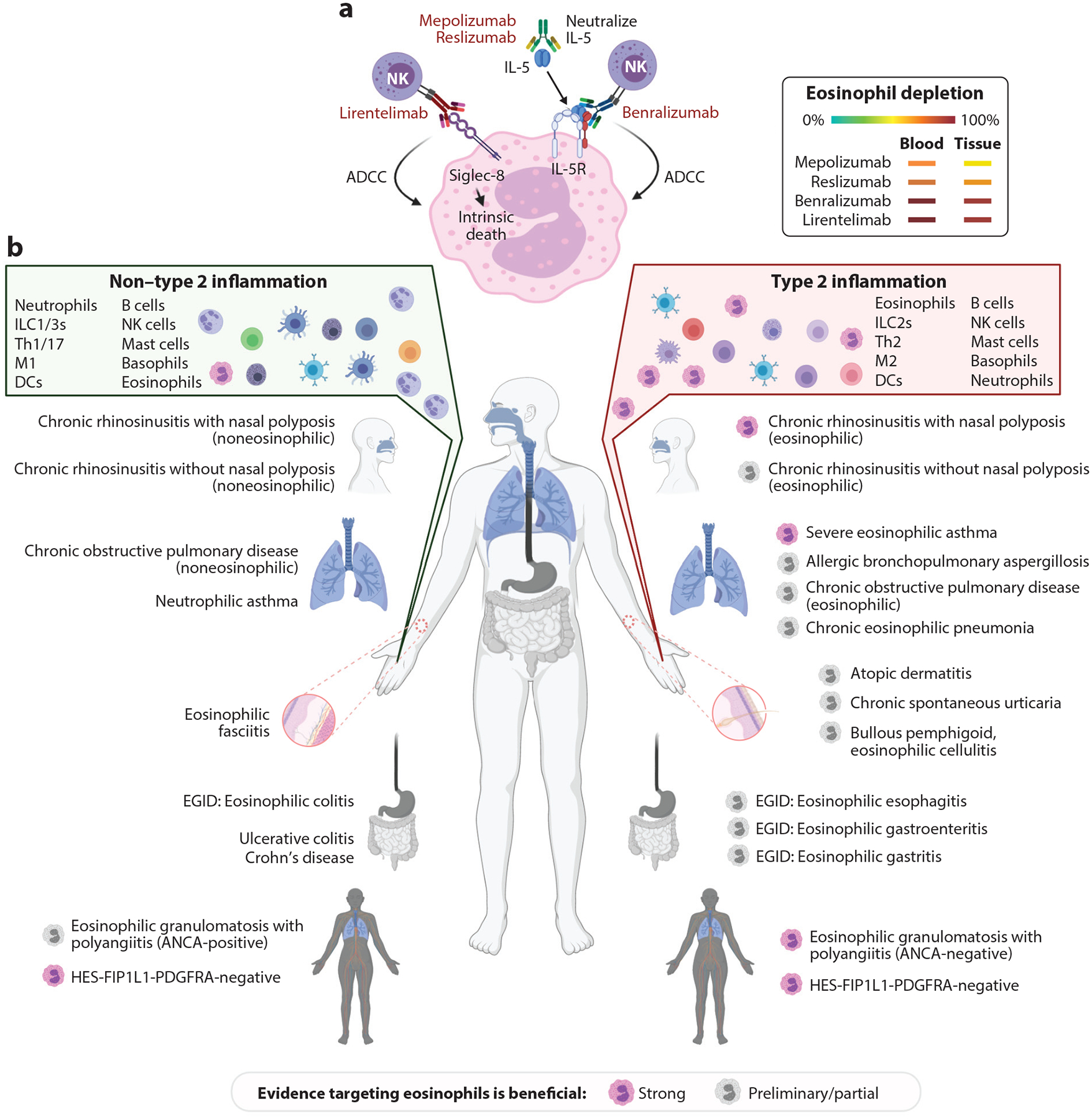
Monoclonal antibodies that target eosinophils and eosinophil-associated diseases. (a) Biologics that target eosinophils for depletion. Mepolizumab and reslizumab are monoclonal antibodies that neutralize IL-5, leading to inhibition of eosinophilopoiesis and impaired eosinophil activation and survival. Benralizumab is a monoclonal antibody that targets the IL-5Rα component. Benralizumab induces Fc-mediated killing by NK cells that mediate ADCC. Lirentelimab binds Siglec-8. This antibody induces intrinsic cell death and mediates ADCC. Eosinophil depletion that occurs in the blood or tissues is shown, with green representing no depletion and red representing complete depletion. (b) Eosinophil-associated diseases and their diversity. Eosinophils classically participate in type 2 diseases and also in non–type 2 diseases. Pathological responses may be eosinophil dependent or independent; in the latter case, other effector cells direct the disease phenotype. Pink eosinophils denote that substantial clinical studies demonstrate clear evidence of some benefit by antibodies targeting eosinophils. Gray eosinophils denote that preliminary clinical studies or a portion of the clinical study outcomes indicate that targeting eosinophils leads to improvement. Please note that studies indicating lack of response to anti-eosinophil therapy are not reflected in this figure. Please also note that HES is on both sides of the figure, as both type 2 and non–type 2 mechanisms are involved and are amenable to anti-eosinophil therapy. Abbreviations: ADCC, antibody-dependent cellular cytotoxicity; ANCA, antineutrophil cytoplasmic antibody; DC, dendritic cell; EGID, eosinophilic gastrointestinal disease; HES, hypereosinophilic syndrome; ILC2, group 2 innate lymphoid cell; M1 macrophage, classically activated macrophage; M2 macrophage, alternatively activated macrophage; NK, natural killer; Siglec-8, sialic acid–binding immunoglobulin-like lectin 8; Th1, T helper 1. Figure adapted from images created with BioRender.com.