


Table 1.
Effects of different estrogen and progesterone treatments on the adult hippocampal neurogenesis of mammals.
| Treatment | Model organism | Neuron proliferation | Neuron survival | Reference |
|---|---|---|---|---|
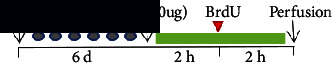
|
SD rats | ↑ | [58] | |
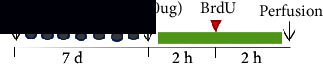
|
↑ | |||

|
SD rats | ↔ | [59] | |

|
↔ | |||

|
SD rats | ↓ | [60] | |

|
SD rats | ↑ | [61, 62] | |

|
SD rats | ↑ | [61, 63] | |

|
↑ | |||
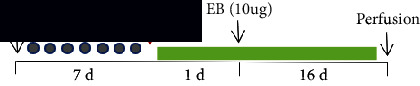
|
SD rats | ↑ | ↓ | [64] |

|
SD rats | ↔ | ↑ | [65] |

|
↔ | ↓ | ||

|
SD rats | ↔ | ↓ | [66] |

|
↔ | ↔ | ||

|
Wistar rats | ↔ | ↔ | [67] |

|
ICR mice | ↓ | ↓ | [31] |

|
↔ | |||

|
↑ | ↑ | ||

|
↑ |
Note: “OVX” indicates bilateral ovarian resection; the green bar indicates estrogen or estradiol benzoic acid; the red bar indicates estrone; the orange bar indicates progesterone; the purple bar indicates benzoic acid and progesterone. The up arrows indicate upregulation, the down arrows indicate downregulation, and the horizontal bars indicate no change. Abbreviations: E2: estradiol; BrdU: bromodeoxyuridine; EB: estradiol benzoate; FST: forced swimming test; P4: progesterone; SD rats: Sprague-Dawley rats.