


Table 4.
Analysis of asymmetry indices for each identified limb comparison.
| Index Calculation | Limb Comparison | |||||
|---|---|---|---|---|---|---|
| Involved/ Uninvolved | Dominant/ Nondominant | Right/Left | Stronger/ Weaker | Stance/Skill | ||
|
✓ | |||||
|
✓ | |||||
|
✓ | |||||
|
✓ | |||||
|
✓ | |||||
|
✓ | |||||
|
✓ | |||||
|
✓ | |||||
|
✓ | ✓ | ✓ | ✓ | ✓ | |
|
✓ | ✓ | ✓ | ✓ | ✓ | |
|
✓ | ✓ | ✓ | ✓ | ✓ | |
|
✓ | ✓ | ✓ | ✓ | ✓ | |
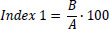
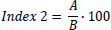





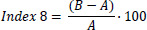

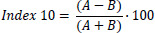

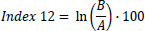
A = uninvolved, dominant, right, stronger, or stance/support limb value, and B = involved, nondominant, left, weaker, or skill/kicking limb value. Cells marked with a tick indicate that the calculation produces the same magnitude (ignoring direction) of asymmetry for scenario 2, when value A>B, as in scenario 3, when value A<B (i.e. the index works independent of which limb performs better). Blank cells indicate that the calculation produces different magnitudes (ignoring direction) of asymmetry for scenarios 2 and 3.