


Figure 8.
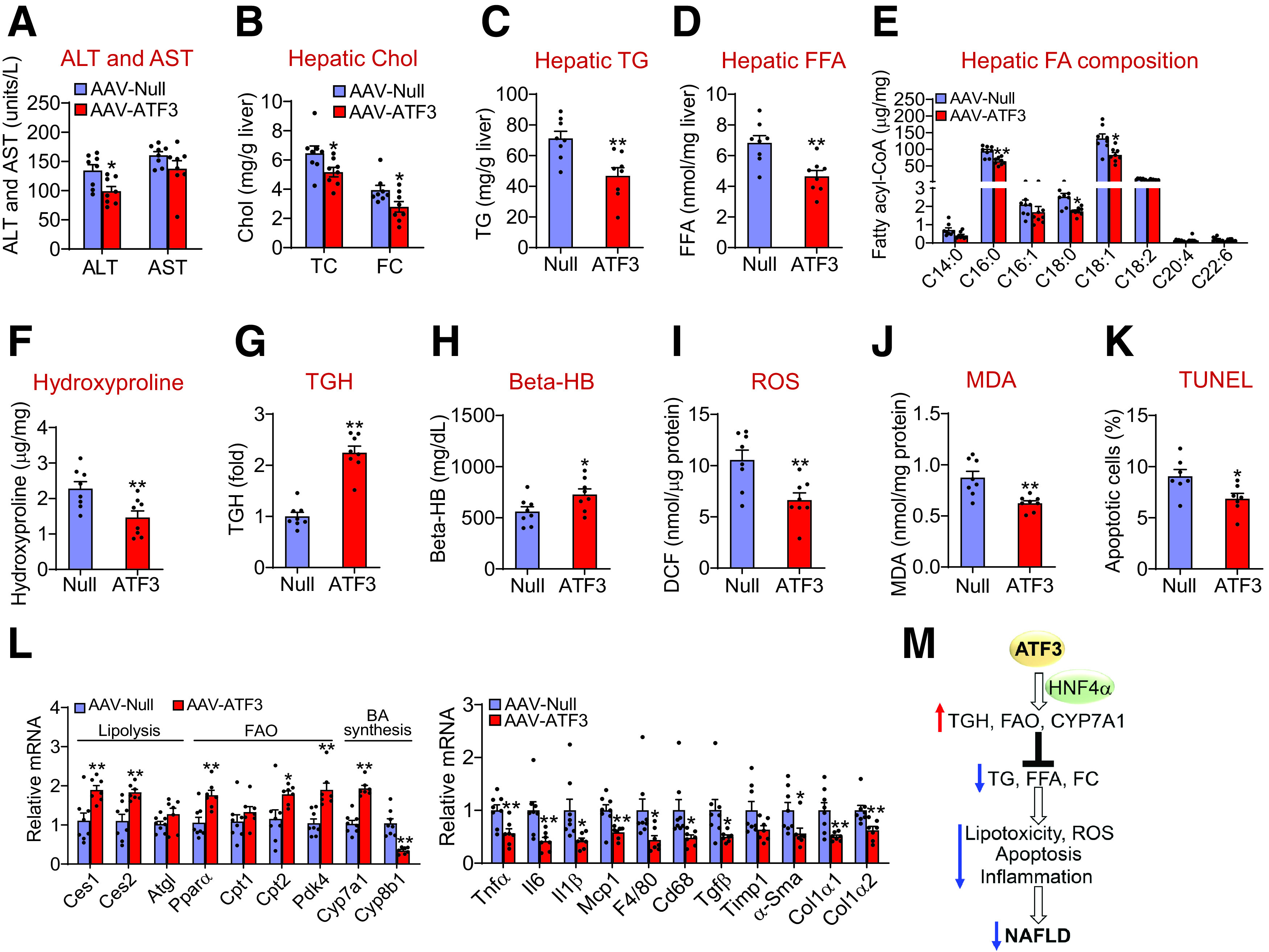
Overexpression of hepatic ATF3 reverses steatohepatitis in db/db mice A–L: db/db mice were i.v. injected with AAV8-ALB-Null or AAV8-ALB-ATF3 (n = 8). A: Plasma ALT and AST levels were quantified. Hepatic levels of cholesterol (Cho) (B), TG (C), FFAs (D), individual fatty acyl-CoAs (E), hydroxyproline (F), and TGH activity (G) were determined. Plasma β-HB levels (H) and hepatic levels of ROS (I), MDA (J), apoptosis (K), and mRNAs (L) were quantified. M: A model for hepatocytic ATF3 to regulate the development and progression of NAFLD. ATF3 in hepatocytes induces hepatic TGH activity, FAO, and CYP7A1 expression via HNF4α, leading to a reduction in hepatic levels of TG, FFA, and FC, which in turn decrease lipotoxicity, ROS production, apoptosis, and inflammation. As a result, hepatic ATF3 protects against the development and progression of NAFLD. All values are expressed as mean ± SEM. *P < 0.05, **P < 0.01.