


Figure 2: Environmental conditions initiating dispersion.
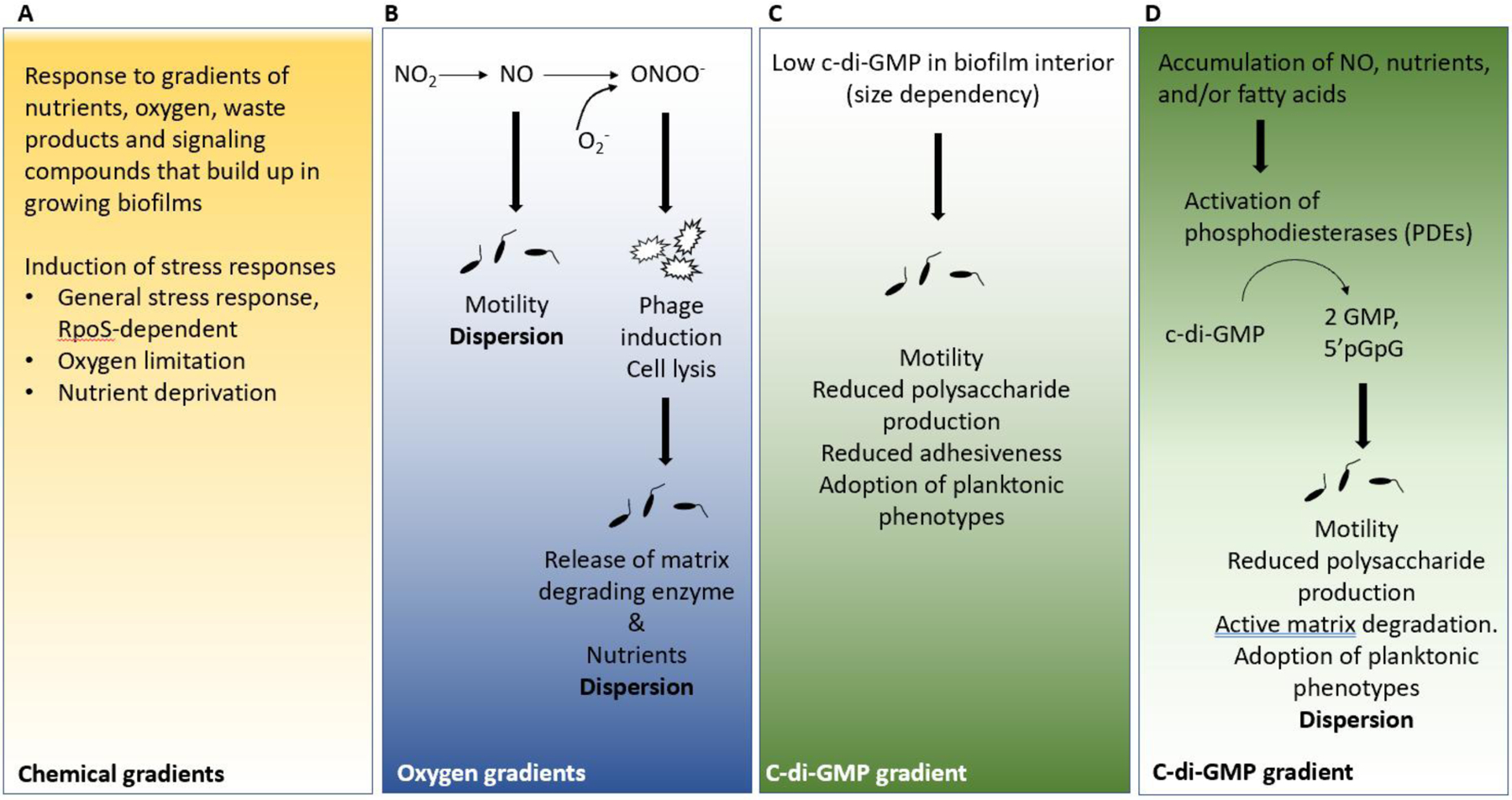
Each panel indicates various chemical gradients that are likely to be present in biofilms; low concentrations of those chemicals have been linked to dispersion. Moreover, phenotypic changes such as motility or induction of events that are triggered in response to the limited availability of compounds are shown. a) Bacteria residing at different locations within the biofilm structure experience concentration gradients of nutrient resources, oxygen, waste products and extracellular signaling molecules. Biofilm cells respond to these gradients by inducing various stress responses, such as the RpoS -dependent general stress response, as well as increased expression of genes involved in the response to oxygen limitation and nutrient deprivation. b) Under limiting oxygen conditions, such as found in the interior of the biofilm, anaerobic denitrification leads to the generation of nitric oxide (NO). Exposure to NO is linked to the reduction in cellular bis-(3’-5’)-cyclic dimeric guanosine monophosphate (c-di-GMP) levels and thus increased motility and dispersion. Furthermore, NO can react with superoxide to generate the cell-toxic radical ONOO–. ONOO– causes cellular damage, bacteriophage induction and cell lysis. Cell lysis results in the release of degradative enzymes that contribute to the enzyme-mediated breakdown of the biofilm matrix and/or loosening of the biofilm matrix. In addition, cell lysis generates nutrients for growth. c)-d) Levels of c-di-GMP vary throughout the biofilm, with the lowest levels being detected in the biofilm interior. Low c-di-GMP levels contribute to phenotypes generally associated with the planktonic mode of growth, including increased motility, increased drug susceptibility, but reduced adhesiveness and matrix production. Bacteria residing at different locations within the biofilm structure experience the accumulation of native dispersion cues including NO, cis-DA, and nutrients. Sensing of dispersion cues activates phosphodiesterases (PDEs) capable of degrading c-di-GMP, ultimately resulting in an overall reduction in the levels of c-di-GMP. Phenotypes associated with low c-di-GMP levels include increased motility, reduced adhesiveness, reduced matrix production and dispersion.