


Figure 2. Operational definitions for changes in the lupus nephritis response variables for use in the SSR.
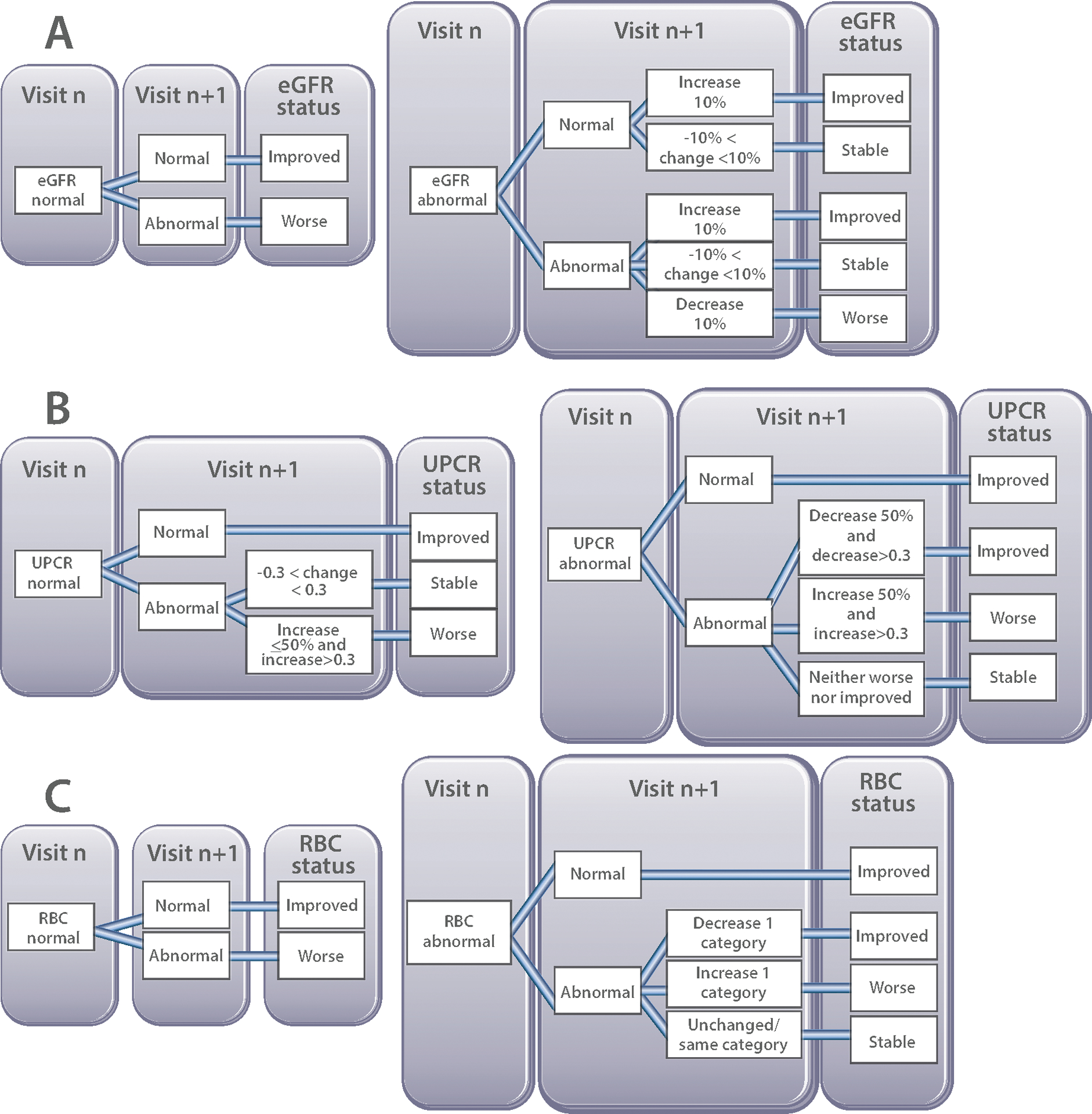
A: Estimated glomerular filtration rate (eGFR) of ≥95 ml/min/1.73 m2 was considered to be normal, and abnormal for eGFR values < 95 ml/min/1.73 m2, irrespective of patient age.
B: Values of the urine protein creatinine ratio (UPCR) from a random urine sample were considered normal for values ≤ 0.2 mg/mg and abnormal for values >0.2 mg/mg. Changes of the UPCR of ± 0.3 were deemed to represent stable proteinuria. Examples of changes of the UPCR between Visit 1 and Visit 2 and assessment of UPCR status are as follows: 0.5→0.25 (decrease by 50%, but decrease is <0.3, so UPCR is stable); 0.5→0.2 (UPCR normal); 0.5→0.8 (increase by >50% and increase by 0.3, so UPCR is worse); 0.5→0.75 (increase by 50%, but increase is <0.3, so UPCR is stable).
C: Only glomerular hematuria was considered when assessing urine microscopy, whereas pyuria and cellular casts were omitted. Five categories of glomerular hematuria measures in RBC/High Power Field (HPF) were defined as follows: normal: 0–5 RBC/HPF; mild: 6–10 RBC/HPF; moderate: 11–25 RBC/HPF; severe: 26–50 RBC/HPF; gross: >50 RBC/HPF.