



Abstract
Background
As of 10 October 2021, Vietnam has recorded 835,036 locally acquired Covid-19 cases including 20,520 fatalities. In response to the coronavirus illness outbreak Vietnam adopted a number of public health measures including contact tracing and testing mandatory quarantine and lockdowns. Lockdown measures during the Covid-19 pandemic are demonstrated to negatively impact psychological and mental health problems such as depression. However, the magnitude of these psychological impacts on Vietnamese during the epidemic has remained unknown.
Objectives
Thus, we have determined that it is necessary to perform this meta-analysis to better understand a comprehensive range of the prevalence of depression during the pandemic in Vietnam.
Methods
To find relevant articles we followed the PRISMA guidelines and searched MEDLINE Scopus and PubMed from their inception to October 01 2021 confined to English language publications. The Joanna Briggs Institute Critical Appraisal Checklist was used to determine the possibility of bias. We pooled the included studies using the Random effect model in MedCalc version 20.014. Cochran's Q heterogeneity test and I2 were used to determine statistical heterogeneity.
Results
Out of 110 articles 13 articles comprising of 27,216 participants were selected. Our meta-analysis revealed that the pooled prevalence of depression was 14.636% (95% CI: 11.521–18.054% I2 = 97.98% P < 0.0001). And depression is more prevalent among health workers than among non-health workers.
Conclusions
Our systematic review and meta-analysis revealed that the Vietnamese population was burdened by depression during the Covid-19 pandemic which we believe is a significant finding especially in healthcare workers. If these mental health disorders are not addressed promptly the community may suffer significant long-term mental social and economic consequences.
Keywords: Covid-19, Depression, Mental health, Vietnam
Introduction
The Coronavirus disease of 2019 (Covid-19) which is extremely infectious and the subsequent pandemic have been unparalleled in recent history with its effects being felt across all spheres of society and on the psychological aspect in particular [1]. For the purpose of combating the epidemic governments all over the globe implemented policies that seek to limit transmissions such as enforced preventative measures of self-isolation and national lockdowns of varying degree including in Vietnam. Lockdown measures had various effects the most prominent of which was that they dramatically reduced the mortality rate of Covid-19 as well as all of its morbidity. Nonetheless it is obvious the policy responses are having a wide-ranging influence on people's mental and social health in many nations regardless of their sociodemographic background [2].
Correspondingly research on the psychological implications of the coronavirus has increased significantly in recent years. Previous meta-analysis studies showed that there have been serious repercussions among the general population because of increased levels of anxiety sadness suicidal thoughts and (post-traumatic) stress, anxiety, depression as well as reduced psychological well-being and a high rate of sleep difficulties during the Covid-19 epidemic [3], [4]. Although many cross-sectional and longitudinal studies on the effect of the Covid-19 pandemic on depression have been reported in Vietnam lately, but no meta-analysis study for Vietnamese has been published.
Vietnam was rated third in a Covid Performance Index of almost 100 nations for its effective response to the coronavirus pandemic in 2020. The appearance of the Delta variant in May 2021 however has since strained the country's capacities to their breaking point. Within the context of Vietnam at the time of writing this article the authorities have mandated that people in major cities such as Ho Chi Minh City and Hanoi must remain at home unless absolutely necessary in light of the recent resurgence of the disease over the 100th day of a lockdown that has been in place since May 31. As of the 12th of September 2021, a total of 608,997 locally acquired lab-confirmed cases including 15,244 fatalities have been recorded during this wave [5].
In addition to physical consequences many have expressed concern about the possibility of a widespread worldwide mental health crisis as a result of the Covid-19 pandemic [6], [7]. Mental health and psychosocial disorders are pervasive and on the rise in Vietnam and despite some advances the service environment and response for Viet Nam remains generally insufficient [8]. Vietnam's mental health system governance is inadequate with institutional approaches to delivering official mental health services such as psychiatric hospitals and social safety centers but the patient was unable to live independently in society because they lack proper recovery time lack assistance from family members or other social networks or was without shelter [9]. Aside from that Vietnam is confronted with a paucity of and a poor quality of mental health professional resources. In this context the current national crisis resulting from Covid-19 will present challenges in the mental health care of whole communities that have been severely harmed by this catastrophe and which must be handled as a matter of priority as quickly as possible. It is essential to get a better understanding of the effects of pandemics and associated lockdowns on mental health in order to guide future treatments and educate policymakers. Thus, we conducted a comprehensive meta-analysis that combined the results of 13 separate studies and evaluated how common depression was in Vietnam population during the Covid-19 pandemic.
Methods
Search strategy and study selection
This meta-analysis followed the Preferred Reporting Items for Systematic Reviews and Meta-Analyses guidelines (PRISMA) [10]. We performed an electronic search of MEDLINE Scopus and PubMed for English language papers published between the inception of the database and October 1 2020. Titles abstracts and keywords containing any of the following search terms in their singular or plural form were screened for inclusion: “Mental health”, “Depression”, “Vietnamese” and “Covid-19”.
The following criteria were used to select research articles for inclusion in this review: (1) participants who are based in Vietnam; (2) an original paper that has been published or approved for publication in a peer-reviewed journal; (3) a cross-sectional or longitudinal design in which baseline data are collected; (4) measuring mental health outcomes including depression using a validated instrument; (5) Each outcome is represented by point prevalence statistics; (6) The study is conducted during the Covid-19 pandemic.
We did not include reviews editorials books book chapters or comments in our research. Aside from that publications containing data relating to a mix of various mental illnesses were eliminated as were articles with an irrelevant clinical research emphasis. Articles were omitted if necessary, information was not included.
Data extraction
The selection of studies and the extraction of data were carried out separately by two reviewers (TQD and VTQC). Any disputes between the two reviewers were addressed via the involvement of a third reviewer (PNQ). We started by reviewing the titles and abstracts of publications retrieved from the search. We were able to get the full texts of all publications that may have been relevant to our investigation. Following that once they had been deduplicated all unique citations were individually evaluated by three review authors. A scrupulous examination was also carried out on the reference lists of the publications that had been included. Two authors extracted data from chosen publications in order to fill the a priori constructed table which included the following columns: Name of the first author year of publication survey time period number of participants sample size proportion of males and females average age prevalence of depression instruments used to evaluate these mental illnesses and methodology.
Assessment of risk of bias
The relevant studies were determined in terms of title and content, the JBI Critical Appraisal Checklist for Studies Reporting Prevalence Data was reviewed and the results are provided. These criteria comprise nine categories, including the use of an appropriate sample frame, sampling method, sample size, detailed description of subjects, sample coverage, method validity, measurement validity, and statistical analysis techniques, as well as the generalizability of results. Each criteria was answered by “Yes” (scored as 1), “No” or “Unclear” or “Not applicable” (scored as 0). The overall quality of each study was evaluated, and studies were divided into three categories: low level of quality (0–3), moderate level of quality (4–6), and high level of quality (7–9). The meta-analysis included only moderate-to high-quality studies.
The Joanna Briggs Institute's internal working group developed the JBI critical evaluation tool in 2014, which has been proved to be well-accepted by users, and the instrument has been refined further based on their comments [11]. Until 2020, the JBI critical assessment is recommended based on the findings of systematic reviews of prevalence data, which established that the instrument has been formally evaluated and is increasingly being used in these types of investigations [12].
Mental health outcomes
The prevalence of depression was the primary outcomes of this systematic study. Clinical interviews or self-administered questionnaires/tools were used to identify these disorders which were conducted either online or in- person to gather information. To adhere to quarantine regulations and social distancing guidelines the majority of participants were assessed using self-rated electronic assessment tools with high reliability and validity such as the self- rating depression scale (SDS) the patient health questionnaire-9 (PHQ-9) and the generalized anxiety disorder scale (GAD).
Data synthesis and statistical analyses
MedCalc Statistical Software version 20.014 was used to conduct all data analysis. The Cochran's Q I2 and H statistics were used to determine heterogeneity across studies with an I2 of more than 75% indicating significant heterogeneity. Because we anticipated the significant heterogeneity that would be present in our analysis, a random-effects model was adopted to considers both sample size and the overall quality of study [13]. The asymmetry of the funnel plot was determined via the application of Egger's and Begg's tests. Because of the asymmetry in the funnel plot Egger's regression test and Begg's rank correlation test (P < 0.05) both suggested publication or small study bias.
Results
Studies selection
We retrieved 110 citations from MEDLINE, Scopus, and PubMed published between the inception of the database and October 1, 2020. Ninety-seven publications were excluded due to duplicate publication, review articles, did not focus on mental or psychological health, did not evaluate depression, or did not report point prevalence for the outcomes of interest. We included 13 studies with a total of 27,216 participants [14], [15], [16], [17], [18], [19], [20], [21], [22], [23], [24], [25], [26]. Fig. 1 shows the study selection process.
Figure 1.

PRISMA Flowchart of citations selection.
Study features inclusion and quality assessment
The quality of the systematic reviews included in this analysis had low risk of bias, with no systematic studies evaluated as low or intermediate in quality, and so none were excluded from consideration due to quality issues. On a scale of nine, scores ranged from seven to nine, with nine being the highest possible. Table 1 includes methodological quality evaluations, as well as the results of those evaluations. Despite the fact that the majority of studies use appropriate statistical procedures, proper sample sizes, and low nonrespondent rates, a small number of studies did not adequately identify individuals and settings or performed data analysis with insufficient coverage of the defined sample.
Table 1.
JBI critical appraisal checklist for studies reporting prevalence data.
| No. | Author | Sample frame to address the target population? | Participants sampled appropriately | Sample size adequate? | Study subjects and setting described | Data analysis conducted with sufficient coverage of the identified sample? | Valid methods identify if the condition? | Condition measured in a standard, reliable way? | Appropriate statistical analysis? | The response rate | Response rate |
|---|---|---|---|---|---|---|---|---|---|---|---|
| 1 | Huong Thi Le 2020 [13] | 1 | 1 | 1 | 1 | 1 | 1 | 1 | 1 | 1 | 9 |
| 2 | Minh H Nguyen 2021 [14] | 1 | 1 | 1 | 1 | 1 | 1 | 1 | 1 | 1 | 9 |
| 3 | Khanh Ngoc Cong Duong 2020 [18] | 1 | 1 | 1 | 0 | 1 | 1 | 1 | 1 | 1 | 8 |
| 4 | Cuong Do Duy 2020 [19] | 1 | 1 | 1 | 0 | 0 | 1 | 1 | 1 | 1 | 7 |
| 5 | Binh N Do 2020 [20] | 1 | 1 | 1 | 1 | 1 | 1 | 1 | 1 | 1 | 9 |
| 6 | Vu Thi Hoang Lan 2021 [21] | 1 | 1 | 1 | 0 | 0 | 1 | 1 | 1 | 1 | 7 |
| 7 | Catherine Porter 2021 [22] | 1 | 1 | 1 | 0 | 0 | 1 | 1 | 1 | 1 | 7 |
| 8 | Tien V Tran 2020 [23] | 1 | 1 | 1 | 1 | 1 | 1 | 1 | 1 | 1 | 9 |
| 9 | Hung Manh Than 2020 [24] | 1 | 1 | 1 | 1 | 1 | 1 | 1 | 1 | 1 | 9 |
| 10 | Hoang C. Nguyen 2020 [25] | 1 | 1 | 1 | 1 | 1 | 1 | 1 | 1 | 1 | 9 |
| 11 | Nguyen Quang Tuan 2021 [15] | 1 | 1 | 1 | 1 | 1 | 1 | 1 | 1 | 1 | 9 |
| 12 | La Ngoc Quang 2021 [16] | 1 | 1 | 1 | 0 | 1 | 1 | 1 | 1 | 1 | 8 |
| 13 | Lan Hoang Thị Quynh 2020 [17] | 1 | 1 | 1 | 0 | 0 | 1 | 1 | 1 | 1 | 7 |
| Yes | 1 | ||||||||||
| No | 0 | ||||||||||
| Unclear | 0 | ||||||||||
| Not applicable | 0 | ||||||||||
Included study characteristics and quality assessment prevalence of depression
Among eligible studies the pooled overall prevalence of depression among Vietnamese impacted by the Covid-19 pandemic using the random-effect model was 14.636% (n = 27,216 participants 95% CI: 11.521–18.054% and 13 studies). As shown by the I2 index which was estimated to be 97.98% and the Chi2 findings there was high and significant heterogeneity across the studies (P < 0.001) as shown in Table 2 and the Appendix (see supplementary materials associated with this article on line).
Table 2.
In general. The overall prevalence of depression among general population
| Study | Sample size | Proportion (%) | 95% CI | Weight (%) |
||
|---|---|---|---|---|---|---|
| Fixed | Random | |||||
| Huong Thi Le 2020 [13] | 1382 | 8.538 | 7.118 to 10.138 | 5.08 | 8.14 | 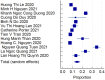 |
| Minh H Nguyen 2021 [14] | 8291 | 12.459 | 11.756 to 13.189 | 30.45 | 8.32 | |
| Khanh Ngoc Cong Duong 2020 [18] | 1385 | 23.466 | 21.256 to 25.789 | 5.09 | 8.14 | |
| Cuong Do Duy 2020 [19] | 61 | 13.115 | 5.836 to 24.216 | 0.23 | 5.21 | |
| Binh N Do 2020 [20] | 928 | 13.362 | 11.238 to 15.722 | 3.41 | 8.04 | |
| Vu Thi Hoang Lan 2021 [21] | 373 | 12.064 | 8.937 to 15.808 | 1.37 | 7.60 | |
| Catherine Porter 2021 [22] | 2296 | 9.495 | 8.326 to 10.768 | 8.44 | 8.23 | |
| Tien V Tran 2020 [23] | 7124 | 7.875 | 7.260 to 8.525 | 26.17 | 8.32 | |
| Hung Manh Than 2020 [24] | 173 | 20.231 | 14.515 to 26.997 | 0.64 | 6.88 | |
| Hoang C. Nguyen 2020 [25] | 3947 | 7.449 | 6.649 to 8.312 | 14.50 | 8.28 | |
| Nguyen Quang Tuan 2021 [15] | 611 | 34.697 | 30.923 to 38.620 | 2.25 | 7.88 | |
| La Ngoc Quang 2021 [16] | 341 | 23.167 | 18.793 to 28.015 | 1.26 | 7.53 | |
| Lan Hoang Thị Quynh 2020 [17] | 304 | 13.487 | 9.855 to 17.849 | 1.12 | 7.44 | |
| Total (random effects) | 27216 | 14.636 | 11.521 to 18.054 | 100.00 | 100.00 | |
As indicated in Table 3 and Table 4 and the Appendix (see supplementary materials associated with this article on line), we compared health workers (physicians, nurses, and medical students) against non-health workers. And the result showed that health worker (17.3%, n = 8,987 participants 95% CI: 9.210 to 27.283% and 7 studies) had higher prevalence of depression than non-health worker (12.040%, n = 18,229 participants 95% CI: 8.659 to 15.889% and 6 studies), with significant heterogeneity between studies of these subgroup (I2=98.22% and I2=98%, respectively, P < 0.001), as shown in the Appendix (see supplementary materials associated with this article on line).
Table 3.
In health worker. Forest plot for the prevalence of depression among health workers
| Study | Sample size | Proportion (%) | 95% CI | Weight (%) |
||
|---|---|---|---|---|---|---|
| Fixed | Random | |||||
| Nguyen Quang Tuan 2021 [15] | 611 | 34.697 | 30.923 to 38.620 | 6.80 | 14.67 |  |
| La Ngoc Quang 2021 [16] | 341 | 23.167 | 18.793 to 28.015 | 3.80 | 14.49 | |
| Lan Hoang Thị Quynh 2020 [17] | 304 | 13.487 | 9.855 to 17.849 | 3.39 | 14.44 | |
| Cuong Do Duy 2020 [19] | 61 | 13.115 | 5.836 to 24.216 | 0.69 | 12.87 | |
| Tien V Tran 2020 [23] | 7124 | 7.875 | 7.260 to 8.525 | 79.22 | 14.89 | |
| Vu Thi Hoang Lan 2021 [21] | 373 | 12.064 | 8.937 to 15.808 | 4.16 | 14.53 | |
| Hung Manh Than 2020 [24] | 173 | 20.231 | 14.515 to 26.997 | 1.93 | 14.11 | |
| Total (random effects) | 8987 | 17.300 | 9.210 to 27.283 | 100.00 | 100.00 | |
Table 4.
In non-health worker. Forest plot for the prevalence of depression among non-health workers.
| Study | Sample size | Proportion (%) | 95% CI | Weight (%) |
||
|---|---|---|---|---|---|---|
| Fixed | Random | |||||
| Huong Thi Le 2020 [13] | 1382 | 8.538 | 7.118 to 10.138 | 7.58 | 16.52 | 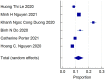 |
| Minh H Nguyen 2021 [14] | 8291 | 12.459 | 11.756 to 13.189 | 45.47 | 17.04 | |
| Khanh Ngoc Cong Duong 2020 [18] | 1385 | 23.466 | 21.256 to 25.789 | 7.60 | 16.52 | |
| Binh N Do 2020 [20] | 928 | 13.362 | 11.238 to 15.722 | 5.09 | 16.23 | |
| Catherine Porter 2021 [22] | 2296 | 9.495 | 8.326 to 10.768 | 12.60 | 16.77 | |
| Hoang C. Nguyen 2020 [25] | 3947 | 7.449 | 6.649 to 8.312 | 21.65 | 16.93 | |
| Total (random effects) | 18229 | 12.040 | 8.659 to 15.889 | 100.00 | 100.00 | |
Publication Bias
There was no evidence of a funnel plot for asymmetry in the assessments of publication bias. Additionally, the Egger's-tests did not show a significant difference for the small study effect of depression (P-value > 0.05) (as shown in the Appendix (see supplementary materials associated with this article on line).
Discussion
A novel Coronavirus has affected Vietnam and the rest of the globe and it is still spreading. The rapid spread of this virus has led to significant public health issues including mental disorders as depression. This systematic review and meta-analysis assessed the current incidence of depression in Vietnam during the Covid-19 pandemic by combining data from 13 cross- sectional studies including a total of 27,216 individuals. Our findings indicate that the overall prevalence of depression is 14.636% among Vietnamese who were affected by the Covid-19 pandemic.
According to the findings the general population in Vietnam may have struggled with their mental health. The prevalence of depression in our result was 6 times higher than National Mental Hospital data in Vietnam showed that 14.2% of the population suffered from 10 common mental diseases with depression accounting for 2.45% of the total [27]. Additionally, depressive disorders were more common in Vietnam during the pandemic than predicted given WHO statistics estimates of 5% of the adult population being depressed before the pandemic [28]. The result is much lower than those reported in numerous previous systematic reviews published in different demographic groups but similar trending. For instance a meta-analysis of 30 nations from 1994 to 2014 found a depression of prevalence was 12.9% however a systematic review conducted in the general population during the Covid-19 pandemic in eight nations found a worldwide prevalence of depressed symptoms of 21.4% which is the number of people suffering from depression was greater than what had been recorded prior to the Covid-19 outbreak [[4], [29]].
Besides that, our study also found that healthcare workers had a higher depression percentage than non-healthcare workers (17.3% and 12.04%, respectively). A research in South Asia found a 25.7% incidence of depression among 476 health service personnel [30], including physicians, nurses, and paramedical staff, and a few additional studies corroborated the findings [31]. A study in Asia-Pacific highlights that the varied prevalence of psychological is likely high among healthcare workers. However, these results are independent of the burden of Covid-19 cases within each country [32]. Another study demonstrated a significant association between the prevalence of physical symptoms and psychological outcomes among healthcare workers during the Covid-19 outbreak [33]. This might be because of the close physical contact that healthcare staff have with patients on wards and diagnostic tests, such as nose swab collection, which puts them at a higher risk of infection. Individuals who worked on a set schedule were more likely to acquire depression than those who worked on a flexible timetable. This is feasible, given healthcare workers who receive adequate rest and family time may cope effectively with the crisis. Additionally, other research in China found that increasing contact with afflicted individuals was related with a significantly higher risk of adverse psychological outcomes [34]. Similarly, a research conducted in Pakistan discovered a significant incidence of depression and high rates of depressive symptoms among frontline physicians during the COVID–19 epidemic [35]. Depression symptoms among physicians may have been exacerbated by increased work-related stress as a result of the health system's severe strain and heightened thoughts of damage to their own health [36]. The research on the psychological health of surgeons emphasizes that the long-term impact of this ongoing traumatic event underscores the importance of longitudinal mental health care for healthcare personnel [37]. Depression is produced by a response to a life-threatening circumstance, as evidenced by the literature and prior outbreaks such as SARS [38], [39].
Based on the results, we found that some methods can help the Vietnamese overcome depression during the Covid-19 pandemic, such as using cognitive behavior therapy to treat psychiatric symptoms [40]. However, the costs associated with such an implementation have been known to be high. As you know, Moodle, an open-source learning platform, could be used instead as a cost-effective method to implement and deliver such forms of therapy [41]. In addition, the government recognizes the importance of local organizations and promotes intersectoral collaboration in epidemic preparedness and response at grassroots levels, which leads to performing well in health communication and education at agencies, schools, and other localities [42].
Nevertheless, we are aware of several limitations in our research. First the included studies were implemented in a variety of settings and the disproportionately impacts of Covid-19 among studies and the flexible of preventative strategies at different stages of the pandemic and situations varies between studies resulting in substantial heterogeneity. Nevertheless, a random-effects model was used to solve the observed heterogeneity. Second the utilize of different scales to evaluate depression was a significant contributor to a major source of the heterogeneity. Third whilst there is evidence of significant statistical heterogeneity present it has not been addressed by statistic method which meta-analysis on prevalence focusing such as subgroup analyses sensitivity analyses or meta-regressions. Fourth, we did not use the double arcsine transformed proportions to stabilize the variance, which is one of the major limitations of our meta-analysis. In general, meta-analyses of prevalence use inverse variance methods, which cause the variance to become very small when the prevalence is small or large. As a result, our estimate of depression prevalence may have a more considerable weight in the meta-analysis model. Finally, the results may not be representative of its population due to rather than using a stratified or random sample approach typically most included studies recruited participants by convenience sampling limiting the generalizability of our findings as a consequence.
It is abundantly evident that the Covid-19 epidemic will have a long-term negative impact on mental health in Vietnam and worldwide. Hence, the mental healthcare needs of the Vietnamese population will continue to rise for the foreseeable future. However, before embarking on a community intervention program, it is imperative that we conduct discovery research studies to uncover previously unknown factors. Therefore, a future study in Vietnam should concentrate on the long-term repercussions of the pandemic. Additionally, relevant risk and protective factors for the community's mental health should be investigated to preserve more precisely target interventions.
Conclusion
This systematic review and meta-analysis were conducted to determine the prevalence of depression in the general population during the Covid-19 crisis. Our findings suggest that 14.636% of Vietnamese people experience depression and there is evidence that the Covid-19 pandemic has had a significant psychological toll on healthcare professionals as compared to non-healthcare employees. To the current literature our research contributes to the knowledge on how acute consequences of Covid-19 affect the population's mental health in the pandemic. The significance of mental health during the Covid-19 pandemic has also been emphasized and it is hoped that organizations and government policies would address this issue in the future to enable a more comprehensive and timely response during a pandemic. Also important is the deployment of studies to evaluate the long-term psychosocial effects of the pandemic in order to mobilize better development of appropriate treatments and the preparation of mental health and social care services to meet the needs of healthcare professionals patients and the general public who may require these services in the aftermath of Covid-19.
Human and animal rights
The authors declare that the work described has not involved experimentation on humans or animals.
Informed consent and patient details
The authors declare that this report does not contain any personal information that could lead to the identification of the patient(s) and/or volunteers.
Disclosure of Interests
The authors declare that they have no competing interest.
Funding
This work did not receive any grant from funding agencies in the public, commercial, or not-for-profit sectors.
Authors’ contributions
All authors attest that they meet the current International Committee of Medical Journal Editors (ICMJE) criteria for Authorship. Individual author contributions are as follows:
The initiative was launched thanks to TQD's idea and action. The development of the search technique was coordinated by TQD, VTQC and PNQ. The initial draft was finished by TQD and VTQC. All authors provided critical feedback on and then approved the final draft.
Availability of data and materials
All data regarding this research work is included in the manuscript.
Ethical approval
This paper did not go through an ethical review since this was a literature review of already published studies, and no new data was acquired.
Footnotes
Supplementary materials (Appendix) associated with this article can be found at http://www.scincedirect.com at https://doi.org/10.1016/j.jemep.2022.100806.
Online Supplement. Supplementary data
References
- 1.World Health Organization . 2021. Mental health & Covid-19 [Internet] Available from: https://www.who.int/teams/mental-health-and-substance-use/mental-health-and-covid-19. [Google Scholar]
- 2.Berg-Weger M., Morley J.E. Editorial: loneliness and social isolation in older adults during the Covid-19 pandemic: implications for gerontological social work. J Nutr Health Aging. 2020;24:456–458. doi: 10.1007/s12603-020-1366-8. [DOI] [PMC free article] [PubMed] [Google Scholar]
- 3.Wu T., Jia X., Shi H., Niu J., Yin X., Xie J., et al. Prevalence of mental health problems during the Covid-19 pandemic: A systematic review and meta-analysis. J Affect Disord. 2021;281:91–98. doi: 10.1016/j.jad.2020.11.117. [DOI] [PMC free article] [PubMed] [Google Scholar]
- 4.Xiong J., Lipsitz O., Nasri F., Lui L.M.W., Gill H., Phan L., et al. Impact of Covid-19 pandemic on mental health in the general population: A systematic review. J Affect Disord. 2020;277:55–64. doi: 10.1016/j.jad.2020.08.001. [DOI] [PMC free article] [PubMed] [Google Scholar]
- 5.World Health Organization, Vietnam Ministry of Health . Hanoi; 2021. Covid-19 in Viet Nam Situation Report 59 [Internet] Available from: https://www.who.int/vietnam/internal-publications-detail/covid-19-in-viet-nam-situation-report-59. [Google Scholar]
- 6.Holmes E.A., O’Connor R.C., Perry V.H., Tracey I., Wessely S., Arseneault L., et al. Multidisciplinary research priorities for the Covid-19 pandemic: a call for action for mental health science. Lancet Psychiatry. 2020;7:547–560. doi: 10.1016/S2215-0366(20)30168-1. [DOI] [PMC free article] [PubMed] [Google Scholar]
- 7.Torales J., O’Higgins M., Castaldelli-Maia J.M., Ventriglio A. The outbreak of Covid-19 coronavirus and its impact on global mental health. Int J Soc Psychiatry. 2020;66:317–320. doi: 10.1177/0020764020915212. [DOI] [PubMed] [Google Scholar]
- 8.VietNam UNICEF . 2018. The lack of mental health services in remote areas of Viet Nam leaves children and young people in need helpless. [Internet] Available from: https://www.unicef.org/vietnam/press-releases/lack-mental-health-services-remote-areas-viet-nam-leaves-children-and-young-people. [Google Scholar]
- 9.Nguyen T., Tran T., Tran H., Tran T., Fisher J. In: Challenges in integrating mental health into primary care in Vietnam BT - Innovations in Global Mental Health. Okpaku S., editor. Springer International Publishing; Cham: 2019. pp. 1–21. Available from: https://doi.org/10.1007/978-3-319-70134-9_74-1. [Google Scholar]
- 10.Moher D., Liberati A., Tetzlaff J., Altman D.G. Preferred reporting items for systematic reviews and meta-analyses: the PRISMA statement. BMJ. 2009;339:b2535. doi: 10.1136/bmj.b2535. [DOI] [PMC free article] [PubMed] [Google Scholar]
- 11.Munn Z., Moola S., Riitano D., Lisy K. The development of a critical appraisal tool for use in systematic reviews addressing questions of prevalence. Int J Heal policy Manag. 2014;3:123–128. doi: 10.15171/ijhpm.2014.71. [DOI] [PMC free article] [PubMed] [Google Scholar]
- 12.Borges Migliavaca C., Stein C., Colpani V., Barker T.H., Munn Z., Falavigna M., et al. How are systematic reviews of prevalence conducted?. A methodological study. BMC Med Res Methodol. 2020;20:96. doi: 10.1186/s12874-020-00975-3. [DOI] [PMC free article] [PubMed] [Google Scholar]
- 13.Loh A.Z.H., Tan J.S.Y., Tam J.K.C., Zhang M.W., Ho C.S.H., Ho R.C. Postoperative psychological disorders among heart transplant recipients: a meta-analysis and meta-regression. Psychosom Med. 2020;82:689–698. doi: 10.1097/PSY.0000000000000833. [DOI] [PubMed] [Google Scholar]
- 14.Le H.T., Lai A.J.X., Sun J., Hoang M.T., Vu L.G., Pham H.Q., et al. Anxiety and depression among people under the nationwide partial lockdown in Vietnam. Front public Heal. 2020;8:589359. doi: 10.3389/fpubh.2020.589359. [DOI] [PMC free article] [PubMed] [Google Scholar]
- 15.Nguyen M.H., Pham T.T.M., Pham L.V., Phan D.T., Tran T.V., Nguyen H.C., et al. Associations of underlying health conditions with anxiety and depression among outpatients: modification effects of suspected Covid-19 symptoms, health-related and preventive behaviors. Int J Public Health. 2021;66:634904. doi: 10.3389/ijph.2021.634904. [DOI] [PMC free article] [PubMed] [Google Scholar]
- 16.Tuan N.Q., Phuong N.D., Co D.X., Son D.N., Chinh L.Q., Dung N.H., et al. Prevalence and factors associated with psychological problems of healthcare workforce in Vietnam: Findings from Covid-19 hotspots in the national second wave. Healthcare. 2021;9:718. doi: 10.3390/healthcare9060718. [DOI] [PMC free article] [PubMed] [Google Scholar]
- 17.Quang L.N., Kien N.T., Anh P.N., Anh D.T., Van, Nghi T.D.B., et al. The level of expression of anxiety and depression in clinical health care workers during the Covid-19 outbreak in 2 hospitals in Hanoi. Vietnam. Heal Serv Insights. 2021:14. doi: 10.1177/11786329211033245. [DOI] [PMC free article] [PubMed] [Google Scholar]
- 18.Hoang Thi Quynh Lan, Nguyen Tien Long NVH Validation of depression, anxiety and stress scales (DASS-21): Immediate psychological responses of students in the e-learning environment. Int J High Educ. 2020;9:125–133. [Google Scholar]
- 19.Dominguez-Rodriguez A., Hendriks T., Ngoc Cong Duong K., Nguyen Le Bao T., Thi Lan Nguyen P., Vo Van T., et al. Psychological impacts of Covid-19 during the first nationwide lockdown in Vietnam: web-based, cross-sectional survey study. JMIR Form Res. 2020;4:e24776. doi: 10.2196/24776. [DOI] [PMC free article] [PubMed] [Google Scholar]
- 20.Do Duy C., Nong V.M., Ngo Van A., Doan Thu T., Do Thu N., Nguyen Quang T. Covid-19-related stigma and its association with mental health of health-care workers after quarantine in Vietnam. Psychiatry Clin Neurosci. 2020;74:566–568. doi: 10.1111/pcn.13120. [DOI] [PMC free article] [PubMed] [Google Scholar]
- 21.Do B.N., Nguyen P.-A., Pham K.M., Nguyen H.C., Nguyen M.H., Tran C.Q., et al. Determinants of health literacy and its associations with health-related behaviors, depression among the older people with and without suspected covid-19 symptoms: a multi-institutional study. Front Public Heal. 2020;8:581746. doi: 10.3389/fpubh.2020.581746. [DOI] [PMC free article] [PubMed] [Google Scholar]
- 22.Lan V.T.H., Dzung L.T., Quyen B.T.T., Nha P.B., Linh N.T., Hoang L.T., et al. Impact of central quarantine inside a lockdown hospital due to covid-19 pandemic on psychological disorders among health care staffs in central hospitals of Hanoi, Vietnam, 2020. Heal Serv Insights. 2021:14. doi: 10.1177/1178632921999662. [DOI] [PMC free article] [PubMed] [Google Scholar]
- 23.Porter C., Favara M., Hittmeyer A., Scott D., Sánchez Jiménez A., Ellanki R., et al. Impact of the Covid-19 pandemic on anxiety and depression symptoms of young people in the global south: evidence from a four-country cohort study. BMJ Open. 2021;11:e049653. doi: 10.1136/bmjopen-2021-049653. [DOI] [PMC free article] [PubMed] [Google Scholar]
- 24.Tran T.V., Nguyen H.C., Pham L.V., Nguyen M.H., Nguyen H.C., Ha T.H., et al. Impacts and interactions of Covid-19 response involvement, health-related behaviours, health literacy on anxiety, depression and health-related quality of life among healthcare workers: a cross-sectional study. BMJ Open. 2020;10:e041394. doi: 10.1136/bmjopen-2020-041394. [DOI] [PMC free article] [PubMed] [Google Scholar]
- 25.Manh Than H., Minh Nong V., Trung Nguyen C., Phu Dong K., Ngo H.T., Thu Doan T., et al. Mental health and health-related quality-of-life outcomes among frontline health workers during the peak of Covid-19 outbreak in Vietnam: a cross-sectional study. Risk Manag Healthc Policy. 2020;13:2927–2936. doi: 10.2147/RMHP.S280749. [DOI] [PMC free article] [PubMed] [Google Scholar]
- 26.Nguyen H.C., Nguyen M.H., Do B.N., Tran C.Q., Nguyen T.T.P., Pham K.M., et al. People with suspected Covid-19 symptoms were more likely depressed and had lower health-related quality of life: the potential benefit of health literacy. J Clin Med. 2020;9:965. doi: 10.3390/jcm9040965. [DOI] [PMC free article] [PubMed] [Google Scholar]
- 27.World Health Organization . 2014. Mental health in Viet Nam [Internet] Available from: https://www.who.int/vietnam/health-topics/mental-health. [Google Scholar]
- 28.Global Health Data Exchange . 2019. Institute of Health Metrics and Evaluation [Internet] Available from: http://ghdx.healthdata.org/gbd-results-tool?params=gbd-api-2019-permalink/d780dffbe8a381b25e1416884959e88b. [Google Scholar]
- 29.Lim G.Y., Tam W.W., Lu Y., Ho C.S., Zhang M.W., Ho R.C. Prevalence of depression in the community from 30 countries between 1994 and 2014. Sci Rep. 2018;8:2861. doi: 10.1038/s41598-018-21243-x. [DOI] [PMC free article] [PubMed] [Google Scholar]
- 30.Saeed R., Amin F., Talha M., Randenikumara S., Shariff I., Durrani N., et al. Covid-19 pandemic prevalence and risk factors for depression among health care workers in South Asia. Asia-Pacific J Public Heal. 2021;33:935–939. doi: 10.1177/10105395211002324. [DOI] [PubMed] [Google Scholar]
- 31.Lai J., Ma S., Wang Y., Cai Z., Hu J., Wei N., et al. Factors associated with mental health outcomes among health care workers exposed to coronavirus disease 2019. JAMA Netw Open. 2020;3:e203976. doi: 10.1001/jamanetworkopen.2020.3976. [DOI] [PMC free article] [PubMed] [Google Scholar]
- 32.Chew N.W.S., Ngiam J.N., Tan B.Y., Tham S.M., Tan C.Y.S., Jing M., et al. Asian-Pacific perspective on the psychological well-being of healthcare workers during the evolution of the Covid-19 pandemic. B J Psych Open. 2020;6:e116. doi: 10.1192/bjo.2020.98. [DOI] [PMC free article] [PubMed] [Google Scholar]
- 33.Chew N.W.S., Lee G.K.H., Tan B.Y.Q., Jing M., Goh Y., Ngiam N.J.H., et al. A multinational, multicentre study on the psychological outcomes and associated physical symptoms amongst healthcare workers during Covid-19 outbreak. Brain Behav Immun. 2020;88:559–565. doi: 10.1016/j.bbi.2020.04.049. [DOI] [PMC free article] [PubMed] [Google Scholar]
- 34.Yang X., Chen D., Chen Y., Wang N., Lyv C., Li Y., et al. Geographical distribution and prevalence of mental disorders among healthcare workers in China: a cross-sectional country-wide survey: a cross-sectional study to assess mental disorders of healthcare workers in China. Int J Health Plann Manage. 2021;36:1561–1574. doi: 10.1002/hpm.3186. [DOI] [PubMed] [Google Scholar]
- 35.Amin F., Sharif S., Saeed R., Durrani N., Jilani D. Covid-19 pandemic- knowledge, perception, anxiety and depression among frontline doctors of Pakistan. BMC Psychiatry. 2020;20:1–9. doi: 10.1186/s12888-020-02864-x. [DOI] [PMC free article] [PubMed] [Google Scholar]
- 36.Fernandez R., Sikhosana N., Green H., Halcomb E.J., Middleton R., Alananzeh I., et al. Anxiety and depression among healthcare workers during the Covid-19 pandemic: a systematic umbrella review of the global evidence. BMJ Open. 2021;11:e054528. doi: 10.1136/bmjopen-2021-054528. [DOI] [PMC free article] [PubMed] [Google Scholar]
- 37.Tan Y.Q., Wang Z., Yap Q.V., et al. Psychological health of surgeons in a time of Covid-19: a global survey. Ann Surg. 2021 doi: 10.1097/SLA.0000000000004775. [DOI] [PMC free article] [PubMed] [Google Scholar]
- 38.Sim K., Phui N.C., Yiong H.C., Soon W.S.W. Severe acute respiratory syndrome-related psychiatric and posttraumatic morbidities and coping responses in medical staff within a primary health care setting in Singapore. J Clin Psychiatry. 2004;65:1120–1127. doi: 10.4088/jcp.v65n0815. [DOI] [PubMed] [Google Scholar]
- 39.Styra R., Hawryluck L., Robinson S., Kasapinovic S., Fones C., Gold W.L. Impact on health care workers employed in high-risk areas during the Toronto SARS outbreak. J Psychosom Res. 2008;64:177–183. doi: 10.1016/j.jpsychores.2007.07.015. [DOI] [PMC free article] [PubMed] [Google Scholar]
- 40.Ho C.S., Chee C.Y., Ho R.C. Mental health strategies to combat the psychological impact of coronavirus disease 2019 (covid-19) beyond paranoia and panic. Ann Acad Med Singap. 2020;49:155–160. [PubMed] [Google Scholar]
- 41.Zhang M.W., Ho R.C. Moodle: The cost-effective solution for internet cognitive behavioral therapy (I-CBT) interventions. Technol Health Care. 2017;25:163–165. doi: 10.3233/THC-161261. [DOI] [PubMed] [Google Scholar]
- 42.Le H.T., Mai H.T., Pham H.Q., Nguyen C.T., Vu G.T., Phung D.T., et al. Feasibility of intersectoral collaboration in epidemic preparedness and response at grassroots levels in the threat of Covid-19 pandemic in Vietnam. Front Public Health. 2020;8:589437. doi: 10.3389/fpubh.2020.589437. [DOI] [PMC free article] [PubMed] [Google Scholar]
Associated Data
This section collects any data citations, data availability statements, or supplementary materials included in this article.
Supplementary Materials
Data Availability Statement
All data regarding this research work is included in the manuscript.