



Abstract
Objective: To investigate the clinical efficacy and safety of comprehensive nursing intervention in acute leukemia patients with myelosuppression after chemotherapy. Methods: Eighty acute leukemia patients with myelosuppression after chemotherapy admitted to our hospital from April 2018 to December 2021 were selected and divided, according to the nursing mode, as the conventional group (n=40) with routine nursing mode and the comprehensive group (n=40) with the comprehensive nursing mode. Patients’ anxiety (Self-Rating Anxiety Scale, SAS) scores, depression (Self-Rating Depression Scale, SDS) scores, occurrence of complications, nursing satisfaction, nursing experience, complaint rate, and Visual Analogue Scale (VAS) score were compared between the two groups so as to analyze the efficacy and safety of comprehensive nursing intervention. The improvement of quality of life in the two groups was observed and analyzed using the short form of quality of life measurement (WHOQOL-BREF). Logistic regression analysis was performed to analyze the risk factors for nosocomial infection in patients with comprehensive nursing intervention. Results: No statistically significant differences in SAS and SDS scores between the two groups were found prior nursing (P>0.05), while after nursing, scores in the two groups both decreased, with those in the comprehensive group significantly lower than in the conventional group (P<0.05). The incidence of complications after nursing in the comprehensive group was significantly lower than that in the conventional group, and the difference was statistically significant (P<0.05). Nursing satisfaction of patients in the comprehensive group were significantly higher than that in the conventional group (P<0.05). After nursing, the nursing experience of the comprehensive group was significantly better than that of the conventional group (P<0.05); the complaint rate of the comprehensive group was significantly lower than that of the conventional group (P<0.05); before nursing, there was no significant difference in the VAS scores between the two groups of patients (P>0.05); after nursing, the VAS score of the comprehensive group was significantly lower than that of the conventional group (P<0.05). Before nursing, there was no significant difference in WHOQOL-BREF scores between the two groups (P>0.05); after nursing, the comprehensive group was higher than the conventional group. Among the 40 patients in the comprehensive nursing group, 15 patients developed infection. The number of neutrophils, age above 40, white blood cell count, hemoglobin content, high-intensity chemotherapy and glucocorticoid therapy were independent risk factors for nosocomial infection in patients with comprehensive nursing intervention (P<0.05). Conclusion: Comprehensive nursing intervention for patients with myelosuppression after chemotherapy for acute leukemia can effectively improve the patient’s nursing experience, reduce the patient’s complaint rate, alleviate the patient’s physical pain, relieve the patient’s anxiety, depression and other negative emotions, and reduce the patient’s complications, suggesting that comprehensive nursing intervention exerts better clinical efficacy and has high safety, which merits promotion clinically.
Keywords: Comprehensive nursing intervention, acute leukemia, myelosuppression phase, chemotherapy
Introduction
Acute leukemia is a commonly seen clinical malignant tumors caused by the malignant increase of hematopoietic stem cells [1], the pathogenic mechanism of which is the proliferation of bone marrow blasts and immature cells that widely infiltrate into the liver, spleen, lymph nodes and other external organs and inhibits normal hematopoietic function [2]. Clinical manifestations of patients with acute leukemia are anemia, hemorrhage, infection and infiltration [3]. Chemotherapy is the major treatment regimen for acute leukemia, but bone marrow suppression afterwards is a common complication [4]. Myelosuppression refers to the declined viability of blood cell precursors in the bone marrow which decreases patients’ immune function and triggers infection and other adverse reactions. Frequently encountering myelosuppression during chemotherapy, patients with acute leukemia are susceptible to skin and digestive system infections that result in bleeding and threaten their recovery [5]. How to effectively control myelosuppression has become the focus as well as the difficulty to help the patients successfully pass through the myelosuppression phase and reduce the incidence of adverse reactions. Clinical studies have pointed out that active and reasonable nursing programs for acute leukemia patients with myelosuppression after chemotherapy can effectively avoid the occurrence of infection [6]. With the rapid development in the economy and medical quality, patients and their families have increasing demands for high-quality nursing, which is also a key factor to improve nursing satisfaction [7]. Comprehensive nursing intervention, in addition to conventional nursing, aims to reduce the possibility of complications on the basis of modifying the patients’ psychological state so as to fully motivate their initiative and activeness in treatment, and encourage them as well as their families to participate in the whole nursing process [8]. Acute leukemia patients may experience bone myelosuppression and agranulocytosis due to reduced organ function, abnormal immune function, decreased body resistance, weakened defense function, and coupled with the use of hormones, especially after high-dose chemotherapy, they are easily further invaded by pathogens, causing severe infection. Infection is the most common and serious complication after chemotherapy in patients with acute leukemia, and it is also one of the causes of death. Therefore, we analyzed the influencing factors of infection in patients with myelosuppression after chemotherapy for acute leukemia with a purpose to take early prevention during comprehensive nursing intervention and to reduce the incidence of infection after myelosuppression following chemotherapy. In this study, 80 acute leukemia patients with myelosuppression after chemotherapy admitted to our hospital from August 2020 to June 2021 were selected as the research subjects to explore the clinical outcome and safety of comprehensive nursing intervention and provide clinical reference.
Materials and methods
General information
A total of 80 acute leukemia patients with myelosuppression after chemotherapy treated at our hospital from August 2020 to June 2021 were selected and divided, according to the nursing mode, as the conventional group (n=40) with conventional nursing intervention and the comprehensive group (n=40) with comprehensive nursing intervention. The conventional group consisted of 20 males and 20 females, aged 41-94 years old (average: 58.90±11.73 years old), with the course of illness of 3 h-45 d (average 24.62±3.67 days). The comprehensive group had 19 males and 21 females, aged 15-84 years old (average: 57.23±18.86 years old), with the course of illness 5 h-44 d (average 24.70±3.62 days). This study has been reviewed and approved by the Ethics Review Committee of the Lujiang County People’s Hospital, No. LJH70091. And all participants signed informed consent forms.
Inclusion and exclusion criteria
Inclusion criteria: (1) Patients with acute leukemia that were diagnosed according to the relevant criteria for leukemia in the Chinese Guidelines for the Diagnosis and Treatment of Adult Acute Lymphoblastic Leukemia (2016 Edition) [3] and the Chinese Guidelines for the Diagnosis and Treatment of Acute Myeloid Leukemia (2011 Edition) [4]; (2) Patients with no history of mental illness or cognitive dysfunction; (3) Patients with good compliance in cooperating with the study; (4) Patients with myelosuppression that occurred after chemotherapy in our hospital; (5) Patients with blast cells in bone marrow images ≥30% of bone marrow nucleated cells.
Exclusion criteria: (1) Patients with a history of drug allergy; (2) Patients with poor compliance that were unable to complete the study; (3) Patients with acute cardiovascular and cerebrovascular diseases; (4) Pregnant or lactating patients; (5) Patients with severe mental disorders or communication disorders; (6) Patients with cancer; or (7) Patients with poor nursing compliance.
Methods
Patients in the conventional group received conventional nursing intervention, in which the nursing staff popularized health education, advised precautions during treatment and implemented various routine nursing measures in accordance with the doctor’s instructions.
Patients in the comprehensive group received comprehensive nursing intervention as follows: hierarchical managements were implemented in the ward: head nurse - responsible team leader - responsible nurse - assistant nurse - assistant/training nurse - practice nurse - nursing worker. Nurses were in charge of different numbers of patients according to their abilities. The head nurse and responsible team leaders were responsible for patients with severe and difficult conditions; Nursing tasks included treatment, communication and health coaching etc. Nurses clearly defined the responsibility, and actively took care of patients, carefully handed over shifts, and made patients feel cared for throughout the period from admission to discharge. Nurses timely understood the thoughts and needs of patients, found problems and solved them in time, and enhanced their sense of mission and responsibility. Nursing management was more humanized, and the nurse’s initiative and the initial operation of the work process were harmonious. The performance appraisal of the management department was easily quantified and managed, thereby mobilizing the enthusiasm of nurses.
(1) Psychological nursing: nursing staff evaluated the patients’ psychological condition to grasp their psychological dynamics, listened patiently to their complaints and regularly invited those in remission to return to the hospital for face-to-face communication and guidance for the purpose of providing psychological support and enhancing their confidence in treatment. Nursing staff gave feedback to the patients in timely manner on treatment and examination to eliminate their anxiety and fear, built up their confidence and improved their initiative and compliance. (2) Fever nursing: nursing staff strictly implemented aseptic operations, disinfected the ward and maintained its air circulation, mobilized high-risk patients with serious infections to enter the laminar flow room for preventive isolation, and controlled the access of visitors and family members into the wards. Moreover, the nurses disinfected during chemotherapy in strict accordance with regulations, and closely monitored the patients’ vital signs afterwards. For those with higher body temperature, the nurses instructed them to stay in bed to reduce heat generation and provided ice packs for physical cooling, and if necessary, supplied antipyretic and analgesic drugs following the doctor’s instructions and guided them to reasonably replenish water to maintain electrolytes balance. (3) Gastrointestinal infection care: nursing staff adjusted the patients’ diets based on their eating habits, and closely monitored their water and electrolytes; The patients were instructed to use warm water to wash their perianal area and apply ointment after defecation, and in case of constipation, the patients were told to increase fiber intake, have abdominal massage, and if necessary, take drug intervention. (4) Oral care: patients were asked to rinse with 3% hydrogen peroxide every 3 h, and for bacterial infected patients, 0.02% Bitai Mouthwash were given; the patients were trained with phlegmy cough and breathing, deep breathing 3-8 times/day, 10-15 minutes each time, and for those who couldn’t voluntarily cough and sputum, assistance were given, and if necessary, care givers implemented nebulization inhalation to avoid pressure ulcers or other complications while follow the doctor’s advice. (5) Health education: the nurses explained the causes and treatment procedures of bone marrow suppression after chemotherapy using videos, brochures and image-texts to consequently promote the patients to actively coordinate with treatment and nursing measures. Both groups of patients received nursing for three months.
Infection prevention: patients with neutrophils <0.5×10⁹/L were admitted to a laminar flow room or single ward, and the visitors and time were strictly controlled. Ward windows were opened twice a day for ventilation, about 30 minutes each time. When necessary, the air in the ward was disinfected. The surfaces of the objects in the ward were wiped with chlorine-containing disinfectant. The patient’s vital signs were closely observed. For patient with chills, high fever and other uncomfortable symptoms, the nurses took precations accordingly such as keeping the patients warm, lower the body temperature by physical means, and gave antipyretic drugs as prescribed by the doctor. They observed the patient’s skin and mucous membranes for bleeding. The patient’s consciousness and limb activity were observed to determine whether there was cerebral hemorrhage, the color of the patient’s vomit and stool were observed to determine whether there was gastrointestinal bleeding, and the color of the urine were observed to determine whether there was urinary tract bleeding. The nails of patients were cut frequently to avoid scratching the skin, and the patients were asked to wear loose and soft clothes, and keep the skin clean. In addition, the patients were advised not to pick the nostrils but apply paraffin oil to keep the patient’s nasal mucosa moist, and not to use a hard-bristled toothbrush or eat hard or irritating foods. For patients with splenomegaly, the nurse pinched the skin to avoid stabbing the spleen when injecting subcutaneously in the abdomen. Also, extending the needle compression time after injection and bone puncture to avoid local bleeding. Once a patient developed myelosuppression, the nursing staff strengthened the care of the catheter, replace the film regularly, and disinfect the local skin. Abnormal conditions such as redness, swelling, heat, pain, etc. were dealt with in time, and bacterial culture was performed in parallel, and extubation may be performed if necessary.
Observation of indexes
(1) Anxiety and depression scores of the two groups were compared. The Self-Rating Anxiety Scale (SAS) was used to evaluate the degree of anxiety on a scale of 0-100 points with a cut-off score of 50 points, of which 50-59 points were mild anxiety, 60-69 points were moderate anxiety, and over 69 points were severe anxiety. The Self-Rating Depression Scale (SDS) was used to analyze the patients’ degree of depression on a scale of 0-100 points with a cut-off score of 53 points, of which 53-62 points were mild depression, 63-72 points were moderate depression, and over 73 points were severe depression.
(2) The occurrence of complications related to myelosuppression in the two groups were compared, including stomatitis, syncope, infection of upper respiratory tract, high fever, etc.
(3) Nursing satisfaction of the two groups were compared by patients filling out the Nursing Satisfaction Questionnaire made by our hospital, its reliability and validity is 0.863, and the test-retest consistency is 0.854, with 20 questions, 5 points for each. Total score <70 indicates unsatisfied, 70-89 indicates satisfied, and ≥90 indicates very satisfied. Satisfaction = (very satisfied + satisfied)/total number of cases ×100%.
(4) The nursing experience of the two groups of patients was compared. Good: the patient was in a happy mood during the treatment; modest: the patient was in a calmer mood during the treatment; poor: the patient was in a poor mood during the treatment; good experience rate = (good + modest)/total number of cases ×100%.
(5) The complaint rates of the two groups of patients were compared and recorded by the medical staff of our hospital.
(6) The VAS score of the two groups of patients was compared. A score of 0 points means that the patient has no pain; a score of less than 3 points indicates mild pain; a score of 4-6 points indicates moderate pain; a score of 7-10 points indicates severe pain; the higher the score, the more severe the pain.
(7) The improvement of quality of life in the two groups was compared. The quality of life was evaluated using World Health Organization Quality of Life Questionnaire abbreviated version (WHOQOL-BREF), which mainly includes four aspects: physiology, psychology, society and environment, with a total score of 100 points, and the score is proportional to the patient’s quality of life.
(8) The patients in the comprehensive nursing group developed infection during the period of chemotherapy and myelosuppression, and were single-site infection, were regarded as the infection group; their clinical data were recorded, and the factors affecting the nosocomial infection of the patients were analyzed, including the positive level of serum endotoxin, calcitonin serum hemoglobin content, chemotherapy intensity, neutrophil count in peripheral blood, white blood cell count, presence or absence of glucocorticoid therapy, serum hemoglobin content, etc. Limulus reagent chromogenic matrix method was used to detect serum endotoxin, and fluorescence quantitative was used to detect serum procalcitonin content.
Statistical methods
SPSS 20.0 software was used for data analysis, measurement data was expressed as (x̅±s), and independent samples t tests were used, while enumeration data was presented as number of cases (rate), and X 2 test was used. Logistic regression analysis was performed on the factors of nosocomial infection in patients with comprehensive nursing intervention. P<0.05 indicated statistical significance.
Results
Comparison of the general data between the two groups
The general information of the two groups, such as gender, age, and disease course, was compared and no statistically significant difference was found (P>0.05) (See Table 1).
Table 1.
Comparison of general information between the two groups (n (%))
| Conventional group (n=40) | Comprehensive group (n=40) | t or x2 | P | |
|---|---|---|---|---|
| Gender | 0.05 | 0.823 | ||
| Male | 20 | 19 | ||
| Female | 20 | 21 | ||
| Average age (y) | 58.90±11.73 | 57.23±18.86 | 0.479 | 0.634 |
| Average course of illness (d) | 24.62±3.67 | 24.70±3.62 | -0.098 | 0.922 |
Comparison of Self-Rating Anxiety Scale (SAS) and Self-Rating Depression Scale (SDS)
Prior to nursing, the SAS and SDS scores of the two groups were not statistically significant (P>0.05) while after nursing, both scores in the two groups decreased, with those in the comprehensive group were lower than in the conventional group (P<0.05) (See Table 2).
Table 2.
Comparison of anxiety (SAS) and depression (SDS) scores between the two groups (x ± s)
| Groups | Cases | SAS (points) | SDS (points) | ||
|---|---|---|---|---|---|
|
|
|
||||
| Prior nursing | Post nursing | Prior nursing | Post nursing | ||
| Conventional group | 40 | 68.77±2.36 | 57.63±2.57 | 65.34±3.21 | 53.62±5.78 |
| Comprehensive group | 40 | 68.82±2.29 | 49.42±2.97 | 65.40±3.25 | 47.51±5.49 |
| t | - | -0.096 | 13.221 | -0.083 | 4.848 |
| P | - | 0.924 | <0.001 | 0.934 | <0.001 |
Comparison of incidence of complications between the two groups
The incidence of complications after nursing in the comprehensive group was significantly lower than that in the conventional group, and the difference was statistically significant (P<0.05) (See Table 3).
Table 3.
Comparison of incidence of complications between the two groups (n (%))
| Groups | Cases | Stomatitis | Syncope | Infection of upper respiratory tract | High fever | Overall incidence rate |
|---|---|---|---|---|---|---|
| Conventional group | 40 | 4 | 1 | 2 | 4 | 11 (28%) |
| Comprehensive group | 40 | 1 | 0 | 0 | 1 | 2 (5%) |
| x2 | - | - | - | - | - | 7.44 |
| P | - | - | - | - | - | 0.006 |
Comparison of nursing satisfaction between the two groups
Nursing satisfaction in the comprehensive group was significantly higher than that in the conventional group, and the difference was statistically significant (P<0.05) (See Table 4).
Table 4.
Comparison of nursing satisfaction between the two groups (n (%))
| Groups | Cases | Unsatisfied | Satisfied | Very satisfied | Overall satisfaction rate |
|---|---|---|---|---|---|
| Conventional group | 40 | 14 | 14 | 12 | 26 (65%) |
| Comprehensive group | 40 | 2 | 15 | 23 | 38 (95%) |
| t | - | - | - | - | 11.25 |
| P | - | - | - | - | 0.001 |
Comparison of nursing experience of two groups of patients
After nursing, the nursing experience of the patients in the comprehensive group was significantly better than that of the patients in the conventional group (P<0.05), as shown in Table 5.
Table 5.
Comparison of nursing experience of two groups of patients (n (%))
| Groups | n | Good | Modest | Poor | Good experience rate |
|---|---|---|---|---|---|
| Conventional group | 40 | 8 | 19 | 13 | 27 (67.5%) |
| Comprehensive group | 40 | 21 | 18 | 1 | 39 (97.5%) |
| t | - | - | - | - | 12.468 |
| P | - | - | - | - | <0.001 |
Comparison of complaint rates between the two groups of patients
The complaint rate of the patients in the comprehensive group was significantly lower than that of the patients in the conventional group (P<0.05, Table 6).
Table 6.
Comparison of complaint rates between the two groups of patients (n (%))
| Groups | n | Number of complaints | Number of non-complaints | Complaints rate |
|---|---|---|---|---|
| Conventional group | 40 | 14 | 26 | 14 (35%) |
| Comprehensive group | 40 | 0 | 40 | 0 (0) |
| t | - | - | - | 16.97 |
| P | - | - | - | <0.001 |
Comparison of VAS scores between the two groups of patients
Before nursing, there was no significant difference in the VAS scores between the two groups of patients (P>0.05); after nursing, the VAS scores of the comprehensive group were significantly lower than those of the conventional group (P<0.05), as shown in Figure 1.
Figure 1.
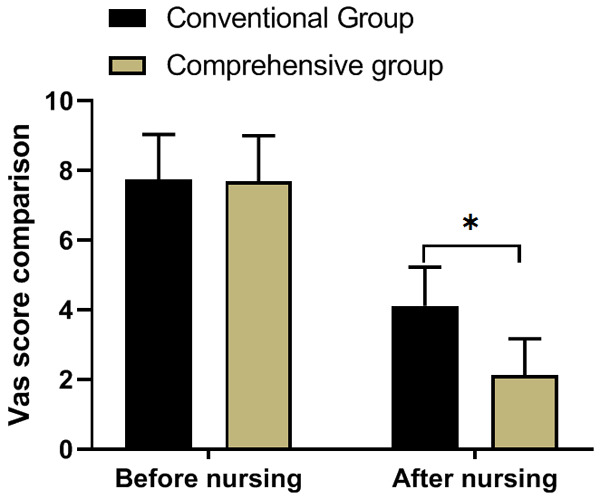
Comparison of VAS scores between the two groups of patients (n (%)). Note: *means P<0.05.
Comparison of WHOQOL-BREF score
Before nursing, there was no significant difference in WHOQOL-BREF scores between the two groups (P>0.05); after nursing, the score in the comprehensive group was higher than that in the conventional group (P<0.05, Table 7).
Table 7.
Comparison of quality of life before and after nursing in the two groups (x ± s)
| groups | n | WHOQOL-BREF score (point) | |
|---|---|---|---|
|
| |||
| before | After | ||
| comprehensive group | 40 | 62.94±6.85 | 72.48±5.74 |
| conventional group | 40 | 63.14±7.03 | 65.27±6.72 |
| t | 1.352 | 4.254 | |
| P | 0.321 | 0.001 | |
Univariate analysis of risk factors for nosocomial infection in patients after comprehensive nursing intervention
There were 40 patients in the comprehensive nursing group, of them 15 patients developed infection and were enrolled in the infection group, and the remaining 25 patients without infection were the non-infection group. There were statistical differences between the infection group and the non-infection group in terms of age, glucocorticoid treatment or not, hemoglobin content, white blood cell content, chemotherapy intensity, procalcitonin content, neutrophil count and endotoxin positive level (P<0.05), see Table 8.
Table 8.
Univariate analysis of risk factors for nosocomial infection in patients after comprehensive nursing intervention
| Factors | Infection group (n=15) | Non-infection group (n=25) | X2/t | P |
|---|---|---|---|---|
| Age (year) | 1.356 | 0.001 | ||
| ≥40 | 15 | 14 | ||
| <40 | 0 | 11 | ||
| Gender | 2.365 | 0.451 | ||
| Male | 9 | 10 | ||
| Female | 6 | 15 | ||
| Glucocorticoid therapy | 2.364 | 0.002 | ||
| Yes | 11 | 7 | ||
| No | 4 | 18 | ||
| chemotherapy intensity | 3.365 | 0.003 | ||
| Intensive | 9 | 8 | ||
| Moderate | 6 | 17 | ||
| neutrophil count (×109/L) | 4.457 | 0.001 | ||
| <0.1 | 8 | 2 | ||
| 0.1~0.5 | 5 | 2 | ||
| 0.6~1.0 | 1 | 8 | ||
| >1.0 | 1 | 13 | ||
| endotoxin | 3.545 | 0.004 | ||
| Negative | 5 | 17 | ||
| Positive | 10 | 8 | ||
| Procalcitonin content (ng/mL) | 3.75±0.36 | 0.90±0.33 | 1.745 | <0.01 |
| white blood cell (×109/L) | 35.50±6.71 | 87.59±6.92 | 2.475 | <0.01 |
| hemoglobin content (g/L) | 56.98±8.23 | 95.05±8.50 | 7.781 | <0.01 |
Multivariate analysis of independent risk factors for nosocomial infection in patients after comprehensive nursing intervention
Logistic regression analysis showed that the number of neutrophils, age above 40, white blood cell count, hemoglobin content, high-intensity chemotherapy and glucocorticoid therapy were independent risk factors for nosocomial infection in patients with comprehensive nursing intervention (P<0.05), see Table 9.
Table 9.
Multivariate analysis of risk factors for nosocomial infection in patients after comprehensive nursing intervention
| Factors | Wald | Regression coefficients | P | OR | 95 CI% |
|---|---|---|---|---|---|
| Age above 40 | 1.768 | 2.14 | 0.001 | 1.813 | 1.375~2.034 |
| glucocorticoid therapy | 1.62 | 1.986 | 0.004 | 1.522 | 1.149~1.829 |
| high-intensity chemotherapy | 1.647 | 1.976 | 0.003 | 1.535 | 1.156~1.855 |
| hemoglobin content | 1.908 | 1.982 | 0.002 | 1.912 | 1.403~2.455 |
| white blood cell count | 1.759 | 2.218 | 0.002 | 1.577 | 1.203~1.944 |
| neutrophil count | 1.729 | 2.102 | 0.004 | 1.525 | 1.197~1.905 |
Discussion
Chemotherapeutic drugs are a class of cytotoxic drugs, which can be administered intravenously or orally to achieve the purpose of systemic anti-tumor therapy. Cytotoxic drugs have a certain impact on the bone marrow hematopoiesis, resulting in decreased bone marrow hematopoiesis, and eventually leading to myelosuppression. The clinical manifestations of bone marrow suppression are generally manifested as a decrease in red blood cells and neutrophils. Severe patients may develop grade IV reduction, or granulocytopenia and agranulocytosis-like manifestations. Some patients may have a decrease in red blood cells, resulting in anemia with clinical symptoms such as dizziness, fatigue and other anemia-related symptoms, which can be further judged according to the specific degree of anemia. In addition, patients may even experience thrombocytopenia (degree I-IV), which is relatively serious and may cause bleeding. Therefore, after chemotherapy, myelosuppression needs to be taken into consideration and dealt with as soon as possible to avoid serious adverse events.
With no clinical cure for acute leukemia yet, chemotherapy becomes the main regiment to effectively delay disease progression and significantly prolong survival [9]. However, chemotherapy can cause bone marrow suppression, which can severely hinder patients’ recovery [10]. Patients with acute leukemia in the myelosuppressive phase will experience a significant hematopoietic function decrease of bone marrow which needs 2 to 3 weeks for reconstruction [11]. Myelosuppression also reduces the activity of blood cell precursors in the bone marrow and induces decreased immune function that further leads to adverse reactions such as infection [12]. Comprehensive nursing intervention, on the basis of routine nursing, is meant to improve the patient’s psychological state and diminish the occurrence of complications [13] by fully motivating the patients’ subjective initiative and treatment enthusiasm, as well as encourage them and their families to participate in the nursing process. Relevant studies have indicated that active and reasonable nursing programs for acute leukemia patients with myelosuppression after chemotherapy can effectively avoid the occurrence of infection, showcasing the necessity to conduct nursing intervention [14]. Comprehensive nursing intervention is to implement planned, anticipatory and helpful care measures to improve nursing efficiency and nursing satisfaction [15], including intensive care on the patients’ oral, respiratory and gastrointestinal complications, psychological care of listening to patients’ complaints and answering their concerns in a timely manner to relieve their psychological pressure, and give health education to improve their knowledge and awareness and ensure smooth treatment [16,17]. In this study, we compared the anxiety (SAS) and depression (SDS) scores of the two groups of patients, and the results suggested that both scores decreased after nursing, with scores in the comprehensive group being lower than those in the conventional group, indicating that comprehensive nursing intervention can significantly reduce the anxiety and depression level of acute leukemia patients with myelosuppression after chemotherapy and alleviate their psychological pressure and enhance their confidence [18]. We know that patients with myelosuppression after chemotherapy for acute leukemia are prone to immune dysfunction, increasing the risk of infection due to decreased activity of blood cell precursors in the bone marrow [19]. Therefore, we compared in the study the complications and the VAS score of the two groups, and the results showed that the incidence of complications in the comprehensive group was significantly lower than that in the conventional group, confirming that comprehensive nursing intervention effectively reduced the occurrence of complications in those patients, relieved their pain and indirectly improved their initiative and confidence for treatment [20]. At last, we compared the nursing experience, complaint rate and nursing satisfaction between the two groups and found a significantly better score in the comprehensive group than in the conventional group in terms of these aspects, promoting recognition among patients and their families, which in turn demonstrated that comprehensive nursing intervention was clinically practical [21]. Although chemotherapy can inhibit the proliferation of cancer cells, it also damages healthy cells to a certain extent, so patients often experience bone marrow suppression after chemotherapy. The bone marrow suppression stage is a key stage in the treatment of leukemia. In this stage, the activity of blood cell precursors in patients is severely reduced, which affects the division of blood cells, resulting in low immunity of patients. Bacteria and viruses easily invade the body and cause bleeding and infection. It is very important to provide reasonable and effective nursing intervention [13]. Hou et al. [15] showed that comprehensive nursing can effectively reduce the risk of adverse reactions in patients with leukemia after chemotherapy in the period of myelosuppression, which is similar with our results. The above data show that comprehensive nursing intervention has a good effect on reducing the occurrence of adverse reactions such as bleeding and infection in patients with leukemia in myelosuppression stage. However, there are still some limitations of this study, such as no long-term follow-up, long-term quality of life or survival time observation.
Neutrophil count, age above 40 years, white blood cell count, hemoglobin content, high-intensity chemotherapy and glucocorticoid therapy were independent risk factors for nosocomial infection, and the levels of serum procalcitonin and endotoxin were high in infected patients compared to those in uninfected patients. Endotoxin is the main component of the inner and outer membranes of gram-negative bacteria, which is also the main factor that affects the pathogenesis of gram-negative bacteria. Procalcitonin is a polypeptide hormone that is low normally in the human body but increases significantly in the condition of serious bacterial infection, which has important diagnostic value for early bacterial infection.
In view of some infection factors of patients, patients are advised to maintain good hygiene and living habits during chemotherapy to avoid cross-infection and overexertion. In terms of diet, the patients guided to eat digestible foods with sufficient energy, but to avoid high grease, spicy and raw foods. If the patient’s body temperature is >38.5°C, secretion and sputum culture should be carried out in time, and blood samples should be collected to find the etiological basis and provide some guidance for the patient to adjust antibiotics. In addition, imaging, endotoxin, β-glucan and procalcitonin and other tests should be performed to distinguish from fungal or bacterial infections [16]. Carbapenems and other powerful anti-infections can be given to patients with concomitant infection after chemotherapy. Additionally, the changes of skin mucous soft tissues, digestive tract, respiratory tract, and body temperature of the patients should be closely observed, and antifungal therapy should be given if necessary. For symptoms of anemia or severe anemia, bleeding tendency, abnormal coagulation and low platelets, fresh frozen plasma, platelets and red blood cells should be transfused.
In conclusion, comprehensive nursing intervention for patients with myelosuppression after chemotherapy for acute leukemia can effectively improve the patient’s nursing experience, reduce the patient’s complaint rate, alleviate the patient’s physical pain, relieve the patient’s anxiety, depression and other negative emotions, and reduce the patient’s complications, suggesting that comprehensive nursing intervention presented better clinical efficacy and high safety, and merits promotion clinically.
Disclosure of conflict of interest
None.
References
- 1.Richard-Carpentier G, DiNardo CD. Venetoclax for the treatment of newly diagnosed acute myeloid leukemia in patients who are ineligible for intensive chemotherapy. Ther Adv Hematol. 2019;10:2040620719882822. doi: 10.1177/2040620719882822. [DOI] [PMC free article] [PubMed] [Google Scholar]
- 2.Shahid S, Ramaswamy K, Flynn J, Mauguen A, Perica K, Park JH, Forlenza CJ, Shukla NN, Steinherz PG, Margossian SP, Boelens JJ, Kernan NA, Curran KJ. Impact of bridging chemotherapy on clinical outcomes of CD19-specific CAR T cell therapy in children/young adults with relapsed/refractory B cell acute lymphoblastic leukemia. Transplant Cell Ther. 2022;28:72.e1–72.e8. doi: 10.1016/j.jtct.2021.11.014. [DOI] [PMC free article] [PubMed] [Google Scholar]
- 3.Zhou D, Shi T, Zhao S, Zhu J, Zhu L, Yang X, Xie W, Ye X. Linezolid is safe on platelet count for AML patients during myelosuppression after consolidation chemotherapy. J Clin Pharm Ther. 2020;45:755–758. doi: 10.1111/jcpt.13159. [DOI] [PubMed] [Google Scholar]
- 4.Wang YZ, Tan BY, Li L, Li ZJ. Reduction of FXIII during myelosuppression in acute leukemia after chemotherapy and adverse relation with bleeding events. Zhonghua Xue Ye Xue Za Zhi. 2020;41:59–63. doi: 10.3760/cma.j.issn.0253-2727.2020.01.011. [DOI] [PMC free article] [PubMed] [Google Scholar]
- 5.Wilop S, Osieka R. Antineoplastic chemotherapy in Jehovah’s Witness patients with acute myelogenous leukemia refusing blood products - a matched pair analysis. Hematology. 2018;23:324–329. doi: 10.1080/10245332.2017.1411548. [DOI] [PubMed] [Google Scholar]
- 6.Jang A, Song M, Kim S. Development and effects of leukemia nursing simulation based on clinical reasoning. Int J Environ Res Public Health. 2021;18:4190. doi: 10.3390/ijerph18084190. [DOI] [PMC free article] [PubMed] [Google Scholar]
- 7.Khanjani Pour-Fard-Pachekenari A, Rahmani A, Ghahramanian A, Asghari Jafarabadi M, Onyeka TC, Davoodi A. The effect of an oral care protocol and honey mouthwash on mucositis in acute myeloid leukemia patients undergoing chemotherapy: a single-blind clinical trial. Clin Oral Investig. 2019;23:1811–1821. doi: 10.1007/s00784-018-2621-9. [DOI] [PubMed] [Google Scholar]
- 8.Chihara D, Arons E, Stetler-Stevenson M, Yuan CM, Wang HW, Zhou H, Raffeld M, Xi L, Steinberg SM, Feurtado J, James L, Wilson W, Braylan RC, Calvo KR, Maric I, Dulau-Florea A, Kreitman RJ. Randomized phase II study of first-line cladribine with concurrent or delayed rituximab in patients with hairy cell leukemia. J. Clin. Oncol. 2020;38:1527–1538. doi: 10.1200/JCO.19.02250. [DOI] [PMC free article] [PubMed] [Google Scholar]
- 9.Aoki T, Takahashi H, Tanaka S, Shiba N, Hasegawa D, Iwamoto S, Terui K, Moritake H, Nakayama H, Shimada A, Koh K, Goto H, Kosaka Y, Saito AM, Horibe K, Kinoshita A, Tawa A, Taga T, Adachi S, Tomizawa D. Predisposition to prolonged neutropenia after chemotherapy for paediatric acute myeloid leukaemia is associated with better prognosis in the Japanese Paediatric Leukaemia/Lymphoma Study Group AML-05 study. Br J Haematol. 2021;193:176–180. doi: 10.1111/bjh.16656. [DOI] [PubMed] [Google Scholar]
- 10.Cohen G, Cooper S, Sison EA, Annesley C, Bhuiyan M, Brown P. Allopurinol use during pediatric acute lymphoblastic leukemia maintenance therapy safely corrects skewed 6-mercaptopurine metabolism, improving inadequate myelosuppression and reducing gastrointestinal toxicity. Pediatr Blood Cancer. 2020;67:e28360. doi: 10.1002/pbc.28360. [DOI] [PMC free article] [PubMed] [Google Scholar]
- 11.Dalle IA, Paranal R, Zarka J, Paul S, Sasaki K, Li W, Ning J, Short NJ, Ohanian M, Cortes JE, Jabbour EJ, Issa GC. Impact of luteinizing hormone suppression on hematopoietic recovery after intensive chemotherapy in patients with leukemia. Haematologica. 2021;106:1097–1105. doi: 10.3324/haematol.2020.256453. [DOI] [PMC free article] [PubMed] [Google Scholar]
- 12.Liu KQ, Wang Y, Zhao Z, Lin D, Zhou CL, Liu BC, Gong XY, Zhao XL, Wei SN, Zhang GJ, Gong BF, Li Y, Liu YT, Mi YC, Wang JX, Wei H. A single-center, randomized controlled trial of PEG-rhG-CSF and common rhG-CSF to promote neutrophil recovery after induction chemotherapy in newly diagnosed acute myeloid leukemia. Zhonghua Xue Ye Xue Za Zhi. 2019;40:497–501. doi: 10.3760/cma.j.issn.0253-2727.2019.06.009. [DOI] [PMC free article] [PubMed] [Google Scholar]
- 13.Sun Z, Wang Y, Feng X. Effect of continuous nursing on negative emotion and quality of life in patients with leukemia under chemotherapy. Am J Transl Res. 2021;13:7935–7943. [PMC free article] [PubMed] [Google Scholar]
- 14.Nierman P. Acalabrutinib: nursing considerations for use in patients with chronic lymphocytic leukemia and small lymphocytic lymphoma. Clin J Oncol Nurs. 2021;25:687–696. doi: 10.1188/21.CJON.687-696. [DOI] [PubMed] [Google Scholar]
- 15.Hou YJ, Qian ZL, Wang Q. Intervention of high-quality nursing service in bone marrow suppression period after high-dose chemotherapy for leukemia. China Continuing Medical Education. 2016;12:216–217. [Google Scholar]
- 16.Luo X, Zhang Y, Chen Q. Nursing care plan and management of patients with acute leukemia. Altern Ther Health Med. 2022;28:80–85. [PubMed] [Google Scholar]
- 17.Luo X, Zhu L, Yin C, Wu Y, Li D, Zhou D, Ye X. Cluster nursing strategy for preventing perianal infection in leukemia patients after chemotherapy. Panminerva Med. 2021;63:567–568. doi: 10.23736/S0031-0808.20.03972-5. [DOI] [PubMed] [Google Scholar]
- 18.Niu ZE, Jing DX, Xu CY. Clinical effect of bazhen decoction combined with sequential treatment of chemotherapy on acute lymphoblastic leukemia patients with deficiency of Qi and Yin. Zhongguo Shi Yan Xue Ye Xue Za Zhi. 2022;30:119–125. doi: 10.19746/j.cnki.issn.1009-2137.2022.01.19. [DOI] [PubMed] [Google Scholar]
- 19.Nowik CM, Gerrie AS, Wong J. Conservative management of presumed fetal anemia secondary to maternal chemotherapy for acute myeloid leukemia. AJP Rep. 2021;11:e137–e141. doi: 10.1055/s-0041-1740561. [DOI] [PMC free article] [PubMed] [Google Scholar]
- 20.Zhang C, Mao Y, Tang F, Xu X. The application effect analysis of personalized health education in acute leukemia nursing. Am J Transl Res. 2021;13:1847–1853. [PMC free article] [PubMed] [Google Scholar]
- 21.Wang J, Yin Y, Li Y, Yue X, Qi X, Sun M. The effects of solution-focused nursing on leukemia chemotherapy patients’ moods, cancer-related fatigue, coping styles, self-efficacy, and quality of life. Am J Transl Res. 2021;13:6611–6619. [PMC free article] [PubMed] [Google Scholar]