



Abstract
New drugs and new targets are urgently needed to treat tuberculosis. We discovered the D-phenylalanine-benzoxazole Q112 displays potent antibacterial activity against Mycobacterium tuberculosis (Mtb) in multiple media and in macrophage infections. Metabolomic profiling indicates that Q112 has a unique mechanism of action. Q112 perturbs the essential pantothenate/CoA biosynthetic pathway, depleting pantoate while increasing ketopantoate, as would be expected if ketopantoate reductase (KPR) were inhibited. We searched for alternative KPRs since the enzyme annotated as PanE KPR is not essential in Mtb. The ketol-acid reductoisomerase IlvC catalyzes the KPR reaction in the close Mtb relative Corynebacterium glutamicum, but Mtb IlvC does not display KPR activity. We identified the essential protein Rv3603c as an ortholog of PanG KPR, and demonstrated that purified recombinant Rv3603c has KPR activity. Q112 inhibits Rv3603c, explaining the metabolomic changes. Surprisingly, pantothenate does not rescue Q112-treated bacteria, indicating that Q112 has an additional target(s). Q112-resistant strains contain loss-of-function mutations in the twin arginine translocaseTatABC, further underscoring Q112’s unique mechanism of action. Loss of TatABC causes a severe fitness deficit attributed to changes in nutrient uptake, suggesting that Q112 resistance may derive from a decrease in uptake.
Keywords: PanG, coenzyme A, ketopantoate reductase, 2-dehydropanoate 2-reductase, IlvC, TatABC
Graphical Abstract

New antibiotics are urgently needed to treat tuberculosis. Q112 displays potent antibacterial activity against Mycobacterium tuberculosis (Mtb). We find that Q112 inhibits Rv3603c, an essential enzyme of previously unknown function now identified as PanG. This enzyme catalyzes conversion of ketopantoate to pantoate, a key step in the biosynthesis of CoA. However, PanG inhibition cannot account for antibacterial activity and additional Q112 targets remain to be identified.
Tuberculosis (TB) remains among the most pernicious human diseases. Approximately 1.4 million deaths were associated with tuberculosis in 2019, and 10 million new cases were reported worldwide 1. The etiological agent Mycobacterium tuberculosis (Mtb) is especially difficult to eradicate because the bacteria inhabit diverse environments that vary in pH, nutrient and oxygen availability 2. Mtb can be free living or intracellular in vivo, and can also be replicating or quiescent. Different metabolic pathways are vulnerable in each environment/growth state and drugs penetrate these environments to varying extents 3. Therefore several different antibiotics are required to eliminate Mtb infections, as well as to guard against the development of resistance 4. The treatment of even drug susceptible Mtb is challenging- standard treatment requires a four antibiotic regimen that spans six months 1. The complicated, long duration treatments engender poor patient compliance, creating an environment ripe for the development of antibiotic resistance. Approximately 0.5 million cases resistant to the frontline drug rifampicin were reported in 2019, 78% of which were multi-drug resistant. These infections require treatment with more toxic second line drugs, often with durations of 2 years or more. Better treatment regimens are desired for drug susceptible tuberculosis, and new antibiotics are urgently needed to treat drug resistant infections.
While drug discovery has been dominated by a “one drug-one target” paradigm, there is a growing appreciation for the advantages of drugs that engage multiple targets 5, 6. Indeed, the efficacy of many of the most widely used drugs such as aspirin and metformin has been attributed to pleiotropic effects on multiple targets. While the same effects can potentially be achieved with the administration of drug cocktails, multi-target drugs have the advantages of ease of administration, lack of drug-drug interactions, and more straightforward clinical development. Multi-targeting is particularly appealing for the treatment of tuberculosis, where polypharmacology can potentially address the variation in target vulnerability with environment/growth state as well as discourage the emergence of resistance 7–10. Several laboratories are actively pursuing a multi-targeting strategy in TB drug development 11–15, and the potential of this approach is demonstrated by the clinical development of SQ109 2.
Our laboratories and others have been developing inhibitors of Mtb inosine monophosphate dehydrogenase 2 (IMPDH2) as potential antitubercular agents 16–21. A benzoxazole scaffold, which we named Q, has yielded MtbIMPDH2 inhibitors with antibacterial activity comparable to that of the frontline drugs isoniazid and rifampicin 17, 22. However, while the antibacterial activity of some Q compounds clearly derives from inhibition of MtbIMPDH2 as designed, the mechanism of action of others is uncertain 17.
Here we report the D-phenylalanine-benzoxazole Q112, a weak inhibitor of MtbIMPDH2 that nonetheless displays potent antibacterial activity. Q112 does not elicit the characteristic changes in nucleotide pools observed when MtbIMPDH2 is inhibited. Instead, Q112 perturbs the essential pantothenate/CoA biosynthetic pathway, depleting pantoate while increasing ketopantoate, as would be expected if ketopantoate reductase was inhibited. We find that Rv3603c is a previously unrecognized PanG ketopantoate reductase that is sensitive to Q112. Surprisingly, pantothenate does not rescue Q112-treated bacteria, suggesting that Q112 has an additional target(s). Q112-resistance bacteria carry loss-of-function mutations in the TatABC translocase, the first example of resistance associated with this protein complex, and further underscores the unique mechanism of Q112. Loss of TatABC is likely to have widespread effects on permeability, suggesting that Q112-resistance may result from decreased uptake.
RESULTS
Q112 Has Potent and Specific Antimycobacterial Activity.
Q112 emerged from our MtbIMPDH2 inhibitor program (Figure 1A)17, displaying potent antibacterial activity against freely replicating Mtb H37Rv (1 week MIC = 0.78–1.5 μM, Table 1). The enantiomer, Q111, is less active by a factor of approximately 25 (MIC = 25–37 μM; Table 2). Since antibacterial activity can vary dramatically in different growth conditions, we evaluated the effect of Q112 on bacteria cultured on different carbon sources or in the presence of nitrite, which mimics conditions in the phagosome (Table 1). Antibacterial activity varied by less than a factor of 2 under these conditions, indicating that Q112 may be effective in many of the microenvironments occupied by the bacteria in vivo. In addition, Q112 is more effective in the absence of Tween-80 (MIC = 0.22 μM) than in the presence (MIC = 0.97 μM) in the standard microplate Alamar blue assay. Q112 displayed bactericidal activity in macrophage infections (Figure 1B). Q112 had no observable effect on the macrophages in these experiments. Q112 also displayed potent activity against M. marinum (MIC = 0.78 μM), but was less effective against M. smegmatis (MIC = 25 μM) and M. avium (MIC = 6.2 μM). Q112 displayed very weak activity against Streptococcus pneumonia (MIC = 41–82 μM). No antibacterial activity was observed against Staphylococcus aureus, Enterococcus faecalis, Pseudomonas aeruginosa, Escherichia coli and Klebsiella pneumonia (MIC > 165 μM). These results establish Q112 as a potent and specific antimycobacterial agent.
Figure 1. Antibacterial activity of Q112.

A. Structure of Q112. B. Effect of Q112 on macrophage infections. J774.A1 cells were infected with Mtb H37Rv and treated with compounds on Day 0. Colonies were enumerated in duplicate samples from at least three independent replicates of each condition after 7 days. Rif, 1 μM rifampicin; Q112, 2.5–20 μM, DMSO, 5 μL/mL. C. Correlation of antibacterial activity with inhibition of MtbIMPDH2 for Q compounds. Data for compounds (except Q112) from 17. D. Knockdown of MtbIMPDH2 does not hypersensitize bacteria to Q112. Regulated expression of guaB2 is achieved in a TET-OFF system, as previously described 17, 25. Addition of anhydrotetracycline (Atc) represses expression of guaB2, decreasing the level of MtbIMPDH2 within the bacteria. MIC testing was carried out by broth microdilution using the AlamarBlue assay. Each point is the average of triplicates.
Table 1.
Q112 antibacterial activity versus Mtb H37Rv.
| Media | MIC a (μM) | |
|---|---|---|
| Day 7 b | Day 14 c | |
| 7H9/cholesterol/dipalmitoylphosphatidylcholine/BSA/Tyloxapol | 0.78 | 1.5 |
| 7H9/cholesterol/BSA/Tyloxapol | 0.78 | 0.78 |
| 7H9/Glucose/BSA/Tyloxapol | 1.5 | 3.12 |
| 7H9/glucose/glycerol/BSA/Tween | 1.5 | 1.5–3.12 |
| GAST/Fe | 1.5 | 1.5 |
| 7H9/2.5mM butyrate/pH6/0.1mM nitrite | 1.2 | 1.6 |
MIC, minimal inhibitory concentration.
Day 7, growth assessed after 7 days exposure to drug;
Day 14, growth assessed after 14 days exposure to drug. Media are described in Experimental Procedures.
Table 2.
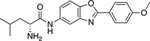
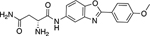
Structure activity relationship of Q112 against Mtb H37Rv.
| Cmpd | Structure | MIC (μM) a | |
|---|---|---|---|
| GAST/Fe | 7H9/ADC/Tw b | ||
| Q112 |

|
1.56 | 1.56 |
| Q111 |

|
37 | 25 |
| 3 |

|
1.2 | 1.2 |
| 4 |

|
4.7 | 3.13 |
| 5 |

|
12.5 | 12.5 |
| 6 |

|
9.4 | 50 |
| 7 |

|
25 | 25 |
| 8 |

|
1.56 | 1.2 |
| 9 |
|
2.3 | 4.7 |
| 10 |

|
4.7 | 6.25 |
| 11 |

|
12.5 | 50 |
| 12 |

|
>50 | >50 |
| 13 |
|
50 | >50 |
| 14 |

|
>50 | >50 |
| 15 |

|
>50 | >50 |
| 16 |

|
>50 | >50 |
| 17 |

|
1.56 | 1.56 |
| 18 |

|
4.7 | 4.7 |
| 19 |

|
n.d. | 1.2 |
| 20 |

|
n.d. | 1.2 |
| 21 |

|
6.25 | 25 |
| 22 |

|
>50 | >50 |
| 23 |

|
n.d. | ≥12.5 |
| D-Phe |

|
n.d. | >310 |
MIC after 1 week.
7H9/ADC/Tw = 7H9/glycerol/glucose/BSA/Tween.
We also investigated the effect of Q112 on cultured mammalian cells. Q112 (10 μM) was largely inactive in the NCI 60 screen 23. Only three cell lines, SR (lymphoma), A498 (kidney carcinoma) and HOP-92 (non-small cell lung adenocarcinoma), were inhibited by more than 50%. Little cytotoxicity was observed in the human hepatocarcinoma cell line HepG2 (LD50 ≥ 19 μM) or the mouse macrophage cell line J774A.1 (LD50 = 50 μM) under normal culture conditions. Somewhat more cytotoxicity was observed when HepG2 cells were cultured with galactose as the carbon source (LD50 = 9 μM), suggesting that mitochondrial toxicity may be an issue 24.
MtbIMPDH2 Is Not the Q112 Target.
Surprisingly, Q112 proved to be a very modest inhibitor of MtbIMPDH2 (Kiapp = 2.5 μM). Other Q compounds with comparable antibacterial activity were much more potent inhibitors of MtbIMPDH2 activity (Kiapp ≤ 50 nM; Figure 1C)17. These observations suggested that the antibacterial activity of Q112 might derive from an “off-target” interaction. To further assess if antibacterial activity derived from inhibition of MtbIMPDH2 as designed, we evaluated the effect of target depletion using the hypomorphic strain guaB2 cKD in which MtbIMPDH2 expression is suppressed by anhydrotetracycline (ATc) 25. Depletion hypersensitizes guaB2 cKD bacteria to MtbIIMPDH2 inhibitors, including other Q compounds 17, 25. In contrast, ATc treatment had no effect on the antibacterial activity of Q112 (Figure 1D), demonstrating that MtbIMPDH2 is not the Q112 target. The structure of Q112 does not resemble those of known tuberculosis drugs, suggesting that Q112 may have a novel mechanism of action.
Preliminary Structure-Activity Relationship (SAR) for Q112.
Initial exploration of the structure-activity relationship (SAR) of the benzoxazole portion of Q112 demonstrated that repositioning of the amide nitrogen to the 6 position of the benzoxazole (3) had no effect on antibacterial activity and replacement of the para-methoxy with Cl was also tolerated (4). In contrast, truncation of the D-Phe side chain (5) and replacement of the amine with an alcohol (6) were deleterious. Since the D-Phe substitution distinguishes Q112 from previously reported benzoxazole inhibitors of MtbIMPDH2 17, these observations prompted us to focus further SAR investigation on that region of the molecule. With the exception of D-Trp (7), several other hydrophobic D-amino acids could substitute for D-Phe. The D-Tyr (8), D-Leu (9) and D-Met (10) derivatives displayed comparable antibacterial activity to Q112, while the antibacterial activity of the D-Pro derivative (11) was reduced by a factor of 8–30. No antibacterial activity was observed when D-Phe was substituted with D-Asp (12), D-Asn (13), D-His (14), D-Ser (15) or D-Lys (16). Ortho-F modification of the D-Phe group was tolerated (17), but the ortho-Cl substitution (18) increased the MIC by 3-fold. We also appended propargyl groups to either side of the molecule (19 and 20). Both 19 and 20 displayed equivalent antibacterial activity to that of Q112. These observations suggest that several avenues exist for the future medicinal chemistry optimization of Q112.
Q112 Derivatives Are Unstable in Plasma.
We evaluated Q112 and its most potent derivatives using in vitro metabolism assays to assess its suitability for testing in an animal model of Mtb infection (Table 3). Q112 and 20 were rapidly metabolized in mouse liver microsomes (τ1/2 = 13 min and 9.1 min, respectively). We hypothesized that the methoxy group might be the liability. Consistent with this view, substitution of the methoxy with Cl (4) or propargyl (19) stabilized the compound (τ1/2 = 110 and ≥ 30 min, respectively). Q112 was also unstable in mouse plasma, suggesting that the amide bond might also be a liability, but this problem also appeared to be solved by the substitution of propargyl for methoxy in 19 (τ1/2 = 0.5 and 5 h, respectively). We further evaluated the pharmacokinetics of 19 in mice at 10 mg/kg administered orally. The value of Cmax reached 2.1 μM, exceeding MIC by a factor of ~2, with τ1/2 = 5 h. However, we were unable to detect free 19 in a mouse plasma protein binding experiment, indicating >99.6% is bound to plasma proteins. This result was unexpected because antibacterial activity was not diminished by the presence of albumin (compare MIC values in GAST/Fe and 7H9/ADC/Tw media in Table 2). The close agreement of the values of τ1/2 for plasma stability in vivo and in vitro together with the high plasma protein binding suggested that 19 was rapidly hydrolyzed upon release from plasma proteins. Further optimization to address plasma instability and improve pharmacokinetic behavior will be required before a Q112 derivative can be tested in mice.
Table 3.
In vitro metabolic stability, plasma protein binding and mouse pharmacokinetics (PK) of Q112 and derivatives.
| Assay | Compound | ||||
|---|---|---|---|---|---|
| Q112 | 4 | 19 | 20 | ||
| Liver microsomal stability a τ1/2 (min) | 13 | 110 | 54 | 9.1 | |
| Plasma stability b τ1/2 (h) | ~0.5 | 4.3 | 5 | n.d. d | |
| Plasma Protein Binding b (%) | n.a. e | n.a. e | >99.6 | n.d. d | |
| Mouse PK c 10 mg/kg p.o. | Cmax (μM) | n.d. d | n.d. d | 2.1 | n.d. d |
| Tmax (h) | n.d. d | n.d. d | 1.3 | n.d. d | |
| τ1/2 (h) | n.d. d | n.d. d | 5 | n.d. d | |
Mouse liver microsome
Mouse plasma
Male C57BL/6 mice (n=3), vehicle 5% DMSO/phosphate buffered saline
n.d., not determined
n.a., not applicable.
Q112 Is Unlikely To Be a Prodrug.
We turned our attention to the mechanism of action of Q112. We assessed bacterial uptake and metabolism of Q112 using mass spectrometry. A filter carrying a mat of Mtb was floated over media containing Q112 or the much less active enantiomer Q111 (note that Q112 was less effective when bacteria were cultured in high density on agar plates; MIC = 6 μM). Only trace amounts of either compound were observed in the media after 24 h, indicating that the compounds were efficiently taken up by the bacteria, possibly by an active transport mechanism. Assuming that similar uptake occurs in freely replicating bacteria, the intracellular concentration of Q112 is likely to greatly exceed the initial concentration in media, so target interactions could have much lower affinity than suggested by the MIC.
Approximately 1–2% of Q112 was converted into a monomethylated metabolite when incubated with Mtb. A monomethylated metabolite was also observed when bacteria were incubated with the inactive enantiomer Q111. No dimethylated metabolites were detected. We synthesized two candidate Q112 metabolites, the methylated amine 21 and the methylated amide 22 (Table 2). 21 displayed reduced antibacterial activity (MIC = 6–25 μM) and 22 was inactive (MIC >50 μM). Assuming methylation does not impair uptake, it is unlikely that either compound plays a significant role in antimycobacterial activity. Although amide hydrolysis products were not observed in bacteria, we also tested the antimycobacterial activity of D-phenylalanine and 23, neither of which were active (MIC >310 μM and >12 μM, respectively). These observations suggest that Q112 is not a prodrug.
Metabolomics Suggest Q112 Inhibits Pantothenate/CoA Biosynthesis.
We examined the Mtb metabolome after 24 h treatment with varying concentrations of Q112 (Figure 2A and S1). Moderate increases were observed in tricarboxylic acid (TCA) cycle intermediates and ATP pools. These responses were complete at 1x MIC, perhaps suggesting an adaptive response. Decreases were observed in pantoate, dihydroorotate and pantetheine as well as CMP, dTMP, dTDP and dIMP. These responses were not observed in bacteria treated with the inactive isomer Q111, and were distinct from those associated with inhibitors of 17 well-characterized Mtb drug targets. Whereas MtbIMPDH2 inhibitors increase IMP levels 20, a modest decrease in IMP was observed in Q112 treated bacteria, confirming that Q112 does not target MtbIMPDH2. These observations further indicate that Q112 has a novel mechanism of action.
Figure 2. Q112 inhibits Mtb ketopantoate reductase (KPR).

A. Heat map showing the metabolites most affected by Q112. Cells were incubated with Q112 (6 μM, MIC under these growth conditions) or Q111 (10 μM). B. The pantothenate/CoA biosynthetic pathway showing changes in key metabolites with Q112 treatment. The KPR reaction is shown in red. The biosynthetic pathway for pantothenol biosynthesis (blue) has not been characterized. PanB, ketopantoate hydroxymethyl transferase; PanE, the canonical KPR; IlvC, acetohydroxy acid isomeroreductase and an alternative KPR; PanG, an alternative KPR; PanD, aspartate decarboxylase; PanC, pantothenate synthase; PanK, pantothenate kinase (aka CoaA); CoaB, phosphopantothenoylcysteine synthetase; CoaC, phosphopantothenoylcysteine decarboxylase; CoaD, phosphopantetheine adenylyltransferase; CoaE, dephospho-CoA kinase.
Q112 had the largest effect on pantoate levels (~80% reduction at 10x MIC = 60 μM), prompting closer examination of the intermediates in the essential pantothenate/CoA pathway (Figure 2B). Increases were observed in two metabolites upstream of pantoate, the immediate precursor ketopantoate (aka dehydropantoate) and 2-oxoisovalerate (aka 3-methyl-2-oxobutanoate). Few changes were observed in the downstream metabolites, with the exceptions of 4’-phosphopantothenate, which decreased by 50%, and dephospho-CoA, which increased approximately 4-fold. Similarly perplexing increases in dephospho-CoA were also observed when panB, panC, coaBC and coaE were silenced 26 as well as when CoaBC was inhibited by a small molecule 27. A small decrease was also observed in pantothenol (~20%). The enzymes responsible for the biosynthesis of pantothenol have not yet been identified. The increased ketopantoate/decreased pantoate suggested that Q112 may inhibit ketopantoate reductase (KPR).
The Mtb Genome Encodes Three KPR Candidates.
Three unrelated proteins have been reported to catalyze the KPR reaction in various organisms: PanE, IlvC and PanG. PanE is considered the canonical KPR 28. However, Rv2573, the Mtb gene annotated as panE, is not essential for in vitro growth in transposon mutagenesis and CRISPR interference screens, unlike other genes encoding pantothenate biosynthesis 29–33. Moreover, the panE transcript is the least abundant of any pan or coa gene transcript 26, and the PanE protein is the least abundant of the Pan biosynthetic enzymes 34. These observations prompted us to search for Mtb orthologs of IlvC and PanG.
IlvC catalyzes the ketol-acid reductoisomerase step in isoleucine/valine biosynthesis 28. All IlvCs also catalyze the reduction of hydroxypyruvate, and in addition some can catalyze the reduction of ketopantoate. Loss of ilvC causes pantothenate auxotrophy in Corynebacterium glutamicum, a close relative of Mtb 35, and IlvC is the only KPR in Thermotoga maritima 36. These observations demonstrate that IlvC is the only protein with KPR activity in some bacteria. MtbIlvC (Rv3001c) is a confirmed ketol-acid reductoisomerase 37 and is essential for in vitro growth 29–32. However, to our knowledge, the KPR activity of this enzyme has not been examined. We expressed and purified recombinant MtbIlvC (Figure S2A). This enzyme catalyzed the reduction of hydroxypyruvate as previously observed 37, but failed to catalyze the reduction of ketopantoate (activity less than 3% of hydroxypyruvate; Figure 3A). Therefore MtbIlvC is unlikely to be an Mtb KPR.
Figure 3. Rv3603c is a PanG KPR.

A. MtbIlvC does not have KPR activity. The oxidation of NADPH was monitored by change in absorbance at 340 nm. Conditions: 290 nM enzyme, 100 μM NADPH, 50 μM substrate, 4 mM MgCl2, 50 mM Tris/HCl, pH 8.5, 37°C. Hydroxypyruvate (Hp, red), ketopantoate (Kp, blue), no enzyme control (green), no hydroxypyruvate/ketopantoate (purple). B. and C. Q112 inhibits MtbPanG. The initial rate of NADPH consumption was monitored by the changes in absorbance at 340 nm. [E] = 1.8 μg/mL; [Q112] = 0, closed circles; [Q112] = 100 μM, open circles. Black lines show the fit to an uncompetitive inhibition mechanism, blue lines show the fit to a noncompetitive mechanism. B. Dependence of activity and Q112 inhibition on ketopantoate concentration. Fixed [NADPH] = 100 μM. C. Dependence of activity and Q112 inhibition on NADPH concentration. Fixed [ketopantoate] = 50 μM. D. The inhibition of MtbPanG by Q112 and derivatives. All compounds at 100 μM. [NADPH] = 100 μM, [ketopantoate] = 20 μM, [E] = 1.8 μg/mL. E. and F. Q112 binds immobilized MtbPanG as measured by biolayer interferometry. E. The association and dissociation of Q112 to probe-bound MtbPanG in the presence of 500 μM pantoate. Solid lines are the raw data, dashed lines are the fit to a single exponential function. F. The amplitudes of the binding isotherms (Panel E and Figure S6) were used to assess affinity. Lines are fits to a simple binding function.
The panG genes of Francisella tularensis and Enterococcus faecalis rescue pantothenate auxotrophy in KPR null strains 38, suggesting that panG encodes a protein with KPR activity. Moreover, PanG appears to be the only KPR in F. tularensis Schu, since deletion results in pantothenate auxotrophy 38. The F. tularensis and E. faecalis panG genes are found in operons that also contain pan and coa genes, notably panC (pantothenate synthase) and panD (aspartate decarboxylase), as well as coaX (type III pantothenate kinase, PANK type III). PanG is a Rossman fold and DUF2520-domain containing protein, which further suggests that it is an oxidoreductase. However, to our knowledge, no PanG enzyme has been purified and characterized from any organism, so the redox cofactor and perhaps even the substrate of this enzyme remain to be established.
We searched the Mtb genome for proteins with similarity to F. tularensis PanG using BLAST and found Rv3603c, with 21% identity to the query sequence and 17% identity to E. faecalis PanG (Figure S3). The Rv3603c gene is part of an operon that includes panC, panD and coaX (Rv3602c, Rv3601c, and Rv3600c, respectively) 39, further suggesting that it has a role in pantothenate biosynthesis. Rv3603c is annotated as a conserved hypothetical protein in Mycobrowser 40, but as PanG in PATRIC 41. The gene is conserved among other Mycobacterium species. Like other pan genes, panG is essential in transposon mutagenesis and CRISPR interference screens when bacteria are cultured on defined media with few nutrients 30, 31, 33, but is nonessential in rich media containing pantothenate 32. Therefore Rv3603c is a strong candidate for an Mtb KPR.
Rv3603c Is a PanG KPR.
Recombinant N-terminal His-tagged Rv3603c was expressed in E. coli and purified by Ni-NTA agarose affinity chromatography (Figure S2B). The purified enzyme displayed KPR activity as evidenced by the ketopantoate-dependent oxidation of NADPH. The values of KM are 24 ± 2 μM and 2.3 ± 0.3 μM for ketopantoate and NADPH, respectively, and the value of Vmax = 0.71 ± 0.05 μmole•mg−1•min−1 (Figure 3B,C). The values of KM are similar to those reported for the canonical PanE KPR from E. coli (literature values 30–120 μM and 4.0–7 μM ketopantoate and NADPH, respectively 42, 43). These observations establish Rv3603c as a bona fide KPR (hereafter MtbPanG).
PanG Is Found in Few Pathogenic Bacteria.
The enzymes of the pantothenate/CoA pathway have long been considered promising targets for antimicrobial design 44, 45. Therefore we assessed the prevalence of PanG orthologs in pathogenic bacteria using the Sequence Similarity Network (SNN) and Genome Neighborhood tools of the Enzyme Function Initiative 46. Rv3603c was used to seed a BLAST search, but none of the previously identified PanGs were retrieved. These PanGs are members of InterPro Family IPR018931, which was combined with the BLAST results to generate an SSN. All of the BLAST results were included in the family. A total 10,720 sequences were grouped into 5782 nodes, each containing sequences with 90% identity (UniRef90 sequences). No SwissProt annotations were associated with any of the sequences, further indicating that these proteins have not been functionally characterized. The network resolved into 34 clusters and 49 singletons at an alignment score of 35 (~34% identity). Only eight clusters were associated with pan genes with a co-occurrence ratio of at least 0.2 (Figure S4 and Table S1).
IPR018931 family members are widely distributed across the Bacterial Kingdom and is also present in Archaea. Nonetheless, relatively few pathogenic bacteria contained potential PanG orthologs. Cluster 1 (6426 sequences) contained both MtbPanG and E. faecalis PanG, as well as the Coxiella burnetii, Clostridium botulinum, Clostridioides difficile and Desulfotomaculum nigrificans orthologs previously identified 38. The F. tularensis ortholog was found in Cluster 3 (108 sequences). In addition, Cluster 1 contained potential PanGs from E. faecium (same node as E. faecalis), Burkholderia pseudomallei and Burkholderia mallei. However, only the E. faecium ortholog is part of a pan operon (Figure S5). Cluster 2, which is not associated with pan operons, contained orthologs from Acinetobacter baumanii. No potential PanG orthologs were identified in other WHO priority pathogens, including Pseudomonas aeruginosa, Enterobacteriaceae, Staphylococcus aureus, Helicobacter pylori, Campylobacter spp., Salmonellae, Neisseria gonorrhoeae, Streptococcus pneumoniae, Haemophilus influenzae and Shigella. Thus PanG inhibitors are unlikely to be broad spectrum antibiotics.
Q112 Inhibits MtbPanG.
Q112 was a weak inhibitor of MtbPanG (Figure 3B,C). In general, the SAR for enzyme inhibition was similar to the SAR for antibacterial activity (Figure 3D, Table S2), with the notable exception of Q111, which displayed comparable inhibition to Q112. Unfortunately, weak inhibition and low Km values precluded thorough characterization of the mechanism of inhibition of MtbPanG. Nonetheless, Q112 is clearly not a competitive inhibitor with respect to either ketopantoate or NADPH. The inhibition mechanism appears to be uncompetitive versus ketopantoate (Kii = 64 ± 3 μM), but we cannot distinguish uncompetitive and noncompetitive inhibition versus NADPH because we are unable to collect initial rates at concentrations lower than Km (Kii = 113 ± 6 μM for uncompetitive and Kis= 128 ± 4 μM, Kii = 150 ± 20 μM for noncompetitive). Importantly, the magnitude of inhibition is consistent with the metabolomics experiments, where the response to Q112 was not saturated at 10x MIC = 60 μM.
We used biolayer interferometry (BLI) to confirm the MtbPanG-Q112 interaction (Figures 3E,F and S6). This method measures changes in reflection at the surface of a fiber optic probe, which depends on both the length of the optical path and spectral properties. MtbPanG was immobilized to the fiber optic probe via the 6xHis-tag, and the probe was submerged in varying fixed concentrations of Q112. The binding isotherms were multi-phasic, so the amplitude of the equilibrium response was used to calculate binding affinity 47, yielding Kd >> 100 μM (Figure 3F). The weak association of Q112 with MtbPanG is consistent with the observation that Q112 is an uncompetitive inhibitor and therefore binds after substrates. Therefore we also assessed binding in the presence of the products NADP+ and pantoate. The addition of NADP+ had no effect on Q112 binding (Figure 3E and S6). However, single exponential binding was observed in the presence of pantoate (Figure 3E), yielding kon = 2 × 10³ M−1s−1 and koff = 0.5 s−1 and Kd = 250 μM. These values were in good agreement with the value of Kd determined from the response at 150 s (R150) (Kd = 240 μM; Figure 3F). These observations suggest that Q112 binds preferentially to the Mtb•pantoate complex.
Q112 Has an Additional Target(s).
Pantothenate rescues gene disruptions in the pantothenate/CoA pathway in Mtb, including loss of function of panB, panC, panD, coaBC and coaE 26, 32, 48, 49. However, pantothenate failed to protect bacteria from Q112 (Table S3). Pantoate and pantolactone, which rescue the loss of KPR activity in other bacteria 38, also failed to protect Mtb against Q112. These observations suggest that although Q112 disrupts the pantothenate/CoA pathway, another target is responsible for antibacterial activity.
Q112-Resistant Strains Display Widespread Changes in Antibiotic Susceptibility.
To further investigate the mechanism of action of Q112, we isolated spontaneously resistant strains by selecting single colonies on solid medium containing Q112 (5x MIC and 10x MIC). Seven modestly resistant clones were obtained (MIC = 12.5 μM versus 3.1 μM for wild-type, Table 4) with a frequency of resistance of ~10−8. All of the Q112-resistant clones displayed severe growth defects on both solid and liquid media.
Table 4.
Antibiotic susceptibility of Q112-resistant strains.
| Antibiotic | MIC (μM) a | MOA | |||||
|---|---|---|---|---|---|---|---|
| WT | A3 tatB |
A6 tatB |
B1 tatC |
B2 tatC |
B3 tatA |
||
| Q112 | 3.13 | 12.5 | 12.5 | 12.5 | 12.5 | 12.5 | unknown |
| Ampicillin | >50 | 3.1 | 3.1 | 1.6 | 2.3 | 3.1 | cell wall biosynthesis |
| Ampicillin + clavulanate | 2.3 | 0.39 | 0.78 | 0.2 | 0.39 | 0.78 | cell wall biosynthesis |
| Meropenem | 1.2 | 0.39–0.6 | 0.78 | 0.39–0.6 | 0.39 | 0.78 | cell wall biosynthesis |
| Meropenem + clavulanate | 0.39 | 0.2 | 0.2 | 0.15 | 0.2 | 0.39 | cell wall biosynthesis |
| Imipenem | 0.39 | 0.6 | 0.78 | 0.39 | 0.39 | 6.2 | cell wall biosynthesis |
| Imipenem + clavulanate | 0.2 | 0.2 | 0.1 | 0.1 | 0.15 | 1.6 | cell wall biosynthesis |
| Rifampicin | 0.012 | 0.004 | 0.004 | 0.002 | 0.004 | 0.0028 | RNA polymerase |
| Streptomycin | 0.46 | 0.46 | 0.46 | 0.46 | 0.46 | 0.46 | protein synthesis |
| Capreomycin | 0.78 | 0.78 | 1.2 | 0.78 | 1.2 | 0.78 | protein synthesis |
| Linezolid | 0.78 | 2.3 | 2.3 | 2.3 | 2.3 | 1.56 | protein synthesis |
| Moxifloxacin | 0.12 | 0.12 | 0.16 | 0.12 | 0.16 | 0.12 | DNA gyrase, topoisomerase |
| Bedaquiline | 0.31 | 0.46 | 0.63 | 0.46 | 0.46 | 0.46 | ATP synthesis |
| Clofazimine | 0.16 | 0.16 | 0.24 | 0.12 | 0.24 | 0.63 | ATP synthesis |
| Delamanid | 0.0031 | 0.038 | 0.0092 | 0.019 | 0.019 | 0.0092 | mycolic acid biosynthesis |
| Isoniazid | 0.31 | 0.12 | 0.078 | 0.16 | 0.12 | 0.16 | mycolic acid biosynthesis |
| Ethionamide | 0.3 | 0.15 | 0.15 | 0.15 | 0.15 | 0.15 | mycolic acid biosynthesis |
| Ethambutol | 1.6 | 3.1 | 2.4 | 2.4 | 3.12 | 3.1 | arabinogalactan biosynthesis |
| p-Aminosalicylic acid | 0.3 | 0.39 | 0.6 | 0.3 | 0.3 | 0.6 | folic acid biosynthesis and cell wall biosynthesis |
| D-Cycloserine | 4.7 | 12 | 9.4 | 9.4 | 9.4 | 12 | cell wall biosynthesis |
| Vancomycin | 5 | 1.2 | 1.2 | 0.92 | 0.92 | 1.2 | cell wall biosynthesis |
MICs for Q112-resistant strains were determined after two weeks. MOA, mechanism of action. The gene mutated in each strain is listed below the strain designation.
We examined the antibiotic susceptibility of five Q112-resistant strains, A3, A6, B1, B2 and B3, to gain further insights into the effects of the mutations (the remaining two strains did not grow sufficiently well to permit further investigation) (Table 4). Curiously, while wild-type bacteria are resistant to ampicillin due to the action of β-lactamase BlaC (MIC > 50 μM), all five Q112-resistant strains were susceptible, with values of MIC decreasing by more than a factor of 16 (MIC = 1.6 – 3.1 μM) (Table 4). The ampicillin susceptibiliy of the Q112-resistant strains was similar to that of the wild-type strain in the presence of the β-lactamase inhibitor clavulanate (MIC = 2.3 μM). All five strains were also hypersensitive to rifampicin (factors of 3–6) and vancomycin (factors of 4–5), but resistant to delamanid (MIC increased 3–12-fold). None of the strains displayed altered susceptibility (MIC changed by more than a factor of 3) to imipenem, imipenem plus clavulanate, meropenem, meropenem plus clavulanate, cycloserine, clofazimine, moxifloxacin, linezolid, bedaquiline, isoniazid, ethionamide, ethambutol and p-aminosalicylic acid, with the exception of B3, which was resistant to imipenem (16-fold), imipenem plus clavulanate (8-fold) and clofazimine (4-fold). Given the disparate mechanisms of action of delamanid (mycolic acid biosynthesis inhibitor), imipenem (cell wall biosynthesis inhibitor) and clofazimine (ATP biosynthesis inhibitor), it seems unlikely that resistance derives from alteration of a target shared with Q112. The poor fitness of the Q112-resistant strains and their hypersensitivity to rifampicin suggest that cross-resistance is unlikely to be an issue in the clinic.
Q112-Resistant Strains Contain Loss of Function Mutations in TatABC.
We sequenced the genomes of the Q112-resistant strains to further investigate the mechanism of resistance. Four strains contained mutations in fadD26, a gene involved in phthiocerol dimycocerosate (PDIM) biosynthesis. Such mutations are known to cause a fitness advantage in culture and are frequently encountered in laboratory strains 50. Therefore these mutations were unlikely to cause Q112 resistance.
All seven strains contained distinct mutations in one of the three subunits of the twin arginine translocase (TatABC) 51. TatABC is responsible for the secretion of folded proteins containing Arg-Arg motif signal peptides. To the best of our knowledge, these are the first examples of resistance deriving from mutations of TatABC, further underscoring the novel mechanism of action of Q112. Four strains contained mutations in tatC (Tables S4). This subunit is the core of the translocase responsible for signal peptide and client binding 51. Strains A2 and A5 contained missense mutations that substitute Pro for Leu at positions 217 and 125, respectively 51. These residues are part of the concave surface that is believed to bind client proteins, and both residues are adjacent to sites of inactivating mutations (Figure 4)52. PROVEAN analysis indicates that these substitutions are likely to be deleterious (scores −5.7 and −6.2 for L125P and L217P, respectively 53). Strain B1 contained a nonsense mutation that truncated TatC at Tyr123, removing 103 residues from the C-terminus. Strain B2 contained a deletion that changed the reading frame at position 195, resulting in a 206 residue protein. Therefore, it seems likely that all the TatC mutations may have loss of function phenotypes. Two strains contained mutations in tatB that are also likely to be inactivating. Strain A2 contained an insertion that changes the reading frame at residue 10 and strain A6 contained a missense mutation in the start codon, substituting Met1 with Ala. Lastly, strain B3 contained a single nucleotide deletion that changes the TatA reading frame at residue 58 such that a 397 residue fusion protein is created with TatC. Similar E. coli TatB-C fusion proteins are inactive 54. These observations suggest that Q112 resistance may derive from loss of function of TatABC in all seven strains.
Figure 4. TatC mutations.

A. Alignment of TatC from Mtb, E. coli (Eco) and Aquifex aeolicus (Aqae). Conserved residues are highlighted in yellow, sites of inactivating mutations on E. coli TatC are shown in cyan 52, 54, 59 and sites of missense mutations in Q112-resistant strains are shown in magenta. B. The positions of Mtb TatC mutations L125P and L217P (magenta) are mapped onto the structure of A. aeolicus TatC (PDB id 4B4A). Positions of previously identified inactivating mutations are shown in cyan. The dotted ellipse denotes the signal peptide binding region.
TatABC is involved in the secretion of a wide variety of proteins, including β-lactamases (BlaC), nutrient transporters, cell wall biosynthesis enzymes and electron transport proteins in Mtb and related bacteria 55–57. Not surprisingly, growth phenotypes were observed in knockout and knockdown experiments 29–31, 33, 55. Therefore loss of TatABC function explains the poor growth phenotype of the Q112-resistant strains. Loss of TatABC would impair the secretion of substrate proteins, with widespread effects on drug permeability. For example, the β-lactamase BlaC is a well characterized TatABC substrate 56, so loss of TatABC can account for ampicillin susceptibility. Predicted TatABC clients include three efflux pumps associated with antibiotic uptake, Rv0194, Rv0849 and Rv3239c 58. Thus loss of TatABC function can explain the changes in antibiotic susceptibility associated with Q112 resistance.
DISCUSSION
New antibiotics with novel mechanisms of action are needed to treat both drug sensitive and drug resistant tuberculosis. Here, we report a D-phenylalanine-benzoxazole derivative Q112 with potent antimycobacterial activity under all culture conditions examined, with bactericidal activity in macrophage infections. Q112 derivatives are unstable in plasma, suggesting that the amide bond is a liability; many stable amide bioisosteres are available to address this issue 60 and initial SAR studies suggest multiple avenues are available for further medicinal chemistry optimization to improve potency and pharmacokinetic properties.
Although originally designed as an MtbIMPDH2 inhibitor, the antibacterial activity of Q112 derives from a novel mechanism. Metabolomic experiments suggested that Q112 inhibits the KPR reaction in the essential pantothenate/CoA pathway. CoA is required for the synthesis of fatty acids, including the mycolic acids that make up the mycobacterial cell wall, and pantothenate/CoA biosynthesis has long been considered a promising source of new targets for Mtb and other pathogens 44, 45. Pantothenate biosynthesis enzymes are not present in mammals and the coenzyme A biosynthesis enzymes are highly diverged, presenting many opportunities for the design of selective inhibitors 45, 61. The pathway is essential in Mtb in transposon in the absence of pantothenate 29–32, an Mtb ΔpanCD strain is severely attenuated in mice 48, and panB, panD, panC, coaBC and coaE are essential and vulnerable as demonstrated by gene silencing 26, 33, 62. Moreover, the antibacterial activity of the frontline drug pyrazinamide appears to derive at least in part from the degradation of PanD (aspartate decarboxylase) 63, demonstrating the clinical utility of disrupting this pathway. The potential of this pathway is also illustrated by the in vivo antibacterial activity of a 4’-phosphopanthetheinyl transferase inhibitor 64. Yet despite much attention, efforts to exploit this pathway have been largely unsuccessful and few inhibitors of these enzymes have been reported 27, 45, 65, 66.
Surprisingly given the above, the gene annotated as the canonical Mtb KPR PanE is nonessential 29–31. This discrepancy prompted us to search for alternative KPRs. We found Rv3603c, a conserved and essential gene among Mycobacteria, encodes MtbPanG. To our knowledge, MtbPanG is the first PanG KPR to be purified and characterized. Given the low expression of PanE 26, 34, we cautiously suggest that MtbPanG may be responsible for the majority of ketopantoate reduction in Mtb. Q112 is a modest inhibitor of recombinant MtbPanG, explaining the accumulation of ketopantoate and depletion of downstream metabolites observed with Q112 treatment. A recent assessment of target vulnerability in Mtb indicates that MtbPanG is a good candidate target comparable to PanC and PanD (vulnerability index = −4.267, −3.926 and −4.065, respectively)33.
The essentiality of KPR in other pathogenic bacteria is uncertain given the unpredictable redundancy of PanE, IlvC and PanG. Similar redundancy appears in other steps in the pantothenate/CoA pathway. Like KPRs, three different pantothenate kinases (PANK types I, II and III) have been characterized in various organisms 44. Mtb appears to contain orthologs for both type I (encoded by coaA) and type III (Rv3600c/coaX) 49. Curiously, although the putative coaX is part of the same operon as Rv3603c, it has not been possible to verify that this enzyme has PanK activity 49 and this gene is not essential. In contrast, type I PANK is essential in both transposon screens and targeted gene knockout studies, although almost complete inhibition is required to deplete the coenzyme A pools sufficiently for antibacterial activity 26, 67. It is tempting to speculate that the invulnerability of the type I PANK may be due in part to the presence of coaX. Unappreciated redundancy may occur in other steps of the pantothenate/CoA pathway. Thus the allure of the pantothenate/CoA pathway for antibiotic discovery should be tempered by the unpredictable repertoire of enzymes catalyzing these reactions.
Our experiments also demonstrate that significant gaps remain in our understanding of the pathways governing pantothenate/CoA biosynthesis. Perplexing accumulation/depletion patterns observed in our experiments and those of Evans suggest additional regulatory mechanisms control flux through the pantothenate/CoA pathway 26, 27. As noted by others 27, 68, the failure to observe depletion of CoA may derive from the recycling of phosphopantetheine from acyl carrier proteins. Moreover, the pathways responsible for at least one pantothenate/CoA metabolite, pantothenol, have yet to be described in any organism. Interestingly, Lau and colleagues have shown that Mtb secretes pantothenol (aka dexpanthenol) into the culture medium 69, while others report that pantothenol has antibacterial attributed to the inhibition of CoaBC by its phosphorylated metabolite in Mtb 70.
The inhibition MtbPanG accounts for the perturbation of the pantothenate/CoA pathway, but does not explain the antibacterial activity of Q112. Pantothenate fails to protect bacteria against Q112, although it rescues other forms of pantothenate auxotrophy 26, 32, 48, 49. Distinct differences are also observed in the metabolomic responses of Q112 treatment and pan/coa gene silencing. Q112 causes an increase in TCA cycle intermediates, while knockdown of panB, panC, coaBC or coaE all produced a depletion of these metabolites 26. The metabolomic response to Q112 is unlike that of other anti-TB agents, which underscores its unique mechanism but frustrates target identification since rarely do enzyme inhibitors elicit simple patterns of substrate accumulation/product depletion. Indeed, ketopantoate/pantoate was the only substrate accumulation/product depletion pair identified in metabolomic experiments. Resistant strains have also failed to clarify the mechanism of action of Q112. Loss of function mutations in the protein translocase TatABC provide modest resistance to Q112, accompanied by substantial fitness defects. TatABC mutants have not been previously associated with antibiotic resistance. TatABC clients include enzymes involved in cell wall biosynthesis, nutrient uptake, efflux and electron transport 55–57, 71, 72, accounting for poor fitness. Uptake defects can also account for Q112-resistance.
While we have been unable to fully elucidate the mechanism of action of Q112, our experiments clearly indicate that Q112 engages MtbPanG and at least one additional target. Multi-target antibiotics are relatively “resistance-resistant” 5, which has spurred a growing interest in multi-target drug design for tuberculosis 7–15. One such compound, SQ109, is currently in clinical trials 7. In addition to MtbPanG and MtbIMPDH2, benzoxazole inhibitors have been reported for MtbGroEL/ES and protein tyrosine phosphatase B 13, suggesting that this scaffold is particularly well suited for multi-target antibiotic development. Efforts are underway to identify additional Q112 targets to facilitate further development of this scaffold.
Conclusions.
Here we report compound Q112 with potent antibacterial activity against Mtb and a unique mechanism of action. Q112 perturbs the essential pantothenate/coenzyme A biosynthesis pathway by inhibiting a previously unrecognized ketopantoate reductase. Q112 also has another as yet undefined target. Bacteria are less prone to develop resistance to multi-target drugs, which makes Q112 an intriguing scaffold for further development.
METHODS
Materials.
NADPH was purchased from Chem-Impex (Wood Dale, IL). Ketopantoic acid, pantoic acid, hydroxypyruvate, pantolactone, pantothenate, Tris and common chemicals were purchased from Sigma-Aldrich (St, Louis, MO). The synthesis of the Q112 derivatives is described in the Supporting Information.
Antibacterial assays.
M. tuberculosis H37Rv was obtained from laboratory stocks. MICs were determined as previously described 17. Methods are described in the Supporting Information.
Metabolite Analysis.
Bacteria-laden nitrocellulose filter were incubatied with varying concentrations of Q112 in a swimming pool set up as previously described. 73 More detailed methods can be found in the Supporting Information.
Recombinant Enzyme Purification.
MtbIMPDH2 was purified as previously described 16, 17. C-terminally His-tagged variants of MtbIlvC (UniProt: P9WKJ7) and MtbPanG (UniProt: O06279) were produced from codon-optimized genes using pET28a(+) expression vectors (GenScript, Piscataway, NJ). The sequences are available in Supporting Table S4.MtbIlvC was expressed in E. coli BL21(DE3) and MtbPanG was expressed in E. coli BL21(DE3). Both enzymes were purified using Ni-NTA-agarose resin.
Enzyme Assays.
IMPDH activity was determined by measuring the production of NADH as previously described 16, 17. IlvC activity was determined by measuring the consumption of NADPH by absorbance at 340 nm 37. Assays were typically performed in 4 mM MgCl2, 50 mM Tris-HCl, pH 8.5, 100 μM NADPH, 50–100 μM hydroxypyruvate at 37°C. KPR activity was determined by measuring the consumption of NADPH by absorbance at 340 nm 42. Assays were typically performed in 100 mM Hepes, pH 7.5, 100 μM NADPH, 5–250 μM ketopantoic acid at 25°C.
Real time binding data was measured using a ForteBio BLItz instrument in combination with Octet® NTA Biosensors following procedures recommended by the manufacturer. Experiments were performed in phosphate buffered saline, pH 7.4, 0.002% Tween-20, 0.1 mg/ml bovine serum albumin and 2% DMSO at room temperature. C-terminally His-tagged MtbPanG (50 μg/mL) was immobilized onto the NTA biosensor. The probe was equilibrated assay buffer and transferred to a reservoir containing varying concentrations of Q112 as the analyte. After the association reaction was complete, the probe was transferred to assay buffer and the dissociation reaction was monitored. Association and dissociation data were fit to single exponential models using Prism-GraphPad.
Supplementary Material
- Figure S1. Q112 induced changes in the Mtb metabolome.
- Figure S2. Purification of Mtb IlvC and Rv3603c (PanG).
- Figure S3. Alignment of Rv3603c and PanGs from Francisella tularensis and Enterococcus faecalis.
- Figure S4. Sequence similarity network for InterPro Family IPR018931.
- Figure S5. Genome neighborhoods for putative PanGs from pathogenic bacteria.
- Figure S6. Biolayer interferometry analysis of the interaction of Q112 with immobilized MtbPanG.
- Table S1. PanG clusters with pan gene neighbors.
- Table S2. Inhibition of Rv3603c by Q112 and derivatives.
- Table S3. Pantothenate and related metabolites have no effect on the antibacterial activity of Q112.
- Table S4. Whole genome sequencing results of Q112-resistant strains.
- Table S5. Sequences of recombinant enzymes.
- Table S6. Compound naming convention.
- Methods: Bacterial Strains and Culture Conditions, MIC Determinations, Efficacy in Macrophage Infections, MtbIMPDH2 Downregulation, Isolation of Q112-Resistant Bacteria, In Vitro Drug Metabolism and Plasma Protein Binding, Mouse Pharmacokinetics, Metabolite Analysis, Recombinant Enzyme Purification.
- Compound Synthesis and Characterization.
ACKNOWLEDGMENTS
The authors thank Joshua Werman and Nicole Sampson (SUNY Stony Brook) for performing the MICs for M. smegmatis and M. avian. Thomas Patterson at UTHSCSA performed MICs for S. pneumonia, S. aureus, E. faecalis, P. aeruginosa, E. coli and K. pneumonia under NIAID contract. Michael Cameron (Scripps Florida) performed the ADMET and PK experiments. This work was funded in part by the National Institutes of Health (NIH) and the National Institute of Allergy and Infectious Diseases (NIAID) grants 1R21AI138048 (L.H.), U19AI111143 (K.Y.R.) and R01AI125362 (G.D.C.), the Intramural Research Program of NIAID (H.B.) and Brandeis Sprout Grants (S.C., M.J.P.). V.S. acknowledges the support from the South African Medical Research Council (SAMRC), South Africa. T.I. acknowledges support from the Bill and Melinda Gates Foundation Gates grant INV-002178 (James Sacchettini, Texas A&M University).
ABBREVIATIONS USED
- ATc
anhydrotetracycline
- CoaB
phosphopantothenoylcysteine synthetase
- CoaC
phosphopantothenoylcysteine decarboxylase
- CoaD
Phosphopantetheine adenylyltransferase
- CoaE
dephospho-CoA kinase
- DMSO
dimethylsulfoxide
- IlvC
acetohydroxy acid isomeroreductase
- IMPDH
5’-inosine monophosphate dehydrogenase
- KPR
ketopantoate reductase
- MIC
minimal inhibitory concentration
- Mtb
Mycobacterium tuberculosis
- PBS
phosphate buffered saline
- PanB
ketopantoate hydroxymethyl transferase
- PanC
pantothenate synthase
- PanD
aspartate decarboxylase
- PanE
the canonical KPR
- PanG
an alternative KPR
- PANK
pantothenate kinase (aka CoaA)
- PK
pharmacokinetics
- SAR
structure activity relationship
- Tat
twin arginine translocase
Footnotes
ASSOCIATED CONTENT
Supporting Information: The Supporting Information is available free of charge at https://pubs.acs.org/doi/10.1021/acsinfecdis.xxx.
REFERENCES
- 1.WHO Global tuberculosis report 2020; World Health Organization: Geneva, 2020. [Google Scholar]
- 2.Yuan TA; Sampson NS, Hit Generation in TB Drug Discovery: From Genome to Granuloma. Chem Rev 2018, 118 (4), 1887–1916. [DOI] [PMC free article] [PubMed] [Google Scholar]
- 3.Prideaux B; Via LE; Zimmerman MD; Eum S; Sarathy J; O’Brien P; Chen C; Kaya F; Weiner DM; Chen PY; Song T; Lee M; Shim TS; Cho JS; Kim W; Cho SN; Olivier KN; Barry CE 3rd; Dartois V, The Association Between Sterilizing Activity and Drug Distribution into Tuberculosis Lesions. Nat Med 2015, 21 (10), 1223–7. [DOI] [PMC free article] [PubMed] [Google Scholar]
- 4.Dartois V; Barry CE 3rd, A Medicinal Chemists’ Guide to the Unique Difficulties of Lead Optimization for Tuberculosis. Bioorg Med Chem Lett 2013, 23 (17), 4741–50. [DOI] [PMC free article] [PubMed] [Google Scholar]
- 5.Silver LL, Multi-Targeting by Monotherapeutic Antibacterials. Nat Rev Drug Discov 2007, 6 (1), 41–55. [DOI] [PubMed] [Google Scholar]
- 6.Proschak E; Stark H; Merk D, Polypharmacology by Design: A Medicinal Chemist’s Perspective on Multitargeting Compounds. J Med Chem 2019, 62 (2), 420–444. [DOI] [PubMed] [Google Scholar]
- 7.Li K; Schurig-Briccio LA; Feng X; Upadhyay A; Pujari V; Lechartier B; Fontes FL; Yang H; Rao G; Zhu W; Gulati A; No JH; Cintra G; Bogue S; Liu YL; Molohon K; Orlean P; Mitchell DA; Freitas-Junior L; Ren F; Sun H; Jiang T; Li Y; Guo RT; Cole ST; Gennis RB; Crick DC; Oldfield E, Multitarget Drug Discovery for Tuberculosis and Other Infectious Diseases. J Med Chem 2014, 57 (7), 3126–39. [DOI] [PMC free article] [PubMed] [Google Scholar]
- 8.Singh P; Jaiyeola B; Kerru N; Ebenezer O; Bissessur A, A Review of Recent Advancements in Anti-tubercular Molecular Hybrids. Curr Med Chem 2017, 24 (37), 4180–4212. [DOI] [PubMed] [Google Scholar]
- 9.de Oliveira Viana J; Ishiki HM; Scotti MT; Scotti L, Multi-Target Antitubercular Drugs. Curr Top Med Chem 2018, 18 (9), 750–758. [DOI] [PubMed] [Google Scholar]
- 10.Stelitano G; Sammartino JC; Chiarelli LR, Multitargeting Compounds: A Promising Strategy to Overcome Multi-Drug Resistant Tuberculosis. Molecules 2020, 25 (5). [DOI] [PMC free article] [PubMed] [Google Scholar]
- 11.Chiarelli LR; Mori G; Orena BS; Esposito M; Lane T; de Jesus Lopes Ribeiro AL; Degiacomi G; Zemanova J; Szadocka S; Huszar S; Palcekova Z; Manfredi M; Gosetti F; Lelievre J; Ballell L; Kazakova E; Makarov V; Marengo E; Mikusova K; Cole ST; Riccardi G; Ekins S; Pasca MR, A Multitarget Approach to Drug Discovery Inhibiting Mycobacterium tuberculosis PyrG and PanK. Sci Rep 2018, 8 (1), 3187. [DOI] [PMC free article] [PubMed] [Google Scholar]
- 12.Baran M; Grimes KD; Sibbald PA; Fu P; Boshoff HIM; Wilson DJ; Aldrich CC, Development of Small-Molecule Inhibitors of Fatty Acyl-AMP and Fatty Acyl-CoA Ligases in Mycobacterium tuberculosis. Eur J Med Chem 2020, 201, 112408. [DOI] [PMC free article] [PubMed] [Google Scholar]
- 13.Washburn A; Abdeen S; Ovechkina Y; Ray AM; Stevens M; Chitre S; Sivinski J; Park Y; Johnson J; Hoang QQ; Chapman E; Parish T; Johnson SM, Dual-Targeting GroEL/ES Chaperonin and Protein Tyrosine Phosphatase B (PtpB) Inhibitors: A Polypharmacology Strategy for Treating Mycobacterium tuberculosis Infections. Bioorg Med Chem Lett 2019, 29 (13), 1665–1672. [DOI] [PMC free article] [PubMed] [Google Scholar]
- 14.Konyarikova Z; Savkova K; Kozmon S; Mikusova K, Biosynthesis of Galactan in Mycobacterium tuberculosis as a Viable TB Drug Target? Antibiotics (Basel) 2020, 9 (1). [DOI] [PMC free article] [PubMed] [Google Scholar]
- 15.Kaur P; Potluri V; Ahuja VK; Naveenkumar CN; Krishnamurthy RV; Gangadharaiah ST; Shivarudraiah P; Eswaran S; Nirmal CR; Mahizhaveni B; Dusthackeer A; Mondal R; Batt SM; Richardson EJ; Loman NJ; Besra GS; Shandil RK; Narayanan S, A Multi-Targeting Pre-Clinical Candidate Against Drug-Resistant Tuberculosis. Tuberculosis (Edinb) 2021, 129, 102104. [DOI] [PubMed] [Google Scholar]
- 16.Makowska-Grzyska M; Kim Y; Gorla SK; Wei Y; Mandapati K; Zhang M; Maltseva N; Modi G; Boshoff HI; Gu M; Aldrich C; Cuny GD; Hedstrom L; Joachimiak A, Mycobacterium tuberculosis IMPDH in Complexes with Substrates, Products and Antitubercular Compounds. PLoS One 2015, 10 (10), e0138976. [DOI] [PMC free article] [PubMed] [Google Scholar]
- 17.Chacko S; Boshoff HIM; Singh V; Ferraris DM; Gollapalli DR; Zhang M; Lawson AP; Pepi MJ; Joachimiak A; Rizzi M; Mizrahi V; Cuny GD; Hedstrom L, Expanding Benzoxazole-Based Inosine 5’-Monophosphate Dehydrogenase (IMPDH) Inhibitor Structure-Activity As Potential Antituberculosis Agents. J Med Chem 2018, 61 (11), 4739–4756. [DOI] [PMC free article] [PubMed] [Google Scholar]
- 18.Singh V; Pacitto A; Donini S; Ferraris DM; Boros S; Illyes E; Szokol B; Rizzi M; Blundell TL; Ascher DB; Pato J; Mizrahi V, Synthesis and Structure-Activity Relationship of 1-(5-Isoquinolinesulfonyl)piperazine Analogues as Inhibitors of Mycobacterium tuberculosis IMPDH. Eur J Med Chem 2019, 174, 309–329. [DOI] [PMC free article] [PubMed] [Google Scholar]
- 19.Trapero A; Pacitto A; Singh V; Sabbah M; Coyne AG; Mizrahi V; Blundell TL; Ascher DB; Abell C, Fragment-Based Approach to Targeting Inosine-5’-monophosphate Dehydrogenase (IMPDH) from Mycobacterium tuberculosis. J Med Chem 2018, 61 (7), 2806–2822. [DOI] [PMC free article] [PubMed] [Google Scholar]
- 20.Park Y; Pacitto A; Bayliss T; Cleghorn LA; Wang Z; Hartman T; Arora K; Ioerger TR; Sacchettini J; Rizzi M; Donini S; Blundell TL; Ascher DB; Rhee K; Breda A; Zhou N; Dartois V; Jonnala SR; Via LE; Mizrahi V; Epemolu O; Stojanovski L; Simeons F; Osuna-Cabello M; Ellis L; MacKenzie CJ; Smith AR; Davis SH; Murugesan D; Buchanan KI; Turner PA; Huggett M; Zuccotto F; Rebollo-Lopez MJ; Lafuente-Monasterio MJ; Sanz O; Diaz GS; Lelievre J; Ballell L; Selenski C; Axtman M; Ghidelli-Disse S; Pflaumer H; Bosche M; Drewes G; Freiberg GM; Kurnick MD; Srikumaran M; Kempf DJ; Green SR; Ray PC; Read K; Wyatt P; Barry CE 3rd; Boshoff HI, Essential but Not Vulnerable: Indazole Sulfonamides Targeting Inosine Monophosphate Dehydrogenase as Potential Leads against Mycobacterium tuberculosis. ACS Infect Dis 2017, 3 (1), 18–33. [DOI] [PMC free article] [PubMed] [Google Scholar]
- 21.Usha V; Hobrath JV; Gurcha SS; Reynolds RC; Besra GS, Identification of novel Mt-Guab2 inhibitor series active against M. tuberculosis. PLoS One 2012, 7 (3), e33886. [DOI] [PMC free article] [PubMed] [Google Scholar]
- 22.Chiarelli LR; Mori G; Esposito M; Orena BS; Pasca MR, New and Old Hot Drug Targets in Tuberculosis. Curr Med Chem 2016, 23 (33), 3813–3846. [DOI] [PubMed] [Google Scholar]
- 23.Shoemaker RH, The NCI60 Human Tumour Cell Line Anticancer Drug Screen. Nat Rev Cancer 2006, 6 (10), 813–23. [DOI] [PubMed] [Google Scholar]
- 24.Marroquin LD; Hynes J; Dykens JA; Jamieson JD; Will Y, Circumventing the Crabtree effect: Replacing Media Glucose with Galactose Increases Susceptibility of HepG2 Cells to Mitochondrial Toxicants. Toxicol Sci 2007, 97 (2), 539–47. [DOI] [PubMed] [Google Scholar]
- 25.Singh V; Donini S; Pacitto A; Sala C; Hartkoorn RC; Dhar N; Keri G; Ascher DB; Mondesert G; Vocat A; Lupien A; Sommer R; Vermet H; Lagrange S; Buechler J; Warner DF; McKinney JD; Pato J; Cole ST; Blundell TL; Rizzi M; Mizrahi V, The Inosine Monophosphate Dehydrogenase, GuaB2, Is a Vulnerable New Bactericidal Drug Target for Tuberculosis. ACS Infect Dis 2017, 3 (1), 5–17. [DOI] [PMC free article] [PubMed] [Google Scholar]
- 26.Evans JC; Trujillo C; Wang Z; Eoh H; Ehrt S; Schnappinger D; Boshoff HI; Rhee KY; Barry CE 3rd; Mizrahi V, Validation of CoaBC as a Bactericidal Target in the Coenzyme A Pathway of Mycobacterium tuberculosis. ACS Infect Dis 2016, 2 (12), 958–968. [DOI] [PMC free article] [PubMed] [Google Scholar]
- 27.Evans JC; Murugesan D; Post JM; Mendes V; Wang Z; Nahiyaan N; Lynch SL; Thompson S; Green SR; Ray PC; Hess J; Spry C; Coyne AG; Abell C; Boshoff HIM; Wyatt PG; Rhee KY; Blundell TL; Barry CE 3rd; Mizrahi V, Targeting Mycobacterium tuberculosis CoaBC through Chemical Inhibition of 4’-Phosphopantothenoyl-l-cysteine Synthetase (CoaB) Activity. ACS Infect Dis 2021, 7 (6), 1666–1679. [DOI] [PMC free article] [PubMed] [Google Scholar]
- 28.Webb ME; Smith AG; Abell C, Biosynthesis of Pantothenate. Nat Prod Rep 2004, 21 (6), 695–721. [DOI] [PubMed] [Google Scholar]
- 29.Sassetti CM; Boyd DH; Rubin EJ, Genes Required for Mycobacterial Growth Defined by High Density Mutagenesis. Mol Microbiol 2003, 48 (1), 77–84. [DOI] [PubMed] [Google Scholar]
- 30.Griffin JE; Gawronski JD; Dejesus MA; Ioerger TR; Akerley BJ; Sassetti CM, High-Resolution Phenotypic Profiling Defines Genes Essential for Mycobacterial Growth and Cholesterol Catabolism. PLoS Pathog 2011, 7 (9), e1002251. [DOI] [PMC free article] [PubMed] [Google Scholar]
- 31.DeJesus MA; Gerrick ER; Xu W; Park SW; Long JE; Boutte CC; Rubin EJ; Schnappinger D; Ehrt S; Fortune SM; Sassetti CM; Ioerger TR, Comprehensive Essentiality Analysis of the Mycobacterium tuberculosis Genome via Saturating Transposon Mutagenesis. mBio 2017, 8 (1), e02133–16. [DOI] [PMC free article] [PubMed] [Google Scholar]
- 32.Minato Y; Gohl DM; Thiede JM; Chacon JM; Harcombe WR; Maruyama F; Baughn AD, Genomewide Assessment of Mycobacterium tuberculosis Conditionally Essential Metabolic Pathways. mSystems 2019, 4 (4). [DOI] [PMC free article] [PubMed] [Google Scholar]
- 33.Bosch B; DeJesus MA; Poulton NC; Zhang W; Engelhart CA; Zaveri A; Lavalette S; Ruecker N; Trujillo C; Wallach JB; Li S; Ehrt S; Chait BT; Schnappinger D; Rock JM, Genome-Wide Gene Expression Tuning Reveals Diverse Vulnerabilities of M. tuberculosis. Cell 2021, 184 (17), 4579–4592 e24. [DOI] [PMC free article] [PubMed] [Google Scholar]
- 34.Schubert OT; Mouritsen J; Ludwig C; Rost HL; Rosenberger G; Arthur PK; Claassen M; Campbell DS; Sun Z; Farrah T; Gengenbacher M; Maiolica A; Kaufmann SHE; Moritz RL; Aebersold R, The Mtb Proteome Library: a Resource of Assays to Quantify the Complete Proteome of Mycobacterium tuberculosis. Cell Host Microbe 2013, 13 (5), 602–612. [DOI] [PMC free article] [PubMed] [Google Scholar]
- 35.Merkamm M; Chassagnole C; Lindley ND; Guyonvarch A, Ketopantoate Reductase Activity is Only Encoded by ilvC in Corynebacterium glutamicum. J Biotechnol 2003, 104 (1–3), 253–60. [DOI] [PubMed] [Google Scholar]
- 36.Shimosaka T; Tomita H; Atomi H, Regulation of Coenzyme A Biosynthesis in the Hyperthermophilic Bacterium Thermotoga maritima. J Bacteriol 2016, 198 (14), 1993–2000. [DOI] [PMC free article] [PubMed] [Google Scholar]
- 37.Lv Y; Kandale A; Wun SJ; McGeary RP; Williams SJ; Kobe B; Sieber V; Schembri MA; Schenk G; Guddat LW, Crystal Structure of Mycobacterium tuberculosis Ketol-Acid Reductoisomerase at 1.0 A Resolution - a Potential Target for Anti-Tuberculosis Drug Discovery. FEBS J 2016, 283 (7), 1184–96. [DOI] [PubMed] [Google Scholar]
- 38.Miller CN; LoVullo ED; Kijek TM; Fuller JR; Brunton JC; Steele SP; Taft-Benz SA; Richardson AR; Kawula TH, PanG, a New Ketopantoate Reductase Involved in Pantothenate Synthesis. J Bacteriol 2013, 195 (5), 965–76. [DOI] [PMC free article] [PubMed] [Google Scholar]
- 39.Pelly S; Winglee K; Xia FF; Stevens RL; Bishai WR; Lamichhane G, REMap: Operon Map of M. tuberculosis Based on RNA Sequence Data. Tuberculosis (Edinb) 2016, 99, 70–80. [DOI] [PMC free article] [PubMed] [Google Scholar]
- 40.Kapopoulou A; Lew JM; Cole ST, The MycoBrowser Portal: a Comprehensive and Manually Annotated Resource for Mycobacterial Genomes. Tuberculosis (Edinb) 2011, 91 (1), 8–13. [DOI] [PubMed] [Google Scholar]
- 41.Davis JJ; Wattam AR; Aziz RK; Brettin T; Butler R; Butler RM; Chlenski P; Conrad N; Dickerman A; Dietrich EM; Gabbard JL; Gerdes S; Guard A; Kenyon RW; Machi D; Mao C; Murphy-Olson D; Nguyen M; Nordberg EK; Olsen GJ; Olson RD; Overbeek JC; Overbeek R; Parrello B; Pusch GD; Shukla M; Thomas C; VanOeffelen M; Vonstein V; Warren AS; Xia F; Xie D; Yoo H; Stevens R, The PATRIC Bioinformatics Resource Center: Expanding Data and Analysis Capabilities. Nucleic Acids Res 2020, 48 (D1), D606–D612. [DOI] [PMC free article] [PubMed] [Google Scholar]
- 42.Zheng R; Blanchard JS, Kinetic and Mechanistic Analysis of the E. coli panE-Encoded Ketopantoate Reductase. Biochemistry 2000, 39 (13), 3708–17. [DOI] [PubMed] [Google Scholar]
- 43.Matak-Vinkovic D; Vinkovic M; Saldanha SA; Ashurst JL; von Delft F; Inoue T; Miguel RN; Smith AG; Blundell TL; Abell C, Crystal Structure of Escherichia coli Ketopantoate Reductase at 1.7 A Resolution and Insight into the Enzyme Mechanism. Biochemistry 2001, 40 (48), 14493–500. [DOI] [PubMed] [Google Scholar]
- 44.Spry C; Kirk K; Saliba KJ, Coenzyme A Biosynthesis: an Antimicrobial Drug Target. FEMS Microbiol Rev 2008, 32 (1), 56–106. [DOI] [PubMed] [Google Scholar]
- 45.Butman HS; Kotze TJ; Dowd CS; Strauss E, Vitamin in the Crosshairs: Targeting Pantothenate and Coenzyme A Biosynthesis for New Antituberculosis Agents. Front Cell Infect Microbiol 2020, 10, 605662. [DOI] [PMC free article] [PubMed] [Google Scholar]
- 46.Zallot R; Oberg N; Gerlt JA, The EFI Web Resource for Genomic Enzymology Tools: Leveraging Protein, Genome, and Metagenome Databases to Discover Novel Enzymes and Metabolic Pathways. Biochemistry 2019, 58 (41), 4169–4182. [DOI] [PMC free article] [PubMed] [Google Scholar]
- 47.Weeramange CJ; Fairlamb MS; Singh D; Fenton AW; Swint-Kruse L, The Strengths and Limitations of Using Biolayer Interferometry to Monitor Equilibrium Titrations of Biomolecules. Protein Sci 2020, 29 (4), 1018–1034. [DOI] [PMC free article] [PubMed] [Google Scholar]
- 48.Sambandamurthy VK; Wang X; Chen B; Russell RG; Derrick S; Collins FM; Morris SL; Jacobs WR Jr., A Pantothenate Auxotroph of Mycobacterium tuberculosis is Highly Attenuated and Protects Mice against Tuberculosis. Nat Med 2002, 8 (10), 1171–4. [DOI] [PubMed] [Google Scholar]
- 49.Awasthy D; Ambady A; Bhat J; Sheikh G; Ravishankar S; Subbulakshmi V; Mukherjee K; Sambandamurthy V; Sharma U, Essentiality and Functional Analysis of Type I and Type III Pantothenate Kinases of Mycobacterium tuberculosis. Microbiology 2010, 156 (Pt 9), 2691–2701. [DOI] [PubMed] [Google Scholar]
- 50.Domenech P; Reed MB, Rapid and Spontaneous Loss of Phthiocerol Dimycocerosate (PDIM) from Mycobacterium tuberculosis Grown in Vitro: Implications for Virulence Studies. Microbiology (Reading) 2009, 155 (Pt 11), 3532–3543. [DOI] [PMC free article] [PubMed] [Google Scholar]
- 51.Frain KM; Robinson C; van Dijl JM, Transport of Folded Proteins by the Tat System. Protein J 2019, 38 (4), 377–388. [DOI] [PMC free article] [PubMed] [Google Scholar]
- 52.Rollauer SE; Tarry MJ; Graham JE; Jaaskelainen M; Jager F; Johnson S; Krehenbrink M; Liu SM; Lukey MJ; Marcoux J; McDowell MA; Rodriguez F; Roversi P; Stansfeld PJ; Robinson CV; Sansom MS; Palmer T; Hogbom M; Berks BC; Lea SM, Structure of the TatC Core of the Twin-Arginine Protein Transport System. Nature 2012, 492 (7428), 210–4. [DOI] [PMC free article] [PubMed] [Google Scholar]
- 53.Choi Y; Sims GE; Murphy S; Miller JR; Chan AP, Predicting the functional effect of amino acid substitutions and indels. PLoS One 2012, 7 (10), e46688. [DOI] [PMC free article] [PubMed] [Google Scholar]
- 54.Cleon F; Habersetzer J; Alcock F; Kneuper H; Stansfeld PJ; Basit H; Wallace MI; Berks BC; Palmer T, The TatC Component of the Twin-Arginine Protein Translocase Functions as an Obligate Oligomer. Mol Microbiol 2015, 98 (1), 111–29. [DOI] [PMC free article] [PubMed] [Google Scholar]
- 55.Saint-Joanis B; Demangel C; Jackson M; Brodin P; Marsollier L; Boshoff H; Cole ST, Inactivation of Rv2525c, a Substrate of the Twin Arginine Translocation (Tat) System of Mycobacterium tuberculosis, Increases Beta-lactam Susceptibility and Virulence. J Bacteriol 2006, 188 (18), 6669–79. [DOI] [PMC free article] [PubMed] [Google Scholar]
- 56.McDonough JA; Hacker KE; Flores AR; Pavelka MS Jr.; Braunstein M, The Twin-Arginine Translocation Pathway of Mycobacterium smegmatis is Functional and Required for the Export of Mycobacterial Beta-lactamases. J Bacteriol 2005, 187 (22), 7667–79. [DOI] [PMC free article] [PubMed] [Google Scholar]
- 57.McDonough JA; McCann JR; Tekippe EM; Silverman JS; Rigel NW; Braunstein M, Identification of Functional Tat Signal Sequences in Mycobacterium tuberculosis Proteins. J Bacteriol 2008, 190 (19), 6428–38. [DOI] [PMC free article] [PubMed] [Google Scholar]
- 58.Laws M; Jin P; Rahman KM, Efflux Pumps in Mycobacterium tuberculosis and Their Inhibition to Tackle Antimicrobial Resistance. Trends Microbiol 2021. [DOI] [PubMed] [Google Scholar]
- 59.Behrendt J; Bruser T, The TatBC complex of the Tat protein translocase in Escherichia coli and its transition to the substrate-bound TatABC complex. Biochemistry 2014, 53 (14), 2344–54. [DOI] [PubMed] [Google Scholar]
- 60.Kumari S; Carmona AV; Tiwari AK; Trippier PC, Amide Bond Bioisosteres: Strategies, Synthesis, and Successes. J Med Chem 2020, 63 (21), 12290–12358. [DOI] [PMC free article] [PubMed] [Google Scholar]
- 61.Ambady A; Awasthy D; Yadav R; Basuthkar S; Seshadri K; Sharma U, Evaluation of CoA biosynthesis proteins of Mycobacterium tuberculosis as potential drug targets. Tuberculosis (Edinb) 2012, 92 (6), 521–8. [DOI] [PubMed] [Google Scholar]
- 62.Abrahams GL; Kumar A; Savvi S; Hung AW; Wen S; Abell C; Barry CE 3rd; Sherman DR; Boshoff HI; Mizrahi V, Pathway-selective sensitization of Mycobacterium tuberculosis for target-based whole-cell screening. Chem Biol 2012, 19 (7), 844–54. [DOI] [PMC free article] [PubMed] [Google Scholar]
- 63.Gopal P; Sarathy JP; Yee M; Ragunathan P; Shin J; Bhushan S; Zhu J; Akopian T; Kandror O; Lim TK; Gengenbacher M; Lin Q; Rubin EJ; Gruber G; Dick T, Pyrazinamide triggers degradation of its target aspartate decarboxylase. Nat Commun 2020, 11 (1), 1661. [DOI] [PMC free article] [PubMed] [Google Scholar]
- 64.Ballinger E; Mosior J; Hartman T; Burns-Huang K; Gold B; Morris R; Goullieux L; Blanc I; Vaubourgeix J; Lagrange S; Fraisse L; Sans S; Couturier C; Bacque E; Rhee K; Scarry SM; Aube J; Yang G; Ouerfelli O; Schnappinger D; Ioerger TR; Engelhart CA; McConnell JA; McAulay K; Fay A; Roubert C; Sacchettini J; Nathan C, Opposing reactions in coenzyme A metabolism sensitize Mycobacterium tuberculosis to enzyme inhibition. Science 2019, 363 (6426). [DOI] [PMC free article] [PubMed] [Google Scholar]
- 65.Mendes V; Green SR; Evans JC; Hess J; Blaszczyk M; Spry C; Bryant O; Cory-Wright J; Chan DS; Torres PHM; Wang Z; Nahiyaan N; O’Neill S; Damerow S; Post J; Bayliss T; Lynch SL; Coyne AG; Ray PC; Abell C; Rhee KY; Boshoff HIM; Barry CE 3rd; Mizrahi V; Wyatt PG; Blundell TL, Inhibiting Mycobacterium tuberculosis CoaBC by Targeting an Allosteric Site. Nat Commun 2021, 12 (1), 143. [DOI] [PMC free article] [PubMed] [Google Scholar]
- 66.Ragunathan P; Cole M; Latka C; Aragaw WW; Hegde P; Shin J; Subramanian Manimekalai MS; Rishikesan S; Aldrich CC; Dick T; Gruber G, Mycobacterium tuberculosis PanD Structure-Function Analysis and Identification of a Potent Pyrazinoic Acid-Derived Enzyme Inhibitor. ACS Chem Biol 2021, 16 (6), 1030–1039. [DOI] [PMC free article] [PubMed] [Google Scholar]
- 67.Reddy BK; Landge S; Ravishankar S; Patil V; Shinde V; Tantry S; Kale M; Raichurkar A; Menasinakai S; Mudugal NV; Ambady A; Ghosh A; Tunduguru R; Kaur P; Singh R; Kumar N; Bharath S; Sundaram A; Bhat J; Sambandamurthy VK; Bjorkelid C; Jones TA; Das K; Bandodkar B; Malolanarasimhan K; Mukherjee K; Ramachandran V, Assessment of Mycobacterium tuberculosis Pantothenate Kinase Vulnerability Through Target Knockdown and Mechanistically Diverse Inhibitors. Antimicrob Agents Chemother 2014, 58 (6), 3312–26. [DOI] [PMC free article] [PubMed] [Google Scholar]
- 68.Hartl J; Kiefer P; Meyer F; Vorholt JA, Longevity of Major Coenzymes Allows Minimal de Novo Synthesis in Microorganisms. Nat Microbiol 2017, 2, 17073. [DOI] [PMC free article] [PubMed] [Google Scholar]
- 69.Lau SK; Lam CW; Curreem SO; Lee KC; Lau CC; Chow WN; Ngan AH; To KK; Chan JF; Hung IF; Yam WC; Yuen KY; Woo PC, Identification of Specific Metabolites in Culture Supernatant of Mycobacterium tuberculosis Using Metabolomics: Exploration of Potential Biomarkers. Emerg Microbes Infect 2015, 4 (1), e6. [DOI] [PMC free article] [PubMed] [Google Scholar]
- 70.Kumar P; Chhibber M; Surolia A, How Pantothenol Intervenes in Coenzyme-A Biosynthesis of Mycobacterium tuberculosis. Biochem Biophys Res Commun 2007, 361 (4), 903–9. [DOI] [PubMed] [Google Scholar]
- 71.Oertel D; Schmitz S; Freudl R, A TatABC-type Tat translocase is required for unimpaired aerobic growth of Corynebacterium glutamicum ATCC13032. PLoS One 2015, 10 (4), e0123413. [DOI] [PMC free article] [PubMed] [Google Scholar]
- 72.Posey JE; Shinnick TM; Quinn FD, Characterization of the twin-arginine translocase secretion system of Mycobacterium smegmatis. J Bacteriol 2006, 188 (4), 1332–40. [DOI] [PMC free article] [PubMed] [Google Scholar]
- 73.Nandakumar M; Prosser GA; de Carvalho LP; Rhee K, Metabolomics of Mycobacterium tuberculosis. Methods Mol Biol 2015, 1285, 105–15. [DOI] [PubMed] [Google Scholar]
Associated Data
This section collects any data citations, data availability statements, or supplementary materials included in this article.
Supplementary Materials
- Figure S1. Q112 induced changes in the Mtb metabolome.
- Figure S2. Purification of Mtb IlvC and Rv3603c (PanG).
- Figure S3. Alignment of Rv3603c and PanGs from Francisella tularensis and Enterococcus faecalis.
- Figure S4. Sequence similarity network for InterPro Family IPR018931.
- Figure S5. Genome neighborhoods for putative PanGs from pathogenic bacteria.
- Figure S6. Biolayer interferometry analysis of the interaction of Q112 with immobilized MtbPanG.
- Table S1. PanG clusters with pan gene neighbors.
- Table S2. Inhibition of Rv3603c by Q112 and derivatives.
- Table S3. Pantothenate and related metabolites have no effect on the antibacterial activity of Q112.
- Table S4. Whole genome sequencing results of Q112-resistant strains.
- Table S5. Sequences of recombinant enzymes.
- Table S6. Compound naming convention.
- Methods: Bacterial Strains and Culture Conditions, MIC Determinations, Efficacy in Macrophage Infections, MtbIMPDH2 Downregulation, Isolation of Q112-Resistant Bacteria, In Vitro Drug Metabolism and Plasma Protein Binding, Mouse Pharmacokinetics, Metabolite Analysis, Recombinant Enzyme Purification.
- Compound Synthesis and Characterization.