


Fig. 7. HGD-induced UPR modulates longevity differently in young and aged animals.
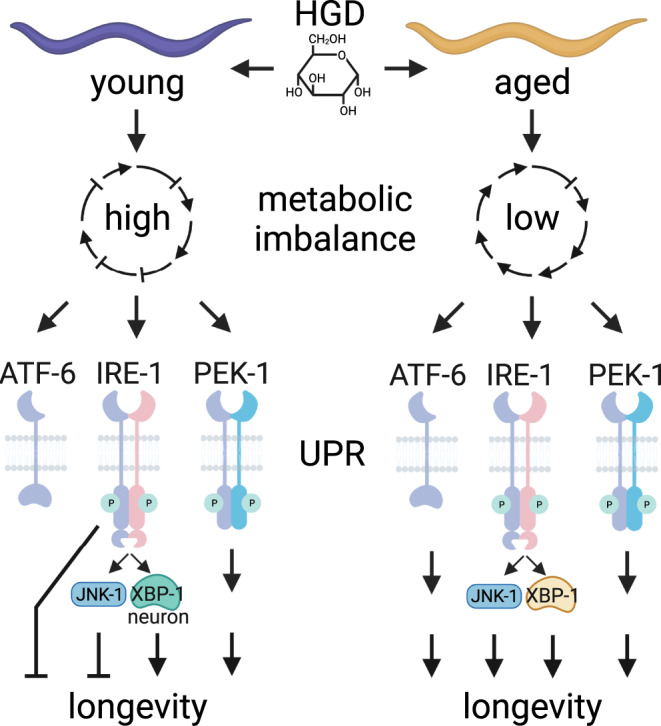
C. elegans fed high glucose diet (HGD) at a young (day 1 of adulthood) or older (day 5 of adulthood) age induces a high and low metabolic imbalance, respectively. In turn, HGD reduces the longevity of young animals in an IRE-1-dependent manner while promoting an increase in lifespan via the ER stress sensors ATF-6 and PEK-1 in aged animals. The proposed model is applicable to chemically-sterilized worms. Created with BioRender.com.