


Figure 2: Enteric Neuron/Macrophage Crosstalk.
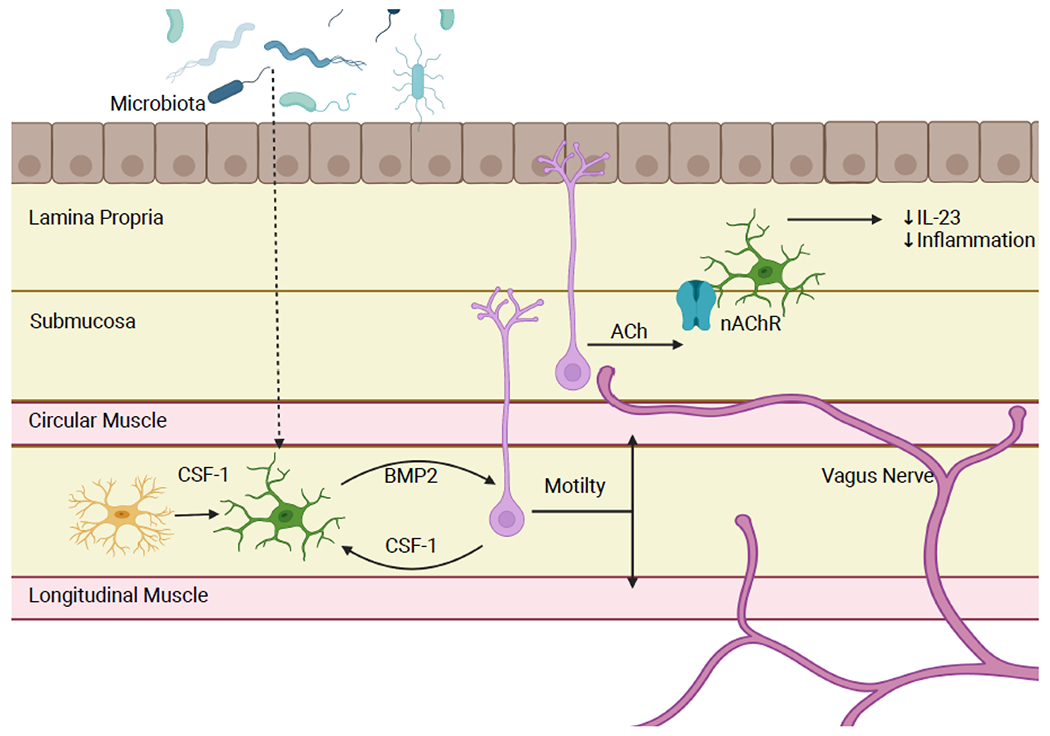
Enteric neuron and tissue resident macrophages have several mechanisms of communication to regulate intestinal homeostasis. One mechanism is symbiotic production of growth factors. Muscularis macrophages produce the enteric neuron growth factor BMP2 while enteric neurons and glia secrete CSF-1, an important growth factor for macrophages. In colons of antibiotic treated mice, there is a reduction in number of macrophages and subsequently in the level of BMP2, demonstrating that this relationship is microbiota dependent. This results in slower motility and abnormal smooth muscle contraction. Additionally, cholinergic enteric neurons signal to neuron associated macrophages in the lamina propria. Acetylcholine binds to the nAChR receptor on macrophages, inducing an anti-inflammatory phenotype and low levels of IL-23 production. Figure generated using BioRender.com.