


Figure 2.
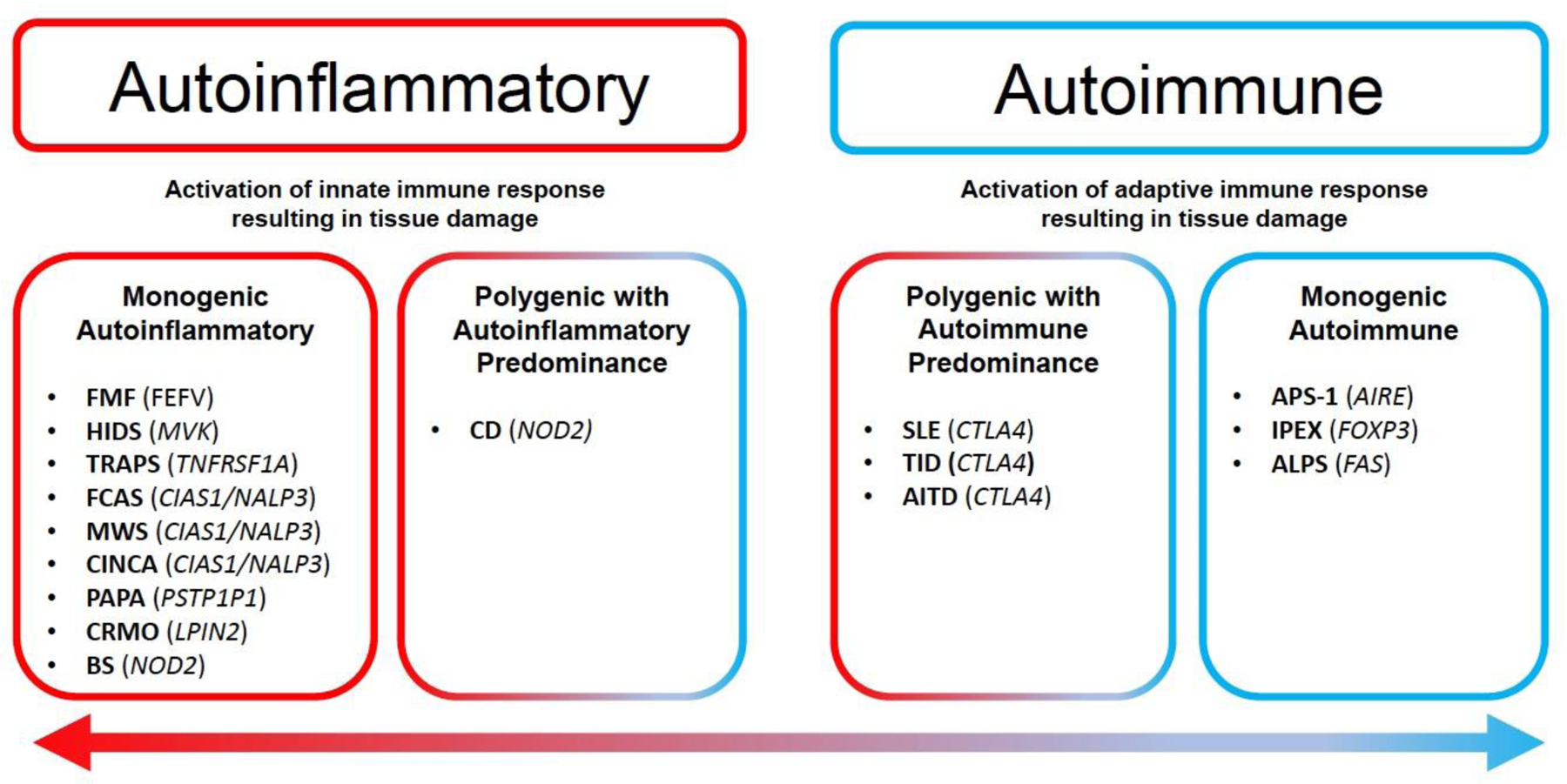
Spectrum of Autoinflammatory and Autoimmune Disorders
The figure depicts a few examples of self-directed inflammation disorders and the genes that have been associated with them. Self-directed inflammation disorders lie on a spectrum between autoinflammatory disorders, which involve proteins that are expressed in innate immune cell pathways, or autoimmune disorders, which involve proteins that are associated with adaptive immune pathways. There are disorders that may involve both innate and adaptive immune responses but present with prominent components of either autoimmune or autoinflammatory pathways as depicted.
(Adapted from McGonagle et al. (2006)(McGonagle and McDermott, 2006); AIRE, autoimmune regulator protein; ALPS, autoimmune lymphoproliferative syndrome; APS-1, autoimmune polyendocrine syndrome-1; CIAS, cold-induced autoinflammatory syndrome 1; TNFRSF, TNF super family receptor; CINCA, chronic infantile neurologic, cutaneous and articular syndrome; CMRO, chronic multifocal recurrent osteomyelitis; CTLA4, cytotoxic T-lymphocyte antigen 4; FCAS, familial cold autoinflammatory syndrome; FMF, familial Mediterranean fever; HIDS, hyper-IgD syndrome; IPEX, immune dysregulation, polyendocrinopathy, enteropathy, X-linked; FOXP3, forkhead box P3; FEFV, Mediterranean fever protein; MWS, Muckle-Wells syndrome; NALP, Nacht, LRR, and PYD domains; PSTPIP1, proline serine threonine phosphatase-interacting protein; NOD, nucleotide-binding oligomerization domain; PAPA, pyogenic sterile arthritis, pyoderma gangrenosum, and acne; SLE, systemic lupus erythematosus; T1D, type 1 diabetes; TLR4, Toll receptor-4; TRAPS, TNF-receptor-associated periodic syndrome.)