



Abstract
Background
Physical inactivity is defined to be an activity level insufficient to meet recommendations. Exergame, which refers to a combination of exercise and video games, has the potential to promote physical activity (PA). Behavior change techniques (BCTs), the minimal, replicable components of an intervention, are widely used to identify components used in health behavior promotion.
Objective
A systematic review and meta-analysis of randomized controlled trials (RCTs) was conducted to examine the overall effects of exergame-based interventions for promoting PA and their influencing factors. BCTs were also identified and discussed in this review.
Methods
We searched for relevant RCTs across 6 databases from their inception to March 21, 2024. Meta-analyses using random-effects models assessed the effects on PA, moderate to vigorous physical activity (MVPA), light physical activity, moderate physical activity, vigorous physical activity, sedentary time, step count, and BMI. Subgroup analyses of PA were conducted to explore the influencing factors of exergame-based behavior change interventions. Review Manager software (version 5.3; Cochrane Collaboration) and Stata software (version 16; StataCorp) were used to analyze data.
Results
A total of 20 RCTs targeting populations with various medical conditions (aged between 7.5 and 79 years; 1073/2211, 48.5% female) were included in this review, with sample sizes ranging from 16 to 1112. Exergame-based behavior change interventions significantly increased PA (standard mean difference [SMD] 0.19, 95% CI 0.05-0.33), MVPA (SMD 0.48, 95% CI 0.12-0.85), and step counts (SMD 0.54, 95% CI 0.13-0.94). Furthermore, subgroup analyses showed that intervention implementer (research assistants vs other implementers), game console (Microsoft Xbox vs Sony PlayStation vs Nintendo Wii), game participation type (individual game vs nonindividual game), measurement method (subjective vs objective), and the number of BCTs (n<7 vs 7≤n<10 vs n≥10) used significantly influenced the effectiveness of these interventions. The most frequently used BCTs included “1.4 action planning” (n=15), “1.1 goal setting” (n=13), “12.5 adding objects to the environment” (n=13), “2.3 self-monitoring of behavior” (n=11), and “4.1 instruction on how to perform the behavior” (n=11).
Conclusions
Our review has demonstrated that exergame-based interventions are effective in promoting PA. Future trials are needed to further validate the insights proposed in our studies and assess the long-term effects on PA.
Introduction
Insufficient physical activity (PA) represents a global public health problem, with significant health care costs and economic burdens [1]. Physical inactivity is defined to be an activity level insufficient to meet recommendations [2], which is estimated to be responsible for 6%‐10% of the major noncommunicable diseases (eg, coronary heart disease and type 2 diabetes) worldwide. Eliminating physical inactivity could potentially extend global life expectancy by 0.68 years [3]. It is conservatively estimated that physical inactivity cost global health care systems approximately US $53.8 billion in 2013 [4]. Considering the health impacts and financial costs of physical inactivity, promoting PA is essential.
With the advent and growing popularity of technology, digital health interventions (eg, mobile health apps, web-based health programs, and virtual reality fitness practices) have been increasingly used to promote PA, though their effectiveness varies due to differing delivery methods [5,6]. According to the results of qualitative interviews and cross-sectional surveys, lack of motivation is recognized as a major barrier to promoting PA [7]. Exergame, a form of digital health intervention that combines exercise with video games, has the potential to overcome this barrier, as people are more likely to experience a state of flow while participating in exergame activities [8-10]. Games, such as Dance Dance Revolution, invented by the Japanese company Konami, and interactive cycling, offer a convenient, cost-effective, and engaging alternative to traditional exercise, potentially increasing motivation for PA [11]. In recent years, exergames have attracted researchers’ attention as they examine the health benefits of exergames, which are initially designed for entertainment. Many studies examining their effectiveness have been conducted. For instance, in 2019, a randomized controlled trial (RCT) investigated the effect of Nintendo Wii Fit on promoting PA in children with cancer, but no significant PA benefits were observed [12]. Another RCT, involving a 5-month exergame training intervention for children with overweight or obesity, revealed significant increases in PA and a decrease in sedentary time (SED) [13]. The inconsistency in the original research findings has led researchers to question the true effects of exergames and prompted them to conduct meta-analyses.
A systematic review and meta-analysis regarding the effectiveness of exergame interventions targeting PA behaviors was published in 2023 [8]. However, there are some limitations to this paper. First, the inclusion of both RCTs and quasi-experimental studies may compromise the reliability of the evidence presented. Second, only articles published before December 31, 2020, are included. Yet, numerous original studies on the effectiveness of exergame-based interventions for promoting PA have emerged from 2021 to 2024, indicating that the evidence needs to be updated [13-18]. Third, effective exergame-based intervention components are not fully explored and discussed in the previous review. Another review relevant to this topic was also published recently, but it also did not fully address the components of exergame interventions. It primarily focused on the intervention period, population, outcome measurement, and control group type, which are important but are commonly discussed in most behavior change articles [19]. Understanding the characteristics that distinguish exergames from other behavior change interventions (eg, primary game device, console type, participation type, and content) is essential, as they are likely to be underlying psychological factors that drive the effectiveness of exergames. Clarifying the effective components used in exergame-based intervention design also helps guide the development of future interventions aimed at improving health outcomes. To make the use of intervention components clearer and more explicit, we introduced behavior change techniques (BCTs) in this systematic review [20]. According to Michie et al [21], BCTs are systematically categorized into 93 techniques, such as goal setting, self-monitoring, and feedback. They are the minimal, replicable components of an intervention designed to influence or modify the causal processes that regulate behavior and are widely used to identify components involved in health behavior promotion [21-24].
Therefore, we aimed to investigate the overall effectiveness of exergame-based behavior change interventions on PA promotion and explore potential factors, especially exergame-specific ones, that influence their effectiveness, with the goal of guiding future intervention design. Specifically, this systematic review and meta-analysis of RCTs was performed to examine the effects of exergame-based interventions on primary outcomes (ie, PA) and secondary outcomes (ie, moderate to vigorous physical activity [MVPA], moderate physical activity [MPA], vigorous physical activity [VPA], light physical activity [LPA], SED, step count, and BMI). Furthermore, we conducted subgroup analyses to identify factors that significantly influence the effectiveness of exergame-based interventions. BCTs were also identified and discussed in this review.
Methods
Overview
The systematic review and meta-analysis were conducted following the PRISMA (Preferred Reporting Items for Systematic Reviews and Meta-Analyses) 2020 guidelines [25] and were registered on the International Prospective Register of Systematic Reviews (PROSPERO) with registration number CRD42024544081.
Search Strategy
We searched 6 databases (ie, PubMed, Embase, Cochrane Library, Web of Science, CINAHL, and SPORTDiscus) in English for relevant RCTs published from the inception of each database to March 21, 2024. The search strategy was developed with the assistance of a research librarian based on the PICOS (Participants, Interventions, Comparisons, Outcomes, and Study Design) framework. MeSH (Medical Subject Headings) and key search terms related to “exergaming,” “exergame*,” “active-video gam*,” “exercise,” “physical activit*,” and “randomized controlled trial” were included. Additionally, to ensure comprehensive retrieval, we manually searched the references of previously published relevant reviews (Multimedia Appendix 1).
Study Eligibility Criteria
The inclusion criteria for this systematic review and meta-analysis were as follows: (1) participants: any human population, irrespective of health condition; (2) interventions: exergame used either as the primary intervention or as a supplementary component; (3) comparisons: either active controls (eg, PA education programs) or inactive controls (eg, no intervention and waitlist control); (4) outcomes: PA outcomes measured both objectively, including minutes of various types of PA, and subjectively through assessment tools such as the International Physical Activity Questionnaire; in addition, BMI was also included as an indirect measure of PA effects; and (5) studies: RCTs of all forms, including parallel, cluster, and crossover designs. Conference papers and abstracts were excluded to ensure data quality, and full texts lacking available data were also excluded.
Study Selection
All studies retrieved were imported into EndNote 20 (Clarivate), and duplicates were automatically removed. The results were then exported to the Rayyan web-based platform [26]. Two authors (SJL and LQZ) independently screened the titles and abstracts based on the eligibility criteria. Next, full texts of potentially relevant articles were retrieved and assessed for inclusion, with reasons for exclusion recorded. Any discrepancies were resolved through discussions with a third investigator (HMM) to reach a consensus.
Data Extraction
Study characteristics (including author, year, country, and study arms), population details (including population type, sample size, average years, sex difference, and baseline BMI), intervention specifics (including theory, site, frequency, type of training, duration, and period), exergame characteristics (including game name, primary device, and content), brief comparison content, and outcome data were extracted into a predesigned Microsoft Excel format by one author (SJL) and cross-checked by another reviewer (LQZ). The mean plus SD format was used to represent outcome data, and other statistics were converted to mean (SD) format [27]. Median values were transformed into means if mean values were not reported in the original articles [28]. Additionally, other data formats (such as 95% CI or standard errors) were also converted into SD (Cochrane Handbook, version 6.4, Chapter 5) [27]. If outcome indicators had different units, such as using metabolic equivalent of task to measure PA, we applied conversion formulas mentioned in the methods section of the articles to convert them into minutes per day, ensuring consistency in units. If a study involved multiple study arms, each individual intervention was treated as a separate study, and the number of participants in the shared control group was divided by the number of study arms to avoid duplicate inclusion of participants in the meta-analysis (Cochrane Handbook, version 6.4, Chapter 23) [27]. Michie’s BCT taxonomy (BCTTv1) was used to identify BCTs used in the original studies (Multimedia Appendix 2) [21]. If intervention descriptors in original RCTs matched the definitions of BCTs, we assigned a “√.” One reviewer (SJL) initially identified the BCTs, which were then double-checked and confirmed by another reviewer (HMM).
Risk of Bias Assessment
Two independent reviewers (SJL and LQZ) evaluated the methodological quality of the included RCTs using version 1 of the Cochrane risk of bias tool [29]. This tool consisted of 7 categories: random sequence generation (selection bias), allocation concealment (selection bias), blinding of participants and personnel (performance bias), blinding of outcome assessment (detection bias), incomplete outcome data (attrition bias), selective reporting (reporting bias), and other potential biases such as conflicts of interest. Each domain was assessed and rated as having low, unclear, or high risk of bias. Any discrepancies during the evaluation process were resolved by a third investigator (HMM).
Statistical Analysis
The meta-analysis aimed to assess the effectiveness of exergame-based behavior change interventions on promoting PA. Total PA, defined as the sum of LPA, MPA, and VPA measured either by a scale or an accelerometer, was the primary outcome, with MVPA, LPA, MPA, VPA, SED, step count, and BMI as secondary outcomes. Given the diverse measurement methods for outcomes, we calculated standard mean differences (SMDs), estimated using adjusted Hedges g, to generate effect sizes [30,31]. SMD values of 0.2, 0.5, and 0.8 corresponded to small, medium, and large effects, respectively [32]. Data heterogeneity was evaluated using the I² statistic, categorizing values of 25%, 50%, or 75% as low, moderate, and high, respectively [33]. A random-effects model was used for data analysis to obtain conservative results. Publication bias was assessed through visual evaluation of funnel plots asymmetry and quantified using Egger tests. Publication bias assessments were conducted only for outcome measures that included more than 10 original studies (Cochrane Handbook, version 6.4, Chapter 13) [27]. Subgroup analyses were conducted to explore influencing factors of exergame-based behavior change interventions and potential sources of heterogeneity. Review Manager software (version 5.3; Cochrane Collaboration) and Stata software (version 16; StataCorp) were used to analyze data. In all analyses, P<.05 (2-sided) was considered statistically significant.
Results
Study Selection
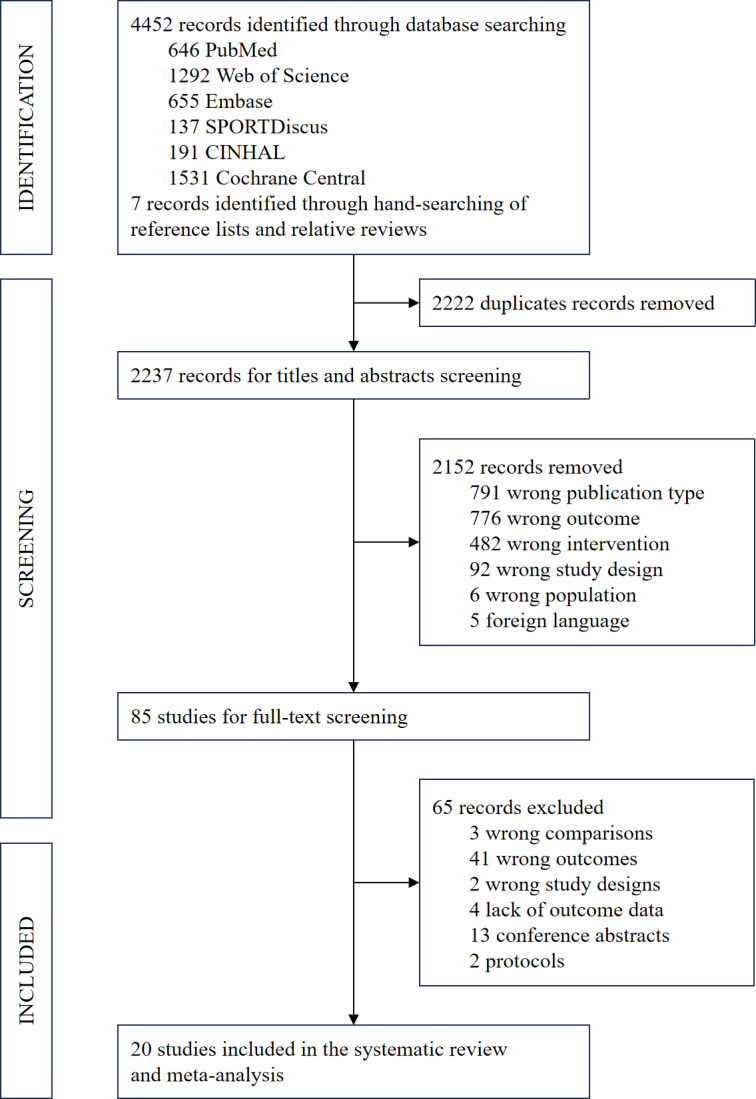
The literature search initially yielded 4452 records. Additionally, 7 studies were identified by hand-searching the references of relevant reviews. After the removal of 2222 duplicates using EndNote 20, titles and abstracts of 2237 studies were screened. Subsequently, 85 studies were included for full text screening, with 65 being excluded due to wrong interventions (n=1), wrong comparisons (n=3), wrong outcomes (n=41), wrong study designs (n=2), lack of outcome data (n=4), conference abstracts (n=13), and 2 protocols (see Multimedia Appendix 3 for a detailed list of exclusions with corresponding reasons). Finally, 20 RCTs [12-18,34-46,undefined,undefined,undefined,undefined,undefined,undefined,undefined,undefined,undefined,undefined,undefined,undefined,undefined,undefined,undefined,undefined,undefined,undefined] were included in the systematic review and meta-analysis (see Figure 1).
Figure 1. PRISMA (Preferred Reporting Items for Systematic Reviews and Meta-Analyses) flow diagram of the study selection process.
Study Characteristics
The studies included in the review were published between 2008 and 2023. A total of 20 studies were performed in Canada [15,34,37], the United States [14,17,18,35,36,42,43], Turkey [16,44], Spain [13], Australia [38,45], China (Hong Kong) [40], the Netherlands [46], Germany [39], Singapore [41], and Finland [12]. Two studies [15,17] used a 3-arm RCT design, while the remaining studies [12-14,16,18,34-46,undefined,undefined,undefined,undefined,undefined,undefined,undefined,undefined,undefined,undefined,undefined,undefined,undefined,undefined] used a 2-arm RCT design. Among them, 5 studies [15,18,36,44,46] focused on adults and 15 studies [12-14,16,17,34,35,37-43,45,undefined,undefined,undefined,undefined,undefined,undefined,undefined,undefined] targeted children. The sample sizes varied from 16 to 1112, with participants’ mean ages ranging from 7.5 to 79 years. The review included 2211 participants for meta-analysis, with 48.5% (n=1073) being female. BMI was also recorded to provide a general assessment of the participants’ body composition. Detailed characteristics of the studies and populations are listed in Table 1.
Table 1. Characteristics of studies and populations.
| Reference | Country | Study arms | Population (IG/CG)a,b | ||||
|---|---|---|---|---|---|---|---|
| Population type | Sample size (n) | Age (years), mean (SD) | Sex difference (male/female) | BMI (kg/m2) , mean (SD) | |||
| Adamo et al [34] | Canada | 2-arm RCTc; IG: interactive video game cycling; CG: stationary cycling to music | Overweight and obese adolescents | 26 (13/13) | 15.1 (1.8)/13.9 (1.4) | 12/14 | 39.3 (9.0)/35.5 (9.3) |
| Baranowski et al [35] | United States | 2-arm RCT; IG: active video games; CG: inactive video games | Children | 84 (41/43) | 11.3 (1.8) | 43/41 | BMI percentile: 81.7% |
| Campelo et al [15] | Canada | 3-arm RCT; IG: exergame training; CG1: conventional training; CG2: no training | Older adults | IG/CG1/CG2: 40 (15/14/11) | IG/CG1/CG2: 72.6 (7.7)/71.9 (5.0)/73.5 (7.5) | 15/25 | IG/CG1/CG2: 30.6 (5.7)/28.0 (4.7)/25.6 (3.5) |
| Cavusoglu et al [16] | Turkey | 2-arm RCT; IG: Nintendo Wii Fit; CG: home-based fun video exercises | Pediatric patients with chronic kidney disease | 16 (8/8) | 11.5 (3.5)/11.1 (3.7) | 5/11 | 18.4 (5.5)/18.0 (4.6) |
| Comeras-Chueca et al [13] | Spain | 2-arm RCT; IG: active video games exercise program combined with multicomponent exercise; CG: continue daily activities | Children with overweight or obesity | 29 (21/8) | 10.2 (0.8)/9.7 (0.8) | 16/13 | 25.9 (2.9)/24.1 (1.7) |
| Garde et al [37] | Canada | 2-arm crossover RCT; IG: mobile exergame (MobileKids Monster Manor); CG: no intervention | Healthy students | 42 (42/42) | 11.3 (1.2)/11.5 (1.3) | 26/16 | BMI z-score: 0.6 (1.4)/0.1 (1.2) |
| Howie et al [38] | Australia | 2-arm RCT; IG: active video games; CG: no active video games | Children with DCDd or at risk for DCD | 21 (10/11) | 11.0 (1.0) | 10/11 | BMI percentile: 75% (24%) |
| Lau et al [40] | China (Hong Kong) | 2-arm RCT; IG: active video games; CG: no intervention | Children | 80 (40/40) | 9.2 (0.5) | 55/25 | 19.4 (3.6)/19.8 (3.6) |
| Sousa et al [17] | United States | 3-arm crossover RCT; IG: active VRe; CG 1: sedentary VR; CG 2: control group | College students | IG/CG1/CG2: 29 (29/29/29) | 23.2 (2.1) | 20/9 | 23.7 (4.0) |
| Swartz et al [18] | United States | 2-arm RCT; IG: active video game sessions; CG: standard care | Female survivors of breast cancer | 60 (30/30) | 56.1 (10.7)/58.7 (10.3) | 0/60 | 29.4 (6.2)/31.8 (8.5) |
| Trost et al [45] | Australia | 2-arm RCT; IG: program and active gaming intervention; CG: program-only intervention | Children with a BMI >85th percentile | 75 (34/41) | 10.1 (1.9)/9.9 (1.5) | 34/41 | 28.4 (6.7)/27.3 (3.6) |
| van Santen et al [46] | The Netherlands | 2-arm RCT; IG: exergame intervention; CG: care-as-usual control group | People with dementia | 112 (73/39) | 79.0 (6.0)/79.0 (7.0) | 60/52 | 28.0 (4.7)/29.0 (5.5) |
| Maloney et al [42] | United States | 2-arm RCT; IG: DDRf; CG: waitlist control | Children | 60 (40/20) | 7.5 (0.5)/7.6 (0.5) | 30/30 | 17.2 (2.4)/18.0 (3.3) |
| Maloney et al [43] | United States | 2-arm RCT; IG: DDR+ pedometers; CG: pedometers only | Children with over 85th percentile for BMI | 64 (33/31) | 12.9 (2.4)/11.7 (2.4) | 30/34 | BMI percentile: 96.6% (3.7%)/96.6% (2.7%) |
| Şimşek and Çekok [44] | Turkey | 2-arm RCT; IG: Nintendo Wii group; CG: Bobath neurodevelopmental treatment | Patients with subacute stroke | 42 (20/22) | 54.2 (20.3)/61.5 (11.6) | 29/13 | 24.4 (3.7)/28.2 (5.2) |
| Bowling et al [14] | United States | 2-arm RCT; IG: AGSg intervention; CG: waitlist control | Youths with neurodevelopmental and psychiatric diagnosis | 23 (11/12) | 15.3/14.9 | 17/6 | —h |
| Kempf and Martin [39] | Germany | 2-arm RCT; IG: exercise game Wii Fit Plus; CG: routine care | Type 2 diabetes patients | 220 (120/100) | 62.0 (11.0)/60.0 (9.0) | 101/119 | 34.1 (6.5)/33.2 (6.3) |
| Lwin and Malik [41] | Singapore | 2-arm RCT; IG: PEi lesson with Wii; CG: PE lesson without Wii | Children and preadolescents | 1112 (557/555) | 11.3 (1.1) | 603/509 | — |
| Cowdery et al [36] | United States | 2-arm RCT; IG: exergame smartphone apps; CG: activity tracking app | People aged 18‐69 years | 40 (20/20) | 31.8 (4.9)/33.0 (5.5) | 6/34 | Weight: 167.0 (11.1)/171.4 (22.1) |
| Hamari et al [12] | Finland | 2-arm RCT; IG: Nintendo Wii Fit; CG: PAj advice | Children with cancer | 36 (17/19) | 7.8 (3.3)/7.9 (3.0) | 26/10 | — |
IG: intervention group.
CG: control group.
RCT: randomized controlled trial.
DCD: developmental coordination disorder.
VR: virtual reality.
DDR: Dance Dance Revolution.
AGS: adaptive GameSquad.
Not applicable.
PE: physical education.
PA: physical activity.
Characteristics of Exergame-Based Interventions
The design of some exergame-based interventions incorporated theories (ie, self-determination theory, social cognitive theory, and the theory of planned behavior) or theoretical frameworks (reserve capacity model and family ecological model). Interventions took place either at home or outside the home, such as in a hospital. The type of training ranged from simple activities such as walking and cycling to complex multicomponent exercises. The intervention period spanned from 1 to 24 weeks, with frequencies ranging from 1 to 7 times per week, each lasting between 20 and 60 minutes. Measured outcomes included PA, MVPA, LPA, MPA, VPA, SED, step count, and BMI, as detailed in Table 2. Regarding the characteristics of exergames, a total of 50 exergames (eg, Game Bike, Dance Dance Revolution, and Wii Sports) were identified across the 20 RCTs. Sony PlayStation, Nintendo Wii, and Microsoft Xbox were the primary devices used in these exergames. The game content included a diverse range of activities such as cycling, sports, dance, aerobics, strength training, yoga, adventure, walking, mini-games, pet simulation, and rhythm-based games. Detailed information about the exergames can be found in Multimedia Appendix 4 [12-18,34-46,undefined,undefined,undefined,undefined,undefined,undefined,undefined,undefined,undefined,undefined,undefined,undefined,undefined,undefined,undefined,undefined,undefined,undefined].
Table 2. Characteristics of interventions and outcomes.
| Reference | Intervention | Outcome | |||||
|---|---|---|---|---|---|---|---|
| Theory | Site | Frequency (time/week) | Type of training | Duration (minutes) | Period (weeks) | ||
| Adamo et al [34] | —a | Lab | 2x/week | Cycling | 60 | 10 | SEDb, LPAc, MVPAd, step count |
| Baranowski et al [35] | Self-determination theory | Home | — | — | — | 12 | Step count |
| Campelo et al [15] | — | Living center | 3x/week | Aerobics, strength, balance, and flexibility | 40 | 6 | Step count |
| Cavusoglu et al [16] | — | Clinical setting | 2x/week | Aerobics, strengthening, and yoga exercises | 40 | 6 | SED, LPA, MPAe, VPAf, MVPA, PAg, BMI |
| Comeras-Chueca et al [13] | — | University and public school | 3x/week | Multicomponent exercises | 60 | 20 | Step count |
| Garde et al [37] | — | Inside and outside the school environment | — | — | — | 1 | PA, SED, LPA, MPA, VPA |
| Howie et al [38] | — | Home | 4‐5x/week | Targeted a variety of gross and fine motor skills | 20 | 16 | PA, MVPA, BMI |
| Lau et al [40] | — | School | 2x/week | Moderate intensity activity | 60 | 12 | MVPA |
| Sousa et al [17] | — | Lab | — | Upper-body movement or whole-body movement | 20 | — | Step count, LPA, MVPA |
| Swartz et al [18] | Social cognitive theory, self-determination theory | Clinical setting | 3x/week | Whole-body movement | 60 | 12 | MVPA, VPA, BMI z score |
| Trost et al [45] | — | YMCAh + school | 1x/week | Whole-body movement | 60 | 16 | PA |
| van Santen et al [46] | — | Day care centers | 2x/week | Interactive cycling | — | 24 | PA, SED, LPA, MPA, VPA, BMI |
| Maloney et al [42] | — | Home | 4x/week | Dance | 30 | 10 | Step count, LPA, MPA, VPA |
| Maloney et al [43] | — | Home | — | Dance | — | 12 | PA |
| Şimşek and Çekok [44] | — | Hospital | 3x/week | Upper limb and balance training | 45‐60 | 10 | PA |
| Bowling et al [14] | Reserve capacity model and family ecological model | — | 3x/week | Whole-body movement | — | 10 | BMI |
| Kempf and Martin [39] | — | — | 7x/week | Strength and yoga activities | 30 | 12 | PA, LPA, MPA, VPA |
| Lwin and Malik [41] | Theory of planned behavior | School | 1x/week | Whole-body movement | 45‐60 | 6 | PA, MPA, VPA, LPA, BMI |
| Cowdery et al [36] | Self-determination theory | — | — | Walk and run | — | 12 | Step count, PA |
| Hamari et al [12] | — | Hospital and home | 7x/week | — | 30 | 8 | BMI |
Not applicable.
SED: sedentary time.
LPA: light physical activity.
MVPA: moderate to vigorous physical activity.
MPA: moderate physical activity.
VPA: vigorous physical activity.
PA: physical activity.
YMCA: Young Men's Christian Association.
The Frequency of BCT Used in These Interventions
The application of BCTs in the included RCTs varied, with each study incorporating between 1 and 15 different techniques. The most frequently used BCTs, which appeared in more than half of the studies, included “1.4 action planning” (n=15), “1.1 goal setting” (n=13), “12.5 adding objects to the environment” (n=13), “2.3 self-monitoring of behavior” (n=11), and “4.1 instruction on how to perform the behavior” (n=11) (shown in Table 3 and Multimedia Appendix 5).
Table 3. Frequency of BCTsa.
| BCT taxonomy | Studies used the BCT, n (%) |
|---|---|
| 1.4 Action planning | 15 (75) |
| 1.1 Goal setting (behavior) | 13 (65) |
| 12.5 Adding objects to the environment | 13 (65) |
| 2.3 Self-monitoring of behavior | 11 (55) |
| 4.1 Instruction on how to perform the behavior | 11 (55) |
| 2.2 Feedback on behavior | 9 (45) |
| 3.1 Social support (unspecified) | 8 (40) |
| 8.7 Graded tasks | 8 (40) |
| 1.2 Problem-solving | 6 (30) |
| 3.2 Social support (practical) | 6 (30) |
| 2.1 Monitoring of behavior by others without feedback | 4 (20) |
| 6.1 Demonstration of the behavior | 4 (20) |
| 6.2 Social comparison | 3 (15) |
| 9.1 Credible source | 3 (15) |
| 10.3 Nonspecific reward | 3 (15) |
| 11.3 Conserving mental resources | 3 (15) |
| 12.1 Restructuring the physical environment | 3 (15) |
| 10.2 Material reward (behavior) | 2 (10) |
| 10.4 Social reward | 2 (10) |
| 1.5 Review behavior goals | 1 (5) |
| 2.5 Monitoring of outcomes of behavior without feedback | 1 (5) |
| 3.3 Social support (emotional) | 1 (5) |
| 5.1 Information about health consequences | 1 (5) |
| 5.6 Information about emotional consequences | 1 (5) |
| 7.1 Prompts/cues | 1 (5) |
| 8.1 Behavioral practice/rehearsal | 1 (5) |
| 12.2 Restructuring the social environment | 1 (5) |
| 14.4 Reward approximation | 1 (5) |
| 14.5 Rewarding completion | 1 (5) |
BCTs: behavior change techniques.
Risk of Bias Assessment
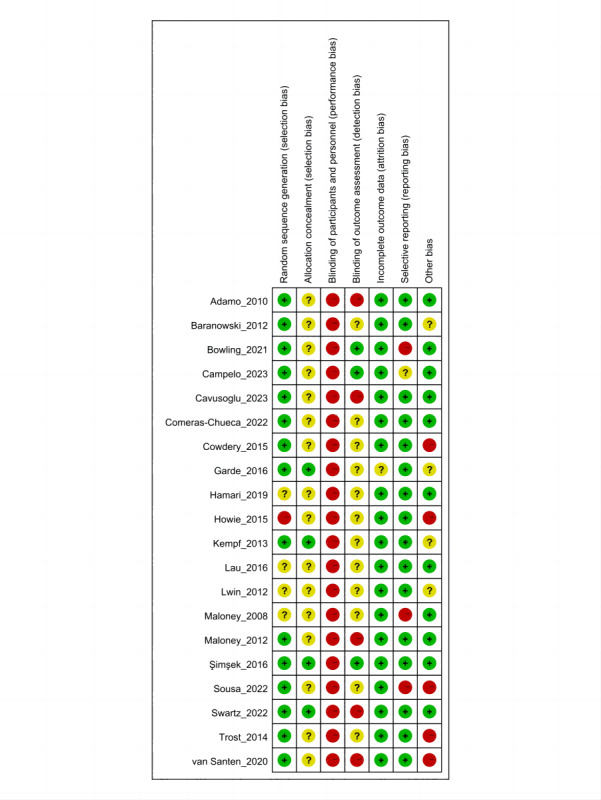
A vast majority (15/20, 75%) of the studies explicitly described the generation of random sequences, while those that mentioned randomization without detailing the process were categorized as unclear. Only 4 studies provided the specific details on the methods of allocation concealment, such as using opaque envelopes to conceal the random sequences. Due to the nature of behavior change intervention studies, it is unlikely to blind participants. Therefore, all studies were rated as high risk in this category. Information regarding the blinding of outcome assessment was missing in 60% (12/20) of the studies. Only one study was assessed as unclear in the incomplete outcome data section due to an insufficient explanation for the missing data. Most studies were categorized as low risk in the selective reporting and other potential biases. Detailed risk of bias assessment results can be seen in Figure 2.
Figure 2. Risk of bias [12-18,34-46,undefined,undefined,undefined,undefined,undefined,undefined,undefined,undefined,undefined,undefined,undefined,undefined,undefined,undefined,undefined,undefined,undefined,undefined].
Effectiveness of Exergame-Based Interventions
The systematic review and meta-analysis assessed the effectiveness of exergame-based interventions on primary outcomes, specifically PA, as well as on secondary outcomes, including MVPA, LPA, MPA, VPA, SED, step count, and BMI. Additionally, subgroup analyses were performed to identify potential factors influencing the effectiveness of the interventions.
Meta-Analysis of Primary Outcomes (PA)
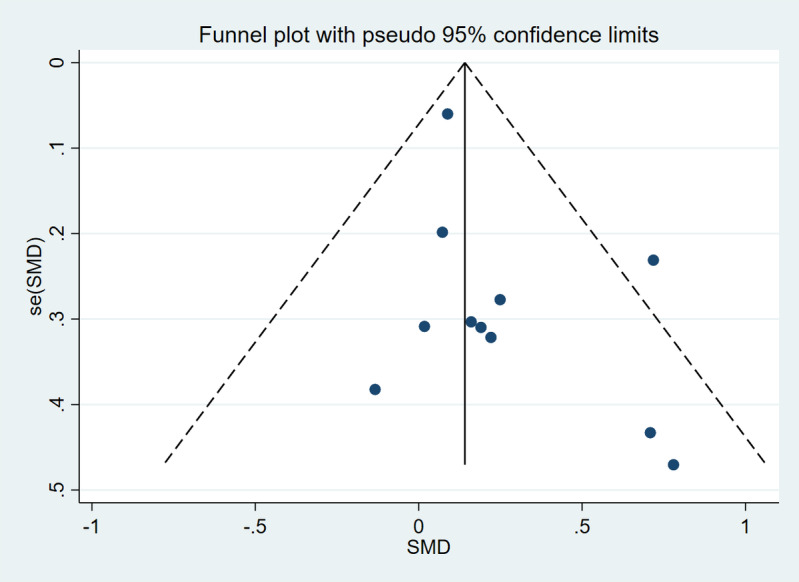
A total of 11 studies [12-14,36,38,40-44,46,undefined,undefined,undefined,undefined,undefined,undefined], including 828 participants in the intervention groups and 775 participants in the control groups, were analyzed to investigate the effects of exergame-based interventions on PA. The pooled effect size of PA was 0.19 (95% CI 0.05-0.33), indicating a statistically significant small effect. Additionally, a low level of heterogeneity was observed (I2=14%) (see Figure 3). No publication bias was detected by the Egger test (P=.12). The funnel plot is displayed in Figure 4.
Figure 3. Forest plot of physical activity [12-14,36,38,40-44,46,undefined,undefined,undefined,undefined,undefined,undefined].
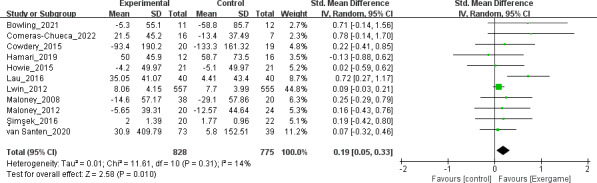
Figure 4. Funnel plot of physical activity. se: standard error; SMD: standard mean difference.
Subgroup Analysis and Meta-Regression of Primary Outcomes (PA)
Sixteen subgroup analyses were conducted to evaluate the effects of exergame-based interventions: population (age group [children vs adults] and health status [healthy participants vs participants with health conditions]), intervention design (theoretical basis [theory-based vs nontheory-based], site [school vs home vs hospital], frequency [4x/week vs ≥4x/week], session duration [<40 minutes vs ≥40 minutes], intervention period [<3 months vs ≥3 months], family involvement [yes vs no], technology support [entirely vs partially]), and intervention implementer [research assistants vs other implementers]), exergame design (game primary device [console vs smartphone vs cycling simulator], game console [Xbox, PlayStation, and Nintendo Wii], game participation type [individual game vs nonindividual game], and game content [single-category vs multicategory]), PA measurement (subjective vs objective), and BCT number used (n<7 vs 7≤n<10 vs n≥10).
Intervention implementer, game console, game participation type, measurement methods, and the number of BCTs used in each study significantly influenced the effects of exergame-based interventions on PA. Compared to other study implementers (eg, physical therapists), studies implemented by research assistants exhibited statistically significant higher effect sizes (SMD 0.36 vs 0.09, P=.04); similarly, the Xbox group and the nonindividual game group achieved significantly higher effect sizes than the PlayStation and Nintendo Wii group (SMD 0.72 vs 0.21 vs 0.09, P=.01), and the individual game group (SMD 0.46 vs 0.10, P=.02), respectively. Additionally, objectively measured PA demonstrated a larger effect size (SMD 0.41) compared to subjectively measured PA (SMD 0.09, P=.03). Similarly, studies using 10 or more BCTs showed a greater effect size (SMD 0.55) than those in the other groups.
Other important variables, such as age groups, intervention period, and game content, warrant our attention. Although they did not reveal significant subgroup differences, children showed significantly greater improvements in PA compared to adults (SMD 0.26, 95% CI 0.03 to 0.49 vs SMD 0.13, 95% CI −0.16 to 0.42). Interventions lasting longer than 3 months demonstrated significantly better PA outcomes than those shorter than 3 months (SMD 0.29, 95% CI 0.03 to 0.56 vs SMD 0.10, 95% CI −0.01 to 0.21). Single-category game content had significantly better PA outcomes than multicategory game content, such as combining dance and sports (SMD 0.29, 95% CI 0.04 to 0.54 vs SMD 0.13, 95% CI −0.02 to 0.28). Detailed subgroup analyses are listed in Table 4.
Table 4. Subgroup analysis of physical activity.
| Variables and subgroup | Studies, n | SMDa (95% CI) | I2 (%) | P value of subgroup difference |
|---|---|---|---|---|
| Population | ||||
| Age group | .50 | |||
| Children | 8 | 0.26 (0.03 to 0.49) | 39 | |
| Adults | 3 | 0.13 (–0.16 to 0.42) | 0 | |
| Health status | .54 | |||
| Healthy participants | 4 | 0.28 (–0.03 to 0.60) | 58 | |
| Participants with health conditions | 7 | 0.16 (–0.06 to 0.39) | 0 | |
| Intervention design | ||||
| Theory | .36 | |||
| Theory-based | 3 | 0.12 (–0.05 to 0.30) | 7 | |
| Nontheory-based | 8 | 0.25 (0.04 to 0.46) | 11 | |
| Site | .50 | |||
| School | 3 | 0.44 (–0.09 to 0.97) | 77 | |
| Home | 3 | 0.11 (–0.17 to 0.39) | 0 | |
| Hospital | 2 | 0.06 (–0.41 to 0.53) | 0 | |
| Frequency | .33 | |||
| <4x/week | 6 | 0.31 (0.04 to 0.57) | 53 | |
| ≥4x/week | 3 | 0.08 (–0.27 to 0.44) | 0 | |
| Duration | .30 | |||
| <40 min | 3 | 0.08 (–0.27 to 0.44) | 0 | |
| ≥40 min | 4 | 0.36 (–0.03 to 0.75) | 66 | |
| Period | .19 | |||
| <3 months | 5 | 0.10 (–0.01 to 0.21) | 0 | |
| ≥3 months | 6 | 0.29 (0.03 to 0.56) | 26 | |
| Family involvement | .99 | |||
| Yes | 4 | 0.22 (–0.11 to 0.54) | 0 | |
| No | 7 | 0.22 (0.01 to 0.42) | 35 | |
| Technology support | .53 | |||
| Entirely | 6 | 0.25 (0.03 to 0.47) | 11 | |
| Partially | 5 | 0.15 (–0.05 to 0.36) | 13 | |
| Intervention implementer | .04 | |||
| Research assistants | 6 | 0.36 (0.12 to 0.60) | 1 | |
| Other implementers | 4 | 0.09 (–0.02 to 0.20) | 0 | |
| Exergame design | ||||
| Game primary device | .75 | |||
| Console | 8 | 0.24 (0.04 to 0.44) | 34 | |
| Smartphone | 1 | 0.22 (–0.41 to 0.85) | —b | |
| Cycling simulator | 1 | 0.07 (–0.32 to 0.46) | — | |
| Game console | .01 | |||
| Xbox | 2 | 0.72 (0.32 to 1.12) | 0 | |
| PlayStation | 2 | 0.21 (–0.19 to 0.61) | 0 | |
| Nintendo Wii | 3 | 0.09 (–0.03 to 0.20) | 0 | |
| Game participation type | .02 | |||
| Individual game | 7 | 0.10 (–0.01 to 0.20) | 0 | |
| Nonindividual game | 4 | 0.46 (0.17 to 0.75) | 4 | |
| Game content | .28 | |||
| Single-category | 5 | 0.29 (0.04 to 0.54) | 18 | |
| Multicategory | 5 | 0.13 (–0.02 to 0.28) | 5 | |
| Outcome measurement | ||||
| Measurement | .03 | |||
| Subjective | 4 | 0.09 (–0.02 to 0.20) | 0 | |
| Objective | 6 | 0.41 (0.15 to 0.67) | 9 | |
| BCTc used | ||||
| BCT number | .02 | |||
| Low BCT use (n<7) | 5 | 0.10 (–0.01 to 0.21) | 0 | |
| Moderate BCT use (7≤n<10) | 3 | 0.00 (–0.29 to 0.29) | 0 | |
| High BCT use (n≥10) | 3 | 0.55 (0.23 to 0.87) | 0 |
SMD: standard mean difference.
Not applicable.
BCT: behavior change technique.
Meta-Analysis of Secondary Outcomes
Exergame-based behavior change interventions significantly increased MVPA (SMD 0.48, 95% CI 0.12-0.85, I2=65%) and step counts (SMD 0.54, 95% CI 0.13-0.94, I2=62%). However, the interventions did not show significant effects on LPA, MPA, VPA, SED, or BMI. Forest plots for these secondary outcomes are available in Multimedia Appendix 6.
Discussion
Main Findings
To our knowledge, this is the first meta-analysis of RCTs that evaluates the effects of exergame-based behavior change interventions for promoting PA and identifies the BCTs used in these interventions. This systematic review and meta-analysis included a total of 20 studies. Eight outcomes (ie, PA, MVPA, LPA, MPA, VPA, SED, step count, and BMI) were explored. The results demonstrated that exergame-based behavior change interventions significantly increased PA, MVPA, and step counts. Furthermore, subgroup analyses showed that intervention implementer (research assistants vs other implementers), game console (Xbox vs PlayStation vs Nintendo Wii), game participation type (individual game vs nonindividual game), measurement method (subjective vs objective), and number of BCTs (n<7 vs 7≤n<10 vs n≥10) significantly influenced the effectiveness of these interventions.
Interpretation of the Findings of Meta-Analyses
In our study, the pooled SMD for PA was 0.19 (95% CI 0.05-0.33), indicating a small effect with statistical significance. This finding is partially consistent with a previous meta-analysis conducted by Moller et al [8] in 2023, which reported a moderate effect size (0.53, 95% CI 0.32-0.73) of exergame interventions on PA behaviors. The main difference between our study and that of Moller et al [8] is that our analysis was restricted to RCTs, whereas Moller’s study included both RCTs and other types of experimental studies. This inclusion may account for the slight differences between the results. However, compared to other study designs, RCTs provide stronger evidence. Overall, exergame-based interventions have shown effectiveness in promoting PA. Flow experience offers a potential explanation for the positive changes in PA behavior observed in exergame-based interventions [47]. Exergames represent an innovative way to combine exercise and gaming, enhancing participants’ pleasure and enjoyment during physical activities [48,49]. Therefore, participants are more likely to experience flow while engaging in exergames, leading to positive behavioral changes [50,51]. The relationship between positive behavior changes in PA and improved health outcomes merits further discussion. Children and adolescents are recommended to engage in at least an average of 60 minutes/day of MVPA, while adults should do a minimum of 150‐300 minutes of MPA, or 75‐150 minutes of VPA per week [2]. Given the variations among different PA metrics, total PA is not sufficient to infer changes in health outcomes resulting from PA. Therefore, we performed meta-analyses to examine the effects on various types of PA, including MVPA, LPA, MPA, VPA, and SED. Exergame-based interventions increased MVPA (SMD 0.48, 95% CI 0.12-0.85) and step counts (SMD 0.54, 95% CI 0.13-0.94), representing moderate effect sizes. However, effect sizes seen in different fields of research vary [52]. We recommend that future studies standardize the units of measurement for PA, such as minutes/day, to directly observe whether behavior change interventions lead to significant health improvements. The effects of exergame-based interventions on LPA, MPA, VPA, SED, and BMI were not statistically significant. Therefore, there is a need to explore better-designed exergame-based interventions.
Interpretation of the Findings of Subgroup Analyses
RCTs included in the meta-analysis involved 2 types of participants: children and adults. Compared to adults, children exhibited greater improvements in PA behavior. This may be because exergame-based interventions are more attractive for children [53]. Exergames should be designed to meet the needs of various participant types to maximize their effectiveness [54,55]. Standardized design processes for exergame-based interventions can also be used in future studies [56]. Theory plays a crucial role in the design of interventions [57,58]. Only 3 RCTs used theory to guide exergame-based intervention design, and no significant subgroup differences in effect sizes were found between using and not using a theory. In the design of exergame-based interventions, the application of theory is not sufficiently emphasized, and theory-based interventions do not fully apply these theories.
The intervention site is also important in designing exergame-based interventions. In our study, we compared the effectiveness of interventions conducted in 3 different settings: school versus home versus hospital. Home-based interventions help participants overcome barriers associated with playing exergames, such as transportation and costs. In contrast, outside-home interventions (ie, school and hospital) are often supervised by professional staff, potentially enhancing the effectiveness of the intervention [59,60]. However, our study did not find significant differences between the 2 intervention sites, indicating that the choice of site may not be a main factor influencing the effectiveness of exergame-based interventions. Nevertheless, given the variability in the populations included in our study, the result should be treated with caution. We recommend that the selection of an intervention site should be based on the study population and research aims. Considering participants’ preferences regarding intervention sites is also important as it can influence their engagement and adherence to exergame-based interventions [61,62].
In order to achieve the recommended PA goals and transform behavior change interventions to significant health benefits, the intervention frequency and session duration should be designed and standardized. Although a slight difference in intervention frequency was observed, the sample sizes of included studies were limited, and our analysis failed to reveal significant differences between these subgroups, and the optimal intervention frequency and session duration require future exploration. The interventions performed by research assistants demonstrated significantly larger effect sizes compared to those implemented by other practitioners (eg, physical therapists). The reason behind this phenomenon might be that exergame-based interventions mainly require implementers to encourage and support participants in engaging with the interventions, rather than relying on specialized skills. Research assistants often have a higher sense of responsibility and motivation to adhere strictly to the study protocol, resulting in better intervention results.
Additionally, to our surprise, the game console brand acted as a significant factor in influencing health benefits effects. This may be related to the specific goals and development strategies used by the game developers in designing these games, particularly those aimed at maximizing either PA promotion or entertainment, depending on the focus of the game. According to our results, Xbox showed better PA promotion outcomes than PlayStation and Nintendo Wii. We advocate for collaborations between behavior change researchers and game companies to achieve the goal of both entertainment and health promotion. Nonindividual games (eg, team games) showed significantly better results than individual games, emphasizing the importance of integrating social support in intervention design, which is also one of the essential BCTs.
Another finding from our subgroup analysis is that interventions lasting 3 months or longer exhibited enhanced effectiveness, although no significant subgroup difference was observed. This may be explained by habit formation, which occurs when behavior is consistently repeated in a regular environment [63,64]. The more frequent the repetitions, the more likely it is that a behavior will become a habit. The link between habit formation and PA behavior change may be a valuable future research direction. The measurement of PA is important when it is the primary outcome of a study [65,66]. We have classified the measurement methods into subjective and objective measurements. Our results indicate that, compared to subjective methods, objective measurement demonstrated greater effectiveness in assessing PA. Using objective measurements in future studies is advised to enhance the reliability of the outcomes. Additionally, combining objective and subjective measurements can complement each other and provide rich result data.
Interpretation of the Findings of BCTs
The Number of BCTs Used
We quantified the number of BCTs used in each study to explore whether it is an important influencing factor in exergame-based interventions. The subgroup analysis result is consistent with a previous study, finding that a greater number of BCTs (n≥10) correlated with increased adherence to PA [67]. However, this does not imply that studies using a larger number of BCTs will always achieve better outcomes. We advise that future researchers refer to the BCT taxonomy to guide their exergame-based intervention designs. The balance between the number of BCTs used and how they are effectively integrated is also important for intervention effectiveness.
Specific Most Frequently Used BCT
The most frequently used BCTs identified in our study were consistent with previous reviews, except for “12.5 adding objects to the environment,” which can be explained by the nature of exergame-based interventions incorporating game devices into scenes [23,24,68,69]. Other techniques, such as action planning, goal setting, self-monitoring, and giving instructions, are commonly used in promoting health behavior because they are simple and easy to implement. These techniques are recommended for use in future studies. However, this does not imply that other BCTs are less important. A broader range of less commonly used and more challenging BCTs (eg, habit formation) should also be explored in future studies.
Strengths and Limitations
A comprehensive examination of the effectiveness of exergame-based interventions for promoting PA was conducted. Only RCTs were included in our systematic review and meta-analysis, ensuring the rigor of the study design. We explored 8 PA-related outcomes, providing a comprehensive overview of the results from exergame-based interventions. Additionally, subgroup analyses were performed to identify factors influencing effectiveness, offering valuable insights for the design of future interventions. However, the meta-analysis still has some limitations. First, although our systematic review and meta-analysis included 20 RCTs, only 11 of these, which provided total PA as an outcome, were included in subgroup analyses. The limited number of studies and sample sizes might restrict the ability to detect significant differences between subgroups, and the criteria for subgroup categorization were somewhat subjective, which might have overlooked other influencing factors due to classification issues. Therefore, the corresponding subgroup results should be treated with caution. Second, while the BCT coding was reviewed by another author (HMM) and showed good consistency, it still retained some degree of subjectivity. Additionally, differences in the reporting by the original study authors might have led to variations between the identified BCTs and those actually implemented in the interventions. Furthermore, the quality and intensity of the BCT used were more important than their labeling. For instance, both daily and weekly feedback were coded as “feedback” in the BCT taxonomy, but their effects were substantially different. This is why we do not conduct meta-regression in our study to identify effective BCTs. Although significant effects may be observed in some BCTs, the results were not reliable and could be misguiding. We recommend using BCT as a guide when designing interventions rather than inferring the effectiveness of using specific BCTs. Third, due to PA measurement differences across the original RCTs, we used SMD to aggregate effect sizes. However, this approach prevented direct comparisons with recommended PA dosage, thus limiting our ability to infer the health benefits from behavior changes. We suggest that standardized PA measurement methods should be used in future studies to enhance direct comparisons and interpretations.
Conclusions
In conclusion, our systematic review and meta-analysis have demonstrated that exergame-based interventions are effective in promoting PA. Furthermore, we explored how different factors and BCTs influence the effectiveness of these interventions. Future trials are needed to further validate the insights proposed in our studies and to assess the long-term effects on PA.
Supplementary material
Acknowledgments
This study was funded by the Non-Profit Central Research Institute Fund of the Chinese Academy of Medical Sciences (grant 2023-RC320-01).
Abbreviations
- BCT
behavior change technique
- LPA
light physical activity
- MeSH
Medical Subject Headings
- MPA
moderate physical activity
- MVPA
moderate to vigorous physical activity
- PA
physical activity
- PICOS
Participants, Interventions, Comparisons, Outcomes, and Study Design
- PRISMA
Preferred Reporting Items for Systematic Reviews and Meta-Analyses
- PROSPERO
International Prospective Register of Systematic Reviews
- RCT
randomized controlled trial
- SED
sedentary time
- SMD
standard mean difference
- VPA
vigorous physical activity
Footnotes
Data Availability: All relevant data are within the manuscript and its additional files, and further inquiries can be directed to the corresponding author.
Conflicts of Interest: None declared.
References
- 1.Zhao M, Veeranki SP, Magnussen CG, Xi B. Recommended physical activity and all cause and cause specific mortality in US adults: prospective cohort study. BMJ. 2020 Jul 1;370:m2031. doi: 10.1136/bmj.m2031. doi. Medline. [DOI] [PMC free article] [PubMed] [Google Scholar]
- 2.Bull FC, Al-Ansari SS, Biddle S, et al. World Health Organization 2020 guidelines on physical activity and sedentary behaviour. Br J Sports Med. 2020 Dec;54(24):1451–1462. doi: 10.1136/bjsports-2020-102955. doi. Medline. [DOI] [PMC free article] [PubMed] [Google Scholar]
- 3.Lee IM, Shiroma EJ, Lobelo F, et al. Effect of physical inactivity on major non-communicable diseases worldwide: an analysis of burden of disease and life expectancy. Lancet. 2012 Jul 21;380(9838):219–229. doi: 10.1016/S0140-6736(12)61031-9. doi. Medline. [DOI] [PMC free article] [PubMed] [Google Scholar]
- 4.Ding D, Lawson KD, Kolbe-Alexander TL, et al. The economic burden of physical inactivity: a global analysis of major non-communicable diseases. Lancet. 2016 Sep 24;388(10051):1311–1324. doi: 10.1016/S0140-6736(16)30383-X. doi. Medline. [DOI] [PubMed] [Google Scholar]
- 5.Weatherly S, McKenna T, Wahba S, et al. Effectiveness of digital health interventions (DHI) in chronic pain management: a scoping review of current evidence and emerging trends. Cureus. 2024 Oct;16(10):e72562. doi: 10.7759/cureus.72562. doi. Medline. [DOI] [PMC free article] [PubMed] [Google Scholar]
- 6.Mclaughlin M, Delaney T, Hall A, et al. Associations between digital health intervention engagement, physical activity, and sedentary behavior: systematic review and meta-analysis. J Med Internet Res. 2021 Feb 19;23(2):e23180. doi: 10.2196/23180. doi. Medline. [DOI] [PMC free article] [PubMed] [Google Scholar]
- 7.Costello E, Kafchinski M, Vrazel J, Sullivan P. Motivators, barriers, and beliefs regarding physical activity in an older adult population. J Geriatr Phys Ther. 2011;34(3):138–147. doi: 10.1519/JPT.0b013e31820e0e71. doi. Medline. [DOI] [PubMed] [Google Scholar]
- 8.Moller AC, Sousa CV, Lee KJ, Alon D, Lu AS. Active video game interventions targeting physical activity behaviors: systematic review and meta-analysis. J Med Internet Res. 2023 May 16;25:e45243. doi: 10.2196/45243. doi. Medline. [DOI] [PMC free article] [PubMed] [Google Scholar]
- 9.Soltani P, Figueiredo P, Vilas-Boas JP. Does exergaming drive future physical activity and sport intentions? J Health Psychol. 2021 Oct;26(12):2173–2185. doi: 10.1177/1359105320909866. doi. Medline. [DOI] [PubMed] [Google Scholar]
- 10.Oh Y, Yang S. Defining exergames & exergaming. Meaningful Play 2010; Oct 21-23, 2010; East Lansing, MI, USA. Presented at. [Google Scholar]
- 11.De Bock R. Vrije Universiteit Amsterdam; Feb, 2016. [01-07-2025]. The advantages of exergaming.https://www.cs.vu.nl/~eliens/project/local/student/study-exergames.pdf URL. Accessed. [Google Scholar]
- 12.Hamari L, Järvelä LS, Lähteenmäki PM, et al. The effect of an active video game intervention on physical activity, motor performance, and fatigue in children with cancer: a randomized controlled trial. BMC Res Notes. 2019 Nov 29;12(1):784. doi: 10.1186/s13104-019-4821-z. doi. Medline. [DOI] [PMC free article] [PubMed] [Google Scholar]
- 13.Comeras-Chueca C, Villalba-Heredia L, Perez-Lasierra JL, et al. Active video games improve muscular fitness and motor skills in children with overweight or obesity. Int J Environ Res Public Health. 2022 Feb 24;19(5):2642. doi: 10.3390/ijerph19052642. doi. Medline. [DOI] [PMC free article] [PubMed] [Google Scholar]
- 14.Bowling AB, Slavet J, Hendrick C, et al. The adaptive GameSquad Xbox-based physical activity and health coaching intervention for youth with neurodevelopmental and psychiatric diagnoses: pilot feasibility study. JMIR Form Res. 2021 May 14;5(5):e24566. doi: 10.2196/24566. doi. Medline. [DOI] [PMC free article] [PubMed] [Google Scholar]
- 15.Campelo AM, Weisberg A, Sheehan DP, Schneider K, Cossich VRA, Katz L. Physical and affective physical literacy domains improved after a six-week exergame exercise program in older adults: a randomized controlled clinical trial. Games Health J. 2023 Oct;12(5):366–376. doi: 10.1089/g4h.2022.0212. doi. Medline. [DOI] [PubMed] [Google Scholar]
- 16.Cavusoglu I, Tarakci D, Zenginler Yazgan Y, Yavuz S. Comparison of effectiveness of Nintendo Wii-based exergaming and home-based fun video exercises in pediatric patients with chronic kidney disease. Int J Rehabil Res. 2023 Mar 1;46(1):26–34. doi: 10.1097/MRR.0000000000000554. doi. Medline. [DOI] [PubMed] [Google Scholar]
- 17.Sousa CV, Hwang J, Cabrera-Perez R, et al. Active video games in fully immersive virtual reality elicit moderate-to-vigorous physical activity and improve cognitive performance in sedentary college students. J Sport Health Sci. 2022 Mar;11(2):164–171. doi: 10.1016/j.jshs.2021.05.002. doi. Medline. [DOI] [PMC free article] [PubMed] [Google Scholar]
- 18.Swartz MC, Lewis ZH, Deer RR, et al. Feasibility and acceptability of an active video game-based physical activity support group (Pink Warrior) for survivors of breast cancer: randomized controlled pilot trial. JMIR Cancer. 2022 Aug 22;8(3):e36889. doi: 10.2196/36889. doi. Medline. [DOI] [PMC free article] [PubMed] [Google Scholar]
- 19.Liu M, Guan X, Guo X, et al. Impact of serious games on body composition, physical activity, and dietary change in children and adolescents: a systematic review and meta-analysis of randomized controlled trials. Nutrients. 2024 Apr 26;16(9):1290. doi: 10.3390/nu16091290. doi. Medline. [DOI] [PMC free article] [PubMed] [Google Scholar]
- 20.Abraham C, Michie S. A taxonomy of behavior change techniques used in interventions. Health Psychol. 2008 May;27(3):379–387. doi: 10.1037/0278-6133.27.3.379. doi. Medline. [DOI] [PubMed] [Google Scholar]
- 21.Michie S, Richardson M, Johnston M, et al. The behavior change technique taxonomy (v1) of 93 hierarchically clustered techniques: building an international consensus for the reporting of behavior change interventions. Ann Behav Med. 2013 Aug;46(1):81–95. doi: 10.1007/s12160-013-9486-6. doi. Medline. [DOI] [PubMed] [Google Scholar]
- 22.Carey RN, Connell LE, Johnston M, et al. Behavior change techniques and their mechanisms of action: a synthesis of links described in published intervention literature. Ann Behav Med. 2019 Jul 17;53(8):693–707. doi: 10.1093/abm/kay078. doi. Medline. [DOI] [PMC free article] [PubMed] [Google Scholar]
- 23.Carraça E, Encantado J, Battista F, et al. Effective behavior change techniques to promote physical activity in adults with overweight or obesity: a systematic review and meta-analysis. Obes Rev. 2021 Jul;22 Suppl 4(Suppl 4):e13258. doi: 10.1111/obr.13258. doi. Medline. [DOI] [PMC free article] [PubMed] [Google Scholar]
- 24.Schroé H, Van Dyck D, De Paepe A, et al. Which behaviour change techniques are effective to promote physical activity and reduce sedentary behaviour in adults: a factorial randomized trial of an e- and m-health intervention. Int J Behav Nutr Phys Act. 2020 Oct 7;17(1):127. doi: 10.1186/s12966-020-01001-x. doi. Medline. [DOI] [PMC free article] [PubMed] [Google Scholar]
- 25.Page MJ, McKenzie JE, Bossuyt PM, et al. The PRISMA 2020 statement: an updated guideline for reporting systematic reviews. BMJ. 2021 Mar 29;372:n71. doi: 10.1136/bmj.n71. doi. Medline. [DOI] [PMC free article] [PubMed] [Google Scholar]
- 26.Ouzzani M, Hammady H, Fedorowicz Z, Elmagarmid A. Rayyan—a web and mobile app for systematic reviews. Syst Rev. 2016 Dec 5;5(1):210. doi: 10.1186/s13643-016-0384-4. doi. Medline. [DOI] [PMC free article] [PubMed] [Google Scholar]
- 27.Page MJ, Welch VA. In: Cochrane Handbook for Systematic Reviews of Interventions. Higgins JPT, Thomas J, Chandler J, Cumpston M, Li T, editors. Wiley; 2019. ISBN.9781119536628 [DOI] [PMC free article] [PubMed] [Google Scholar]
- 28.Shi J, Luo D, Weng H, et al. Optimally estimating the sample standard deviation from the five-number summary. Res Synth Methods. 2020 Sep;11(5):641–654. doi: 10.1002/jrsm.1429. doi. Medline. [DOI] [PubMed] [Google Scholar]
- 29.Higgins JPT, Altman DG, Gøtzsche PC, et al. The Cochrane Collaboration’s tool for assessing risk of bias in randomised trials. BMJ. 2011 Oct 18;343:d5928. doi: 10.1136/bmj.d5928. doi. Medline. [DOI] [PMC free article] [PubMed] [Google Scholar]
- 30.Murad MH, Wang Z, Chu H, Lin L. When continuous outcomes are measured using different scales: guide for meta-analysis and interpretation. BMJ. 2019 Jan 22;364:k4817. doi: 10.1136/bmj.k4817. doi. Medline. [DOI] [PMC free article] [PubMed] [Google Scholar]
- 31.Lin L, Aloe AM. Evaluation of various estimators for standardized mean difference in meta-analysis. Stat Med. 2021 Jan 30;40(2):403–426. doi: 10.1002/sim.8781. doi. Medline. [DOI] [PMC free article] [PubMed] [Google Scholar]
- 32.Cohen J. Statistical power analysis. Curr Dir Psychol Sci. 1992 Jun;1(3):98–101. doi: 10.1111/1467-8721.ep10768783. doi. [DOI] [Google Scholar]
- 33.Higgins JPT, Thompson SG, Deeks JJ, Altman DG. Measuring inconsistency in meta-analyses. BMJ. 2003 Sep 6;327(7414):557–560. doi: 10.1136/bmj.327.7414.557. doi. Medline. [DOI] [PMC free article] [PubMed] [Google Scholar]
- 34.Adamo KB, Rutherford JA, Goldfield GS. Effects of interactive video game cycling on overweight and obese adolescent health. Appl Physiol Nutr Metab. 2010 Dec;35(6):805–815. doi: 10.1139/H10-078. doi. [DOI] [PubMed] [Google Scholar]
- 35.Baranowski T, Abdelsamad D, Baranowski J, et al. Impact of an active video game on healthy children’s physical activity. Pediatrics. 2012 Mar;129(3):e636–42. doi: 10.1542/peds.2011-2050. doi. Medline. [DOI] [PMC free article] [PubMed] [Google Scholar]
- 36.Cowdery J, Majeske P, Frank R, Brown D. Exergame apps and physical activity: the results of the ZOMBIE trial. Am J Health Educ. 2015 Jul 4;46(4):216–222. doi: 10.1080/19325037.2015.1043063. doi. [DOI] [Google Scholar]
- 37.Garde A, Umedaly A, Abulnaga SM, et al. Evaluation of a novel mobile exergame in a school-based environment. Cyberpsychol Behav Soc Netw. 2016 Mar;19(3):186–192. doi: 10.1089/cyber.2015.0281. doi. Medline. [DOI] [PubMed] [Google Scholar]
- 38.Howie EK, Campbell AC, Straker LM. An active video game intervention does not improve physical activity and sedentary time of children at-risk for developmental coordination disorder: a crossover randomized trial. Child Care Health Dev. 2016 Mar;42(2):253–260. doi: 10.1111/cch.12305. doi. Medline. [DOI] [PubMed] [Google Scholar]
- 39.Kempf K, Martin S. Autonomous exercise game use improves metabolic control and quality of life in type 2 diabetes patients – a randomized controlled trial. BMC Endocr Disord. 2013 Dec 10;13:57. doi: 10.1186/1472-6823-13-57. doi. Medline. [DOI] [PMC free article] [PubMed] [Google Scholar]
- 40.Lau PWC, Wang JJ, Maddison R. A randomized-controlled trial of school-based active videogame intervention on Chinese children’s aerobic fitness, physical activity level, and psychological correlates. Games Health J. 2016 Dec;5(6):405–412. doi: 10.1089/g4h.2016.0057. doi. Medline. [DOI] [PubMed] [Google Scholar]
- 41.Lwin MO, Malik S. The efficacy of exergames-incorporated physical education lessons in influencing drivers of physical activity: a comparison of children and pre-adolescents. Psychol Sport Exerc. 2012 Nov;13(6):756–760. doi: 10.1016/j.psychsport.2012.04.013. doi. [DOI] [Google Scholar]
- 42.Maloney AE, Bethea TC, Kelsey KS, et al. A pilot of a video game (DDR) to promote physical activity and decrease sedentary screen time. Obesity (Silver Spring) 2008 Sep;16(9):2074–2080. doi: 10.1038/oby.2008.295. doi. Medline. [DOI] [PubMed] [Google Scholar]
- 43.Maloney AE, Threlkeld KA, Cook WL. Comparative effectiveness of a 12-week physical activity intervention for overweight and obese youth: exergaming with “Dance Dance Revolution”. Games Health J. 2012 Apr;1(2):96–103. doi: 10.1089/g4h.2011.0009. doi. Medline. [DOI] [PubMed] [Google Scholar]
- 44.Şimşek TT, Çekok K. The effects of Nintendo Wii(TM)-based balance and upper extremity training on activities of daily living and quality of life in patients with sub-acute stroke: a randomized controlled study. Int J Neurosci. 2016 Dec;126(12):1061–1070. doi: 10.3109/00207454.2015.1115993. doi. Medline. [DOI] [PubMed] [Google Scholar]
- 45.Trost SG, Sundal D, Foster GD, Lent MR, Vojta D. Effects of a pediatric weight management program with and without active video games: a randomized trial. JAMA Pediatr. 2014 May;168(5):407–413. doi: 10.1001/jamapediatrics.2013.3436. doi. Medline. [DOI] [PubMed] [Google Scholar]
- 46.van Santen J, Dröes RM, Twisk JWR, Blanson Henkemans OA, van Straten A, Meiland FJM. Effects of exergaming on cognitive and social functioning of people with dementia: a randomized controlled trial. J Am Med Dir Assoc. 2020 Dec;21(12):1958–1967. doi: 10.1016/j.jamda.2020.04.018. doi. Medline. [DOI] [PubMed] [Google Scholar]
- 47.Huang HC, Pham TTL, Wong MK, Chiu HY, Yang YH, Teng CI. How to create flow experience in exergames? Perspective of flow theory. Telematics and Informatics. 2018 Aug;35(5):1288–1296. doi: 10.1016/j.tele.2018.03.001. doi. [DOI] [Google Scholar]
- 48.Moholdt T, Weie S, Chorianopoulos K, Wang AI, Hagen K. Exergaming can be an innovative way of enjoyable high-intensity interval training. BMJ Open Sport Exerc Med. 2017;3(1):e000258. doi: 10.1136/bmjsem-2017-000258. doi. Medline. [DOI] [PMC free article] [PubMed] [Google Scholar]
- 49.Zhao Y, Feng H, Wu X, et al. Effectiveness of exergaming in improving cognitive and physical function in people with mild cognitive impairment or dementia: systematic review. JMIR Serious Games. 2020 Jun 30;8(2):e16841. doi: 10.2196/16841. doi. Medline. [DOI] [PMC free article] [PubMed] [Google Scholar]
- 50.Rheinberg F, Engeser S. In: Motivation and Action. Heckhausen J, Heckhausen H, editors. Springer; 2018. Intrinsic motivation and flow; pp. 579–622. doi. [DOI] [Google Scholar]
- 51.Feng H, Hwang J, Hou L. Understanding physical activity and exercise behavior in China university students: an application of theories of the flow and planned behavior. J Environ Public Health. 2022;2022:7469508. doi: 10.1155/2022/7469508. doi. Medline. [DOI] [PMC free article] [PubMed] [Google Scholar]
- 52.Cumming G, Calin-Jageman R. Introduction to the New Statistics: Estimation, Open Science, and Beyond. Routledge; 2017. ISBN.1317483375 [Google Scholar]
- 53.Benzing V, Schmidt M. Exergaming for children and adolescents: strengths, weaknesses, opportunities and threats. J Clin Med. 2018 Nov 8;7(11):422. doi: 10.3390/jcm7110422. doi. Medline. [DOI] [PMC free article] [PubMed] [Google Scholar]
- 54.Manser P, Adcock-Omlin M, de Bruin ED. Design considerations for an exergame-based training intervention for older adults with mild neurocognitive disorder: qualitative study including focus groups with experts and health care professionals and individual semistructured in-depth patient interviews. JMIR Serious Games. 2023 Jan 5;11:e37616. doi: 10.2196/37616. doi. Medline. [DOI] [PMC free article] [PubMed] [Google Scholar]
- 55.Swinnen N, Vandenbulcke M, de Bruin ED, Akkerman R, Stubbs B, Vancampfort D. Exergaming for people with major neurocognitive disorder: a qualitative study. Disabil Rehabil. 2022 May;44(10):2044–2052. doi: 10.1080/09638288.2020.1822934. doi. Medline. [DOI] [PubMed] [Google Scholar]
- 56.Li Y, Muñoz J, Mehrabi S, Middleton L, Cao S, Boger J. In: HCI in Games HCII 2020 Lecture Notes in Computer Science. Fang X, editor. Vol. 12211. Springer; 2020. Multidisciplinary Iterative Design of Exergames (MIDE): a framework for supporting the design, development, and evaluation of exergames for health; pp. 128–147. Vol. doi. [DOI] [Google Scholar]
- 57.Fleury J, Sidani S. In: Intervention Research: Designing, Conducting, Analyzing, and Funding. Melnyk BM, Morrison-Beedy D, editors. Springer; 2012. Using theory to guide intervention research; pp. 11–36. doi. [DOI] [Google Scholar]
- 58.Prestwich A, Webb TL, Conner M. Using theory to develop and test interventions to promote changes in health behaviour: evidence, issues, and recommendations. Curr Opin Psychol. 2015 Oct;5:1–5. doi: 10.1016/j.copsyc.2015.02.011. doi. [DOI] [Google Scholar]
- 59.Lee S, Denniston C, Edouard V, et al. Supervision training interventions in the health and human services: realist synthesis protocol. BMJ Open. 2019 May;9(5):e025777. doi: 10.1136/bmjopen-2018-025777. doi. [DOI] [PMC free article] [PubMed] [Google Scholar]
- 60.Jaarsma T, Klompstra L, Ben Gal T, et al. Effects of exergaming on exercise capacity in patients with heart failure: results of an international multicentre randomized controlled trial. Eur J Heart Fail. 2021 Jan;23(1):114–124. doi: 10.1002/ejhf.1754. doi. Medline. [DOI] [PMC free article] [PubMed] [Google Scholar]
- 61.Klompstra L, Jaarsma T, Strömberg A. Physical activity in patients with heart failure: barriers and motivations with special focus on sex differences. Patient Prefer Adherence. 2015;9:1603–1610. doi: 10.2147/PPA.S90942. doi. Medline. [DOI] [PMC free article] [PubMed] [Google Scholar]
- 62.Yoong SQ, Wu VX, Jiang Y. Experiences of older adults participating in dance exergames: a systematic review and meta-synthesis. Int J Nurs Stud. 2024 Apr;152:104696. doi: 10.1016/j.ijnurstu.2024.104696. doi. [DOI] [PubMed] [Google Scholar]
- 63.Orbell S, Verplanken B. In: The Handbook of Behavior Change. Hagger MS, Cameron LD, Hamilton K, Hankonen N, Lintunen T, editors. Cambridge University Press; 2020. Changing behavior using habit theory; pp. 178–192. doi. [DOI] [Google Scholar]
- 64.Ma H, Wang A, Pei R, Piao M. Effects of habit formation interventions on physical activity habit strength: meta-analysis and meta-regression. Int J Behav Nutr Phys Act. 2023 Sep 12;20(1):109. doi: 10.1186/s12966-023-01493-3. doi. Medline. [DOI] [PMC free article] [PubMed] [Google Scholar]
- 65.Tudor-Locke CE, Myers AM. Challenges and opportunities for measuring physical activity in sedentary adults. Sports Med. 2001 Feb;31(2):91–100. doi: 10.2165/00007256-200131020-00002. doi. Medline. [DOI] [PubMed] [Google Scholar]
- 66.Silfee VJ, Haughton CF, Jake-Schoffman DE, et al. Objective measurement of physical activity outcomes in lifestyle interventions among adults: a systematic review. Prev Med Rep. 2018 Sep;11:74–80. doi: 10.1016/j.pmedr.2018.05.003. doi. Medline. [DOI] [PMC free article] [PubMed] [Google Scholar]
- 67.Bishop FL, Fenge-Davies AL, Kirby S, Geraghty AWA. Context effects and behaviour change techniques in randomised trials: a systematic review using the example of trials to increase adherence to physical activity in musculoskeletal pain. Psychol Health. 2015 Jan;30(1):104–121. doi: 10.1080/08870446.2014.953529. doi. Medline. [DOI] [PubMed] [Google Scholar]
- 68.Gilchrist H, Oliveira JS, Kwok WS, et al. Use of behavior change techniques in physical activity programs and services for older adults: findings from a rapid review. Ann Behav Med. 2024 Feb 10;58(3):216–226. doi: 10.1093/abm/kaad074. doi. Medline. [DOI] [PMC free article] [PubMed] [Google Scholar]
- 69.Zhou Y, Li SJ, Huang RQ, et al. Behavior change techniques used in self-management interventions based on mHealth apps for adults with hypertension: systematic review and meta-analysis of randomized controlled trials. J Med Internet Res. 2024 Oct 22;26:e54978. doi: 10.2196/54978. doi. Medline. [DOI] [PMC free article] [PubMed] [Google Scholar]
Associated Data
This section collects any data citations, data availability statements, or supplementary materials included in this article.