



Abstract
Background
Recurrent pregnancy loss (RPL) is one of the most common reproductive disorders which is defined as the occurrence of recurrent miscarriage before 24 weeks of gestation and is observed among 1%–5% of women.
Methods
Various factors are associated with RPL such as immunological disorders, maternal age, obesity, alcohol, chromosomal abnormality, endocrine disorders, and uterine abnormalities. About half of the RPL cases are related with chromosomal abnormalities. Therefore, RPL genetic tests are mainly limited to karyotyping. However, there is a significant proportion of RPL cases without any chromosomal abnormalities that can be related to the single‐gene aberrations. Therefore, it is required to prepare a diagnostic panel of genetic markers besides karyotyping.
Results
In the present review, we have summarized all the significant reported genes until now which are associated with RPL among Iranian women. We categorized all the reported genes based on their cellular and molecular functions in order to determine the molecular bases of RPL in this population.
Conclusion
This review paves the way of introducing a population‐based diagnostic panel of genetic markers for the first time among Iranian RPL cases. Moreover, this review clarifies the genetic and molecular bases of RPL in this population.
Keywords: abortion, genetic, Iran, marker, miscarriage, recurrent pregnancy loss
1. INTRODUCTION
Pregnancy loss is one of the most common disorders during pregnancy which is observed among 12%–15% of women (Zinaman, Clegg, Brown, O'Connor, & Selevan, 1996). The early pregnancy losses also involve about 17%–22% of pregnancies (Ellish et al., 1996). Pregnancies are mainly lost before implantation and next menses which are not clinically diagnosed (Jauniaux & Burton, 2005). About 25% of couples experience at least one sporadic early pregnancy loss (Casikar, Reid, Rippey, & Condous, 2012; Jurkovic, Overton, & Bender‐Atik, 2013). The rate of pregnancy loss decreases to 2.8% after 10–13 weeks of implantation (Pandya, Snijders, Psara, Hilbert, & Nicolaides, 1996). Miscarriage before 20 weeks of gestation is called recurrent pregnancy loss which is observed among 1%–3% of females (Redecha, van Rooijen, Torry, & Girardi, 2009; Yang et al., 2012). Early pregnancy loss is a failed pregnancy prior to 10 weeks of gestation and includes peri‐implantation loss, ectopic pregnancy, pre‐embryonic loss, and embryonic loss (Jauniaux & Burton, 2005; Jurkovic et al., 2013). Chromosomal abnormalities are common problems among the cases with miscarriage in the first trimester (De Braekeleer & Dao, 1990; Goddijn & Leschot, 2000). Aneuploidy and polyploidy involve 86%–91% of chromosomal disorders. Chromosomal deletions, translocations, inversions, and duplications are also important structural changes related to the pregnancy loss (De Braekeleer & Dao, 1990). Chromosomal mosaicism is also associated with 8% early miscarriages (Goddijn & Leschot, 2000; van den Berg, van Maarle, van Wely, & Goddijn, 2012). Chromosomal abnormalities can be related to various molecular reasons such as meiotic homologous recombinations (Sazegari et al., 2014). Moreover, beside the chromosomal and genetic disorders, miscarriages can be caused by several other reasons such as inherited uterine abnormalities, thrombophilia, natural killer (NK) cell dysfunction, abnormal HLA‐G expression, diabetes, thyroid disorder, alcohol, smoking, maternal age, and socioeconomic conditions (Larsen, Christiansen, Kolte, & Macklon, 2013; Zlopasa, Skrablin, Kalafatic, Banovic, & Lesin, 2007). A positive history of miscarriage is also associated with pregnancy loss incidence in which the ratio is increased by 2%–3% after first miscarriage (Stirrat, 1990). However, there is still a significant ratio of pregnancy losses without a clear reason. Since there is not a clear panel of genetic markers for the miscarriage screening among Iranian women, we summarized all the significant reported genes until now (Table 1) in the present review. For the first time we categorized all reported genes based on their functions to clarify the molecular overview of this complication among Iranians (Figure 1).
Table 1.
All the genetic factors associated with recurrent pregnancy loss among Iranian patients
| Study (et al) | Year | Gene | Population | Results |
|---|---|---|---|---|
| Sazegari | 2014 | SYCP3 | 100 cases | Polymorphism was correlated with RPL risk |
| 100 controls | ||||
| Naderi‐Mahabadi | 2015 | FOXP3 | 195 cases | Polymorphism was correlated with RPL risk |
| 101 controls | ||||
| Nasiri | 2016 | IL−6 and CTLA−4 | 120 cases | Polymorphism was correlated with RPL risk |
| 120 controls | ||||
| Rasti | 2016 | IL−6 | 121 cases | Polymorphism was correlated with RPL risk |
| 121 controls | ||||
| Tavakoli | 2011 | IL−6 | 8 cases | IL−6 underexpression following vitamin D treatment |
| 8 controls | ||||
| Rasti | 2016 | CTLA−4 | 120 cases | Polymorphism was correlated with RPL risk |
| 120 controls | ||||
| Saifi | 2016 | CTLA−4, GITR, IL−10 | 20 cases | CTLA−4 and GITR underexpression |
| 20 controls | IL−10 overexpression | |||
| Saifi | 2014 | IL−6, IL−23, IL−17, FOXP3, TGF‐β | 20 cases | IL−6, IL−23, and IL−17 overexpression |
| 20 controls | FOXP3 and TGF‐β underexpression | |||
| Roomandeh | 2018 | IL−17, IL−21, IL−22, TGF‐β | 46 cases |
Higher serum levels of IL−17, IL−21, and IL−22 Lower serum levels of TGF‐β |
| 28 controls | ||||
| Rahmani | 2019 | OX40 |
40 cases 40 controls |
Overexpression |
| Mohtaram | 2016 | SLC19A1 |
147 cases 150 controls |
Polymorphism was correlated with RPL risk |
| Rezaei | 2002 | TNF‐α, TNF‐β, and IL−2 |
92 cases 40 controls |
Higher serum levels |
| Aboutorabi | 2018 | TNF‐α |
65 cases 65 controls |
Polymorphism was correlated with RPL risk |
| Bahadori | 2014 | IL−10 |
85 cases 104 controls |
Polymorphism was correlated with RPL risk |
| Kamali‐Sarvestani | 2005 | IL−10 |
139 cases 143 controls |
Polymorphism was correlated with RPL risk |
| Soheilyfar | 2018 | IL−18, IL−33 |
300 cases 300 controls |
Polymorphism was correlated with RPL risk |
| Najafi | 2014 | IL−17 |
85 cases 85 controls |
Polymorphism was correlated with RPL risk |
| Nasiri | 2018 | G‐CSF |
122 cases 140 controls |
Polymorphism was correlated with RPL risk |
| Mazdapour | 2019 | BMP4 |
70 cases 100 controls |
Polymorphism was correlated with RPL risk |
| Sabet | 2014 | CAT |
105 cases 90 controls |
Polymorphism was correlated with RPL risk |
| Asadpor | 2013 | USP26 | 72 cases | Mutation |
| Amirchaghmaghi | 2015 | VEGF |
10 cases 6 controls |
Higher serum levels |
| Hashemi | 2018 | VEGF |
50 cases 50 controls |
Polymorphism was correlated with RPL risk |
| Karami | 2018 | miR−21, PTEN |
25 cases 25 controls |
miR−21 underexpression PTEN overexpression |
| Azani | 2017 | eNOS |
130 cases 110 controls |
Polymorphism was correlated with RPL risk |
| Firouzabadi | 2009 | P53 |
167 cases 32 controls |
Polymorphism was correlated with RPL risk |
| Zahraei | 2014 | SULF1 |
100 cases 100 controls |
Polymorphism was correlated with RPL risk |
| Colagar | 2013 | ND1 |
33 cases 100 controls |
Polymorphism was correlated with RPL risk |
| Aarabi | 2011 | PAI−1 |
63 cases 114 controls |
Polymorphism was correlated with RPL risk |
| Khosravi | 2014 | PAI−1 |
595 cases 100 controls |
Polymorphism was correlated with RPL risk |
| Shakarami | 2015 | PAI−1 |
100 cases 100 controls |
Polymorphism was correlated with RPL risk |
| Jeddi‐Tehrani | 2011 | PAI−1 |
100 cases 100 controls |
Polymorphism was correlated with RPL risk |
| Karami | 2018 | HPA−1 |
110 cases 110 controls |
Polymorphism was correlated with RPL risk |
| Fazelnia | 2016 | ACE |
100 cases 100 controls |
Polymorphism was correlated with RPL risk |
| Asgari | 2013 | APOE |
81 cases 81 controls |
Polymorphism was correlated with RPL risk |
| Poursadegh Zonouzi | 2014 | APOE |
100 cases 100 controls |
Polymorphism was correlated with RPL risk |
| Jeddi‐Tehrani | 2011 | MTHFR |
100 cases 100 controls |
Polymorphism was correlated with RPL risk |
| Farahmand | 2016 | MTHFR |
330 cases 350 controls |
Polymorphism was correlated with RPL risk |
| Abdi‐Shayan | 2016 | CD46 |
141 cases 153 controls |
Polymorphism was correlated with RPL risk |
| Hashemi | 2017 | HLA‐G |
93 cases 93 controls |
Polymorphism was correlated with RPL risk |
| Arjmand | 2016 | HLA‐G |
200 cases 200 controls |
Polymorphism was correlated with RPL risk |
| Arjmand | 2016 | HLA‐G |
117 cases 117 controls |
Polymorphism was correlated with RPL risk |
| Shobeiri | 2015 | HLA‐G1 |
30 cases 30 controls |
Underexpression |
| Fotoohi | 2016 | HLA‐E | 200 cases | Polymorphism was correlated with RPL risk |
| Ghafourian | 2014 | CD69 and CD161 |
43 cases 43 controls |
CD69 and CD161 overexpressions |
| Jahaninejad | 2013 | AR |
85 cases 85 controls |
Polymorphism was correlated with RPL risk |
| Saeed | 2010 | Leptin | 81 cases | Higher levels of serum leptin |
Figure 1.
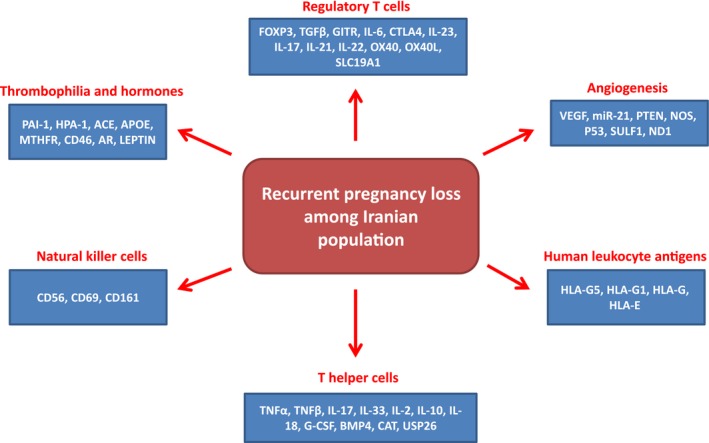
Cellular and molecular processes which are involved in recurrent pregnancy loss among Iranian population
2. REGULATORY T CELLS (TREGS)
Normally the immune system should be able to detect self from nonself antigens. Tregs are a subpopulation of immune cells which prevent the self‐reactivity of immune system. Tregs have an important role in tolerating the fetal–maternal interface during pregnancy (Zenclussen et al., 2006). A decreased number of CD4+ CD25+ Tregs has been observed in recurrent spontaneous abortion (RSA) cases (Yang et al., 2008) which can be associated with FOXP3 (OMIM: 300292) downregulation as an essential regulator of CD4+ CD25+ Tregs development and function through NFAT (Mei, Tan, Chen, Chen, & Zhang, 2010; Wu et al., 2006). It has been shown that there were high frequencies of −924A/G and −20G/A SNPs in FOXP3 among a subpopulation of Iranian RSA subjects. The 924A/G is located in GATA‐3 binding site and the A allele is much required for the promoter binding. Therefore, G allele and G/G can be associated with abortion through suppression of Th2‐immune response (Naderi‐Mahabadi et al., 2015). Treg cells prepare a tolerance in endometria against the fetus for an efficient implantation using CTLA‐4 (OMIM: 123890) as a negative regulator of T cells (Read et al., 2006; Zenclussen, 2006). CTLA‐4 suppresses IL‐6 through upregulation of TGF‐ β which results in the differentiation of naïve CD4+T cells to Tregs (Perrier d'Hauterive et al., 2004). IL‐6 (OMIM: 147620) cytokine also regulates the balance between T helper (Th)‐17 and Treg cells through induction and inhibition of Th‐17 and Treg differentiations, respectively (Bettelli et al., 2006; Gardner, Jeffery, & Sansom, 2014). It has been reported that there was a protective role of G allele in CTLA‐4+49A/G polymorphism against RPL among a group of Iranian cases. Moreover, there was a significant correlation between IL‐6 634C/G polymorphism and RPL in which the G allele was associated with >5 times increase in RPL risk. Therefore, they concluded that the 634C/G variant of IL‐6 and the +49A/G SNP of CTLA‐4 can be introduced as RPL risk factors among Iranian women (Nasiri & Rasti, 2016; Rasti, Nasiri, & Kohan, 2016). Another group also reported that the +49 G allele decreased RSA risk among Iranian cases (Rasti & Nasiri, 2016). Treg cells are characterized by several markers such as GITR and CTLA‐4 (Corthay, 2009). IL‐10 (OMIM: 124092) is also a Treg cell‐related cytokine that regulates the IFN‐g and TNF cytokines (Kwak‐Kim et al., 2003). It has been reported that there were significantly lower levels of CTLA‐4 and GITR expressions among a sample of Iranian RSA cases compared with controls. Moreover, they observed increased IL‐10 expression in RSA compared with control subjects (Saifi et al., 2016). IL‐6 and TGF‐β (OMIM: 190180) are critical factors during the differentiation of CD4+T cells into Th17 and Treg cells in which the presence of IL‐6 and TGF‐β induces Th17 differentiation, whereas the presence of TGF‐β results in Treg cells differentiation. Higher and lower expressions of IL‐6 and TGF‐β respectively have been observed among cases with pregnancy loss (Arruvito, Billordo, Capucchio, Prada, & Fainboim, 2009; Arruvito, Sotelo, Billordo, & Fainboim, 2010; Schumacher et al., 2009). It has been shown that there were significant higher expressions of IL‐6, IL‐23, and IL‐17 among a subpopulation of Iranian cases with RPL in comparison with normal nonpregnant subjects. Moreover, the RPL cases had lower levels of TGF‐β and FOXP3 expressions compared with normal nonpregnant subjects (Saifi et al., 2014). IL‐17 (OMIM: 603149) is secreted by Th17 cells which are related to the Treg cells and regulate the immunological rejection of foreign tissues (McGeachy & Cua, 2008). Therefore, Th17/Treg imbalance can result in pregnancy loss (Sereshki et al., 2014). It has been reported that there were significant higher serum levels of Th17‐related cytokines such as IL‐17, IL‐21, and IL‐22 among a subpopulation of Iranian URSA cases compared with normal nonpregnant subjects. In contrast, they reported significant lower levels of Treg‐associated cytokine (TGF‐β) in URSA compared with controls (Roomandeh et al., 2018). The costimulatory and coinhibitory signals also regulate cell‐mediated immunity (Liu, Almo, & Zang, 2016). OX40 is a cell surface costimulatory factor expressed by activated CD4 and CD8 T cells which regulate NF‐κB, PI3K/Akt, and calcium/NFAT signaling pathways (So, Song, Sugie, Altman, & Croft, 2006). Moreover, OX40 downregulates FOXP3 as the master regulator of Treg cells (Hori, Nomura, & Sakaguchi, 2003). It has been reported that there were higher levels of OX40 and OX40L expressions among a group of Iranian RSA cases in comparison with the healthy cases. They introduced the elevated serum OX40L levels as a risk factor of RSA (Rahmani, Hadinedoushan, & Ghasemi, 2019). Folate is involved in different biological processes such as Treg cell maintenance and fetal development (Kim et al., 2013; Kunisawa, Hashimoto, Ishikawa, & Kiyono, 2012). Solute Carrier Family 19 (SLC19A1; OMIM: 600424) is a membranous transporter of 5‐methyltetrahydrofolate. It has been observed that there was a significant correlation between −43T>C polymorphism of SLC19A1 and RPL among a subpopulation of Iranian cases. Moreover, they introduced certain SLC19A1 haplotypes as RPL risk factors (Mohtaram et al., 2016).
3. T‐HELPER CYTOKINES
T helper (Th) or CD4+cells are a class of T cells mainly involved in adaptive responses. Th cells differentiate into the Th1 and Th2 subtypes which are associated with cell‐mediated and humoral immune responses, respectively. Although, successful pregnancy is associated with Th2‐related cytokines, there is reduced Th1 cytokine production during pregnancy (Clifford, Rai, Watson, & Regan, 1994). Th1 cell responses are determined by the presence of TNF, IFN‐γ, IL‐2, and IL‐12 cytokines, whereas the Th2 response is defined by IL‐5, IL‐6, IL‐4, and IL‐10 (Raghupathy et al., 2000). It has been observed that there was a correlation between Th1 cytokines and miscarriages among a sample of Iranian RSA cases in which the RSA cases had significant higher serum TNF‐α, TNF‐β, and IL‐2 levels compared with control cases (Rezaei & Dabbagh, 2002). Another group has reported that there were also significant correlations between −863C/A and −238G/A variants of TNF‐α (OMIM: 191160) and RPL among a sample of Iranian cases. The −308G allele was also a protective factor against spontaneous abortion (Aboutorabi et al., 2018). A balanced cytokine production between Th1 and Th2 cells is required for a successful pregnancy (Chaouat et al., 2002). Although the increased levels of pro‐inflammatory cytokines are correlated with pregnancy termination, IL‐10 as an anti‐inflammatory cytokine inhibits Th1‐mediated cellular reactions which are important for the preservation of pregnancy (Choi & Kwak‐Kim, 2008; Raghupathy et al., 1999). IL‐10 is an inhibitor of Th1‐mediated cellular responses through suppression of IFN‐ γ and TNF cytokines. It has been reported that the RM cases had significantly higher frequency of the IL‐10 –592 A/C genotype in comparison with controls. Moreover, there was also a correlation between IL‐10 –819 C/T polymorphism and RM among a sample of Iranian subjects (Bahadori et al., 2014). It has been observed that there was a significant higher frequency of the IL‐10 –592 CC genotype in RPL in comparison with the healthy cases among a subpopulation of Iranian subjects. They showed that the 592 CC genotype carriers secrete lower levels of IL‐10 (Kamali‐Sarvestani, Zolghadri, Gharesi‐Fard, & Sarvari, 2005). IL‐18 (OMIM: 600953) is produced by a wide range of immune and nonimmune cells which are involved in regulation of Th1 and Th2 differentiations (Blom & Poulsen, 2012). IL‐33 (OMIM: 608678) is also produced by endothelial cells and is associated with Th2 activation (Balato et al., 2014; Lefrancais et al., 2014). It has been reported that there was a significant correlation between IL‐18 (rs1946518) polymorphism and RPL in which the CC genotype can be a RPL risk factor among a subpopulation of Iranian cases. Moreover, they also observed the GA genotype of IL‐33 (rs1929992) polymorphism as a RPL risk factor among Iranian subjects (Soheilyfar et al., 2018). IL‐17 (OMIM: 603149) is produced by Th‐17 cells following IL‐23 induction. It has been observed that there was a significant different frequency of IL‐17F (rs763780) gene polymorphism between a group of Iranian RPL and control subjects which showed that this polymorphism can be correlated with a high RPL risk in this population (Najafi, Hadinedoushan, Eslami, & Aflatoonian, 2014). Granulocyte colony stimulating factor (G‐CSF; OMIM: 138970) is a glycoprotein observed in endothelial cells and macrophages and is associated with upregulation of IL‐4 and IL‐10 anti‐inflammatory cytokines. Moreover, it is involved in shifting the Th1/2 balance toward the Th2 responses (Boneberg & Hartung, 2002; Mannon et al., 2009). It has been reported that there were significant different frequencies of CT and T allele (TT+CT) genotypes of the rs1042658 between a sample of Iranian RPL cases and controls that introduced this polymorphism as a probable RPL risk factor among Iranians (Nasiri & Jahangirizadeh, 2018). BMP4 (OMIM: 112262) as a ligand of the TGFβ family activates the SMAD transcription factors and can be associated with regulation of early ovarian follicle development (Nilsson & Skinner, 2003). Moreover, the canonical BMP signaling is involved in the activation of CD4 T cells (Martinez et al., 2015). It has been shown that there was a higher frequency of A allele of BMP4 (rs121912765) polymorphism among a sample of Iranian RSA patients in comparison with controls who showed this polymorphism as a RSA risk factor in Iran (Mazdapour, Dehghani Ashkezari, & Seifati, 2019). Oxidant and antioxidant balance has a critical role in the preservation of normal physiological conditions during a successful pregnancy. Reactive oxygen species (ROS)‐related damages result due to pregnancy complications because of the lack of antioxidants (Wang, Walsh, Guo, & Zhang, 1991). ROS are involved in T‐cell regulation in which the high ROS levels prolong Th‐2‐mediated immune responses, whereas reduced levels induce the Th‐1 and Th‐17 differentiation (Kaminski et al., 2010; Yarosz & Chang, 2018). The catalase (CAT; OMIM: 115500) is a pivotal antioxidant enzyme that functions as a protector against the ROS‐related cell damage through conversion of hydrogen peroxide to oxygen and water (Rohrdanz & Kahl, 1998). It has been observed that there was a significant correlation between CAT 262C/C genotype and increased spontaneous abortion susceptibility among a subpopulation of Iranian cases (Sabet, Salehi, Khodayari, Zarafshan, & Zahiri, 2014). Ubiquitin‐specific protease 26 (USP26; OMIM: 300309) is one of the members of deubiquitinating enzymes (DUB) involved in the regulation of cell growth, differentiation, and tumorigenesis (Amerik & Hochstrasser, 2004; Glickman & Ciechanover, 2002). USP26 regulates the TGF‐β signaling through stabilization of SMAD7 (Kit Leng Lui et al.., 2017). TGF‐β also has pleiotropic effects on adaptive immunity and regulation of CD4+T‐cell responses (Travis & Sheppard, 2014). It has been shown that the USP26 gene mutations can be associated with infertility and RPL among a subpopulation of Iranian males and females, respectively (Asadpor et al., 2013).
4. ANGIOGENESIS
Angiogenesis is a critical physiological process during a successful pregnancy. VEGF (OMIM: 192240) is an angiogenic cytokine which increases the vascular permeability and is involved in the regulation of proliferation and differentiation of endothelial cells (Dvorak, Brown, Detmar, & Dvorak, 1995; Ferrara, Houck, Jakeman, & Leung, 1992). Various factors upregulate the VEGF expression such as hypoxia, EGF, TGF‐β, and IL‐1β (Ferrara & Davis‐Smyth, 1997). It has been reported that there was significant high levels of serum VEGF among a subpopulation of Iranian URSA cases (Amirchaghmaghi et al., 2015). Moreover, another group has reported that the 18‐bp ins/del polymorphism in VEGF significantly increased the risk of RSA in a sample of southeast Iranian cases (Hashemi et al., 2018). Micro‐RNAs are a class of noncoding RNAs involved in posttranscriptional regulation through mRNA degradation or block of translation (Bartel, 2009). They have key roles in various reproductive system disorders such as preeclampsia and RM (McCallie, Schoolcraft, & Katz‐Jaffe, 2010). Aberrant angiogenesis is one of the mechanisms correlated with pregnancy loss (Papazoglou et al., 2005). MiR‐21 (OMIM: 611020) targets PTEN during the regulation of angiogenesis. Moreover, miR‐21 overexpression activates the ERK and AKT signaling pathways which results in VEGF upregulation and increased angiogenesis (Liu et al., 2011). It has been observed that there were miR‐21 under and PTEN overexpressions among a subpopulation of Iranian RM cases (Karami, Mirabutalebi, et al., 2018). Nitric oxide (NO) is involved in the regulation of many aspects of pregnancy such as fetomaternal angiogenesis and blood circulation which are required for a successful pregnancy (Sladek, Magness, & Conrad, 1997; Suryanarayana et al., 2006). Therefore, reduced NO production can result in aberrant placental perfusion and pregnancy loss (Su, Lin, & Chen, 2011). Nitric oxide synthases (NOSs) are responsible for the generation of soluble NO from l‐arginine (Shin et al., 2010). It has been observed that there were significant higher frequencies of eNOS −786 T>C variants and eNOS −786C alleles among a subpopulation of Iranian RPL cases compared with healthy subjects in which the eNOS −786C allele increased the risk of early pregnancy loss (Azani et al., 2017). Since the normal pregnancy requires sufficient fetal placental circulation, reduced vascular development can be correlated with early pregnancy loss (Reynolds & Redmer, 2001). Normally there is a low rate of apoptosis during the first trimester in placenta, whereas it has a raising ratio as gestation progresses (Smith, Baker, & Symonds, 1997). The P53 (OMIM: 191170) is a multifunctional transcription factor regulating cell apoptosis and angiogenesis (Ravi et al., 2000; Yuan et al., 2002). It has been shown that there was a significant correlation between RPL and P53 codon 72 gene polymorphism in which the Pro/Pro cases had higher risk of RPL compared with the Arg/Arg genotype cases among a sample of Iranian subjects (Firouzabadi, Ghasemi, Rozbahani, & Tabibnejad, 2009). Arylendosulfatase (SULF; OMIM: 610012) is a heparin sulfatase that releases 6‐O‐sulfate groups from heparin sulfates which change the growth factor binding sites in proteoglycans (Ai et al., 2006). Therefore, SULFs can be associated with angiogenesis and embryogenesis (Dhoot et al., 2001). A group has reported a correlation between SULF1 (rs6990375G>A) polymorphism and increased risk of recurrent miscarriage among a subpopulation of Iranian patients in which there were higher frequencies of GG and AA homozygous genotypes among patients. Moreover, higher frequency of AG genotype among healthy cases showed a correlation between this genotype and higher chance of successful pregnancy (Zahraei et al., 2014). Mitochondria are the cellular bioenergetic centers that have fundamental role during cell proliferation and development through oxidative phosphorylation and ATP production (Dumollard, Duchen, & Carroll, 2007). This organelle as a cellular oxygen sensor regulates angiogenesis through epithelial proliferation and migration. The NADH dehydrogenase I (ND1; OMIM: 516000) is one of the components of NADH dehydrogenase complex, which is the largest complex in the electron transport chain. The T4216C variation of ND1 has been observed in 30% of a subpopulation of Iranian RPL cases which can be introduced as a polymorphism with secondary effects on RPL (Colagar et al., 2013).
5. THROMBOPHILIA
Stable pregnancy requires a balance between maternal coagulation and fibrinolysis which stabilizes the placental basal plate (Buchholz & Thaler, 2003). Thrombophilia is a hypercoagulable state associated with several complications such as thrombotic pregnancy, preeclampsia, and abortion (Kempf Haber & Klimek, 2005). The fibrinolytic system is one of the endogenous defense mechanisms against intravascular thrombosis (Collen & Lijnen, 1986). Fibrinolytic activity can be associated with plasminogen activator inhibitor (PAI) (Lane & Grant, 2000). PAI‐1 as a tissue plasminogen (t‐PA) inhibitor that has an important role in thrombotic disorders and increased PAI‐1 concentration can be associated with placental damage through aberration in coagulation and fibrinolysis (Coulam, Wallis, Weinstein, DasGupta, & Jeyendran, 2008). It has been shown that there was a significant higher frequency of PAI‐1 (4G/4G) polymorphism among Iranian RSA cases compared with healthy subjects (Aarabi et al., 2011; Jeddi‐Tehrani et al., 2011; Khosravi et al., 2014; Shakarami, Akbari, & Zare Karizi, 2015). Fibrinogen is one of the key factors in coagulation process which regulates the platelet aggregation endothelial activity (Voetsch & Loscalzo, 2004). The human platelet antigen‐1 (HPA‐1) is a fibrinogen receptor that is associated with platelet activation and thrombosis stimulation (Shattil, 1999). It has been shown that there was a correlation between rs5918 T>C polymorphism of HPA‐1 and RPL risk in a sample of Iranian subjects in which this polymorphism was mainly observed among RPL cases (Karami, Askari, & Modarressi, 2018). Angiotensin converting enzyme (ACE; OMIM: 106180) as a key thrombophilic factor converts angiotensin I to angiotensin II and is associated with platelet aggregation and fibrinolysis. It has been reported that there was a correlation between ACE I/D polymorphism and RPL among a sample of Iranian population in which the DD genotype was more frequent in RPL compared with control cases. It was concluded that the ACE D allele can increase RPL risk and can be considered as a diagnostic factor among Iranian RPL cases (Fazelnia, Farazmandfar, & Hashemi‐Soteh, 2016). Apo E (OMIM: 107741) polymorphism is another thrombophilic factor highly expressed in liver and brain (Wernette‐Hammond et al., 1989) which is correlated with the metabolism of cholesterol and triglyceride through LDL receptors (Mahley, 1988). It is associated with different immunological processes such as T‐cell proliferation and NK cell activation. APOE has three allelic variants including E2–4. It has been reported that there was a significant higher frequency of allele E4 among a subpopulation of Iranian RPL patients compared with non‐RPL cases (Asgari, Akbari, Zare, & Babamohammadi, 2013; Poursadegh Zonouzi, Farajzadeh, Bargahi, & Farajzadeh, 2014). Hypercoagulable state increases the thrombophilia which can be maintained by factors involving in coagulation system and folate metabolism (Blanco‐Molina et al., 2007). Irregular folate pathway is associated with hyperhomocysteinemia which causes endothelial damage via elevated oxidative stress (Sen, Mishra, Tyagi, & Tyagi, 2010). Methylenetetrahydrofolate reductase (MTHFR; OMIM: 607093) is involved in methionine formation from homocysteine. The Iranian RPL cases had significantly higher frequencies of MTHFR 677C ⁄T and 1298A ⁄C polymorphisms compared with the control group (Farahmand et al., 2016; Jeddi‐Tehrani et al., 2011). Aberrant complement system is one of the immunologic factors involved in RSA. CD46 (OMIM: 120920) is a transmembrane glycoprotein which functions as a complement factor I cofactor to suppress C3 convertase complex and maintains complement activation (Liszewski, Post, & Atkinson, 1991). The CD46 gene mutations have been reported in various disorders such as preeclampsia and RSA (Lokki, Aalto‐Viljakainen, Meri, Laivuori, & Finnpec, 2015; Risk, Flanagan, & Johnson, 1991). It has been observed that there was a correlation between CD46 IVS1‐1724 C>G polymorphism and RSA risk in a sample of Iranian cases (Abdi‐Shayan, Monfaredan, Moradi, Rajaii Oskoui, & Kazemi, 2016).
6. HUMAN LEUKOCYTE ANTIGENS
Human leukocyte antigens (HLAs) encode the major histocompatibility complex proteins as the regulators of immune system. The HLA system helps immune system to discriminate between self and nonself cells. The HLA expression at feto‐maternal interface can be associated with a successful pregnancy (Ellis, Palmer, & McMichael, 1990; Kovats et al., 1990). HLA‐G (OMIM: 142871) is normally expressed in several locations such as fetal trophoblasts, pancreatic islets, and endothelial precursors (Carosella & LeMaoult, 2011). HLA‐G protects fetal trophoblast cells toward the maternal uterine NK cells during pregnancy (Abediankenari, Farzad, Rahmani, & Hashemi‐Soteh, 2015). It has been reported that there was a significant correlation between HLA‐G 3142G>C and 14‐bp ins/del polymorphisms and RSA susceptibility among a group of Iranian cases (Hashemi et al., 2017). The 14‐bp deletion/insertion polymorphism in HLA‐G is correlated with the regulation of HLA‐G expression. It has been reported that there was a higher frequency of heterozygote +14‐bp in a group of Iranian cases with recurrent miscarriages compared with fertile controls (Arjmand & Samadi, 2016). Another group reported that there was a significant association between HLA‐G*0105N alleles and lower serum HLA‐G levels which increased the risk of RSA among a subpopulation of Iranian cases (Arjmand, Ghasemi, Mirghanizadeh, & Samadi, 2016). The HLA‐G1 and HLA‐G5 were decreased among Iranian abortion threatened cases. The abortion threatened cases had significant lower levels of HLA‐G1 expression compared with control cases. Moreover, there was a direct association between HLA‐G1 and HLA‐G5 expression and IL‐10 levels and a converse association between NK cell numbers and these cytokines which introduced uterine NK, HLA‐G1, and HLAG5 as key factors in fetal maintenance during pregnancy among Iranians (Shobeiri et al., 2015). HLA‐E (OMIM:143010) is another member of the HLA proteins involved in feto‐maternal tolerance through interaction with CD94/NK G2A complex which has a critical role in NK cell suppression. It has been observed that there was higher frequency of HLA‐E 0101 polymorphism among a sample of Iranian RSA cases compared with controls, whereas HLA‐E 0103 was more frequent among controls. Moreover, the HLA‐E0101/0103 heterozygous genotype was correlated with fetus maintenance among Iranians (Fotoohi, Ghasemi, Mirghanizadeh, Vakili, & Samadi, 2016).
7. NATURAL KILLER (NK) CELLS
Natural killer (NK) cells are cytotoxic lymphocytes associated with maternal immune system suppression. They are the most abundant immune cells in uterine implantation site and act as the first cellular immune defense mechanism. NK cells are classified into CD16+CD56dim and CD16−CD56bright NK cells (Saito, Nakashima, Myojo‐Higuma, & Shiozaki, 2008). Increased peripheral blood NK cells are associated with higher rate of aberrant implantation following in vitro fertilization (IVF) (Thum et al., 2004). CD56 is a cell adhesion molecule (NCAM1; OMIM: 116930) that regulates the interaction between NK cells and their target cells (Vivier, Tomasello, Baratin, Walzer, & Ugolini, 2008). High NK cell activities cause trophoblast cell damage and abortion (Kwak‐Kim & Gilman‐Sachs, 2008). It has been shown that there was a significant increase in NK cytotoxicity among a subpopulation of Iranian RSA cases compared with controls. Moreover, the RSA cases had significantly higher percentage of CD56dim cells in comparison with control cases (Karami, Boroujerdnia, Nikbakht, & Khodadadi, 2012). RSA and IVF failure can be associated with immunological deficiencies during interactions between maternal immune cells and fetus. This immunological interaction can be related to NK cells and there is a direct correlation between increased NK cells and placental damage (Moffett‐King, 2002). CD69 (OMIM: 107273) and CD161 (OMIM: 602890) are cell surface markers involved in cytokine production and cytotoxicity (Marzio, Mauel, & Betz‐Corradin, 1999; Pozo et al., 2006). It has been observed that there were significantly increased CD69 NK cells among a group of Iranian cases with RAS and IVF failure compared with healthy subjects. Moreover, they observed increased CD161 expression on NK cells in RSA and IVF failure cases compared with normal cases with successful pregnancy. Therefore, CD69 and CD161 overexpression on NK cells can be considered as a risk factor of RSA and IVF failure among Iranians (Ghafourian, Karami, Khodadadi, & Nikbakht, 2014).
8. HORMONES
Vitamin D is a lipid‐soluble hormone involved in bone and mineral metabolism by binding with nuclear vitamin D receptor (VDR; OMIM: 601769) (Jones, Strugnell, & DeLuca, 1998). Expression of VDR and vitamin D hydroxylation enzymes in placenta and decidua show the key role of this hormone in the regulation of the reproduction system (Vigano et al., 2006). Vitamin D3 suppresses and induces the IL‐12 and IL‐10 productions respectively in dendritic cells which direct the cytokine profile toward humoral immune response. It has been shown that vitamin D3 has a preventive role in preeclampsia (Halhali et al., 2000). Moreover, it is expressed by a variety of endometrial resident cells, such as epithelial cells, macrophages, and dendritic cells (Vienonen et al., 2004). IL‐6 has a critical role in suppression of regulatory T‐cell development which are involved in normal pregnancy (Saito, Nakashima, Shima, & Ito, 2010). It has been reported that vitamin D3 is probably involved in the regulation of inflammatory responses which can result in abortion. Moreover, there was a significant decrease in IL‐6 production by whole endometrial and endometrial stromal cells among Iranian URSA cases following vitamin D3 treatment (Tavakoli et al., 2011). Androgens are essential lipophilic hormones for differentiation of endometrial stromal cells into decidual cells which regulate the embryo implantation and placentation (Guay et al., 2004). Androgen receptor (AR; OMIM: 313700) is a nuclear receptor highly expressed in the female reproductive system (Apparao, Lovely, Gui, Lininger, & Lessey, 2002). The AR‐G1733A polymorphism has been assessed in a sample of Iranian RSA cases and a correlation between A allele and elevated risk of pregnancy loss was observed (Jahaninejad, Ghasemi, Kalantar, Sheikhha, & Pashaiefar, 2013). Leptin (LEP; OMIM: 164160) is a hormone mainly produced by adipocytes and is involved in the energy balance and body weight homeostasis (Zhang et al., 1994). Moreover, leptin is secreted by trophoblasts and has a rising trend of serum levels until the second trimester (Schubring et al., 1997). Placenta can be the main source of maternal leptin, since the leptin levels drops following parturition (Malik et al., 2005). Leptin overexpression can be indirectly correlated with RSA through production of Th1‐associated autoantibodies. It has been observed that there was higher levels of serum leptin among a subpopulation of Iranian recurrent abortion cases in comparison with normal subjects (Saeed et al., 2010).
9. CONCLUSIONS
Recurrent pregnancy loss is a serious growing problem among the young couples. Despite various clinical and experimental tests, still there is not an accurate and efficient diagnostic method during the early stages of pregnancy in cases without any known cause. Therefore, it is required to determine targeted genomic methods besides karyotyping, clinical, and pathological examination. In the present review, we summarized all the reported single gene abnormalities among Iranian RPL cases to pave the way of introducing a population‐based panel of genetic markers in this population. We categorized all the reported markers to clarify the molecular bases of RPL. We observed that the majority of reported markers belonged to the regulatory T cells which highlights the role of these immune cells in RPL among Iranian women.
CONFLICT OF INTEREST
None declared.
Moghbeli M. Genetics of recurrent pregnancy loss among Iranian population. Mol Genet Genomic Med. 2019;7:e891 10.1002/mgg3.891
REFERENCES
- Aarabi, M. , Memariani, T. , Arefi, S. , Aarabi, M. , Hantoosh Zadeh, S. , Akhondi, M. A. , & Modarressi, M. H. (2011). Polymorphisms of plasminogen activator inhibitor‐1, angiotensin converting enzyme and coagulation factor XIII genes in patients with recurrent spontaneous abortion. The Journal of Maternal‐Fetal & Neonatal Medicine, 24(3), 545–548. 10.3109/14767058.2010.511331 [DOI] [PubMed] [Google Scholar]
- Abdi‐Shayan, S. , Monfaredan, A. , Moradi, Z. , Rajaii Oskoui, M. , & Kazemi, T. (2016). Association of CD46 IVS1‐1724 C>G single nucleotide polymorphism in Iranian women with unexplained recurrent spontaneous abortion (URSA). Iranian Journal of Allergy, Asthma, and Immunology, 15(4), 303–308. [PubMed] [Google Scholar]
- Abediankenari, S. , Farzad, F. , Rahmani, Z. , & Hashemi‐Soteh, M. B. (2015). HLA‐G5 and G7 isoforms in pregnant women. Iranian Journal of Allergy, Asthma, and Immunology, 14(2), 217–221. [PubMed] [Google Scholar]
- Aboutorabi, R. , Behzadi, E. , Sadegh, M. J. , Fatehi, S. P. , Semsarzadeh, S. , Zarrin, Y. , … Mostafavi, F. S. (2018). The study of association between polymorphism of TNF‐alpha gene's promoter region and recurrent pregnancy loss. Journal of Reproduction and Infertility, 19(4), 211–218. [PMC free article] [PubMed] [Google Scholar]
- Ai, X. , Do, A. T. , Kusche‐Gullberg, M. , Lindahl, U. , Lu, K. , & Emerson, C. P. Jr. (2006). Substrate specificity and domain functions of extracellular heparan sulfate 6‐O‐endosulfatases, QSulf1 and QSulf2. Journal of Biological Chemistry, 281(8), 4969–4976. 10.1074/jbc.M511902200 [DOI] [PubMed] [Google Scholar]
- Amerik, A. Y. , & Hochstrasser, M. (2004). Mechanism and function of deubiquitinating enzymes. Biochimica Et Biophysica Acta, 1695(1–3), 189–207. 10.1016/j.bbamcr.2004.10.003 [DOI] [PubMed] [Google Scholar]
- Amirchaghmaghi, E. , Rezaei, A. , Moini, A. , Roghaei, M. A. , Hafezi, M. , & Aflatoonian, R. (2015). Gene expression analysis of VEGF and its receptors and assessment of its serum level in unexplained recurrent spontaneous abortion. Cell Journal, 16(4), 538–545. [DOI] [PMC free article] [PubMed] [Google Scholar]
- Apparao, K. B. , Lovely, L. P. , Gui, Y. , Lininger, R. A. , & Lessey, B. A. (2002). Elevated endometrial androgen receptor expression in women with polycystic ovarian syndrome. Biology of Reproduction, 66(2), 297–304. [DOI] [PubMed] [Google Scholar]
- Arjmand, F. , Ghasemi, N. , Mirghanizadeh, S. A. , & Samadi, M. (2016). The balance of the immune system between HLA‐G and NK cells in unexplained recurrent spontaneous abortion and polymorphisms analysis. Immunologic Research, 64(3), 785–790. 10.1007/s12026-015-8771-9 [DOI] [PubMed] [Google Scholar]
- Arjmand, F. , & Samadi, M. (2016). Association of 14‐bp insertion/deletion polymorphism of HLA‐G gene with idiopathic recurrent miscarriages in infertility center patients in Yazd, Iran. Journal of Immunotoxicology, 13(2), 249–254. 10.3109/1547691X.2015.1052159 [DOI] [PubMed] [Google Scholar]
- Arruvito, L. , Billordo, A. , Capucchio, M. , Prada, M. E. , & Fainboim, L. (2009). IL‐6 trans‐signaling and the frequency of CD4+FOXP3+ cells in women with reproductive failure. Journal of Reproductive Immunology, 82(2), 158–165. 10.1016/j.jri.2009.04.010 [DOI] [PubMed] [Google Scholar]
- Arruvito, L. , Sotelo, A. I. , Billordo, A. , & Fainboim, L. (2010). A physiological role for inducible FOXP3(+) Treg cells. Lessons from women with reproductive failure. Clinical Immunology, 136(3), 432–441. 10.1016/j.clim.2010.05.002 [DOI] [PubMed] [Google Scholar]
- Asadpor, U. , Totonchi, M. , Sabbaghian, M. , Hoseinifar, H. , Akhound, M. R. , Zari Moradi, S. H. , … Mohseni Meybodi, A. (2013). Ubiquitin‐specific protease (USP26) gene alterations associated with male infertility and recurrent pregnancy loss (RPL) in Iranian infertile patients. Journal of Assisted Reproduction and Genetics, 30(7), 923–931. 10.1007/s10815-013-0027-9 [DOI] [PMC free article] [PubMed] [Google Scholar]
- Asgari, N. , Akbari, M. T. , Zare, S. , & Babamohammadi, G. (2013). Positive association of Apolipoprotein E4 polymorphism with recurrent pregnancy loss in Iranian patients. Journal of Assisted Reproduction and Genetics, 30(2), 265–268. 10.1007/s10815-012-9897-5 [DOI] [PMC free article] [PubMed] [Google Scholar]
- Azani, A. , Hosseinzadeh, A. , Azadkhah, R. , Zonouzi, A. A. P. , Zonouzi, A. P. , Aftabi, Y. , … Hosseini, S. M. (2017). Association of endothelial nitric oxide synthase gene variants (‐786 T>C, intron 4 b/a VNTR and 894 G>T) with idiopathic recurrent pregnancy loss: A case‐control study with haplotype and in silico analysis. European Journal of Obstetrics, Gynecology, and Reproductive Biology, 215, 93–100. 10.1016/j.ejogrb.2017.05.024 [DOI] [PubMed] [Google Scholar]
- Bahadori, M. , Zarei, S. , Zarnani, A. H. , Zarei, O. , Idali, F. , Hadavi, R. , & Jeddi‐Tehrani, M. (2014). IL‐6, IL‐10 and IL‐17 gene polymorphisms in Iranian women with recurrent miscarriage. Iranian Journal of Immunology, 11(2), 97–104. IJIv11i2A4 [DOI] [PubMed] [Google Scholar]
- Balato, A. , Di Caprio, R. , Canta, L. , Mattii, M. , Lembo, S. , Raimondo, A. , … Ayala, F. (2014). IL‐33 is regulated by TNF‐alpha in normal and psoriatic skin. Archives of Dermatological Research, 306(3), 299–304. 10.1007/s00403-014-1447-9 [DOI] [PubMed] [Google Scholar]
- Bartel, D. P. (2009). MicroRNAs: Target recognition and regulatory functions. Cell, 136(2), 215–233. 10.1016/j.cell.2009.01.002 [DOI] [PMC free article] [PubMed] [Google Scholar]
- Bettelli, E. , Carrier, Y. , Gao, W. , Korn, T. , Strom, T. B. , Oukka, M. , … Kuchroo, V. K. (2006). Reciprocal developmental pathways for the generation of pathogenic effector TH17 and regulatory T cells. Nature, 441(7090), 235–238. 10.1038/nature04753 [DOI] [PubMed] [Google Scholar]
- Blanco‐Molina, A. , Trujillo‐Santos, J. , Criado, J. , Lopez, L. , Lecumberri, R. , Gutierrez, R. , … RIETE Investigators . (2007). Venous thromboembolism during pregnancy or postpartum: Findings from the RIETE Registry. Thrombosis and Haemostasis, 97(2), 186–190. 10.1160/TH06-11-0650 [DOI] [PubMed] [Google Scholar]
- Blom, L. , & Poulsen, L. K. (2012). IL‐1 family members IL‐18 and IL‐33 upregulate the inflammatory potential of differentiated human Th1 and Th2 cultures. The Journal of Immunology, 189(9), 4331–4337. 10.4049/jimmunol.1103685 [DOI] [PubMed] [Google Scholar]
- Boneberg, E. M. , & Hartung, T. (2002). Granulocyte colony‐stimulating factor attenuates LPS‐stimulated IL‐1beta release via suppressed processing of proIL‐1beta, whereas TNF‐alpha release is inhibited on the level of proTNF‐alpha formation. European Journal of Immunology, 32(6), 1717–1725. 10.1002/1521-4141(200206)32:6<1717:AID-IMMU1717>3.0.CO;2-N [DOI] [PubMed] [Google Scholar]
- Buchholz, T. , & Thaler, C. J. (2003). Inherited thrombophilia: Impact on human reproduction. American Journal of Reproductive Immunology, 50(1), 20–32. 10.1034/j.1600-0897.2003.00049.x [DOI] [PubMed] [Google Scholar]
- Carosella, E. D. , & LeMaoult, J. (2011). HLA‐G: A look back, a look forward. Cellular and Molecular Life Sciences, 68(3), 337–340. 10.1007/s00018-010-0577-2 [DOI] [PMC free article] [PubMed] [Google Scholar]
- Casikar, I. , Reid, S. , Rippey, J. , & Condous, G. (2012). Redefining first trimester miscarriage. Australian and New Zealand Journal of Obstetrics and Gynaecology, 52(6), 597–598. 10.1111/ajo.12022 [DOI] [PubMed] [Google Scholar]
- Chaouat, G. , Zourbas, S. , Ostojic, S. , Lappree‐Delage, G. , Dubanchet, S. , Ledee, N. , & Martal, J. (2002). A brief review of recent data on some cytokine expressions at the materno‐foetal interface which might challenge the classical Th1/Th2 dichotomy. Journal of Reproductive Immunology, 53(1–2), 241–256. 10.1016/S0165-0378(01)00119-X [DOI] [PubMed] [Google Scholar]
- Choi, Y. K. , & Kwak‐Kim, J. (2008). Cytokine gene polymorphisms in recurrent spontaneous abortions: A comprehensive review. American Journal of Reproductive Immunology, 60(2), 91–110. 10.1111/j.1600-0897.2008.00602.x [DOI] [PubMed] [Google Scholar]
- Clifford, K. , Rai, R. , Watson, H. , & Regan, L. (1994). An informative protocol for the investigation of recurrent miscarriage: Preliminary experience of 500 consecutive cases. Human Reproduction, 9(7), 1328–1332. [DOI] [PubMed] [Google Scholar]
- Colagar, A. H. , Mosaieby, E. , Seyedhassani, S. M. , Mohajerani, M. , Arasteh, A. , Kamalidehghan, B. , & Houshmand, M. (2013). T4216C mutation in NADH dehydrogenase I gene is associated with recurrent pregnancy loss. Mitochondrial DNA, 24(5), 610–612. 10.3109/19401736.2013.772150 [DOI] [PubMed] [Google Scholar]
- Collen, D. , Lijnen, H. R. , & Plow, E. F. (1986). The fibrinolytic system in man. Critical Reviews in Oncology Hematology, 4(3), 249–301. 10.1016/S1040-8428(86)80014-2 [DOI] [PubMed] [Google Scholar]
- Corthay, A. (2009). How do regulatory T cells work? Scandinavian Journal of Immunology, 70(4), 326–336. 10.1111/j.1365-3083.2009.02308.x [DOI] [PMC free article] [PubMed] [Google Scholar]
- Coulam, C. B. , Wallis, D. , Weinstein, J. , DasGupta, D. S. , & Jeyendran, R. S. (2008). Comparison of thrombophilic gene mutations among patients experiencing recurrent miscarriage and deep vein thrombosis. American Journal of Reproductive Immunology, 60(5), 426–431. 10.1111/j.1600-0897.2008.00640.x [DOI] [PubMed] [Google Scholar]
- De Braekeleer, M. , & Dao, T. N. (1990). Cytogenetic studies in couples experiencing repeated pregnancy losses. Human Reproduction, 5(5), 519–528. 10.1093/oxfordjournals.humrep.a137135 [DOI] [PubMed] [Google Scholar]
- Dhoot, G. K. , Gustafsson, M. K. , Ai, X. , Sun, W. , Standiford, D. M. , & Emerson, C. P. Jr (2001). Regulation of Wnt signaling and embryo patterning by an extracellular sulfatase. Science, 293(5535), 1663–1666. 10.1126/science.293.5535.1663 [DOI] [PubMed] [Google Scholar]
- Dumollard, R. , Duchen, M. , & Carroll, J. (2007). The role of mitochondrial function in the oocyte and embryo. Current Topics in Developmental Biology, 77, 21–49. 10.1016/S0070-2153(06)77002-8 [DOI] [PubMed] [Google Scholar]
- Dvorak, H. F. , Brown, L. F. , Detmar, M. , & Dvorak, A. M. (1995). Vascular permeability factor/vascular endothelial growth factor, microvascular hyperpermeability, and angiogenesis. American Journal of Pathology, 146(5), 1029–1039. [PMC free article] [PubMed] [Google Scholar]
- Ellis, S. A. , Palmer, M. S. , & McMichael, A. J. (1990). Human trophoblast and the choriocarcinoma cell line BeWo express a truncated HLA Class I molecule. The Journal of Immunology, 144(2), 731–735. [PubMed] [Google Scholar]
- Ellish, N. J. , Saboda, K. , O'Connor, J. , Nasca, P. C. , Stanek, E. J. , & Boyle, C. (1996). A prospective study of early pregnancy loss. Human Reproduction, 11(2), 406–412. 10.1093/HUMREP/11.2.406 [DOI] [PubMed] [Google Scholar]
- Farahmand, K. , Totonchi, M. , Hashemi, M. , Reyhani Sabet, F. , Kalantari, H. , Gourabi, H. , & Mohseni Meybodi, A. (2016). Thrombophilic genes alterations as risk factor for recurrent pregnancy loss. The Journal of Maternal‐Fetal & Neonatal Medicine, 29(8), 1269–1273. 10.3109/14767058.2015.1044431 [DOI] [PubMed] [Google Scholar]
- Fazelnia, S. , Farazmandfar, T. , & Hashemi‐Soteh, S. M. (2016). Significant correlation of angiotensin converting enzyme and glycoprotein IIIa genes polymorphisms with unexplained recurrent pregnancy loss in north of Iran. International Journal of Reproductive BioMedicine (Yazd), 14(5), 323–328. 10.29252/ijrm.14.5.323 [DOI] [PMC free article] [PubMed] [Google Scholar]
- Ferrara, N. , & Davis‐Smyth, T. (1997). The biology of vascular endothelial growth factor. Endocrine Reviews, 18(1), 4–25. 10.1210/edrv.18.1.0287 [DOI] [PubMed] [Google Scholar]
- Ferrara, N. , Houck, K. , Jakeman, L. , & Leung, D. W. (1992). Molecular and biological properties of the vascular endothelial growth factor family of proteins. Endocrine Reviews, 13(1), 18–32. 10.1210/edrv-13-1-18 [DOI] [PubMed] [Google Scholar]
- Firouzabadi, R. D. , Ghasemi, N. , Rozbahani, M. A. , & Tabibnejad, N. (2009). Association of p53 polymorphism with ICSI/IVF failure and recurrent pregnancy loss. Australian and New Zealand Journal of Obstetrics and Gynaecology, 49(2), 216–219. 10.1111/j.1479-828X.2009.00972.x [DOI] [PubMed] [Google Scholar]
- Fotoohi, M. , Ghasemi, N. , Mirghanizadeh, S. A. , Vakili, M. , & Samadi, M. (2016). Association between HLA‐E gene polymorphism and unexplained recurrent spontaneous abortion (RSA) in Iranian women. Int International Journal of Reproductive BioMedicine (Yazd), 14(7), 477–482. 10.29252/ijrm.14.7.7 [DOI] [PMC free article] [PubMed] [Google Scholar]
- Gardner, D. , Jeffery, L. E. , & Sansom, D. M. (2014). Understanding the CD28/CTLA‐4 (CD152) pathway and its implications for costimulatory blockade. American Journal of Transplantation, 14(9), 1985–1991. 10.1111/ajt.12834 [DOI] [PubMed] [Google Scholar]
- Ghafourian, M. , Karami, N. , Khodadadi, A. , & Nikbakht, R. (2014). Increase of CD69, CD161 and CD94 on NK cells in women with recurrent spontaneous abortion and in vitro fertilization failure. Iranian Journal of Immunology, 11(2), 84–96. IJIv11i2A3 [DOI] [PubMed] [Google Scholar]
- Glickman, M. H. , & Ciechanover, A. (2002). The ubiquitin‐proteasome proteolytic pathway: Destruction for the sake of construction. Physiological Reviews, 82(2), 373–428. 10.1152/physrev.00027.2001 [DOI] [PubMed] [Google Scholar]
- Goddijn, M. , & Leschot, N. J. (2000). Genetic aspects of miscarriage. Best Practice & Research Clinical Obstetrics & Gynaecology, 14(5), 855–865. 10.1053/beog.2000.0124 [DOI] [PubMed] [Google Scholar]
- Guay, A. , Munarriz, R. , Jacobson, J. , Talakoub, L. , Traish, A. , Quirk, F. , … Spark, R. (2004). Serum androgen levels in healthy premenopausal women with and without sexual dysfunction: Part A. Serum androgen levels in women aged 20–49 years with no complaints of sexual dysfunction. International Journal of Impotence Research, 16(2), 112–120. 10.1038/sj.ijir.3901178 [DOI] [PubMed] [Google Scholar]
- Halhali, A. , Tovar, A. R. , Torres, N. , Bourges, H. , Garabedian, M. , & Larrea, F. (2000). Preeclampsia is associated with low circulating levels of insulin‐like growth factor I and 1,25‐dihydroxyvitamin D in maternal and umbilical cord compartments. Journal of Clinical Endocrinology and Metabolism, 85(5), 1828–1833. 10.1210/jcem.85.5.6528 [DOI] [PubMed] [Google Scholar]
- Hashemi, M. , Danesh, H. , Bizhani, F. , Mokhtari, M. , Bahari, G. , Tabasi, F. , & Taheri, M. (2018). The ‐2549 insertion/deletion polymorphism in the promoter region of VEGF is associated with the risk of recurrent spontaneous abortion. Biomedical Reports, 8(3), 297–300. 10.3892/br.2018.1050 [DOI] [PMC free article] [PubMed] [Google Scholar]
- Hashemi, M. , Mokhtari, M. , Khazaeian, S. , Bahari, G. , Rezaei, M. , Nakhaee, A. , & Taheri, M. (2017). Evaluation of HLA‐G 14‐bp ins/del and +3142G>C polymorphisms with susceptibility to recurrent spontaneous abortion. Taiwanese Journal of Obstetrics and Gynecology, 56(3), 276–280. 10.1016/j.tjog.2017.04.002 [DOI] [PubMed] [Google Scholar]
- Hori, S. , Nomura, T. , & Sakaguchi, S. (2003). Control of regulatory T cell development by the transcription factor Foxp3. Science, 299(5609), 1057–1061. 10.1126/science.1079490 [DOI] [PubMed] [Google Scholar]
- Jahaninejad, T. , Ghasemi, N. , Kalantar, S. M. , Sheikhha, M. H. , & Pashaiefar, H. (2013). StuI polymorphism on the androgen receptor gene is associated with recurrent spontaneous abortion. Journal of Assisted Reproduction and Genetics, 30(3), 437–440. 10.1007/s10815-013-9949-5 [DOI] [PMC free article] [PubMed] [Google Scholar]
- Jauniaux, E. , & Burton, G. J. (2005). Pathophysiology of histological changes in early pregnancy loss. Placenta, 26(2–3), 114–123. 10.1016/j.placenta.2004.05.011 [DOI] [PubMed] [Google Scholar]
- Jeddi‐Tehrani, M. , Torabi, R. , Zarnani, A. H. , Mohammadzadeh, A. , Arefi, S. , Zeraati, H. , … Zarei, S. (2011). Analysis of plasminogen activator inhibitor‐1, integrin beta3, beta fibrinogen, and methylenetetrahydrofolate reductase polymorphisms in Iranian women with recurrent pregnancy loss. American Journal of Reproductive Immunology, 66(2), 149–156. 10.1111/j.1600-0897.2010.00974.x [DOI] [PubMed] [Google Scholar]
- Jones, G. , Strugnell, S. A. , & DeLuca, H. F. (1998). Current understanding of the molecular actions of vitamin D. Physiological Reviews, 78(4), 1193–1231. 10.1152/physrev.1998.78.4.1193 [DOI] [PubMed] [Google Scholar]
- Jurkovic, D. , Overton, C. , & Bender‐Atik, R. (2013). Diagnosis and management of first trimester miscarriage. BMJ, 346, f3676 10.1136/bmj.f3676 [DOI] [PubMed] [Google Scholar]
- Kamali‐Sarvestani, E. , Zolghadri, J. , Gharesi‐Fard, B. , & Sarvari, J. (2005). Cytokine gene polymorphisms and susceptibility to recurrent pregnancy loss in Iranian women. Journal of Reproductive Immunology, 65(2), 171–178. 10.1016/j.jri.2005.01.008 [DOI] [PubMed] [Google Scholar]
- Kaminski, M. M. , Sauer, S. W. , Klemke, C. D. , Suss, D. , Okun, J. G. , Krammer, P. H. , & Gulow, K. (2010). Mitochondrial reactive oxygen species control T cell activation by regulating IL‐2 and IL‐4 expression: Mechanism of ciprofloxacin‐mediated immunosuppression. The Journal of Immunology, 184(9), 4827–4841. 10.4049/jimmunol.0901662 [DOI] [PubMed] [Google Scholar]
- Karami, F. , Askari, M. , & Modarressi, M. H. (2018). Investigating association of rs5918 human platelets antigen 1 and rs1800790 fibrinogen beta chain as critical players with recurrent pregnancy loss. Medicl Science (Basel), 6(4), E98 10.3390/medsci6040098 [DOI] [PMC free article] [PubMed] [Google Scholar]
- Karami, N. , Boroujerdnia, M. G. , Nikbakht, R. , & Khodadadi, A. (2012). Enhancement of peripheral blood CD56(dim) cell and NK cell cytotoxicity in women with recurrent spontaneous abortion or in vitro fertilization failure. Journal of Reproductive Immunology, 95(1–2), 87–92. 10.1016/j.jri.2012.06.005 [DOI] [PubMed] [Google Scholar]
- Karami, N. , Mirabutalebi, S. H. , Montazeri, F. , Kalantar, S. M. , Sheikhha, M. H. , & Eftekhar, M. (2018). Aberrant expression of microRNAs 16 and 21 and gene targets in women with unexplained recurrent miscarriage: A case‐control study. International Journal of Reproductive BioMedicine (Yazd), 16(10), 617–622. 10.29252/ijrm.16.10.617 [DOI] [PMC free article] [PubMed] [Google Scholar]
- Kempf Haber, M. , & Klimek, M. (2005). Thrombophilia in pregnancy and its influence on venous thromboembolism and recurrent miscarriages. Przeglad Lekarski, 62(3), 164–168. [PubMed] [Google Scholar]
- Khosravi, F. , Zarei, S. , Ahmadvand, N. , Akbarzadeh‐Pasha, Z. , Savadi, E. , Zarnani, A.‐H. , … Jeddi‐Tehrani, M. (2014). Association between plasminogen activator inhibitor 1 gene mutation and different subgroups of recurrent miscarriage and implantation failure. Journal of Assisted Reproduction and Genetics, 31(1), 121–124. 10.1007/s10815-013-0125-8 [DOI] [PMC free article] [PubMed] [Google Scholar]
- Kim, J. H. , Jeon, Y. J. , Lee, B. E. , Kang, H. , Shin, J. E. , Choi, D. H. , … Kim, N. K. (2013). Association of methionine synthase and thymidylate synthase genetic polymorphisms with idiopathic recurrent pregnancy loss. Fertility and Sterility, 99(6), 1674–1680. 10.1016/j.fertnstert.2013.01.108 [DOI] [PubMed] [Google Scholar]
- Kovats, S. , Main, E. K. , Librach, C. , Stubblebine, M. , Fisher, S. J. , & DeMars, R. (1990). A class I antigen, HLA‐G, expressed in human trophoblasts. Science, 248(4952), 220–223. [DOI] [PubMed] [Google Scholar]
- Kunisawa, J. , Hashimoto, E. , Ishikawa, I. , & Kiyono, H. (2012). A pivotal role of vitamin B9 in the maintenance of regulatory T cells in vitro and in vivo. PLoS ONE, 7(2), e32094 10.1371/journal.pone.0032094 [DOI] [PMC free article] [PubMed] [Google Scholar]
- Kwak‐Kim, J. Y. , Chung‐Bang, H. S. , Ng, S. C. , Ntrivalas, E. I. , Mangubat, C. P. , Beaman, K. D. , … Gilman‐Sachs, A. (2003). Increased T helper 1 cytokine responses by circulating T cells are present in women with recurrent pregnancy losses and in infertile women with multiple implantation failures after IVF. Human Reproduction, 18(4), 767–773. 10.1093/humrep/deg156 [DOI] [PubMed] [Google Scholar]
- Kwak‐Kim, J. , & Gilman‐Sachs, A. (2008). Clinical implication of natural killer cells and reproduction. American Journal of Reproductive Immunology, 59(5), 388–400. 10.1111/j.1600-0897.2008.00596.x [DOI] [PubMed] [Google Scholar]
- Lane, D. A. , & Grant, P. J. (2000). Role of hemostatic gene polymorphisms in venous and arterial thrombotic disease. Blood, 95(5), 1517–1532. [PubMed] [Google Scholar]
- Larsen, E. C. , Christiansen, O. B. , Kolte, A. M. , & Macklon, N. (2013). New insights into mechanisms behind miscarriage. BMC Medicine, 11, 154 10.1186/1741-7015-11-154 [DOI] [PMC free article] [PubMed] [Google Scholar]
- Lefrancais, E. , Duval, A. , Mirey, E. , Roga, S. , Espinosa, E. , Cayrol, C. , & Girard, J. P. (2014). Central domain of IL‐33 is cleaved by mast cell proteases for potent activation of group‐2 innate lymphoid cells. Proceedings of the National Academy of Sciences United States of America, 111(43), 15502–15507. 10.1073/pnas.1410700111 [DOI] [PMC free article] [PubMed] [Google Scholar]
- Liszewski, M. K. , Post, T. W. , & Atkinson, J. P. (1991). Membrane cofactor protein (MCP or CD46): Newest member of the regulators of complement activation gene cluster. Annual Review of Immunology, 9, 431–455. 10.1146/annurev.iy.09.040191.002243 [DOI] [PubMed] [Google Scholar]
- Liu, L. Z. , Li, C. , Chen, Q. , Jing, Y. , Carpenter, R. , Jiang, Y. , … Jiang, B. H. (2011). MiR‐21 induced angiogenesis through AKT and ERK activation and HIF‐1alpha expression. PLoS ONE, 6(4), e19139 10.1371/journal.pone.0019139 [DOI] [PMC free article] [PubMed] [Google Scholar]
- Liu, W. , Almo, S. C. , & Zang, X. (2016). Co‐stimulate or Co‐inhibit Regulatory T Cells, Which Side to Go? Immunological Investigations, 45(8), 813–831. 10.1080/08820139.2016.1186690 [DOI] [PubMed] [Google Scholar]
- Lokki, A. I. , Aalto‐Viljakainen, T. , Meri, S. , Laivuori, H. , & FINNPEC . (2015). Genetic analysis of membrane cofactor protein (CD46) of the complement system in women with and without preeclamptic pregnancies. PLoS ONE, 10(2), e0117840 10.1371/journal.pone.0117840 [DOI] [PMC free article] [PubMed] [Google Scholar]
- Lui, K. L. S. , Iyengar, P. V. , Jaynes, P. , Isa, Z. F. B. A. , Pang, B. , Tan, T. Z. , & Eichhorn, P. J. A. (2017). USP26 regulates TGF‐beta signaling by deubiquitinating and stabilizing SMAD7. EMBO Reports, 18(5), 797–808. 10.15252/embr.201643270 [DOI] [PMC free article] [PubMed] [Google Scholar] [Retracted]
- Mahley, R. W. (1988). Apolipoprotein E: Cholesterol transport protein with expanding role in cell biology. Science, 240(4852), 622–630. [DOI] [PubMed] [Google Scholar]
- Malik, N. M. , Carter, N. D. , Wilson, C. A. , Scaramuzzi, R. J. , Stock, M. J. , & Murray, J. F. (2005). Leptin expression in the fetus and placenta during mouse pregnancy. Placenta, 26(1), 47–52. 10.1016/j.placenta.2004.03.009 [DOI] [PubMed] [Google Scholar]
- Mannon, P. J. , Leon, F. , Fuss, I. J. , Walter, B. A. , Begnami, M. , Quezado, M. , … Strober, W. (2009). Successful granulocyte‐colony stimulating factor treatment of Crohn's disease is associated with the appearance of circulating interleukin‐10‐producing T cells and increased lamina propria plasmacytoid dendritic cells. Clinical and Experimental Immunology, 155(3), 447–456. 10.1111/j.1365-2249.2008.03799.x [DOI] [PMC free article] [PubMed] [Google Scholar]
- Martínez, V. G. , Sacedón, R. , Hidalgo, L. , Valencia, J. , Fernández‐Sevilla, L. M. , Hernández‐López, C. , … Varas, A. (2015). The BMP pathway participates in human naive CD4+ T cell activation and homeostasis. PLoS ONE, 10(6), e0131453 10.1371/journal.pone.0131453 [DOI] [PMC free article] [PubMed] [Google Scholar]
- Marzio, R. , Mauel, J. , & Betz‐Corradin, S. (1999). CD69 and regulation of the immune function. Immunopharmacology and Immunotoxicology, 21(3), 565–582. 10.3109/08923979909007126 [DOI] [PubMed] [Google Scholar]
- Mazdapour, M. , Dehghani Ashkezari, M. , & Seifati, S. M. (2019). Analysis of BMP4 (rs121912765) polymorphism in Iranian women with history of recurrent spontaneous abortion: A case‐control study. Biomed Rep, 10(1), 29–32. 10.3892/br.2018.1170 [DOI] [PMC free article] [PubMed] [Google Scholar]
- McCallie, B. , Schoolcraft, W. B. , & Katz‐Jaffe, M. G. (2010). Aberration of blastocyst microRNA expression is associated with human infertility. Fertility and Sterility, 93(7), 2374–2382. 10.1016/j.fertnstert.2009.01.069 [DOI] [PubMed] [Google Scholar]
- McGeachy, M. J. , & Cua, D. J. (2008). Th17 cell differentiation: The long and winding road. Immunity, 28(4), 445–453. 10.1016/j.immuni.2008.03.001 [DOI] [PubMed] [Google Scholar]
- Mei, S. , Tan, J. , Chen, H. , Chen, Y. , & Zhang, J. (2010). Changes of CD4+CD25high regulatory T cells and FOXP3 expression in unexplained recurrent spontaneous abortion patients. Fertility and Sterility, 94(6), 2244–2247. 10.1016/j.fertnstert.2009.11.020 [DOI] [PubMed] [Google Scholar]
- Moffett‐King, A. (2002). Natural killer cells and pregnancy. Nature Reviews Immunology, 2(9), 656–663. 10.1038/nri886 [DOI] [PubMed] [Google Scholar]
- Mohtaram, S. , Sheikhha, M. H. , Honarvar, N. , Sazegari, A. , Maraghechi, N. , Feizollahi, Z. , & Ghasemi, N. (2016). An association study of the SLC19A1 gene polymorphisms/haplotypes with idiopathic recurrent pregnancy loss in an Iranian population. Genetic Testing and Molecular Biomarkers, 20(5), 235–240. 10.1089/gtmb.2015.0230 [DOI] [PubMed] [Google Scholar]
- Naderi‐Mahabadi, F. , Zarei, S. , Fatemi, R. , Kamali, K. , Pahlavanzadeh, Z. , Jeddi‐Tehrani, M. , … Idali, F. (2015). Association study of forkhead box P3 gene polymorphisms with unexplained recurrent spontaneous abortion. Journal of Reproductive Immunology, 110, 48–53. 10.1016/j.jri.2015.04.001 [DOI] [PubMed] [Google Scholar]
- Najafi, S. , Hadinedoushan, H. , Eslami, G. , & Aflatoonian, A. (2014). Association of IL‐17A and IL‐17 F gene polymorphisms with recurrent pregnancy loss in Iranian women. Journal of Assisted Reproduction and Genetics, 31(11), 1491–1496. 10.1007/s10815-014-0294-0 [DOI] [PMC free article] [PubMed] [Google Scholar]
- Nasiri, M. , & Jahangirizadeh, K. (2018). Granulocyte colony‐stimulating factor gene rs1042658 variant and susceptibility to idiopathic recurrent pregnancy loss: A case‐control study. International Journal of Reproductive BioMedicine (Yazd), 16(1), 35–40. 10.29252/ijrm.16.1.35 [DOI] [PMC free article] [PubMed] [Google Scholar]
- Nasiri, M. , & Rasti, Z. (2016). CTLA‐4 and IL‐6 gene polymorphisms: Risk factors for recurrent pregnancy loss. Human Immunology, 77(12), 1271–1274. 10.1016/j.humimm.2016.07.236 [DOI] [PubMed] [Google Scholar]
- Nilsson, E. E. , & Skinner, M. K. (2003). Bone morphogenetic protein‐4 acts as an ovarian follicle survival factor and promotes primordial follicle development. Biology of Reproduction, 69(4), 1265–1272. 10.1095/biolreprod.103.018671 [DOI] [PubMed] [Google Scholar]
- Pandya, P. P. , Snijders, R. J. , Psara, N. , Hilbert, L. , & Nicolaides, K. H. (1996). The prevalence of non‐viable pregnancy at 10–13 weeks of gestation. Ultrasound in Obstetrics and Gynecology, 7(3), 170–173. 10.1046/j.1469-0705.1996.07030170.x [DOI] [PubMed] [Google Scholar]
- Papazoglou, D. , Galazios, G. , Papatheodorou, K. , Liberis, V. , Papanas, N. , Maltezos, E. , & Maroulis, G. B. (2005). Vascular endothelial growth factor gene polymorphisms and idiopathic recurrent pregnancy loss. Fertility and Sterility, 83(4), 959–963. 10.1016/j.fertnstert.2004.12.017 [DOI] [PubMed] [Google Scholar]
- Perrier d'Hauterive, S. , Charlet‐Renard, C. , Berndt, S. , Dubois, M. , Munaut, C. , Goffin, F. , … Geenen, V. (2004). Human chorionic gonadotropin and growth factors at the embryonic‐endometrial interface control leukemia inhibitory factor (LIF) and interleukin 6 (IL‐6) secretion by human endometrial epithelium. Human Reproduction, 19(11), 2633–2643. 10.1093/humrep/deh450 [DOI] [PubMed] [Google Scholar]
- Poursadegh Zonouzi, A. , Farajzadeh, D. , Bargahi, N. , & Farajzadeh, M. (2014). Apolipoprotein E genotyping in women with recurrent pregnancy loss: An in silico and experimental hybrid study. Gene, 549(2), 209–213. 10.1016/j.gene.2014.07.055 [DOI] [PubMed] [Google Scholar]
- Pozo, D. , Vales‐Gomez, M. , Mavaddat, N. , Williamson, S. C. , Chisholm, S. E. , & Reyburn, H. (2006). CD161 (human NKR‐P1A) signaling in NK cells involves the activation of acid sphingomyelinase. The Journal of Immunology, 176(4), 2397–2406. 10.4049/jimmunol.176.4.2397 [DOI] [PubMed] [Google Scholar]
- Raghupathy, R. , Makhseed, M. , Azizieh, F. , Hassan, N. , Al‐Azemi, M. , & Al‐Shamali, E. (1999). Maternal Th1‐ and Th2‐type reactivity to placental antigens in normal human pregnancy and unexplained recurrent spontaneous abortions. Cellular Immunology, 196(2), 122–130. 10.1006/cimm.1999.1532 [DOI] [PubMed] [Google Scholar]
- Raghupathy, R. , Makhseed, M. , Azizieh, F. , Omu, A. , Gupta, M. , & Farhat, R. (2000). Cytokine production by maternal lymphocytes during normal human pregnancy and in unexplained recurrent spontaneous abortion. Human Reproduction, 15(3), 713–718. 10.1093/humrep/15.3.713 [DOI] [PubMed] [Google Scholar]
- Rahmani, F. , Hadinedoushan, H. , & Ghasemi, N. (2019). Relative expression of OX40, OX40L mRNA, and OX40L serum levels in women with recurrent spontaneous abortion. Immunological Investigations, 48(5), 480–489. 10.1080/08820139.2019.1567530 [DOI] [PubMed] [Google Scholar]
- Rasti, Z. , & Nasiri, M. (2016). Association of the +49 A/G polymorphism of CTLA4 gene with idiopathic recurrent spontaneous abortion in women in southwest of Iran. Journal of Reproduction & Infertility, 17(3), 151–156. [PMC free article] [PubMed] [Google Scholar]
- Rasti, Z. , Nasiri, M. , & Kohan, L. (2016). The IL‐6 ‐634C/G polymorphism: A candidate genetic marker for the prediction of idiopathic recurrent pregnancy loss. International Journal of Reproductive BioMedicine (Yazd), 14(2), 103–108. 10.29252/ijrm.14.2.103 [DOI] [PMC free article] [PubMed] [Google Scholar]
- Ravi, R. , Mookerjee, B. , Bhujwalla, Z. M. , Sutter, C. H. , Artemov, D. , Zeng, Q. , … Bedi, A. (2000). Regulation of tumor angiogenesis by p53‐induced degradation of hypoxia‐inducible factor 1alpha. Genes & Development, 14(1), 34–44. [PMC free article] [PubMed] [Google Scholar]
- Read, S. , Greenwald, R. , Izcue, A. , Robinson, N. , Mandelbrot, D. , Francisco, L. , … Powrie, F. (2006). Blockade of CTLA‐4 on CD4+CD25+ regulatory T cells abrogates their function in vivo. The Journal of Immunology, 177(7), 4376–4383. [DOI] [PMC free article] [PubMed] [Google Scholar]
- Redecha, P. , van Rooijen, N. , Torry, D. , & Girardi, G. (2009). Pravastatin prevents miscarriages in mice: Role of tissue factor in placental and fetal injury. Blood, 113(17), 4101–4109. 10.1182/blood-2008-12-194258 [DOI] [PMC free article] [PubMed] [Google Scholar]
- Reynolds, L. P. , & Redmer, D. A. (2001). Angiogenesis in the placenta. Biology of Reproduction, 64(4), 1033–1040. [DOI] [PubMed] [Google Scholar]
- Rezaei, A. , & Dabbagh, A. (2002). T‐helper (1) cytokines increase during early pregnancy in women with a history of recurrent spontaneous abortion. Medical Science Monitor, 8(8), CR109‐610. [PubMed] [Google Scholar]
- Risk, J. M. , Flanagan, B. F. , & Johnson, P. M. (1991). Polymorphism of the human CD46 gene in normal individuals and in recurrent spontaneous abortion. Human Immunology, 30(3), 162–167. 10.1016/0198-8859(91)90030-D [DOI] [PubMed] [Google Scholar]
- Rohrdanz, E. , & Kahl, R. (1998). Alterations of antioxidant enzyme expression in response to hydrogen peroxide. Free Radical Biology and Medicine, 24(1), 27–38. 10.1016/S0891-5849(97)00159-7 [DOI] [PubMed] [Google Scholar]
- Roomandeh, N. , Saremi, A. , Arasteh, J. , Pak, F. , Mirmohammadkhani, M. , Kokhaei, P. , & Zare, A. (2018). Comparing serum levels of Th17 and treg cytokines in women with unexplained recurrent spontaneous abortion and fertile women. Iranian Journal of Immunology, 15(1), 59–67. IJIv15i1A6 [DOI] [PubMed] [Google Scholar]
- Sabet, E. E. , Salehi, Z. , Khodayari, S. , Zarafshan, S. S. , & Zahiri, Z. (2014). Polymorphisms of glutathione peroxidase 1 (GPX1 Pro198Leu) and catalase (CAT C‐262T) in women with spontaneous abortion. Systems Biology in Reproductive Medicine, 60(5), 304–307. 10.3109/19396368.2014.892651 [DOI] [PubMed] [Google Scholar]
- Saeed, Z. , Haleh, S. , Afsaneh, M. , Soheila, A. , Amir Hassan, Z. , Farah, I. , … Mahmood, J. T. (2010). Serum leptin levels in women with immunological recurrent abortion. Journal of Reproduction & Infertility, 11(1), 47–52. [PMC free article] [PubMed] [Google Scholar]
- Saifi, B. , Aflatoonian, R. , Tajik, N. , Erfanian Ahmadpour, M. , Vakili, R. , Amjadi, F. , … Mehdizadeh, M. (2016). T regulatory markers expression in unexplained recurrent spontaneous abortion. The Journal of Maternal‐Fetal & Neonatal Medicine, 29(7), 1175–1180. 10.3109/14767058.2015.1039507 [DOI] [PubMed] [Google Scholar]
- Saifi, B. , Rezaee, S. A. , Tajik, N. , Ahmadpour, M. E. , Ashrafi, M. , Vakili, R. , … Mehdizadeh, M. (2014). Th17 cells and related cytokines in unexplained recurrent spontaneous miscarriage at the implantation window. Reproductive BioMedicine Online, 29(4), 481–489. 10.1016/j.rbmo.2014.06.008 [DOI] [PubMed] [Google Scholar]
- Saito, S. , Nakashima, A. , Myojo‐Higuma, S. , & Shiozaki, A. (2008). The balance between cytotoxic NK cells and regulatory NK cells in human pregnancy. Journal of Reproductive Immunology, 77(1), 14–22. 10.1016/j.jri.2007.04.007 [DOI] [PubMed] [Google Scholar]
- Saito, S. , Nakashima, A. , Shima, T. , & Ito, M. (2010). Th1/Th2/Th17 and regulatory T‐cell paradigm in pregnancy. American Journal of Reproductive Immunology, 63(6), 601–610. 10.1111/j.1600-0897.2010.00852.x [DOI] [PubMed] [Google Scholar]
- Sazegari, A. , Kalantar, S. M. , Pashaiefar, H. , Mohtaram, S. , Honarvar, N. , Feizollahi, Z. , & Ghasemi, N. (2014). The T657C polymorphism on the SYCP3 gene is associated with recurrent pregnancy loss. Journal of Assisted Reproduction and Genetics, 31(10), 1377–1381. 10.1007/s10815-014-0272-6 [DOI] [PMC free article] [PubMed] [Google Scholar]
- Schubring, C. , Kiess, W. , Englaro, P. , Rascher, W. , Dötsch, J. , Hanitsch, S. , … Blum, W. F. (1997). Levels of leptin in maternal serum, amniotic fluid, and arterial and venous cord blood: Relation to neonatal and placental weight. Journal of Clinical Endocrinology and Metabolism, 82(5), 1480–1483. 10.1210/jcem.82.5.3935 [DOI] [PubMed] [Google Scholar]
- Schumacher, A. , Brachwitz, N. , Sohr, S. , Engeland, K. , Langwisch, S. , Dolaptchieva, M. , … Zenclussen, A. C. (2009). Human chorionic gonadotropin attracts regulatory T cells into the fetal‐maternal interface during early human pregnancy. The Journal of Immunology, 182(9), 5488–5497. 10.4049/jimmunol.0803177 [DOI] [PubMed] [Google Scholar]
- Sen, U. , Mishra, P. K. , Tyagi, N. , & Tyagi, S. C. (2010). Homocysteine to hydrogen sulfide or hypertension. Cell Biochemistry and Biophysics, 57(2–3), 49–58. 10.1007/s12013-010-9079-y [DOI] [PMC free article] [PubMed] [Google Scholar]
- Sereshki, N. , Gharagozloo, M. , Ostadi, V. , Ghahiri, A. , Roghaei, M. A. , Mehrabian, F. , … Rezaei, A. (2014). Variations in T‐helper 17 and Regulatory T Cells during The Menstrual Cycle in Peripheral Blood of Women with Recurrent Spontaneous Abortion. International Journal of Fertility & Sterility, 8(1), 59–66. [PMC free article] [PubMed] [Google Scholar]
- Shakarami, F. , Akbari, M. T. , & Zare Karizi, S. (2015). Association of plasminogen activator inhibitor‐1 and angiotensin converting enzyme polymorphisms with recurrent pregnancy loss in Iranian women. Iranian Journal of Reproductive Medicine, 13(10), 627–632. [PMC free article] [PubMed] [Google Scholar]
- Shattil, S. J. (1999). Signaling through platelet integrin alpha IIb beta 3: Inside‐out, outside‐in, and sideways. Thrombosis and Haemostasis, 82(2), 318–325. [PubMed] [Google Scholar]
- Shin, S. J. , Lee, H. H. , Cha, S. H. , Kim, J. H. , Shim, S. H. , Choi, D. H. , & Kim, N. K. (2010). Endothelial nitric oxide synthase gene polymorphisms (‐786T>C, 4a4b, 894G>T) and haplotypes in Korean patients with recurrent spontaneous abortion. European Journal of Obstetrics, Gynecology, and Reproductive Biology, 152(1), 64–67. 10.1016/j.ejogrb.2010.05.014 [DOI] [PubMed] [Google Scholar]
- Shobeiri, S. S. , Rahmani, Z. , Hossein Nataj, H. , Ranjbaran, H. , Mohammadi, M. , & Abediankenari, S. (2015). Uterine natural killer cell and human leukocyte antigen‐G1 and human leukocyte antigen‐G5 expression in vaginal discharge of threatened‐abortion women: A Case‐Control Study. Journal of Immunology Research, 2015, 692198 10.1155/2015/692198 [DOI] [PMC free article] [PubMed] [Google Scholar]
- Sladek, S. M. , Magness, R. R. , & Conrad, K. P. (1997). Nitric oxide and pregnancy. American Journal of Physiology, 272(2 Pt 2), R441–R463. 10.1152/ajpregu.1997.272.2.R441 [DOI] [PubMed] [Google Scholar]
- Smith, S. C. , Baker, P. N. , & Symonds, E. M. (1997). Placental apoptosis in normal human pregnancy. American Journal of Obstetrics and Gynecology, 177(1), 57–65. 10.1016/S0002-9378(97)70438-1 [DOI] [PubMed] [Google Scholar]
- So, T. , Song, J. , Sugie, K. , Altman, A. , & Croft, M. (2006). Signals from OX40 regulate nuclear factor of activated T cells c1 and T cell helper 2 lineage commitment. . Proceedings of the National Academy of Sciences of the United States of America, 103(10), 3740–3745. 10.1073/pnas.0600205103 [DOI] [PMC free article] [PubMed] [Google Scholar]
- Soheilyfar, S. , Nikyar, T. , Fathi Maroufi, N. , Mohebi Chamkhorami, F. , Amini, Z. , Ahmadi, M. , … Taefehshokr, N. (2018). Association of IL‐10, IL‐18, and IL‐33 genetic polymorphisms with recurrent pregnancy loss risk in Iranian women. Gynecological Endocrinology, 1–4, 10.1080/09513590.2018.1528220 [DOI] [PubMed] [Google Scholar]
- Stirrat, G. M. (1990). Recurrent miscarriage. Lancet, 336(8716), 673–675. [DOI] [PubMed] [Google Scholar]
- Su, M. T. , Lin, S. H. , & Chen, Y. C. (2011). Genetic association studies of angiogenesis‐ and vasoconstriction‐related genes in women with recurrent pregnancy loss: A systematic review and meta‐analysis. Human Reproduction Update, 17(6), 803–812. 10.1093/humupd/dmr027 [DOI] [PubMed] [Google Scholar]
- Suryanarayana, V. , Rao, L. , Kanakavalli, M. , Padmalatha, V. , Deenadayal, M. , & Singh, L. (2006). Recurrent early pregnancy loss and endothelial nitric oxide synthase gene polymorphisms. Archives of Gynecology and Obstetrics, 274(2), 119–124. 10.1007/s00404-005-0107-x [DOI] [PubMed] [Google Scholar]
- Tavakoli, M. , Jeddi‐Tehrani, M. , Salek‐Moghaddam, A. , Rajaei, S. , Mohammadzadeh, A. , Sheikhhasani, S. , … Zarnani, A. H. (2011). Effects of 1,25(OH)2 vitamin D3 on cytokine production by endometrial cells of women with recurrent spontaneous abortion. Fertility and Sterility, 96(3), 751–757. 10.1016/j.fertnstert.2011.06.075 [DOI] [PubMed] [Google Scholar]
- Thum, M. Y. , Bhaskaran, S. , Abdalla, H. I. , Ford, B. , Sumar, N. , Shehata, H. , & Bansal, A. S. (2004). An increase in the absolute count of CD56dimCD16+CD69+ NK cells in the peripheral blood is associated with a poorer IVF treatment and pregnancy outcome. Human Reproduction, 19(10), 2395–2400. 10.1093/humrep/deh378 [DOI] [PubMed] [Google Scholar]
- Travis, M. A. , & Sheppard, D. (2014). TGF‐beta activation and function in immunity. Annual Review of Immunology, 32, 51–82. 10.1146/annurev-immunol-032713-120257 [DOI] [PMC free article] [PubMed] [Google Scholar]
- van den Berg, M. M. , van Maarle, M. C. , van Wely, M. , & Goddijn, M. (2012). Genetics of early miscarriage. Biochimica Et Biophysica Acta, 1822(12), 1951–1959. 10.1016/j.bbadis.2012.07.001 [DOI] [PubMed] [Google Scholar]
- Vienonen, A. , Miettinen, S. , Blauer, M. , Martikainen, P. M. , Tomas, E. , Heinonen, P. K. , & Ylikomi, T. (2004). Expression of nuclear receptors and cofactors in human endometrium and myometrium. Journal of the Society for Gynecologic Investigation, 11(2), 104–112. 10.1016/j.jsgi.2003.09.003 [DOI] [PubMed] [Google Scholar]
- Vigano, P. , Lattuada, D. , Mangioni, S. , Ermellino, L. , Vignali, M. , Caporizzo, E. , … Di Blasio, A. M. (2006). Cycling and early pregnant endometrium as a site of regulated expression of the vitamin D system. Journal of Molecular Endocrinology, 36(3), 415–424. 10.1677/jme.1.01946 [DOI] [PubMed] [Google Scholar]
- Vivier, E. , Tomasello, E. , Baratin, M. , Walzer, T. , & Ugolini, S. (2008). Functions of natural killer cells. Nature Immunology, 9(5), 503–510. 10.1038/ni1582 [DOI] [PubMed] [Google Scholar]
- Voetsch, B. , & Loscalzo, J. (2004). Genetic determinants of arterial thrombosis. Arteriosclerosis, Thrombosis, and Vascular Biology, 24(2), 216–229. 10.1161/01.ATV.0000107402.79771.fc [DOI] [PubMed] [Google Scholar]
- Wang, Y. P. , Walsh, S. W. , Guo, J. D. , & Zhang, J. Y. (1991). The imbalance between thromboxane and prostacyclin in preeclampsia is associated with an imbalance between lipid peroxides and vitamin E in maternal blood. American Journal of Obstetrics and Gynecology, 165(6 Pt 1), 1695–1700. 10.1016/0002-9378(91)90017-L [DOI] [PubMed] [Google Scholar]
- Wernette‐Hammond, M. E. , Lauer, S. J. , Corsini, A. , Walker, D. , Taylor, J. M. , & Rall, S. C. Jr (1989). Glycosylation of human apolipoprotein E. The carbohydrate attachment site is threonine 194. Journal of Biological Chemistry, 264(15), 9094–9101. [PubMed] [Google Scholar]
- Wu, Y. , Borde, M. , Heissmeyer, V. , Feuerer, M. , Lapan, A. D. , Stroud, J. C. , … Rao, A. (2006). FOXP3 controls regulatory T cell function through cooperation with NFAT. Cell, 126(2), 375–387. 10.1016/j.cell.2006.05.042 [DOI] [PubMed] [Google Scholar]
- Yang, C. , Fangfang, W. U. , Jie, L. I. , Yanlong, Y. , Jie, W. , Xuefei, L. , … Yanling, H. U. (2012). Angiotensin‐converting enzyme insertion/deletion (I/D) polymorphisms and recurrent pregnancy loss: A meta‐analysis. Journal of Assisted Reproduction and Genetics, 29(11), 1167–1173. 10.1007/s10815-012-9870-3 [DOI] [PMC free article] [PubMed] [Google Scholar]
- Yang, H. , Qiu, L. , Chen, G. , Ye, Z. , Lu, C. , & Lin, Q. (2008). Proportional change of CD4+CD25+ regulatory T cells in decidua and peripheral blood in unexplained recurrent spontaneous abortion patients. Fertility and Sterility, 89(3), 656–661. 10.1016/j.fertnstert.2007.03.037 [DOI] [PubMed] [Google Scholar]
- Yarosz, E. L. , & Chang, C. H. (2018). The role of reactive oxygen species in regulating T cell‐mediated immunity and disease. Immune Network, 18(1), e14 10.4110/in.2018.18.e14 [DOI] [PMC free article] [PubMed] [Google Scholar]
- Yuan, A. , Yu, C. J. , Luh, K. T. , Kuo, S. H. , Lee, Y. C. , & Yang, P. C. (2002). Aberrant p53 expression correlates with expression of vascular endothelial growth factor mRNA and interleukin‐8 mRNA and neoangiogenesis in non‐small‐cell lung cancer. Journal of Clinical Oncology, 20(4), 900–910. 10.1200/JCO.2002.20.4.900 [DOI] [PubMed] [Google Scholar]
- Zahraei, M. , Sheikhha, M. H. , Kalantar, S. M. , Ghasemi, N. , Jahaninejad, T. , Rajabi, S. , & Mohammadpour, H. (2014). The association of arylendosulfatase 1 (SULF1) gene polymorphism with recurrent miscarriage. Journal of Assisted Reproduction and Genetics, 31(2), 157–161. 10.1007/s10815-013-0150-7 [DOI] [PMC free article] [PubMed] [Google Scholar]
- Zenclussen, A. C. (2006). Regulatory T cells in pregnancy. Springer Seminars in Immunopathology, 28(1), 31–39. 10.1007/s00281-006-0023-6 [DOI] [PubMed] [Google Scholar]
- Zenclussen, A. C. , Gerlof, K. , Zenclussen, M. L. , Ritschel, S. , Zambon Bertoja, A. , Fest, S. , … Volk, H. D. (2006). Regulatory T cells induce a privileged tolerant microenvironment at the fetal‐maternal interface. European Journal of Immunology, 36(1), 82–94. 10.1002/eji.200535428 [DOI] [PubMed] [Google Scholar]
- Zhang, Y. , Proenca, R. , Maffei, M. , Barone, M. , Leopold, L. , & Friedman, J. M. (1994). Positional cloning of the mouse obese gene and its human homologue. Nature, 372(6505), 425–432. 10.1038/372425a0 [DOI] [PubMed] [Google Scholar]
- Zinaman, M. J. , Clegg, E. D. , Brown, C. C. , O'Connor, J. , & Selevan, S. G. (1996). Estimates of human fertility and pregnancy loss. Fertility and Sterility, 65(3), 503–509. [PubMed] [Google Scholar]
- Zlopasa, G. , Skrablin, S. , Kalafatic, D. , Banovic, V. , & Lesin, J. (2007). Uterine anomalies and pregnancy outcome following resectoscope metroplasty. International Journal of Gynaecology and Obstetrics, 98(2), 129–133. 10.1016/j.ijgo.2007.04.022 [DOI] [PubMed] [Google Scholar]