



Abstract
Research shows high rates of anxious symptoms in people autistic spectrum disorder (ASD). Finding factors related to the development of anxiety in ASD is necessary. Emotion regulation (ER) is associated with anxiety in ASD. Moreover, some studies find higher rates of anxiety in women with ASD. A total of 121 adults (M = 35.46 years, SD = 9.46) with ASD and intellectual disabilities were evaluated to verify moderating role of gender and mediating role of ER. A moderated mediation analysis supported the moderated role of gender in the relationship mediated by emotional dysregulation between ASD and anxiety. These findings suggest that interventions designed to prevent or reduce anxiety symptoms in women with ASD should include among their goals emotional regulation.
Lay Summary
If we want to reduce or prevent anxiety symptoms in women with ASD we must work on emotional regulation.
Keywords: anxiety, autism spectrum disorders, emotional dysregulation, gender, transdiagnostic model
INTRODUCTION
Autistic spectrum disorder (ASD) is a prevalent neurodevelopmental disorder characterized by deficits in communication and social interaction and by repetitive and stereotyped behaviors and interests (DSM‐5, American Psychiatric Association, 2013; Happé & Frith, 2020).
Recent studies reported other symptoms, such as internalizing symptoms, associated with the nuclear dyad of ASD, with anxiety identified as the most commonly reported disorder among people with ASD (Ding et al., 2021; Hollocks et al., 2018; Rodgers & Ofield, 2018). When we speak of internalizing symptoms we refer to those that develop and are experienced primarily within the person, as a silent and internal distress (Tandon et al., 2009). Researchers suggest prevalence rates of anxiety and depression in ASD are higher than the general population with up to 70% of adults with ASD diagnosed with comorbid disorders (Lugo‐Marín et al., 2019; Williams et al., 2021). Despite the importance of this high prevalence, the relationship between internalizing symptoms and ASD is unclear (Moss et al., 2017). This may be because the study of these two conditions is complex. ASD symptomatology and internalizing symptoms often overlap (Rosen et al., 2018). In addition, a high percentage of people with ASD have intellectual disabilities (ID) (Kim et al., 2011; Neece et al., 2015). On the one hand, according to the CDC (Centers for Disease Control and Prevention, 2018) 31% of people with ASD course with intellectual deficits, with 25% of these having an IQ between 71–85. On the other hand, it is estimated that at least 10% of people with a diagnosis of ID have an associated ASD (Brugha et al., 2016). Diagnosis of internalizing symptoms in people with ASD and ID can be extremely difficult (Wigham et al., 2017). Furthermore, these studies used measures not designed for people with ASD (Bearss et al., 2016; Kerns & Kendall, 2012). Perhaps for these reasons, research on internalized symptoms in ASD has focused on samples without intellectual disability (Cai et al., 2018; Mayes et al., 2020; van Steensel & Heeman, 2017).
Given these difficulties, it may be useful to consider dimensional approaches to investigate the relationship between ASD and internalized psychopathologies. In this regard, a transdiagnostic approach has been used to study factors underlying the development of psychopathologies. The transdiagnostic approach considers that psychopathological disorders share a set of cognitive processes that seem to be associated with the origin or maintenance of a group of pathologies. Treatment targeting such common factors seems to be more beneficial than that of the disorder itself (Egan et al., 2011; Ehring & Watkins, 2008). In the field of autism, transdiagnostic intervention may hold hope for the treatment of the various internalizing symptomatologies (Rosen et al., 2018). This perspective is also appropriate given the limited research on the application of mental health diagnostic criteria for people with ID (Bertelli et al., 2015; Fletcher et al., 2016). Frank and Davidson (2014) reviewed the literature and identified the main factors among which we find emotion regulation (ER).
Emotion regulation is a process by which people try to manage emotions and adapt their emotional response to the context (Gross, 2015). Studies with the ASD population suggest that ER may help explain increased rates of comorbid disorders in people with ASD (Bruggink et al., 2016; Charlton et al., 2019; Conner et al., 2019; Mazefsky & White, 2014; McVey et al., 2022). The increased use of maladaptive regulation strategies by people with ASD helps to explain the relationship between psychopathologies and ER in ASD (Bruggink et al., 2016; Cai et al., 2018; Gong et al., 2022; Mazefsky, 2015). Some research specifies that strategies such as reevaluation, self‐blame or avoidance (Cai et al., 2018) are associated with the development and maintenance of internalized pathologies such as anxiety. In line with these claims, several studies consider ER as a transdiagnostic factor for internalized problems (Aldao et al., 2016; Cai et al., 2018; Jenkinson et al., 2020; White et al., 2014).
Although some research has reported a relationship between emotional dysregulation and the development of anxiety and depression in people with ASD (Jenkinson et al., 2020; Joyce et al., 2017; Maisel et al., 2016), very few have studied the role of variables such as gender or intellectual level as protective or predisposing to the development of internalized pathology. Knowing which groups are most vulnerable to developing internalized symptoms may be of interest for preventive intervention.
On the one hand, research considers that people with ID tend to use maladaptive strategies to regulate their emotions (García‐Villamisar et al., 2019; Noel, 2018). Given these difficulties in using adaptive and cognitive ER strategies, people with ASD and ID may be more prone to develop pathologies such as anxiety or depression.
On the other hand, women in the general population have been identified as having more internalized disorders (Jalnapurkar et al., 2018; Nolen‐Hoeksema & Aldao, 2011; Te Brinke et al., 2021). The literature finds in women a greater emotional reactivity to adverse stimulus related to their greater vulnerability to the development of psychopathologies (Deng et al., 2016; Gomez et al., 2013). However, other research does not find better or worse regulation in one gender or the other (Van Doren et al., 2021), but rather a use of different strategies and a greater repertoire of regulation tools in women (Nolen‐Hoeksema & Aldao, 2011).
Considering that recent evidence suggests that emotional dysregulation is an important variable in the relationship between ASD and internalizing symptoms, it is valuable to examine the association of these variables for adults with ASD and ID, a group that has been the focus of limited research to date. And further, to detect the role of variables such as gender and ID to gain insight into the groups most vulnerable to anxiety within the autism spectrum. It is very important to conduct research that considers all people on the spectrum. Recall that most research with ASD population works with predominantly male samples. Women with intellectual disabilities and autism have not been the main object of research despite being a group doubly affected by discrimination. The results of this study should help increase understanding of anxiety in ASD and ID and influence the development of models and interventions designed to prevent and reduce symptoms of depression in people with ASD and ID.
Therefore, the general objective of this study is to know the role of ID and gender in the relationship between ASD, internalized symptoms and emotional dysregulation. Specifically, the following hypotheses are addressed:
Hypothesis 1
Emotional dysregulation is positively and significantly associated with anxiety symptoms in adults with ASD and ID.
Hypothesis 2
Emotional dysregulation play a significant mediating role between ASD severity and anxiety symptom in adults with ASD and ID.
Hypothesis 3
Female gender plays a significant moderated role in the ASD‐Anxiety relationship mediated by emotional dysregulation for adults with ASD and ID.
METHOD
Participants
A total of 100 and 21 people (81 male, 40 female; ages 18–62, M = 35.46 years, SD = 9.46) with ASD and ID participated in this research (Table 1). These participants were attending health care facilities consisting of individual homes under 24‐h supervision providing medical, educational, nursing, and mental health services, in the Community of Madrid and Community of Galicia, Spain. Primary inclusion criteria for participants were that they must be at least 18‐years‐old with a diagnosis of ASD and ID. In addition, we administered a screening instrument for ASD traits, Diagnostic Behavioral Assessment for Autism Spectrum Disorder‐Revised (DiBAS‐R; Sappok et al., 2014) to confirm the diagnosis and assess symptom severity. All participants confirmed as having ASD via the DiBas‐R. All guardians of the participants provided informed consent.
TABLE 1.
Demographic and clinical characteristics of the sample
| Variables | Sample N = 121 | ||
|---|---|---|---|
| M | SD | N | |
| Chronological age | 35.460 | 9.467 | |
| Gender | |||
| Males | 81 | ||
| Females | 40 | ||
| ID level | |||
| Mild ID | 19 | ||
| Moderate ID | 38 | ||
| Severe ID | 29 | ||
| Profund ID | 25 | ||
| ID not specified | 10 | ||
| ASD symptoms | 43.314 | 5.885 | |
| Males | 39.656 | 5.598 | |
| Females | 44.567 | 5.673 | |
| Anxiety | 25.702 | 10.684 | |
| Males | 26.679 | 10.836 | |
| Females | 23.725 | 10.218 | |
| Emotion dysregulation | |||
| Males | 36.765 | 9.765 | |
| Females | 38.987 | 8.764 | |
Procedure
Therapists explained the project to families and obtained consent from each family. The questionnaires of this research were completed by proxy therapists, who are psychologists or educators and were not included as researchers in the project. For several years, these therapists have been working with the people being evaluated and are their tutors within the center. Each evaluator collected information for two or three participants who were evaluated individually. All measurement instruments used in this study were designed specifically for people with ASD or are sensitive to their characteristics. The ethics commission of the Psychopathology Teaching Unit of the Complutense University of Madrid, Spain, reviewed and approved this study.
Measures
Diagnostic Behavioral Assessment for Autism Spectrum Disorder‐Revised (DiBAS‐R) (Sappok et al., 2014)
Diagnostic Behavioral Assessment for Autism Spectrum Disorder‐Revised is an observer screening scale of ASD traits for adults with ID. This measure should be completed by a person who knows the person being evaluated. Items are rated following the scale certainly true (three points), often true (two points), sometimes true (one point), and never true (zero points). The 20 items are distributed in two subscales based on the two symptomatic ASD domains of DSM‐5 (American Psychiatric Association, 2013): Communication and Social Interaction (12 items) and Stereotypies, Rigidity and Sensory Abnormalities scale (7 items). Internal consistency of the total scale is high (0.91), the communication and interaction subscale is 0.91 and the repetitive behavior scale is 0.84 (Sappok et al., 2014). In the present study the total internal consistency was 0.87, for the communication subscale 0.88, and for the repetitive behaviors subscale 0.82.
Anxiety Scale for Adults with ASD (ASA‐ASD‐I) (Rodgers et al., 2016)
The ASA‐ASD‐I is a 24‐item observer scale for assessing anxiety symptoms in adults with ASD. The Likert scale items are to be answered by a proxy. Four scales comprise the instrument: Separation Anxiety (five items), Uncertainty Intolerance (eight items), Execution Anxiety (five items) and Alert or Arousal Level (six items). The instrument has good test‐retest reliability (r = 0.84) and overall internal consistency of 0.94 (Rodgers et al., 2016). In our study, the value for internal consistency was 0.87. The scale was translated into Spanish by Dr Beneytez with the permission and approval of Dr Rodgers, who guided the process of back translation to assist with quality control.
Emotional Regulation Checklist (ERC) (Shields & Cicchetti, 1997)
The ERC is a 24‐item instrument used to assess emotional regulation in people with developmental disorders such as ID (Shields & Cicchetti, 1997). The items are rated on a four‐point Likert scale assessing the frequency of behaviors. The scale is divided into two subscales: Emotion Regulation and Lability/Negativity or Emotional Dysregulation. Emotion Regulation (eight items) assesses the ability to modulate emotional excitement associated with the person's adaptation to the environment. The Lability/Negativity (15 items) assesses emotional inflexibility, dysregulation, negative affection, and anger regulation. Some studies have used this measure to evaluate ER strategies in people with ASD (e.g., Berkovits et al., 2017; Jahromi et al., 2013) with some conducted with adults with ID (e.g., García‐Villamisar et al., 2019; Sáez‐Suanes et al., 2020). Internal consistency is good for the Lability/Negativity scale (α = 0.90) and somewhat lower for the Emotion Regulation scale (α = 0.79) (Molina et al., 2014). The reliability for this study was adequate, 0.83 for the ER scale and 0.85 for the emotional lability/negativity or emotional dysregulation scale.
Statistical analysis
Data were analyzed with the statistical program SPSS (version 22; IBM Corp. Released, 2013). A mediation moderate analysis was performed with the Hayes (2018) macro Process for SPSS (version 3. 2). This analysis is based on regression and path analysis. Mediation calculates the indirect effect and bootstrapping confidence intervals. An indirect effect is considered significant when the confidence interval range does not include zero (Field, 2013). The variables introduced as mediators were those that correlated significantly with the independent variable. The variables introduced as moderators are those demographic variables of a categorical nature, given the statistical needs of the analysis. Moderated mediation analyses or conditional process analyses propose that a mediating effect, may also be moderated, with or without the indirect effect occurring at different levels of the moderating variable (interaction effect) (Hayes, 2018). This analysis was performed with 10.000 bootstrapping samples.
RESULTS
Pearson's bivariate correlations are shown in Table 2. Results identify an association between emotional dysregulation and anxious symptomatology (r = 0.280; p = 0.002). According to these results, Hypothesis 1 on the relationship between anxiety and emotional dysregulation was confirmed.
TABLE 2.
Pearson R correlations between autistic symptomatology (DIBAS‐R), anxiety (ASA‐I) symptoms and emotional dysregulation (ERC)
| DIBAS‐R | DIBAS‐RCSE | DIBAS‐RCR | ED | M | SD | |
|---|---|---|---|---|---|---|
| ASA‐I a | 0.322* | 0.091 | 0.433** | 280** | 25.702 | 10.684 |
| DIBAS‐R b | 0.811** | 0.705** | 0.521 ** | 43.314 | 5.885 | |
| DIBAS‐RCSE c | 0.156 | 336** | 28.834 | 4.227 | ||
| DIBAS‐RCR d | 328** | 14.479 | 3.488 | |||
| ED e | 38.264 | 8.49 |
ASA‐I = Anxiety Scale for Adult with ASD‐Informant (Rodgers et al., 2016).
DIBAS‐R = Diagnostic Behavioral Assessment for ASD‐Revised (Sappok et al., 2014).
DIBAS‐RCSE = Socio‐emotional communication subscale of Diagnostic Behavioral Assessment for ASD‐Revised (Sappok et al., 2014).
DIBASRCR = Repetitive behaviors and interests' subscale of Diagnostic Behavioral Assessment for ASD‐Revised (Sappok et al., 2014).
ED = Emotional Dysregulation subscale of the Emotional Regulation Checklist (Shields & Cicchetti, 1997).
p < 0.05;
p < 0.01.
We also found a positive and significant association between anxiety and ASD symptoms (r = 0.322; p = 0.000); both with social communication disturbances (r = 0.811; p = 0.000) and with repetitive and stereotyped behaviors (r = 0.433; p = 0.001).
Finally, emotional dysregulation and ASD symptoms were also significantly associated (r = 0.521; p = 0.000).
Moderate mediation analysis
Model 14 of the PROCESS macro was used to determine if moderate mediation effects of the transdiagnostic variable on ASD severity‐ anxiety symptoms relationship were significant (Pearson correlations between ASD symptoms, anxiety, and emotional dysregulation can be seen in Table 2).
Moderate mediation: ASD‐Anxiety and gender
The gender variable had no significant effect on the dependent variable (anxious symptomatology) (b 2 = −15.378, SE = 10.548; p = 0.147). However, its moderating effect on the relationship between emotional dysregulation and anxious symptomatology was statistically significant (b 32 = 0.552, SE = 0.220; p = 0.012). Therefore, the conditional effect of the gender variable on the relationship mediated by emotional dysregulation was significant. The confidence interval of the variable uncertainty intolerance was different from zero (b 12 b 32 = 0.263, SE = 0.109, [0.081, 0.510]). These results supported Hypothesis 2 and 3 about the relationship mediated by emotional dysregulation between ASD and anxious symptomatology and moderated by gender. The moderated mediation analysis is shown in Figure 1 and its results are in Table 3.
FIGURE 1.
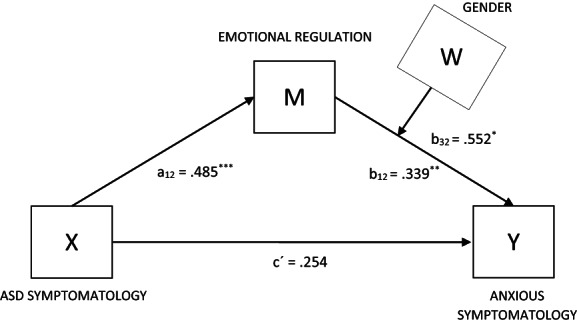
Graphical representation of the conditional process model of transdiagnostic variables and gender on autistic and anxious symptomatology. a 1 = direct effect of ASD symptomatology on ED; b 1 = direct effect of ED on anxious symptomatology; b 3 = interaction effect of the gender variable on the relationship ED intolerance and anxious symptomatology; c′ = direct effect of ASD symptomatology on anxious symptomatology. **p < 0.010; ***p < 0.001.
TABLE 3.
Conditional process model of emotional dysregulation and sex on autistic and anxious symptomatologies
| Constant | ||||||||
|---|---|---|---|---|---|---|---|---|
| Antecedent | M (Emotional dysregulation) | Y (Anxious symptomatology) | ||||||
| Coef. | SE | p | Coef. | SE | p | |||
| X (ASD symptomatology) | a 1 | 0.485 | 0.124 | < 0.001 | c′ | 0.254 | 0.146 | >0.050 |
| M (Emotional dysregulation) | — | — | — | — | b 1 | 0.339 | 0.108 | <0.010 |
| W (Gender) | — | — | — | — | b 2 | −15.378 | 10.548 | >0.050 |
| M*W (Emotional dysregulation * Gender) | — | — | — | — | b 3 | 0.552 | 0.220 | <0.050 |
| Constant | i M | 17.233 | 5.448 | < 0.010 | i y | −19.159 | 7.092 | < 0.010 |
| R 2 = 0.120 | R 2 = 0.380 | |||||||
| F(1,119) = 15.174 | F(6,114) = 74.429 | |||||||
Note: i M and i Y are intercepts of the regression.
The differences in each of the two levels of the moderator variable in its indirect conditional effects show that this relationship was significant for women. Thus, the relationship mediated by emotional dysregulation between ASD and anxiety symptoms is significant for females (0.124, 0.513).
DISCUSSION AND CONCLUSIONS
The objective of this research was to study anxious symptoms in people with ASD and ID and their relationship with ER and gender. Our findings support that there is a relationship between anxiety of adults with ASD and ID and ER in women.
In our study, anxiety symptomatology correlated with emotional dysregulation. Similar findings have been described in other studies (Jenkinson et al., 2020; Joyce et al., 2017; Maisel et al., 2016). According to the literature, people with ASD and ID with greater anxiety symptoms use more maladaptive ER strategies, leading to the presentation of more internalized symptoms (Conner et al., 2021; Joyce et al., 2017). Most studies on ER in people with ASD highlight the relationship between maladaptive strategies and ASD (Gross, 2014; Hervás, 2017; Mazefsky, 2015). Some research specifies that strategies are associated with the development and maintenance of internalized pathologies such as anxiety.
These findings suggest that people with ASD are generally vulnerable to internalized psychopathologies, given that they use a greater number of nonadaptive strategies to regulate their emotions.
Also, in the general population research we found models of anxiety based on emotional regulation (Mennin et al., 2005). These models propose that people with anxiety experience and react with high intensity to emotions, especially those of negative valence (Behar et al., 2011).
Furthermore, in our research, maladaptive ER strategies, such as avoidance, temper tantrums, self‐blame, etc., were linked to symptoms of anxiety in ASD with a mediating role. Research focusing on adaptive strategies identifies these strategies as being protective of mental health in people with ASD (Cai et al., 2018).
In this sense, authors such as Conner et al. (2019) or Factor et al. (2019) have begun work on comorbid psychopathologies from a transdiagnostic perspective by implementing interventions designed to improve ER in population with ASD. These studies show that development of such programs is at an early stage and require further scientific examination; however, they claim that initial results are promising.
To design appropriate intervention or prevention programs for the ASD population, it is necessary to know which variables make people more vulnerable to the development of anxiety. Among them, it is worth studying the role of gender, given that research in adults has shown that there is gender difference in the prevalence of anxiety disorders. Most of these problems occur more frequently in women than in men (Jalnapurkar et al., 2018). In our study, gender moderated the relationship mediated by maladaptive ER, indicating that nonadaptive strategies played an important role in the relationship between ASD with anxiety for women. General population research finds differences in the regulation of negative‐type emotions, or in the type of strategies more commonly used by one gender or the other. In this line, the literature finds in women a greater emotional reactivity to adverse stimulus (Deng et al., 2016). However, we find, as well, works that do not find differences between males and females unless their study is conducted together with the interaction of other variables such as age (Nolen‐Hoeksema & Aldao, 2011; Zimmermann & Iwanski, 2014).
Gender is one under‐explored source of potential heterogeneity in ER within the ASD population. Nevertheless, some research has found that although both males and females with ASD presented with clinically elevated emotion dysregulation compared to the general population, results suggest that females have more severe dysregulation, including higher reactivity and dysphoria (Wieckowski et al., 2020).
Our findings could be an explanation for the fact that women with ASD present higher levels of anxiety than men (Murray et al., 2019; Solomon et al., 2012; Uljarević et al., 2019). Recent research on the camouflage of women with ASD suggests that they may be exposed to increased distress, which may be poorly regulated and therefore more vulnerable to developing anxiety (Murray et al., 2019; Uljarević et al., 2019). We found research where camouflage predicted generalized and social anxiety in women with ASD (Hull et al., 2021).
Following the findings of this research and with recent empirical investigations, there is value in developing preventive actions that directly address regulation of emotions, especially for women on the spectrum.
Moreover, it would be interesting to extend the study by analyzing the effect of maladaptive emotional regulation strategies in emotional regulation and anxiety in women with ASD. Research has shown that repetitive and stereotyped behaviors were found to be a good predictor of anxiety symptoms in the ASD and ID population (Rodgers & Ofield, 2018; Sáez Suanes, 2021). Several authors propose the increase of a particular type of repetitive behavior, insistence on invariance, as a protective or reductive tool for anxiety symptoms (Ollington et al., 2012; Rodgers et al., 2012). Future lines of research should consider the relationship between these variables especially in women with ASD as they are more prone to develop anxiety.
This study expands previous research and provides a potential explanation of anxiety in the lives of women with ASD; however, these results should be interpreted considering limitations. Although the sample size is adequate and similar to other related studies, further research of a similar nature that include control groups are needed to better understand the results. In addition, the number of women in the sample was significantly lower than the number of men. This is because there are currently more males diagnosed with autism than females.
Although evaluation of internalized symptoms by an observer is problematic, data resulting from the application of both other and self‐report instruments to evaluate states such as anxiety identify moderate and strong correlations (Smith et al., 2019). In addition, this study examined an understudied sample of adults with ASD and ID, of which 29% of the sample were nonverbal or minimally verbal. Working with a population with these characteristics limited the assessment process, as well as the selection of measurement instruments to those that allowed behavioral assessment. As a result, generalization of these findings is limited. However, the study of this sample is valuable since these individuals are members of an under‐researched group.
In addition, we must bear in mind that the relationship between the study variables can be bidirectional; therefore, in the moderate mediation analyses all the variables are related, and this may not be the only significant model, for example, anxiety could be directly affecting emotional regulation.
In conclusion, the present study found an association between anxiety symptoms and severity of ASD. ER had an important role in anxiety symptoms for women with ASD. Findings support the value of including this variable in interventions. The work of ER strategies should have a favorable impact on reduction of symptoms associated with anxiety. Moreover, the results also showed an important role of the female gender, placing women with ASD and ID at a higher risk of developing anxiety.
ACKNOWLEDGMENT
The researchers would like to thank the people with ASD who made this work possible. To the participating Associations, their therapists and their families.
Sáez‐Suanes, G. P. , García‐Villamisar, D. , & Pozo Armentia, A. d. (2023). Does the gender matter?: Anxiety symptoms and emotion dysregulation in adults with autism and intellectual disabilities. Autism Research, 16(1), 113–121. 10.1002/aur.2839
DATA AVAILABILITY STATEMENT
The data that support the findings of this study are available on request from the corresponding author. The data are not publicly available due to privacy or ethical restrictions.
REFERENCES
- Aldao, A. , Gee, D. G. , De Los Reyes, A. , & Seager, I. (2016). Emotion regulation as a transdiagnostic factor in the development of internalizing and externalizing psychopathology: Current and future directions. Development and Psychopathology, 28, 927–946. [DOI] [PubMed] [Google Scholar]
- American Psychiatric Association . (2013). Diagnostic and statistical manual of mental disorders (5th ed.). Author. [Google Scholar]
- Bearss, K. , Taylor, C. A. , Aman, M. G. , Whittemore, R. , Lecavalier, L. , Miller, J. , Prichett, J. , Green, B. , & Scahill, L. (2016). Using qualitative methods to guide scale development for anxiety in youth with autism spectrum disorder. Autism, 20(6), 663–672. 10.1177/1362361315601012 [DOI] [PubMed] [Google Scholar]
- Behar, E. , DiMarco, I. D. , Hekler, E. B. , Mohlman, J. , & Staples, A. M. (2011). Modelos teóricos actuales del trastorno de ansiedad generalizada (TAG): revisión conceptual e implicaciones en el tratamiento. Revista de Toxicomanías, 63, 17. [Google Scholar]
- Berkovits, L. , Eisenhower, A. , & Blacher, J. (2017). Emotion regulation in young children with autism spectrum disorders. Journal of Autism and Developmental Disorders, 47(1), 68–79. 10.1007/s10803-016-2922-2 [DOI] [PubMed] [Google Scholar]
- Bertelli, M. O. , Rossi, M. , Scuticchio, D. , & Bianco, A. (2015). Diagnosing psychiatric disorders in people with intellectual disabilities: Issues and achievements. Advances in Mental Health and Intellectual Disabilities, 9(5), 230–242. 10.1108/AMHID-05-2015-0023 [DOI] [Google Scholar]
- Bruggink, A. , Huisman, S. , Vuijk, R. , Kraaij, V. , & Garnefski, N. (2016). Cognitive emotion regulation, anxiety and depression in adults with autism spectrum disorder. Research in Autism Spectrum Disorders, 22, 34–44. 10.1016/j.rasd.2015.11.003 [DOI] [Google Scholar]
- Brugha, T. S. , Spiers, N. , Bankart, J. , Cooper, S. A. , McManus, S. , Scott, F. J. , Smith, J. , & Tyrer, F. (2016). Epidemiology of autism in adults across age groups and ability levels. The British Journal of Psychiatry, 209(6), 498–503. 10.1192/bjp.bp.115.174649 [DOI] [PubMed] [Google Scholar]
- Cai, R. Y. , Richdale, A. L. , Dissanayake, C. , & Uljarević, M. (2018). Brief report: Inter‐relationship between emotion regulation, intolerance of uncertainty, anxiety, and depression in youth with autism spectrum disorder. Journal of Autism and Developmental Disorders, 48, 316–325. 10.1007/s10803-017-3318-7 [DOI] [PubMed] [Google Scholar]
- Centers for Disease Control and Prevention . (2018). Prevalence of autism spectrum disorder among children aged 8 years ‐ Autism and developmental disabilities monitoring network, 11 Sites, United States, 2014. MMWR Surveillance Summaries, 67(6), 1–23. 10.15585/mmwr.ss6706a1 [DOI] [PMC free article] [PubMed] [Google Scholar]
- Charlton, A. S. , Smith, I. C. , Mazefsky, C. A. , & White, S. W. (2019). The role of emotion regulation on co‐occurring psychopathology in emerging adults with ASD. Journal of Autism and Developmental Disorders, 1‐8, 2585–2592. 10.1007/s10803-019-03983-5 [DOI] [PMC free article] [PubMed] [Google Scholar]
- Conner, C. M. , Golt, J. , Shaffer, R. , Righi, G. , Siegel, M. , & Mazefsky, C. A. (2021). Emotion dysregulation is substantially elevated in autism compared to the general population: Impact on psychiatric services. Autism Research, 14(1), 169–181. [DOI] [PMC free article] [PubMed] [Google Scholar]
- Conner, C. M. , White, S. W. , Beck, K. B. , Golt, J. , Smith, I. C. , & Mazefsky, C. A. (2019). Improving emotion regulation ability in autism: The Emotional Awareness and Skills Enhancement (EASE) program. Autism, 23, 1273–1287. 10.1177/136236131881070 [DOI] [PubMed] [Google Scholar]
- Deng, Y. , Chang, L. , Yang, M. , Huo, M. , & Zhou, R. (2016). Gender differences in emotional response: Inconsistency between experience and expressivity. PLoS One, 11(6), e0158666. 10.1371/journal.pone.0158666 [DOI] [PMC free article] [PubMed] [Google Scholar]
- Ding, N. , Gao, H. , Jiang, J. , Zhai, M. , Shao, H. , Fu, L. , Li, C. , Ren, Y. , Li, Y. , Feng, M. , Cui, X. , Qiu, N. , Jin, P. , & Ke, X. (2021). The characteristics and factors of the internalizing and externalizing behaviours of children at high risk for autism spectrum disorder. BMC Psychiatry, 21(1), 1–10. 10.1186/s12888-021-03479-6 [DOI] [PMC free article] [PubMed] [Google Scholar]
- Egan, S. J. , Wade, T. D. , & Shafran, R. (2011). Perfectionism as a transdiagnostic process: A clinical review. Clinical Psychology Review, 31(2), 203–212. 10.1016/j.cpr.2010.04.009 [DOI] [PubMed] [Google Scholar]
- Ehring, T. , & Watkins, E. R. (2008). Repetitive negative thinking as a transdiagnostic process. International Journal of Cognitive Therapy, 1(3), 192–205. 10.1521/ijct.2008.1.3.192 [DOI] [Google Scholar]
- Factor, R. S. , Swain, D. M. , Antezana, L. , Muskett, A. , Gatto, A. J. , Radtke, S. R. , & Scarpa, A. (2019). Teaching emotion regulation to children with autism spectrum disorder: Outcomes of the Stress and Anger Management Program (STAMP). Bulletin of the Menninger Clinic, 83, 235–258. 10.1521/bumc.2019.83.3.235 [DOI] [PubMed] [Google Scholar]
- Field, A. (2013). Discovering statistics using IBM SPSS statistics. Sage. [Google Scholar]
- Fletcher, R. J. , Barnhill, J. , McCarthy, J. , & Strydom, A. (2016). From DSM to DM‐ID. Journal of Mental Health Research in Intellectual Disabilities, 9(3), 189–204. 10.1080/19315864.2016.1185324 [DOI] [Google Scholar]
- Frank, R. I. , & Davidson, J. (2014). The transdiagnostic road map to case formulation and treatment planning: Practical guidance for clinical decision making. New Harbinger Publications. [Google Scholar]
- García‐Villamisar, D. , Álvarez‐Couto, M. , & del Pozo, A. (2019). Executive functions and emotion regulation as predictors of internalising symptoms among adults with Down syndrome: A transdiagnostic perspective. Journal of Intellectual & Developmental Disability, 1‐7, 204–210. 10.3109/13668250.2019.1669004 [DOI] [Google Scholar]
- Gomez, P. , von Gunten, A. , & Danuser, B. (2013). Content‐specific gender differences in emotion ratings from early to late adulthood. Scandinavian Journal of Psychology, 54(6), 451–458. 10.1111/sjop.12075 [DOI] [PubMed] [Google Scholar]
- Gong, J. , He, Y. , Zhou, L. , Mo, Y. , Yu, F. , Liu, M. , Yang, L. , & Liu, J. (2022). Associations of autistic traits, executive dysfunction and the FKBP5 gene with emotion regulation in Chinese college students. Personality and Individual Differences, 186, 111293. 10.1016/j.paid.2021.111293 [DOI] [Google Scholar]
- Gross, J. (2015). The extended process model of emotion regulation: Elaborations, applications, and future directions. Psychological Inquiry, 26, 130–137. 10.1080/1047840X.2015.989751 [DOI] [Google Scholar]
- Gross, J. J. (2014). Emotion regulation: Conceptual and empirical foundations. In Gross J. J. (Ed.), Handbook of emotion regulation (2nd ed., pp. 3–20). Guilford. [Google Scholar]
- Happé, F. , & Frith, U. (2020). Annual Research Review: Looking back to look forward–changes in the concept of autism and implications for future research. Journal of Child Psychology and Psychiatry, 61, 218–232. 10.1111/jcpp.13176 [DOI] [PubMed] [Google Scholar]
- Hayes, A. F. (2018). Introduction to mediation, moderation, and conditional process analysis: A regression‐based approach. Guilford Publications. [Google Scholar]
- Hervás, A. (2017). Desregulación emocional y trastornos del espectro autista. Revista de Neurologia, 64, 16–25. [PubMed] [Google Scholar]
- Hollocks, M. J. , Lerh, J. W. , Magiati, I. , Meiser‐Stedman, R. , & Brugha, T. S. (2018). Anxiety and depression in adults with autism spectrum disorder: A systematic review and meta‐analysis. Psychological Medicine, 1‐14, 559–572. 10.1017/S0033291718002283 [DOI] [PubMed] [Google Scholar]
- Hull, L. , Levy, L. , Lai, M. C. , Petrides, K. V. , Baron‐Cohen, S. , Allison, C. , Smith, P. , & Mandy, W. (2021). Is social camouflaging associated with anxiety and depression in autistic adults? Molecular Autism, 12(1), 1–13. 10.1186/s13229-021-00421-1 [DOI] [PMC free article] [PubMed] [Google Scholar]
- IBM Corp. Released . (2013). IBM SPSS statistics for windows, version 22.0. IBM Corp. [Google Scholar]
- Jahromi, L. B. , Bryce, C. I. , & Swanson, J. (2013). The importance of self‐regulation for the school and peer engagement of children with high‐functioning autism. Research in Autism Spectrum Disorders, 7, 235–246. 10.1016/j.rasd.2012.08.012 [DOI] [Google Scholar]
- Jalnapurkar, I. , Allen, M. , & Pigott, T. (2018). Sex differences in anxiety disorders: A review. Journal of Psychiatry Depression and Anxiety, 4, 012. 10.24966/PDA-0150/100012 [DOI] [Google Scholar]
- Jenkinson, R. , Milne, E. , & Thompson, A. (2020). The relationship between intolerance of uncertainty and anxiety in autism: A systematic literature review and meta‐analysis. Autism, 24(8), 1933–1944. [DOI] [PMC free article] [PubMed] [Google Scholar]
- Joyce, C. , Honey, E. , Leekam, S. R. , Barrett, S. L. , & Rodgers, J. (2017). Anxiety, intolerance of uncertainty and restricted and repetitive behaviour: Insights directly from young people with ASD. Journal of Autism and Developmental Disorders, 1‐14, 3789–3802. 10.1007/s10803-017-3027-2 [DOI] [PubMed] [Google Scholar]
- Kerns, C. M. , & Kendall, P. C. (2012). The presentation and classification of anxiety in autism spectrum disorder. Clinical Psychology: Science and Practice, 19(4), 323–347. 10.1111/cpsp.12009 [DOI] [Google Scholar]
- Kim, Y. S. , Leventhal, B. L. , Koh, Y. J. , Fombonne, E. , Laska, E. , Lim, E. C. , Cheon, K. , Kim, S. , Kim, Y. , Lee, H. , Song, D. , & Grinker, R. R. (2011). Prevalence of autism spectrum disorders in a total population sample. American Journal of Psychiatry, 168, 904–912. 10.1176/appi.ajp.2011.10101532 [DOI] [PubMed] [Google Scholar]
- Lugo‐Marín, J. , Magán‐Maganto, M. , Rivero‐Santana, A. , Cuellar‐Pompa, L. , Alviani, M. , Jenaro‐Rio, C. , Díez, E. , & Canal‐Bedia, R. (2019). Prevalence of psychiatric disorders in adults with autism spectrum disorder: A systematic review and meta‐analysis. Research in Autism Spectrum Disorders, 59, 22–33. 10.1016/j.rasd.2018.12.004 [DOI] [Google Scholar]
- Maisel, M. E. , Stephenson, K. G. , South, M. , Rodgers, J. , Freeston, M. H. , & Gaigg, S. B. (2016). Modeling the cognitive mechanisms linking autism symptoms and anxiety in adults. Journal of Abnormal Psychology, 125, 692–703. 10.1037/abn0000168 [DOI] [PubMed] [Google Scholar]
- Mayes, S. D. , Castagna, P. J. , DiGiovanni, C. D. , & Waschbusch, D. A. (2020). Relationship between ADHD, oppositional defiant, conduct, and disruptive mood dysregulation disorder symptoms and age in children with ADHD and autism. International Journal of Clinical Psychiatry and Mental Health, 8(1), 47–57. 10.12970/2310-8231.2020.08.08 [DOI] [Google Scholar]
- Mazefsky, C. A. (2015). Emotion regulation and emotional distress in autism spectrum disorder: Foundations and considerations for future research. Journal of Autism and Developmental Disorders, 45, 3405–3408. 10.1007/s10803-015-2602-7 [DOI] [PMC free article] [PubMed] [Google Scholar]
- Mazefsky, C. A. , & White, S. W. (2014). Emotion regulation: Concepts & practice in autism spectrum disorder. Child and Adolescent Psychiatric Clinics of North America, 23(1), 15–24. 10.1016/j.chc.2013.07.002 [DOI] [PMC free article] [PubMed] [Google Scholar]
- McVey, A. J. , Schiltz, H. K. , Coffman, M. , Antezana, L. , & Magnus, B. (2022). A preliminary psychometric analysis of the difficulties with emotion regulation scale (DERS) Among Autistic Adolescents and Adults: Factor Structure, Reliability, and Validity. Journal of Autism and Developmental Disorders, 52(3), 1169–1188. 10.1016/j.wsif.2022.102573 [DOI] [PubMed] [Google Scholar]
- Mennin, D. S. , Heimberg, R. G. , Turk, C. L. , & Fresco, D. M. (2005). Preliminary evidence for an emotion dysregulation model of generalized anxiety disorder. Behaviour Research and Therapy, 43, 1281–1310. 10.1016/j.brat.2004.08.008 [DOI] [PubMed] [Google Scholar]
- Molina, P. , Sala, M. N. , Zappulla, C. , Bonfigliuoli, C. , Cavioni, V. , Zanetti, M. A. , Baiocco, R. , Laghi, F. , Pallini, S. , De Stasio, S. , Raccanello, D. , & Cicchetti, D. (2014). The Emotion Regulation Checklist–Italian translation. Validation of parent and teacher versions. European Journal of Developmental Psychology, 11, 624–634. 10.1080/17405629.2014.898581 [DOI] [Google Scholar]
- Moss, P. , Mandy, W. , & Howlin, P. (2017). Child and adult factors related to quality of life in adults with autism. Journal of Autism and Developmental Disorders, 47, 1830–1837. [DOI] [PMC free article] [PubMed] [Google Scholar]
- Murray, C. , Kovshoff, H. , Brown, A. , Abbott, P. , & Hadwin, J. A. (2019). Exploring the anxiety and depression profile in individuals diagnosed with an autism spectrum disorder in adulthood. Research in Autism Spectrum Disorders, 58, 1–8. 10.1016/j.rasd.2018.11.002 [DOI] [Google Scholar]
- Neece, C. L. , Christensen, L. L. , Berkovits, L. D. , & Mayo, D. (2015). Psychopathology: ADHD, autism spectrum disorders, and other conditions present in early childhood. In Matson J. L. & Matson M. L. (Eds.), Comorbid conditions in individuals with intellectual disabilities (pp. 55–84). Springer International Publishing. [Google Scholar]
- Noel, J. (2018). Recognition and treatment of mood dysregulation in adults with intellectual disability. Mental Health Clinician, 8(6), 264–274. 10.9740/mhc.2018.11.264 [DOI] [PMC free article] [PubMed] [Google Scholar]
- Nolen‐Hoeksema, S. , & Aldao, A. (2011). Gender and age differences in emotion regulation strategies and their relationship to depressive symptoms. Personality and Individual Differences, 51(6), 704–708. 10.1016/j.paid.2011.06.012 [DOI] [Google Scholar]
- Ollington, N. , Green, V. A. , O'Reilly, M. F. , Lancioni, G. E. , & Didden, R. (2012). Functional analysis of insistence on sameness in an 11‐year old boy with Asperger syndrome. Developmental Neurorehabilitation, 15(2), 154–159. 10.3109/17518423.2012.662660 [DOI] [PubMed] [Google Scholar]
- Rodgers, J. , Glod, M. , Connolly, B. , & McConachie, H. (2012). The relationship between anxiety and repetitive behaviors in autism spectrum disorders. Journal of Autism and Developmental Disorders, 42, 2404–2409. 10.1007/s10803-012-1531-y [DOI] [PubMed] [Google Scholar]
- Rodgers, J. , & Ofield, A. (2018). Understanding, recognising and treating co‐occurring anxiety in autism. Current Developmental Disorders Reports, 5, 58–64. 10.1007/s40474-018-0132-7 [DOI] [PMC free article] [PubMed] [Google Scholar]
- Rodgers, J. , Wigham, S. , McConachie, H. , Freeston, M. , Honey, E. , & Parr, J. R. (2016). Development of the anxiety scale for children with autism spectrum disorder (ASC‐ASD). Autism Research, 9, 1205–1215. 10.1002/aur.1603 [DOI] [PubMed] [Google Scholar]
- Rosen, T. E. , Mazefsky, C. A. , Vasa, R. A. , & Lerner, M. D. (2018). Co‐occurring psychiatric conditions in autism spectrum disorder. International Review of Psychiatry, 30, 40–61. 10.1080/09540261.2018.1450229 [DOI] [PubMed] [Google Scholar]
- Sáez Suanes, G. P. (2021). Sintomatología internalizada en adultos con Trastorno del Espectro Autista: un enfoque transdiagnóstico. Universidad Complutense de Madrid. [Google Scholar]
- Sáez‐Suanes, G. P. , García‐Villamisar, D. , del Pozo Armentia, A. , & Dattilo, J. (2020). Emotional dysregulation and uncertainty intolerance as transdiagnostic mediators of anxiety in adults with autism spectrum disorders and intellectual disability. Research in Developmental Disabilities, 106, 103784. 10.1016/j.ridd.2020.103784 [DOI] [PubMed] [Google Scholar]
- Sappok, T. , Gaul, I. , Bergmann, T. , Dziobek, I. , Bölte, S. , Diefenbacher, A. , & Heinrich, M. (2014). The Diagnostic Behavioral Assessment for autism spectrum disorder—Revised: A screening instrument for adults with intellectual disability suspected of autism spectrum disorders. Research in Autism Spectrum Disorders, 8, 362–375. 10.1016/j.rasd.2013.12.016 [DOI] [Google Scholar]
- Shields, A. , & Cicchetti, D. (1997). Emotion regulation among school‐age children: The development and validation of a new criterion Q‐sort scale. Developmental Psychology, 33, 906–916. 10.1037/0012-1649.33.6.906 [DOI] [PubMed] [Google Scholar]
- Smith, I. C. , Ollendick, T. H. , & White, S. W. (2019). Anxiety moderates the influence of ASD severity on quality of life in adults with ASD. Research in Autism Spectrum Disorders, 62, 39–47. 10.1016/j.rasd.2019.03.001 [DOI] [Google Scholar]
- Solomon, M. , Miller, M. , Taylor, S. L. , Hinshaw, S. P. , & Carter, C. S. (2012). Autism symptoms and internalizing psychopathology in girls and boys with autism spectrum disorders. Journal of Autism and Developmental Disorders, 42(1), 48–59. 10.1007/s10803-011-1215-z [DOI] [PMC free article] [PubMed] [Google Scholar]
- Tandon, M. , Cardeli, E. , & Luby, J. (2009). Internalizing disorders in early childhood: A review of depressive and anxiety disorders. Child and Adolescent Psychiatric Clinics, 18(3), 593–610. 10.1016/j.chc.2009.03.004 [DOI] [PMC free article] [PubMed] [Google Scholar]
- Te Brinke, L. W. , Menting, A. T. , Schuiringa, H. D. , Deković, M. , Weisz, J. R. , & De Castro, B. O. (2021). Emotion regulation training as a treatment element for externalizing problems in adolescence: A randomized controlled micro‐trial. Behaviour Research and Therapy, 143, 103889. 10.1016/j.brat.2021.103889 [DOI] [PubMed] [Google Scholar]
- Uljarević, M., Hedley, D., Rose‐Foley, K., Magiati, I., Cai, R. Y., Dissanayake, C., Richdale, A., & Trollor, J. (2019). Anxiety and depression from adolescence to old age in autism spectrum disorder. Journal of Autism and Developmental Disorders, 1–11. 10.1007/s10803-019-04084-z [DOI] [PubMed] [Google Scholar]
- Van Doren, N. , Zainal, N. H. , & Newman, M. G. (2021). Cross‐cultural and gender invariance of emotion regulation in the United States and India. Journal of Affective Disorders, 295, 1360–1370. 10.1016/j.jad.2021.04.089 [DOI] [PMC free article] [PubMed] [Google Scholar]
- van Steensel, F. J. , & Heeman, E. J. (2017). Anxiety levels in children with autism spectrum disorder: A meta‐analysis. Journal of Child and Family Studies, 26(7), 1–15. 10.1007/s10826-017-0687 [DOI] [PMC free article] [PubMed] [Google Scholar]
- White, S. W. , Mazefsky, C. A. , Dichter, G. S. , Chiu, P. H. , Richey, J. A. , & Ollendick, T. H. (2014). Social‐cognitive, physiological, and neural mechanisms underlying emotion regulation impairments: Understanding anxiety in autism spectrum disorder. International Journal of Developmental Neuroscience, 39, 22–36. 10.1016/j.ijdevneu.2014.05.012 [DOI] [PMC free article] [PubMed] [Google Scholar]
- Wieckowski, A. T. , Luallin, S. , Pan, Z. , Righi, G. , Gabriels, R. L. , & Mazefsky, C. (2020). Gender differences in emotion dysregulation in an autism inpatient psychiatric sample. Autism Research, 13(8), 1343–1348. [DOI] [PMC free article] [PubMed] [Google Scholar]
- Wigham, S. , Barton, S. , Parr, J. R. , & Rodgers, J. (2017). A systematic review of the rates of depression in children and adults with high‐functioning autism spectrum disorder. Journal of Mental Health Research in Intellectual Disabilities, 10(4), 267–287. 10.1080/19315864.2017.1299267 [DOI] [Google Scholar]
- Williams, K. L. , Campi, E. , & Baranek, G. T. (2021). Associations among sensory hyperresponsiveness, restricted and repetitive behaviors, and anxiety in autism: An integrated systematic review. Research in Autism Spectrum Disorders, 83, 101763. [Google Scholar]
- Zimmermann, P. , & Iwanski, A. (2014). Emotion regulation from early adolescence to emerging adulthood and middle adulthood: Age differences, gender differences, and emotion‐specific developmental variations. International Journal of Behavioral Development, 38(2), 182–194. 10.1177/0165025413515405 [DOI] [Google Scholar]
Associated Data
This section collects any data citations, data availability statements, or supplementary materials included in this article.
Data Availability Statement
The data that support the findings of this study are available on request from the corresponding author. The data are not publicly available due to privacy or ethical restrictions.