



Abstract
In accordance with Article 6 of Regulation (EC) No 396/2005, the applicant Certis Europe B.V. submitted a request to the competent national authority in the Netherlands to modify the existing maximum residue levels (MRLs) for the active substance imazalil in cucumbers, courgettes and gherkins. The data submitted in support of the request were found to be sufficient to derive an MRL proposal of 0.08 mg/kg for the whole group of cucurbits with edible peel. It is noted that the derived MRL is proposed to replace the existing tentative MRL of 0.1 mg/kg for courgettes, thus also addressing the data gap identified in the context of the MRL review. As regards to cucumbers and gherkins, it is noted that the MRL proposal derived in the current application is covered by the MRL of 0.5 mg/kg currently in place for these commodities. Nevertheless, it is also noted that the aforementioned MRLs are based on Codex maximum residue limits (CXLs) which were revoked in 2019 following the JMPR proposal. Should this proposal be implemented in the EU regulation in the future, the proposed MRL of 0.08 mg/kg as derived in the current application would be considered an appropriate fall‐back option for the whole group of cucurbits with edible peel. Further risk management considerations are therefore required. Adequate analytical methods for enforcement are available to control the residues of imazalil on the commodities under consideration at the validated limit of quantification (LOQ) of 0.005 mg/kg (QuEChERS method based on LC–MS/MS) and 0.01 mg/kg (HPLC–MS/MS method). Based on the risk assessment results, EFSA concluded that the short‐term and long‐term intake of residues resulting from the use of imazalil according to the reported agricultural practices is unlikely to present a risk to consumer health. However, it should be noted that a high degree of uncertainty on the overall long‐term exposure calculation remains due to the data gaps identified in the context of the MRL review on full toxicological assessment of the metabolite R014821, which is expected to occur following post‐harvest uses of imazalil, and animal metabolites FK‐772 and FK‐284.
Keywords: imazalil, courgettes, cucumbers, gherkins, pesticide, MRL, consumer risk assessment
Summary
In accordance with Article 6 of Regulation (EC) No 396/2005, Certis Europe BV submitted an application to the competent national authority in the Netherlands (evaluating Member State, EMS) to modify the existing maximum residue levels (MRLs) for the active substance imazalil in courgettes, cucumbers and gherkins, and at the same time to address some data gaps identified during the MRL review.
The application, alongside the dossier containing the supporting data in IUCLID format, was submitted through the EFSA Central Submission System on 10 May 2022. The appointed EMS Netherlands assessed the dossier and declared its admissibility on 23 May 2022. Subsequently, following the implementation of the EFSA's confidentiality decision, the non‐confidential version of the dossier was published by EFSA, and a public consultation was launched on the dossier. The consultation aimed to consult stakeholders and the public on the scientific data, studies and other information part of, or supporting, the submitted application, in order to identify whether other relevant scientific data or studies are available. The consultation run from 18 October 2022 to 8 November 2022. No additional data nor comments were submitted in the framework of the consultation.
At the end of the commenting period, the EMS proceeded to draft the evaluation report in accordance with Article 8 of Regulation (EC) No 396/2005, which was submitted to the European Commission and forwarded to the European Food Safety Authority (EFSA) on 13 January 2023. Based on the newly submitted data, the EMS concluded that an MRL of 0.08 mg/kg was sufficient to accommodate the intended uses on cucurbits with edible peel. For courgettes, this means lowering the existing tentative MRL of 0.1 mg/kg and for cucumbers and gherkins, it means lowering the existing MRL of 0.5 mg/kg.
EFSA assessed the application and the evaluation report as required by Article 10 of the MRL regulation.
Based on the conclusions derived by EFSA in the framework of Directive 91/414/EEC, the data evaluated under previous MRL assessments, and the additional data provided by the EMS in the framework of this application, the following conclusions are derived.
The metabolism of imazalil was investigated after foliar applications on fruit crops (tomato), post‐harvest use on fruit and root crops (oranges, apples and potatoes) and seed treatment on root crops and cereals/grasses (potatoes and wheat).
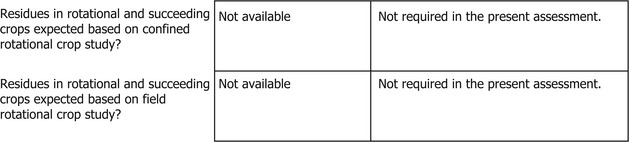
Studies investigating the nature of residues in rotational crops are not available and are not required in the context of the current application as the proposed uses of imazalil are on crops grown under greenhouse conditions on artificial soil.
Studies investigating the effect of processing on the nature of imazalil (hydrolysis studies) demonstrated that the active substance is stable.
Based on the metabolic pattern identified in metabolism studies, hydrolysis studies, the capabilities of enforcement analytical methods, and considering that imazalil is a mixture of two enantiomers, the residue definition for enforcement in plant products was proposed as ‘imazalil (any ratio of constituent isomers)’. This residue definition is applicable to primary crops, rotational crops and processed products.
For risk assessment purposes, the residue definition ‘imazalil (any ratio of constituent isomers)’ was proposed for commodities subject to foliar treatment, therefore covering the intended uses. It is noted that a final conclusion on the residue definition for risk assessment could not be derived for commodities subject to post‐harvest treatment. A tentative residue definition for risk assessment was previously proposed as the ‘sum of imazalil and R014821, expressed as imazalil’ and is pending toxicological data and assessment for the metabolite R014821; this data gap does not apply to the uses under assessment in the present application.
EFSA concluded that for the crops and uses (foliar treatments) assessed in this application, metabolism of imazalil in primary crops and the possible degradation in processed products has been sufficiently addressed and that the previously derived residue definitions are applicable.
Sufficiently validated analytical methods based on high‐performance liquid chromatography with tandem mass spectrometry (HPLC–MS/MS) and a Quick, Easy, Cheap, Effective, Rugged and Safe (QuEChERS) method based on liquid chromatography with tandem mass spectrometry (LC–MS/MS) are available to quantify residues in the crops assessed in this application according to the enforcement residue definition. The methods enable the quantification of residues at or above 0.01 and 0.005 mg/kg in the crops assessed (limit of quantification (LOQ)), respectively.
The available residue trials are sufficient to derive an MRL proposal of 0.08 mg/kg for the whole group of cucurbits with edible peel. This is also addressing the data gap identified in the context of the MRL review for courgettes. As regards to cucumbers and gherkins, it is noted that the MRL proposal derived in the current application is covered by the MRL of 0.5 mg/kg currently in place for these commodities. Nevertheless, it is also noted that the aforementioned MRLs are based on Codex maximum residue limits (CXLs) which were revoked in 2019 following JMPR proposal. Should this proposal be implemented in the EU regulation in the future, the proposed MRL of 0.08 mg/kg as derived in the current application would be considered an appropriate fall‐back option for the whole group of cucurbits with edible peel. Further risk management considerations are therefore required.
Specific studies investigating the magnitude of imazalil residues in processed commodities are not required, as significant residues are not expected in raw agricultural commodities (RAC) and both the total theoretical maximum daily intake (TMDI) and the estimated daily intake are below the trigger value of 10% of the acceptable daily intake (ADI) and the acute reference dose (ARfD), respectively, for any European consumer group diet.
Residues of imazalil in commodities of animal origin were not assessed since the crops under consideration in this MRL application are normally not fed to livestock.
The toxicological profile of imazalil was assessed in the framework of the EU pesticides peer review under Directive 91/414/EEC, and the data were sufficient to derive an ADI of 0.025 mg/kg body weight (bw) per day and an ARfD of 0.05 mg/kg bw. A final conclusion on the toxicity of the plant metabolite R01482, which is expected to occur following post‐harvest uses of imazalil, and of the animal metabolites FK‐772 and FK‐284, was not reached. A data gap on a full toxicological assessment of the aforementioned metabolites was identified in the context of the MRL review.
Although the new data submitted in the present application are not expected to have a major impact on the dietary exposure of consumers, an updated consumer risk assessment was performed by EFSA. The updated risk assessment took into account the EU MRLs implemented following the MRL review in Regulation (EU) 2019/1582, the CXLs values for animal commodities implemented in the EU legislation by Regulation (EU) No 2020/856, and the risk assessment values calculated in the present opinion for cucumbers with edible peel. In addition, the consumer risk assessment was performed with revision 3.1 of the EFSA Pesticide Residues Intake Model (PRIMo). EFSA performed two different calculations to provide the consumer exposure resulting from scenario 1 and scenario 2. Under scenario 1, EFSA considered the worst case where the current MRLs (based on former CXLs) of cucumbers and gherkins (0.5 mg/kg) would be maintained. Under scenario 2, it was considered that the MRL would be lowered to 0.08 mg/kg for the whole group of cucurbits with edible peel.
The short‐term (acute) exposure assessment was performed for the commodities assessed in this application. Based on the calculations performed following both scenarios 1 and 2, the short‐term exposure did not exceed the ARfD for any of the crops assessed.
The long‐term (chronic) exposure assessment was performed taking into account the existing uses at the EU level and the acceptable CXLs. The crops on which no uses were reported in the MRL review were excluded from the exposure calculation.
EFSA concluded that the proposed use of imazalil on cucurbits with edible peel will not result in a consumer exposure exceeding the toxicological reference values and therefore is unlikely to pose a risk to consumers' health. It has to be noted that the long‐term exposure calculation has to be considered indicative only, due to the high degree of uncertainty associated with the data gaps identified in the context of the MRL review on full toxicological assessment of the plant metabolite R014821, which is expected to occur following post‐harvest uses of imazalil, and of the animal metabolites FK‐772 and FK‐284. Therefore, the outcome of the consumer risk assessment may need to be reconsidered depending on the final outcome of the assessment of confirmatory data on citrus fruits, melons, liver (swine, bovine, equine) and kidney (swine, bovine, equine).
Furthermore, EFSA emphasises that the above assessment does not consider the possible impact of plant and livestock metabolism on the isomer ratio of imazalil and further investigation on this matter would in principle be required. EFSA would therefore recommend reconsidering this point in the framework of the peer review for the renewal of approval of the active substance.
EFSA proposes to amend the existing MRLs as reported in the summary table below.
Full details of all end points and the consumer risk assessment can be found in Appendices Appendix B – List of end points, Appendix C – Pesticide Residue Intake Model (PRIMo)–D.
| Code (a) | Commodity | Existing EU MRL (mg/kg) | Proposed EU MRL (mg/kg) | Comment/justification |
|---|---|---|---|---|
| Enforcement residue definition: imazalil (any ratio of constituent isomers) | ||||
| 232010 | Cucumbers | 0.5 |
0.08 (Further risk management considerations required) |
The existing EU MRL was based on a CXL. This CXL has been revoked by the JMPR in 2019. The submitted data are sufficient to derive an MRL proposal for the EU indoor foliar use. Risk for consumers is unlikely. |
| 232020 | Gherkins | 0.5 |
0.08 (Further risk management considerations required) |
The existing EU MRL was based on a CXL. This CXL has been revoked by the JMPR in 2019. The submitted data are sufficient to derive an MRL proposal for the EU indoor foliar use. Risk for consumers is unlikely. |
| 232030 | Courgettes | 0.1 (b) | 0.08 | Based on an updated dataset of trials supporting the same GAP as in the MRL review (EU indoor foliar use), the tentative MRL previously derived in the MRL review should be updated. The submitted data are sufficient to address the confirmatory data requirement set in Regulation (EC) 2020/856. Risk for is consumers unlikely. |
MRL: maximum residue level; CXL: Codex maximum residue limit; GAP: Good Agricultural Practice.
Commodity code number according to Annex I of Regulation (EC) No 396/2005.
Assessment
The European Food Safety Authority (EFSA) received an application to modify the existing maximum residue level (MRL) for imazalil in courgettes, cucumbers and gherkins. The detailed description of the intended uses of imazalil, which are the basis for the current MRL application, is reported in Appendix A.
Imazalil is the ISO common name for (RS)‐1‐(β‐allyloxy‐2,4‐dichlorophenethyl)imidazole or allyl (RS)‐1‐(2,4‐dichlorophenyl)‐2‐imidazol‐1‐ylethyl ether (IUPAC). Imazalil is composed of a racemic mixture of isomers. The chemical structures of the active substance and its main metabolites are reported in Appendix E.
Imazalil was evaluated in the framework of Directive 91/414/EEC 1 with Luxembourg designated as rapporteur Member State (RMS). 2 Following the first peer review in which EFSA was not yet involved, imazalil was approved as a fungicide on 1 January 1999. EFSA carried out the peer review of the pesticide risk assessment for imazalil for its renewal in the framework of Commission Regulation (EC) No 737/2007 3 , with the Netherlands designated as RMS; the representative uses assessed were on citrus fruits (post‐harvest, dipping/drenching or spray waxing), protected tomatoes grown on artificial substrate (foliar use) and on barley and wheat (seed treatment). The draft assessment report (DAR) prepared by the RMS has been peer reviewed by EFSA (EFSA, 2010). Imazalil has been approved under Regulation (EC) No 1107/2009 4 on 1 January 2012 for the use as fungicide; however, the manufacturer was requested to provide further residues and environmental studies as confirmatory information by 31 December 2013. The confirmatory data were assessed in a Technical Report of EFSA (EFSA, 2014) and were found sufficient (European Commission, 2015).
The EU MRLs for imazalil are established in Annexes II of Regulation (EC) No 396/2005 5 . The review of existing MRLs according to Article 12 of Regulation (EC) No 396/2005 (MRL review) has been performed (EFSA, 2017). Following the MRL review, EFSA issued a reasoned opinion on imazalil on various commodities (EFSA, 2018b). In addition, the MRL review was updated following new information related to the toxicological profiles of metabolites R014821, FK‐722 and FK‐284 (EFSA, 2018c). The proposals from these reasoned opinions have been considered in recent MRL regulations. 6 Furthermore, Certain CXLs have been taken over in the EU MRL legislation. 7
In accordance with Article 6 of Regulation (EC) No 396/2005 and following the provisions set by the ‘Transparency Regulation’ (EU) 2019/1381 8 , the applicant, Certis Europe BV submitted on 10 May 2022 an application to the competent national authority in the Netherlands, alongside the dossier containing the supporting data using the IUCLID format.
The appointed EMS Netherlands assessed the dossier and declared its admissibility on 23 May 2022. Subsequently, following the implementation of the EFSA's confidentiality decision, the non‐confidential version of the dossier was published by EFSA, and a public consultation was launched on the dossier. The consultation aimed to consult stakeholders and the public on the scientific data, studies and other information part of, or supporting, the submitted application, in order to identify whether other relevant scientific data or studies are available. The consultation run from 18 October 2022 to 8 November 2022. No additional data nor comments were submitted in the framework of the consultation.
At the end of the commenting period, the EMS proceeded to draft the evaluation report in accordance with Article 8 of Regulation (EC) No 396/2005, which was submitted to the European Commission and forwarded to EFSA on 13 January 2023. Based on the newly submitted data, the EMS concluded that an MRL of 0.08 mg/kg was sufficient to accommodate the intended uses on cucurbits with edible peel. For courgettes, this means lowering the existing tentative MRL of 0.1 mg/kg and for cucumber and gherkins, it means lowering the existing MRL of 0.5 mg/kg.
EFSA based its assessment on the revised evaluation report submitted by the EMS (Netherlands, 2022), the draft assessment report (DAR) and its addendum (Netherlands, 2009a,b) prepared under Commission Regulation (EC) No 737/2007, the evaluation report submitted by the EMS in the context of the MRL review (Netherlands, 2015), the Commission review report on imazalil (European Commission, 2015), the conclusions on the EU pesticides peer review, Art.10 outputs, the MRL review of the active substance imazalil and JMPR assessments (EFSA, 2010, 2014, 2017, 2018b,c, 2019b, 2022).
For this application, the data requirements established in Regulation (EU) No 544/2011 9 and the guidance documents applicable at the date of submission of the application to the EMS are applicable (European Commission, 1997a, 1997b, 1997c, 1997d, 1997e, 1997f–g, 2010, 2017, 2020, 2021; OECD, 2011, 2016). The assessment is performed in accordance with the legal provisions of the Uniform Principles for the Evaluation and the Authorisation of Plant Protection Products adopted by Commission Regulation (EU) No 546/2011 10 .
A selected list of end points of the studies assessed by EFSA in the framework of this MRL application including the end points of relevant studies assessed previously, is presented in Appendix B.
The evaluation report submitted by the EMS (Netherlands, 2022) and the exposure calculations using the EFSA Pesticide Residues Intake Model (PRIMo) are considered as supporting documents to this reasoned opinion and, thus, are made publicly available as background documents to this reasoned opinion. 11
1. Residues in plants
1.1. Nature of residues and methods of analysis in plants
1.1.1. Nature of residues in primary crops
The metabolism of imazalil was investigated in different crop groups in the framework of the EU pesticides peer review (EFSA, 2010), the MRL review (EFSA, 2017) and the updated MRL review (EFSA, 2018c). The studies were conducted after foliar applications on fruit crops (tomato), post‐harvest use on fruit and root crops (oranges, apples and potatoes) and seed treatment on root crops and cereals/grasses (potatoes and wheat).
Imazalil was the major component of total radioactive residues (TRR) following foliar and postharvest uses (69–99% TRR) and after seed treatment in cereal forage and straw (17–24% TRR).
Following the post‐harvest application, the compound R014821 was observed in significant amount (11% TRR in apples and 9% TRR in potatoes after a storage period of 6–7 months, respectively); residues of R014821 were shown to increase with the length of the storage. R014821 was also observed in metabolism studies following foliar treatment, but below the trigger value of 10% of the TRR.
Chiral analyses performed on potato tubers after post‐harvest application indicated that the S/R ratio of imazalil isomers remained unchanged during the storage period (EFSA, 2018c).
For the intended use, the metabolic behaviour in primary crops is sufficiently addressed. Details of the metabolism studies are presented in Appendix B.
1.1.2. Nature of residues in rotational crops
As the proposed uses of imazalil is on crops grown under greenhouse condition on artificial soil, investigations of residues in rotational crops are not required.
1.1.3. Nature of residues in processed commodities
The effect of processing on the nature of residues was investigated after the peer review, in the framework of the confirmatory data process (EFSA, 2014). Studies were conducted with imazalil, simulating representative hydrolytic conditions for pasteurisation (20 min at 90°C, pH 4), boiling/brewing/baking (60 min at 100°C, pH 5) and sterilisation (20 min at 120°C, pH 6). Although this study was not conducted with radiolabelled material, the test compound was found at an amount of 94–99% after any kind of hydrolysis. Therefore, it was concluded that processing by pasteurisation, baking/brewing/boiling and sterilisation is not expected to have a significant impact on the composition of residues in matrices of plant origin.
1.1.4. Nature of residues in honey
Not relevant as the uses of imazalil are intended on cucurbits with inedible peel under greenhouse conditions. Honey bees are normally not used for pollination services in greenhouses and are not expected to forage in closed structures (Netherlands, 2022).
Furthermore, investigation of residues in honey is not required according to the old data requirements set by Reg. 544/2011.
1.1.5. Analytical methods for enforcement purposes in plant commodities
Analytical methods for the determination of imazalil residues were assessed during the EU pesticides peer review and MRL review (EFSA, 2010, 2017, 2018c).
The methods, based on high‐performance liquid chromatography with tandem mass spectrometry (HPLC–MS/MS) are sufficiently validated for the quantification of residues of imazalil in high water, high acid, high oil content and dry commodities with a limit of quantification (LOQ) of 0.01 mg/kg. Independent laboratory validation (ILV) data for these methods are available for high water, high acid content and dry commodities.
A published QuEChERS method based on liquid chromatography with tandem mass spectrometry (LC–MS/MS) is also available to control residues of imazalil in plant matrices and allows quantification of residues at or above the LOQs of 0.005 mg/kg in high water and high acid content commodities, 0.01 mg/kg in high oil content commodities and green tea, 0.02 mg/kg in dry commodities (EFSA, 2017).
A study on extraction efficiency has been submitted in the context of the current application. Based on this study EFSA concluded that the extraction efficiency of the analytical methods for enforcement of imazalil in high water content commodities (DFG S19 and QuEChERS methods) is sufficiently demonstrated via cross‐validation against the solvent system used in the tomato metabolism study (Netherlands, 2022) and in line with the requirements of the extraction efficiency Guidance (European Commission, 2017b).
Courgettes, cucumbers and gherkins belong to the high water content commodity group; therefore, sufficiently validated analytical methods are available for the determination of residues of imazalil in the plant commodities under assessment.
1.1.6. Storage stability of residues in plants
The storage stability of imazalil and its metabolite R014821 in plant commodities stored under frozen conditions was investigated in the framework of the EU pesticides peer review and MRL review (EFSA, 2010, 2017, 2018c).
It was demonstrated that in the commodities assessed in the framework of this application, belonging to the high water content matrix group, residues of both compounds are stable for at least 12 months at −20°C. No further data are required for the present assessment.
1.1.7. Proposed residue definitions
Residue definition for enforcement:
Based on the available metabolism studies performed on three different crop categories and with different modes of application, the results of hydrolysis studies, the isomerisation of imazalil and the capabilities of enforcement analytical methods, the residue definition for enforcement was proposed as ‘imazalil (any ratio of constituent isomers)’ (EFSA, 2017). This residue definition applies to the commodities under assessment.
Residue definition for risk assessment:
The peer review and the MRL review had tentatively defined the residue definition for risk assessment as ‘sum of imazalil and R014821, expressed as imazalil’, pending the full assessment of the toxicological information requested for metabolite R014821 (EFSA, 2010, 2017). It is noted that additional toxicological studies to address the data gaps for metabolite R014821 were submitted in a previous MRL application (EFSA, 2018b). However, these additional data were found to be insufficient to clearly rule out a genotoxic potential of this compound and to conclude whether the toxicological reference values derived for parent imazalil would be appropriate for this metabolite (EFSA, 2018b,c). Therefore, the hazard characterisation for metabolite R014821 is still not finalised and this should still be done in the framework of the confirmatory data assessment of the MRL review.
It should be noted that the metabolite R014821 is, according to the current knowledge, relevant only for commodities subject to post‐harvest treatment with long with‐holding periods (EFSA, 2018c). In metabolism studies performed with foliar treatment (covering the uses under assessment), metabolite R014821 is a very minor metabolite (< 0.3% TRR; < 0.01 mg/kg in tomatoes) even after an exaggerated application rate (3 × 1,500 g a.s./ha) compared with the uses under assessment. It is noted that these metabolism studies only provide information on samplings performed at very short preharvest interval (PHI) (1 day after the last application; 21 days after the first application), not allowing identification of degradation products that may be formed after a longer period. However, the findings of the metabolism studies as regards the absence of metabolite R014821 were confirmed by four residue trials performed on cucumbers with foliar applications investigating residues of parent and metabolite R014821 from day 0 to day 7 (see also Section 1.2.1). Furthermore, it was noted that the overall residue levels measured after foliar treatment are much lower compared to what can be found after post‐harvest applications. Based on these data, the metabolite R014821 is not expected to be found in significant concentrations in plant commodities subject to foliar applications (as for the uses under assessment). Consequently, the residue definition for risk assessment for commodities subject to foliar application was restricted to the parent compound only (i.e. ‘imazalil (any ratio of constituent isomers)’) and the uncertainty on the hazard characterisation for metabolite R014821 is not relevant for the use under assessment in the present opinion.
As the nature of residues is not expected to be affected by processing, the conclusions on the residue definitions for risk assessment also apply to processed commodities. Therefore, for the processed commodities derived from raw commodities which are treated with foliar treatments, the residue definition for risk assessment as parent compound applies.
In addition, EFSA emphasises that, except the metabolism study performed with ware potatoes, the available metabolism studies do not investigate the possible impact of plant metabolism on the isomer ratio of imazalil and further investigation on this matter would in principle be required. EFSA would therefore recommend reconsidering this point in the framework of the peer review for the renewal of approval of the active substance.
1.2. Magnitude of residues in plants
1.2.1. Magnitude of residues in primary crops
The indoor GAP on cucumbers, gherkins and courgettes assessed in the present application is similar to the indoor GAP reported in the MRL review: 4 applications at the rate of 75 g a.s./ha, 1 day PHI.
The four trials already assessed in the context of the Art.12 MRL review (EFSA, 2017, 2018c) are still relevant. These were designed as decline trials (samples were taken 0, 1 (corresponding to the intended PHI), 3 and 7 days after the treatment).
In addition, four independent and GAP‐compliant trials were submitted by the Applicant in the context of the current application. These trials were conducted in Bulgaria, southern France, Italy and Spain in 2019. Samples were only collected 1 day after the treatment (corresponding to the intended pre‐harvest interval, PHI).
Consequently, a total of eight independent and GAP‐compliant indoor residue trials on cucumbers are available in support of the indoor GAPs on courgettes, cucumbers and gherkins and thus, the data gap identified in the MRL review for courgettes is considered addressed (EFSA, 2017, 2018c).
The samples of all trials were analysed for the parent compound and the metabolite R01482, as recommended by EFSA (2018c). As expected for foliar treatment, metabolite R014821 was found to remain below the LOQ in all trial samples.
The samples of the residue trials were stored under conditions for which the integrity of the samples has been demonstrated. The method used for the analysis of imazalil and R014821 residues are based on LC–MS/MS and enable quantification of residues at or above the LOQ of 0.01 mg/kg for each analyte in the commodity assessed. According to the assessment of the EMS, the method used was sufficiently validated and fit for purpose (Netherlands, 2022).
The extraction efficiency of the analytical method used for imazalil residue data generation in cucumbers (high water content commodities) was also sufficiently demonstrated via cross‐validation with the solvent system used in the tomato metabolism study (Netherlands, 2022) and in line to the requirements of the extraction efficiency Guidance (European Commission, 2017). It is noted that the extraction efficiency of the analytical method was not demonstrated for the metabolite R014821, this not being required as residues of R014821 were measured below the LOQ of 0.01 mg/kg in the crops under assessment following the intended uses (Netherlands, 2022).
The Applicant and the EMS proposed to extrapolate the residue data on cucumbers to the whole group of cucurbits with edible peel (cucumbers, courgettes and gherkins). Such an extrapolation is acceptable according to the EU Technical Guidelines SANTE/2019/12752 (European Commission, 2020) and is sufficiently supported by data.
1.2.2. Magnitude of residues in rotational crops
Not relevant as the uses under assessment are on cucurbits with inedible peel grown under greenhouse conditions on artificial soil (Netherlands, 2022).
1.2.3. Magnitude of residues in processed commodities
Specific processing studies for the crops under assessment are not available. These are not required according to Regulation (EC) No 544/2011, considering that the residue levels measured in the residue trials on cucumbers are < 0.1 mg/kg and that the contribution of the commodities under consideration to the total theoretical maximum daily intake (TMDI) and the estimated daily intake is < 10% of the acceptable daily intake (ADI) and the acute reference dose (ARfD), respectively, for any European consumer group diet.
1.2.4. Magnitude of residues in honey
Not relevant as the uses under assessment are on cucurbits with inedible peel grown under greenhouse conditions. Honey bees are normally not used for pollination services in greenhouses and are not expected to forage in closed structures (Netherlands, 2022).
Furthermore, investigation of residues in honey is not required according to the old data requirements set by Reg. 544/2011.
1.2.5. Proposed MRLs
The available data are considered sufficient to derive MRL proposals as well as risk assessment values for the commodities under evaluation (see Appendix B.1.2.1).
Based on the complete indoor data set on cucumbers, an MRL of 0.08 mg/kg was derived for cucurbits with edible peel (cucumbers, courgettes and gherkins). This is proposed to replace the tentative MRL of 0.1 mg/kg set for courgettes, thus also addressing the data gap identified in the framework of the MRL review for this commodity (EFSA, 2017, 2018c).
As regards to cucumbers and gherkins, it is noted that the existing MRLs of 0.5 mg/kg as set by EU Reg. 2020/856 already covers the MRL of 0.08 mg/kg derived in the current application. However, it is noted that the existing MRLs on cucumbers and gherkins are based on CXLs which were withdrawn in 2019 following JMPR proposal (EFSA, 2019b). EFSA acknowledges that these MRLs of 0.5 mg/kg are still in place in the EU MRL regulation (Reg. (EC) 2020/856). Nevertheless, should the withdrawal be implemented in the EU regulation in the future, the proposed MRL of 0.08 mg/kg derived in the current application would be an appropriate fall‐back option for the whole group of cucurbits with edible peel to be considered by risk managers. Further risk management considerations are therefore required.
In Section 3, EFSA assessed whether residues on these crops resulting from the intended uses are likely to pose a consumer health risk.
2. Residues in livestock
Not relevant as courgettes, cucumbers and gherkins are not used for feed purposes.
3. Consumer risk assessment
The additional data submitted in the present application are not expected to have a major impact on the dietary exposure of consumers because they lead to lower MRL proposals for cucurbits with edible peel compared to the existing values. Nevertheless, an updated consumer risk assessment was performed by EFSA considering:
The EU MRLs implemented in the Regulation (EU) 2019/1582 and their associated input values based on the EFSA opinions on the MRL review and the updated MRL review (EFSA, 2017, 2018c). It is noted that for pome fruits, bananas and persimmon, the uses assessed in the MRL review were found to lead to exceedance of the ARfD and, consequently, for these commodities, MRLs were lowered to LOQs in Regulation (EU) 2019/1582. Therefore, the inputs from these commodities were not included in the calculation, assuming that former critical uses have been withdrawn.
The CXLs and associated risk assessment values for muscle and fat (swine, bovine, sheep, goat, equine and other farmed animals), all tissues (poultry), milk and wild terrestrial vertebrate animals (FAO, 2019), implemented in the EU legislation by Regulation (EU) No 2020/856.
- The risk assessment values calculated in this opinion based on the supervised field trials on courgettes:
-
○Scenario 1: STMR and HR values applied to courgettes only; keeping the existing MRL values of 0.5 mg/kg (based on former CXLs) for cucumbers and gherkins (in the absence of risk assessment values);
-
○Scenario 2: STMR and HR values applied to all cucurbits with edible peel; assuming that the existing MRLs values of 0.5 mg/kg (based on former CXLs) for cucumbers and gherkins would be withdrawn.
-
○
The revision 3.1 of the EFSA PRIMo (EFSA, 2018a, 2019a). This exposure assessment model contains food consumption data for different sub‐groups of the EU population and allows the acute and chronic exposure assessment to be performed in accordance with the internationally agreed methodology for pesticide residues (FAO, 2016).
The toxicological reference values for imazalil used in the risk assessment (i.e. ADI and ARfD values) were derived in the framework of the EU pesticides peer review (European Commission, 2015).
It is noted that, in the absence of a full toxicological assessment of metabolite R01482, the residue definition for risk assessment for the plant commodities subject to post‐harvest applications is tentative. Hence, the risk assessment values derived in the MRL review (EFSA, 2017) for the critical GAPs authorised on citrus fruits and melons are tentative only. For livestock commodities, several CXLs implemented in 2019 were considered. The associated risk assessment values were retrieved from the JMPR report (FAO, 2019). It is noted that these were derived according to the residue definition for risk assessment in animal commodities set by JMPR as ‘sum of imazalil and the metabolite R061000, 12 expressed as imazalil equivalents’, which corresponds to the tentative residue definition for monitoring in animal commodities as set by EFSA (2017) (i.e. ‘sum of imazalil and metabolite FK‐722 (any ratio of constituent isomers), expressed as imazalil’). However, the tentative residue definition for risk assessment proposed by EFSA (2017) was the ‘sum of imazalil and all identified/characterised metabolites’. Therefore, in order to assess the consumer exposure to animal commodities in line with the previous EFSA assessments, the tentative conversion factors (CFs) derived by EFSA (2017) were applied to the JMPR risk assessment values; this is expected to provide a conservative risk assessment. However, pending the availability of information on the toxicity of metabolites FK‐772 (R061000) and FK‐284 (R043449) required in the MRL review, the consumer risk assessment resulting from the intake from livestock commodities should be considered indicative.
Short‐term (acute) dietary risk assessment
The complete list of input values can be found in Appendix D.1.
The short‐term exposure did not exceed the ARfD for any of the crops assessed in this application.
Under scenario 1, the highest acute consumer exposure for the crops under assessment was calculated for cucumbers (65.6% of ARfD) and is linked to the JMPR input values derived for this commodity. Under scenario 2 (disregarding the MRLs based on CXLs on cucumbers and courgettes), the highest acute consumer exposure for the crops under assessment was still calculated for cucumbers but reduced to 6.6% of ARfD (based on the HR derived in the present opinion). No acute exposure calculation could be performed for other cucurbits with edible peel as specific consumption data are not available (see Appendix B.3).
Long‐term (chronic) dietary risk assessment
The input values used in the exposure calculations are summarised in Appendix D.1.
Under scenario 1, the highest estimated long‐term dietary intake accounted for 64% of the ADI (NL toddler diet). Under scenario 2, the highest estimated long‐term dietary intake accounted for 63% of the ADI (NL toddler diet). The contribution of residues expected in the commodities assessed in this application to the overall long‐term exposure under both scenarios is minor in scenario 1 and very minor in scenario 2; detailed figures are presented in Appendix B.3.
Based on these calculations, EFSA concluded that the intended uses of imazalil in cucurbits with edible peel are acceptable with regard to consumer exposure. However, it has to be noted that the long‐term exposure calculation has to be considered as indicative only, due to the high degree of uncertainty associated with the pending full toxicological assessment of the plant metabolite R014821, which is expected to occur following post‐harvest uses of imazalil, and of the animal metabolites FK‐772 and FK‐284. Therefore, the conclusions presented under this section may need to be reconsidered in the future depending on the final outcome of the assessment of confirmatory data on citrus fruits, melons, liver (swine, bovine, equine) and kidney (swine, bovine, equine).
Furthermore, in the framework of the peer review, it was highlighted that metabolism studies did not investigate the possible impact of plant and animal metabolism on the isomer ratio of the active substance (EFSA, 2010). No data are currently available to address this point. Further investigation on this matter would in principle be required. It is noted that the EFSA guidance on the risk assessment of compounds that may have stereoisomers has been issued (EFSA, 2019c). EFSA would therefore recommend reconsidering this point in the framework of the peer review for the renewal of approval of the active substance.
For further details on the exposure calculations, a screenshot of the Report sheet of the PRIMo is presented in Appendix C.
4. Conclusion and Recommendations
The data submitted in support of this MRL application were found to be sufficient to derive an MRL proposal for cucurbits with edible peel.
EFSA highlights that the MRL proposal of 0.08 mg/kg is proposed to replace the tentative MRL of 0.1 mg/kg set for courgettes, thus also addressing the data gap identified in the framework of the MRL review for this commodity (EFSA, 2017, 2018c). The same MRL proposal is applicable to the whole group of cucurbits with edible peel. However, as regards to cucumbers and gherkins, it is noted that the existing MRLs of 0.5 mg/kg as set by EU Reg. 2020/856 cover the current MRL proposal of 0.08 mg/kg. Nevertheless, it is also noted that the aforementioned MRLs are based on CXLs which were withdrawn in 2019 following JMPR proposal (EFSA, 2019b). Should the withdrawal be implemented in the EU Regulation in the future, the proposed MRL of 0.08 mg/kg as derived in the current application would be considered an appropriate fall‐back option for the whole group of cucurbits with edible peel. Further risk management considerations are therefore required.
It was concluded that the proposed use of imazalil on the whole group of cucurbits with edible peel does not result in a consumer exposure exceeding the toxicological reference values and therefore is unlikely to pose a risk to consumers' health. However, it should be noted that the long‐term exposure calculation has to be considered as indicative only, due to the high degree of uncertainty associated with the data gaps identified in the context of the MRL review on full toxicological assessment of the plant metabolite R014821, which is expected to occur following post‐harvest uses of imazalil, and of the animal metabolites FK‐772 and FK‐284.
Furthermore, it is also highlighted that the possible impact of plant metabolism on the isomer ratio of the active substance was not investigated. Further investigation on this matter would in principle be required. EFSA would therefore recommend reconsidering this point in the framework of the peer review for the renewal of approval of the active substance.
In addition, it should be noted that data/information addressing the remaining data gaps identified in the context of the MRL review and implemented by the current regulation (Reg EC 2020/856) will be submitted and assessed in the context of the Confirmatory data application which is currently under consultation with EMS and Commission. Therefore, the outcomes of the current assessment may need to be reconsidered depending on the final outcome of the assessment of confirmatory data on citrus fruits, melons, liver (swine, bovine, equine) and kidney (swine, bovine, equine).
The MRL recommendations are summarised in Appendix B.4.
Abbreviations
- a.s.
active substance
- ADI
acceptable daily intake
- ARfD
acute reference dose
- BBCH
growth stages of mono‐ and dicotyledonous plants
- bw
body weight
- CCPR
Codex Committee on Pesticide Residues
- CF
conversion factor for enforcement to risk assessment residue definition
- CXL
Codex maximum residue limit
- DALA
days after last application
- DAR
draft assessment report
- DAT
days after treatment
- DM
dry matter
- EC
emulsifiable concentrate
- EMS
evaluating Member State
- EURL
EU Reference Laboratory (former Community Reference Laboratory (CRL))
- FAO
Food and Agriculture Organization of the United Nations
- GAP
Good Agricultural Practice
- HPLC–MS/MS
high performance liquid chromatography with tandem mass spectrometry
- HR
highest residue
- IEDI
international estimated daily intake
- IESTI
international estimated short‐term intake
- ILV
independent laboratory validation
- InChiKey
International Chemical Identifier Key
- ISO
International Organisation for Standardisation
- IUPAC
International Union of Pure and Applied Chemistry
- JMPR
Joint FAO/WHO Meeting on Pesticide Residues
- LOQ
limit of quantification
- MRL
maximum residue level
- NEU
northern Europe
- OECD
Organisation for Economic Co‐operation and Development
- PBI
plant‐back interval
- PF
processing factor
- PHI
preharvest interval
- PRIMo
(EFSA) Pesticide Residues Intake Model
- QuEChERS
Quick, Easy, Cheap, Effective, Rugged and Safe (analytical method)
- RA
risk assessment
- RAC
raw agricultural commodity
- RD
residue definition
- RMS
rapporteur Member State
- SANCO
Directorate‐General for Health and Consumers
- SEU
southern Europe
- STMR
supervised trials median residue
- TRR
total radioactive residue
- WHO
World Health Organization
Appendix A – Summary of intended GAP triggering the amendment of existing EU MRLs
1.
| Crop and/or situation | NEU, SEU, MS or country |
F, G or I (a) |
Pests or group of pests controlled | Preparation | Application | Application rate per treatment | PHI (days) (d) | Remarks | |||||||
|---|---|---|---|---|---|---|---|---|---|---|---|---|---|---|---|
| Type (b) | Conc. a.s. (g/kg) | Method kind | Range of growth stages and season (c) | Number min–max | Interval between application (days) min‐max | g a.s./L min–max | Water (L/ha) min–max | Rate min–max | Unit | ||||||
| Courgettes | EU (NL) | G | Mildew, Mycosphaerella | EC | 100 | Foliar spray | BBCH 51–89 | 3–4 | 5 | 0.005 | 600–3,000 | 0.075 | kg a.s./ha | 1 |
Max annual rate: 0.3 kg/a.s. ha Restricted to use on artificial soil |
| Cucumbers | EU (NL) | G | Mildew, Mycosphaerella | EC | 100 | Foliar spray | BBCH 51–89 | 3–4 | 5 | 0.005 | 600–3,000 | 0.075 | kg a.s./ha | 1 |
Max annual rate: 0.3 kg/a.s. ha Restricted to use on artificial soil |
| Gherkins | EU (NL) | G | Mildew, Mycosphaerella | EC | 100 | Foliar spray | BBCH 51–89 | 3–4 | 5 | 0.005 | 600–3,000 | 0.075 | kg a.s./ha | 1 |
Max annual rate: 0.3 kg/a.s. ha Restricted to use on artificial soil |
MRL: maximum residue level; GAP: Good Agricultural Practice; NEU: northern European Union; SEU: southern European Union; MS: Member State; a.s.: active substance; EC: Emulsifiable Concentrate.
Outdoor or field use (F), greenhouse application (G) or indoor application (I).
CropLife International Technical Monograph no 2, 7th Edition. Revised March 2017. Catalogue of pesticide formulation types and international coding system.
Growth stage range from first to last treatment (BBCH Monograph, Growth Stages of Plants, 1997, Blackwell, ISBN 3–8263–3152‐4), including, where relevant, information on season at time of application.
PHI – minimum pre‐harvest interval.
Appendix B – List of end points
B.1. Residues in plants
B.1.1. Nature of residues and analytical methods for enforcement purposes in plant commodities
B.1.1.1. Metabolism studies, analytical methods and residue definitions in plants
| Primary crops (available studies) | Crop groups | Crop(s) | Application(s) | Sampling (DAT) | Comment/Source |
|---|---|---|---|---|---|
| Fruit crops | Tomatoes | Foliar, 3 × 300 g a.s./ha (interval between applications 10 days) | 1 DALA (21 days after first application) | EFSA (2017, 2018c) | |
| Foliar, 3 × 1,500 g a.s./ha (interval between applications 10 days) | 1 DALA (21 days after first application) | EFSA (2017, 2018c) | |||
| Orange, apples | Post‐harvest dipping, 0.05 kg/hl | From 2 h to 7 months | EFSA (2017, 2018c) | ||
| Root crops | Potatoes | Post‐harvest (ware potatoes): 15 g a.s./tonnes | 0, 14, 29, 91, 188 DAT | EFSA (2017, 2018c) | |
| Seed treatment (seed potatoes): 15 g a.s./tonnes and 75 g a.s./tonnes | At maturity, after growing under normal conditions | Treated potatoes stored 3 months in a cold dry chamber prior to planting (EFSA 2017, 2018c) | |||
| Cereals/grass | Spring wheat | Seed treatment, 0.49 kg a.s./tonnes |
After growing under normal conditions. Forage: 42 DAT Grain: 150 DAT |
EFSA (2017, 2018c) |
| Rotational crops (available studies) | Crop groups | Crop(s) | Application(s) | PBI (DAT) | Comment/Source |
|---|---|---|---|---|---|
| Root/tuber crops | – | – | – | Studies not available but still required. A theoretical calculation was presented by the RMS (Netherlands, 2015) but did not allow concluding on the residues in rotational crops (EFSA, 2018c) | |
| Leafy crops | |||||
| Cereal (small grain) |

B.1.1.2. Stability of residues in plants
| Plant products (available studies) | Category | Commodity | T (°C) | Stability period | Compounds covered | Comment/source | |
|---|---|---|---|---|---|---|---|
| Value | Unit | ||||||
| High water content | Apple (raw and processed) | –20 | 12 | Months | Imazalil | Storage stability demonstrated in raw and processed commodities (EFSA, 2018c) | |
| –20 | 12 | Months | R014821 | Storage stability demonstrated in raw and processed commodities (EFSA, 2018c) | |||
| High acid content | Oranges | –18 | 8 | Months | Imazalil | Storage stability demonstrated in raw and processed commodities (EFSA, 2018c) | |
| –18 | 8 | Months | R014821 | Storage stability demonstrated in raw and processed commodities (EFSA, 2018c) | |||
| Dry/High starch | Cereal grain | –18 | 6 | Months | Imazalil | EFSA (2018c) | |
| Specific matrices | Cereal straw | –18 | 6 | Months | Imazalil | EFSA (2018c) | |
B.1.2. Magnitude of residues in plants
B.1.2.1. Summary of residues data from the supervised residue trials
| Commodity | Indoor (a) | Residue levels observed in the supervised residue trials (mg/kg) | Comments/Source | Calculated MRL (mg/kg) | HR (b) (mg/kg) | STMR (c) (mg/kg) | CF (d) |
|---|---|---|---|---|---|---|---|
| Courgettes, Cucumbers, Gherkins | EU |
MRL review ( EFSA, 2018c ): 0.01; 2 × 0.02; 0.05 New data ( Netherlands, 2022 ): 3 × < 0.01; 0.02 |
Eight residue trials on cucumbers compliant with GAP: – 4 residue decline trials assessed in the MRL review show that residues of imazalil are relatively non‐persistent in plants (EFSA, 2017, 2018c); – 4 new residue trials submitted as confirmatory data (Netherlands, 2022) Metabolite R014821 was < LOQ in all trial samples, at all PHIs. Extrapolation to the whole group of cucurbits with edible peel possible. |
0.08 | 0.05 | 0.02 | Not necessary for the intended uses on courgettes, cucumbers and gherkins (foliar treatment). |
MRL: maximum residue level; GAP: Good Agricultural Practice; Mo: monitoring; RA: risk assessment.
Indicates that the MRL is proposed at the limit of quantification.
EU: indoor EU trials or Country code: if non‐EU trials.
Highest residue. The highest residue for risk assessment refers to the whole commodity and not to the edible portion.
Supervised trials median residue. The median residue for risk assessment refers to the whole commodity and not to the edible portion.
Conversion factor to recalculate residues according to the residue definition for monitoring to the residue definition for risk assessment.
B.1.2.2. Residues in rotational crops
B.1.2.3. Processing factors
No processing studies were submitted in the framework of the present MRL application.
B.2. Residues in livestock
Not relevant.
B.3. Consumer risk assessment


B.4. Recommended MRLs
| Code (a) | Commodity | Existing EU MRL (mg/kg) | Proposed EU MRL (mg/kg) | Comment/justification |
|---|---|---|---|---|
| Enforcement residue definition: imazalil (any ratio of constituent isomers) | ||||
| 232010 | Cucumbers | 0.5 |
0.08 (Further risk management considerations required) |
The existing EU MRL was based on a CXL. This CXL has been revoked by the JMPR in 2019. The submitted data are sufficient to derive an alternative MRL proposal based on the EU indoor foliar use. Risk for consumers is unlikely. |
| 232020 | Gherkins | 0.5 |
0.08 (Further risk management considerations required) |
The existing EU MRL was based on a CXL. This CXL has been revoked by the JMPR in 2019. The submitted data are sufficient to derive an alternative MRL proposal based on the EU indoor foliar use. Risk for consumers is unlikely. |
| 232030 | Courgettes | 0.1 (b) | 0.08 | Based on an updated dataset of trials supporting the same GAP as in the MRL review (EU indoor foliar use), the tentative MRL previously derived in the MRL review should be updated. The submitted data are sufficient to address the confirmatory data requirement set in Regulation (EC) 2020/856. Risk for consumers is unlikely. |
MRL: maximum residue level; NEU: northern Europe; SEU: southern Europe; GAP: Good Agricultural Practice.
Commodity code number according to Annex I of Regulation (EC) No 396/2005.
Appendix C – Pesticide Residue Intake Model (PRIMo)
1.


Appendix D – Input values for the exposure calculations
D.1. Consumer risk assessment
| Commodity | Existing/proposed MRL (mg/kg) | Source | Chronic risk assessment | Acute risk assessment | ||
|---|---|---|---|---|---|---|
| Input value (a) (mg/kg) | Comment | Input value (a) (mg/kg) | Comment (b) | |||
|
Risk assessment residue definition 1 (applicable only to foliar uses and seed treatments): imazalil (any ratio of constituent isomers) Risk assessment residue definition 2 (tentative, applicable to post‐harvest treatments): sum of imazalil and R014821, expressed as imazalil (EFSA, 2017) | ||||||
| Courgettes | 0.08 | MRL proposal | 0.02 | STMR‐RAC | 0.05 | HR‐RAC |
| Cucumbers, Gherkins | Scenario 1: 0.5 | Existing MRL (based on former CXL; EFSA, 2018c) (c) | 0.5 | CXL (d) | 0.5 | CXL (d) |
| Scenario 2: 0.08 | MRL proposal | 0.02 | STMR‐RAC | 0.05 | HR‐RAC | |
| Grapefruits, Orange | 4 | Tentative MRL (EFSA, 2017) | 0.01* | STMR‐Mo (pulp) (0.01*) × tentative CF (1) | 0.02 | HR‐Mo (pulp) (0.02) × tentative CF (1) |
| Lemons, Limes, Mandarins | 5 | Tentative MRL (EFSA, 2017) | 0.05 | STMR‐Mo (pulp) (0.01*) × tentative CF (1) | 0.69 | HR‐Mo (pulp) (0.69) × tentative CF (1) |
| Strawberries | 2 | CXL (EFSA, 2018c) | 2 | CXL (d) | 2 | CXL (d) |
| Blackberries, Raspberries (red and yellow) | 2 | CXL (EFSA, 2018c) | 0.94 | HR‐RAC (e) | 0.94 | HR‐RAC |
| Potatoes | 0.01* | EU MRL (EFSA, 2018c) | 0.01* | LOQ | 0.01* | LOQ |
| Tomatoes | 0.3 | EU MRL (EFSA, 2018c) | 0.09 | STMR‐RAC | 0.16 | HR‐RAC |
| Melons | 2 | Tentative MRL (EFSA, 2017) | 0.24 | EU MRL (2) × CF (1) × PeF (0.12) | 0.24 | EU MRL (2) × CF (1) × PeF (0.12) |
| Barley, Oat, Rye, Wheat | 0.01* | EU MRL (EFSA, 2018c) | 0.01* | LOQ | 0.01* | LOQ |
| Risk assessment residue definition 3 (tentative, applicable to animal commodities, except honey): sum of imazalil and all identified/characterised metabolites (EFSA, 2017) | ||||||
| Swine muscle/meat | 0.02 | Existing MRL (CXL) (f) | 0.12 | STMR‐Mo (g) (0.04) × tentative CF (3) (EFSA, 2017) | 0.12 | HR‐Mo (g) (0.04) × tentative CF (3) (EFSA, 2017) |
| Swine fat tissue | 0.02 | Existing MRL (CXL) (f) | 0.44 | STMR‐Mo (g) 0.04) × tentative CF (11) (EFSA, 2017) | 0.44 | HR‐Mo (g) (0.04) × tentative CF (11) (EFSA, 2017) |
| Swine liver | 0.02* | Tentative MRL (EFSA, 2017) | 0.08 | STMR‐Mo (< 0.02) × tentative CF (4) (EFSA, 2017) | 0.08 | HR‐Mo (< 0.02) × tentative CF (4) (EFSA, 2017) |
| Swine kidney | 0.02* | Tentative MRL (EFSA, 2017) | 0.06 | STMR‐Mo (< 0.02) × tentative CF (3) (EFSA, 2017) | 0.06 | HR‐Mo (< 0.02) × tentative CF (3) (EFSA, 2017) |
| Swine edible offals (other than liver and kidney) | 0.02* | MRL (EFSA, 2017) | 0.08 | STMR‐Mo (< 0.02) × tentative CF (4) (EFSA, 2017) | 0.08 | HR‐Mo (< 0.02) × tentative CF (4) (EFSA, 2017) |
| Swine, other products | 0.02* | MRL (EFSA, 2017) | 0.08 | STMR‐Mo (< 0.02) × tentative CF (4) (EFSA, 2017) | 0.08 | HR‐Mo (< 0.02) × tentative CF (4) (EFSA, 2017) |
| Bovine muscle/meat | 0.02 | Existing MRL (CXL) (f) | 0.12 | STMR‐Mo (g) (0.04) × tentative CF (3) (EFSA, 2017) | 0.12 | HR‐Mo (g) (0.04) × tentative CF (3) (EFSA, 2017) |
| Bovine fat tissue | 0.02 | Existing MRL (CXL) (f) | 0.44 | STMR‐Mo (g) (0.04) × tentative CF (11) (EFSA, 2017) | 0.44 | HR‐Mo (g) (0.04) × tentative CF (11) (EFSA, 2017) |
| Bovine liver | 0.03 | Tentative MRL (EFSA, 2017) | 0.08 | STMR‐Mo (0.02) × tentative CF (4) (EFSA, 2017) | 0.12 | HR‐Mo (0.03) × tentative CF (4) (EFSA, 2017) |
| Bovine kidney | 0.02* | Tentative MRL (EFSA, 2017) | 0.06 | STMR‐Mo (< 0.02) × tentative CF (3) (EFSA, 2017) | 0.06 | HR‐Mo (< 0.02) × tentative CF (3) (EFSA, 2017) |
| Bovine edible offals (other than liver and kidney) | 0.02* | MRL (EFSA, 2017) | 0.08 | STMR‐Mo (0.02) × tentative CF (4) (EFSA, 2017) | 0.12 | HR‐Mo (0.03) (h) × tentative CF (4) (EFSA, 2017) |
| Bovine, other products | 0.02* | MRL (EFSA, 2017) | 0.08 | STMR‐Mo (0.02) × tentative × CF (4) (EFSA, 2017) | 0.12 | HR‐Mo (0.03) (h) × tentative CF (4) (EFSA, 2017) |
| Sheep muscle/meat | 0.02 | Existing MRL (CXL) (f) | 0.12 | STMR‐Mo (g) (0.04) × tentative CF (3) (EFSA, 2017) | 0.12 | HR‐Mo (g) (0.04) × tentative CF (3) (EFSA, 2017) |
| Sheep fat tissue | 0.02 | Existing MRL (CXL) (f) | 0.44 | STMR‐Mo (g) (0.04) × tentative CF (11) (EFSA, 2017) | 0.44 | HR‐Mo (g) (0.04) × tentative CF (11) (EFSA, 2017) |
| Goat muscle/meat | 0.02 | Existing MRL (CXL) (f) | 0.12 | STMR‐Mo (g) (0.04) × tentative CF (3) (EFSA, 2017) | 0.12 | HR‐Mo (g) (0.04) × tentative CF (3) (EFSA, 2017) |
| Goat fat tissue | 0.02 | Existing MRL (CXL) (f) | 0.44 | STMR‐Mo (g) (0.04) × tentative CF (11) (EFSA, 2017) | 0.44 | HR‐Mo (g) (0.04) × tentative CF (11) (EFSA, 2017) |
| Equine muscle/meat | 0.02 | Existing MRL (CXL) (f) | 0.12 | STMR‐Mo (g) (0.04) × tentative CF (3) (EFSA, 2017) | 0.12 | HR‐Mo (g) (0.04) × tentative CF (3) (EFSA, 2017) |
| Equine fat tissue | 0.02 | Existing MRL (CXL) (f) | 0.44 | STMR‐Mo (g) (0.04) × tentative CF (11) (EFSA, 2017) | 0.44 | HR‐Mo (g) (0.04) × tentative CF (11) (EFSA, 2017) |
| Equine liver | 0.03 | Tentative MRL (EFSA, 2017) | 0.08 | STMR‐Mo (0.02) × tentative CF (4) (EFSA, 2017) | 0.12 | HR‐Mo (0.03) × tentative CF (4) (EFSA, 2017) |
| Equine kidney | 0.02* | Tentative MRL (EFSA, 2017) | 0.06 | STMR‐Mo (< 0.02) × tentative CF (3) (EFSA, 2017) | 0.06 | HR‐Mo (< 0.02) × tentative CF (3) (EFSA, 2017) |
| Equine edible offals (other than liver and kidney) | 0.02* | MRL (EFSA, 2017) | 0.08 | STMR‐Mo (0.02) × tentative CF (4) (EFSA, 2017) | 0.12 | HR‐Mo (0.03) (h) × tentative CF (4) (EFSA, 2017) |
| Equine, other products | 0.02* | MRL (EFSA, 2017) | 0.08 | STMR‐Mo (0.02) × tentative CF (4) (EFSA, 2017) | ||
| Poultry: Muscle/meat | 0.02 | Existing MRL (CXL) (f) | 0.12 | STMR‐Mo (g) (0.04) × tentative CF (3) (EFSA, 2017) | 0.12 | HR‐Mo (g) (0.04) × tentative CF (3) (EFSA, 2017) |
| Poultry: Fat tissue | 0.02 | Existing MRL (CXL) (f) | 0.44 | STMR‐Mo (g) (0.04) × tentative CF (11) (EFSA, 2017) | 0.44 | HR‐Mo (g) (0.04) × tentative CF (11) (EFSA, 2017) |
| Poultry: Liver | 0.02 | Existing MRL (CXL) (f) | 0.16 | STMR‐Mo (g) (0.04) × tentative CF (4) (EFSA, 2017) | 0.16 | HR‐Mo (g) (0.04) × tentative CF (4) (EFSA, 2017) |
| Poultry: Kidney | 0.02 | Existing MRL (CXL) (f) | 0.12 | STMR‐Mo (g) (0.04) × tentative CF (3) (EFSA, 2017) | 0.12 | HR‐Mo (g) (0.04) × tentative CF (3) (EFSA, 2017) |
| Poultry: Edible offals (other than liver and kidney) | 0.02 | Existing MRL (CXL) (f) | 0.16 | STMR‐Mo (g) (0.04) × tentative CF (4) (EFSA, 2017) | 0.16 | HR‐Mo (g) (0.04) × tentative CF (4) (EFSA, 2017) |
| Poultry: Other products | 0.02 | Existing MRL (CXL) (f) | 0.16 | STMR‐Mo (g) (0.04) × tentative CF (4) (EFSA, 2017) | ||
| Other farmed animals: Muscle/meat | 0.02 | Existing MRL (CXL) (f) | 0.12 | STMR‐Mo (g) (0.04) × tentative CF (3) (EFSA, 2017) | 0.12 | HR‐Mo (g) (0.04) × tentative CF (3) (EFSA, 2017) |
| Other farmed animals: fat tissue | 0.02 | Existing MRL (CXL) (f) | 0.44 | STMR‐Mo (g) (0.04) × tentative CF (11) (EFSA, 2017) | 0.44 | HR‐Mo (g) (0.04) × tentative CF (11) (EFSA, 2017) |
| Milk | 0.02 | Existing MRL (CXL) (f) | 0.24 | STMR‐Mo (< 0.02) × tentative CF (12) (EFSA, 2017) | 0.24 | STMR‐Mo (< 0.02) × tentative CF (12) (EFSA, 2017) |
| Eggs | 0.01* | LOQ | 0.2 | STMR‐Mo (g) (0.02) × tentative CF (10) (EFSA, 2017) | 0.2 | HR‐Mo (g) (0.02) CF (10) (EFSA, 2017) |
| Wild terrestrial vertebrate animals | 0.02 | Existing MRL (CXL) (f) | 0.02 | MRL | 0.02 | MRL |
STMR‐RAC: supervised trials median residue in raw agricultural commodity; HR‐RAC: highest residue in raw agricultural commodity; PeF: peeling factor.
Figures in the table are rounded to 2 digits, but the calculations are normally performed with the actually calculated values (which may contain more digits). To reproduce dietary burden calculations, the unrounded values need to be used.
Input values for the commodities which are not under consideration for the acute risk assessment are reported in grey.
For cucumbers and gherkins, the current MRLs of 0.5 mg/kg are set based on CXLs. These CXL have been proposed to be withdrawn by JMPR (EFSA, 2019b).
In the absence of risk assessment values available for this CXL, the CXL value is directly used for an indicative calculation (EFSA, 2018c).
For blackberries and raspberries, as the median value is not available, the highest value (instead of the median) is used for an indicative chronic calculation (EFSA, 2018c).
MRL implemented by Regulation (EC) 2020/856, based on CXL (FAO, 2019) derived using the JMPR residue definition for monitoring for animal commodities (i.e. ‘imazalil’ only).
Risk assessment value derived by JMPR (FAO, 2019) using the JMPR residue definition for risk assessment for animal commodities, corresponding to the EFSA residue definition for monitoring in animal commodities (i.e. ‘imazalil and FK‐772 (R061000) ((RS)‐3‐[2‐(2,4‐dichlorophenyl)‐2‐(2,3‐dihydroxypropoxy)ethyl]imidazolidine‐2,4‐dione(+)‐1‐[2‐(2,4‐dichlorophenyl)‐2‐[(2,3‐dihydroxypropyl)oxy]ethyl]‐2,5‐imidazolidinedione), expressed as parent equivalents’) (FAO, 2019; EFSA, 2017); therefore, conversion factors derived in the MRL review were applied to ensure consistency with previous EFSA assessments considering the tentative residue definition for risk assessment previously derived by EFSA (2017).
As a conservative approach, the HR‐Mo value as derived for liver was selected for consumer risk assessment.
Appendix E – Used compound codes
1.
| Code/trivial name (a) | IUPAC name/SMILES notation/InChiKey (b) | Structural formula (c) |
|---|---|---|
| imazalil |
(RS)‐1‐(β‐allyloxy‐2,4‐dichlorophenethyl)imidazole Clc2ccc(C(OCC=C)Cn1ccnc1)c(Cl)c2 |

|
| R014821 |
(1RS)‐1‐(2,4‐dichlorophenyl)‐2‐(1H‐imidazol‐1‐yl)ethanol OC(Cn1ccnc1)c2ccc(Cl)cc2Cl |

|
| FK‐772 |
3‐{(2RS)‐2‐(2,4‐dichlorophenyl)‐2‐[(2RS)‐2,3‐dihydroxypropoxy]ethyl}‐2,4‐imidazolidinedione Clc2ccc(C(OCC(O)CO)CN1C(=O)CNC1=O)c(Cl)c2 |

|
| FK‐284 |
3‐[(2RS)‐2‐(2,4‐dichlorophenyl)‐2‐hydroxyethyl]‐2,4‐imidazolidinedione O=C2NCC(=O)N2CC(O)c1ccc(Cl)cc1Cl |

|
IUPAC: International Union of Pure and Applied Chemistry; SMILES: simplified molecular‐input line‐entry system; InChiKey: International Chemical Identifier Key.
The metabolite name in bold is the name used in the conclusion.
ACD/Name 2015 ACD/Labs 2015 Release (File version N20E41, Build 75170, 19 December 2014).
ACD/ChemSketch 2015 ACD/Labs 2015 Release (File version C10H41, Build 75059, 17 December 2014).
Suggested citation: EFSA (European Food Safety Authority) , Bellisai G, Bernasconi G, Brancato A, Cabrera LC, Castellan I, Del Aguila M, Ferreira L, Santonja GG, Greco L, Jarrah S, Leuschner R, Magrans JO, Miron I, Nave S, Pedersen R, Reich H, Robinson T, Ruocco S, Santos M, Scarlato AP, Theobald A and Verani A, 2023. Reasoned Opinion on the modification of the existing maximum residue levels for imazalil in courgettes, cucumbers and gherkins. EFSA Journal 2023;21(4):7980, 33 pp. 10.2903/j.efsa.2023.7980
Requestor: European Commission
Question number: EFSA‐Q‐2022‐00183
Declarations of interest: If you wish to access the declaration of interests of any expert contributing to an EFSA scientific assessment, please contact interestmanagement@efsa.europa.eu.
Acknowledgements: EFSA wishes to thank: Stathis Anagnos, Javier Martinez Perez, Andrea Mioč, Marta Szot, for the support provided to this scientific output.
EFSA may include images or other content for which it does not hold copyright. In such cases, EFSA indicates the copyright holder and users should seek permission to reproduce the content from the original source.
Adopted: 28 March 2023
Notes
Council Directive 91/414/EEC of 15 July 1991 concerning the placing of plant protection products on the market. OJ L 230, 19.8.1991, p. 1–32.
Belgium acted as RMS on behalf of Luxembourg.
Commission Regulation (EC) No 737/2007 of 27 June 2007 on laying down the procedure for the renewal of the inclusion of a first group of active substances in Annex I to Council Directive 91/414/EEC and establishing the list of those substances. OJ L 169, 29.6.2007, p. 10–18.
Regulation (EC) No 1107/2009 of the European Parliament and of the Council of 21 October 2009 concerning the placing of plant protection products on the market and repealing Council Directives 79/117/EEC and 91/414/EEC. OJ L 309, 24.11.2009, p. 1–50.
Regulation (EC) No 396/2005 of the Parliament and of the Council of 23 February 2005 on maximum residue levels of pesticides in or on food and feed of plant and animal origin and amending Council Directive 91/414/EEC. OJ L 70, 16.3.2005, p. 1–16.
For an overview of all MRL Regulations on this active substance, please consult: https://ec.europa.eu/food/plant/pesticides/eu-pesticides-database/active-substances/?event=search.as
Commission Regulation (EU) 2020/856 of 9 June 2020 amending Annexes II and III to Regulation (EC) No 396/2005 of the European Parliament and of the Council as regards maximum residue levels for cyantraniliprole, cyazofamid, cyprodinil, fenpyroximate, fludioxonil, fluxapyroxad, imazalil, isofetamid, kresoxim‐methyl, lufenuron, mandipropamid, propamocarb, pyraclostrobin, pyriofenone, pyriproxyfen and spinetoram in or on certain products C/2020/3608 OJ L 195, 19.6.2020, p. 9–51.
Regulation (EU) 2019/1381 of the European Parliament and of the Council of 20 June 2019 on the transparency and sustainability of the EU risk assessment in the food chain and amending Regulations (EC) No 178/2002, (EC) No 1829/2003, (EC) No 1831/2003, (EC) No 2065/2003, (EC) No 1935/2004, (EC) No 1331/2008, (EC) No 1107/2009, (EU) 2015/2283 and Directive 2001/18/EC, PE/41/2019/REV/1. OJ L 231, 6.9.2019, p. 1–28.
Commission Regulation (EU) No 544/2011 of 10 June 2011 implementing Regulation (EC) No 1107/2009 of the European Parliament and of the Council as regards the data requirements for active substances. OJ L 155, 11.6.2011, p. 1–66.
Commission Regulation (EU) No 546/2011 of 10 June 2011 implementing Regulation (EC) No 1107/2009 of the European Parliament and of the Council as regards uniform principles for evaluation and authorisation of plant protection products. OJ L 155, 11.6.2011, p. 127–175.
Background documents to this reasoned opinion are published on Open.EFSA portal and are available at the following link: https://open.efsa.europa.eu/study-inventory/EFSA-Q-2022-00183
((RS)‐3‐[2‐(2,4‐dichlorophenyl)‐2‐(2,3‐ dihydroxypropoxy)ethyl]imidazolidine‐ 2,4‐dione (+)‐1‐[2‐(2,4‐dichlorophenyl)‐2‐[(2,3‐dihydroxypropyl)oxy]ethyl]‐2,5‐imidazolidinedione), also reported as FK‐772.
References
- EFSA (European Food Safety Authority) , 2010. Conclusion on the peer review of the pesticide risk assessment of the active substance imazalil. EFSA Journal 2010;8(2):1526, 69 pp. 10.2903/j.efsa.2010.1526 [DOI] [Google Scholar]
- EFSA (European Food Safety Authority) , 2014. Outcome of the consultation with Member States, applicant and EFSA on the pesticide risk assessment of confirmatory data submitted for the active substance imazalil. EFSA supporting publication 2014;EN‐674, 13 pp. 10.2903/j.efsa.2014.en-674 [DOI] [Google Scholar]
- EFSA (European Food Safety Authority) , 2017. Review of the existing maximum residue levels for imazalil according to Article 12 of Regulation (EC) No 396/2005. EFSA Journal 2017;15(9):4977, 66 pp. 10.2903/j.efsa.2017.4977 [DOI] [PMC free article] [PubMed] [Google Scholar]
- EFSA (European Food Safety Authority) , Brancato A, Brocca D, Ferreira L, Greco L, Jarrah S, Leuschner R, Medina P, Miron I, Nougadere A, Pedersen R, Reich H, Santos M, Stanek A, Tarazona J, Theobald A and Villamar‐Bouza L, 2018a. Guidance on use of EFSA Pesticide Residue Intake Model (EFSA PRIMo revision 3). EFSA Journal 2018;16(1):5147, 43 pp. 10.2903/j.efsa.2018.5147 [DOI] [PMC free article] [PubMed] [Google Scholar]
- EFSA (European Food Safety Authority) , Brancato A, Brocca D, Carrasco Cabrera L, Chiusolo A, Civitella C, Court Marques D, Crivellente F, De Lentdecker C, Erdos Z, Ferreira L, Greco L, Istace F, Jarrah S, Kardassi D, Leuschner R, Lostia A, Lythgo C, Medina P, Mineo D, Miron I, Molnar T, Parra Morte JM, Pedersen R, Reich H, Riemenschneider C, Sacchi A, Santos M, Stanek A, Sturma J, Tarazona J, Terron A, Theobald A, Vagenende B and Villamar‐Bouza L, 2018b. Reasoned opinion on the modification of the existing maximum residue levels for imazalil in various commodities. EFSA Journal 2018;16(6):5329, 29 pp. 10.2903/j.efsa.2018.5329 [DOI] [PMC free article] [PubMed] [Google Scholar]
- EFSA (European Food Safety Authority) , Brancato A, Brocca D, Carrasco Cabrera L, De Lentdecker C, Erdos Z, Ferreira L, Greco L, Jarrah S, Kardassi D, Leuschner R, Lostia A, Lythgo C, Medina P, Miron I, Molnar T, Pedersen R, Reich H, Sacchi A, Santos M, Stanek A, Sturma J, Tarazona J, Theobald A, Vagenende B and Villamar‐Bouza L, 2018c. Reasoned Opinion on the updated review of the existing maximum residue levels for imazalil according to Article 12 of Regulation (EC) No 396/2005 following new toxicological information. EFSA Journal 2018;16(10):5453, 52 pp. 10.2903/j.efsa.2018.5453 [DOI] [PMC free article] [PubMed] [Google Scholar]
- EFSA (European Food Safety Authority) , Anastassiadou M, Brancato A, Carrasco Cabrera L, Ferreira L, Greco L, Jarrah S, Kazocina A, Leuschner R, Magrans JO, Miron I, Pedersen R, Raczyk M, Reich H, Ruocco S, Sacchi A, Santos M, Stanek A, Tarazona J, Theobald A and Verani A, 2019a. Pesticide Residue Intake Model ‐ EFSA PRIMo revision 3.1 (update of EFSA PRIMo revision 3). EFSA supporting publication 2019;EN‐1605, 15 pp. 10.2903/sp.efsa.2019.EN-1605 [DOI] [Google Scholar]
- EFSA (European Food Safety Authority) , 2019b. Scientific Report on scientific support for preparing an EU position in the 51st Session of the Codex Committee on Pesticide Residues (CCPR). EFSA Journal 2019;17(7):5797, 243 pp. 10.2903/j.efsa.2019.5797 [DOI] [PMC free article] [PubMed] [Google Scholar]
- EFSA (European Food Safety Authority) , Bura L, Friel A, Magrans JO, Parra‐Morte JM and Szentes C, 2019c. Guidance of EFSA on risk assessments for active substances of plant protection products that have stereoisomers as components or impurities and for transformation products of active substances that may have stereoisomers. EFSA Journal 2019;17(8):5804, 33 pp. 10.2903/j.efsa.2019.5804 [DOI] [PMC free article] [PubMed] [Google Scholar]
- EFSA (European Food Safety Authority) , 2022. Scientific support for preparing an EU position in the 53rd Session of the Codex Committee on Pesticide Residues (CCPR). EFSA Journal 2022;20(9):7521, 310 pp. 10.2903/j.efsa.2022.7521 [DOI] [PMC free article] [PubMed] [Google Scholar]
- European Commission , 1997a. Appendix A. Metabolism and distribution in plants 7028/IV/95‐rev., 22 July 1996.
- European Commission , 1997b. Appendix B. General recommendations for the design, preparation and realization of residue trials Annex 2. Classification of (minor) crops not listed in the Appendix of Council Directive 90/642/EEC. 7029/VI/95‐rev. 6, 22 July 1997.
- European Commission , 1997c. Appendix C. Testing of plant protection products in rotational crops 7524/VI/95‐rev. 2, 22 July 1997.
- European Commission , 1997d. Appendix E. Processing studies 7035/VI/95‐rev. 5, 22 July 1997.
- European Commission , 1997e. Appendix F. Metabolism and distribution in domestic animals 7030/VI/95‐rev. 3, 22 July 1997.
- European Commission , 1997f. Appendix H. Storage stability of residue samples 7032/VI/95‐rev. 5, 22 July 1997.
- European Commission , 1997g. Appendix I. Calculation of maximum residue level and safety intervals.7039/VI/95 22 July 1997 As amended by the document: classes to be used for the setting of EU pesticide maximum residue levels (MRLs). SANCO 10634/2010, finalised in the Standing Committee on the Food Chain and Animal Health at its meeting of 23–24 March 2010.
- European Commission , 2010. Classes to be used for the setting of EU pesticide Maximum Residue Levels (MRLs) SANCO 10634/2010‐rev. 0, Finalised in the Standing Committee on the Food Chain and Animal Health at its meeting of 23–24 March 2010.
- European Commission , 2015. Review report for the active substance imazalil Finalised in the Standing Committee on the Food Chain and Animal Health at its meeting on 17 June 2011 in view of the approval of imazalil as active substance in accordance with Regulation (EC) No 1107/2009. SANCO/11021/2011‐Rev 3, 17 June 2011 revised 9 October 2015.
- European Commission , 2017. Appendix D. Guidelines on comparability, extrapolation, group tolerances and data requirements for setting MRLs 7525/VI/95‐rev. 10.3, 13 June 2017.
- European Commission , 2020. Technical guidelines on data requirements for setting maximum residue levels, comparability of residue trials and extrapolation on residue data on products from plant and animal origin SANTE/2019/12752, 23 November 2020.
- European Commission , 2021. Guidance Document on Pesticide Analytical Methods for Risk Assessment and Post‐approval Control and Monitoring Purposes SANTE/2020/12830, Rev.1 24 February 2021.
- FAO (Food and Agriculture Organization of the United Nations) , 2016. Submission and evaluation of pesticide residues data for the estimation of Maximum Residue Levels in food and feed Pesticide Residues. 3rd Ed. FAO Plant Production and Protection Paper 225, 298 pp.
- FAO (Food and Agriculture Organization of the United Nations) , 2019. Imazalil. Pesticide residues in food – 2018. Report of the Joint Meeting of the FAO Panel of Experts on Pesticide Residues in Food and the Environment and the WHO Expert Group on Pesticide Residues. FAO Plant Production and Protection; Paper 225, 298 pp. [Google Scholar]
- Netherlands , 2009a. Assessment Report on the active substance imazalil prepared by the rapporteur Member State Netherlands in consultation with Spain in the framework of Commission Regulation (EC) No 737/2007, May 2009. Available online: www.efsa.europa.eu
- Netherlands , 2009b. Final Addendum to Assessment Report on imazalil, prepared by the rapporteur Member State Netherlands in consultation with Spain in the framework of Commission Regulation (EC) No 737/2007, compiled by EFSA, November 2009. Available online: www.efsa.europa.eu
- Netherlands , 2015. Evaluation report prepared under Article 8 of Regulation (EC) No 396/2005. Modification of MRLs for imazalil in various crops and products of animal origin, March 2015, revised in March 2018. Available online: www.efsa.europa.eu
- Netherlands , 2022. Evaluation report on the modification of MRLs for imazalil in prepared by the evaluating Member State Netherlands under Article 8 of Regulation (EC) No 396/2005 November 2022, 52 pp.
- OECD (Organisation for Economic Co‐operation and Development) , 2011. OECD MRL calculator: spreadsheet for single data set and spreadsheet for multiple data set, 2 March 2011. In: Pesticide Publications/Publications on Pesticide Residues. Available online: https://www.oecd.org
- OECD (Organisation for Economic Co‐operation and Development) , 2016. Guidance document on crop field trials. Series of pesticides No 66. In: Series of Testing and Assessment No 164. ENV/JM/MONO(2011)50/REV1, 7 September 2016.