



ABSTRACT
Objective:
A substantial number of people with COPD suffer from exacerbations, which are defined as an acute worsening of respiratory symptoms. To minimize exacerbations, telehealth has emerged as an alternative to improve clinical management, access to health care, and support for self-management. Our objective was to map the evidence of telehealth/telemedicine for the monitoring of adult COPD patients after hospitalization due to an exacerbation.
Methods:
Bibliographic search was carried in PubMed, Cumulative Index to Nursing and Allied Health Literature (CINAHL), Web of Science, Scopus, Biblioteca Virtual de Saúde/LILACS and Cochrane Library databases to identify articles describing telehealth and telemonitoring strategies in Portuguese, English, or Spanish published by December of 2021.
Results:
Thirty-nine articles, using the following concepts (number of articles), were included in this review: telehealth (21); telemonitoring (20); telemedicine (17); teleconsultation (5); teleassistance (4); telehomecare and telerehabilitation (3 each); telecommunication and mobile health (2 each); and e-health management, e-coach, telehome, telehealth care and televideo consultation (1 each). All these concepts describe strategies which use telephone and/or video calls for coaching, data monitoring, and health education leading to self-management or self-care, focusing on providing remote integrated home care with or without telemetry devices.
Conclusions:
This review demonstrated that telehealth/telemedicine in combination with telemonitoring can be an interesting strategy to benefit COPD patients after discharge from hospitalization for an exacerbation, by improving their quality of life and reducing re-hospitalizations, admissions to emergency services, hospital length of stay, and health care costs.
Keywords: Pulmonary disease, chronic obstructive; Symptom flare up; Telemedicine; Patient discharge
RESUMO
Objetivo:
Um número substancial de pessoas com DPOC sofre de exacerbações, definidas como uma piora aguda dos sintomas respiratórios. Para minimizar as exacerbações, a telessaúde surgiu como alternativa para melhorar o manejo clínico, o acesso aos cuidados de saúde e o apoio à autogestão. Nosso objetivo foi mapear as evidências de telessaúde/telemedicina para o monitoramento de pacientes adultos com DPOC após hospitalização por exacerbação.
Métodos:
Foi realizada uma pesquisa bibliográfica nos bancos de dados PubMed, Cumulative Index to Nursing and Allied Health Literature (CINAHL), Web of Science, Scopus, Biblioteca Virtual de Saúde/LILACS e Cochrane Library para identificar artigos que descrevessem estratégias de telessaúde e telemonitoramento em português, inglês, ou espanhol, publicados até dezembro de 2021.
Resultados:
Trinta e nove artigos, utilizando os seguintes conceitos (número de artigos), foram incluídos nesta revisão: telessaúde (21); telemonitoramento (20); telemedicina (17); teleconsulta (5); teleassistência (4); telecuidado domiciliar e telerreabilitação (3 cada); telecomunicação e saúde móvel (2 cada); e gestão de e-saúde, e-coach, teledomicílio, cuidados de telessaúde e tele/videoconsulta (1 cada). Todos esses conceitos descrevem estratégias que utilizam chamadas telefônicas e/ou de vídeo para coaching, monitoramento de dados e educação em saúde levando à autogestão ou autocuidado, com foco na prestação de cuidados domiciliares remotos integrados, com ou sem dispositivos de telemetria.
Conclusões:
Esta revisão demonstrou que a telessaúde/telemedicina associada ao telemonitoramento pode ser uma estratégia interessante para beneficiar pacientes com DPOC após a alta hospitalar por exacerbação, por meio da melhora da qualidade de vida e da redução das re-hospitalizações, admissões em serviços de emergência, tempo de internação hospitalar e custos de cuidados de saúde.
Descritores: Doença pulmonar obstrutiva crônica, Exacerbação dos sintomas, Telemedicina, Alta do paciente
INTRODUCTION
COPD is one of the major causes of morbidity and mortality worldwide, causing substantial economic and social burden. People with COPD suffer from this disease for years and die prematurely from the disease or its complications. 1 The WHO has predicted that COPD will be the third leading cause of death worldwide, being responsible for approximately 6% of total deaths. 2
A substantial number of people with COPD suffer from exacerbations, which are defined as an acute worsening of respiratory symptoms that require a change in treatment. Exacerbations are an important health problem and are related to worse survival. 3
As a result of the high prevalence of COPD in adults and the advances in the treatment of COPD, the demand for health services has increased. 4 To alleviate the burden, telehealth has emerged as an alternative for improving clinical management in chronic respiratory diseases. 5
According to the WHO, telemedicine and telehealth can be used as synonyms to encompass a wide definition of remote care. Telemedicine is defined as the delivery of health care services by health care professionals, where distance is a critical factor, using communication technologies for the exchange of valid information for diagnosis, treatment, and prevention of disease and injuries, as well as for research, evaluation, and continuing education of health care providers, aiming at the interests of individuals and communities. Some authors distinguish telemedicine from telehealth by considering the former to be restricted to physicians and the latter to comprise health professionals in general. 6
Telehealth/telemedicine can be delivered by different technologies such as terrestrial and wireless communication, wearable devices, videoconferencing, internet platforms, mobile applications, among others. 7 These technologies can operate synchronously (e.g., real-time video conferencing or telephone call) or asynchronously (e.g., remote consultation using e-mail, smartphone messages, notifications, and recording and communicating symptoms to health care providers). 4
In people with COPD, telehealth/telemedicine has a wide range of applicability, such as to increase accessibility to health care for patients living in remote areas, to decrease the demand on hospital and health care services, to promote health education, to deliver and to manage treatment, to measure treatment adherence, and to identify disease worsening rapidly. 8
The COVID-19 pandemic drew attention to the necessity of incorporating telehealth/telemedicine into the usual clinical management in chronic respiratory diseases. Special attention should be given to exacerbations in chronic respiratory diseases, which are responsible for the increased demand for health care services and are related to worse outcomes. Therefore, it is important to know which strategies have been used in telehealth/telemedicine, how they have been used, and what effects they have had on the management of a COPD exacerbation.
The objective of this scoping review was to map the evidence of telehealth/telemedicine for the monitoring of adult COPD patients after hospitalization due to an exacerbation.
METHODS
Search strategy and selection of telehealth/telemedicine applications
This scoping review is registered on Open Science Framework (https://osf.io/d8gp7). It was based on the Preferred Reporting Items for Systematic Reviews and Meta-Analyses-Scoping Review (PRISMA-ScR10) Statement 9 and was conducted according to the Joanna Briggs Institute Manual. 10 This method allows mapping the concept and clarifying definitions used in the literature. 11
The research question was defined based on the Population, Concept and Context framework 10 as follows: population-adult patients hospitalized for COPD exacerbation; concept-telehealth/telemedicine strategies; and context-discharge after hospitalization. The guiding question was: “What is the scientific evidence on telehealth/telemedicine strategies for the management of adult patients after hospital stay for a COPD exacerbation?”
Bibliographic search was carried in PubMed, Cumulative Index to Nursing and Allied Health Literature (CINAHL), Web of Science, Scopus, Biblioteca Virtual de Saúde/LILACS and Cochrane Library databases between August and September of 2020 and later, in December of 2021. The search strategy was customized for each database, and the respective keywords, descriptors, and combinations are presented in Chart 1.
Chart 1. Search strategies (keywords, descriptors, and combinations).
| Database | Search strategy |
|---|---|
| Scopus Cochrane Library Web of Science PubMed-Medline CINAHL |
(“Pulmonary Disease, Chronic Obstructive” OR “Airflow Obstruction, Chronic” OR “Airflow Obstructions, Chronic” OR “COAD” OR “COPD” OR “Chronic Airflow Obstruction” OR “Chronic Airflow Obstructions” OR “Chronic Obstructive Airway Disease” OR “Chronic Obstructive Lung Disease” OR “Chronic Obstructive Pulmonary Disease” OR “Lung Diseases”) AND (“Telemonitoring” OR “Telemedicine” OR “Remote Consultation” OR “Cell Phone” OR “Mobile Applications”) AND (“Patient Discharge” OR “Hospitalization”) |
| BVS/LILACS | (“Pulmonary Disease, Chronic Obstructive” OR “Enfermedad Pulmonar Obstructiva Crónica” OR “Doença Pulmonar Obstrutiva Crônica” OR “COAD” OR “COPD” OR “DPOC” OR “Doença Obstrutiva Crônica Pulmonar” OR “Doença Obstrutiva Crônica das Vias Aéreas” OR “Doença Obstrutiva Crônica do Pulmão” OR “Obstrução Crônica do Fluxo Respiratório” OR “Obstrução do Fluxo Respiratório Crônica” OR “Airflow Obstruction, Chronic” OR “Airflow Obstructions, Chronic” OR “Chronic Airflow Obstruction” OR “Chronic Airflow Obstructions” OR “Chronic Obstructive Airway Disease” OR “Chronic Obstructive Lung Disease” OR “Chronic Obstructive Pulmonary Disease” OR “Lung Diseases” OR “Enfermedades Pulmonares” OR “Pneumopatias”) AND (“Telemonitoring” OR “Telemonitorización” OR “Telemonitoramento” OR “Telemedicine” OR “Telemedicina” OR “Remote Consultation” OR “Consulta Remota” OR “Cell Phone” OR “Teléfono Celular” OR “Telefone Celular” OR “Mobile Applications” OR “Aplicaciones Móviles” OR “Aplicativos Móveis”) AND (“Patient Discharge” OR “Alta del Paciente” OR “Alta do Paciente” OR “Alta Hospitalar” OR “Alta do Hospital” OR “Planejamento da Alta” OR “Hospitalization” OR “Hospitalización” OR “Hospitalização”) |
CINAHL: Cumulative Index to Nursing and Allied Health Literature; and BVS: Biblioteca Virtual de Saúde.
Assessment criteria
The eligibility criteria were studies that have used telehealth/telemedicine, describing the strategies applied in detail. The articles should describe telehealth/telemedicine strategies delivered to adult patients after hospitalization due to a COPD exacerbation, be electronically available, and have been published in Portuguese, English, or Spanish by December of 2021. Exclusion criteria were articles not available in full, and dissertations, theses, end-of-course works, texts from the Internet, editorials, theoretical essays, and reflective texts.
Selection and data extraction
Initially, the studies were compiled in the EndNote software, and two independent reviewers read the titles and abstracts. Full-text articles were reviewed using the selection criteria. The reviewers compared their selections, and disagreements were discussed and resolved by consensus.
Data from the included studies were extracted independently by the reviewers using a structured data extraction form. The data recorded were country of origin, study design, professionals responsible to deliver telehealth/telemedicine, study aims, and outcomes.
RESULTS
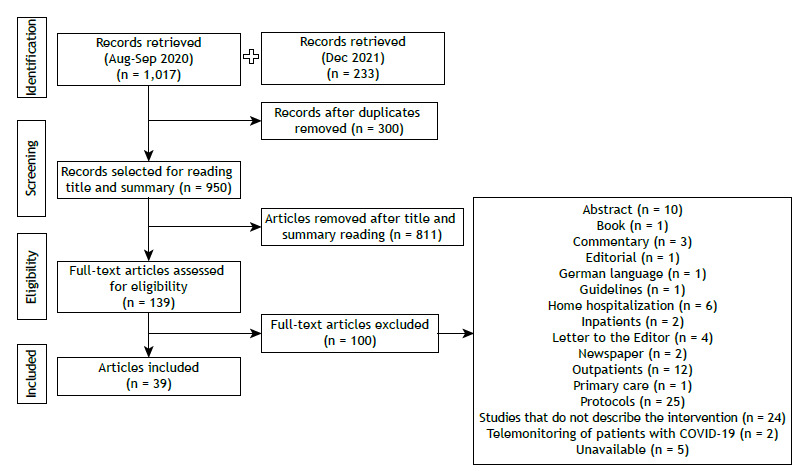
A total of 1,250 articles were selected, and 39 articles were included in this review. Reasons for exclusion were nature of publication, different populations from that investigated in this study, and lack of description of the telehealth/telemedicine intervention delivered (Figure 1).
Figure 1. Flow chart of study selection process for inclusion in the systematic review and meta-analysis in accordance with the Preferred Reporting Items for Systematic Reviews and Meta-Analyses diagram.
Characteristics of included studies
The studies included comprised 21 clinical trials, 14 observational studies, 2 qualitative studies, and 2 feasibility studies. The concepts used were telehealth, in 21 studies; telemonitoring, in 20; telemedicine, in 17; telecare, in 4; teleconsultation, in 5; teleassistance, in 4; tele homecare, in 3; telerehabilitation, in 3; telecommunication, in 2; mobile health in 2; e-health-management, in 1; e-coach, in 1; tele home, in 1; telehealth care, in 1; and tele-video-consultation, in 1. The objectives and outcomes of each study are summarized in Chart 2. 8 , 12 - 49
Chart 2. Overview of selected studies. Scoping review, 2022.
| Author, country, year | Study design | Professionals responsible for delivering telehealth | Objective of the study | Sample size | Concept | Strategy | Outcomes |
|---|---|---|---|---|---|---|---|
| Vitacca; et al, Italy, 2018 8 | Observational study | Nurse, physician. | To test the feasibility of and patient satisfaction with an advanced care plan for severe COPD patients followed by teleassistance at home for six months, focusing on monitoring patient’s palliative topics by means of a dedicated checklist | N = 10 | Telemedicine Teleassistance |
Phone call | High level of satisfaction of the service |
| Ratner et al., USA, 2001 12 | Clinical trial | Nurse, doctor | To describe the Wealth from Health program, which utilizes current and future technologies to help the health care system become a leader in health care delivery and to assist many communities at an affordable cost |
N = 78 Intervention vs. control groupsa |
Telemedicine Telecommunication |
Phone call | Reduction in re-hospitalizations and medical costs Improvement in quality of life |
| Vontetsianos et al., Greece, 2005 13 | Clinical trial | Nurse, doctor, physiotherapist, social worker, clinical psychologist, dietician, and pharmacist | To evaluate the clinical utility of an advanced system of e-health services in home-based integrated care for patients suffering mainly from COPD | N = 18 Intervention vs. control groupsa |
Telehealth Telemedicine |
Video call | Reduction in hospitalizations, emergency department visits, and use of health services Improvement in disease knowledge, self-management, and perception of the quality of life Total costs were lower after study period |
| Finkelstein et al, USA, 2006 14 | Clinical trial | Nurse | To identify and document the benefits of a telemedicine application compared with standard care for homebound patients receiving home health services after an acute hospitalization for a long-term condition | N = 53 Intervention (n = 35) vs. control (n = 18) groups |
Telemedicine Telehomecare Telecommunication |
Telemetry/Data sending Video call |
Reduction in costs to deliver home healthcare |
| Vitacca et al., Italy, 2006 15 | Observational study | Nurse, doctor | To test the feasibility of telemedicine out of hospital use |
N = 45 | Telemonitoring Teleassistance Teleconsultation |
Telemetry/Data sending | Feasibility of home monitoring |
| Trappenburg et al., Netherlands, 2008 16 | Clinical trial | Respiratory nurse, general practitioner, pulmonary physician | To determine the effects of a home-based telemonitoring device, the Health Buddy, on health consumption and HRQoL in patients with moderate to severe COPD |
N = 115 Intervention (n = 59) vs. control (n = 56) groups |
Telemedicine Telemonitoring |
Phone call Message |
Reduction in the number of exacerbations and hospitalizations |
| Cardozo & Steinberg, USA, 2010 17 | Observational study | Nurse, physiotherapist, occupational therapist, social work, and dietician | To evaluate whether case-managed telemedicine as a care delivery system is practical and accepted by elderly patients and could lead to a reduction of costs to the health system, lower emergency care and readmission rates, and provide improved clinical outcomes | N = 851 | Telehealth Telemedicine |
Telemetry/Data sending | Reduction in re-hospitalizations and emergency visits improvement in disease, knowledge, and quality of life |
| Sorknaes et al., Denmark, 2011 18 | Clinical trial | Respiratory nurse | To investigate the effect of telemedicine/video consultations between respiratory nurses at the hospital and patients with exacerbated COPD after hospital discharge on early readmissions | N = 100 Intervention (n = 50) vs. control (n = 50) groups |
Telecare Telehome Telemedicine Telemonitoring Teleconsultations |
Video call Phone call Telemetry/Data sending |
Reduction in hospitalizations and median length of stay |
| Dinesen et al., Denmark, 2012 19 | Clinical trial | Nurse and general practitioner | To test whether preventive home monitoring of COPD patients would reduce hospital admission rates and hospitalization costs |
N = 105 Intervention (n = 57) vs. control (n = 48) groups |
Telehealth Telerehabilitation |
Telemetry/Data sending Video call |
Reduction in admissions during the 10-month follow-up period |
| Sorknaes et al., Denmark, 2013 20 | Clinical trial | Nurse | To investigate the effect of daily real-time teleconsultations | N = 100 Intervention (n = 50) vs. control (n = 50) groups |
Telemedicine Teleconsultation |
Telemetry/Data sending Video call |
No significant difference in re-hospitalizations and mortality rate |
| Bentley et al., England, 2014 21 | Clinical trial | Specialist nurse, specialist physiotherapist, and community matron. | To report the results of a pilot randomized controlled trial of telehealth-supported care within a community-based COPD supported-discharge service |
N = 63 Intervention (n = 32) vs. control (n = 31) groups |
Telehealth Telemonitoring |
Telemetry/Data sending | Reduction in the proportion of hospitalizations and improvement in quality of life |
| Segrelles Calvo et al., Span, 2014 22 | Clinical trial | Nurse, pulmonary physician | To assess the efficacy and effectiveness of a home telehealth program for COPD patients with severe airflow obstruction by measuring the number of emergency room visits, number of hospitalizations, length of hospital stay, and mortality |
N = 60 Intervention (n = 30) vs. control (n = 30) groups |
Telehealth Telemonitoring |
Phone call Telemetry/Data sending |
Reduction in the number of emergency room visits, number of hospitalizations, length of hospital stays, need for noninvasive ventilation, and number of days to first exacerbation requiring hospitalization |
| Gottlieb et al., Denmark, 2014 23 | Observational study | Nurse, pulmonary physician | To assess the feasibility of a telehealth care solution when offered in connection with discharge from a pulmonary ward at a university hospital | N = 72 | Telecare Telehealth Telemedicine Telehealth care |
Video call | No significant difference in re-hospitalizations |
| Saleh et al., Norway, 2014 24 | Observational study | Specialist respiratory nurse | To assess the impact of telemedicine video consultations on the length of re-admission stays within 6 and 12 months of follow up after telemedicine video-consultations | N = 99 | Telemedicine Telemonitoring Tele-video-consultation |
Video call | Reduction in the number of patients readmitted due to COPD exacerbations |
| Davis et al, USA, 2015 25 | Observational study | Nurse | To determine the feasibility of a transitional care program that integrated mobile health technology and home visits for underserved COPD and chronic heart failure patients and to evaluate preliminary program outcomes related to acute care utilization | N = 149 | Telemonitoring | Phone call Interactive voice Telemetry/Data sending |
Reduction in re-hospitalizations |
| Dyrvig et al., Denmark, 2015 26 | Observational study | Nurse | To investigate the effectiveness of a telemedicine intervention in COPD patients during, before, and after an RCT while adjusting for age and gender | N = 11,303 | Telemedicine | Video call | Increased risk of re-hospitalizations Reduction in the risk of death |
| Mierdel & Owen, Canada, 2015 27 | Observational study | N/R | To evaluate pre- and post-enrollment and post-discharge data captured by the William Osler Health System’s telehomecare host | N = 466 | Telehomecare | Phone call Telemetry/Data sending |
Reduction in emergency department use, hospitalizations, and mean length of stay |
| Rosenbek Minet et al., Denmark, 2015 28 | Clinical trial | Nurse, physiotherapist | To assess the feasibility of an individualized home-based training and counseling program via videoconference to patients with severe COPD after hospitalization, including assessment of safety, clinical outcomes, patients’ perceptions, organizational aspects, and economic aspects |
N = 50 Intervention vs. control groupsa |
Telemedicine Telerehabilitation |
Video call | Improvement in the continuity of the rehabilitation program |
| Chatwin et al., England, 2016 29 | Clinical trial | Study team | To assess the impact of home telemonitoring on health service use and quality of life in patients with severe chronic lung disease | N = 175 Intervention (n = 114) vs. control (n = 61) groups |
Telecare Telehealth Telemonitoring Teleassistance |
Phone call Telemetry/Data sending |
No difference in the median number of days to the first admission Increased hospital admission rate, and home visits Improvement in depression rate No improvement in quality of life |
| Cordova et al., USA, 2016 30 | Clinical trial | Nurse, pulmonologists | To investigate whether telemedicine-based daily symptom reporting plus optimal medical therapy decreases hospitalizations and COPD-related mortality, as well as the frequency and severity of acute COPD exacerbation symptoms, in high-risk patients |
N = 67 Intervention (n = 34) vs. control (n = 33) groups |
Telemedicine Telehomecare Teleassistance Telemonitoring |
Phone call | Improvement in daily peak flow and dyspnea scores No differences in hospitalization and mortality rates |
| Fitzsimmons et al., Canada/UK 2016 31 | Qualitative study | Nurse, physician | To explore qualitatively the experiences of patients with COPD who had received either a telehealth-supported or a specialist nursing intervention following hospital discharge after an admission for a COPD exacerbation | N = 29 | Telehealth | Phone call Telemetry/Data sending |
Reduction in home visits by clinicians |
| Ho et al., Taiwan, 2016 32 | Clinical trial | Nurse, pulmonologists | To investigate the effectiveness of telemonitoring in improving COPD patient outcomes | N = 106 Intervention (n = 53) vs. control (n = 53) groups |
Telehealth Telemonitoring |
Phone call Telemetry/Data sending |
Increase in the time to first re-hospitalization for COPD exacerbation Reduction in the number of all-cause readmissions and emergency room visits |
| Ritchie et al., USA, 2016 33 | Clinical trial | Nurse | To evaluate the impact of a technology-supported care transition support program on hospitalizations, days out of the community, and mortality |
N = 478 Intervention vs. control groupsa |
e-coach Telehealth Telemonitoring |
Phone call Interactive voice response Telemetry/Data sending |
No difference in re-hospitalizations Reduction in length of hospital stay |
| Vianello et al., Italy, 2016 34 | Clinical trial | Nurse, pulmonologist, and general practitioner | To investigate the benefits of a telemonitoring system in managing acute exacerbations in advanced-stage COPD patients to improve their HRQoL and to reduce utilization of healthcare services | N = 334 Intervention (n = 230) vs. control (n = 104) groups |
Telehealth Telemonitoring |
Phone call Telemetry/Data sending |
No significant difference in hospitalizations Reduction in readmission rate for acute exacerbations of COPD or for any cause No significant differences in anxiety and depression No significant difference in HRQoL |
| Crooks et al., UK, 2017 35 | Observational study | Study team | To describe a novel monitoring system used to record cough continuously for up to 45 days during acutely exacerbated COPD convalescence | N = 16 | Telemonitoring | Telemetry/Data sending | Improvement in early identification of exacerbations |
| Kargiannakis et al., UK, 2017 36 | Clinical trial | Nurse, doctor | To undertake the first analysis of system data to determine whether telehealth monitoring can identify a COPD exacerbation, giving clinicians an opportunity to intervene with timely treatment and prevent hospital readmission | N = 23 | Telehealth | Phone call Telemetry/Data sending |
No significant reduction in the re-hospitalizations |
| Scalvini et al., Italy, 2018 37 | Observational study | Nurse- and physician-directed | To describe a personal experience at the Centre for Telehealth and Telecare in providing continuity of care for patients with a chronic illness |
N = 1,635 | Telecare Telehealth Telemedicine Telemonitoring e-health management |
Video call Phone call Telemetry/Data sending |
Reduction in re-hospitalization rate and costs Improvement in quality of life and patient satisfaction with the service |
| Barken et al., Norway, 2018 38 | Qualitative study | Nurse | To describe the lived experiences of quality of life among a group of patients living with COPD who had been included in a telemedical intervention after hospitalization for disease exacerbation | N = 10 | Telehealth Telemedicine Telemonitoring |
Video call Phone call Telemetry/Data sending |
Increased accessibility to health care services and improvement in quality of life |
| Fors et al., Sweden, 2018 39 | Clinical trial | Nurse | To evaluate the effects of person-centered support via telephone in two chronically ill patient groups: COPD and/or heart failure |
N = 221 Intervention (n = 103) vs. control (n = 118) groups |
Telehealth | Phone call | No significant difference in the composite score consisted of general self-efficacy, re-hospitalization, and death |
| Soriano et al., Spain, 2018 40 | Clinical trial | Nurse | To clarify the impact of telehealth on outcomes and costs over a 12-month time frame, and in a large sample of COPD patients | N = 169 Intervention (n = 87) vs. control (n = 82) groups |
Telehealth Telemonitoring |
Phone call Telemetry/Data sending |
No significant difference in COPD-related emergency room visits or hospitalizations |
| Walker et al., Spain, UK, Slovenia, Estonia, and Sweden, 2018 41 | Clinical trial | Nurse | To evaluate the efficacy of home monitoring of lung mechanics by the forced oscillation technique and cardiac parameters in older patients with COPD and comorbidities | N = 312 Intervention vs. control groupsa |
Telemonitoring | Phone call Telemetry/Data sending |
No significant difference in quality of life and hospitalization rate Fewer re-hospitalizations |
| Bohingamu Mudiyanselage et al., Australia, 2018 42 | Clinical trial | Nurse, doctor | To assess the impact of home-based telehealth monitoring on health outcomes, quality of life, and costs over 12 months in patients with diabetes and/or COPD who were identified as being at high risk of hospital readmission | N = 171 Intervention (n = 86) vs. control (n = 85) groups |
Telehealth Telemonitoring |
Message Video call Phone call |
No significant difference in the number of re-hospitalizations Reduction in length of hospital stay Improvement in anxiety, depression, and health literacy Improvement in quality of life at no additional costs |
| Lyth et al., Sweden, 2019 43 | Observational study | Nurse, doctor | To investigate the effects of the intervention on healthcare costs, number of hospitalizations, and other care required in patients with COPD and heart failure |
N = 94 COPD patients (n = 36) and heart failure patients (n = 58) |
Telehealth Telemonitoring |
Message Telemetry/Data sending |
Reduction in hospitalization costs, but total health care costs was not significantly different from the expected costs |
| Arcilla et al., USA, 2019 44 | Clinical trial | Nurse | To prove that the implementation of transitional care interventions in high-risk patients with COPD, heart failure, or diabetes mellitus after hospital discharge can reduce the number of readmissions | N = 102 Intervention vs. control groupsa |
Telehealth | Phone call Interactive voice Telemetry/Data sending |
Reduction in the number of hospitalizations and 30-day re-hospitalization rates |
| Bentley et al., UK, 2020 45 | Randomized feasibility study | Physiotherapist | To determine the feasibility and acceptability of the SMART-COPD intervention for the self-management of physical activity and to explore the feasibility of conducting a future RCT to investigate its effectiveness | N = 63 Intervention (n = 31) vs. control (n = 31) groups |
mHealth | Telemetry/Data sending | Feasibility of home monitoring (mHealth shows promise in helping people with COPD self-manage their physical activity levels) |
| Wang et al., China, 2020 46 | Clinical trial | Nurse | To investigate the effects of a mobile health smartphone application to support self-management programs on quality of life, self-management behavior, exercising, and smoking cessation behavior in patients with COPD |
N = 78 Intervention (n = 39) vs. control (n = 39) groups |
Telehealth | Telemetry (Application smartphone) | Improvement in the quality of life and self-management behavior |
| Leonard et al, USA, 2020 47 | Observational study | Respiratory therapist, pulmonary physician | To investigate the effect of home non-invasive ventilation plus the implementation of a call center following hospitalization for acute exacerbations |
N = 20 | Telemedicine | Phone call | No significant reduction in the re-hospitalizations Statistically significant difference to adherence to noninvasive ventilation |
| Marcos et al., Spain, 2020 48 | Observational study | Pulmonologist, nurse | To demonstrate if a telemonitoring system after hospital admission for a COPD exacerbation could have a favorable effect in 1-year readmissions and mortality in a real-world setting | N = 843 Intervention (n = 351) vs. control (n = 495) groups |
Telehealth Telemedicine Telemonitoring Teleconsultation |
Video call Telemetry/Data sending |
Reduced mortality and readmission after 12 months |
| Kooij et al., Netherlands, 2021 49 | Feasibility study | Pulmonary nurse, pulmonologist | To evaluate the effects of a mobile health and self-management application in clinical practice for recently discharged patients with COPD | N = 39 | mHealth | Video call Telemetry/Data sending |
Knowledge and coping increased significantly over time No significant changes in recognition and management of symptoms, or adherence to treatment Readmission rate showed that 13% (5/39) of patients were readmitted within 30 days |
N/R: not reported; RCT: randomized controlled trial; SMART-COPD: Self-Management supported by Assistive, Rehabilitative, and Telehealth technologies-COPD; HRQoL: health-related quality of life; and mHealth: mobile health. aNumbers not mentioned by the authors.
Variation among terms used to deliver remote care
The most commonly used terms to describe the delivery of remote health care were “telehealth” 13 , 17 , 19 , 21 , 22 , 23 , 29 , 31 , 32 , 33 , 34 , 36 , 37 , 38 , 39 , 40 , 42 , 43 , 44 , 46 , 48 and “telemonitoring.” 15 , 16 , 18 , 21 , 22 , 24 , 25 , 29 , 30 , 32 , 33 , 34 , 35 , 37 , 38 , 40 , 41 , 42 , 43 , 48 The terms “telemedicine”, 8 , 12 , 13 , 14 , 16 , 17 , 18 , 20 , 23 , 24 , 26 , 28 , 30 , 37 , 38 , 47 , 48 “telecare,” “teleassistance,” “tele homecare,” “teleconsultation,” or “telecommunication” were used as interchangeable terms. All of these concepts were used in order to describe strategies that use telephone and/or video calls for coaching, data monitoring, and health education leading to self-management or self-care. “Telemonitoring” was used with the terms “home monitoring”, “monitoring intervention,” and “monitoring system” to refer to the monitoring of signs and symptoms for prevention of exacerbations. The term “telerehabilitation” was specifically used for pulmonary rehabilitation. 19 , 28 The term “mobile health” (mHealth) referred to medical or health care interventions delivered through mobile technology (e.g., smartphones) in the studies. 45 , 49
Remote care interventions
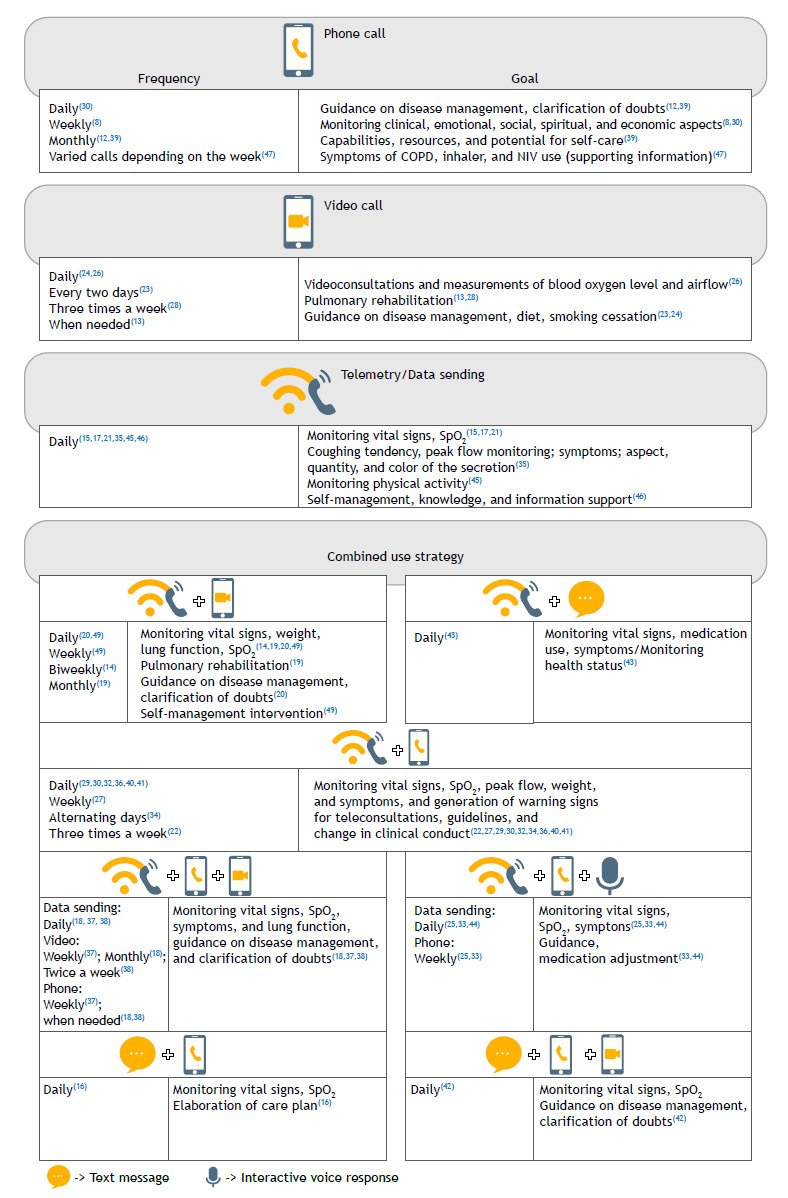
The most common interventions were health education to support self-management improvement, rehabilitation, and monitoring of signs/symptoms by treatment management, counseling, motivation, and prevention of exacerbations. The main key concepts related to remote consultations of COPD patients after discharge focused on providing remote integrated home care with or without the use of telemetry devices (Figure 2).
Figure 2. Telemonitoring strategies identified in the studies included, according to technologies used, frequency, and intervention goals. NIV: noninvasive ventilation.
Professionals responsible to deliver remote care
The professionals majorly involved in telehealth delivery were nurses (in 35 studies) alone or together with multidisciplinary teams (Chart 2).
Remote applications and frequency of delivery of remote care
Most studies that described the remote monitoring of COPD patients after discharge from hospitalization for a COPD exacerbation used multiple strategies, different frequencies, and different applications. These strategies were organized into four groups: telephone calls, video calls, telemetry (alone or in combination with interactive voice response), and text messages (Figure 2). In the study by Wang et al., 46 the patient, whenever necessary, used an application installed in the smartphone (Chart 2).
Effectiveness of remote care
The outcome investigated in 27 articles was hospital readmissions. Of these, 18 showed a reduction in the number of re-hospitalizations, 12 , 13 , 16 , 17 , 18 , 19 , 21 , 22 , 24 , 25 , 27 , 32 , 34 , 37 , 43 , 44 , 48 , 49 although no significant differences in the number of re-hospitalizations were found in 13 studies using telehealth/telemedicine strategies. 20 , 23 , 24 , 29 , 30 , 33 , 34 , 36 , 39 , 40 , 41 , 42 , 47 Quality of life was an outcome investigated in 13 studies, 9 of which showing favorable results with the use of telehealth/telemedicine. 12 , 13 , 17 , 21 , 37 , 38 , 39 , 42 , 46 In addition, factors associated with health literacy were pointed out as positively affecting the health of COPD patients. 13 , 17 , 42 Feasibility of home monitoring for self-management was reported in 2 studies (Chart 2). 15 , 45
DISCUSSION
The main findings of this scoping review were as follows: i) the great majority of strategies demonstrated a positive effect on improving health care and quality of life in patients after hospitalization for COPD; ii) remote care involved an extensive variety of health service practices for different purposes, such as exchange of information, treatment, and exacerbation prevention; iii) most studies used two or more strategies, and phone calls and devices with or without telemetry were the most common ones; and iv) a substantial number of terms described the use of remote care, and the most common terms were telehealth, telemonitoring, and telemedicine.
It was observed that telehealth/telemedicine was effective for early detection and proactive intervention in patients at home after an acute exacerbation of COPD. It seems likely that adopting telehealth/telemedicine in everyday clinical practice could substantially improve the care of chronically ill patients. 13 Telehealth/telemedicine is a type of remote intervention that involves the delivery of care through various communication modalities, aiming at connecting patients to a health care professional and exchanging information to support self-management programs, which has shown to be effective in improving health-related quality of life and self-management behavior in patients with COPD. 46 For COPD patients, the use of telehealth/telemedicine may offer an opportunity to improve disease management and access to pulmonary rehabilitation programs. 2 , 8 , 12 , 17 , 26 , 45
In order to improve telemonitoring effectiveness in COPD, parameters need to be well defined, easily available, and associated with COPD symptomatology. 40 Therefore, it is essential to identify the target populations among which telehealth is accepted and identify feasible interventions. 50 Defining parameters, as well as identifying and knowing the target population, leads to patient and physician satisfaction and, consequently, to the effectiveness of the proposed telemonitoring strategies. 8 , 40
It is important to highlight that telemonitoring can be carried out and analyzed with or without telemetry. A telemetry system allows monitoring of physiological parameters with the use of smart wearable device systems to monitor health. A smart wearable device system may include a wide range of wearable or implantable devices, such as sensors, actuators, smart fabrics, power supplies, and wireless communication networks. 51
Data transmitted by the devices were, in general, physiological measures (vital signs, SpO2, lung function parameters, temperature, and weight) and reported symptoms, such as shortness of breath; aspect, quantity, and color of sputum; wheezing; and cough. In this regard, telemedicine has the potential to enhance the detection of true deterioration in clinical state. 44
Among the terms identified to refer to remote care, telehealth was used for electronic technologies that transmit or receive data. 52 Telemedicine can be effective for detecting the worsening of clinical status and reducing morbidity, mortality, and health costs due to exacerbations. 53 - 55
Telehealth is a term used interchangeably with telemedicine. Telemedicine uses e-health networks to provide health services and health education at a distance. 56 ) The term e-health refers to a self-management web platform designed to support patients to improve self-management of exacerbations at an early stage. 47 Tele-education utilizes web-based platforms to deliver information and services that pertain to the management of patient conditions. 52 Education intervention through telehealth/telemedicine is characterized by interventions to achieve a healthy lifestyle through the practice of physical activities, correct use of medications, smoking cessation, and emotional control, as well as to enhance patient self-management. 6 , 14 , 25 , 26 , 28 , 34 Telehealth/telemedicine showed positive effects on COPD patients after a hospitalization for an exacerbation, playing a central role in self-management. The intangible benefits of the program include improvement in quality of life and in hospitalization rates. 44 These positive results support the importance of guidance and use of educational materials and methods to back a telephone call intervention. Teleconsultation might be used to change or adjust the pharmacological therapy, refer the patient to an emergency department, or even identify the need of a face-to-face home consultation. 50
Teleconsultation, in which care is provided by videoconference and webcams connecting the healthcare practitioner with the patient, makes it possible to assess, diagnose, or treat patients remotely in addition to monitoring exercises and functional capacity in pulmonary rehabilitation. 52 Telemedicine consultations are agreed upon between the patient and the telemedicine nurse day to day. The nurse could advise the patient to consult with a general practitioner or contact a home care nurse. 18 Nurse telemedicine consultation seems to prevent early readmission and is associated with high patient and nurse satisfaction. 18
Telerehabilitation by teleconsultation has a great potential for reducing the use of health care services, combining physical training at home, remote monitoring, health education, and promotion of self-management. 51 Telerehabilitation programs seem to be as effective as face-to-face sessions, which stimulates their use since they might solve the need for increasing access to health care. 53 The study by Rosenbek Minet et al. 28 showed that home-based supervised training and counseling via videoconference is safe and feasible and that telemedicine can help ensure more equitable access to supervised training in patients with severe COPD.
This review also highlights programs for the transition of care with the use of mobile health technologies to ensure safe coordination and continuity of care for patients with different health needs. 22 , 34 Transition of care is one of the pillars for integration of health systems, reducing hospitalizations, readmissions, and costs of health services, and it improves the quality of life of patients and their families. 57 Also, interventions capable of detecting and intervening on exacerbation signs at an early stage can minimize the need for emergency hospitalizations. 52 The combination of several strategies has better results. In addition, the integration of interactive telephone calls may result in higher rates of adherence to health care plans among patients with an exacerbation. 54 ) Telehealth/telemedicine interventions should consider individual factors that affect the usability, acceptability, and efficacy of the intervention. 45
The limitations of the present review are related to the languages in which the studies were published, since we limited the research to those published in English, Portuguese, or Spanish. In addition, the fact that all of the studies included were carried out in developed countries might not reflect the reality in less developed countries.
FINAL CONSIDERATIONS
Telehealth/telemedicine strategies seek to accompany and encourage COPD patients to self-manage their disease by identifying signs and symptoms that can lead to an exacerbation.
This review demonstrated that there is a growing body of evidence showing that telehealth/telemedicine and telemonitoring can be an interesting strategy to benefit COPD patients after discharge from hospitalization for an exacerbation after being discharged by improving their quality of life and reducing re-hospitalizations, admissions to emergency services, hospital length of stay, and health care costs.
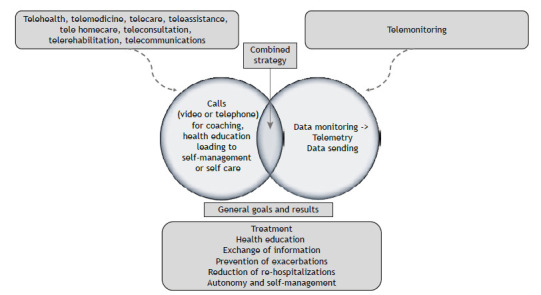
The terms to describe telehealth/telemedicine were varied and sometimes specific for different situations. The goals, the frequency of use, and the strategies adopted were also varied. Notwithstanding the differences, the great majority of studies showed that telehealth/telemedicine was beneficial regarding readmissions, quality of life, health literacy, and costs. The scope of this study is summarized in Figure 3.
Figure 3. Telehealth mapping.
Footnotes
Financial support: This study received financial support from the Brazilian National Ministério da Saúde/Fundo Nacional da Saúde (MS/FNS, Ministry of Health/National Health Fund; Decentralized Resource Execution Term no. 84/2019).
2 Study carried out at the Universidade Federal de Minas Gerais - UFMG - Belo Horizonte (MG) Brasil.
REFERENCES
- 1.Global Initiative for Chronic Obstructive Lung Disease [homepage on the Internet] Global strategy for the diagnosis, management, and prevention of chronic obstructive pulmonary disease 2020 report. Bethesda: GOLD; https://goldcopd.org/wp-content/uploads/2019/12/GOLD-2020-FINAL-ver1.2-03Dec19_WMV.pdf [Google Scholar]
- 2.World Health Organization [homepage on the Internet] Chronic obstructive pulmonary disease (COPD) Geneva: WHO; https://www.who.int/news-room/fact-sheets/detail/chronic-obstructive-pulmonary-disease-(copd) [Google Scholar]
- 3.Viniol C, Vogelmeier CF. Exacerbations of COPD. Eur Respir Rev. 2018;27(147):170103–170103. doi: 10.1183/16000617.0103-2017. https://doi.org/ https://doi.org/10.1183/16000617.0103-2017 [DOI] [PMC free article] [PubMed] [Google Scholar]
- 4.Ding H, Fatehi F, Maiorana A, Bashi N, Hu W, Edwards I. Digital health for COPD care the current state of play. J Thorac Dis. 2019;11(Suppl 17):S2210–S2220. doi: 10.21037/jtd.2019.10.17. [DOI] [PMC free article] [PubMed] [Google Scholar]
- 5.Blakey JD, Bender BG, Dima AL, Weinman J, Safioti G, Costello RW. Digital technologies and adherence in respiratory diseases the road ahead. Eur Respir J. 2018;52(5):1801147–1801147. doi: 10.1183/13993003.01147-2018. [DOI] [PMC free article] [PubMed] [Google Scholar]
- 6.World Health Organization . Telemedicine: opportunities and developments in Member States: report on the second global survey on eHealth. Global Observatory for eHealth series. Geneva: WHO; 2010. [Google Scholar]
- 7.Barbosa MT, Sousa CS, Morais-Almeida M, Simões MJ, Mendes P. Telemedicine in COPD An Overview by Topics. COPD. 2020;17(5):601–617. doi: 10.1080/15412555.2020.1815182. [DOI] [PubMed] [Google Scholar]
- 8.Vitacca M, Montini A, Comini L. How will telemedicine change clinical practice in chronic obstructive pulmonary disease . Ther Adv Respir. Dis. 2018;12:1753465818754778–1753465818754778. doi: 10.1177/1753465818754778. [DOI] [PMC free article] [PubMed] [Google Scholar]
- 9.Peters MD, Godfrey CM, Khalil H, McInerney P, Parker D, Soares CB. Guidance for conducting systematic scoping reviews. Int J Evid Based Healthc. 2015;13(3):141–146. doi: 10.1097/XEB.0000000000000050. [DOI] [PubMed] [Google Scholar]
- 10.Peters MDJ, Godfrey C, Mclnerney P, Munn Z, Tricco AC, Khall H. Aromataris E, Munn Z. JBI Manual for Evidence Synthesis. JBI: JBI; 2020. Chapter 11: Scoping reviews; pp. s–s. [Google Scholar]
- 11.Tricco AC, Lillie E, Zarin W, O'Brien KK, Colquhoun H, Levac D, et al. PRISMA Extension for Scoping Reviews (PRISMA-ScR) Checklist and Explanation. Ann Intern Med. 2018;169(7):467–473. doi: 10.7326/M18-0850. [DOI] [PubMed] [Google Scholar]
- 12.Ratner D, Louria D, Sheffet A, Fain R, Curran J, Saed N. Wealth from Health an incentive program for disease and population management: a 12-year project. Lippincotts Case Manag. 2001;6(5):184–204. doi: 10.1097/00129234-200109000-00002. [DOI] [PubMed] [Google Scholar]
- 13.Vontetsianos T, Giovas P, Katsaras T, Rigopoulou A, Mpirmpa G, Giaboudakis P. Telemedicine-assisted home support for patients with advanced chronic obstructive pulmonary disease preliminary results after nine-month follow-up. J Telemed Telecare. 2005;11(1):86–88. doi: 10.1258/1357633054461697. [DOI] [PubMed] [Google Scholar]
- 14.Finkelstein SM, Speedie SM, Potthoff S. Home telehealth improves clinical outcomes at lower cost for home healthcare. Telemed J E Health. 2006;12(2):128–136. doi: 10.1089/tmj.2006.12.128. [DOI] [PubMed] [Google Scholar]
- 15.Vitacca M, Assoni G, Pizzocaro P, Guerra A, Marchina L, Scalvini S. A pilot study of nurse-led, home monitoring for patients with chronic respiratory failure and with mechanical ventilation assistance. J Telemed Telecare. 2006;12(7):337–342. doi: 10.1258/135763306778682404. [DOI] [PubMed] [Google Scholar]
- 16.Trappenburg JC, Niesink A, de Weert-van Oene GH, van der Zeijden H, van Snippenburg R, Peters A, et al. Effects of telemonitoring in patients with chronic obstructive pulmonary disease. Telemed J E Health. 2008;14(2):138–146. doi: 10.1089/tmj.2007.0037. [DOI] [PubMed] [Google Scholar]
- 17.Cardozo L, Steinberg J. Telemedicine for recently discharged older patients. Telemed J E Health. 2010;16(1):49–55. doi: 10.1089/tmj.2009.0058. [DOI] [PubMed] [Google Scholar]
- 18.Sorknaes AD, Madsen H, Hallas J, Jest P, Hansen-Nord M. Nurse tele-consultations with discharged COPD patients reduce early readmissions--an interventional study. Clin Respir J. 2011;5(1):26–34. doi: 10.1111/j.1752-699X.2010.00187.x. [DOI] [PubMed] [Google Scholar]
- 19.Dinesen B, Haesum LK, Soerensen N, Nielsen C, Grann O, Hejlesen O. Using preventive home monitoring to reduce hospital admission rates and reduce costs a case study of telehealth among chronic obstructive pulmonary disease patients [published correction appears in J Telemed. Telecare. 2018;24(1):3–3. doi: 10.1258/jtt.2012.110704. [DOI] [PubMed] [Google Scholar]
- 20.Sorknaes AD, Bech M, Madsen H, Titlestad IL, Hounsgaard L, Hansen-Nord M. The effect of real-time teleconsultations between hospital-based nurses and patients with severe COPD discharged after an exacerbation. J Telemed Telecare. 2013;19(8):466–474. doi: 10.1177/1357633X13512067. [DOI] [PubMed] [Google Scholar]
- 21.Bentley CL, Mountain GA, Thompson J, Fitzsimmons DA, Lowrie K, Parker SG. A pilot randomised controlled trial of a Telehealth intervention in patients with chronic obstructive pulmonary disease challenges of clinician-led data collection. Trials. 2014;15:313–313. doi: 10.1186/1745-6215-15-313. [DOI] [PMC free article] [PubMed] [Google Scholar]
- 22.Segrelles Calvo G, Gómez-Suárez C, Soriano JB, Zamora E, Gónzalez-Gamarra A, González-Béjar M. A home telehealth program for patients with severe COPD the PROMETE study. Respir Med. 2014;108(3):453–462. doi: 10.1016/j.rmed.2013.12.003. [DOI] [PubMed] [Google Scholar]
- 23.Gottlieb M, Marsaa K, Andreassen H, Strømstad G, Godtfredsen N. Feasibility of a telecare solution for patients admitted with COPD exacerbation screening data from a pulmonary ward in a university hospital. Eur Clin Respir J. 2014;1:10–10. doi: 10.3402/ecrj.v1.24193. [DOI] [PMC free article] [PubMed] [Google Scholar]
- 24.Saleh S, Larsen JP, Bergsåker-Aspøy J, Grundt H. Re-admissions to hospital and patient satisfaction among patients with chronic obstructive pulmonary disease after telemedicine video consultation - a retrospective pilot study. Multidiscip Respir Med. 2014;9(1):6–6. doi: 10.1186/2049-6958-9-6. [DOI] [PMC free article] [PubMed] [Google Scholar]
- 25.Davis C, Bender M, Smith T, Broad J. Feasibility and Acute Care Utilization Outcomes of a Post-Acute Transitional Telemonitoring Program for Underserved Chronic Disease Patients. Telemed J E Health. 2015;21(9):705–713. doi: 10.1089/tmj.2014.0181. [DOI] [PubMed] [Google Scholar]
- 26.Dyrvig AK, Gerke O, Kidholm K, Vondeling H. A cohort study following up on a randomised controlled trial of a telemedicine application in COPD patients. J Telemed Telecare. 2015;21(7):377–384. doi: 10.1177/1357633X15572202. [DOI] [PubMed] [Google Scholar]
- 27.Mierdel S, Owen K. Telehomecare Reduces ER Use and Hospitalizations at William Osler Health System. Stud Health Technol Inform. 2015;209:102–108. doi: 10.3233/978-1-61499-505-0-102. [DOI] [PubMed] [Google Scholar]
- 28.Rosenbek Minet L, Hansen LW, Pedersen CD, Titlestad IL, Christensen JK, Kidholm K. Early telemedicine training and counselling after hospitalization in patients with severe chronic obstructive pulmonary disease a feasibility study. BMC Med Inform Decis Mak. 2015;15:3–3. doi: 10.1186/s12911-014-0124-4. [DOI] [PMC free article] [PubMed] [Google Scholar]
- 29.Chatwin M, Hawkins G, Panicchia L, Woods A, Hanak A, Lucas R. Randomised crossover trial of telemonitoring in chronic respiratory patients (TeleCRAFT trial) Thorax. 2016;71(4):305–311. doi: 10.1136/thoraxjnl-2015-207045. [DOI] [PMC free article] [PubMed] [Google Scholar]
- 30.Cordova FC, Ciccolella D, Grabianowski C, Gaughan J, Brennan K, Goldstein F. A Telemedicine-Based Intervention Reduces the Frequency and Severity of COPD Exacerbation Symptoms A Randomized, Controlled Trial. Telemed J E Health. 2016;22(2):114–122. doi: 10.1089/tmj.2015.0035. [DOI] [PMC free article] [PubMed] [Google Scholar]
- 31.Fitzsimmons DA, Thompson J, Bentley CL, Mountain GA. Comparison of patient perceptions of Telehealth-supported and specialist nursing interventions for early stage COPD a qualitative study. BMC Health Serv Res. 2016;16(1):420–420. doi: 10.1186/s12913-016-1623-z. [DOI] [PMC free article] [PubMed] [Google Scholar]
- 32.Ho TW, Huang CT, Chiu HC, Ruan SY, Tsai YJ, Yu CJ, et al. Effectiveness of Telemonitoring in Patients with Chronic Obstructive Pulmonary Disease in Taiwan-A Randomized Controlled Trial. Sci Rep. 2016;6:23797–23797. doi: 10.1038/srep23797. [DOI] [PMC free article] [PubMed] [Google Scholar]
- 33.Ritchie CS, Houston TK, Richman JS, Sobko HJ, Berner ES, Taylor BB. The E-Coach technology-assisted care transition system a pragmatic randomized trial. Transl Behav Med. 2016;6(3):428–437. doi: 10.1007/s13142-016-0422-8. [DOI] [PMC free article] [PubMed] [Google Scholar]
- 34.Vianello A, Fusello M, Gubian L, Rinaldo C, Dario C, Concas A. Home telemonitoring for patients with acute exacerbation of chronic obstructive pulmonary disease a randomized controlled trial. BMC Pulm Med. 2016;16(1):157–157. doi: 10.1186/s12890-016-0321-2. [DOI] [PMC free article] [PubMed] [Google Scholar]
- 35.Crooks MG, den Brinker A, Hayman Y, Williamson JD, Innes A, Wright CE. Continuous Cough Monitoring Using Ambient Sound Recording During Convalescence from a COPD Exacerbation. Lung. 2017;195(3):289–294. doi: 10.1007/s00408-017-9996-2. [DOI] [PMC free article] [PubMed] [Google Scholar]
- 36.Kargiannakis M, Fitzsimmons DA, Bentley CL, Mountain GA. Does Telehealth Monitoring Identify Exacerbations of Chronic Obstructive Pulmonary Disease and Reduce Hospitalisations An Analysis of System Data. JMIR Med Inform. 2017;5(1):e8. doi: 10.2196/medinform.6359. [DOI] [PMC free article] [PubMed] [Google Scholar]
- 37.Scalvini S, Bernocchi P, Zanelli E, Comini L, Vitacca M. Maugeri Centre for Telehealth and Telecare Maugeri Centre for Telehealth and Telecare A real-life integrated experience in chronic patients. J Telemed Telecare. 2018;24(7):500–507. doi: 10.1177/1357633X17710827. [DOI] [PubMed] [Google Scholar]
- 38.Barken TL, Thygesen E, Söderhamn U. Unlocking the limitations Living with chronic obstructive pulmonary disease and receiving care through telemedicine-A phenomenological study. J Clin Nurs. 2018;27(1-2):132–142. doi: 10.1111/jocn.13857. [DOI] [PubMed] [Google Scholar]
- 39.Fors A, Blanck E, Ali L, Ekberg-Jansson A, Fu M, Lindström Kjellberg I. Effects of a person-centred telephone-support in patients with chronic obstructive pulmonary disease and/or chronic heart failure - A randomized controlled trial. PLoS One. 2018;13(8):e0203031. doi: 10.1371/journal.pone.0203031. [DOI] [PMC free article] [PubMed] [Google Scholar]
- 40.Soriano JB, García-Río F, Vázquez-Espinosa E, Conforto JI, Hernando-Sanz A, López-Yepes L. A multicentre, randomized controlled trial of telehealth for the management of COPD. Respir Med. 2018;144:74–81. doi: 10.1016/j.rmed.2018.10.008. [DOI] [PubMed] [Google Scholar]
- 41.Walker PP, Pompilio PP, Zanaboni P, Bergmo TS, Prikk K, Malinovschi A, et al. elemonitoring in Chronic Obstructive Pulmonary Disease (CHROMED). A Randomized Clinical Trial. Am J Respir Crit Care Med. 2018;198(5):620–628. doi: 10.1164/rccm.201712-2404OC. [DOI] [PubMed] [Google Scholar]
- 42.Bohingamu Mudiyanselage S, Stevens J, Watts JJ, Toscano J, Kotowicz MA, Steinfort CL. Personalised telehealth intervention for chronic disease management A pilot randomised controlled trial. J Telemed Telecare. 2019;25(6):343–352. doi: 10.1177/1357633X18775850. [DOI] [PubMed] [Google Scholar]
- 43.Lyth J, Lind L, Persson HL, Wiréhn AB. Can a telemonitoring system lead to decreased hospitalization in elderly patients . J Telemed. Telecare. 2021;27(1):46–53. doi: 10.1177/1357633X19858178. [DOI] [PubMed] [Google Scholar]
- 44.Arcilla D, Levin D, Sperber M. Transitioning Patients to Independence. Home Healthc Now. 2019;37(3):158–164. doi: 10.1097/NHH.0000000000000741. [DOI] [PubMed] [Google Scholar]
- 45.Bentley CL, Powell L, Potter S, Parker J, Mountain GA, Bartlett YK. The Use of a Smartphone App and an Activity Tracker to Promote Physical Activity in the Management of Chronic Obstructive Pulmonary Disease Randomized Controlled Feasibility Study. JMIR Mhealth Uhealth. 2020;8(6):e16203. doi: 10.2196/16203. [DOI] [PMC free article] [PubMed] [Google Scholar]
- 46.Wang L, Guo Y, Wang M, Zhao Y. A mobile health application to support self-management in patients with chronic obstructive pulmonary disease a randomised controlled trial. Clin Rehabil. 2021;35(1):90–101. doi: 10.1177/0269215520946931. [DOI] [PubMed] [Google Scholar]
- 47.Leonard R, Forte M, Mehta D, Mujahid H, Stansbury R. The impact of a telemedicine intervention on home non-invasive ventilation in a rural population with advanced COPD. Clin Respir J. 2021;15(7):728–734. doi: 10.1111/crj.13354. [DOI] [PubMed] [Google Scholar]
- 48.Marcos PJ, Represas Represas C, Ramos C, Cimadevila Álvarez B, Fernández Villar A, Fraga Liste A. Impact of a Home Telehealth Program After a Hospitalized COPD Exacerbation A Propensity Score Analysis. Arch Bronconeumol. 2022;58(6):474–481. doi: 10.1016/j.arbres.2020.05.030. [DOI] [PubMed] [Google Scholar]
- 49.Kooij L, Vos PJE, Dijkstra A, van Harten WH. Effectiveness of a Mobile Health and Self-Management App for High-Risk Patients With Chronic Obstructive Pulmonary Disease in Daily Clinical Practice Mixed Methods Evaluation Study. JMIR Mhealth Uhealth. 2021;9(2):e21977. doi: 10.2196/21977. [DOI] [PMC free article] [PubMed] [Google Scholar]
- 50.Sood S, Mbarika V, Jugoo S, Dookhy R, Doarn CR, Prakash N. What is telemedicine A collection of 104 peer-reviewed perspectives and theoretical underpinnings. Telemed J E Health. 2007;13(5):573–590. doi: 10.1089/tmj.2006.0073. [DOI] [PubMed] [Google Scholar]
- 51.Chan M, Estève D, Fourniols JY, Escriba C, Campo E. Smart wearable systems current status and future challenges. Artif Intell Med. 2012;56(3):137–156. doi: 10.1016/j.artmed.2012.09.003. [DOI] [PubMed] [Google Scholar]
- 52.Selzler AM, Wald J, Sedeno M, Jourdain T, Janaudis-Ferreira T, Goldstein R. Telehealth pulmonary rehabilitation A review of the literature and an example of a nationwide initiative to improve the accessibility of pulmonary rehabilitation. Chron Respir Dis. 2018;15(1):41–47. doi: 10.1177/1479972317724570. [DOI] [PMC free article] [PubMed] [Google Scholar]
- 53.Ambrosino N, Vagheggini G, Mazzoleni S, Vitacca M. Telemedicine in chronic obstructive pulmonary disease. Breathe (Sheff) 2016;12(4):350–356. doi: 10.1183/20734735.014616. [DOI] [PMC free article] [PubMed] [Google Scholar]
- 54.Al Rajeh A, Steiner MC, Aldabayan Y, Aldhahir A, Pickett E, Quaderi S. Use, utility and methods of telehealth for patients with COPD in England and Wales a healthcare provider survey. BMJ Open Respir Res. 2019;6(1):e000345. doi: 10.1136/bmjresp-2018-000345. [DOI] [PMC free article] [PubMed] [Google Scholar]
- 55.Farias R, Sedeno M, Beaucage D, Drouin I, Ouellet I, Joubert A. Innovating the treatment of COPD exacerbations a phone interactive telesystem to increase COPD Action Plan adherence. BMJ Open Respir Res. 2019;6(1):e000379. doi: 10.1136/bmjresp-2018-000379. [DOI] [PMC free article] [PubMed] [Google Scholar]
- 56.Talboom-Kamp EPWA, Holstege MS, Chavannes NH, Kasteleyn MJ. Effects of use of an eHealth platform e-Vita for COPD patients on disease specific quality of life domains. Respir Res. 2019;20(1):146–146. doi: 10.1186/s12931-019-1110-2. [DOI] [PMC free article] [PubMed] [Google Scholar]
- 57.Zanaboni P, Dinesen B, Hjalmarsen A, Hoaas H, Holland AE, Oliveira CC. Long-term integrated telerehabilitation of COPD Patients a multicentre randomised controlled trial (iTrain) BMC Pulm Med. 2016;16(1):126–126. doi: 10.1186/s12890-016-0288-z. [DOI] [PMC free article] [PubMed] [Google Scholar]