



Abstract
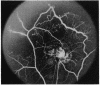
In a prospective study of 38 patients, who were initially selected as being at an early stage of sickling retinopathy, three developed circular black chorio-retinal scars (black sunbursts) during a period of 6 to 24 months. These lesions appear to be the sequelae of intraretinal and subretinal haemorrhage. They occur in the fundus periphery and do not interfere with vision.
Full text
PDF


Images in this article


Selected References
These references are in PubMed. This may not be the complete list of references from this article.
- Burian H. M. Pigment epithelium changes in arteriosclerotic choroidopathy. Am J Ophthalmol. 1969 Sep;68(3):412–416. doi: 10.1016/0002-9394(69)90704-1. [DOI] [PubMed] [Google Scholar]
- Condon P. I., Serjeant G. R. Ocular findings in sickle cell thalassemia in Jamaica. Am J Ophthalmol. 1972 Dec;74(6):1105–1109. doi: 10.1016/0002-9394(72)90728-3. [DOI] [PubMed] [Google Scholar]
- Goldberg M. F., Galinos S., Lee C. B., Stevens T., Woolf M. B. Editorial: Macular ischemia and infarction in sickling. Invest Ophthalmol. 1973 Sep;12(9):633–635. [PubMed] [Google Scholar]
- PATON D. The conjunctival sign ox sickle-cell disease. Further observations. Arch Ophthalmol. 1962 Nov;68:627–632. doi: 10.1001/archopht.1962.00960030631010. [DOI] [PubMed] [Google Scholar]
- Welch R. B., Goldberg M. F. Sickle-cell hemoglobin and its relation to fundus abnormality. Arch Ophthalmol. 1966 Mar;75(3):353–362. doi: 10.1001/archopht.1966.00970050355008. [DOI] [PubMed] [Google Scholar]