



Abstract
Autophagy, a highly conserved cellular self‐degradation pathway, has emerged with novel roles in the realms of immunity and inflammation. Genome‐wide association studies have unveiled a correlation between genetic variations in autophagy‐related genes and heightened susceptibility to autoimmune and inflammatory diseases. Subsequently, substantial progress has been made in unraveling the intricate involvement of autophagy in immunity and inflammation through functional studies. The autophagy pathway plays a crucial role in both innate and adaptive immunity, encompassing various key functions such as pathogen clearance, antigen processing and presentation, cytokine production, and lymphocyte differentiation and survival. Recent research has identified novel approaches in which the autophagy pathway and its associated proteins modulate the immune response, including noncanonical autophagy. This review provides an overview of the latest advancements in understanding the regulation of immunity and inflammation through autophagy. It summarizes the genetic associations between variants in autophagy‐related genes and a range of autoimmune and inflammatory diseases, while also examining studies utilizing transgenic animal models to uncover the in vivo functions of autophagy. Furthermore, the review delves into the mechanisms by which autophagy dysregulation contributes to the development of three common autoimmune and inflammatory diseases and highlights the potential for autophagy‐targeted therapies.
Keywords: autophagy, immunity, inflammation, autoimmune diseases, pathogenesis
This review presents an overview of the autophagy machinery and summarizes the roles of autophagy and autophagy proteins in regulating immunity and inflammation. The authors discuss how dysregulation of autophagy contributes to the pathogenesis of three common autoimmune and inflammatory diseases and emphasize autophagy as a promising therapeutic target.

1. INTRODUCTION
Autophagy is a conserved process that facilitates the degradation and recycling of various cellular components by delivering them to lysosomes. 1 Originally known as a mechanism for ensuring the quality of organelles and proteins, autophagy has also gained recognition as a means of survival under circumstances of limited energy or nutrient availability. Recent studies have expanded our knowledge regarding autophagy and revealed its role in immunity and inflammation. The emergence of this fresh outlook has been partly propelled by the linkages established between genetic variations in genes associated with autophagy and heightened vulnerability to autoimmune and inflammatory disorders. Following the discovery of the Thr300Ala variant in ATG16L1 as a genetic predisposition for Crohn's disease (CD) via genome‐wide association studies (GWAS), 2 , 3 several research teams generated transgenic animal models to illustrate the crucial involvement of autophagy in maintaining intestinal epithelial homeostasis and defending against infections. 4 , 5 , 6 , 7 , 8 , 9 , 10 Moreover, associations have been established between mutations in different genes related to autophagy and diverse autoimmune and inflammatory conditions, 11 , 12 , 13 , 14 , 15 fueling significant enthusiasm in understanding the contribution of autophagy to the pathogenesis of these diseases. Considerable progress has been achieved in unraveling the functional aspects of autophagy in immunity and inflammation through the utilization of both in vitro and in vivo models. 16 , 17 By executing diverse functions such as pathogen clearance, antigen processing and presentation, cytokine production, as well as lymphocyte differentiation and survival, autophagy serves as a crucial bridge between the innate and adaptive immune systems. However, our comprehension of how autophagy influences immunity and inflammation is far from complete. Emerging studies have uncovered novel methods by which the autophagy pathway and autophagy proteins regulate immune responses, such as noncanonical autophagy. 18 , 19
This review highlights recent advancements in understanding the impact of autophagy on the regulation of immune responses and inflammatory processes. It presents the genetic links between variants in autophagy‐related genes (ATGs) and a range of autoimmune and inflammatory diseases. Additionally, it explores the in vivo function of autophagy through the utilization of transgenic animal models. Furthermore, this review delves into the underlying mechanisms by which autophagy dysregulation contributes to the pathogenesis of three prevalent autoimmune and inflammatory disorders: inflammatory bowel diseases (IBD), systemic lupus erythematosus (SLE), and multiple sclerosis (MS). Finally, it summarizes the findings of clinical trials using autophagy‐targeted drugs and biological agents and explores the prospects of therapies aimed at modulating autophagy.
2. AUTOPHAGY AND RELATED MOLECULAR PATHWAYS
Autophagy is a conservative mechanism of self‐degradation, which transports cellular materials to lysosomes for decomposition. The process of autophagy encompasses three distinct mechanisms: macroautophagy, microautophagy, and chaperone‐mediated autophagy, each employing unique strategies for transporting cargo to the lysosome. 20 , 21 Unless otherwise specified in this review, the extensively investigated form of autophagy, macroautophagy, will be predominantly referred to as such. The regulation of autophagy involves two key kinases: adenosine monophosphate (AMP) ‐activated protein kinase (AMPK), which monitors energy levels, and mammalian target of rapamycin (mTOR), which detects nutrient availability. 22 The activation of AMPK, which is essential for regulating cellular energy metabolism, is triggered by alterations in energy status, such as an elevation in the AMP/ATP ratio or reduced glucose levels. 23 Conversely, mTOR serves as a prominent controller of cell growth and protein synthesis, and its activation is induced by abundant nutrient availability, normoxic conditions, and elevated levels of growth factors. 22 AMPK enhances autophagy by promoting the phosphorylation of ULK1, while mTOR inhibits autophagy by preventing ULK1 activation. 24 Autophagy progresses through distinct stages encompassing autophagy initiation, autophagosome nucleation, autophagosome elongation and closure, as well as autophagosome fusion with lysosomes. 21 The progression of this process is facilitated by a group of proteins encoded by ATG, as depicted in Figure 1. The intricate molecular mechanisms underlying autophagy are extensively discussed in other expert reviews. 25
FIGURE 1.

The process and molecular mechanism of autophagy. †Autophagy proceeds through a series of sequential phases, including autophagy initiation, nucleation of the autophagosome, elongation and closure of the autophagosome, and fusion of the autophagosome with lysosome. The process is mediated by a set of proteins encoded by autophagy‐related (ATG) genes.
Although macro‐, micro‐, and chaperone‐mediated autophagy are all considered to be genuine forms of autophagy, as they transport cytoplasmic materials to lysosomes, 26 recent research has revealed noncanonical autophagy pathways. These pathways are called noncanonical autophagy because they use distinct molecular pathways to process and conjugate microtubule‐associated protein light chain 3 (LC3). 27 Noncanonical autophagy processes may specifically contribute to pathogen removal, surface molecule internalization, secretion/exocytosis, and phagocytosis. 26 An exemplary instance is LC3‐associated phagocytosis (LAP), 18 where specific constituents of the canonical autophagy machinery are engaged to facilitate the binding of LC3 to phagosomes with a single membrane. 28 , 29 LAP can be triggered by various surface receptors such as pattern recognition receptors (PRRs), immunoglobulin (Ig) receptors, and phosphatidylserine (PtdSer) receptors, which will be further discussed below.
3. AUTOPHAGY IN IMMUNITY AND INFLAMMATION
Although initially discovered for its role in degrading unwanted or damaged cytoplasmic material to maintain cellular homeostasis, recent studies also suggest that autophagy has broader functions in immunity and inflammation. 30
Autophagy contributes to innate immunity by assisting in pathogen clearance and inflammation regulation. Two autophagy‐associated pathways, xenophagy and LAP, are utilized by innate immune phagocytes to promote degradation of microbes within lysosomes. 31 Xenophagy, a typical type of autophagy, selectively captures intracellular pathogens and those in damaged intracellular vesicles into double‐membrane autophagosomes, which then undergoes degradation via the lysosomal pathway through autophagy. 32 LAP, on the other hand, collaborates with canonical autophagy in cellular defense. Pathogenic microorganisms have been observed within LAP‐targeted, single‐membrane phagosomes, promoting phago‐lysosomal fusion and leading to enhanced microbial killing. Studies have revealed that the absence of ATGs, such as Atg5, renders mice more susceptible to infections and disrupts normal inflammatory responses. 33 Autophagy is therefore critical to balance inflammatory response by timely removing exogenous and endogenous sources of inflammatory signals, such as microbes, damaged organelles, and aggregates. One of the major functions of the autophagy mechanism in regulating inflammation is to suppress inflammasome activation. The inflammasome functions as a receptor and sensor within the innate immune system, governing the activation of caspase‐1 and triggering the proteolytic cleavage of pro‐IL‐1β and pro‐IL‐18. This activation occurs upon the recognition of pathogen‐associated molecular patterns (PAMPs) or damage‐associated molecular patterns (DAMPs). 34 , 35 By eliminating endogenous inflammasome activators, such as damaged mitochondrial‐derived DAMPs, autophagy demonstrates its ability to dampen inflammasome activation. 36 Additionally, autophagy can directly target inflammasome components and eliminate them by autophagic degradation. Autophagy plays an additional pivotal role in regulating inflammation by inhibiting the generation of type I interferon (IFN), which is mediated by cyclic guanosine monophosphate (GMP) –AMP synthase (cGAS) and stimulator of interferon genes (STING). The cGAS–STING pathway consists of the dsDNA/DNA hydrolysate sensor cGAS and the STING. 37 Upon detection of dsDNA/dsRNA from exogenous and endogenous sources, cGAS catalyzes the production of cyclic GMP–AMP (cGAMP) using ATP and GTP. Subsequently, cGAMP binds to the active site of STING, initiating downstream signaling pathways and promoting the synthesis of type I IFN. Emerging evidence indicates that autophagy plays a role in mitigating excessive inflammation through downregulating the activation of the cGAS–STING pathway. The interaction between the autophagy‐related protein BECN1 and the cGAS DNA sensor has been identified as a key mechanism. This interaction promotes the degradation of cytoplasmic pathogen DNA through autophagy, effectively limiting the excessive production of inflammatory cytokines. 38 , 39 The deficiency of the ATG Atg9a has been shown to markedly increase the assembly of STING, resulting in aberrant activation of the innate immune response. 40 Autophagic degradation of STING can attenuate STING‐directed type I IFN signaling activity. For instance, a newly identified autophagy receptor CCDC50 delivers K63‐polyubiquitinated STING to the autolysosome for degradation. 41 Furthermore, it has been observed that the small‐molecule chaperone UXT facilitates the autophagic degradation of STING1 by promoting its interaction with SQSTM1, a process that contributes to the regulation of STING1 levels. 19 , 42 These findings emphasize the essential role of autophagy in modulating the activation of STING to maintain immune homeostasis.
Autophagy plays a pivotal role in bridging innate and adaptive immunity by facilitating antigen presentation. Recent studies have provided emerging evidence that autophagy plays a facilitating role in the presentation of antigens on major histocompatibility complex (MHC) class II molecules. 43 Two autophagy‐related mechanisms exist in antigen‐presenting cells (APCs) for the presentation of antigens on MHC class II molecules. The first mechanism involves the capture and delivery of extracellular antigens to the autophagosome, where MHC class II molecules are subsequently recruited to the phagolysosome. This process generates immunogenic peptides that engage with CD4+ T cells. The second mechanism entails the utilization of noncanonical autophagy LAP, wherein specific receptors like Toll‐like receptors (TLRs) recognize the cargo, resulting in the conjugation of LC3 to single‐membrane phagosomes and the subsequent formation of LAPosomes. 19 The fusion between LAPosomes and lysosomes facilitates the efficient degradation of cargo and the generation of fragments that can be loaded onto MHC class II molecules, thereby triggering the activation of CD4+ T cells. Furthermore, autophagy plays a role in directing cytosolic proteins for degradation in lysosomes, thereby enhancing the presentation of intracellular antigens on MHC class II molecules and facilitating robust CD4+ T cell responses. It is also crucial to consider the role of autophagy in the context of endogenous MHC class II loading during thymic selection, as it plays a vital role in shaping the T cell repertoire. 44 Considerable autophagic activity is observed in thymic epithelial cells (TECs), which plays a crucial role in the establishment of self‐tolerance in CD4+ T cells by presenting self‐antigens on MHC class II molecules during their development. 16 Altered selection of specific MHC‐II restricted T cells and the development of multi‐organ inflammation are observed in TECs lacking Atg5. 45 , 46 These findings highlight the crucial involvement of autophagy in inducing tolerance during the development of the T cell repertoire. 47 In addition to its role in antigen presentation, autophagy also plays a crucial role in modulating the development and maintenance of immune cells, thus contributing to adaptive immunity. For instance, targeted deletion of Atg5 in distinct subsets of immune cells in murine models has been shown to result in notable impairments in various aspects of immune function, such as compromised B lymphocyte maturation, impaired differentiation of plasma cells, diminished T cell survival, and reduced T cell proliferation. 48 , 49 , 50
In addition to its aforementioned immunomodulatory functions, autophagy's role in onco‐immunology is also increasingly recognized. The involvement of autophagy in tumor development is influenced by multiple variables, such as the specific tumor subtype, stage of progression, and the characteristics of the tumor microenvironment. Autophagy plays a critical role in maintaining homeostasis, activating, differentiating, and promoting the survival of immune cells, which in turn can have both promotive and inhibitory effects on tumor development. Thus, autophagy functions as a double‐edged sword in the context of tumorigenesis. Since the topic of autophagy and tumor immunity has been covered comprehensively in recent reviews, 51 , 52 , 53 , 54 we will focus on a few studies of notable significance to discuss the impact of autophagy on tumor immunity. To begin, autophagy plays a role in regulating antigen processing and presentation within tumor cells. MHC class I (MHC‐I) molecules are crucial for antitumor adaptive immunity as they facilitate the presentation of endogenous antigens to CD8+ T cells. 55 Impaired MHC‐I expression in tumor cells can hinder antigen presentation and enable immune evasion. Recent investigations have suggested that autophagy may contribute to immune evasion in pancreatic cancer by participating in the degradation of MHC‐I molecules. 56 In pancreatic ductal adenocarcinoma (PDAC) cells, lysosomes were found to be enriched with MHC‐I, while its expression on the cell surface was reduced. Researchers discovered that the autophagy cargo receptor NBR1 facilitates the transport of MHC‐I molecules to lysosomes for degradation via an autophagy‐dependent pathway. 56 Inhibition of autophagy restores surface MHC‐I levels, leading to increased antigen presentation, enhanced proliferation and activation of CD8+ T cells, and augmented tumor cell elimination. Additionally, autophagy inhibition through ULK1 targeting has been demonstrated to overcome impaired antigen presentation and restore antitumor immunity in lung cancer with LKB1 mutation. 57 Therefore, interfering with autophagy in tumor cells may provide an effective way to promote an antitumor T‐cell response. Furthermore, recent discoveries have highlighted the involvement of LAP in the engulfment of apoptotic tumor cells. During tumor progression, the heightened rate of cell proliferation often coincides with an elevated incidence of cell death. Moreover, anticancer treatments can induce cell death in tumors. Therefore, the presence of numerous dying or dead cells in the tumor microenvironment provides an abundant supply of pre‐existing substrates for professional phagocytic cells. 58 LAP utilizes autophagy machinery components to facilitate optimal maturation of phagocytic cells and degradation of ingested cargo. LAP can promote clearance of dying or dead cells by interacting with the surface receptor T‐cell Ig mucin protein 4 (TIM‐4) on macrophages. 59 New research findings suggest that LAP plays a significant role in the engulfment of dying and deceased cells by bone marrow macrophages within the microenvironment of acute myeloid leukemia (AML). 60 Researchers found that apoptotic bodies from AML cells were taken up by bone marrow macrophages via LAP, followed by mtDNA stimulation of STING to enhance phagocytosis and inhibit AML cell growth. 59 Therefore, AML disease progression is expedited in mice with deficiencies in LAP. However, this macrophage function associated with AML contrasts with the immunosuppressive role of LAP in solid tumors. Researchers have noted that in mice with solid tumors like melanoma and lung cancer, LAP present in myeloid cells facilitated the growth of the tumors. 61 At the mechanistic level, LAP serves as a regulatory mechanism in steering the polarization of tumor‐associated macrophages (TAMs) toward an immunosuppressive state, as demonstrated by recent studies. 61 Additionally, after engulfing apoptotic tumor cells, LAP inhibits the production of type I IFN in TAMs. Therefore, it suppresses T cell function and enhances tumor tolerance. These findings emphasize that the effect of LAP is contingent on various factors, including cancer type and stage. Further study is warranted to shed light on the underlying reasons for these discrepancies.
4. AUTOPHAGY IN AUTOIMMUNE AND INFLAMMATORY DISEASES
The association between mutations in ATGs and heightened susceptibility to autoimmune and inflammatory diseases has piqued interest in the involvement of autophagy in disease mechanisms. Nevertheless, as indicated in Table 1, the majority of genetic variations are found within noncoding regions, with only a limited portion of the predicted heritability attributable to functional variations. As a result, it is challenging to translate genetic variation information into mechanistic insights. Nonetheless, transgenic animals are useful tools for improving our understanding of disease etiology. In particular, when animal models with functional variations are shown to alter gene functions, it can provide strong evidence for the gene's contribution to disease pathogenesis. The subsequent sections will focus on three common autoimmune and inflammatory diseases and examine how autophagy dysregulation contributes to disease development, primarily drawing from evidence obtained through transgenic animal models.
TABLE 1.
The list of variants in autophagy‐related genes associated with the susceptibility to several autoimmune and inflammatory diseases.
| Disease | Gene | Chromosome | SNP | Reference | Alternate | Functional annotation | OR | p Value | Study strategy | References |
|---|---|---|---|---|---|---|---|---|---|---|
|
IBD |
ATG16L1 | 2 | rs2241880 (T300A) |
A |
G | missense_variant | 1.32 | 3.00E−06 | GWAS & fine‐mapping | 62 |
| 1.45 | 1.00E−13 | GWAS & fine‐mapping | 63 | |||||||
| 1.32 | 1.00E−12 | GWAS & fine‐mapping | 64 | |||||||
| rs3828309 | A | G | intron_variant | 1.25 | 2.00E−32 | GWAS meta‐analysis | 65 | |||
| rs12994997 | G | A | intron_variant | 1.23 | 4.00E−70 | GWAS meta‐analysis | 66 | |||
| rs10210302 | C | T | intron_variant | 1.19 | 5.00E−14 | GWAS & fine‐mapping | 67 | |||
| IRGM | 5 | rs11747270 | A | G | intron_variant | 1.33 | 3.00E−16 | GWAS meta‐analysis | 65 | |
| rs1000113 | C | T | intron_variant | 1.54 | 3.00E−07 | GWAS & fine‐mapping | 67 | |||
| rs11741861 | A | G | intron_variant | 1.33 | 6.00E−44 | GWAS meta‐analysis | 68 | |||
| rs13361189 | T | C | intergenic_variant | 1.38 | 2.00E−10 | Candidate gene | 69 | |||
| rs7714584 | A | G | intron_variant | 1.37 | 8.00E−19 | GWAS meta‐analysis | 70 | |||
| ATG16L2 | 11 | rs11235604 | C | T | missense_variant | 1.61 | 2.44E−12 | GWAS & fine‐mapping | 71 | |
| LRRK2 | 12 | rs11175593 | C | T | non_coding_transcript_exon_variant | 1.54 | 3.00E−10 | GWAS meta‐analysis | 65 | |
| rs4768236 | C | A | intron_variant | 1.12 | 4.00E−21 | GWAS meta‐analysis | 68 | |||
| ULK1 | 12 | rs12303764 | T | G | intron_variant | 1.32 | 2.00E−04 | Candidate gene | 72 | |
| SLE | ATG7 | 3 | rs11706903 | C | A | intron_variant | 1.26 | 1.12E−04 | GWAS pathway analysis | 73 |
| IRGM | 5 | rs10065172 | C | T | synonymous_variant | 1.15 | 1.50E−02 | GWAS pathway analysis | 73 | |
| rs13361189 | T | C | 5' of IRGM | 1.13 | 3.00E−02 | GWAS pathway analysis | 73 | |||
| ATG5 | 6 | rs548234 | C | T | 3' of ATG5 | 1.25 | 5.00E−12 | GWAS & fine‐mapping | 11 | |
| rs6937876 | G | A | 3' of ATG5 | 1.70 | 1.40E−02 | Candidate gene | 73 | |||
| rs2245214 | C | G | intron_variant | 1.15 | 1.20E−05 | Candidate gene | 74 | |||
| ATG16L2 | 11 | rs11235604 | C | T | missense_variant | 0.76 | 1.90E−09 | GWAS & fine‐mapping | 12 | |
| DRAM1 | 12 | rs4622329 | G | A | intron_variant | 1.12 | 4.00E−15 | GWAS meta‐analysis | 13 | |
| 1.19 | 9.00E−12 | GWAS meta‐analysis | 75 | |||||||
| CLEC16A | 16 | rs34361002 | T | TAA | intron_variant | 1.14 | 1.00E−17 | GWAS meta‐analysis | 13 | |
| rs12599402 | T | C | intron_variant | 1.28 | 5.00E−07 | GWAS meta‐analysis | 75 | |||
| rs7200786 | A | G | intron_variant | 1.15 | 2.00E−08 | GWAS meta‐analysis | 76 | |||
| rs9652601 | G | A | intron_variant | 1.21 | 7.00E−17 | GWAS meta‐analysis | 76 | |||
| 1.17 | 4.00E−07 | GWAS meta‐analysis | 77 | |||||||
| 1.19 | 6.00E−13 | GWAS meta‐analysis | 78 | |||||||
| rs2041670 | G | A | intron_variant | 1.18 | 2.00E−16 | GWAS meta‐analysis | 78 | |||
| rs8054198 | C | T | TF_binding_site_variant | 2.78 | 2.00E−08 | GWAS meta‐analysis | 78 | |||
| MAP1LC3B | 16 | rs933717 | T | C | intron_variant | 0.13 | 2.36E−10 | GWAS pathway analysis | 79 | |
| MTMR3 | 22 | rs9983 | G | A | 3_prime_UTR_variant | 1.61 | 2.07E−03 | GWAS shared genetics | 80 | |
| MS | CALCOCO2 | 17 | rs550510 | G | A | missense_variant | 0.65 | 7.00E−03 | Candidate gene | 81 |
| RA | ATG16L1 | 2 | rs2241880 | A | G | missense_variant | 1.32 | 2.00E−02 | Candidate gene | 82 |
| ATG5 | 6 | rs62422878 | C | T | intron_variant | 1.11 | 4.00E−09 | GWAS meta‐analysis | 14 | |
| rs9372120 | T | G | intron_variant | 0.11 | 1.00E−07 | GWAS meta‐analysis | 15 | |||
| 1.11 | 8.00E−10 | GWAS meta‐analysis | 83 | |||||||
| UVRAG | 11 | rs7111334 | C | T | intron_variant | 0.25 | 1.50E−02 | Candidate gene | 84 | |
| GABARAPL3 | 15 | rs6496667 | C | A | 5' of GABARAPL3 | 1.09 | 1.00E−06 | GWAS meta‐analysis | 85 | |
| Psoriasis | ATG16L1 | 2 | rs13005285 | T | G | intron_variant | 1.32 | 2.40E−02 | Candidate gene | 86 |
Data were collected from GWAS catalog database (https://www.ebi.ac.uk/gwas/); IBD, inflammatory bowel diseases; SLE, systemic lupus erythematosus; MS, multiple sclerosis; RA, rheumatoid arthritis; GWAS, genome‐wide association study; SNP, single‐nucleotide polymorphism; OR, odds ratio.
4.1. Inflammatory bowel diseases
IBD, encompassing CD and ulcerative colitis, manifests as a chronic gastrointestinal disorder marked by severe inflammation and mucosal damage. 87 The exact mechanism of IBD remains unclear, but potential causes such as environmental factors, infectious agents, and genetic susceptibility have been proposed. 88 Many genetic variants in ATG genes have been identified as influential factors in the onset of IBD and one of these variants is a missense mutation (rs2241880, Thr300Ala) located in the autophagy gene ATG16L1. This discovery has generated significant interest in unraveling the role of autophagy in the context of IBD. Moreover, GWAS have revealed additional single‐nucleotide polymorphisms (SNPs) in ATG genes that exhibit a strong association with IBD, as shown in Table 1.
Considering that most of the evidence linking autophagy‐related genetic variants to IBD is derived from functional studies utilizing the ATG16L1 T300A variant, our discussion will focus primarily on ATG16L1, supplemented by other ATGs. The T300A variant (Thr300Ala) causes the substitution of the evolutionarily conserved polar threonine residue at position 300 of the WD repeat domain in ATG16L1 with a nonpolar alanine. During the process of autophagosome formation, the ATG16L1 protein engages in interactions with the ATG12–ATG5 conjugate, leading to the formation of a large molecular complex. This complex facilitates the lipidation of LC3/ATG8, thereby contributing to autophagosome development. 89 , 90 Mice with functional defects in Atg16l1 display dysregulated autophagy and intestinal homeostasis, and the relevant mechanisms are summarized in Figure 2.
FIGURE 2.

The roles of autophagy deficiency in pathogenesis of inflammatory bowel diseases (IBD). †Defective autophagy can affect gut microbiota composition, disrupt intestinal epithelial homeostasis, and amplify intestinal inflammation in IBD.
4.1.1. Intestinal epithelial homeostasis
In a healthy state, the intestinal epithelial cells (IECs) establish a strong mucosal barrier capable of withstanding intestinal pathogens. Additionally, specialized epithelial cells, including Paneth and goblet cells, secrete defensins and mucus to limit bacterial adhesion and infiltration. 91 However, patients with IBD often exhibit defects in maintaining mucosal barrier stability, which leads to dysregulated mucosal immune responses to gut microbiota. Xenophagy is essential for eliminating intracellular pathogens, and autophagy‐associated risk variants have been linked to defective autophagy and impaired intracellular bacterial clearance. 92 Conway et al. 4 generated mice lacking Atg16l1 in epithelial cells and found that autophagy‐deficient mice had systemic translocation of bacteria and an exaggerated inflammatory response compared with their wild‐type counterparts. Under normal conditions, autophagosomes can engulf invaded S Typhimurium in IECs. However, mice with Atg16l1 deletion in IECs showed cell‐specific disruptions of autophagy and failed to control the spread of intestinal pathogens. In addition, these mice displayed abnormal morphology of Paneth cells, specialized epithelial cells that play a crucial role in the secretion of antimicrobial peptides. 93 , 94 In fact, IECs deficient in other ATGs, such as Irgm1 95 and Atg4b, 96 also showed marked Paneth cell alterations. Moreover, autophagy dysfunction in Atg16l1 T300A/T300A mice caused a defect in mucin secretion in their goblet cells. 5 Thus, impaired autophagy may compromise the release of antimicrobial peptides and mucin, leading to heightened vulnerability of the intestinal epithelial barrier to microbial infections. These observations underscore the crucial role of autophagy in preserving the equilibrium of the intestinal immune system through efficient elimination of harmful pathogens in the gut.
4.1.2. Inflammatory immune response
IBD are chronic gastrointestinal inflammatory conditions, and autophagy has been underscored in recent research as a vital mechanism for regulating inflammatory responses. 6 , 97 Inflammasomes are typically activated upon stimulation by PAMPs or DAMPs to safeguard host cells against microbial infections. However, prolonged hyperactivation of inflammasomes can lead to excessive cytokine production and severe inflammatory diseases, including IBD. Therefore, precise control of inflammasome activation is indispensable in upholding intestinal equilibrium. Autophagy functions as an innate cellular defense mechanism by capturing the invaded pathogens, thereby preventing the recognition of PRRs and downstream inflammasome signaling. Autophagy defects have been reported to cause excessive inflammasome activation and abnormal inflammation. Saitoh et al. 7 showed that Atg16l1‐deficient macrophages exhibited heightened production of the proinflammatory cytokines IL‐1β and IL‐18 upon stimulation with lipopolysaccharide, owing to the activation of caspase‐1. 98 Additionally, mice harboring the Atg16l1 T300A variant, introduced via knock‐in, exhibited defective antibacterial autophagy and an increased cytokine response. 8 , 9 This phenomenon arises due to the increased susceptibility of the variant Atg16L1 T300A protein to cleavage by caspase 3 and caspase 7, as compared with the wild‐type protein. Consequently, this cleavage event results in reduced levels of functional ATG16L1 and perturbed cytokine signaling pathways. On the other hand, elevated inflammatory cytokines would accelerate the apoptosis of autophagy‐deficient IECs, resulting in impaired barrier function and exacerbated pathology. 10 Autophagy in the epithelium has been shown to reduce TNF‐induced apoptosis and limit intestinal inflammation. Therefore, functional autophagy is crucial for tightly regulating intestinal inflammation.
4.1.3. Gut microbiota
The gut microbiota comprises trillions of bacteria inhabiting the mammalian intestinal lumen, and their interaction with the host is essential for maintaining physiological metabolism and intestinal immune equilibrium. The importance of autophagy in regulating the gut microbiota has been underscored by recent investigations. By eliminating intracellular pathogens, autophagy restricts the replication and dissemination of pathogenic microorganisms. In addition, autophagy helps regulate the gut microbiota composition by maintaining mucosal barrier stability. It is involved in secreting antimicrobial peptides and mucus into the intestinal lumen, which safeguards against pathogen invasion and infection. Dysfunctional autophagy has been associated with dysbiosis of the gut microbiota, which heightens the susceptibility to developing IBD. 99 Specifically, mice with gut‐specific Atg5 knockout display an altered gut microbiota composition and structure, characterized by an upsurge of proinflammatory bacteria and a decrease in alpha diversity. 100 , 101 Mice specifically lacking Atg7 in colonic epithelial cells also exhibit comparable outcomes. 102 Additionally, mice carrying the Atg16l1 T300A/T300A mutation exhibit an altered gut microbiota composition, characterized by a notable increase in the prevalence of bacteria linked to IBD, such as Ruminococcaceae. 5 , 103 These discoveries emphasize the significance of autophagy in maintaining gut microflora homeostasis.
4.2. Systemic lupus erythematosus
SLE is distinguished by an excessive immune response and the breakdown of immune tolerance toward self‐antigens. 104 As shown in Table 1, the results of GWAS studies have yielded valuable insights into the link between genetic variations in ATGs and SLE susceptibility. 74 , 75 , 105 , 106 Further research involving cell biology and animal models has elucidated the functional mechanisms through which autophagy contributes to lupus pathogenesis. It is worth noting that LAP has also been shown to regulate the immune response in SLE (refer to Figure 3).
FIGURE 3.
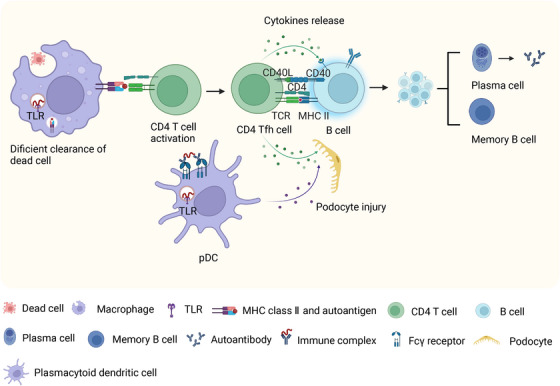
The roles of autophagy dysregulation in the pathogenesis of systemic lupus erythematosus (SLE)/lupus nephritis (LN). †A deficiency in autophagy or noncanonical autophagy can result in defective processing and degradation of dead cells, overproduction of inflammatory cytokines, and autoreactive B cell activation, leading to increased proliferation and differentiation of B cell. Plasmacytoid dendritic cells (pDCs) can trigger the production of type I interferon by internalizing immune complexes via noncanonical autophagy. In the context of LN, autophagy can protect podocytes from injury, such as pathogenic autoantibodies, and interferon‐α.
4.2.1. The exposure of autoantigens
One of the key factors in the development of SLE is the imbalance between the accumulation of material from dead cells and the disposal of apoptotic debris, which contributes to increased autoantigen exposure. Under normal circumstances, professional phagocytes like macrophages clear apoptotic debris, which remains sequestered from the immune system. However, impaired clearance of dead cell debris can activate nucleic acid recognition receptors, triggering the production of proinflammatory cytokines. Recent research has emphasized the crucial function of LAP, a distinct form of noncanonical autophagy, in the efficient removal of dead cells. 107 , 108 LAP facilitates phagosome maturation (i.e., LAPosomes) and the digestion of extracellular cargo using only a subset of autophagy machinery components. 109 Specifically, NADPH oxidase‐2 (NOX2) and Rubicon are indispensable components of LAP. Macrophages can trigger LAP and mediate subsequent efficient degradation of engulfed dead cells when the TIM4 receptor recognizes and engages with the “eat me” signal PtdSer expressed on dead cells. Uptake and degradation of dead cells are crucial for preventing an unwanted autoimmune response. In the absence of LAP, macrophages may have defects in the degradation of dead cells, resulting in an increase in the production of proinflammatory cytokines. 107 Additionally, mice with deficiencies in LAP pathway components, such as Cybb and Ncf1, displayed deficient uptake and degradation of necrotic material, increased production of inflammatory mediators, or exacerbated lupus. 110 , 111
4.2.2. The differentiation and survival of B cells
One prominent characteristic of SLE is the generation of autoantibodies by self‐reactive B cells. 112 Extensive investigation underscores the importance of autophagy in the development of SLE by influencing B cell differentiation and the generation of autoantibodies. 113 , 114 In individuals with SLE, B cells exhibit elevated levels of autophagy compared with healthy individuals, and there exists a positive association between autophagosome density and disease activity as measured by the SLE Disease Activity Index (SLEDAI). 113 Deleting the negative autophagy regulator Rubcn has been found to provide survival advantages for SLE‐prone mice, including B6.Sle1.Yaa and MRL.Faslpr mice, by reducing autoantibody production and protecting them from renal disease. 115 Rubcn promotes autoimmunity in murine lupus by activating autoreactive B cells, promoting autoreactive germinal center reactions and plasmablast response. Autophagy also plays a critical role in the differentiation of plasma cells and the survival of memory B cells. 49 , 116 , 117 , 118 Deficiency in Atg5 or Atg7 impairs the terminal differentiation of B cells into plasma cells. 49 , 113 Moreover, autophagy is essential for maintaining the homeostasis of plasma cells, as these cells produce a large quantity of Igs, making them susceptible to severe endoplasmic reticulum stress, oxidative stress, and proteasome stress. 116 , 119 Plasma cells deficient in Atg5 are more vulnerable to cell death because they lack the protective effects provided by autophagy. 116 , 117 Modulating autophagy in B cells represents a potential strategy for controlling the production of autoantibodies, as the maintenance of memory cells is vital for long‐term humoral autoimmunity, and autophagy has been identified as a crucial player in this process. 118
4.2.3. Inflammatory immune response
Exposure of the body to autoantigens containing nucleic acid can trigger an immune response, leading to the production of autoantibodies. The subsequent interaction between these autoantibodies and autoantigens can result in the formation of immune complexes, which possess the ability to initiate inflammation and cause tissue damage. Plasmacytoid dendritic cells (pDCs) take up immune complexes by binding to Fcγ receptors (FcγRs) and transport them to endosomal compartments where TLR7 and TLR9 are located. 120 This process leads to the overproduction of type I IFNs by pDCs. 121 , 122 LAP assists in transporting DNA‐immune complexes to TLR9, initiating signaling from FcγRs leading to type I IFN production. 123 Hayashi et al. 124 found that the recruitment of the IKKα complex to LC3‐containing LAPosomes is necessary for TLR9 signaling and type I IFN production. Autophagy is essential for the development of TLR7‐mediated SLE. 125 In a comparison of SLE development in Tlr7.1 transgenic mice with and without B cell‐specific Atg5 knockout, researchers observed that Tlr7.1 transgenic Atg5 knockout mice did not exhibit an IFN‐α signature in their serum. 125 This finding suggests that autophagy participates in the delivery of RNA ligands to the endosomes, thereby mediating the activation of autoreactive B cells. Additionally, dendritic cell‐specific Atg5 knockout mice also exhibited reduced IFNα and increased lifespan, 126 indicating the functional roles of autophagy in inflammation.
4.2.4. Response of kidney resident cells
Lupus nephritis (LN) is a serious complication and a primary contributor to mortality among SLE patients. 127 While the exact function of autophagy in LN remains uncertain, its protective role in podocytes has been established. 22 Autophagosomes in podocytes have been observed in both MRLlpr/lpr mice suffering from nephritis and in renal biopsies from LN patients, signifying the activation and participation of autophagy in the development of LN. 128 When podocytes are exposed to pathogenic autoantibodies and IFN‐α, activated autophagy is negatively associated with indicators of podocyte injury such as podocyte apoptosis, podocin derangement, impaired cell migration, and increased cell permeability. Conversely, inhibition of autophagy worsens podocyte damage. It can be inferred from this evidence that autophagy is a crucial mechanism for protecting podocytes from injury. 128 , 129 The significance of autophagy and inflammasome signaling interactions in the regulation of podocyte injury has also been emphasized by recent studies. 129 , 130 , 131 Autophagy can capture and degrade inflammasomes via inflammasome ubiquitination, thereby controlling excessive inflammasome activation. 132 The expression of NLR family pyrin domain‐containing 3 (NLRP3) is significantly increased in the podocytes of patients with LN, and this upregulation is linked to podocyte injury. 129 In an intervention study, the augmentation of autophagy has been discovered to mitigate podocyte injury through the elimination of the NLRP3 inflammasome, whereas inhibition of autophagy can exacerbate podocyte injury. These results indicate the unique value of autophagy of the kidney resident cells in protecting against LN.
4.3. Multiple sclerosis
MS is a disorder that impacts the central nervous system (CNS) and is distinguished by inflammation and demyelination. 133 Recent genetic studies have discovered a variant of the autophagy receptor CALCOCO2/NDP52, which seems to be linked to autophagy and MS. 134 In addition, there is abnormal expression of ATG5 in both the blood and brain tissue of MS patients. 135 , 136 , 137 , 138 Researchers have utilized mice with autophagy gene knockouts to investigate the role of autophagy in the progression of MS (refer to Table 2). Current existing evidence suggests that the impact of autophagy on MS is multifaceted, with its effects being both advantageous and deleterious, contingent upon the specific cellular context (refer to Figure 4).
TABLE 2.
The phenotypes of mice with genetically modified autophagy in several autoimmune and inflammatory diseases models.
| Disease model | Gene | Strategy of gene editing | Phenotype | References |
|---|---|---|---|---|
|
IBD |
Atg16l1 |
Conditional deletion of Atg16l1 in the IECs |
Paneth cell abnormalities; a significant surge in inflammation accompanied by the dissemination of bacteria after infection with S typhimurium | 4 |
| Knock‐in T300A variant | Goblet cells exhibited impaired granule exocytosis; an insufficient and disrupted mucus layer; diminished mucin secretion; aggravated inflammatory response in DSS‐induced colitis; microbiota dysbiosis | 5 | ||
| Conditional deletion of Atg16l1 in T cells | Spontaneous intestinal inflammation | 6 | ||
| Knockout Atg16l1 | Heightened IL‐1β production in response to LPS or endotoxin stimulation; highly susceptible to dextran sulphate sodium‐induced acute colitis | 7 | ||
| Knock‐in T300A variant | Impaired elimination of pathogens; heightened inflammatory cytokine response | 8 | ||
| Knock‐in T300A variant | Abnormal morphology of Paneth cells and goblet cells; increased IL‐1β production | 9 | ||
| Conditional deletion of Atg16l1 in the IECs | Increased release of proinflammatory cytokines; enhanced apoptosis of intestinal epithelial cells | 10 | ||
| Knock‐in hypomorphic Atg16l1 | Extraordinary abnormalities in Paneth cells | 93 | ||
| Atg5 | Conditional deletion of Atg5 in the IECs | Paneth cell and granule abnormalities | 93 | |
| Irgm1 | Knockout Irgm1 | Significant changes in the positioning and morphology of Paneth cells; heightened acute inflammation after dextran sodium sulfate exposure | 95 | |
| Atg4b | Knockout Atg4b | Malfunctions in Paneth cells; heightened vulnerability to colitis induced by DSS | 96 | |
| Atg5 | Conditional deletion of Atg5 in the IECs | Paneth cell morphological abnormalities; significant disruption in the gut microbiota composition accompanied by a decrease in alpha diversity | 100 | |
| Atg7 | Conditional deletion of Atg7 in the colonic epithelial cell | Aggravation of experimental colitis; diminished secretion of colonic mucins; abnormal microflora | 102 | |
| SLE |
Atg5 |
Conditional deletion of Atg5 in B cell | Diminished antibody responses in the context of targeted immunization, parasitic infestation, and inflammation of mucosal tissues; plasma cell differentiation is impaired in B cells lacking Atg5 | 49 |
| Cybb | Cross an X‐linked Cybb null allele onto MRL.Faslpr mice | Exacerbated lupus presentation, encompassing heightened splenomegaly, increased renal pathology, and altered profiles of elevated autoantibodies | 110 | |
| Ncf1 | Mice with Ncf1 m1j/m1j variant on a BALB/c.Q background | Impaired NOX2 complex function; accumulation of secondary necrotic cells in phagocytes of mice, resulting in escalated production of inflammatory mediators | 111 | |
| Atg7 | Conditional deletion of Atg7 in hematopoietic cells (and their progenitors) | Failure of differentiation into plasma cells and moderately decreased viability in Atg7‐deficient B cells | 113 | |
| Rubcn | Rubcn knockout in MRL.Faslpr lupus mice | Heightened survival rates, attenuated nephritis, and lowered production of autoantibodies | 115 | |
| Rubcn knockout in B6.Sle1.Yaa lupus mice | Heightened survival rates, reduced nephritis, and decreased autoantibody production | 115 | ||
| Atg5 | Conditional deletion of Atg5 in B cell | Impaired antibody response; reduced numbers of antigen‐specific long‐lived plasma cells in the bone marrow; expanded endoplasmic reticulum (ER) size, intensified ER stress signaling and increased death in plasma cells | 116 | |
| Conditional deletion of Atg5 in pro‐B cell | Decreased spleen B cells, peritoneal B‐1a and B‐2 B‐cell proportions | 117 | ||
| Conditional deletion of Atg5 in mature B cell | Decreased spleen B cells and peritoneal B‐2 B cells | 117 | ||
| Conditional deletion of Atg5 in mature B cell in C57BL/6lpr/lpr autoimmune‐prone mice | Reduced production of antinuclear antibodies, decreased population of long‐lived plasma cells, and diminished accumulation of IgG in renal tissues | 117 | ||
| Atg7 | Conditional deletion of Atg7 in B cell | Impaired maintenance of memory B cells after immunization | 118 | |
| Atg5 | Conditional deletion of Atg5 in B cell in Tlr7.1 transgenic mice | ANA and chronic inflammation did not develop; ameliorated glomerulonephritis; improved overall survival | 125 | |
| Conditional deletion of Atg5 in dendritic cells in Tlr7.1 transgenic mice | Increased lifespan and reduced IFNα level | 126 | ||
| Combined DC and B cell conditional deletion of Atg5 in Tlr7.1 transgenic mice | Inflammasome activation and organ damage; splenomegaly and lymphadenopathy; severe lethality | 126 | ||
| MS | Cybb | Conditional deletion of Cybb in conventional dendritic cells | Reduced the severity of EAE | 28 |
|
Atg7 |
Conditional deletion of Atg7 in microglia | Progressive MS‐like disease | 141 | |
| Myeloid‐specific deletion of Atg7 | Reduce severity of EAE | 144 | ||
| Pik3c3 | Myeloid‐specific deletion of Pik3c3 | Reduced severity of EAE | 145 | |
|
Atg5 |
Conditional deletion of Atg5 in CD11c dendritic cell | Resistance of EAE induction | 146 | |
|
Atg7 |
Conditional deletion of Atg7 in dendritic cell | Reduce the onset and severity of EAE | 147 | |
| Pik3c3 | Conditional deletion of Pik3c3 in dendritic cell | Decreased occurrence and intensity of EAE | 148 | |
| Rb1cc1 | Conditional deletion of Rb1cc1 in dendritic cell | Resistant to EAE induction | 148 | |
| Rubcn | Conditional deletion of Rubcn in dendritic cell | Exhibit symptoms of EAE comparable to wild‐type control mice | 148 | |
| Knockout Rubcn | Exhibit symptoms of EAE comparable to wild‐type control mice | 150 | ||
| Pik3c3 | Conditional deletion of Pik3c3 in CD4 cell | Resistance of EAE induction | 150 | |
| Becn1 | Conditional deletion of Becn1 in CD4 cell | Resistance of EAE induction | 151 | |
|
Atg5 |
Conditional deletion of Atg5 in microglia | Exert no influence on the progression of EAE | 152 |
IBD, inflammatory bowel diseases; SLE, systemic lupus erythematosus; MS, multiple sclerosis; IECs, intestinal epithelial cells; DSS, dextran sodium sulfate; LPS, lipopolysaccharide; ANA, antinuclear antibodies; ER, endoplasmic reticulum; NOX2 complex, NADPH oxidase 2 complex; EAE, experimental autoimmune encephalomyelitis; WT, wild type.
FIGURE 4.

The roles of autophagy dysregulation in the pathogenesis of multiple sclerosis (MS). †Autophagy can act as a two‐edged sword in MS. While inhibiting autophagy may alleviate the inflammatory immune response by interfering with antigen presentation and specific T cell activation, it can also accelerate the accumulation of undesired substrates, such as apoptotic cells, myelin and axonal fragments, and protein aggregates.
4.3.1. Intracellular degradative pathway
In microglia, the primary CNS‐resident macrophages, the machinery of autophagy performs an essential function in regulating phagocytosis, the process of engulfing and digesting unwanted substances, including cellular debris and protein aggregates, to promote tissue repair and homeostasis. 139 , 140 Autophagy receptors have been shown to recognize cargos and facilitate subsequent autophagic degradation. LAP, which is the functional convergence of autophagy and phagocytosis, is essential for clearing myelin debris. The gene Atg7, which is necessary for both canonical autophagy and LAP, is specifically deleted in the microglia of mice. This deletion leads to the development of a progressive MS‐like disease characterized by impaired autophagy‐associated phagocytosis. 141 Furthermore, studies conducted on mice with targeted deletion of Atg5 in microglia have demonstrated that the absence of Atg5 in these cells results in increased intracellular accumulation of myelin and inflammatory debris. This accumulation subsequently contributes to persistent neuroinflammation and neurotoxicity. 142 , 143 However, mice with microglial Ulk1 specifically deleted, a gene required only for canonical autophagy, did not exhibit a similar disease phenotype, suggesting that the disease phenotype was mainly dependent on noncanonical autophagy rather than canonical autophagy.
4.3.2. Antigen processing and presentation
Experimental autoimmune encephalomyelitis (EAE) is an extensively used animal model to investigate MS, and many investigations have shown that modulation of autophagy leads to a significant improvement in the severity of EAE. Autophagy participates in the regulation of antigen loading onto MHC molecules and the subsequent antigen presentation by APCs, including dendritic cells and macrophages. Selective deletion of Atg7 or Pik3c3 specifically in myeloid cells of mice leads to a decrease in EAE severity, 144 , 145 indicating the therapeutic prospects of autophagy for EAE treatment. Additionally, selective deficiency of Pik3c3, Rb1cc1/Fip200, Atg5, or Atg7 in dendritic cells leads to a reduced occurrence and gravity of EAE, 146 , 147 , 148 , 149 primarily attributed to diminished handling and display of self‐antigens by APCs to CD4 T lymphocytes. Of note, mice lacking Rubcn, a gene essential for LAP but not canonical autophagy, in dendritic cells, displayed wild‐type levels of EAE susceptibility, which differs significantly from DC‐specific Pik3c3‐deficient or Rb1cc1‐deficient mice. 148 These findings suggest that the autophagy defect of these cells, rather than LAP, is responsible for EAE resistance, establishing a connection between autophagy and the processing of antigens as well as the pathogenicity of autoimmune T cells.
4.3.3. Activation and survival of T cells
The hallmark of MS lies in the activation and proliferation of autoreactive CD4 T cells. 138 Research findings suggest that inhibiting autophagy can reduce the severity of EAE in animal models by regulating the activation and survival of autoreactive T cells. Specifically, mice with a T cell‐specific deletion of Pik3c3 or Becn1 displayed resistance to EAE induction and exhibited impaired ability to induce autoreactive T cell responses. 150 , 151 One underlying cause for this observation is the disrupted energy metabolism and functional dynamics of T cells, wherein autophagy is indispensable for supporting ATP production during the activation of T cells. As an exemplification, T cells lacking Pik3c3 exhibited suppressed oxidative respiration and diminished glycolysis, 150 leading to a failure in T helper 1 cell differentiation. Additionally, the maintenance of cell viability in activated T cells relies on autophagy, which facilitates the degradation of apoptotic proteins like Bim and Bcl‐2, effectively suppressing cellular apoptosis. Indeed, Becn1‐deficient T cells experience a significant increase in cell death upon stimulation. 151 Therefore, the modulation of autophagy in T cells presents a promising therapeutic strategy for MS.
5. THE THERAPEUTIC POTENTIAL OF TARGETING AUTOPHAGY
Autophagy‐targeted drugs and biological agents have shown great potential as effective therapeutic options in autoimmune and inflammatory diseases. Several drugs have been used in clinical treatment, including rapamycin and hydroxychloroquine (HCQ). Clinical trials investigating various autophagy modulators are summarized in Table 3. Rapamycin and its analog, which are mTORC1 pathway inhibitors, can induce autophagy and have shown potential clinical efficacy in SLE based on several clinical trials. 153 , 154 , 155 , 156 A phase 1/2 open‐label prospective clinical trial provided compelling evidence that rapamycin exhibits safety, excellent tolerability, and significant clinical effectiveness in patients with SLE. 153 After 12 months of sirolimus therapy, a steady amelioration in disease activity manifested among patients diagnosed with active SLE. Moreover, there is supportive data for the efficacy of using rituximab to improve renal outcomes in patients with LN. 155 , 156 This includes notable reductions in proteinuria levels. Vitamin D, another autophagy inducer, have also been associated with the regulation of autoimmune diseases. 157 , 158 , 159 , 160 Autophagy inhibitors like chloroquine/HCQ, which raise the pH level within lysosomes and hinder the fusion between autophagosomes and lysosomes, 161 have been proposed as promising therapeutic choices with immunomodulatory effects for rheumatoid arthritis. 162 In addition to pharmacological modulators, peptide‐based agents are a novel therapeutic option. The evaluation of a Phase III trial is underway for a novel phosphopeptide, known as Lupuzor (P140), which exhibits autophagy‐inhibiting properties. A previous phase IIb clinical trial confirmed its safety and tolerability, 163 and Lupuzor demonstrated remarkable efficacy in reducing disease activity among individuals with a SLEDAI score of 6 or higher, presenting encouraging outcomes in advancing the treatment of lupus.
TABLE 3.
Several autophagy‐targeted drugs and biological agents and relevant clinical trials in inflammatory bowel diseases (IBD), systemic lupus erythematosus (SLE), and multiple sclerosis (MS).
| Agent | Disease | Trial ID | Status | Study title | Intervention/treatment | References |
|---|---|---|---|---|---|---|
|
Sirolimus (or rapamycin)—autophagy inducer |
IBD | NCT00392951 | Completed (Has Results) | Sirolimus for Autoimmune Disease of Blood Cells | Drug: sirolimus | NA |
| NCT02675153 | Recruiting | To Evaluate the Efficacy and Safety of Rapamycin for Crohn's Disease‐related Stricture | Drug: rapamycin | NA | ||
| NCT04691232 | Recruiting | Autologous Ex Vivo Expanded Regulatory T Cells in Ulcerative Colitis | Biological: autologous, ex vivo expanded, regulatory T cells | NA | ||
| SLE | NCT00779194 | Completed | Prospective Study of Rapamycin for the Treatment of SLE | Drug: rapamycin | ||
| NCT04582136 | Not yet recruiting | Efficacy and Safety of Sirolimus in Active Systemic Lupus Erythematosus |
Drug: sirolimus Drug: placebo |
NA | ||
| NCT04736953 | Not yet recruiting | Sirolimus Treatment Of Patients With SLE |
Drug: sirolimus Other: placebo |
NA | ||
| MS | NCT00095329 | Terminated | Treating Multiple Sclerosis With Sirolimus, an Immune System Suppressor | Biological: sirolimus | NA | |
|
Metformin—autophagy inducer |
IBD | NCT05553704 | Not yet recruiting | Metformin in Patients With Ulcerative Colitis Treated With Mesalamine | Drug: metformin | NA |
| NCT04750135 | Not yet recruiting | Assessment of Metformin as Adjuvant Therapy in Patients With Ulcerative Colitis |
Drug: metformin 500 mg TID oral tablet Drug: placebo |
NA | ||
| SLE | NCT02741960 | Completed | The Effect of Metformin on Reducing Lupus Flares |
Drug: metformin Drug: placebo |
168 | |
| MS | NCT05349474 | Recruiting | Metformin Treatment in Progressive Multiple Sclerosis |
Drug: metformin 500 mg oral tablet, up to four tablets a day Drug: placebo oral tablet identical to metformin, up to four tablets a day |
NA | |
| NCT04121468 | Recruiting | A Phase I Double Blind Study of Metformin Acting on Endogenous Neural Progenitor Cells in Children With Multiple Sclerosis |
Drug: metformin Other: placebo |
NA | ||
| NCT05131828 | Recruiting | CCMR Two: A Phase IIa, Randomised, Double‐blind, Placebo‐controlled Trial of the Ability of the Combination of Metformin and Clemastine to Promote Remyelination in People With Relapsing‐remitting Multiple Sclerosis Already on Disease‐modifying Therapy |
Drug: metformin and clemastine in combination Drug: placebo |
NA | ||
| NCT05298670 | Recruiting | Drug Repurposing Using Metformin for Improving the Therapeutic Outcome in Multiple Sclerosis Patients |
Drug: metformin 1000 mg oral tablet Drug: interferon beta‐1a |
NA | ||
|
Vitamin D—autophagy inducer |
IBD |
NCT00742781 | Completed (Has Results) | Vitamin D Supplementation in Crohn's Patients | Dietary supplement: vitamin D | NA |
| NCT00621257 | Terminated (Has Results) | Vitamin D Levels in Children With IBD |
Dietary supplement: ergocalciferol Dietary supplement: cholecalciferol |
158 , 169 | ||
| NCT02208310 | Terminated (Has Results) | Trial of High Dose Vitamin D in Patient's With Crohn's Disease |
Drug: cholecalciferol 10,000 IU Drug: cholecalciferol 400 IU |
170 | ||
| NCT02076750 | Completed | Weekly Vitamin D in Pediatric IBD | Dietary supplement: vitamin D3 (cholecalciferol) | NA | ||
| NCT01877577 | Completed | Supplementation of Vitamin D3 in Patients With Inflammatory Bowel Diseases and Hypovitaminosis D | Dietary supplement: vitamin D3 | NA | ||
| NCT02615288 | Completed | High Dose Vitamin D3 in Crohn's Disease | Dietary supplement: vitamin D3 | 171 | ||
| NCT01692808 | Completed | Bioavailability of Vitamin D in Children and Adolescents With Crohn's Disease |
Drug: vitamin D3 3000 UI daily Drug: vitamin D3 4000 UI daily |
172 | ||
| NCT01369667 | Completed | Vitamin D Supplementation in Adult Crohn's Disease |
Dietary supplement: vitamin D3 Other: placebo |
173 | ||
| NCT02186275 | Completed | The Vitamin D in Pediatric Crohn's Disease |
Drug: vitamin D3: 3000 or 4000 UI/day then 2000 UI/day Drug: vitamin D3 800 UI/day then 800 UI/day |
NA | ||
| NCT01187459 | Completed | Vitamin D in Pediatric Crohn's Disease | Dietary supplement: vitamin D | 174 | ||
| NCT01864616 | Terminated | The Impact of Vitamin D on Disease Activity in Crohn's Disease | Dietary supplement: vitamin D3 | NA | ||
| NCT03615378 | Terminated | Maintenance Dosing of Vitamin D in Crohn's Disease |
Dietary supplement: 5000 IU D3 Dietary supplement: 1000 IU D3 Dietary supplement: placebo |
NA | ||
| NCT01046773 | Terminated | Vitamin D Supplementation as Nontoxic Immunomodulation in Children With Crohn's Disease | Drug: cholecalciferol | NA | ||
| NCT04331639 | Recruiting | High Dose Interval Vitamin D Supplementation in Patients With Inflammatory Bowel Disease Receiving Biologic Therapy | Dietary supplement: vitamin D3 | NA | ||
| NCT04828031 | Recruiting | Vitamin D Regulation of Gut Specific B Cells and Antibodies Targeting Gut Bacteria in Inflammatory Bowel Disease | Drug: vitamin D | NA | ||
| NCT03999580 | Recruiting | The Vitamin D in Pediatric Crohn's Disease (ViDiPeC‐2) | Drug: vitamin D3 | NA | ||
| NCT04225819 | Recruiting | Adjunctive Treatment With Vitamin D3 in Patients With Active IBD |
Dietary supplement: vitamin D3 Other: placebo |
NA | ||
| NCT04991324 | Not yet recruiting | Cholecalciferol Comedication in IBD—The 5C‐study | Drug: vitamin D3 | NA | ||
| NCT04308850 | Not yet recruiting | Exploring the Effects of Vitamin D Supplementation on the Chronic Course of Patients With Crohn's Disease With Vitamin D Deficiency | Drug: vitamin D drops | NA | ||
| SLE | NCT00710021 | Completed (Has Results) | Vitamin D3 in Systemic Lupus Erythematosus |
Drug: vitamin D3 Drug: vitamin D3 placebo |
175 | |
| NCT01911169 | Completed (Has Results) | Vitamin D to Improve Endothelial Function in SLE | Drug: cholecalciferol | NA | ||
| NCT01709474 | Terminated (Has Results) | Vitamin D3 Treatment in Pediatric Systemic Lupus Erythematosus |
Drug: vitamin D3 6000 IU Drug: vitamin D3 400 IU |
NA | ||
| NCT05430087 | Completed | Vitamin D and Curcumin Piperine Attenuates Disease Activity and Cytokine Levels in Systemic Lupus Erythematosus Patients | Drug: cholecalciferol (vitamin d3) and curcumin‐piperine. | NA | ||
| NCT01892748 | Completed | Cholecalciferol Supplementation on Disease Activity, Fatigue and Bone Mass on Juvenile Systemic Lupus Erythematosus. |
Drug: cholecalciferol Drug: placebo |
160 , 176 | ||
| NCT00418587 | Completed | Vitamin D Therapy in Patients With Systemic Lupus Erythematosus (SLE) | Drug: cholecalciferol | NA | ||
| NCT01425775 | Completed | The Effect of Vitamin D Supplementation on Disease Activity Markers in Systemic Lupus Erythematosus (SLE) |
Drug: vitamin D 25(OH)D Other: placebo |
NA | ||
| NCT05326841 | Completed | Effect of Cholecalciferol Supplementation on Disease Activity and Quality of Life of Systemic Lupus Erythematosus Patients | Drug: vitamin D3 | NA | ||
| NCT03155477 | Completed | Effect Of Curcuma Xanthorrhiza and Vitamin D3 Supplementation in SLE Patients With Hypovitamin D |
Dietary supplement: “cholecalciferol” and “C. Xanthorrhiza” Dietary supplement: “cholecalciferol” and “placebo” |
177 | ||
| NCT05260255 | Recruiting | Effect of Vitamin D Supplement on Disease Activity in SLE |
Drug: vitamin D2 (calciferol) Drug: placebo |
NA | ||
| NCT05392790 | Recruiting | Progressive Resisted Exercise Plus Aerobic Exercise on Osteoporotic Systemic Lupus Erythmatosus |
Other: progressive resisted exercise training Drug: calcium and Vit D Other: aerobic exercises |
NA | ||
| MS | NCT00940719 | Completed | Vitamin D3 Supplementation and the T Cell Compartment in Multiple Sclerosis (MS) | Dietary supplement: vitamin D3 | 159 | |
| NCT01667796 | Completed (Has Results) | Pharmacokinetics of Vitamin D in Multiple Sclerosis and in Health | Dietary supplement: vitamin D3 | 178 | ||
| NCT01490502 | Completed (Has Results) | Vitamin D Supplementation in Multiple Sclerosis | Drug: vitamin D3 | 179 | ||
| NCT00644904 | Completed | Safety Trial of High Dose Oral Vitamin D3 With Calcium in Multiple Sclerosis | Dietary supplement: vitamin D3 | 180 | ||
| NCT01257958 | Completed | Vitamin D Pilot Study in Patients With Multiple Sclerosis | Drug: vitamin D | NA | ||
| NCT01024777 | Completed | Safety and Immunologic Effect of Low Dose Versus High Dose Vitamin D3 in Multiple Sclerosis | Drug: cholecalciferol | NA | ||
| NCT03385356 | Completed | Impact of Vitamin D Supplementation in Patients With Multiple Sclerosis | Drug: vitamin D | NA | ||
| NCT02696590 | Completed | High Dose Oral Versus Intramuscular Vitamin D3 Supplementation In Multiple Sclerosis Patients | Dietary supplement: vitamin D3 | NA | ||
| NCT00785473 | Completed | Can Vitamin D Supplementation Prevent Bone Loss in Persons With Multiple Sclerosis |
Dietary supplement: cholecalciferol Dietary supplement: calcium carbonate |
181 | ||
| NCT01440062 | Terminated | Efficacy of Vitamin D Supplementation in Multiple Sclerosis (EVIDIMS) |
Drug: verum arm receiving vitamin D oil Drug: low dose arm receiving neutral oil and 400 IU/g of vitamin D every second day |
182 | ||
| NCT03610139 | Recruiting | Longitudinal Effect of Vitamin D3 Replacement on Cognitive Performance and MRI Markers in Multiple Sclerosis Patients | Dietary supplement: vitamin D3 | NA | ||
| NCT05340985 | Not yet recruiting | Investigating the Effects of Hydroxyvitamin D3 on Multiple Sclerosis |
Dietary supplement: 25(OH)D3 Dietary supplement: vitamin D3 |
NA | ||
| Lupuzor/P140 peptide—autophagy inhibitor | SLE | NCT02504645 | Completed (Has Results) | A 52‐Week, Randomized, Double‐Blind, Parallel‐Group, Placebo‐Controlled Study to Evaluate the Efficacy and Safety of a 200‐mcg Dose of IPP‐201101 Plus Standard of Care in Patients With Systemic Lupus Erythematosus |
Drug: lupuzor Drug: placebo Other: standard of care |
NA |
| EudraCT number:2007‐004892‐21 | Completed | Lupuzor/P140 Peptide in Patients with Systemic Lupus Erythematosus: A Randomised, Double‐Blind, Placebo‐Controlled Phase IIb Clinical Trial |
Drug: lupuzor Drug: placebo |
163 | ||
| No. 143/14.06.2006 (Bulgaria) | Completed | Spliceosomal Peptide P140 for Immunotherapy of Systemic Lupus Erythematosus |
Drug: lupuzor Other: standard of care |
183 | ||
| NCT01135459 | Completed | A Study to Evaluate the Efficacy and Safety of CEP‐33457 in Patients With Systemic Lupus Erythematosus |
Drug: lupuzor Drug: placebo |
NA | ||
| NCT01240694 | Terminated | A Long‐Term Study of the Safety and Tolerability of Repeated Administration of CEP‐33457 in Patients With Systemic Lupus Erythematosus | Drug: lupuzor | NA | ||
|
Chloroquine/hydroxychloroquine (HCQ)—autophagy inhibitor |
IBD | NCT01783106 | Completed | Antibiotics and Hydroxychloroquine in Crohn's |
Drug: ciprofloxacin Drug: doxycycline Drug: hydroxychloroquine Drug: budesonide |
184 |
| NCT05119140 | Recruiting | HCQ for Non‐Europeans With Mild to Severe UC |
Drug: hydroxychloroquine Drug: mesalamine |
NA | ||
| SLE | NA | Completed | Hydroxychloroquine in Lupus Pregnancy | No HCQ exposure during pregnancy; continuous use of HCQ during pregnancy; cessation of HCQ treatment either in the 3 months prior to or during the first trimester of pregnancy | 185 | |
| NCT00413361 | Completed | The Reduction of Systemic Lupus Erythematosus Flares: Study PLUS | Drug: versus hydroxychloroquine | 186 | ||
| NCT01551069 | Completed | Multicenter Study Assessing the Efficacy & Safety of Hydroxychloroquine Sulfate in Patients With Systemic Lupus Erythematosus or Cutaneous Lupus Erythematosus With Active Lupus Erythematosus Specific Skin Lesion |
Drug: hydroxychloroquine (Z0188) Drug: placebo |
187 | ||
| NCT03019926 | Completed | Lupus and Observance | Biological: hydroxychloroquine dosage | NA | ||
| NCT02842814 | Completed | Prediction of Relapse Risk in Stable Systemic Lupus Erythematosus |
Other: drug free Drug: HCQ Drug: GC+HCQ |
NA | ||
| NCT01946880 | Terminated (Has Results) | Randomized MMF Withdrawal in Systemic Lupus Erythematosus (SLE) |
Drug: mycophenolate mofetil Drug: hydroxychloroquine or chloroquine Drug: prednisone |
NA | ||
| NCT03802188 | Recruiting | Hydroxychloroquine in Systemic Lupus Erythematosus | Observational study | NA | ||
| NCT03030118 | Active, not recruiting | Study of Anti‐Malarials in Incomplete Lupus Erythematosus |
Drug: hydroxychloroquine Drug: placebo oral capsule |
|||
| NCT03802188 | Recruiting | Hydroxychloroquine in Systemic Lupus Erythematosus | Observational study | NA | ||
| MS | NCT02913157 | Completed | Hydroxychloroquine in Primary Progressive Multiple Sclerosis | Drug: hydroxychloroquine | 188 | |
| NCT05013463 | Recruiting | Hydroxychloroquine and Indapamide in SPMS |
Drug: hydroxychloroquine pill Drug: indapamide pill |
NA |
Data were collected from the clinical registration website (http://clinicaltrials.gov/); IBD, inflammatory bowel diseases; SLE, systemic lupus erythematosus; MS, multiple sclerosis; NA, not available.
Moreover, recent investigations have focused on the modulation of autophagy to enhance immune responses and facilitate antitumor effects. Clinical trials targeting autophagy, either alone or in combination, in cancer treatment have mostly relied on HCQ, and the outcomes of these trials have been summarized in some recent reviews. 51 , 54 , 164 , 165 Despite some patients showing partial response or prolonged stable disease, overall response and survival rates have not been improved, leading to the exploration of more specific and targeted therapies. Due to its capacity to regulate the immune response against tumors, targeting autophagy has emerged as a promising strategy in the realm of tumor immunotherapy. For example, in a pancreatic cancer model, the combination of chloroquine‐mediated autophagy inhibition and the administration of immune checkpoint blockade (ICB) therapy targeting PD‐1 and CTLA‐4 has synergistically boosted the antitumor immune response. 56 By efficiently inhibiting tumor‐specific autophagy, there is a notable increase in antigen presentation, resulting in heightened responsiveness of PDAC to dual ICB. Furthermore, the implementation of this strategy enhances the infiltration of CD8+ T cells and facilitates the eradication of tumor cells. In addition to autophagy inhibitors, the induction of autophagy also holds promise for enhancing the efficacy of tumor immunotherapy. Studies have revealed the remarkable potential of a pH‐sensitive nanocarrier, which effectively regulates autophagy, in significantly augmenting the immunotherapeutic response during the treatment of osteosarcoma. This nanocarrier, when combined with PD‐1/PD‐L1 blockade, exhibits promising outcomes in enhancing the efficacy of immunotherapy. 166 Employing nanoparticles as a strategy to manipulate autophagy represents a promising approach for cancer treatment. These nanoparticles, serving as effective delivery systems, offer potential in leveraging autophagy for therapeutic applications. 167
While certain drugs mentioned above, including rapamycin and HCQ, have been approved for human use, their clinical application was not specifically targeted toward autophagy regulation. 24 Additionally, the extent to which the pharmacological effects rely on autophagy remains uncertain. Therefore, significant efforts are still required to advance the development of clinically viable interventions targeting autophagy. It is imperative to conduct in‐depth mechanistic investigations to elucidate the precise role of autophagy. Moreover, the development of autophagy modulators with specificity and the precise regulation of autophagic flux are crucial in order to maintain a delicate balance within autophagy processes, as excessive autophagy activity can also be harmful to cells.
6. CONCLUSIONS AND FUTURE DIRECTIONS
This review emphasizes the essential role of autophagy in both innate and adaptive immune responses, encompassing crucial functions such as clearance of pathogens, processing and presentation of antigens, production of cytokines, and the survival and differentiation of lymphocytes. Malfunctioning of autophagy in humans can lead to various immune disorders, such as inflammatory, autoimmune or general immunity disorders. Inhibiting autophagy can alleviate diseases like SLE and MS by interfering with antigen presentation and lymphocyte survival, but it may also exacerbate diseases such as IBD. Dysfunctional autophagy can disrupt intestinal epithelial homeostasis, change gut microbiota composition, and amplify intestinal inflammation in IBD. These findings demonstrate that autophagy regulation varies across different diseases, tissues, and cells. Therefore, Therefore, future investigations should focus on elucidating the distinct roles of autophagy in different tissues and cell types, aiming to gain a comprehensive understanding of disease‐specific mechanisms.
While many autophagy modulators are currently undergoing clinical trials, there are still several unresolved clinical questions. First, current pharmacological agents like rapamycin and HCQ indirectly modulate autophagy, and there is a lack of approved pharmaceuticals that specifically address autophagy as a therapeutic target. Second, the development of targeted therapies necessitates not only a drug with exceptional specificity but also a comprehensive understanding of the optimal timing and administration protocols. Methods for accurately quantifying the activity of the autophagy pathway in vivo are currently inadequate. Consequently, assessing the extent of autophagy modulation in patients undergoing therapy with autophagy modulators presents a significant challenge. Last, despite the promising therapeutic opportunities that autophagy has presented for effective cancer treatment, significant challenges and obstacles exist. Autophagy in tumor development exhibits a complex and multifaceted nature, encompassing both advantageous and detrimental contributions. Although the suppression of autophagy in certain scenarios can bolster the immune response and bolster the antitumor effects of immunotherapy, it can also contribute to immune evasion by tumor cells and foster resistance to treatment. Therefore, identifying the dominant role of autophagy (antitumorigenic or protumorigenic) in particular cancers and deciding when to target autophagy for treatment during tumor development are crucial questions.
In conclusion, autophagy is integral to the maintenance of immune homeostasis and serves as a protective mechanism against inflammatory and autoimmune diseases. The suppression or enhancement of autophagy has been shown to have significant effects in various cell culture and animal models, impacting self‐immune responses, inflammatory conditions, and a variety of tumors. These discoveries have provided invaluable knowledge regarding the underlying mechanisms of these diseases and have paved the way for the emergence of groundbreaking therapeutic approaches. For instance, research has shown that effectively inhibiting autophagy effectively reduces the onset and severity of actively induced EAE, providing a compelling intervention strategy for autoimmune diseases informed by an animal model. 148 Furthermore, it may be crucial to identify suitable patients for personalized therapy by considering both disease pathology and genotype, such as individuals with IBD who possess the ATG16L1 T300A/T300A genotype. In addition to conventional treatment options, gene therapy emerges as a potential avenue for tackling IBD. Excitingly, several miRNAs have been discovered to effectively suppress autophagy. 189 Therefore, it is essential to develop more selective autophagy modulators, more reliable methods of quantifying autophagic activity in vivo, and more personalized therapeutic strategies.
AUTHOR CONTRIBUTION
Ting Gan conceptualized this review and drafted the manuscript. Shu Qu drew the figures and edited the language. Xu‐jie Zhou and Hong Zhang provided helpful suggestions on the structure and content of this review. All authors revised the manuscript. All authors have read and approved the article.
CONFLICT OF INTEREST STATEMENT
All authors have approved of the manuscript and declare no potential conflict of interest.
ETHICS STATEMENT
Not applicable.
ACKNOWLEDGMENTS
Figures were created with biorender.com.
Gan T, Qu S, Zhang H, Zhou X. Modulation of the immunity and inflammation by autophagy. MedComm. 2023;4:e311. 10.1002/mco2.311
DATA AVAILABILITY STATEMENT
All the presented information in this article is accessible by contacting the corresponding author.
REFERENCES
- 1. Chiang WC, Wei Y, Kuo YC, et al. High‐throughput screens to identify autophagy inducers that function by disrupting Beclin 1/Bcl‐2 binding. ACS Chem Biol. 2018;13(8):2247‐2260. [DOI] [PMC free article] [PubMed] [Google Scholar]
- 2. Hampe J, Franke A, Rosenstiel P, et al. A genome‐wide association scan of nonsynonymous SNPs identifies a susceptibility variant for Crohn disease in ATG16L1. Nat Genet. 2007;39(2):207‐11. [DOI] [PubMed] [Google Scholar]
- 3. Liu Z, Lenardo MJ. The role of LRRK2 in inflammatory bowel disease. Cell Res. 2012;22(7):1092‐1094. [DOI] [PMC free article] [PubMed] [Google Scholar]
- 4. Conway KL, Kuballa P, Song JH, et al. Atg16l1 is required for autophagy in intestinal epithelial cells and protection of mice from Salmonella infection. Gastroenterology. 2013;145(6):1347‐1357. [DOI] [PMC free article] [PubMed] [Google Scholar]
- 5. Liu H, Gao P, Jia B, Lu N, Zhu B, Zhang F. IBD‐associated Atg16L1T300A polymorphism regulates commensal microbiota of the intestine. Front Immunol. 2021;12:772189. [DOI] [PMC free article] [PubMed] [Google Scholar]
- 6. Kabat AM, Harrison OJ, Riffelmacher T, et al. The autophagy gene Atg16l1 differentially regulates Treg and TH2 cells to control intestinal inflammation. eLife. 2016;5:e12444. [DOI] [PMC free article] [PubMed] [Google Scholar]
- 7. Saitoh T, Fujita N, Jang MH, et al. Loss of the autophagy protein Atg16L1 enhances endotoxin‐induced IL‐1beta production. Nature. 2008;456(7219):264‐268. [DOI] [PubMed] [Google Scholar]
- 8. Murthy A, Li Y, Peng I, et al. A Crohn's disease variant in Atg16l1 enhances its degradation by caspase 3. Nature. 2014;506(7489):456‐462. [DOI] [PubMed] [Google Scholar]
- 9. Lassen KG, Kuballa P, Conway KL, et al. Atg16L1 T300A variant decreases selective autophagy resulting in altered cytokine signaling and decreased antibacterial defense. Proc Natl Acad Sci USA. 2014;111(21):7741‐7746. [DOI] [PMC free article] [PubMed] [Google Scholar]
- 10. Pott J, Kabat AM, Maloy KJ. Intestinal epithelial cell autophagy is required to protect against TNF‐induced apoptosis during chronic colitis in mice. Cell Host Microbe. 2018;23(2):191‐202.e4. [DOI] [PubMed] [Google Scholar]
- 11. Han JW, Zheng HF, Cui Y, et al. Genome‐wide association study in a Chinese Han population identifies nine new susceptibility loci for systemic lupus erythematosus. Nat Genet. 2009;41(11):1234‐1237. [DOI] [PubMed] [Google Scholar]
- 12. Sun C, Molineros JE, Looger LL, et al. High‐density genotyping of immune‐related loci identifies new SLE risk variants in individuals with Asian ancestry. Nat Genet. 2016;48(3):323‐330. [DOI] [PMC free article] [PubMed] [Google Scholar]
- 13. Yin X, Kim K, Suetsugu H, et al. Meta‐analysis of 208370 East Asians identifies 113 susceptibility loci for systemic lupus erythematosus. Ann Rheum Dis. 2021;80(5):632‐640. [DOI] [PMC free article] [PubMed] [Google Scholar]
- 14. Ha E, Bae SC, Kim K. Large‐scale meta‐analysis across East Asian and European populations updated genetic architecture and variant‐driven biology of rheumatoid arthritis, identifying 11 novel susceptibility loci. Ann Rheum Dis. 2021;80(5):558‐565. [DOI] [PMC free article] [PubMed] [Google Scholar]
- 15. Laufer VA, Tiwari HK, Reynolds RJ, et al. Genetic influences on susceptibility to rheumatoid arthritis in African‐Americans. Hum Mol Genet. 2019;28(5):858‐874. [DOI] [PMC free article] [PubMed] [Google Scholar]
- 16. Kuballa P, Nolte WM, Castoreno AB, Xavier RJ. Autophagy and the immune system. Annu Rev Immunol. 2012;30:611‐646. [DOI] [PubMed] [Google Scholar]
- 17. Matsuzawa‐Ishimoto Y, Hwang S, Cadwell K. Autophagy and Inflammation. Annu Rev Immunol. 2018;36:73‐101. [DOI] [PubMed] [Google Scholar]
- 18. Peña‐Martinez C, Rickman AD, Heckmann BL. Beyond autophagy: LC3‐associated phagocytosis and endocytosis. Sci Adv. 2022;8(43):eabn1702. [DOI] [PMC free article] [PubMed] [Google Scholar]
- 19. Münz C. Canonical and non‐canonical functions of the autophagy machinery in MHC restricted antigen presentation. Front Immunol. 2022;13:868888. [DOI] [PMC free article] [PubMed] [Google Scholar]
- 20. Levine B, Kroemer G. Biological functions of autophagy genes: a disease perspective. Cell. 2019;176(1‐2):11‐42. [DOI] [PMC free article] [PubMed] [Google Scholar]
- 21. Park HJ, Boo S, Park I, et al. AHCC(®), a standardized extract of cultured lentinula edodes mycelia, promotes the anti‐tumor effect of dual immune checkpoint blockade effect in murine colon cancer. Front Immunol. 2022;13:875872. [DOI] [PMC free article] [PubMed] [Google Scholar]
- 22. Podestà MA, Faravelli I, Ponticelli C. Autophagy in lupus nephritis: A delicate balance between regulation and disease. Autoimmun Rev. 2022;21(8):103132. [DOI] [PubMed] [Google Scholar]
- 23. Foerster EG, Mukherjee T, Cabral‐Fernandes L, Rocha JDB, Girardin SE, Philpott DJ. How autophagy controls the intestinal epithelial barrier. Autophagy. 2022;18(1):86‐103. [DOI] [PMC free article] [PubMed] [Google Scholar]
- 24. Galluzzi L, Bravo‐San Pedro JM, Levine B, Green DR, Kroemer G. Pharmacological modulation of autophagy: therapeutic potential and persisting obstacles. Nat Rev Drug Discov. 2017;16(7):487‐511. [DOI] [PMC free article] [PubMed] [Google Scholar]
- 25. Grosjean I, Roméo B, Domdom MA, et al. Autophagopathies: from autophagy gene polymorphisms to precision medicine for human diseases. Autophagy. 2022:1‐18. [DOI] [PMC free article] [PubMed] [Google Scholar]
- 26. Keller CW, Adamopoulos IE, Lünemann JD. Autophagy pathways in autoimmune diseases. J Autoimmun. 2023;136:103030. [DOI] [PMC free article] [PubMed] [Google Scholar]
- 27. Sil P, Muse G, Martinez J. A ravenous defense: canonical and non‐canonical autophagy in immunity. Curr Opin Immunol. 2018;50:21‐31. [DOI] [PMC free article] [PubMed] [Google Scholar]
- 28. Keller CW, Kotur MB, Mundt S, et al. CYBB/NOX2 in conventional DCs controls T cell encephalitogenicity during neuroinflammation. Autophagy. 2021;17(5):1244‐1258. [DOI] [PMC free article] [PubMed] [Google Scholar]
- 29. Towers CG, Thorburn A. Circumventing autophagy inhibition. Cell Cycle. 2019;18(24):3421‐3431. [DOI] [PMC free article] [PubMed] [Google Scholar]
- 30. Bonam SR, Wang F, Muller S. Autophagy: A new concept in autoimmunity regulation and a novel therapeutic option. J Autoimmun. 2018;94:16‐32. [DOI] [PubMed] [Google Scholar]
- 31. Upadhyay S, Philips JA. LC3‐associated phagocytosis: host defense and microbial response. Curr Opin Immunol. 2019;60:81‐90. [DOI] [PMC free article] [PubMed] [Google Scholar]
- 32. Herb M, Gluschko A, Schramm M. LC3‐associated phagocytosis—the highway to hell for phagocytosed microbes. Semin Cell Dev Biol. 2020;101:68‐76. [DOI] [PubMed] [Google Scholar]
- 33. Castillo EF, Dekonenko A, Arko‐Mensah J, et al. Autophagy protects against active tuberculosis by suppressing bacterial burden and inflammation. Proc Natl Acad Sci USA. 2012;109(46):E3168‐76. [DOI] [PMC free article] [PubMed] [Google Scholar]
- 34. Guo H, Callaway JB, Ting JPY. Inflammasomes: mechanism of action, role in disease, and therapeutics. Nat Med. 2015;21(7):677‐687. [DOI] [PMC free article] [PubMed] [Google Scholar]
- 35. Kesharwani R, Sarmah D, Kaur H, et al. Interplay between mitophagy and inflammasomes in neurological disorders. ACS Chem Neurosci. 2019;10(5):2195‐2208. [DOI] [PubMed] [Google Scholar]
- 36. Kinra M, Nampoothiri M, Arora D, Mudgal J. Reviewing the importance of TLR‐NLRP3‐pyroptosis pathway and mechanism of experimental NLRP3 inflammasome inhibitors. doi: 10.1111/sji.13124. Scand J Immunol. 2022;95(2):e13124. [DOI] [PubMed] [Google Scholar]
- 37. Barati F, Pouresmaieli M, Ekrami E, Asghari S, Ziarani FR, Mamoudifard M. Potential drugs and remedies for the treatment of COVID‐19: a critical review. Biol Procedures Online. 2020;22:15. [DOI] [PMC free article] [PubMed] [Google Scholar]
- 38. Liang Q, Seo GJ, Choi YJ, et al. Crosstalk between the cGAS DNA sensor and Beclin‐1 autophagy protein shapes innate antimicrobial immune responses. Cell Host Microbe. 2014;15(2):228‐38. [DOI] [PMC free article] [PubMed] [Google Scholar]
- 39. Zhang H, Ta N, Shen H, Wang H. Effects of Jian Pi Qing Chang Hua Shi decoction on mucosal injuries in a 2,4,6‐trinitrobenzene sulphonic acid‐induced inflammatory bowel disease rat model. Pharm Biol. 2021;59(1):683‐695. [DOI] [PMC free article] [PubMed] [Google Scholar]
- 40. Saitoh T, Fujita N, Hayashi T, et al. Atg9a controls dsDNA‐driven dynamic translocation of STING and the innate immune response. Proc Natl Acad Sci USA. 2009;106(49):20842‐20846. [DOI] [PMC free article] [PubMed] [Google Scholar]
- 41. Hou P, Lin Y, Li Z, et al. Autophagy receptor CCDC50 tunes the STING‐mediated interferon response in viral infections and autoimmune diseases. Cell Mol Immunol. 2021;18(10):2358‐2371. [DOI] [PMC free article] [PubMed] [Google Scholar]
- 42. Pan M, Yin Y, Hu T, et al. UXT attenuates the CGAS‐STING1 signaling by targeting STING1 for autophagic degradation. Autophagy. 2023;19(2):440‐456. [DOI] [PMC free article] [PubMed] [Google Scholar]
- 43. Germic N, Frangez Z, Yousefi S, Simon HU. Regulation of the innate immune system by autophagy: monocytes, macrophages, dendritic cells and antigen presentation. Cell death and differentiation. 2019;26(4):715‐727. [DOI] [PMC free article] [PubMed] [Google Scholar]
- 44. Virgin HW, Levine B. Autophagy genes in immunity. Nature immunology. 2009;10(5):461‐470. [DOI] [PMC free article] [PubMed] [Google Scholar]
- 45. Nedjic J, Aichinger M, Emmerich J, Mizushima N, Klein L. Autophagy in thymic epithelium shapes the T‐cell repertoire and is essential for tolerance. Nature. 2008;455(7211):396‐400. [DOI] [PubMed] [Google Scholar]
- 46. Aichinger M, Wu C, Nedjic J, Klein L. Macroautophagy substrates are loaded onto MHC class II of medullary thymic epithelial cells for central tolerance. The Journal of experimental medicine. 2013;210(2):287‐300. [DOI] [PMC free article] [PubMed] [Google Scholar]
- 47. Nedjic J, Aichinger M, Mizushima N, Klein L. Macroautophagy, endogenous MHC II loading and T cell selection: the benefits of breaking the rules. Current opinion in immunology. 2009;21(1):92‐97. [DOI] [PubMed] [Google Scholar]
- 48. Miller BC, Zhao Z, Stephenson LM, et al. The autophagy gene ATG5 plays an essential role in B lymphocyte development. Autophagy. 2008;4(3):309‐314. [DOI] [PubMed] [Google Scholar]
- 49. Conway KL, Kuballa P, Khor B, et al. ATG5 regulates plasma cell differentiation. Autophagy. 2013;9(4):528‐37. [DOI] [PMC free article] [PubMed] [Google Scholar]
- 50. Pua HH, Dzhagalov I, Chuck M, Mizushima N, He YW. A critical role for the autophagy gene Atg5 in T cell survival and proliferation. The Journal of experimental medicine. 2007;204(1):25‐31. [DOI] [PMC free article] [PubMed] [Google Scholar]
- 51. Russell RC, Guan KL. The multifaceted role of autophagy in cancer. The EMBO journal. 2022;41(13):e110031. [DOI] [PMC free article] [PubMed] [Google Scholar]
- 52. Debnath J, Gammoh N, Ryan KM. Autophagy and autophagy‐related pathways in cancer. Nature reviews Molecular cell biology. 2023:1‐16. [DOI] [PMC free article] [PubMed] [Google Scholar]
- 53. Mukhopadhyay S, Mahapatra KK, Praharaj PP, Patil S, Bhutia SK. Recent progress of autophagy signaling in tumor microenvironment and its targeting for possible cancer therapeutics. Seminars in cancer biology. 2022;85:196‐208. [DOI] [PubMed] [Google Scholar]
- 54. Xia H, Green DR, Zou W. Autophagy in tumour immunity and therapy. Nature reviews Cancer. 2021;21(5):281‐297. [DOI] [PMC free article] [PubMed] [Google Scholar]
- 55. Yamamoto K, Venida A, Perera RM, Kimmelman AC. Selective autophagy of MHC‐I promotes immune evasion of pancreatic cancer. Autophagy. 2020;16(8):1524‐1525. [DOI] [PMC free article] [PubMed] [Google Scholar]
- 56. Yamamoto K, Venida A, Yano J, et al. Autophagy promotes immune evasion of pancreatic cancer by degrading MHC‐I. Nature. 2020;581(7806):100‐105. [DOI] [PMC free article] [PubMed] [Google Scholar]
- 57. Deng J, Thennavan A, Dolgalev I, et al. ULK1 inhibition overcomes compromised antigen presentation and restores antitumor immunity in LKB1 mutant lung cancer. Nature cancer. 2021;2(5):503‐514. [DOI] [PMC free article] [PubMed] [Google Scholar]
- 58. Kim SE, Overholtzer M. Autophagy proteins regulate cell engulfment mechanisms that participate in cancer. Seminars in cancer biology. 2013;23(5):329‐336. [DOI] [PMC free article] [PubMed] [Google Scholar]
- 59. Dalton WB, Ghiaur G, Resar LM. Taking the STING out of acute myeloid leukemia through macrophage‐mediated phagocytosis. The Journal of clinical investigation. 2022;132(5) [DOI] [PMC free article] [PubMed] [Google Scholar]
- 60. Moore JA, Mistry JJ, Hellmich C, et al. LC3‐associated phagocytosis in bone marrow macrophages suppresses acute myeloid leukemia progression through STING activation. The Journal of clinical investigation. 2022;132(5) [DOI] [PMC free article] [PubMed] [Google Scholar]
- 61. Cunha LD, Yang M, Carter R, et al. LC3‐associated phagocytosis in myeloid cells promotes tumor immune tolerance. Cell. 2018;175(2):429‐441.e16. [DOI] [PMC free article] [PubMed] [Google Scholar]
- 62. McGovern DP, Jones MR, Taylor KD, et al. Fucosyltransferase 2 (FUT2) non‐secretor status is associated with Crohn's disease. Human molecular genetics. 2010;19(17):3468‐3476. [DOI] [PMC free article] [PubMed] [Google Scholar]
- 63. Rioux JD, Xavier RJ, Taylor KD, et al. Genome‐wide association study identifies new susceptibility loci for Crohn disease and implicates autophagy in disease pathogenesis. Nature genetics. 2007;39(5):596‐604. [DOI] [PMC free article] [PubMed] [Google Scholar]
- 64. Kenny EE, Pe'er I, Karban A, et al. A genome‐wide scan of Ashkenazi Jewish Crohn's disease suggests novel susceptibility loci. PLoS genetics. 2012;8(3):e1002559. [DOI] [PMC free article] [PubMed] [Google Scholar]
- 65. Barrett JC, Hansoul S, Nicolae DL, et al. Genome‐wide association defines more than 30 distinct susceptibility loci for Crohn's disease. Nature genetics. 2008;40(8):955‐962. [DOI] [PMC free article] [PubMed] [Google Scholar]
- 66. Jostins L, Ripke S, Weersma RK, et al. Host‐microbe interactions have shaped the genetic architecture of inflammatory bowel disease. Nature. 2012;491(7422):119‐124. [DOI] [PMC free article] [PubMed] [Google Scholar]
- 67. Genome‐wide association study of 14,000 cases of seven common diseases and 3,000 shared controls. Nature. 2007;447(7145):661‐678. [DOI] [PMC free article] [PubMed] [Google Scholar]
- 68. Liu JZ, van Sommeren S, Huang H, et al. Association analyses identify 38 susceptibility loci for inflammatory bowel disease and highlight shared genetic risk across populations. Nature genetics. 2015;47(9):979‐986. [DOI] [PMC free article] [PubMed] [Google Scholar]
- 69. Parkes M, Barrett JC, Prescott NJ, et al. Sequence variants in the autophagy gene IRGM and multiple other replicating loci contribute to Crohn's disease susceptibility. Nature genetics. 2007;39(7):830‐832. [DOI] [PMC free article] [PubMed] [Google Scholar]
- 70. Franke A, McGovern DP, Barrett JC, et al. Genome‐wide meta‐analysis increases to 71 the number of confirmed Crohn's disease susceptibility loci. Nature genetics. 2010;42(12):1118‐1125. [DOI] [PMC free article] [PubMed] [Google Scholar]
- 71. Yang SK, Hong M, Zhao W, et al. Genome‐wide association study of Crohn's disease in Koreans revealed three new susceptibility loci and common attributes of genetic susceptibility across ethnic populations. Gut. 2014;63(1):80‐7. [DOI] [PubMed] [Google Scholar]
- 72. Henckaerts L, Cleynen I, Brinar M, et al. Genetic variation in the autophagy gene ULK1 and risk of Crohn's disease. Inflammatory bowel diseases. 2011;17(6):1392‐1397. [DOI] [PubMed] [Google Scholar]
- 73. Zhou XJ, Lu XL, Lv JC, et al. Genetic association of PRDM1‐ATG5 intergenic region and autophagy with systemic lupus erythematosus in a Chinese population. Annals of the rheumatic diseases. 2011;70(7):1330‐1337. [DOI] [PubMed] [Google Scholar]
- 74. Gateva V, Sandling JK, Hom G, et al. A large‐scale replication study identifies TNIP1, PRDM1, JAZF1, UHRF1BP1 and IL10 as risk loci for systemic lupus erythematosus. Nature genetics. 2009;41(11):1228‐1233. [DOI] [PMC free article] [PubMed] [Google Scholar]
- 75. Yang W, Tang H, Zhang Y, et al. Meta‐analysis followed by replication identifies loci in or near CDKN1B, TET3, CD80, DRAM1, and ARID5B as associated with systemic lupus erythematosus in Asians. American journal of human genetics. 2013;92(1):41‐51. [DOI] [PMC free article] [PubMed] [Google Scholar]
- 76. Bentham J, Morris DL, Graham DSC, et al. Genetic association analyses implicate aberrant regulation of innate and adaptive immunity genes in the pathogenesis of systemic lupus erythematosus. Nature genetics. 2015;47(12):1457‐1464. [DOI] [PMC free article] [PubMed] [Google Scholar]
- 77. Morris DL, Sheng Y, Zhang Y, et al. Genome‐wide association meta‐analysis in Chinese and European individuals identifies ten new loci associated with systemic lupus erythematosus. Nature genetics. 2016;48(8):940‐946. [DOI] [PMC free article] [PubMed] [Google Scholar]
- 78. Langefeld CD, Ainsworth HC, Cunninghame Graham DS, et al. Transancestral mapping and genetic load in systemic lupus erythematosus. Nature communications. 2017;8:16021. [DOI] [PMC free article] [PubMed] [Google Scholar]
- 79. Qi YY, Zhou XJ, Nath SK, et al. A rare variant (rs933717) at FBXO31‐MAP1LC3B in Chinese is associated with systemic lupus erythematosus. Arthritis & rheumatology (Hoboken, NJ). 2018;70(2):287‐297. [DOI] [PMC free article] [PubMed] [Google Scholar]
- 80. Zhou XJ, Nath SK, Qi YY, et al. Brief Report: identification of MTMR3 as a novel susceptibility gene for lupus nephritis in northern Han Chinese by shared‐gene analysis with IgA nephropathy. Arthritis & rheumatology (Hoboken, NJ). 2014;66(10):2842‐8. [DOI] [PMC free article] [PubMed] [Google Scholar]
- 81. Di Rita A, Angelini DF, Maiorino T, et al. Characterization of a natural variant of human NDP52 and its functional consequences on mitophagy. Cell death and differentiation. 2021;28(8):2499‐2516. [DOI] [PMC free article] [PubMed] [Google Scholar]
- 82. Mo JJ, Zhang W, Wen QW, et al. Genetic association analysis of ATG16L1 rs2241880, rs6758317 and ATG16L2 rs11235604 polymorphisms with rheumatoid arthritis in a Chinese population. International immunopharmacology. 2021;93:107378. [DOI] [PubMed] [Google Scholar]
- 83. Okada Y, Wu D, Trynka G, et al. Genetics of rheumatoid arthritis contributes to biology and drug discovery. Nature. 2014;506(7488):376‐381. [DOI] [PMC free article] [PubMed] [Google Scholar]
- 84. Kim HK, Lee WY, Kwon JT, Sohn DR, Hong SJ, Kim HJ. Association of ultraviolet radiation resistance‐associated gene polymorphisms with rheumatoid arthritis. Biomedical reports. 2014;2(1):117‐121. [DOI] [PMC free article] [PubMed] [Google Scholar]
- 85. Okada Y, Terao C, Ikari K, et al. Meta‐analysis identifies nine new loci associated with rheumatoid arthritis in the Japanese population. Nature genetics. 2012;44(5):511‐6. [DOI] [PubMed] [Google Scholar]
- 86. Douroudis K, Kingo K, Traks T, et al. Polymorphisms in the ATG16L1 gene are associated with psoriasis vulgaris. Acta dermato‐venereologica. 2012;92(1):85‐87. [DOI] [PubMed] [Google Scholar]
- 87. Sun J, Shen X, Li Y, et al. Therapeutic potential to modify the mucus barrier in inflammatory bowel disease. Nutrients. 2016;8(1) [DOI] [PMC free article] [PubMed] [Google Scholar]
- 88. Larabi A, Barnich N, Nguyen HTT. New insights into the interplay between autophagy, gut microbiota and inflammatory responses in IBD. Autophagy. 2020;16(1):38‐51. [DOI] [PMC free article] [PubMed] [Google Scholar]
- 89. Nishimura T, Tooze SA. Emerging roles of ATG proteins and membrane lipids in autophagosome formation. Cell discovery. 2020;6(1):32. [DOI] [PMC free article] [PubMed] [Google Scholar]
- 90. Song H, Pu J, Wang L, et al. ATG16L1 phosphorylation is oppositely regulated by CSNK2/casein kinase 2 and PPP1/protein phosphatase 1 which determines the fate of cardiomyocytes during hypoxia/reoxygenation. Autophagy. 2015;11(8):1308‐1325. [DOI] [PMC free article] [PubMed] [Google Scholar]
- 91. Slowicka K, Serramito‐Gómez I, Boada‐Romero E, et al. Physical and functional interaction between A20 and ATG16L1‐WD40 domain in the control of intestinal homeostasis. Nature communications. 2019;10(1):1834. [DOI] [PMC free article] [PubMed] [Google Scholar]
- 92. Nguyen HT, Lapaquette P, Bringer MA, Darfeuille‐Michaud A. Autophagy and Crohn's disease. Journal of innate immunity. 2013;5(5):434‐443. [DOI] [PMC free article] [PubMed] [Google Scholar]
- 93. Cadwell K, Liu JY, Brown SL, et al. A key role for autophagy and the autophagy gene Atg16l1 in mouse and human intestinal Paneth cells. Nature. 2008;456(7219):259‐263. [DOI] [PMC free article] [PubMed] [Google Scholar]
- 94. Nguyen HTT, Lapaquette P, Bringer M‐A, Darfeuille‐Michaud A. Autophagy and Crohn's disease. Journal of innate immunity. 2013;5(5):434‐443. [DOI] [PMC free article] [PubMed] [Google Scholar]
- 95. Liu B, Gulati AS, Cantillana V, et al. Irgm1‐deficient mice exhibit Paneth cell abnormalities and increased susceptibility to acute intestinal inflammation. American journal of physiology Gastrointestinal and liver physiology. 2013;305(8):G573‐84. [DOI] [PMC free article] [PubMed] [Google Scholar]
- 96. Cabrera S, Fernández AF, Mariño G, et al. ATG4B/autophagin‐1 regulates intestinal homeostasis and protects mice from experimental colitis. Autophagy. 2013;9(8):1188‐1200. [DOI] [PMC free article] [PubMed] [Google Scholar]
- 97. Gao P, Liu H, Huang H, et al. The Crohn disease‐associated ATG16L1(T300A) polymorphism regulates inflammatory responses by modulating TLR‐ and NLR‐mediated signaling. Autophagy. 2022:1‐15. [DOI] [PMC free article] [PubMed] [Google Scholar]
- 98. Amir M, Czaja MJ. Autophagy in nonalcoholic steatohepatitis. Expert Review of Gastroenterology & Hepatology. 2011;5(2):159‐166. [DOI] [PMC free article] [PubMed] [Google Scholar]
- 99. Casado‐Bedmar M, Viennois E. MicroRNA and gut microbiota: tiny but mighty‐novel insights into their cross‐talk in inflammatory bowel disease pathogenesis and therapeutics. Journal of Crohn's & colitis. 2022;16(6):992‐1005. [DOI] [PMC free article] [PubMed] [Google Scholar]
- 100. Yang L, Liu C, Zhao W, et al. Impaired autophagy in intestinal epithelial cells alters gut microbiota and host immune responses. Applied and environmental microbiology. 2018;84(18) [DOI] [PMC free article] [PubMed] [Google Scholar]
- 101. Liu Z, Zhang Y, Jin T, Yi C, Ocansey DKW, Mao F. The role of NOD2 in intestinal immune response and microbiota modulation: a therapeutic target in inflammatory bowel disease. International immunopharmacology. 2022;113(Pt B):109466. [DOI] [PubMed] [Google Scholar]
- 102. Tsuboi K, Nishitani M, Takakura A, Imai Y, Komatsu M, Kawashima H. Autophagy protects against colitis by the maintenance of normal gut microflora and secretion of mucus. The Journal of biological chemistry. 2015;290(33):20511‐20526. [DOI] [PMC free article] [PubMed] [Google Scholar]
- 103. Lapaquette P, Bizeau JB, Acar N, Bringer MA. Reciprocal interactions between gut microbiota and autophagy. World journal of gastroenterology. 2021;27(48):8283‐8301. [DOI] [PMC free article] [PubMed] [Google Scholar]
- 104. Kiriakidou M, Erythematosus Ching CL. Systemic Lupus. Systemic lupus erythematosus Annals of internal medicine. 2020;172(11):Itc81‐itc96. [DOI] [PubMed] [Google Scholar]
- 105. Harley JB, Alarcón‐Riquelme ME, Criswell LA, et al. Genome‐wide association scan in women with systemic lupus erythematosus identifies susceptibility variants in ITGAM, PXK, KIAA1542 and other loci. Nature genetics. 2008;40(2):204‐210. [DOI] [PMC free article] [PubMed] [Google Scholar]
- 106. Li QX, Zhou X, Huang TT, et al. The Thr300Ala variant of ATG16L1 is associated with decreased risk of brain metastasis in patients with non‐small cell lung cancer. Autophagy. 2017;13(6):1053‐1063. [DOI] [PMC free article] [PubMed] [Google Scholar]
- 107. Martinez J, Almendinger J, Oberst A, et al. Microtubule‐associated protein 1 light chain 3 alpha (LC3)‐associated phagocytosis is required for the efficient clearance of dead cells. Proceedings of the National Academy of Sciences of the United States of America. 2011;108(42):17396‐17401. [DOI] [PMC free article] [PubMed] [Google Scholar] [Retracted]
- 108. Fazeli G, Wehman AM. Safely removing cell debris with LC3‐associated phagocytosis. Biology of the cell. 2017;109(10):355‐363. [DOI] [PubMed] [Google Scholar]
- 109. Martinez J, Malireddi RK, Lu Q, et al. Molecular characterization of LC3‐associated phagocytosis reveals distinct roles for Rubicon, NOX2 and autophagy proteins. Nature cell biology. 2015;17(7):893‐906. [DOI] [PMC free article] [PubMed] [Google Scholar] [Retracted]
- 110. Campbell AM, Kashgarian M, Shlomchik MJ. NADPH oxidase inhibits the pathogenesis of systemic lupus erythematosus. Science translational medicine. 2012;4(157):157ra141. [DOI] [PMC free article] [PubMed] [Google Scholar]
- 111. Hahn J, Euler M, Kilgus E, et al. NOX2 mediates quiescent handling of dead cell remnants in phagocytes. Redox biology. 2019;26:101279. [DOI] [PMC free article] [PubMed] [Google Scholar]
- 112. Teng X, Brown J, Choi S‐C, Li W, Morel L. Metabolic determinants of lupus pathogenesis. Immunol Rev. 2020;295(1):167‐186. [DOI] [PMC free article] [PubMed] [Google Scholar]
- 113. Clarke AJ, Ellinghaus U, Cortini A, et al. Autophagy is activated in systemic lupus erythematosus and required for plasmablast development. Annals of the rheumatic diseases. 2015;74(5):912‐920. [DOI] [PMC free article] [PubMed] [Google Scholar]
- 114. Zhang M, Yao C, Cai J, et al. LRRK2 is involved in the pathogenesis of system lupus erythematosus through promoting pathogenic antibody production. Journal of translational medicine. 2019;17(1):37. [DOI] [PMC free article] [PubMed] [Google Scholar]
- 115. Gordon RA, Giannouli C, Raparia C, et al. Rubicon promotes rather than restricts murine lupus and is not required for LC3‐associated phagocytosis. JCI insight. 2022;7(7) [DOI] [PMC free article] [PubMed] [Google Scholar]
- 116. Pengo N, Scolari M, Oliva L, et al. Plasma cells require autophagy for sustainable immunoglobulin production. Nature immunology. 2013;14(3):298‐305. [DOI] [PubMed] [Google Scholar]
- 117. Arnold J, Murera D, Arbogast F, Fauny JD, Muller S, Gros F. Autophagy is dispensable for B‐cell development but essential for humoral autoimmune responses. Cell death and differentiation. 2016;23(5):853‐864. [DOI] [PMC free article] [PubMed] [Google Scholar]
- 118. Chen M, Kodali S, Jang A, Kuai L, Wang J. Requirement for autophagy in the long‐term persistence but not initial formation of memory B cells. Journal of immunology (Baltimore, Md : 1950). 2015;194(6):2607‐2615. [DOI] [PMC free article] [PubMed] [Google Scholar]
- 119. Ma Y, Hendershot LM. The stressful road to antibody secretion. Nature immunology. 2003;4(4):310‐311. [DOI] [PubMed] [Google Scholar]
- 120. Guerra SG, Vyse TJ, Cunninghame Graham DS. The genetics of lupus: a functional perspective. Arthritis research & therapy. 2012;14(3):211. [DOI] [PMC free article] [PubMed] [Google Scholar]
- 121. Psarras A, Wittmann M, Vital EM. Emerging concepts of type I interferons in SLE pathogenesis and therapy. Nature reviews Rheumatology. 2022;18(10):575‐590. [DOI] [PubMed] [Google Scholar]
- 122. Allen ME, Golding A, Rus V, et al. Targeted delivery of chloroquine to antigen‐presenting cells enhances inhibition of the type I interferon response. ACS Biomaterials Science & Engineering. 2021;7(12):5666‐5677. [DOI] [PubMed] [Google Scholar]
- 123. Henault J, Martinez J, Riggs JM, et al. Noncanonical autophagy is required for type I interferon secretion in response to DNA‐immune complexes. Immunity. 2012;37(6):986‐997. [DOI] [PMC free article] [PubMed] [Google Scholar]
- 124. Hayashi K, Taura M, Iwasaki A. The interaction between IKKα and LC3 promotes type I interferon production through the TLR9‐containing LAPosome. Science signaling. 2018;11(528) [DOI] [PMC free article] [PubMed] [Google Scholar]
- 125. Weindel CG, Richey LJ, Bolland S, Mehta AJ, Kearney JF, Huber BT. B cell autophagy mediates TLR7‐dependent autoimmunity and inflammation. Autophagy. 2015;11(7):1010‐1024. [DOI] [PMC free article] [PubMed] [Google Scholar]
- 126. Weindel CG, Richey LJ, Mehta AJ, Shah M, Huber BT. Autophagy in dendritic cells and B cells is critical for the inflammatory state of TLR7‐mediated autoimmunity. Journal of immunology (Baltimore, Md : 1950). 2017;198(3):1081‐1092. [DOI] [PMC free article] [PubMed] [Google Scholar]
- 127. Caza T, Wijewardena C, Al‐Rabadi L, Perl A. Cell type‐specific mechanistic target of rapamycin‐dependent distortion of autophagy pathways in lupus nephritis. Translational research : the journal of laboratory and clinical medicine. 2022;245:55‐81. [DOI] [PMC free article] [PubMed] [Google Scholar]
- 128. Qi YY, Zhou XJ, Cheng FJ, et al. Increased autophagy is cytoprotective against podocyte injury induced by antibody and interferon‐α in lupus nephritis. Annals of the rheumatic diseases. 2018;77(12):1799‐1809. [DOI] [PMC free article] [PubMed] [Google Scholar]
- 129. Lv F, He Y, Xu H, et al. CD36 aggravates podocyte injury by activating NLRP3 inflammasome and inhibiting autophagy in lupus nephritis. Cell death & disease. 2022;13(8):729. [DOI] [PMC free article] [PubMed] [Google Scholar]
- 130. Oliveira CB, Lima CAD, Vajgel G, Sandrin‐Garcia P. The role of NLRP3 inflammasome in lupus nephritis. International journal of molecular sciences. 2021;22(22) [DOI] [PMC free article] [PubMed] [Google Scholar]
- 131. Guo C, Fu R, Zhou M, et al. Pathogenesis of lupus nephritis: RIP3 dependent necroptosis and NLRP3 inflammasome activation. Journal of autoimmunity. 2019;103:102286. [DOI] [PMC free article] [PubMed] [Google Scholar]
- 132. Shi CS, Shenderov K, Huang NN, et al. Activation of autophagy by inflammatory signals limits IL‐1β production by targeting ubiquitinated inflammasomes for destruction. Nature immunology. 2012;13(3):255‐63. [DOI] [PMC free article] [PubMed] [Google Scholar]
- 133. Olek MJ. Multiple Sclerosis. Annals of internal medicine. 2021;174(6):Itc81‐itc96. [DOI] [PubMed] [Google Scholar]
- 134. Di Rita A, Strappazzon F. A protective variant of the autophagy receptor CALCOCO2/NDP52 in multiple sclerosis (MS). Autophagy. 2021;17(6):1565‐1567. [DOI] [PMC free article] [PubMed] [Google Scholar]
- 135. Patergnani S, Castellazzi M, Bonora M, et al. Autophagy and mitophagy elements are increased in body fluids of multiple sclerosis‐affected individuals. Journal of neurology, neurosurgery, and psychiatry. 2018;89(4):439‐441. [DOI] [PubMed] [Google Scholar]
- 136. Igci M, Baysan M, Yigiter R, et al. Gene expression profiles of autophagy‐related genes in multiple sclerosis. Gene. 2016;588(1):38‐46. [DOI] [PubMed] [Google Scholar]
- 137. Alirezaei M, Fox HS, Flynn CT, et al. Elevated ATG5 expression in autoimmune demyelination and multiple sclerosis. Autophagy. 2009;5(2):152‐158. [DOI] [PMC free article] [PubMed] [Google Scholar]
- 138. Shen D, Liu K, Wang H, Wang H. Autophagy modulation in multiple sclerosis and experimental autoimmune encephalomyelitis. Clinical and experimental immunology. 2022;209(2):140‐150. [DOI] [PMC free article] [PubMed] [Google Scholar]
- 139. Li G, Sherchan P, Tang Z, Tang J. Autophagy & phagocytosis in neurological disorders and their possible cross‐talk. Current neuropharmacology. 2021;19(11):1912‐1924. [DOI] [PMC free article] [PubMed] [Google Scholar]
- 140. Plaza‐Zabala A, Sierra‐Torre V, Sierra A. Autophagy and microglia: novel partners in neurodegeneration and aging. International journal of molecular sciences. 2017;18(3) [DOI] [PMC free article] [PubMed] [Google Scholar]
- 141. Berglund R, Guerreiro‐Cacais AO, Adzemovic MZ, et al. Microglial autophagy‐associated phagocytosis is essential for recovery from neuroinflammation. Science immunology. 2020;5(52) [DOI] [PubMed] [Google Scholar]
- 142. Cheng J, Liao Y, Dong Y, et al. Microglial autophagy defect causes parkinson disease‐like symptoms by accelerating inflammasome activation in mice. Autophagy. 2020;16(12):2193‐2205. [DOI] [PMC free article] [PubMed] [Google Scholar]
- 143. Qin Y, Qiu J, Wang P, et al. Impaired autophagy in microglia aggravates dopaminergic neurodegeneration by regulating NLRP3 inflammasome activation in experimental models of Parkinson's disease. Brain, Behavior, and Immunity. 2021;91:324‐338. [DOI] [PubMed] [Google Scholar]
- 144. Bhattacharya A, Wei Q, Shin JN, et al. Autophagy is required for neutrophil‐mediated inflammation. Cell reports. 2015;12(11):1731‐9. [DOI] [PubMed] [Google Scholar]
- 145. Yang G, Song W, Xu J, et al. Pik3c3 deficiency in myeloid cells imparts partial resistance to experimental autoimmune encephalomyelitis associated with reduced IL‐1β production. Cellular & molecular immunology. 2021;18(8):2024‐2039. [DOI] [PMC free article] [PubMed] [Google Scholar]
- 146. Keller CW, Sina C, Kotur MB, et al. ATG‐dependent phagocytosis in dendritic cells drives myelin‐specific CD4(+) T cell pathogenicity during CNS inflammation. Proceedings of the National Academy of Sciences of the United States of America. 2017;114(52):E11228‐e11237. [DOI] [PMC free article] [PubMed] [Google Scholar]
- 147. Bhattacharya A, Parillon X, Zeng S, Han S, Eissa NT. Deficiency of autophagy in dendritic cells protects against experimental autoimmune encephalomyelitis. The Journal of biological chemistry. 2014;289(38):26525‐26532. [DOI] [PMC free article] [PubMed] [Google Scholar]
- 148. Yang G, Postoak JL, Song W, et al. Dendritic cell PIK3C3/VPS34 controls the pathogenicity of CNS autoimmunity independently of LC3‐associated phagocytosis. Autophagy. 2022;18(1):161‐170. [DOI] [PMC free article] [PubMed] [Google Scholar]
- 149. Gan T, Zhou X‐j. Chapter 2 ‐ Autophagy in autoimmunity. In: Rezaei N, ed. Translational autoimmunity. Academic Press; 2022:13‐29. [Google Scholar]
- 150. Yang G, Song W, Postoak JL, et al. Autophagy‐related protein PIK3C3/VPS34 controls T cell metabolism and function. Autophagy. 2021;17(5):1193‐1204. [DOI] [PMC free article] [PubMed] [Google Scholar]
- 151. Kovacs JR, Li C, Yang Q, et al. Autophagy promotes T‐cell survival through degradation of proteins of the cell death machinery. Cell death and differentiation. 2012;19(1):144‐152. [DOI] [PMC free article] [PubMed] [Google Scholar]
- 152. Srimat Kandadai K, Kotur MB, Dokalis N, et al. ATG5 in microglia does not contribute vitally to autoimmune neuroinflammation in mice. Autophagy. 2021;17(11):3566‐3576. [DOI] [PMC free article] [PubMed] [Google Scholar]
- 153. Lai ZW, Kelly R, Winans T, et al. Sirolimus in patients with clinically active systemic lupus erythematosus resistant to, or intolerant of, conventional medications: a single‐arm, open‐label, phase 1/2 trial. Lancet (London, England). 2018;391(10126):1186‐1196. [DOI] [PMC free article] [PubMed] [Google Scholar]
- 154. Eriksson P, Wallin P, Sjöwall C. Clinical experience of sirolimus regarding efficacy and safety in systemic lupus erythematosus. Frontiers in pharmacology. 2019;10:82. [DOI] [PMC free article] [PubMed] [Google Scholar]
- 155. Yap DYH, Tang C, Chan GCW, et al. Long‐term data on sirolimus treatment in patients with lupus nephritis. The Journal of rheumatology. 2018;45(12):1663‐1670. [DOI] [PubMed] [Google Scholar]
- 156. Piranavan P, Perl A. Improvement of renal and non‐renal SLE outcome measures on sirolimus therapy—a 21‐year follow‐up study of 73 patients. Clinical immunology (Orlando, Fla). 2021;229:108781. [DOI] [PMC free article] [PubMed] [Google Scholar]
- 157. Ulitsky A, Ananthakrishnan AN, Naik A, et al. Vitamin D deficiency in patients with inflammatory bowel disease: association with disease activity and quality of life. JPEN Journal of parenteral and enteral nutrition. 2011;35(3):308‐316. [DOI] [PubMed] [Google Scholar]
- 158. Pappa HM, Mitchell PD, Jiang H, et al. Maintenance of optimal vitamin D status in children and adolescents with inflammatory bowel disease: a randomized clinical trial comparing two regimens. The Journal of clinical endocrinology and metabolism. 2014;99(9):3408‐3417. [DOI] [PMC free article] [PubMed] [Google Scholar]
- 159. Smolders J, Peelen E, Thewissen M, et al. Safety and T cell modulating effects of high dose vitamin D3 supplementation in multiple sclerosis. PloS one. 2010;5(12):e15235. [DOI] [PMC free article] [PubMed] [Google Scholar]
- 160. Lima GL, Paupitz J, Aikawa NE, Takayama L, Bonfa E, Pereira RM. Vitamin D supplementation in adolescents and young adults with juvenile systemic lupus erythematosus for improvement in disease activity and fatigue scores: a randomized, double‐blind, placebo‐controlled trial. Arthritis care & research. 2016;68(1):91‐8. [DOI] [PubMed] [Google Scholar]
- 161. Panda PK, Fahrner A, Vats S, et al. Chemical screening approaches enabling drug discovery of autophagy modulators for biomedical applications in human diseases. Frontiers in cell and developmental biology. 2019;7:38. [DOI] [PMC free article] [PubMed] [Google Scholar]
- 162. Schrezenmeier E, Dörner T. Mechanisms of action of hydroxychloroquine and chloroquine: implications for rheumatology. Nature reviews Rheumatology. 2020;16(3):155‐166. [DOI] [PubMed] [Google Scholar]
- 163. Zimmer R, Scherbarth HR, Rillo OL, Gomez‐Reino JJ, Muller S. Lupuzor/P140 peptide in patients with systemic lupus erythematosus: a randomised, double‐blind, placebo‐controlled phase IIb clinical trial. Annals of the rheumatic diseases. 2013;72(11):1830‐1835. [DOI] [PMC free article] [PubMed] [Google Scholar]
- 164. Onorati AV, Dyczynski M, Ojha R, Amaravadi RK. Targeting autophagy in cancer. Cancer. 2018;124(16):3307‐3318. [DOI] [PMC free article] [PubMed] [Google Scholar]
- 165. Ferreira PMP, Sousa RWR, Ferreira JRO, Militão GCG, Bezerra DP. Chloroquine and hydroxychloroquine in antitumor therapies based on autophagy‐related mechanisms. Pharmacological research. 2021;168:105582. [DOI] [PubMed] [Google Scholar]
- 166. Ge YX, Zhang TW, Zhou L, et al. Enhancement of anti‐PD‐1/PD‐L1 immunotherapy for osteosarcoma using an intelligent autophagy‐controlling metal organic framework. Biomaterials. 2022;282:121407. [DOI] [PubMed] [Google Scholar]
- 167. Wu YH, Chen RJ, Chiu HW, et al. Nanoparticles augment the therapeutic window of RT and immunotherapy for treating cancers: pivotal role of autophagy. Theranostics. 2023;13(1):40‐58. [DOI] [PMC free article] [PubMed] [Google Scholar]
- 168. Sun F, Geng S, Wang H, et al. Effects of metformin on disease flares in patients with systemic lupus erythematosus: post hoc analyses from two randomised trials. Lupus science & medicine. 2020;7(1) [DOI] [PMC free article] [PubMed] [Google Scholar]
- 169. Pappa HM, Mitchell PD, Jiang H, et al. Treatment of vitamin D insufficiency in children and adolescents with inflammatory bowel disease: a randomized clinical trial comparing three regimens. The Journal of clinical endocrinology and metabolism. 2012;97(6):2134‐2142. [DOI] [PMC free article] [PubMed] [Google Scholar]
- 170. Ananthakrishnan AN, Khalili H, Higuchi LM, et al. Higher predicted vitamin D status is associated with reduced risk of Crohn's disease. Gastroenterology. 2012;142(3):482‐489. [DOI] [PMC free article] [PubMed] [Google Scholar]
- 171. Narula N, Cooray M, Anglin R, Muqtadir Z, Narula A, Marshall JK. Impact of high‐dose vitamin D3 supplementation in patients with Crohn's disease in remission: a pilot randomized double‐blind controlled study. Digestive diseases and sciences. 2017;62(2):448‐455. [DOI] [PubMed] [Google Scholar]
- 172. Jantchou P, Clavel‐Chapelon F, Racine A, Kvaskoff M, Carbonnel F, Boutron‐Ruault MC. High residential sun exposure is associated with a low risk of incident Crohn's disease in the prospective E3N cohort. Inflammatory bowel diseases. 2014;20(1):75‐81. [DOI] [PubMed] [Google Scholar]
- 173. O'Sullivan F, Raftery T, van Weele M, et al. Sunshine is an important determinant of vitamin D status even among high‐dose supplement users: secondary analysis of a randomized controlled trial in Crohn's disease patients. Photochemistry and photobiology. 2019;95(4):1060‐1067. [DOI] [PubMed] [Google Scholar]
- 174. Wingate KE, Jacobson K, Issenman R, et al. 25‐Hydroxyvitamin D concentrations in children with Crohn's disease supplemented with either 2000 or 400 IU daily for 6 months: a randomized controlled study. The Journal of pediatrics. 2014;164(4):860‐865. [DOI] [PubMed] [Google Scholar]
- 175. Aranow C, Kamen DL, Dall'Era M, et al. Randomized, double‐blind, placebo‐controlled trial of the effect of vitamin D3 on the interferon signature in patients with systemic lupus erythematosus. Arthritis & rheumatology (Hoboken, NJ). 2015;67(7):1848‐1857. [DOI] [PMC free article] [PubMed] [Google Scholar]
- 176. Lima GL, Paupitz JA, Aikawa NE, Alvarenga JC, Pereira RMR. A randomized double‐blind placebo‐controlled trial of vitamin D supplementation in juvenile‐onset systemic lupus erythematosus: positive effect on trabecular microarchitecture using HR‐pQCT. Osteoporosis international : a journal established as result of cooperation between the European Foundation for Osteoporosis and the National Osteoporosis Foundation of the USA. 2018;29(3):587‐594. [DOI] [PubMed] [Google Scholar]
- 177. Singgih Wahono C, Diah Setyorini C, Kalim H, Nurdiana N, Handono K. Effect of Curcuma xanthorrhiza supplementation on systemic lupus erythematosus patients with hypovitamin D which were given vitamin D(3) towards disease activity (SLEDAI), IL‐6, and TGF‐β1 serum. International journal of rheumatology. 2017;2017:7687053. [DOI] [PMC free article] [PubMed] [Google Scholar]
- 178. Bhargava P, Fitzgerald KC, Calabresi PA, Mowry EM. Metabolic alterations in multiple sclerosis and the impact of vitamin D supplementation. JCI insight. 2017;2(19) [DOI] [PMC free article] [PubMed] [Google Scholar]
- 179. Bhargava P, Cassard S, Steele SU, et al. The vitamin D to ameliorate multiple sclerosis (VIDAMS) trial: study design for a multicenter, randomized, double‐blind controlled trial of vitamin D in multiple sclerosis. Contemporary clinical trials. 2014;39(2):288‐293. [DOI] [PubMed] [Google Scholar]
- 180. Kimball SM, Ursell MR, O'Connor P, Vieth R. Safety of vitamin D3 in adults with multiple sclerosis. The American journal of clinical nutrition. 2007;86(3):645‐651. [DOI] [PubMed] [Google Scholar]
- 181. Steffensen LH, Jørgensen L, Straume B, Mellgren SI, Kampman MT. Can vitamin D supplementation prevent bone loss in persons with MS? A placebo‐controlled trial. Journal of neurology. 2011;258(9):1624‐1631. [DOI] [PMC free article] [PubMed] [Google Scholar]
- 182. Dörr J, Ohlraun S, Skarabis H, Paul F. Efficacy of vitamin D supplementation in multiple sclerosis (EVIDIMS Trial): study protocol for a randomized controlled trial. Trials. 2012;13:15. [DOI] [PMC free article] [PubMed] [Google Scholar]
- 183. Muller S, Monneaux F, Schall N, et al. Spliceosomal peptide P140 for immunotherapy of systemic lupus erythematosus: results of an early phase II clinical trial. Arthritis and rheumatism. 2008;58(12):3873‐3883. [DOI] [PubMed] [Google Scholar]
- 184. Rhodes JM, Subramanian S, Flanagan PK, et al. Randomized trial of ciprofloxacin doxycycline and hydroxychloroquine versus budesonide in active Crohn's disease. Digestive diseases and sciences. 2021;66(8):2700‐2711. [DOI] [PubMed] [Google Scholar]
- 185. Clowse ME, Magder L, Witter F, Petri M. Hydroxychloroquine in lupus pregnancy. Arthritis and rheumatism. 2006;54(11):3640‐3647. [DOI] [PubMed] [Google Scholar]
- 186. Costedoat‐Chalumeau N, Galicier L, Aumaître O, et al. Hydroxychloroquine in systemic lupus erythematosus: results of a French multicentre controlled trial (PLUS Study). Annals of the rheumatic diseases. 2013;72(11):1786‐1792. [DOI] [PubMed] [Google Scholar]
- 187. Yokogawa N, Eto H, Tanikawa A, et al. Effects of hydroxychloroquine in patients with cutaneous lupus erythematosus: a multicenter, double‐blind, randomized, parallel‐group trial. Arthritis & rheumatology (Hoboken, NJ). 2017;69(4):791‐799. [DOI] [PubMed] [Google Scholar]
- 188. Brown D, Moezzi D, Dong Y, Koch M, Yong VW. Combination of hydroxychloroquine and indapamide attenuates neurodegeneration in models relevant to multiple sclerosis. Neurotherapeutics : the journal of the American Society for Experimental NeuroTherapeutics. 2021;18(1):387‐400. [DOI] [PMC free article] [PubMed] [Google Scholar]
- 189. Nguyen HT, Dalmasso G, Müller S, Carrière J, Seibold F, Darfeuille‐Michaud A. Crohn's disease‐associated adherent invasive Escherichia coli modulate levels of microRNAs in intestinal epithelial cells to reduce autophagy. Gastroenterology. 2014;146(2):508‐519. [DOI] [PubMed] [Google Scholar]
Associated Data
This section collects any data citations, data availability statements, or supplementary materials included in this article.
Data Availability Statement
All the presented information in this article is accessible by contacting the corresponding author.