



Abstract
Introduction and importance:
Nowadays, improving the performance of employees is essential to increase productivity and achieve continuous improvement; therefore, it is necessary to achieve job satisfaction among all members of the organisation to avoid negative attitudes, professional burnout, health problems and a lack of commitment. Therefore, our objective was to determine the level of burnout and its relationship with the level of job satisfaction among employees in the municipalities of southern Lima.
Methods:
The research is basic research, with a quantitative approach and a cross-sectional, nonexperimental, correlational design. The survey technique was used and the data collection instrument was a questionnaire addressed to 271 workers of the municipalities of South Lima on the variable burnout syndrome with the dimensions depersonalisation and emotional exhaustion, as well as on the variable job satisfaction with the dimensions work benefits, administrative policies and social relations, with a Cronbach’s alpha reliability of 0.801.
Results:
The results show that 50.2% of the employees state that they have an overload of mental effort that causes a high level of emotional exhaustion, 50.2% state that the work develops in them negative and insensitive attitudes that increase their level of depersonalisation and 77.9% state that the company is unable to satisfy the personal demands of the employees through the work benefits it offers.
Conclusions:
These findings reflect that burnout is a common illness in organisations due to workload, poor organisational climate and neglect of employees’ emotional health. Therefore, more research is needed on the role of organisations in reducing levels of occupational burnout in order to promote improvements in mental health.
Keywords: burnout syndrome, case report, job satisfaction, leadership opportunity, organisational climate
Introduction
Highlights
A model of job satisfaction is proposed to reduce the levels of burnout syndrome.
50.2% of the workers maintain that the level of emotional exhaustion is high.
42.1% of the workers consider the level of social relations in the company is low.
Emotional exhaustion and depersonalisation are indicators of burnout syndrome.
In the current context, the burnout syndrome is a danger for the proper development of organisations, since it occurs in professionals who work directly with other people, which hinders the interaction, training and performance of employees1. In this sense, it is defined as a psychological syndrome caused by chronic interpersonal stressors at work, which can be identified by its main characteristics such as emotional exhaustion, depersonalisation and lack of personal fulfilment2,3. On the other hand, it is known that burnout syndrome is often associated with external factors of the person, specific to the company and the management of the occupational risks it presents. Likewise, the consequences are applied in the labour, personal and economic aspect, which implies high indirect costs for organisations due to increased absenteeism, loss of health and well-being of professionals who develop the syndrome4. Therefore, in order to prevent professionals from suffering from burnout syndrome, a strategic plan should be implemented to improve the soft skills of staff in order to improve the management of emotions and teamwork.
In the business sector, job satisfaction is considered a positive emotion that corresponds to job fit, which influences the relationships between transformational leadership, ideology and internal communication with respect to work outcomes5,6. Likewise, Chiang and Ojeda7 argue that job satisfaction, supervisor satisfaction and recognition in particular have a statistically significant relationship with employee productivity. On the other hand, Gil8 and Uribe et al.9 mention that perceived self-efficacy, schedules, age, job status, continuity, assigned responsibility, job benefits and physical working conditions are factors that directly influence employees’ job satisfaction. From this, Cercado10 and Holguin & Contreras11 indicate that job benefits refer to the respect of employees’ rights by promoting fair and equitable control of compensation that increases economic benefits to improve employee performance.
The literature on the health sector recognises that burnout syndrome leads to absenteeism, staff turnover, physical and mental illness and burnout, resulting in reduced work effectiveness12. Most of this research has focused on healthcare workers, as this is a sector with high levels of stress due to the daily pressures of medical interventions, and there are studies that highlight its importance, as a high percentage of medical errors have been attributed to high levels of burnout13–15. However, more research is needed in other sectors to compare outcomes and to understand the importance of preventing burnout in workers in all sectors. The present work aims to fill this gap by analysing the relationship between burnout and job satisfaction in the local government sector. The study seeks to answer the following research question: What is the relationship between burnout syndrome and job satisfaction of employees in the municipalities of South Lima? Therefore, the objective of this research is to determine the level of burnout and its relationship with the level of job satisfaction among employees in the municipalities of southern Lima.
Background
A study conducted in Mexico showed that cognitive-emotional training had a positive effect on the job satisfaction of hospital medical staff, which is essential for reducing emotional exhaustion and depersonalisation16. According to Pastor17 and Wilkinson et al.18, depersonalisation is conceptualised as a negative, impersonal and insensitive attitude towards clients and colleagues, as it implies a disconnection with the person’s emotions of pain, showing a high degree of coldness and detachment in the work area, related to psychological tension and the search for escape from reality. Similarly, a study in Colombia argues that strategies to promote job satisfaction and psychological capital in the organisational context reduce the emotional exhaustion of employees affected by burnout19. Regarding emotional exhaustion, Máynez et al.20 and Dominguez et al.21 point out that it is characterised by a feeling of tiredness, fatigue and lack of energy as a result of prolonged exposure to work stress, which promotes an attitude of indifference, distancing from work and a feeling of incompetence, often leading to a series of somatic difficulties such as colds, gastrointestinal problems, headaches and sleep disorders. In the same way that job satisfaction improves burnout, it can also cause complications by not meeting all the employee’s expectations, as a study carried out in Portugal showed that role stress, conflicts, work overload and noncompliance with administrative policies reduce job satisfaction and increase employee burnout22. In this sense, administrative policies are considered the fundamental pillar in organisations as they modulate the correct functioning of activities and the action plan elaborated to guide employees to have a better performance through the improvement of the work environment, organisational culture, managerial and team leadership, communication, decision making and stress23,24. Similarly, a research carried out in Chile showed that good social relations should be established among employees in order to create an appropriate organisational climate for the development of job satisfaction, which allows employees to work at ease in order to achieve better performance25. Then, Rondón et al.26 and Nieves27 define social relations as the interpersonal bond that allows access to new knowledge in an unlimited way both inside and outside the company to improve innovation activities, develop communication skills, improve mood and health by having a more dynamic and developed life.
In some hospitals in Spain, the problem of burnout among internal medicine specialists has been identified, with 55% of specialists showing a high degree of emotional exhaustion, 61.7% a high degree of depersonalisation and 58.6% a low degree of personal fulfilment, due to a poor working environment, low remuneration, constant threats, advanced age and the perception of not progressing professionally28. Similarly, the Polish Air Navigation Services Agency (PANSA) had difficulties with the productivity of its air traffic controllers, who were affected by job stress, burnout, dissatisfaction and perceptions of low job performance, so there is a need to improve the level of psychological comfort and strengthen employees’ self-efficacy29. Similarly, in Argentina, there was a significant increase in burnout syndrome among resident physicians due to accumulated work and emotional stress caused by the pandemic, increased workload, constant exposure to patients, poor working conditions and low quality of life30. Finally, in some organisations in Mexico, the level of work adaptation was very low, while the level of demotivation, absenteeism and emotional exhaustion was very high, requiring better management of the work role, work distribution, interaction with clients and conflict situations31.
In Peru, organisations are unable to prevent the development of burnout syndrome among their employees in time due to the lack of monitoring of internal problems such as emotional exhaustion, fatigue and lack of energy, which cause employees to suffer from depersonalisation, low personal fulfilment and dissatisfaction with the professional role32. As a result, the quality of the service provided by employees is negatively affected, errors in repetitive tasks and those that require sustained attention increase, which affects the productivity of companies33. In this sense, organisations should aim to achieve job satisfaction through good pay, benefits, administrative policies, physical environment, relationships with colleagues and personal fulfilment to prevent employees from suffering from burnout syndrome34. Therefore, this study aims to answer the following research question: What is the relationship between burnout syndrome and job satisfaction among employees in the municipalities of southern Lima? The objective of this research is to determine the level of burnout and its relationship with the level of job satisfaction among employees in the municipalities of southern Lima. This directly contributes to the performance of the employees and the achievement of the objectives of the companies to maintain their competitiveness in the market through the motivation, comfort, satisfaction, efficiency and commitment of the work team.
This article describes the importance of the burnout syndrome in the company, as it is responsible for the negative attitudes of the employees, such as emotional exhaustion, depersonalisation, role dissatisfaction, lack of enthusiasm and motivation to achieve the goals of the organisation. A survey was carried out among the employees of an organisation, which revealed the need to promote job satisfaction through the dimensions of work benefits, administrative policies and social relations, in order to improve the bond between employees and their work environment, thus preventing burnout syndrome in terms of depersonalisation and emotional exhaustion.
Method
Design
This is a basic research study with a quantitative approach and a cross-sectional, nonexperimental, correlational design35. The study population is considered infinite; therefore, the following formula was applied to find the sample size: N=Z 2×p×q/e 2 36 with a reliability level of 90% and a sampling error of 5% that resulted in a sample of 271 employees.
Inclusion and exclusion criteria
Inclusion criteria were as follows: being between 30 and 55 years of age, giving consent to participate in the study, and having at least 3 months of work experience in communities in southern Lima. Exclusion criteria were as follows: incomplete questionnaires and unwillingness to continue participating in the study.
Social history
Employees do not use tobacco, alcohol, or recreational drugs.
Employees are socially independent, have a driver’s licence, and reside in a home of their own.
STROCSS 2021
This case report has been developed in accordance with the strengthening the reporting of cohort, cross-sectional and case–control studies in surgery (STROCSS) 2021 criteria to ensure the quality of the report, in addition to increasing the robustness and transparency of case study reports37.
Ethical approval
This study does not meet the definition of human subjects research and therefore an exemption was granted.
Procedure
The research was carried out during the period September–November 2022, in which the participants were recruited continuously, using convenience sampling, until the desired sample size was reached. The data collection technique was a survey, using a structured questionnaire with 22 statements to measure the opinion on the burnout syndrome according to its dimensions: depersonalisation and emotional exhaustion; and 22 statements to measure the opinion on the variable job satisfaction and its dimensions: job benefits, administrative policies and social relations, using the Likert scale according to the values: always, almost always, sometimes, almost never and never, represented by values from 1 to 5, where 1 is always and 5 is never. The Cronbach’s alpha reliability test was used, which resulted in a value of 0.801 for the burnout syndrome and job satisfaction variables, which shows that the Cronbach’s alpha reliability is very high.
Data analysis
The techniques for processing and analysing the data were carried out taking into account the techniques for counting and tabulating the samples taken, using the Kolmogorov–Smirnov normality test, which determined that the Spearman’s rho statistic should be used, since the significance level is less than 0.05, showing that the data are nonparametric. Likewise, inferential statistics (correlation coefficient) were used with the decision rule and its respective 95% CI (P=0.95, with a 5% margin of error) and its interpretation based on the data obtained.
Results
Emotional exhaustion dimension of the burnout syndrome variable
The results for the emotional exhaustion dimension of the burnout syndrome variable show that 50.2% of employees say that work almost always causes emotional exhaustion, while 49.8% of them think that they always feel this way (1.1 of Table 1).
Table 1.
Abstract of the survey results.
| 1.1. Emotional exhaustion | 1.2. Depersonalisation | ||||
|---|---|---|---|---|---|
| Valid | Frequency | Percentage valid | Valid | Frequency | Percentage valid |
| 1.00 | 135 | 49.8 | 2.00 | 135 | 49.8 |
| 2.00 | 136 | 50.2 | 3.00 | 136 | 50.2 |
| Total | 271 | 100.0 | Total | 271 | 100.0 |
| 1.3. Job benefits | 1.4. Administrative policies | ||||
| Valid | Frequency | Percentage valid | Valid | Frequency | Percentage valid |
| 3.00 | 38 | 14.0 | 3.00 | 21 | 7.7 |
| 4.00 | 22 | 8.1 | 4.00 | 114 | 42.1 |
| 5.00 | 211 | 77.9 | 5.00 | 136 | 50.2 |
| Total | 271 | 100.0 | Total | 271 | 100.0 |
| 1.5. Social relations | |||||
| Valid | Frequency | Percentage valid | |||
| 3.00 | 60 | 22.1 | |||
| 4.00 | 97 | 35.8 | |||
| 5.00 | 114 | 42.1 | |||
| Total | 271 | 100.0 | |||
Depersonalisation dimension of the burnout syndrome variable
The results for the depersonalisation dimension of the burnout syndrome variable show that 50.2% of employees say that they sometimes feel depersonalised by their work, while 49.8% of them feel that they almost always feel this way (1.2 of Table 1).
Job benefits dimension of the job satisfaction variable
The results of the dimension ‘job benefits’ of the variable ‘job satisfaction’ show that 77.9% of employees say that they never receive job benefits from the municipality where they work, 14% of them think that they sometimes do and 8.1% of employees claim that this almost never happens (1.3 of Table 1).
Administrative policies dimension of the job satisfaction variable
The results for the administrative policies dimension of the job satisfaction variable show that 50.2% of employees say that they never agree with the administrative policies of the municipality where they work, 42.1% of them consider that they almost never feel this way and 7.7% of employees claim that they sometimes agree (1.4 of Table 1).
Social relations dimension of the job satisfaction variable
The results of the social relations dimension of the job satisfaction variable show that 42.1% of employees say that they never feel good social relations in the municipality where they work, 35.8% of them think that they almost never feel this way and 22.1% of employees say that they sometimes feel this way (1.5 of Table 1).
Correlation between burnout syndrome and job satisfaction
The result of the Spearman’s Rho statistic showed that there is a high negative correlation (Rho = −0.612, Sig. (bilateral) = 0.000) between the variables burnout syndrome and job satisfaction. This result indicates that as the level of burnout syndrome increases in employees according to the dimensions of emotional exhaustion and depersonalisation, job satisfaction decreases (Table 2).
Table 2.
Correlation between the variables burnout syndrome and job satisfaction.
| Correlations | ||||
|---|---|---|---|---|
| Burnout syndrome | Job satisfaction | |||
| Rho de Spearman | Burnout syndrome | Correlation coefficient | 1.000 | −0.612a |
| Sig. (bilateral) | . | 0.000 | ||
| N | 271 | 271 | ||
| Job satisfaction | Correlation coefficient | −0.612a | 1.000 | |
| Sig. (bilateral) | 0.000 | . | ||
| N | 271 | 271 | ||
Correlation is significant at the 0.01 level (bilateral).
Discussion
Emotional exhaustion is a recurrent problem in local government, with 50.2% of workers reporting that they feel this way most of the time, as shown in Figure 1. This is due to the excessive mental effort involved in taking on increased responsibilities, resolving conflicts and dealing with complicated emotional and cognitive stimuli. This exhaustion is reflected in easy irritation, demotivation, panic or anxiety attacks, a lack of patience and constant homesickness. These results are similar to those obtained in previous studies of burnout in the education sector38,39, where it is observed that people affected by burnout have severe emotional and psychological health problems, exacerbated by the highly competitive nature of the sector. It follows that the nature of the work sector significantly increases the likelihood of employees suffering from burnout. To manage this situation, it is necessary to monitor burnout by conducting regular surveys, tracking absenteeism rates and analysing the quality of patient care. This can help to identify problems early and take action to address them40.
Figure 1.
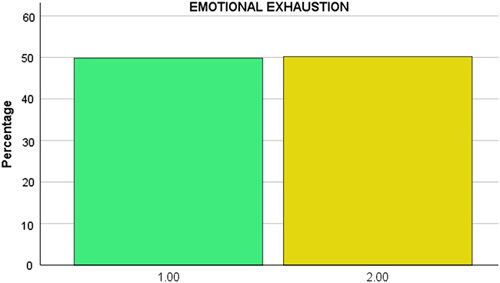
Emotional exhaustion dimension of the burnout syndrome variable.
The depersonalisation of employees is a problem for local authorities, as 50.2% of employees indicate that it sometimes occurs, which is reflected in Figure 2, which shows that there is a high level of job burnout among employees, which develops in them negative and insensitive attitudes such as selfishness, mistrust, self-deception, defensiveness, resentment, among other attitudes that reduce work capacity, performance and quality of customer service. These results are lower than those reported in studies of depersonalisation in healthcare workers41,42, because this sector has a greater number of risk factors such as daily working hours, sleeplessness, workload, lack of exercise, stressful environment and monotony. These factors increase the disconnection with the emotions of pain, which generates a high degree of coldness, detachment and negative attitudes as a result of the high psychological tension and the need to escape from reality. It is suggested that companies provide communication skills training and psychotherapy for employees affected by depersonalisation, as this treatment helps them to understand and manage the feelings associated with their disorder43. It is also recommended that they invest in technological tools such as customer relationship management systems to reduce the workload of employees. In addition, it is important to have trained staff to carry out exposure therapy with people affected by the syndrome, so that they learn to cope with stress gradually44.
Figure 2.
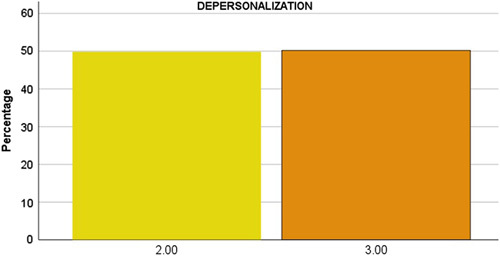
Depersonalization dimension of the burnout syndrome variable.
The level of fringe benefits is not good, as 77.9% of employees state that they never receive them, as shown in Figure 3, which shows that the organisation has problems in satisfying the personal demands of employees in terms of higher pay, special recognition, overtime pay, or encouraging more training among employees. On this dimension, a study found that employees who receive higher benefits have a lower probability of developing burnout (9%), while employees who do not receive benefits have a higher probability (14%)45. This is because benefits increase employees’ job satisfaction, which has a positive effect on motivation, commitment and job satisfaction. Therefore, companies need to improve the benefits they offer through competitive salaries, flexible working hours, retirement plans, medical benefits, training and development programmes, teleworking and days off.
Figure 3.
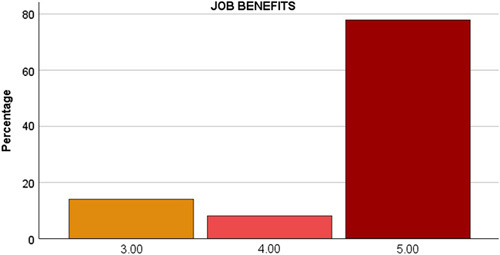
Job benefits dimension of the job satisfaction variable.
The level of agreement of the employees with the administrative policies is a problem, since 50.2% of them state that they have never agreed with the policies of the municipality, as shown in Figure 4, which proves that there is a need to improve the beliefs, principles and norms of the organisation, which are responsible for regulating the working climate, the internal functioning of the company and the organisational culture followed by the employees. These results contradict the research of Saifur et al.46, where it is evident that public sector employees have higher job satisfaction than private sector employees because there is better management of administrative policies and benefits for employees.
Figure 4.
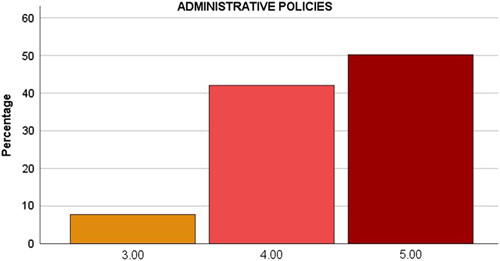
Administrative policies dimension of the job satisfaction variable.
The level of social relations is low, as 42.1% of the employees stated that they never perceived good social relations at work, which is reflected in Figure 5, which represents that a better interaction plan should be implemented among employees to motivate increased communication and teamwork to promote personal development along with the soft skills of the company’s employees. These results are supported by some studies that have identified poor social relations as an influential factor in the development of burnout syndrome, so they suggest promoting interaction outside the work area47,48.
Figure 5.
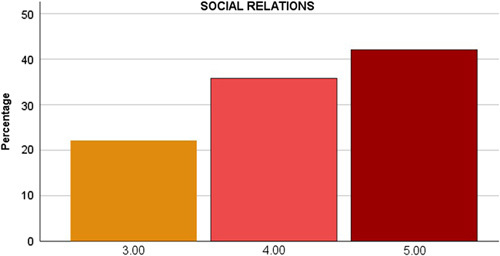
Social relations dimension of the job satisfaction variable.
The results indicate that employees have a high level of burnout, therefore, it is necessary to seek medical attention to reduce its effects. Among the most recommended treatments is cognitive behavioural therapy, which allows people to identify and change negative thought patterns and develop skills such as organisation, calmness, problem solving, flexibility and emotional intelligence to cope with stress49. In addition, biofeedback is a technique that uses sensors to measure physiological activity, such as heart rate and muscle tension and provides real-time feedback to help improve an individual’s stress response50. It is also important to mention that mindfulness programmes and meditation can be effective in reducing stress and improving the emotional well-being of employees with burnout symptoms51,52. These programmes focus on teaching mindfulness and meditation techniques to help people manage their stress response and improve their ability to concentrate and make decisions53-55. It is important to note that while the above treatments are effective in reducing the effects of burnout, it is necessary for the healthcare facility to take a holistic approach that addresses the underlying causes of work-related stress. This involves addressing issues such as workload, bullying and interpersonal relationships in the workplace, in order to propose treatment that is appropriate to the needs of the individual patient. It is important not only to treat the symptoms, but also to address the working conditions that generate them. In this way, the recurrence of burnout can be prevented and a healthy and productive working environment for employees can be promoted.
Limitations
The study has several limitations. Firstly, there was evidence of recall bias, as the data collection relied on employee self-reports rather than defined clinical diagnoses and objective methods to ensure the authenticity of the results. Secondly, it is possible that a large number of employees who refused to participate in the survey had burnout syndrome and refused because they believed that the results might have a negative impact on their work. Thirdly, employees who were less affected by the syndrome also refused to participate because they considered it a pointless activity, leading to a selection bias. Finally, the cross-sectional design of the study is limited by its inability to account for the variability of symptoms experienced by study participants over time.
Conclusion
Most of the employees had low job satisfaction due to a lack of job benefits, disagreement with administrative policies and poor social relations, so the level of burnout is high as the employees show symptoms of emotional exhaustion and depersonalisation. In this respect, it is concluded that burnout and job satisfaction have a strong negative relationship.
This research allows us to argue that job satisfaction is important in reducing the risk of employees suffering from burnout syndrome, as it benefits the objective achievement of goals and maintains the competitiveness of the organisation. This helps to build strategies of satisfaction and integration of employees with the organisation to face the problems of professional burnout that threaten the productivity of the organisation.
In the same way, the benefits provided by the company allow for a regular level of economic satisfaction for employees who feel that their work, their efforts and their role in the company are recognised.
On the other hand, the improvement of the management policy should be promoted by renewing the principles and norms of the company in order to adapt them to the expectations of the employees in terms of internal functioning, organisational culture and working environment. In addition, it is necessary to promote the development of social relations between employees in order to increase the ability to share knowledge, develop communication skills and improve teamwork, thus increasing the organisation’s innovation and creativity. Similarly, it is essential to achieve job satisfaction and the psychological capital necessary to reduce the emotional exhaustion felt by employees, as it limits the productive capacity in the work area due to constant irritation, lack of motivation or patience, tiredness, fatigue, panic attacks and nostalgia. Finally, it is necessary to reduce the level of depersonalisation of employees, as it reduces the working capacity, teamwork, performance and quality of service offered to customers, who are affected by the employee’s bad attitude, coldness, resentment, mistrust and selfishness.
Recommendations
This section of the article details actions that organisations should consider in order to reduce burnout among their employees. Firstly, it is essential to set clear limits on the amount of work expected of each employee and their working hours to avoid work overload and to allow employees time to rest and recuperate. Second, foster a supportive culture based on open communication and empathy so that employees feel supported and valued. Third, personal and professional development should be encouraged through training, mentoring, wellness programmes and other initiatives that help employees stay motivated and engaged in their work. Finally, it is important to provide constructive feedback and recognition for a job well done in order to maintain employees’ self-confidence.
In the healthcare field, there are several alternatives to treat burnout syndrome and improve the emotional well-being of healthcare professionals. Among these options are cognitive behavioural therapy, biofeedback, mindfulness programmes and mobile apps and digital platforms to monitor and manage stress. It is important to take these options into account when implementing burnout prevention and treatment policies in Peru, as they can be useful in the fight against this syndrome.
Ethical approval
Does not involve any type of ethical approval.
Consent
Written informed consent was obtained from the study participant for publication of this case report and accompanying images. A copy of the written consent is available for review by the Editor-in-Chief of this journal upon request.
Sources of funding
This article was funded by the Universidad Nacional de Cañete, the Grupo de Investigación en Emprendimiento e Innovación Cañete L@b and the Grupo de Investigación en Transformación Digital.
Author contribution
A.P.: writing the paper; A.A.: study concept; C.P.: data collection; F.P.: data analysis; J.Q.: interpretation; E.F.-P.: writing the paper; M.R.: data collection.
Conflicts of interest disclosure
The authors declare there is no conflict of interest in publishing this research.
Research registration unique identifying number (UIN)
The present work does not have a Research Registry unique identifying number (UIN) as this is not the first time in man.
Guarantor
Alex Pacheco.
Data availability statement
Research data are available upon request.
Provenance and peer review
Not commissioned, externally peer reviewed.
Acknowledgements
Special thanks to the National University of Cañete, the Research Group on Entrepreneurship and Innovation Cañete L@b and Research Group on Digital Transformation, its great professors, valuable students and collaborators for carrying out this scientific article throughout these years of study.
Footnotes
Sponsorships or competing interests that may be relevant to content are disclosed at the end of this article.
Published online 14 August 2023
Contributor Information
Alex Pacheco, Email: thegreatreal@gmail.com;apacheco@undc.edu.pe.
Ana Alvarez, Email: ana.alvarez@unica.edu.pe.
Cesar Peñaranda, Email: cesar.penaranda@upsjb.edu.pe.
Flor Pineda, Email: florpinedagutierrez.14@gmail.com.
Julio Quispe, Email: jquispe@undc.edu.pe.
Edwin Felix-Poicon, Email: edwin.felix@unj.edu.pe.
Mario Ruiz, Email: mruizc@unam.edu.pe.
References
- 1.Gastelo K, Rojas A, Díaz C, et al. Hospital educational environment and burnout syndrome in medical interns. Educación Médica 2020;21:237–246. [Google Scholar]
- 2.Garrid A, Soto M, Díaz M, et al. Professional burnout syndrome in Andalusian ophthalmologists. Arch Soc Esp Oftalmol 2021;96:63–68.33268284 [Google Scholar]
- 3.Huarcaya J, Calle R. Influence of burnout syndrome and socio-demographic characteristics on levels of depression in medical residents in a general hospital. Educación Médica 2021;22:142–146. [Google Scholar]
- 4.Bouza E, Gil P, Palomo E. Work-related burnout syndrome in physicians in Spain. Rev Clin Esp 2020;220:359–363. [DOI] [PubMed] [Google Scholar]
- 5.Shimamura M, Fukutake M, Namba M, et al. The relationship among factors of organizational justice, organizational citizenship behavior, job satisfaction, and ease of work among Japanese nurses. App Nurs Res 2021;61:151479. [DOI] [PubMed] [Google Scholar]
- 6.Sung Y, Hu H. The impact of airline internal branding on work outcomes using job satisfaction as a mediator. J Air Trans Manag 2021;94:102063. [Google Scholar]
- 7.Chiang M, Ojeda J. Study of the relationship between job satisfaction and the performance of workers in free trade fairs. Contaduría y Administración 2013;58:39–60. [Google Scholar]
- 8.Gil J. Personal and school characteristics in the explanation of teacher job satisfaction. Revista de Psicodidáctica 2017;22:16–22. [Google Scholar]
- 9.Uribe S, Ide J, Castro V. Factors explaining job satisfaction among dentists in Chile. Revista Clínica de Periodoncia, Implantología y Rehabilitación Oral 2014;7:128–135. [Google Scholar]
- 10.Cercado M. Inadequate application of employment benefits in the right to remuneration 2021. Accessed 22 November 2021.http://repositorio.upagu.edu.pe/handle/UPAGU/1625
- 11.Holguin Y, Contreras C. Staff job satisfaction in the Nephrology Service of the Guillermo Kaelin de la Fuente Hospital (Villa María) in 2019. Horizonte Médico (Lima) 2020;20:e1238. [Google Scholar]
- 12.Heidari S, Parizad N, Goli R, et al. Job satisfaction and its relationship with burnout among nurses working in COVID-19 wards: a descriptive correlational study. Ann Med Surg 2022;82:104591. [DOI] [PMC free article] [PubMed] [Google Scholar]
- 13.Shahi S, Paudel D, Bhandari T. Burnout among resident doctors: an observational study. Ann Med Surg 2022;76:103437. [DOI] [PMC free article] [PubMed] [Google Scholar]
- 14.Yetneberk T, Firde M, Eshetie D, et al. The prevalence of burnout syndrome and its association with adherence to safety and practice standards among anesthetists working in Ethiopia. Ann Med Surg 2021;69:102777. [DOI] [PMC free article] [PubMed] [Google Scholar]
- 15.Mahmood S, Zahid A, Nasir N, et al. Triggering and protective factors of burnout in medical resident physicians in a lower-middle-income country: a cross-sectional study. Ann Med Surg 2021;67:102500. [DOI] [PMC free article] [PubMed] [Google Scholar]
- 16.Plascencia A, Pozos B, Preciado M, et al. Effect of cognitive-emotional training on job satisfaction and occupational attrition in nursing staff: a pilot study. Ansiedad y Estrés 2019;25:35–41. [Google Scholar]
- 17.Pastor J. Psychological effects of COVID-19. Arch Soc Esp Oftalmol 2020;95:417. [DOI] [PMC free article] [PubMed] [Google Scholar]
- 18.Wilkinson H, Whittington R, Perry L, et al. Examining the relationship between burnout and empathy in healthcare professionals: A systematic review. Burn Res 2017;6:18–29. [DOI] [PMC free article] [PubMed] [Google Scholar]
- 19.Gómez G, Meneses A, Palacio M. Job satisfaction and psychological capital: factors influencing burnout syndrome. Ansiedad y Estrés 2017;23(2–3):71–75. [Google Scholar]
- 20.Máynez A, Cavazos J, Reyes G. Effect of psychological contract violation and emotional exhaustion on employee cynicism. Estudios Gerenciales 2017;33:124–131. [Google Scholar]
- 21.Dominguez S, Fernández M, Manrique D, et al. Normative data from a scale of academic emotional exhaustion in university psychology students in Lima (Perú). Educación Médica 2018;19:246–255. [Google Scholar]
- 22.Orgambídez A, Pérez P, Borrego Y. Role stress and job satisfaction: examining the mediating role of engagement at work. Revista de Psicología del Trabajo y de las Organizaciones 2015;31:69–77. [Google Scholar]
- 23.Garcia C. Influence of the administrative policies for the recovery of the overdue portfolio of the company Oro Ticar in the Machala canton” 2016. Accessed 26 November 2021.http://repositorio.utmachala.edu.ec/handle/48000/8001
- 24.Merino M, Carrera F, Roca M, et al. Relationship between job satisfaction and patient safety culture. Gac Sanit 2018;32:352–361. [DOI] [PubMed] [Google Scholar]
- 25.Araya M, Medina A. Job satisfaction and organisational climate among primary health care workers in a Chilean commune. Revista Médica de Risaralda 2019;25:84. [Google Scholar]
- 26.Rondón L, Aguirre B, García F. The meaning of social relations as a mechanism for improving the health and quality of life of older people, from an interdisciplinary perspective. Rev Esp Geriatr Gerontol 2018;53:268–273. [DOI] [PubMed] [Google Scholar]
- 27.Nieves J. Social relations, dynamic capabilities and innovation: an empirical analysis in the hotel industry. Revista Europea de Dirección y Economía de la Empresa 2014;23:166–174. [Google Scholar]
- 28.Macía C, Martín Iglesias D, Moreno Diaz J, et al. Burnout syndrome in internal medicine specialists and factors associated with its development. Rev Clin Esp 2020;220:331–338. [DOI] [PubMed] [Google Scholar]
- 29.Makara M, Załuski M, Biegańska J, et al. Perceived stress and burnout syndrome: a moderated mediation model of self-efficacy and psychological comfort among polish air traffic controllers. J Air Transp Manag 2021;96:102105. [Google Scholar]
- 30.Baro R, Burgos L, Sigal A, et al. Burnout syndrome in cardiology residents. impact of the COVID-19 pandemic on burnout syndrome in cardiology residents. Curr Probl Cardiol 2022;47:100873. [DOI] [PMC free article] [PubMed] [Google Scholar]
- 31.Acosta S, Ramirez-Martinez FR, Reveles Manriquez IJ, et al. Burnout syndrome and association with work stress in nursing staff in public hospital of the northern border of Mexico. Arch Psychiatr Nurs 2021;35:571–576. [DOI] [PubMed] [Google Scholar]
- 32.Merino C, Fernández M. Single-item burnout in higher education students: a content validity study. Educación Médica 2017;18:195–198. [Google Scholar]
- 33.Linares G, Guedez Y. Burnout syndrome invisible disease among health professionals. Aten Primaria 2021;53:102017. [DOI] [PMC free article] [PubMed] [Google Scholar]
- 34.Boada N. Job satisfaction and its relationship to job performance in a security services SME in Peru. J Eco Fin Int Bus 2019;3:75–103. [Google Scholar]
- 35.Hinojosa J. The art of thesis writing : for postgraduate and undergraduate with case studies. 2017.
- 36.Aguilar-Barojas S. Formulas for sample calculation in health research. Salud en Tabasco 2005;11:333–338. [Google Scholar]
- 37.Mathew G, Agha R, Albrecht J, et al. STROCSS 2021: strengthening the reporting of cohort, cross-sectional and case-control studies in surgery. Int J Surg 2021;96:106165. [DOI] [PubMed] [Google Scholar]
- 38.Tajeri M, Abbasi E, Khoshnodifar Z. Students’ academic burnout in Iranian agricultural higher education system: the mediating role of achievement motivation. Heliyon 2020;6:e04960. [DOI] [PMC free article] [PubMed] [Google Scholar]
- 39.Szarko A, Houmanfar RA, Smith GS, et al. Impact of acceptance and commitment training on psychological flexibility and burnout in medical education. J Contextual Behav Sci 2022;23:190–199. [Google Scholar]
- 40.Rivas-García A, Míguez-Navarro M, Ferrero-García C, et al. Burnout syndrome in paediatricians working in paediatric emergency care settings. Prevalence and associated factors: a multilevel analysis. Anales de Pediatría (English Edition) 2023;98:119–128. [DOI] [PubMed] [Google Scholar]
- 41.Couarraze S, Jean MS, Decormeille G, et al. Short term effects of simulation training on stress, anxiety and burnout in critical care health professionals: before and after study. Clin Simul Nurs 2023;75:25–32. [Google Scholar]
- 42.Chu W, Ho HE, Lin YL, et al. Risk factors surrounding an increase in burnout and depression among health care professionals in Taiwan during the COVID-19 pandemic. J Am Med Dir Assoc 2023;24:164–170.e3. [DOI] [PMC free article] [PubMed] [Google Scholar]
- 43.Ciaunica A, Seth A, Limanowski J, et al. I overthink—Therefore I am not: An active inference account of altered sense of self and agency in depersonalisation disorder. Conscious Cogn 2022;101:103320. [DOI] [PMC free article] [PubMed] [Google Scholar]
- 44.Salami A, Andreu-Perez J, Gillmeister H. Symptoms of depersonalisation/derealisation disorder as measured by brain electrical activity: a systematic review. Neurosci Biobehav Rev 2020;118:524–537. [DOI] [PubMed] [Google Scholar]
- 45.Haar J, O’Kane C. A post-lockdown study of burnout risk amongst New Zealand essential workers. Soc Sci Med 2022;306:115157. [DOI] [PubMed] [Google Scholar]
- 46.Chowdhury S, Kabir H, Akter N, et al. Impact of workplace bullying and burnout on job satisfaction among Bangladeshi nurses: a cross-sectional study. Heliyon 2023;9:e13162. [DOI] [PMC free article] [PubMed] [Google Scholar] [Retracted]
- 47.Smith M, Phillips A. The impact of faculty and student pharmacist relationships on burnout. J Am Pharm Ass 2022;62:555–558.e1. [DOI] [PubMed] [Google Scholar]
- 48.Van F, Spruyt B, Vanroelen C. Burnout among senior teachers: Investigating the role of workload and interpersonal relationships at work. Teach Teach Educ 2014;43:99–109. [Google Scholar]
- 49.MEDIA AHC. Transdiagnostic cognitive behavioral therapy in young patients: EBSCOhost. Acad Search Ult 2021;24:1–4. [Google Scholar]
- 50.Li F, Wang M, Shah SHA, et al. Clinical characteristics of adult functional constipation patients with rectoanal areflexia and their response to biofeedback therapy. Diagnostics 2023;13. doi: 10.3390/DIAGNOSTICS13020255 [DOI] [PMC free article] [PubMed] [Google Scholar]
- 51.Asthana A. Organisational citizenship behaviour of MBA students: the role of mindfulness and resilience. Int J Manag Educ 2021;19:100548. [Google Scholar]
- 52.Caycho-Rodríguez T, Ventura-León J, Martinez-Munive R, et al. Translation and content validity of a brief scale of mindfulness for Peruvian adolescents. Enfermería Clínica (English Edition) 2019;29:308–312. [DOI] [PubMed] [Google Scholar]
- 53.Alhadi A, Almutlaq M, Almohawes M, et al. Prevalence and treatment preference of burnout, depression, and anxiety among mental health professionals in Saudi Arabia. J Nat Sci Med 2022;5:57–64. [Google Scholar]
- 54.Yadlovska O, Formaniuk Y, Chystovska Y, et al. Neuropsychological preventive treatment of emotional burnout among university students. Brain (Bacau) 2022;13:188–201. [Google Scholar]
- 55.Uribe-Hernández YC, Ochoa-Paredes FF, Meneses-Claudio BA, et al. Computer-related ophthalmic syndrome in teachers of a University of the Province of Cañete. Ann Med Surg 2023;85:261–265. [DOI] [PMC free article] [PubMed] [Google Scholar]
Associated Data
This section collects any data citations, data availability statements, or supplementary materials included in this article.
Data Availability Statement
Research data are available upon request.