



Abstract
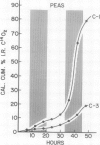
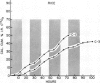
3,4-Dichloropropionanilide-14C (propanil) labeled in either the C-1 or C-3 carbon atoms of the propionic acid moiety was applied to the roots of pea (Pisum sativum L.) and rice (Oryza sativa L.) plants in nutrient solution (0.1 mm-0.28 mm). Radioactivity was detected throughout the treated plants, but the greatest labeling was found in the roots. None of the products that contained aniline were radioactive, suggesting that the plants split the propionic acid moiety from propanil. The fate of the propionate moiety of propanil was determined by recovery of 14CO2 from plants exposed to propanil-14C. The time-course of the 14CO2 production demonstrated that the intact propionic acid was cleaved from the propanil and subsequently catabolized by the β-oxidation catabolic sequence. The appearance of radioactivity in the shoots was attributed to the incorporation of products of propionate metabolism. Both the susceptible pea plants and the tolerant rice plants converted a high percentage of the administered propanil-14C to 14CO2.
Full text
PDF


Images in this article
Selected References
These references are in PubMed. This may not be the complete list of references from this article.
- GIOVANELLI J., STUMPF P. K. Fat metabolism in higher plants. X. Modified beta oxidation of propionate by peanut mitochondria. J Biol Chem. 1958 Mar;231(1):411–426. [PubMed] [Google Scholar]
- HATCH M. D., STUMPF P. K. Fat metabolism in higher plants. XVIII. Propionate metabolism by plant tissues. Arch Biochem Biophys. 1962 Feb;96:193–198. doi: 10.1016/0003-9861(62)90398-3. [DOI] [PubMed] [Google Scholar]
- WANG C. H., STERN I., GILMOUR C. M., KLUNGSOYR S., REED D. J., BIALY J. J., CHRISTENSEN B. E., CHELDELIN V. H. Comparative study of glucose catabolism by the radiorespirometric method. J Bacteriol. 1958 Aug;76(2):207–216. doi: 10.1128/jb.76.2.207-216.1958. [DOI] [PMC free article] [PubMed] [Google Scholar]