



Abstract
This article provided a comprehensive overview of challenges that African Americans with disabilities residing in rural areas often face in the United States when accessing telehealth treatment to mitigate opioid misuse. A scoping literature review was conducted focusing on this target population, telehealth, disabilities, opioid treatment, and rural healthcare systems. Systematic searches on eight electronic databases were carried out in line with the study’s aims. The results identified treatment benefits and advantages, expansion challenges, and multicultural considerations for telehealth delivery. There may be a need to increase rehabilitation research in this area to inform needed changes in policies and practice.
Keywords: Rural, Barriers, Access, Telehealth, African Americans with disabilities, Opioid Use Disorder
The opioid epidemic in the United States (U.S.) has disproportionately impacted rural communities where mortality rates due to their misuse have surpassed that of urban areas (Centers for Disease Control and Prevention [CDC], 2017; Knopf, 2018). Interestingly, rural communities experience higher incidences of overdose related deaths involving natural and semi-synthetic opioids such as oxycodone, hydrocodone, morphine, and codeine (CDC, 2018; Scholl et al., 2019). This phenomenon could be attributed to the fact that rural residents often have less specialty treatment resources than their counterparts in urban communities (Kertesz & Gordon, 2019; Palombi et al., 2019). Opioid Use Disorder (OUD) is defined as a development of dependency and chronic use of opioids that is likely to cause impairments in the major core areas of functioning in an individual’s life and characterized by continued use despite personal, relational, and professional disruptions (American Psychiatric Association, 2013; Dydyk et al., 2021). The current crisis has a compact effect on rural communities at large, impacting quality of life, economic growth, and rural prosperity (Rigg et al., 2018).
The African American community has borne the brunt of this calamity, accounting for a whopping 21% increase in mortality rates compared to the overall population (James & Jordan, 2018). According to the U.S. Center for Disease Control and Prevention (2019), 1 in 4 members of this target population possesses a disability. African Americans are frequently prescribed medication due largely to managing chronic pain, mobility limitations, pain, and complications related to mental health disorders (U.S. Department of Health and Human Services [HHS], 2019; Washington-Walker et al., 2017). Those with mental health disorders have high co-morbid with substance use disorder (SUD) (Evans et al., 2020; Hooker et al., 2020). Opioids are the commonly misused substance among this group, with approximately 4.7 million individuals within the U.S. having both a disability and OUD (HHS, 2019). OUD is “a chronic relapsing disorder that, whilst initially driven by activation of brain reward neurocircuits, increasingly engages anti-reward neurocircuits that drive adverse emotional states and relapse” (Strang et al., 2020, p. 1). African Americans have also experienced the highest increase in demise due to overdose involving synthetic opioids (Substance Abuse and Mental Health Services Administration [SAMHSA], 2020; Spencer et al., 2019).
To alleviate the deleterious implications of opioid misuse on African Americans residing in rural communities, additional earmarked resources may be needed to support wrap-around prevention, treatment, and recovery service efforts (Myers et al., 2017; Palombi et al., 2019). These programmatic resources should address fundamental systemic and long-standing treatment and outcome disparities that have caused them to remain vulnerable to the national opioid predicament. The development of specialty treatment in rural areas is likely to occur through the advancement of facilities, support, and equipment, such as hospitals, mobile treatment clinics, residential facilities, transitional housing, workforce development, strategic planning, community planning, medical and safety equipment, and equipment for telehealth and distance learning (Au-Yeung et al., 2019; Egan, 2019). Programmatic development and community-level interventions may vary based upon cultural and communal needs. African American rural residents with disabilities present distinctive barriers to accessing specialized OUD treatment and resources to rectify the impact of the crises.
Research has indicated many barriers to treating OUD in rural communities, suggestions have been made to increase programmatic strategies for the prevention and treatment of OUD (Ali et al., 2020; Letourneau, 2021; Lister et al., 2020). Rural communities still require a concerted effort to build effective OUD treatment programs, as a lack of resources and programs to provide services to persons who struggle with substance misuse, specific tailored strategies as rural communities present with specific needs and barriers (Havens et al., 2018). Rural community leaders should identify evidence-based practices (EBP) that would be the most effective for their community characteristic, as direct connection to the community is important in guiding the efforts of treating OUD (Letourneau, 2021). Creating statewide opioid crisis plans across state healthcare offices would be useful in guiding these efforts, as this would expand rapid access to opioid treatment (Ali et al., 2020). Current barriers for rural communities are commonly identified as a lack of clinics and providers to provide specialty treatment (Lister et al., 2020). Another common barrier are negative attitudes of OUD or substance misuse by providers while rendering services (Lister et al., 2020). Other accessibility barriers have been identified as being related to travel, costs, and time constraints (Beachler et al., 2021). Stigma and community attitudes have also created significant barriers, as many do not consider OUD as an illness that is imperative to treat (Beachler et al., 2021). Rural communities are in need of services that provide prevention and education, as well as improved collaborative capacity with healthcare systems across the state.
Innovative interventions that help eradicate treatment access barriers are warranted to address this emergency within African American disability and rural context. One such technological solution that could address the unmet demand for specialized care and providers in rural settings is telehealth. This advanced platform is utilized to disseminate health and medical information, as well as deliver direct health care services via remote telecommunication methods such as video conferencing (Barash, 2019; Capon et al., 2016; Dorstyn et al., 2013; Eibl et al., 2017). Telehealth has a proven track record as an innovative and well-versed application of healthcare practice, demonstrably effective in easing provider shortages in rural areas (Gates & Albertella, 2016; Klein & Anker, 2013). A review of the literature indicates that telehealth services have been helpful in reducing hospitalizations and facilitating improved medication adherence, symptom reduction, and treatment (Ben-Zeev, 2014; Holmes et al., 2019; Hubbard et al., 2007). This method perhaps embodies a promising, powerful application for OUD treatment for rural African American residents with disabilities by providing them access to needed treatment (George et al., 2009, 2012; Forducey et al., 2012; Saberi et al., 2013). Telehealth enables the delivery of services to rural clients that include intensive and frequent monitoring, early detection of symptoms, monitoring of medication and treatment compliance, promoting disease knowledge, and patient education (Schopp et al., 2006).
Currently there is a dearth of knowledge on telehealth and treatment access barriers among rural residents who are African Americans with disabilities experiencing OUD. The rural setting presents unique characteristics and challenges that manifest poor service access and treatment (Lister et al., 2021). The delivery of service interventions via telehealth could resolve intersectional factors such as transportation issues, loss of productivity, time management, and employment and help to reduce treatment stigma; all of which represent concerns among African Americans with disabilities. This scoping review sought to assemble current evidence about access barriers to OUD treatment via telehealth among members of this target population. The study objectives were to:
Explore studies in the extant published and grey literature containing benefits and advantages of telehealth that could be considered for application in treating OUD among African American rural residents with disabilities.
Identify non-clinical and clinical challenges that restrict adoption of telehealth across rural healthcare systems serving target population members.
Identify multicultural considerations that impact their accessibility to telehealth treatment services.
Methods
The PRISMA framework was utilized to conduct the scoping review methodology to explore existing studies, synthesize knowledge of the topic, and identify gaps in the literature. The review allowed for the incorporation of a broad range of qualitative and quantitative studies to be reviewed and synthesized. This approach also provided the research team an opportunity to review a broad range of the literature to examine the extent and nature of available research (Davis et al., 2009). A scoping study is used to undertake and examine the extent, range, and nature of research activity to determine and clarify a complex concept and refine future research on emerging topics and evidence (Tricco et al., 2018). Scoping literature reviews are particularly relevant to rehabilitation science, in which there is a paucity of research and randomized controlled trials in emerging topics, which makes it difficult to undertake systematic reviews (Tricco et al., 2018). There is a scarcity of literature and studies related to the topic of African American rural residents with disabilities in regards to access to OUD and telehealth treatment, in which a scoping literature review would be ideal, as this model provides an opportunity to generate findings that complement the findings of clinical trials, as well as intervention effectiveness within the healthcare literature and research (Davis et al., 2009).
Search Strategy
All articles relevant to the objectives were explored and reviewed by research team members using the following databases: PubMed, Academic Search Premiere, EBSCOhost, psychINFO, ProQuest Library, and government documents and reports (U.S. Census Bureau, U.S. Centers for Disease Prevention and Control, and Substance Abuse and Mental Health Services Administration. A combination of keywords were used in each database. The following keywords were included in the search: telehealth, telerehabilitation, African Americans, disability, OUD, opioid misuse, opioid crisis, healthcare disparities, rural communities, African Americans with disabilities, challenges, barriers, and accessibility. Figure 1 depicts the scoping review paradigm.
Figure 1:

PRISMA for source selection
Selection Process
Articles and studies related to the objectives and keywords published between 2002 and 2020 were selected, and those that discussed the advantages and benefits of telemedicine and telerehabilitation were also included within the review. Policy briefs reporting on clinical opioid needs of the targeted community population were included. Government documents and reports were utilized to outline telehealth as a healthcare solution for the opioid crisis. There was difficulty in finding a variety of specific empirical studies that highlighted African American consumers’ experience and perspective of telehealth. There was one specific article that highlighted the perspective of African Americans within the urban community. Due to the scarcity of studies and articles related to the objectives, this article was not excluded. Documents reporting on healthcare disparities within OUD treatment were included in the analysis to understand the necessity of telehealth to alleviate barriers and disparities. An overview of this process using the PRISMA flowchart is provided in Figure 1 in the appendix. To increase the consistency among the reviewers, all of the same 36 publications and results were discussed and screened by the research team. The titles, abstracts, and full context of the publications were evaluated for potential relevancy. In total 800 publications were screened by the research team. Approximately 95 publications were eliminated upon the full text being reviewed. Two studies were conducted outside of the U.S., in Canada and Brazil, and so, there are no major implications for the U.S. population in the conclusion. These publications were used to justify the effectiveness of telehealth in treating OUD and co-morbid mental health disorders. There were in total 20 quantitative studies, 13 literature reviews, and 3 qualitative studies. To be included in the review, publications needed to measure the effectiveness of telehealth, African Americans with disabilities in rural communities receiving telehealth treatment, specifically for OUD, barriers and gaps within rural communities in treating OUD. Papers were excluded if they did not fit into the conceptual framework of the study, which focused on telehealth OUD treatment in rural communities.
Results
In total 36 papers were included in this scoping review of the literature. Most of the papers were developed in the United States. Two of the papers were developed outside of the U.S., (Eibl et al., 2017; Fernandes et al., 2010). These papers were developed in Brazil and Ontario, Canada. The implications and conclusions for this study were included in the review due to meeting the criteria of examining telehealth effectiveness in treating opioid and substance misuse compared to traditional face-to-face modality. All documents are grouped into the following three categories to provide an overview of the literature Figure 2 depicts the results and exerts of the publications included in the framework:
Category 1: Benefits and advantages of telehealth OUD treatment services
Category 2: Challenges towards expansion and adoption
Category 3: Multicultural considerations of telehealth for African Americans
Figure 2:


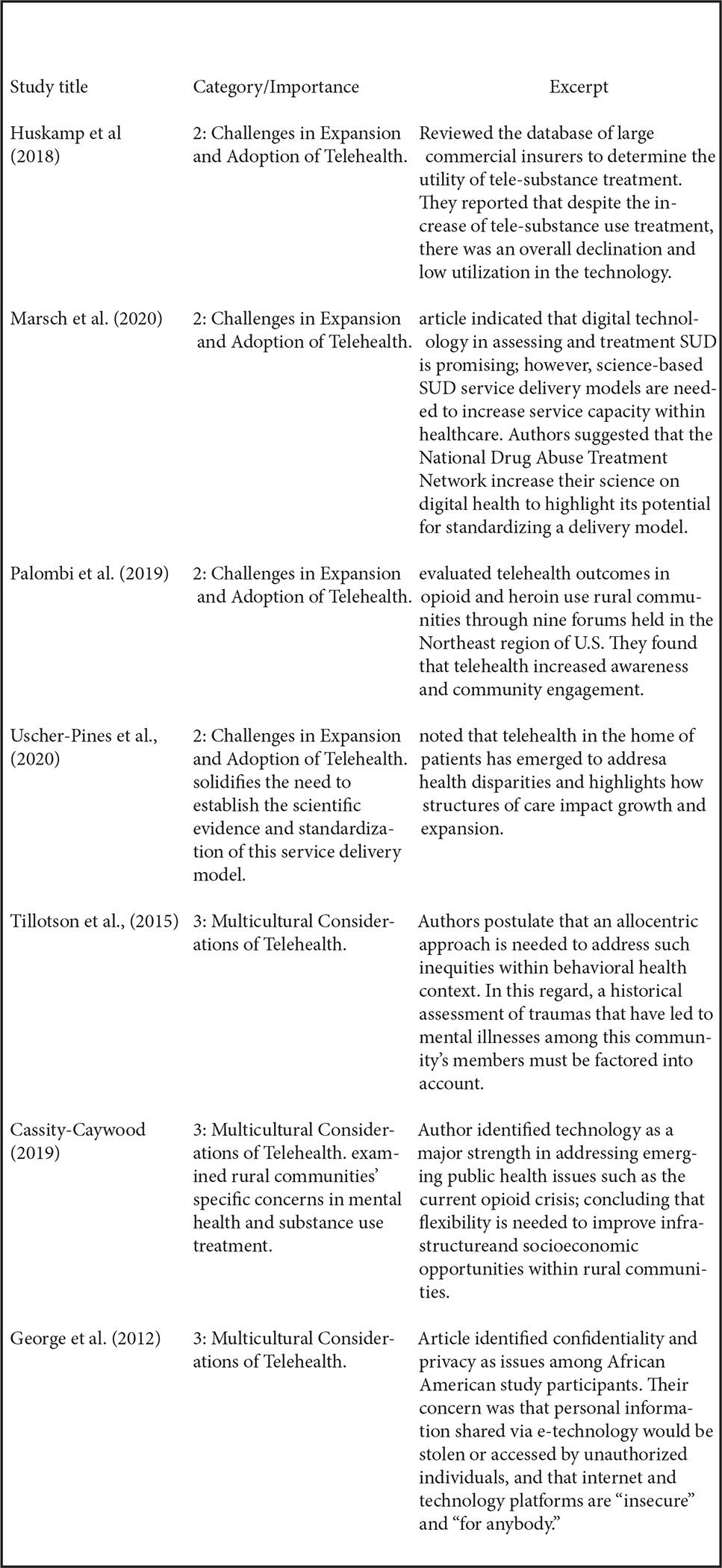

Results of individual sources of evidence
Category 1: Benefits and Advantages of Telehealth Treatment (n = 26)
This category explored the feasibility and effectiveness of various forms of telehealth in addressing clinical OUD and mental health treatment needs. Category 1 also highlighted how telehealth is a solution to health disparities within the rural U.S. communities. Acosta et al. (2017) explored the promise of web-based services for symptomatic combat veterans with post-traumatic stress syndrome (PTSD) and hazardous substance use. This study developed and evaluated a web-based tool targeting three primary outcomes, which were PTSD, heavy drinking and drug use, and quality of life. The results indicated that PTSD symptoms or quality of life did not have significant treatment effects. However, treatment effect was significant for heavy alcohol use and positive impact on social support, self-efficacy, increasing coping, and hope for the future. Bickel and colleagues’ (2013) article reviewed the status of technology-based delivered SUD treatment and made suggestions for future directions. They reviewed status in three contextual factors that included enhancing opportunity, importance, and timeliness of the use of such technological interventions for treating SUD. Authors recommended that technology delivered SUD treatment needed to be empirically examined to determine ways to expand, extend, and reorganize interventions to be integrated into hybrid telehealth modalities.
Dicianno et al.’s (2015) paper reviewed the evolution of mobile health and its application to the rehabilitation process for optimizing patient satisfaction, delivery of care, and promotion of health and wellness. This article sites regulatory and funding issues as barriers to the application of mobile health to rehabilitation. Another challenge identified was the affordability of smartphones whereas the authors suggested an option of providing lower cost smartphones to increase the utilization of mobile health. Dorstyn and colleagues (2013) article reviewed the evidence for telecounseling effectiveness in managing depression among minority populations using the Oxford Center for Evidence Based Medicine guidelines. The review included a final sample of eight independent studies with a sample of 498 adult participants of Asian, African American, and Latinx origin. They concluded that the short-term treatment effect was associated with tele-counseling for managing depression. Moderate to large improvements for depression, quality of life, and psychosocial functioning were reported in the study.
Gates and Albertellas (2016) paper was a systematic review of the literature about tele-counseling and illicit drug and alcohol use treatment. The meta-analysis assessed the effectiveness of mobile telephone delivered contingency management interventions in promoting abstinence, medicine adherence, and treatment engagement. A total of 94 publications were included in their analysis. The authors concluded that the literature was supportive of tele-counseling in that it has efficacy for alcohol use, and that treatment outcomes are better for individuals who received the mobile delivered intervention. Gilmore and colleagues’ (2017) reviewed 601 articles to determine the efficacy of technology-based designs to improve mental health and substance use treatment outcomes. They concluded that more work is needed to assess efficacy using rigorous scientific studies.
Eibl et al. (2017) study compared treatment outcomes for traditional face-to-face services compared to opioid agonist therapy (OAT) via telemedicine. This was a non-randomized cohort comparison investigation that included 58 clinics across Ontario, Canada. The results showed that patients were more likely to be retained in OAT via telemedicine than their counterparts in traditional face-to-face (50% compared to 38%). The authors concluded that telemedicine is an effective alternative to face-to-face treatment, with a potential to expand access and care for rural, remote, and urban communities. Fernandes et al. (2010) conducted a clinical trial in Brazil to evaluate telephone brief motivational interviewing in marijuana consumption and cessation. Groups were randomly divided into experimental and minimal intervention treatment groups. Authors reported that telephonic intervention had a positive impact on marijuana consumption cessation, as 73% of the participants were abstainers, and 59% ceased use of marijuana all together.
A systematic literature review was conducted by Holmes et al. (2019) assessing the current state of the literature on treatment via telecommunications for individuals with depression and substance use. The review found that mobile devices and internet services assist in increasing access to mental health and substance use services. Authors recommended that longitudinal and large-scale studies be conducted to standardize telehealth practice in this arena. Final results also documented improved therapeutic alliance and increased client engagement and satisfaction via telehealth treatment. Forducey et al. (2012) highlighted three pilot studies on the utilization of telecommunications to deliver healthcare services, promote self-care, enhance healthcare, and management of health for caregivers of individuals with severe functional disabilities. This article concluded that there is a lack of clear evidence to establish the efficacy of telecommunications. Future investigations were recommended to determine the role of telecommunications as an intervention for this target population. Another study conducted by Hubbard et al. (2007) examined the feasibility and efficacy of follow up phone calls to 399 patients who were discharged from four short-term inpatient residential treatment programs. The results indicated that the patients who received follow up calls were more likely to have outpatient treatment adherence.
Gates and Albertella (2016) reported in a systematic review of literature that short-term telephone counseling was accepted as an alternative delivery method within 94 publications. Still, another meta-analysis (i.e., Getty et al., 2019) assessed evidence of effectiveness for telephone contingency management intervention to promote abstinence from substance use. Findings indicated that the telephone intervention was effective for treating alcohol and tobacco users, but not for those with SUD. Schopp et al. (2006) reported similar results in an article where developments in telehealth and cutting-edge technologies within rural communities were reviewed. Authors concluded that overall telecommunication interventions showed considerable promise in addressing disparities, as well as improving the quality and access to healthcare. According to the authors, telecommunications are a proficient and effective method of treatment for rural residents with chronic illness. In a review of a qualitative study involving 13 key informants (i.e., caregivers, consumers, and spouses), Shulver et al. (2017) reported that telerehabilitation service delivery was more convenient, motivating, and improved therapeutic relationships.
Saberi and colleagues (2020) carried out an investigation to describe the relationship between mental health, substance use services, and medication adherence among youth ages 18–29 living with HIV. A total of 29 interviews were conducted to identify barriers. Results revealed that adherence was negatively associated with mental health measures, such as trauma, depression, adverse childhood experiences, and cannabis/stimulant use. Key informants indicated a preference for technology use in treating mental health and substance dependence. Santa Ana et al. (2013) explored the feasibility of a telehealth management program for veterans with substance use disorders in an outpatient program. Findings revealed that telehealth is feasible as an adjunct and stand-alone treatment for targeted population. A similar study (i.e. Saberi et al., 2013) assessed the feasibility and acceptability of telehealth medication counseling intervention in addressing disparities of low treatment adherence and engagement for African American youth living with HIV. Results indicated that telehealth innovation was feasible and acceptable among participants, and that the use of this technology led to more disclosure of treatment difficulties, increased patient comfort, and improved health education. Molfenter and colleagues (2018) assessed the interest and usage of telemedicine application across 363 SUD treatment centers and organizations. The results yielded suggested that future studies should highlight specific organizational behaviors and needs towards adoption of technology for service delivery (Molfenter et al., 2018). Myers and colleagues surveyed 159 mental health staff to better understand perceived clinical video telehealth versus traditional face-to-face service efficacy differences. This article identified several barriers and recommended potential guidelines to expand the adoption of telehealth (Myers et al., 2017).
The effectiveness and feasibility of telehealth services were highlighted in an article (i.e., Lewis et al., 2017) that emphasized the limitations of research on tele-rehabilitation. The article concluded that the tele-rehabilitation model demonstrated much promise for delivering services to people with disabilities. Authors noted the need for a stronger evidence base to validate the effectiveness of this approach as demand and usage increase. Lin and colleagues (2019), in a systematic literature reviews, also examined interventions for SUD via videoconferencing (i.e., medication and psychotherapy treatment). The article concluded that out of 841 manuscripts, 13 met criteria and reported high patient satisfaction with telemedicine. Authors recommended that further studies examine different models and the need for integration into existing healthcare delivery settings. Klein and Anker (2013) analyzed administrative data use of web-based recovery support programs and compared post treatment alcohol use for patients in residential treatment. Findings support that computerized programs hold much potential for alcohol and drug dependence treatment. Johnston et al. (2019) conducted a naturalistic study that examined whether a smartphone-based relapse prevention system improved retention of women with SUD in rural areas. Participants were mandated to treatment, and the findings indicate that the smartphone-based prevention system assisted with retention of 410 days versus 262 days. Gilmore et al. (2017) systematically reviewed 601 articles that examined technology-based intervention for consumers with co-occurring disorders. Preliminary results indicated that technology-based interventions were likely to be effective in reducing trauma and substance use symptoms. This review suggested that technology-based interventions are feasible, and more research is needed to access effect with rigorous scientific studies. Glueckauf et al. (2012), in a randomized controlled trial, compared the effects of traditional face-to-face and telephone based Cognitive Behavioral Therapy (CBT) services for caregivers of patients with dementia. Article concluded that both telephone and face-to-face treatment showed improvements in depression, subjective burdens, and support.
Category 2: Challenges in Expansion and Adoption of Telehealth (n=4)
This category explored issues and challenges to the adoption of telehealth as a model of delivery for health care systems. Higgins (2019) highlighted the critical importance of changing healthcare behaviors to address health disparities. This article emphasized the policy and research needs of health care. The author suggested that activity should promote health related behavioral changes within the clinical infrastructures to address opioid treatment needs in rural communities. These specific activities would assist in the expansion and adoption of telehealth as a modality of treatment for rural healthcare OUD clinics. Knopf (2018) explored state responses to the opioid crisis through SAMHSA sponsorships. This authors reported that telehealth has been funded to implement MAT for OUD services. Huskamp et al. (2018) reviewed the database of large commercial insurers to determine the utility of tele-substance treatment. The data was collected from calendar years 2010–2017 and included client characteristics, and ways in which tele-substance treatment was used in conjunction with traditional face-to-face services. They reported that despite the increase of tele-substance use treatment, there was an overall declination and low utilization of the technology. A recommendation was to monitor which delivery models are being used and their impact on access and treatment outcomes. Marsch et al. (2020) article indicated that digital technology in assessing and treatmenting SUD is promising; however, science-based SUD service delivery models are needed to increase service capacity within healthcare. Authors suggested that the National Drug Abuse Treatment Network increase their science on digital health to highlight its potential for standardizing a delivery model. Palombi et al. (2019) evaluated telehealth outcomes in opioid and heroin use rural communities through nine forums held in the Northeast region of the U.S. They found that telehealth increased awareness and community engagement. Uscher-Pines and colleagues (2020) noted that telehealth in the home of patients has emerged to address health disparities and highlights how structures of care impact growth and expansion. The recent increase in demand during the COVID-19 global pandemic solidifies the need to establish the scientific evidence and standardization of this service delivery model. New research findings could help effectively facilitate the adoption and utilization of telehealth services providers and African American rural consumers.
Category 3: Multicultural Considerations of Telehealth (n=6)
According to Tillotson et al. (2015), cultural worldview is an important prism for understanding and alleviating health disparities experienced by African Americans residing in rural communities. Authors postulate that an allocentric approach is needed to address such inequities within the behavioral health context. In this regard, a historical assessment of traumas that have led to mental illnesses among this community’s members must be factored into account. Cassity-Caywood (2019) examined rural communities’ specific concerns in mental health and substance use treatment. The author identified technology as a major strength in addressing emerging public health issues such as the current opioid crisis; concluding that flexibility is needed to improve infrastructure and socio-economic opportunities within rural communities.
While telehealth has shown promise in addressing health disparities among African Americans, George et al.s (2012) article identified confidentiality and privacy as issues among African American study participants. Their concern was that personal information shared via e-technology would be stolen or accessed by unauthorized individuals, and that internet and technology platforms are “insecure” and “for anybody.” Some participants felt that their identity could be possibly “floating around” and did not trust that their health information would be kept confidential. In terms of perceived advantages, they felt that telehealth increased immediate access to multiple medical opinions and reduced waiting times. George et al.’s (2009) article reflected similar telemedicine driven advantages for African Americans and Latinx but also noted differences in concerns. Benefits for both groups included immediate feedback to diagnosis and course of action, increased access to specialists, and increased access to multiple medical opinions. African American participants’ concerns about telemedicine were the physical absence of physicians or specialists, limited ability to monitor specialists’ telemedicine qualifications, and use of technology and resulting privacy/confidentiality issues. They were also concerned about someone possibly stealing their identity and their information “floating” around on the internet. Authors recommend tailored approaches to introduce and implement telemedicine services to African Americans, as their needs and concerns are indeed unique.
Telehealth services should be conceptually customized and designed prior to embedding within local clinics in rural communities, as marketing strategies should consider the needs and goals of this target population. Williams and Wyatt’s (2015) article discussed racial disparities within healthcare practices rooted within historical institutionalized racism within the U.S. Authors mentioned how physicians and clinicians are unaware of racial biases that exist within the healthcare delivery system, and how a first step to rectifying biases is to enhance awareness about the pervasiveness of such race-based disparities. Increased commitment to acquiring skills that might help to minimize such inequalities were also a recommendation within this article. They also recommended that using White people as a reference for improving health should be considered as a non-effective response. Young et al.’s (2015) article also identified potential barriers to substance use recovery resources for consumers within rural areas. The article noted that access to treatment and other professional care, expansion of mental health care, and intensive referrals represented community barriers. Awareness of such challenges within the community should lead to collaborative problem solving whereby clients can potentially navigate issues by investing in the various stages of telehealth development. Investments were defined as tools that help alleviate issues such as the distance from resources for substance use dependent clients in rural area.
Discussion
This study was the first to examine in detail reported strategies to counteract the negative effects of the opioid epidemic on African Americans with disabilities residing in rural communities. The following three objectives guided the analysis: (1) explore studies in the extant published and grey literature containing benefits and advantages of telehealth that could be considered for application in treating OUD among African American rural residents with disabilities (2) identify non-clinical and clinical challenges that restrict adoption of telehealth across rural healthcare systems serving target population members, and (3) identify multicultural considerations that impact their accessibility to telehealth treatment services. The review addressed each of these objectives and potentially position telehealth as a strategy that could help alleviate race-based behavioral health disparities in OUD treatment (Cuccicare & Timko, 2015; Gates & Albertella, 2016; Jackman et al., 2019). The detailed discussion that follows tracks each objective.
Advantages and Benefits of Telehealth Intervention
This review highlighted various telehealth advantages in alleviating specialty care shortages for OUD, mental health, and SUD treatment recovery services in rural communities. These advantages include the optimization of factors in healthcare improvement and the quality of care and client satisfaction increasing (Dicianno et al., 2015; Gates & Albertella, 2016; Glueckauf et al., 2012). Factors of improvement have been described as drug and alcohol use decreasing for clients, as coping skills increased for participants with reported mental health symptoms (Acosta et al., 2017; Dorstyn et al., 2013; Gates & Albertella, 2016; Gilmore et al., 2017). Along with a decrease in substance use, telehealth has provided effectiveness in managing mental health symptoms (Acosta et al., 2017; Fernandes et al., 2010; Klein & Anker, 2013). A handful of included studies in this review saw telehealth as being an efficient alternative to traditional face-to-face services for rural residents who have a SUD (Getty et al., 2019; Klein & Anker, 2013). Services necessary for medical recovery and treatment of OUD (OAT and MAT) have been cited to be effective in a telemedicine platform (Eibl et al., 2017; Lin et al., 2019). Psychosocial factors and the quality of life have been cited to improve within telehealth treatment (Eibl et al., 2017; Lin et al., 2019).
Although telehealth has been appraised as a solution to the shortage of specialty providers in rural areas, there is a dearth of research available on its implementation within the rural healthcare system. Moreover, studies within this scoping review has indicated that research activity is limited concerning specific healthcare organizational practices and barriers of adopting telehealth as a modality of treatment (Gilmore et al., 2017; Molfenter et al., 2018). An increase in research would inform clinical/administrative practices and encourage policy changes that are necessary for full integration into health care practice. The growing popularity of technology in clinical practice over the past two decades emphasizes the increasing necessity of telehealth. Overall, the demand for telehealth services is presently more critical than they have ever been. The literature collectively concluded in this review that research activity should focus on standardizing telehealth practice so that a model could be adopted for healthcare systems.
Adoption and Expansion of Telehealth in Rural Healthcare
Rural health care settings are confronted with several challenges in providing convenient, specialized, and evidenced based practice services, particularly to African Americans (Hilty et al., 2018). Although telehealth has contributed to alleviating service gaps, health disparities, policies, and regulatory systems have influenced its underutilization due to a mixture of reimbursement issues, uncertainty of interstate policies and practices, as well as, licensure restrictions (Jackman et al., 2019; Perry et al., 2020; Talbot et al., 2019; Uscher-Pines et al., 2020). Healthcare policy review and modification is critical to increase telehealth utilization among providers and clients. Recently, legislators, healthcare systems, and regulatory bodies have revised guidelines to encourage widespread utilization (Lerman et al., 2018). However, cohesiveness is needed to address interstate practice issues, and contemporary service delivery and payment models and practice guidelines are needed to promote adoption. A significant factor that has limited adoption of the telehealth practices in rural communities is the absence of private insurance-based reimbursement and Medicare and Medicaid benefits, although third party payers have begun to address this barrier within the past five years (Adams et al., 2018). Reimbursement standard practices, benefits, and risks should be cohesive and solidified, as current policies may vary from state to state causing uncertainty among providers and thus negatively impacting telehealth adoption. The Office of Medicare and Medicaid Services has revised policies over the years to assist with acceptance (Gilman & Stensland, 2013). The Benefit Improvement and Protection Act (BIPA) of 2001 represents a policy response intervention for alleviating over-regulation and payment. The mandate indicated that physicians receive 100% of their fee for services, and that fees for telehealth services should be equivalent to face-to-face services and not less than (Gilman & Stensland, 2013). Despite these efforts, telehealth service adoption for medicare providers and beneficiaries remains modest (Uscher et al., 2020a, Uscher et al., 2020b).
Federally funded efforts have sought to better understand expenses and financial barriers to telehealth access in rural communities. Early project findings demonstrated that small agency and individual providers experienced financial difficulty in implementing telehealth practices (Adams et al., 2018; Gilman & Stensland, 2013). To address this issue, Adams and colleagues (2018) recommended that extra overhead cost associated with implementing telehealth should be revised within the Medicare and Medicaid payment and reimbursement model. Policy amendment efforts should standardize interstate regulations, as inconsistencies across states was cited as a barrier. Additional legislative factors that inhibit telehealth practices within rural areas should also be identified and addressed. Insurance panels’ (i.e., private health care insurance, Medicaid and Medicare) perspectives are needed in conversations about adoption barriers and policy to increase and target available services.
Multicultural Consideration of Accessibility to Telehealth
The acuity and healthcare needs of rural communities are different than those within urban areas and require a different approach to address issues to accessibility among African Americans with disabilities experiencing OUD. Due to increased demand in rural areas, providers have been encouraged to apply creative techniques that enhance service convenience among residents. According to Schopp et al. (2006), implementation challenges include accessible designs, privacy and confidentiality, and reimbursement issues. George et al. (2012) reported similar findings on how African Americans perceived technology issues with confidentiality and privacy as concerns.
There are a multitude of sociocultural and historical factors that impact health seeking behaviors of African American rural residents with disabilities. Among these factors are attitudes and patterns of beliefs towards illnesses, healing, and norms that govern participation in rehabilitation and healthcare services (Tillotson et al., 2015). African Americans’ utilization of services has also been strongly associated with attitudes towards disabilities, expectations of services, and attitudes towards providers (Higgins, 2019; James & Jordan, 2018; Saberi et al., 2013). Those residing in rural communities are more likely than their counterparts in urban areas to experience poverty and live in segregated communities, which makes them more susceptible to provider to patient ratio disparity (Murry et al., 2011). Economic oppression in rural communities and historical experiences of racism, lack of institutional and employment services, as well as few mental health services are implications of service underutilization. Murray et al. (2011) suggested that the intersection of factors such as race and poverty chronically exposes African American rural residents to deprivation of resources and money, which could impact prognosis and engagement in health care and rehabilitation services. The author also postulated that African American residents living in poverty and rural areas are more likely to develop mental health disorders and substance use in young adulthood. Consequently, the there is a need to better understand those with disabilities’ needs that can be addressed via telehealth methods.
Limitations
The studies presented in this article represent a small and diverse body of work that highlighted areas that may need to be developed for enhanced telehealth adoption and expansion targeting African American rural residents with disabilities and OUD. As such, this current review presents translation restrictions since it reflects an applied research agenda starting point that will be eventually informed by a more mature peer reviewed literature base. Another limitation is that the quality of the studies was not analyzed or considered; they were selected from a wide range of investigations related to the research question and topic. Further, the inability to compare the groups across the studies was difficult due to the various operational definitions for OUD recovery, as well as telemedicine and telehealth.
Conclusion
This review examined the current literature about challenges faced by African American rural residents with disabilities in accessing OUD treatment via telehealth. What was unclear in the literature were specific barriers to telehealth services that they experience. Moreover, specific factors that could help promote the adoption of telehealth services targeting this population were also unclear. As such, the field faces challenges in standardizing a model for implementing telehealth services targeting this population, such as differential policies and procedures related to reimbursement and overhead costs, and a lack of cohesiveness in requirements across states lines. The standardization of this intervention could perpetuate physicians, clinicians, and consumers to utilize this as a tool to promote access to recovery services.
Overall, there is a paucity of empirical data to govern effective and culturally tailored telehealth services. Moreover, specific accessibility barriers important to clinical practice and services are difficult to understand. Additional research in this area is needed for several reasons. First, the more we learn about telehealth issues, the more aware and better educated the field becomes about needed interventions that has a direct influence on treatment engagement. Adoption of telehealth depends upon understanding social constructs, such as, stigma, cultural factors, and anxiety towards this healthcare. Second, translational research could directly impact the utilization of OUD services via telehealth for target population members. Therefore, expansion of this topic is needed to effectively educate consumers of the overall benefits. Third, exploring the perspectives of consumers and professionals in rural communities could inform the development of new amendment policies and procedures that help create cohesiveness across state lines; thus, increasing telehealth adoption.
Implications
Future research should focus on rural healthcare providers’ cultural awareness training needs and telehealth implementation. This agenda should consider cultural context across the scientific paradigm in translating telehealth adoption. The remaining research gaps on this topic are the identification of (a) barriers to telehealth substance use recovery services for Africans Americans with disabilities residing in rural communities experiencing OUD, (b) strategies that help members of this target population access telehealth-based OUD treatment, and (c) professional, policy, and licensure/training needs of rural healthcare delivery systems in adopting telehealth practices. Research in these areas is likely to increase the awareness of issues in accessing quality healthcare services for OUD. A review of rehabilitation healthcare policies and government documents would be beneficial in further understanding the administrative barriers that prohibit telehealth services in rural communities. Future research should gather the perspective of rehabilitation counselors and educators and African American rural residents with disabilities about practical benefits and barriers to implementing telehealth services. Telehealth has great potential in alleviating healthcare services barriers for African Americans with OUD and disabilities in rural communities and could also advance OUD prevention efforts via education and education and clinical interventions.
Acknowledgement
The contents of this article were developed under grants from the National Institute on Disability, Independent Living, and Rehabilitation Research (NIDILRR grant numbers 90RTST0001, 90AR5029, and 90ARST0001). NIDILRR is a Center within the Administration for Community Living (ACL), Department of Health and Human Services (HHS). The contents of this article do not necessarily represent the policy of NIDILRR, ACL, HHS, and one should not assume endorsement by the federal government.
Contributor Information
Sharesa H. McCray, Langston University
Courtney Ward-Sutton, Langston University.
Corey L. Moore, Langston University
Ben R. Ole Koissaba, Langston University
Renee Starr, Langston University.
Edward O. Manyibe, Langston University
References
- Acosta MC, Possemato K, Maisto SA, Marsch LA, Barrie K, Lantinga L, Fong C, Xie H, Grabinski M, & Rosenblum A (2017). Web-Delivered CBT Reduces Heavy Drinking in OEF-OIF Veterans in Primary Care with Symptomatic Substance Use and PTSD. Behavior Therapy, 48(2), 262–276. [DOI] [PMC free article] [PubMed] [Google Scholar]
- Adams SM, Rice MJ, Jones SL, Herzog E, Mackenzie LJ, & Oleck LG (2018). TeleMental health: standards, reimbursement, and interstate practice. Journal of the American Psychiatric Nurses Association, 24(4), 295–30. [DOI] [PubMed] [Google Scholar]
- American Psychiatric Association. (2013). Diagnostic and statistical manual of mental disorders (5th ed.). Arlington, VA: Author. [Google Scholar]
- Au-Yeung C, Blewett LA, & Lange K (2019). Addressing the Rural Opioid Addiction and Overdose Crisis Through Cross-Sector Collaboration: Little Falls, Minnesota. American Journal of Public Health, 109(2), 260–262. [DOI] [PMC free article] [PubMed] [Google Scholar]
- Barash D (2019). Telemedicine in Substance Use Disorder Treatment. Health Affairs, 38(2), 331. [DOI] [PubMed] [Google Scholar]
- Beachler T, Zeller TA, Heo M, Lanzillotta-Rangeley J, & Litwin AH (2021). Community attitudes toward opioid use disorder and medication for opioid use disorder in a rural Appalachian county. The Journal of Rural Health, 37(1), 29–34. [DOI] [PubMed] [Google Scholar]
- Ben-Zeev D (2014). mHealth for Dual Diagnosis: Considering Long-Term Implementation. Journal of Dual Diagnosis, 10(1), 30–31. [DOI] [PubMed] [Google Scholar]
- Bickel W, Marsch L, & Budney A (2013). Technology-delivered treatments for substance use disordeers: Current status and future directions. Interventions for Addiction: Comprehensive addictive Behaviors and Disorders, 3, 275–286. [Google Scholar]
- Capon H, Hall W, Fry C, & Carter A (2016). Realizing the technological promise of smartphones in addiction research and treatment: An ethical review. International-Journal of Drug Policy, 36, 47–57. [DOI] [PubMed] [Google Scholar]
- Cassity-Caywood W (2019). Contemporary Mental Health Care in Rural Areas: Challenges and Strategies. Contemporary Rural Social Work Journal, 11(1), 13. [Google Scholar]
- Centers for Disease Control and Prevention (CDC). 2017 Annual surveillance report of drug- related risks and outcomes - United States. [internet]. Atlanta, GA: CDC National Center for Injury Prevention and Control; 2017. Aug 31 [cited 2019 Dec 12]. [Google Scholar]
- Centers for Disease Control and Prevention (CDC). 2018 Annual surveillance report of drug-related risks and outcomes. United States. [internet]. Atlanta, GA: CDC National Center for Injury Prevention and Control; 2018. Aug 31 [cited 2019 Dec 12]. [Google Scholar]
- Center for Disease Control and Prevention. (2019). Health equity considerations and racial and ethnic minority groups. Retrieved from https://www.cdc.gov/coronavirus/2019-ncov/community/health-equity/raceethnicity.html
- Cucciare MA, & Timko C (2015). Bridging the gap between medical settings and specialty addiction treatment. Addiction, 110(9), 1417–1419. [DOI] [PubMed] [Google Scholar]
- Davis K, Drey N, & Gould D (2009). What are scoping studies? A review of the nursing literature. International journal of nursing studies, 46(10), 1386–1400. [DOI] [PubMed] [Google Scholar]
- Dicianno BE, Parmanto B, Fairman AD, Crytzer TM, Yu DX, Pramana G, & Petrazzi AA (2015). Perspectives on the evolution of mobile (mHealth) technologies and application to rehabilitation. Physical therapy, 95(3), 397–405. [DOI] [PMC free article] [PubMed] [Google Scholar]
- Dorstyn DS, Saniotis A, & Sobhanian F (2013). A systematic review of tele-counseling and its effectiveness in managing depression amongst minority ethnic communities. Journal of Telemedicine & Telecare, 19(6), 338–346. [DOI] [PubMed] [Google Scholar]
- Dydyk AM, Jain NK, & Gupta M (2021). Opioid use disorder. StatPearls [Internet]. [PubMed] [Google Scholar]
- Egan MJ (2019). When Does “Currently” Using No Longer Apply? The Americans with Disabilities Act, the Opioid Crisis, and the Search for a Solution. George Mason Law Review, 27(1), 307–344. [Google Scholar]
- Eibl JK, Gauthier G, Pellegrini D, Daiter J, Varenbut M, Hogenbirk JC, & Marsh DC (2017). The effectiveness of telemedicine-delivered opioid agonist therapy in a supervised clinical setting. Drug & Alcohol Dependence, 176, 133–138. [DOI] [PubMed] [Google Scholar]
- Evans EA, Goff SL, Upchurch DM, & Grella CE (2020). Childhood adversity and mental health comorbidity in men and women with opioid use disorders. Addictive behaviors, 102, 106149. [DOI] [PMC free article] [PubMed] [Google Scholar]
- Fernandes S, Ferigolo M, Benchaya MC, Moreira T. de C., Pierozan PS, Mazoni CG, & Barros HMT (2010). Brief Motivational Intervention and telemedicine: A New perspective of treatment to marijuana users. Addictive Behaviors, 35(8), 750–755. [DOI] [PubMed] [Google Scholar]
- Forducey PG, Glueckauf RL, Bergquist TF, Maheu MM, & Yutsis M (2012). Telehealth for persons with severe functional disabilities and their caregivers: Facilitating self-care management in the home setting. Psychological services, 9(2), 144. [DOI] [PMC free article] [PubMed] [Google Scholar]
- Gates P, & Albertella L (2016). The effectiveness of telephone counseling in the treatment of illicit drug and alcohol use concerns. Journal of Telemedicine & Telecare, 22(2), 67–85. [DOI] [PubMed] [Google Scholar]
- George SM, Hamilton A, & Baker R (2009). Pre-experience Perceptions About Telemedicine Among African Americans and Latinos in South Central Los Angeles. Telemedicine & E- Health, 15(6), 525–530. [DOI] [PMC free article] [PubMed] [Google Scholar]
- George S, Hamilton A, & Baker RS (2012). How Do Low-Income Urban African Americans and Latinos Feel about Telemedicine? A Diffusion of Innovation Analysis. International Journal of Telemedicine & Applications, 1–9. [DOI] [PMC free article] [PubMed] [Google Scholar]
- Getty C, Morande A, Lynskey M, Weaver T, & Metrebian N (2019). Mobile telephone-delivered contingency management interventions promoting behavior change in individuals with substance use disorders: a meta-analysis. Addiction, 114(11), 1915–1925. [DOI] [PMC free article] [PubMed] [Google Scholar]
- Gilman M, & Stensland J (2013). Telehealth and Medicare: payment policy, current use, and prospects for growth. Medicare & medicaid research review, 3(4). [DOI] [PMC free article] [PubMed] [Google Scholar]
- Gilmore AK, Wilson SM, Skopp NA, Osenbach JE, & Reger G (2017). A systematic review of technology-based interventions for co-occurring substance use and trauma symptoms. Journal of Telemedicine & Telecare, 23(8), 701–709. [DOI] [PubMed] [Google Scholar]
- Glueckauf RL, Shuford Davis W, Sharma D, Hayes J, Stutzman M, Kazmer MM, Shipman J, Parfitt F, Graff-Radford N, Baxter C, Willis F, Gustafson DJ, Proctor J, Murray L, Mclntyre V, Wesley L, Schettini G, Jian Xu, Burnett K, Noël LT (2012). Telephone-Based, Cognitive-Behavioral Therapy for African American Dementia Caregivers with Depression: Initial Findings. Rehabilitation Psychology, 57(2), 124–139. [DOI] [PubMed] [Google Scholar]
- Havens JR, Walsh SL, Korthuis PT, and Fiellin DA. 2018. Implementing treatment ofopioid-use disorder in rural settings: A focus on HIV and hepatitis C prevention and treatment. Current HIV/AIDS Reports 15(4):315–323. [DOI] [PMC free article] [PubMed] [Google Scholar]
- Higgins ST (2019). Behavior change, health, and health disparities 2019: Opioids, tobacco, and treatment adherence. Preventive Medicine, 128, N.PAG. [DOI] [PMC free article] [PubMed] [Google Scholar]
- Hilty DM, Evangelatos G, Valasquez GA, Le C, & Sosa J (2018). Telehealth for rural diverse populations: cultural and tele-behavioral competencies and practical approaches for clinical services. Journal of Technology in Behavioral Science, 3(3), 206–220. [Google Scholar]
- Holmes NA, van Agteren JEM, Dorstyn DS, & van Agteren JE (2019). A systematic review of technology-assisted interventions for co-morbid depression and substance use. Journal of Telemedicine & Telecare, 25(3), 131–141. [DOI] [PubMed] [Google Scholar]
- Hooker SA, Sherman MD, Lonergan-Cullum M, Sattler A, Liese BS, Justesen K, & Levy R (2020). Mental health and psychosocial needs of patients being treated for opioid use disorder in a primary care residency clinic. Journal of Primary Care & Community Health, 11, 2150132720932017. [DOI] [PMC free article] [PubMed] [Google Scholar]
- Hubbard RL, Leimberger JD, Haynes L, Patkar AA, Holter J, Liepman MR, Lucas K, Tyson B, Day T, Thorpe EA, Faulkner B, & Hasson A (2007). Teel-phone enhancement of long-term engagement (TELE) in continuing care for substance abuse treatment: a NIDA clinical trials network (CTN) study. American Journal on Addictions, 16(6), 495–502. [DOI] [PubMed] [Google Scholar]
- Huskamp HA, Busch AB, Souza J, Uscher-Pines L, Rose S, Wilcock A, Landon BE, & Mehrotra A (2018). How Is Telemedicine Being Used in Opioid and Other Substance Use Disorder Treatment? Health Affairs, 37(12), 1940–1947. [DOI] [PMC free article] [PubMed] [Google Scholar]
- Jackman R, Cook T, Larkin L, & Ammon A (2019). Providing access to telehealth foraddiction therapy and psychopharmacology in rural America. International Journal of Integrated Care (IJIC), 19(S1), 1–2. [Google Scholar]
- James K & Jordan A. (2018) The Opioid Crisis in Black Communities. J Law Med Ethics.46(2):404–421. [DOI] [PubMed] [Google Scholar]
- Johnston DC, Mathews WD, Maus A, & Gustafson DH (2019). Using Smartphones to Improve Treatment Retention Among Impoverished Substance-Using Appalachian Women: A Naturalistic Study. Substance Abuse: Research & Treatment, 13, N.PAG. [DOI] [PMC free article] [PubMed] [Google Scholar]
- Kertesz SG, & Gordon AJ (2019). A crisis of opioids and the limits of prescription control: United States. Addiction, 114(1), 169–180. [DOI] [PubMed] [Google Scholar]
- Klein AA, & Anker JJ (2013). Computer-Based Recovery Support for Patients Receiving Residential Treatment for Alcohol/Drug Dependence: Relationship Between Program Use and Outcomes. Telemedicine & E-Health, 19(2), 104–109. [DOI] [PubMed] [Google Scholar]
- Knopf A (2018). Telemedicine for SUD: Underused, but will expansion help? Alcoholism & Drug Abuse Weekly, 30(46), 6–7. [Google Scholar]
- Knopf A (2018). View from SC: Fighting the opioid epidemic with STR money and collaboration. Alcoholism & Drug Abuse Weekly, 30(19), 1–4. [Google Scholar]
- Letourneau LM (2021). Challenges of addressing opioid use disorder in rural settings: A state perspective. Preventive Medicine, 152, 106519. [DOI] [PubMed] [Google Scholar]
- Lerman AF, Kim D, Ozinal FR, & Thompson TE (2018). Telemental and telebehavioral health considerations: a 50-state analysis on the development of telehealth policy. Telehealth Med Today, 3, 1–8. [Google Scholar]
- Lewis AN, Quamar AH, McKeon AB, Schein ML, Schein RM, & Hartman LM (2017). Improving the evidence base of telerehabilitation: A future modality for delivering clinical services to people with disabilities. Journal of Applied Rehabilitation Counseling, 48(3), 29–34. [Google Scholar]
- Lister JJ, Weaver A, Ellis JD, Himle JA, & Ledgerwood DM (2020). A systematic review of rural-specific barriers to medication treatment for opioid use disorder in the United States. The American journal of drug and alcohol abuse, 46(3), 273–288. [DOI] [PubMed] [Google Scholar]
- Lin L. (Allison), Casteel D, Shigekawa E, Weyrich MS, Roby DH, & McMenamin SB (2019). Telemedicine-delivered treatment interventions for substance use disorders: A systematic review. Journal of Substance Abuse Treatment, 101, 38–49. [DOI] [PubMed] [Google Scholar]
- Marsch LA, Campbell A, Campbell C, Chen C-H, Ertin E, Ghitza U, Lambert-Harris C (2020). The application of digital health to the assessment and treatment of substance use disorders: The past, current, and future role of the National Drug Abuse Treatment Clinical Trials Network. Journal of Substance Abuse Treatment, 110, 4–11. [DOI] [PMC free article] [PubMed] [Google Scholar]
- Molfenter T, Brown R, O NA, Kopetsky E, & Toy A (2018). Use of Telemedicine in Addiction Treatment: Current Practices and Organizational Implementation Characteristics. International Journal of Telemedicine & Applications, 1–7. [DOI] [PMC free article] [PubMed] [Google Scholar]
- Murry VM, Heflinger CA, Suiter SV, & Brody GH (2011). Examining perceptions about mental health care and help-seeking among rural African American families of adolescents. Journal of Youth and Adolescence, 40(9), 1118–1131. [DOI] [PubMed] [Google Scholar]
- Myers K, Nelson EL, Rabinowitz T, Hilty D, Baker D, Barnwell SS, & Comer JS (2017). American telemedicine association practice guidelines for telemental health with children and adolescents. Telemedicine and e-Health, 23(10), 779–804. [DOI] [PubMed] [Google Scholar]
- National Academies of Sciences, Engineering, and Medicine. 2019. Medications for Opioid Use Disorder Save Lives. Washington, DC: The National Academies Press. 10.17226/25310. [DOI] [PubMed] [Google Scholar]
- Palombi L, Olivarez M, Bennett L, & Hawthorne AN (2019). Community Forums to Address the Opioid Crisis: An Effective Grassroots Approach to Rural Community Engagement. Substance Abuse: Research & Treatment, 13, N.PAG. [DOI] [PMC free article] [PubMed] [Google Scholar]
- Perry K, Gold S, & Shearer EM (2020). Identifying and addressing mental health providers’ perceived barriers to clinical video telehealth utilization. Journal of Clinical Psychology, 76(6), 1125–1134. [DOI] [PubMed] [Google Scholar]
- Rigg KK, Monnat SM, & Chavez MN (2018). Opioid-related mortality in rural America: Geographic heterogeneity and intervention strategies. International Journal of Drug Policy, 57, 119–129. [DOI] [PubMed] [Google Scholar]
- Saberi P, Yuan P, John M, Sheon N, & Johnson MO (2013). A Pilot Study to Engage and Counsel HIV-Positive African American Youth Via Telehealth Technology. AIDS Patient Care & STDs, 27(9), 529–532. [DOI] [PMC free article] [PubMed] [Google Scholar]
- Saberi P, Dawson Rose C, Wootton AR, Ming K, Legnitto D, Jeske M, Pollack LM, Johnson MO, Gruber VA, & Neilands TB (2020). Use of technology for delivery of mental health and substance use services to youth living with HIV: a mixed-methods perspective. AIDS Care, 32(8), 931–939. [DOI] [PMC free article] [PubMed] [Google Scholar]
- Santa Ana EJ, Stallings DL, Rounsaville BJ, & Martino S (2013). Development of an in-home telehealth program for outpatient veterans with substance use disorders. Psychological services, 10(3), 304. [DOI] [PubMed] [Google Scholar]
- Scholl L, Seth P, Kariisa M, Wilson N, Baldwin G. (2019). Drug and opioid-involved overdose deaths, United States, 2013–2017. Morbidity and Mortality Weekly Report 67(5152):1419. Atlanta, GA: Center for Disease Control and Prevention. [DOI] [PMC free article] [PubMed] [Google Scholar]
- Schopp LH, Demiris G, & Glueckauf RL (2006). Rural backwaters or front-runners? Rural telehealth in the vanguard of psychology practice. Professional Psychology: Research and Practice, 37(2), 165. [Google Scholar]
- Shulver W, Killington M, Morris C, & Crotty M (2017). “Well, if the kids can do it, I can do it”: older rehabilitation patients’ experiences of telerehabilitation. Health Expectations, 20(1), 120–129. [DOI] [PMC free article] [PubMed] [Google Scholar]
- Spencer MR, Warner M, Bastian BA, Trinidad JP, Hedegaard H. (2019) Drug overdose deaths involving fentanyl, 2011–2016. National Vital Statistics Reports 68(3):1–9. Hyattsville, MD: CDC National Center for Health Statistics. [PubMed] [Google Scholar]
- Strang J, Volkow ND, Degenhardt L, Hickman M, Johnson K, Koob GF, & Walsh SL (2020). Opioid use disorder. Nature reviews Disease primers, 6(1), 1–28. [DOI] [PubMed] [Google Scholar]
- Substance Abuse and Mental Health Services Administration. (2020). The Opioid Crisis and the Black/African American Population: An Urgent Issue. https://www.samhsa.gov/behavioral-health-equity/black-african-american.
- Talbot JA, Burgess AR, Thayer D, Parenteau L, Paluso N, & Coburn AF (2019). Patterns of telehealth use among rural Medicaid beneficiaries. The Journal of Rural Health, 35(3), 298–307. [DOI] [PubMed] [Google Scholar]
- Tillotson M, Doswell WM, & Phillips CM (2015). Finding a voice: An allocentric worldview to guide effective reduction of behavioral health disparities in African Americans. Journal of African American Studies, 19(1), 65–78. [Google Scholar]
- Tricco AC, Lillie E, Zarin W, O’Brien KK, Colquhoun H, Levac D, & Straus SE (2018). PRISMA extension for scoping reviews (PRISMA-ScR): checklist and explanation. Annals of internal medicine, 169(7), 467–473. [DOI] [PubMed] [Google Scholar]
- Uscher-Pines L, Huskamp HA, & Mehrotra A (2020). Treating Patients with Opioid Use Disorder in Their Homes: An Emerging Treatment Model. JAMA: Journal of the American Medical Association,324(1), 39–40. [DOI] [PMC free article] [PubMed] [Google Scholar]
- Uscher-Pines L, Raja P, Mehrotra A, & Huskamp HA (2020). Health center implementation of telemedicine for opioid use disorders: A qualitative assessment of adopters and nonadopters. Journal of Substance Abuse Treatment, 115, N.PAG. [DOI] [PMC free article] [PubMed] [Google Scholar]
- U.S. Department of Health and Human Services (2019). Individuals with disabilities and opioid epidemic. Retrieved from https://www.hhs.gov/programs/social-services/programs-for-people-with-disabilities/index.html
- Washington-Walker J, Moore CL, Whittaker TT, & Wagner ML (2017). Predictors of Medical and Vocational Rehabilitation Treatment Compliance Among African Americans with Chronic Pain Conditions: An Exploratory Study. Journal of Applied Rehabilitation Counseling, 48(4), 7–17. [Google Scholar]
- Williams DR, & Wyatt R(2015). Racial bias in health care and health: Challenges and opportunities. JAMA [Internet]. [DOI] [PubMed] [Google Scholar]
- Young LB, Grant KM, & Tyler KA (2015). Community-Level Barriers to Recovery for Substance-Dependent Rural Residents. Journal of Social Work Practice in the Addictions, 15(3), 307 [Google Scholar]