



Abstract
Based on previous developments of our research programs in trying to find new compounds with multiple biological targets such as antioxidant, anti-diabetic, anti-Alzheimer's, and anti-arthritic agents. In the context, a novel series of sulfonamide derivatives based on the pyrazole or pyridine moieties 3a, b, 7–9, 11–13, 15a, b, and 16 were synthesized from amine compounds with sulfonyl chloride derivatives. The structures of sulfonamide derivatives were elucidated via spectroscopy (1H and 13C NMR). The sulfonamide derivatives were biologically assessed in vitro for their anti-diabetic (α-amylase and α-glucosidase inhibition) and anti-Alzheimer's (acetylcholinesterase inhibition) activities. The biological results revealed that compound 15a is a powerful enzyme inhibitor for α-amylase and α-glucosidase. Also, compound 15b demonstrated inhibitor activity against the acetylcholinesterase enzyme. The structure–activity relationship study of sulfonamide derivatives was accomplished. Furthermore, complementary in silico molecular properties, drug-likeness, ADMET prediction, and surface properties of the two more powerful derivatives 15a and 15b were fulfilled and computed. These studies recommend 15a and 15b as candidates with modifications in their structures before the in vivo assays.
Keywords: Sulfonamide derivatives, Pyrazole and pyridine moieties, Anti-diabetic and anti-Alzheimer's agent, α-Amylase and α-glucosidase enzymes, Structure–activity relationship study, Computational studies
1. Introduction
Diabetes mellitus and Alzheimer’s disease are the most common and chronic diseases in world countries (Rojas et al., 2021, Cui et al., 2024). Recent studies state that, in Arab nations, dementia is a prevalent disease (El-Metwally et al., 2019) and almost 20 % of the population is diabetic (Alzaman and Ali, 2016).
Diabetes mellitus (DM), a disease characterized by insufficient control of blood glucose levels, is related to excessive starch intake and causes problems with insulin secretion (Tang et al., 2023). Inhibiting the α-amylase and α-glucosidase enzymes (starch hydrolases) is one therapeutic strategy for managing diabetes mellitus by controlling the digestion of starchy foods (Hasan et al., 2023, Yu et al., 2024). Alzheimer’s disease (AD) is a form of dementia resulting from neurodegeneration that damages the cholinergic neurons, leading to a decrease in acetylcholine neurotransmitter levels (Mathys et al., 2023). The acetylcholinesterase (AChE) enzyme catalyzes the hydrolysis of the neurotransmitter because it has serine hydrolases (Riaz et al., 2015). Consequently, Alzheimer’s disease (AD) cure is based on acetylcholinesterase (AChE) enzyme inhibition (Silva et al., 2023).
Currently, several scientific studies have established the relationship between diabetes mellitus (DM) and Alzheimer's disease (AD) in terms of causes and complications (Hassan et al., 2023a, Hassan and Aboulthana, 2023, Hassan et al., 2023b, Alkahtani et al., 2023). In the context of this disease relationship, researchers are designing and developing new candidates in the hope of finding a new compound with multiple biological targets, such as anti-diabetic and anti-Alzheimer's agents.
The nitrogenous derivatives, particularly the pyrazoles (Karrouchi et al., 2018, Faria et al., 2017, Mor et al., 2022) and pyridines (Abu-Taweel et al., 2022, Marinescu and Popa, 2022, Alizadeh and Ebrahimzadeh, 2021), have attracted interest from researchers in the medicinal and pharmaceutical fields due to their distinct pharmacological actions.
The pyrazole scaffold has become increasingly beneficial and important in designing and producing bioactive compounds (Dorbabu, 2023, Becerra et al., 2022). Pyrazole-N-acetyl pyrazole-benzofuran derivative A demonstrated powerful antibacterial activity toward Escherichia coli and also a drug-likeness model score (DLS) equal to 0.83 (Elsherif et al., 2020). Pyrazole-tetrazole derivative B (IC50 = 3.45 × 10⁻⁵ mg/ml) acts as an anti-diabetic agent, inhibiting the α-amylase enzyme more than acarbose (IC50 = 0.26 mg/ml) nearly 10,000 times (Harit et al., 2022). Coumarin-pyrazole derivative C displays high inhibitory activity as an anti-Alzheimer's agent toward acetylcholinesterase (AChE) (IC50 = 4.41 ± 0.53 µg/ml), comparable to galanthamine (IC50 = 6.27 ± 1.15 µg/ml) (Benazzouz-Touami, et al., 2022) (Fig. 1).
Fig. 1.

Chemical structures of bioactive pyrazole (A-C), pyridine (D-F), and sulfonamide (G, H) compounds.
The pyridine nucleus represents an essential class of active medicinal agents because of its various pharmacological activities (Wu et al., 2023, Tahir et al., 2021, Failla et al., 2023, De et al., 2022). The investigated spiro-pyridine derivative D exhibited influential anticancer activity against Caco-2 cell lines and inhibition of the two enzymes EGFR and VEGFR-2 with IC50 values of 0.124 μM and 0.221 μM, respectively (Raslan et al., 2023). The pyridyl benzoate derivative E demonstrated powerful antibacterial activity against two bacterial strains (Bacillus subtilis and Staphylococcus aureus) (Eldeab, 2019). Dihydropyridine derivative F demonstrated powerful dual inhibition activity as an anti-diabetic agent toward the two enzymes α-amylase and α-glucosidase with IC50 values of 2.31 ± 0.09 and 2.21 ± 0.06 µM, respectively (Yousuf et al., 2020) (Fig. 1).
In addition, sulfonamide derivatives have attracted the scientific community's attention because of their biological activities (Khair-ul-Bariyah et al., 2024, Higazy et al., 2024, Alpınar et al., 2024) and are used for the treatment of Alzheimer’s disease and cancer (Moskalik, 2023, Apaydın and Török, 2019). The thiazole-bearing sulfonamide derivative G possesses excellent potency in inhibiting acetylcholinesterase and butyrylcholinesterase enzymes, with IC50 values of 0.10 ± 0.05 µM and 0.20 ± 0.050 µM, respectively, as an anti-Alzheimer's agent (Khan et al., 2023). The benzenesulfonamide derivative H exhibited excellent antitumor activity against MCF-7 (IC50 = 2.11 ± 0.19 µg/ml) and HepG2 (IC50 = 2.98 ± 0.11 µg/ml) cell lines (Fahim, 2023). Also, many drugs on the market are designated as sulfonamide derivatives (Ovung and Bhattacharyya, 2021) (Fig. 1).
Finally, our previous studies in 2023 referred to the preparation of new compounds with distinguishable biological activities, such as antioxidant, anti-diabetic, anti-Alzheimer, and anti-arthritic agents (Hassan et al., 2023a, Hassan and Aboulthana, 2023, Hassan et al., 2023b, Alkahtani et al., 2023).
1.1. Design and rationale
According to the aforementioned facts regarding the following:-.
-
i.
Diabetes mellitus and Alzheimer’s disease.
-
ii.
The biological effects of pyrazole, pyridine, and sulfonamide derivatives.
-
iii.
Nitrogenous compounds with multiple biological activities, such as antioxidant, anti-diabetic, anti-Alzheimer, and anti-arthritic agents (Zahoor et al., 2023, Hammouda et al., 2023, Zhang et al., 2024, Abdel-Aziz et al., 2015, Hashem et al., 2023).
-
iv.
In addition to our previous studies that highlight the development of various compounds and evaluation of their biological effects as potential drug candidates (Mukhtar et al., 2021, Hassan et al., 2015, Morsy et al., 2021).
Therefore, we designed, developed, and synthesized some sulfonamide derivatives based on the pyrazole or pyridine moieties 3a, b, 7–9, 11–13, 15a, b, and 16. The synthesized sulfonamide derivatives were biologically assessed as anti-diabetic agents via the inhibition of the α-amylase and α-glucosidase enzymes and also as anti-Alzheimer's activity via the inhibition of the acetylcholinesterase enzyme in the hope of finding new candidates with multiple biological activities. In addition, a structure–activity relationship study of the sulfonamide derivatives was performed. Moreover, complementary in silico molecular properties, drug-likeness, ADMET prediction, and surface properties studies of the more powerful sulfonamide derivatives were fulfilled (Fig. 2).
Fig. 2.

Design and rationale of sulfonamide derivatives and their studies.
2. Materials and methods
2.1. Chemistry
The starting materials, chemicals, and instrumentation have been illustrated and added to the supplementary materials file.
2.1.1. General procedures for the synthesis of sulfonamide derivatives tethered with pyrazole or pyridine 3a, b, 7–9, 11–13, 15a, b, and 16
Triethylamine (1.5 ml, 10.7 mmol) was added to a mixture of sulfonyl chloride derivatives 2, 4–6 (1.0 mmol) and the appropriate amines 1a, b, 10, 14a, b (1.5 mmol) in dichloromethane (DCM, 20 ml) with continuous stirring for 2–6 h at room temperature. After that, distilled water (10 ml) was added to the reaction mixture. The organic solvent was then extracted, and the precipitate was filtered and crystallized from ethanol to give sulfonamide derivatives 3a, b, 7–9, 11–13, 15a, b, and 16.
2.1.2. 5-(4-Chlorophenylsulfonamido)-3-(phenylamino)-N-(4-methylphenyl)-1H-pyrazole-4-carboxamide (3a)
White crystals, m.p. 298–300 °C, yield (98 %). 1H NMR (DMSO‑d6, 500 MHz, δ ppm) 2.22 (s, 3H, CH3), 6.76 (d, 2H, J = 8.1 Hz, aromatic-H), 6.86 (t, 1H, aromatic-H), 7.06–7.12 (m, 6H, 4H of aromatic-H + 2H of NH), 7.23 (t, 2H, aromatic-H), 7.75 (d, 2H, J = 8.6 Hz, aromatic-H), 7.93 (d, 2H, J = 8.6 Hz, aromatic-H), 8.68 (s, 1H, NH), 9.04 (s, 1H, NH). Anal. Calcd. (%) for C23H20ClN5O3S (481.95): C, 57.32; H, 4.18; N, 14.53. Found: C, 57.25; H, 4.23; N, 14.60 %.
2.1.3. 5-(4-Chlorophenylsulfonamido)-3-(4-methoxyphenylamino)-N-phenyl-1H-pyrazole-4-carboxamide (3b)
Pale yellow crystals, m.p. 240–241 °C, yield (97 %). 1H NMR (DMSO‑d6, 500 MHz, δ ppm) 3.69 (s, 3H, OCH3), 6.88 (d, 2H, J = 9.1 Hz, aromatic-H), 7.02 (t, 1H, J = 7.2 Hz, aromatic-H), 7.20 (d, 2H, J = 9.1 Hz, aromatic-H), 7.27 (t, 2H, J = 7.9 Hz, aromatic-H), 7.35 (d, 2H, J = 8.1 Hz, aromatic-H), 7.52 (d, 2H, J = 8.1 Hz, aromatic-H), 7.57 (d, 2H, J = 8.1 Hz, aromatic-H), 7.66 (s, 1H, NH), 7.78 (s, 1H, NH), 9.04 (s, 1H, NH), disappears (1H, 1NH). Anal. Calcd. (%) for C23H20ClN5O4S (497.95): C, 55.48; H, 4.05; N, 14.06. Found: C, 55.42; H, 4.10; N, 13.99 %.
2.1.4. 5-(4-(5-Chloro-2-methoxybenzamido)phenylsulfonamido)-3-(phenylamino)-N-(4-methylphenyl)-1H-pyrazole-4-carboxamide (7)
White crystals, m.p. 152–154 °C, yield (94 %). 1H NMR (DMSO‑d6, 500 MHz, δ ppm) 2.22 (s, 3H, CH3), 3.85 (s, 3H, OCH3), 6.85 (t, 1H, J = 6.9 Hz, aromatic-H), 7.07 (d, 2H, J = 7.7 Hz, aromatic-H), 7.16 (d, 1H, J = 8.6 Hz, aromatic-H), 7.23 (t, 2H, J = 6.9 Hz, aromatic-H), 7.37–7.40 (m, 4H, aromatic-H), 7.51 (d, 1H, J = 9.1 Hz, aromatic-H), 7.53 (s, 1H, aromatic-H), 7.93 (m, 4H, aromatic-H), 8.70 (s, 1H, NH), 9.06 (s, 1H, NH), 10.67 (s, 1H, NH), disappears (2H, 2NH). 13C NMR (DMSO‑d6, 125 MHz, δ ppm) 21.01 (1C, CH3), 56.86 (1C, OCH3), 89.09, 114.58, 117.80, 120.12, 121.11, 121.61, 124.77, 126.94, 129.33, 129.47, 130.32, 132.20, 133.10, 136.38, 141.59, 144.99, 152.22, 153.94, 155.85, 162.51, 165.04 (29C). Anal. Calcd. (%) for C31H27ClN6O5S (631.10): C, 59.00; H, 4.31; N, 13.32. Found: C, 59.09; H, 4.25; N, 13.28 %.
2.1.5. 5-(4-((5-Chloro-2-methoxybenzamido)methyl)phenylsulfonamido)-3-(phenylamino)-N-(4-methylphenyl)-1H-pyrazole-4-carboxamide (8)
Pale yellow crystals, m.p. 140–142 °C, yield (91 %). 1H NMR (DMSO‑d6, 500 MHz, δ ppm) 2.22 (s, 3H, CH3), 3.84 (s, 3H, OCH3), 4.53 (s, 2H, CH2), 6.84 (t, 1H, J = 6.9 Hz, aromatic-H), 7.06–7.23 (m, 7H, 5H of aromatic-H + 2H of NH), 7.33–7.38 (m, 4H, aromatic-H), 7.48 (d, 2H, J = 8.6 Hz, aromatic-H), 7.56 (d, 1H, J = 8.1 Hz, aromatic-H), 7.64 (d, 2H, J = 8.0 Hz, aromatic-H), 7.92 (d, 1H, J = 8.1 Hz, aromatic-H), 8.65 (s, 1H, NH), 8.87 (s, 1H, NH), 9.02 (s, 1H, NH). 13C NMR (DMSO‑d6, 125 MHz, δ ppm) 20.99 (1C, CH3), 46.36 (1C, CH2), 56.84 (1C, OCH3), 89.09, 114.67, 117.82, 121.57, 124.89, 126.08, 126.87, 128.15, 128.50, 129.33, 130.09, 132.20, 133.12, 134.88, 136.35, 141.59, 142.12, 147.81, 152.14, 153.72, 153.83, 156.37, 162.45, 164.73 (29C). Anal. Calcd. (%) for C32H29ClN6O5S (645.13): C, 59.58; H, 4.53; N, 13.03. Found: C, 59.50; H, 4.60; N, 13.11 %.
2.1.6. 5-(4-(2-(5-Chloro-2-methoxybenzamido)ethyl)phenylsulfonamido)-3-(phenylamino)-N-(4-methylphenyl)-1H-pyrazole-4-carboxamide (9)
Brown crystals, m.p. 130–132 °C, yield (85 %). 1H NMR (DMSO‑d6, 500 MHz, δ ppm) 2.22 (s, 3H, CH3), 2.99 (t, 2H, J = 5.0 Hz, CH2), 3.68 (t, 2H, J = 5.0 Hz, CH2), 3.77 (s, 3H, OCH3), 6.85 (t, 1H, J = 5.0 Hz, aromatic-H), 7.03–7.10 (m, 4H, 3H of aromatic-H + 1H of NH), 7.23 (d, 2H, J = 8.8 Hz, aromatic-H), 7.37–7.57 (m, 9H, aromatic-H + 1H of NH), 7.89 (d, 2H, J = 8.3 Hz, aromatic-H), 8.20 (s, 1H, NH), 8.66 (s, 1H, NH), 9.01 (s, 1H, NH). 13C NMR (DMSO‑d6, 125 MHz, δ ppm) 20.99 (1C, CH3), 35.25 (1C, CH2), 41.00 (1C, CH2, under DMSO solvent), 56.65 (1C, OCH3), 89.02, 114.58, 117.81, 121.58, 124.90, 125.37, 126.20, 128.08, 128.50, 129.34, 130.03, 130.57, 132.01, 133.15, 134.62, 136.33, 141.59, 147.94, 152.01, 153.76, 156.18, 162.48, 164.21 (29C). Anal. Calcd. (%) for C33H31ClN6O5S (659.15): C, 60.13; H, 4.74; N, 12.75. Found: C, 60.10; H, 4.81; N, 12.69 %.
2.1.7. 4-Chloro-N-(4-chlorophenylsulfonyl)-N-(1,5-dimethyl-3-oxo-2-phenyl-2,3-dihydro-1H-pyrazol-4-yl)benzenesulfonamide (11)
Pale yellow crystals, m.p. 230–232 °C, yield (98 %). 1H NMR (DMSO‑d6, 500 MHz, δ ppm) 1.98 (s, 3H, CH3), 3.23 (s, 3H, NCH3), 7.25 (d, 2H, J = 7.6 Hz, aromatic-H), 7.38 (t, 1H, J = 7.4 Hz, aromatic-H), 7.50 (t, 2H, J = 7.6 Hz, aromatic-H), 7.67 (d, 4H, J = 8.6 Hz, aromatic-H), 7.91 (d, 4H, J = 8.6 Hz, aromatic-H). 13C NMR (DMSO‑d6, 125 MHz, δ ppm) 10.89 (1C, CH3), 35.24 (1C, NCH3), 100.30, 126.14, 128.35, 129.83, 129.99, 130.76, 134.63, 137.63, 140.24, 155.79, 161.71 (21C). Anal. Calcd. (%) for C23H19Cl2N3O5S2 (552.45): C, 50.00; H, 3.47; N, 7.61. Found: C, 49.95; H, 3.51; N, 7.66 %.
2.1.8. 5-Chloro-N-(4-(N-(1,5-dimethyl-3-oxo-2-phenyl-2,3-dihydro-1H-pyrazol-4-yl)sulfamoyl)phenyl)-2-methoxybenzamide (12)
White crystals, m.p. 298–300 °C, yield (98 %). 1H NMR (DMSO‑d6, 500 MHz, δ ppm) 2.08 (s, 3H, CH3), 3.02 (s, 3H, NCH3), 3.85 (s, 3H, OCH3), 7.21 (d, 2H, J = 7.2 Hz, aromatic-H), 7.28 (t, 1H, J = 8.1 Hz, aromatic-H), 7.43 (t, 2H, J = 7.9 Hz, aromatic-H), 7.48–7.59 (m, 4H, aromatic-H), 7.73–7.89 (m, 3H, aromatic-H), 9.12 (s, 1H, NH), 10.66 (s, 1H, NH). 13C NMR (DMSO‑d6, 125 MHz, δ ppm) 11.13 (1C, CH3), 36.08 (1C, NCH3), 56.91 (1C, OCH3), 105.68, 114.61, 119.60, 124.61, 124.79, 126.10, 127.08, 127.19, 129.33, 129.60, 130.18, 132.18, 135.49, 144.49, 155.50, 155.88, 162.55, 164.56 (22C). Anal. Calcd. (%) for C25H23ClN4O5S (526.99): C, 56.98; H, 4.40; N, 10.63. Found: C, 57.00; H, 4.36; N, 10.70 %.
2.1.9. 5-Chloro-N-(4-(N-(1,5-dimethyl-3-oxo-2-phenyl-2,3-dihydro-1H-pyrazol-4-yl)sulfamoyl)phenethyl)-2-methoxybenzamide (13)
Pale yellow crystals, m.p. 165–166 °C, yield (76 %). 1H NMR (DMSO‑d6, 500 MHz, δ ppm) 1.98 (s, 3H, CH3), 2.87 (t, 2H, J = 6.5 Hz, CH2), 2.98 (s, 3H, NCH3), 3.47 (t, 2H, J = 7.2 Hz, CH2), 3.77 (s, 3H, OCH3), 7.10 (d, 1H, J = 8.6 Hz, aromatic-H), 7.21 (d, 2H, J = 8.2 Hz, aromatic-H), 7.27 (t, 1H, J = 8.9 Hz, aromatic-H), 7.38 (d, 2H, J = 8.2 Hz, aromatic-H), 7.41–7.45 (m, 3H, 2H of aromatic-H + 1H of NH), 7.61 (s, 1H, aromatic-H), 7.74 (d, 2H, J = 7.6 Hz, aromatic-H), 8.21 (t, 1H, J = 5.5 Hz, aromatic-H), 9.14 (s, 1H, NH). 13C NMR (DMSO‑d6, 125 MHz, δ ppm) 10.92 (1C, CH3), 35.22 (1C, CH2), 36.07 (1C, NCH3), 41.00 (1C, CH2, under DMSO solvent), 56.82 (1C, OCH3), 105.75, 114.71, 124.43, 124.91, 125.29, 127.01, 127.50, 129.57, 129.63, 130.11, 132.06, 135.50, 139.65, 144.93, 155.45, 156.28, 162.61, 164.11 (22C). Anal. Calcd. (%) for C27H27ClN4O5S (555.05): C, 58.43; H, 4.90; N, 10.09. Found: C, 58.50; H, 4.85; N, 10.15 %.
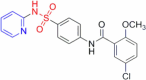
2.1.10. 5-Chloro-2-methoxy-N-(4-(N-pyridin-2-ylsulfamoyl)phenyl)benzamide (15a)
Brown crystals, m.p. 250–252 °C, yield (85 %). 1H NMR (DMSO‑d6, 500 MHz, δ ppm) 3.82 (s, 3H, OCH3), 6.84 (s, 1H, aromatic-H), 7.16 (d, 1H, J = 6.6 Hz, aromatic-H), 7.52–7.58 (m, 4H, aromatic-H), 7.62–7.67 (m, 1H, aromatic-H), 7.81–7.99 (m, 4H, aromatic-H), 10.21 (s, 1H, NH), 10.48 (s, 1H, NH). Anal. Calcd. (%) for C19H16ClN3O4S (417.87): C, 54.61; H, 3.86; N, 10.06. Found: C, 54.70; H, 3.82; N, 10.00 %.
2.1.11. 5-Chloro-2-methoxy-N-(4-(N-pyridin-3-ylsulfamoyl)phenyl)benzamide (15b)
Pale yellow crystals, m.p. 242–244 °C, yield (86 %). 1H NMR (DMSO‑d6, 500 MHz, δ ppm) 3.81 (s, 3H, OCH3), 7.16 (d, 1H, J = 8.6 Hz, aromatic-H), 7.24–7.27 (m, 2H, aromatic-H), 7.54 (d, 1H, J = 2.9 Hz, aromatic-H), 7.69–7.71 (m, 3H, aromatic-H), 7.82 (d, 2H, J = 9.1 Hz, aromatic-H), 8.21 (d, 1H, J = 3.3 Hz, aromatic-H), 8.25 (d, 1H, J = 3.7 Hz, aromatic-H), 10.44 (s, 1H, NH), 10.53 (s, 1H, NH). 13C NMR (DMSO‑d6, 125 MHz, δ ppm) 56.88 (1C, OCH3), 114.61, 120.10, 124.49, 124.79, 127.06, 127.92, 128.49, 129.30, 132.10, 133.82, 135.02, 142.34, 143.41, 145.77, 155.85 (17C), 164.39 (1C, C = O). Anal. Calcd. (%) for C19H16ClN3O4S (417.87): C, 54.61; H, 3.86; N, 10.06. Found: C, 54.67; H, 3.80; N, 10.11 %.
2.1.12. 4-Chloro-N-(pyridin-3-yl)benzenesulfonamide (16)
White crystals, m.p. 210 °C, yield (97 %). 1H NMR (DMSO‑d6, 500 MHz, δ ppm) 7.28 (t, 1H, pyridine-H), 7.47 (d, 1H, J = 8.6 Hz, pyridine-H), 7.62 (d, 2H, J = 8.6 Hz, aromatic-H), 7.72 (d, 2H, J = 8.6 Hz, aromatic-H), 8.25 (s, 2H, pyridine-H), 10.61 (s, 1H, NH). 13C NMR (DMSO‑d6, 125 MHz, δ ppm) 125.38, 129.19, 129.85, 130.17, 135.31, 138.36, 138.77, 140.68, 144.47 (11C). Anal. Calcd. (%) for C11H9ClN2O2S (268.72): C, 49.17; H, 3.38; N, 10.42. Found: C, 49.10; H, 3.42; N, 10.48 %.
2.2. Biological activities
The anti-diabetic activity (α-amylase and α-glucosidase enzyme inhibition percentage) was measured using the 3, 5-dinitrosalicylic acid (DNSA) method (Wickramaratne et al., 2016, Pistia-Brueggeman and Hollingsworth, 2001). The anti-Alzheimer activity (acetylcholinesterase enzyme inhibition percentage) was estimated according to Ellman's method (Ellman et al., 1961, Aboulthana et al., 2022). All the sulfonamide compounds were evaluated and compared to the reference at equal concentrations (1 mg/ml). The biological experiments have been illustrated and added to the supplementary materials file.
2.3. Computational studies
The physicochemical properties, lipophilicity, and drug-likeness of the more potent derivatives 15a and 15b were computed by utilizing the SwissADME online server (http://www.swissadme.ch/) (Hassan and Aboulthana, 2023) (accessed on 14 October 2023). Also, the drug-likeness model score was expected by employing the Molsoft online server (https://molsoft.com/mprop/) (Gad et al., 2020) (accessed on 14 October 2023). ADME properties prediction was computed by utilizing the pkCSM online server (http://biosig.unimelb.edu.au/pkcsm/prediction) (Pires et al., 2015) (accessed on 18 October 2023). Toxicity properties prediction was predicted by employing the Pre-ADMET online server (https://preadmet.bmdrc.kr/) (Ghannay et al., 2020) (accessed on 19 October 2023). Finally, surface properties were computed by utilizing the Molinspiration Galaxy 3D generator through the website online server (https://www.molinspiration.com/cgi/galaxy) (Ceauranu et al., 2023) (accessed on 20 October 2023).
3. Results
3.1. Chemistry
5-Amino-pyrazoles derivatives 1a, b (Hassan et al., 2021), 5-amino-antipyrine (10), 2-amino pyridine (14a), and 3-amino pyridine (14b) with 4-chlorobenzene-1-sulfonyl chloride (2), 4-(5-chloro-2-methoxybenzamido)benzene-1-sulfonyl chloride (4) (Abdelaziz et al., 2015), 4-((5-chloro-2-methoxybenzamido)methyl)benzene-1-sulfonyl chloride (5) (Galal et al., 2018), and 4-(2-(5-chloro-2-methoxybenzamido)ethyl)benzene-1-sulfonyl chloride (6) (Zhao et al., 2016) were used as starting materials for formulation and preparation of sulfonamide derivatives tethered with pyrazole or pyridine 3a, b, 7–9, 11–13, 15a, b, and 16 (Scheme 1, Scheme 2, Scheme 3, Scheme 4).
Scheme 1.

5-(4-Chlorophenylsulfonamido)-1H-pyrazole-4-carboxamide derivatives 3a, b.
Scheme 2.

Synthesis of sulfonamide derivatives tethered with pyrazole 7–9.
Scheme 3.

Synthesis of antipyrine-sulfonamide derivatives 11–13.
Scheme 4.

Sulfonamide-pyridine derivatives 15a, b, and 16.
5-Amino-pyrazoles derivatives 1a and 1b were reacted with 4-chlorobenzene-1-sulfonyl chloride (2) to form 5-(4-chlorophenylsulfonamido)-1H-pyrazole-4-carboxamide derivatives 3a and 3b (Scheme 1).
5-Amino-pyrazole 1a as starting material reacted with three different derivatives of sulfonyl chloride 4–6, namely: 4-(5-chloro-2-methoxybenzamido)benzene-1-sulfonyl chloride (4), 4-((5-chloro-2-methoxybenzamido)methyl)benzene-1-sulfonyl chloride (5), and 4-(2-(5-chloro-2-methoxybenzamido)ethyl)benzene-1-sulfonyl chloride (6), according to the described method in the experimental part to yield the final products sulfonamide derivatives tethered with pyrazole 7–9 (Scheme 2).
In the last decade, organic and pharmaceutical researchers have especially focused on antipyrine derivatives which possess a broad spectrum of therapeutic and clinical applications. Moreover, there are some antipyrine-based commercially available drugs such as Famprofazone and Edaravone (Sahoo et al., 2020, Ebosie et al., 2021, Mustafa et al., 2022, Shaikh et al., 2023). In 2023, Al-Sanea and co-workers prepared an oxadiazolyl linked to antipyrine derivative I, which demonstrated anti-inflammatory activity and selective inhibitory activity against COX-2 enzymes (Al-Sanea et al., 2023). Also, in 2022, Abu-Melha synthesized an antipyrine-thiazole hybrid II, which revealed respectable antibacterial activity (Abu-Melha, 2022). In 2018, Tao et al. synthesized a new series of 4-heteroaryl-antipyrines and investigated their anti-breast cancer activity, and it was shown that the thiadiazole-antipyrine derivative III has anti-breast cancer activity (Tao et al., 2018) (Fig. 3).
Fig. 3.

Chemical structures of bioactive antipyrine compounds and some drugs.
Accordingly, the various important biological applications of antipyrine derivatives encouraged our scientific team to design and prepare a series of antipyrine-sulfonamide derivatives 11–13 through the direct reaction of 5-amino antipyrine (10) with three different derivatives of sulfonyl chloride 2, 4, and 6 (Scheme 3).
Finally, 2-aminopyridine (14a) and 3-aminopyridine (14b) were reacted with 4-(5-chloro-2-methoxybenzamido)benzene-1-sulfonyl chloride (4) to produce sulfonamide-pyridine derivatives 15a and 15b in yield about 85 %. In addition, 3-aminopyridine (14b) reacted with 4-chlorobenzene-1-sulfonyl chloride (2) to produce sulfonamide-pyridine derivative 16 (Scheme 4).
3.2. Biological activities
The anti-diabetic (Wickramaratne et al., 2016, Pistia-Brueggeman and Hollingsworth, 2001) and anti-Alzheimer's (Ellman et al., 1961, Aboulthana et al., 2022) activities of sulfonamide derivatives tethered with pyrazole or pyridine 3a, b, 7–9, 11–13, 15a, b, and 16 were assessed through using the reported methods in the literature. All the tested compounds were evaluated and the results were compared to reference drug at equal concentrations (1 mg/ml).
The anti-diabetic activity of sulfonamide derivatives tethered with pyrazole or pyridine 3a, b, 7–9, 11–13, 15a, b, and 16 was assessed by figuring out the percentage of inhibition for the two enzymes namely α-amylase and α-glucosidase using Acarbose as the standard reference. In contrast, the anti-Alzheimer's activity was evaluated by reckoning the percentage of inhibition for acetylcholinesterase (ACE) enzyme using Donepezil as the standard reference. The results are detailed in Table 1 and represented in Fig. 4.
Table 1.
The in vitro anti-diabetic and anti-Alzheimer's activities of sulfonamide derivatives tethered with pyrazole or pyridine 3a, b, 7–9, 11–13, 15a, b, and 16.
| Derivatives |
Inhibition (%) |
||
|---|---|---|---|
|
Anti-diabetic Activity |
Anti-Alzheimer's Activity |
||
| α-Amylase enzyme | α-Glucosidase enzyme | Acetylcholinesterase (AChE) enzyme | |
| 3a | 27.77 ± 0.01 | 22.36 ± 0.01 | 12.44 ± 0.01 |
| 3b | 8.55 ± 0.01 | 7.38 ± 0.00 | 9.36 ± 0.00 |
| 7 | 30.88 ± 0.01 | 27.23 ± 0.02 | 20.52 ± 0.01 |
| 8 | 39.97 ± 0.01 | 37.46 ± 0.02 | 13.91 ± 0.01 |
| 9 | 14.33 ± 0.00 | 13.43 ± 0.01 | 6.65 ± 0.00 |
| 11 | 15.24 ± 0.00 | 14.29 ± 0.01 | 10.61 ± 0.00 |
| 12 | 22.05 ± 0.00 | 19.73 ± 0.00 | 33.38 ± 0.00 |
| 13 | 28.54 ± 0.01 | 26.74 ± 0.01 | 16.36 ± 0.01 |
| 15a | 44.36 ± 0.01* | 41.58 ± 0.02* | 15.43 ± 0.01 |
| 15b | 26.77 ± 0.01 | 26.16 ± 0.01 | 41.82 ± 0.01* |
| 16 | 28.22 ± 0.01 | 26.45 ± 0.01 | 16.18 ± 0.01 |
| STD | Acarbose | Donepezil | |
| 61.07 ± 0.01 | 51.67 ± 0.01 | 68.86 ± 0.01 | |
Signifies the most effective compound.
Fig. 4.

The activities of sulfonamide derivatives tethered with pyrazole or pyridine 3a, b, 7–9, 11–13, 15a, b, 16, acarbose, and donepezil. A; anti-diabetic, B; anti-Alzheimer.
3.3. Computational studies
3.3.1. Physicochemical properties, lipophilicity, and drug-likeness
The physicochemical properties, lipophilicity, and drug-likeness of the more potent derivatives 15a and 15b were computed by utilizing the SwissADME online server (http://www.swissadme.ch/) (Hassan and Aboulthana, 2023) (accessed on 14 October 2023). Also, the drug-likeness model score of the two derivatives 15a and 15b was expected by employing the Molsoft online server (https://molsoft.com/mprop/) (Gad et al., 2020) (accessed on 14 October 2023). The expected and computed results are shown in Table 2.
Table 2.
The physicochemical properties, lipophilicity, and drug-likeness of the two potent derivatives 15a and 15b.
| Properties |
 15a |
 15b |
|---|---|---|
| SMILES | O = C(NC1 = CC = C(S(=O)(NC2 = NC = CC = C2) = O)C = C1)C3 = CC(Cl) = CC = C3OC | O = C(NC1 = CC = C(S(=O)(NC2 = CC = CN = C2) = O)C = C1)C3 = CC(Cl) = CC = C3OC |
| Physicochemical properties | ||
| Formula | C19H16ClN3O4S | C19H16ClN3O4S |
| Molecular weight (MW) | 417.87 g/mol | 417.87 g/mol |
| Number of heavy atoms (HA) | 28 | 28 |
| Number of rotatable bonds (ROTBs) | 7 | 7 |
| Number of H-bond acceptors (HBAs) | 5 | 5 |
| Number of H-bond donors (HBDs) | 2 | 2 |
| Molar Refractivity (MR) | 107.07 | 107.07 |
| Topological polar surface area (TPSA) | 105.77 Å2 | 105.77 Å2 |
| Lipophilicity | ||
| Log Po/w (WLOGP) | 4.50 | 4.50 |
| Log Po/w (MLOGP) | 1.67 | 1.67 |
| Drug-likeness | ||
| Lipinski (Ro5) | Yes; 0 violation | Yes; 0 violation |
| Ghose | Yes | Yes |
| Veber | Yes | Yes |
| Egan | Yes | Yes |
| Drug-likeness model score | 0.48 | 0.56 |
3.3.2. ADME and toxicity properties prediction
ADME properties prediction for the more potent sulfonamide-pyridine derivatives 15a and 15b were computed by utilizing the pkCSM online server (http://biosig.unimelb.edu.au/pkcsm/prediction, accessed on 18 October 2023) (Pires et al., 2015). As well the toxicity properties prediction of the two sulfonamide-pyridine derivatives 15a and 15b were predicted by employing the Pre-ADMET online server (https://preadmet.bmdrc.kr/, accessed on 19 October 2023) (Ghannay et al., 2020). The expected and computed results of ADME and toxicity properties prediction are shown in Table 3.
Table 3.
ADME and toxicity properties prediction of the two potent derivatives 15a and 15b.
| Properties | 15a | 15b | ||
|---|---|---|---|---|
| Absorption | ||||
| P-glycoprotein substrate | Yes |  |
Yes | |
| P-glycoprotein I inhibitor | Yes | |
Yes | |
| P-glycoprotein II inhibitor | Yes | |
Yes | |
| Distribution | ||||
| BBB permeability (log BB) | −0.766 | −0.766 | ||
| CNS permeability (log PS) | −2.439 | −2.413 | ||
| Metabolism | ||||
| CYP1A2 inhibitior | Yes | |
Yes | |
| CYP2C19 inhibitior | Yes | |
Yes | |
| CYP2C9 inhibitior | Yes | |
Yes | |
| CYP2D6 inhibitior | No |  |
No | |
| CYP3A4 inhibitior | Yes | |
Yes | |
| Toxicity | ||||
| Ames test (Mutagenicity) | Mutagen | |
Mutagen | |
| Carcinogenicity (Mouse) | Positive | |
Positive | |
| Carcinogenicity (Rat) | Negative | |
Positive | |
| hERG inhibition | High risk | |
High risk | |
= Inhibitior, Non-Mutagen, Negative carcinogenicity, and Low risk.
= Non-inhibitior, Mutagen, Positive carcinogenicity, and High risk.
3.3.3. Molecular lipophilicity potential (MLP) and polar surface area (PSA)
The surface properties of the more potent derivatives 15a and 15b were computed by utilizing the Molinspiration Galaxy 3D generator through the website online server https://www.molinspiration.com/cgi/galaxy (Ceauranu et al., 2023) (accessed on 20 October 2023). The generated results of molecular lipophilicity potential (MLP) and polar surface area (PSA) of the sulfonamide-pyridine derivatives 15a and 15b are shown in Fig. 5.
Fig. 5.

(A) The molecular lipophilicity potential (MLP), and (B) The polar surface area (PSA) of the sulfonamide-pyridine derivatives 15a and 15b.
4. Discussion
4.1. Chemistry
The structures of sulfonamide derivatives were elucidated via spectroscopy (1H and 13C NMR). The 1H NMR spectrum of 5-(4-chlorophenylsulfonamido)-1H-pyrazole derivative 3b shows a single peak at δ = 3.69 ppm for the OCH3 group. Moreover, the protons (13H) of the aromatic rings appeared at δ 6.88 (d, 2H, J = 9.1 Hz), 7.02 (t, 1H, J = 7.2 Hz), 7.20 (d, 2H, J = 9.1 Hz), 7.27 (t, 2H, J = 7.9 Hz), 7.35 (d, 2H, J = 8.1 Hz), 7.52 (d, 2H, J = 8.1 Hz), and 7.57 (d, 2H, J = 8.1 Hz). Three protons of the four protons of 4NH appeared at 7.66, 7.78, and 9.04 while the fourth proton did not appear.
The 1H NMR spectrum of the sulfonamide derivative tethered with pyrazole 8 was characterized by the disappearance of the signal of the NH2 group of 5-amino-pyrazole 1a and illustrates three single signals at δ equal to 2.22, 3.84, and 4.53 ppm due to the methyl group (CH3), methoxy group (OCH3), and methylene group (CH2), respectively. Also, the 13C NMR spectrum is characterized by three carbon signals at δ = 20.99 for methyl, 46.36 due to a methylene carbon atom, and 56.84 for a methoxy carbon atom.
The 1H NMR spectrum proved and confirmed the structure of compound 11 and exhibited the insertion of two molecules of 4-chlorophenyl sulfonyl into the 5-amino-antipyrine (10) compound, where (i) the NH proton was not exhibited and not being observed. (ii) Eight protons of the aromatic rings of the two 4-chlorophenyl sulfonyl molecules exhibited as two doublets at δ = 7.67 (4H, J = 8.6 Hz) and 7.91 (4H, J = 8.6 Hz). (iii) Five protons of the phenyl ring exhibited as one doublet at δ = 7.25 (2H, J = 7.6 Hz), one triplet at δ = 7.38 (1H, J = 7.4 Hz), and finally, one triplet at δ = 7.50 (2H, J = 7.6 Hz). (iv) The methyl and N-methyl protons exhibited as singlet signals at δ = 1.98 and 3.23 ppm, respectively.
Moreover, the 13C NMR spectrum of compound 11 is characterized by two carbon signals at δ = 10.89 for methyl and 35.24 due to N-methylene carbon atom.
The 1H NMR spectrum of compound 16 exhibited the eight protons of the pyridine and benzene moieties as follows: 7.28 (t, 1H, pyridine-H), 7.47 (d, 1H, J = 8.6 Hz, pyridine-H), 7.62 (d, 2H, J = 8.6 Hz, aromatic-H), 7.72 (d, 2H, J = 8.6 Hz, aromatic-H), and 8.25 (s, 2H, pyridine-H). Also, the NH proton appeared at δ = 10.61 as a single. The 13C NMR spectrum exhibited peaks at δ = 125.38, 129.19, 129.85, 130.17, 135.31, 138.36, 138.77, 140.68, and 144.47 for eleven carbon atoms.
4.2. Biological activities
In the case of α-amylase inhibition, we observe that the most potent compound among all the tested products is sulfonamide-pyridine derivative 15a with a percentage equal to 44.36 ± 0.01 %. Compound 8, a sulfonamide derivative tethered with pyrazole, showed α-amylase inhibition (%) equal to 39.97 ± 0.01 followed by compound 7 with inhibition (%) = 30.88 ± 0.01. The four compounds 3a, 13, 15b, and 16 showed α-amylase inhibition (%) in the range from 26.77 ± 0.01 to 28.54 ± 0.01 %.
In the case of α-glucosidase inhibition, sulfonamide-pyridine derivative 15a is the most powerful with a percentage inhibition equal to 41.58 ± 0.02 %. The compound 8 showed α-glucosidase inhibition (%) equal to 37.46 ± 0.02. The four compounds 7, 13, 15b, and 16 showed inhibition percentages from 26.16 ± 0.01 to 27.23 ± 0.02 %. The order of the inhibitory activity of compounds against the α-glucosidase enzyme is 15a > 8 > 7 > 13 > 16 > 15b.
On the estimation of the anti-Alzheimer's activity, we detect that sulfonamide-pyridine derivative 15b showed percentage inhibitor activity against acetylcholinesterase enzyme equal to 41.82 ± 0.01 and the next is antipyrine-sulfonamide derivative 12 with percentage inhibitor activity comparable 33.38 ± 0.00.
Finally, the results and discussion of the biological activities refer to compound 15a, 5-chloro-2-methoxy-N-(4-(N-pyridin-2-ylsulfamoyl)phenyl)benzamide, which is a potent enzyme inhibitor for α-amylase (AA) and α-glucosidase (AG) as an anti-diabetic agent. Also, compound 15b, 5-chloro-2-methoxy-N-(4-(N-pyridin-3-ylsulfamoyl)phenyl)benzamide, demonstrated inhibitor activity against acetylcholinesterase enzyme as an anti-Alzheimer's agent (Fig. 6).
Fig. 6.

Compounds 15a and 15b as anti-diabetic and anti-Alzheimer's agents, respectively.
From the results of the pharmacological evaluation of sulfonamide derivatives tethered with pyrazole or pyridine 3a, b, 7–9, 11–13, 15a, b, and 16, we found that
1- In the case of in vitro anti-diabetic activity, sulfonamide-pyridine derivative 15a (α-amylase (%) = 44.36 ± 0.01, α-glucosidase (%) = 41.58 ± 0.02) > sulfonamide-pyrazole derivative 7 (α-amylase (%) = 30.88 ± 0.01, α-glucosidase (%) = 27.23 ± 0.02) > sulfonamide-antipyrine derivative 12 (α-amylase (%) = 22.05 ± 0.00, α-glucosidase (%) = 19.73 ± 0.00). Also, for the anti-Alzheimer's activity, 15b (acetylcholinesterase (AChE, %) = 41.82 ± 0.01) > 7 (acetylcholinesterase (AChE, %) = 20.52 ± 0.01) in the series of amino derivatives reaction with 4-(5-chloro-2-methoxybenzamido)benzene-1-sulfonyl chloride.
Also, sulfonamide-pyridine derivative 16 (α-amylase (%) = 28.22 ± 0.01, α-glucosidase (%) = 26.45 ± 0.01, and acetylcholinesterase (AChE, %) = 16.18 ± 0.01) > sulfonamide-pyrazole derivative 3a (α-amylase (%) = 27.77 ± 0.0, α-glucosidase (%) = 22.36 ± 0.01, and acetylcholinesterase (AChE, %) = 12.44 ± 0.01) > sulfonamide-antipyrine derivative 11 (α-amylase (%) = 15.24 ± 0.00, α-glucosidase (%) = 14.29 ± 0.01, and acetylcholinesterase (AChE, %) = 10.61 ± 0.00) in the series of amino derivatives reacting with 4-chlorobenzene-1-sulfonyl chloride. This was concerning the impact of pyrazole, antipyrine, and pyridine moieties in the two series. Consequently, the derivatives bearing pyridine moiety were slightly more active than those bearing pyrazole moiety than those bearing antipyrine moiety.
2- Furthermore, we monitored that the derivatives bearing the 4-(5-chloro-2-methoxybenzamido)benzene-1-sulfonyl group (possessing an NH-CO group) were more active than those bearing the 4-chlorobenzene-1-sulfonyl group due to the presence of the NH-CO group. For example, 5-(4-(5-chloro-2-methoxybenzamido)phenylsulfonamido)-pyrazole derivative 7 (α-amylase (%) = 30.88 ± 0.01, α-glucosidase (%) = 27.23 ± 0.02, and acetylcholinesterase (AChE, %) = 20.52 ± 0.01) > 5-(4-chlorophenylsulfonamido)-pyrazole derivative 3a (α-amylase (%) = 27.77 ± 0.01, α-glucosidase (%) = 22.36 ± 0.01, and acetylcholinesterase (AChE, %) = 12.44 ± 0.01), as well 4-(5-chloro-2-methoxybenzamido)benzene-1-sulfonyl-antipyrine 12 (α-amylase (%) = 22.05 ± 0.00, α-glucosidase (%) = 19.73 ± 0.00, and acetylcholinesterase (AChE, %) = 33.38 ± 0.00) > 4-chlorobenzene-1-sulfonyl-antipyrine 11 (α-amylase (%) = 15.24 ± 0.00, α-glucosidase (%) = 14.29 ± 0.01, and acetylcholinesterase (AChE, %) = 10.61 ± 0.00). Fig. 7 illustrates the structure–activity relationship study.
Fig. 7.

Structure-activity relationship study of sulfonamide derivatives as anti-diabetic and anti-Alzheimer's agents.
4.3. Computational studies
4.3.1. Physicochemical properties, lipophilicity, and drug-likeness
The physicochemical properties provide a global description of the substances to understand their biological and medicinal actions. Thus, the physicochemical properties (such as molecular weight, number of rotatable bonds, heavy atoms, etc.) are necessary for the assessment process for determining drug-likeness to find oral drug candidates in the drug discovery phases (Daina et al., 2017). Table 2 represents the physicochemical properties of the two derivatives 15a and 15b.
There are rules based on the physicochemical properties which are represented as the following:
-
•
Properties and guidelines of Lipinski’s rule which is known as the “rule of 5″ (Ro5) are MW ≤ 500, MLOGP ≤ 5, HBAs ≤ 10, and HBDs ≤ 5 (Lipinski et al., 2001).
-
•
Properties and guidelines of Ghose’s rule are 160 ≤ MW ≤ 480, −0.4 ≤ WLOGP ≤ 5.6, 40 ≤ MR ≤ 130, and 20 ≤ HA ≤ 70 (Ghose et al., 1999).
-
•
Properties and guidelines of Veber’s rule are ROTBs ≤ 10 and TPSA ≤ 140 (Veber et al., 2002).
-
•
Properties and guidelines of Egan’s rule are WLOGP ≤ 5.88 and TPSA ≤ 131.6 (Egan et al., 2000).
Based on the results of the drug-likeness assessment, the two sulfonamide-pyridine derivatives 15a and 15b are in agreement with the Lipinski, Ghose, Veber, and Egan rules.
Concerning the rule of the drug-likeness model score assessment, the compounds that possess a positive score, these compounds should be assessed like drugs (Gad et al., 2020). The two sulfonamide-pyridine derivatives 15a and 15b possess positive scores equal to 0.48 and 0.56, respectively (Fig. 8). Consequently, these compounds may be evaluated to be drug-like.
Fig. 8.

The plotting of the drug-likeness score of the sulfonamide-pyridine derivatives 15a and 15b.
4.3.2. ADME and toxicity properties prediction
Concerning absorption properties of the substances are one of the important keys to assessing active efflux across biological tissues and also, are the parameters for evaluating the pharmacokinetic processes of drugs (Sugano et al., 2010). In this part, we studied and predicted three elements of the absorption properties involving P-glycoprotein substrate, P-glycoprotein I inhibitor, and P-glycoprotein II inhibitor (Hwang et al., 2020). Based on this, we found that the two sulfonamide-pyridine derivatives 15a and 15b are inhibitors for the three parts of absorption properties.
The blood–brain barrier (BBB) and central nervous system (CNS) permeabilities are components of the substance distribution properties for their pharmacokinetic characteristics evaluation to design new drugs and therapeutic (Warren, 2018).
The rule of the blood–brain barrier (BBB) permeability states that the substance with log BB more than 0.3 passes the BBB freely but the substance with log BB less than −1 is poorly distributed and cannot cross the BBB (Vilar et al., 2010). The log BB predicted of both sulfonamide-pyridine derivatives 15a and 15b is equal to −0.766 thus; the two possess the ability to pass the BBB moderately.
On the other hand, in the case of the CNS permeability rule, if log PS is more than −2, the substance penetrates the CNS. But, if the log PS is less than −3, the substance possesses a problem penetrating the CNS (Naanaai et al., 2023). Based on this concept, the two sulfonamide-pyridine derivatives 15a and 15b possess log PS equal to −2.439 and −2.413, respectively, consequently, the two penetrate the CNS fairly.
The metabolism of pharmaceuticals or other xenobiotics is executed by the cytochrome P450 (CYP) enzyme family. The inhibition of CYP enzymes causes pharmacokinetic drug-drug interactions (Hakkola et al., 2020). The two sulfonamide-pyridine derivatives 15a and 15b are inhibitors of the CYP1A2, CYP2C19, CYP2C9, and CYP3A4 enzymes, but are non-inhibitors of the CYP2D6 enzyme.
Toxicity properties prediction of the candidates is an essential stage in the drug discovery strategy. This stage helps specify the candidates that possess the safe characteristics (Tran et al., 2023). In this section, we predicted four elements of the toxicity properties as the following:
-
•
In the case of the Ames test (mutagenicity), the two sulfonamide-pyridine derivatives 15a and 15b were predicted to cause mutagens.
-
•
For the carcinogenicity (mouse) test, the two sulfonamide-pyridine derivatives 15a and 15b were predicted as positive, thus the two derivatives are carcinogenic substances.
-
•
In the computation of the carcinogenicity (rat) test, the derivative 15a was predicted as negative but 15b was predicted as positive, accordingly 15b is a carcinogenic substance.
-
•
In the case of hERG inhibition, the two sulfonamide-pyridine derivatives 15a and 15b showed a high risk.
4.3.3. Molecular lipophilicity potential (MLP) and polar surface area (PSA)
The rule of the molecular lipophilicity potential (MLP) assessment is used to calculate the hydrophobicity and lipophobicity areas, where the blue and pink colors refer to high and intermediate lipophilic areas, respectively. The yellow and green colors refer to the high and intermediate hydrophilic areas, respectively (Alam et al., 2014). Fig. 5A shows the molecular lipophilicity potential (MLP) of the sulfonamide-pyridine derivatives 15a and 15b. From Fig. 5A, we concluded that some parts of the compounds are green hence their molecular lipophilicity potential is intermediate. However, the intensity of the hydrophobicity area ranges from high to intermediate.
Polar surface area (PSA) is defined as the sum of polar atoms surfaces. The red color is used to characterize the polar surface, while the gray-white color is used to characterize the non-polar surface area (Alam et al., 2014). Polar surface area (PSA) assessment is an influential factor and is important in predicting drug absorption properties (Schaftenaar and de Vlieg, 2012). Fig. 5B shows the polar surface area (PSA) of the sulfonamide-pyridine derivatives 15a and 15b. From Fig. 5B, we concluded that most of the compounds are gray-white in color, therefore their surface is non-polar.
5. Conclusions
In conclusion, a new series of sulfonamide derivatives tethered with pyrazole or pyridine (3a, b, 7–9, 11–13, 15a, b, and 16) were designed and synthesized via direct reaction of amine compounds with sulfonyl chloride derivatives. Spectroscopy (1H and 13C NMR) confirmed the chemical structures of the sulfonamide derivatives. The in vitro biological evaluation activity results reveal that sulfonamide-pyridine derivative 15a is an effective inhibitor for α-amylase and α-glucosidase enzymes with a percentage equal to 44.36 ± 0.01 and 41.58 ± 0.02, respectively, also the sulfonamide-pyridine derivative 15b is an anti-Alzheimer's agent with inhibitor activity toward acetylcholinesterase enzyme (AChE, %) = 41.82 ± 0.01.
Furthermore, the computational studies results of the more potent sulfonamide-pyridine derivatives 15a and 15b indicate that (i) these derivatives 15a and 15b agree with the Lipinski, Ghose, Veber, and Egan rules and possess positive scores equal to 0.48 and 0.56, respectively. Hence, the two derivatives 15a and 15b may be evaluated to be drug-like and are inhibitors of the three parts of absorption properties (p-glycoprotein substrate, p-glycoprotein I, and II). (ii) These derivatives possess the ability to pass the BBB moderately, penetrate the CNS fairly, and are inhibitors of the CYP1A2, CYP2C19, CYP2C9, and CYP3A4 enzymes, but are non-inhibitors of the CYP2D6 enzyme. (iii) The two compounds were predicted to cause mutagens (Ames test), were carcinogenic substances (carcinogenicity mouse test), and showed high risk (hERG inhibition).
From this present manuscript, in the future, the two sulfonamide-pyridine derivatives 15a and 15b will be utilized as candidates for the design and improvement of their structures based on the structure–activity relationship study, and the biological assessment will be developed from in vitro to in vivo assays to try producing a novel drug as anti-diabetic and anti-Alzheimer's agents.
CRediT authorship contribution statement
Nagwa M. Abdelazeem: Conceptualization, Data curation, Writing – original draft, Writing – review & editing, Formal analysis, Methodology, Supervision, Project administration, Software. Wael M. Aboulthana: Writing – original draft, Writing – review & editing, Visualization, Investigation, Methodology. Ashraf S. Hassan: Conceptualization, Data curation, Writing – original draft, Writing – review & editing, Formal analysis, Methodology, Supervision, Project administration, Software. Abdulrahman A. Almehizia: Funding acquisition, Writing – original draft, Writing – review & editing, Visualization, Investigation, Validation. Ahmed M. Naglah: Funding acquisition, Writing – original draft, Writing – review & editing, Visualization, Investigation, Validation. Hamad M. Alkahtani: Funding acquisition, Writing – original draft, Writing – review & editing, Visualization, Investigation, Validation.
Declaration of competing interest
The authors declare that they have no known competing financial interests or personal relationships that could have appeared to influence the work reported in this paper.
Acknowledgments
The authors extend their appreciation to the Deanship of Scientific Research, King Saud University for funding through Vice Deanship of Scientific Research Chairs; (Drug Exploration and Development Chair).
Footnotes
Supplementary data to this article can be found online at https://doi.org/10.1016/j.jsps.2024.102025.
Contributor Information
Ashraf S. Hassan, Email: ashraf_salmoon@yahoo.com.
Abdulrahman A. Almehizia, Email: mehizia@ksu.edu.sa.
Ahmed M. Naglah, Email: anaglah@ksu.edu.sa.
Hamad M. Alkahtani, Email: ahamad@ksu.edu.sa.
Appendix A. Supplementary data
The following are the Supplementary data to this article:
References
- Abdel-Aziz H.A., Eldehna W.M., Fares M., Al-Rashood S.T., Al-Rashood K.A., Abdel-Aziz M.M., Soliman D.H. Synthesis, biological evaluation and 2D-QSAR study of halophenyl bis-hydrazones as antimicrobial and antitubercular agents. Int. J. Mol. Sci. 2015;16:8719–8743. doi: 10.3390/ijms16048719. [DOI] [PMC free article] [PubMed] [Google Scholar]
- Abdelaziz A.M., Yu M., Li P., Zhong L., Singab A.N.B., Hanna A.G., Abouzid K.A., Mekhael M.K.G., Wang S. Synthesis and evaluation of 5-Chloro-2-methoxy-N-(4-sulphamoylphenyl)benzamide derivatives as anti-cancer agents. Med. Chem. 2015;5:253–260. doi: 10.4172/2161-0444.1000272. [DOI] [Google Scholar]
- Aboulthana W.M., Omar N.I., El-Feky A.M., Hasan E.A., Ibrahim N.E.S., Youssef A.M. In vitro study on effect of zinc oxide nanoparticles on the biological activities of croton Tiglium L. seeds extracts. Asian Pac. J. Cancer Prev. 2022;23:2671–2686. doi: 10.31557/APJCP.2022.23.8.2671. 10.31557%2FAPJCP.2022.23.8.2671. [DOI] [PMC free article] [PubMed] [Google Scholar]
- Abu-Melha S. Molecular modeling and docking studies of new antimicrobial antipyrine-thiazole hybrids. Arab. J. Chem. 2022;15 doi: 10.1016/j.arabjc.2022.103898. [DOI] [Google Scholar]
- Abu-Taweel G.M., Ibrahim M.M., Khan S., Al-Saidi H.M., Alshamrani M., Alhumaydhi F.A., Alharthi S.S. Medicinal importance and chemosensing applications of pyridine derivatives: a review. Crit. Rev. Anal. Chem. 2022;1–18(Accepted) doi: 10.1080/10408347.2022.2089839. [DOI] [PubMed] [Google Scholar]
- Alam M.S., Lee D.U., Bari M.L. Antibacterial and cytotoxic activities of Schiff base analogues of 4-aminoantipyrine. J. Korean Soc. Appl. Biol. Chem. 2014;57:613–619. doi: 10.1007/s13765-014-4201-2. [DOI] [Google Scholar]
- Alizadeh S.R., Ebrahimzadeh M.A. Antiviral activities of pyridine fused and pyridine containing heterocycles, a review (from 2000 to 2020) Mini Rev. Med. Chem. 2021;21:2584–2611. doi: 10.2174/1389557521666210126143558. [DOI] [PubMed] [Google Scholar]
- Alkahtani H.M., Almehizia A.A., Al-Omar M.A., Obaidullah A.J., Zen A.A., Hassan A.S., Aboulthana W.M. In vitro evaluation and bioinformatics analysis of Schiff bases bearing pyrazole scaffold as bioactive agents: antioxidant, anti-diabetic, anti-alzheimer, and anti-arthritic. Molecules. 2023;28:7125. doi: 10.3390/molecules28207125. [DOI] [PMC free article] [PubMed] [Google Scholar]
- Alpınar E., Kaya M.O., Güleç Ö., Demirci T., Kaya Y., Arslan M. Benzenesulfonamide based 1, 3, 4-oxadiazole derivatives: synthesis, pharmacokinetic property prediction, bovine carbonic anhydrase activity and molecular docking studies. J. Sulfur Chem. 2024;45:65–83. doi: 10.1080/17415993.2023.2257822. [DOI] [Google Scholar]
- Al-Sanea M.M., Hamdi A., Brogi S., Tawfik S.S., Othman D.I.A., Elshal M., Rahman H.U., Parambi D.G.T., Elbargisy R.M., Selim S., Mostafa E.M., Mohamed A.A.B. Design, synthesis, and biological investigation of oxadiazolyl, thiadiazolyl, and pyrimidinyl linked antipyrine derivatives as potential non-acidic anti-inflammatory agents. J. Enzyme Inhib. Med. Chem. 2023;38:2162511. doi: 10.1080/14756366.2022.2162511. [DOI] [PMC free article] [PubMed] [Google Scholar]
- Alzaman N., Ali A. Obesity and diabetes mellitus in the Arab world. J. Taibah Univ. Medical Sci. 2016;11:301–309. doi: 10.1016/j.jtumed.2016.03.009. [DOI] [Google Scholar]
- Apaydın S., Török M. Sulfonamide derivatives as multi-target agents for complex diseases. Bioorg. Med. Chem. Lett. 2019;29:2042–2050. doi: 10.1016/j.bmcl.2019.06.041. [DOI] [PubMed] [Google Scholar]
- Becerra D., Abonia R., Castillo J.C. Recent applications of the multicomponent synthesis for bioactive pyrazole derivatives. Molecules. 2022;27:4723. doi: 10.3390/molecules27154723. [DOI] [PMC free article] [PubMed] [Google Scholar]
- Benazzouz-Touami A., Chouh A., Halit S., Terrachet-Bouaziz S., Makhloufi-Chebli M., Ighil-Ahriz K., Silva A.M. New coumarin-pyrazole hybrids: synthesis, docking studies and biological evaluation as potential cholinesterase inhibitors. J. Mol. Struct. 2022;1249 doi: 10.1016/j.molstruc.2021.131591. [DOI] [Google Scholar]
- Ceauranu S., Ciorsac A., Ostafe V., Isvoran A. Evaluation of the toxicity potential of the metabolites of di-isononyl phthalate and of their interactions with members of family 1 of sulfotransferases-a computational study. Molecules. 2023;28:6748. doi: 10.3390/molecules28186748. [DOI] [PMC free article] [PubMed] [Google Scholar]
- Cui Y., Yang W., Shuai J., Ma Y., Yan Y. Lifestyle and socioeconomic transition and health consequences of alzheimer’s disease and other dementias in global, from 1990 to 2019. J. Prev. Alzheimers Dis. 2024;11:88–96. doi: 10.14283/jpad.2023.63. [DOI] [PubMed] [Google Scholar]
- Daina A., Michielin O., Zoete V. SwissADME: a free web tool to evaluate pharmacokinetics, drug-likeness and medicinal chemistry friendliness of small molecules. Sci. Rep. 2017;7:42717. doi: 10.1038/srep42717. [DOI] [PMC free article] [PubMed] [Google Scholar]
- De S., Ashok Kumar S.K., Shah S.K., Kazi S., Sarkar N., Banerjee S., Dey S. Pyridine: the scaffolds with significant clinical diversity. RSC Adv. 2022;12:15385–15406. doi: 10.1039/D2RA01571D. [DOI] [PMC free article] [PubMed] [Google Scholar]
- Dorbabu A. Pyrazole/pyrazoline as an excellent pharmacophore in the design of carbonic anhydrase inhibitors (2018–2022) Arch. Pharm. 2023;365:2200562. doi: 10.1002/ardp.202200562. [DOI] [PubMed] [Google Scholar]
- Ebosie N.P., Ogwuegbu M.O., Onyedika G.O., Onwumere F.C. Biological and analytical applications of Schiff base metal complexes derived from salicylidene-4-aminoantipyrine and its derivatives: a review. J. Iran. Chem. Soc. 2021;18:3145–3175. doi: 10.1007/s13738-021-02265-1. [DOI] [Google Scholar]
- Egan W.J., Merz K.M., Baldwin J.J. Prediction of drug absorption using multivariate statistics. J. Med. Chem. 2000;43:3867–3877. doi: 10.1021/jm000292e. [DOI] [PubMed] [Google Scholar]
- Eldeab H.A. Green synthetic approach and antimicrobial evaluation for some novel pyridyl benzoate derivatives. Russ. J. Org. Chem. 2019;55:1034–1040. doi: 10.1134/S1070428019070200. [DOI] [Google Scholar]
- Ellman G.L., Courtney K.D., Andres V., Featherstone R.M. A new and rapid colorimetric determination of acetylcholinesterase activity. Biochem. Pharmacol. 1961;7:88–95. doi: 10.1016/0006-2952(61)90145-9. [DOI] [PubMed] [Google Scholar]
- El-Metwally A., Toivola P., Al-Rashidi M., Nooruddin S., Jawed M., AlKanhal R., Razzak H.A., Albawardi N. Epidemiology of Alzheimer’s disease and dementia in Arab countries: a systematic review. Behav. Neurol. 2019;2019:3935943. doi: 10.1155/2019/3935943. [DOI] [PMC free article] [PubMed] [Google Scholar]
- Elsherif M.A., Hassan A.S., Moustafa G.O., Awad H.M., Morsy N.M. Antimicrobial evaluation and molecular properties prediction of pyrazolines incorporating benzofuran and pyrazole moieties. J. Appl. Pharm. Sci. 2020;10:037–043. doi: 10.7324/JAPS.2020.102006. [DOI] [Google Scholar]
- Fahim A.M. Anti-proliferative activity, molecular docking study of novel synthesized ethoxyphenylbenzene sulfonamide with computational calculations. J. Mol. Struct. 2023;1277 doi: 10.1016/j.molstruc.2022.134871. [DOI] [Google Scholar]
- Failla M., Lombardo G.W., Orlando P., Fiorito D., Bombonato E., Ronchi P., Passarella D., Fasano V. Late-stage functionalisation of pyridine-containing bioactive molecules: recent strategies and perspectives. Eur. J. Org. Chem. 2023;26:e202300074. [Google Scholar]
- Faria J.V., Vegi P.F., Miguita A.G.C., Dos Santos M.S., Boechat N., Bernardino A.M.R. Recently reported biological activities of pyrazole compounds. Bioorg. Med. Chem. 2017;25:5891–5903. doi: 10.1016/j.bmc.2017.09.035. [DOI] [PubMed] [Google Scholar]
- Gad E.M., Nafie M.S., Eltamany E.H., Hammad M.S.A.G., Barakat A., Boraei A.T.A. Discovery of new apoptosis-inducing agents for breast cancer based on ethyl 2-Amino-4,5,6,7-tetra Hydrobenzo[b]Thiophene-3-carboxylate: synthesis, in vitro, and in vivo activity evaluation. Molecules. 2020;25:2523. doi: 10.3390/molecules25112523. [DOI] [PMC free article] [PubMed] [Google Scholar]
- Galal A.M.F., Soltan M.M., Ahmed E.R., Hanna A.G. Synthesis and biological evaluation of novel 5-chloro-N-(4-sulfamoylbenzyl) salicylamide derivatives as tubulin polymerization inhibitors. Med. Chem. Commun. 2018;9:1511–1528. doi: 10.1039/C8MD00214B. [DOI] [PMC free article] [PubMed] [Google Scholar]
- Ghannay S., Kadri A., Aouadi K. Synthesis, in vitro antimicrobial assessment, and computational investigation of pharmacokinetic and bioactivity properties of novel trifluoromethylated compounds using in silico ADME and toxicity prediction tools. Monatsh. Chem. 2020;151:267–280. doi: 10.1007/s00706-020-02550-4. [DOI] [Google Scholar]
- Ghose A.K., Viswanadhan V.N., Wendoloski J.J. A knowledge-based approach in designing combinatorial or medicinal chemistry libraries for drug discovery. 1. A qualitative and quantitative characterization of known drug databases. J. Comb. Chem. 1999;1:55–68. doi: 10.1021/cc9800071. [DOI] [PubMed] [Google Scholar]
- Hakkola J., Hukkanen J., Turpeinen M., Pelkonen O. Inhibition and induction of CYP enzymes in humans: an update. Arch. Toxicol. 2020;94:3671–3722. doi: 10.1007/s00204-020-02936-7. [DOI] [PMC free article] [PubMed] [Google Scholar]
- Hammouda M.M., Elattar K.M., Rashed M.M., Osman A.M. Synthesis and biological activities of bicyclic pyridines integrated steroid hybrid. Steroids. 2023;199 doi: 10.1016/j.steroids.2023.109287. [DOI] [PubMed] [Google Scholar]
- Harit T., Cherfi M., Daoudi N.E., Isaad J., Bnouham M., Malek F. Hybrid pyrazole-tetrazole derivatives with high α-amylase inhibition activity: synthesis, biological evaluation and docking study. Chemistryselect. 2022;7:e202203757. [Google Scholar]
- Hasan, T., Islam, A., Riva, R.k., Rahman, M.N., Ahmed, S., Islam, M.A., Daula, A.S.U., 2023. Phytochemicals from Zingiber capitatum rhizome as potential α-glucosidase, α-amylase, and glycogen phosphorylase inhibitors for the management of Type-II diabetes mellitus: Inferences from in vitro, in vivo and in-silico investigations. Arab. J. Chem. 16, 105128. Doi: 10.1016/j.arabjc.2023.105128.
- Hashem H.E., Amr A.-E.-G.-E., Almehizia A.A., Naglah A.M., Kariuki B.M., Eassa H.A., Nossier E.S. Nanoparticles of a pyrazolo-pyridazine derivative as potential EGFR and CDK-2 inhibitors: design, structure determination, anticancer evaluation and in silico studies. Molecules. 2023;28:7252. doi: 10.3390/molecules28217252. [DOI] [PMC free article] [PubMed] [Google Scholar]
- Hassan A.S., Aboulthana W.M. In vitro biological investigation, and in silico analysis of pyrazole-based derivatives as multi-target agents. Egypt J. Chem. 2023;66:441–455. doi: 10.21608/ejchem.2023.205639.7863. [DOI] [Google Scholar]
- Hassan A.S., Osman S.A., Hafez T.S. 5-Phenyl-2-furaldehyde: synthesis, reactions and biological activities. Egypt J. Chem. 2015;58:113–139. doi: 10.21608/ejchem.2015.978. [DOI] [Google Scholar]
- Hassan A.S., Moustafa G.O., Awad H.M., Nossier E.S., Mady M.F. Design, synthesis, anticancer evaluation, enzymatic assays, and a molecular modeling study of novel pyrazole–indole hybrids. ACS Omega. 2021;6:12361–12374. doi: 10.1021/acsomega.1c01604. [DOI] [PMC free article] [PubMed] [Google Scholar]
- Hassan A.S., Morsy N.M., Aboulthana W.M., Ragab A. In vitro enzymatic evaluation of some pyrazolo [1, 5-a] pyrimidine derivatives: design, synthesis, antioxidant, anti-diabetic, anti-Alzheimer, and anti-arthritic activities with molecular modeling simulation. Drug Dev. Res. 2023;84:3–24. doi: 10.1002/ddr.22008. [DOI] [PubMed] [Google Scholar]
- Hassan A.S., Morsy N.M., Aboulthana W.M., Ragab A. Exploring novel derivatives of isatin-based Schiff bases as multi-target agents: design, synthesis, in vitro biological evaluation, and in silico ADMET analysis with molecular modeling simulations. RSC Adv. 2023;13:9281–9303. doi: 10.1039/D3RA00297G. [DOI] [PMC free article] [PubMed] [Google Scholar]
- Higazy S., Samir N., El-Khouly A., Giovannuzzi S., Begines P., Gaber H.M., Supuran C.T., Abouzid K.A. Identification of thienopyrimidine derivatives tethered with sulfonamide and other moieties as carbonic anhydrase inhibitors: design, synthesis and anti-proliferative activity. Bioorg. Chem. 2024;144 doi: 10.1016/j.bioorg.2023.107089. [DOI] [PubMed] [Google Scholar]
- Hwang J., Youn K., Ji Y., Lee S., Lim G., Lee J., Ho C.-T., Leem S.-H., Jun M. Biological and computational studies for dual cholinesterases inhibitory effect of zerumbone. Nutrients. 2020;12:1215. doi: 10.3390/nu12051215. [DOI] [PMC free article] [PubMed] [Google Scholar]
- Karrouchi K., Radi S., Ramli Y., Taoufik J., Mabkhot Y.N., Al-aizari F.A., Ansar M. Synthesis and pharmacological activities of pyrazole derivatives: a review. Molecules. 2018;23:134. doi: 10.3390/molecules23010134. [DOI] [PMC free article] [PubMed] [Google Scholar]
- Khair-ul-Bariyah S., Sarfraz M., Sharif A., Farooqi Z.H., Arshad M., Ahmed E., Ashraf M., Abdullah S., Arshad M.N., Waseem A. Novel benzothiazole sulfonamides as potent α-glucosidase and cholinesterase inhibitors: design, synthesis, structural properties, biological evaluation and docking studies. J. Mol. Struct. 2024;1299 doi: 10.1016/j.molstruc.2023.137118. [DOI] [Google Scholar]
- Khan S., Ullah H., Taha M., Rahim F., Sarfraz M., Iqbal R., Iqbal N., Hussain R., Shah S.A.A., Ayub K., Albalawi M.A., Abdelaziz M.A., Alatawi F.S., Khan K.M. Synthesis, DFT studies, molecular docking and biological activity evaluation of thiazole-sulfonamide derivatives as potent alzheimer’s inhibitors. Molecules. 2023;28:559. doi: 10.3390/molecules28020559. [DOI] [PMC free article] [PubMed] [Google Scholar]
- Lipinski C.A., Lombardo F., Dominy B.W., Feeney P.J. Experimental and computational approaches to estimate solubility in drug discovery and development settings. Adv. Drug Deliv. Rev. 2001;23:3–25. doi: 10.1016/S0169-409X(96)00423-1. [DOI] [PubMed] [Google Scholar]
- Marinescu M., Popa C.V. Pyridine compounds with antimicrobial and antiviral activities. Int. J. Mol. Sci. 2022;23:5659. doi: 10.3390/ijms23105659. [DOI] [PMC free article] [PubMed] [Google Scholar]
- Mathys H., Peng Z., Boix C.A., Victor M.B., Leary N., Babu S., Abdelhady G., Jiang X., Ng A.P., Ghafari K., Kunisky A.K., Mantero J., Galani K., Lohia V.N., Fortier G.E., Lotfi Y., Ivey J., Brown H.P., Patel P.R., Chakraborty N., Beaudway J.I., Imhoff E.J., Keeler C.F., McChesney M.M., Patel H.H., Patel S.P., Thai M.T., Bennett D.A., Kellis M., Tsai L.H. Single-cell atlas reveals correlates of high cognitive function, dementia, and resilience to Alzheimer's disease pathology. Cell. 2023;186:4365–4385. doi: 10.1016/j.cell.2023.08.039. [DOI] [PMC free article] [PubMed] [Google Scholar]
- Mor S., Khatri M., Punia R., Nagoria S., Sindhu S. A new insight into the synthesis and biological activities of pyrazole based derivatives. Mini Rev. Org. Chem. 2022;19:717–778. doi: 10.2174/1570193X19666220118111614. [DOI] [Google Scholar]
- Morsy N.M., Hassan A.S., Hafez T.S., Mahran M.R., Sadawe I.A., Gbaj A.M. Synthesis, antitumor activity, enzyme assay, DNA binding and molecular docking of Bis-Schiff bases of pyrazoles. J. Iran. Chem. Soc. 2021;18:47–59. doi: 10.1007/s13738-020-02004-y. [DOI] [Google Scholar]
- Moskalik M.Y. Sulfonamides with heterocyclic periphery as antiviral agents. Molecules. 2023;28:51. doi: 10.3390/molecules28010051. [DOI] [PMC free article] [PubMed] [Google Scholar]
- Mukhtar S.S., Hassan A.S., Morsy N.M., Hafez T.S., Saleh F.M., Hassaneen H.M. Design, synthesis, molecular predication and biological evaluation of pyrazole-azomethine conjugates as antimicrobial agents. Synth. Commun. 2021;51:1564–1580. doi: 10.1080/00397911.2021.1894338. [DOI] [Google Scholar]
- Mustafa G., Zia-ur-Rehman M., Sumrra S.H., Ashfaq M., Zafar W., Ashfaq M. A critical review on recent trends on pharmacological applications of pyrazolone endowed derivatives. J. Mol. Struct. 2022;1262 doi: 10.1016/j.molstruc.2022.133044. [DOI] [Google Scholar]
- Naanaai L., El Aissouq A., Zaitan H., Bouachrine M., Khalil F. Computational study of 2-aryl quinoxaline derivatives as α-amylase inhibitors. Chem. Data Collect. 2023;47 doi: 10.1016/j.cdc.2023.101079. [DOI] [Google Scholar]
- Ovung A., Bhattacharyya J. Sulfonamide drugs: structure, antibacterial property, toxicity, and biophysical interactions. Biophys. Rev. 2021;13:259–272. doi: 10.1007/s12551-021-00795-9. [DOI] [PMC free article] [PubMed] [Google Scholar]
- Pires D.E., Blundell T.L., Ascher D.B. pkCSM: predicting small-molecule pharmacokinetic and toxicity properties using graph-based signatures. J. Med Chem. 2015;58:4066–4072. doi: 10.1021/acs.jmedchem.5b00104. [DOI] [PMC free article] [PubMed] [Google Scholar]
- Pistia-Brueggeman G., Hollingsworth R.I. A preparation and screening strategy for glycosidase inhibitors. Tetrahedron. 2001;57:8773–8778. doi: 10.1016/S0040-4020(01)00877-8. [DOI] [Google Scholar]
- Raslan R.R., Ammar Y.A., Fouad S.A., Hessein S.A., Shmiess N.A.M., Ragab A. Evaluation of the anti-proliferative activity of 2-oxo-pyridine and 1′H-spiro-pyridine derivatives as a new class of EGFRWt and VEGFR-2 inhibitors with apoptotic inducers. RSC Adv. 2023;13:10440–10458. doi: 10.1039/D3RA00887H. [DOI] [PMC free article] [PubMed] [Google Scholar]
- Riaz, S., Khan, I.U., Bajda, M., Ashraf, M., Qurat-ul-Ain, Shaukat, A., Rehman, T.U., Mutahir, S., Hussain, S., Mustafa, G., Yar, M., 2015. Pyridine sulfonamide as a small key organic molecule for the potential treatment of type-II diabetes mellitus and Alzheimer’s disease: In vitro studies against yeast α-glucosidase, acetylcholinesterase and butyrylcholinesterase. Bioorg. Chem. 63, 64-71. Doi: 10.1016/j.bioorg.2015.09.008. [DOI] [PubMed]
- Rojas M., Chávez-Castillo M., Bautista J., Ortega Á., Nava M., Salazar J., Díaz-Camargo E., Medina O., Rojas-Quintero J., Bermúdez V. Alzheimer's disease and type 2 diabetes mellitus: pathophysiologic and pharmacotherapeutics links. World J Diabetes. 2021;12:745–766. doi: 10.4239/wjd.v12.i6.745. [DOI] [PMC free article] [PubMed] [Google Scholar]
- Sahoo J., Sahoo C.R., Sarangi P.K.N., Prusty S.K., Padhy R.N., Paidesetty S.K. Molecules with versatile biological activities bearing antipyrinyl nucleus as pharmacophore. Eur. J. Med. Chem. 2020;186 doi: 10.1016/j.ejmech.2019.111911. [DOI] [PubMed] [Google Scholar]
- Schaftenaar G., de Vlieg J. Quantum mechanical polar surface area. J. Comput. Aided Mol. Des. 2012;26:311–318. doi: 10.1007/s10822-012-9557-y. [DOI] [PMC free article] [PubMed] [Google Scholar]
- Shaikh S., Dhavan P., Singh P., Uparkar J., Vaidya S.P., Jadhav B.L., Ramana M.M.V. Design, synthesis and biological evaluation of novel antipyrine based α-aminophosphonates as anti-alzheimer and anti-inflammatory agent. J. Biomol. Struct. Dyn. 2023;41:386–401. doi: 10.1080/07391102.2021.2006088. [DOI] [PubMed] [Google Scholar]
- Silva, L.B., Ferreira, E.F.B., Maryam, Espejo-Román, J.M., Costa, G.V., Cruz, J.V., Kimani, N.M., Costa, J.S., Bittencourt, J.A.H.M., Cruz, J.N., Campos, J.M., Santos, C.B.R., 2023. Galantamine Based Novel Acetylcholinesterase Enzyme Inhibitors: A Molecular Modeling Design Approach. Molecules 28, 1035. Doi: 10.3390/molecules28031035. [DOI] [PMC free article] [PubMed]
- Sugano K., Kansy M., Artursson P., Avdeef A., Bendels S., Di L., Ecker G.F., Faller B., Fischer H., Gerebtzoff G., Lennernaes H., Senner F. Coexistence of passive and carrier-mediated processes in drug transport. Nat. Rev. Drug Discov. 2010;9:597–614. doi: 10.1038/nrd3187. [DOI] [PubMed] [Google Scholar]
- Tahir T., Ashfaq M., Saleem M., Rafiq M., Shahzad M.I., Kotwica-Mojzych K., Mojzych M. Pyridine scaffolds, phenols and derivatives of azo moiety: current therapeutic perspectives. Molecules. 2021;26:4872. doi: 10.3390/molecules26164872. [DOI] [PMC free article] [PubMed] [Google Scholar]
- Tang L., Xiao M., Cai S., Mou H., Li D. Potential application of marine fucosyl-polysaccharides in regulating blood glucose and hyperglycemic complications. Foods. 2023;12:2600. doi: 10.3390/foods12132600. [DOI] [PMC free article] [PubMed] [Google Scholar]
- Tao Z., Gomha S.M., Badrey M.G., El-Idreesy T.T., Eldebss T.M. Novel 4-heteroaryl-antipyrines: synthesis, molecular docking, and evaluation as potential anti-breast cancer agents. J. Heterocycl. Chem. 2018;55:2408–2416. doi: 10.1002/jhet.3305. [DOI] [Google Scholar]
- Tran T.T.V., Wibowo A.S., Tayara H., Chong K.T. Artificial intelligence in drug toxicity prediction: recent advances, challenges, and future perspectives. J. Chem. Inf. Model. 2023;63:2628–2643. doi: 10.1021/acs.jcim.3c00200. [DOI] [PubMed] [Google Scholar]
- Veber D.F., Johnson S.R., Cheng H.-Y., Smith B.R., Ward K.W., Kopple K.D. Molecular properties that influence the oral bioavailability of drug candidates. J. Med. Chem. 2002;45:2615–2623. doi: 10.1021/jm020017n. [DOI] [PubMed] [Google Scholar]
- Vilar S., Chakrabarti M., Costanzi S. Prediction of passive blood-brain partitioning: straightforward and effective classification models based on in silico derived physicochemical descriptors. J. Mol. Graph. Model. 2010;28:899–903. doi: 10.1016/j.jmgm.2010.03.010. [DOI] [PMC free article] [PubMed] [Google Scholar]
- Warren K.E. Beyond the blood: brain barrier: the importance of central nervous system (CNS) pharmacokinetics for the treatment of CNS tumors, including diffuse intrinsic pontine glioma. Front. Oncol. 2018;8:239. doi: 10.3389/fonc.2018.00239. [DOI] [PMC free article] [PubMed] [Google Scholar]
- Wickramaratne M.N., Punchihewa J.C., Wickramaratne D.B.M. In-vitro alpha amylase inhibitory activity of the leaf extracts of adenanthera pavonina. BMC Complement. Altern. Med. 2016;16:466. doi: 10.1186/s12906-016-1452-y. [DOI] [PMC free article] [PubMed] [Google Scholar]
- Wu Y., Wu T., Huang Y. A review: biological activities of novel cyanopyridine derivatives. Arch. Pharm. 2023;356:2300067. doi: 10.1002/ardp.202300067. [DOI] [PubMed] [Google Scholar]
- Yousuf, H., Shamim, S., Khan, K.M., Chigurupati, S., Kanwal, Hameed, S., Khan, M.N., Taha, M., Arfeen, M., 2020. Dihydropyridines as potential α-amylase and α-glucosidase inhibitors: Synthesis, in vitro and in silico studies. Bioorg. Chem. 96, 103581. Doi: 10.1016/j.bioorg.2020.103581. [DOI] [PubMed]
- Yu M., Zhu S., Huang D., Tao X., Li Y. Inhibition of starch digestion by phenolic acids with a cinnamic acid backbone: structural requirements for the inhibition of α-amylase and α-glucosidase. Food Chem. 2024;435 doi: 10.1016/j.foodchem.2023.137499. [DOI] [PubMed] [Google Scholar]
- Zahoor A.F., Hafeez F., Mansha A., Kamal S., Anjum M.N., Raza Z., Khan S.G., Javid J., Irfan A., Bhat M.A. Bacterial tyrosinase inhibition, hemolytic and thrombolytic screening, and in silico modeling of rationally designed tosyl piperazine-engrafted dithiocarbamate derivatives. Biomedicines. 2023;11:2739. doi: 10.3390/biomedicines11102739. [DOI] [PMC free article] [PubMed] [Google Scholar]
- Zhang N., Zeng W., Zhou Q., Sun Z., Meng K., Qin Y., Hu Y., Xue W. Design, synthesis, antibacterial and antiviral evaluation of chalcone derivatives containing benzoxazole. Arab. J. Chem. 2024;17 doi: 10.1016/j.arabjc.2023.105368. [DOI] [Google Scholar]
- Zhao J., Li Z., Song S., Wang M.A., Fu B., Zhang Z. Product-derived bimetallic palladium complex catalyzes direct carbonylation of sulfonylazides. Angew. Chem. 2016;128:5635–5639. doi: 10.1002/ange.201600887. [DOI] [PubMed] [Google Scholar]
Associated Data
This section collects any data citations, data availability statements, or supplementary materials included in this article.