



Abstract
Humanitarian emergencies pose a significant global health challenge for children and young people’s mental and psychological health. This systematic review investigates the effectiveness of mental health and psychosocial support (MHPSS) programmes delivered to children and young people affected by humanitarian emergencies in low- and middle-income countries (LMICs). Twelve electronic databases, key websites and citation checking were undertaken. Forty-three randomised controlled trials (RCTs) published in English between January 1980 and May 2023 were included in the review. Overall, the findings suggest that cognitive behavioural therapy may improve depression symptoms in children and young people affected by humanitarian emergencies. Narrative exposure therapy may reduce feelings of guilt. However, the impact of the other MHPSS modalities across outcomes is inconsistent. In some contexts, providing psychosocial programmes involving creative activities may increase the symptoms of depression in children and young people. These findings emphasise the need for the development of MHPSS programmes that can safely and effectively address the diverse needs of children and young people living in adversarial environments.
Keywords: Systematic review, Mental Health, Humanitarian Emergencies, Children, Young people
Impact statements
Mental health and Humanitarian Emergencies are global issues, affecting over 200 million school-aged children and young people, placing them at risk of developing mental health conditions (Wait, 2022; UNICEF, 2023). Mental Health and Psychosocial Support (MHPSS) programmes, aiming to protect, promote, prevent and/or treat mental health conditions, are considered as a key priority by international actors in humanitarian emergencies. In recent years, there have been growing interests to explore the impact of MHPSS on children and young people. Contributing to this effort, we identified 43 randomised controlled trials evaluating different types and modalities of MHPSS on a wide range of outcomes. Overall, MHPSS programmes that explicitly link thoughts, emotions, feelings and behaviour, such as cognitive behavioural programmes, can potentially improve depression symptoms. Additionally, narrative exposure therapy may contribute to the reduction in feelings of guilt. Psychosocial programmes involving creative activities indicate potential unintended effects on depression. However, evidence regarding the impact of other MHPSS modalities remains inconclusive. The lack of clear and consistent findings across MHPSS modalities underscores the importance of gaining an understanding how implementation contexts and socio-cultural dimensions may, directly and indirectly, impact children and young people’s mental health and well-being. This systematic review highlights the importance of tailoring MHPSS programmes to diverse needs in order to safely and effectively promote, prevent and treat mental health conditions in children and young people affected by humanitarian crises in low- and middle-income countries.
Introduction
In recent years, millions of children and young people worldwide have been affected by extreme weather episodes, migration, conflicts, forced displacement and global public health emergencies, including COVID-19 (UNICEF, 2021). Many of them are displaced from their homes and separated from their parents and guardians, at risk of being recruited into their national armed forces, or exposed to adverse childhood experiences, including violence, serious physical injuries and extreme poverty (Bennouna et al., 2020; Ceccarelli et al., 2022). Repeated, sudden or prolonged exposures to these traumatic events can have a severe and long-term impact on their mental health and well-being (Miller and Jordans, 2016; Ataullahjan et al., 2020). Children and young people living in low- and middle-income countries (LMICs) often are less prepared and have limited access to basic services and essential resources to respond to humanitarian emergencies.
Mental health and psychosocial support (MHPSS) is increasingly considered an essential element of humanitarian responses to support children and young people affected by humanitarian crises in LMICs (Meyer and Morand, 2015). International organisations, such as UNICEF, consider MHPSS as a priority, aiming to enhance the implementation of MHPSS across humanitarian sectors (UNICEF, 2019). Similarly, the WHO-funded Inter-Agency Standing Committee (IASC) has introduced guidelines for MHPSS implementation in emergencies, providing a framework to understand different layers of programming and valuable activities to facilitate the development of effective, evidence-based MHPSS across agencies and practices (IASC, 2007b).
Several systematic reviews have explored the impact of MHPSS on mental health outcomes in children and young people affected by humanitarian crises (Jordans et al., 2009; Tol et al., 2013; Jordans et al., 2016; Brown et al., 2017; Morina et al., 2017; Bosqui and Marshoud, 2018; Purgato et al., 2018b; Pedersen et al., 2019; Barbui et al., 2020; Kamali et al., 2020; Papola et al., 2020; Pfefferbaum et al., 2020; Purgato et al., 2020; Uppendahl et al., 2020; Galvan et al., 2021). In general, most reviews indicate a positive impact of psychological and psychosocial interventions on post-traumatic symptoms in children and young people. However, the effect of MHPSS on internalised symptoms such as depression and anxiety remains uncertain. Purgato and colleagues (2018), in their individual patient data meta-analysis, observed no impact of the focused psychosocial interventions on depression and anxiety. In contrast, the Uppendahl study (2020) suggested that psychological and psychosocial interventions had a positive effect on the combined outcomes of post-traumatic stress disorders (PTSD), depression and anxiety. Moreover, MHPSS programmes evaluated in previous reviews were tailored to the varied needs of children and young people in humanitarian contexts. This complex nature of MHPSS programming poses a challenge in identifying effective modalities. Recent evidence reviews on health interventions during humanitarian crises have recommended future research to enhance understanding of the effectiveness and implementation of different MHPSS modalities for diverse populations including children (Barbui et al., 2020; Doocy et al., 2022). Given the considerable number of children and young people in need of MHPSS in humanitarian emergencies in LMICs, this systematic review is timely. It builds on existing literature, by systematically describing the current research landscape and the nature of existing MHPSS modalities evaluated and delivered to children and young people affected by humanitarian emergencies in LMICs. We also examine the effects and potential adverse consequences to inform policy and practice in LMICs.
Methods
Search strategy and selection criteria
We carried out a systematic review of research evidence following PRISMA guidelines (Page et al., 2021). We searched 12 bibliographic databases across disciplines and specialist databases: Medline, ERIC, PsycINFO, Econlit, Cochrane Library, IDEAS, IBSS, CINHAL, Scopus, ASSIA, Web of Science and Sociological Abstracts. Both published and unpublished studies were comprehensively searched from the websites of relevant organisations. We searched the citations of included studies and relevant systematic reviews. Search strategies were informed by the scoping exercise (Bangpan et al., 2016) and were developed based on three key concepts (mental health and psychosocial support, humanitarian emergencies and study designs). The search was first performed in November 2015 and updated and finalised in May 2023 (see S1 for the example of database search strategies and a list of websites searched). We included studies that aimed to evaluate the impact of MHPSS programmes on mental health and well-being of children and young people aged at or below 25, who were affected by humanitarian emergencies in LMICs 1 MHPSS programmes were broadly defined as interventions seeking to ‘provide or promote psychosocial well-being and/or prevent or treat mental health disorder’ p. 1, (IASC, 2007b). We included only experimental studies with control groups that were published in English in or after 1980 (see S2 for eligibility criteria). Two reviewers (MB and KD) piloted the eligibility criteria. A pilot screening exercise was performed by the review team members (MB, LF, KD, FS, ZD, AJ) before independently screening the studies on titles and abstracts. Any discrepancies identified during both the pilot and independent screening were addressed through discussions between the reviewers. When there was insufficient information, full reports were obtained to assess the eligibility for inclusion.
The data extraction tool, developed and piloted by two reviewers (MB, KD), aimed to collect information on key characteristics of MHPSS programmes, implementation strategies, study design, findings and conclusions. Three reviewers (MB, FS, PD) independently extracted information from eligible studies, and the second reviewer carried out a consistency check of all included studies using EPPI-Reviewer (Thomas et al., 2020). Four reviewers (MB, FS, PD, LF) assessed the risk of bias of the studies included in the synthesis using the Cochrane risk-of-bias tool for randomised controlled trials (RCTs) (RoB2) (Sterne et al., 2019) and cluster randomised controlled trials (cRCTs) (RoB 2 for cRCTs) (Eldridge et al., 2017). The overall quality of the included studies was subsequently judged as a high risk of bias, some concerns or a low risk of bias according to RoB 2 framework. We resolved any disagreements by discussing and consulting with a third review member when required. The review protocol was registered at PROSPERO database (CRD42016033578).
Data analysis
We first narratively described the key characteristics of all included studies. We included only RCTs and cRCTs. We classified types of MHPSS into five broad domains, including cognitive behavioural therapy (CBT), narrative exposure therapy (NET), interpersonal and body psychotherapy modalities, psychosocial programmes and psychoeducation (see Table 1) (Bangpan et al., 2019). The iterative process of MHPSS programme classification was undertaken. We read the description of the MHPSS programmes described by the authors of the included studies and then matched the programme descriptions against pre-defined programme definitions developed by the current review team. When appropriate, the meta-analysis was performed on conceptually similar outcome measures reported in more than one study using a random effect model. The pooled standardised mean difference (SMD) effect sizes were estimated and presented in forest plots with a 95% confidence interval (CI). We extracted outcome data at the longest follow up timepoint. When we included cRCTs, we checked whether the outcome data had been adjusted for intra-cluster correlation (ICC). In cases where studies did not report ICC, we used the ICC data based on other included studies. We assessed the extent of heterogeneity using I2 statistics to quantify the magnitude of statistical heterogeneity and tested the statistical significance of heterogeneity using Q statistics. We ran a meta-analysis using STATA version 17.
Table 1.
Types of MHPSS programmes
| Types | Components and characteristics |
|---|---|
| Cognitive Behavioural Therapy (CBT) | - Provide face-to-face, individual or group talking therapy - Explore and make an explicit link between specific thoughts, emotions, somatic and non-somatic feelings and behaviour; and/or - Seek to positively change a person’s thinking (‘cognitive’) to elicit change in what they do (‘behavioural’) This programme of grouping encompassed trauma-focused CBT and is considered a rapidly growing heterogeneous group of MHPSS programmes drawing on selective elements of CBT approaches such as transdiagnostic therapies or therapies focused on schema, cognitive processing or behavioural activation only. |
| Narrative Exposure Therapy (NET) | - Facilitate exposure to specific or non-specific reminders, cues or memories related to exposure to a traumatic event; and - Support a person to reconstruct a consistent and/or coherent narrative about their traumatic experience, either verbally or through writing, to aid symptom reduction |
| Interpersonal and body psychotherapy |
- Provide interpersonal, 1:1, talking or body-focused psychotherapy; and - Address the intra-psychic (i.e., internal world of the individual) and/or interpersonal issues arising from exposure to, humanitarian crises to support improved overall psychological functioning and coping skills. The MHPSS programmes in this group adopted a range of different therapeutic approaches to address broader psychological concerns, such as questions of meaning (e.g., existential-oriented therapy), social connectedness and depression (interpersonal therapy), on both a verbal and non-verbal level (e.g., yoga, eye movement desensitisation and reprocessing) |
| Psychosocial programme | - Support individuals, families and communities by developing and building on existing coping mechanisms to manage the impact of humanitarian crises; and/or - Focus on understanding people’s experience of humanitarian crises within broader social dimensions to facilitate individual and community resilience strategies to mitigate the impact This group of interventions encompassed a broad range of programme components beyond ‘talking therapy’, such as peer-to-peer support or active and recreational activities. Programme components were conceptualised as key routes to enable people to build resilient life trajectories by strengthening social and mental competencies to support individuals to manage and adapt to the adversity of humanitarian crises more effectively. |
| Psychoeducation | - Solely provide education on the impact of exposure to humanitarian crises; and/or - Seek to empower people by promoting awareness and manage the impact of that exposure via education materials and tools. |
Results
We identified 18,556 records. 16,822 records were screened on title and abstract. 1,342 records were rescreened based on full-text reports. A total of 60 studies were included in the review, and 43 RCTs and cRCTs were considered for the synthesis (see Figure 1). Twelve electronic databases, key websites and citation checking were undertaken. Forty-three RCTs published in English between January 1980 and May 2023 were included in the review. Overall, the findings suggest that cognitive behavioural therapy may improve depression symptoms in children and young people affected by humanitarian emergencies (pooled ES = -0.15; 95% CI (−0.29, −0.01), I2 = 51.86%). Narrative exposure therapy may reduce feelings of guilt (pooled ES = −0.43, 95% CI (−0.79, −0.07), I2 = 0%). However, the impact of the other MHPSS modalities across outcomes is inconsistent. In some contexts, providing psychosocial programmes involving creative activities may increase the symptoms of depression in children and young people. These findings emphasise the need for the development of MHPSS programmes that can safely and effectively address the diverse needs of children and young people living in adversarial environments.
Figure 1.
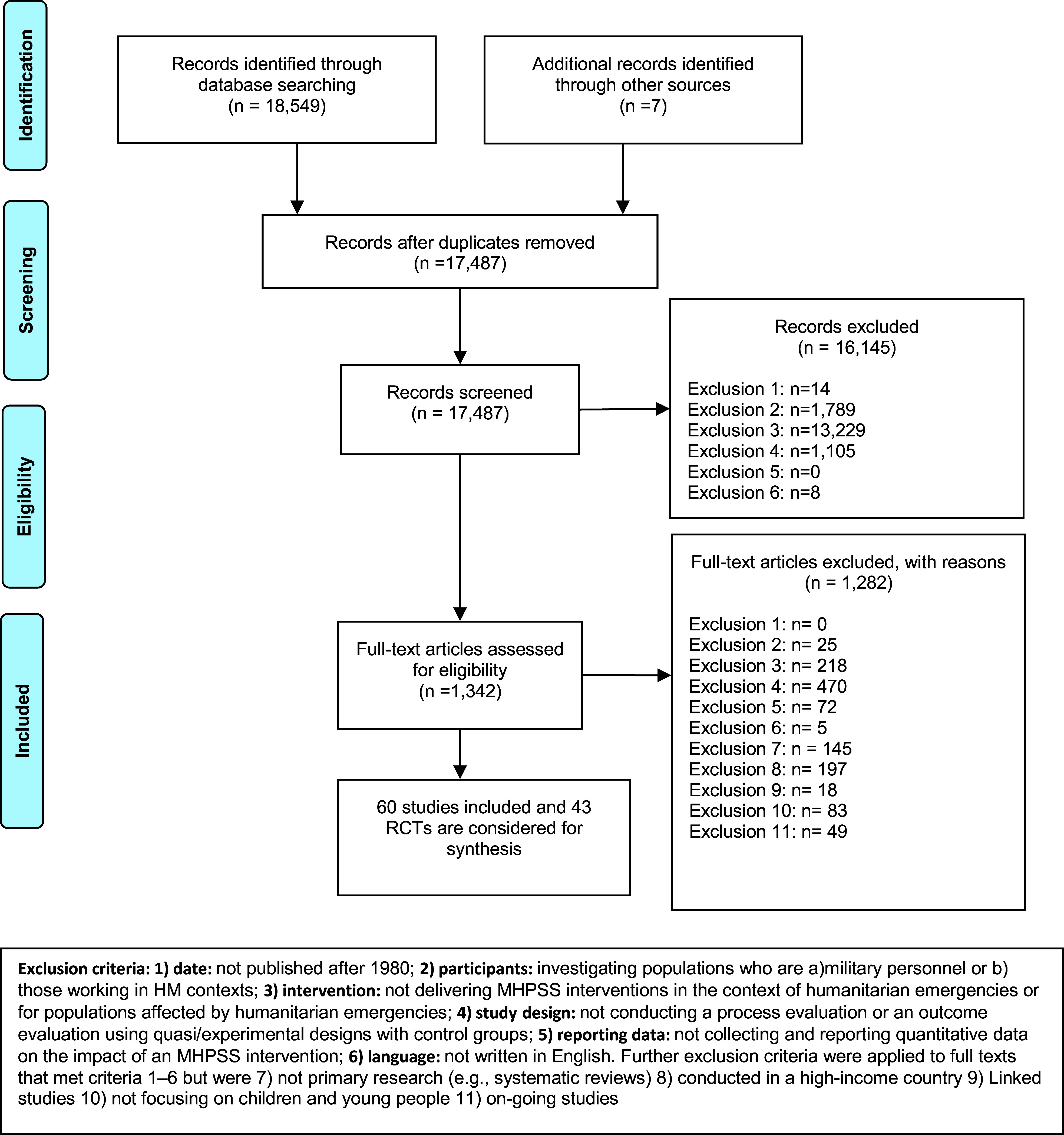
PRISMA flowchart.
Forty-two (70%) of 60 studies were published since 2010. Most studies were conducted in the Middle East and Asia (n = 36, 60%) and 19 (33.33%) in sub-Saharan Africa. The majority of the research evidence (n = 49) was conducted in war and conflict settings. One-fifth of the studies (n = 11) evaluated the impact of MHPSS programmes on displaced and refugee children (Dybdahl, 2001; Thabet Abdel et al., 2005; Bolton et al., 2007; Ertl et al., 2011; Kalantari et al., 2012; Lange-Nielsen et al., 2012; Morris et al., 2012; Annan et al., 2017; Sirin et al., 2018; Yankey and Biswas Urmi, 2019; Fine et al., 2021). Nearly one-quarter investigated the impact of MHPSS programmes on children and young people affected by natural disasters such as earthquakes, tsunami (Goenjian et al., 2005; Schauer von, 2008; Shooshtary et al., 2008; Berger and Gelkopf, 2009; Catani et al., 2009; SHoaakazemi et al., 2012; Chen et al., 2014; Cluver, 2015; Pityaratstian et al., 2015; Akiyama and Gregorio Ernesto, 2018; Cleodora et al., 2018; Dhital et al., 2019; Nopembri et al., 2019). The majority of the studies assessed the impact of MHPSS programmes in the aftermath of disasters. Only four studies aimed to measure the impact of MHPSS programmes on young women and girls (SHoaakazemi et al., 2012; O’callaghan et al., 2013; Robjant et al., 2019; Ahmadi et al., 2023) and only one study focused on former child soldiers and war-affected boys (McMullen et al., 2013). Most MHPSS programmes were delivered in school or classroom. Additional locations included the community (Khamis and Coignez, 2004; Loughry et al., 2006; Morris et al., 2012; Betancourt et al., 2014; Annan et al., 2017; Panter-Brick et al., 2018; Sirin et al., 2018; Robjant et al., 2019; Brown et al., 2023), refugee camps (Khamis and Coignez, 2004; Thabet Abdel et al., 2005; Bolton et al., 2007; Ertl et al., 2011; Lange-Nielsen et al., 2012; Fine et al., 2021), family home (Dybdahl, 2001; Brown et al., 2009; Chen et al., 2014), outdoor areas (Richards et al., 2014; Pityaratstian et al., 2015; Akiyama and Gregorio Ernesto, 2018) or within church settings (O’callaghan et al., 2014). The majority of MHPSS programmes (n = 50, 83.33%) were conducted in group settings, while four (6.7%) were delivered in group and individual formats. Of 60 studies, 22 studies evaluated the impact of CBT; 20 studies evaluated psychosocial programmes. Other studies focused on NET (n = 10), psychoeducation (n = 3) and other interpersonal and body psychotherapy modalities (n = 11). Eight studies evaluated more than one MHPSS model.
Approximately three-quarters of the MHPSS programmes included in the review provided advice and support to children and young people by sharing dialogue and discussing experiences within groups or with specialists. Other implementation strategies included exercise, drawing, arts and crafts, relaxation and breathing techniques. Some included social activities such as sports, games, drama, film or providing life skill training. Several MHPSS programmes were designed to engage with carers and work with teachers and school management, and/or the wider community. MHPSS programme implementation varied in terms of intensity and duration. Nevertheless, MHPSS programmes designed for children and young people in low-resource, humanitarian settings were typically delivered between four to 15 sessions (n = 37), each lasting approximately 60–120 min (n = 31). Five MHPSS programmes were delivered in multiple sessions, spanning one school year or more (Layne Christopher et al., 2008; Peltonen et al., 2012; Nopembri et al., 2019; Torrente et al., 2019; Yankey and Biswas Urmi, 2019).
A wide range of outcomes was used to assess the impact of MHPSS programmes (see Figure 2). The most commonly reported mental health measures were PTSD (n = 41 studies, 68%) and depression (n = 31 studies, 51.67%). Other traumatic stress reactions and emotional well-being measures reported in more than ten studies included psychological distress, conduct problems, functioning, anxiety and prosocial behaviours. Other coping resources, such as family and social support outcomes, were reported in 13 studies. Less commonly reported outcome measures were emotional problems (n = 8), educational outcomes (n = 8), hopefulness (n = 7), guilt (n = 3) and grief (n = 4). We identified various tools used to measure the impact of MHPSS programmes. Nearly half of the included studies clearly explained whether and how the standardised instruments were translated into local languages or piloted for use in local settings. (the key characteristics of 60 studies are summarised in file S3).
Figure 2.
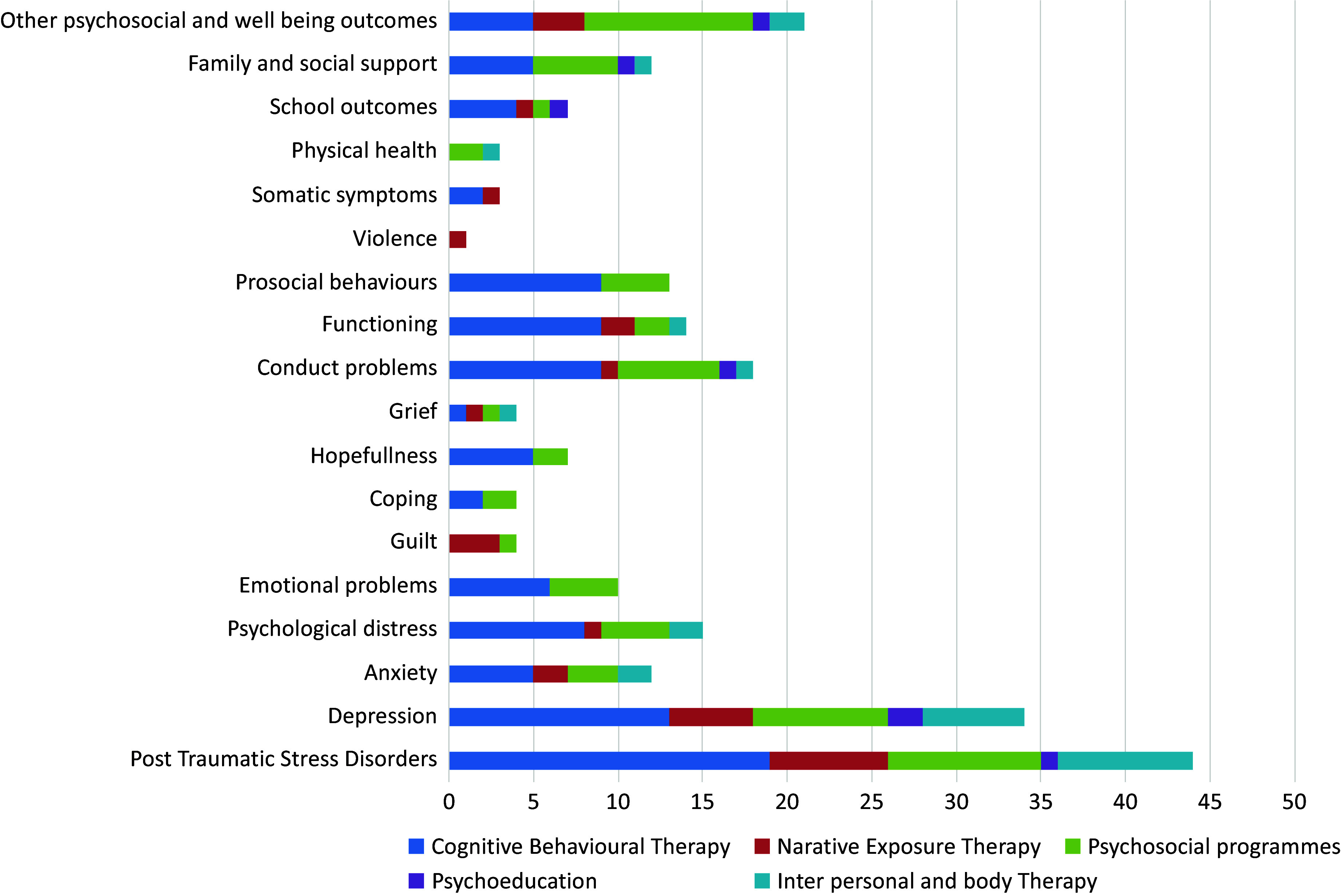
Type of MHPSS programmes and outcomes*.
*More than one types of the MHPSS programmes can be evaluated in one study.
We included 43 RCTs in the synthesis. Of the 43 RCT studies, 12 studies were clustered RCTs, assigning the participants by school (Schauer von, 2008; Tol et al., 2008; Tol et al., 2012; Tol et al., 2014; Dhital et al., 2019; Nopembri et al., 2019; Torrente et al., 2019), class (Berger and Gelkopf, 2009; Qouta Samir et al., 2012; Berger et al., 2018) or local district (Jordans et al., 2010; Fine et al., 2021). The most evaluated MHPSS programmes were CBT (n = 20) and psychosocial programmes (n = 12). We further classified the studies according to the Inter-Agency Standing Committee Guideline on MHPSS in Emergency Settings (IASC, 2007a). Two types of IASC MHPSS intervention pyramid were evaluated: one aimed to strengthen community and family support (Tier 2; n = 27), and the other focused on delivering focused, non-specialised supports to children and their families (Tier 3; n = 29). The majority of the included studies in the synthesis (n = 30, 69.76%) screened participants for mental health conditions before being enrolled in the study. Nearly all RCTs (n = 40) assessed the short-term impact (0–3 months) of MHPSS programmes with two studies assessing the impact of MHPSS programmes for more than 12 months (Schauer von, 2008; Torrente et al., 2019). Twenty-four studies compared MHPSS programmes with waitlist control groups; six with active interventions and eight with Treatment As Usual (TAU), eight studies with no intervention (Kalantari et al., 2012; SHoaakazemi et al., 2012; Betancourt et al., 2014; Chen et al., 2014; Richards et al., 2014; Berger et al., 2018; Dhital et al., 2019; Yankey and Biswas Urmi, 2019). Eight studies had more than one comparison groups (Bolton et al., 2007; Ertl et al., 2011; Chen et al., 2014; Richards et al., 2014; Cluver, 2015; O’callaghan et al., 2015; Nopembri et al., 2019; El-Khani et al., 2021). Eighteen studies were judged to be high risk of bias, 17 with medium risk of biases or having some concerns and eight with low risk of bias. (see Table 2).
Table 2.
Characteristics of 43 RCTs
| Study | Population and sample | Type of MHPSS/Control group and the ISAC intervention pyramid | Implementation | Follow ups | Outcomes reported |
|---|---|---|---|---|---|
| (Ahmadi et al., 2023) Afghanistan Armed conflict RCT ROB: High |
Young girls 11–19 years old, mean age 15.96 (1.97) years N = 125 |
NET: Memory Training for Recovery Adolescent (METRA)/TAU Tier 3: Focused, non-specialised support |
|
3 months |
|
| (Annan et al., 2017) Thailand Armed conflict RCT ROB: Some concern |
Burmese migrant and displaced children Female = 51% N = 479 children and 513 caregivers |
Psychosocial: Parent and Family Skills interventions adapted from the Strengthening Families Programme (SFP) originally developed in USA for substance abusing parents and their children /Waitlist Tier 2: Strengthening community and family supports |
|
1, 6 months |
|
| (Barron et al., 2016) Palestine Armed conflict and political violence RCT ROB: Low |
School students; age 11–15 years (mean age = 13.57 years (0.82); Female = 59.7% N = 154 |
CBT: The Teaching Recovery Techniques (TRT). The group-delivered programme, based on CBT, focuses specifically on children’s symptoms of PTSD/ Waitlist Tier 3: Focused, non-specialised support |
|
2 Weeks |
|
| (Berger et al., 2018) Tanzania Armed conflict cRCT ROB: High |
School children, mean age: INT = 12.44 years (0.89); CON = 12.48 years (0.93); Females = 50.8% N = 183 |
CBT: Erase Stress Prosocial (ESPS) is a universal school-based programme divided into two sets of strategies: stress-reduction interventions and pro-social interventions (i.e., perspective-taking, empathy training, mindfulness and compassion-cultivating practices) / No intervention Tier 2: Community and family support |
|
One week, 8 months |
|
| (Berger and Gelkopf, 2009) Sri Lanka Tsunami Quasi-cRCT ROB: Some concerns |
Elementary school students; age 9–14 years Female = 41.7% N = 166 |
CBT: ERASE Stress Sri Lanka (ES-SL) – a classroom-based programme designed to help children cope with the threat and the exposure to disaster and trauma. The programme involved children’s caregivers with home assignments/Waitlist Tier 2: Community and family support |
|
3 months |
|
| (Betancourt et al., 2014) Sierra Leone Armed conflict RCT ROB: Low |
Youth; mean age = 18 years; Female 45.6% N = 436 |
CBT: The Youth Readiness Intervention combines elements drawn primarily from CBT and Interpersonal therapy, both evidence-based therapies with demonstrated effectiveness in treating depression, anxiety, and interpersonal deficits due to trauma/Waitlist Tier 2: Community and family support Tier 3: Focused, non-specialised support |
|
Post and 6 months |
|
| (Bolton et al., 2007) Uganda Armed conflict RCT ROB: Low |
Acholi adolescent aged 14–17 years from 2 IDP camps: Female 57.3% N = 314 |
Group Interpersonal Psychotherapy, psychosocial: Creative play – aiming to strengthening youth’s resilience by verbal and non-verbal expression of thoughts and feelings through activities such as songs, art, role plays, music, sports, games/Waitlist Tier 3: Focused, non-specialised support |
|
One month |
|
| (Brown et al., 2023) Lebanon Armed conflict RCT ROB: Some concerns |
Children aged 10–14; Female 45% and the average age was 11.7 (SD = 1.3) N = 67 children and 67 caregivers |
Early Adolescent Skills for Emotions (EASE)/TAU Tier 2: Community and family support Tier 3: Focused, non-specialised support |
|
Post and 3 months |
|
| (Bryant et al., 2022) Jordan Armed conflict RCT ROB: Low |
Young Syrian adolescents; females = 49.5%; mean age = 11.6. years (1.3) N = 471 |
Early Adolescent Skills for Emotions (EASE) – focus on arousal reduction, behavioural activation and problem management as these strategies have been shown to be key for reducing internalising problems in adolescents/TAU Tier 2: Community and family support Tier 3: Focused, non-specialised support |
|
9 weeks and 3 months |
|
| (Catani et al., 2009) Sri Lanka Tsunami and war RCT ROB: Some concerns |
Children aged 8–14 years, Female 45.16% N = 31 |
KIDNET – the participants constructed a detailed chronological account of his or her own biography/ Active Intervention Tier 3: Focused, non-specialised support |
|
4–5 weeks and 6 months |
|
| (Chen et al., 2014) China Earthquake RCT ROB: High |
Children, Female 68% N = 40 |
CBT, Interpersonal and body psychotherapy / No intervention Tier 2: Community and family support Tier 3: Focused, non-specialised support |
|
Post and 3 months |
|
| (Cluver, 2015) Haiti Earthquake RCT and Non-RCT ROB: High |
Children living in orphanages; mean age = 11.23 years; Female 42% N = 61 |
Interpersonal and body psychotherapy (Yoga) /Active intervention (Dance) Tier 3: Focused, non-specialised support |
|
Post |
|
| (Dawson et al., 2018) Indonesia Civil war RCT ROB: Low |
Children aged between 7–14; mean age: INT = 10.50 years (0.93); CON = 10.25 years (1.16) N = 64 |
Trauma-focused CBT with children and caregivers/Active intervention Tier 2: Community and family support Tier 3: Focused, non-specialised support |
|
3 months |
|
| (Dhital et al., 2019) Nepal Natural disaster cRC ROB: High |
Students grade 6–8; mean age INT = 12.9 years (1.3); CON = 12.9 years (1.4) N = 1,220 |
Psychosocial: Teacher-mediated school-based intervention/No intervention Tier 2: Community and family support |
|
6 months |
|
| (Dybdahl, 2001) Bosnia and Herzegovina Armed conflict RCT ROB: High |
Bosnian-displaced mothers; Female only (Mothers) – Child (mean age = 5.5 years; Female =55.17%) N = 87 |
Psychosocial intervention aiming to promote the development and well-being of young children through parental involvement, support and education, and parent–child relationships/ TAU Tier 2: Community and family support |
|
Post |
|
| (El-Khani et al., 2021) Lebanon Armed conflict RCT ROB: Some concerns |
Children and their caregivers: Child aged 9–12 years; N = 119 children and caregivers |
CBT: Teaching Recovery Techniques (TRT) with Parenting skills (TRT + P)/TRT/Waitlist Tier 2: Community and family support Tier 3: Focused, non-specialised support |
|
2 weeks and 12 weeks |
|
| (Ertl et al., 2011) Uganda Civil war RCT ROB: Some concerns |
Child soldiers; Female 67.1% N = 1,113 |
Narrative Exposure Therapy (NET) -a short term, trauma-focused treatment, Psychosocial/ Waitlist Tier 2: Community and family support Tier 3: Focused, non-specialised support |
|
3, 6, 12 months |
|
| (Fine et al., 2021) Tanzania Armed conflict cRCT ROB: Some concerns |
Young adolescents in refugee camp Female 49%; mean age = 12.3(1.5) N = 82 children, N = 64 caregivers |
The Early Adolescent Skills for Emotions (EASE) intervention aiming to reduce symptoms of internalising disorders, including depression and anxiety/TAU Tier 2: Community and family support Tier 3: Focused, non-specialised support |
|
1 week |
|
| (Getanda and Vostanis, 2020) Kenya Displacement RCT ROB: Some concerns |
Youth aged 14–17 years; N = 54 |
NET: Writing for Recovery – focusing on sensory aspects of traumatic events leading to PTSD and other symptoms of distress/Waitlist Tier 2: Community and family support Tier 3: Focused, non-specialised support |
|
Post |
|
| (Gordon et al., 2008) Kosovo Armed conflict RCT ROB: High |
Children; mean age = 16.3 years; Female = 75.60% N = 82 |
Interpersonal and body psychotherapy: Mind–body technique model – a combination of a number of mind–body modalities with self-expression (spoken, written words, drawings, movement)/ Waitlist Tier 2: Community and family support Tier 3: Focused, non-specialised support |
|
Post |
|
| (Jordans et al., 2010) Nepal Armed conflict cRCT ROB: Some concerns |
School children; mean age = 12.7 years; girls 48.6% N = 325 |
CBT: A school-based psychosocial intervention – the Classroom-Based Intervention (CBI) – an eclectic intervention based on concepts from creative-expressive and experimental therapy, cooperative play and CBT/ Waitlist Tier 2: Community and family support Tier 3: Focused, non-specialised support |
|
Post |
|
| (Kalantari et al., 2012) Iran Armed conflict RCT ROB: High |
Afghan refugees in school; mean age INT = 14.58 years; CON = 15.03 years; Females 55% N = 64 |
NET: Writing For Recovery – the writing sessions developed for adolescents who have experienced a trauma/ No intervention Tier 3: Focused, non-specialised support |
|
Post |
|
| (Khamis and Coignez, 2004) Palestine Armed conflict RCT ROB: High |
Children aged 6–16 years, Female 43.37% N = 664 |
CBT: Classroom-based intervention-a psychosocial integration and recovery programme for children and adolescents and their adult caregivers who are exposed to psychological trauma/ Waitlist Tier 2: Community and family support |
|
Post |
|
| (Lange-Nielsen et al., 2012) Gaza Armed conflict RCT ROB: High |
Adolescents; 12–17 years mean age = 14.54 years (1.47); Female 50% N = 124 |
NET: Writing For Recovery-a manual-based group intervention aimed at adolescents who have a history of trauma through short writing sessions/Waitlist Tier 3: Focused, non-specialised support |
|
Post, one mo,5 months |
|
| (Layne Christopher et al., 2008) Indonesia Terrorist attack RCT ROB: High |
Children (Female 52.7%) mean age = 9.83 years (1.53) N = 127 |
Interpersonal and body psychotherapy: A spiritual-hypnosis assisted therapy/ Active intervention Tier 3: Focused, non-specialised support |
|
Post and 4 months |
|
| (McMullen et al., 2013) Congo Armed conflict RCT ROB: Some concerns |
39 former soldiers and 11 war-affected boys; mean age = 15.8 years N = 50 |
A manualised, Trauma-focused CBT/Waitlist Tier 3: Focused, non-specialised support |
|
7 weeks and 3 months |
|
| (Nopembri et al., 2019) Indonesia Natural disaster cRCT ROB: High |
Students: INT = mean age 10.4–10.39 years N = 810 |
Psychosocial: Physical Education and sports classes/TAU Tier 2: Community and family support |
|
Post |
|
| (O’callaghan et al., 2013) Congo Armed conflict RCT ROB: Low |
Girls who had witnessed or had personal experience of rape of sexual abuse; mean age = 16 years N = 52 |
A manualised, culturally modified, trauma focused CBT/Waitlist Tier 3: Focused, non-specialised support |
|
7 weeks and 3 months |
|
| (O’callaghan et al., 2014) Uganda Armed conflict RCT ROB: Some concerns |
Children: mean age = 13.42 years; females 45% N = 159 |
A manualised, family-focused – psychosocial interventions/ Waitlist Tier 2: Community and family support |
|
Post and 3 months |
|
| (O’callaghan et al., 2015) Congo Armed conflict RCT ROB: Low |
War affected youth; mean age = 14.88 years N = 50 |
Trauma-focused CBT – a combination of cognitive therapy and behavioural therapy Psychosocial: Child Friendly Spaces – a psychosocial intervention aiming to improve resilience and well-being of youth through community-based, structured activities held in a safe, child friendly environment/ Active intervention Tier 2: Community and family support Tier 3: Focused, non-specialised support |
|
Post and 6 months |
|
| (Panter-Brick et al., 2018) Syria Conflict RCT ROB = Low risk |
Adolescents, mean age = 14.37 years (1.72), Female = 43% N = 603 |
Psychosocial: Advancing adolescents programme – consisting of structural activities that aimed to promote capacities for the mediation of extreme and prolonged stress/Waitlist Tier 2: Community and family support |
|
10 weeks, 11 months |
|
| (Pityaratstian et al., 2015) Thailand Tsunami RCT ROB: Some concerns |
Children; mean age = 12.25 years: Female = 72.2% N = 36 |
CBT – a manual-based and adapted from the Teaching Recovery Techniques (TRT)/Waitlist Tier 3: Focused, non-specialised support |
|
Post and 1 month |
|
| (Qouta Samir et al., 2012) Palestine Armed conflict cRCT ROB: Some concerns |
Children; mean age = 11.29 years; Female 49.4% N = 482 |
CBT: Extra curriculum sessions of the Teaching recovering techniques (TRT) / Waitlist Tier 2: Community and family support |
|
Post and 6 months |
|
| (Richards et al., 2014) Uganda Armed conflict RCT and non-RCT ROB: Some concerns |
Children; mean age = 9.83 years N = 1,462 Intervention boys =74, girls 81; waitlist boys = 72 |
Psychosocial: voluntary competitive sports for development football league/Waitlist and no intervention Tier 2: Community and family support |
|
Post |
|
| (Robjant et al., 2019) DRC Armed conflict RCT ROB: Some concerns |
92 female former child soldiers, age range 11–25 years N = 92 |
Narrative Exposure Therapy adapted for offenders (FORNET)/TAU Tier 3: Focused, non-specialised support |
|
3, 9 months |
|
| (Schauer von, 2008) Sri Lanka Armed conflict and Tsunami cRCT ROB: Some concerns |
Children who suffered severe PTSD; mean age = 13.1 years N = 47 |
Manualised KIDNET – a trauma-focused, short-term therapy with exposure elements/TAU Tier 3: Focused, non-specialised support |
|
5 months post, and 13 months post-int. |
|
| (SHoaakazemi et al., 2012) Iran Earthquake RCT ROB: High |
Girls with PTSD (15–18 years) N = 24 |
Interpersonal and body psychotherapy: Logo therapy/ No intervention Tier 3: Focused, non-specialised support |
|
Post |
|
| (Sirin et al., 2018) Turkey Conflict RCT ROB: High |
Children from five refugee camps N = 147 |
Psychoeducation: Project Hope: an online-game based learning intervention/ Waitlist Tier 2: Community and family support |
|
Post |
|
| (Tol et al., 2008) Indonesia Political violence cRCT ROB: Some concerns |
School children, mean age = 9.9 y, Girls 48.63% N = 403 |
CBT: School-based mental health including trauma-processing activities, cooperative play, and creative expressive elements/Waitlist Tier 3: Focused, non-specialised support |
|
Post and 6 months |
|
| (Tol et al., 2012) Sri Lanka Armed conflict cRCT ROB: Some concerns |
Children; mean age 12.29 years; Girls 48% N = 399 |
CBT: School-based mental health – consisting of CBT and creative expressive elements/Waitlist Tier 3: Focused, non-specialised support |
|
One week and 3 months |
|
| (Tol et al., 2014) Burundi Armed conflict cRCT ROB: High |
Children, mean age 12.29 years N = 329 |
CBT: The classroom-based intervention (CBI) including universal preventive activities and provision of mental health treatments/Waitlist Tier 2: Community and family support Tier 3: Focused, non-specialised support |
|
Post and 3 months |
|
| (Torrente et al., 2019) DRC Armed conflict cRCT ROB: High |
76 clusters and 126 schools 47.5% females, mean age = 11.66 years (1.9) N = 8,813 |
Psychosocial: Learning in a Healing Classroom – a universal school-based intervention to support children’s social–emotional well-being and academic learning/ Waitlist Tier 2: Community and family support |
|
One year |
|
| (Yankey and Biswas Urmi, 2019) India Political violence, refugees RCT ROB: High |
Tibetan refugees, age 13–17 years N = 300 |
Psychosocial: school-based life skill training programme/No intervention Tier 2: Community and family support |
|
2 weeks post-intervention |
|
Abbreviations: CBT, cognitive behavioural therapy; cRCT, cluster randomised controlled trial; DRC, democratic republic of the congo; N, sample size; NET, narrative exposure therapy; PTSD, post-traumatic stress disorder; RCT, randomised controlled trial; ROB, risk of bias; TAU, treatment as usual; *, primary outcome when reported.
Due to a substantive amount of heterogeneity, we were able to perform a meta-analysis and found a significant positive impact of MHPSS on grief (2 studies; pooled ES = −0.55*, 95% CI (−0.91, −0.19), I2 = 0%), and guilt (2 studies; pooled ES = −0.51*, 95% CI (−0.83, −0.19), I2 = 0%). In other outcomes, we reported a range of effect sizes, presenting mixed results across studies (see S4).
We performed an explorative analysis to assess the impact of MHPSS programmes by programme type. CBTs were evaluated in 20 studies (six low risk of bias, ten some concerns, four high risk of bias). All but two CBT programmes were delivered in a group format (Chen et al., 2014; Dawson et al., 2018). The majority of the studies evaluated the impact of CBT delivered to children in conflict-affected settings, with three studies assessed its effects on children affected by earthquakes and tsunamis (Berger and Gelkopf, 2009; Chen et al., 2014; Pityaratstian et al., 2015). These CBT programmes were primarily delivered in school settings, with two conducted in refugee camps (Khamis and Coignez, 2004; Fine et al., 2021), and one delivered at home(Chen et al., 2014). In three studies, the effect of culturally adapted, school-based trauma-based CBT designed for war-affected youth in Democratic Republic of the Congo (DRC) was examined, showing a significant reduction in PTSD, conduct and emotional problems (McMullen et al., 2013; O’callaghan et al., 2013; O’callaghan et al., 2015). The finding from the meta-analysis suggested that CBT programmes have a potential to improve depression symptoms (pooled SMD = −0.15; 95% CI (−0.29, −0.01, I2 = 51.86%%) (Figure 3). We did not perform a meta-analysis of the effects of CBT on other outcomes due to heterogeneity.
Figure 3.

Impact of CBT programmes on depression in children and young people (n = 12 studies).
We identified 11 RCTs (two low risk of bias, four some concerns, five high risk of bias) assessing the impact of psychosocial interventions (Dybdahl, 2001; Bolton et al., 2007; Ertl et al., 2011; O’callaghan et al., 2014; Richards et al., 2014; O’callaghan et al., 2015; Annan et al., 2017; Panter-Brick et al., 2018; Dhital et al., 2019; Nopembri et al., 2019; Torrente et al., 2019; Yankey and Biswas Urmi, 2019). These psychosocial programmes were varied in their programme design. Three of the interventions were delivered in Uganda, evaluating a creative play programme (Bolton et al., 2007), competitive sport and games (Richards et al., 2014) and academic writing (Ertl et al., 2011). Two psychosocial programmes were implemented in DRC involving community, school and family (O’callaghan et al., 2014; O’callaghan et al., 2015; Torrente et al., 2019). These programmes used life skill training to address discrimination and to develop coping skills (O’callaghan et al., 2014; Panter-Brick et al., 2018; Nopembri et al., 2019; Yankey and Biswas Urmi, 2019). One study evaluated the effect of psychosocial support for mothers in conflict-affected Bosnia and Herzegovina to improve mental health outcomes of their children (Dybdahl, 2001). Overall, the evidence is inconclusive regarding the impact of psychosocial programmes on children and young people’s mental health outcomes. There is no statistically significant improvement from participating psychosocial programmes on PTSD (n = 3 studies; pooled SMD = −0.18, CI 95% (−0.44,0.08) I2 = 39.07%), conduct problems (n = 2 studies, pooled SMD = 0.02, 95% CI (−0.18, 0.22), I2 = 30.03%), emotional problems (n = 2 studies; pooled SMD = −0.00, 95% CI (−0.16,0.15), I2 = 0%) or functioning (n = 2 studies, pooled SMD = 0.03, 95% CI (−0.29, 0.34), I2 = 0%). However, it is important to point out that the findings from the meta-analysis showed unintended impact of psychosocial programmes on depression symptoms (n = 5 studies pooled SMD = 0.17, 95% CI (0.00, 0.35), I2 = 14.49%). Three of five studies evaluated psychosocial programmes, aiming to engage children and young people with different activities such as songs, arts, sports or academic catch-up (Bolton et al., 2007; Ertl et al., 2011; Richards et al., 2014). The other psychosocial programmes delivered the programmes to parents and teachers to support interactions with children and young people who affected by war (Dybdahl, 2001) and earthquake (Dhital et al., 2019).
Eight studies (four some concerns, four high risk of bias) evaluating the impact of narrative exposure therapy (NET) were included in the review.(Schauer von, 2008; Catani et al., 2009; Ertl et al., 2011; Kalantari et al., 2012; Lange-Nielsen et al., 2012; Robjant et al., 2019; Getanda and Vostanis, 2020; Ahmadi et al., 2023). Six NET programmes were delivered in a group format (Schauer von, 2008, Kalantari et al., 2012, Lange-Nielsen et al., 2012, Robjant et al., 2019, Getanda and Vostanis, 2020, Ahmadi et al., 2023), with three delivered to individual participants.(Catani et al., 2009; Ertl et al., 2011; Robjant et al., 2019). Two studies were carried out in Sri Lanka: one with children affected by civil war (Schauer von, 2008) and the other one was carried out immediately after the 2004 tsunami (Catani et al., 2009). Two were carried out in camps for internally displaced persons (IDPs): one in Palestine (Lange-Nielsen et al., 2012) and the other in Uganda (Ertl et al., 2011). One study was conducted in a refugee camp in Iran (Kalantari et al., 2012). One study evaluated the NET programme delivered to female former child soldiers in DRC (Robjant et al., 2019). Another study evaluated the Memory Training for Recovery-Adolescent Intervention delivered to Afghan adolescent girls. The findings from the meta-analysis indicate that NET may have a significant impact in reducing the feelings of guilt (n = 2 studies; pooled SMD = -0.43, 95% CI (−0.79, − 0.07), I2 = 0%). However, NET may have no statistically significant impact on other internalised symptoms or functioning. One randomised study assessing the impact of the Writing for Recovery (WfR) programme in Gaza found that the children in the intervention group experienced an increase in depression and anxiety symptoms compared to the wait-list control group (Lange-Nielsen et al., 2012).
In addition, we identified six studies (one low risk of bias, five high risk of bias) evaluating six interpersonal and body psychotherapy programmes including Group Interpersonal Psychotherapy (IPT-G) (Bolton et al., 2007), counselling (Chen et al., 2014), yoga (Cluver, 2015), mind and body technique (Gordon et al., 2008), logotherapy (SHoaakazemi et al., 2012) and school-based psychotherapy (Layne Christopher et al., 2008). The studies were carried out in five different countries (Bosnia and Herzegovina, China, Haiti, Uganda and Kosovo) affected by armed conflict (Bolton et al., 2007; Gordon et al., 2008; Layne Christopher et al., 2008) or natural disaster (SHoaakazemi et al., 2012; Chen et al., 2014). The most common outcomes reported in this group of programmes were PTSD and depression. We did not carry out statistical syntheses on these outcome measures because of differences and variations in psychotherapeutic programme modalities and intervention approaches. Four studies reported unadjusted mean scores and standard deviations of PTSD (Gordon et al., 2008; Layne Christopher et al., 2008; Chen et al., 2014; Cluver, 2015). One study evaluating a mind–body skills group in Kosovo found a significant impact of the intervention on PTSD (Gordon et al., 2008). The other studies suggested mixed findings for the interventions. Chen et al. (2014) found that support group counselling may have had little impact on PTSD in children and young people affected by the earthquake in China compared with those who received no intervention. The findings from the Layne Christopher et al. (2008) study also suggested that there might be little impact from a school-based psychotherapy intervention on schoolchildren in Bosnia. However, Cluver (2015) found that yoga may increase PTSD in children and young people compared with those in an aerobic dance group.
Three studies assessed the impact of other psychotherapy interventions on depression (Bolton et al., 2007; Layne Christopher et al., 2008; Chen et al., 2014). Only Bolton et al.’s (2007) study evaluating an IPT-G programme reported a significant positive impact of the intervention on depression. In this study, 314 Acholi children aged 14–17 from two internally displaced person camps in Northern Uganda were randomly assigned to IPT-G, creative play, or a wait-list control group. At post-intervention, the IPT-G participants showed a greater reduction in depression symptoms than those in the wait-list control group.
Conclusions and discussion
In the last decade, considerable attempts have been made to support children and young people’s mental and psychosocial health in humanitarian emergencies (Barbui et al., 2020). Delivering CBT programmes has been suggested as a suitable choice of MHPSS programmes to reduce the symptoms of PTSD in adults across various humanitarian contexts (Bangpan et al., 2019). However, the findings from this systematic review suggest inconclusive evidence regarding the effectiveness of other MHPSS modalities, such as NET or other psychotherapies, in improving internalising symptoms in children and young people. Similar results found in recent systematic reviews evaluating psychological therapies and social interventions suggest limited evidence of the programme impact on mental health of children and young people affected by humanitarian settings (Purgato et al., 2018a; Papola et al., 2020). In addition, we found that studies evaluating psychosocial programmes incorporating components such as social support, child-friendly spaces, creative play, sports, games or academic catch ups reported potential unintended consequences. Future research should employ rigorous evaluation designs considering contextual and structural influences to better understand how these types of programming can be safely and effectively delivered to this specific population group in humanitarian settings.
We recognise that MHPSS programmes implemented in humanitarian settings may face several implementation challenges, and the observed unintended impact could arise from the interplay between programme delivery and socially and culturally sensitive contexts (Koch and Schulpen, 2018). Moreover, challenges in recruiting, retraining and training programme personnel in low-resource settings, coupled with ongoing risks and insecurity, may affect the fidelity of programme implementation (Dickson and Bangpan, 2018). Recent research highlights the possibilities of training lay community workers to deliver MHPPS programme in resource-limited settings. Future research should investigate the effectiveness of this task shifting approach to guide the advancement of the implementation of MHPSS programmes (Cohen and Yaeger, 2021). In addition, some point out that children and young people face daily threats and ongoing stressful events in humanitarian emergencies which may require access to a wide range of basic social services. Therefore, further consideration to the importance of socio-ecological and multi-sectoral programming, as part of MHPSS programme design and delivery, aiming to prevent, treat and promote mental health of populations affected by humanitarian crises, is warranted (Purgato et al., 2018a; Kamali et al., 2020; Papola et al., 2020; Tol et al., 2020; Raslan et al., 2021; Papola et al., 2022). Future research might also benefit from considering the social determinants of mental health and developing a theory of change to understand mechanisms that improve mental health outcomes and well-being throughout the life course (Allen et al., 2014).
The current systematic review offers an overview of the current state of evidence on the impact of MHPSS programmes on children and young people affected by humanitarian emergencies in LMICs. We assessed the impact of different types and modalities of MHPSS programmes, offering insights into their potential benefits and unintended consequences. Although our comprehensive search identified substantial evidence in the field, we noted some caveats when interpreting the findings. First, the quality of the studies included in the systematic review varied, with the majority judged to have some quality concerns or being at a high risk of bias. This limitation of the existing evidence is also expressed by recent systematic reviews highlighting a low quality of evidence on the impact of the programmes aiming to prevent and treat mental health in children and young people affected by humanitarian settings (Purgato et al., 2018a; Papola et al., 2020). Second, we included only studies published in English. Other high-quality studies published in other languages may provide further evidence on the impact of MHPSS programmes, especially studies from Central and South America. Third, we identified a wide range of outcomes using various scales, reflecting the attempt to adapt tools for measuring the mental health and wellbeing outcomes across socio-cultural settings. Finally, the studies included in the meta-analysis were heterogeneous, drawing on a broad evidence base that aims to evaluate the impact of multi-component, multi-level MHPSS programmes on various outcomes across humanitarian settings. Future development and evaluation of MHPSS programmes would benefit from engaging with key stakeholders and local communities to understand and theorise how interventions intend to work and how socio-cultural factors might influence their observed impact (Kneale et al., 2020; Miller et al., 2021).
We systematically reviewed research evaluating the impact of MHPSS programmes on children and young people affected by humanitarian emergencies in LMICs. Sixty studies met the inclusion criteria. We identified several research gaps. In sub-Saharan Africa, although more than one-fifth of global refugees and internally displaced persons are hosted in countries such as the Central African Republic (CAR), the Democratic Republic of the Congo (DRC), Somalia and South Sudan (UNHCR, 2018), our systematic review identifies the paucity of rigorous evidence to inform the design and implementation of MHPSS programmes in this region, in line with the recent meta-review focusing on vulnerable African children (Katsonga-Phiri et al., 2019). Secondly, there is increasing recognition of the need to develop MHPSS programmes that are tailored to girls’ and boys’ needs, considering the social determinants of their individual psychological health and well-being (Purgato et al., 2018b; Raslan et al., 2021; Lasater et al., 2022). Yet, we identified limited evidence examining the impact of gender-specific MHPSS programmes. Furthermore, we did not come across any studies explicitly targeting children with disabilities. There is a need to further develop inclusive MHPSS programmes that not only address the unique needs of children with disabilities but also consider the influence of intersectionality and factors, such as gender, culture and religion. Additional research gap identified from this systematic review includes evaluations of MHPSS programmes aiming to protect children and young people’s well-being in humanitarian settings through basic service and security provision. Finally, future evaluative research should aim to capture the long-term impact and assess the cost-effectiveness of MHPSS programmes (Purgato et al., 2018a; Papola et al., 2022).
Supporting information
Bangpan et al. supplementary material
Bangpan et al. supplementary material
Bangpan et al. supplementary material
Bangpan et al. supplementary material
Bangpan et al. supplementary material
Bangpan et al. supplementary material
Acknowledgements
We thank Dr. Anna Chiumento who offered guidance on mental health research in LMICs for the systematic review.
Footnotes
Open peer review
To view the open peer review materials for this article, please visit http://doi.org/10.1017/gmh.2024.17.
Supplementary material
The supplementary material for this article can be found at http://doi.org/10.1017/gmh.2024.17.
Data availability statement
The authors confirm that the data supporting the findings of this study are available within the article, references and/or its Supplementary Materials.
Author contribution
M.B. and K.D. designed the study, developed and wrote the initial draft of the protocol. L.F. led the writing on the method section of the meta-analysis methodology in the protocol. M.B. managed the overall project. M.B. and K.D. developed the search strategy. M.B. updated the search. M.B. and L.F. retrieved the full texts and screened all studies. M.B., L.F., F.S., P.D. and A.J. performed data extraction and quality assessment of the included studies. M.B. and L.F. planned the analysis. M.B. and L.F. performed the meta-analysis, sensitivity analysis and meta-regression. A.J. wrote the initial draft of the introduction, and M.B. wrote the rest of the manuscript, with all other authors contributing to its revision and finalisation. All authors reviewed the final version of the manuscript and gave final approval for submission.
Competing interest
A.J. has a project funded by the National Institute for Health Research ARC North Thames. This report is independent research supported by the National Institute for Health Research ARC North Thames. The views expressed in this publication are those of the author(s) and not necessarily those of the National Institute for Health Research or the Department of Health and Social Care.
A.J. has a studentship funded by the Economic Social research council via the London Interdisciplinary Social Science Doctoral Training Partnership. Grant award number: ES/P000703/1 – PR – 2,462,475.
References
- Ahmadi SJ, Jobson L, Musavi Z, Rezwani SR, Amini FA, Earnest A, Samim N, Sarwary SAA, Sarwary SA and McAvoy D (2023) Effect of the memory training for recovery–adolescent intervention vs treatment as usual on psychiatric symptoms among adolescent girls in Afghanistan: A randomized clinical trial. JAMA Network Open 6, e236086–e236086. [DOI] [PMC free article] [PubMed] [Google Scholar]
- Akiyama T, Gregorio Ernesto JR R and Kobayashi J (2018) Youth sports activity and young people’s well-being after a disaster: A trial with the mastery approach to coaching (MAC) in the Philippines. BMC Research Notes 11, 747. [DOI] [PMC free article] [PubMed] [Google Scholar]
- Allen J, Balfour R, Bell R and Marmot M (2014) Social determinants of mental health. International Review of Psychiatry 26, 392–407. [DOI] [PubMed] [Google Scholar]
- Annan J, Sim A, Puffer ES, Salhi C and Betancourt TS (2017) Improving mental health outcomes of Burmese migrant and displaced children in Thailand: A community-based randomized controlled trial of a parenting and family skills intervention. Prevention Science 18, 793–803. [DOI] [PubMed] [Google Scholar]
- Ataullahjan A, Samara M, Betancourt TS and Bhutta ZA (2020) Mitigating toxic stress in children affected by conflict and displacement. BMJ 371, m2876. [DOI] [PMC free article] [PubMed] [Google Scholar]
- Bangpan M, Felix L, Chiumento A and Dickson K (2016) The Impact of Mental Health and Psychosocial Support Interventions on People Affected by Humanitarian Emergencies: A Systematic Review Protocol. Oxford, GB: Oxfam. [Google Scholar]
- Bangpan M, Felix L and Dickson K (2019) Mental health and psychosocial support programmes for adults in humanitarian emergencies: A systematic review and meta-analysis in low and middle-income countries. BMJ Global Health 4, e001484. [DOI] [PMC free article] [PubMed] [Google Scholar]
- Barbui C, Purgato M, Abdulmalik J, Acarturk C, Eaton J, Gastaldon C, Gureje O, Hanlon C, Jordans M, Lund C, Nose M, Ostuzzi G, Papola D, Tedeschi F, Tol W, Turrini G, Patel V and Thornicroft G (2020) Efficacy of psychosocial interventions for mental health outcomes in low-income and middle-income countries: An umbrella review. Lancet Psychiatry 7, 162–172. [DOI] [PubMed] [Google Scholar]
- Barron I, Abdallah G and Heltne U (2016) Randomized control trial of teaching recovery techniques in rural occupied Palestine: Effect on adolescent dissociation. Journal of Aggression, Maltreatment & Trauma 25, 955–973. [Google Scholar]
- Bennouna C, Stark L and Wessells MG (2020) Children and adolescents in conflict and displacement. In Song SJ and Ventevogel P (eds.), Child, Adolescent and Family Refugee Mental Health: A Global Perspective. Cham: Springer International Publishing. [Google Scholar]
- Berger R, Benatov J, Cuadros R, Vannattan J and Gelkopf M (2018) Enhancing resiliency and promoting prosocial behavior among Tanzanian primary-school students: A school-based intervention. Transcultural Psychiatry 55, 821–845. [DOI] [PubMed] [Google Scholar]
- Berger R and Gelkopf M (2009) School-based intervention for the treatment of tsunami-related distress in children: A quasi-randomized controlled trial. Psychotherapy and Psychosomatics 78, 364–371. [DOI] [PubMed] [Google Scholar]
- Betancourt TS, Mcbain R, Newnham EA, Akinsulure-Smith AM, Brennan RT, Weisz JR and Hansen NB (2014) A behavioral intervention for war-affected youth in Sierra Leone: A randomized controlled trial. Journal of the American Academy of Child & Adolescent Psychiatry 53, 1288–1297. [DOI] [PMC free article] [PubMed] [Google Scholar]
- Bolton P, Bass J, Betancourt T, Speelman L, Onyango G, Clougherty KF, Neugebauer R, Murray L and Verdeli H (2007) Interventions for depression symptoms among adolescent survivors of war and displacement in Northern Uganda - A randomized controlled trial. JAMA-Journal of the American Medical Association 298, 519–527. [DOI] [PubMed] [Google Scholar]
- Bosqui TJ and Marshoud B (2018) Mechanisms of change for interventions aimed at improving the wellbeing, mental health and resilience of children and adolescents affected by war and armed conflict: A systematic review of reviews. Conflict and Health 12, 15. [DOI] [PMC free article] [PubMed] [Google Scholar]
- Brown FL, de Graaff AM, Anne M, Annan J and Betancourt TS (2017) Annual research review: Breaking cycles of violence-a systematic review and common practice elements analysis of psychosocial interventions for children and youth affected by armed conflict. Journal of Child Psychology and Psychiatry 58, 507–524. [DOI] [PubMed] [Google Scholar]
- Brown FL, Taha K, Steen F, Kane J, Gillman A, Aoun M, Malik A, Bryant R, Sijbrandij M and El Chammay R (2023) Feasibility randomised controlled trial of the early adolescent skills for emotions psychological intervention with young adolescents in Lebanon. BMC Psychiatry 23, 1–18. [DOI] [PMC free article] [PubMed] [Google Scholar]
- Brown L, Thurman TR, Rice J, Boris NW, Ntaganira J, Nyirazinyoye L, De Dieu J and Snider L (2009) Impact of a mentoring program on psychosocial wellbeing of youth in Rwanda: Results of a quasi-experimental study. Vulnerable Children and Youth Studies 4, 288–299. [Google Scholar]
- Bryant RA, Malik A, Aqel IS, Ghatasheh M, Habashneh R, Dawson KS, Watts S, Jordans MJD, Brown FL, Van Ommeren M and Akhtar A (2022) Effectiveness of a brief group behavioural intervention on psychological distress in young adolescent Syrian refugees: A randomised controlled trial. PLoS Medicine 19, e1004046. [DOI] [PMC free article] [PubMed] [Google Scholar]
- Catani C, Kohiladevy M, Ruf M, Schauer E, Elbert T and Neuner F (2009) Treating children traumatized by war and tsunami: A comparison between exposure therapy and meditation-relaxation in North-East Sri Lanka. BMC Psychiatry 9, 22. [DOI] [PMC free article] [PubMed] [Google Scholar]
- Ceccarelli C, Prina E, Muneghina O, Jordans M, Barker E, Miller K, Singh R, Acarturk C, Sorsdhal K and Cuijpers P (2022) Adverse childhood experiences and global mental health: Avenues to reduce the burden of child and adolescent mental disorders. Epidemiology and Psychiatric Sciences 31, e75. [DOI] [PMC free article] [PubMed] [Google Scholar]
- Chen Y, Shen WW, Gao K, Lam CS, Chang WC and Deng H (2014) Effectiveness RCT of a CBT intervention for youths who lost parents in the Sichuan, China, Earthquake. Psychiatric Services 65, 259–262. [DOI] [PubMed] [Google Scholar]
- Cleodora C, Mustikasari N and Gayatri D (2018) Therapeutic group therapy improved self-efficacy of school age children. Enfermeria Clinica 28, 112–115. [Google Scholar]
- Cluver AK (2015) Yoga to reduce trauma-related distress and emotional and behavioral difficulties among children living in orphanages in Haiti: A pilot study. Journal of Alternative & Complementary Medicine 21, 539–545. [DOI] [PubMed] [Google Scholar]
- Cohen F and Yaeger L (2021) Task-shifting for refugee mental health and psychosocial support: A scoping review of services in humanitarian settings through the lens of RE-AIM. Implementation Research and Practice 2, 2633489521998790. [DOI] [PMC free article] [PubMed] [Google Scholar]
- Dawson K, Joscelyne A, Meijer C, Steel Z, Silove D and Bryant RA (2018) A controlled trial of trauma-focused therapy versus problem-solving in Islamic children affected by civil conflict and disaster in Aceh, Indonesia. Australian and New Zealand Journal of Psychiatry 52, 253–261. [DOI] [PubMed] [Google Scholar]
- Dhital R, Shibanuma A, Miyaguchi M, Kiriya J and Jimba M (2019) Effect of psycho-social support by teachers on improving mental health and hope of adolescents in an earthquake-affected district in Nepal: A cluster randomized controlled trial. PLoS One 14, e0223046. [DOI] [PMC free article] [PubMed] [Google Scholar]
- Dickson K and Bangpan M (2018) What are the barriers to, and facilitators of, implementing and receiving MHPSS programmes delivered to populations affected by humanitarian emergencies? A qualitative evidence synthesis. Global Mental Health 5, e21. [DOI] [PMC free article] [PubMed] [Google Scholar]
- Doocy S, Lyles E and Tapis H (2022) An Evidence Review of Resesarch on Health Interventions in Humanitarian Crises: 2021 Update. London: Elrha. [Google Scholar]
- Dybdahl R (2001) Children and mothers in war: An outcome study of a psychosocial intervention program. Child Development 72, 1214–1230. [DOI] [PubMed] [Google Scholar]
- Eldridge S, Campbell M, Campbell M, Drahota A, Giraudeau B, Higgins J, Reeves B and Seigfried N (2017) New cochrane risk of bias tool for cluster randomised tools. Trials 18, 230.28535810 [Google Scholar]
- El-Khani A, Cartwright K, Maalouf W, Haar K, Zehra N, Cokamay-Yilmaz G and Calam R (2021) Enhancing teaching recovery techniques (TRT) with parenting skills: RCT of TRT plus parenting with trauma-affected Syrian refugees in Lebanon Utilising remote training with implications for insecure contexts and COVID-19. International Journal of Environmental Research and Public Health 18, 8652. [DOI] [PMC free article] [PubMed] [Google Scholar]
- Ertl V, Pfeiffer A, Schauer A, Elbert T and Neuner F (2011) Community-implemented trauma therapy for former child soldiers in Northern Uganda: A randomized controlled trial. JAMA: Journal of the American Medical Association 306, 503–512. [DOI] [PubMed] [Google Scholar]
- Fine SL, Malik A, Guimond MF, Nemiro A, Temu G, Likindikoki S, Annan J and Tol WA (2021) Improving mental health in low-resource settings: A feasibility randomized controlled trial of a transdiagnostic psychological intervention among Burundian refugee adolescents and their caregivers. Behaviour Research and Therapy 145, 103944. [DOI] [PubMed] [Google Scholar]
- Galvan MS, Lueke AE, Mansfield L-TE and Smith CA (2021) A systematic research review: How to best treat post-traumatic stress disorder in children post-natural disaster. Journal of Human Behavior in the Social Environment 31, 701–715. [Google Scholar]
- Getanda EM and Vostanis P (2020) Feasibility evaluation of psychosocial intervention for internally displaced youth in Kenya. Journal of Mental Health 31, 774–782. [DOI] [PubMed] [Google Scholar]
- Goenjian AK, Walling D, Steinberg AM, Karayan I, Najarian LM and Pynoos R (2005) A prospective study of posttraumatic stress and depressive reactions among treated and untreated adolescents 5 years after a catastrophic disaster. American Journal of Psychiatry 162, 2302–2308. [DOI] [PubMed] [Google Scholar]
- Gordon JS, Staples JK, Blyta A, Bytyqi M and Wilson AT (2008) Treatment of posttraumatic stress disorder in postwar Kosovar adolescents using mind-body skills groups: A randomized controlled trial. Journal of Clinical Psychiatry 69, 1469–1476. [DOI] [PubMed] [Google Scholar]
- IASC (2007a) Guidelines on Mental Health and Psychosocial support in Emergency Setting. Geneva: IASC. [Google Scholar]
- IASC (2007b) IASC Guidelines on Mental Health and Psychosocial Support in Emergency Settings. Geneva, Switzerland: IASC.
- Jordans MJ, Komproe IH, Tol WA, Kohrt BA, Luitel NP, Macy RD and de Jong JTVM (2010). Evaluation of a classroom-based psychosocial intervention in conflict-affected Nepal: A cluster randomized controlled trial. Journal of Child Psychology & Psychiatry & Allied Disciplines 51, 818–826. [DOI] [PubMed] [Google Scholar]
- Jordans MJ, Pigott H and Tol WA (2016) Interventions for children affected by armed conflict: A systematic review of mental health and psychosocial support in low-and middle-income countries. Current Psychiatry Reports 18, 9. [DOI] [PMC free article] [PubMed] [Google Scholar]
- Jordans MJ, Tol WA, Komproe IH and De Jong JV (2009) Systematic review of evidence and treatment approaches: Psychosocial and mental health care for children in war. Child and Adolescent Mental Health 14, 2–14. [Google Scholar]
- Kalantari M, Yule W, Dyregrov A, Neshatdoost H and Ahmadi S (2012) Efficacy of writing for recovery on traumatic grief symptoms of Afghani refugee bereaved adolescents: A randomized control trial. Omega: Journal of Death and Dying 65, 139–150. [DOI] [PubMed] [Google Scholar]
- Kamali M, Munyuzangabo M, Siddiqui FJ, Gaffey MF, Meteke S, Als D, Jain RP, Radhakrishnan A, Shah S, Ataullahjan A and Bhutta ZA (2020) Delivering mental health and psychosocial support interventions to women and children in conflict settings: A systematic review. BMJ Global Health 5, e002014. [DOI] [PMC free article] [PubMed] [Google Scholar]
- Katsonga-Phiri T, Grant KE and Brown M (2019) Trauma intervention in Sub-Saharan African children: A systematic literature review. Trauma Violence & Abuse 20, 453–469. [DOI] [PubMed] [Google Scholar]
- Khamis VMR and Coignez V (2004) The impact of the Classroom/community/camp-based Intervention (CBI) Program on Palestinian children. US Agency for International Development.
- Kneale D, Bangpan M, Thomas J and Sharma Waddington H (2020) Using logic models in research and evaluation of Health EDRM interventions. World Health Organization (WHO Kobe Centre).
- Koch DJ and Schulpen L (2018) Introduction to the special issue ‘unintended effects of international cooperation. Evaluation and Program Planning 68, 202–209. [DOI] [PubMed] [Google Scholar]
- Lange-Nielsen II, Kolltveit S, Thabet AAM, Dyrgrove A, Pallesen S, Johnson TB and Laberg JC (2012) Short-term effects of a writing intervention among adolescents in Gaza. Journal of Loss and Trauma 17, 403–422. [Google Scholar]
- Lasater ME, Flemming J, Bourey C, Nemiro A and Meyer SR (2022) School-based MHPSS interventions in humanitarian contexts: A realist review. BMJ Open 12, e054856. [DOI] [PMC free article] [PubMed] [Google Scholar]
- Layne Christopher M, Saltzman William R, Poppleton L, Burlingame Gary M, Pasalic A, Durakovic E, Music M, Campara N, Apo N, Arslanagic B, Steinberg Alan M and Pynoos Robert S (2008) Effectiveness of a school-based group psychotherapy program for war-exposed adolescents: A randomized controlled trial. Journal of the American Academy of Child & Adolescent Psychiatry 47, 1048–1062. [DOI] [PubMed] [Google Scholar]
- Loughry M, Ager A, Flouri E, Khamis V, Afana AH and Qouta S (2006) The impact of structured activities among Palestinian children in a time of conflict. Journal of Child Psychology and Psychiatry 47, 1211–1218. [DOI] [PubMed] [Google Scholar]
- McMullen J, O’callaghan P, Shannon C, Black A and Eakin J (2013) Group trauma-focused cognitive-behavioural therapy with former child soldiers and other war-affected boys in the DR Congo: A randomised controlled trial. Journal of Child Psychology & Psychiatry & Allied Disciplines 54, 1231–1241. [DOI] [PubMed] [Google Scholar]
- Meyer S and Morand M-B (2015) Mental health and psychosocial support in humanitarian settings: Reflections on a review of UNHCR’s approach and activities. Intervention 13, 235–247. [Google Scholar]
- Miller KE and Jordans MJ (2016) Determinants of children’s mental health in War-Torn settings: Translating research into action. Current Psychiatry Reports 18, 58. [DOI] [PubMed] [Google Scholar]
- Miller KE, Jordans MJD, Tol WA and Galappatti A (2021) A call for greater conceptual clarity in the field of mental health and psychosocial support in humanitarian settings. Epidemiology and Psychiatric Sciences 30, e5. [DOI] [PMC free article] [PubMed] [Google Scholar]
- Morina N, Malek M, Nickerson A and Bryant RA (2017) Psychological interventions for post-traumatic stress disorder and depression in young survivors of mass violence in low- and middle-income countries: Meta-analysis. British Journal of Psychiatry 210, 247–254. [DOI] [PubMed] [Google Scholar]
- Morris J, Jones L, Berrino A, Jordans MJ, Okema L and Crow C (2012) Does combining infant stimulation with emergency feeding improve psychosocial outcomes for displaced mothers and babies? A controlled evaluation from Northern Uganda. American Journal of Orthopsychiatry 82, 349–357. [DOI] [PubMed] [Google Scholar]
- Nopembri S, Sugiyama Y, Saryono and Rithaudin A (2019) Improving stress coping and problem-solving skills of children in disaster-prone area through cooperative physical education and sports lesson. Journal of Human Sport and Exercise 14, 185–194. [Google Scholar]
- O’callaghan P, Branham L, Shannon C, Betancourt TS, Dempster M and McMullen J (2014) A pilot study of a family focused, psychosocial intervention with war-exposed youth at risk of attack and abduction in North-Eastern Democratic Republic of Congo. Child Abuse & Neglect 38, 1197–1207. [DOI] [PubMed] [Google Scholar]
- O’callaghan P, McMullen J, Shannon C and Rafferty H (2015) Comparing a trauma focused and non trauma focused intervention with war affected Congolese youth: A preliminary randomised trial. Intervention 13, 28–44, 17 pages. [Google Scholar]
- O’callaghan P, McMullen J, Shannon C, Rafferty H and Black A (2013) A randomized controlled trial of trauma-focused cognitive behavioral therapy for sexually exploited, war-affected Congolese girls. Journal of the American Academy of Child & Adolescent Psychiatry 52, 359–369. [DOI] [PubMed] [Google Scholar]
- Page MJ, McKenzie JE, Bossuyt PM, Boutron I, Hoffmann TC, Mulrow CD, Shamseer L, Tetzlaff JM, Akl EA, Brennan SE, Chou R, Glanville J, Grimshaw JM, Hróbjartsson A, Lalu MM, Li T, Loder EW, Mayo-Wilson E, Mcdonald S, McGuinness LA, Stewart LA, Thomas J, Tricco AC, Welch VA, Whiting P and Moher D (2021) The PRISMA 2020 statement: An updated guideline for reporting systematic reviews. BMJ 372, n71. [DOI] [PMC free article] [PubMed] [Google Scholar]
- Panter-Brick C, Dajani R, Eggerman M, Hermosilla S, Sancilio A and Ager A (2018) Insecurity, distress and mental health: Experimental and randomized controlled trials of a psychosocial intervention for youth affected by the Syrian crisis. Journal of Child Psychology and Psychiatry 59, 523–541. [DOI] [PMC free article] [PubMed] [Google Scholar]
- Papola D, Prina E, Ceccarelli C, Gastaldon C, Tol WA, Van Ommeren M, Barbui C and Purgato M (2022) Psychological and social interventions for the promotion of mental health in people living in low- and middle-income countries affected by humanitarian crises. Cochrane Database of Systematic Reviews 2022, CD014300. [DOI] [PMC free article] [PubMed] [Google Scholar]
- Papola D, Purgato M, Gastaldon C, Bovo C, Van Ommeren M, Barbui C and Tol WA (2020) Psychological and social interventions for the prevention of mental disorders in people living in low- and middle-income countries affected by humanitarian crises. Cochrane Database of Systematic Reviews 9, CD012417. [DOI] [PMC free article] [PubMed] [Google Scholar]
- Pedersen GA, Smallegange E, Coetzee A, Hartog K, Turner J, Jordans MJD and Brown FL (2019) A systematic review of the evidence for family and parenting interventions in low- and middle-income countries: Child and youth mental health outcomes. Journal of Child and Family Studies 28, 2036–2055. [Google Scholar]
- Peltonen K, Qouta S, El Sarraj E and Punamaki R-L (2012) Effectiveness of school-based intervention in enhancing mental health and social functioning among war-affected children. Traumatology 18, 37–46. [Google Scholar]
- Pfefferbaum B, Nitiéma P and Newman E (2020) The effect of interventions on functional impairment in youth exposed to mass trauma: A meta-analysis. Journal of Child & Adolescent Trauma 13, 127–140. [DOI] [PMC free article] [PubMed] [Google Scholar]
- Pityaratstian N, Piyasil V, Ketumarn P, Sitdhiraksa N, Ularntinon S and Pariwatcharakul P (2015) Randomized controlled trial of group cognitive behavioural therapy for post-traumatic stress disorder in children and adolescents exposed to Tsunami in Thailand. Behavioural and Cognitive Psychotherapy 43, 549–561. [DOI] [PubMed] [Google Scholar]
- Purgato M, Gastaldon C, Papola D, Van Ommeren M, Barbui C and Tol WA (2018a) Psychological therapies for the treatment of mental disorders in low- and middle-income countries affected by humanitarian crises. Cochrane Database of Systematic Reviews 7, CD011849. [DOI] [PMC free article] [PubMed] [Google Scholar]
- Purgato M, Gross AL, Betancourt T, Bolton P, Bonetto C, Gastaldon C, Gordon J, O’callaghan P, Papola D, Peltonen K, Punamaki RL, Richards J, Staples JK, Unterhitzenberger J, Van O, De J, Jordans MJD, Tol WA and Barbui C (2018b) Focused psychosocial interventions for children in low-resource humanitarian settings: A systematic review and individual participant data meta-analysis. Lancet Global Health 6, E390–E400. [DOI] [PubMed] [Google Scholar]
- Purgato M, Tedeschi F, Betancourt Theresa S, Bolton P, Bonetto C, Gastaldon C, Gordon J, O’callaghan P, Papola D, Peltonen K, Punamaki RL, Richards J, Staples Julie K, Unterhitzenberger J, Jong J, Jordans Mark JD, Gross Alden L, Tol Wietse A and Barbui C (2020) Mediators of focused psychosocial support interventions for children in low-resource humanitarian settings: Analysis from an individual participant dataset with 3,143 participants. Journal of Child Psychology & Psychiatry 61, 584–593. [DOI] [PubMed] [Google Scholar]
- Qouta Samir R, Palosaari E, Diab M and Punamaki R-L (2012) Intervention effectiveness among war-affected children: A cluster randomized controlled trial on improving mental health. Journal of Traumatic Stress 25, 288–298. [DOI] [PubMed] [Google Scholar]
- Raslan N, Hamlet A and Kumari V (2021) Mental health and psychosocial support in conflict: Children’s protection concerns and intervention outcomes in Syria. Conflict and Health 15, 19. [DOI] [PMC free article] [PubMed] [Google Scholar]
- Richards J, Foster C, Townsend N and Bauman A (2014) Physical fitness and mental health impact of a sport-for-development intervention in a post-conflict setting: Randomised controlled trial nested within an observational study of adolescents in Gulu, Uganda. BMC Public Health 14, 619. [DOI] [PMC free article] [PubMed] [Google Scholar]
- Robjant K, Koebach A, Schmitt S, Chibashimba A, Carleial S and Elbert T (2019) The treatment of posttraumatic stress symptoms and aggression in female former child soldiers using adapted narrative exposure therapy - A RCT in Eastern Democratic Republic of Congo. Behaviour Research and Therapy 123, 103482. [DOI] [PubMed] [Google Scholar]
- Schauer Von E (2008) Trauma Treatment for Children in War: build-up of an evidence-based large-scale mental health intervention in North-Eastern Sri Lanka. Dissertation, University of Konstanz, Germany
- Shoaakazemi MS, Momeni J, Ebrahimi T and Khalilid S (2012) The effect of logo therapy on improving the quality of life in girl students with PTSD. Life Science Journal 9, 5692–5698. [Google Scholar]
- Shooshtary MH, Panaghi L and Moghadam JA (2008) Outcome of cognitive behavioral therapy in adolescents after natural disaster. Journal of Adolescent Health 42, 466–472. [DOI] [PubMed] [Google Scholar]
- Sirin S, Plass Jan L, Homer Bruce D, Vatanartiran S and Tsai T (2018) Digital game-based education for Syrian refugee children: Project Hope. Vulnerable Children and Youth Studies 13, 7–18. [Google Scholar]
- Sterne JAC, Savović J, Page MJ, Elbers RG, Blencowe NS, Boutron I, Cates CJ, Cheng H-Y, Corbett MS, Eldridge SM, Emberson JR, Hernán MA, Hopewell S, Hróbjartsson A, Junqueira DR, Jüni P, Kirkham JJ, Lasserson T, Li T, McAleenan A, Reeves BC, Shepperd S, Shrier I, Stewart LA, Tilling K, White IR, Whiting PF and Higgins JPT (2019) RoB2: A revised tool for assessing risk of bias in randomised trials. BMJ 366, l4898. [DOI] [PubMed] [Google Scholar]
- Thabet Abdel A, Vostanis P and Karim K (2005) Group crisis intervention for children during ongoing war conflict. European Child and Adolescent Psychiatry 14, 262–269. [DOI] [PubMed] [Google Scholar]
- Thomas J, Graziosi S, Brunton J, Ghouze Z, O’driscoll P and Bond M (2020) EPPI-reviewer: Advanced software for systematic reviews, maps and evidence synthesis. In EPPI-Centre Software. London: UCL Social Research Institute. [Google Scholar]
- Tol WA, Ager A, Bizouerne C, Bryant R, El Chammay R, Colebunders R, García-Moreno C, Hamdani SU, James LE, Jansen SCJ, Leku MR, Likindikoki S, Panter-Brick C, Pluess M, Robinson C, Ruttenberg L, Savage K, Welton-Mitchell C, Hall BJ, Harper Shehadeh M, Harmer A and Van Ommeren M (2020) Improving mental health and psychosocial wellbeing in humanitarian settings: Reflections on research funded through R2HC. Conflict and Health 14, 71. [DOI] [PMC free article] [PubMed] [Google Scholar]
- Tol WA, Komproe IH, Jordans MJ, Ndayisaba A, Ntamutumba P, Sipsma H, Smallegange ES, Macy RD and de Jong JTVM (2014) School-based mental health intervention for children in war-affected Burundi: A cluster randomized trial. BMC Medicine 12, 56. [DOI] [PMC free article] [PubMed] [Google Scholar]
- Tol WA, Komproe IH, Jordans MJ, Vallipuram A, Sipsma H, Sivayokan S, Macy RD and de Jong JTVM (2012) Outcomes and moderators of a preventive school-based mental health intervention for children affected by war in Sri Lanka: A cluster randomized trial. World Psychiatry 11, 114–122. [DOI] [PMC free article] [PubMed] [Google Scholar]
- Tol WA, Komproe IH, Susanty D, Jordans MJ, Macy RD and de Jong JTVM (2008) School-based mental health intervention for children affected by political violence in Indonesia: A cluster randomized trial. JAMA 300, 655–662. [DOI] [PubMed] [Google Scholar]
- Tol WA, Song S and Jordans MJ (2013) Annual research review: Resilience and mental health in children and adolescents living in areas of armed conflict–A systematic review of findings in low- and middle-income countries. Journal of Child Psychology and Psychiatry 54, 445–460. [DOI] [PubMed] [Google Scholar]
- Torrente C, Aber John L, Starkey L, Johnston B, Shivshanker A, Weisenhorn N, Annan J, Seidman E, Wolf S and Dolan CT (2019) Improving primary education in the Democratic Republic of the Congo: End-line results of a cluster-randomized wait-list controlled trial of learning in a healing classroom. Journal of Research on Educational Effectiveness 12, 413–447. [Google Scholar]
- UNHCR (2018) Global trends: Forced displacement in 2017. In Global Trends No. UNHCR Global Trends 2017. Geneva: United Nations High Commissioner for Refugees. [Google Scholar]
- UNICEF (2019) Mental Health and PSychosocial Support: Technical Note. New York: UNICEF. [Google Scholar]
- UNICEF (2021) UNICEF Humanitarian Action for Chlldren 2022: Overview. Geneva, Switzerland: UNICEF. [Google Scholar]
- UNICEF (2023) The global costs and benefits of mental health and psychosocial support interventions in education settings across the Humanitarian Development Nexus. New York, USA: UNICEF.
- Uppendahl JR, Alozkan-Sever C, Cuijpers P, de Vries R and Sijbrandij M (2020) Psychological and psychosocial interventions for PTSD, depression and anxiety among children and adolescents in low- and middle-income countries: A meta-analysis. Frontiers in Psychiatry 10, 933. [DOI] [PMC free article] [PubMed] [Google Scholar]
- Wait EC (2022) Global Estimates: Number of Crisis-Affected Children and Adolescents in Need of Education Support. Education Cannot Wait. Available at https://www.educationcannotwait.org/resource-library/global-estimates-number-crisisaffected-children-and-adolescents-in-need-education.
- Yankey T and Biswas Urmi N (2019) Impact of life skills training on psychosocial well-being of Tibetan refugee adolescents. International Journal of Migration, Health & Social Care 15, 272–284. [Google Scholar]