



ABSTRACT
As the older adult population expands, an increasing number of patients affected by geriatric syndromes are seen by cardiovascular clinicians. One such syndrome that has been associated with poor outcomes is cognitive frailty: the simultaneous presence of cognitive impairment, without evidence of dementia, and physical frailty, which results in decreased cognitive reserve. Driven by common pathophysiologic underpinnings (eg, inflammation and neurohormonal dysregulation), cardiovascular disease, cognitive impairment, and frailty also share the following risk factors: hypertension, diabetes, obesity, sedentary behavior, and tobacco use. Cardiovascular disease has been associated with the onset and progression of cognitive frailty, which may be reversible in early stages, making it essential for clinicians to diagnose the condition in a timely manner and prescribe appropriate interventions. Additional research is required to elucidate the mechanisms underlying the development of cognitive frailty, establish preventive and therapeutic strategies to address the needs of older patients with cardiovascular disease at risk for cognitive frailty, and ultimately facilitate targeted intervention studies.
Keywords: aging, cardiovascular diseases, cognitive dysfunction, frailty, geriatric assessment, inflammation
Subject Categories: Quality and Outcomes, Disparities
Nonstandard Abbreviations and Acronyms
- CI
cognitive impairment
- CDR
clinical dementia rating
- HFrEF
heart failure with reduced ejection fraction
- HFpEF
heart failure with preserved ejection fraction
- MCI
mild cognitive impairment
- TAVR
transcatheter aortic valve replacement
In many Western countries, there is an ongoing demographic shift resulting in a rapid expansion of the older adult population. By 2030, 1 in 6 people will be aged 60 years or older, and by 2050, the population aged 60 and above is expected to double. 1 The aging process is associated with a multitude of geriatric syndromes and, when combined with cardiovascular diseases (CVDs), there is a progressive and accelerated decline in patient health outcomes including comorbidities, mortality, and other major adverse cardiovascular events. 2 Two geriatric syndromes that particularly affect older patients with CVD are frailty and cognitive impairment (CI).
The interplay between frailty, cognitive impairment, and CVD is both complex and clinically relevant. Frailty is a clinical syndrome of vulnerability and diminished functional reserves in the face of an acute stressor event. 3 The most widely accepted definition of frailty is the Physical Frailty Phenotype, a specific form of frailty defined by Fried et al, which considers the interrelatedness of physical attributes of unintentional weight loss, weakness, poor endurance and energy, slowness, and low physical activity level. 4 There have been debates that this measure of physical frailty underestimates other domains of frailty including cognitive function. 5 Adding cognitive function to the measure of frailty has resulted in the conceptualization of cognitive frailty, a geriatric syndrome that particularly increases the risk of major adverse cardiovascular events. Taken together, cognitive frailty is defined as the simultaneous presence of both physical frailty and cognitive impairment without the presence of dementia. 6 , 7
Cognitive impairment may be observed in one or more cognitive domains (eg, memory, attention, executive function) and may or may not negatively affect the patient's ability to conduct day‐to‐day activities. 6 Cognitive impairment may be a precursor to dementia and can be identified as a factor that adds to the existing vulnerability of frail individuals. Existing literature showed that the presence of CI to those with frailty increases the predictive validity for adverse health outcomes. 8 Either one of these 2 geriatric syndromes increases the risk of developing the other, as brain aging is one of the factors that may accelerate physical frailty. 9 , 10 For example, a study that evaluated older Chinese men reported that those with CI were more likely to develop prephysical frailty or physical frailty after 4 years than those without CI. 11 Another study of community‐dwelling older adults in Chicago demonstrated an increased risk of CI among those who were physically frail and also that increasing level of physical frailty resulted in a faster decline in cognitive functioning. 12 Furthermore, CVD is a significant risk factor for developing physical frailty and CI, and conversely, having frailty or CI also increases the risk of developing CVD. 13 , 14 Simultaneous development of frailty and CI (cognitive frailty) resulted in a significantly higher risk of major adverse cardiovascular events as compared with developing frailty first or CI first. 15 Although various pathophysiologic pathways have been identified that may be at play, a common one may be the development of cerebral small vessel disease, which contributes to the development of physical frailty and CI. 16 That, along with the presence of risk factors that are shared between cerebrovascular disease and CVD predispose to a greater risk of CVD and adverse events. 15
Due to the common pathophysiologic underpinnings of these chronic diseases, the burden of cognitive frailty among patients with CVD is increasingly recognized in practice, although data are limited. For example, among individuals with heart failure (HF) the presence of cognitive frailty is estimated to be 23%. 17 Cognitive frailty in patients with CVD poses many challenges for patients, caregivers, and clinicians, emphasizing the importance of early recognition and diagnosis. Cognitive frailty may lead to unusual presentations of CVD (eg, patients may present with atypical symptoms of an acute myocardial infarction [MI]). The presence of cognitive frailty has implications for the consent process, impairs the ability to correctly and consistently take prescribed medications, and predisposes to an increased risk of complications such as delirium and bleeding. 18 This paper aims to define cognitive frailty and explore the current literature on the association between cognitive frailty and CVD.
Definitions and Stages of Cognitive Frailty
In 2013, an international consensus group on cognitive frailty was organized by the International Academy on Nutrition and Aging and the International Association of Gerontology and Geriatrics and proposed a first official definition of cognitive frailty. Cognitive frailty was defined as a heterogeneous clinical manifestation characterized by the simultaneous presence of both physical frailty and cognitive impairment with key factors defining such a condition that include presence of physical frailty and CI (clinical dementia rating [CDR]=0.5); exclusion of concurrent Alzheimer's disease or other dementias. 6 CDR is a numeric scale that is used to quantify the severity of symptoms in patients presenting with dementia and made it possible to differentiate CI from clinical dementia. Subsequently, Ruan et al refined the definition by proposing the inclusion of a reversible stage of CI: a subjective cognitive decline and positive fluid or imaging biomarker of amyloid‐β accumulation and neurodegeneration, which facilitated the study of primary and secondary preventive strategies for cognitive frailty. 19
The definition of cognitive frailty excludes dementia, which the Diagnostic and Statistical Manual of Mental Disorders, Fifth Edition, defines as a major neurocognitive disorder diagnosed by the presence of substantial impairment in 1 or more cognitive domains which interferes with one's ability to function independently. There are multiple neurocognitive causes for mild and major neurocognitive disorders including Alzheimer's disease, cerebrovascular disease, frontotemporal lobar degeneration, dementia with Lewy bodies, Parkinson's disease, Huntington's disease, traumatic brain injury, HIV‐associated neurocognitive disorder, and prion disease. CVD has also been associated with both Alzheimer's disease and vascular dementias. 20 Whereas dementia is often irreversible and progressive, mild cognitive impairment (MCI) is defined as the presence of objective cognitive dysfunction while maintaining one's ability to function independently, and generally follows 1 of 3 paths: reverting to normal aging, stability, and progression to dementia. 21 Hence, from a pure cognitive standpoint, identifying patients with MCI may allow for a window during which modifying risk factors or implementing interventions may improve patient outcomes.
Cognitive frailty definitions use CDR to assess cognitive function, which focuses on the assessment of memory, orientation, judgment and problem solving, community affairs, home and hobbies, and personal care. 22 Slight impairments in these domains result in a global score of 0.5, which is defined as MCI. Moderate or severe impairments and dependency in these domains results in greater scores that correlate with a diagnosis of mild, moderate, or severe dementia. MCI, now termed mild neurocognitive disorder in the Diagnostic and Statistical Manual of Mental Disorders, Fifth Edition, is defined by the presence of 4 components. The first is perceived CI in 1 or more domains (eg, executive function, complex attention, learning and memory, language, perceptual‐motor, and social cognition), by patient, informant, or clinician and confirmed by neuropsychological testing or quantitative clinical assessment. The second is functional independence. The third is exclusion of delirium, and the fourth is exclusion of other mental disorders (eg, major depressive disorder). In cognitive frailty definitions, MCI is defined by CDR of 0.5 19 ; however, data have shown that CDR scores do not have a good correlation with MCI, because those with a score of 0.5 can have a wide variation in functional status. 23 The Montreal Cognitive Assessment and Mini Mental State Examination (MMSE) are superior tests that can be used in clinical practice.
The Montreal Cognitive Assessment has been widely used and proven to have a receiver operating characteristic of 0.846 with a cutoff of 24/25 out of 30 for MCI (normal is ≥26) as compared with 0.736 for the MMSE with a cutoff of 27/28 out of 30. 24 These cutoffs are dependent on the level of education attained. Additionally, studies have consistently shown that the Montreal Cognitive Assessment is a superior test for diagnosing MCI as it includes an assessment of executive function. 25 Although these are among the most widely used assessments of cognitive function, numerous other tools are also available. Examples of screening tools are shown in Table 1. 26 , 27 , 28 , 29 , 30 , 31 , 32 , 33 , 34 , 35 , 36 , 37 , 38 , 39 , 40 , 41 , 42
Table .
Screening Tools to Detect Cognitive Impairment
| Test | Definition | Domains covered |
|---|---|---|
| Objective tests | ||
| Clinical Dementia Rating | A score derived from an informant and subject interview that includes questions about community affairs, home and hobbies, and personal care in addition to the cognitive domains. A score of 0.5 = questionable or very mild dementia, 1 = mild, 2 = moderate and 3 = severe dementia. |
Executive function Orientation Memory |
| Montreal Cognitive Assessment 26 | A 30‐point cognitive screening tool that includes a clock‐drawing task and a trail‐making task. A score <26 is abnormal. Although it requires training, the test has been validated in numerous languages. |
Attention Executive function Language Memory Orientation Visuospatial |
| Mini‐Mental State Examination (MMSE) 27 | A cognitive rating scale scored out of 30, with ≤24 regarded as abnormal |
Attention Language Memory Orientation Visuospatial |
| Mini‐Cog 28 | A 3‐item recall test for memory and a scored clock‐drawing test |
Executive function Memory |
|
Clock‐in‐the‐Box Test 29 |
A clock‐drawing test with a working memory and planning component using written instructions. Scored on 8 criteria. |
Attention Executive function Memory Visuospatial |
|
Trail Making Test (TMT) 30 |
A 2‐part test with TMT‐A consisting of drawing lines sequentially connecting 25 encircled numbers distributed on a sheet of paper, and TMT‐B consisting of the same process alternating between numbers and letters. It is scored based on the amount of time required to complete the task. Normal scores depend on age and education level. |
Attention Executive function Visuospatial |
| Addenbrooke's Cognitive Examination (ACE) 31 | A 100‐point scale incorporating items of the MMSE in addition to items testing executive and visuospatial functioning, originally designed to detect mild dementia and differentiate Alzheimer's disease from fronto‐temporal dementia. Revisions have led to ACE‐R and ACE‐III. ACE‐III cutoffs for differentiating early‐onset dementia patients from healthy controls are 82 (research) and 88 (screening). |
Attention Executive function Language Memory Visuospatial |
| Abbreviated Mental Test Score 32 | A 10‐item scale assessing orientation, attention, and delayed recall. A score of ≤6 is abnormal. |
Attention Memory Orientation |
| Saint Louis University Mental Status Examination 33 | An 11‐question test designed to detect mild cognitive impairment and dementia. Cutoffs for mild cognitive impairment depend on whether high school education was attained: 21–26 if yes, otherwise 20–24. |
Attention Executive function Memory Orientation Visuospatial |
| General Practitioner Assessment of Cognition Screening Test 34 | A cognitive test in addition to informant interview designed for the primary care setting. A score of 5–8 (out of 9) on the patient interview and a score of 0–3 (out of 6) on the informant interview indicate cognitive impairment. |
Executive function Memory Orientation Visuospatial |
| Memory Impairment Screen 35 | A 4‐item delayed free‐ and cued‐recall test of memory impairment. A variation also exists in picture form. |
Memory |
| Rowland Universal Dementia Assessment Scale 36 | A cognitive screening instrument designed to minimize the effects of language diversity and education. Any score of ≤22 is considered possible cognitive impairment. |
Attention Body orientation Judgment Language Memory Praxis Visuospatial |
| Syndrom Kurztest/The Short Cognitive Performance Test 37 | A bedside instrument used to measure cognitive decline, taking into account the speed of information processing. |
Attention/processing speed Memory |
| Blessed Information‐Memory‐Concentration Test 38 | One of the first clinician‐administered cognitive screening instruments used to assess cognitive decline and dementia. A scores of 0–8 indicates normality/minimal impairment, 9–19 indicates moderate impairment, and 20–37 indicates severe impairment. |
Attention General knowledge Memory Orientation |
| Subjective tests | ||
| AD8 Dementia Screening Interview 39 | A brief, often‐self‐administered interview consisting of 8 questions to detect mild dementia |
Executive function Functional independence Memory Orientation |
|
Informant Questionnaire on Cognitive Decline in the Elderly 40 |
A short questionnaire for completion by friend or relative, which is designed to assess cognitive decline and dementia in older adults. Short and long versions exist. |
Executive function Memory Orientation Visuospatial |
| Telephone Interview for Cognitive Status 41 | A global mental status test that can be administered over the phone or face to face |
Attention Language Memory Orientation Praxis |
| Self‐administered Gerocognitive Examination 42 | A self‐administered instrument used to detect cognitive impairment based on gold standard clinical and neuropsychological assessment |
Executive function Language Memory Orientation Visuospatial |
Although these instruments may be useful for screening, they may be insufficient for identifying subtle cognitive dysfunction and more detailed neuropsychological testing may be required. Some of these tools are also time consuming and require special training, but others, such as the MiniCog or Clock‐in‐the‐Box, are quickly administered and can be useful initial tests for screening for CI. Different levels of education and languages need to be factored in to allow for widespread applicability and implementation. Additionally, MCI needs to be further defined as amnestic versus nonamnestic. Amnestic MCI is much more likely to progress to Alzheimer's dementia than nonamnestic MCI. 43
The present definition of cognitive frailty requires a separate assessment of frailty, using the Fried Physical Frailty Phenotype, the most widely accepted tool used for the assessment of physical frailty. There are numerous additional tools that have been used in practice including the Clinical Frailty Scale, which is an instrument that uses simple questions and observations without any formal assessment of physical function. 44 It is frequently described as the eyeball test for frailty. Multiple clinical deficit‐accumulation approaches termed indices have been developed as well, with several that use Medicare databases or electronic health record diagnoses. In contrast to multicomponent frailty tools, single‐item physical assessments have also been studied for the measure of physical frailty; the most validated instrument is a 5‐m gait speed test, which has outperformed more time‐consuming scales and has good interprovider reliability. 45
Alternatively, combined assessment of cognitive frailty can be made using the Neurocognitive Frailty Index, 46 a combined score of 42 physical and mental components in 8 cognitive domains that are assessed from routinely collected data. The Essential Frailty Toolset was developed by Afilalo et al for patients undergoing transcatheter aortic valve replacement and uses 2 commonly obtained biomarkers in addition to 1 simple physical assessment and 1 cognitive assessment, the MMSE (Figure 1). 47 We recommend further study on both the Essential Frailty Toolset and the Neurocognitive Frailty Index as measures of cognitive frailty, as these may be promising, time efficient, and simple tools to measure cognitive frailty in cardiovascular practice.
Figure 1. Numerous tools that are used to measure frailty; commonly used in the cardiovascular literature are the Fried Physical Frailty Phenotype, Essential Frailty Toolset, and Frailty Index, which is based on a deficit‐accumulation approach.

Reproduced from Afilalo 47 with permission. Copyright © 2017, Elsevier. BMI indicates body mass index; and MMSE, Mini‐Mental State Examination.
Pathophysiology
Frailty and CI share many of the same underlying potential responsible mechanisms, 10 including inflammatory, nutritional, vascular, and metabolic factors. 48 Oxidative stress, cellular senescence, impaired hypothalamic–pituitary axis stress responses, imbalanced energy metabolism, mitochondrial dysfunction, and neuroendocrine dysfunction are also associated with physical and cognitive declines and proposed as some of the underlying mechanisms of cognitive frailty. 48 For example, with increasing age, there is an increase in systemic inflammation. IL‐6 (interleukin‐6), considered the most prominent cytokine in aging and inflammation, increases with age independent of comorbidities. It is associated with poor physical performance and worse cognitive function and predicts the development of Alzheimer's disease. 48 , 49 , 50
Multiple hormonal changes underlie the neuroendocrine underpinnings of cognitive frailty. With aging, dysregulation in the renin‐angiotensin‐aldosterone system contributes to oxidative stress and neuroinflammation, which are associated with both frailty and CI. 51 Additionally, decreasing levels of dehydroepiandrosterone sulfate testosterone and growth hormone along with increasing levels of cortisol are associated with reduced brain volume and skeletal muscle decline (sarcopenia). 48 Insulin resistance and adipose tissue dysfunction are also associated with cognitive frailty and mitochondrial dysfunction is associated with impaired cognition and frailty. Accumulation of mitochondrial damage results in muscle wasting and, in many instances, mitochondrial dysfunction has been associated with cognitive decline. 52 Levels of mitochondrial DNA have been used to measure whole‐body mitochondrial function and high DNA levels are associated with better health, neurocognitive function, and longevity whereas lower levels are associated with frailty and mortality. 53 Importantly, the pathophysiologic processes driving the development of cognitive frailty, such as inflammation, oxidative stress, and neuroendocrine dysregulation, also play a key role in the development of CVD. Hence, it is no surprise that the prevalence of cognitive frailty is higher in those with than those without CVD 13 and that the prevalence of CI is higher in those with frailty and CVD than those without frailty CVD. 54
In addition to inflammatory and neurohormonal factors, age‐related degeneration of the brain is also suggested to cause cognitive frailty. For example, studies using brain images have shown a significant association of measures of physical frailty like weakness and slowness with reduced gray matter volume in several regions that were also associated with poor cognitive and social function. 55 Subjects are being longitudinally followed to determine whether different patterns of neurodegeneration lead to different pathways in the development and progression of frailty.
Several pathways at the cellular level have been identified that are associated with cognitive frailty and CVD. One proposed pathophysiologic mechanism the degeneration of multiple organ systems as a result of microvascular disease. The endothelial effects of inflammation and oxidative damage that cause microvascular disease in the brain may also being causing microvascular disease in the muscles, leading to cerebral atrophy and sarcopenia, respectively. The heart is also exposed to the same milieu and hence, patients at risk for, or with a diagnosis of, cognitive frailty are also at greater risk for CVD.
Risk Factors for Cognitive Frailty and CVD
Many risk factors associated with CVD are also risk factors for cognitive frailty. The cellular, molecular, and physiological factors proposed in the pathophysiology of physical frailty and CVD are closely intertwined, as illustrated in Figure 2. The same physiological processes also cause cognitive impairment. CVD itself is also a risk factor for progression of cognitive frailty. 17 Hypertension, diabetes, obesity, smoking, high‐fat diet, and sedentary behavior are all CVD risk factors that are also associated with CI. 56 Elevated blood pressure results in declines in executive function and perceptual speed. 57 Hypertension is associated with accelerated vascular aging due to proposed mechanisms of increased oxidative stress, endothelial dysfunction, inflammation, and blood–brain barrier dysfunction. Chronic hypertension is associated with atherosclerotic plaque formation in large cerebral arteries that eventually lead to ischemic strokes. 58 The prevalence of hypertension among adults aged 75 and older in the United States is 82%, 59 and only 50% have adequately controlled blood pressures, 60 alluding to the impact of the adverse effects of elevated blood pressures in the older adult populations. Not only does hypertension potentially lead to vascular CI, it also accelerates the rate of development of Alzheimer's disease and related dementias and is associated with MCI, a state that may be reversible. 61 Data from the SPRINT MIND (Systolic Blood Pressure Intervention Trial Memory and Cognition in Decreased Hypertension) trial showed that targeting a lower systolic blood pressure of <120 mm Hg compared with <140 mm Hg significantly reduced the risk for MCI or probable dementia. 62 Furthermore, a meta‐analysis of 6 community‐based cohorts showed that in those with hypertension, those who used antihypertensive medications had a 12% lower risk of dementia and 16% lower risk of Alzheimer's dementia. 63 Additionally, chronic hypertension leads to vascular stiffening, which contributes to the development of sarcopenia, a precursor for physical frailty. 64
Figure 2. Cellular factors that include inflammation, oxidative stress, neurohormonal dysfunction, and mitochondrial damage manifest in diseases such as hypertension, diabetes, obesity, and depression.

These factors, combined with environmental factors like tobacco use and lack of social supports, serve as risk factors for the development of cardiovascular disease and cognitive frailty. Cognitive frailty is a syndrome defined as the presence of cognitive impairment and physical frailty, which results in an increased vulnerability for the development of dementia, disability, and poor cardiovascular outcomes. CVD indicates cardiovascular disease; MACE, major adverse cardiac events; MMSE, Mini‐Mental State Examination; MoCA, Montreal Cognitive Assessment; and QoL, quality of life.
Diabetes, metabolic syndrome, and insulin resistance are all also associated with the development of cognitive frailty. Insulin resistance is associated with smaller hippocampal volume and worse performance on cognition, particularly learning and memory. 65 Diabetes is associated with smaller brain volumes and more profound deficits on measures of working memory and processing speed in middle‐ and older‐aged adults. 66 Untreated diabetes may result in worse cognitive function as demonstrated by a large study using data from the Chinese Health and Retirement Longitudinal Study. 67 Compared with participants without diabetes, older participants with diabetes who were treated for it performed better on cognitive function testing compared with those who had untreated diabetes. Diabetes also accelerates the development of sarcopenia, a result of muscle atrophy caused by high blood sugars in the setting of insulin resistance. 68 Hence, diabetes is a major risk factor for the development of cognitive frailty.
Higher body mass index correlates with reduced gray matter volumes in several brain regions and poorer performance on measures of executive function, independent of a history of hypertension. 69 However, the chronicity of obesity is important. In the Cardiovascular Health Study, greater body mass index at age 50 years was associated with a significantly higher risk of dementia, but obesity in late life (age 65 and older) was inversely related such that the incidence of a diagnosis of dementia was higher in underweight individuals. 70 However, in frail older adults with obesity, weight‐loss programs consisting of diet and exercise may result in improved cognition, as demonstrated by a small randomized controlled trial. 71
Many modifiable lifestyle factors are associated with cognitive frailty. A meta‐analysis showed that lower physical activity, negative emotional state, depression, anxiety, lower education level, insomnia, low social participation, poor nutritional status, and lower vitamin D levels were all associated with cognitive frailty. 72 Of the criteria of Fried's Physical Frailty Phenotype, slowness and fatigue were significantly associated with CI. 73 This domain likely correlates with the level of physical activity, also supporting the concept that physical activity may be a major modifiable risk factor for the development of cognitive frailty. Another modifiable risk factor associated with cognitive frailty is substance use. Smoking and alcohol use are independently associated with a higher risk of CI and frailty. Moreover, both smoking tobacco and alcohol consumption have been associated with a higher likelihood of CI than the consumption of neither or only 1. 74 A large cohort study showed that smoking is associated with faster cognitive decline in men and long‐term smoking cessation halts that decline. 75 A large cohort study from Korea shows that those who quit smoking had a significantly reduced risk of dementia over a median follow‐up period of 6.3 years. 76 Surprisingly, this study also showed that a reduction in smoking did not reduce the risk of dementia but in fact increased it.
Many of these modifiable risk factors are also associated with CVD. Lack of social supports and psychological illness like depression are risk factors for cognitive frailty. For example, a study of 305 patients age 60 and older with hypertension showed that in addition to the duration of hypertension and multimorbidity, depression was a risk factors of cognitive frailty in the aging population. This study also found that an increased level of social support decreased the likelihood of cognitive frailty development. 77 Similarly, many factors have been identified that contribute to cognitive resilience.
The Collaboratory on Research Definitions for Reserve and Resilience in Cognitive Aging and Dementia defines cognitive resilience as a property of the brain that allows for cognitive performance that is better than expected given the degree of life‐course related brain changes and brain injury or disease. 78 Factors that increase cognitive resilience may lead to a delay or be protective against the development of cognitive frailty. It is an important property that contributes to graceful aging. A recent study on subjects who carry the APOE ɛ4 gene, which is a strong genetic risk factor for Alzheimer's disease, studied those who developed CI or Alzheimer's versus those who did not, to identify factors associated with cognitive resilience. 79 They found that years of education, adherence to the Mediterranean Dietary Approaches to Stop Hypertension Diet Intervention for Neurodegenerative Delay diet, and number of mental activities was associated with cognitive resilience. It also demonstrated that in men, being employed at age 60 and mild physical activity (as compared with vigorous activity) predicted cognitive resilience.
Cognitive Frailty in CVD
CVD is associated with cerebrovascular disease that leads to CI. 14 Atherosclerotic‐related cerebrovascular disease results in cerebral hypoxia, brain infarctions, and damage to the blood–brain barrier. 80 CVD is also associated with oxidative stress and inflammatory immune responses, 80 both of which are also associated with the development of cognitive frailty. Incident CVD has been associated with an acceleration in the decline in memory and processing speed that occurs normally with age. 80 Untreated atrial fibrillation also leads to thromboembolic cerebrovascular disease. 80 As illustrated in Figure 3, CI, frailty, and CVD share a bidirectional relationship where one can cause the onset and progression of the other. We will review the associations between specific cardiovascular disorders and cognitive frailty in detail here.
Figure 3. There is a bidirectional relationship between cognitive impairment, frailty, and cardiovascular disease.
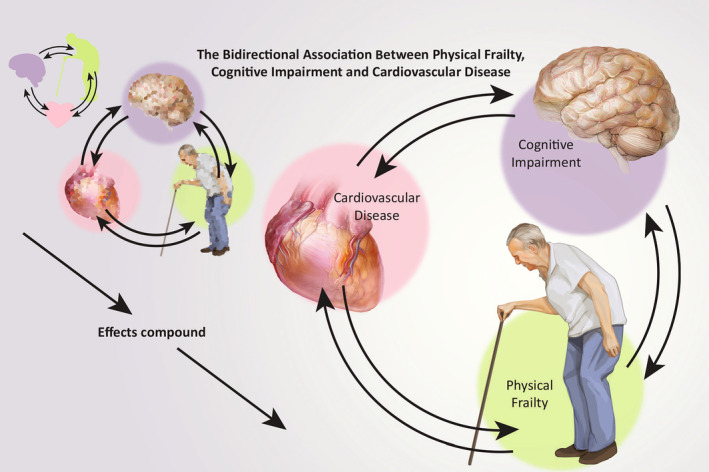
The presence or progression of one may lead to the development of the other. This is in part related to the risk factors shared between the 3. What develops first may allude to the pathophysiological pathway that is causing pathological aging in that individual.
Atrial Fibrillation and Cognitive Frailty
Whereas stroke secondary to atrial fibrillation leads to CI and dementia, there is also an association between atrial fibrillation and dementia independent of stroke. 81 In fact, a meta‐analysis showed that atrial fibrillation confers a nearly 30% increased risk of dementia, independent of cerebrovascular accidents and transient ischemic attacks. 82 Another large study that followed participants over 20 years showed a 16% greater decline in cognitive abilities in those with atrial fibrillation compared with those without atrial fibrillation. 83 This finding was consistent across races and sexes and of greater magnitude with advancing age. Data from the SAGE‐AF (Systematic Assessment of Geriatric Elements in Atrial Fibrillation) study showed that in an older population with nonvalvular atrial fibrillation, cognitive frailty correlated with depression, older age, lower education, non‐Hispanic White race, and bleeding and stroke risks. 84 Those with atrial fibrillation who were cognitively impaired or frail had a higher predicted risk for stroke and observed mortality, however, were less likely to be anticoagulated. 85 In light of these data, the European Society of Cardiology's guidelines state that the potential harm associated with frailty, comorbidities, and increased risk of falls does not outweigh the benefits of oral anticoagulation. 86 In fact, evidence suggests that use of anticoagulants and maintenance of sinus rhythm after cardioversion or catheter ablation may reduce the risk of cognitive decline. 87 , 88
Heart Failure and Cognitive Frailty
Heart failure is associated with a higher risk of cognitive frailty. At the extreme, of those listed on the heart transplant list, 54.8% had CI and 30.6% were frail. 89 A systematic review of 8 studies demonstrated an overall association of increasing frailty and CI among patients with HF. 90 Some have hypothesized that left ventricular dysfunction can result in subtle neuropsychological dysfunction and vascular brain injury. 91 Those patients with HF and other comorbidities, such as atrial fibrillation or hypertension, are at greater risk for cognitive frailty. 92 Those with HF who had a history of hypertension performed worse in the domains of attention, executive function, psychomotor speed, and motor functioning than those without hyupertension. 93 In patients hospitalized for decompensated HF, the presence of atrial fibrillation or flutter, New York Heart Association Class IV HF, and lower education levels were associated with MCI based on an MMSE score of <24. 94 Whether left ventricle ejection fraction is associated with cognitive frailty is still a question as 1 study showed that left ventricle ejection fraction was associated with MMSE score, 95 whereas another using data from REHAB‐HF (Rehabilitation Therapy in Older Acute Heart Failure Patients) showed that the presence of CI and of frailty did not differ in patients with HF with preserved ejection fraction and those with HF with reduced ejection fraction, though those with HF with preserved ejection fraction had higher rates of depression and worse quality of life. 96
In older adults with HF, CI is underdiagnosed, with only 48.5% of those with CI having a CI diagnosis documented by physicians. As severity of CI increased, documentation rates increased; however, even in those with moderate‐to‐severe CI, documentation was present in less than half of cases. Those who did not have a documentation of CI were more likely to experience 6‐month mortality or hospital readmission than patients without CI. 97 Studies have shown that even when dementia is diagnosed by psychiatrists and geriatric psychiatrists, the diagnosis is frequently withheld from the patient. 98
An association between cognitive frailty and poor outcomes has also been identified in patients with preclinical HF (HF stages A and B). A study of patients with preclinical HF showed that 13% had cognitive frailty and that cognitive frailty was associated with age, education, N‐terminal pro‐B‐type natriuretic peptide level, history of peripheral arterial disease, history of stroke, and polypharmacy. Cognitive frailty was associated with a higher incidence of mortality or readmission over a 2‐year follow‐up period in this population than those with physical frailty alone (1.50‐fold versus 1.84‐fold). 99
Psychosocial Factors, Cognitive Frailty, and CVD
There is an association between depression and cognitive frailty among patients with HF, indicating a systemic response that is associated with mental illness. In a study of 168 older adults with HF in whom the prevalence of cognitive frailty was 34.5%, longer sleep duration and depression predicted an increased risk of cognitive frailty. 100 Similarly, patients with HF and social frailty, which is the lack of social supports and lack of participation in social networks, in addition to cognitive and physical frailty were found to be at increased risk of mortality as compared with those with a single type of frailty. 101 Psychosocial stress has been associated with cognitive frailty and CVD outcomes independently; however, these studies suggest a relationship between the 3 (psychosocial stress, cognitive frailty, and CVD) that requires further exploration further.
Atherosclerotic CVD and Cognitive Frailty
There is a paucity of studies on cognitive frailty in patients with stable ischemic heart disease and those with acute coronary syndromes. One study on patients who presented with ST‐segment–elevation MI who were treated with primary percutaneous coronary intervention showed that baseline gait speed significantly correlated with cognitive score. 102 A study of community‐dwelling men with chronic coronary disease also demonstrated a correlation between gait speed and cognitive function, as well as an association between the severity of frailty and global cognitive function. 54 A small study on patients with acute MI showed that CI was not associated with ejection fraction. In fact, certain demographics were the greatest predictors: age was associated with development of CI and female gender was associated with post‐MI depression. 103 A large study of 2041 patients aged 75 and older hospitalized with acute MI studied the impact of CI on outcomes. It showed that 17% of patients in this population had CI, which was associated with an increased risk of readmission and death and that moderate‐to‐severe CI was associated with a greater risk of death. 104 A similar study on older patients with acute (MI showed that CI is associated with complications, longer hospitalizations, decreased likelihood of discharge home, and increased risk of mortality. 105 These findings could be explained by the lower probability of referral of older adults with CI to cardiac catheterization and coronary angiography, which are associated improved survival in populations with acute coronary syndrome. 106 A large study showed that incident coronary disease is associated with accelerated cognitive decline over a follow‐up period of 12 years. 107 In another study, incident CVD (majority with angina pectoris or MI) was also associated with a decline in cognition, a vascular event, and a greater decline in memory and information processing speed. 108 A study of 261 patients undergoing coronary artery bypass graft showed a 53% incidence of cognitive decline at discharge. 109 The prevalence of cognitive decline decreased at 6‐week and 6‐month follow‐up; however, it increased again to 42% after 5 years. This study showed that early postoperative cognitive decline was a strong predictor of long‐term cognitive function.
Valvular Heart Disease and Cognitive Frailty
Older adults are frequently affected by valvular disease and several studies have examined cognitive frailty in this population. One study of patients undergoing transcatheter aortic valve replacement (TAVR) showed that CI was associated with frailty, the presence of peripheral arterial disease, lower serum albumin levels, lower ejection fraction, and smaller aortic valve areas, as well as higher mortality rates. 110 One study of 229 patients 70 years or older undergoing TAVR demonstrated improved cognitive function as measured by the MMSE at 6‐month follow‐up. 111 Furthermore, a meta‐analysis of 18 studies performed by Khan et al showed that TAVR is associated with improved CI at 1‐month postprocedural follow‐up, and the improvement in CI was sustained over a 6‐month follow‐up period. 112 Another study evaluating TAVR in patients with CI reported that 37.5% had improved cognition at 6‐month follow‐up. A systematic review of studies of patients undergoing TAVR showed that cognitive function improved or remained preserved post TAVR. 113 Cognitive frailty status is also associated with worse functional status post‐TAVR than CI alone. 114 Cognitive status was found to be associated with poor outcomes in patients undergoing surgical aortic valve replacement as well, with preoperative assessment of delayed verbal memory recall and visuospatial skills predicting risk of stroke/transient ischemic attack within 1 week postoperatively, and impairment in several cognitive measures being associated with death at 1 year. 115 Another study on patients undergoing surgical aortic valve replacement compared with nonsurgical patients with CVD showed that although cognitive scores were lower at 4 to 6 weeks, they did not differ at 1 year, and those with postoperative cognitive decline had more and larger acute cerebral infarcts. 116 One study on patients undergoing TAVR and surgical aortic valve replacement showed that delirium occurred in 23% of patients within the first 3 postoperative days and occurred in patients with lower baseline cognitive performance.
Management of Cognitive Frailty
Identification of cognitive frailty in older patients with CVD is critical to improving cardiovascular outcomes. It influences a patient's ability to communicate, adhere to medication regimens, and consent for procedures. Presence of cognitive frailty also increases the risk of delirium, independent of age and other risk factors. A study on patients after cardiac surgery demonstrated that cognitive frailty was a greater risk factor for postoperative delirium (odds ratio [OR], 7.494 even after adjustment for age, sex, albumin, and operation type) as compared with MCI or frailty alone. 117 Identification of cognitive frailty allows for a window of opportunity to identify areas where patients need support and then to intervene to try to prevent progression of cognitive decline to dementia. As suggested by Madhavan et al, 118 the identification of advanced cognitive frailty should be an opportunity to discuss goals of care, as palliative care may be more appropriate. If intervention is warranted, it can inform the type of intervention, for example, percutaneous coronary intervention rather than coronary artery bypass graft for older adults who are frail and prone to periprocedural complications like stroke and neurocognitive decline. 118 Studies have shown that those with cognitive frailty are less likely to be offered invasive procedures; however, more studies are needed to determine whether the lack of invasive interventions in this subset leads to poor outcomes or whether they are prone to poor outcomes regardless of intervention.
Recognition of cognitive frailty, as compared with physical frailty alone, is important as cognitive frailty is a better predictor of adverse outcomes. Additionally, it incorporates the identification of CI, a diagnosis that is very relevant to cardiovascular care, as it affects procedural consent, postprocedural complications like delirium, ability to take medications as prescribed, and adherence to medical recommendations. Whereas physical frailty is an important diagnosis and established predictor for poor cardiovascular outcomes, 13 diagnosing cognitive frailty would include the measure of physical frailty but is more comprehensive and informative. However, identification of frailty alone should result in the same approach to develop a plan of interventions to reverse or halt it.
After diagnosis, reversible factors should be identified, for example, vitamin B12 deficiency, thyroid dysfunction, delirium, depression, medication side effects, or change in living environment. Then, identification of risk factors associated with cognitive frailty should be identified. Lifestyle interventions such as regular exercise, a healthy diet, abstinence from tobacco use, and social engagement can help improve cognitive function and physical health. These interventions will combat obesity and development of insulin resistance and prevent or delay the development of hypertension, which are risk factors associated with cognitive frailty. Encouraging patients to adopt healthy behaviors can not only improve neurocognitive health but also prevent or delay the development or progression of CVD. However, behavior change in this population may be difficult due to decades‐long habits and presence of CI. Structured multidisciplinary rehabilitation may be one avenue. 4 More studies on successful interventions are needed.
In those with established CI or cognitive frailty, cognitive rehabilitation should be offered. Cognitive rehabilitation involves activities that improve cognitive function, such as memory training, attention exercises, and problem solving. This can be provided by a trained health professional and be a part of other rehabilitation programs the patient is already participating in, such as cardiac rehabilitation. Comprehensive, multimodal rehabilitation programs have the potential to reverse frailty. 4
A better understanding of patient‐centered intensification or deescalating pharmacotherapy in older adults with multiple chronic conditions that can affect cognitive frailty is needed. 119 In younger patients with obesity, pharmacotherapy for the treatment of obesity may prove to be beneficial for neurocognitive, as well as cardiovascular health. By ways of targeting inflammatory and oxidative stress pathways, sodium‐glucose cotransporter‐2 inhibitors are a class of drugs that demonstrated favorable effects on cognition and physical frailty. For example, in older adults with diabetes and hypertension, 3 months of empagliflozin therapy resulted in improved Montreal Cognitive Assessment score and 5‐m gait speed. 120 This study demonstrated a reduction in mitochondrial oxidative stress, decreased glucose‐induced endothelial leakage, and oxidative stress of endothelial cells, adding support to the pathophysiological mechanisms of the development of cognitive frailty in diabetics and hypertensives.
Monoclonal antibodies have been of increasing interest to halt the progression of CI and dementia by targeting beta amyloid. Aducanumab is a monoclonal antibody directed against beta amyloid that has been approved for the treatment of MCI and mild Alzheimer's disease. 121 The majority of subjects in the clinical trials on aducanumab had MCI; hence, aducanumab is the one pharmacotherapy that is recommended for MCI, whereas others are reserved for moderate to severe dementia. However, there are many contraindications that limit its use. It is contraindicated in vascular dementia, which may be underdiagnosed and highly prevalent in patients seen by the cardiovascular practice. Patients with CVD are frequently on anticoagulants other than aspirin 81 mg, which is a relative contraindication due to risk of cerebral hemorrhage.
Other pharmacotherapies are reserved for moderate‐to‐severe Alzheimer's disease. For example, there are multiple neurohormonal modulators that are used to treat cognitive impairment. For example, memantine, a glutamatergic N‐methyl‐D‐aspartate receptor antagonist, has shown to improve cognitive function in patients with amnestic MCI and those with mild‐to‐moderate vascular dementia; however, the evidence has not been compelling and its use is mostly limited to moderate to severe Alzheimer's disease. 122 , 123 Another class of medications, cholinesterase inhibitors like rivastigmine, has also been shown to improve cognitive function in patients with mild‐to‐moderate Alzheimer's disease. 124 One medication of this class, donepezil, has also demonstrated improvement in cognitive function of patients with MCI, although data suggest it does not delay progression of the disease and frequently causes adverse gastrointestinal side effects. 125 Whereas there are studies that demonstrate potential benefit, there are also data that suggest there is no benefit and greater risk of unwanted side effects, for example, a meta‐analysis studying cholinesterase inhibitors and memantine did not result in improvement in cognition or function among patients with MCI. 126 The conflicting results suggest that this area needs further research. Better understanding of the pathophysiologic pathways underlying cognitive frailty may allow for better pharmacologic targets to reverse the process.
Social support is important for individuals with cognitive frailty as it can help reduce isolation, lower risk of depression, and improve quality of life. Patients should be encouraged to participate in social activities and connect with friends and family members. Older patients at risk for social isolation should be followed closely and referred to community engagement groups. The importance of family and friends in the care of older adults is well established and support systems should be engaged early. Caregivers should be provided education and resources to help them manage the challenges associated with caring for those with cognitive frailty.
The management of cognitive frailty requires a patient‐centered approach, defining realistic treatment goals and preferences. Some patients may benefit from a multidisciplinary team that includes geriatricians, neuropsychiatrists, and social workers to identify and address reversible causes and areas where patients need extra support. For example, patients with cognitive frailty may need nursing visits for medication management or enrollment in social groups where they can participate in physical and cognitive exercises. This could be easily achieved by adding cognitive and nutritional components to existing programs like cardiac rehabilitation. Additionally, gerotechnology, which are health technologies based on geriatric principles used to support an individual along the spectrum of elderhood, need to be optimally designed for implementation in the clinical setting. 127
Gaps in Knowledge
The definition of cognitive frailty will need to be improved and updated to reflect the growing knowledge of the interrelationships between physical frailty, cognitive impairment, and CVDs. The 2013 version of the definition uses the nonspecific clinical dementia rating. However, newer tests noted in Figure 1 may need to be considered in its place. Additionally, there are numerous tools used to measure the physical component of frailty, and the present definition does not specify which one to use, resulting in heterogeneity in the research being conducted on cognitive frailty. There is a limited understanding of the biological underpinnings of cognitive frailty. Although many associations have been found, such as inflammation, neurohormonal dysregulation, and cerebral structural changes, the pathophysiology requires further clarity. Elucidating these pathophysiological mechanisms would allow for more precise identification of interventions to treat and prevent this geriatric syndrome.
In health systems where frailty is commonly measured, physicians have frequently cited concerns that the diagnosis requires additional time and resources, which are presently inadequate in their health system. 128 In the United States and in the Western countries seeing a rise in the elderly population, health care organizations must lobby for reallocation of resources toward research and interventions to address the increasing complexities in the medical care of the elderly.
Conclusions
In older adults with CVD, frailty and CI are frequently comorbid, and this subset of patients with cognitive frailty experience worse outcomes. Age, education level, mental illness, and a greater burden of CVD are associated with an increased likelihood of developing cognitive frailty. Most studies suggest that cognitive and physical decline accelerates after a vascular event, indicating that older adults seen in the cardiovascular practice are at risk of developing this geriatric syndrome. Identification of cognitive frailty along with the underlying pathophysiologic mechanisms can inform future corrective measures to prevent or delay its onset. Its identification can also better inform the optimal management of patients, that is, need for caregiver support, ability to provide informed consent, and need for assistance with medication administration. A multidisciplinary approach is needed for the management of these patients.
Sources of Funding
Dr Nanna reports current research support from the American College of Cardiology Foundation supported by the George F. and Ann Harris Bellows Foundation, the Patient‐Centered Outcomes Research Institute, the Yale Claude D Pepper Older Americans Independence Center (P30AG021342), and the National Institutes of Health/National Institute on Aging from R03AG074067 (GEMSSTAR award) and consulting fees from HeartFlow Inc. Dr Brown receives funding from the National Institutes of Health, and Dr Damluji received a grant from Medtronic. Dr Gerstenblith receives funding from the Claude Pepper Older Americans Independence Center ‐ Johns Hopkins University funded by the National Institute on Aging P30‐AG021334. Dr Orkaby is funded by Veterans Affairs Clinical Science Research and Development CDA‐2 IK2‐CX001800. Dr Damluji receives research funding from the Pepper Scholars Program of the Johns Hopkins University Claude D. Pepper Older Americans Independence Center funded by the National Institute on Aging P30‐AG021334 and a mentored patient‐oriented research career development award from the National Heart, Lung, and Blood Institute K23‐HL153771‐01.
Disclosures
None.
Acknowledgments
The authors would like to acknowledge Devon Stuart, MA, CMI for her assistance with medical illustration.
This article was sent to Jose R. Romero, MD, Associate Editor, for review by expert referees, editorial decision, and final disposition.
For Sources of Funding and Disclosures, see page 12.
REFERENCES
- 1. Ageing and Health . World Health Organization. Accessed October 1, 2022. https://www.who.int/news‐room/fact‐sheets/detail/ageing‐and‐health
- 2. Damluji AA, Forman DE, Wang TY, Chikwe J, Kunadian V, Rich MW, Young BA, Page RL 2nd, DeVon HA, Alexander KP, et al. Management of acute coronary syndrome in the older adult population: a scientific statement from the American Heart Association. Circulation. 2023;147:e32–e62. doi: 10.1161/CIR.0000000000001112 [DOI] [PMC free article] [PubMed] [Google Scholar]
- 3. Fried LP, Tangen CM, Walston J, Newman AB, Hirsch C, Gottdiener J, Seeman T, Tracy R, Kop WJ, Burke G, et al. Frailty in older adults: evidence for a phenotype. J Gerontol A Biol Sci Med Sci. 2001;56:M146–M156. doi: 10.1093/gerona/56.3.m146 [DOI] [PubMed] [Google Scholar]
- 4. Ijaz N, Buta B, Xue QL, Mohess DT, Bushan A, Tran H, Batchelor W, de Filippi CR, Walston JD, Bandeen‐Roche K, et al. Interventions for frailty among older adults with cardiovascular disease: JACC state‐of‐the‐art review. J Am Coll Cardiol. 2022;79:482–503. doi: 10.1016/j.jacc.2021.11.029 [DOI] [PMC free article] [PubMed] [Google Scholar]
- 5. Gobbens RJ, Luijkx KG, Wijnen‐Sponselee MT, Schols JM. Towards an integral conceptual model of frailty. J Nutr Health Aging. 2010;14:175–181. doi: 10.1007/s12603-010-0045-6 [DOI] [PubMed] [Google Scholar]
- 6. Kelaiditi E, Cesari M, Canevelli M, van Kan GA, Ousset PJ, Gillette‐Guyonnet S, Ritz P, Duveau F, Soto ME, Provencher V, et al; IANA/IAGG . Cognitive frailty: rational and definition from an (I.A.N.A./I.A.G.G.) international consensus group. J Nutr Health Aging. 2013;17:726–734. doi: 10.1007/s12603-013-0367-2 [DOI] [PubMed] [Google Scholar]
- 7. Shimada H, Makizako H, Tsutsumimoto K, Doi T, Lee S, Suzuki T. Cognitive frailty and incidence of dementia in older persons. J Prev Alzheimers Dis. 2018;5:42–48. doi: 10.14283/jpad.2017.29 [DOI] [PubMed] [Google Scholar]
- 8. Avila‐Funes JA, Amieva H, Barberger‐Gateau P, Le Goff M, Raoux N, Ritchie K, Carriere I, Tavernier B, Tzourio C, Gutierrez‐Robledo LM, et al. Cognitive impairment improves the predictive validity of the phenotype of frailty for adverse health outcomes: the three‐city study. J Am Geriatr Soc. 2009;57:453–461. doi: 10.1111/j.1532-5415.2008.02136.x [DOI] [PubMed] [Google Scholar]
- 9. Clegg A, Young J, Iliffe S, Rikkert MO, Rockwood K. Frailty in elderly people. Lancet. 2013;381:752–762. doi: 10.1016/S0140-6736(12)62167-9 [DOI] [PMC free article] [PubMed] [Google Scholar]
- 10. Halil M, Cemal Kizilarslanoglu M, Emin Kuyumcu M, Yesil Y, Cruz Jentoft AJ. Cognitive aspects of frailty: mechanisms behind the link between frailty and cognitive impairment. J Nutr Health Aging. 2015;19:276–283. doi: 10.1007/s12603-014-0535-z [DOI] [PubMed] [Google Scholar]
- 11. Yu R, Morley JE, Kwok T, Leung J, Cheung O, Woo J. The effects of combinations of cognitive impairment and pre‐frailty on adverse outcomes from a prospective community‐based cohort study of older Chinese people. Front Med (Lausanne). 2018;5:50. doi: 10.3389/fmed.2018.00050 [DOI] [PMC free article] [PubMed] [Google Scholar]
- 12. Boyle PA, Buchman AS, Wilson RS, Leurgans SE, Bennett DA. Physical frailty is associated with incident mild cognitive impairment in community‐based older persons. J Am Geriatr Soc. 2010;58:248–255. doi: 10.1111/j.1532-5415.2009.02671.x [DOI] [PMC free article] [PubMed] [Google Scholar]
- 13. Damluji AA, Chung SE, Xue QL, Hasan RK, Moscucci M, Forman DE, Bandeen‐Roche K, Batchelor W, Walston JD, Resar JR, et al. Frailty and cardiovascular outcomes in the National Health and Aging Trends Study. Eur Heart J. 2021;42:3856–3865. doi: 10.1093/eurheartj/ehab468 [DOI] [PMC free article] [PubMed] [Google Scholar]
- 14. Leritz EC, McGlinchey RE, Kellison I, Rudolph JL, Milberg WP. Cardiovascular disease risk factors and cognition in the elderly. Curr Cardiovasc Risk Rep. 2011;5:407–412. doi: 10.1007/s12170-011-0189-x [DOI] [PMC free article] [PubMed] [Google Scholar]
- 15. Damluji AA, Ijaz N, Chung S‐E, Xue Q‐L, Hasan RK, Batchelor WB, Orkaby AR, Kochar A, Nanna MG, Roth DL, et al. Hierarchical development of physical frailty and cognitive impairment and their association with incident cardiovascular disease. JACC Adv. 2023;2:100318. doi: 10.1016/j.jacadv.2023.100318 [DOI] [PMC free article] [PubMed] [Google Scholar]
- 16. Siejka TP, Srikanth VK, Hubbard RE, Moran C, Beare R, Wood A, Phan T, Balogun S, Callisaya ML. White matter hyperintensities and the progression of frailty‐the Tasmanian Study of Cognition and Gait. J Gerontol A Biol Sci Med Sci. 2020;75:1545–1550. doi: 10.1093/gerona/glaa024 [DOI] [PubMed] [Google Scholar]
- 17. Yamamoto S, Yamasaki S, Higuchi S, Kamiya K, Saito H, Saito K, Ogasahara Y, Maekawa E, Konishi M, Kitai T, et al. Prevalence and prognostic impact of cognitive frailty in elderly patients with heart failure: sub‐analysis of FRAGILE‐HF. ESC Heart Fail. 2022;9:1574–1583. doi: 10.1002/ehf2.13844 [DOI] [PMC free article] [PubMed] [Google Scholar]
- 18. Damluji AA, Forman DE, van Diepen S, Alexander KP, Page RL 2nd, Hummel SL, Menon V, Katz JN, Albert NM, Afilalo J, et al. Older adults in the cardiac intensive care unit: factoring geriatric syndromes in the management, prognosis, and process of care: a scientific statement from the American Heart Association. Circulation. 2020;141:e6–e32. doi: 10.1161/CIR.0000000000000741 [DOI] [PubMed] [Google Scholar]
- 19. Ruan Q, Yu Z, Chen M, Bao Z, Li J, He W. Cognitive frailty, a novel target for the prevention of elderly dependency. Ageing Res Rev. 2015;20:1–10. doi: 10.1016/j.arr.2014.12.004 [DOI] [PubMed] [Google Scholar]
- 20. Hugo J, Ganguli M. Dementia and cognitive impairment: epidemiology, diagnosis, and treatment. Clin Geriatr Med. 2014;30:421–442. doi: 10.1016/j.cger.2014.04.001 [DOI] [PMC free article] [PubMed] [Google Scholar]
- 21. Jongsiriyanyong S, Limpawattana P. Mild cognitive impairment in clinical practice: a review article. Am J Alzheimers Dis Other Dement. 2018;33:500–507. doi: 10.1177/1533317518791401 [DOI] [PMC free article] [PubMed] [Google Scholar]
- 22. Lichtenberg PA, ed. Handbook of Assessment in Clinical Gerontology. 2nd ed. Academic Press; 2010:721–734. [Google Scholar]
- 23. Wada‐Isoe K, Kikuchi T, Umeda‐Kameyama Y, Mori T, Akishita M, Nakamura Y; ABC Dementia Scale Research Group . Global clinical dementia rating score of 0.5 may not be an accurate criterion to identify individuals with mild cognitive impairment. J Alzheimers Dis Rep. 2019;3:233–239. doi: 10.3233/ADR-190126 [DOI] [PMC free article] [PubMed] [Google Scholar]
- 24. Ciesielska N, Sokołowski R, Mazur E, Podhorecka M, Polak‐Szabela A, Kędziora‐Kornatowska K. Is the Montreal Cognitive Assessment (MoCA) test better suited than the Mini‐Mental State Examination (MMSE) in mild cognitive impairment (MCI) detection among people aged over 60? Meta‐Analysis. Psychiatria Polska. 2016;50:1039–1052. doi: 10.12740/pp/45368 [DOI] [PubMed] [Google Scholar]
- 25. Zhang S, Qiu Q, Qian S, Lin X, Yan F, Sun L, Xiao S, Wang J, Fang Y, Li X. Determining appropriate screening tools and cutoffs for cognitive impairment in the Chinese elderly. Front Psych. 2021;12:773281. doi: 10.3389/fpsyt.2021.773281 [DOI] [PMC free article] [PubMed] [Google Scholar]
- 26. Nasreddine ZS, Phillips NA, Bedirian V, Charbonneau S, Whitehead V, Collin I, Cummings JL, Chertkow H. The Montreal Cognitive Assessment, MoCA: a brief screening tool for mild cognitive impairment. J Am Geriatr Soc. 2005;53:695–699. doi: 10.1111/j.1532-5415.2005.53221.x [DOI] [PubMed] [Google Scholar]
- 27. Folstein MF, Robins LN, Helzer JE. The Mini‐Mental State Examination. Arch Gen Psychiatry. 1983;40:812. doi: 10.1001/archpsyc.1983.01790060110016 [DOI] [PubMed] [Google Scholar]
- 28. Borson S, Scanlan J, Brush M, Vitaliano P, Dokmak A. The Mini‐Cog: a cognitive ‘vital signs’ measure for dementia screening in multi‐lingual elderly. Int J Geriatr Psychiatry. 2000;15:1021–1027. doi: 10.1002/1099-1166(200011)15:11<1021::aid-gps234>3.0.co;2-6 [DOI] [PubMed] [Google Scholar]
- 29. Chester JG, Grande LJ, Milberg WP, McGlinchey RE, Lipsitz LA, Rudolph JL. Cognitive screening in community‐dwelling elders: performance on the clock‐in‐the‐box. Am J Med. 2011;124:662–669. doi: 10.1016/j.amjmed.2011.02.023 [DOI] [PMC free article] [PubMed] [Google Scholar]
- 30. Bowie CR, Harvey PD. Administration and interpretation of the Trail Making Test. Nat Protoc. 2006;1:2277–2281. doi: 10.1038/nprot.2006.390 [DOI] [PubMed] [Google Scholar]
- 31. Mathuranath PS, Nestor PJ, Berrios GE, Rakowicz W, Hodges JR. A brief cognitive test battery to differentiate Alzheimer's disease and frontotemporal dementia. Neurology. 2000;55:1613–1620. doi: 10.1212/01.wnl.0000434309.85312.19 [DOI] [PubMed] [Google Scholar]
- 32. Hodkinson HM. Evaluation of a mental test score for assessment of mental impairment in the elderly. Age Ageing. 1972;1:233–238. doi: 10.1093/ageing/1.4.233 [DOI] [PubMed] [Google Scholar]
- 33. Tariq SH, Tumosa N, Chibnall JT, Perry MH 3rd, Morley JE. Comparison of the Saint Louis University Mental Status examination and the Mini‐Mental State Examination for detecting dementia and mild neurocognitive disorder–a pilot study. Am J Geriatr Psychiatry. 2006;14:900–910. doi: 10.1097/01.JGP.0000221510.33817.86 [DOI] [PubMed] [Google Scholar]
- 34. Brodaty H, Pond D, Kemp NM, Luscombe G, Harding L, Berman K, Huppert FA. The GPCOG: a new screening test for dementia designed for general practice. J Am Geriatr Soc. 2002;50:530–534. doi: 10.1046/j.1532-5415.2002.50122.x [DOI] [PubMed] [Google Scholar]
- 35. Buschke H, Kuslansky G, Katz M, Stewart WF, Sliwinski MJ, Eckholdt HM, Lipton RB. Screening for dementia with the memory impairment screen. Neurology. 1999;52:231–238. doi: 10.1212/wnl.52.2.231 [DOI] [PubMed] [Google Scholar]
- 36. Storey JE, Rowland JT, Basic D, Conforti DA, Dickson HG. The Rowland Universal Dementia Assessment Scale (RUDAS): a multicultural cognitive assessment scale. Int Psychogeriatr. 2004;16:13–31. doi: 10.1017/s1041610204000043 [DOI] [PubMed] [Google Scholar]
- 37. Flaks MK, Forlenza OV, Pereira FS, Viola LF, Yassuda MS. Short cognitive performance test: diagnostic accuracy and education bias in older Brazilian adults. Arch Clin Neuropsychol. 2009;24:301–306. doi: 10.1093/arclin/acp033 [DOI] [PubMed] [Google Scholar]
- 38. Blessed G, Tomlinson BE, Roth M. The association between quantitative measures of dementia and of senile change in the cerebral grey matter of elderly subjects. Br J Psychiatry. 1968;114:797–811. doi: 10.1192/bjp.114.512.797 [DOI] [PubMed] [Google Scholar]
- 39. Galvin JE, Roe CM, Powlishta KK, Coats MA, Muich SJ, Grant E, Miller JP, Storandt M, Morris JC. The AD8: a brief informant interview to detect dementia. Neurology. 2005;65:559–564. doi: 10.1212/01.wnl.0000172958.95282.2a [DOI] [PubMed] [Google Scholar]
- 40. Ding Y, Niu J, Zhang Y, Liu W, Zhou Y, Wei C, Liu Y. Informant Questionnaire on Cognitive Decline in the Elderly (IQCODE) for assessing the severity of dementia in patients with Alzheimer's disease. BMC Geriatr. 2018;18:146. doi: 10.1186/s12877-018-0837-9 [DOI] [PMC free article] [PubMed] [Google Scholar]
- 41. Fong TG, Fearing MA, Jones RN, Shi P, Marcantonio ER, Rudolph JL, Yang FM, Kiely DK, Inouye SK. Telephone interview for cognitive status: creating a crosswalk with the Mini‐Mental State Examination. Alzheimers Dement. 2009;5:492–497. doi: 10.1016/j.jalz.2009.02.007 [DOI] [PMC free article] [PubMed] [Google Scholar]
- 42. Scharre DW, Chang SI, Nagaraja HN, Wheeler NC, Kataki M. Self‐Administered Gerocognitive Examination: longitudinal cohort testing for the early detection of dementia conversion. Alzheimers Res Ther. 2021;13:192. doi: 10.1186/s13195-021-00930-4 [DOI] [PMC free article] [PubMed] [Google Scholar]
- 43. De Simone MS, Perri R, Fadda L, Caltagirone C, Carlesimo GA. Predicting progression to Alzheimer's disease in subjects with amnestic mild cognitive impairment using performance on recall and recognition tests. J Neurol. 2019;266:102–111. doi: 10.1007/s00415-018-9108-0 [DOI] [PubMed] [Google Scholar]
- 44. Rockwood K, Song X, MacKnight C, Bergman H, Hogan DB, McDowell I, Mitnitski A. A global clinical measure of fitness and frailty in elderly people. CMAJ. 2005;173:489–495. doi: 10.1503/cmaj.050051 [DOI] [PMC free article] [PubMed] [Google Scholar]
- 45. Afilalo J, Alexander KP, Mack MJ, Maurer MS, Green P, Allen LA, Popma JJ, Ferrucci L, Forman DE. Frailty assessment in the cardiovascular care of older adults. J Am Coll Cardiol. 2014;63:747–762. doi: 10.1016/j.jacc.2013.09.070 [DOI] [PMC free article] [PubMed] [Google Scholar]
- 46. Pakzad S, Bourque P, Fallah N. Prediction of cognitive status and 5‐year survival rate for elderly with cardiovascular diseases: a Canadian Study of Health and Aging secondary data analysis. J Frailty Aging. 2021;10:31–37. doi: 10.14283/jfa.2020.21 [DOI] [PubMed] [Google Scholar]
- 47. Afilalo J, Lauck S, Kim DH, Lefevre T, Piazza N, Lachapelle K, Martucci G, Lamy A, Labinaz M, Peterson MD, et al. Frailty in older adults undergoing aortic valve replacement: the FRAILTY‐AVR study. J Am Coll Cardiol. 2017;70:689–700. doi: 10.1016/j.jacc.2017.06.024 [DOI] [PubMed] [Google Scholar]
- 48. Ma L, Chan P. Understanding the physiological links between physical frailty and cognitive decline. Aging Dis. 2020;11:405–418. doi: 10.14336/AD.2019.0521 [DOI] [PMC free article] [PubMed] [Google Scholar]
- 49. Ershler WB, Keller ET. Age‐associated increased interleukin‐6 gene expression, late‐life diseases, and frailty. Annu Rev Med. 2000;51:245–270. doi: 10.1146/annurev.med.51.1.245 [DOI] [PubMed] [Google Scholar]
- 50. Verghese J, Holtzer R, Oh‐Park M, Derby CA, Lipton RB, Wang C. Inflammatory markers and gait speed decline in older adults. J Gerontol A Biol Sci Med Sci. 2011;66:1083–1089. doi: 10.1093/gerona/glr099 [DOI] [PMC free article] [PubMed] [Google Scholar]
- 51. Cosarderelioglu C, Nidadavolu LS, George CJ, Oh ES, Bennett DA, Walston JD, Abadir PM. Brain renin‐angiotensin system at the intersect of physical and cognitive frailty. Front Neurosci. 2020;14:586314. doi: 10.3389/fnins.2020.586314 [DOI] [PMC free article] [PubMed] [Google Scholar]
- 52. Jensen GL. Inflammation: roles in aging and sarcopenia. JPEN J Parenter Enteral Nutr. 2008;32:656–659. doi: 10.1177/0148607108324585 [DOI] [PubMed] [Google Scholar]
- 53. Ashar FN, Moes A, Moore AZ, Grove ML, Chaves PHM, Coresh J, Newman AB, Matteini AM, Bandeen‐Roche K, Boerwinkle E, et al. Association of mitochondrial DNA levels with frailty and all‐cause mortality. J Mol Med (Berl). 2015;93:177–186. doi: 10.1007/s00109-014-1233-3 [DOI] [PMC free article] [PubMed] [Google Scholar]
- 54. Weinstein G, Lutski M, Goldbourt U, Tanne D. Physical frailty and cognitive function among men with cardiovascular disease. Arch Gerontol Geriatr. 2018;78:1–6. doi: 10.1016/j.archger.2018.05.013 [DOI] [PubMed] [Google Scholar]
- 55. Nishita Y, Nakamura A, Kato T, Otsuka R, Iwata K, Tange C, Ando F, Ito K, Shimokata H, Arai H. Links between physical frailty and regional gray matter volumes in older adults: A voxel‐based morphometry study. 2019;20:1587–1592.e7. doi: 10.1016/j.jamda.2019.09.001 [DOI] [PubMed] [Google Scholar]
- 56. Vintimilla R, Balasubramanian K, Hall J, Johnson L, O'Bryant S. Cardiovascular risk factors, cognitive dysfunction, and mild cognitive impairment. Dement Geriatr Cogn Dis Extra. 2020;10:154–162. doi: 10.1159/000511103 [DOI] [PMC free article] [PubMed] [Google Scholar]
- 57. Bucur B, Madden DJ. Effects of adult age and blood pressure on executive function and speed of processing. Exp Aging Res. 2010;36:153–168. doi: 10.1080/03610731003613482 [DOI] [PMC free article] [PubMed] [Google Scholar]
- 58. Baker AB, Resch JA, Loewenson RB. Hypertension and cerebral atherosclerosis. Circulation. 1969;39:701–710. doi: 10.1161/01.cir.39.5.701 [DOI] [PubMed] [Google Scholar]
- 59. Muntner P, Carey RM, Gidding S, Jones DW, Taler SJ, Wright JT Jr, Whelton PK. Potential US population impact of the 2017 ACC/AHA high blood pressure guideline. Circulation. 2018;137:109–118. doi: 10.1161/CIRCULATIONAHA.117.032582 [DOI] [PMC free article] [PubMed] [Google Scholar]
- 60. Fryar CD, Ostchega Y, Hales CM, Zhang G, Kruszon‐Moran D. Hypertension prevalence and control among adults: United States, 2015‐2016. NCHS Data Brief. 2017;289:1–8. [PubMed] [Google Scholar]
- 61. Lopez OL, Jagust WJ, Dulberg C, Becker JT, DeKosky ST, Fitzpatrick A, Breitner J, Lyketsos C, Jones B, Kawas C, et al. Risk factors for mild cognitive impairment in the Cardiovascular Health Study Cognition Study: part 2. Arch Neurol. 2003;60:1394–1399. doi: 10.1001/archneur.60.10.1394 [DOI] [PubMed] [Google Scholar]
- 62. SPRINT MIND Investigators for the SPRINT Research Group ; Williamson JD, Pajewski NM, Auchus AP, Bryan RN, Chelune G, Cheung AK, Cleveland ML, Coker LH, Crowe MG, et al. Effect of intensive vs standard blood pressure control on probable dementia: a randomized clinical trial. JAMA. 2019;321:553–561. doi: 10.1001/jama.2018.21442 [DOI] [PMC free article] [PubMed] [Google Scholar]
- 63. Ding J, Davis‐Plourde KL, Sedaghat S, Tully PJ, Wang W, Phillips C, Pase MP, Himali JJ, Gwen Windham B, Griswold M, et al. Antihypertensive medications and risk for incident dementia and Alzheimer's disease: a meta‐analysis of individual participant data from prospective cohort studies. Lancet Neurol. 2020;19:61–70. doi: 10.1016/S1474-4422(19)30393-X [DOI] [PMC free article] [PubMed] [Google Scholar]
- 64. Piotrowicz K, Klich‐Raczka A, Skalska A, Gryglewska B, Grodzicki T, Gasowski J. Pulse wave velocity and sarcopenia in older persons‐a systematic review and meta‐analysis. Int J Environ Res Public Health. 2022;19:19. doi: 10.3390/ijerph19116477 [DOI] [PMC free article] [PubMed] [Google Scholar]
- 65. Rasgon NL, Kenna HA, Wroolie TE, Kelley R, Silverman D, Brooks J, Williams KE, Powers BN, Hallmayer J, Reiss A. Insulin resistance and hippocampal volume in women at risk for Alzheimer's disease. Neurobiol Aging. 2011;32:1942–1948. doi: 10.1016/j.neurobiolaging.2009.12.005 [DOI] [PMC free article] [PubMed] [Google Scholar]
- 66. Christman AL, Vannorsdall TD, Pearlson GD, Hill‐Briggs F, Schretlen DJ. Cranial volume, mild cognitive deficits, and functional limitations associated with diabetes in a community sample. Arch Clin Neuropsychol. 2010;25:49–59. doi: 10.1093/arclin/acp091 [DOI] [PMC free article] [PubMed] [Google Scholar]
- 67. Wu K, Liu H, Zheng J, Zou L, Gu S, Zhou R, Yuan Z, Huang Z, Wu X. Diabetes treatment is associated with better cognitive function: the age disparity. Front Aging Neurosci. 2022;13:753129. doi: 10.3389/fnagi.2021.753129 [DOI] [PMC free article] [PubMed] [Google Scholar]
- 68. Chen HA‐O, Huang X, Dong MA‐O, Wen SA‐O, Zhou L, Yuan X. The association between sarcopenia and diabetes: from pathophysiology mechanism to therapeutic strategy. Diabetes Metab Syndr, Obes. 2023;16:1541–1554. doi: 10.2147/DMSO.S410834 [DOI] [PMC free article] [PubMed] [Google Scholar]
- 69. Walther K, Birdsill AC, Glisky EL, Ryan L. Structural brain differences and cognitive functioning related to body mass index in older females. Hum Brain Mapp. 2010;31:1052–1064. doi: 10.1002/hbm.20916 [DOI] [PMC free article] [PubMed] [Google Scholar]
- 70. Fitzpatrick AL, Kuller LH, Lopez OL, Diehr P, O'Meara ES, Longstreth WT Jr, Luchsinger JA. Midlife and late‐life obesity and the risk of dementia: Cardiovascular Health Study. Arch Neurol. 2009;66:336–342. doi: 10.1001/archneurol.2008.582 [DOI] [PMC free article] [PubMed] [Google Scholar]
- 71. Napoli N, Shah K, Waters DL, Sinacore DR, Qualls C, Villareal DT. Effect of weight loss, exercise, or both on cognition and quality of life in obese older adults. Am J Clin Nutr. 2014;100:189–198. doi: 10.3945/ajcn.113.082883 [DOI] [PMC free article] [PubMed] [Google Scholar]
- 72. Zhang T, Ren Y, Shen P, Jiang S, Yang Y, Wang Y, Li Z, Yang Y. Prevalence and associated risk factors of cognitive frailty: a systematic review and meta‐analysis. Front Aging Neurosci. 2021;13:755926. doi: 10.3389/fnagi.2021.755926 [DOI] [PMC free article] [PubMed] [Google Scholar]
- 73. Brigola AG, Ottaviani AC, Carvalho DHT, Oliveira NA, Souza EN, Pavarini SCI. Association between cognitive impairment and criteria for frailty syndrome among older adults. Arq Neuropsiquiatr. 2020;78:2–8. doi: 10.1590/0004-282X20190138 [DOI] [PubMed] [Google Scholar]
- 74. Muhammad T, Govindu M, Srivastava S. Relationship between chewing tobacco, smoking, consuming alcohol and cognitive impairment among older adults in India: a cross‐sectional study. BMC Geriatr. 2021;21:85. doi: 10.1186/s12877-021-02027-x [DOI] [PMC free article] [PubMed] [Google Scholar]
- 75. Sabia S, Elbaz A, Dugravot A, Head J, Shipley M, Hagger‐Johnson G, Kivimaki M, Singh‐Manoux A. Impact of smoking on cognitive decline in early old age: the Whitehall II cohort study. Arch Gen Psychiatry. 2012;69:627–635. doi: 10.1001/archgenpsychiatry.2011.2016 [DOI] [PMC free article] [PubMed] [Google Scholar]
- 76. Jeong SM, Park J, Han K, Yoo J, Yoo JE, Lee CM, Jung W, Lee J, Kim SY, Shin DW. Association of changes in smoking intensity with risk of dementia in Korea. JAMA Netw Open. 2023;6:e2251506. doi: 10.1001/jamanetworkopen.2022.51506 [DOI] [PMC free article] [PubMed] [Google Scholar]
- 77. Wang C, Zhang J, Hu C, Wang Y. Prevalence and risk factors for cognitive frailty in aging hypertensive patients in China. Brain Sci. 2021;11:1018. doi: 10.3390/brainsci11081018 [DOI] [PMC free article] [PubMed] [Google Scholar]
- 78. Stern Y, Albert M, Barnes CA, Cabeza R, Pascual‐Leone A, Rapp PR. A framework for concepts of reserve and resilience in aging. Neurobiol Aging. 2023;124:100–103. doi: 10.1016/j.neurobiolaging.2022.10.015 [DOI] [PMC free article] [PubMed] [Google Scholar]
- 79. Zheng L, Eramudugolla R, Cherbuin N, Drouin SM, Dixon RA, Anstey KJ. Gender specific factors contributing to cognitive resilience in APOE ɛ4 positive older adults in a population‐based sample. Sci Rep. 2023;13:8037. doi: 10.1038/s41598-023-34485-1 [DOI] [PMC free article] [PubMed] [Google Scholar]
- 80. Covello AL, Horwitz LI, Singhal S, Blaum CS, Li Y, Dodson JA. Cardiovascular disease and cumulative incidence of cognitive impairment in the Health and Retirement Study. BMC Geriatr. 2021;21:274. doi: 10.1186/s12877-021-02191-0 [DOI] [PMC free article] [PubMed] [Google Scholar]
- 81. Knecht S, Oelschlager C, Duning T, Lohmann H, Albers J, Stehling C, Heindel W, Breithardt G, Berger K, Ringelstein EB, et al. Atrial fibrillation in stroke‐free patients is associated with memory impairment and hippocampal atrophy. Eur Heart J. 2008;29:2125–2132. doi: 10.1093/eurheartj/ehn341 [DOI] [PubMed] [Google Scholar]
- 82. Saglietto A, Matta M, Gaita F, Jacobs V, Bunch TJ, Anselmino M. Stroke‐independent contribution of atrial fibrillation to dementia: a meta‐analysis. Open Heart. 2019;6:e000984. doi: 10.1136/openhrt-2018-000984 [DOI] [PMC free article] [PubMed] [Google Scholar]
- 83. Chen LY, Norby FL, Gottesman RF, Mosley TH, Soliman EZ, Agarwal SK, Loehr LR, Folsom AR, Coresh J, Alonso A. Association of atrial fibrillation with cognitive decline and dementia over 20 years: the ARIC‐NCS (Atherosclerosis Risk in Communities Neurocognitive Study). J Am Heart Assoc. 2018;7:e007301. doi: 10.1161/JAHA.117.007301 [DOI] [PMC free article] [PubMed] [Google Scholar]
- 84. Wang W, Saczynski J, Lessard D, Mailhot T, Barton B, Waring ME, Sogade F, Hayward R, Helm R, McManus DD. Physical, cognitive, and psychosocial conditions in relation to anticoagulation satisfaction among elderly adults with atrial fibrillation: the SAGE‐AF study. J Cardiovasc Electrophysiol. 2019;30:2508–2515. doi: 10.1111/jce.14176 [DOI] [PMC free article] [PubMed] [Google Scholar]
- 85. Madhavan M, Holmes DN, Piccini JP, Ansell JE, Fonarow GC, Hylek EM, Kowey PR, Mahaffey KW, Thomas L, Peterson ED, et al. Association of frailty and cognitive impairment with benefits of oral anticoagulation in patients with atrial fibrillation. Am Heart J. 2019;211:77–89. doi: 10.1016/j.ahj.2019.01.005 [DOI] [PubMed] [Google Scholar]
- 86. Hindricks G, Potpara T, Dagres N, Arbelo E, Bax JJ, Blomstrom‐Lundqvist C, Boriani G, Castella M, Dan GA, Dilaveris PE, et al. 2020 ESC Guidelines for the diagnosis and management of atrial fibrillation developed in collaboration with the European Association for Cardio‐Thoracic Surgery (EACTS): the Task Force for the diagnosis and management of atrial fibrillation of the European Society of Cardiology (ESC) developed with the special contribution of the European Heart Rhythm Association (EHRA) of the ESC. Eur Heart J. 2021;42:373–498. doi: 10.1093/eurheartj/ehaa612 [DOI] [PubMed] [Google Scholar]
- 87. Gardarsdottir M, Sigurdsson S, Aspelund T, Gardarsdottir VA, Forsberg L, Gudnason V, Arnar DO. Improved brain perfusion after electrical cardioversion of atrial fibrillation. Europace. 2020;22:530–537. doi: 10.1093/europace/euz336 [DOI] [PMC free article] [PubMed] [Google Scholar]
- 88. Kim D, Yang PS, Sung JH, Jang E, Yu HT, Kim TH, Uhm JS, Kim JY, Pak HN, Lee MH, et al. Less dementia after catheter ablation for atrial fibrillation: a nationwide cohort study. Eur Heart J. 2020;41:4483–4493. doi: 10.1093/eurheartj/ehaa726 [DOI] [PubMed] [Google Scholar]
- 89. Ayesta A, Valero Masa MJ, Vidan MT, Luna‐Lopez R, Segovia‐Cubero J, Garcia‐Cosio MD, Perez Gomez L, Perez PC, Vazquez Lopez‐Ibor J, Nuche J, et al. Prevalence and characterization of frailty, depression, and cognitive impairment in patients listed for heart transplantation: results of the FELICITAR prospective registry. Clin Transpl. 2021;35:e14391. doi: 10.1111/ctr.14391 [DOI] [PubMed] [Google Scholar]
- 90. Faulkner KM, Uchmanowicz I, Lisiak M, Cichon E, Cyrkot T, Szczepanowski R. Cognition and frailty in patients with heart failure: a systematic review of the association between frailty and cognitive impairment. Front Psych. 2021;12:713386. doi: 10.3389/fpsyt.2021.713386 [DOI] [PMC free article] [PubMed] [Google Scholar]
- 91. Hammond CA, Blades NJ, Chaudhry SI, Dodson JA, Longstreth WT Jr, Heckbert SR, Psaty BM, Arnold AM, Dublin S, Sitlani CM, et al. Long‐term cognitive decline after newly diagnosed heart failure: longitudinal analysis in the CHS (Cardiovascular Health Study). Circ Heart Fail. 2018;11:e004476. doi: 10.1161/CIRCHEARTFAILURE.117.004476 [DOI] [PMC free article] [PubMed] [Google Scholar]
- 92. Pulignano G, Del Sindaco D, Tinti MD, Di Lenarda A, Alunni G, Senni M, Tarantini L, Cioffi G, Barbati G, Minardi G, et al. Atrial fibrillation, cognitive impairment, frailty and disability in older heart failure patients. J Cardiovasc Med (Hagerstown). 2016;17:616–623. doi: 10.2459/JCM.0000000000000366 [DOI] [PubMed] [Google Scholar]
- 93. Alosco ML, Brickman AM, Spitznagel MB, van Dulmen M, Raz N, Cohen R, Sweet LH, Colbert LH, Josephson R, Hughes J, et al. The independent association of hypertension with cognitive function among older adults with heart failure. J Neurol Sci. 2012;323:216–220. doi: 10.1016/j.jns.2012.09.019 [DOI] [PMC free article] [PubMed] [Google Scholar]
- 94. Debette S, Bauters C, Leys D, Lamblin N, Pasquier F, de Groote P. Prevalence and determinants of cognitive impairment in chronic heart failure patients. Congest Heart Fail. 2007;13:205–208. doi: 10.1111/j.1527-5299.2007.06612.x [DOI] [PubMed] [Google Scholar]
- 95. Zuccala G, Cattel C, Manes‐Gravina E, Di Niro MG, Cocchi A, Bernabei R. Left ventricular dysfunction: a clue to cognitive impairment in older patients with heart failure. J Neurol Neurosurg Psychiatry. 1997;63:509–512. doi: 10.1136/jnnp.63.4.509 [DOI] [PMC free article] [PubMed] [Google Scholar]
- 96. Warraich HJ, Kitzman DW, Whellan DJ, Duncan PW, Mentz RJ, Pastva AM, Nelson MB, Upadhya B, Reeves GR. Physical function, frailty, cognition, depression, and quality of life in hospitalized adults ≥60 years with acute decompensated heart failure with preserved versus reduced ejection fraction. Circ Heart Fail. 2018;11:e005254. doi: 10.1161/CIRCHEARTFAILURE.118.005254 [DOI] [PMC free article] [PubMed] [Google Scholar]
- 97. Dodson JA, Truong TT, Towle VR, Kerins G, Chaudhry SI. Cognitive impairment in older adults with heart failure: prevalence, documentation, and impact on outcomes. Am J Med. 2013;126:120–126. doi: 10.1016/j.amjmed.2012.05.029 [DOI] [PMC free article] [PubMed] [Google Scholar]
- 98. Carpenter B, Dave J. Disclosing a dementia diagnosis: a review of opinion and practice, and a proposed research agenda. Gerontologist. 2004;44:149–158. doi: 10.1093/geront/44.2.149 [DOI] [PubMed] [Google Scholar]
- 99. Meng C, Wang H. Abstract 11721: frailty assessed by a composite assessment of cognitive and physical frailty predicts long‐term outcomes in elderly pre‐clinical heart failure patients. Circulation. 2022;146:A11721. doi: 10.1161/circ.146.suppl_1.11721 [DOI] [Google Scholar]
- 100. Seo EJ, Son Y‐J. The prevalence of cognitive frailty and its association with sleep duration and depression among older adults with heart failure [published online September 18, 2022]. Clin Gerontol. doi: 10.1080/07317115.2022.2125858 [DOI] [PubMed] [Google Scholar]
- 101. Sze S, Pellicori P, Zhang J, Weston J, Squire I, Clark A. 114 clinical, physical, cognitive and social frailty in patients with chronic heart failure: prevalence and associations with outcome. Heart. 2021;107:A87.1–A87. doi: 10.1136/heartjnl-2021-BCS.113 [DOI] [Google Scholar]
- 102. Mone P, Gambardella J, Pansini A, Martinelli G, Minicucci F, Mauro C, Santulli G. Cognitive dysfunction correlates with physical impairment in frail patients with acute myocardial infarction. Aging Clin Exp Res. 2022;34:49–53. doi: 10.1007/s40520-021-01897-w [DOI] [PMC free article] [PubMed] [Google Scholar]
- 103. Dikic A, Radmilo L, Zivanovic Z, Kekovic G, Sekulic S, Kovacic Z, Radmilo R. Cognitive impairment and depression after acute myocardial infarction: associations with ejection fraction and demographic characteristics. Acta Neurol Belg. 2021;121:1615–1622. doi: 10.1007/s13760-020-01440-0 [DOI] [PubMed] [Google Scholar]
- 104. Hajduk AM, Saczynski JS, Tsang S, Geda ME, Dodson JA, Ouellet GM, Goldberg RJ, Chaudhry SI. Presentation, treatment, and outcomes of older adults hospitalized for acute myocardial infarction according to cognitive status: the SILVER‐AMI study. Am J Med. 2021;134:910–917. doi: 10.1016/j.amjmed.2021.03.003 [DOI] [PMC free article] [PubMed] [Google Scholar]
- 105. Whitson HE, Hajduk AM, Song X, Geda M, Tsang S, Brush J, Chaudhry SI. Comorbid vision and cognitive impairments in older adults hospitalized for acute myocardial infarction. J Comorb. 2020;10:2235042X20940493. doi: 10.1177/2235042X20940493 [DOI] [PMC free article] [PubMed] [Google Scholar]
- 106. Levine DA, Langa KM, Galecki A, Kabeto M, Morgenstern LB, Zahuranec DB, Giordani B, Lisabeth LD, Nallamothu BK. Mild cognitive impairment and receipt of treatments for acute myocardial infarction in older adults. J Gen Intern Med. 2020;35:28–35. doi: 10.1007/s11606-019-05155-8 [DOI] [PMC free article] [PubMed] [Google Scholar]
- 107. Xie W, Zheng F, Yan L, Zhong B. Cognitive decline before and after incident coronary events. J Am Coll Cardiol. 2019;73:3041–3050. doi: 10.1016/j.jacc.2019.04.019 [DOI] [PubMed] [Google Scholar]
- 108. Schievink SHJ, van Boxtel MPJ, Deckers K, van Oostenbrugge RJ, Verhey FRJ, Kohler S. Cognitive changes in prevalent and incident cardiovascular disease: a 12‐year follow‐up in the Maastricht Aging Study (MAAS). Eur Heart J. 2017;43:e2–e9. doi: 10.1093/eurheartj/ehx365 [DOI] [PubMed] [Google Scholar]
- 109. Newman MF, Kirchner JL, Phillips‐Bute B, Gaver V, Grocott H, Jones RH, Mark DB, Reves JG, Blumenthal JA; Neurological Outcome Research Group and the Cardiothoracic Anesthesiology Research Endeavors Investigators . Longitudinal assessment of neurocognitive function after coronary‐artery bypass surgery. N Engl J Med. 2001;344:395–402. doi: 10.1056/NEJM200102083440601 [DOI] [PubMed] [Google Scholar]
- 110. Saji M, Tobaru T, Higuchi R, Hagiya K, Takamisawa I, Shimizu J, Iguchi N, Takanashi S, Takayama M, Isobe M. Cognitive assessment using the revised Hasegawa's dementia scale to determine the mid‐term outcomes following transcatheter aortic valve replacement. J Cardiol. 2019;74:206–211. doi: 10.1016/j.jjcc.2019.03.017 [DOI] [PubMed] [Google Scholar]
- 111. Schoenenberger AW, Zuber C, Moser A, Zwahlen M, Wenaweser P, Windecker S, Carrel T, Stuck AE, Stortecky S. Evolution of cognitive function after transcatheter aortic valve implantation. Circ Cardiovasc Interv. 2016;9:9. doi: 10.1161/CIRCINTERVENTIONS.116.003590 [DOI] [PubMed] [Google Scholar]
- 112. Khan MM, Herrmann N, Gallagher D, Gandell D, Fremes SE, Wijeysundera HC, Radhakrishnan S, Sun YR, Lanctot KL. Cognitive outcomes after transcatheter aortic valve implantation: a metaanalysis. J Am Geriatr Soc. 2018;66:254–262. doi: 10.1111/jgs.15123 [DOI] [PubMed] [Google Scholar]
- 113. Lai MMY, Ames DJ, Cox KL, Ellis KA, Sharman MJ, Hepworth G, Desmond P, Cyarto EV, Szoeke C, Martins R, et al. Association between cognitive function and clustered cardiovascular risk of metabolic syndrome in older adults at risk of cognitive decline. J Nutr Health Aging. 2020;24:300–304. doi: 10.1007/s12603-020-1333-4 [DOI] [PubMed] [Google Scholar]
- 114. Kapadia M, Shi SM, Afilalo J, Popma JJ, Laham RJ, Guibone K, Kim DH. Cognition, frailty, and functional outcomes of transcatheter aortic valve replacement. Am J Med. 2020;133:1219–1222. doi: 10.1016/j.amjmed.2020.01.041 [DOI] [PMC free article] [PubMed] [Google Scholar]
- 115. Simone SM, Price CC, Floyd TF, Fanning M, Messe SR, Drabick DAG, Giovannetti T; Determining Neurologic Outcomes from Valve Operations (DENOVO) Investigators. Preoperative cognition predicts clinical stroke/TIA and mortality after surgical aortic valve replacement in older adults. J Clin Exp Neuropsychol. 2022;44:550–561. doi: 10.1080/13803395.2022.2142526 [DOI] [PMC free article] [PubMed] [Google Scholar]
- 116. Giovannetti T, Price CC, Fanning M, Messe S, Ratcliffe SJ, Lyon A, Kasner SE, Seidel G, Bavaria JE, Szeto WY, et al. Cognition and cerebral infarction in older adults after surgical aortic valve replacement. Ann Thorac Surg. 2019;107:787–794. doi: 10.1016/j.athoracsur.2018.09.057 [DOI] [PMC free article] [PubMed] [Google Scholar]
- 117. Itagaki A, Sakurada K, Matsuhama M, Yajima J, Yamashita T, Kohzuki M. Impact of frailty and mild cognitive impairment on delirium after cardiac surgery in older patients. J Cardiol. 2020;76:147–153. doi: 10.1016/j.jjcc.2020.02.007 [DOI] [PubMed] [Google Scholar]
- 118. Madhavan MV, Gersh BJ, Alexander KP, Granger CB, Stone GW. Coronary artery disease in patients ≥80 years of age. J Am Coll Cardiol. 2018;71:2015–2040. doi: 10.1016/j.jacc.2017.12.068 [DOI] [PubMed] [Google Scholar]
- 119. Krishnaswami A, Steinman MA, Goyal P, Zullo AR, Anderson TS, Birtcher KK, Goodlin SJ, Maurer MS, Alexander KP, Rich MW, et al. Deprescribing in older adults with cardiovascular disease. J Am Coll Cardiol. 2019;73:2584–2595. doi: 10.1016/j.jacc.2019.03.467 [DOI] [PMC free article] [PubMed] [Google Scholar]
- 120. Mone P, Varzideh F, Jankauskas SS, Pansini A, Lombardi A, Frullone S, Santulli G. SGLT2 inhibition via empagliflozin improves endothelial function and reduces mitochondrial oxidative stress: insights from frail hypertensive and diabetic patients. Hypertension. 2022;79:1633–1643. doi: 10.1161/HYPERTENSIONAHA.122.19586 [DOI] [PMC free article] [PubMed] [Google Scholar]
- 121. Sevigny J, Chiao P, Bussiere T, Weinreb PH, Williams L, Maier M, Dunstan R, Salloway S, Chen T, Ling Y, et al. The antibody aducanumab reduces Aβ plaques in Alzheimer's disease. Nature. 2016;537:50–56. doi: 10.1038/nature19323 [DOI] [PubMed] [Google Scholar]
- 122. Ilhan Algin D, Dagli Atalay S, Ozkan S, Ozbabalik Adapinar D, Ak SI. Memantine improves semantic memory in patients with amnestic mild cognitive impairment: a single‐photon emission computed tomography study. J Int Med Res. 2017;45:2053–2064. doi: 10.1177/0300060517715166 [DOI] [PMC free article] [PubMed] [Google Scholar]
- 123. Orgogozo JM, Rigaud AS, Stoffler A, Mobius HJ, Forette F. Efficacy and safety of memantine in patients with mild to moderate vascular dementia: a randomized, placebo‐controlled trial (MMM 300). Stroke. 2002;33:1834–1839. doi: 10.1161/01.str.0000020094.08790.49 [DOI] [PubMed] [Google Scholar]
- 124. Annicchiarico R, Federici A, Pettenati C, Caltagirone C. Rivastigmine in Alzheimer's disease: cognitive function and quality of life. Ther Clin Risk Manag. 2007;3:1113–1123. [PMC free article] [PubMed] [Google Scholar]
- 125. Zhang X, Lian S, Zhang Y, Zhao Q. Efficacy and safety of donepezil for mild cognitive impairment: a systematic review and meta‐analysis. Clin Neurol Neurosurg. 2022;213:107134. doi: 10.1016/j.clineuro.2022.107134 [DOI] [PubMed] [Google Scholar]
- 126. Tricco AC, Soobiah C, Berliner S, Ho JM, Ng CH, Ashoor HM, Chen MH, Hemmelgarn B, Straus SE. Efficacy and safety of cognitive enhancers for patients with mild cognitive impairment: a systematic review and meta‐analysis. CMAJ. 2013;185:1393–1401. doi: 10.1503/cmaj.130451 [DOI] [PMC free article] [PubMed] [Google Scholar]
- 127. Krishnaswami A, Beavers C, Dorsch MP, Dodson JA, Masterson Creber R, Kitsiou S, Goyal P, Maurer MS, Wenger NK, Croy DS, et al. Gerotechnology for older adults with cardiovascular diseases: JACC state‐of‐the‐art review. J Am Coll Cardiol. 2020;76:2650–2670. doi: 10.1016/j.jacc.2020.09.606 [DOI] [PMC free article] [PubMed] [Google Scholar]
- 128. Alharbi K, van Marwijk H, Reeves D, Blakeman T. Identification and management of frailty in English primary care: a qualitative study of national policy. BJGP Open. 2020;4:bjgpopen20X101019. doi: 10.3399/bjgpopen20X101019 [DOI] [PMC free article] [PubMed] [Google Scholar]