



Abstract
Background.
Single State Agencies (SSAs) are at the forefront of efforts to address the nation’s opioid epidemic, responsible for allocating billions of dollars in federal, state, and local funds to ensure service quality, promote best practices, and expand access to care. Federal expenditures to SSAs have more than tripled since the early years of the epidemic, yet, it is unclear what initiatives SSAs have undertaken to address the crisis and how they are financing these efforts.
Methods.
This study used data from an internet-based survey of SSAs, conducted by the University of Chicago Survey Lab from January to December 2021 (response rate of 94%). The survey included a set of 14 items identifying statewide efforts to address the opioid epidemic and six funding sources. We calculated the percentage of SSAs that supported each statewide effort and the percentage of SSAs reporting use of each source of funding across the 14 statewide efforts.
Results.
Treatment of opioid-related overdose figured most prominently among statewide efforts, with all SSAs providing funding for naloxone distribution and all but one SSA supporting naloxone training. Recovery support services, Project ECHO, and Hub and Spoke models were supported by the vast majority of SSAs. Statewide efforts related to expanding access to medications for opioid use disorder (MOUD) received somewhat less support, with 45% of SSAs supporting mobile methadone/MOUD clinics/programs and 70% supporting buprenorphine in emergency departments. A relatively low proportion of SSAs (54%) provided support for syringe services programs. State Opioid Response (SOR) funds were the most common funding source reported by SSAs (57% of SSAs), followed by block grant funds (19%) and other state funding (15%).
Conclusion.
Results highlight a range of SSA efforts to address the nation’s opioid epidemic. Limited adoption of efforts to expand access to MOUD and harm reduction services may represent missed opportunities. The uncertainty over reauthorization of the SOR grant post-2025 also raises concerns over sustainability of funding for many of these statewide initiatives.
Keywords: Single State Agencies, opioid use disorder, public funds, overdose, medications, harm reduction
1. Introduction
The opioid epidemic has caused tremendous death and suffering to millions of Americans over the years, calling for greater attention toward interventions addressing opioid use disorder (OUD). Opioid use reportedly affected some 9.2 million Americans in 2021, of whom more than 5 million had OUD (Center for Behavioral Statistics and Quality, 2022). That same year, drug overdose accounted for more than 100,000 deaths, making it one of the leading causes of mortality in the country (CDC, 2023). The epidemic has taken a huge toll on individuals, families, and the economy, with a cost estimated to surpass a trillion dollars or almost 5% of the US GDP (Luo, F et al., 2021).
Various evidence-based initiatives have been developed to help people who suffer from opioid use and address the growing opioid epidemic. These efforts span every stage of intervention – prevention, treatment, recovery, and harm reduction. For instance, screening, brief intervention, and referral to treatment (SBIRT), typically implemented in non-specialty settings such as primary care, identifies people who are at risk for unhealthy alcohol and drug use. Early identification and referral can lead to improved treatment outcomes and prevent more severe consequences (Parthasarathy et al., 2021).
Comprehensive treatment models such as the Hub & Spoke model aim to make medications for opioid use disorder (MOUD), such as buprenorphine and methadone, more accessible by connecting a network of providers (spokes) to a central hub. The network promotes holistic care through close coordination between central hubs, which are typically large facilities capable of providing intensive care, and spokes, which are smaller units that that offer more general healthcare services (Brooklyn & Sigmon, 2017; Miele et al., 2020; Reif et al., 2020). Spokes, which are in community settings, are essential access points for individuals requiring less intensive treatment. Furthermore, collaboration among providers through Project ECHO (Extension for Community Healthcare Outcomes) facilitates sharing and transfer of best practices (Holmes et al., 2020; Puckett et al., 2021).
The distribution of naloxone, which reverses opioid overdose and can easily be administered either as a nasal spray or injection, and training on its proper use are strategies that help prevent deaths and arrest growing mortality counts (European Monitoring Centre for & Drugs and Drug Addiction, 2015; McDonald et al., 2017). Recovery Community Organizations and recovery coaches also provide crucial support to individuals as they recover from opioid use (Ashford et al., 2021; Magidson et al., 2021). Relatedly, the use of patient navigators, who closely communicate with individuals and offer information on treatment options and other resources, can provide a crucial link between the patient and the health care system (Peart et al., 2018; Valaitis et al., 2017). On the harm reduction front, Syringe Services Programs have been shown to potentially stop the spread of HIV and other infectious diseases, as well as link persons who inject drugs (PWIDs) to treatment and other related services (Aspinall et al., 2014; Des Jarlais et al., 2009; Fernandes et al., 2017).
Single State Agencies (SSA) are at the forefront of states’ efforts to address the opioid crisis. Each state has an SSA that manages publicly-funded substance use disorder (SUD) prevention, treatment, and recovery support services. These organizations facilitate billions of dollars in federal, state, and local funds to ensure service quality, promote best practices, work with care providers, and expand access to treatment. SSAs also have a role in assisting treatment facilities through training and education, as well as in promoting novel and evidence-based interventions.
In response to the opioid epidemic, federal government funding for SSAs has increased dramatically. Funding for SSAs typically come from a patchwork of sources, including funds from Medicaid and the Substance Use Prevention, Treatment, and Recovery Services Block Grant (SUBG), formerly called the Substance Abuse Prevention and Treatment (SAPT) block grant. Other sources include state, county, and local funds (Andrews et al., 2023). Beginning in 2017, the United States Congress directed the creation of several new grant programs for states to support their response to the crisis, including the State Targeted Response to the Opioid Crisis (STR) grants and its successor, State Opioid Response (SOR) grants. These grants have been allocated to states and managed by SSAs annually since 2017. SOR grants can be used to expand access to FDA-approved medications; develop integrated service delivery models; promote community-based recovery efforts; provide testing for infectious disease; and other activities. The STR and SOR grant programs substantially raised the amount of funding administered by SSAs. For example, in FY 2021, Congress appropriated $1.5 billion in SOR grants, increasing the total SSA budget by about 30% that fiscal year to help boost states’ opioid-related response.
In addition to creating the STR and SOR grant programs, Congress allocated supplemental Substance Use Block Grant funds to SSAs in 2020 ($1.65 billion) and 2021 ($1.5 billion), bringing the total amount for block grants to around $5 billion (NASADAD, 2022). States had until March 2023 to spend the 2020 supplement provided under the COVID-19 Relief Package, and have until September of 2025 to spend the additional $1.5 billion supplement appropriated in March 2021 through the American Rescue Plan.
The major investments in SSAs make clear that the federal government has positioned these state agencies to play a leading role in responding to the nation’s opioid crisis. However, it is unclear exactly how SSAs are using these funds. This paper addresses this gap in the literature by pursuing two main questions. First, to what extent are SSAs implementing evidence-based initiatives to address the epidemic? Second, what sources of funding are SSAs using to support these efforts? Given that much of the new funding provided to SSAs has come from non-recurring sources of support such as SOR grants and short-term supplements to the SUBG, this question has important implications for the sustainability of current efforts over the long term.
2. Material and Methods
2.1. Data and Measures
To examine these questions, we used a national survey of the entire population of SSAs in 2021. The University of Chicago Survey Lab conducted an internet-based survey of SSAs from January to December of that year. The Survey Lab sent emails that included survey information and a link to complete the survey to SSA directors. The Lab also sent multiple emails and made telephone calls to the directors’ offices for follow-up, and reached out to other staff members when the director could not be contacted. Additional follow-up was conducted in the case of missing or inadequate responses. The survey had an overall response rate of 94.1% (n=48).
The survey included a set of 14 items that identified statewide efforts to address the opioid crisis. The study team developed the list of statewide efforts based on a review of the literature and expert opinion. The National Association of State Alcohol and Drug Abuse Directors (NASADAD) staff reviewed and approved the list.
The specific questionnaire item asked respondents: “Please tell us about statewide efforts to facilitate treatment of substance use disorder and address overdoses.” The variables were coded dichotomously (1=SSA supported effort, 0=SSA did not support effort) and grouped into six categories: 1) opioid overdose (naloxone distribution, naloxone training); 2) service delivery (Hub and Spoke, Project ECHO); 3) medications for opioid use disorder (MOUD; buprenorphine waiver training, mobile methadone/MOUD clinics/programs, buprenorphine initiation in emergency departments, patient navigators/referral systems to medication treatment from emergency departments); 4) recovery support (Recovery Community Organizations, recovery coaches/peer specialists for pregnant and parenting women); 5) harm reduction (patient navigators/referral systems to medication treatment from harm reduction programs, Syringe Service Programs); and 6) early intervention (SBIRT). Detailed information on the 14 items, organized by category, is presented in Table 1.
Table 1.
Statewide Efforts by Category
| Category | Item |
|---|---|
| Opioid Overdose | Naloxone distribution |
| Naloxone training | |
| Service Delivery | Project ECHO or similar distance learning and consultation program |
| Hub and Spoke or similar model | |
| Medications for Opioid Use Disorder (MOUD) | In-person or online training to become buprenorphine waivered prescribers |
| Mobile methadone / MOUD clinics/programs | |
| Initiation of buprenorphine in emergency departments | |
| Patient navigators or referral system to medication treatment from emergency departments / hospitals | |
| Recovery | Developing or expanding Recovery Community Organizations (RCOs) |
| Recovery coaches / peer specialists in emergency departments | |
| Recovery coaches / peer specialists for pregnant and parenting women | |
| Harm Reduction | Patient navigators or referral system to medication treatment from harm reduction programs |
| Development or expansion of Syringe Services Programs | |
| Early Intervention | SBIRT (Screening, Brief Intervention, and Referral to T reatment) |
The second set of variables measured the types of funding sources that SSAs used to fund each effort (Andrews et al., 2023). The specific questionnaire item asked respondents: “For each of the statewide efforts or programs your state is offering, please identify all sources of funding.” The six funding types were: (1) block grant, (2) STR/SOR funds, (3) Medicaid, (4) other federal sources, (5) other state sources, and/or (6) other local sources.
2.2. Statistical Analysis
We calculated the percentage of SSAs supporting each statewide effort by dividing the total affirmative responses by the number of valid responses. The valid response count varied across each item, with missing data excluded from the analysis. We also calculated the percentage of SSAs using each of the six identified funding sources for each statewide effort. We used the same method of dividing the number of affirmative responses by the number of valid responses.
3. Results
Efforts to prevent and respond to opioid overdose received the highest support among SSAs. All 45 SSAs (100% of SSAs) reported that they had statewide efforts on naloxone distribution while all but one supported naloxone training. More than three in four SSAs supported efforts to improve service delivery, specifically Project ECHO and Hub and Spoke models, with 93% of SSAs supporting Project ECHO and 79% supporting Hub and Spoke Models. SSAs also supported statewide efforts focused on recovery, with 86% of state agencies funding the development of Recovery Community Organizations. Meanwhile, about 79% and 76% of SSAs, respectively, funded recovery specialists in emergency departments and for pregnant and parenting women.
In contrast, efforts related to harm reduction and medications for opioid use disorder (MOUD) received support from a relatively smaller number of SSAs. Only 70% percent of SSAs funded buprenorphine in emergency departments while 45% funded mobile methadone/MOUD clinics/programs (Figure 1). Meanwhile, about 80% of SSAs funded buprenorphine waiver trainings – the MOUD-related effort that received the most support from state agencies. Harm reduction efforts as a group received the lowest support among statewide efforts. Some 67% of SSAs supported patient navigation systems from harm reduction services while only 54% of state agencies funded Syringe Services Programs.
Figure 1.
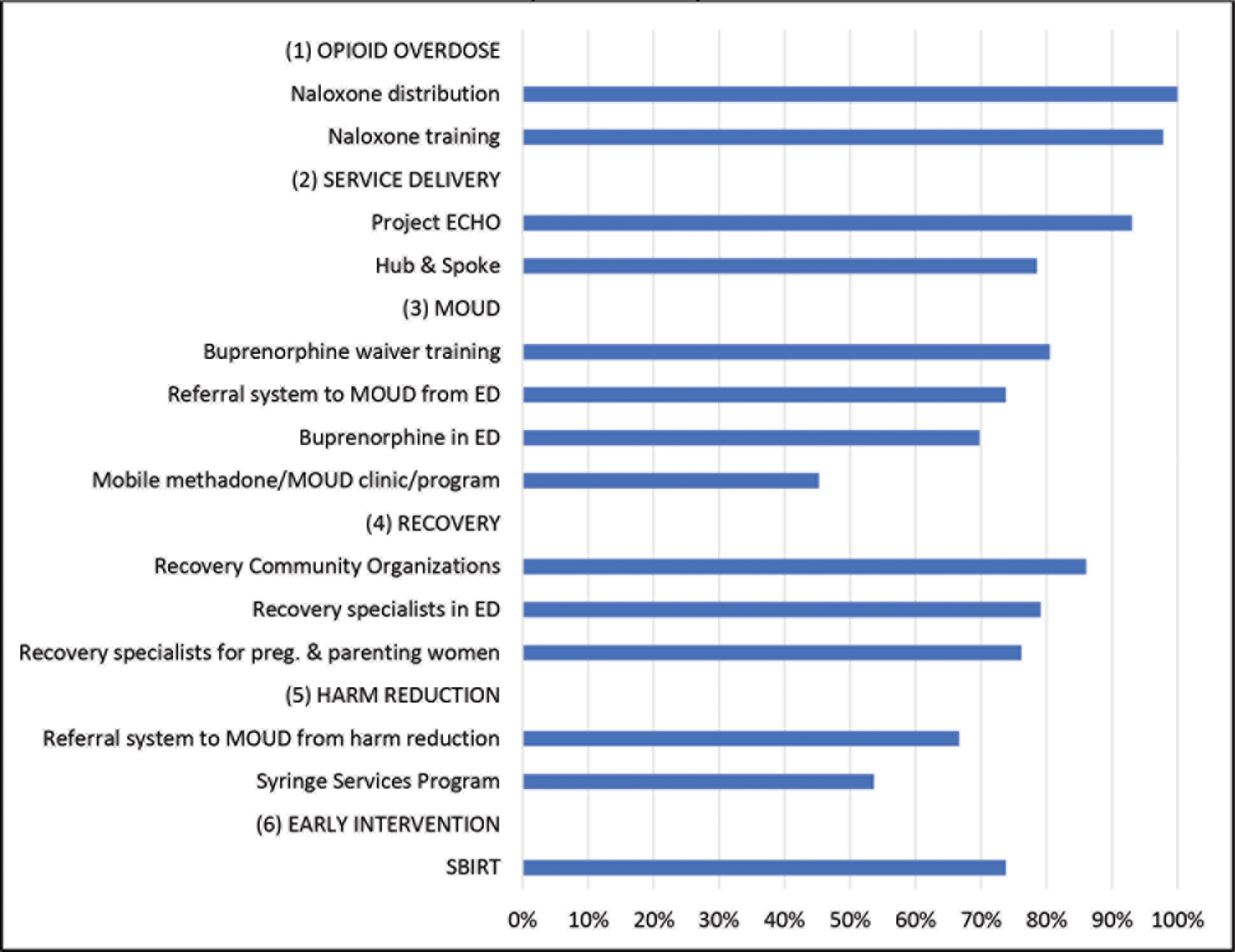
Statewide Efforts to Facilitate SUD Treatment & Address Overdose (% of SSAs)
SOR topped all other funds as the main source used by SSAs, except for SBIRT. The grant figured prominently for overdose-related initiatives, with 100% of SSAs using these funds for naloxone distribution and 93% using these funds for naloxone training (Figure 2). About a fourth of all SSAs used their block grants to fund these two efforts. A majority of SSAs also utilized SOR funds for service delivery. Seventy-seven percent of SSAs funded Project ECHO with SOR funds, while 61% supported Hub and Spoke models using SOR funds. A greater percentage of SSAs, 22%, used block grant for Hub and Spoke Models while only 13% used this source for Project ECHO. Except for recovery specialists for pregnant and parenting women which was supported by roughly half of SSAs using SOR, other recovery-related efforts received SOR funding from about a third of SSAs. Moreover, a greater number of SSAs used the block grant for Recovery Community Organizations (38% of SSAs) and recovery specialists for pregnant and parenting women (33% of SSAs) than for specialists in emergency departments (18% of SSAs).
Figure 2.
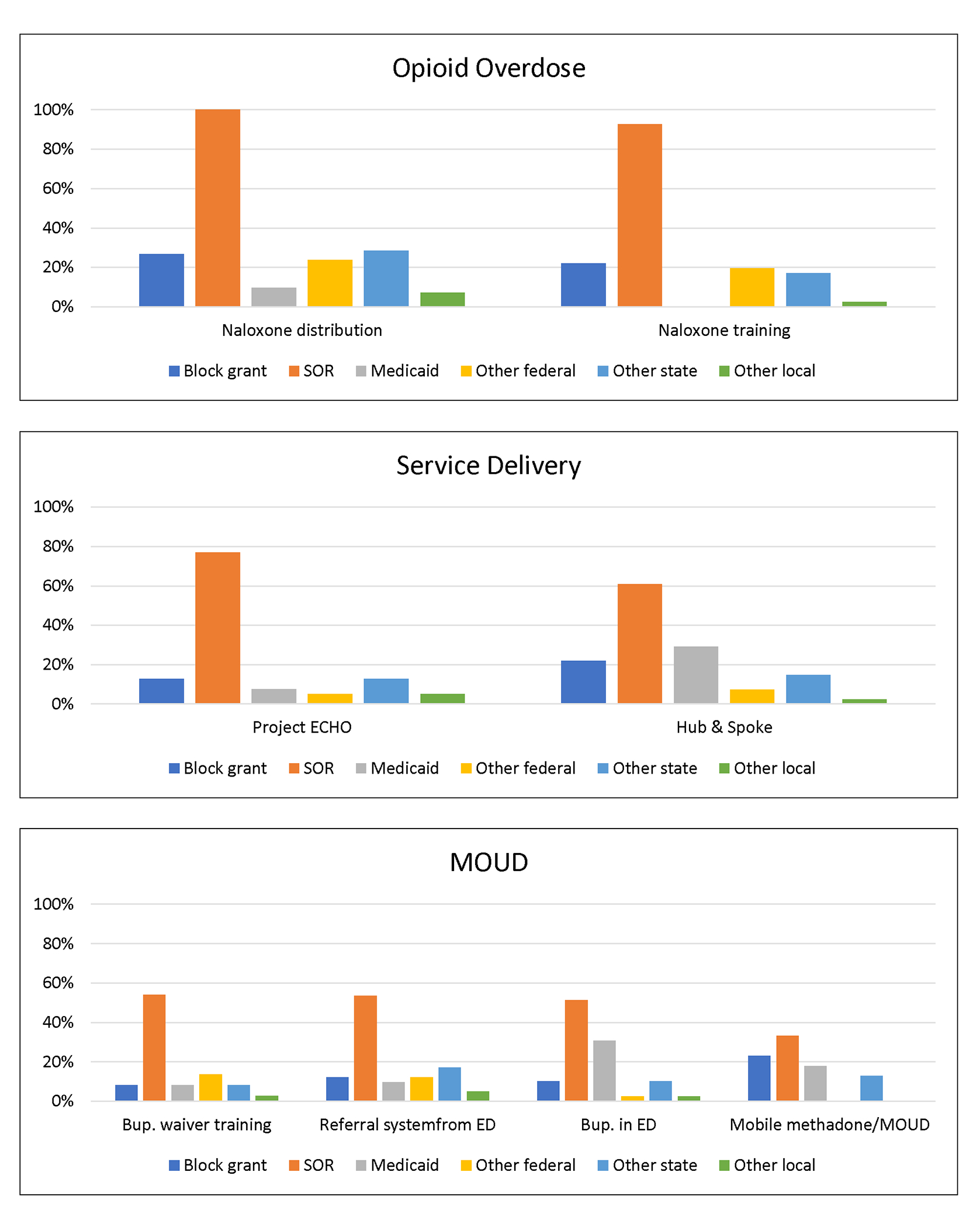
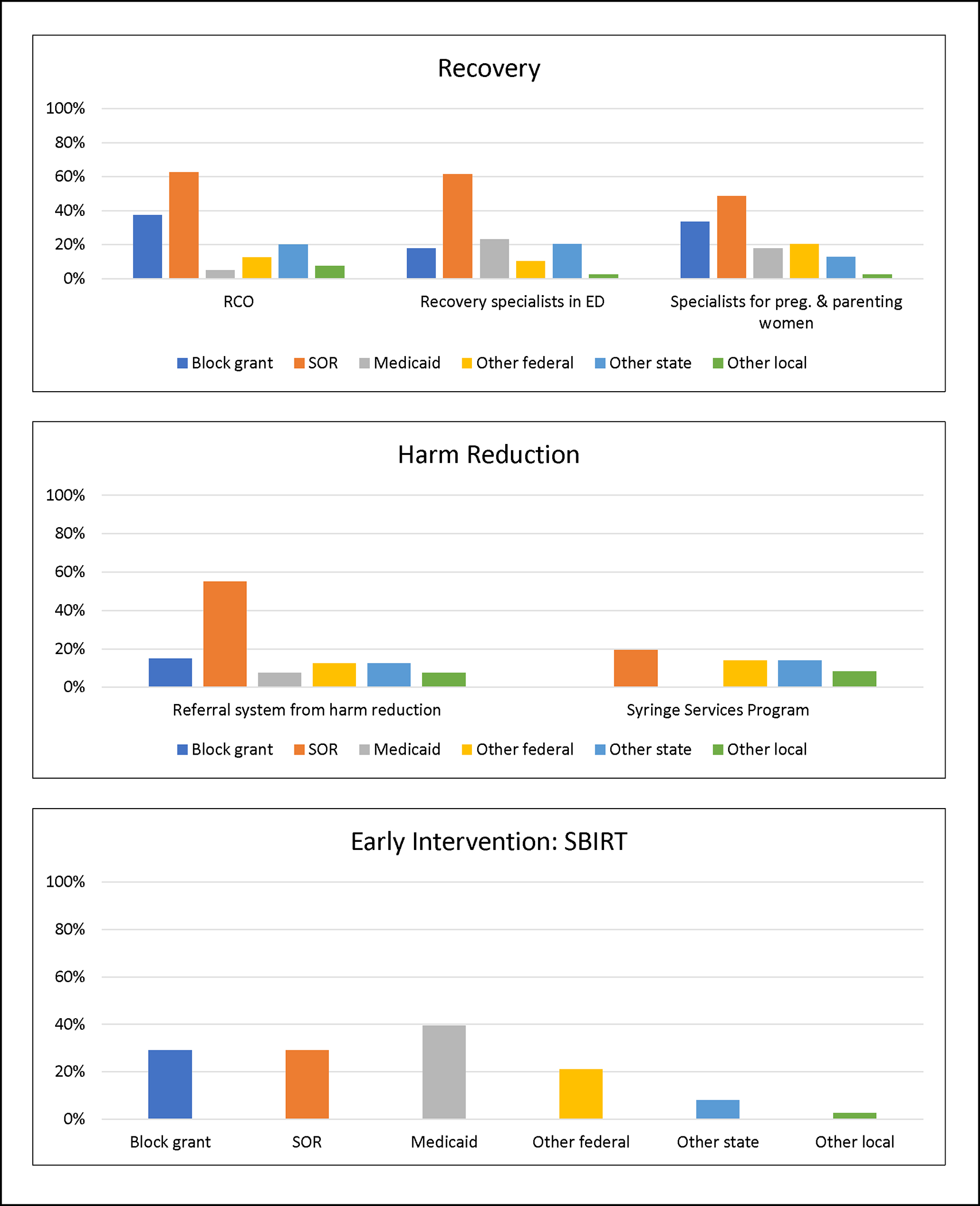
Funding Sources for Statewide Efforts (% of SSAs)
Approximately one-fourth of SSAs used Medicaid funding for SBIRT (39% of SSAs), buprenorphine in emergency departments (31% of SSAs), Hub and Spoke models (29% of SSAs), and Recovery Community Organizations (23% of SSAs). Less than 10% of SSAs used Medicaid funding for other statewide initiatives. No SSAs reported using Medicaid funding for naloxone training or Syringe Services Programs.
Fewer SSAs used other federal, state, and local funds when compared to block grant and SOR funds. Most SSAs that utilized these other sources used them to fund opioid overdose-related efforts. Between 17% and 29% of SSAs used other federal and state funds for naloxone training and distribution. About 21% of SSAs used other federal funding sources for SBIRT and recovery coaches for pregnant and parenting women. Meanwhile, some 21% and 20% of SSAs, respectively, used other state funding sources for recovery coaches or specialists in emergency departments and Recovery Community Organizations.
Two SSAs used other federal funds to support Hub and Spoke models, while three SSAs used this source for Project ECHO. The lowest percentages of SSA allocation of other federal funds were observed for MOUD. Only one SSA utilized other federal funds for buprenorphine in emergency departments, while no SSAs used this source for mobile methadone/MOUD clinics/programs.
We also examined the total number of statewide efforts supported by SSAs (Figure 3). Thirteen SSAs or about a fourth of these state agencies funded between seven to eight or just about half of the 14 statewide initiatives. Another 13 SSAs supported either 13 or all 14 efforts, while the remaining roughly 50% of SSAs funded anywhere between 9 and 12 statewide initiatives.
Figure 3.
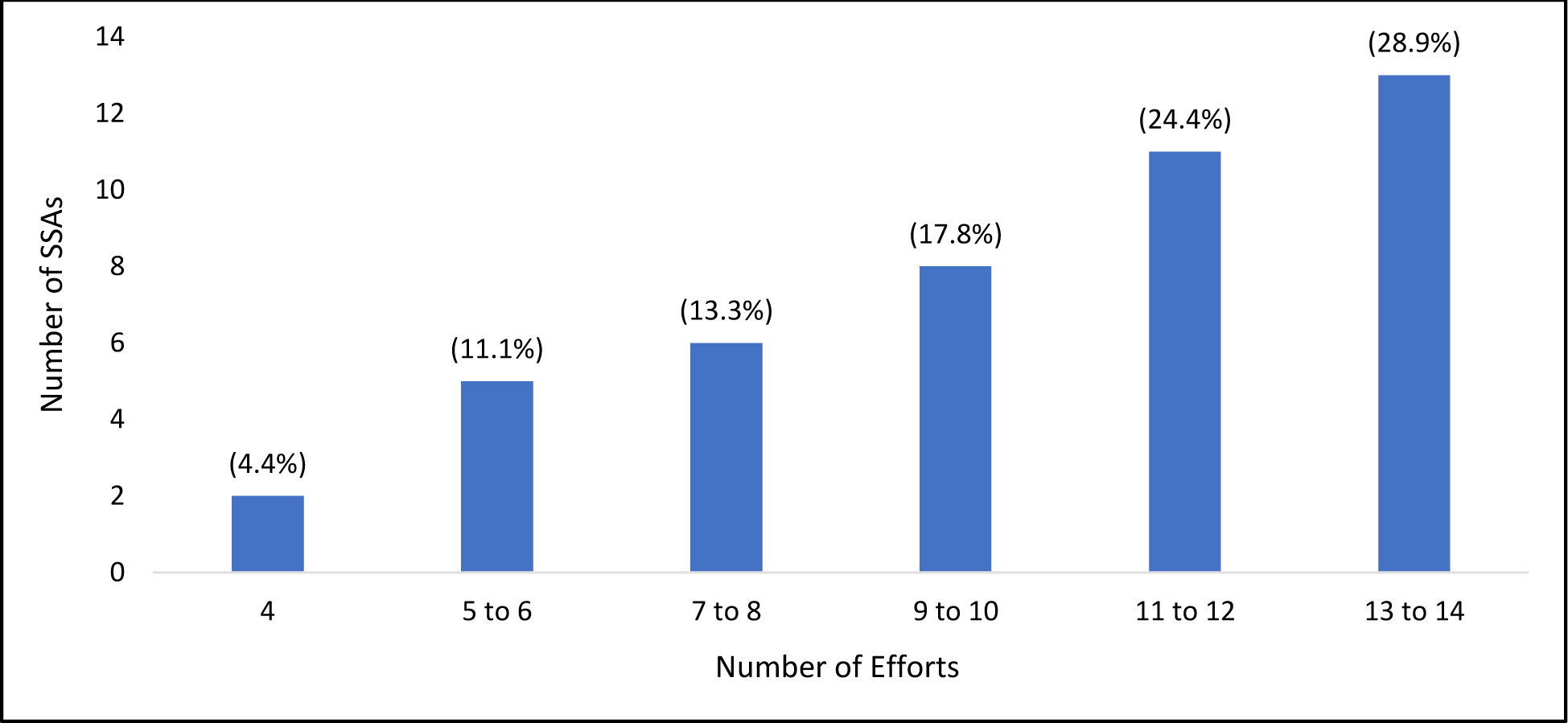
Number of Statewide Efforts Supported by SSAs
4. Discussion
Results highlighted SSA support for a range of statewide efforts to address the opioid crisis. Overall, SSAs provided greater support for initiatives focused on opioid overdose and service delivery models compared to initiatives focused on expanding access to MOUD, strengthening patient referral systems, and promoting harm reduction. SSAs also generally used SOR funding compared to the Substance Use Block Grant on a wider range of statewide initiatives. Given that SOR funding is temporary and is set to expire in 2025, SSAs may need to think carefully about a transition plan to shift successful programs on to permanent sources of funding.
The smaller number of SSAs allocating funds for buprenorphine in emergency departments and mobile methadone/MOUD clinics/programs represents a missed opportunity to reach more individuals in need of treatment services. This missed opportunity may be particularly true for states that have not expanded Medicaid, as they may have more limited funding to support low-income individuals with OUD. In fact, we found that less than 20% of SSAs in non-expansion states used either the block grant or SOR funding for buprenorphine administration in emergency departments or mobile methadone/MOUD clinics/programs. Buprenorphine initiation in emergency departments has been found efficacious in reducing self-reported opioid use and, when combined with continued primary care, is associated with increased treatment engagement (D’Onofrio et al., 2015, 2017). In addition, mobile methadone and other types of mobile MOUD programs present an opportunity to make the medication more accessible, especially in areas with higher unmet needs for MOUD. Significant startup costs associated with mobile methadone could serve as a barrier for its wider adoption (Gibbons et al., 2022). While a smaller number of SSAs supported buprenorphine in emergency departments and mobile methadone/MOUD clinics/programs using Medicaid funds, it is worth noting that as of January 2020, all state Medicaid programs are required to cover MOUD services under the SUPPORT Act, thus some Medicaid funds are likely being used for billable MOUD services.
The number of SSAs supporting buprenorphine-related efforts and mobile methadone/MOUD clinics/programs paled in comparison with those funding naloxone-related efforts. This observation is despite the fact that a major purpose of SOR grants is to increase access to all FDA-approved MOUD (SAMHSA, 2020). SAMHSA’s call for applications to SOR explicitly identifies MOUD as a primary purpose of the grant, and specifically sets aside 15% of these funds for the 10 states with the highest drug poisoning death rates. However, it is possible that SSAs may be using SOR funds for other initiatives targeting MOUD that were not captured in this study.
Despite significant potential benefits, harm reduction efforts in the form of Syringe Services Programs received low support from SSAs. One possible reason is that Syringe Services Programs continue to have legal impediments in some states. More than a fifth of states consider syringes as drug paraphernalia and do not have exemptions for Syringe Services Program participants, exposing persons who inject drugs to possible prosecution. As a result, persons who inject drugs in states that do not allow Syringe Services Programs miss out on some crucial preventative and treatment services. Syringe Services Programs provide support against infectious diseases and serve as a hub that links persons who inject drugs to SUD treatment and other forms of care. These programs have the potential to connect persons who inject drugs to SUD treatment, with the likelihood of entering treatment higher by as much as five times for Syringe Services Program users compared with non-users (Hagan et al., 2000).
In contrast with MOUD, naloxone distribution and training received overwhelming support among statewide efforts and was funded by almost every state using SOR funds. All 50 states have state-level initiatives that allow naloxone acquisition without individual prescriptions (LAPPA, 2023). States have also introduced a variety of measures to make naloxone accessible to individuals. For instance, some states allow residents to request naloxone online and have the medication delivered to their homes. Eligible organizations, such as first responder agencies and shelters, can also directly order naloxone from state agencies.
Naloxone distribution and education programs provide a lifeline to individuals experiencing opioid overdose. A meta-analysis found higher odds of recovery following naloxone administration by bystanders (versus no naloxone) and, although the medication can be used without medical training, its administration by persons with overdose education showed higher odds of recovery (Giglio et al., 2015). From an economic perspective, naloxone distribution programs have been shown not only to be life-saving but also cost-effective (Cherrier et al., 2022).
Service delivery models – Project ECHO and Hub and Spoke – received relatively wide support. A greater number of SSAs used SOR funding to support these two efforts compared with MOUD-related efforts despite relatively higher costs required to support service delivery programs. Studies provide evidence on increased access, reduced substance use, and lower incidents of overdose and emergency department visits for patients treated in Hub and Spoke systems of care (Rawson et al., 2019; Reif et al., 2020).
Authorized uses for each type of funding may help explain the differences in SSA use of funding sources. The block grant emphasizes prevention and treatment efforts, especially among high-risk groups like pregnant and parenting women and persons who inject drugs, with at least 20% of the block grant intended for prevention activities. On the other hand, SOR grants are oriented more toward treatment and are authorized to be used for the entire range of substance use-related interventions. Additionally, SOR grantees are prohibited from using the funds on infrastructure development beyond a cap of 5% of the state’s total grant amount. Authorized infrastructure-related activities include management information system upgrades, trainings related to workforce development for the SOR-funded programs, and standard-setting activities. The block grant, meanwhile, does not cap infrastructure and system development efforts. For instance, grantees are allowed to use block grant funds in the adoption of electronic health records and initiatives that do not involve direct individual services. These include mobile crisis teams, hotlines, and planning activities.
The temporary nature of the SOR grant may present challenges to the sustainability of SSAs’ efforts. Without re-authorization beyond FY2025, SSAs stand to lose a significant source of funds to combat the opioid epidemic. A greater number of SSAs rely on this funding source for almost all statewide efforts. The issue leads to the question of sustainability of initiatives funded using SOR grants. One study found that states had varying levels of commitment to sustainability based on an analysis of SOR applications, with less than half reported having any information on how they would sustain SOR-funded programs beyond the conclusion of the grant period (Gallo et al., 2021).
Finally, part of the success in maximizing grant funds depends on how effective SSAs and recipient organizations are in utilizing various sources of funding. For example, the SOR grant announcement explicitly calls on SSAs to avoid duplication with programs supported through other federal funds. However, the existence of mechanisms to avoid duplication and maximize the use of funds remains unclear. Increasing transparency by reporting how SSAs allocate funding may be a significant step in this regard. Currently, federal grant recipients are required to report patient outcomes, and some SSAs provide a summary of these patient-related reports (SAMHSA, 2021, 2023). The reports, however, do not include information about the allocation of funds for substance-use related efforts.
In a 2020 report on the STR – a precursor of the SOR – the Office of Inspector General found that almost one-third of the funds were unspent after two years and that more than a fifth of states spent less than half of the funds (Murrin, 2020). Underspending likely remains an issue given the large influx of funding from supplemental block grant funds and SOR funds which dramatically increased the budget of SSAs during the past five years. Smaller SSAs may have greater difficulty in spending the funds due to smaller staff size and wariness about making major new investments in staffing and infrastructure that they may not be able to continue to support once the supplemental grants expire. It is important to note that infrastructure investments take time. As such, temporary funding schemes that support programs dependent on infrastructure development should take this expanded timeframe into account to enable program success. Underspending of funds may also be explained by the constraints commonly placed on federal funding, such as requirements to allocate specific percentages of funding to certain spending categories as discussed above.
4.1. Limitations
Several limitations of the study must be noted. First, data limitations prevent a more thorough examination of SSA funding allocations. Specifically, the survey did not capture the total dollar amount allocated for each statewide effort or the dollar amount allocated by funding source type. Hence, the study cannot offer information on how much funding was allocated for specific statewide efforts or provide information on how much of a particular fund source, such as the block grant, was allocated for each statewide effort. Second, not all SSAs responded to the survey items measuring support for statewide efforts. As a result, the response rate varies across items. Third, the survey item measuring mobile methadone also includes MOUD clinics/programs, thus we cannot distinguish whether SSAs are supporting mobile methadone or another type of MOUD clinic/program. Fourth, the survey data are self-reported and may be subject to response bias. Fifth, this study uses a cross-sectional design, thus causality cannot be determined. Sixth, the survey did not collect data on outcomes associated with the implementation of statewide efforts supported by SSAs, thus we are unable to determine the number of individuals treated or overdoses prevented through implementation of these initiatives. Finally, to better understand the decision-making processes of SSAs future research should investigate the factors involved in state agency selection of statewide interventions and funding sources.
5. Conclusions
Results highlight a range of SSA efforts to address the nation’s opioid crisis. While overwhelming support for naloxone training and distribution may reduce opioid overdose deaths, limited adoption of efforts related to MOUD, patient referral systems, and harm reduction efforts may represent missed opportunities. Reliance on SOR grants, which expire in 2025, also raises concerns over the sustainability of many of these statewide initiatives. These findings call for a careful assessment of the consequences of non-reauthorization of the SOR program and the possibility of converting SOR grants into a long-term funding source.
Highlights.
Almost all SSAs funded naloxone-related efforts to prevent overdose
A majority of SSAs supported recovery support services and service delivery models
MOUD and harm reduction programs lagged behind other efforts supported by SSAs
SOR funding was used by the highest number of SSAs for almost all statewide efforts
More limited SSA support of MOUD and harm reduction represent missed opportunities
SOR grant reauthorization has sustainability implications for statewide OUD efforts
Funding
Funding was provided by NIDA U2CDA050097 and NIDA R01DA052425.
Footnotes
Declaration of competing interest
None to declare.
Publisher's Disclaimer: This is a PDF file of an unedited manuscript that has been accepted for publication. As a service to our customers we are providing this early version of the manuscript. The manuscript will undergo copyediting, typesetting, and review of the resulting proof before it is published in its final form. Please note that during the production process errors may be discovered which could affect the content, and all legal disclaimers that apply to the journal pertain.
REFERECES
- Andrews CM, Hinds OM, Lozano-Rojas F, Besmann WL, Abraham AJ, Grogan CM, & Silverman AF (2023). State Funding For Substance Use Disorder Treatment Declined In The Wake Of Medicaid Expansion. Health Affairs, 42(7), 981–990. 10.1377/hlthaff.2022.01568 [DOI] [PubMed] [Google Scholar]
- Ashford RD, Brown A, Canode B, Sledd A, Potter JS, & Bergman BG (2021). Peer-based recovery support services delivered at recovery community organizations: Predictors of improvements in individual recovery capital. Addictive Behaviors, 119, 106945. 10.1016/j.addbeh.2021.106945 [DOI] [PubMed] [Google Scholar]
- Aspinall EJ, Nambiar D, Goldberg DJ, Hickman M, Weir A, Van Velzen E, Palmateer N, Doyle JS, Hellard ME, & Hutchinson SJ (2014). Are needle and syringe programmes associated with a reduction in HIV transmission among people who inject drugs: A systematic review and meta-analysis. International Journal of Epidemiology, 43(1), 235–248. 10.1093/ije/dyt243 [DOI] [PubMed] [Google Scholar]
- Brooklyn JR, & Sigmon SC (2017). Vermont Hub-and-Spoke Model of Care for Opioid Use Disorder: Development, Implementation, and Impact. Journal of Addiction Medicine, 11(4), 286. 10.1097/ADM.0000000000000310 [DOI] [PMC free article] [PubMed] [Google Scholar]
- Center for Behavioral Statistics and Quality. (2022). Results from the 2021 National Survey on Drug Use and Health: Detailed Tables. Substance Abuse and Mental Health Services Administration. [Google Scholar]
- Centers for Disease Control and Prevention. (2023). The Drug Overdose Epidemic: Behind the Numbers. Opioids. https://www.cdc.gov/opioids/data/index.html
- Cherrier N, Kearon J, Tetreault R, Garasia S, & Guindon E (2022). Community Distribution of Naloxone: A Systematic Review of Economic Evaluations. PharmacoEconomics - Open, 6(3), 329–342. 10.1007/s41669-021-00309-z [DOI] [PMC free article] [PubMed] [Google Scholar]
- Des Jarlais DC, McKnight C, Goldblatt C, & Purchase D (2009). Doing harm reduction better: Syringe exchange in the United States. Addiction, 104(9), 1441–1446. 10.1111/j.1360-0443.2008.02465.x [DOI] [PubMed] [Google Scholar]
- D’Onofrio G, Chawarski MC, O’Connor PG, Pantalon MV, Busch SH, Owens PH, Hawk K, Bernstein SL, & Fiellin DA (2017). Emergency Department-Initiated Buprenorphine for Opioid Dependence with Continuation in Primary Care: Outcomes During and After Intervention. Journal of General Internal Medicine, 32(6), 660–666. 10.1007/s11606-017-3993-2 [DOI] [PMC free article] [PubMed] [Google Scholar]
- D’Onofrio G, O’Connor PG, Pantalon MV, Chawarski MC, Busch SH, Owens PH, Bernstein SL, & Fiellin DA (2015). Emergency Department–Initiated Buprenorphine/Naloxone Treatment for Opioid Dependence: A Randomized Clinical Trial. JAMA, 313(16), 1636–1644. 10.1001/jama.2015.3474 [DOI] [PMC free article] [PubMed] [Google Scholar]
- European Monitoring Centre for & Drugs and Drug Addiction. (2015). Preventing fatal overdoses: A systematic review of the effectiveness of take-home naloxone (EMCDDA Papers). Publications Office of the European Union. [Google Scholar]
- Fernandes RM, Cary M, Duarte G, Jesus G, Alarcão J, Torre C, Costa S, Costa J, & Carneiro AV (2017). Effectiveness of needle and syringe Programmes in people who inject drugs – An overview of systematic reviews. BMC Public Health, 17(1), 309. 10.1186/s12889-017-4210-2 [DOI] [PMC free article] [PubMed] [Google Scholar]
- Gallo C, Abram K, Hannah N, Caton L, Cimaglio B, McGovern M, & Brown CH (2021). Sustainability planning in the US response to the opioid crisis: An examination using expert and text mining approaches. PLOS ONE, 16(1), e0245920. 10.1371/journal.pone.0245920 [DOI] [PMC free article] [PubMed] [Google Scholar]
- Gibbons JB, Stuart EA, & Saloner B (2022). Methadone on Wheels—A New Option to Expand Access to Care Through Mobile Units. JAMA Psychiatry, 79(3), 187–188. 10.1001/jamapsychiatry.2021.3716 [DOI] [PubMed] [Google Scholar]
- Giglio RE, Li G, & DiMaggio CJ (2015). Effectiveness of bystander naloxone administration and overdose education programs: A meta-analysis. Injury Epidemiology, 2(1), 10. 10.1186/s40621-015-0041-8 [DOI] [PMC free article] [PubMed] [Google Scholar]
- Hagan H, McGough JP, Thiede H, Hopkins S, Duchin J, & Alexander ER (2000). Reduced injection frequency and increased entry and retention in drug treatment associated with needle-exchange participation in Seattle drug injectors. Journal of Substance Abuse Treatment, 19(3), 247–252. 10.1016/S0740-5472(00)00104-5 [DOI] [PubMed] [Google Scholar]
- Holmes CM, Keyser-Marcus L, Dave B, & Mishra V (2020). Project ECHO and Opioid Education: A Systematic Review. Current Treatment Options in Psychiatry, 7(1), 9–22. 10.1007/s40501-020-00199-8 [DOI] [Google Scholar]
- Legislative Analysis and Public Policy Association. (2023). Naloxone Access: Summary of State Laws. [Google Scholar]
- Luo F, Li M, & Florence C (2021). State-Level Economic Costs of Opioid Use Disorder and Fatal Opioid Overdose—United States, 2017. Morbidity and Mortality Weekly Report, 70(15). 10.15585/mmwr.mm7015a1 [DOI] [PMC free article] [PubMed] [Google Scholar]
- Magidson JF, Regan S, Powell E, Jack HE, Herman GE, Zaro C, Kane MT, & Wakeman SE (2021). Peer recovery coaches in general medical settings: Changes in utilization, treatment engagement, and opioid use. Journal of Substance Abuse Treatment, 122, 108248. 10.1016/j.jsat.2020.108248 [DOI] [PubMed] [Google Scholar]
- McDonald R, Campbell ND, & Strang J (2017). Twenty years of take-home naloxone for the prevention of overdose deaths from heroin and other opioids—Conception and maturation. Drug and Alcohol Dependence, 178, 176–187. 10.1016/j.drugalcdep.2017.05.001 [DOI] [PubMed] [Google Scholar]
- Miele GM, Caton L, Freese TE, McGovern M, Darfler K, Antonini VP, Perez M, & Rawson R (2020). Implementation of the hub and spoke model for opioid use disorders in California: Rationale, design and anticipated impact. Journal of Substance Abuse Treatment, 108, 20–25. 10.1016/j.jsat.2019.07.013 [DOI] [PMC free article] [PubMed] [Google Scholar]
- Murrin Suzanne. (2020). States’ Use of Grant Funding for a Targeted Response to the Opioid Crisis. Office of Inspector General. [Google Scholar]
- National Association of State Alcohol and Drug Abuse Directors. (2022). Final FY 2022 Appropriations Overview. National Association of State Alcohol and Drug Abuse Directors. [Google Scholar]
- Parthasarathy S, Kline-Simon AH, Jones A, Hartman L, Saba K, Weisner C, & Sterling S (2021). Three-Year Outcomes After Brief Treatment of Substance Use and Mood Symptoms. Pediatrics, 147(1), e2020009191. 10.1542/peds.2020-009191 [DOI] [PMC free article] [PubMed] [Google Scholar]
- Peart A, Lewis V, Brown T, & Russell G (2018). Patient navigators facilitating access to primary care: A scoping review. BMJ Open, 8(3), e019252. 10.1136/bmjopen-2017-019252 [DOI] [PMC free article] [PubMed] [Google Scholar]
- Puckett HM, Bossaller JS, & Sheets LR (2021). The impact of project ECHO on physician preparedness to treat opioid use disorder: A systematic review. Addiction Science & Clinical Practice, 16(1), 6. 10.1186/s13722-021-00215-z [DOI] [PMC free article] [PubMed] [Google Scholar]
- Rawson R, Cousins SJ, McCann M, Pearce R, & Van Donsel A (2019). Assessment of medication for opioid use disorder as delivered within the Vermont hub and spoke system. Journal of Substance Abuse Treatment, 97, 84–90. 10.1016/j.jsat.2018.11.003 [DOI] [PubMed] [Google Scholar]
- Reif S, Brolin MF, Stewart MT, Fuchs TJ, Speaker E, & Mazel SB (2020). The Washington State Hub and Spoke Model to increase access to medication treatment for opioid use disorders. Journal of Substance Abuse Treatment, 108, 33–39. 10.1016/j.jsat.2019.07.007 [DOI] [PMC free article] [PubMed] [Google Scholar]
- Substance Abuse and Mental Health Services Administration. (2020). State Opioid Response Grants: Funding Opportunity Announcement (FOA) No. TI-20–012. Department of Health and Human Services. [Google Scholar]
- Substance Abuse and Mental Health Services Administration. (2021). 2021 Report to Congress on the State Opioid Response Grants (SOR). US Department of Health and Human Service; s. [Google Scholar]
- Substance Abuse and Mental Health Services Administration. (2023). Post-Award Reporting Requirements. Grants Management. https://www.samhsa.gov/grants/grants-management/reporting-requirements#progress-reports
- Valaitis RK, Carter N, Lam A, Nicholl J, Feather J, & Cleghorn L (2017). Implementation and maintenance of patient navigation programs linking primary care with community-based health and social services: A scoping literature review. BMC Health Services Research, 17(1), 116. 10.1186/s12913-017-2046-1 [DOI] [PMC free article] [PubMed] [Google Scholar]