



ABSTRACT
Objective.
Basic and translational research in pediatric cancer are essential to improve patient care. To critically assess the developments achieved in these areas in Latin America, we systematically reviewed information published between 2013 and 2023.
Methods.
Studies of basic and translational research performed by investigators in Latin America evaluating pediatric malignant solid and central nervous system tumors were retrieved from PubMed. Original articles published in English between 2013 and 2023 were included. Collaborations among Latin American authors or among Latin American authors working with researchers from other continents were also included. Studies were excluded if they focused only on adults or on basic research in tumor biology not specifically related to the tumor types analyzed in this review.
Results.
A total of 550 articles were retrieved, but after removal of duplicates, 514 articles were included in the analysis, the majority of which were authored by researchers affiliated with institutions in Argentina, Brazil and Mexico. These countries also had the highest number of collaborations on original articles published with authors from Europe and North America. Argentina had the highest number of collaborations on original publications, with coauthors from Brazil and Uruguay. The median impact factor of the 244 journals in which articles were published was 3.5. The most commonly studied tumors were osteosarcomas, neuroblastomas and medulloblastomas; the most commonly studied areas were molecular analysis, tumor cell biology and biomarkers.
Conclusions.
In Latin America, research in pediatric oncology is on the agenda, despite a notable disparity in publication rates and frequency of collaboration between countries. There is a need to strengthen scientific collaboration within Latin America and with countries from other continents to promote research and to develop novel treatment strategies that reflect the local needs of children in Latin America who have solid tumors and brain cancer.
Keywords: Malignant neoplasms; brain neoplasms; basic research; translational research, biomedical; Latin America
RESUMEN
Objetivo.
La investigación básica y aplicada en el campo de la oncología pediátrica es fundamental para mejorar la atención al paciente. Con el objetivo de realizar una evaluación crítica de los avances logrados en este campo en América Latina, hemos realizado una revisión sistemática de la información publicada entre el 2013 y el 2023.
Metodología.
Se recopilaron de PubMed los artículos de investigación básica y traslacional publicados por investigadores de América Latina en los que se evaluaron tumores malignos sólidos y del sistema nervioso central en la población infantil. Se incluyeron artículos originales publicados en inglés entre el 2013 y el 2023. También se incluyeron artículos fruto de la colaboración científica entre autores e investigadores de América Latina y otros continentes.
Se excluyeron aquellos estudios que se centraron solo en personas adultas o en la investigación básica en biología tumoral no relacionada específicamente con los tipos de tumores analizados en esta revisión.
Resultados.
Se encontraron 550 artículos en total. Después de eliminar los artículos duplicados, se incluyeron 514 artículos en la revisión, la mayoría de los cuales fueron escritos por investigadores vinculados a centros de investigación de Argentina, Brasil y México. También procedieron de estos tres países la mayor parte de los artículos originales escritos en colaboración con autores de Europa y América del Norte. Argentina tuvo el mayor número de colaboraciones en publicaciones originales, con coautores de Brasil y Uruguay. La mediana del índice de impacto de las 244 revistas en las que se publicaron los artículos fue de 3,5. Los tumores más estudiados fueron osteosarcomas, neuroblastomas y meduloblastomas. Los temas más estudiados fueron el análisis molecular, la biología de las células tumorales y los biomarcadores.
Conclusiones.
La investigación en oncología pediátrica forma parte de la agenda de investigación de América Latina, si bien hay una disparidad notoria en las tasas de publicación y la frecuencia de la colaboración entre países. Es necesario fortalecer la colaboración científica dentro de América Latina y con los países de otros continentes para promover la investigación y desarrollar estrategias de tratamiento novedosas que respondan a las necesidades locales de los niños y niñas de América Latina que tienen tumores sólidos o cáncer del sistema nervioso central.
Palabras clave: Neoplasias malignas, neoplasias encefálicas, investigación básica, investigación biomédica traslacional, América Latina
RESUMO
Objetivo.
A pesquisa básica e translacional em câncer pediátrico é essencial para melhorar o atendimento dos pacientes. No intuito de realizar uma avaliação crítica dos avanços alcançados nessa área na América Latina, fez-se uma revisão sistemática de informações publicadas entre 2013 e 2023.
Métodos.
Pesquisas básicas e translacionais realizadas por pesquisadores da América Latina que avaliaram tumores sólidos malignos e tumores do sistema nervoso central em crianças foram obtidas da base de dados PubMed. Foram incluídos artigos originais publicados em inglês entre 2013 e 2023. Também foram incluídas colaborações entre autores latino-americanos ou entre autores latino-americanos que trabalham com pesquisadores de outros continentes.
Estudos que tratavam apenas de adultos ou pesquisas básicas sobre biologia tumoral não especificamente relacionadas aos tipos de tumor analisados nesta revisão foram excluídos.
Resultados.
No total, a busca recuperou 550 artigos da base de dados. Após a remoção dos artigos duplicados, foram incluídos 514 artigos na análise, a maioria de autoria de pesquisadores de instituições da Argentina, do Brasil e do México. Esses países também tiveram o maior número de colaborações em artigos originais publicados com autores da Europa e da América do Norte. A Argentina teve o maior número de colaborações em publicações originais, com coautores do Brasil e do Uruguai. O fator de impacto mediano dos 244 periódicos nos quais os artigos foram publicados era de 3,5. Os tumores mais estudados foram osteossarcomas, neuroblastomas e meduloblastomas; as áreas mais estudadas foram análise molecular, biologia de células tumorais e biomarcadores.
Conclusões.
Na América Latina, a pesquisa em oncologia pediátrica está na ordem do dia, apesar de uma evidente disparidade nos índices de publicação e na frequência de colaboração entre os países. É necessário fortalecer a colaboração científica dentro da América Latina e com países de outros continentes a fim de promover a pesquisa e desenvolver novas estratégias de tratamento que reflitam as necessidades locais das crianças latino-americanas com tumores sólidos e câncer cerebral.
Palavras-chave: Neoplasias malignas, neoplasias encefálicas, pesquisa básica, pesquisa translacional biomédica, América Latina
In Latin America and the Caribbean, it is estimated that one third of children with cancer will succumb to the disease (1). Important risk factors for avoidable deaths include limited access to treatment, delayed diagnosis or misdiagnosis, malnourishment, advanced stage at diagnosis or relapse, and medication-induced toxicities (2, 3). Moreover, long-term adverse events related to treatment severely impact children’s lives (4). Specifically, children from low- and middle-income countries (LMICs), such as some Latin American countries, often present with malnutrition, which affects their ability to tolerate intensive treatment and chemotherapy, ultimately undermining their clinical response (5). Differences among parts of the world in disease burden, culture and beliefs make it essential to conduct research in each unique context to provide feasible and patient-contextualized treatment strategies that are more effective and less toxic. For example, lifesaving enucleation to treat retinoblastoma may be refused by parents depending on their religious beliefs (i.e. that enucleation may affect wellness after life), and patients with metastatic retinoblastoma and rapid clinical deterioration may not tolerate high-dose chemotherapy, but innovative local treatments may be a reasonable option that can be tailored to the patient’s and the family’s needs.
For these reasons, the Global Initiative for Childhood Cancer was launched by the World Health Organization to enhance the cure rate for children with cancer by improving access to and the quality of health care (6). Priority actions of the Initiative include investing in cancer research and innovation to improve care for children with cancer and fostering collaborative research networks to develop local human resources capacity for research. Nonetheless, there are several challenges to conducting clinical studies in children, and this is particularly difficult in patients from LMICs. For instance, the limited number of patients affected by each of the multiple disease entities is a critical issue that works against the statistical power of clinical trials. A valid alternative is the use of preclinical models (e.g. primary tumor cell cultures and immunodeficient mice inoculated with human tumors) that faithfully recapitulate the underlying biology of the tumor and medication sensitivity to identify the most promising treatment strategies that are likely to be successful and warrant further clinical studies (7-10). To the best of our knowledge, information about the development and use of preclinical models of pediatric cancer in Latin America is scarce and has not been previously reviewed.
Another major area of translational research for cancer patients has been molecular analysis and genetic testing, which enable scientists to identify the genomic vulnerabilities of tumors, understand tumor evolution, discover mechanisms of resistance and develop individualized therapies (11). In Latin America, traditionally these studies have been limited by economic constraints and a lack of investment in translational and clinical research; however, during the past decade, advances in these areas have been noted and should be reviewed to promote treatment tailored to individual needs (12-17).
Thus, we aimed to provide a comprehensive overview of the basic and translational research performed during the past decade focusing on children with malignant solid tumors with high tumor burden and poor outcome (18-20). The role of local researchers, the international collaborations that have been established and the future possibilities of developing an international network are discussed.
MATERIALS AND METHODS
The literature search was restricted to frequent malignant solid tumors with poor outcomes that have a high incidence in children, according to the United States National Institutes of Health’s National Childhood Cancer Registry (21).
The systematic review was conducted using the PubMed database to retrieve studies of basic and translational research performed by Latin American researchers that focused on childhood cancer. The guidelines of the Preferred Reporting Items for Systematic Reviews and Meta-Analyses (known as PRISMA) were followed. The search strategy used a combination of two keywords that consisted of the name of a Latin American country and each type of cancer with Boolean operators. Tumor types were selected based on the most common solid cancers and tumors of the nervous system in children that have a poor outcome (22). The included central nervous system tumors were: high-grade glioma, medulloblastoma and ependymoma; the following entity-specific tumors were also included: soft-tissue sarcoma – rhabdomyosarcoma; bone sarcomas – osteosarcoma and Ewing sarcoma; peripheral neuroblastic tumors – neuroblastoma; eye tumors – retinoblastoma; extracranial germ cell tumors – germinoma-family tumors, that is germinoma, dysgerminoma, seminoma; renal tumors – Wilms tumor; and digestive system tumors – hepatoblastoma. For example, we searched for “(Brazil [Affiliation]) AND (high-grade glioma)”, “(Brazil [Affiliation]) AND (medulloblastoma)”, or “(Brazil [Affiliation]) AND (ependymoma)”. The same search strategy was repeated for Argentina, Bolivia (Plurinational State of), Chile, Colombia, Costa Rica, the Dominican Republic, Ecuador, El Salvador, Guatemala, Haiti, Mexico, Nicaragua, Panama, Paraguay, Peru, Uruguay and Venezuela (Bolivarian Republic of).
Original articles were included if they studied the pediatric population aged 0–21 years, focused only on childhood cancer, and were published during the past decade (2013 to 2023). Studies that included both children and adults were considered. Articles were excluded if they were reviews, meta-analyses, editorials, conference proceedings or commentaries; were case studies, except if they contained information about basic or translational studies; were not published in English; focused on general basic research into tumor biology and not specifically the tumor types analyzed in this review (e.g. effect of RB1 gene mutations on the cell growth of prostate cancer cells).
Extracted data were entered into an Excel spreadsheet and included: the name of journal, the position and role of the Latin American author (i.e. first author, last author, corresponding or other), impact factor, and countries of collaboration, assessed according to the affiliations of the coauthors. Specifically, the impact factor is a measure of the relative importance of a journal within a field of research, and it is obtained by dividing the number of times articles published in the journal are cited by the number of articles published in that journal during the same period. Although the impact factor may vary across disciplines and thus there is no general consensus about its value, for the present analysis journals were considered to have a low impact factor if it was <1; standard, if it was from 1 to 3; high if it was ≥3 to 6; remarkable if the impact factor was >6 to 10; and exceptional, if it was >10.
Each article was reviewed and categorized according to the tumor type and the areas of research: molecular analyses, tumor cell biology, and biomarkers of prognosis, stratification and therapy response were grouped together; novel therapies or diagnostic strategies were grouped; and the third category was preclinical platforms. Also, publications were classified as original or collaborations. Original articles were assigned to a country according to the first author’s, last author’s or corresponding author’s affiliation with an institution in that country. Additionally, articles were considered to be collaborations if the Latin American author occupied a different position than those that defined the article as an original publication. Collaborations among authors in Latin American countries and with authors in North America (Canada and the United States), Europe, Asia and Oceania (Australia and New Zealand) were also recorded.
Once the information from the retrieved articles was uploaded, manual searches were undertaken by scientific reviewers (MBC, MD, RA, SZ and PS) who assessed articles for eligibility according to the inclusion and exclusion criteria. For retained articles, a second and independent reviewer validated the categories assigned to the retrieved articles, and conflicts about inclusion and exclusion criteria for specific articles were resolved through discussion among all reviewers.
Duplicate citations were identified by PMID number using R software version 4.0.2 (R Foundation for Statistical Computing, 2017, Vienna, Austria) and RStudio 1.3.1073 (RStudio Team, posit, Boston, MA, 2020) and removed for the total count of identified articles. Articles that contained information about more than one tumor type were removed to avoid duplicates only when counting the number of papers published per country, but otherwise the article was retained and included in all tumor types for which information was published. For authors with multiple affiliations, the country for the first affiliation listed was included.
Data about gross domestic product per capita and the population in a country were retrieved from the World Bank (23).
RESULTS
During the past 10 years, a total of 2 549 articles were published that matched our search terms. After applying the exclusion criteria, 1 969 articles remained, and after removing 66 duplicates and publications that described studies in more than one tumor type, 550 articles remained; after removal of articles that could be counted twice (because they shared authors from two countries), 514 publications were included in the analysis.
The number of publications gradually increased over time, with 61.7% of articles published during the past 5 years.
The most highly cited journals that published original articles from Latin American authors were the International Journal of Molecular Science, PLoS ONE, Oncotarget, Child’s Nervous System, Cancers and Scientific Reports. A total of 69 articles were published in these journals, representing only 16% of the total number of publications reviewed (excluding duplicates, 69/428). The median (range) impact factor for these journals was 5.2 (1.4–5.6), while the remaining 84% had a median impact factor of 3.5 (0.7–16.6). Thus, the overall quality of the journals in which research was published was classified as standard, although a remarkable dispersion of the impact factors was observed.
Countries and institutions of affiliation
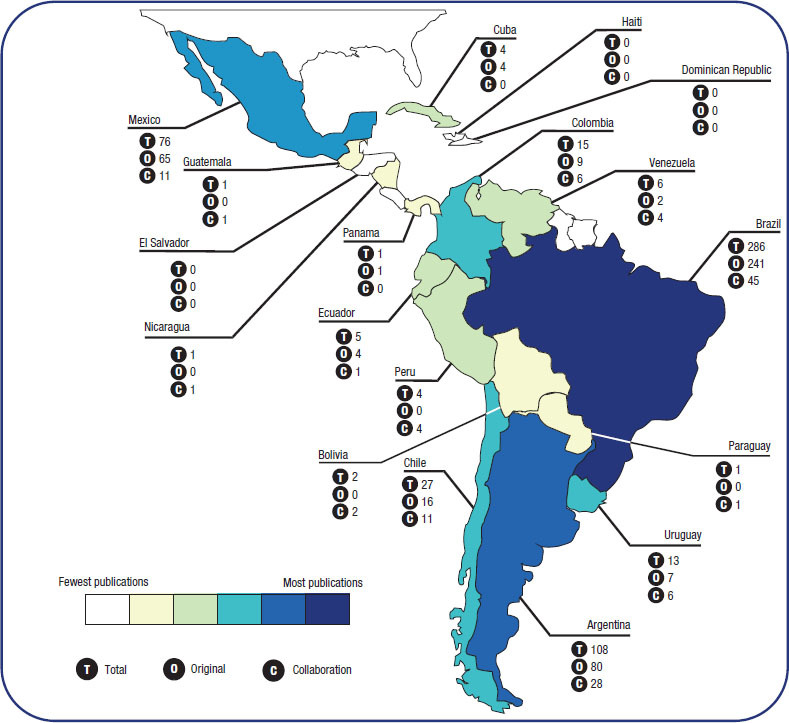
The number of publications per country and the distinction between original publications and articles resulting from collaborations with others is shown in Figure 1. Brazil had the highest publication rate, with its authors accounting for 52.1% (286/550) of the total number of included articles, followed by Argentina (19.6%, 108/550) and Mexico (13.8%, 76/550). Nonetheless, if scientific productivity is considered as the total number of articles published during the decade by each country divided by the number of inhabitants, Uruguay was the most productive, with 3.8, followed by Argentina (2.3), Chile (1.4), Brazil (1.3) and Mexico (0.6). The same tendency was observed when considering original publications. When scientific productivity was adjusted for gross domestic product per capita, Brazil was the most productive followed by Argentina and Chile.
FIGURE 1. Heat map of the distribution of articles about malignant solid tumors in children by authors from Latin America, 2013–2023a.
Source: Figure prepared by the authors based on the results of their study.
Interestingly, 78.0% (429/550) of the total number of publications in Latin America was original articles, with 56.2% (241/429) coming from institutions affiliated with Brazil, 18.6% (80/429) with Argentina, and 15.2% (65/429) with Mexico. These original articles represented 84.3% (241/286) of the total number of publications with Brazilian authors, 74.1% (80/108) of those with Argentinean authors and 85.5% (65/76) of those with Mexican authors.
Despite representing less than 10% of the total number of publications, most of the articles from Cuba (100.0%, 4/4), Panama (100.0%, 1/1), Ecuador (80.0%, 4/5), Colombia (60.0%, 9/15) and Chile (59.3%, 16/27) cited original publications from those countries. In contrast, all articles published by researchers from Bolivia (Plurinational State of), Guatemala, Nicaragua, Paraguay and Peru were collaborations.
When the classification of a country by income was considered, we observed that 93.9% (403/429) of the original publications in Latin America were by authors from upper-middle income countries, with only 5.6% (24/429) from high-income countries and none from the LMICs (i.e. the Plurinational State of Bolivia and Nicaragua). These LMICs had low representation in terms of publications, with 2.5% (3/121) of collaborative articles by researchers from these two countries.
The most common affiliations of the first author, last author or corresponding author on original articles from Brazil were the University of Sao Paulo (32%) and the Federal University of Rio Grande do Sul (12%). Senior authors from the Barretos Cancer Hospital (4%) and Boldrini Children’s Hospital (2%) were identified, although much less frequently. For authors from Argentina, Hospital JP Garrahan (32%) was the most common affiliation, followed by the University of La Plata (21%). Hospital de Niños Ricardo Gutierrez was the second most common hospital affiliation from Argentina (4%). In Mexico, the most frequent author affiliations were with the Universidad Nacional Autonoma de Mexico (17%) and the Hospital Infantil de Mexico Federico Gomez (11%). In Chile, Colombia and Uruguay, lead authors were affiliated only with universities or scientific institutes, not hospitals.
Collaborations
Latin American authors with the highest number of collaborative articles were affiliated with institutions in Brazil (37.2%), Argentina (23.1%), Chile (9.1%) and Mexico (9.1%) (Figure 1). These collaborative articles represented less than 15% of of the total number of publications by authors from Brazil and Mexico, but accounted for 40.7% of articles by authors from Chile.
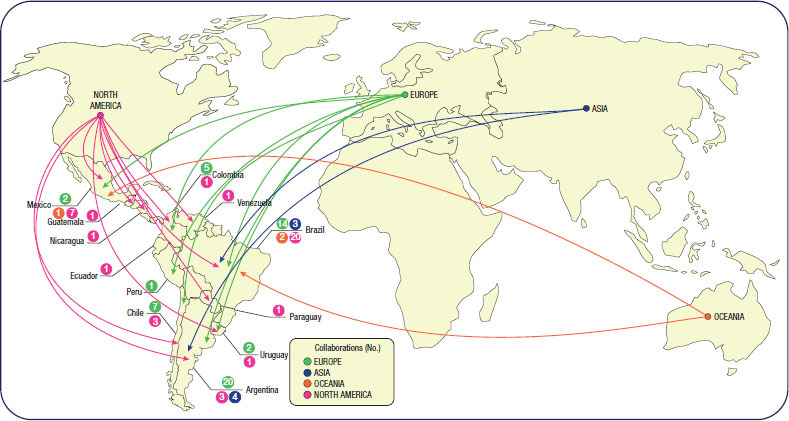
Argentinian and Brazilian researchers were the most well represented Latin American authors in original publications led by European authors, and were represented in approximately one third of the total number of European-affiliated articles. Interestingly, almost half of the original publications affiliated with North American authors were collaborations with Brazilian researchers, and about 20% were with Mexican authors (Figure 2).
FIGURE 2. No. of collaborations on original articles between authors in Latin America with authors working on different continents, 2013–2023a.
Source: Figure prepared by the authors based on the results of their study.
North American and European authors most often contributed to Brazilian, Argentinean and Mexican articles, being represented in about 20% of the total number of original publications from these three countries.
Also of note, 57.7% of the collaborations among Latin American countries were original articles from Argentina, most of which were coauthored by researchers from Brazil and Uruguay (Figure 3).
FIGURE 3. Collaborations among authors in Latin America, by affiliation of main author and coauthor, 2013–2023a.
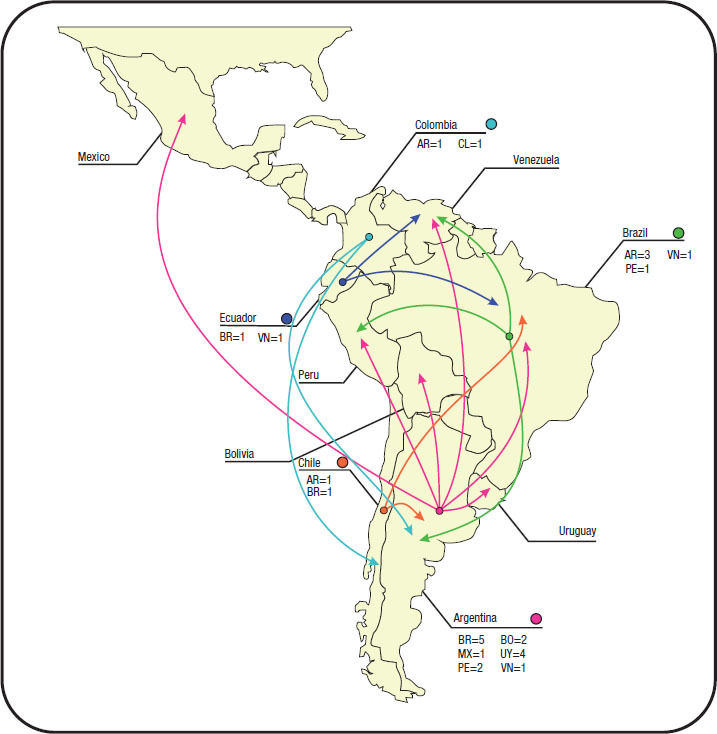
AR: Argentina; BO: Bolivia; BR: Brazil; CL: Chile; MX: Mexico; PE: Peru; UY: Uruguay; VN: Venezuela.
Source: Figure prepared by the authors based on the results of their study.
When the classification of a country by income was considered, 83% of publications that were collaborations with European, North American and Asian authors were by researchers from upper-middle income countries in Latin America, while 14.4% were with authors from high-income countries. Authors from the Plurinational State of Bolivia collaborated on two original articles with Argentinean investigators, and authors from Guatemala and Nicaragua collaborated on one article with North American researchers.
Types of tumor
In all of the Latin American nations, the most commonly studied malignant pediatric solid tumors types were osteosarcoma (20.2%, 91/451), neuroblastoma (17.8%, 80/451), medulloblastoma (13.9%, 63/451) and retinoblastoma (12.4%, 56/451) (Table 1). Among the three countries that published the highest number of original investigations, retinoblastoma (35.0%, 28/80) and osteosarcoma (31.2%, 25/80) were the most common tumors studied in Argentina; medulloblastoma (20.3%, 53/260) and neuroblastoma (18.1%, 47/260) were the most common tumors studied in Brazil; and neuroblastoma (22.1%, 15/68) and retinoblastoma (20.6%, 14/68) were the most commonly studied in Mexico.
TABLE 1. No. of original publications in basic or translational research focusing on cancer in children, by tumor type and country of first author, last author or corresponding author, Latin America, 2013–2023.
|
Country |
Type of tumor |
||||||||||
|---|---|---|---|---|---|---|---|---|---|---|---|
|
Ependymoma |
Glioma |
Medulloblastoma |
Germinoma family |
Neuroblastoma |
Retinoblastoma |
Ewing sarcoma |
Osteosarcoma |
Wilms tumor |
Hepatoblastoma |
Rhabdomyosarcoma |
|
|
Argentina |
1 |
10 |
1 |
3 |
8 |
28 |
0 |
25 |
0 |
1 |
3 |
|
Bolivia (Plurinational State of) |
0 |
0 |
0 |
0 |
0 |
0 |
0 |
0 |
0 |
0 |
0 |
|
Brazil |
13 |
26 |
53 |
2 |
47 |
12 |
20 |
40 |
18 |
22 |
7 |
|
Colombia |
1 |
3 |
0 |
0 |
2 |
0 |
1 |
2 |
0 |
0 |
0 |
|
Chile |
1 |
2 |
1 |
0 |
2 |
1 |
0 |
8 |
0 |
1 |
0 |
|
Cuba |
0 |
0 |
0 |
0 |
3 |
0 |
1 |
0 |
0 |
0 |
0 |
|
Dominican Republic |
0 |
0 |
0 |
0 |
0 |
0 |
0 |
0 |
0 |
0 |
0 |
|
Ecuador |
0 |
0 |
0 |
0 |
0 |
0 |
0 |
4 |
0 |
0 |
0 |
|
El Salvador |
0 |
0 |
0 |
0 |
0 |
0 |
0 |
0 |
0 |
0 |
0 |
|
Guatemala |
0 |
0 |
0 |
0 |
0 |
0 |
0 |
0 |
0 |
0 |
0 |
|
Haiti |
0 |
0 |
0 |
0 |
0 |
0 |
0 |
0 |
0 |
0 |
0 |
|
Mexico |
3 |
5 |
8 |
2 |
15 |
14 |
3 |
10 |
2 |
0 |
6 |
|
Nicaragua |
0 |
0 |
0 |
0 |
0 |
0 |
0 |
0 |
0 |
0 |
0 |
|
Panama |
0 |
0 |
0 |
0 |
0 |
0 |
0 |
1 |
0 |
0 |
0 |
|
Paraguay |
0 |
0 |
0 |
0 |
0 |
0 |
0 |
0 |
0 |
0 |
0 |
|
Peru |
0 |
0 |
0 |
0 |
0 |
0 |
0 |
0 |
0 |
0 |
0 |
|
Uruguay |
0 |
3 |
0 |
0 |
3 |
0 |
0 |
1 |
0 |
0 |
0 |
|
Venezuela (Bolivarian Republic of) |
0 |
1 |
0 |
0 |
0 |
1 |
0 |
0 |
0 |
0 |
0 |
Source: Table prepared by the authors based on the results of their study.
Areas of research
Altogether 60.4% (259/429) of articles were published about molecular analyses, tumor cell biology and biomarkers of prognosis, stratification and therapy response, while novel therapies or diagnostic strategies accounted for 37.8% (162/429) of publications (Table 2). Authors from Brazil published the most articles about molecular analyses, tumor cell biology and biomarkers (60.6% [146/241] of articles published by Brazilian authors), followed by Argentinean authors (46.3% [37/80] of the original papers by Argentinean authors) and then by Mexican researchers (70.8% [46/65] of the original publications). Almost half (49.3%) of articles by Argentinean authors focused on novel therapies or diagnostic strategies.
TABLE 2. No. of original publications and area of basic or translational research focusing on cancer in children, by country of first author, last author or corresponding author, Latin America, 2013–2023a.
|
Country |
Type of investigation |
||
|---|---|---|---|
|
Molecular analysis, tumor cell biology, biomarkers |
Novel diagnosis and treatment strategies |
Preclinical platforms |
|
|
Argentina |
37 |
42 |
1 |
|
Brazil |
146 |
88 |
7 |
|
Colombia |
5 |
4 |
0 |
|
Chile |
13 |
3 |
0 |
|
Cuba |
4 |
0 |
0 |
|
Ecuador |
2 |
2 |
0 |
|
Mexico |
46 |
19 |
0 |
|
Panama |
1 |
0 |
0 |
|
Uruguay |
4 |
3 |
0 |
|
Venezuela (Bolivarian Republic of) |
1 |
1 |
0 |
Countries with no publications were excluded: Dominican Republic, El Salvador, Haiti, Nicaragua, Paraguay and Peru.
Source: Table prepared by the authors based on the results of their study.
Eight original articles were published focusing on the development and characterization of preclinical platforms (e.g. cell lines or animal models with human xenografts), seven of which were from Brazil and one from Argentina.
DISCUSSION
We systematically reviewed articles published during the past decade to critically evaluate the developments that have been made in Latin America in basic and translational investigations into malignant solid tumors in children; we also sought to understand the principal areas of research and international collaboration established between Latin American researchers and researchers in different parts of the world.
We identified 514 articles published during the past decade that met our inclusion criteria, of which 78% were original research from Latin American countries. Researchers from Brazil, Argentina and Mexico had the most publications, accounting for almost 80% of all included publications. Researchers from these countries also collaborated on original articles with researchers from Europe and North America. Argentina stood out as one of the few countries to publish original articles with coauthors from other Latin American countries. The most commonly studied tumor types were osteosarcoma, neuroblastoma, medulloblastoma and retinoblastoma; the primary area of research was molecular analysis, tumor cell biology and biomarkers of prognosis, stratification and therapy response.
Malignant solid tumors cover a broad spectrum of diagnoses, with outcomes ranging from highly survivable to almost completely fatal (1-3, 6, 7, 24). Children with advanced central nervous system tumors and relapsed or metastatic solid tumors who receive intensive multimodal treatments have poor survival, which has been largely unchanged (25, 26). Moreover, intensive chemotherapy may lead to severe toxicity or even fatal events in children who are already clinically compromised and therefore less able to tolerate treatment (4, 27).
Basic and translational research in pediatric oncology play fundamental roles in identifying the most efficacious and least toxic strategies. Preclinical studies are largely led by authors affiliated with institutions in Europe or North America, who select areas of research according to the relevance to their own health systems. Thus, certain scientific areas are unlikely to be on the agenda unless original research is conducted in Latin America. Moreover, the cultural and socioeconomic contexts of patients, which influence diagnosis, prognosis and treatment, play important roles in their care and should be taken into account as contexts for conducting basic and translational research. For example, in low-income countries and LMICs, patients may have to travel long distances to receive chemotherapy and may be unable to afford transport due to socioeconomic difficulties. Therefore, innovations in dosage forms that allow for prolonged release of medication or routes of administration other than intravenous infusion could have dramatic impacts on patients who are currently dying due to nonadherence. We believe that research into new routes of drug delivery and innovative therapies should be prioritized according to the feasibility of ultimate translation into the clinic setting. To our knowledge, the scientific contributions of Latin American countries to these areas have not been reviewed before, and such a review could help determine which countries have the most influence in basic and translational research and which types of pediatric malignancies are prioritized.
Almost 80% of the retrieved articles published during the past decade had lead authors from Latin America, most of them from Brazil, Argentina and Mexico. Nonetheless, Argentina, Chile and Uruguay were in the top rank for productivity by population. In terms of scientific productivity considered with economic productivity, Brazil was the leading country, followed by Argentina and Chile. Of note, almost all of the basic and translational research in pediatric oncology comes from middle- and high-income countries. Some of the reasons why authors from LMICs may have few publications in the field studied include a lack of investment or no investment in research in these countries, leading to a lack of training, exacerbated by the migration of researchers from LMICs to high-income countries (brain drain) in search of better technological and economic opportunities for improving their standard of living and obtaining research funding (28, 29).
Argentina, Brazil and Mexico were also the countries that had the highest number of collaborations with authors from Europe and North America. Despite recent reports that China has made a substantial contribution to pediatric research, in our study less than 5% of all collaborative articles had researchers affiliated with an institution in China (30). Importantly, collaborations were the only source of publication for authors from Bolivia, Guatemala and Nicaragua, as would be expected due to the limited or non-existent economic resources of these low-income countries to perform original basic research. Of note, collaborations among authors from Latin American countries were scarce, and most original articles were published by Argentineans and coauthored by researchers from Brazil and Uruguay. We expected to identify more collaborations in Latin America, given the rarity of pediatric cancer and the well-established collaborative groups in pediatric oncology in the area (Grupo America Latina de Oncologia Pediatrica, Sociedad Lationamericana de Oncologia Pediatrica, Asociacion de Hemato-Oncologia Pediatrica de Centro America). However, there was a dearth of collaborations in basic science in Latin America. Altogether, these results demonstrate the high potential in the region for conducting original investigations and publishing basic and translational research in pediatric cancer, but they also demonstrate the need to reinforce international scientific collaborations and increase investment in research. Promoting collaborative basic and translational research among researchers from Latin America with experienced scientists from high-income countries could potentially result in important advances, for example by increasing knowledge about pediatric tumor biology, mostly in metastases, in training local professionals, and in identifying novel treatment strategies that consider local contexts and could be evaluated in clinical trials to try to improve cure rates.
One important aspect to consider is that most of the reviewed articles were studies led by authors affiliated with universities and institutes, with the exception of studies with authors from Argentina in which most of the lead authors were affiliated with pediatric hospitals. This suggests that additional efforts should focus on producing original basic research studies from hospitals that closely align with patients’ needs.
In Latin American countries, the most commonly studied tumors were osteosarcomas, neuroblastomas, medulloblastomas and retinoblastomas. Moreover, for all types of tumors the main areas of study were molecular analyses, tumor cell biology and biomarkers, except for osteosarcomas and rhabdomyosarcomas, in which novel treatments or diagnostic strategies were mostly investigated. High-grade osteosarcoma is an aggressive bone tumor that disseminates rapidly, and survival rates are poor in metastatic cases; therefore, new therapies are urgently needed (31). In our review we found that 57% of the articles published about osteosarcoma focused on novel treatment or diagnosis strategies, followed by 37.4% focusing on molecular analyses, tumor cell biology and biomarkers. Among the articles reviewed, repurposing drugs and using tumor stroma modifiers were explored in basic research studies, used alone or in addition to standard chemotherapy (32, 33). Due to the tumor’s high capacity for resistance, novel biomarkers, such as the EFNB2 and EPB41L3 genes, have been suggested as targets (34). Interestingly, the WNT/β-catenin cell signaling pathway has been studied and has been associated with the promotion of metastasis (34). Highlighting the potential of Latin America to perform cutting-edge research in a regional context, Brazilian authors have reported on the mutational landscape of osteosarcoma in relation to metastasis and deregulated pathways (17).
The second most commonly studied tumor was neuroblastoma, and half of the reviewed articles had a focus on novel treatments and diagnostic strategies and the other half on molecular, tumor biological and biomarker analyses. In Latin America, some authors focused their research on repurposing drugs and on tumor receptors (such as P2X7) that may be involved in chemotherapy resistance, while others explored new cytotoxic agents that could be beneficial in treating neuroblastomas (35, 36). Interestingly, new cell-penetrating vectors for delivering gene therapies were also investigated (37, 38). Highlighting the importance of local developments, one study focused on rapid diagnosis and accurate classification and suggested that flow cytometry is useful for diagnosing and assessing neuroblastoma involvement (39).
Medulloblastoma was the third most frequently studied tumor in our review, probably as a result of its high incidence worldwide (40). In line with international efforts to improve the molecular classification of medulloblastoma, we found that 75% of the publications reviewed focused on molecular, tumor cell biology or biomarker analyses. These articles focused on tumor markers (e.g. ZEB1, MSI1, G9a, Yap1) with prognostic value and promising treatment benefits, especially in the super-high risk sonic hedgehog medulloblastoma TP53-mutated subgroup and group 3 medulloblastoma (40, 41). Focusing on the local context, a Brazilian group reported a lower incidence of CTNNB1 mutations in WNT-activated medulloblastomas in the Latin–Iberian population, which may be related to a higher incidence of hereditary WNT-activated medulloblastomas (16). A unique population at high risk for sequelae due to radiotherapy is infants with medulloblastoma. Thus, Argentinean researchers conducted a study that showed their ability to tailor effective and safe treatment to molecularly defined cohorts using DNA methylation–based tumor profiling (42).
The fourth most commonly studied tumor was retinoblastoma, which is the most common primary intraocular malignancy in children. Despite major advances in the development of techniques for local delivery of chemotherapy for intraocular disease during recent years, half of patients with metastatic disease still die from their disease (43). Thus, the identification of molecular risk factors and adequate treatments are important to saving lives. Accordingly, 69% of the included articles focused on molecular, tumor cell biology or biomarker analyses. Several articles published by Argentinean, Brazilian and Mexican groups along with European and North American researchers focused on identifying histopathological and molecular risk factors and gaining new insights into tumor biology of metastatic disease (44, 45).
Preclinical models become particularly relevant for the rapid discovery of more efficacious therapies in patients for whom standard chemotherapy has failed and in metastatic disease, as these groups have few, if any, curative options (7). Seven articles from Brazil and one from Argentina focused on preclinical platforms (46-48). In particular, Brazilian researchers developed preclinical models of osteosarcoma and ependymoma to evaluate therapies, given the poor outcomes and unpredictable behavior of bone sarcomas in children (46, 47, 49). A recent study included a multicenter collaboration among researchers from Argentina, Europe and the United States and reported on the establishment of preclinical models derived from metastatic sites of retinoblastoma patients (48). Importantly, the researchers used this platform to gain insights into tumor biology and to identify new treatment strategies to progressively improve survival for children with metastatic disease. These are the first models available internationally, probably because patients with metastatic disease almost exclusively live in LMICs, where resources to carry out these types studies are scarce. Thus, this experience highlights the importance of performing basic research in Latin America and reinforces the concept that these models are crucial tools for pediatric translational oncology research that meets local needs by considering the local context.
Conclusions
Previous successful research collaborations that were identified in this review could be used as models to foster cooperation and partnerships between basic science researchers and oncologists from Latin American countries with support from industry, patient advocacy groups and regulatory agencies. To set up programs in basic science, pediatric oncologists from Latin American countries should identify local scientists and also international alliances to establish mentorship programs for Ph.D. fellows. Collaboration with experienced local and international researchers and mentoring programs are essential for research training and to build local professional capacity. We acknowledge that basic and translational research projects are expensive. Therefore, it is important to identify funding sources for research and training to ensure that Latin America is competitive and sustainable projects can be established.
In this review we have emphasized the enormous potential of Latin American countries to perform basic and translational research focusing on malignant solid tumors in children to provide more efficacious and less toxic treatments to our patients.
Disclaimer.
Authors hold sole responsibility for the views expressed in the manuscript, which may not necessarily reflect the opinion or policy of the Revista Panamericana de Salud Pública/Pan American Journal of Public Health or the Pan American Health Organization.
Funding Statement
This work was supported by the National Agency for Science and Technology Promotion (grant number: PICT 2021-0810) and the Fundación Natalie Dafne Flexer de Ayuda al Niño con Cancer, Argentina.
Footnotes
Funding.
This work was supported by the National Agency for Science and Technology Promotion (grant number: PICT 2021-0810) and the Fundación Natalie Dafne Flexer de Ayuda al Niño con Cancer, Argentina.
a Articles that were published by authors from two or more Latin American countries were counted in each country as original for the country of affiliation of the first author, last author or corresponding author, and as a collaboration for all other places in the list of authors. High-income countries are: Chile, Panama and Uruguay; upper-middle-income countries are: Argentina, Brazil, Colombia, Cuba, Ecuador, Guatemala, Mexico, Paraguay and Peru; low- and middle-income countries are: Bolivia (Plurinational State of) and Nicaragua. There are no reliable economic data for the Bolivarian Republic of Venezuela.
a Each arrow indicates collaboration on an original article between authors from Latin America and authors working elsewhere.
a Circles indicate the country of affiliation of the main author, and the direction of the arrow indicates the country of affiliation of the collaborative coauthor. The numbers indicate original articles in a country written in collaboration with a counterpart.
REFERENCES
- 1.Denburg A, Cuadrado C, Alexis C, Klussmann FA, Zamora JCB, Bodkyn C, et al. Improving childhood cancer care in Latin America and the Caribbean: a PAHO Childhood Cancer Working Group position statement. Lancet Oncol. 2017;18(6):709–711. doi: 10.1016/S1470-2045(17)30325-X. [DOI] [PubMed] [Google Scholar]; Denburg A, Cuadrado C, Alexis C, Klussmann FA, Zamora JCB, Bodkyn C, et al. Improving childhood cancer care in Latin America and the Caribbean: a PAHO Childhood Cancer Working Group position statement. Lancet Oncol. 2017;18(6):709–11. [DOI] [PubMed]
- 2.Vásquez L, Fuentes-Alabi S, Benitez-Majano S, Ribeiro KB, Abraham M, Agulnik A, et al. Collaboration for success: the Global Initiative for Childhood Cancer in Latin America. Rev Panam Salud Publica. 2023;47:e144. doi: 10.26633/RPSP.2023.144. [DOI] [PMC free article] [PubMed] [Google Scholar]; Vásquez L, Fuentes-Alabi S, Benitez-Majano S, Ribeiro KB, Abraham M, Agulnik A, et al. Collaboration for success: the Global Initiative for Childhood Cancer in Latin America. Rev Panam Salud Publica. 2023;47:e144. 10.26633/RPSP.2023.144 [DOI] [PMC free article] [PubMed]
- 3.de Lima RAG, Lopes-Júnior LC, Maia EBS, Fuentes-Alabi S, Ponce MLV. Global Initiative for Childhood Cancer Control: increasing access, improving quality, saving lives. Rev Lat Am Enfermagem. 2023;31:e3998. doi: 10.1590/1518-8345.0000.3999. [DOI] [PMC free article] [PubMed] [Google Scholar]; de Lima RAG, Lopes-Júnior LC, Maia EBS, Fuentes-Alabi S, Ponce MLV. Global Initiative for Childhood Cancer Control: increasing access, improving quality, saving lives. Rev Lat Am Enfermagem. 2023;31:e3998. [DOI] [PMC free article] [PubMed]
- 4.Ehrlich BS, McNeil MJ, Pham LTD, Chen Y, Rivera J, Acuna C, et al. Treatment-related mortality in children with cancer in low-income and middle-income countries: a systematic review and meta-analysis. Lancet Oncol. 2023;24(9):967–977. doi: 10.1016/S1470-2045(23)00318-2. [DOI] [PMC free article] [PubMed] [Google Scholar]; Ehrlich BS, McNeil MJ, Pham LTD, Chen Y, Rivera J, Acuna C, et al. Treatment-related mortality in children with cancer in low-income and middle-income countries: a systematic review and meta-analysis. Lancet Oncol. 2023;24(9):967–77. [DOI] [PMC free article] [PubMed]
- 5.Tripodi SI, Bergami E, Panigari A, Caissutti V, Brovia C, De Cicco M, et al. The role of nutrition in children with cancer. Tumori. 2023;109(1):19–27. doi: 10.1177/03008916221084740. [DOI] [PMC free article] [PubMed] [Google Scholar]; Tripodi SI, Bergami E, Panigari A, Caissutti V, Brovia C, De Cicco M, et al. The role of nutrition in children with cancer. Tumori. 2023;109(1):19–27. [DOI] [PMC free article] [PubMed]
- 6.World Health Organization . CureAll framework: WHO Global Initiative for Childhood Cancer. Geneva: World Health Organization; 2021. https://www.who.int/publications/i/item/9789240025271 [Google Scholar]; World Health Organization. CureAll framework: WHO Global Initiative for Childhood Cancer. Geneva: World Health Organization; 2021. https://www.who.int/publications/i/item/9789240025271
- 7.Ghilu S, Kurmasheva RT, Houghton PJ. Developing new agents for treatment of childhood cancer: challenges and opportunities for preclinical testing. J Clin Med. 2021;10(7):1504. doi: 10.3390/jcm10071504. [DOI] [PMC free article] [PubMed] [Google Scholar]; Ghilu S, Kurmasheva RT, Houghton PJ. Developing new agents for treatment of childhood cancer: challenges and opportunities for preclinical testing. J Clin Med. 2021;10(7):1504. [DOI] [PMC free article] [PubMed]
- 8.Peterziel H, Jamaladdin N, ElHarouni D, Gerloff XF, Herter S, Fiesel P, et al. Drug sensitivity profiling of 3D tumor tissue cultures in the pediatric precision oncology program INFORM. NPJ Precis Oncol. 2022;6(1):94. doi: 10.1038/s41698-022-00335-y. [DOI] [PMC free article] [PubMed] [Google Scholar]; Peterziel H, Jamaladdin N, ElHarouni D, Gerloff XF, Herter S, Fiesel P, et al. Drug sensitivity profiling of 3D tumor tissue cultures in the pediatric precision oncology program INFORM. NPJ Precis Oncol. 2022;6(1):94. [DOI] [PMC free article] [PubMed]
- 9.Federico A, Gopisetty A, Surdez D, Iddir Y, Saint-Charles A, Wierzbinska J, et al. Abstract 3571: The ITCC-P4 sustainable platform of fully characterized PDXs supports the preclinical proof-of-concept drug testing of high-risk pediatric tumor models. Cancer Res. 2023;83(7 Suppl):3571 [Google Scholar]; Federico A, Gopisetty A, Surdez D, Iddir Y, Saint-Charles A, Wierzbinska J, et al. Abstract 3571: The ITCC-P4 sustainable platform of fully characterized PDXs supports the preclinical proof-of-concept drug testing of high-risk pediatric tumor models. Cancer Res. 2023;83(7 Suppl):3571.
- 10.Smith KS, Xu K, Mercer KS, Boop F, Klimo P, DeCupyere M, et al. Patient-derived orthotopic xenografts of pediatric brain tumors: a St. Jude resource. Acta Neuropathol. 2020;140(2):209–225. doi: 10.1007/s00401-020-02171-5. [DOI] [PMC free article] [PubMed] [Google Scholar]; Smith KS, Xu K, Mercer KS, Boop F, Klimo P, DeCupyere M, et al. Patient-derived orthotopic xenografts of pediatric brain tumors: a St. Jude resource. Acta Neuropathol. 2020;140(2):209–25. [DOI] [PMC free article] [PubMed]
- 11.Bailey S, Davidson A, Parkes J, Tabori U, Figaji A, Epari S, et al. How can genomic innovations in pediatric brain tumors transform outcomes in low- and middle-income countries? JCO Glob Oncol. 2022;8:e2200156. doi: 10.1200/GO.22.00156. [DOI] [PMC free article] [PubMed] [Google Scholar]; Bailey S, Davidson A, Parkes J, Tabori U, Figaji A, Epari S, et al. How can genomic innovations in pediatric brain tumors transform outcomes in low- and middle-income countries? JCO Glob Oncol. 2022;8:e2200156. [DOI] [PMC free article] [PubMed]
- 12.Cabral de Carvalho Corrêa D, Tesser-Gamba F, Dias Oliveira I, Saba da Silva N, Capellano AM, de Seixas Alves MT, et al. Molecular profiling of pediatric and adolescent ependymomas: identification of genetic variants using a next-generation sequencing panel. J Neurooncol. 2021;155(1):13–23. doi: 10.1007/s11060-021-03848-x. [DOI] [PubMed] [Google Scholar]; Cabral de Carvalho Corrêa D, Tesser-Gamba F, Dias Oliveira I, Saba da Silva N, Capellano AM, de Seixas Alves MT, et al. Molecular profiling of pediatric and adolescent ependymomas: identification of genetic variants using a next-generation sequencing panel. J Neurooncol. 2021;155(1):13–23. [DOI] [PubMed]
- 13.de Sousa GR, Lira RCP, de Almeida Magalhães T, da Silva KR, Nagano LFP, Saggioro FP, et al. A coordinated approach for the assessment of molecular subgroups in pediatric ependymomas using low-cost methods. J Mol Med (Berl). 2021;99(8):1101–1113. doi: 10.1007/s00109-021-02074-2. [DOI] [PubMed] [Google Scholar]; de Sousa GR, Lira RCP, de Almeida Magalhães T, da Silva KR, Nagano LFP, Saggioro FP, et al. A coordinated approach for the assessment of molecular subgroups in pediatric ependymomas using low-cost methods. J Mol Med (Berl). 2021;99(8):1101–13. [DOI] [PubMed]
- 14.Moreno DA, da Silva LS, Zanon MF, Bonatelli M, de Paula FE, de Medeiros Matsushita M, et al. Single nCounter assay for prediction of MYCN amplification and molecular classification of medulloblastomas: a multicentric study. J Neurooncol. 2022;157(1):27–35. doi: 10.1007/s11060-022-03965-1. [DOI] [PubMed] [Google Scholar]; Moreno DA, da Silva LS, Zanon MF, Bonatelli M, de Paula FE, de Medeiros Matsushita M, et al. Single nCounter assay for prediction of MYCN amplification and molecular classification of medulloblastomas: a multicentric study. J Neurooncol. 2022;157(1):27–35. [DOI] [PubMed]
- 15.da Silva LS, Mançano BM, de Paula FE, dos Reis MB, de Almeida GC, Matsushita M, et al. Expression of GNAS, TP53, and PTEN improves the patient prognostication in sonic hedgehog (SHH) medulloblastoma subgroup. J Mol Diagn. 2020;22(7):957–966. doi: 10.1016/j.jmoldx.2020.04.207. [DOI] [PubMed] [Google Scholar]; da Silva LS, Mançano BM, de Paula FE, dos Reis MB, de Almeida GC, Matsushita M, et al. Expression of GNAS, TP53, and PTEN improves the patient prognostication in sonic hedgehog (SHH) medulloblastoma subgroup. J Mol Diagn. 2020;22(7):957–66. [DOI] [PubMed]
- 16.Moreno DA, Bonatelli M, Antoniazzi AP, de Paula FE, Leal LF, de Oliveira Garcia FA, et al. High frequency of WNT-activated medulloblastomas with CTNNB1 wild type suggests a higher proportion of hereditary cases in a Latin–Iberian population. Front Oncol. 2023;13:1237170. doi: 10.3389/fonc.2023.1237170. [DOI] [PMC free article] [PubMed] [Google Scholar]; Moreno DA, Bonatelli M, Antoniazzi AP, de Paula FE, Leal LF, de Oliveira Garcia FA, et al. High frequency of WNT-activated medulloblastomas with CTNNB1 wild type suggests a higher proportion of hereditary cases in a Latin–Iberian population. Front Oncol. 2023;13:1237170. [DOI] [PMC free article] [PubMed]
- 17.Pires SF, Barros JS, Costa SSD, Carmo GBD, Scliar MO, Lengert AVH, et al. Analysis of the mutational landscape of osteosarcomas identifies genes related to metastasis and prognosis and disrupted biological pathways of immune response and bone development. Int J Mol Sci. 2023;24(13):10463. doi: 10.3390/ijms241310463. [DOI] [PMC free article] [PubMed] [Google Scholar]; Pires SF, Barros JS, Costa SSD, Carmo GBD, Scliar MO, Lengert AVH, et al. Analysis of the mutational landscape of osteosarcomas identifies genes related to metastasis and prognosis and disrupted biological pathways of immune response and bone development. Int J Mol Sci. 2023;24(13):10463. [DOI] [PMC free article] [PubMed]
- 18.Pan American Health Organization . Burden of cancer in children and adolescents in the Americas. Washington (DC): Pan American Health Organization; 2023. [cited 2023 Dec 11]. Internet. Available from: https://www.paho.org/en/enlace/burden-cancer-children-and-adolescents-americas. [Google Scholar]; Pan American Health Organization. Burden of cancer in children and adolescents in the Americas [Internet]. Washington (DC): Pan American Health Organization; 2023 [cited 2023 Dec 11]. Available from: https://www.paho.org/en/enlace/burden-cancer-children-and-adolescents-americas
- 19.Force LM, Abdollahpour I, Advani SM, Agius D, Ahmadian E, Alahdab F, et al. The global burden of childhood and adolescent cancer in 2017: an analysis of the Global Burden of Disease Study 2017. Lancet Oncol. 2019;20(9):1211. doi: 10.1016/S1470-2045(19)30339-0. [DOI] [PMC free article] [PubMed] [Google Scholar]; Force LM, Abdollahpour I, Advani SM, Agius D, Ahmadian E, Alahdab F, et al. The global burden of childhood and adolescent cancer in 2017: an analysis of the Global Burden of Disease Study 2017. Lancet Oncol. 2019;20(9):1211. [DOI] [PMC free article] [PubMed]
- 20.Moreira DC, Rajagopal R, Campo RMNM, Polanco AC, Alcasabas AP, Arredondo-Navarro LA, et al. Bridging the gap in access to care for children with CNS tumors worldwide. JCO Glob Oncol. 2020;6(6):583–584. doi: 10.1200/GO.20.00047. [DOI] [PMC free article] [PubMed] [Google Scholar]; Moreira DC, Rajagopal R, Campo RMNM, Polanco AC, Alcasabas AP, Arredondo-Navarro LA, et al. Bridging the gap in access to care for children with CNS tumors worldwide. JCO Glob Oncol. 2020;6(6):583–4. [DOI] [PMC free article] [PubMed]
- 21.National Childhood Cancer Registry Explorer: statistics in NCCR*Explorer. Bethesda (MD): National Institutes of Health; 2024. [cited 2024 Feb 23]. Internet. Available from: https://nccrexplorer.ccdi.cancer.gov/ [Google Scholar]; National Childhood Cancer Registry Explorer: statistics in NCCR*Explorer [Internet]. Bethesda (MD): National Institutes of Health; 2024 [cited 2024 Feb 23]. Available from: https://nccrexplorer.ccdi.cancer.gov/
- 22.Pfister SM, Reyes-Múgica M, Chan JKC, Hasle H, Lazar AJ, Rossi S, et al. A summary of the inaugural WHO Classification of Pediatric Tumors: transitioning from the optical into the molecular era. Cancer Discov. 2022;12(2):331–355. doi: 10.1158/2159-8290.CD-21-1094. [DOI] [PMC free article] [PubMed] [Google Scholar]; Pfister SM, Reyes-Múgica M, Chan JKC, Hasle H, Lazar AJ, Rossi S, et al. A summary of the inaugural WHO Classification of Pediatric Tumors: transitioning from the optical into the molecular era. Cancer Discov. 2022;12(2):331–55. [DOI] [PMC free article] [PubMed]
- 23.World Bank . GDP, PPP (constant 2017 international $) Washington (DC): World Bank; 2024. [cited 2023 Dec 13]. Internet. Available from: https://data.worldbank.org/indicator/NY.GDP.MKTP.PP.KD. [Google Scholar]; World Bank. GDP, PPP (constant 2017 international $) [Internet]. Washington (DC): World Bank; 2024 [cited 2023 Dec 13]. Available from: https://data.worldbank.org/indicator/NY.GDP.MKTP.PP.KD
- 24.Steliarova-Foucher E, Colombet M, Ries LAG, Moreno F, Dolya A, Bray F, et al. International incidence of childhood cancer, 2001-10: a population-based registry study. Lancet Oncol. 2017;18(6):719–731. doi: 10.1016/S1470-2045(17)30186-9. [DOI] [PMC free article] [PubMed] [Google Scholar]; Steliarova-Foucher E, Colombet M, Ries LAG, Moreno F, Dolya A, Bray F, et al. International incidence of childhood cancer, 2001-10: a population-based registry study. Lancet Oncol. 2017;18(6):719–31. [DOI] [PMC free article] [PubMed]
- 25.Siegel DA, Richardson LC, Henley SJ, Wilson RJ, Dowling NF, Weir HK, et al. Pediatric cancer mortality and survival in the United States, 2001-2016. Cancer. 2020;126(19):4379–4389. doi: 10.1002/cncr.33080. [DOI] [PMC free article] [PubMed] [Google Scholar]; Siegel DA, Richardson LC, Henley SJ, Wilson RJ, Dowling NF, Weir HK, et al. Pediatric cancer mortality and survival in the United States, 2001-2016. Cancer. 2020;126(19):4379–89. [DOI] [PMC free article] [PubMed]
- 26.Perkins SM, Shinohara ET, DeWees T, Frangoul H. Outcome for children with metastatic solid tumors over the last four decades. PLoS One. 2014;9(7):e100396. doi: 10.1371/journal.pone.0100396. [DOI] [PMC free article] [PubMed] [Google Scholar]; Perkins SM, Shinohara ET, DeWees T, Frangoul H. Outcome for children with metastatic solid tumors over the last four decades. PLoS One. 2014;9(7):e100396. [DOI] [PMC free article] [PubMed]
- 27.Schoon S, Makamo N, Uittenboogaard A, Bernhardt MB, Ozuah NW, Kaspers GJL, et al. Impact of undernutrition on the pharmacokinetics of chemotherapy in children with cancer: a systematic review. Pediatr Blood Cancer. 2023;70(9):e30531. doi: 10.1002/pbc.30531. [DOI] [PubMed] [Google Scholar]; Schoon S, Makamo N, Uittenboogaard A, Bernhardt MB, Ozuah NW, Kaspers GJL, et al. Impact of undernutrition on the pharmacokinetics of chemotherapy in children with cancer: a systematic review. Pediatr Blood Cancer. 2023;70(9):e30531. [DOI] [PubMed]
- 28.Dodani S, LaPorte RE. Brain drain from developing countries: how can brain drain be converted into wisdom gain? J R Soc Med. 2005;98(11):487. doi: 10.1258/jrsm.98.11.487. [DOI] [PMC free article] [PubMed] [Google Scholar]; Dodani S, LaPorte RE. Brain drain from developing countries: how can brain drain be converted into wisdom gain? J R Soc Med. 2005;98(11):487. [DOI] [PMC free article] [PubMed]
- 29.Weinberg BA. Developing science: scientific performance and brain drains in the developing world. J Dev Econ. 2011;95(1):95–104. doi: 10.1016/j.jdeveco.2010.05.009. [DOI] [PMC free article] [PubMed] [Google Scholar]; Weinberg BA. Developing science: scientific performance and brain drains in the developing world. J Dev Econ. 2011;95(1):95–104. [DOI] [PMC free article] [PubMed]
- 30.Syrimi E, Lewison G, Sullivan R, Kearns P. Analysis of global pediatric cancer research and publications. JCO Glob Oncol. 2020;6(6):9–18. doi: 10.1200/JGO.19.00227. [DOI] [PMC free article] [PubMed] [Google Scholar]; Syrimi E, Lewison G, Sullivan R, Kearns P. Analysis of global pediatric cancer research and publications. JCO Glob Oncol. 2020;6(6):9–18. [DOI] [PMC free article] [PubMed]
- 31.Smeland S, Bielack SS, Whelan J, Bernstein M, Hogendoorn P, Krailo MD, et al. Survival and prognosis with osteosarcoma: outcomes in more than 2000 patients in the EURAMOS-1 (European and American Osteosarcoma Study) cohort. Eur J Cancer. 2019;109:36–50. doi: 10.1016/j.ejca.2018.11.027. [DOI] [PMC free article] [PubMed] [Google Scholar]; Smeland S, Bielack SS, Whelan J, Bernstein M, Hogendoorn P, Krailo MD, et al. Survival and prognosis with osteosarcoma: outcomes in more than 2000 patients in the EURAMOS-1 (European and American Osteosarcoma Study) cohort. Eur J Cancer. 2019;109:36–50. [DOI] [PMC free article] [PubMed]
- 32.Sobol NT, Solernó LM, Beltrán B, Vásquez L, Ripoll GV, Garona J, et al. Anticancer activity of repurposed hemostatic agent desmopressin on AVPR2-expressing human osteosarcoma. Exp Ther Med. 2021;21(6):566. doi: 10.3892/etm.2021.9998. [DOI] [PMC free article] [PubMed] [Google Scholar]; Sobol NT, Solernó LM, Beltrán B, Vásquez L, Ripoll GV, Garona J, et al. Anticancer activity of repurposed hemostatic agent desmopressin on AVPR2-expressing human osteosarcoma. Exp Ther Med. 2021;21(6):566. [DOI] [PMC free article] [PubMed]
- 33.Solernó LM, Sobol NT, Gottardo MF, Capobianco CS, Ferrero MR, Vásquez L, et al. Propranolol blocks osteosarcoma cell cycle progression, inhibits angiogenesis and slows xenograft growth in combination with cisplatin-based chemotherapy. Sci Rep. 2022;12(1):15058. doi: 10.1038/s41598-022-18324-3. [DOI] [PMC free article] [PubMed] [Google Scholar]; Solernó LM, Sobol NT, Gottardo MF, Capobianco CS, Ferrero MR, Vásquez L, et al. Propranolol blocks osteosarcoma cell cycle progression, inhibits angiogenesis and slows xenograft growth in combination with cisplatin-based chemotherapy. Sci Rep. 2022;12(1):15058. [DOI] [PMC free article] [PubMed]
- 34.de Oliveira Rodrigues MT, Pereira da Silva L, Pogue RE, de Carvalho JL, Motoyama AB, de Alencar e Silva T, et al. Induced resistance to ifosfamide in osteosarcoma cells suggests a more aggressive tumor profile. Biochem Biophys Rep. 2022;32:101357. doi: 10.1016/j.bbrep.2022.101357. [DOI] [PMC free article] [PubMed] [Google Scholar]; de Oliveira Rodrigues MT, Pereira da Silva L, Pogue RE, de Carvalho JL, Motoyama AB, de Alencar e Silva T, et al. Induced resistance to ifosfamide in osteosarcoma cells suggests a more aggressive tumor profile. Biochem Biophys Rep. 2022;32:101357. [DOI] [PMC free article] [PubMed]
- 35.Arnaud-Sampaio VF, Bento CA, Glaser T, Adinolfi E, Ulrich H, Lameu C. P2X7 receptor isoform B is a key drug resistance mediator for neuroblastoma. Front Oncol. 2022;12:966404. doi: 10.3389/fonc.2022.966404. [DOI] [PMC free article] [PubMed] [Google Scholar]; Arnaud-Sampaio VF, Bento CA, Glaser T, Adinolfi E, Ulrich H, Lameu C. P2X7 receptor isoform B is a key drug resistance mediator for neuroblastoma. Front Oncol. 2022;12:966404. [DOI] [PMC free article] [PubMed]
- 36.Mendieta I, Rodríguez-Gómez G, Rueda-Zarazúa B, Rodríguez-Castelán J, Álvarez-León W, Delgado-González E, et al. Molecular iodine synergized and sensitized neuroblastoma cells to the antineoplastic effect of ATRA. Endocr Relat Cancer. 2020;27(12):699–710. doi: 10.1530/ERC-20-0354. [DOI] [PubMed] [Google Scholar]; Mendieta I, Rodríguez-Gómez G, Rueda-Zarazúa B, Rodríguez-Castelán J, Álvarez-León W, Delgado-González E, et al. Molecular iodine synergized and sensitized neuroblastoma cells to the antineoplastic effect of ATRA. Endocr Relat Cancer. 2020;27(12):699–710. [DOI] [PubMed]
- 37.Ramírez-Acosta CM, Cifuentes J, Castellanos MC, Moreno RJ, Muñoz-Camargo C, Cruz JC, et al. PH-responsive, cell-penetrating, core/shell magnetite/silver nanoparticles for the delivery of plasmids: preparation, characterization, and preliminary in vitro evaluation. Pharmaceutics. 2020;12(6):561. doi: 10.3390/pharmaceutics12060561. [DOI] [PMC free article] [PubMed] [Google Scholar]; Ramírez-Acosta CM, Cifuentes J, Castellanos MC, Moreno RJ, Muñoz-Camargo C, Cruz JC, et al. PH-responsive, cell-penetrating, core/shell magnetite/silver nanoparticles for the delivery of plasmids: preparation, characterization, and preliminary in vitro evaluation. Pharmaceutics. 2020;12(6):561. [DOI] [PMC free article] [PubMed]
- 38.Diedrich C, Camargo Zittlau I, Schineider Machado C, Taise Fin M, Maissar Khalil N, Badea I, et al. Mucoadhesive nanoemulsion enhances brain bioavailability of luteolin after intranasal administration and induces apoptosis to SH-SY5Y neuroblastoma cells. Int J Pharm. 2022;626:122142. doi: 10.1016/j.ijpharm.2022.122142. [DOI] [PubMed] [Google Scholar]; Diedrich C, Camargo Zittlau I, Schineider Machado C, Taise Fin M, Maissar Khalil N, Badea I, et al. Mucoadhesive nanoemulsion enhances brain bioavailability of luteolin after intranasal administration and induces apoptosis to SH-SY5Y neuroblastoma cells. Int J Pharm. 2022;626:122142. [DOI] [PubMed]
- 39.Furlanetto G, Spagnol F, Alegretti AP, Farias MG, Soares VJ, Daudt LE, et al. Flow cytometry as a diagnostic tool in neuroblastoma. J Immunol Methods. 2021;498:113135. doi: 10.1016/j.jim.2021.113135. [DOI] [PubMed] [Google Scholar]; Furlanetto G, Spagnol F, Alegretti AP, Farias MG, Soares VJ, Daudt LE, et al. Flow cytometry as a diagnostic tool in neuroblastoma. J Immunol Methods. 2021;498:113135. [DOI] [PubMed]
- 40.Ostrom QT, Price M, Neff C, Cioffi G, Waite KA, Kruchko C, et al. CBTRUS statistical report: primary brain and other central nervous system tumors diagnosed in the United States in 2015–2019. Neuro Oncol. 2022;24(Suppl 5):v1–v95. doi: 10.1093/neuonc/noac202. [DOI] [PMC free article] [PubMed] [Google Scholar]; Ostrom QT, Price M, Neff C, Cioffi G, Waite KA, Kruchko C, et al. CBTRUS statistical report: primary brain and other central nervous system tumors diagnosed in the United States in 2015–2019. Neuro Oncol. 2022;24(Suppl 5):v1–95. [DOI] [PMC free article] [PubMed]
- 41.dos Santos Klinger PH, Delsin LEA, Cruzeiro GAV, Andrade AF, Lira RCP, de Andrade PV, et al. Arsenic trioxide exerts cytotoxic and radiosensitizing effects in pediatric medulloblastoma cell lines of SHH subgroup. Sci Rep. 2020;10:6836. doi: 10.1038/s41598-020-63808-9. [DOI] [PMC free article] [PubMed] [Google Scholar]; dos Santos Klinger PH, Delsin LEA, Cruzeiro GAV, Andrade AF, Lira RCP, de Andrade PV, et al. Arsenic trioxide exerts cytotoxic and radiosensitizing effects in pediatric medulloblastoma cell lines of SHH subgroup. Sci Rep. 2020;10:6836. [DOI] [PMC free article] [PubMed]
- 42.Baroni LV, Sampor C, Gonzalez A, Lubieniecki F, Lamas G, Rugilo C, et al. Bridging the treatment gap in infant medulloblastoma: molecularly informed outcomes of a globally feasible regimen. Neuro Oncol. 2020;22(12):1873. doi: 10.1093/neuonc/noaa122. [DOI] [PMC free article] [PubMed] [Google Scholar]; Baroni LV, Sampor C, Gonzalez A, Lubieniecki F, Lamas G, Rugilo C, et al. Bridging the treatment gap in infant medulloblastoma: molecularly informed outcomes of a globally feasible regimen. Neuro Oncol. 2020;22(12):1873. [DOI] [PMC free article] [PubMed]
- 43.Fabian ID, Abdallah E, Abdullahi SU, Abdulqader RA, Abdulrahaman AA, Abouelnaga S, et al. The Global Retinoblastoma Outcome Study: a prospective, cluster-based analysis of 4064 patients from 149 countries. Lancet Glob Health. 2022;10(8):e1128–e1140. doi: 10.1016/S2214-109X(22)00250-9. [DOI] [PMC free article] [PubMed] [Google Scholar]; Fabian ID, Abdallah E, Abdullahi SU, Abdulqader RA, Abdulrahaman AA, Abouelnaga S, et al. The Global Retinoblastoma Outcome Study: a prospective, cluster-based analysis of 4064 patients from 149 countries. Lancet Glob Health. 2022;10(8):e1128–40. [DOI] [PMC free article] [PubMed]
- 44.Aschero R, Francis JH, Ganiewich D, Gomez-Gonzalez S, Sampor C, Zugbi S, et al. Recurrent somatic chromosomal abnormalities in relapsed extraocular retinoblastoma. Cancers (Basel) 2021;13(4):673. doi: 10.3390/cancers13040673. [DOI] [PMC free article] [PubMed] [Google Scholar]; Aschero R, Francis JH, Ganiewich D, Gomez-Gonzalez S, Sampor C, Zugbi S, et al. Recurrent somatic chromosomal abnormalities in relapsed extraocular retinoblastoma. Cancers (Basel). 2021;13(4):673. [DOI] [PMC free article] [PubMed]
- 45.Liu J, Ottaviani D, Sefta M, Desbrousses C, Chapeaublanc E, Aschero R, et al. A high-risk retinoblastoma subtype with stemness features, dedifferentiated cone states and neuronal/ganglion cell gene expression. Nat Commun. 2021;12(1):5578. doi: 10.1038/s41467-021-25792-0. [DOI] [PMC free article] [PubMed] [Google Scholar]; Liu J, Ottaviani D, Sefta M, Desbrousses C, Chapeaublanc E, Aschero R, et al. A high-risk retinoblastoma subtype with stemness features, dedifferentiated cone states and neuronal/ganglion cell gene expression. Nat Commun. 2021;12(1):5578. [DOI] [PMC free article] [PubMed]
- 46.Fortuna-Costa A, Granato RA, Meohas W, De Sá Lopes AC, Caruso AC, Silva Pinheiro RCE, et al. An association between successful engraftment of osteosarcoma patient-derived xenografts and clinicopathological findings. Histol Histopathol. 2020;35(11):1295–1307. doi: 10.14670/HH-18-256. [DOI] [PubMed] [Google Scholar]; Fortuna-Costa A, Granato RA, Meohas W, De Sá Lopes AC, Caruso AC, Silva Pinheiro RCE, et al. An association between successful engraftment of osteosarcoma patient-derived xenografts and clinicopathological findings. Histol Histopathol. 2020;35(11):1295–307. [DOI] [PubMed]
- 47.Pavon LF, Sibov TT, de Toledo SRC, de Oliveira DM, Cabral FR, de Souza JG, et al. Establishment of primary cell culture and an intracranial xenograft model of pediatric ependymoma: a prospect for therapy development and understanding of tumor biology. Oncotarget. 2018;9(31):21731–21743. doi: 10.18632/oncotarget.24932. [DOI] [PMC free article] [PubMed] [Google Scholar]; Pavon LF, Sibov TT, de Toledo SRC, de Oliveira DM, Cabral FR, de Souza JG, et al. Establishment of primary cell culture and an intracranial xenograft model of pediatric ependymoma: a prospect for therapy development and understanding of tumor biology. Oncotarget. 2018;9(31):21731–43. [DOI] [PMC free article] [PubMed]
- 48.Zugbi S, Aschero R, Ganiewich D, Cancela MB, Winter U, Ottaviani D, et al. Establishment and comprehensive characterization of a novel preclinical platform of metastatic retinoblastoma for therapeutic developments. Invest Ophthalmol Vis Sci. 2023;64(15):27. doi: 10.1167/iovs.64.15.27. [DOI] [PMC free article] [PubMed] [Google Scholar]; Zugbi S, Aschero R, Ganiewich D, Cancela MB, Winter U, Ottaviani D, et al. Establishment and comprehensive characterization of a novel preclinical platform of metastatic retinoblastoma for therapeutic developments. Invest Ophthalmol Vis Sci. 2023;64(15):27. [DOI] [PMC free article] [PubMed]
- 49.Meohas W, Granato RA, Guimarães JAM, Dias RB, Fortuna-Costa A, Duarte MEL. Patient-derived xenografts as a preclinical model for bone sarcomas. Acta Ortop Bras. 2018;26(2):98–102. doi: 10.1590/1413-785220182602186998. [DOI] [PMC free article] [PubMed] [Google Scholar]; Meohas W, Granato RA, Guimarães JAM, Dias RB, Fortuna-Costa A, Duarte MEL. Patient-derived xenografts as a preclinical model for bone sarcomas. Acta Ortop Bras. 2018;26(2):98–102. [DOI] [PMC free article] [PubMed]