
The BMJ logoLink to The BMJ
. 2002 Jul 6;325(7354):43.

Evidence based leaflets in maternity care

Compliance, coercion, and power have huge effect in maternity services

Barbara Vernon 1,2,3, Sally Tracy 1,2,3, Tracy Reibel 1,2,3
PMCID: PMC1123556  PMID: 12098733

Editor—The midwives from Sheffield show the insight that a qualitative study can provide when coupled with a more controlled empirical investigation.1,2 Both the studies and the accompanying editor's choice suggest that inequalities in power and status in the maternity services have a greater influence on what happens to women giving birth than either their hopes and dreams or the choices they feel informed to make.3

These studies are a powerful reminder that the physiological birth process without some degree of technological interference and tampering is rare. Midwives are portrayed in this hierarchical system as having little effect on the outcome of care. The authors suggest that when women can form a trusting relationship with a midwife they are more likely to ask questions and feel that they can make choices about their care, rather than simply being compliant.

As members of a national consumer movement in Australia, we consider it to be a violation of human rights for women to continue to be subjected to routine hospital maternity care that is demonstrably not backed by research evidence on what is best for most mothers and babies. Far from being an illness, childbirth is a healthy, normal, and important event in women's lives. Women deserve to receive the model of care backed by research evidence—namely, one on one care from a known competent midwife throughout pregnancy, birth, and postnatally, with obstetric back up for the minority of women (10-15%) who need it.

Yet for most women now this model of care is unavailable. We implore all women everywhere to take heed of the options available to them and call for reforms to the maternity services in their countries so that all women have the choice of being cared for by their own midwife. In Australia we have proposed a national maternity action plan (www.communitymidwifery.iinet.net.au/nmap.html) to inform governments and policy makers of the need for change.

References

  • 1.O'Cathain A, Walters SJ, Nicholl JP, Thomas KJ, Kirkham M. Use of evidence based leaflets to promote informed choice in maternity care: randomised controlled trial in everyday practice. BMJ. 2002;324:643–646. doi: 10.1136/bmj.324.7338.643. . (16 March.) [DOI] [PMC free article] [PubMed] [Google Scholar]
  • 2.Stapleton H, Kirkham M, Thomas G. Qualitative study of evidence based leaflets in maternity care. BMJ. 2002;324:639–643. doi: 10.1136/bmj.324.7338.639. . (16 March.) [DOI] [PMC free article] [PubMed] [Google Scholar]
  • 3. Editor's choice. BMJ 2002;324 (7338). (16 March.)
BMJ. 2002 Jul 6;325(7354):43.

Provision of information is only one component of informed choice

Diane Reeves 1

Editor—Stapleton et al highlight the fact that provision of information is only one of the necessary conditions—and not a sufficient condition—for informed choice in the context of health care.1-1 Competence (of patients to understand choices), voluntariness (freedom from constraints and coercion), and decision making ability (making an actual choice) are also necessary.

Most antenatal patients are competent, but in the context of pregnancy care in the United Kingdom it is doubtful whether any decision is voluntary, given the attitudes and behaviour of some staff described in this study. In addition, patients are often not expected to make any decisions themselves but, as highlighted in this paper, are simply expected to comply with the policy of the obstetric unit, whatever that might be. It is thus not surprising that Stapleton et al found that their leaflet made little difference to the percentage of women reporting that they made informed choices.

References

  • 1-1.Stapleton H, Kirkham M, Thomas G. Qualitative study of evidence based leaflets in maternity care. BMJ. 2002;324:639–643. doi: 10.1136/bmj.324.7338.639. . (16 March.) [DOI] [PMC free article] [PubMed] [Google Scholar]
BMJ. 2002 Jul 6;325(7354):43.

Voluntariness must be ensured in prenatal screening

James B Robins 1

Editor—Prenatal screening for Down's syndrome has largely developed as a consequence of advances in technology and the presumption that the NHS would provide it as a health related service. Whether the NHS should fund a test (or combination of tests) for this condition is questionable. But what is perhaps more worrying is a second presumption—the presumption of acceptance, the expectation of compliant behaviour.

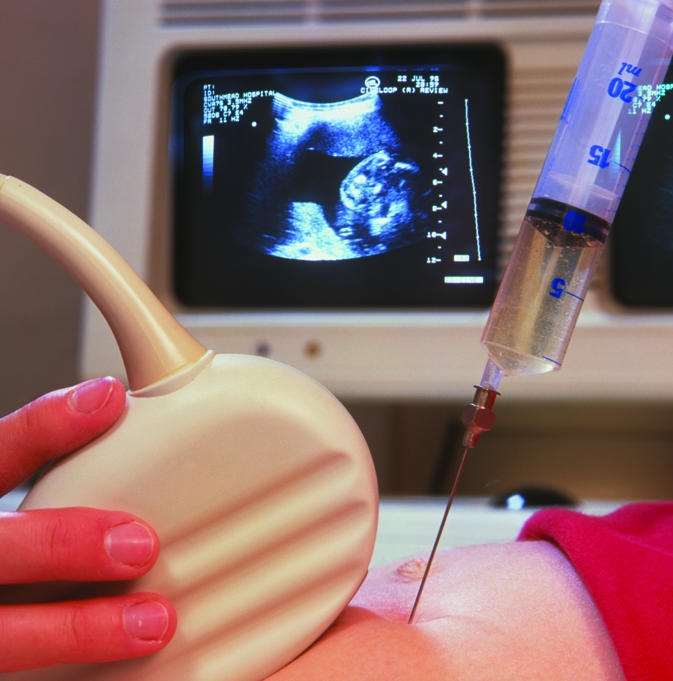
Despite any intended neutrality the very act of offering screening for the syndrome intrinsically suggests that having information relating to the risk will be beneficial and empowering.2-1 Making the offer of a test mandatory can seem to a mother to be compulsion. Women have come to perceive screening for Down's syndrome as an integral part of antenatal care and may feel a responsibility to have it.

Figure.

Figure

SATURN STILLS/SPL

Screening for Down's syndrome is perceived as integral to antenatal care

Skrabanek has suggested that screening can be achieved only through coercion and deception and that it is invariably an infringement of personal liberty.2-2 Certainly in the antenatal setting issues of voluntariness and informational manipulation are raised. The observation that health professionals promote normative patterns of care and thus ensure informed compliance rather than informed choice has recently been given further credence.2-3,2-4

Clearly, the decision as to whether or not to be screened should rest on knowledge of potential benefits and remain free from social pressures and coercions. A woman may fear covertly expressed suggestions of rejection by her carers at a time when she wants to be seen to be doing the best for her baby. She may simply acquiesce to meet the terms of the service provided, her resistance having been weakened by her desire for the complete antenatal care package—almost entirely organised around the provision of prenatal screening tests, which in itself is a presumption of acceptance.

When considering issues of consent for prenatal screening most commentators concern themselves with adequacy of disclosure. It is, however, increasingly clear that the real issue in this situation is whether the “informed” choice is freely made.2-5

References

  • 2-1. Hunt LM. Routine prenatal genetic screening in a public clinic: informed choice or moral imperative? Medical Humanities Report 2000;22(2):fall. ( www.bioethics.msu.edu/mhr/01w/prenatalscreening.htm.)
  • 2-2.Skrabanek P. Preventive medicine and morality. Lancet. 1986;i:143. doi: 10.1016/s0140-6736(86)92273-7. [DOI] [PubMed] [Google Scholar]
  • 2-3.Stapleton H, Kirkham M, Thomas G. Qualitative study of evidence based leaflets in maternity care. BMJ. 2002;324:639–643. doi: 10.1136/bmj.324.7338.639. . (16 March.) [DOI] [PMC free article] [PubMed] [Google Scholar]
  • 2-4.O'Cathain A, Walters SJ, Nicholl JP, Kirkham M. Use of evidence based leaflets to promote informed choice in maternity care: randomised controlled trial in everyday practice. BMJ. 2002;324:643–646. doi: 10.1136/bmj.324.7338.643. . (16 March.) [DOI] [PMC free article] [PubMed] [Google Scholar]
  • 2-5. Bowater v Rowley Regis Corpn. [1944] KB 476 at 479.

Articles from BMJ : British Medical Journal are provided here courtesy of BMJ Publishing Group

RESOURCES