



ABSTRACT
The immune response to inactivated influenza vaccines (IIV) is influenced by multiple factors, including hemagglutinin content and egg-based manufacturing. Only two US-licensed vaccines are manufactured without egg passage: cell culture-based inactivated vaccine (ccIIV) and recombinant vaccine (RIV). We conducted a randomized open-label trial in central Wisconsin during the 2018–19 and 2019–20 seasons to compare immunogenicity of sequential vaccination. Participants 18–64 years old were randomized 1:1:1 to receive RIV, ccIIV or IIV in strata defined by number of influenza vaccine doses in the prior 3 years. They were revaccinated with the same product in year two. Paired serum samples were tested by hemagglutination inhibition against egg-adapted and cell-grown vaccine viruses. Serologic endpoints included geometric mean titer (GMT), mean fold rise, and percent seroconversion. There were 373 participants randomized and vaccinated in 2018–19; 332 were revaccinated in 2019–20. In 2018–19, RIV and ccIIV were not more immunogenic than IIV against A/H1N1. The post-vaccination GMT against the cell-grown 3C.2a A/H3N2 vaccine virus was higher for RIV vs IIV (p = .001) and RIV vs ccIIV (p = .001). The antibody response to influenza B viruses was similar across study arms. In 2019–20, GMT against the cell-grown 3C.3a A/H3N2 vaccine virus was higher for RIV vs IIV (p = .03) and for RIV vs ccIIV (p = .001). RIV revaccination generated significantly greater backboosting to the antigenically distinct 3C.2a A/H3N2 virus (2018–19 vaccine strain) compared to ccIIV or IIV. This study adds to the evidence that RIV elicits a superior immunologic response against A/H3N2 viruses compared to other licensed influenza vaccine products.
KEYWORDS: Influenza vaccine, egg adaptation, sequential vaccination, immunogenicity
Introduction
Influenza is a major cause of serious respiratory illness and death each winter, especially during years in which influenza A/H3N2 is the predominant circulating strain. The public health burden of influenza is substantial. Preliminary data from the Centers for Disease Control and Prevention (CDC) indicate that influenza contributed to over 300,000 hospitalizations and 19,000 to 55,000 deaths during the 2022–23 season.1 Vaccination is the single most effective intervention to reduce serious influenza illness, and vaccine components are updated annually for optimal match with circulating viruses.2 Vaccine effectiveness varies by season, population, and antigenic match, but it is generally lowest for A/H3N2 and higher for A/H1N1 and type B.3 Studies dating back to the 1970s have found that repeated influenza vaccination can blunt the immune response, but the impact of repeated vaccination on vaccine effectiveness is controversial and poorly understood.4 Although this is not a predictable phenomenon, propagation of vaccine strains in eggs has been implicated as a source of antigenic mismatch in some seasons. Since the 1950s, the vast majority of inactivated influenza vaccines have been manufactured with viruses grown in embryonated chicken eggs. Over the past decade there have been multiple reports of reduced vaccine effectiveness linked to mutations in egg-adapted A/H3N2 vaccine viruses.5 Adaptation of vaccine strains during egg passage generates mutations that can alter glycosylation, impair the neutralizing antibody response, and may reduce vaccine effectiveness.6,7 This is a particular concern with influenza A/H3N2 strains, which undergo more rapid antigenic evolution than influenza A/H1N1 or type B viruses.8
Only two influenza vaccines are manufactured without egg passage and licensed in the United States: a cell culture-based inactivated influenza vaccine (ccIIV) and a recombinant influenza vaccine (RIV). Few studies have directly compared the immunogenicity of egg-based and non-egg-based vaccines after sequential vaccination. A two-year randomized trial of egg-based, recombinant and cell-culture vaccines in health care personnel found that RIV recipients had a more robust neutralizing antibody response against three cell-grown vaccine reference viruses in season one; RIV was also more immunogenic in season two.9–11
We conducted a randomized open-label trial across two influenza seasons (2018–19 and 2019–20) in working age adults to compare the immunogenicity of sequential vaccination with RIV, ccIIV, and inactivated egg-based influenza vaccine (IIV). The northern hemisphere A/H3N2 vaccine strain was updated for the 2019–20 season, providing an opportunity to compare the antibody response following a strain change in the second year of the study.
Patients and methods
Trial design
This was a single site, open-label, randomized trial to compare immunogenicity of sequential vaccination with IIV, ccIIV, and RIV. The primary objective was to compare the antibody response to the A/H3N2 egg- and cell-adapted vaccine strain (A/Kansas/14/2017) after the second season of vaccine administration (2019–20). Participants receiving egg-based IIV served as the referent group. Secondary objectives included antibody response to egg-adapted A/H1N1pdm09, B/Victoria and B/Yamagata vaccine strains. We also examined the association between antibody response in 2019–20 and the number of influenza vaccinations received during the prior three seasons (2015–16 through 2017–18). Immunogenicity endpoints included seroconversion rate, mean fold rise, and post-vaccination geometric mean titer. We conducted active surveillance among study participants to identify symptomatic, laboratory-confirmed influenza as a descriptive endpoint without hypothesis testing.
The study protocol was approved by the Institutional Review Board at Marshfield Clinic Research Institute (MCRI) and all participants provided informed consent before enrollment. The study was registered with ClinicalTrials.gov (NCT03598439) on July 16, 2018 and study results are reported in accordance with Consolidated Standards of Reporting Trials (CONSORT) guidelines.
Participants
Participants were community-dwelling individuals aged 18–64 years who received care from the Marshfield Clinic Health System and lived in or near Marshfield, Wisconsin. Persons who were pregnant, had received 2018–19 influenza vaccine or for whom any study vaccine was contraindicated were ineligible. The target enrollment of at least 351 participants (117 per group) was projected to yield > 80% power to detect an absolute 20% difference in A/H3N2 seroconversion between each non-egg vaccine and IIV, assuming baseline seroconversion of 36% in the IIV group (two-sided test).
Influenza vaccines
Licensed influenza vaccines were administered to participants in fall 2018 (September 13 to November 9) and fall 2019 (September 17 to November 19). For the 2018–19 season, the vaccine strains included A/Michigan/45/2015(A/H1N1)-like, A/Singapore/INFIMH-16-0019/2016(A/H3N2)-like, B/Colorado/06/2017-like (Victoria lineage), and B/Phuket/3073/2013-like (Yamagata lineage) (Supplemental Table S1).12 For the 2019–20 season, the A/H1N1 and A/H3N2 components were updated to A/Brisbane/02/2018(A/H1N1)-like virus and A/Kansas/14/2017(A/H3N2)-like virus.13
ccIIV (Flucelvax Quadrivalent, Seqirus Inc., Holly Springs NC) is a subunit influenza vaccine manufactured using vaccine viruses propagated in Madin Darby Canine Kidney (MDCK) cells.14 In 2018–19, the A/H3N2 and both influenza B components of ccIIV were propagated from viruses isolated in cell-culture; the A/H1N1 vaccine virus was isolated in eggs before cell culture propagation. In 2019–20, all four components were propagated from cell culture isolates with no passage in eggs. ccIIV contains 60 mcg hemagglutinin (HA) per 0.5 mL dose (15 mcg HA for each strain). For this study, lots 252,229 and 261,199 were administered in 2018–19 and 2019–20, respectively.
RIV (Flublok Quadrivalent, Sanofi Pasteur, Bridgewater NJ) is a recombinant HA protein vaccine manufactured without eggs.15 The recombinant HA proteins are synthesized in insect cells. RIV contains 180 mcg of HA per 0.5 mL dose (45 mcg HA per strain); it does not contain neuraminidase. For this study, lots QFAA1819 and QFAA1816 were administered in 2018–19; lot QFAA1944 was administered in 2019–20.
IIV (FluLaval Quadrivalent, ID Biomedical Corporation of Quebec, Quebec City, QC, Canada) is a split, inactivated influenza virus vaccine prepared from virus propagated in embryonated eggs.16 IIV contains 60 mcg HA per 0.5-mL dose (15 mcg HA for each strain). For this study, lots 3PM59 and lot 4MA5A were administered in 2018–19 and 2019–20, respectively.
Enrollment and randomization
Recruitment letters were mailed to potential participants in early fall 2018 with telephone follow-up. To ensure diversity of prior influenza vaccination history, we stratified recruitment efforts to include individuals who were unvaccinated during the past three seasons (based on electronic health records and immunization registry). Enrollment, consent, and vaccine administration occurred at Marshfield Medical Center in Marshfield, WI. Consenting participants were randomized 1:1:1 to each intervention arm within strata defined by the number of influenza vaccine doses received in the prior three seasons (0, 1–2, or 3 doses). Participants were assigned by block randomization (block sizes of 3, 6, or 9) to each arm using a computer-generated list. The allocation sequence was generated by a programmer who had no interaction with participants. Vaccine assignment was revealed to the study staff after the participant provided consent, which triggered automated assignment of a study ID and randomization group. The vaccine assignment was unchanged in season 2, and participants were revaccinated with the same product received in season 1.
Immunogenicity assessments
We obtained paired serum samples prior to vaccination and on approximately day 28 post-vaccination for two consecutive seasons. Hemagglutination inhibition (HI) titers were measured against egg- and cell-adapted vaccine reference strains (Supplemental Table S2). HI assays were conducted by a commercial laboratory (Battelle Eastern Science and Technology Center, Aberdeen, MD) using CDC protocols after completion of the CDC proficiency test. Samples from the same participant were tested on the same assay plate against antigens of the same subtype. For A/H1N1 and B viruses, samples were tested in duplicate in the HI assay using turkey red blood cells. For A/H3N2 viruses, samples were tested in duplicate in the presence of 20 nM oseltamivir using guinea pig red blood cells. The reported titer was the geometric mean of the duplicate assays. The duplicate titers were required to be within one 2-fold serial dilution of each other. Samples with titers < 10 were assigned a titer of 5. Samples were tested at a starting dilution of 1:10. Those did not reach assay end titers (≥1280) were repeated at a higher starting dilution, along with any test samples from the same individual, until an endpoint titer was obtained.
Influenza B serology was available for 166 (48%) of 348 samples in season 2; 182 samples were not tested against influenza B due to contract laboratory administrative error. Participant characteristics were compared for those with and without influenza B serology. Participants who had samples tested vs not tested against influenza B were similar with regard to demographic and clinical characteristics, including HI titer levels against the B antigens before and after vaccination in season 1 (Supplemental Table S3).
Influenza surveillance
As an exploratory and descriptive endpoint, participants were followed prospectively for episodes of acute respiratory illness during both seasons. Each week, participants reported the absence or presence of specific respiratory symptoms via online survey or phone call. Participants were instructed to self-collect a nasal swab for a new illness with any 2 of the following symptoms in the prior 7 days: cough, fever/feverishness/chills, stuffy/runny nose, headache, body aches/muscle aches, sore throat, shortness of breath, and fatigue. Respiratory specimens were tested for influenza at MCRI using reverse transcription polymerase chain reaction (RT-PCR) with primers and probes provided by CDC.
Statistical analysis
We performed a modified per protocol analysis for each season. We included samples from 12 participants (3%) in 2018–19 and 16 participants (4.8%) in 2019–20 who provided post-vaccination serum samples outside the target range of 28 ± 5 days. These outlier samples were collected either 21–23 or 34–68 days after vaccination, a period when antibody waning is expected to be minimal. The primary serologic endpoints included post-vaccination GMT and percent seroconversion. In a secondary analysis, we compared GMT and mean fold rise (MFR) after vaccination in season 1 among participants who were unvaccinated during the prior three seasons and those who received one or more vaccine doses. Seroconversion was defined as a fourfold rise in titer with post-vaccination titer ≥ 40. MFR was defined as the ratio of post-vaccination versus pre-vaccination titer. GMTs and MFRs were estimated using back-transformed model means and differences, respectively, from general linear mixed model regressions. Log2-transformed titers were corrected for heteroscedastic random errors [10]. Separate models were generated for each vaccine reference virus.
For the primary season 2 analysis, regression model covariates included intervention arm (IIV-IIV, ccIIV-ccIIV, and RIV-RIV), vaccination status (pre- vs post-vaccination), and an interaction term for intervention arm and vaccination status. Differences in percent seroconversion between groups were compared using the χ2 or Fisher exact tests, where appropriate. P-values <.05 were considered statistically significant. Analyses were performed using SAS 9.4 (SAS Institute, Cary, North Carolina).
For the season 1 analysis, the regression model variables included intervention arm (IIV, ccIIV, or RIV), dichotomous vaccine history (0 vs 1 or more influenza vaccines in 3 prior seasons), vaccination status (pre- vs post-vaccination), and an interaction term for intervention arm and vaccination status. Influenza cases identified by active surveillance were reported descriptively without hypothesis testing.
Results
Participants
There were 373 participants randomized and vaccinated in season 1; 7 withdrew or were lost to follow-up and 366 were included in the season 1 analysis. Of these, 348 (95%) were revaccinated in season 2 (Figure 1). The intervention arms were balanced with regard to age, gender, race/ethnicity, body mass index, and number of influenza vaccine doses in the prior three seasons (Table 1). High risk comorbid conditions were more prevalent in the IIV arm (24%) compared to the RIV arm (14%) or the ccIIV arm (15%).
Figure 1.
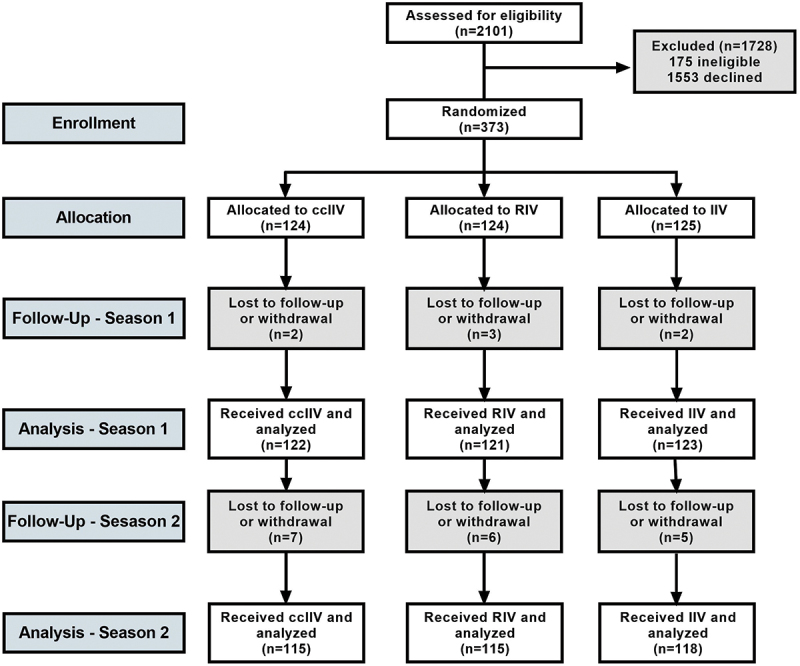
Randomization and post-vaccination follow-up for adults 18–64 years of age in an open-label vaccine immunogenicity trial during the 2018–19 and 2019–20 seasons. Abbreviations: ccIIV = cell culture-based inactivated influenza vaccine, RIV = recombinant influenza vaccine, IIV = egg-based inactivated influenza vaccine.
Table 1.
Characteristics of study participants who were randomized and included in season 1 (2018–19) analysis.
| ccIIV n = 122 |
RIV n = 121 |
IIV n = 123 |
|
|---|---|---|---|
| Mean age, years (SD) | 49.6 (13.1) | 49.5 (13.2) | 50.6 (12.1) |
| Female, n (%) | 74 (61) | 68 (56) | 75 (61) |
| Non-Hispanic White, n (%) | 119 (98) | 116 (96) | 121 (98) |
| BMI categorya | |||
| Normal or underweight (<25), n (%) | 28 (23) | 26 (21) | 33 (27) |
| Overweight (25–29.9), n (%) | 40 (33) | 45 (37) | 42 (34) |
| Obese (≥30), n (%) | 54 (44) | 50 (41) | 48 (39) |
| High-risk condition,b n (%) | 18 (15) | 17 (14) | 30 (24) |
| Prior 3 season influenza vaccination historyc | |||
| Unvaccinated, n (%) | 27 (22) | 26 (21) | 27 (22) |
| Vaccinated in 1–2 seasons, n (%) | 46 (38) | 46 (38) | 47 (38) |
| Vaccinated in 3 seasons, n (%) | 49 (40) | 49 (41) | 49 (40) |
| Received ccIIV in prior 3 seasons,d n (%) | 4 (3) | 8 (7) | 3 (2) |
Abbreviations: ccIIV, cell culture-based inactivated influenza vaccine; RIV, recombinant quadrivalent influenza vaccine; IIV, standard dose egg-based inactivated influenza vaccine; SD, standard deviation; BMI, body mass index.
aBMI was determined by measurement of height and weight at enrollment.
bSelf-report of asthma, cancer, congestive heart failure, diabetes, emphysema or chronic obstructive pulmonary disease (COPD), heart disease, immune suppression, or other chronic disease.
cInfluenza vaccination history determined from electronic health records and immunization registry data for the 2015–16 through 2017–18 influenza seasons.
dNo participants received RIV in the prior 3 seasons.
Season 1 (2018–19) serologic response to vaccination
A/H1N1
RIV generated the highest GMT and MFR against egg-adapted A/H1N1 viruses in season 1, and the post-vaccination GMT was significantly higher for RIV vs ccIIV (Figure 2). The MFR ranged from 3.8 (ccIIV) to 4.8 (RIV) and 23% to 32% seroconverted to the egg-adapted vaccine virus. Similar results were observed across intervention arms for the response to the cell-grown vaccine virus.
Figure 2.
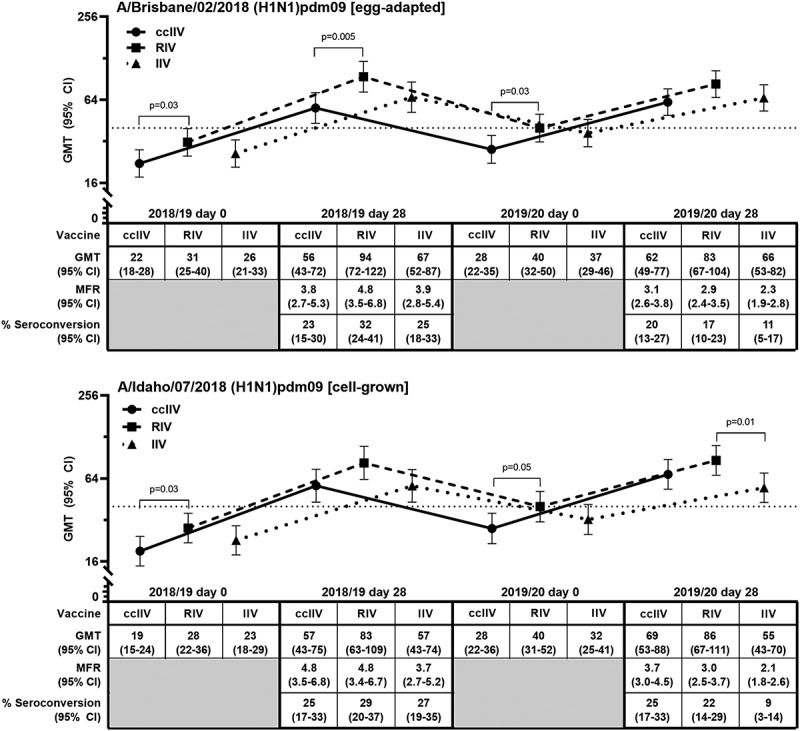
Hemagglutination inhibition (HI) response by vaccine type against egg-adapted and cell-grown A/H1N1 vaccine strains in 2018–19 and 2019–20. Top panel: egg-adapted A/Brisbane/02/2018, clade 6B1.A. Bottom panel: antigenically-similar cell-grown A/Idaho/07/2018. The dotted horizontal line represents HI titer of 40. Abbreviations: GMT = geometric mean titer, CI = confidence interval, MFR = mean fold rise.
A/H3N2
RIV generated the strongest serologic response to the egg-adapted 2018–19 A/H3N2 vaccine strain (3C2.a1) in 2018–19 (Figure 3). The post-vaccination GMT against the cell-grown vaccine virus was significantly higher for RIV vs IIV (p = .001) and RIV vs ccIIV (p = .001). The MFR ranged from 2.0 to 4.7 and was highest in the RIV arm. Seroconversion was more common in the RIV arm (37%) compared to the ccIIV (10%) and IIV (14%) arms. The response to the antigenically distinct A/Kansas/14/2017 (3C.3a) strain was muted in 2018–19, but post-vaccination GMT was significantly higher for RIV vs ccIIV (p = .002) against the cell-grown 3C.3a virus. The MFR was ≤ 2 in each intervention arm.
Figure 3.
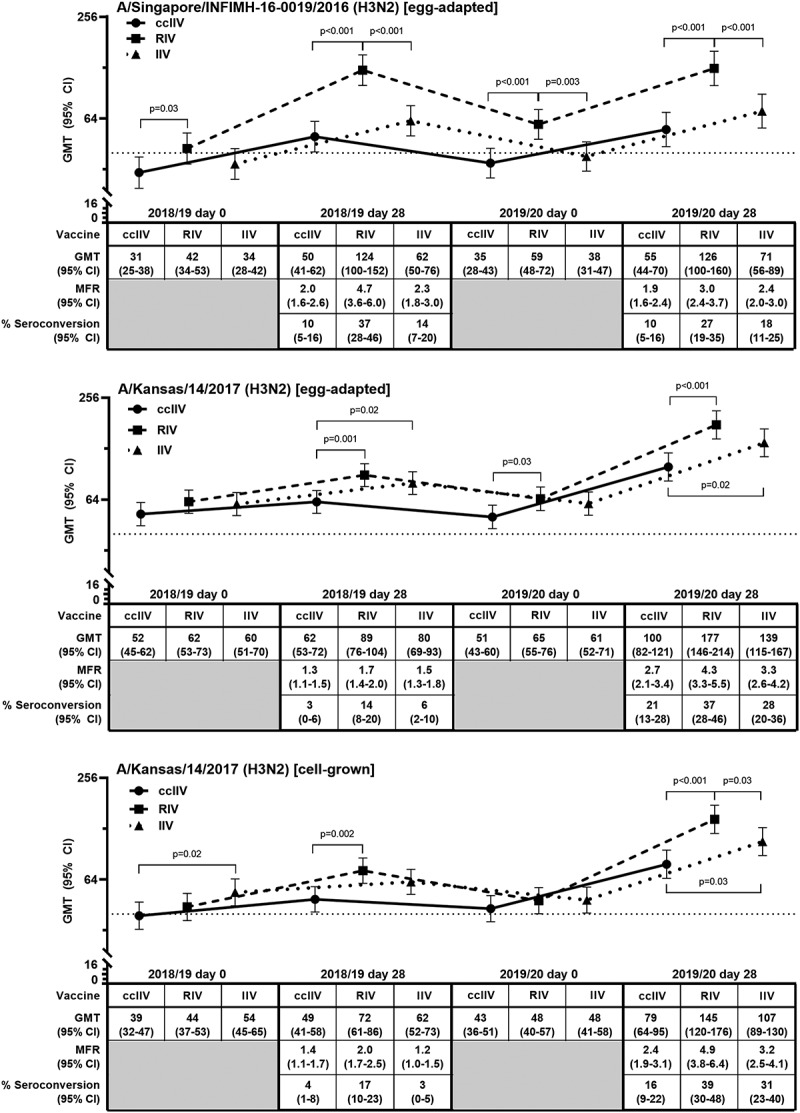
Hemagglutination inhibition (HI) response by vaccine type against egg-adapted and cell-grown A/H3N2 vaccine strains in 2018–19 and 2019–20. Top panel: 2018–19 egg-adapted A/Singapore/INFIMH-16-0019/2016, clade 3C.2a1. Middle panel: 2019–20 egg-adapted A/Kansas/14/2017, clade 3C.3a. Bottom panel: cell-grown 2019–20 A/Kansas/14/2017, clade 3C.3a. The dotted horizontal line represents HI titer of 40. Abbreviations: GMT = geometric mean titer, CI = confidence interval, MFR = mean fold rise.
Influenza B
For B/Victoria and B/Yamagata, the prevaccination GMTs were > 40 in all three intervention arms. The serologic response was similar for RIV, ccIIV, and IIV (Figure 4). For B/Victoria, the postvaccination GMT ranged from 196 (ccIIV) to 274 (IIV), and MFR ranged from 3.2 (ccIIV and IIV) to 3.7 (RIV). Seroconversion occurred in 31% to 34%. For B/Yamagata, the postvaccination GMT ranged from 138 (ccIIV) to 161 (RIV). Seroconversion occurred in 21% to 36%.
Figure 4.
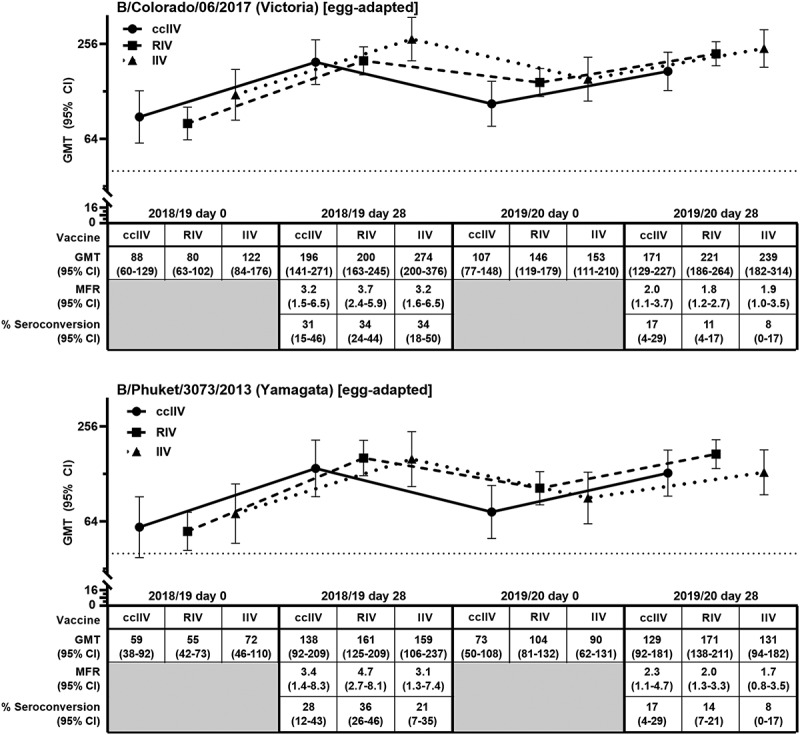
Hemagglutination inhibition (HI) response by vaccine type against egg-adapted type B vaccine strains in 2018–19 and 2019–20. For both seasons, the vaccine component was the same within each lineage. Top panel: B/Victoria vaccine reference virus (B/colorado/06/2017, clade V1A.1). Bottom panel: B/Yamagata vaccine reference virus (B/phuket/3073/2013, clade Y3). The dotted horizontal line represents HI titer of 40. Abbreviations: GMT = geometric mean titer, CI = confidence interval, MFR = mean fold rise.
Season 2 (2019–20) serologic response to revaccination
A/H1N1
The serologic response to egg-adapted A/H1N1 viruses in season 2 was modest overall and similar to the prior season within each intervention arm (Figure 2). The post-vaccination GMT was similar across intervention arms. The MFR ranged from 2.3 (IIV) to 3.1 (ccIIV) and 11% to 20% seroconverted. Similar results were observed across intervention arms for the response to the cell-grown vaccine virus, although the postvaccination GMT was significantly higher for RIV compared to IIV (p = .01).
A/H3N2
The serologic response to the 2019–20 A/H3N2 vaccine strain (3C.3a) was highest among RIV recipients (Figure 3). The post-vaccination GMT against the cell-grown vaccine virus was significantly higher for RIV vs IIV (p = .03) and RIV vs ccIIV (p = .001). The MFR ranged from 2.4 to 4.9 and was highest in the RIV arm. Similar results were observed in the response to the egg-adapted vaccine strain. RIV also generated significantly greater A/H3N2 backboosting to the egg-adapted 2018–19 vaccine strain compared to ccIIV or IIV: the postvaccination GMT to the 2018–19 virus was 126 for RIV, 71 for IIV and 55 for ccIIV. This effect was partially attributable to a more robust serologic response to RIV receipt in 2018–19 with higher prevaccination titers in 2019–20. However, the MFR and proportion seroconverting to the prior season A/H3N2 vaccine strain was also greatest for RIV.
Type B
The serologic response to egg-adapted B/Victoria and B/Yamagata viruses was similar for RIV, ccIIV, and IIV (Figure 4). For B/Victoria, the postvaccination GMT ranged from 239 (IIV) to 171 (ccIIV) with widely overlapping confidence intervals. The B/Victoria MFR ranged from 1.8 to 2.0 and 8% to 17% seroconverted. For B/Yamagata, the postvaccination GMT ranged from 171 (RIV) to 129 (ccIIV) with widely overlapping confidence intervals. The B/Yamagata MFR ranged from 1.7 to 2.3 and 8% to 17% seroconverted.
Season 1 (2018–19) vaccine response by influenza vaccination history
A/H1N1
Within each intervention arm, the pre-vaccination GMT against the egg-adapted A/H1N1 vaccine strain was significantly higher among participants with one or more vaccine doses in the prior three years compared to those without prior vaccination (Figure 5, Panel A). The postvaccination GMT was similar for those with and without prior vaccination. Post-vaccination GMTs were also similar across intervention arms with stratification by prior vaccination category. Seroconversion occurred more frequently among those not previously vaccinated (67% to 73% across intervention arms) compared to those with at least one dose in the past 3 seasons (17% to 31% across intervention arms).
Figure 5.
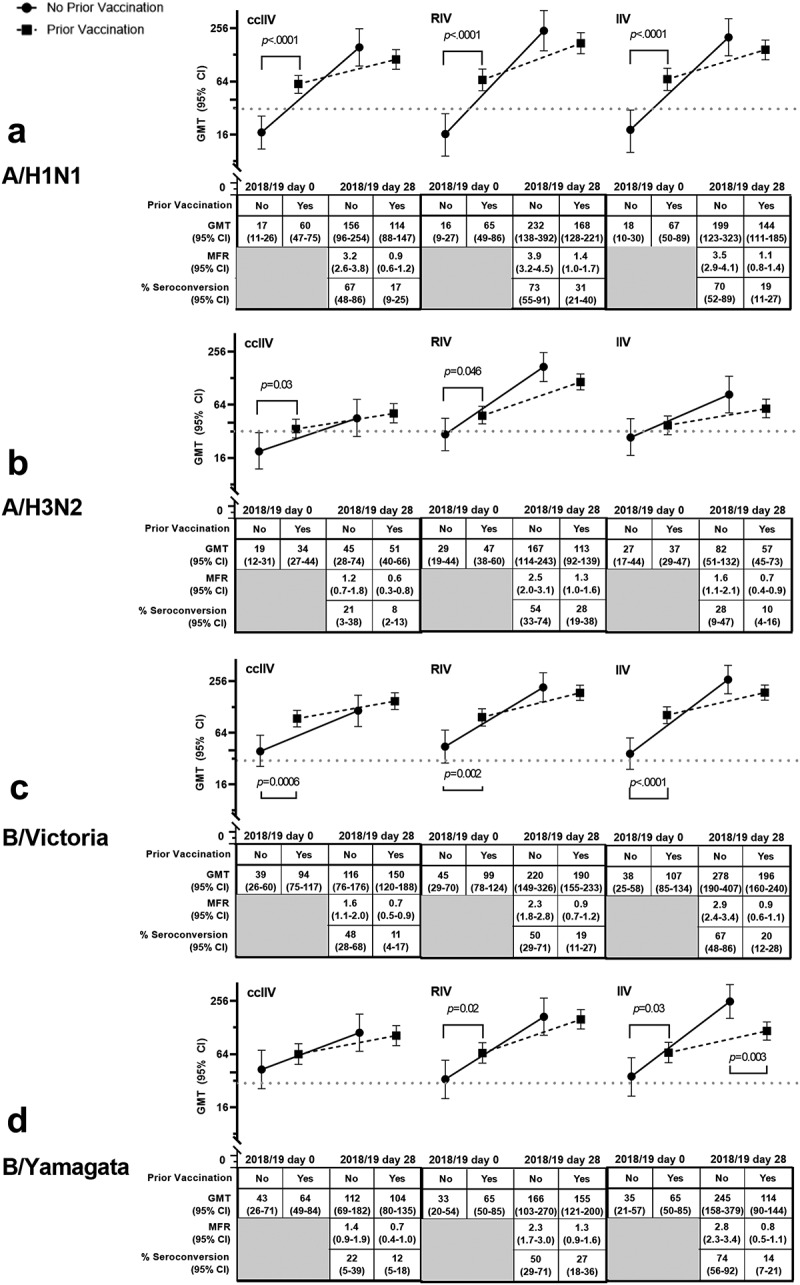
Hemagglutination inhibition (HI) response by vaccine type for participants with and without receipt of influenza vaccine in any of the 3 seasons before study enrollment. Panel A: egg-adapted 2018–19 A/H1N1 vaccine reference virus (A/michigan/45/2015, clade 6B1). Panel B: egg-adapted 2018–19 A/H3N2 vaccine reference virus (A/singapore/INFIMH-16-0019/2016, clade 3C.2a1). Panel C: egg-adapted B/Victoria vaccine reference virus (B/colorado/06/2017, clade V1A.1). Panel D: egg-adapted B/Yamagata vaccine reference virus (B/phuket/3073/2013, clade Y3). The dotted horizontal line represents HI titer of 40. Abbreviations: GMT = geometric mean titer, CI = confidence interval, MFR = mean fold rise.
A/H3N2
In two intervention arms (ccIIV and RIV), the pre-vaccination GMT against the egg-adapted A/H3N2 vaccine strain was significantly higher among participants with one or more vaccine doses in the prior three years compared to those without prior vaccination (Figure 5, Panel B). The postvaccination GMT was highest in the RIV arm regardless of prior season vaccination status. Seroconversion was more common among participants not previously vaccinated vs those previously vaccinated for RIV recipients (54% vs 28%, p=.02) and IIV recipients (28% vs 10%, p = .04).
B/Victoria
Within each intervention arm, the pre-vaccination GMT against the B/Victoria vaccine strain was significantly higher among participants with one or more vaccine doses in the prior three years compared to those without prior vaccination (Figure 5, Panel C). The postvaccination GMT was similar for those with and without prior vaccination. Post-vaccination GMTs were also similar across intervention arms with stratification by prior vaccination category. Post-vaccination seroconversion was significantly higher among those not vaccinated in the prior three seasons (48%-67%) vs those who received at least one prior dose (11%-20%).
B/Yamagata
In two intervention arms (RIV and IIV), the pre-vaccination GMT against the B/Yamagata vaccine strain was significantly higher among participants with one or more vaccine doses in the prior three years compared to those without prior vaccination (Figure 5, Panel D). For RIV and ccIIV recipients, the postvaccination GMT was similar for those with and without prior vaccination. Among IIV recipients, the post-vaccination GMT was significantly higher in those without prior vaccination compared to those who received one or more doses in the prior three years. Among RIV recipients, seroconversion was more common in those without prior vaccination compared to those who received one or more prior doses (50% vs 27%, p = .03). Among IIV recipients, seroconversion was also more common among persons with no prior vaccine doses in the past three years (74% vs 14%, p < .0001).
Influenza surveillance
During season 1 (2018–19), influenza infections were identified by RT-PCR in 11 (3.0%) of 366 participants; 7 were A/H1N1 and 4 were A/H3N2. Cases occurred in each of the intervention arms. During season 2 (2019–20), 13 (3.7%) of 348 participants had RT-PCR confirmed influenza illness; 10 were A/H1N1 and three were B/Victoria. Cases occurred in each of the intervention arms. During the 2018–19 season, there were five influenza cases in the ccIIV arm and five cases in the IIV arm; there was one case in the RIV arm. During the 2019–20 season, there were six cases in the IIV arm, four in the RIV arm, and three in the ccIIV arm.
Discussion
This study adds to the growing body of evidence that RIV elicits a superior immunologic response to H3N2 viruses compared to other licensed vaccines. RIV generated higher post-vaccination titers to the A/H3N2 vaccine strain in both 2018–19 and 2019–20 compared to the other two vaccines. This effect was not explained by higher prevaccination titers, and RIV generated the highest fold-rise in antibody titer against egg- and cell-adapted A/H3N2 viruses in 2019–20. Few differences were observed in the response to A/H1N1 and type B vaccine strains. From 2015–16 through 2018–19, the A/H3N2 vaccine component included a clade 3C.2a virus, and low vaccine effectiveness was partially attributed to loss of a glycosylation site during egg propagation of high growth reassortant vaccine strains.6,17 Late in the 2018–19 season, a new genetic clade (3C.3a) circulated widely in the US, and WHO selected this strain for the 2019–20 A/H3N2 component. Most circulating A/H3N2 viruses in the US were 3C.2a during 2019–20, and the 3C.3a vaccine strain was antigenically mismatched.18
In this context, it is noteworthy that vaccination with RIV in 2019–20 generated significantly higher titers against a 3C.2a virus (A/Singapore/INFIMH-16-0019/2016) compared to either ccIIV or IIV. This was partially attributed to a higher prevaccination titer among RIV recipients, since RIV also generated higher titers to this virus in the prior season. Our results suggest that sequential vaccination with RIV may have provided greater protection against both the vaccine strain and mismatched 3C.2a viruses in the 2019–20 season. Antigenic evolution of A/H3N2 viruses occurs rapidly, and the 6–8 month interval between vaccine strain selection and distribution contributes to antigenic mismatch. RIV may offer advantages over other vaccines if it generates a broader cross-reactive antibody response to drifted A/H3N2 strains. However, during the 2018–19 season, all three vaccines in this study generated low titers against the antigenically advanced 3C.3a virus. Further comparative research is needed to assess cross-reactivity against antigenically advanced A/H3N2 strains, and how this is influenced by imprinting by A/H3N2 viruses during early childhood.
Several factors may contribute to greater immunogenicity of RIV compared to other vaccines, including higher antigen content (45 mcg/strain) and use of recombinant manufacturing platform without virus propagation in eggs. Egg adaptation mutations in high growth reassortant A/H3N2 vaccine strains can alter the antigenic characteristics of vaccine antigens and impair the immune response. This was a particular problem from 2015–16 through 2018–19 when the A/H3N2 vaccine component was a 3C.2a virus that lacked a key glycosylation site due to egg passage.18 As expected, we observed higher post-vaccination titers after RIV compared to egg-based IIV in 2018–19, but the RIV antibody response was also superior compared to ccIIV during that season. The latter is manufactured in mammalian cell culture and egg-passage mutations are absent. We speculate that the higher hemagglutinin content of RIV may contribute to higher titers relative to ccIIV. RIV contains 3-fold higher hemagglutinin content compared to all other vaccines licensed for adults under 65 years of age. The immunogenicity of RIV is generally consistent with clinical efficacy results. During the 2014–15 season, a randomized clinical trial reported 30% relative efficacy of RIV compared to IIV.19 Last year, based on the accumulating body of evidence for superior protection in older adults, the CDC Advisory Committee on Immunization Practices (ACIP) made a preferential recommendation for use of higher dose (RIV, HD-IIV) or adjuvanted influenza vaccine (aIIV) in adults ≥65 years of age.20 Of these three vaccines, only RIV is currently licensed for use in adults <65 years of age.
The immunogenicity of RIV, ccIIV, and IIV has been previously reported in a two season, open label randomized trial of health care personnel during the 2018–19 and 2019–20 seasons. ,9–11 During the first season, participants were randomized to receive RIV, ccIIV, or IIV. During the second season, ccIIV and RIV recipients were rerandomized and the IIV-IIV group served as the comparator. During the first season (2018–19), RIV generated higher post-vaccination titers and fold-rise against A/H3N2, A/H1N1, and B/Yamagata compared to IIV.9 The higher A/H3N2 titers persisted for at least six months. In season 2 (2019–20), RIV-RIV recipients had higher postvaccination titers against all vaccine components except A/H3N2 when compared with IIV-IIV recipients.10 The mean fold rise was approximately 2 for the RIV-RIV group and the IIV-IIV group. The overall findings suggested that repeated vaccination with non-egg-based vaccines may redirect antibody responses away from egg-adapted epitopes and generate higher neutralizing antibody responses to circulating cell-grown viruses.21
In the current study of community-dwelling adults, we observed greater immunogenicity against the cell-grown 3C.3a A/H3N2 vaccine virus among RIV recipients compared to the other two vaccines. The explanation for the greater response compared to health care personnel is unclear, but differences between the study populations may have contributed. Participants in the health care personnel study were highly vaccinated and nearly all had received annual influenza vaccines before the study. In contrast, our study population included a greater proportion of individuals who had not been vaccinated in the prior three years. We observed a higher mean fold rise in each intervention arm compared to analogous intervention arm in the health care personnel trial.
During the first study season (2018–19), we assessed the relationship between prior receipt of influenza vaccine (at least 1 dose in prior three years vs none) and serologic response to each vaccine component. As expected, pre-vaccination titers against egg-adapted vaccine viruses were highest among participants with prior vaccination, particularly for the A/H1N1 and B/Victoria components. In general, the serologic response to each product in 2018–19 was similar for participants with and without vaccine receipt in the prior three years, with one exception. IIV recipients without prior vaccination had a significantly higher post-vaccination titer against B/Yamagata compared to those with prior vaccination. The B/Yamagata response to RIV or ccIIV was not associated with prior vaccination status. Other studies have demonstrated blunting of the H3N2 antibody response with repeated annual vaccination.22,23 Similar H3N2 blunting was not observed in this analysis, but the sample size was limited within each intervention arm and we did not stratify by number of prior vaccine doses.
Strengths of this study include enrollment of individuals with and without influenza vaccination in the prior three years, high participation rate over two seasons, and measurement of HI antibody titers against both egg-adapted and cell-grown A/H3N2 viruses. Unlike the open label trial in health care personnel, we tested 2019–20 sera against a 3C.2a A/H3N2 virus that was antigenically distinct from the 3C.3a vaccine component, and we found that RIV generated the highest level of cross-reactivity. This study also has limitations that should be considered when interpreting the results. These include lack of racial/ethnic diversity and reduced sample size for influenza B serologic testing in 2019–20 due to a laboratory administrative error. However, participants with and without type B serology results in 2019–20 were similar in terms of demographics, and 2018–19 post-vaccination titers against B viruses were similar with broadly overlapping confidence intervals (Supplemental Table S3). We did not test 2019–20 samples against HA stalk antigens or cell-passaged 3C.2a A/H3N2 virus which would have provided useful information on antibody cross-reactivity during a season with vaccine mismatch.
RIV represents one of the earliest next-generation influenza vaccines with the potential for enhanced protection. Data on real-world effectiveness of RIV are limited, but a large cluster-randomized study demonstrated that RIV was more effective than standard dose, egg-based IIV for preventing laboratory-confirmed influenza.24 The relative effectiveness of RIV vs IIV was 15% for the primary outcome of PCR-confirmed influenza, and nearly 20% for hospitalization due to influenza or community acquired pneumonia. Options for more immunogenic and effective influenza vaccines are expected to increase in the coming years. There are three mRNA-based vaccines and one recombinant adjuvanted influenza vaccine currently in active late-stage clinical development.25 If licensed, these vaccines may improve the immune response against wild-type influenza viruses (especially A/H3N2) by eliminating the adaptive pressure that occurs during egg propagation. The mRNA vaccines may also increase production of group 2 HA stalk antibodies, contributing to broader cross-reactivity.26 Comparative studies of immunogenicity and effectiveness will be critical as new vaccines are licensed and recommended for use.
Abbreviations
- ccIIV
cell culture-based inactivated influenza vaccine
- CDC
Centers for Disease Control and Prevention
- CI
confidence intervals
- GMT
geometric mean titer
- HA
hemagglutinin
- HI
hemagglutination inhibition
- IIV
egg-based inactivated influenza vaccine
- MDCK
Madin-Darby canine kidney
- MFR
mean fold rise
- RIV
recombinant influenza vaccine
- RT-PCR
reverse transcription polymerase chain reaction
- STD
standard deviation
Acknowledgments
Marshfield Clinic Research Institute: Elizabeth Armagost, Hannah Berger, Deanna Cole, Terry Foss, Wayne Frome, Erica Graves, Kayla Hanson, DeeAnn Hertel, Lynn Ivacic, Julie Karl, Tamara Koepel, Diane Kohnhorst, Erik Kronholm, Carrie Marcis, Karen McGreevey, Sai Sudha Medabalimi, Nidhi Mehta, Vicki Moon, Madalyn Palmquist, Rebecca Pilsner, Maria Platta, Martha Presson, Carla Rottscheit, Jacklyn Salzwedel, Julian Savu, Rachel Schoone, Patrick Stockwell, Megan Tichenor
Influenza Division, Centers for Disease Control and Prevention: Liaini Gross and Sara Kim
Funding Statement
This work was supported by a cooperative agreement (U01IP001038) from the Centers for Disease Control and Prevention to the Marshfield Clinic Research Institute. Disclaimer: The findings and conclusions in this report are those of the authors and do not necessarily represent the views of the Centers for Disease Control and Prevention.
Author contributions
Thomas G. Boyce: Analysis and interpretation of results, manuscript development
Min Z. Levine: Study conception and design, data collection, analysis and interpretation of results, manuscript review for intellectual content
David L McClure: Analysis and interpretation of results, manuscript review for intellectual content
Jennifer P. King: Study conception and design, analysis and interpretation of results, manuscript review for intellectual content
Brendan Flannery: Study conception and design, analysis and interpretation of results, manuscript review for intellectual content
Huong Q. McLean: Study conception and design, analysis and interpretation of results, manuscript development
Edward A. Belongia: Study conception and design, analysis and interpretation of results, manuscript development
Disclosure statement
The following authors receive research support unrelated to the present work: TGB (Pfizer, GSK), DLM (GSK, CSL Seqirus), JPK (GSK, Moderna), HQN (CSL Seqirus, Moderna), EAB (CSL Seqirus, Moderna). MZL and BF report no conflicts.
References
- 1.CDC . U.S. flu season: preliminary in-season burden estimates [Internet]. 2022–2023. https://www.cdc.gov/flu/about/burden/preliminary-in-season-estimates.htm.
- 2.Rondy M, Omeiri NE, Thompson MG, Leveque A, Moren A, Sullivan SG.. Effectiveness of influenza vaccines in preventing severe influenza illness among adults: a systematic review and meta-analysis of test-negative design case-control studies. J Infect. 2017;75(5):381–11. doi: 10.1016/j.jinf.2017.09.010. [DOI] [PMC free article] [PubMed] [Google Scholar]
- 3.Belongia EA, Simpson MD, King JP, Sundaram ME, Kelley NS, Osterholm MT, McLean HQ. Variable influenza vaccine effectiveness by subtype: a systematic review and meta-analysis of test-negative design studies. Lancet Infect Dis. 2016;16(8):942–51. doi: 10.1016/S1473-3099(16)00129-8. [DOI] [PubMed] [Google Scholar]
- 4.Belongia EA, Skowronski DM, Hq M, Chambers C, Sundaram ME, Serres GD. Repeated annual influenza vaccination and vaccine effectiveness: review of evidence. Expert Rev Vaccines. 2017;16(7):723–36. doi: 10.1080/14760584.2017.1334554. [DOI] [PubMed] [Google Scholar]
- 5.Skowronski DM, Serres GD. Role of egg-adaptation mutations in low influenza A(H3N2) vaccine effectiveness during the 2012–2013 season. Clin Infect Dis. 2018;67(9):1474–6. doi: 10.1093/cid/ciy350. [DOI] [PMC free article] [PubMed] [Google Scholar]
- 6.Zost SJ, Parkhouse K, Gumina ME, Kim K, Perez SD, Wilson PC, Treanor JJ, Sant AJ, Cobey S, Hensley SE. Contemporary H3N2 influenza viruses have a glycosylation site that alters binding of antibodies elicited by egg-adapted vaccine strains. Proc Natl Acad Sci USA. 2017;114(47):12578–83. doi: 10.1073/pnas.1712377114. [DOI] [PMC free article] [PubMed] [Google Scholar]
- 7.Gouma S, Zost SJ, Parkhouse K, Branche A, Topham DJ, Cobey S, Hensley SE. Comparison of human H3N2 antibody responses elicited by egg-based, cell-based, and recombinant protein–based influenza vaccines during the 2017–2018 season. Clin Infect Dis. 2019;71(6):1447–53. doi: 10.1093/cid/ciz996. [DOI] [PMC free article] [PubMed] [Google Scholar]
- 8.Belongia EA, McLean HQ. Influenza vaccine effectiveness: defining the H3N2 problem. Clin Infect Dis. 2019;69(10):1817–23. doi: 10.1093/cid/ciz411. [DOI] [PubMed] [Google Scholar]
- 9.Dawood FS, Naleway AL, Flannery B, Levine MZ, Murthy K, Sambhara S, Gangappa S, Edwards L, Ball S, Beacham L, et al. Comparison of the immunogenicity of cell culture-based and recombinant quadrivalent influenza vaccines to conventional egg-based quadrivalent influenza vaccines among healthcare personnel aged 18–64 years: a randomized open-label trial. Clin Infect Dis. 2021;73(11):1973–81. doi: 10.1093/cid/ciab566. [DOI] [PMC free article] [PubMed] [Google Scholar]
- 10.Gaglani M, Kim SS, Naleway AL, Levine MZ, Edwards L, Murthy K, Dunnigan K, Zunie T, Groom H, Ball S, et al. Effect of repeat vaccination on immunogenicity of quadrivalent cell-culture and recombinant influenza vaccines among healthcare personnel aged 18–64 years: a randomized, open-label trial. Clin Infect Dis Off Publ Infect Dis Soc Am. 2022;76(3):e1168–76. doi: 10.1093/cid/ciac683. [DOI] [PMC free article] [PubMed] [Google Scholar]
- 11.Naleway AL, Kim SS, Flannery B, Levine MZ, Murthy K, Sambhara S, Gangappa S, Edwards LJ, Ball S, Grant L, et al. Immunogenicity of high-dose egg-based, recombinant, and cell culture–based influenza vaccines compared with standard-dose egg-based influenza vaccine among health care personnel aged 18–65 years in 2019–2020. Open Forum Infect Dis. 2023;10(6):ofad223. doi: 10.1093/ofid/ofad223. [DOI] [PMC free article] [PubMed] [Google Scholar]
- 12.Grohskopf LA, Sokolow LZ, Broder KR, Walter EB, Fry AM, Jernigan DB. Prevention and control of seasonal influenza with vaccines: recommendations of the advisory committee on immunization practices—United States, 2018–19 influenza season. MMWR Recomm Rep. 2018;67(3):1–20. doi: 10.15585/mmwr.rr6703a1. [DOI] [PMC free article] [PubMed] [Google Scholar]
- 13.Grohskopf LA, Alyanak E, Broder KR, Walter EB, Fry AM, Jernigan DB. Prevention and control of seasonal influenza with vaccines: recommendations of the advisory committee on immunization practices — United States, 2019–20 influenza season. MMWR Recomm Rep. 2019;68(3):1–21. doi: 10.15585/mmwr.rr6803a1. [DOI] [PMC free article] [PubMed] [Google Scholar]
- 14.FDA . Flucelvax quadrivalent package insert [Internet]. https://www.fda.gov/vaccines-blood-biologics/vaccines/flucelvax-quadrivalent.
- 15.FDA . Flublok quadrivalent package insert [Internet]. https://www.fda.gov/vaccines-blood-biologics/vaccines/flublok-quadrivalent.
- 16.FDA . Flulaval quadrivalent package insert [Internet]. https://www.fda.gov/vaccines-blood-biologics/vaccines/flulaval-quadrivalent.
- 17.Rolfes MA, Flannery B, Chung J, O’Halloran A, Garg S, Belongia EA, Gaglani M, Zimmerman R, Jackson ML, Monto AS, et al. Effects of influenza vaccination in the United States during the 2017–2018 influenza season. Clin Infect Dis. 2019;69(11):1845–53. doi: 10.1093/cid/ciz075. [DOI] [PMC free article] [PubMed] [Google Scholar]
- 18.Gouma S, Weirick M, Hensley SE. Antigenic assessment of the H3N2 component of the 2019–2020 Northern Hemisphere influenza vaccine. Nat Commun. 2020;11(1):2445. doi: 10.1038/s41467-020-16183-y. [DOI] [PMC free article] [PubMed] [Google Scholar]
- 19.Dunkle LM, Izikson R, Patriarca P, Goldenthal KL, Muse D, Callahan J, Cox MMJ, Team PSCS. Efficacy of recombinant influenza vaccine in adults 50 years of age or older. N Engl J Med. 2017;376(25):2427–36. doi: 10.1056/NEJMoa1608862. [DOI] [PubMed] [Google Scholar]
- 20.Grohskopf LA, Blanton LH, Ferdinands JM, Chung JR, Broder KR, Talbot HK. Prevention and control of seasonal influenza with vaccines: recommendations of the advisory committee on immunization practices—United States, 2023–24 influenza season. MMWR Recomm Rep. 2023;72(2):1–25. doi: 10.15585/mmwr.rr7202a1. [DOI] [PMC free article] [PubMed] [Google Scholar]
- 21.Liu F, Gross FL, Joshi S, Gaglani M, Naleway AL, Murthy K, Groom HC, Wesley MG, Edwards LJ, Grant L, et al. Redirecting antibody responses from egg-adapted epitopes following repeat vaccination with recombinant or cell culture-based versus egg-based influenza vaccines. Nat Commun. 2024;15(1):254. doi: 10.1038/s41467-023-44551-x. [DOI] [PMC free article] [PubMed] [Google Scholar]
- 22.Ohmit SE, Petrie JG, Malosh RE, Fry AM, Thompson MG, Monto AS. Influenza vaccine effectiveness in households with children during the 2012-2013 season: assessments of prior vaccination and serologic susceptibility. J Infect Dis. 2015;211(10):1519–28. doi: 10.1093/infdis/jiu650. [DOI] [PMC free article] [PubMed] [Google Scholar]
- 23.Thompson MG, Naleway A, Fry AM, Ball S, Spencer SM, Reynolds S, Bozeman S, Levine M, Katz JM, Gaglani M. Effects of repeated annual inactivated influenza vaccination among healthcare personnel on serum hemagglutinin inhibition antibody response to A/Perth/16/2009 (H3N2)-like virus during 2010-11. Vaccine. 2016;34(7):981–8. doi: 10.1016/j.vaccine.2015.10.119. [DOI] [PMC free article] [PubMed] [Google Scholar]
- 24.Hsiao A, Yee A, Fireman B, Hansen J, Lewis N, Klein NP. Recombinant or standard-dose influenza vaccine in adults under 65 years of age. N Engl J Med. 2023;389(24):2245–55. doi: 10.1056/NEJMoa2302099. [DOI] [PubMed] [Google Scholar]
- 25.Policy C for IDR and . Universal influenza vaccine technology landscape [Internet]. https://ivr.cidrap.umn.edu/universal-influenza-vaccine-technology-landscape.
- 26.Gouma S, Furey C, Santos JJS, Parkhouse K, Weirick M, Muramatsu H, Pardi N, Fan SHY, Weissman D, Hensley SE. Nucleoside-modified mRNA-based influenza vaccines circumvent problems associated with H3N2 vaccine strain egg adaptation. J Virol. 2022;97(1):e01723–22. doi: 10.1128/jvi.01723-22. [DOI] [PMC free article] [PubMed] [Google Scholar]