



Abstract
Elevated lipoprotein(a) is a genetically transmitted codominant trait that is an independent risk driver for cardiovascular disease. Lipoprotein(a) concentration is heavily influenced by genetic factors, including LPA kringle IV‐2 domain size, single‐nucleotide polymorphisms, and interleukin‐1 genotypes. Apolipoprotein(a) is encoded by the LPA gene and contains 10 subtypes with a variable number of copies of kringle ‐2, resulting in >40 different apolipoprotein(a) isoform sizes. Genetic loci beyond LPA, such as APOE and APOH, have been shown to impact lipoprotein(a) levels. Lipoprotein(a) concentrations are generally 5% to 10% higher in women than men, and there is up to a 3‐fold difference in median lipoprotein(a) concentrations between racial and ethnic populations. Nongenetic factors, including menopause, diet, and renal function, may also impact lipoprotein(a) concentration. Lipoprotein(a) levels are also influenced by inflammation since the LPA promoter contains an interleukin‐6 response element; interleukin‐6 released during the inflammatory response results in transient increases in plasma lipoprotein(a) levels. Screening can identify elevated lipoprotein(a) levels and facilitate intensive risk factor management. Several investigational, RNA‐targeted agents have shown promising lipoprotein(a)‐lowering effects in clinical studies, and large‐scale lipoprotein(a) testing will be fundamental to identifying eligible patients should these agents become available. Lipoprotein(a) testing requires routine, nonfasting blood draws, making it convenient for patients. Herein, we discuss the genetic determinants of lipoprotein(a) levels, explore the pathophysiological mechanisms underlying the association between lipoprotein(a) and cardiovascular disease, and provide practical guidance for lipoprotein(a) testing.
Keywords: atherosclerotic cardiovascular disease, cardiovascular risk, coronary heart disease, genetics, lipoprotein(a), oxidized phospholipids, single nucleotide polymorphisms
Subject Categories: Genetic, Association Studies
Nonstandard Abbreviations and Acronyms
- ARIC
Atherosclerosis Risk in Communities
- HCHS/SOL
Hispanic Community Health Study/Study of Latinos
- LPA
lipoprotein(a) gene
- Lp(a)HERITAGE
Lipoprotein(a) Levels in a Global Population With Established Atherosclerotic Cardiovascular Disease
- MASALA
Mediators of Atherosclerosis in South Asians Living in America
- MESA
Multi‐Ethnic Study of Atherosclerosis
- OxPL
oxidized phospholipid
Cardiovascular disease (CVD) is the predominant cause of death globally, accounting for ≈30% of deaths each year. 1 The prevalence of CVD among adults (aged ≥20 years) in the United States was 48.6% between 2017 and 2020, with an age‐adjusted death rate of 207.1 per 100 000 in 2020. 2 Elevated lipoprotein(a) is an independent risk factor for atherosclerotic cardiovascular disease (ASCVD) that is estimated to be present in ≈20% of the global population, translating to >1 billion people. 3 Plasma levels of lipoprotein(a) are largely genetically determined, with levels ranging from <0.1 mg/dL to >300 mg/dL or from 2.5 to 750 nmol/L. 4 Considerable variability in lipoprotein(a) levels is observed across individuals from different racial and ethnic backgrounds and between sexes, which may be influenced to some degree by nongenetic factors, such as menopause, hypogonadism, and chronic kidney disease. 5 , 6 , 7 , 8
This narrative review discusses the genetic determinants of plasma lipoprotein(a) levels and explores the factors that influence interindividual heterogeneity, including single‐nucleotide polymorphisms (SNPs). In addition, we will clarify the pathophysiological mechanisms underlying the association between lipoprotein(a) and CVD and provide guidance for lipoprotein(a) testing in clinical practice.
What Is LipoprResotein(a)?
Lipoprotein(a) is an apolipoprotein B–containing lipoprotein that comprises a single apolipoprotein B particle covalently bound to an apolipoprotein(a) molecule via a disulfide bond. 9 Although a complete understanding of the role of lipoprotein(a) in humans remains elusive, it is distinct from low‐density lipoprotein (LDL) and comprises a relatively small amount of the total plasma cholesterol in the LDL cholesterol (LDL‐C) pool (Figure 1). 10
Figure 1. Structure of lipoprotein(a) vs LDL.
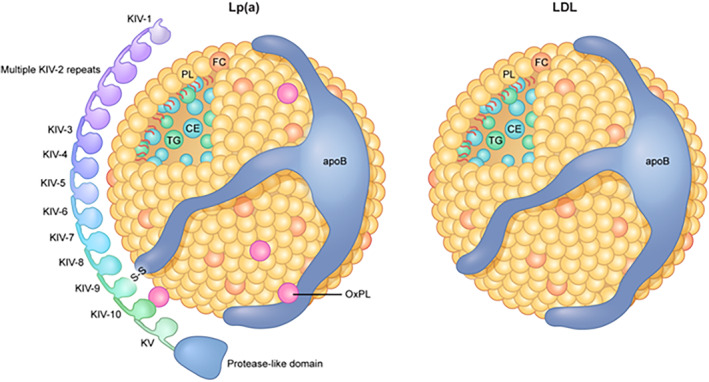
apoB indicates apolipoprotein B; CE, cholesterol ester; FC, free cholesterol; KIV, kringle IV; LDL, low‐density lipoprotein; Lp(a), lipoprotein(a); OxPL, oxidized phospholipid; PL, phospholipid; SS, disulfide bond; and TG, triglyceride.
While efforts have been made to estimate the cholesterol content of lipoprotein(a) by a fixed percentage of measured lipoprotein(a) in mg/dL, data have shown that there is considerable variability in the amount of cholesterol contained within different lipoprotein(a) particles, which restricts the use of this approach in clinical practice. 11 The structural components of lipoprotein(a) are associated with multiple pathological effects that will be discussed later in this review. In particular, lipoprotein(a) is the major carrier of oxidized phospholipids (OxPLs) in human plasma that can be identified in the lipid phase and/or covalently bound to apolipoprotein(a). 9 , 12
Apolipoprotein(a) is encoded by the lipoprotein(a) LPA gene, which is located on the long arm of chromosome 6 (6q27). 13 LPA is expressed almost exclusively in the liver, and covalent lipoprotein(a) assembly is postulated to occur extracellularly, possibly on the cell membrane or in the space of Disse (reviewed in Boffa and Koschinsky 14 ). The apolipoprotein(a) component of lipoprotein(a) evolved from duplication of the plasminogen gene during primate evolution and contains sequences similar to kringle 4 and 5 of plasminogen, with an inactive protease domain (Figure 2). 15 The kringle IV‐2 sequence in apolipoprotein(a) is present in a variable number of identically repeated copies ranging from 2 to >40; this gives rise to the characteristic isoform size variability of lipoprotein(a) in the population. 13
Figure 2. Evolution and structure of apo(a), effect of kringle IV‐2 CNV on apolipoprotein(a) molecular weight, and relationship with plasma lipoprotein(a) levels.
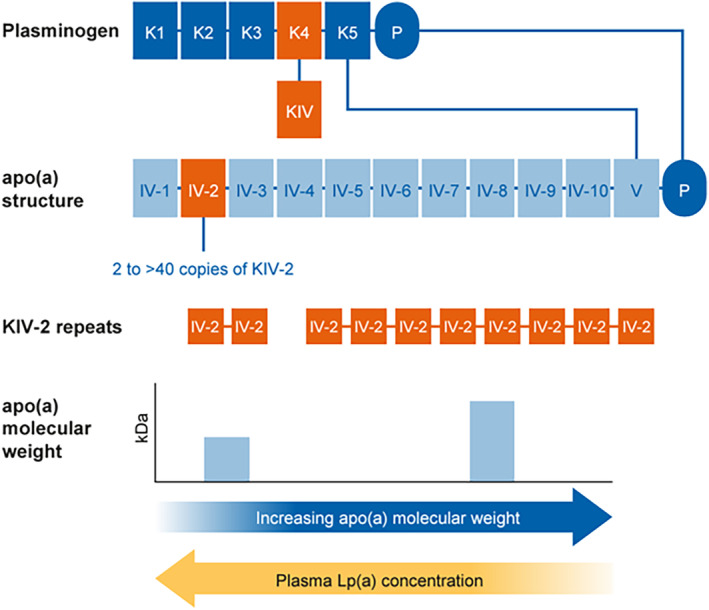
apo(a) indicates apolipoprotein(a); CNV, copy number variation; K, kringle; kDa, kilodalton; KIV, kringle IV; KV, kringle 5; Lp(a), lipoprotein(a); and P, protease.
Plasma lipoprotein(a) can be measured using assays that report in either mass (mg/dL) or molar (nmol/L) units; however, assays that report in nmol/L are preferred. 16 This is because measuring the number of lipoprotein(a) particles versus the mass reduces apolipoprotein(a) isoform size bias and is a more accurate indicator of lipoprotein(a) concentration and associated CVD risk. 16 At present, there are 2 recommended thresholds for lipoprotein(a) levels to classify CVD risk: Low risk is defined as <75 nmol/L, and high risk is defined as ≥125 nmol/L, with an area of intermediate risk between the 2 thresholds, known as the “gray zone” (75–125 nmol/L). 6 Due to substantial variation between assays, and heterogeneity in the kringle‐2 repeats in different alleles circulating within populations, converting between nmol/L and mg/dL is not recommended; however, the European Atherosclerosis Society suggest an interim conversion factor of 2 to 2.5× to provide guidance in interpreting data from clinical studies. 6 The units presented in this review reflect those reported for each study.
Lipoprotein(a) concentrations are generally 5% to 10% higher in women than men, 6 and there is up to a 3‐fold difference in median lipoprotein(a) concentrations between racial and ethnic groups. 15 Population data show that lipoprotein(a) levels are higher in Black men and women compared with White individuals; median lipoprotein(a) levels increase consecutively across Chinese, White, Hispanic, South Asian, and Black/African ancestry populations. 17 , 18 , 19 , 20 The results of the ARIC (Atherosclerosis Risk in Communities) study also showed that median lipoprotein(a) levels were significantly higher in women versus men in both Black and White populations (Black individuals: 13.7 versus 11.9 mg/dL, respectively; P<0.0001; White individuals: 4.8 versus 3.9 mg/dL, respectively; P<0.0001). 21 In the MASALA (Mediators of Atherosclerosis in South Asians Living in America) cohort, median lipoprotein(a) levels in South Asian individuals were higher than in White, Hispanic, and Chinese individuals (17.0 mg/dL versus 12.9 mg/dL, 13.1 mg/dL and 12.9 mg/dL, respectively) but lower than in Black individuals (35.1 mg/dL) from the MESA (Multi‐Ethnic Study of Atherosclerosis) cohort. 17 Similarly, the Lp(a)HERITAGE (Lipoprotein[a] Levels in a Global Population With Established Atherosclerotic Cardiovascular Disease) study showed that in patients with ASCVD, Black individuals had median lipoprotein(a) levels that were significantly higher (≈3‐fold) than White, Hispanic, or Asian individuals (125.8 nmol/L versus 37.0 nmol/L, 34.5 nmol/L, and 37.2 nmol/L, respectively). 18
There can also be variation between individuals within an ethnic group depending on genetic ancestry, as observed among Hispanic/Latino individuals in the United States in the HCHS/SOL (Hispanic Community Health Study/Study of Latinos); median lipoprotein(a) ranged from 12 nmol/L in those with Mexican ancestry to 41 nmol/L in those with a Dominican background. 22 Further, from quintile 1 to quintile 5 of lipoprotein(a) levels, median West African genetic ancestry increased from 5.5% to 12.1%, while Native American ancestry decreased from 32.8% to 10.7%. 22 Regional variation in lipoprotein(a) levels has also been observed in European populations; lipoprotein(a) distribution was shown to exhibit a north–south gradient with lower lipoprotein(a) levels in northern European populations compared with central and southern European populations (median lipoprotein[a] concentration: 4.9 versus 7.9 and 10.9 mg/dL, respectively). 23
Lipoprotein(a) and CVD Risk
Several analyses have shown a strong association between elevated serum lipoprotein(a) levels and increased risk of ASCVD, stroke, and coronary heart disease (CHD), 24 , 25 , 26 , 27 as well as calcific aortic valve stenosis. 28 , 29 , 30 In addition, multiple studies, including Mendelian randomization analyses, have demonstrated a causal role for lipoprotein(a) in the development of ASCVD and calcific aortic valve stenosis. A landmark report in 1989 demonstrated that lipoprotein(a) contributes to plaque formation and CHD, with a strong positive correlation reported between serum lipoprotein(a) concentration and the extent of lipoprotein(a) deposition in atherosclerotic plaques in patients undergoing aortocoronary bypass surgery. 31 More recently, meta‐analyses of prospective observational studies have shown an increasing risk of myocardial infarction, CHD, and ischemic stroke proportional to increasing lipoprotein(a) levels. 32 , 33 , 34 In a 2019 combined analysis of 2 observational studies, there was a 1.5‐fold increased risk of CVD death and a 1.2‐fold increased risk of all‐cause death in patients with high (>93 mg/dL [199 nmol/L]) compared with low (<10 mg/dL [18 nmol/L]) lipoprotein(a) levels. 35 Furthermore, recent Mendelian randomization analyses, genome‐wide association studies, and large meta‐analyses support elevated lipoprotein(a) as a causal risk factor for ASCVD death. 36 , 37 , 38 , 39
Lipoprotein(a) is thought to contribute to ASCVD through proinflammatory, prothrombotic, and/or other proatherogenic mechanisms. 3 , 9 Current evidence suggests that lipoprotein(a) is causal in the development of calcific aortic valve stenosis, likely through its proinflammatory properties. 30 A 2022 study showed that lipoprotein(a) concentration was independently associated with baseline aortic valve calcium (odds ratio, 1.43 for each 50 mg/dL increase in lipoprotein[a]; 95% CI, 1.15–1.79) and new‐onset aortic valve calcium (odds ratio, 1.30 for each 50 mg/dL increase in lipoprotein[a]; 95% CI, 1.02–1.65). 30
The concentration of OxPLs on apolipoprotein B‐100 particles is primarily represented by lipoprotein(a), which is the preferential carrier of OxPL in human plasma and is associated with increased CVD risk. 12 OxPL–apolipoprotein B levels are directly correlated with lipoprotein(a) levels, and as such, the highest lipoprotein(a) levels are observed in Black individuals compared with White or Hispanic individuals. 40 Results of the Copenhagen General Population Study also showed that OxPL–apolipoprotein B levels correlate with an increased risk of calcific aortic valve disease. 41 These findings were echoed in a 2023 publication from the Catheter Sampled Blood Archive in Cardiovascular Diseases study, which showed that both lipoprotein(a) and OxPL–apolipoprotein B are associated with multivessel coronary artery disease in patients undergoing coronary angiography. 42
Elevated lipoprotein(a) may also be associated with residual CVD risk despite treatment with statins. An individualpatient data meta‐analysis of statin‐treated individuals showed that elevated baseline‐ and elevated on‐statin lipoprotein(a) were associated with an independent, approximately linear relationship with CVD risk. 27 For baseline lipoprotein(a) levels, age‐ and sex‐adjusted hazard ratios (HRs) for CVD risk were 1.04 (95% CI, 0.91–1.18) for 15 mg/dL to <30 mg/dL, 1.11 (95% CI, 1.00–1.22) for 30 mg/dL to <50 mg/dL, and 1.31 (95% CI, 1.08–1.58) for ≥50 mg/dL (all versus <15 mg/dL). The respective HRs for on‐statin lipoprotein(a) levels were 0.94 (95% CI, 0.81–1.10), 1.06 (95% CI, 0.94–1.21), and 1.43 (95% CI, 1.15–1.76). 27
While the CVD risk associated with elevated lipoprotein(a) levels in secondary prevention has been widely investigated, data supporting the predictive role of elevated lipoprotein(a) in the primary prevention setting are more limited. Nonetheless, data from the UK Biobank study showed that among individuals without baseline ASCVD, 6.1% (n=3290) of those with lipoprotein(a) ≥150 nmol/L had an incident ASCVD event compared with 4.3% (n=16 643) of those in the population with lipoprotein(a) <150 nmol/L (adjusted HR, 1.50 [95% CI, 1.44–1.56]), suggesting the potential for lipoprotein(a)‐lowering as a primary prevention strategy. 26
Other Associations of Lipoprotein(a) With Pathophysiological Responses
Lipoprotein(a) has been identified as an acute phase reactant that is often raised in patients with sepsis as well as after surgery, myocardial infarction, and viral infections, including COVID‐19. 43 , 44 , 45 Data show that lipoprotein(a) synthesis may be induced by innate immune system mediators, as raised lipoprotein(a) levels have been observed in patients with chronic inflammatory conditions such as rheumatoid arthritis and Crohn disease. 44 The OxPLs found on lipoprotein(a) are oxidation‐specific epitopes, which are associated with the recruitment of lymphocytes to the arterial wall. 46 , 47 Therefore, elevated lipoprotein(a) may also trigger an adaptive immune response in atherosclerosis.
An inverse relationship between low plasma lipoprotein(a) and risk of prevalent and incident type 2 diabetes has been suggested, 6 , 48 , 49 , 50 with some studies demonstrating that large apo(a) isoforms as opposed to low lipoprotein(a) levels per se may be causal in the development of type 2 diabetes. Mechanistic studies are needed to confirm the basis for this association. 51 The latest evidence for other metabolic associations with plasma lipoprotein(a) include data showing that raised levels may increase the risk of carotid plaques (defined as focal carotid thickening of >1.2 mm) in patients with fatty liver disease, 52 including those with diabetes (4‐fold higher risk) or impaired glucose metabolism (prediabetes; 2‐ to 2.7‐fold higher risk); however, possible effects of lipoprotein(a) on CVD risk were not evaluated in these studies. 53 Data also showed that low plasma lipoprotein(a) may be associated with increased risk of fibrosis and cirrhosis in patients with fatty liver disease, 52 and that in patients with more advanced fatty liver disease (ie, steatohepatitis and fibrosis), lipoprotein(a) levels were lower compared with those with steatosis alone. 54 Potential explanations for the latter association include dysfunctional lipoprotein(a) particle assembly in the liver, or diminished apolipoprotein(a) production.
Genetic Determinants of Plasma Lipoprotein(a) Levels
Genetic determinants of lipoprotein(a) levels are summarized in Figure 3. As discussed above, there is marked variation in measured plasma lipoprotein(a) across individuals from different racial and ethnic backgrounds, 26 which can be explained largely by genetic variants within the LPA gene locus. 6
Figure 3. Genetic determinants of Lp(a) levels.
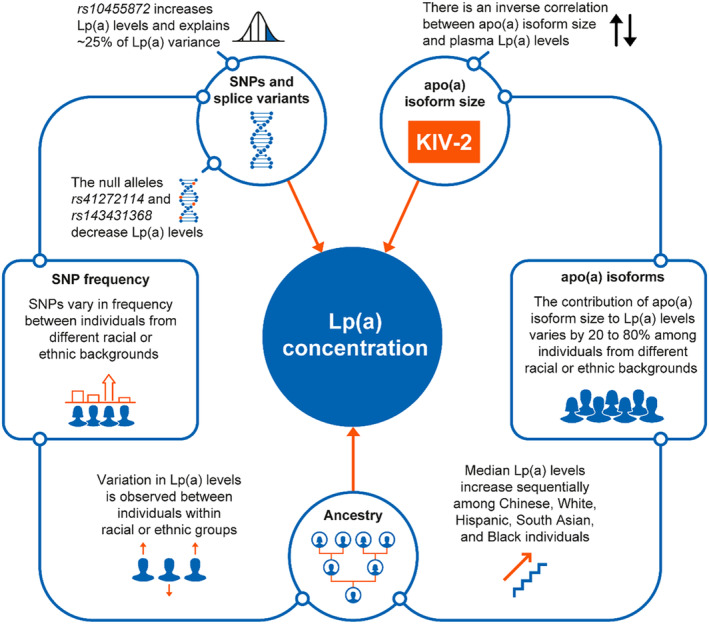
apo(a) indicates apolipoprotein(a); Lp(a), lipoprotein(a); and SNP, single‐nucleotide polymorphism.
The Kringle IV‐2 Domain and Apolipoprotein(a) Isoform Size
Most individuals (>80%) express 2 different apolipoprotein(a) isoforms, 9 1 inherited from each parent, which contribute to lipoprotein(a) levels in a codominant manner. 9 , 15 The kringle IV‐2–encoding domain of each apolipoprotein(a) allele can include from 2 to >40 repeats, with each kringle IV‐2–encoding repeat being 5.6 kb in size, 15 , 55 , 56 and a general inverse correlation has been observed between apolipoprotein(a) isoform size and plasma lipoprotein(a) levels, whereby smaller isoform sizes are associated with higher levels. 13 Median lipoprotein(a) concentrations are 4 to 5 times higher in individuals with small apolipoprotein(a) isoforms (<22 kringle IV repeats) than those with only large isoforms (≥22 kringle IV repeats) (Figure 2). 6 However, as previously discussed, the contribution of apo(a) isoform size to observed plasma lipoprotein(a) levels varies by up to 80% among individuals from different racial and ethnic backgrounds. 57 The strength of the inverse correlation between isoform size and concentration appears stronger in European and Asian individuals compared with those of African descent. 15 Population studies suggest that 61% to 69% versus 19% to 44% of the variance in lipoprotein(a) levels can be explained by the inverse correlation with apolipoprotein(a) isoform size in individuals of European descent versus African descent, respectively. 15 Larger apolipoprotein(a) isoforms are less likely to be expressed in individuals of European descent compared with those of African descent, with SNPs thought to play a significant but varying role on lipoprotein(a) levels depending on race and ethnicity (Table 1). 57 For instance, an LPA SNP associated with small apolipoprotein(a) isoforms, which may account for ≈8% of lipoprotein(a) variance, was found to be more prevalent in Hispanic individuals (42.4%) versus White and Black individuals (4.3% and 1.5%), respectively. 58 Moreover, variability in lipoprotein(a) levels is associated with polymorphisms that span the length of the LPA gene, including the promoter region, the coding sequence, and several introns. 59 In Europeans, polymorphisms that lead to the suppression of lipoprotein(a) assembly are more common, while in individuals of African descent, genetic alterations increasing apolipoprotein(a) promoter activity are more frequent, potentially explaining higher lipoprotein(a) concentrations in this population (Table 1). 57
Table 1.
Impact on lipoprotein(a) Levels of SNPs With Known Variation Between Races and Ethnicities 6 , 58 , 60 , 61 , 62 , 63 , 64
| Effect on lipoprotein(a) levels | Association with race and ethnicity | |
|---|---|---|
| lipoprotein(a) increasing | ||
| rs10455872 (intronic polymorphism) |
|
|
| rs3798220 (I4339M mutation in the protease‐like domain) |
|
|
| Lipoprotein(a) lowering | ||
| rs143431368 |
|
|
| rs41272114 (G+1/in kringle IV‐8A) |
|
|
| rs41272110 (T3888P) |
|
|
| 4925G>A |
|
|
| 4733G>A |
|
|
LOF indicates loss‐of‐function; PROCARDIS, precocious coronary artery disease; and SNP, single‐nucleotide polymorphism.
It is well documented that lipoprotein(a) levels are largely controlled at the stage of biosynthesis rather than the catabolism of the particle. 14 As such, a potential mechanism to explain the inverse association between apolipoprotein(a) isoform size and lipoprotein(a) concentration is based on decreased residency time of smaller apolipoprotein(a) isoforms in the endoplasmic reticulum, which results in decreased susceptibility to endoplasmic reticulum–associated degradation and more efficient maturation of smaller apolipoprotein(a) proteins. 6 This correlates with increased hepatic secretion of smaller apolipoprotein(a) isoforms and higher susceptibility of larger apolipoprotein(a) proteins to endoplasmic reticulum–associated degradation, resulting in reduced secretion of larger apolipoprotein(a) isoforms. 6
LPA Gene: Polymorphisms and Splicing
Recently, it has been shown that there are complex relationships between the genetic factors affecting lipoprotein(a) levels. This includes, for example, that modulation of the contribution of allele size to lipoprotein(a) levels is modified by many functional SNPs over the entire range of LPA allele frequencies, as well as interactions of SNPs with other SNPs and with short tandem repeats. 60 SNPs known to impact phenotypic lipoprotein(a) levels are summarized in Table 1. 6 , 58 , 60 , 61 , 62 , 63 , 64
Several loss‐of‐function SNPs have been identified within the LPA gene locus, such as the null alleles rs41272114 and rs143431368, which are caused by splice site mutations and have been shown to decrease lipoprotein(a) levels by 5 to 17 mg/dL and 8.77 mg/dL, respectively. 60 , 61 SNPs that have a substantial impact on lipoprotein(a) levels include rs10455872 (located within the intron near the kringle IV‐7 domain) and rs3798220 (located within the protease domain), which are associated with small apolipoprotein(a) isoforms and high lipoprotein(a) levels (136–138 nmol/L). 6 The rs10455872 SNP explains ≈25% of lipoprotein(a) variance and is associated with an ≈30 mg/dL increase in lipoprotein(a) levels. In comparison, ≈8% of lipoprotein(a) variance is attributed to rs3798220, which confers an ≈45 mg/dL increase in lipoprotein(a) levels. 60
As mentioned above, there are significant differences in the frequency of LPA SNPs between racial and ethnic groups. 58 Genotyping analysis of 3400 patients in the Dallas Heart Study showed that rs10455872 was found most frequently in White individuals (14.3%) and rs3798220 was most commonly identified among Hispanic individuals (42.4%); however, both SNPs were rare in Black individuals (1.8% and 1.5% for rs10455872 and rs3798220, respectively). 58 Notable SNPs that contribute to the difference between lipoprotein(a) levels in White and Black individuals include the lipoprotein(a)‐lowering T3888P and G+1/in kringle IV‐8A SNPs, both of which decrease lipoprotein(a) assembly and are more common in White people. In addition, G‐21A increases apolipoprotein(a) promoter activity and lipoprotein(a) levels and is more common in Black individuals. 62
Short tandem repeats, including the pentanucleotide sequence (TTTTA) repeat polymorphism, have also been demonstrated to influence lipoprotein(a) levels. 15 The TTTTA repeat is found in the promoter region of LPA and may explain 3% to 14% of the variability in lipoprotein(a) levels in Europeans. 15 Alleles with fewer pentanucleotide repeats have been associated with elevated lipoprotein(a) in Europeans but not in individuals of African descent. 65
The latest evidence suggests that LPA gene splicing affects lipoprotein(a) concentration. The splice variant 4925 G>A is associated with low‐molecular‐weight apolipoprotein(a) isoforms and has been shown to decrease lipoprotein(a) levels by ≈31 mg/dL and have relatively high carrier frequency (22%) in European individuals. 55 Similarly, the 4733 G>A variant reduces lipoprotein(a) levels by ≈14 mg/dL. It is frequently found in European (35.1%) and Latin American (26.3%) individuals but less often in South Asian (5.2%) and rarely in Black (1.5%) individuals. 64 Both 4925 G>A and 4733 G>A have been associated with lower cardiovascular risk. 55 , 64 They are the second and third strongest relative contributors to lipoprotein(a) concentration, respectively, after isoform size. 6
Importantly, LPA variants may impact the effectiveness of certain treatments in patients with CVD. Interestingly, a genome‐wide association study identified 7 SNPs within the LPA locus that were associated with CHD events during statin therapy, including rs10455872, which persisted in individuals with LDL‐C levels ≤70 mg/dL. 66 Recent evidence suggests that aspirin treatment in carriers of rs3798220, which is associated with high lipoprotein(a) levels (136–138 nmol/L), 60 may decrease the risk of CVD events compared with nonusers of aspirin. 67 However, additional studies are needed to investigate further the mechanisms underlying the potential beneficial effects of aspirin use in carriers of rs3798220. A study of potential genetic loci that might impact the lipoprotein(a)‐lowering effects of niacin, a lipid‐modulating drug with an unknown mechanism of action, was also conducted; however, no relevant loci were identified. 68 Another study looked at the impact of apolipoprotein(a) isoform size on the efficacy of niacin–laropiprant in patients treated with statins. The results showed that in the overall population (N=3978; UK [n=2277], China [n=1701]), niacin–laropiprant therapy led to a mean lipoprotein(a) reduction of 31%, which decreased to 18% in patients with baseline lipoprotein(a) levels ≥128 nmol/L and small apolipoprotein(a) isoforms (n=797), indicating that proportional reductions in lipoprotein(a) levels may be dependent on apolipoprotein(a) isoform size in patients treated with niacin. 69
Genetic Factors Beyond the LPA Locus
Beyond the LPA gene, genome‐wide association studies have identified significant associations between lipoprotein(a) and 3 other loci. The APOE2‐determining allele rs7412 was found to be associated with lipoprotein(a) levels, with each allele decreasing lipoprotein(a) by 3.34 mg/dL. 70 A second, synonymous APOE SNP, rs769455, specific to populations of African descent, was reported to be nominally associated with lipoprotein(a) concentration, independent of rs7412. 71 A 2021 UK Biobank study of White individuals reported that the APOE SNP, rs1065853, was associated with decreased lipoprotein(a) levels (β [95% CI] (ln nmol/L), −0.11 [−0.12 to −0.10]). 72 The same study in White individuals identified an SNP upstream of the CETP gene on chromosome 16 (rs247617) and an SNP in the APOH gene on chromosome 17 (rs8178824) that were associated with decreased and increased levels of lipoprotein(a), respectively. 72
CVD risk has been associated with interleukin‐1 genotypes in individuals with elevated lipoprotein(a). 73 , 74 The 2018 Ioannina Study evaluated the modulatory effect of the interleukin‐1 genotype on lipoprotein(a)‐mediated CVD risk in southern European patients undergoing angiography. 73 In this study, the composite genotype termed interleukin‐1(+) was defined by the presence of 3 SNPs (rs16944, rs1143634, and rs17561) in the interleukin‐1 gene cluster that is associated with high levels of proinflammatory cytokines; all other interleukin‐1 genotypes were termed interleukin‐1(−). The results showed that patients with lipoprotein(a) >9.2 mg/dL and a proinflammatory interleukin‐1(+) genotype were at significantly greater risk of experiencing a major CVD event compared with patients with an interleukin‐1(−) genotype and lipoprotein(a) levels <9.2 mg/dL (event‐free cumulative survival: HR, 3.59 [95% CI, 1.07–12.03]; P=0.039). 73 An earlier study on the association between the interleukin‐1(+) genotype and the risk of coronary artery disease in a predominantly (>97%) White population showed that among interleukin‐1(+) patients, the highest quartile of OxPL–apolipoprotein B was significantly associated with a higher risk of coronary artery disease compared with the lowest quartile (odds ratio, 2.84; P=0.001), while no association with coronary artery disease was identified in patients with interleukin‐1(−). 74
Hepatic LPA expression is directly associated with plasma lipoprotein(a) levels. 52 In vivo correlation analysis of hepatic LPA gene expression showed significant associations with several interleukin‐6 acute phase response genes, indicating a relationship between interleukin‐6 activity and LPA expression in the human liver 44 ; this is postulated to be mediated by an interleukin‐6 responsive element in the LPA promoter region.
Nongenetic Determinants of Plasma Lipoprotein(a) Levels
Several nongenetic factors may influence lipoprotein(a) levels, including hormone therapy and kidney disease. 75 , 76 , 77 Treatment of overt hyperthyroidism with thyroidectomy, antithyroid drugs, or radioactive iodine was recently shown to increase lipoprotein(a) levels by a mean of 4.18 mg/dL (95% CI, 1.65–6.71), whereas treatment of overt hypothyroidism with levothyroxine decreased lipoprotein(a) levels by a mean of −5.6 mg/dL (95% CI, −9.06 to −2.14). 78 In addition, data from a randomized controlled trial showed that treatment of patients with hypercholesterolemia with the liver‐selective thyroid hormone receptor agonist eprotirome significantly reduced lipoprotein(a) levels at week 12 versus baseline compared with placebo (absolute change in median lipoprotein(a)) concentration for 200 μg eprotirome versus placebo: −10 versus −86 (mg L−1; P<0.001). 79 These data suggest that treatment with liver‐selective thyromimetics could be further explored as a targeted lipoprotein(a)‐lowering strategy. Elevated lipoprotein(a) levels have been reported in hypogonadal men; a trend for significant lipoprotein(a) elevation (≥3 times the upper limit of normal) was observed in men with low serum testosterone, defined as <15 nmol/L. 8 Previously published data suggest that exogenous androgens may reduce lipoprotein(a) concentration. 76 In contrast, a study from 2022 found that lipoprotein(a) levels increased following the administration of human growth hormone. 77
Several studies have reported that reduced estrogen in postmenopausal women resulted in elevated lipoprotein(a) (up to 13% higher than in premenopausal women), 75 which can be reversed by treatment with hormone replacement therapy. 80 , 81 The increase in lipoprotein(a) observed in postmenopausal women may be explained by the effect of estrogen as a negative regulator of LPA, given that an estrogen response element was identified 26 kb upstream of the apolipoprotein(a) promoter. 75 In postmenopausal women with elevated lipoprotein(a), hormone replacement therapy with estrogen significantly lowered lipoprotein(a) levels compared with placebo (−5.8 mg/dL versus 0.3 mg/dL; P<0.001), which was associated with decreased risk for myocardial infarction (relative HR, 0.46 [95% CI, 0.25–0.85]). 81 Despite these findings, the results of the Heart and Estrogen/Progestin Replacement Study showed that after 6 years, hormone replacement therapy did not continue to reduce the risk of CVD events in women with CHD. Accordingly, it was concluded that hormone replacement therapy should not be used to reduce the risk of CVD events in postmenopausal women with CHD. 82
Findings from randomized crossover studies have suggested that reduction of saturated fatty acid intake may increase lipoprotein(a) levels. 83 , 84 A recent observational study also found that lipoprotein(a) concentration was negatively correlated with absolute intake of dietary saturated fatty acids (R=−0.43, P=0.02). 85 With regard to the impact of physical activity on lipoprotein(a) in both healthy individuals and those with CVD risk factors, more robust evidence is needed to establish any association firmly; data so far suggest that physical activity has either no or marginal impact on lipoprotein(a) levels. 77
Finally, there is evidence that decreased kidney function can influence plasma lipoprotein(a) levels and that chronic kidney disease is associated with elevated lipoprotein(a) partly due to reduced catabolism, which is postulated to occur in the kidney. 7 Patients with end‐stage kidney disease undergoing hemodialysis were shown to have increased lipoprotein(a) levels compared with healthy controls, and patients on regular hemodialysis had lipoprotein(a) levels 5 to 10 times higher than patients with stage 1 to 2 chronic kidney disease. 86 High levels of lipoprotein(a) observed in patients undergoing hemodialysis are likely due to decreased clearance rather than increased lipoprotein(a) production. 7 However, in the 2023 Chronic Renal Insufficiency Cohort Study, lipoprotein(a) was not associated with increased CVD risk, suggesting that other factors may be more important in patients with end‐stage renal disease. 87
How Does Lipoprotein(a) Contribute to Disease?
Lipoprotein(a) is associated with the formation of atherosclerotic plaques, prothrombotic effects, and proinflammatory mechanisms. 88 Based on the latest data, it is thought that the proinflammatory and prothrombotic effects of lipoprotein(a) may work in tandem to promote plaque destabilization, plaque rupture, and subsequent CVD events. 89
Covalent binding of OxPL to apolipoprotein(a), which is dependent on the strong lysine binding site in kringle IV‐10, mediates the critical proatherogenic and proinflammatory properties of lipoprotein(a). 89 OxPLs have been associated with lipoprotein(a) deposition, particularly in vulnerable and ruptured plaques, and with inflammation in the arterial wall and the aortic valve leaflet, leading to atherosclerosis and calcific aortic valve disease, respectively. 89 In addition, OxPLs may mediate monocyte activation, which contributes to the proinflammatory phenotype observed in ASCVD. 89 , 90 One study showed that monocytes isolated from individuals with elevated lipoprotein(a) levels (≥50 mg/dL) were more adhesive and had greater migratory capacity than monocytes from individuals with lower lipoprotein(a) levels (<50 mg/dL). 90 Furthermore, lipoprotein(a) elicits a program of procalcific gene expression in valve interstitial cells while also transporting autotaxin into the aortic valve leaflet, leading to the generation of additional pro‐osteogenic species that promote calcification. 89 , 91
Lipoprotein(a) and Thrombosis
Based on recent data, there are several hypotheses regarding the role of lipoprotein(a) in thrombosis, including the initiation of coagulation and the development of rupture‐prone plaques. 92 Lipoprotein(a) may accelerate coagulation through various mechanisms, including increased tissue factor expression on monocytes and binding to/inactivation of tissue factor pathway inhibitor via the apolipoprotein(a) moiety. 92 , 93 A potential role for lipoprotein(a) in platelet aggregation has also been explored; however, studies have provided conflicting results overall. 92 Recent results from a subanalysis of the Aspirin in Reducing Events in the Elderly trial showed that patients with rs3798220‐C carrier status (n=406), which is associated with elevated lipoprotein(a) levels compared with noncarriers, derived greater benefit from aspirin in terms of major adverse cardiovascular event reduction compared with the whole population of genotyped participants (N=12 815) (event reduction: 11.4 versus 1.7 per 1000 person‐years, respectively). 67 Since aspirin is a potent inhibitor of platelet activity, these results suggest a role for lipoprotein(a) in platelet function.
Studies on the role of lipoprotein(a) in the formation of venous thromboembolism have been largely negative, and further investigation on the potential association between lipoprotein(a) and arterial thrombosis is required. 45
A study from 2019 questioned the extent to which lipoprotein(a) itself can inhibit fibrinolysis since neither ex vivo clot lysis time nor coagulation/fibrinolysis‐related biomarkers showed significant alterations following lipoprotein(a) lowering by antisense oligonucleotides targeting LPA mRNA. 94 Based on these data, it has recently been suggested that lipoprotein(a) lowering does not impact fibrinolysis. 92
Lipoprotein(a) and Inflammation
The association between lipoprotein(a), inflammation, and associated CVD risk is an area of ongoing investigation. Lipoprotein(a) activates monocytes in the arterial wall via the secretion of proinflammatory markers and the upregulation of chemoattractants, cytokines, and adhesion molecules. In turn, these factors may contribute to inflammation, resulting in greater endothelial permeability. In addition, lipoprotein(a) is associated with acute and chronic inflammatory diseases such as COVID‐19, chronic kidney disease, and rheumatoid arthritis. 95 Since the LPA promoter contains interleukin‐6 response elements, interleukin‐6 release is thought to be directly associated with elevations in lipoprotein(a) levels. 95 , 96 lipoprotein(a) levels were shown to significantly increase by almost 3‐fold during the first 3 weeks after hospital admission for COVID‐19 following increases in interleukin‐6 (mean lipoprotein[a] before admission 10.1 mg/dL versus 27.0 mg/dL 3 weeks later; P<0.001; N=219). 97 The same study also showed that elevated lipoprotein(a) was significantly correlated with increased interleukin‐6 levels (r=0.44 [95% CI, 0.30–0.56]; P<0.001). 97
Recent studies have evaluated the association between systemic inflammation and lipoprotein(a)‐associated ASCVD risk. 98 , 99 Data from the MESA cohort showed that individuals with concomitant elevations of lipoprotein(a) and hs‐CRP (high‐sensitivity C‐reactive protein) are at greater risk of ASCVD compared with an elevation of either protein alone; hs‐CRP ≥2 mg/L was associated with significant CVD risk in patients with lipoprotein(a) levels of 50–99.9 mg/dL (HR, 1.36 [95% CI, 1.02–1.81]; P<0.03) and lipoprotein(a) ≥100 mg/dL (HR, 2.09 [95% CI, 1.40–3.13]; P<0.001). 99 In 2023, a study of 6495 patients in MESA with no history of CVD showed that high lipoprotein(a) (≥75th percentile of the distribution) is a risk factor for incident CHD in adults with high factor VIII or high hs‐CRP. 100
Similarly, a recent secondary analysis of the Assessment of Clinical Effects of Cholesteryl Ester Transfer Protein Inhibition With Evacetrapib in Patients at a High Risk for Vascular Outcomes trial of patients at high risk for CVD showed that each unit increase in log lipoprotein(a) levels were associated with a 13% increased risk of cardiovascular death, nonfatal myocardial infarction, or stroke in patients with hs‐CRP levels ≥2 mg/L (P=0.008). 98 On the other hand, a 2022 large prospective cohort study of individuals from the Copenhagen General Population Study found that the relationship between lipoprotein(a) and ASCVD/calcific aortic valve disease outcomes was independent of hs‐CRP levels. 101
Guidance for the Use of Lipoprotein(a) in Clinical Practice
Lipoprotein(a): Clinical Considerations for Diagnosis and Testing
Testing for elevated lipoprotein(a) is not routinely performed in clinical practice despite recommendations from numerous medical societies for cascade screening in people with a family history of premature ASCVD and/or elevated lipoprotein(a) (Table 2). 6 , 11 , 102 , 103 , 104 , 105 , 106 , 107 , 108 In a 2022 Scientific Statement, the American Heart Association recommended testing lipoprotein(a) in individuals with a family/personal history of ASCVD. It proposed that once standardization of lipoprotein(a) assays is achieved, a reassessment of broader population‐based screening should be considered. 11 Furthermore, the Canadian Cardiovascular Society and the European Atherosclerosis Society advise lipoprotein(a) testing at least once in all adults, irrespective of family history. 6 , 104 The success of cascade screening for identifying affected family members has already been demonstrated in familial hypercholesterolemia and has been shown to be cost‐effective. 109 , 110
Table 2.
| Organization | Year | Recommendations |
|---|---|---|
| AHA | 2022 |
|
| AACE/ACE | 2020 | Lipoprotein(a) should be tested in the following populations:
|
| AHA/ACC/multisociety | 2018 |
|
| CCS | 2021 |
|
| EAS | 2022 |
|
| ESC/EAS | 2019 |
|
| HEART UK | 2019 | Serum lipoprotein(a) levels should be measured in individuals with:
|
| NLA | 2019 |
Lipoprotein(a) testing may be useful to refine risk assessment for ASCVD events in adults with:
Lipoprotein(a) testing may be reasonable in adults:
Lipoprotein(a) testing may be reasonable in young people (aged <20 y) with:
|
AACE indicates American Association of Clinical Endocrinologists; ACC, American College of Cardiology; ACE, American College of Endocrinology; AHA, American Heart Association; ASCVD, atherosclerotic cardiovascular disease; AVS, aortic valve stenosis; CCS, Canadian Cardiovascular Society; EAS, European Atherosclerosis Society; ESC, European Society of Cardiology; FH, familial hypercholesterolemia; LDL‐C, low‐density lipoprotein cholesterol; and NLA, National Lipid Association.
Practically, current lipoprotein(a) testing requires only routine, nonfasting blood draws, 111 making it convenient for patients and health care professionals. While plasma lipoprotein(a) levels can be measured in nmol/L or mg/dL, 6 intensive CVD risk factor management should be recommended for all individuals with elevated lipoprotein(a) (high risk is defined as ≥50 mg/dL [>125 nmol/L]). 6 , 30 The benefits of lipoprotein(a) testing include improved CVD risk stratification by proactively identifying individuals at ASCVD risk and reclassifying risk in patients with clinical ASCVD. 6 From a healthcare system perspective, early and intensive CVD risk factor management in individuals with elevated lipoprotein(a) may lead to significant long‐term cost savings. 1
Lipoprotein(a)‐Associated CVD Risk Thresholds
While lipoprotein(a) levels vary among individuals from different racial and ethnic backgrounds, recent data suggest that the predictive value of lipoprotein(a) may not differ to the degree that warrants a need for race‐specific thresholds in clinical decision making 112 ; however, further investigation is warranted. Regarding the impact of sex, there is a similar pattern of increase in ASCVD risk with increasing lipoprotein(a) levels among men and women. 6 In addition, data suggest that lipoprotein(a) does not confer additional CVD risk in women with low total cholesterol. 113 , 114 However, it should be noted that the risk of stroke is higher among women with elevated lipoprotein(a), particularly Black women, highlighting a possible need for greater awareness of the risk of cardiovascular events in these populations. 115
LPA genetic risk score and phenotypic measurement of lipoprotein(a) protein levels can be used to determine the risk of ASCVD. 116 In a cohort of 283 540 adults in the 2020 UK Biobank study, LPA genetic risk score and measured lipoprotein(a) were associated with comparable risk of ASCVD events. 116 Importantly, the genetic risk score does not account for the variability in SNPs among patients from different racial and ethnic backgrounds. Since elevated lipoprotein(a) levels predict CVD risk regardless of ethnicity, genetic testing offers little advantage over lipoprotein measurement and may be associated with higher costs. Accordingly, it has since been suggested that genetic testing may not be required in individuals with elevated lipoprotein(a) following lipoprotein testing. 117
Lipoprotein(a): Hope on the Horizon
Lipoprotein(a) Lowering
Mendelian randomization studies have estimated that a reduction in lipoprotein(a) levels of >50 to 100 mg/dL is required for a clinically meaningful reduction in the short‐term risk of ASCVD events (within 5 years). 6 The lipoprotein(a)‐lowering effects of currently available therapies are summarized in Table 3. 118 , 119 , 120 , 121 At present, there are no drugs specifically approved for lipoprotein(a) lowering; however, lipoprotein apheresis can be effective in reducing lipoprotein(a) levels in patients with high lipoprotein(a) (>120 nmol/L) and progressive ASCVD. While apheresis is associated with meaningful lipoprotein(a)‐lowering effects, it can take up to 3 hours for each treatment to be administered, 122 which may be inconvenient for many patients.
Table 3.
| Intervention type | Agent | Study* | Effects on lipoprotein(a) | Clinical use |
|---|---|---|---|---|
| Lipoprotein apheresis | … | … | >60% reduction | Lipoprotein(a) >60 mg/dL with either documented CHD or documented PAD |
| Statins (HMG‐CoA reductase inhibitors) | Atorvastatin | CARDS | 13% reduction | LDL‐C lowering |
| Simvastatin | 4S | 15% increase | ||
| Statins | Meta‐analysis of statins vs placebo | Up to a 19.6% increase | ||
| PCSK9 inhibitors | Evolocumab (mAb) | FOURIER | 27% reduction | LDL‐C lowering |
| Alirocumab (mAb) | ODYSSEY OUTCOMES | Median change −5.0 mg/dL (overall population), −20.1 mg/dL (baseline lipoprotein(a) ≥60 mg/dL population) | ||
| Inclisiran (siRNA) | ORION‐11 | 18.6% reduction | ||
| Niacin | … |
AIM‐HIGH HPS2‐THRIVE |
~20% reduction | LDL‐C, apolipoprotein B, and triglyceride lowering |
| ACL inhibitors | Bempedoic acid | CLEAR harmony | No notable effect | LDL‐C lowering |
| ANGPTL3 inhibitors | Evinacumab | NCT03175367 | Placebo‐corrected mean difference: −16.5% | LDL‐C lowering |
4S indicates Scandinavian Simvastatin Survival Study; ACL, adenosine triphosphate‐citrate lyase; AIM‐HIGH, Atherothrombosis Intervention in Metabolic Syndrome With Low HDL/High Triglycerides and Impact on Global Health Outcomes; ANGPTL3, angiopoietin‐like protein 3; CARDS, Collaborative Atorvastatin Diabetes Study; CHD, coronary heart disease; CLEAR, Cholesterol Lowering via Bempedoic Acid, an ACL‐Inhibiting Regimen; HMG‐CoA, 3‐hydroxy‐3‐methylglutaryl coenzyme A; HPS2‐THRIVE, Treatment of HDL to Reduce the Incidence of Vascular Events; LDL‐C, low‐density lipoprotein cholesterol; mAb, monoclonal antibody; PAD, peripheral artery disease; PCSK9, proprotein convertase subtilisin/kexin type 9; and siRNA, small interfering RNA.
Note that some clinical studies were not designed to assess lipoprotein(a) lowering; that is, results were from post hoc/non‐prespecified or exploratory analyses.
The lipoprotein(a)‐lowering effects of established lipid‐lowering therapies have been studied in clinical trials. However, these studies were not conducted in populations enriched for patients with elevated lipoprotein(a) and were not powered to evaluate the lipoprotein(a)‐lowering effects of these agents. Anti‐proprotein convertase subtilisin/kexin type 9 monoclonal antibodies demonstrated modest reductions in lipoprotein(a) levels of up to 27%, 123 while data for statins are conflicting, with some evidence suggesting that statins may slightly increase lipoprotein(a) levels. 121 , 123 However, a 2022 meta‐analysis concluded that, compared with a placebo, statins do not lead to clinically important reductions in lipoprotein(a) levels in patients at risk for CVD. 124
In recent years, investigational agents have shown promising lipoprotein(a)‐lowering effects in clinical studies and several studies are ongoing (Table 4). 125 , 126 , 127 , 128 , 129 , 130 , 131 , 132 Pelacarsen, an antisense oligonucleotide currently in phase 3 development, showed lipoprotein(a) reductions of up to 80% in a phase 2 study of patients with established CVD and lipoprotein(a) levels ≥150 nmol/L. Adverse events in patients treated with pelacarsen were mostly mild or moderate, with injection‐site reactions the most commonly observed. 129 Olpasiran, a small interfering RNA also in phase 3 development, demonstrated up to 101% placebo‐adjusted lipoprotein(a) reduction in patients with established ASCVD and lipoprotein(a) levels >150 nmol/L. 125 Similarly, zerlasiran, a small interfering RNA, showed up to 98% lipoprotein(a) reduction in a phase 1 study of adults with lipoprotein(a) levels ≥150 nmol/L and without known CVD. 130 Both olpasiran and zerlasiran were generally well tolerated in clinical studies with mostly mild adverse events. 125 , 130 Importantly, the potential for off‐target effects with small interfering RNAs and antisense oligonucleotides is generally considered to be low. 133 The next steps for these agents will be to understand whether their lipoprotein(a)‐lowering effects will translate into a reduced incidence of cardiovascular events. Phase 3 trials are ongoing for pelacarsen and olpasiran, with outcome data expected in 2025 and 2026, respectively. 128 , 131 An additional small interfering RNA, lepodisiran, is currently under investigation in a phase 2 study, 127 as is muvalaplin, an oral small molecule inhibitor of lipoprotein(a) 126 ; however, no results have been published to date for either of these agents.
Table 4.
| Therapy | Mechanism of action | Development phase | Completed studies/studies with results | Ongoing studies | ||
|---|---|---|---|---|---|---|
| Study design | Lipoprotein(a)‐related outcomes | Study design/status | End points/outcomes | |||
| Muvalaplin | Oral small‐molecule inhibitor | 2 | – | – | KRAKEN (NCT05563246): Phase 2; high risk of CVD events and lipoprotein(a) ≥175 nmol/L; muvalaplin (oral) vs placebo; N = 233 (planned) |
Primary: Lipoprotein(a) % change from baseline to week 12 Secondary:
|
| Olpasiran | siRNA; induces LPA mRNA degradation | 3 | OCEAN(a)‐DOSE trial; phase 2; ASCVD and lipoprotein(a) >150 nmol/L; olpasiran (SC) vs. placebo; N = 281 | 71% (10 mg Q12W) to 101% (225 mg Q12W) placebo‐adjusted lipoprotein(a) reduction (9 mo) | OCEAN(a) (NCT05581303): Phase 3; ASCVD and lipoprotein(a) ≥200 nmol/L; olpasiran (SC) vs placebo; N = 6000 (planned)/recruiting |
Primary: Time to CHD death, MI, urgent coronary revascularization Secondary:
|
| Pelacarsen | ASO; inhibits apolipoprotein(a) expression | 3 | Phase 2b; CVD and lipoprotein(a) >60 mg/dL; pelacarsen (SC) vs placebo; N = 286 | 35% (20 mg Q4W) to 80% (20 mg QW) lipoprotein(a) reduction (6 mo) | Lipoprotein(a)HORIZON (NCT04023552): Phase 3; CVD and lipoprotein(a) ≥70 mg/dL; pelacarsen 80 mg Q4W (SC); N = 8323/ enrolled |
Coprimary: Time to first expanded MACE in lipoprotein(a) ≥70 mg/dL and ≥ 90 mg/dL groups Secondary:
|
| Zerlasiran | siRNA; induces LPA mRNA degradation | 2 | Phase 1; lipoprotein(a) ≥150 nmol/L and no CVD; SLN360; N = 32 | 10% (30 mg) to 98% (600 mg) lipoprotein(a) reduction (150 days) | Phase 2; high risk of ASCVD events and lipoprotein(a) ≥125 nmol/L; SLN360 vs placebo; N = 160 (planned)/ recruiting |
Primary: Time‐averaged change from baseline in lipoprotein(a) Secondary:
|
| Lepodisiran | siRNA | 2 | – | – | NCT05565742 Phase 2; lipoprotein(a) ≥175 nmol/L; lepodisiran (SC) vs placebo; N = 254 (planned) |
Primary: lipoprotein(a) time averaged % change (baseline, days 60–180) Secondary:
|
ASCVD indicates atherosclerotic cardiovascular disease; ASO, antisense oligonucleotide; CHD, coronary heart disease; CVD, cardiovascular disease; HORIZON, Assessing the Impact of Lipoprotein(a) Lowering With Pelacarsen (TQJ230) on Major Cardiovascular Events in Patients With CVD; KRAKEN, A Study of LY3473329 in Adult Participants With Elevated Lipoprotein(a) at High Risk for Cardiovascular Events; LDL‐C, low‐density lipoprotein cholesterol; LPA, lipoprotein(a) gene; mAb, monoclonal antibody; MACE, major adverse cardiovascular event; MI, myocardial infarction; OCEAN(a), Olpasiran Trials of Cardiovascular Events and Lipoprotein(a) Reduction; Q12W, every 12 weeks; Q4W, every 4 weeks; QW, once a week; and siRNA, small interfering RNA.
Research Gaps
Outstanding questions on the prothrombotic potential of lipoprotein(a) remain to be answered, particularly the mechanisms by which lipoprotein(a) can impact thrombosis beyond a role in fibrinolysis are still to be elucidated. 92 In addition, our understanding of the metabolism of lipoprotein(a), including mechanisms of synthesis and clearance, remains incomplete. The mechanistic role of lipoprotein(a) in ASCVD versus aortic valve stenosis must be further explored.
While a potential association between low lipoprotein(a) levels and type 2 diabetes has been postulated, additional large‐scale studies are required to confirm whether the association is causal. 48 In the meantime, the benefits of lipoprotein(a) lowering for the reduction of CVD risk must be weighed against the potential for the increased incidence of type 2 diabetes, 48 particularly since the association may apply only to very low lipoprotein(a) levels, that is, <5 mg/dL, which are unlikely to be achieved with lipoprotein(a)‐lowering therapies in patients with substantially elevated baseline lipoprotein(a). 6
Conclusions
The key points and take‐home messages from this article are summarized in Video S1. In summary, lipoprotein(a) is a unique lipoprotein with multiple structural features that give rise to a vast array of potential pathogenic effects, likely contributing to the development of CVD. 15 , 89 A clear understanding of the association between elevated lipoprotein(a) and CVD risk is compounded by the fact that lipoprotein(a) is subject to complex genetic regulation that differs between racial and ethnic populations. 60 It should be noted that much of the data pertaining to the regulation of the LPA gene has been generated in White populations. Thus, more data are required for other populations, particularly for Black individuals who have higher median lipoprotein(a) levels compared with individuals from different racial and ethnic backgrounds. 60
While we await the results of ongoing clinical trials of investigational lipoprotein(a)‐lowering therapies, healthcare professionals must recognize elevated lipoprotein(a) as a CVD risk factor and advocate for its routine testing in clinical practice. Lipoprotein(a) testing can facilitate intensive risk factor management and reclassification of ASCVD risk in patients found to have elevated lipoprotein(a). 6 , 108 Routine testing may also help identify patients who are potentially eligible for treatment with investigational lipoprotein(a)‐lowering therapies, should these therapies become available in the future. 125 , 129 , 130 Clinical trials are ongoing to clarify whether investigational therapies that lower lipoprotein(a) will lead to clinically meaningful reductions in the occurrence of cardiovascular events. 128 , 131
Sources of Funding
Medical writing support was funded by Novartis Pharmaceuticals Corporation.
Disclosures
Dr. Volgman reports the following disclosures: Pfizer (consulting), Janssen, Novartis, National Institutes of Health (clinical research trials), and Apple Inc. stock competing Interests. Dr. Rosenson reports research grants to his institution from Amgen, Arrowhead, Avilar Therapeutics, Lilly, Novartis, and Regeneron; consulting fees from Amgen, Arrowhead, Avilar Therapeutics, CRISPR Therapeutics, Editas, Lilly, Lipigon, Novartis, Precision BioSciences, Regeneron, and Verve Therapeutics; royalties from Wolters Kluwer (UpToDate); stock holding in MediMergent, LLC; and patent applications on methods and systems for biocellular marker detection and diagnosis using a microfluidic profiling device; EFS ID: 32278349, application number 62654638 (provisional), and compositions and methods relating to the identification and treatment of immunothrombotic conditions; New International Application No. PCT/US2021/056247 (provisional). Dr. Koschinsky reports the following disclosures: University of Western Ontario (employment); Canadian Institutes of Health Research, Heart and Stroke Foundation of Canada, Natural Sciences and Engineering Research Council of Canada (research grants); Abcentra (research contract); Novartis Canada, Moderna (consulting fees); Vindico CME (honorarium); and Obsorne Clark law firm (expert witness). Dr. Mehta reports research funding from Novartis paid to Virginia Commonwealth University.
Supporting information
Data S1
Video S1
Acknowledgments
Medical writing support was provided by Kayleigh Bassiri, PhD, of BOLDSCIENCE Ltd. The authors acknowledge Anthony Lozama, PhD, of Novartis Pharmaceuticals Corporation, for his support and detailed review of the manuscript. This manuscript was developed in accordance with Good Publication Practice 2022 guidelines. The authors had full control of the content and made the final decision on all aspects of this publication.
This manuscript was sent to Yen‐Hung Lin, MD, PhD, Associate Editor, for review by expert referees, editorial decision, and final disposition.
Supplemental Material is available at https://www.ahajournals.org/doi/suppl/10.1161/JAHA.123.033654
For Sources of Funding and Disclosures, see page 14.
References
- 1. Catapano AL, Daccord M, Damato E, Humphries SE, Neely RDG, Nordestgaard BG, Pistollato M, Steinhagen‐Thiessen E. How should public health recommendations address Lp(a) measurement, a causative risk factor for cardiovascular disease (CVD)? Atherosclerosis. 2022;349:136–143. doi: 10.1016/j.atherosclerosis.2022.02.013 [DOI] [PubMed] [Google Scholar]
- 2. Tsao CW, Aday AW, Almarzooq ZI, Anderson CAM, Arora P, Avery CL, Baker‐Smith CM, Beaton AZ, Boehme AK, Buxton AE, et al. Heart disease and stroke Statistics‐2023 update: a report from the American Heart Association. Circulation. 2023;147:e93–e621. doi: 10.1161/cir.0000000000001123 [DOI] [PMC free article] [PubMed] [Google Scholar]
- 3. Tsimikas S, Fazio S, Ferdinand KC, Ginsberg HN, Koschinsky ML, Marcovina SM, Moriarty PM, Rader DJ, Remaley AT, Reyes‐Soffer G, et al. NHLBI working group recommendations to reduce lipoprotein(a)‐mediated risk of cardiovascular disease and aortic stenosis. J Am Coll Cardiol. 2018;71:177–192. doi: 10.1016/j.jacc.2017.11.014 [DOI] [PMC free article] [PubMed] [Google Scholar]
- 4. Ward NC, Kostner KM, Sullivan DR, Nestel P, Watts GF. Molecular, population, and clinical aspects of lipoprotein(a): a bridge too far? J Clin Med. 2019;8:2073. doi: 10.3390/jcm8122073 [DOI] [PMC free article] [PubMed] [Google Scholar]
- 5. Frazer KA, Narla G, Zhang JL, Rubin EM. The apolipoprotein(a) gene is regulated by sex hormones and acute‐phase inducers in YAC transgenic mice. Nat Genet. 1995;9:424–431. doi: 10.1038/ng0495-424 [DOI] [PubMed] [Google Scholar]
- 6. Kronenberg F, Mora S, Stroes ESG, Ference BA, Arsenault BJ, Berglund L, Dweck MR, Koschinsky M, Lambert G, Mach F, et al. Lipoprotein(a) in atherosclerotic cardiovascular disease and aortic stenosis: a European atherosclerosis society consensus statement. Eur Heart J. 2022;43:3925–3946. doi: 10.1093/eurheartj/ehac361 [DOI] [PMC free article] [PubMed] [Google Scholar]
- 7. Hopewell JC, Haynes R, Baigent C. The role of lipoprotein (a) in chronic kidney disease. J Lipid Res. 2018;59:577–585. doi: 10.1194/jlr.R083626 [DOI] [PMC free article] [PubMed] [Google Scholar]
- 8. Kaplan SA, Lin J, Johnson‐Levonas AO, Shah AK, Meehan AG. Increased occurrence of marked elevations of lipoprotein(a) in ageing, hypercholesterolaemic men with low testosterone. Aging Male. 2010;13:40–43. doi: 10.3109/13685530903536676 [DOI] [PubMed] [Google Scholar]
- 9. Tsimikas S. A test in context: lipoprotein(a): diagnosis, prognosis, controversies, and emerging therapies. J Am Coll Cardiol. 2017;69:692–711. doi: 10.1016/j.jacc.2016.11.042 [DOI] [PubMed] [Google Scholar]
- 10. Handhle A, Viljoen A, Wierzbicki AS. Elevated lipoprotein(a): background, current insights and future potential therapies. Vasc Health Risk Manag. 2021;17:527–542. doi: 10.2147/VHRM.S266244 [DOI] [PMC free article] [PubMed] [Google Scholar]
- 11. Reyes‐Soffer G, Ginsberg HN, Berglund L, Duell PB, Heffron SP, Kamstrup PR, Lloyd‐Jones DM, Marcovina SM, Yeang C, Koschinsky ML, et al. Lipoprotein(a): a genetically determined, causal, and prevalent risk factor for atherosclerotic cardiovascular disease: a scientific statement from the American Heart Association. Arterioscler Thromb Vasc Biol. 2022;42:e48–e60. doi: 10.1161/ATV.0000000000000147 [DOI] [PMC free article] [PubMed] [Google Scholar]
- 12. Bergmark C, Dewan A, Orsoni A, Merki E, Miller ER, Shin MJ, Binder CJ, Horkko S, Krauss RM, Chapman MJ, et al. A novel function of lipoprotein [a] as a preferential carrier of oxidized phospholipids in human plasma. J Lipid Res. 2008;49:2230–2239. doi: 10.1194/jlr.M800174-JLR200 [DOI] [PubMed] [Google Scholar]
- 13. Kronenberg F, Utermann G. Lipoprotein(a): resurrected by genetics. J Intern Med. 2013;273:6–30. doi: 10.1111/j.1365-2796.2012.02592.x [DOI] [PubMed] [Google Scholar]
- 14. Boffa MB, Koschinsky ML. Understanding the ins and outs of lipoprotein (a) metabolism. Curr Opin Lipidol. 2022;33:185–192. doi: 10.1097/MOL.0000000000000823 [DOI] [PubMed] [Google Scholar]
- 15. Schmidt K, Noureen A, Kronenberg F, Utermann G. Structure, function, and genetics of lipoprotein (a). J Lipid Res. 2016;57:1339–1359. doi: 10.1194/jlr.R067314 [DOI] [PMC free article] [PubMed] [Google Scholar]
- 16. Cegla J, France M, Marcovina SM, Neely RDG. Lp(a): when and how to measure it. Ann Clin Biochem. 2021;58:16–21. doi: 10.1177/0004563220968473 [DOI] [PMC free article] [PubMed] [Google Scholar]
- 17. Makshood M, Joshi PH, Kanaya AM, Ayers C, Budoff M, Tsai MY, Blaha M, Michos ED, Post WS. Lipoprotein (a) and aortic valve calcium in South Asians compared to other race/ethnic groups. Atherosclerosis. 2020;313:14–19. doi: 10.1016/j.atherosclerosis.2020.09.010 [DOI] [PMC free article] [PubMed] [Google Scholar]
- 18. Nissen SE, Wolski K, Cho L, Nicholls SJ, Kastelein J, Leitersdorf E, Landmesser U, Blaha M, Lincoff AM, Morishita R, et al. Lipoprotein(a) levels in a global population with established atherosclerotic cardiovascular disease. Open Heart. 2022;9:e002060. doi: 10.1136/openhrt-2022-002060 [DOI] [PMC free article] [PubMed] [Google Scholar]
- 19. Colantonio LD, Bittner V, Safford MM, Marcovina S, Brown TM, Jackson EA, Li M, Lopez JAG, Monda KL, Plante TB, et al. Lipoprotein(a) and the risk for coronary heart disease and ischemic stroke events among black and white adults with cardiovascular disease. J Am Heart Assoc. 2022;11:e025397. doi: 10.1161/JAHA.121.025397 [DOI] [PMC free article] [PubMed] [Google Scholar]
- 20. Mehta A, Jain V, Saeed A, Saseen JJ, Gulati M, Ballantyne CM, Virani SS. Lipoprotein(a) and ethnicities. Atherosclerosis. 2022;349:42–52. doi: 10.1016/j.atherosclerosis.2022.04.005 [DOI] [PubMed] [Google Scholar]
- 21. Virani SS, Brautbar A, Davis BC, Nambi V, Hoogeveen RC, Sharrett AR, Coresh J, Mosley TH, Morrisett JD, Catellier DJ, et al. Associations between lipoprotein(a) levels and cardiovascular outcomes in black and white subjects: the atherosclerosis risk in communities (ARIC) study. Circulation. 2012;125:241–249. doi: 10.1161/CIRCULATIONAHA.111.045120 [DOI] [PMC free article] [PubMed] [Google Scholar]
- 22. Joshi PH, Marcovina S, Orroth K, Lopez JAG, Kent ST, Kaplan R, Swett K, Sotres‐Alvarez D, Thyagarajan B, Slipczuk L, et al. Heterogeneity of lipoprotein(a) levels among Hispanic or Latino individuals residing in the US. JAMA Cardiol. 2023;18:691–696. doi: 10.1001/jamacardio.2023.1134 [DOI] [PMC free article] [PubMed] [Google Scholar]
- 23. Waldeyer C, Makarova N, Zeller T, Schnabel RB, Brunner FJ, Jorgensen T, Linneberg A, Niiranen T, Salomaa V, Jousilahti P, et al. Lipoprotein(a) and the risk of cardiovascular disease in the European population: results from the BiomarCaRE consortium. Eur Heart J. 2017;38:2490–2498. doi: 10.1093/eurheartj/ehx166 [DOI] [PMC free article] [PubMed] [Google Scholar]
- 24. Erqou S, Kaptoge S, Perry PL, Di Angelantonio E, Thompson A, White IR, Marcovina SM, Collins R, Thompson SG, Danesh J. Lipoprotein(a) concentration and the risk of coronary heart disease, stroke, and nonvascular mortality. Jama. 2009;302:412–423. doi: 10.1001/jama.2009.1063 [DOI] [PMC free article] [PubMed] [Google Scholar]
- 25. Langsted A, Nordestgaard BG, Kamstrup PR. Elevated lipoprotein(a) and risk of ischemic stroke. J Am Coll Cardiol. 2019;74:54–66. doi: 10.1016/j.jacc.2019.03.524 [DOI] [PubMed] [Google Scholar]
- 26. Patel AP, Wang M, Pirruccello JP, Ellinor PT, Ng K, Kathiresan S, Khera AV. Lp(a) (lipoprotein[a]) concentrations and incident atherosclerotic cardiovascular disease: new insights from a large national biobank. Arterioscler Thromb Vasc Biol. 2021;41:465–474. doi: 10.1161/ATVBAHA.120.315291 [DOI] [PMC free article] [PubMed] [Google Scholar]
- 27. Willeit P, Ridker PM, Nestel PJ, Simes J, Tonkin AM, Pedersen TR, Schwartz GG, Olsson AG, Colhoun HM, Kronenberg F, et al. Baseline and on‐statin treatment lipoprotein(a) levels for prediction of cardiovascular events: individual patient‐data meta‐analysis of statin outcome trials. Lancet. 2018;392:1311–1320. doi: 10.1016/S0140-6736(18)31652-0 [DOI] [PubMed] [Google Scholar]
- 28. Capoulade R, Chan KL, Yeang C, Mathieu P, Bosse Y, Dumesnil JG, Tam JW, Teo KK, Mahmut A, Yang X, et al. Oxidized phospholipids, lipoprotein(a), and progression of calcific aortic valve stenosis. J Am Coll Cardiol. 2015;66:1236–1246. doi: 10.1016/j.jacc.2015.07.020 [DOI] [PubMed] [Google Scholar]
- 29. Capoulade R, Yeang C, Chan KL, Pibarot P, Tsimikas S. Association of mild to moderate aortic valve stenosis progression with higher lipoprotein(a) and oxidized phospholipid levels: secondary analysis of a randomized clinical trial. JAMA Cardiol. 2018;3:1212–1217. doi: 10.1001/jamacardio.2018.3798 [DOI] [PMC free article] [PubMed] [Google Scholar]
- 30. Kaiser Y, van der Toorn JE, Singh SS, Zheng KH, Kavousi M, Sijbrands EJG, Stroes ESG, Vernooij MW, de Rijke YB, Boekholdt SM, et al. Lipoprotein(a) is associated with the onset but not the progression of aortic valve calcification. Eur Heart J. 2022;43:3960–3967. doi: 10.1093/eurheartj/ehac377 [DOI] [PMC free article] [PubMed] [Google Scholar]
- 31. Rath M, Niendorf A, Reblin T, Dietel M, Krebber HJ, Beisiegel U. Detection and quantification of lipoprotein(a) in the arterial wall of 107 coronary bypass patients. Arteriosclerosis. 1989;9:579–592. doi: 10.1161/01.atv.9.5.579 [DOI] [PubMed] [Google Scholar]
- 32. Craig WY, Neveux LM, Palomaki GE, Cleveland MM, Haddow JE. Lipoprotein(a) as a risk factor for ischemic heart disease: metaanalysis of prospective studies. Clin Chem. 1998;44:2301–2306. doi: 10.1093/clinchem/44.11.2301 [DOI] [PubMed] [Google Scholar]
- 33. Danesh J, Collins R, Peto R. Lipoprotein(a) and coronary heart disease. Meta‐analysis of prospective studies. Circulation. 2000;102:1082–1085. doi: 10.1161/01.cir.102.10.1082 [DOI] [PubMed] [Google Scholar]
- 34. Nave AH, Lange KS, Leonards CO, Siegerink B, Doehner W, Landmesser U, Steinhagen‐Thiessen E, Endres M, Ebinger M. Lipoprotein (a) as a risk factor for ischemic stroke: a meta‐analysis. Atherosclerosis. 2015;242:496–503. doi: 10.1016/j.atherosclerosis.2015.08.021 [DOI] [PubMed] [Google Scholar]
- 35. Langsted A, Kamstrup PR, Nordestgaard BG. High lipoprotein(a) and high risk of mortality. Eur Heart J. 2019;40:2760–2770. doi: 10.1093/eurheartj/ehy902 [DOI] [PubMed] [Google Scholar]
- 36. Clarke R, Peden JF, Hopewell JC, Kyriakou T, Goel A, Heath SC, Parish S, Barlera S, Franzosi MG, Rust S, et al. Genetic variants associated with Lp(a) lipoprotein level and coronary disease. N Engl J Med. 2009;361:2518–2528. doi: 10.1056/NEJMoa0902604 [DOI] [PubMed] [Google Scholar]
- 37. Kamstrup PR, Tybjaerg‐Hansen A, Steffensen R, Nordestgaard BG. Genetically elevated lipoprotein(a) and increased risk of myocardial infarction. JAMA. 2009;301:2331–2339. doi: 10.1001/jama.2009.801 [DOI] [PubMed] [Google Scholar]
- 38. Larsson SC, Gill D, Mason AM, Jiang T, Back M, Butterworth AS, Burgess S. Lipoprotein(a) in Alzheimer, atherosclerotic, cerebrovascular, thrombotic, and valvular disease: mendelian randomization investigation. Circulation. 2020;141:1826–1828. doi: 10.1161/CIRCULATIONAHA.120.045826 [DOI] [PMC free article] [PubMed] [Google Scholar]
- 39. Varvel S, McConnell JP, Tsimikas S. Prevalence of elevated Lp(a) mass levels and patient thresholds in 532 359 patients in the United States. Arterioscler Thromb Vasc Biol. 2016;36:2239–2245. doi: 10.1161/ATVBAHA.116.308011 [DOI] [PubMed] [Google Scholar]
- 40. Tsimikas S, Clopton P, Brilakis ES, Marcovina SM, Khera A, Miller ER, de Lemos JA, Witztum JL. Relationship of oxidized phospholipids on apolipoprotein B‐100 particles to race/ethnicity, apolipoprotein(a) isoform size, and cardiovascular risk factors: results from the Dallas heart study. Circulation. 2009;119:1711–1719. doi: 10.1161/CIRCULATIONAHA.108.836940 [DOI] [PMC free article] [PubMed] [Google Scholar]
- 41. Kamstrup PR, Hung MY, Witztum JL, Tsimikas S, Nordestgaard BG. Oxidized phospholipids and risk of calcific aortic valve disease: the Copenhagen general population study. Arterioscler Thromb Vasc Biol. 2017;37:1570–1578. doi: 10.1161/ATVBAHA.116.308761 [DOI] [PMC free article] [PubMed] [Google Scholar]
- 42. Gilliland TC, Liu Y, Mohebi R, Miksenas H, Haidermota S, Wong M, Hu X, Cristino JR, Browne A, Plutzky J, et al. Lipoprotein(a), oxidized phospholipids, and coronary artery disease severity and outcomes. J Am Coll Cardiol. 2023;81:1780–1792. doi: 10.1016/j.jacc.2023.02.050 [DOI] [PMC free article] [PubMed] [Google Scholar]
- 43. Pawlos A, Gorzelak‐Pabis P, Staciwa M, Broncel M. Elevated Lp(a) and course of COVID‐19: is there a relationship? PLoS One. 2022;17:e0266814. doi: 10.1371/journal.pone.0266814 [DOI] [PMC free article] [PubMed] [Google Scholar]
- 44. Muller N, Schulte DM, Turk K, Freitag‐Wolf S, Hampe J, Zeuner R, Schroder JO, Gouni‐Berthold I, Berthold HK, Krone W, et al. IL‐6 blockade by monoclonal antibodies inhibits apolipoprotein (a) expression and lipoprotein (a) synthesis in humans. J Lipid Res. 2015;56:1034–1042. doi: 10.1194/jlr.P052209 [DOI] [PMC free article] [PubMed] [Google Scholar]
- 45. Moriarty PM, Gorby LK, Stroes ES, Kastelein JP, Davidson M, Tsimikas S. Lipoprotein(a) and its potential association with thrombosis and inflammation in COVID‐19: a testable hypothesis. Curr Atheroscler Rep. 2020;22:48. doi: 10.1007/s11883-020-00867-3 [DOI] [PMC free article] [PubMed] [Google Scholar]
- 46. Leibundgut G, Witztum JL, Tsimikas S. Oxidation‐specific epitopes and immunological responses: translational biotheranostic implications for atherosclerosis. Curr Opin Pharmacol. 2013;13:168–179. doi: 10.1016/j.coph.2013.02.005 [DOI] [PMC free article] [PubMed] [Google Scholar]
- 47. Miller YI, Tsimikas S. Oxidation‐specific epitopes as targets for biotheranostic applications in humans: biomarkers, molecular imaging and therapeutics. Curr Opin Lipidol. 2013;24:426–437. doi: 10.1097/MOL.0b013e328364e85a [DOI] [PMC free article] [PubMed] [Google Scholar]
- 48. Lamina C, Ward NC. Lipoprotein (a) and diabetes mellitus. Atherosclerosis. 2022;349:63–71. doi: 10.1016/j.atherosclerosis.2022.04.016 [DOI] [PubMed] [Google Scholar]
- 49. Paige E, Masconi KL, Tsimikas S, Kronenberg F, Santer P, Weger S, Willeit J, Kiechl S, Willeit P. Lipoprotein(a) and incident type‐2 diabetes: results from the prospective Bruneck study and a meta‐analysis of published literature. Cardiovasc Diabetol. 2017;16:38. doi: 10.1186/s12933-017-0520-z [DOI] [PMC free article] [PubMed] [Google Scholar]
- 50. Mora S, Kamstrup PR, Rifai N, Nordestgaard BG, Buring JE, Ridker PM. Lipoprotein(a) and risk of type 2 diabetes. Clin Chem. 2010;56:1252–1260. doi: 10.1373/clinchem.2010.146779 [DOI] [PMC free article] [PubMed] [Google Scholar]
- 51. Tsimikas S. In search of a physiological function of lipoprotein(a): causality of elevated Lp(a) levels and reduced incidence of type 2 diabetes. J Lipid Res. 2018;59:741–744. doi: 10.1194/jlr.C085639 [DOI] [PMC free article] [PubMed] [Google Scholar]
- 52. Meroni M, Longo M, Lombardi R, Paolini E, Macchi C, Corsini A, Sirtori CR, Fracanzani AL, Ruscica M, Dongiovanni P. Low lipoprotein(a) levels predict hepatic fibrosis in patients with nonalcoholic fatty liver disease. Hepatol Commun. 2022;6:535–549. doi: 10.1002/hep4.1830 [DOI] [PMC free article] [PubMed] [Google Scholar]
- 53. Wang J, Sun H, Wang Y, An Y, Liu J, Wang G. Glucose metabolism status modifies the relationship between lipoprotein(a) and carotid plaques in individuals with fatty liver disease. Front Endocrinol (Lausanne). 2022;13:947914. doi: 10.3389/fendo.2022.947914 [DOI] [PMC free article] [PubMed] [Google Scholar]
- 54. Mehta A, Lee TB, Alebna P, Grandhi GR, Dixon DL, Salloum FN, Sanyal AJ, Siddiqui MS. Discordant association of nonalcoholic fatty liver disease with lipoprotein(a) and markers of atherogenic dyslipidemia. J Clin Lipidol. 2023;17:828–833. doi: 10.1016/j.jacl.2023.09.003 [DOI] [PubMed] [Google Scholar]
- 55. Coassin S, Erhart G, Weissensteiner H, Guimaraes E, de Araujo M, Lamina C, Schonherr S, Forer L, Haun M, Losso JL, et al. A novel but frequent variant in LPA KIV‐2 is associated with a pronounced Lp(a) and cardiovascular risk reduction. Eur Heart J. 2017;38:1823–1831. doi: 10.1093/eurheartj/ehx174 [DOI] [PMC free article] [PubMed] [Google Scholar]
- 56. Kronenberg F. Human genetics and the causal role of lipoprotein(a) for various diseases. Cardiovasc Drugs Ther. 2016;30:87–100. doi: 10.1007/s10557-016-6648-3 [DOI] [PMC free article] [PubMed] [Google Scholar]
- 57. Enkhmaa B, Anuurad E, Berglund L. Lipoprotein (a): impact by ethnicity and environmental and medical conditions. J Lipid Res. 2016;57:1111–1125. doi: 10.1194/jlr.R051904 [DOI] [PMC free article] [PubMed] [Google Scholar]
- 58. Lee SR, Prasad A, Choi YS, Xing C, Clopton P, Witztum JL, Tsimikas S. LPA gene, ethnicity, and cardiovascular events. Circulation. 2017;135:251–263. doi: 10.1161/CIRCULATIONAHA.116.024611 [DOI] [PMC free article] [PubMed] [Google Scholar]
- 59. Enkhmaa B, Anuurad E, Zhang W, Tran T, Berglund L. Lipoprotein(a): genotype‐phenotype relationship and impact on atherogenic risk. Metab Syndr Relat Disord. 2011;9:411–418. doi: 10.1089/met.2011.0026 [DOI] [PMC free article] [PubMed] [Google Scholar]
- 60. Coassin S, Kronenberg F. Lipoprotein(a) beyond the kringle IV repeat polymorphism: the complexity of genetic variation in the LPA gene. Atherosclerosis. 2022;349:17–35. doi: 10.1016/j.atherosclerosis.2022.04.003 [DOI] [PMC free article] [PubMed] [Google Scholar]
- 61. Lim ET, Wurtz P, Havulinna AS, Palta P, Tukiainen T, Rehnstrom K, Esko T, Magi R, Inouye M, Lappalainen T, et al. Distribution and medical impact of loss‐of‐function variants in the Finnish founder population. PLoS Genet. 2014;10:e1004494. doi: 10.1371/journal.pgen.1004494 [DOI] [PMC free article] [PubMed] [Google Scholar]
- 62. Chretien JP, Coresh J, Berthier‐Schaad Y, Kao WH, Fink NE, Klag MJ, Marcovina SM, Giaculli F, Smith MW. Three single‐nucleotide polymorphisms in LPA account for most of the increase in lipoprotein(a) level elevation in African Americans compared with European Americans. J Med Genet. 2006;43:917–923. doi: 10.1136/jmg.2006.042119 [DOI] [PMC free article] [PubMed] [Google Scholar]
- 63. Kyriakou T, Seedorf U, Goel A, Hopewell JC, Clarke R, Watkins H, Farrall M, Consortium P. A common LPA null allele associates with lower lipoprotein(a) levels and coronary artery disease risk. Arterioscler Thromb Vasc Biol. 2014;34:2095–2099. doi: 10.1161/ATVBAHA.114.303462 [DOI] [PubMed] [Google Scholar]
- 64. Schachtl‐Riess JF, Kheirkhah A, Gruneis R, Di Maio S, Schoenherr S, Streiter G, Losso JL, Paulweber B, Eckardt KU, Kottgen A, et al. Frequent LPA KIV‐2 variants lower lipoprotein(a) concentrations and protect against coronary artery disease. J Am Coll Cardiol. 2021;78:437–449. doi: 10.1016/j.jacc.2021.05.037 [DOI] [PMC free article] [PubMed] [Google Scholar]
- 65. Trommsdorff M, Kochl S, Lingenhel A, Kronenberg F, Delport R, Vermaak H, Lemming L, Klausen IC, Faergeman O, Utermann G, et al. A pentanucleotide repeat polymorphism in the 5′ control region of the apolipoprotein(a) gene is associated with lipoprotein(a) plasma concentrations in Caucasians. J Clin Invest. 1995;96:150–157. doi: 10.1172/JCI118015 [DOI] [PMC free article] [PubMed] [Google Scholar]
- 66. Wei WQ, Li X, Feng Q, Kubo M, Kullo IJ, Peissig PL, Karlson EW, Jarvik GP, Lee MTM, Shang N, et al. LPA variants are associated with residual cardiovascular risk in patients receiving statins. Circulation. 2018;138:1839–1849. doi: 10.1161/CIRCULATIONAHA.117.031356 [DOI] [PMC free article] [PubMed] [Google Scholar]
- 67. Lacaze P, Bakshi A, Riaz M, Polekhina G, Owen A, Bhatia HS, Natarajan P, Wolfe R, Beilin L, Nicholls SJ, et al. Aspirin for primary prevention of cardiovascular events in relation to lipoprotein(a) genotypes. J Am Coll Cardiol. 2022;80:1287–1298. doi: 10.1016/j.jacc.2022.07.027 [DOI] [PMC free article] [PubMed] [Google Scholar]
- 68. Tuteja S, Qu L, Vujkovic M, Dunbar RL, Chen J, DerOhannessian S, Rader DJ. Genetic variants associated with plasma lipids are associated with the lipid response to niacin. J Am Heart Assoc. 2018;7:e03488. doi: 10.1161/JAHA.117.008461 [DOI] [PMC free article] [PubMed] [Google Scholar]
- 69. Parish S, Hopewell JC, Hill MR, Marcovina S, Valdes‐Marquez E, Haynes R, Offer A, Pedersen TR, Baigent C, Collins R, et al. Impact of apolipoprotein(a) isoform size on lipoprotein(a) lowering in the HPS2‐THRIVE study. Circ Genom Precis Med. 2018;11:e001696. doi: 10.1161/CIRCGEN.117.001696 [DOI] [PMC free article] [PubMed] [Google Scholar]
- 70. Mack S, Coassin S, Rueedi R, Yousri NA, Seppala I, Gieger C, Schonherr S, Forer L, Erhart G, Marques‐Vidal P, et al. A genome‐wide association meta‐analysis on lipoprotein (a) concentrations adjusted for apolipoprotein (a) isoforms. J Lipid Res. 2017;58:1834–1844. doi: 10.1194/jlr.M076232 [DOI] [PMC free article] [PubMed] [Google Scholar]
- 71. Li J, Lange LA, Sabourin J, Duan Q, Valdar W, Willis MS, Li Y, Wilson JG, Lange EM. Genome‐ and exome‐wide association study of serum lipoprotein (a) in the Jackson heart study. J Hum Genet. 2015;60:755–761. doi: 10.1038/jhg.2015.107 [DOI] [PubMed] [Google Scholar]
- 72. Hoekstra M, Chen HY, Rong J, Dufresne L, Yao J, Guo X, Tsai MY, Tsimikas S, Post WS, Vasan RS, et al. Genome‐wide association study highlights APOH as a novel locus for lipoprotein(a) levels ‐ brief report. Arterioscler Thromb Vasc Biol. 2021;41:458–464. doi: 10.1161/ATVBAHA.120.314965 [DOI] [PMC free article] [PubMed] [Google Scholar]
- 73. Naka KK, Bechlioullis A, Marini A, Sionis D, Vakalis K, Triantis G, Wilkins L, Rogus J, Kornman KS, Witztum JL, et al. Interleukin‐1 genotypes modulate the long‐term effect of lipoprotein(a) on cardiovascular events: the Ioannina study. J Clin Lipidol. 2018;12:338–347. doi: 10.1016/j.jacl.2017.12.004 [DOI] [PubMed] [Google Scholar]
- 74. Tsimikas S, Duff GW, Berger PB, Rogus J, Huttner K, Clopton P, Brilakis E, Kornman KS, Witztum JL. Pro‐inflammatory interleukin‐1 genotypes potentiate the risk of coronary artery disease and cardiovascular events mediated by oxidized phospholipids and lipoprotein(a). J Am Coll Cardiol. 2014;63:1724–1734. doi: 10.1016/j.jacc.2013.12.030 [DOI] [PMC free article] [PubMed] [Google Scholar]
- 75. Boffelli D, Zajchowski DA, Yang Z, Lawn RM. Estrogen modulation of apolipoprotein(a) expression. Identification of a regulatory element. J Biol Chem. 1999;274:15569–15574. doi: 10.1074/jbc.274.22.15569 [DOI] [PubMed] [Google Scholar]
- 76. Eckardstein A, Wu FC. Testosterone and atherosclerosis. Growth Hormon IGF Res. 2003;13(Suppl A):S72–S84. doi: 10.1016/s1096-6374(03)00059-5 [DOI] [PubMed] [Google Scholar]
- 77. Enkhmaa B, Berglund L. Non‐genetic influences on lipoprotein(a) concentrations. Atherosclerosis. 2022;349:53–62. doi: 10.1016/j.atherosclerosis.2022.04.006 [DOI] [PMC free article] [PubMed] [Google Scholar]
- 78. Kotwal A, Cortes T, Genere N, Hamidi O, Jasim S, Newman CB, Prokop LJ, Murad MH, Alahdab F. Treatment of thyroid dysfunction and serum lipids: a systematic review and meta‐analysis. J Clin Endocrinol Metab. 2020;105:dgaa672. doi: 10.1210/clinem/dgaa672 [DOI] [PubMed] [Google Scholar]
- 79. Angelin B, Kristensen JD, Eriksson M, Carlsson B, Klein I, Olsson AG, Chester Ridgway E, Ladenson PW. Reductions in serum levels of LDL cholesterol, apolipoprotein B, triglycerides and lipoprotein(a) in hypercholesterolaemic patients treated with the liver‐selective thyroid hormone receptor agonist eprotirome. J Intern Med. 2015;277:331–342. doi: 10.1111/joim.12261 [DOI] [PubMed] [Google Scholar]
- 80. Taskinen MR, Puolakka J, Pyorala T, Luotola H, Bjaorn M, Kaarianen J, Lahdenpera S, Ehnholm C. Hormone replacement therapy lowers plasma Lp(a) concentrations. Comparison of cyclic transdermal and continuous estrogen‐progestin regimens. Arterioscler Thromb Vasc Biol. 1996;16:1215–1221. doi: 10.1161/01.atv.16.10.1215 [DOI] [PubMed] [Google Scholar]
- 81. Shlipak MG, Simon JA, Vittinghoff E, Lin F, Barrett‐Connor E, Knopp RH, Levy RI, Hulley SB. Estrogen and progestin, lipoprotein(a), and the risk of recurrent coronary heart disease events after menopause. Jama. 2000;283:1845–1852. doi: 10.1001/jama.283.14.1845 [DOI] [PubMed] [Google Scholar]
- 82. Grady D, Herrington D, Bittner V, Blumenthal R, Davidson M, Hlatky M, Hsia J, Hulley S, Herd A, Khan S, et al. Cardiovascular disease outcomes during 6.8 years of hormone therapy: heart and estrogen/progestin replacement study follow‐up (HERS II). Jama. 2002;288:49–57. doi: 10.1001/jama.288.1.49 [DOI] [PubMed] [Google Scholar]
- 83. Berglund L, Lefevre M, Ginsberg HN, Kris‐Etherton PM, Elmer PJ, Stewart PW, Ershow A, Pearson TA, Dennis BH, Roheim PS, et al. Comparison of monounsaturated fat with carbohydrates as a replacement for saturated fat in subjects with a high metabolic risk profile: studies in the fasting and postprandial states. Am J Clin Nutr. 2007;86:1611–1620. doi: 10.1093/ajcn/86.5.1611 [DOI] [PubMed] [Google Scholar]
- 84. Silaste ML, Rantala M, Alfthan G, Aro A, Witztum JL, Kesaniemi YA, Horkko S. Changes in dietary fat intake alter plasma levels of oxidized low‐density lipoprotein and lipoprotein(a). Arterioscler Thromb Vasc Biol. 2004;24:498–503. doi: 10.1161/01.ATV.0000118012.64932.f4 [DOI] [PubMed] [Google Scholar]
- 85. Matveyenko A, Seid H, Kim K, Ramakrishnan R, Thomas T, Matienzo N, Reyes‐Soffer G. Association of free‐living diet composition with plasma lipoprotein(a) levels in healthy adults. Lipids Health Dis. 2023;22:144. doi: 10.1186/s12944-023-01884-2 [DOI] [PMC free article] [PubMed] [Google Scholar]
- 86. Aggarwal HK, Jain D, Lathar M, Yadav RK, Sawhney A. Lipoprotein‐a and carotid intima media thickness as cardiovascular risk factors in patients of chronic kidney disease. Ren Fail. 2010;32:647–652. doi: 10.3109/0886022X.2010.486097 [DOI] [PubMed] [Google Scholar]
- 87. Poudel B, Rosenson RS, Kent ST, Bittner V, Gutierrez OM, Anderson AH, Woodward M, Jackson EA, Monda KL, Bajaj A, et al. Lipoprotein(a) and the risk for recurrent atherosclerotic cardiovascular events among adults with CKD: the chronic renal insufficiency cohort (CRIC) study. Kidney Med. 2023;5:1–11. doi: 10.1016/j.xkme.2023.100648 [DOI] [PMC free article] [PubMed] [Google Scholar]
- 88. Kaiser Y, Daghem M, Tzolos E, Meah MN, Doris MK, Moss AJ, Kwiecinski J, Kroon J, Nurmohamed NS, van der Harst P, et al. Association of lipoprotein(a) with atherosclerotic plaque progression. J Am Coll Cardiol. 2022;79:223–233. doi: 10.1016/j.jacc.2021.10.044 [DOI] [PMC free article] [PubMed] [Google Scholar]
- 89. Boffa MB, Koschinsky ML. Oxidized phospholipids as a unifying theory for lipoprotein(a) and cardiovascular disease. Nat Rev Cardiol. 2019;16:305–318. doi: 10.1038/s41569-018-0153-2 [DOI] [PubMed] [Google Scholar]
- 90. van der Valk FM, Bekkering S, Kroon J, Yeang C, Van den Bossche J, van Buul JD, Ravandi A, Nederveen AJ, Verberne HJ, Scipione C, et al. Oxidized phospholipids on lipoprotein(a) elicit arterial wall inflammation and an inflammatory monocyte response in humans. Circulation. 2016;134:611–624. doi: 10.1161/CIRCULATIONAHA.116.020838 [DOI] [PMC free article] [PubMed] [Google Scholar]
- 91. Zheng KH, Tsimikas S, Pawade T, Kroon J, Jenkins WSA, Doris MK, White AC, Timmers N, Hjortnaes J, Rogers MA, et al. Lipoprotein(a) and oxidized phospholipids promote valve calcification in patients with aortic stenosis. J Am Coll Cardiol. 2019;73:2150–2162. doi: 10.1016/j.jacc.2019.01.070 [DOI] [PMC free article] [PubMed] [Google Scholar]
- 92. Boffa MB. Beyond fibrinolysis: the confounding role of Lp(a) in thrombosis. Atherosclerosis. 2022;349:72–81. doi: 10.1016/j.atherosclerosis.2022.04.009 [DOI] [PubMed] [Google Scholar]
- 93. Rosenson RS, Tate R, Chen Q, Grushko O, Damodaran D, Mejia P, Boffa M, Koschinsky ML, Narula J, Goonewardena SN. Lipoprotein(a) integrates monocyte‐mediated thrombosis and inflammation in atherosclerotic cardiovascular disease. Circulation. 2022;146(Suppl. 1) Abstract 11904. doi: 10.1161/circ.146.suppl_1.11904 [DOI] [Google Scholar]
- 94. Boffa MB, Marar TT, Yeang C, Viney NJ, Xia S, Witztum JL, Koschinsky ML, Tsimikas S. Potent reduction of plasma lipoprotein (a) with an antisense oligonucleotide in human subjects does not affect ex vivo fibrinolysis. J Lipid Res. 2019;60:2082–2089. doi: 10.1194/jlr.P094763 [DOI] [PMC free article] [PubMed] [Google Scholar]
- 95. Dzobo KE, Kraaijenhof JM, Stroes ESG, Nurmohamed NS, Kroon J. Lipoprotein(a): an underestimated inflammatory mastermind. Atherosclerosis. 2022;349:101–109. doi: 10.1016/j.atherosclerosis.2022.04.004 [DOI] [PubMed] [Google Scholar]
- 96. Wade DP, Clarke JG, Lindahl GE, Liu AC, Zysow BR, Meer K, Schwartz K, Lawn RM. 5′ control regions of the apolipoprotein(a) gene and members of the related plasminogen gene family. Proc Natl Acad Sci USA. 1993;90:1369–1373. doi: 10.1073/pnas.90.4.1369 [DOI] [PMC free article] [PubMed] [Google Scholar]
- 97. Nurmohamed NS, Collard D, Reeskamp LF, Kaiser Y, Kroon J, Tromp TR, Amsterdam UMCC‐B, van den Born BH, Coppens M, Vlaar APJ, et al. Lipoprotein(a), venous thromboembolism and COVID‐19: a pilot study. Atherosclerosis. 2022;341:43–49. doi: 10.1016/j.atherosclerosis.2021.12.008 [DOI] [PMC free article] [PubMed] [Google Scholar]
- 98. Puri R, Nissen SE, Arsenault BJ, St John J, Riesmeyer JS, Ruotolo G, McErlean E, Menon V, Cho L, Wolski K, et al. Effect of C‐reactive protein on lipoprotein(a)‐associated cardiovascular risk in optimally treated patients with high‐risk vascular disease: a prespecified secondary analysis of the ACCELERATE trial. JAMA Cardiol. 2020;5:1136–1143. doi: 10.1001/jamacardio.2020.2413 [DOI] [PMC free article] [PubMed] [Google Scholar]
- 99. Zhang W, Speiser JL, Ye F, Tsai MY, Cainzos‐Achirica M, Nasir K, Herrington DM, Shapiro MD. High‐sensitivity C‐reactive protein modifies the cardiovascular risk of lipoprotein(a): multi‐ethnic study of atherosclerosis. J Am Coll Cardiol. 2021;78:1083–1094. doi: 10.1016/j.jacc.2021.07.016 [DOI] [PMC free article] [PubMed] [Google Scholar]
- 100. Colantonio LD, Goonewardena SN, Wang Z, Jackson EA, Farkouh ME, Li M, Malick W, Kent ST, López JAG, Muntner P, et al. Incident CHD and ischemic stroke associated with lipoprotein(a) by levels of factor VIII and inflammation. J Clin Lipidol. 2023;17:529–537. doi: 10.1016/j.jacl.2023.06.001 [DOI] [PubMed] [Google Scholar]
- 101. Thomas PE, Krogh SV, Kamstrup PR, Nordestgaard BG. High lipoprotein(a) and systemic inflammation jointly confer additive high risk of atherosclerotic cardiovascular disease and aortic valve stenosis. Atherosclerosis. 2022;355:2–3. doi: 10.1016/j.atherosclerosis.2022.06.010 [DOI] [Google Scholar]
- 102. Handelsman Y, Jellinger PS, Guerin CK, Bloomgarden ZT, Brinton EA, Budoff MJ, Davidson MH, Einhorn D, Fazio S, Fonseca VA, et al. Consensus statement by the American Association of Clinical Endocrinologists and American College of endocrinology on the management of dyslipidemia and prevention of cardiovascular disease algorithm—2020 executive summary. Endocr Pract. 2020;26:1196–1224. doi: 10.4158/CS-2020-0490 [DOI] [PubMed] [Google Scholar]
- 103. Mach F, Baigent C, Catapano AL, Koskinas KC, Casula M, Badimon L, Chapman MJ, De Backer GG, Delgado V, Ference BA, et al. 2019 ESC/EAS guidelines for the management of dyslipidaemias: lipid modification to reduce cardiovascular risk. Eur Heart J. 2020;41:111–188. doi: 10.1093/eurheartj/ehz455 [DOI] [PubMed] [Google Scholar]
- 104. Pearson GJ, Thanassoulis G, Anderson TJ, Barry AR, Couture P, Dayan N, Francis GA, Genest J, Gregoire J, Grover SA, et al. 2021 Canadian cardiovascular society guidelines for the management of dyslipidemia for the prevention of cardiovascular disease in adults. Can J Cardiol. 2021;37:1129–1150. doi: 10.1016/j.cjca.2021.03.016 [DOI] [PubMed] [Google Scholar]
- 105. Wilson DP, Jacobson TA, Jones PH, Koschinsky ML, McNeal CJ, Nordestgaard BG, Orringer CE. Use of lipoprotein(a) in clinical practice: a biomarker whose time has come. A scientific statement from the National Lipid Association. J Clin Lipidol. 2022;16:e77–e95. doi: 10.1016/j.jacl.2022.08.007 [DOI] [PubMed] [Google Scholar]
- 106. Nurmohamed NS, Kaiser Y, Schuitema PCE, Ibrahim S, Nierman M, Fischer JC, Chamuleau SAJ, Knaapen P, Stroes ESG. Finding very high lipoprotein(a): the need for routine assessment. Eur J Prev Cardiol. 2022;29:769–776. doi: 10.1093/eurjpc/zwab167 [DOI] [PubMed] [Google Scholar]
- 107. Cegla J, Neely RDG, France M, Ferns G, Byrne CD, Halcox J, Datta D, Capps N, Shoulders C, Qureshi N, et al. HEART UK consensus statement on lipoprotein(a): a call to action. Atherosclerosis. 2019;291:62–70. doi: 10.1016/j.atherosclerosis.2019.10.011 [DOI] [PubMed] [Google Scholar]
- 108. Grundy SM, Stone NJ, Bailey AL, Beam C, Birtcher KK, Blumenthal RS, Braun LT, de Ferranti S, Faiella‐Tommasino J, Forman DE, et al. 2018 AHA/ACC/AACVPR/AAPA/ABC/ACPM/ADA/AGS/APhA/ASPC/NLA/PCNA guideline on the management of blood cholesterol: a report of the American College of Cardiology/American Heart Association task force on clinical practice guidelines. Circulation. 2019;139:e1082–e1143. doi: 10.1161/cir.0000000000000625 [DOI] [PMC free article] [PubMed] [Google Scholar]
- 109. Chakraborty A, Pang J, Chan DC, Ellis KL, Hooper AJ, Bell DA, Burnett JR, Moses EK, Watts GF. Cascade testing for elevated lipoprotein(a) in relatives of probands with familial hypercholesterolaemia and elevated lipoprotein(a). Atherosclerosis. 2022;349:219–226. doi: 10.1016/j.atherosclerosis.2021.11.004 [DOI] [PubMed] [Google Scholar]
- 110. Loh WJ, Chan DC, Mata P, Watts GF. Familial hypercholesterolemia and elevated lipoprotein(a): cascade testing and other implications for contextual models of care. Front Genet. 2022;13:905941. doi: 10.3389/fgene.2022.905941 [DOI] [PMC free article] [PubMed] [Google Scholar]
- 111. Kohn B, Ashraf AP, Wilson DP. Should lipoprotein(a) be measured in youth? J Pediatr. 2021;228:285–289. doi: 10.1016/j.jpeds.2020.08.042 [DOI] [PubMed] [Google Scholar]
- 112. Tsimikas S, Marcovina SM. Ancestry, lipoprotein(a), and cardiovascular risk thresholds: JACC review topic of the week. J Am Coll Cardiol. 2022;80:934–946. doi: 10.1016/j.jacc.2022.06.019 [DOI] [PubMed] [Google Scholar]
- 113. Cook NR, Mora S, Ridker PM. Lipoprotein(a) and cardiovascular risk prediction among women. J Am Coll Cardiol. 2018;72:287–296. doi: 10.1016/j.jacc.2018.04.060 [DOI] [PMC free article] [PubMed] [Google Scholar]
- 114. Suk Danik J, Rifai N, Buring JE, Ridker PM. Lipoprotein(a), measured with an assay independent of apolipoprotein(a) isoform size, and risk of future cardiovascular events among initially healthy women. Jama. 2006;296:1363–1370. doi: 10.1001/jama.296.11.1363 [DOI] [PubMed] [Google Scholar]
- 115. Tsao CW, Aday AW, Almarzooq ZI, Alonso A, Beaton AZ, Bittencourt MS, Boehme AK, Buxton AE, Carson AP, Commodore‐Mensah Y, et al. Heart disease and stroke statistics—2022 update: a report from the American Heart Association. Circulation. 2022;145:e153–e639. doi: 10.1161/CIR.0000000000001052 [DOI] [PubMed] [Google Scholar]
- 116. Trinder M, Uddin MM, Finneran P, Aragam KG, Natarajan P. Clinical utility of lipoprotein(a) and LPA genetic risk score in risk prediction of incident atherosclerotic cardiovascular disease. JAMA Cardiol. 2020;6:1–9. doi: 10.1001/jamacardio.2020.5398 [DOI] [PMC free article] [PubMed] [Google Scholar]
- 117. Kronenberg F. Lipoprotein(a) measurement issues: are we making a mountain out of a molehill? Atherosclerosis. 2022;349:123–135. doi: 10.1016/j.atherosclerosis.2022.04.008 [DOI] [PubMed] [Google Scholar]
- 118. Laffin LJ, Nissen SE. Lp(a)—an overlooked risk factor. Trends Cardiovasc Med. 2023;34:193–199. doi: 10.1016/j.tcm.2023.01.003 [DOI] [PubMed] [Google Scholar]
- 119. Schettler VJJ, Neumann CL, Peter C, Zimmermann T, Julius U, Hohenstein B, Roeseler E, Heigl F, Grutzmacher P, Blume H, et al. Lipoprotein apheresis is an optimal therapeutic option to reduce increased Lp(a) levels. Clin Res Cardiol Suppl. 2019;14(Suppl 1):33–38. doi: 10.1007/s11789-019-00094-4 [DOI] [PubMed] [Google Scholar]
- 120. Rosenson RS, Burgess LJ, Ebenbichler CF, Baum SJ, Stroes ESG, Ali S, Khilla N, Hamlin R, Pordy R, Dong Y, et al. Evinacumab in patients with refractory hypercholesterolemia. N Engl J Med. 2020;383:2307–2319. doi: 10.1056/NEJMoa2031049 [DOI] [PubMed] [Google Scholar]
- 121. Tsimikas S, Gordts P, Nora C, Yeang C, Witztum JL. Statin therapy increases lipoprotein(a) levels. Eur Heart J. 2020;41:2275–2284. doi: 10.1093/eurheartj/ehz310 [DOI] [PubMed] [Google Scholar]
- 122. Nugent AK, Gray JV, Gorby LK, Moriarty PM. Lipoprotein apheresis: first FDA indicated treatment for elevated lipoprotein(a). J Clin Cardiol. 2020;1:16–21. 10.33696/cardiology.1.002 [DOI] [Google Scholar]
- 123. Ruscica M, Greco MF, Ferri N, Corsini A. Lipoprotein(a) and PCSK9 inhibition: clinical evidence. Eur Heart J Suppl. 2020;22:L53–L56. doi: 10.1093/eurheartj/suaa135 [DOI] [PMC free article] [PubMed] [Google Scholar]
- 124. de Boer LM, Oorthuys AOJ, Wiegman A, Langendam MW, Kroon J, Spijker R, Zwinderman AH, Hutten BA. Statin therapy and lipoprotein(a) levels: a systematic review and meta‐analysis. Eur J Prev Cardiol. 2022;29:779–792. doi: 10.1093/eurjpc/zwab171 [DOI] [PubMed] [Google Scholar]
- 125. O'Donoghue ML, Rosenson RS, Gencer B, Lopez JAG, Lepor NE, Baum SJ, Stout E, Gaudet D, Knusel B, Kuder JF, et al. Small interfering RNA to reduce lipoprotein(a) in cardiovascular disease. N Engl J Med. 2022;387:1855–1864. doi: 10.1056/NEJMoa2211023 [DOI] [PubMed] [Google Scholar]
- 126. ClinicalTrials.gov . A study of LY3473329 in adult participants with elevated lipoprotein(a) at high risk for cardiovascular events (KRAKEN). 2023. Accessed February 28. https://classic.clinicaltrials.gov/ct2/show/NCT05563246.
- 127. ClinicalTrials.gov . A Study of LY3819469 in Participants With Elevated Lipoprotein(a) [Lp(a)]. 2023. Accessed February 28, 2023. https://classic.clinicaltrials.gov/ct2/show/NCT05565742.
- 128. Amgen . Olpasiran trials of cardiovascular events and lipoprotein(a) reduction (OCEAN(a))—outcomes trial. 2023. Accessed July 11, 2023. https://clinicaltrials.gov/ct2/show/NCT05581303.
- 129. Tsimikas S, Karwatowska‐Prokopczuk E, Gouni‐Berthold I, Tardif JC, Baum SJ, Steinhagen‐Thiessen E, Shapiro MD, Stroes ES, Moriarty PM, Nordestgaard BG, et al. Lipoprotein(a) reduction in persons with cardiovascular disease. N Engl J Med. 2020;382:244–255. doi: 10.1056/NEJMoa1905239 [DOI] [PubMed] [Google Scholar]
- 130. Nissen SE, Wolski K, Balog C, Swerdlow DI, Scrimgeour AC, Rambaran C, Wilson RJ, Boyce M, Ray KK, Cho L, et al. Single ascending dose study of a short interfering RNA targeting lipoprotein(a) production in individuals with elevated plasma lipoprotein(a) levels. Jama. 2022;327:1679–1687. doi: 10.1001/jama.2022.5050 [DOI] [PMC free article] [PubMed] [Google Scholar]
- 131. Novartis . Assessing the impact of lipoprotein (a) lowering with pelacarsen (TQJ230) on major cardiovascular events in patients with CVD (Lp(a)HORIZON). 2023. Accessed July 11, 2023. https://clinicaltrials.gov/ct2/show/NCT04023552.
- 132. Silence . Evaluate SLN360 in participants with elevated lipoprotein(a) at high risk of atherosclerotic cardiovascular disease events. 2023. Accessed July 11, 2023. https://classic.clinicaltrials.gov/ct2/show/NCT05537571.
- 133. Gareri C, Polimeni A, Giordano S, Tamme L, Curcio A, Indolfi C. Antisense oligonucleotides and small interfering RNA for the treatment of dyslipidemias. J Clin Med. 2022;11 1–16. doi: 10.3390/jcm11133884 [DOI] [PMC free article] [PubMed] [Google Scholar]
Associated Data
This section collects any data citations, data availability statements, or supplementary materials included in this article.
Supplementary Materials
Data S1
Video S1