



Abstract
Objective:
To identify specific eating behavior pathways that mediate associations between financial difficulties, negative life events, and maternal depressive symptoms from 0–5 years and cardiometabolic risk in adolescence.
Methods:
Hypotheses were tested with data from birth to age 15 years using the Avon Longitudinal Study of Parents and Children (ALSPAC), a birth cohort in the United Kingdom (n = 3,887 for current analyses). Mothers reported on financial difficulties, negative life events, and maternal depressive symptoms at multiple points from 0–5 years and reported on worry about child overeating at 8 years. Youth self-reported restrained, emotional, and external eating at age 14. Youth completed a cardiometabolic health assessment at age 15 where waist circumference, triglycerides, high-density lipoprotein, and insulin resistance were measured. Longitudinal structural equation modeling with bootstrapping was used to test mediation models.
Results:
Greater negative life events and maternal depressive symptoms predicted greater parental worry about child overeating at age 8, which directly predicted greater restrained and emotional eating at 14 and cardiometabolic risk at 15, controlling for body mass index at multiple time points. Restrained and emotional eating at 14 directly predicted greater cardiometabolic risk at age 15.
Conclusions:
Negative life events and maternal depressive symptoms in infancy/early childhood are associated with cardiometabolic risk in adolescence through pathways of parental worry about child overeating in middle childhood and youth-reported restrained and emotional eating in adolescence.
Keywords: ALSPAC, childhood adversity, adolescence, eating behavior, cardiometabolic risk
Childhood adversity (e.g., maltreatment, poverty, caregiver depression, negative life events) is a known predictor of poor cardiometabolic health in adulthood (Doom et al., 2017; Slopen et al., 2014; Suglia et al., 2018, 2020), though shifts towards poorer cardiometabolic risk can be detected earlier in childhood and adolescence. The American Heart Association has emphasized the importance of assessing and promoting child and adolescent cardiometabolic health (Steinberger et al., 2016), as it is more favorable to prevent cardiometabolic disorders compared to treating them later. Research to understand the mechanisms by which childhood adversity may affect cardiometabolic health at multiple points in development is crucial for prevention and intervention efforts.
Childhood adversity predicts adolescent cardiometabolic risk
Associations between adversity in childhood and greater cardiometabolic risk later in development are well-established (Doom et al., 2017; Slopen et al., 2014; Suglia et al., 2018). Most of these studies examine cardiometabolic risk in adulthood, but a growing number are identifying associations with cardiometabolic risk beginning in adolescence or even earlier in childhood (Doom et al., 2019; Suglia et al., 2012). There are few studies assessing the timing of childhood stress in relation to cardiometabolic risk in adolescence and adulthood (Suglia et al., 2021). However, there is some evidence that adversity during the first few years of life may predict later cardiometabolic risk better than adversity at later time points (Doom et al., 2020; Jun et al., 2012; Ziol-Guest et al., 2009). It is unknown whether adversity during the first few years of life is a particularly potent predictor of later cardiometabolic risk or if the longer period between infancy and adulthood allows for more time for adversity to be embedded to predict cardiometabolic risk. These studies suggest that stressors as early as infancy may be important for predicting later cardiometabolic risk, though the mechanisms are still unclear.
Adversity in the first five years of life may be particularly predictive of later cardiometabolic risk due to rapidly developing cognitive, emotional, social, and neurobiological processes that may be disrupted by childhood adversity (Shonkoff et al., 2012). Possible mechanisms include, but are not limited to, alterations in health behaviors, emotion and cognition, social relationships, neural functioning, stress and immune system physiology, epigenetics, and metabolic alterations (Suglia et al., 2018). Within health behaviors, altered eating behaviors, physical activity, substance use, and sleep may all contribute to these pathways (Wiss & Brewerton, 2020). The current study specifically investigates altered eating behaviors in both childhood (age 8) and adolescence (age 14) as mediators of the association between adversity in early childhood (0–5 years) and cardiometabolic risk in adolescence (age 15).
Types of early adversity predicting cardiometabolic risk
Most research on early adversity predicting eating behaviors and cardiometabolic health either focuses on one type of adversity or includes a composite of several types of adversity without differentiating contributions of each type. Researchers have called for more nuanced models that move away from a cumulative adversity approach that combines different adverse experiences into a single “adversity” measure and instead advocate for approaches that differentiate the type and timing of adversity as well as potential moderating factors (Suglia et al., 2021). Little work has been conducted in the developmental health psychology literature on whether specific types of early adversity are associated with cardiometabolic health and eating behaviors in adolescence. Recent work suggests that different types of childhood adversity (e.g., parental divorce/separation, parental offending, neglect, abuse) may have unique associations with individual cardiometabolic risk factors (Miller & Lacey, 2022). Specific types of early adversity have been associated with alterations in eating behaviors and poorer cardiometabolic health, including financial difficulties (or low socioeconomic status [SES]) (Beaglehole et al., 2007; Hill et al., 2016; Schuler et al., 2020), negative life events (Dong et al., 2004; Miller et al., 2018; Wiss & Brewerton, 2020), and maternal depression (Arlinghaus et al., 2020; Barker et al., 2013; Gump et al., 2009). However, few studies have compared these types of adversity to understand whether they may lead to greater cardiometabolic risk through similar or unique pathways.
Childhood adversity predicts child and adolescent eating behaviors
One mechanism by which childhood adversity may influence cardiometabolic health is through alterations in eating behaviors (Michopoulos et al., 2015; Schrepf et al., 2014). Eating behaviors such as emotional eating (the tendency to eat in response to emotions) and restrained eating (eating to lose or maintain weight) are more common for youth who have experienced childhood adversity (Michopoulos et al., 2015; Schrepf et al., 2014; Smyth et al., 2008; Thomas et al., 2020). Early life adversity and high perceived stress in childhood are also associated with alterations in eating behaviors, such as the desire to eat, hunger motives, eating in the absence of hunger, and emotional eating (Debeuf et al., 2018; Miller et al., 2018).
Multiple types of early adversity have been associated with altered eating behaviors. For example, higher parental depressive symptoms during the preschool period are also associated with greater emotional eating in adolescence (Kidwell et al., 2017). Another study found that greater negative life events during childhood are associated with greater emotional overeating and restrained eating at age 10 (Thomas et al., 2020). There is evidence that socioeconomic status in the form of low maternal education at birth is associated with greater external eating (eating in response to external cues rather than internal cues of hunger) in childhood (Munkholm et al., 2016). Other research suggests that poorer emotion regulation in childhood, a consistent correlate of early adversity, predicts both greater emotional and external eating (Harrist et al., 2013).
Alterations in eating behaviors may be more likely following early adversity due to several factors. For example, the child using food to cope with both negative emotions and high physiological arousal in response to adversity (Finch et al., 2019; Machado et al., 2013). These eating behaviors may be adaptive for the child in coping with the immediate negative emotions or physiological changes but could lead to poorer health in the long-term. Greater child impulsivity is associated with early negative life events, and greater impulsivity could lead to alterations in eating behaviors including binge eating (Zhu et al., 2016). Eating behaviors may also be shaped through parenting or caregiver behaviors. For example, a child may observe a parent using food to cope with negative emotions and model this behavior for themselves (Francis et al., 2001; Scaglioni et al., 2011). Parents with depression or experiencing greater stress may be more likely to pressure children into eating and give children less autonomy in eating (Goulding et al., 2014), suggesting that a lack of support for caregivers with depression could lead to altered feeding behaviors. Differences in parental feeding styles may then predict altered child eating behaviors and weight gain over time (Ellis et al., 2016; Rodgers et al., 2013). These are a few of the potential pathways by which early adversity could shape eating behaviors in childhood and adolescence.
Early adversity is associated with increased consumption of and preference for palatable “comfort” foods high in sugar and/or fat (Machado et al., 2013). Eating highly palatable foods can be used as a method to ameliorate stress and anxiety (Machado et al., 2013; Maniam & Morris, 2010) and can dampen activity of the hypothalamic-pituitary-adrenal axis, which is central to the body’s response to stress (Finch et al., 2019). There is evidence that greater negative emotionality, emotion regulation difficulties, and impulsivity as well as altered reward circuitry and prefrontal cortex development following early adversity may be mechanisms by which adversity leads to altered eating behaviors such as emotional or external eating (de Lima et al., 2020; Farrow, 2012; Melbye et al., 2016; Racine & Wildes, 2015). These eating behaviors may allow the individual to acutely cope with negative emotions psychologically and physiologically, at times automatically with little conscious recognition, even if the eating behaviors may lead to greater cardiometabolic risk in the long-term (Dallman, 2010).
Importance of childhood and adolescence for long-term health
Although most of the work on adversity and eating behaviors has been conducted with adults or in animal models, the available evidence discussed above suggests that these processes likely also operate in children and adolescents. These eating behaviors could contribute to greater cardiometabolic risk over time if persistent. Childhood and adolescence are sensitive periods during which interventions to improve health may be particularly effective given that health behaviors such as diet and eating behaviors established in these periods often persist into adulthood (Mikkilä et al., 2005).
Middle childhood may be an important time to examine, as studies have documented early-onset of eating disorders and disordered eating in this developmental period (Hill et al., 2018; Matherne et al., 2015). Eating behaviors during middle childhood have been associated with later cardiometabolic risk. For example, loss of control eating and binge eating in middle childhood predict cardiometabolic risk years later (Tanofsky-Kraff et al., 2012; Tanofsky‐Kraff et al., 2009). A previous study using data from the Avon Longitudinal Study of Parents and Children (ALSPAC) suggested that greater parent concern about overeating across childhood predicted adverse cardiometabolic and inflammatory profiles during adolescence (Hübel et al., 2021). Analyses from a different cohort suggest that parental concern about overeating in childhood predicts higher body mass index (BMI) years later, though the association was bidirectional (Masip et al., 2021). Unhealthy eating behaviors following childhood stress may begin as early as 8–9 years of age (Hill et al., 2018). For example, the financial stressor of food insecurity is associated with greater parental concern about their 8–10-year-old children’s weight, parents’ use of more restrictive feeding practices, and child snacking, suggesting that these associations may be present by middle childhood (Kral et al., 2017). Parent concern about child overweight at age 10 is a predictor of greater binge eating and purging disorders in later adolescence (Allen et al., 2014), suggesting that parent concern in middle childhood may be an important period for predicting problematic eating behaviors in adolescence. This research also suggests that measures of parent concern may be important for understanding later risk for problematic child eating behaviors.
In addition to middle childhood, adolescence is a period of heightened risk for eating disorders and disordered eating (Croll et al., 2002; Kjelsås et al., 2004), suggesting that higher levels of stress and social pressures on adolescents to look a certain way could be important for shaping long-term eating behaviors, including restrained eating. In addition, adolescence is a period of rapid growth due to puberty, which may shape eating behaviors through greater caloric demands while also compounding difficulties with adolescents’ body image (Davison & McCabe, 2006). Cognitive and emotional factors in adolescence may also contribute to increased risk for altered eating behaviors. For example, the combination of higher emotional reactivity and developing self-regulation capacities in adolescence (Somerville et al., 2010) may make impulsive behaviors such as emotional eating more salient (Dimitratos et al., 2022). Adolescence is a time of increased independence from caregivers and greater autonomy in eating choices. The increased saliency of peers and media during this time is also thought to contribute to alterations in eating behaviors (Choukas-Bradley et al., 2022). Eating behaviors established during this period of emerging independence could be more likely to persist into adulthood when combined with less parental control of adolescent eating. As a result, suboptimal eating behaviors during adolescence may have long-term consequences for health and behavior (Dimitratos et al., 2022). Due to the importance of the adolescent period for establishing health eating behaviors and improving cardiometabolic health, it is imperative to understand the pathways by which childhood adversity may lead to altered eating behaviors and greater cardiometabolic risk in adolescence. This knowledge may inform interventions that ultimately improve health.
The current study focuses on different types of eating behaviors across childhood and adolescence that may mediate documented associations between early childhood adversity and adolescent cardiometabolic risk. As different types of early adversity may predict unique eating behaviors, our study focuses on separate types of adversity (financial difficulties, negative life events, maternal depressive symptoms) rather than a single cumulative adversity index to tease apart these associations between specific types of early adversity and eating behaviors in children and adolescents. While these three types of adversity can co-occur for some individuals, there may be specific aspects of each type of adversity that could predict different eating behaviors when integrated into the same statistical model. For example, financial difficulties could operate both by increasing psychological stress on the caregiver and indirectly increasing stress experienced by the child. This psychological stress may alter both caregiver and child stress physiology and eating behaviors, such as increasing emotional eating. Financial difficulties may also restrict access to food, leading to eating behaviors that maximize chances of food intake for survival, which could lead to greater external eating, for example. Negative life events could act directly to increase stress on the caregiver and the child, which could alter both caregiver and child eating behaviors to cope with negative emotions (emotional eating) and stress physiology. It is possible that, without support, maternal depressive symptoms could operate through alterations in parent feeding of the child as well as parent eating behaviors, which are then modeled to the child. The behaviors modeled by a parent experiencing depression without appropriate support could include emotional, restrained, and external eating. Studies that separate these types of stress to understand potential unique predictors of eating behaviors are needed.
Current Study
There is a lack of research disentangling associations of different types of adversity with eating behaviors (Dimitratos et al., 2022) and cardiometabolic risk. The aim of the current study was to test eating behavior pathways (parent worry about child overeating at age 8; youth-reported restrained, emotional, and external eating at age 14; Van Strien et al., 1986) between different types of early childhood adversity and adolescent cardiometabolic health. It was hypothesized that each type of early childhood adversity (financial difficulties, negative life events, and maternal depressive symptoms) would have unique associations with greater worry about child overeating at age 8, which would then predict greater restrained, emotional, and external eating at age 14. It was predicted that greater restrained eating and emotional eating would then predict greater cardiometabolic risk at age 15. We did not predict that external eating would predict later cardiometabolic risk given inconsistencies in previous literature on the direction of associations (Kininmonth et al., 2021; Moschonis et al., 2015; Warkentin et al., 2020). The results will allow for a greater understanding of how adversity in early childhood might lead to altered eating behaviors and greater cardiometabolic risk as early as adolescence.
Method
Participants
Participants in this analysis were drawn from the Avon Longitudinal Study of Parents and Children (ALSPAC). ALSPAC is an ongoing birth cohort study that recruited pregnant individuals. Participants in this cohort have now been followed from birth into adulthood, with the aim of the study to understand the role of environmental and genetic factors in shaping developmental and health outcomes. Mothers were recruited if they had an estimated delivery date between April 1, 1991 and December 31, 1992 and lived in Avon, United Kingdom. The full sample size is 15,447 pregnancies (15,658 fetuses). Of the full sample, 14,901 were alive at one year. ALSPAC includes many waves of data collection, including questionnaires completed by children and parents, observational data, clinical assessments, and biological samples. The study website contains details of all data in a searchable data dictionary and variable search tool: http://www.bristol.ac.uk/alspac/researchers/our-data/. For more information about ALSPAC, we refer the reader to ALSPAC team publications (Boyd et al., 2013; Fraser et al., 2013). Ethical approval was obtained from the ALSPAC Ethics and Law Committee as well as the Local Research Ethics Committees. Informed consent for the use of data collected via questionnaires and clinics was obtained from participants following the recommendations of the ALSPAC Ethics and Law Committee at the time. A total of 9,985 of the children were invited to participate at this age 15 assessment, and 5,198 attended the session. A total of 4,463 participants had valid waist circumference data. For the current analyses, 3,887 adolescents were included who provided valid waist circumference data at the age 15 assessment and had valid data on all covariates in the final model (see Table 1 for demographic information). The number of participants in the current analysis is consistent with previous reports of available cardiometabolic health data in adolescence in ALSPAC (O’Keeffe et al., 2019). The current subsample with cardiometabolic health data in adolescence had higher maternal education and age, higher birthweight, were more likely to identify as White, and were more likely to be assigned female at birth compared to individuals from the original cohort who were not in this subsample, p < .001.
Table 1.
Participant demographics
| M(SD) | % | |
|---|---|---|
|
| ||
| Age at 8-year assessment (years) | 8.7 (0.2) | |
| Age at 14-year assessment (years) | 14.0 (0.2) | |
| Age at 15-year assessment (years) | 15.5 (0.3) | |
| Female | 53.9 | |
| Race/Ethnicity | ||
| White | 98.2 | |
| Black | 0.6 | |
| Asian | 0.6 | |
| Other | 0.6 | |
| Birthweight (g) | 3435 (514) | |
| Maternal age at child’s birth (years) | 29.3 (4.5) | |
| Maternal education | ||
| Certificate of Secondary Education (CSE) or no | 11.1 | |
| Educational Qualification | ||
| Vocational | 7.8 | |
| O Level | 34.9 | |
| A Level | 28.1 | |
| University Degree | 18.0 | |
Measures
Early-life financial difficulties.
Mothers reported their family’s financial difficulties two times in early childhood when the study child was 33 and 61 months of age (Steer et al., 2004). Mothers completed a 5-item self-report questionnaire that asked about difficulty affording food, clothing, heating, rent, and other things they need for their child. Responses were given on a four-point scale ranging from “not difficult” = 0 to “very difficult” = 3. If the family received social security to help them afford either heating or rent, their response was coded as 3. Responses across the five questions were summed at each time point. Higher scores on this scale indicate higher financial difficulties in the family. The scores from the two time points were highly correlated (r = .65, p < .001) and were averaged to create one score of family financial difficulties in early childhood.
Early-life negative life events.
Mothers reported on life events that they experienced three times during their child’s infancy/early childhood at 8 months, 33 months, and 47 months of age (Barnett et al., 1983; Brown & Harris, 1978; Tennant & Andrews, 1976). This questionnaire asked about 43 life events at each time point. Mothers reported whether they had experienced this event at each of these time points and what effect it had on them (0 = did not happen, 1 = happened but no effect, 2 = mildly affected, 3 = moderately affected, 4 = much affected). The weighted life events score calculated by the ALSPAC team was used at each time point, which sums scores across all events. Higher scores on this scale indicate that the mother had experienced a larger number of life events with a greater effect on them. The scores from the three time points were correlated (r = .42-.60, p < .001) and were averaged to create one score indicating the average number/impact of negative life events the mother had experienced during their child’s early life.
Early-life maternal depression.
Mothers completed the Edinburgh Postnatal Depression Scale (EPDS; Cox et al., 1987) to index their depressive symptoms in infancy/early childhood when the study child was 8 weeks, 8 months, 21 months, 33 months, and 61 months of age. The EPDS comprised 10 questions that asked mothers about the depressive symptoms they had experienced in the past week. Responses were given on a four-point scale ranging from “As much as I ever did” to “Not at all” or from “Yes, often” to “No, not at all.” Items were recoded to range from 0–3 with higher numbers indicating more depressive symptoms, and responses were summed within each time point, which resulted in a range from 0–30. Greater detail about the longitudinal EPDS data collected in the ALSPAC sample is available (Paul & Pearson, 2020). The scores at the five time points were correlated (r = .48-.64, p < .001) and were averaged to create one score for maternal depression in infancy/early childhood.
Parent worry about child overeating at age 8.
Parents reported on their worry about their child’s overeating at 8 years of age using one item that has been previously used to index eating behaviors in ALSPAC (Herle et al., 2020). Parents responded to the prompt: “How worried are you because your child is overeating?” Parents responded with: “did not happen,” “yes but not worried,” “worried a bit,” and “greatly worried.” Responses were reverse-coded such that 1 indicated no overeating and 4 indicated “greatly worried.”
Eating behaviors at age 14.
Adolescents self-reported their eating behaviors at age 14 using the Dutch Eating Behavior Questionnaire (Van Strien et al., 1986). This scale was used to index emotional eating, restrained eating, and external eating behaviors. The subscale of emotional eating asked 14 questions about whether participants want to eat more when they feel different emotions. Responses were given on a three-point scale indicating either, “Yes, usually want to eat more”, “Sometimes want to eat more”, or “No, not at all.” Responses to these items were reverse-coded so that “no” = 1 and “yes, usually” = 3, and then the mean was calculated. Higher scores on this subscale indicate greater emotional eating (α = .91). Restrained eating was assessed with two questions. First, participants were asked whether they eat less than they would like at mealtimes and indicated either “Yes, usually”, “Yes, sometimes”, or “No”. The response to this question was reverse-coded so that greater restriction was given a higher score (“yes, usually” = 3, “no” = 1). They were then asked whether they refuse food or drink because of concerns about their weight and answered on a four-point scale ranging from “Never” = 1 to “Frequently” = 4. The responses to these items were z-scored to be on the same scale and the mean was calculated. Higher scores on this subscale indicate that participants engage in more restrained eating (α = .63). Lastly, the subscale indexing external eating behaviors contained seven items that ask the frequency the respondent eats more food than usual in different situations. Participants responded on a four-point scale ranging from “Never” to “Always”. One item was reverse-coded to match the direction of the other items, and the mean of the seven items was calculated. Higher scores on this subscale indicate that participants have greater external eating (α = .60).
Cardiometabolic risk.
Measures of cardiometabolic risk were chosen using guidance from criteria for metabolic syndrome for adolescents as defined by the International Diabetes Federation (Zimmet et al., 2007). When study children were 15.5 years of age, a subset of participants were invited to attend a clinic visit, where they completed these measures. Waist circumference was measured. Triglycerides, high-density lipoprotein (HDL) cholesterol, and fasting plasma glucose and insulin were assessed through blood samples collected following standard procedures (Golding et al., 2001). Insulin resistance (homeostatic model assessment of insulin resistance; HOMA-IR) was calculated using fasting glucose and insulin (Sarafidis et al., 2007).
Covariates.
The following variables were tested as covariates in all models: sex assigned at birth (1 = male, 2 = female), maternal education (1 = certificate of secondary education or no educational qualification, 2 = vocational, 3 = O level, 4 = A level, 5 = university degree), maternal age, birthweight, and age at each assessment. The final model was presented before and after covarying child BMI at age 8 and 14 on concurrent eating behaviors and later cardiometabolic risk to understand whether associations remain after including BMI as a covariate in the model (described in data analysis section). Child BMI was assessed at ages 8 and 14 years by measuring height and weight, calculating BMI using the standard formula (kg/m2), and using the standardized score for BMI using 1990 British Growth Reference Charts.
Data Analysis
Correlations were conducted in SPSS 28 (see Table S1). Longitudinal structural equation modeling with bootstrapping (10,000 iterations) was conducted in Mplus version 8 to estimate direct and indirect paths from financial difficulties, negative life events, and maternal depressive symptoms from 0–5 years to cardiometabolic risk at 15.5 years. The conceptual model is shown in Figure 1. This model tested paths from financial difficulties, negative life events, and maternal depressive symptoms from 0–5 years predicting age 8 worry about overeating and age 14 eating behaviors. Paths from age 8 worry about overeating to age 14 restrained, emotional, and external eating behaviors were tested, as well as paths from age 8 and 14 eating behaviors to cardiometabolic risk at 15 years. The infancy/early childhood adversity and age 8 and 14 eating behavior variables were all observed variables in the model. Cardiometabolic risk was a latent variable that included waist circumference, triglycerides, HDL, and HOMA-IR. We chose to average measures that were identical across multiple time points to test hypotheses about specific types of adversity experienced from 0–5 years. For other constructs where the measure was either collected at one time point or when we had developed hypotheses about specific constructs measured at different time points, we chose to use these measures separately (e.g., worry about overeating at 8; emotional eating at 14; cardiometabolic risk at 15).
Figure 1.
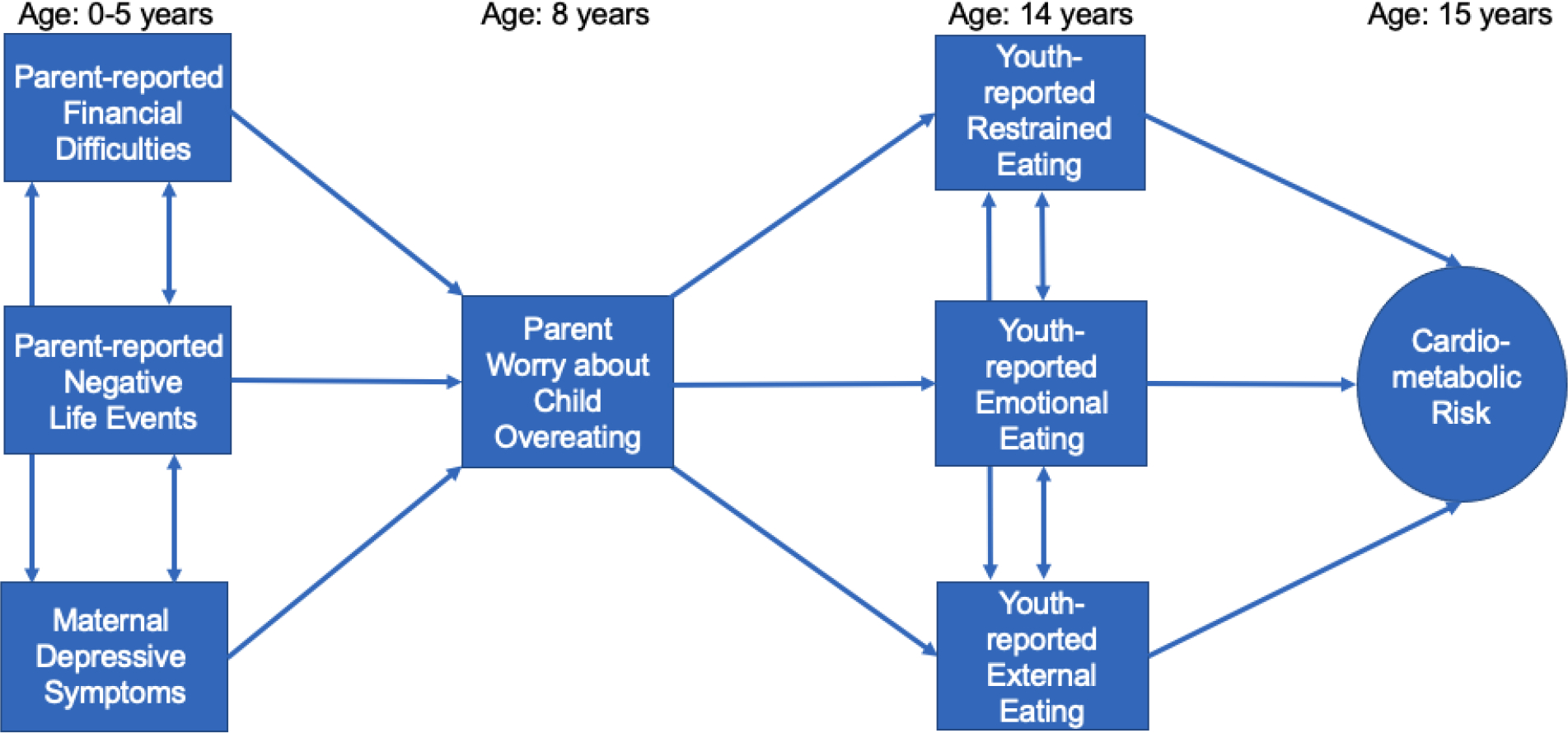
Conceptual model of mediators between financial difficulties, negative life events, and maternal depressive symptoms from 0–5 years and cardiometabolic risk in adolescence.
All direct and indirect paths from financial difficulties, stressful life events, and maternal depressive symptoms from 0–5 years to eating behaviors at 8 and 14 to cardiometabolic risk at 15 years were tested. Covariates tested for the age 0–5 adversity variables included sex at birth, maternal education, and maternal age. For worry about overeating at 8 years, covariates tested included sex at birth, maternal education, maternal age, and child age at the assessment. For eating behaviors at age 14 years, covariates tested included sex at birth, maternal education, maternal age, and child age at the assessment. For cardiometabolic risk at 15y, covariates tested included sex at birth, maternal education, maternal age, child age at the assessment, and birthweight. As there are arguments for and against covarying at earlier time points in the model, we presented the final model first without covarying for BMI at ages 8 and 14 (Figure 2). We then conducted the same model covarying child BMI at age 8 and 14 on concurrent eating behaviors and later cardiometabolic risk to understand whether associations are attenuated after including BMI as a covariate (Figure 3). Covariates were removed from the final model if the p-value of the path was greater than .05 to achieve the most parsimonious model, and the process of removing non-significant covariates was conducted separately for the model with and without BMI. The comparative fit index (CFI; > .93), root mean square error of approximation (RMSEA; < .06), standardized root mean square residual (SRMR; < .08) were examined to assess model fit (Hu & Bentler, 1999; Kline, 2015). Full information maximum likelihood (FIML) was used to estimate the models accounting for missing data. Participants were included in the models if they provided valid waist circumference data at the age 15 assessment and had valid data on covariates in the final model (n = 3,887). Given the nature of our sample, we cannot make claims about causal pathways, but rather test correlational paths over time, although we refer to “direct effects” and “indirect effects” to describe the model paths, consistent with the structural equation modeling literature.
Figure 2.
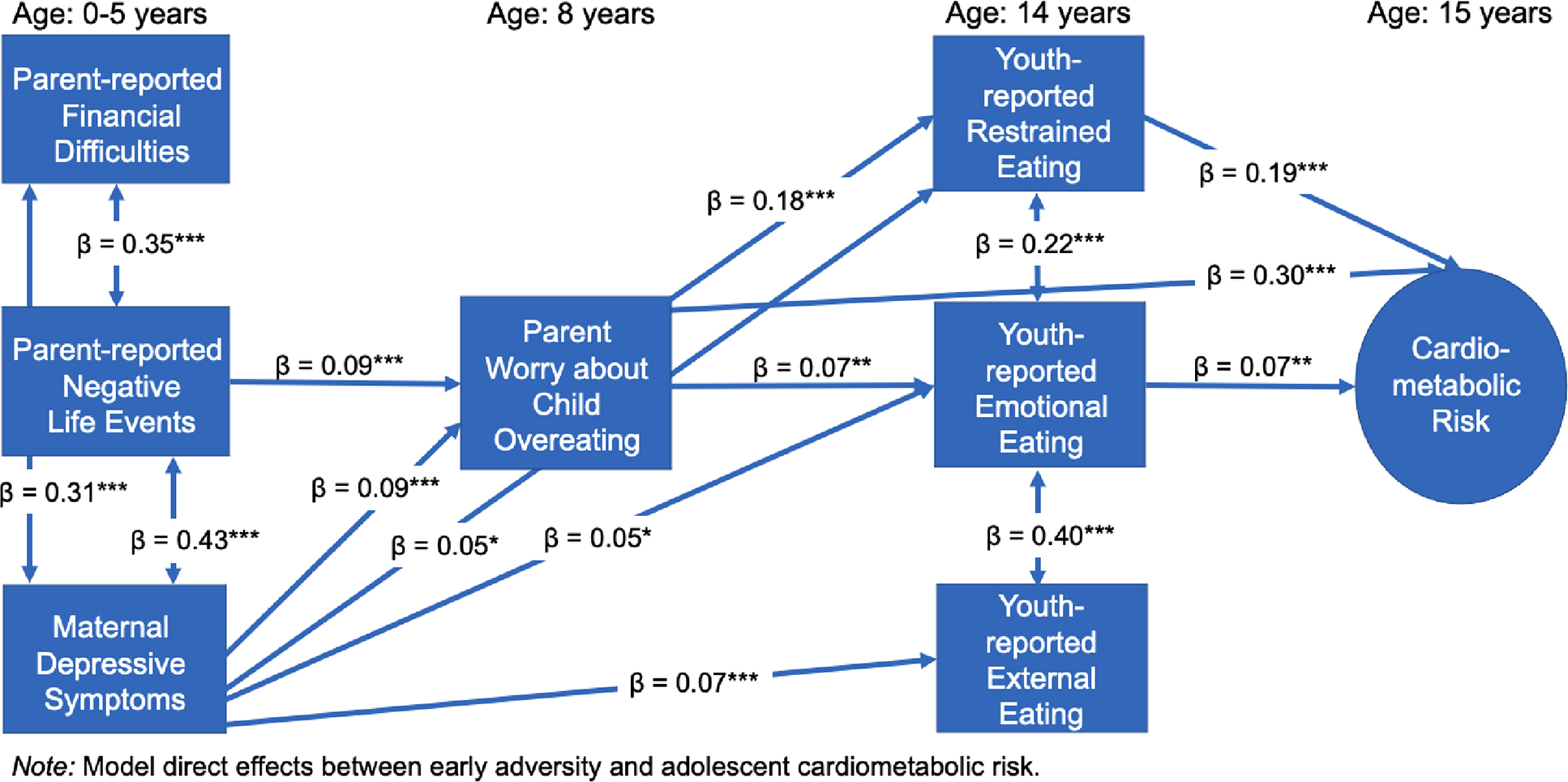
Paths from financial difficulties, negative life events, and maternal depressive symptoms from 0–5 years to cardiometabolic risk at 15 years through parent- and self-reported eating behaviors at 8 and 14 years. N = 3887. Values are standardized coefficients. Solid blue lines represent statistically significant pathways (p < .05). *p<.05, **p<.01, ***p<.001.
Figure 3.
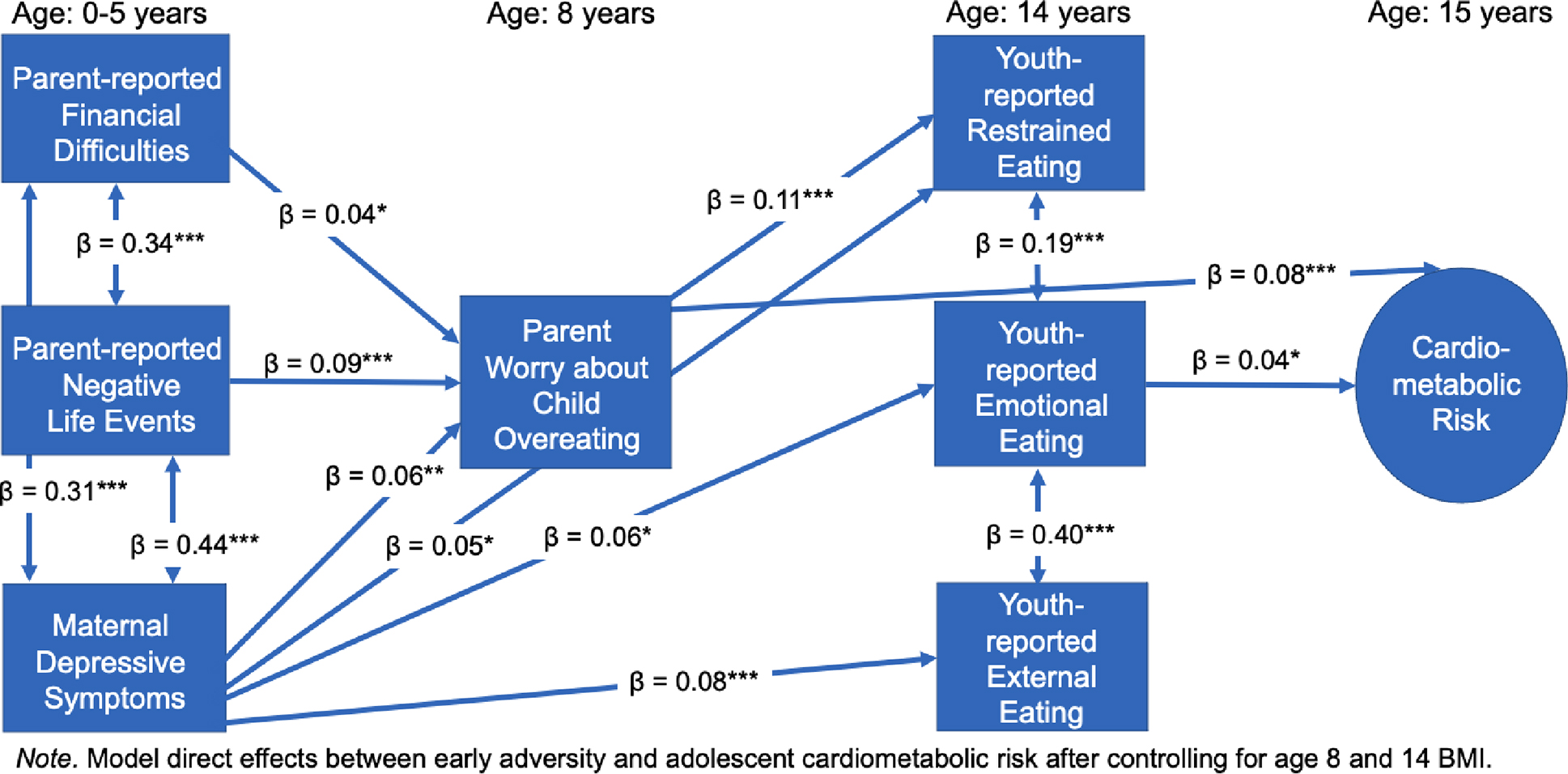
Paths from financial difficulties, negative life events, and maternal depressive symptoms from 0–5 years to cardiometabolic risk at 15 years through parent- and self-reported eating behaviors at 8 and 14 years, after covarying BMI at 8 and 14 years. N = 2995 (lower n than the main model as it only includes those who had valid BMI values at both 8 and 14 years). Values are standardized coefficients. Solid blue lines represent statistically significant pathways (p < .05). *p<.05, **p<.01, ***p<.001.
We chose to use observed instead of latent variables for eating behaviors because there were some variables in the model that were single items (e.g., worry about overeating) or already included well-established scales (DEBQ). It was unclear whether adversity was a formative construct (where the indicators cause the construct) or reflective construct (where the construct causes the indicators; see Howell et al. (2007) for general methodological discussion). In addition, we wanted to capture multiple types of adversity measured separately across infancy and early childhood rather than a latent measure of adversity across multiple time points since a latent measure may not account for the additive nature of multiple unique types of adversity impacting an individual. As a result, observed rather than latent adversity variables were used in the model. Cardiometabolic risk at age 15 fit well as a latent variable with statistically significant loadings from each indicator (β = 0.25–0.88, p < .001) representing an underlying risk construct, which is why a latent variable approach was chosen.
Results
Model results without covarying BMI
The model was a good fit for the data (CFI = .99; TLI = .98; RMSEA = .02; SRMR = .02) (Hu & Bentler, 1999; Kline, 2015). Negative life events and maternal depressive symptoms from 0–5 years, but not financial difficulties, predicted significant direct effects to greater parent-reported worry about child overeating at 8 years (Table 2 and Figure 2). Maternal depressive symptoms from 0–5 years directly predicted greater emotional, external, and restrained eating at 14 years. Worry about child overeating at 8 years predicted greater youth-reported restrained and emotional eating at 14 years. Worry about child overeating at 8 years and youth-reported restrained and emotional eating at 14 years directly predicted greater cardiometabolic risk at 15 years. The model explained the following percentages of the variance in the model variables: age 15 cardiometabolic risk (18.3%), age 14 restrained eating (9.2%), age 14 emotional eating (9.5%), age 14 external eating (0.8%), and age 8 worry about overeating (3.1%).
Table 2.
Direct pathways from adversity and sociodemographic factors to eating behaviors and cardiometabolic risk.
| β | 95% CI | |
|---|---|---|
|
| ||
| Financial Difficulties from Ages 0–5 | ||
| Maternal Age | −0.10*** | −0.13, −0.07 |
| Maternal Education | −0.19*** | −0.23, −0.16 |
| Negative Life Events from Ages 0–5 | ||
| Maternal Age | −0.07*** | −0.10, −0.03 |
| Maternal Education | 0.09*** | 0.06, 0.13 |
| Maternal Depressive Symptoms 0–5y | ||
| Maternal Education | −0.05** | −0.08, −0.01 |
| Parental Worry about Child Overeating at Age 8 | ||
| Financial Difficulties 0–5y | 0.02 | −0.02, 0.06 |
| Negative Life Events 0–5y | 0.09*** | 0.05, 0.13 |
| Maternal Depressive Symptoms 0–5y | 0.09*** | 0.05, 0.13 |
| Female | 0.05** | 0.02, 0.08 |
| Maternal Age | −0.05* | −0.08, −0.01 |
| Restrained Eating at Age 14 | ||
| Financial Difficulties 0–5y | −0.01 | −0.05, 0.03 |
| Negative Life Events 0–5y | 0.01 | −0.04, 0.05 |
| Maternal Depressive Symptoms 0–5y | 0.05* | 0.004, 0.09 |
| Parental Worry about Child Overeating 8y | 0.18*** | 0.14, 0.22 |
| Female | 0.23*** | 0.20, 0.26 |
| Emotional Eating at Age 14 | ||
| Financial Difficulties 0–5y | 0.00 | −0.04, 0.04 |
| Negative Life Events 0–5y | 0.03† | −0.01, 0.07 |
| Maternal Depressive Symptoms 0–5y | 0.05* | 0.01, 0.09 |
| Parental Worry about Child Overeating 8y | 0.07** | 0.02, 0.11 |
| Female | 0.29*** | 0.26, 0.32 |
| External Eating at Age 14 | ||
| Financial Difficulties 0–5y | −0.03 | −0.07, 0.01 |
| Negative Life Events 0–5y | 0.01 | −0.03, 0.05 |
| Maternal Depressive Symptoms 0–5y | 0.07*** | 0.03, 0.11 |
| Parental Worry about Child Overeating 8y | 0.01 | −0.03, 0.05 |
| Maternal Education | 0.05* | 0.01, 0.08 |
| Cardiometabolic Risk at 15.5y | ||
| Financial Difficulties 0–5y | 0.00 | −0.04, 0.04 |
| Negative Life Events 0–5y | 0.04† | −0.002, 0.08 |
| Maternal Depressive Symptoms 0–5y | −0.02 | −0.06, 0.02 |
| Parental Worry about Child Overeating 8y | 0.30*** | 0.25, 0.36 |
| Restrained Eating 14y | 0.19*** | 0.14, 0.24 |
| Emotional Eating 14y | 0.07** | 0.02, 0.11 |
| External Eating 14y | −0.04† | −0.08, 0.01 |
| Female | −0.05** | −0.09, −0.02 |
| Birthweight | 0.11*** | 0.08, 0.15 |
| Maternal Education | −0.11*** | −0.15, −0.07 |
Note.
p<.10.
p<.05.
p<.01.
p<.001.
There were two statistically significant indirect paths from negative life events from 0–5 years to cardiometabolic risk at 15 years and four indirect paths from maternal depressive symptoms to cardiometabolic risk (Table 3), which are described as follows: 1) Greater negative life events from 0–5 years predicted greater parent-reported worry about child overeating at 8 years, which directly predicted greater cardiometabolic risk at 15 years. 2) Greater negative life events from 0–5 years predicted greater worry about child overeating at 8 years, which then predicted greater restrained eating at 14 years, which directly predicted greater cardiometabolic risk at 15 years. 3) Greater maternal depressive symptoms from 0–5 years predicted greater worry about child overeating at 8 years, which then predicted greater cardiometabolic risk at 15 years. 4) Greater maternal depressive symptoms from 0–5 years predicted greater restrained eating at 14 years, which directly predicted greater cardiometabolic risk at 15 years. 5) Greater maternal depressive symptoms from 0–5 years predicted greater worry about child overeating at 8 years, which then predicted greater restrained eating at 14 years, which predicted greater cardiometabolic risk at 15 years. 6) Greater maternal depressive symptoms from 0–5 years predicted greater worry about child overeating at 8 years, which then predicted greater emotional eating at 14 years, which predicted greater cardiometabolic risk at 15 years.
Table 3.
Estimates of indirect paths from the predictor variables to cardiometabolic risk at 15.
| Indirect Paths to Cardiometabolic Risk at 15y | β | 95% CI |
|---|---|---|
|
| ||
| Negative Life Events 0–5y → Overeating 8y → Cardiometabolic Risk 15y | 0.03*** | 0.01, 0.04 |
| Negative Life Events 0–5y → Overeating 8y → Restrained Eating 14y → Cardiometabolic Risk 15y | 0.003** | 0.001, 0.005 |
| Negative Life Events 0–5y → Overeating 8y → Emotional Eating 14y → Cardiometabolic Risk 15y | 0.000† | 0.000, 0.001 |
| Maternal Depressive Sxs 0–5y→ Overeating 8y → Cardiometabolic Risk 15y | 0.03*** | 0.01, 0.04 |
| Maternal Depressive Sxs 0–5y→ Restrained Eating 14y → Cardiometabolic Risk 15y | 0.009* | 0.000, 0.017 |
| Maternal Depressive Sxs 0–5y→ Emotional Eating 14y → Cardiometabolic Risk 15y | 0.003† | 0.000, 0.007 |
| Maternal Depressive Sxs 0–5y→ Overeating 8y → Restrained Eating 14y→ Cardiometabolic Risk 15y | 0.003** | 0.001, 0.005 |
| Maternal Depressive Sxs 0–5y→ Overeating 8y → Emotional Eating 14y→ Cardiometabolic Risk 15y | 0.000* | 0.000, 0.001 |
Note.
p<.10.
p<.05.
p<.01.
p<.001.
Note: There were no significant indirect pathways from financial difficulties from 0–5 years to cardiometabolic risk at 15y. Overeating 8y refers to parental worry about child overeating at 8y.
To test for sex differences, a model was created where the pathways from adversity to each of the eating behaviors and cardiometabolic risk, from worry about overeating at age 8 to age 14 eating behaviors, and between all eating behaviors to cardiometabolic risk were constrained between males and females. The constrained model was then compared to a model where all paths were free to vary by sex. There was no difference between the models (p = .13), suggesting the model did not differ significantly by sex.
Model covarying BMI at age 8 and 14
The model covarying BMI at age 8 and 14 on concurrent eating behaviors, and age 14 BMI on age 15 cardiometabolic risk, remained largely the same as the original model with three notable exceptions (see Figure 3 and Tables S2–S3): 1) financial difficulties from 0–5 years predicted greater parent worry about child overeating at 8 years; 2) restrained eating did not predict greater cardiometabolic risk at age 15; and 3) the path from greater worry about child overeating at 8 years to age 15 cardiometabolic risk was weaker but still statistically significant (β = 0.08 with covarying BMI vs. β = 0.30 without covarying BMI).
Discussion
Results of the current study suggest that negative life events and maternal depressive symptoms in infancy/early childhood may be associated with cardiometabolic risk at 15 through pathways of greater parental worry about overeating at age 8, and restrained and emotional eating at age 14. Maternal depressive symptoms specifically demonstrated the most consistent direct associations with eating behaviors compared to financial difficulties and negative life events, with greater depressive symptoms predicting greater parental worry about child overeating as well as greater adolescent restrained, emotional, and external eating. Our findings also suggest that worry about child overeating as well as adolescent restrained and emotional eating may be most associated with greater cardiometabolic risk at age 15. However, the association between adolescent restrained eating and age 15 cardiometabolic risk was no longer statistically significant after covarying BMI at age 14.
Compared to negative life events, which was only directly associated with worry about child overeating at age 8, maternal depression from 0–5 years was directly associated with each eating behavior tested: age 8 worry about overeating, and age 14 restrained, emotional, and external eating. Early maternal depression may have a particularly potent influence on child and adolescent eating behaviors due to depression’s influence on parenting and feeding behaviors, and the parent potentially modeling poor eating behaviors (Arlinghaus et al., 2020; Barker et al., 2013; Dimitratos et al., 2022; El-Behadli et al., 2015; Mason et al., 2019). Early postnatal maternal depression may persist from the prenatal period, and prenatal depression is hypothesized to biologically program offspring brain development and food intake based on prenatal maternal stress research (St‐Hilaire et al., 2015). Maternal depressive symptoms have been associated with alterations in eating behaviors and stress system regulation in offspring (Arlinghaus et al., 2020; Gump et al., 2009; Kidwell et al., 2017). As a result, there may be multiple prenatal and postnatal pathways by which maternal depressive symptoms in early life could lead to greater cardiometabolic risk, which suggests that supporting maternal mental health could improve child eating behaviors.
The finding that greater financial difficulties from 0–5 years did not predict any eating behaviors is inconsistent with some research on childhood socioeconomic status (SES) and overeating in adults. Previous research suggests that individuals from high-SES environments are more likely to regulate food intake based on immediate energy needs (Hill et al., 2016). However, individuals growing up in low-SES environments may be more likely to consume higher amounts of food regardless of current energy needs (Hill et al., 2016), which is likely adaptive given scarcity of food in low-SES environments. Our results are not consistent with this finding, though it is possible that previous studies did not control for multiple types of earlier stressors such as negative life events and maternal depressive symptoms, which may have stronger associations with child and adolescent eating behaviors. There may also be developmental differences such that associations between financial difficulties and eating behaviors may emerge later in adulthood. There is a larger literature on negative life events and maternal depressive symptoms and their associations with child and adolescent eating behaviors compared to financial difficulties. However, it is unclear whether this discrepancy is due to true differences in associations over time or if financial difficulties have been less explored in existing research on child and adolescent eating behaviors.
Both negative life events and maternal depressive symptoms in infancy/early childhood predicted cardiometabolic risk at 15 through greater worry about childhood overeating at age 8 and restrained eating at 14. Notably, the association between adolescent restrained eating at 14 and age 15 cardiometabolic risk was no longer statistically significant after covarying BMI at age 14 (Figure 3). This finding suggests that it could be that adolescents with higher BMI at 14 are more likely to endorse restrained eating due to societal pressures to lose weight; adolescents with higher BMI at 14 could be more likely to have higher cardiometabolic risk at age 15 independent of restrained eating behaviors. Although restrained eating at age 14 did not directly predict cardiometabolic risk at age 15 after controlling for BMI in this sample, restrained eating itself is a negative outcome. Restrained eating has been associated with poorer mental health, risk for eating disorders, and greater weight gain over time (Haynos et al., 2016; Lowe et al., 2013; Stice et al., 2011). For example, more restrained eating may lead children to eat more palatable foods following an acute stressor (Balantekin & Roemmich, 2012), which could lead to greater weight gain over time, a result directly opposing the goals of restrained eating. It could be that pathways unfold at different tempos, such that emotional eating at age 14 may predict cardiometabolic risk in the short-term, but restrained eating could predict cardiometabolic risk in the long-term. As a result, longitudinal work should test whether adolescent restrained, emotional, and external eating in this sample and in other samples may lead to greater cardiometabolic risk years later.
After controlling for BMI, the only adolescent eating behavior related to cardiometabolic health at age 15 was emotional eating at 14, suggesting that emotional eating may be an important target for interventions to improve cardiometabolic health following adversity. Emotional eating involves using food to cope with emotions, and early adversity has been consistently associated with greater difficulty in regulating emotions and behaviors. For example, it is possible that greater childhood adversity could lead to alterations in eating behaviors through a pathway of greater child emotion dysregulation (Huffhines et al., 2020). In addition to emotion dysregulation difficulties, greater childhood adversity has been associated with altered frontal cortex and limbic system development and with impairments in impulse control and decision making (Lupien et al., 2009), which may directly alter eating behaviors (Dallman, 2010). Altered reward circuitry following early stress may lead to increased consumption of comfort foods and may contribute to obesity and cardiometabolic diseases years later (de Lima et al., 2020). For example, greater maternal perceived stress is associated with increased BMI over time in adolescents, possibly through maternal modeling of less physical activity, a less healthy diet, alterations in eating or feeding behaviors, changes in parenting, or shaping youth’s biological stress responses (Koning et al., 2021). As a result, early adversity may lead to early difficulties with emotion and behavior regulation, which could lead to greater emotional eating and cardiometabolic risk over time.
Interestingly, the association between age 14 emotional eating and cardiometabolic risk (β = 0.07, p < .01) was weaker than the association between age 8 worry about overeating and cardiometabolic risk (β = 0.30, p < .001), which was unexpected given the longer period between assessments. Our findings are consistent with a meta-analysis suggesting that unhealthy eating behaviors following stress in childhood may begin as early as 8–9 years of age (Hill et al., 2018). The associations between negative life events from 0–5 years and child and adolescent eating behaviors in our study are consistent with previous research demonstrating that early childhood stress predicts greater altered eating behaviors over time into middle childhood (Miller et al., 2018). Future research should focus on eating behaviors and perceptions of eating behaviors in middle-to-late childhood to understand why they may be particularly predictive of adolescent cardiometabolic risk.
As predicted, external eating was not associated with cardiometabolic risk, which is consistent with the mixed findings on associations between external eating/responsiveness to external food cues and cardiometabolic risk (Kininmonth et al., 2021; Moschonis et al., 2015; Warkentin et al., 2020). However, maternal depressive symptoms did directly predict greater external eating, which is consistent with previous research on early adversity being associated with greater responsiveness to external food cues (Munkholm et al., 2016). It appears that infant/early childhood maternal depressive symptoms may be more predictive of external eating than financial difficulties and negative life events, though external eating may have unclear implications for adolescent cardiometabolic health.
Strengths and limitations
The current study had multiple strengths including using a large cohort with prospectively assessed adversity and eating behaviors to test longitudinal associations between adversity, eating behaviors, and cardiometabolic risk. The assessment of adversity and eating behaviors prospectively rather than retrospectively reduces potential problems with memory or biased reports. The long period between infancy/early childhood and adolescence allows time for biological and behavioral embedding of early adversity compared to shorter-term studies, which may not be enough time for embedding to be observed in measurable ways (e.g., shifts in waist circumference or lipid profiles). Another strength is gathering information from both parent and youth report as well as objective measures of cardiometabolic risk in adolescence.
Limitations include only incorporating parent- and youth-reported measures of eating behavior rather than observed eating behaviors and using a one-item parent-reported measure of worry about child overeating rather than the more detailed DEBQ measure in adolescence. It should be noted that differences in predictive power could be due to differences in the reporter and the measure used. In addition, the reliability of the restrained and external eating measures was lower than expected in this sample. The current paper only examined non-clinical eating behaviors, although it is well-established that eating disorders, such as anorexia, bulimia, and binge eating disorder are more common for youth who have experienced childhood adversity (Groth et al., 2020). Future studies should examine whether multiple types of eating disorders may be on the pathway between early adversity and later cardiometabolic risk. In addition, the adversity measures are limited to parent-report rather than assessing child perceptions of stress. The study did not include observed parenting behaviors to assess how depressive symptoms or adversity may have affected parenting behaviors, which may then affect the child. In addition, we averaged measures of adversity from multiple time points for each type of adversity to test additive risk hypotheses specific to each type of adversity rather than using statistical methods that would allow for testing for sensitive periods or trajectories of adversity, though this is an important future direction for this research. Lastly, although the sample is large, it is almost exclusively White. Thus, we were unable to test whether pathways differed by racial or ethnic group or to examine potential differences by race/ethnicity in any meaningful way. Assessing these pathways in a more diverse sample and including more objective measures of early parenting and childhood/adolescent eating behaviors will be an important future direction.
Conclusion
Our results suggest that negative life events and maternal depressive symptoms in infancy/early childhood may be associated with adolescent cardiometabolic risk through greater parental worry about overeating in childhood and adolescent restrained and emotional eating. Maternal depressive symptoms in infancy/early childhood may have more consistent associations with multiple eating behaviors in childhood and adolescence compared to financial difficulties and negative life events. Parent worry about overeating in childhood and restrained and emotional eating in adolescence predict greater cardiometabolic risk at age 15, suggesting that these eating behaviors may be the most likely targets for interventions to improve cardiometabolic health following adversity. These findings suggest that there are some shared and unique pathways to cardiometabolic risk following different types of early adversity.
The current study examined the main effects between early stressors, eating behaviors, and cardiometabolic risk. However, more work is needed to assess moderators of these associations such as child temperament, parent-child relationships and parenting behaviors, neighborhood factors, and the food environment, which could exacerbate or buffer the effects of stress. In addition, the current findings support future research testing interventions to support families in the first years of life to examine whether such interventions may lead to improved eating behaviors and cardiometabolic health in children and adolescents. Based on our results, interventions to decrease maternal depressive symptoms may be most likely to lead to improvements across multiple eating behaviors. Given the importance of preventing cardiometabolic health problems and promoting healthy eating behaviors beginning in childhood, testing these interventions must be a top scientific and policy priority.
Supplementary Material
Public Significance:
The current findings support testing whether interventions that support families in the first years of life lead to improved eating behaviors and cardiometabolic health in children and adolescents. Specifically, interventions that decrease maternal depressive symptoms may be most likely to lead to improvements across multiple eating behaviors.
Acknowledgements:
We are grateful to all the families who took part in this study, the midwives for their help in recruiting them, and the whole ALSPAC team, which includes interviewers, computer and laboratory technicians, clerical workers, research scientists, volunteers, managers, receptionists, and nurses. The UK Medical Research Council and Wellcome (Grant ref: 217065/Z/19/Z) and the University of Bristol provide core support for ALSPAC. A comprehensive list of grants funding is available on the ALSPAC website (http://www.bristol.ac.uk/alspac/external/documents/grant-acknowledgements.pdf). This publication is the work of the authors (Doom, Deer, Mickel, Infante, Rivera), who will serve as guarantors for the contents of this paper. Doom and Deer were supported by the National Heart, Lung, And Blood Institute (K01HL143159, PI: Doom; F32HL165844, PI: Deer).
Footnotes
Conflicts of interest: We have no conflicts of interest to disclose.
References
- Allen KL, Byrne SM, Oddy WH, Schmidt U, & Crosby RD (2014). Risk factors for binge eating and purging eating disorders: Differences based on age of onset. International Journal of Eating Disorders, 47(7), 802–812. [DOI] [PubMed] [Google Scholar]
- Arlinghaus KR, Power TG, Hernandez DC, Johnston CA, & Hughes SO (2020). The association between maternal depressive symptomology and child dinner dietary quality among Hispanic Head Start families. Preventive Medicine Reports, 20, 101196. [DOI] [PMC free article] [PubMed] [Google Scholar]
- Balantekin KN, & Roemmich JN (2012). Children’s coping after psychological stress. Choices among food, physical activity, and television. Appetite, 59(2), 298–304. [DOI] [PubMed] [Google Scholar]
- Barker ED, Kirkham N, Ng J, & Jensen SK (2013). Prenatal maternal depression symptoms and nutrition, and child cognitive function. The British Journal of Psychiatry, 203(6), 417–421. [DOI] [PMC free article] [PubMed] [Google Scholar]
- Barnett BE, Hanna B, & Parker G (1983). Life event scales for obstetric groups. Journal of Psychosomatic Research, 27(4), 313–320. 10.1016/0022-3999(83)90054-5 [DOI] [PubMed] [Google Scholar]
- Beaglehole R, Reddy S, & Leeder SR (2007). Poverty and human development: The global implications of cardiovascular disease. Circulation, 116(17), 1871–1873. [DOI] [PubMed] [Google Scholar]
- Boyd A, Golding J, Macleod J, Lawlor DA, Fraser A, Henderson J, Molloy L, Ness A, Ring S, & Davey Smith G (2013). Cohort profile: The ‘children of the 90s’—The index offspring of the Avon Longitudinal Study of Parents and Children. International Journal of Epidemiology, 42(1), 111–127. [DOI] [PMC free article] [PubMed] [Google Scholar]
- Brown GW, & Harris T (1978). Social origins of depression: A study of psychiatric disorder in women. Routledge. [Google Scholar]
- Choukas-Bradley S, Roberts SR, Maheux AJ, & Nesi J (2022). The perfect storm: A developmental–sociocultural framework for the role of social media in adolescent girls’ body image concerns and mental health. Clinical Child and Family Psychology Review, 25(4), 681–701. [DOI] [PMC free article] [PubMed] [Google Scholar]
- Cox JL, Holden JM, & Sagovsky R (1987). Detection of postnatal depression. Development of the 10-item Edinburgh Postnatal Depression Scale. The British Journal of Psychiatry, 150(6), 782–786. 10.1192/bjp.150.6.782 [DOI] [PubMed] [Google Scholar]
- Croll J, Neumark-Sztainer D, Story M, & Ireland M (2002). Prevalence and risk and protective factors related to disordered eating behaviors among adolescents: Relationship to gender and ethnicity. Journal of Adolescent Health, 31(2), 166–175. [DOI] [PubMed] [Google Scholar]
- Dallman MF (2010). Stress-induced obesity and the emotional nervous system. Trends in Endocrinology & Metabolism, 21(3), 159–165. 10.1016/j.tem.2009.10.004 [DOI] [PMC free article] [PubMed] [Google Scholar]
- Davison TE, & McCabe MP (2006). Adolescent body image and psychosocial functioning. The Journal of Social Psychology, 146(1), 15–30. [DOI] [PubMed] [Google Scholar]
- de Lima RMS, dos Santos Bento LV, Lugon M. di M. V ., Barauna VG., Bittencourt AS., Dalmaz C., & de Vasconcellos Bittencourt APS. (2020). Early life stress and the programming of eating behavior and anxiety: Sex-specific relationships with serotonergic activity and hypothalamic neuropeptides. Behavioural Brain Research, 379, 112399. [DOI] [PubMed] [Google Scholar]
- Debeuf T, Verbeken S, Van Beveren M-L, Michels N, & Braet C (2018). Stress and eating behavior: A daily diary study in youngsters. Frontiers in Psychology, 9, 2657. [DOI] [PMC free article] [PubMed] [Google Scholar]
- Dimitratos SM, Swartz JR, & Laugero KD (2022). Pathways of parental influence on adolescent diet and obesity: A psychological stress–focused perspective. Nutrition Reviews, 80(7), 1800–1810. [DOI] [PubMed] [Google Scholar]
- Dong M, Giles WH, Felitti VJ, Dube SR, Williams JE, Chapman DP, & Anda RF (2004). Insights into causal pathways for ischemic heart disease. Circulation, 110(13), 1761–1766. 10.1161/01.CIR.0000143074.54995.7F [DOI] [PubMed] [Google Scholar]
- Doom JR, Mason SM, Suglia SF, & Clark CJ (2017). Pathways between childhood/adolescent adversity, adolescent socioeconomic status, and long-term cardiovascular disease risk in young adulthood. Social Science & Medicine, 188, 166–175. 10.1016/j.socscimed.2017.06.044 [DOI] [PMC free article] [PubMed] [Google Scholar]
- Doom JR, Reid BM, Blanco E, Burrows R, Lozoff B, & Gahagan S (2019). Infant psychosocial environment aredicts adolescent cardiometabolic risk: A prospective study. The Journal of Pediatrics, 209, 85–91.e1. [DOI] [PMC free article] [PubMed] [Google Scholar]
- Doom JR, Rivera KM, Blanco E, Burrows R, Correa-Burrows P, East PL, Lozoff B, & Gahagan S (2020). Sensitive periods for psychosocial risk in childhood and adolescence and cardiometabolic outcomes in young adulthood. Development and Psychopathology, 32(5), 1864–1875. [DOI] [PMC free article] [PubMed] [Google Scholar]
- El-Behadli AF, Sharp C, Hughes SO, Obasi EM, & Nicklas TA (2015). Maternal depression, stress and feeding styles: Towards a framework for theory and research in child obesity. British Journal of Nutrition, 113(S1), S55–S71. [DOI] [PubMed] [Google Scholar]
- Ellis JM, Galloway AT, Webb RM, Martz DM, & Farrow CV (2016). Recollections of pressure to eat during childhood, but not picky eating, predict young adult eating behavior. Appetite, 97, 58–63. [DOI] [PubMed] [Google Scholar]
- Farrow CV (2012). Do parental feeding practices moderate the relationships between impulsivity and eating in children? Eating Behaviors, 13(2), 150–153. [DOI] [PubMed] [Google Scholar]
- Finch LE, Tiongco-Hofschneider L, & Tomiyama AJ (2019). Stress-induced eating dampens physiological and behavioral stress responses. In Nutrition in the prevention and treatment of abdominal obesity (pp. 175–187). Elsevier. [Google Scholar]
- Francis LA, Hofer SM, & Birch LL (2001). Predictors of maternal child-feeding style: Maternal and child characteristics. Appetite, 37(3), 231–243. [DOI] [PubMed] [Google Scholar]
- Fraser A, Macdonald-Wallis C, Tilling K, Boyd A, Golding J, Davey Smith G, Henderson J, Macleod J, Molloy L, & Ness A (2013). Cohort profile: The Avon Longitudinal Study of Parents and Children: ALSPAC mothers cohort. International Journal of Epidemiology, 42(1), 97–110. [DOI] [PMC free article] [PubMed] [Google Scholar]
- Golding J, Pembrey M, & Jones R (2001). ALSPAC--the Avon Longitudinal Study of Parents and Children. I. Study methodology. Paediatric and Perinatal Epidemiology, 15(1), 74–87. [DOI] [PubMed] [Google Scholar]
- Goulding AN, Rosenblum KL, Miller AL, Peterson KE, Chen Y-P, Kaciroti N, & Lumeng JC (2014). Associations between maternal depressive symptoms and child feeding practices in a cross-sectional study of low-income mothers and their young children. International Journal of Behavioral Nutrition and Physical Activity, 11(1), 75. [DOI] [PMC free article] [PubMed] [Google Scholar]
- Groth T, Hilsenroth M, Boccio D, & Gold J (2020). Relationship between trauma history and eating disorders in adolescents. Journal of Child & Adolescent Trauma, 13(4), 443–453. [DOI] [PMC free article] [PubMed] [Google Scholar]
- Gump BB, Reihman J, Stewart P, Lonky E, Darvill T, Granger DA, & Matthews KA (2009). Trajectories of maternal depressive symptoms over her child’s life span: Relation to adrenocortical, cardiovascular, and emotional functioning in children. Development and Psychopathology, 21(1), 207–225. [DOI] [PMC free article] [PubMed] [Google Scholar]
- Harrist AW, Hubbs-Tait L, Topham GL, Shriver LH, & Page MC (2013). Emotion regulation is related to children’s emotional and external eating. Journal of Developmental & Behavioral Pediatrics, 34(8), 557–565. [DOI] [PubMed] [Google Scholar]
- Haynos AF, Watts AW, Loth KA, Pearson CM, & Neumark-Stzainer D (2016). Factors predicting an escalation of restrictive eating during adolescence. Journal of Adolescent Health, 59(4), 391–396. [DOI] [PMC free article] [PubMed] [Google Scholar]
- Herle M, Stavola BD, Hübel C, Ferreira DLS, Abdulkadir M, Yilmaz Z, Loos RJ, Bryant-Waugh R, Bulik CM, & Micali N (2020). Eating behavior trajectories in the first 10 years of life and their relationship with BMI. International Journal of Obesity, 44(8), 1766–1775. [DOI] [PMC free article] [PubMed] [Google Scholar]
- Hill DC, Moss RH, Sykes-Muskett B, Conner M, & O’Connor DB (2018). Stress and eating behaviors in children and adolescents: Systematic review and meta-analysis. Appetite, 123, 14–22. [DOI] [PubMed] [Google Scholar]
- Hill SE, Prokosch ML, DelPriore DJ, Griskevicius V, & Kramer A (2016). Low childhood socioeconomic status promotes eating in the absence of energy need. Psychological Science, 27(3), 354–364. [DOI] [PubMed] [Google Scholar]
- Howell RD, Breivik E, & Wilcox JB (2007). Reconsidering formative measurement. Psychological Methods, 12(2), 205. [DOI] [PubMed] [Google Scholar]
- Hu L, & Bentler PM (1999). Cutoff criteria for fit indexes in covariance structure analysis: Conventional criteria versus new alternatives. Structural Equation Modeling: A Multidisciplinary Journal, 6(1), 1–55. 10.1080/10705519909540118 [DOI] [Google Scholar]
- Hübel C, Herle M, Santos Ferreira DL, Abdulkadir M, Bryant-Waugh R, Loos RJ, Bulik CM, Lawlor DA, & Micali N (2021). Childhood overeating is associated with adverse cardiometabolic and inflammatory profiles in adolescence. Scientific Reports, 11(1), 1–15. [DOI] [PMC free article] [PubMed] [Google Scholar]
- Huffhines L, Gusler S, & Jackson Y (2020). Adversity exposure and obesogenic food consumption in young children: The transgenerational role of emotion dysregulation. Pediatric Obesity, 15(11), e12658. [DOI] [PMC free article] [PubMed] [Google Scholar]
- Jun H-J, Corliss HL, Boynton-Jarrett R, Spiegelman D, Austin SB, & Wright RJ (2012). Growing up in a domestic violence environment: Relationship with developmental trajectories of body mass index during adolescence into young adulthood. J Epidemiol Community Health, 66(7), 629–635. [DOI] [PMC free article] [PubMed] [Google Scholar]
- Kidwell KM, Nelson TD, Nelson JM, & Espy KA (2017). A longitudinal study of maternal and child internalizing symptoms predicting early adolescent emotional eating. Journal of Pediatric Psychology, 42(4), 445–456. [DOI] [PubMed] [Google Scholar]
- Kininmonth A, Smith A, Carnell S, Steinsbekk S, Fildes A, & Llewellyn C (2021). The association between childhood adiposity and appetite assessed using the Child Eating Behavior Questionnaire and Baby Eating Behavior Questionnaire: A systematic review and meta‐analysis. Obesity Reviews, 22(5), e13169. [DOI] [PubMed] [Google Scholar]
- Kjelsås E, Bjørnstrøm C, & Götestam KG (2004). Prevalence of eating disorders in female and male adolescents (14–15 years). Eating Behaviors, 5(1), 13–25. [DOI] [PubMed] [Google Scholar]
- Kline RB (2015). Principles and practice of structural equation modeling. Guilford publications. [Google Scholar]
- Koning M, Vink J, Visscher TL, & Larsen J (2021). Maternal stress and depressive symptoms and adolescents’ body mass index: A prospective study. BMC Public Health, 21(1), 1–13. [DOI] [PMC free article] [PubMed] [Google Scholar]
- Kral TV, Chittams J, & Moore RH (2017). Relationship between food insecurity, child weight status, and parent‐reported child eating and snacking behaviors. Journal for Specialists in Pediatric Nursing, 22(2), e12177. [DOI] [PMC free article] [PubMed] [Google Scholar]
- Lowe MR, Doshi SD, Katterman SN, & Feig EH (2013). Dieting and restrained eating as prospective predictors of weight gain. Frontiers in Psychology, 4, 577. [DOI] [PMC free article] [PubMed] [Google Scholar]
- Lupien SJ, McEwen BS, Gunnar MR, & Heim C (2009). Effects of stress throughout the lifespan on the brain, behaviour and cognition. Nat Rev Neurosci, 10(6), 434–445. 10.1038/nrn2639 [DOI] [PubMed] [Google Scholar]
- Machado TD, Dalle Molle R, Laureano DP, Portella AK, Werlang ICR, Benetti C da S., Noschang C., & Silveira PP. (2013). Early life stress is associated with anxiety, increased stress responsivity and preference for “comfort foods” in adult female rats. Stress, 16(5), 549–556. [DOI] [PubMed] [Google Scholar]
- Maniam J, & Morris MJ (2010). Palatable cafeteria diet ameliorates anxiety and depression-like symptoms following an adverse early environment. Psychoneuroendocrinology, 35(5), 717–728. [DOI] [PubMed] [Google Scholar]
- Masip G, Foraita R, Silventoinen K, Adan RA, Ahrens W, De Henauw S, Hebestreit A, Keski-Rahkonen A, Lissner L, & Mehlig K (2021). The temporal relationship between parental concern of overeating and childhood obesity considering genetic susceptibility: Longitudinal results from the IDEFICS/I. Family study. International Journal of Behavioral Nutrition and Physical Activity, 18, 1–11. [DOI] [PMC free article] [PubMed] [Google Scholar]
- Mason TB, O’Connor SG, Schembre SM, Huh J, Chu D, & Dunton GF (2019). Momentary affect, stress coping, and food intake in mother–child dyads. Health Psychology, 38(3), 238. [DOI] [PMC free article] [PubMed] [Google Scholar]
- Matherne CE, Tanofsky-Kraff M, Altschul AM, Shank LM, Schvey NA, Brady SM, Galescu O, Demidowich AP, Yanovski SZ, & Yanovski JA (2015). A preliminary examination of Loss of Control Eating Disorder (LOC-ED) in middle childhood. Eating Behaviors, 18, 57–61. [DOI] [PMC free article] [PubMed] [Google Scholar]
- Melbye EL, Bergh IH, Hausken SE, Sleddens EF, Glavin K, Lien N, & Bjelland M (2016). Adolescent impulsivity and soft drink consumption: The role of parental regulation. Appetite, 96, 432–442. [DOI] [PubMed] [Google Scholar]
- Michopoulos V, Powers A, Moore C, Villarreal S, Ressler KJ, & Bradley B (2015). The mediating role of emotion dysregulation and depression on the relationship between childhood trauma exposure and emotional eating. Appetite, 91, 129–136. [DOI] [PMC free article] [PubMed] [Google Scholar]
- Mikkilä V, Räsänen L, Raitakari OT, Pietinen P, & Viikari J (2005). Consistent dietary patterns identified from childhood to adulthood: The cardiovascular risk in Young Finns Study. British Journal of Nutrition, 93(6), 923–931. [DOI] [PubMed] [Google Scholar]
- Miller AL, Gearhardt AN, Retzloff L, Sturza J, Kaciroti N, & Lumeng JC (2018). Early Childhood Stress and Child Age Predict Longitudinal Increases in Obesogenic Eating Among Low-Income Children. Academic Pediatrics, 18(6), 685–691. 10.1016/j.acap.2018.01.007 [DOI] [PMC free article] [PubMed] [Google Scholar]
- Miller NE, & Lacey RE (2022). Childhood adversity and cardiometabolic biomarkers in mid-adulthood in the 1958 British birth cohort. SSM-Population Health, 101260. [DOI] [PMC free article] [PubMed] [Google Scholar]
- Moschonis G, Georgiou A, Sarapi K, & Manios Y (2015). Association of distorted eating behaviors with cardiometabolic risk indices in preadolescents. The healthy growth study. Appetite, 91, 35–40. [DOI] [PubMed] [Google Scholar]
- Munkholm A, Olsen EM, Rask CU, Clemmensen L, Rimvall MK, Jeppesen P, Micali N, & Skovgaard AM (2016). Early predictors of eating problems in preadolescence—A prospective birth cohort study. Journal of Adolescent Health, 58(5), 533–542. [DOI] [PubMed] [Google Scholar]
- O’Keeffe LM, Simpkin AJ, Tilling K, Anderson EL, Hughes AD, Lawlor DA, Fraser A, & Howe LD (2019). Data on trajectories of measures of cardiovascular health in the Avon Longitudinal Study of Parents and Children (ALSPAC). Data in Brief, 23, 103687. [DOI] [PMC free article] [PubMed] [Google Scholar]
- Paul E, & Pearson RM (2020). Depressive symptoms measured using the Edinburgh postnatal depression scale in mothers and partners in the ALSPAC study: A data note. Wellcome Open Research, 5. [DOI] [PMC free article] [PubMed] [Google Scholar]
- Racine SE, & Wildes JE (2015). Emotion dysregulation and anorexia nervosa: An exploration of the role of childhood abuse. International Journal of Eating Disorders, 48(1), 55–58. [DOI] [PMC free article] [PubMed] [Google Scholar]
- Rodgers RF, Paxton SJ, Massey R, Campbell KJ, Wertheim EH, Skouteris H, & Gibbons K (2013). Maternal feeding practices predict weight gain and obesogenic eating behaviors in young children: A prospective study. International Journal of Behavioral Nutrition and Physical Activity, 10, 1–10. [DOI] [PMC free article] [PubMed] [Google Scholar]
- Sarafidis PA, Lasaridis AN, Nilsson PM, Pikilidou MI, Stafilas PC, Kanaki A, Kazakos K, Yovos J, & Bakris GL (2007). Validity and reproducibility of HOMA-IR, 1/HOMA-IR, QUICKI and McAuley’s indices in patients with hypertension and type II diabetes. Journal of Human Hypertension, 21(9), 709–716. [DOI] [PubMed] [Google Scholar]
- Scaglioni S, Arrizza C, Vecchi F, & Tedeschi S (2011). Determinants of children’s eating behavior. The American Journal of Clinical Nutrition, 94(suppl_6), 2006S–2011S. [DOI] [PubMed] [Google Scholar]
- Schrepf A, Markon K, & Lutgendorf SK (2014). From childhood trauma to elevated C-reactive protein in adulthood: The role of anxiety and emotional eating. Psychosomatic Medicine, 76(5), 327. [DOI] [PMC free article] [PubMed] [Google Scholar]
- Schuler BR, Daundasekara SS, Hernandez DC, Dumenci L, Clark M, Fisher JO, & Miller AL (2020). Economic hardship and child intake of foods high in saturated fats and added sugars: The mediating role of parenting stress among high-risk families. Public Health Nutrition, 23(15), 2781–2792. [DOI] [PMC free article] [PubMed] [Google Scholar]
- Shonkoff JP, Garner AS, Siegel BS, Dobbins MI, Earls MF, McGuinn L, Pascoe J, Wood DL, Committee on Psychosocial Aspects of Child, Family Health, Committee on Early Childhood, A., & Dependent Care. (2012). The lifelong effects of early childhood adversity and toxic stress. Pediatrics, 129(1), e232–e246. 10.1542/peds.2011-2663 [DOI] [PubMed] [Google Scholar]
- Slopen N, Non A, Williams DR, Roberts AL, & Albert MA (2014). Childhood adversity, adult neighborhood context, and cumulative biological risk for chronic diseases in adulthood. Psychosom Med, 76(7), 481. [DOI] [PMC free article] [PubMed] [Google Scholar]
- Smyth JM, Heron KE, Wonderlich SA, Crosby RD, & Thompson KM (2008). The influence of reported trauma and adverse events on eating disturbance in young adults. International Journal of Eating Disorders, 41(3), 195–202. [DOI] [PubMed] [Google Scholar]
- Somerville LH, Jones RM, & Casey BJ (2010). A time of change: Behavioral and neural correlates of adolescent sensitivity to appetitive and aversive environmental cues. Brain and Cognition, 72(1), 124–133. [DOI] [PMC free article] [PubMed] [Google Scholar]
- Steer C, Wolke D, & team A study. (2004). An Index of Family Adversity [poster]. Presented at the 3rd Conference of Epidemiological Longitudinal Studies in Europe. University of Bristol, UK. [Google Scholar]
- Steinberger J, Daniels SR, Hagberg N, Isasi CR, Kelly AS, Lloyd-Jones D, Pate RR, Pratt C, Shay CM, & Towbin JA (2016). Cardiovascular health promotion in children: Challenges and opportunities for 2020 and beyond: A scientific statement from the American Heart Association. Circulation, 134(12), e236–e255. [DOI] [PMC free article] [PubMed] [Google Scholar]
- St‐Hilaire A, Steiger H, Liu A, Laplante DP, Thaler L, Magill T, & King S (2015). A prospective study of effects of prenatal maternal stress on later eating‐disorder manifestations in affected offspring: Preliminary indications based on the project ice storm cohort. International Journal of Eating Disorders, 48(5), 512–516. [DOI] [PubMed] [Google Scholar]
- Stice E, Marti CN, & Durant S (2011). Risk factors for onset of eating disorders: Evidence of multiple risk pathways from an 8-year prospective study. Behaviour Research and Therapy, 49(10), 622–627. [DOI] [PMC free article] [PubMed] [Google Scholar]
- Suglia SF, Appleton AA, Bleil ME, Campo RA, Dube SR, Fagundes CP, Heard-Garris NJ, Johnson SB, Slopen N, & Stoney CM (2021). Timing, duration, and differential susceptibility to early life adversities and cardiovascular disease risk across the lifespan: Implications for future research. Preventive Medicine, 153, 106736. [DOI] [PMC free article] [PubMed] [Google Scholar]
- Suglia SF, Campo RA, Brown AG, Stoney C, Boyce CA, Appleton AA, Bleil ME, Boynton-Jarrett R, Dube SR, & Dunn EC (2020). Social Determinants of Cardiovascular Health: Early Life Adversity as a Contributor to Disparities in Cardiovascular Diseases. The Journal of Pediatrics, 219, 267–273. [DOI] [PMC free article] [PubMed] [Google Scholar]
- Suglia SF, Duarte CS, Chambers EC, & Boynton-Jarrett R (2012). Cumulative social risk and obesity in early childhood. Pediatrics, 129(5), e1173–e1179. [DOI] [PMC free article] [PubMed] [Google Scholar]
- Suglia SF, Koenen KC, Boynton-Jarrett R, Chan PS, Clark CJ, Danese A, Faith MS, Goldstein BI, Hayman LL, & Isasi CR (2018). Childhood and adolescent adversity and cardiometabolic outcomes: A scientific statement from the American Heart Association. Circulation, 137(5), e15–e28. 10.1161/CIR.0000000000000536 [DOI] [PMC free article] [PubMed] [Google Scholar]
- Tanofsky-Kraff M, Shomaker LB, Stern EA, Miller R, Sebring N, DellaValle D, Yanovski SZ, Hubbard VS, & Yanovski JA (2012). Children’s binge eating and development of metabolic syndrome. International Journal of Obesity, 36(7), 956–962. [DOI] [PMC free article] [PubMed] [Google Scholar]
- Tanofsky‐Kraff M, Yanovski SZ, Schvey NA, Olsen CH, Gustafson J, & Yanovski JA (2009). A prospective study of loss of control eating for body weight gain in children at high risk for adult obesity. International Journal of Eating Disorders, 42(1), 26–30. [DOI] [PMC free article] [PubMed] [Google Scholar]
- Tennant C, & Andrews G (1976). A scale to measure the stress of life events. Australian and New Zealand Journal of Psychiatry, 10(1), 27–32. [DOI] [PubMed] [Google Scholar]
- Thomas R, Siliquini R, Hillegers MH, & Jansen PW (2020). The association of adverse life events with children’s emotional overeating and restrained eating in a population‐based cohort. International Journal of Eating Disorders, 53(10), 1709–1718. [DOI] [PMC free article] [PubMed] [Google Scholar]
- Van Strien T, Frijters JE, Bergers G, & Defares PB (1986). The Dutch Eating Behavior Questionnaire (DEBQ) for assessment of restrained, emotional, and external eating behavior. International Journal of Eating Disorders, 5(2), 295–315. 10.1002/1098-108x(198602)5:2<295::aid-eat2260050209>3.0.co;2-t [DOI] [Google Scholar]
- Warkentin S, Santos AC, & Oliveira A (2020). Associations of appetitive behaviors in 7-year-old children with their cardiometabolic health at 10 years of age. Nutrition, Metabolism and Cardiovascular Diseases, 30(5), 810–821. [DOI] [PubMed] [Google Scholar]
- Wiss DA, & Brewerton TD (2020). Adverse childhood experiences and adult obesity: A systematic review of plausible mechanisms and meta-analysis of cross-sectional studies. Physiology & Behavior, 223, 112964. [DOI] [PubMed] [Google Scholar]
- Zhu H, Luo X, Cai T, He J, Lu Y, & Wu S (2016). Life event stress and binge eating among adolescents: The roles of early maladaptive schemas and impulsivity. Stress and Health, 32(4), 395–401. [DOI] [PubMed] [Google Scholar]
- Zimmet P, Alberti KGM, Kaufman F, Tajima N, Silink M, Arslanian S, Wong G, Bennett P, Shaw J, & Caprio S (2007). The metabolic syndrome in children and adolescents–an IDF consensus report. Pediatric Diabetes, 8(5), 299–306. [DOI] [PubMed] [Google Scholar]
- Ziol-Guest KM, Duncan GJ, & Kalil A (2009). Early childhood poverty and adult body mass index. American Journal of Public Health, 99(3), 527–532. [DOI] [PMC free article] [PubMed] [Google Scholar]
Associated Data
This section collects any data citations, data availability statements, or supplementary materials included in this article.