



Abstract
Coupling by metal–carbene transfer enables the formation of several different bonds at the carbenoid site, enabling prochiral Csp3 centers that are fundamental three-dimensional substructures for medicines to be forged with increased efficiency. However, strategies using bulk chemicals are rare because of the challenge of breaking two unactivated geminal bonds. Herein, we report the reactivity of ethers to form metal–carbene intermediate by cleavage of α-Csp3–H/Csp3–O bonds, which achieve selective coupling with arylmagnesium bromides and chlorosilanes. These couplings are catalysed by cyclic (alkyl)(amino)carbene-chromium complex and enable the one-step formation of 1,n-arylsilyl alcohols and α-arylated silanes. Mechanistic studies indicate that the in-situ formed low-valent Cr might react with iodobenzene to form phenyl radical species, which abstracts the α-H atom of ether in giving α-oxy radical. The latter combines with Cr by breaking α-Csp3–O bond to afford metal–carbene intermediate, which couples with aryl Grignard and chlorosilane to form two σ-bonds.
Subject terms: Synthetic chemistry methodology, Homogeneous catalysis, Reaction mechanisms
Harnessing carbenoid intermediates during organic transformations is an essential strategy for catalysis but strategies using bulk chemicals are rare due to the challenge of breaking two unactivated geminal bonds. Here, the authors report the reactivity of readily available ethers to form a metal–carbene intermediate via radical-relay bond cleavage.
Introduction
Transition metal-catalyzed cross-coupling reactions are indispensable processes for the molecular construction of compounds in both laboratory studies and large-scale industrial manufacturing1–3. Recent investigations suggested that more than 60% of organic reactions used for the formation of C–C bonds by pharmaceutical chemists can be classified as transition metal-catalyzed cross-coupling4. In this context, the cross-coupling reaction of two precursors that occurs at a sp3-hybridized carbon can allow the formation of attractive three-dimensional prochiral Csp3 centers, which are prevalent in many drugs, agrochemicals, fine compounds, and materials (Fig. 1a)5,6. In addition to the single cross-coupling reaction between two partners3, common strategies to build three-dimensional prochiral Csp3 centers include the addition of unsaturated motifs7,8 and reactions with diazoalkanes9. Among these approaches, the transformation of diazoalkane motifs by denitrogenation is of particular interest because of its utility for the assembly of diverse prochiral aliphatic motifs. A range of conversions using diazoalkanes, including their coupling with two compounds10,11, addition to unsaturated C–C bonds12,13, and catalytic insertion of σ-bonds14,15, have been disclosed that extend the toolbox of reactions for the construction of prochiral Csp3 frameworks. Such strategies typically proceed by pathways involving Fischer-type metal–carbene intermediates16–19. However, the instability of diazoalkane compounds requires their preparation and immediate use to obtain high yields20. The use of stable and industrially relevant bulk chemicals as carbene precursors to enable twofold cross-coupling reactions using multiple components to incorporate two easily modified functional groups at a geminal Csp3 site would allow late-stage diversification and provide value-added derivatives featuring three-dimensional prochiral aliphatic motifs.
Fig. 1. Catalytic strategies to build three-dimensional prochiral Csp3 centers.

a Commonly used single cross-coupling, addition, and denitrogenation reactions, as well as underdeveloped geminal twofold cross-coupling reactions. b Selective twofold cross-coupling reactions of ethers enabled by CAAC–Cr catalysis for the rapid construction of prochiral Csp3 centers to give 1,n-arylsilyl alcohols and α-arylated silanes.
Ethers are abundant chemicals that are easily accessible from well-developed industrial processes and a range of biomass resources. Structurally diverse cyclic ethers including tetrahydrofuran (THF) and tetrahydropyran serve as core units in many bioactive natural products and synthetic pharmaceuticals4,21. The functionalization of these abundant ethers by coupling with α-C–H bonds has been recognized as a valuable strategy to access oxygen-containing compounds22,23. We considered whether the α-Csp3–H and Csp3–O bonds of ethers could be cleaved synchronously by metals to give metal carbenes that would couple with one nucleophile and one electrophile at the carbenoid site. Such twofold cross-coupling reactions of ethers could incorporate two different functional groups through the formation of two geminal σ-bonds24–26 resulting in the rapid construction of prochiral Csp3 centers. However, to make such a process synthetically feasible, challenges associated with the metal catalysis of the three-component geminal twofold cross-coupling reactions with ethers must be resolved. First, successive cleavage of the chemically unactivated α-Csp3–H and Csp3–O bonds of the ether is required for subsequent coupling with nucleophiles and electrophiles. Second, several competing side reactions such as cross-coupling reactions of nucleophiles with electrophiles and β-hydride elimination after the formation of the metalloalkane intermediate can occur, and limiting such conversions is essential to obtain high selectivity. The use of earth-abundant first-row transition metals as low-cost alternatives to precious-metal catalysts in cross-coupling reactions is of great synthetic and mechanistic interest27. We envisioned that the issues could be addressed if an appropriate catalytic platform with first-row transition metals could be identified that would facilitate the cleavage of both α-Csp3–H and Csp3–O bonds of ethers to give a metal–carbene complex that could undergo rapid subsequent coupling of the metalloalkane intermediate.
Herein, we describe a metal–carbene-guided catalytic platform that enables a selective cross-coupling reaction of α-Csp3–H/Csp3–O bonds of both cyclic and acyclic ethers with arylmagnesium bromides and chlorosilanes (Fig. 1b). The presented twofold cross-coupling reactions of Csp3–H/Csp3–O bonds are enabled by a cyclic (alkyl)(amino)carbene (CAAC)-chromium complex as a precatalyst with a sterically congested C,N-bidentate ligand system28–31, which can allow selective coupling using iodobenzene as a source of radicals through a relay process that breaks the α-Csp3–H bond of the ether. The process results in the formation of Cr–carbenes and subsequent transformation to afford geminal Csp3–Csp2 and Csp3–Si bonds, delivering functionalized 1,n-arylsilyl alcohols or α-arylated silanes under mild conditions32,33.
Results
Evaluation of geminal coupling conditions
The functionalization of ethers by the abstraction of an α-H moiety through hydrogen atom transfer (HAT) developed from oxidation processes for cross-dehydrogenative coupling reactions34,35, as well as from recent achievements in the use of photoredox/organocatalysis36, photoredox/metal catalysis37, and electrophotocatalysis38 for coupling between two partners. Given that a transition metal complex in a low-valent state can function as a reductant, we postulated that such species would undergo a single-electron transfer (SET) event with a haloarene to generate an aryl radical, which may abstract an α-H atom from an ether to afford the corresponding α-oxy radical species39. We anticipated that the α-oxy radical would combine with the low-valent metal and react with organomagnesium by cleavage of the α-Csp3–O bond to afford a metal–carbene intermediate (e.g. Int-I, Fig. 1b), which may undergo aryl transfer to the carbenoid site to form a Csp3–Csp2 bond and generate a metalloalkane (Int-II). Given that organosilanes, as important motifs in chemical synthesis and technical materials, act as valuable precursors for many transformations such as Hiyama coupling40, Tomao–Fleming oxidation41, and desilylative acylation42, we wondered whether the metalloalkane formed in situ could couple with chlorosilanes to forge geminal Csp3–Si bonds. However, this mechanistic paradigm depends on preventing both β-hydride elimination of metalloalkane and Kumada coupling of chlorosilanes with Grignard to achieve the chemoselective twofold geminal cross-coupling reaction. To prevent the side-coupling reaction of organomagnesium reagent with electrophiles, Wang exploited the addition of imines/nitriles to metalloalkane in the discovery of an expedient three-component reaction with manganese catalysis43. Thus, suitable transition metal catalytic platforms could be explored to address the selectivity issue in developing twofold geminal cross-coupling reactions of Csp3–H and Csp3–O bonds of ethers.
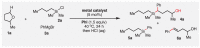
Based on these mechanistic considerations, we began the coupling studies with an evaluation of the effect of metal catalysts using the reaction of chlorosilane 2a with phenylmagnesium bromide in 2-methyltetrahydrofuran (Table 1). With iodobenzene as the radical source but without a metal catalyst, Kumada coupling of chlorosilane with phenylmagnesium occurred effectively, giving arylsilane byproduct 5a in 67% yield (entry 1). This result underlined the clear challenge that impeding this competitive side-coupling reaction presented. Typical 3d metal catalysts that are commonly used in organic synthesis, such as NiCl2, FeCl2, CoCl2, and CuCl2, were ineffective at promoting the geminal cross-coupling reaction. These conditions again led to the predominant formation of 5a in high yields (entries 2–5). We tested the reactivity of MnCl2 in the coupling reaction, but this was again unsuccessful in giving the twofold geminal coupled product (entry 6). However, using CrCl3 salt, we were excited to find that the twofold cross-coupling occurred to form the 1,4-arylsilylated alcohol 4a, albeit in moderate yield with large amount of phenylsilane 5a (entry 7)44–48. The salts of Cr(acac)3 and Cr(CO)6 are inefficiency in promoting the geminal three-component couplings (entries 8 and 9). To improve the selectivity, we examined the effect of ligands on the geminal cross-coupling by ligation to CrCl3. Gratifyingly, use of the bulky DippCAAC ligand, pioneered and developed by Bertrand49 and recently used by Engle in Cu-catalyzed borylation50, promoted the twofold geminal coupling significantly, leading to the formation of 4a in good yield (entry 10)51. Under these conditions, both Kumada coupling of chlorosilane and β-hydride elimination were impeded greatly, giving 5a and 6a in low yields. Couplings with N-phenyl-substituted PhCAAC or phosphino-containing PCAAC ligands gave inferior results52, indicating that the sterically congested imino scaffold of DippCAAC plays an important role in increasing the reactivity of Cr in the reaction (entries 11 and 12). No geminal twofold couplings occurred without iodobenzene and low yields of 4a were obtained when bromo- or chlorobenzene were used (Supplementary Table 3).
Table 1.
Studying the effect of metal catalysts on chemoselectivity in the cross-coupling of ethera
 | ||||
|---|---|---|---|---|
| Entry | Metal catalyst | Yield (4a) | Yield (5a) | Yield (6a) |
| 1 | none | 0 | 67% | 0 |
| 2 | NiCl2 | <2% | 68% | 0 |
| 3 | FeCl2 | 12% | 69% | 5% |
| 4 | CoCl2 | 14% | 62% | 7% |
| 5 | CuCl2 | 0 | 63% | 0 |
| 6 | MnCl2 | <2% | 70% | 0 |
| 7 | CrCl3 | 68% | 20% | 9% |
| 8 | Cr(acac)3 | 14% | 62% | 30% |
| 9 | Cr(CO)6 | 5% | 68% | 25% |
| 10 | DippCAAC-Cr complex | 82% | 10% | 5% |
| 11 | PhCAAC-Cr complex | 75% | 16% | 11% |
| 12 | PCAAC-Cr complex | 72% | 18% | 10% |
 | ||||
aGC yields using n-tridecane as internal standard, based on the amount of chlorosilane.
CAAC–Cr-catalyzed geminal twofold cross-coupling reactions of ethers
With the optimized conditions in hand, we next examined the scope of chlorosilanes that can be employed in this Cr-catalyzed twofold cross-coupling for the preparation of 1,4-arylsilyl alcohols that contain functionalized silicon and hydroxyl scaffolds. As shown in Fig. 2, use of the DippCAAC–Cr catalytic platform permitted the coupling of PhMgBr and THF with a broad range of linear alkyl-substituted chlorodimethylsilanes, resulting in the formation of 1,4-phenylsilylated alcohols 4b–f in 79–87% yield. The steric hindrance imposed by the phenyl, isopropyl, and cyclohexyl substituents of chlorosilanes did not greatly affect the twofold geminal cross-coupling reactions, providing access to hydroxyl-tethered arylalkylsilane compounds 4i–l. As anticipated, the use of chlorosilanes containing three alkyl substituents, such as ethyl, propyl, and hexyl groups, provided high levels of twofold coupling efficiency (4m–o).
Fig. 2. CAAC–Cr-catalyzed selective geminal twofold cross-coupling reactions of THF.

The synthetic scope in the formation of 1,4-arylsilyl alcohols.
Similarly useful levels of chemoselectivity were obtained when arylmagnesium bromides bearing either electron-donating or electron-deficient groups were used, providing a strategy for the synthesis of isopropyl, tert-butyl-, methoxy-, benzyloxy-, fluoride-, trifluoromethyl-, and phenyl-substituted 1,4-arylsilyl alcohols 4p–w. Heteroatoms such as silicon, oxygen, nitrogen, and sulfur-containing phenylmagnesium bromides also served as effective coupling partners in this coupling and led to the chemoselective formation of Csp3–Csp2 and Csp3–Si bonds under mild conditions (4x–ab). In addition, thiophenyl-substituted arylmagnesium underwent twofold geminal coupling to afford the arylsilylated derivative 4ac, and the reaction with polycyclic aromatic hydrocarbon-bearing organomagnesium bromides gave 1,4-arylsilylated alcohols 4ad–af. Again, steric congestion around the chlorosilane substrate did not impede the twofold geminal couplings, with diphenylmethylsilylated alcohol 4ag obtained in 81% yield. Intriguingly, a polyfluoride was incorporated into the aliphatic scaffold of chlorosilane with no deleterious effect on coupling efficiency (4ah).
We established that the geminal Csp3–H and Csp3–O bonds of six-membered tetrahydro-2H-pyran cleavage efficiently with the CAAC–Cr-catalyzed platform to achieve coupling with aryl Grignard and chlorosilane, providing a concise route to the 1,5-arylsilyl alcohol motif 4aj (Table 2, entry 2). It should be noted that the twofold geminal couplings are not limited to cyclic ethers; acyclic ethers are also suitable precursors in the twofold cross-coupling reactions. For instance, when symmetric diethyl ether was used, the α-Csp3–H and Csp3–O bonds were cleaved and coupling with phenylmagnesium and chlorotrimethylsilane proceeded, providing access to α-arylated silane 4ak in moderate yield (entry 3). Interestingly, the coupling reaction using asymmetric methyl tert-butyl ether cleaved the Cmethyl–H and Cmethyl–O bonds, enabling the incorporation of a methylene group by loss of a tert-butyloxy group, furnishing benzylic silane 4al (entry 4). When benzyl methyl ethers were exposed to these catalytic conditions, only the relatively reactive Cbenzyl–H and Cbenzyl–O bonds were cleaved selectively and underwent geminal coupling reactions to afford diarylmethyl silane compounds 4am–ao (entries 5–7). Analogously, the reactive α-Cmethylene–H and Cmethylene–O bonds of 3-(methoxymethyl)furan preferentially coupled with organomagnesium and chlorosilane rather than the related α-Cmethyl–H and Cmethyl–O bonds, albeit giving furanyl(phenyl)methyl silane 4ap in low yield (entry 8).
Table 2.
CAAC–Cr-catalyzed cross-coupling reactions using cyclic and acyclic ethersa

Application to the preparation of deuterium-labeled 1,4-arylsilyl alcohols, gram-scale couplings, and late-stage diversification
Deuterium-labeled motifs have found widespread application in pharmaceutical chemistry because they can enable metabolism to be altered by exploitation of kinetic isotope effects53. We therefore examined the twofold geminal coupling of inexpensive deuterated THF-d8 as precursor. As shown in Fig. 3a, a variety of chlorosilanes, including those containing trimethyl, butyldimethyl, dimethyloctyl, benzyldimethyl, cyclohexyldimethyl, and trihexyl substituents, coupled readily with THF-d8 and phenylmagnesium bromide, furnishing deuterium-labeled 1,4-arylsilyl alcohols 4b-d7, 4aq-d7, 4d-d7, 4g-d7, 4l-d7, and 4o-d7. Notably, no deuterium was lost in the twofold geminal cross-coupling process, which provides a valuable strategy for the synthesis of deuterium-labeled compounds that contain >99% D incorporation in the corresponding aliphatic linkers to the 1,4-arylsilyl alcohols.
Fig. 3. CAAC–Cr-catalyzed selective geminal twofold cross-coupling reactions of ethers.

a The synthesis of deuterium-labeled 1,4-arylsilyl alcohols by cross-coupling reactions with THF-d8. b Scalability and late-stage diversification of market-selling drugs and representative synthetic applications and transformations.
Given that both the silyl and hydroxyl functional groups are appended in the products when cyclic ethers are used, we studied the application of this geminal coupling strategy for the synthesis of valuable chemicals and to enrich the molecular library through late-stage diversification. As shown in Fig. 3b, the DippCAAC–Cr-catalyzed twofold geminal cross-coupling reactions are scalable, providing access to hydroxyl-tethered and arylsilylated hydrocarbon 4b without loss of efficiency. By the reaction of the appended hydroxyl group with the market-selling drug Indomethacin, facile access to the related pharmaceutical derivative 5 is possible. The hydroxyl was readily halogenated in the preparation of iodo-substituted arylalkylsilane (6). By further modifying the iodo substituent, the boronated and azidated arylalkyl silanes 7 and 8 were prepared. Moreover, the silyl group was functionalized by the reaction with benzaldehyde, following by cyclization in the synthesis of the oxygen-containing heterocycle 2,3-diphenyltetrahydro-2H-pyran (10).
Discussion
Mechanical insights
Inspired by the Cr-catalyzed formation of deuterium-labeled alcohols, we investigated whether iodoarenes could serve as a radical source for the abstraction of deuterium from THF-d8 through a HAT process39. We were pleased to find that deuterated arene 11 was formed in 81% yield with incorporation of ca. 90% D after the cleavage of a Caryl–I bond, together with 1,4-phenylsilyl alcohol 4ar-d7 deuterated at the linker (Fig. 4a). Further, the addition of 1,1-diphenylethylene as a radical scavenger to the catalytic system completely shut down the coupling, giving phenylated alkene 13 in 31% yield (Fig. 4b). The formation of low-valent Cr by the reaction of Cr salt with organomagnesium has been described previously54. The abstraction of an α-H atom from the ether by the benzene radical, probably formed by the reduction of PhI with low-valent DippCAAC–Cr, may be considered for the generation of the α-oxy radical species (see below). We then conducted stoichiometric coupling reactions using one equivalent of the CAAC–Cr complex at 0 °C for 1 h (Fig. 4c). After quenching the reaction with D2O, we noted that the phenyldeuterated compound 15 was formed in 11% yield with around 95% D incorporation (Supplementary Fig. 4), indicating the formation of benzylated chromate species such as Int-V by preferential incorporation on phenyl (see below). The formation of trace amounts of phenylated alkene 16 was also observed, which may be generated by β-hydride elimination of Int-V.
Fig. 4. Mechanistic studies.

a Studying the HAT process by deuterium-labeling experiments using 1b-d8. b Radical scavenger experiments. c Quenching the stoichiometric coupling reaction of ether with D2O. d Quenching the reaction of CAAC–Cr and ArMgBr/PhI in THF.
We next performed the stoichiometric reaction without chlorosilane by mixing benzyl methyl ether (1c) with DippCAAC–Cr, aryl Grignard 3b, and PhI (Fig. 4d). After stirring at 40 °C for 1 h and quenching with D2O, deuterated 4-methyl-1,1’-biphenyl 17 was obtained in 36% yield with a total of 187% D incorporation at the methyl group (Supplementary Fig. 5). The formation of Cr–carbene or gem-bimetalloalkane species by cleavage of benzylic Csp3–H and Csp3–O bonds can be proposed for the transformation. To study the intermediates in more detail, we conducted the stoichiometric reaction of DippCAAC–Cr with ArMgBr and PhI in THF at 0 °C for 1 h (Fig. 5a). After removal of volatiles and washing with a mixed solution of toluene/hexane (1:3 v/v) to remove excess ArMgBr/PhI, analysis of the residue by high-resolution mass spectrometry (HRMS) revealed a single prominent ion at a mass-to-charge ratio of 711.4930 (calculated m/z 711.4921), indicating a Cr–carbene of (DippCAAC)Cr=C{(CH2)3OH}(THF) (Int-a) that might be generated by abstraction of an α-H atom from THF to form the α-oxy radical and combination with Cr, subsequent cleavage of the Csp3–O bond, and quenching of Int-III (Fig. 6a). In addition, the α-arylated (alkyl)Cr Int-b was detected by HRMS analysis, which was quenched with D2O to form aryldeuterated compound 15. We cannot currently exclude the formation of an arylated Cr–carbene such as Int-c in the reaction. By the treatment of the residue with chlorosilane without ArMgBr and PhI, the 1,4-arylsilyl alcohol 4as was formed in 41% yield, indicating that either Int-b or Int-c serve as a reactive intermediate in the twofold geminal cross-coupling process.
Fig. 5. The exploration of possible Cr–carbene intermediates.

a Studies of potential intermediates by HRMS analysis. b CAAC–Cr-catalyzed geminal cross-coupling with a diazo derivative as a precursor. c Stoichiometric reaction of CAAC–Cr with the diazo derivative for studying the Cr–carbene formed in situ as an intermediate in the geminal cross-coupling process.
Fig. 6. Proposed cross-coupling pathway and kinetic studies.

a Proposed coupling mechanism. b Reaction profile for the geminal twofold cross-coupling reaction of 1a under CAAC–Cr catalysis. c Plot of the initial rate versus the initial concentration of chlorosilane. d Plot of the initial rate versus the initial concentration of phenylmagnesium bromide. e Plot of the initial rate versus the initial concentration of CAAC–Cr complex.
Because diazo compounds serving as metal–carbene precursors have been used in Pd- and Rh-catalyzed cross-coupling reactions55, we examined the use of diazo derivative 18 as a coupling partner in the Cr-catalyzed reaction. The geminal twofold couplings proceeded smoothly under DippCAAC–Cr catalysis without PhI, furnishing the arylsilylated product 19 in 61% yield (Fig. 5b). We previously revealed that the DippCAAC–Cr complex could be reduced by Mg to generate low-valent Cr. Upon reduction with Mg and treatment with the diazo derivative without Mg, HRMS analysis of the residue indicated the formation of a DippCAAC–Cr–carbene species with a prominent ion at a mass-to-charge ratio of 729.4820 (calculated m/z 729.4810) (Fig. 5c). We found that further reaction with 2b and 3b led to the formation of the geminal coupling product 19 in 53% yield, indicating that the formation of a DippCAAC–Cr–carbene species could be considered for the geminal couplings. The Cr–carbene can be quenched with D2O, leading to the formation of the deuterated derivative 17 with a 196% total D incorporation. This result is consistence with the incorporation of 187% D observed after quenching the stoichiometric reaction of benzyl methyl ether 1j (Fig. 4d).
Collecting these experimental insights together, we propose that the low-valent Cr formed in situ may react with PhI in a SET process giving the phenyl radical, which abstracts the α-H atom of ether via a HAT process to afford the corresponding α-oxy radical (Fig. 6a). By combining with Cr and reaction with aryl Grignard, the alkylated ate-species Int-II is formed, which undergoes cleavage of the Csp3–O bond, leading to the formation of Cr–carbene Int-III. Further reaction with aryl Grignard and transfer of the aryl group to the carbenoid site forms an Csp3–Csp2 bond, giving the α-arylated (alkyl)Cr species Int-V. The latter may undergo β-H elimination to afford the arylated alkene as a side compound (e.g., 6a, Table 1), or it can be quenched with D2O to form the aryl-deuterated motif 15 (Fig. 4c). The geminal Csp3–Si bond could be formed by the reaction of α-arylated (alkyl)Cr with chlorosilane to furnish the 1,4-arylsilylated alcohol.
The kinetic behavior of the Cr-catalyzed geminal twofold cross-coupling reaction was investigated. As shown in Fig. 6b, the coupling reaction occurred rapidly without an induction period, with 1,4-arylsilyl alcohol 4r being formed in 47% yield within the initial 5 h. After a further 5 h, a good yield (74%) for 4r was obtained. Using the reaction with chlorosilane 2a and aryl Grignard 3b in THF as a model, the initial reaction rate (Δ[2a]/Δt) against the initial concentration of 2a (0.05–0.15 M) revealed a slope of 1.0 from the logarithm plot and linear fitting of the data, suggesting a first-order dependence of the initial rate on the concentration of chlorosilane (Fig. 6c). Because of the later silylation process in the geminal cross-coupling reactions, the first-order kinetic profile for chlorosilane indicates that the reaction with chlorosilane to form the Csp3–Si bond is the turnover-limiting step. Plots of initial rate versus the initial concentration of 3b and DippCAAC–Cr complex revealed first-order kinetics for the aryl Grignard, and a deviation from the first-order kinetics for DippCAAC–Cr (Fig. 6d, e).
We have developed a metal–carbene-guided and Cr-catalyzed twofold cross-coupling reaction of sustainable ethers with chlorosilanes and arylmagnesium bromides providing value-added difunctionalized 1,n-arylsilyl alcohols using cycloethers and α-arylated silanes with acyclic ethers under mild conditions. This reaction enables the synchronous scission of α-Csp3–H and Csp3–O bonds of ethers through twofold cross-coupling to enable the formation of geminal Csp3–Csp2 and Csp3–Si bonds and the rapid construction of silylated Csp3 centers with high selectivity. The method has been applied for the efficient formation of 1,4-silyl alcohols labeled with deuterium at the linker region, for modification of a market-selling drug, and to access diverse substituted derivatives. Mechanistic studies support the conclusion that twofold cross-coupling reactions are initiated by an aryl radical abstraction of an α-H atom from the ether, followed by cleavage of an Csp3–O bond to give a Cr–carbene that subsequent undergoes geminal Csp3–Csp2/Csp3–Si bond couplings. This process disrupts the conventional metal–carbene-forming paradigm of using unstable diazo compounds as Fischer carbene precursors and was instead achieved by using a radical-relay strategy for the selective arylsilylation of ethers under cost-effective Cr catalysis. We expect the findings will permit new synthetic strategies for the functionalization of ether feedstocks to provide value-added motifs under earth-abundant metal catalysis. Further studies on the Cr-catalyzed cross-coupling by subtle harnessing of key metallo-intermediates are under way.
Methods
Geminal twofold cross-coupling reaction of ether: general procedure
Chlorosilane 2b (0.4 mmol), PhI (124 mg, 1.5 equiv., 0.6 mmol), and DippCAAC–Cr complex (14 mg, 0.02 mmol) were placed in a dried Schlenk tube, then freshly distilled ether 1 (2.0 mL) was added by using a syringe under an atmosphere of nitrogen. After stirring at room temperature for 5 min, aryl Grignard reagent 3a (1.6 mL, 1.0 M in 1) was added dropwise and the mixture was stirred at 40 °C for 24 h. A solution of aqueous HCl (3 M, 2 mL) was then added and the mixture was stirred at room temperature for 10 min. After neutralization with a saturated aqueous solution of NaHCO3, the mixture was extracted three times with ethyl acetate. The organic phases were collected, dried over anhydrous Na2SO4, and concentrated under reduced pressure. The residue was purified by column chromatography to afford the desired coupling product.
Supplementary information
Acknowledgements
We gratefully acknowledge the National Natural Science Foundation of China (grants 22125107 and 21971168 to X.Ze.) and Fundamental Research Funds for the Central Universities (20826041D4117 to X.Ze.) for financial support. The authors thank Analytical & Testing Center and Dr. D. Deng from the College of Chemistry, and the public Platform of Analytical & Testing Center at Sichuan University for NMR testing.
Author contributions
F.F. and Y.P. contributed equally to this work. X.Ze. designed the overall research project. F.F., Y.P., M.L., and X.Ze. designed and conducted directed evolution experiments. F.F., Y.P., X.Zh., S.W. and Z.L. conducted the studies of substrate scope and mechanistic experiments. All authors analyzed the data and contributed to the preparation of the manuscript. X.Ze. wrote the manuscript.
Peer review
Peer review information
Nature Communications thanks Chuan He, Jianbo Wang and the other, anonymous, reviewer(s) for their contribution to the peer review of this work. A peer review file is available.
Data availability
The authors declare that all other data supporting the findings of this study are available within the article and Supplementary Information files, and also are available from the corresponding author upon request.
Competing interests
The authors declare no competing interests.
Footnotes
Publisher’s note Springer Nature remains neutral with regard to jurisdictional claims in published maps and institutional affiliations.
Supplementary information
The online version contains supplementary material available at 10.1038/s41467-024-50675-5.
References
- 1.Johansson Seechurn, C. C. C., Kitching, M. O., Colacot, T. J. & Snieckus, V. Palladium-catalyzed cross-coupling: A historical contextual perspective to the 2010 Nobel Prize. Angew. Chem. Int. Ed.51, 5062–5085 (2012). 10.1002/anie.201107017 [DOI] [PubMed] [Google Scholar]
- 2.Negishi, E.-I. Transition metal-catalyzed organometallic reactions that have revolutionized organic synthesis. Bull. Chem. Soc. Jpn.80, 233–257 (2007). 10.1246/bcsj.80.233 [DOI] [Google Scholar]
- 3.de Meijere, A. & Diederich, F. Eds., Metal-catalyzed cross-coupling reactions, 2nd ed. (Wiley-VCH, 2004).
- 4.Roughley, S. D. & Jordan, A. M. The medicinal chemist’s toolbox: An analysis of reactions used in the pursuit of drug candidates. J. Med. Chem.54, 3451–3479 (2011). 10.1021/jm200187y [DOI] [PubMed] [Google Scholar]
- 5.Choi, J. & Fu, G. C. Transition metal–catalyzed alkyl-alkyl bond formation: Another dimension in cross-coupling chemistry. Science356, eaaf7230 (2017). 10.1126/science.aaf7230 [DOI] [PMC free article] [PubMed] [Google Scholar]
- 6.Kranthikumar, R. Recent advances in C(sp3)−C(sp3) cross-coupling chemistry: A dominant performance of nickel catalysts. Organometallics41, 667–679 (2022). 10.1021/acs.organomet.2c00032 [DOI] [Google Scholar]
- 7.Wu, D. et al. Alkene 1,1-difunctionalizations via organometallic-radical relay. Nat. Catal.6, 1030–1041 (2023). 10.1038/s41929-023-01032-0 [DOI] [Google Scholar]
- 8.Zeng, X. Recent advances in catalytic sequential reactions involving hydroelement addition to carbon–carbon multiple bonds. Chem. Rev.113, 6864–6900 (2013). 10.1021/cr400082n [DOI] [PubMed] [Google Scholar]
- 9.Xia, Y., Qiu, D. & Wang, J. Transition-metal-catalyzed cross-couplings through carbene migratory insertion. Chem. Rev.117, 13810–13889 (2017). 10.1021/acs.chemrev.7b00382 [DOI] [PubMed] [Google Scholar]
- 10.Zhao, G., Wu, Y., Wu, H.-H., Yang, J. & Zhang, J. Pd/GF-Phos-catalyzed asymmetric three-component coupling reaction to access chiral diarylmethyl alkynes. J. Am. Chem. Soc.143, 17983–17988 (2021). 10.1021/jacs.1c09742 [DOI] [PubMed] [Google Scholar]
- 11.Wu, X. et al. Modular α-tertiary amino ester synthesis through cobalt-catalysed asymmetric aza-Barbier reaction. Nat. Chem. 16, 398–407 (2024). [DOI] [PubMed]
- 12.Xu, H. et al. Highly enantioselective copper- and iron-catalyzed intramolecular cyclopropanation of indoles. J. Am. Chem. Soc.139, 7697–7700 (2017). 10.1021/jacs.7b03086 [DOI] [PubMed] [Google Scholar]
- 13.Bykowski, D., Wu, K.-H. & Doyle, M. P. Vinyldiazolactone as a vinylcarbene precursor: highly selective C−H insertion and cyclopropanation reactions. J. Am. Chem. Soc.128, 16038–16039 (2006). 10.1021/ja066452e [DOI] [PMC free article] [PubMed] [Google Scholar]
- 14.Xia, Y. & Wang, J. Transition-metal-catalyzed cross-coupling with ketones or aldehydes via N-tosylhydrazones. J. Am. Chem. Soc.142, 10592–10605 (2020). 10.1021/jacs.0c04445 [DOI] [PubMed] [Google Scholar]
- 15.Li, M.-L., Yu, J.-H., Li, Y.-H., Zhu, S.-F. & Zhou, Q.-L. Highly enantioselective carbene insertion into N-H bonds of aliphatic amines. Science366, 990–994 (2019). 10.1126/science.aaw9939 [DOI] [PubMed] [Google Scholar]
- 16.Fischer, E. O. & Maasböl, A. On the existence of a tungsten carbonyl carbene complex. Angew. Chem. Int. Ed.3, 580–581 (1964). 10.1002/anie.196405801 [DOI] [Google Scholar]
- 17.Zhou, G., Guo, Z. & Shen, X. Electron-rich oxycarbenes: new synthetic and catalytic applications beyond group 6 Fischer carbene complexes. Angew. Chem. Int. Ed.62, e202217189 (2023). 10.1002/anie.202217189 [DOI] [PubMed] [Google Scholar]
- 18.Sakurai, S., Inagaki, T., Kodama, T., Yamanaka, M. & Tobisu, M. Palladium-catalyzed siloxycyclopropanation of alkenes using acylsilanes. J. Am. Chem. Soc.144, 1099–1105 (2022). 10.1021/jacs.1c11497 [DOI] [PubMed] [Google Scholar]
- 19.Palomo, E. et al. Generating Fischer-type Rh-carbenes with Rh-carbynoids. J. Am. Chem. Soc.145, 4975–4981 (2023). 10.1021/jacs.3c00012 [DOI] [PMC free article] [PubMed] [Google Scholar]
- 20.Green, S. P. et al. Thermal stability and explosive hazard assessment of diazo compounds and diazo transfer reagents. Org. Process Res. Dev.24, 67–84 (2020). 10.1021/acs.oprd.9b00422 [DOI] [PMC free article] [PubMed] [Google Scholar]
- 21.Bijoy, R., Agarwala, P., Roy, L. & Thorat, B. N. Unconventional ethereal solvents in organic chemistry: a perspective on applications of 2-methyltetrahydrofuran, cyclopentyl methyl ether, and 4-methyltetrahydropyran. Org. Process Res. Dev.26, 480–492 (2022). 10.1021/acs.oprd.1c00246 [DOI] [Google Scholar]
- 22.Li, C.-J. Cross-dehydrogenative coupling (CDC): exploring C-C bond formations beyond functional group transformations. Acc. Chem. Res.42, 335–344 (2009). 10.1021/ar800164n [DOI] [PubMed] [Google Scholar]
- 23.Liu, C. et al. Oxidative coupling between two hydrocarbons: an update of recent C–H functionalizations. Chem. Rev.115, 12138–12204 (2015). 10.1021/cr500431s [DOI] [PubMed] [Google Scholar]
- 24.Ji, C.-L. et al. Photoinduced gold-catalyzed divergent dechloroalkylation of gem-dichloroalkanes. Nat. Catal.5, 1098–1109 (2022). 10.1038/s41929-022-00881-5 [DOI] [Google Scholar]
- 25.Hu, M.-Y., Lian, J., Sun, W., Qiao, T.-Z. & Zhu, S.-F. Iron-catalyzed dihydrosilylation of alkynes: efficient access to geminal bis(silanes). J. Am. Chem. Soc.141, 4579–4583 (2019). 10.1021/jacs.9b02127 [DOI] [PubMed] [Google Scholar]
- 26.Tan, Y.-X. et al. Ruthenium-catalyzed geminal hydroborative cyclization of enynes. Angew. Chem. Int. Ed.61, e202204319 (2022). 10.1002/anie.202204319 [DOI] [PubMed] [Google Scholar]
- 27.Bullock, R. M. et al. Using nature’s blueprint to expand catalysis with earth-abundant metals. Science369, eabc3183 (2020). 10.1126/science.abc3183 [DOI] [PMC free article] [PubMed] [Google Scholar]
- 28.Soleilhavoup, M. & Bertrand, G. Cyclic (alkyl)(amino)carbenes (CAACs): stable carbenes on the rise. Acc. Chem. Res.48, 256–266 (2015). 10.1021/ar5003494 [DOI] [PubMed] [Google Scholar]
- 29.Hopkinson, M. N., Richter, C., Schedler, M. & Glorius, F. An overview of N-heterocyclic carbenes. Nature510, 485–496 (2014). 10.1038/nature13384 [DOI] [PubMed] [Google Scholar]
- 30.Bellotti, P., Koy, M., Hopkinson, M. N. & Glorius, F. Recent advances in the chemistry and applications of N-heterocyclic carbenes. Nat. Rev. Chem.5, 711–725 (2021). 10.1038/s41570-021-00321-1 [DOI] [PubMed] [Google Scholar]
- 31.Zhao, L. & Zeng, X. Transition-metal-catalyzed reactions promoted by cyclic (alkyl or aryl)(amino)carbene ligands. Chem8, 2082–2113 (2022). 10.1016/j.chempr.2022.05.019 [DOI] [Google Scholar]
- 32.Li, J. & Knochel, P. Chromium-catalyzed cross-couplings and related reactions. Synthesis51, 2100–2106 (2019). 10.1055/s-0037-1611756 [DOI] [Google Scholar]
- 33.Cong, X. & Zeng, X. Mechanistic diversity of low-valent chromium catalysis: cross-coupling and hydrofunctionalization. Acc. Chem. Res.54, 2014–2026 (2021). 10.1021/acs.accounts.1c00096 [DOI] [PubMed] [Google Scholar]
- 34.Zhang, Y. & Li, C.-J. DDQ-mediated direct cross-dehydrogenative-coupling (CDC) between benzyl ethers and simple ketones. J. Am. Chem. Soc.128, 4242–4243 (2006). 10.1021/ja060050p [DOI] [PubMed] [Google Scholar]
- 35.Liu, D., Liu, C., Li, H. & Lei, A. Direct functionalization of tetrahydrofuran and 1,4-dioxane: nickel-catalyzed oxidative C(sp3)–H arylation. Angew. Chem. Int. Ed.52, 4453–4456 (2013). 10.1002/anie.201300459 [DOI] [PubMed] [Google Scholar]
- 36.Qvortrup, K., Rankic, D. A. & MacMillan, D. W. C. A general strategy for organocatalytic activation of C–H bonds via photoredox catalysis: Direct arylation of benzylic ethers. J. Am. Chem. Soc.136, 626–629 (2014). 10.1021/ja411596q [DOI] [PMC free article] [PubMed] [Google Scholar]
- 37.Xu, S. et al. Enantioselective C(sp3)−H functionalization of oxacycles via photo-HAT/nickel dual catalysis. J. Am. Chem. Soc.145, 5231–5241 (2023). 10.1021/jacs.2c12481 [DOI] [PubMed] [Google Scholar]
- 38.Huang, H., Strater, Z. M. & Lambert, T. H. Electrophotocatalytic C−H functionalization of ethers with high regioselectivity. J. Am. Chem. Soc.142, 1698–1703 (2020). 10.1021/jacs.9b11472 [DOI] [PMC free article] [PubMed] [Google Scholar]
- 39.Ye, B., Zhao, J., Zhao, K., McKenna, J. M. & Toste, F. D. Chiral diaryliodonium phosphate enables light driven diastereoselective α‐C(sp3)−H acetalization. J. Am. Chem. Soc.140, 8350–8356 (2018). 10.1021/jacs.8b05962 [DOI] [PMC free article] [PubMed] [Google Scholar]
- 40.Hatanaka, Y. & Hiyama, T. Cross-coupling of organosilanes with organic halides mediated by palladium catalyst and tris(diethy1amino)sulfonium difluorotrimethylsilicate. J. Org. Chem.53, 918–920 (1988). 10.1021/jo00239a056 [DOI] [Google Scholar]
- 41.Tamao, K., Akita, M. & Kumada, M. Hydrogen peroxide oxidation of the silicon-carbon bond in organoalkoxysllanes. Organometallics2, 1696–1698 (1983). 10.1021/om50005a041 [DOI] [Google Scholar]
- 42.Xiao, W. & Wu, J. Narasaka reaction: Desilylative acylation of 1-alkenylsilanes with acid anhydrides. Chin. Chem. Lett.32, 2751–2755 (2021). 10.1016/j.cclet.2021.03.033 [DOI] [Google Scholar]
- 43.He, R. et al. Mn-catalyzed three-component reactions of imines/nitriles, Grignard reagents, and tetrahydrofuran: An expedient access to 1,5-amino/keto alcohols. J. Am. Chem. Soc.136, 6558–6561 (2014). 10.1021/ja503520t [DOI] [PubMed] [Google Scholar]
- 44.Steib, A. K., Kuzmina, O. M., Fernandez, S., Flubacher, D. & Knochel, P. Efficient chromium(II)-catalyzed cross-coupling reactions between Csp2 Centers. J. Am. Chem. Soc.135, 15346–15349 (2013). 10.1021/ja409076z [DOI] [PubMed] [Google Scholar]
- 45.Schwarz, J. L., Schäfers, F., Tlahuext-Aca, A., Lückemeier, L. & Glorius, F. Diastereoselective allylation of aldehydes by dual photoredox and chromium catalysis. J. Am. Chem. Soc.140, 12705–12709 (2018). 10.1021/jacs.8b08052 [DOI] [PubMed] [Google Scholar]
- 46.Liu, H.-L., Wang, X., Gao, K. & Wang, Z. Catalytic diastereo- and enantioselective cyclopropanation of gem-dihaloalkanes and terminal olefins. Angew. Chem. Int. Ed.62, e202305987 (2023). 10.1002/anie.202305987 [DOI] [PubMed] [Google Scholar]
- 47.Schwarz, J. L., Kleinmans, R., Paulisch, T. O. & Glorius, F. 1,2-Amino alcohols via Cr/photoredox dual-catalyzed addition of α-amino carbanion equivalents to carbonyls. J. Am. Chem. Soc.142, 2168–2174 (2020). 10.1021/jacs.9b12053 [DOI] [PubMed] [Google Scholar]
- 48.Fan, F. et al. Chemoselective chromium-catalysed cross-coupling enables three-component tertiary alkane synthesis. Nat. Synth.2, 1046–1058 (2023). 10.1038/s44160-023-00364-w [DOI] [Google Scholar]
- 49.Chu, J., Munz, D., Jazzar, R., Melaimi, M. & Bertrand, G. Synthesis of hemilabile cyclic (alkyl)(amino)carbenes (CAACs) and applications in organometallic chemistry. J. Am. Chem. Soc.138, 7884–7887 (2016). 10.1021/jacs.6b05221 [DOI] [PubMed] [Google Scholar]
- 50.Gao, Y. et al. Cyclic (alkyl)(amino)carbene ligands enable Cu-catalyzed Markovnikov protoborationand protosilylation of terminal alkynes: A versatile portal to functionalized alkenes. Angew. Chem. Int. Ed.60, 19871–19878 (2021). 10.1002/anie.202106107 [DOI] [PMC free article] [PubMed] [Google Scholar]
- 51.Zhao, L. et al. Cyclic (alkyl)(amino)carbene ligand-promoted nitro deoxygenative hydroboration with chromium catalysis: Scope, mechanism, and applications. J. Am. Chem. Soc.143, 1618–1629 (2021). 10.1021/jacs.0c12318 [DOI] [PubMed] [Google Scholar]
- 52.Ling, L. et al. Chromium-catalyzed stereodivergent E- and Z-selective alkyne hydrogenation controlled by cyclic (alkyl)(amino)carbene ligands. Nat. Commun.14, 990 (2023). 10.1038/s41467-023-36677-9 [DOI] [PMC free article] [PubMed] [Google Scholar]
- 53.Li, N., Li, Y., Wu, X., Zhu, C. & Xie, J. Radical deuteration. Chem. Soc. Rev.51, 6291–6306 (2022). 10.1039/D1CS00907A [DOI] [PubMed] [Google Scholar]
- 54.Albahily, K. et al. Vinyl oxidative coupling as a synthetic route to catalytically active monovalent chromium. J. Am. Chem. Soc.133, 6388–6395 (2011). 10.1021/ja201003j [DOI] [PubMed] [Google Scholar]
- 55.Zhang, Z. & Wang, J. Recent studies on the reactions of α-diazocarbonyl compounds. Tetrahedron64, 6577–6605 (2008). 10.1016/j.tet.2008.04.074 [DOI] [Google Scholar]
Associated Data
This section collects any data citations, data availability statements, or supplementary materials included in this article.
Supplementary Materials
Data Availability Statement
The authors declare that all other data supporting the findings of this study are available within the article and Supplementary Information files, and also are available from the corresponding author upon request.