


Abstract
Background
Chronic osteomyelitis is generally treated with antibiotics and surgical debridement but can persist intermittently for years with frequent therapeutic failure or relapse. Despite advances in both antibiotic and surgical treatment, the long‐term recurrence rate remains around 20%. This is an update of a Cochrane review first published in 2009.
Objectives
To determine the effects of different systemic antibiotic treatment regimens for treating chronic osteomyelitis in adults.
Search methods
We searched the Cochrane Bone, Joint and Muscle Trauma Group Specialised Register (October 2012), the Cochrane Central Register of Controlled Trials (The Cochrane Library 2012, Issue 9), MEDLINE (January 1948 to September Week 4 2012), EMBASE (January 1980 to 2012 Week 40), LILACS (October 2012), the WHO International Clinical Trials Registry Platform (June 2012) and reference lists of relevant articles.
Selection criteria
Randomised controlled trials (RCTs) or quasi‐RCTs addressing the effects of different antibiotic treatments given after surgical debridement for chronic osteomyelitis in adults.
Data collection and analysis
Two review authors independently screened papers for inclusion, extracted data and appraised risk of bias in the included trials. Where appropriate, we pooled data using the fixed‐effect model.
Main results
We included eight small trials involving a total of 282 participants with chronic osteomyelitis. Data were available from 248 participants. Most participants were male with post‐traumatic osteomyelitis, usually affecting the tibia and femur, where recorded. The antibiotic regimens, duration of treatment and follow‐up varied between trials. All trials mentioned surgical debridement before starting on antibiotic therapy as part of treatment, but it was unclear in four trials whether all participants underwent surgical debridement.
We found that study quality and reporting were often inadequate. In particular, we judged almost all trials to be at moderate to high risk of bias due to failure to conceal allocation and inadequate follow‐up.
Four trials compared oral versus parenteral route for administration of antibiotics. There was no statistically significant difference between the two groups in the remission at the end of treatment (70/80 versus 58/70; risk ratio (RR) 1.04, 95% confidence interval (CI) 0.92 to 1.18; four trials, 150 participants). There was no statistically significant difference between the two groups in the remission rate 12 or more months after treatment (49/64 versus 44/54; RR 0.94, 95% CI 0.78 to 1.13; three trials, 118 participants). There was also no significant difference between the two groups in the occurrence of mild adverse events (11/64 versus 8/54; RR 1.08, 95% CI 0.49 to 2.42; three trials, 118 participants) or moderate and severe adverse events (3/49 versus 4/42; RR 0.69, 95% CI 0.19 to 2.57; three trials, 91 participants). Superinfection occurred in participants of both groups (5/66 in the oral group versus 4/58 in the parenteral group; RR 1.08, 95% CI 0.33 to 3.60; three trials, 124 participants).
Single trials with few participants found no statistical significant differences for remission or adverse events for the following four comparisons: oral only versus parenteral plus oral administration; parenteral plus oral versus parenteral only administration; two different parenteral antibiotic regimens; and two different oral antibiotic regimens. No trials compared different durations of antibiotic treatment for chronic osteomyelitis, or adjusted the remission rate for bacteria species or severity of disease.
Authors' conclusions
Limited and low quality evidence suggests that the route of antibiotic administration (oral versus parenteral) does not affect the rate of disease remission if the bacteria are susceptible to the antibiotic used. However, this and the lack of statistically significant differences in adverse effects need confirmation. No or insufficient evidence exists for other aspects of antibiotic therapy for chronic osteomyelitis.
The majority of the included trials were conducted over 20 years ago and currently we are faced with a far higher prevalence of bacteria that are resistant to many of the available antibiotics used for healthcare. This continuously evolving bacterial resistance represents another challenge in the choice of antibiotics for treating chronic osteomyelitis.
Keywords: Adult; Humans; Administration, Oral; Anti‐Bacterial Agents; Anti‐Bacterial Agents/administration & dosage; Chronic Disease; Injections, Intramuscular; Osteomyelitis; Osteomyelitis/drug therapy; Osteomyelitis/microbiology; Randomized Controlled Trials as Topic
Plain language summary
Antibiotics for treating chronic bone infection in adults
Osteomyelitis is an inflammation of the bone and bone marrow caused by pus‐forming bacteria, mycobacteria or fungi. All bone infection that is long‐standing is called chronic osteomyelitis. People with this condition are treated with systemic antibiotics, which can be given by mouth or parenterally (i.e. by injection into the muscle or vein). This review is an update of our previous 2009 publication.
We included eight small randomised trials involving 282 people. The trials presented results for a total of 248 people with chronic osteomyelitis. Post‐traumatic bone infections were the most frequent type. Surgical removal of the infected tissue (debridement) before starting on antibiotic therapy was mentioned as part of treatment in all trials, but in four trials it was unclear whether all participants underwent surgery. There were five comparisons of different treatments but we could only pool results for the comparison of antibiotic given by mouth with antibiotic given parenterally.
The pooled results (which included data from 150 people) did not show any difference between people given antibiotics by mouth or parenterally in terms of the number of people who did not have symptoms (in 'remission') at the end of treatment (four trials) or 12 months later (or more) (three trials); nor in the number of people that had negative side effects or had a superinfection (another infection that is not sensitive to antibiotic treatment). This evidence suggests that the way antibiotics are given does not impact on the disease remission rate if the bacteria causing the infection are sensitive to the antibiotic used. However, confirmation is needed. There was either no or insufficient evidence on which to base judgements about the optimum length of antibiotic treatment or the best antibiotics to use.
Background
Description of the condition
Chronic osteomyelitis is a long‐lasting infection of the bone and bone marrow, caused by pyogenic bacteria, mycobacteria or fungi, which can progress to bone necrosis and sequestrum formation. Usually long‐lasting symptoms are vague and can include chronic pain, chills and low grade fever. Physical examination can reveal erythema, or swelling, sometimes in association with a draining sinus tract.
Osteomyelitis can be classified as either exogenous or hematogenous, based on its pathogenesis. Exogenous osteomyelitis results from a direct inoculation of bacteria into the bone at the time of trauma, during surgical reduction and internal fixation of fractures, or from an adjacent focus of infection (e.g. decubitus ulcer, soft tissue trauma) (Cunha 2002; Lew 2004; Mader 1997a; Mader 1999a; Mader 1999b; Waldvogel 1970; Walenkamp 1997). Thus, exogenous osteomyelitis includes post‐traumatic and post‐operative osteomyelitis, as well as osteomyelitis that is secondary to a contiguous focus (adjacent areas that are in contact) of infection or associated with peripheral vascular disease. In hematogenous osteomyelitis, blood‐borne bacteria reach bone from a remote portal of entry. This type is predominantly encountered in paediatric populations.
Regardless of the route of access, the microorganism (for example Staphylococcus aureus) adheres to fibronectin receptors or other membrane proteins of the bone marrow to establish an infection. Subsequently, biofilm development occurs whereby bacteria are covered by a layer of fibrinogen (slimy coat) and protected from host defence mechanism and antibiotics. The local inflammation elicited by the bacteria or by trauma contributes to destruction of bone trabeculae and bone matrix. The devitalised bone and tissue provide an inert matrix upon which microorganisms thrive. This biofilm can act as a barrier that retards the penetration of nutrients and antimicrobial agents, and together with impaired vascularisation, favours infection persistence. In the biofilm, the bacteria hide intracellularly and achieve a slow metabolic rate. The metabolically‐inactive bacteria are largely insensitive to antibiotics. Fragments of dead bone (sequestra) or metal implants can perpetuate the infection by exposing sites to which pathogenic bacteria can bind (Ciampolini 2000; Gristina 1990; Haas 1996; Lew 2004; Mader 1997a; Waldvogel 1970; Walter 2012).
Another classification of osteomyelitis is based on the anatomical stage of disease and is related to prognosis: medullary (confined to medullary cavity), superficial (involves just cortical bone), localised (involves both the cortical and medullary bone, but not the entire bone diameter) or diffuse (involves the entire thickness of the bone). Under this classification system, patients are classified as A, B or C according to the presence and severity of underlying diseases (Cierny 1985; Cierny 2003).
All aetiological classes of osteomyelitis may progress to a chronic process and it is not possible to define a time threshold after which an acute infection becomes chronic. The infection can persist intermittently for years with frequent therapeutic failure (Huber 2002; Mader 1993).
In recent years, chronic osteomyelitis incidence has apparently increased probably due to population aging, increasing prevalence of diabetes and trauma, and diagnosis improvement (Pollard 2006; Trampuz 2006). Osteomyelitis usually occurs in adults, secondary to an open injury to the bone, or after surgery for reconstruction of the bone (Darouiche 2004; Holtom 1999; Lazzarini 2002; Mader 1999b). Infections associated with prostheses are also common (Carek 2001; Haas 1996; Lew 2004). Chronic osteomyelitis may present as a recurrent or intermittent disease, with periods of quiescence of variable duration. These tend to relapse, after apparently successful therapy, with a major impact on the quality of life and a substantial financial burden to health system (Huber 2002).
Based on bacterial cultures of operative specimens, S. aureus is the main causative agent of chronic osteomyelitis. However, gram negative bacilli (Pseudomonas spp and Enterobacteriaceae) have been more frequently reported, as well as a high proportion of polymicrobial aetiology cases (Carek 2001; Mader 1992; Sheehy 2010; Waldvogel 1980).
The microbiological aetiology of chronic osteomyelitis can be difficult to establish. Bone culture should guide the antimicrobial choice. Superficial samples or swabs from fistulas should not be used for pathogen identification since they present low accuracy when compared with bone biopsy culture (Senneville 2006;Zuluaga 2002)
Non‐specific blood tests, such as erythrocyte sedimentation rate, C‐reactive protein and alpha‐1 acid glycoprotein, are widely employed in assessing chronic osteomyelitis. They are usually elevated but have low sensitivity and specificity. Some authors suggest that they can be helpful to assist the early diagnosis of postoperative bone infection, and to assess the effectiveness during the course of antibiotic therapy (Bourguignat 1996; Ferard 2002).
Description of the intervention
In general, chronic osteomyelitis is treated with antibiotics and surgical debridement to remove all the dead bone tissue (Parsons 2004). Microorganisms residing in the dead bone, if not removed along with sequestra (dead bone), can cause flare‐ups many years after the initial attack. The goal of debridement is to reach healthy, viable tissue and to remove the biofilm. Adequate debridement may leave a large bone defect known as dead space. The dead space is usually filled with local tissue flaps, or free flaps, bone graft, calcium hydroxyapatite implants or temporarily with polymethylmethacrylate beads with or without antibiotic. The goal of dead space management is to replace dead bone and scar tissue with durable vascularised tissue. If necessary, measures must be taken to achieve permanent stability of the bone. Skin grafting is used to cover wound sites involving bone that has undergone surgery, or to cover muscle flaps or graft of cancellous bone (bone that has a spongy structure) (Ciampolini 2000; Eckardt 1994; Haidar 2010; Lew 2004; Mader 1997a; Mader 1999b; Parsons 2004; Waldvogel 1980; Walter 2012).
Given the importance of biofilm in the pathophysiology and relapses of chronic osteomyelitis, some experts suggest the use of an antibiotic (e.g. rifampin) with activity against micro‐organisms in biofilm as a combination drug in both parenteral and oral regimens. However, there is insufficient evidence for choosing antibiotics based on biofilm antimicrobial susceptibility testing rather than the conventional antimicrobial susceptibility test (Saginur 2006; Walter 2012).
Four to six weeks of parenteral (non‐oral administration such as an intravenous injection) antibiotic therapy after surgery has become the standard treatment for chronic osteomyelitis. The rationale for this regimen is that three to four weeks are required for the bone to revascularise, and is based on experience of treating children with acute osteomyelitis (Carek 2001; Gentry 1990; Lazzarini 2002; Lazarini 2005; Mader 1992; Mader 1999a). However, different centres can vary regarding antibiotic use and duration of treatment, depending on the disease stage, pathogen identified or surgical intervention performed (Walter 2012; Spellberg 2012).
How the intervention might work
Despite advances in both antibiotics and surgical treatment, the long‐term recurrence rate of chronic osteomyelitis remains at around 20% (Gentry 1990; Mader 1990; Spellberg 2012; Rissing 1997). Evaluating the success of treatment is difficult as many studies show promising initial results but frequently lack long‐term follow‐up data (Mader 1992).
The optimal duration of antibiotic therapy has not been well‐defined. Due to failure rates in clinical studies, some authors advocate longer treatment with six to eight weeks of high doses of intravenous therapy followed by a course of three months or longer of oral therapy (Johnston 2007; Spellberg 2012). Apart from the doubts related to the duration of chronic osteomyelitis treatment, there are some controversies about the best route of antibiotic administration. Some reports suggest that short‐term parenteral therapy followed by oral antibiotic therapy for six weeks or oral antibiotic alone may be an effective strategy with more economic benefits than parenteral therapy alone (Gentry 1990; Mader 2001; Rissing 1997; Spellberg 2012; Swiontkowski 1999).
Short‐term oral antibiotics for treating chronic osteomyelitis, if as effective as the parenteral route, would be more convenient for patients, with no risk of vascular line infection, and would probably cost less.
Why it is important to do this review
The epidemiology of chronic osteomyelitis has changed in recent years. There has been a significant increase in post‐traumatic and post surgical osteomyelitis, especially in developed countries (Trampuz 2006).
Surgical debridement is a mainstay of chronic osteomyelitis treatment (Parsons 2004). However, in current practice, additional treatment with antibiotics is frequently recommended for infection eradication (Spellberg 2012; Walter 2012). Various antibiotic regimens are in use (Lazarini 2005; Walter 2012) and there are many questions regarding the ideal route of antibiotic administration (oral or parenteral). If oral therapy is proven to be similarly or more effective for treating chronic osteomyelitis, it will be preferred because it is generally more comfortable for the patient and less expensive (Johnston 2007; Spellberg 2012; Stengel 2001; Walter 2012).
Currently, increasing antibiotic resistance, due in part to the inappropriate use of antimicrobials, is of great concern worldwide. Many S. aureus acquired infections in the community or in hospital are now resistant to beta‐lactamic antibiotics, and the gram negative bacilli have become resistant to beta‐lactamic and fluoroquinolones (Lew 2004; Murphy 2011; Sheehy 2010). Therefore, the duration and type of antibiotic regimen to treat chronic osteomyelitis needs to be defined based on good quality research. This is an update of a Cochrane review first published in 2009 (Conterno 2009).
Objectives
To determine the effects of systemic antibiotics for treating chronic osteomyelitis in adults.
We aimed to compare different antimicrobial regimens, in terms of choice of drug and route of administration, to treat bacterial chronic osteomyelitis in adults.
Methods
Criteria for considering studies for this review
Types of studies
We included randomised controlled trials (RCTs) and quasi‐RCTs (i.e. a method of allocation that is not strictly speaking random, such as date of birth or alternation) irrespective of publication status or blinding.
Types of participants
We included adults with chronic osteomyelitis.
The diagnosis of chronic osteomyelitis could be defined in the included studies as: clinical pattern evolved over months or years and characterised by low‐grade inflammation, presence of pus, microorganisms or presence of dead bone (sequestra), demonstrated by plain film, computed tomography or magnetic resonance imaging, or isolation of bacteria from the bone lesion (Lew 2004). Trial participants should have undergone surgical management of infection with the debridement of necrotic tissue. However, we did not exclude studies based on failure to describe prior treatment.
We excluded trials that focused specifically on the treatment of diabetic foot osteomyelitis, implant‐associated osteomyelitis, sternal or vertebral osteomyelitis. We included mixed population trials primarily focusing on chronic osteomyelitis only if the proportion of participants with otherwise excluded conditions was low or separate data were available.
Types of interventions
Comparative studies of systemic antibiotic treatment of chronic osteomyelitis. We included trials comparing different antibiotics, different antibiotic routes of administration (oral, parenteral or a combination of parenteral and oral) or different treatment durations.
We defined parenteral route of administration as any route other than the mouth or bowel. We did not include studies addressing local antibiotic treatment. The bacteria should have had documented sensitivity to the antibiotics used. Participants should have had surgical management of infection with debridement of all necrotic tissue and obliteration of dead space; stabilisation of the bone and adequate soft tissue coverage should have been done if necessary.
Types of outcome measures
Primary outcomes
Remission of infection, where we defined remission as the resolution of all signs and symptoms of active infection at the end of therapy and after a minimal post‐treatment observation period of one year (Carek 2001; Gentry 1990; Mader 1992).
Number of participants who presented remission of infection at the end of therapy.
Number of participants who presented remission of infection at least one year after therapy.
Secondary outcomes
Number of participants with failure (defined as a lack of apparent response to therapy as evidenced by one or more of the following: persistence of drainage, recurrence of sinus tract or failure of sinus tract to close, persistence of systemic signs of infection (chills, fever, weight loss, bone pain), or progression of bone infection shown by imaging methods) (Gentry 1990; Mader 1992). Treatment failure also included early interruption of treatment, such as for adverse effects or disease complications such as amputation.
Number of participants with early relapse (defined as recurrence of signs and symptoms plus isolation of the same pathogen(s) within four to six weeks after discontinuation of antibacterial therapy) (Gentry 1990; Mader 1992).
Number of participants with late relapse (defined as recurrence occurring after six weeks and up to 12 months after the end of therapy) (Gentry 1990; Mader 1992).
-
Adverse events:
Adverse events related to antibiotic use
Orthopaedic sequels such as residual pain and non‐union
Superinfection (defined as the isolation of new pathogens from infected bone during therapy)
Number of amputations
Death
Resource use (all settings)
Such as:
Cost of antibiotics
Days of hospitalisation
Search methods for identification of studies
Electronic searches
We searched the Cochrane Bone, Joint and Muscle Trauma Group Specialised Register (October 2012), the Cochrane Central Register of Controlled Trials (The Cochrane Library 2012, Issue 9), MEDLINE (January 1948 to September Week 4 2012), EMBASE (January 1980 to 2012 Week 40) and LILACS (Latin America and Caribbean Health Sciences ‐ October 2012). We also searched the World Health Organization International Clinical Trials Registry platform (June 2012) for ongoing trials. We did not apply any language restrictions.
In MEDLINE (OVID WEB), we combined the search strategy with the revised optimal trial search strategy (Higgins 2006). We modified the strategy for use in the other databases (see Appendix 1).
Searching other resources
We searched reference lists of relevant articles.
Data collection and analysis
Selection of studies
Two review authors (LOC and MDT) independently inspected each reference produced by the search and identified potentially eligible studies, for which we obtained full text articles where possible. The same two authors independently performed study selection. We resolved any disagreements by consensus.
Data extraction and management
Two review authors (LOC and MDT) independently extracted the data from trial reports. We used a tool based on the generic data extraction tool developed by the Cochrane Bone, Joint and Muscle Trauma Group. We resolved any disagreements by consensus.
Assessment of risk of bias in included studies
In this review update, two authors independently assessed the risk of bias in newly included trials, without masking the source and authorship of the trial reports. At least one author assessed risk of bias in trials that we included in previous versions of the review. We performed a pilot trial of the assessment form using two trials. One author checked data extraction consistency between review authors and between review versions. We resolved any differences through discussion. We used the risk of bias tool outlined in the Cochrane Handbook for Systematic Reviews of Interventions to assess bias in included studies (Higgins 2011). This tool incorporates assessment of randomisation (sequence generation and allocation concealment), blinding (of participants, treatment providers and outcome assessment), completeness of outcome data, selection of outcomes reported and other sources of bias. We assessed three additional sources of bias: major imbalances in baseline characteristics; lack of comparability of care programmes other than the interventions under test; and inadequate duration of follow‐up.
Measures of treatment effect
We calculated risk ratios (RR) and 95% confidence intervals (CIs) for dichotomous outcomes.
If future updates of this review include studies with continuous outcomes, we will calculate mean differences and 95% CIs.
Unit of analysis issues
We did not have any unit of analysis issues, in particular those relating to cluster‐RCTs, cross‐over trials or trials with multiple treatment groups.
Dealing with missing data
As all the studies (except Euba 2009) were conducted more than 10 years ago, we therefore chose not request to additional information from the trial authors.
Whenever possible, we performed intention‐to‐treat analyses to include all randomised participants. However, when we identified drop‐outs, we used the actual denominators of participants contributing data at the relevant outcome assessment. Should continuous outcome data be available in future, we will be alert to the potential mislabelling or non‐identification of standard errors and standard deviations. Unless missing standard deviations can be derived from CIs or standard errors, we will not assume values in order to present these in the analyses.
Assessment of heterogeneity
We assessed heterogeneity by visual inspection of the forest plot and using the Chi² statistic (with significance set at P < 0.10) in conjunction with the I² statistic, which describes the percentage of the variability in effect estimates that are due to heterogeneity rather than sampling error (chance) (Higgins 2003). We considered an I² value > 50% as evidence of substantial heterogeneity.
Assessment of reporting biases
As an insufficient number of trials met our inclusion criteria (fewer than 10 trials), we did not generate funnel plots to explore the potential for publication bias.
Data synthesis
Where appropriate, we pooled data using the fixed‐effect model and presented 95% CI values.
Subgroup analysis and investigation of heterogeneity
In future updates, if appropriate, we will investigate possible causes of heterogeneity by subgrouping according to different bacteria groups (gram‐negative, gram‐positive or polymicrobial infection), severity of the disease (medullary, superficial, localised or diffuse) (Cierny 2003), treatment duration (more or less than six weeks) and classification (post‐traumatic, post‐surgical).
We will investigate whether the results of subgroups are significantly different by inspecting the overlap of confidence intervals and performing the test for subgroup differences available in Review Manager (RevMan)RevMan.
Sensitivity analysis
In future updates, if appropriate, we will perform sensitivity analyses to examine various aspects of trial and review methodology, including the effects of missing data, the selection of statistical model (fixed‐effect versus random‐effects) for pooling, and the effects of excluding trials at high or unclear risk of bias, such as high risk of selection bias arising from the lack of allocation concealment.
Results
Description of studies
Results of the search
In the previous search conducted up to October 2008, we screened 519 studies. For this review update (search completed October 2012), we screened a total of 471 records from the following databases: Cochrane Bone, Joint and Muscle Trauma Group Specialised Register (5 records); Cochrane Central Register of Controlled Trials (31), MEDLINE (96), EMBASE (227), LILACS (45) and WHO International Clinical Trials Registry Platform (67). We also identified two potentially eligible studies from other sources (reference lists of included studies and reviews on the subject). For details, see the PRISMA study flowchart (Figure 1)
1.
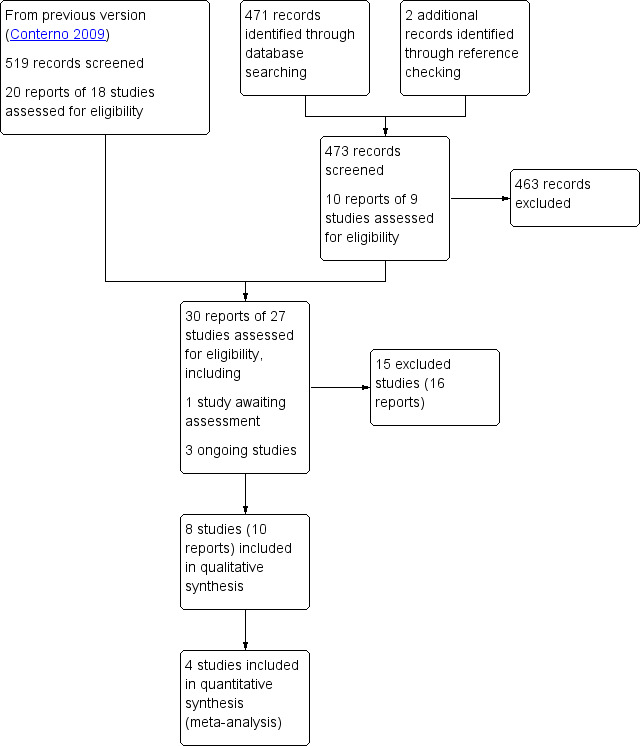
Study flow diagram.
From the search update, we identified 10 citations of potentially eligible records, for which we obtained full reports where possible. We included one additional trial (two references) in this update (Euba 2009), we excluded four trials (Ingianni 2007; Marriott 2008; Nguyen 2009; Tascini 2009), and three trials are ongoing (CTRI/2008/091/000060; EUCTR2009‐015744‐42‐GB; NCT00324922). A further study (Barberán 2000) is awaiting classification.
We excluded one of the studies included in the previous version (Greenberg 1987) from this update.
Overall, we have included eight trials, excluded 15 studies, and identified three ongoing trials and one study awaiting classification.
Included studies
We have listed the details of the individual trials in the Characteristics of included studies.
Design
Of the eight included trials, seven RCTs and one quasi‐RCT (Mader 1990). Three trials (Gentry 1990; Gentry 1991; Norden 1986) were multicentre trials and five trials were likely to have been conducted at a single site (Euba 2009; Gomis 1999; Greenberg 2000; Mader 1990; Sheftel 1986).
Sample sizes
The eight included trials comprised a total of 282 participants, with data available from 248. The number of participants enrolled in the individual studies ranged from 12 (Greenberg 2000) to 67 (Gentry 1990), and in individual intervention groups ranged from five (Greenberg 2000) to 31 (Gentry 1990). Only one trial reported a sample‐size calculation, but even in this trial the trial authors did not achieve the desired sample size (Norden 1986).
Setting
All eight trials were conducted in the tertiary care (hospital) setting. Six trials were conducted in the USA; two of these (Gentry 1990; Gentry 1991) were also carried out in Costa Rica. Two trials were conducted in Spain (Euba 2009; Gomis 1999). Three trials were funded by the pharmaceutical industry (Gentry 1991; Mader 1990; Norden 1986).
Participants
All trials had at least twice as many male as female participants. Whenever reported, the mean age of participants ranged from 33 years (Mader 1990) to 59 years (Gomis 1999).
According to the trial reports, all participants had a diagnosis of chronic osteomyelitis, but with variable duration of symptoms pretreatment. Three trials reported the duration of chronic osteomyelitis (Euba 2009; Mader 1990; Norden 1986) and ranged from one month (Euba 2009) to 28 years (Norden 1986).
Two studies described the classification of osteomyelitis using the Cierny‐Mader System (Mader 1990; Sheftel 1986) and Gomis 1999 used the classification based on aetiology. Post‐traumatic osteomyelitis was the most frequent type. Where reported, the location of the infection was mainly the tibia and femur.
In all trials, trial authors obtained the bacteria sample for microbiological diagnosis by open biopsy or aspiration from infected bone, and the isolated bacteria were sensitive to the antibiotic used.
In four trials, S. aureus was the most frequent bacterial species isolated (Gentry 1990; Gentry 1991; Gomis 1999; Mader 1990), but polymicrobial infections and infections caused by Pseudomonas aeruginosa were common among the trials. Two trials included only chronic osteomyelitis caused by S. aureus (Euba 2009; Norden 1986) and another trial reported only infection caused by gram‐negative bacteria (Sheftel 1986).
All trials mentioned debridement as part of treatment. Only three trials gave details about the surgical proceedings (Euba 2009; Mader 1990; Norden 1986). Gentry 1991 and Gomis 1999 reported that the surgical debridement was performed as indicated; Mader 1990 and Greenberg 2000 did not report whether the surgical debridement was done in all participants; and Norden 1986 reported that all participants but two had surgical debridement.
Interventions
The included trials evaluated five different comparisons:
Oral antibiotics versus parenteral antibiotics (Gentry 1990; Gentry 1991; Gomis 1999; Mader 1990)
Oral antibiotics versus parental plus oral antibiotics (Euba 2009)
Parenteral antibiotics plus oral antibiotics versus parenteral antibiotic (Norden 1986)
Parenteral antibiotics versus another parenteral antibiotics (Sheftel 1986)
Oral antibiotics versus another oral antibiotics (Greenberg 2000)
No trial specifically compared different durations of antibiotic treatment for chronic osteomyelitis.
Regarding oral antibiotics used, five trials used quinolones (Gentry 1990; Gentry 1991; Gomis 1999; Greenberg 2000; Mader 1990), two trials used rifampin (Euba 2009; Norden 1986), one trial used cloxacillin (Euba 2009) and one trial used cotrimoxazole (Euba 2009).
Trials used several different parenteral antibiotics. Four trials used ceftazidime or cefazolin (Gentry 1990; Gentry 1991; Norden 1986; Sheftel 1986), three trials used nafcillin (Gentry 1990; Mader 1990; Norden 1986), one trial used imipenem (Gomis 1999), three trials used aminoglycoside (Gentry 1990; Mader 1990; Sheftel 1986), one trial used cloxacillin (Euba 2009) and one trial used ticarcillin (Sheftel 1986).
The antibiotic regimens varied among the trials in terms of drugs used; even within the same trial, there were many different combinations of antibiotics. We could not make comparisons between the included trials to determine the best antibiotic for treating chronic osteomyelitis in adults.
The duration of treatment in the included studies varied within and between trials and ranged from less than seven days (Gomis 1999) to 110 days (Greenberg 2000).
Outcomes
Across the trials, authors did not uniformly report the definitions of the outcome measures. Also, the reported definition of the outcomes varied between trials but we considered these definitions to be clinically consistent enough to permit pooling in some cases.
The outcomes were clinically and microbiologically based in two trials (Gentry 1990; Sheftel 1986) and clinically based in the remaining six trials.
Eight trials reported the complete resolution of disease symptoms at the end of treatment, and seven trials after follow‐up of at least 12 months (Euba 2009; Gentry 1990; Gentry 1990; Greenberg 2000; Mader 1990; Norden 1986; Sheftel 1986). The length of follow‐up for individual trial participants, which varied between and within trials, ranged from less than one month (Greenberg 2000) to more than 13 years (Euba 2009).
All eight trials reported adverse events related to antibiotic therapy. Five trials reported the adverse events as severe. Four trials reported the occurrence of superinfection during the treatment (Gentry 1990; Gentry 1991; Gomis 1999; Sheftel 1986).
Only one trial (Euba 2009) reported data on the length of hospital stay. No trial reported on the costs related to treatment.
Excluded studies
We excluded 15 studies (see the Characteristics of excluded studies for details). The main reasons for exclusion were lack of separate data for participants with chronic osteomyelitis (seven studies), lack of details of the antibiotic used and the diagnosis criteria (three studies), lack of surgical debridement (three studies) and retrospective study design (two studies). We excluded a previously included trial (Greenberg 1987) from this update because the trial authors did not perform surgical debridement.
Ongoing studies
Three RCTs are ongoing but each have uncertain recruitment status. One study (CTRI/2008/091/000060), which includes adults with mild or severe infection, including bone and joint infections, compares treatment with vancomycin plus ceftriaxone versus vancomycin alone. EUCTR2009‐015744‐42‐GB, which includes adults with bone and joint infection, compares treatment with oral antibiotics versus parenteral antibiotics. NCT00324922, which includes adults with bone and joint infection by methicillin‐resistant S. aureus, compares treatment with trimethoprim‐sulphamethoxazole versus vancomycin.
Risk of bias in included studies
We have summarised the risk of bias judgements for the individual trials in Figure 2 and Figure 3. We described them in the 'Risk of bias' tables in the Characteristics of included studies.
2.
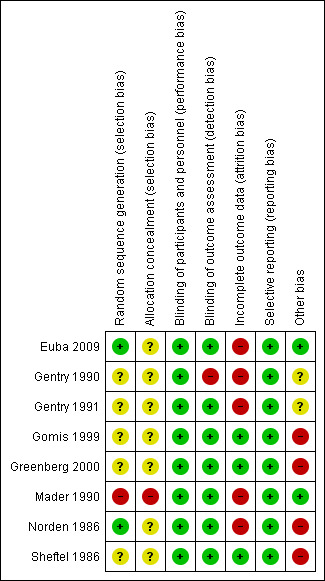
Risk of bias summary: review authors' judgements about each risk of bias item for each included study
3.
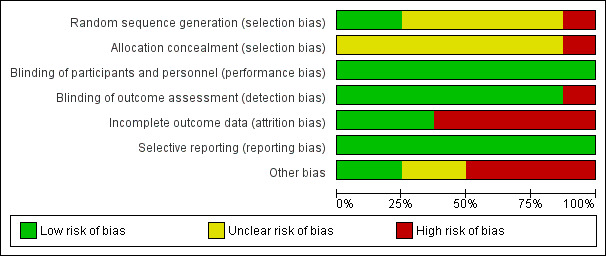
Risk of bias graph: review authors' judgements about each risk of bias item presented as percentages across all included studies
Allocation
We judged the two studies that provided details of random sequence generation (computer‐generated randomisation list and random numbers table, respectively) to be at low risk of selection bias related to sequence generation (Euba 2009; Norden 1986). Both of these studies and five other studies failed to provide sufficient information to permit judgement regarding allocation concealment and had unclear risk of bias. In Mader 1990, the trial authors "sequentially assigned" participants to the two treatment groups and this trial was therefore considered at high risk of selection bias.
Blinding
Seven studies did not blind the participants, personnel or assessors to the treatment (Euba 2009; Gentry 1990; Gentry 1991; Gomis 1999; Greenberg 2000; Norden 1986; Sheftel 1986). However, we classified these studies as low risk of bias because we judged that the outcomes (remission after the treatment) were not influenced by lack of blinding. We considered Gentry 1990 at high risk of detection bias because participants reported the return of the symptoms either via the telephone or a letter.
Incomplete outcome data
Three studies reported the number of withdrawals and they undertook intention‐to‐treat analysis whenever possible (Gomis 1999; Greenberg 2000; Sheftel 1986). Five studies stated the numbers and reasons for withdrawal but they were unable to undertake intention‐to‐treat analysis (Euba 2009; Gentry 1990; Gentry 1991; Mader 1990; Norden 1986). We judged these five studies at high risk of attrition bias.
Selective reporting
All studies reported the outcomes described in the methods section, including adverse events, and had no evidence of selective reporting.
Other potential sources of bias
In general, studies described the baseline characteristics of participant age, gender and site of infection. Three trials mentioned duration of disease (Euba 2009; Mader 1990; Norden 1986), and only two trials gave the classification of disease using the Cierny‐Mader System (Mader 1990; Sheftel 1986). We considered there was baseline comparability in four trials (Euba 2009; Gomis 1999; Mader 1990; Norden 1986).
In all trials, participants received apparently identical care programmes. However, no study gave details for individual treatment groups of medical history, physical examination or laboratory investigations carried out during the study.
There was some variation between trials in the definition of inclusion criteria, outcome measures and outcome assessment, but all trials gave sufficient information and were clinically consistent.
Trials reported active follow‐up. However, the length of follow‐up was different for each participant within the trials and was not long enough in four trials, where some participants were followed up for nine months (Norden 1986), six months (Gomis 1999), two months (Sheftel 1986) or less than one month (Greenberg 2000).
Overall, we judged two trials (Euba 2009; Mader 1990) at low risk of other bias; two trials (Gentry 1990; Gentry 1991) at unclear risk; and the other four trials at high risk.
Effects of interventions
We report the results for the five comparisons made by the included trials below. None addressed the impact of different bacteria species (e.g. S. aureus, Enterobacteriaceae, Pseudomonas spp) on the rate of remission, or the impact of different duration of antibiotic use on the rate of remission. Only Euba 2009 reported on length of hospital stay. None of the included trials reported on cost.
Oral versus parenteral route of administration of antibiotics
Four trials, presenting data from a total of 150 participants, compared oral quinolones with various parenteral antibiotics regimens (Gentry 1990; Gentry 1991; Gomis 1999; Mader 1990).
The remission rates at the end of treatment with oral versus parenteral antibiotic were 88% (70/80) with oral antibiotic and 83% (58/70) with parenteral antibiotic, with no statistically significant difference between the two groups (RR 1.04, 95% CI 0.92 to 1.18; four trials, 150 participants; Analysis 1.1). We did not observe any statistical heterogeneity between trials.
1.1. Analysis.
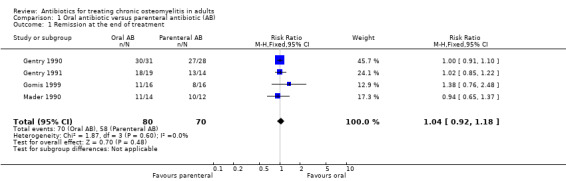
Comparison 1 Oral antibiotic versus parenteral antibiotic (AB), Outcome 1 Remission at the end of treatment.
Remission rates at 12 or more months after the end of treatment were 77% (49/64) with oral antibiotic and 81% (44/54) with parenteral antibiotics (Gentry 1990; Gentry 1991; Mader 1990). We did not detect any statistically significant difference between groups (RR 0.94, 95% CI 0.78 to 1.13; three trials, 118 participants; Analysis 1.2) or any statistical heterogeneity between trials.
1.2. Analysis.
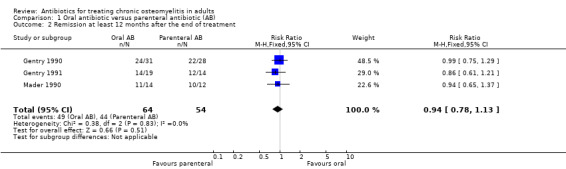
Comparison 1 Oral antibiotic versus parenteral antibiotic (AB), Outcome 2 Remission at least 12 months after the end of treatment.
Three trials reported a variety of mild adverse events relating to the antibiotic used (Gentry 1990; Gentry 1991; Mader 1990); 17% (11/64) in the oral antibiotic groups and 15% (8/54) in the parenteral groups. We did not observe any statistically significant difference between the two groups in the pooled results (RR 1.08, 95% CI 0.49 to 2.42; three trials, 118 participants; Analysis 1.3). Moderate or severe adverse events, such as those requiring termination of treatment, occurred in 6.1% (3/49) of participants in the oral antibiotic group and 9.5% (4/42) in the parenteral groups but this was nota statistically significant difference (RR 0.69, 95% CI 0.19 to 2.57; three trials, 91 participants; Analysis 1.4).
1.3. Analysis.
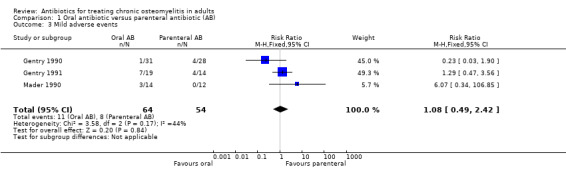
Comparison 1 Oral antibiotic versus parenteral antibiotic (AB), Outcome 3 Mild adverse events.
1.4. Analysis.
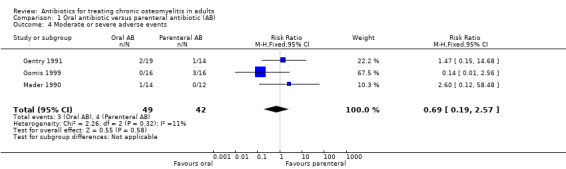
Comparison 1 Oral antibiotic versus parenteral antibiotic (AB), Outcome 4 Moderate or severe adverse events.
Superinfection occurred in participants of both groups (7.6% (5/66) in the oral group versus 6.9% (4/58) in the parenteral group) (RR 1.08, 95% CI 0.33 to 3.60; three trials, 124 participants; Analysis 1.5).
1.5. Analysis.
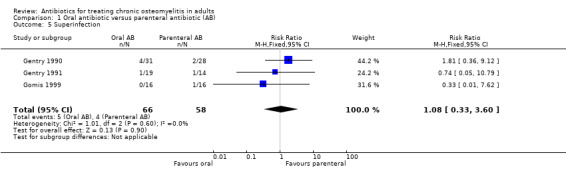
Comparison 1 Oral antibiotic versus parenteral antibiotic (AB), Outcome 5 Superinfection.
Oral antibiotics versus parenteral plus oral antibiotics
One trial (Euba 2009) included 55 participants with chronic osteomyelitis by S. aureus and compared oral antibiotics (cotrimoxazole and rifampicin) versus parenteral (cloxacillin) plus oral antibiotic (cloxacillin). The remission rates at 12 months after the end of treatment were 80% (24/30) in the group that received oral antibiotics and 76% (19/25) in the group that received parenteral plus oral antibiotic. We did not observe any statistically significant difference between the two groups (RR 1.05, 95% CI 0.79 to 1.40; one trial, 55 participants; Analysis 2.1).
2.1. Analysis.
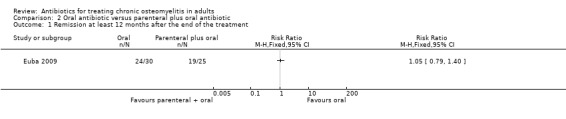
Comparison 2 Oral antibiotic versus parenteral plus oral antibiotic, Outcome 1 Remission at least 12 months after the end of the treatment.
In total there were eight adverse events: three cases of rash, one case of bronchospasm and one case of nausea in the oral antibiotic group; and three cases of phlebitis in the parenteral plus oral antibiotic group (RR 1.39, 95% CI 0.37 to 5.25; one trial, 55 participants; Analysis 2.2).
2.2. Analysis.
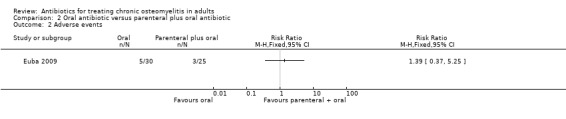
Comparison 2 Oral antibiotic versus parenteral plus oral antibiotic, Outcome 2 Adverse events.
The median number of days in hospital stay (interquartile range) was significantly shorter in the group who received oral antibiotics only compared with the group who received parental plus oral antibiotic: 31 days (21 to 49 days) versus 51 days (43 to 67), P = 0.002.
Parenteral plus oral antibiotics versus parenteral antibiotics
Remission rate at least 12 months after the end of treatment was reported in only one trial with 19 participants (data available from 18) with chronic osteomyelitis caused by Staphylococcus aureus (Norden 1986). The remission rates were 80% (8/10) in the parenteral plus oral antibiotic group and 50% (4/8) in the parenteral antibiotic group. We did not observe any statistically significant difference (RR 1.60, 95% CI 0.75 to 3.42; one trial, 18 participants; Analysis 3.1).
3.1. Analysis.
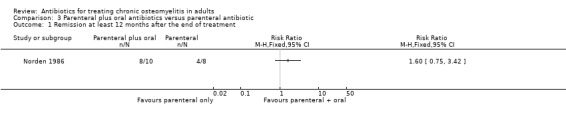
Comparison 3 Parenteral plus oral antibiotics versus parenteral antibiotic, Outcome 1 Remission at least 12 months after the end of treatment.
Trial authors reported significant neutropenia in one participant of the parenteral plus oral antibiotic group and three participants of the parenteral antibiotic group, all with spontaneous recovery (RR 0.27, 95% CI 0.03 to 2.10; one trial, 18 participants; Analysis 3.2).
3.2. Analysis.
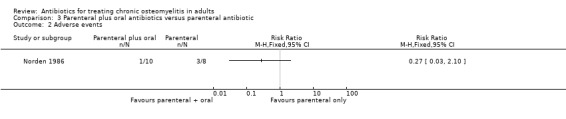
Comparison 3 Parenteral plus oral antibiotics versus parenteral antibiotic, Outcome 2 Adverse events.
Parenteral antibiotics
Sheftel 1986 compared regimens of parenteral antibiotics (ceftazidime versus ticarcillin plus tobramycin) in 18 participants with chronic osteomyelitis caused by gram‐negative bacilli. P. aeruginosa and Enterobacter cloacae were the most common organisms isolated. The remission rates at 12 months after the end of treatment were 67% (6/9) in the group that received ceftazidime and 89% (8/9) in the group that received ticarcillin (RR 0.75, 95% 0.45 to 1.26; one trial, 18 participants; Analysis 4.1).
4.1. Analysis.
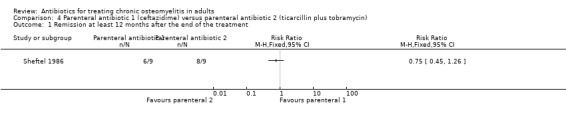
Comparison 4 Parenteral antibiotic 1 (ceftazidime) versus parenteral antibiotic 2 (ticarcillin plus tobramycin), Outcome 1 Remission at least 12 months after the end of the treatment.
The trial author reported one adverse event, a case of mild increase in serum hepatic enzyme level in the ceftazidime group, and none in the other group (RR 3.00, 95% 0.14 to 65.16; one trial, 18 participants; Analysis 4.2).
4.2. Analysis.
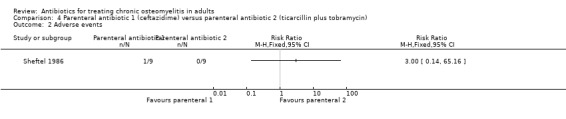
Comparison 4 Parenteral antibiotic 1 (ceftazidime) versus parenteral antibiotic 2 (ticarcillin plus tobramycin), Outcome 2 Adverse events.
Trial authors reported superinfection in two participants of the ceftazidime group and none in the ticarcillin plus tobramycin group (RR 5.00, 95% CI 0.27 to 91.52; one trial, 18 participants; Analysis 4.3).
4.3. Analysis.
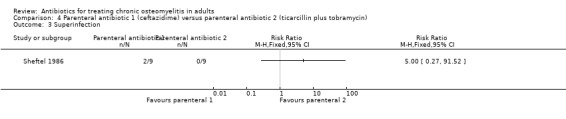
Comparison 4 Parenteral antibiotic 1 (ceftazidime) versus parenteral antibiotic 2 (ticarcillin plus tobramycin), Outcome 3 Superinfection.
Oral antibiotics
One trial (Greenberg 2000) compared two different oral quinolones (ciprofloxacin and lomefloxacin) and included five and seven participants with chronic osteomyelitis respectively in the two groups. We did not observe any statistically significant difference in the remission rates after 12 months follow‐up between the groups (two in each group; RR 1.40, 95% CI 0.29 to 6.86; one trial, 12 participants; Analysis 5.1).
5.1. Analysis.
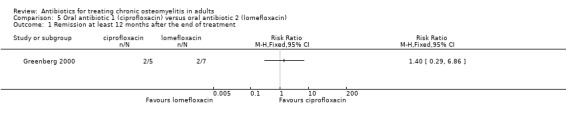
Comparison 5 Oral antibiotic 1 (ciprofloxacin) versus oral antibiotic 2 (lomefloxacin), Outcome 1 Remission at least 12 months after the end of treatment.
Trial authors reported adverse events in three participants of the lomefloxacin group and in none of the ciprofloxacin group but this difference was not statistically significant (RR 0.19, 95% CI 0.01 to 3.03; one trial, 12 participants; Analysis 5.2).
5.2. Analysis.
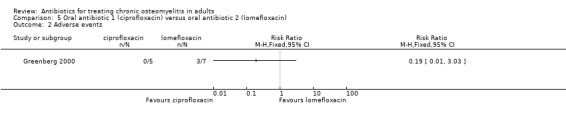
Comparison 5 Oral antibiotic 1 (ciprofloxacin) versus oral antibiotic 2 (lomefloxacin), Outcome 2 Adverse events.
Discussion
Summary of main results
In this review update, we included eight small and heterogeneous studies that involved 282 adults with biopsy‐proven chronic osteomyelitis caused by bacteria with confirmed sensitivity to the antibiotics used. Results data were available for 248 participants. The main finding of this review is the lack of evidence to guide practice. The route of antibiotic administration was the only outcome that was evaluated by more than one trial.
We found no evidence of a difference between oral antibiotics (all quinolones in four trials) compared with parenteral antibiotic in the rate of remission at the end of therapy (RR 1.04, 95% CI 0.92 to 1.18; four trials, 150 participants) and after 12 months or more follow‐up (RR 0.94, 95% CI 0.78 to 1.13; three trials, 118 participants). These results were statistically homogeneous. Separately pooled results for mild and more serious adverse events again showed no statistical differences between the two routes of administration. We did not observe any difference between the two groups in the incidence of superinfection.
Single trials with few participants found no statistical significant differences for remission or adverse events for the following four comparisons: oral antibiotic versus parenteral plus oral (one trial, 55 participants); parenteral plus oral versus parenteral only administration (one trial, 18 participants); two parenteral antibiotic regimens (one trial, 18 participants); two oral antibiotic regimens (one trial, 12 participants).
Overall completeness and applicability of evidence
Due to the lack of data, we were unable to draw robust conclusions. In the comparison of oral versus parenteral antibiotics, the data suggest that provided the infective bacteria show sensitivity to the antibiotic used, the method of administration does not affect rate of disease remission. However, the number of participants in the included trials and pooled results may be insufficient to detect a difference between different routes of antibiotic administration to treat chronic osteomyelitis.
Other considerations include length of follow‐up, the relative importance of surgical debridement and currency of the trial evidence.
Chronic osteomyelitis in adults generally occurs secondary to an open injury to the bone or after surgery for reconstruction of the bone (Holtom 1999; Lazzarini 2002; Mader 1999b; Trampuz 2006). It may present as a recurrent or intermittent disease, with periods of quiescence of variable duration. Because of this aspect, the term 'remission' is preferable to 'cure' and the time of post‐treatment follow‐up should be at least 12 months to assume a sustained remission of disease. While we have applied the 12‐month definition here, some authors suggest a follow‐up of five years as ideal (Mader 1990). Others recommend survival analysis to provide information about the length of time free of relapse (Simpson 2001; Walenkamp 1997). In one trial, the authors planned a survival analysis but this was not presented (Euba 2009).
The current practice for treating chronic osteomyelitis includes complete surgical debridement of necrotic bone and antibiotic therapy. The contribution of each component to clinical success in the treatment of osteomyelitis is not known. Some researchers argue that the surgical intervention is the most important and that insufficient debridement is correlated with a high recurrence rate (Eckardt 1994; Gentry 1990; Haidar 2010; Simpson 2001; Stengel 2001). The requirement of surgical debridement is unquestionable, but we do not know whether surgical debridement is enough for the sustained remission of chronic osteomyelitis. Given that antibiotics could contribute to the control of chronic bone infection, it remains important to know if the class of antimicrobial used, the route of drug administration and the duration of therapy could influence the rate of sustained remission of infection.
The only aspect of the antibiotic regimen that was evaluated by more than one trial included in this review was the route of administration. The trial participants were treated with many different antibiotics and surgical debridement. Since the trials did not give details about the surgical intervention, we do not know if this aspect of treatment was adequate and comparable among the trials. However, some trials did attribute some treatment failures to inadequate debridement (e.g. Gentry 1990). Nonetheless, the available data preclude any conclusion about the exact contribution of surgery to the rate of remission.
If oral antibiotics have the same success rates as parenteral antibiotics, with similar risks of adverse adverse effects, then these have the attraction of being easier to administer, being less expensive and avoiding the inconvenience of prolonged hospital stays and medical treatment associated with parenteral administration. However, we were not able to demonstrate this in this review due to the variability in the trial characteristics and lack of evidence for aspects of administration such as duration of treatment.
Currently, chronic osteomyelitis is increasing and is often associated with trauma, such as car accidents and orthopedic surgeries, and affects patients with diabetes mellitus or decubitus ulcers. This heterogeneous population is not adequately represented in this review because we excluded people with diabetic foot osteomyelitis, implant‐associated osteomyelitis, sternal or vertebral osteomyelitis.
Finally, the majority of the included trials are over 20 years old. Nowadays there are higher prevalences of bacteria resistant to one or more available antibiotics, particularly when the infections are associated with healthcare procedures (Murphy 2011; Sheehy 2010). For example, methicillin‐resistant S. aureus prevalence is much higher now compared to the past two decades. We have a very limited number of antibiotics to treat this bacterial infection (Liu 2011). Continuously evolving bacterial resistance represents another challenge to the choice of antibiotics to treat chronic osteomyelitis.
Quality of the evidence
We judged almost all of the included trials to be at moderate to high risk of bias due to trial design and reporting. These factors included failure to conceal allocation, lack of blinding, poor or unknown comparability of baseline characteristics, inadequate follow‐up and post‐randomisation exclusions in some trials. Overall, we did not detect statistically significant differences for the pooled results of trials comparing oral versus parenteral antibiotics. Exaggerated effects that may be associated with these biases were therefore not apparent.
Overall, we consider the quality of the evidence for the main comparison (oral versus parenteral antibiotics) to below. This reflects, in particular, the high likelihood of bias, the questions over applicability of the evidence and the small sample size. Further research may change the results and conclusions for this comparison.
Potential biases in the review process
The key potential bias in our review is that we may have not included all the evidence from randomised trials. Although our database search was comprehensive, we may have missed trials reported in conference proceedings. However, such reports are likely to be unavailable if these were contemporaneous with most of the studies in this review. As most of the trials and trial reports were over 10 years old, we decided not to request information from trial authors, including separate data for patients with chronic osteomyelitis in several excluded trials with mixed populations.
Agreements and disagreements with other studies or reviews
We located five published systematic reviews on the clinical efficacy of antibiotics for treating bone and joint infection including chronic osteomyelitis (Haidar 2010; Karamanis 2008; Lazarini 2005; Spellberg 2012; Stengel 2001). These differ from our review in terms of participants' characteristics, types of infections and study designs included. In this review, we included RCTs and quasi‐RCTs of adult patients with chronic osteomyelitis treated with systemic antibiotics.
Stengel 2001 included RCTs and quasi‐RCTs only and covered local antibiotic therapy and joint infection. They concluded that no reliable inferences could be made from the available data on antibiotic therapy for osteomyelitis and septic arthritis.
Lazarini 2005 evaluated antibiotic treatment for acute and chronic osteomyelitis in children and adults and included uncontrolled studies. The authors concluded that the optimal duration of antibiotic therapy remains undefined and they could not determine the best agent, route or duration of antibiotic therapy from the available data.
Karamanis 2008 included seven RCTs and compared fluoroquinolones versus B‐lactamic antibiotic to treat osteomyelitis. We did not include three studies described in Karamanis 2008 in our review: one trial (Lipsky 1997) included participants with osteomyelitis secondary to diabetic foot infection and two trials (Giamarellou 1989; Greenberg 1987) did not report whether bone debridement was done.
Haidar 2010 searched the medical literature for evidence in animal and human studies to support the use of short courses of antibiotics for treating chronic osteomyelitis. The review authors only included studies that used short courses of antibiotics (three to 14 days). Haidar 2010 did not report their criteria for study inclusion nor the length of follow‐up. The authors suggested that shortened duration of antimicrobial treatment with emphasis on debridement, and well‐vascularised flap coverage might be a possible alternative for treating chronic osteomyelitis in the lower extremities. They concluded that properly designed studies are needed to determine the optimal duration of antibiotics.
The most recent review included 13 RCTs and 63 non‐RCTs (Spellberg 2012). The authors concluded that oral and parenteral therapies achieve similar cure rates and that there is no evidence that antibiotic therapy for greater than four to six weeks improves outcomes compared with shorter regimens. However, the review included RCTs and non‐RCTs and heterogeneous populations in terms of the type of osteomyelitis (osteomyelitis secondary to diabetes foot infection and orthopaedic implants).
Authors' conclusions
Implications for practice.
There remains insufficient evidence or no evidence from RCTs to determine the adequate duration of treatment, the regimen of antibiotic or the route of administration for treating chronic osteomyelitis in adults. There is insufficient evidence to confirm the lack of statistically significant differences in remission and adverse events between oral versus parenteral administration of systemic antibiotics for treating chronic osteomyelitis in adults.
Implications for research.
There is a need for well‐designed and adequately powered RCTs comparing antibiotic treatments for chronic osteomyelitis, mainly in terms of therapy duration, adjusted for groups of bacteria (gram‐positive, gram‐negative, polymicrobial), antibiotic resistance profile, antibiotic activity against microorganisms in the biofilm, and the severity of disease. Such trials are likely to be multicentre, should ensure adequate surgical debridement prior to starting the trial interventions and actively record remission and adverse affects of treatment. They should abide by the CONSORT statement when reporting their results. Considering that people with chronic osteomyelitis can have frequent relapses, even years after clinical remission, trial authors should use a follow‐up period of longer than 12 months to enable assessment of survival rates in terms of long relapse‐free periods.
While the route of administration remains important, findings of the ongoing EUCTR2009‐015744‐42‐GB trial may influence the direction of further research. Thus it seems prudent to wait for the publication of this trial before embarking on further research on this aspect.
What's new
| Date | Event | Description |
|---|---|---|
| 23 September 2013 | Amended | Source of support added |
History
Protocol first published: Issue 4, 2003 Review first published: Issue 3, 2009
| Date | Event | Description |
|---|---|---|
| 6 September 2013 | New citation required but conclusions have not changed | We added one new author (MDT) and included one new study. |
| 21 May 2013 | New search has been performed | For this review update, published in Issue 9, 2013, we made the following changes. 1. We updated the search to October 2012. 2. We included one new trial (Euba 2009). 3. We excluded one trial that was included in the previous version (Greenberg 1987). 4. In accordance with Collaboration policy, we updated the review to include new methodology, including risk of bias assessment. |
| 23 October 2008 | Amended | Converted to new review format. |
Acknowledgements
We are grateful to Prof Carlos Rodrigues da Silva Filho for his contribution to the first version of the review.
We are very grateful to Dr Karla Soares Weiser for her suggestions on the protocol and the Iberoamerican Cochrane Centre for assistance during the review. We are very grateful to Lesley Gillespie for searching for the studies and help during the editorial process, Joanne Elliott for updating the search, and Lindsey Elstub, Helen Handoll, Lesley Gillespie, Vicki Livingstone, Janet Wale and Geert Walenkamp for valuable comments and guidance during this review.
Appendices
Appendix 1. Search strategies
Note: We carried out the MEDLINE, EMBASE and LILACs searches for this update in two stages: Stage 1 = 2008 to August 2011; and Stage 2 = August 2011 to September/October 2012.
The Cochrane Library (Wiley online library)
#1 MeSH descriptor: [Osteomyelitis] this term only (107) #2 MeSH descriptor: [Osteitis] this term only (25) #3 MeSH descriptor: [Periostitis] this term only (2) #4 (infect* near/6 bone*) or (Infect* near/6 fractur*) (678) #5 (osteomyelitis or periostitis or osteitis) (539) #6 (#1 or #2 or #3 or #4 or #5) (1136) #7 MeSH descriptor: [Chronic Disease] this term only (10067) #8 (chronic or recurrent) (66263) #9 (#7 or #8) (66263) #10 MeSH descriptor: [Anti‐Infective Agents] this term only (2087) #11 MeSH descriptor: [Anti‐Bacterial Agents] this term only (7303) #12 (antibiotic* or antimicrobial* or antibacterial*):ti (5889) #13 (antibiotic* or antimicrobial* or antibacterial*):ab (11565) #14 (#10 or #11 or #12 or #13) (18866) #15 (#6 and #9 and #14) (31) [Trials]
MEDLINE (OVID WEB)
1 Osteomyelitis/ (15943) 2 Osteitis/ (2408) 3 Periostitis/ (804) 4 (osteomyelitis or osteitis or periostitis).tw. (18317) 5 (infect$ adj3 (bone$ or fracture$)).tw. (5456) 6 or/1‐5 (29039) 7 Chronic Disease/ (204727) 8 (chronic or recurrent).tw. (837966) 9 or/7‐8 (896233) 10 Anti‐Infective Agents/ or Anti‐Bacterial Agents/ (235541) 11 (antibiotic$ or antimicrob$).tw. (250113) 12 or/10‐11 (370796) 13 and/6,9,12 (1472) 14 Randomized controlled trial.pt. (317139) 15 Controlled clinical trial.pt. (83496) 16 Randomized Controlled Trials/ (76477) 17 Random Allocation/ (72845) 18 Double Blind Method/ (112770) 19 Single Blind Method/ (15519) 20 or/14‐19 (533597) 21 Animals/ not Humans/ (3587303) 22 20 not 21 (494051) 23 clinical trial.pt. (468409) 24 exp Clinical Trials as topic/ (249149) 25 (clinic$ adj25 trial$).tw. (208224) 26 ((singl$ or doubl$ or trebl$ or tripl$) adj25 (blind$ or mask$)).tw. (117074) 27 Placebos/ (30166) 28 placebo$.tw. (137058) 29 random$.tw. (570356) 30 Research Design/ (64294) 31 or/23‐30 (1168062) 32 31 not 21 (1083118) 33 32 not 22 (628193) 34 Comparative Study.pt. (1555085) 35 Evaluation Studies.pt. (156994) 36 Follow Up Studies/ (432454) 37 Prospective Studies/ (305381) 38 (control$ or prospectiv$ or volunteer$).tw. (2539060) 39 or/34‐38 (4178146) 40 39 not 21 (3253876) 41 40 not (22 or 33) (2662658) 42 22 or 33 or 41 (3784902) 43 13 and 42 (424) Stage 1 2008 to August 2011 44 (2008$ or 2009$ or 2010$ or 2011$).ed. (3406041) 45 43 and 44 (69) Stage 2 August 2011 to September 2012 44 (201108* or 201109* or 201110* or 201111* or 201112* or 2012*).ed. (1274856) 45 43 and 44 (27)
EMBASE (OVID WEB)
1 Chronic Osteomyelitis/ (1236) 2 Hematogenous Osteomyelitis/ or Osteomyelitis/ (19375) 3 Osteitis/ or Periostitis/ (3735) 4 (infect$ adj3 (bone$ or fracture$)).tw. (6047) 5 (osteomyelitis or osteitis or periostitis).tw. (19319) 6 or/2‐5 (33009) 7 Chronic Disease/ or Chronicity/ (137837) 8 (chronic or recurrent).tw. (956290) 9 or/7‐8 (1000579) 10 and/6,9 (6163) 11 or/1,10 (6455) 12 exp Randomized Controlled Trial/ (286346) 13 exp Double Blind Procedure/ (100172) 14 exp Single Blind Procedure/ (13979) 15 exp Crossover Procedure/ (30513) 16 Controlled Study/ (3579948) 17 or/12‐16 (3647710) 18 ((clinical or controlled or comparative or placebo or prospective$ or randomi#ed) adj3 (trial or study)).tw. (556234) 19 (random$ adj7 (allocat$ or allot$ or assign$ or basis$ or divid$ or order$)).tw. (134800) 20 ((singl$ or doubl$ or trebl$ or tripl$) adj7 (blind$ or mask$)).tw. (131638) 21 (cross?over$ or (cross adj1 over$)).tw. (56160) 22 ((allocat$ or allot$ or assign$ or divid$) adj3 (condition$ or experiment$ or intervention$ or treatment$ or therap$ or control$ or group$)).tw. (167775) 23 or/18‐22 (833645) 24 or/17,23 (4046555) 25 limit 24 to human (2432453) 26 11 and 25 (614) Stage 1 2008 to August 2011 27 (2008$ or 2009$ or 2010$ or "2011").em. (2888943) 28 26 and 27 (146) Stage 2 August 2011 to September 2012 27 (2011* or 2012*).em. (2071245) 28 26 and 27 (81)
LILACS (Bireme)
((Pt randomized controlled trial OR Pt controlled clinical trial OR Mh randomized controlled trials OR Mh random allocation OR Mh double‐blind method OR Mh single‐blind method) AND NOT (Ct animal AND NOT (Ct human and Ct animal)) OR (Pt clinical trial OR Ex E05.318.760.535$ OR (Tw clin$ AND (Tw trial$ OR Tw ensa$ OR Tw estud$ OR Tw experim$ OR Tw investiga$)) OR ((Tw singl$ OR Tw simple$ OR Tw doubl$ OR Tw doble$ OR Tw duplo$ OR Tw trebl$ OR Tw trip$) AND (Tw blind$ OR Tw cego$ OR Tw ciego$ OR Tw mask$ OR Tw mascar$)) OR Mh placebos OR Tw placebo$ OR (Tw random$ OR Tw randon$ OR Tw casual$ OR Tw acaso$ OR Tw azar OR Tw aleator$) OR Mh research design) AND NOT (Ct animal AND NOT (Ct human and Ct animal)) OR (Ct comparative study OR Ex E05.337$ OR Mh follow‐up studies OR Mh prospective studies OR Tw control$ OR Tw prospectiv$ OR Tw volunt$ OR Tw volunteer$) AND NOT (Ct animal AND NOT (Ct human and Ct animal))) [Words] (16489) AND and ((Mh Osteomyelitis or Mh osteitis or Mh periostitis) or (Tw infect$ and (Tw bone$ or Tw fract$))) and (Tw antibiotic$ or Tw antimicrobial$ or Tw antibacterial$) [Words] (104)
Stage 1 2008 to August 2011 And (2008 or 2009 or 2010 or 2011) [Country, year publication] (35)
Stage 2 August 2011 to October 2012 And (2011 or 2012) [Country, year publication] (10)
Data and analyses
Comparison 1. Oral antibiotic versus parenteral antibiotic (AB).
| Outcome or subgroup title | No. of studies | No. of participants | Statistical method | Effect size |
|---|---|---|---|---|
| 1 Remission at the end of treatment | 4 | 150 | Risk Ratio (M‐H, Fixed, 95% CI) | 1.04 [0.92, 1.18] |
| 2 Remission at least 12 months after the end of treatment | 3 | 118 | Risk Ratio (M‐H, Fixed, 95% CI) | 0.94 [0.78, 1.13] |
| 3 Mild adverse events | 3 | 118 | Risk Ratio (M‐H, Fixed, 95% CI) | 1.08 [0.49, 2.42] |
| 4 Moderate or severe adverse events | 3 | 91 | Risk Ratio (M‐H, Fixed, 95% CI) | 0.69 [0.19, 2.57] |
| 5 Superinfection | 3 | 124 | Risk Ratio (M‐H, Fixed, 95% CI) | 1.08 [0.33, 3.60] |
Comparison 2. Oral antibiotic versus parenteral plus oral antibiotic.
| Outcome or subgroup title | No. of studies | No. of participants | Statistical method | Effect size |
|---|---|---|---|---|
| 1 Remission at least 12 months after the end of the treatment | 1 | Risk Ratio (M‐H, Fixed, 95% CI) | Totals not selected | |
| 2 Adverse events | 1 | Risk Ratio (M‐H, Fixed, 95% CI) | Totals not selected |
Comparison 3. Parenteral plus oral antibiotics versus parenteral antibiotic.
| Outcome or subgroup title | No. of studies | No. of participants | Statistical method | Effect size |
|---|---|---|---|---|
| 1 Remission at least 12 months after the end of treatment | 1 | Risk Ratio (M‐H, Fixed, 95% CI) | Totals not selected | |
| 2 Adverse events | 1 | Risk Ratio (M‐H, Fixed, 95% CI) | Totals not selected |
Comparison 4. Parenteral antibiotic 1 (ceftazidime) versus parenteral antibiotic 2 (ticarcillin plus tobramycin).
| Outcome or subgroup title | No. of studies | No. of participants | Statistical method | Effect size |
|---|---|---|---|---|
| 1 Remission at least 12 months after the end of the treatment | 1 | Risk Ratio (M‐H, Fixed, 95% CI) | Totals not selected | |
| 2 Adverse events | 1 | Risk Ratio (M‐H, Fixed, 95% CI) | Totals not selected | |
| 3 Superinfection | 1 | Risk Ratio (M‐H, Fixed, 95% CI) | Totals not selected |
Comparison 5. Oral antibiotic 1 (ciprofloxacin) versus oral antibiotic 2 (lomefloxacin).
| Outcome or subgroup title | No. of studies | No. of participants | Statistical method | Effect size |
|---|---|---|---|---|
| 1 Remission at least 12 months after the end of treatment | 1 | Risk Ratio (M‐H, Fixed, 95% CI) | Totals not selected | |
| 2 Adverse events | 1 | Risk Ratio (M‐H, Fixed, 95% CI) | Totals not selected |
Characteristics of studies
Characteristics of included studies [ordered by study ID]
Euba 2009.
| Methods |
Design: RCT. Participants, treatment providers and outcome assessor not blinded. Follow‐up: at least 12 months after the end of treatment (range 3.8 to 13 years). Setting: one site trial conducted in Spain (1991 to 1996). |
|
| Participants |
Enrolled: 55 adults with chronic osteomyelitis caused by S. aureus. Data available for 50 participants: 38 male, 12 female; mean age 44 years. Location of infection: femur (17), tibia (16), humerus (5), small bones (12). Osteomyelitis classification: post surgical (34), hematogenous (9), post trauma (4), secondary to continuous focus (3). |
|
| Interventions |
Surgery: debridement of bone and soft tissues and removal of foreign material when possible. Comparison: oral antibiotics versus parenteral plus oral antibiotics. Antibiotics: oral rifampin plus cotrimoxazole (8 weeks) versus parenteral cloxacillin (6 weeks) plus oral cloxacillin (2 weeks). |
|
| Outcomes |
Clinical outcomes: remission of symptoms and the absence of failure during follow‐up; clinical relapse appearance or recurrence of local inflammatory signs or sinus tract drainage, with or without microbiological confirmation of S. aureus in local samples; treatment tolerability. Resource use: length of hospital stay. |
|
| Notes |
Microbiologic diagnosis: obtained by surgical sample culture. Support: not reported. |
|
| Risk of bias | ||
| Bias | Authors' judgement | Support for judgement |
| Random sequence generation (selection bias) | Low risk | Participants were randomised by a computer‐generated randomisation list. |
| Allocation concealment (selection bias) | Unclear risk | Insufficient information to permit judgement. |
| Blinding of participants and personnel (performance bias) All outcomes | Low risk | No blinding, but outcomes were unlikely to have been influenced by lack of blinding. |
| Blinding of outcome assessment (detection bias) All outcomes | Low risk | No blinding, but the outcomes were unlikely to have been influenced by lack of blinding. |
| Incomplete outcome data (attrition bias) All outcomes | High risk | Five participants were excluded after randomisation. |
| Selective reporting (reporting bias) | Low risk | All relevant outcomes in the methods section were reported in the results section. |
| Other bias | Low risk | The reported baseline characteristics, surgical treatment and the care programme were apparently similar between groups; the length of active follow‐up was adequate. |
Gentry 1990.
| Methods |
Design: RCT. Participants, treatment providers, outcome assessors not blinded. Follow‐up: 12 months after the end of treatment. Setting: two‐site trial conducted in USA and Costa Rica (1980 to 1987). |
|
| Participants |
Enrolled: 67 adults with chronic osteomyelitis. Data available for 59 participants: 51 male, 8 female; mean age 37 years. Location of infection (listed only for treatment failures): femur (6), ischium (1), tibia (6). |
|
| Interventions |
Surgery: debridement and removal of all foreign material. Comparison: oral antibiotics versus parenteral antibiotics. Antibiotics: oral ciprofloxacin (28 to 96 days) versus ceftazidime or nafcillin and aminoglycoside (parenteral administration) (8 to 77 days). |
|
| Outcomes |
Clinical outcomes: all signs and symptoms related to infection absent on completion of therapy and at 12 months follow‐up; relapse of infection (same pathogen) or reinfection (different pathogen) within 12 months of completion of therapy. Adverse outcomes, superinfection. Resource use: not reported. |
|
| Notes |
Microbiologic diagnosis: obtained by open biopsy and were repeated during and after therapy completion. Excluded MRSA infection. S. aureus accounted for 25% of isolates and P. aeruginosa for 21%. Support: not reported. |
|
| Risk of bias | ||
| Bias | Authors' judgement | Support for judgement |
| Random sequence generation (selection bias) | Unclear risk | No information about the sequence generation process. |
| Allocation concealment (selection bias) | Unclear risk | Not described. |
| Blinding of participants and personnel (performance bias) All outcomes | Low risk | No blinding, but outcomes were unlikely to have been influenced by lack of blinding. |
| Blinding of outcome assessment (detection bias) All outcomes | High risk | Participants were contacted by telephone or letter and asked whether there had been a return of the symptoms of their infection. |
| Incomplete outcome data (attrition bias) All outcomes | High risk | Eight courses of treatment were deemed invalid (12%). |
| Selective reporting (reporting bias) | Low risk | No evidence of selective reporting. |
| Other bias | Unclear risk | Unclear if baseline characteristics, surgical treatment and the care programme groups were similar between the groups; the time of active follow‐up was adequate. |
Gentry 1991.
| Methods |
Design: RCT. Participants, treatment providers, outcome assessors not blinded. Follow‐up: 18 months. Setting: two‐site trial conducted in USA and Costa Rica. |
|
| Participants |
Enrolled: 42 adults with chronic osteomyelitis. Data available from 33 participants: 23 male, 10 female. Location of infection: not mentioned. |
|
| Interventions |
Surgery: debridement if necessary. Comparison: oral antibiotics versus parenteral antibiotics. Antibiotics: oral ofloxacin (21 to 86 days) versus cefazolin or ceftazidime (15 to 55 days) plus cloxacillin. |
|
| Outcomes |
Clinical outcomes: all signs and symptoms related to infection absent on completion of therapy and at 18 months of follow‐up; relapse of infection (same pathogen) or reinfection (different pathogen) within 18 months of completion of therapy. Adverse events, superinfection. Resource use: not reported. |
|
| Notes |
Microbiologic diagnosis: obtained by open biopsy or aspirate. S. aureus accounted for 40% of isolates. Support: R. W. Johnson Research Institute, Ortho Pharmaceutical Corporation, Raritan, N.J. |
|
| Risk of bias | ||
| Bias | Authors' judgement | Support for judgement |
| Random sequence generation (selection bias) | Unclear risk | No information about the sequence generation process. |
| Allocation concealment (selection bias) | Unclear risk | Not described. |
| Blinding of participants and personnel (performance bias) All outcomes | Low risk | Outcomes were unlikely to have been influenced by lack of blinding. |
| Blinding of outcome assessment (detection bias) All outcomes | Low risk | Outcomes were unlikely to have been influenced by lack of blinding. |
| Incomplete outcome data (attrition bias) All outcomes | High risk | Loss of follow‐up of 21.4% of participants. |
| Selective reporting (reporting bias) | Low risk | No evidence of selective reporting. |
| Other bias | Unclear risk | Unclear if the baseline characteristics, surgical treatment and the care programme were similar between groups; the time of active follow‐up was adequate. |
Gomis 1999.
| Methods |
Design: randomised open‐label controlled trial. Participants, treatment providers, outcome assessors not blinded. Follow‐up: 6 months. Setting: trial conducted in Spain (1993 to 1996). |
|
| Participants |
Enrolled: 32 adults with chronic osteomyelitis (22 male and 10 female); mean age 59 years. Types of chronic osteomyelitis: contiguous (14); post traumatic (8); post surgical (4); associated with foot in diabetes patients (4); associated with a prosthetic device (1). Location of infection: tibia (9); foot (7); ankle (4); femur (4); hand (3); radius (2); sacrum (1); femur and tibia (1); femur and sacrum (1). |
|
| Interventions |
Surgery: debridement as indicated. Comparison: oral antibiotics versus parenteral antibiotics. Antibiotics: oral ofloxacin (7 to 50 days) versus imipenem‐cilastin (1 to 42 days). Clindamycin added if anaerobic organism isolated or suspected. |
|
| Outcomes |
Clinical outcomes: cure (resolution of all signs and symptoms of active infection at the end of therapy and follow up); failure (lack of apparent response to therapy or recurrence of signs and symptoms plus isolation of the same pathogen four to six weeks after discontinuation of antibacterial therapy). Microbiologic response: eradication, presumptive eradication, eradication with relapse, persistence, superinfection, undetermined. Adverse events. Resource use: not reported. |
|
| Notes |
Microbiologic diagnosis: obtained by open biopsy. S. aureus accounted for 32% of isolates; Pseudomonas aeruginosa accounted for 17% of isolates. Support: not reported. |
|
| Risk of bias | ||
| Bias | Authors' judgement | Support for judgement |
| Random sequence generation (selection bias) | Unclear risk | Randomised open‐label study. |
| Allocation concealment (selection bias) | Unclear risk | Unclear. |
| Blinding of participants and personnel (performance bias) All outcomes | Low risk | Outcomes were unlikely to have been influenced by lack of blinding. |
| Blinding of outcome assessment (detection bias) All outcomes | Low risk | Outcomes were unlikely to have been influenced by lack of blinding. |
| Incomplete outcome data (attrition bias) All outcomes | Low risk | Intention‐to‐treat analysis was done. |
| Selective reporting (reporting bias) | Low risk | No evidence of selective reporting. |
| Other bias | High risk | The reported baseline characteristics, surgical treatment and the care programme were apparently similar between groups. Time of follow‐up was 6 months. |
Greenberg 2000.
| Methods |
Design: RCT. Participants, treatment provider, outcome assessor not blinded. Follow‐up: from 0 to 36 months. Setting: trial conducted in USA. |
|
| Participants |
Enrolled: 12 adults with chronic osteomyelitis. Together with 15 other participants given levofloxacin in an open trial: 20 male; 7 female; mean age 38 years. Location of infection: tibia (4); femur (3); knee (1); finger (1); ulna (1); fibula (1); disc (1). |
|
| Interventions |
Surgery: debridement (no details reported). Comparison: oral antibiotic1 versus oral antibiotic 2. Antibiotics: oral ciprofloxacin (52 to 110 days) versus oral lomefloxacin (2 to 59 days). |
|
| Outcomes |
Clinical outcomes: cure (healed wound without any drainage or swelling); improved (signs and symptoms markedly reduced at the end of therapy); failure (no response during the therapy). Adverse events. Resource use: not reported. |
|
| Notes |
Microbiologic diagnosis: obtained by open biopsy or aspiration from infected bone. S. aureus accounted for 75% of isolates. Support: not reported. Patients from open trial were not included in the review. |
|
| Risk of bias | ||
| Bias | Authors' judgement | Support for judgement |
| Random sequence generation (selection bias) | Unclear risk | Participants were enrolled in a prospective, RCT. |
| Allocation concealment (selection bias) | Unclear risk | Unclear. |
| Blinding of participants and personnel (performance bias) All outcomes | Low risk | Outcomes were unlikely to have been influenced by lack of blinding. |
| Blinding of outcome assessment (detection bias) All outcomes | Low risk | Outcomes were unlikely to have been influenced by lack of blinding. |
| Incomplete outcome data (attrition bias) All outcomes | Low risk | No incomplete data. |
| Selective reporting (reporting bias) | Low risk | No evidence of selective reporting. |
| Other bias | High risk | Unclear if the baseline characteristics, surgical treatment and the care programme were similar between groups. Time of follow‐up was inadequate for four participants. |
Mader 1990.
| Methods |
Design: quasi‐RCT. Participants were sequentially assigned. Participants, treatment provider, outcome assessor not blinded. Follow‐up: 24 to 39 months after the end of treatment. Setting: trial conducted in USA. |
|
| Participants |
Enrolled: 37 adults with post‐traumatic chronic osteomyelitis. Data available from 26 participants: 19 male, 7 female; mean age 33 years. Location of infection: tibia (18); femur (4); ulna (1); hip (2) humerus (1). Classification using the Cierny‐Mader system: type1 (2); type 2 (1); type 3 (11); type 4 (12) and the physiologic class of the host: A (16); B (10). |
|
| Interventions |
Surgery: debridement (no details reported). Comparison: oral antibiotics versus parenteral antibiotics. Antibiotics: oral ciprofloxacin (28 to 64 days) versus parenteral nafcillin and gentamicin and clindamycin or parenteral nafcillin and clindamycin (29 to 60 days). |
|
| Outcomes |
Clinical outcomes: no evidence of infection at the completion of therapy or at 24 months follow‐up; failure and superinfection. Resource use: not reported. |
|
| Notes |
Microbiologic diagnosis: obtained by open biopsy or debridement. S. aureus accounted for 37% of isolates; two or more organisms were isolated in 22 patients. Support: Marine Biomedical Institute and Miles Incorporated, West Haven, Connecticut. |
|
| Risk of bias | ||
| Bias | Authors' judgement | Support for judgement |
| Random sequence generation (selection bias) | High risk | The participants were sequentially assigned to two groups. |
| Allocation concealment (selection bias) | High risk | Inadequate: quasi‐RCT. |
| Blinding of participants and personnel (performance bias) All outcomes | Low risk | Outcomes were unlikely to have been influenced by lack of blinding. |
| Blinding of outcome assessment (detection bias) All outcomes | Low risk | Outcomes were unlikely to have been influenced by lack of blinding. |
| Incomplete outcome data (attrition bias) All outcomes | High risk | 29% of the participants were lost to follow‐up. |
| Selective reporting (reporting bias) | Low risk | No evidence of selective reporting. |
| Other bias | Low risk | The reported baseline characteristics, surgical treatment and the care programme were apparently similar between groups. The time of follow‐up was adequate. |
Norden 1986.
| Methods |
Design: RCT using random table numbers. Participants, treatment provider, outcome assessor not blinded. Follow‐up: 9 months to 4 years. Setting: multicentre trial conducted in USA (1980 to 1982) |
|
| Participants |
Enrolled: 19 adults with chronic post‐traumatic osteomyelitis caused by S. aureus. Data available from 18 participants: 15 male, 3 female. Location of infection: femur (10); tibia (4); humerus (3); fibula (1). |
|
| Interventions |
Surgery: debridement (no details reported). Comparison: parenteral plus oral antibiotics versus parenteral antibiotics. Antibiotics: nafcillin or cephalothin or cephapirin versus nafcillin‐rifampin (42 days). |
|
| Outcomes |
Clinical outcomes: remission (no sign of clinical or x‐ray activity of the disease for less than two years after completion of treatment); probable cure (no relapse and no evidence of activity at two or more years after the treatment course was completed); persistent infection (no or minimal clinical response to therapy); probable relapse (positive clinical or roentgenographic findings developing after an initial period of remission); definitive relapse (presence of clinical and/or x‐ray findings, in conjunction with culture of infected material). Adverse events. Resource use: not reported. |
|
| Notes |
Microbiologic diagnosis: obtained from bone or from a needle biopsy. Two participants did not have debridement surgery. Support: Merrell Dow Pharaceuticals, Cicinnati, Ohio. |
|
| Risk of bias | ||
| Bias | Authors' judgement | Support for judgement |
| Random sequence generation (selection bias) | Low risk | Participants were assigned to treatment group according to a random numbers table. |
| Allocation concealment (selection bias) | Unclear risk | Unclear. |
| Blinding of participants and personnel (performance bias) All outcomes | Low risk | Outcomes were unlikely to have been influenced by lack of blinding. |
| Blinding of outcome assessment (detection bias) All outcomes | Low risk | Outcomes were unlikely to have been influenced by lack of blinding. |
| Incomplete outcome data (attrition bias) All outcomes | High risk | One participant lost to follow‐up. |
| Selective reporting (reporting bias) | Low risk | No selective reporting. |
| Other bias | High risk | The reported baseline characteristics, surgical treatment and the care programme were apparently similar between groups. Time of follow‐up was inadequate for one participant. |
Sheftel 1986.
| Methods |
Design: RCT. Participants, treatment providers, outcome assessors not blinded. Follow‐up: 2 to 38 months. Setting: trial conducted in USA. |
|
| Participants |
Enrolled: 18 adults with chronic osteomyelitis caused by gram‐negative bacilli (17 male and 1 female); mean age 34 years. Location of infection: tibia (9); femur (3); metatarsal phalangeal joint (2); spine (1); radius/ulna (1); hip prothesis (1); sternum (1). Classification using the Cierny‐Mader system: type1 (2); type 2 (2); type 3 (8); type 4 (6), and the physiologic class of the host: A (12); B (6). |
|
| Interventions |
Surgery: debridement (no details reported). Comparison: parenteral antibiotic1 versus parenteral antibiotic 2. Antibiotics: ceftazidime versus ticarcillin plus tobramycin (26 to 63 days). |
|
| Outcomes |
Clinical outcomes: response (no evidence of infection at the completion of therapy or on follow‐up); failure (presence of pain swelling, erythema, or draining sinus tracts). Adverse events. Resource use: not reported. |
|
| Notes |
Microbiologic diagnosis: obtained by open biopsy. P. aeruginosa were the most common organisms isolated. Support: not reported. |
|
| Risk of bias | ||
| Bias | Authors' judgement | Support for judgement |
| Random sequence generation (selection bias) | Unclear risk | Unclear. |
| Allocation concealment (selection bias) | Unclear risk | Unclear. |
| Blinding of participants and personnel (performance bias) All outcomes | Low risk | Outcomes were unlikely to have been influenced by lack of blinding. |
| Blinding of outcome assessment (detection bias) All outcomes | Low risk | Outcomes were unlikely to have been influenced by lack of blinding. |
| Incomplete outcome data (attrition bias) All outcomes | Low risk | Intention‐to‐treat analysis was done. |
| Selective reporting (reporting bias) | Low risk | No evidence of selective reporting. |
| Other bias | High risk | No baseline characteristics were reported. Inadequate follow‐up in one participant. |
Characteristics of excluded studies [ordered by study ID]
| Study | Reason for exclusion |
|---|---|
| Baumgartner 1983 | RCT including participants with severe bacterial infections (bone and soft tissue infections) that compared parenteral antibiotics. No separate data for chronic osteomyelitis. |
| Giamarellou 1989 | RCT of 53 participants with gram‐negative‐bacterial infections (15 with chronic osteomyelitis exacerbation). No mention of surgical debridement. |
| Greenberg 1987 | RCT of 30 participants with chronic osteomyelitis. No mention of surgical debridement. |
| Hedstrom 1975 | RCT of 12 participants with chronic osteomyelitis. No clear data available about the population included, clinical diagnosis, microbiological diagnosis criteria or surgical intervention. |
| Ingianni 2007 | RCT of 58 participants with chronic osteomyelitis, treated either with a standard therapy or with a specific targeted therapy based on antibiogram (largely varied). No data about the specific antibiotics used. |
| Loffler 1986 | RCT of 23 participants with bone, joint or soft tissue infections, treated with parenteral antibiotics. No clear definition of clinical and microbiological diagnosis criteria. |
| Mandell 1989 | RCT of 325 participants with severe bacterial infections (23 patients with bone and joint infections), treated with parenteral antibiotics. No separate data for chronic osteomyelitis. |
| Marier 1983 | RCT of 186 participants with infections in various sites (8 bone and joint infections), treated with parenteral antibiotics. No separate data for chronic osteomyelitis. |
| Marriott 2008 | Retrospective study including 55 participants with pressure ulcer and acute osteomyelitis, chronic osteomyelitis and negative osteomyelitis. |
| Nguyen 2009 | Retrospective cohort study including 56 participants with bone and joint infections, treated with rifampicin and linezolid combination or rifampicin and cotrimoxazole combination. |
| Paladino 1991 | RCT of 105 participants with serious infections (9 bone and joint infections) treated with parenteral antibiotics. No separate data for chronic osteomyelitis. |
| Peacock 1989 | RCT of 47 participants with severe infections (with bone and soft tissue infections) all treated with parenteral and oral antibiotics. No separate data for chronic osteomyelitis. |
| Reinhardt 1986 | RCT of 30 patients with aerobic and aerobic‐anaerobic infections (14 bone infections) treated with parenteral antibiotics. No separate data for chronic osteomyelitis. |
| Siebert 1985 | RCT of 25 participants,13 with osteomyelitis, treated with parenteral antibiotics. No separate data for chronic osteomyelitis. |
| Tascini 2009 | Controlled trial with a mixed population including just 7 participants with osteomyelitis. No information about microbiological diagnosis. |
Characteristics of studies awaiting assessment [ordered by study ID]
Barberán 2000.
| Methods | Randomised open label trial. |
| Participants | 45 participants with diagnosis of osteomyelitis due to gram‐negative bacilli. |
| Interventions | Cefepime or other parenteral beta‐lactam. |
| Outcomes | Cure |
| Notes | We were unable to obtain the full text article. We are awaiting a response from from the authors regarding our request for a full report and further information. |
Characteristics of ongoing studies [ordered by study ID]
CTRI/2008/091/000060.
| Trial name or title | A clinical trial to study the safety and efficacy of combination drugs, vancomycin and ceftriaxone compared to vancomycin in mild to severe bacterial infections. |
| Methods | RCT with parallel group. Not blinded. |
| Participants | Adults with lower respiratory infection, skin and skin structure infections, endocarditis, bacterial meningitis and bone infection. |
| Interventions | Vancomycin and ceftriaxone 6 g intravenous in two divided slowly doses versus vancomycin 2 g divided either as 500 mg every 6 hours or 1 g every 12 hours. |
| Outcomes | Efficacy and safety. |
| Starting date | 08/04/2008 |
| Contact information | Dr Namit Saraf, New Delhi, India Email: drnamitsara@rediffmail.com |
| Notes | Sponsor: Venus Remedies Limited. Target recruitment: 200 participants (5 centres). Mixed population. |
EUCTR2009‐015744‐42‐GB.
| Trial name or title | Randomised open label study of oral versus intravenous antibiotic treatment for bone and joint infections requiring prolonged antibiotic treatment. |
| Methods | RCT; not blinded. |
| Participants | Adults with bone and joint infection including: osteomyelitis, septic arthritis, prosthetic joint associated infection, orthopaedic device associated infection and discitis/epidural abscess. |
| Interventions | Oral versus intravenous antibiotic. |
| Outcomes | Failure of infection treatment. |
| Starting date | 03/12/2009 |
| Contact information | Oxford Radcliffe Hospitals Trust (sponsor), UK. No contact address given. |
| Notes | Recruitment may be ongoing or finished. Target of 200 participants. Mixed population. |
NCT00324922.
| Trial name or title | A prospective RCT comparing vancomycin with trimethoprim/sulphamethoxazole for the treatment of MRSA osteomyelitis. |
| Methods | RCT, parallel assignment. |
| Participants | 18 years of age or more, with osteomyelitis (culture‐proved MRSA from bone or a deep soft‐tissue site that is contiguous with bone). |
| Interventions | Trimethoprim/sulphamethoxazole versus vancomycin. |
| Outcomes | Clinical cure at 12 months. |
| Starting date | May 2006 |
| Contact information | Christian Ramers University of Washington, USA |
| Notes | No longer recruiting; meant to have completed in May 2011. Target was 300 participants. |
Differences between protocol and review
In line with Collaboration recommendations, we assessed the risk of bias in included studies.
-
We have made several amendments to the types of outcome measures since the protocol was published.
We clarified that treatment failure also includes early termination of treatment, such as for adverse effects or disease complications such as amputation.
We added superinfection as a secondary outcome.
We removed squamous cell carcinoma as a potential adverse event of treatment.
We deleted length of hospital stay and cost from 'Adverse events' and placed them under 'Resource use'.
Contributions of authors
Prof Lucieni Oliveira Conterno screened studies for inclusion, performed data extraction and analyses, interpreted results and wrote the review. Prof Conterno is the guarantor of the review.
Prof Marilia Dalva Turchi screened studies for inclusion, performed data extraction and analyses, interpreted results and wrote the review update.
Sources of support
Internal sources
Marilia Medical School, Brazil.
Institute of Tropical Pathology and Public Health, Federal University of Goias, Brazil.
External sources
MDT has a scholarship from the Brazilian National Research Council (Bolsa de Produtividade CNPq), Brazil.
MDT is a research member of the National Institute of Science and Technology for Health Technology Assessment (IATS), Brazil.
Declarations of interest
Lucieni O Conterno ‐ none known Marilia D Turchi ‐ none known
Edited (no change to conclusions)
References
References to studies included in this review
Euba 2009 {published data only}
- Cardenal JA. Oral rifampin‐cotrimoxazole combination versus intravenous cloxacillin in chronic staphylococcal osteomyelitis: a long‐term follow‐up trial. http://isrctn.org/ISRCTN27058472 (accessed 20 April 2013) 2008. [DOI] [PMC free article] [PubMed]
- Euba G, Murillo O, Fernandez‐Sabé N, Mascaró J, Cabo J, Perez A, et al. Long‐term follow‐up trial of oral rifampin‐cotrimoxazole combination versus intravenous cloxacillin in treatment of chronic staphylococcal osteomyelitis. Antimicrobial Agents and Chemotherapy 2009;53(6):2672‐6. [DOI] [PMC free article] [PubMed] [Google Scholar]
Gentry 1990 {published data only}
- Gentry LO, Rodriguez GG. Oral ciprofloxacin compared with parenteral antibiotics in the treatment of osteomyelitis. Antimicrobial Agents and Chemotherapy 1990;34(1):40‐3. [DOI] [PMC free article] [PubMed] [Google Scholar]
Gentry 1991 {published data only}
- Gentry LO, Rodriguez‐Gomez G. Ofloxacin versus parenteral therapy for chronic osteomyelitis. Antimicrobial Agents and Chemotherapy 1991;35(3):538‐41. [DOI] [PMC free article] [PubMed] [Google Scholar]
Gomis 1999 {published data only}
- Gomis M, Barberan J, Sanchez B, Khorrami S, Borja J, Garcia BJ. Oral ofloxacin versus parenteral imipenem‐cilastatin in the treatment of osteomyelitis [Ofloxacino oral versus imipenem‐cilastatina intravenoso en el tratamiento de la osteomielitis]. Revista Espanola de Quimioterapia 1999;12(3):244‐9. [PubMed] [Google Scholar]
Greenberg 2000 {published data only}
- Greenberg RN, Newman MT, Shariaty S, Pectol RW. Ciprofloxacin, lomefloxacin, or levofloxacin as treatment for chronic osteomyelitis. Antimicrobial Agents and Chemotherapy 2000;44(1):164‐6. [DOI] [PMC free article] [PubMed] [Google Scholar]
Mader 1990 {published data only}
- Mader JT, Cantrell JS, Calhoun J. Oral ciprofloxacin compared with standard parenteral antibiotic therapy for chronic osteomyelitis in adults. Journal of Bone Joint Surgery ‐ American Volume 1990;72(1):104‐10. [PubMed] [Google Scholar]
Norden 1986 {published data only}
- Norden CW, Bryant R, Palmer D, Montgomerie JZ, Wheat J. Chronic osteomyelitis caused by Staphylococcus aureus: controlled clinical trial of nafcillin therapy and nafcillin‐rifampin therapy. Southern Medical Journal 1986;79(8):947‐51. [DOI] [PubMed] [Google Scholar]
- Norden CW, Fierer J, Bryant RE. Chronic Staphylococcus osteomyelitis: treatment with regimens containing rifampin. Reviews of Infectious Diseases 1983;5(Suppl 3):S495‐501. [DOI] [PubMed] [Google Scholar]
Sheftel 1986 {published data only}
- Sheftel TG, Mader JT. Randomized evaluation of ceftazidime or ticarcillin and tobramycin for the treatment of osteomyelitis caused by gram‐negative bacilli. Antimicrobial Agents and Chemotherapy 1986;29(1):112‐5. [DOI] [PMC free article] [PubMed] [Google Scholar]
References to studies excluded from this review
Baumgartner 1983 {published data only}
- Baumgartner JD, Glauser MP. Comparative study of imipenem in severe infections. Journal of Antimicrobial Chemotherapy 1983;12(Suppl D):141‐8. [DOI] [PubMed] [Google Scholar]
Giamarellou 1989 {published data only}
- Giamarellou H, Perdikaris G, Galanakis N, Davoulos G, Mandragos K, Sfikakis P. Pefloxacin versus ceftazidime in the treatment of a variety of gram‐negative‐bacterial infections. Antimicrobial Agents and Chemotherapy 1989;33(8):1362‐7. [DOI] [PMC free article] [PubMed] [Google Scholar]
Greenberg 1987 {published data only}
- Greenberg RN, Tice AD, Marsh PK, Craven PC, Reilly PM, Bollinger M, et al. Randomized trial of ciprofloxacin compared with other antimicrobial therapy in the treatment of osteomyelitis. American Journal of Medicine 1987;82(4A):266‐9. [PubMed] [Google Scholar]
Hedstrom 1975 {published data only}
- Hedstrom SA. Treatment of chronic staphylococcal osteomyelitis with cloxacillin and dicloxacillin ‐ a comparative study in 12 patients. Scandinavian Journal of Infectious Diseases 1975;7(1):55‐7. [DOI] [PubMed] [Google Scholar]
Ingianni 2007 {published data only}
- Ingianni A, Lampis G, Laconi S, Cariello D, Pompei R. Standard versus specific therapy for chronic osteomyelitis treatment. American Journal of Infectious Diseases 2007;3(3):128‐33. [Google Scholar]
Loffler 1986 {published data only}
- Loffler L, Bauernfeind A, Keyl W. Sulbactam/ampicillin versus cefotaxime as initial therapy in serious soft tissue, joint and bone infections. Drugs 1988;35(Suppl 7):46‐52. [DOI] [PubMed] [Google Scholar]
- Loffler L, Bauernfeind A, Keyl W, Hoffstedt B, Piergies A, Lenz W. An open, comparative study of sulbactam plus ampicillin vs. cefotaxime as initial therapy for serious soft tissue and bone and joint infections. Reviews of Infectious Diseases 1986;8(Suppl 5):S593‐8. [DOI] [PubMed] [Google Scholar]
Mandell 1989 {published data only}
- Mandell LA, Bergeron MG, Ronald AR, Vega C, Harding G, Saginur R, et al. Once‐day therapy with ceftriaxone compared with daily multiple‐dose therapy with cefotaxime for serious bacterial infections: a randomised, double‐blind study. Journal of Infectious Diseases 1989;160(3):433‐41. [DOI] [PubMed] [Google Scholar]
Marier 1983 {published data only}
- Marier RL, McCloskey RV, Dickenson G, Sanders CV, Aldridge KE, Hoffman T, et al. Comparative clinical trial of imipenem‐cilastatin (N‐formimidoyl‐thienamycin‐dehydropeptidase inhibitor) and cefazolin. Journal of Antimicrobial Chemotherapy 1983;12(Suppl D):133‐9. [DOI] [PubMed] [Google Scholar]
Marriott 2008 {published data only}
- Marriott R, Rubayi S. Successful truncated osteomyelitis treatment for chronic osteomyelitis secondary to pressure ulcers in spinal cord injury patients. Annals of Plastic Surgery 2008;61(4):425‐9. [DOI] [PubMed] [Google Scholar]
Nguyen 2009 {published data only}
- Nguyen S, Pasquet A, Legout L, Beltrand E, Dubreuil L, Migaud H, et al. Efficacy and tolerance of rifampicin–linezolid compared with rifampicin–cotrimoxazole combinations in prolonged oral therapy for bone and joint infections. Clinical Microbiology and Infection 2009;15(12):1163‐9. [DOI] [PubMed] [Google Scholar]
Paladino 1991 {published data only}
- Paladino JA, Sperry HE, Backes JM, Gelber JA, Serrianne, DJ, Cumbo TJ, et al. Clinical and economic evaluation of oral ciprofloxacin after an abbreviated course of intravenous antibiotics. American Journal of Medicine 1991;91(5):462‐70. [DOI] [PubMed] [Google Scholar]
Peacock 1989 {published data only}
- Peacock JE Jr, Pegram PS, Weber SF, Leone PA. Prospective, randomised comparison of sequential intravenous followed by oral ciprofloxacin with intravenous ceftazidime in the treatment of serious infections. American Journal of Medicine 1989;87(5A):185S‐90S. [DOI] [PubMed] [Google Scholar]
Reinhardt 1986 {published data only}
- Reinhardt JF, Jonnston L, Ruane P, Johnson CC, Ingram‐drake L, MacDonald K, et al. A randomised, double‐blind comparison of sulbactam/ampicillin and clindamycin for the treatment of aerobic and aerobic‐anaerobic infections. Reviews of Infectious Diseases 1986;8(Suppl 5):S569‐75. [DOI] [PubMed] [Google Scholar]
Siebert 1985 {published data only}
- Siebert WT, Kopp PE. Ticarcillin plus clavulanic acid versus moxalactam therapy of osteomyelitis, septic arthritis, and skin and soft tissue infections. American Journal of Medicine 1985;79(5B):141‐5. [DOI] [PubMed] [Google Scholar]
Tascini 2009 {published data only}
- Tascini C, Tagliaferri E, Paolo A, Tacca M, Lambelet P, Menichetti F. Three‐times weekly teicoplanin as outpatient treatment of chronic osteoarticular infections. Journal of Chemotherapy 2009;21(4):421‐5. [DOI] [PubMed] [Google Scholar]
References to studies awaiting assessment
Barberán 2000 {published data only}
- Barberán J, Gomis M, Sánchez B, Hernández‐Salván J, García Del Salto L, Carroquino G, et al. Cefepime in the treatment of osteomyelitis caused by Gram negative bacilli [Cefepima en el tratamiento de la osteomielitis por bacilos gramnegativos]. Revista Espanola de Quimioterapia 2000;13(4):366‐73. [PubMed] [Google Scholar]
References to ongoing studies
CTRI/2008/091/000060 {published data only}
- Saraf N, Mudgai M. A clinical trial to study the safety and efficacy of combination drugs, vancomycin and ceftriaxone compared to vancomycin in mild to severe bacterial infections. http://ctri.nic.in/Clinicaltrials/pmaindet2.php?trialid=100&EncHid=&userName=ceftriaxone (accessed 12 August 2013) 2008.
EUCTR2009‐015744‐42‐GB {published data only}
- Oxford Radcliffe Hospital Trust (sponsor). Randomised open label study of oral versus intravenous antibiotic treatment for bone and joint infections requiring prolonged antibiotic treatment. http://apps.who.int/trialsearch/Trial.aspx?TrialID=EUCTR2009‐015744‐42‐GB (accessed 20 April 2013) 2009. [EUCTR2009‐015744‐42‐GB]
NCT00324922 {published data only}
- Ramers C, Taistman L, Harrington R, Chan J, Henley BM, Hawn TR, et al. A prospective randomised trial comparing vancomycin with trimethoprim/sulphamethoxazole for the treatment of MRSA osteomyelitis. http://clinicaltrials.gov/show/NCT00324922 (accessed 20 April 2013) 2006.
Additional references
Bourguignat 1996
- Bourguignat A, Ferard G, Jenny JY, Gaudias J, Kempf I. Diagnostic value of C‐reactive protein and transthyretin in bone infections of lower limb. Clinica Chimica Acta 1996;255(1):27‐38. [DOI] [PubMed] [Google Scholar]
Carek 2001
- Carek PJ, Dickerson LM, Sack JL. Diagnosis and management of osteomyelitis. American Family Physician 2001;63(12):2413‐20. [PubMed] [Google Scholar]
Ciampolini 2000
- Ciampolini J, Harding KG. Pathophysiology of chronic bacterial osteomyelitis. Why do antibiotics fail so often?. Postgraduate Medical Journal 2000;76(898):479‐83. [DOI] [PMC free article] [PubMed] [Google Scholar]
Cierny 1985
- Cierny G 3rd, Mader JT, Penninck JJ. A clinical staging system for adult osteomyelitis. Contemporary Orthopaedics 1985;10:17‐37. [DOI] [PubMed] [Google Scholar]
Cierny 2003
- Cierny G 3rd, Mader JT, Penninck JJ. A clinical staging system for adult osteomyelitis. Clinical Orthopaedic and Related Research 2003;414:7‐24. [DOI] [PubMed] [Google Scholar]
Cunha 2002
- Cunha BA. Osteomyelitis in elderly patients. Clinical Infectious Diseases 2002;35(3):287‐93. [DOI] [PubMed] [Google Scholar]
Darouiche 2004
- Darouiche RO. Treatment of infections associated with surgical implants. New England Journal of Medicine 2004;350(14):1422‐9. [DOI] [PubMed] [Google Scholar]
Eckardt 1994
- Eckardt JJ, Wirganowicz PZ, Mar T. An aggressive surgical approach to the management of chronic osteomyelitis. Clinical Orthopaedics and Related Research 1994;(298):229‐39. [PubMed] [Google Scholar]
Ferard 2002
- Ferard G, Gaudias J, Bourguignat A, Ingenbleek Y. C‐reactive protein to transthyretin ratio for the early diagnosis and follow‐up of postoperative infection. Clinical Chemistry and Laboratory Medicine 2002;40(12):1334‐8. [DOI] [PubMed] [Google Scholar]
Gristina 1990
- Gristina AG, Naylor PT, Myrvik QN. Musculoskeletal infection, microbial adhesion, and antibiotic resistance. Infectious Disease Clinics of North America 1990;4(3):391‐408. [PubMed] [Google Scholar]
Haas 1996
- Haas DW, McAndrew MP. Bacterial osteomyelitis in adults: evolving considerations in diagnosis and treatment. American Journal of Medicine 1996;101(5):550‐61. [DOI] [PubMed] [Google Scholar]
Haidar 2010
- Haidar R, Boghossian A, Atiyeh B. Duration of post‐surgical antibiotics in chronic osteomyelitis: empiric or evidence‐based?. International Journal of Infectious Diseases 2010;14(9):e752‐8. [DOI] [PubMed] [Google Scholar]
Higgins 2003
- Higgins JP, Tompson SG, Deeks JJ, Altman DG. Measuring inconsistency in meta‐analyses. BMJ 2003;327(7414):557‐60. [DOI] [PMC free article] [PubMed] [Google Scholar]
Higgins 2006
- Higgins JPT, Green S (editors). Highly sensitive search strategies for identifying reports of randomised controlled trials in MEDLINE. Cochrane Handbook for Systematic Reviews of Interventions 4.2.6 [updated September 2006]; Appendix 5b. www.cochrane.org/resources/handbook/hbook.htm (accessed 01 May 2007).
Higgins 2011
- Higgins JPT, Green S (editors). Cochrane Handbook for Systematic Reviews of Interventions. Version 5.1.0 [updated March 2011]. The Cochrane Collaboration, 2011. Available from www.cochrane‐handbook.org.
Holtom 1999
- Holtom PD, Smith AM. Introduction to adult posttraumatic osteomyelitis of the tibia. Clinical Orthopaedics and Related Research 1999;(360):6‐13. [DOI] [PubMed] [Google Scholar]
Huber 2002
- Huber AM, Lam PY, Duffy CM, Yeung RS, Ditchfield M, Laxer D, et al. Chronic recurrent multifocal osteomyelitis: clinical outcomes after more than five years of follow‐up. Journal of Pediatrics 2002;141(2):198‐203. [DOI] [PubMed] [Google Scholar]
Johnston 2007
- Johnston BL, Conly JM. Osteomyelitis management: More art than science?. Canadian Journal of Infectious Diseases & Medical Microbiology 2007;18(2):115‐8. [DOI] [PMC free article] [PubMed] [Google Scholar]
Karamanis 2008
- Karamanis EM, Matthaiou DK, Moraitis LI, Falagas ME. Fluoroquinolones versus ß‐lactam based regimens for the treatment of osteomyelitis: a meta‐analysis of randomized controlled trials. Spine 2008;33(10):e297‐e304. [DOI] [PubMed] [Google Scholar]
Lazarini 2005
- Lazzarini L, Lipsky BA, Mader JT. Antibiotic treatment of osteomyelitis: what have we learned from 30 years of clinical trials?. International Journal of Infectious Diseases 2005;9(3):127‐38. [DOI] [PubMed] [Google Scholar]
Lazzarini 2002
- Lazzarini L, Lalla F, Mader JT. Long bone osteomyelitis. Current Infectious Disease Reports 2002;4(5):439‐45. [DOI] [PubMed] [Google Scholar]
Lew 2004
- Lew DP, Waldvogel FA. Osteomyelitis. Lancet 2004;364(9431):369‐79. [DOI] [PubMed] [Google Scholar]
Lipsky 1997
- Lipsky BA, Baker PD, Landon GC, Fernau R. Antibiotic therapy for diabetic foot infections: comparison of two parenteral‐to‐oral regimens. Clinical Infectious Diseases 1997;24(4):643‐8. [DOI] [PubMed] [Google Scholar]
Liu 2011
- Liu C, Bayer A, Cosgrove SE, Daum RS, Fridkin SK, Gorwitz RJ, et al. Clinical practice guidelines by the infectious diseases society of America for the treatment of methicillin‐resistant Staphylococcus aureus infections in adults and children: executive summary. Clinical Infectious Diseases 2011;52(3):285‐92. [DOI] [PubMed] [Google Scholar]
Mader 1992
- Mader JT, Norden C, Nelson JD, Calandra GB. Evaluation of new anti‐infective drugs for the treatment of osteomyelitis in adults. Infectious Diseases Society of America and the Food and Drug Administration. Clinical Infectious Diseases 1992;15(Suppl 1):S155‐61. [DOI] [PubMed] [Google Scholar]
Mader 1993
- Mader JT, Landon GC, Calhoun J. Antimicrobial treatment of osteomyelitis. Clinical Orthopaedics and Related Research 1993;(295):87‐95. [PubMed] [Google Scholar]
Mader 1997a
- Mader JT, Shirtliff M, Calhoun JH. Staging and staging application in osteomyelitis. Clinical Infectious Diseases 1997;25(6):1303‐9. [DOI] [PubMed] [Google Scholar]
Mader 1999a
- Mader JT, Shirtliff ME, Bergquist SC, Calhoun J. Antimicrobial treatment of chronic osteomyelitis. Clinical Orthopaedics and Related Research 1999;(360):47‐65. [DOI] [PubMed] [Google Scholar]
Mader 1999b
- Mader JT, Cripps MW, Calhoun JH. Adult posttraumatic osteomyelitis of the tibia. Clinical Orthopaedics and Related Research 1999;(360):14‐21. [DOI] [PubMed] [Google Scholar]
Mader 2001
- Mader JT, Wang J, Calhoun JH. Antibiotic therapy for musculoskeletal infections. Journal of Bone and Joint Surgery ‐ American Volume 2001;83(12):1878‐90. [Google Scholar]
Murphy 2011
- Murphy RA, Ronat JB, Fakhri RM, Herard P, Blackwell N, Abgrall S, et al. Multidrug‐resistant chronic osteomyelitis complicating war injury in Iraqi civilians. Journal of Trauma‐Injury Infection and Critical Care 2011;71(1):252‐4. [DOI] [PubMed] [Google Scholar]
Parsons 2004
- Parson B, Strauss E. Surgical management of chronic osteomyelitis. American Journal of Surgery 2004;188(1A Suppl):57‐66. [DOI] [PubMed] [Google Scholar]
Pollard 2006
- Pollard TC, Newman JE, Barlow NJ, Price JD, Willett KM. Deep wound infection after proximal femoral fracture: consequences and costs. Journal of Hospital Infection 2006;63(2):133‐9. [DOI] [PubMed] [Google Scholar]
Review Manager (RevMan) [Computer program]
- The Nordic Cochrane Centre, The Cochrane Collaboration. Review Manager (RevMan). Version 5.2. Copenhagen: The Nordic Cochrane Centre, The Cochrane Collaboration, 2012.
Rissing 1997
- Rissing JP. Antimicrobial therapy for chronic osteomyelitis in adults: role of the quinolones. Clinical Infectious Diseases 1997;25(6):1327‐33. [DOI] [PubMed] [Google Scholar]
Saginur 2006
- Saginur R, Denis M, Ferris W, Aron SD, Chang F, Lee C, et al. Multiple combination bactericidal testing of Staphylococcal biofilms from implant‐associated infections. Antimicrobial Agents and Chemotherapy 2006;50(1):55‐61. [DOI] [PMC free article] [PubMed] [Google Scholar]
Senneville 2006
- Senneville E, Melliez H, Beltrand E, Legout L, Valette M, Cazaubiel M. Culture of percutaneous bone biopsy specimens for diagnosis of diabetic foot osteomyelitis: concordance with ulcer swab cultures. Clinical of Infectious Diseases 2006;42(1):57‐62. [DOI] [PubMed] [Google Scholar]
Sheehy 2010
- Sheehy SH, Atkins BA, Bejon P, Byren I, Wyllie D, Athanasou NA, et al. The microbiology of chronic osteomyelitis: prevalence of resistance to common empirical anti‐microbial regimens. Journal of Infection 2010;60(5):338‐43. [DOI] [PubMed] [Google Scholar]
Simpson 2001
- Simpson AH, Deakin M, Latham JM. Chronic osteomyelitis. The effect of the extent of surgical resection on infection‐free survival. Journal of Bone and Joint Surgery ‐ British Volume 2001;83(3):403‐7. [DOI] [PubMed] [Google Scholar]
Spellberg 2012
- Spellberg B, Lipsky BA. Systemic antibiotic therapy for chronic osteomyelitis in adults. Clinical Infectious Diseases 2012;54(3):393‐407. [DOI] [PMC free article] [PubMed] [Google Scholar]
Stengel 2001
- Stengel D, Bauwens K, Sehouli J, Ekkernkamp A, Porzsolt F. Systematic review and meta‐analysis of antibiotic therapy for bone and joint infections. Lancet Infectious Diseases 2001;1(3):175‐88. [DOI] [PubMed] [Google Scholar]
Swiontkowski 1999
- Swiontkowski MF, Hanel DP, Vedder NB, Schwappach JR. A comparison of short‐ and long‐term intravenous antibiotic therapy in the postoperative management of adult osteomyelitis. Journal of Bone and Joint Surgery ‐ British Volume 1999;81(6):1046‐50. [DOI] [PubMed] [Google Scholar]
Trampuz 2006
- Trampuz A, Zimmerli W. Diagnosis and treatment of infections associated with fracture‐fixation devices. Injury 2006;37(Suppl 2):S59‐66. [DOI] [PubMed] [Google Scholar]
Waldvogel 1970
- Waldvogel FA, Medoff G, Swartz MN. Treatment of osteomyelitis. New England Journal of Medicine 1970;283(15):822. [DOI] [PubMed] [Google Scholar]
Waldvogel 1980
- Waldvogel FA, Papageorgiou PS. Osteomyelitis: the past decade. New England Journal of Medicine 1980;303(7):360‐70. [DOI] [PubMed] [Google Scholar]
Walenkamp 1997
- Walenkamp GHIM. Chronic osteomyelitis. Acta Orthopaedica Scandinavica 1997;68(5):497‐506. [DOI] [PubMed] [Google Scholar]
Walter 2012
- Walter G, Kemmerer M, Kappler C, Hoffmann R. Treatment algorithms for chronic osteomyelitis. Deutsches Ärzteblatt International 2012;109(14):257‐64. [DOI] [PMC free article] [PubMed] [Google Scholar]
Zuluaga 2002
- Zuluaga AF, Galvis W, Jaimes F, Vesga O. Lack of microbiological concordance between bone and non‐bone specimens in chronic osteomyelitis: an observational study. BMC Infectious Diseases 2002;2(8):1‐7. [DOI] [PMC free article] [PubMed] [Google Scholar]
References to other published versions of this review
Conterno 2009
- Conterno LO, Silva Filho CR. Antibiotics for treating chronic osteomyelitis in adults. Cochrane Database of Systematic Reviews 2009, Issue 3. [DOI: 10.1002/14651858.CD004439.pub2] [DOI] [PubMed] [Google Scholar]