



Abstract
Background
Despite the progress made in improving maternal and child health in Ethiopia, it still has one of the highest maternal and neonatal mortality rates in the world. This is largely due to inadequate healthcare infrastructure and a lack of comprehensive evidence-based maternal and reproductive health services. To achieve the Sustainable Development Goal targets related to maternal and child health, it is essential to conduct culturally sensitive and policy-relevant research to identify areas for improvement.
Methods
To address these issues, through The University of Newcastle’s increased global focus and investment into funding international research higher degrees, we developed a program on the Worldwide Wellness of Mothers and Babies (WWOMB) and trained Doctor of Philosophy students who conducted cross-cutting research across the reproductive life course. Importantly, the program aimed to bridge the inequality gaps in maternal and child health whilst cultivating a new generation of research leaders in low- and middle-income countries such as Ethiopia.
Results
The WWOMB program has successfully generated a substantial body of epidemiological research in Ethiopia, covering five major themes: family planning and contraception, maternal and child health service utilisation, maternal and child health outcomes, maternal and child nutrition, and health economics. The key findings of the studies conducted in Ethiopia have demonstrated geographical disparities in the use of modern contraception and maternal health service utilisation, high incidence of severe maternal outcomes and neonatal near misses, high prevalence of intimate partner violence during pregnancy and its significant impact on adverse pregnancy outcomes, and the presence of economic disparities in maternal and child health, particularly around service delivery and availability.
Conclusions
Investment in healthcare infrastructure and services, coupled with efforts to reduce economic inequalities, can contribute to improved maternal and child health in Ethiopia. The WWOMB project has focused on delivering evidence-based recommendations for policy and practice that could accelerate the country’s progress towards achieving Sustainable Development Goal targets related to maternal and child health.
Keywords: Maternal health, Child health, Contraception, Unintended pregnancy, Ethiopia, Research training, Sustainable Development Goals
| Texbox 1. Contributions to the literature |
|---|
| • The synthesis of literature from the WWOMB program revealed significant geographical and economic disparities in maternal health service utilisation, coupled with high incidence of adverse maternal outcomes, neonatal near misses, and the significant impact of intimate partner violence on adverse pregnancy outcomes. |
| • The literature synthesis demonstrated the effectiveness of the WWOMB program in generating culturally sensitive and policy-relevant epidemiological research, which can inform strategies to improve maternal and child health outcomes and achieve Sustainable Development Goals in low- and middle-income countries. |
Background
The United Nations Millennium Development Goals (MDGs) were instigated by a landmark commitment in 2000 by world leaders to free “men, women and children from abject and dehumanizing conditions and extreme poverty” [1]. This commitment was translated into a framework to be used as a road map over the next 15 years to achieve widespread improvements in terms of poverty and hunger, education and gender equality, environmental sustainability, poor maternal and child outcomes as well as communicable diseases such as human immunodeficiency virus (HIV) [1]. Despite substantial progress recorded globally towards these goals, by the end of the MDG era, progress was uneven, and significant inequalities remained [1]. Major concerns were also raised regarding the sustainability of progress, particularly in low-income and developing countries such as Ethiopia [1, 2].
The MDGs gave rise to the Sustainable Development Goals (SDGs) to improve on these inequalities across 17 key areas [3, 4]. Improving maternal and child health outcomes as well as gender equality and empowerment remained important outcomes across the two frameworks given the variability in outcomes across the MDG period. Within the maternal and child health spheres, targets for the SDGs under Goal 3 “Good health and wellbeing” were set to: (a) reduce maternal mortality by two-thirds by 2030 (Target 3.1); (b) end preventable deaths of newborns and children under five years of age (Target 3.2) and (c) achieve universal access to sexual and reproductive healthcare services (Target 3.7). To achieve these targets, a global reduction in maternal deaths below 70 per 100,000 live births was required, with a stipulation that no country should have a maternal mortality ratio greater than twice the global average (i.e., 140 per 100,000 live births). To meet the SDG targets for child mortality, global reductions were required in neonatal and under-five mortalities to at least as low as 12 per 1,000 and 25 per 1,000 live births, respectively. In addition, given that access to, and use of, contraception is a key factor in reducing maternal and infant mortality (and is a marker of gender equality), it was acknowledged that there was a need to increase the proportion of modern contraceptive methods available to women of reproductive age as well as achieve substantial reductions in adolescent pregnancies (Target 3.7).
In Ethiopia, during the MDG era, concerted efforts were made to address disparities in maternal and child health, including the integration of the MDGs within the national development framework [5]. Ethiopia was added as a country to the global Demographic Health Survey (DHS) initiative which is mainly funded by the United States Agency for International Development. The initiative was designed to collect and monitor the progress of the MDGs through periodic assessment of large and complex cross-sectional surveys focused on demographic and various health parameters (which have been added over time, including those related to maternal and child health) [6]. In addition, the Ethiopian government also implemented various initiatives related to maternal and child health including the implementation of the Health Extension Program to increase access to primary healthcare services [7, 8]. The Health Extension Program delivers cost effective basic services to all Ethiopians, particularly women and children, and is implemented by Health Extension Workers who have been trained on 18 health extension packages. These packages are broadly grouped into five major components: maternal and child health, disease prevention and control, hygiene and environmental sanitation, curative services (specifically pneumonia and diarrhoeal disease management), and an expanded immunisation program [9, 10]. In addition, initiatives such as mobilising the Women’s Development Army (a structural arrangement that connects one-to-five household together and is led by a female resident who is informed of, and adheres to, the health extension package guidelines) to increase community awareness [11] and rapid expansion of health services through increasing health financing [12, 13] have also been used by the Ethiopian government to improve health outcomes of communities.
Despite this commitment by the Ethiopian government and significant gains being made in the area, challenges remained. Importantly, while a reduction in maternal mortality from 950 per 100,000 live births in 1990 [14] to 412 per 100,000 in 2016 was achieved by the beginning of the SDG era, the maternal mortality ratio was still exceptionally high and had stagnated [1]. Ethiopia’s report card relating to infant and neonatal mortality was similar. Although Ethiopia met MDG targets by reducing under five deaths by two-thirds between 1990 and 2015 [15], targets related to infant and neonatal mortality were not met [16]. As such, at the beginning of the SDG era Ethiopia still had the highest maternal and child mortality rates in sub-Saharan Africa [17]. In addition, access to sexual reproductive health services remained inadequate, with unmet needs for family planning reported at 22.0% in 2016 [18].
Due to the unacceptably high mortality rates, greater investment into research was required to create an evidence-base around the multidimensional factors that contribute to poor maternal and infant outcomes including access to family planning, antenatal, delivery and postnatal care to facilitate informed health care and policy decision-making. However, at the beginning of the SDG era, there was a significant lack of appropriately trained researchers in Ethiopia to undertake this important task. Importantly, there was a lack of highly skilled researchers to analyse the existing DHS data which had the potential to provide critical epidemiological groundwork for service and policy change in the country as well as sufficient expertise in methods that would allow researchers to understand specific conditions on the ground [19]. This is despite previous calls from the World Health Organization (WHO) for renewed efforts around strengthening health research capacity in Africa [20]. During 2016–2018, The University of Newcastle offered an unprecedented number of international Doctor of Philosophy (PhD) scholarships. Research higher degree training for those from low-and-middle-income countries (LMICs) has the ability to not only strengthen the research capacity of individuals and universities but has widespread implications for the candidate’s home country. However capacity within Ethiopia has been limited. At the beginning of the SDGs era, only 24.5% of PhD holders completed their studies in Ethiopian universities and only around 7% were trained in the field of medical and health sciences [21]. Given this human-resource crisis at the beginning of the SDG era, it provided a significant barrier to implementing within-country training in Ethiopia [22]. Through The University of Newcastle’s investment and strategic global focus, we developed a program on the Worldwide Wellness of Mothers and Babies (WWOMB). This program was guided by the principles that promote a holistic approach to research and health and had a vision of eliminating preventable maternal and infant mortality and morbidity at its core. Given cultural diversity is recognised as a potential asset for effective primary health service delivery and improving health outcomes, we aimed to create a critical mass of PhD students conducting policy-relevant and culturally sensitive research that would make substantial contributions to the inequality gaps in maternal and child health and produce a new wave of research leadership in LMICs such as Ethiopia. In this paper we describe the WWOMB program and its strengths and challenges, through the lens of a case study. To date, the majority of the WWOMB program alumni have come from Ethiopia and studied maternal and infant mortality in the Ethiopian context. To exemplify the WWOMB program approach, we will present a synthesis of findings for Ethiopia, and make a clear set of recommendations that could contribute to meeting SDG targets across this footprint.
Methods
The WWOMB program was established as part of The University of Newcastle’s investment and increasing global focus. In particular, it was designed to meet key strategic goals of the University at the time of its implementation around ‘engaging across the globe’, ‘driving global and regional impact’ and developing ‘graduates who make a difference’. The WWOMB program subscribed to the philosophy that women and girls should be able to determine their own future, no matter where in the world they were born and was guided by principles that promote a holistic approach to research and health as well as applying a gendered lens to all WWOMB research. Given the global focus and the interest in improving outcomes in LMICs such as Ethiopia, cultural diversity was viewed as a key asset. As such, a core focus was to partner with people in and of the culture in which the research was being conducted.
The overarching vision of the WWOMB program was to eliminate preventable maternal and infant mortality and morbidity. The program focused on addressing maternal and child health issues across the reproductive life course (preconception, pregnancy, intrapartum and postpartum period) under three major themes: family planning, maternal health, and infant health (Fig. 1). The WWOMB program also extended its focus to addressing related issues that influence maternal and infant outcomes including violence against women, chronic health conditions (including mental health) and access to, and use of health services.
Fig. 1.

Worldwide Wellness of Mothers and Babies (WWOMB) major, and key cross-cutting themes
Given the intricate interplay of various factors influencing maternal and child health, the majority of WWOMB studies adapted and integrated the socioecological model to investigate issues surrounding maternal and child health in Ethiopia (Fig. 2). The socioecological model of health is a comprehensive framework that recognises that health outcomes are influenced by the dynamic interaction among individuals and their broader social, cultural, and environmental contexts [23]. This model emphasises multiple levels of influence, ranging from individual factors to interpersonal relationships, community dynamics, and societal structures. By considering these interconnected layers, the socioecological model provides a holistic understanding of health determinants and informs interventions that address health issues at various levels, promoting a more comprehensive and effective approach to public health [23].
Fig. 2.
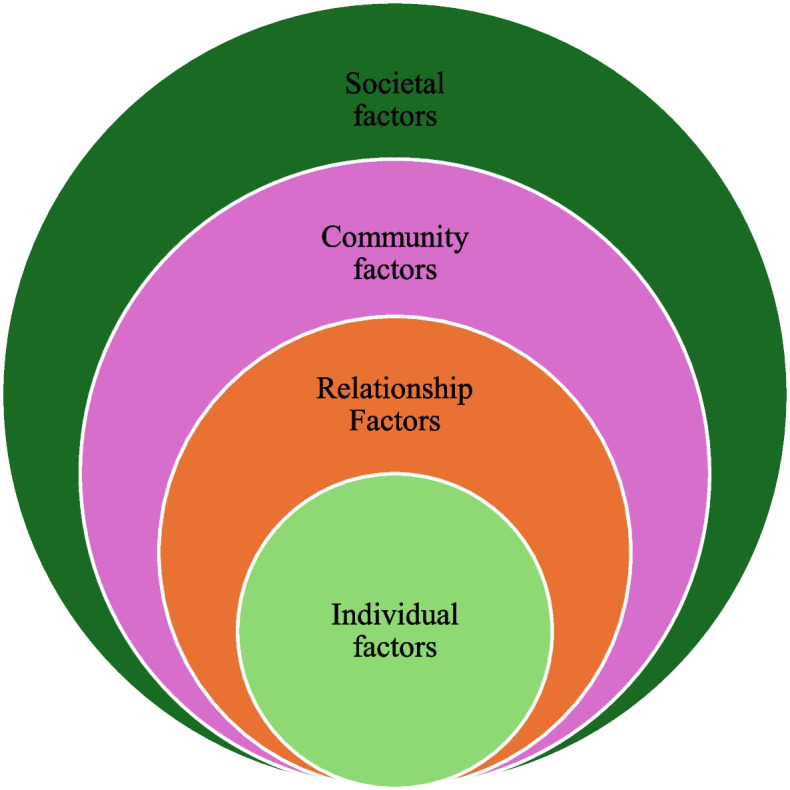
Socioecological model of health
A key goal of the WWOMB program was to produce work ready graduates who are upskilled to take on research leadership roles within their own cultures and communities. We aimed to achieve this by ensuring adequate skill acquisition, a commitment to ongoing development, modelling academic excellence and integrity, movement towards independence, leading to a well-rounded graduate with expertise in research, dissemination and translation, stakeholder engagement and analysis of the policy environments they seek to influence.
As such, students completing their PhDs within the WWOMB program went through the same scholarship and admission process for all The University of Newcastle international PhD candidates and were required to achieve the same requirements throughout their candidature as all PhD candidates (e.g., undergo a confirmation of candidature within the first 12 months (where students are required to provide a document encompassing a current review of the literature on their topic, a proposed research plan and timeline for completion to be assessed by an expert panel, undertake a 20-minute presentation on their proposed research and undergo a verbal defence with their panel). The difference for WWOMB PhD candidates however was the targeted approach to learning throughout the candidature. As the WWOMB initiative was designed to study global maternal and infant health conducted by people who are in and of the cultures concerned, a cohort approach was taken to student supervision and support (in addition to their individual supervision sessions). Cohort student supervision was designed using a community of praxis framework focused on four stages: (i) supervision and training; (ii) writing for specific audiences (e.g., publications, policy briefs and lay summaries); (iii) training and facilitation of policy and practice translation (e.g., developing reciprocal relationships with health policy makers, clinicians, and community member); and (iv) work-preparedness (e.g., Curriculum Vitae writing and review, interview advice and practice).
Using this cohort approach, students undertook fortnightly classes during Year 1 focused on key activities (e.g., confirmation preparation, skill development in systematic reviews, using statistical packages and various research methods). In the second year, the students determined their own class needs with guidance and content provided by the three core supervisors (MLH, DL and CC). In Year 3, the class evolved into a peer support program, fully controlled by the students, with supervisor support and guest speaker input (on a needs basis). The class-supervision structure provided the benefits of a peer environment complemented by individual supervision. In addition to training in these areas, WWOMB candidates received additional supports which included: dedicated English language support (through regular language classes and one-on-one support), statistical consultations, as well as manuscript, and thesis editing support.
Results
The following outlines key findings from the WWOMB program in Ethiopia.
Study characteristics
A total of 44 papers were published by the WWOMB research team between 2017 and 2022 that focused on improving maternal and infant outcomes in Ethiopia. Of these, one involved the systematic review of current literature [24], nine involved a systematic review with meta-analysis [25–34], one focused on geographic linkage methods [35] and 37 were original research articles. Of the original research articles, 17 studies analysed national Ethiopian Demographic Health Survey (EDHS) datasets including two that were linked to Ethiopian Service Provision Assessment (ESPA+) survey data, four studies utilised hospital-based emergency obstetric and neonatal care registry data, one study used longitudinal surveillance system data (Health and Demographic Surveillance System; HDSS) and one utilised panel data from the World Bank Development Indicators database. Ten studies involved primary collection of quantitative data (including two prospective studies) and three involved qualitative data collection.
Identified topics
Five overarching topics based on the study outcomes were identified: (a) family planning and contraception (n = 7); (b) maternal and child health service use (n = 14); (c) maternal and child health outcomes (n = 20); (d) maternal and child nutrition (n = 5); and (e) health economics (n = 2). To synthesise the findings, information related to first author, year of publication, study aim(s), study design and setting, participant characteristics, main findings and policy and practice implications were extracted. The major findings for each of the identified topics are presented below as a narrative synthesis, with case studies highlighted.
Family planning and contraception
Seven studies focused on specific aspects of family planning across the reproductive life course including the relationship between Intimate Partner Violence (IPV) and unintended pregnancy (n = 2), the population-level examination of geographical differences in the use of modern contraception (n = 1) and contraceptive use, contraceptive counselling, and fertility among women with HIV (n = 4) (see Table 1). In particular, Tegene et al. [36] provided the first population-level evidence in Ethiopia on the geographic identification of concentrated high use of modern contraception (i.e., hot spots) and those with low use (i.e., cold spots) through geospatial mapping. While only one-third of married women were found to be overall users of modern contraception, utilisation varied across different regions and city administrations (Global Moran’s I = 0.24; Z-score = 8.09; p < 0.0001). The highest contraceptive prevalence was reported in the Amhara region (52%) and Addis Ababa (50%). In contrast, the prevalence of contraceptive use in the Somali, and Afar regions were low (< 10%). Area of residence was found to account for around 25% of the variance in the use of modern contraception among married women. Of the other individual- and regional-level factors examined, the strongest predictor of modern contraceptive use was health facility readiness to provide short-term modern contraceptives, where a one-unit increase in health facility readiness to provide short-term modern contraceptives in a given area was found to increase the odds of modern contraceptive use by more than 20-fold (95% CI 1.44 to 29.54).
Table 1.
Studies on family planning and contraception in Ethiopia (2017–2022)
| Author and year | Aim(s) | Design and setting | Participant characteristics | Main findings | Policy and practice implications |
|---|---|---|---|---|---|
| Feyissa et al. 2020a [41] | (a) Assess reproductive discussions with healthcare providers by sexually active Women Living with HIV (WLHIV); (b) Examine predisposing, enabling, and need factors affecting client-provider discussions; (c) Describe safer conception knowledge by WLHIV. |
Design: Cross-sectional survey. Data source: Primary data collection. Setting and geographical location: 4 health facilities in western Ethiopia. Timeframe: 2018. Analysis method: Binary and multivariable logistic regression analysis. |
Sample: 475 sexually active WLHIV who reported being sexually active within the 6 months prior to survey completion and who reported being fecund. Mean age: 31.4 ± 6.2 years Other characteristics: 80% were married, 22% had no formal education and 50.5% had a monthly family income of less than 1500 Ethiopian Birr (US$53.76). |
Prevalence: 30.7% reported general discussions of reproductive plans with healthcare providers and 16.8% reported personalised discussions. Predictors of discussions: Unmarried sexually active WLHIV and WLHIV accessing antiretroviral therapy (ART) at health centres were less likely to have general and personalised discussions than married women and women who accessed ART at hospitals, respectively. |
Policy and guideline: Policies and guidelines that respect WLHIV’s autonomy and empower them to discuss their intentions to reduce HIV transmission risks to each other and their children are required. Practice: Improving client-provider discussions at all levels of health facilities, as well as inclusiveness of reproductive conversations for all women is required. |
| Feyissa et al. 2020b [40] | Examine contraceptive practice among sexually active WLHIV in western Ethiopia and identify factors that influence such practice using the Health Belief Model (HBM). |
Design: Facility-based cross-sectional survey. Data source: Primary data collection. Setting and geographical location: 4 health facilities (two hospitals and two health centres) in western Ethiopia. Timeframe: March-June 2018. Analysis method: Modified Poisson regression analyses. |
Sample: 360 sexually active WLHIV. Mean age: 31.7 ± 6.2 years. Other characteristics: 80.8% were married, 60.0% had a follow-up in hospitals for ART, and 52% reported a monthly family income of less than 1500 Ethiopian Birr. |
Prevalence: 75% used contraception with 25% having unmet needs. Predictors of higher contraceptive use: (a) Having 2 or more children after HIV diagnosis (compared to no children); (b) High and medium perceived susceptibility towards unintended pregnancy (compared to low perceived susceptibility). Predictors of lower contraceptive use: Being sexually active and unmarried (compared to sexually active married women). |
Policy and guideline: Developing contraceptive counselling guidelines and policies based on the HBM would be valuable in supporting WLHIV to achieve their reproductive goals. Practice: (a) Ensuring highly effective contraceptive use while addressing concerns related to HIV is an excellent opportunity to meet the reproductive goals of WLHIV; (b) Enhancing the quality of contraceptive information, counselling and service provision in HIV clinics as well as family planning clinics at all levels of health facilities. |
| Feyissa et al. 2020c [42] | Explore perceptions of fertility plan discussions between WLHIV and their healthcare providers (HCPs) in western Ethiopia, from the perspectives of both women and providers. |
Design: Qualitative study (phenomenological approach). Data source: Primary data collection. Setting and geographical location: 4 healthcare facilities (two hospitals and two health centres) in western Ethiopia. Timeframe: 2018. Analysis method: Inductive thematic analysis. |
Sample: 31 interviews (27 with WLHIV and 4 with HCPs). Age range (WLHIV): 18–35 years (mean = 28 years). Age range (HCPs): 33–48 years. |
Prevalence of fertility plan discussions: 9/27 WLHIV reported personal fertility plan discussions with their HCPs. When discussions occurred, safer conception and contraceptive use were the primary focus. Facilitators of discussions: Referrals to peer support groups, adherence counsellors and family planning clinics. Barriers to discussions: Lack of initiating discussions by either HCPs or women, high client load, insufficient staffing, and a poor referral system. Barriers to good quality discussions: (a) Lack of recognising women’s fertility needs; (b) Lack of time and being overworked; (c) Mismatched fertility desires among couples; (d) Non-disclosure of HIV-positive status to partner; (e) Poor partner involvement; (f) Fear of repercussions of disclosing fertility desires to a HCP; and (g) HCPs fear of seroconversion. |
Policy and guideline: Policies and guidelines supporting fertility discussions require development. Practice: (a) Training HCPs regarding safer conception (strategies and effectiveness), improving the integration of services along with improved human resources, and improving partner involvement to improve reproductive counselling; (b) HCPs need to avoid delaying discussions regarding the fertility issues of their clients; (c) Redirecting tasks such as fertility plan counselling to mother support groups and adherence counsellors could be used as a strategy for HIV-positive people to work towards effective contraceptive use and to achieve safer conception; (d) Improving the content and quality of client-centred fertility planning discussions can significantly contribute to having healthy babies and a reduction in HIV transmission. |
Key: Women Living with HIV (WLHIV), Antiretroviral Therapy (ART), Health Belief Model (HBM), Healthcare providers (HCPs)
While this topic included research across the family planning space (i.e., from preconception to conception), the most comprehensive body of work to date has focused on women of reproductive age living with HIV [37–39]. Using facility-based cross-sectional surveys, Feyissa and colleagues demonstrated that of women who gave birth in a three-year period, 18% of births were reported as mistimed and one-quarter were unwanted at conception [40]. In addition, a quarter of women living with HIV who reported being fecund and sexually active within the previous six months and were at risk of an unintended pregnancy were found to have an unmet need for contraception [40]. When contraception was used, only 29% of women used highly effective contraception (e.g., progestogen-only implant). This is particularly important given that previous research has shown that engagement in reproductive discussions between healthcare providers and sexually active women living with HIV is lacking. Less than one-third of women reported having general reproductive discussions and even fewer (17%) reported having personalised reproductive discussions [41].
Maternal and child health service use
Table 2 summarises the studies which focused on maternal and child health service utilisation. Two studies investigated emergency obstetric care (EmOC) [24, 43], six studies focused on antenatal care [25, 27–29, 35, 44], four focused on institutional delivery [26, 45–47], one study focused on postnatal care utilisation [47], and one study assessed maternal health service utilisation in general [48].
Table 2.
Studies on maternal and child health service utilisation in Ethiopia (2017–2022)
| Author and year | Aim(s) | Design and setting | Participant characteristics | Main findings | Policy and practice implications |
|---|---|---|---|---|---|
| Geleto et al. 2018 [24] | Identify factors affecting access to and utilisation of emergency obstetric care (EmOC) services at health facilities in sub-Saharan Africa. |
Design: Systematic review. Data source: MEDLINE, CINAHL, EMBASE, and Maternity and Infant Care databases. Setting and geographical location: sub-Saharan Africa. Timeframe: 2010–2017. Analysis method: Qualitative synthesis. |
Sample: 37 studies. Study characteristics: 35.1% of data collection took place in 2012, 27.0% were published in 2014, and 24% were published in 2016. |
First delay barriers: younger age; illiteracy; lower income; unemployment; poor health service utilisation; low level of assertiveness; poor knowledge about obstetric danger signs and cultural beliefs. Second delay barriers: Poorly designed roads; lack of vehicles; transportation costs; distance from facilities. Third delay barriers: Lack of EmOC services and supplies; shortage of trained staff; poor management of emergency obstetric care provision; cost of services; long waiting times; poor referral practices; poor coordination among staff. |
Policy and guideline: Not reported. Practice: (a) Health insurance should be made available for women to improve the effect of economic liability on health service utilisation; (b) Investment in healthcare infrastructure, including road facilities, obstetric care facilities, toilet facilities, water supply, interpersonal communication, equipment, human resources for health, and community-based health information dissemination. |
| Geleto et al. 2020 [43] | Investigate perceptions of midwives about the quality of EmOC provided at hospitals in the Harari region of Ethiopia. |
Design: Explanatory qualitative study. Data source: Primary data collection. Setting and geographical location: Public and private hospitals, Harari region, Ethiopia. Timeframe: December 2018-February 2019. Analysis method: Thematic analysis (Braun and Clarke). |
Sample: 12 midwives working in maternity units. Mean age: 29 ± 5 years. Other characteristics: Most participants (n = 10) were female; half held a Bachelor of Sciences Degree in Midwifery. |
Barriers to the provision of quality obstetric services: (a) Poorly designed infrastructure, including a scarcity of beds, rooms, and ambulances; (b) Inadequate number of midwives working at hospitals and scarce training opportunities; (c) Language barriers affected effective communication between patients and caregivers; (d) Frequent disruptions to medical supplies; (e) Lack of treatment protocols; (f) Poor supervision support, (g) Poor staff motivation. |
Policy and guideline: (a) Initiation of a user-fee exemption policy on maternal health services at private hospitals is needed; (b) the available fee waiver system in public hospitals needs to be strengthened. Practice: (a) The regional health bureau should pay special attention to the impartial governance of the drug delivery system; (b) Health managers should exercise equitable distribution of treatment protocols, essential medicines, and medical equipment to address the observed differences in public and private hospitals and to improve the quality of EmOC. |
| Musa et al. 2019 [25] | Review the evidence, quantify the strength and direction of the association between intimate partner violence (IPV) and utilizing adequate antenatal (ANC) and skilled delivery care services. |
Design: Systematic review and meta-analysis. Data source: MEDLINE, Embase, Psych INFO, CINAHL, and Maternity and Infant Care databases. Setting and geographical location: Worldwide. Timeframe: Searches were carried out from the inception of each database up to 05 September 2017. Analysis method: Pooled odds ratios, Random-effects models, and I2 statistics. |
Sample: 10 articles. Study characteristics: 2 studies reported on combined IPV, 5 studies reported on physical IPV, 2 studies reported on sexual IPV, and 1 study reported on controlling behaviour. |
Association between IPV and utilizing ANC and skilled delivery care services: Women who experienced IPV had 25% decreased odds of using adequate ANC and 20% decreased odds of using skilled delivery care (compared to women who did not experience IPV). |
Policy and guideline: Not reported. Practice: Both community-based and facility-based interventions that target the reduction of IPV, such as facility-based counselling interventions, might aid in improving the utilization of maternal health care services. |
| Tegegne et al. 2018 [26] | Synthesise and pool the evidence on the influence of geographic access on institutional delivery care use in low- and middle-income countries (LMICs). |
Design: Systematic review. Data source: MEDLINE, EMBASE, CINAHL, PsycINFO, Scopus, and Maternity & Infant Care databases. Setting and geographical location: LMICs as defined by the World Bank. Timeframe: 2000–2016. Analysis method: Qualitative synthesis and meta-analysis. |
Sample: 31 studies (16 in the qualitative synthesis and 15 in the quantitative synthesis. Study characteristics: 24 studies were community-based cross-sectional studies, 5 studies were linked analyses of community-based data and health facility data, 1 study was a community-based prospective cohort study, and 1 study was an unmatched case-control. |
Determinants of geographic access on institutional delivery: Access to obstetric care facilities within 5 km and a travelling time of 60 min or less increased the odds of institutional deliveries; every one-hour and one-kilometre increase in travel time and distance were negatively associated with institutional delivery care use. |
Policy and guideline: Not reported. Practice: Drivers of service uptake such as improvements in the road network and health facilities readiness to provide obstetric care services should be emphasised. |
| Tegegne et al. 2019 [35] | Assess the spatial patterns of ANC use, and to identify associated factors among pregnant women in Ethiopia. |
Design: Cross-sectional survey. Data source: 2016 Ethiopian Demographic Health Survey (EDHS) linked with 2014 Ethiopian Service Provision Assessment (ESPA+) data. Setting and geographical location: National. Timeframe: 2014; 2016. Analysis method: Multivariable multilevel logistic regression analysis and spatial analyses. |
Sample: 6,954 women who gave birth 5 years preceding the survey and 919 facilities that reported providing ANC. Mean age: 29.3 ± 6.8 years. Other characteristics: 59.9% had no education, 32.6% were in the poorest wealth quintile, 33.9% were Orthodox Christian, and 44.5% were Muslim. |
Factors associated with ANC: (a) Husband/partner’s education; (b) women’s autonomy in their own healthcare decision-making; (c) rural residence; (d) ANC service availability; (e) average distance to the nearest ANC facility. Spatial variation: (a) The Southern Nations, Nationalities, and Peoples Region (SNNPR) had high clusters of at least four ANC visits; (b) Having the first ANC visit during the first trimester was predictive of having at least four ANC visits; (c) Hot spots of at least four ANC visits were identified in areas where there were teaching hospitals. |
Policy and guideline: Not reported. Practice: (a) Government and NGOs should prioritise establishing health facilities in rural areas; (b) Availing ANC services at all levels, especially in rural areas and some regions with poor healthcare access and making them ready to provide these services should be prioritised; (c) Teaching hospitals should be equipped to provide ANC services; (d) Women’s empowerment in all aspects of life, especially in their own healthcare decisions, needs to be emphasised. |
| Tegegne et al. 2020 [45] | Assess spatial variations in the use of healthcare facilities for birth and to identify associated factors. |
Design: Cross-sectional survey. Data source: 2016 EDHS linked with 2014 ESPA+. Setting and geographical location: National. Timeframe: 2014; 2016. Analysis method: Multivariable multilevel logistic regression and spatial analyses. |
Sample: 6,954 women who gave birth in the 5 years preceding EDHS 2016 and 717 healthcare facilities providing delivery care. Mean age: 29.3 ± 6.8 years. Other characteristics: 60% had no education, 32.6% were from the poorest quintile and 78% were from rural areas. |
Factors associated with healthcare facility births: (a) ANC attendance; (b) readiness of the basic emergency obstetric care (BEmOC) facility and distance to the BEmOC facility; (c) place of residence. Spatial variation: Clustering of facility birth was found in the Tigray region. |
Policy and guideline: Geographic access needs to be considered, with an equitable distribution of health facilities. Practice: (a) Ensuring health facilities are ready to provide EmOC are staffed and well equipped and have key signal functions in place; (b) ANC providers should continue to counsel pregnant women about the benefits of giving birth at a healthcare facility. |
| Tegegne et al. 2022 [46] | Identify geographic variation and associated factors of caesarean delivery in Ethiopia. |
Design: Cross-sectional survey. Data source: 2016 EDHS linked with 2014 ESPA+. Setting and geographical location: National. Timeframe: 2014; 2016. Analysis method: Bayesian hierarchical model and spatial analysis. |
Sample: 6,954 women who gave birth 5 years preceding the survey and 179 of the 214 hospitals that reported providing caesarean sections. Mean age: 29.3 ± 6.8 years. Other characteristics: 59.9% had no education, 32.6% were in the poorest wealth quintile, 33.9.0% were Orthodox Christian, and 44.5% were Muslim. |
Factors associated with caesarean delivery use: (a) women’s age; (b) women’s education; (c) household wealth; (d) parity; (e) antenatal care (ANC) visits; (f) distance to facility that provides caesarean section. Spatial variation: Hotspots of high caesarean section rates were observed in Addis Ababa, Dire Dawa, and the Harari region. Women’s age at first childbirth and ≥ 4 ANC visits were associated with spatial variations in between caesarean delivery use across Ethiopia. |
Policy and guideline: Not reported. Practice: (a) Narrowing the disparities in caesarean section service availability; (b) counselling pregnant women about the potential benefits and risks of caesarean delivery. |
| Tekelab et al. 2019 [27] | Systematically and quantitatively summarise the factors affecting utilisation of ANC in Ethiopia |
Design: Systematic review and meta-analysis. Data source: PubMed, Medline, EMBASE, CINAHL, Google Scholar, and Maternity and Infant Care databases. Setting and geographical location: Ethiopia Timeframe: 2002–2016. Analysis method: Random-effects and narrative synthesis. |
Sample:15 articles. Study characteristics: 13 cross-sectional studies and 2 cohort studies; 5 studies were conducted in SNNPR, 4 studies in the Oromia region; 2 in the Benishangul Gumuz region; 2 studies in Tigray; 1 in the Amhara region and 1 was a nationally-representative study. |
Prevalence: 63.8% reported pooled prevalence of utilization of ANC. Predictors of ANC utilization: (a) Urban residence; (b) women’s education; (c) husband’s education; (d) planned pregnancy; (e) exposure to mass media; (f) family income; (g) service accessibility. |
Policy and guideline: Not reported. Practice: Empowering women, making health facilities accessible, increasing husband’s or partner’s participation in antenatal care, exposing women to mass media (TV and radio) and advocating for ANC in mass media, creating ways to increase income generation by women, and providing advice on the importance of ANC. |
| Tekelab et al. 2019 [28] | Determine the pooled effect of ANC on neonatal mortality in sub-Saharan Africa. |
Design: Systematic review and meta-analysis. Data source: PubMed, Medline, EMBASE, CINAHL and Google Scholar databases. Setting and geographical location: sub-Saharan Africa. Timeframe: Searches were carried out from the inception of each database up to 28 May 2019. Analysis method: DerSimonian and Laird random-effects model. |
Sample:12 articles. Study characteristics: 5 cohort studies, 2 case-control studies, and 5 cross-sectional studies. |
Effects of ANC on neonatal mortality: One ANC visit by a skilled provider reduced neonatal mortality by 39%. |
Policy and guideline: Strategies should be developed to increase the utilisation of ANC. Practice: All pregnant women should receive ANC from a skilled provider. |
| Tesfaye et al. 2017 [29] | Identify and synthesise available evidence on delayed initiation of ANC and associated factors in Ethiopia. |
Design: Systematic review and meta-analysis. Data source: PubMed, Medline, Excerpta Medica, and CINAHL. Setting and geographical location: Ethiopia. Timeframe: 1 January 2002–30 April 2017. Analysis method: Narrative and quantitative synthesis including I2 statistics, and pooled estimate of the outcome variable. |
Sample: 22 articles for qualitative synthesis and 21 articles for meta-analysis. Study characteristics: 17 published articles, 3 master theses, and 1 study based on data from the EDHS. |
Prevalence: 64% pooled prevalence of delayed ANC. Predictors of delayed ANC: Maternal age; place of residence; maternal education; husband’s education; maternal occupation; monthly income; pregnancy intention; parity; knowledge of antenatal care; women’s autonomy; partner involvement; pregnancy complications; means of identifying pregnancy. |
Policy and guideline: Strategies should be designed to intensify advocacy of female education. Practice: Need to empower women through economic reforms, strengthening family planning programs, and promoting partner involvement in ANC. |
| Tesfaye et al. 2018 [44] | Identify the key factors that affect ANC utilisation among reproductive-aged women in Kersa district, Eastern Ethiopia. |
Design: Community-based cross-sectional study. Data source: Primary data collection. Setting and geographical location: Kersa district, eastern Ethiopia. Timeframe: June to August 2017. Analysis method: Bivariate and multivariate logistic regression. |
Sample: 1,294 women. Mean age: 27.4 ± 6 years. Other characteristics: 98.7% were married, 72.7% had never attended formal education, and 50.4% had a husband who had never attended formal education. |
Predictors of at least one ANC attendance: (a) Women’s education; (b) previous use of ANC; (c) best friend’s use of maternal care. Enabling factors influencing at least one ANC visit: (a) Type of kebelea; (b) wealth index; (c) husband’s attitude towards ANC. Need factors that predicted at least one ANC visit: Health Extension Workers’ household visits, perceived importance of ANC attendance, and awareness of pregnancy complications. Predictors of four or more ANC visits: Being head of the household, abortion history, awareness about pregnancy complications, and husband’s attitude towards ANC. |
Policy and guideline: Designing women’s peer education programs to mobilise and support women and program to change husband’s attitudes through community mobilisation. Practice: (a) Improving women’s education enrolment; (b) Women-centred economic reforms; (c) Ameliorating service provision of ANC; (d) Strengthening the Health Extension Workers (HEW) home visits programs to further expand the health promotion and diseases prevention activities; (e) Designing programs to increase awareness about pregnancy complications and importance of practicing ANC during pregnancy, especially for underprivileged women in rural areas. |
| Tesfaye et al. 2019 [47] | Explore the predisposing, enabling, and need factors associated with skilled delivery care utilisation among reproductive-aged women in Kersa district, eastern Ethiopia. |
Design: Community-based cross-sectional study. Data source: Primary data collection. Setting and geographical location: Kersa district, eastern Ethiopia. Timeframe: June-August 2017. Analysis method: Multivariate logistic regression. |
Sample: 1,294 women. Mean age: 27.4 ± 6 years. Other characteristics: 98.7% were married, 83.3% had been pregnant more than once, 81.8% had given birth more than once, 53.6% had attended at least one ANC for their most recent pregnancy. |
Prevalence of skilled delivery care: 30.8%. Predictors of skilled delivery care use: (a) Presence of educated family members; (b) Receiving education on maternal health; (c) Previous use of skilled delivery care; (d) Best friend’s use of maternal care. Enabling factor: Place of residence Need factors: (a) ANC attendance; (b) pregnancy intention. |
Policy and guideline: Design maternal health program that entails equitable distribution of health infrastructure between rural and urban communities. Practice: (a) Improving access to family planning services; (b) Establishing peer-to-peer maternal health education programs; (c) Increasing ANC use. |
| Tesfaye et al. 2019 [49] | Assess the magnitude and correlates of postnatal care (PNC) utilisation among reproductive aged women in Kersa district, in eastern Ethiopia. |
Design: Community based cross-sectional study. Data source: Kersa Health and Demographic Surveillance System (HDSS). Setting and geographical location: 10 randomly selected sub-districts in Kersa district, eastern Ethiopia. Timeframe: June-August 2017. Analysis method: Multivariate logistic regression. |
Sample: 1,206 women of reproductive age. Mean age: 27.4 ± 6.1 years. Other characteristics: 86.3% were rural dwellers, 65.6% were living in HDSS, 98.6% were married, and 72.7% had never attended formal education. |
Prevalence of PNC after last birth: 7.6% Predictors of PNC: (a) Receiving education about maternal health; (b) A woman’s best friend using any maternal care. Enabling factors: Being head of the household Need factor: Experience of postpartum complications. |
Policy and guideline: Establishing women’s peer education programs at the community level to promote the utilisation of PNC Practice: (a) Mobilising women to seek and receive PNC as a matter of course, before the occurrence of life-threatening postpartum complications; (b) Women’s empowerment and capacity-building. |
| Tesfaye et al. 2020 [48] | Explore factors that delay maternal health service utilisation in eastern Ethiopia. |
Design: Qualitative study. Data source: Primary data collection. Setting and geographical location: Kersa district, eastern Ethiopia. Timeframe: June-August 2017. Analysis method: Thematic analysis (Three Delays model). |
Sample: 88 participants including 20 reproductive aged women, 19 mothers-in-law, 13 traditional birth attendants, 24 husbands and 12 HEWs. Other characteristics: Most participants were illiterate, married and of Muslim faith. All participants were members of the Oromo ethnic group. |
Factors related to the first delay to maternal health service utilization: (a) Low level of awareness of need for services; (b) Lack of husband’s involvement; (c) Perceived absence of health problems; (d) Social power; (e) Poor social networks; (f) Community misperceptions; (g) Acceptance of traditional birth attendants; (h) Negative attitudes towards male midwives. Factors related to the second delay: (a) Lack of physical accessibility; (b) high transportation costs. Factors related to the third delay: Perceived or experienced poor quality of obstetric care at health facilities. |
Policy and guideline: Not reported. Practice: (a) Implementation of community-based systematic and culturally sensitive peer education programs to improve the perception of less literate and rural women; (b) Increasing risk awareness of women and families about obstetric complications; (c) Abolish restrictive cultural practices; improving male involvement in ANC; (d) Improving the functionality of ambulance services particularly the provision of return transportation services; (e) Increasing the capacity at health posts to provide birth care; (f) Involving community-based trained traditional birth attendants in providing birth care, especially to reach women in rural and remote communities. |
Key: Emergency obstetric care (EmOC), Intimate partner violence (IPV), Antenatal care (ANC), Low-and-middle-income countries (LMICs), False discovery rate (FDR), Southern Nations, Nationalities, and Peoples Region (SNNPR), Non-government organisations (NGOs), Ethiopia Demographic and Health Survey (EDHS), Ethiopian Service Provision Assessment (ESPA+), Demographic and Health Survey (DHS), Basic emergency obstetric care (BEmOC), Television (TV), Health Extension Workers (HEW)
aA lower administrative unit next to the district
One meta-analysis of antenatal care attendance in Ethiopia identified a point prevalence of 63.8% [27], while another meta-analysis by Tesfaye et al. (2017) found significant delays in antenatal care seeking with a pooled prevalence of 64% identified [29]. Importantly, among women who died, only 26% had attended at least one antenatal care visit. This is particularly important as research by Tekelab et al. (2019) found that at least one antenatal care visit by a skilled provider during pregnancy reduced the risk of neonatal mortality by 39% [28].
Our research also demonstrated significant geographic variations across various maternal health services such as antenatal care ( Global Moran’s I = 0.18, z-score = 6.11, P-value < 0.0001) [35], health facility birth (Global Moran’s I = 0.028; Z = 3.41; P < 0.0001) [45], and caesarean delivery (Global Moran’s I = 1.15, Z-score = 38.26, P-value < 0.0001) [46]. Importantly, Musa et al. (2019) documented the association IPV and maternal health service utilisation, with women who experienced IPV having 25% decreased odds of using adequate antenatal care (having four and above antenatal care visits) and 20% decreased odds of using skilled delivery care compared to women who did not experience IPV [25]. Moreover, Geleto et al. (2018) found that barriers to the provision of quality obstetric services included poorly designed infrastructure, an inadequate number of midwives working at hospitals, language barriers, a lack of treatment protocols and poor supervision support and staff motivation [24].
Maternal and child health outcomes
In all, 21 studies focused on maternal and child health outcomes (see Table 3). One study investigated severe maternal outcomes [50], one study focused on obstetric danger signs [30], three studies focused on hypertensive disorder of pregnancy [32, 33, 51], five studies focused on IPV [52–56], and three studies reported on short birth interval [57–59]. Additionally, two studies investigated maternal and neonatal near miss [60, 61], two studies researched perinatal and infant mortality [31, 62], one study focused on obstetric case fatality [63], and two studies investigated maternal mortality outcomes [64, 65].
Table 3.
Studies on maternal and child health outcomes in Ethiopia (2017–2022)
| Author and year | Aim(s) | Design and setting | Participant characteristics | Main findings | Policy and practice implications |
|---|---|---|---|---|---|
| Beyene et al. 2022 [50] | Assess the incidence of severe maternal outcomes (SMO) and quality of maternal health care in south Ethiopia. |
Design: Facility-based prospective study. Data source: Primary data collection. Setting and geographical location: 3 hospitals in Southern Nations, Nationalities and Peoples’ Region (SNNPR), Ethiopia. Timeframe: July- November 2018. Analysis method: SMO ratio, maternal near-miss ratio (MNMR), mortality index (MI), and maternal mortality ratio (MMR). |
Sample: 3,010 women who presented to the study hospitals while pregnant, during and after childbirth. Other characteristics: 315 women developed potentially life-threatening conditions. |
SMO Incidence: 108 (90 maternal near-miss (MNM) and 18 maternal deaths). SMO incidence ratio: 37.5 per 1000 live births. MNM incidence ratio: 31.3 per 1000 live births. Near-miss to maternal death ratio: 5:1. Hospitals MMR: 625 per 100,000 live births. Causes of SMO: (a) Eclampsia (37.0%); (b) Postpartum haemorrhage (33.3%). |
Policy and guideline: Not reported. Practice: (a) Effective use of evidence-based life-saving maternal health care interventions; (b) Reducing delays; (c) Improving the referral system and training the health care providers in referring women with severe maternal complications; (d) Continuous auditing of maternal complications. |
| Beyene et al. 2022 [62] | (a) Assess the utility of delivery ward register data, captured at birth by healthcare providers; (b) Determine causes of perinatal mortality in one specialised and one general hospital in south Ethiopia. |
Design: Retrospective study Data source: Delivery register. Setting and geographical location: Hawassa University Comprehensive Specialized Hospital (HUCSH) and Durame General Hospital (DGH), SNNPR, Ethiopia. Timeframe: 2014–2016. Analysis method: Multivariable logistic regression. |
Sample: 13,236 births. Age: 37.6% of women were aged 21–25 years. Other characteristics: 91.4% of births were singleton; pre-eclampsia or eclampsia was the leading cause of maternal complications (31.0%). Maternal complications in 16.0% of births were not specified/recorded in the delivery register. |
Mortality ratio: (a) Perinatal mortality declined from 96.6 to 75.5 per 1,000 births during the 3-year study period; (b) Early neonatal mortality and stillbirth rates were 29.3 per 1,000 live births and 55.2 per 1,000 total births, respectively. Causes of death: Leading causes of neonatal death were: (a) Prematurity (47.5%); (b) Asphyxia (20.7%)a |
Policy and guideline: Not reported. Practice: Accurate recording and reporting of reliable data including number and cause of death within hospitals are important for program planning and monitoring. |
| Geleto et al. 2019 [30] | Identify the level of women’s knowledge about obstetric danger signs |
Design: Systematic review and meta-analysis. Data source: MEDLINE, Cumulative Index to Nursing and Allied Health Literature, Embase, Web of Science, Scopus, Google Scholar and Maternity and Infant Care databases. Setting and geographical location: Ethiopia. Timeframe: No timeframe Analysis method: Narrative synthesis and a random effect meta-analysis. |
Sample: 12 articles. Study characteristics: 25% of the studies were conducted in the Amhara region, 25% in the SNNPR and 25% in the Oromia region and 17% were conducted in the Tigray region, and the remaining 8% was conducted in the Ethiopian Somali region. |
The pooled prevalence of women’s knowledge about obstetric danger signs: 48% during pregnancy, 43% during delivery, and 32% during postpartum. Predictors of women’s knowledge of obstetric danger signs: Maternal age, education, income, health service use, distance from facility and women’s autonomy. |
Policy and guideline: Not reported. Practice: Improving the awareness of the community, families and women about obstetric danger signs through factor-specific interventions; strengthening the counselling services about obstetric danger signs during antenatal care (ANC) visits. |
| Geleto et al. 2020 [60] | (a) Assess the incidence of MNM and contributing factors among hospitals in Ethiopia; (b) Assess the ability of hospitals to provide signal functions emergency obstetric care and its reginal distributions. |
Design: Survey. Data source: Secondary data collected by the Ethiopian Public Health Institute (EPHI). Setting and geographical location: All hospitals Ethiopia. Timeframe: 2015. Analysis method: Descriptive statistics and ratios MMR, Maternal Near Miss Incidence Ratio (MNMIR)) and Chi-squared test. |
Sample: 293 hospitals (58 private and 235 public hospitals). Data from women who sustained all types of obstetric complications. Other characteristics: 78,195 women were admitted to hospitals with both direct (68,002) and indirect (10,193) causes of maternal mortality. |
Incidence of MNM: 20.8% crude MNM and 0.64% mortality index. Provision of Emergency obstetric care (EmOC) signal functions: 96.2% hospitals provided parenteral antibiotics, the most frequently practiced EmOC signal function and blood transfusion was the least provided signal function (64.5%) Predictors of MNM, mortality index and the provision of signal functions of emergency obstetric care: Regional variation. |
Policy and guideline: Policy makers need to consider equitable distribution of resources to close the gap in regional variations in the provision of the EmOC signal functions. Practice: Health managers should strengthen evidence-based practice. |
| Geleto et al. 2020 [64] | Assess the association between MMRs and caesarean section rates in hospitals in Ethiopia. |
Design: Survey. Data source: Ethiopian emergency obstetric and neonatal care (EmONC) assessment survey. Setting and geographical location: Ethiopia. Timeframe: 2016. Analysis method: Descriptive analysis. |
Sample: 293 public and private hospitals. Other characteristics: Out of 335,054 total births, 23.3% women were admitted with an obstetric complication. |
MMR: 149 per 100,000 live births. Association between MMRs and Caesarean Section: Trend for an inverse association was observed between MMRs and caesarean section rates (statistically not significant). |
Policy and guideline and practice: Not reported. |
| Geleto et al. 2020 [63] | Assess the magnitude and determinants of the direct obstetric case fatality rate among women admitted to hospitals with direct maternal complications. |
Design: Survey. Data source: Data from the Ethiopian EmONC assessment survey. Setting and geographical location: Ethiopia. Timeframe: 2016. Analysis method: Logistic regression. |
Sample: 293 public and private hospitals. Other characteristics: 24.9% of the hospitals were from the Oromia region, 10.2% hospitals were referral specialised hospitals, 80.2% hospitals were public hospitals, and 92.8% hospitals were located in urban centres. |
Direct obstetric case fatality rate (crude): 0.64%. Predictors of direct obstetric case fatality rate: (a) Type of hospitals; (b) Managing authority; (c) Payment required for the service. |
Policy and guideline: Government needs to focus on quality improvement initiatives by taking regional variations into consideration. Practice: Equitable resource distribution needs to be in place to tackle the regional disparities that exist. |
| Kiross et al. 2019 [31] | Assess the effect of different levels of maternal education on infant mortality in Ethiopia. |
Design: Systematic review and meta-analysis. Data source: MEDLINE, EMBASE, CINAHL, Scopus, and Maternity and Infant Care databases. Setting and geographical location: Ethiopia. Timeframe: Searches were carried out from the inception of each database up to February 2018. Analysis method: Random effects model. |
Sample:5 articles. Study characteristics: 1 community-based cohort study, 1 community-based cross-sectional study, 1 community-based matched case-control study, and 2 population-based cross-sectional studies. |
The relationship between maternal education and infant mortality: Mother’s attainment of primary education and secondary education and above were associated with a 28% and 45% reduction in the odds of infant mortality, respectively (compared to infants born to mothers with no formal education). |
Policy and guideline: Not reported. Practice: Investment in maternal education; and intersectoral collaboration between the Federal Ministry of Education and the Federal Ministry of Health in Ethiopia to empower women with education. |
| Meazaw et al. 2020 [32] | Examine factors associated with preeclampsia and eclampsia among mothers in sub-Saharan African (SSA) countries. |
Design: Systematic review and meta-analysis. Data source: MEDLINE, EMBASE, PubMed, CINAHL. Setting and geographical location: SSA. Timeframe: January 2000-May 2020. Analysis method: Random and fixed effects. |
Sample: 52 articles. Study characteristics: 34 case-control studies, 10 cross-sectional studies, 6 cohort studies, and 1 experimental study. |
Factors associated with preeclampsia and eclampsia: Primiparity, a previous history of preeclampsia, a family history of preeclampsia or eclampsia, high body mass index (BMI), chronic hypertension, anaemia during pregnancy and lack of ANC visits. Factors that had mixed, inconclusive or no association with preeclampsia and eclampsia: Age, level of education, and alcohol intake during pregnancy. |
Policy and guideline: Revising guidelines and service provision material may help health care providers on how best to advise pregnant women and identify potential risk factors before serious complications occur. Practice: Training healthcare providers with up-to-date information and evidence; improving ANC services; screening of anaemia; and improving nutritional counselling services. |
| Meazaw et al. 2020 [33] | Examine factors associated with hypertensive disorder of pregnancy (HDP) among women in SSA countries. |
Design: Systematic review and meta-analysis. Data source: MEDLINE, EMBASE, PubMed, and CINAHL databases. Setting and geographical location: SSA. Timeframe: January 2000-May 2020. Analysis method: Random and fixed-effect models. |
Sample: 27 articles. Study characteristics: 15 were cross-sectional studies, 9 were case-control, and 3 were longitudinal studies. |
Predictors of HDP: Primiparity, history of previous HDP, family history of HDP, and low maternal educational attainment. |
Policy and guideline: Need for a screening guideline for pregnant women during ANC visits. Practice: Screening for high-risk women and improving women’s literacy rate. |
| Meazaw et al. 2022 [51] | Assess clinical care and perinatal outcomes for women with preeclampsia or eclampsia admitted to health facilities in Ethiopia. |
Design: Survey. Data source: EmONC survey. Setting and geographical location: Ethiopia. Timeframe: 2016. Analysis method: Descriptive analyses. |
Sample: 3,804 health-care facilities (959 medical records of women with preeclampsia or eclampsia). Mean age: 25.3 ± 5.9 years. Other characteristics: 55.8% received care at health centres followed by primary hospitals (19.4%), and 66.5% received treatment in urban health facilities. |
Perinatal mortality: 16.3%. Factors associated with perinatal mortality: (a) Mothers admitted to hospitals; (b) Maternal age between 15–24 years; (c) Facilities in urban areas; (d) Referred cases; (e) High systolic and diastolic blood pressure; (f) Unconscious and experiences of seizure; (g) Newborn with morbidity; (h) Women who spent more hours before giving birth. |
Policy and guideline: Not reported. Practice: (a) Need for quality control and monitoring of information registration in health facilities, as accurate and complete information helps reveal the gaps in clinical practice on managing preeclampsia and related perinatal mortality and mortality; (b) Intervention during ANC, such as, identifying high risk women, and strengthen hospitals to provide quality care. |
| Musa et al. 2020 [55] | Investigate the prevalence and associated factors of intimate partner violence (IPV) during pregnancy among women who had given birth in public hospitals in Harari regional state, eastern Ethiopia. |
Design: Hospital-based cross-sectional study. Data source: Primary data collection. Setting and geographical location: Public hospitals in Harari regional state, eastern Ethiopia. Timeframe: November 2018-April 2019. Analysis method: Logistic regression. |
Sample: 648 women who gave birth in the public hospitals. Age: 83.2% were aged 20–34 years Other characteristics: 48.6% had never attended any formal education, 79.8% were not involved in paid work, and 50.5% husbands were farmers/daily labourer. |
Prevalence of IPV during most recent pregnancy: 39.8%. Predictors of IPV: (a) Longer duration of marriage; (b) Most recent pregnancy being unplanned; (c) Experiencing controlling behaviour by a partner; (d) Having an attitude that justifies intimate partner violence. |
Policy and guideline: Not reported. Practice: Need for pregnancy monitoring programs, which can: (a) Detect partner controlling behaviours and provide intervention; (b) Identify women’s perceptions regarding the justification of IPV and changing social norms that condone violence through advocacy and awareness creation. |
| Musa et al. 2021 [56] | Determine the associations between IPV during pregnancy and low birth weight (LBW) and preterm birth among women who gave birth in public hospitals in Harari region, eastern Ethiopia. |
Design: Cross-sectional study. Data source: Primary data collection. Setting and geographical location: Public hospitals in Harari region, eastern Ethiopia. Timeframe: November 2018-April 2019. Analysis method: Logistic regression. |
Sample: 603 women to assess the relationship between IPV and preterm birth and 533 women to assess the relationship between IPV and preterm birth. Other characteristics: 18.9% women gave birth to a preterm infant and 12.0% women gave birth to LBW infant. |
Prevalence of IPV: 39%. Prevalence of preterm birth: 18.9%. Prevalence of LBW: 12.0%. Association between IPV and preterm birth and LBW: IPV increased the odds of both preterm birth (1.62 times) and LBW (1.37 times). |
Policy and guideline: Not reported. Practice: Making IPV prevention a strategy to reduce child mortality and morbidity, screening pregnant women for IPV, and providing support for women who experienced IPV. |
| Shifti et al. 2020 [57] | Assess the predictors of short birth interval (SBI) hot spots in Ethiopia. |
Design: Cross-sectional survey. Data source: Ethiopian Demographic Health Survey (EDHS). Setting and geographical location: 9 regional states and 2 administrative cities, Ethiopia. Timeframe: 2016. Analysis method: Geospatial regression. |
Sample: 8,448 women who had reported at least two live births during the 5 years preceding the 2016 survey. Characteristics: 94.0% of women with a SBI resided in a rural area, 50.9% of women with a SBI lived in the Oromia region. |
Prevalence of SBI: 45.8%. SBI hot spots: (a) Somali Region; (b) Oromia Region; (c) SNNPR; (d) Parts of the Afar Region. Predictors of SBI hotspots: (a) Geographic areas with a high proportion of women with no education or primary education only; (b) husbands who had attended higher education; (c) Households from a poorer or middle wealth quintile. |
Policy and guideline: Policy makers and health programmers need to set national and regional targets to reduce the magnitude of SBI in a defined period. Practice: (a) Resource allocation and targeted intervention of SBI hotspots areas; (b) Empowering women through education; (c) Improving household income; (d) Further expansion of family planning services. |
| Shifti et al. 2020 [58] | Assess individual- and community-level determinants of SBI among women in Ethiopia |
Design: Cross-sectional survey. Data source: EDHS Setting and geographical location: 9 regional states and 2 administrative cities, Ethiopia. Timeframe: 2016. Analysis method: Multivariable multilevel logistic regression. |
Sample: 8,448 women who had at least two live births during the five years preceding the 2016 survey. Mean age: 30.8 ± 6.1 years. Other characteristics: Among women who experienced SBI, 79.4% were 19 years old or under at their first marriage, 76.4% were uneducated, and 75.1% were unemployed. |
Individual-level determinants of SBI: (a) Maternal age at first marriage 20–24 years and 25–29 years; (b) maternal occupation; (c) husband/partner’s education; (d) husband/partner’s occupation; (e) Household wealth index; (f) Total number of children born before the index child; (g) Death of the preceding child. Community-level determinants: (a) Region; (b) Community-level female illiteracy; (c) Community-level distance to a health facility. |
Policy and guideline: Integrating birth interval counselling with ANC, postnatal care, family planning, and immunisation service guidelines and health extension program. Practice: (a) Mass campaigns and health information dissemination; (b) multisectoral collaboration to improve the literacy status of women; (c) Improving access to family planning services. |
| Shifti et al. 2021 [59] | Assess the effect SBI on neonatal, infant, and under-five mortality in Ethiopia |
Design: Cross-sectional survey. Data source: EDHS. Setting and geographical location: Nine regional states and two administrative cities, Ethiopia. Timeframe: 2016. Analysis method: Propensity score-based analysis (weighted logistic regression analysis based on inverse probability of treatment weights). |
Sample: 8,448 women who had at least two live births during the 5 years preceding the 2016 EDHS. Other characteristics: Neonatal mortality differed with maternal age at birth, with mortality rates being higher among mothers aged ≥ 35. Neonatal, infant, and under-five mortality was higher in rural areas. |
Effects of SBI on neonatal, infant, and under-five mortality: SBI increased the odds of neonatal mortality (85%) and doubled both infant mortality and under-five child mortality (compared to children born in non-SBI). |
Policy and guideline: World Health Organization-recommended birth interval of 33 months between subsequent live births should be integrated into maternal and child health services guidelines. Practice: (a) Creating awareness of the optimum birth interval and the negative impacts of shorter birth intervals on the health of children; (b) Further expanding the availability and accessibility of family planning services. |
| Tekelab et al. 2020 [61] | Assess the incidence and determinants of neonatal near miss (NNM) in south Ethiopia. |
Design: Facility-based prospective study. Data source: Primary data collection. Setting and geographical location: 3 hospitals, SNNPR, Ethiopia. Timeframe: July- November 2018. Analysis method: Logistic regression. |
Sample: 2,704 neonates (and their mothers). Mean age: 26 ± 4.6 years. Other characteristics: For mothers, 51.6% resided in an urban area, 99.2% were married, and 70.6% were housewives. |
Incidences of NNM: 45.1 per 1,000 live births. Incidence of neonatal death: 17.4 per 1,000 live births. Determinants of NNM: (a) Low monthly income (< 79 USD/month); (b) Birth interval of < 24 months; (c) Experience of severe maternal complications. |
Policy and guideline: Not reported. Practice: (a) Increasing women’s income; (b) Promoting an optimal birth interval of ≥ 24 months through postpartum family planning, prevention of maternal complications, and improving referral systems. |
| Tesfaye et al. 2018 [65] | Investigate the magnitude of, trends in, and causes of maternal mortality among reproductive aged women using surveillance data in a community setting in eastern Ethiopia. |
Design: Longitudinal population-based surveillance Data source: Data from the Kersa Health and Demographic Surveillance System (HDSS) Setting and geographical location: Kersa District, eastern Ethiopia, Ethiopia Timeframe: 2008–2014 Analysis method: Descriptive statistics. |
Sample: 34,101 reproductive-aged women Mean age (women who died due to maternal causes): 27.6 ± 7.5 years Other characteristics: Most mothers who died due to maternal causes had no formal education (83.7%), were married (90.7%), and were housewives (72.1%). |
MMR: 324 per 100,000 live births. Trends in maternal mortality: MMR showed a declining trend over the seven years (not statistically significant). Pregnancy related mortality ratio: 543 per 100,000 live births. Causes of maternal mortality: (a) Postpartum haemorrhage (46.5%); (b) Pregnancy-related hypertensive disorders (16.3%). |
Policy and guideline: Not reported. Practice: (a) Community based initiatives should be strengthened; (b) Targeted information, education and communication should be provided to at-risk women; (c) Targeted health messages should be tailored to their needs and match their level of literacy in order to bring better health outcomes; (d) Opportunity to educate women through existing mothers’ peer groups or Women’s Development Army networks at the village level. |
| Tiruye et al. 2020 [52] | Identify the individual-, relationship-, community- and societal-level determinants of IPV directed against women in Ethiopia |
Data source: EDHS. Setting and geographical location: 9 regional states and 2 administrative cities, Ethiopia. Timeframe: 2016. Analysis method: 3-level mixed-effects multilevel logistic regression. |
Sample: 3,897 married women of reproductive age (15–49 years) who participated in the domestic violence survey module. Age: 23.2% were aged 25–29 years. Other characteristics: 62.2% were married before 18 years of age, 61.5% had no formal education, 50.1% were unemployed, and 47.2% of partners were not educated. |
Individual level determinants: (a) Older age; (b) Early marriage; (c) Witnessing inter-parental violence during childhood; (d) Having an IPV- accepting attitude. Relationship level determinants: (a) Women not having decision-making autonomy in the household; (b) Having higher educational attainment than their partner; (c) Having a partner who drinks alcohol. Community level determinants: (a) Women’s education; (b) Community acceptance of IPV. |
Policy and guideline: Not reported. Practice: (a) Interventions against IPV require multisectoral collaborations; (b) Involvement of different stakeholders from communities as well as governmental and non-governmental organisations. |
| Tiruye et al. 2020 [53] | Investigate the association between IPV and pregnancy loss in Ethiopia. |
Data source: EDHS. Setting and geographical location: 9 regional states and 2 administrative cities, Ethiopia. Timeframe: 2016. Analysis method: Multilevel logistic regression. |
Sample: 4,167 (unweighted sample of 4,372) women. Age: 22.4% of women were aged 25–29 years. Other characteristics: 63.6% were married before 18 years of age, 63.5% were illiterate, 82.7% were living in a rural area, and 39.1% had no decision-making autonomy. |
Association between IPV and pregnancy lossa: 54% and 72% higher among women who had experienced any form of IPV and multiple partners controlling behaviours, respectively (compared to women who had not). |
Policy and guideline: Need to develop IPV prevention strategies and to incorporate IPV interventions into maternal health programs and integrating IPV screening tools in maternal health care services. Practice: Creating awareness about the consequences of IPV through school-based programs, community conversations, and media; and counselling, medical care, and shelters. |
| Tiruye et al. 2021 [54] | Investigate the effect of maternal IPV experiences on neonatal mortality in Ethiopia |
Data source: EDHS. Setting and geographical location: 9 regional states and 2 administrative cities, Ethiopia. Timeframe: 2016. Analysis method: Regression models using propensity score-matching. |
Sample: 2,863 married women of reproductive age who gave birth in the preceding 5 years. Age at birth: 27.6 ± 6.3 years. Other characteristics: 61.0% were married before 18 years, 62.5% were illiterate, 49.7% married to an illiterate partner, and 81.6% living in a rural area. |
Effect of maternal IPV on neonatal mortality: Women who had experienced lifetime IPVc had over twice the estimated odds of experiencing neonatal mortality, relative to women who did not experience IPV. The odds of neonatal mortality were about three times higher among women who have experienced emotional abuse than those who did not. There was also a significant relationship between maternal experience of three or more partner controlling behaviours and neonatal mortality. |
Policy and guideline: Incorporating gender issues in the health care system. Practice: (a) Targeting IPV as an underlying factor to neonatal morbidities and mortality; (b) Intersectoral collaborations between justice, social, and the health system to mitigate domestic violence and promote women’s health for the betterment of neonatal outcomes; (c) Empowering women through education; (d) Increasing the age at first marriage (e) Involving women in decision-making. |
Key: Severe maternal outcomes (SMO), Southern Nations, Nationalities and Peoples’ Region (SNNPR), Maternal near-miss (MNM), Maternal mortality ratio (MMR), Southern Nations, Nationalities and Peoples’ Region (SNNPR), Hawassa University Comprehensive Specialized Hospital (HUCSH), Durame General Hospital (DGH), Antenatal care (ANC), Ethiopian Public Health Institute (EPHI), Maternal Mortality Ratio (MMR), Maternal Near Miss Incidence Ratio (MNMIR), Emergency obstetric care (EmOC), Emergency obstetric and neonatal care (EmONC), sub-Saharan African (SSA), Body mass index (BMI), Hypertensive disorder of pregnancy (HDP), Intimate partner violence (IPV), Low birth weight (LBW) Ethiopia Demographic and Health Survey (EDHS), Short birth interval (SBI), Health and Demographic Surveillance System (HDSS), Postnatal care (PNC)
aCause of death for 15.6% of newborns was not recorded in the delivery registers. The cause of neonatal morbidity was not recorded in 1.5% of the delivery registers. Treatments given for 94.5% of neonates were not documented in the delivery registers
bPregnancy loss included abortion, miscarriage, or stillbirth
cA composite measure of physical, sexual, and emotional IPV
Key findings on adverse child health outcomes has indicated that perinatal mortality in Ethiopia is around 16% [51] and neonatal near miss occurred in 45.1 per 1,000 live births [61]. Leading causes of neonatal death included prematurity (47.5%) and asphyxia (20.7%) [62]. When examining specific maternal health exposures and neonatal outcomes, Musa et al. 2021 found that the experience of IPV increased the odds of a preterm birth by 62% and low birthweight by 37% [56]. Additionally, Tiruye et al. (2021) found that maternal exposure to IPV (a composite measure of physical, sexual, and emotional abuse) and three or more partner controlling behaviours were associated with increased odds of neonatal mortality by 158% and 175%, respectively [54].
When focused specifically on adverse maternal outcomes our program has identified that severe maternal outcomes occur in 37.5 per 1000 live births and maternal near miss occurs in 31.3 per 1000 live births [50]. In addition, a direct obstetric case fatality rate of 0.64% [63], and a maternal mortality ratio of 324 per 100,000 live births [65] were identified. Our research has identified that around 40% of Ethiopian women experience IPV when asked about their most recent pregnancy [55] and the odds of pregnancy loss were 54% and 72% higher among women who had experienced any form of IPV and multiple partners controlling behaviours, respectively (compared to women who had not experienced any form of IPV) [52].
Maternal and child nutrition
A total of five studies reported on maternal and child nutrition (see Table 4). Two studies examined the relationship between dietary patterns and the risk of adverse pregnancy and birth outcomes [34, 66], two studies focused on anaemia among women of reproductive age [67, 68], and one study reported on undernutrition status (i.e., wasting, underweight and stunting) of children [69].
Table 4.
Studies on maternal and child nutrition in Ethiopia (2017–2022)
| Author and year | Aim(s) | Design and setting | Participant characteristics | Main findings | Policy and practice implications |
|---|---|---|---|---|---|
| Kibret et al. 2019 [34] | Assess the association between dietary patterns and the risk of adverse pregnancy and birth outcomes. |
Design: Systematic review and meta-analysis. Data source: MEDLINE, EMBASE, CINAHL, Scopus, Cochrane Library, Web of Science, and Maternity and Infant Care databases. Setting and Geographical location: Worldwide. Timeframe: Not specified. Analysis method: Meta-analysis. |
Sample: 21 articles. Study characteristics: 15 studies conducted in developed countries and 6 in developing countries. |
Factors that reduce adverse pregnancy and birth outcomes (pre-eclampsia, gestational diabetes mellitus, and preterm birth): Adherence to a healthy dietary pattern (intake of vegetables, fruits, legumes, whole grains). |
Policy and guideline: Not reported. Practice: Caution should be given when advising pregnant women about diet regarding the association between dietary intake and pregnancy and birth outcomes given the inconsistency of the evidence. |
| Kibret et al. 2019 [67] | Assess the spatial distribution and determinant factors of anaemia among reproductive age women in Ethiopia. |
Design: Cross sectional survey. Data source: Ethiopian Demographic Health Survey (EDHS). Setting and geographical location: 9 regional states and 2 administrative cities, Ethiopia. Timeframe: 2016. Analysis method: Spatial and multilevel logistic regression analyses. |
Sample: 14,923 women. Age: 28.2 ± 9.2 years. Other characteristics: 78.8% lived in a rural area; 65.7% were married or living with a partner; 48.3% had no formal education; only 18% of households had access to a piped water source for drinking; 15% had access to an improved latrine facility. |
Anaemia hotspots: Eastern and north-eastern part of Ethiopia. Anaemia cold spots: Northern and western parts of Ethiopia. Individual level factors associated with anaemia: (a) Rural residence; (b) No formal education; (c) Being in the poorest wealth index; (d) Either currently pregnant or breast feeding; (e) Higher gravidity. Community level factors associated with anaemia: Lack of a clean water source and access to an unimproved toilet facility. |
Policy and guideline: Not reported. Practice: (a) Improving the economic and educational status of women; (b) Improving the availability of clean water and toilet facilities; (c) Intervention priority should be given for anaemia hotspots such as the Afar and Somali regions. |
| Kibret et al. 2020 [66] | Assess the effect of dietary patterns during pregnancy on hypertensive disorder of pregnancy (HDP) |
Design: Case-control study. Data source: Primary data collection. Setting and geographical location: 5 health facilities, North Shewa Zone of Ethiopia. Timeframe: November 2018-March 2019. Analysis method: Propensity score matching and multivariable conditional logistic regression. |
Sample: 340 pregnant women (71 cases and 269 controls). Age: 26.3 ± 5.7 years (cases); 26.2 ± 4.7 years (controls). Other characteristics: 38.0% of cases and 33.5% of controls attended primary education. |
Factors that reduced the odds of HDP: High dietary diversity score. Factors that increased the odds of HDP: (a) Being a merchant; (b) Previous history of HDP; (c) High haemoglobin level. |
Policy and guideline: Not reported. Practice: Promoting a diversified diet and counselling women to consume diversified food high in vegetables, legumes, and fruit. |
| Kibret et al. 2020 [68] | (a) Identify independent factors for different severity levels of anaemia among women in Ethiopia; (b) Quantify the population attributable fraction to understand the relative contribution of different factors to the occurrence of anaemia |
Data source: EDHS. Setting and geographical location: 9 regional states and 2 administrative cities, Ethiopia. Timeframe: 2016. Analysis method: Multinomial regression. |
Sample: 14,923 women of reproductive age. Other characteristics: 17.8% reported mild and 5.8% reported moderate–severe anaemia. |
Predictors of any anaemia: (a) No formal education; (b) Attending to only a primary education; (c) Rural residence; (d) Poorest wealth quantile; (e) Higher gravidity (≥ 4 births); (f) Human immunodeficiency virus (HIV) positive status; (g) Breastfeeding; (h) Menstruation in the last 6 weeks; (i) Open defecation. Predictors of moderate– severe anaemia: (a) No formal education; (b) Breastfeeding; (c) Higher gravidity (≥ 4 births); (d) HIV infection; (e) Menstruation in the last 6 weeks; (f) Rural residence; (g) Birth in the last year; (h) Birth in the last 5 years; (i) Currently pregnant; (j) Unimproved latrine facility; (k) Poorest wealth index. |
Policy and guideline: Not reported. Practice: (a) Interventions should prioritise pregnant women, women with high gravidity and those with recent births, women with low education, low wealth status and women living in rural areas; (b) Mild anaemia could be reduced by setting intervention strategies targeting multigravida and breastfeeding women, while preventing moderate–severe anaemia may require working on improving income, educating women and improving living conditions through the accessibility of hygienic latrines. |
| Shifti et al. 2021 [69] | Assess the relationship between short birth interval (SBI) and outcomes of stunting, underweight, and wasting among children aged under-five in Ethiopia, and potential mediation of any associations by maternal anaemia and baby birth size. |
Design: Cross-sectional survey. Data source: EDHS. Setting and geographical location: 9 regional states and 2 administrative cities, Ethiopia. Timeframe: 2016. Analysis method: Generalized Structural Equation Modelling (GSEM). |
Sample: 7,090 women were included for analyses of stunting, 7,154 for wasting, and 7,233 for underweight. Other characteristics: 78.1% of stunting, 78.3% of wasting and 81.5% underweight were documented among children of women with no formal education; 72.1% of stunting, 72.2% of wasting, and 73.9% of underweight were experienced by children of unemployed women. |
Relationship between short birth interval and underweight: (a) SBI increased the odds of stunting and underweight; (b) the associations between short birth interval and stunting and underweight were partially mediated by sequential mediators - maternal anaemia and baby birth size. |
Policy and guideline: Policies and programs targeting the reduction of under-five undernutrition (stunting and underweight) should integrate strategies to reduce maternal anaemia and small baby birth size in addition to SBI Practice: Awareness creation on the adverse effects of short birth interval on children’s nutritional status; expansion of postpartum contraception. |
Key: Ethiopia Demographic and Health Survey (EDHS), Hypertensive disorder of pregnancy (HDP), Systolic blood pressure (SBP), Diastolic blood pressure (DBP), Human immunodeficiency virus (HIV), Short birth interval (SBI), Generalized Structural Equation Modelling (GSEM)
Importantly, adherence to a healthy dietary pattern (intake of vegetables, fruits, legumes, and whole grains) was found to reduce both adverse pregnancy and birth outcomes (pre-eclampsia, gestational diabetes mellitus, and preterm birth) [34]. Additionally, a causal analysis performed by Shifti et al. (2021) showed the sequential mediation effects of maternal anaemia and baby birth size on the relationship between short birth interval with stunting and underweight. A mediating effect of 4.2% and 4.6% on stunting and underweight, respectively was identified [69].
Health economics
Only two studies have been published to date that reported on economic outcomes (Table 5). Using World Bank Development indicators, Kiross et al. (2020) examined the impact of health care expenditure on infant mortality. While the study’s focus was inclusive of sub-Saharan Africa, it found that overall health expenditure per capita was associated with both neonatal and infant mortality. Importantly, a 1% increase in health expenditure per person irrespective of the source reduced these mortality outcomes by approximately 0.1% [70]. In addition, using decomposition analysis, Shifti et al. (2020) found that short birth interval (a factor associated with poor maternal and infant outcomes) was disproportionately concentrated among the poor, with wealth quintiles as its major contributing factors (along with administrative regions, and not listening to the radio) [71]. This finding suggests that a pro-poor inequality exits in Ethiopia.
Table 5.
Studies on health economics in Ethiopia (2017–2022)
| Author and year | Aim(s) | Design and setting | Participant characteristics | Main findings | Policy and practice implications |
|---|---|---|---|---|---|
| Kiross et al. 2020 [70] | Determine the impact of health care expenditure on infant mortality in sub-Saharan Africa (SSA). |
Design: Panel data. Data source: World Bank Development Indictors database. Setting and geographical location: 46 countries in SSA. Timeframe: 2000–2015. Analysis method: Random effects model. |
Sample: Pooled from WDI across 46 countries. Age: 55.4% of the population in SSA were aged 15–64 years. Other characteristics: The average health expenditure as percentage of Gross domestic product (GDP) was about 6%. |
Predictors of reduced infant mortality: (a) A 1% increase in total health expenditure per capita reduced neonatal and infant mortality by 0.1%, each; (b) External health expenditure reduced infant mortality by 0.03%; (c) Public expenditure per capita was negatively associated with a reduction in neonatal mortality by 0.04% and with a reduction in infant mortality of 0.025%; (d) Real GDP per capita led to an improvement in neonatal and infant mortality of 0.2%, each. Predictors of reduced neonatal mortality: (a) An increase in total health expenditure per capita; (b) An increase in real GDP per capita. Predictors of reduced neonatal mortality: An increase in public expenditure per capita. |
Policy and guideline: Increasing governments’ health care financing will be crucial in reducing mortality and improving health outcomes in the region. Governments in the SSA region should increase amounts allocated to health care service delivery. Practice: Out-of-pocket health expenditure in the region should be decreased to reduce infant mortality and establish effective public-private partnerships. |
| Shifti et al. 2020 [71] |
Assess the socioeconomic inequality of short birth interval (SBI) and identify its contributing factors in Ethiopia. |
Design: Cross-sectional survey. Data source: EDHS. Geographical location: 9 regional states and 2 administrative cities, Ethiopia. Timeframe: 2016 Analysis method: Concentration index and decomposition analysis. |
Sample: 8,448 women who had at least 2 live births during the 5 years preceding the 2016 survey. Age: 79.4% were aged 19 years or under at their first marriage. Other characteristics: 76.4% were uneducated, 75.1% were unemployed, and 94.0% were rural residents. |
Socioeconomic inequality: SBI was disproportionately concentrated among the poor. Factors contributing to the socioeconomic inequality: (a) Wealth quintiles (74.2%); (b) Administrative regions (26.4%); (c) Lack of access to the radio (5.6%). |
Policy and guideline: Equitable economic growth and fair distribution of resources among urban-rural areas and administrative regions of Ethiopia is required to meet Sustainable Development Goals (SDG) 10 targets. Practice: Households’ wealth status, administrative regions, and women’s media exposure particularly to the radio should be intervention priorities. |
Key: sub-Saharan Africa (SSA), Gross domestic product (GDP), Ethiopia Demographic and Health Survey (EDHS), Short birth interval (SBI), Sustainable Development Goals (SDG)
Discussion
Maternal and child health is a paramount concern in global public health, and it is particularly significant in low resource countries like Ethiopia. Through a strategic investment by The University of Newcastle, we have been able to create a critical mass of epidemiological work under the WWOMB program in maternal and child health and make clear recommendations for policy and practice in the country to help support the meeting of the SDGs related to maternal and child health.
The epidemiological work under the WWOMB program in Ethiopia spanned across five major themes; family planning and contraception; maternal and child health service use; maternal and child health outcomes; maternal and child nutrition; and health economics. Family planning and contraception are critical components of maternal and child health care. The key findings from the WWOMB studies in this area indicated an association between IPV and a higher risk of unintended pregnancies. The observed link between IPV and unintended pregnancies could be attributed to the fact that women facing such violence often have limited autonomy in making decisions about their fertility [72, 73]. Women in relationships with abusive or controlling partners may encounter barriers that prevent them from accessing and using contraception. Geographical disparities in modern contraception use were also demonstrated. In addition, one in four women living with HIV and who were at risk of an unintended pregnancy were found to have an unmet need for contraception. This underscores the importance of comprehensive family planning strategies and the need to support women who are at greater risk of experiencing unintended pregnancies to reduce the vertical transmission of HIV in Ethiopia. In this regard, understanding regional variations in contraceptive use and the impact of health facility readiness on modern contraceptive use is vital for designing effective family planning programs.
Access to health care is a fundamental determinant of maternal and child health outcomes [74]. Our studies revealed significant variations in health care service utilisation across Ethiopia. Geographic disparities were evident, impacting on antenatal care attendance, health facility-based deliveries, and access to caesarean deliveries. These findings are in agreement with previous Ethiopian studies which showed disparities in the use of antenatal care services [75] and geographical variation in utilisation of health facility delivery [76]. In particular, Yesuf and colleagues found that while antenatal care increased in general over the study period, evidence of widening gaps between Addis Ababa/Dire Dawa regions and the Amhara region was identified [75]. These findings highlight the need for targeted interventions to ensure equitable access to health care services, particularly in underserved regions.
The studies conducted as part of the WWOMB program also identified important factors affecting maternal health service utilisation. For example, the findings of our meta-analysis indicated that women who experienced IPV were less likely to receive adequate antenatal care and skilled delivery care. This could be attributed to the potential impact of IPV on women’s capacity to access healthcare services by impairing their decision-making autonomy, reducing freedom of movement, and increasing economic dependence [77, 78]. Our finding is supported by other Ethiopian research that has found a strong association between lifetime emotional or physical abuse, as well as recent sexual abuse and late entry into antenatal care, particulary for multiparous women [79]. Late entry into antenatal care is a major challenge in Ethiopia and other LMICs and as shown from our research, has flow on effects for engagement in the uptake of skilled delivery, postnatal care [25], and post-partum contraceptive use [80]. Given IPV is emerging as a critical factor impacting maternal health service utilisation [81, 82], there is a need to develop both IPV prevention strategies and strategies to support women experiencing IPV to improve maternal and infant health outcomes.
Accessible and affordable evidence-based quality emergency obstetric care has been found to reduce adverse pregnancy outcomes including maternal mortality [83]. Our studies identified factors such as poor infrastructure design, inadequate staffing, and a lack of clinical practice guidelines as important barriers for accessing and utilising quality obstetric services in Ethiopia. Overcoming these barriers is vital to enhance the accessibility of emergency obstetric care and improve pregnancy outcomes.
WWOMB studies related to maternal and child health outcomes identified a range of key issues such as higher rates of severe maternal outcomes and adverse pregnancy outcomes, consistent with the previous studies [84]. The findings indicated that there are alarming rates of severe maternal outcomes and maternal near misses in Ethiopia, underscoring the need for improved maternal healthcare services and emergency obstetric care. Additionally, the high prevalence of IPV among Ethiopian women, particularly during pregnancy, calls for comprehensive interventions to address IPV and support victims, given its negative impact on maternal and child health outcomes.
The findings also indicated unacceptably high adverse perinatal outcomes including neonatal mortality and neonatal near miss, in line with previous studies in Ethopia and other African countries such as Rwanda and Nigeria [85–87]. This suggests that in the presence of inadequate access to, and use of, maternal healthcare services and maternal near miss, poor perinatal outcome are inevitable. Identifying and addressing the leading causes of neonatal death and neonatal near miss, particularly prematurity and birth asphyxia, is crucial in this regard. On the other hand, the observed link between maternal exposure to IPV and adverse neonatal outcomes underscores the need to provide support for pregnant women facing IPV.
Nutrition is a foundational aspect of maternal and child health [88]. The WWOMB program identified geographical disparities in maternal anemia in Ethiopia with a high prevalence observed in Eastern and north-eastern part of the country. These geographical disparities might be attributable to factors such as the regional variation in food consumption preferences [89, 90] and variation in the availability of healthcare facilities between regional states [91]. Studies on maternal nutrition also demonstrated the positive impact of healthy dietary patterns on reducing adverse pregnancy and birth outcomes including pre-eclampsia, gestational diabetes mellitus, and preterm birth [92, 93]. Thus, promoting the intake of vegetables, fruits, legumes and whole grains is a key strategy for enhancing maternal health and reducing complications during pregnancy and childbirth.
WWOMB studies focusing on health economics provided insights into the economic aspects of maternal and child health. Congruent with most of previous studies in Ethiopia [94, 95], one of the WWOMB studies found that increased health care expenditure per person was associated with reduced neonatal and infant mortality, underscoring the importance of investment in healthcare infrastructure and services. Addressing economic disparities in maternal and child health was also highlighted, particularly in the context of short birth intervals. The finding indicated that a pro-poor inequality of short birth interval in Ethiopia exists. This signals the need to strengthening implementation of poverty alleviation programs to improve the socioeconomic status and reduce the associated inequality in short birth interval.
Core outcomes of the WWOMB program were two-fold. We aimed to address the SDGs including those around gender equality and good health and wellbeing as well as addressing the gap in research leadership in Ethiopia. By developing a critical mass of Higher Degree Research students conducting studies across the reproductive lifespan that would improve outcomes for women and girls in Ethiopia, we have assisted in creating a new generation of research leaders that have the capacity to influence policy and practice decision-making in and outside their home country. Importantly, the alumni and their supervisors were recognised twice by the Ethiopian Ambassador to Australia and by the Ethiopian government for providing much needed information that was used to inform policy development. Additional key strengths of this program, include the invaluable benefit of peer support garnered by not only students focused on a common topic but also cultural similarities. The cohort nature of the program also allowed us to provide group supervision on common learning outcomes such as preparing for confirmation, thesis structure and write up, how to write manuscripts for publication and use of common statistical packages and to the ability to make meaningful engagement with policy-makers due to increased capacity in the area.
Despite having a dedicated cohort of PhD students who were able to work together to build an evidence-base on a focused research area (in this case maternal and child health), we have faced some expected as well as unexpected challenges in generating research impact. In preparing to conduct a program of work driven by a critical mass of PhD students, we anticipated that there would be a need for language support provision so that the supervision team could focus on the content of the student’s work rather than teaching academic English to students through grammatical reviews of written work. We also anticipated the need for statistical support which was provided by our research centre and the need to manage supervisor time to ensure that workload from the cohort was manageable and that all students received the individual attention they required. We however had not expected members of the cohort to arrive at different times due to differences in Visa provision and other administrative delays. While this interfered with our desire to present the classes in a sequential manner, we met this challenge by making most classes independent of previous sessions. As such, while the program was hugely successful, limitations of implementing such programs at scale include the additional costs associated with the provision of support structures and the need to be flexible in the planning and delivery of key learning outcomes across the period of candidature for the cohort.
Further, although a needs assessment was conducted through consultations with representatives from the Ethiopian Embassy to Australia to broaden the scope of the program in Ethiopia as well as numerous consultations with the Ethiopian Ministry of Health, these efforts were hampered by the COVID 19 pandemic which caused widespread disruption to essential health service provision, including those related to sexual and reproductive health as well as maternal and child health. This also impeded the ability for candidates to return to Ethiopia following submission of their thesis, as a large number submitted during the peak of COVID when travel restrictions were in place. As such, some of our alumni are now located outside of Ethiopia, having taken up postdoctoral fellowships in Australia. Despite this, the wealth of findings to date and the diaspora of postdoctoral fellows with an interest in Ethiopian maternal and child health have the potential to make major improvements in meeting the SDG targets in Ethiopia. In addition, given that the global emergency as a result of COVID has come to an end, linkages with the Ministry of Health will be re-established to not only identify areas for intervention but also garner support for the development of a longitudinal women’s health study in Ethiopia to help address the burning issues for women and girls as we move into a post-COVID era. In addition, we are in the process of establishing Memoranda of Understanding with Ethiopian universities (e.g., Wollega). Our Ethiopian student alumni will be instrumental in achieving these key outcomes.
While Ethiopia continues to make progress towards meeting SDG targets, the WWOMB program has been able to make clear recommendations for priority areas of improvement. For example, with regards to family planning and contraception, our work has shed light on critical areas that warrant immediate attention including presence of geographical disparities. Notably, our findings underscore the pressing need to improve healthcare services for marginalised groups such as women living with HIV. It is imperative to develop strategies that address the specific challenges faced by these individuals to ensure their access to quality reproductive health services and contraception options. In addition, improvements in the provision of preconception care are required, including a focus on the need for healthy dietary choices to not only optimise not only reproductive outcomes but also maternal and infant health outcomes.
Our studies have also exposed geographical disparities in maternal health service utilisation, prompting the call for targeted interventions in regions where access to healthcare is limited. We have also identified the pervasive issue of PV, emphasising the necessity of comprehensive programs and policies to combat this problem, creating a safer environment for women and children. In addition, economic and poor health infrastructure were noted as important factors affecting to access to emergency obstetric services, indicating the need for policy and practice changes to overcome these challenges. For example, health insurance should be made available for women to improve the effect of economic liability on health service utilisation. Direct out of pocket payment is found to be a key deterrent of healthcare service use in LMICs in general [96]. A recent study found health insurance coverage in Ethiopia was only 28% despite formal community-based health insurance programs being implemented since 2011 in rural areas [97, 98]. Importantly, Merga and colleagues found that geographical location, age and gender of the household head were associated health insurance coverage, with older, male headed households and those living in rural areas more likely to have health insurance [98]. We agree with Merga et al. that the Ethiopian community health insurance scheme should reconsider its implementation strategies in order to increase health insurance uptake among younger and female headed households. Such efforts would go a long way towards improving access to, and use of, reproductive and maternal health services, thereby improving health outcome for women and children. There is also a need for more investment in healthcare infrastructure. Furthermore, our research highlights the critical issue of undernutrition among mothers and children. This underscores the importance of strengthening policies and developing interventions that address this fundamental aspect of health, ensuring that adequate nutrition is accessible to all, thus promoting healthier outcomes for mothers and babies. For example, national initiatives such as the Early Childhood Development (ECD) Strategic Plans (2020/21–2024/25) should be strengthened and monitored for their implementation to ensure that all children grow and thrive in a safe and nurturing environment.
Conclusions
Our findings show that investment in healthcare infrastructure and services, coupled with efforts to reduce economic inequalities, can contribute to improved maternal and child health in Ethiopia. The WWOMB project has focused on delivering evidence-based recommendations to policy and practice to improve maternal and infant health in Ethiopia. There is a need to strengthen and monitor maternal and child health-related strategies, such as the Ethiopian Government 2030 Family Planning Commitment, the Reproductive Health Commodity Security Strategic Plan, and the ECD strategic plans to improve the maternal and child health outcomes in the country.
Acknowledgements
The authors would like to thank the Ethiopian WWOMB student alumni for their dedication to the program.
Ethiopian WWOMB student alumni
Tesfalidet Beyene1,2, Tesfaye R. Feyissa5, Habtamu M. Bizuayehu,6 Abdulbasit Musa7, Teketo K. Tegegne8, Tenaw Y. Tiruye9, Addisu S. Beyene10, Alemu S. Melka1, Ayele Geleto11, Gezahegn Tesfaye12, Girmay T. Kiross1, Kelemu T. Kibret13, Maereg W. Meazaw14
1Centre for Women’s Health Research, College of Health, Medicine and Wellbeing, University of Newcastle, Newcastle, New South Wales, Australia. 2 Hunter Medical Research Institute, Newcastle, New South Wales, Australia. 5Deakin Rural Health, School of Medicine, Deakin University, Warrnambool, Australia. 6 School of Public Health, Faculty of Medicine, The University of Queensland, Brisbane, Queensland, Australia. 7 Murdoch Children’s Research Institute, Royal Children's Hospital. Melbourne, Australia. 8 School of Exercise & Nutrition Sciences, Deakin University, Burwood, Australia. 9 UniSA Allied Health & Human Performance, Adelaide, South Australia. 10 School of Exercise & Nutrition Sciences, Deakin University, Burwood, Australia. 11 Institute for Health Transformation, School of Nursing and Midwifery, Deakin University, Burwood, Australia. 12 Federal Ministry of Health, Addis Ababa, Ethiopia. 13 School of Health and Social Development, Deakin University, Burwood, Australia. 14 Addis Ababa University, Addis Ababa, Ethiopia.
Abbreviations
- DHS
Demographic Health Survey
- PhD
Doctor of Philosophy
- ECD
Early Childhood Development
- EmOC
Emergency obstetric care
- EDHS
Ethiopian Demographic Health Survey
- ESPA+
Ethiopian Service Provision Assessment
- HDSS
Health and Demographic Surveillance System
- HIV
Human immunodeficiency virus
- IPV
Intimate partner violence
- MDGs
Millennium Development Goals
- SDGs
Sustainable Development Goals
- WWOMB
Worldwide Wellness of Mothers and Babies
Authors’ contributions
MLH, CC and DL conceived the study. MLH and CC designed and led the review. TH and DMS carried out data extraction. MLH, TH, DMS and CC drafted the manuscript. The Ethiopian WWOMB student alumni contributed to data acquisition and drafting parts of the manuscript that pertained to their research. The manuscript was reviewed for intellectual content by MLH, DL, TH, DMS and CC. All authors approved the final version of the paper and take responsibility for its content.
Funding
No funding was received.
Data availability
No datasets were generated or analysed during the current study.
Declarations
Ethics approval and consent to participate
Not applicable.
Consent for publication
Not applicable.
Competing interests
The authors declare no competing interests.
Footnotes
Publisher’s Note
Springer Nature remains neutral with regard to jurisdictional claims in published maps and institutional affiliations.
Contributor Information
Melissa L. Harris, Email: Melissa.Harris@newcastle.edu.au
the Ethiopian WWOMB student alumni:
Tesfalidet Beyene, Tesfaye R. Feyissa, Habtamu M. Bizuayehu, Abdulbasit Musa, Teketo K. Tegegne, Tenaw Y. Tiruye, Addisu S. Beyene, Alemu S. Melka, Ayele Geleto, Gezahegn Tesfaye, Girmay T. Kiross, Kelemu T. Kibret, and Maereg W. Meazaw
References
- 1.United Nations. The Millenium development goals report 2015. New York: United Nations; 2015. [Google Scholar]
- 2.Motala S, Ngandu S, Mti S, Arends F, Winnaar L, Khalema E et al. Millennium development goals: country report 2015. 2015.
- 3.Colglazier W. Sustainable development agenda: 2030. Science. 2015;349(6252):1048–50. [DOI] [PubMed] [Google Scholar]
- 4.United Nations. Transforming our world: the 2030 agenda for Sustainable Development. New York, NY, USA: United Nations; 2015. [Google Scholar]
- 5.United Nations Development Programme. Ethiopia MDG report. (2014).October 2015. https://www.undp.org/ethiopia/publications/ethiopia-mdg-report-2014. Accessed on 19/04/2024.
- 6.Corsi DJ, Neuman M, Finlay JE, Subramanian SV. Demographic and health surveys: a profile. Int J Epidemiol. 2012;41(6):1602–13. [DOI] [PubMed] [Google Scholar]
- 7.Federal Ministry of Health. Health extension program in Ethiopia: profile. Health Extension and Education Center Addis Ababa, Ethiopia; 2007.
- 8.Wang H, Tesfaye R, Ramana GN, Chekagn CT. Ethiopia health extension program: an institutionalized community approach for universal health coverage. World Bank; 2016.
- 9.Damtew ZA, Chekagn CT, Moges AS. The health extension program of Ethiopia: strengthening the community health system. Harv Health Policy Rev. 2016;16(1).
- 10.Zerfu TA, Tareke AA, Biadgilign S. Challenges and experience of the Ethiopian rural health extension program: implications for reform and revitalization. BMC Health Serv Res. 2023;23(1):1309. [DOI] [PMC free article] [PubMed] [Google Scholar]
- 11.Yitbarek K, Abraham G, Morankar S. Contribution of women’s development army to maternal and child health in Ethiopia: a systematic review of evidence. BMJ Open. 2019;9(5):e025937. [DOI] [PMC free article] [PubMed] [Google Scholar]
- 12.Waddington C, Alebachew A, Chabot J. Roadmap for enhancing the implementation of one plan, one budget and one report in Ethiopia. Geneva: World Health Organization; 2012. [Google Scholar]
- 13.Ruducha J, Mann C, Singh NS, Gemebo TD, Tessema NS, Baschieri A, et al. How Ethiopia achieved millennium development goal 4 through multisectoral interventions: a countdown to 2015 case study. Lancet Glob Health. 2017;5(11):e1142-1151. [DOI] [PMC free article] [PubMed] [Google Scholar]
- 14.World Health Organization. Trend in maternal mortality: 1990 to 2010: WHO, UNICEF, UNFPA and The World Bank estimates. 2012.
- 15.Ministry of Health - Ethiopia. Health sector transformation plan II (2020/21-2024/25). 2021.
- 16.Central Statistical Agency (Ethiopia) and ICF, demographic and health survey, Addis Ababa. Ethiopia, and Rockville. Maryland, USA: CSA and ICF; 2016.
- 17.World Health Organization, UNICEF, UNFPA, World Bank Group. Trends in maternal mortality: 1990–2015: estimates from WHO. and the United Nations Population Division. Geneva: World Health Organization; 2015.
- 18.Central Statistical Agency (CSA) [Ethiopia] and ICF. Ethiopia demographic and health survey 2016. Maryland, USA: CSA and ICF: Addis Ababa, Ethiopia, and Rockville; 2016.
- 19.Agyepong IA, Sewankambo N, Binagwaho A, Coll-Seck AM, Corrah T, Ezeh A, et al. The path to longer and healthier lives for all africans by 2030: the Lancet Commission on the future of health in sub-saharan Africa. Lancet. 2017;390(10114):2803–59. [DOI] [PubMed] [Google Scholar]
- 20.World Health Organization. The WHO strategy on research for health. Geneva: World Health Organization; 2012.
- 21.The meager output of Ethiopian Ph.D.s. Accessed at https://www.insidehighered.com/blogs/world-view/meager-output-ethiopian-phds.
- 22.Assefa T, Haile Mariam D, Mekonnen W, Derbew M. Health system’s response for physician workforce shortages and the upcoming crisis in Ethiopia: a grounded theory research. Hum Resour Health. 2017;15(1):86. [DOI] [PMC free article] [PubMed] [Google Scholar]
- 23.Stokols D. Translating social ecological theory into guidelines for community health promotion. Am J Health Promot. 1996;10(4):282–98. [DOI] [PubMed] [Google Scholar]
- 24.Geleto A, Chojenta C, Musa A, Loxton D. Barriers to access and utilization of emergency obstetric care at health facilities in sub-saharan Africa: a systematic review of literature. Syst Rev. 2018;7(1):1–14. [DOI] [PMC free article] [PubMed] [Google Scholar]
- 25.Musa A, Chojenta C, Geleto A, Loxton D. The associations between intimate partner violence and maternal health care service utilization: a systematic review and meta-analysis. BMC Womens Health. 2019;19:1–14. [DOI] [PMC free article] [PubMed] [Google Scholar]
- 26.Tegegne TK, Chojenta C, Loxton D, Smith R, Kibret KT. PLoS ONE. 2018;13(8):e0203130. [DOI] [PMC free article] [PubMed] [Google Scholar]
- 27.Tekelab T, Chojenta C, Smith R, Loxton D. Factors affecting utilization of antenatal care in Ethiopia: a systematic review and meta-analysis. PLoS ONE. 2019;14(4):e0214848. [DOI] [PMC free article] [PubMed] [Google Scholar]
- 28.Tekelab T, Chojenta C, Smith R, Loxton D. The impact of antenatal care on neonatal mortality in sub-saharan Africa: a systematic review and meta-analysis. PLoS ONE. 2019;14(9):e0222566. [DOI] [PMC free article] [PubMed] [Google Scholar]
- 29.Tesfaye G, Loxton D, Chojenta C, Semahegn A, Smith R. Delayed initiation of antenatal care and associated factors in Ethiopia: a systematic review and meta-analysis. Reprod Health. 2017;14:1–17. [DOI] [PMC free article] [PubMed] [Google Scholar]
- 30.Geleto A, Chojenta C, Musa A, Loxton D. WOMEN’s knowledge of obstetric danger signs in Ethiopia (WOMEN’s KODE): a systematic review and meta-analysis. Syst Rev. 2019;8(1):1–14. [DOI] [PMC free article] [PubMed] [Google Scholar]
- 31.Kiross GT, Chojenta C, Barker D, Tiruye TY, Loxton D. The effect of maternal education on infant mortality in Ethiopia: a systematic review and meta-analysis. PLoS ONE. 2019;14(7):e0220076. [DOI] [PMC free article] [PubMed] [Google Scholar]
- 32.Meazaw MW, Chojenta C, Muluneh MD, Loxton D. Systematic and meta-analysis of factors associated with preeclampsia and eclampsia in sub-saharan Africa. PLoS ONE. 2020;15(8):e0237600. [DOI] [PMC free article] [PubMed] [Google Scholar]
- 33.Meazaw MW, Chojenta C, Muluneh MD, Loxton D. Factors associated with hypertensive disorders of pregnancy in sub-saharan Africa: a systematic and meta-analysis. PLoS ONE. 2020;15(8):e0237476. [DOI] [PMC free article] [PubMed] [Google Scholar]
- 34.Kibret KT, Chojenta C, Gresham E, Tegegne TK, Loxton D. Maternal dietary patterns and risk of adverse pregnancy (hypertensive disorders of pregnancy and gestational diabetes mellitus) and birth (preterm birth and low birth weight) outcomes: a systematic review and meta-analysis. Public Health Nutr. 2019;22(3):506–20. [DOI] [PMC free article] [PubMed] [Google Scholar]
- 35.Tegegne TK, Chojenta C, Getachew T, Smith R, Loxton D. Antenatal care use in Ethiopia: a spatial and multilevel analysis. BMC Pregnancy Childb. 2019;19:1–16. [DOI] [PMC free article] [PubMed] [Google Scholar]
- 36.Tegegne TK, Chojenta C, Forder PM, Getachew T, Smith R, Loxton D. Spatial variations and associated factors of modern contraceptive use in Ethiopia: a spatial and multilevel analysis. BMJ Open. 2020;10(10):e037532. [DOI] [PMC free article] [PubMed] [Google Scholar]
- 37.Demissie DB, Bulto GA, Mmusi-Phetoe R. Unmet need for family planning and factors associated among women living with HIV in Oromia regional state, Ethiopia. Reprod Health. 2021;18:1–9. [DOI] [PMC free article] [PubMed] [Google Scholar]
- 38.Demissie DB, Mmusi-Phetoe R. Integration of family planning services with HIV treatment for women of reproductive age attending ART clinic in Oromia regional state, Ethiopia. Reproductive Health. 2021;18(1):102. [DOI] [PMC free article] [PubMed] [Google Scholar]
- 39.Derek A, Seme A, Anye CS, Nkfusai CN, Cumber SN. Modern family planning use among people living with HIV/AIDS: a facility based study in Ethiopia. Pan Afr Med J. 2019;33:33. [DOI] [PMC free article] [PubMed] [Google Scholar]
- 40.Feyissa TR, Harris ML, Forder PM, Loxton D. Contraceptive use among sexually active women living with HIV in western Ethiopia. PLoS ONE. 2020;15(8):e0237212. [DOI] [PMC free article] [PubMed] [Google Scholar]
- 41.Feyissa TR, Harris ML, Loxton D. Discussing reproductive plans with healthcare providers by sexually active women living with HIV in Western Ethiopia. AIDS Behav. 2020;24:2842–55. [DOI] [PubMed] [Google Scholar]
- 42.Feyissa TR, Harris ML, Loxton D. They haven’t asked me. I haven’t told them either: fertility plan discussions between women living with HIV and healthcare providers in western Ethiopia. Reprod Health. 2020;17(1):124. [DOI] [PMC free article] [PubMed] [Google Scholar]
- 43.Geleto A, Chojenta C, Taddele T, Loxton D. Perceptions of midwives on the quality of emergency obstetric care at hospitals in Ethiopia: a qualitative explanatory study. Midwifery. 2020;90:102814. [DOI] [PubMed] [Google Scholar]
- 44.Tesfaye G, Chojenta C, Smith R, Loxton D. Application of the Andersen-Newman model of health care utilization to understand antenatal care use in Kersa District, Eastern Ethiopia. PLoS ONE. 2018;13(12):e0208729. [DOI] [PMC free article] [PubMed] [Google Scholar]
- 45.Tegegne T, Chojenta C, Getachew T, Smith R, Loxton D. Giving birth in Ethiopia: a spatial and multilevel analysis to determine availability and factors associated with healthcare facility births. BJOG: Int J Obstet Gynecol. 2020;127(12):1537–46. [DOI] [PubMed] [Google Scholar]
- 46.Tegegne TK, Chojenta C, Getachew T, Smith R, Loxton D. Spatial and hierarchical bayesian analysis to identify factors associated with caesarean delivery use in Ethiopia: evidence from national population and health facility data. PLoS ONE. 2022;17(11):e0277885. [DOI] [PMC free article] [PubMed] [Google Scholar]
- 47.Tesfaye G, Chojenta C, Smith R, Loxton D. Predisposing, enabling and need factors associated with skilled delivery care utilization among reproductive-aged women in Kersa district, eastern Ethiopia. Reprod Health. 2019;16(1):1–11. [DOI] [PMC free article] [PubMed] [Google Scholar]
- 48.Tesfaye G, Chojenta C, Smith R, Loxton D. Delaying factors for maternal health service utilization in eastern Ethiopia: a qualitative exploratory study. Women Birth. 2020;33(3):e216-226. [DOI] [PubMed] [Google Scholar]
- 49.Tesfaye G, Chojenta C, Smith R, Loxton D. Magnitude and correlates of postnatal care utilization among reproductive aged women in a rural district in eastern Ethiopia: a cross-sectional study. Midwifery. 2019;70:22–30. [DOI] [PubMed] [Google Scholar]
- 50.Beyene T, Chojenta C, Smith R, Loxton D. Severe maternal outcomes and quality of maternal health care in South Ethiopia. Int J Women’s Health. 2022;14:119–30. [DOI] [PMC free article] [PubMed] [Google Scholar]
- 51.Meazaw MW, Chojenta C, Taddele T, Loxton D. Audit of Clinical Care for Women with Preeclampsia or Eclampsia and Perinatal Outcome in Ethiopia: Second National EmONC Survey. Int J Womens Health. 2022;27:297–310. [DOI] [PMC free article] [PubMed] [Google Scholar]
- 52.Tiruye TY, Harris ML, Chojenta C, Holliday E, Loxton D. Determinants of intimate partner violence against women in Ethiopia: a multi-level analysis. PLoS ONE. 2020;15(4): e0232217. [DOI] [PMC free article] [PubMed] [Google Scholar]
- 53.Tiruye TY, Chojenta C, Harris ML, Holliday E, Loxton D. Intimate partner violence against women and its association with pregnancy loss in Ethiopia: evidence from a national survey. BMC Womens Health. 2020;20:1–11. [DOI] [PMC free article] [PubMed] [Google Scholar]
- 54.Tiruye TY, Chojenta C, Harris ML, Holliday E, Loxton D. The role of maternal intimate partner violence victimization on neonatal mortality in Ethiopia. J Interpers Violence. 2021;36(23–24):10938–58. [DOI] [PubMed] [Google Scholar]
- 55.Musa A, Chojenta C, Loxton D. High rate of partner violence during pregnancy in eastern Ethiopia: findings from a facility-based study. PLoS ONE. 2020;15(6):e0233907. [DOI] [PMC free article] [PubMed] [Google Scholar]
- 56.Musa A, Chojenta C, Loxton D. The association between intimate partner violence and low birth weight and preterm delivery in eastern Ethiopia: findings from a facility-based study. Midwifery. 2021;92:102869. [DOI] [PubMed] [Google Scholar]
- 57.Shifti DM, Chojenta C, Holliday EG, Loxton D. Application of geographically weighted regression analysis to assess predictors of short birth interval hot spots in Ethiopia. PLoS ONE. 2020;15(5):e0233790. [DOI] [PMC free article] [PubMed] [Google Scholar]
- 58.Shifti DM, Chojenta C, Holliday G, Loxton E. Individual and community level determinants of short birth interval in Ethiopia: a multilevel analysis. PLoS ONE. 2020;15(1):e0227798. [DOI] [PMC free article] [PubMed] [Google Scholar]
- 59.Shifti DM, Chojenta C, Holliday E, Loxton D. Effects of short birth interval on neonatal, infant and under-five child mortality in Ethiopia: a nationally representative observational study using inverse probability of treatment weighting. BMJ Open. 2021;11(8):e047892. [DOI] [PMC free article] [PubMed] [Google Scholar]
- 60.Geleto A, Chojenta C, Taddele T, Loxton D. Incidence of maternal near miss among women in labour admitted to hospitals in Ethiopia. Midwifery. 2020;82:102597. [DOI] [PubMed] [Google Scholar]
- 61.Tekelab T, Chojenta C, Smith R, Loxton D. Incidence and determinants of neonatal near miss in south Ethiopia: a prospective cohort study. BMC Pregnancy Childbirth. 2020;20(1):1–13. [DOI] [PMC free article] [PubMed] [Google Scholar]
- 62.Beyene T, Chojenta C, Smith R, Loxton D. The utility of delivery ward register data for determining the causes of perinatal mortality in one specialized and one general hospital in south Ethiopia. BMC Pediatr. 2022;22:1–13. [DOI] [PMC free article] [PubMed] [Google Scholar]
- 63.Geleto A, Chojenta C, Taddele T, Loxton D. Magnitude and determinants of obstetric case fatality rate among women with the direct causes of maternal deaths in Ethiopia: a national cross sectional study. BMC Pregnancy Childbirth. 2020;20:1–10. [DOI] [PMC free article] [PubMed] [Google Scholar]
- 64.Geleto A, Chojenta C, Taddele T, Loxton D. Association between maternal mortality and caesarean section in Ethiopia: a national cross-sectional study. BMC Pregnancy Childbirth. 2020;20:1–11. [DOI] [PMC free article] [PubMed] [Google Scholar]
- 65.Tesfaye G, Loxton D, Chojenta C, Assefa N, Smith R. Magnitude, trends and causes of maternal mortality among reproductive aged women in Kersa health and demographic surveillance system, eastern Ethiopia. BMC Womens Health. 2018;18(1):1–10. [DOI] [PMC free article] [PubMed] [Google Scholar]
- 66.Kibret KT, Chojenta C, D’Arcy E, Loxton D. The effect of dietary patterns on hypertensive disorders of pregnancy in North Shewa, Ethiopia: a propensity score matched case-control study. Pregnancy Hypertens. 2020;22:24–9. [DOI] [PubMed] [Google Scholar]
- 67.Kibret KT, Chojenta C, D’Arcy E, Loxton D. Spatial distribution and determinant factors of anaemia among women of reproductive age in Ethiopia: a multilevel and spatial analysis. BMJ Open. 2019;9(4):e027276. [DOI] [PMC free article] [PubMed] [Google Scholar]
- 68.Kibret KT, Chojenta C, D’Arcy E, Loxton D. Population attributable fraction estimates for factors associated with different types of anaemia among women in Ethiopia: multilevel multinomial analysis. Public Health Nutr. 2021;24(13):4166–76. [DOI] [PMC free article] [PubMed] [Google Scholar]
- 69.Shifti DM, Chojenta C, Holliday EG, Loxton D. Maternal anemia and baby birth size mediate the association between short birth interval and under-five undernutrition in Ethiopia: a generalized structural equation modeling approach. BMC Pediatr. 2022;22(1):1–11. [DOI] [PMC free article] [PubMed] [Google Scholar]
- 70.Kiross GT, Chojenta C, Barker D, Loxton D. The effects of health expenditure on infant mortality in sub-saharan Africa: evidence from panel data analysis. Health Econ Rev. 2020;10(1):5. [DOI] [PMC free article] [PubMed] [Google Scholar]
- 71.Shifti DM, Chojenta C, Holliday EG, Loxton D. Socioeconomic inequality in short birth interval in Ethiopia: a decomposition analysis. BMC Public Health. 2020;20(1):1–13. [DOI] [PMC free article] [PubMed] [Google Scholar]
- 72.Begum S, Dwivedi S, Pandey A, Mittal S. Association between domestic violence and unintended pregnancies in India: findings from the National Family Health Survey-2 data. Natl Med J India. 2010;23(4):198. [PubMed] [Google Scholar]
- 73.Pallitto CC, García-Moreno C, Jansen HA, Heise L, Ellsberg M, Watts C. Intimate partner violence, abortion, and unintended pregnancy: results from the WHO Multi-country Study on women’s Health and domestic violence. Int J Gynecol Obstet. 2013;120(1):3–9. [DOI] [PubMed] [Google Scholar]
- 74.Manyeh AK, Amu A, Williams J, Gyapong M. Factors associated with the timing of antenatal clinic attendance among first-time mothers in rural southern Ghana. BMC Pregnancy Childbirth. 2020;20(1):1–7. [DOI] [PMC free article] [PubMed] [Google Scholar]
- 75.Yesuf EA, Calderon-Margalit R. Disparities in the use of antenatal care service in Ethiopia over a period of fifteen years. BMC Pregnancy Childbirth. 2013;13(1):1–10. [DOI] [PMC free article] [PubMed] [Google Scholar]
- 76.Defar A, Okwaraji YB, Tigabu Z, Persson LÅ, Alemu K. Geographic differences in maternal and child health care utilization in four Ethiopian regions; a cross-sectional study. Int J Equity Health. 2019;18(1):1–11. [DOI] [PMC free article] [PubMed] [Google Scholar]
- 77.Ellsberg M, Peña R, Herrera A, Liljestrand J, Winkvist A. Candies in hell: women’s experiences of violence in Nicaragua. Soc Sci Med. 2000;51(11):1595–610. [DOI] [PubMed] [Google Scholar]
- 78.Smith M, Martin F. Domestic violence: recognition, intervention, and prevention. Medsurg Nurs: Off J Acad Med -Surg Nurs. 1995;4(1):21–5. [PubMed] [Google Scholar]
- 79.Gashaw BT, Magnus JH, Schei B. Intimate partner violence and late entry into antenatal care in Ethiopia. Women Birth. 2019;32(6):e530-7. [DOI] [PubMed] [Google Scholar]
- 80.Mehare T, Mekuriaw B, Belayneh Z, Sharew Y. Postpartum Contraceptive Use and its determinants in Ethiopia: a systematic review and Meta-analysis. Int J Reprod Med. 2020;2020(1):5174656. [DOI] [PMC free article] [PubMed] [Google Scholar]
- 81.Leight J, Wilson N. Intimate partner violence and maternal health services utilization: evidence from 36 National Household surveys. BMC Public Health. 2021;21(1):1–14. [DOI] [PMC free article] [PubMed] [Google Scholar]
- 82.Mohammed BH, Johnston JM, Harwell JI, Yi H, Tsang KW-k, Haidar JA. Intimate partner violence and utilization of maternal health care services in Addis Ababa, Ethiopia. BMC Health Serv Res. 2017;17:1–10. [DOI] [PMC free article] [PubMed] [Google Scholar]
- 83.Ameh CA, van den Broek N. Making it happen: training health-care providers in emergency obstetric and newborn care. Best Pract Res Clin Obstet Gynecol. 2015;29(8):1077–91. [DOI] [PubMed] [Google Scholar]
- 84.Tsegaye B, Kassa A. Prevalence of adverse birth outcome and associated factors among women who delivered in Hawassa town governmental health institutions, south Ethiopia, in 2017. Reprod Health. 2018;15(1):1–10. [DOI] [PMC free article] [PubMed] [Google Scholar]
- 85.Gebrehana Belay H, Limenih SK, Wassie TH, Ambie MB. Neonatal near miss and its associated factors at injibara general hospital, Awi Zone, Northwest Ethiopia, 2019. Exploratory Res Hypothesis Med. 2020;5(2):62–9. [Google Scholar]
- 86.Adeoye IA, Onayade AA, Fatusi AO. Incidence, determinants and perinatal outcomes of near miss maternal morbidity in Ile-Ife Nigeria: a prospective case control study. BMC Pregnancy Childbirth. 2013;13:1–10. [DOI] [PMC free article] [PubMed] [Google Scholar]
- 87.Sayinzoga F, Bijlmakers L, van der Velden K, van Dillen J. Severe maternal outcomes and quality of care at district hospitals in Rwanda–a multicentre prospective case-control study. BMC Pregnancy Childbirth. 2017;17:1–9. [DOI] [PMC free article] [PubMed] [Google Scholar]
- 88.Likhar A, Patil MS. Importance of maternal nutrition in the first 1,000 days of life and its effects on child development: a narrative review. Cureus. 2022;14(10):e30083. [DOI] [PMC free article] [PubMed] [Google Scholar]
- 89.EPHI I. Ethiopian public health Institute (EPHI)[Ethiopia] and ICF. Ethiopia Mini Demographic and Health Survey 2019: Key Indicators. 2019.
- 90.Berhane G, Paulos Z, Tafere K, Tamru S. Foodgrain consumption and calorie intake patterns in Ethiopia. IFPRI Ethiopia Strat Supp Progr II (ESSP II) Working Paper. 2011;23:1–17. [Google Scholar]
- 91.Chaya N. Poor access to health services: Ways Ethiopia is overcoming it. Res Comment. 2007;2(2):1–6. [Google Scholar]
- 92.Paknahad Z, Fallah A, Moravejolahkami AR. Maternal dietary patterns and their association with pregnancy outcomes. Clin Nutr Res. 2019;8(1):64–73. [DOI] [PMC free article] [PubMed] [Google Scholar]
- 93.Chen X, Zhao D, Mao X, Xia Y, Baker PN, Zhang H. Maternal dietary patterns and pregnancy outcome. Nutrients. 2016;8(6):351. [DOI] [PMC free article] [PubMed] [Google Scholar]
- 94.Kotsadam A, Østby G, Rustad SA, Tollefsen AF, Urdal H. Development aid and infant mortality. Micro-level evidence from Nigeria. World Dev. 2018;105:59–69. [Google Scholar]
- 95.Yousuf AS. Impact of health aid on infant mortality rates: Nottingham., UK: The University of Nottingham; 2012. [Google Scholar]
- 96.Federal Democratic Republic of Ethiopia Ministry of Health. Health sector development programme IV: annual performance report 2013/14. Addis Ababa: Federal Ministry of Health; 2014.
- 97.Agency EHI. Evaluation of community-based health insurance pilot schemes in Ethiopia. Final Report 2015. 2015.
- 98.Merga BT, Balis B, Bekele H, Fekadu G. Health insurance coverage in Ethiopia: financial protection in the Era of sustainable development goals (SDGs). Health Economics Review. 2022;12(1):43. [DOI] [PMC free article] [PubMed] [Google Scholar]
Associated Data
This section collects any data citations, data availability statements, or supplementary materials included in this article.
Data Availability Statement
No datasets were generated or analysed during the current study.