


Abstract
Background
Loss and grief pose significant challenges for victims of armed conflicts, such as Syrian refugees. Internet-based interventions (IBIs) present a promising solution to address this treatment gap and provide adequate support. However, research on grief, grief support, and IBIs remain largely limited to Western cultural contexts, and culturally adapted IBIs for grief are needed. Following the Reporting Cultural Adaptation in Psychological Trials (RECAPT) framework, this study aimed to develop and further adapt a culturally sensitive IBI for bereaved Syrian refugees in Switzerland.
Methods
The study employed qualitative methods. Initially, formative research was conducted to create a first version of the intervention, including semi-structured interviews with 10 experts to identify necessary cultural adaptations. The preliminary version of the intervention was then presented to six potential users and three experts to gather feedback on additional cultural adaptations through two iterative feedback rounds. The first round involved semi-structured interviews using a “paper version” of the intervention, followed by a second round with a walk-through think-aloud protocol with a beta version. Data were analyzed using framework analysis.
Results
The input from various key informants at different stages of development provided valuable feedback on surface and deep structure adaptation, which may enhance treatment adherence, acceptance, and motivation.
Conclusions
These findings provide important insights and recommendations for the cultural adaptation of interventions and may help address the treatment gap for bereaved Syrian refugees.
Supplementary Information
The online version contains supplementary material available at 10.1186/s12889-024-20507-8.
Keywords: Cultural adaptation, Refugees, Bereaved, RECAPT, Mobile mental health, Syrian, Self-help
Introduction
Thirteen years into the devastating Syrian civil war, 13.8 million Syrians have been forcibly displaced, marking the highest proportion of displaced people relative to any national population worldwide [1]. As of the end of 2023, nearly 14,000 Syrian refugees have been recognized in Switzerland, making them the second largest group of recognized refugees in the country [2]. The war has caused extremely high humanitarian costs with over 16 million Syrians in need of humanitarian assistance in 2024 [3]. A central issue for victims of armed conflicts, such as Syrian refugees, is the experience of loss and grief [4]. These loss experiences, coupled with post-migration stressors, such as financial difficulties, discrimination, and being separated from one’s family [5], have been shown to increase the probability of developing prolonged grief disorder (PGD; 6). Accordingly, studies indicate much higher prevalence rates of PGD in refugees compared to the general population, with a pooled prevalence rate of approximately 33.2% in refugees as opposed to estimates of 3.3–4.2% in the general population [7–9].
PGD is a newly recognized diagnostic category for excessively prolonged and intense grief reactions, now included in the latest edition of the World Health Organization’s International Classification of Diseases (ICD-11; [10]). Diagnostic criteria emphasize cultural variations in grief expression, duration, and functional impairment, allowing for a diagnosis only if the grief response surpasses the intensity and duration expected within the individual’s socio-cultural context [11]. This culturally sensitive approach is in line with recent research indicating that directly translating mental health constructs developed in Western, Educated, Industrialized, Rich, and Democratic (WEIRD; [12]) contexts to other sociocultural settings can result in “category fallacy” [13]. This occurs because such translations often neglect culture- or context-specific factors that influence mental health issues.
It is well-documented that culture shapes the way mental health problems are expressed (“cultural idioms of distress”; [14]) and individuals’ explanations for these issues, including their causes, course, and potential outcomes (explanatory models; e.g., [15, 16]). To account for cultural differences in the phenomenology and etiology of mental health problems, the term “cultural concepts of distress” (CCD) was introduced in the Diagnostic and Statistical Manual of Mental Disorders, Fifth Edition (DSM; [17]). Grief in particular is heavily saturated with cultural influence, including differences in grief expression, mourning rituals and practices, and beliefs about death [18]. While there might be commonalities in some grief responses, normal and clinically relevant grief symptoms can vary greatly across cultures [19]. For instance, emotional outbursts in the first days or weeks after the loss are considered normal by Syrian refugees [20], while for Palestinians, negative emotional outbursts are usually concealed [21].
The significantly elevated prevalence rates of PGD among refugees underscore the urgent need for comprehensive support and intervention. However, a substantial mental health support gap for refugee communities persists [22, 23]. Bryant et al. [6], for instance, found that 43.7% of the refugee sample with probable PGD had not received any psychological assistance. Numerous barriers of both structural and socio-cultural nature have been recognized to prevent or hinder refugees from accessing mental health care services in their host countries [22, 24]. In a study with Syrian refugees in Switzerland, these included language barriers, lack of resources, lack of trust in health professionals, and a fear of stigma [24]. In addition, the cultural incongruity between Western healthcare professionals and refugees relating to differences in mental health beliefs, explanations, and practices about mental health has been found to negatively affect help-seeking behavior [24–26].
This emphasizes the importance of developing and implementing accessible mental health care for refugee populations. Internet-based interventions (IBIs) are considered a viable solution to bridging this gap [27]. This approach aligns with recent recommendations from the American Psychological Association Summit [28], which emphasize the need to scale up effective individual-level interventions to the population level by leveraging innovative delivery systems such as online platforms and mobile applications. IBIs are easily accessible, are low in delivery cost, can be used flexibly independent of time and location at a self-determined pace, and provide anonymity to users [27, 29]. Evidence provides support for the efficacy of IBIs in the treatment of mental health disorders [30–32]. A guided and scalable IBI for depression was evaluated for Syrian refugees in Lebanon with results showing a significant reduction in depression and anxiety symptoms [33]. Hence, IBIs have the potential to address many of the barriers to mental health care experienced by Syrian refugees in Switzerland and may improve access to support for those who are bereaved.
Although the results are promising, evidence for the effectiveness of IBIs for grief remains limited and largely confined to WEIRD contexts [34–36]. Given that culture significantly impacts grief reactions, it is crucial to consider these aspects when developing an IBI for bereaved refugees. Meta-analytic findings support the effectiveness and acceptability of culturally adapted psychological interventions over non-adapted ones [37, 38]. In one meta-analysis, a higher number of adapted elements in IBIs was associated with higher effect sizes [39], and culturally adapting interventions also appears to increase adherence [40]. However, no culturally adapted IBI for bereaved individuals has been developed so far [41].
Cultural adaptation can be conceptually divided into surface and deep structure adaptation [42]. Surface structure adaptation relates to matching materials and treatment delivery to observable characteristics of the target group (e.g., language and illustrations). In the context of IBIs, this includes adaptation of user-interfaces and software functions to the intended users (e.g., 43). In contrast, deep structure adaptation considers social, cultural, environmental, and psychological factors that influence health behavior [42]. The latter includes considering a population’s CCD, which encompass idioms of distress and explanatory models [17, 44]. One way to conceptualize this distinction is to think of deep structure as addressing the “what” and “why” of an intervention, while surface structure pertains to the “how” of its delivery. However, this is a simplification, and the separation is not always clear-cut.
Criticizing the lack of standardized criteria for documenting cultural adaptations in clinical trials, Heim et al. [45] proposed The Reporting Cultural Adaptation in Psychological Trials (RECAPT) criteria, which incorporate the dimension of deep and surface structure adaptation and can be used as a guideline to plan the cultural adaptation process of an intervention, as well as providing a template for documenting adaptations. This can be implemented for both top-down approaches, where an existing intervention is adapted, and bottom-up interventions, which are newly developed interventions within a specific cultural context [45].
To the best of our knowledge, no culturally adapted IBI for grieving Syrian refugees has been developed so far. Hence, the aim of the current project was the bottom-up development and cultural adaptation of such an IBI for future integration as a supplementary module into the “Sui app”, a digital psychosocial support app for refugees developed by the Swiss Red Cross [46]. Following the framework for cultural adaptation of scalable psychological interventions proposed by Heim and Kohrt [44] and the RECAPT-Criteria [45], this project encompasses three cultural adaptation phases:
-
(i)
The formative research phase aimed to gather information on context, target symptoms, and specific needs of Syrian refugees in Switzerland, as well as on aspects of the planned IBI, such as possible contents and structure, informing the development of the first version of the IBI.
-
(ii)
The first cultural adaptation phase aimed to evaluate, adapt, and complement a first version of the IBI in terms of relevance, cultural acceptability, and comprehensibility of intervention contents regarding grief-related CCD, community needs, treatment components, structure and illustrations.
-
(iii)
The second cultural adaptation phase aimed to evaluate and adapt a beta version of the IBI regarding cultural acceptability, relevance and comprehensibility.
Methods
Design
As recommended in the RECAPT guidelines [45], the Consolidated Criteria for Reporting Qualitative research (COREQ) were followed to ensure transparency and research quality (see Additional File 3). The formative research commenced with a literature review as per Heim and colleagues [45] suggestions. A scoping review, which explored the scope and nature of culturally sensitive interventions addressing grief, was published recently [41]. Results of the literature review were supplemented with qualitative information gathered through three rounds of semi-structured, in-depth key informant interviews (KII) with potential users and experts in the accompaniment of grieving Syrian refugees. This qualitative design was employed for a thorough understanding of the participants’ individual experiences [47] and because it is ideal for acquiring detailed information on a specific topic within a target group from a different cultural background [20]. Based on findings from the literature review, the first key informant interviews with potential users (KIIU1) and experts (KIIE1), a first version of the IBI-content was developed. In the following two stages of interviews with potential users and experts (KIIUE2 and KIIUE3), the IBI was evaluated and further adapted in an iterative manner. An overview of the final version of the IBI content is available in Additional File 5 (see Fig. 1 for an overview of all chapters).
Fig. 1.

Overview of the chapters of the IBI in German and Arabic
As the three stages slightly differ regarding sample and recruitment as well as data collection, they will be described in individual subchapters. Methods and results from KIIU1 will not be detailed further, as these are published elsewhere [20]. The ethics proposals for KIIE1 and KIIUE2/KIIUE3 were accepted by the ethics committee of the Faculty of Arts and Social Sciences at the University of Zurich (UZH) in March 2022 and March 2023, respectively.
KIIE1
Sample and recruitment
Potential participants were recruited via purposive and snowball sampling [48] through e-mail or via phone call, and provided with initial information about the project. Participants had to be mental health experts, religious leaders, or interpreters working with or counseling Syrian refugees with PGD in Switzerland. In addition to that, potential participants had to be at least 18 years old and fluent in German. Individuals who met the inclusion criteria were given detailed information about the study, the opportunity to ask any additional questions, and were provided with two consent forms: one for study participation and another for the audio recording of the interviews. Interested participants then scheduled interview appointments. Interpreters received compensation at their standard hourly rate of 90 CHF, while other KI did not receive compensation due to limited financial resources. Sample size was estimated based on results of a systematic review by Hennink and Kaiser [49] which showed that data saturation in in-depth interview studies is normally reached between 9 and 17 interviews. Two potential participants dropped out before their interview appointment due to personal reasons. In total, n = 10 key informants were included. Details on participant characteristics can be found in Additional File 4.
Data collection
Data was collected between May and September 2022. Roles and background of the research team members for all KII can be found in Additional File 1. The interviewer and participants had not met previously. Interview sessions were conducted either in person at the Psychological Department of the UZH or via video conference on a secure platform. Participants were provided with both written and oral information about the study, and written informed consent was obtained. Interviews were held in German, audio-recorded, and subsequently transcribed using f4 audio transcription software version 8.1.1 [50]. Two participants had a follow-up interview, as the subject of interest was initially not fully captured as intended. The interviews lasted from 62 min to 111 min.
The interviews were composed of a brief demographic questionnaire and a semi-structured interview guide featuring open-ended questions. The interview guide was developed in an iterative process following the guidelines by Fylan [51] and Kallio and colleagues [52], with the content being informed by the RECAPT criteria and further background literature. The first part of the guide included questions about the CCD concerning Syrian refugees’ grief, while the second part involved questions about the development, intended content and structure of the future IBI (see Additional File 2). Two pilot interviews were conducted to assess and refine the initial interview guide.
KIIUE2
Based on the results from KIIE1, a first version of the IBI content was developed. This initial version was drafted on paper and included the texts (excluding vignettes and texts for audio-exercises) and the first sketches of illustrations. The texts were originally written in German, adapted to simple German, and then translated to Arabic. During the development of this first version, a desk review was conducted to gather additional information not previously covered by the scoping review or KIIE1 on various topics, including positive psychology and mindfulness in Arabic-speaking populations, internet-based interventions for grief, and psychological interventions for grief. KIIUE2 focuses on the evaluation and adaptation of this first version.
Sample and recruitment
Two groups of participants were recruited. Experts had to meet the same inclusion criteria as in KIIE1, while potential users needed to be Syrian and at least 18 years old. Experts were recruited via e-mail and phone from the previous phase of the formative research. Interpreters were compensated at their standard hourly rate of 90 CHF, while other experts did not receive compensation due to limited financial resources. Potential users were recruited by the interpreter affiliated with the Swiss Red Cross (SRC) and were compensated with a supermarket voucher worth 150 CHF (including travel expenses). Those meeting the inclusion criteria received detailed study information, had the chance to ask questions, and were provided with two informed consent forms: one for study participation and one for audio recording. Interested participants then scheduled interview appointments. The aim was to include at least three experts and six potential users. No potential participants dropped out. In total, n = 9 key informants participated, including three experts and six potential users. Details on participant characteristics can be found in Additional File 4.
Data collection
Data was collected between March and April 2023. Individual interviews were conducted in German with the experts either in person at the Department of Psychology at the UZH or online on a secure platform. In each interview with potential users, which were conducted at the premises of the SRC in Bern, two participants, one or two interviewers (with one person aiding with timekeeping), and a Syrian interpreter were present. The decision to have two participants interviewed at once, i.e. to combine focus groups and single key informant interviews, was made based on previous positive experiences with this format within the research group and resource limitations [53]. The interpreter translated between German and Arabic. The interviewer and participants had not previously met. However, the interpreter partially knew potential users. At the beginning of the interviews, the study was explained, and the informed consent was signed. Interviews were audio-recorded and transcribed in German using f4 audio transcription software version 8.3 [54]. The interviews with potential users included three main interviews and three follow-up interviews, during which additional feedback was gathered about the IBI contents that due to time constraints could not be discussed in the main interviews. Interviews lasted from 60 to 150 min.
The interview materials consisted of a demographic questionnaire and the semi-structured interview. Participants read selected chapters (the first, third, and fifth) of the IBI and were then asked to give feedback on specific content, which was displayed in a PowerPoint presentation (in Arabic and German). This approach was chosen due to time constraints, focusing on the most critical aspects, while chapters like resource activation, already used in similar interventions, were omitted. The interview guide was developed following guidelines by Kallio et al. [52] and based on background literature, the RECAPT criteria, the results of KIIE1 and the first version of the IBI. Requested feedback focused on the cultural relevance and appropriateness of IBI content, as well as suggestions for adapting less comprehensible, irrelevant, and potentially inappropriate IBI content and appearance (see Additional File 2). Two pilot interviews were conducted to assess and refine the initial interview guide.
KIIUE3
Incorporating the results from KIIUE2, a beta-version of the app was developed in German and Arabic, which included all texts, vignettes, interactive exercises, audios, videos and illustrations. The beta-version contained two Arabic versions of the text and audio-exercises, one for female and one for male users (due to Arabic verbs being conjugated depending on the gender of the addressed person). KIIUE3 focuses on the evaluation and adaptation of this beta-version of the IBI (see Fig. 2 for a screenshot of the home screen).
Fig. 2.

Screenshots of the IBI in Arabic and German
Sample and recruitment
The same two groups were recruited as for KIIUE2. Additional inclusion criteria were that participants were required to possess a smartphone with internet access and that they could read and write in either Arabic or German. Participants of both groups were recruited from previous project phases or via the interpreter of the SRC through e-mail and telephone. Those meeting the inclusion criteria received more comprehensive study details and were provided with informed consent for study participation. Interested participants then scheduled interview appointments. Interpreters received compensation at their standard hourly rate of 90 CHF, while other experts did not receive compensation due to limited financial resources. As a compensation for their participation, potential users received a supermarket voucher worth 150 CHF (including travel expenses). The aim was to include at least three experts and six potential users. No potential participants dropped out. In total, n = 9 key informants, including three experts and six potential users were included. Details on participant characteristics can be found in Additional File 4.
Data collection
Data was collected between June and July 2023 in person at the Department of Psychology of the UZH for the experts and at the premises of the SRC in Bern for the potential users. In the interviews with the experts, one interviewer was present, while with the potential users, the interpreter was present like in KIIUE2. In the beginning, study procedures were explained, and the informed consent was signed. Interviews were audio-recorded, partly video-recorded for the think aloud walkthrough (see below) and transcribed in German using f4 audio transcription software version 8.3 [54]. No follow-up interviews were conducted. The interviews lasted from 120 min to 150 min.
After filling out a demographic questionnaire, the IBI was set up on the participant’s smartphone. Following this, the so-called think aloud walkthrough method was used. During this, insights into users’ cognitive processes were gathered as participants were instructed to vocalize their thoughts and feelings while testing the app [55]. Participants had 30 min to test the app on their own and 30 min in which they were instructed to test certain selected features. Following this, a semi-structured interview was conducted. The interview guide was developed following guidelines by Kallio et al. [52] and based on background literature, the RECAPT criteria and the results of the two previous KII rounds. Requested feedback focused on the cultural relevance and appropriateness of the IBI regarding design and illustrations, videos and interactive parts, content and topics, functions, as well as suggestions for adapting less comprehensible, potentially irrelevant, and inappropriate IBI content and appearance (see Additional File 2). Two pilot interviews were conducted to assess and refine the initial interview guide.
Data analysis
The KI interviews of all phases were analyzed employing the framework analysis method, a structured and adaptable procedure for examining qualitative data, systematically managing large data sets and analyzing data covering similar topics [56]. This method produces highly structured outputs of summarized data (framework matrix), with themes emerging through comparisons conducted within and between individual interviews [56]. In all stages of the cultural adaptation process, the analysis started with a deductive approach based on the RECAPT criteria [45], as the aim was to produce clear suggestions for adaptations based on the components suggested in RECAPT. During coding, this approach was combined with an inductive approach to include new aspects brought up by the individual KI experiences. Deductive codes were developed in the MAXQDA 2022 software [57]. Each interview transcript underwent independent parallel coding by two coders, ensuring consistency and increasing the reliability of the analysis [58]. Coding was followed by subsequent discussions among the coders and a third researcher to achieve consensus on conflicting codes and addressing any uncertainties that arose during the coding process. To efficiently meet the project timeline, we initially performed rapid qualitative analyses (RQA; [59, 60]) for KIIUE2 and KIIUE3 to prepare for the decision-making meetings. This pragmatic approach enabled us to quickly evaluate feedback for implementation. Although RQA might sacrifice some scientific rigor compared to full qualitative analysis, it provided timely insights necessary for swift decision-making. Ultimately, we conducted full framework analyses for all three rounds to ensure no critical themes were overlooked.
Decision-making meetings
Two decision-making meetings led by the first author were held each, after KIIUE2 and KIIUE3 respectively, to assess the outcomes of the KI interviews, determine the feasibility of the proposed adaptations and explore subsequent actions. First, the research team members involved in data collection and analysis discussed the feedback received, shared their opinions on potential adaptations, and occasionally offered additional suggestions. Following this, a second meeting was held between the first author and two experienced researchers and psychotherapists in the field to discuss decisions particularly related to interventions and exercises. Please refer to Additional File 1 for information on the background and roles of the research team members. The final decisions were a combination of participants’ input, and considerations related to time and financial resources.
Monitoring and documentation of the adaptation procedure
The RECAPT monitoring sheet was employed to document every adaptation made. As the present project is the first to employ the monitoring sheet for a bottom-up development, several alterations were made. The most notable being the division into two sheets: one for the development of the first version of the IBI after KIIE1 and a second one for the adaptations made to this version following KIIUE2 and KIIUE3. Detailed reasoning for the adaptations made, including supporting literature from the desk review and the specific rationale behind each change, are documented in the appended RECAPT table (Additional File 1).1
Results
The following section highlights a selected subset of results to maintain clarity and conciseness. If no results are mentioned for a subject from a KII round, it is implied that no particularly noteworthy adaptations were made. The results are structured around the four main components of the RECAPT criteria: (1) Community needs, stigma and context, (2) Cultural concepts of distress, (3) Treatment components, and (4) Treatment delivery.
Community needs, stigma, and context
Various considerations related to community needs, stigma, and context were identified as critical for the adaptation and inclusion in the IBI. These encompass the refugee experience, heterogeneity/diversity, rituals, types of losses, “what matters most”, religion, and stigma.
In KIIE1, several post-migratory stressors were mentioned in relation to the refugee experience. These included being far away from the family and the graves of the deceased due to war, which entailed worry about the family left behind and feelings of guilt towards them (n = 9), problems directly related to the asylum situation including financial problems, living in an asylum center, not being able to work or mobility restrictions (n = 7), problems with integration like language learning or finding work (n = 6), social isolation (n = 5) and distrust/data privacy concerns (e.g., mistrust towards healthcare professionals and government institutions; n = 4). Adaptations were made based on these results by incorporating them into contextually relevant treatment rationales and goals. For example, treatment goals included having more energy to focus on integration and future perspectives. The context was also considered in psychoeducational parts, acknowledging that certain factors can impede the capacity to perform rituals. Additionally, suggestions for behavioral activation, social activities, or rituals were adapted to be accessible and feasible within the constraints of the refugee context. This included options like free activities or opting for phone calls instead of in-person meetings. Further adaptations targeted feelings of guilt, such as not being able to visit graves or not being present when a loved one died. Cognitive restructuring and self-compassion techniques were employed to address these feelings. Finally, there was a strong emphasis on being transparent about data privacy and clearly communicating what the app can and cannot provide.
The heterogeneity/diversity within Syrians was mentioned as an important factor to consider by all (n = 9) participants in KIIE1 (e.g., “You could say that Syria is a mosaic country, a patchwork country.”, D3). It was mentioned that the grief and needs of bereaved Syrians for the app were highly individual and influenced by the diversity of religion (e.g., Muslim, Christian, Aramean Marronite, Jewish, Druz), education level, gender, ethnicity (e.g., Arab, Kurdish, Armenian) and type of loss present in the Syrian community. As a consequence, heterogeneity has been addressed in psychoeducation about grief reactions and emphasizing the fact that grief is highly individual. Furthermore, the wording of the app was kept as open as possible meaning that a focus on one subgroup (e.g., in religion) rather than another was avoided, and open formulations were used to provide space for heterogenous needs. Moreover, users have been provided with the option of adding their own entry to list-exercises. To cater to different educational levels, simple language was used (see Sect. Treatment delivery3.4). In KIIUE2 and KIIUE3, it was observed that suggestions for adapting rituals and social activities varied, with participants expressing conflicting opinions. These divergent views were seen as a reflection of the target group’s diversity, leading to the decision to include all suggestions to adequately cater to these heterogeneous preferences and perspectives.
In KIIE1, rituals were noted by most participants (n = 8), i.e., the most important rituals to Syrians (n = 7) and challenges/possibilities to performing rituals in Switzerland (n = 5). Important rituals were often connected to religion and included visiting the grave, praying, or speaking about positive memories of the deceased. Regarding rituals in Switzerland, the importance of suggesting to users to find space for grief in their everyday life and providing alternatives to certain rituals was outlined, with suggestions including creating an alternative to a tombstone such as an altar. Adaptations made based on these findings were emphasizing space for grief as a session topic, including exercises that reflect or adapt certain aspects of known grief rituals in the Syrian community (e.g., the “tree of legacy” exercise permitting to reflect on positive memories of the deceased, the “memory wall” exercise providing a sort of digital altar, or “choosing and planning a ritual”).
Furthermore, psychoeducation about rituals was included, and culturally relevant examples of rituals were featured in exercises and psychoeducation. In KIIUE2, the included rituals were considered clear and culturally appropriate by all participants (n = 9). However, it was suggested that in the exercise “choosing and planning a ritual”, two additions should be made to the list of suggested rituals: Donating money and doing good deeds in the name of the deceased (e.g., “Really the donation, that here is not mentioned, it‘s actually very well-known. That you donate something for the person, build something, do something, yes.”, U6). Furthermore, the suggestion “Have conversations with the deceased person in a beautiful setting, such as in nature” was criticized (n = 4) as this was seen as “crazy” and frightening (“For us, it’s like a mistake. One does not speak with the deceased.”, P1). No adaptations were made to this last suggestion in line with the decision to include all suggestions for rituals without removal, as mentioned in the previous paragraph.
Regarding types of losses, two main themes emerged in KIIE1: ambiguous loss (n = 4) and implications of different types of losses (n = 5), such as losing the support of the deceased person (e.g., “They feel weaker than before because they received support from someone who is no longer there, such as a father, an older son, a husband, or a wife.”, D1) or losing a role (e.g., being a parent). The implications of different types of losses were included with the topic of secondary losses, which includes several examples in psychoeducation and contains an exercise focused on reflecting and adjusting to secondary losses. Although considered important, the topic of ambiguous loss was not included at this stage of the project due to lack of resources, as it comprises several aspects that require different interventions or different framing of the interventions (e.g., concerning rituals). At a later stage, the app will be adapted for ambiguous loss, thus offering the users to choose either an option for ambiguous loss or loss due to death at start.
Concerning “what matters most”, family (n = 10) and work/education (n = 7) were mentioned as most important in KIIE1. To increase motivation, both topics were incorporated in different parts of the IBI, for instance in the treatment rationale (see 3.3) or in the rationale for different exercises (e.g., positive impact on social relationships and family when practicing self-compassion). Furthermore, the topics were included in psychoeducational parts, acknowledging for instance the impact of grief on work performance or social connections. See Sect. Cultural concepts of distress for further inclusion of family/social relationships.
Religion emerged as a highly relevant topic in KIIE1 with all (n = 10) participants mentioning the importance of religion as a resource in grief. Religion was included as a resource throughout the app (e.g., including prayer as suggestion in various exercises) and including religious counseling services in the “external resources and addresses” chapter. In KIIUE2 (n = 5) and KIIUE3 (n = 4), increasing the amount of religious content was advised. As a consequence, several Quran and Bible verses were included throughout psychoeducational parts of the app.
Mental health stigma (e.g., fear of speaking about/showing mental health problems, being labeled as crazy) within the Syrian community was mentioned by most participants in KIIE1 (n = 8). Although the anonymity of the IBI was seen as a potential solution to this, the importance of addressing stigmatizing beliefs in the app was underlined. Hence, normalizing and validating different grief reactions with psychoeducational texts and testimonials of affected individuals speaking about their experience was a main focus of the app.
Cultural concepts of distress
Several culturally relevant symptoms, metaphors and phrases, as well as cultural explanations emerged as relevant for inclusion or adaptation in the IBI.
As a result of KIIE1, the most commonly mentioned symptoms were emotion-related symptoms such as sadness/depressed mood (n = 5) and guilt (n = 3); cognitive symptoms including preoccupation (n = 3) and denial/being stuck in the past (n = 3); behavioral symptoms like withdrawal (n = 5); and somatic symptoms such as sleep problems (n = 5) and physical pain (n = 4). Symptoms were included as examples in psychoeducational parts of the IBI about grief reactions. On the other hand, the most common symptoms partly guided the choice of treatment components (e.g., behavioral activation for depressed mood or cognitive restructuring for preoccupation and guilt). Furthermore, symptoms were included in an exercise, where users select their own symptoms from a list (see Fig. 3). In KIIUE2, the included examples of symptoms were considered clear and culturally appropriate by all (n = 9) participants, with several suggestions made for additional symptoms to be included (e.g., shock, self-harm, remorse, apathy, forgetting to eat and drink).
Fig. 3.

Examples of Intervention Components
Note. (1) Vignette; (2) List exercise; (3) Interactive exercise (Resource-Lifeline); (4) Mindfulness audio-exercise
Two types of metaphors were identified in KIIE1, one concerning grief and the other grief-related coping. Metaphors for grief can be broadly categorized into body-related metaphors (n = 4) related to eyes, heart, pain and heaviness (e.g., “Grief is like a backpack, that we carry with us”; S2); and community-related metaphors (n = 3) highlighting how the deceased is a missing link in their community (e.g., “The loss, that is in cultural circles, the family is a center, a navel. And we describe it like this with the navel, and if the navel is open, then the entire relationship with myself and my surroundings, with my family, almost the entire tribe, is not quite in order.”, P2), while metaphors for coping were mostly religious (n = 6; e.g., “God gave him as a gift, and God has taken him back, but life goes on.”; D2). Metaphors were included in psychoeducation about grief reactions and about secondary losses. Furthermore, an exercise asking users to describe their own grief reaction as a metaphor was added to promote engagement and self-reflection. Finally, the metaphor of heaviness and grief as a backpack was included in the description of the goal of the IBI and treatment goals. In KIIUE2 all participants (n = 9) deemed the included metaphors good and culturally appropriate, while suggestions were made to add a missing metaphor (“broken back”) and slightly adjust the wording of other metaphors for better comprehension.
In KIIE1, cultural explanations for grief and loss mainly related to religion (n = 8) and the community (n = 3), as well. Religious explanations were more fatalistic, suggesting that loss is divinely ordained and should be accepted as a test from God and in some cases, as a new beginning and an opportunity for growth. Meanwhile, community-based explanations emphasized the significant role of the community as a vital resource, highlighting that communal grieving alleviates the intensity of grief (e.g., “Grieving in our community is actually a collective experience. […] It is said that grief is shared and thus lessened, meaning it becomes lighter.“, D3). Cultural explanations influenced various adaptations throughout the app, such as incorporating religion and community as resources for grieving, emphasizing the importance of strengthening social relationships to alleviate grief as a session topic. Features like the “memory wall” exercise foster communal grieving, while psychoeducational sections address secondary losses and highlight the significance of social connections.
Treatment components
Results concerning treatment components are organized into two sections, one addressing the treatment goal and treatment rationale, and the other detailing the content, i.e. interventions, exercises, and supplementary resources.
Regarding the treatment goal of the app, findings from KIIE1 indicated that both loss- and restoration- oriented components according to the dual process model of grief [61] should be included (n = 7), with most participants (n = 6) favoring moving from loss- to restoration-orientation throughout the app, ending on a focus on the now and future. Regarding loss-oriented components, it was mentioned that speaking about and finding a space for grief (n = 4), accepting and integrating the loss (n = 6) and continuing bonds (n = 9) were important. The latter included the importance of positive memories and rituals to feel close to the deceased (n = 7) and adapting the relationship with the deceased in balance with restoration orientation (n = 6). Concerning restoration-orientation, the importance of fostering joy (n = 4), encouraging future perspectives and becoming active (n = 4), focusing on the present and future by distracting oneself and focusing on family/education/work (n = 6) were noted.
Concerning the treatment rationale provided to the users, suggestions from KIIE1 emphasized the relevance of the app to break out of the isolation of grief, finding strength for integration and future perspectives, and being there for family (n = 2). These findings influenced the choice of chapter topics (see Additional File 5) and specific exercises (e.g., tree of legacy or words to the deceased to adapt relationship), as well as the ratio of loss- and restoration-oriented components and the order in which they are presented. The treatment rationale is introduced to the user explaining that the app will deal both with the pain of grief and with giving them more strength and energy to focus on their goals related to family/work/education in the present and future. The first chapter includes an exercise called “goal setting”, which prompts users to set a goal for themselves. The instructions to this exercise contain examples for treatment goals which are in line with the findings related to the treatment rationale (e.g., be there for family, improve concentration for language learning, goals for future). In KIIUE2 the examples received positive feedback from all (n = 9) participants and were considered clear and culturally appropriate (n = 6). Suggestions were made to add additional goals and to change the order to match the importance of certain goals in Syrian culture (e.g., family first, then future goals, etc.), both of which were implemented.
Topics related to content, which were suggested for inclusion in the app in KIEE1, were additional resources for points of contact outside the app (n = 8) and interventions and exercises. The latter included psychoeducation and normalizing (n = 7), cognitive restructuring for guilt and dysfunctional cognitions (n = 2), resource and behavioral activation, (n = 9) as well as mindfulness, relaxation and body-related exercises (n = 3). For resource and behavioral activation, multiple culturally appropriate resources and activities were listed (e.g., religion, social activities, physical activity, cooking). Based on these findings, a strong focus was set on psychoeducation and normalizing in the first chapter as a topic, resource and behavioral activation (including culturally relevant examples/suggestions) in the second chapter, and a partial focus on cognitive restructuring in chapter four. Mindfulness, relaxation and body-related exercises were used throughout the app. In KIIUE2 feedback was provided on specific exercises. Positive reactions were expressed towards the following exercises: “Sitting with difficult emotions and breathing exercise” (good exercise, n = 5), “Tree of legacy” (good and clear exercise, n = 9), “Pinboard/memory wall” (good and meaningful exercise, n = 8), “Pick a legacy” (culturally relevant examples of legacies, n = 9), “Visualizing your future” (meaningful and clear, n = 7), “Reflecting difficult dates and how to cope with them” (good examples, n = 7; relevant topic, n = 6), “Looking back on goals and reflecting what was learnt in app” (good and helpful, n = 8).
However, several critical reactions were voiced towards three exercises in particular. In response to the exercise “Sitting with difficult emotions and breathing exercise”, it was noted that some emotions should not be allowed (n = 2; “We practically destroyed the country because we allowed our feelings”, U5) and that the exercise was not considered helpful against sadness (n = 2). Since users expressed that knowing the exercise was conducted in a controlled setting would increase their comfort, the introduction was adjusted to acknowledge their fear of experiencing emotions, clarify the exercise’s context, reassure them that they could stop if uncomfortable, and further explain its proven benefits. The audio-exercise “Imaginary conversation with the deceased” prompted negative reactions from six participants. The idea of having a conversation with a deceased person sparked fear, incomprehension and rejection of the exercise with participants mentioning that this would be seen as “crazy” or as speaking to the devil (e.g., “A conversation is unthinkable. If this should ever happen […] it would simply be a conversation with the devil.”, U5). The exercise was renamed to “Words to the Deceased” to avoid implying a two-way conversation and an introduction was added to clarify its purpose and address religious concerns. Additionally, a disclaimer was included to warn about the emotional challenges, with frequent reminders that users can stop anytime, and the wording was adjusted to refer to an “image” or “memory” of the deceased to ensure user comfort and understanding. Finally, the two variations of the exercise “Visualizing your future” caused confusion. One version, which involved imagining speeches at one’s 80th birthday party, was considered unrealistic and participants suggested changing the age (n = 7). The other version, which entailed imagining one’s ideal day in the future and writing about it in a letter to the deceased, was deemed unclear about its future focus, who was writing to whom, and what they were imagining (n = 3). To address this, the description was adjusted to specify the time frame and include a clarifying picture. Additionally, introductions were added to explain that one version focuses on the near future and the other on the distant future. This adjustment aimed to help refugees, who may find it difficult to think about the future due to uncertainties, feel less intimidated by using a path/journey metaphor.
In KIIUE3, the overall content and exercises received generally positive feedback, being described as relaxing, simple, helpful, and positive. Self-compassion exercises were rated particularly well (n = 6). The “Words to Deceased” exercise elicited both hesitation (n = 7) and positive feedback, with some participants finding it fitting and helpful (n = 7). However, unclear instructions, especially regarding the aim and purpose of several exercises (“Resource-Lifeline”, “Memory wall” “Select your own grief reactions” “Finding a metaphor for your grief”) combined with technical issues (see 3.4), caused confusion. In reaction to these results, the aim and purpose of the exercises in question were explained in more detail. Furthermore, in the case of the “Resource-Lifeline” and the “Memory wall”, screenshots displaying an exemplary version of how to complete the exercise (with examples from the vignette protagonists) were included to clarify the instructions (see Fig. 3 for screenshot of the Resource-Lifeline). The exercise “Words to the deceased” was not removed or adapted as participants mentioned not being able to accurately judge the exercise without listening to it in full length.
Treatment delivery
Results concerning treatment delivery can be divided into audiovisual content, vignettes, language and technical features/design.
Audiovisual content comprises input on videos, audios, and illustrations. In KIIE1, the inclusion of videos was suggested by seven participants, with specific suggestions for testimonial videos of example cases (n = 2). This was implemented in chapter one by including short videos of a Syrian man and woman speaking about their own experience regarding grief symptoms and impact of these symptoms on their life. The feedback in KIIUE3 was positive from all participants, with participants finding the videos touching, impressed by the courage and openness of the individuals, representative of their own experiences, and feeling understood despite the sad content (“I am impressed by how courageously they can simply talk about their grief.”, U4). Despite only one participant suggesting audio-exercises in KIIE1, several audio-exercises recorded in Syrian dialect with a female speaker were included throughout the app due to their proven effectiveness in other studies for enhancing user engagement and providing mindfulness exercises. In KIIUE3, the feedback on audio-exercises was notably positive, with participants praising the pleasant voice of the speaker (n = 6) and finding the instructions comprehensible (n = 7).
The illustrations employed in the app were partly previously developed for the Sui app in close collaboration with the target group (see description here: [46]), with several newly developed illustrations created for the present app. To ensure consistency and maintain the visual integrity of the original content, significant alterations to the style or the depiction of characters were not possible, as it was essential to match the established aesthetic of the Sui app. In KIIUE2, the illustrations were highly praised by all participants for being appropriate, explanatory, and accurate. However, some illustrations were deemed unclear, and suggested adaptations were implemented. Overall, in KIIUE3, the illustrations received positive feedback by all participants for being helpful for understanding, including religion, having well-done facial expressions, and featuring nice colors. Nonetheless, some participants raised a critical point about the lack of diversity in religious representation, noting that Syrian society includes various religions and ethnicities, and not all women wear headscarves (n = 2) ("It could simply become a problem because Syrian society does not consist only of women with headscarves, it does not represent other religions and ethnicities", U3), and not all men have beards (n = 2). To address this feedback, the male vignette character in question was depicted with a mustache instead of a beard. Due to resource limitations, a new female vignette character without a headscarf could not be added, and the existing female character’s headscarf could not be removed entirely to maintain consistency with the Sui app, so she was shown without it only when indoors or with family, as is customary (see Fig. 4).
Fig. 4.

Adaptation of illustrations according to feedback
Note. (1) Depiction of Yasmin with headscarf and Yusef with beard. (2) Adapted version of the illustration after feedback
Vignette stories were introduced throughout the app for consistency with the Sui app, featuring the exemplary narrative of two fictional protagonists, Yasmin and Amir, both Syrian refugees coping with grief (see Fig. 5). Amir’s father Yusef passed away due to illness, and now Amir and Yasmin are learning to cope with their grief. Amir lives in Switzerland as a refugee, while Yasmin and their children remain in a refugee camp in Lebanon. These stories aim to incorporate various aspects relevant to the target group (e.g., symptoms, post-migratory living difficulties, religion as a resource), as presented in Sects. Community needs, stigma, and context and Cultural concepts of distress. They are designed to illustrate how individuals might navigate the app and engage with different exercises (as detailed in Sect. Treatment components). The intent is to potentially provide motivation, encouragement, and role models, thereby making the content more engaging and relatable. In KIIUE3, all participants gave overwhelmingly positive feedback on the vignette stories, finding them interesting, motivating, realistic, and well-written, and felt they could identify with the narratives (“The story of Amir and his wife, and how they dealt with things, gave [me] motivation to keep going.”, U3).
Fig. 5.
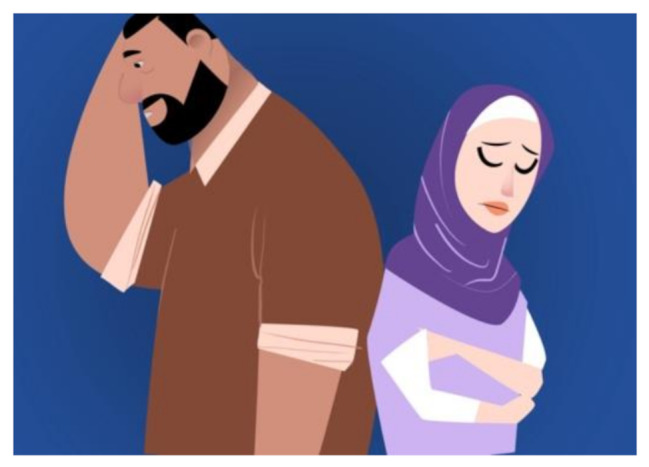
Fictional vignette characters Amir and Yasmin
Regarding language, the importance of the app being in Syrian (spoken) dialect (n = 4) was mentioned in KIIE1 and different suggestions on the tone and characteristics of the language were made (n = 10). The latter included using simple language, with a motivating, benevolent and non-directive tone. These findings resulted in the use of a form of simple Levantine Arabic (see description of adaptation process: [46]), while aiming to use a non-directive tone (framing exercises as suggestions) and incorporating ample positive feedback for motivation and encouragement (e.g., congratulating users on taking the first step in the app). In KIIUE2, multiple translation errors were identified (n = 3) and subsequently corrected. In KIIUE3, the language was found to be clear and comprehensible (n = 8).
Although the general design (n = 2) and navigation (n = 8) of the app were praised in KIIUE3, technical issues and user-friendliness were considered the biggest problem. As this was a beta-version of the app, technical errors (e.g., instruction of exercise displayed in English instead of Arabic, no sound for videos, etc.) were experienced by nearly all participants (n = 8). Furthermore, some confusion about the navigation (e.g., skipping an exercise, closing a chapter, etc.) was observed for most participants (n = 7). Finally, difficulties in the technical navigation of the “Resource-Lifeline” (n = 7) and the “Memory wall” (n = 6) exercise in particular arose for a majority of participants. This may partly be because of the instructions being displayed in English. Technical issues were resolved when possible. To assist users struggling with navigation, two measures were implemented. Navigation points were made explicit in the text, such as instructing users to click the “next” button to proceed. Additionally, a “Technical Help” session was created, providing detailed explanations and screenshots of the app’s features. Adaptations made to assist with specific exercises have been detailed in Sect. Treatment components.
Discussion
This paper presents results from the bottom-up cultural adaptation of an IBI for bereaved Syrian refugees. The aim of this study was to collect feedback from different stakeholders throughout the iterative adaptation process regarding the dimensions of the RECAPT criteria, thus informing the decisions on the development of the IBI. To this end, three rounds of semi-structured interviews were held with a broad range of key informants, including usability testing with a beta-version in KIIUE3. Results provided valuable feedback regarding (1) Community needs, stigma, and context, (2) Cultural concepts of distress, (3) Treatment components, and (4) Treatment delivery.
Given that a bottom-up approach was employed, the majority of the adaptations were derived from the results of KIIE1. Notably, most decisions for the initial version of the IBI were influenced by components 1) and 2), while results from KIIUE2 predominantly guided adaptations related to component 3). Additionally, findings from KIIUE3 primarily led to adaptations concerning component 4). This underscores the importance of conducting multiple iterative rounds of feedback interviews using various methods (e.g., usability testing for KIIUE3 to detect technical problems) and involving diverse stakeholders as recommended by Heim and colleagues [45], as different relevant data emerged that would have been otherwise overlooked.
In line with previous findings on Syrian refugees [24, 62], mental health stigma, such as the fear of being perceived as “crazy,” was identified as a significant barrier to treatment by many stakeholders. Participants found that the IBI format effectively addressed this barrier by providing anonymity. However, self-stigma, where individuals internalize stigmatizing beliefs [63], was also highlighted, emphasizing the need for psychoeducation. This aligns with prior research recommending psychoeducation to counteract stigma among Syrian refugees [62, 64]. To address self-stigma, the IBI incorporates a strong focus on psychoeducation, normalization, including video testimonials, and vignette stories. Participants particularly appreciated the video testimonials, illustrations, and vignettes, noting they could identify with them. This approach mirrors that of Nickerson and colleagues [65], who found that integrating videos and case examples in their IBI reduced self-stigma and increased help-seeking behavior. Therefore, it is reasonable to speculate that these components may help reduce stigma in future users of the IBI.
As mentioned, the IBI format was deemed suitable, aligning with previous research indicating high technology use among Syrians [43]. However, participants in KIIUE3 reported significant technical issues and navigation challenges. While some issues may have arisen from the early prototype stage, they could also reflect the technical literacy challenges noted by Burchert and colleagues [43]. Despite widespread mobile technology use among Syrian refugees, familiarity often centers on specific applications like communication tools, which underscores the importance of intuitive interfaces for accessibility and ease of use [43]. To address these challenges, navigation points were made explicit and a “Technical Help” session with detailed explanations and screenshots of the app’s features was created.
A further barrier identified in this study is concerns about data privacy and mistrust in healthcare providers and government institutions, influenced by the political climate in Syria and experiences as refugees, consistent with previous research [66–68]. These studies suggest the need for refugees to feel they are in a secure environment. To address this, we aimed for transparency about the capabilities and limitations of the IBI. Interestingly, some participants expressed that certain emotions should not be allowed as they could be potentially dangerous in response to the “Sitting with difficult emotions and breathing exercise”. However, many indicated they would feel more comfortable knowing the exercise was in a controlled and safe setting. This suggests that concerns about emotional expression and data privacy may both stem from mistrust and an increased need for security and transparency.
Regarding the treatment goal of the app, the dual process model of grief [61] effectively reflected participants’ suggestions and proved valuable in conceptualizing the treatment goals. This model incorporates both loss-oriented and restoration-oriented elements, which were recommended for inclusion. Stroebe and Schut assert that the model’s flexibility makes it widely applicable across various cultural groups, allowing for different emphases on its two components. Interestingly, this study found that the target group placed a stronger emphasis on restoration orientation, specifically focusing on future perspectives and new beginnings. This aligns with previous research on coping strategies among Syrian refugees [62] and specifically with Arabic-speaking refugees dealing with bereavement [69]. The strong focus on moving forward and future-oriented thinking may also be linked to religious beliefs, as participants mentioned viewing death as God’s will, which necessitates facing loss with acceptance and patience according to Islamic teachings [70].
One prominent theme related to future orientation was the focus on family and community, frequently mentioned as what “matters most” in the IBI. This emphasis surfaced in connection with the treatment goals and rationale, such as the importance of being there for family. Including “what matters most” in a culture in interventions is strongly recommended to enhance motivation and reduce mental health stigma [45, 71]. Consequently, the treatment goals and rationales in the present IBI were primarily formulated to benefit the community or family rather than the individual alone. Additionally, the importance of family and community emerged in metaphors, cultural explanations, and as a significant resource for coping with bereavement. Grief was described as an experience that profoundly affects the community through secondary losses but is also managed collectively, highlighting the crucial role of social relationships in coping. This observation aligns with previous research on mourning in collectivistic cultures, which underscores the communal nature of grieving in non-Western cultures, including the Syrian community [72]. In a study on prolonged grief disorder in Arabic-speaking populations, lower perceived social support was linked to greater symptom severity, underscoring the importance of social support in the grieving process [73]. In this context, the symptom of withdrawal noted in the present study may be particularly problematic for the target group, as it removes a crucial coping mechanism. Social isolation, exacerbated by the refugee experience, further intensifies this issue. Therefore, interventions for bereaved Syrian refugees must prioritize social relationships as a key component.
Similarly, the topic of religion emerged frequently throughout this study, appearing in metaphors, cultural explanations, comments on illustrations, in connection to rituals, and as a vital resource for dealing with bereavement. This aligns with previous research indicating that religion is a major source of support for Arabic-speaking refugees in bereavement [69]. Although religion is known to aid in coping with bereavement by facilitating meaning-making, it is rarely included in bereavement interventions, despite its relevance for culturally sensitive approaches [41, 74, 75]. To incorporate religious perspectives in this study, religious leaders were recruited as key informants. Efforts were made to include religious elements without focusing on any single religious subgroup.
Many rituals identified as relevant were connected to religion. Wojtkowiak and colleagues [76] suggest that incorporating rituals into grief therapy can enhance its effectiveness and cultural sensitivity. This is particularly significant for refugee communities, where the inability to perform traditional rituals may intensify grief symptoms [69, 76, 77]. Consequently, the study included various rituals and provided ways to adapt known rituals to the Swiss context or create new ones.
According to Wojtkowiak et al. [76], rituals in grief interventions can facilitate the expression of emotions and the creation of bonds with the deceased and other mourners, addressing ambivalent or problematic relationships. The topic of continuing bonds, the ongoing inner relationship the bereaved maintain with the deceased [78], emerged as important in interviews, particularly in connection to rituals and the exercise “Words to the Deceased”. Continuing bonds can involve behaviors such as telling stories about the deceased, looking at old photos, viewing the deceased as a role model, dreaming about the deceased, or engaging in direct communication with the deceased [79]. However, the idea of speaking with the deceased caused strong reactions, including fear and rejection, among participants. Cultural and religious beliefs significantly shape continuing bonds [70]. In this study, participants indicated that speaking to the deceased and them responding was viewed as speaking to the devil, whereas seeing and speaking to the deceased in dreams was considered normal. This aligns with literature on continuing bonds in Islam, which explains that the dead can hear but cannot reply, and dreaming about the deceased is common [70, 80]. It is crucial to be mindful of such differences when applying common grief intervention techniques based on continuing bonds, such as imaginal dialogues, to diverse cultural groups. The present IBI aimed to reframe the exercise to clarify its purpose and allow users to complete it in a way that felt comfortable for them.
Finally, the diversity of the Syrian population in terms of religion, age, education levels, and other factors was frequently highlighted as a crucial consideration for addressing the needs of the target group in the IBI. While it is challenging to accommodate such varied needs without becoming impractical or overly resource-intensive, it remains a pertinent consideration. For instance, Heim and colleagues [53] found that insufficient attention to diversity within a cultural group, particularly age differences, contributed to the challenges in their RCT with an IBI for Albanian immigrants in Switzerland. To address these diverse needs, the present study aimed to recruit a heterogeneous stakeholder group and to incorporate a wide range of options and perspectives into the IBI. However, future evaluations are necessary to determine the success of this approach.
This study has several limitations that should be acknowledged. Firstly, we were unable to present the entire content of the IBI in KIIUE2 and KIIUE3 due to resource constraints. Consequently, participant feedback is limited to the parts of the intervention they experienced and may be biased by the research team’s selection. In a future pilot Randomized Controlled Trial (RCT), participants will have the opportunity to test the entire app, which will allow for more comprehensive feedback. Additionally, although our sample size was small, it is consistent with qualitative research norms. According to Hennink and Kaiser [49], data saturation is typically reached between nine and 17 interviews, supporting the adequacy of our sample. We conducted three rounds of interviews, with a large part of participants being unique in each round, which ensured a range of perspectives. Despite the small sample size, we believe sufficient data saturation was achieved, though generalizability may still be limited. Moreover, despite efforts to recruit participants from diverse cultural and religious backgrounds, the sample may not fully capture the extensive cultural, ethnic, and religious diversity present in Syria. As a result, while participants generally found the discussed elements—such as the rituals—to be clear and culturally appropriate, these perspectives may not reflect the experiences of all cultural or religious groups. This limitation affects the generalizability of the findings across Syria’s diverse population. Another limitation is the necessity of translation, which may have disrupted the natural flow of conversation and the spontaneity of participant responses. The need for translation inevitably resulted in some cultural nuances and idiomatic expressions being lost, posing a risk of information loss. Ideally, the research would be conducted entirely in the participants’ mother tongue to fully capture the depth of their responses [81]. Additionally, the recruitment of potential users through the interpreter, who knew them beforehand, may have introduced social desirability bias, as participants might have modified their responses to be viewed more favorably. Nonetheless, the interpreter, being a member of the target group, helped foster trust and had a deeper understanding of community challenges, which in turn ensured more cultural sensitivity. Furthermore, potential power imbalances between researchers and participants could also have influenced the responses, which is acknowledged as a limitation in the interpretation of the findings.
Conclusions
The present study offers several implications for both research and clinical practice. By reporting on the development of the first culturally adapted IBI for grief, it adds to the scarce body of research investigating grief in non-WEIRD populations [41]. Few studies in cultural adaptation research have transparently reported the adaptations made and the decisions leading to them, ensuring their replicability [64, 82]. This study adds to the body of sufficiently documented cultural adaptation processes, which are needed to improve the overall quality of evidence regarding the cultural adaptation of psychological interventions [45]. Notably, this study is the first to apply the RECAPT framework using a bottom-up approach, potentially serving as a model for future projects employing the same approach. However, it is important to recognize that when culturally adapting an intervention bottom-up, it is not possible to determine if certain adaptations are unique to the specific culture (i.e., cultural adaptations) or if they are general factors for grief support applicable to other cultural groups. This underscores the need for future research to evaluate whether the feedback genuinely reflects cultural specificity and whether the adaptations would be applicable to other contexts. Additionally, by thoroughly and transparently documenting the adaptation process, this study may provide valuable information that can be leveraged by future researchers, whether they are targeting similar groups or focusing on bereaved individuals, thus reducing the need to start from scratch. Apart from providing insights for future research developing culturally sensitive interventions for similar target groups, it may also offer useful perspectives to clinical practitioners when working with bereaved Syrian refugees. In light of the substantial treatment gap for refugees, the findings from this study have contributed to the development of the culturally adapted IBI, which may offer crucial support to bereaved Syrians in need. Given its scalability, the app is well-suited for cultural adaptation to other refugee groups or contexts, potentially addressing similar support gaps. This would be an interesting avenue for future research. Additionally, future studies are necessary to evaluate the acceptability, feasibility, and effectiveness of the culturally adapted IBI.
Electronic supplementary material
Below is the link to the electronic supplementary material.
Additional File 2: Semi-structured Interview Guides: KIIE1, KIIEU2 and KIIEU3
Additional File 4: Participant characteristics
Additional File 5: Description of the app outline and content
Acknowledgements
We express our gratitude to Nicola Buser for his diligent data collection and analysis for KIIE1. We extend our thanks to Hannah Kuhn, Virginia Damm, and Mina Motadel for their meticulous transcription of the interviews. We also appreciate the significant contributions of Mina Motadel and Sandra Riad in the decision-making meetings and the implementation of adaptations to the IBI. We are indebted to Sebastian Burchert, Jessica Wabiszczewicz, and Michel Hosmann for their invaluable support and patience in guiding our technological decisions. Our thanks also go to Pixelfarm for creating the beautiful illustrations for the IBI. We are grateful to Costa Zbinden for his expert advice, the use of his recording studio, and for processing the audio exercises. Furthermore, we acknowledge Hadil Shurbahj and Vera Mosimann for lending their voices to the audio exercises in the IBI. Special thanks to Joelle Schenkel for her significant contribution in preparing the additional material for this paper.
Author contributions
AA, EH, and CK conceived the study. AA designed the work. AA, AH, VT, and FH acquired the data, with analysis by AA, AH, and VT. Data interpretation was performed by AA, EH, AH, VT, CK, FH, RS, and MA. AA, AH, and VT drafted the manuscript, which was substantively revised by AA, EH, CK, FH, RS, MA, and AM. All authors read and approved the final manuscript.
Funding
The first author is funded by a doctoral scholarship from the Digital Society Initiative (DSI) of the University of Zurich. The overall project was funded by the Humanitarian Foundation of the SRC.
Data availability
The datasets generated and analyzed in this study contain sensitive clinical information that could potentially identify participants and are therefore not publicly available. However, the framework matrices with summarized data, which support the study’s findings, can be obtained from the corresponding author upon reasonable request.
Declarations
Ethics approval and consent to participate
The ethics proposals for KIIE1 and KIIUE2/KIIUE3 were accepted by the ethics committee of the Faculty of Arts and Social Sciences at the University of Zurich.
Consent for publication
Not applicable to the present study as the human faces used are animation/cartoon.
Competing interests
The authors declare no competing interests.
Declaration of generative AI and AI-assisted technologies in the writing process
During the preparation of this work the author(s) used ChatGPT in order to improve the grammar and avoid spelling mistakes. After using this tool/service, the author(s) reviewed and edited the content as needed and take(s) full responsibility for the content of the publication.
Footnotes
For brevity, only the part of the table related to Chap. 1 is included in Additional File 1. The full documentation can be requested from the first author.
Publisher’s note
Springer Nature remains neutral with regard to jurisdictional claims in published maps and institutional affiliations.
References
- 1.UNHCR, Global Trends. Forced displacement in 2023. Copenhagen, Denmark: United Nations High Commissioner for Refugees; 2024 [cited 2024 Jul 20]. https://www.unhcr.org/global-trends-report-2023
- 2.Staatssekretariat für Migration. Asylstatistik 2023. Wabern, Switzerland: Staatssekretariat für Migration; 2024. [Google Scholar]
- 3.UN Office for the Coordination of Humanitarian Affairs. Syrian Arab Republic: 2024 Humanitarian Needs Overview. UN Office for the Coordination of Humanitarian Affairs; 2023 [cited 2024 Jul 20]. https://reliefweb.int/report/syrian-arab-republic/syrian-arab-republic-2024-humanitarian-needs-overview-december-2023
- 4.Hassan G, Ventevogel P, Jefee-Bahloul H, Barkil-Oteo A, Kirmayer LJ. Mental health and psychosocial wellbeing of syrians affected by armed conflict. Epidemiol Psychiatr Sci. 2016;25(2):129–41. [DOI] [PMC free article] [PubMed] [Google Scholar]
- 5.Alfadhli K, Drury J. A typology of secondary stressors among refugees of Conflict in the Middle East: the case of Syrian refugees in Jordan. PLoS Curr. 2018;10. ecurrents.dis.4bd3e6437bff47b33ddb9f73cb72f3d8. [DOI] [PMC free article] [PubMed]
- 6.Bryant RA, Edwards B, Creamer M, O’Donnell M, Forbes D, Felmingham KL, et al. A population study of prolonged grief in refugees. Epidemiol Psychiatr Sci. 2020;29:e44. [DOI] [PMC free article] [PubMed] [Google Scholar]
- 7.Kokou-Kpolou CK, Moukouta CS, Masson J, Bernoussi A, Cénat JM, Bacqué MF. Correlates of grief-related disorders and mental health outcomes among adult refugees exposed to trauma and bereavement: a systematic review and future research directions. J Affect Disord. 2020;267:171–84. [DOI] [PubMed] [Google Scholar]
- 8.Lechner-Meichsner F, Comtesse H, Olk M. Prevalence, comorbidities, and factors associated with prolonged grief disorder, posttraumatic stress disorder and complex posttraumatic stress disorder in refugees: a systematic review. Confl Health. 2024;18(1):32. [DOI] [PMC free article] [PubMed] [Google Scholar]
- 9.Rosner R, Comtesse H, Vogel A, Doering BK. Prevalence of prolonged grief disorder. J Affect Disord. 2021;287:301–7. [DOI] [PubMed] [Google Scholar]
- 10.World Health Organization. International classification of diseases for mortality and morbidity statistics (11th revision). Geneva: World Health Organization. 2018 [cited 2020 Aug 6]. https://icd.who.int/browse11/l-m/en#/http://id.who.int/icd/entity/1183832314
- 11.Killikelly C, Maercker A. Prolonged grief disorder for ICD-11: the primacy of clinical utility and international applicability. Eur J Psychotraumatology. 2018;8(sup6):1476441. [DOI] [PMC free article] [PubMed] [Google Scholar]
- 12.Henrich J, Heine SJ, Norenzayan A. The weirdest people in the world? Behav Brain Sci. 2010;33(2–3):61–83. [DOI] [PubMed] [Google Scholar]
- 13.Kleinman AM. Depression, somatization and the new cross-cultural psychiatry. Soc Sci Med 1967. 1977;11(1):3–9. [DOI] [PubMed] [Google Scholar]
- 14.Nichter M. Idioms of distress: Alternatives in the expression of psychosocial distress: a case study from South India. Cult Med Psychiatry. 1981;5(4):379–408. [DOI] [PubMed] [Google Scholar]
- 15.Kirmayer LJ, Bhugra D. Culture and Mental Illness: Social Context and Explanatory Models. In: Psychiatric Diagnosis. John Wiley & Sons, Ltd; 2009 [cited 2024 Jul 22];29–40. https://onlinelibrary.wiley.com/doi/abs/10.1002/9780470743485.ch3
- 16.Shala M, Morina N, Salis Gross C, Maercker A, Heim E. A point in the heart: concepts of emotional distress among albanian-speaking immigrants in Switzerland. Cult Med Psychiatry. 2020;44(1):1–34. [DOI] [PubMed] [Google Scholar]
- 17.American Psychiatric Association. Diagnostic and statistical manual of mental disorders. 5th ed. American Psychiatric Publishing; 2013.
- 18.Rosenblatt PC. Grief across cultures: a review and research agenda. Handbook of bereavement research and practice: advances in theory and intervention. Washington, DC, US: American Psychological Association; 2008;207–22. [Google Scholar]
- 19.Hilberdink CE, Ghainder K, Dubanchet A, Hinton D, Djelantik AAAMJ, Hall BJ, et al. Bereavement issues and prolonged grief disorder: a global perspective. Camb Prisms Glob Ment Health. 2023;10:e32. [DOI] [PMC free article] [PubMed] [Google Scholar]
- 20.Killikelly C, Ramp M, Maercker A. Prolonged grief disorder in refugees from Syria: qualitative analysis of culturally relevant symptoms and implications for ICD-11. Ment Health Relig Cult. 2021;24(1):62–79. [Google Scholar]
- 21.Flicker SM, Ayoub HJS, Guynn MJ. Emotional display rules in Palestine: Ingroup/outgroup membership, status of interaction partner and gender. Int J Psychol. 2019;54(1):33–41. [DOI] [PubMed] [Google Scholar]
- 22.Fuhr DC, Acarturk C, McGrath M, Ilkkursun Z, Sondorp E, Sijbrandij M, et al. Treatment gap and mental health service use among Syrian refugees in Sultanbeyli, Istanbul: a cross-sectional survey. Epidemiol Psychiatr Sci. 2020;29:e70. [DOI] [PMC free article] [PubMed] [Google Scholar]
- 23.Satinsky E, Fuhr DC, Woodward A, Sondorp E, Roberts B. Mental health care utilisation and access among refugees and asylum seekers in Europe: a systematic review. Health Policy. 2019;123(9):851–63. [DOI] [PubMed] [Google Scholar]
- 24.Kiselev N, Pfaltz M, Haas F, Schick M, Kappen M, Sijbrandij M, et al. Structural and socio-cultural barriers to accessing mental healthcare among Syrian refugees and asylum seekers in Switzerland. Eur J Psychotraumatology. 2020;11(1):1717825. [DOI] [PMC free article] [PubMed] [Google Scholar]
- 25.Bhugra D. Cultural identities and cultural congruency: a new model for evaluating mental distress in immigrants. Acta Psychiatr Scand. 2005;111(2):84–93. [DOI] [PubMed] [Google Scholar]
- 26.Smid GE, Groen S, de la Rie SM, Kooper S, Boelen PA. Toward Cultural Assessment of grief and grief-related psychopathology. Psychiatr Serv. 2018;69(10):1050–2. [DOI] [PubMed] [Google Scholar]
- 27.Schröder J, Berger T, Westermann S, Klein JP, Moritz S. Internet interventions for depression: new developments. Dialogues Clin Neurosci. 2016;18(2):203–12. [DOI] [PMC free article] [PubMed] [Google Scholar]
- 28.Dodge KA, Prinstein MJ, Evans AC, Ahuvia IL, Alvarez K, Beidas RS et al. Population mental health science: Guiding principles and initial agenda. Am Psychol. 2024 Jun 3 [cited 2024 Jul 22]; https://search.ebscohost.com/login.aspx?direct=true&db=pdh&AN=2024-88444-001&site=ehost-live [DOI] [PubMed]
- 29.Berger M, Wagner TH, Baker LC. Internet use and stigmatized illness. Soc Sci Med. 2005;61(8):1821–7. [DOI] [PubMed] [Google Scholar]
- 30.Firth J, Torous J, Nicholas J, Carney R, Rosenbaum S, Sarris J. Can smartphone mental health interventions reduce symptoms of anxiety? A meta-analysis of randomized controlled trials. J Affect Disord. 2017;218:15–22. [DOI] [PubMed] [Google Scholar]
- 31.Kuester A, Niemeyer H, Knaevelsrud C. Internet-based interventions for posttraumatic stress: a meta-analysis of randomized controlled trials. Clin Psychol Rev. 2016;43:1–16. [DOI] [PubMed] [Google Scholar]
- 32.Sloan DM, Gallagher MW, Feinstein BA, Lee DJ, Pruneau GM. Efficacy of Telehealth treatments for posttraumatic stress-related symptoms: a Meta-analysis. Cogn Behav Ther. 2011;40(2):111–25. [DOI] [PubMed] [Google Scholar]
- 33.Cuijpers P, Heim E, Ramia JA, Burchert S, Carswell K, Cornelisz I, et al. Effects of a WHO-guided digital health intervention for depression in Syrian refugees in Lebanon: a randomized controlled trial. PLOS Med. 2022;19(6):e1004025. [DOI] [PMC free article] [PubMed] [Google Scholar]
- 34.Brodbeck J, Berger T, Biesold N, Rockstroh F, Znoj HJ. Evaluation of a guided internet-based self-help intervention for older adults after spousal bereavement or separation/divorce: a randomised controlled trial. J Affect Disord. 2019;252:440–9. [DOI] [PubMed] [Google Scholar]
- 35.Eisma MC, Boelen PA, van den Bout J, Stroebe W, Schut HAW, Lancee J, et al. Internet-based exposure and behavioral activation for complicated grief and rumination: a Randomized Controlled Trial. Behav Ther. 2015;46(6):729–48. [DOI] [PubMed] [Google Scholar]
- 36.Wagner B, Rosenberg N, Hofmann L, Maass U. Web-Based Bereavement Care: A Systematic Review and Meta-Analysis. Front Psychiatry. 2020 Jun 24 [cited 2024 Jul 22];11. https://www.frontiersin.org/journals/psychiatry/articles/10.3389/fpsyt.2020.00525/full [DOI] [PMC free article] [PubMed]
- 37.Arundell LL, Barnett P, Buckman JEJ, Saunders R, Pilling S. The effectiveness of adapted psychological interventions for people from ethnic minority groups: a systematic review and conceptual typology. Clin Psychol Rev. 2021;88:102063. [DOI] [PMC free article] [PubMed] [Google Scholar]
- 38.Hall GCN, Ibaraki AY, Huang ER, Marti CN, Stice E. A Meta-analysis of Cultural adaptations of psychological interventions. Behav Ther. 2016;47(6):993–1014. [DOI] [PubMed] [Google Scholar]
- 39.Harper Shehadeh M, Heim E, Chowdhary N, Maercker A, Albanese E. Cultural Adaptation of minimally guided interventions for Common Mental disorders: a systematic review and Meta-analysis. JMIR Ment Health. 2016;3(3):e5776. [DOI] [PMC free article] [PubMed] [Google Scholar]
- 40.Naeem F, Phiri P, Rathod S, Ayub M. Cultural adaptation of cognitive–behavioural therapy. BJPsych Adv. 2019;25(6):387–95. [Google Scholar]
- 41.Aeschlimann A, Heim E, Killikelly C, Arafa M, Maercker A. Culturally sensitive grief treatment and support: a scoping review. SSM - Ment Health. 2024;5:100325. [Google Scholar]
- 42.Resnicow K, Baranowski T, Ahluwalia JS, Braithwaite RL. Cultural Sensitivity in Public Health: defined and demystified. Ethn Dis. 1999;9(1):10–21. [PubMed] [Google Scholar]
- 43.Burchert S, Alkneme MS, Bird M, Carswell K, Cuijpers P, Hansen P et al. User-Centered App Adaptation of a Low-Intensity E-Mental Health Intervention for Syrian Refugees. Front Psychiatry. 2019 Jan 25 [cited 2024 Jul 22];9. https://www.frontiersin.org/journals/psychiatry/articles/10.3389/fpsyt.2018.00663/full [DOI] [PMC free article] [PubMed]
- 44.Heim E, Kohrt BA. Cultural Adaptation of Scalable Psychological interventions. Clin Psychol Eur. 2019;1(4):1–22. [Google Scholar]
- 45.Heim E, Mewes R, Abi Ramia J, Glaesmer H, Hall B, Harper Shehadeh M, et al. Reporting Cultural Adaptation in psychological trials – the RECAPT criteria. Clin Psychol Eur. 2021;3(Spec Issue):e6351. [DOI] [PMC free article] [PubMed] [Google Scholar]
- 46.Stoeckli R, Berger T, Aebersold M, Zoellner V, Haji F, Hunziker M et al. Development and Cultural-Contextual Adaptation of a Low-Threshold Digital Psychosocial Service for Refugees Living in Switzerland: Sui App. 2024 [cited 2024 Jul 22]. https://preprints.jmir.org/preprint/59905
- 47.Roller MR, Lavrakas PJ. Applied qualitative Research Design: a total quality Framework Approach. Guilford; 2015. p. 417.
- 48.Palinkas LA, Horwitz SM, Green CA, Wisdom JP, Duan N, Hoagwood K. Purposeful sampling for Qualitative Data Collection and Analysis in mixed method implementation research. Adm Policy Ment Health Ment Health Serv Res. 2015;42(5):533–44. [DOI] [PMC free article] [PubMed] [Google Scholar]
- 49.Hennink M, Kaiser BN. Sample sizes for saturation in qualitative research: a systematic review of empirical tests. Soc Sci Med. 2022;292:114523. [DOI] [PubMed] [Google Scholar]
- 50.Dr D. & Pehl GmbH. F4transkript. Dr. Dresing & Pehl GmbH; 2022. https://www.audiotranskription.de/en/f4
- 51.Fylan F. Semi-structured interviewing. In: Miles J, Gilbert P, editors. A Handbook of Research Methods for Clinical and Health Psychology. Oxford University Press; 2005 [cited 2024 Jul 22]. p. 0. 10.1093/med:psych/9780198527565.003.0006
- 52.Kallio H, Pietilä AM, Johnson M, Kangasniemi M. Systematic methodological review: developing a framework for a qualitative semi-structured interview guide. J Adv Nurs. 2016;72(12):2954–65. [DOI] [PubMed] [Google Scholar]
- 53.Heim E, Ademi B, Dacaj A, Hosny N, Burchert S, Pashoja AC, et al. Why did our trial not work out? A qualitative analysis. Clin Psychol Eur. 2024;6(2):1–13. [DOI] [PMC free article] [PubMed] [Google Scholar]
- 54.Dr D. & Pehl GmbH. F4transkript. Dr. Dresing & Pehl GmbH; 2023. https://www.audiotranskription.de/en/f4
- 55.Riihiaho S. Usability Testing. In: The Wiley Handbook of Human Computer Interaction. John Wiley & Sons, Ltd; 2018 [cited 2024 Jul 22];255–75. https://onlinelibrary.wiley.com/doi/abs/10.1002/9781118976005.ch14
- 56.Gale NK, Heath G, Cameron E, Rashid S, Redwood S. Using the framework method for the analysis of qualitative data in multi-disciplinary health research. BMC Med Res Methodol. 2013;13(1):117. [DOI] [PMC free article] [PubMed] [Google Scholar]
- 57.Software VERBI. MAXQADA 2022 [computer software]. Berlin, Germany: VERBI Software; 2022. https://www.maxqda.com
- 58.MacPhail C, Khoza N, Abler L, Ranganathan M. Process guidelines for establishing Intercoder Reliability in qualitative studies. Qual Res. 2016;16(2):198–212. [Google Scholar]
- 59.Gale RC, Wu J, Erhardt T, Bounthavong M, Reardon CM, Damschroder LJ, et al. Comparison of rapid vs in-depth qualitative analytic methods from a process evaluation of academic detailing in the Veterans Health Administration. Implement Sci. 2019;14(1):11. [DOI] [PMC free article] [PubMed] [Google Scholar]
- 60.Lewinski AA, Crowley MJ, Miller C, Bosworth HB, Jackson GL, Steinhauser K, et al. Applied Rapid Qualitative Analysis to develop a contextually appropriate intervention and increase the likelihood of Uptake. Med Care. 2021;59:S242. [DOI] [PMC free article] [PubMed] [Google Scholar]
- 61.Stroebe M, Schut H. The dual process model of coping with bereavement: rationale and description. Death Stud. 1999;23(3):197–224. [DOI] [PubMed] [Google Scholar]
- 62.Renner A, Hoffmann R, Nagl M, Roehr S, Jung F, Grochtdreis T, et al. Syrian refugees in Germany: perspectives on mental health and coping strategies. J Psychosom Res. 2020;129:109906. [DOI] [PubMed] [Google Scholar]
- 63.Rüsch N, Angermeyer MC, Corrigan PW. Mental illness stigma: concepts, consequences, and initiatives to reduce stigma. Eur Psychiatry. 2005;20(8):529–39. [DOI] [PubMed] [Google Scholar]
- 64.Böttche M, Kampisiou C, Stammel N, El-Haj-Mohamad R, Heeke C, Burchert S, et al. From Formative Research to Cultural Adaptation of a face-to-face and internet-based cognitive-behavioural intervention for arabic-speaking refugees in Germany. Clin Psychol Eur. 2021;3(Spec Issue):e4623. [DOI] [PMC free article] [PubMed] [Google Scholar]
- 65.Nickerson A, Byrow Y, Pajak R, McMahon T, Bryant RA, Christensen H, et al. Tell your story’: a randomized controlled trial of an online intervention to reduce mental health stigma and increase help-seeking in refugee men with posttraumatic stress. Psychol Med. 2020;50(5):781–92. [DOI] [PubMed] [Google Scholar]
- 66.Byrow Y, Pajak R, Specker P, Nickerson A. Perceptions of mental health and perceived barriers to mental health help-seeking amongst refugees: a systematic review. Clin Psychol Rev. 2020;75:101812. [DOI] [PubMed] [Google Scholar]
- 67.Çöl M, Akın-Sarı B, Mut ANU, Çelik K, Aykut NB, Dinç LE et al. A qualitative research on mental health and psychosocial issues impacting Syrian refugee women in Turkey. 2022 [cited 2024 Jul 24]. https://www.researchsquare.com/article/rs-2233366/v1
- 68.Kerbage H, Marranconi F, Chamoun Y, Brunet A, Richa S, Zaman S. Mental Health Services for Syrian refugees in Lebanon: perceptions and experiences of professionals and refugees. Qual Health Res. 2020;30(6):849–64. [DOI] [PubMed] [Google Scholar]
- 69.Lechner-Meichsner F, Comtesse H. Beliefs About Causes and Cures of Prolonged Grief Disorder Among Arab and Sub-Saharan African Refugees. Front Psychiatry. 2022 Apr 5 [cited 2024 Aug 16];13. https://www.frontiersin.org/journals/psychiatry/articles/10.3389/fpsyt.2022.852714/full [DOI] [PMC free article] [PubMed]
- 70.Suhail K, Jamil N, Oyebode J, Ajmal MA. Continuing bonds in Bereaved Pakistani muslims: effects of Culture and Religion. Death Stud. 2011;35(1):22–41. [DOI] [PubMed] [Google Scholar]
- 71.Kohrt BA, Turner EL, Rai S, Bhardwaj A, Sikkema KJ, Adelekun A, et al. Reducing mental illness stigma in healthcare settings: Proof of concept for a social contact intervention to address what matters most for primary care providers. Soc Sci Med. 2020;250:112852. [DOI] [PMC free article] [PubMed] [Google Scholar]
- 72.Dennis MK. Collecting grief: indigenous peoples, deaths by police and a global pandemic. Qual Soc Work. 2021;20(1–2):149–55. [DOI] [PMC free article] [PubMed] [Google Scholar]
- 73.Specht F, Vöhringer M, Knaevelsrud C, Wagner B, Stammel N, Böttche M. Prolonged grief disorder in Arabic-speaking treatment-seeking populations: Relationship with socio-demographic aspects, loss- and trauma-related characteristics, and mental health support. Front Psychiatry. 2022 Sep 15 [cited 2024 Aug 15];13. https://www.frontiersin.org/journals/psychiatry/articles/10.3389/fpsyt.2022.933848/full [DOI] [PMC free article] [PubMed]
- 74.Kokou-Kpolou CK, Park S, Lenferink LIM, Iorfa SK, Fernández-Alcántara M, Derivois D, et al. Prolonged grief and depression: a latent class analysis. Psychiatry Res. 2021;299:113864. [DOI] [PubMed] [Google Scholar]
- 75.Schaal S, Jacob N, Dusingizemungu JP, Elbert T. Rates and risks for prolonged grief disorder in a sample of orphaned and widowed genocide survivors. BMC Psychiatry. 2010;10(1):55. [DOI] [PMC free article] [PubMed] [Google Scholar]
- 76.Wojtkowiak J, Lind J, Smid GE. Ritual in Therapy for Prolonged Grief: A Scoping Review of Ritual Elements in Evidence-Informed Grief Interventions. Front Psychiatry. 2021 [cited 2022 Apr 25];11. https://www.frontiersin.org/article/10.3389/fpsyt.2020.623835 [DOI] [PMC free article] [PubMed]
- 77.Hinton DE, Peou S, Joshi S, Nickerson A, Simon NM. Normal grief and complicated bereavement among traumatized Cambodian refugees: Cultural Context and the Central Role of dreams of the Dead. Cult Med Psychiatry. 2013;37(3):427–64. [DOI] [PMC free article] [PubMed] [Google Scholar]
- 78.Stroebe M, Schut H. To continue or relinquish bonds: a review of consequences for the Bereaved. Death Stud. 2005;29(6):477–94. [DOI] [PubMed] [Google Scholar]
- 79.Root BL, Exline JJ. The role of Continuing Bonds in coping with grief: overview and future directions. Death Stud. 2014;38(1):1–8. [DOI] [PubMed] [Google Scholar]
- 80.Klass D, Goss R. The politics of grief and continuing bonds with the Dead: the cases of Maoist China and Wahhabi Islam. Death Stud. 2003;27(9):787–811. [DOI] [PubMed] [Google Scholar]
- 81.Fryer CE. An Approach to Conducting Cross-Language Qualitative Research with People from Multiple Language Groups. In: Liamputtong P, editor. Handbook of Research Methods in Health Social Sciences. Singapore: Springer; 2019 [cited 2024 Jul 23];1653–74. 10.1007/978-981-10-5251-4_38
- 82.Shala M, Morina N, Burchert S, Cerga-Pashoja A, Knaevelsrud C, Maercker A, et al. Cultural adaptation of hap-pas-Hapi, an internet and mobile-based intervention for the treatment of psychological distress among Albanian migrants in Switzerland and Germany. Internet Interv. 2020;21:100339. [DOI] [PMC free article] [PubMed] [Google Scholar]
Associated Data
This section collects any data citations, data availability statements, or supplementary materials included in this article.
Supplementary Materials
Additional File 2: Semi-structured Interview Guides: KIIE1, KIIEU2 and KIIEU3
Additional File 4: Participant characteristics
Additional File 5: Description of the app outline and content
Data Availability Statement
The datasets generated and analyzed in this study contain sensitive clinical information that could potentially identify participants and are therefore not publicly available. However, the framework matrices with summarized data, which support the study’s findings, can be obtained from the corresponding author upon reasonable request.