



Abstract
Aim
To review the evidence of the effects of neonatal magnesium sulphate for neuroprotection in perinatal asphyxia and hypoxic‐ischaemic encephalopathy (HIE).
Method
This was a systematic review of randomized controlled trials (RCTs) (with meta‐analysis) and non‐RCTs assessing magnesium sulphate for treating perinatal asphyxia and HIE at 35 weeks or more gestation (primary outcomes: neonatal death and death or long‐term major neurodevelopmental disability).
Results
Twenty‐five RCTs (2099 infants) and four non‐RCTs (871 infants) were included, 23 in low‐ and middle‐income countries (LMICs). In RCTs, reductions in neonatal death with magnesium sulphate versus placebo or no treatment (risk ratio [RR] = 0.68; 95% confidence interval [CI] = 0.53–0.86; 13 RCTs), and magnesium sulphate with melatonin versus melatonin alone (RR = 0.74; 95% CI = 0.58–0.95; one RCT) were observed. No difference in neonatal death was seen for magnesium sulphate with therapeutic hypothermia versus therapeutic hypothermia alone (RR = 0.66, 95% CI = 0.34–1.26; three RCTs), or magnesium sulphate versus phenobarbital (RR = 3.00; 95% CI = 0.86–10.46; one RCT). No reduction in death or long‐term neurodevelopmental disability (RR = 0.52; 95% CI = 0.14–1.89; one RCT) but reductions in several short‐term adverse outcomes were observed with magnesium sulphate. Evidence was low‐ to very‐low certainty because of risk of bias and imprecision.
Interpretation
Given the uncertainty of the current evidence, further robust neonatal magnesium sulphate research is justified. This may include high‐quality studies to determine stand‐alone effects in LMICs and effects with and after therapeutic hypothermia in high‐income countries.
Magnesium sulphate (MgSO4) in perinatal asphyxia/hypoxic‐ischaemic encephalopathy may reduce neonatal death.
MgSO4 and therapeutic hypothermia (TH) may be no more effective than TH.
Effects of MgSO4 on death or long‐term neurodevelopmental disability are very uncertain.
Evidence available is limited and of low‐ to very‐low certainty.

Abbreviations
- HIC
high‐income country
- HIE
hypoxic‐ischaemic encephalopathy
- LMIC
low‐ and middle‐income country
- RCT
randomized controlled trial
What this paper adds
Magnesium sulphate in perinatal asphyxia and hypoxic‐ischaemic encephalopathy may reduce neonatal death.
Magnesium sulphate and therapeutic hypothermia may be no more effective than therapeutic hypothermia.
The effects of magnesium sulphate on death or long‐term neurodevelopmental disability are very uncertain.
Current evidence is limited and uncertain.
Globally, approximately 2.4 million neonatal deaths (in the first 28 days of postnatal life) occur annually. 1 One‐third of deaths are on the first day of life and three‐quarters within the first week; many are associated with preventable or treatable conditions, including hypoxia‐ischaemia during the birth process (before, during, or after birth, often referred to as ‘perinatal asphyxia’). 1 Neonatal encephalopathy is a complex neurological syndrome in infants born late preterm and at term, who demonstrate difficulty initiating and maintaining respiration, depression of consciousness, tone, or reflexes, and seizures. 2 It is associated with a high risk of death. For surviving infants, it is a strong predictor of long‐term neurodevelopmental disability. 2 The subset of neonatal encephalopathy with clear evidence of intrapartum asphyxia has traditionally been referred to as ‘hypoxic‐ischaemic encephalopathy’ (HIE). 2 It is estimated that 8.5 infants per 1000 live births develop neonatal encephalopathy associated with intrapartum events; 96% of these infants are born in low‐ and middle‐income countries (LMICs). 3
Currently, therapeutic hypothermia, or ‘cooling’, is the only evidence‐based therapy shown to decrease infant death or major long‐term neurodevelopmental disability in early neonatal encephalopathy of suspected hypoxic‐ischaemic origin. 4 However, not all treated infants benefit. The number needed to treat to prevent one infant dying or developing major long‐term neurodevelopmental disability is 7 (95% confidence interval [CI] = 5–10; eight randomized controlled trials [RCTs], 1344 infants). 4 Recent research efforts focused on neuroprotective adjuvants to therapeutic hypothermia, such as erythropoietin, have not demonstrated improved outcomes. 5 Evidence supporting the efficacy of therapeutic hypothermia specifically in LMICs is also uncertain, with recent RCTs and systematic reviews demonstrating conflicting findings. 6 , 7 , 8 There is thus an urgent, unmet need for alternative and adjuvant therapies in LMICs and high‐income countries (HICs) respectively.
Magnesium sulphate is a common therapy in perinatal care, with long‐standing use for preventing and treating eclampsia, 9 , 10 tocolysis, 11 and in the last decade, for preterm fetal neuroprotection. 12 While the exact neuroprotective mechanism(s) are unclear, recent advances propose the modulation of brain excitotoxic and inflammatory pathways, 13 , 14 , 15 , 16 both of which are implicated in neonatal encephalopathy pathophysiology. To date, preclinical studies assessing magnesium sulphate in term‐equivalent models of perinatal hypoxia‐ischaemia (alone and in combination with therapeutic hypothermia) have demonstrated inconsistent, arguably unconvincing, evidence of benefit. 17 , 18 Despite this, clinical studies, including RCTs, continue, probably because of the relative low cost, widespread availability, and a favourable safety profile of magnesium sulphate (of consequence in LMICs). 19 , 20
The most recent systematic review evaluating magnesium sulphate for infants with HIE was published in 2013. 21 Magnesium sulphate was not associated with differences in the primary outcome (death or moderate‐to‐severe neurodevelopmental disability), or secondary outcome, death. A reduction in an ‘unfavourable short‐term composite outcome’ (survival with abnormalities in any of the following: neurodevelopmental exam, neuroimaging, or neurophysiological studies) was observed. 21 As a decade has passed since the last comprehensive literature search, and therapies in LMICs are limited, an update on this important topic is timely. This systematic review and meta‐analysis aimed to determine the effects of neonatal magnesium sulphate in perinatal asphyxia and HIE, on death and long‐term neurodevelopmental disability.
METHOD
This systematic review adhered to the Preferred Reporting Items for Systematic Reviews and Meta‐Analyses (PRISMA) guidelines. 22 A protocol was developed and registered with the International Prospective Register of Systematic Reviews (PROSPERO) on 25th July 2022 (registration no. CRD42022346545) before commencement.
Eligibility criteria
Studies
To provide a more complete picture of effectiveness and harms, RCTs and quasi‐RCTs, as well as non‐randomized controlled studies (non‐randomized trials, cohort studies, or case–control studies) were eligible. We excluded cross‐sectional studies, case series, and case reports. We included studies available as abstracts only along with full‐text publications.
Participants
Infants with evidence of perinatal asphyxia and HIE born at 35 weeks' gestation or later were eligible, irrespective of the criteria or definitions used.
Interventions and comparators
We included neonatal magnesium sulphate for perinatal asphyxia and HIE, regardless of timing, route of administration, dose, and duration. We excluded magnesium sulphate for persistent pulmonary hypertension of the newborn infant. We included magnesium sulphate compared with no treatment, placebo, standard care (e.g. therapeutic hypothermia), or alternative treatment(s). We included magnesium sulphate in combination with therapeutic hypothermia or alternative neuroprotective agents.
Outcomes
The primary outcomes were neonatal death and the composite outcome of neonatal death or long‐term major neurodevelopmental disability.
Secondary outcomes included a long‐term major neurodevelopmental disability composite, individual components of long‐term major neurodevelopmental disability, additional short‐term predictors of neurological outcome, and potential adverse effects of magnesium sulphate.
To encompass all relevant data, we included outcomes as defined and reported by the study authors.
Search methods
Comprehensive searches of the databases CINAHL, Cochrane Library, Embase, MEDLINE, Scopus, and Web of Science were undertaken from their inceptions to 5th April 2023, using combinations of controlled vocabulary (such as medical subject heading terms) and free‐text words, guided by our PICO (population of interest, intervention, control, outcome) parameters. No date or language restrictions were applied. We searched Google Scholar and Google using free‐text words. The reference lists of eligible articles and reviews were checked. Details of the database search strategies are available in Appendix S1.
Data collection and analysis
Study selection
Retrieved studies were exported to EndNote X9 (Clarivate, Philadelphia, PA, USA), 23 before being uploaded into Covidence (Melbourne, Victoria, Australia) 24 for deduplication and screening. After screening all titles and abstracts, we assessed full‐text articles for studies that appeared to meet the inclusion criteria. Each stage of screening was carried out by two reviewers (ES and TK) and discrepancies were resolved through discussion or in consultation with a third reviewer (SM or RG).
Data extraction
For the studies included in the review, data were extracted using a standardized form, including information regarding design, participants, magnesium sulphate regimen(s), comparator(s), outcomes reported, relevant results, and risk of bias. Extraction was carried out by two reviewers (ES and TK, SG, SM, or RG); discrepancies were resolved through discussion.
Quality assessment
Quality appraisal of RCTs was undertaken using the Cochrane Handbook for Systematic Reviews of Interventions guidance. 25 Quality assessment of non‐randomized studies was guided by the RTI Item Bank. 26
Data synthesis
Statistical analyses for RCTs were performed using Review Manager v5.4 (Cochrane Library, John Wiley & Sons, Hoboken, NJ, USA). 27 Quantitative data were presented as risk ratios (RRs) for dichotomous outcomes and mean differences (MDs) for continuous outcomes, with 95% CIs. Where there were sufficient data, pooled estimates were calculated, first using a fixed‐effects meta‐analysis (Mantel–Haenszel method). Where there was substantial statistical heterogeneity (where I 2 was >30% and either T2 was >0 or the p‐value was low [<0.10] in the χ 2 test), pooled estimates were calculated using a random‐effects meta‐analysis.
For non‐randomized studies, we presented effect estimates (without pooling) where possible with 95% CIs, p‐values only, or percentages (rates) in tabular format, and the results were summarized narratively.
Subgroup and sensitivity analyses
Expected sources of heterogeneity were explored through prespecified subgroup analyses for the primary outcome—neonatal death—considering the characteristics of the participants (gestational age, HIE severity at inclusion, economic setting) and treatment (timing, dose). Because of the paucity of data, we were unable to conduct other prespecified subgroup analyses for the second primary outcome, that is, death or major long‐term neurodevelopmental disability, nor for participant (presence of infection) and treatment (route of administration) characteristics. We assessed subgroup differences using interaction tests and reported the χ 2 statistic, p‐value, and interaction test I 2 value. We conducted non‐prespecified sensitivity analyses, restricting primary outcome analyses to RCTs considered at low risk of bias overall.
Assessment of the certainty of the evidence
Certainty of the evidence for the primary outcomes was appraised using the Grading of Recommendations, Assessment, Development and Evaluations (GRADE) approach. 28 Evidence was classified as very low, low, moderate, or high considering the following domains: study limitations, consistency, directness, imprecision, and publication bias. 28 Certainty of evidence was assessed by two reviewers (ES and TK); discrepancies were resolved through discussion.
RESULTS
Study selection
Database searching identified 1801 records; after duplicate removal, there were 1074 records. Title and abstract screening identified 76 reports for full‐text screening, of which we excluded 52. Other searching identified a further 13 records to screen; we excluded two. Therefore, we included 29 studies (reported across 35 references). 29 , 30 , 31 , 32 , 33 , 34 , 35 , 36 , 37 , 38 , 39 , 40 , 41 , 42 , 43 , 44 , 45 , 46 , 47 , 48 , 49 , 50 , 51 , 52 , 53 , 54 , 55 , 56 , 57 , 58 , 59 , 60 , 61 , 62 , 63 A study flow diagram is shown in Figure S1; Appendix S2 lists the records excluded at the full‐text screening.
Study characteristics
Of the 29 studies included, 25 were RCTs, 29 , 30 , 31 , 32 , 33 , 34 , 35 , 36 , 37 , 38 , 39 , 40 , 41 , 42 , 43 , 44 , 45 , 46 , 47 , 49 , 50 , 51 , 53 , 54 , 55 , 56 , 57 , 58 , 59 , 60 , 61 and four were non‐RCTs (two were non‐randomized trials and two were non‐concurrent cohort studies); 48 , 52 , 62 , 63 three were available as abstracts only. 33 , 40 , 50 Twenty‐three studies were conducted exclusively in LMICs (nine in India; 31 , 32 , 35 , 46 , 47 , 51 , 58 , 60 , 62 eight in Pakistan; 30 , 42 , 43 , 49 , 56 , 57 , 59 , 61 three in Egypt; 29 , 33 , 44 one each in Bangladesh, 40 Nigeria, 52 and Albania 50 ); five in HICs (two in Poland; 39 , 63 one each in the Netherlands 36 and Japan; 41 one across five European centres 48 ); and one across mixed settings (Qatar, Turkey, Saudi Arabia, Egypt, Malaysia, and the United Arab Emirates 55 ). Where reported, study commencement dates ranged from 199536 to 2021. 43 , 57 Twelve studies (41.4%) were published in the last 5 years. 29 , 30 , 33 , 39 , 42 , 43 , 47 , 51 , 52 , 57 , 59 , 61
There were 2099 infants randomized in the 25 RCTs, 29 , 30 , 31 , 32 , 33 , 34 , 35 , 36 , 37 , 38 , 39 , 40 , 41 , 42 , 43 , 44 , 45 , 46 , 47 , 49 , 50 , 51 , 53 , 54 , 55 , 56 , 57 , 58 , 59 , 60 , 61 and 871 infants in the non‐randomized studies. 48 , 52 , 62 , 63 The number of infants per RCT ranged from 22 36 to 260. 30 Infants in the studies varied substantially according to gestational age, criteria for asphyxia, and presence of HIE (including severity). Magnesium sulphate regimens also varied across studies. In 24 RCTs, an initial dose of 250 mg/kg was given intravenously (commonly within 30 minutes to 6 hours after birth), followed by no additional treatment (one RCT 44 ), or two further doses of either 125 mg/kg (three RCTs 35 , 36 , 58 ) or 250 mg/kg (20 RCTs 29 , 30 , 31 , 32 , 39 , 40 , 41 , 42 , 43 , 46 , 47 , 49 , 50 , 51 , 55 , 56 , 57 , 59 , 60 , 61 ) intravenously, 24 hours and 48 hours later. In one RCT, the regimen was unclear. 33 Detailed descriptions of the individual study characteristics are provided in Tables S1 (RCTs) and S2 (non‐randomized studies).
Risk of bias
The methodological quality of the 25 RCTs varied considerably. 29 , 30 , 31 , 32 , 33 , 34 , 35 , 36 , 37 , 38 , 39 , 40 , 41 , 42 , 43 , 44 , 45 , 46 , 47 , 49 , 50 , 51 , 53 , 54 , 55 , 56 , 57 , 58 , 59 , 60 , 61 Considering selection bias, only three were at low risk. 42 , 47 , 55 Four RCTs were at low risk of performance and detection bias; 31 , 36 , 44 , 55 15 were at low risk of attrition bias; 29 , 30 , 31 , 35 , 36 , 41 , 43 , 44 , 46 , 49 , 55 , 56 , 57 , 58 , 59 and only one was at low risk of reporting bias. 47 The overall risk of bias across RCTs is presented in Figure S2; the domain‐level risk of bias for individual RCTs is presented in Figure S3 and Table S3.
The four non‐randomized studies had an overall high risk of bias. 48 , 52 , 62 , 63 Common concerns were related to the potential for confounding, detection bias, and performance bias. Domain‐level judgements for the individual studies are presented in Table S4.
Evidence from RCTs
Intervention (magnesium sulphate) and comparator groups differed across RCTs. Thus, the results have been presented under four comparisons.
Comparison 1: magnesium sulphate versus placebo or no treatment
This comparison included 18 RCTs; 30 , 31 , 32 , 35 , 36 , 40 , 41 , 42 , 44 , 46 , 49 , 50 , 51 , 56 , 58 , 59 , 60 , 61 16 were conducted in LMICs 30 , 31 , 32 , 35 , 40 , 42 , 44 , 46 , 49 , 50 , 51 , 56 , 58 , 59 , 60 , 61 (see Table 1 for the Comparison 1 effect estimates, Table 2 for the GRADE Evidence Profile for the primary outcomes, and Appendix S3 for the forest plots [and funnel plot]).
TABLE 1.
Results for Comparison 1: magnesium sulphate versus placebo or no treatment.
| Outcome and subgroup | RCTs, n | Infants, n | Methods (I 2) | RR (95% CI) |
|---|---|---|---|---|
| Neonatal death | 13 | 1033 | F (22%) | 0.68 (0.53–0.86) |
| Death or neurodevelopmental disability at 12 months | 1 | 41 | F (NA) | 0.52 (0.14–1.89) |
| HIE | ||||
| Stage I | 1 | 80 | F (NA) | 1.25 (0.55–2.84) |
| Stage II | 1 | 50 | F (NA) | 0.63 (0.32–1.21) |
| Stage III | 1 | 80 | F (NA) | 1.00 (0.15–6.76) |
| Any | 1 | 80 | F (NA) | 0.85 (0.59–1.21) |
| Seizures | 8 | 392 | F (6%) | 0.79 (0.67–0.94) |
| Refractory seizures | 1 | 40 | F (NA) | 0.50 (0.05–5.08) |
| Seizure control | ||||
| Control of fits | 1 | 260 | F (NA) | 1.54 (1.28–1.86) |
| With one anticonvulsant | 1 | 52 | F (NA) | 1.30 (1.02–1.64) |
| Requiring more than one anticonvulsant | 1 | 52 | F (NA) | 0.15 (0.02–1.17) |
| Use of anticonvulsant drugs | ||||
| 0 | 1 | 22 | R (NA) | 0.58 (0.07–4.72) |
| 1 | 2 | 249 | R (0%) | 2.49 (1.89–3.28) |
| 2 | 2 | 249 | R (6%) | 0.22 (0.09–0.50) |
| 3 | 2 | 249 | R (53%) | 0.52 (0.11–2.57) |
| 4 | 2 | 249 | R (0%) | 0.26 (0.07–0.99) |
| Number of seizures | ||||
| 1 | 2 | 307 | R (82%) | 3.16 (0.76–13.18) |
| 2–5 | 1 | 227 | R (NA) | 0.84 (0.66–1.07) |
| Multiple | 1 | 80 | R (NA) | 0.96 (0.65–1.41) |
| More than 5 | 1 | 227 | R (NA) | 0.27 (0.10–0.69) |
| Duration of seizures | ||||
| Less than 48 hours | 2 | 132 | R (81%) | 2.27 (0.42–12.25) |
| More than 48 hours | 1 | 80 | R (NA) | 0.79 (0.47–1.32) |
| Duration of seizures (days) | 3 | 147 | F (27%) | MD: −0.84 (−1.19 to − 0.49) |
| Anticonvulsant required at discharge | 2 | 80 | F (1%) | 1.23 (0.34–4.44) |
| EEG abnormalities | ||||
| Any | 3 | 101 | F (0%) | 0.59 (0.35–1.01) |
| Low‐voltage | 1 | 33 | F (NA) | 0.56 (0.16–1.99) |
| Focal periodic lateralized epileptiform discharges | 1 | 33 | F (NA) | 0.38 (0.08–1.67) |
| Suppression of aEEG background pattern before administration (3 hours) to 12 hours | 1 | 21 | F (NA) | 3.25 (1.11–9.48) |
| CUS subcortical echodensities within 4 hours of birth | 1 | 22 | F (NA) | 1.75 (0.59–5.15) |
| CUS abnormalities at day 14 | 1 | 32 | F (NA) | 0.83 (0.32–2.18) |
| CUS abnormalities at discharge | 1 | 56 | F (NA) | 0.71 (0.42–1.19) |
| CT abnormalities at day 14 | ||||
| Any | 4 | 171 | F (0%) | 0.45 (0.29–0.72) |
| Diffuse hypodensities | 1 | 32 | F (NA) | 0.33 (0.08–1.41) |
| Multifocal areas of hypodensity | 1 | 32 | F (NA) | 2.00 (0.20–19.91) |
| Focal area of hypodensity | 1 | 32 | F (NA) | 0.67 (0.13–3.47) |
| Diffuse cortical injury/cortical injury | 2 | 69 | F (0%) | 0.96 (0.26–3.55) |
| Injury to both cortex and deep grey structure/injury to both cortical and subcortical areas | 2 | 69 | F (19%) | 0.44 (0.10–1.85) |
| Injury to basal ganglia and thalamus/basal ganglia injury | 2 | 69 | F (24%) | 0.33 (0.08–1.26) |
| CT abnormalities at discharge | 1 | 66 | F (NA) | 0.31 (0.13–0.75) |
| Normal neuroimaging at discharge | 1 | 67 | F (NA) | 1.28 (0.93–1.75) |
| Duration of recovery from neurological abnormalities (days) | 1 | 120 | F (NA) | MD: −1.60 (−2.08 to − 1.12) |
| Recovery from abnormal neurological examination within 4 days | 1 | 105 | F (NA) | 1.58 (1.19–2.11) |
| Good short‐term neonatal outcome | 4 | 138 | F (0%) | 1.83 (1.29–2.60) |
| Composite neonatal adverse outcome (including death) | 2 | 72 | F (3%) | 0.61 (0.39–0.95) |
| Normal neuromotor tone (Amiel‐Tison criteria) at discharge | 1 | 67 | F (NA) | 1.33 (1.03–1.72) |
| Neurological status normal or improved at discharge | 3 | 213 | F (0%) | 1.57 (1.27–1.95) |
| Neurological abnormalities at discharge | 5 | 207 | F (0%) | 0.46 (0.32–0.67) |
| Final outcome – discharge | 1 | 227 | F (NA) | 1.49 (1.22–1.82) |
| Assisted ventilation | 3 | 193 | F (0%) | 0.87 (0.65–1.16) |
| Mechanical ventilation at 72 hours | 1 | 47 | F (NA) | 2.09 (0.73–5.99) |
| Need for oxygen | ||||
| Oxygen required | 1 | 227 | F (NA) | 0.84 (0.73–0.96) |
| Need for oxygen at 72 hours | 1 | 47 | F (NA) | 1.17 (0.55–2.51) |
| Duration of assisted ventilation (hours) | 1 | 33 | F (NA) | MD: −31.00 (−164.76 to 102.76) |
| Apnoea at 72 hours | 2 | 127 | R (58%) | 1.54 (0.15–15.52) |
| Shock and use of inotropes | ||||
| Use of inotropes at 72 hours | 1 | 47 | F (NA) | 1.04 (0.47–2.31) |
| Shock | 2 | 347 | F (0%) | 0.64 (0.46–0.87) |
| Number of inotropes required | ||||
| Dobutamine | 1 | 227 | F (NA) | 0.96 (0.46–1.97) |
| Dobutamine and dopamine | 1 | 227 | F (NA) | 0.69 (0.36–1.34) |
| Dobutamine and dopamine and adrenaline | 1 | 227 | F (NA) | 0.32 (0.13–0.77) |
| Hypotension requiring pressor support | 1 | 40 | F (NA) | 1.40 (0.53–3.68) |
| PPHN | 1 | 40 | F (NA) | 0.86 (0.35–2.10) |
| Disseminated intravascular coagulation | 1 | 40 | F (NA) | 1.00 (0.16–6.42) |
| Creatine phosphokinase (U/l) | 2 | 73 | F (0%) | MD: −103.17 (−1235.05 to 1028.71) |
| Lactate dehydrogenase (U/l) | 2 | 73 | F (12%) | MD: 37.19 (−841.45 to 915.82) |
| CSF concentrations | ||||
| Glutamate at 72 hours (μmol/l) | 1 | 36 | F (NA) | MD: 0.32 (−10.19 to 10.83) |
| Glutamate from baseline to 72 hours (μmol/l) | 1 | 36 | F (NA) | MD: 6.11 (−4.76 to 16.98) |
| Aspartate at 72 hours (μmol/l) | 1 | 36 | F (NA) | MD: 0.26 (−1.02 to 1.54) |
| Aspartate from baseline to 72 hours (μmol/l) | 1 | 36 | F (NA) | MD: 0.25 (−1.48 to 1.98) |
| TNF‐α from baseline to 72 hours (pg/ml) | 1 | 36 | F (NA) | MD: −130.00 (−321.21 to 61.21) |
| Oliguria | 1 | 40 | F (NA) | 1.00 (0.34–2.93) |
| Renal failure | 1 | 40 | F (NA) | 1.09 (0.64–1.86) |
| Hepatic dysfunction | 1 | 40 | F (NA) | 1.00 (0.23–4.37) |
| Acute kidney injury | 1 | 120 | F (NA) | 0.50 (0.20–1.25) |
| Antibiotics required | 1 | 227 | F (NA) | 1.02 (0.96–1.09) |
| Duration for initiation of feeding (days) | ||||
| Feeds | 1 | 62 | F (NA) | MD: −0.94 (−1.33 to − 0.54) |
| Nasogastric tube feeding | 1 | 120 | F (NA) | MD: −0.88 (−1.28 to − 0.48) |
| Paladai feeding | 1 | 120 | F (NA) | MD: −2.10 (−2.72 to − 1.48) |
| Direct breastfeeding | 1 | 120 | F (NA) | MD: −1.40 (−1.91 to − 0.89) |
| Established feeding at day 7 | 2 | 72 | F (0%) | 1.75 (1.04–2.95) |
| Nasogastric feed on day 14 of life | 1 | 200 | F (NA) | 0.33 (0.20–0.54) |
| Established oral feeding at day 14 | 1 | 33 | F (NA) | 1.25 (0.74–2.13) |
| Oral feeding at discharge | 9 | 815 | F (19%) | 1.79 (1.58–2.04) |
| OGT feeding at discharge | 1 | 227 | F (NA) | 0.70 (0.29–1.67) |
| Duration of stay (days) | 1 | 62 | F (NA) | MD: −1.13 (−1.92 to − 0.33) |
| Normal development at 6 months | 2 | 86 | F (0%) | 1.13 (0.88–1.45) |
| Developmental delay at 6 months | 2 | 86 | F (0%) | 0.69 (0.33–1.45) |
| Occipitofrontal circumference at 6 months (cm) | 1 | 32 | F (NA) | MD: −0.02 (−0.83 to 0.79) |
| Head circumference at 12 months (cm) | 1 | 41 | F (NA) | MD: 0.30 (−0.01 to 0.61) |
| Weight at 12 months (kg) | 1 | 41 | F (NA) | MD: −0.50 (−0.59 to − 0.41) |
| Length at 12 months (cm) | 1 | 41 | F (NA) | MD: −1.20 (−1.52 to − 0.88) |
| Antiepileptic drugs for seizures at 12 months | 1 | 41 | F (NA) | 0.58 (0.11–3.09) |
| Developmental delay at 12 months | 1 | 41 | F (NA) | 0.52 (0.14–1.89) |
| Normal development at 12 months | 1 | 41 | F (NA) | 1.17 (0.85–1.61) |
| Abnormal neuromotor tone at 12 months | 1 | 41 | F (NA) | 0.65 (0.17–2.54) |
| Griffiths developmental quotient <85 (among survivors) at 24 months | 1 | 12 | F (NA) | 0.36 (0.02–6.12) |
| Cerebral palsy (among survivors) at 24 months | 1 | 12 | F (NA) | 0.36 (0.02–6.12) |
Note: Statistically significant effect estimates are shown in bold. The test for heterogeneity is represented by the I 2 statistic; when I 2 > 30%, summary estimates were calculated using a random‐effects meta‐analysis.
Abbreviations: aEEG, amplitude‐integrated electroencephalogram; CI, confidence interval; CSF, cerebrospinal fluid; CT, computed tomography; CUS, cranial ultrasound; EEG, electroencephalogram; F, fixed effect; HIE, hypoxic‐ischaemic encephalopathy; MD, mean difference; NA, not applicable; OGT, orogastric tube; PPHN, persistent pulmonary hypertension of the newborn; R, random effects; RCT, randomized controlled trial; RR, risk ratio; TNF‐α, tumour necrosis factor‐alpha.
TABLE 2.
GRADE Evidence Profile for the primary outcomes (certainty assessment)
| Certainty assessment | No. of patients on | Effect of magnesium sulphate | Certainty | ||||||||
|---|---|---|---|---|---|---|---|---|---|---|---|
| No. of studies | Design | Risk of bias | Inconsistency | Indirectness | Imprecision | Other considerations | Magnesium sulphate | Placebo or no treatment | RR (95% CI) | Absolute (95% CI) | |
| Comparison 1: magnesium sulphate versus placebo or no treatment | |||||||||||
| Neonatal death | |||||||||||
| 13 | RCTs | Very serious a | Not serious | Not serious b | Not serious | 11/13 in LMICs | 84/516 (16.3%) | 126/517 (24.4%) | 0.68 (0.53–0.86) | 165 fewer per 1000 (from 129 fewer to 209 fewer) |
⊕ ⊕ ⊝⊝ Low |
| Death or neurodevelopmental disability at 12 months | |||||||||||
| 1 | RCT | Serious c | NA | Not serious b | Very serious d | LMIC | 3/22 (13.6%) | 5/19 (26.3%) | 0.52 (0.14–1.89) | 136 fewer per 1000 (from 36 fewer to 497 more) |
⊕⊝⊝⊝ Very low |
| Comparison 2: magnesium sulphate and therapeutic hypothermia versus therapeutic hypothermia alone | |||||||||||
| Neonatal death | |||||||||||
| 3 | RCTs | Serious c | Not serious | Not serious b | Serious e | 1/3 in LMICs (one mixed) | 13/134 (9.7%) | 20/135 (14.8%) | 0.66 (0.34–1.26) | 97 fewer per 1000 (from 50 fewer to 186 more) |
⊕ ⊕ ⊝⊝ Low |
| Neonatal death or DASII score <70 at 12 months | |||||||||||
| 1 | RCT | Serious c | NA | Not serious b | Very serious d | LMIC | 14/58 (24.1%) | 19/57 (33.3%) | 0.72 (0.40–1.30) | 240 fewer per 1000 (from 133 fewer to 433 more) |
⊕⊝⊝⊝ Very low |
| Comparison 3: magnesium sulphate and melatonin versus melatonin alone | |||||||||||
| Neonatal death | |||||||||||
| 1 | RCT | Very serious a | NA | Serious f | Not serious | LMIC | 29/45 (64.4%) | 39/45 (86.7%) | 0.74 (0.58–0.95) | 641 fewer per 1000 (from 502 fewer to 823 fewer) |
⊕⊝⊝⊝ Very low |
| Comparison 4: magnesium sulphate versus phenobarbital | |||||||||||
| Neonatal death | |||||||||||
| 1 | RCT | Very serious a | NA | Serious g | Very serious d | LMIC | 9/52 (17.3%) | 3/52 (5.8%) | 3.00 (0.86–10.46) | 173 per 1000 more (from 49 fewer to 603 more) |
⊕⊝⊝⊝ Very low |
Note: Statistically significant effect estimates are shown in bold.
Abbreviations: CI, confidence interval; DASII, Developmental Assessment Scales for Indian Infants; GRADE, Grading of Recommendations Assessment, Development and Evaluation; LMIC, low‐ and middle‐income country; NA, not applicable; RCT, randomized controlled trial; RR, risk ratio.
Contributing trial(s) at risk of bias, including unclear risk of selection bias (among other concerns).
Trials predominately conducted in LMICs; not downgraded for indirectness but noted as an important consideration.
Contributing trial(s) at risk of bias.
Very wide CIs crossing the line of no effect.
Wide CIs crossing the line of no effect.
Notably high neonatal death rates reported in the trial population.
Trial excluded infants with unstable vital signs (Apgar score <5 at 5 minutes).
Primary outcomes
Treatment with magnesium sulphate versus placebo or no treatment reduced the risk of neonatal death (RR = 0.68; 95% CI = 0.53–0.86; 13 RCTs, 31 , 35 , 36 , 41 , 42 , 44 , 46 , 50 , 51 , 56 , 58 , 60 , 61 1033 infants; low‐certainty evidence [Figure 1]). No obvious asymmetry raising concern about potential publication bias was observed on visual assessment of the funnel plot (Appendix S3). In a sensitivity analysis restricted to the two RCTs and overall low risk of bias, 31 , 42 no difference between magnesium sulphate and placebo or no treatment was observed (RR = 0.67; 95% CI = 0.20–2.23; 102 infants). There was no clear difference in death or neurodevelopmental disability at 12 months (outcome not clearly defined in the RCT) with magnesium sulphate versus placebo or no treatment (RR = 0.52; 95% CI = 0.14–1.89; one RCT, 60 41 infants; very‐low‐certainty evidence) (Figure 2); sensitivity analysis was not possible (one included RCT 60 was not at low risk of bias).
FIGURE 1.

Effect of magnesium sulphate versus placebo or no treatment on neonatal death. Abbreviation: CI, confidence interval.
FIGURE 2.

Effect of magnesium sulphate versus placebo or no treatment on death or neurodevelopmental disability at 12 months. Abbreviation: CI, confidence interval.
Subgroup analyses for neonatal death indicated possible differential treatment effects according to gestational age (χ 2 = 7.30, p = 0.007, I 2 = 86.3%): potential reduction in neonatal death was observed in the meta‐analysis of three RCTs with both infants born late preterm and at term (vs 10 RCTs with infants born at term only); HIE severity at inclusion (χ 2 = 10.36, p = 0.001, I 2 = 90.3%): potential reduction in neonatal death seen in the meta‐analysis of five RCTs that restricted inclusion to infants with moderate or severe HIE (vs eight RCTs with no restriction); timing of magnesium sulphate administration (χ 2 = 8.23, p = 0.04, I 2 = 63.5%): potential reduction in neonatal death observed in the meta‐analysis of seven RCTs initiating magnesium sulphate within 6 hours of birth (vs within 24 hours in four RCTs or beyond 24 hours in one RCT); magnesium sulphate dose (χ 2 = 10.19, p = 0.006, I 2 = 80.4%): potential reduction in neonatal death seen in the meta‐analysis of nine RCTs using three doses of 250 mg/kg magnesium sulphate at 24‐hour intervals (vs one dose of 250 mg/kg only in one RCT, or one dose of 250 mg/kg and two doses of 125 mg/kg in three RCTs).
The subgroup interaction test did not indicate a clear differential treatment effect according to setting (LMICs vs HICs) (χ 2 = 2.24, p = 0.13, I 2 = 55.3%) (see Table S5 for the subgroup effect estimates).
Secondary outcomes
Infants treated with magnesium sulphate versus placebo or no treatment were at reduced risk of seizures (eight RCTs, 31 , 35 , 36 , 41 , 46 , 58 , 60 , 61 392 infants), requiring two or four anticonvulsant drugs (both two RCTs, 36 , 51 249 infants), having more than five seizures (one RCT, 51 227 infants), having any abnormalities on computed tomography at day 14 (four RCTs, 31 , 35 , 41 , 49 171 infants) and on day of discharge (one RCT, 59 66 infants), a ‘composite neonatal adverse outcome’ (variously defined, two RCTs, 36 , 46 72 infants), neurological abnormalities at discharge (variously defined, five RCTs, 31 , 40 , 46 , 50 , 59 207 infants), requiring oxygen (one RCT, 51 227 infants), experiencing ‘shock’ (two RCTs, 51 , 60 347 infants), requiring three inotropes (dobutamine, dopamine, adrenaline) (one RCT, 51 227 infants), and requiring nasogastric feeds on day 14 (Table 1).
For infants, magnesium sulphate versus placebo or no treatment was associated with an increase in ‘control of fits’ (one RCT, 30 260 infants), seizure control with one anticonvulsant (one RCT, 60 52 infants), requiring only one anticonvulsant (two RCTs, 36 , 51 249 infants), improved recovery from abnormal neurological examination within 4 days (one RCT, 60 105 infants), a ‘good short‐term neonatal outcome’ (variously defined, four RCTs, 31 , 40 , 41 , 50 138 infants), normal neuromotor tone at discharge (Amiel‐Tison criteria) (one RCT, 60 67 infants), normal or improved neurological status at discharge (variously defined, three RCTs, 59 , 60 , 61 213 infants), establishing feeding (oral or tube) at day 7 (two RCTs, 31 , 46 72 infants), and oral feeding at discharge (nine RCTs, 31 , 40 , 49 , 50 , 51 , 56 , 59 , 60 , 61 815 infants) (Table 1).
Neonatal magnesium sulphate versus placebo or no treatment was associated with shorter duration of seizures (days) (three RCTs, 41 , 42 , 60 147 infants), recovery from neurological abnormalities (days) (not defined, one RCT, 60 120 infants), initiation of ‘feeds’ (days) (not further defined, one RCT, 42 62 infants), nasogastric tube feeding, paladai feeding, and direct breastfeeding (all days) (all in one RCT, 60 120 infants), hospital stay (days) (one RCT, 42 62 infants), and lower weight (kg) and length (cm) (both one RCT, 60 41 infants) at 12 months (Table 1).
No clear differences between the magnesium sulphate and placebo or no treatment groups were observed for all remaining secondary outcomes reported (Table 1).
Table S6 presents RCT data not suitable for meta‐analysis (i.e. results for RCTs reported incompletely, such as p‐values only, or narrative summaries).
Comparison 2: magnesium sulphate and therapeutic hypothermia versus therapeutic hypothermia alone
This comparison included four RCTs, 29 , 39 , 47 , 55 two conducted exclusively in LMICs 29 , 47 (see Table 3 for the Comparison 2 effect estimates, Table 2 for the GRADE Evidence Profile for the primary outcomes, and Appendix S3 for the forest plots).
TABLE 3.
Results for Comparisons 2–4.
| Outcome and subgroup | RCTs, n | Infants, n | Methods (I 2) | RR (99% CI) |
|---|---|---|---|---|
| Comparison 2: magnesium sulphate and therapeutic hypothermia versus therapeutic hypothermia alone | ||||
| Neonatal death | 3 | 269 | F (0%) | 0.66 (0.34–1.26) |
| Neonatal death or DASII score <70 at 12 months | 1 | 115 | F (NA) | 0.72 (0.40–1.30) |
| Seizures | 3 | 269 | F (0%) | 0.94 (0.80–1.10) |
| Seizures requiring more than one antiseizure medication | 1 | 134 | F (NA) | 0.79 (0.44–1.42) |
| Antiseizure therapy at discharge | 1 | 134 | F (NA) | 0.87 (0.45–1.68) |
| Abnormal neurological status at discharge (assessed using the Hammersmith Neonatal and Infant Neurological Examination) | 1 | 134 | F (NA) | 0.93 (0.60–1.42) |
| Respiratory depression requiring ventilator support | 1 | 134 | F (NA) | 0.85 (0.59–1.22) |
| Intracranial haemorrhage | ||||
| Grade 1 or 2 | 2 | 135 | R (78%) | 0.68 (0.13–3.50) |
| Grade 3 or 4 | 1 | 60 | R (NA) | 3.20 (0.14–75.55) |
| Any | 1 | 60 | R (NA) | 1.00 (0.94–1.07) |
| MRI findings | ||||
| Cortical lesions | 1 | 36 | F (NA) | 2.00 (0.14–29.28) |
| Grey and white matter lesions | 1 | 36 | F (NA) | 0.38 (0.02–7.43) |
| Normal | 1 | 36 | F (NA) | 1.05 (0.83–1.32) |
| Length of mechanical ventilation (days) | 1 | 75 | F (NA) | MD: −0.63 (−2.63 to 1.37) |
| Length of non‐invasive respiratory support (days) | 1 | 75 | F (NA) | MD: 1.22 (−0.13 to 2.57) |
| Length of oxygen supplementation (days) | 1 | 75 | F (NA) | MD: −0.16 (−2.64 to 2.32) |
| Inhaled nitric oxide treatment | 1 | 75 | F (NA) | 0.65 (0.11–3.67) |
| Pulmonary air leak syndrome | 1 | 60 | F (NA) | 0.21 (0.01–4.26) |
| Pulmonary haemorrhage | 1 | 60 | F (NA) | 1.07 (0.07–16.31) |
| Hypotension | ||||
| Mild‐to‐moderate hypotension | 1 | 60 | F (NA) | 1.07 (0.58–1.99) |
| Severe hypotension | 2 | 194 | F (0%) | 0.74 (0.48–1.12) |
| Any hypotension | 1 | 60 | F (NA) | 0.95 (0.77–1.18) |
| PPHN | 2 | 135 | F (14%) | 0.71 (0.24–2.12) |
| Catecholamine use | ||||
| None | 1 | 75 | F (NA) | 0.60 (0.33–1.08) |
| 1 | 1 | 75 | F (NA) | 1.38 (0.95–2.01) |
| 2+ | 1 | 75 | F (NA) | 0.97 (0.56–1.69) |
| Meconium aspiration | 1 | 60 | F (NA) | 0.64 (0.17–2.45) |
| Raised LFTs | 1 | 60 | F (NA) | 1.07 (0.73–1.57) |
| Renal failure | 1 | 60 | F (NA) | 0.99 (0.57–1.74) |
| Major venous thrombosis | 1 | 60 | F (NA) | No events |
| Subcutaneous fat necrosis | 1 | 60 | F (NA) | No events |
| Thrombocytopenia | 3 | 269 | F (0%) | 1.11 (0.87–1.42) |
| Prolonged coagulation | 1 | 60 | F (NA) | 0.99 (0.81–1.21) |
| Coagulation parameters | ||||
| Prothrombin time | 1 | 59 | F (NA) | MD: −4.30 (−13.28 to 4.68) |
| INR time | 1 | 59 | F (NA) | MD: 6.90 (−4.02 to 17.82) |
| aPTT | 1 | 59 | F (NA) | MD: −0.20 (−14.78 to 14.38) |
| Transfusion | ||||
| FFP | 1 | 75 | F (NA) | 0.82 (0.42–1.60) |
| PLT count | 1 | 75 | F (NA) | 0.73 (0.18–3.04) |
| RBC | 1 | 75 | F (NA) | 0.97 (0.31–3.09) |
| Necrotizing enterocolitis | 1 | 60 | F (NA) | 0.21 (0.01–4.26) |
| Length of antibiotic therapy (days) | 1 | 75 | F (NA) | MD: −1.18 (−4.45 to 2.09) |
| Time to full oral feeding (days) | 1 | 75 | F (NA) | MD: −2.00 (−5.50 to 1.50) |
| Time to full enteral feeding (days) | 1 | 75 | F (NA) | MD: −0.30 (−2.80 to 2.20) |
| Full oral feeding on discharge | 1 | 70 | F (NA) | 1.29 (1.06–1.58) |
| Length of hospitalization (days) | 1 | 75 | F (NA) | MD: −4.22 (−9.43 to 0.99) |
| DASII score <70 at 12 months | 1 | 96 | F (NA) | 0.85 (0.29–2.44) |
| Comparison 3: magnesium sulphate and melatonin versus melatonin alone | ||||
| Neonatal death | 1 | 90 | F (NA) | 0.74 (0.58–0.95) |
| Seizures | 1 | 90 | F (NA) | 1.12 (0.79–1.58) |
| Intracranial haemorrhage | ||||
| Grades 1 and 2 | 1 | 90 | F (NA) | 0.96 (0.89–1.03) |
| Grades 3 and 4 | 1 | 90 | F (NA) | 5.00 (0.25–101.31) |
| Any | 1 | 90 | F (NA) | 1.00 (0.96–1.04) |
| Hypotension | ||||
| Mild to moderate | 1 | 90 | F (NA) | 1.12 (0.67–1.86) |
| Severe | 1 | 90 | F (NA) | 0.86 (0.55–1.36) |
| Any | 1 | 90 | F (NA) | 0.97 (0.82–1.15) |
| Renal failure | 1 | 90 | F (NA) | 1.00 (0.63–1.59) |
| Thrombocytopenia | 1 | 90 | F (NA) | 1.21 (0.92–1.61) |
| pH | ||||
| After 3 days | 1 | 90 | F (NA) | MD: 0.06 (0.04–0.08) |
| After 7 days | 1 | 90 | F (NA) | MD: 0.19 (0.18–0.20) |
| Comparison 4: magnesium sulphate versus phenobarbital | ||||
| Neonatal death | 1 | 104 | F (NA) | 3.00 (0.86–10.46) |
Note: Statistically significant effect estimates are shown in bold. The test for heterogeneity is represented by the I 2 statistic; when I 2 > 30%, summary estimates were calculated using a random effects meta‐analysis.
Abbreviations: aPTT, activated partial thromboplastin clotting time; CI, confidence interval; DASII, Developmental Assessment Scales for Indian Infants; F, fixed effects; FFP, fresh frozen plasma; INR, international normalized ratio; LFT, liver function test; MD, mean difference; MRI, magnetic resonance imaging; NA, not applicable; PPHN, persistent pulmonary hypertension of the newborn; PLT, platelet; R, random effect; RBC, red blood cell; RCT, randomized controlled trial; RR, risk ratio.
Primary outcomes
No clear difference in neonatal death was observed with magnesium sulphate and therapeutic hypothermia versus therapeutic hypothermia alone (RR = 0.66; 95% CI = 0.34–1.26; three RCTs, 39 , 47 , 55 269 infants; low‐certainty evidence) (Figure 3). In a sensitivity analysis restricted to the two RCTs 47 , 55 at low risk of bias overall, the result was like the overall analysis (RR = 0.56; 95% CI = 0.27–1.16; 194 infants). There was also no clear difference for the composite outcome of neonatal death or Developmental Assessment Scales for Indian Infants score less than 70 at 12 months (RR = 0.72; 95% CI = 0.40–1.30; one RCT, 47 115 infants; very‐low‐certainty evidence) (Figure 4); sensitivity analysis not possible and the results were unchanged (one RCT 47 at low risk of bias overall).
FIGURE 3.
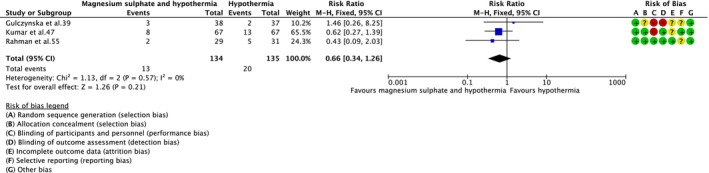
Effect of magnesium sulphate and therapeutic hypothermia versus therapeutic hypothermia alone on neonatal death. Abbreviation: CI, confidence interval.
FIGURE 4.
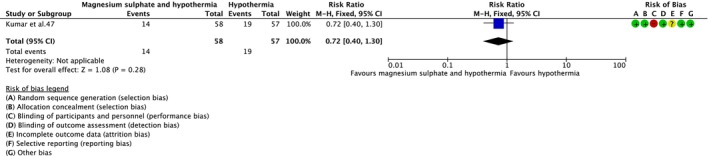
Effect of magnesium sulphate and therapeutic hypothermia versus therapeutic hypothermia alone on death with a Developmental Assessment Scales for Indian Infants score <70 at 12 months. Abbreviation: CI, confidence interval.
For neonatal death, the subgroup interaction test did not indicate a differential treatment effect based on gestational age (two RCTs with infants born late preterm and at term vs one RCT with infants born at term only) (χ 2 = 0.06, p = 0.80, I 2 = 0%). A subgroup analysis based on setting (LMIC vs HIC) was not possible; of the three RCTs, one was conducted in a HIC, one across both HICs and LMICs, and one in an LMIC) (see Table S5 for the subgroup effect estimates).
Secondary outcomes
Neonatal magnesium sulphate and therapeutic hypothermia versus therapeutic hypothermia alone were associated with an increase in full oral feeding at discharge (one RCT, 39 70 infants) (Table 3).
No clear differences between magnesium sulphate and therapeutic hypothermia versus therapeutic hypothermia alone were observed for all remaining secondary outcomes reported (Table 3).
Comparison 3: magnesium sulphate and melatonin versus melatonin alone
This comparison included two RCTs conducted in LMICs 33 , 43 (see Table 3 for the effect estimates, Table 2 for the GRADE Evidence Profile for primary outcome, and Appendix S3 for the forest plots).
Primary outcomes
A reduction in neonatal death was observed with magnesium sulphate and melatonin versus melatonin alone (RR = 0.74; 95% CI = 0.58–0.95; one RCT, 43 90 infants; very‐low‐certainty evidence). Death or long‐term major neurodevelopmental disability was not reported. Sensitivity and subgroup analyses were not possible (one included RCT, 43 not at low risk of bias overall).
Secondary outcomes
Neonatal magnesium sulphate and melatonin versus melatonin alone was associated with an increase in neonatal pH after 3 and 7 days (both one RCT, 43 90 infants) (Table 3).
No clear differences between magnesium sulphate and melatonin versus melatonin alone were observed for all remaining secondary outcomes (Table 3).
Comparison 4: magnesium sulphate versus phenobarbital
This comparison included one RCT conducted in an LMIC 57 (see Table 3 for the effect estimate, Table 2 for the GRADE Evidence Profile for the primary outcome, and Appendix S3 for the forest plot).
Primary outcomes
No clear difference in neonatal death was observed with magnesium sulphate versus phenobarbital (RR = 3.00; 95% CI = 0.86–10.46; one RCT, 57 104 infants; very‐low‐certainty evidence). Death or long‐term major neurodevelopmental disability was not reported. Sensitivity and subgroup analyses were not possible (one included RCT, 57 not at low risk of bias overall).
Secondary outcomes
Secondary outcomes were not reported.
Evidence from non‐randomized studies
Comparison groups differed across the four non‐randomized studies, 48 , 52 , 62 , 63 which were not suitable for synthesis. Individual results are summarized in the next sections and presented in detail in Table S7.
Primary outcomes
Two of the four studies reported on neonatal death. In the first, magnesium sulphate (n = 100) versus no magnesium sulphate (n = 611) was associated with a reduction in neonatal death, overall (p = 0.016) and specifically in infants with HIE (p < 0.001) and severe HIE (p = 0.027). 52 In the second, magnesium sulphate (n = 50) versus no magnesium sulphate (n = 50) was not associated with a clear difference in neonatal death (p > 0.05). 62 Death or long‐term major neurodevelopmental disability was not reported.
Secondary outcomes
One study reported an improvement in several short‐term neonatal outcomes (such as measures of seizure control, early initiation of feeding, and neurological abnormalities) with magnesium sulphate (n = 50) versus no magnesium sulphate (n = 50). 62 A further study reported an absence of side effects in infants with asphyxiation treated with magnesium sulphate (n = 18) versus no magnesium sulphate (n = 7). 63 One study reported on hypotension and respiratory depression with a higher (400 mg/kg, n = 7) versus lower (250 mg/kg, n = 7) magnesium sulphate dose. 48
DISCUSSION
We screened 1008 references; 25 RCTs (2099 infants) 29 , 30 , 31 , 32 , 33 , 34 , 35 , 36 , 37 , 38 , 39 , 40 , 41 , 42 , 43 , 44 , 45 , 46 , 47 , 49 , 50 , 51 , 53 , 54 , 55 , 56 , 57 , 58 , 59 , 60 , 61 and four non‐randomized studies (871 infants) 48 , 52 , 62 , 63 were included. Of the 29 studies, 23 (79%) were conducted in LMICs. 29 , 30 , 31 , 32 , 33 , 35 , 40 , 42 , 43 , 44 , 46 , 47 , 49 , 50 , 51 , 52 , 56 , 57 , 58 , 59 , 60 , 61 , 62
We observed reductions in neonatal death with magnesium sulphate versus placebo or no treatment (13 RCTs, 1033 infants; low‐certainty evidence), and with magnesium sulphate and melatonin versus melatonin alone (one RCT, 90 infants; very‐low‐certainty evidence). No further reduction in neonatal death was seen with magnesium sulphate and therapeutic hypothermia versus therapeutic hypothermia alone (three RCTs, 269 infants; low‐certainty evidence), nor with magnesium sulphate versus phenobarbital (one RCT, 104 infants; very‐low‐certainty evidence). No reductions in death or long‐term neurodevelopmental disability (one RCT, 41 infants; very‐low‐certainty evidence), but reductions in several short‐term adverse outcomes (certainty of evidence not assessed for secondary outcomes) were observed with magnesium sulphate versus placebo or no treatment.
Importantly, no clear short‐term adverse outcomes or side effects were shown with magnesium sulphate. This is reassuring because unpublished data from the Randomized Asphyxia Trial in the 1990s indicated an increased risk of bradycardia and a trend towards increased mortality with magnesium sulphate. 19 After suspension of this study, however, it was noted that infants had inadvertently received almost twice the intended dose (the dose commonly used in the RCTs included in this review [250 mg/kg]) because of an error in solution preparation. 19 Indeed, in the authors' earlier dose comparison study (also included in this review 48 ), a higher dose (400 mg/kg) versus a lower dose (250 mg/kg) of magnesium sulphate was associated with increased risks of hypotension and respiratory depression.
The most recent review of magnesium sulphate for infants with perinatal asphyxia and HIE 21 searched the literature in 2012 and included five RCTs; 31 , 35 , 36 , 41 , 44 all were captured in this review. Since then, a further 20 RCTs have been published. 29 , 30 , 32 , 33 , 39 , 40 , 42 , 43 , 46 , 47 , 49 , 50 , 51 , 55 , 56 , 57 , 58 , 59 , 60 , 61 As expected, with the widespread implementation of therapeutic hypothermia for HIE as standard care in HICs, all 13 of the newer RCTs 30 , 32 , 40 , 42 , 46 , 49 , 50 , 51 , 56 , 58 , 59 , 60 , 61 comparing magnesium sulphate with placebo or no treatment were conducted in LMICs (six in Pakistan 30 , 42 , 49 , 56 , 59 , 61 and five in India 32 , 46 , 51 , 58 , 60 ), where evidence for the efficacy of therapeutic hypothermia in neonatal encephalopathy is currently uncertain. 6 , 7 , 8 Similarly, the three RCTs comparing magnesium sulphate with an alternative agent (melatonin 33 , 43 or phenobarbital 57 ) in the absence of therapeutic hypothermia, were from LMICs. Our search identified a further ongoing RCT (registered this year in Pakistan), designed to compare magnesium sulphate and placebo in infants with HIE (n = 178). 64 This reflects the enduring interest in magnesium sulphate in LMICs where perinatal asphyxia, HIE, and the associated burdens are clearly the highest and the therapies available have been regarded as technically too complex or extremely expensive. 64
Our review demonstrated a potential reduction in neonatal death with neonatal magnesium sulphate versus placebo or no treatment, which was not observed previously. 21 However, the certainty of the evidence was judged to be low, including because of significant study limitations (risk of bias). In a sensitivity analysis restricted to studies at low overall risk of bias, this potential reduction was no longer observed; this included only two small RCTs (102 infants). Thus, these data support the need for further research to establish the effects of magnesium sulphate for perinatal asphyxia and HIE in LMICs. If RCTs continue to be conducted, it is crucial that they are high quality in both design and reporting; ideally, they should include long‐term follow‐up. Of note, a core outcome set for neonatal encephalopathy treatment (COHESION) is under development; if applied, it will facilitate the standardization of outcome measurement and reporting in the future. 65 , 66
Of the RCTs comparing magnesium sulphate in combination with therapeutic hypothermia and therapeutic hypothermia alone, two were conducted in LMICs 29 , 47 and two included HICs (one was a multi‐country study). 39 , 55 While the available data did not enable exploration of possible differences in effects according to setting (i.e. in LMICs vs HICs), the results (including a sensitivity analysis restricted to the two RCTs at low risk of bias) do not support a clear benefit of neonatal magnesium sulphate as an adjuvant to therapeutic hypothermia in HIE. This, together with the variable, non‐persuasive evidence of benefit to date from preclinical studies, emphasizes the need for further preclinical evaluation of magnesium sulphate for neonatal neuroprotection (alone and in combination with therapeutic hypothermia), to ensure safety and identify optimal treatment regiments (including dose, route, and timing of administration), before conducting further RCTs. 17 , 18 , 19
A recent systematic review and meta‐analysis demonstrated the breadth of neuroprotective adjuvants to therapeutic hypothermia evaluated in RCTs to date, including γ‐aminobutyric acid receptor agonists (phenobarbital, topiramate), n‐methyl‐d‐aspartic acid receptor antagonists (magnesium sulphate, xenon), neurogenic and angiogenic agents (darbepoetin alpha, erythropoietin), umbilical cord blood cells, glucocorticoids (hydrocortisone), and antioxidants (melatonin). 67 As recognized by others, 68 , 69 magnesium sulphate is not the sole, or indeed favoured agent, in the current quest for an adjuvant to augment therapeutic hypothermia‐mediated neuroprotection. There is increasing evidence to suggest that neuroprotective adjuvants may be best administered after (vs during) therapeutic hypothermia. For example, a delayed rise in circulating cytokines (and associated white matter and basal ganglia injury) has been observed after therapeutic hypothermia. 70 An increased odds of electrographic seizures during rewarming (vs the 12 hours before) has also been demonstrated in infants receiving therapeutic hypothermia, which was further associated with death or disability at 2 years. 71 To the best of our knowledge, whether there is a role for delaying magnesium sulphate administration, to follow therapeutic hypothermia, has not yet been determined.
Limitations
The main limitations of this review relate to the clinical heterogeneity across studies (designs, settings, participating infants, and particularly the criteria for asphyxia and presence of HIE [including severity], magnesium sulphate regimens, and outcomes reported) and the variable quality of studies (risk of bias). Only four of the 25 RCTs included in this review were considered as low risk of bias overall. 31 , 42 , 47 , 55 While we attempted to explore expected variation in treatment effects through subgroup and sensitivity analyses, our ability to do so was limited because of the paucity of the outcome data or data stratified according to participant or treatment characteristics not being available. Statistical heterogeneity was detected for a small number of secondary outcomes (not observed for the primary outcomes) and probably attributed to the previously described variations across RCTs. For our primary outcomes (death, composite of death, or long‐term major neurodevelopmental disability), 18 (72%) 31 , 35 , 36 , 39 , 41 , 42 , 43 , 44 , 46 , 47 , 50 , 51 , 55 , 56 , 57 , 58 , 60 , 61 and two (8%) 47 , 60 of the 25 RCTs reported usable data. Most secondary outcomes were reported sparsely (and were poorly defined), many by only one or two RCTs. Sample sizes were commonly small, further limiting the ability to detect small, clinically important differences in outcomes, such as long‐term neurodevelopment, which was reported in only five (20%) 35 , 36 , 42 , 47 , 60 RCTs at varying time points (6–24 months).
CONCLUSIONS
The certainty of the evidence for the use of magnesium sulphate in perinatal asphyxia and HIE is low to very low. As such, further robust research surrounding neonatal magnesium sulphate for neuroprotection is justified. This should include a pipeline of high‐quality preclinical studies informing future clinical trials to determine its stand‐alone effects in LMICs and its effects in combination with or after therapeutic hypothermia in HICs.
CONFLICT OF INTEREST STATEMENT
The authors have no conflicts of interest relevant to this article to disclose.
Supporting information
Figure S1: PRISMA flow diagram
Figure S2: Risk of bias across randomized trials
Figure S3: Risk of bias for individual randomized trials
Appendix S1: Search strategy
Appendix S2: Reports excluded at the full‐text review
Appendix S3: Forest plots, Comparisons 1–4
Table S1: Characteristics of the randomized trials
Table S2: Characteristics of the non‐randomized studies
Table S3: Risk of bias of randomized trials
Table S4: Risk of bias of non‐randomized studies
Table S5: Subgroup analyses for neonatal death, Comparisons 1 and 2
Table S6: Additional data from randomized trials not able to be included in meta‐analyses
Table S7: Results from non‐randomized studies
ACKNOWLEDGEMENTS
Emily Shepherd is funded by an Australian National Health and Medical Research Council (NHMRC) Investigator Grant (no. 2007800). The NHMRC had no role in the design and conduct of the study. Open access publishing facilitated by The University of Adelaide, as part of the Wiley/University of Adelaide agreement via the Council of Australian University Librarians.
Shepherd E, Karim T, McIntyre S, Goldsmith S, Keir A, Badawi N, et al. Neonatal magnesium sulphate for neuroprotection: A systematic review and meta‐analysis. Dev Med Child Neurol. 2024;66:1157–1172. 10.1111/dmcn.15899
DATA AVAILABILITY STATEMENT
The data that supports the findings of this study are available in the supplementary material of this article.
REFERENCES
- 1. World Health Organization (WHO) . Newborns: improving survival and well‐being. Available from: https://www.who.int/news‐room/fact‐sheets/detail/newborns‐reducing‐mortality.
- 2. McIntyre S, Nelson KB, Mulkey SB, Lechpammer M, Molloy E, Badawi N. Neonatal encephalopathy: focus on epidemiology and underexplored aspects of etiology. Semin Fetal Neonatal Med 2021; 26: 101265. [DOI] [PubMed] [Google Scholar]
- 3. Lee ACC, Kozuki N, Blencowe H, Vos T, Bahalim A, Darmstadt GL, et al. Intrapartum‐related neonatal encephalopathy incidence and impairment at regional and global levels for 2010 with trends from 1990. Pediatric Research 2013; 74: 50–72. [DOI] [PMC free article] [PubMed] [Google Scholar]
- 4. Jacobs SE, Berg M, Hunt R, Tarnow‐Mordi WO, Inder TE, Davis PG. Cooling for newborns with hypoxic ischaemic encephalopathy. Cochrane Database Syst Rev 2013; 1: CD003311. [DOI] [PMC free article] [PubMed] [Google Scholar]
- 5. Wu YW, Comstock BA, Gonzalez FF, Mayock DE, Goodman AM, Maitre NL, et al. Trial of erythropoietin for hypoxic‐ischemic encephalopathy in newborns. N Engl J Med 2022; 387: 148–59. [DOI] [PMC free article] [PubMed] [Google Scholar]
- 6. Thayyil S, Pant S, Montaldo P, Shukla D, Oliveira V, Ivain P, et al. Hypothermia for moderate or severe neonatal encephalopathy in low‐income and middle‐income countries (HELIX): a randomised controlled trial in India, Sri Lanka, and Bangladesh. Lancet Glob Health 2021; 9: e1273‐e85. [DOI] [PMC free article] [PubMed] [Google Scholar]
- 7. Bellos I, Devi U, Pandita A. Therapeutic hypothermia for neonatal encephalopathy in low‐ and middle‐income countries: a meta‐analysis. Neonatology 2022: 1–11. [DOI] [PubMed] [Google Scholar]
- 8. Abate BB, Bimerew M, Gebremichael B, Mengesha Kassie A, Kassaw M, Gebremeskel T, et al. Effects of therapeutic hypothermia on death among asphyxiated neonates with hypoxic‐ischemic encephalopathy: a systematic review and meta‐analysis of randomized control trials. PLoS One 2021; 16: e0247229. [DOI] [PMC free article] [PubMed] [Google Scholar]
- 9. Duley L, Gülmezoglu AM, Henderson‐Smart DJ, Chou D. Magnesium sulphate and other anticonvulsants for women with pre‐eclampsia. Cochrane Database Syst Rev 2010; 2010: CD000025. [DOI] [PMC free article] [PubMed] [Google Scholar]
- 10. Fishel Bartal M, Sibai BM. Eclampsia in the 21st century. Am J Obstet Gynecol 2022; 226: S1237‐S53. [DOI] [PubMed] [Google Scholar]
- 11. Elliott JP, Morrison JC, Bofill JA. Risks and benefits of magnesium sulfate tocolysis in preterm labor (PTL). AIMS Public Health 2016; 3: 348–56. [DOI] [PMC free article] [PubMed] [Google Scholar]
- 12. Doyle LW, Crowther CA, Middleton P, Marret S, Rouse D. Magnesium sulphate for women at risk of preterm birth for neuroprotection of the fetus. Cochrane Database Syst Rev 2009: CD004661. [DOI] [PubMed] [Google Scholar]
- 13. Galinsky R, Draghi V, Wassink G, Davidson JO, Drury PP, Lear CA, et al. Magnesium sulfate reduces EEG activity but is not neuroprotective after asphyxia in preterm fetal sheep. J Cereb Blood Flow Metab 2017; 37: 1362–73. [DOI] [PMC free article] [PubMed] [Google Scholar]
- 14. Bennet L, Galinsky R, Draghi V, Lear CA, Davidson JO, Unsworth CP, et al. Time and sex dependent effects of magnesium sulphate on post‐asphyxial seizures in preterm fetal sheep. J Physiol 2018; 596: 6079–92. [DOI] [PMC free article] [PubMed] [Google Scholar]
- 15. Galinsky R, Dean JM, Lingam I, Robertson NJ, Mallard C, Bennet L, et al. A systematic review of magnesium sulfate for perinatal neuroprotection: what have we learnt from the past decade? Front Neurol 2020; 11: 449. [DOI] [PMC free article] [PubMed] [Google Scholar]
- 16. Galinsky R, Dhillon SK, Kelly SB, Wassink G, Davidson JO, Lear CA, et al. Magnesium sulphate reduces tertiary gliosis but does not improve EEG recovery or white or grey matter cell survival after asphyxia in preterm fetal sheep. J Physiol 2023. [DOI] [PMC free article] [PubMed] [Google Scholar]
- 17. Galinsky R, Bennet L, Groenendaal F, Lear CA, Tan S, van Bel F, et al. Magnesium is not consistently neuroprotective for perinatal hypoxia‐ischemia in term‐equivalent models in preclinical studies: a systematic review. Dev Neurosci 2014; 36: 73–82. [DOI] [PubMed] [Google Scholar]
- 18. Galinsky R, Bennet L, Gunn AJ. Magnesium sulfate: a last roll of the dice for anti‐excitotoxicity? Pediatr Res 2019; 86: 685–7. [DOI] [PubMed] [Google Scholar]
- 19. Lingam I, Robertson NJ. Magnesium as a neuroprotective agent: a review of its use in the fetus, term infant with neonatal encephalopathy, and the adult stroke patient. Dev Neurosci 2018; 40: 1–12. [DOI] [PubMed] [Google Scholar]
- 20. Shepherd E, Salam RA, Manhas D, Synnes A, Middleton P, Makrides M, et al. Antenatal magnesium sulphate and adverse neonatal outcomes: a systematic review and meta‐analysis. PLoS Med 2019; 16: e1002988. [DOI] [PMC free article] [PubMed] [Google Scholar]
- 21. Tagin M, Shah PS, Lee KS. Magnesium for newborns with hypoxic‐ischemic encephalopathy: a systematic review and meta‐analysis. J Perinatol 2013; 33: 663–9. [DOI] [PubMed] [Google Scholar]
- 22. Page MJ, McKenzie JE, Bossuyt PM, Boutron I, Hoffmann TC, Mulrow CD, et al. The PRISMA 2020 statement: an updated guideline for reporting systematic reviews. PLoS Med 2021; 18: e1003583. [DOI] [PMC free article] [PubMed] [Google Scholar]
- 23. The EndNote Team . EndNote. EndNote X9 edn. Philadelphia, PA: Clarivate; 2013. [Google Scholar]
- 24. Covidence systematic review software. Veritas Health Innovation, Melbourne, Australia. www.covidence.org
- 25. Higgins JP, Thomas J, Chandler J, Cumpston M, Li T, Page MJ, et al. Cochrane Handbook for Systematic Reviews of Interventions Version 6.2 (updated February 2021). Available from training.cochrane.org/handbook [DOI] [PMC free article] [PubMed]
- 26. Viswanathan M, Berkman N, Dryden D, Hartling L. Assessing risk of bias and confounding in observational studies of interventions or exposures: further development of the RTI Item Bank. Rockville, MD: Agency for Healthcare Research and Quality; 2013. [PubMed] [Google Scholar]
- 27. The Cochrane Collaboration . Review Manager (RevMan) [Computer program]. Version 5.4; 2020.
- 28. Schünemann H, Brożek J, Guyatt G, Oxman A, editors. GRADE handbook for grading quality of evidence and strength of recommendations. Updated October 2013. The GRADE Working Group; 2013. [Google Scholar]
- 29. Abdel‐Aziz SM, Rahman M, Shoreit AH, Din MEE, Hamed EA, Gad EF. Outcome of infants with hypoxic‐ischemic encephalopathy treated by whole body cooling and magnesium sulfate. J Child Sci 2021; 11: E280‐E6. [Google Scholar]
- 30. Ahmad HMI AS, Iqbal G. Role of magnesium sulphate in newborns with birth asphyxia. Journal of Medicine, Physiology and Biophysics 2019; 54: 115–8. [Google Scholar]
- 31. Bhat MA, Charoo BA, Bhat JI, Ahmad SM, Ali SW, Mufti M. Magnesium sulfate in severe perinatal asphyxia: a randomized, placebo‐controlled trial. Pediatrics 2009; 123: e764‐9. [DOI] [PubMed] [Google Scholar]
- 32. CTRI/2015/08/006107. A clinical trial to see the effect of magnesium sulfate drug in oxygen deprivated newborn.
- 33. El Farargy MS, Soliman NA. A randomized controlled trial on the use of magnesium sulfate and melatonin in neonatal hypoxic ischemic encephalopathy. J Neonatal Perinatal Med 2020; 12: 379–84. [DOI] [PubMed] [Google Scholar]
- 34. Gathwala G, Khera A, Singh I, Gathwala G, Khera A, Singh I. Magnesium therapy in birth asphyxia. Indian J Pediatr 2006; 73: 209–12. [DOI] [PubMed] [Google Scholar]
- 35. Gathwala G, Khera A, Singh J, Balhara B. Magnesium for neuroprotection in birth asphyxia. J Pediatr Neurosci 2010; 5: 102–4. [DOI] [PMC free article] [PubMed] [Google Scholar]
- 36. Groenendaal F, Rademaker CMA, Toet M, De Vries LS. Effects of magnesium sulphate on amplitude‐integrated continuous EEG in asphyxiated term neonates. Acta Paediatr 2002; 91: 1073–7. [DOI] [PubMed] [Google Scholar]
- 37. Gulczynska E, Gadzinowski J, Walas W, Maczka A, Talar T, Kesiak M, et al. Therapeutic hypothermia enhanced by MGSO4 for hypoxic‐ischemic encephalopathy in the neonates and its influence on biomarkers of asphyxia and course of hospitalization. J Matern Fetal Neonatal Med 2014; 27: 221. [Google Scholar]
- 38. Gulczynska EMA, Gadzinowski J, Talar T, Nowiczewski M, Cyranowicz B. Therapeutic hypothermia enhanced by magnesium sulphate for hypoxic‐ischemic encephalopathy in the neonates ‐ and their influence on protein S‐100B and ceruloplasmin serum concentration. J Matern Fetal Neonatal Med 2012; 25: 32. [Google Scholar]
- 39. Gulczynska E GJ, Nowinczewski M, Sobolewska B, Caupta J, Maczko A, Walas W, Talar T. Feasibility and safety of combining therapeutic hypothermia with magnesium sulfate administration, in the management of neonates with hypoxic ischemic encephalopathy – randomized control trial. Neonat Pediatr Med 2018; 4: 165. [Google Scholar]
- 40. Hossain MM, Mannan MA, Yeasmin F, Shaha CK, Rahman MH, Shahidullah M. Short‐term outcome of magnesium sulfate infusion in perinatal asphyxia. Mymensingh Med J 2013; 22: 727–35. [PubMed] [Google Scholar]
- 41. Ichiba H, Tamai H, Negishi H, Ueda T, Kim TJ, Sumida Y, et al. Randomized controlled trial of magnesium sulfate infusion for severe birth asphyxia. Pediatr Int 2002; 44: 505–9. [DOI] [PubMed] [Google Scholar]
- 42. Iqbal N, Younus J, Malik M, Fatima B, Imran A, Maqbool S, et al. The neuroprotective efficacy of postnatal magnesium sulfate in term or near‐term infants with moderate‐to‐severe birth asphyxia. Cureus 2021; 13: e16826. [DOI] [PMC free article] [PubMed] [Google Scholar]
- 43. Khan MH, Ann QU, Khan MS, Ahmad N, Ahmed M. Efficacy of magnesium sulfate in addition to melatonin therapy in neonates with hypoxic‐ischemic encephalopathy. Cureus 2022; 14: e21163. [DOI] [PMC free article] [PubMed] [Google Scholar]
- 44. Khashaba MT, Shouman BO, Shaltout AA, Al‐Marsafawy HM, Abdel‐Aziz MM, Patel K, et al. Excitatory amino acids and magnesium sulfate in neonatal asphyxia. Brain Dev 2006; 28: 375–9. [DOI] [PubMed] [Google Scholar]
- 45. Khashaba MT, Shouman BO, Hasanein BM, Shaltout AA, Al‐Marsafawy HM, Abdel‐Aziz MM, et al. Interleukin‐1beta, interleukin‐6, and tumor necrosis factor‐alpha in the cerebrospinal fluid of term infants with hypoxic‐ischemic encephalopathy after postnatal treatment with magnesium sulfate. J Pediatr Neurol 2011; 9: 299–304. [Google Scholar]
- 46. Kumar P KV, BilasRanjan R, Nag S. A randomized controlled trial on the efficacy of intravenous magnesium therapy in perinatal asphyxia in a resource‐poor setting. J Dent Med Sci 2015; 14: 5–9. [Google Scholar]
- 47. Kumar C, Adhisivam B, Bobby Z, Bhat BV. Magnesium sulfate as an adjunct to therapeutic hypothermia in the management of term infants with hypoxic‐ischemic encephalopathy: a randomized, parallel‐group, controlled trial. Indian J Pediatr 2022: Jul 18. 10.1007/s12098-022-04289-8. [DOI] [PubMed] [Google Scholar]
- 48. Levene M, Blennow M, Whitelaw A, Hanko E, Fellman V, Hartley R. Acute effects of two different doses of magnesium sulphate in infants with birth asphyxia. Arch Dis Child 1995; 73: F174‐F7. [DOI] [PMC free article] [PubMed] [Google Scholar]
- 49. Mehmood T FT, Saeed T. Effect of postnatal magnesium sulfate infusion on neurological outcome of term neonates with severe perinatal asphyxia. J Rawalpindi Med Coll 2015; 19: 193–6. [Google Scholar]
- 50. Mullalli‐Bime G, Kuli‐Lito G, Tushe E. Use of magnesium sulfate in severe perinatal asphyxia and short‐term neurologic outcomes. J Matern Fetal Neonatal Med 2016; 29: 52. [Google Scholar]
- 51. Nanda AK JA, Pradha SK, Kumar TVR, Pradhan PC. Effect of magnesium sulphate infusion on neonatal outcomes in babies with perinatal asphyxia: a randomized controlled trial. Int J Health Sci 2022; 6: 13064–75. [Google Scholar]
- 52. Okonkwo IR, Okolo AA. Postnatal magnesium sulfate in asphyxiated newborns in benin city nigeria: Effect on mortality. Int J Pediatr Neonat Care 2018; 4: 136. [Google Scholar]
- 53. Prakash R, Savitha MR, Krishnamurthy B. Neurodevelopmental outcome at 12 months of postnatal magnesium sulphate therapy for perinatal asphyxia. J Nepal Paediatr Soc 2016; 36: 256–62. [Google Scholar]
- 54. Prakash R. Effect of postnatal magnesium therapy on neonatal seizure in infants with moderate to severe hypoxic ischemic encephalopathy: a post‐hoc subgroup analysis. Int J Contemp Pediatrics 2016; 3: 1425–9. [Google Scholar]
- 55. Rahman SU, Canpolat FE, Oncel MY, Evli A, Dilmen U, Parappil H, et al. Multicenter randomized controlled trial of therapeutic hypothermia plus magnesium sulfate versus therapeutic hypothermia plus placebo in the management of term and near‐term infants with hypoxic ischemic encephalopathy (The Mag Cool study): A pilot study. J Clin Neonatol 2015; 4: 158–63. [Google Scholar]
- 56. Rashid A FN, Asim M, Khalid A, Ali AS. Role of magnesium sulphate in short term neurological outcome of perinatal asphyxia. PPMJ 2015; 26: 2–5. [Google Scholar]
- 57. Riaz L, Ahmed SM, Zakki MA, Faryad N, Iram S, Iqbal S. Comparison of phenobarbital versus magnesium sulphate for management of neonate with birth Asphyxia. Pak J Med Health Sci 2021; 15: 2145–7. [Google Scholar]
- 58. Riyaz Ahmed FK SS. Evaluation of safety of magnesium of sulphate therapy in neonates with birth asphyxia. Int J Contemp Pediatrics 2016; 3: 80–5. [Google Scholar]
- 59. Sajid NK JM, Ahmed S. Therapeutic efficacy of magnesium sulphate on neurological outcome of neonates with severe birth asphyxia. JUMDC 2018; 9: 1–5. [Google Scholar]
- 60. Savitha MR R. Beneficial effect of intravenous magnesium sulphate in term neonates with perinatal aspxhyia. Int J Contemp Pediatrics 2016; 3: 150–4. [Google Scholar]
- 61. Siddiqui MA, Butt TK. Role of intravenous magnesium sulphate in term neonates with hypoxic ischemic encephalopathy (hie) in a low‐income country: a randomised clinical trial. J Coll Physicians Surg Pak 2021; 31: 817–20. [DOI] [PubMed] [Google Scholar]
- 62. Sreenivasa B, Lokeshwari K, Joseph N. Role of magnesium sulphate in management and prevention of short term complications of birth asphyxia. Sri Lanka J Child Health 2017; 46: 148–51. [Google Scholar]
- 63. Szemraj J, Sobolewska B, Gulczynska E, Wilczynski J, Zylinska L. Magnesium sulfate effect on erythrocyte membranes of asphyxiated newborns. Clin Biochem 2005; 38: 457–64. [DOI] [PubMed] [Google Scholar]
- 64. NCT05707962. Neuroprotective efficacy of postnatal magnesium sulphate in term infants with birth asphyxia. doi: 10.7759/cureus.16826. [DOI] [PMC free article] [PubMed]
- 65. Quirke FA, Healy P, Bhraonáin EN, Daly M, Biesty L, Hurley T, et al. COHESION: core outcomes in neonatal encephalopathy (protocol). Trials 2021; 22: 125. [DOI] [PMC free article] [PubMed] [Google Scholar]
- 66. Quirke F, Ariff S, Battin M, Bernard C, Bloomfield FH, Daly M, et al. Core outcomes in neonatal encephalopathy: a qualitative study with parents. BMJ Paediatr Open 2022; 6. [DOI] [PMC free article] [PubMed] [Google Scholar]
- 67. Ovcjak A, Pontello R, Miller SP, Sun HS, Feng ZP. Hypothermia combined with neuroprotective adjuvants shortens the duration of hospitalization in infants with hypoxic ischemic encephalopathy: meta‐analysis. Front Pharmacol 2022; 13: 1037131. [DOI] [PMC free article] [PubMed] [Google Scholar]
- 68. Molloy EJ, El‐Dib M, Juul SE, Benders M, Gonzalez F, Bearer C, et al. Neuroprotective therapies in the NICU in term infants: present and future. Pediatr Res 2022. [DOI] [PMC free article] [PubMed] [Google Scholar]
- 69. Victor S, Rocha‐Ferreira E, Rahim A, Hagberg H, Edwards D. New possibilities for neuroprotection in neonatal hypoxic‐ischemic encephalopathy. Eur J Pediatr 2022; 181: 875–87. [DOI] [PMC free article] [PubMed] [Google Scholar]
- 70. Rocha‐Ferreira E, Kelen D, Faulkner S, Broad KD, Chandrasekaran M, Kerenyi Á, et al. Systemic pro‐inflammatory cytokine status following therapeutic hypothermia in a piglet hypoxia‐ischemia model. J Neuroinflammation 2017; 14: 44. [DOI] [PMC free article] [PubMed] [Google Scholar]
- 71. Chalak LF, Pappas A, Tan S, Das A, Sánchez PJ, Laptook AR, et al. Association between increased seizures during rewarming after hypothermia for neonatal hypoxic ischemic encephalopathy and abnormal neurodevelopmental outcomes at 2‐year follow‐up: A nested multisite cohort study. JAMA Neurol 2021; 78: 1484–93. [DOI] [PMC free article] [PubMed] [Google Scholar]
Associated Data
This section collects any data citations, data availability statements, or supplementary materials included in this article.
Supplementary Materials
Figure S1: PRISMA flow diagram
Figure S2: Risk of bias across randomized trials
Figure S3: Risk of bias for individual randomized trials
Appendix S1: Search strategy
Appendix S2: Reports excluded at the full‐text review
Appendix S3: Forest plots, Comparisons 1–4
Table S1: Characteristics of the randomized trials
Table S2: Characteristics of the non‐randomized studies
Table S3: Risk of bias of randomized trials
Table S4: Risk of bias of non‐randomized studies
Table S5: Subgroup analyses for neonatal death, Comparisons 1 and 2
Table S6: Additional data from randomized trials not able to be included in meta‐analyses
Table S7: Results from non‐randomized studies
Data Availability Statement
The data that supports the findings of this study are available in the supplementary material of this article.