



Abstract
Introduction
Prevention of cardiovascular disease is a major issue in the current management of people living with HIV. Concern is growing about the metabolic impact of integrase strand transfer inhibitors (INSTIs), which could lead to an increased risk of diabetes, but the data are conflicting. This is an updated version of our previous analysis, with longer follow‐up and new molecules.
Methods
We retrospectively evaluated the incidence of new‐onset diabetes in people living with HIV starting combined antiretroviral therapy with an INSTI compared with non‐nucleoside reverse transcriptase inhibitors and protease inhibitors. Data were collected from the Dat'AIDS cohort study, a collaboration of 30 HIV treatment centres in France. We used a propensity score‐based inverse probability of treatment weighting approach to adjust for baseline characteristics between the two groups (INSTI and non‐INSTI).
Results
Between 2009 and 2021, a total of 12 150 people living with HIV were included. The incidence of diabetes was higher in the INSTI group than in the non‐INSTI group (hazard ratio 1.38; 95% confidence interval 1.07–1.77; p = 0.012). Regardless of the third drug, but to a greater extent for INSTIs, we observed a peak of new‐onset diabetes in the year following initiation of combined antiretroviral therapy.
Conclusions
The incidence of diabetes was higher in people treated with integrase inhibitors than in those receiving other third agents. This increased risk occurred both during the first year of treatment and in the longer term.
Keywords: antiretroviral therapy, diabetes, HIV, integrase inhibitors, integrase strand transfer inhibitors
INTRODUCTION
Prevention of cardiovascular disease is a major issue in the current management of people living with HIV. This aging population is at higher risk for comorbidities such as cardiovascular disease and non‐AIDS‐related cancers than people without HIV infection [1].
Second‐generation integrase strand transfer inhibitors (INSTIs) are recommended worldwide as first‐line therapy in combination with nucleoside reverse transcriptase inhibitors (NRTIs) and are widely prescribed.
Nevertheless, concern is growing about their metabolic impact. Weight gain has been reported to be greater with INSTIs [2, 3], which could lead to an increase in metabolic syndrome with insulin resistance and diabetes. Similarly, tenofovir alafenamide fumarate (TAF), which is increasingly being used because of its good renal and bone safety profile, has also been associated with adverse metabolic changes [4].
The relationship between INSTIs and diabetes remains unclear. Some studies have shown an increase in the incidence of diabetes [5, 6], whereas others, including our previous analysis, have not [7, 8, 9].
The main objective of this study was to evaluate, with longer follow‐up and data on newer antiretroviral (ARV) drugs such as bictegravir and TAF, the incidence of new‐onset diabetes mellitus in people newly diagnosed with HIV starting an INSTI as their third ARV compared with a non‐nucleoside reverse transcriptase inhibitor (NNRTI) or a protease inhibitor (PI).
METHODS
Medical records were collected from the Dat'AIDS cohort study, which is a collaboration of 30 HIV treatment centres in France and overseas (ClinicalTrials.gov NCT02898987). These centres maintain prospective cohorts of people living with HIV‐1 who provide written informed consent through a common electronic medical record. Anonymized data on clinical events, laboratory test results and treatment history collected by the network organization were submitted to the French National Commission on Informatics and Rights (CNIL registration number: 2001/762876/nadiscnil.doc).
Patients included were adults living with HIV‐1 who initiated a first‐line combined ART (cART) between 2009 and 2021, consisting of two NRTIs and a third drug that could be an INSTI, an NNRTI or a boosted PI. Patients with a diagnosis of diabetes mellitus at baseline were excluded. Only diabetes occurring after at least 6 weeks of ARV treatment was included to avoid including patients with pre‐existing diabetes. Patients with less than 6 weeks of treatment were also excluded. Patient data were censored if there was a change in cART on the date of the last news available in the medical software or on the date of diabetes diagnosis.
Data collected using Nadis® software included demographic characteristics (age and sex) and geographic origin (Africa, South America, France and other/unknown). We also investigated classic risk factors for diabetes and cardiovascular diseases, such as body mass index (BMI), smoking status and alcohol consumption. Finally, HIV‐related factors were examined, consisting of type of cART, Centers for Disease Control and Prevention 1993 classification, HIV risk group, drug use and hepatitis B/C virus coinfection. Individuals with a history of drug use were classified as detoxed. All variables were collected at cART initiation.
Incident diabetes mellitus was defined as a notification of new diabetes in the medical record, glycated haemoglobin (HbA1c) >6.5% or the start of a diabetes therapy (excluding gliflozin) after cART initiation. Blood glucose results were not used because it was not known whether patients were fasting or not.
The primary endpoint was the incidence of diabetes in people living with HIV treated with INSTI versus PI and NNRTI (non‐INSTI group). The secondary endpoints were the incidence of diabetes occurring after 6 months of cART and the impact of TAF.
Patient characteristics are described using counts and percentages for categorical variables or medians with first and third quartiles for continuous variables. An inverse probability of treatment weighting (IPTW) approach based on the propensity score was used to balance the baseline characteristics between the two groups (INSTI and non‐INSTI) [10]. The propensity score was estimated using a multivariable logistic regression model. The dependent variable was the third agent (INSTI or non‐INSTI), and the independent variables were those that could confound the relationship between treatment and outcome (sex, age, BMI, geographical origin, and AIDS stage) [7]. We used the obtained propensity score to weight our observations in a univariate Cox model to create a pseudo‐population (weighted cohort) in which the distribution of baseline covariates was independent of treatment assignment. The weighted Cox model was then fitted using a robust variance estimator. A similar IPTW analysis was performed to assess the impact of TAF on incident diabetes (TAF group and no‐TAF group), with the same independent variables.
RESULTS
We identified 25 451 treatment‐naive people living with HIV initiating a first‐line cART with two INTIs and a third agent between 2009 and 2021. Among them, 12 150 people living with HIV with variables of interest available at baseline were included. Characteristics of those excluded are described in Appendix S1. In brief, they were more likely to be born in Africa and less likely to be born in France. They were more frequently treated with an NNRTI and less frequently treated with an INSTI. We did not observe more cases of diabetes in one group than the other. Treatment characteristics are described in Appendix S2. Briefly, the third drug was an INSTI for 3691, a boosted PI for 5627 and an NNRTI for 2832 people living with HIV. The NRTI backbone was mainly tenofovir disoproxil fumarate/emtricitabine (8609; 71%).
Population characteristics between the INSTI and non‐INSTI groups are described in Table 1. Overall, people living with HIV were predominantly male (72%) with a mean age of 38 years. The mean baseline BMI was 23.6 kg/m2, 61% of people living with HIV were born in France, and 13% had AIDS. Mean follow‐up was 715 days for the INSTI‐based regimen, 557 days for the boosted PI and 1120 days for the NNRTI. New‐onset diabetes occurred in 260/12 150 (2.1%) people living with HIV: 105/3691 (2.8%) in the INSTI group and 155/8459 (1.8%) in the non‐INSTI group.
TABLE 1.
Characteristics of participants according to the third agent prescribed.
| Characteristics | Overall, N = 12,150 a | INSTI | p‐value b | |
|---|---|---|---|---|
| ‘No’, N = 8,459 a | ‘Yes’, N = 3,691 a | |||
| Diabetes incidence | 2.1% (260) | 1.8% (155) | 2.8% (105) | <0.001 |
| Sex | <0.001 | |||
| Female | 28% (3400) | 30% (2503) | 24% (897) | |
| Male | 72% (8750) | 70% (5956) | 76% (2794) | |
| Age (years) | 38 (37–46/28 ± 13) | 37 (36–45/28 ± 12) | 39 (38–48/28 ± 13) | <0.001 |
| Age categories | <0.001 | |||
| ≤28 | 26% (3200) | 27% (2271) | 25% (929) | |
| >28 to ≤35 | 21% (2527) | 22% (1819) | 19% (708) | |
| >35 to ≤45 | 26% (3186) | 27% (2276) | 25% (910) | |
| >45 | 27% (3237) | 25% (2093) | 31% (1144) | |
| BMI (kg/m b ) | 23.6 (22.8–25.6/20.5 ± 4.8) | 23.6 (22.8–25.5/20.5 ± 4.8) | 23.6 (22.9–25.7/20.6 ± 4.9) | 0.2 |
| BMI categories | 0.3 | |||
| ≤25 | 71% (8652) | 72% (6052) | 70% (2600) | |
| >25 to ≤30 | 21% (2535) | 20% (1733) | 22% (802) | |
| >30 | 7.9% (963) | 8.0% (674) | 7.8% (289) | |
| Geographical origin | <0.001 | |||
| Africa | 28% (3370) | 29% (2422) | 26% (948) | |
| France | 61% (7362) | 60% (5110) | 61% (2252) | |
| Latina America | 1.8% (217) | 1.6% (139) | 2.1% (78) | |
| Other | 9.9% (1201) | 9.3% (788) | 11% (413) | |
| AIDS stage | 13% (1619) | 13% (1090) | 14% (529) | 0.031 |
| Third agent | <0.001 | |||
| NNRTI | 23% (2832) | 33% (2832) | 0% (0) | |
| PI | 46% (5627) | 67% (5627) | 0% (0) | |
| INSTI | 30% (3691) | 0% (0) | 100% (3691) | |
| Smoking | 0.5 | |||
| Yes | 41% (3912) | 41% (2757) | 40% (1155) | |
| No | 51% (4913) | 51% (3448) | 51% (1465) | |
| Past smoker | 8.3% (803) | 8.1% (548) | 8.9% (255) | |
| Missing values | 2522 | 1706 | 816 | |
| Alcohol consumption | 75% (6992) | 74% (4775) | 79% (2217) | <0.001 |
| Missing values | 2839 | 1970 | 869 | |
| Treatment duration (days) | 1103 (689–1519/273 ± 1128) | 1167 (676–1654/248 ± 1224) | 959 (716–1280/345 ± 851) | 0.6 |
| Year of cART initiation | <0.001 | |||
| 2009–11 | 28% (3392) | 37% (3163) | 6.2% (229) | |
| 2012–14 | 31% (3776) | 39% (3326) | 12% (450) | |
| 2015–17 | 22% (2630) | 16% (1346) | 35% (1284) | |
| 2018–21 | 19% (2352) | 7.4% (624) | 47% (1728) | |
| HIV risk group | <0.001 | |||
| MSM | 45% (5423) | 43% (3608) | 49% (1815) | |
| Heterosexual | 46% (5569) | 48% (4039) | 41% (1530) | |
| IVDU | 2.8% (335) | 2.8% (237) | 2.7% (98) | |
| Others | 6.8% (823) | 6.8% (575) | 6.7% (248) | |
| Drug use | <0.001 | |||
| Yes | 19% (1613) | 17% (1024) | 22% (589) | |
| No | 70% (6059) | 71% (4286) | 68% (1773) | |
| Detoxed | 11% (949) | 11% (689) | 9.9% (260) | |
| Missing values | 3529 | 2460 | 1069 | |
| Coinfection | 0.3 | |||
| HBV | 4.1% (496) | 4.3% (364) | 3.6% (132) | |
| HCV | 6.3% (761) | 6.3% (535) | 6.1% (226) | |
| HBV and HCV | 0.6% (68) | 0.6% (49) | 0.5% (19) | |
| No | 89% (10825) | 89% (7511) | 90% (3314) | |
| TAF | 11% (1323) | 2.3% (197) | 31% (1126) | <0.001 |
Abbreviations: BMI = body mass index; cART = combined antiretroviral therapy; HBV = hepatitis B virus; HCV = hepatitis C virus; INSTI = integrase strand transfer inhibitor; IVDU = intravenous drug user; MSM = men who have sex with men; NNRTI = non‐nucleoside reverse transcriptase inhibitor; PI = protease inhibitor; TAF = tenofovir alafenamide fumarate.
% (n); Mean (50%–75%/25% ± standard deviation).
Pearson's Chi‐squared test; Wilcoxon rank sum test; Fisher's exact test.
The characteristics of the two groups after application of the stabilized weights are presented in Appendix S3. In the weighted cohort, people living with HIV treated with INSTIs were more likely to receive TAF (30% vs 2.3%; p < 0.001) and more likely to be men who have sex with men than heterosexual or an intravenous drug user (48% vs 43%, p < 0.001) compared with the non‐INSTI group.
In the weighted Cox model, the incidence of diabetes was higher in the INSTI group than in the non‐INSTI group (hazard ratio [HR] 1.38; 95% confidence interval [CI] 1.07–1.77; p = 0.012). The cumulative incidence of diabetes is shown in the Kaplan–Meier curve (Figure 1): regardless of the third drug (INSTI, NNRTI or PI), but to a greater extent for INSTIs, we observed a peak of new‐onset diabetes in the year following cART initiation. The mean time to new‐onset diabetes was 1.1 years for INSTIs (median = 0.5, Q1 = 0.2, Q3 = 1.5 years), 1.5 years for boosted PIs (median = 0.4, Q1 = 0.2, Q3 = 1.9 years) and 1.5 years for NNRTIs (median = 1, Q1 = 0.3, Q3 = 2.6 years).
FIGURE 1.
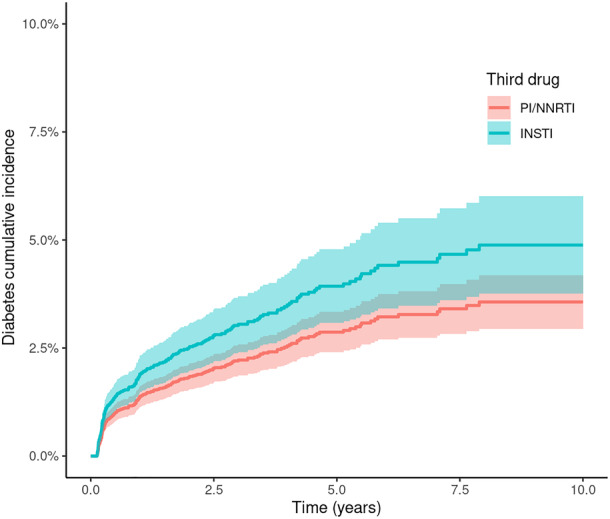
Cumulative incidence of diabetes over time according to the third drug prescribed. Shaded areas represent the 95% confidence interval. INSTI = integrase strand inhibitors; NNRTI = non‐nucleoside reverse transcriptase inhibitor; PI = protease inhibitor.
The proportion of new‐onset diabetes was slightly higher in people living with HIV treated with bictegravir than those treated with other INSTIs (36/1119 [3.2%] vs 69/2572 [2.7%]) in the overall population, but this difference did not reach significance (p = 0.4).
We conducted a subanalysis excluding the 1323 people treated with TAF (Appendix S4). After IPTW analysis, the incidence of diabetes was 1.9% and 2.3% (p = 0.15) in the non‐INSTI and INSTI group, respectively.
To examine the impact of TAF, we performed a weighted Cox model comparing the 1327 people living with HIV who received TAF with the 10 827 who did not (Appendix S5). There were 2.8% and 2.1% new‐onset diabetes, respectively (HR 1.37; p = 0.072).
We performed a second analysis excluding diabetes occurring in the first 6 months (Appendix S6). In the weighted cohort, new‐onset diabetes occurred in 1.3% of people living with HIV treated with INSTI and 1.0% of people living with HIV treated with another third drug, and this difference was statistically significant (HR 1.54; 95% CI 1.09–2.19; p = 0.015 in the weighted Cox model).
DISCUSSION
In this study, initiation of INSTI‐based cART in treatment‐naive people living with HIV was associated with an increased risk of new‐onset diabetes compared with non‐INSTI‐based treatment. These findings are consistent with some studies [5, 6], but others have not highlighted this association between INSTIs and diabetes [7, 8, 9, 11]. It is worth noting that these studies have different methodologies regarding population and definition of diabetes, which may explain these differences.
In contrast to our previous study, we chose to exclude people living with HIV who were missing key data such as BMI at baseline. This choice inevitably led to a loss of statistical power but reduced the statistical uncertainty. Indeed, high BMI is a known risk factor for diabetes, and creating an unknown BMI group introduces statistical uncertainty. We used an IPTW approach to estimate the impact of the treatment (INSTI vs non‐INSTI) independently of the control variables, which allows for better control of group differences than a statistical adjustment. We changed the HbA1c threshold for the diagnosis of diabetes from 7.5% to 6.5%, as currently recommended [12], which may have increased its incidence. Prescription of gliflozin was not included in the diagnosis of diabetes because it is also recommended for heart failure and chronic kidney disease. The analyses were conducted over a longer follow‐up period, allowing us to investigate both early‐onset and long‐term diabetes. The differences observed with our previous study can therefore be explained by the longer follow‐up, the presence of new molecules with TAF in the INSTI group and a better adjustment according to initial BMI. As previously, data were censored for changes in ARV treatment to maintain a homogeneous population with respect to cART.
In this study, we were able to analyze people living with HIV treated with bictegravir and TAF. Gisbert‐Ferrándiz et al. found that administration of bictegravir impaired glucose tolerance in mice and affected glucose metabolism in human hepatocytes in vitro compared with other ARVs, especially dolutegravir [13]. Thus, a specific effect of bictegravir within the INSTI class is conceivable. We could not confirm this hypothesis in our study, although new‐onset diabetes was slightly more frequent in people living with HIV treated with bictegravir compared with other INSTIs. Exposure to TAF is a known risk factor for weight gain and could therefore increase the risk of new‐onset diabetes. We found more new‐onset diabetes in people living with HIV treated with TAF compared with those not treated with TAF in the weighted Cox model, but this difference was not statistically significant. Although these two factors may have contributed to the increased incidence of diabetes, it is difficult to assess the impact of each separately. In fact, all people living with HIV treated with bictegravir had received TAF, and only a few people living with HIV treated with TAF had received a third drug other than bictegravir.
The mechanism of INSTI‐related diabetes remains unclear [14]. Indeed, our results indicate that most cases of diabetes occurred early, mainly in the first year after cART initiation. This was also well described by O'Halloran et al., who found an increased risk of new‐onset diabetes/hyperglycaemia in the 6 months following INSTI‐based cART initiation compared with other third agents [5]. Numerous cases of diabetes occurring acutely after the introduction of INSTI and presenting as type 1 diabetes with cardinal syndrome have been described in the literature [14, 15, 16]. It is important to note that not all people living with HIV underwent a metabolic assessment before initiating cART, meaning that some diabetes diagnosed in the first year of cART may in fact be previously undiagnosed diabetes. We decided to include only cases of diabetes that occurred after 6 weeks of cART to limit this bias.
Remote onset of diabetes is also possible with INSTIs. This therapeutic class is known to favour weight gain [2, 3] and therefore possibly insulin resistance. To explore this hypothesis, we performed a second analysis excluding diabetes that occurred within 6 months of cART. This analysis also allowed us to minimize the number of diabetes cases that were undiagnosed before treatment. The risk of diabetes was still higher in people living with HIV treated with INSTIs than in those receiving PIs and NNRTIs.
These findings suggest that different mechanisms may be responsible for the increased risk of diabetes with INSTIs. In addition, a recent study based on the RESPOND cohort found that INSTI use was associated with an increased risk of diabetes that was only partially attenuated after adjustment for time‐updated log BMI [17].
This study has limitations. Some diabetes diagnoses may have been missed because they were not reported in the database. Many people living with HIV were excluded due to important missing data such as initial BMI. Finally, certain risk factors for diabetes, such as dietary habits, physical activity levels and weight gain over time could not be collected. This limits our ability to generalize our results to the whole population treated by INSTIs.
In conclusion, our study provides further evidence of an increased risk of diabetes in treatment‐naive people living with HIV treated with INSTI compared with other third agents. Most cases appear to occur rapidly after cART initiation, but there also appears to be a long‐term risk. Fasting blood glucose or, if unavailable, HbA1c should be monitored before starting treatment, more frequently during the first year of treatment and also during long‐term follow‐up. The impact of TAF remains unclear and should be investigated further.
AUTHOR CONTRIBUTIONS
A.U. and D.R. designed the study. A.S. performed the statistical analyses. A.U., A.S. and D.R. wrote the manuscript. All authors have read, reviewed and agreed to the published version of the manuscript.
FUNDING INFORMATION
This study was supported by internal funding.
CONFLICT OF INTEREST STATEMENT
All authors: No potential conflicts.
Supporting information
Data S1: Supporting Information
APPENDIX A. Dat'AIDS Study Group
Besançon: C. Chirouze, K. Bouiller, F. Bozon, AS. Brunel, L. Hustache‐Mathieu, J. Lagoutte, Q. Lepiller, S. Marty‐Quinternet, L. Pépin‐Puget, B. Rosolen, N. Tissot, S. Jaffuel, S Ansart, Y Quintric, S Rezig, L Quaesaet, P Gazeau, C. Jacomet, N. Mrozek, C. Theis, M. Vidal, C. Richaud, F. Anglade, L. Sauvat, V. Corbin, C. Aumeran, O. Baud, E. Goncalvez, D. Mazzocolin, A Mirand, A Brebion, C Henquell, I. Lamaury, E. Breugnon, A. Chéret, E. Curlier, E. Duvallon, I. Fabre, C. Herrmann‐Storck, S. Markowicz, M. Marquet, R. Ouissa, L. Pradat‐Paz, K. Samar, B. Tressieres, D. Merrien, O. Bollangier, D. Boucher, T. Guimard, L. Laine, S. Leautez, M. Morrier, P. Perré, P. Point, M. Roncato‐Saberan, X. Pouget‐Abadie, C. Chapuzet, L. Faba, JF. Faucher, A. Cypierre, S. Ducroix‐Roubertou, H. Durox, C. Genet‐Villeger, J. Pascual, P. Pinet, C. Codde, S. Rogez, JB. Woillard, C. Benoist, D. Alfaiate, A. Becker, L. Cotte, F. Ader, C. Brochier, F. Brunel‐Dalmas, O. Cannesson, A. Conrad, S. Degroodt, T. Ferry, M. Godinot, V. Icard, J.M. Livrozet, D. Makhloufi, T. Perpoint, S. Roux, MA. Trabaud, C. Triffault‐Fillit, F. Valour, AS. Batalla, H. Lardot, M. Simon, C. Javaux, I. Ravaux, A. Ménard, Y. Belkhir, P. Colson, C. Dhiver, M. Martin‐Degioanni, L. Meddeb, M. Mokhtari, A. Motte, H. Tissot‐Dupont, C. Toméi, S. Brégigeon, O. Zaegel‐Faucher, H. Laroche, M. Dos Santos, MJ. Ducassou, S. Galie, A. Ivanova, I. Jaquet, V. Obry‐Roguet, M. Orticoni, E. Ressiot, AS. Ritleng, S. Benkouiten, A. Cabié, S. Abel, B. Bigeard, C. Bidelogne, O. Cabras, L Carnino, L. Cuzin, L. Fagour, A. Gros‐Dubois, K. Guitteaud, C. Lahuna, E. Louis‐Michel, A. Métais, F Quenard, S. Pierre‐François, C. Robert, Z. Cavalli, L. Bucy, R. Genet, C. Schneifer, P. Perez, J. Reynes, M. Bistoquet, E Delaporte, V. Le Moing, J. Lejeune, N. Meftah, C. Merle de Boever, B. Montes, A. Montoya Ferrer, N. Pansu, J. Reynes, E. Tuaillon, B. Lefèvre, M. André, G. Baronnet, S. Bevilacqua, L. Boyer, MP. Bouillon, A. Charmillon, M. Delestan, C. Emilie, E. Frentiu, F. Goehringer, S. Hénard, E. Jeanmaire, C. Rabaud, A. Radjabaly‐Mandjee, F. Raffi, C. Allavena, E. André‐Garnier, A. Asquier‐Khati, E. Billaud, C. Biron, B. Bonnet, S. Bouchez, D. Boutoille, C. Brunet‐Cartier, M. Cavellec, C. Deschanvres, Th. Drumel, BJ. Gaborit, M. Grégoire, T. Jovelin, M. Lefebvre, R. Lecomte, R. Mahot, P. Morineau, E. Paredes, V. Reliquet, A. Soria, S. Bréaud, M. Buscot, M. Carles, D. Chirio, E. Cua, P. Dellamonica, E. Demonchy, A. De Monte, J. Durant, S. Ferrando, A. Naqvi, I. Perbost, C. Pradier, B. Prouvost‐Keller, K. Risso, I. Touitou, A. Viot, S. Wehrlen‐Pugliese.
P. Pugliese, S. Sunder, K. Schepers, V. Goudet, A. Dos Santos, V. Rzepecki Orléans, L. Hocqueloux, G. Béraud, J. Effa, C. Gubavu, V. Legros, C. Mille, T. Prazuck, A. Sève, L. Vitry d'Aubigny, C. Goujard, A. Castro‐Gordon, P. David‐Chevallier, V. Godard, Y. Quertainmont, E. Teicher, S. Jaureguiberry. Paris APHP Bichat: V. Joly, C. Charpentier, D. Descamps, M. Digumber, A. Gervais, J. Ghosn, Z. Julia, R. Landman, S. Lariven, S. Le Gac, F. Louni, N. Peiffer‐Smadja, G. Peytavin, C. Rioux, Y. Yazdanpanah. Paris APHP Necker/Institut Pasteur: C. Duvivier, K. Amazzough, G. Benabdelmoumen, P. Bossi, G. Cessot, C. Charlier, PH. Consigny, C. De La Porte Des Vaux, E. Gomes‐Pires, P. Hochedez, K. Jidar, E. Lafont, F. Lanternier, O. Lortholary, C. Louisin, J. Lourenco, C. Melenotte, O. Pacoud, P. Parize, F. Ruyno, C. Rouzaud, A. Serris, F. Taieb, J. Zeggagh, R. Palich, MA. Valantin, C. Katlama, A Faycal, R. Agher, Y. Dudoit, N. Hamani, N. Qatib, I. Qzaibri, L. Lenclume, L. Schneider, S. Seang, R. Tubiana, N. Hall, P. Perfezou, JC. Duthe, FB. Drevillon, JP. Talarmin, L. Khatchatourian, F. Bani‐Sadr, JL. Berger, V. Brodard, M. Hentzien, I. Kmiec, D. Lambert, H. Marty, Y. N'Guyen, C. Arvieux, M. Baldeyrou, F. Benezit, JM. Chapplain, M. Dupont, JC. Duthé, S. Ismaël, T. Jovelin, A. Lebot, F. Lemaitre, D. Luque‐Paz, A. Maillard, C. Morlat, S. Patrat‐Delon, L. Picard, M. Poisson‐Vannier, C. Pronier M. Revest, P. Tattevin, J. Vivent, A. Gagneux‐Brunon, E. Botelho‐Nevers, A. Frésard, A. Pouvaret, V. Ronat, D. Rey, C. Cheneau, C. Bernard‐Henry, S. Fafi‐Kremer, P. Fischer, P. Gantner, C. Mélounou, A. Ursenbach, P. Klee, Y. Hansmann, N. Lefebvre, Y. Ruch, F. Danion, B. Hoellinger, T. Lemmet, V. Gerber, P. Delobel, M. Alvarez, N. Biezunski, X. Boumaza, A. Debard, C. Delpierre, C. Garnier, L. Lelièvre, G. Martin‐Blondel, M. Piffaut, C. Rastoll, K. Saune, O. Robineau, E. Aïssi, y, E. Alidjinou, V. Baclet, L. Bocket, A. Boucher, V. Derdour, B. Lafon‐Desmurs, A. Meybeck, M. Pradier, M. Tetart, M. Valette, N. Viget, A. Diarra, G. Corvaisier, M. Brière, M. De La Chapelle, M. Gousseff, M. Le Goff, M. Thierry.
Ursenbach A, Sireyjol A, Delpierre C, et al. Increased incidence of diabetes in people living with HIV treated with first‐line integrase strand transfer inhibitors: A French multicentre retrospective study. HIV Med. 2025;26(1):166‐172. doi: 10.1111/hiv.13698
ClinicalTrials NCT02898987. Anonymized data for clinical events, laboratory test results and therapeutic history collected by the networking organization have been submitted to the French National Commission on Informatics and Rights (CNIL Registration number: 2001/762876/ nadiscnil.doc).
Contributor Information
Axel Ursenbach, Email: axel.ursenbach@chru-strasbourg.fr.
the Dat'AIDS Study Group:
C. Chirouze, K. Bouiller, F. Bozon, AS. Brunel, L. Hustache‐Mathieu, J. Lagoutte, Q. Lepiller, S. Marty‐Quinternet, L. Pépin‐Puget, B. Rosolen, N. Tissot, S. Jaffuel, S Ansart, Y Quintric, S Rezig, L Quaesaet, P Gazeau, C. Jacomet, N. Mrozek, C. Theis, M. Vidal, C. Richaud, F. Anglade, L. Sauvat, V. Corbin, C. Aumeran, O. Baud, E. Goncalvez, D. Mazzocolin, A Mirand, A Brebion, C Henquell, I. Lamaury, E. Breugnon, A. Chéret, E. Curlier, E. Duvallon, I. Fabre, C. Herrmann‐Storck, S. Markowicz, M. Marquet, R. Ouissa, L. Pradat‐Paz, K. Samar, B. Tressieres, D. Merrien, O. Bollangier, D. Boucher, T. Guimard, L. Laine, S. Leautez, M. Morrier, P. Perré, P. Point, M. Roncato‐Saberan, X. Pouget‐Abadie, C. Chapuzet, L. Faba, JF. Faucher, A. Cypierre, S. Ducroix‐Roubertou, H. Durox, C. Genet‐Villeger, J. Pascual, P. Pinet, C. Codde, S. Rogez, JB. Woillard, C. Benoist, D. Alfaiate, A. Becker, L. Cotte, F. Ader, C. Brochier, F. Brunel‐Dalmas, O. Cannesson, A. Conrad, S. Degroodt, T. Ferry, M. Godinot, V. Icard, J.M. Livrozet, D. Makhloufi, T. Perpoint, S. Roux, MA. Trabaud, C. Triffault‐Fillit, F. Valour, AS. Batalla, H. Lardot, M. Simon, C. Javaux, I. Ravaux, A. Ménard, Y. Belkhir, P. Colson, C. Dhiver, M. Martin‐Degioanni, L. Meddeb, M. Mokhtari, A. Motte, H. Tissot‐Dupont, C. Toméi, S. Brégigeon, O. Zaegel‐Faucher, H. Laroche, M. Dos Santos, MJ. Ducassou, S. Galie, A. Ivanova, I. Jaquet, V. Obry‐Roguet, M. Orticoni, E. Ressiot, AS. Ritleng, S. Benkouiten, A. Cabié, S. Abel, B. Bigeard, C. Bidelogne, O. Cabras, L Carnino, L. Cuzin, L. Fagour, A. Gros‐Dubois, K. Guitteaud, C. Lahuna, E. Louis‐Michel, A. Métais, F Quenard, S. Pierre‐François, C. Robert, Z. Cavalli, L. Bucy, R. Genet, C. Schneifer, P. Perez, J. Reynes, M. Bistoquet, E Delaporte, V. Le Moing, J. Lejeune, N. Meftah, C. Merle de Boever, B. Montes, A. Montoya Ferrer, N. Pansu, J. Reynes, E. Tuaillon, B. Lefèvre, M. André, G. Baronnet, S. Bevilacqua, L. Boyer, MP. Bouillon, A. Charmillon, M. Delestan, C. Emilie, E. Frentiu, F. Goehringer, S. Hénard, E. Jeanmaire, C. Rabaud, A. Radjabaly‐Mandjee, F. Raffi, C. Allavena, E. André‐Garnier, A. Asquier‐Khati, E. Billaud, C. Biron, B. Bonnet, S. Bouchez, D. Boutoille, C. Brunet‐Cartier, M. Cavellec, C. Deschanvres, BJ. Gaborit, M. Grégoire, T. Jovelin, M. Lefebvre, R. Lecomte, R. Mahot, P. Morineau, E. Paredes, V. Reliquet, A. Soria, S. Bréaud, M. Buscot, M. Carles, D. Chirio, E. Cua, P. Dellamonica, E. Demonchy, A. De Monte, J. Durant, S. Ferrando, A. Naqvi, I. Perbost, C. Pradier, B. Prouvost‐Keller, K. Risso, I. Touitou, A. Viot, S. Wehrlen‐Pugliese, P. Pugliese, S. Sunder, K. Schepers, V. Goudet, A. Dos Santos, V. Rzepecki, L. Hocqueloux, G. Béraud, J. Effa, C. Gubavu, V. Legros, C. Mille, T. Prazuck, A. Sève, L. Vitry d'Aubigny, C. Goujard, A. Castro‐Gordon, P. David‐Chevallier, V. Godard, Y. Quertainmont, E. Teicher, S. Jaureguiberry, V. Joly, C. Charpentier, D. Descamps, M. Digumber, A. Gervais, J. Ghosn, Z. Julia, R. Landman, S. Lariven, S. Le Gac, F. Louni, N. Peiffer‐Smadja, G. Peytavin, C. Rioux, Y. Yazdanpanah, C. Duvivier, K. Amazzough, G. Benabdelmoumen, P. Bossi, G. Cessot, C. Charlier, PH. Consigny, C. De La Porte Des Vaux, E. Gomes‐Pires, P. Hochedez, K. Jidar, E. Lafont, F. Lanternier, O. Lortholary, C. Louisin, J. Lourenco, C. Melenotte, O. Pacoud, P. Parize, F. Ruyno, C. Rouzaud, A. Serris, F. Taieb, J. Zeggagh, R. Palich, MA. Valantin, C. Katlama, A Faycal, R. Agher, Y. Dudoit, N. Hamani, N. Qatib, I. Qzaibri, L. Lenclume, L. Schneider, S. Seang, R. Tubiana, N. Hall, P. Perfezou, JC. Duthe, FB. Drevillon, JP. Talarmin, L. Khatchatourian, F. Bani‐Sadr, JL. Berger, V. Brodard, M. Hentzien, I. Kmiec, D. Lambert, H. Marty, Y. N'Guyen, C. Arvieux, M. Baldeyrou, F. Benezit, JM. Chapplain, M. Dupont, JC. Duthé, S. Ismaël, T. Jovelin, A. Lebot, F. Lemaitre, D. Luque‐Paz, A. Maillard, C. Morlat, S. Patrat‐Delon, L. Picard, M. Poisson‐Vannier, C. Pronier M. Revest, P. Tattevin, J. Vivent, A. Gagneux‐Brunon, E. Botelho‐Nevers, A. Frésard, A. Pouvaret, V. Ronat, D. Rey, C. Cheneau, C. Bernard‐Henry, S. Fafi‐Kremer, P. Fischer, P. Gantner, C. Mélounou, A. Ursenbach, P. Klee, Y. Hansmann, N. Lefebvre, Y. Ruch, F. Danion, B. Hoellinger, T. Lemmet, V. Gerber, P. Delobel, M. Alvarez, N. Biezunski, X. Boumaza, A. Debard, C. Delpierre, C. Garnier, L. Lelièvre, G. Martin‐Blondel, M. Piffaut, C. Rastoll, K. Saune, O. Robineau, E. Aïssi, E. Alidjinou, V. Baclet, L. Bocket, A. Boucher, V. Derdour, B. Lafon‐Desmurs, A. Meybeck, M. Pradier, M. Tetart, M. Valette, N. Viget, A. Diarra, G. Corvaisier, M. Brière, M. De La Chapelle, M. Gousseff, M. Le Goff, and M. Thierry
REFERENCES
- 1. Weber MSR, Duran Ramirez JJ, Hentzien M, et al. Time trends in causes of death in people with HIV: insights from the swiss HIV cohort study. Clin Infect Dis. 2024;79(1):177‐188. [DOI] [PMC free article] [PubMed] [Google Scholar]
- 2. Bourgi K, Rebeiro PF, Turner M, et al. Greater weight gain in treatment‐naive persons starting dolutegravir‐based antiretroviral therapy. Clin Infect Dis. 2020;70(7):1267‐1274. [DOI] [PMC free article] [PubMed] [Google Scholar]
- 3. Kerchberger AM, Sheth AN, Angert CD, et al. Weight gain associated with integrase stand transfer inhibitor use in women. Clin Infect Dis. 2019;79(3):593‐600. [DOI] [PMC free article] [PubMed] [Google Scholar]
- 4. Mallon PW, Brunet L, Hsu RK, et al. Weight gain before and after switch from TDF to TAF in a U.S. cohort study. J Int AIDS Soc. 2021;24(4):e25702. [DOI] [PMC free article] [PubMed] [Google Scholar]
- 5. O'Halloran JA, Sahrmann J, Parra‐Rodriguez L, et al. Integrase Strand transfer inhibitors are associated with incident diabetes mellitus in people with human immunodeficiency virus. Clin Infect Dis. 2022;75(12):2060‐2065. [DOI] [PMC free article] [PubMed] [Google Scholar]
- 6. Spieler G, Westfall AO, Long DM, et al. Trends in diabetes incidence and associated risk factors among people with HIV in the current treatment era. AIDS Lond Engl. 2022;36(13):1811‐1818. [DOI] [PMC free article] [PubMed] [Google Scholar]
- 7. Ursenbach A, Max V, Maurel M, et al. Incidence of diabetes in HIV‐infected patients treated with first‐line integrase strand transfer inhibitors: a French multicentre retrospective study. J Antimicrob Chemother. 2020;75(11):3344‐3348. [DOI] [PubMed] [Google Scholar]
- 8. Taramasso L, Squillace N, Ricci E, et al. Incident diabetes in course of antiretroviral therapy. AIDS Lond Engl. 2023;37(8):1269‐1276. [DOI] [PubMed] [Google Scholar]
- 9. Mulindwa F, Kamal H, Castelnuovo B, et al. Association between integrase strand transfer inhibitor use with insulin resistance and incident diabetes mellitus in persons living with HIV: a systematic review and meta‐analysis. BMJ Open Diabetes Res Care. 2023;11(1):e003136. [DOI] [PMC free article] [PubMed] [Google Scholar]
- 10. Buchanan AL, Hudgens MG, Cole SR, Lau B, Adimora AA, Women's Interagency HIV Study . Worth the weight: using inverse probability weighted cox models in AIDS research. AIDS Res Hum Retroviruses. 2014;30(12):1170‐1177. [DOI] [PMC free article] [PubMed] [Google Scholar]
- 11. Rebeiro PF, Emond B, Rossi C, et al. Incidence of cardiometabolic outcomes among people living with HIV‐1 initiated on integrase strand transfer inhibitor versus non‐integrase strand transfer inhibitor antiretroviral therapies: a retrospective analysis of insurance claims in the United States. J Int AIDS Soc. 2023;26(6):e26123. [DOI] [PMC free article] [PubMed] [Google Scholar]
- 12. 2019 ESC Guidelines on diabetes, pre‐diabetes, and cardiovascular diseases developed in collaboration with the EASD | European Heart Journal | Oxford Academic [Internet]. [cited 2024 Jan 23]. Available from: https://academic.oup.com/eurheartj/article/41/2/255/5556890?login=true#202785332 [DOI] [PubMed]
- 13. Gisbert‐Ferrándiz L, García‐Martínez P, Álvarez Á, et al. Bictergravir alters glucose tolerance and metabolism. EACS Abstracts HIV Med. 2023;24(S5):3‐675. [Google Scholar]
- 14. Fong PS, Flynn DM, Evans CD, Korthuis PT. Integrase strand transfer inhibitor‐associated diabetes mellitus: a case report. Int J STD AIDS. 2017;28(6):626‐628. [DOI] [PubMed] [Google Scholar]
- 15. Nolan NS, Adamson S, Reeds D, O'Halloran JA. Bictegravir‐based antiretroviral therapy‐associated accelerated hyperglycemia and diabetes mellitus. Open forum. Infect Dis. 2021;8(5):ofab077. [DOI] [PMC free article] [PubMed] [Google Scholar]
- 16. Horikawa M, Toyoda M, Saito N, et al. Raltegravir‐associated diabetic ketoacidosis in a patient with HIV infection: a case report. Tokai J Exp Clin Med. 2018;43(1):19‐23. [PubMed] [Google Scholar]
- 17. Rupasinghe D, Bansi‐Matharu L, Law M, et al. Integrase strand transfer inhibitor (INSTI) related changes in BMI and risk of diabetes: a prospective study from the RESPOND cohort consortium. Clin Infect Dis. 2024:ciae406. doi: 10.1093/cid/ciae406 [DOI] [PMC free article] [PubMed] [Google Scholar]
Associated Data
This section collects any data citations, data availability statements, or supplementary materials included in this article.
Supplementary Materials
Data S1: Supporting Information