



Abstract
Rice bran production significantly contributes to global environmental deterioration, yet its potential remains underutilized. This review discusses the nutritional composition, bioactive compounds, health benefits, limitations, and potential application of rice bran in both food and non-food sectors. While minor variations exist between pigmented and non-pigmented rice bran, the former is abundant in phytochemicals, which offer therapeutic benefits. The primary limitations hindering rice bran’s food application include rancidity, toxic heavy metals, and antinutrients. Effective stabilization is crucial to extend rice bran’s shelf life. Despite these challenges, rice bran holds significant potential for value-added products. Hence, its rich composition and diverse applications underscore its importance as a valuable resource for sustainable production practices.
Keywords: Rice bran, Phytochemical, Bioactive compound, Stabilisation, Antinutrient
Introduction
Rice (Oryza sativa L.) is categorised as a cereal and plays a substantial role in the global staple diet. Paddy is processed into rice kernels for human consumption through a series of processing steps: cleaning, hulling, whitening, polishing, and grading after being harvested. Rice processing generates an extensive number of by-products, such as rice bran, hull, husk, and germ, which possess relatively low economic value. The mass percentage of rice by-products depends on the mass ratio of the paddy, specifically, the ratio of the original wet weight of the paddy to its final dry weight after the drying process (Manzoor et al., 2023). Researchers have focused on rice bran, because of its high nutrient content, including protein and dietary fibres, as well as bioactive substances such as γ-oryzanol, tocopherols, and tocotrienols. The degree of milling of pigmented rice has been reported to significantly influence the nutritional composition of rice (Zhang et al., 2022b). The aforementioned bioactive compounds generally have the capability to promote health benefits to humans, especially through their roles as anti-inflammatory, and anti-cancer agents, as well as in preventing obesity and cardiovascular diseases (Manzoor et al., 2023).
Rice bran is commonly utilised as livestock feed or organic fertiliser, and it is predominantly disposed of through open burning, which leads to air pollution and the release of greenhouse gases resulting from incomplete combustion (Hoang et al., 2021). The global production of rice bran from 2022 to 2023 was approximately 25–50 million cubic meters. Rice cultivation significantly contributes to environmental degradation due to the substantial amount of waste it generates annually (Ribas et al., 2023). This indicates that rice bran remains underutilised and currently generates less economic value despite its potential to be converted into a valuable product. To highlight, rice bran contains a substantial amount of lipids (15–20 g/100 g of rice bran) and can be utilised in oil extraction (Liao et al., 2020; Wisetkomolmat et al., 2022). Undoubtedly, rice bran has a short storage time due to its high-fat content and the presence of lipase. It is susceptible to lipid oxidation, which causes it to become rancid and unfit for consumption. Various techniques have been established to stabilise rice bran and prevent rancidity, making it usable in food industries (Manzoor et al., 2023).
Collectively, rice bran, the useful by-product, is finding extensive applications in both food and non-food industries. The potential of rice bran in the food sector should not be underestimated, as it contains numerous potent compounds with therapeutic properties. This aligns with the interest among scientists in valorising agro-industrial by-products to promote the concept of sustainability. Therefore, in this present work, the nutritional composition, phytochemical and antioxidant properties, and health benefits of rice bran are reviewed. Subsequently, issues related to its rancidity, anti-bioavailability properties, toxicological effects, and current and novel approaches for stabilising rice bran are discussed. Lastly, the applications of rice bran in food and non-food sectors are explored.
Nutritional constituents of rice bran
The nutritional value of rice bran includes a substantial amount of protein (~ 13%), lipids (15–20%), carbohydrates (~ 50%), and dietary fibre (~ 11%) (Galanakis, 2022; Spaggiari et al., 2021). As demonstrated in Table 1, the high ash content in rice bran contributes to its mineral content, which includes K, Ca, Mg, and Fe. Earlier investigations by Bultum et al. (2020) discovered that rice bran obtained from Wereta, Ethiopia, contains 1716.22 mg/100 g of K, 60.67 mg/100 g of Ca, and 98.94 mg/100 g of Fe, which are significantly greater (p < 0.05) than those found in wheat flour: 159.78 mg/100 g of K, 45.42 mg/100 g of Ca, and 1.801 mg/100 g of Fe. This suggests that rice bran has the potential to be incorporated as a functional ingredient in food products, particularly in bakery items. Another study by Zerlasht et al. (2023) investigated rice bran from Pakistan in comparison to wheat and oat bran. Rice bran showed higher levels of ash (7.50%), fiber (7.22%) and fat (14.72%) than oat and wheat bran. The protein content of rice bran (10.05%) is comparable to wheat bran (10.1%). According to several previous studies, the composition of rice bran can be influenced by external factors. These factors include rice varieties, genetics, environmental conditions (temperature, light, soil, and oxygen exposure), and processing methods, such as milling and stabilisation (Liu et al., 2019; Manzoor et al., 2023), leading to variation in the nutritional profiles of rice bran. Based on an extensive review of several prior research, the proximate nutritional constituents of rice bran are summarised in Table 1.
Table 1.
Proximate nutritional constituents of rice bran
| Rice bran | Origin | Nutritional profiles (%) | References | |||||
|---|---|---|---|---|---|---|---|---|
| Protein | Fat | Ash | CF | C | DF | |||
| Non-pigmented | Pakistan | 10.05 | 14.72 | 7.5 | 7.22 | NA | NA | Zerlasht et al. (2023) |
| China | 10.52–12.51 | 17.53–19.37 | 8.97–9.56 | NA | NA | 30.20–32.21 | Li et al. (2023) | |
| Italy | 14.43 | 16.07 | 8.06 | NA | 22.95 | 25.75 | Renoldi et al. (2021) | |
| Brazil | 15.64 | 26.67 | 11.61 | NA | NA | 30.04 | Echeverria et al. (2022) | |
| Ethiopia | 14.68 | 16.85 | 11.76 | 17.05 | 32.11 | NA | Bultum et al. (2020) | |
| Pigmented | Thailand | 12.93–13.27 | 15.85–17.32 | 9.72–11.41 | 12.11–12.68 | 41.23–45.06 | NA | Moongngarm et al. (2012) |
| India | 12.54 | 5.1 | 11.42 | NA | 60.94 | 33.09 | Arun et al. (2020) | |
| Thailand | 12.04 | 12.03 | 6.19 | 5.47 | NA | NA | Wisetkomolmat et al. (2022) | |
| India | 12.61 | 13.11 | 7.21 | 11.32 | NA | NA | Sethi et al. (2020) | |
CF crude fibre, C carbohydrate, DF dietary fibre, NA not available
Three major components primarily focused on rice bran are protein, fat and fibre content. These components serve as functional ingredients, contributing to the improvement of eating quality by providing texture, flavour, and nutritional value to food products. Goffman et al. (2003) analysed the fat composition of rice bran from 204 genetically diverse rice accessions. It was noted that genotype significantly affected the lipid content and fat composition of rice bran (p < 0.001). Besides, the influence of annual seasonal changes on the fat composition of rice bran was significant, except for palmitic acid. Another perspective on the effect of temperature on the fat composition of rice bran was presented by Kitta et al. (2005), indicating that the amount of polyunsaturated fatty acids decreases with increasing environmental temperature during the rice ripening stage. There is still a lack of studies and unclear elucidation, particularly regarding the effects of genetic and environmental factors on rice bran fat composition.
Protein found in rice bran contains soluble protein that is hypoallergenic and suitable for vegetarians and vegans (Najamuddin et al., 2021). Currently, it is considered a sustainable alternative ingredient extracted from waste materials. Albumin, globulin, glutelin, and prolamin are the protein components of rice bran, sequenced based on their solubility. Albumin, a water-soluble protein fraction has the highest extractability (Wang et al., 2022). Additionally, it has the highest bioavailability and biological value due to being easily absorbed by human body systems, making it a potential plant-based protein source. The protein content of rice bran may vary on each rice variety as can be seen in Table 1. Several previous studies have indicated that protein content in rice bran can be influenced by the milling process (Kalpanadevi et al., 2018; Rosniyana et al., 2007). It is commonly observed that the nutritional content of white rice decreases as the degree of milling increases. This is because the nutrients are predominantly located in the bran layers of the white endosperm which are gradually eliminated as the milling process continues. On the contrary, the nutrient content in rice bran may also vary depending on the milling conditions. Research conducted by Najamuddin et al. (2021) has proved that milling times affect the protein content and soluble protein in rice bran, whereby the protein content is reduced with the increment of milling time. Kalpanadevi et al. (2018) also revealed that abrasive and friction milling can alter the nutrient composition of rice bran. Friction milling was set up by charging 150 g of brown rice in the milling chamber, with pressure applied by placing 456 g weight on a lever arm and operating at 1450 rpm with a direct-driven motor. In contrast, abrasive milling involved processing 200 g of brown rice against a rotating emery disc at 1430 rpm. Two methods were performed on the abrasive milling: straight and successive methods. To differentiate, abrasive milling relies on the abrasive surface to grind away the rice bran, while friction milling depends more on mechanical force and pressure to achieve the desired milling effect. As a result, abrasive milling produces rice bran with higher protein (15.8–20.9%), dietary fibre (24–50.1%), and mineral content (9.6–14.2%) compared to friction milling, which has a protein content of 13.6–18.5%, dietary fibre (19.9–40.3%), and mineral content (7.7–11.7%). On the other hand, friction milling produces bran with higher fat content (15.4–21.9%) than abrasive milling (12.3–18.1%). Both studies explained that the reduction in protein content in rice bran with increasing milling degree is due to the increase in starch from the endosperm. On the other hand, rice varieties are also emphasized as factors that influence the variation in nutritional profiles among different varieties (Al‐Doury et al., 2018; Kalpanadevi et al., 2018). Therefore, the degree of milling and rice varieties are two crucial factors that must be considered to obtain rice bran with optimal nutritional profiles. This in turn can improve the eating quality as well as nutritional value of food products.
Despite the minor differences in the nutritional composition of pigmented and non-pigmented rice bran, they consistently differ in terms of phytochemicals and antioxidant profiles. Table 2 demonstrates significant fluctuation in phytochemical compositions across several varieties of rice bran. The discrepancy in phytochemicals is generally caused by the presence of phenolic and flavonoid compounds, as well as anthocyanin components that are largely found in the bran of black and red rice (Peanparkdee et al., 2020; Zaupa et al., 2015; Zhang et al., 2022b). The primary anthocyanin compound present in rice is cyanidin-3-glucoside (C3G), which is abundantly found in black rice bran. Black rice bran contains a higher concentration of C3G compared to red-pigmented rice bran resulting in an increased in total anthocyanin content (TAC). In addition, this compound is reported to possess antioxidant and anti-inflammatory properties. Interestingly, several past studies have reported that low amounts of anthocyanin can also be found in non-pigmented rice bran (Avinash et al., 2024; Janarny & Gunathilake, 2020). Red rice bran has been discovered contains a greater amount of proanthocyanidin compared to black rice bran. This has been proven in the study by Avinash et al. (2024) that red rice bran contains proanthocyanidin in the range of 694–2431 mg catechin equivalent per 100 g, whereas black rice bran possesses 76–146 mg catechin equivalent per 100 g. Proanthocyanidins are associated with the red pigment present in red rice varieties, which accumulate abundantly in rice bran compared to the rice endosperm (Bhat et al., 2020). Similarly, the total flavonoid content (TFC) in pigmented rice bran is commonly more pronounced than in non-pigmented rice bran. High antioxidant potentials flavonoid compounds such as 9-flavonoids, 9-hydroxycinnamic acid derivatives, 3-hydroxybenzoic acid derivatives and other glucosides such as, proanthocyanidin trimer and procyanidin-B1 (dimer) are discovered in Indian pigmented rice bran (Bhat & Riar, 2017). Anthocyanins are considered contributors to the increase in TFC in pigmented rice bran. This is because anthocyanins are classified as flavonoids and are water-soluble natural pigments (Yang et al., 2021). Six common anthocyanins found in rice bran are cyanidin, delphinidin, peonidin, pelargonidin, petunidin, and malvidin (Bhat et al., 2020). Nonetheless, some pigmented rice bran varieties listed in Table 2, such as Leum Pua (Thailand) and Red Bg406 (Sri Lanka), exhibited lower TFC. Fluctuations in bioactive compounds in rice bran are reported to be influenced by genetic and environmental factors (Kalpanadevi et al., 2018; Zhang et al., 2010). Overall, rice bran demonstrates remarkable nutritional profiles, highlighting significant content of protein, fatty acids, carbohydrates, minerals, and dietary fibre.
Table 2.
The phytochemical properties of different varieties of rice bran
| Compounds | Rice bran varieties | TAC (mg/100 g) | TPC (mg/100 g) | TFC (mg/100 g) | References |
|---|---|---|---|---|---|
| Non-pigmented | White 9311 (China) | NA | 0.303 | NA | Shao et al. (2014) |
| White Bw367 (Sri Lanka) | 0.10 | 5.33 | 5.20 | Janarny and Gunathilake (2020) | |
| White Bg352 (Sri Lanka) | 0.52 | 4.43 | 2.11 | ||
| White BB3CMU (Thailand) | NA | 11.63 | 81.64 | Khantham et al. (2022) | |
| White rice (India) | 3.1–22 | 498–942 | 677–1028 | Avinash et al. (2024) | |
| Pigmented | Black rice (China) | 789.50 | 1887.00 | 4601.83 | Zhang et al. (2022b) |
| Leum Pua (Thailand) | 2.32 | 13.36 | 2.99 | Bunmusik et al. (2023) | |
| Black rice (Malaysia) | 84.04–294.62 | 842.9–1214.70 | 452.08–823.88 | Ghasemzadeh et al. (2018) | |
| Red rice (Malaysia) | 51.88–77.87 | 597.82–811.32 | 332.98–457.00 | ||
| Brown rice (Malaysia) | 2.18–10.72 | 269.85–447.68 | 40.15–240.88 | ||
| Red Bg406 (Sri Lanka) | 9.55 | 26.88 | 18.44 | Janarny and Gunathilake (2020) | |
| Black rice (India) | 1102–2364 | 3150–3809 | 357–469 | Avinash et al. (2024) | |
| Red rice (India) | 22–33 | 1985–3851 | 373–529 |
TAC total anthocyanin content, TPC total phenolic content, TFC total flavonoid content, NA not available
Bioactive compounds and their advantages to human health
Phytochemicals and antioxidants derived from dietary or non-dietary sources have attracted considerable interest among researchers due to their potential therapeutic effects. Rice bran contains favourable bioactive compounds, especially anthocyanin, which is commonly found in pigmented rice bran (Chen et al., 2022). Notably, the bioactive components of rice bran possess anti-obesity, anti-cancer, and skin-protective properties. The removal of the bran layer during milling enhances the cooking quality of rice but eliminates potential nutrients. The anthocyanin content decreases with the increasing degree of milling of rice, indicating that anthocyanins are primarily concentrated in the bran layer. In addition, rice bran is composed of other phytochemicals, such as γ-oryzanol, tocotrienols, tocopherols and carotenoids (Sapna & Jayadeep, 2021), phytic acid (Wisetkomolmat et al., 2022), squalene (Pokkanta et al., 2019), polyphenols, including flavonoids (Chen et al., 2022), and proanthocyanidins (Semmarath et al., 2023). Phenolic compounds, including ferulic acid and p-coumaric acid, are also present (Zhang et al., 2022b). Phenolic compounds function as free radical scavengers, oxidative stress-reducing agents, and protectors of biological macromolecules. Phenolics are secondary metabolites commonly found in plants (Tsimogiannis & Oreopoulou, 2019). Phenolic compounds vary among rice bran varieties, especially between pigmented and non-pigmented types. Phenolics can exist in three forms within rice bran: soluble free, soluble conjugated, and insoluble bound (Wisetkomolmat et al., 2022). According to Wang et al. (2015), bound phenolic compounds exhibit significantly higher antioxidant activity compared to free or soluble conjugated forms, with ferulic acid being the primary phenolic compound present. However, Wisetkomolmot et al. (2022) identified phytic acid as the predominant phenolic compound in rice bran, rather than ferulic acid. This difference may arise because ferulic acid is esterified to rice cell wall components, integrating with dietary fibre and existing in an insoluble bound form, thereby contributing to the diverse physiological functions of dietary fibre. In other words, a larger proportion of phenolic compounds is covalently bound to the fibre matrix in rice bran compared to other matrices in whole grains. This suggests that the dietary fibre in rice bran serves as a significant carrier of phenolics, especially the bound phenolics present in rice bran (Zhao et al., 2018). The polyphenols bound to dietary fibre are not hydrolysable by digestive enzymes in the upper intestine because they are entrapped by the fibre. In the large intestine, these polyphenols are fermented along with dietary fiber, leading to the formation of absorbable metabolites such as phenylacetic, phenylpropionic, and phenylbutyric acids. In respect, non-absorbable and non-fermentable polyphenols remain in the colonic lumen in the large intestine. They contribute to a healthy antioxidant environment by scavenging free radicals and neutralising the effects of dietary pro-oxidants (Ajila & Rao, 2013).
Munkong et al. (2022) have shown that extracts obtained from red rice bran, specifically from the Red Hawm and Hawm Dowk Mali Deang cultivars, suppress the expression of genes associated with adipogenesis, lipogenesis, lipolysis and inflammation, thereby mitigating high-fat-diet-induced pathological alterations in white adipose tissues. This result suggests that red rice bran extract is a potential dietary supplement for alleviating adipose tissue dysfunction. Furthermore, Budijanto et al. (2023) discovered the anti-cancer properties of Indonesian black rice bran (Cempo Ireng). Compared to mice fed a standard diet, mice induced with carcinogens and treated with rice bran showed a significant decrease in tumour growth. There was a notable decrease in the expression of proliferating cell nuclear antigen (PCNA), particularly in the group of mice supplied with a rice bran diet. Therefore, it has been concluded that black rice bran demonstrates significant efficacy in suppressing the development of colon cancer. Um et al. (2023) asserted that γ–oryzanol is capable of reducing sleep latency and facilitating the occurrence of non-rapid eye movement sleep (NREMS). The hypnotic effects of γ–oryzanol in rice bran were found to be comparable to those of the positive control, doxepin. Doxepin is a sedating tricyclic drug used for the therapeutic management of insomnia (Yeung et al., 2015). Bhuyan et al. (2022) revealed that the anti-diabetic properties of black rice bran are attributed to bioactive compounds, specifically C3G and 6′-O-feruloyl sucrose. Their findings have demonstrated that black rice bran suppresses alpha-glucosidase enzyme activity with 62% efficacy, which is comparable to that of the common anti-diabetes medication acarbose. This suggests that black rice bran could be utilised in synthesizing novel anti-diabetic medications. Bioactive compounds in rice bran exhibit beneficial effects on the skin. Linsaenkart et al. (2023) indicated that anthocyanins derived from black rice bran, specifically Pieisu 1 CMU cultivars in Thailand, have a skin-whitening effect. An anthocyanin compound found in black rice bran reduces tyrosinase activity by suppressing melanogenesis. Quercetin, another phenolic constituent extracted from black rice bran, inhibits the degradation of collagen by matrix metalloproteinase-2 (MMP-2), which is involved in breaking down the extracellular matrix (ECM). In general, the primary target of effective anti-ageing agents is the decrease of MMP-2 enzyme levels in fibroblasts or inhibit the formation of extracellular matrix (ECM). Thus, bioactive compounds in Pieisu 1 CMU cultivars are potential active ingredients for cosmetics. In summary, the diverse bioactive compounds found in rice bran, particularly red and black varieties, offer promising benefits for therapeutic interventions. Starting from the anti-obesity effect to suppressing cancer growth, improving sleep patterns, and even enhancing skin health, suggesting their potential applications in dietary supplement and skincare. However, there is a lack of extensive research on the precise effects of bioactive compounds on specific illnesses. The exploration is needed regarding the digestive stability of the bioactive compounds, as well as the optimal bioactivity of targeted compounds upon consumption. Table 3 presents the extra physiological properties of rice bran.
Table 3.
The physiological properties of rice bran
| Physiological properties | Rice bran | Potential effective bioactive compounds | Effect | References |
|---|---|---|---|---|
| Improve Gut Microbiota | Not mentioned | Hydrolysed bound phenolics in dietary fiber |
• Increased the ratio of Bacteroides/Firmicutes. • Improved intestinal microbial balance and reduce dysbiosis. |
Zhao et al. (2022) |
| Rice bran (China) | Rice bran phenolic extract |
• Inhibited the alcohol-induced activation of the hepatic endotoxin-TLR4-NF-κB pathway. • Reduced liver damage and enhanced intestinal barrier function. |
Xiao et al. (2019) | |
| Rice bran (China) | Bound phenolics in rice bran dietary fibre |
• Modulated gut microbiota dysbiosis. • Increased the butyric acid-producing bacteria (Lachnospiraceae and Ruminococcaceae), resulting reduction in blood glucose levels |
Zhang et al. (2020) | |
| Antiobesity | Red Hawm/Hawm Dowk Mali Deang (Thailand) | Phenolics, flavonoids, anthocyanins & proanthocyanidins | • Reduction in genes involved in adipogenesis, lipogenesis, lipolysis & inflammation in HFD-diet mice. | Munkong et al. (2022) |
| Khao Dawk Mali 105 (Thailand) | γ-oryzanol |
• Reduced body weight and adipose tissue mass of obese mice. • Down-regulated Vegf & Mmp-2 mRNA levels in visceral fat tissue. |
Duansak et al. (2022) | |
| Koshihikari bran & Hitomebore bran (Japan) | γ-oryzanol | • Decreased weight gain in OVX mice fed with HFD. | Huang et al. (2023) | |
| Anticancer | Black rice (Cempo Ireng) (Indonesia) | Flavonoids, anthocyanins & phenolics |
• Decreased tumour growth in carcinogen-induced mice. • Decreased in PCNA expression in mice group with a rice bran diet. |
Budijanto et al. (2023) |
| Amber Barka (Iraq) | Apiin, ferulic acid & succinic acid | • Decreased tumour size in both mice groups supplemented with 10% and 20% rice bran. | Talib et al. (2022) | |
| Sakha 101 (Egypt) | Ferulic acid | • Decreased the cell viability of MCF-7 (breast adenocarcinoma) & HeLa (cervical cancer). | Fahmy et al. (2022) | |
| Sedative-hypnotic effect | Not mentioned | γ-oryzanol | • Decreased the sleep latency & facilitated the occurrence of NREMS in mice. | Um et al. (2023) |
| Rice bran (Korea) | β‐sitosterol, campesterol, stigmasterol, ( ±)‐α‐tocopherol & ferulic acid | • Improved sleep onset and sleep disturbance in adults. | Um et al. (2019) | |
| Antidiabetic | Black rice bran (India) | Cyanidin-3-glucoside & 6’-O-feruloylsucrose |
• Reduced the α-glucosidase enzyme activity. • Comparable to the efficacy of Acarbose. |
Bhuyan et al. (2022) |
| Elupaipoo Samba & Puzhuthikar (India) | Phenolic content | • Capable of inhibiting the diabetic enzymes. | Balakrishnan et al. (2019) | |
| Cheradi (India) | Kaempferol & apigeninin | • Inhibited the α-amylase and α-glucosidase activity. | Arun et al. (2020) | |
| Skin-protective | Black Pieisu 1 CMU (Thailand) | Anthocyanin & quercetin |
• Suppressed the melanogenesis process. • Hindered the process of collagen degradation induced by Mmp-2. |
Linsaenkart et al. (2023) |
| De-oiled rice bran (India) | Ceramides |
• Reduced the levels of pro-inflammatory cytokines. • Raised both protein, filaggrin, and involucrin in HaCaT cells, improving skin barrier function. |
Sahoo et al. (2017) |
HFD high-fat diet, Vegf vascular endothelial growth factor, Mmp-2 matrix metalloproteinase-2, OVX ovariectomized, PCNA proliferating cell nuclear antigen, NREMS non-rapid eye movement sleep, HaCat human keratinocytes
Limitations of rice bran
Lipid rancidity
The utilisation of rice bran in food or oil extraction for human consumption is subject to some constraints (Fig. 1). Lipid rancidity is a major limitation that impedes the conversion of rice bran into food products, particularly those intended for human. Rancidity refers to the gradual breakdown of lipids found in food and food products, including edible oils, mainly due to the presence of water (hydrolytic rancidity) or oxygen (oxidative rancidity). Oil rancidity yields reactive oxygen species that accelerated a reduction in pH, increased acidity, off-flavour, and soapy taste. Food prepared in rancid oil can be detrimental to human health, potentially leading to various health issues, including cancer and cardiovascular disease (Grootveld et al., 2020; Zhang et al., 2019). In rice bran, lipids undergo rancidity during the storage of milled bran. This occurs because milling disrupts the physical separation between lipases located in the cross walls of the tegmen and oil bodies in the aleurone and germ, allowing lipases to get contact with fat and catalyse its breakdown intro free fatty acid (Bollinedi et al., 2021). This hydrolytic activity can increase the free-fatty acid content by up to 60% throughout the storage of milled bran (Irakli et al., 2018). As a consequence, the products of triacylglyceride hydrolysis, particularly linoleic and linolenic acid, undergo oxidative degradation by lipoxygenase, leading to the formation of corresponding conjugated hydroperoxides (Wu et al., 2020). Therefore, freshly extracted rice bran must be stabilised to extend its shelf life during storage and enhance its utilisation in food. Various methods have been commonly applied to stabilise rice bran, particularly heating techniques like extrusion, gamma radiation, refrigeration, and acidification (Kim et al., 2014). Genomic approaches have also been utilised to mitigate rice bran rancidity. Three strategies that can be implemented include: 1. Manipulating mutants of lipase and lipoxygenase, 2. Developing rice lines with low linolenic acid and high oleic acid levels, and 3. Enhancing natural antioxidants (Bollinedi et al., 2021). Despite the numerous disadvantages posted by the rancidity of rice bran, there are also benefits that can be derived from it, notably in the application of rice bran protein (RBP). RBP is rarely consumed but it is suitable for the preparation of protein fibril aggregates. Due to the high activity of endogenous lipase, rancidity in rice bran inevitably occurs, leading to the oxidation of RBP. Interestingly, oxidised RBP has been shown to affect its own unfolding and aggregation behaviours (Wu et al., 2020). As a result, the oxidative aggregates of RBP produced by rice bran rancidity intertwine with rice bran protein fibril aggregates, enhancing their viscoelastic properties, which can be used as emulsifiers or gelling agents (Zhao et al., 2023). Similarly, Li et al. (2021) reported that moderate oxidised RBP induced by rice bran rancidity could improve the flexibility of RBP, unfold its structure, and enhance the rate of protein spread to the oil–water interface. This improvement contributes to the stability of rice bran protein emulsion. Hence the rancidity of rice bran can present both advantages and disadvantages depending on its purpose of application. Figure 2 represents brief lipid rancidity process in rice bran.
Fig. 1.
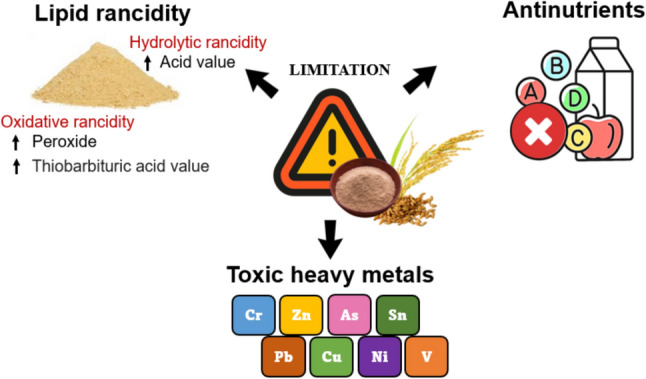
Limitations of rice bran
Fig. 2.

Brief lipid rancidity process in rice bran
Antinutrients
One of the primary challenges in utilising rice bran in the food industry is the need for rapid stabilisation to reduce the levels of antinutrients. The presence of antinutrient compounds further complicates the incorporation of rice bran into food formulations. Among these antinutrients, phytic acid is commonly found in cereals, legumes, oilseeds, and nuts, with concentrations ranging from 0.1 to 9.4% (Feizollahi et al., 2021). Phytic acid is predominantly stored as phytin or phytate in seeds, mainly in the aleurone layer of monocot seeds. Phytate is often viewed as an antinutrient due to its capacity to bind with minerals, proteins, and starch, forming insoluble complexed that alter the functionality, digestion, and absorption of these food constituents (Oatway et al., 2001). The reduction in mineral absorption, especially zinc and iron, can lead to increased health risks for both mothers and children. This includes higher rates of maternal and child morbidity, premature births, and impaired brain development in infants. Moreover, the antinutrient properties of phytic acid have been linked to conditions such as anaemia, zinc deficiency (Gupta et al., 2015), and osteoporosis (Dendougui & Schwedt, 2004). The reason is due to phytic acid can bind strongly with minerals like iron, zinc, and calcium, thereby reducing their bioavailability. Irakli et al. (2020) measured the phytate content in an untreated rice bran sample to be approximately 27.08 mg/g on a dry weight basis. Meral (2021) reported a phytic acid level of 28.98 mg/100 g, indicating only a slight difference between the two findings. Several methods can be accomplished to reduce phytic acid levels in plants, including blocking genes associated with the phytic acid pathway or enhancing the activity of enzymes responsible for phytic acid degradation (Gupta et al., 2015). On the contrary, phytic acid also offers several health benefits. It has been proven to have medicinal properties, such as antidiabetic properties. Phytic acid possesses the capacity to bind with calcium ions, which are essential co-factors for α-amylase. It can also bind with specific amino acids in proteins, thereby hindering the activity of digestive enzymes. These actions can potentially slow down the digestion of starch, resulting in a reduced glycemic response (Kumar et al., 2020). Research has shown that phytic acid could alleviate the neurotoxic effects triggered by 6-hydroxydopamine. This is achieved by blocking the increase in intracellular calcium levels and subsequently inhibiting the calcium-induced aggregation of α-synuclein in a cellular model of Parkinson’s disease (Zhang et al., 2016). α-synuclein plays a crucial role in the development of both sporadic and familial Parkinson’s disease (Guennewig & Cooper, 2014). However, according to Chen et al. (2023), there are concerns regarding the low bioavailability of phytic acid, insufficient evidence of its ability to penetrate the blood–brain barrier, and a lack of studies demonstrating its efficacy.
Saponin, another antinutrient compound was found in rice bran at approximately 89.70 mg/g per dry weight (Irakli et al., 2020). Saponins act as defense mechanisms or secondary metabolites in plants, which attributed to their bitter taste. Primarily, saponins serve as protective agents against insects and pathogenic microbes (Nath et al., 2022). In the context of food consumption, excessive and prolonged intake of saponins has been associated with health concerns including the damage of red blood cells, enzyme inhibition, and thyroid function disruption. Moreover, saponins also reported to be capable of binding to cells within the small intestine, thereby reducing the absorption and utilisation of nutrients (Purohit et al., 2023). To note, once antinutrients are consumed, they cannot be completely eliminated from the body. On the other hand, saponins exhibit several significant pharmacological effects, including combating tumours, reducing inflammation, providing antioxidant properties, and enhancing cardiovascular function (Majnooni et al., 2023). Tannins are another antinutrient commonly present in plant-based foods. They can be categorised into two groups based on their chemical structure and physical properties: (1) hydrolysable tannins, and (2) condensed tannins (Sharma et al., 2021). Hydrolysable tannins are commonly discovered in rice. Nevertheless, tannins can be reduced by 68–99% through the dehulling process. Instead of dehulling process, germination methods are also effective in removing tannins content (Purohit et al., 2023; Samtiya et al., 2020). Various adverse effects have been linked to tannins, including mutagenicity, carcinogenicity, and digestive issues. Similar to phytic acid, tannins have also been reported to offer health benefits such as preventing cardiovascular diseases by acting as antioxidants to inhibit the oxidation of cholesterol, a precursor to plaque formation in the blood vessels, thus reducing the risk of cardiovascular diseases (Nath et al., 2022). In summary, phytic acid, saponins, and tannins exhibit both beneficial and adverse effects, depending on the dosage. However, antinutrients which may affect flavour, reduce mineral bioavailability, decrease in-vitro protein digestibility, and pose other health concerns, are observed to outweigh its nutritional benefits (Purohit et al., 2023). Hence, there should be a focus on developing cost efficient and convenient methods applicable in both laboratory and industrial settings to efficiently reduce the levels of antinutrients in food.
Toxic heavy metals
Heavy metals are typically present in the environment naturally and can enter the food chain through various pathways, such as air pollution, industrial activities, and soil contamination, ultimately accumulating in the human body (Yılmaz, 2003). It is unsurprising that humans are exposed to a significant amount of heavy metal throughout lifetimes. In rice bran, the primary heavy metals of concern are arsenic (As) and cadmium (Cd). These heavy metals tend to accumulate in rice plants more than in many other cereal crops due to the specific growing conditions and farming practices associated with rice cultivation. Arsenic, a known carcinogen, can be found in soil, water, and food sources (Rehman et al., 2021). Rice is commonly cultivated in stagnant water conditions, thus the anaerobic environment of the soil promotes the release of arsenic into the soil solution, which can then be taken up by the rice plants (Chen et al., 2018). Rice bran is reported to contain a significant amount of inorganic arsenic. Studies have indicated that the concentrations of total arsenic and inorganic arsenic in rice bran are higher than those found in polished rice (Smith et al., 2009). The arsenic concentration in commercial rice bran ranges from 0.4 to 1.1 mg/kg, with inorganic arsenic accounting for 93.4–97.7% of total arsenic content (Signes-Pastor et al., 2017). Arsenic speciation is crucial in assessing the risk to human health, as the toxicity varies among different arsenic species. The cytotoxicity order is as follows: arsenite > arsenate > monomethylarsonic acid > dimethylarsinic acid (Dopp et al., 2005). In rice bran, the predominant arsenic species are inorganic arsenic such as arsenate and arsenite, followed by dimethylarsinic acid. Chronic arsenic exposure can lead to various adverse health effects, including an increase in cancer and skin disorders. Humans may be exposed to arsenic through the consumption of rice bran (Kumarathilaka et al., 2019). Therefore, the arsenic exposure from rice bran is a huge health concern. Previously a substantial amount of research has focused on developing approaches to reduce arsenic levels in rice using both pre-harvest and post-harvest techniques. Pre-harvest methods aim to lower arsenic levels by modifying farming practices (Li et al., 2009; Talukder et al., 2012) as well as cultivating rice varieties that absorb less arsenic from the soil and water (Chen et al., 2017). Meanwhile, in terms of post-harvest approaches, Carey et al. (2015) established a cooking technique designed to maximise the removal of inorganic arsenic. Their research discovered that rinsing rice with clean cooking water could eliminate up to 85% of inorganic arsenic from the rice grains during the cooking process. Studies by Mihucz et al. (2007) and Naito et al. (2015) also highlighted the effectiveness of washing raw rice in reducing arsenic content. The methods used to reduce arsenic in whole rice by utilising excess water have demonstrated effectiveness in arsenic removal and could potentially be applied to decrease arsenic levels in rice bran as well. A study by Signes-Pastor et al. (2017) demonstrated that flowing near-boiling and arsenic-free water through pure rice bran can remove up to 96% of inorganic arsenic content. This percentage is higher than the 85% reduction achieved in polished and whole-grain rice samples reported by Carey et al. (2015). This proves that this approach effectively reduces arsenic levels in both rice grains and rice bran. However, washing, or soaking rice bran in excess water may lead to the loss of water soluble and thermosensitive phenolic compounds and vitamins, which are abundant in rice bran. Thus, further research is suggested to investigate the impact of arsenic removal using percolating cooking water on these specific compounds.
Cadmium is a toxic heavy metal that can lead to various detrimental health issues due to its accumulation in the body. These health hazards encompass conditions like anemia, hypertension, cancer, cardiovascular disease, emphysema, proteinuria, lung impairment, kidney failure, cataract occurrence, and osteoporosis (de Carvalho Machado & Dinis-Oliveira, 2023; Godt et al., 2006). Cadmium and its derivatives are released into the environment through multiple human activities, including mining, industrial processes, waste disposal, the utilization of fertilizers and pesticides, as well as vehicle emissions. The primary source of human exposure to cadmium is the consumption of food contaminated with this hazardous metal. The average cadmium ingestion for Chinese adults is approximately 3.67 µg/kg of body weight per week, slightly exceeding the maximum tolerance limit established by the European Food Safety Authority (2.5 µg/kg of body weight per week) (Yuan et al., 2014). Additionally, the average cadmium ingestion among consumers in Spain and the United States is 7.7 µg/day and 4.63 µg/day, respectively (Kim et al., 2018; Marin et al., 2017). Among cereals, rice has a higher tendency to accumulate cadmium, making it the main source of dietary cadmium exposure for populations that predominantly consume rice. The presence of cadmium in rice is a major issue, particularly because rice serves as a primary staple food in numerous Asian countries. The absorption of cadmium by rice plants is determined by ecophysiological factors, which encompass both physical attributes of the field (redox potential of the soil, soil pH, essential trace element status, and organic matter content in soil) as well as the morphological features of the plant (Zhang et al., 2022a). Studies have shown that natural dietary fibre from rice bran acts as an effective adsorbent for cadmium, with the sorption capacity being particularly high in acidic environments (Wu et al., 2021). Previously, extensive research has been conducted to develop methods to decrease cadmium levels in rice through both pre-harvest and post-harvest techniques. Various pre-harvest treatments have been explored to manage cadmium availability in soils, including soil liming, chemical washing, phytoremediation, biochar amendments, and cultivating rice varieties with low cadmium accumulations (Hu et al., 2016). Meanwhile, in post-harvest approaches, citric acid treatment has been introduced to lower cadmium levels in rice bran. Citric acid, an organic compound classified as a chelating agent, can effectively dissolve heavy metals through acidification, the formation of complexes, and reduction reactions (Schwab et al., 2008). Other biodegradable chelating agents include oxalic acid, tartaric acid, and glutamic acid. Citric acid is commonly utilized due to its superior biodegradability. Zhi et al. (2020) found that citric acid converts cadmium into a more readily transportable form, thereby decreasing its toxicity in plants and facilitating phytoremediation. In a study by Zou et al. (2019), it was found that a citric acid solution effectively reduced cadmium levels in rice bran to 0.0322 mg/kg, significantly below the Chinese and European Union standard limit of 0.2 mg/kg for processed cereal products. Interestingly, there were no significant differences observed in the γ-oryzanol, tocopherol, and fatty acid compositions between the treated and untreated rice bran. Similarly, Wu et al. (2016) discovered that cadmium removal from brown rice flour was effectively achieved using citric acid without significant changes in its chemical components such as protein, fat, and starch. Phosphoric acid can also be employed to remove heavy metals through chelation or acid washing processes. Mohammadi et al. (2021) investigated the effect of washing and soaking rice bran at different pH value (2, 6, and 9) alone or in combination with ultrasonication, on reducing enzyme that led to rancidity (lipase and lipoxygenase), heavy metals (As, Cd, Pb, and Hg), antinutrient phytic acid and hazardous coliforms. It was found that water washing alone reduced the enzymatic activity, free fatty acids, peroxide value, phytic acid, and heavy metals, but increased coliform counts. However, the combination of acidic pH (pH 2) and ultrasound (28 kHz) treatment proved to be the most effective technique for simultaneously reducing these targeted components. However, literature on methods to reduce cadmium contamination in rice bran remains limited, which unfortunately restricts the potential of rice bran as a food ingredient. This highlights the need for further research into post-harvest treatments in future studies. To conclude, research focusing on the elimination or reduction of heavy metals and antinutrients in rice bran remains limited.
Scientific approaches to improve the shelf life of rice bran
Various scientific approaches have been employed to extend the shelf life of rice bran by minimising lipase and lipoxygenase activity while simultaneously mitigating the effects of toxic heavy metals and phytic acid. The stabilisation of rice bran can be categorised into physical method (such as low-temperature, heating and non-heating treatments) and chemical treatments. Several thermal treatments have been studied in recent years including microwave heating (Lavanya et al., 2019; Reis et al., 2022), extrusion (Rashid et al., 2023a), autoclaving (Yu et al., 2020), infrared heating (He et al., 2020; Irakli et al., 2020) and hot-air-assisted radio frequency heating (Liao et al., 2020). However, some of these approaches have limitations in terms of effectiveness, quality drawbacks, high cost, and non-uniformity (Huang et al., 2020; Liao et al., 2020). Among these methods, heat treatment, particularly extrusion, emerges as a widely utilised commercial approach renowned for its ability to prolong shelf life of rice bran. Various factors, such as feed composition, moisture content, screw speed, and temperature, are commonly utilised as parameters in the stabilisation of rice bran through extrusion. Rashid et al. (2023b) recently examined the impact of extrusion on rice bran during storage. Their findings indicate that extrusion treatments effectively maintain the γ-oryzanol content, which although initially reduced, is higher compared to untreated rice bran by the end of the storage period. The total dietary fibre and soluble dietary fibre content in rice bran showed an increase following the extrusion process. Nonetheless, the extrusion treatment resulted in a significant reduction in vitamin E. Yu et al. (2020) observed a significant reduction in α-tocotrienol content in rice bran when the heating time was prolonged compared to non-heating stabilisation treatments. This reduction was attributed to the thermal instability of α-tocotrienol. Zhong et al. (2023) noted that extrusion treatment can effectively inactivate enzyme function owing to high pressure, temperature and shear force, subsequently leading to the disruption of protein high-level structure. Rashid et al. (2023a) confirmed that extrusion can reduce the total number of amino acids and cause degradation of protein subunits in rice bran during storage. Nevertheless, this approach still successfully enhances the storage stability and maintains other nutrient composition of rice bran. Additional research is necessary to investigate strategies for enhancing the stability of rice bran protein and vitamin E upon stabilisation. This may involve adjusting parameters associated with extrusion or combining other stabilisation methods with extrusion to obtain rice bran with enhanced vitamin E content and rice bran protein stability.
Yu et al. (2020) have demonstrated that low-temperature treatments (4 °C, − 18 °C and − 80 °C) extend the shelf life of bran and achieve a strong stabilisation effect at − 80 °C. Nevertheless, catalytic activity is restored at ambient temperatures, leading to the decomposition of rice bran and oxidative rancidity. Yu et al. (2020) have also demonstrated that ultrasound has a negligible effect on rice bran stabilisation. Ultraviolet irradiation results in a reduction of 76.40% in enzyme activity after 6 h, 64.18% after 12 h and 57.08% after 18 h. Punia et al. (2021) have shown that ultraviolet irradiation is a convenient and energy-efficient approach for stabilisation and does not alter nutritional content. In general, ultraviolet irradiation can denature rice bran lipases by altering the proteins’ tertiary and quaternary structures subsequently resulting in loss of catalytic activity. Another approach employed to stabilise rice bran is chemical treatment, accomplished by modifying the acidity or alkalinity of rice bran with acetic, propionic or hydrochloric acid (Amarasinghe et al., 2009; Gopinger et al., 2015). However, given that chemical treatment can contaminate rice bran oil (RBO), it is not recommended to treat rice bran intended for human consumption; instead, it is beneficial for treating rice bran used as animal feed (Gopinger et al., 2015). Numerous studies have demonstrated that employing a multi-treatment stabilisation strategy yields better outcomes for rice bran stabilisation compared to single-treatment methods (Kreungngern et al., 2021; Liu et al., 2019; Liao et al., 2020). Table 4 presents the stabilisation process for rice bran encompassing physical (heat and non-heat treatment), chemical, and multi-stabilisation methods.
Table 4.
The stabilisation process of rice bran
| Treatment type | Treatment condition | Methods | Operating conditions | Results | References |
|---|---|---|---|---|---|
| Physical | Low temperature (Refrigeration) | Refrigerated | Refrigerated at 0 °C | • Inhibited lipase activity. | Amarasinghe et al. (2009) |
| • Decreased oil extraction approximately 6% after 50 days. |
Inactivation of lipase enzyme can be facilitated at − 80 °C. Lipase enzyme was inhibited but not inactivated at 4 °C and − 18 °C. Yu et al. (2020) |
||||
| Stored at 4 °C, − 18 °C & − 80 °C for 72 h | |||||
| Heat treatment | Microwave heating | Microwave powers: 850, 925, and 1000 W for 3, 4, 5 & 6 min, temperature: 70 °C & belt speed: 10 mm/s |
• Process under 925 W for 3 min exhibited lowest rancidity. • Increased microwave power & time exposure enhanced the inactivation of lipase enzyme. |
Lavanya et al. (2019) | |
| Microwave heating (2.450 MHz & 550 W) | Slight increment in AV value during storage but never exceeded (1000 mg NaOH/100 g dry matter); non-stabilised reaching AV1 beyond 2500 mg NaOH/100 g dry matter). | Reis et al. (2022) | |||
| Microwave heating (800 W for 75 s) | 75% reduction of lipase activity & lipoxygenase activity to 1.53 U/g. |
Li et al. (2023) Li et al. (2023) |
|||
| Microwave drying (900 W for 3 min; moisture content: 21%) | Exhibited lowest FFA value (2.993%) & PV (0.620 mEq/kg oil). | Aluthge et al. (2023) | |||
| Extrusion | Temperature (100–130 °C); moisture (10–13%); screw speed (200–450 rpm); time (3–5 min) | •Optimal conditions were at 123 °C, speed screw 354 rpm, and moisture content of 10.8%; exhibited lowest peroxidase (0.44) and lipase (0.02 FFA content) activity. | Rafe and Sadeghian (2017) | ||
| Barrel temperature (100, 120 & 140 °C); screw speed (160, 140 & 120 r/min); moisture (23, 20 & 17%) | • Optimum extrusion treatment conditions were 120 °C , screw speed of 130 r/min, and a moisture content of 21%; at this rate POD values was approximately 2.3%. | Rashid et al. (2023a) | |||
| Co-rotating twin-screw extruder (70, 90, 110 and 130 °C) |
• Approximately 25% of lipase activity inactivation. Capable to inactivate the activity of lipoxygenase and improve stability of rice bran. |
Li et al. (2023) | |||
| Autoclave | Autoclave sterilizer (121 °C for 20 min) | • Relative activity of lipase reduced to 10.73%. | Yu et al. (2020) | ||
| Autoclave (121 °C for 10 min) | • The FFA% were ranged between 0.41 and 0.48% compared to control (1.33%). | Pranowo and Savira (2023) | |||
| Heated at 300 °C for 210 s | • LPS & POD activity reduced to 27.95% and 18.50%, respectively. | He et al. (2020) | |||
| Infrared heating | Heated at 140 °C for 15 min |
• The FFA content of treated rice bran was 5.53%, lower than untreated. Lowest residual lipase activity, 34.8% |
Irakli et al. (2020) | ||
| Rice bran sample was heated to 85 °C |
• Reduced enzyme activities (POD, LPS, LOX). • Oxidation & hydroperoxide of rice bran decreased. |
Yan et al. (2020) | |||
| Non-heat treatment | Ultrasound | Treated at 28 kHz and 300 w for 30, 60 & 90 min | • Lipase activity was between 96.62 and 100.38% after treatment. | Yu et al. (2020) | |
| Ultrasonicated at 28 kHz, 150 W, 1 h 20 min at 25 °C & soaked at neutral pH | • Decreased lipase activity from 0.0972 to 0.0672 U/g, LOX from 2.20 to 1.47 U/g & phytic acid from 1.745 to 0.986 g/kg. | Mohammadi et al. (2021) | |||
| Ultraviolet | Irradiated with ultraviolet wavelength of 254 nm for 6, 12 & 18 h | • Reduced enzyme activity to 76.40% after 6 h, 64.18% after 12 h, and 57.08% after 18 h. | Yu et al. (2020) | ||
| Chemical Treatment | Chemical | Acid washing | 1000 ppm HCl solution spray | • Reduced lipolytic activity. | Amarasinghe et al. (2009) |
| Treated with 2% acetic acid & propionic acid | • Decreased lipid acidity and lipid oxidation. | Gopinger et al. (2015) | |||
| Multi-stabilisation method | Multi-stabilisation | pH & ultrasound | Soaked with HCl, distilled water & NaOH, with pH 2, 6 & 9, respectively. Ultrasonicated at 28 kHz, 150 W, 1 h 20 min at 25 °C & soaked at neutral pH | • Low pH combined with ultrasonic treatment was the most effective; decreased lipase activity from 0.0972 to 0.0317 U/g, lipoxygenase from 2.20 to 0.33 U/g & phytic acid from 1.745 to 0.633 g/kg. | Mohammadi et al. (2021) |
| Hot air & radio frequency heating | Heated between 100–105 °C (low °C) and 110–115 °C (high °C) for 15 min and 6 min, respectively | • Reduced lipase and polyphenol oxidase activities. | Liao et al. (2020) | ||
| Infrared heat & vacuum | Treated at infrared wattage of 600–1000 W; time for 360–600 s; vacuum strength of 450–650 mmHg |
• Deactivation of lipase & microbial growth. FFA content reduced below 5% at 999 W, 562 s, & 650 mmHg within 60 days storage. |
Kreungngern et al. (2021) |
AV acid value, PV peroxide value, POD peroxidase activity, LPS lipase enzyme, LOX lipoxygenase
Application of rice bran in food and non-food sectors
Rice bran holds significant potential as an ingredient for value-added products, particularly in the food and non-food sectors. Promoting its valorisation in value-added products is essential for advancing sustainability initiatives in the future. Figure 3 summarise the application of rice bran.
Fig. 3.

The application of rice bran in food and non-food sectors
Food sector
Encapsulation agent
Rice bran protein (RBP) is commonly employed as a carrier for encapsulating bioactive substances because of its outstanding functional characteristics, natural value, cost-effectiveness, biodegradability, biocompatibility, notable bioavailability and a digestibility rate of approximately 90% (Tang et al., 2022). Owing to its significant net charge and lack of disulphide cross-linking or aggregation, RBP dissolves easily in water (Zolqadri et al., 2023). The presence of a few disulphide bonds facilitates the digestion and absorption process. Several previous studies have reported that RBP demonstrates favourable characteristics in terms of encapsulation efficiency and the release of bioactive substances. The research conducted by Almeida et al. (2023) involved the utilisation of RBP combined with maltodextrin as an encapsulating agent during the spray-drying process of grape juice. The primary objective of the study was to effectively retain the anthocyanins content within the grape juice. The research findings indicated that the application of RBP and maltodextrin has proven to be effective in enhancing both the internal and overall retention of bioactive substances. It has been observed that the combination of 1 g of carrier agent concentration and 15% protein concentration exhibited great potential in industrial applications. This formulation exhibited notable achievements in terms of anthocyanin retention, microencapsulation efficiency, powder recovery, and antioxidant activity. Vaniski et al. (2021) and Zhou et al. (2023) also conducted research on the application of RBP–maltodextrin to encapsulate Lactobacillus acidophilus La-5 using spray drying, and RBP with varying degrees of oxidation to encapsulate β-carotene, respectively. Vaniski et al. (2021) identified the optimal conditions for spray drying encapsulation as follows: 78 °C drying temperature, 0.58 L/h inlet temperature and 10:2.5 w/w maltodextrin to RBP ratio. Meanwhile, Zhou et al. (2023) found that RBP which had undergone moderate oxidation demonstrated the most effective protective effect against the oxidation and degradation of β-carotene. Therefore, it is determined that RBP shows promise as an encapsulation agent owing to its ability to preserve and protect bioactive compounds from oxidation and degradation.
Rice bran oil
RBO has been highlighted as a good cooking oil. The reason is due to the existence of tocopherols, γ-oryzanol, and tocotrienols, which offer numerous advantages such as oxidative stability and potential health benefits (Kamchonemenukool et al., 2023). γ-Oryzanol and α-tocopherol exhibit robust oxidation stability and remarkable DPPH-scavenging capabilities. Furthermore, the concentration of minor constituents (γ-oryzanol, α-tocopherol, and phytosterols) of RBO can enhance the oxidative stability and capacity for scavenging free radicals (Liu et al., 2021). RBO has been reported capable of reducing serum cholesterol levels (Pourrajab et al., 2022) and exerting anti-diabetic, anti-cancer, and anti-atherogenic effects (Garofalo et al., 2021). RBO is ideal for high-temperature processing because of its high smoke and ignition points during cooking. It is highly stable, undergoing minimal degradation or polymerisation owing to its elevated smoke point above 200 ℃ and ignition point, of approximately 350 ℃ (Wang, 2019). RBO is thicker than other oils because it contains a considerable amount of oryzanol, which results in the retention of RBO on the surface of the food. Thus, RBO is commonly used as a dressing in Chinese cuisine (Punia et al., 2021; Wang, 2019). Overall, RBO not only provides health advantages due to the presence of phytochemicals but also demonstrates the potential to mitigate the risk of non-communicable diseases. Its remarkable stability renders it a favourable choice for high-temperature cooking applications.
Bakery products
Bakery products usually consist of flour, sugar, and fats, and non-traditional flour sources or composite flour can also be utilised for bakery goods (Longoria-García et al., 2018). To improve the nutritional profiles of bakery products made from white flour, cereal bran is commonly added as an ingredient. This imparts significant nutritional and functional properties, specifically increasing fibre and protein content as well as reducing fat content (Christ-Ribeiro et al., 2021; Ronie et al., 2023). Christ-Ribeiro et al. (2021) successfully enhanced not only the nutritional profiles of cookies by using fermented rice bran but also the phenolic compound and antioxidant activity; resulting in an increased shelf life of up to 90 days. It is worth noting that antimicrobial activity is typically induced during fermentation (Christ-Ribeiro et al., 2019). Bakery items, such as bread and biscuits, exhibit enhanced mineral composition when supplemented with rice bran (Bultum et al., 2020). Defatted rice bran possesses high protein and fibre content like full-fat rice bran, however, it has less fat content, making it a potential ingredient in baked goods. da Rocha Lemos Mendes et al. (2021) demonstrated that substituting 40% of wheat flour with defatted rice bran in cake development resulted in increased protein and fibre content, elevated phenol content as well as enhanced antioxidant capacities. In terms of technological parameters such as specific volume and symmetry, there was a decrease with the replacement of wheat flour with rice bran. The decline in the specific volume of the cake is attributed to the addition of raw materials containing low amounts of gluten. Ouyang et al. (2024) focused on developing functional bread products by incorporating soluble (SDF) and insoluble dietary fibre (IDF) from rice bran into bread development. This approach resulted in improvement in texture, specific volume, eating quality and shelf life of the bread, especially with the addition of 6% of SDF and 5% of IDF. It has been reported that the bread quality degraded with the addition of 12% and 8% of SDF and IDF, respectively. This caused a hardening of the bread texture and moisture loss during the storage period. To note, this study has not looked into the chemical and nutritional profiles of the bread, creating a gap in understanding the effect of soluble and insoluble dietary fibre on the bread, which warrants further investigation in future. Therefore, the utilisation of rice bran has been proven to enhance nutritional profiles by boosting fibre and protein content, while also enhancing phenolic compounds and antioxidant capacities.
Meat products
The meat industry has made considerable efforts to substitute animal fat or modify the lipid composition of meat products with alternative ingredients aimed at reducing cholesterol and saturated fatty acid levels. Researchers have focused on decreasing animal protein consumption (Chandler & McSweeney, 2022) due to controversies raised in recent years, particularly concerning the environment, epidemic diseases, and nutritional health (Sun et al., 2021). Hence, meat hybrids, which are combinations of meat and plants, are viable alternative solutions that can narrow the gap between meat and meat products. The incorporation of botanical components in meat products aims to offer benefits for health and the environment, including improvements in dietary fibre, natural antioxidants, vegetal protein content, and sustainability (Grasso et al., 2022). Sujarwanta et al. (2021) examined the impact of replacing tapioca starch with rice bran in goat meatballs, also known as bakso. Substitution of up to 25% has been determined to be acceptable according to the sensory evaluation. The substitution increases the protein and fibre content, while reducing the glycaemic index (GI) from a medium level to a low level. Approximately 2% of rice bran can be used as a substitute for meat in a hybrid chicken patty without negatively impacting the organoleptic quality of the patty. Rice bran has also been reported to enhance the yield and sliceability of chicken patties (Aviles et al., 2023). A study by Malekian et al. (2014) incorporated rice bran into goat meat sausages. This finding revealed that a 3% addition of rice bran in goat meat sausages is recommended, as it provides more health advantages, particularly in increasing the α-tocopherol, antioxidant capacity, total omega-3 and omega-6 ratio, total monounsaturated and polyunsaturated fatty acids. To add, Echeverria et al. (2022) admit that rice bran is a suitable substitute for chicken skin in chicken nugget formulations. The reason is that rice bran contains higher lipid content, which contributes to the improvement of fatty acid profiles of the chicken nuggets, as it contains high levels of linoleic acid which has been linked to cardiovascular benefits. Thus, rice bran shows promising application in the development of meat hybrid products, as it has been found capable of enhancing the nutritional profiles and reducing the glycemic index, while also improving the physicochemical properties of patties.
Flavour enhancer
RBP, in the form of deamidated protein hydrolysates, contains significant levels of asparagine and glutamine. The components are valuable for elevating the flavor profiles of soups, sauces, and poultry dishes (Manzoor et al., 2023). To isolate protein from rice bran for food sector application, the rice bran must first be defatted. This can be achieved through methods such as solvent extraction, mechanical pressing, supercritical fluid extraction, or enzyme-assisted extraction. Stabilisation of rice bran is also required to inactivate lipase and oxidative enzymes, through heat treatment or pH reduction (Amagliani et al., 2017). RBP can subsequently be extracted using various techniques including alkaline extraction, enzymatic extraction, and physical methods (Meza et al., 2024). Among the various extraction methods, alkaline extraction is the most commonly employed for isolating protein from plant samples due to its cost-effectiveness and simplicity. However, this method has several drawbacks, including prolonged extraction times and the requirement for large buffer volumes (Kalpanadevi et al., 2021). According to Singh et al. (2021) and Zhang et al. (2022c), this method commonly utilises sodium hydroxide (NaOH), or potassium hydroxide (KOH) to dissolve RBP and reports show that the alkaline method achieves a yield of 72.2–80.5% RBP. The enzymatic method is another procedure that can be used to extract RBP. Proteases or amylases are commonly employed to break down the cell walls of rice bran and release the proteins, with proteases being the most widely used to produce bioactive peptides through protein hydrolysis. Additionally, the enzymatic method is less harsh than the alkaline method, causing less degradation of amino acids and having a lower environmental impact. Conversely, the disadvantages of this method include a lower yield and higher cost (Meza et al., 2024). Instead of alkaline and enzymatic methods, another extraction technique known as physical extraction is used. This method is favoured by the food industry because it causes less modification, cost-effective, and easily adaptable (Ampofo & Ngadi, 2022). The primary physical method used to extract RBP is ultrasound. Ultrasound generally functions to isolate intracellular components through disintegrating the cell wall structure through mechanical and cavitation interactions, which improves protein extraction efficiency and facilitates protein release. In a previous study by Hamada et al. (1998), protease enzymes were utilised to isolate glutamine from RBP, with the purpose of utilising it as a flavour enhancer. It has been revealed that bran contributes to pleasing, sweet, and nutty flavour when added as flavour enhancer in food products (Dar et al., 2014). Glutamic acid, aspartic acid, leucine, and arginine are the dominant amino acids found in RBP, making up 61% of the total amino acid composition (Ugyen et al., 2023). Hunsakul et al. (2022) noted that Jasmine RBP hydrolysate is rich in plant protein, particularly abundant in glutamic acid (338.90 mg/g), aspartic acid (91.22 mg/g) and arginine (99.10 mg/g), recognized for their flavour-enhancing properties. However, there is limited current scientific literature on the application of RBP as flavour enhancer, and the effect utilising RBP in food products has not been clearly investigated. It is recommended to expand research on RBP as a flavour enhancer to fully valorize on the potential applications of rice bran in food products.
Non-food sector
Biofuels
Biofuels have emerged as viable strategic alternatives that can help address energy challenges, including the exacerbation of the worldwide energy crisis, environmental waste management issues, and degradation of natural resources (Kumari & Singh, 2022). Rice bran has gained considerable interest as a raw material for industrial and energy purposes because it is abundant, cost-effective and can be sustainably transformed into valuable products. Therefore, the use of rice bran for non-food applications has been recommended, specifically for the production of biofuels or biodiesels (Maroju et al., 2022; Sebayang et al., 2023). Sundar & Udayakumar (2020) discovered that compared to corn, jatropha, coconut, and soy oil, RBO as a biodiesel oil easily ignites and has a short ignition delay, enhancing combustion quality. El Khatib et al. (2018) utilised a hydrotreating method to manufacture biofuel from RBO. The final product was examined, and its physicochemical properties were assessed as a biofuel. The characteristics of the hydrotreated product, when compared to crude oil, were considerably enhanced, potentially equalling or even surpassing the quality of petroleum sources. The optimal conditions for achieving the largest biofuel yield with superior quality are a temperature of 450 °C, 5 h−1 liquid hourly space velocity (LHSV) and 2.5 MPa H2 pressure. Rice bran has been identified as a potential resource for biofuel production due to its easy ignition and short ignition delay, making it a promising alternative to petroleum sources in future.
Cosmetics
RBO is a common ingredient in many cosmetic items, such as moisturisers, skin creams, soaps, massage oils, lipsticks, and sunscreen formulations (Wang, 2019). Huang et al. (2009) have shown that RBO has antioxidant and emollient properties. In general, triglycerides serve as emollients and act as a base for various structural and functional components, playing a crucial role in transporting biological active substances across the skin lipid barrier (Kunik et al., 2022). Manosroi et al. (2012) discovered that RBO improves skin hydration, skin thickness, roughness, elasticity, and whiteness. It also protects against ultraviolet light (UV) and infrared radiation, making it a suitable ingredient for anti-ageing and sunscreen products (Mukhopadhyay & Siebenmorgen, 2017; Punia et al., 2021). Therefore, RBO shows potential application in cosmetics, promoting antioxidant and emollient qualities, shielding the skin from UV light and infrared radiation, as well as offering anti-ageing properties.
Acknowledgements
The authors acknowledge the financial support by Skim Dana Nic Universiti Malaysia Sabah (UMS), DN22104.
Declarations
Conflict of interest
The authors declare no conflict of interest.
Footnotes
Publisher's Note
Springer Nature remains neutral with regard to jurisdictional claims in published maps and institutional affiliations.
References
- Ajila CM, Rao UP. Mango peel dietary fibre: Composition and associated bound phenolics. Journal of Functional Foods. 5(1):444-450 (2013) [Google Scholar]
- Al‐Doury MK, Hettiarachchy NS, Horax R. Rice‐endosperm and rice‐bran proteins: A review. Journal of the American Oil Chemists' Society. 95(8):943-956 (2018) [Google Scholar]
- Almeida RF, Gomes MH, Kurozawa LE. Rice bran protein increases the retention of anthocyanins by acting as an encapsulating agent in the spray drying of grape juice. Food Research International. 172:113237 (2023) [DOI] [PubMed] [Google Scholar]
- Aluthge DS, Ranaweera KK, Gunathilake IA. The effect of stabilization heat treatment on rice bran quality parameters, including total phenolic content, gamma oryzanol content, antioxidant potential, oxidative stability and extraction yield during storage. Food Chemistry Advances. 3:100531 (2023) [Google Scholar]
- Amagliani L, O’Regan J, Kelly AL, O’Mahony JA. The composition, extraction, functionality and applications of rice proteins: A review. Trends in Food Science & Technology. 64: 1-12 (2017) [Google Scholar]
- Amarasinghe BM, Kumarasiri MP, Gangodavilage NC. Effect of method of stabilization on aqueous extraction of rice bran oil. Food and Bioproducts Processing. 87(2):108-114 (2009) [Google Scholar]
- Ampofo J, Ngadi M. Ultrasound-assisted processing: Science, technology and challenges for the plant-based protein industry. Ultrasonics Sonochemistry, 84:105955 (2022) [DOI] [PMC free article] [PubMed] [Google Scholar]
- Arun KB, Dhanya R, Chandran J, Abraham B, Satyan S, Nisha P. A comparative study to elucidate the biological activities of crude extracts from rice bran and wheat bran in cell line models. Journal of Food Science and Technology. 57:3221-3231 (2020) [DOI] [PMC free article] [PubMed] [Google Scholar]
- Aviles MV, Naef EF, Abalos RA, Lound LH, Gómez MB, Olivera DF. Use of a rice industry by-product as a meat replacer in a hybrid chicken patty: Technological and sensory impact. International Journal of Gastronomy and Food Science. 31:100674 (2023)
- Avinash G, Sharma N, Prasad KR, Kaur R, Singh G, Pagidipala N, Thulasinathan T. Unveiling the distribution of free and bound phenolic acids, flavonoids, anthocyanins, and proanthocyanidins in pigmented and non-pigmented rice genotypes. Frontiers in Plant Science. 15:1324825 (2024) [DOI] [PMC free article] [PubMed] [Google Scholar]
- Balakrishnan J, Thamilarasan SK, Ravi MS, Pugazhendhi A, Perumal V, Padikasan IA. Comparison of phytochemicals, antioxidant and hypoglycemic activity of four different Brown rice varieties. Biocatalysis and Agricultural Biotechnology. 21:101351 (2019) [Google Scholar]
- Bhat FM, Riar CS. Extraction, identification and assessment of antioxidative compounds of bran extracts of traditional rice cultivars: An analytical approach. Food Chemistry. 237:264-274 (2017) [DOI] [PubMed] [Google Scholar]
- Bhat FM, Sommano SR, Riar CS, Seesuriyachan P, Chaiyaso T, Prom-u-Thai C. Status of bioactive compounds from bran of pigmented traditional rice varieties and their scope in production of medicinal food with nutraceutical importance. Agronomy. 10(11):1817 (2020) [Google Scholar]
- Bhuyan P, Ganguly M, Baruah I, Borgohain G, Hazarika J, Sarma S. Alpha glucosidase inhibitory properties of a few bioactive compounds isolated from black rice bran: combined in vitro and in silico evidence supporting the antidiabetic effect of black rice. RSC advances. 12(35):22650-22661 (2022) [DOI] [PMC free article] [PubMed] [Google Scholar]
- Bollinedi H, Singh AK, Singh N, S GK, Bhowmick PK, K. K V, R. K E. Genetic and genomic approaches to address rapid rancidity of rice bran. Critical Reviews in Food Science and Nutrition. 61(1):75–84 (2021) [DOI] [PubMed]
- Budijanto S, Nurtiana W, Muniroh A, Kurniati Y, Nuraida L, Priosoeryanto BP, Dewi FN, Ardiansyah A, Yuliana ND, Safrida S, Shirakawa H. Dietary supplementation of black rice bran to colon carcinogen-induced mice: Examining the development of colorectal cancer by improving environmental colon conditions. Heliyon. 9(8) (2023) [DOI] [PMC free article] [PubMed]
- Bultum LE, Emire SA, Wolde YT. Influence of full fat rice bran from Ethiopian rice milling industries on nutritional qualities, physicochemical and sensory properties of bread and biscuits. Journal of Food Measurement and Characterization. 14:2253-2261 (2020) [Google Scholar]
- Bunmusik W, Suttiarporn P, Phankaew T, Thitisut P, Seangwattana T. The effects of solvent–based ultrasonic–assisted extraction of bioactive compounds and antioxidant activities from pigmented rice bran. Materials Today: Proceedings. 77:1073-1078 (2023) [Google Scholar]
- Carey M, Jiujin X, Gomes Farias J, Meharg AA. Rethinking rice preparation for highly efficient removal of inorganic arsenic using percolating cooking water. PloS one. 10(7):e0131608 (2015) [DOI] [PMC free article] [PubMed] [Google Scholar]
- Chandler SL, McSweeney MB. Characterizing the properties of hybrid meat burgers made with pulses and chicken. International Journal of Gastronomy and Food Science. 27:100492 (2022)
- Chen H, Tang Z, Wang P, Zhao FJ. Geographical variations of cadmium and arsenic concentrations and arsenic speciation in Chinese rice. Environmental Pollution. 238:482-490 (2018) [DOI] [PubMed] [Google Scholar]
- Chen T, Lu H, Shen M, Yu Q, Chen Y, Wen H, Xie J. Phytochemical composition, antioxidant activities and immunomodulatory effects of pigment extracts from Wugong Mountain purple red rice bran. Food Research International. 157:111493 (2022) [DOI] [PubMed] [Google Scholar]
- Chen Y, Han YH, Cao Y, Zhu YG, Rathinasabapathi B, Ma LQ. Arsenic transport in rice and biological solutions to reduce arsenic risk from rice. Frontiers in Plant Science. 8:245590 (2017) [DOI] [PMC free article] [PubMed] [Google Scholar]
- Chen Y, Yuan W, Xu Q, Reddy MB. Neuroprotection of phytic acid in Parkinson’s and Alzheimer’s disease. Journal of Functional Foods. 110:105856 (2023) [Google Scholar]
- Christ-Ribeiro A, Chiattoni LM, Mafaldo CR, Badiale-Furlong E, de Souza-Soares LA. Fermented rice-bran by Saccharomyces cerevisiae: Nutritious ingredient in the formulation of gluten-free cookies. Food Bioscience. 40:100859 (2021) [Google Scholar]
- Christ-Ribeiro A, Graça CD, Kupski L, Badiale-Furlong E, de Souza-Soares LA. Cytotoxicity, antifungal and anti mycotoxins effects of phenolic compounds from fermented rice bran and Spirulina sp. Process Biochemistry. 80:190-196 (2019) [Google Scholar]
- da Rocha Lemos Mendes G, Souto Rodrigues P, de las Mercedes Salas-Mellado M, Fernandes de Medeiros Burkert J, Badiale-Furlong E. Defatted rice bran as a potential raw material to improve the nutritional and functional quality of cakes. Plant Foods for Human Nutrition. 76:46–52 (2021) [DOI] [PubMed]
- Dar BN, Sharma S, Singh B, Kaur G. Quality assessment and physicochemical characteristics of bran enriched chapattis. International Journal of Food Science. 2014 (2014) [DOI] [PMC free article] [PubMed]
- de Carvalho Machado C, Dinis-Oliveira RJ. Clinical and forensic signs resulting from exposure to heavy metals and other chemical elements of the periodic table. Journal of Clinical Medicine. 12(7):2591 (2023) [DOI] [PMC free article] [PubMed] [Google Scholar]
- Dendougui F, Schwedt G. In vitro analysis of binding capacities of calcium to phytic acid in different food samples. European Food Research and Technology. 219:409-415 (2004) [Google Scholar]
- Dopp E, Hartmann LM, von Recklinghausen U, Florea AM, Rabieh S, Zimmermann U, Shokouhi B, Yadav S, Hirner AV, Rettenmeier AW. Forced uptake of trivalent and pentavalent methylated and inorganic arsenic and its cyto-/genotoxicity in fibroblasts and hepatoma cells. Toxicological Sciences. 87(1):46-56 (2005) [DOI] [PubMed] [Google Scholar]
- Duansak N, Schmid-Schönbein GW, Srisawat U. Anti-obesity effect of rice bran extract on high-fat diet-induced obese mice. Preventive Nutrition and Food Science. 27(2):172 (2022) [DOI] [PMC free article] [PubMed] [Google Scholar]
- Echeverria L, da Silva C, Danesi ED, Porciuncula BD, Barros BC. Characterization of okara and rice bran and their application as fat substitutes in chicken nugget formulations. LWT. 161:113383 (2022) [Google Scholar]
- El Khatib SA, Hanafi SA, Barakat Y, Al-Amrousi EF. Hydrotreating rice bran oil for biofuel production. Egyptian Journal of Petroleum. 27(4):1325-1331 (2018) [Google Scholar]
- Fahmy SA, Nematallah KA, Mahdy NK, El-Askary HI, Meselhy MR, El-Said Azzazy HM. Enhanced antioxidant, antiviral, and anticancer activities of the extract of fermented Egyptian rice bran complexed with hydroxypropyl-β-cyclodextrin. ACS Omega. 7(23):19545-19554 (2022) [DOI] [PMC free article] [PubMed] [Google Scholar]
- Feizollahi E, Mirmahdi RS, Zoghi A, Zijlstra RT, Roopesh MS, Vasanthan T. Review of the beneficial and anti-nutritional qualities of phytic acid, and procedures for removing it from food products. Food Research International. 143:110284 (2021) [DOI] [PubMed] [Google Scholar]
- Galanakis CM. Sustainable applications for the valorization of cereal processing by-products. Foods. 11(2):241 (2022) [DOI] [PMC free article] [PubMed] [Google Scholar]
- Garofalo FS, Tommasi T, Fino D. A short review of green extraction technologies for rice bran oil. Biomass Conversion and Biorefinery. 11:569-587 (2021) [Google Scholar]
- Ghasemzadeh A, Karbalaii MT, Jaafar HZ, Rahmat A. Phytochemical constituents, antioxidant activity, and antiproliferative properties of black, red, and brown rice bran. Chemistry Central Journal. 12:1-3 (2018) [DOI] [PMC free article] [PubMed] [Google Scholar]
- Godt J, Scheidig F, Grosse-Siestrup C, Esche V, Brandenburg P, Reich A, Groneberg DA. The toxicity of cadmium and resulting hazards for human health. Journal of occupational medicine and toxicology. 1:1-6 (2006) [DOI] [PMC free article] [PubMed] [Google Scholar]
- Goffman FD, Pinson S, Bergman C. Genetic diversity for lipid content and fatty acid profile in rice bran. Journal of the American Oil Chemists' Society. 80(5):485-490 (2003) [Google Scholar]
- Gopinger E, Ziegler V, da Silva Catalan AA, Krabbe EL, Elias MC, Xavier EG. Whole rice bran stabilization using a short chain organic acid mixture. Journal of Stored Products Research. 61:108-113 (2015) [Google Scholar]
- Grasso S, Asioli D, Smith R. Consumer co-creation of hybrid meat products: A cross-country European survey. Food Quality and Preference. 100:104586 (2022) [Google Scholar]
- Grootveld M, Percival BC, Leenders J, Wilson PB. Potential adverse public health effects afforded by the ingestion of dietary lipid oxidation product toxins: Significance of fried food sources. Nutrients. 12(4):974 (2020) [DOI] [PMC free article] [PubMed] [Google Scholar]
- Guennewig B, Cooper AA. The central role of noncoding RNA in the brain. International Review of Neurobiology. 116:153-194 (2014) [DOI] [PubMed] [Google Scholar]
- Gupta RK, Gangoliya SS, Singh NK. Reduction of phytic acid and enhancement of bioavailable micronutrients in food grains. Journal of Food Science and Technology. 52:676-684 (2015) [DOI] [PMC free article] [PubMed] [Google Scholar]
- Hamada JS, Spanier AM, Bland JM, Diack M. Preparative separation of value-added peptides from rice bran proteins by high-performance liquid chromatography. Journal of Chromatography A. 827(2):319-327 (1998) [Google Scholar]
- He R, Wang Y, Zou Y, Wang Z, Ding C, Wu Y, Ju X. Storage characteristics of infrared radiation stabilized rice bran and its shelf‐life evaluation by prediction modeling. Journal of the Science of Food and Agriculture. 100(6):2638-2647 (2020) [DOI] [PubMed] [Google Scholar]
- Hoang AT, Tabatabaei M, Aghbashlo M, Carlucci AP, Ölçer AI, Le AT, Ghassemi A. Rice bran oil-based biodiesel as a promising renewable fuel alternative to petrodiesel: A review. Renewable and Sustainable Energy Reviews. 135:110204 (2021) [Google Scholar]
- Hu Y, Cheng H, Tao S. The challenges and solutions for cadmium-contaminated rice in China: a critical review. Environment International. 92:515-32 (2016) [DOI] [PubMed] [Google Scholar]
- Huang PX, Yeh CL, Yang SC, Shirakawa H, Chang CL, Chen LH, Chiu YS, Chiu WC. Rice Bran Supplementation Ameliorates Gut Dysbiosis and Muscle Atrophy in Ovariectomized Mice Fed with a High-Fat Diet. Nutrients. 15(16):3514 (2023) [DOI] [PMC free article] [PubMed] [Google Scholar]
- Huang S, Benchamas G, Huang G. Whole processing and use of rice polishings. Innovative Food Science & Emerging Technologies. 63:102373 (2020) [Google Scholar]
- Huang ZR, Lin YK, Fang JY. Biological and pharmacological activities of squalene and related compounds: potential uses in cosmetic dermatology. Molecules. 14(1):540-554 (2009) [DOI] [PMC free article] [PubMed] [Google Scholar]
- Hunsakul K, Laokuldilok T, Sakdatorn V, Klangpetch W, Brennan CS, Utama-Ang N. Optimization of enzymatic hydrolysis by alcalase and flavourzyme to enhance the antioxidant properties of jasmine rice bran protein hydrolysate. Scientific Reports. 12(1):12582 (2022) [DOI] [PMC free article] [PubMed] [Google Scholar]
- Irakli M, Kleisiaris F, Mygdalia A, Katsantonis D. Stabilization of rice bran and its effect on bioactive compounds content, antioxidant activity and storage stability during infrared radiation heating. Journal of Cereal Science. 80:135-142 (2018) [Google Scholar]
- Irakli M, Lazaridou A, Biliaderis CG. Comparative evaluation of the nutritional, antinutritional, functional, and bioactivity attributes of rice bran stabilized by different heat treatments. Foods. 10(1):57 (2020) [DOI] [PMC free article] [PubMed] [Google Scholar]
- Janarny G, Gunathilake KD. Changes in rice bran bioactives, their bioactivity, bioaccessibility and bioavailability with solid-state fermentation by Rhizopus oryzae. Biocatalysis and Agricultural Biotechnology. 23:101510 (2020) [Google Scholar]
- Kalpanadevi C, Muthukumar SP, Govindaraju K, Subramanian R. Rice bran protein: An alternative plant-based protein to ameliorate protein malnourishment. Journal of Cereal Science, 97:103154 (2021) [Google Scholar]
- Kalpanadevi C, Singh V, Subramanian R. Influence of milling on the nutritional composition of bran from different rice varieties. Journal of Food Science and Technology. 55:2259-2269 (2018) [DOI] [PMC free article] [PubMed] [Google Scholar]
- Kamchonemenukool S, Wongwaiwech D, Thongsook T, Weerawatanakorn M. Subcritical liquified dimethyl ether and supercritical fluid carbon dioxide extraction of gamma oryzanol from rice bran acid oil. Journal of Agriculture and Food Research. 14:100672 (2023) [Google Scholar]
- Khantham C, Linsaenkart P, Chaitep T, Jantrawut P, Chittasupho C, Rachtanapun P, Jantanasakulwong K, Phimolsiripol Y, Sommano SR, Prom-U-Thai C, Jamjod S. Antioxidation, anti-inflammation, and regulation of SRD5A gene expression of Oryza sativa cv. Bue Bang 3 CMU husk and bran extracts as androgenetic alopecia molecular treatment substances. Plants. 11:330 (2022) [DOI] [PMC free article] [PubMed]
- Kim K, Melough MM, Vance TM, Noh H, Koo SI, Chun OK. Dietary cadmium intake and sources in the US. Nutrients. 11(1):2 (2018) [DOI] [PMC free article] [PubMed] [Google Scholar]
- Kim SM, Chung HJ, Lim ST. Effect of various heat treatments on rancidity and some bioactive compounds of rice bran. Journal of Cereal Science. 60(1):243-248 (2014) [Google Scholar]
- Kitta K, Ebihara M, Iizuka T, Yoshikawa R, Isshiki K, Kawamoto S. Variations in lipid content and fatty acid composition of major non-glutinous rice cultivars in Japan. Journal of Food Composition and Analysis. 18(4):269-278 (2005) [Google Scholar]
- Kreungngern D, Kongbangkerd T, Ruttarattanamongkol K. Optimization of rice bran stabilization by infrared‐vacuum process and storage stability. Journal of Food Process Engineering. 44(5):e13668 (2021) [Google Scholar]
- Kumar A, Sahu C, Panda PA, Biswal M, Sah RP, Lal MK, Baig MJ, Swain P, Behera L, Chattopadhyay K, Sharma S. Phytic acid content may affect starch digestibility and glycemic index value of rice (Oryza sativa L.). Journal of the Science of Food and Agriculture. 100:1598–1607 (2020) [DOI] [PubMed]
- Kumarathilaka P, Seneweera S, Ok YS, Meharg A, Bundschuh J. Arsenic in cooked rice foods: assessing health risks and mitigation options. Environment International. 127:584-591 (2019) [DOI] [PubMed] [Google Scholar]
- Kumari D, Singh R. Rice straw structure changes following green pretreatment with petha wastewater for economically viable bioethanol production. Scientific Reports. 12(1):10443 (2022) [DOI] [PMC free article] [PubMed] [Google Scholar]
- Kunik O, Saribekova D, Lazzara G, Cavallaro G. Emulsions based on fatty acid from vegetable oils for cosmetics. Industrial Crops and Products. 189:115776 (2022) [Google Scholar]
- Lavanya MN, Saikiran KC, Venkatachalapathy N. Stabilization of rice bran milling fractions using microwave heating and its effect on storage. Journal of Food Science and Technology. 56(2):889-895 (2019) [DOI] [PMC free article] [PubMed] [Google Scholar]
- Li H, Li F, Wu X, Wu W. Effect of rice bran rancidity on the emulsion stability of rice bran protein and structural characteristics of interface protein. Food Hydrocolloids. 121:107006 (2021) [Google Scholar]
- Li RY, Stroud JL, Ma JF, McGrath SP, Zhao FJ. Mitigation of arsenic accumulation in rice with water management and silicon fertilization. Environmental Science & Technology. 43(10):3778-3783 (2009) [DOI] [PubMed] [Google Scholar]
- Li Y, Gao C, Wang Y, Fan M, Wang L, Qian H. Analysis of the aroma volatile compounds in different stabilized rice bran during storage. Food Chemistry. 405:134753 (2023) [DOI] [PubMed] [Google Scholar]
- Liao M, Damayanti W, Xu Y, Zhao Y, Xu X, Zheng Y, Jiao S. Hot air-assisted radio frequency heating for stabilization of rice bran: Enzyme activity, phenolic content, antioxidant activity and microstructure. Lwt. 131:109754 (2020) [Google Scholar]
- Linsaenkart P, Ruksiriwanich W, Jantrawut P, Chittasupho C, Rachtanapun P, Jantanasakulwong K, Sommano SR, Prom-U-Thai C, Jamjod S, Arjin C, Sringarm K. Natural melanogenesis inhibitor, antioxidant, and collagen biosynthesis stimulator of phytochemicals in rice bran and husk extracts from purple glutinous rice (Oryza sativa L. cv. Pieisu 1 CMU) for cosmetic application. Plants. 12:970 (2023) [DOI] [PMC free article] [PubMed]
- Liu R, Xu Y, Chang M, Tang L, Lu M, Liu R, Jin Q, Wang X. Antioxidant interaction of α-tocopherol, γ-oryzanol and phytosterol in rice bran oil. Food Chemistry. 343:128431 (2021) [DOI] [PubMed] [Google Scholar]
- Liu YQ, Strappe P, Zhou ZK, Blanchard C. Impact on the nutritional attributes of rice bran following various stabilization procedures. Critical Reviews in Food Science and Nutrition. 59(15):2458-2466 (2019) [DOI] [PubMed] [Google Scholar]
- Longoria-García S, Cruz-Hernández MA, Flores-Verástegui MI, Contreras-Esquivel JC, Montañez-Sáenz JC, Belmares-Cerda RE. Potential functional bakery products as delivery systems for prebiotics and probiotics health enhancers. Journal of Food Science and Technology. 55:833-845 (2018) [DOI] [PMC free article] [PubMed] [Google Scholar]
- Majnooni MB, Fakhri S, Ghanadian SM, Bahrami G, Mansouri K, Iranpanah A, Farzaei MH, Mojarrab M. Inhibiting angiogenesis by anti-cancer saponins: From phytochemistry to cellular signaling pathways. Metabolites. 13(3):323 (2023) [DOI] [PMC free article] [PubMed] [Google Scholar]
- Malekian F, Khachaturyan M, Gebrelul S, Henson JF. Composition and fatty acid profile of goat meat sausages with added rice bran. International Journal of Food Science. 2014 (2014) [DOI] [PMC free article] [PubMed]
- Manosroi A, Chutoprapat R, Abe M, Manosroi W, Manosroi J. Anti-aging efficacy of topical formulations containing niosomes entrapped with rice bran bioactive compounds. Pharmaceutical biology. 50(2):208-224 (2012) [DOI] [PubMed] [Google Scholar]
- Manzoor A, Pandey VK, Dar AH, Fayaz U, Dash KK, Shams R, Ahmad S, Bashir I, Fayaz J, Singh P, Khan SA. Rice bran: Nutritional, phytochemical, and pharmacological profile and its contribution to human health promotion. Food Chemistry Advances. 30:100296 (2023) [Google Scholar]
- Marin S, Pardo O, Baguena R, Font G, Yusa V. Dietary exposure to trace elements and health risk assessment in the region of Valencia, Spain: a total diet study. Food Additives & Contaminants: Part A. 34(2):228-240 (2017) [DOI] [PubMed] [Google Scholar]
- Maroju PA, Ganesan R, Dutta JR. Efficient biodiesel production from rice bran oil using magnetite immobilized-recombinant lipase from probiotic Bacillus licheniformis. Green Chemistry. 24(22):8800-8811 (2022) [Google Scholar]
- Meral R. Determination of thermal, molecular changes, and functional properties in stabilized rice bran. International Journal of Food Engineering. 17(4):247-256 (2021) [Google Scholar]
- Meza SLR, Cañizares L, Dannenberg B, Peres BB, Rodrigues LA, Mardade C, de Oliveira M. Sustainable rice bran protein: Composition, extraction, quality properties and applications. Trends in Food Science & Technology, 145:104355 (2024) [Google Scholar]
- Mihucz VG, Virág I, Zang C, Jao Y, Záray G. Arsenic removal from rice by washing and cooking with water. Food Chemistry. 105(4):1718-1725 (2007) [Google Scholar]
- Mohammadi F, Marti A, Nayebzadeh K, Hosseini SM, Tajdar-Oranj B, Jazaeri S. Effect of washing, soaking and pH in combination with ultrasound on enzymatic rancidity, phytic acid, heavy metals and coliforms of rice bran. Food Chemistry. 334:127583 (2021) [DOI] [PubMed] [Google Scholar]
- Moongngarm A, Daomukda N, Khumpika S. Chemical compositions, phytochemicals, and antioxidant capacity of rice bran, rice bran layer, and rice germ. Apcbee Procedia. 2:73-79 (2012) [Google Scholar]
- Mukhopadhyay S, Siebenmorgen TJ. Physical and functional characteristics of broken rice kernels caused by moisture‐adsorption fissuring. Cereal Chemistry. 94(3):539-545 (2017) [Google Scholar]
- Munkong N, Lonan P, Mueangchang W, Yadyookai N, Kanjoo V, Yoysungnoen B. Red rice bran extract attenuates adipogenesis and inflammation on white adipose tissues in high-fat diet-induced obese mice. Foods. 11(13):1865 (2022) [DOI] [PMC free article] [PubMed] [Google Scholar]
- Naito S, Matsumoto E, Shindoh K, Nishimura T. Effects of polishing, cooking, and storing on total arsenic and arsenic species concentrations in rice cultivated in Japan. Food Chemistry. X168:294-301 (2015) [DOI] [PubMed] [Google Scholar]
- Najamuddin U, Gorji SG, Fitzgerald M. Genotypic variability in the composition of soluble protein from rice bran–opportunities for nutrition. Journal of Food Composition and Analysis. 103:104077 (2021) [Google Scholar]
- Nath H, Samtiya M, Dhewa T. Beneficial attributes and adverse effects of major plant-based foods anti-nutrients on health: A review. Human Nutrition & Metabolism. 28:200147 (2022) [Google Scholar]
- Oatway L, Vasanthan T, Helm JH. Phytic acid. Food Reviews International. 17(4):419-431 (2001) [Google Scholar]
- Ouyang K, Tao Q, Xie H, Wang W, Shi W, Shi Q, Xiong H, Zhao Q. Enrichment of bread with soluble and insoluble rice bran dietary fibers: A comparative study. Journal of Cereal Science. 30:103927 (2024) [Google Scholar]
- Peanparkdee M, Patrawart J, Iwamoto S. Physicochemical stability and in vitro bioaccessibility of phenolic compounds and anthocyanins from Thai rice bran extracts. Food Chemistry. 329:127157 (2020) [DOI] [PubMed] [Google Scholar]
- Pokkanta P, Sookwong P, Tanang M, Setchaiyan S, Boontakham P, Mahatheeranont S. Simultaneous determination of tocols, γ-oryzanols, phytosterols, squalene, cholecalciferol and phylloquinone in rice bran and vegetable oil samples. Food Chemistry. 271:630-638 (2019) [DOI] [PubMed] [Google Scholar]
- Pourrajab B, Sohouli MH, Amirinejad A, Fatahi S, Găman MA, Shidfar F. The impact of rice bran oil consumption on the serum lipid profile in adults: a systematic review and meta-analysis of randomized controlled trials. Critical Reviews in Food Science and Nutrition. 62(22):6005-6015 (2022) [DOI] [PubMed] [Google Scholar]
- Pranowo D, Savira TD. Rice bran stabilization using autoclave and optimization of crude rice bran oil recovery using ultrasound-assisted extraction. BioResources. 18(4):8341 (2023) [Google Scholar]
- Punia S, Kumar M, Siroha AK, Purewal SS. Rice bran oil: Emerging trends in extraction, health benefit, and its industrial application. Rice Science. 28(3):217-232 (2021) [Google Scholar]
- Purohit P, Rawat H, Verma N, Mishra S, Nautiyal A, Bhatt S, Bisht N, Aggarwal K, Bora A, Kumar H, Rawal P. Analytical approach to assess anti-nutritional factors of grains and oilseeds: a comprehensive review. Journal of Agriculture and Food Research. 20:100877 (2023) [Google Scholar]
- Rafe A, Sadeghian A. Stabilization of Tarom and Domesiah cultivars rice bran: Physicochemical, functional and nutritional properties. Journal of cereal science. 74:64-71 (2017) [Google Scholar]
- Rashid MT, Liu K, Han S, Jatoi MA, Sarpong F. Optimization of Extrusion Treatments, Quality Assessments, and Kinetics Degradation of Enzyme Activities during Storage of Rice Bran. Foods. 12(6):1236 (2023a) [DOI] [PMC free article] [PubMed] [Google Scholar]
- Rashid MT, Liu K, Hen S, Jatoi MA, Sarpong F. Nutritional composition and volatile compounds stability in dry‐heat and extruded stabilised rice bran during storage. International Journal of Food Science & Technology. 58(6):3379-3391 (2023b) [Google Scholar]
- Rehman MU, Khan R, Khan A, Qamar W, Arafah A, Ahmad A, Ahmad A, Akhter R, Rinklebe J, Ahmad P. Fate of arsenic in living systems: Implications for sustainable and safe food chains. Journal of Hazardous Materials. 417:126050 (2021) [DOI] [PubMed] [Google Scholar]
- Reis N, Castanho A, Lageiro M, Pereira C, Brites CM, Vaz-Velho M. Rice bran stabilisation and oil extraction using the microwave-assisted method and its effects on GABA and gamma-oryzanol compounds. Foods. 11(7):912 (2022) [DOI] [PMC free article] [PubMed] [Google Scholar]
- Renoldi N, Peighambardoust SH, Peressini D. The effect of rice bran on physicochemical, textural and glycaemic properties of ready‐to‐eat extruded corn snacks. International Journal of Food Science & Technology. 56:3235-3244 (2021) [Google Scholar]
- Ribas FB, Gasparetto H, Salau NP. Sustainable extraction of rice bran Oil: Assessing renewable solvents, kinetics, and thermodynamics. Chemical Engineering Research and Design. 197:342-354 (2023) [Google Scholar]
- Ronie ME, Mamat H, Abdul Aziz AH, Zainol MK. Proximate compositions, texture, and sensory profiles of gluten-free Bario Rice bread supplemented with potato starch. Foods. 12(6):1172 (2023) [DOI] [PMC free article] [PubMed] [Google Scholar]
- Rosniyana A, Hashifah MA, Norin SS. The physico-chemical properties and nutritional composition of rice bran produced at different milling degrees of rice. Journal of Tropical Agriculture and Food Science. 35(1):99 (2007) [Google Scholar]
- Sahoo MR, Varma SR, Patel NK, Sivaprakasam TO, Mishra A, Muguli G, Babu SK, Babu UV, Paramesh R, Jadhav AN. In vitro anti‐inflammatory and skin protective properties of extract comprising ceramides from de‐oiled rice bran. Journal of Food Biochemistry. 41(3):e12353 (2017) [Google Scholar]
- Samtiya M, Aluko RE, Dhewa T. Plant food anti-nutritional factors and their reduction strategies: an overview. Food Production, Processing and Nutrition. 2:1-4 (2020) [Google Scholar]
- Sapna I, Jayadeep A. Role of endoxylanase and its concentrations in enhancing the nutraceutical components and bioactivities of red rice bran. Lwt. 147:111675 (2021) [Google Scholar]
- Schwab AP, Zhu DS, Banks MK. Influence of organic acids on the transport of heavy metals in soil. Chemosphere. 72(6):986-994 (2008) [DOI] [PubMed] [Google Scholar]
- Sebayang AH, Kusumo F, Milano J, Shamsuddin AH, Silitonga AS, Ideris F, Siswantoro J, Veza I, Mofijur M, Chia SR. Optimization of biodiesel production from rice bran oil by ultrasound and infrared radiation using ANN-GWO. Fuel. 346:128404 (2023) [Google Scholar]
- Semmarath W, Srisawad K, Arjsri P, Umsumarng S, Yodkeeree S, Jamjod S, Prom-U-Thai C, Dejkriengkraikul P. Protective effects of proanthocyanidin-rich fraction from red rice germ and bran on lung cell inflammation via inhibition of NF-κB/NLRP3 inflammasome pathway. Nutrients. 15(17):3793 (2023) [DOI] [PMC free article] [PubMed] [Google Scholar]
- Sethi S, Nanda SK, Bala M. Quality assessment of pasta enriched with anthocyanin‐rich black rice bran. Journal of Food Processing and Preservation. 44(12):e14952 (2020) [Google Scholar]
- Shao Y, Xu F, Sun X, Bao J, Beta T. Identification and quantification of phenolic acids and anthocyanins as antioxidants in bran, embryo and endosperm of white, red and black rice kernels (Oryza sativa L.). Journal of Cereal Science. 59:211–8 (2014)
- Sharma K, Kumar V, Kaur J, Tanwar B, Goyal A, Sharma R, Gat Y, Kumar A. Health effects, sources, utilization and safety of tannins: A critical review. Toxin Reviews. 40(4):432-444 (2021) [Google Scholar]
- Signes-Pastor AJ, Carey M, Meharg AA. Inorganic arsenic removal in rice bran by percolating cooking water. Food Chemistry. 234:76-80 (2017) [DOI] [PubMed] [Google Scholar]
- Singh TP, Siddiqi RA, Sogi DS. Enzymatic modification of rice bran protein: Impact on structural, antioxidant and functional properties. Lwt, 138:110648 (2021) [Google Scholar]
- Smith E, Kempson I, Juhasz AL, Weber J, Skinner WM, Gräfe M. Localization and speciation of arsenic and trace elements in rice tissues. Chemosphere. 76(4):529-535 (2009) [DOI] [PubMed] [Google Scholar]
- Spaggiari M, Dall’Asta C, Galaverna G, del Castillo Bilbao MD. Rice bran by-product: From valorization strategies to nutritional perspectives. Foods. 10(1):85 (2021) [DOI] [PMC free article] [PubMed]
- Sujarwanta RO, Beya MM, Utami D, Jamhari J, Suryanto E, Agus A, Smyth HE, Hoffman LC. Rice bran makes a healthy and tasty traditional Indonesian goat meatball, ‘bakso’. Foods. 10(8):1940 (2021) [DOI] [PMC free article] [PubMed] [Google Scholar]
- Sun C, Ge J, He J, Gan R, Fang Y. Processing, quality, safety, and acceptance of meat analogue products. Engineering. 7(5):674-8 (2021) [Google Scholar]
- Sundar K, Udayakumar R. Comparative evaluation of the performance of rice bran and cotton seed biodiesel blends in VCR diesel engine. Energy Reports. 6:795-801 (2020) [Google Scholar]
- Talib WH, Mahmod AI, Awajan D, Hamed RA, Al-Yasari IH. Immunomodulatory, anticancer, and antimicrobial effects of rice bran grown in Iraq: an in vitro and in vivo study. Pharmaceuticals. 15(12):1502 (2022) [DOI] [PMC free article] [PubMed] [Google Scholar]
- Talukder AS, Meisner CA, Sarkar MA, Islam MS, Sayre KD, Duxbury JM, Lauren JG. Effect of water management, arsenic and phosphorus levels on rice in a high-arsenic soil–water system: II. Arsenic uptake. Ecotoxicology and environmental safety. 80:145-151 (2012) [DOI] [PubMed] [Google Scholar]
- Tang W, Pang S, Luo Y, Sun Q, Tian Q, Pu C. Improved protective and controlled releasing effect of fish oil microcapsules with rice bran protein fibrils and xanthan gum as wall materials. Food & Function. 13(8):4734-4747 (2022) [DOI] [PubMed] [Google Scholar]
- Tsimogiannis D, Oreopoulou V. Classification of phenolic compounds in plants. Academic Press, Unites States. pp. 263-284 (2019) [Google Scholar]
- Ugyen U, Singanusong R, Phinyo M, Changtor P, Chaijamrus S, Thongsook T. Extraction of Heat-Stabilised Defatted Rice Bran Protein by Solid-State Fermentation Using Heterofermentative Microbes from Traditional Asian Starters. Food Technology and Biotechnology. 61(4):523-535 (2023) [DOI] [PMC free article] [PubMed] [Google Scholar]
- Um MY, Yang H, Han JK, Kim JY, Kang SW, Yoon M, Kwon S, Cho S. Rice bran extract supplement improves sleep efficiency and sleep onset in adults with sleep disturbance: a randomized, double-blind, placebo-controlled, polysomnographic study. Scientific Reports. 9(1):12339 (2019) [DOI] [PMC free article] [PubMed] [Google Scholar]
- Um MY, Yoon M, Kim M, Kim D, Kim S, Cho S. Rice bran component γ‐oryzanol promotes sleep in mice by antagonism of histamine H1 receptor. Journal of Functional Foods. 107:105700 (2023) [Google Scholar]
- Vaniski R, da Silva SC, da Silva‐Buzanello RA, Canan C, Drunkler DA. Improvement of Lactobacillus acidophilus La‐5 microencapsulation viability by spray‐drying with rice bran protein and maltodextrin. Journal of Food Processing and Preservation. 45(4):e15364 (2021) [Google Scholar]
- Wang J, Wang T, Yu G, Li X, Liu H, Liu T, Zhu J. Effect of enzymatic hydrolysis on the physicochemical and emulsification properties of rice bran albumin and globulin fractions. LWT. 156:113005 (2022) [Google Scholar]
- Wang W, Guo J, Zhang J, Peng J, Liu T, Xin Z. Isolation, identification and antioxidant activity of bound phenolic compounds present in rice bran. Food Chemistry. 171:40-9 (2015) [DOI] [PubMed] [Google Scholar]
- Wang Y. Applications of rice bran oil. AOCS Press, United States. pp. 159-168 (2019) [Google Scholar]
- Wisetkomolmat J, Arjin C, Satsook A, Seel-Audom M, Ruksiriwanich W, Prom-u-Thai C, Sringarm K. Comparative analysis of nutritional components and phytochemical attributes of selected Thai rice bran. Frontiers in Nutrition. 9:833730 (2022) [DOI] [PMC free article] [PubMed] [Google Scholar]
- Wu Q, Wu J, Ren M, Zhang X, Wang L. Modification of insoluble dietary fiber from rice bran with dynamic high pressure microfluidization: Cd (II) adsorption capacity and behavior. Innovative Food Science & Emerging Technologies. 73:102765 (2021) [Google Scholar]
- Wu X, Li F, Wu W. Effects of rice bran rancidity on the oxidation and structural characteristics of rice bran protein. LWT. 120:108943 (2020) [Google Scholar]
- Wu Y, He R, Wang Z, Yuan J, Xing C, Wang L, Ju X. A safe, efficient and simple technique for the removal of cadmium from brown rice flour with citric acid and analyzed by inductively coupled plasma mass spectrometry. Analytical Methods. 8(33):6313-22 (2016) [Google Scholar]
- Xiao J, Zhang R, Wu Y, Wu C, Jia X, Dong L, Zhang M. Rice bran phenolic extract protects against alcoholic liver injury in mice by alleviating intestinal microbiota dysbiosis, barrier dysfunction, and liver inflammation mediated by the endotoxin–TLR4–NF-κB pathway. Journal Of Agricultural and Food Chemistry, 68(5), 1237-1247 (2019) [DOI] [PubMed] [Google Scholar]
- Yan W, Liu Q, Wang Y, Tao T, Liu B, Liu J, Ding C. Inhibition of lipid and aroma deterioration in rice bran by infrared heating. Food and Bioprocess Technology. 13:1677-1687 (2020) [Google Scholar]
- Yang Z, Huang T, Li P, Ai J, Liu J, Bai W, Tian L. Dietary fiber modulates the fermentation patterns of cyanidin-3-O-glucoside in a fiber-type dependent manner. Foods. 10(6):1386 (2021) [DOI] [PMC free article] [PubMed] [Google Scholar]
- Yeung WF, Chung KF, Yung KP, Ng TH. Doxepin for insomnia: a systematic review of randomized placebo-controlled trials. Sleep Medicine Reviews. 19:75-83 (2015) [DOI] [PubMed] [Google Scholar]
- Yilmaz AB. Levels of heavy metals (Fe, Cu, Ni, Cr, Pb, and Zn) in tissue of Mugil cephalus and Trachurus mediterraneus from Iskenderun bay, Turkey. Environmental Research. 92(3):277-281 (2003) [DOI] [PubMed] [Google Scholar]
- Yu CW, Hu QR, Wang HW, Deng ZY. Comparison of 11 rice bran stabilization methods by analyzing lipase activities. Journal of Food Processing and Preservation. 44(4):e14370 (2020) [Google Scholar]
- Yuan X, Wang J, Shang YE, Sun B. Health risk assessment of cadmium via dietary intake by adults in China. Journal of the Science of Food and Agriculture. 94(2):373-380 (2014) [DOI] [PubMed] [Google Scholar]
- Zaupa M, Calani L, Del Rio D, Brighenti F, Pellegrini N. Characterization of total antioxidant capacity and (poly) phenolic compounds of differently pigmented rice varieties and their changes during domestic cooking. Food Chemistry. 187:338-347 (2015) [DOI] [PubMed] [Google Scholar]
- Zerlasht M, Javaria S, Murtaza MA, Iqbal RK, Quddoos MY, Azhar S, Syed A, Elgorban AM. Antimicrobial potential and phyto-physio-chemical characterization of brans from wheat, oat, and rice. Journal of King Saud University-Science. 35(5):102709 (2023) [Google Scholar]
- Zhang DC, Liu JJ, Jia LZ, Wang P, Han X. Speciation of VOCs in the cooking fumes from five edible oils and their corresponding health risk assessments. Atmospheric environment. 211:6-17 (2019) [Google Scholar]
- Zhang J, Zhu Y, Yu L, Yang M, Zou X, Yin C, Lin Y. Research advances in cadmium uptake, transport and resistance in rice (Oryza sativa L.). Cells. 11:569 (2022a) [DOI] [PMC free article] [PubMed]
- Zhang MW, Zhang RF, Zhang FX, Liu RH. Phenolic profiles and antioxidant activity of black rice bran of different commercially available varieties. Journal of Agricultural and Food Chemistry. 58(13):7580-7587 (2010) [DOI] [PubMed] [Google Scholar]
- Zhang S, Ma Q, Dong L, Jia X, Liu L, Huang F, Liu G, Sun Z, Chi J, Zhang M, Zhang R. Phenolic profiles and bioactivities of different milling fractions of rice bran from black rice. Food Chemistry. 378:132035 (2022b) [DOI] [PubMed] [Google Scholar]
- Zhang X, Dong L, Jia X, Liu L, Chi J, Huang F, Zhang R. Bound phenolics ensure the antihyperglycemic effect of rice bran dietary fiber in db/db mice via activating the insulin signaling pathway in skeletal muscle and altering gut microbiota. Journal of Agricultural and Food Chemistry, 68(15), 4387-4398 (2020) [DOI] [PubMed] [Google Scholar]
- Zhang Y, Diao Y, Zhang W, Xu W, Hu Z, Yi Y. Influence of molecular structure and interface behavior on foam properties of rice bran protein nano-particles. Lwt, 163:113537 (2022c) [Google Scholar]
- Zhang Z, Hou L, Li X, Ju C, Zhang J, Li X, Wang X, Liu C, Lv Y, Wang Y. Neuroprotection of inositol hexaphosphate and changes of mitochondrion mediated apoptotic pathway and α-synuclein aggregation in 6-OHDA induced parkinson׳ s disease cell model. Brain research. 1633:87-95 (2016) [DOI] [PubMed] [Google Scholar]
- Zhao G, Zhang R, Dong L, Huang F, Liu L, Deng Y, Ma Y, Zhang Y, Wei Z, Xiao J, Zhang M. A comparison of the chemical composition, in vitro bioaccessibility and antioxidant activity of phenolic compounds from rice bran and its dietary fibres. Molecules. 23(1):202 (2018) [DOI] [PMC free article] [PubMed] [Google Scholar]
- Zhao G, Zhang R, Huang F, Dong L, Liu L, Jia X, Zhang M. Hydrolyzed bound phenolics from rice bran alleviate hyperlipidemia and improve gut microbiota dysbiosis in high-fat-diet fed mice. Nutrients, 14(6), 1277 (2022) [DOI] [PMC free article] [PubMed] [Google Scholar]
- Zhao M, Wu X, Li F, Li H, Wu W. Effect of rice bran rancidity on the structural characteristics and rheological properties of rice bran protein fibril aggregates. Food Hydrocolloids. 144:108959 (2023) [Google Scholar]
- Zhi Y, Zhou Q, Leng X, Zhao C. Mechanism of remediation of cadmium-contaminated soil with low-energy plant Snapdragon. Frontiers in Chemistry. 8:222 (2020) [DOI] [PMC free article] [PubMed] [Google Scholar]
- Zhong Y, Zhang Y, Zhu Z, Wang Y, Zeng Z, Liu C. Comparative study on physicochemical and nutritional properties of black rice influenced by superheated steam, far infrared radiation, and microwave treatment. Innovative Food Science & Emerging Technologies. 84:103282 (2023) [Google Scholar]
- Zhou Q, Wang J, Li H, Wu X, Wu W. Effect of protein oxidation on the emulsion carrier prepared by rice bran protein for improving stability and bioavailability of β-carotene. Food Research International. 172:113166 (2023) [DOI] [PubMed] [Google Scholar]
- Zolqadri R, Damani MH, Malekjani N, Kharazmi MS, Jafari SM. Rice bran protein-based delivery systems as green carriers for bioactive compounds. Food Chemistry. 136121 (2023) [DOI] [PubMed]
- Zou Y, Zhang C, Ju X, Wang Z, Wu Y, Yuan J, Chen W, He R. Effect of removing cadmium with citric acid on the physicochemical and microstructure properties of rice bran. Food Control. 98:290-6 (2019) [Google Scholar]