


ABSTRACT
Introduction
In veterinary medicine, vaccines help in combating various infectious diseases, thus maintaining the health and welfare of the animals. However, in Ethiopia, the use of vaccines has been hindered by multiple challenges, and the extent of willingness to vaccinate (WTV) has not been properly assessed.
Methods
A cross‐sectional study was carried out from December 2023 to February 2024 to assess the willingness of livestock owners to vaccinate and the factors affecting it in Negele‐Arsi, Shashemene and Hawassa, Ethiopia. A total of 100 questionnaire samples (50 from Negele‐Arsi, 30 from Shashemene and 20 from Hawassa) were collected from veterinary clinics in these areas.
Results
Overall, 38% of the respondents reported WTV for their animals, 36% of the reported willingness to pay, whereas 75% of the respondents also chose drugs as a control method for diseases compared to vaccines. Age, educational level of livestock owners and the rate of importance of vaccines were also shown to have a significant association with WTV (p < 0.05). As challenges, livestock owners mentioned that inaccessibility, high price of vaccines and harm caused by vaccines as the major obstacles they face when vaccinating their animals.
Conclusion
This study has demonstrated that the lack of awareness and knowledge about vaccines, coupled with challenges livestock owners are facing, are the obstacles hindering the vaccination of a vast number of livestock in the three areas. Therefore, it is necessary to address these problems properly to ensure the effective delivery of vaccines for the appropriate service of vaccines.
Keywords: farmers perception, vaccination uptake, willingness to vaccinate, willingness to pay
•Vaccines prevent various infectious diseases. However, WTV and WTP for vaccination hindered by multiple challenges.
•Overall, 38% of respondents reported as WTV, 36% reported as WTP, whereas 75% chose drugs as a control method over vaccines.
•Inaccessibility, high price of vaccines and harm caused by vaccines were noted as a challenge.

Abbreviations
- CI
confidence interval
- GAHA
governmental animal health assistants
- PAHA
private animal health assistants
- WTP
willingness to pay
- WTV
willingness to vaccinate
1. Introduction
The livestock population of Ethiopia is one of the largest in the world, placing it first in Africa. There are approximately 66 million cattle, 74 million sheep and goats, 41.35 million poultry, 12.5 million equines and 7 million camels (CSA 2022). The animals are a source of livelihood, with their products being sold for income, as well as serving as a source of food for both the producers and consumers. They also play a significant role in the sociocultural aspects of life in the country and serve as a means of traction for the cultivation of crops (Gizaw et al. 2021).
With all the animal resources in the country, Ethiopia should have had a sustainable food source by now. However, due to various factors, livestock owners have been unable to produce a sufficient amount of animal and plant‐based food for the population. Among these limiting factors, the circulation of a large number of infectious animal diseases and a lack of a well‐structured policy to control these diseases are of paramount importance (Bahiru and Assefa 2020).
There are numerous diseases in the country that are affecting the production, traction and health of livestock. They include foot‐and‐mouth disease (FMD), contagious bovine pleuropneumonia (CBPP), blackleg, anthrax, trypanosomiasis and brucellosis (Duguma 2020). These diseases affect production by hindering the growth and fertility of the animals, decreasing draught power, causing high morbidity and mortality, and leading to loss of production due to stress (Donadeu et al. 2019).
To address the effects of these diseases, livestock owners set up various control mechanisms to protect their animals. One of these mechanisms is vaccination. Vaccines help in combating against different infectious diseases, thus maintaining the health and welfare of the animals, which is essential for producing healthy and nutritious food for humans. Vaccines also play a crucial role in combating antimicrobial resistance, which is one of the major global challenges, currently (Yohannes et al. 2020).
For vaccination strategies to be effective, not only is the efficacy of the vaccine itself important, but also good communication between veterinarians and livestock owners is necessary to ensure that the owners’ understanding of vaccines is accurate (Richens et al. 2015). Various challenges and failures can diminish vaccine acceptance among livestock owners. They include the mismatching field strains with vaccine strains, improper transportation and storage, long‐distance transportation, lack of owner awareness and several other factors. Addressing these issues requires targeted interventions to make these challenges and failures obsolete (Hooper 2016).
There have been various studies which highlight the willingness to vaccinate (WTV) of livestock owners against different diseases. These studies were conducted in different parts of Ethiopia, showing low WTV, with only 30.67%–55.83% of owners having their animals vaccinated (Girma et al. 2022; Robi et al. 2023). This willingness, however, has only been studied in a handful of Ethiopia's territories and thus requires extensive work to assess the overall picture in Ethiopia. Despite the significant role of vaccines in controlling diseases and improving livestock health, limited studies have addressed the willingness of farmers to vaccinate their animals and pay for vaccinations in Ethiopia. To the author's knowledge, no study has been conducted in the regions of Negele‐Arsi, Shashemene and Hawassa. The absence of comprehensive data on the factors influencing vaccination uptake and payment willingness creates a critical gap in understanding how to improve livestock health in these regions. Therefore, the objective of this study is to assess the willingness of farmers to vaccinate their animals and pay for vaccination services in Negele‐Arsi, Shashemene and Hawassa, as well as the factors affecting it.
2. Materials and Methods
2.1. Study Design
A cross‐sectional study was carried out from December 2023 to February 2024 to assess WTV animals, pay for vaccination and its contributing factors in Negele‐Arsi, Shashemene and Hawassa.
2.2. Study Areas
This study was conducted in Negele‐Arsi and Shashemene, located in the West Arsi Zone of the Oromia Regional State, Ethiopia, as well as in Hawassa, the capital city of the Sidama Regional State, Ethiopia (Figure 1). Negele‐Arsi is located at a latitude of 7°21′N and longitude of 38°42′E, approximately 225 km south of Addis Ababa (ORS 2004). Shashemene is located at a latitude of 7°12′N and longitude of 38°36′E, approximately 250 km south of Addis Ababa (CSA 2003). Hawassa is located at a latitude of 7°3′N and longitude of 38°28′E, approximately 275 km south of Addis Ababa (CSA 2009).
FIGURE 1.
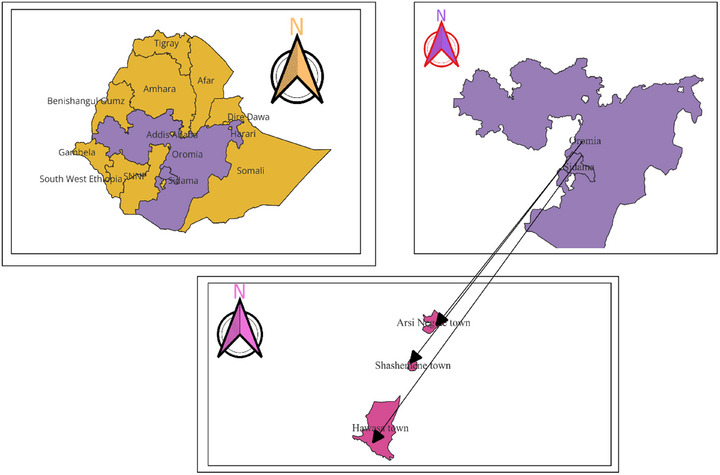
Map of the study areas (generated by QGIS, Version 3.28.11).
In terms of climate variability, Negele‐Arsi experiences an annual temperature that varies from 10°C to 25°C and annual rainfall between 500 and 1000 mm (Mekonnen et al. 2018). Shashemene has annual rainfall that varies between 1500 and 2000 mm, with temperatures varying from 12°C to 28°C. Hawassa, on the other hand, has an average annual temperature of 20°C and receives 955 mm of precipitation annually (Tafa et al. 2023).
2.3. Study Population
The study was performed in purposively selected veterinary clinics to ensure direct access to a diverse and representative sample of animal owners, and achieving the study's objectives. The selected veterinary clinics included Negele‐Arsi veterinary clinic, Awasho veterinary clinic in Shashemene and Selassie veterinary clinic in Hawassa. Participants were livestock owners who brought their animals to these clinics. The study participants reported owning local Arsi breed cattle. For poultry, they identified as having local breeds, as well as exotic breeds such as Lohmann brown and Sasso. For equines, the participants reported owning Oromo horses and Ethiopian highland donkeys. The ages of the participants were grouped into five, aged 18 years and older, and each group consisted of a 10‐year range until 57 years of age, after which those above 57 years old were classified under one group. The target population was livestock owners bringing their animals to the veterinary clinics.
2.4. Sample Size Determination
The sample size for this study was determined on the basis of the formula in the study ‘Questionnaire design and survey sampling’, by Arsham (2020), which is given as follows: , where N is the sample size, and SE is the standard error of estimate (0.05 or 5%).
Therefore, on the basis of the above formula, the sample size was determined to be 100. So, a total of 100 samples were collected from the three study areas. On the basis of prior data from veterinary clinic records over the last 3 months, 50% of the total livestock visits occurred in Negele‐Arsi, 30% in Shashemene and 20% in Hawassa. Consequently, the calculated sample size of 100 was proportionally distributed as 50, 30 and 20 to Negele‐Arsi, Shashemene and Hawassa, respectively. This stratified sampling approach ensured that the sample accurately reflected the distribution of livestock owners utilizing veterinary services across the three study locations. Individual livestock owners were then selected randomly during the study period to ensure unbiased representation within each stratum.
2.5. Sampling Technique
Random sampling technique was utilized to select individuals to be surveyed. Livestock owners were asked for their willingness to participate in the study and those who were willing were surveyed.
2.6. Method of Data Collection
A structured questionnaire was prepared to collect data for this study. The questionnaire consisted of close‐ended questions to assess the willingness of livestock owners to vaccinate their animals and one open‐ended question to understand the challenges faced in accessing vaccination services. All required data were collected and numbered based on the order of collection. Interpreters were used in cases where there was no common language.
The questionnaire consisted of three sections. The first section assessed the socio‐demographic structure of the participants, which was used to evaluate the factors affecting WTV, using chi‐square measure of association. The second section of the questionnaire covered the vaccination history of livestock owners, in particular assessing whether they had ever vaccinated their animals and who administered the vaccinations. The third section dealt with WTV, willingness to pay (WTP) and the barriers associated with vaccination services.
The questionnaires were prepared in English, and the survey was conducted in person. Translators were used in case of no common languages. All the participants of this questionnaire survey had given verbal consent beforehand.
2.7. Data Management and Analysis
All collected data were stored in a Microsoft Excel 2019 spreadsheet. Graphs and tables were used to summarize the collected data, using descriptive statistics. STATA Special Edition (SE) Version 14.0 (Stata Corp. College Station, TX) was utilized to statistically analyse the collected data. Chi‐square (χ 2) was used for the test to assess the association of the various factors with WTV. A p value of less than 0.05 implied that there was a statistically significant association between the factors and WTV. A confidence interval (CI) of 95% was used for analysis.
3. Results
3.1. Demographics of Participants
Out of the 100 participants, majority were male (93%), of whom 30.11% of the male participants were from Negele‐Arsi, 49.46% were from Shashemene, and the remaining 20.43% were from Hawassa. In terms of age, the participants were categorized into five groups—participants ranging from 18 to 27 years of age made up 2% of the participants, from 28 to 37 made up 23%, from 38 to 47 made up 46%, from 48 to 57 made up 26%, and those over 57 years of age made up 3% of the participants. Most of the participants had finished elementary school (47%), with those who had not completed any level of education making up 36% of the participants (Table 1).
TABLE 1.
Demographics of study participants.
| Number of participants in their respective locations | |||||
|---|---|---|---|---|---|
| Demographics and willingness | Negele‐Arsi (%) (n = 50) | Shashemene (%) (n = 30) | Hawassa (%) (n = 20) | Total (%) (n = 100) | |
| Age | 18–27 | 0 (0) | 0 (0) | 2 (100) | 2 (2) |
| 28–37 | 4 (17.39) | 8 (34.78) | 11 (47.83) | 23 (23) | |
| 38–47 | 32 (69.57) | 8 (17.39) | 6 (13.04) | 46 (46) | |
| 48–57 | 13 (50) | 13 (50) | 0 (0) | 26 (26) | |
| >57 | 1 (33.33) | 1 (33.33) | 1 (33.33) | 3 (3) | |
| Gender | Male | 28 (30.11) | 46 (49.46) | 19 (20.43) | 93 (93) |
| Female | 2 (28.57) | 4 (57.14) | 1 (14.29) | 7 (7) | |
| Education | Illiterate | 14 (38.89) | 18 (50) | 4 (11.11) | 36 (36) |
| Elementary | 26 (55.32) | 8 (17.02) | 13 (27.66) | 47 (47) | |
| Secondary | 6 (60) | 3 (30) | 1 (10) | 10 (10) | |
| College diploma | 3 (50) | 1 (16.67) | 2 (33.33) | 6 (6) | |
| Degree | 1 (100) | 0 (0) | 0 (0) | 1 (1) | |
| Occupation | Farmer | 24 (48) | 14 (28) | 12 (24) | 50 (50) |
| Cart rider | 12 (41.38) | 10 (34.48) | 7 (24.14) | 29 (29) | |
| Housewife | 6 (85.71) | 1 (14.29) | 0 (0) | 7 (7) | |
| Businessman | 8 (57.14) | 5 (35.72) | 1 (7.14) | 14 (14) | |
3.2. Animal Ownership of Participants
Most of the participants in this study were cattle owners, with 46% of them owning cattle. The remaining participants kept equine (32%) and poultry (22%) as a source of livelihood. The majority of the animal owners kept their animals for both income and cultural purposes (49%), whereas the remaining 51% of the owners kept their animals for either income purposes (39%) or cultural purposes (12%) only. None of the poultry owners kept their birds for cultural purposes.
3.3. WTV, WTP by Livestock Owners and Factors Affecting WTV
A large number of the participants were not willing to vaccinate, with 62% of the respondents standing against the vaccination of their animals and only 38% of them having WTV. Of those unwilling to vaccinate their animals, 51.61% of them were from Negele‐Arsi, 33.87% were from Shashemene, and 14.52% were from Hawassa. The same can be said about the proportion of people that have WTP, with only 36% of the respondents having WTP for vaccination of their animals. A total of 75% of the respondents also chose drugs as a control method for diseases compared to vaccines (Table 2).
TABLE 2.
Livestock owners’ attitudes towards vaccines.
| Number of respondents in each area (%) | ||||||
|---|---|---|---|---|---|---|
| Variables | Response | Negele‐Arsi (%) (n = 50) | Shashemene (%) (n = 30) | Hawassa (%) (n = 20) | Total (%) (n = 100) | 95% CI (%) |
| WTV | Yes | 18 (27.37) | 9 (23.68) | 11 (28.95) | 38 (38) | 28.90–48.03 |
| No | 32 (51.61) | 21 (33.87) | 9 (14.52) | 62 (62) | 51.97–71.10 | |
| WTP | Yes | 17 (17.22) | 8 (22.22) | 11 (30.56) | 36 (36) | 27.07–46.01 |
| No | 33 (51.56) | 22 (34.38) | 9 (14.06) | 64 (64) | 53.99–72.93 | |
| Choice of disease control | Drugs | 38 (50.67) | 22 (29.33) | 15 (20) | 75 (75) | 65.43–82.62 |
| Vaccines | 12 (48) | 8 (32) | 5 (20) | 25 (25) | 17.38–32.57 | |
Abbreviations: CI, confidence interval; WTP, willingness to pay; WTV, willingness to vaccinate.
A larger proportion of the younger population is willing to vaccinate their animals, with 100% of those in the age range of 18–27 and 60.87% of those between 28 and 37, having a positive attitude towards vaccinating their animals. However, as age increases, a significant proportion of older animal owners have a lower WTV, with 69.57% of those between 38 and 47, 69.23% of those between 48 and 57 and 100% of those above 57 years of age not willing to vaccinate their animals. The chi‐square statistic showed a significant association between age and WTV (χ 2 = 11.9022; p < 0.05).
A greater proportion of those with lower levels of education were unwilling to vaccinate their animals, as 83.33% of illiterates and 61.70% of those with elementary school education and those with elementary school education were having no WTV, respectively. However, those with higher levels of education (80% of secondary school graduates, 83.33% of college diploma holders and 100% of degree holders) had a higher WTV. The statistic also showed that there is a very highly significant association between education status and WTV (χ 2 = 21.3085; p < 0.01).
A very high significant association (χ 2 = 53.6298; p < 0.01) was also observed between the perceived importance of vaccines and WTV. Overall, 87.88% of those who thought vaccines are very important were willing to vaccinate their animals, compared to 40% and 11.29% of those who said vaccines are somewhat important and not important, respectively (Table 3).
TABLE 3.
Factors affecting willingness to vaccinate.
| WTV | Statistic | |||||
|---|---|---|---|---|---|---|
| Factors | Yes (%) | No (%) | Total (%) | χ 2 | p value | |
| Age | 18–27 | 2 (100) | 0 (0) | 2 (2) |
11.9022 |
0.018 |
| 28–37 | 14 (60.87) | 9 (39.13) | 23 (23) | |||
| 38–47 | 14 (30.43) | 32 (69.57) | 46 (46) | |||
| 48–57 | 8 (30.77) | 18 (69.23) | 26 (26) | |||
| >57 | 0 (0) | 3 (100) | 3 (3) | |||
| Gender | Male | 37 (39.78) | 56 (60.22) | 93 (93) | 1.7966 | 0.180 |
| Female | 1 (14.29) | 6 (85.71) | 7 (7) | |||
| Location | Negele‐Arsi | 18 (36) | 32 (64) | 50 (50) | 3.3531 | 0.187 |
| Shashemene | 9 (30) | 21 (70) | 30 (30) | |||
| Hawassa | 11 (55) | 9 (45) | 20 (20) | |||
| Education | Illiterate | 6 (16.67) | 30 (83.33) | 36 (36) | 21.3085 | 0.000 |
| Elementary | 18 (38.30) | 29 (61.70) | 47 (47) | |||
| Secondary | 8 (80) | 2 (20) | 10 (10) | |||
| College diploma | 5 (83.33) | 1 (16.67) | 6 (6) | |||
| Degree | 1 (100) | 0 (0) | 1 (1) | |||
| Importance of vaccines | Not important | 7 (11.29) | 55 (88.71) | 62 (62) | 53.6298 | 0.000 |
| Somewhat important | 2 (40) | 3 (60) | 5 (5) | |||
| Very important | 29 (87.88) | 4 (12.12) | 33 (33) | |||
Abbreviation: WTV, willingness to vaccinate.
3.4. Vaccination Practice by Participants
A significant proportion of the participants reported that they have never vaccinated their animals (62%), with those in Negele‐Arsi constituting a larger portion of the non‐vaccinating group (48.39%). There is no change in the proportion of people currently vaccinating their animals (38%), and of those, 47.37% of them are located in Negele‐Arsi, 23.68% in Shashemene and 28.95% in Hawassa. A majority of the respondents are non‐vaccinators (62%), whereas 22% of the respondents mentioned that private animal health assistants (PAHAs) vaccinate, 8% indicated government animal health assistants (GAHA), 4% cited private veterinarians, and 4% stated that they themselves vaccinate their animals (Table 4).
TABLE 4.
Vaccination history of participants and challenges they believe exist in vaccinating animals.
| Response based on location (%) | ||||||
|---|---|---|---|---|---|---|
| Vaccination history | Negele‐Arsi (%) (n = 50) | Shashemene (%) (n = 30) | Hawassa (%) (n = 20) | Total (%) (n = 100) | 95% CI (%) | |
| Ever had your animal vaccinated? | Yes | 20 (52.63) | 7 (18.42) | 11 (28.95) | 38 (38) | 28.90–48.03 |
| No | 30 (48.39) | 23 (37.09) | 9 (14.52) | 62 (62) | 51.97–71.71 | |
| Currently vaccinate your animals | Yes | 18 (47.37) | 9 (23.68) | 11 (28.95) | 38 (38) | 28.90–48.03 |
| No | 32 (51.61) | 21 (33.87) | 9 (14.52) | 62 (62) | 51.97–71.10 | |
| Vaccinator | GAHA | 4 (50) | 3 (37.50) | 1 (12.50) | 8 (8) | 4–15.35 |
| PAHA | 12 (54.54) | 3 (13.64) | 7 (31.82) | 22 (22) | 14.84–31.34 | |
| Private veterinarian | 1 (25) | 1 (25) | 2 (50) | 4 (4) | 1.48–10.34 | |
| Self | 1 (25) | 2 (50) | 1 (25) | 4 (4) | 1.48–10.34 | |
| None | 32 (51.61) | 21 (33.87) | 9 (14.52) | 62 (62) | 51.97–71.10 | |
| Are there challenges in vaccination services? | Yes | 34 (53.97) | 20 (31.74) | 9 (14.29) | 63 (63) | 52.98–72.02 |
| No | 16 (43.24) | 10 (27.03) | 11 (29.73) | 37 (37) | 27.98–47.02 | |
| Challenges in vaccinating animal | Inaccessibility | 31 (52.54) | 16 (27.12) | 12 (20.34) | 59 (59) | 48.96–68.34 |
| Expensive | 17 (34.69) | 19 (38.78) | 13 (26.53) | 49 (49) | 39.20–58.88 | |
| Cause damage to animals | 29 (51.79) | 18 (32.14) | 9 (16.07) | 56 (56) | 45.99–65.54 | |
Abbreviations: CI, confidence interval; GAHA, governmental animal health assistants; PAHA, private animal health assistants.
3.5. Challenges in Vaccinating Animals
All participants, whether vaccinating or not, were asked about their views on challenges that occur in vaccinating animals. Of the 100 respondents, 63% of them believed that there are challenges in vaccination service delivery. Inaccessibility was also mentioned as a challenge by 59% of the respondents, whereas 49% of the respondents believed that vaccines are too expensive to use. Similarly, 56% of the animal owners also believed that vaccinating animals can cause harm to the animals (Table 4).
4. Discussion
This study showed that a majority (62%) of livestock owners were unwilling to vaccinate their animals. This finding aligns with various studies conducted to understand livestock owners’ willingness (Girma et al. 2022; Mutua et al. 2019). Most of the participants (75%) also acknowledged that they would prefer the use of veterinary drugs as a means of controlling infectious diseases as compared to vaccines, a finding supported by another study in the West Shewa Zone, where 79% of the respondents used veterinary drugs for controlling infectious diseases over vaccines. This may be due to a lack of training in the area about vaccine use and a lack of knowledge among animal owners about the use of vaccines and veterinary drugs, as well as a lack of awareness about the diseases (Girma et al. 2022).
The current study also found WTP for a vaccine was very low, with only 36% of respondents showing WTP. This can be directly associated with the reasons for un‐WTP, with people having less knowledge about the importance of vaccines and the high cost of vaccines. The findings match the results of Lemi et al. (2023) who found that only 35.20% of the respondents were willing to pay for vaccination of their animals. This also corresponds with the findings of Jemberu et al. (2020), who reported 59% of the respondents had no WTP.
The educational level of livestock owners was highly associated with WTV, with those having higher levels of education being more aware of the importance of animal vaccines in controlling diseases. This is because a higher level of education provides individuals with greater access to information about the importance of vaccines and makes them aware of the diseases they help to defend against. Therefore, a higher level of education contributes to the acceptance of the use of vaccines by livestock owners. This finding is consistent with various studies that have explored the educational level of animal owners and WTV, as well as knowledge and awareness of vaccines (Robi et al. 2023; Terfa et al. 2015).
The age of animal owners was also associated with WTV, as younger owners were more willing to get their animals vaccinated as compared to the older people. This complements the findings of Terfa et al. (2015) and Seid et al. (2020). This may be due to younger people having better access to education as compared to older people. As people age, they are more likely to focus on supporting their families and dropping out of school. This can lead to being influenced by the older generation who believe that vaccines are not important to protect animals. Thus, the older they get the firmer that belief may become, therefore continuing the cycle.
There was also a significant association between the rates of importance of vaccination by livestock owners with WTV. Clearly, those who rated vaccines as not important were highly unwilling to vaccinate their animals. This perception might result from a lack of training on vaccines in the areas. It is also due to some livestock owners’ belief that vaccines can cause harm to their animals. This finding is in line with that of multiple studies that have assessed the attitude of livestock owners towards animal vaccines (Donadeu et al. 2019; Robi et al. 2023; Williams et al. 2022).
Of those who do get their animals vaccinated, a majority of them use PAHA to vaccinate their animals (22/38 or 57.89%). This is followed by GAHA (8/38 or 21.05%) and private veterinarians (4/38 or 10.53%), as well as the owners themselves vaccinating their own animals (4/38 or 10.53%). This is consistent with the findings of Seifu et al. (2023), who stated a majority of animal owners (69%) got their animals vaccinated by PAHAs. The result also corroborates the findings of Gizaw et al. (2021), who indicated that 71.4%, 56.9% and 50.4% of the respondents had community animal health workers, public veterinary services and extension agents deliver the vaccinations for their animals, respectively. This demonstrates the important role the private sector plays in disease control. Therefore, it is necessary to have public–private partnerships that are necessary to successfully control the harm caused by diseases, especially infectious ones.
In this study, it was shown that price and accessibility are challenges faced by animal owners in vaccinating their animals. These findings are both lower and higher than the findings of Williams et al. (2022), respectively, where it was stated that 78% and 21.2% of the respondents identified cost and availability of vaccines as the main challenges they faced, respectively. Similarly, the findings of Sulayeman et al. (2023) were higher, with reporting of 83.7% and 72.1% of the responses describing inaccessibility and high vaccine cost as challenges against vaccination of livestock, respectively. This study also revealed that 56% of the animal owners believe that vaccines cause diseases in animals. This finding is also lower than that of the findings of Robi et al. (2023), where 72.69% of livestock owners believed that vaccines can have negative effects on animals. Similarly, other reports have only stated either higher or lower findings than this study for challenges in vaccination services (Kitessa et al. 2023; Ebrahim et al. 2016). The reasons for these discrepancies can be attributed to differences in sampling techniques, varying views of respondents in different study areas, and differences in trust towards veterinarians in the study areas. As it is necessary to make sure animals are protected from disease, in order to keep them healthy and productive, it is essential to address the challenges by improving price and availability of vaccines, as well as educating livestock owners on how the benefits of vaccines outweigh the risks they may pose.
4.1. Limitation of the Study
The study was limited to presenting the socio‐demographic data of animal owners and identifying the challenges related to vaccination. Breed‐specific factors, which could have influenced owner's choices or attitudes towards vaccination, were not explored in the study.
5. Conclusion
The proportion of people WTV their livestock in Negele‐Arsi, Shashemene and Hawassa was 38%, whereas 36% of the reported WTP. Additionally, 75% of the respondents also chose drugs as a control method for diseases compared to vaccines. This presents a risk for the transmission of diseases, including FMD, CBPP, blackleg and anthrax, which can cause serious health risks for animals and humans. Therefore, it is necessary to raise the awareness of the communities and make sure the number of people willing to vaccinate their animals’ increases beyond the low level found in this study. It is recommended to implement training and awareness campaigns, increase accessibility to vaccination services, adjust vaccine pricing as needed, and conduct further detailed research on vaccination trends and WTP.
Author Contributions
Alazar Mekonnen Teffera: conceptualization, data curation, formal analysis, funding acquisition, investigation, methodology, project administration, resources, supervision, validation, visualization, writing – original draft, writing – review and editing. Yoseph Cherinet Megerssa: conceptualization, data curation, formal analysis, funding acquisition, investigation, methodology, project administration, resources, validation, visualization, writing – original draft, writing – review and editing.
Ethics Statement
Verbal informed consent was obtained from the study participants prior to their participation, ensuring voluntary involvement and confidentiality throughout the study with ethical guidelines and principles of the institutional Animal Research Ethics Committee of College of Veterinary Medicine and Agriculture Addis Ababa University.
Peer Review
The peer review history for this article is available at https://publons.com/publon/10.1002/vms3.70301.
Acknowledgements
The authors would like to extend their sincere gratitude to the dedicated staff at Negele‐Arsi veterinary clinic, Awasho veterinary clinic (Shashemene) and Selassie veterinary clinic (Hawassa) for their due diligence and support, as well as all the participants of this research for their cooperation and good‐hearted consent.
Funding: The authors received no specific funding for this work.
Data Availability Statement
The data used to support this study are available from the corresponding author on request.
References
- Arsham, H. 2020. Questionnaire Design and Survey Sampling University of Baltimore, 114.
- Bahiru, A. , and Assefa A.. 2020. “Prioritization of Economically Important Cattle Diseases Using Participatory Epidemiology Tools in Lalibela, Sekota, and Ziquala Districts of Amhara Region, Northern Ethiopia.” Veterinary Medicine International 2020: 5439836. [DOI] [PMC free article] [PubMed] [Google Scholar]
- CSA . 2003. Livestock Population of Ethiopia . Central Statistical Authority. [Google Scholar]
- CSA . 2009. Agricultural Sample Survey 2008/2009 (2001 E.C.): Report on Crop and Livestock Product Utilization. Federal Democratic Republic of Ethiopia. [Google Scholar]
- CSA . 2022. Agricultural Sample Survey 2021/22 (2014 E.C.): Report on Livestock and Livestock Characteristics. Federal Democratic Republic of Ethiopia. [Google Scholar]
- Donadeu, M. , Nwankpa N., Abela‐Ridder B., and Dungu B.. 2019. “Strategies to Increase Adoption of Animal Vaccines by Smallholder Farmers With Focus on Neglected Diseases and Marginalized Populations.” PLoS Neglected Tropical Diseases 13: e0006989. [DOI] [PMC free article] [PubMed] [Google Scholar]
- Duguma, B. 2020. “A Survey of Management Practices and Major Diseases of Dairy Cattle in Smallholdings in Selected Towns of Jimma Zone, South‐Western Ethiopia.” Animal Production Science 60: 838–1849. [Google Scholar]
- Ebrahim, F. , Feyera T., and Abera B.. 2016. “Major Animal Health Constraints of Market Oriented Livestock in Kersa Woreda, Southwest Ethiopia.” Advances in Animal and Veterinary Sciences 4: 92–98. [Google Scholar]
- Girma, A. , Workineh C., Bekele A., et al. 2022. “Assessment of Farmers Knowledge and Attitude on Vaccination of Livestock and Its Implications in Ejere District of West Shewa Zone, Oromia, Ethiopia.” Acta Scientific Microbiology 5: 3–11. [Google Scholar]
- Gizaw, S. , Woldehanna M., Anteneh H., et al. 2021. “Animal Health Service Delivery in Crop‐Livestock and Pastoral Systems in Ethiopia.” Frontiers in Veterinary Science 8: 1–14. [DOI] [PMC free article] [PubMed] [Google Scholar]
- Hooper, P. 2016. Review of Animal Health Service Delivery in the Mixed Crop‐livestock System in Ethiopia. International Livestock Research Institute. [Google Scholar]
- Jemberu, W. T. , Molla W., Dagnew T., Rushton J., and Hogeveen H.. 2020. “Farmers' Willingness to Pay for Foot and Mouth Disease Vaccine in Different Cattle Production Systems in Amhara Region of Ethiopia.” PLoS ONE 15: e0239829. [DOI] [PMC free article] [PubMed] [Google Scholar]
- Kitessa, J. D. , Deressa A. K., and Terefa Y. T. 2023. “Assessment of Animal Health and Production Constraints: The Case of Three Districts.” Veterinary Medicine and Science 9: 391–399. [DOI] [PMC free article] [PubMed] [Google Scholar]
- Lemi, M. , Gebremedhin E., Sarba E., and Bune W.. 2023. “Assessment of Farmers' Willingness to Pay for Foot and Mouth Disease Vaccines Using the Contingent Valuation Method in Central Oromia, Ethiopia.” BMC Veterinary Research 20: 313. [DOI] [PMC free article] [PubMed] [Google Scholar]
- Mekonnen, Z. , Berie H. T., Woldeamanuel T., Asfaw Z., and Kassa H.. 2018. “Land Use and Land Cover Changes and the Link to Land Degradation in Arsi Negele District, Central Rift Valley, Ethiopia.” Remote Sensing Applications: Society and Environment 12: 1–9. [Google Scholar]
- Mutua, E. , de Haan N., Tumusiime D., Jost C., and Bett B.. 2019. “A Qualitative Study on Gendered Barriers to Livestock Vaccine Uptake in Kenya and Uganda and Their Implications on Rift Valley Fever Control.” Vaccines 7: 86. [DOI] [PMC free article] [PubMed] [Google Scholar]
- ORS . 2004. The Oromia Regional State Government: Socio‐Economic Profile of East Shoa Zone . ORS. [Google Scholar]
- Richens, I. F. , Hobson‐West P., Brennan M. L., Lowton R., Kaler J., and Wapenaar W.. 2015. “Farmers' Perception of the Role of Veterinary Surgeons in Vaccination Strategies on British Dairy Farms.” Veterinary Record 177: 465–465. [DOI] [PMC free article] [PubMed] [Google Scholar]
- Robi, D. T. , Bogale A., Temteme S., Aleme M., and Urge B.. 2023. “Evaluation of Livestock Farmers' Knowledge, Attitudes and Practices Regarding the Use of Veterinary Vaccines in Southwest Ethiopia.” Veterinary Medicine and Science 9: 2871–2884. [DOI] [PMC free article] [PubMed] [Google Scholar]
- Seid, K. , Shiferaw A. M., Yesuf N. N., Derso T., and Sisay M.. 2020. “Livestock Owners' Anthrax Prevention Practices and Its Associated Factors in Sekota Zuria District, Northeast Ethiopia.” BMC Veterinary Research 16: 1–8. [DOI] [PMC free article] [PubMed] [Google Scholar]
- Seifu, K. , Muluneh A., Getachew Y., Jibril Y., and Negussie H.. 2023. “Epidemiological Study and Dairy Farmers' Knowledge, Attitudes, and Practices on Foot and Mouth Disease in Central Ethiopia.” Heliyon 9: e15771. [DOI] [PMC free article] [PubMed] [Google Scholar]
- Sulayeman, M. , Demissie T., Muluneh A., Hailegebreal G., and Abda S.. 2023. “Sero‐Prevalence and Risk Factors Study of Foot and Mouth Disease and Farmers Perception on Vaccinating Cattle Against the Disease in Sidama Region, South Ethiopia.” East African Journal of Biophysical and Computational Sciences 4: 1–12. [Google Scholar]
- Tafa, S. T. , Mengistu T. S., and Beriso T. E. 2023. “A Pilot Survey on Factors Limiting Veterinary Service Delivery Systems at Animal Health Facilities in Hawassa, Shashemene, and Negele Arsi, Ethiopia.” Ethiopian Veterinary Journal 27, no. 1: 172–185. [Google Scholar]
- Terfa, Z. G. , Garikipati S., Dessie T., et al. 2015. “Farmers' Willingness to Pay for a Village Poultry Vaccine Service in Ethiopia: Prospect for Enhancing Rural Livelihoods.” Food Security 7: 905–917. [Google Scholar]
- Williams, S. , Endacott I., Ekiri A. B., et al. 2022. “Barriers to Vaccine Use in Small Ruminants and Poultry in Tanzania.” Onderstepoort Journal of Veterinary Research 89: 1–11. [DOI] [PMC free article] [PubMed] [Google Scholar]
- Yohannes, S. , Bashahun G. M., and Waktole Y.. 2020. “Assessment on Handling, Storage, Transport and Utilization of Veterinary Vaccines in Selected Districts of Sidama Zone, Southern Ethiopia.” Journal of Dairy and Veterinary Science 14: 93–99. [Google Scholar]
Associated Data
This section collects any data citations, data availability statements, or supplementary materials included in this article.
Data Availability Statement
The data used to support this study are available from the corresponding author on request.