


Abstract
Background
Preterm birth (PTB) is a leading cause of perinatal mortality and morbidity. Although the pathogenesis of preterm labour (PTL) is not well understood, there is evidence about the relationship between maternal psychological stress and adverse pregnancy outcomes. Relaxation or mind‐body therapies cover a broad range of techniques, e.g. meditation, massage, etc. There is no systematic review investigating the effect of relaxation techniques on preventing PTL and PTB. This review does not cover hypnosis as this is the subject of a separate Cochrane review.
Objectives
To assess the effectiveness of relaxation therapies for preventing or treating PTL and preventing PTB.
Search methods
We searched the Cochrane Pregnancy and Childbirth Group’s Trials Register (14 December 2011), CENTRAL (2011, Issue 4 of 4), CINAHL (1982 to 14 December 2011) and contacted study authors for additional information.
Selection criteria
Randomized controlled trials, cluster‐ and quasi‐randomized trials comparing relaxation techniques with usual care, no treatment or sham interventions to prevent or treat PTL.
Data collection and analysis
Two review authors (B Khianman (BK) and P Pattanittum (PP)) independently assessed all search results for potential inclusion studies. Disagreements were resolved by discussion with a third review author (J Thinkhamrop (JT)). Data were independently extracted onto the standardized data collection form by BK and PP and checked for accuracy. Two review authors independently assessed the risk of bias of all included studies. All differences were resolved by discussion with JT. Mean difference (MD) and its 95% confidence intervals (CI) were calculated for continuous outcomes and risk ratio (RR) and 95% CI for dichotomous data.
Main results
Eleven randomized controlled trials with a total of 833 women were included in this review. However, the results of this review are based on single studies with small numbers of participants.The majority of included studies reported insufficient information on sequence generation, allocation concealment as well as blinding. There were no included studies that assessed PTL or PTB as the primary outcome. The included studies were different in terms of intervention, practice, and time, and there were no clear coherent hypotheses.
For women not in PTL, the benefits of relaxation was found in one study for maternal stress (Anxiety Stress Scale) at 26 to 29 weeks gestational age (mean difference (MD) ‐7.04; 95% confidence interval (CI) ‐13.91 to ‐0.17). In addition, there were some beneficial effects of relaxation including baby birthweight (MD 285.00 g; 95% CI 76.94 to 493.06); type of delivery; (vaginal delivery; risk ratio (RR) 1.52; 95% CI 1.13 to 2.04), (cesarean section; RR 0.38; 95% CI 0.19 to 0.78); maternal anxiety (MD ‐15.79; 95% CI ‐18.33 to ‐13.25); and stress (MD ‐13.08; 95% CI ‐15.29 to ‐10.87) when applying relaxation therapy together with standard treatment. For women in PTL, the results for the main outcome of PTB in the intervention and control groups from a single study were not different (RR 0.95; 95% CI 0.57 to 1.59). The MD of birthweight in grams from the fixed‐effect model from two included studies was MD ‐5.68; (95% CI ‐174.09 to 162.74).
Authors' conclusions
According to the results of this review, there is some evidence that relaxation during pregnancy reduces stress and anxiety. However, there was no effect on PTL/PTB. These results should be interpreted with caution as they were drawn from included studies with limited quality.
Keywords: Female; Humans; Pregnancy; Obstetric Labor, Premature; Obstetric Labor, Premature/prevention & control; Obstetric Labor, Premature/therapy; Randomized Controlled Trials as Topic; Relaxation Therapy; Relaxation Therapy/methods
Plain language summary
Relaxation therapy for preventing and treating preterm labour
Preterm birth, before 37 completed weeks' gestation, is likely to have an effect on a baby's survival and health. Adverse outcomes for the baby include respiratory distress syndrome, infections, congenital heart defects and thermoregulation problems. Woman’s psychological stress during pregnancy may be a predictor of preterm labour and preterm birth. We investigated the effectiveness of relaxation or mind‐body therapies such as meditation, massage, yoga, reflexology, breathing exercises, visualization, music therapy and aromatherapy, etc. for preventing or treating preterm labour or preventing preterm birth. We searched the medical literature for the information from clinical studies and found 11 randomized controlled studies that met our inclusion criteria. We included 11 studies randomising a total of 833 women, although nearly all the results we report are based on single studies with small numbers of participants. We were unable to pool the findings in any meta‐analyses due to each study using different forms of relaxation in different comparisons, to prevent preterm births in seven studies and to treat preterm labour in five with insufficient information. No valid conclusion can be summarized from this review. For women not in preterm labour, relaxation therapy (alone or combined with standard treatment) reduced maternal stress compared with routine prenatal care and increased birthweight with fewer cesarean deliveries in a single study. For women in preterm labour, there was no evidence of benefits or harms. More rigorous studies are required in order to assess the effects of relaxation therapies in preventing and treating preterm labour.
Background
Preterm birth
Preterm birth is a leading cause of perinatal mortality and morbidity (Von Der Pool 1998; Weismiller 1999). The major burden of preterm birth is in the developing world; however, even in developed countries, rates of preterm birth have remained unchanged or are on the increase (Steer 2006). Preterm birth, defined as birth before 37 completed weeks' gestation, is a complication that affects between 5% and 10% of all births in developed countries (Burke 2000; Von Der Pool 1998; Weismiller 1999) and has a profound effect on a baby's survival and health. In spite of significant improvements in neonatal care, preterm birth is still the leading cause of neonatal deaths and one of the commonest obstetric complications. Adverse outcomes associated with preterm birth include respiratory distress syndrome, infections, congenital heart defects and thermoregulation problems (Witter 1993). Babies born prematurely are ill‐equipped for extrauterine life and require special care for their ongoing development.
Preterm birth also imposes substantial physical, emotional and financial burdens on families, and stretches the resources of health services. It is estimated, for example, that caring for preterm babies accounts for around five million hospital days a year worldwide and costs over $5 billion (Witter 1993). Lifetime costs have been estimated at $950,000 per baby (Kiss 2004).
About two‐thirds of preterm births in developed countries result from spontaneous preterm labour (PTL) due to a variety of causes (Steer 2006). Although the pathogenesis of PTL is not well understood, several factors are thought to contribute to its occurrence: demographic and psychosocial; obstetric; nutritional; maternal morbidity during pregnancy; and toxic exposure (Witter 1993). Several studies have found maternal psychological stress to be a predictor of adverse pregnancy outcomes, such as low birthweight, prematurity and intrauterine growth retardation (Chung 2001; Rondo 2003). The release of catecholamines associated with maternal stress can restrict the flow of oxygen and nutrients to the fetus and may precipitate premature labour (Omer 1986).
Relaxation
Relaxation or mind‐body therapies are often used to treat stress‐ and anxiety‐related psychological and physical disorders. They include techniques whose stated goal is attainment of a psycho‐physiological state of relaxation or hypo‐arousal (Astin 2003). The relaxation response provides a counterbalance to the harmful effects of stress by lowering, among other things, the heart rate, blood pressure, respiratory rate and by reducing muscular tension. Yet, although stress is thought to play a significant role in the onset of PTL, relaxation has received little attention as a potentially cost‐effective intervention.
Relaxation therapies cover a broad range of techniques and practices, including meditation, biofeedback, hypnosis, massage, reflexology, breathing exercises, visualization, aromatherapy, yoga, water therapy and music therapy. Several of these are described here in more detail. Meditation is the process whereby the individual tries to focus attention on one thought or object to the exclusion of all others (Davis 1998). Biofeedback uses instruments to detect changes in the body's physical state that are relayed to the individual in the form of visual or auditory feedback (Davis 1998). In hypnosis, peripheral awareness is suspended, leading to a heightened sense of concentration that can be channeled to counteract stress (Astin 2003). Visualization is concerned with positive thinking to overcome physical symptoms, and can be particularly effective in treating stress‐related illnesses. Aromatherapy involves the use of liquid plant materials, known as essential oils, for the purpose of affecting a person's mood or health (Davis 1998).
Several published studies have investigated the effect of relaxation techniques on preventing PTL and birth, but we are not aware of any systematic reviews. A recent randomized controlled trial in which women with uncomplicated singleton pregnancies followed a nurse‐led seven‐week applied relaxation training intervention resulted in lower rates of low birthweight and cesarean section, but had no effect on the rate of preterm birth (Bastani 2006). In another study that used historical controls, hypnotic relaxation was used as an adjunct to pharmacologic treatment in women hospitalized for premature contractions in pregnancy (Omer 1986). Preterm birth remains a major problem in perinatal medicine. If proven to be effective, relaxation techniques potentially offer a safe and simple means of improving outcomes for mothers and babies.
Objectives
To evaluate the effectiveness of relaxation therapies for preventing or treating preterm labour or preventing preterm birth. This review does not cover hypnosis as this is the subject of a separate Cochrane review.
Methods
Criteria for considering studies for this review
Types of studies
Randomized controlled trials, cluster‐ and quasi‐randomized trials comparing relaxation techniques with usual care, no treatment or sham interventions to prevent or treat preterm labour (PTL) or prevent preterm birth (PTB).
Types of participants
All pregnant women including women with a history of preterm birth, or women deemed at risk of preterm birth, or women with PTL.
Types of interventions
Relaxation therapy versus usual care, no treatment or sham interventions to prevent or treat PTL or prevent PTB. Relaxation techniques may include meditation, biofeedback, massage, reflexology, deep breathing, visualization, aromatherapy, yoga, water therapy and music therapy.
Hypnosis was not be covered in this review as this will be covered by a separate Cochrane review 'Hypnosis for preventing preterm labour' (Protocol in progress June 2012).
Types of outcome measures
Primary outcomes
For women in preterm labour
Preterm birth
For women not in preterm labour
Preterm labour
Secondary outcomes
For women in preterm labour
Prolongation of pregnancy: duration of pregnancy after starting treatment
Birthweight
Neonatal death
Respiratory distress syndrome (RDS)
Intraventricular hemorrhage (IVH)
Necrotizing enterocolitis (NEC)
Length of stay
Admission to neonatal intensive care unit (NICU)
Stillbirth
Type of delivery
Apgar score less than seven at five minutes
Maternal anxiety and stress
Women's experiences and views: satisfaction
For women not in preterm labour
Length of gestation: gestational age at delivery
Birthweight
Neonatal death
RDS
IVH
NEC
Length of stay
Admission to NICU
Stillbirth
Type of delivery
Apgar score less than seven at five minutes
Maternal anxiety and stress
Women's experiences and views: satisfaction
Search methods for identification of studies
Electronic searches
We contacted the Trials Search Co‐ordinator to search the Cochrane Pregnancy and Childbirth Group’s Trials Register (8 December 2011)
The Cochrane Pregnancy and Childbirth Group’s Trials Register is maintained by the Trials Search Co‐ordinator and contains trials identified from:
quarterly searches of the Cochrane Central Register of Controlled Trials (CENTRAL);
weekly searches of MEDLINE;
weekly searches of EMBASE;
handsearches of 30 journals and the proceedings of major conferences;
weekly current awareness alerts for a further 44 journals plus monthly BioMed Central email alerts.
Details of the search strategies for CENTRAL and MEDLINE, the list of handsearched journals and conference proceedings, and the list of journals reviewed via the current awareness service can be found in the ‘Specialized Register’ section within the editorial information about the Cochrane Pregnancy and Childbirth Group.
Trials identified through the searching activities described above are each assigned to a review topic (or topics). The Trials Search Co‐ordinator searches the register for each review using the topic list rather than keywords.
In addition, we searched CENTRAL (The Cochrane Library, 2011 Issue 4 of 4) and CINAHL (1982 to December 2011) using the search strategy detailed in Appendix 1.
We did not apply any language restrictions.
Data collection and analysis
Selection of studies
Bussarin Khianman (BK) and Porjai Pattanittum (PP) independently assessed all potential studies based on the inclusion criteria stated in the protocol. Disagreements were resolved by discussion with Jadsada Thinkhamrop (JT).
Data extraction and management
We designed a form to extract data. For eligible studies, two review authors (BK and PP) extracted the data using the agreed form. We resolved discrepancies through discussion or, where required, we consulted JT. Data were entered into Review Manager software (RevMan 2011) and checked for accuracy by BK and JT.
Since the majority of the information from the included and excluded studies was clear, we had no reason to contact the majority of the authors of original studies. We contacted the primary author of one study for more information but we did not receive a response, therefore, we performed intention‐to‐treat analysis.
Assessment of risk of bias in included studies
Two review authors (BK and PP) independently assessed risk of bias for each study using the criteria outlined in the Cochrane Handbook for Systematic Reviews of Interventions (Higgins 2011). All differences were resolved by discussion with JT.
(1) Random sequence generation (checking for possible selection bias)
We describe for each included study the method used to generate the allocation sequence in sufficient detail to allow an assessment of whether it should produce comparable groups.
We assessed the method as:
low risk of bias (any truly random process, e.g. random number table; computer random number generator);
high risk of bias (any non‐random process, e.g. odd or even date of birth; hospital or clinic record number);
unclear risk of bias.
(2) Allocation concealment (checking for possible selection bias)
We describe for each included study the method used to conceal allocation to interventions prior to assignment and assessed whether intervention allocation could have been foreseen in advance of, or during recruitment, or changed after assignment.
We assessed the methods as:
low risk of bias (e.g. telephone or central randomization; consecutively numbered sealed opaque envelopes);
high risk of bias (open random allocation; unsealed or non‐opaque envelopes, alternation; date of birth);
unclear risk of bias.
(3) Blinding of participants, personnel and outcome assessment (checking for possible performance bias)
We describe for each included study the methods used, if any, to blind study participants and personnel from knowledge of which intervention a participant received. We considered studies to be at low risk of bias if they were blinded, or if we judged that the lack of blinding would be unlikely to affect results. We assessed blinding separately for different outcomes or classes of outcomes.
We assessed the methods as:
low, high or unclear risk of bias for participants;
low, high or unclear risk of bias for personnel;
low, high or unclear risk of bias for outcome assessors.
(4) Incomplete outcome data (checking for possible attrition bias due to the amount, nature and handling of incomplete outcome data)
We describe for each included study, and for each outcome or class of outcomes, the completeness of data including attrition and exclusions from the analysis. We state whether attrition and exclusions were reported and the numbers included in the analysis at each stage (compared with the total randomized participants), reasons for attrition or exclusion where reported, and whether missing data were balanced across groups or were related to outcomes. Where sufficient information is reported, or was supplied by the trial authors, we re‐included missing data in the analyses which we undertook.
We assessed the methods as:
low risk of bias (e.g. less than 10% missing data; missing outcome data balanced across groups);
high risk of bias (e.g. numbers or reasons for missing data imbalanced across groups; ‘as treated’ analysis done with substantial departure of intervention received from that assigned at randomization);
unclear risk of bias.
(5) Selective reporting (checking for reporting bias)
We describe for each included study how we investigated the possibility of selective outcome reporting bias and what we found.
We assessed the methods as:
low risk of bias (where it was clear that all of the study’s pre‐specified outcomes and all expected outcomes of interest to the review had been reported);
high risk of bias (where not all the study’s pre‐specified outcomes had been reported; one or more reported primary outcomes were not pre‐specified; outcomes of interest were reported incompletely and so could not be used; study failed to include results of a key outcome that would have been expected to have been reported);
unclear risk of bias.
(6) Other bias (checking for bias due to problems not covered by (1) to (5) above)
We describe for each included study any important concerns we have about other possible sources of bias.
We assessed whether each study was free of other problems that could put it at risk of bias:
low risk of other bias;
high risk of other bias;
unclear whether there is risk of other bias.
(7) Overall risk of bias
We made explicit judgements about whether studies were at high risk of bias, according to the criteria given in the Handbook (Higgins 2011). With reference to (1) to (6) above, we assessed the likely magnitude and direction of the bias and whether we considered it was likely to impact on the findings. We planned to explore the impact of the level of bias through undertaking sensitivity analyses ‐ seeSensitivity analysis.
Measures of treatment effect
Dichotomous data
For dichotomous data, we presented results as summary risk ratio with 95% confidence intervals.
Continuous data
For continuous data, we used the mean difference as the outcomes were measured in the same way between trials. We used the standardized mean difference to combine trials that measured the same outcome, but used different methods.
Unit of analysis issues
Cluster‐randomized trials
We did not identify any cluster‐randomized trials for inclusion in this review. However, in future updates of this review, if we identify any cluster‐randomized trials we will include them in the analyses along with individually‐randomized trials. If we had identified any cluster‐randomized trials we would have adjusted their sample sizes using the methods described in the Handbook using an estimate of the intra‐cluster correlation co‐efficient (ICC) derived from the trial (if possible), from a similar trial or from a study of a similar population. If we had used ICCs from other sources, we would have reported this and we would have conducted sensitivity analyses to investigate the effect of variation in the ICC. If we had identified both cluster‐randomized trials and individually‐randomized trials, we planned to synthesize the relevant information. We consider it reasonable to combine the results from both if there is little heterogeneity between the study designs and the interaction between the effect of intervention and the choice of randomization unit is considered to be unlikely.
We would also have acknowledged heterogeneity in the randomization unit and performed a subgroup analysis to investigate the effects of the randomization unit.
Dealing with missing data
For included studies, we noted levels of attrition. In future updates we will explore the impact of including studies with high levels of missing data in the overall assessment of treatment effect by using sensitivity analysis.
For all outcomes, we carried out analyses, as far as possible, on an intention‐to‐treat basis, i.e. we attempted to include all participants randomized to each group in the analyses, and all participants were analyzed in the group to which they were allocated, regardless of whether or not they received the allocated intervention. The denominator for each outcome in each trial was the number randomized minus any participants whose outcomes were known to be missing.
For this review, there was one study (Janke 1999) that reported that some participants stopped their study treatment after one to two weeks. Therefore, we performed the intention‐to‐treat analysis as described in the Description of studies.
Assessment of heterogeneity
We assessed statistical heterogeneity in each meta‐analysis using the T², I² and Chi² statistics. We regarded heterogeneity as substantial if the I² was greater than 30% and either T² was greater than zero, or there was a low P value (less than 0.10) in the Chi² test for heterogeneity. Of the 11 included studies, we were able to perform two meta‐analyses using the fixed‐effect model to estimate the intervention effects as a consequence of no important heterogeneity. We did not combine the results from two studies (Chambers 2007; Satyapriya 2009) for a single outcome due to the considerable heterogeneity (I² = 90%).
Assessment of reporting biases
In future updates of this review, if there are 10 or more studies in the meta‐analysis, we will investigate reporting biases (such as publication bias) using funnel plots. We will assess funnel plot asymmetry visually, and use formal tests for funnel plot asymmetry. For continuous outcomes we will use the test proposed by Egger 1997, and for dichotomous outcomes we will use the test proposed by Harbord 2006. If asymmetry is detected in any of these tests or is suggested by a visual assessment, we will perform exploratory analyses to investigate it.
Data synthesis
We carried out statistical analysis using the Review Manager software (RevMan 2011). We use fixed‐effect meta‐analysis for combining data where it was reasonable to assume that studies were estimating the same underlying treatment effect: i.e. where trials were examining the same intervention, and the trials’ populations and methods were judged sufficiently similar. As considerable heterogeneity was found in Analysis 2.3, we did not estimate the overall treatment effect. (Notably, for the Analysis 2.3 a standardized mean difference (SMD) was used because the two included studies (Chambers 2007; Satyapriya 2009) measured the maternal stress using the Perceived Stress Scale with different number of items;10 and 14 items, respectively.)
2.3. Analysis.
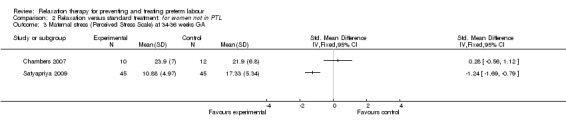
Comparison 2 Relaxation versus standard treatment: for women not in PTL, Outcome 3 Maternal stress (Perceived Stress Scale) at 34‐36 weeks GA.
In future updates of this review, if there is clinical heterogeneity sufficient to expect that the underlying treatment effects differ between trials, or if substantial statistical heterogeneity is detected, we will use random‐effects meta‐analysis to produce an overall summary if an average treatment effect across trials is considered clinically meaningful. The random‐effects summary will be treated as the average range of possible treatment effects and we will discuss the clinical implications of treatment effects differing between trials. If the average treatment effect is not clinically meaningful, we will not combine trials.
If we use random‐effects analyses, the results will be presented as the average treatment effect with 95% confidence intervals, and the estimates of T² and I².
Subgroup analysis and investigation of heterogeneity
We could not perform any subgroup analyses due to insufficient data. In future updates, if we identify substantial heterogeneity, we will investigate it using subgroup analyses and sensitivity analyses. We will consider whether an overall summary is meaningful, and if it is, use random‐effects analysis to produce it.
We planned to perform subgroup analysis according to PTL risk for studies that include women not in PTL. In future updates of the review, if there are sufficient studies, we will perform subgroup analyses according to the type of relaxation technique (e.g. visualization, yoga etc.). In relation to PTL risk, we will carry out the following subgroup analyses: women deemed at high risk of PTL compared with women not deemed at high risk of PTL.
Subgroup analysis will be restricted to the primary outcomes.
For fixed‐effect inverse variance meta‐analyses, we will assess differences between subgroups by interaction tests. For random‐effects and fixed‐effect meta‐analyses using methods other than inverse variance, we will assess differences between subgroups by inspection of the subgroups’ confidence intervals; non‐overlapping confidence intervals being indicative of a statistically significant difference in treatment effect between the subgroups.
Sensitivity analysis
We did not perform any sensitivity analyses due to insufficient data.
In future updates of this review, we will carry out sensitivity analysis to explore the effect of trial quality. This will involve analysis based on our 'Risk of bias' judgements for selection bias and attrition bias. Studies of poor quality (those rated as 'high risk of bias' or 'unclear risk of bias') will be excluded in the analysis in order to assess for any substantive difference to the overall result.
In future updates, if we include cluster‐randomized trials, we will conduct additional sensitivity analysis incorporating an estimate of the ICC borrowed from a different trial, to see investigate the effect of different values of the ICC on the results.
Results
Description of studies
Eleven studies (involving 833 women) were eligible for inclusion in this review while three studies were excluded. A further three studies have been identified but are awaiting classification.
Results of the search
The search strategy was initially performed in April 2010 and identified 822 records. Of these records 15 abstracts were identified for further examination. There were 11 potentially relevant studies retrieved from the full papers.
An updated search in December 2011, identified six new records by Trials Search Co‐ordinator, and two new records from CINAHL. In total, there are 11 included studies, three excluded studies, and three studies awaiting classification.
Included studies
All 11 included studies (Bahadoran 2010; Bastani 2006; Casko 2002; Chambers 2007; Dasari 2007; Field 2004; Gijsbers 1990; Jallo 2007; Janke 1999; Satyapriya 2009; Yang 2009) were randomized controlled trials, published between 1990 and 2010. All of the included studies had different relaxation interventions (seeCharacteristics of included studies).
Duplicate publications existed for one study (Bastani 2006); we extracted relevant data from both duplicate publications. Five studies (Casko 2002; Chambers 2007; Field 2004; Jallo 2007; Janke 1999) were carried out in the United States, two (Dasari 2007; Satyapriya 2009) in India, two in Iran (Bahadoran 2010; Bastani 2006), one in China (Yang 2009), and the other in the Netherlands (Gijsbers 1990).
The included studies compared a variety of interventions, seven studies were designed as two‐arm comparisons. Two studies compared relaxation exercise with no treatment (Casko 2002; Janke 1999), one study (Satyapriya 2009) investigated the effects of yoga and standard treatment (routine prenatal care). Three studies (Bahadoran 2010; Chambers 2007; Jallo 2007) investigated the effects of relaxations versus usual care. Bastani 2006 studied the effects of relaxation as an add‐on to routine prenatal care. Yang 2009 examined usual care plus music therapy versus rest (usual care). An add‐on therapy (psychotherapeutic and nifedipine) versus nifedipine alone was researched by Dasari 2007.
Field 2004 conducted a four‐arm comparison study; (1) a massage therapy, (2) a muscle relaxation, (3) a standard prenatal care, and (4) a non‐depressed group. A three‐arm comparison study was carried out by Gijsbers 1990; (1) cheerful animation film, (2) video, and (3) rest.
Of the 11 included studies, four studies recruited pregnant women with a current diagnosis of PTL (Dasari 2007; Gijsbers 1990; Janke 1999; Yang 2009). One study (Casko 2002) enrolled pregnant women who had history of PTL but not in PTL at the time of enrollment and pregnant women with diagnosis of PTL; 16 women with a history of PTL (eight in the intervention group and eight in the control group) and 14 women with current PTL (seven in intervention group and seven in control group). This study reported maternal anxiety score of mixed participants (i.e. women without PTL as well those with PTL) in treatment and control group, so we did not extract this information.The other six studies examined healthy pregnant women with no risk of medical and obstetric complications (Bahadoran 2010; Bastani 2006; Chambers 2007; Field 2004; Jallo 2007; Satyapriya 2009).
Pregnant women not in PTL
Bastani 2006 reported birthweight (in grams), gestational age (GA) at birth, preterm birth (GA < 37 weeks), type of delivery, maternal anxiety and maternal stress from a sample of 110 women who were not in PTL. The authors investigated routine prenatal care along with seven‐week progressive muscle relaxation together with deep breathing techniques compared with routine prenatal care. The information from 16 women in Casko 2002 was available for data extraction. Eight of them undertook a 25‐minute relaxation exercise followed by rhythmical abdominal breathing in the treatment group; the women in the control group received no treatment. Field 2004 studied the effects of (1) a 20‐minute therapy session each week for 16 weeks during pregnancy (started during the second trimester), (2) a progressive muscle relaxation group which consisted of tensing and relaxing large muscles starting with the feet and progressing to calves, thighs, hands, arms, back and face, (3) a standard prenatal care, and (4) a non‐depressed group. We extracted the means of maternal anxiety into Table 1 from (1) and (2) because there was no information on standard deviation (SD) of the review's outcomes of interest.
1. Relaxation add on standard treatment vs Standard treatment (For women not in PTL).
| Field 2004 | measurement |
Massage Group
(n = 28) MEAN |
Relaxation Group
(n = 28) MEAN |
Depression Group
(n = 28) MEAN |
Non‐depresssed Group
(n = 28) MEAN |
| Maternal anxiety: Pre‐intervention | STAI | 42 | 44.6 | 39.4 | 31.4 |
| Maternal anxiety: Post‐intervention | STAI | 29.5 | 35.4 | 36.3 | 30.2 |
STAI = State Anxiety Inventory
One study (Satyapriya 2009) randomly assigned 122 healthy pregnant women, between the 18 and 20 weeks of gestation, to either yoga or standard prenatal care for one hour at home daily. The Perceived Stress Scale (PSS) of 10‐item questionnaire was used to evaluate the maternal stress.
Chambers 2007 examined whether the six weeks of training in a variety of relaxation methods could reduce stress and anxiety during pregnancy, and perinatal complication. The comparison of this study was usual care ‐ tips of reducing stress. One outcome, maternal stress, was measured by a 14‐item questionnaire (PSS).
Jallo 2007 randomly assigned pregnant women to either relaxation‐guide imagery (R‐GI) audiotape or usual care for 12 weeks. Maternal stress and anxiety data were extracted from this study.
One study (Bahadoran 2010) enrolled pregnant women to participate in delivery preparation classes or routine pregnancy care from 20 weeks of pregnancy for eight sessions. The outcomes were measured after the eighth session and two weeks after delivery interview. Unfortunatly, there were no outcomes of interests available for this review.
Pregnant women in PTL
Casko 2002 used a 25‐minute relaxation exercise followed by rhythmical abdominal breathing for their treatment, versus no treatment in the control group (seven women in each group). The babies of 14 women with a current diagnosis of PTL were assessed for birthweight.
As a consequence of inadequate information from one randomized controlled trial (Dasari 2007), we presented some data of this study in Table 2. There was no presentation of numerical data from the study of Gijsbers 1990 because the outcomes were not relevant to the objective of this review.
2. Relaxation add on standard treatment vs Standard treatment (For women in PTL).
| Dasari 2007 | Prolongation of pregnancy (day) | |
|
Intervention group MEAN |
Control group MEAN |
|
| Gestational age at presentation (wk) 28 to 30 | 31 | ‐ |
| Gestational age at presentation (wk) 30+1 to 32 | 23 | 8 |
| Gestational age at presentation (wk) 32+1 to 34 | 28 | 9 |
| Gestational age at presentation (wk) 34+1 to 36 | 10 | 5 |
One study (Janke 1999) compared a progressive relaxation exercise with no treatment among 107 women in PTL and reported three outcomes of interest; birthweight in grams and gestational age in weeks, and rate of pregnancy prolongation. Although 23 women in the treatment group stopped doing the relaxation exercises after one to two weeks, we treated those data by using intention‐to‐treat analysis. The data of those 23 women are presented in Table 3.
3. Relaxation vs No treatment (For women in PTL) :Per Protocol.
| Janke 1999 | Intervention Group | Control Group | Non‐adherent Group | ||||||
| MEAN | SD. | Total | MEAN | SD. | Total | MEAN | SD. | Total | |
| Rate of pregnancy prolongation (%) | 85.9 | 20.2 | 44 | 69.4 | 22.9 | 40 | 52.8 | 23.7 | 23 |
| Gestational age at birth (wk) | 38.6 | 1.6 | 44 | 37.5 | 1.6 | 40 | 36.1 | 2.3 | 23 |
| Birthweight (g) | 3379 | 360 | 44 | 3182 | 427 | 40 | 2783 | 595 | 23 |
Yang 2009 studied the effects of usual care plus music therapy (compared with usual care) on anxiety in 120 women in PTL. Because the data were skewed in the control group, we report the information of maternal anxiety for this study in Table 4.
4. Relaxation vs Standard treatment: (For women in PTL).
| Yang 2009 | Measurement | Treatment Group | Control Group | ||||
| Total | Mean | SD. | Total | Mean | SD. | ||
| Maternal anxiety (State Anxiety Scale): Change score | STAI | 60 | 14.12 | 5.8 | 60 | 0.12 | 2.76 |
More detailed descriptions of each included study can be found in the Characteristics of included studies.
Excluded studies
There were three studies (Brown 1999; Feinstein 2000; Omer 1986) that failed to meet the inclusion criteria, the reasons for excluding these studies were 1) not a randomized trial, 2) not the intervention of interest, and 3) the control group was not a concurrent control, respectively.
Risk of bias in included studies
Most of included studies reported insufficient information about sequence generation, and allocation concealment, therefore, we judged the trials as having uncertain or high risk of bias. Only one study (Satyapriya 2009) had a low risk of bias for the method of blinding, whereas, the other 10 studies had high risk of bias. Four studies (Dasari 2007; Field 2004; Janke 1999; Satyapriya 2009) reported unclear information about withdrawal from the studies; four studies (Bastani 2006; Casko 2002; Chambers 2007; Jallo 2007) had low risk of attrition bias due to the small number of missing participants, and those were reported with reasons. The remaining three studies (Bahadoran 2010; Gijsbers 1990; Yang 2009) reported no attrition of participants. All included studies were considered as uncertain risk of bias for the selective outcome reporting bias, see 'Risk of bias' table of each included study. A summary of the 'Risk of bias' assessments in the included studies can be seen in Figure 1 and Figure 2.
1.
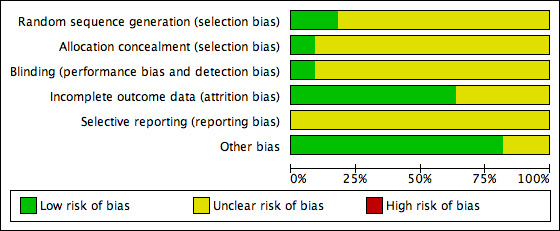
Methodological quality graph: review authors' judgements about each methodological quality item presented as percentages across all included studies.
2.
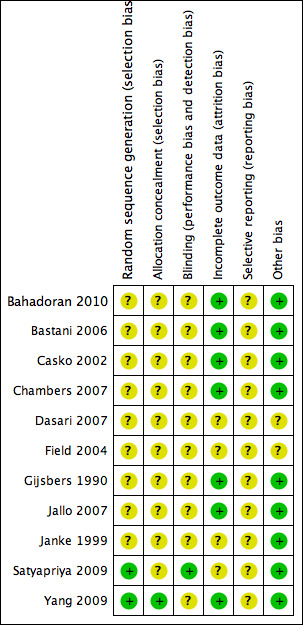
Methodological quality summary: review authors' judgements about each methodological quality item for each included study.
Effects of interventions
For women not in PTL
Relaxation versus no treatment
No statistically significant difference in birthweight was found in Casko 2002 (mean difference (MD) ‐355.63 g; 95% confidence intervals (CI) ‐766.59 to 55.33; one trial, 16 women (Analysis 1.1)).
1.1. Analysis.
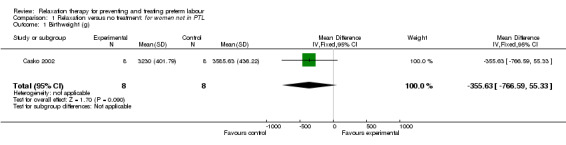
Comparison 1 Relaxation versus no treatment: for women not in PTL, Outcome 1 Birthweight (g).
Relaxation versus standard treatment
Based on the information of a single included study, the proportion of women having a caesarean section(Analysis 2.1), maternal stress at 26 to 29 weeks' gestational age (GA) measured by Perceived Stress Scale (PSS) (Analysis 2.2), and Anxiety Stress Scale (Analysis 2.4), maternal stress at 34 to 36 weeks' GA measured by Anxiety Stress Scale (Analysis 2.5), GA at delivery (Analysis 2.6), and birthweight in grams (Analysis 2.7) were not significantly different for this comparison. One study (Jallo 2007) showed a statistically significant difference on maternal stress at 26 to 29 weeks' GA (Anxiety Stress Scale), MD ‐7.04; 95%CI ‐13.91 to ‐0.17; 51 women (Analysis 2.4). Two included studies (Chambers 2007; Satyapriya 2009) reported maternal stress (PSS) at 34 to 36 weeks' GA, we did not combine the results of these two studies because of the considerable heterogeneity was identified (I² = 90%, P value = 0.002). The SMD from one study was 0.28 (95% CI ‐0.56 to 1.12), and another one was ‐1.24 (95% CI ‐1.69 to ‐0.79) (see Analysis 2.3).
2.1. Analysis.
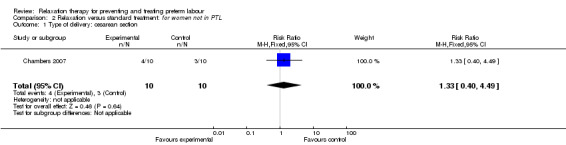
Comparison 2 Relaxation versus standard treatment: for women not in PTL, Outcome 1 Type of delivery: cesarean section.
2.2. Analysis.
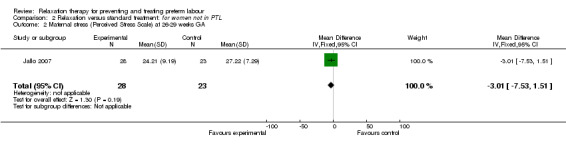
Comparison 2 Relaxation versus standard treatment: for women not in PTL, Outcome 2 Maternal stress (Perceived Stress Scale) at 26‐29 weeks GA.
2.4. Analysis.
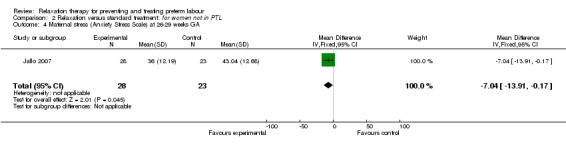
Comparison 2 Relaxation versus standard treatment: for women not in PTL, Outcome 4 Maternal stress (Anxiety Stress Scale) at 26‐29 weeks GA.
2.5. Analysis.
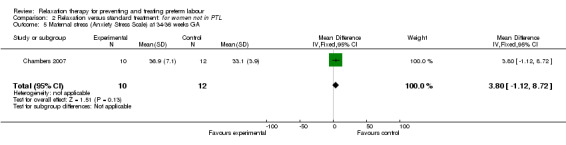
Comparison 2 Relaxation versus standard treatment: for women not in PTL, Outcome 5 Maternal stress (Anxiety Stress Scale) at 34‐36 weeks GA.
2.6. Analysis.
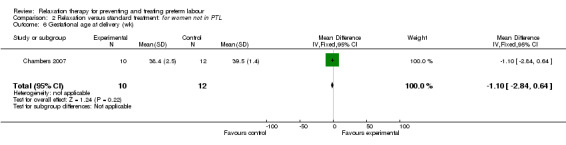
Comparison 2 Relaxation versus standard treatment: for women not in PTL, Outcome 6 Gestational age at delivery (wk).
2.7. Analysis.
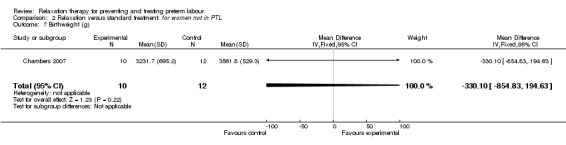
Comparison 2 Relaxation versus standard treatment: for women not in PTL, Outcome 7 Birthweight (g).
Relaxation add on standard treatment versus standard treatment
Five secondary outcomes of interest were available in one included study (Bastani 2006). There were significant beneficial effects of relaxation on birthweight (MD 285.00 g; 95% CI 76.94 to 493.06; 104 women (Analysis 3.2)), type of delivery: normal vaginal delivery (RR 1.52; 95% CI 1.13 to 2.04; 104 women (Analysis 3.3))) and cesarean section (RR 0.38; 95% CI 0.19 to 0.78; 104 women (Analysis 3.4)), maternal anxiety score (MD ‐15.79; 95% CI ‐18.33 to ‐13.25; 104 women (Analysis 3.6)), and maternal stress (PSS) score (MD ‐13.08; 95% CI ‐15.29 to ‐10.87; 104 women (Analysis 3.7)).
3.2. Analysis.
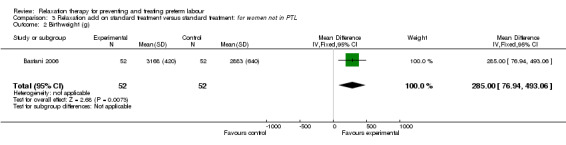
Comparison 3 Relaxation add on standard treatment versus standard treatment: for women not in PTL, Outcome 2 Birthweight (g).
3.3. Analysis.
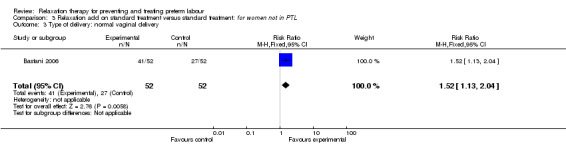
Comparison 3 Relaxation add on standard treatment versus standard treatment: for women not in PTL, Outcome 3 Type of delivery: normal vaginal delivery.
3.4. Analysis.
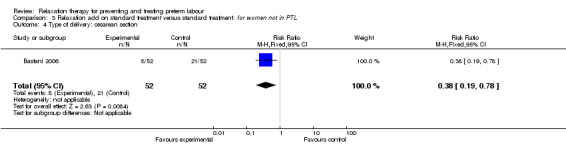
Comparison 3 Relaxation add on standard treatment versus standard treatment: for women not in PTL, Outcome 4 Type of delivery: cesarean section.
3.6. Analysis.
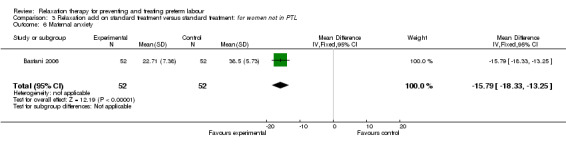
Comparison 3 Relaxation add on standard treatment versus standard treatment: for women not in PTL, Outcome 6 Maternal anxiety.
3.7. Analysis.
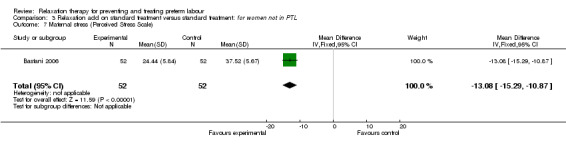
Comparison 3 Relaxation add on standard treatment versus standard treatment: for women not in PTL, Outcome 7 Maternal stress (Perceived Stress Scale).
For women in PTL
Relaxation versus no treatment
There was no statistically significant difference in pregnancy prolongation (MD 5.10; 95% CI ‐3.65 to 13.85 (Analysis 4.1)) and gestational age (MD 0.20; 95% CI ‐0.47 to 0.87 (Analysis 4.3)) based on the study of Janke 1999. Since there was no heterogeneity between the Casko 2002 and Janke 1999 studies (I² = 0%, P value = 0.90), the fixed‐effect model was used to combine the birthweight of 121 babies. There was insufficient evidence to support any benefits of relaxation therapy on birthweight (MD ‐5.68 g; 95% CI ‐174.09 to 162.74 (Analysis 4.2)).
4.1. Analysis.
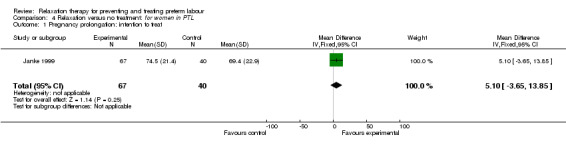
Comparison 4 Relaxation versus no treatment: for women in PTL, Outcome 1 Pregnancy prolongation: intention to treat.
4.3. Analysis.
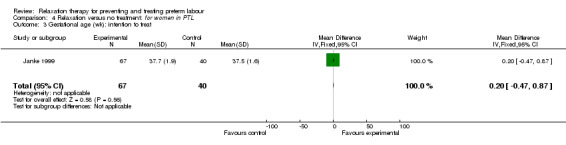
Comparison 4 Relaxation versus no treatment: for women in PTL, Outcome 3 Gestational age (wk): intention to treat.
4.2. Analysis.
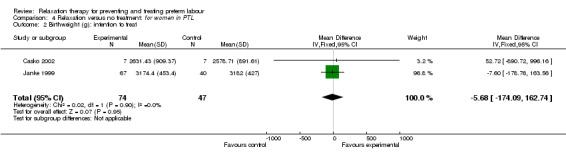
Comparison 4 Relaxation versus no treatment: for women in PTL, Outcome 2 Birthweight (g): intention to treat.
Relaxation add on standard treatment versus standard treatment
One study, involving 120 women (Yang 2009), showed that the risk of preterm birth was no different between relaxation therapy and standard treatment groups (RR 0.95; 95% CI 0.57 to 1.59 (Analysis 5.1)).
5.1. Analysis.
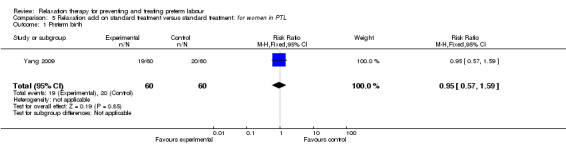
Comparison 5 Relaxation add on standard treatment versus standard treatment: for women in PTL, Outcome 1 Preterm birth.
Discussion
Summary of main results
Since no included studies reported the information on preterm birth (PTB), and only one small trial presented the information on preterm labour (PTL), we cannot draw any solid conclusion of the effect of relaxation on these two primary outcomes.
Although, we included 11 studies randomising a total of 833 women, nearly all the results we report are based on single studies with small numbers of participants.
Few studies assessed the effect of relaxation on prevention or treatment of PTL. Only one study of relaxation plus standard treatment in the prevention of preterm labour/delivery found that relaxation significantly increased baby birthweight, reduced operative delivery and maternal anxiety and stress.
There were limitations to the reported data. The types of relaxation used were different in all 11 included studies. Although we combined the treatment effects on birthweight in two trials (Casko 2002; Janke 1999), it is unclear whether or not they were the same intervention (both are identified as relaxation exercise). Consequently, it is difficult to conclude which type of intervention affected the outcome. In future updates, if there are more studies with the same type of intervention, we may reach more specific conclusions.
Overall completeness and applicability of evidence
We included 11 studies in this review. Six of the included studies were conducted in high‐income countries (Casko 2002; Chambers 2007; Field 2004; Gijsbers 1990; Jallo 2007; Janke 1999), and the remaining five studies were from low‐ and middle‐income countries. All included studies used different forms of relaxation. Although we performed a meta‐analysis, it is only based on the evidences from two small studies, the overall completeness and applicability of evidence is therefore limited.
Quality of the evidence
In the 'Risk of bias' tables, there were no studies with low risk of bias (based on information about random sequence generation and allocation concealment). All studies had either unclear or high risk of bias. The internal validity of this review is therefore questionable.
Potential biases in the review process
We followed strictly the review process recommended by the Cochrane Handbook for Systematic Reviews of Interventions (Higgins 2011). There are no obvious potential biases in the review process.
Agreements and disagreements with other studies or reviews
To date, there is no other review on this topic.
Authors' conclusions
Implications for practice.
From the limited data there is no evidence of relaxation effect on PTL/PTB even though there is evidence of effect on reducing stress and anxiety score during pregnancy. We may suggest pregnant women to exercise for relaxation since there is no harmful effect on PTL/PTB and potentially can reduce stress and anxiety.
Implications for research.
From the limited number of included studies that used different types of relaxation therapy, we cannot draw any conclusions on the effect of relaxation on preventing or treating preterm labour or preventing preterm birth. More well‐designed randomized controlled trials are required specific to type of relaxation.
Acknowledgements
Bussarin Khianman (BK) wrote this protocol as part of a SEA‐ORCHID Project Fellowship at the Australasian Cochrane Centre and wishes to acknowledge the support provided by Steve McDonald and Tari Turner.
As part of the pre‐publication editorial process, this review has been commented on by three peers (an editor and two referees who are external to the editorial team) and the Group's Statistical Adviser.
Appendices
Appendix 1. Search strategy
#1 (preterm or premature or 'before term' or 'early onset') #2 (labour or labour or delivery or birth) #3 (relaxation or meditation or biofeedback or massage or reflexology or deep breathing or visualisation or aromatherapy or yoga or water therapy or music therapy) #4 1 and 2 and 3
Data and analyses
Comparison 1. Relaxation versus no treatment: for women not in PTL.
| Outcome or subgroup title | No. of studies | No. of participants | Statistical method | Effect size |
|---|---|---|---|---|
| 1 Birthweight (g) | 1 | 16 | Mean Difference (IV, Fixed, 95% CI) | ‐355.63 [‐766.59, 55.33] |
Comparison 2. Relaxation versus standard treatment: for women not in PTL.
| Outcome or subgroup title | No. of studies | No. of participants | Statistical method | Effect size |
|---|---|---|---|---|
| 1 Type of delivery: cesarean section | 1 | 20 | Risk Ratio (M‐H, Fixed, 95% CI) | 1.33 [0.40, 4.49] |
| 2 Maternal stress (Perceived Stress Scale) at 26‐29 weeks GA | 1 | 51 | Mean Difference (IV, Fixed, 95% CI) | ‐3.01 [‐7.53, 1.51] |
| 3 Maternal stress (Perceived Stress Scale) at 34‐36 weeks GA | 2 | Std. Mean Difference (IV, Fixed, 95% CI) | Totals not selected | |
| 4 Maternal stress (Anxiety Stress Scale) at 26‐29 weeks GA | 1 | 51 | Mean Difference (IV, Fixed, 95% CI) | ‐7.04 [‐13.91, ‐0.17] |
| 5 Maternal stress (Anxiety Stress Scale) at 34‐36 weeks GA | 1 | 22 | Mean Difference (IV, Fixed, 95% CI) | 3.80 [‐1.12, 8.72] |
| 6 Gestational age at delivery (wk) | 1 | 22 | Mean Difference (IV, Fixed, 95% CI) | ‐1.10 [‐2.84, 0.64] |
| 7 Birthweight (g) | 1 | 22 | Mean Difference (IV, Fixed, 95% CI) | ‐330.10 [‐854.83, 194.63] |
Comparison 3. Relaxation add on standard treatment versus standard treatment: for women not in PTL.
| Outcome or subgroup title | No. of studies | No. of participants | Statistical method | Effect size |
|---|---|---|---|---|
| 1 Gestational age at delivery (wk) | 1 | 104 | Mean Difference (IV, Fixed, 95% CI) | 0.0 [0.00, 2.00] |
| 2 Birthweight (g) | 1 | 104 | Mean Difference (IV, Fixed, 95% CI) | 285.0 [76.94, 493.06] |
| 3 Type of delivery: normal vaginal delivery | 1 | 104 | Risk Ratio (M‐H, Fixed, 95% CI) | 1.52 [1.13, 2.04] |
| 4 Type of delivery: cesarean section | 1 | 104 | Risk Ratio (M‐H, Fixed, 95% CI) | 0.38 [0.19, 0.78] |
| 5 Type of delivery: instrumental delivery | 1 | 104 | Risk Ratio (M‐H, Fixed, 95% CI) | 0.75 [0.18, 3.19] |
| 6 Maternal anxiety | 1 | 104 | Mean Difference (IV, Fixed, 95% CI) | ‐15.79 [‐18.33, ‐13.25] |
| 7 Maternal stress (Perceived Stress Scale) | 1 | 104 | Mean Difference (IV, Fixed, 95% CI) | ‐13.08 [‐15.29, ‐10.87] |
3.1. Analysis.
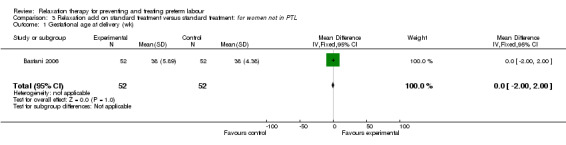
Comparison 3 Relaxation add on standard treatment versus standard treatment: for women not in PTL, Outcome 1 Gestational age at delivery (wk).
3.5. Analysis.
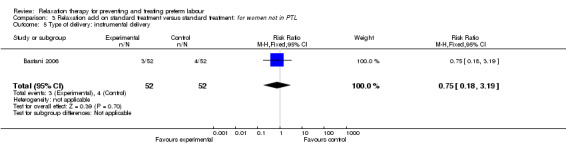
Comparison 3 Relaxation add on standard treatment versus standard treatment: for women not in PTL, Outcome 5 Type of delivery: instrumental delivery.
Comparison 4. Relaxation versus no treatment: for women in PTL.
| Outcome or subgroup title | No. of studies | No. of participants | Statistical method | Effect size |
|---|---|---|---|---|
| 1 Pregnancy prolongation: intention to treat | 1 | 107 | Mean Difference (IV, Fixed, 95% CI) | 5.10 [‐3.65, 13.85] |
| 2 Birthweight (g): intention to treat | 2 | 121 | Mean Difference (IV, Fixed, 95% CI) | ‐5.68 [‐174.09, 162.74] |
| 3 Gestational age (wk): intention to treat | 1 | 107 | Mean Difference (IV, Fixed, 95% CI) | 0.20 [‐0.47, 0.87] |
Comparison 5. Relaxation add on standard treatment versus standard treatment: for women in PTL.
| Outcome or subgroup title | No. of studies | No. of participants | Statistical method | Effect size |
|---|---|---|---|---|
| 1 Preterm birth | 1 | 120 | Risk Ratio (M‐H, Fixed, 95% CI) | 0.95 [0.57, 1.59] |
Characteristics of studies
Characteristics of included studies [ordered by study ID]
Bahadoran 2010.
| Methods | RCT (even reported as quasi‐experimental study but women were randomized into to groups). | |
| Participants |
Inclusion criteria Women who were 20 weeks pregnant and who had previously had a natural vaginal delivery without any problem (such as pre‐eclampsia, placenta previa, premature labor symptoms, multiparity and high risk of PROM pregnancy) and also lack of abnormal stresses in the past year due to unfortunate events of the life such as death of spouse, divorce, separation and antagonism from her husband, imprisonment, death of close family members according to the 5‐item modified scale of Holmes and Rahe. Claiming to be physically and mentally healthy and agreeing to participate in the study and not recently confronted with stressful events based on short form of Holmes and Rahe Questionnaire. Exclusion criteria Dissatisfaction to continue her cooperation with the study, absence in the class, incidence of stressful events during the study for the study participants, abnormalities and fetal and neonatal death. |
|
| Interventions | Intervention: delivery preparation classes (stretching exercises, relaxation, massage and breathing patterns during labour and in postpartum) from 20 weeks of pregnancy for 8 sessions (ntreatment= 59). Comparison: routine pregnancy care (ncontrol= 58). |
|
| Outcomes | Vitality, positive affect after delivery and after intervention. | |
| Notes | ||
| Risk of bias | ||
| Bias | Authors' judgement | Support for judgement |
| Random sequence generation (selection bias) | Unclear risk | “120 eligible pregnant women since 20 weeks of pregnancy who referred to these centers were selected simply and randomized in two groups (60 in the case and 60 in the control group).” Insufficient detail; a random table/computer? |
| Allocation concealment (selection bias) | Unclear risk | Not described. |
| Blinding (performance bias and detection bias) All outcomes | Unclear risk | Not described. |
| Incomplete outcome data (attrition bias) All outcomes | Low risk | No attrition of participants. |
| Selective reporting (reporting bias) | Unclear risk | Data are reported for all outcomes described in methodology, however, we do not have the protocol. |
| Other bias | Low risk | There appeared to be no important risk of bias. |
Bastani 2006.
| Methods | RCT. | |
| Participants |
Inclusion criteria
Primigravidae with a wanted pregnancy, aged 18 to 30, between 14 to 28 weeks’ gestation (based on sonography), with uncomplicated, singleton pregnancies and no identified medical or obstetrical risk factors. Exclusion criteria Any medical or obstetric complications during the 7 weeks of intervention and elective cesarean section. |
|
| Interventions | Intervention: routine prenatal care along with 7‐week applied relaxation training sessions (progressive muscle relaxation and deep breathing techniques) (nintervention= 55; 3 refused, so nintervention = 52). Comparison: only routine prenatal care (ncontrol= 55; 3 refused, so ncontrol = 52). |
|
| Outcomes | i) Anxiety and perceived stress measured by pre‐educational and post‐educational intervention. (self‐administered questionnaires)
(‐ level of anxiety measured on the Spielberger STAI,
score 0 to 60; 0 = not anxious, 60 = high anxiety.
‐ level of stress measured on Perceived Stress Scale, score 0 to 4; 0 = never, 4 = very often) ii) Data related to pregnancy outcomes include birthweight, GA at birth, preterm birth (GA < 37 weeks), and type of delivery. (measured prior to and 7 weeks after completion of the intervention). |
|
| Notes | This study was conducted in Iran. This paper was published twice: ‐ Journal of Perinatal & Neonatal Nursing:Volume 20(2) April/June 2006p 138‐146; ‐ Journal of Midwifery & Women's Health, Volume 50, Issue 4, July‐August 2005, Pages e36‐e40. | |
| Risk of bias | ||
| Bias | Authors' judgement | Support for judgement |
| Random sequence generation (selection bias) | Unclear risk | “women who consented to participate were randomly assigned to 2 groups, using a block randomisation method” Insufficient detail; a random table/computer? |
| Allocation concealment (selection bias) | Unclear risk | Not described. |
| Blinding (performance bias and detection bias) All outcomes | Unclear risk | Not described. |
| Incomplete outcome data (attrition bias) All outcomes | Low risk | “Of the total sample, 6 women declined to participate in the posttest: 3 from the experimental group (2 participants refused to take part in the training because they were moving to another city and 1 developed a urinary tract infection), 3 from the control group (1 did not keep the posttest appointment, 1 declined to participate further in the study because of the decision to have an elective cesarean section, and 1 became hypertensive).” All of refused participants were reported. |
| Selective reporting (reporting bias) | Unclear risk | Data are reported for all outcomes described in the methodology, however, we do not have the protocol. |
| Other bias | Low risk | There appeared to be no important risk of bias. |
Casko 2002.
| Methods | RCT. | |
| Participants |
Inclusion criteria
Participants were pregnant women aged 16 or over who had a current diagnosis of PTL of unknown origin or who had a history of PTL of unknown origin during one or more previous pregnancies. Exclusion criteria 1) A complex medical and/or obstetrical history. 2) A pregnancy resulting from in vitro fertilization. 3) A history of psychotic disorder, borderline personality disorder, and/or suicide attempt 4) Current incarceration; 5) Inability to read English. Women with known risk factors for PTL, such as uterine or fetal anomalies, greater than twin gestation, B‐strep infection, current substance abuse, and/or history of cone biopsy or intrauterine exposure to diethylstilbesterol, were also excluded. |
|
| Interventions | Intervention: a 20‐25 minute relaxation exercise (ntreatment= 15) followed by a rhythmical abdominal breathing. Comparison: no treatment (ncontrol= 15). |
|
| Outcomes | i) Anxiety measured by STAI‐S, STAI‐T ; rated by participant
(The STAI ‐ The 40‐item measure uses a four‐point Likert‐type scale
1 = not at all, 4 = very much so. The total score range from 20 to 80,
with higher scores indicating higher anxiety) ii) control scale measured by Desirability of control scale (DCS) ; rated by participant (The DCS : The‐20‐item measure uses a 7‐point Likert‐type scale The total score range from 20 to 140, with higher scores indicating higher desire for control) |
|
| Notes | This study was conducted in The United States of America. | |
| Risk of bias | ||
| Bias | Authors' judgement | Support for judgement |
| Random sequence generation (selection bias) | Unclear risk | “Within each group, participants were randomly assigned to either the treatment or no treatment control group” Insufficient detail; a random table/computer? |
| Allocation concealment (selection bias) | Unclear risk | Not described. |
| Blinding (performance bias and detection bias) All outcomes | Unclear risk | Not described. |
| Incomplete outcome data (attrition bias) All outcomes | Low risk | “52 women consented to enrol; 8 women never returned their questionnaires or responded to telephone calls and reminder letter, 4 women moved away from the area, 2 women suffered miscarriages between their enrolment, and 1 set of questionnaires was lost in transit when the subject delivered and was moved to a different hospital unit. There were 37 women left, of these women 7 had twins pregnancies, data of 30 women were analysed.” All reasons for the attrition of participants were reported. |
| Selective reporting (reporting bias) | Unclear risk | Data are reported for all outcomes described in methodology, however, we do not have the protocol. |
| Other bias | Low risk | there appeared to no important risk of bias. |
Chambers 2007.
| Methods | RCT. | |
| Participants |
Inclusion criteria Women between 18 to 40 years old, were within the range of 14 to 20 weeks' gestation of pregnancy, had no more than 1 miscarriage, and scored 40 or more points on either the state or trait scales of the STAI. Exclusion criteria Women were excluded if they met criteria for an Axis I Disorder, were currently using street drugs, were receiving psychological services for coping with mood or stress and were unwilling to discontinue, and if they were currently taking anti‐depressant or anti‐anxiety medications. Additionally, women were excluded if they currently had biological children or if they had more than one previous miscarriage. |
|
| Interventions | Intervention: 6‐weeks of relaxation training‐prenatal yoga studios, prenatal massage studios, religious institutions, and public events (see page 20) (nintervention= 10). Comparison: usual care – tips of reducing stress (ncontrol= 12). |
|
| Outcomes | Mood (Perceived Stress Scale 14 items), stress, health behaviors, self‐care practice, Physiological measures, Practice of relaxation training Therapeutic, Obstetric Complication (see page25) (measured at 1st visit‐between 14‐20 weeks GA, 2nd visit‐between 21‐27 weeks GA, 3rd trimester between 34‐36 weeks GA) | |
| Notes | ||
| Risk of bias | ||
| Bias | Authors' judgement | Support for judgement |
| Random sequence generation (selection bias) | Unclear risk | Not described. Insufficient detail; a random table/computer? |
| Allocation concealment (selection bias) | Unclear risk | Not described. |
| Blinding (performance bias and detection bias) All outcomes | Unclear risk | Not described. |
| Incomplete outcome data (attrition bias) All outcomes | Low risk | “Analyses excluded data from the participant who miscarried and the participant who was treated with anti‐depressant medications. Two women only completed the diagnostic interview prior to dropping out of the study. Thus, 10 women from the relaxation group and 12 from the self‐care were included in the following analyses.” All reason for the attrition of participants was reported. |
| Selective reporting (reporting bias) | Unclear risk | Data are reported for all outcomes described in methodology, however, we do not have the protocol. |
| Other bias | Low risk | There appears to be no important risk of bias exists. |
Dasari 2007.
| Methods | RCT. | |
| Participants |
Inclusion criteria
Women with PTL. Exclusion criteria Assessed of psychological stress using modified life inventory and abbreviated psychosocial scale. |
|
| Interventions | Intervention: Nifedipine along with psychotherapeutic intervention in the form of Luthes relaxation technique and transcendental meditation (nintervention= 25). Comparison: tocolysis with Nifedipine (ncontrol= 25). |
|
| Outcomes | Cessation of uterine contractions, prolongation of pregnancy and neonatal outcome (measured at the endpoint of study). | |
| Notes | This study was conducted in India. | |
| Risk of bias | ||
| Bias | Authors' judgement | Support for judgement |
| Random sequence generation (selection bias) | Unclear risk | “They were randomly assigned to control group (25) who received tocolysis with nifedipine and study group (25) who received nifedipine along with psychotherapeutic intervention in the form of Luthe's relaxation technique and transcendental meditation.” Insufficient detail; a random table/computer? |
| Allocation concealment (selection bias) | Unclear risk | Not described. |
| Blinding (performance bias and detection bias) All outcomes | Unclear risk | Not described. |
| Incomplete outcome data (attrition bias) All outcomes | Unclear risk | Not sure whether all of participants were reported because it is a brief communication article. However no missing data are reported for any outcomes. |
| Selective reporting (reporting bias) | Unclear risk | Some outcomes were not reported; uterine contractions, neonatal outcome. |
| Other bias | Unclear risk | There is limited information (It is a brief communications paper). |
Field 2004.
| Methods | RCT. | |
| Participants |
Inclusion criteria: Pregnant women in their second trimester, GA 18‐24 weeks. |
|
| Interventions | Intervention:
1) Massage therapy group (nmassage= 28); participants received 2 20‐minute therapy sessions each week for 16 weeks of pregnancy, starting during the second trimester.
2) Progressive muscle relaxation group (nrelaxation= 28); participants was given instructions on how to conduct progressive muscle relaxation sessions while lying quietly on the table. A session lasted 20 minutes and consisted of tensing and relaxing large muscle groups starting with the feet and progressing to the calves, thighs, hands, arms, back and face. Comparison: 1) Standard prenatal care (ncontrol= 28). 2) Non‐depressed group (nnon‐depressed= 28). |
|
| Outcomes | i) Anxiety measured by pre‐ and post‐ treatment. (self‐administered questionnaires)
(‐ level of anxiety measured on the STAI),
score 0 to 80; 0 = not anxious, 80 = high anxiety). ii) Mood, depression, leg pain, back pain, maternal prenatal biochemistry, neonatal variables (measured before and after the 16‐week study). |
|
| Notes | The participants in the massage therapy group, progressive muscle relaxation group and control group were depressed pregnant women, whereas the non‐depressed pregnant women were recruited into the non‐depressed group. This study was conducted in The United States of America (USA). |
|
| Risk of bias | ||
| Bias | Authors' judgement | Support for judgement |
| Random sequence generation (selection bias) | Unclear risk | “Eighty‐four depressed pregnant women were recruited from obstetric and gynaecology clinics. The women were recruited during their second trimesters, between 18 and 24 weeks gestational, and randomly assigned to a massage therapy, a progressive muscle relaxation comparison group or a standard prenatal care only group.” Insufficient detail; a random table/computer? |
| Allocation concealment (selection bias) | Unclear risk | Not described. |
| Blinding (performance bias and detection bias) All outcomes | Unclear risk | Not described. |
| Incomplete outcome data (attrition bias) All outcomes | Unclear risk | Not sure whether all of participants were reported because the authors only mentioned about number of participants in the method part, whereas there is no information in either the results or conclusion part. However, no missing data are reported for any outcomes. |
| Selective reporting (reporting bias) | Unclear risk | Data are reported for all outcomes described in methodology, however we do not have the protocol. |
| Other bias | Unclear risk | There is no information on either the control group or the non‐depressed group. |
Gijsbers 1990.
| Methods | RCT. | |
| Participants |
Inclusion criteria
All women hospitalized with signs of preterm labour, with duration of pregnancy between 25 and 32 weeks, and treated with ritodrine. Exclusion criteria 1) Women who were younger than 16 years and older than 40 years. 2) Women who delivered within 24 hours after admissions. 3) Women for whom communication was difficult due to a language barrier. |
|
| Interventions | Intervention: the distracting information; a 15‐minute cheerful animation film (Baby story'). Comparison: 1) The situation specific information ; a 17‐minute video film showing an interview with an obstetrician on preterm labour (n = 10). 2) A period of rest without distraction in any form (n = 10). 3) The distracting information; a 15‐minuite cheerful animation film ('Baby Story') (n = 10). Note: the whole procedure took place at the bedside (90 minutes), while the women were being administered β‐sympathicomimetics (ritodrine) by automatic infusion pump. |
|
| Outcomes | Physical and emotional symptoms score measured by an adapted and extended version of Pennebaker’s Emotion‐Symptom Checklist (ESC). | |
| Notes | Outcome of this study were not relevant to the objective of this review. This study was conducted in The Netherlands. |
|
| Risk of bias | ||
| Bias | Authors' judgement | Support for judgement |
| Random sequence generation (selection bias) | Unclear risk | “Patients were randomly assigned to one of those three conditions” Insufficient detail; a random table/computer? |
| Allocation concealment (selection bias) | Unclear risk | Not described. |
| Blinding (performance bias and detection bias) All outcomes | Unclear risk | Not described. |
| Incomplete outcome data (attrition bias) All outcomes | Low risk | No attrition of participants. |
| Selective reporting (reporting bias) | Unclear risk | Data are reported for all outcomes described in methodology, however we do not have the protocol. |
| Other bias | Low risk | There appears to be no important risk of bias. |
Jallo 2007.
| Methods | RCT. | |
| Participants |
Inclusion criteria 1) African American women between 14‐17 weeks' GA at time of recruitment, 2) between the ages of 18‐40 yrs old, 3) able to read, write and understand English, 4) verbalize a source of social support, and 5) no changed in level of stress management strategies used within the previous month. Exclusion criteria 1) Multiple pregnancy, 2) cervical cerclage, 3) current use of corticosteroids, 4) thyroid, adrenal, cardiac or chronic renal disease, 5) uterine or cervical abnormality, 6) Rh isoimmunization, 7) dissociative disorders, borderline personalities and psychotic pathology, and 8) current use of relaxation‐guided imagery (R‐GI). |
|
| Interventions | Intervention: Relaxation‐guided imagery (R‐GI) audiotape (daily for 12 weeks) (ntreatment= 28). Comparison: Usual care (ncontrol= 23). |
|
| Outcomes | Perceived stress, anxiety, and plasma corticotrophin releasing hormone (CRH) levels (measured at baseline, 8 weeks (22‐25 weeks GA), and 12 weeks (26‐29 weeks GA)). |
|
| Notes | ||
| Risk of bias | ||
| Bias | Authors' judgement | Support for judgement |
| Random sequence generation (selection bias) | Unclear risk | “Eligible women who consented and agreed to participate were randomly assigned to relaxation‐guided imagery (R‐GI) audiotape or usual care” Insufficient detail; a random table/computer? |
| Allocation concealment (selection bias) | Unclear risk | Not described. |
| Blinding (performance bias and detection bias) All outcomes | Unclear risk | Not described. |
| Incomplete outcome data (attrition bias) All outcomes | Low risk | “Of the 59 women who completed the baseline measures, six women did not complete the 12‐week study.Reasons included: (1) two women were lost to follow‐up (one failed to return at week 8, and the second at week 12); (2) one woman switched to a physician group not included in the research protocol; (3) two women requested to be withdrawn (UC participant found it difficult to remember to complete her daily stress logs and relaxation‐guided imagery participant stated she was “too busy and too stressed” to listen to the intervention every day); and (4) one women experienced a pregnancy loss after baseline measures. Because two participants missed time 2, a total of 51 participants provided data for three time points which were used for the analysis of perceived stress scale (PSS), and State Anxiety Inventory (STAI).” All reason for the attrition of participants was reported. |
| Selective reporting (reporting bias) | Unclear risk | Data are reported for all outcomes described in methodology, however, we do not have the protocol. |
| Other bias | Low risk | There appears to be no important risk of bias. |
Janke 1999.
| Methods | RCT (even reported as quasi‐experimental study but generated a random list of numbers for assignment). | |
| Participants | Inclusion criteria 1) Women with singleton gestations, documented contractions with cervical change, and intact membranes at time of entry into the study. 2) Women who diagnosed with PTL. | |
| Interventions | Intervention: a progressive relaxation exercise until the birth. The participants were given tapes of the exercise and instructed to do it daily (ntreatment= 67; 44+23). Comparison: no treatment (ncontrol= 40). |
|
| Outcomes | GA at birth, rate of pregnancy prolongation, and birthweight (after a woman gave birth the medical record was reviewed for the outcome data). |
|
| Notes | This study was conducted in The United States of America. | |
| Risk of bias | ||
| Bias | Authors' judgement | Support for judgement |
| Random sequence generation (selection bias) | Unclear risk | “A randomly generated list of numbers was used to determine group assignment” Insufficient detail; a random table/computer? |
| Allocation concealment (selection bias) | Unclear risk | Not described. |
| Blinding (performance bias and detection bias) All outcomes | Unclear risk | Not described. |
| Incomplete outcome data (attrition bias) All outcomes | Unclear risk | “One hundred and seven women began the study.” “Twenty‐three women in the experimental group stopped doing the relaxation exercise after 1‐2 weeks in the study. It was not a matter of skipping a few sessions, but rather their perceived inability to relax. The reasons these women gave for their inability to relax were interesting, especially since they were all on activity restrictions. The most common explanations were “too busy” (n = 15), or “it was just one more thing to do” (n = 6). Two women quit because their pastor told them it was dangerous.” All cases of non‐adherence to experimental group were reported but no intention‐to‐treat. Besides the proportion of non‐adherence does appear to be different between the groups (23/67 = 34%). |
| Selective reporting (reporting bias) | Unclear risk | Data are reported for all outcomes described in methodology, however we do not have the protocol. |
| Other bias | Low risk | There appears to be no important risk of bias. |
Satyapriya 2009.
| Methods | RCT. | |
| Participants |
Inclusion criteria
1) The recruited women were aged 20 to 35 years and between the 18th and 20th weeks of pregnancy.
2) Pregnancy duration between 18 and 20 weeks, the inclusion criterion was primigravidity, or multigravidity when the participant had at least 1 living child. Exclusion criteria Multi‐gravidity when the participant had no living child; multiple pregnancy; maternal physical abnormalities; psychiatric problems; pregnancy‐associated medical problems such as diabetes and hypertension; pregnancy from in vitro fertilization; intrauterine growth restriction in a previous pregnancy; fetal abnormality on ultrasound scanning; and previous exposure to yoga. |
|
| Interventions | Intervention: practicing yoga and deep relaxation (ntreatment= 45) 1‐hour daily until delivery. Comparison: standard prenatal exercises (nusual= 45) 1‐hour daily until delivery. |
|
| Outcomes | i) Perceived stress scale (PSS). ii) Heart rate variability (HRV) (measured before and after class). |
|
| Notes | This study was conducted in India. | |
| Risk of bias | ||
| Bias | Authors' judgement | Support for judgement |
| Random sequence generation (selection bias) | Low risk | “women, who were aged 20 to 35 years and between the 18th and 20th weeks of pregnancy, were randomized to the yoga or the control group.” “the participants were assigned a numbered envelope containing a computer‐generated random number that allocated them to the yoga group or the control group.” |
| Allocation concealment (selection bias) | Unclear risk | Not described with enough detail “the participants were assigned a numbered envelope containing a computer‐generated random number that allocated them to the yoga group or the control group.” |
| Blinding (performance bias and detection bias) All outcomes | Low risk | “the participants and trainers could not be blinded, but the team who did the assessments and the statistician were blinded.” “The perceived stress scale (PSS) answer sheets were coded and kept away until the end of the study, and care was taken to prevent the participants from discussing the techniques used in their respective groups” |
| Incomplete outcome data (attrition bias) All outcomes | Unclear risk | 122 women were randomly assigned to either treatment or control group (treatment = 59 women, control = 63 women). But only 90 women were available for the final analysis (45 women each group), besides there were 4 women in the control group who switched to treatment group. |
| Selective reporting (reporting bias) | Unclear risk | Data are reported for all outcomes described in methodology, however, we do not have the protocol. |
| Other bias | Low risk | There appears to be no important risk of bias. |
Yang 2009.
| Methods | RCT. | |
| Participants |
Inclusion criteria
Women with high‐risk pregnancies who were inpatients of a tertiary hospital in Changshacity of the Hunan province in China.
1) pregnant women admitted with the diagnosis of threatened preterm birth caused by early‐onset uterine contractions, placenta previa hemorrhage, or PROM;
2) GA between 28 weeks and 36 weeks;
3) hospitalized for 48 hours or more;
4) singleton pregnancy without polyhydramnios, deformity or congenital diseases confirmed by B mode ultrasonography; and
5) receiving fetal heart monitoring. Exclusion criteria Women who had severe visual and/or auditory disorders, severe medical and/or surgical complications, or mental or cognitive disorders. |
|
| Interventions | Intervention: usual care plus music therapy (nmusic= 60) ; a 30‐minute rest with music therapy on 3 consecutive days. Comparison: usual care (nusual= 60) ; a 30‐minute rest without music therapy on 3 consecutive days. |
|
| Outcomes | i) Anxiety measured by pre and post treatment (a research assistant was trained to help collect data)
(‐ level of anxiety measured on the STAI
The 20‐item measure uses a four‐point Likert‐type scale (1 = not at all, 4 = very much so)
The total score ranges from 20 to 80, with higher scores indicating greater anxiety
(low anxiety = 20‐39, moderate anxiety = 40‐59, high anxiety = 60‐80)). ii) physiological responses such as vital signs, fetal heart rate, fetal movement, and uterine contractions. Two hours after the final session of music therapy or rest, the participants were checked again for anxiety level (State‐STAI) and physiological responses (measured before and after study). |
|
| Notes | This study was conducted in China. | |
| Risk of bias | ||
| Bias | Authors' judgement | Support for judgement |
| Random sequence generation (selection bias) | Low risk | “Participants were randomized by drawing a card (1‐intervention group, 2‐control group) from a bag.” |
| Allocation concealment (selection bias) | Low risk | According to the method of drawing a card the participants and investigators enrolling participants could not foresee assignment. |
| Blinding (performance bias and detection bias) All outcomes | Unclear risk | Not described. |
| Incomplete outcome data (attrition bias) All outcomes | Low risk | No attrition of participants. |
| Selective reporting (reporting bias) | Unclear risk | Data are reported for all outcomes described in methodology, however we do not have the protocol. |
| Other bias | Low risk | There appears to be no important risk of bias. |
GA: gestational age PROM: premature rupture of membrane PTL: preterm labour RCT: randomized controlled trial STAI: State‐Trait Anxiety Inventory
Characteristics of excluded studies [ordered by study ID]
| Study | Reason for exclusion |
|---|---|
| Brown 1999 | This paper is a pilot study, and it is not a trial (quasi or RCT). |
| Feinstein 2000 | The intervention of this study is a self recognition of PTL program, which is not a kind of relaxation as defined in this review. |
| Omer 1986 | The control group is not a concurrent control. |
PTL: preterm labour RCT: randomized controlled trial
Characteristics of studies awaiting assessment [ordered by study ID]
Bauer 2010.
| Methods | RCT. A randomized, single‐blinded study, participants (n = 80) received 1 hour of music or recreation therapy or were placed in an attention‐control group. |
| Participants | Age of 18, between 24 and 38 weeks of gestation, who had not been hospitalized previously during this pregnancy, who were proficient in reading and writing English, whose length of hospital stay was unpredictable, and who had been hospitalized for at least 3 or 7 days. |
| Interventions | 1) A music‐focused relaxation intervention (live, improvised, nonvocal music was paired with imagery and progressive muscle relaxation=breathing techniques). 2) Recreation therapy interventions (adaptive leisure activities, creative arts, community resource education, and leisure awareness activities). 3) Attention‐control group (a visit from the same music or recreation therapist within 24–48 hours). |
| Outcomes | Antepartum‐related distress. |
| Notes | This study included women with GA between 24 to 38 weeks. We have e‐mailed the trialists to ask for the results (maternal distress) after excluding women with 38 weeks GA because our review focuses on preterm birth (before 37 completed weeks' gestation). |
Urech 2010.
| Methods | RCT. |
| Participants | Pregnant women from the outpatient unit of the University Women’s Hospital of Basel, Switzerland, were contacted and informed about the study. If interested in participating, they were invited to a single experimental visit. Women were included if they were German‐speaking, over 18‐years old, and pregnant with a single, healthy foetus between the 32nd and 34th week of gestation. |
| Interventions | 1) Progressive muscle relaxation. 2) Guided imagery. 3) A passive relaxation control condition. |
| Outcomes | A visual analogue scale and state anxiety, endocrine parameters indicating hypothalamic‐pituitary—adrenal (HPA) axis (cortisol and ACTH) and sympathetic‐adrenal‐medullary system activity (norepinephrine and epinephrine), as well as cardiovascular responses (heart rate, systolic and diastolic blood pressure). |
| Notes | This study reports one of our outcomes; State Anxiety. It reported that, “anxiety was not differentially affected by the interventions. Anxiety decreased equally in all three groups from pre‐ to post‐relaxation, F(1.35) = 5.14, P = 0.030, d = 0.38.” We have emailed the trialists to request detailed information about this outcome. |
Yu 2010.
| Methods | Likely to be a quasi‐experimental or RCT. |
| Participants | Pregnant women in preterm labour who were hospitalized from April to July, 2009. |
| Interventions | 1) The modified Mason’s breathing technique. 2) The control group. |
| Outcomes | State anxiety, Ritodrine dosage, Atosiban dosage. |
| Notes | Awaiting translation from Korean language. |
GA: gestational age RCT: randomized controlled trial
Differences between protocol and review
The contact person for the review has changed from Bussarin Khianman to Porjai Pattanittum. The methods have been updated to reflect the latest Cochrane Handbook for Systematic Reviews of Interventions (Higgins 2011)
Hypnosis will not be covered in this review as it is covered by a separate Cochrane review.
Contributions of authors
Bussarin Khianman (BK) wrote the first draft of the protocol. Porjai Pattanittum (PP) was involved in commenting on the statistical aspects of the protocol. Pisake Lumbiganon (PL) and Jadsada Thinkhamrop (JT) contributed to defining the selection criteria, commented on the draft protocol and approved the final version.
BK and PP carried out the data extraction. The 'Risk of bias' table of each included studies were appraised by PP and discussed with JT and BK for a consensus. PP entered all relevant data from data extraction forms to RevMan, carried out the analysis and wrote the results from those analyses. All tables and figures were created by PP. Both PP and JT contributed to the writing of the final report. PL critically reviewed the draft of the final report. All review authors were responsible for reading and checking review before submission.
Sources of support
Internal sources
Khon Kaen University, Thailand.
Kalasin Hospital, Ministry of Public Health, Thailand, Thailand.
External sources
Wellcome Trust, UK.
Thailand Research Fund/ Senior Research Scholar, Thailand.
Declarations of interest
None known.
New
References
References to studies included in this review
Bahadoran 2010 {published data only}
- Bahadoran P, Asefi F, Oreyzi H, Valiani M. The effect of participating in the labor preparation classes on maternal vitality and positive affect during the pregnancy and after the labor. Iranian journal of nursing and midwifery research 2010;15(Suppl 1):331‐6. [PUBMED: 22069407] [PMC free article] [PubMed] [Google Scholar]
Bastani 2006 {published data only}
- Bastani F, Hidarnia A, Kazemnejad A, Vafaei M, Kashanian M. A randomized controlled trial of the effects of applied relaxation training on reducing anxiety and perceived stress in pregnant women. Journal of Midwifery & Women's Health 2005;50(4):e36‐e40. [DOI] [PubMed] [Google Scholar]
- Bastani F, Hidarnia A, Montgomery KS, Aguilar‐Vafaei ME, Kazemnejad A. Does relaxation education in anxious primigravid Iranian women influence adverse pregnancy outcomes?: a randomized controlled trial. Journal of Perinatal & Neonatal Nursing 2006;20(2):138‐46. [DOI] [PubMed] [Google Scholar]
Casko 2002 {published data only}
- Casko RB. An analysis of the effectiveness of relaxation training for preterm labor and of interactions between relaxation exercises, state and trait anxiety, and desire for control in women with preterm labor [thesis]. Iowa: University of Iowa, 2002. [Google Scholar]
Chambers 2007 {published data only}
- Chambers AS. Relaxation during pregnancy to reduce stress and anxiety and their associated complications [thesis]. Arizona, USA: University of Arizona, 2007. [Google Scholar]
Dasari 2007 {published data only}
- Dasari P, Kodenchery MM. Psychological factors in preterm labor and psychotherapeutic intervention. International Journal of Gynecology & Obstetrics 2007;97(3):196‐7. [DOI] [PubMed] [Google Scholar]
Field 2004 {published data only}
- Field T, Diego MA, Hernandez‐Reif M, Schanberg S, Kuhn C. Massage therapy effects on depressed pregnant women. Journal of Psychosomatic Obstetrics and Gynaecology 2004;25(2):115‐22. [DOI] [PubMed] [Google Scholar]
Gijsbers 1990 {published data only}
- Gijsbers Van Wijk CMT, Geus JAC, Schutte MF, Wildschut HIJ, Zuuren FJ. Symptom perception during treatment of preterm labor: an experimental approach to measure the benefits of psychological intervention. Journal of Psychosomatic Obstetrics and Gynaecology 1990;11:185‐96. [Google Scholar]
Jallo 2007 {published data only}
- Jallo NL. The effects of relaxation‐guided imagery on maternal stress [thesis]. Virginia: University of Virginia, 2007. [Google Scholar]
Janke 1999 {published data only}
- Janke J. The effect of relaxation therapy on preterm labor outcomes. Journal of Obstetric, Gynecologic, and Neonatal Nursing 1999;28(3):255‐63. [DOI] [PubMed] [Google Scholar]
Satyapriya 2009 {published data only}
- Satyapriya M, Nagendra HR, Nagarathna R, Padmalatha V. Effect of integrated yoga on stress and heart rate variability in pregnant women. International Journal of Gynecology & Obstetrics 2009;104(3):218‐22. [DOI] [PubMed] [Google Scholar]
Yang 2009 {published data only}
- Yang M, Li L, Zhu H, Alexander IM, Liu S, Zhou W, et al. Music therapy to relieve anxiety in pregnant women on bedrest: a randomized, controlled trial. MCN, American Journal of Maternal Child Nursing 2009;34(5):316‐23. [DOI] [PubMed] [Google Scholar]
References to studies excluded from this review
Brown 1999 {published data only}
- Brown DC, Murphy M. Medical hypnosis in preterm labor: a randomized clinical trial. Report of two pilot projects. Hypnos 1999;26(2):77‐87. [Google Scholar]
Feinstein 2000 {published data only}
- Feinstein N. Maternal coping with preterm labor: an intervention [thesis]. Rochester, New York: University of Rochester, 2000. [Google Scholar]
Omer 1986 {published data only}
- Omer H, Friedlander D, Palti Z. Hypnotic relaxation in the treatment of premature labor. Psychosomatic Medicine 1986;48(5):351‐61. [DOI] [PubMed] [Google Scholar]
References to studies awaiting assessment
Bauer 2010 {published data only}
- Bauer CL, Victorson D, Rosenbloom S, Barocas J, Silver RK. Alleviating distress during antepartum hospitalization: a randomized controlled trial of music and recreation therapy. Journal of Women's Health 2010;19(3):523‐31. [DOI] [PubMed] [Google Scholar]
Urech 2010 {published data only}
- Urech C, Alder J, Bitzer J, Hosli I. The effect of relaxation exercises on psychological wellbeing during pregnancy [Entspannungs‐Ubungen wahrend der Schwangerschaft: Der Einfluss auf das psychobiologische Wohlbefinden]. Geburtshilfe und Frauenheilkunde 2009;69:163. [Google Scholar]
- Urech C, Fink NS, Wilhelm FH, Bitzer J, Alder J. Effects of relaxation on psychobiological wellbeing during pregnancy: a randomized controlled trial. Psychoneuroendocrinology 2010;35:1348‐55. [DOI] [PubMed] [Google Scholar]
Yu 2010 {published data only}
- Yu WJ, Song JE. Effects of abdominal breathing on state anxiety, stress, and tocolytic dosage for pregnant women in preterm labor. Journal of Korean Academy of Nursing 2010;40(3):442‐52. [DOI] [PubMed] [Google Scholar]
Additional references
Astin 2003
- Astin JA, Shapiro SL, Eisenberg DM, Forys KL. Mind‐body medicine: state of the science, implications for practice. Journal of the American Board of Family Practice 2003;16:131‐47. [DOI] [PubMed] [Google Scholar]
Burke 2000
- Burke C, Morrison JJ. Perinatal factors and preterm delivery in an Irish obstetric population. Journal of Perinatal Medicine 2000;28:49‐53. [DOI] [PubMed] [Google Scholar]
Chung 2001
- Chung TKH, Lau TK, Yip ASK, Chiu HFK, Lee DTS. Antepartum depressive symptomatology is associated with adverse obstetric and neonatal outcomes. Psychosomatic Medicine 2001;63:830‐4. [DOI] [PubMed] [Google Scholar]
Davis 1998
- Davis M, Eshelman ER, McKay M. The relaxation & stress reduction workbook. Oakland: New Harbinger Publication Inc, 1998. [Google Scholar]
Egger 1997
- Egger M, Davey Smith G, Schneider M, Minder C. Bias in meta‐analysis detected by a simple, graphical test. BMJ 1997;315(7109):629‐34. [DOI] [PMC free article] [PubMed] [Google Scholar]
Harbord 2006
- Harbord RM, Egger M, Sterne JA. A modified test for small‐study effects in meta‐analyses of controlled trials with binary endpoints. Statistics in Medicine 2006;25(20):3443‐57. [DOI] [PubMed] [Google Scholar]
Higgins 2011
- Higgins JPT, Green S, editors. Cochrane Handbook for Systematic Reviews of Interventions Version 5.1.0 [updated March 2011]. The Cochrane Collaboration, 2011. Available from www.cochrane‐handbook.org.
Kiss 2004
- Kiss H, Petricevic L, Husslein P. Prospective randomised controlled trial of an infection screening programme to reduce the rate of preterm delivery. BMJ 2004;329:371. [DOI] [PMC free article] [PubMed] [Google Scholar]
RevMan 2011 [Computer program]
- The Nordic Cochrane Centre, The Cochrane Collaboration. Review Manager (RevMan). Version 5.1. Copenhagen: The Nordic Cochrane Centre, The Cochrane Collaboration, 2011.
Rondo 2003
- Rondo PHC, Ferreira RF, Nogueira F, Ribeiro MCN, Lobert H, Artes R. Maternal psychological stress and distress as predictors of low birth weight, prematurity and intrauterine growth retardation. European Journal of Clinical Nutrition 2003;57:266‐72. [DOI] [PubMed] [Google Scholar]
Steer 2006
- Steer PJ. The epidemiology of preterm labour ‐ why have advances not equated to reduced incidence?. BJOG: an international journal of obstetrics and gynaecology 2006;113(Suppl 3):1‐3. [DOI] [PubMed] [Google Scholar]
Von Der Pool 1998
- Pool BA. Preterm labor: diagnosis and treatment. American Family Physician 1998;57(10):2457‐64. [PubMed] [Google Scholar]
Weismiller 1999
- Weismiller DG. Preterm labor. American Family Physician 1999;59(3):593‐602. [PubMed] [Google Scholar]
Witter 1993
- Witter FR, Keith LG. Textbook of Prematurity: Antecedents, Treatment and Outcome. Boston: Little, Brown and Company, 1993. [Google Scholar]