



Abstract
Non-volant mammals in Peninsular Malaysia face numerous threats, primarily driven by habitat loss, fragmentation and illegal hunting. These threats highlight the importance of conducting wildlife surveys in the available forested areas to enhance the current strategies for conservation and management, particularly for a threatened taxon like non-volant mammals. This study aimed to document and update information of non-volant mammals from four areas: Tasik Bera (Pahang state); Tasik Kenyir, Pulau Redang and Universiti Malaysia Terengganu (UMT) Campus (Terengganu state). Cage traps and Visual Encounter Survey methods were utilised to record non-volant mammals from August 2022 until March 2023. This study successfully documented 123 individuals from 27 non-volant mammal species, representing 11 families from 6 orders. Tasik Bera demonstrated the highest species count at 18, followed by UMT Campus with 6, while Tasik Kenyir and Pulau Redang each recorded 4 species. The species diversity was the highest at Tasik Bera (H′ = 2.65) and the lowest at Pulau Redang (H′ = 1.01). Macaca fascicularis, Tupaia glis and Paradoxurus hermaphroditus were recorded from three of four sites. This study has added new geographically recorded species for Tasik Bera (11 species) and UMT Campus (4 species). This study has advanced our knowledge of the diversity and distribution of non-volant mammals, enhancing our understanding in this field. This understanding is crucial for implementing efficient conservation and management strategies, aiding in the development of targeted conservation strategies to protect these species and their habitats.
Keywords: Diversity, Island, Lake, Urban, Wetland, Habitat, Non-volant Mammals
Abstract
Abstrak
Mamalia bukan terbang di Semenanjung Malaysia menghadapi pelbagai ancaman, terutamanya disebabkan oleh kehilangan habitat, pemecahan habitat dan pemburuan haram. Ancaman ini menekankan kepentingan menjalankan tinjauan hidupan liar di kawasan hutan yang masih tersedia untuk meningkatkan strategi pemuliharaan dan pengurusan semasa, khususnya bagi takson yang terancam seperti mamalia bukan terbang. Kajian ini bertujuan untuk mendokumentasikan dan mengemas kini maklumat mengenai mamalia bukan terbang dari empat kawasan: Tasik Bera (negeri Pahang); Tasik Kenyir, Pulau Redang, dan Kampus Universiti Malaysia Terengganu (UMT) (negeri Terengganu). Kaedah perangkap sangkar dan Tinjauan Penemuan Visual digunakan untuk merekodkan mamalia bukan terbang dari Ogos 2022 hingga Mac 2023. Kajian ini berjaya mendokumentasikan 123 individu daripada 27 spesies mamalia bukan terbang, mewakili 11 famili daripada 6 order. Tasik Bera mencatat jumlah spesies tertinggi dengan 18 spesies, diikuti oleh Kampus UMT dengan 6 spesies, manakala Tasik Kenyir dan Pulau Redang masing-masing merekodkan 4 spesies. Kepelbagaian spesies adalah tertinggi di Tasik Bera (H′ = 2.65) dan paling rendah di Pulau Redang (H′ = 1.01). Macaca fascicularis, Tupaia glis dan Paradoxurus hermaphroditus direkodkan di tiga daripada empat tapak kajian. Kajian ini telah menambah rekod spesies baharu dari segi geografi untuk Tasik Bera (11 spesies) dan Kampus UMT (4 spesies). Kajian ini telah memperluas pengetahuan mengenai kepelbagaian dan taburan mamalia bukan terbang, seterusnya meningkatkan pemahaman dalam bidang ini. Pemahaman ini amat penting bagi pelaksanaan strategi pemuliharaan dan pengurusan yang berkesan, serta membantu dalam pembangunan strategi pemuliharaan yang disasarkan untuk melindungi spesies ini dan habitatnya.
Kata kunci: Diversiti, Pulau, Tasik, Bandar, Tanah Bencah, Habitat, Mamalia Bukan Terbang
Highlights.
A total of 123 individuals, representing 27 non-volant mammal species from 11 families and six orders were documented.
Numerous mammal species including primates, elephants and carnivores face critical conservation challenges, with WCA 2010 protection and IUCN Red List statuses from Critically Endangered to Vulnerable.
15 species were documented as new geographically records for the area and add to the existing knowledge on mammalian distribution in Malaysia.
INTRODUCTION
Malaysia is widely renowned for its high degree of biodiversity, as it is one of the world’s 17 megadiverse countries, having 440 species of mammals (Department of Wildlife and National Park 2016). Among these, approximately 15% (66 species) are endemic to Malaysia (Payne et al. 1998; Francis & Barrett 2008). Malaysia has a wide array of natural wonders and ecological treasures, spanning the Peninsular and the Borneo region. Its exceptional biodiversity encompasses lush rainforests, majestic waterfalls, winding rivers, serene lakes and reservoirs, expansive oceans and seas, and diverse flora and fauna, creating a harmonious balance of biotic and abiotic elements (Abdullah et al. 2017).
In 2021, Peninsular Malaysia’s forested area amounted to 5.73 million hectares, including a permanently conserved forest of 4.85 million hectares (Forestry Department of Peninsular Malaysia 2022). However, much unprotected land has been converted for human settlements, recreational activities, tourism, agriculture and industrial parks. Despite Malaysia’s ecological richness, non-volant mammals face threats, particularly due to rapid expansion of industrial agriculture (Razali et al. 2018), tourism (Abdullah et al. 2011), extensive fragmentation (Lane et al. 2006), human disturbances and anthropogenic activities (Struebig et al. 2008) and habitat loss (Kingston et al. 2003). Consequently, the number of non-volant mammal species has declined over the years as human activities disturb the environment (Crooks et al. 2017). Conservation efforts for non-volant mammals in Peninsular Malaysia are crucial due to the increasing anthropogenic pressures and habitat degradation (Baharudin et al. 2023). Assessing the conservation status of these species is essential for effective management and conservation planning, with such assessments aid in prioritising conservation efforts and formulating conservation strategies to safeguard these vulnerable species. Understanding non-volant mammals’ ecological requirements and interactions is crucial for their conservation and management (Lacher et al. 2019).
There have been many studies on the diversity of non-volant mammals that were conducted in various types of habitats in Peninsular Malaysia such as on islands (Abdullah et al. 2019; Baqi et al. 2021; Rahim et al. 2016; Tamblyn et al. 2005; Zahidin et al. 2022), lakes (Afiq Ramlee et al. 2020; Madinah et al. 2011; Khalib et al. 2018; Syakirah et al. 2000; William-Dee et al. 2019), forests (Zakaria et al. 2001; Saiful et al. 2001; Ramli & Hashim 2009; Shahfiz et al. 2011; Jayaraj et al. 2012; Ahmad Juffiry et al. 2015; Baharudin et al. 2023) and mangroves (Anuar 2007; Mohd Nasir 2008; Samsudin 2007). These preceding studies have indeed yielded valuable insights and significant findings. However, they may now be outdated, leaving a knowledge gap in current knowledge. In the 2017 IUCN Red List assessment for Peninsular Malaysia, 219 out of 223 listed mammal species were evaluated. Results show four species was assessed as Critically Endangered, 13 species as Endangered, 28 species as Vulnerable and 26 species as Near Threatened. Additionally, one species was classified as Extinct, four species as Critically Endangered, 12 species as Endangered, 14 species as Vulnerable and 34 species as Near Threatened (PERHILITAN 2017).
The objectives of this study were:
To determine the diversity of non-volant mammals in four different sites.
To compile and update the taxonomic checklist of non-volant mammals for each study site.
To assess the status of non-volant mammal communities at the sites.
This study offers a chance to explore non-volant mammal distribution and ecological roles in various habitats, enhancing our understanding of mammal diversity in Malaysia. The data collected can inform biodiversity conservation and sustainable management practices, aiding policymakers and planners. This study will help develop strategies to mitigate human activities involves a combination of conservation actions, policy interventions, community engagement and scientific research to safeguard mammal species and their habitats, ensuring the coexistence of mammals and their habitats.
MATERIALS AND METHODS
Study Sites
Tasik Bera Ramsar Site, Tasik Kenyir, Pulau Redang and Universiti Malaysia Terengganu (UMT) campus were selected as sampling sites between August 2022 and March 2023 (Table 1; Fig. 1; Fig. 2). Tasik Bera, situated in Pahang state is a significant freshwater ecosystem, the largest natural lake in Peninsular Malaysia (Gharibreza et al. 2013). Declared Malaysia’s first Ramsar site in 1994, it spans 35 km by 20 km and covers 7,000 ha of diverse habitats (Biun & Mohd Buang 2014). Tasik Bera is a complex interlocking ecosystem made up of open waters, reedbeds, lakes and rivers surrounded by a patchwork of dry lowland dipterocarp forest (Biun & Mohd Buang 2014). These habitats support a complex web of interactions among plants, animals and microorganisms, contributing to the ecosystem’s overall ecological functioning and resilience. Despite its ecological importance, Tasik Bera faces several conservation challenges. The expansion of human activities including agriculture, aquaculture and tourism has led to habitat degradation and loss (Henson 1994; Sharip & Zakaria 2008; Gharibreza et al. 2013). This research focuses on the lowland primary forest habitat near the Management Office of the Tasik Bera Ramsar Site.
Table 1.
Location of four study sites, area type, sampling date and the coordinates.
| Study site | Area type | Sampling date | Coordinates | |
|---|---|---|---|---|
|
| ||||
| Latitude | Longitude | |||
| Tasik Bera | Natural lake | 27 February–9 March 2023 | 102° 36′ 28.8″ E | 3° 07′ 49.1″ N |
| Tasik Kenyir | Man-made lake | 21 September–24 September 2022 | 102° 45′ 40.6″ E | 5° 08′ 28.7″ N |
| Pulau Redang | Island | 22 August–25 August 2022 | 103° 01′ 44.6″ E | 5° 46′ 02.1″ N |
| UMT Campus | Urban mangrove | 16 August–19 August 2022 28 August–1 September 2022 10 October–13 October 2022 |
103° 05′ 29.2″ E | 5° 24′ 36.5″ N |
Figure 1.

Map of the study sites. The red dots represent the location of present study sites. (Source: Created using GIS software)
Figure 2.
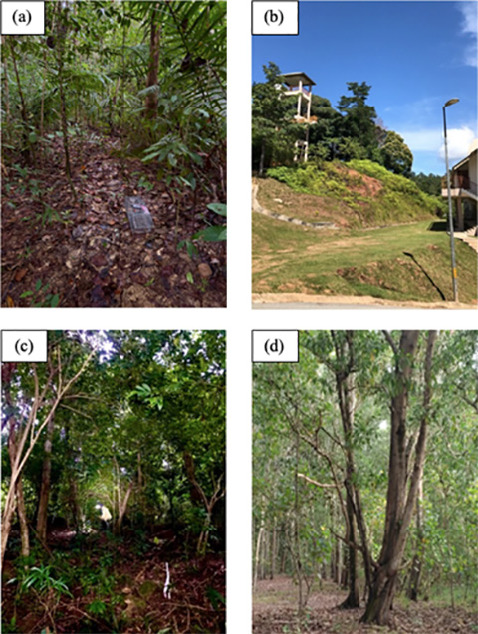
Location of trapping sites with (a) Tasik Bera, (b) Tasik Kenyir, (c) Pulau Redang and (d) UMT Campus.
Tasik Kenyir is situated in Hulu Terengganu district near the Kelantan border between 30° 31 N and 102° 3 E in the low-lying, undulating plain between the Main Range in the West and hill ranges to the East (Norfaizal et al. 2015). Tasik Kenyir is one of the largest artificial lakes in Southeast Asia, spanning 209,199 ha, surrounded by a total of 4,975 ha of tropical forest, with 340 islands (Mohammad Noor et al. 2019). The islands on Tasik Kenyir are the tips of hilltops which were not submerged during the flooding process. The study took place at the UMT Research Station within the Tasik Kenyir area.
Pulau Redang, one of the largest islands in Peninsular Malaysia lies approximately 45 km east of Kuala Terengganu. It was designated an interim Fisheries Prohibited Area (FPA) in early 1983, extending 8 km offshore, protecting marine life from unauthorised harvesting. The Pulau Redang Marine Park Centre, established in 1990, safeguards the island’s diverse marine and terrestrial ecosystems. The research was carried out near the Delima Redang Resort.
At a coastal plain in UMT campus in Mengabang Telipot, Kuala Nerus, the study was conducted along a 2 km boardwalk called Jalan Baywalk. The plain contains areas of muddy swales, which were previously lagoons but have now transformed into wetlands. A thick coastal mangrove forest previously covered this wetland area, but some have now been converted into urban areas (Badli Sham et al. 2019).
Sampling Method
At Tasik Bera, 16 cage traps with dimensions of 42 cm × 16 cm × 16 cm were utilised, while at Tasik Kenyir, Pulau Redang and UMT Campus, 10 cage traps were set up during each sampling session. The types of bait varied, with oil palm fruit being used as bait at Tasek Bera, while banana was the bait of choice at Tasik Kenyir, Pulau Redang and the UMT Campus. The choice of bait for non-volant mammals varied between study sites due to the unique ecosystems and specific vegetation types harboured by each location, which influenced the availability of natural food sources for these mammals. For example, Tasik Bera had a higher abundance of oil palm fruit due to nearby plantations, making it a readily available and attractive bait option. Conversely, locations such as Tasik Kenyir, Pulau Redang and the UMT Campus had different vegetation types where bananas were more abundant and easily accessible. Moreover, non-volant mammals had diverse dietary preferences, and the choice of bait was often tailored to attract the target species efficiently. Some species showed a strong preference for certain fruits or food items over others. Therefore, this study selected baits that were most likely to attract the desired species based on their known dietary habits and preferences. In this case, oil palm fruit and bananas were likely chosen because they were known to be consumed by a wide range of non-volant mammals in the respective study areas.
The cage traps were randomly placed on the ground and at a height of 5 m on tree branches along the existing trails, with 20 m between each cage. The traps were checked twice daily at 0800 h and 1700 h (Rahim et al. 2016), and the baits were renewed daily after checking. The cage traps were repositioned within the sampling sites every two days to expand the coverage of the sampling area and enhance the likelihood of capturing a greater number of individuals. All the small mammals caught were carefully removed from the traps and placed temporarily in a cloth bag. Captured animals were immobilised using mild chloroform, and measurements such as weight, four morphological measurements (HB = Head body length, TL = Tail length, HF = Hind foot length and E = Ear length) and sex were recorded (Payne et al. 1985). Species identification was done by referring to Medway (1983), Francis (2008) and Francis and Barrett (2008). All captured animals were promptly released back into their natural habitats on the same day following capture.
Throughout the study, Visual Encounter Surveys (VES) were meticulously conducted through both on-foot traverses along designated transects and mobile surveys via vehicle, specifically in Tasik Bera. A comprehensive total distance of 294 km was covered within Tasik Bera, complemented by 1.68 km in Tasik Kenyir, 23.09 km around Pulau Redang and 52.9 km across the UMT Campus. Observations of animals were documented utilising binoculars and spotlights. Each sighting was photographed, with accompanying records detailing the number of individuals and their species identification carried out with reference to Medway (1983), Francis (2008) and Francis and Barrett (2008).
DATA ANALYSIS
The species diversity indices, including Shannon Diversity Index (H′), Evenness Index (E) and Simpson Dominance Index (D) were calculated using the Paleontological Statistics (PAST) program (Hammer et al. 2001). Species accumulation curves (SACs) were computed using EcoSim (Gotelli & Entsminger 2015) to deduce the completeness of the inventory for non-volant mammal assemblages in the four study sites. Venn diagrams were created to visually show unique or common species among different study sites and demonstrate the similarity and overlap of species composition. Trapping effort and capture rate were measured at each site to evaluate trapping methods’ effectiveness and the target species’ abundance.
RESULTS
During the designated sampling periods, a rapid assessment across the four study sites successfully documented six orders (Fig. 3). At Tasik Bera, Primates exhibited the highest percentage, accounting for 41% of the observed mammals, followed by Rodentia (19%), Scandentia (16%), Artiodactyla (11%), Carnivora (10%) and Perissodactyla (3%). Meanwhile, Pulau Redang and UMT Campus observed four orders, with Primates (59%) and Carnivora (77%) being the predominant orders in each respective area. In contrast, Tasik Kenyir recorded only three orders, with Carnivora (46%) being the most prominent order during the sampling period, followed by Primates (36%) and Rodentia (18%). This study successfully documented 123 individuals from 27 non-volant mammal species, representing 11 families from six orders (Fig. 4; Table 2). Notable among these families, the Viverridae family exhibited the highest number of species, with four species spanning four genera, Arctictis, Paguma, Paradoxurus and Viverra. Subsequently, the Cercopithecidae family encompasses three species, while the Muridae and Felidae families each encompass three species. Additionally, the Sciuridae and Tupaiidae families each comprise two species, followed by the Elephantidae, Lorisidae, Mustelidae, Tapiridae and Tragulidae families, each with a single species representation.
Figure 3.

The distribution of non-volant mammals at Tasik Bera, Tasik Kenyir, Pulau Redang and UMT Campus, categorised by order.
Figure 4.

Non-volant mammals species with (a) Tupaia minor, (b) Tupaia glis, (c) Nycticebus coucang, (d) Trachypithecus obscurus, (e) Macaca fascicularis, (f) Lutrogale perspicillata, (g) Viverra tangalunga roadkill, (h) Paradoxurus hermaphroditus roadkill, (i) Prionailurus bengalensis, (j) Tapirus indicus footprint, (k) Tragulus kanchil, (l) Tragulus napu, (m) Callosciurus notatus, (n) Rattus rattus, (o) Rattus tiomanicus, (p) Rattus argentiventer, (q) Rattus exulans, (r) Leopoldamys sabanus, (s) Maxomys rajah and (t) Maxomys whiteheadi.
Table 2.
The species composition of non-volant mammal across four study sites, alongside their conservation and protection status as assessed by the IUCN Red List of Threatened Species (IUCN 2023), the Red List of Mammals for Peninsular Malaysia (PERHILITAN 2017) and the Wildlife Conservation Act (WCA 2010).
| No. | Order | Family | Species name | Common name | Study site | IUCN (2023) | PERHILITAN (2017) | WCA (2010) | |||
|---|---|---|---|---|---|---|---|---|---|---|---|
|
| |||||||||||
| Tasik Bera | Tasik Kenyir | Pulau Redang | UMT Campus | ||||||||
| 1 | Artiodactyla | Tragulidae | Tragulus kanchil | Lesser Mousedeer | 4 | 0 | 1 | 0 | LC | LC | P |
| 2 | Tragulus napu | Greater Mousedeer | 4 | 0 | 0 | 0 | LC | NT | P | ||
| 3 | Carnivora | Felidae | Panthera pardus | Black Leopard | 1 | 0 | 0 | 0 | VU | EN | TP |
| 4 | Prionailurus bengalensis | Leopard Cat | 6 | 0 | 0 | 0 | LC | NT | TP | ||
| 5 | Mustelidae | Lutrogale perspicillata | Smooth-Coated Otter | 0 | 0 | 0 | 7 | VU | LC | TP | |
| 6 | Viverridae | Viverra tangalunga | Malayan Civet | 1 | 0 | 0 | 0 | LC | LC | TP | |
| 7 | Arctictis binturong | Binturong | 0 | 1 | 0 | 0 | VU | LC | TP | ||
| 8 | Paguma larvata | Masked Palm Civet | 0 | 0 | 0 | 1 | LC | LC | TP | ||
| 9 | Paradoxurus hermaphroditus | Common Palm Civet | 1 | 4 | 0 | 9 | LC | LC | P | ||
| 10 | Perissodactyla | Tapiridae | Tapirus indicus | Asian Tapir | 2 | 0 | 0 | 0 | EN | EN | TP |
| 11 | Primates | Cercopithecidae | Presbytis femoralis | Raffles’ Banded Langur | 1 | 0 | 0 | 0 | CR | NT | NP |
| 12 | Macaca fascicularis | Long-Tailed Macaque | 15 | 0 | 10 | 3 | EN | LC | P | ||
| 13 | Macaca nemestrina | Southern Pig-Tailed Macaque | 3 | 0 | 0 | 0 | EN | LC | P | ||
| 14 | Trachypithecus obscurus | Dusky Langur | 10 | 4 | 0 | 0 | EN | NT | P | ||
| 15 | Lorisidae | Nycticebus coucang | Sunda Slow Loris | 2 | 0 | 0 | 0 | EN | NT | TP | |
| 16 | Proboscidea | Elephantidae | Elephas maximus | Asian Elephant | 1 | 0 | 0 | 0 | EN | VU | TP |
| 17 | Rodentia | Muridae | Leopoldamys sabanus | Long-Tailed Giant Rat | 2 | 0 | 0 | 0 | LC | LC | NP |
| 18 | Maxomys rajah | Rajah Spiny Rat | 5 | 0 | 0 | 0 | VU | LC | NP | ||
| 19 | Maxomys whiteheadi | Whitehead’s Spiny Rat | 1 | 0 | 0 | 0 | VU | LC | NP | ||
| 20 | Rattus argentiventer | Ricefield Rat | 2 | 0 | 0 | 0 | LC | LC | NP | ||
| 21 | Rattus exulans | Pacific Rat | 2 | 0 | 0 | 0 | LC | LC | NP | ||
| 22 | Rattus rattus | House Rat | 0 | 0 | 0 | 1 | LC | LC | NP | ||
| 23 | Rattus tiomanicus | Malaysian Wood Rat | 1 | 0 | 0 | 0 | LC | LC | NP | ||
| 25 | Sciuridae | Callosciurus notatus | Plantain Squirrel | 1 | 0 | 5 | 0 | LC | LC | NP | |
| Ratufa bicolor | Black Giant Squirrel | 0 | 2 | 0 | 0 | NT | NT | TP | |||
| 26 | Scandentia | Tupaiidae | Tupaia minor | Lesser Treeshrew | 1 | 0 | 0 | 0 | LC | LC | TP |
| 27 | Tupaia glis | Common Treeshrew | 11 | 0 | 1 | 1 | LC | LC | TP | ||
| Total number of individuals | 73 | 11 | 17 | 22 | |||||||
| Total number of species | 18 | 4 | 4 | 6 | |||||||
| Total number of families | 9 | 3 | 4 | 5 | |||||||
| Total number of genera | 12 | 4 | 4 | 6 | |||||||
Notes: CR = Critically Endangered; EN = Endangered; VU = Vulnerable; NT = Near Threatened; LC = Least Concern, P = Protected Wildlife; TP = Totally Protected Wildlife; NP = Non-protected Wildlife.
The species most often recorded was Macaca fascicularis with 28 independent observations. These were predominantly observed in the Tasik Bera, constituting 54% (15 observations) of the overall count. Additionally, a smaller group was observed on Pulau Redang (10 observations) and the UMT Campus (3 observations). A more notably observed species, Tupaia glis was documented with a cumulative count of 12 observations, primarily captured through cage traps. This distribution was skewed towards Tasik Bera, where 11 observations were recorded, while one individual was recorded on Pulau Redang. Six species were recorded as single individuals caught or observed including Tupaia minor, Paguma larvata, Arctictis binturong, Rattus rattus, R. tiomanicus and Maxomys whiteheadi. According to the IUCN Red List of Threatened Species (2023), several species recorded in Tasik Bera exhibit varying conservation statuses (Table 2). In terms of global conservation status, Presbytis femoralis is classified as Critically Endangered (CR), while Nycticebus coucang, Macaca nemestrina, M. fascicularis, Elephas maximus, Trachypithecus obscurus and Tapirus indicus are classified as Endangered (EN). Additionally, other species such as Panthera pardus, Maxomys rajah, M. whiteheadi, Lutrogale perspicillata and Arctictis binturong are listed as Vulnerable (VU). In Peninsular Malaysia, as outlined by the Red List of Mammals for Peninsular Malaysia (PERHILITAN 2017), various species including Panthera pardus and Tapirus indicus are classified as Endangered (EN), while Elephas maximus is classified as Vulnerable (VU) and several others are categorised as Near Threatened (NT) or Least Concern (LC). Under the Wildlife Conservation Act (WCA 2010), certain species are designated as Protected (P) or Totally Protected (TP), with others considered Not Protected (NP).
Tasik Bera demonstrated the highest number of species and individual, with 73 individuals from 18 species. This was followed by the UMT Campus area, which documented 22 individuals from six species. In contrast, Tasik Kenyir recorded 11 individuals representing four species, while Pulau Redang accounted for 17 individuals from four species. The Species Accumulation Curve (SAC) visually represents the cumulative number of species discovered during sampling activities within different sites. SACs in Fig. 5 shows that all four study sites have yet to reach the asymptote point, with Tasik Bera exhibits an increasing trend, indicating a rise in discovered species. However, it has not yet reached an asymptote. This suggests that there may still be additional species yet to be uncovered, emphasising the need for further sampling efforts. The SAC for Tasik Kenyir displays an almost linear curve, implying that the sampling session may have reached asymptote, indicating that most species in the area have likely been discovered. Conversely, the SACs for UMT Campus and Pulau Redang indicate that additional sampling efforts are necessary to comprehensively understand the non-volant mammal species in those areas. No species are shared among all four study sites.
Figure 5.

Species Accumulation Curve (SAC) for four study sites.
Tasik Bera harbours the highest number of unique species (16 species), followed by Tasik Kenyir (two species), UMT Campus (three species) and no unique species was identified in Pulau Redang. Among the species observed, Tupaia glis and Macaca fascicularis were recorded in three of the four sites, Tasik Bera, Pulau Redang and UMT Campus. Paradoxurus hermaphroditus was also found in three of the four sites, specifically Tasik Bera, Tasik Kenyir and UMT Campus. Additionally, Tasik Bera recorded the highest trapping effort of 160 trap days (Table 3). This site’s capture rate of 0.46 individuals per trapping effort of all trapped species combined indicates relatively effective trapping success as compared to the other sampling sites. Moreover, it displayed the highest level of species diversity with a Shannon Diversity Index, H′ = 2.65, and a Simpson Dominance index, D of 0.91, implying balanced species distribution. Tasik Kenyir, Pulau Redang and UMT Campus displayed relatively lower capture rates. These sites showed lower diversity indices in comparison to Tasik Bera, with Pulau Redang recording the lowest values (H′ = 1.01), indicating reduced diversity and potentially a skewed species composition (D = 0.6).
Table 3.
Species diversity and capture rate estimated for each study locality.
| Tasik Bera | Tasik Kenyir | Pulau Redang | UMT Campus | |
|---|---|---|---|---|
| Species | 18 | 4 | 4 | 6 |
| Individuals | 73 | 11 | 17 | 22 |
| Trapping effort (Trap – days) | 160 | 40 | 40 | 130 |
| Capture rate (No. of individual/Trapping effort) | 0.46 | 0.28 | 0.43 | 0.17 |
| Shannon Diversity Index (H′) | 2.65 | 1.26 | 1.01 | 1.42 |
| Simpson Dominance Index (D) | 0.91 | 0.76 | 0.6 | 0.74 |
| Evenness (E′) | 0.86 | 0.91 | 0.73 | 0.80 |
Comparison with Previous Studies
The findings of this study were compared with those of prior research investigating non-volant mammals across selected locations, specifically Tasik Bera, Tasik Kenyir, Pulau Redang and UMT Campus (Table 4). There are notable variations in non-volant small mammal species diversity across the four study sites. In this study, Tasik Bera documented a lower count in comparison to the work of Syakirah et al. (2000), who reported 33 species across 13 families. In the context of other areas such as Tasik Kenyir and Pulau Redang, this study recorded the fewest species compared to previous studies. In Pulau Redang, the earliest documentation by Robinson and Kloss (1911) reported six species from five families. However, recent studies on the UMT Campus have revealed a higher number of species compared to earlier investigations by Samsudin (2007), Anuar (2007) and Mohd Nasir (2008), recording six species from five families. In the case of Tasik Kenyir, Afiq Ramlee et al. (2020) documented the highest number of species count to date, recording a total of 91 species from 13 orders.
Table 4.
Taxonomic checklist of non-volant mammal from Tasik Bera, Tasik Kenyir, Pulau Redang and UMT Campus.
| No. | Order | Family | Species name | Common name | Study site | |||
|---|---|---|---|---|---|---|---|---|
|
| ||||||||
| Tasik Bera (This study, William-Dee et al. 2019, Madinah et al. 2011; Syakirah et al. 2000) | Tasik Kenyir (This study, Mohammad Noor et al. 2019; Nor Zalipah et al. 2019) | Pulau Redang (This study, Robinson & Kloss 1911; Malaysian Nature Society 1990; Abdullah et al. 2019) | UMT Campus (This study, Samsudin 2007; Anuar 2007; Mohd Nasir 2008) | |||||
| 1 | Artiodactyla | Bovidae | Bos gaurus | Gaur | x | |||
| 2 | Capricornis sumatraensis | Sumatran Serow | x | |||||
| 3 | Cervidae | Rusa unicolor | Sambar | x | ||||
| 4 | Muntiacus muntjak | Southern Red Muntjac | x | |||||
| 5 | Suidae | Sus scrofa | Wild Boar | x | ||||
| 6 | Tragulidae | Tragulus javanicus | Javan Mousedeer | x | x | x | ||
| 7 | Tragulus kanchil | Lesser Mousedeer | x | x | x | |||
| 8 | Tragulus napu | Greater Mousedeer | x | x | ||||
| 9 | Dermoptera | Cynocephalidae | Galeopterus variegatus | Sunda Flying Lemur | x | x | ||
| 10 | Eulipotyphla | Erinaceidae | Echinosorex gymnura | Moonrat | x | x | ||
| 11 | Hylomys suillus | Short-tailed Gymnure | ||||||
| 12 | Insectivora | Soricidae | Crocidura fuliginosa | Southeast Asian Shrew | x | |||
| 13 | Crocidura malayana | Malayan Shrew | x | x | ||||
| 14 | Suncus etruscus | Pygmy Whited-tooth Shrew | x | |||||
| 15 | Carnivora | Canidae | Cuon alpinus | Dhole | x | |||
| 16 | Canis familiaris | Wild Dog | x | |||||
| 17 | Felidae | Catopuma temminckii | Asian Golden Cat | x | ||||
| 18 | Panthera pardus | Black Leopard | x | x | ||||
| 19 | Panthera tigris | Tiger | x | |||||
| 20 | Pardofelis marmorata | Marbled Cat | x | |||||
| 21 | Prionailurus bengalensis | Leopard Cat | x | x | ||||
| 22 | Prionailurus planiceps | Flat-headed Cat | x | x | ||||
| 23 | Neofelis nebulosa | Clouded Leopard | x | |||||
| 24 | Hespertidae | Herpestes urya | Crab-eating Mongoose | x | ||||
| 25 | Mustelidae | Amblonyx cinerea | Asian Small-clawed Otter | x | x | |||
| 26 | Lutrogale perspicillata | Smooth-coated Otter | x | x | x | |||
| 27 | Lutra sumatrana | Hairy-nosed Otter | x | |||||
| 28 | Martes flavigula | Yellow-throated Marten | x | |||||
| 29 | Mustela nudipes | Malay Weasel | x | |||||
| 30 | Prionodontidae | Prionodon linsang | Banded Linsang | x | ||||
| 31 | Ursidae | Helarctos malayanus | Sun Bear | x | ||||
| 32 | Viverridae | Arctictis binturong | Binturong | x | ||||
| 33 | Arctogalidia trivirgata | Small-toothed Palm Civet | x | x | ||||
| 34 | Hemigalus derbyanus | Banded Civet | x | |||||
| 35 | Paguma larvata | Masked Palm Civet | x | x | ||||
| 36 | Paradoxurus hermaphroditus | Common Palm Civet | x | x | x | |||
| 37 | Viverra megaspila | Large-spotted Civet | x | |||||
| 38 | Viverra tangalunga | Malayan Civet | x | x | ||||
| 39 | Viverra zibetha | Large Indian Civet | x | |||||
| 40 | Perissodactyla | Rhinocerotidae | Dicerorhinus sumatrensis | Sumatran Rhinoceros | x | |||
| 41 | Tapiridae | Tapirus indicus | Asian Tapir | x | x | |||
| 42 | Pholidota | Manidae | Manis javanica | Sunda Pangolin | x | x | ||
| 43 | Primates | Cercopithecidae | Presbytis femoralis | Raffles’ Banded Langur | x | x | ||
| 44 | Presbytis siamensis | White-thighed Surili | x | |||||
| 45 | Macaca fascicularis | Long-tailed Macaque | x | x | x | x | ||
| 45 | Macaca nemestrina | Southern Pig-tailed Macaque | x | x | ||||
| 47 | Trachypithecus obscurus | Dusky Langur | x | x | ||||
| 48 | Hylobatidae | Hylobates lar | Malaysian Lar | x | ||||
| 49 | Symphalangus syndactylus | Siamang | x | |||||
| 50 | Lorisidae | Nycticebus coucang | Sunda Slow Loris | x | ||||
| 51 | Proboscidea | Elephantidae | Elephas maximus | Asian Elephant | x | x | ||
| 52 | Rodentia | Muridae | Berylmys bowersi | Bower’s White-toothed Rat | x | |||
| 53 | Lenothrix canus | Gray Tree Rat | x | |||||
| 54 | Leopoldamys sabanus | Long-tailed Giant Rat | x | x | ||||
| 55 | Maxomys inas | Malayan Mountain Maxomys | x | |||||
| 56 | Maxomys rajah | Brown Spiny Rat | x | x | ||||
| 57 | Maxomys surifer | Red Spiny Rat | x | x | ||||
| 57 | Maxomys whiteheadi | Whitehead’s Spiny Rat | x | x | ||||
| 59 | Mus caroli | Ryukyu Mouse | x | |||||
| 60 | Mus musculus | House Mouse | x | |||||
| 61 | Niviventer cremoriventer | Dark-tailed Tree Rat | x | x | ||||
| 62 | Niviventer fulvescens | Chestnut White-bellied Rat | x | |||||
| 63 | Pithecheir parvus | Malay Peninsula Pithecheir | x | x | ||||
| 64 | Rattus annandalei | Annandale’s Rat | x | |||||
| 65 | Rattus argentiventer | Ricefield Rat | x | x | x | |||
| 66 | Rattus exulans | Pacific Rat | x | x | x | |||
| 67 | Rattus rattus | House Rat | x | x | ||||
| 68 | Rattus tiomanicus | Malaysian Wood Rat | x | x | x | x | ||
| 69 | Sundamys muelleri | Mueller’s Rat | x | x | ||||
| 70 | Sciuridae | Aeromys tephromelas | Black Flying Squirrel | x | ||||
| 71 | Callosciurus caniceps | Grey-bellied Squirrel | x | x | ||||
| 72 | Callosciurus nigrovittatus | Black-striped Squirrel | x | x | ||||
| 73 | Callosciurus notatus | Plantain Squirrel | x | x | x | x | ||
| 74 | Callosciurus prevostii | Prevost’s Squirrel | x | |||||
| 75 | Hylopetes platyurus | Red Giant Flying Squirrel | x | |||||
| 76 | Hylopetes spadiceus | Red-cheeked Flying Squirrel | x | |||||
| 77 | Lariscus insignis | Three-striped Ground Squirrel | x | x | ||||
| 78 | Petaurista petaurista | Red Giant Flying Squirrel | x | x | ||||
| 79 | Petinomys setosus | Temminck’s Flying Squirrel | x | |||||
| 80 | Petinomys vordermanni | Vordermann’s Flying Squirrel | x | x | ||||
| 81 | Ratufa affinis | Pale Giant Squirrel | x | x | ||||
| 82 | Ratufa bicolor | Black Giant Squirrel | x | x | ||||
| 83 | Rhinosciurus laticaudatus | Shrew-faced Squirrel | x | x | ||||
| 84 | Sundasciurus hippurus | Horse-tailed Squirrel | x | |||||
| 85 | Sundasciurus lowii | Low’s Squirrel | x | x | ||||
| 86 | Sundasciurus tenuis | Slender Squirrel | x | x | x | |||
| 87 | Spalacidae | Rhizomys sumatrensis | Indomalayan Bamboo Rat | x | ||||
| 88 | Hystricidae | Atherurus macrourus | Asiatic Brush-tailed Porcupine | x | ||||
| 89 | Hystrix brachyura | Malayan Porcupine | x | x | ||||
| 90 | Trichys fasciculata | Long-tailed Porcupine | x | |||||
| 91 | Scandentia | Ptilocercidae | Ptilocercus lowii | Pen-tailed Treeshrew | x | |||
| 92 | Tupaiidae | Tupaia minor | Lesser Treeshrew | x | ||||
| 93 | Tupaia glis | Common Treeshrew | x | x | x | x | ||
| Total number of species | 47 | 87 | 9 | 10 | ||||
| Total number of genera | 34 | 62 | 7 | 7 | ||||
| Total number of families | 16 | 24 | 6 | 6 | ||||
By combining all available records, Tasik Kenyir showcased the highest number of species, with 87 species belonging to 62 genera and 24 families. In contrast, Pulau Redang and UMT Campus showed relatively lower number of species, with only 9 and 10 species observed, respectively. Tasik Bera demonstrated intermediate number of species, with 47 species belonging to 34 genera and 16 families. Among the species observed, several exhibited restricted distributions, with certain species found exclusively at specific study sites. For instance, Bos gaurus was present only at Tasik Kenyir, while Capricornis sumatraensis and Rusa unicolor were exclusively found at Tasik Kenyir. Fig. 6, depicted in a Venn diagram illustrates the shared species across the four study sites. Notably, Tasik Bera and Tasik Kenyir exhibited the highest level of species overlap, with 43 shared species. Key species such as Macaca fascicularis, Rattus tiomanicus, Callosciurus notatus and Tupaia glis were consistently observed across all sampling sites. Additionally, Crocidura fuliginosa was exclusively present on an isolated island within Pulau Redang, while Nycticebus coucang, Lenothrix canus and Ptilocercus lowii were solely documented within Tasik Bera.
Figure 6.

Venn diagram showing numbers of shared species between Tasik Bera, Tasik Kenyir, Pulau Redang and UMT Campus. The number of species is shown in each of the subsets.
DISCUSSION
The results of this study provide valuable updates into the non-volant mammal community in the selected sites during the sampling period. Tasik Bera documented the highest number of species (22 species), followed by the UMT Campus (6 species) and Tasik Kenyir and Tasik Bera (4 species each). Tasik Bera and UMT Campus have contributed new geographically recorded species. Specifically, Tasik Bera has added 11 species namely Presbytis femoralis, Trachypithecus obscurus, Macaca nemestrina, M. fascicularis, Paradoxurus hermaphroditus, Panthera pardus, Elephas maximus, Tapirus indicus, Tragulus kanchil, T. napu and Rattus argentiventer. By comparison, three species, Leopoldamys sabanus, Maxomys rajah and M. whiteheadi are shared between Tasik Bera and previous studies. UMT Campus has also documented four new geographically recorded species namely M. fascicularis, Lutrogale perspicillata, Paguma larvata and Tupaia glis. Additionally, UMT Campus shares one species with previous studies, P. hermaphroditus. Conversely, neither unique nor shared species are observed for Tasik Kenyir and Pulau Redang compared to previous research.
The observed disparities in non-volant mammal species diversity across the study sites, including data from previous studies can be attributed to variations in habitat types, environmental conditions and levels of anthropogenic disturbances. Tasik Kenyir, characterised by extensive forest cover and diverse microhabitats, supported the highest species richness, reflecting its importance as a biodiversity hotspot. In contrast, Pulau Redang and UMT Campus, subjected to greater human impact and habitat fragmentation, exhibited reduced species diversity. The presence of species such as Bos gaurus, Capricornis sumatraensis, Rusa unicolor and Muntiacus muntjak exclusively at Tasik Kenyir highlights the importance of this site for the conservation of rare and endemic species. Overall, these findings underscore the need for targeted conservation efforts to preserve the unique biodiversity of each study site and mitigate threats to non-volant mammal populations.
Despite the presence of oil palm plantations surrounding the Tasik Bera, substantial portions of undisturbed forest habitat have been preserved. These undisturbed forest areas, in conjunction with the plantation areas adjacent to the forest, collectively contribute to the high species diversity observed in Tasik Bera. In addition to the primary habitats of freshwater and peat swamp forests, there are lowland forests that encompass the lake area that are protected and can also contribute to the maintenance of a diverse range of species around it (William-Dee et al. 2019). The high diversity of non-volant mammals in Tasik Bera may also result from the existence of diverse microhabitats such as fallen tree logs, burrows and tree hollows, which serve as potential shelters and nesting sites (Mohammad Noor et al. 2019). Additionally, the diversity of habitats plays a crucial role in shaping species compositions within an area, alongside factors like the availability and distribution of food resources (Zakaria & Nordin 1998).
Furthermore, the notable disparity in number of species observed at Tasik Bera in comparison to the other three study sites may be attributed to the intensified sampling efforts deployed in the area. With an extensive span of 10 trapping days and the utilisation of a substantial number of cage traps amounting to 16, the sampling session at Tasik Bera undoubtedly contributed to the heightened species documentation. At Tasik Bera, oil palm fruit was used as bait in the cage traps, resulting in excellent capture rates of non-volant mammals, revealing wide diversity with 26 individuals from nine species: Tupaia minor, T. glis, Callosciurus notatus, Rattus tiomanicus, R. argentiventer, R. exulans, Leopoldamys sabanus, Maxomys rajah and M. whiteheadi. This is also likely due to the presence of oil palm plantations surrounding the Tasik Bera, which attracts animals with its abundant fruit as food sources (Syakirah et al. 2000). The proximity of the oil palm plantations to the Tasik Bera likely influences the movement and foraging behaviour of the animals, could lead to a higher capture rate in the cage traps. Conversely, the remaining three study sites employed a methodology consisting of 10 cage traps baited with banana slices, and the sampling duration was limited to only four days, except for the UMT Campus, where the samplings were conducted on three separate occasions. However, Visual Encounter Surveys were uniformly conducted across all four study sites. Increased sampling effort is necessary as there is a positive relationship between species richness estimates and sampling effort, where greater sampling efforts typically result in higher richness, also known as the species-sampling effort relationship (SSER) (Azovsky 2011). Although some part of Tasik Kenyir was regenerated forest as the forest was logged previously (Mohammad Noor et al. 2019), the species diversity is low due to weather and limited access to the forest. In Pulau Redang, vegetation clearing and tourism development (Tamblyn et al. 2005) consequently affect the diversity of mammals. In addition, its habitat is far from the mainland and small patches of forest on the island may limit the food sources for the animals (Hadley et al. 2014). UMT Campus used to have a thick coastal mangrove forest, but most of it has now been converted into urban areas (Badli Sham et al. 2019). Human activities and disruptions may impact the non-volant mammal community at the UMT Campus.
Most species documented in Tasik Kenyir are common non-volant mammals found in the lowland dipterocarp forests of Peninsular Malaysia, as highlighted by Ruppert et al. (2015). These species play crucial roles as seed dispersers, particularly evident among species from the families of Muridae, Sciuridae and Tupaiidae. Studies have indicated that the faeces of these mammals often contain fig seeds (Ficus sp.), underscoring their importance as dispersers of seeds (Wells et al. 2009; Wells & Bagchi 2005) in the lowland rainforests of Tasik Kenyir. Maxomys rajah and M. whiteheadii, belonging to the family Muridae are classified as vulnerable (VU) according to the IUCN Red List of Threatened Species (IUCN 2016). Despite being common in Southeast Asia, habitat destruction in certain regions poses a risk to their populations (Francis 2008). The enigmatic giant squirrel, Ratufa bicolor, from family Sciuridae is categorised as Near Threatened (NT) by the IUCN (2016) and is fully protected in Peninsular Malaysia under the Wildlife Conservation Act (2010). Conversely, Tupaia minor and T. glis, belonging to the family Tupaiidae are also protected under the Wildlife Conservation Act (2010) in Peninsular Malaysia, despite being listed as of Least Concern (LC) in the IUCN Red List of Threatened Species (IUCN 2016) and in the Red List of Mammals for Peninsular Malaysia (Department of Wildlife and National Parks 2019).
Macaca fascicularis and Tupaia glis were recorded at Tasik Bera, Pulau Redang and UMT Campus, and they were among the most observed species in the study. This observation suggests that these areas likely provide suitable habitats or resources for both species. M. fascicularis is known for its adaptability to various habitats, ranging from coastal areas to inland forests. They are opportunistic feeders and can thrive in diverse environments if essential resources such as food, water and suitable shelter are available (Gumert & Malaivijitnond 2012). This adaptability makes them well-suited to a wide range of habitats found in Malaysia Osman et al. 2022). The occurrence of M. fascicularis in Tasik Bera, Pulau Redang and UMT Campus suggests that these areas likely provide a combination of forested areas and open spaces, which align with the species’ habitat preferences (Holzner et al. 2019). Their presence across these diverse sites is supported by their ability to exploit both natural food sources and the readily available human provisions found in nearby settlements, including crops and waste (Dzulhelmi et al. 2019; Mun 2014). In forested areas of Tasik Bera, M. fascicularis display arboreal behaviour, while in urban settings of UMT Campus, they are known to adapt to ground-dwelling behaviours. At Pulau Redang, M. fascicularis are usually seen in troops at the edge of the forests surrounding the resorts and along trails. In the dense forests of Tasik Kenyir, where the canopy cover may be extensive and the understory vegetation dense, the habitat structure may not align with the preferences of M. fascicularis. This macaque may find it challenging to access the resources they need or to navigate effectively within such dense vegetation. Additionally, factors such as competition with other primate species such as Trachypithecus obscurus could further deter M. fascicularis from establishing populations in these dense forest environments.
Tupaia glis was also recorded at Tasik Bera, Pulau Redang and UMT Campus, with this species being the second most observed in the study. The presence of T. glis in these locations could indicate the availability of suitable food resources and appropriate habitat structure for their arboreal lifestyle. T. glis has been noted to prefer ground foraging over arboreal activities (Langham 1982). Typically, this generalist species inhabits primary dipterocarp forests, although they can endure certain levels of habitat alteration. They have also been documented in secondary forests, plantations, fruit orchards and trees near residential areas (Parr 2003). T. glis has been previously documented in Selangor, Kelantan, Pahang and Perak (Ruppert et al. 2015; Jayaraj et al. 2012; 2013; Tingga et al. 2012; Zakaria et al. 2001). This treeshrew exhibits a high tolerance towards habitat disturbance (Zakaria et al. 2001; Corlett 1992). T. glis, known for its monogamous and highly territorial nature, typically maintains a relatively large home range spanning several hectares. Their average total active period ranged from 4.90 to 7.00 hours, with a total daily travel distance of 270 m to 382 m (Mariana et al. 2010). Moreover, a male and a female treeshrews can cover distances of up approximately 3,285 m, while female treeshrews can travel distances of around 4,591 m (Mariana et al. 2010). This wide-ranging behaviour allows it to explore and exploit different habitats within its territory, depending on the availability of resources and suitable shelter. Additionally, the significant abundance of this ground-dwelling species may be attributed to its capability to breed at any time throughout the year, its short gestation period and the lack of restrictions to a specific breeding season (Francis 2013; Medway 1983). This animal displays a fearlessness and remains unperturbed by the presence of eco-tourists walking around beaches and trails, frequently seen near humans (Rahim et al. 2016). The combination of its dietary flexibility, broad home range and adaptability to varying environments makes T. glis a successful and widely distributed species across different habitats. The dietary preferences of this species primarily consist of fruits, seeds, leaves and insects, with a particular affinity for ants and spiders (Lim 1995; Nowak 1999). Given their dietary habits, these treeshrews play a crucial role in regulating insect populations within the study sites. By consuming insects, they contribute to controlling insect numbers, which can have a positive effect on ecosystem balance by preventing outbreaks of certain insect species. This natural pest control mechanism underscores the ecological importance of T. glis in maintaining the health and equilibrium of their habitats.
Tasik Bera stood out as the site with the highest presence of species from the family Muridae, with six out of the seven species recorded in this study documented there. The Muridae is the largest family of mammals, comprising over 1,300 species, and exhibits a remarkable array of adaptations for life in and around water (Pacini & Harper 2008). They require food, shelter (Witmer et al. 2007) or a buffer zone (Yletyinen & Norrdahl 2008), which can be provided by agricultural areas, edge forests, non-agricultural land or human dwellings, as found in Tasik Bera. Leopoldamys sabanus and Maxomys rajah are known to demonstrate scatter-hoarding behaviour (Yasuda et al. 2000). Food hoarding behaviour allows terrestrial rodents to optimise its foraging activities, as well as to increase the chances of survival during food insufficiency (Yasuda et al. 2000). This behaviour also benefits the plants by dispersion of seed (Howe et al. 1985; Vander Wall 1990). Thus, these species acting as seed dispersal agents are important in the extension of forest area and maintaining the quality of the forest at Tasik Bera. Maxomys rajah is listed as Vulnerable (IUCN 2016), where the declining population resulted from degradation and habitat loss of lowland forest (Rahim et al. 2016). Five individuals of this species were observed in Tasik Bera. This emphasises the importance of protected area as an effective tool in conserving rare species.
Paradoxurus hermaphroditus was found at UMT Campus, Tasik Bera and Tasik Kenyir. However, it remains to be documented on Pulau Redang. P. hermaphroditus usually inhabits primary forests but occurs at lower densities in secondary and selectively logged forests (Grassman 1998). P. hermaphroditus are considered a nuisance in most parts of Malaysia since they litter the ceilings and attics of people’s houses and make loud noises, fighting and moving about at night. This species is a highly frugivorous animal and a legitimate seed disperser (Nakashima et al. 2010). Their ability to disperse seeds over long distances is vital for the sustainability of plant populations in degraded forests as well as the recovery of vegetation. The IUCN Red List of Threatened Species classifies P. hermaphroditus as a species of Least Concern (LC), indicating that this species receives relatively minimal conservation attention because its population is considered abundant, and it is far from facing the threat of extinction (Duckworth et al. 2016).
This study underscores the critical conservation status of Presbytis femoralis, classified as Critically Endangered (CR) and Panthera pardus, classified as Vulnerable (VU) according to the IUCN Red List of Threatened Species. These species were exclusively recorded at Tasik Bera. P. femoralis is typically observed living in groups of three to six members, with a preference for trees of the family Dipterocarpaceae. The combined expert assessment revealed P. femoralis optimal distribution pattern across Johor and Pahang, where it inhabits a spectrum of ecosystems ranging from pristine lowland forests and peat swamps to anthropogenically modified landscapes (Haris et al. 2024). This revised distribution map gained further validation through targeted interviews and systematic surveys conducted with Orang Asli communities in Tasik Bera, which documented the species’ cultural significance and utilisation in indigenous practices—from traditional cuisine and ceremonial activities to ethnomedicine and artisanal craftsmanship. In contrast, P. pardus is a solitary animal that exhibits diurnal activity patterns, often seen even at mid-day in Tasik Bera. This species tends to favour the lower forest canopy as its comfort zone, frequently foraging in this area and descending head-first from the canopy. Additionally, six other species are classified as Endangered (EN) according to the IUCN Red List of Threatened Species (2023), Nycticebus coucang, Tachypithecus obscurus, Macaca nemestrina, M. fascicularis, Elephas maximus and Tapirus indicus. Currently, these species are threatened by deforestation, habitat fragmentation, land conversion, habitat loss, anthropogenic activities, urbanisation and land clearing for agriculture (Dzulhelmi et al. 2019; Lim et al. 2022; Menon & Tiwari 2019; Najmuddin et al. 2019; 2020; Nekaris & Nijman 2007). These factors collectively contribute to the ongoing decline of these species over the years, primarily attributable to habitat loss. P. femoralis and T. obscurus prefer dipterocarp forests, including lowland and hill forests. These primates are arboreal and depend on the forest canopy for feeding and movement. P. femoralis can be found in southern part of Pahang, a small population in Singapore, and fewer than 500 individuals in Johor areas that are herbivores and consume fruits and seeds (Najmuddin et al. 2020). T. obscurus spends much more time feeding and resting than moving. They fully utilise the natural habitat rather than M. fascicularis, which forage human settlements (Ruslin et al. 2014).
Elephas maximus was only recorded at Tasik Bera, a habitat that offers suitable conditions and an ample food supply for this species. This species requires large home ranges and highly depends on forest habitats for survival. However, due to deforestation, E. maximus shifted their diet to eating grasses by the side of the road because of restricted movements, which eventually led to human-wildlife conflicts (Bahar et al. 2018; Yamamoto-Ebina et al. 2016). In areas where elephants are present, safeguarding against them can be a major reason for constructing tree houses. Thus, Orang Asli Semelai at Tasik Bera sometimes build shelters above the ground, typically as temporary refuges from elephants and as a method of protecting crops. Although Afiq Ramlee (2020) previously documented the presence of E. maximus at Tasik Kenyir, no individuals from this species were recorded in the current study. This disparity may be attributed to the sampling being conducted in the peripheral areas of Tasik Kenyir. In contrast, the elephant population typically concentrates near the lake.
Tapirus indicus was also exclusively documented at Tasik Bera. T. indicus prefers forested environments, especially lowland and swamp forests. Their presence is primarily associated with proximity to water sources, and they necessitate a combination of forested areas and open spaces for activities such as feeding, reproduction and movement (Mohamed & Traeholt 2010; Samantha et al. 2020), characteristics that align with the habitat characteristics of Tasik Bera. Additionally, this study documented a roadkill incident involving Viverra tangalunga, highlighting the impact of human infrastructure on wildlife in the area. V. tangalunga has been observed in logged forests and cultivated areas adjacent to Tasik Bera. Known for its adaptability to human activities, this species readily adjusts to anthropogenic landscapes (Vaughan et al. 2011).
The rapid assessment conducted in this study manifested the detrimental effects of forest habitat fragmentation, disturbances and lack of connectivity on large mammal species (Zungu et al. 2020; Meza-Joya et al. 2020), particularly in urban settings and the geographically isolated Pulau Redang, which showcased the lowest number of species. These factors may have led to the collapse of populations, causing a significant decline in the number of large mammal species on this island. Pulau Redang faces unique challenges regarding habitat fragmentation and isolation in the South China Sea. The island’s geographical separation limits the dispersal of all large mammals to medium-sized species, making it more vulnerable to population collapse (Alzate et al. 2019). The restricted gene flow and reduced population size of Pulau Redang may increase the risk of inbreeding and genetic impoverishment, further threatening the survival of these remaining species of mammals. The urban setting of the UMT Campus poses numerous challenges for large mammals. The encroachment of human settlements, infrastructure development and habitat destruction result in fragmented habitats, isolating populations and impeding their movements. The limited availability of suitable habitats in urban areas further exacerbates the situation, causing the localised extinction of large mammal species that cannot adapt to suboptimal conditions and constant disturbances (McKinney 2002).
In contrast, the Tasik Bera area emerges as an important population sink for large, medium and small mammals due to its proximity to surrounding industrial agricultural plantations. Despite the pressures from human activities, the Tasik Bera area provides relatively intact habitats that support viable populations of large mammals. Notably, large mammals such as Elephas maximus, Tapirus indicus, and top predators such as Panthera pardus in the Tasik Bera area contribute to an ecologically functionally complete food web ecosystem. These large herbivores and top predators play crucial roles in maintaining ecosystem balance, controlling populations of the herbivorous animals, and influencing vegetation dynamics and nutrient cycling in the tropical rainforest (Pringle et al. 2023). Compared to the UMT urban campus and Pulau Redang, Tasik Bera area demonstrates the importance of preserving and protecting suitable habitats for large mammal species. Conservation efforts should minimise habitat fragmentation, enhance connectivity and promote sustainable land-use practices in urban settings. Similarly, measures should be taken to address the isolation and limited connectivity of Pulau Redang to ensure the survival and genetic diversity of existing medium and small mammal populations. Several measures can be taken such as creating wildlife corridors between fragmented habitats, restoring degraded habitats, planting native vegetation and implementing landscape management practices that promote connectivity across the island. Additionally, effective conservation strategies such as community-based conservation programmes, educational campaigns and ecotourism initiatives that can promote sustainable practices and foster stewardship of the island’s natural resources should be implemented to mitigate the threats large mammals face and ensure the long-term survival of these ecologically significant wildlife species.
LIMITATION OF THE STUDY
The disparities observed between the findings of this study and previous research can be ascribed to discrepancies in methodologies and the extent of sampling efforts. Some earlier studies utilised alternative methodologies and conducted more extensive sampling efforts, which could have influenced the resulting outcomes. For example, Syakirah et al. (2000) employed similar methods to this study but extended their research over a longer period (48 days) and utilised a wider range of bait types, including banana slices, oil palm fruits, dried coconut kernel, jackfruit and fish. Their study also encompassed three distinct locations (Tanjung Kuim, Pos Iskandar and Kampung Jelawat). In contrast, Afiq Ramlee et al. (2020) expanded their study by incorporating pitfall traps and conducting research across eight different locations within Tasik Kenyir. Meanwhile, Samsudin (2007) utilised 57 cage traps baited with charred coconut and biscuits with peanut butter, conducting their study at two specific sites within the UMT Campus. The supplementary efforts undertaken in these studies likely enhanced the quality of their outcomes. However, in this study, logistical hurdles were encountered, primarily stemming from limited equipment availability due to constraints in human resources. These limitations impeded the ability to install additional traps across the sampling sites. Moreover, some areas within the sampling site proved particularly challenging to access, thereby restricting overall sampling efforts. Additionally, adverse weather conditions including heavy rainfall, floods and strong winds, impacted both the accuracy of data collection and the safety of the field team. For instance, during the sampling period at Tasik Kenyir, frequent evening-to-night rains were prevalent. Similarly, Tasik Bera experienced three consecutive days of rainfall, leading to flooding. However, trapping endeavours were ultimately successful thereafter. Meanwhile, Pulau Redang and UMT Campus encountered strong windy conditions throughout the sampling periods. Moreover, limited availability of food resources such as fruits may also play a role in contributing to low species diversity (Shukor 2001; Butler & Lawrence 2019). Non-volant mammals including rodents are known for their high mobility, and their distribution patterns are influenced by factors such as altitude, vegetation types and human disturbances (Mulungu et al. 2008; Sukma et al. 2019).
Despite the findings of this study, several gaps still need to be addressed. One important area that requires further investigation is the assessment of specific habitat requirements for different large mammal species such as Bos gaurus, Panthera pardus and Tragulus javanicus. Understanding the key factors contributing to successful habitat utilisation and movement patterns can guide urban planning and design, ensuring the provision of suitable habitats and wildlife corridors are provided (Zeller et al. 2021; Kay et al. 2022). Furthermore, research should focus on identifying and quantifying the impacts of anthropogenic disturbances such as noise pollution, light pollution and human-wildlife conflicts on large mammal populations in urban areas (Sordello et al. 2020; Morelli et al. 2023; Wierucka et al. 2023). In geographically isolated areas like Pulau Redang, urgent research is needed to assess the feasibility and effectiveness of reintroduction programmes for large mammal species. This includes investigating potential translocation sites, evaluating the ecological carrying capacity of the island, and assessing the potential impacts of reintroduced species on the island’s ecosystem dynamics. Reintroducing large mammals such as Tragulus javanicus and T. kanchil into these areas could help restore ecological balance by promoting plant-soil interactions, seed dispersal, nutrient cycling and trophic cascades, and promoting biodiversity (Haynes 2012; Bardgett & Wardle 2003). Additionally, these programmess are crucial for the conservation of endangered or threatened species, aiding in their population recovery and genetic diversity (Weeks et al. 2017). Such studies can provide valuable insights into the broader value of wildlife conservation and help garner support for conservation initiatives.
CONCLUSION
Tasik Bera exhibited the highest diversity of non-volant mammals among the study areas, boasting 18 species across 10 families documented. In contrast, UMT Campus documented six species, while both Pulau Redang and Tasik Kenyir had four species each. When considering data from previous studies, Tasik Kenyir documented the highest diversity, with 87 species, whereas Pulau Redang and UMT Campus showed lower diversity, with only nine and ten species, respectively. Tasik Bera itself boats a respectable count of 47 species across 16 families. Notably, Tasik Bera’s recent observations unveiled 11 new geographically recorded species. Furthermore, three species were recorded in both this study and previous ones. UMT Campus contributed with four unique species and shared one species with past studies. Conversely, neither unique nor shared species were noted Tasik Kenyir and Pulau Redang compared to prior research. Some species displayed restricted distributions such as Bos gaurus, exclusively found at Tasik Kenyir, while Capricornis sumatraensis and Rusa unicolor were also solely observed at Tasik Kenyir.
This study has made significant contributions to the conservation efforts by documenting several species with crucial conservation statuses. Presbytis femoralis is identified as Critically Endangered (CR), underscoring the urgent need for conservation actions. Similarly, Nycticebus coucang, Macaca nemestrina, M. fascicularis, Elephas maximus, Tapirus indicus and Trachypithecus obscurus are all classified as Endangered (EN) according to the IUCN Red List of Threatened Species, highlighting their vulnerable status. Panthera pardus, Maxomys rajah, M. whiteheadi, Lutrogale perspicillata and Arctictis binturong are listed as Vulnerable (VU), indicating the need for heightened conservation efforts to ensure their survival. By shedding light on the conservation statuses of these species, this study provides valuable information that can inform targeted conservation strategies aimed at protecting these vulnerable and endangered populations. This study also offers valuable insights into the distribution patterns and species composition of non-volant small mammals across four distinct study sites in Malaysia. The observed variations in species diversity highlight the importance of habitat heterogeneity and conservation management in shaping the community structure of non-volant mammals. Future research efforts should focus on elucidating the underlying mechanisms driving these patterns and implementing effective conservation strategies to safeguard the biodiversity of these diverse ecosystems.
ACKNOWLEDGEMENTS
The authors would like to extend appreciation to the Director General of the Malaysia Department of Wildlife and National Parks for granting research permits (JPHLTN. 600-6/1/4 JLD2 (89). Authors are very grateful to the UNESCO Ramsar Site personnel at Tasek Bera for their cooperation and assistance in facilitating the research: Shamrulizam Shamsudin, Zulfikar Hattallah, Chong Fong Wah, Alif Firdaus Azmi, Jalli Loh, Riffin Abu, Mukhriz Man, Nizam Jantan, and Romizal Nodi. Highest gratitude to the undergraduate students: Irfan Hisham, Muhammad Atif Amzar Azman, Nur Nasuha Kamarudin, Nur Syarafina Muhammad Sarif, Siti Syazwani Hamzah, Muhd Safwan Md Rani, Yusuf Azamuddin Zaharuddin and Muhammad Danish Daniel Mohd Abdullah for their invaluable assistance during the fieldwork, and to Satiman Jamin and Chaizani Mohd Shamsudin for the logistic assistance at Tasik Bera. This project received approval from Ethical Review Committee Board, Universiti Malaysia Terengganu. This project received partial funding from MTA and the Giant Panda Protection and Research Programme (No. 53161).
Footnotes
AUTHORS’ CONTRIBUTIONS: Hannah Syakirah Ab Hamid: Carried out the field work, wrote the manuscript.
Nur Dayana Zulkifli: Carried out the field work.
Mazrul Aswady Mamat: Carried out the field work.
Amirrudin Ahmad: Helped supervise the project.
Nobuyuki Yamaguchi: Helped supervise the project.
Nurulhuda Zakaria: Analysed the data, wrote the manuscript with input from all authors.
Hafizan Juahir: Supervised Nurulhuda Zakaria postdoctoral work at UniSZA.
Muhamad Safiih Lola: Contributed to the final version of the manuscript.
Mohd Tajuddin Abdullah: Conceived the study and were in charge of overall direction and planning, contributed to the final version of the manuscript, supervised the project.
REFERENCES
- Abdullah F, Kamarulnizam SA, Suwati M, Iand Ibnu S. Beetle fauna of Cameron Highlands montane forest. In: Rahim ARA, Koh HL, Kamaruzaman MP, Abdullah M, Latiff A, editors. Siri kepelbagaian biologi hutan, pengurusan hutan, persekitaran fizikal dan kepelbagaian biologi. Kuala Lumpur: Jabatan Perhutanan Semenanjung Malaysia; 2011. pp. 244–256. [Google Scholar]
- Abdullah MT, David G, Ariffin MSA. The mesmerizing Pulau Redang: An introduction to its ecology and biodiversity. Kuala Nerus: Penerbit Universiti Malaysia Terengganu; 2019. [Google Scholar]
- Abdullah MT, Rahim ANA, Pesiu E. The enchanting Pulau Perhentian an introduction to its biodiversity. Kuala Nerus: Penerbit Universiti Malaysia Terengganu; 2017. [Google Scholar]
- Abdullah MT. List of 361 species of mammals in Malaysia. Kuching: Universiti Malaysia Sarawak; 2013. [accessed on 20 May 2022]. https://ir.unimas.my/id/eprint/1554/ [Google Scholar]
- Afiq Ramlee MN, Mohd Fadli H, Azuan R, Fathihi Hakimi R, Pesiu E, Noor Aisyah AR, Nur Izzah Izzati A, Gertrude D, Amirah Azizah Z, Nur Amalina A, Hasrulzaman HB, Muhammad Syamsul AA, Bartholomew CV, Muhamad Aidil Z, Muhamad Safiih L, Abdullah MT. Conspectus of flora, fauna and micro-climate data in Tasik Kenyir from Mac 2015–February 2016. Data in Brief. 2020;29:e105328. doi: 10.1016/j.dib.2020.105328. [DOI] [PMC free article] [PubMed] [Google Scholar]
- Ahmad Juffiry S, Yusof E, Zakaria M. Diversity of fauna species in Ayer Hitam Forest Reserve, Selangor, Malaysia. The Malaysian Forester. 2015;78(1–2):97–114. [Google Scholar]
- Alzate A, Etienne RS, Bonte D. Experimental island biogeography demonstrates the importance of island size and dispersal for the adaptation to novel habitats. Global Ecology and Biogeography. 2019;28:238–247. doi: 10.1111/geb.12846. [DOI] [Google Scholar]
- Anuar AA. Undergraduate diss. Universiti Malaysia Terengganu; 2007. Ectoparasites composition on small mammals at mangrove area of Universiti Malaysia Terengganu. [Google Scholar]
- Azovsky AI. Species-area and species-sampling effort relationships: Disentangling the effects. Ecography. 2011;34:18–30. doi: 10.1111/j.1600-0587.2010.06288.x. [DOI] [Google Scholar]
- Badli Sham BH, Mohd Ibrahim NS, Xian G, Noh H, Shukor A, Shafie F, Mohd Daud N, Abdul Razak FA, Rosli R, Razak A, Mohammad F, Kamaruzzaman M, Mohamad S, Dzu K, Shariffudin A, Mohd Sawawi SN, Ahmad A. Herpetofauna of Universiti Malaysia Terengganu campus: Sustaining biodiversity in Campus Green area. Journal of Sustainability Science and Management. 2019;14:11–28. [Google Scholar]
- Bahar A, Abu Kasim N, Hambali K. Home range and movement patterns of Asian elephant (Elephas maximus) in Gua Musang, Kelantan, Malaysia. Malayan Nature Journal. 2018;70(2):221–232. [Google Scholar]
- Baharudin NS, Tah MMTM, Zulkifli SZ, Ab Ghani NI, Noor HM, Sabar Sabal NH. Species diversity and distribution of non-volant small mammal between restoration, boundary, disturbed and undisturbed area in Cameron Highlands, Malaysia. Tropical Life Sciences Research. 2023;34(1):151–183. doi: 10.21315/tlsr2023.34.1.10. [DOI] [PMC free article] [PubMed] [Google Scholar]
- Baqi A, Azhar I, Chen EW, Khan FAA, Lian CJ, Nelson BR, Kumaran JV. The diversity of small mammals in Pulau Perhentian Kecil, Terengganu, Malaysia. Journal of Threatened Taxa. 2021;13(6):18427–18440. doi: 10.11609/jott.6148.13.6.18427-18440. [DOI] [Google Scholar]
- Bardgett RD, Wardle DA. Herbivore-mediated linkages between aboveground and belowground communities. Ecology. 2003;84:2258–2268. doi: 10.1890/02-0274. [DOI] [Google Scholar]
- Biun A, Mohd Buang M. Diversity and abundance of bird communities in Tasek Bera Ramsar site, Pahang, Malaysia. Journal of Wildlife and Parks. 2014;27:25–34. [Google Scholar]
- Butler RA, Lawrence WF. New strategies for conserving tropical forests. Trends Ecology Evolution. 2019;23(9):469–472. doi: 10.1016/j.tree.2008.05.006. [DOI] [PubMed] [Google Scholar]
- Corlett RT. The ecological transformation of Singapore, 1819–1990. Journal of Biogeography. 1992;19(4):411–420. doi: 10.2307/2845569. [DOI] [Google Scholar]
- Crooks KR, Burdett CL, Theobald DM, King SR, Di Marco M, Rondinini C, Boitani L. Quantification of habitat fragmentation reveals extinction risk in terrestrial mammals. Proceedings of the National Academy of Sciences of the United States of America. 2017;114(29):7635–7640. doi: 10.1073/pnas.1705769114. [DOI] [PMC free article] [PubMed] [Google Scholar]
- Department of Wildlife and National Parks. Protected areas. 2016. [accessed on 21 March 2023]. http://www.wildlife.gov.my .
- Duckworth JW, Timmins RJ, Choudhury A, Chutipong W, Willcox DHA, Mudappa D, Rahman H, Widmann P, Wilting A, Xu W. Paradoxurus hermaphroditus. The IUCN Red List of Threatened Species: e.T41693A45217835. 2016. [DOI]
- Dzulhelmi M, Suriyanti S, Manickam S. Population, behaviour and conservation status of long-tailed macaque, Macaca fascicularis and southern pig-tailed macaque, Macaca nemestrina in Paya Bakau Park, Perak, Malaysia. JAPS: Journal of Animal and Plant Sciences. 2019;29(2):611–618. [Google Scholar]
- Forestry Department of Peninsular Malaysia. Forestry statistics. Forestry Department Peninsular Malaysia; 2022. [accessed on 20 May 2022]. https://www.forestry.gov.my/en/2016-06-07-02-53-46/2016-06-07-03-12-29 . [Google Scholar]
- Francis CM. A field guide to the mammals of South-East Asia. London: New Holland; 2008. [Google Scholar]
- Francis CM. A photographic guide to mammals of South-east Asia: Including Thailand, Malaysia, Singapore, Myanmar, Laos, Cambodia, Vietnam, Java, Sumatra, Bali and Borneo. London: New Holland Publishers (UK) Ltd; 2013. [Google Scholar]
- Francis CM, Barrett P. Guide to the mammals of Southeast Asia. New Jersey: Princeton University Press; 2008. [Google Scholar]
- Gharibreza M, Raj JK, Yusoff I, Othman Z, Wan Muhamad Tahir WZ, Ashraf MA. Sedimentation rates in Bera Lake (Peninsular Malaysia) using 210Pb and 137Cs radioisotopes. Geosciences Journal. 2013;17:211–220. doi: 10.1007/s12303-013-0013-3. [DOI] [Google Scholar]
- Ginsberg JR. Mammals, biodiversity of. In: Levin MA, editor. Encyclopaedia of biodiversity-Biodiversity of mammals. 2nd ed. Amsterdam: Elsevier Academic Press; 2013. pp. 681–707. [DOI] [Google Scholar]
- Gotelli NJ, Entsminger GL. EcoSim: Null Models Software for ecology. Zenodo; 2015. [accessed on 20 May 2022]. [DOI] [Google Scholar]
- Grassman LI., Jr Movements and fruit selection of two Paradoxurinae species in a dry evergreen forest in Southern Thailand. Small Carnivore Conservation. 1998;19:25–29. [Google Scholar]
- Gumert M, Malaivijitnond S. Marine prey processed with stone tools by Burmese long-tailed macaques. American Journal of Physical Anthropology. 2012;149:447–457. doi: 10.1002/ajpa.22143. [DOI] [PubMed] [Google Scholar]
- Hadley AS, Frey SJ, Robinson WD, Kress WJ, Betts MG. Tropical forest fragmentation limits pollination of a keystone understory herb. Ecology. 2014;95(8):2202–2212. doi: 10.1890/13-0929.1. [DOI] [PubMed] [Google Scholar]
- Hammer Ø, Harper DA, Ryan PD. PAST: Paleontological statistics software package for education and data analysis. Palaeontologia Electronica. 2001;4(1):1–9. [Google Scholar]
- Haris H, Othman N, Kaviarasu M, Najmuddin MF, Abdullah-Fauzi NAF, Ramli FF, Sariyati NH, Ilham-Norhakim ML, Md-Zain BM, Abdul-Latiff MAB. Ethnoprimatology reveals new extended distribution of critically endangered banded langur Presbytis femoralis (Martin, 1838) in Pahang, Malaysia: Insights from indigenous traditional knowledge and molecular analysis. American Journal of Primatology. 2024;86(11):e23631. doi: 10.1002/ajp.23631. [DOI] [PubMed] [Google Scholar]
- Haynes G. Elephants (and extinct relatives) as earth-movers and ecosystem engineers. Geomorphology. 2012;157–158:99–107. doi: 10.1016/j.geomorph.2011.04.045. [DOI] [Google Scholar]
- Henson IE. Environmental impacts of oil palm plantations in Malaysia. Kuala Lumpur: Palm Oil Research Institute of Malaysia; 1994. [Google Scholar]
- Holzner A, Ruppert N, Swat F, Schmidt M, Weiß BM, Villa G, Mansor A, Shahrul Anuar MS, Engelhardt A, Kühl H, Widdig A. Macaques can contribute to greener practices in oil palm plantations when used as biological pest control. Current Biology. 2019;29(20):R1066–R1067. doi: 10.1016/j.cub.2019.09.011. [DOI] [PubMed] [Google Scholar]
- Howe HF, Schupp EW, Westley LC. Early consequences of seed dispersal for a neotropical tree (Virola surinamensis) Ecology. 1985;66(3):781–791. doi: 10.2307/1940539. [DOI] [Google Scholar]
- IUCN. The IUCN Red List of Threatened Species. Version 2024-2. 2023. https://www.iucnredlist.org .
- IUCN. The IUCN Red List of Threatened Species Version 2016-2. 2016. https://www.iucnredlist.org .
- Jayaraj VK, Daud SHM, Azhar MI, Shahrul Anuar MS, Mokhtar SI, Abdullah MT. Diversity and conservation status of mammals in Wang Kelian State Park, Perlis, Malaysia. Check List. 2013;9(6):1439. doi: 10.15560/9.6.1349. [DOI] [Google Scholar]
- Jayaraj VK, Tahir NFDA, Udin NA, Baharin NFK, Ismail SK, Zakaria SNA. Species diversity of small mammals at Gunung Stong State Park, Kelantan, Malaysia. Journal of Threatened Taxa. 2012;4(6):2617–2628. doi: 10.11609/JoTT.o3015.2617-28. [DOI] [Google Scholar]
- Kay CAM, Rohnke AT, Sander HA, Stankowich T, Fidino M, Murray MH, Lewis JS, Taves I, Lehrer EW, Zellmer AJ, Schell CJ, Magle SB. Barriers to building wildlife-inclusive cities: Insights from the deliberations of urban ecologists, Urban Planners and Landscape Designers. People and Nature. 2022;4:62–70. doi: 10.1002/pan3.10283. [DOI] [Google Scholar]
- Khalib NKA, Nur Juliani S, Basri HH, Nelson BR, Abdullah MT. Non-volant small mammal data from fragmented forests in Terengganu State. Data in Brief. 2018;21:1514–1520. doi: 10.1016/j.dib.2018.10.061. [DOI] [PMC free article] [PubMed] [Google Scholar]
- Kingston T, Francis CM, Akbar Z, Kunz TH. Species richness in an insectivorous bat assemblage from Malaysia. Journal of Tropical Ecology. 2003;19(1):67–79. doi: 10.1017/S0266467403003080. [DOI] [Google Scholar]
- Kloss CB. On a collection of mammals and other vertebrates from Terengganu Archipelago. Journal of the F.M. S Museum. 1911;4(3&4):175–211. [Google Scholar]
- Lacher T, Davidson A, Fleming T, Gomez-Ruiz E, McCracken G, Owen-Smith N, Peres C, Wall S. The functional roles of mammals in ecosystems. Journal of Mammalogy. 2019;100(3):942–964. doi: 10.1093/jmammal/gyy183. [DOI] [Google Scholar]
- Lane DJ, Kingston T, Lee BPH. Dramatic decline in bat species richness in Singapore, with implications for Southeast Asia. Biological Conservation. 2006;131(4):584–593. doi: 10.1016/j.biocon.2006.03.005. [DOI] [Google Scholar]
- Langham NPE. The ecology of the Common tree shrew, Tupaia glis in peninsular Malaysia. Journal of Zoology. 1982;197(3):323–344. doi: 10.1111/jzo.1982.197.3.323. [DOI] [Google Scholar]
- Lim BK, Pacheco V. Small non-volant mammals. In: Larsen TH, editor. Core standardized methods for rapid biological field assessment. Arlington: Conservation International; 2016. pp. 84–92. [Google Scholar]
- Lim BL. Foods habits of Tupaia glis with remarks on the evaluation of its economic importance. The Journal Wildlife and Parks. 1995;14:97–116. [Google Scholar]
- Lim QL, Yong CSY, Ng WL, Ismail A, Rovie-Ryan JJ, Rosli N, Inoue-Murayama M, Annavi G. Population genetic structure of wild Malayan tapirs (Tapirus indicus) in Peninsular Malaysia revealed by nine cross-species microsatellite markers. Global Ecology and Conservation. 2022;40:e02321. doi: 10.1016/j.gecco.2022.e02321. [DOI] [Google Scholar]
- Madinah A, Fatimah A, Mariana A, Abdullah M. Ectoparasites of small mammals in four localities of wildlife reserves in Peninsular Malaysia. Southeast Asian Journal of Tropical Medicine and Public Health. 2011;42(4):803. [PubMed] [Google Scholar]
- Malaysian Nature Society. Final report. Malaysian Nature Society; 1990. Pulau Redang State Park, terrestrial resources, management problems and proposed land use management guidelines. [Google Scholar]
- Mariana A, Shukor MN, Norhazizi HM, Nurlemsha BI, Ho TM. Movements and home range of a common species of tree–shrew, Tupaia glis, surrounding houses of otoacariasis cases in Kuantan, Pahang, Malaysia. Asian Pacific Journal of Tropical Medicine. 2010;3(6):427–434. doi: 10.1016/S1995-7645(10)60103-4. [DOI] [Google Scholar]
- McKinney ML. Urbanization, biodiversity, and conservation: The impacts of urbanization on native species are poorly studied, but educating a highly urbanized human population about these impacts can greatly improve species conservation in all ecosystems. BioScience. 2002;52(10):883–890. doi: 10.1641/0006-3568(2002)052[0883:UBAC]2.0.CO;2. [DOI] [Google Scholar]
- Medway L. The wild mammals of Malaya and Singapore. 2nd ed. Singapore: Oxford University Press; 1983. [Google Scholar]
- Menon V, Tiwari S., Jr Population status of Asian elephants Elephas maximus and key threats. International Zoo Yearbook. 2019;53(1):17–30. doi: 10.1111/izy.12247. [DOI] [Google Scholar]
- Meza-Joya FL, Ramos E, Cardona D. Forest fragmentation erodes mammalian species richness and functional diversity in a human-dominated landscape in Colombia. Mastozoología Neotropical. 2020;27(2):338–348. doi: 10.31687/saremMN.20.27.2.0.06. [DOI] [Google Scholar]
- Mohamed NZ, Traeholt C. A preliminary study of habitat selection by Malayan tapir, Tapirus indicus, in Krau Wildlife Reserve, Malaysia. Tapir Conservation News. IUCN/SSC Tapir Specialist Group. 2010;19(2):32–35. [Google Scholar]
- Mohammad Noor NA, Rahim NA, Ahmad NII, Abdullah MT. Taxonomic composition of non-volant small mammal assemblages in Tasik Kenyir, Hulu Terengganu, Terengganu. In: Abdullah MT, Mohammad A, Nor Zalipah M, Safiih Lola M, editors. Greater Kenyir landscapes. Cham: Springer International Publishing; 2019. pp. 181–189. [DOI] [Google Scholar]
- Mohd Nasir NF. Undergraduate diss. Universiti Malaysia Terengganu; 2008. Non volant mammal diversity and composition at mangrove Universiti Malaysia Terengganu. [Google Scholar]
- Morelli F, Tryjankowski P, Ibáñez-Álamo JD, Díaz M, Suhonen J, Møller AP, Prosek J, Moravec D, Bussière R, Mägi M, Kominos T, Galanaki A, Bukas N, Markó G, Pruscini F, Reif J, Benedetti Y. Effects of light and noise pollution on avian communities of European cities are correlated with the species’ diet. Scientific Reports. 2023;13:4361. doi: 10.1038/s41598-023-31337-w. [DOI] [PMC free article] [PubMed] [Google Scholar]
- Mulungu LS, Makundi RH, Massawe AW, Machang’u RS, Mbije N. Diversity and distribution of rodent and shrew species associated with variations in altitude on Mount Kilimanjaro, Tanzania. Mammalia. 2008;72(3):178–185. doi: 10.1515/MAMM.2008.021. [DOI] [Google Scholar]
- Mun JSC. PhD diss. Kyoto University; 2014. Ecology of Long-tailed macaques (Macaca fascicularis) and its implications for the management of human-macaque interface in Singapore. [Google Scholar]
- Najmuddin MF, Haris H, Norazlimi N, Md-Zain BM, Mohd-Ridwan A, Shahrool-Anuar R, Husna HA, Abdul-Latiff M. Predation of domestic dogs (Canis lupus familiaris) on Schlegel’s banded langur (Presbytis neglectus) and crested hawk-eagle (Nisaetus cirrhatus) on dusky leaf monkey (Trachypithecus obscurus) in Malaysia. Journal of Sustainability Science and Management. 2019;14(6):39–50. [Google Scholar]
- Najmuddin MF, Haris H, Norazlimi N, Md-Zain BM, Mohd-Ridwan A, Shahrool-Anuar R, Husna HA, Abdul-Latiff M. Daily activity budget of banded langur (Presbytis femoralis) in Malaysia. Journal of Sustainability Science and Management. 2020;15(5):84–97. doi: 10.46754/jssm.2020.07.009. [DOI] [Google Scholar]
- Nakashima Y, Inoue E, Inoue-Murayama M, Sukor AJ. High potential of a disturbance-tolerant frugivore, the Common palm civet Paradoxurus hermaphroditus (Viverridae), as a seed disperser for large-seeded plants. Mammal Study. 2010;35(3):209–215. doi: 10.3106/041.035.0307. [DOI] [Google Scholar]
- Nekaris KAI, Nijman V. CITES proposal highlights rarity of Asian nocturnal primates (Lorisidae: Nycticebus) Folia Primatologica. 2007;78(4):211–214. doi: 10.1159/000102316. [DOI] [PubMed] [Google Scholar]
- Nor Zalipah M, Roslan A, Senawi J, Jayaraj VK, Azhar MI, Abdullah MT, Lim BL. Checklist of small mammals of Hulu Terengganu, Terengganu. In: Abdullah MT, Mohammad A, Nor Zalipah M, Safiih Lola M, editors. Greater Kenyir landscapes. New York: Springer International Publishing; 2019. pp. 191–200. [DOI] [Google Scholar]
- Norfahiah M, Azema I, Marina M, Zakaria M. Status and distribution of non-volant small mammals in Universiti Putra Malaysia, Bintulu Sarawak Campus (UPMKB) Pertanika Journal of Tropical Agriculture Science. 2012;35(2):363–369. [Google Scholar]
- Norfaizal GMM, Masrom H, Muhammad Radzali M. Flora diversity of Pulau Tekak Besar, Tasik Kenyir, Hulu Terengganu, Malaysia. International Journal of Current Research in Biosciences and Plant Biology. 2015;2(5):179–183. [Google Scholar]
- Nowak R. Walker’s mammals of the world. 6th ed. Vol. 1. Baltimore and London: The Johns Hopkins University Press; 1999. [DOI] [Google Scholar]
- Nur Syakirah B, Marina MT, Mohd Faris RS, Nur Sa’adah M, Tengku Rinalfi Putra TA. Updated assessment of ground-dwelling mammals in Ayer Hitam Forest Reserve, Selangor. Journal of Sustainability Science and Management. 2022;17(3):313–333. doi: 10.46754/jssm.2022.03.023. [DOI] [Google Scholar]
- Osman NA, Abdul-Latiff MAB, Yaakop S, Karuppannan KV, Md-Zain BM. Metabarcoding data analysis revealed the plant dietary variation of long-tailed macaque Macaca fascicularis (Cercopithecidae, Cercopithecinae) living in disturbed habitats in Peninsular Malaysia. Biodiversity Data Journal. 2022;10:e89617. doi: 10.3897/BDJ.10.e89617. [DOI] [PMC free article] [PubMed] [Google Scholar]
- Pacini N, Harper DM. Aquatic, semi-aquatic and riparian vertebrates. In: Dudgeon D, editor. Tropical stream ecology. Academic Press; 2008. pp. 147–197. [DOI] [Google Scholar]
- Parr JWK. Large mammals of Thailand. Bangkok: Sarakadee Press; 2003. [Google Scholar]
- Payne J, Francis CM, Phillipps K. A field guide to the mammals of Borneo. Kota Kinabalu: Sabah Society; World Wildlife Fund Malaysia; 1985. [Google Scholar]
- PERHILITAN. Red list of mammals for Peninsular Malaysia Version 2.0. Kuala Lumpur: Department of Wildlife and National Parks (PERHILITAN) Peninsular Malaysia; 2017. [Google Scholar]
- Pringle RM, Abraham JO, Anderson TM, Coverdale TC, Davies AB, Dutton CL, Gaylard A, Goheen JR, Holdo RM, Hutchinson MC, Kimuyu DM, Long RA, Subalusky AL, Veldhuis MP. Impacts of large herbivores on terrestrial ecosystems. Current Biology. 2023;33:584–610. doi: 10.1016/j.cub.2023.04.024. [DOI] [PubMed] [Google Scholar]
- Rahim NAA, Ahmad NII, Zakaria AA, Pesiu E, Salam MR, Mamat MA, Abdullah MT. Brief survey of non-volant small mammals on Pulau Perhentian Besar, Terengganu, Malaysia. Journal of Sustainability Science and Management Special Issue. 2016;1:19–25. [Google Scholar]
- Ramli R, Hashim R. Diversity of small mammals inhabiting disturbed forest: A case study on Kenaboi Forest Reserve, Jelebu, Negeri Sembilan, Malaysia. Malaysian Journal of Science. 2009;28(4):481–490. [Google Scholar]
- Razali A, Syed Ismail SN, Awang S. Land use change in highland area and its impact on river water quality: A review of case studies in Malaysia. Ecology Process. 2018;7(19):2–17. doi: 10.1186/s13717-018-0126-8. [DOI] [Google Scholar]
- Robinson HC, Kloss CB. Crocidura malayana. Journal of the Federated Malay States Museum. 1911;4:241–247. [Google Scholar]
- Ruppert N, Mansor A, Shahrul Anuar MS. Diversity and biomass of terrestrial small mammals at a primary rainforest reserve (Segari Melintang Forest Reserve, Peninsular Malaysia. Journal of Tropical Life Science. 2015;5(1):35–44. doi: 10.11594/jtls.05.01.07. [DOI] [Google Scholar]
- Ruslin F, Salmah Y, Badrul Munir MZ. The 2014 UKM FST Postgraduate Colloquium. Vol. 1614. National University of Malaysia; 2014. A preliminary study on activity budget, daily travel distance and feeding behaviour of Long-tailed macaques and Spectacled dusky leaf monkey in Bangi campus of Universiti Kebangsaan Malaysia, Selangor; pp. 688–692. [DOI] [Google Scholar]
- Saiful AA, Idris AH, Rashid YN, Tamura N, Hayashi F. Home range size of sympatric squirrel species inhabiting a lowland dipterocarp forest in Malaysia. Biotropica. 2001;33(2):346–351. doi: 10.1111/j.1744-7429.2001.tb00186.x. [DOI] [Google Scholar]
- Samantha LD, Tee SL, Kamarudin N, Lechner AM, Azhar B. Assessing habitat requirements of Asian tapir in forestry landscapes: Implications for conservation. Global Ecology and Conservation. 2020;23:e01137. doi: 10.1016/j.gecco.2020.e01137. [DOI] [Google Scholar]
- Samsudin ZH. Undergraduate diss. Universiti Malaysia Terengganu; 2007. Small mammal diversity at mangrove area of Universiti Malaysia Terengganu. [Google Scholar]
- Shahfiz MA, Shahrul Anuar MS, Shukor MN, Nor Zalipah M, Pan KA, Mulin MA, Yusof MO, Khairul NAM, Edzham SMSH, Ganesan M, Nordin A, Juliana S, Stephanie C, Saharil AA, Fadhil AR, Nik Fathul R. Survey of small mammals at two forest reserves in Cameron Highlands. Seminar of Scientific Expedition, Cameron Highlands; Pahang, Malaysia. November.2011. [Google Scholar]
- Sharip Z, Zakaria S. Lakes and reservoir in Malaysia: Management and research challenges. In: Sengupta M, Dalwani R, editors. Proceedings of Taal 2007: The 12th World Lake Conference. India: International Lake Environment Committee Foundation; 2008. pp. 1349–1355. [Google Scholar]
- Shukor MN. An elevational transect study of small mammals on Mount Kinabalu, Sabah, Malaysia. Global Ecology and Biogeography. 2001;10(1):41–62. doi: 10.1046/j.1466-822x.2001.00231.x. [DOI] [Google Scholar]
- Sordello R, Ratel O, Lachapelle FFD, Leger C, Dambry A, Vanpeene S. Evidence of the impact of noise pollution on biodiversity: A systematic map. Environmental Evidence. 2020;9:20. doi: 10.1186/s13750-020-00202-y. [DOI] [Google Scholar]
- Struebig MJ, Kingston T, Zubaid A, Mohd-Adnan A, Rossiter SJ. Conservation value of forest fragments to Palaeotropical bats. Biological Conservation. 2008;141(8):2112–2126. doi: 10.1016/j.biocon.2008.06.009. [DOI] [Google Scholar]
- Sukma H, Stefano J, Swan M, Sitters H. Mammal functional diversity increases with vegetation structural complexity in two forest types. Forest Ecology and Management. 2019;433(14):85–92. doi: 10.1016/j.foreco.2018.10.035. [DOI] [Google Scholar]
- Syakirah S, Zubaid A, Prentice C, Lopez A, Azmin M, Yusof AM. A small-mammal survey at Tasek Bera, Pahang, Malaysia’s first Ramsar site. Malayan Nature Journal. 2000;54(1):31–41. [Google Scholar]
- Tamblyn A, Turner C, O’Mally R, Weaver N, Hughes T, Hardingham S, Roberts H. Malaysia tropical forest conservation project report of the Perhentian phase 2005. London: Coral Cay Conservation Ltd; 2005. [Google Scholar]
- Tingga RCT, Anwarali FA, Mohd Ridwan AR, Senawi J, Abdullah MT. Small mammals from Kuala Atok, Taman Negara Pahang, Malaysia. Sains Malaysiana. 2012;41(6):659–669. [Google Scholar]
- Vander Wall SB. Food hoarding in animals. Chicago: University of Chicago Press; 1990. [Google Scholar]
- Vaughan TA, Ryan JM, Czaplewski NJ. Mammalogy. Journal of Mammalogy. 2011;92(2):478–479. doi: 10.1644/jmammal/92-2-478. [DOI] [Google Scholar]
- Weeks AR, Heinze D, Perrin L, Stoklosa J, Hoffmann AA, Van Rooyen A, Kelly T, Mansergh I. Genetic rescue increases fitness and aids rapid recovery of an endangered marsupial population. Nature Communication. 2017;8:1–6. doi: 10.1038/s41467-017-01182-3. [DOI] [PMC free article] [PubMed] [Google Scholar]
- Wells K, Bagchi R. Eat it or take away-seed predation and removal by rats (Muridae) during a fruiting event in a dipterocarp rainforest. The Raffles Bulletin of Zoology. 2005;53:281–286. [Google Scholar]
- Wells K, Corlett RT, Lakim MB, Kalko EKV, Pfeiffer M. Seed consumption by small mammals from Borneo. Journal of Tropical Ecology. 2009;25:555–558. doi: 10.1017/S0266467409990058. [DOI] [Google Scholar]
- Wierucka K, Hatten CER, Murphy D, Allcock JA, Andersson AA, Bojan JWN, Kong TC, Kwok JK, Lam JYK, Ma CH, Phalke S, Tilley HB, Wang RS, Wang Y, Webster SJ, Mumby HS, Dingle C. Human-wildlife interactions in urban Asia. Global Ecology and Conservation. 2023;46:e02596. doi: 10.1016/j.gecco.2023.e02596. [DOI] [Google Scholar]
- Wildlife Conservation Act (WCA) Act 716: Laws of Malaysia. Kuala Lumpur: Percetakan Nasional Malaysia Berhad; 2010. [Google Scholar]
- William-Dee J, Khan FAA, Rosli Q, Morni MA, Azhar I, Lim LS, Tingga RCT, Rahman MRA. Comparative distribution of small mammal diversity in protected and non-protected area of Peninsular Malaysia. Tropical Life Sciences Research. 2019;30(2):131–147. doi: 10.21315/tlsr2019.30.2.10. [DOI] [Google Scholar]
- Witmer G, Sayler R, Huggins D, Capelli J. Ecology and management of rodents in no-till agriculture in Washington, USA. Integrative Zoology. 2007;2:154–164. doi: 10.1111/j.1749-4877.2007.00058.x. [DOI] [PubMed] [Google Scholar]
- Yamamoto-Ebina S, Saaban S, Campos-Arceiz A, Takatsuki S. Food habits of Asian elephants Elephas maximus in a rainforest of northern peninsular Malaysia. Mammal Study. 2016;41(3):155–161. doi: 10.3106/041.041.0306. [DOI] [Google Scholar]
- Yasuda M, Miura S, Hussein NA. Evidence for food hoarding behaviour in terrestrial rodents in Pasoh Forest Reserve, a Malaysian lowland rain forest. Journal of Tropical Forest Science. 2000;12(1):164–173. [Google Scholar]
- Yletyinen S, Norrdahl K. Habitat use offield voles (Microtus agrestis) in wide and narrowbuffer zones. Agriculture, Ecosystems and Environment. 2008;123:194–200. doi: 10.1016/j.agee.2007.06.002. [DOI] [Google Scholar]
- Zahidin MA, Mohd Zakir NFW, Mohamad Nasir NN, Samiran NA, Razali NH, Zulkarnain NKI, Basri HH, Ramlee MNA, Mamat MA, Abdullah MT. Rapid assessment of terrestrial fauna in Bidong Island, Malaysia. In: Ong MC, Martin MB, Nurulnadia MY, Wahizatul AA, editors. Bidong Island. Cham: Springer International Publishing; 2022. pp. 105–117. [DOI] [Google Scholar]
- Zakaria M, Nordin M. Comparison of visitation rates of frugivorous birds in primary and logged forest in Sabah lowland dipterocarp forest. Tropical Biodiversity. 1998;5(1):1–9. [Google Scholar]
- Zakaria M, Silang S, Mudin R. Species composition of small mammals at the Ayer Hitam Forest Reserve, Puchong, Selangor. Pertanika Journal of Tropical Agricultural Science. 2001;24(1):19–22. [Google Scholar]
- Zeller KA, Wattles DW, Conlee L, Destefano S. Response of female black bears to a high-density road network and identification of long-term road mitigation sites. Animal Conservation. 2021;24:167–180. doi: 10.1111/acv.12621. [DOI] [Google Scholar]
- Zungu MM, Maseko MST, Kalle R, Ramesh T, Colleen T, Downs CT. Effects of landscape context on mammal richness in the urban forest mosaic of EThekwini Municipality, Durban, South Africa. Global Ecology and Conservation. 2020;21:e00878. doi: 10.1016/j.gecco.2019.e00878. [DOI] [Google Scholar]