



ABSTRACT
Human beings are naturally drawn to food flavors and pleasant aromas, which not only guide food choices but also contribute to health by promoting the intake of nutritious foods, aiding digestion, and enhancing emotional well‐being. This review explores the complex relationship between flavor, nutrition, and health, highlighting that flavor perception can be affected by genetic susceptibility, age, culture, gender, and early life experiences. They influence emotional and physiological responses through brain mechanisms, directly affecting food selection and health outcomes. The use of natural flavors enhances the taste of food and encourages healthier food choices. In contrast, the widespread use of artificial flavors, while often boosting food sales, often leads to the overconsumption of less nutritious products, thereby increasing potential health risks. There is a growing trend among health‐conscious consumers that shows a preference for natural and organic flavors, despite challenges such as low bioavailability and limited evidence of their effectiveness. However, advancements in food processing technologies such as microencapsulation and novel extraction methods offer promising tools to improve flavor stability and sensory acceptance, making healthier products more appealing and widely acceptable. In addition, the use of flavor in a strategic manner is most relevant in food reformulation, dietary interventions, and nutrition education, where it can influence consumers to make more health‐conscious and sustainable food choices. Subsequent research needs to focus on human trials to optimize flavor delivery techniques and dosages, along with the role of genetic traits and environmental influences on customized flavor perception. Governments across the world need to impose stricter regulations on synthetic additives to ensure safety and safeguard consumer health.
Keywords: dietary preferences, eating behavior, flavor, nutrition, public health, taste
This review presents an overview of the connection between flavor perception and human health, emphasizing the roles of natural and artificial flavors in influencing dietary behavior and nutritional outcomes. It synthesizes current evidence on how flavor influences food preferences, consumption patterns, and associated physiological responses. The article highlights the potential of natural flavors to support healthier eating habits, while also addressing concerns related to the overuse of artificial flavorings. Through sensory, neurobiological, and behavioral perspectives, the review illustrates the multifaceted impact of flavor on nutrition and well‐being.

1. Introduction
Flavor has a significant impact on both physical health and mental wellness, both of which are crucial to overall well‐being. It affects dietary choices, preferences, palatability, and daily consumption decisions both before and after ingestion. Flavor is a multi‐sensory experience composed of taste, smell, and texture. Taste involves the perception of five fundamental sensations detected by taste receptor cells: umami, sourness, sweetness, bitterness, and salty (Tepper and Barbarossa 2020). Also, through the perception of odors, our sense of smell from the olfactory system regulates it to detect and identify different odors. Flavor perception depends on this sensation since it combines both aspects of taste with aromas that enhance our overall eating experience (Lee et al. 2024). Besides, texture refers to the functional and sensory properties of foods detected through touch, hearing, vision, and kinesthetics, providing information about their structural composition (Gallego et al. 2022). Flavor perception occurs when signals from our taste buds, nose, and mouth are processed together in the brain, particularly in areas such as the gustatory cortex and orbitofrontal cortex, resulting in the complete flavor experience. However, the molecular mechanisms behind odor‐taste interactions that influence flavor perception remain unclear (Chen et al. 2023). Food taste is a major determinant of eating habits, health, and quality of life. It has been observed that palatability enhanced by flavor, texture, and aroma improves food enjoyment, leading individuals to consume more healthy foods (Forde 2024). Recent sensory food research demonstrates that the intensity, variety, and balance of flavors play a key role in our food preferences, satiety, and portion sizes. In particular, enhancing umami makes vegetables and plant proteins more enjoyable to eat. By combining free amino acids and nucleotides, cooking methods can enhance umami, making healthy foods more appealing and facilitating the transition to a more sustainable diet (Schmidt and Mouritsen 2022). In contrast, unpleasant tastes can lead to food aversions and anorexia, resulting in low intake of certain nutrients and potentially negative health implications (Labrie et al. 2020). Moreover, the perception of flavor encompasses the cultural and social dimensions of eating, establishing food traditions and customs that influence dietary choices (Ali et al. 2022; Rodríguez‐Ramírez et al. 2022). The interaction between flavor and appetite regulation underscores its importance in promoting healthy eating behaviors, as flavors can either stimulate or discourage food intake based on individual preferences and experiences (Labrie et al. 2020; Roy and Kumar 2019). Unhealthy diets are a major factor in the global rise of non‐communicable diseases (Forray and Borzan 2024), making it crucial to understand how flavor impacts food choices. Behavioral nutrition science is gaining interest in harnessing flavor in order to achieve healthier consumption, particularly through minimization of salt, sugar, and fat without compromising taste. Methods like emulsion systems are being developed in order to limit these ingredients but retain sensory value, addressing the consumer's preference for healthier but flavorful products (Huang et al. 2024). In addition, studies have shown that healthier‐tasting foods are perceived as fewer in calories and of higher nutrition, and this has a positive effect on purchasing behavior (Cai et al. 2023). Therefore, flavor is not merely a chemical sense but a crucial component affecting individual health and broader population eating patterns.
As a vital aspect of nutrition, flavor shapes eating decisions and overall health by influencing nutritional intake as well as metabolic and mental well‐being. Due to this interconnection between flavor and health, understanding flavor's role is significant for promoting health and preventing or mitigating certain non‐communicable diseases. Previous studies have shown that flavor perception influences dietary choices and nutrient intake, which, in turn, affects overall diet quality. Individuals with greater flavor sensitivity are likely to eat more diverse diets, which could improve diet quality. But further evidence is needed to establish a clear causal relationship (Ozturk and Dikmen 2022). Increasing the flavor of nutritious foods may similarly enhance their intake, potentially contributing to weight management and reducing the risk of non‐communicable diseases like obesity, diabetes, and cardiovascular diseases. However, there has been limited research on the specific role of flavor in health outcomes. Therefore, this review synthesizes current evidence on how flavor influences dietary behavior and health outcomes, aiming to inform strategies that promote healthier eating patterns and improved nutritional status. By examining both natural and artificial flavors, the review aims to highlight their impact on palatability and dietary patterns. It also identifies key research gaps and offers insights to inform nutritional strategies and public health interventions that support healthier and more sustainable eating habits.
2. Flavor and Nutritional Well‐Being
2.1. The Psychological and Physiological Impact of Flavor on Eating Behavior
Flavor perception in humans plays a significant role in both psychological and physiological processes. Psychologically, flavor influences emotions and desire, while physiologically, it stimulates appetite and digestion, impacting nutrient absorption and overall health. The complex relationship among taste, odor, and physiological signals that regulate food intake highlights flavor's role in general health (Gallego et al. 2022; Tepper and Barbarossa 2020). According to Mastinu et al. (2023), taste and smell stimuli induce physiological responses that, in turn, influence the emotional responses to foods. These emotional responses can range from pleasure to disgust, directly influencing food preferences and eating behaviors. Positive emotions tend to increase the desire to eat a certain food, while negative emotions may lead to its avoidance (Mastinu et al. 2023). For example, our bodies respond to changes in flavor with physiological signals like changes in heart rate and sweating, which indicate whether we like or dislike a food. These responses help explain why certain flavors are perceived as pleasant and how they influence our preference for the consumption of a certain dish (Lagast et al. 2020). These sensory inputs are integrated into the brain, particularly in the taste cortex and orbitofrontal cortex, ultimately modulating flavor perception and influencing food choices and eating behaviors (Rolls 2022). Flavor, at the neural level, affects both energy balance and reward perceptions. For example, glucose, the component that gives the sweet taste, activates neurons in the hypothalamic and ventral tegmental area more strongly than ethyl‐butyrate, a compound that gives a fruity flavor. This activation modulates our feelings of hunger, energy regulation, and pleasure associated with eating (van Opstal et al. 2019). Additionally, ectopic olfactory receptors activated by flavor compounds have been linked to the regulation of adipogenesis, myogenesis, and hepatic lipid accumulation (Tong et al. 2021). Flavor aldehydes found in e‐liquids (liquid used in e‐cigarettes) can undergo chemical modification, producing neurotoxic and cytotoxic aldehyde acetals—known activators of sensory irritant receptors and mitochondrial toxicants (Jordt et al. 2020). These compounds affect neurobiology by increasing nicotinic acetylcholine receptors, enhancing dopamine neuron activity, and releasing dopamine in reward‐related brain areas, thus promoting vaping behaviors in a sex‐dependent manner (Cooper et al. 2023). Moreover, flavor can also lead to taste aversion through conditioning, where a negative event, such as nausea after eating a certain flavor, teaches the individual to avoid that flavor. Studies have shown that rats will avoid certain flavors even when the pleasant taste of a particular food is associated with discomfort (López‐Espinoza et al. 2022). This phenomenon illustrates the complex psychological and physiological responses to flavor, as summarized in Table 1
TABLE 1.
Psychological and physiological responses to flavor.
| Flavor Type | Psychological response | Physiological response | Health implications | References |
|---|---|---|---|---|
| Sweet | Pleasure, comfort | Stimulates salivation and triggers insulin secretion | Often linked to overconsumption, weight gain, and a higher risk of metabolic disorders such as diabetes | (Almiron‐Roig et al. 2023) |
| Bitter | Aversion, alertness | Suppresses appetite and activates liver detoxification enzymes | Supports detoxification processes, though aversion can reduce the intake of nutrient‐rich bitter foods | (Aronica et al. 2022) |
| Umami | Satisfaction, fullness | Facilitates protein digestion and promotes salivary flow | Enhances satiety and promotes adequate protein intake, contributing to appetite regulation and weight control | (Yeomans 2024) |
| Salty | Satisfaction, thirst | Promotes fluid retention and elevates blood pressure | Excessive intake increases the risk of hypertension, cardiovascular complications, and kidney dysfunction | (Modou et al. 2024) |
| Sour | Alertness, curiosity | Triggers salivation and stimulates digestive enzyme release | Stimulates appetite and digestion; excessive exposure can damage dental health by wearing away the hard, protective surface of the teeth | (Bozorgi et al. 2020; Chauhan et al. 2022) |
Flavor plays a crucial role in food choices and eating habits by influencing preferences and satisfaction. It influences not only which foods we select but also how much we enjoy them. Taste is a key factor in regulating consumer food intake and influencing repeat consumption (Zhu 2024). This has significant implications for health and well‐being, as it can enhance the palatability of nutrient‐dense foods low in sugar, salt, fat, and alcohol, and eliminate off‐flavors in plant‐based protein products (Salta and Xiaofen 2024). Moreover, oral health and taste are closely related, as dental issues or treatments can affect the perception of taste and this can, in turn, affect food selection and intake (Ellender and Moynihan 2021). Early exposure to a variety of flavors can shape a child's long‐term taste preferences. Oral health as well as early experience with flavors play crucial roles in the formation of the sense of taste and food eating. Similar to how dental issues can affect taste perception and eating habits, early exposure to a wide range of flavors can have a lasting impact on an individual's taste preferences and dietary behaviors (Nicklaus and Tournier 2022). Individual differences in taste perception and the pleasure people get from eating can contribute to obesity, as taste plays a key role in controlling hunger, food cravings, and how much we eat (Tepper and Barbarossa 2020). A pleasant flavor in fruits and vegetables can increase nutrient intake, while an unpleasant flavor can reduce satisfaction, consumption, and overall well‐being (Labrie et al. 2020). Taste represents one of the most important human functions, helping us perceive the external world, select nutrients, avoid harm, and sustain life. Different tastes signal specific nutrient profiles: sweetness signals carbohydrates as energy sources, while salty taste suggests the presence of sodium and other vital salts, which regulate fluid concentration in cells and balance the osmotic pressure, promoting nutrient absorption. Umami reflects the amino acid content in food (Mutchler et al. 2021). Bitter and sour taste often identify potentially toxic substances or spoiled food, forming an innate mechanism of nutrient intake and protection (Liszt et al. 2022). Recent research has focused on investigating the brain's mechanism for processing taste and odor signals, which can affect dietary habits and food choices (Lee et al. 2024; Tepper and Barbarossa 2020). Different senses work together to help us perceive flavor. The hippocampus, which is responsible for memory, and the amygdala, which handles emotions, help control how much we eat. The neocortex, found in humans and primates, is responsible for our conscious awareness of taste. The hippocampus and hypothalamus also help regulate eating automatically, without us thinking about it (Rolls 2022; Tepper and Barbarossa 2020). This complex interaction is illustrated in Figure 1, which shows the human brain's flavor systems evaluating and regulating food intake.
FIGURE 1.

Schematic of human brain flavor systems regulating food intake.
2.2. The Influence of Flavor on Dietary Acceptance
Flavor is fundamental in promoting the optimal eating patterns, as it orients individuals toward healthy food options such as fruits, vegetables, and whole grains that are consistent with good dietary health. In contrast, flavor can also lead to overconsumption of less healthy, highly processed foods that are often engineered to be especially tasty. Studies have shown that yogurt with lighter colors, a smooth and creamy texture, a sweet taste, and flavors like coconut or vanilla can increase customer satisfaction and emotional responses (Cardello et al. 2024). Different flavors, therefore, may appear with specific emotional exaltations among men and women, which can guide food preference and consumption. For example, it is found that the flavor ‘chocolate’ generates a higher emotional response for men than for women (De Pelsmaeker et al. 2022), potentially enhance their desire for certain foods and affecting their dietary choices. The natural sweetness of fruits can reduce the intake of high‐calorie dessert (Mattes et al. 2023). Improving the flavor of food also presents a promising way for increasing meal acceptance. One study that added garlic and salt to enhance the taste of food found a significant increase in patient preference compared to the control group, suggesting that flavor enhancement could be an effective way to adjust meals to meet the sensory expectations of patients during treatment (Drareni et al. 2023a). Additionally, food flavor with salt and garlic significantly increased the liking of eggplant cream among cancer patients undergoing chemotherapy (Drareni et al. 2023b). This suggests that improving food flavor could enhance food acceptance and potentially help reduce the risk of malnutrition. Flavor has been a key factor in driving dietary choices and achieving positive nutritional outcomes across various populations. Successful interventions have shown that flavor modification can lead to healthier eating behaviors and good health outcomes. One pediatric nutrition intervention involved flavor enhancement, such as adding sweetness from fruit essences to vegetables and creamy textures to high‐fiber foods, to increase acceptance and nutrient intake among children (Lavelle 2023). Another study found that flavor adjustments increased the appeal of low‐calorie foods, aiding in weight management and adherence to dietary goals in adults (Lawler et al. 2024). Additionally, research with elderly participants showed that flavor enhancement at mealtimes improved food intake and dietary satisfaction, addressing age‐related declines in taste and smell, which supports better nutritional health (Chaffee and Ross 2023).
In summary, flavor influences emotional and physiological reactions, food preferences, and consumption through complex brain mechanisms and early experiences. These interactions have significant public health and nutrition consequences, especially with unhealthy diets continuing to propel the global non‐communicable disease burden. Utilizing flavor in food reformulation, dietary intervention, and nutrition education is an engaging strategy to support healthier and more sustainable eating patterns. Subsequent studies must further explore the manner in which particular flavor modification can facilitate a population shift to more nutrient‐dense, plant‐based, and lower‐sodium diets without compromise to taste.
3. Flavor Compounds and Their Health Implications
3.1. Health Benefits of Natural Flavors
The Food and Drug Administration (FDA) defines natural flavors as substances derived from natural sources, such as plant materials or animal products, through physical, enzymatic, or microbiological processes that correspond to those naturally occurring in nature (Queiroz et al. 2023). Common examples of natural flavors include the citrusy zest of lemon (Badiche‐El Hilali et al. 2024), the aromatic warmth of vanilla (Dibwe et al. 2023), the refreshing mintiness of peppermint (Kazemi et al. 2023), and the rich taste of cocoa (Tušek et al. 2024). These natural flavors, typically extracted as alkaloids and organic chemicals from plants, are considered healthier and often possess therapeutic properties (Singh and Sudha 2024). For example, vanillin from vanilla beans, commonly used in sweet foods, has antioxidant and anti‐inflammatory benefits (Dibwe et al. 2023). Similarly, ethyl butanoate, found in plant‐based and fermented foods like cheese and wine, provides a fruity flavor (Xu et al. 2020). Natural and synthetic sweeteners mainly provide sweetness with little to no calories. High‐potency sweeteners, which are much sweeter than sucrose, and bulk sweeteners, which offer the same or less sweetness as sucrose, are both commonly used. Natural sweeteners include sugar, sugar alcohols, steviol glycosides, and glycyrrhizin (Umar et al. 2023). Although fructose and glucose are common in natural sweeteners, they are used less frequently in the food industry compared to sucrose. Synthetic sweeteners like saccharin, aspartame, and sucralose are popular due to their high sweetness levels (Silva et al. 2023). However, natural alternatives such as polyols and D‐tagatose are gaining importance in the food industry because of their health benefits, clean labeling, and environmentally friendly synthesis (Castro‐Muñoz et al. 2022). Tagatose, which is an isomer of fructose, is recognized for its function as a flavor enhancer and a prebiotic, contributing positively to intestinal health and assisting in the regulation of blood sugar levels. Nevertheless, in spite of these advantages, its application remains limited in products such as cereals and ice cream due to various considerations, including cost and restricted availability (Wang et al. 2022). Flavonoids, carotenoids, and polyphenols are examples of bioactive compounds found in whole foods that not only contribute to natural flavors but also have antioxidant and anti‐inflammatory properties, supporting health by managing and preventing chronic diseases (Chandra 2022; Hossain et al. 2025). In addition to these benefits, these compounds promote well‐being by regulating hormones, supporting the immune system, and helping prevent diseases such as cancer and cardiometabolic disorders (Chandra 2022). Furthermore, many natural flavors, particularly the bitterness in foods and beverages, promote better digestion and gut health by increasing blood flow to the digestive tract and slowing gastric emptying rate (McMullen 2022). Moreover, glycyrrhizin, derived from licorice root, is not only a high‐potency sweetener but also exhibits potential health benefits such as anti‐inflammatory and antioxidant properties (Gromova et al. 2022). Similarly, cinnamaldehyde, a spice component found in cinnamon used in food and fragrances, has been documented to confer protective benefits against arthritis, sepsis, diabetes, and ulcerative colitis, and is effective in treating inflammation, bacterial infections, cancer, cardiovascular diseases, and kidney diseases (Guo et al. 2024). These nutritional benefits of flavor compounds, along with their roles in disease prevention and health promotion, are summarized in Table 2, which highlights specific compounds, their sources, and associated health benefits.
TABLE 2.
Flavor compounds and their nutritional benefits.
| Flavor compound | Food source | Nutritional benefits | References |
|---|---|---|---|
| Capsaicin | Chili peppers | Supports anti‐inflammatory response, acts as an antioxidant, and contributes to metabolic health | (W. Zhanget al., 2024) |
| Flavonoids | Berries, citrus fruits | Provide antioxidant protection, help regulate inflammation, and reducing chronic disease risk | (Ebrahimi et al. 2023) |
| Quercetin | Onions, apples | Enhances cardiovascular function, controls blood pressure, and reduces oxidative stress | (Aghababaei and Hadidi 2023) |
| Glucosinolates | Broccoli, Brussels sprouts | Support detoxification processes and strengthen antioxidant defenses | (Flockhart et al. 2023) |
| Anthocyanins | Blueberries, blackberries | Improve cognitive health, reduce inflammation, and protect against cellular damage | (Avula et al. 2023) |
| Curcumin | Turmeric | Regulates inflammation and oxidative stress, supporting joint, and brain health | (Shahrajabian and W. 2024) |
| Eugenol | Cloves, cinnamon | Exhibits antimicrobial properties, provides pain relief, and supports dental health | (Elbestawy et al. 2023) |
| Limonene | Citrus peel | Enhances digestion and strengthens immune response through antioxidant activity | (Chen, Hassan, et al. 2024) |
| Catechins | Green tea, dark chocolate | Contribute to cardiovascular health, weight regulation, and cellular protection | (Sasaki et al. 2022) |
| Menthol | Mint | Provides digestive comfort, antimicrobial effects, and respiratory relief | (Kazemi et al. 2023) |
| Allicin | Garlic | Boosts immune response, helps manage blood pressure, and defends against microbial infections | (Ravindra et al. 2023) |
| Theobromine | Cocoa | Enhances mood, promotes heart health, and functions as a mild stimulant | (Cañas et al. 2023) |
| Piperine | Black pepper | Improves nutrient absorption, digestive efficiency, and metabolic health | (Raghunath et al. 2024) |
| Thymol | Thyme | Supports oral health, exhibits antimicrobial activity, and enhances immune function | (Dong, Yu, et al. 2023) |
However, despite the significant antioxidant and anti‐inflammatory activities of natural flavor compounds such as vanillin and cinnamaldehyde, their actual health benefits depend on factors such as bioavailability, dose–response, and stability within the food matrix. For instance, vanillin is rapidly metabolized and excreted so that its availability and therapeutic effectiveness are limited to the system (Olatunde et al. 2022). Similarly, the effectiveness of cinnamaldehyde in treating long‐term diseases like diabetes and inflammation depends on the dose, the food it is combined with, and how the body processes it (Khare et al. 2016). Although these compounds are being added to more functional foods, there are not many clear studies showing how much people should take or which form works best. To move forward, future research should include human trials to find the right dosage, understand how the body processes them, and check long‐term safety. It should also look into advanced methods like microencapsulation or nanoemulsions to improve how stable and effective they are in the body. In addition, knowing how different bioactive compounds work with each other and establishing clear guidelines for the food industry regarding the use of these compounds and claiming health benefits from them will make natural flavors a part of healthy, science‐based food (Witkamp 2022). Conducting human trials, establishing appropriate dosages, optimizing delivery methods like microencapsulation or nanoemulsions, and formulating specific guidelines for the food industry are all key steps toward converting scientific observations about natural flavor compounds into effective health benefits and applications in the functional food market.
3.2. Influence of Artificial Flavors and Additives on Health
Artificial flavoring uses synthetic compounds to replicate or enhance specific tastes and aromas in food without using natural ingredients, such as floral or anise notes (Khantyanissa and Ervina 2024). Common artificial flavorings include vanillin (synthetic vanilla), ethyl maltol (a caramel flavor), and benzaldehyde (almond flavor). These substances are widely used in the food industry to mimic or enhance flavors (Dong et al. 2023; Song et al. 2024; Zhao et al. 2024). While artificial flavors and additives are commonly used to improve taste and extend shelf life, there is growing concern about their potential health impacts (Cox et al. 2024; Fallon et al. 2024; Nunes et al. 2023). For instance, a study conducted in North Carolina, USA, revealed potential health risks associated with artificial food colors, particularly for children, and found that 43.2% of grocery store products marketed to children contain these additives, especially in candies, fruit‐flavored snacks, and drink mixes (Batada and Jacobson 2016). Some artificial flavors and additives have been associated with adverse health effects, such as allergic reactions, gastrointestinal problems, and probably even long‐term effects of hyperactivity or metabolic disorders (Liang 2023). However, it is important to note that some studies have failed to establish a clear causal relationship between artificial additives and these health outcomes, suggesting that the risks may vary depending on the individual and the amount of exposure (Warner 2024). One study found that long‐term intake of saccharin and cyclamate mixtures led to oxidative stress, impaired glycemic control, and an increased risk of atherosclerosis, as well as hepatic and renal dysfunction, in both healthy individuals and those with diabetes (Hasan et al. 2023). Higher consumption of artificial sweeteners was related to an increased risk of total cardiovascular and cerebrovascular diseases. Specifically, aspartame was linked to a higher risk of cerebrovascular events, while acesulfame potassium and sucralose were associated with an increased risk of coronary heart disease (Debras et al. 2022). Additionally, artificial sweeteners like aspartame and acesulfame‐K, commonly used in food and drinks worldwide, have been linked to a higher cancer risk (Debras et al. 2022). These findings highlight the ongoing debate in the scientific community about the long‐term safety of artificial additives, as the evidence remains inconclusive. Certain additives, such as artificial colorings and preservatives, are also potential carcinogens and endocrine disruptors (Liang 2023). However, some studies offer conflicting evidence regarding the health risks of artificial additives. For example, Savin et al. (2022) found that while some children may show mild reactions to food colorings, the vast majority consuming artificial additives showed no adverse effects, suggesting a threshold effect rather than a universal risk (Savin et al. 2022). This finding aligns with other research, which has suggested that artificial additives are generally safe when consumed within typical dietary levels (Warner 2024). After years of research, health advocacy groups petitioned the FDA to ban the use of seven commonly used artificial flavors that have been shown to cause cancer in lab animals (Britt Erickson 2018). This contrast between the health risks of artificial flavors and the benefits of natural flavors is detailed in Table 3, which provides a comparative analysis of their health implications.
TABLE 3.
Comparative overview of the health benefits of natural flavors and risks of artificial flavors.
| Flavor sources | Use in food products | Health benefits | Health risks | References |
|---|---|---|---|---|
| Natural | ||||
| Vanilla extract | Beverages, and pharmaceuticals | Potentially helps prevent hepatosteatosis and supports liver health | N/A | (Dibwe et al. 2023) |
| Lemon zest | Baked goods, marinades, desserts, and beverages | Rich in antioxidants, exhibits anti‐inflammatory effects, supporting immune function | N/A | (Badiche‐El Hilali et al. 2024) |
| Mint leaves | Teas, desserts, salads, sauces, and beverages | Aids digestion, has anti‐inflammatory and antimicrobial properties, may relieve symptoms of irritable bowel syndrome (IBS), freshens breath | N/A | (Best 2023) |
| Cinnamon | Baked goods, beverages, savory dishes, and desserts | Contains antioxidants, has anti‐inflammatory properties, may lower blood sugar levels, supports heart health | N/A | (Guo et al. 2024) |
| Ginger | Teas, baked goods, savory dishes, sauces, and beverages | Anti‐inflammatory, aids digestion, relieves nausea, contains antioxidants, supports immune health | N/A | (Shaukat et al. 2023) |
| Cocoa | Chocolates, baked goods, beverages, and desserts | Rich in antioxidants, improves heart health, enhances mood, has anti‐inflammatory properties | N/A | (Tušek et al. 2024) |
| Almond extract | Baked goods, desserts, beverages, and sauces | Supports heart health, provides antioxidant properties | N/A | (de Souza et al. 2020) |
| Orange peel | Baked goods, teas, sauces, marmalades, and beverages | Rich in Vitamin C, contains antioxidants, supports immune health, improves digestion | N/A | (Nagar and Rastogi 2022) |
| Peppermint | Teas, candies, gums, baked goods, and sauces | Aids digestion, relieves nausea, has antimicrobial properties, may reduce headaches and improve breath | N/A | (Kazemi et al. 2023) |
| Nutmeg | Baked goods, desserts, sauces, and beverages, spice and flavor enhancer, and instant drinks | Contains antioxidants, supports digestion, may improve cognitive function, has anti‐inflammatory properties and anti‐diabetes | (Kaur et al. 2024) | |
| Artificial | ||||
| Vanillin (artificial vanilla) | Candies, baked goods, and processed foods | N/A | May contain chemicals linked to allergic reactions, potential carcinogens, and reduced nutritional benefits | (Zhao et al. 2024) |
| Ethyl vanillin | Candies, baked goods, processed foods, dessert, baked goods, and tobacco | Antioxidant, anti‐inflammatory, antibacterial, anticancer, and neuroprotective properties | Cytotoxic effects on osteoblasts during bone‐forming processes and induce energy pathway dysfunction and cellular stress responses in a renal model | (Cox et al. 2024; Yun et al. 2024) |
| Benzaldehyde (artificial almond) | Soft drinks, candies, baked goods, puddings, and meat | Promotes drug absorption by enhancing membrane permeability and reducing oxidative stress and supporting brain cell survival | Risks may include hepatotoxicity and hallucinations | (Song et al. 2024) |
| Isoamyl acetate (artificial banana) | Candies, baked goods, syrups, honey, butterscotch, artificial coffee, and beverages | N/A | Showed significant toxicity, cytotoxicity, and genotoxicity | (Barros Rocha et al. 2018; Yusoff Azudin et al. 2020) |
| Ethyl butyrate (artificial pineapple) | Candies, sodas, and processed foods | N/A | Exhibits acute toxicity in in vitro and in vivo tests, causing behavioral changes and disrupting intestinal motility in mice | (Nunes et al. 2023) |
| Methyl anthranilate (artificial grape) |
Candies, beverages Baked goods, ice creams, and chewing gums |
N/A | Allergic reactions, cytotoxicity and renal stress | (Fallon et al. 2024) |
| Diacetyl (artificial butter) | Popcorn, baked goods, and processed foods | N/A | Health threat of respiratory inflammation and obstruction. Poses health risks including severe lung disease even at low exposure levels. Genotoxic and liver toxic effects in mice | (Barros Rocha et al. 2018; Nunes et al. 2023; Salama et al. 2023) |
| Ethyl maltol | Cigarettes, confections, beverages, meat products, jelly, candies, and even savory items. | N/A | May induce allergic reactions in sensitive individuals, manifesting as skin irritation and respiratory symptoms | (Dong, Yu, et al. 2023; Durrani et al. 2021) |
| Ethyl acrylate | Beverages and confectionary | N/A | Tested for allergic reactions and hypersensitivity, which may cause skin irritation, respiratory issues, or gastrointestinal discomfort in sensitive individuals | (Singh and Sudha 2024) |
| Artificial mint flavor | Candies, chewing gums, and oral hygiene products | N/A | Allergic reactions, gastrointestinal issues, and possible long‐term health effects | (Sambu et al. 2022) |
| Benzophenone | Ice creams | N/A | Potential cancer‐causing agent, with long‐term exposure possibly increasing the risk of developing cancer | (Singh and Sudha 2024) |
4. Cultural and Individual Differences in Flavor Perception
4.1. Cultural Determinants of Flavor Preferences and Dietary Patterns
Food choice is a very complex human behavior and is influenced by environmental, socio‐cultural, and biological factors. Food culture refers to the accumulated practices, traditions, and preferences of food that a certain community or society possesses. It encompasses not only what people eat but also how, when, and why they eat, reflecting wider social and cultural dynamics (Criss et al. 2020). Different cultural contexts foster different flavor profiles, determined by local ingredients, culinary traditions, and historical factors. For example, the spicy, bold flavors common in Mexican cuisine are contrasted by milder, more subtle flavors found in Scandinavian diets. These preferences for specific flavors are inherently connected to a culture's environment and available resources (Reddy and van Dam 2020). Cultural, racial, and ethnic identities are some of the critical social determinants that strongly influence dietary habits. These factors, along with geographical location, climate, and historical context, collectively influence food traditions and dietary choices. For example, a variety of spices and herbs form integral parts of most South Asian diets, while fermented products form an important part of East Asian cuisines (Surya 2024). Such is the cultural impact on foods that, besides dictating the choice of food intake, the dietary patterns also vary significantly among different regions. For instance, aboriginal people such as Aboriginal Australians innately consume bush foods with naturally bitter greens and wild game meat, thereby establishing a personal taste system from environmental adaptation (Jones and Clarke 2018). Similarly, West African diets commonly include fermented, bitter, and hot ingredients, such as ogiri and locust beans, that reflect ecological appropriateness and preservation needs (Karamba and Abdullahi 2022). Food preferences and appetite can also be influenced by sensory exposure, such as repeated exposure to certain food odors (Zhang et al. 2024). Cultural norms and practices shape these exposures over time, contributing to the development of taste preferences within specific communities. For example, veganism and vegetarianism are the changes in food consumption culturally presented in which economy showed the values that have changed related to health, ethics, and environmental sustainability. Diets are on demand all around the globe; from 23 countries, veganism is most on demand (Laureati et al. 2020), illustrating how global food culture is evolving in response to new societal trends. The concept of “local flavor,” or the local cuisine that reflects cultural heritage, promotes diversity and can express a community's history, values, and traditions (Putri and Wijoyo 2023). Cultural factors strongly influence the development of taste and food habits, with traditional practices, available ingredients, and cultural norms shaping unique tastes and food choices across different cultures (Zhang et al. 2023). Comparing different cultural diets delineates how regional cuisines are often centered around specific flavors and food groups, such as the use of spices in Indian cuisine or fresh ingredients in Mediterranean diets (Ghosh 2022). In contrast, in the USA, preferences for salty and sweet tastes drive the consumption of processed foods, snacks, and fast foods like burgers, fries, and sugary beverages, influenced by taste appeal, convenience, marketing, and availability (Grasso et al. 2023). The diverse flavors in Asian cuisine represent rich culinary traditions: East Asia frequently uses umami flavors like soy sauce and miso, while Southeast Asia balances sweet, salty, sour, and spicy tastes in dishes such as Thai curry and Vietnamese pho, which incorporate fresh herbs, spices, and fermentation techniques (Somnuk et al. 2023). The factors affecting food practices include access, environment, nutritional needs, and social or psychological influences. Access to ingredients shapes flavor profiles from region to region. The environment controls the type of spices or herbs used. Nutritional requirements determine flavor preferences, e.g., a craving for umami taste in protein‐containing foods. Further, cultural and social factors, coupled with psychological comfort food aspects, play a big role in how people perceive flavors. In Singapore, cross‐cultural food practices are common and influenced by health concerns, variety, taste, and convenience (Reddy and van Dam 2020). Traditional food practices, culinary customs, and dietary preferences rooted in cultural heritage offer valuable insights into the nutritional value of different foods (Hamed Kandil 2022). There is evidence that people's enjoyment of food odors (hedonics) and their familiarity with certain scents can change with the seasons, particularly in countries with distinct seasonal climates. This means our liking and perception of foods are subjected to the annual rhythm, whereby at particular times of the year, certain smells and flavors turn more appealing (Spence 2021). As shown in Table 4, cultural influences play a crucial role in shaping flavor preferences and dietary habits, which in turn have important health implications.
TABLE 4.
Cultural determinants of flavor preferences, dietary habits, and related health outcomes.
| Culture or country | Common flavor preferences | Typical dietary habits | Health outcomes | References |
|---|---|---|---|---|
| USA | Sweet, salty, and savory | Processed foods, high sugar intake, fast food, large portions, meat, dairy | High rates of obesity, diabetes, heart disease, risk of nutritional deficiencies with poor diet quality | (Chen, Ding, et al. 2023; Grasso et al. 2023) |
| Japan | Umami, salty, and sweet | Rice, fish, seaweed, fermented foods, minimal red meat | Low rates of heart disease, high life expectancy, risk of stomach cancer from high salt intake | (Tanaka et al. 2023; Tsugane 2021) |
| Bangladesh | Spicy, savory, and sweet | Rice, lentils, fish, vegetables, minimal meat, diverse spices | High rates of malnutrition, low obesity rates, risk of nutrient deficiencies, emerging non‐communicable diseases with dietary changes | (Ahmed et al. 2022; Ali et al. 2022; al Banna et al. 2022; Liza et al. 2024) |
| Nigeria | Spicy, savory, and starchy | High consumption of dietary salt, red meat, dietary fat, junk food, and alcohol. Yam, cassava, rice, beans, leafy greens, limited meat | High rates of malnutrition and infectious diseases, risk of hypertension with high salt intake, increasing obesity rates | (Batubo et al. 2023; Ecker et al. 2020) |
| Mexico | Spicy, savory, and sweet | Corn‐based dishes, beans, chili peppers, fresh vegetables, limited dairy | High rates of obesity and diabetes, nutrient‐rich traditional diet, risk of high sodium intake | (Rodríguez‐Ramírez et al. 2022) |
| Italy | Savory, sweet, and bitter | Pasta, olive oil, fresh vegetables, lean meats, cheese, moderate wine consumption | Mediterranean diet linked to low heart disease, risk of obesity increasing with Westernized diet | (Dominguez et al. 2023) |
| India | Spicy, aromatic, and sweet | Rice, lentils, vegetables, diverse spices, limited meat | High rates of diabetes, varied diet, risk of heart disease with increasing processed food consumption | (Sachdev and Misra 2023) |
| China | Umami, salty, and spicy | Rice, noodles, vegetables, soy products, seafood, minimal dairy | Increasing obesity and diabetes rates with Westernized diet, traditionally low heart disease rates | (Qin et al. 2021) |
| France | Savory, sweet, and rich | Bread, cheese, wine, fresh vegetables, lean meats, pastries | Low rates of heart disease (French Paradox), risk of obesity with increasing processed food consumption | (Beslay et al. 2020) |
| Thailand | Spicy, sweet, and sour | Rice, noodles, seafood, fresh herbs, coconut milk | Low obesity rates, risk of hypertension from high sodium intake | (Somnuk et al. 2023) |
| Greece | Savory, sweet, and bitter | Olive oil, vegetables, legumes, fish, moderate meat consumption | Mediterranean diet linked to low heart disease, high life expectancy, risk of obesity with increasing Westernized diet | (Benyaich 2017) |
| Brazil | Savory, sweet, and tropical | Rice, beans, fresh fruits, vegetables, meat, seafood | Increasing obesity and diabetes rates, risk of heart disease with high meat consumption | (Machado et al. 2022) |
4.2. Individual Differences in Taste Sensitivity and Food Preference
Individual variation in taste sensitivity and preference is influenced by genetic and physiological factors. Genetic differences play a role in the perception of the basic tastes—sweet, salty, sour, and bitter (Piluso et al. 2024). Individual differences in taste sensitivity and preference are determined by age, gender, neurotype, and other determinants. Additionally, the concentration of taste buds itself has a very important effect on the differences (Melis et al. 2020). Evidence suggests that obese women tend to have a stronger preference for sweet‐fat foods, while obese men show a stronger preference for savory‐fat foods. Furthermore, taste sensitivity varies with age, and women's concern for health may lead them to make healthier choices for themselves and their families (Ullah et al. 2023). Research also reveals that children with neurodevelopmental disorders are particularly sensitive to taste and smell, and such sensory sensitivities are linked to food fussiness (Ide‐Okochi et al. 2024). On the other hand, personality characteristics, like neuroticism, can influence food choices, with neuroticism being a strong modulator of food preferences, particularly in obese individuals who show a higher preference for sweet tastes (Spinelli and Monteleone 2021). Consumer preferences for food texture, especially in European children, point to the influence of regional food habits on vegetable and legume intake. Food neophobia and intake of healthy food are influenced by whether a person is a hard‐liker or soft‐liker. Hard‐likers, who like strong flavors, tend to have lower food neophobia and consume healthier foods at a higher rate. On the other hand, soft‐likers, who prefer weaker flavors, may show more food neophobia and thus tend to consume fewer healthy foods (Laureati et al. 2020). Older adults generally have higher detection thresholds for taste and report weaker taste intensity compared to younger adults (Jeon et al. 2021).
4.3. Genetic, Age, and Gender Influences on Flavor Perception and Food Choice
There is clear evidence that consumers experience different sensory worlds and food preferences influenced by genetic differences (Chen et al. 2024). Genetic variations, especially in the gene TAS2R38, which codes for bitter taste receptors, are linked to differences in food acceptance, dietary patterns, and ultimately health disparities. In high‐altitude regions with limited fresh produce, such as parts of the Andes, populations adapt to bitter and umami‐rich fermented foods, potentially overriding innate genetic preferences due to necessity and tradition (Majumder and Bhattacharya 2024). These variations alter taste sensitivity and influence behaviors related to diet, alcohol intake, tobacco use, and disease susceptibility, thereby impacting food preference and consumption (Chenet al. 2024). The TAS1R2 gene is associated with sweet taste perception (Stevens et al. 2024), while the SCNN1B gene is linked to salty taste perception (Cecati et al. 2022). Specifically, the rs35874116 polymorphism in the TAS1R2 gene affects sweet taste preference, diet choices, and health outcomes (Stevens et al. 2024). Age‐related changes in taste cells, reduced salivary secretion, and less efficient chewing are key factors that may affect taste perception in aging individuals. Poor taste receptor cells due to poor oral health and declining olfactory function may be responsible for the taste loss in older adults (Brown et al. 2024). Interestingly, beyond age, gender also appears to influence taste perception; women have been found to perceive all taste intensities more strongly than men, although the difference is least pronounced for umami (Ullah et al. 2023). Figure 2 illustrates factors affecting flavor perception and their impact on dietary choices, highlighting the link between flavor and health risks and emphasizing its role in overall well‐being.
FIGURE 2.

Interaction of flavor perception on dietary behavior and health outcomes.
The evidence shows that flavor perception is influenced by a combination of genetics, age‐related changes, and cultural factors. Although genetic traits such as TAS2R38 and TAS1R2 play a role in determining basic taste sensitivity, environmental and cultural factors can also modify these responses. Understanding these factors is important for creating personalized dietary recommendations and improving our knowledge of how taste relates to nutrition and health.
5. Mechanisms Linking Flavor to Health Outcomes
5.1. Neural and Hormonal Pathways Connecting Flavor Perception to Health
Food undergoes complex mechanical, thermal, and chemical interactions during chewing, which influence the perception of texture and flavor (Oppen et al. 2023). Various parts of the brain participate in the process: the insular cortex processes taste information and integrates it with texture and temperature (Schiff et al. 2023); the orbitofrontal cortex represents taste reward value (Rolls 2023); the anterior cingulate cortex and amygdala evaluate food rewards (Rolls 2023); and the hypothalamus integrates gut peptide signals with neural information from the mouth and gastrointestinal (GI) tract (Li et al. 2023), influencing flavor preferences and feeding behavior. The humoral pathway involves gut peptide hormones such as cholecystokinin (CCK), pancreatic polypeptide (PP), peptide YY (PYY), oxyntomodulin (OXM), and glucagon‐like peptide‐1 (GLP‐1), which affect food intake by signaling the arcuate nucleus of the hypothalamus (Hong and Choi 2024). Taste has multifactorial effects on health by monitoring toxins through gastrointestinal receptors that oversee nutrient intake, homeostasis, and energy metabolism (Xie et al. 2023). Bitter taste receptors in the GI tract play significant roles in metabolic and immunological responses, microbiota composition, and overall health. They regulate glucose via GLP‐1 induction and are modulated by traditional medicines like steviosides. Genes like T2R4 and T2R14 are associated with glucose control and anorexigenic activity, and these receptors are also responsible for signaling the presence of toxins, helping the body avoid them (Morini 2024). The mechanism described above can be harnessed to develop new drug targets or include ligands of bitter taste receptors in medications or nutraceuticals for metabolic control and general health. Modulating motility and satiation by targeting gastrointestinal taste receptors could lead to treatment for diseases such as obesity and diabetes (Kato and Oshima 2023). G protein‐coupled taste receptors for sweet, umami, and bitter tastes in the gut play roles in nutrient sensing, hormone release, and microbiota composition. They are also involved in immune response and assist in the removal of noxious substances from the colon, thereby helping to treat disorders of the gastrointestinal tract (Feng et al. 2022).
5.2. The Gut‐Brain Axis: Flavor's Role in Appetite Regulation and Well‐Being
The Gut‐Brain Axis is a bidirectional communication network between the gut and the brain that influences digestion, appetite, and general well‐being. This includes neural, hormonal, and immune signals. Ghrelin, for example, triggers appetite through the hypothalamus and sends signals to the mesolimbic reward circuit, influencing addiction, impulsive behavior, and food reward (Engel et al. 2023). Flavor perception can impact gut microbiota and metabolic processes, ultimately modulating mood and mental health. The hypothalamus balances energy by inducing satiety through hormones like CCK, GLP‐1, PYY, insulin, and leptin. These hormones are released by enteroendocrine cells in the GI tract in response to food and help to control food intake by signaling the vagus nerve (Barakat et al. 2024). Similar to the hypothalamus, the gut microbiota affects the gut‐brain axis and central satiety metabolism through the release of cytokines (de Wouters d'Oplinter et al. 2022. The gut microbiota can modulate GLP‐1 secretion, influencing appetite and the reward system through short‐chain fatty acids (SCFAs) and other bacterial metabolites like propionate (Angelini et al. 2024). Obesity has been related to reduced sensitivity to sweet and fat taste, which may be influenced by oral and gut microbiota, although genetic and non‐genetic determinants of taste perception are still being investigated (López‐Dávalos et al. 2023). Figure 3 shows the flow from flavor perception (taste and smell receptors) to biological processes (digestive enzymes, nutrient absorption, gut microbiome), which then interact with the gut‐brain axis (neural pathways, hormonal responses). This interaction ultimately affects health outcomes, including physical and mental health.
FIGURE 3.
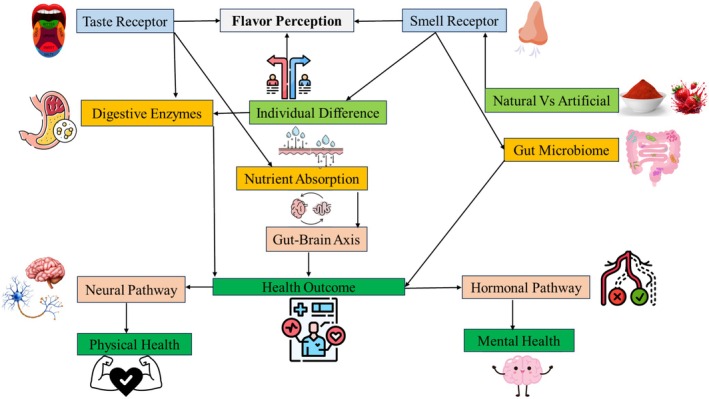
Sensory and behavioral links between flavor and health.
5.3. Flavor's Influence on Emotional, Psychological, and Behavioral Health
Flavor has a significant role in emotional and psychological health by modulating mood, memory, and stress levels. The taste of food interacts with gut microbiota, taste receptors, and gut hormones to modulate food choice, nutrient absorption, and gut homeostasis (Xie et al. 2023). The intersection of nutrition and mental health focuses on understanding how diet influences cognitive function, emotions, and mental well‐being, as well as how mental states shape food choices (Firth et al. 2020). Changes in taste perception can lead to changes in food choice and intake, hence affecting general eating behavior. Flavor experiences can have profound effects on psychological health. For instance, sweet flavors are often associated with comfort and reduced stress, while bitter tastes might signal caution or distaste (Davis and Running 2023). Flavor‐related nostalgia is linked to positive emotions and mood enhancement, contributing to overall well‐being (Simpson et al. 2024). Certain tastes, particularly those in spicy foods, can stimulate the release of endorphins, creating a feeling of euphoria (Rhyu et al. 2021). Flavors impact mood by evoking emotions associated with food, such as happiness, interest, joy, and tenderness (Mastinu et al. 2023). Studies have shown that flavors also affect psychological health by influencing emotional eating and food choices (Tuck et al. 2023). Emotional eating and depressive symptoms are positively correlated and can predict higher consumption of sweet and non‐sweet energy‐dense foods, while depressive symptoms are associated with lower intake of vegetables and fruits (Braden et al. 2023). Additionally, some foods contain unique components that can affect psychological health. For example, lemon essential oil components like limonene and citral have been shown to reduce both physical and psychological stress by inhibiting the elevation of stress hormones and brain neurotransmitters (Asikin et al. 2022). The current evidence highlights the complex role of flavor in health, mediated by neurobiological, hormonal, and microbial pathways. Flavor not only influences food preferences and intake but also interacts with gut‐brain signaling and emotional health. Critically, understanding these mechanisms can inform targeted interventions for improving both metabolic and psychological outcomes, suggesting flavor as a promising focus for future nutrition and health research.
6. Current Challenges and Research Gaps
6.1. Issues Related to the Dominance of Processed Foods
Processed foods with artificial flavorings are considered an important health and nutritional concern worldwide. A recent study revealed that nearly half of the commercially produced complementary food products in Southeast Asia are highly processed and often contain high levels of sugar, sodium, and artificial additives like flavors, colors, and thickeners. This poses a serious threat to children's health (Pries et al. 2024). About 58% of staple foods in mainstream US supermarkets are ultra‐processed, containing over 41% ultra‐processed food markers compared to European foods. This underscores the high consumption of processed foods and artificial flavors in the United States (Amaraggi et al. 2024). Increased consumption of ultra‐processed foods, which are low in nutrients and high in unhealthy additives, can lead to obesity and chronic diseases. Additionally, environmental concerns arise from the use of added flavors that increase overeating and hamper flavor–nutrient learning (Neumann and Fasshauer 2022). Higher consumption of artificial sweeteners, particularly aspartame and acesulfame‐K, is related to an increased risk of cardiovascular and cerebrovascular diseases (Debras, Chazelas, Sellem, et al. 2022). Additionally, artificial sweeteners intake, especially saccharin and acesulfame‐potassium, has been involved in increasing the risk of Type II diabetes by altering the gut microbiome (Li 2023). These sweeteners also contribute to the horizontal gene transfer of antibiotic resistance genes, posing further health risks as their usage increases (Yu et al. 2022). Additionally, it is important to recognize that some natural flavor compounds formed during high‐temperature processing, such as acrylamide in baked or fried starchy foods and heterocyclic amines (HCAs) in grilled meats, may also pose potential health risks (Vignesh et al. 2024). While these compounds contribute to the characteristic flavors of certain foods, they have been associated with adverse effects such as inflammation, cancer risk, and metabolic disorders, underscoring the need for a more nuanced evaluation of both artificial and naturally occurring flavor substances (Edna Hee et al. 2024).
6.2. Barriers to Adopting Flavor‐Focused Nutritional Interventions
Several obstacles hinder the adoption of flavor‐focused nutritional interventions. Economic constraints make healthier, natural, and flavorful foods more expensive and less accessible, particularly for some individuals and communities (Zenk et al. 2022). A report by Goodman (2017) highlighted that limited awareness and education about the benefits of natural flavors impede these efforts, as many people may not fully understand their health advantages (Goodman 2017). Accessibility is another issue; fresh and natural ingredients may not be readily available or easily accessible in all areas, making it difficult for people to incorporate them into their diets (Zenk et al. 2022). Moreover, the strong marketing of processed foods with artificial flavors often overshadows efforts to educate the people on healthy eating. This is particularly concerning for young children, as studies have shown that most educational websites used for remote learning feature advertisements for unhealthy foods, giving these products unprecedented access to young audiences (Emond et al. 2021). There are perceived taste differences; people accustomed to excessively processed foods may find it challenging to accept the subtle and less concentrated taste flavors of foods, as shown in a study on artificial flavor preference over natural flavors of vanilla in soft ice cream (Khantyanissa and Ervina 2024). The increasing use of natural extracts rich in nitrate and nitrite as co‐products for replacing artificial additives in meat products has raised concerns about their effects on color, lipid oxidation, and sensory properties (Sichetti Munekata et al. 2024). Recent research highlights significant gaps in knowledge regarding flavor mechanisms and their health implications. Although the use of flavor molecules in the food industry is common, research in this area has been limited due to a lack of comprehensive databases and standard descriptions (Kou et al. 2023). Large gaps remain in understanding the health effects of artificial versus natural flavors, flavor‐gut microbiome interactions, and the effects of flavors on eating behaviors and diseases.
7. Innovative Approaches and Future Directions
7.1. Recent Advancements in Food Processing Technology
Recent developments in food processing have ensured that natural flavor enhancers emerge with positive health and nutritional effects. This follows breakthroughs such as fermentation and enzyme hydrolysis that are driving the synthesis of umami compounds which make food products more appetizing while potentially reducing the need for synthetic flavor enhancers (Ruan et al. 2022). Emerging food processing technologies, such as high‐pressure processing and ultrasound processing, have the potential to greatly improve food quality, maintain nutritional components, and extend shelf‐life without affecting sensory features (Sharma et al. 2024). Some of the emerging approaches for developing texture‐modified foods for elderly individuals with dysphagia include nonthermal technologies, gelation, and 3D printing, with a focus on flavor enhancement and nutritional enrichment (Liu et al. 2024). Flavors, which are natural products, contain bioactive compounds that act as natural antioxidants, anti‐inflammatory, and antimicrobial agents. These include vanilla, coffee, cardamom, saffron, cinnamon, and others, which may be useful in preventing diseases like cancer and neurodegenerative disorders (Dibwe et al. 2023; Guo et al. 2024; Hossain et al. 2025; Tušek et al. 2024). These compounds may also improve the shelf life of food when used as additives. With the growing interest in natural flavors, research into their functional properties is expanding with potential applications in nutraceuticals and functional foods (An et al. 2022; Gupta et al. 2023). Table 5 provides a detailed overview of recent advancements and potential interventions in food processing, emphasizing the significant developments that are emerging within this evolving field.
TABLE 5.
Recent advancements and potential interventions in food processing.
| Advancement/intervention | Description | Potential benefits for well‐being | Examples of application | Reference |
|---|---|---|---|---|
| Flavor modulation techniques | Methods to alter or enhance flavors in foods using natural or artificial means | Improved taste, reduced need for unhealthy additives, increased acceptance of healthy foods | Use of flavor enhancers in low‐sugar beverages | (McBey and Nadathur 2024) |
| Umami flavor enhancement | Incorporation of natural umami compounds to enhance savory taste without increasing sodium content | Reduces sodium intake, enhances palatability, and increases appetite in individuals with taste impairments | Use of mushrooms, tomatoes, and seaweed extracts in low‐sodium foods | (Hossain et al. 2024) |
| Natural flavor enhancers | Compounds derived from natural sources to enhance food flavors | Improved taste perception without added sugars or salts | Use in low‐sugar beverages, reduced‐sodium snacks | (Cordero‐Soto et al. 2024; Vasilaki et al. 2022) |
| Flavor release kinetics | Studying the release rates of flavors during consumption | Optimized flavor delivery, improved sensory experience | Chewing gum, flavored beverages | (Jia et al. 2021; Meyers 2022) |
| Plant‐based flavor innovations | Developing flavors that mimic meat and dairy products using plant‐based ingredients. | Support for vegetarian and vegan diets, reduced environmental impact | Plant‐based meats, dairy‐free cheeses | (Variyar and Mishra 2024) |
| Functional flavors | Creating flavors with added health benefits, such as probiotics or antioxidants | Enhanced nutritional value, support for digestive health and immunity | Functional beverages, fortified snacks | (An et al. 2022; Gupta et al. 2023) |
| Flavor pairing algorithms | Using data science to identify complementary flavor combinations | Enhanced culinary experiences, innovative food products | Recipe development, gourmet food pairing | (Zhou et al. 2024) |
| Flavor encapsulation | Encapsulating flavors in protective coatings to enhance stability and controlled release | Improved flavor retention, prolonged shelf life, and targeted delivery in the digestive system | Functional foods, dietary supplements, and pharmaceuticals | (English et al. 2023) |
| Biotechnology in flavor production | Utilizing microbial fermentation and genetic engineering to produce natural flavors | Sustainable and scalable production of flavors, reduced environmental impact | Plant‐based foods, eco‐friendly flavor production | (Abd‐Alrahman et al. 2024) |
| Ai‐driven flavor development | Exploring machine learning algorithms to analyze vast datasets of flavor compounds and consumer preferences | Personalized flavor experiences, innovative and unique food products | Custom beverage formulations, AI‐generated recipes | (Thakur and Sharma 2024) |
| Flavor enhancement through fermentation | Applying traditional and modern fermentation techniques to develop rich and complex flavors | Improved gut health, enhanced nutritional value | Fermented beverages, probiotic‐rich foods | (Hernández‐Velázquez et al. 2024) |
7.2. Potential Interventions for Enhancing Well‐Being Through Flavor
Flavor may be used for the promotion of well‐being through new strategies. Among the most promising approaches is the application of natural flavoring agents. Natural agents represent bioactive compounds with health‐promoting properties (Badiche‐El Hilali et al. 2024; Gan et al. 2023), and by incorporating such flavors into foods, we can potentially improve dietary habits and overall health outcomes. This strategy includes developing appealing flavor profiles to improve dietary adherence and formulating functional foods and nutraceuticals designed to support specific health outcomes (Gupta et al. 2023). One effective intervention could be flavored oral nutritional supplements to improve the nutritional intake of elderly patients, or flavor masking strategies to make healthier food more palatable (Gallego et al. 2022; Liu et al. 2024). Moreover, ongoing research in flavor technology aims to develop products that align more closely with individual taste preferences and dietary needs, making it a promising avenue for health promotion (Aghababaei and Hadidi 2023; Tepper and Barbarossa 2020; Tušek et al. 2024). Studies have shown that the use of herbs and spices to enhance flavors in healthier foods can help consumers reduce their intake of saturated fat and sodium while maintaining acceptable taste (Petersen et al. 2024). The post‐COVID‐19 world has sparked innovative approaches to flavor and food development, with botanical and floral flavors becoming highly preferred for their perceived benefits to consumer well‐being (Ayseli 2023). Future research in this sector will likely focus on natural flavors with health benefits, using functional foods with bioactive compounds to individualize flavor experiences. This will connect the fields of food science, nutrition, psychology, and genetics.
8. Global Food Flavor Market: Current Overview
The food flavor market is growing fast, driven by increasing consumer demand for natural, healthy, and functional flavors (Gan et al. 2023). To meet these demands, the industry is actively innovating, creating new flavors, and improving existing ones. Technologies like encapsulation are being utilized to protect flavors from deterioration during processing and storage (Anil et al. 2023). Recent reports indicate that the market is characterized by diverse flavors and applications, showing the increasing consumer demand for innovation and variety within the food and beverage industry (Gan et al. 2023). One significant trend is the growing preference for natural and organic flavors, particularly among health‐conscious consumers who are looking for products with fewer synthetic additives (Kalyani and Prabhavathi 2023). This has led to enhanced use of natural flavor extracts obtained from fruits, herbs, and spices (Tamilarasi and Krishnakumar 2023). Improvements in flavor technology, such as flavor encapsulation and extraction methods, have introduced numerous possibilities for the development of new flavors (Dong et al. 2023; Gan et al. 2023). Flavors play a significant role in boosting the sales of food products by enhancing taste appeal, differentiating products, and creating brand loyalty. Unique and pleasant flavors attract consumer attention and drive repeat purchases. These innovative flavors, being either seasonal or limited edition, will generate buzz and sell (Günden et al. 2024). Flavors also contribute to emotional bonding between consumers and products by evoking positive emotions and memories, which in turn drive sales and contribute to a brand's success (De Pelsmaeker et al. 2022). The global food flavor market is expected to continue growth because of ongoing innovation, expanding applications, and a trend toward natural ingredients. Companies will focus on developing new flavor profiles and innovative flavor technologies that align with changing consumer tastes. The dynamic and competitive nature of the market offers numerous opportunities for growth and innovation.
9. Conclusion
Flavor perception is influenced by genetic factors, age, regional background, cultural context, and gender, all of which significantly impact dietary choices and overall health. It affects physiological and emotional reactions, with complex brain mechanisms guiding food choice. Acknowledging the role of these factors places natural flavors in the spotlight, as they have the ability to increase the adoption of healthier foods and reduce dependency on artificial additives that can have negative impacts. Greater demand for natural and organic flavor by health‐conscious consumers is a key trend, despite setbacks in terms of low bioavailability and lack of sufficient clinical trials to confirm their efficacy. Nevertheless, new advances in food processing technology, including microencapsulation and better extraction methods, are promising means of improving flavor stability and sensory quality. These advances make healthier products more palatable and acceptable. The use of flavor in food reformulation, nutrition intervention, and nutrition education plays a key role in promoting healthier and more sustainable eating. Subsequent research must target human trials for optimizing flavor delivery and dosage techniques, and industry‐specific guidelines for implementing these findings. Understanding how genetic traits (such as TAS2R38 and TAS1R2) interact with the environment will guide customized flavor experience development. Through the integration of food science, nutrition, psychology, and genetics, the field can make significant progress in public health and dietary choice among diverse populations. Moreover, governments worldwide should enforce stricter regulations on the use of artificial additives, ensuring that industry standards are adhered to and that these additives do not exceed safe limits, thereby safeguarding consumer health.
Author Contributions
Md. Sakhawot Hossain: conceptualization (equal), data curation (lead), investigation (lead), methodology (lead), resources (lead), validation (lead), visualization (lead), writing – original draft (lead). Md Abdul Wazed: conceptualization (equal), methodology (equal), validation (equal), visualization (equal), writing – review and editing (equal). Sharmin Asha: resources (equal), visualization (equal), writing – review and editing (equal). Md Alomgir Hossen: resources (equal), writing – review and editing (equal). Sk. Nur Muhammad Fime: visualization (supporting), writing – review and editing (equal). Shamiha Tabassum Teeya: visualization (supporting), writing – review and editing (equal). Lubna Yeasmin Jenny: writing – review and editing (equal). Diptho Dash: visualization (supporting), writing – review and editing (equal). Islam Md Shimul: conceptualization (equal), funding acquisition (lead), supervision (lead), validation (equal), writing – review and editing (equal).
Ethics Statement
The authors have nothing to report.
Consent
The authors have nothing to report.
Conflicts of Interest
The authors declare no conflicts of interest.
Acknowledgments
The Jashore University of Science and Technology of Bangladesh provided funding for this work (JUST project 2023‐2024 funded by UGC).
Funding: The authors received no specific funding for this work.
Contributor Information
Md. Sakhawot Hossain, Email: sakhawot.jnft@gmail.com.
Islam Md Shimul, Email: shimul_nft@just.edu.bd.
Data Availability Statement
No new data were generated or analyzed in this review. Data supporting the findings of this study are available in the referenced works.
References
- Abd‐Alrahman, A. M. , Ramadan M. M., Maraay M. F., et al. 2024. “Production of Natural Flavor Compounds Using Bacillus Subtilis‐Fermented Soybean Meal Extract and Their Biological Potential: A Comprehensive In Vitro Study.” Frontiers in Nutrition 10, no. 1280209: 1280209. 10.3389/fnut.2023.1280209. [DOI] [PMC free article] [PubMed] [Google Scholar]
- Aghababaei, F. , and Hadidi M.. 2023. “Recent Advances in Potential Health Benefits of Quercetin.” Pharmaceuticals 16, no. 7: 1020. 10.3390/ph16071020. [DOI] [PMC free article] [PubMed] [Google Scholar]
- Ahmed, A. U. , Bakhtiar M. M., Ali M., Ghostlaw J., and Nguyen P. H.. 2022. “Trends and Inequities in Food, Energy, Protein, Fat, and Carbohydrate Intakes in Rural Bangladesh.” Journal of Nutrition 152, no. 11: 2591–2603. 10.1093/jn/nxac198. [DOI] [PMC free article] [PubMed] [Google Scholar]
- al Banna, M. H. , Hamiduzzaman M., Kundu S., et al. 2022. “The Association Between Bangladeshi Adults' Demographics, Personal Beliefs, and Nutrition Literacy: Evidence From a Cross‐Sectional Survey.” Frontiers in Nutrition 9: 867926. 10.3389/fnut.2022.867926. [DOI] [PMC free article] [PubMed] [Google Scholar]
- Ali, M. , Raihan M. J., Siddiqua T. J., et al. 2022. “Factors Associated With Low and Medium Household Dietary Diversity Compared With High Dietary Diversity Among Marginalised Households in Rural Bangladesh: Findings From a Suchana Baseline Survey.” BMJ Open 12, no. 11: e062143. 10.1136/bmjopen-2022-062143. [DOI] [PMC free article] [PubMed] [Google Scholar]
- Almiron‐Roig, E. , Navas‐Carretero S., Castelnuovo G., et al. 2023. “Impact of Acute Consumption of Beverages Containing Plant‐Based or Alternative Sweetener Blends on Postprandial Appetite, Food Intake, Metabolism, and Gastro‐Intestinal Symptoms: Results of the SWEET Beverages Trial.” Appetite 184: 106515. 10.1016/j.appet.2023.106515. [DOI] [PubMed] [Google Scholar]
- Amaraggi, B. , Wood W., Martín L. G., Giménez Sánchez J., and Sánchez Y. F.. 2024. “Ultra‐Processed Food Staples Dominate Mainstream U.S. Supermarkets. Americans More Than Europeans Forced to Choose Between Health and Cost.” MedRxiv 16: 24302894. 10.1101/2024.02.16.24302894. [DOI] [Google Scholar]
- An, U. , Du X., and Wang W.. 2022. “Consumer Expectation of Flavored Water Function, Sensory Quality, and Sugar Reduction, and the Impact of Demographic Variables and Woman Consumer Segment.” Food 11, no. 10: 1434. 10.3390/foods11101434. [DOI] [PMC free article] [PubMed] [Google Scholar]
- Angelini, G. , Russo S., and Mingrone G.. 2024. “Incretin Hormones, Obesity and Gut Microbiota.” Peptides 178: 171216. 10.1016/j.peptides.2024.171216. [DOI] [PubMed] [Google Scholar]
- Anil, A. , Haponiuk J. T., and Sumith K.. 2023. “Flavor Technology and Flavor Delivering Systems.” In Natural Flavours, Fragrances, and Perfumes, edited by Anil A., Haponiuk J. T., and Sumith K., 63–72. Wiley. 10.1002/9783527824816.ch4. [DOI] [Google Scholar]
- Aronica, L. , Ordovas J. M., Volkov A., et al. 2022. “Genetic Biomarkers of Metabolic Detoxification for Personalized Lifestyle Medicine.” Nutrients 14, no. 4: 768. 10.3390/nu14040768. [DOI] [PMC free article] [PubMed] [Google Scholar]
- Asikin, Y. , Shimizu K., Iwasaki H., Oku H., and Wada K.. 2022. “Stress Amelioration and Anti‐Inflammatory Potential of Shiikuwasha (Citrus Depressa Hayata) Essential Oil, Limonene, and γ‐Terpinene.” Journal of Food and Drug Analysis 30, no. 3: 454–465. 10.38212/2224-6614.3414. [DOI] [PMC free article] [PubMed] [Google Scholar]
- Avula, B. , Katragunta K., Osman A. G., et al. 2023. “Advances in the Chemistry, Analysis and Adulteration of Anthocyanin Rich‐Berries and Fruits: 2000–2022.” Molecules 28, no. 2: 560. 10.3390/molecules28020560. [DOI] [PMC free article] [PubMed] [Google Scholar]
- Ayseli, M. T. 2023. “New Frontiers in Flavor, Color, and Sweeteners During the Post‐COVID‐19 Period: A Systematic Review.” Trends in Food Science and Technology 140: 104144. 10.1016/j.tifs.2023.104144. [DOI] [Google Scholar]
- Badiche‐El Hilali, F. , Medeiros‐Fonseca B., Silva J., et al. 2024. “The Effect of Lemon Juice ( Citrus limon L.) Treated With Melatonin on the Health Status and Treatment of K14HPV16 Mice.” Antioxidants 13, no. 5: 588. 10.3390/antiox13050588. [DOI] [PMC free article] [PubMed] [Google Scholar]
- Barakat, G. M. , Ramadan W., Assi G., and Khoury N. B. E.. 2024. “Satiety: A Gut‐Brain‐Relationship.” Journal of Physiological Sciences: JPS 74, no. 1: 11. 10.1186/s12576-024-00904-9. [DOI] [PMC free article] [PubMed] [Google Scholar]
- Barros Rocha, R. , Paula A., Silva Santos F. K., et al. 2018. “Toxic, Cytotoxic and Genotoxic Potential of Synthetics Food Flavorings.” Acta Toxicologica Argentina 26, no. 2: 57–64. https://www.toxicologia.org.ar/wp‐content/uploads/2019/02/ATA2018v26n2‐final‐OK.pdf. [Google Scholar]
- Batada, A. , and Jacobson M. F.. 2016. “Prevalence of Artificial Food Colors in Grocery Store Products Marketed to Children.” Clinical Pediatrics 55, no. 12: 1113–1119. 10.1177/0009922816651621. [DOI] [PubMed] [Google Scholar]
- Batubo, N. P. , Moore J. B., and Zulyniak M. A.. 2023. “Dietary Factors and Hypertension Risk in West Africa: A Systematic Review and Meta‐Analysis of Observational Studies.” Journal of Hypertension 41, no. 9: 1376–1388. 10.1097/HJH.0000000000003499. [DOI] [PMC free article] [PubMed] [Google Scholar]
- Benyaich, A. 2017. “The Effects of the Mediterranean Diet on Chronic Diseases: Cardiovascular Diseases, Oxidative Stress, Dyslipidemia, Diabetes Mellitus, Blood Pressure, Cancer, Neurodegenerative Disease and Obesity.” Journal of Applied and Advanced Research 2, no. 6: 333–335. 10.21839/jaar.2017.v2i6.122. [DOI] [Google Scholar]
- Beslay, M. , Srour B., Méjean C., et al. 2020. “Ultra‐Processed Food Intake in Association With BMI Change and Risk of Overweight and Obesity: A Prospective Analysis of the French NutriNet‐Santé Cohort.” PLoS Medicine 17, no. 8: e1003256. 10.1371/JOURNAL.PMED.1003256. [DOI] [PMC free article] [PubMed] [Google Scholar]
- Best, R. 2023. “A Review of the Digestive, Respiratory and Nocioceptive Benefits, Associated Performance Outcomes and Clinical Considerations Following Mint and Menthol Application.” Medical Research Archives 11, no. 1: 3321. 10.18103/mra.v11i1.3321. [DOI] [Google Scholar]
- Bozorgi, C. , Holleufer C., and Wendin K.. 2020. “Saliva Secretion and Swallowing—The Impact of Different Types of Food and Drink on Subsequent Intake.” Nutrients 12, no. 1: 256. 10.3390/nu12010256. [DOI] [PMC free article] [PubMed] [Google Scholar]
- Braden, A. , Barnhart W. R., Kalantzis M., et al. 2023. “Eating When Depressed, Anxious, Bored, or Happy: An Examination in Treatment‐Seeking Adults With Overweight/Obesity.” Appetite 184: 106510. 10.1016/j.appet.2023.106510. [DOI] [PubMed] [Google Scholar]
- Brown, E. B. , Lloyd E., Martin‐Peña A., McFarlane S., and Keene A. C.. 2024. “Aging Is Associated With a Modality‐Specific Decline in Taste.” Iscience 27, no. 10: 110919. 10.1101/2024.02.01.578408. [DOI] [PMC free article] [PubMed] [Google Scholar]
- Cai, W. , Chen T., Ren T., and Qing P.. 2023. “Watch out for the Healthy Trap! How Food Flavor Influences Healthiness Evaluations and Consumption.” Food Research International 173: 113379. 10.1016/j.foodres.2023.113379. [DOI] [PubMed] [Google Scholar]
- Cañas, S. , Rebollo‐Hernanz M., Bermúdez‐Gómez P., et al. 2023. “Radical Scavenging and Cellular Antioxidant Activity of the Cocoa Shell Phenolic Compounds After Simulated Digestion.” Antioxidants (Basel) 12, no. 5: 1007. 10.3390/antiox12051007. [DOI] [PMC free article] [PubMed] [Google Scholar]
- Cardello, A. V. , Llobell F., Jin D., Ryan G. S., and Jaeger S. R.. 2024. “Sensory Drivers of Liking, Emotions, Conceptual and Sustainability Concepts in Plant‐Based and Dairy Yoghurts.” Food Quality and Preference 113: 105077. 10.1016/j.foodqual.2023.105077. [DOI] [Google Scholar]
- Castro‐Muñoz, R. , Correa‐Delgado M., Córdova‐Almeida R., et al. 2022. “Natural Sweeteners: Sources, Extraction and Current Uses in Foods and Food Industries.” Food Chemistry 370: 130991. 10.1016/j.foodchem.2021.130991. [DOI] [PubMed] [Google Scholar]
- Cecati, M. , Vignini A., Borroni F., et al. 2022. “TAS1R3 and TAS2R38 Polymorphisms Affect Sweet Taste Perception: An Observational Study on Healthy and Obese Subjects.” Nutrients 14, no. 9: 1711. 10.3390/nu14091711. [DOI] [PMC free article] [PubMed] [Google Scholar]
- Chaffee, O. , and Ross C. F.. 2023. “Older Adults' Acceptance of Ready‐To‐Eat Meals in Relation to Food Choice and Sensory Ability.” Journal of Food Science 88, no. 6: 2611–2628. 10.1111/1750-3841.16573. [DOI] [PubMed] [Google Scholar]
- Chandra, M. 2022. “Role of Bioactive Compounds in Hormonal Bioregulation.” In A Sustainable System for Good Health and Well‐Being, edited by Bioactive Components, 323–342. Springer Nature Singapore. 10.1007/978-981-19-2366-1_19. [DOI] [Google Scholar]
- Chauhan, N. , Manjunath B. C., Malhotra P., et al. 2022. “Dietary Practices as a Potential Predictor for Dental Erosion Among Patients Having Gastroesophageal Reflux Disease: An Analytical Cross‐Sectional Study.” Journal of International Society of Preventive and Community Dentistry 12, no. 6: 583–589. 10.4103/jispcd.JISPCD_95_22. [DOI] [PMC free article] [PubMed] [Google Scholar]
- Chen, S. , Hassan L., Turner A., Newman L., Danaher J., and Biesiekierski J.. 2024. “Bitter Taste Sensitivity and Frequency of Bitter Food Intake in Healthy Australian Adults: A Cross‐Sectional, Mixed‐Methods Study.” Proceedings of the Nutrition Society 83, no. OCE1: E138. 10.1017/S0029665124001563. [DOI] [Google Scholar]
- Chen, X. F. , Ding Y. Y., Guan H. R., et al. 2024. “The Pharmacological Effects and Potential Applications of Limonene From Citrus Plants: A Review.” Natural Product Communications 19, no. 5: 1–12. 10.1177/1934578X241254229. [DOI] [Google Scholar]
- Chen, Y. P. , Ding Z., Yu Y., et al. 2023. “Recent Advances in Investigating Odor‐Taste Interactions: Psychophysics, Neuroscience, and Microfluidic Techniques.” Trends in Food Science & Technology 138: 500–510. 10.1016/j.tifs.2023.06.019. [DOI] [Google Scholar]
- Cooper, S. Y. , Willis C. V., Richardson M. R., et al. 2023. “Chemical Flavorants in Vaping Products Alter Neurobiology in a Sex‐Dependent Manner to Promote Vaping‐Related Behaviors.” Journal of Neuroscience 43, no. 8: 1360–1374. 10.1523/JNEUROSCI.0755-22.2022. [DOI] [PMC free article] [PubMed] [Google Scholar]
- Cordero‐Soto, I. N. , Huerta‐Ochoa S., Prado‐Barragán L. A., Adame‐Soto P. J., Mares‐Rodriguez J. F., and Rutiaga‐Quiñones O. M.. 2024. “Food By‐Products Potential Use for Flavor Enhancers Production.” In Enzymatic Processes for Food Valorization, 129–143. Elsevier. 10.1016/B978-0-323-95996-4.00009-5. [DOI] [Google Scholar]
- Cox, A. J. , Brown K. C., and Valentovic M. A.. 2024. “The Flavoring Agent Ethyl Vanillin Induces Cellular Stress Responses in HK‐2 Cells.” Toxics 12, no. 7: 472. 10.3390/toxics12070472. [DOI] [PMC free article] [PubMed] [Google Scholar]
- Criss, S. , Horhota M., Wiles K., et al. 2020. “Food Cultures and Aging: A Qualitative Study of Grandparents' Food Perceptions and Influence of Food Choice on Younger Generations.” Public Health Nutrition 23, no. 2: 221–230. 10.1017/S1368980019002489. [DOI] [PMC free article] [PubMed] [Google Scholar]
- Davis, L. A. , and Running C. A.. 2023. “Good Is Sweet and Bad Is Bitter: Conflation of Affective Value of Aromas With Taste Qualities in Untrained Participants.” Journal of Sensory Studies 38, no. 3: e12820. 10.1111/joss.12820. [DOI] [Google Scholar]
- De Pelsmaeker, S. , Gellynck X., Dewettinck K., and Schouteten J. J.. 2022. “Effect of Tasting and Flavour on Chocolate‐Evoked Emotions by Consumers.” British Food Journal 124, no. 12: 4354–4371. 10.1108/BFJ-07-2021-0834. [DOI] [Google Scholar]
- de Souza, T. S. P. , Dias F. F. G., Oliveira J. P. S., de Moura Bell J. M. L. N., and Koblitz M. G. B.. 2020. “Biological Properties of Almond Proteins Produced by Aqueous and Enzyme‐Assisted Aqueous Extraction Processes From Almond Cake.” Scientific Reports 10, no. 1: 10873. 10.1038/s41598-020-67682-3. [DOI] [PMC free article] [PubMed] [Google Scholar]
- de Wouters d'Oplinter, A. , Huwart S. J. P., Cani P. D., and Everard A.. 2022. “Gut Microbes and Food Reward: From the Gut to the Brain.” Frontiers in Neuroscience 16: 947240. 10.3389/fnins.2022.947240. [DOI] [PMC free article] [PubMed] [Google Scholar]
- Debras, C. , Chazelas E., Sellem L., et al. 2022. “Artificial Sweeteners and Risk of Cardiovascular Diseases: Results From the Prospective NutriNet‐Santé Cohort.” BMJ 378: e071204. 10.1136/bmj-2022-071204. [DOI] [PMC free article] [PubMed] [Google Scholar]
- Debras, C. , Chazelas E., Srour B., et al. 2022. “Artificial Sweeteners and Cancer Risk: Results From the NutriNet‐Santé Population‐Based Cohort Study.” PLoS Medicine 19, no. 3: e1003950. 10.1371/journal.pmed.1003950. [DOI] [PMC free article] [PubMed] [Google Scholar]
- Dibwe, D. F. , Takeishi N., Oba S., et al. 2023. “Identification of a β‐Carboline Alkaloid From Chemoselectively Derived Vanilla Bean Extract and Its Prevention of Lipid Droplet Accumulation in Human Hepatocytes (HepG2).” Molecules 28, no. 24: 8024. 10.3390/molecules28248024. [DOI] [PMC free article] [PubMed] [Google Scholar]
- Dominguez, L. J. , Veronese N., Di Bella G., et al. 2023. “Mediterranean Diet in the Management and Prevention of Obesity.” Experimental Gerontology 174: 112121. 10.1016/j.exger.2023.112121. [DOI] [PubMed] [Google Scholar]
- Dong, A. , Yu Z., Pan T., et al. 2023. “Synthesis and Pyrolysis of Ethyl Maltol Ester.” Flavour and Fragrance Journal 38, no. 6: 416–425. 10.1002/ffj.3756. [DOI] [Google Scholar]
- Drareni, K. , Dougkas A., Lusson H., Vansteene D., Giboreau A., and Bensafi M.. 2023. “Flavor Enhancement as a Strategy to Improve Food Liking in Cancer Patients With Taste and Smell Alterations.” Clinical Nutrition Open Science 47: 53–63. 10.1016/j.nutos.2022.11.009. [DOI] [Google Scholar]
- Durrani, K. , El Din S. M. A., Sun Y., Rule A. M., and Bressler J.. 2021. “Ethyl Maltol Enhances Copper Mediated Cytotoxicity in Lung Epithelial Cells.” Toxicology and Applied Pharmacology 410: 115354. 10.1016/j.taap.2020.115354. [DOI] [PMC free article] [PubMed] [Google Scholar]
- Ebrahimi, F. , Ghazimoradi M. M., Fatima G., and Bahramsoltani R.. 2023. “Citrus Flavonoids and Adhesion Molecules: Potential Role in the Management of Atherosclerosis.” Heliyon 9, no. 11: e21849. 10.1016/j.heliyon.2023.e21849. [DOI] [PMC free article] [PubMed] [Google Scholar]
- Ecker, O. , Comstock A., Babatunde R., and Andam K.. 2020. Poor Dietary Quality in Nigeria's Key Nutrition Problem. In Policy Research Brief. Feed the Future Innovation Lab for Food Security Policy Research Briefs 303682, Michigan State University, Department of Agricultural, Food, and Resource Economics, Feed the Future Innovation Lab for Food Security (FSP)AgEcon Search. AgEcon Search. 10.22004/ag.econ.303682. [DOI] [Google Scholar]
- Edna Hee, P.‐T. , Liang Z., Zhang P., and Fang Z.. 2024. “Formation Mechanisms, Detection Methods and Mitigation Strategies of Acrylamide, Polycyclic Aromatic Hydrocarbons and Heterocyclic Amines in Food Products.” Food Control 158: 110236. 10.1016/j.foodcont.2023.110236. [DOI] [Google Scholar]
- Elbestawy, M. K. M. , El‐Sherbiny G. M., and Moghannem S. A.. 2023. “Antibacterial, Antibiofilm and Anti‐Inflammatory Activities of Eugenol Clove Essential Oil Against Resistant Helicobacter pylori .” Molecules 28, no. 6: 2448. 10.3390/molecules28062448. [DOI] [PMC free article] [PubMed] [Google Scholar]
- Ellender, G. , and Moynihan P.. 2021. “Oral Health Impacts on Flavor and Significance in Dental Treatment.” JDR Clinical & Translational Research 6, no. 4: 460–462. 10.1177/2380084421995096. [DOI] [PubMed] [Google Scholar]
- Emond, J. A. , Fleming‐Milici F., McCarthy J., et al. 2021. “Unhealthy Food Marketing on Commercial Educational Websites: Remote Learning and Gaps in Regulation.” American Journal of Preventive Medicine 60, no. 4: 587–591. 10.1016/j.amepre.2020.10.008. [DOI] [PMC free article] [PubMed] [Google Scholar]
- Engel, J. A. , Pålsson E., Vallöf D., and Jerlhag E.. 2023. “Ghrelin Activates the Mesolimbic Dopamine System via Nitric Oxide Associated Mechanisms in the Ventral Tegmental Area.” Nitric Oxide: Biology and Chemistry 131: 1–7. 10.1016/j.niox.2022.12.001. [DOI] [PubMed] [Google Scholar]
- English, M. , Okagu O. D., Stephens K., Goertzen A., and Udenigwe C. C.. 2023. “Flavour Encapsulation: A Comparative Analysis of Relevant Techniques, Physiochemical Characterisation, Stability, and Food Applications.” Frontiers in Nutrition 10: 1019211. 10.3389/fnut.2023.1019211. [DOI] [PMC free article] [PubMed] [Google Scholar]
- Erickson, B. 2018. “FDA Bans 7 Synthetic Food Flavorings.” C&EN Global Enterprise, 19. ACS Publications. https://pubs.acs.org/doi/full/10.1021/cen‐09641‐polcon2. [Google Scholar]
- Fallon, M. A. , Tadfie H., Watson A. P., et al. 2024. “Molecular Basis of One‐Step Methyl Anthranilate Biosynthesis in Grapes, Sweet Orange, and Maize.” Plant Journal 119, no. 5: 2363–2374. 10.1111/tpj.16922. [DOI] [PubMed] [Google Scholar]
- Feng, Z. , Sun R., Cong Y., and Liu Z.. 2022. “Critical Roles of G Protein‐Coupled Receptors in Regulating Intestinal Homeostasis and Inflammatory Bowel Disease.” Mucosal Immunology 15, no. 5: 819–828. 10.1038/s41385-022-00538-3. [DOI] [PubMed] [Google Scholar]
- Firth, J. , Gangwisch J. E., Gangwisch J. E., et al. 2020. “Food and Mood: How Do Diet and Nutrition Affect Mental Wellbeing?” BMJ 369: m2382. 10.1136/bmj.m2382. [DOI] [PMC free article] [PubMed] [Google Scholar]
- Flockhart, M. , Nilsson L. C., Tillqvist E. N., et al. 2023. “Glucosinolate‐Rich Broccoli Sprouts Protect Against Oxidative Stress and Improve Adaptations to Intense Exercise Training.” Redox Biology 67: 102873. 10.1016/j.redox.2023.102873. [DOI] [PMC free article] [PubMed] [Google Scholar]
- Forde, C. G. 2024. “‘Better Living Through Sensory’; How Sensory Cues Moderate Our Eating Behaviour, Food Intake and Health.” Science Talks 10: 100349. 10.1016/j.sctalk.2024.100349. [DOI] [Google Scholar]
- Forray, A. I. , and Borzan C. M.. 2024. “Implementation of National Nutrition Policies and Strategies to Reduce Unhealthy Diets: An Ecological Analysis of 194 Countries From 2017 to 2021.” Nutrients 16, no. 6: 911. 10.3390/nu16060911. [DOI] [PMC free article] [PubMed] [Google Scholar]
- Gallego, M. , Barat J. M., Grau R., and Talens P.. 2022. “Compositional, Structural Design and Nutritional Aspects of Texture‐Modified Foods for the Elderly.” Trends in Food Science and Technology 119: 152–163. 10.1016/j.tifs.2021.12.008. [DOI] [Google Scholar]
- Gan, S. , Zhang M., Mujumdar A. S., Zhang L., and Liu Y.. 2023. “Advances in Processing, Encapsulation, and Analysis of Food Flavor Compounds.” Journal of Food Process Engineering 46, no. 10: e14406. 10.1111/jfpe.14406. [DOI] [Google Scholar]
- Ghosh, A. 2022. “An Overview of Indian Culinary Journey With Glimpse of Regional Cuisine.” Bulletin of Culinary Art and Hospitality 2, no. 1: 33–40. 10.17977/um069v2i12022p33-40. [DOI] [Google Scholar]
- Goodman, M. J. 2017. “The ‘Natural’ vs. ‘Natural Flavors’ Conflict in Food Labeling: A Regulatory Viewpoint.” Food and Drug Law Journal 72, no. 1: 78–102. https://www.jstor.org/stable/26661129. [PubMed] [Google Scholar]
- Grasso, S. , Fu R., Goodman‐Smith F., Lalor F., and Crofton E.. 2023. “Consumer Attitudes to Upcycled Foods in US and China.” Journal of Cleaner Production 388: 135919. 10.1016/j.jclepro.2023.135919. [DOI] [Google Scholar]
- Gromova, O. A. , Torshin I. Y., and Tetruashvili N. K.. 2022. “A Systematic Review of Experimental and Clinical Studies on the Pharmacology of Glycyrrhizin and Its Derivatives.” Obstetrics and Gynecology 4: 34–46. 10.18565/aig.2022.4.34-46. [DOI] [Google Scholar]
- Günden, C. , Atakan P., Yercan M., Mattas K., and Knez M.. 2024. “Consumer Response to Novel Foods: A Review of Behavioral Barriers and Drivers.” Food 13, no. 13: 2051. 10.3390/foods13132051. [DOI] [PMC free article] [PubMed] [Google Scholar]
- Guo, J. , Yan S., Jiang X., et al. 2024. “Advances in Pharmacological Effects and Mechanism of Action of Cinnamaldehyde.” Frontiers in Pharmacology 15: 1365949. 10.3389/fphar.2024.1365949. [DOI] [PMC free article] [PubMed] [Google Scholar]
- Gupta, A. , Sanwal N., Bareen M. A., et al. 2023. “Trends in Functional Beverages: Functional Ingredients, Processing Technologies, Stability, Health Benefits, and Consumer Perspective.” Food Research International 170: 113046. 10.1016/j.foodres.2023.113046. [DOI] [PubMed] [Google Scholar]
- Hamed Kandil, S. 2022. “The Role of Food Culture in Developing the Nutritional Awareness and Healthy Behavior of Students.” International Journal of Humanities and Language Research 5, no. 1: 60. 10.21608/ijhlr.2023.215929.1012. [DOI] [Google Scholar]
- Hasan, H. M. , Alkass S. Y., and de Oliveira D. S. P.. 2023. “Impact of Long‐Term Cyclamate and Saccharin Consumption on Biochemical Parameters in Healthy Individuals and Type 2 Diabetes Mellitus Patients.” Medicina (Lithuania) 59, no. 4: 698. 10.3390/medicina59040698. [DOI] [PMC free article] [PubMed] [Google Scholar]
- Hernández‐Velázquez, R. , Flörl L., Lavrinienko A., et al. 2024. “The Future Is Fermented: Microbial Biodiversity of Fermented Foods Is a Critical Resource for Food Innovation and Human Health.” Trends in Food Science & Technology 150: 104569. 10.1016/j.tifs.2024.104569. [DOI] [Google Scholar]
- Hong, S. , and Choi K. M.. 2024. “Gut Hormones and Appetite Regulation.” Current Opinion in Endocrinology, Diabetes, and Obesity 31, no. 3: 115–121. 10.1097/MED.0000000000000859. [DOI] [PubMed] [Google Scholar]
- Hossain, M. J. , Alam A. N., Lee E.‐Y., Hwang Y.‐H., and Joo S.‐T.. 2024. “Umami Characteristics and Taste Improvement Mechanism of Meat.” Food Science of Animal Resources 44, no. 3: 515–532. 10.5851/kosfa.2024.e29. [DOI] [PMC free article] [PubMed] [Google Scholar]
- Hossain, M. S. , Wazed M. A., Asha S., Amin M. R., and Shimul I. M.. 2025. “Dietary Phytochemicals in Health and Disease: Mechanisms, Clinical Evidence, and Applications—A Comprehensive Review.” Food Science & Nutrition 13, no. 3: e70101. 10.1002/fsn3.70101. [DOI] [PMC free article] [PubMed] [Google Scholar]
- Huang, L. , Dai Y., Zhang F., Zhang L., Zheng B., and Zhang Y.. 2024. “Insights Into the Enhancement of Food Flavor Perception: Strategies, Mechanism and Emulsion Applications.” Food Science and Human Wellness 13, no. 5: 2410–2424. 10.26599/FSHW.2022.9250199. [DOI] [Google Scholar]
- Ide‐Okochi, A. , He M., Tokieda T., Nakamura S., and Matsunaga N.. 2024. “Assessment of Sensory Processing Issues in Children With Neurodevelopmental Disorders and Experiences of Maltreatment.” Children 11, no. 2: 216. 10.3390/children11020216. [DOI] [PMC free article] [PubMed] [Google Scholar]
- Jeon, S. , Kim Y., Min S., Song M., Son S., and Lee S.. 2021. “Taste Sensitivity of Elderly People Is Associated With Quality of Life and Inadequate Dietary Intake.” Nutrients 13, no. 5: 1693. 10.3390/nu13051693. [DOI] [PMC free article] [PubMed] [Google Scholar]
- Jia, J. , Zhang Y., Xu Z., Wang X., Chen J., and van der Glas H. W.. 2021. “The Influence of Flavor Release From a Solid Test Food, and Its Time Intensity (TI) Scoring, on Chewing Efficiency.” Food Quality and Preference 93: 104247. 10.1016/j.foodqual.2021.104247. [DOI] [Google Scholar]
- Jones, D. S. , and Clarke P. A.. 2018. “Aboriginal Culture and Food‐Landscape Relationships in Australia.” In Routledge Handbook of Landscape and Food, 41–60. Routledge. 10.4324/9781315647692-4. [DOI] [Google Scholar]
- Jordt, S.‐E. , Caceres A. I., Erythropel H., Zimmerman J. B., Dewinter T., and Jabba S. V.. 2020. “Flavor‐Solvent Reaction Products in Electronic Cigarette Liquids Activate Respiratory Irritant Receptors and Elicit Cytotoxic Metabolic Responses in Airway Epithelial Cell.” European Respiratory Journal 56, no. 64: 4384. 10.1183/13993003.congress-2020.4384. [DOI] [Google Scholar]
- Kalyani, R. , and Prabhavathi Y.. 2023. “Understanding Consumer Behavior in the Organic Food Market: Perceptions, Preferences and Purchase Factors.” Asian Journal of Agricultural Extension, Economics & Sociology 41, no. 10: 992–1004. 10.9734/ajaees/2023/v41i102253. [DOI] [Google Scholar]
- Karamba, K. I. , and Abdullahi M. M.. 2022. “Optimization of Traditional Starter Culture and African Locust Beans for Daddawa Production Using Response Surface Methodology (RSM).” Gadau Journal of Pure and Allied Sciences 1, no. 2: 166–173. 10.54117/gjpas.v1i2.28. [DOI] [Google Scholar]
- Kato, E. , and Oshima S.. 2023. “Association of Bitter Taste Receptors With Obesity and Diabetes and Their Role in Related Tissues.” Receptor 2, no. 4: 251–263. 10.3390/receptors2040017. [DOI] [Google Scholar]
- Kaur, V. , Kaushal S., Kalia A., and Heena. 2024. “Effect of Different Hydrodistillation Pretreatments on the Yield, Chemical Composition, Antibacterial and Antioxidant Potential of Nutmeg and Mace ( Myristica fragrans Houtt.) Essential Oils.” Chemical Papers 78, no. 2: 1125–1138. 10.1007/s11696-023-03151-1. [DOI] [Google Scholar]
- Kazemi, A. , Iraji A., Esmaealzadeh N., Salehi M., and Hashempur M. H.. 2023. “Peppermint and Menthol: A Review on Their Biochemistry, Pharmacological Activities, Clinical Applications, and Safety Considerations.” Critical Reviews in Food Science and Nutrition 65, no. 8: 1553–1578. 10.1080/10408398.2023.2296991. [DOI] [PubMed] [Google Scholar]
- Khantyanissa, H. S. , and Ervina E.. 2024. “Consumer Preferences of Artificial and Natural Flavours: A Case in Soft Ice Cream.” IOP Conference Series: Earth and Environmental Science 1352, no. 1: 012088. 10.1088/1755-1315/1352/1/012088. [DOI] [Google Scholar]
- Khare, P. , Jagtap S., Jain Y., et al. 2016. “Cinnamaldehyde Supplementation Prevents Fasting‐Induced Hyperphagia, Lipid Accumulation, and Inflammation in High‐Fat Diet‐Fed Mice.” BioFactors 42, no. 2: 201–211. 10.1002/biof.1265. [DOI] [PubMed] [Google Scholar]
- Kou, X. , Shi P., Gao C., et al. 2023. “Data‐Driven Elucidation of Flavor Chemistry.” Journal of Agricultural and Food Chemistry 71, no. 18: 6789–6802. 10.1021/acs.jafc.3c00909. [DOI] [PMC free article] [PubMed] [Google Scholar]
- Labrie, C. W. , Sijtsema S. J., Snoek H. M., Raaijmakers I., and Aramyan L. H.. 2020. “Flavour and Nutrition of Fruits and Vegetables Create Added Value to Consumers.” Acta Horticulturae 1277, no. 1277: 425–432. 10.17660/ActaHortic.2020.1277.61. [DOI] [Google Scholar]
- Lagast, S. , De Steur H., Gadeyne S., et al. 2020. “Heart Rate, Electrodermal Responses and Frontal Alpha Asymmetry to Accepted and Non‐Accepted Solutions and Drinks.” Food Quality and Preference 82: 103893. 10.1016/j.foodqual.2020.103893. [DOI] [Google Scholar]
- Laureati, M. , Sandvik P., Almli L., et al. 2020. “Individual Differences in Texture Preferences Among European Children: Development and Validation of the Child Food Texture Preference Questionnaire (CFTPQ).” Food Quality and Preference 80: 103828. 10.1016/j.foodqual.2019.103828. [DOI] [Google Scholar]
- Lavelle, F. 2023. “A Critical Review of Children's Culinary Nutrition Interventions, the Methodologies Used and Their Impact on Dietary, Psychosocial and Wellbeing Outcomes.” Nutrition Bulletin 48, no. 1: 6–27. 10.1111/nbu.12596. [DOI] [PubMed] [Google Scholar]
- Lawler, O. , Masterson T., Petersen K., et al. 2024. “Online Nutrition Education Videos Teaching How to Use Herbs and Spices to Improve Diet Quality.” Journal of Nutrition Education and Behavior 56, no. 9: 672–677. 10.1016/j.jneb.2024.05.231. [DOI] [PubMed] [Google Scholar]
- Lee, M. , Kim D., Hwang I. M., and Chang J. Y.. 2024. “Exploring Flavor Perception Through Metabolite Profiling and Sensory Approaches During Starter Kimchi Fermentation.” Food Bioscience 61: 104477. 10.1016/j.fbio.2024.104477. [DOI] [Google Scholar]
- Li, P. 2023. “Artificial Sweetener Consumption Increasing Type II Diabetes Risk Revealed by Gut Microbiome.” Highlights in Science, Engineering and Technology 66: 92–103. 10.54097/hset.v66i.11627. [DOI] [Google Scholar]
- Li, S. , Liu M., Cao S., et al. 2023. “The Mechanism of the Gut‐Brain Axis in Regulating Food Intake.” Nutrients 15, no. 17: 3728. 10.3390/nu15173728. [DOI] [PMC free article] [PubMed] [Google Scholar]
- Liang, X. 2023. “Impact of Food Additives in Ultra‐Processed Food on Human Health.” Theoretical and Natural Science 6, no. 1: 437–444. 10.54254/2753-8818/6/20230321. [DOI] [Google Scholar]
- Liszt, K. I. , Wang Q., Farhadipour M., et al. 2022. “Human Intestinal Bitter Taste Receptors Regulate Innate Immune Responses and Metabolic Regulators in Obesity.” Journal of Clinical Investigation 132, no. 3: e144828. 10.1172/JCI144828. [DOI] [PMC free article] [PubMed] [Google Scholar]
- Liu, T. , Zheng J., Du J., and He G.. 2024. “Food Processing and Nutrition Strategies for Improving the Health of Elderly People With Dysphagia: A Review of Recent Developments.” Food 13, no. 2: 215. 10.3390/foods13020215. [DOI] [PMC free article] [PubMed] [Google Scholar]
- Liza, M. M. , Roy S., Iktidar M. A., Chowdhury S., and Sharif A. B.. 2024. “Nutritional Status, Dietary Habits, and Their Relation to Cognitive Functions: A Cross‐Sectional Study Among the School Aged (8–14 Years) Children of Bangladesh.” PLoS One 19, no. 5: e0304363. 10.1371/journal.pone.0304363. [DOI] [PMC free article] [PubMed] [Google Scholar]
- López‐Dávalos, P. C. , Requena T., Pozo‐Bayón M. Á., and Muñoz‐González C.. 2023. “Decreased Retronasal Olfaction and Taste Perception in Obesity Are Related to Saliva Biochemical and Microbiota Composition.” Food Research International 167: 112660. 10.1016/j.foodres.2023.112660. [DOI] [PubMed] [Google Scholar]
- López‐Espinoza, A. , Moreno A. G. M., Aguilera‐Cervantes V. G., et al. 2022. “Evaluation of Taste Aversion Learning Procedure for the Generalization of Aversion Using Palatable Foods.” Revista Mexicana de Trastornos Alimentarios 12, no. 1: 53–60. 10.22201/fesi.20071523e.2022.1.699. [DOI] [Google Scholar]
- Machado, Í. E. , Parajára M. D. C., Guedes L. F. F., et al. 2022. “Burden of Non‐Communicable Diseases Attributable to Dietary Risks in Brazil, 1990‐2019: An Analysis of the Global Burden of Disease Study 2019.” Revista da Sociedade Brasileira de Medicina Tropical 55: e0282‐2021. 10.1590/0037-8682-0282-2021. [DOI] [PMC free article] [PubMed] [Google Scholar]
- Majumder, S. , and Bhattacharya M.. 2024. “Himalayan Fermented Beverages and Their Therapeutic Properties With Scientific Validations: A Comprehensive Review.” Journal of Ethnic Foods 11, no. 1: 44. 10.1186/s42779-024-00260-4. [DOI] [Google Scholar]
- Mastinu, M. , Melis M., Yousaf N. Y., Barbarossa I. T., and Tepper B. J.. 2023. “Emotional Responses to Taste and Smell Stimuli: Self‐Reports, Physiological Measures, and a Potential Role for Individual and Genetic Factors.” Journal of Food Science 88: 65–90. 10.1111/1750-3841.16300. [DOI] [PubMed] [Google Scholar]
- Mattes, R. D. , Tan S. Y., and Tucker R. M.. 2023. “Sweeteners: Sensory Properties, Digestion, Consumption Trends, and Health Effects.” In Encyclopedia of Human Nutrition: Volume 1‐4, 624–638. Elsevier. 10.1016/B978-0-12-821848-8.00014-7. [DOI] [Google Scholar]
- McBey, D. , and Nadathur S.. 2024. “Flavors, Taste Preferences, and the Consumer: Taste Modulation and Influencing Change in Dietary Patterns for a Sustainable Earth.” In Sustainable Protein Sources, 629–647. Elsevier. 10.1016/B978-0-323-91652-3.00030-7. [DOI] [Google Scholar]
- McMullen, M. 2022. “Popular Beverages Stimulate Oropharyngeal and Gut Receptors Eliciting Modulation of the Upper Digestive Processes.” Medical Research Archives 10, no. 12: 3418 10.18103/mra.v10i12.3418. [DOI] [Google Scholar]
- Melis, M. , Sollai G., Mastinu M., et al. 2020. “Electrophysiological Responses From the Human Tongue to the Six Taste Qualities and Their Relationships With PROP Taster Status.” Nutrients 12, no. 7: 2017. 10.3390/nu12072017. [DOI] [PMC free article] [PubMed] [Google Scholar]
- Meyers, M. A. 2022. “Flavor Release and Application in Chewing Gum and Confections.” In Academic Press, Microencapsulation in the Food Industry: A Practical Implementation Guide, 451–461. Academic Press. 10.1016/B978-0-12-821683-5.00008-X. [DOI] [Google Scholar]
- Modou, N. , Motoula Latou L. N., Maimouna T., Dia A. D., and Seck S. M.. 2024. “Dietary Salt Intake and Kidney Function in Rural Senegalese Populations: A Cross‐Sectional Study.” Journal of Health, Population and Nutrition 43, no. 1: 97. 10.1186/s41043-024-00542-2. [DOI] [PMC free article] [PubMed] [Google Scholar]
- Morini, G. 2024. “The Taste for Health: The Role of Taste Receptors and Their Ligands in the Complex Food/Health Relationship.” Frontiers in Nutrition 11: 1396393. 10.3389/fnut.2024.1396393. [DOI] [PMC free article] [PubMed] [Google Scholar]
- Mutchler, S. M. , Kirabo A., and Kleyman T. R.. 2021. “Epithelial Sodium Channel and Salt‐Sensitive Hypertension.” Hypertension 77, no. 3: 759–767. 10.1161/HYPERTENSIONAHA.120.14481. [DOI] [PMC free article] [PubMed] [Google Scholar]
- Nagar, V. , and Rastogi M.. 2022. “Preparation and Nutritional Quality Evaluation of Fruit Peel Candies.” Journal for Research in Applied Sciences and Biotechnology 1, no. 3: 57–64. 10.55544/jrasb.1.3.8. [DOI] [Google Scholar]
- Neumann, N. J. , and Fasshauer M.. 2022. “Added Flavors: Potential Contributors to Body Weight Gain and Obesity?” BMC Medicine 20, no. 1: 417. 10.1186/s12916-022-02619-3. [DOI] [PMC free article] [PubMed] [Google Scholar]
- Nicklaus, S. , and Tournier C.. 2022. “Relationships Between Early Flavor/Texture Exposure, and Food Acceptability and Neophobia.” In Flavor: From Food to Behaviors, Wellbeing and Health, Second Edition, 301–327. Woodhead Publishing. 10.1016/B978-0-323-89903-1.00002-5. [DOI] [Google Scholar]
- Nunes, N. M. F. , do Nascimento Silva J., Conceição M. L. P., et al. 2023. “In Vitro and In Vivo Acute Toxicity of an Artificial Butter Flavoring.” Journal of Toxicology and Environmental Health, Part A 86, no. 6: 181–197. 10.1080/15287394.2023.2172502. [DOI] [PubMed] [Google Scholar]
- Olatunde, A. , Mohammed A., Ibrahim M. A., Tajuddeen N., and Shuaibu M. N.. 2022. “Vanillin: A Food Additive With Multiple Biological Activities.” European Journal of Medicinal Chemistry Reports 5: 100055. 10.1016/j.ejmcr.2022.100055. [DOI] [Google Scholar]
- Oppen, D. , Young A. K., Piepho H. P., and Weiss J.. 2023. “Fibrous Food and Particle Size Influence Electromyography and the Kinematics of Oral Processing.” Food Research International 165, no. 165: 112564. 10.1016/j.foodres.2023.112564. [DOI] [PubMed] [Google Scholar]
- Ozturk, E. E. , and Dikmen D.. 2022. “Association Between Fat Taste Sensitivity and Diet Quality in Healthy Male Turkish Adults.” Food Science and Technology 42: e66820. 10.1590/fst.66820. [DOI] [Google Scholar]
- Petersen, K. S. , Fulgoni V. L., Hopfer H., Hayes J. E., Gooding R., and Kris‐Etherton P.. 2024. “Using Herbs/Spices to Enhance the Flavor of Commonly Consumed Foods Reformulated to be Lower in Overconsumed Dietary Components Is an Acceptable Strategy and Has the Potential to Lower Intake of Saturated Fat and Sodium: A National Health and Nutrition Examination Survey Analysis and Blind Tasting.” Journal of the Academy of Nutrition and Dietetics 124, no. 1: 15–27. 10.1016/j.jand.2023.07.025. [DOI] [PubMed] [Google Scholar]
- Piluso, F. , Stevens H., Graham C. A.‐M., et al. 2024. “Investigating the Role of Genetics in Fatty Acids Oral Perception and Related Traits in Two European Cohorts.” MDPI 91, no. 1: 343. 10.3390/proceedings2023091343. [DOI] [Google Scholar]
- Pries, A. M. , Bassetti E., Badham J., et al. 2024. “Ultraprocessing and Presence of Additives in Commercially Produced Complementary Foods in Seven Southeast Asian Countries: A Cross‐Sectional Study.” American Journal of Clinical Nutrition 120, no. 2: 310–319. 10.1016/j.ajcnut.2024.04.003. [DOI] [PMC free article] [PubMed] [Google Scholar]
- Putri, J. A. , and Wijoyo T. A.. 2023. “Global Image Through Local Cuisine: Exploring Culinary Diversity in Global Tourism.” International Conference on Digital Advance Tourism, Management and Technology 1, no. 2: 138–144. 10.56910/ictmt.v1i2.30. [DOI] [Google Scholar]
- Qin, C. , Lv J., Yu C., et al. 2021. “Dietary Patterns and Cardiometabolic Diseases in 0.5 Million Chinese Adults: A 10‐Year Cohort Study.” Nutrition Journal 20, no. 1: 74. 10.1186/s12937-021-00730-4. [DOI] [PMC free article] [PubMed] [Google Scholar]
- Queiroz, L. P. , Rebello C. M., Costa E. A., et al. 2023. “A Reinforcement Learning Framework to Discover Natural Flavor Molecules.” Food 12, no. 6: 1147. 10.3390/foods12061147. [DOI] [PMC free article] [PubMed] [Google Scholar]
- Raghunath, I. , Koland M., and Narayanan A. V.. 2024. “Piperine: A Possible Permeation Enhancer for Oral Protein Delivery.” Journal of Applied Pharmaceutical Science 14, no. 4: 35–45. 10.7324/JAPS.2024.157160. [DOI] [Google Scholar]
- Ravindra, J. , UG Y., Pandyanda Nanjappa D., et al. 2023. “Allicin Extracted From Allium Sativum Shows Potent Anti‐Cancer and Antioxidant Properties in Zebrafish.” Biomedicine & Pharmacotherapy 169: 115854. 10.1016/j.biopha.2023.115854. [DOI] [PubMed] [Google Scholar]
- Reddy, G. , and van Dam R. M.. 2020. “Food, Culture, and Identity in Multicultural Societies: Insights From Singapore.” Appetite 149: 104633. 10.1016/j.appet.2020.104633. [DOI] [PubMed] [Google Scholar]
- Rhyu, M. R. , Kim Y., and Lyall V.. 2021. “Interactions Between Chemesthesis and Taste: Role of TRPA1 and TRPV1.” International Journal of Molecular Sciences 22, no. 7: 3360. 10.3390/ijms22073360. [DOI] [PMC free article] [PubMed] [Google Scholar]
- Rodríguez‐Ramírez, S. , Martinez‐Tapia B., González‐Castell D., Cuevas‐Nasu L., and Shamah‐Levy T.. 2022. “Westernized and Diverse Dietary Patterns Are Associated With Overweight‐Obesity and Abdominal Obesity in Mexican Adult Men.” Frontiers in Nutrition 9: 891609. 10.3389/fnut.2022.891609. [DOI] [PMC free article] [PubMed] [Google Scholar]
- Rolls, E. T. 2022. “Flavor: Brain Processing.” In Flavor: From Food to Behaviors, Wellbeing and Health, Second Edition, 233–256. Woodhead Publishing. 10.1016/B978-0-323-89903-1.01003-3. [DOI] [Google Scholar]
- Rolls, E. T. 2023. “Emotion, Motivation, Decision‐Making, the Orbitofrontal Cortex, Anterior Cingulate Cortex, and the Amygdala.” Brain Structure and Function 228, no. 5: 1201–1257. 10.1007/s00429-023-02644-9. [DOI] [PMC free article] [PubMed] [Google Scholar]
- Roy, P. , and Kumar V.. 2019. “Production of Bioflavour From Microbial Sources and Its Health Benefits.” Indian Journal of Biochemistry and Biophysics 56, no. 5: 352–357. https://core.ac.uk/download/pdf/229217646.pdf. [Google Scholar]
- Ruan, L. , Ju Y., Zhan C., and Hou L.. 2022. “Improved Umami Flavor of Soy Sauce by Adding Enzymatic Hydrolysate of Low‐Value Fish in the Natural Brewing Process.” LWT 155: 112911. 10.1016/j.lwt.2021.112911. [DOI] [Google Scholar]
- Sachdev, M. , and Misra A.. 2023. “Heterogeneity of Dietary Practices in India: Current Status and Implications for the Prevention and Control of Type 2 Diabetes.” European Journal of Clinical Nutrition 77, no. 2: 145–155. 10.1038/s41430-021-01067-1. [DOI] [PubMed] [Google Scholar]
- Salama, M. , Mohammed D. M., Fahmy K., Al‐Senosy N. K., Ebeed N. M., and Farouk A.. 2023. “Evaluation of the Cytotoxicity and Genotoxicity Potential of Synthetic Diacetyl Food Flavoring In Silico, In Vivo, and In Vitro.” Food and Chemical Toxicology 178: 113923. 10.1016/j.fct.2023.113923. [DOI] [PubMed] [Google Scholar]
- Salta, D. , and Xiaofen D.. 2024. “Role of Flavor in Health and Wellness Food Products.” In Flavor‐Associated Applications in Health and Wellness Food Products, 21–46. Springer International Publishing. 10.1007/978-3-031-51808-9_2. [DOI] [Google Scholar]
- Sambu, S. , Hemaram U., Murugan R., and Alsofi A. A.. 2022. “Toxicological and Teratogenic Effect of Various Food Additives: An Updated Review.” BioMed Research International 2022: 6829409. 10.1155/2022/6829409. [DOI] [PMC free article] [PubMed] [Google Scholar] [Retracted]
- Sasaki, G. Y. , Vodovotz Y., Yu Z., and Bruno R. S.. 2022. “Catechin Bioavailability Following Consumption of a Green Tea Extract Confection Is Reduced in Obese Persons Without Affecting Gut Microbial‐Derived Valerolactones.” Antioxidants 11, no. 12: 2490. 10.3390/antiox11122490. [DOI] [PMC free article] [PubMed] [Google Scholar]
- Savin, M. , Vrkatić A., Dedić D., et al. 2022. “Additives in Children's Nutrition—A Review of Current Events.” International Journal of Environmental Research and Public Health 19, no. 20: 13452. 10.3390/ijerph192013452. [DOI] [PMC free article] [PubMed] [Google Scholar]
- Schiff, H. C. , Kogan J. F., Isaac M., Czarnecki L. A., Fontanini A., and Maffei A.. 2023. “Experience‐Dependent Plasticity of Gustatory Insular Cortex Circuits and Taste Preferences.” Science Advances 9, no. 2: 6561. 10.1126/sciadv.ade6561. [DOI] [PMC free article] [PubMed] [Google Scholar]
- Schmidt, C. V. , and Mouritsen O. G.. 2022. “Umami Taste as a Driver for Sustainable Eating.” International Journal of Food Design 7, no. 2: 187–203. 10.1386/ijfd_00045_3. [DOI] [Google Scholar]
- Shahrajabian, M. H. , and Sun W.. 2024. “The Golden Spice for Life: Turmeric With the Pharmacological Benefits of Curcuminoids Components, Including Curcumin, Bisdemethoxycurcumin, and Demethoxycurcumins.” Current Organic Synthesis 21, no. 5: 665–683. 10.2174/1570179420666230607124949. [DOI] [PubMed] [Google Scholar]
- Sharma, M. , Vidhya C. S., Sunitha N. H., et al. 2024. “Emerging Food Processing and Preservation Approaches for Nutrition and Health.” European Journal of Nutrition & Food Safety 16, no. 1: 112–127. 10.9734/ejnfs/2024/v16i11382. [DOI] [Google Scholar]
- Shaukat, M. N. , Nazir A., and Fallico B.. 2023. “Ginger Bioactives: A Comprehensive Review of Health Benefits and Potential Food Applications.” Antioxidants 12, no. 11: 2015. 10.3390/antiox12112015. [DOI] [PMC free article] [PubMed] [Google Scholar]
- Sichetti Munekata, P. E. , Cittadini A., Domínguez R., et al. 2024. “Natural Alternatives and Use of Nitrate and Nitrate Salts.” In Strategies to Improve the Quality of Foods, 145–169. Elsevier. 10.1016/B978-0-443-15346-4.00006-9. [DOI] [Google Scholar]
- Silva, M. M. , Reboredo F. H., and Lidon F. C.. 2023. “Sweetener Food Additives: A Synoptical Overview on Their Chemical Properties, Applications in Food Products and Side Effects.” Emirates Journal of Food and Agriculture 35: 1–16. 10.9755/ejfa.2023.3202. [DOI] [PMC free article] [PubMed] [Google Scholar]
- Simpson, K. , Angus D. J., and Lee M. F.. 2024. “‘Nostalgic Food Heals for Us’: A Qualitative Exploration of Experiences With Nostalgia, Food, and Mood.” Health Promotion Journal of Australia 35, no. 4: 1343–1351. 10.1002/hpja.873. [DOI] [PubMed] [Google Scholar]
- Singh, N. , and Sudha M. L.. 2024. “Natural Food Flavours: A Healthier Alternative for Bakery Industry—A Review.” Journal of Food Science and Technology 61, no. 4: 642–650. 10.1007/s13197-023-05782-4. [DOI] [PMC free article] [PubMed] [Google Scholar]
- Somnuk, S. , Komindr S., Monkhai S., Poolsawat T., Nakphaichit M., and Wanikorn B.. 2023. “Metabolic and Inflammatory Profiles, Gut Microbiota and Lifestyle Factors in Overweight and Normal Weight Young Thai Adults.” PLoS One 18, no. 7: e0288286. 10.1371/journal.pone.0288286. [DOI] [PMC free article] [PubMed] [Google Scholar]
- Song, L. , García Martín J. F., and Zhang Q. A.. 2024. “Encapsulation of Benzaldehyde Produced by the Eco‐Friendly Degradation of Amygdalin in the Apricot Kernel Debitterizing Wastewater.” Food 13, no. 3: 437. 10.3390/foods13030437. [DOI] [PMC free article] [PubMed] [Google Scholar]
- Spence, C. 2021. “Explaining Seasonal Patterns of Food Consumption.” International Journal of Gastronomy and Food Science 24: 100332. 10.1016/j.ijgfs.2021.100332. [DOI] [Google Scholar]
- Spinelli, S. , and Monteleone E.. 2021. “Food Preferences and Obesity.” Endocrinology and Metabolism 36, no. 2: 209–219. 10.3803/ENM.2021.105. [DOI] [PMC free article] [PubMed] [Google Scholar]
- Stevens, H. , Piluso F., Gasparini P., et al. 2024. “The Genetics of Sweet Taste: Perception, Feeding Behaviours, and Health.” In Proceeding 91, no. 1: 342. 10.3390/proceedings2023091342. [DOI] [Google Scholar]
- Surya, R. 2024. “Fermented Foods of Southeast Asia Other Than Soybean‐ Or Seafood‐Based Ones.” Journal of Ethnic Foods 11, no. 1: 27. 10.1186/s42779-024-00241-7. [DOI] [Google Scholar]
- Tamilarasi, M. , and Krishnakumar R.. 2023. “Consumer Preference Towards Organic Food.” Louis Savenien Dupuis Journal of Multidisciplinary Research 2: 63–64. 10.21839/lsdjmr.2023.v2.98. [DOI] [Google Scholar]
- Tanaka, S. , Yoneoka D., Ishizuka A., et al. 2023. “Modelling of Salt Intake Reduction by Incorporation of Umami Substances Into Japanese Foods: A Cross‐Sectional Study.” BMC Public Health 23, no. 1: 516. 10.1186/s12889-023-15322-6. [DOI] [PMC free article] [PubMed] [Google Scholar]
- Tepper, B. J. , and Barbarossa I. T.. 2020. “Taste, Nutrition, and Health.” Nutrients 12, no. 1: 155. 10.3390/nu12010155. [DOI] [PMC free article] [PubMed] [Google Scholar]
- Thakur, D. , and Sharma T.. 2024. “Exploring the Convergence of Artificial Intelligence in Gastronomy: Enhancements in Food and Wine Pairing, Production, and Consumer Preferences Through AI‐Driven Technologies.” International Journal for Multidimensional Research Perspectives 2, no. 4: 60–73. 10.61877/ijmrp.v2i4.134. [DOI] [Google Scholar]
- Tong, T. , Wang Y., Kang S. G., and Huang K.. 2021. “Ectopic Odorant Receptor Responding to Flavor Compounds: Versatile Roles in Health and Disease.” Pharmaceutics 13, no. 8: 1314. 10.3390/pharmaceutics13081314. [DOI] [PMC free article] [PubMed] [Google Scholar]
- Tsugane, S. 2021. “Why Has Japan Become the World's Most Long‐Lived Country: Insights From a Food and Nutrition Perspective.” European Journal of Clinical Nutrition 75, no. 6: 921–928. 10.1038/s41430-020-0677-5. [DOI] [PMC free article] [PubMed] [Google Scholar]
- Tuck, N.‐J. , Farrow C. V., and Thomas J. M.. 2023. “Frequency of Fruit Consumption and Savoury Snacking Predict Psychological Health; Selective Mediation via Cognitive Failures.” British Journal of Nutrition 129, no. 4: 660–669. 10.1017/S0007114522001660. [DOI] [PMC free article] [PubMed] [Google Scholar]
- Tušek, K. , Valinger D., Jurina T., Sokač Cvetnić T., Gajdoš Kljusurić J., and Benković M.. 2024. “Bioactives in Cocoa: Novel Findings, Health Benefits, and Extraction Techniques.” Separations 11, no. 4: 128. 10.3390/separations11040128. [DOI] [Google Scholar]
- Ullah, A. , Liu Y., Wang Y., Gao H., Luo Z., and Li G.. 2023. “Gender Differences in Taste Sensations Based on Frequency Analysis of Surface Electromyography.” Perceptual and Motor Skills 130, no. 3: 938–957. 10.1177/00315125231169882. [DOI] [PubMed] [Google Scholar]
- Umar, L. , Rosandi V. A., Setiadi R. N., Agustirandi B., Linda T. M., and Kuswandi B.. 2023. “Amperometric Microbial Biosensor for Sugars and Sweetener Classification Using Principal Component Analysis in Beverages.” Journal of Food Science and Technology 60, no. 1: 382–392. 10.1007/s13197-022-05625-8. [DOI] [PMC free article] [PubMed] [Google Scholar]
- van Opstal, A. M. , van den Berg‐Huysmans A. A., Hoeksma M., et al. 2019. “Effect of Flavor on Neuronal Responses of the Hypothalamus and Ventral Tegmental Area.” Scientific Reports 9, no. 1: 11250. 10.1038/s41598-019-47771-8. [DOI] [PMC free article] [PubMed] [Google Scholar]
- Variyar, P. S. , and Mishra B. B.. 2024. “Flavor Challenges in Designing Plant‐Based Meat Analogs: An Overview.” In Handbook of Plant‐Based Meat Analogs, 301–329. Elsevier. 10.1016/B978-0-443-21846-0.00009-5. [DOI] [Google Scholar]
- Vasilaki, A. , Panagiotopoulou E., Koupantsis T., Katsanidis E., and Mourtzinos I.. 2022. “Recent Insights in Flavor‐Enhancers: Definition, Mechanism of Action, Taste‐Enhancing Ingredients, Analytical Techniques and the Potential of Utilization.” Critical Reviews in Food Science and Nutrition 62, no. 32: 9036–9052. 10.1080/10408398.2021.1939264. [DOI] [PubMed] [Google Scholar]
- Vignesh, A. , Amal T. C., and Vasanth K.. 2024. “Food Contaminants: Impact of Food Processing, Challenges and Mitigation Strategies for Food Security.” Food Research International 191: 114739. 10.1016/j.foodres.2024.114739. [DOI] [PubMed] [Google Scholar]
- Wang, Y. , Wang D., Li Y., et al. 2022. “Investigation of Solid–Liquid Equilibrium and Thermodynamic Models of D‐Tagatose in Mono‐Solvents and Binary Solvents.” Chemical Thermodynamics and Thermal Analysis 8: 100084. 10.1016/j.ctta.2022.100084. [DOI] [Google Scholar]
- Warner, J. O. 2024. “Artificial Food Additives: Hazardous to Long‐Term Health?” Archives of Disease in Childhood 109, no. 11: 882–885. 10.1136/archdischild-2023-326565. [DOI] [PubMed] [Google Scholar]
- Witkamp, R. F. 2022. “Bioactive Components in Traditional Foods Aimed at Health Promotion: A Route to Novel Mechanistic Insights and Lead Molecules?” Annual Review of Food Science and Technology 13, no. 1: 315–336. 10.1146/annurev-food-052720-092845. [DOI] [PubMed] [Google Scholar]
- Xie, F. , Shen J., Liu T., et al. 2023. “Sensation of Dietary Nutrients by Gut Taste Receptors and Its Mechanisms.” Critical Reviews in Food Science and Nutrition 63, no. 22: 5594–5607. 10.1080/10408398.2021.2021388. [DOI] [PubMed] [Google Scholar]
- Xu, Y. , Minhazul K. A. H. M., and Li X.. 2020. “The Occurrence, Enzymatic Production, and Application of Ethyl Butanoate, an Important Flavor Constituent.” Flavour and Fragrance Journal 35, no. 6: 601–615. 10.1002/ffj.3613. [DOI] [Google Scholar]
- Yeomans, M. R. 2024. Umami and Satiety, 101–126. Springer International Publishing. 10.1007/978-3-031-32692-9_5. [DOI] [Google Scholar]
- Yu, Z. , Wang Y., Henderson I. R., and Guo J.. 2022. “Artificial Sweeteners Stimulate Horizontal Transfer of Extracellular Antibiotic Resistance Genes Through Natural Transformation.” ISME Journal 16, no. 2: 543–554. 10.1038/s41396-021-01095-6. [DOI] [PMC free article] [PubMed] [Google Scholar]
- Yun, H.‐M. , Kim E., Kwon Y.‐J., and Park K.‐R.. 2024. “Vanillin Promotes Osteoblast Differentiation, Mineral Apposition, and Antioxidant Effects in Pre‐Osteoblasts.” Pharmaceutics 16, no. 4: 485. 10.3390/pharmaceutics16040485. [DOI] [PMC free article] [PubMed] [Google Scholar]
- Yusoff Azudin, N. , Sangaran S., and Abd Shukor S. R.. 2020. “Non‐Enzymatic Synthesis Route for Production of Isoamyl Acetate in a Solvent‐Free System Using Miniaturized Intensified Reactor.” Journal of Environmental Chemical Engineering 8, no. 3: 103186. 10.1016/j.jece.2019.103186. [DOI] [Google Scholar]
- Zenk, S. N. , Tabak L. A., and Pérez‐Stable E. J.. 2022. “Research Opportunities to Address Nutrition Insecurity and Disparities.” JAMA 327, no. 20: 1953–1954. 10.1001/jama.2022.7159. [DOI] [PubMed] [Google Scholar]
- Zhang, Q. , Elsweiler D., and Trattner C.. 2023. “Understanding and Predicting Cross‐Cultural Food Preferences With Online Recipe Images.” Information Processing and Management 60, no. 5: 103443. 10.1016/j.ipm.2023.103443. [DOI] [Google Scholar]
- Zhang, W. , Zhang Y., Fan J., Feng Z., and Song X.. 2024. “Pharmacological Activity of Capsaicin: Mechanisms and Controversies (Review).” Molecular Medicine Reports 29, no. 3: 38. 10.3892/mmr.2024.13162. [DOI] [PMC free article] [PubMed] [Google Scholar]
- Zhao, D. , Chen Y., Xia J., et al. 2024. “Global Sugar Reduction Trends and Challenges: Exploring Aroma Sweetening as an Alternative to Sugar Reduction.” Trends in Food Science & Technology 150: 104602. 10.1016/j.tifs.2024.104602. [DOI] [Google Scholar]
- Zhou, J. , Xin X., Li W., Ding H., Yu S., and Cui X.. 2024. “Flavor Analysis and Region Prediction of Chinese Dishes Based on Food Pairing.” Information Processing and Management 61, no. 3: 103684. 10.1016/j.ipm.2024.103684. [DOI] [Google Scholar]
- Zhu, Y. 2024. “Emotional Response to Food Flavor and Its Application in Food Products.” In Flavor‐Associated Applications in Health and Wellness Food Products, edited by Springer, 347–370. Springer International Publishing. 10.1007/978-3-031-51808-9_14. [DOI] [Google Scholar]
Associated Data
This section collects any data citations, data availability statements, or supplementary materials included in this article.
Data Availability Statement
No new data were generated or analyzed in this review. Data supporting the findings of this study are available in the referenced works.