



Abstract
Metformin, a synthetic biguanide, is widely used to manage type 2 diabetes, and is commonly prescribed in polycystic ovary syndrome (PCOS) to address insulin resistance and associated metabolic and reproductive disturbances. PCOS is characterised by hormonal imbalances such as hyperandrogenism and anovulation, metabolic abnormalities including insulin resistance and increased cardiometabolic risk, and higher rates of pregnancy complications. However, the role of metformin in the multifaceted nature of PCOS remains debated. This review synthesises the mechanisms of action of metformin and its effects on metabolic, hormonal, reproductive, and pregnancy‐related outcomes in PCOS. In non‐pregnant women, metformin improves insulin resistance, menstrual regularity, and androgen levels, particularly in those with obesity or insulin resistance, and may enhance fertility when combined with other treatments. However, it is not effective as a first‐line therapy for weight loss, ovulation induction, or treatment of clinical hyperandrogenic features, including hirsutism or acne. In pregnancy, metformin may reduce early pregnancy loss, miscarriage, and preterm birth, though findings for gestational diabetes and preeclampsia are inconsistent. Evidence is limited by study heterogeneity, varying diagnostic criteria, and the use of aggregate data in meta‐analyses, all of which make interpretation challenging. Future research should prioritise well‐powered clinical trials, individual patient data meta‐analyses, and longer‐term follow‐up studies, particularly in pregnancy, to better define the populations most likely to benefit from metformin use across the PCOS spectrum.
Plain Language Summary
Polycystic ovary syndrome (PCOS) is a common condition that affects up to 1 in 10 women of reproductive age. It is characterised by irregular or absent periods, signs of elevated male hormones (high androgens or excess hair growth), and/or polycystic ovaries seen on ultrasound. These features can lead to fertility problems, acne, psychological distress, and an increased risk of various disorders such as depression, type 2 diabetes and heart disease. Many women with PCOS also experience challenges during pregnancy, including a higher risk of miscarriage, preterm birth, and gestational diabetes.
Metformin is a medication most often used to manage diabetes. In women with PCOS, it can help improve how the body responds to insulin, which may also reduce male hormone levels, improve menstrual cycles, and support fertility. This review examines the role of metformin in treating PCOS—both before and during pregnancy—by summarising key findings from the available evidence.
In women who are not pregnant, metformin can help improve insulin resistance, hormone levels, and menstrual regularity, particularly among those who are overweight or have signs of insulin resistance. However, metformin alone is not a first‐choice treatment for weight loss, ovulation problems, or symptoms such as acne and unwanted hair growth. When combined with other treatments, such as hormone therapy or fertility medications, it may offer additional benefits.
During pregnancy, metformin is considered safe for use in women with PCOS and may lower the risk of early pregnancy loss and preterm birth. However, its effects on preventing gestational diabetes or high blood pressure are less clear, with mixed results across studies. Some research suggests that babies exposed to metformin in the womb may have slightly larger head sizes or a higher risk of being overweight in early childhood, but the long‐term health effects remain unknown.
Overall, metformin can be a helpful part of treatment for some women with PCOS, especially those with insulin resistance or certain pregnancy risks. Still, it is not a one‐size‐fits‐all solution. More high‐quality research is needed to better understand which women benefit most and to assess any long‐term effects on children exposed to metformin during pregnancy.
Keywords: efficacy, infertility, metformin, polycystic ovary syndrome, pregnancy, reproductive health, review, safety
1. INTRODUCTION
Polycystic ovary syndrome (PCOS) is the most common endocrine condition among reproductive‐aged women, affecting 10%–13% of this population. 1 , 2 , 3 Underpinned by endocrine abnormalities, the multifaceted nature of PCOS includes diverse metabolic, reproductive, dermatological, and psychological sequelae, which vary depending on lifestyle, environmental, ethnic, and genetic factors. 4 , 5 The heterogenous and evolving nature of symptoms across the lifespan in PCOS contributes to its complex presentation and has historically made diagnosis challenging. 6 Based on the International Evidence‐based Guideline PCOS diagnostic criteria, 3 which builds on the earlier consensus‐based Rotterdam criteria, 7 PCOS is diagnosed in adults on the basis of two of three components: (i) clinical and/or biochemical hyperandrogenism, (ii) ovulatory dysfunction, including anovulation or chronic oligo‐ovulation, and (iii) polycystic ovary morphology or elevated anti‐Müllerian hormone (AMH) levels, 8 after exclusion of other possible aetiologies. 9 Testing for the latter of these criteria (ultrasound or AMH) is only required where the first two criteria are not met. 3 In adolescents, both hyperandrogenism and ovulatory dysfunction are required, and ovarian features are not included as they are non‐specific for PCOS at this life stage.
There is now well‐documented evidence that the health impacts associated with PCOS extend beyond infertility, 3 , 10 , 11 , 12 with reproductive features including endometrial hyperplasia and cancer, due to lack of progesterone exposure. 10 Metabolic complications in PCOS include increased obesity and a 4–7‐fold higher lifetime risk of type 2 diabetes (T2D), 11 as well as increased hypertension, hyperlipidemia, subclinical atherosclerosis, and elevated risk of cardiovascular diseases. 12 Psychological comorbidities are very common, including depression, anxiety, and a reduced quality of life, further exacerbated by social stigma and body image concerns. Dermatological features include hirsutism, acne, and alopecia, which can exacerbate psychological issues and impact body image. 3
The cardiometabolic features of PCOS become particularly critical during pregnancy, a period of heightened physiological demand. 13 Insulin resistance and hyperinsulinemia not only persist but often intensify during pregnancy, amplifying the risk of adverse maternal and foetal outcomes. 13 Indeed, meta‐analyses have consistently associated maternal PCOS with pregnancy complications including but not limited to early miscarriage, pregnancy‐induced hypertension (PIH), gestational weight gain (GWG), preeclampsia, gestational diabetes mellitus (GDM) and preterm birth. 14 , 15 Neonatal complications such as low birthweight, foetal growth restriction, and caesarean sections are also increased. 14 , 15 , 16 Identification, screening, and treatment of PCOS both preconception and in pregnancy is, therefore, strongly recommended in the International PCOS Guideline. 3
Currently, treatment of PCOS in general populations is often symptom‐ and context‐dependent, but generally comprises lifestyle management as first‐line therapy, including diet modification and physical activity. 17 Education and counselling around the chronic nature of the condition and psychological support are also vital aspects of management for women with PCOS. 3 Pharmacotherapies are commonly used to manage PCOS, depending on individual needs and symptoms. 18 Cosmetic light therapy, along with the combined oral contraceptive pill (COCP) is the recommended treatment for management of menstrual irregularities and hyperandrogenic symptoms such as hirsutism and acne, 18 with anti‐androgens as second‐line pharmacological treatments when COCPs are contraindicated or poorly tolerated. 19 For individuals seeking fertility treatment, ovulation‐induction agents such as letrozole 20 are recommended as first‐line therapy. For metabolic features of PCOS including obesity, insulin resistance, hyperinsulinemia, and dysglycemia, alongside lifestyle modification, metformin is recommended first line, and in some cases, glucagon‐like peptide 1 (GLP‐1) receptor agonists or metabolic surgery. 17 Given the broad spectrum of symptoms and outcomes associated with PCOS, a tailored combination of lifestyle and pharmacological therapies is essential to improve quality of life and mitigate comorbidities in women with PCOS.
In pregnancy, however, the treatment of PCOS can present unique challenges. While lifestyle and/or weight management remain important and can improve pregnancy outcomes, 21 the physiological demands of pregnancy, combined with the metabolic and endocrine disturbances characteristic of PCOS, often necessitate additional pharmacological support. However, pharmacological options used to manage PCOS in non‐pregnant individuals are unsuitable during pregnancy including the COCP and GLP‐1 receptor agonists (e.g., exenatide), due to contraindications and safety concerns. Anti‐androgens, including spironolactone and finasteride, are contraindicated due to teratogenicity. 19 Similarly, thiazolidinediones, which can improve insulin sensitivity and metabolic features pre‐pregnancy, have raised concerns around growth restriction and teratogenicity, precluding their use in pregnancy. 20 While metformin has been used in pregnancy for decades, and offers a potentially safe pharmacological option for managing metabolic disturbances in PCOS pregnancies, its efficacy and long‐term safety have been questioned. Potential benefits include preventing early pregnancy loss and limiting excess GWG in PCOS pregnancies, 22 but there are conflicting reports regarding its efficacy for other outcomes such as GDM, preterm birth, and preeclampsia. 23 Furthermore, concerns regarding its long‐term safety, particularly for offspring metabolic health, continue to fuel debate and contribute to inconsistent clinical recommendations around the use of metformin during pregnancy.
In this review, we explore the functions of metformin and provide a comprehensive synthesis of current evidence on metformin use in women with PCOS, including during pregnancy, examining its efficacy for a broad range of metabolic, hormonal, reproductive, and pregnancy outcomes. By critically evaluating the available literature, this review seeks to clarify the therapeutic utility of metformin as a management option in PCOS and to identify key knowledge gaps to inform future research.
2. METHODS
We searched electronic databases including PubMed and Google Scholar to identify studies examining the use of metformin in women with PCOS. In addition, we manually checked the included studies in the reviews to ensure no relevant studies were missed. We included randomised controlled trials, systematic reviews, and meta‐analyses examining the use of metformin in both pregnant and non‐pregnant women with PCOS. Studies with observational designs or without original data, and those not available in English, were excluded, as were studies in women without PCOS at study entry or who did not receive metformin as an intervention. The search was not systematic and is not intended to introduce new findings, but to provide a broad overview of the existing literature on metformin use in PCOS.
3. METFORMIN: PHARMACOLOGY AND MECHANISMS
Metformin is a first‐line insulin sensitiser indicated for the management of T2D. As a synthetic biguanide chemically related to galegine (originating from the plant Galega officinalis), 24 metformin is rapidly absorbed, with a half‐life of approximately 5–6 h, depending on the formulation (immediate or extended release). 25 Unlike many pharmacotherapies, metformin is not bound to plasma proteins, 26 bypasses hepatic metabolism, and is excreted intact in urine. 25 While these properties minimise drug‐to‐drug interactions, metformin can accumulate in those with renal impairment, with a very rare complication being lactic acidosis. 25
The mechanisms of metformin action in PCOS are outlined in Figure 1. 27 , 28 The key therapeutic effects of metformin involve reducing hepatic gluconeogenesis, enhancing peripheral glucose utilization, and increasing insulin sensitivity in skeletal muscle or adipose tissue, without causing weight gain or hypoglycaemia. 29 Metformin has also been recently shown to enhance the release of glucose from the blood into the intestinal tract. 26 , 30 In line with this, high concentrations of metformin accumulate in the intestine — increasingly considered a primary site of metformin action — where it inhibits mitochondrial complex I, reduces NAD+ availability, and promotes the conversion of pyruvate to lactate in enterocytes. 31 , 32 This intestinal lactate is then transported to the liver where it contributes to gluconeogenesis in a form of gut‐liver cross‐talk, promoting a splanchnic glucose–lactate–glucose cycle that may help regulate systemic glucose levels, despite its energetic inefficiency. 31 , 32 These multifaceted properties have made metformin a cornerstone of therapy in the management of T2D, and increasingly in PCOS, particularly in women with metabolic features of PCOS. At a molecular level, metformin exerts its effects primarily via activation of the 5′ adenosine monophosphate‐activated protein kinase (AMPK) signalling pathway, but this does not account for all the reported actions of metformin as detailed elsewhere. 33 Activation of AMPK suppresses hepatic gluconeogenesis, enhances glucose uptake via glucose transporter‐4 (GLUT4) translocation, and promotes fatty acid oxidation by inhibiting acetyl‐CoA carboxylase (ACC). Additionally, activated AMPK inhibits nuclear factor kappa B signalling and inflammasome activation, thus improving vascular and endothelial function. 34 AMPK‐independent mechanisms include inhibition of mitochondrial complex I, as noted above in the context of intestinal action. This inhibition also occurs in other tissues, particularly in the liver, where it reduces ATP production and alters cellular redox potential, thereby suppressing gluconeogenesis and improving glucose homeostasis. 33 Metformin also modulates gut microbiota composition and promotes gut hormones including GLP‐1 and peptide YY (PYY) which mediate hunger and satiety. These actions can mitigate obesity and insulin resistance, features which are central to PCOS, and can reduce hyperinsulinemia‐driven hyperandrogenism, which contributes to ovulatory dysfunction and infertility. The complex, multiorgan effects of metformin are also potentially useful during pregnancy, a period marked by naturally heightened insulin resistance and altered pre‐prandial and post‐prandial glucose metabolism. 33 The insulin‐sensitising, immunomodulating, and gut hormone‐regulating effects of metformin, 34 , 35 and its protective effects against endothelial dysfunction, 36 suggest a role in preventing adverse outcomes including excess GWG, GDM, macrosomia, and preeclampsia, often exacerbated in PCOS pregnancies. 14 , 15
FIGURE 1.
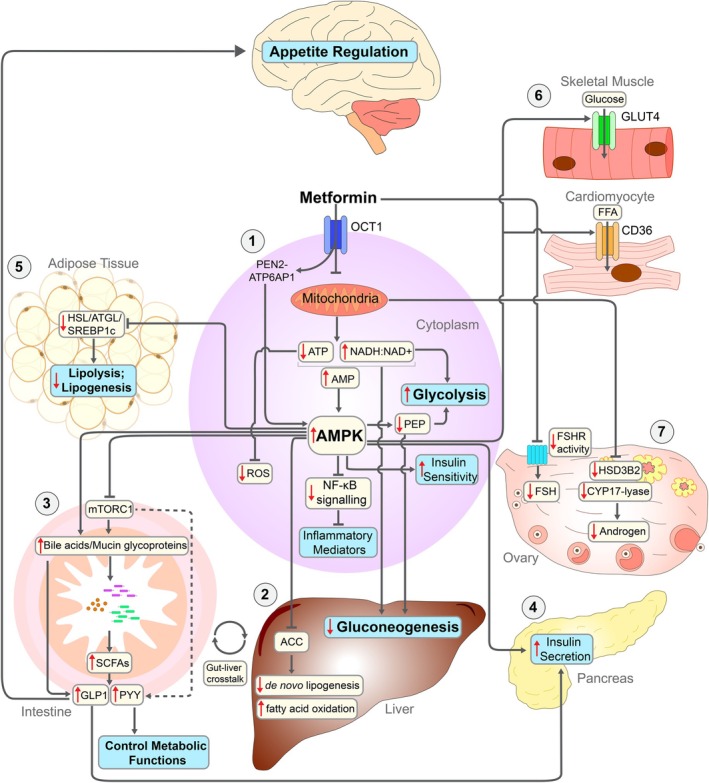
Molecular mechanisms of metformin and its role in PCOS. Dashed lines indicate indirect effects while solid lines suggest direct effects. 1 Metformin is transported into the cytoplasm via the OCT1 channel across different tissues. Its primary action occurs in mitochondria, where it increases NADH:NAD+ and AMP levels while reducing ATP, leading to enhanced glycolysis and suppressed gluconeogenesis in the liver. Elevated AMP activates AMPK, which also undergoes direct activation by metformin through PEN2 binding and ATP6AP1 interaction. AMPK enhances glycolysis by reducing PEP levels, mediates inflammatory responses by inhibiting NF‐κB signalling, and lowers ROS levels, which play a key role in maintaining cellular health. Through its widespread effects, AMPK improves insulin sensitivity and increases glucose uptake systemically. 2 In the liver, AMPK inhibits ACC, thereby suppressing de novo lipogenesis and promoting fatty acid oxidation (acetyl‐CoA carboxylase). 3 In the intestine, metformin‐activated AMPK stimulates bile acid, mucin glycoprotein, and antimicrobial peptide production either directly or by suppressing mTORC1 activity. These changes influence gut microbiota composition and gut hormones (GLP‐1 and PYY), affecting the gut‐brain axis and glucose homeostasis. Additionally, microbiota alterations increase SCFAs, which further regulate metabolic functions. Metformin also inhibits mitochondrial complex I in enterocytes, increasing lactate production, which supports hepatic gluconeogenesis via gut–liver cross‐talk as part of a splanchnic glucose–lactate–glucose cycle. 4 In the pancreas, elevated AMPK and GLP‐1 enhance insulin secretion. 5 In adipose tissue, AMPK reduces lipolysis and lipogenesis by inhibiting HSL, ATGL, and SREBP1c activity. 6 In skeletal muscle, metformin‐activated AMPK increases glucose uptake by promoting GLUT4 translocation to the membrane. In cardiomyocytes, AMPK facilitates FFA uptake by translocating the CD36 receptor. 7 In the ovary, metformin directly modulates FSHR activity, reducing FSH levels. It also lowers androgen levels by inhibiting the HSD3B2 and CYP17‐lyase enzymes through mitochondrial‐mediated pathways. This reduction in androgens may alleviate symptoms of PCOS driven by hormonal imbalances. ACC, acetyl‐CoA carboxylase; AMPK, AMP‐activated protein kinase; ATGL, adipose triglyceride lipase; ATP6AP1, ATPase H+ transporting accessory protein 1; CD36, cluster of differentiation 36; CYP17, Cytochrome P450 17; FFA, free fatty acid; FSH, follicle‐stimulating hormone; FSHR, follicle‐stimulating hormone receptor; GLP‐1, glucagon‐like peptide‐1; GLUT4, glucose transporter type 4; HSD3B2, Hydroxy‐Delta‐5‐Steroid Dehydrogenase, 3 Beta‐ And Steroid Delta‐Isomerase 2; HSL, hormone‐sensitive lipase; mTORC1, mechanistic target of rapamycin complex 1; NADH:NAD+, nicotinamide adenine dinucleotide + hydrogen; NF‐κB, nuclear factor κ‐light‐chain‐enhancer of activated B cells; OCT1, Organic Cation Transporter 1; PEN2, presenilin enhancer 2; PEP, phosphoenolpyruvate; PYY, peptide tyrosine–tyrosine; ROS, reactive oxygen species; SCFAs, short‐chain fatty acids; SREBP1c, sterol regulatory element‐binding protein 1c.
4. EVIDENCE SYNTHESIS: METFORMIN EFFICACY IN PCOS
4.1. Randomised controlled trials in non‐pregnant PCOS populations
Several randomised controlled trials (RCTs) have assessed the efficacy of metformin (either alone or in combination with other treatments) in managing hormonal, reproductive, and metabolic features in adolescents and adults with PCOS (Table S1). However, its effects vary by treatment duration, metabolic profile, and individual characteristics. Below is a summary of findings from trials in general/mixed and selected PCOS populations.
4.1.1. General and mixed PCOS populations
Among general PCOS populations, metformin has demonstrated variable but frequently beneficial effects across metabolic, hormonal, and reproductive outcomes when compared with placebo, other pharmacological agents, or lifestyle and alternative treatments. Compared with placebo, short‐term trials (3–4 months; n = 29–40) using 1500 mg/day metformin reported reductions in luteinising hormone (LH), follicle‐stimulating hormone (FSH), blood pressure, 37 fasting insulin, homeostatic model assessment of insulin resistance (HOMA‐IR), waist circumference, and testosterone, 38 but no effects on other androgens or lipids. A three‐month trial (n = 118) examining bone parameters also found that using 1500–2000 mg/day metformin may reduce bone turnover by lowering markers of formation and resorption compared with placebo. 39 Longer trials (6 months; n = 27–100) using metformin doses of 1500–1700 mg/day reported similar metabolic improvements, including improved lipid profile, insulin sensitivity, blood pressure, and testosterone compared with placebo, while AMH and adiponectin remained unchanged. 40 , 41 , 42 , 43 , 44 In a 14‐month cross‐over study of women with PCOS and hirsutism (n = 16), metformin reduced weight and hair growth and improved cycle frequency compared with placebo, with no change in sex hormone binding globulin (SHBG) and free androgen index (FAI). 45 One stratified trial (n = 116) reported phenotype‐specific effects, whereby 1700–2550 mg/day of metformin for 6 months reduced dehydroepiandrosterone‐sulphate (DHEA‐S) levels and improved hirsutism and ovulation in lean hyper‐ or normoinsulinemic women with PCOS; and reduced waist‐to‐hip ratio (WHR) and cycle duration in overweight or obese normoinsulinemic women, respectively. 46
In head‐to‐head comparisons with other pharmacological agents, six‐month trials (n = 35–96) showed that 1000–2000 mg/day of metformin was more effective than COCPs — including ethinyl estradiol‐cyproterone acetate (EE‐CA)— in improving asymmetric dimethylarginine, HOMA‐IR, homocysteine levels, blood pressure and lipid profiles, with greater reductions in C‐reactive protein (CRP) in women with obesity. 47 , 48 , 49
Combination therapy with COCPs has shown further benefits. Three‐month trials (n = 43–48) combining 1700 mg/day metformin with EE‐CA improved endothelial function, insulin resistance, lipid profile, free testosterone, and DHEA‐S, compared with EE‐CA alone. 50 , 51 Similarly, a six‐month trial (n = 76) in a hyperinsulinemic PCOS population found superior metabolic and vascular outcomes with metformin (1500 mg/day) plus drospirenone/ ethinylestradiol (DRSP/EE) versus either alone, 52 while a three‐month trial (n = 53) showed suppression of hyperandrogenism with metformin plus COCPs. 53 In longer studies of 6–12 months (n = 28–87), combining 500–2000 mg/day metformin with various COCPs led to greater reductions in FAI, free testosterone, and inflammatory markers, and improvements in body composition, facial hirsutism, vascular function, and aortic elasticity than either treatment alone, although no additional benefits were seen for lipids, insulin sensitivity, SHBG, or testosterone beyond those provided by COCPs alone. 54 , 55 , 56 , 57 , 58 , 59 , 60 , 61 , 62 Other studies (n = 34–65) found that metformin (1500–2000 mg/day) improved insulin sensitivity with or without COCPs after 6 months, 62 , 63 but had no consistent impact on body mass index (BMI), inflammatory markers, or androgens, 60 , 64 and was linked to hypoglycaemia in some cases. 63 In a 12‐month study (n = 99), EE‐CA and ethinylestradiol/ desogestrel (EE/DES) alone or combined with metformin were equally effective for improving hirsutism, with no added benefits from low‐dose metformin. 65 Conversely, two studies (n = 60, 87) combining metformin (500–1700 mg/day) with Diane‐35 for 3 months reported greater reductions in androgens and body fat and better metabolic profiles with the combination treatment, compared with Diane‐35 alone. 66 , 67
Metformin has also been evaluated alongside or against non‐COCP pharmacological agents. A three‐month trial (n = 97) showed that 1000 mg/day metformin plus pioglitazone had superior effects on insulin resistance and inflammatory markers than metformin monotherapy. 68 , 69 In 34 women with PCOS and prediabetes, adding the dipeptidyl peptidase‐4 (DPP‐4) inhibitor, saxagliptin, to metformin improved the insulin secretion‐sensitivity index and menstrual regularity over 4 months, compared with metformin alone. 70 Among 75 women with PCOS and hyperprolactinemia, 1000 mg/day metformin combined with cabergoline for 3 months reduced BMI, testosterone, and LH; increased FSH; and improved endometrial blood flow and ovulation. 71
In comparison with alternative treatments, three‐month treatment with metformin (1000–1500 mg/day) showed similar effects to lavender (n = 62) for increasing progesterone and cycle regulation, 72 and to berberine (n = 89) for improving insulin sensitivity and hyperandrogenism. 73 A two‐month trial (n = 110) reported that 1500 mg/day metformin was superior to fenugreek for improving BMI, WHR, insulin resistance, fasting blood glucose, and menstrual regularity. 74 Combination treatment with metformin (1500 mg/day) and curcumin for 3 months (n = 195) improved lipid profile, glucose metabolism, LH/FSH balance, body weight, and BMI compared with either agent alone or placebo. 75 Similarly, 1700 mg/day metformin combined with a structured exercise regimen improved menstrual regularity, hirsutism, body composition, and testosterone compared with placebo and exercise. 76
Overall, metformin shows consistent metabolic benefits in general PCOS populations, particularly for improving insulin sensitivity, glucose metabolism, and lipid profiles. Effects on androgens and hirsutism are inconsistent and appear more pronounced with longer treatment or combination therapies, namely with COCPs. Benefits for ovulation and menstrual regularity are greatest in women with insulin resistance or metabolic dysfunction, with limited effects in normoinsulinemic phenotypes.
4.1.2. Overweight and Obese PCOS populations
In PCOS populations with overweight or obesity, metformin has demonstrated variable effects on metabolic and reproductive outcomes. In short‐term trials (3–6 months; n = 18–122), metformin at doses of 1000–2000 mg/day improved insulin resistance and reduced WHR, testosterone, free fatty acids, and total cholesterol when compared with EE‐CA or placebo. 77 , 78 However, its effects on BMI, body composition, insulin, metabolic markers, and menstrual frequency were inconsistent. Some trials (n = 76–105) reported modest improvements over 6–12 months when metformin was combined with a hypocaloric diet, with or without flutamide, leading to reductions in BMI, waist and hip circumference, fasting glucose, insulin, and triglycerides. 79 , 80 Yet, others (n = 38–122) found no significant changes in these outcomes after 6 months despite improved insulin resistance. 81 , 82 , 83 , 84
Combination therapies with pharmacological agents, namely GLP‐1 receptor agonists, have shown the most consistent additive effects among populations with overweight or obesity. In two 3‐month trials (n = 36–52), 2000 mg/day of metformin plus liraglutide improved weight loss, waist circumference, and reproductive hormones (testosterone, SHBG, FAI, LH, progesterone) versus metformin alone. 85 , 86 Similar benefits were observed for exenatide or beinaglutide combined with metformin (500–2000 mg/day) over 3–6 months (n = 40–60), demonstrating superior effects on weight, BMI, abdominal fat, waist circumference, insulin sensitivity, ovulation, menstrual regularity, FAI, and androgen levels compared with either agent alone, with generally good tolerability. 87 , 88 , 89 For DPP‐4 inhibitors, sitagliptin (n = 24) added to metformin (2000 mg/day for 3 months) prevented weight regain in 24 women previously treated with liraglutide, compared with metformin alone. 90 In a six‐month study (n = 204), rosiglitazone—alone or with metformin (1000–1500 mg/day) and lifestyle modification—reduced cholesterol and triglycerides more than metformin alone, although metformin led to greater weight loss. 91 In contrast, adding the sodium‐glucose co‐transporter 2 (SGLT2) inhibitor, canagliflozin, to metformin (1000–2000 mg/day) for 3 months reduced testosterone and glucose–insulin responses in PCOS (n = 41), but did not improve weight, menstrual frequency, or hormonal profiles. 92 Anti‐obesity medications were explored in a three‐month study (n = 240), whereby adding orlistat to metformin (500–1500 mg/day) and Diane‐35 resulted in greater reductions in weight, BMI, and blood pressure, and increased high‐density lipoprotein cholesterol (HDL‐C) compared with Diane‐35 alone. 93 Metformin (1500 mg/day) combined with Diane‐35 over 3 months (n = 19) also improved vascular endothelial function compared with Diane‐35 alone. 94
Lifestyle and nutraceutical approaches have also been studied in this population. In a twelve‐month pilot trial (n = 23), combining 1700 mg/day metformin with a lifestyle intervention reduced androgens and weight compared with lifestyle and placebo, though ovulation outcomes were unchanged. 95 A three‐month hypocaloric diet alone outperformed metformin (1000–2000 mg/day; n = 30) in reducing weight and hs‐CRP. 96 Among nutraceuticals, metformin (1000 mg/day) was compared with myoinositol for 6 months (n = 53), the latter showing greater improvements in menstrual regularity and quality of life. 97
In summary, metformin improves insulin resistance in women with PCOS and overweight or obesity, although effects on weight, hormones, and menstrual function are inconsistent. Greater benefits are seen when combined with GLP‐1 receptor agonists, while other agents and lifestyle changes may offer additional improvements, especially in relation to anthropometry and glucose and lipid metabolism.
4.1.3. Non‐obese PCOS populations
Few trials have explored the use of metformin in non‐obese populations with PCOS. In 2 six‐month trials (n = 17 and 29), 1000–2000 mg/day of metformin reduced fasting insulin and androgens compared with placebo, 98 and improved fasting insulin, WHR, testosterone, and menstrual regularity, but not glucose tolerance or insulin sensitivity, compared with EE‐CA. 99 In two trials among lean women (n = 94 and 109), 850–2000 mg/day metformin lowered fasting insulin more than estradiol–cyproterone acetate after 4 months 100 and reduced advanced glycation end‐products and CRP levels compared with COCPs after 6 months. 101 In two other six‐month trials (n = 87 and 100), using 1700 mg/day of metformin improved insulin resistance, adiponectin, CRP, apolipoprotein B, plasminogen activator inhibitor‐1, and homocysteine, compared with EE 102 ; and improved ovulation, systolic blood pressure, and insulin sensitivity indices more effectively than rosiglitazone. 103 However, adding metformin to either treatment did not yield further improvement. 102 , 103
Other studies have reported additional benefits with combined therapies. In a four‐month trial (n = 40), metformin (1500 mg/day) with EE‐CA improved insulin sensitivity, reduced BMI, WHR, and androstenedione, and increased SHBG compared with EE‐CA alone. 104 Similar effects were seen in a six‐month trial (n = 50) where combining low‐dose metformin (500 mg/day) with cyproterone acetate (CPA) improved insulin sensitivity and suppressed hyperandrogenism more effectively than CPA alone. 105
Despite the limited number of studies, metformin has shown consistent effects in non‐obese women with PCOS, whereby it improves insulin resistance and select metabolic markers, with modest and varying effects on hyperandrogenism and ovulation. Benefits appear more pronounced when combined with hormonal agents, particularly in increasing SHBG and improving insulin‐related parameters.
4.1.4. Anovulatory and infertile PCOS populations
In women with PCOS and oligo−/anovulation or infertility, metformin has shown promising effects on menstrual regularity, ovulation, and metabolic parameters, particularly among those with insulin resistance or obesity. In short‐term placebo and head‐to‐head comparisons (3–3.5 months; n = 26–320), metformin (500–2000 mg/day) improved ovulation and pregnancy rates compared with placebo, EE‐CA, and myo‐D‐chiro‐inositol, while also reducing testosterone, LH, FSH, BMI, insulin resistance, and lipids, and increasing SHBG. 106 , 107 , 108 , 109 , 110 A longer 12‐month trial (n = 27) also demonstrated improved insulin sensitivity with 1700 mg/day metformin compared with placebo, 111 and one study (n = 320) found improved live birth rates when metformin was continued for 3 months into early pregnancy. 112 However, in a PCOS population with infertility and overweight/obesity (n = 160), exenatide for 3 months led to a higher spontaneous pregnancy rate compared with 1000–2000 mg/day metformin, although overall pregnancy rates were similar by month 16 (exenatide 79.2%, metformin 76%) with no differences in outcomes. 113 Some studies suggest that the effects of metformin on reproductive and fertility outcomes are more pronounced among those with insulin resistance 109 , 110 or obesity, 112 while others have reported improved menstrual regularity in normoinsulinemic anovulatory women (n = 23) after 6 months of treatment. 114 By contrast, metformin has shown limited benefit in clomiphene citrate (CC)‐resistant PCOS populations. In two small trials (n = 20 and n = 32), 1500 mg/day of metformin for 3 months improved BMI, testosterone, leptin, and lipids, but had no effects on androgens, insulin resistance, or ovulation or pregnancy rates compared with placebo. 115 , 116 Similarly, in 150 women with infertility and letrozole resistance, three‐month treatment with either metformin (1500 mg/day) or inositol, both with folic acid, showed no significant effect on ovarian function or pregnancy rate compared with folic acid alone, though inositol was more effective than metformin in women with normal BMI. 117
Combination treatments are thought to be more effective than metformin alone for a range of outcomes in women with PCOS and infertility. In two trials (n = 36–97) metformin (1000 mg/day metformin) combined with pioglitazone for 3 months improved SHBG, AMH, inflammatory markers (IL‐6 and IL‐8) and postprandial glucose levels, and reduced insulin resistance compared with metformin alone, while maintaining stable weight. 68 , 69 Similarly, in women with obesity and infertility (n = 28), adding low‐dose liraglutide to metformin for 3 months improved pregnancy rates per embryo transfer and cumulative pregnancy rates compared with metformin alone, despite similar weight loss between groups. 118 Metformin has also been combined with ovulation induction agents. In treatment‐naïve women (n = 105), combining 1700 mg/day metformin with CC for 6 months resulted in the highest ovulation, pregnancy, and live birth rates than either agent alone. 119 Conversely, in CC‐resistant women (n = 59), combining metformin (1500 mg/day) and letrozole produced similar ovulation rates to metformin and CC after 6–8 weeks, but improved endometrial thickness and full‐term pregnancy rates, suggesting an advantage of letrozole in this subgroup. 120
However, not all combination therapies show clear benefit. In a six‐month trial (n = 114), metformin (500–2000 mg/day) with lifestyle changes did not improve ovulation or weight loss compared with placebo plus lifestyle, though bone mineral density increased. 121 The PCOSMIC trial found that six‐month treatment with metformin (1500 mg/day), alone or with CC, did not improve pregnancy or live birth rates in 117 infertile women with PCOS and BMI ≤32 kg/m2. 122 Similarly, a trial of 107 women found similar ovulation rates in those receiving 1700–2000 mg/day metformin plus CC versus CC alone (with both groups receiving ≥6 weeks of metformin pre‐treatment). 123 Another trial (n = 116) comparing metformin (1500 mg/day) plus myoinositol for 6 months versus myoinositol alone showed similar clinical pregnancy rates and metabolic and hormonal parameters, though the combination group had more gastrointestinal side effects, suggesting myoinositol alone may be preferable. 124 In the landmark Pregnancy in Polycystic Ovary Syndrome I (PPCOS I) trial (n = 626), CC alone or combined with metformin was superior to metformin alone (500–2000 mg/day for 6 months) in achieving live births among infertile women with PCOS. 125 A subsequent secondary analysis of this trial (n = 323) demonstrated that higher baseline AMH levels were associated with reduced ovulation consistently across all treatment groups, suggesting that metformin did not mitigate the negative impact of elevated AMH on ovulation in women with PCOS. 126
Taken together, current evidence suggests that metformin monotherapy in PCOS populations with infertility seems beneficial for ovulation and pregnancy in some subgroups, especially in treatment‐naïve women, but is less effective in CC‐ or letrozole‐resistant subgroups. Combination therapies, especially with ovulation induction or adjunct metabolic agents, tend to yield better fertility outcomes than metformin monotherapy; however, letrozole remains first‐line therapy for ovulation induction in PCOS. Individual factors such as baseline BMI, insulin sensitivity, and AMH levels appear to influence responses to treatment.
4.1.5. Adolescent PCOS populations
In adolescents with PCOS, the effects of metformin have varied depending on treatment durations and combinations with other interventions. In a three‐month trial among 21 adolescents with hyperinsulinemia, 1500 mg/day of metformin reduced total testosterone, improved menstrual regularity, and increased HDL‐C, with no impact on insulin sensitivity or body weight compared with placebo. 127 Extending treatment to 6 months with a higher dose (1700 mg/day) in 90 adolescents led to significant weight loss and lower fasting insulin levels compared with COCP alone. 128 However, other six‐month trials comparing metformin and COCP, with or without lifestyle, have yielded mixed findings. One trial (n = 22) found no added benefit with 1000–2000 mg/day metformin, with COCPs being more effective in reducing free testosterone and improving menstrual regularity, 129 while another (n = 31) in adolescents with obesity reported similar effects of both treatments on androgens, weight loss, and insulin sensitivity. 130 Combining metformin (1700 mg/day) with lifestyle modifications and COCPs for 6 months reduced central adiposity and total testosterone, and increased HDL‐C, but did not improve weight loss in 43 adolescents with obesity. 131 Similarly, adding metformin to lifestyle changes (n = 22) over 6 months did not improve hyperandrogenism compared with lifestyle alone, and was associated with increased gastrointestinal side effects. 132 Data on metformin use in adolescents with PCOS are limited and variable, precluding definitive conclusions regarding its efficacy in this population.
4.2. Systematic reviews and meta‐analyses in non‐pregnant PCOS populations
Several systematic reviews and meta‐analyses have evaluated the efficacy of metformin in PCOS compared with placebo or lifestyle, pharmacological agents, or alternative treatments (Table S1). A meta‐analysis of 32 RCTs found that metformin, alone or with lifestyle intervention, led to greater reductions in BMI and improvements in menstrual cycle duration and frequency compared with placebo, although no additional benefits were observed over lifestyle alone. 133 Metformin also improved a range of hormonal and metabolic outcomes including total testosterone, fasting glucose, and lipid profiles, with greater benefit in those with a BMI ≥25 kg/m2. 133 Two additional meta‐analyses examining metformin monotherapy (n = 18 and n = 14 RCTs) showed significant reductions in total testosterone, FAI, and AMH levels compared with placebo, with stronger effects observed in younger women or those with baseline AMH >4.7 ng/mL. 134 , 135 Cardiovascular improvements have also been reported, with a systematic review of 12 studies finding that metformin significantly improved endothelial function and carotid intima‐media thickness, suggesting a role in reducing early cardiovascular risk markers. 136
Consistent with primary data, pooled analyses have demonstrated further benefits with combination treatments. A systematic review of 16 RCTs showed that adding metformin to DPP‐4 inhibitors significantly improved glycemic control, while adding it to thiazolidinediones improved lipid profiles and adding it to GLP‐1 receptor agonists enhanced anthropometric outcomes, compared with metformin alone; however, hormonal effects were inconclusive. 137 Moreover, a meta‐analysis of 8 RCTs found that GLP‐1 receptor agonists combined with metformin improved weight, BMI, waist circumference, HOMA‐IR, fasting glucose, and SHBG, without increasing adverse events. 138 Building on this, two other meta‐analyses, each comprising 9 RCTs, compared exenatide (alone or with metformin) to metformin alone and reported greater reductions in weight, waist circumference, and FAI, along with improvements in SHBG and the Matsuda index, again with no increase in adverse events. 139 , 140
Combinations with COCPs have shown mixed results. A large meta‐analysis of 36 RCTs comparing metformin versus COCP, and metformin + COCP versus COCP alone, reported that combination therapy improved biochemical hyperandrogenism, insulin resistance, and insulin levels more effectively than COCP alone, while COCP monotherapy was more effective for regulating cycles and reducing hirsutism. 141 Earlier meta‐analyses– one in non‐obese women (14 RCTs) 142 and another in the broader PCOS population (33 RCTs) 143 – found that adding metformin to COCPs or anti‐androgens improved BMI and glucose tolerance compared with hormonal therapy alone.
For comparisons with nutraceuticals, two systematic reviews and meta‐analyses (each including 8 RCTs) found no significant differences between metformin and myo‐inositol in metabolic or hormonal outcomes, although myo‐inositol showed a better safety profile with fewer side effects. 144 , 145 Another meta‐analysis of 9 RCTs (n = 638) reported that myo‐inositol improved fertility outcomes by modulating hyperandrogenism more effectively than metformin, although ovarian function and BMI were not significantly different between the groups. 146
Other extensive meta‐analyses have been conducted examining fertility and ovulation outcomes in PCOS. The most recent is a technical report informing the 2023 International PCOS Guideline 3 which included meta‐analyses of 36 RCTs comparing metformin with placebo, CC, letrozole, and FSH. 147 Metformin improved live birth, clinical pregnancy, and ovulation rates versus placebo. While metformin and CC were comparable for live birth, their combination outperformed CC alone in improving ovulation and live birth rates. Adding metformin to letrozole was superior to metformin plus CC, but not superior to letrozole alone, for clinical pregnancy and ovulation rates, although these findings were of low certainty due to high risk of bias. No benefit was seen for metformin plus FSH over FSH alone. Earlier meta‐analyses of 35 RCTs and 21 RCTs found similar results; one showed that metformin improved clinical pregnancy rates and reduced the risk of ovarian hyperstimulation syndrome in women undergoing assisted reproductive technology compared with placebo or no treatment 148 ; and the other reported that metformin modestly improved clinical pregnancy rates compared with placebo (47.7% vs. 42.9%) in non‐obese women with PCOS, but had comparable efficacy to CC. 149 While adding metformin to CC reduced miscarriage risk compared with placebo, it was associated with a higher miscarriage rate than CC alone and lower clinical and multiple pregnancy rates than letrozole. 149 Additionally, a broader systematic review of 38 studies encompassing both pregnant and non‐pregnant women highlighted the potential role of metformin in restoring ovulatory cycles and enhancing pregnancy rates and outcomes compared with placebo or no treatment. 150
4.3. Randomised controlled trials in pregnant PCOS populations
Multiple RCTs have examined the efficacy and safety of metformin in pregnancies complicated by PCOS (Table S1). Some trials 151 , 152 have demonstrated that metformin use during the first trimester significantly reduced early pregnancy loss, with rates of 10.8% versus 42.2%, 151 and 10% versus 26%, 152 compared with control treatments (e.g., folic acid or no intervention). Benefits were also seen among women with PCOS using metformin, including reductions in miscarriage, preeclampsia, GDM, caesarean section rates, and preterm labour, along with an increase in live birth rates compared with placebo or no intervention. 112 , 153 , 154 An early pilot study (n = 40) in Norway by Vanky et al. 155 showed a reduction in severe pregnancy complications, with no change in androgens, among women with PCOS receiving 850 mg of metformin twice daily compared with those receiving placebo. 155 In the landmark RCT by the same group, the PregMet trial (n = 273), metformin during pregnancy in women with PCOS did not impact pregnancy complications such as GDM, preeclampsia, or preterm labor, nor did it influence neonatal outcomes, including birth weight, length, or Apgar scores compared with placebo. 156 The subsequent PregMet2 study conducted in Norway, Sweden, and Iceland is the largest placebo‐controlled, double‐blind, multicenter RCT to date examining metformin use in women with PCOS in pregnancy (n = 487). 157 It showed that metformin from late first trimester until delivery reduced the rates of late miscarriage and preterm birth but had no effect on the development of GDM or preeclampsia compared with placebo. Combined analysis of data from the three trials (n = 772) did not alter these results, with no effects on GDM prevention, irrespective of diagnostic criteria. 158 The lack of GDM prevention in this high‐risk population is surprising, given the well‐established efficacy of metformin in T2D prevention and treatment, potentially related to different pathophysiological mechanisms during pregnancy compared with the non‐pregnant state. 157
Several sub‐studies from the above RCTs have explored outcomes of maternal metformin use in PCOS. 159 , 160 , 161 , 162 , 163 , 164 In one sub‐study (n = 73), the metformin‐treated group had reduced excess GWG compared with placebo, associated with improved leptin sensitivity. 162 Post‐hoc analyses from the PregMet trial explored metformin, insulin, and androgen concentrations and foetal growth parameters. 161 , 163 Metformin from the first trimester until delivery reduced insulin levels at delivery (n = 236 mothers), 161 with no effect on foetal insulin concentrations. There was no effect on androgen levels in the overall population of women with PCOS (n = 262), but metformin significantly reduced androstenedione in non‐obese women with PCOS and lowered both androstenedione and testosterone in those carrying a male foetus. However, another sub‐study (n = 258 infants) using gestational age‐ and sex‐adjusted z‐scores reported that offspring of overweight mothers exposed to metformin had larger head circumferences compared with those receiving placebo, but birth weight and length were unaffected. 160 Combined analysis from the pilot, PregMet, and PregMet2 trials (n = 779 infants) also found increased head circumference primarily in offspring of overweight/obese hyperandrogenic mothers with PCOS, but no effect on birth weight or length. 159 Maternal diabetes and/or overweight and obesity are known to enhance foetal growth by increasing foetal glucose transfer, which stimulates foetal insulin production. 160 This typically promotes disproportionate foetal growth, characterised by increased abdominal and body size with relatively smaller head circumference. In contrast, metformin‐exposed pregnancies in women with PCOS have shown increased foetal head circumference, suggesting more symmetric growth, possibly due to reduced foetal hyperinsulinemia, though the exact mechanism of action and long‐term clinical implications are yet to be determined. Offspring cognitive function was also explored in the CogMet study (n = 93 children) 164 based on follow‐up data from the pilot and PregMet studies. They found that in utero metformin exposure did not influence cognitive function of children (mean age: 7.7 years) born to women with PCOS. 164 However, a higher incidence of borderline intellectual function was observed in metformin‐exposed children, though this finding should be interpreted cautiously due to the small sample size. 164
Other follow‐up studies explored maternal and offspring anthropometric and cardiometabolic outcomes at different timepoints. In utero metformin‐exposed children had higher BMI z‐scores and a greater prevalence of overweight/obesity than placebo‐exposed ones when examined at up to 4 years (n = 160 children) using combined pilot and PregMet data. 165 However, a follow‐up study of pilot data (n = 25 children) did not find differences in child anthropometric measures at 8 years of age, 166 noting a small sample size; but it did report that in utero metformin exposure was associated with increased fasting glucose, elevated systolic blood pressure, and a more favourable lipid profile. The PedMet study (n = 141 children) followed up children from the Pilot and PregMet study at 8 years of age and found that in utero metformin‐exposed children had higher BMI, WHR, waist circumference, and a greater prevalence of obesity compared with placebo‐exposed children. 167 Using PedMet data, metformin was associated with increased 11‐deoxycortisol (a precursor of cortisol and androstenedione) in boys and elevated 17‐hydroxyprogesterone (a precursor of 11‐deoxycortisol and androstenedione) in metformin‐exposed children. 168 Moreover, at 5–10 year follow‐up, metformin did not alter the metabolic profile of 131 mothers with PCOS (BMI, weight gain, blood pressure, lipids, glucose, insulin or metabolic syndrome). 169
The evidence presented suggests that metformin use in pregnancy among women with PCOS appears generally safe and may reduce pregnancy loss and preterm birth. However, its impact on other outcomes such as GDM and preeclampsia is inconsistent, reflecting underlying study heterogeneity. Metformin may promote more symmetric foetal growth; however, the clinical significance of these findings remains uncertain. Emerging follow‐up data raise questions about potential long‐term effects on offspring anthropometry, urging caution around the routine use of metformin in pregnancy, pending further research.
4.4. Systematic reviews and meta‐analyses in pregnant PCOS populations
Several systematic reviews and meta‐analyses have examined the use of metformin in PCOS during pregnancy (Table S1), with most (many with overlapping data) reporting that metformin was effective in reducing pregnancy complications. A systematic review and meta‐analysis of 9 RCTs and 8 cohort studies found that metformin reduced maternal complications (early pregnancy loss, GDM incidence, the need for insulin treatment, excess GWG, and pre‐eclampsia) but had no effect on birth weight, length, or Apgar scores, except for an increase in neonatal head circumference. 22 Similarly, pooled analysis of 18 RCTs showed reduced PIH, macrosomia, preterm delivery, and maternal insulin resistance, as well as increased SHBG levels in infants, but suggested potential risks including larger head circumference in infants and higher long‐term BMI in offspring. 170 , 171 Metformin was also associated with reduced maternal pregnancy complications (e.g., PIH, GDM, macrosomia, and preterm birth), increased head circumference at birth, and a higher risk of obesity in offspring, in an umbrella systematic review that included 13 different types of reviews. 170 Smaller systematic reviews and meta‐analyses based on fewer RCTs, reviews, and observational studies also reported that metformin reduced early pregnancy loss, 22 , 172 , 173 late miscarriage, 174 , 175 GDM, 22 , 170 , 172 , 173 , 176 pre‐eclampsia, 22 , 173 PIH, 170 , 171 , 172 macrosomia, 170 and preterm delivery 170 , 172 , 173 , 174 , 177 , 178 in metformin‐exposed women with PCOS, with increased head circumference in offspring. 177 Conversely, an earlier systematic review of 5 RCTs and 8 observational studies found that metformin did not prevent pregnancy complications, such as GDM. 179 Importantly, metformin use in pregnant women with PCOS was not associated with an increased risk of major congenital anomalies in reviews of RCTs and observational studies, 180 or with birth defects 181 or other foetal abnormalities 182 in reviews of RCTs only.
5. SUMMARY OF FINDINGS AND LIMITATIONS
Based on the available evidence, metformin in PCOS is effective for improving insulin resistance, regulating menstrual cycles, and reducing androgen levels, with additional benefits for ovulation and some metabolic outcomes—particularly in women with elevated BMI or glucose intolerance. However, current data do not support the use of metformin as a first‐line therapy for weight loss, ovulation induction, or treatment of hyperandrogenic symptoms such as hirsutism or acne. These findings are broadly consistent with those of the 2023 International PCOS Guideline, 3 which recommends metformin as an adjunct to lifestyle intervention in women with metabolic risk, and as a second‐line treatment in selected clinical scenarios including anovulatory infertility and impaired glucose tolerance.
For metformin use in PCOS pregnancies, both primary and pooled data suggest that metformin is generally safe and may reduce early pregnancy loss, late miscarriage, preterm delivery, excess GWG, and the need for insulin treatment in women with PCOS. However, findings related to GDM, PIH, and preeclampsia are inconsistent, likely due to heterogeneity in study designs, diagnostic criteria, and the inclusion of varying populations and treatments. Similar inconsistencies are seen across neonatal and offspring outcomes. Many meta‐analyses combine data from women with PCOS and metabolic comorbidities, such as GDM, which may confound the results and reduce applicability specifically to the PCOS population. Limited long‐term follow up and high attrition rates in long‐term studies further complicate interpretation. These limitations suggest caution when drawing conclusions and highlight the need for more rigorous, stratified analyses of integrated primary data (vs. aggregate‐level data) to clarify the efficacy of metformin in PCOS during pregnancy.
Key limitations across the PCOS literature include the notable variations in study populations, outcomes, diagnostic criteria, treatment targets and regimens, as well as methodological limitations, which collectively hinder interpretation and generalizability of findings. Baseline risk factors such as BMI, insulin resistance, ethnicity, family history, comorbidities, and the use of concomitant medications (e.g., anti‐hypertensives, thyroid hormones, antidepressants), as well as behavioural factors such as diet, physical activity, and breastfeeding, vary widely across studies and are often poorly controlled. Study design limitations—such as inadequate randomisation, blinding, dose inconsistency, poor adherence, and delayed metformin initiation—further affect the reliability of results. While systematic reviews have sought to integrate existing data generating larger cohorts, this inherent heterogeneity and the inability to explore confounders with aggregate data preclude meta‐analysis for certain outcomes and raise concerns around the accuracy of pooled estimates for others.
To address these challenges and advance the field, high‐quality, well‐controlled, and adequately powered clinical trials conducted with long‐term follow‐up are now needed. Additionally, integrated analyses of individual patient data from RCTs are essential but, as yet, have not been conducted in the context of PCOS. In pregnancy, the Metformin in Pregnancy Study (MiPS) 183 represents a key step toward outcome harmonization to evaluate maternal and offspring health, including in PCOS; however, broader consortia are needed to clarify the effects of metformin across different PCOS phenotypes, populations and life stages.
6. CONCLUSIONS
Metformin improves insulin resistance, menstrual regularity, and androgen levels in women with PCOS, particularly among those with obesity or insulin resistance. It may also support fertility and pregnancy outcomes when combined with other therapies. However, current evidence does not support the use of metformin as a first‐line therapy for weight loss, ovulation induction, or treatment of hyperandrogenic symptoms such as hirsutism or acne. Metformin use in pregnancy is generally safe and may reduce pregnancy loss and preterm birth, but long‐term offspring impacts remain unclear, suggesting targeted rather than routine use. Meta‐analyses using harmonized individual‐level data from RCTs are an important next step to advancing research in this area, with the potential to uncover critical insights and identify PCOS subgroups who may benefit from metformin use both in and outside of pregnancy.
AUTHOR CONTRIBUTIONS
S.S., T.M., and A.M. contributed equally to researching data, discussion of content, and drafting, reviewing, and editing the manuscript. R.G. made a substantial intellectual contribution to the content, created figures, and reviewed the manuscript. E.V. and H.T. made a substantial intellectual contribution to the content and reviewed the manuscript. All authors contributed to the manuscript in line with ICJME criteria and approved the final version for publication.
CONFLICT OF INTEREST STATEMENT
The authors declare no competing interests.
PEER REVIEW
The peer review history for this article is available at https://www.webofscience.com/api/gateway/wos/peer‐review/10.1111/dom.16422.
Supporting information
Data S1. Supporting Information.
ACKNOWLEDGEMENTS
This Review was commissioned by the Editor as part of a Themed issue on women's health made possible by funding from Merck. Sponsor identity was not disclosed to the authors prior to publication. The authors acknowledge fellowship funding from the Australian National Health and Medical Research Council (NHMRC) (H.T. and A.M.) and scholarship funding from Monash University (S.S. and T.M.). Open access publishing facilitated by Monash University, as part of the Wiley ‐ Monash University agreement via the Council of Australian University Librarians.
Saadati S, Mason T, Godini R, Vanky E, Teede H, Mousa A. Metformin use in women with polycystic ovary syndrome (PCOS): Opportunities, benefits, and clinical challenges. Diabetes Obes Metab. 2025;27(Suppl. 3):31‐47. doi: 10.1111/dom.16422
Saeede Saadati and Taitum Mason equal contribution as shared first authors.
Helena Teede and Aya Mousa equal contribution as shared senior authors.
Contributor Information
Helena Teede, Email: helena.teede@monash.edu.
Aya Mousa, Email: aya.mousa@monash.edu.
DATA AVAILABILITY STATEMENT
Data sharing not applicable to this article as no datasets were generated or analysed during the current study.
REFERENCES
- 1. Neven AC, Forslund M, Ranashinha S, et al. Prevalence and accurate diagnosis of polycystic ovary syndrome in adolescents across world regions: a systematic review and meta‐analysis. Eur J Endocrinol. 2024;191(4):S15‐S27. doi: 10.1093/ejendo/lvae125 [DOI] [PubMed] [Google Scholar]
- 2. Mousa A, Clef L, Costello M, Teede H. Technical Report for the Australian Adaptation of the ESHRE Evidence‐based guideline for unexplained infertility 2024. 2024.
- 3. Teede HJ, Tay CT, Laven JJ, et al. Recommendations from the 2023 international evidence‐based guideline for the assessment and management of polycystic ovary syndrome. Eur J Endocrinol. 2023;189(2):G43‐G64. [DOI] [PubMed] [Google Scholar]
- 4. Joham AE, Norman RJ, Stener‐Victorin E, et al. Polycystic ovary syndrome. Lancet Diabetes Endocrinol. 2022;10(9):668‐680. [DOI] [PubMed] [Google Scholar]
- 5. Salari N, Nankali A, Ghanbari A, et al. Global prevalence of polycystic ovary syndrome in women worldwide: a comprehensive systematic review and meta‐analysis. Arch Gynecol Obstet. 2024;310(3):1303‐1314. [DOI] [PubMed] [Google Scholar]
- 6. Joham AE, Piltonen T, Lujan ME, Kiconco S, Tay CT. Challenges in diagnosis and understanding of natural history of polycystic ovary syndrome. Clin Endocrinol (Oxf). 2022;97(2):165‐173. [DOI] [PMC free article] [PubMed] [Google Scholar]
- 7. Group REASPCW . Revised 2003 consensus on diagnostic criteria and long‐term health risks related to polycystic ovary syndrome (PCOS). Hum Reprod. 2004;19(1):41‐47. [DOI] [PubMed] [Google Scholar]
- 8. Azziz R. Polycystic ovary syndrome. Obstetr Gynecol. 2018;132(2):321‐336. [DOI] [PubMed] [Google Scholar]
- 9. Setji TL, Brown AJ. Polycystic ovary syndrome: diagnosis and treatment. Am J Med. 2007;120(2):128‐132. [DOI] [PubMed] [Google Scholar]
- 10. Chou A‐J, Bing R‐S, Ding D‐C. Endometrial atypical hyperplasia and risk of endometrial cancer. Diagnostics. 2024;14(22):2471. [DOI] [PMC free article] [PubMed] [Google Scholar]
- 11. Moran LJ, Misso ML, Wild RA, Norman RJ. Impaired glucose tolerance, type 2 diabetes and metabolic syndrome in polycystic ovary syndrome: a systematic review and meta‐analysis. Hum Reprod Update. 2010;16(4):347‐363. [DOI] [PubMed] [Google Scholar]
- 12. Tay CT, Mousa A, Vyas A, Pattuwage L, Tehrani FR, Teede H. 2023 international evidence‐based polycystic ovary syndrome guideline update: insights from a systematic review and meta‐analysis on elevated clinical cardiovascular disease in polycystic ovary syndrome. J Am Heart Assoc. 2024;13(16):e033572. [DOI] [PMC free article] [PubMed] [Google Scholar]
- 13. Neven AC, Mousa A, Boyle JA, Teede HJ. Endocrine and metabolic interactions in healthy pregnancies and hyperinsulinemic pregnancies affected by polycystic ovary syndrome, diabetes and obesity. Front Endocrinol (Lausanne). 2023;13:993619. [DOI] [PMC free article] [PubMed] [Google Scholar]
- 14. Bahri Khomami M, Shorakae S, Hashemi S, et al. Systematic review and meta‐analysis of pregnancy outcomes in women with polycystic ovary syndrome. Nat Commun. 2024;15(1):5591. [DOI] [PMC free article] [PubMed] [Google Scholar]
- 15. Khomami MB, Teede HJ. Addressing polycystic ovary syndrome in pregnancy care to improve outcomes. JAMA Netw Open. 2024;7(8):e2430549. [DOI] [PubMed] [Google Scholar]
- 16. Talmo MSA, Fløysand IS, Nilsen GØ, et al. Growth restriction in the offspring of mothers with polycystic ovary syndrome. JAMA Netw Open. 2024;7(8):e2430543. doi: 10.1001/jamanetworkopen.2024.30543 [DOI] [PMC free article] [PubMed] [Google Scholar]
- 17. Hoeger KM, Dokras A, Piltonen T. Update on PCOS: consequences, challenges, and guiding treatment. J Clin Endocrinol Metab. 2021;106(3):e1071‐e83. [DOI] [PubMed] [Google Scholar]
- 18. Glendining KA, Campbell RE. Recent advances in emerging PCOS therapies. Curr Opin Pharmacol. 2023;68:102345. [DOI] [PubMed] [Google Scholar]
- 19. Alesi S, Forslund M, Melin J, et al. Efficacy and safety of anti‐androgens in the management of polycystic ovary syndrome: a systematic review and meta‐analysis of randomised controlled trials. EClinicalMed. 2023;63:102162. [DOI] [PMC free article] [PubMed] [Google Scholar]
- 20. Artini PG, Obino MER, Sergiampietri C, et al. PCOS and pregnancy: a review of available therapies to improve the outcome of pregnancy in women with polycystic ovary syndrome. Expert Rev Endocrinolo Metab. 2018;13(2):87‐98. [DOI] [PubMed] [Google Scholar]
- 21. Palomba S, De Wilde MA, Falbo A, Koster MP, La Sala GB, Fauser BC. Pregnancy complications in women with polycystic ovary syndrome. Hum Reprod Update. 2015;21(5):575‐592. [DOI] [PubMed] [Google Scholar]
- 22. Zhao Q, He J. Efficacy and safety of metformin in pregnant women with polycystic ovary syndrome: a systematic review with meta‐analysis of randomized and non‐randomized controlled trials. Gynecol Endocrinol. 2022;38(7):558‐568. [DOI] [PubMed] [Google Scholar]
- 23. Newman C, Dunne FP. Metformin for pregnancy and beyond: the pros and cons. Diabet Med. 2022;39(3):e14700. [DOI] [PubMed] [Google Scholar]
- 24. LaMoia TE, Shulman GI. Cellular and molecular mechanisms of metformin action. Endocr Rev. 2021;42(1):77‐96. doi: 10.1210/endrev/bnaa023 [DOI] [PMC free article] [PubMed] [Google Scholar]
- 25. Sheleme T. Clinical pharmacokinetics of metformin. Metformin‐Pharmacology and Drug Interactions. Metformin‐Pharmacology and Drug Interactions; 2021. [Google Scholar]
- 26. Dutta S, Shah RB, Singhal S, et al. Metformin: a review of potential mechanism and therapeutic utility beyond diabetes. Drug des Devel Ther. 2023;17:1907‐1932. [DOI] [PMC free article] [PubMed] [Google Scholar]
- 27. Rice S, Elia A, Jawad Z, Pellatt L, Mason HD. Metformin inhibits follicle‐stimulating hormone (FSH) action in human granulosa cells: relevance to polycystic ovary syndrome. J Clin Endocrinol Metab. 2013;98(9):E1491‐E1500. [DOI] [PMC free article] [PubMed] [Google Scholar]
- 28. Hirsch A, Hahn D, Kempná P, et al. Metformin inhibits human androgen production by regulating steroidogenic enzymes HSD3B2 and CYP17A1 and complex I activity of the respiratory chain. Endocrinology. 2012;153(9):4354‐4366. [DOI] [PubMed] [Google Scholar]
- 29. Bailey CJ. Metformin: therapeutic profile in the treatment of type 2 diabetes. Diabetes Obes Metab. 2024;26(S3):3‐19. doi: 10.1111/dom.15663 [DOI] [PubMed] [Google Scholar]
- 30. Morita Y, Nogami M, Sakaguchi K, et al. Enhanced release of glucose into the intraluminal space of the intestine associated with metformin treatment as revealed by [18F] fluorodeoxyglucose PET‐MRI. Diabetes Care. 2020;43(8):1796‐1802. [DOI] [PubMed] [Google Scholar]
- 31. Green DR. Meeting metformin again for the first time. Sci Adv. 2024;10(51):eadu7436. doi: 10.1126/sciadv.adu7436 [DOI] [PMC free article] [PubMed] [Google Scholar]
- 32. Reczek CR, Chakrabarty RP, D'Alessandro KB, et al. Metformin targets mitochondrial complex I to lower blood glucose levels. Sci Adv. 2024;10(51):eads5466. doi: 10.1126/sciadv.ads5466 [DOI] [PMC free article] [PubMed] [Google Scholar]
- 33. Mason T, Alesi S, Fernando M, Vanky E, Teede HJ, Mousa A. Metformin in gestational diabetes: physiological actions and clinical applications. Nat Rev Endocrinol. 2025;21(2):77‐91. [DOI] [PubMed] [Google Scholar]
- 34. Lee JO, Lee SK, Jung JH, et al. Metformin induces Rab4 through AMPK and modulates GLUT4 translocation in skeletal muscle cells. J Cell Physiol. 2011;226(4):974‐981. [DOI] [PubMed] [Google Scholar]
- 35. Ryssdal M, Vanky E, Stokkeland LMT, et al. Immunomodulatory effects of metformin treatment in pregnant women with PCOS. J Clin Endocrinol Metabol. 2023;108(9):e743‐e753. [DOI] [PMC free article] [PubMed] [Google Scholar]
- 36. Niu C, Chen Z, Kim KT, et al. Metformin alleviates hyperglycemia‐induced endothelial impairment by downregulating autophagy via the hedgehog pathway. Autophagy. 2019;15(5):843‐870. [DOI] [PMC free article] [PubMed] [Google Scholar]
- 37. Zahra M, Shah M, Ali A, Rahim R. Effects of metformin on endocrine and metabolic parameters in patients with polycystic ovary syndrome. Horm Metab Res. 2017;49(2):103‐108. [DOI] [PubMed] [Google Scholar]
- 38. Fux Otta C, Wior M, Iraci GS, et al. Clinical, metabolic, and endocrine parameters in response to metformin and lifestyle intervention in women with polycystic ovary syndrome: a randomized, double‐blind, and placebo control trial. Gynecol Endocrinol. 2010;26(3):173‐178. [DOI] [PubMed] [Google Scholar]
- 39. Lingaiah S, Morin‐Papunen L, Risteli J, Tapanainen JS. Metformin decreases bone turnover markers in polycystic ovary syndrome: a post hoc study. Fertil Steril. 2019;112(2):362‐370. [DOI] [PubMed] [Google Scholar]
- 40. Trolle B, Flyvbjerg A, Kesmodel U, Lauszus FF. Efficacy of metformin in obese and non‐obese women with polycystic ovary syndrome: a randomized, double‐blinded, placebo‐controlled cross‐over trial. Hum Reprod. 2007;22(11):2967‐2973. [DOI] [PubMed] [Google Scholar]
- 41. Trolle B, Lauszus FF, Frystyk J, Flyvbjerg A. Adiponectin levels in women with polycystic ovary syndrome: impact of metformin treatment in a randomized controlled study. Fertil Steril. 2010;94(6):2234‐2238. [DOI] [PubMed] [Google Scholar]
- 42. Luque‐Ramírez M, Mendieta‐Azcona C, Álvarez‐Blasco F, Escobar‐Morreale HF. Effects of metformin versus ethinyl‐estradiol plus cyproterone acetate on ambulatory blood pressure monitoring and carotid intima media thickness in women with the polycystic ovary syndrome. Fertil Steril. 2009;91(6):2527‐2536. [DOI] [PubMed] [Google Scholar]
- 43. Iqbal S. Effect of oral contraceptive pill and metformin on metabolic and endocrine parameters in PCOS: A prospective interventions study. 2025.
- 44. Panidis D, Georgopoulos NA, Piouka A, et al. The impact of oral contraceptives and metformin on anti‐Müllerian hormone serum levels in women with polycystic ovary syndrome and biochemical hyperandrogenemia. Gynecol Endocrinol. 2011;27(8):587‐592. [DOI] [PubMed] [Google Scholar]
- 45. Kelly CJG, Gordon D. The effect of metformin on hirsutism in polycystic ovary syndrome. Eur J Endocrinol. 2002;147(2):217‐221. [DOI] [PubMed] [Google Scholar]
- 46. Önalan G, Goktolga U, Ceyhan T, Bagis T, Onalan R, Pabuçcu R. Predictive value of glucose–insulin ratio in PCOS and profile of women who will benefit from metformin therapy: obese, lean, hyper or normoinsulinemic? Eur J Obstetr Gynecol Reprod Biol. 2005;123(2):204‐211. [DOI] [PubMed] [Google Scholar]
- 47. Kilic S, Yilmaz N, Zulfikaroglu E, Erdogan G, Aydin M, Batioglu S. Inflammatory‐metabolic parameters in obese and nonobese normoandrogenemic polycystic ovary syndrome during metformin and oral contraceptive treatment. Gynecol Endocrinol. 2011;27(9):622‐629. [DOI] [PubMed] [Google Scholar]
- 48. Rautio K, Tapanainen J, Ruokonen A, Morin‐Papunen L. Effects of metformin and ethinyl estradiol–cyproterone acetate on lipid levels in obese and non‐obese women with polycystic ovary syndrome. Eur J Endocrinol. 2005;152(2):269‐275. [DOI] [PubMed] [Google Scholar]
- 49. Morin‐Papunen L, Rautio K, Ruokonen A, Hedberg P, Puukka M, Tapanainen JS. Metformin reduces serum C‐reactive protein levels in women with polycystic ovary syndrome. J Clin Endocrinol Metabol. 2003;88(10):4649‐4654. [DOI] [PubMed] [Google Scholar]
- 50. Kebapcilar L, Yuksel A, Bozkaya G, et al. Effects of an EE/CA compared with EE/CA‐metformin on serum ADMA levels in women with polycystic ovary syndrome. Cent Eur J Med. 2009;4(4):423‐427. doi: 10.2478/s11536-009-0074-x [DOI] [Google Scholar]
- 51. Kebapcilar L, Taner CE, Kebapcilar AG, Alacacioglu A, Sari I. Comparison of four different treatment regimens on coagulation parameters, hormonal and metabolic changes in women with polycystic ovary syndrome. Arch Gynecol Obstet. 2010;281:35‐42. [DOI] [PubMed] [Google Scholar]
- 52. Moro F, Morciano A, Tropea A, et al. Effects of drospirenone–ethinylestradiol and/or metformin on CD4+ CD28null T lymphocytes frequency in women with hyperinsulinemia having polycystic ovary syndrome: a randomized clinical trial. Reprod Sci. 2013;20(12):1508‐1517. [DOI] [PubMed] [Google Scholar]
- 53. Wu J, Zhu Y, Jiang Y, Cao Y. Effects of metformin and ethinyl estradiol‐cyproterone acetate on clinical, endocrine and metabolic factors in women with polycystic ovary syndrome. Gynecol Endocrinol. 2008;24(7):392‐398. [DOI] [PubMed] [Google Scholar]
- 54. Cibula D, Fanta M, Vrbikova J, et al. The effect of combination therapy with metformin and combined oral contraceptives (COC) versus COC alone on insulin sensitivity, hyperandrogenaemia, SHBG and lipids in PCOS patients. Hum Reprod. 2005;20(1):180‐184. [DOI] [PubMed] [Google Scholar]
- 55. Kumar Y, Kotwal N, Singh Y, Upreti V, Somani S, Kumar KH. A randomized, controlled trial comparing the metformin, oral contraceptive pills and their combination in patients with polycystic ovarian syndrome. J Fam Med Prim Care. 2018;7(3):551‐556. doi: 10.4103/jfmpc.jfmpc_83_17 [DOI] [PMC free article] [PubMed] [Google Scholar]
- 56. Kaya MG, Yildirim S, Calapkorur B, Akpek M, Unluhizarci K, Kelestimur F. Metformin improves endothelial function and carotid intima media thickness in patients with PCOS. Gynecol Endocrinol. 2015;31(5):401‐405. [DOI] [PubMed] [Google Scholar]
- 57. Kaya MG, Calapkorur B, Karaca Z, et al. The effects of treatment with drospirenone/ethinyl oestradiol alone or in combination with metformin on elastic properties of aorta in women with polycystic ovary syndrome. Clin Endocrinol (Oxf). 2012;77(6):885‐892. [DOI] [PubMed] [Google Scholar]
- 58. Sahu A, Tripathy P, Mohanty J, Nagy A. Doppler analysis of ovarian stromal blood flow changes after treatment with metformin versus ethinyl estradiol‐cyproterone acetate in women with polycystic ovarian syndrome: a randomized controlled trial. J Gynecol Obstetr Hum Reprod. 2019;48(5):335‐339. [DOI] [PubMed] [Google Scholar]
- 59. Glintborg D, Altinok ML, Mumm H, Hermann AP, Ravn P, Andersen M. Body composition is improved during 12 months' treatment with metformin alone or combined with oral contraceptives compared with treatment with oral contraceptives in polycystic ovary syndrome. J Clin Endocrinol Metabol. 2014;99(7):2584‐2591. [DOI] [PubMed] [Google Scholar]
- 60. Glintborg D, Mumm H, Altinok ML, Richelsen B, Bruun JM, Andersen M. Adiponectin, interleukin‐6, monocyte chemoattractant protein‐1, and regional fat mass during 12‐month randomized treatment with metformin and/or oral contraceptives in polycystic ovary syndrome. J Endocrinol Invest. 2014;37:757‐764. [DOI] [PubMed] [Google Scholar]
- 61. Altinok ML, Ravn P, Andersen M, Glintborg D. Effect of 12‐month treatment with metformin and/or oral contraceptives on health‐related quality of life in polycystic ovary syndrome. Gynecol Endocrinol. 2018;34(10):859‐863. [DOI] [PubMed] [Google Scholar]
- 62. Harborne L, Fleming R, Lyall H, Sattar N, Norman J. Metformin or antiandrogen in the treatment of hirsutism in polycystic ovary syndrome. J Clin Endocrinol Metabol. 2003;88(9):4116‐4123. [DOI] [PubMed] [Google Scholar]
- 63. Glintborg D, Mumm H, Holst JJ, Andersen M. Effect of oral contraceptives and/or metformin on GLP‐1 secretion and reactive hypoglycaemia in polycystic ovary syndrome. Endocr Connect. 2017;6(4):267‐277. [DOI] [PMC free article] [PubMed] [Google Scholar]
- 64. Aghamohammadzadeh N, Aliasgarzadeh A, Baglar L, et al. Comparison of metformin and cyproterone‐estrodiol compound effect on HS C‐reactive protein and serum androgen levels in patients with polycystic ovary syndrome. Pak J Med Sci. 2010;26(2):347‐351. [Google Scholar]
- 65. Fonseka S, Wijeyaratne CN, Gawarammana IB, et al. Effectiveness of low‐dose ethinylestradiol/cyproterone acetate and ethinylestradiol/desogestrel with and without metformin on hirsutism in polycystic ovary syndrome: a randomized, double‐blind, triple‐dummy study. J Clin Aesthet Dermatol. 2020;13(7):18‐23. [PMC free article] [PubMed] [Google Scholar]
- 66. Feng W, Jia Y‐Y, Zhang D‐Y, Shi H‐R. Management of polycystic ovarian syndrome with Diane‐35 or Diane‐35 plus metformin. Gynecol Endocrinol. 2016;32(2):147‐150. [DOI] [PubMed] [Google Scholar]
- 67. Ruan X, Song J, Gu M, Wang L, Wang H, Mueck AO. Effect of Diane‐35, alone or in combination with orlistat or metformin in Chinese polycystic ovary syndrome patients. Arch Gynecol Obstet. 2018;297(6):1557‐1563. [DOI] [PubMed] [Google Scholar]
- 68. Zhao H, Zhang J, Xing C, Cheng X, He B. Metformin versus metformin plus pioglitazone on gonadal and metabolic profiles in normal‐weight women with polycystic ovary syndrome: a single‐center, open‐labeled prospective randomized controlled trial. J Ovarian Res. 2024;17(1):42. [DOI] [PMC free article] [PubMed] [Google Scholar]
- 69. Shah M, Ali A, Malik MO, et al. Treatment with metformin and combination of metformin plus pioglitazone on serum levels of IL‐6 and IL‐8 in polycystic ovary syndrome: a randomized clinical trial. Horm Metab Res. 2019;51(11):714‐722. doi: 10.1055/a-1018-9606 [DOI] [PubMed] [Google Scholar]
- 70. Elkind‐Hirsch KE, Paterson MS, Seidemann EL, Gutowski HC. Short‐term therapy with combination dipeptidyl peptidase‐4 inhibitor saxagliptin/metformin extended release (XR) is superior to saxagliptin or metformin XR monotherapy in prediabetic women with polycystic ovary syndrome: a single‐blind, randomized, pilot study. Fertil Steril. 2017;107(1):253‐260.e1. [DOI] [PubMed] [Google Scholar]
- 71. Hamad IN, Kadhim SAA, Fawzi HA, Al‐Temimi SM, Mohammad B, Swadi A. Effects of combined metformin and cabergoline versus metformin alone on ovarian and hormonal activities in Iraqi patients with PCOS and hyperprolactinemia: a randomized clinical trial. J Med Life. 2023;16(11):1615‐1621. doi: 10.25122/jml-2023-0317 [DOI] [PMC free article] [PubMed] [Google Scholar]
- 72. Simaei SR, Askari VR, Rostami M, et al. Lavender and metformin effectively propagate progesterone levels in patients with polycystic ovary syndrome: a randomized, double‐blind clinical trial. Fitoterapia. 2024;172:105720. [DOI] [PubMed] [Google Scholar]
- 73. Wei W, Zhao H, Wang A, et al. A clinical study on the short‐term effect of berberine in comparison to metformin on the metabolic characteristics of women with polycystic ovary syndrome. Eur J Endocrinol. 2012;166(1):99‐105. [DOI] [PubMed] [Google Scholar]
- 74. Mirgaloybayat S, Sene AA, Jayervand F, Vazirian M, Mohazzab A, Kazerooni M. Comparison of the effect of fenugreek and metformin on clinical and metabolic status of cases with polycystic ovary syndrome: a randomized trial. J Reprod Infertil. 2024;25(2):120. [DOI] [PMC free article] [PubMed] [Google Scholar]
- 75. Feghhi F, Ghaznavi H, Sheervalilou R, Razavi M, Sepidarkish M. Effects of metformin and curcumin in women with polycystic ovary syndrome: a factorial clinical trial. Phytomedicine. 2024;135:156160. [DOI] [PubMed] [Google Scholar]
- 76. Tiwari N, Pasrija S, Jain S. Randomised controlled trial to study the efficacy of exercise with and without metformin on women with polycystic ovary syndrome. Eur J Obstetr Gynecol Reprod Biol. 2019;234:149‐154. [DOI] [PubMed] [Google Scholar]
- 77. Chou K, von Eye Corleta H, Capp E, Spritzer P. Clinical, metabolic and endocrine parameters in response to metformin in obese women with polycystic ovary syndrome: a randomized, double‐blind and placebo‐controlled trial. Horm Metab Res. 2003;35(2):86‐91. [DOI] [PubMed] [Google Scholar]
- 78. Morin‐Papunen LC, Vauhkonen I, Koivunen RM, Ruokonen A, Martikainen HK, Tapanainen JS. Endocrine and metabolic effects of metformin versus ethinyl estradiol‐cyproterone acetate in obese women with polycystic ovary syndrome: a randomized study. J Clin Endocrinol Metab. 2000;85(9):3161‐3168. [DOI] [PubMed] [Google Scholar]
- 79. Amiri M, Golsorkhtabaramiri M, Esmaeilzadeh S, et al. Effect of metformin and flutamide on anthropometric indices and laboratory tests in obese/overweight PCOS women under hypocaloric diet. J Reprod Infert. 2014;15(4):205‐213. [PMC free article] [PubMed] [Google Scholar]
- 80. Gambineri A, Patton L, Vaccina A, et al. Treatment with Flutamide, metformin, and their combination added to a hypocaloric diet in overweight‐obese women with polycystic ovary syndrome: a randomized, 12‐month, placebo‐controlled study. J Clin Endocrinol Metabol. 2006;91(10):3970‐3980. [DOI] [PubMed] [Google Scholar]
- 81. Moran L, Meyer C, Hutchison S, Zoungas S, Teede H. Novel inflammatory markers in overweight women with and without polycystic ovary syndrome and following pharmacological intervention. J Endocrinol Invest. 2010;33:258‐265. [DOI] [PubMed] [Google Scholar]
- 82. Meyer C, McGrath BP, Teede HJ. Effects of medical therapy on insulin resistance and the cardiovascular system in polycystic ovary syndrome. Diabetes Care. 2007;30(3):471‐478. [DOI] [PubMed] [Google Scholar]
- 83. Hutchison SK, Harrison C, Stepto N, Meyer C, Teede HJ. Retinol‐binding protein 4 and insulin resistance in polycystic ovary syndrome. Diabetes Care. 2008;31(7):1427‐1432. [DOI] [PMC free article] [PubMed] [Google Scholar]
- 84. Tang T, Glanville J, Hayden CJ, White D, Barth JH, Balen AH. Combined lifestyle modification and metformin in obese patients with polycystic ovary syndrome. A randomized, placebo‐controlled, double‐blind multicentre study. Hum Reprod. 2005;21(1):80‐89. [DOI] [PubMed] [Google Scholar]
- 85. Xing C, Zhao H, Zhang J, He B. Effect of metformin versus metformin plus liraglutide on gonadal and metabolic profiles in overweight patients with polycystic ovary syndrome. Front Endocrinol. 2022;13:945609. [DOI] [PMC free article] [PubMed] [Google Scholar]
- 86. Jensterle Sever M, Kocjan T, Pfeifer M, Kravos NA, Janez A. Short‐term combined treatment with liraglutide and metformin leads to significant weight loss in obese women with polycystic ovary syndrome and previous poor response to metformin. Eur J Endocrinol. 2014;170(3):451‐459. [DOI] [PMC free article] [PubMed] [Google Scholar]
- 87. Wen Q, Fang S, Liang Y, et al. Short‐term effect of beinaglutide combined with metformin versus metformin alone on weight loss and metabolic profiles in obese patients with polycystic ovary syndrome: a pilot randomized trial. Front Endocrinol. 2023;14:1156521. [DOI] [PMC free article] [PubMed] [Google Scholar]
- 88. Ma R‐L, Deng Y, Wang Y‐F, Zhu S‐Y, Ding X‐S, Sun A‐J. Short‐term combined treatment with exenatide and metformin for overweight/obese women with polycystic ovary syndrome. Chin Med J (Engl). 2021;134(23):2882‐2889. [DOI] [PMC free article] [PubMed] [Google Scholar]
- 89. Elkind‐Hirsch K, Marrioneaux O, Bhushan M, Vernor D, Bhushan R. Comparison of single and combined treatment with exenatide and metformin on menstrual cyclicity in overweight women with polycystic ovary syndrome. J Clin Endocrinol Metabol. 2008;93(7):2670‐2678. [DOI] [PubMed] [Google Scholar]
- 90. Ferjan S, Janez A, Jensterle M. Dipeptidyl peptidase‐4 inhibitor sitagliptin prevented weight regain in obese women with polycystic ovary syndrome previously treated with liraglutide: a pilot randomized study. Metab Syndr Relat Disord. 2017;15(10):515‐520. [DOI] [PubMed] [Google Scholar]
- 91. Li Y, Tan J, Wang Q, Duan C, Hu Y, Huang W. Comparing the individual effects of metformin and rosiglitazone and their combination in obese women with polycystic ovary syndrome: a randomized controlled trial. Fertil Steril. 2020;113(1):197‐204. [DOI] [PubMed] [Google Scholar]
- 92. Zhang J, Xing C, Cheng X, He B. Canagliflozin combined with metformin versus metformin monotherapy for endocrine and metabolic profiles in overweight and obese women with polycystic ovary syndrome: a single‐center, open‐labeled prospective randomized controlled trial. Front Endocrinol. 2022;13:1003238. [DOI] [PMC free article] [PubMed] [Google Scholar]
- 93. Song J, Ruan X, Gu M, Wang L, Wang H, Mueck AO. Effect of orlistat or metformin in overweight and obese polycystic ovary syndrome patients with insulin resistance. Gynecol Endocrinol. 2018;34(5):413‐417. [DOI] [PubMed] [Google Scholar]
- 94. Essah PA, Arrowood JA, Cheang KI, Adawadkar SS, Stovall DW, Nestler JE. Effect of combined metformin and oral contraceptive therapy on metabolic factors and endothelial function in overweight and obese women with polycystic ovary syndrome. Fertil Steril. 2011;96(2):501‐504.e2. [DOI] [PMC free article] [PubMed] [Google Scholar]
- 95. Hoeger KM, Kochman L, Wixom N, Craig K, Miller RK, Guzick DS. A randomized, 48‐week, placebo‐controlled trial of intensive lifestyle modification and/or metformin therapy in overweight women with polycystic ovary syndrome: a pilot study. Fertil Steril. 2004;82(2):421‐429. [DOI] [PubMed] [Google Scholar]
- 96. Esfahanian F, Zamani MM, Heshmat R, Moini nia F. Effect of metformin compared with hypocaloric diet on serum C‐reactive protein level and insulin resistance in obese and overweight women with polycystic ovary syndrome. J Obstet Gynaecol Res. 2013;39(4):806‐813. [DOI] [PubMed] [Google Scholar]
- 97. Nazirudeen R, Sridhar S, Priyanka R, et al. A randomized controlled trial comparing myoinositol with metformin versus metformin monotherapy in polycystic ovary syndrome. Clin Endocrinol (Oxf). 2023;99(2):198‐205. [DOI] [PubMed] [Google Scholar]
- 98. Maciel GAR, Soares Júnior JM, Alves da Motta EL, Abi Haidar M, de Lima GR, Baracat EC. Nonobese women with polycystic ovary syndrome respond better than obese women to treatment with metformin. Fertil Steril. 2004;81(2):355‐360. [DOI] [PubMed] [Google Scholar]
- 99. Morin‐Papunen L, Vauhkonen I, Koivunen R, Ruokonen A, Martikainen H, Tapanainen JS. Metformin versus ethinyl estradiol‐cyproterone acetate in the treatment of nonobese women with polycystic ovary syndrome: a randomized study. J Clin Endocrinol Metabol. 2003;88(1):148‐156. [DOI] [PubMed] [Google Scholar]
- 100. Cetinkalp S, Karadeniz M, Erdogan M, Ozgen G, Saygl F, Ylmaz C. The effects of rosiglitazone, metformin, and estradiol‐cyproterone acetate on lean patients with polycystic ovary syndrome. Endocrinologist. 2009;19(3):94‐97. [Google Scholar]
- 101. Christakou C, Kollias A, Piperi C, Katsikis I, Panidis D, Diamanti‐Kandarakis E. The bencfit‐to‐risk ratio of common treatments in PCOS: effect of oral contraceptives versus metformin on atherogenic markers. Hormones. 2014;13:488‐497. [DOI] [PubMed] [Google Scholar]
- 102. Bodur S, Dundar O, Kanat‐Pektas M, Kinci MF, Tutuncu L. The effects of different therapeutic modalities on cardiovascular risk factors in women with polycystıc ovary syndrome: a randomızed controlled study. Taiwan J Obstet Gynecol. 2018;57(3):411‐416. doi: 10.1016/j.tjog.2018.04.015 [DOI] [PubMed] [Google Scholar]
- 103. Baillargeon J‐P, Jakubowicz DJ, Iuorno MJ, Jakubowicz S, Nestler JE. Effects of metformin and rosiglitazone, alone and in combination, in nonobese women with polycystic ovary syndrome and normal indices of insulin sensitivity. Fertil Steril. 2004;82(4):893‐902. [DOI] [PubMed] [Google Scholar]
- 104. Elter K, Imir G, Durmusoglu F. Clinical, endocrine and metabolic effects of metformin added to ethinyl estradiol–cyproterone acetate in non‐obese women with polycystic ovarian syndrome: a randomized controlled study. Hum Reprod. 2002;17(7):1729‐1737. [DOI] [PubMed] [Google Scholar]
- 105. Liqun L, Yi L, Yongyu S, Kan T. Effects of metformin combined with cyproterone acetate on clinical features, endocrine and metabolism of non‐obese women with polycystic ovarian syndrome. J Huazhong Univ Sci Technolog Med Sci. 2005;25:194‐197. [DOI] [PubMed] [Google Scholar]
- 106. Karimzadeh MA, Eftekhar M, Taheripanah R, Tayebi N, Sakhavat L, Zare F. The effect of administration of metformin on lipid profile changes and insulin resistance in patients with polycystic ovary syndrome. 2007.
- 107. Mhao NS, Al‐Hilli AS, Hadi NR, Jamil DA, Al‐Aubaidy HA. A comparative study to illustrate the benefits of using ethinyl estradiol‐cyproterone acetate over metformin in patients with polycystic ovarian syndrome. Diabetes Metab Syndr Clin Res Rev. 2016;10(1):S95‐S98. doi: 10.1016/j.dsx.2015.10.001 [DOI] [PubMed] [Google Scholar]
- 108. Gul M, Khan H, Rauf B, et al. Comparative efficacy of combined myo‐inositol and D‐chiro inositol versus metformin across PCOS phenotypes: enhancing ovarian function, ovulation, and stress response in a prospective clinical trial. Naunyn Schmiedebergs Arch Pharmacol. 2025;1‐12. doi: 10.1007/s00210-025-03813-9 [DOI] [PubMed] [Google Scholar]
- 109. Eisenhardt S, Schwarzmann N, Henschel V, et al. Early effects of metformin in women with polycystic ovary syndrome: a prospective randomized, double‐blind, placebo‐controlled trial. J Clin Endocrinol Metabol. 2006;91(3):946‐952. [DOI] [PubMed] [Google Scholar]
- 110. Fleming R, Hopkinson ZE, Wallace AM, Greer IA, Sattar N. Ovarian function and metabolic factors in women with Oligomenorrhea treated with metformin in a randomized double blind placebo‐controlled trial. J Clin Endocrinol Metab. 2002;87(2):569‐574. doi: 10.1210/jcem.87.2.8261 [DOI] [PubMed] [Google Scholar]
- 111. Palomba S, Falbo A, Russo T, et al. Insulin sensitivity after metformin suspension in Normal‐weight women with polycystic ovary syndrome. J Clin Endocrinol Metab. 2007;92(8):3128‐3135. doi: 10.1210/jc.2007-0441 [DOI] [PubMed] [Google Scholar]
- 112. Morin‐Papunen L, Rantala AS, Unkila‐Kallio L, et al. Metformin improves pregnancy and live‐birth rates in women with polycystic ovary syndrome (PCOS): a multicenter, double‐blind, placebo‐controlled randomized trial. J Clin Endocrinol Metab. 2012;97(5):1492‐1500. doi: 10.1210/jc.2011-3061 [DOI] [PubMed] [Google Scholar]
- 113. Li R, Mai T, Zheng S, Zhang Y. Effect of metformin and exenatide on pregnancy rate and pregnancy outcomes in overweight or obese infertility PCOS women: long‐term follow‐up of an RCT. Arch Gynecol Obstet. 2022;306(5):1711‐1721. [DOI] [PubMed] [Google Scholar]
- 114. Romualdi D, Giuliani M, Cristello F, et al. Metformin effects on ovarian ultrasound appearance and steroidogenic function in normal‐weight normoinsulinemic women with polycystic ovary syndrome: a randomized double‐blind placebo‐controlled clinical trial. Fertil Steril. 2010;93(7):2303‐2310. doi: 10.1016/j.fertnstert.2009.01.114 [DOI] [PubMed] [Google Scholar]
- 115. Ng EHY, Wat NMS, Ho PC. Effects of metformin on ovulation rate, hormonal and metabolic profiles in women with clomiphene‐resistant polycystic ovaries: a randomized, double‐blinded placebo‐controlled trial. Hum Reprod. 2001;16(8):1625‐1631. [DOI] [PubMed] [Google Scholar]
- 116. Lord J, Thomas R, Fox B, Acharya U, Wilkin T. The effect of metformin on fat distribution and the metabolic syndrome in women with polycystic ovary syndrome—a randomised, double‐blind, placebo‐controlled trial. BJOG. 2006;113(7):817‐824. [DOI] [PubMed] [Google Scholar]
- 117. Pourghasem S, Bazarganipour F, Taghavi SA, Kutenaee MA. The effectiveness of inositol and metformin on infertile polycystic ovary syndrome women with resistant to letrozole. Arch Gynecol Obstet. 2019;299:1193‐1199. [DOI] [PubMed] [Google Scholar]
- 118. Salamun V, Jensterle M, Janez A, Vrtacnik Bokal E. Liraglutide increases IVF pregnancy rates in obese PCOS women with poor response to first‐line reproductive treatments: a pilot randomized study. Eur J Endocrinol. 2018;179(1):1‐11. [DOI] [PubMed] [Google Scholar]
- 119. Kar S, Sanchita S. Clomiphene citrate, metformin or a combination of both as the first line ovulation induction drug for Asian Indian women with polycystic ovarian syndrome: a randomized controlled trial. J Hum Reprod Sci. 2015;8(4):197‐201. [DOI] [PMC free article] [PubMed] [Google Scholar]
- 120. Sohrabvand F, Ansari S, Bagheri M. Efficacy of combined metformin–letrozole in comparison with metformin–clomiphene citrate in clomiphene‐resistant infertile women with polycystic ovarian disease. Hum Reprod. 2006;21(6):1432‐1435. [DOI] [PubMed] [Google Scholar]
- 121. Ladson G, Dodson WC, Sweet SD, et al. The effects of metformin with lifestyle therapy in polycystic ovary syndrome: a randomized double‐blind study. Fertil Steril. 2011;95(3):1059‐1066.e7. [DOI] [PMC free article] [PubMed] [Google Scholar]
- 122. Johnson N, Stewart A, Falkiner J, et al. PCOSMIC: a multi‐centre randomized trial in women with PolyCystic ovary syndrome evaluating metformin for infertility with clomiphene. Hum Reprod. 2010;25(7):1675‐1683. doi: 10.1093/humrep/deq100 [DOI] [PubMed] [Google Scholar]
- 123. Siebert T, Kruger T, Lombard C. Evaluating the equivalence of clomiphene citrate with and without metformin in ovulation induction in PCOS patients. J Assist Reprod Genet. 2009;26:165‐171. [DOI] [PMC free article] [PubMed] [Google Scholar]
- 124. Prabhakar P, Mahey R, Gupta M, et al. Impact of myoinositol with metformin and myoinositol alone in infertile PCOS women undergoing ovulation induction cycles‐randomized controlled trial. Gynecol Endocrinol. 2021;37(4):332‐336. doi: 10.1080/09513590.2020.1810657 [DOI] [PubMed] [Google Scholar]
- 125. Legro RS, Barnhart HX, Schlaff WD, et al. Clomiphene, metformin, or both for infertility in the polycystic ovary syndrome. N Engl J Med. 2007;356(6):551‐566. doi: 10.1056/NEJMoa063971 [DOI] [PubMed] [Google Scholar]
- 126. Komorowski AS, Hughes L, Sarkar P, et al. Antimüllerian hormone level predicts ovulation in women with polycystic ovary syndrome treated with clomiphene and metformin. Fertil Steril. 2024;121(4):660‐668. doi: 10.1016/j.fertnstert.2023.12.031 [DOI] [PMC free article] [PubMed] [Google Scholar]
- 127. Bridger T, MacDonald S, Baltzer F, Rodd C. Randomized placebo‐controlled trial of metformin for adolescents with polycystic ovary syndrome. Arch Pediatr Adolesc Med. 2006;160(3):241‐246. doi: 10.1001/archpedi.160.3.241 [DOI] [PubMed] [Google Scholar]
- 128. El Maghraby H, Nafee T, Guiziry D, Elnashar A. Randomized controlled trial of the effects of metformin versus combined oral contraceptives in adolescent PCOS women through a 24 month follow up period. Middle East Fertil Soc J. 2015;20(3):131‐137. [Google Scholar]
- 129. Al‐Zubeidi H, Klein KO. Randomized clinical trial evaluating metformin versus oral contraceptive pills in the treatment of adolescents with polycystic ovarian syndrome. J Pediatr Endocrinol Metab. 2015;28(7–8):853‐858. [DOI] [PubMed] [Google Scholar]
- 130. Allen HF, Mazzoni C, Heptulla RA, et al. Randomized controlled trial evaluating response to metformin versus standard therapy in the treatment of adolescents with polycystic ovary syndrome. J Pediatr Endocrinol Metab. 2005;18(8):761‐768. doi: 10.1515/JPEM.2005.18.8.761 [DOI] [PubMed] [Google Scholar]
- 131. Hoeger K, Davidson K, Kochman L, Cherry T, Kopin L, Guzick DS. The impact of metformin, Oral contraceptives, and lifestyle modification on polycystic ovary syndrome in obese adolescent women in two randomized, placebo‐controlled clinical trials. J Clin Endocrinol Metab. 2008;93(11):4299‐4306. doi: 10.1210/jc.2008-0461 [DOI] [PMC free article] [PubMed] [Google Scholar]
- 132. Ladson G, Dodson WC, Sweet SD, et al. Effects of metformin in adolescents with polycystic ovary syndrome undertaking lifestyle therapy: a pilot randomized double‐blind study. Fertil Steril. 2011;95(8):2595‐2598.e6. [DOI] [PMC free article] [PubMed] [Google Scholar]
- 133. Melin J, Forslund M, Alesi S, et al. The impact of metformin with or without lifestyle modification versus placebo on polycystic ovary syndrome: a systematic review and meta‐analysis of randomized controlled trials. Eur J Endocrinol. 2023;189(2):S38‐S64. [DOI] [PubMed] [Google Scholar]
- 134. Fontes AF, Reis FM, Candido AL, Gomes KB, Tosatti JA. Influence of metformin on hyperandrogenism in women with polycystic ovary syndrome: a systematic review and meta‐analysis of randomized clinical trials. Eur J Clin Pharmacol. 2023;79(4):445‐460. doi: 10.1007/s00228-023-03461-z [DOI] [PubMed] [Google Scholar]
- 135. Zhou Z, Chen H, Chu L, et al. The effects of metformin on anti‐Müllerian hormone levels in patients with polycystic ovary syndrome: a systematic review and meta‐analysis. J Ovarian Res. 2023;16(1):123. doi: 10.1186/s13048-023-01195-1 [DOI] [PMC free article] [PubMed] [Google Scholar]
- 136. Wang F, Yan Y, Wang D, et al. Effects of metformin on CIMT and FMD in PCOS patients: a systematic review and meta‐analysis. BMC Womens Health. 2024;24(1):426. doi: 10.1186/s12905-024-03275-w [DOI] [PMC free article] [PubMed] [Google Scholar]
- 137. Heidarpour M, Mojarad M, Mazaheri‐Tehrani S, et al. Comparative effectiveness of antidiabetic drugs as an additional therapy to metformin in women with polycystic ovary syndrome: a systematic review of metabolic approaches. Int J Endocrinol. 2024;2024(1):9900213. [DOI] [PMC free article] [PubMed] [Google Scholar]
- 138. Zhao Y, Jiang L, Li N, Cao J, Pi J. Comparison of GLP‐1 receptor agonists combined with metformin versus metformin alone in the management of PCOS: a comprehensive meta‐analysis. Reprod Sci. 2025;1‐15. doi:10.1007/s43032‐025‐01788‐9 [DOI] [PubMed] [Google Scholar]
- 139. Ye Z‐R, Yan C‐Q, Liao N, Wen S‐H. The effectiveness and safety of exenatide versus metformin in patients with polycystic ovary syndrome: a meta‐analysis of randomized controlled trials. Reprod Sci. 2023;30(8):2349‐2361. [DOI] [PMC free article] [PubMed] [Google Scholar]
- 140. Hu Y, Song X, Hamiti S, et al. Comparison of exenatide alone or combined with metformin versus metformin in the treatment of polycystic ovaries: a systematic review and meta‐analysis. BMC Endocr Disord. 2023;23(1):250. doi: 10.1186/s12902-023-01497-x [DOI] [PMC free article] [PubMed] [Google Scholar]
- 141. Melin J, Forslund M, Alesi S, et al. Metformin and combined oral contraceptive pills in the management of polycystic ovary syndrome: a systematic review and meta‐analysis. J Clin Endocrinol Metab. 2024;109(2):e817‐e836. doi: 10.1210/clinem/dgad465 [DOI] [PMC free article] [PubMed] [Google Scholar]
- 142. Wu L, Liu Y, Huang X, et al. Oral contraceptives (OCs) in combination with metformin versus OCs alone on metabolism in nonobese polycystic ovary syndrome: a meta‐analysis and systematic review of randomized controlled trials. Clin Endocrinol (Oxf). 2023;99(1):3‐16. doi: 10.1111/cen.14895 [DOI] [PubMed] [Google Scholar]
- 143. Luque‐Ramirez M, Nattero‐Chavez L, Ortiz Flores AE, Escobar‐Morreale HF. Combined oral contraceptives and/or antiandrogens versus insulin sensitizers for polycystic ovary syndrome: a systematic review and meta‐analysis. Hum Reprod Update. 2018;24(2):225‐241. [DOI] [PubMed] [Google Scholar]
- 144. Fatima K, Jamil Z, Faheem S, et al. Effects of myo‐inositol vs. metformin on hormonal and metabolic parameters in women with PCOS: a meta‐analysis. Irish J Med Sci. 2023;192(6):2801‐2808. doi: 10.1007/s11845-023-03388-5 [DOI] [PubMed] [Google Scholar]
- 145. Bodepudi R, Seher S, Khan SA, et al. Myoinositol versus metformin in the treatment of polycystic ovarian syndrome: a systematic review. Cureus. 2023;15(7):e41748. doi: 10.7759/cureus.41748 [DOI] [PMC free article] [PubMed] [Google Scholar]
- 146. Kutenaei MA, Teshnizi SH, Ghaemmaghami P, Eini F, Roozbeh N. The effects of myo‐inositol vs. metformin on the ovarian function in the polycystic ovary syndrome: a systematic review and meta‐analysis. Eur Rev Med Pharmacol Sci. 2021;25(7):3105‐3115. [DOI] [PubMed] [Google Scholar]
- 147. Mousa A, Tay CT, Teede H. Technical Report for the 2023 International Evidence‐Based Guideline for the Assessment and Management of Polycystic Ovary Syndrome. Monash University; 2023. [Google Scholar]
- 148. Unanyan A, Pivazyan L, Krylova E, et al. Effectiveness of inositol, metformin and their combination in women with PCOS undergoing assisted reproduction: systematic review and meta‐analysis. Gynecol Endocrinol. 2022;38(12):1035‐1046. doi: 10.1080/09513590.2022.2136160 [DOI] [PubMed] [Google Scholar]
- 149. Magzoub R, Kheirelseid EA, Perks C, Lewis S. Does metformin improve reproduction outcomes for non‐obese, infertile women with polycystic ovary syndrome? Meta‐analysis and systematic review. Eur J Obstet Gynecol Reprod Biol. 2022;271:38‐62. [DOI] [PubMed] [Google Scholar]
- 150. Raperport C, Chronopoulou E, Homburg R. Effects of metformin treatment on pregnancy outcomes in patients with polycystic ovary syndrome. Expert Rev Endocrinol Metab. 2021;16(2):37‐47. [DOI] [PubMed] [Google Scholar]
- 151. Hussein I, Abdel Shafy A, Awwad H. The role of metformin for prevention of first Trimesteric miscarriage in women with polycystic ovary syndrome: a randomized controlled trial. Evid Based Womens Health. 2020;10(1):72‐78. doi: 10.21608/ebwhj.2019.18307.1042 [DOI] [Google Scholar]
- 152. Hassan FI, Abdelmoaty MA, Saad AHM. First trimester metformin in polycystic ovary syndrome patients with history of recurrent early pregnancy loss: randomized controlled trial. Al‐Azhar J Med Sci. 2023;4(10):37. [Google Scholar]
- 153. Alimohammadi S, Ghasemi E, Mohsenpour Z, Mohsenpour F. Investigating the impact of metformin consumption on the incidence of gestational diabetes and preeclampsia in pregnant women suffering polycystic ovary syndrome: a clinical trial study. Int J Pediatr. 2020;8(6):11383‐11392. [Google Scholar]
- 154. Afridi H, Tahir B, Riaz B, Waqar F, Afridi IUK, Waheed I. Effectiveness of metformin in recurrent miscarriages in a woman with polycystic ovarian syndrome. Off J Pak Med Assoc Rawalpindi–Islamabad Rawalpindi–Islamabad Branch. 2024;49(3):575. [Google Scholar]
- 155. Vanky E, Salvesen K, Heimstad R, Fougner K, Romundstad P, Carlsen S. Metformin reduces pregnancy complications without affecting androgen levels in pregnant polycystic ovary syndrome women: results of a randomized study. Hum Reprod. 2004;19(8):1734‐1740. [DOI] [PubMed] [Google Scholar]
- 156. Vanky E, Stridsklev S, Heimstad R, et al. Metformin versus placebo from first trimester to delivery in polycystic ovary syndrome: a randomized, controlled multicenter study. J Clin Endocrinol Metab. 2010;95(12):E448‐E455. doi: 10.1210/jc.2010-0853 [DOI] [PubMed] [Google Scholar]
- 157. Løvvik TS, Carlsen SM, Salvesen Ø, et al. Use of metformin to treat pregnant women with polycystic ovary syndrome (PregMet2): a randomised, double‐blind, placebo‐controlled trial. Lancet Diabetes Endocrinol. 2019;7(4):256‐266. doi: 10.1016/S2213-8587(19)30002-6 [DOI] [PubMed] [Google Scholar]
- 158. Fougner SL, Vanky E, Løvvik TS, Carlsen SM. No impact of gestational diabetes mellitus on pregnancy complications in women with PCOS, regardless of GDM criteria used. PLoS One. 2021;16(7):e0254895. [DOI] [PMC free article] [PubMed] [Google Scholar]
- 159. Nilsen GØ, Simpson MR, Hanem LGE, et al. Anthropometrics of neonates born to mothers with PCOS with metformin or placebo exposure in utero. Acta Obstet Gynecol Scand. 2024;103(1):176‐187. doi: 10.1111/aogs.14637 [DOI] [PMC free article] [PubMed] [Google Scholar]
- 160. Hjorth‐Hansen A, Salvesen Ø, Engen Hanem LG, et al. Fetal growth and birth anthropometrics in metformin‐exposed offspring born to mothers with PCOS. J Clin Endocrinol Metab. 2018;103(2):740‐747. doi: 10.1210/jc.2017-01191 [DOI] [PubMed] [Google Scholar]
- 161. Helseth R, Vanky E, Stridsklev S, Vogt C, Carlsen SM. Maternal and fetal insulin levels at birth in women with polycystic ovary syndrome: data from a randomized controlled study on metformin. Eur J Endocrinol. 2014;170(5):769‐775. [DOI] [PubMed] [Google Scholar]
- 162. Molin J, Vanky E, Løvvik TS, Dehlin E, Bixo M. Gestational weight gain, appetite regulating hormones, and metformin treatment in polycystic ovary syndrome: a longitudinal, placebo‐controlled study. BJOG. 2022;129(7):1112‐1121. [DOI] [PubMed] [Google Scholar]
- 163. Andræ F, Abbott D, Stridsklev S, et al. Sustained maternal hyperandrogenism during PCOS pregnancy reduced by metformin in non‐obese women carrying a male fetus. J Clin Endocrinol Metab. 2020;105(12):3762‐3770. doi: 10.1210/clinem/dgaa605 [DOI] [PMC free article] [PubMed] [Google Scholar]
- 164. Greger HK, Hanem LGE, Østgård HF, Vanky E. Cognitive function in metformin exposed children, born to mothers with PCOS–follow‐up of an RCT. BMC Pediatr. 2020;20:1‐10. [DOI] [PMC free article] [PubMed] [Google Scholar]
- 165. Hanem LGE, Stridsklev S, Júlíusson PB, et al. Metformin use in PCOS pregnancies increases the risk of offspring overweight at 4 years of age: follow‐up of two RCTs. J Clin Endocrinol Metab. 2018;103(4):1612‐1621. [DOI] [PubMed] [Google Scholar]
- 166. Rø TB, Ludvigsen HV, Carlsen SM, Vanky E. Growth, body composition and metabolic profile of 8‐year‐old children exposed to metformin in utero. Scand J Clin Lab Invest. 2012;72(7):570‐575. doi: 10.3109/00365513.2012.712319 [DOI] [PubMed] [Google Scholar]
- 167. Hanem LGE, Salvesen Ø, Juliusson PB, et al. Intrauterine metformin exposure and offspring cardiometabolic risk factors (PedMet study): a 5–10 year follow‐up of the PregMet randomised controlled trial. Lancet Child Adolesc Health. 2019;3(3):166‐174. doi: 10.1016/S2352-4642(18)30385-7 [DOI] [PubMed] [Google Scholar]
- 168. Hanem LGE, Salvesen Ø, Madsen A, et al. Maternal PCOS status and metformin in pregnancy: steroid hormones in 5–10 years old children from the PregMet randomized controlled study. PLoS One. 2021;16(9):e0257186. doi: 10.1371/journal.pone.0257186 [DOI] [PMC free article] [PubMed] [Google Scholar]
- 169. Underdal MO, Stridsklev S, Oppen IH, Høgetveit K, Andersen MS, Vanky E. Does metformin treatment during pregnancy modify the future metabolic profile in women with PCOS? J Clin Endocrinol Metab. 2018;103(6):2408‐2413. [DOI] [PubMed] [Google Scholar]
- 170. Kanda S, Chatha U, Odoma VA, et al. Effect of metformin (MTF) intervention during pregnancy in women with polycystic ovarian syndrome (PCOS): a systematic review. Cureus. 2023;15(8):e44166. [DOI] [PMC free article] [PubMed] [Google Scholar]
- 171. Zhu D, Chen Y, Huang J, et al. Effects of metformin on pregnancy outcome, metabolic profile, and sex hormone levels in women with polycystic ovary syndrome and their offspring: a systematic review and meta‐analysis. Ann Transl Med. 2022;10(7):418. doi: 10.21037/atm-22-909 [DOI] [PMC free article] [PubMed] [Google Scholar]
- 172. Zeng X‐L, Zhang Y‐F, Tian Q, Xue Y, An R‐F. Effects of metformin on pregnancy outcomes in women with polycystic ovary syndrome: a meta‐analysis. Medicine (Baltimore). 2016;95(36):e4526. [DOI] [PMC free article] [PubMed] [Google Scholar]
- 173. Zheng J, Shan P, Gu W. The efficacy of metformin in pregnant women with polycystic ovary syndrome: a meta‐analysis of clinical trials. J Endocrinol Invest. 2013;36:797‐802. [DOI] [PubMed] [Google Scholar]
- 174. Feng L, Lin X‐F, Wan Z‐H, Hu D, Du Y‐K. Efficacy of metformin on pregnancy complications in women with polycystic ovary syndrome: a meta‐analysis. Gynecol Endocrinol. 2015;31(11):833‐839. [DOI] [PubMed] [Google Scholar]
- 175. Neola D, Angelino A, Sirico A, et al. Unveiling therapeutic potentials and exploring maternal‐fetal health benefits of metformin in pregnancy: a scoping review. Int J Gynaecol Obstet. 2024;167(2):538‐546. doi: 10.1002/ijgo.15728 [DOI] [PubMed] [Google Scholar]
- 176. Zhao J, Liu X, Zhang W. The effect of metformin therapy for preventing gestational diabetes mellitus in women with polycystic ovary syndrome: a meta‐analysis. Exp Clin Endocrinol Diabetes. 2020;128(3):199‐205. [DOI] [PubMed] [Google Scholar]
- 177. Cao Q, Hu Y, Fu J, et al. Gestational metformin administration in women with polycystic ovary syndrome: a systematic review and meta‐analysis of randomized control studies. J Obstet Gynaecol Res. 2021;47(12):4148‐4157. doi: 10.1111/jog.15044 [DOI] [PubMed] [Google Scholar]
- 178. Tarry‐Adkins JL, Ozanne SE, Aiken CE. Impact of metformin treatment during pregnancy on maternal outcomes: a systematic review/meta‐analysis. Sci Rep. 2021;11(1):9240. [DOI] [PMC free article] [PubMed] [Google Scholar]
- 179. Zhuo Z, Wang A, Yu H. Effect of metformin intervention during pregnancy on the gestational diabetes mellitus in women with polycystic ovary syndrome: a systematic review and meta‐analysis. J Diabetes Res. 2014;2014(1):381231. [DOI] [PMC free article] [PubMed] [Google Scholar]
- 180. Abolhassani N, Winterfeld U, Kaplan YC, et al. Major malformations risk following early pregnancy exposure to metformin: a systematic review and meta‐analysis. BMJ Open Diabetes Res Care. 2023;11(1):e002919. doi: 10.1136/bmjdrc-2022-002919 [DOI] [PMC free article] [PubMed] [Google Scholar]
- 181. Cassina M, Dona M, Di Gianantonio E, Litta P, Clementi M. First‐trimester exposure to metformin and risk of birth defects: a systematic review and meta‐analysis. Hum Reprod Update. 2014;20(5):656‐669. [DOI] [PubMed] [Google Scholar]
- 182. Tan X, Li S, Chang Y, et al. Effect of metformin treatment during pregnancy on women with PCOS: a systematic review and meta‐analysis. Clin Investig Med. 2016;39(4):E120‐E131. doi: 10.25011/cim.v39i4.27091 [DOI] [PubMed] [Google Scholar]
- 183. Mousa A, Løvvik T, Hilkka I, et al. Metformin in pregnancy study (MiPS): protocol for a systematic review with individual patient data meta‐analysis. BMJ Open. 2020;10(5):e036981. [DOI] [PMC free article] [PubMed] [Google Scholar]
Associated Data
This section collects any data citations, data availability statements, or supplementary materials included in this article.
Supplementary Materials
Data S1. Supporting Information.
Data Availability Statement
Data sharing not applicable to this article as no datasets were generated or analysed during the current study.