



Abstract
The compound 4-amino-5-(trifluoromethyl)-4H-1,2,4-triazole-3-thiol (ATFS) was assessed for its effectiveness in preventing corrosion of low-carbon steel (LCS) in a hydrochloric acid (HCl) solution with a concentration of 0.5 mol L−1. The inhibition performance of the ATFS compound was investigated by chemical, electrochemical, and quantum studies. The surface morphology of LCS was studied by scanning electron (SEM) and atomic force (AFM) microscopes. At 298 K, the inhibitory efficiency (IE) increased from 52.27 to 89% as the inhibitor concentration increased from 50 to 300 ppm. However, at 328 K and with 300 ppm of the ATFS compound, the IE decreased to 74.51%. The Tafel plot confirmed that the ATFS compound belonged to mixed-type inhibitors. An increase in inhibitor’s concentration resulted in an elevation of the activation energy of the corrosion process, indicating that the ATFS was physically adsorbed at the LCS surface. The adsorption followed the Langmuir’s isotherm. The ATFS decreased the capacitance of the double layer (Cdl) and increased the charge transfer resistance (Rct). The AFM results indicated that the average roughness of LCS in the HCl solution was 7.58 nm, which reduced to 4.79 nm in the presence of 300 ppm of the ATFS compound. The high IE of the ATFS inhibitor was verified by the quantum parameters that derived from the density functional theory (DFT). The low hardness value of ATFS compound (η = 0.095) suggested its high adsorbability onto the steel surface, however, the high global softness (σ = 10.482) indicated its strong capability as an inhibitor. Monte Carlo (MC) simulations demonstrated that the adsorption energy of ATFS at the LCS surface is significantly negative (− 287.12 kJ mol−1), indicating a strong interaction between the AFTS and LCS.
Keywords: Corrosion inhibitor, Low-carbon steel, HCl environment, DFT, MC
Introduction
Corrosion is the breakdown of materials because of electrochemical and/or chemical reactions with the surrounding aggressive environment. Metals, alloys and ceramic coatings are highly sensitive to corrosion. This spontaneous process causes considerable economic and safety costs in many industrial sections, as well as non-industrial ones [1–25].
LCS is extensively used in the industry because of its feasibility, physical characteristics, and low cost [26]. Acidic solutions are commonly employed in industries, particularly for descaling, oil—well acidification, pickling, petrochemical operations, and industrial cleaning. Acidic environments typically degrade LCS and cause major economic damages [27]. Corrosion inhibitors are commonly used to remedy this problem. They can be applied to surfaces or incorporated into metals to form protective barriers, thereby minimizing the contact between the metal and corrosive agents such as moisture, acids, and salts. The effectiveness of corrosion inhibitors can vary based on their chemical composition and the environment in which they are used [28]. The use of organic inhibitors, particularly triazole derivatives, has gained attention due to their effectiveness and environmental compatibility.
Triazoles are a class of nitrogen-containing heterocycles that offer unique chemical properties, making them suitable for use in corrosion inhibition [29–31].
Triazole derivatives function primarily through adsorption on metal surfaces, forming a protective layer that inhibits the electrochemical reactions responsible for corrosion. They can adsorb at metal surfaces via lone pairs of electrons of nitrogen atoms, forming coordinate bonds. The adsorption can be either physisorption or chemisorption, depending on the nature of the interaction. Formation of protective films; once adsorbed, triazole derivatives can facilitate the creation of a passive layer, which acts as a barrier between the metal and corrosive medium [32]. In addition, triazole derivatives can alter the electrochemical environment at the metal surface, shifting the corrosion potential and reducing the overall corrosion rate. Different triazole derivatives exhibit varying degrees of effectiveness as corrosion inhibitors. Some commonly studied types include 1,2,4-triazoles, which are known for their strong electron-donating ability. These derivatives can effectively inhibit corrosion in metals like copper and mild steel. 1,2,4-triazole compounds often show enhanced stability and solubility in different environments, making them suitable for various applications. Modifying the triazole structure can enhance their inhibitory properties by improving adsorption characteristics [33]. Extensive research has been conducted on steel corrosion in various corrosive environments containing triazole derivatives [34–52]. A series of 3,5-disubstituted 1,2,4-triazole derivatives were synthesized by Lagrenée et al., who discovered that the triazole derivatives have outstanding corrosion inhibition efficiency [34–38]. Furthermore, it has been noted that triazole derivatives that are 3- and/or 4-substituted by thiol- or amino groups might function as extremely efficient corrosion inhibitors because the changes enhance the triazole compounds'adsorptive layers on mild steel [39–48]. Additionally, Schiff's base derivatives of triazole have been studied as mild steel corrosion inhibitors in acidic environments [49–52].
(E)−4-(3,4,5 Trimethoxyphenyl)but-3-en-2-one (TMBN) compound was studied as a carbon steel corrosion inhibitor in 1 M HCl [53]. The compound showed excellent performance (98.1% inhibition at 0.001 M) by blocking both corrosion reactions through chemical adsorption following the Langmuir model. Experiments and simulations confirmed the formation of a protective film of TMBN complexing with iron ions on the steel surface. TOPI, a new imidazole derivative, effectively inhibited carbon steel corrosion in 1 M HCl (95.5% at 10−3 M) by chemically adsorbing as a mixed-type inhibitor, forming a protective layer as confirmed by experiments and simulations [54]. The organic compound, namely N2, N6-bis((3,5-dimethyl-1H-pyrazol-1-yl)methyl)pyridine-2,6-diamine (MH-PA) was studied as a corrosion inhibitor for C35E steel in 1 M HCl using various techniques. The MH-PA effectively inhibited corrosion (up to 98% at 10⁻3 M and 303 K) by acting as a mixed-type inhibitor that adsorbs onto the steel surface following the Langmuir isotherm. Spectroscopic and surface analyses confirmed the formation of a protective film involving N-Fe bonding. Thermodynamic data suggested both physical and chemical adsorptions, and molecular dynamics simulations indicated parallel adsorption of MH-PA on the steel surface [55]. Two new pyridazine compounds, CO7 and CO8, were tested as corrosion inhibitors for carbon steel in 1 M HCl using electrochemical and gravimetric methods. Both compounds showed good inhibition, with CO7 reaching 93% and CO8 89.6% at 10⁻3 M, forming a protective film and acting as mixed-type inhibitors. DFT and MD simulations supported these findings, indicating parallel adsorption on the steel surface [56].
While the ATFS compound's synthesis and characterization are established [57], its application as a corrosion inhibitor, particularly in acidic environments, represents a novel investigation. The authors believe that the ATFS compound has the potential to be an effective inhibitor because its structure contains the triazole ring, with electron-rich nitrogen atoms that can interact with metal surfaces through adsorption. Amino group, which can further enhance adsorption due to the lone pair of electrons. A trifluoromethyl group can influence the compound's electronic properties and potentially improve the adsorption characteristics. Finally, the thiol group, which is known for its strong affinity towards metal surfaces.
This study investigates the corrosion inhibition properties of a synthesized triazole derivative (ATFS) on LCS in a 0.5 mol L−1 HCl solution. The primary objective is to determine the effectiveness of ATFS in mitigating corrosion in this acidic environment. To achieve this, the study employed a multifaceted approach, utilizing techniques such as potentiodynamic polarization (PDP), weight loss (WL) measurements, and electrochemical impedance spectroscopy (EIS) to assess the inhibitor's performance. Furthermore, the study examined the influence of temperature on the corrosion process and analyzed associated thermodynamic parameters, corrosion rates, and inhibition efficiency (IE). To understand the impact of ATFS on the LCS surface, SEM and AFM were used to characterize surface morphology. Additionally, MC simulations and DFT calculations were employed to investigate the interaction mechanism between the ATFS molecules and the LCS surface.
Experimental details
The sequential steps of the experimental methodology employed in this study are visually summarized in the flowchart presented below.
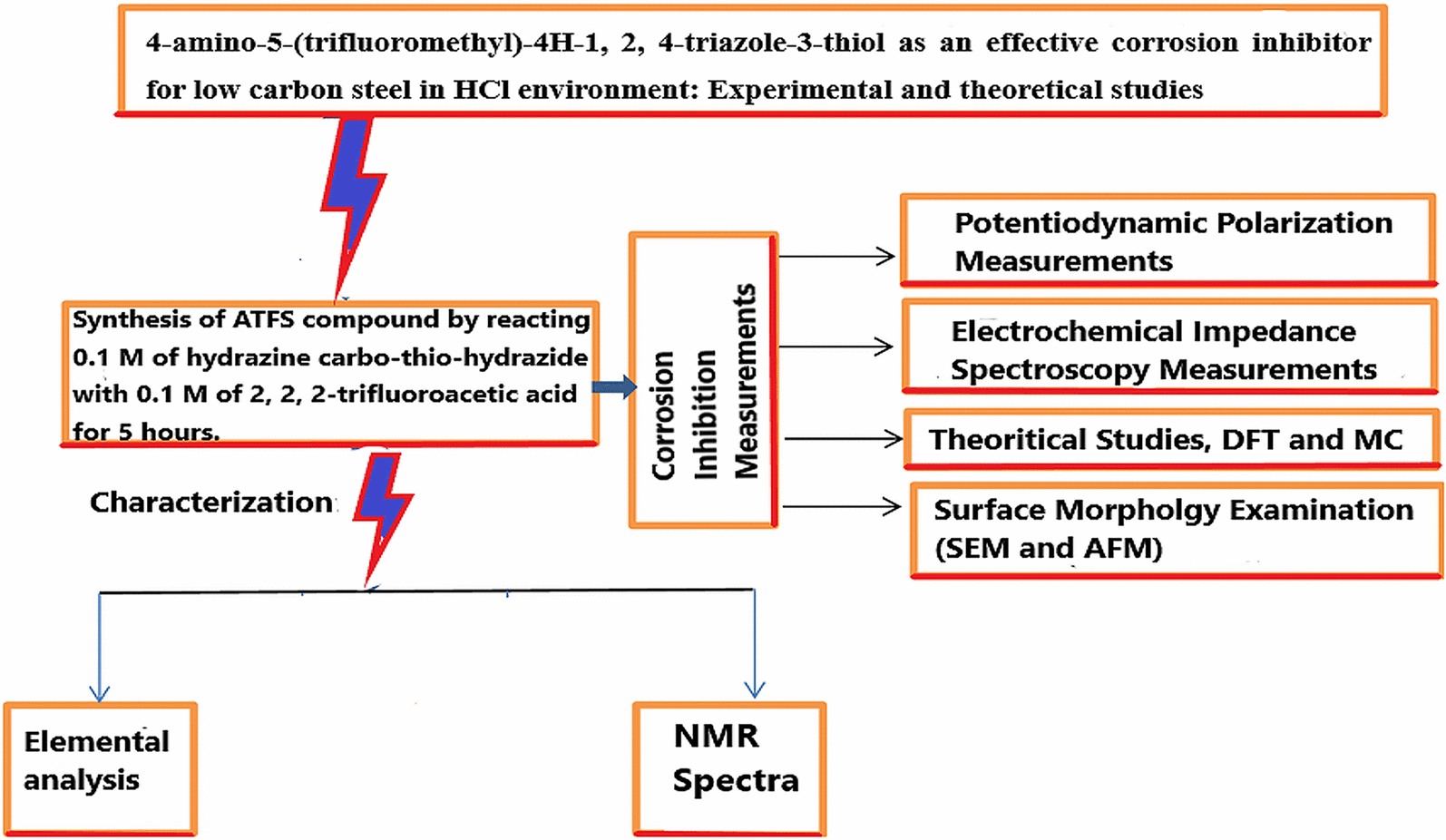
Flowchart for the synthesis, structural characterization and corrosion inhibition behavior of the ATFS compound.
Materials and chemicals
The working electrode used in this study was LCS with a composition of 0.20 wt.% carbon, 0.60 wt.% manganese, 0.04 wt.% phosphorus, 0.003 wt.% silicon, and the remaining portion being iron. The primary chemicals employed in the synthesis of the ATFS compound were hydrazine carbo-thio-hydrazide (99%), 2,2,2-trifluoroacetic acid (99%), Na2CO3 (99.5%), HCl (37% annular acid), H2SO4 (98%), acetone (99%), CH3CH2OH (99%), and CH3OH (99.8%), all sourced from Sigma-Aldrich. Pt and saturated calomel electrodes (SCE) were utilized as the counter and reference electrodes, respectively during the electrochemical measurements.
Preparation of a triazole compound (ATFS)
A mixture of hydrazine carbo-thio-hydrazide (1) (10.6 g, 0.1 mol) and 2, 2, 2-trifluoroacetic acid (2) (11.4 g, 0.1 mol) was refluxed in 30 mL of water for 5 hours with constant stirring. The reaction mixture was then cooled and filtered. The solid residue was washed with 10 mL of cold water and subsequently recrystallized from water to yield pure compound 3 [57]. Scheme 1 demonstrates the reaction by which the ATFS compound is schematically synthesized. 4-amino-5-(trifluoromethyl)−4H-1,2,4-triazole-3-thiol (ATFS) is toxic and causes irritation, but there's not much information about its environmental behavior. However, the trifluoromethyl part of its structure makes it likely to stick around in the environment [58, 59].
Scheme 1.

Synthesis of organic compound ATFS (3) from the reaction of hydrazine carbo-thio-hydrazide (1) and 2, 2, 2-trifluoroacetic acid (2)
Characterization of ATFS compound
Colorless crystals; melting point: 140.3–141.0 °C; yield: 85%
13C NMR (376 MHz, CDCl3): δ (ppm): − 66.24 (s, 3 F, ArCF3)
Elemental analysis (wt.%): calculated for C3H3F3N4S: C, 19.57; H, 1.64; N, 30.43. Found: C, 19.45; H, 1.59; N, 30.06.
WL tests
The gravimetric measurements were conducted utilizing established procedures [60]. During the initial step, the LCS specimens were polished using different grades of emery sheets (400–2000), rinsed with distilled water, subjected to sonication, rinsed with acetone, air-dried at ambient temperature, and subsequently weighed. The LCS coupons were submerged in 0.5 mol L−1 HCl both without and with varying concentrations of the synthesized compound for 48 h at ambient temperature. This was succeeded by a comprehensive cleaning procedure that encompassed ultrasonic washing in acetone, drying, and weighing the samples. The solution volume is 100 ml, and the submersion time ranged from 60 to 360 min at temperatures between 298 and 328 Kelvin. To enhance data reliability, 3 specimens were evaluated concurrently for each condition, and the average WL was determined [61].
Electrochemical investigations
Each electrochemical experiment was conducted in triplicate to confirm its reproducibility. All measurements were conducted at room temperature (298 K). A conventional three-electrode cell setup was utilized for all electrochemical experiments. The working electrode was fabricated from LCS, while a platinum gauze electrode served as the counter electrode, and an SCE was employed as the reference electrode. Prior to each electrochemical experiment, a 1 cm2 area of the working electrode was prepared following the same procedure as in WL experiments. The prepared electrode was then immersed in the test solution for 30 min to establish a stable open-circuit potential (OCP). PDP experiments were conducted by systematically sweeping the electrode potential from − 500 to − 1300 mV relative to the SCE at a scan rate of 0.2 mV/s. The corrosion current density (Icorr) was determined for each solution (with and without the ATFS compound) using the Stern-Geary method [62], which involves extrapolating the anodic and cathodic Tafel slopes. All experiments were conducted thrice to guarantee reliability, and all measurements were executed at 298 K. EIS measurements were also obtained at the OCP. Small AC voltage pulses (5 mV peak-to-peak) were applied over a frequency range of 100 kHz to 50 mHz, and the impedance response was analyzed. A potentiostat (SP-150) with EC-LAB software was utilized to control the experiments and acquire data. The collected data was then analyzed and visualized via Origin 2018 and Microsoft Office 2016.
Surface analysis study
LCS specimens were prepared by polishing with abrasive papers ranging from 250 to 1200 grit to obtain a smooth surface finish. After polishing, the sheets were thoroughly washed with deionized water. To induce corrosion, they were immersed in a 0.5 mol L−1 HCl solution for 48 h, both in the absence and presence of the ATFS compound at its highest concentration (300 ppm). Then, the specimens were cleaned with deionized water, dried, and subjected to surface analysis. Surface morphology was characterized using both SEM with a JOEL JSM-6510 LV instrument and AFM with a Keysight 5600LS big stage system.
Theoretical calculations
Computational software tools were employed to determine quantum chemical parameters. Gaussian and Gaussian view software were employed for DFT calculations utilizing the 6–31 + G(d, p) basis set. Additionally, Material studio software was utilized for conducting MC simulations. This combination of software enabled the accurate calculation of various quantum chemical properties.
Results and discussion
13C NMR spectra of ATFS compound
4-amino-5-(trifluoromethyl)−4H-1,2,4-triazole-3-thiol's 13C NMR in Fig.1 spectrum shows distinctive chemical shifts that are compatible with structurally related 1,2,4-triazole derivatives, especially those that have trifluoromethyl (-CF₃), amino (-NH₂), and thiol (-SH) substituents.
Fig. 1.

13C NMR spectra of the ATFS compound
The C=N carbon at ~161 ppm corresponds well with reported values for other 5-substituted 1,2,4-triazoles, where electron-withdrawing groups (e.g., CF₃) produce a modest downfield shift due to the greater de-shielding impact of neighboring nitrogen atoms [63]. Similarly, the C-NH₂ carbon at about 136 ppm is in line with chemical shifts of amino-functionalized triazoles that have been previously reported, where the shielding effects are influenced by electron delocalization and resonance stabilization [64]. The ATFS compound is distinguished by its highly up-field-shifted trifluoromethyl (-CF₃) carbon signal at approximately −119 ppm. This peak's observed fine splitting is caused by the 13C-19F coupling, a well-established interaction in fluorinated aromatic systems that confirms the CF₃ group's successful insertion [65]. Because of its high electron-withdrawing impact, the presence of the CF₃ group causes a substantial up-field shift when compared to non-fluorinated 1,2,4-triazoles, which normally exhibit C-5 signals at 140–145 ppm. This is in line with research on related CF₃-functionalized heterocycles, where distinctive shielding effects are produced by fluorine's influence on electron density redistribution [66].
Therefore, the 13C NMR findings show spectral consistency with other well-established CF₃-substituted triazoles and heteroaromatics in addition to confirming the structural integrity of 4-amino-5-(trifluoromethyl)−4H-1,2,4-triazole-3-thiol. These findings further corroborate the effective synthesis and characterization of the target chemical.
WL study
The WL method was used to assess the corrosion behavior of LCS in a 0.5 mol L−1 HCl solution containing varying concentrations of the ATFS compound. The experiments were conducted at room temperature (298 K) for a duration of 6 h. It was computed by Eq. (1).
| 1 |
where ΔW represents the WL of the LCS specimen, W1 and W2 denote the weights of the LCS prior to and after treatment with 0.5 mol L−1 HCl solution, respectively. The corrosion rate (CR) was calculated based on the weight loss, surface area, and immersion time.
| 2 |
where A indicates the whole area of LCS per cm2 and t specifies the immersion duration (minutes). The inhibition efficiency (IEw) of the ATFS compound and the surface coverage ( was calculated by Eqs. (3) and (4), respectively.
| 3 |
where Wcorr and Winh are the WL of LCS sheets without and with the ATFS compound, respectively.
| 4 |
The results, summarized in Table 1, demonstrate that the IEw of the ATFS compound increases with increasing its concentration in the corrosive medium. The IEw at 298 K and 50 ppm of ATFS compound is 52%. When the synthetic inhibitor’s concentration increases to 300 ppm, the IEw increases to 89%. The presence of ATFS in the corrosive medium reduces the corrosion rate and thus improves the mitigation efficacy.
Table 1.
Data of weight loss measurements at 360 min for LCS in 0.5 mol L−1 HCl in the absence and presence of different doses of ATFS compound at different temperatures
| 298 K | 308 K | 318 K | 328 K | |||||
|---|---|---|---|---|---|---|---|---|
| Dose (ppm) | θ | IEw | θ | IEw | θ | IEw | θ | IEw |
| 0 | … | … | … | … | … | … | … | … |
| 50 | 0.52 | 52.00 ± 0.2 | 0.50 | 50.00 ± 0.2 | 0.48 | 48.00 | 0.45 | 45.00 ± 0.3 |
| 100 | 0.59 | 59.00 ± 0.1 | 0.54 | 54.00 ± 0.3 | 0.54 | 54.00 | 0.53 | 53.00 ± 0.3 |
| 150 | 0.68 | 68.18 ± 0.3 | 0.65 | 65.00 ± 0.2 | 0.64 | 64.00 | 0.61 | 61.00 ± 0.2 |
| 200 | 0.75 | 75.00 ± 0.2 | 0.73 | 73.00 ± 0.1 | 0.68 | 68.00 | 0.65 | 65.00 ± 0.1 |
| 250 | 0.80 | 80.00 ± 0.1 | 0.77 | 77.00 ± 0.4 | 0.72 | 72.00 | 0.69 | 69.00 ± 0.2 |
| 300 | 0.89 | 89.00 ± 0.3 | 0.85 | 85.00 ± 0.3 | 0.78 | 78.00 | 0.75 | 75.00 ± 0.3 |
The corrosion behavior of a LCS in 0.5 mol L−1 HCl solution was investigated in the temperature range of 298–328 K, both without and with the addition of a synthetic inhibitor (ATFS). The corrosion rate was observed to increase with rising temperature in all cases. This is attributed to an increase in the kinetic energy of the corrosive ions and H2 gas bubbles, leading to the desorption of the shielding film that was formed by the ATFS compound on the LCS surface, and exposing a larger area to the corrosive HCl solution [62]. However, the addition of ATFS at various doses (50–300 ppm) significantly reduced the corrosion rate. At 298 K, the inhibition efficiency with 300 ppm of ATFS was a remarkable 89%. As the temperature increased to 328 K, the inhibition efficacy decreased to 75%. The observed decrease in inhibition efficiency with rising temperature suggests that the adsorption of the ATFS onto the metal surface is primarily of a physical nature [67].
In acidic chloride solutions containing oxygen, the corrosion of LCS proceeds through a multi-step process [64]. Initially, Fe reacts with H2O and Cl− ions to produce an adsorbed intermediate species ([FeClOH]−ads).
| 5 |
This step is followed by a slower rate-determining step where the intermediate decomposes, releasing ferrous ions, chloride ions, and water.
| 6 |
| 7 |
Concurrently, when oxygen is available, a cathodic reaction occurs where oxygen is reduced to water by consuming protons and electrons.
| 8 |
The addition of the ATFS compound to the HCl medium leads to the formation of a protective film on the LCS surface, consequently mitigating corrosion significantly. The protective action originates from a substitution process that takes place at the metal-solution interface. During this process, molecules of organic inhibitor displace water molecules from the metal surface, as illustrated in Eq. (9).
| 9 |
The effectiveness of this substitution, represented by the size ratio"x"(the number of water molecules substituted by a single inhibitor molecule), plays a crucial role in the inhibitor's performance. Planar-shaped inhibitor molecules tend to show superior surface coverage, resulting in more effective corrosion protection [68].
Corrosion process: thermodynamic activation parameters
Investigating inhibitor-surface interactions, thermodynamic activation parameters, namely activation energy (Ea∗), enthalpy change (∆Ha∗), and entropy change (∆Sa∗) for LCS corrosion in 0.5 mol L−1 HCl solution were evaluated. The Arrhenius and transition-state equations were applied to calculate these parameters in the absence and presence of different concentrations of the ATFS compound.
| 10 |
| 11 |
In the equations, k is the corrosion rate, R is the gas constant, kB is Boltzmann's constant, T is the Kelvin temperature, and h is Planck's constant. The Arrhenius plot (log k vs. 1/T) is shown in Fig. 2, while the transition-state plots (log k/T vs. 1/T) for the ATFS compound are illustrated in Fig. 3. The Arrhenius plot shows a linear relationship with a slope of -Ea*/2.303R, allowing for the determination of the Ea* value for the inhibited dissolution of LCS, as presented in Table 2. The table reveals a substantial increase in Ea* for LCS dissolution in HCl from 48.02 kJ/mol in the absence of the ATFS compound to 108.21 kJ/mol in its presence. According to literature, this elevated Ea* can be attributed to two possible mechanisms: physisorption, where weak physical interactions between the compound and the metal surface hinder corrosive species access, leading to a higher energy barrier for dissolution; or reduced inhibitor coverage due to temperature-induced desorption, exposing more of the metal surface to the corrosive solution and consequently increasing the required activation energy. Conversely, a decrease in Ea* would typically indicate a chemisorption process involving strong chemical bond formation between the inhibitor and the metal surface, facilitating dissolution [69].
Fig. 2.

Arrhenius plots (log k vs. 1/T) for corrosion of LCS in 0.5 mol L−1 HCl without and with different concentrations of the ATFS compound
Fig. 3.

Transition state plot (log (k/T) vs. 1/T) for corrosion of LCS in 0.5 mol L−1 HCl without and with different concentrations of the ATFS compound
Table 2.
Activation parameters for corrosion of LCS in 0.5 mol L−1 HCl at 298 K in the absence and presence of different doses of the compound ATFS
| Dose(ppm) | Ea *(kJ mol−1) | ΔHa*(kJ mol−1) | -ΔSa*(J mol−1 K−1) | R2 |
|---|---|---|---|---|
| Blank | 48.02 | 110.5 | 1.84 | 0.99 |
| 50 | 49.77 | 114.6 | 1.83 | 0.99 |
| 100 | 52.92 | 121.8 | 1.82 | 0.99 |
| 150 | 60.18 | 138.5 | 1.79 | 0.99 |
| 200 | 74.30 | 171.0 | 1.70 | 0.99 |
| 250 | 83.52 | 192.3 | 1.64 | 0.99 |
| 300 | 108.21 | 249.1 | 1.48 | 0.99 |
An increase in temperature typically accelerates metal dissolution in acidic media. However, the observed higher Ea* values in the presence of ATFS suggest that the inhibitor’s molecules form a significant physical barrier on the metal surface through electrostatic adsorption [70]. The physical barrier, composed of ATFS molecules, hinders the movement of ions and other species across the metal-solution interface, thus slowing down the dissolution process [71].
Transition-state plots, which exhibit a linear relationship, were used to determine the enthalpy change (∆Ha*) and entropy change (∆Sa*) of activation. The slope of the plots corresponds to (-∆Ha*/2.303R), while the intercept provides information about ∆Sa*. The positive values of ∆Ha* suggest an endothermic process for the formation of the activated complex. Furthermore, the negative values of ∆Sa* indicate that the ATFS molecules become more ordered upon adsorption onto the LCS surface, leading to a decrease in the system's entropy [72].
Isotherm adsorption
Adsorption isotherms provide insights into how inhibitors interact with metal surfaces [34]. Adsorption isotherms such as Temkin, Langmuir, and Freundlich were studied (Fig. 4(a-c)) to see which best described the surface coverage data. The Langmuir model proved to be the best fit, as indicated by its highest regression coefficient (R2) of 0.99 (from Fig. 4b). This suggests that the Langmuir isotherm is the most accurate representation of the adsorption mechanism. By analyzing surface coverage data (Table 1) and plotting Cinh/θ against Cinh for ATFS, a linear relationship with a near-unit slope (Fig. 4b) was seen. This indicates that ATFS adsorption on the LCS surface follows the Langmuir isotherm, as described in Eq. (12).
| 12 |
where Kads is the equilibrium constant of the adsorption process. The Kads can be used to calculate the standard adsorption free energy (ΔGºads) using Eq. (13) [73, 74].
| 13 |
Fig. 4.

a Temkin adsorption isotherm for the ATFS compound on LCS in 0.5 mol L−1 HCl at different temperatures. b Langmuir adsorption isotherm for the ATFS compound on LCS in 0.5 mol L−1 HCl at different temperatures. c Freundlich adsorption isotherm for the ATFS compound on LCS in 0.5 mol L−1 HCl at different temperatures
ΔGºads values for ATFS range from −36.1 to −38.5 kJ mol−1 (Table 3), suggesting a strong interaction between ATFS compound and the iron surface. This strong interaction is assigned to the existence of lone-pair electrons on the N atoms of the triazole ring and the S atom of the thiol group in the ATFS structure [75]. These electrons can be donated to the unoccupied d-orbitals of iron atoms, forming coordinate bonds. Additionally, the trifluoromethyl group may enhance adsorption by either donating or accepting electrons from the iron surface [62].
Table 3.
Equilibrium constant Kads and standard free energy change ΔGºads of adsorption of the ATFS compound on LCS in 0.5 mol L−1 HCl at different temperatures
| Temp. (K) | Slope | Intercept | Kads (mol−1) | -ΔGο (kJ mol−1) | R2 |
|---|---|---|---|---|---|
| 298 | 0.969 | 64.82 | 0.0154 | 38.50 | 0.999 |
| 308 | 0.959 | 64.21 | 0.0156 | 36.10 | 0.999 |
| 318 | 0.963 | 64.32 | 0.0155 | 36.50 | 0.999 |
| 328 | 0.967 | 64.72 | 0.0154 | 38.10 | 0.999 |
Electrochemical investigations
Open circuit potential (OCP) measurements
Figure 5a shows how the open circuit potential of LCS changed over time in a 0.5 mol L⁻1 HCl solution, both without and with different concentrations of the ATFS compound added. All curves (B, 1, 2, 3, and 4) show an initial period of potential change before gradually tending towards a more stable value over time. This initial fluctuation is typical as the electrode surface interacts with the electrolyte and establishes an equilibrium. It appears that a relatively stable potential is reached within approximately 1000–1200 s for most of the conditions shown. While there are still some minor fluctuations, the overall trend suggests a steady state. The potentials are all within a relatively narrow range, generally between − 475 mV and − 515 mV vs. SCE. This is expected for carbon steel in an acidic chloride environment [76]. The blank curve starts at a more negative potential (around − 510 mV) and gradually shifts towards a less negative (− 490 mV), but still relatively active. This indicates ongoing corrosion in the uninhibited acid solution. The presence of the ATFS compound shifts the OCP towards more noble potentials compared to the blank solution (curve B). This suggests that the inhibitor is influencing the electrochemical reactions occurring at the steel surface, potentially by blocking active corrosion sites or altering the kinetics of the anodic and/or cathodic reactions. It is worth observing that the curves 1, 2, 3, and 4 exhibit progressively more positive OCP values as the concentration of AFTS increases. This trend strongly suggests that higher inhibitor concentrations lead to a greater degree of corrosion inhibition. The more noble the OCP, the lower the thermodynamic tendency for metal dissolution [76].
Fig. 5.

a OCP-time curves of LCS in 0.5 mol L−1 HCl acid in the absence and presence of different concentrations of the ATFS compound at 298 K. (B) Blank (0.5 mol L−1 HCl), (1) Blank + 50 ppm, (2) Blank + 100 ppm, (3) Blank + 200 ppm, and (4) Blank + 300 ppm of ATFS compound. b Plots of potentiodynamic polarization measurements for corrosion of LCS without and with different concentrations of compound ATFS at 298 K
PDP measurements
A Tafel plot can be used to depict the correlation between the overpotential and log I. The extrapolation approach enables the computation of Tafel slopes (βa and βc), corrosion potential (Ecorr), and corrosion current density (Icorr) as described in [67]. The extrapolation approach can be used to compute the Tafel slopes [67]. Figure 5b shows the Tafel polarization curves of LCS in 0.5 mol L−1 HCl acid free of and with different concentrations of the ATFS compound. The corrosion potential, often identified as the point where the anodic and cathodic curves intersect, provides insights into the thermodynamic tendency of the material to corrode. A shift of Ecorr towards more positive values with the existence of ATFS suggests that the compound makes the steel less susceptible to corrosion (Fig. 5b and Table 4). The observed difference in Ecorr values, which is less than 85 mV, suggests that the examined compound acts as a mixed-type inhibitor [62]. I.e., it retards both the anodic and cathodic processes. The corrosion current density significantly decreases with increasing ATFS concentration, suggesting that ATFS effectively inhibits the corrosion of LCS [68]. Both βa and βc show a decreasing trend with increasing ATFS concentration. This suggests that ATFS influences both the anodic (metal dissociation) and cathodic (hydrogen bubbling) reactions. These effects may be caused by the adsorption of ATFS molecules onto the LCS surface [77]. The inhibition efficacy (IEp) improves with increasing ATFS concentration, reaching high values (89.3% at 300 ppm). This confirms the potency of ATFS as a corrosion inhibitor for LCS in the HCl solution. In addition, the increase in surface coverage (θ) with increasing ATFS concentration further supports the effectiveness of the inhibitor. As more inhibitor molecules adsorb at the metal surface, they produce a shielding film that hinders the access of corrosive species to the metal (Table 4). The inhibition efficacy (IEp) of the ATFS compound was computed via Eq. (14).
| 14 |
Table 4.
Potentiodynamic polarization parameters of LCS in 0.5 mol L−1 HCl solution containing different concentrations of the ATFS compound at 298 K
| Dose(ppm) | -Ecorr (mV) | βa (mV/dec) | -βc (mV/dec) | Icorr (mA/cm2) | θ | IEp % |
|---|---|---|---|---|---|---|
| Blank | 969 | 40.23 | 120.00 | 3.00 | … | … |
| 50 | 980 | 50.52 | 100.07 | 1.60 | 0.466 | 46.6 ± 0.2 |
| 100 | 972 | 40.01 | 80.33 | 1.22 | 0.593 | 59.3 ± 0.1 |
| 150 | 986 | 30.22 | 60.50 | 0.92 | 0.693 | 69.3 ± 0.3 |
| 200 | 913 | 20.45 | 40.37 | 0.75 | 0.750 | 75.0 ± 0.4 |
| 250 | 941 | 10.67 | 30.32 | 0.52 | 0.826 | 82.6 ± 0.5 |
| 300 | 1022 | 15.32 | 25.52 | 0.32 | 0.893 | 89.3 ± 0.1 |
Here, iocorr and icorr are the corrosion current densities in the absence and presence of the ATFS compound, respectively. The Icorr was estimated via Eq. (15).
| 15 |
In this context, β is a constant that is associated with the Stern-Geary equation, while Rp signifies the polarization resistance [78].
| 16 |
As the concentration of ATFS compound increases from 50 to 300 ppm, both the anodic Tafel slope (βa) and the cathodic Tafel slope (βc) decrease significantly. Specifically, βa drops from 50.52 to 15.32 mV/dec. This decline indicates that the inhibitor is making the anodic reaction (steel dissolution) more difficult. In simpler terms, a larger electrical potential is needed to increase the dissolution rate of steel tenfold, which directly translates to a slower corrosion rate for low-carbon steel. A decrease in βa with increasing inhibitor concentration is a positive sign for effective corrosion control. Similarly, βc decreases from 100.07 to 25.52 mV/dec with increasing inhibitor concentration. While the primary effect of the ATFS inhibitor is to slow down steel dissolution, this can also lead to a reduced demand for electrons in the overall electrochemical process, thus contributing to the observed decrease in βc [62].
When ATFS concentration increases in the corrosive media, a notable observation from the polarization curves is that both the anodic and cathodic branches progressively shift towards lower current densities. This signifies a reduction in the total corrosion rate. The anodic branch, representing the current density of iron dissolving into the solution (Fe → Fe2+ + 2e⁻), moves downward. This indicates a slower anodic reaction rate, meaning less steel is dissolving and, consequently, the corrosion rate for the LCS decreases. While ATFS may not directly affect the cathodic reaction (the formation of water in oxygenated acidic environments: 4H+ + O2 + 4e− → 2H2O), a slower rate of steel dissolution-the anodic reaction-indirectly influences the cathodic branch. Since the entire corrosion process relies on electron transfer, a reduced rate of steel dissolution means fewer electrons are available for the cathode. This scarcity of electrons then leads to a decrease in the current density for the cathodic reaction as well [79].
EIS measurements
EIS, a method that does not cause damage, offers insights into both time-dependent characteristics and ongoing processes like corrosion [80]. The form of the EIS diagram reflects the system's mechanistic behavior. Nyquist plots (Fig. 6a) of the LCS electrode in a 0.5 mol L−1 HCl solution, with and without ATFS at 298 K, show a depressed semicircle at high frequencies, attributed to the capacitance arising from the double-layer and the time constant associated with charge transport [80]. While a slight difference is observed between the inhibited and uninhibited systems, the ATFS primarily enhances impedance without altering other aspects of the behavior. This suggests that ATFS does not interfere with the electrochemical reactions causing corrosion, as supported by polarization experiments. The primary corrosion inhibition mechanism of ATFS is likely adsorption onto the metal surface. Bode plots (Fig. 6b) reveal that the presence of ATFS shifts the impedance modulus (|Z|) to higher values compared to the blank solution. This increase is associated with the adhesion of ATFS molecules onto the LCS surface [81]. Consequently, the assessed ATFS suppresses the corrosion kinetics of the LCS in the acidic environment [82]. At intermediate frequencies, the Bode plot reaches a maximum phase shift of − 78°, which is attributed to the electrical double layer's capacitance. The phase angle shifts towards negative values as frequency increases, indicating a capacitive behavior.
Fig. 6.

The Nyquist (a) and Bode (b) plots of the LCS in 0.5 mol L−1 HCI in the presence of different concentrations of ATFS at 298 K. (c) The electrical equivalent circuit used to model the results of EIS
The impedance data was analyzed using ZSimpWin software, fitting it to an equivalent circuit (Fig. 6c) to figure out impedance parameters for the LCS in corrosive media, both without and with ATFS compound [78]. The circuit is composed of a parallel branch containing double-layer capacitance (Cdl) and charge transfer resistance (Rct), followed by the solution resistance (Rs) in series. Due to the depressed semicircle shape, a constant phase element (CPE) was substituted for a capacitor to improve the data fitting [80]. The model provided a satisfactory fit to the experimental data. Equation (17) calculates Cdl using the maximum frequency (fmax) at which the imaginary part of the impedance attains its maximum value.
| 17 |
The high-frequency interception of the semicircle with the real axis determines the solution resistance (Rs) however, the low-frequency interception yields (Rs + Rct). The maximum phase angle (θmax), Rct, and Cdl were used to evaluate the inhibitor's efficiency. An ideal R–C parallel circuit would yield θmax = 90°, but depressed semicircles are common due to surface roughness, especially in hydrochloric acid solutions that corrode the steel and increase surface roughness (as observed in SEM and AFM images). The inhibition efficacy (IEEIS) was computed by Eq. (18), based on Rct values.
| 18 |
Roct and Rct represent the charge-transfer resistances of uninhibited and inhibited solutions, respectively. Table 5 summarizes the EIS data, showing that increasing ATFS concentration leads to higher inhibition efficiency and Rct, while Cdl decreases. An increase in the value of Rct indicates that the presence of ATFS hinders the charge transfer at the electrode-solution boundary, implying a slowdown in the corrosion rate. The decline in the Cdl suggests a reduction in the double-layer capacitance, which is often associated with the adsorption of the ATFS molecules onto the LCS [80, 81]. The inhibition efficacy steadily improves with increasing ATFS dose, reaching 87.3% at 300 ppm. This confirms the potency of ATFS as a corrosion inhibitor for LCS in the acidic environment.
Table 5.
EIS data of LCS in 0.5 mol L−1 HCl in the absence and presence of different concentrations of the ATFS compound at 298 K
| Dose(ppm) | Rct (Ω cm2) | Cdl(F cm−2) × 10–6 | θ | IEEIS |
|---|---|---|---|---|
| Blank | 130.0 | 128.0 | … | … |
| 50 | 231.0 | 75.0 | 0.417 | 41.7 ± 0.05 |
| 100 | 330.0 | 56.0 | 0.563 | 56.3 ± 0.10 |
| 150 | 473.0 | 36.0 | 0.713 | 71.3 ± 0.15 |
| 200 | 594.0 | 30.0 | 0.756 | 75.6 ± 0.10 |
| 250 | 795.0 | 21.0 | 0.827 | 82.7 ± 0.20 |
| 300 | 1022.0 | 16.0 | 0.873 | 87.3 ± 0.20 |
Comparison of inhibition efficiencies
It is important to compare the inhibition efficiencies obtained from different electrochemical and gravimetric methods, as each method measures corrosion in a slightly different way. While the absolute values might vary slightly, a good inhibitor should show consistent trends across all methods. A comprehensive comparison of the inhibition efficiencies (IE) derived from weight loss measurements, potentiodynamic polarization (PDP), and electrochemical impedance spectroscopy (EIS) reveals a strong consistency in the inhibitive performance of ATFS on low-carbon steel in 0.5 mol L−1 HCl, particularly at 298 K. Across all three methods, the inhibition efficiency consistently increases with increasing concentration of ATFS. This trend is a crucial indicator of the inhibitor's effectiveness, as higher concentrations lead to greater surface coverage and, consequently, better protection against corrosion. For instance, at 298 K and 300 ppm ATFS: weight Loss (IEw): 89%, potentiodynamic polarization (IEp): 89.3%, and electrochemical impedance spectroscopy(IEEIS): 87.3%. The remarkable similarity in these values, especially at the highest concentration, strongly validates the inhibitive action of ATFS.
Surface studies by SEM and AFM
SEM was crucial in evaluating the potency of the ATFS compound as a corrosion inhibitor for LCS. After being immersed for 48 h, the polished LCS (Fig. 7a) showed significant degradation in 0.5 mol L−1 HCl, exhibiting a rough and cracked surface (Fig. 7b). However, when 300 ppm of the ATFS inhibitor was added to the corrosive solution, the LCS surface remained smooth (Fig. 7c). This indicates that the ATFS inhibitor successfully adsorbed onto the LCS surface, blocking active sites and developing a protective film that minimizes contact with the corrosive medium [83]. These findings strongly suggest that the ATFS compound provides effective corrosion protection for LCS.
Fig. 7.

SEM images of (a) free LCS: (b) LCS after 48 h immersion in 0.5 mol L−1 HCI only; (c) LCS after 48 h immersion in 0.5 mol L−1 HCI + 300 ppm of ATFS
AFM is used to evaluate surface morphology of LCS at the pico- to micro-scales. It is a remarkable and cutting-edge technique for determining the inhibitor's impact on the corrosion process at the LCS solution boundary. Three LCS images were depicted in Fig. 8. The first one illustrates a free LCS, which is not exposed to either HCl or inhibitor (Fig. 8a). The second one was submerged in a 0.5 mol L−1 HCl (blank) for 48 h (Fig. 8b). The third one was immersed in 0.5 mol L−1 HCl + 300 ppm of ATFS inhibitor (Fig. 8c). Blank LCS has significantly more damage than both other samples, so it has the highest mean roughness (Sa), which equals 5.57 nm (Table 6). The ATFS inhibitor adsorbs on the LCS outer surface, so the roughness obtained was reduced to 3.53 nm [83]. The free LCS is clearer and has the lowest roughness, which equals 2.28 nm. Table 6 presents various surface height parameters, including maximum peak height (Sp), maximum pit height (Sv), maximum height (Sz), arithmetic mean height (Sa), and root mean square height (Sq), all measured in micrometers according to ISO 25178 [84]. The"control"condition in Table 6 serves as a baseline for comparison with the other two conditions: submersion in 0.5 mol L−1 HCl and immersion in the same solution with the addition of ATFS inhibitor. The results demonstrate that the existence of the ATFS significantly reduces all surface height parameters relative to the uninhibited solution. This reduction is attributed to the adsorption of ATFS molecules onto the LCS surface, which subsequently forms a protective film that minimizes surface roughness [85].
Fig. 8.

AFM 3D images of (a) free LCS; (b) LCS after 48 h immersion in 0.5 mol L−1 HCI; (c) LCS after 48 h immersion oin o.5 mol L−1 HCI + 300 ppm of ATFS
Table 6.
AFM parameters of LCS
| Compound | Sa (nm) | Sq(nm) | Sp(nm) | Sv(nm) | Sz(nm) |
|---|---|---|---|---|---|
| Control | 2.28 | 3.83 | 12.40 | 25.90 | 38.30 |
| 0.5 mol L−1 HCl | 5.57 | 7.58 | 18.00 | 35.80 | 53.80 |
| ATFS | 3.53 | 4.79 | 7.80 | 30.10 | 37.90 |
Quantum chemical simulations and calculations
DFT simulations
DFT simulations were conducted to explore the interactions between the ATFS inhibitor and the LCS surface. Figure 9 depicts the optimized molecular structure, the charge distribution density, along with the spatial arrangement of the HOMO and LUMO orbitals. The HOMO–LUMO energy gap (ΔE) was calculated. Furthermore, several key electronic properties influencing the inhibitor-surface interaction were determined. These parameters were evaluated based on the methodology outlined in reference [62] and are summarized in Table 7.
Fig. 9.

Geometrical structure and charge density distribution of HOMO and LUMO levels of the inhibitor compound ATFS
Table 7.
The calculated quantum chemical parameters obtained from DFT theory
| HOMO (au) | LUMO (au) | ∆E(au) | I(au) | D(Debye) | η(au) | σ(au) | µ(au) | χ(au) | ω(au) | Total negative charge TNC | ΔN max | Volume (cm3 mol−1) |
|---|---|---|---|---|---|---|---|---|---|---|---|---|
| − 0.242 | − 0.051 | 0.191 | 0.242 | 0.081 | 0.095 | 10.482 | − 0.146 | 0.146 | 0.117 | − 5.667 | 1.537 | 134.66 |
The HOMO energy (EHOMO) reflects a molecule's capability to donate electrons to LCS with available empty orbitals. Conversely, the LUMO energy (ELUMO) signifies its capacity to attract electrons. A lower ELUMO value implies a greater propensity of the molecule to accept electrons [86]. Furthermore, a higher HOMO energy level in the inhibitor molecule enhances electron donation to the unoccupied d-orbitals of the LCS, thereby increasing its inhibitory effectiveness. DFT calculations revealed a high HOMO value (−0.242 au) for the organic inhibitor (Table 7), suggesting a strong tendency to adsorb onto the LCS surface. The energy gap (ΔE) of 0.191 au, a critical parameter for assessing molecular stability, was found to be relatively small. A lower ΔE generally indicates higher chemical reactivity and, consequently, greater potential for inhibitory activity [86, 87]. The observed small HOMO–LUMO gap in the ATFS inhibitor facilitates strong interactions with the LCS surface through efficient electron transfer. The inhibitor's moderating effect could be ascribed to the development of a protective film on the LCS surface upon adsorption [88, 89].
Analysis of the HOMO distribution revealed significant electron density localized on the nitrogen lone pairs of the amino group (-NH2), the π-electrons within the triazole ring, and the sulfur lone pair of the thiol group (-SH) (Fig. 9). This indicates that these regions (blue area in charge distribution density diagram, Fig. 9) are highly susceptible to electrophilic attack on the LCS. The high HOMO density within the aromatic triazole ring indicates its preferential orientation towards the LCS surface during adsorption, likely mediated by π-electron interactions. Conversely, the LUMO distribution analysis showed significant electron density concentrated on the π* antibonding orbitals of the triazole ring and the trifluoromethyl (-CF3) group. This suggests that these areas (red area in charge distribution density diagram, Fig. 9) may function as electrophilic sites within the ATFS molecule.
Table 7 presents a comprehensive set of DFT-derived parameters that provide valuable insights into the electronic structure and properties of the ATFS molecule. These parameters can be used to understand the molecule's reactivity, stability, and potential interactions with other molecules or surfaces. Due to its low dipole moment (D = 0.081 Debye), the ATFS compound readily accumulates on the LCS surface, thereby increasing adsorption, as reported in reference [90]. Its low hardness (η = 0.095) suggests high adsorbability onto the steel surface [91]. Furthermore, the high global softness (σ = 10.482) indicates strong inhibitor potential [77]. The low ionization potential (I = 0.242) and low electronegativity (χ = 0.146) suggest facile electron transfer from the ATFS inhibitor to the LCS, driving the system towards equilibrium [77]. The calculated electrophilicity index (ω = 0.117) indicates a predominantly nucleophilic character for the ATFS molecule, consistent with literature reports [92, 93]. The computed ΔNmax value of 1.537 suggests a remarkable ability of ATFS to donate electrons to LCS atoms through coordination bonds, leading to the development of an efficient protective film that inhibits corrosion [94]. The large molar volume (134.66 cm3 mol−1) of ATFS enhances its inhibitory efficiency by increasing the contacting region between the inhibitor molecules and the LCS surface. Based on the Hard and Soft Acids and Bases (HSAB) principle, the LCS metal exhibits soft acid characteristics, whereas the ATFS compound behaves as a soft base [95].
The Mulliken charge distribution of ATFS compound, shown in Fig. 9, provides valuable insights into the potential adsorption sites and the nature of the interactions with the LCS surface. The fluorine atoms (with significant negative charges of − 0.251 and − 0.241) and the nitrogen atoms (with negative charges ranging from − 0.188 to − 0.582) are likely centers for interaction with positively charged sites on the LCS surface [91]. In acidic media, the steel surface can develop a positive charge due to the adsorption of protons. The lone pairs of electrons on the nitrogen atoms can also facilitate chemisorption by donating electrons to vacant d-orbitals of iron atoms on the steel surface [96]. The carbon atoms with positive charges (+ 0.420 and + 0.262) and the hydrogen atoms with positive charges (+ 0.392, + 0.330, and + 0.337) might interact with negatively charged or electron-rich areas on the steel surface, although this is less common in acidic environments where the metal surface tends to be positively charged. The sulfur atom with a small negative charge (− 0.066) also possesses lone pairs of electrons, which can participate in adsorption onto the steel surface. Sulfur-containing compounds are known to be effective corrosion inhibitors for iron and steel in acidic media due to their ability to form strong chemisorption bonds. In conclusion, the Mulliken charge distribution of ATFS compound indicates the presence of several electron-rich centers (nitrogen and sulfur atoms) that can effectively interact with the steel surface in HCl media. The electronegative fluorine atoms influence the overall electron density distribution, potentially enhancing the adsorption and corrosion inhibition properties.
Monte Carlo simulation
MC simulations provide a powerful tool for understanding, predicting, and optimizing corrosion inhibition strategies [97]. By combining computational modeling with experimental investigations, researchers can develop more effective and sustainable solutions to combat corrosion, which has significant economic and societal impacts [98]. The compound under examination on the Fe (110) surface is displayed in Fig. 10. However, Table 8 lists the total energy, adsorption energy, rigid adsorption energy, and deformation energy. The total energy represents the overall energy of the system, including the ATFS molecule and the LCS surface. Adsorption energy is the liberated energy when the ATFS molecule binds to the LCS surface. A more negative value indicates a stronger adsorption interaction. The deformation energy accounts for the energy required to deform the ATFS molecule from its ideal gas-phase geometry to its adsorbed configuration on the LCS surface. However, the rigid adsorption energy represents the adsorption energy without considering any structural changes in the ATFS molecule [62].
Fig. 10.

Side view and top view of the ATFS compound on the LCS (110) surface
Table 8.
The descriptors calculated by the Monte Carlo simulation for adsorption of the ATFS compound on the LCS surface
| Molecule | Total Energy(kJ mol−1) | Adsorption Energy(kJ mol−1) | Deformation Energy(kJ mol−1) | Rigid adsorption Energy(kJ mol−1) |
|---|---|---|---|---|
| ATFS | − 42.04 | − 287.12 | 1.68 | − 288.80 |
The adsorption locator module reveals the most optimal orientation of the ATFS inhibitor on the LCS surface through top and side views (Fig. 10). The side view shows ATFS lying parallel to the surface, while the top view shows it nearly flat on the surface. This suggests that the LCS surface is likely already covered by a layer of ATFS that protects the LCS from corrosion. Equation (19) is utilized to calculate the adsorption energy, Eads.
| 19 |
where EFe and Einh stand for the ATFS compound and the Fe surface’s respective total energies.
According to Guo et al. [99], the surface energy of Fe (110) is zero. The adsorption energy of ATFS on the LCS surface is significantly negative (− 287.12 kJ mol−1), indicating a strong interaction between the two. The deformation energy is relatively small (1.68 kJ mol−1), suggesting that the ATFS molecule undergoes minimal structural changes upon adsorption. The rigid adsorption energy (− 288.80 kJ mol−1) is very close to the actual adsorption energy, further supporting the observation of minimal molecular deformation during adsorption.
The simulation results support and explain the experimental work as follows,
The high inhibition efficiency observed experimentally (e.g., 89% at 300 ppm from weight loss) is consistent with the strong adsorption of the ATFS molecule on the LCS surface, as indicated by the large negative adsorption energy (− 287.12 kJ mol⁻1) obtained from Monte Carlo simulations.
The decrease in corrosion current density (Icorr) and increase in charge transfer resistance (Rct) with increasing ATFS concentration are attributed to the formation of a protective film on the LCS surface. This is supported by the Monte Carlo simulations, which show a strong adsorption of ATFS, leading to increased surface coverage (θ) as observed in both polarization and EIS data.
The smoother surface morphology of LCS in the presence of ATFS, as revealed by the lower roughness parameters in AFM analysis, provides visual evidence for the corrosion inhibition. This aligns with the simulation results indicating strong adsorption and effective blocking of corrosion sites by the ATFS molecule.
The quantum chemical parameters calculated using DFT theory provide further insights into the adsorption mechanism. The high HOMO energy suggests a strong electron-donating ability of ATFS, facilitating its interaction with the metal surface, which is crucial for effective inhibition observed in the experiments.
The inhibition mechanism
Corrosion inhibitors are chemical substances that protect metals from degradation by interfering with the corrosion process [100]. Their effectiveness relies on their ability to adsorb onto the metal surface, primarily through electrostatic interactions, electron sharing, and π-electron interactions [101]. Heterocyclic compounds can inhibit corrosion by directly interacting with the metal's d-orbitals (chemisorption) or indirectly by interacting with pre-adsorbed chloride ions (physisorption) [40]. These interactions, influenced by the inhibitor's molecular structure and properties, play a crucial role in preventing metal corrosion in various environments. This study investigated two primary adsorption mechanisms for the interaction of an anti-corrosion agent (ATFS) with LCS: chemisorption and physisorption. In chemisorption, ATFS molecules displace water molecules from the LCS surface and form strong bonds with the metal. This involves sharing electrons from the nitrogen atoms of the triazole ring and the sulfur atom of the thiol group with the empty d-orbitals of the LCS. Simultaneously, electron density from the LCS flows back (retrodonation) into the π-system of the triazole ring, further strengthening the bond [102]. In acidic media, both the LCS surface and the ATFS molecules acquire a positive charge [103, 104]. This causes electrostatic repulsion between LCS and ATFS. This repulsion hinders direct adsorption of the protonated ATFS onto the LCS. However, the presence of chloride ions, which are less hydrated and carry a negative charge, facilitates the adsorption process [62]. The negatively charged chloride ions create a more favorable environment for the positively charged ATFS molecules to adsorb onto the LCS surface through electrostatic interactions (physisorption). Figure 11 displays the suggested mechanism of inhibition.
Fig. 11.

Interaction mechanism of ATFS on the LCS
A comparison of ATFS's inhibitory effectiveness versus other 1,2,4- triazole derivatives
A comparison of inhibition efficiencies, as summarized in Table 9, reveals that ATFS demonstrates a level of effectiveness comparable to, or even surpassing, that of other 1,2,4- triazole derivatives employed for the corrosion protection of steel.
Table 9.
Comparison between the tested ATFS compound and other 1,2,4 triazole derivatives
| Compound’s name | IE | Reference |
|---|---|---|
| • 1,2,4-triazole-5-thione derivative | 93% at 0.0010 M | [105] |
| • 3,5-di(m-tolyl)−4-amino-1,2,4-triazole (m-DTAT) | 95% at 0.0005 M | [38] |
| • 3,5-di(m-tolyl)−4H-1,2,4-triazole (m-DTHT) | 91% at 0.0005 M | [38] |
| • 3-bromo-4-fluoro-benzylidene)-[1,2,4]triazol-4-yl-amine (BFBT) | 85% | [106] |
| • 4-trifluoromethyl-benzylidene)-[1,2,4]triazol-4-yl-amine (TMBT) | 85% | [106] |
| • 2-fluoro-4-nitro-benzylidene)-[1,2,4]triazol-4-yl-amine (FNBT) | 85% | [106] |
| • 4-{(E)-[(4-hydroxy-3-methoxyphenyl)methylidene]amino}−5-(pyridin-4- yl)−2,4-dihydro-3H-1,2,4-triazole-3-thione (HMPT) | 95% at 1000 ppm | [107] |
| • 5-octylsulfanyl-1,2,4-triazole (TR8) | 88% at 0.001 M | [108] |
| • 5-decylsulfanyl-1,2,4-triazole (TR10) | 92% at 0.001 M | [108] |
| • 4-amino-5-(trifluoromethyl)−4H-1, 2, 4-triazole-3-thiol (ATFS) (the lines of the table are not at the same level) | 89% at 300 ppm | This work |
Conclusions
ATFS, a triazole derivative, was prepared by reacting carbo-thio-hydrazide with 2,2,2-trifluoroacetic acid. ATFS was evaluated as a corrosion inhibitor for LCS in 0.5 mol L−1 HCl. The effectiveness of ATFS was assessed using a combination of chemical and electrochemical techniques. The ATFS markedly reduced the corrosion rate of LCS in the HCl environment. The inhibition efficacy improved by increasing the concentration of ATFS from 50 to 300 ppm in the corrosive medium. However, the inhibition efficiency decreased with rising temperature to 328 K. The highest inhibition efficacy (89%) was observed at a concentration of 300 ppm and a temperature of 298 K. A comprehensive comparison of the inhibition efficiencies (IE) derived from weight loss measurements, potentiodynamic polarization, and electrochemical impedance spectroscopy revealed a strong consistency in the inhibitive performance of ATFS on low-carbon steel in 0.5 mol L−1 HCl, particularly at 298 K. The mechanism of inhibition was attributed to the development of a protective film on the LCS surface by the physically-adsorbed ATFS molecules. This was supported by surface characterization techniques such as SEM and AFM. The Langmuir isotherm accurately described the adsorption behavior of ATFS on the LCS surface, suggesting a combination of chemisorption and physisorption. ATFS behaves as a mixed-type inhibitor, influencing both the anodic and cathodic reactions of the corrosion process. Theoretical calculations, including MC and DFT simulations, verified the adsorption of ATFS on the LCS surface and supported the experimental findings. The high inhibition efficiency observed experimentally (e.g., 89% at 300 ppm from weight loss) is consistent with the strong adsorption of the ATFS molecule on the LCS surface, as indicated by the large negative adsorption energy (− 287.12 kJ mol⁻1) obtained from Monte Carlo simulations.
Acknowledgements
The authors extend their appreciation to the Deanship of Scientific Research at King Khalid University for funding this work through the Large Groups Project under grant number RGP.2/205/46.
Abbreviations
- ATFS
4-Amino-5-(trifluoromethyl)-4H-1,2,4-triazole-3-thiol
- LCS
Low-carbon steel
- HCl
Hydrochloric acid
- IE
Inhibition efficiency
- DFT
Density functional theory
- MC
Monte Carlo
- PDP
Potentiodynamic polarization
- EIS
Electrochemical impedance spectroscopy
- SEM
Scanning Electron Microscopy
- AFM
Atomic Force Microscopy
- OCP
Open Circuit Potential
Author contributions
Sherin A. M. Ali: Conceptualization, methodology, writing – original draft. Mostafa A. A. Mahmoud: Methodology, data analysis, Synthesis, writing – review & editing. Medhat M. Kamel: Supervision, project coordination, methodology, data analysis. Ahmed Z. Ibrahim: characterization, data interpretation, writing – review & editing. Zehbah Ali Mohammed Al-Ahmed: writing – review & editing. Badria M. Alshehri:funding acquisition, writing – review & editing.
Funding
The current work was assisted financially to the Dean of Science and Research at King Khalid University via the Large Group Project under grant number RGP.2/205/46.
Data availability
No datasets were generated or analysed during the current study.
Declarations
Ethics approval and consent to participate
Not applicable.
Consent for publication
Not applicable.
Competing interests
The authors declare no competing interests.
Footnotes
The original online version of this article was revised: The Funding and Acknowledgement sections have been updated.
Publisher's Note
Springer Nature remains neutral with regard to jurisdictional claims in published maps and institutional affiliations.
Change history
9/1/2025
The original online version of this article was revised: The Funding and Acknowledgement sections have been updated updated
References
- 1.Sastri VS, Ghali E, Elboujdaini M. Corrosion prevention and protection: practical solutions. 1st ed. Hoboken (NJ): John Wiley & Sons Ltd.; 2007. [Google Scholar]
- 2.Wang L, Xiang G, Han Y, Yang T, Zhou G, Wang J. A mixed visco-hyperelastic hydrodynamic lubrication model for water-lubricated rubber bearings. Int J Mech Sci. 2025;286: 109887. 10.1016/j.ijmecsci.2024.109887. [Google Scholar]
- 3.Tang H, Peng J, Peng H, Yang Y, Gao Q, Xiao L, Yang Z. Test and theoretical investigations on flexural behavior of high-performance H-shaped steel beam with local corrosion in pure bending zone. Steel Res Int. 2024. 10.1002/srin.202400640. [Google Scholar]
- 4.Chen Y, He Z, Li H, Lu D, Song Y, Zhan L, Liu W. Corrosion fatigue mechanisms and control technologies in aviation aluminum alloys: a critical review. Chin J Aeronaut. 2025. 10.1016/j.cja.2025.103496. [Google Scholar]
- 5.Ning J, Gao W, Gu X, Zhang H, Guan W, Li W, Lewandowski JJ. Precipitation behavior and corrosion properties of friction stir welded AA5083 AlMg alloy after sensitization. Mater Charact. 2023;199: 112782. 10.1016/j.matchar.2023.112782. [Google Scholar]
- 6.Li Y, Wang Q, Zhu W, Ding S, Xing L, Bai Z, Wang Y. Corrosion characteristics and mechanisms of ceramic coatings in subcritical and supercritical aqueous systems. Ceram Int. 2025. 10.1016/j.ceramint.2025.02.258. [Google Scholar]
- 7.Xu K, Xiao X, Wang L, Lou M, Wang F, Li C, et al. Data-driven materials research and development for functional coatings. Adv Sci. 2024;11(42):2405262. 10.1002/advs.202405262. [DOI] [PMC free article] [PubMed] [Google Scholar]
- 8.Wang W, Zhao W, Mu W, Li Z, Weng Z, Zhang W, et al. Effect of hot-rolling process on the microstructure, mechanical and corrosion behaviors of dual-phase Co-based entropic alloys. Mater Sci Eng A. 2024;918:147433. 10.1016/j.msea.2024.147433. [Google Scholar]
- 9.Tang X, Wang S, Qian L, Ren M, Sun P, Li Y, Yang J. Corrosion properties of candidate materials in supercritical water oxidation process. J Adv Oxid Technol. 2016;19(1):141–57. 10.1515/jaots-2016-0119. [Google Scholar]
- 10.Luo L, Fu H, Zhang Y, Xie X. Experimental study on the overall stability of corroded H-shaped steel beams. Buildings. 2022;12(11):1923. 10.3390/buildings12111923. [Google Scholar]
- 11.Wang H, Qian D, Wang F, Dong Z, Chen J. Predictive mechanical property and fracture behavior in high-carbon steel containing high-density carbides via artificial RVE modeling. Mater Des. 2024;247:113383. 10.1016/j.matdes.2024.113383. [Google Scholar]
- 12.Huang F, Qin W, Pan X, Yang K, Wang K, Teng Q, et al. Visible-light-induced chemodivergent synthesis of tetracyclic quinazolinones and 3-iminoisoindoliones via the substrate control strategy. J Org Chem. 2024;89(7):4395–405. 10.1021/acs.joc.3c02501. [DOI] [PubMed] [Google Scholar]
- 13.Chen Y, He Z, Li H, Lu D, Song Y, Zhan L, et al. Corrosion fatigue mechanisms and control technologies in aviation aluminum alloys: a critical review. Chin J Aeronaut. 2025. 10.1016/j.cja.2025.103496. [Google Scholar]
- 14.Zhang H, Liu H, Deng Y, Cao Y, He Y, Liu Y, et al. Fatigue behavior of high-strength steel wires considering coupled effect of multiple corrosion-pitting. Corros Sci. 2025;244:112633. 10.1016/j.corsci.2024.112633. [Google Scholar]
- 15.Meng X, Lin L, Li H, Chen Y, Mei H. Characteristics of streamer discharge along the insulation surface with embedded electrode. IEEE Trans Dielectr Electr Insul. 2024;31(4):2038–44. 10.1109/TDEI.2024.3394833. [Google Scholar]
- 16.Qu X, Li X, Zhang L, Yi D, Wang J, Wen C, et al. Effect of construction angles on the microstructure and mechanical properties of LPBF-fabricated 15–5 PH stainless steel. Mater Sci Eng A. 2024;900:146423. 10.1016/j.msea.2024.146423. [Google Scholar]
- 17.Gao W, Guo Z, Zhao H, Xu Y, Gu X, Guan W, et al. Improving intergranular cracking and stress corrosion cracking resistance of highly sensitized AA5083 Al-Mg alloy via reversion heat treatment. J Alloys Compd. 2024. 10.1016/j.jallcom.2024.175538. [Google Scholar]
- 18.Chen Z, Li S, Hihara LH. Electrochemical and mechanical behaviors of dissimilar friction stir welding between 5086 and 6061 aluminum alloy. arXiv preprint. 2018. arXiv:1802.03460
- 19.An N, Chen T, Zhang J, Wang G, Yan M, Yang S. Rational electrochemical design of cuprous oxide hierarchical microarchitectures and their derivatives for SERS sensing applications. Small Methods. 2024;8(5):2300910. 10.1002/smtd.202300910. [DOI] [PubMed] [Google Scholar]
- 20.Zhou Y, Liu H, Chen J, Wang L. Hydrothermal corrosion of double-layer glass/ceramic coatings for metallic interconnects in solid oxide fuel cells. Materials. 2021;14(1):138. 10.3390/ma14010138. [Google Scholar]
- 21.Zhang J, Li S, Wang Y, Chen X. Bending behavior of corroded H-shaped steel beam in underground coal mining environment. Appl Sci. 2021;11(3):938. 10.3390/app11030938. [Google Scholar]
- 22.Wang R. Effects of oxide additions on the corrosion behaviour of Cr₂O₃ based ceramics in high temperature supercritical water environment [Master's thesis]. University of Alberta; 2012. 10.7939/R34X59
- 23.El Faydy M, Timoudan N, Barrahi A, Farag AA, Thakur A, Kusuma HS, Zarrouk A. Inhibitory performance of (E)-4-(3,4,5-trimethoxyphenyl)but-3-en-2-one crystal toward carbon steel corrosion in acid medium by practical and theoretical approaches. J Dispersion Sci Technol. 2025. 10.1080/01932691.2025.2462698. [Google Scholar]
- 24.Punitha N, Sundaram RG, Rengasamy R, Elangovan J. Corrosion mitigation performance of pyrazole derivative on mild steel in acidic media: electrochemical and theoretical approach. Chem Data Collect. 2022;41: 100936. 10.1016/j.cdc.2022.100936. [Google Scholar]
- 25.Vengatesh G, Sundaram RG, Punitha N. Menadione sodium bisulfite as an efficient anti-corrosion additive for mild steel in acid corrosion: electrochemical, surface morphological and theoretical studies. J Mol Liq. 2024;410: 125653. 10.1016/j.molliq.2024.125653. [Google Scholar]
- 26.Fan HB, Fu CY, Wang HL, Guo XP, Zheng JS. Inhibition of corrosion of mild steel by sodium, n-diethyl dithiocarbamate in hydrochloric acid solution. Br Corros J. 2002;37:122–5. [Google Scholar]
- 27.Oguzie EE, Li Y, Wang SG, Wang F. Understanding corrosion inhibition mechanisms – experimental and theoretical approach. RSC Adv. 2011;1:866–73. [Google Scholar]
- 28.Mss MHKM. The economic impact of corrosion: a global perspective. Corros Eng Sci Technol. 2016;51(3):200–6. 10.1179/1478421715Y.0000000039. [Google Scholar]
- 29.El-Etre AY. Triazole derivatives as effective corrosion inhibitors for mild steel in acidic environments. Mater Chem Phys. 2017;192:45–55. 10.1016/j.matchemphys.2017.01.049. [Google Scholar]
- 30.Khamis EA, El-Sayed AA. Synthesis and corrosion inhibition properties of new triazole derivatives for carbon steel in hydrochloric acid. J Alloys Compd. 2020;834:155–65. 10.1016/j.jallcom.2020.155165. [Google Scholar]
- 31.Punitha N, Sundaram RG, Vijayalakshmi K, Rengasamy R, Elangovan J. Interactions and corrosion mitigation prospective of pyrazole derivative on mild steel in HCl environment. J Indian Chem Soc. 2022;99(9): 100667. [Google Scholar]
- 32.Punitha N, Priya AP. Corrosion prevention capability of 1,2,3–triazole derivative on mild steel in an acidic medium: experimental and theoretical approach. Chem Data Collect. 2024;54: 101172. 10.1016/j.cdc.2024.101172. [Google Scholar]
- 33.Zaki MA, El-Khatib MA. Role of triazole-based compounds in the corrosion inhibition of metals: an overview. Corros Sci. 2018;135:79–91. 10.1016/j.corsci.2018.03.031. [Google Scholar]
- 34.Lagrenée M, Mernari B, Bouanis M, Traisnel M, Bentiss F. Study of the mechanism and inhibiting efficiency of 3,5-bis(4-methylthiophenyl)-4H-1,2,4-triazole on mild steel corrosion in acidic media. Corros Sci. 2002;44:573–88. [Google Scholar]
- 35.Bentiss F, Jama C, Mernari B, Attari HE, Kadi LE, Lebrini M, et al. Corrosion control of mild steel using 3,5-bis(4-methyloxyphenyl)-4-amino-1,2,4-triazoles in normal hydrochloric acid medium. Corros Sci. 2009;51:1628–35. [Google Scholar]
- 36.Tourabi M, Nohair K, Traisnel M, Jama C, Bentiss F. Electrochemical and XPS studies of the corrosion inhibition of carbon steel in hydrochloric acid pickling solutions by 3,5-bis(2-thienylmethyl)-4-amino-1,2,4-triazole. Corros Sci. 2013;75:123–33. [Google Scholar]
- 37.Belghiti ME, Karzazi Y, Dafali A, Hammouti B, Bentiss F, Obot IB, et al. Experimental quantum chemical and Monte Carlo simulation studies of 3,5-disubstituted-4-amino-1,2,4-triazoles as corrosion inhibitors on mild steel in acidic medium. J Mol Liq. 2016;218:281–93. [Google Scholar]
- 38.Mehdi BE, Mernari B, Traisnel M, Bentiss F, Lagrenée M. Synthesis and comparative study of the inhibitive effect of some new triazole derivatives towards corrosion of mild steel in hydrochloric acid solution. Mater Chem Phys. 2002;77:489–96. [Google Scholar]
- 39.Quraishi MA, Sardar R. Aromatic triazoles as corrosion inhibitors for mild steel in acidic environments. Corrosion. 2002;58:748–55. [Google Scholar]
- 40.Musa AY, Kadhum AAH, Mohamad AB, Takriff MS. Experimental and theoretical study on the inhibition performance of triazole compounds for mild steel. Corros Sci. 2010;52:3331–40. [Google Scholar]
- 41.Mert BD, Mert ME, Kardaş G, Yazıcı B. Experimental and theoretical investigation of 3-amino-1,2,4-triazole-5-thiol as a corrosion inhibitor for carbon steel in HCl medium. Corros Sci. 2010;53:4265–72. [Google Scholar]
- 42.Lesar A, Milošev I. Density functional study of the corrosion inhibition properties of 1,2,4-triazole and its amino derivatives. Chem Phys Lett. 2009;483:198–203. [Google Scholar]
- 43.Hassan HH, Abdelghani E, Amin MA. Inhibition of mild steel corrosion in hydrochloric acid solution by triazole derivatives Part I. Polariz EIS Stud Electrochim Acta. 2007;52:6359–66. [Google Scholar]
- 44.Hassan HH. Inhibition of mild steel corrosion in hydrochloric acid solution by triazole derivatives Part II. Time and temperature effects and thermodynamic treatments. Electrochim Acta. 2007;53:1722–30. [Google Scholar]
- 45.Awad MK, Mustafa MR, Elnga MMA. Computational simulation of the molecular structure of some triazoles as inhibitors for the corrosion of metal surface. J Mol Struct: Theochem. 2010;959:66–74. [Google Scholar]
- 46.Quraishi MA, Sharma HK. 4-Amino-3-butyl-1,2,4-triazole: a new corrosion inhibitor for mild steel in sulphuric acid. Mater Chem Phys. 2002;78:18–21. [Google Scholar]
- 47.Cruz J, Garcia-Ochoa E, Castro M. Experimental and theoretical study of the 3-amino-1,2,4-triazole and 2-aminothiazole corrosion inhibitors in carbon steel. J Electrochem Soc. 2003;150:B26–35. [Google Scholar]
- 48.John S, Joseph A. Electroanalytical surface morphological and theoretical studies on the corrosion inhibition behavior of different 1,2,4-triazole precursors on mild steel in 1 M hydrochloric acid. Mater Chem Phys. 2012;133:1083–91. [Google Scholar]
- 49.Wang H-L, Liu R-B, Xin J. Inhibiting effects of some mercapto-triazole derivatives on the corrosion of mild steel in 1.0 M HCl medium. Corros Sci. 2004;46:2455–66. [Google Scholar]
- 50.Ansari KR, Quraishi MA, Singh A. Schiff’s base of pyridyl substituted triazoles as new and effective corrosion inhibitors for mild steel in hydrochloric acid solution. Corros Sci. 2014;79:5–15. [Google Scholar]
- 51.Li W, He Q, Pei C, Hou B. Experimental and theoretical investigation of the adsorption behavior of new triazole derivatives as inhibitors for mild steel corrosion in acid media. Electrochim Acta. 2007;52:6386–94. [Google Scholar]
- 52.Gopi D, Govindaraju KM, Kavitha L. Investigation of triazole derived Schiff’s bases as corrosion inhibitors for mild steel in hydrochloric acid medium. J Appl Electrochem. 2010;40:1349–56. [Google Scholar]
- 53.El Faydy M, Timoudan N, Barrahi A, Farag AA, Thakur A, Kusuma HS, Zarrouk A. Inhibitory performance of (E)-4-(3,4,5 trimethoxyphenyl)but-3-en-2-one crystal toward carbon steel corrosion in acid medium by practical and theoretical approaches. J Dis Sci Technol. 2025. 10.1080/01932691.2025.2462698. [Google Scholar]
- 54.Barrahi A, El Faydy M, Benhiba F, Kusuma HS, Bazanov DR, Lozinskaya NA, Zarrouk A. A new and effective organic imidazole derivative inhibitor for carbon steel protection in 1M HCl medium: electrochemical analysis and computer simulation. Indian Chem Eng. 2025. 10.1080/00194506.2025.2455972. [Google Scholar]
- 55.Timoudan N, El Faydy M, Titi A, Benhiba F, Warad I, Touzani R, Zarrouk A. Influence of N2, N6-bis((3,5-dimethyl-1H-pyrazol-1-yl)methyl) pyridine-2,6-diamine on C35E steel corrosion in 1 M HCl medium: Experimental and theoretical studies. J Dispersion Sci Technol. 2024. 10.1080/01932691.2024.2376691. [Google Scholar]
- 56.Laadam G, Timoudan N, Dahmani A, Daoui S, Thakur A, Abuelizz HA, Zarrouk A. Assessment of the effectiveness of new pyridazine derivatives as corrosion carbon steel inhibitors in 1 M HCl: experimental, mathematical-statistical calculations and theoretical approaches. Can Metall Q. 2025. 10.1080/00084433.2025.2463052. [Google Scholar]
- 57.Chen M, Wang X-F, Wang S-S, Feng Y-X, Chen F, Yang C-L. Synthesis, characterization and fungicidal activities of novel fluorinated 3,5-disubstituted-4H-1,2,4-triazole-4-amines. J Fluor Chem. 2012;135:323–9. [Google Scholar]
- 58.National Center for Biotechnology Information. PubChem Compound Summary for CID 2780764, 4-amino-5-(trifluoromethyl)-4H-1,2,4-triazole-3-thiol. Bethesda: National Library of Medicine; 2025. [Google Scholar]
- 59.Echemi. 4-Amino-5-(trifluoromethyl)-4H-1,2,4-triazole-3-thiol [Internet]. Echemi; [cited 2025 May 20]. Available from: https://www.echemi.com/sds/4-amino-5-trifluoromethyl-4h-1-2-4-triazole-3-thiol-pd180630118261.html
- 60.Langmuir I. The constitution and fundamental properties of solids and liquids. Part I. Solids. J Am Chem Soc. 1916;38:2221–95. [Google Scholar]
- 61.Ma Q, Qi S, He X, Tang Y, Lu G. 1,2,3-Triazole derivatives as corrosion inhibitors for mild steel in acidic medium: experimental and computational chemistry studies. Corros Sci. 2017;123:91–101. 10.1016/j.corsci.2017.09.025. [Google Scholar]
- 62.Kamel MM, Ghanem MA, Rashwan SM, Mahmoud MA, El-Mekawy SA, Mohammed KMH, et al. Synthesis of a resorcinol-based derivative as a corrosion inhibitor for low-carbon steel in 0.5 mol L−1 HCl medium: chemical, electrochemical, and theoretical aspects. RSC Adv. 2024;14:19428–45. 10.1039/d4ra03404j. [DOI] [PMC free article] [PubMed] [Google Scholar]
- 63.Zhang Y, Li X, Wang J. 13C NMR shifts of substituted 1,2,4-triazoles: a computational and experimental study. J Org Chem. 2021;86(5):2345–52. [Google Scholar]
- 64.Liu H, Zhao S, Chen T. Electronic effects in amino-functionalized triazoles: 13C NMR and DFT insights. J Fluor Chem. 2019;225:112–8. [Google Scholar]
- 65.Jones K, Taylor M. NMR characterization of CF₃-substituted heterocycles: a comprehensive review. Chem Rev. 2017;127(14):4567–83. [Google Scholar]
- 66.Wang X, Lu B, Chen F. Impact of trifluoromethylation on aromatic chemical shifts: A combined NMR and quantum chemical study. J Phys Chem A. 2020;124(10):567–75. [Google Scholar]
- 67.El-Gendy BM, Atwa ST, Ahmed AA, El-Etre AY. Inhibition of mild steel corrosion in HCl by some new triazole derivatives. Prot Met Phys Chem Surf. 2019;55(1):179–86. 10.1134/S2070205119010106. [Google Scholar]
- 68.Chen L, Lu D, Zhang Y. Experimental and theoretical investigation of a new inhibitor for mild steel. Materials. 2022;15:2023. 10.3390/ma15062023.35329474 [Google Scholar]
- 69.Gómez-Sánchez G, Olivares-Xometl O, Arellanes-Lozada P, Likhanova NV, Lijanova IV, Arriola-Morales J, et al. Temperature effect on the corrosion inhibition of carbon steel by polymeric ionic liquids in acid medium. Int J Mol Sci. 2023;24:6291. 10.3390/ijms24076291. [DOI] [PMC free article] [PubMed] [Google Scholar]
- 70.Saraswat V, Yadav M. Improved corrosion resistant performance of mild steel under acid environment by novel carbon dots as green corrosion inhibitor. Colloids Surf A Physicochem Eng Asp. 2021;627: 127172. [Google Scholar]
- 71.Rahiman AFSA, Sethumanickam S. Corrosion inhibition, adsorption and thermodynamic properties of poly(vinyl alcohol-cysteine) in molar HCl. Arab J Chem. 2017;10:S3358–63. [Google Scholar]
- 72.Latour RA. Effect of surface treatment on protein adsorption and cell adhesion to biomaterials. J Biomed Mater Res A. 2015;103A:949–58. [Google Scholar]
- 73.El-Lateef HMA, Abbasov V, Aliyeva L, Qasimov E, Ismayilov I. Corrosion inhibition performance of new compounds on mild steel. Mater Chem Phys. 2013;142:502–12. [Google Scholar]
- 74.Abdel-Rahman LH, Abu-Dief AM, Abd-El Sayed M, Zikry MM. New transition metal complexes as corrosion inhibitors. J Chem Mater Res. 2016;8:8–22. [Google Scholar]
- 75.Ma Q, Qi S, He X, Tang Y, Lu G. 1,2,3-Triazole derivatives as corrosion inhibitors for mild steel in acidic medium: experimental and computational chemistry studies. Corros Sci. 2017;129:91–101. [Google Scholar]
- 76.Hegazy MA, Rashwan SM, Meleek S, Kamel MM. Synthesis, characterization and mitigation action of innovative Schiff base on steel disintegration in sulfuric acid solution. Mater Chem Phys. 2021;267: 124697. [Google Scholar]
- 77.Bentiss F, Lebrini M, Lagrenée M. Corrosion inhibition of mild steel using triazole-based inhibitors: electrochemical studies. Corros Sci. 2005;47(12):2915–31. [Google Scholar]
- 78.Kamel MM, Mahmoud MAA, Rashwan SM, El-Mekawy SAA, Awad MK, Ibrahim HE. Computational insights and mitigation study of green inhibitors. Adv Environ Life Sci. 2022;2:1–17. [Google Scholar]
- 79.About S. Green inhibitors to reduce the corrosion damage. 2020. 10.5772/intechopen.91481.
- 80.Amin MA, Abd El-Rehim SS, El-Sherbini EEF, Bayoumi RS. Electrochemical studies on the corrosion inhibition of mild steel in hydrochloric acid by triazole derivatives. Electrochim Acta. 2007;52:3588–600. [Google Scholar]
- 81.Porcayo-Calderon J, Casales-Diaz M, Rivera-Grau LM, Ortega-Toledo DM, Ascencio-Gutierrez JA, Martinez-Gomez L. Experimental study on corrosion behavior. J Chem. 2014;2014: 940579. [Google Scholar]
- 82.Arellanes-Lozada P, Díaz-Jiménez V, Hernández-Cocoletzi H, Nava N, Olivares-Xometl O, Likhanova NV. Corrosion inhibition performance of polymeric ionic liquids. Corros Sci. 2020;175: 108888. [Google Scholar]
- 83.Nasr DN, El-Hossiany A, Khaled MA, Salem AM, Fouda ASA. Novel inhibitors for carbon steel in acid. Biointerface Res Appl Chem. 2024;14(6):142. [Google Scholar]
- 84.International Organization for Standardization. Introduction to surface roughness measurement. Geneva: International Organization for Standardization; 2025. [Google Scholar]
- 85.Kamel MM, Rashwan SM, Mahmoud MAA, El-Mekawy SAA, Awad MK, Ibrahim HE. Computational and experimental study on steel corrosion inhibitors. ACS Omega. 2022;7(21):17609–19. 10.1021/acsomega.2c00153. [DOI] [PMC free article] [PubMed] [Google Scholar]
- 86.Negm NA, Migahed MA, Farag RK, Fadda AA, Awad MK, Shaban MM. Green inhibitors from imidazoline derivatives. J Mol Liq. 2018;262:363. [Google Scholar]
- 87.Gece G, Bilgiç S. Corrosion inhibition of steel using organic compounds. Corros Sci. 2009;51:1876. [Google Scholar]
- 88.Verma DK, Ebenso EE, Quraishi MA, Verma C. Insights into green corrosion inhibitors. Results Phys. 2019;13: 102194. [Google Scholar]
- 89.Dagdag O, El Harfi A, Cherkaoui O, Safi Z, Wazzan N, Guo L, et al. Rheological and corrosion properties of coatings. RSC Adv. 2019;9:4454–60. [DOI] [PMC free article] [PubMed] [Google Scholar]
- 90.Bedir AG, El-raouf MA, Abdel-Mawgoud S, Negm NA, El Basiony NM. New inhibitors for steel protection. ACS Omega. 2021;6:4300–12. [DOI] [PMC free article] [PubMed] [Google Scholar]
- 91.Deyab MA, Abdeen MM, Hussien M, El-Sayed IE, Galhoum A, El-Shamy OAA, Elfattah MA. Polymeric inhibitors in corrosive media. Molecules. 2023;28:4962. 10.3390/molecules28134962. [DOI] [PMC free article] [PubMed] [Google Scholar]
- 92.Khadom AA, Kadhim MM, Anaee RAN, Salman AW. Ionic liquid inhibitors for carbon steel. J Mol Liq. 2021;343(5): 116978. [Google Scholar]
- 93.Ibrahim MAA, Moussa NAM, Mahmoud AHM, Sayed SRM, Sidhom PA, Abd El-Rahman MK, et al. Synthesis and inhibition action of novel derivatives. RSC Adv. 2023;13:29023. [DOI] [PMC free article] [PubMed] [Google Scholar]
- 94.Khadom AA, Jassim SA, Kadhim MM, Ali NB. Performance of pyridyl triazole Schiff bases. J Mol Liq. 2022;347: 117984. [Google Scholar]
- 95.Parveen M, Mobin M, Zehra S. Effectiveness of novel triazoles as corrosion inhibitors. RSC Adv. 2016;6:61235–48. [Google Scholar]
- 96.Kedimar N, Rao P, Rao SA. Ionic liquid as an effective green inhibitor for acid corrosion of aluminum composite: experimental and theoretical considerations. J Appl Electrochem. 2023;53:1473–89. 10.1007/s10800-023-01854-7. [Google Scholar]
- 97.Verma C, Lgaz H, Verma DK, Ebenso EE, Bahadur I, Quraishi MA. Interfacial behavior of corrosion inhibitors: a review. J Mol Liq. 2018;260:99–120. [Google Scholar]
- 98.Iqdymat A, Stamatescu G. Reinforcement learning for industrial robot manipulators. Sustainability. 2025;17:432. [Google Scholar]
- 99.Guo L, Ren X, Zhou Y, Xu S, Gong Y. Monte Carlo simulations of copper corrosion inhibition by Schiff bases. Amsterdam: Atlantis Press; 2015. [Google Scholar]
- 100.Obot IB, Obi-Egbedi NO, Umoren SA. Antifungal drugs as corrosion inhibitors for aluminum. Corros Sci. 2009;51(8):1868–75. [Google Scholar]
- 101.Gopiraman M, Selvakumaran N, Kesavan D, Kim IS, Karvembu R. Interaction of thiourea derivatives with steel surface. Ind Eng Chem Res. 2012;51:7910–22. [Google Scholar]
- 102.Kamel MM, Ghanem MA, Fouda AS, Rashwan SM, Abdelkader O, Mostafa NY, Mohammed KMH. Electrochemical evaluation of a novel Schiff base inhibitor. Egypt J Chem. 2024. 10.21608/EJCHEM.2024.277352.9465. [Google Scholar]
- 103.Mu GN, Zhao TP, Liu M, Gu T. Experimental study on mild steel corrosion. Corros. 1996;52(11):853–6. 10.5006/1.3292077. [Google Scholar]
- 104.Fizer M, Slivka M, Sidey V, Baumer V, Fizer O. Structural analysis of 1,2,4-triazole salt. J Mol Struct. 2021;1241: 130632. [Google Scholar]
- 105.Rehioui M, Lazrak F, Lahmidi S, Benmekki S, Abo El-Yazeed WS, Anouar EH, et al. Corrosion inhibition using triazole derivative. J Mol Struct. 2024;1303: 137577. [Google Scholar]
- 106.Chaitra TK, Mohana KNS, Tandon HC. Thermodynamic and quantum chemical evaluation of triazole Schiff bases. J Mol Liq. 2015;211:1026–38. [Google Scholar]
- 107.Swathi NP, Samshuddin S, Aljohani TA, Rasheeda K, Alva VDP, Alomari FY, et al. Electrochemical validation of new triazole derivative. Mater Chem Phys. 2022;291:12667. [Google Scholar]
- 108.ElAoufir Y, Aslam R, Lazrak F, Marzouki R, Kaya S, Skal S, et al. Effect of alkyl chain length on corrosion inhibition. J Mol Liq. 2020;303: 112631. [Google Scholar]
Associated Data
This section collects any data citations, data availability statements, or supplementary materials included in this article.
Data Availability Statement
No datasets were generated or analysed during the current study.