



Abstract
Abstract
Objective
This study aimed to assess the proportion of nutrition-related information-seeking behaviour and its associated factors among pregnant women attending antenatal care at public hospitals in Bahir Dar City, northwest Ethiopia, 2023.
Method
A cross-sectional quantitative supplemented with qualitative study design was conducted from March to April 2023 among 406 pregnant women. Pre-tested structured interviewer-administered and semistructured open-ended questionnaires were used to collect quantitative and qualitative data, respectively. Data were collected using the Kobo toolbox, and SPSS V.25 was used for analysis. Descriptive statistics were used to describe study subjects, and multivariate logistic regression analysis was employed to investigate the associated factors. The strength of associations was described using the OR with the corresponding 95% CI.
Result
The study included 406 pregnant mothers with a median age of 28 with an IQR of 8 and 212 (52.2%) from rural settings. Of the total respondents, 173 (42.6%; 95% CI 37.7 to 47.6) of pregnant mothers were nutrition-related information seekers. Educational status, residence, monthly income and nutrition information literacy were significantly associated with nutrition-related information-seeking behaviour.
Conclusion
The proportion of nutrition information seeking among pregnant mothers in Bahir Dar City public hospitals was low. Lower educational status, low nutrition information literacy level, being from a rural residence and low monthly income are significantly associated factors.
Recommendation
Awareness creation for pregnant mothers from rural areas and with low educational status and improving nutrition information literacy of pregnant mothers are important activities to improve their nutrition information-seeking behaviour.
Keywords: Nutrition, Health informatics, NUTRITION & DIETETICS, PUBLIC HEALTH, Health
STRENGTHS AND LIMITATIONS OF THIS STUDY.
The use of qualitative methods to support quantitative was a strength of the study.
A causal relationship cannot be established because this study has the limitations of cross-sectional studies.
Since it is a facility-based study in one small study area, it has limitations in generalising pregnant women in the community.
Background
The ability of people and communities to comprehend and act on health information to enhance health outcomes at the individual and community levels is referred to as health information-seeking behaviour.1 2 The health of pregnant women and their unborn children and even the future health of the kid depend heavily on having access to nutrition-related information.3
Due to the increased personal relevance of nutrition, pregnant women may also be more receptive to efforts to promote healthy eating and actively seek out information about it.4 Pregnant women’s dietary choices are largely impacted by how they react to and process nutritional information, with factors like a perceived susceptibility to poor maternal diet consequences, knowledge of nutrients and access to information playing important roles.5
The UNICEF Nutrition Strategy 2020–2030 describes UNICEF’s programmatic priorities to prevent all forms of malnutrition during pregnancy and breastfeeding and prevent low birth weight in newborns by empowering women with nutrition-related information.6 UNICEF works with partners to improve women’s access to nutrition information and essential nutrition services and promote the uptake of positive nutrition practices. To raise maternal awareness and reduce maternal mortality, it is essential to inform women and improve their information-seeking behaviour.7
The culture of seeking out health information and applying such information to improve one’s own and the public’s health in developing nations is limited.8 A qualitative study conducted in Indonesia found that few pregnant women seek nutrition-related information.9 According to a study done in Indonesia, all women looked for information about nutrition from a variety of sources, including media sources and their social and professional networks.10
Age, socioeconomic status and marital status are all factors that influence nutrition information-seeking behaviour.11,13 Studies on pregnant women in France,14 the UK,15 the USA16 and Ghana17 have indicated that women’s socioeconomic backgrounds and educational levels affect their seeking of nutritional advice.
A study conducted in Ghana also revealed that the majority of pregnant mothers are unaware of the value of maintaining a balanced diet.18 A study conducted in southwest Ethiopia showed that the general prevalence of healthcare-seeking behaviour was 58.4%.19
Receiving appropriate nutrition information services for pregnant mothers is advised as part of healthcare, but many women do not receive quality services.6
The National Nutrition Policy II (2016–2020) of Ethiopia also stated it is necessary to conduct nutrition assessments and provide nutrition information counselling services for pregnant women during antenatal care (ANC) visits.20
According to studies, providing mothers with relevant nutrition-related information is positively associated with maternal and child health.21 The Sub-Saharan Africa area still leads the globe in terms of maternal mortality.22 Ethiopia is one of the countries having one of the highest rates of maternal and child malnutrition.23 Socioeconomic status, educational status, marital status, residence, nutrition information literacy and self-efficacy are some of the factors that affect nutrition-related information-seeking behaviour.814,17 24
There is currently a lack of adequate information about how all nutrition-related information seeking may influence the possibilities all pregnant women offer in the direction of healthy eating habits throughout pregnancy.3 Therefore, this study aimed to investigate the nutrition information-seeking behaviour of pregnant women and their associated factors. This will be important for designing strategies to help pregnant women with information-seeking practices and serve as literature for further studies in the field.
Methods
Study setting, design, and period
Institutional-based cross-sectional quantitative supplemented with qualitative study design (explanatory mixed) was employed from March to April 2023. The study was conducted in Bahir Dar, the capital city of Amhara Regional State of Ethiopia. It is located 565 km northwest of Ethiopia’s capital city Addis Ababa. The city of Bahir Dar is situated between the Long River Abay and Lake Tana (Blue Nile). Three public hospitals in the city offer ANC and delivery services to pregnant mothers.25
Source population and study population
The source population for this study was all pregnant women who have ANC follow-ups at public hospitals located in Bahir Dar City. The study population was all pregnant women who had ANC follow-ups at hospitals during the study period. Pregnant women who were purposively selected based on their residence, age and educational status were the study population for the qualitative study.
Study variables
The outcome variable
Nutrition-related information-seeking behaviour (yes/no).
Independent variables
Residence (rural, urban), educational status (cannot read and write, can read and write, primary school (1–8), secondary and above), marital status (single, married, divorced, widowed), religion (Orthodox, Muslim, Protestant, Catholic), occupation (daily labour, farmer, housewife, merchant, student, unemployed, gov’t employee, NGO employee), age (less than 20, 21–30, greater than 31), monthly income (less than 1000, 1000–5000, greater than 5000), family size (less than 4, greater than 4), number of ANC visits (first visit, second visit, third visit, fourth and above), number of gravidities (first pregnancy, second pregnancy, third pregnancy, fourth and above), gestational age (<13, 14–26, >27), nutrition information literacy (adequate, limited), perceived ambiguity (yes, no), self-efficacy (confident, not confident), risk perception (likely, unlikely) and response efficacy (yes, no).
Sample size, sampling technique and sampling procedure
Sample size calculation was conducted by using a single population proportion formula. Since the magnitude of nutrition-related information-seeking behaviour is unknown, a 50% proportion was taken to calculate the sample size. Furthermore, the sample is calculated with the assumption of a 95% confidence level with a 5% margin of error, and a 10% non-response rate.
Accordingly, .
Adding a 10% non-response rate, n=423.
For the qualitative method, the sample was continued until saturation was reached towards the questions on nutrition-related information-seeking behaviour among pregnant women.
A systematic random sampling technique (k=11) was used to select study participants from the total number of pregnant women in public hospitals. The samples were allocated to each public hospital proportionally based on the number of pregnant women attending the hospitals monthly. The proportionally allocated sample size was 178, 148 and 97 for the three hospitals. For the qualitative study, the purposive sampling technique was used to select pregnant women purposely from a diverse range of age, educational status and place of residence (urban, rural) to get the most relevant information.
Data collection tools and procedures
A pre-tested structured interviewer-administered Amharic version questionnaire was used for collecting data. The questionnaire was constructed based on information obtained from the literature. A questionnaire contained questions related to sociodemographic, resource/infrastructural, maternal and clinical, and Behavioural factors. To ensure consistency, the questionnaire was first written in English, then translated into Amharic, and then translated back to English. An in-depth interview guide, field notebook and tape recorder were used to collect qualitative data. Data were collected after getting informed consent from each participant after a detailed explanation about the study objective, data collection procedures, data confidentiality issues and voluntary participation, including the right to withdraw. The study subjects were informed that they could withdraw at any time without consequences of any kind. Consent was obtained before administering the questionnaire and participants were assured of the confidentiality of the information. They also consented to use a tape recorder for qualitative data collection. Finally, in-depth interviews among participants were conducted by the principal investigator using the Amharic language as a medium of discussion.
Data quality control
Five per cent of the sample was pre-tested outside the study area to check the validity. A semistructured open-ended questionnaire. The completeness and consistency of the data were checked before cleaning. Frequent and timely supervision of data collectors was undertaken to ensure the quality of data. Peer review and purposive sampling were used to ensure qualitative data’s credibility (trustworthiness). Data were collected by three trained data collectors and one supervisor. A 2-day training was given before the data collection date.
Data management and analysis
Data were collected using Kobo Collect and then exported to SPSS V.25 for analysis. Descriptive statistics were used to describe the study variables. Bivariate and multivariate logistic regression was computed to see the association between each independent variable and the outcome variable. The strength of associations was described using the OR with the corresponding 95% CI. Adjusted OR (AOR) with a 95% CI and with a p value <0.05 was used to make interpretations of the result. The overall model fitness was checked with the Hosmer and Lemeshow test (p value=0.672). For qualitative data, the recorded data were transcribed in the English language. The transcribed data were coded and categorised into themes. Finally, thematic content analysis was conducted and supported the quantitative findings.
Result
Sociodemographic characteristics of the study subjects
Of the 423 recruited pregnant mothers, 406 of them were volunteers to respond, which makes a response rate of 96%. The study included 406 pregnant mothers with a median age of 28 with IQR of 8 and 212 (52.2%) of them were from rural settings. Of the total, 74.6% of the study’s participants were Orthodox, followed by Muslims (19.7%). The average family size in the study was 3.31±1.458 individuals. In terms of education, 60.6% had completed secondary school or above. Housewives made up around 48.3% of pregnant women, followed by merchants at 14.3% (table 1).
Table 1. Sociodemographic characteristics of pregnant mothers in Bahir Dar City public health hospitals, northwest Ethiopia, 2023.
| Variable | Category | Frequency (#) | Percentage (%) |
|---|---|---|---|
| Residence | Rural | 212 | 52.2 |
| Urban | 194 | 47.8 | |
| Age | Less than 20 | 29 | 7.1 |
| 21–30 | 258 | 63.5 | |
| Greater than 31 | 119 | 29.3 | |
| Marital status | Single | 17 | 4.2 |
| Married | 375 | 92.4 | |
| Divorced | 9 | 2.2 | |
| Widowed | 5 | 1.2 | |
| Religion | Orthodox | 303 | 74.6 |
| Muslim | 80 | 19.7 | |
| Protestant | 13 | 3.2 | |
| Catholic | 10 | 2.5 | |
| Family size | Less than 4 | 322 | 79.3 |
| Greater than 4 | 84 | 20.7 | |
| Educational status | Cannot read and write | 48 | 11.8 |
| Can read and write | 38 | 9.4 | |
| Primary school (1–8) | 74 | 18.2 | |
| Secondary and above | 246 | 60.6 | |
| Occupation | Daily labour | 15 | 3.7 |
| Farmer | 21 | 5.2 | |
| Housewife | 196 | 48.3% | |
| Merchant | 58 | 14.3 | |
| Student | 30 | 7.4 | |
| Unemployed | 13 | 3.2 | |
| Gov’t employee | 46 | 11.3 | |
| NGO employee | 27 | 6.7 | |
| Monthly income | Less than 1000 | 219 | 53.9 |
| 1000–5000 | 86 | 21.2 | |
| Greater than 5000 | 101 | 24.9 |
Six respondents were recorded for qualitative analysis (table 2). Qualitative analysis identified two themes about nutrition-related information-seeking practices among pregnant women.
Table 2. Sociodemographic characteristics of study participants for a qualitative part in Bahir Dar City Public Health Hospital, northwest Ethiopia, 2023.
| Participant | Residence | Educational status |
|---|---|---|
| PM1 | Rural | Cannot read and write |
| PM2 | Rural | Primary education |
| PM3 | Urban | Higher education |
| PM4 | Urban | Can read and write |
| PM5 | Rural | Cannot read and write |
| PM6 | Urban | Higher education |
Theme 1: few pregnant women seek nutrition-related information.
Theme 2: pregnant women have a variety of information sources and varied trust in these sources.
Factors related to maternal and clinical characteristics of pregnant mothers
Of the 406 respondents, 169 (41.6%) had first pregnancy and 108 (26.6%) had second pregnancy. 165 (40.6%) had a second ANC visit. Nearly half of those interviewed, 198 (48.8%) were between the gestational ages of 14 and 26 weeks pregnant (table 3).
Table 3. Factors related to maternal and clinical characteristics of pregnant mothers in Bahir Dar City public hospitals, northwest Ethiopia, 2023.
| Variable | Category | Frequency (#) | Percentage (%) |
|---|---|---|---|
| Number of antenatal care visits | First visit | 117 | 28.8 |
| Second visit | 165 | 40.6 | |
| Third visit | 70 | 17.2 | |
| Fourth and above | 54 | 13.3 | |
| Number of gravidities | First pregnancy | 169 | 41.6 |
| Second pregnancy | 108 | 26.6 | |
| Third pregnancy | 73 | 18.0 | |
| Fourth and above | 56 | 13.8 | |
| Gestational age | <13 | 69 | 17.0 |
| 14–26 | 198 | 48.8 | |
| >27 | 139 | 34.2 |
Nutrition-related information-seeking behaviour
This study found that 42.6% (95% CI 37.7 to 47.6) of pregnant mothers sought nutrition-related information (figure 1). The qualitative result also supports this. Of the six respondents, only two pregnant mothers sought nutrition-related information (figure 1).
Figure 1. Nutrition-related information-seeking behaviour among pregnant mothers in Bahir Dar City public hospitals, northwest Ethiopia, 2023.
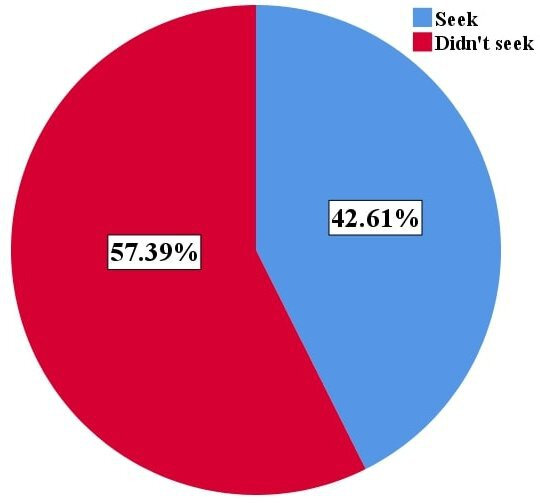
According to the findings of the qualitative study, being from a rural residence, having a lower educational level, a lack of interest in nutrition information and a lack of awareness of information sources were the factors affecting nutrition-related information seeking behaviour.
…I did not seek nutrition-related information on purpose from any source of information. This because of lack of interest in dietary information and a lack of awareness about where to obtain it. (PM4)
…I did not seek nutrition-related information from any source. This is because I didn’t know where to go to receive accurate nutrition information, and I preferred to concentrate on my daily activities. (PM1)
…. I didn’t look for information about nutrition. I didn’t look anywhere for nutritional information because I wasn’t concerned about finding the information. (PM5)
Sources of nutrition-related information
When participants were asked about their primary sources for nutrition-related information, 145 (83.8%) said they obtained it from health professionals. Family (134, 77.5%) and friends (113, 65.3%) were among the other primary sources of information. The secondary sources of nutrition-related information among pregnant women were magazines/newspapers (154, 89.0%), brochures (151, 87.3%) and books (114, 65.9%) (table 4).
Table 4. Sources of nutrition information among pregnant mothers in Bahir Dar City public hospitals, northwest Ethiopia, 2023.
| Sources of nutrition information for pregnant mothers | Primary sources | Secondary sources | ||
|---|---|---|---|---|
| Frequency (n) | Percentage (%) | Frequency (n) | Percentage (%) | |
| Health professionals | 145 | 83.8 | 28 | 16.2 |
| Books | 59 | 34.1 | 114 | 65.9 |
| Family | 134 | 77.5 | 39 | 22.5 |
| Friends | 113 | 65.3 | 60 | 34.7 |
| Internet | 71 | 41.0 | 102 | 59.0 |
| Brochures | 22 | 12.7 | 151 | 87.3 |
| Magazines/newspapers | 19 | 11.0 | 154 | 89.0 |
The qualitative study also indicated the presence of a variety of preferences for information sources. The following message illustrates this:
…I intentionally sought nutrition-related information from the internet because, in comparison to other sources of information, nutrition-related information on the internet is easily available, and the internet is also easily accessible with my current position. Because information from health professionals takes time, I prefer the internet as a primary source, and other information sources, such as television, only sometimes provide nutrition-related information. (PM3)
Pregnant mothers trust information sources
According to the findings of this study, 133 (76.9%) respondents had a high level of trust in information obtained from healthcare professionals. Religious organisations and family/friends were also among the highly trusted sources of information by pregnant mothers with 91 (52.6%) and 76 (43.9%) respondents, respectively. From the respondents, 58 (33.5%) had no trust in the information disseminated by newspapers/magazines, followed by internet (35, 20.2%) (table 5).
Table 5. Pregnant mothers trust information sources in Bahir Dar City public hospitals, northwest Ethiopia, 2023.
| Information sources | A lot n (%) |
Some n (%) |
A little n (%) |
Not at all n (%) |
|---|---|---|---|---|
| Health professional | 133 (76.9) | 33 (19.1) | 7 (4.0) | 0 (0.0) |
| Family/friends | 76 (43.9) | 72 (41.6) | 24 (13.9) | 1 (0.6) |
| Newspapers/magazines | 18 (10.4) | 40 (23.1) | 57 (32.9) | 58 (33.5) |
| Radio | 33 (19.1) | 59 (34.1) | 46 (26.6) | 35 (20.2) |
| Internet | 52 (30.1) | 45 (26.0) | 41 (23.7) | 35 (20.2) |
| Television | 59 (34.1) | 58 (33.5) | 40 (23.1) | 16 (9.2) |
| Government org’s | 24 (13.9) | 63 (36.4) | 57 (32.9) | 29 (16.8) |
| Charity org’s | 21 (12.1) | 52 (30.1) | 53 (30.6) | 47 (27.2) |
| Religious org’s | 91 (52.6) | 49 (28.3) | 30 (17.3) | 3 (1.7) |
The qualitative study also indicated the presence of a variety of trust for information sources. The following sample message illustrates this fact.
…I sought nutritional information from family and friends. Because, unlike other sources of information, family, and friends can share their life experiences, and I have a high level of confidence in them. I have little faith in online information since anyone can post on the internet. (PM6)
Factors associated with nutrition-related information-seeking behaviour
According to the bivariate analysis, residence, educational status, occupation, age, monthly income, nutrition information literacy, perceived ambiguity, self-efficacy, risk perception and response efficacy were significant factors associated with nutrition-related information behaviour. However, the multivariate logistic regression analysis revealed that residence, educational status, monthly income and nutrition information literacy were significant factors.
This study found that the odds of nutrition-related information-seeking behaviour among urban pregnant mothers were two (AOR=2.143, 95% CI 1.257 to 3.655) times more likely to seek nutrition-related information than rural pregnant mothers.
…. I didn’t seek information concerning nutrition because I live in a rural area with limited access to technology and the internet. Additionally, my level of living makes it difficult for me to obtain information about nutrition that will help me during my pregnancy. (PM4)
Similarly, the odds of nutrition-related information-seeking practice among pregnant women who can read and write were 79.8% (AOR=0.202, 95% CI 0.071 to 0.572) less likely to practise information seeking than pregnant mothers who were secondary and above.
….I didn’t seek information concerning nutrition because my educational background made it difficult for me to obtain information about nutrition, therefore, I didn’t look for it. In order to support my healthy pregnancy, I’m also shy to ask medical professionals for information. (PM5)
The odds of nutrition information seeking among pregnant mothers with adequate nutrition information literacy were 4 (AOR=3.788, 95% CI 1.929 to 7.435) times more likely to seek nutrition information than pregnant women with limited nutrition information literacy. In terms of monthly income, the odds of nutrition-related information seeking among pregnant women with higher monthly income (≥5000) were 2 (AOR=2.373, 95% CI 1.007 to 5.588) times more likely to seek nutrition-related information than pregnant mothers who earn monthly income ≤1000 (table 6).
Table 6. Factors associated with nutrition-related information seeking among pregnant mothers in Bahir Dar City public hospitals, northwest Ethiopia, 2023.
| Variables | Category | Nutrition information-seeking behaviour | COR (95% CI) | AOR (95% CI) | P value | |
|---|---|---|---|---|---|---|
| No | Yes | |||||
| Residence | Rural | 151 (71.2%) | 61 (28.8%) | 1 | 1 | 1 |
| Urban | 82 (42.3%) | 112 (57.7%) | 3.381 (2.240 to 5.104) | 2.143 (1.257 to 3.655) | 0.005* | |
| Age | ≤20 | 22 (75.9%) | 7 (24.1%) | 1 | 1 | 1 |
| 21–30 | 149 (57.8%) | 109 (42.2%) | 2.299 (0.948 to 5.575) | 0.319 (0.101 to 1.007) | 0.051 | |
| ≥31 | 62 (52.1%) | 57 (47.7%) | 2.889 (1.148 to 7.275) | 0.650 (0.365 to 1.159) | 0.144 | |
| Educational status | Cannot read and write | 42 (87.5%) | 6 (12.5%) | 0.125 (0.051 to 0.306) | 0.801 (0.413 to 1.552) | 0.048* |
| Can read and write | 24 (63.2%) | 14 (36.8%) | 0.512 (0.253 to 1.036) | 0.202 (0.071 to 0.572) | 0.003* | |
| Primary | 52 (70.3%) | 22 (29.7%) | 0.371 (0.213 to 0.649) | 1.683 (0.672 to 4.215) | 0.006* | |
| Secondary and above | 115 (46.7%) | 131 (53.3%) | 1 | 1 | 1 | |
| Occupation | Housewife | 136 (69.7%) | 59 (30.3%) | 1 | 1 | 1 |
| Merchant | 33 (56.9%) | 25 (43.1%) | 1.746 (0.956 to 3.191) | 0.905 (0.394 to 2.082) | 0.815 | |
| Student | 19 (65.5%) | 10 (34.5%) | 1.213 (0.532 to 2.767) | 0.516 (0.199 to 1.336) | 0.173 | |
| Private employee | 7 (24.1%) | 22 (75.9%) | 7.245 (2.934 to 17.886) | 0.945 (0.293 to 3.048) | 0.925 | |
| Gov’t employee | 10 (21.7%) | 36 (78.3%) | 8.298 (3.864 to 17.821) | 01.815 (0.541 to 6.094) | 0.335 | |
| Others† | 28 (57.1%) | 21 (42.9%) | 1.729 (0.909 to 3.289) | 1.776 (0.583 to 5.409) | 0.312 | |
| Monthly income | ≤1000 | 153 (70.5%) | 64 (29.5%) | 1 | 1 | 1 |
| 1000–5000 | 48 (54.5%) | 40 (45.5%) | 1.992 (1.195 to 3.321) | 1.211 (0.569 to 2.578) | 0.048* | |
| ≥5000 | 32 (31.7%) | 69 (68.3%) | 5.155 (3.093 to 8.591) | 2.373 (1.007 to 5.588) | 0.049* | |
| Nutrition info literacy | Limited | 143 (78.1%) | 40 (21.9%) | 1 | 1 | 1 |
| Adequate | 90 (40.4%) | 133 (59.6%) | 5.283 (3.399 to 8.211) | 3.788 (1.929 to 7.435) | 0.000* | |
| Self-efficacy | Not confident | 139 (72.8%) | 52 (27.2%) | 1 | 1 | 1 |
| Confident | 94 (43.7%) | 121 (56.3%) | 3.441 (2.267 to 5.223) | 1.417 (0.783 to 2.567) | 0.250 | |
| Perceived ambiguity | No | 77 (43.5%) | 100 (56.5%) | 1 | 1 | 1 |
| Yes | 156 (68.1%) | 73 (31.9%) | 0.360 (0.240 to 0.541) | 1.074 (0.616 to 1.873) | 0.802 | |
| Risk perception | Unlikely | 170 (67.5%) | 82 (32.5%) | 1 | 1 | 1 |
| Likely | 63 (40.9%) | 91 (59.1%) | 2.995 (1.976 to 4.537) | 1.348 (0.786 to 2.311) | 0.278 | |
| Response efficacy | No | 78 (49.4%) | 80 (50.6%) | 1 | ||
| Yes | 155 (62.5%) | 95 (37.5%) | 0.585 (0.391 to 0.876) | |||
Statistically significant.
Daily labour farmer unemployed.
1, reference category; AOR, adjusted OR; COR, crude OR.
Discussion
This study reported that the prevalence of nutrition-related information-seeking behaviour among pregnant women was 42.6%. This finding is lower than the study finding from Australia which reported an information-seeking behaviour of 54.9% among pregnant women.26 This might be related to differences in infrastructure, awareness level, quality of ANC counselling and education level between the two countries. The qualitative findings of this study also supported this explanation, where lower educational status, lack of interest in nutrition information and lack of understanding of information sources were mentioned as factors to have a low prevalence of nutrition information-seeking behaviour among pregnant women in our study area. The findings of this study opposed those of a qualitative study done in the USA on information seeking among pregnant women (most pregnant women seek nutrition information).27 This discrepancy might be due to differences in nutrition information literacy level, level of educational status and access to different information sources between the two countries.
According to this study, pregnant women in urban areas were twice as likely as pregnant women in rural areas to seek nutrition-related information. This may be due to their higher levels of education (57.3%) and adequate level of nutrition information literacy (64.7%) as compared with rural residents who are identified by this study. The other possible reason for these differences might be due to urban women being more likely to receive ANC services compared with rural women in Ethiopia, as reported by the Ethiopia Mini Demographic and Health Survey 2019. Similarly, the qualitative study found pregnant women did not seek nutrition information due to a lack of interest in nutrition knowledge in rural areas. A pregnant woman from a rural area reported not seeking nutrition information over the past 3 months due to a lack of interest. The woman’s lack of interest in nutrition information could be due to various factors, such as cultural norms, limited exposure to health education or a perception that nutrition information is not relevant or important. Limited financial resources or educational background might contribute to a lack of interest in the importance of nutrition information during pregnancy.
In this study, pregnant women who can read and write were 79.8% less likely to seek nutrition-related information than pregnant women with secondary and above. This might be due to their adequate nutrition information literacy level (74.9%), as discovered in this study. The qualitative findings of this study also supported this. A pregnant woman with a low educational status reported intentionally not seeking nutrition information due to her inadequate educational background and difficulty using available information. The woman’s decision not to seek nutrition information is directly linked to her educational status. This suggests that she may not feel confident in her ability to understand or apply nutrition information. Mothers with lower educational levels may face barriers such as literacy issues, difficulty understanding complex health information or lack of familiarity with digital resources.
This finding is consistent with a 2016 systematic review28 and another study conducted in Italy (women with higher education were three times (95% CI 1.2 to 7.5) more likely to seek information than women with less than a high school education).29 The possible reason might be pregnant mothers with better educational status could have better information literacy and can obtain, understand, analyse, appraise and apply nutrition-related information easily.
According to the findings of this study, pregnant women with good nutrition information literacy were four times more likely to seek nutrition information than pregnant women with poor nutrition information literacy. This means that pregnant mothers with better information literacy can obtain, understand, analyse, appraise and apply nutrition-related information. This might be because of their greater educational status (67.9%), as identified in this study. This result is inconsistent with the study conducted in Indiana, USA (p=0.63), with CI of 1 to 1.14. According to this study conducted among pregnant women in the USA, there was no correlation between information literacy and nutrition information seeking.30 This discrepancy might be due to the high nutrition information literacy level in the USA; almost all pregnant mothers have high nutrition information literacy levels.
According to the findings of this study, pregnant women with high monthly incomes were twice as likely as pregnant women with low monthly incomes to seek nutrition-related information. Their residence might be one of the reasons for their better nutrition-related information-seeking practice. This study found that the majority of pregnant women with higher monthly incomes (38.7%) live in urban areas. Pregnant mothers residing in urban areas have better access to different information sources. The findings of this study are consistent with a study conducted in Nigeria,11 Turkey12 and Indonesia.10 The possible reason might be pregnant mothers with better economic status can have better access to different information sources like the internet, television, radio, etc.
According to the findings of this study, the majority of pregnant women relied on health professionals (83.8%) and family (77.5%) as their primary source of nutrition-related information. The possible explanation might be the majority of pregnant women (76.9%) have a high level of trust in health professionals when compared with other sources of nutrition-related information. This finding is supported by a previous study conducted in Indonesia,9 Australia31 and the USA.32 According to a study done in the USA, half of the women (50.6%) sought information from their physicians. This study’s findings are lower than our study’s findings. A possible reason might be that they have greater nutrition literacy and better access to the internet, which allows them to quickly get information by searching on the internet.32 Our findings contradict another study conducted among pregnant women in Australia (pregnant women chose internet sites that were easy to access and presented information).33
The level of trust in information sources varied as a result of the findings. Health professionals and religious organisations were considered highly trustworthy by the participants. This finding is consistent with the study done at tertiary hospitals in southeastern Australia13 and a study conducted in Oslo, Norway.34 The possible explanation for their high trust in the information distributed by healthcare professionals is that they believe health professionals have an enhanced knowledge of nutrition-related facts during pregnancy.9
The findings of our qualitative study revealed that most pregnant women could not rely on health professionals as their primary source of nutrition-related information. Rather, they rely on family/friends and the internet as their primary sources of knowledge. This is because information from health experts is incompatible with their way of life. They place more faith in information obtained from friends or relatives. Because information from relatives or friends is based on their living experience and may correspond to their living standards.
Strengths and limitations of the study
The use of qualitative methods to support quantitative was a strength of the study. A causal relationship cannot be established because this study has the limitations of cross-sectional studies. Since it is a facility-based study in one small study area, it has limitations in generalising pregnant women in the community.
Conclusion
A significant proportion of pregnant women in Bahir Dar City public hospitals demonstrated low engagement in nutrition information-seeking. Factors including lower educational status, limited nutrition information literacy, rural residence, low monthly income, lack of interest and unfamiliarity with information sources were statistically significant predictors of this behaviour. This is further supported by qualitative findings.
Recommendation
Awareness creation for pregnant mothers from rural areas and with low educational status and improving nutrition information literacy of pregnant mothers are important activities to improve their nutrition information-seeking behaviour. These findings suggest an opportunity for tailored interventions, such as targeted education programmes and improved access to reliable nutrition resources, to address these barriers and promote healthier pregnancies.
Acknowledgements
The authors would like to thank the Bahir Dar University Ethical Review Board for the approval of ethical clearance. Additionally, the authors are grateful to hospitals, data collectors, supervisors and study participants.
Footnotes
Funding: The authors have not declared a specific grant for this research from any funding agency in the public, commercial or not-for-profit sectors.
Prepublication history for this paper is available online. To view these files, please visit the journal online (https://doi.org/10.1136/bmjopen-2024-091094).
Patient consent for publication: Not applicable.
Ethics approval: The study was reviewed and approved by the Institutional Research Ethics Review Board (IRB) of the College of Medicine and Health Sciences, Bahir Dar University, with protocol number 678/2023. Before data collection, a supportive letter was taken from the College of Medicine and Health Sciences and communicated to each hospital where data were collected. Information on the study and procedure of the study was given to all study subjects orally. They were informed that they could withdraw at any time without consequences of any kind. Consent was obtained before administrating the questionnaire and participants were assured of the confidentiality of the information.
Provenance and peer review: Not commissioned; externally peer reviewed.
Patient and public involvement: Patients and/or the public were not involved in the design, conduct, reporting or dissemination plans of this research.
Data availability statement
Data are available upon reasonable request.
References
- 1.Parker R, Ratzan SC. Health literacy: a second decade of distinction for Americans. J Health Commun. 2010;15 Suppl 2:20–33. doi: 10.1080/10810730.2010.501094. [DOI] [PubMed] [Google Scholar]
- 2.Wynia MK, Osborn CY. Health Literacy and Communication Quality in Health Care Organizations. J Health Commun. 2010;15:102–15. doi: 10.1080/10810730.2010.499981. [DOI] [PMC free article] [PubMed] [Google Scholar]
- 3.Bianchi CM, Huneau J-F, Le Goff G, et al. Concerns, attitudes, beliefs and information seeking practices with respect to nutrition-related issues: a qualitative study in French pregnant women. BMC Pregnancy Childbirth. 2016;16:306. doi: 10.1186/s12884-016-1078-6. [DOI] [PMC free article] [PubMed] [Google Scholar]
- 4.Szwajcer EM, Hiddink GJ, Maas L, et al. Nutrition-related information-seeking behaviours of women trying to conceive and pregnant women: evidence for the life course perspective. Fam Pract. 2008;25:i99–104. doi: 10.1093/fampra/cmn077. [DOI] [PubMed] [Google Scholar]
- 5.Abu-Saad K, Fraser D. Maternal nutrition and birth outcomes. Epidemiol Rev. 2010;32:5–25. doi: 10.1093/epirev/mxq001. [DOI] [PubMed] [Google Scholar]
- 6.UNICEF Counselling to improve maternal nutrition: Considerations for programming with quality, equity and scale. 2021. pp. 1–16.
- 7.Darney PD, Nakamura-Pereira M, Regan L, et al. Maternal Mortality in the United States Compared With Ethiopia, Nepal, Brazil, and the United Kingdom: Contrasts in Reproductive Health Policies. Obstet Gynecol. 2020;135:1362–6. doi: 10.1097/AOG.0000000000003870. [DOI] [PubMed] [Google Scholar]
- 8.Mengiste M, Ahmed MH, Bogale A, et al. Information-Seeking Behavior and Its Associated Factors Among Patients with Diabetes in a Resource-Limited Country: A Cross-Sectional Study. Diabetes Metab Syndr Obes. 2021;14:2155–66. doi: 10.2147/DMSO.S289905. [DOI] [PMC free article] [PubMed] [Google Scholar]
- 9.Rahmawati W, Willcox J, Midwifery AW. Nutrition information-seeking behaviour of Indonesian pregnant women. Elsevier; 2021. [DOI] [PubMed] [Google Scholar]
- 10.Rahmawati W, van der Pligt P, Willcox JC, et al. Sources of nutrition information for Indonesian women during pregnancy: how is information sought and provided? Public Health Nutr. 2021;24:3859–69. doi: 10.1017/S1368980021002317. [DOI] [PMC free article] [PubMed] [Google Scholar]
- 11.Anasi SNI, Allison GO. Sociodemographic Determinants of Information Sources Availability and Use Among Pregnant Women in Ilisan-Remo, Ogun State, Nigeria. J Hosp Librariansh. 2018;18:47–63. doi: 10.1080/15323269.2018.1400833. [DOI] [Google Scholar]
- 12.Kavlak O, Atan SÜ, Güleç D, et al. Pregnant women’s use of the internet in relation to their pregnancy in Izmir, Turkey. Inform Health Soc Care. 2012;37:253–63. doi: 10.3109/17538157.2012.710686. [DOI] [PubMed] [Google Scholar]
- 13.Knight-Agarwal CR, Cubbage R, Sesleja R, et al. The nutrition-related information seeking behaviours and attitudes of pregnant women with a high BMI: A qualitative study. Women Birth. 2020;33:294–9. doi: 10.1016/j.wombi.2019.03.005. [DOI] [PubMed] [Google Scholar]
- 14.Fassier P, Chhim A-S, Andreeva VA, et al. Seeking health- and nutrition-related information on the Internet in a large population of French adults: results of the NutriNet-Santé study. Br J Nutr . 2016;115:2039–46. doi: 10.1017/S0007114516001355. [DOI] [PubMed] [Google Scholar]
- 15.Vijaykumar S, McNeill A, Simpson J. Associations between conflicting nutrition information, nutrition confusion and backlash among consumers in the UK. Public Health Nutr . 2021;24:914–23. doi: 10.1017/S1368980021000124. [DOI] [PMC free article] [PubMed] [Google Scholar]
- 16.Poccia S, Health T-N. Information seeking behaviors, attitudes, and beliefs about pregnancy-related nutrition and supplementation: a qualitative study among US women. 2021. https://europepmc.org/ Available. [DOI] [PubMed] [Google Scholar]
- 17.Legault A, Marquis M. Nutrition information-seeking behaviour of low-income pregnant Maghrebian women. Can J Diet Pract Res. 2014;75:22–8. doi: 10.3148/75.1.2014.22. [DOI] [PubMed] [Google Scholar]
- 18.Morrison J, Regnault T. Nutrition in Pregnancy: Optimising Maternal Diet and Fetal Adaptations to Altered Nutrient Supply. Nutrients . 2016;8:342. doi: 10.3390/nu8060342. [DOI] [PMC free article] [PubMed] [Google Scholar]
- 19.Begashaw B, Tessema F, Gesesew HA. Health Care Seeking Behavior in Southwest Ethiopia. PLoS ONE. 2016;11:e0161014. doi: 10.1371/journal.pone.0161014. [DOI] [PMC free article] [PubMed] [Google Scholar]
- 20.Federal Democratic Republic of Ethiopia National Nutrition Program 2016 - 2020. 2020.
- 21.Owusu-Addo SB, Owusu-Addo E, Morhe ESK. Health information-seeking behaviours among pregnant teenagers in Ejisu-Juaben Municipality, Ghana. Midwifery. 2016;41:110–7. doi: 10.1016/j.midw.2016.08.007. [DOI] [PubMed] [Google Scholar]
- 22.Banke-Thomas A, Ayomoh FI, Abejirinde IOO, et al. Cost of Utilising Maternal Health Services in Low- and Middle-Income Countries: A Systematic Review. Int J Health Policy Manag . 2020;10:564–77. doi: 10.34172/ijhpm.2020.104. [DOI] [PMC free article] [PubMed] [Google Scholar]
- 23.Nana A, Zema T. Dietary practices and associated factors during pregnancy in northwestern Ethiopia. BMC Pregnancy Childbirth. 2018;18:183. doi: 10.1186/s12884-018-1822-1. [DOI] [PMC free article] [PubMed] [Google Scholar]
- 24.Chen Y, Feeley TH. Numeracy, Information Seeking, and Self-Efficacy in Managing Health: An Analysis Using the 2007 Health Information National Trends Survey (HINTS) Health Commun. 2014;29:843–53. doi: 10.1080/10410236.2013.807904. [DOI] [PubMed] [Google Scholar]
- 25.Bayisa D, Waltengus F, Lake S, et al. Pregnant women’s knowledge, attitudes, and associated factors toward physical exercise during pregnancy among those attending antenatal care at Bahir Dar city, Northwest Ethiopia. SAGE Open Med. 2022;10:20503121221115252. doi: 10.1177/20503121221115252. [DOI] [PMC free article] [PubMed] [Google Scholar]
- 26.Willcox JC, Campbell KJ, McCarthy EA, et al. Gestational weight gain information: seeking and sources among pregnant women. BMC Pregnancy Childbirth. 2015;15:164. doi: 10.1186/s12884-015-0600-6. [DOI] [PMC free article] [PubMed] [Google Scholar]
- 27.Bernhardt JM, Felter EM. Online Pediatric Information Seeking Among Mothers of Young Children: Results From a Qualitative Study Using Focus Groups. J Med Internet Res . 2004;6:e7. doi: 10.2196/jmir.6.1.e7. [DOI] [PMC free article] [PubMed] [Google Scholar]
- 28.Sayakhot P, Carolan-Olah M. Internet use by pregnant women seeking pregnancy-related information: a systematic review. BMC Pregnancy Childbirth. 2016;16:65. doi: 10.1186/s12884-016-0856-5. [DOI] [PMC free article] [PubMed] [Google Scholar]
- 29.Bert F, Gualano MR, Brusaferro S, et al. Pregnancy e-health: a multicenter Italian cross-sectional study on internet use and decision-making among pregnant women. J Epidemiol Community Health . 2013;67:1013–8. doi: 10.1136/jech-2013-202584. [DOI] [PubMed] [Google Scholar]
- 30.Shieh C, Broome ME, Stump TE. Factors Associated with Health Information-Seeking in Low-Income Pregnant Women. Women & Health . 2010;50:426–42. doi: 10.1080/03630242.2010.506152. [DOI] [PubMed] [Google Scholar]
- 31.Lobo S, Lucas CJ, Herbert JS, et al. Nutrition information in pregnancy: Where do women seek advice and has this changed over time? Nutr Diet. 2020;77:382–91. doi: 10.1111/1747-0080.12589. [DOI] [PubMed] [Google Scholar]
- 32.Huberty J, Dinkel D, Beets MW, et al. Describing the use of the internet for health, physical activity, and nutrition information in pregnant women. Matern Child Health J. 2013;17:1363–72. doi: 10.1007/s10995-012-1160-2. [DOI] [PubMed] [Google Scholar]
- 33.Maher J, Robichaud C, Midwifery ES. Online nutrition information seeking among Australian primigravid women. Elsevier; 2018. [DOI] [PubMed] [Google Scholar]
- 34.Garnweidner LM, Sverre Pettersen K, Mosdøl A. Experiences with nutrition-related information during antenatal care of pregnant women of different ethnic backgrounds residing in the area of Oslo, Norway. Midwifery. 2013;29:e130–7. doi: 10.1016/j.midw.2012.12.006. [DOI] [PubMed] [Google Scholar]