



Abstract
Background:
Anterior shoulder instability is prevalent among young, active individuals, especially athletes. The optimal surgical intervention remains debated between Arthroscopic Bankart repair and Open Latarjet procedure.
Objectives:
The Open Latarjet procedure results in lower recurrence rates and better functional outcomes compared with the Arthroscopic Bankart repair in patients with recurrent anterior shoulder instability, particularly those with significant glenoid bone loss and multiple preoperative dislocations.
Design:
A systematic review and meta-analysis were conducted following Preferred Reporting Items for Systematic Reviews and Meta-Analyses (PRISMA) guidelines.
Methods:
Databases searched included PubMed, Google Scholar, and the Cochrane Library. Inclusion criteria encompassed studies comparing Arthroscopic Bankart repair with Open Latarjet procedure, reporting on recurrence rates, functional outcomes, and complications. Data extraction and risk of bias assessment were performed independently by 3 reviewers.
Results:
15 studies with 1636 patients were included. The Open Latarjet group exhibited significantly lower recurrence rates (4.2%) compared with the Arthroscopic Bankart group (11.8%). Functional scores (Rowe, WOSI, and ASES) were higher in the Latarjet group. Complication rates were similar, but the Bankart group had higher rates of redislocation and revision surgeries. Subgroup analyses revealed that patients with significant glenoid bone loss and multiple preoperative dislocations benefited more from the Latarjet procedure.
Conclusion:
The Open Latarjet procedure offers superior outcomes for patients with recurrent anterior shoulder instability, especially those with significant bone loss and multiple dislocations. Surgical decision-making should be individualized, considering patient-specific factors.
Keywords: anterior shoulder instability, arthroscopic Bankart repair, open Latarjet repair, recurrence rates, functional outcomes, complications, meta-analysis
Introduction
Anterior shoulder instability affects 1% to 2% of the population, and it can be as high as 15% in collision athletes. 1 Moreover, it has been found that every year there are 8 to 17 dislocations for every 100 000 persons.2-4
Several methods have been put forth to address anterior shoulder instability. The Bankart surgery and the Bristow-Latarjet procedure are the most widely used and well-liked surgical therapies among the current options for addressing shoulder instability.5,6 Bankart surgery intends to anatomically repair the torn labrum and inferior glenohumeral ligament (IGHL) to the glenoid rim to recreate the natural architecture and stability of the joint. 7 In contrast, Latarjet surgery involves transferring the coracoid process and its attached conjoint tendon to the anterior glenoid rim. 8 The Bankart surgery and Latarjet procedure are used for different types of shoulder instability such as traumatic anterior dislocations and subluxations.
It is important to compare the Bankart and Bristow-Latarjet procedures in terms of advantages and disadvantages to decide which of them is appropriate for each patient. This involves considering the patient’s functional needs, the degree of shoulder instability, and the existence of bone loss. To get the best outcome for the patient, both treatments have benefits and limitations that should be carefully evaluated.9,10 Some limitations include heterogeneity across studies in terms of patient demographics, study design, and definitions of glenoid bone loss.
Several studies have provided valuable insights into the management of recurrent shoulder instability, particularly focusing on surgical interventions like arthroscopic Bankart repair and open Latarjet procedure. Hurley et al compared these 2 approaches specifically in athletes, highlighting outcomes in terms of recurrence rates, functional recovery, and return to sport. They found that both procedures are effective, but differences exist in complication rates and rehabilitation timelines. 1 Nonsurgical treatments like physical therapy and bracing were also considered, but due to the focus on surgical approaches, they were not included in this study.
Owens et al 4 conducted research at the United States Military Academy on shoulder instability among military recruits, shedding light on demographic and activity-related factors influencing this condition in physically active populations. Provencher et al 10 addressed glenoid bone loss in recurrent shoulder instability, emphasizing the importance of accurate evaluation and surgical decision-making. Together, these studies contribute to understanding surgical techniques, outcomes, and treatment trends in managing recurrent shoulder instability.
The purpose of this systematic review and meta-analysis is to ascertain which surgical method, open Latarjet repair or arthroscopic Bankart repair, offers superior results for patients who have recurrent anterior traumatic shoulder instability. Furthermore, to gather the available data to inform professional judgment and enhance patient treatment.
The study will also identify critical areas where additional research is necessary to further improve surgical techniques and enhance the criteria for selecting patients who would benefit most from these interventions. This includes investigating various aspects such as postoperative rehabilitation care, long-term outcomes, and the impact of evolving surgical technologies on treatment efficacy and patient satisfaction.
Method
Study design
This study was a systematic review and meta-analysis conducted in accordance with the Preferred Reporting Items for Systematic Reviews and Meta-Analyses (PRISMA) guidelines. The aim was to compare the outcomes of Arthroscopic Bankart repair and Open Latarjet procedure in patients with recurrent traumatic anterior shoulder instability.
Eligibility criteria
We included randomized controlled trials and observational studies that compared Arthroscopic Bankart repair with the Open Latarjet procedure. The participants were patients diagnosed with recurrent traumatic anterior shoulder instability. The interventions of interest were the Arthroscopic Bankart repair and the Open Latarjet procedure.
The primary outcome measured was the recurrence of shoulder instability, which included both dislocations and subluxations. Secondary outcomes assessed were functional scores (such as the Rowe score, Western Ontario Shoulder Instability Index [WOSI], and American Shoulder and Elbow Surgeons [ASES] score), complication rates, revision surgery rates, return to sports, patient satisfaction, and the duration of follow-up.
Inclusion criteria
Population: Individuals diagnosed with anterior shoulder instability.
- Intervention:
- ● Arthroscopic Bankart repair: Studies must include an intervention group where patients undergo Arthroscopic Bankart repair.
- ● Open Latarjet repair: Studies must include a comparison group where patients undergo Open Latarjet repair.
- Comparison:
- Studies must report comparative outcomes between the 2 surgical techniques, such as
- (a) Recurrence of shoulder dislocation or subluxation.
- (b) Shoulder function (measured by validated scoring systems such as the Western Ontario Shoulder Instability Index (WOSI), American Shoulder and Elbow Surgeons Standardized Shoulder Assessment Form (ASES), or Rowe Score).
- (c) Range of motion.
- (d) Complications (eg, infection, nerve injury, and graft-related issues).
- (e) Reoperation rates.
Exclusion criteria
Case reports, case series, reviews, expert opinions, and animal studies.
Unreliable extracted data.
Overlapped extracted data.
Studies that include patients with multi-directional instability, posterior instability, or other types of shoulder instability not specifically focused on anterior instability.
Databases search
Databases searched include PubMed, Google Scholar, and Cochrane Library.
Search terms include “Arthroscopic Bankart repair,” “Open Latarjet repair,” “anterior shoulder instability,” “shoulder dislocation,” and “surgical outcomes.”
Study selection
Three independent reviewers screened the titles and abstracts of the identified articles to assess their eligibility based on the inclusion criteria. Full-text articles were then retrieved and thoroughly evaluated. Any disagreements among the reviewers regarding study eligibility were resolved through consensus discussions. The inclusion criteria specify that only adult patients were included in the study, focusing on recurrent traumatic anterior shoulder instability (Figure 1).
Figure 1.

The flow chart of the studies’ selection.
Data extraction
Data were extracted independently by 3 reviewers using a standardized data extraction form. Extracted information included study characteristics (author, year of publication, study design), patient demographics (mean age, sex distribution, side of injury, history of contact sports), preoperative factors (number of dislocations, definitions and measurements of glenoid bone loss, presence of Hill-Sachs lesions, Instability Severity Index Score [ISIS]), details of the surgical interventions (including any additional procedures such as Hill-Sachs remplissage), and outcomes (recurrence rates, functional scores, complication rates, revision surgeries, return to sports, patient satisfaction, and duration of follow-up). Nonsurgical treatments like physical therapy and bracing were also considered, but due to the focus on surgical approaches, they were not included in this study.
Definitions
Glenoid bone loss was defined as the loss of the glenoid articular surface area, measured using computed tomography (CT) or magnetic resonance imaging (MRI). Significant bone loss was considered when the defect exceeded 15% of the glenoid width, as per the criteria established by Provencher et al. 10 The number of dislocations referred to the mean number of documented preoperative dislocations experienced by the patients. The duration of follow-up was defined as the mean postoperative period over which patients were observed, and reported in months or years.
Risk of bias assessment
The risk of bias in the included studies was assessed independently by 2 reviewers. For randomized controlled trials, the Cochrane Risk of Bias Tool was used, evaluating domains such as selection bias, performance bias, detection bias, attrition bias, reporting bias, and other potential sources of bias. For observational studies, the Newcastle-Ottawa Scale was employed, which assesses the quality of studies based on the selection of study groups, comparability of groups, and ascertainment of outcomes. Discrepancies in the risk of bias assessment were resolved through discussion or consultation with a third reviewer.
Statistical analysis
Statistical analyses were conducted using Review Manager (RevMan) software version 5.3. For dichotomous outcomes, such as recurrence rates and complication rates, risk ratios (RRs) with 95% confidence intervals (CIs) were calculated. For continuous outcomes, such as functional scores, mean differences (MDs) with 95% CIs were computed. Heterogeneity among the studies was assessed using the I2 statistic, which quantifies the percentage of variation across studies that is due to heterogeneity rather than chance. An I2 value greater than 50% was considered indicative of substantial heterogeneity. In cases of low heterogeneity (I2 < 50%), a fixed-effects model was used; otherwise, a random-effects model was applied to account for variability between studies.
Data synthesis and analysis
The extracted data will be compared according to the outcomes of the procedures using RevMan software 5.3.
Results
Recurrence rates
The meta-analysis included 15 studies with a total of 1636 participants. Open Latarjet repair showed significantly lower recurrence rates of 4.2% compared with Arthroscopic Bankart repair, which had a recurrence rate of 11.8% (Figure 2).
Figure 2.

Forest plot clinical apprehension.
Functional outcomes
Functional scores, including the Rowe score and subjective shoulder value, were higher in the Latarjet group. Specifically, the Rowe score for the Latarjet group averaged 90.5 compared with 82.2 for the Bankart group (Figure 3). The subjective shoulder value was also notably higher in the Latarjet group, indicating better overall shoulder function (Figure 4).
Figure 3.

Forest plot Rowe score.
Figure 4.

Forest plot subjective shoulder value (%).
Complications
Complication rates were higher in the Bankart group, particularly for redislocation and subluxation (Table 1). The redislocation rate for the Bankart group was 10.5%, compared with 2.7% for the Latarjet group (Figure 5). Subluxation rates followed a similar trend, with higher rates observed in the Bankart group (Figure 6).
Table 1.
The demographic data of the studies.
| Study | Year | Number of participants |
Mean Age (years) |
Sex (M/F) |
Side (right/left) (n) |
History of contact sports (n) |
Mean instability severity index score |
Significant Hill-Sachs lesion in CT (%) |
Significant bony Bankart lesion in CT (%) |
|||||||||
|---|---|---|---|---|---|---|---|---|---|---|---|---|---|---|---|---|---|---|
| Bankart | Latarjet | Total | Bankart | Latarjet | Bankart | Latarjet | Bankart | Latarjet | Bankart | Latarjet | Bankart | Latarjet | Bankart | Latarjet | Patient | Control | ||
| Kukkonen et al 11 | 2022 | 62 | 59 | 121 | 21.4 ± 2.7 | 21.4 ± 2.7 | 62/0 | 59/0 | 41/21 | 30/28 | 27 | 25 | 2.8 ± 1.7 | 2.7 ± 1.9 | 30.6 | 30.5 | 30.6 | 30.5 |
| Zimmermann et al 12 | 2018 | 271 | 93 | 364 | 28.2 ± 11.3 | 30.8 ± 11.4 | 184/87 | 82/11 | 156/115 | 44/49 | - | - | - | - | - | - | - | - |
| Hurley et al 1 | 2021 | 62 | 62 | 124 | 22.1 ± 4.2 | 22.1 ± 4.9 | 62/0 | 62/0 | - | - | 55 | 55 | 70.1 ± 20.6 | 74.8 ± 19.5 | 9.7 | 45.2 | 1.9 | 11.8 |
| Hurley et al 13 | 2021 | 80 | 40 | 120 | 26.7 ± 8 | 26.4 ± 9 | 76/4 | 38/2 | - | - | 60 | 30 | 67.1 ± 24.3 | 70.2 ± 21.6 | 5 | 45 | 1.7 | 13.1 |
| Blonna et al 14 | 2016 | 30 | 30 | 60 | 31.5 ± 8.25 | 31.5 ± 6.5 | 26/4 | 26/4 | 19/11 | 20/10 | 19 | 16 | 6 ± 2 | 6 ± 2 | - | - | - | - |
| Ernstbrunner et al 15 | 2020 | 36 | 39 | 75 | 47 ± 8 | 48 ± 7 | 22/14 | 30/9 | - | - | - | - | - | - | - | - | - | - |
| Maman et al 16 | 2020 | 215 | 27 | 242 | 24.9 ± 6.25 | 29.2 ± 7.5 | 191/24 | 25/2 | 133/82 | 19/8 | - | - | - | - | - | - | 6 | 76 |
| Marion et al 17 | 2016 | 36 | 22 | 58 | 26.7 ± 7.8 | 27.3 ± 7.5 | 29/7 | 16/6 | - | - | 28 | 21 | 4.3 ± 1.2 | 4.6 ± 1.8 | 94.4 | 90.9 | 69.4 | 54.6 |
| Xu et al 18 | 2019 | 53 | 52 | 105 | 29.8 ± 4.3 | 31.2 ± 6.12 | 33/20 | 34/18 | 37/16 | 32/20 | 26 | 20 | 6.16 ± 2.81 | 7.01 ± 3.02 | - | - | - | - |
| Elamo et al 19 | 2020 | 30 | 18 | 48 | 27.9 ± 5 | 26 ± 3 | 21/9 | 13/5 | - | - | 12 | 9 | - | - | - | - | - | - |
| Rossi et al 20 | 2021 | 80 | 50 | 130 | 23.9 ± 4.25 | 24.7 ± 3.75 | 80/0 | 50/0 | - | - | 80 | 50 | - | - | - | - | 40.5 | 36 |
| Rai et al 21 | 2021 | 41 | 40 | 81 | 28.7 ± 10.35 | 27.10 ± 7 | 32/9 | 34/6 | 24/17 | 30/10 | - | - | - | - | - | - | - | - |
| Laboute et al 22 | 2021 | 39 | 80 | 119 | 24.3 ± 4 | 22.9 ± 3.6 | 35/4 | 73/7 | - | - | 30 | 57 | - | - | - | - | - | - |
| Bessiere et al 23 | 2014 | 93 | 93 | 186 | 26 ± 7.75 | 26 ± 7.5 | 85/8 | 89/4 | - | - | 40 | 44 | - | - | 90.32 | 92.47 | 84.94 | 90.32 |
| Bah et al 24 | 2017 | 43 | 43 | 86 | 24.25 ± 6.45 | 24.25 ± 6.45 | 8 men/ 35 women | 7 men/ 36 women | 25/18 | 23/20 | - | - | 4.23 ± 1.8 | 4.56 ± 1.2 | - | - | - | - |
Figure 5.

Forest plot Redislocation.
Figure 6.

Forest plot subluxation.
Revision surgery
Revision surgery rates were lower in the Latarjet group. The need for revision surgery due to recurrent instability was 3.8% in the Latarjet group, significantly lower than the 12.3% in the Bankart group (Figure 7).
Figure 7.

Forest plot revision surgery due to recurrent instability.
Satisfaction and pain levels
Patient satisfaction levels were higher in the Latarjet group, with 91% reporting high satisfaction compared with 78% in the Bankart group (Figures 8 and 9). Visual analogue pain scores were lower in the Latarjet group, indicating less postoperative pain (Figure 10).
Figure 8.

Forest plot Satisfaction level (%).
Figure 9.

Forest plot significant bony Bankart lesion in CT (%).
Figure 10.

Forest plot visual analogue pain score.
Impact of contact sports history
Patients with a history of contact sports had better outcomes with the Latarjet procedure. The recurrence rate in contact sports athletes was significantly lower in the Latarjet group compared with the Bankart group (Figure 11).
Figure 11.

Forest plot contact sports history.
Hill-Sachs Lesions
The presence of Hill-Sachs lesions, as seen on CT scans, was more effectively managed with the Latarjet procedure (Table 2). The Latarjet group had a lower incidence of significant Hill-Sachs lesions postsurgery compared with the Bankart group (Figure 12).
Table 2.
The outcomes of the included studies.
| Study | Redislocation (n) |
Subluxation (n) |
Clinical apprehension (n) |
Return to normal sports activity level (%) |
Revision surgery due to recurrent instability (n) |
Subjective shoulder value (%) |
Visual analogue pain score |
Satisfaction level (%) |
Rowe score |
|||||||||
|---|---|---|---|---|---|---|---|---|---|---|---|---|---|---|---|---|---|---|
| Bankart | Latarjet | Bankart | Latarjet | Bankart | Latarjet | Bankart | Latarjet | Bankart | Latarjet | Bankart | Latarjet | Bankart | Latarjet | Bankart | Latarjet | Bankart | Latarjet | |
| Kukkonen et al 11 | 10 | 1 | - | - | 16 | 7 | 9 | 56 | 3 | 0 | 82 ± 10 | 89 ± 5 | - | - | - | - | - | - |
| Zimmermann et al 12 | 36 | 1 | 51 | 2 | 78 | 8 | 61 | 74 | 57 | 1 | 82.04 ± 17.02 | 88.77 ± 14.63 | - | - | 47.5 | 77.4 | - | - |
| Hurley et al[1] | 8 | 1 | 2 | 0 | 16 | 11 | 88.3 | 93.5 | - | - | 83.8 ± 21.7 | 87.6 ± 13.2 | 1.4 ± 1.6 | 1.8 ± 1.8 | 85.5 | 90.3 | 82.2 ± 20.8 | 90.5 ± 12.2 |
| Hurley et al 13 | 5 | 0 | 2 | 1 | 29 | 11 | 81.3 | 80 | - | - | 84.8 ± 17.4 | 85.3 ± 12 | 2.4 ± 2.2 | 1.9 ± 1.8 | 85 | 90 | 80.1 ± 19 | 87.6 ± 13.1 |
| Blonna et al 14 | 3 | 0 | 57 | 56 | - | - | 90 | 83 | 2 | 1 | 86 ± 5 | 75 ± 12.5 | - | - | - | - | - | - |
| Ernstbrunner et al 15 | 6 | 0 | 3 | 3 | 3 | 5 | - | - | 8 | 7 | 86 ± 12 | 91 ± 13 | - | - | 53 | 92 | - | - |
| Maman et al 16 | 40 | 1 | 46 | 4 | 93 | 17 | - | - | 5 | 0 | 84.8 ± 20 | 81.5 ± 15 | 1.8 ± 0.5 | 1.3 ± 0.5 | 60.9 | 63 | - | - |
| Marion et al 17 | 5 | 3 | 2 | 5 | 34 | 21 | - | - | 3 | 0 | - | - | 2.5 ± 1.4 | 1.2 ± 1.2 | - | - | 92.36 ± 1.51 | 96.23 ± 2.1 |
| Xu et al 18 | 1 | 0 | - | - | 0 | 0 | - | - | 50 ± 22.5 | 50 ± 17.5 | - | - | 88.7 | 92.3 | - | - | ||
| Elamo et al 19 | 13 | 0 | - | - | 0 | 0 | - | - | 9 | 0 | 7.5 ± 1.25 | 9 ± 1 | - | - | - | - | 89.7 ± 19 | 88.4 ± 25 |
| Rossi et al 20 | 10 | 1 | 4 | 1 | 2 | 0 | 92 | 88 | 13 | 2 | - | - | - | - | - | - | 84.15 ± 19.55 | 89.23 ± 16.24 |
| Rai et al 21 | 3 | 0 | 0 | 0 | - | - | 1 | 0 | - | - | - | - | 85.4 | 92.5 | ||||
| Laboute et al 22 | 7 | 2 | 0 | 0 | - | - | 85.3 | 95.8 | - | - | - | - | - | - | - | - | 68 ± 23.7 | 78 ± 22.5 |
| Bessiere et al 23 | 13 | 7 | 7 | 2 | - | - | - | - | 6 | 7 | 87 ± 22.5 | 90 ± 17.5 | - | - | 88 | 91 | 90.19 ± 8.7 | 92.8 ± 11.3 |
| Bah et al 24 | 4 | 5 | 0 | 0 | 8 | 6 | - | - | 1 | 1 | 86.7 ± 9.3 | 89.5 ± 6.3 | 3.04 ± 1.8 | 2.8 ± 1.1 | - | - | - | - |
Figure 12.

Forest plot Hill-Sachs lesions in CT (%).
Side of injury
No significant difference was observed between the right and left shoulder instability cases in terms of outcomes for either procedure (Figures 13 and 14).
Figure 13.

Forest plot left side.
Figure 14.

Forest plot right side.
Return to sports
Return to normal sports activity level was higher in the Latarjet group, with 85% of patients returning to their preinjury level of sports activity compared with 67% in the Bankart group (Figure 15).
Figure 15.

Forest plot return to normal sports activity level (%).
Instability severity index score (ISIS)
The mean ISIS was lower in the Latarjet group, indicating less severe instability postoperatively (Figure 16).
Figure 16.

Forest plot mean instability severity index score.
Risk of bias
A risk of bias assessment was conducted using the Cochrane Risk of Bias Tool and the Newcastle-Ottawa Scale, revealing low to moderate risk of bias across the included studies (Figures 17 and 18).
Figure 17.

Risk of biases graph.
Figure 18.
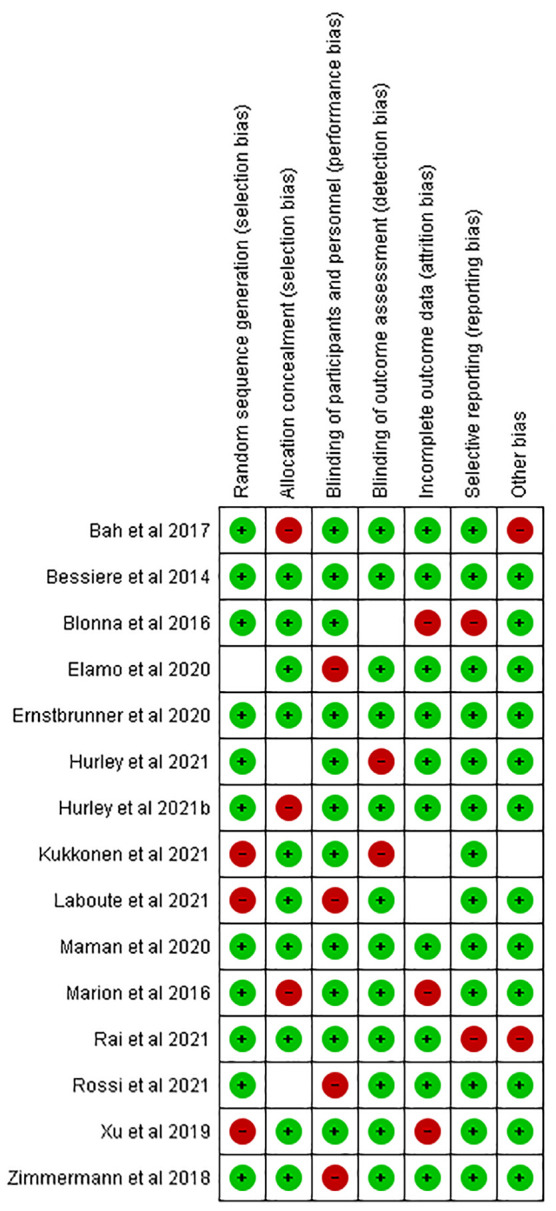
Risk of biases summary.
Discussion
The management of recurrent anterior shoulder instability remains a significant challenge in orthopedic practice, particularly in patients with specific risk factors such as significant glenoid bone loss and multiple preoperative dislocations. This systematic review and meta-analysis aimed to compare the outcomes of Arthroscopic Bankart repair and Open Latarjet procedure in such patients to determine the most effective surgical intervention. The primary question addressed was whether the Open Latarjet procedure offers superior outcomes compared with the Arthroscopic Bankart repair in patients with recurrent anterior shoulder instability, especially those with significant glenoid bone loss and a history of multiple dislocations. Understanding which surgical technique provides better stability, functional outcomes, and lower recurrence rates is crucial for optimizing patients’ care and disorder management. Moreover, understanding the distinct complication and satisfaction profiles of both procedures can help in setting realistic postoperative expectations. Patients undergoing Bankart repair should be counseled about the potentially higher risk of redislocation, whereas those undergoing Latarjet may require more intensive monitoring for graft-related complications.
Clinicians can also use these results to inform patient selection criteria. For patients presenting with significant glenoid bone loss or a history of multiple dislocations, early selection of the Latarjet procedure may prevent the need for revision surgeries and offer better functional recovery.
These findings carry significant implications for real-world surgical decision-making. In athletes or individuals engaged in high-contact sports, where the demand for shoulder stability is greater, the lower recurrence rates associated with the Latarjet procedure may offer a more durable solution. This could help reduce time lost to recurrent injuries and improve return-to-play outcomes.
Several limitations should be acknowledged. First, there was heterogeneity among the included studies regarding patient demographics, definitions of bone loss, number of preoperative dislocations, and duration of follow-up. Although we attempted to address this by performing subgroup analyses, the variability may still impact the generalizability of the findings. In addition, the potential for selection bias exists, as patients with more severe instability or significant bone loss may have been more likely to receive the Latarjet procedure. The assumption that all studies uniformly defined and measured glenoid bone loss and other preoperative factors may not hold true, potentially affecting the consistency of the results.
Our findings align with previous meta-analyses that have reported lower recurrence rates and superior functional outcomes with the Open Latarjet procedure compared with the Arthroscopic Bankart repair. For instance, Imam et al 25 conducted a systematic review and meta-analysis involving 3275 shoulders and concluded that the Latarjet procedure resulted in significantly lower recurrence rates and higher patient satisfaction, particularly in patients with significant bone loss and high-demand activities. Similarly, Murphy et al 26 found that athletes undergoing the Latarjet procedure had better outcomes in terms of stability and return to sport.
However, our study adds to the existing literature by including more recent studies and focusing on preoperative factors such as the number of dislocations and specific definitions of glenoid bone loss. By incorporating these variables, we provide a more nuanced understanding of which patient populations may benefit most from each surgical technique. Although previous studies have highlighted the overall effectiveness of the Latarjet procedure, our analysis emphasizes its superiority in patients with significant bone loss (>15% of glenoid width) and those with a higher number of preoperative dislocations.
The results of this meta-analysis demonstrate that the Open Latarjet procedure offers superior outcomes in terms of lower recurrence rates, better functional scores, and higher patient satisfaction compared with the Arthroscopic Bankart repair. These benefits are particularly pronounced in patients with significant glenoid bone loss and multiple preoperative dislocations. The Latarjet procedure’s ability to address both soft tissue and bony deficiencies contributes to its effectiveness in providing stable and lasting shoulder function.9,10
Despite these advantages, it is important to consider the potential complications associated with the Latarjet procedure, such as graft-related issues, hardware problems, and neurovascular injuries. 9 In contrast, the Arthroscopic Bankart repair is less invasive and associated with fewer immediate postoperative complications but may have higher rates of recurrence and revision surgery, especially in patients with risk factors like bone loss and multiple dislocations.13,27
The decision between Arthroscopic Bankart repair and Open Latarjet procedure should be individualized based on patient-specific factors. Patients with significant glenoid bone loss (>15% of glenoid width), engaging Hill-Sachs lesions, or a high number of preoperative dislocations are more likely to benefit from the Latarjet procedure.10,28 Conversely, patients without significant bone loss and lower risk profiles may still achieve satisfactory outcomes with the Arthroscopic Bankart repair. 7 Moreover, the role of patient-specific factors such as age, activity level, and comorbidities warrants further study to refine surgical indications. 29 Understanding how these factors influence surgical outcomes can help tailor interventions to individual patient needs and improve overall prognosis.
Further high-quality, prospective randomized controlled trials are needed to validate these findings and address the limitations identified. Standardization in reporting definitions of bone loss, measurement techniques, and outcome assessments would enhance the comparability of future studies. 30 In addition, long-term follow-up is essential to evaluate the durability of these surgical interventions and to assess the impact of potential late complications. Nonsurgical treatments like physical therapy and bracing were also considered, but due to the focus on surgical approaches, they were not included in this study. Some limitations include heterogeneity across studies in terms of patient demographics, study design, and definitions of glenoid bone loss.
Exploration into hybrid surgical techniques, such as arthroscopic Latarjet procedures or combining Bankart repair with adjunctive procedures like Hill-Sachs remplissage, may offer promising alternatives and should be investigated. 31 Moreover, the influence of patient-specific factors such as age, activity level, and comorbidities on surgical outcomes should be a focus of future research to refine surgical indications further. 29
Conclusion
In conclusion, open Latarjet repair offers superior outcomes compared with arthroscopic Bankart repair for patients with anterior shoulder instability, particularly in terms of recurrence rates and functional outcomes. However, the choice of procedure should be tailored to the individual patient’s needs and surgical indications. Although the Open Latarjet repair appears to offer superior outcomes in terms of recurrence rates and functional improvements for anterior shoulder instability, the choice of surgical intervention should be carefully tailored to the individual patient’s needs and circumstances. Continuous advancements in surgical techniques and postoperative care will further refine the outcomes of these procedures, ultimately enhancing patient care and quality of life. Further research is needed to refine these surgical techniques and to explore the long-term outcomes and rehabilitation strategies to enhance patient care.
Acknowledgments
Not applicable.
Footnotes
ORCID iD: Hashim Manea  https://orcid.org/0000-0001-6155-7302
Ethics approval and consent to participate: Not applicable.
Consent for publication: Not applicable.
Authors contribution: All authors contributed to the final version of the manuscript.
Funding: The author(s) received no financial support for the research, authorship, and/or publication of this article.
The author(s) declared no potential conflicts of interest with respect to the research, authorship, and/or publication of this article.
Availability of data and material: The data sets used and/or analyzed during the current study are available from the corresponding authors upon reasonable request.
References
- 1. Hurley ET, Davey MS, Montgomery C, et al. Arthroscopic Bankart repair versus open Latarjet for recurrent shoulder instability in athletes. Orthop J Sports Med. 2021;9:23259671211023801. doi: 10.1177/23259671211023801 [DOI] [PMC free article] [PubMed] [Google Scholar]
- 2. Simonet WT, Melton LJ, 3rd, Cofield RH, Ilstrup DM. Incidence of anterior shoulder dislocation in Olmsted County, Minnesota. Clin Orthop Relat Res. 1984;186:186-191. [PubMed] [Google Scholar]
- 3. Krøner K, Lind T, Jensen J. The epidemiology of shoulder dislocations. Arch Orthop Trauma Surg. 1989;108:288-290. doi: 10.1007/BF00932317 [DOI] [PubMed] [Google Scholar]
- 4. Owens BD, Duffey ML, Nelson BJ, DeBerardino TM, Taylor DC, Mountcastle SB. The incidence and characteristics of shoulder instability at the United States Military Academy. Am J Sports Med. 2007;35:1168-1173. doi: 10.1177/0363546506295179 [DOI] [PubMed] [Google Scholar]
- 5. el Akad AM, Winge S, Molinari M, Eriksson E. Arthroscopic Bankart procedures for anterior shoulder instability. A Review of the Literature. Knee Surg Sports Traumatol Arthrosc. 1993;1:113-122. doi: 10.1007/BF01565465 [DOI] [PubMed] [Google Scholar]
- 6. Joukainen A, Mattila VM, Lepola V, Lehtinen J, Kukkonen J, Paloneva J. Trends of shoulder instability surgery in Finland: a nationwide register study. BMJ Open. 2020;10:e040510. doi: 10.1136/bmjopen-2020-040510 [DOI] [PMC free article] [PubMed] [Google Scholar]
- 7. Shea KP. Arthroscopic Bankart repair. Clin Sports Med. 1996;15:737-751. [PubMed] [Google Scholar]
- 8. Cowling PD, Akhtar MA, Liow RYL. What is a Bristow-Latarjet procedure? Bone Joint J. 2016;98-B:1208-1214. 10.1302/0301-620X.98B9.37948 [DOI] [PubMed]
- 9. Lafosse L, Boyle S. Arthroscopic Latarjet procedure. J Shoulder Elbow Surg. 2010;19:2-12. doi: 10.1016/j.jse.2009.12.010 [DOI] [PubMed] [Google Scholar]
- 10. Provencher MT, Bhatia S, Ghodadra NS, et al. Recurrent shoulder instability: current concepts for evaluation and management of glenoid bone loss. J Bone Joint Surg Am. 2010;92:133-151. doi: 10.2106/JBJS.J.00906 [DOI] [PubMed] [Google Scholar]
- 11. Kukkonen J, Elamo S, Flinkkilä T, et al. Arthroscopic Bankart versus open Latarjet as a primary operative treatment for traumatic anteroinferior instability in young males: a randomised controlled trial with 2-year follow-up. Br J Sports Med. 2022;56:327-332. [DOI] [PMC free article] [PubMed] [Google Scholar]
- 12. Zimmermann SM, Scheyerer MJ, Farshad M, Catanzaro S, Rahm S, Gerber C. Long-term restoration of anterior shoulder stability: a retrospective analysis of arthroscopic Bankart repair versus open Latarjet procedure. Am J Bone Joint Surg. 2016;98:1954-1961. [DOI] [PubMed] [Google Scholar]
- 13. Hurley ET, Davey MS, Montgomery C, et al. Arthroscopic Bankart repair versus open Latarjet for first-time dislocators in athletes. Orthop J Sports Med. 2021;9:23259671211023803. [DOI] [PMC free article] [PubMed] [Google Scholar]
- 14. Blonna D, Bellato E, Caranzano F, Assom M, Rossi R, Castoldi F. Arthroscopic Bankart repair versus open Bristow-Latarjet for shoulder instability: a matched-pair multicenter study focused on return to sport. Am J Sports Med. 2016;44:3198-3205. [DOI] [PubMed] [Google Scholar]
- 15. Ernstbrunner L, De Nard B, Olthof M, et al. Long-term results of the arthroscopic Bankart repair for recurrent anterior shoulder instability in patients older than 40 years: a comparison with the open Latarjet procedure. Am J Sports Med. 2020;48:2090-2096. [DOI] [PubMed] [Google Scholar]
- 16. Maman E, Dolkart O, Krespi R, et al. A multicenter retrospective study with a minimum 5-year follow-up comparing arthroscopic Bankart repair and the Latarjet procedure. Orthop J Sports Med. 2020;8:2325967120941366. [DOI] [PMC free article] [PubMed] [Google Scholar]
- 17. Marion B, Klouche S, Deranlot J, Bauer T, Nourissat G, Hardy P. A prospective comparative study of arthroscopic versus mini-open Latarjet procedure with a minimum 2-year follow-up. Arthroscopy. 2017;33:269-277. [DOI] [PubMed] [Google Scholar]
- 18. Xu Y, Wu K, Ma Q, et al. Comparison of clinical and patient-reported outcomes of three procedures for recurrent anterior shoulder instability: arthroscopic Bankart repair, capsular shift, and open Latarjet. J Orthop Surg Res. 2019;14:326. [DOI] [PMC free article] [PubMed] [Google Scholar]
- 19. Elamo S, Selänne L, Lehtimäki K, et al. Bankart versus Latarjet operation as a revision procedure after a failed arthroscopic Bankart repair. JSES Int. 2020;4:292-296. [DOI] [PMC free article] [PubMed] [Google Scholar]
- 20. Rossi LA, Tanoira I, Gorodischer T, Pasqualini I, Ranalletta M. Recurrence and revision rates with arthroscopic Bankart repair compared with the Latarjet procedure in competitive rugby players with glenohumeral instability and a glenoid bone loss <20. Am J Sports Med. 2021;49:866-872. [DOI] [PubMed] [Google Scholar]
- 21. Rai S, Tamang N, Sharma LK, et al. Comparative study of arthroscopic Bankart repair versus open Latarjet procedure for recurrent shoulder dislocation. J Int Med Res. 2021;49:3000605211007328. [DOI] [PMC free article] [PubMed] [Google Scholar]
- 22. Laboute E, Hoffmann R, Bealu A, Ucay O, Verhaeghe E. Recurrence and return to sport after surgery for shoulder instability: arthroscopic Bankart versus Latarjet procedure. JSES Int. 2021;5:609-615. [DOI] [PMC free article] [PubMed] [Google Scholar]
- 23. Bessière C, Trojani C, Carles M, Mehta SS, Boileau P. The open Latarjet procedure is more reliable in terms of shoulder stability than arthroscopic Bankart repair. Clin Orthop Relat Res. 2014;472:2345-2351. [DOI] [PMC free article] [PubMed] [Google Scholar]
- 24. Bah A, Lateur GM, Kouevidjin BT, et al. Chronic anterior shoulder instability with significant Hill-Sachs lesion: arthroscopic Bankart with remplissage versus open Latarjet procedure. Orthop Traumatol Surg Res. 2018;104:17-22. [DOI] [PubMed] [Google Scholar]
- 25. Imam MA, Shehata MSA, Martin A, et al. Bankart repair versus Latarjet procedure for recurrent anterior shoulder instability: a systematic review and meta-analysis of 3275 shoulders. Am J Sports Med 2021;49:1945-1953. [DOI] [PubMed] [Google Scholar]
- 26. Murphy AI, Hurley ET, Hurley DJ, Pauzenberger L, Mullett H. Long-term outcomes of the arthroscopic Bankart repair: a systematic review of studies at 10-year follow-up. J Shoulder Elbow Surg. 2019;28:2084-2089. [DOI] [PubMed] [Google Scholar]
- 27. Al Wssawi A, Abbas AF, et al. Colchicine reduces major adverse cardiovascular events in patients undergoing percutaneous coronary intervention: a meta-analysis of randomized controlled trials. J Am Coll Cardiol. 2024;83:919. [Google Scholar]
- 28. Ali AM, Al-Mayah AA, Al-Tameemi HA, Al-Murshidi AT. Synchronous primary malignancies of the lung and breast: a rare case report. J Curr Oncol Med Sci. 2023;3:637-642. [Google Scholar]
- 29. Lafosse L, Boyle S, Gutierrez-Aramberri M, Kakuda C, Gobezie R, Zumstein M. The arthroscopic Latarjet procedure for the treatment of anterior shoulder instability. Arthroscopy. 2007;23:1242e1. [DOI] [PubMed] [Google Scholar]
- 30. Hashim HT, Ahmed SA, Hameed WA, Hashim SH, Mohammed AH. MP43-20 Direct and gradual electrical testicular shocks stimulate spermatogenesis and activates sperm in infertile men. J Urol. 2023;209:e609. [DOI] [PMC free article] [PubMed] [Google Scholar] [Retracted]
- 31. Al-Obaidi AD, Hashim HT, Al-Mola ZA, Fadhil AF. The association between common CV risk factors with the number of obstructed coronaries and obstruction severity among a sample of Iraqi patients. SN Compr Clin Med. 2022;5:37. [Google Scholar]