



Abstract
Osteoporosis is a national health priority, and over six million Australians over the age of 50 years have poor bone health. Fragility fractures due to osteoporosis are associated with an increased morbidity and mortality risk and a high economic cost to the community. It is a chronic condition requiring long‐term management. Despite notable advances in pharmacotherapy, large treatment gaps remain. Antiresorptive drugs have been the foundation of treatment; however, their efficacy wanes and rare adverse effects accumulate with prolonged use. Osteoanabolic drugs form new bone and can also restore deteriorated bone microarchitecture, in addition to increasing bone mineral density. Currently, antiresorptive drugs are used as first‐line drugs for osteoporosis. However, recent studies have highlighted the superiority of anabolic drugs for fracture reduction over antiresorptives. Furthermore, for patients at very high risk or imminent risk of fracture, the use of sequential therapy with an osteoanabolic medication followed by an antiresorptive is superior to achieving optimal long‐term bone health outcomes. This article will discuss the evidence supporting the anti‐fracture benefits of osteoanabolic drugs, emphasising their benefits as first‐line agents for osteoporosis. Challenges surrounding transitions between osteoanabolic and antiresorptive medications are also discussed, highlighting considerations for the optimal treatment sequence with a focus on recent updates to Australian prescribing recommendations and PBS requirements.
Keywords: osteoporosis, fracture, anabolic treatment
Introduction
Osteoporosis is characterised by low bone mass and altered microstructure that predisposes to bone fragility and increased fracture risk. Two thirds of Australians over the age of 60 years have low bone mass (osteopenia) or osteoporosis, and there is a 50% lifetime risk of fracture in women over the age of 50 years 1 and approximately one in four men, 2 with an increased risk of mortality associated with these osteoporotic fractures, particularly in men. 3 Osteoporosis and associated fragility fractures carry an increased morbidity, with 20% of patients requiring assisted living following a hip fracture and 80% experiencing limited mobility or loss of independence. 4 , 5 Mortality is increased up to 20%–40% in the first 12 months following hip fracture in those aged ≥65 years, highlighting the necessity for early diagnosis and prompt treatment. 6 , 7
Osteoporosis is a chronic condition requiring long‐term management. Despite notable advancements in pharmacotherapy options, a large treatment gap remains. Antiresorptive drugs (oral and intravenous bisphosphonates) have been used the longest with proven fracture risk reduction benefits. 8 , 9 Denosumab, a human monoclonal antibody to receptor activator of nuclear factor kappa‐B ligand (RANKL), has 10 years of efficacy and safety data for its use in postmenopausal women with osteoporosis. 10 , 11 It also increases bone density in men. The chronic nature of osteoporosis requires life‐long management, and patients may transition between anti‐fracture therapies over their lifetime. Prolonged use of antiresorptive medications requires careful evaluation to prevent rare adverse events such as atypical femoral fracture (AFF) or medication‐related osteonecrosis of the jaw (MRONJ) 12 , 13 are increased necessitating the need for either an intermission in therapy or switching to alternate therapy.
Benefits of using osteoanabolic drugs first line for the management of osteoporosis
Osteoanabolic medications stimulate osteoblast activity to promote new bone formation, improving bone mass, microarchitecture and strength in patients with osteoporosis. The new bone has the potential to reverse the compromised bone microstructure typical of osteoporosis, which independently contributes to fracture susceptibility, 14 in addition to increasing bone mineral density (BMD). By contrast, antiresorptive medications reduce bone resorption, initially allowing ongoing bone formation to continue, but with time, bone formation is also suppressed due to the coupling nature of this process. BMD can continue to increase through continued secondary mineralisation of pre‐existing bone.
Teriparatide
Teriparatide is a recombinant form of human parathyroid hormone (PTH) 1–34 that interacts with PTH‐1 receptor on osteoblasts, osteocytes and bone marrow stromal cells to upregulate growth factors promoting osteoblastic differentiation and increasing their survival. Unlike the sustained exposure to endogenous PTH, which predominantly leads to bone resorption, intermittent administration of teriparatide stimulates osteoblastic bone formation pathways, resulting in a net increase in bone mass and strength. 15 The predominant form of bone formation stimulated by teriparatide is remodelling‐based, meaning osteoclastic bone resorption must occur prior to bone formation, so that increases in both bone resorption and bone formation markers are seen with teriparatide therapy.
When used in treatment‐naïve postmenopausal women with osteoporosis, BMD gains of 9% at the spine and 3% at the hip were demonstrated following 21 months of treatment, with a reduction in vertebral fractures by 65% (RR 0.35 (95% CI 0.22–0.55)) and non‐vertebral fractures by 53% (RR 0.47 (95% CI 0.25–0.88)). 16 If teriparatide is ceased without follow‐on therapy, BMD declines and reaches baseline by 2 years, although fracture risk reduction continues for a further 18 months despite these losses. 17 It is thus recommended that teriparatide treatment be followed by an antiresorptive to preserve or further improve the large BMD gains. There is no clear guidance how long antiresorptives should be continued after osteoanabolic therapy. BMD will variably decline after antiresorptive treatment is ceased, but general recommendations are to continue for at least 2 years before considering an intermission. If denosumab is used as follow on therapy, discontinuation is not recommended.
Teriparatide is administered as a standard dose of 20 μg subcutaneously once daily, in a prefilled 28‐day reusable pen device. The initial Therpeutic Good Administration (TGA) listing in 2003 was under the brand name Forteo; however, its patent expired in April 2020, and it was subsequently delisted in Australia by Eli Lilly. There are now biosimilar teriparatide formulations available (Terrosa and Lupin) on streamlined authority prescriptions. Only the initial prescription needs to be written by a specialist.
Nausea, headache, arthralgia and injection site reactions are the most common adverse events. It can cause hypotension; thus, a nocte dose may be recommended. Hypercalcaemia can occur but is usually transient and monitoring of serum calcium is recommended, but nephrolithiasis is uncommon. Hyperuricaemia may be an important consideration in those prone to uric acid crystal arthropathy but gout is rarely seen. 16
Due to safety concerns regarding prolonged exposure to teriparatide, its use is currently limited to a lifetime maximum of 2 years in Australia. This limitation is based on preclinical studies showing an increased incidence of osteosarcoma in rodents treated with prolonged high doses of teriparatide, 18 but this was not shown in human data and remained a theoretical risk only.
However, a recent observational case series conducted in the United States over 15 years, included 30 cancer registries, reporting 5 432 764 person‐years of exposure, and found no increase in the incidence of osteosarcoma in those treated with teriparatide. 19 Following the findings from this large observational study, the FDA removed the 24‐month restriction, but it is unclear if the TGA will emulate these changes. Of note, there are no published data for BMD or fracture outcomes using teriparatide beyond 24 months.
It is contra‐indicated in patients with a prior history of skeletal radiation exposure, Paget's disease or unexplained elevations in ALP due to the potential increased risk of osteosarcoma.
Abaloparatide
Abaloparatide, a synthetic peptide analogue of parathyroid hormone‐related protein (PTHrP), also acts on the PTH‐1 receptor to initiate its anabolic effects. Sharing 40% homology with teriparatide, it also requires intermittent administration for its positive effects on osteoblasts. Due to the selectivity in its binding domain to the PTH‐1 receptor, it has lesser effects on the upregulation of bone resorption compared with teriparatide, while still increasing remodelling‐based bone formation. In the Abaloparatide Comparator Trial In Vertebral Endpoints (ACTIVE), 80 μg of daily subcutaneous abaloparatide over 18 months significantly reduced the risk of new vertebral and non‐vertebral fractures by 86% and 43% respectively compared with placebo and was non‐inferior (but not superior) to teriparatide. 20 BMD gains were greater compared with teriparatide at the hip and spine. Hypercalcaemia was less frequent compared with teriparatide, but headaches and hypotension were commonly reported.
In the subsequent extension study (ACTIVExtend), participants received 2 years of alendronate following the 18‐month treatment of abaloparatide, and further reductions in fracture risk were observed, 21 supporting the sequence of osteoanabolic and subsequent antiresorptive treatment.
Abaloparatide has been available in the United States and Europe since 2017, and it is expected to become available in Australia later this year, further advancing the armamentarium of anti‐fracture therapies accessible to Australian clinicians and patients.
Romosozumab
Romosozumab is a humanised monoclonal antibody against the osteocyte‐derived glycoprotein sclerostin. It was developed following the discovery of loss‐of‐function mutations in the SOST gene, responsible for sclerostin production, underlying the rare high bone mass disorders sclerosteosis and van Buchem disease. 22
Sclerostin acts as an inhibitor of bone formation by antagonising the Wnt/β‐catenin signalling pathway, resulting in downstream growth factors essential for osteoblast differentiation and survival. By restraining sclerostin activity, romosozumab releases these inhibitory effects and thus enhances osteoblast activity and bone formation. 23
It has a unique dual effect on bone remodelling, with its anabolic effects tempered after 6–9 months of treatment, likely owing to upregulation of counter‐regulatory molecules and a persistent antiresorptive effect observed throughout the 12 months of treatment.
In treatment‐naïve postmenopausal women with osteoporosis, randomised controlled studies have demonstrated significant increases in BMD at lumbar spine and hip sites by 13.7% and 6.2% respectively following 12 months of treatment. There was a 73% reduction of vertebral fracture risk and a 36% reduction in clinical fractures. 24 In a post hoc analysis of non‐Latin American women, there was also a significant reduction in non‐vertebral fractures noted in the 3‐year extension study in the entire study population. 25 Similar BMD gains were demonstrated among men with osteoporosis. 26
Romosozumab is administered as two single‐use prefilled subcutaneous injections (105 mg each) monthly for 12 months. Two injections per dose are needed to accommodate volume requirements.
Following its 12‐month course, an antiresorptive is recommended 1 month after the last romosozumab dose to maintain the BMD accrual, and further BMD increments are observed following two additional years of antiresorptive treatment. 27 The romosozumab‐to‐denosumab transition results in greater increases in BMD than the romosozumab to alendronate transition.
While generally well tolerated, romosozumab therapy may have adverse reactions such as injection site reactions, arthralgias and headache. Mild hypocalcaemia can occur, and it is advisable to ensure adequate calcium and vitamin D supplementation. Very small numbers of MRONJ and AFF cases have been reported, 24 but the risk appears lower compared with antiresorptive drugs.
Figure 1 demonstrates the various mechanisms of the currently available anti‐fracture therapies.
Figure 1.
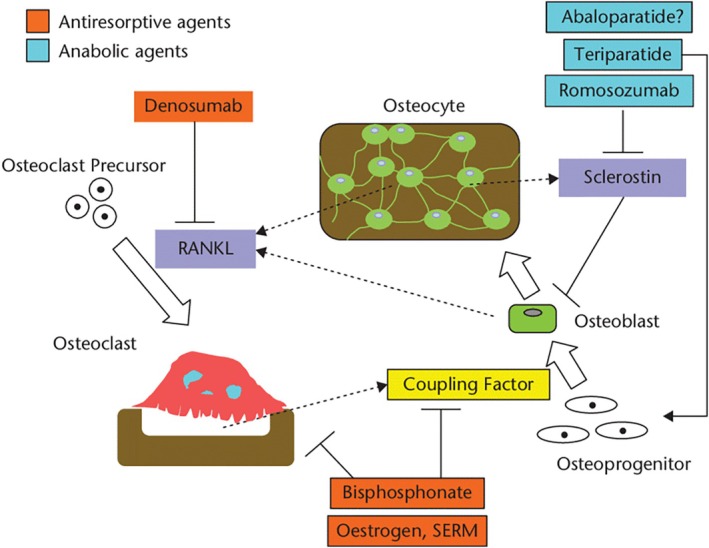
Cellular and molecular mechanisms involved in bone remodelling, highlighting the role of antiresorptive and anabolic agents in regulating osteoclast and osteoblast activity. 28 Denosumab: a monoclonal antibody that blocks receptor activator of nuclear factor kappa‐B ligand (RANKL), thereby preventing osteoclast formation and reducing bone resorption. Bisphosphonate, oestrogen and selective oestrogen receptor modulators (SERMs): these agents inhibit osteoclast activity, thereby reducing bone breakdown. Teriparatide and abaloparatide: analogues of parathyroid hormone (PTH) that increase bone formation. Romosozumab: a monoclonal antibody that inhibits sclerostin, a protein produced by osteocytes that suppresses osteoblast activity, thereby promoting bone formation.
Romosozumab and cardiovascular safety
While no safety signals were seen in the FRAME study, an increase in major adverse cardiovascular events was noted in the romosozumab arm over the first 12 months in the ARCH study (2.5% vs 1.9% in the alendronate arm). 29 Although it is not clear whether this increase in cardiovascular events was due to an increase with romosozumab, a decrease with alendronate or coincidental, romosozumab is currently contraindicated in patients with a prior myocardial infarct or stroke. In all patients being considered for romosozumab, cardiovascular risk factors should be considered and also managed as part of holistic patient care. Post‐marketing surveillance in the next few years may clarify the cardiovascular risks associated with romosozumab.
The need for follow‐on therapy following osteoanabolic treatment
Following osteoanabolic treatment, the use of antiresorptive therapy is essential to maintain the gains in bone mass and strength achieved during the anabolic phase. Osteoanabolic agents stimulate new bone formation, but without subsequent antiresorptive therapy, this newly formed bone may be rapidly lost, diminishing the long‐term benefits and leaving patients at risk for fractures. Antiresorptives, such as bisphosphonates or denosumab, help preserve newly built bone by reducing bone turnover and preventing resorption. However, the sequential use of anabolic and antiresorptive therapies may also contribute to rare but serious side effects, such as MRONJ and AFF, if continued long term.
Superiority of anabolic drugs over antiresorptive drugs
Anabolic agents lead to large and rapid increases in BMD within the first year of treatment. This is particularly beneficial for individuals with severe osteoporosis or those at very high risk of fracture, who need prompt intervention to reduce imminent fracture risk.
In a head‐to‐head trial, 40 μg of daily teriparatide was found to be superior to 10 mg daily alendronate over 30 months at increasing BMD at the spine (18% ± 11% vs 7% ± 4%; P < 0.001) and hip (11% ± 5% vs 4% ± 4%; P < 0.001). Fracture outcomes were not assessed in this trial. 30 Superiority of teriparatide has been demonstrated over alendronate in reducing vertebral fracture risk in glucocorticoid‐induced osteoporosis, 31 and another trial demonstrated a 50% reduction in vertebral fractures compared with risedronate over 12 months in patients with acute painful vertebral fractures. 32
In a double‐blind, double‐dummy, randomised controlled study of 1380 postmenopausal women randomised to either teriparatide and oral placebo or oral risedronate and placebo injections for 2 years, teriparatide showed superiority in reducing radiographic vertebral fractures (5.4% vs 12%, P < 0.0001) at 24 months (Fig. 2). The incidence of non‐vertebral and clinical fractures was also reduced in the teriparatide arm by 34% and 52% respectively, with divergence in fracture reduction rates seen as early as 6 months. 33
Figure 2.
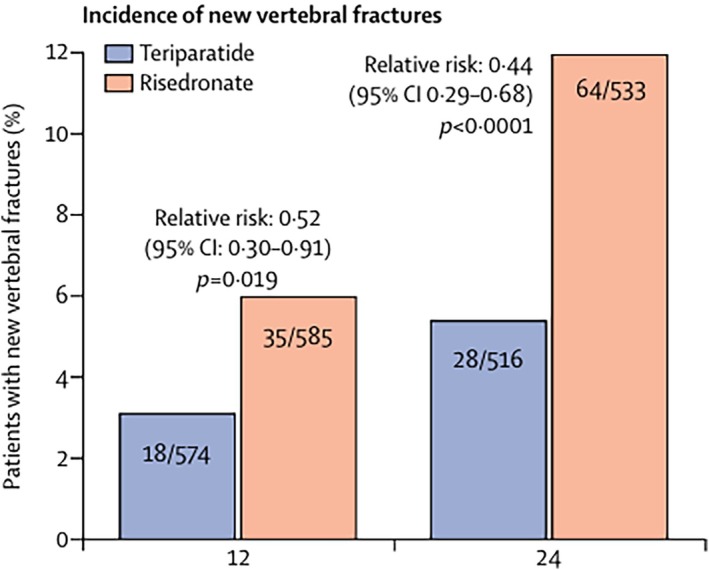
Incidence of new vertebral fractures in patients treated with teriparatide or risedronate. 33
In a post hoc analysis of the ACTIVE trial, vertebral fractures were lower in postmenopausal women following 18 months of abaloparatide (0.47 fractures/100 patient‐years) during the ACTIVE trial, compared with 18 months of alendronate (1.66 fractures/100 patient‐years) during the ACTIVExtend trial, although this did not meet statistical significance. 34
Romosozumab was also superior to alendronate in producing greater BMD gains at the hip and spine and reduced vertebral fractures by 37% (P = 0.003) after 12 months of treatment. A further 12 months of alendronate treatment in previously treated romosozumab patients showed a further reduction in clinical fractures (RRR = 27%, P < 0.001), non‐vertebral (RRR = 19%, P < 0.001) and hip fractures (RRR = 38%, P = 0.02) compared with 24 months of alendronate alone. 33
There have been small studies evaluating the comparative efficacy of romosozumab and denosumab. In a study of 138 women with osteoporosis treated with 12 months of denosumab or romosozumab, increases in spine BMD were greater in those treated with romosozumab (12.5% vs 7.2%). The percentage changes in BMD at both the total hip and femoral neck were also significantly higher at 12 months in the romosozumab group than in the denosumab group. 35
In another small randomised clinical pilot study of 51 women with rheumatoid arthritis, comparing 12 months of romosozumab and denosumab, romosozumab produced greater BMD gains at the lumbar spine (10.2% ± 5.6% vs 5.0% ± 3.1%; P = 0.002), but no difference was seen at the total hip or femoral neck. 36 Meta‐analysis that included a total of 247 patients who received denosumab and 224 who received romosozumab showed that romosozumab had superior clinical efficacy to denosumab relating to BMD at the lumbar spine, femoral neck and total hip after 6 and 12 months of treatment. All differences were significant (P < 0.00001). 37 A post hoc analysis of the romosozumab arm and denosumab treatment groups from the FRAME study showed the superiority of romosozumab over denosumab in reducing vertebral fractures. 27
A treat‐to‐target approach
The utility of an osteoanabolic as primary therapy followed by antiresorptive agents has a greater capacity to attain BMD treatment targets. A meta‐regression analysis comprising 38 randomised controlled trials demonstrated the correlation between the magnitude of treatment‐induced gains in BMD and the efficacy in preventing fractures, principally vertebral and hip fractures. 38 Hence, in individuals with very low baseline BMD, achieving T‐scores above the osteoporosis threshold solely with antiresorptive medications may prove unattainable. Recent findings indicate that among postmenopausal women commencing treatment with a baseline T‐score of less than −3.0, the likelihood of achieving a T‐score of greater than −2.5 at the total hip or lumbar spine over a 3‐year treatment period was highest in those administered 12 months of romosozumab followed by 24 months of denosumab. Sixty‐one percent of these patients achieved a T‐score greater than −2.5, compared with 38% of patients receiving 1‐year romosozumab followed by 2 years of alendronate at the total hip and 81% at the lumbar spine. Only 9% of women treated with 3 years of alendronate alone attained the target T‐score at the total hip and 55% at the lumbar spine. 27 This led to recommendations to use osteoanabolic drugs as initial treatment in patients at imminent fracture risk or in those with very low BMD using a treat‐to‐target approach. 39 , 40
These treatment targets remain to be validated in long‐term prospective randomised controlled studies.
‘Good' and 'bad’ transitions between antiresorptive and osteoanabolic drugs
Given the chronic nature of osteoporosis, sequential therapies are increasingly required to optimise long‐term bone health and reduce fractures across the lifespan while mitigating possible adverse effects. Importantly, the sequence of treatment chosen can have differing effects on bone density and fracture risk and requires consideration when formulating an individual's long‐term treatment plan.
Osteoanabolic to antiresorptive drugs
Each of the osteoanabolic treatments discussed (teriparatide, abaloparatide and romosozumab) requires sequential therapy with an antiresorptive treatment to prevent BMD loss following their discontinuation. Following teriparatide treatment, further BMD gains are observed with subsequent bisphosphonate or denosumab consolidation, 41 , 42 and similar benefits are seen with abaloparatide. 21 The greatest BMD gains have been demonstrated utilising 12 months of romosozumab followed by 2 years of denosumab. 27
These positive transitions favour the use of osteoanabolic treatments as first‐line therapy for those at very high fracture risk.
Bisphosphonates to teriparatide
This sequence appears to have less favourable effects on the anabolic potential of teriparatide, with randomised controlled studies showing a blunting in BMD gains. In a review of patients transitioning to teriparatide from alendronate or risedronate, there is an initial reduction in total hip BMD by 1% for 6–12 months, likely owing to an increase in cortical porosity. These initial losses were followed by a return to baseline or an increment of total hip BMD. Spinal BMD increased but to a lesser degree compared with the opposite sequence. 43 , 44 Despite attenuated BMD effects, the anti‐fracture benefits of teriparatide appear to be preserved despite pre‐treatment with bisphosphonates. 45
Although there have been no specific studies examining the transition from bisphosphonate to abaloparatide, it is conceivable it would yield effects akin to teriparatide, albeit with a potentially lesser decline in total hip BMD given the findings from the ACTIVE study. 21
Although no fracture outcomes are available, it may be favourable to reconsider the sequence of bisphosphonates to teriparatide or abalaparatide in patients with very low hip BMD or recent hip fracture or those at high risk of hip fracture to avoid potential reductions in hip BMD and theoretical increases in hip fracture risk.
Bisphosphonates to romosozumab
The STRUCTURE study examined this commonplace transition in clinical practice, examining the effectiveness of osteoanabolic treatment, teriparatide or romosozumab therapy following at least 3 years of prior oral bisphosphonate use, with the final 12 months being alendronate. 46 Both agents showed increases in spinal BMD; however, romosozumab has greater efficacy (9.8% vs 5.4% at 12 months). The total hip BMD, conversely, declined with teriparatide use but increased by 2.6% following romosozumab treatment. The hip BMD gains with romosozumab were half that seen in previously treatment‐naïve women. 46 Finite element analysis (FEA) indicated no enhancement in bone strength with teriparatide, whereas estimated hip strength increased by 2.5% with romosozumab. 47
These findings offer reassurance that patients who have received prior bisphosphonates, a current constraint within the PBS guidelines for the utilisation of osteoanabolic agents, should still derive benefit from this treatment sequence.
Denosumab to teriparatide
The DATA switch study demonstrated early bone density losses at the hip and spine when teriparatide was commenced following 24 months of denosumab treatment. Spinal BMD recovered after 6 months and continued to increase above baseline, but total hip bone losses were marked and prolonged to 12 months and associated with large increases in bone remodelling markers. The total hip BMD increased in the second year of treatment but remained below baseline following the initial denosumab treatment. 48 High‐resolution peripheral quantitative CT demonstrated reductions in cortical thickness and increased cortical porosity with declines in estimated strength measures. 49 Rebound vertebral fractures have not been reported with this transition but remain a theoretical concern.
Evidence on the sequence of denosumab followed by abaloparatide is currently unavailable. However, due to abaloparatide's similarities with teriparatide, this transition would be anticipated to also result in bone loss.
Denosumab to romosozumab
There are limited data evaluating the transition from denosumab to romosozumab. A post hoc analysis from a phase 2 extension study (n = 16) demonstrated stable hip BMD and a 5.3% increment in spinal BMD following 12 months of romosozumab subsequent to receiving 12 months of denosumab. 50 Although these are more favourable results compared with those observed with the transition of denosumab to teriparatide, again diminished BMD benefits are prominent compared with the reverse sequence of romosozumab to denosumab. A small observational study showed similar blunted effects on BMD following the transition to romosozumab after a mean of 2 years of denosumab. Spine BMD incremented by 6.4%, and there was no change in hip BMD 51 ; however, neither study demonstrated bone loss. Notably, the effects of this transition on BMD or fracture are yet to be established following long‐term treatment with denosumab, given prior data showing greater bone loss following denosumab cessation in individuals on long‐term treatment. 52 There has been a case report of multiple vertebral fractures occurring following the transition from 2.5 years of denosumab to romosozumab. 53 Further data are required to elucidate the effects on BMD, remodelling, fracture risk and the optimal timing of this transition in relation to the last denosumab dose.
Combination treatment
Anabolic treatments could potentially be used in combination with other osteoporosis medications, such as bisphosphonates or denosumab, to achieve synergistic effects. This combination approach has only been studied with the combination of teriparatide with either zoledronic acid or denosumab, showing greater BMD responses than either treatment alone. 48 , 54 , 55 However, there are no data on fracture prevention.
New Australian osteoporosis guidelines
New Australian osteoporosis management guidelines from the Royal Australian College of General Practitioners (RACGP) in collaboration with Healthy Bones Australia (HBA) provide comprehensive recommendations for the management and prevention of osteoporosis in postmenopausal women and men over the age of 50 years 56 (Fig. 3).
Figure 3.
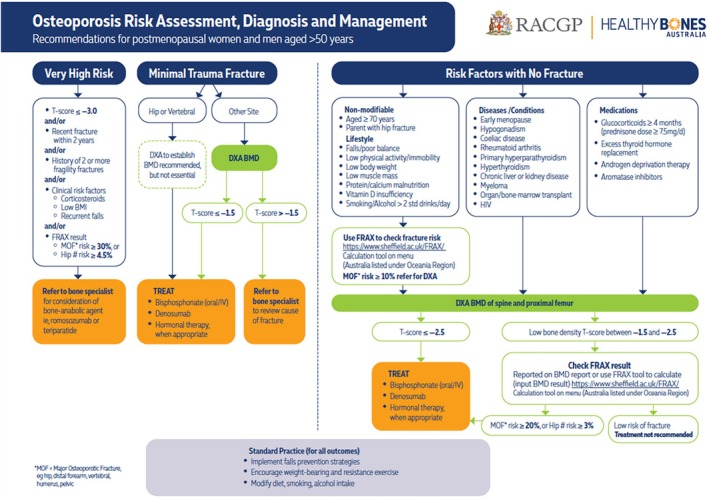
Updated osteoporosis guidelines endorsed by RACGP and Healthy Bones Australia. 56
A new classification for ‘imminent’ fracture risk patients is outlined, in keeping with the emerging data demonstrating the heightened fracture risk in the first 24 months following an incident fracture. The concept of patients at ‘very high’ fracture risk has also been incorporated in line with international guidelines. In these patients, two or more fragility fractures, very low BMD (T‐scores <−3.0 or lower), additional risk factors (e.g. low body mass index, recurrent falls, concurrent glucocorticoid therapy) or significantly elevated FRAX® or Garvan fracture risk scores (major osteoporotic fracture risk of ≥30% or hip fracture risk of >4.5% over 10 years) 57 should favour consideration of osteoanabolic agents as first‐line treatments, reflecting the recent evidence on their anti‐fracture efficacy.
Changes to the PBS guidelines
Prior to November 2024, to gain access to Pharmaceutical Benefits Scheme (PBS)‐funded osteoanabolic agents, the PBS guidelines stipulated patients have a T‐score of −3.0 or lower, have sustained two prior fractures, with at least one fracture occurring after 12 months of continuous antiresorptive treatment. The necessitation of prior antiresorptive therapies limited osteoanabolic practice to use as second‐line agents, which has been demonstrated to yield inferior benefits.
The costs of private prescriptions for the osteoanabolic agents were often prohibitive, with monthly prescriptions exceeding approximately $175 and $405 per month for teriparatide and romosozumab respectively. This financial burden creates inequity and makes these agents unattainable as first‐line therapy for most patients.
On 1 November 2024, there was a new PBS listing of romosozumab as a first‐line agent in treatment‐naïve patients deemed to be at very high risk of fracture.
Patients deemed to be at very high fracture risk will include those with:
A recent hip or clinical vertebral fracture in the prior 24 months OR
Two or more clinical fractures (including one in the prior 24 months) AND
T‐score of −2.5 or lower
A specialist is required for its prescription.
This has opened new opportunities for patients at very high risk of fracture to access the optimal therapeutic agents and treatment sequences necessary for the long‐term management of bone health. It is hoped that this change will overcome prescriber resistance to the use of anabolic therapy for osteoporosis, which has created inertia in the field. 58
Summary
Osteoporosis is a highly prevalent chronic health condition affecting our ageing population, with associated increased morbidity and mortality. Treatment approaches have classically employed antiresorptive drugs as first‐line agents, but these have limitations for long‐term use and an increasing likelihood of rare adverse effects with prolonged exposure. An increasing selection of osteoanabolic agents is available in Australia for the management of osteoporosis, including teriparatide, romosozumab and, soon to be available, abaloparatide. These agents produce larger gains in BMD and importantly exhibit greater fracture risk reduction compared with antiresorptive drugs in treatment‐naïve patients, with international guidelines advocating their application as first‐line agents to improve outcomes. Their use in Australia, however, has been limited to second‐line options due to both existing PBS restrictions and prohibitive private prescription costs. However, with the updated RACGP/HBA guidelines for osteoporosis management highlighting the importance of considering osteoanabolic drugs as first‐line agents and the recently adopted PBS guidelines supporting the use of romosozumab for first‐line use in very high‐risk patients, a paradigm shift in the treatment of osteoporosis is now applicable, ultimately offering better health outcomes for our patients.
Acknowledgements
Open access publishing facilitated by Monash University, as part of the Wiley ‐ Monash University agreement via the Council of Australian University Librarians.
Funding: None.
Conflict of interest: None.
References
- 1. Cummings SR, Melton Iii LJ. Osteoporosis I: epidemiology and outcomes of osteoporotic fractures. Lancet 2002; 359: 1761–1767. [DOI] [PubMed] [Google Scholar]
- 2. Naik‐Panvelkar P, Norman S, Elgebaly Z, Elliott J, Pollack A, Thistlethwaite J et al. Osteoporosis management in Australian general practice: an analysis of current osteoporosis treatment patterns and gaps in practice. BMC Fam Pract 2020; 21: 32. [DOI] [PMC free article] [PubMed] [Google Scholar]
- 3. Center JR, Nguyen TV, Schneider D, Sambrook PN, Eisman JA. Mortality after all major types of osteoporotic fracture in men and women: an observational study. Lancet 1999; 353: 878–882. [DOI] [PubMed] [Google Scholar]
- 4. Cosman F, de Beur SJ, LeBoff MS, Lewiecki EM, Tanner B, Randall S et al. Clinician's guide to prevention and treatment of osteoporosis. Osteoporos Int 2014; 25: 2359–2381. [DOI] [PMC free article] [PubMed] [Google Scholar]
- 5. Australian Institute of Health and Welfare . Osteoporosis and Minimal Trauma Fractures. AIHW: Canberra, Australia; 2024. [Google Scholar]
- 6. Downey C, Kelly M, Quinlan JF. Changing trends in the mortality rate at 1‐year post hip fracture – a systematic review. World J Orthop 2019; 10: 166–175. [DOI] [PMC free article] [PubMed] [Google Scholar]
- 7. Mitchell R, Harvey L, Brodaty H, Draper B, Close J. One‐year mortality after hip fracture in older individuals: the effects of delirium and dementia. Arch Gerontol Geriatr 2017; 72: 135–141. [DOI] [PubMed] [Google Scholar]
- 8. Black DM, Delmas PD, Eastell R, Reid IR, Boonen S, Cauley JA et al. Once‐yearly zoledronic acid for treatment of postmenopausal osteoporosis. N Engl J Med 2007; 356: 1809–1822. [DOI] [PubMed] [Google Scholar]
- 9. Black DM, Thompson DE, Bauer DC, Ensrud K, Musliner T, Hochberg MC et al. Fracture risk reduction with alendronate in women with osteoporosis: the fracture intervention trial. FIT Research Group. J Clin Endocrinol Metab 2000; 85: 4118–4124. [DOI] [PubMed] [Google Scholar]
- 10. Cummings SR, Martin JS, McClung MR, Siris ES, Eastell R, Reid IR et al. Denosumab for prevention of fractures in postmenopausal women with osteoporosis. N Engl J Med 2009; 361: 756–765. [DOI] [PubMed] [Google Scholar]
- 11. Bone HG, Wagman RB, Brandi ML, Brown JP, Chapurlat R, Cummings SR et al. 10 Years of denosumab treatment in postmenopausal women with osteoporosis: results from the phase 3 randomised FREEDOM trial and open‐label extension. Lancet Diabetes Endocrinol 2017; 5: 513–523. [DOI] [PubMed] [Google Scholar]
- 12. Rizzoli R, Åkesson K, Bouxsein M, Kanis JA, Napoli N, Papapoulos S et al. Subtrochanteric fractures after long‐term treatment with bisphosphonates: a European society on clinical and economic aspects of osteoporosis and osteoarthritis, and international osteoporosis foundation working group report. Osteoporos Int 2011; 22: 373–390. [DOI] [PMC free article] [PubMed] [Google Scholar]
- 13. Khan AA, Morrison A, Hanley DA, Felsenberg D, McCauley L, O'Ryan F et al. Diagnosis and management of osteonecrosis of the jaw: a systematic review and international consensus. J Bone Miner Res 2015; 30: 3–23. [DOI] [PubMed] [Google Scholar]
- 14. McClung MR, Clark AL. Osteoanabolic therapy for osteoporosis in women. Climacteric 2022; 25: 60–66. [DOI] [PubMed] [Google Scholar]
- 15. Lindsay R, Nieves J, Formica C, Henneman E, Woelfert L, Shen V et al. Randomised controlled study of effect of parathyroid hormone on vertebral‐bone mass and fracture incidence among postmenopausal women on oestrogen with osteoporosis. Lancet 1997; 350: 550–555. [DOI] [PubMed] [Google Scholar]
- 16. Neer RM, Arnaud CD, Zanchetta JR, Prince R, Gaich GA, Reginster JY et al. Effect of parathyroid hormone (1–34) on fractures and bone mineral density in postmenopausal women with osteoporosis. N Engl J Med 2001; 344: 1434–1441. [DOI] [PubMed] [Google Scholar]
- 17. Black DM, Bilezikian JP, Ensrud KE, Greenspan SL, Palermo L, Hue T et al. One year of alendronate after one year of parathyroid hormone (1–84) for osteoporosis. N Engl J Med 2005; 353: 555–565. [DOI] [PubMed] [Google Scholar]
- 18. Vahle JL, Sato M, Long GG, Young JK, Francis PC, Engelhardt JA et al. Skeletal changes in rats given daily subcutaneous injections of recombinant human parathyroid hormone (1–34) for 2 years and relevance to human safety. Toxicol Pathol 2002; 30: 312–321. [DOI] [PubMed] [Google Scholar]
- 19. Gilsenan A, Midkiff K, Harris D, Kellier‐Steele N, McSorley D, Andrews EB. Teriparatide did not increase adult osteosarcoma incidence in a 15‐year US Postmarketing surveillance study. J Bone Miner Res 2021; 36: 244–251. [DOI] [PMC free article] [PubMed] [Google Scholar]
- 20. Miller PD, Hattersley G, Riis BJ, Williams GC, Lau E, Russo LA et al. Effect of abaloparatide vs placebo on new vertebral fractures in postmenopausal women with osteoporosis: a randomized clinical trial. JAMA 2016; 316: 722–733. [DOI] [PubMed] [Google Scholar]
- 21. Bone HG, Cosman F, Miller PD, Williams GC, Hattersley G, Hu MY et al. ACTIVExtend: 24 months of alendronate after 18 months of abaloparatide or placebo for postmenopausal osteoporosis. J Clin Endocrinol Metab 2018; 103: 2949–2957. [DOI] [PMC free article] [PubMed] [Google Scholar]
- 22. Balemans W, Ebeling M, Patel N, Van Hul E, Olson P, Dioszegi M et al. Increased bone density in sclerosteosis is due to the deficiency of a novel secreted protein (SOST). Hum Mol Genet 2001; 10: 537–543. [DOI] [PubMed] [Google Scholar]
- 23. Ferrari SL. Romosozumab to rebuild the foundations of bone strength. Nat Rev Rheumatol 2018; 14: 128. [DOI] [PubMed] [Google Scholar]
- 24. Cosman F, Crittenden DB, Adachi JD, Binkley N, Czerwinski E, Ferrari S et al. Romosozumab treatment in postmenopausal women with osteoporosis. N Engl J Med 2016; 375: 1532–1543. [DOI] [PubMed] [Google Scholar]
- 25. Cosman F, Crittenden DB, Ferrari S, Lewiecki EM, Jaller‐Raad J, Zerbini C et al. Romosozumab FRAME study: a post hoc analysis of the role of regional background fracture risk on nonvertebral fracture outcome. J Bone Miner Res 2018; 33: 1407–1416. [DOI] [PubMed] [Google Scholar]
- 26. Lewiecki EM, Blicharski T, Goemaere S, Lippuner K, Meisner PD, Miller PD et al. A phase III randomized placebo‐controlled trial to evaluate efficacy and safety of romosozumab in men with osteoporosis. J Clin Endocrinol Metab 2018; 103: 3183–3193. [DOI] [PubMed] [Google Scholar]
- 27. Cosman F, Libanati C, Deignan C, Yu Z, Wang Z, Ferrari S et al. Romosozumab followed by antiresorptive treatment increases the probability of achieving bone mineral density treatment goals. JBMR Plus 2021; 5: e10546. [DOI] [PMC free article] [PubMed] [Google Scholar]
- 28. Tanaka S. Molecular understanding of pharmacological treatment of osteoporosis. EFORT Open Rev 2019; 4: 158–164. [DOI] [PMC free article] [PubMed] [Google Scholar]
- 29. Saag KG, Petersen J, Grauer A. Romosozumab versus alendronate and fracture risk in women with osteoporosis. N Engl J Med 2018; 378: 195–196. [DOI] [PubMed] [Google Scholar]
- 30. Finkelstein JS, Wyland JJ, Lee H, Neer RM. Effects of teriparatide, alendronate, or both in women with postmenopausal osteoporosis. J Clin Endocrinol Metab 2010; 95: 1838–1845. [DOI] [PMC free article] [PubMed] [Google Scholar]
- 31. Saag KG, Shane E, Boonen S, Marín F, Donley DW, Taylor KA et al. Teriparatide or alendronate in glucocorticoid‐induced osteoporosis. N Engl J Med 2007; 357: 2028–2039. [DOI] [PubMed] [Google Scholar]
- 32. Hadji P, Zanchetta JR, Russo L, Recknor CP, Saag KG, McKiernan FE et al. The effect of teriparatide compared with risedronate on reduction of back pain in postmenopausal women with osteoporotic vertebral fractures. Osteoporos Int 2012; 23: 2141–2150. [DOI] [PubMed] [Google Scholar]
- 33. Kendler DL, Marin F, Zerbini CAF, Russo LA, Greenspan SL, Zikan V et al. Effects of teriparatide and risedronate on new fractures in post‐menopausal women with severe osteoporosis (VERO): a multicentre, double‐blind, double‐dummy, randomised controlled trial. Lancet 2018; 391: 230–240. [DOI] [PubMed] [Google Scholar]
- 34. Leder BZ, Mitlak B, Hu MY, Hattersley G, Bockman RS. Effect of abaloparatide vs alendronate on fracture risk reduction in postmenopausal women with osteoporosis. J Clin Endocrinol Metab 2020; 105: 938–943. [DOI] [PMC free article] [PubMed] [Google Scholar]
- 35. Kobayakawa T, Miyazaki A, Saito M, Suzuki T, Takahashi J, Nakamura Y. Denosumab versus romosozumab for postmenopausal osteoporosis treatment. Sci Rep 2021; 11: 11801. [DOI] [PMC free article] [PubMed] [Google Scholar]
- 36. Mochizuki T, Yano K, Ikari K, Hiroshima R, Okazaki K. Comparison of romosozumab versus denosumab treatment on bone mineral density after 1 year in rheumatoid arthritis patients with severe osteoporosis: a randomized clinical pilot study. Mod Rheumatol 2023; 33: 490–495. [DOI] [PubMed] [Google Scholar]
- 37. Hu M, Zhang Y, Guo J, Guo C, Yang X, Ma X et al. Meta‐analysis of the effects of denosumab and romosozumab on bone mineral density and turnover markers in patients with osteoporosis. Front Endocrinol 2023; 14: 1188969. 10.3389/fendo.2023.1188969. [DOI] [PMC free article] [PubMed] [Google Scholar]
- 38. Bouxsein ML, Eastell R, Lui LY, Wu LA, de Papp AE, Grauer A et al. Change in bone density and reduction in fracture risk: a meta‐regression of published trials. J Bone Miner Res 2019; 34: 632–642. [DOI] [PubMed] [Google Scholar]
- 39. Lewiecki EM. Operationalizing treat‐to‐target for osteoporosis. Endocrinol Metab 2021; 36: 270–278. [DOI] [PMC free article] [PubMed] [Google Scholar]
- 40. Cosman F, Lewiecki EM, Eastell R, Ebeling PR, Jan de Beur S, Langdahl B et al. Goal‐directed osteoporosis treatment: ASBMR/BHOF task force position statement 2024. J Bone Miner Res 2024; 39: 1393–1405. [DOI] [PMC free article] [PubMed] [Google Scholar]
- 41. Lindsay R, Scheele WH, Neer R, Pohl G, Adami S, Mautalen C et al. Sustained vertebral fracture risk reduction after withdrawal of teriparatide in postmenopausal women with osteoporosis. Arch Intern Med 2004; 164: 2024–2030. [DOI] [PubMed] [Google Scholar]
- 42. Shane E, Shiau S, Recker RR, Lappe JM, Agarwal S, Kamanda‐Kosseh M et al. Denosumab after teriparatide in premenopausal women with idiopathic osteoporosis. J Clin Endocrinol Metab 2022; 107: e1528–e1540. [DOI] [PMC free article] [PubMed] [Google Scholar]
- 43. Ettinger B, San Martin J, Crans G, Pavo I. Differential effects of teriparatide on BMD after treatment with raloxifene or alendronate. J Bone Miner Res 2004; 19: 745–751. [DOI] [PubMed] [Google Scholar]
- 44. Boonen S, Marin F, Obermayer‐Pietsch B, Simões ME, Barker C, Glass EV et al. Effects of previous antiresorptive therapy on the bone mineral density response to two years of teriparatide treatment in postmenopausal women with osteoporosis. J Clin Endocrinol Metab 2008; 93: 852–860. [DOI] [PubMed] [Google Scholar]
- 45. Cosman F, Wermers RA, Recknor C, Mauck KF, Xie L, Glass EV et al. Effects of teriparatide in postmenopausal women with osteoporosis on prior alendronate or raloxifene: differences between stopping and continuing the antiresorptive agent. J Clin Endocrinol Metab 2009; 94: 3772–3780. [DOI] [PubMed] [Google Scholar]
- 46. Langdahl BL, Libanati C, Crittenden DB, Bolognese MA, Brown JP, Daizadeh NS et al. Romosozumab (sclerostin monoclonal antibody) versus teriparatide in postmenopausal women with osteoporosis transitioning from oral bisphosphonate therapy: a randomised, open‐label, phase 3 trial. Lancet 2017; 390: 1585–1594. [DOI] [PubMed] [Google Scholar]
- 47. Cosman F, Kendler DL, Langdahl BL, Leder BZ, Lewiecki EM, Miyauchi A et al. Romosozumab and antiresorptive treatment: the importance of treatment sequence. Osteoporos Int 2022; 33: 1243–1256. [DOI] [PMC free article] [PubMed] [Google Scholar]
- 48. Leder BZ, Tsai JN, Uihlein AV, Wallace PM, Lee H, Neer RM et al. Denosumab and teriparatide transitions in postmenopausal osteoporosis (the DATA‐Switch study): extension of a randomised controlled trial. Lancet 2015; 386: 1147–1155. [DOI] [PMC free article] [PubMed] [Google Scholar]
- 49. Tsai JN, Nishiyama KK, Lin D, Yuan A, Lee H, Bouxsein ML et al. Effects of denosumab and teriparatide transitions on bone microarchitecture and estimated strength: the DATA‐Switch HR‐pQCT study. J Bone Miner Res 2017; 32: 2001–2009. [DOI] [PubMed] [Google Scholar]
- 50. McClung MR, Bolognese MA, Brown JP, Reginster JY, Langdahl BL, Shi Y et al. Skeletal responses to romosozumab after 12 months of denosumab. JBMR Plus 2021; 5: e10512. [DOI] [PMC free article] [PubMed] [Google Scholar]
- 51. Ebina K, Tsuboi H, Nagayama Y, Kashii M, Kaneshiro S, Miyama A et al. Effects of prior osteoporosis treatment on 12‐month treatment response of romosozumab in patients with postmenopausal osteoporosis. Joint Bone Spine 2021; 88: 105219. [DOI] [PubMed] [Google Scholar]
- 52. Anastasilakis AD, Makras P, Yavropoulou MP, Tabacco G, Naciu AM, Palermo A. Denosumab discontinuation and the rebound phenomenon: a narrative review. J Clin Med 2021; 10: 152. 10.3390/jcm10010152. [DOI] [PMC free article] [PubMed] [Google Scholar]
- 53. Kashii M, Ebina K, Kitaguchi K, Yoshikawa H. Romosozumab was not effective in preventing multiple spontaneous clinical vertebral fractures after denosumab discontinuation: a case report. Bone Rep 2020; 13: 100288. [DOI] [PMC free article] [PubMed] [Google Scholar]
- 54. Tsai JN, Uihlein AV, Lee H, Kumbhani R, Siwila‐Sackman E, McKay EA et al. Teriparatide and denosumab, alone or combined, in women with postmenopausal osteoporosis: the DATA study randomised trial. Lancet 2013; 382: 50–56. [DOI] [PMC free article] [PubMed] [Google Scholar]
- 55. Cosman F, Eriksen EF, Recknor C, Miller PD, Guañabens N, Kasperk C et al. Effects of intravenous zoledronic acid plus subcutaneous teriparatide [rhPTH(1‐34)] in postmenopausal osteoporosis. J Bone Miner Res 2011; 26: 503–511. [DOI] [PubMed] [Google Scholar]
- 56. Healthy Bones Australia and RACGP Osteoporosis Australia . Clinical Guidelines. Healthy Bones Australia: Sydney, Australia; 2024. [Google Scholar]
- 57. Camacho PM, Petak SM, Binkley N, Diab DL, Eldeiry LS, Farooki A et al. American Association of clinical Endocrinologists/American College of Endocrinology clinical practice guidelines for the diagnosis and treatment of postmenopausal osteoporosis – 2020 update. Endocr Pract 2020; 26: 1–46. [DOI] [PubMed] [Google Scholar]
- 58. Girgis CM, Choi Y, Ebeling PR. Australian clinicians' perceptions of patients with very high risk of fracture. Intern Med J 2024; 54: 891–896. [DOI] [PubMed] [Google Scholar]